WO2022059285A1 - 情報処理方法、情報処理装置、及びプログラム - Google Patents
情報処理方法、情報処理装置、及びプログラム Download PDFInfo
- Publication number
- WO2022059285A1 WO2022059285A1 PCT/JP2021/023986 JP2021023986W WO2022059285A1 WO 2022059285 A1 WO2022059285 A1 WO 2022059285A1 JP 2021023986 W JP2021023986 W JP 2021023986W WO 2022059285 A1 WO2022059285 A1 WO 2022059285A1
- Authority
- WO
- WIPO (PCT)
- Prior art keywords
- user
- data
- life pattern
- disease
- digital twin
- Prior art date
- Legal status (The legal status is an assumption and is not a legal conclusion. Google has not performed a legal analysis and makes no representation as to the accuracy of the status listed.)
- Ceased
Links
Images













Classifications
-
- G—PHYSICS
- G16—INFORMATION AND COMMUNICATION TECHNOLOGY [ICT] SPECIALLY ADAPTED FOR SPECIFIC APPLICATION FIELDS
- G16H—HEALTHCARE INFORMATICS, i.e. INFORMATION AND COMMUNICATION TECHNOLOGY [ICT] SPECIALLY ADAPTED FOR THE HANDLING OR PROCESSING OF MEDICAL OR HEALTHCARE DATA
- G16H50/00—ICT specially adapted for medical diagnosis, medical simulation or medical data mining; ICT specially adapted for detecting, monitoring or modelling epidemics or pandemics
- G16H50/80—ICT specially adapted for medical diagnosis, medical simulation or medical data mining; ICT specially adapted for detecting, monitoring or modelling epidemics or pandemics for detecting, monitoring or modelling epidemics or pandemics, e.g. flu
-
- G—PHYSICS
- G16—INFORMATION AND COMMUNICATION TECHNOLOGY [ICT] SPECIALLY ADAPTED FOR SPECIFIC APPLICATION FIELDS
- G16B—BIOINFORMATICS, i.e. INFORMATION AND COMMUNICATION TECHNOLOGY [ICT] SPECIALLY ADAPTED FOR GENETIC OR PROTEIN-RELATED DATA PROCESSING IN COMPUTATIONAL MOLECULAR BIOLOGY
- G16B25/00—ICT specially adapted for hybridisation; ICT specially adapted for gene or protein expression
-
- G—PHYSICS
- G16—INFORMATION AND COMMUNICATION TECHNOLOGY [ICT] SPECIALLY ADAPTED FOR SPECIFIC APPLICATION FIELDS
- G16H—HEALTHCARE INFORMATICS, i.e. INFORMATION AND COMMUNICATION TECHNOLOGY [ICT] SPECIALLY ADAPTED FOR THE HANDLING OR PROCESSING OF MEDICAL OR HEALTHCARE DATA
- G16H20/00—ICT specially adapted for therapies or health-improving plans, e.g. for handling prescriptions, for steering therapy or for monitoring patient compliance
-
- G—PHYSICS
- G16—INFORMATION AND COMMUNICATION TECHNOLOGY [ICT] SPECIALLY ADAPTED FOR SPECIFIC APPLICATION FIELDS
- G16H—HEALTHCARE INFORMATICS, i.e. INFORMATION AND COMMUNICATION TECHNOLOGY [ICT] SPECIALLY ADAPTED FOR THE HANDLING OR PROCESSING OF MEDICAL OR HEALTHCARE DATA
- G16H40/00—ICT specially adapted for the management or administration of healthcare resources or facilities; ICT specially adapted for the management or operation of medical equipment or devices
- G16H40/60—ICT specially adapted for the management or administration of healthcare resources or facilities; ICT specially adapted for the management or operation of medical equipment or devices for the operation of medical equipment or devices
- G16H40/63—ICT specially adapted for the management or administration of healthcare resources or facilities; ICT specially adapted for the management or operation of medical equipment or devices for the operation of medical equipment or devices for local operation
-
- G—PHYSICS
- G16—INFORMATION AND COMMUNICATION TECHNOLOGY [ICT] SPECIALLY ADAPTED FOR SPECIFIC APPLICATION FIELDS
- G16H—HEALTHCARE INFORMATICS, i.e. INFORMATION AND COMMUNICATION TECHNOLOGY [ICT] SPECIALLY ADAPTED FOR THE HANDLING OR PROCESSING OF MEDICAL OR HEALTHCARE DATA
- G16H50/00—ICT specially adapted for medical diagnosis, medical simulation or medical data mining; ICT specially adapted for detecting, monitoring or modelling epidemics or pandemics
- G16H50/30—ICT specially adapted for medical diagnosis, medical simulation or medical data mining; ICT specially adapted for detecting, monitoring or modelling epidemics or pandemics for calculating health indices; for individual health risk assessment
-
- G—PHYSICS
- G16—INFORMATION AND COMMUNICATION TECHNOLOGY [ICT] SPECIALLY ADAPTED FOR SPECIFIC APPLICATION FIELDS
- G16H—HEALTHCARE INFORMATICS, i.e. INFORMATION AND COMMUNICATION TECHNOLOGY [ICT] SPECIALLY ADAPTED FOR THE HANDLING OR PROCESSING OF MEDICAL OR HEALTHCARE DATA
- G16H50/00—ICT specially adapted for medical diagnosis, medical simulation or medical data mining; ICT specially adapted for detecting, monitoring or modelling epidemics or pandemics
- G16H50/50—ICT specially adapted for medical diagnosis, medical simulation or medical data mining; ICT specially adapted for detecting, monitoring or modelling epidemics or pandemics for simulation or modelling of medical disorders
-
- G—PHYSICS
- G16—INFORMATION AND COMMUNICATION TECHNOLOGY [ICT] SPECIALLY ADAPTED FOR SPECIFIC APPLICATION FIELDS
- G16B—BIOINFORMATICS, i.e. INFORMATION AND COMMUNICATION TECHNOLOGY [ICT] SPECIALLY ADAPTED FOR GENETIC OR PROTEIN-RELATED DATA PROCESSING IN COMPUTATIONAL MOLECULAR BIOLOGY
- G16B20/00—ICT specially adapted for functional genomics or proteomics, e.g. genotype-phenotype associations
-
- G—PHYSICS
- G16—INFORMATION AND COMMUNICATION TECHNOLOGY [ICT] SPECIALLY ADAPTED FOR SPECIFIC APPLICATION FIELDS
- G16H—HEALTHCARE INFORMATICS, i.e. INFORMATION AND COMMUNICATION TECHNOLOGY [ICT] SPECIALLY ADAPTED FOR THE HANDLING OR PROCESSING OF MEDICAL OR HEALTHCARE DATA
- G16H20/00—ICT specially adapted for therapies or health-improving plans, e.g. for handling prescriptions, for steering therapy or for monitoring patient compliance
- G16H20/30—ICT specially adapted for therapies or health-improving plans, e.g. for handling prescriptions, for steering therapy or for monitoring patient compliance relating to physical therapies or activities, e.g. physiotherapy, acupressure or exercising
-
- G—PHYSICS
- G16—INFORMATION AND COMMUNICATION TECHNOLOGY [ICT] SPECIALLY ADAPTED FOR SPECIFIC APPLICATION FIELDS
- G16H—HEALTHCARE INFORMATICS, i.e. INFORMATION AND COMMUNICATION TECHNOLOGY [ICT] SPECIALLY ADAPTED FOR THE HANDLING OR PROCESSING OF MEDICAL OR HEALTHCARE DATA
- G16H20/00—ICT specially adapted for therapies or health-improving plans, e.g. for handling prescriptions, for steering therapy or for monitoring patient compliance
- G16H20/70—ICT specially adapted for therapies or health-improving plans, e.g. for handling prescriptions, for steering therapy or for monitoring patient compliance relating to mental therapies, e.g. psychological therapy or autogenous training
Definitions
- the present disclosure has been made to solve the above problems, and an object of the present disclosure is to provide a technique for predicting a future disease risk of a user.
- a simulation for operating the user's digital twin and the device's digital twin in the cyber space is executed, and the future of the user is obtained from the execution result of the simulation.
- the second life pattern data predicting the life pattern of the above is generated, the future disease risk of the user for the specified disease is calculated based on the second life pattern data, and the disease risk is output.
- a simulation for operating the user's digital twin and the device's digital twin in the cyber space is executed, and the future of the user is obtained from the execution result of the simulation.
- the second life pattern data predicting the life pattern of the above is generated, the future disease risk of the user for the specified disease is calculated based on the second life pattern data, and the disease risk is output.
- the daily life pattern from the present to a predetermined time in the future may be predicted.
- FIG. 1 is an overall configuration diagram of an information processing system 1 according to an embodiment of the present disclosure.
- the information processing system 1 includes a server 10, a sensor device 20, a device 30, and a terminal device 40.
- the server 10, the sensor device 20, the device 30, and the terminal device 40 are connected to each other so as to be able to communicate with each other via the network 50.
- the network 50 is a wide area communication network including, for example, the Internet and a mobile phone communication network. Further, the network 50 may include a local area network.
- the device 30 is an electrical device installed in the user's residence.
- the electric equipment is, for example, an air conditioning equipment, a cooking equipment such as an oven, a refrigerator, a washing machine, a television, a smart speaker, an audio equipment, a DVD recorder, and a household electric equipment such as a Blu-ray recorder.
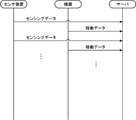
- the device 30 transmits operation data to the server 10 at a predetermined sampling cycle, for example, when the power is turned on.
- the human base sequence is 99.9% the same, but there is a difference of 0.1%. Due to this difference, there are differences in appearance, ability, constitution, and the like. When a difference in base sequence appears with a frequency of 1% or more in a human population, the difference in base sequence is called a polymorphism.
- SNP is one in which one base is replaced with another base.
- SNPs There are many SNPs, but it has been shown that certain SNPs are associated with certain diseases. Such SNPs are called disease-related SNPs.
- the SNP type is a combination of an SNP inherited from a father and an SNP inherited from a mother, such as AA, AG, and GG. From this SNP type, it is possible to identify the risk of future users getting sick.
- the simulation execution unit 125 operates the digital twin of the device 30 using the operation history data collected for each day of the week. For example, when executing a simulation of a certain day two years later, the simulation execution unit 125 may operate the digital twin of the device 30 in the cyber space using the operation history data corresponding to the day of the week.
- the disease risk calculation unit 127 may calculate the disease risk within a period of one or more in the future.
- the period of 1 or more is, for example, a period of 1 year, 3 years, or 5 years from the present.
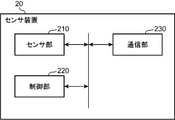
- the sensor unit 210 is composed of, for example, a GPS sensor, a biological sensor, an image sensor, or the like, and measures sensing data at a predetermined sampling cycle.
- the biosensor measures the user's biometric data.
- Biometric data includes heart rate, physical activity, calories burned, calories ingested, smoking status, alcohol intake, and the like.
- the biological sensor is, for example, a heart rate sensor, an acceleration sensor, a gyro sensor, an image sensor, an odor sensor, or the like.
- the GPS sensor measures the position data of the user who possesses the sensor device 20.
- the heart rate sensor measures the user's heart rate.
- the accelerometer and the 3-axis gyro sensor measure the user's amount of exercise and calories burned.
- the image sensor measures the user's calorie intake and alcohol intake.
- the odor sensor detects the odor of cigarettes.
- the communication unit 230 is composed of a communication circuit that connects the sensor device 20 to the network 50.
- the communication unit 230 transmits the sensing data measured by the sensor unit 210 to the server 10 under the control of the control unit 220.
- the sensor unit 310 differs depending on the type of the device 30. For example, if the device 30 is an air conditioning device, the sensor unit 310 includes a temperature sensor that measures the temperature of the surrounding environment and a temperature sensor that measures the temperature of the refrigerant. When the device 30 is a cooking device and a refrigerator, the sensor unit 310 includes a temperature sensor for measuring the temperature inside the refrigerator.
- FIG. 5 is a block diagram showing an example of the configuration of the terminal device 40.
- the terminal device 40 includes a control unit 410, a display unit 420, an operation unit 440, and a communication unit 430.
- the display unit 420 is composed of a display device such as a liquid crystal display panel and an organic EL panel, and displays the presented data under the control of the control unit 410.
- the operation unit 440 is composed of an operation device such as a touch panel, a keyboard, and a mouse, and receives operations from the user.
- FIG. 7 is a flowchart showing an example of the processing of the server 10 shown in FIG.
- the digital twin generation unit 121 generates the user's digital twin in the cyber space using the user data stored in the memory 130, and uses the structural data stored in the memory 130 to generate the user's digital twin. Create a digital twin for your residence in cyberspace.
- FIG. 8 is a diagram showing an example of the appearance of a digital twin in a house.
- FIG. 9 is a diagram showing an example of the layout of a digital twin in a house. As shown in FIG. 8, the dwelling digital twin is three-dimensional modeling data generated using the structural data of the user's dwelling.
- step S302 the digital twin generation unit 121 generates a regional digital twin using the structural data of the region including the user's residence stored in the memory 130.
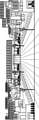
- FIG. 10 is a diagram showing an example of a regional digital twin. This area may be, for example, an area within a certain range including the user's residence, or may be a town, a city, or the like to which the residence belongs. As shown in FIG. 10, regional digital twins include, for example, residential areas in the area, as well as roads, commercial facilities, and buildings in the actual area such as streetlights.
- step S304 the acquisition unit 122 acquires the operation history data of the past fixed period stored in the memory 130 from the memory 130.
- the past fixed period of the operation history data is the same period as the past fixed period of the behavior history data.
- the symbol supplementary information for eating and drinking is the amount of food and the amount of alcohol consumed.
- the amount of food is specified from the sensor value (for example, calorie intake) included in the initial segment 1301 to which the symbol of eating and drinking is given.
- the calorie intake can be obtained, for example, by analyzing the food eaten by the user from the image data of the user during the meal.
- the amount of alcohol consumed is specified, for example, from the sensor value (for example, the amount of alcohol intake) contained in the initial segment 1301 to which the symbol of eating and drinking is given.
- Smoking symbol supplementary information is smoking frequency.
- the presence or absence of smoking is detected by linking the detection result of the odor of cigarettes by the odor sensor with the position data of the user.
- the smoking frequency is, for example, the number of cigarettes smoked.
- FIG. 12 is a diagram showing an example of the data structure of the daily life pattern data 1201.
- the life pattern data 1201 of each day is composed of one or more segments 1310 arranged in chronological order in a 24-hour time zone from 0:00 to 24:00 (0:00).
- the segment 1310 having the sleep symbol is arranged in the time zone from 0:00 to 6:30
- the segment 1310 having the food and drink symbol is arranged in the time zone from 3:1 to 7:30. There is.
- life pattern data 1201 of each day is associated with date data including a year (YYYY), a month (MM), and a day (DD). As described above, it can be seen that the life pattern data 1201 of each day is data representing the behavior of the user on each day in the past fixed period in chronological order.
- the first generation unit 124 collects the operation history data for each day of the week. For example, as shown in FIG. 11, the first generation unit 124 divides the operation history data into a plurality of initial segments 1301 and takes an average value for each type of sensor value in each initial segment 1301 for each day of the week. Operation history data may be generated.
- FIG. 15 is an explanatory diagram of the simulation.
- FIG. 15 shows an example of a simulation of Mr. A, who is 22 years old and a 4th year college student as of 2024.
- Mr. A's first life pattern data for the past five years from 2019 to 2023 is used.
- This first life pattern data is modified according to the standard life pattern data, and Mr. A's digital twin is operated in the cyber space according to the modified first life pattern data.
- the device 30 is also operated according to the device history data for the past 5 years.
- simulations are performed for the next five years from 2025 to 2029, that is, the period from the first year of working people to the fifth year of working people.
- the first life is such that the sleep time is x% shorter. Modify the pattern data.
- the simulation execution unit 125 operates the digital twin of the device 30 using the operation history data collected for each day of the week. For example, when executing a simulation for a certain day, the simulation execution unit 125 operates the digital twin of the device 30 in the cyber space using the operation history data corresponding to the day of the week.
- the simulation execution unit 125 monitors the action content of the user's digital twin and the operation content of the digital twin of the device 30, and samples the action history data indicating the monitored action content and the operation history data indicating the operation content in a predetermined sampling cycle. By recording in chronological order with, the execution result of the simulation is generated.
- the monitored behavior content includes, for example, the position data of the user's digital twin and the biometric data of the user.
- the monitored operation content includes, for example, the operation value of the digital twin of the device 30.
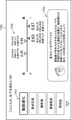
- the user can easily improve his / her life pattern by taking a walk according to the schedule display field 2001.
- the disease that the user may get sick is specified from the gene analysis data of the user.
- the first life pattern data showing the user's life pattern up to the present is generated from the user's behavior history data and the operation history data of the device.
- a simulation is executed to operate the user's digital twin and the device's digital twin in cyberspace.
- Second life pattern data that predicts the future life pattern of the user is generated from the execution result of the simulation. Based on the generated second life pattern data, the disease risk of future illness to the specified disease is calculated, and the calculated disease risk is output.
Landscapes
- Health & Medical Sciences (AREA)
- Engineering & Computer Science (AREA)
- Medical Informatics (AREA)
- Public Health (AREA)
- General Health & Medical Sciences (AREA)
- Epidemiology (AREA)
- Primary Health Care (AREA)
- Biomedical Technology (AREA)
- Data Mining & Analysis (AREA)
- Pathology (AREA)
- Databases & Information Systems (AREA)
- Physics & Mathematics (AREA)
- Life Sciences & Earth Sciences (AREA)
- Bioinformatics & Cheminformatics (AREA)
- Biophysics (AREA)
- Genetics & Genomics (AREA)
- Molecular Biology (AREA)
- Bioinformatics & Computational Biology (AREA)
- Biotechnology (AREA)
- Evolutionary Biology (AREA)
- Spectroscopy & Molecular Physics (AREA)
- Theoretical Computer Science (AREA)
- General Business, Economics & Management (AREA)
- Business, Economics & Management (AREA)
- Medical Treatment And Welfare Office Work (AREA)
- Debugging And Monitoring (AREA)
Priority Applications (3)
| Application Number | Priority Date | Filing Date | Title |
|---|---|---|---|
| CN202180062869.7A CN116114031A (zh) | 2020-09-17 | 2021-06-24 | 信息处理方法、信息处理装置以及程序 |
| JP2022550353A JP7686655B2 (ja) | 2020-09-17 | 2021-06-24 | 情報処理方法、情報処理装置、及びプログラム |
| US18/119,448 US20230215580A1 (en) | 2020-09-17 | 2023-03-09 | Information processing method, information processing device, and non-transitory computer readable recording medium |
Applications Claiming Priority (2)
| Application Number | Priority Date | Filing Date | Title |
|---|---|---|---|
| JP2020-156044 | 2020-09-17 | ||
| JP2020156044 | 2020-09-17 |
Related Child Applications (1)
| Application Number | Title | Priority Date | Filing Date |
|---|---|---|---|
| US18/119,448 Continuation US20230215580A1 (en) | 2020-09-17 | 2023-03-09 | Information processing method, information processing device, and non-transitory computer readable recording medium |
Publications (1)
| Publication Number | Publication Date |
|---|---|
| WO2022059285A1 true WO2022059285A1 (ja) | 2022-03-24 |
Family
ID=80775761
Family Applications (1)
| Application Number | Title | Priority Date | Filing Date |
|---|---|---|---|
| PCT/JP2021/023986 Ceased WO2022059285A1 (ja) | 2020-09-17 | 2021-06-24 | 情報処理方法、情報処理装置、及びプログラム |
Country Status (4)
| Country | Link |
|---|---|
| US (1) | US20230215580A1 (https=) |
| JP (1) | JP7686655B2 (https=) |
| CN (1) | CN116114031A (https=) |
| WO (1) | WO2022059285A1 (https=) |
Cited By (6)
| Publication number | Priority date | Publication date | Assignee | Title |
|---|---|---|---|---|
| CN115690350A (zh) * | 2023-01-05 | 2023-02-03 | 成都理工大学 | 一种基于数字孪生的聚落景观全息感知监测方法 |
| JP7375143B1 (ja) | 2022-09-27 | 2023-11-07 | 株式会社コロプラ | プログラムおよび情報処理システム |
| JP2024024725A (ja) * | 2022-08-10 | 2024-02-26 | 株式会社島津製作所 | 健康リスク低減方法、健康リスク低減システムおよび健康リスク低減プログラム |
| JP7540810B1 (ja) | 2024-04-09 | 2024-08-27 | キラル株式会社 | ヘルスケアシステム |
| JP7761332B1 (ja) * | 2025-08-07 | 2025-10-28 | 株式会社C・B・H | 健康管理装置、健康管理方法および健康管理プログラム |
| JP7761103B1 (ja) * | 2024-10-03 | 2025-10-28 | Toppanホールディングス株式会社 | 健康支援システム、サーバ装置、健康支援方法、及びプログラム |
Families Citing this family (2)
| Publication number | Priority date | Publication date | Assignee | Title |
|---|---|---|---|---|
| US12562282B2 (en) | 2020-09-09 | 2026-02-24 | X-Act Science, Inc. | Predictive risk assessment in patient and health modeling |
| US12562281B2 (en) * | 2020-09-09 | 2026-02-24 | X-Act Science, Inc. | Predictive risk assessment in patient and health modeling |
Citations (5)
| Publication number | Priority date | Publication date | Assignee | Title |
|---|---|---|---|---|
| JP2015079466A (ja) * | 2013-10-18 | 2015-04-23 | 国立大学法人東北大学 | 食事型センサ、センシング方法及び食品 |
| JP2017173999A (ja) * | 2016-03-22 | 2017-09-28 | Kddi株式会社 | ユーザの将来期間の生活パターンを予測する生活パターン予測装置、携帯端末、プログラム及び方法 |
| US20190005200A1 (en) * | 2017-06-28 | 2019-01-03 | General Electric Company | Methods and systems for generating a patient digital twin |
| US20190087544A1 (en) * | 2017-09-21 | 2019-03-21 | General Electric Company | Surgery Digital Twin |
| JP2019204484A (ja) * | 2017-07-24 | 2019-11-28 | アクシオンリサーチ株式会社 | 対象システムの内部状態を推定する支援システム |
Family Cites Families (5)
| Publication number | Priority date | Publication date | Assignee | Title |
|---|---|---|---|---|
| US10491708B2 (en) * | 2015-06-05 | 2019-11-26 | Apple Inc. | Context notifications |
| US10854194B2 (en) * | 2017-02-10 | 2020-12-01 | Johnson Controls Technology Company | Building system with digital twin based data ingestion and processing |
| US20180272147A1 (en) * | 2017-03-21 | 2018-09-27 | Zoll Medical Corporation | Wearable defibrillator integrated with remote ischemic conditioning protocol |
| US20190005195A1 (en) * | 2017-06-28 | 2019-01-03 | General Electric Company | Methods and systems for improving care through post-operation feedback analysis |
| US10798175B1 (en) * | 2019-06-28 | 2020-10-06 | CohesionIB | IoT contextually-aware digital twin with enhanced discovery |
-
2021
- 2021-06-24 WO PCT/JP2021/023986 patent/WO2022059285A1/ja not_active Ceased
- 2021-06-24 JP JP2022550353A patent/JP7686655B2/ja active Active
- 2021-06-24 CN CN202180062869.7A patent/CN116114031A/zh active Pending
-
2023
- 2023-03-09 US US18/119,448 patent/US20230215580A1/en not_active Abandoned
Patent Citations (5)
| Publication number | Priority date | Publication date | Assignee | Title |
|---|---|---|---|---|
| JP2015079466A (ja) * | 2013-10-18 | 2015-04-23 | 国立大学法人東北大学 | 食事型センサ、センシング方法及び食品 |
| JP2017173999A (ja) * | 2016-03-22 | 2017-09-28 | Kddi株式会社 | ユーザの将来期間の生活パターンを予測する生活パターン予測装置、携帯端末、プログラム及び方法 |
| US20190005200A1 (en) * | 2017-06-28 | 2019-01-03 | General Electric Company | Methods and systems for generating a patient digital twin |
| JP2019204484A (ja) * | 2017-07-24 | 2019-11-28 | アクシオンリサーチ株式会社 | 対象システムの内部状態を推定する支援システム |
| US20190087544A1 (en) * | 2017-09-21 | 2019-03-21 | General Electric Company | Surgery Digital Twin |
Non-Patent Citations (1)
| Title |
|---|
| KINOSHITA MIKA: "INITIATIVES TO MOTIVATE PEOPLE TOWARDS WELLNESS - PROSPECTS OF INCORPORATING BEHAVIORAL SCIENCE AND TECHNOLOGY TO EXPAND THE HEALTH PROMOTION/DISEASE PREVENTION MARKET-", MITSUI & CO. GLOBAL STRATEGIC STUDIES INSTITUTE MONTHLY REPORT, 15 September 2020 (2020-09-15), pages 1 - 7, XP055919565, Retrieved from the Internet <URL:https://www.mitsui.com/mgssi/en/report/detail/__icsFiles/afieldfile/2020/10/21/2009t_kinoshita_e.pdf> [retrieved on 20220510] * |
Cited By (8)
| Publication number | Priority date | Publication date | Assignee | Title |
|---|---|---|---|---|
| JP2024024725A (ja) * | 2022-08-10 | 2024-02-26 | 株式会社島津製作所 | 健康リスク低減方法、健康リスク低減システムおよび健康リスク低減プログラム |
| JP7375143B1 (ja) | 2022-09-27 | 2023-11-07 | 株式会社コロプラ | プログラムおよび情報処理システム |
| JP2024048105A (ja) * | 2022-09-27 | 2024-04-08 | 株式会社コロプラ | プログラムおよび情報処理システム |
| CN115690350A (zh) * | 2023-01-05 | 2023-02-03 | 成都理工大学 | 一种基于数字孪生的聚落景观全息感知监测方法 |
| JP7540810B1 (ja) | 2024-04-09 | 2024-08-27 | キラル株式会社 | ヘルスケアシステム |
| JP2025160076A (ja) * | 2024-04-09 | 2025-10-22 | キラル株式会社 | ヘルスケアシステム |
| JP7761103B1 (ja) * | 2024-10-03 | 2025-10-28 | Toppanホールディングス株式会社 | 健康支援システム、サーバ装置、健康支援方法、及びプログラム |
| JP7761332B1 (ja) * | 2025-08-07 | 2025-10-28 | 株式会社C・B・H | 健康管理装置、健康管理方法および健康管理プログラム |
Also Published As
| Publication number | Publication date |
|---|---|
| JP7686655B2 (ja) | 2025-06-02 |
| US20230215580A1 (en) | 2023-07-06 |
| CN116114031A (zh) | 2023-05-12 |
| JPWO2022059285A1 (https=) | 2022-03-24 |
Similar Documents
| Publication | Publication Date | Title |
|---|---|---|
| JP7686655B2 (ja) | 情報処理方法、情報処理装置、及びプログラム | |
| Di Mitri et al. | Learning pulse: A machine learning approach for predicting performance in self-regulated learning using multimodal data | |
| Jia et al. | Spatial technologies in obesity research: current applications and future promise | |
| JP5185785B2 (ja) | 健康状態判断装置 | |
| AU2011207344B2 (en) | Early warning method and system for chronic disease management | |
| Varkevisser et al. | Do patients choose hospitals with high quality ratings? Empirical evidence from the market for angioplasty in the Netherlands | |
| Moran et al. | An international comparison of efficiency of inpatient mental health care systems | |
| CN109416820A (zh) | 对用户满意度进行自动确定和响应 | |
| Alam et al. | Machine learning approach for predicting personal thermal comfort in air conditioning offices in Malaysia | |
| Kyytsönen et al. | Factors associated with use of wearable technology to support activity, well-being, or a healthy lifestyle in the adult population and among older adults | |
| Palumbo et al. | Reliability and human factors in Ambient Assisted Living environments: The DOREMI case study | |
| Xu et al. | The impact of parental history on children’s risk of asthma: a study based on the National Health and Nutrition Examination Survey-III | |
| Vandereet et al. | Expressive vocabulary acquisition in children with intellectual disability: Speech or manual signs? | |
| CN110136795B (zh) | 一种用于认知预警的时序数据库的构建方法 | |
| Valbuena et al. | Data presentation options to manage variability in physical activity research | |
| Cao et al. | Nonlinear health benefits of public green space: evidence from a nationwide machine learning study in China | |
| JP7683439B2 (ja) | 生理周期予測装置、生理周期予測方法、生理周期予測プログラムおよび生理周期予測システム | |
| Wijbenga et al. | Individual differences in the temporal relationship between sleep and agitation: a single-subject study in nursing home residents with dementia experiencing sleep disturbance and agitation | |
| Artola et al. | Behavioral anomaly detection system for the wellbeing assessment and lifestyle support of older people at home | |
| Hanson et al. | Developing a risk stratification model for predicting future health care use in asthmatic children | |
| Hermosa-Bosano et al. | Socioecological correlates of perceived cooking skills among Spanish adolescents: the EHDLA study | |
| JP2021026477A (ja) | 支援装置及び支援プログラム | |
| Sei et al. | Data collection of biomedical data and sensing information in smart rooms | |
| Meng et al. | Blockchain-based secure digital twin framework for the smart healthy city | |
| Bai et al. | Smartphone sensor-based depression detection in campus environments: a proof-of-concept study with small-sample behavioral analysis |
Legal Events
| Date | Code | Title | Description |
|---|---|---|---|
| 121 | Ep: the epo has been informed by wipo that ep was designated in this application |
Ref document number: 21868972 Country of ref document: EP Kind code of ref document: A1 |
|
| ENP | Entry into the national phase |
Ref document number: 2022550353 Country of ref document: JP Kind code of ref document: A |
|
| NENP | Non-entry into the national phase |
Ref country code: DE |
|
| 122 | Ep: pct application non-entry in european phase |
Ref document number: 21868972 Country of ref document: EP Kind code of ref document: A1 |