WO2022045211A1 - 月経に伴う不快状態の改善用組成物 - Google Patents
月経に伴う不快状態の改善用組成物 Download PDFInfo
- Publication number
- WO2022045211A1 WO2022045211A1 PCT/JP2021/031219 JP2021031219W WO2022045211A1 WO 2022045211 A1 WO2022045211 A1 WO 2022045211A1 JP 2021031219 W JP2021031219 W JP 2021031219W WO 2022045211 A1 WO2022045211 A1 WO 2022045211A1
- Authority
- WO
- WIPO (PCT)
- Prior art keywords
- composition
- extract
- menstruation
- black rice
- mass
- Prior art date
- Legal status (The legal status is an assumption and is not a legal conclusion. Google has not performed a legal analysis and makes no representation as to the accuracy of the status listed.)
- Ceased
Links
Images
Classifications
-
- A—HUMAN NECESSITIES
- A61—MEDICAL OR VETERINARY SCIENCE; HYGIENE
- A61K—PREPARATIONS FOR MEDICAL, DENTAL OR TOILETRY PURPOSES
- A61K36/00—Medicinal preparations of undetermined constitution containing material from algae, lichens, fungi or plants, or derivatives thereof, e.g. traditional herbal medicines
- A61K36/18—Magnoliophyta (angiosperms)
- A61K36/185—Magnoliopsida (dicotyledons)
- A61K36/73—Rosaceae (Rose family), e.g. strawberry, chokeberry, blackberry, pear or firethorn
- A61K36/736—Prunus, e.g. plum, cherry, peach, apricot or almond
-
- A—HUMAN NECESSITIES
- A23—FOODS OR FOODSTUFFS; TREATMENT THEREOF, NOT COVERED BY OTHER CLASSES
- A23L—FOODS, FOODSTUFFS OR NON-ALCOHOLIC BEVERAGES, NOT OTHERWISE PROVIDED FOR; PREPARATION OR TREATMENT THEREOF
- A23L33/00—Modifying nutritive qualities of foods; Dietetic products; Preparation or treatment thereof
- A23L33/10—Modifying nutritive qualities of foods; Dietetic products; Preparation or treatment thereof using additives
- A23L33/105—Plant extracts, their artificial duplicates or their derivatives
-
- A—HUMAN NECESSITIES
- A61—MEDICAL OR VETERINARY SCIENCE; HYGIENE
- A61K—PREPARATIONS FOR MEDICAL, DENTAL OR TOILETRY PURPOSES
- A61K36/00—Medicinal preparations of undetermined constitution containing material from algae, lichens, fungi or plants, or derivatives thereof, e.g. traditional herbal medicines
- A61K36/18—Magnoliophyta (angiosperms)
- A61K36/88—Liliopsida (monocotyledons)
- A61K36/899—Poaceae or Gramineae (Grass family), e.g. bamboo, corn or sugar cane
-
- A—HUMAN NECESSITIES
- A61—MEDICAL OR VETERINARY SCIENCE; HYGIENE
- A61P—SPECIFIC THERAPEUTIC ACTIVITY OF CHEMICAL COMPOUNDS OR MEDICINAL PREPARATIONS
- A61P1/00—Drugs for disorders of the alimentary tract or the digestive system
-
- A—HUMAN NECESSITIES
- A61—MEDICAL OR VETERINARY SCIENCE; HYGIENE
- A61P—SPECIFIC THERAPEUTIC ACTIVITY OF CHEMICAL COMPOUNDS OR MEDICINAL PREPARATIONS
- A61P1/00—Drugs for disorders of the alimentary tract or the digestive system
- A61P1/08—Drugs for disorders of the alimentary tract or the digestive system for nausea, cinetosis or vertigo; Antiemetics
-
- A—HUMAN NECESSITIES
- A61—MEDICAL OR VETERINARY SCIENCE; HYGIENE
- A61P—SPECIFIC THERAPEUTIC ACTIVITY OF CHEMICAL COMPOUNDS OR MEDICINAL PREPARATIONS
- A61P1/00—Drugs for disorders of the alimentary tract or the digestive system
- A61P1/12—Antidiarrhoeals
-
- A—HUMAN NECESSITIES
- A61—MEDICAL OR VETERINARY SCIENCE; HYGIENE
- A61P—SPECIFIC THERAPEUTIC ACTIVITY OF CHEMICAL COMPOUNDS OR MEDICINAL PREPARATIONS
- A61P15/00—Drugs for genital or sexual disorders; Contraceptives
-
- A—HUMAN NECESSITIES
- A61—MEDICAL OR VETERINARY SCIENCE; HYGIENE
- A61P—SPECIFIC THERAPEUTIC ACTIVITY OF CHEMICAL COMPOUNDS OR MEDICINAL PREPARATIONS
- A61P25/00—Drugs for disorders of the nervous system
-
- A—HUMAN NECESSITIES
- A61—MEDICAL OR VETERINARY SCIENCE; HYGIENE
- A61P—SPECIFIC THERAPEUTIC ACTIVITY OF CHEMICAL COMPOUNDS OR MEDICINAL PREPARATIONS
- A61P29/00—Non-central analgesic, antipyretic or antiinflammatory agents, e.g. antirheumatic agents; Non-steroidal antiinflammatory drugs [NSAID]
-
- A—HUMAN NECESSITIES
- A61—MEDICAL OR VETERINARY SCIENCE; HYGIENE
- A61P—SPECIFIC THERAPEUTIC ACTIVITY OF CHEMICAL COMPOUNDS OR MEDICINAL PREPARATIONS
- A61P3/00—Drugs for disorders of the metabolism
- A61P3/02—Nutrients, e.g. vitamins, minerals
-
- A—HUMAN NECESSITIES
- A61—MEDICAL OR VETERINARY SCIENCE; HYGIENE
- A61P—SPECIFIC THERAPEUTIC ACTIVITY OF CHEMICAL COMPOUNDS OR MEDICINAL PREPARATIONS
- A61P7/00—Drugs for disorders of the blood or the extracellular fluid
- A61P7/06—Antianaemics
Definitions
- the present invention relates to a composition and a functional food for improving the discomfort associated with menstruation, which is observed in many women. More specifically, the present invention relates to functional foods that are effective for young women who are prone to strong discomfort and anxiety even though no organic disorder is particularly observed in the reproductive system.
- Discomfort associated with menstruation is wide-ranging, such as lower abdominal pain, low back pain, headache, nausea, diarrhea, abdominal bloating, depression, fatigue, or loss of appetite.
- Endometriosis, uterine fibroids, uterine adenomyoma, etc. are known as these causative diseases, but there are many women who feel strong discomfort even though such organic disorders are not particularly observed. ..
- Non-Patent Document 1 a condition in which no organic disorder other than such discomfort is particularly observed is defined as functional dysmenorrhea (Non-Patent Document 1). , It is considered to be non-illness in the sense that the causative disease is not particularly recognized.
- Non-Patent Document 2 the Ministry of Economy, Trade and Industry
- NSAIDs that relieve pain, which is a typical discomfort. Is mainly taken. Since NSAIDs are analgesics that are taken when pain is felt, it cannot be naturally improved to a constitution that does not feel pain. The trauma of this pain coming every month is thought to be the cause of premenstrual syndrome (PMS) and premenstrual dysphoric disorder (PMDD), which are types of psychosomatic disorders. Is difficult to improve. If the pain is too strong, there is also a treatment method that stops menstruation, which is the source of pain, with female hormones.
- PMS premenstrual syndrome
- PMDD premenstrual dysphoric disorder
- Non-Patent Document 3 Treatment to reduce menstrual pain by suppressing the maturation of follicles and the growth of the endometrium by administering a small amount of female hormone is performed, but the natural endocrine by the original hormone is forcibly changed. According to a questionnaire survey of patients with menstrual difficulties, the actual use of female sex hormones is extremely low at 7.5% (Non-Patent Document 3).
- An object of the present invention is a composition for improving menstrual discomfort having anti-EMT activity, which is effective for women's discomfort from menarche to menopause, especially strong discomfort of young women, and has sufficient eating experience.
- the purpose is to provide a functional food containing a product and a composition thereof.
- Item 1 A composition for improving discomfort associated with menstruation, which comprises at least one selected from the group consisting of black rice, cherry blossoms, and extracts thereof.
- Item 2. Item 2. The composition according to Item 1, wherein the unpleasant state associated with menstruation is an unpleasant state that occurs during or before menstruation.
- Item 3. The discomfort associated with menstruation is lower abdominal pain, lower back pain, abdominal bloating, headache, nausea, anemia, diarrhea, fatigue, depression, emotional instability, decreased concentration, drowsiness, and chest pain (breast pain).
- composition according to Item 1 or 2 which is at least one selected from the group consisting of swelling, rough skin, loss of appetite, loss of efficiency, weight gain, and a condition that interferes with daily life.
- Item 4. Item 6. The item according to any one of Items 1 to 3, wherein the black rice extract is an extract of a site containing at least one selected from the group consisting of black rice seed coat, paste layer, pericarp, germ, and endosperm. Composition.
- Item 5. The composition according to any one of Items 1 to 3, wherein the cherry blossom extract is a cherry blossom flower extract.
- Item 6. Item 6. The composition according to any one of Items 1 to 5, which is an oral preparation.
- composition of the present invention contains a component having anti-EMT activity having sufficient eating experience, it is effective for improving menstrual discomfort, especially strong discomfort that tends to occur in young women. It is possible to bring about an effect.
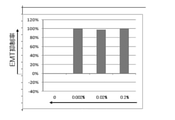
- FIG. 1 is a graph showing the evaluation results of the EMT suppression activity (suppression rate) by the extract of black rice in Test Example 1.
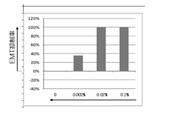
- FIG. 2 is a graph showing the evaluation results of the EMT suppression activity (suppression rate) by the cherry extract in Test Example 1.
- composition of the present invention contains an ingredient having anti-EMT activity as an active ingredient, and is expected to lead to a fundamental improvement in discomfort related to menstruation, the mechanism of which has been clarified in recent years.
- the active ingredient is not particularly limited as long as it has sufficient feeding experience and has anti-EMT activity.
- such an active ingredient is preferably a material having eating experience in the field of food and drink and / or an ingredient derived from the material.
- Black rice and its extract Black rice is a variety in which at least one of the seed coat or the pericarp of brown rice contains a purple-black pigment, and has a black appearance.
- Known varieties of black rice include purple black rice, Kurodaen, Hunan black rice (registered trademark), black purple, and Hubei purple black rice.
- As the black rice either brown rice (unpolished) or polished rice obtained by grinding brown rice may be used. From the viewpoint of significantly exerting the effect of the present invention, it is preferable to use at least one selected from the group consisting of brown rice seed coat, pericarp, and germ as the black rice.
- the extraction method of black rice extract is not limited as long as the effect of the present invention is exhibited.
- the black rice extract is an extract obtained by dipping and extracting the above-mentioned black rice or a pulverized product thereof with water and / or an organic solvent, and filtering out the residue, and the solvent is removed from this extract.
- a product, a fine powder thereof, or a product obtained by dissolving, dispersing, or diluting the above-mentioned extract or solvent-removed product with an appropriate solvent, etc., and a commercially available product can also be used.
- the extract of black rice can also be extracted after processing such as steaming the black rice.
- the black rice extract may be a crude extract extracted from black rice as it is, a refined product thereof, a concentrated product, a synthetic product, or a commercially available product.
- the method for obtaining the extract is not particularly limited, and a usual extraction method, purification method, concentration method, synthesis method, dry powdering method and the like are adopted.
- the extraction solvent of the black rice extract is not limited as long as the effect of the present invention is obtained, but is limited to lower alcohols having 1 to 4 carbon atoms such as methanol, ethanol, propanol, isopropyl alcohol and butanol; glycerin, propylene glycol and polyethylene glycol.
- Polyhydric alcohols such as; polar solvents such as water, acetone, ethyl acetate, methyl acetate; non-polar solvents such as hexane, pyridine and the like. Of these, any mixture of 1 or 2 may be used. Of these solvents, water, ethanol, 1,3-butylene glycol, propylene glycol, or a mixed solution thereof is preferable, and a mixed solution of water and ethanol (hydrous ethanol) is more preferable.
- black rice extract-P manufactured by black rice extract-P
- mixed ancient rice extract manufactured by black rice extract-S
- black rice extract manufactured by black rice extract-P
- the black rice extract is not limited as long as the effect of the present invention is exhibited, but for example, the content of polyphenol in the extract is preferably 3% by mass or more, and more preferably 5% by mass or more. It is preferably 10% by mass or more, more preferably 12% by mass or more, and most preferably 15% by mass or more.
- the content of polyphenol is not limited, but can be measured by, for example, the Folin-Denis method.
- Sakura (cherry blossoms, sakura) is a general term for plants belonging to the genus Cerasus of the Rosaceae family, excluding plums, peaches, apricots, etc., and generally refers to those belonging to the subgenus Cerasus.
- cherry blossoms are not particularly limited, and for example, cherry blossoms belonging to groups such as Yamazakura group, Edohigan group, Mamezakura group, Prunus pseudocerasu group, Miyamazakura group, and Shinamizakura group can be used. In addition, it is not limited to these groups, and other species can also be used.
- cherry (cherry) (Prunus cerasus, etc.), Yoshino cherry tree (Prunus avium), Kanhi cherry tree (Prunus campanulata), sumi cherry tree (Prunus cerasus), Yamazakura (Prunus jamasakura), Kasumi cherry tree (Prunus leveilleana) Ed pendula) Shinamizakura (Prunus pseudocerasus), Oshimazakura Prunus speciosa, Kasumizakura (Prunus verecunda), Mochizukizakura (Prunus ⁇ mochizukiana), Someiyoshino (Prunus ⁇ yedoensis), Yaezakura (Prunus can not be used), Yaezakura (Prunus).
- Prunus lannesiana is preferable from the viewpoint of remarkably exerting the effect of the present invention.
- the part of the cherry blossom is not particularly limited, and examples thereof include leaves, stems, trunks, flowers, roots, fruits, etc., but it is preferable to use flowers or leaves, and it is more preferable to use flowers.
- the extraction method of the cherry extract is not limited as long as the effect of the present invention is exhibited.
- the cherry tree extract is an extract obtained by dipping and extracting the above-mentioned cherry tree or its crushed product with water and / or an organic solvent and filtering out the residue, and the solvent is removed from this extract solution.
- these fine powders, or those obtained by dissolving, dispersing, or diluting the above-mentioned extract or solvent-removed product with an appropriate solvent, and commercially available products can also be used.
- the extract of cherry blossoms can be extracted after processing such as steaming the cherry blossoms.
- the extract of cherry blossoms may be a crude extract extracted from cherry blossoms as it is, a refined product thereof, a concentrated product, a synthetic product, or a commercially available product.
- the method for obtaining the extract is not particularly limited, and a usual extraction method, purification method, concentration method, synthesis method, dry powdering method and the like are adopted.
- the extraction solvent of the cherry extract is not limited as long as the effect of the present invention is exhibited, but is, for example, lower alcohols having 1 to 4 carbon atoms such as methanol, ethanol, propanol, isopropyl alcohol and butanol; glycerin, propylene glycol, polyethylene glycol and the like.
- water, ethanol, 1,3-butylene glycol, propylene glycol, or a mixed solution thereof is preferable, and a mixed solution of water and ethanol (hydrous ethanol) is more preferable.
- the commercial product of the cherry blossom extract is not limited, but cherry blossom extract-P (manufacturer: Oryza Yuka Co., Ltd.), cherry blossom syrup (manufacturer: Oryza Yuka Co., Ltd.) and the like can be used.
- the cherry extract is not limited as long as the effect of the present invention is exhibited, but for example, the content of cafe oil glucose in the extract is preferably 1% by mass or more, preferably 1.5% by mass or more. More preferably, it is more preferably 2% by mass or more.
- the content of caffe oil glucose can be measured by a known method and is not limited, but can be measured by, for example, HPLC.
- the cherry extract is not limited as long as the effect of the present invention is exhibited, but for example, the content of quercetin glucoside in the extract is preferably 0.01% by mass or more, preferably 0.03% by mass or more. It is more preferably present, and further preferably 0.05% by mass or more.
- the content of quercetin glucoside can be measured by a known method and is not limited, but can be measured by, for example, HPLC.
- the total content of the component having anti-EMT activity is appropriately set according to the type of the component, the type and content of other compounding components, the pharmaceutical form, the method of use and the like.
- the total content of the component having anti-EMT activity is preferably 0.001% by mass or more, more preferably 0.005% by mass, based on the total amount of the composition.
- the above is more preferably 0.01% by mass or more, particularly preferably 0.05% by mass or more, still more preferably 0.1% by mass or more, and most preferably 0.5% by mass or more.
- the total content of the components having anti-EMT activity is preferably 95% by mass or less, more preferably 90% by mass or less, and particularly preferably 85% by weight, based on the total amount of the composition.
- it is most preferably 80% by mass or less.
- the total content of the components having anti-EMT activity is preferably 0.001 to 95% by mass, more preferably 0.005 to 90% by mass, still more preferably, based on the total amount of the composition. It is 0.01 to 85% by mass, particularly preferably 0.05 to 80% by mass.
- a plant extract when used, its content is in terms of dry solid content.
- the total content of the component having anti-EMT activity is appropriately set according to the type of the component, the type and content of other compounding components, the pharmaceutical form, the method of use and the like.
- the total content of the components having anti-EMT activity is preferably 0.0001% by mass or more, more preferably 0.0005% by mass or more, based on the total amount of the composition. It is more preferably 0.001% by mass or more, particularly preferably 0.005% by mass or more, still more preferably 0.01% by mass or more, and most preferably 0.05% by mass or more.
- the total content of the components having anti-EMT activity is preferably 25% by mass or less, more preferably 20% by mass or less, and particularly preferably 15% by mass or less, based on the total amount of the composition. Most preferably, it is 10% by mass or less.
- the total content of the components having anti-EMT activity is preferably 0.0001 to 25% by mass, more preferably 0.0005 to 20% by mass, still more preferably 0, based on the total amount of the composition. It is 001 to 15% by mass, particularly preferably 0.005 to 10% by mass.
- a plant extract when used, its content is in terms of dry solid content.
- the content of black rice and / or its extract alone is not limited, but in the case of a solid preparation. It is preferably 0.001 to 95% by mass, more preferably 0.005 to 90% by mass, still more preferably 0.01 to 85% by mass, and particularly preferably 0.01 to 85% by mass, based on the total amount of the composition in terms of dry solid content. It is 0.05 to 80% by mass.
- the content of black rice and / or its extract alone is preferably 0.0001 to 25% by mass, more preferably 0, in terms of dry solid content with respect to the total amount of the composition. It is 0005 to 20% by mass, more preferably 0.001 to 15% by mass, and particularly preferably 0.005 to 10% by mass.
- the single content of the cherry and / or its extract is, for example, in the case of a solid preparation.
- the dry solid content is preferably 0.001 to 95% by mass, more preferably 0.005 to 90% by mass, still more preferably 0.01 to 85% by mass, and particularly preferably 0.01 to 85% by mass, based on the total amount of the composition. It is 0.05 to 80% by mass.
- the content of cherry blossoms and / or an extract thereof alone is preferably 0.0001 to 25% by mass in terms of dry solid content with respect to the total amount of the composition, and more preferably 0. It is 0005 to 20% by mass, more preferably 0.001 to 15% by mass, and particularly preferably 0.005 to 10% by mass.
- composition of the present invention is expected to lead to a fundamental improvement in discomfort related to menstruation, the mechanism of which has been clarified in recent years. ..
- Dysmenorrhea As mentioned above, the mechanism of dysmenorrhea has been elucidated in recent years. Dysmenorrhea is classified into functional (primary) dysmenorrhea and organic (secondary) dysmenorrhea.
- Functional (primary) dysmenorrhea is one in which no organic disease is found in the pelvis, and more than 90% of dysmenorrhea is functional (primary) dysmenorrhea.
- the pathogenic mechanism of both functional and organic dysmenorrhea has not been fully elucidated, and therefore no effective therapeutic agent has been found.
- the endometrial epithelial tissue of a healthy person non-dysmenorrhea
- non-dysmenorrhea is originally maha-like during the transition period from the basal body temperature low temperature phase to the high temperature phase before ovulation. It changes from traits to epithelial-like traits, but it has been found that in patients with dysmenorrhea, the change in traits is prolonged and the strong mesenchymal traits are maintained even in the high temperature phase.
- tranilast When we searched for a drug that normalizes this trait change, that is, changes from mesenchymal-like trait to epithelial-like trait, tranilast induces mesenchymal-like trait of endometrial epithelial cells to epithelial-like. It has been found to have an action (anti-EMT activity). After administration of anti-EMT active tranilast to multiple patients with dysmenorrhea for a certain period of time and verifying its effect, either functional (primary) dysmenorrhea or organic (secondary) dysmenorrhea A clear improvement effect on dysmenorrhea has been confirmed in patients as well.
- Discomfort associated with menstruation includes lower abdominal pain, lower back pain, bloating, headache, nausea, anemia, diarrhea, fatigue, depression, emotional instability, poor concentration, drowsiness, and chest pain (breast pain). ), Rough skin, loss of appetite, loss of efficiency, weight gain, and at least one physical or emotional condition selected from the group consisting of conditions that interfere with daily life. As used herein, these discomforts can also be referred to as premenstrual or menstrual discomfort. If the endometrial epithelial tissue does not undergo normal trait changes and is prolonged, it is presumed that the above-mentioned physical condition occurs, and the above-mentioned physical or mental condition is also caused accordingly.
- Conditions that hinder daily life include decreased activity efficiency in housework and work, difficulty in doing housework and work, decreased time for active movement, disruption of life rhythm, restlessness, decreased concentration, and activities. There are problems such as diminished motivation, a sleepy life, lethargy, anxiety, and depression.
- suppressing and improving the occurrence of discomfort associated with menstruation means that the discomfort associated with menstruation as exemplified does not occur, is alleviated, or does not feel heavy. ..
- Symptoms associated with menstruation include pain (pain in the lower abdomen, easy tiredness, stiff shoulders, headache, pain in the lower back / heavy), discomfort such as heavy tightening of the lower abdomen, and decreased concentration (decreased concentration). , Sleeplessness, frequent failures), behavioral changes (prone to stay home, drowsiness, loss of patience for work), water retention (rough skin, breakouts, swelling, weight gain) Discomfort related to emotional instability (feeling lonely / anxious, depressed, liable to change mood, restlessness, frustration or anger).
- the discomfort associated with menstruation as illustrated may occur not only during menstruation (during menstruation) but also before menstruation.
- the above physical and mental conditions may occur mildly from 1 to 2 weeks before menstruation.
- Premenstrual syndrome (PMS) is when the above physical and mental conditions are so strong that they interfere with daily activities.
- premenstrual mood disorder PMDD
- PMDD premenstrual mood disorder
- composition of the present invention can be added to foods and drinks or mixed with these. Alternatively, it can be used as it is as a beverage or food. Or, it is added or blended with foods and drinks that display the wording related to the improvement of discomfort associated with menstruation as functional foods, that is, functional foods such as health foods, foods with functional claims, foods for the sick, and foods for specified health use. Can be used.
- MDQ Menstrual distress questionnaire
- the MDQ score can be classified into factors related to physical symptoms and factors related to mental symptoms as evaluation factors.
- Factors related to physical symptoms include (1) pain factors (stiff neck and shoulders, muscle pain, head pain, lower abdomen pain, lower back pain, easy tiredness, body pain), (2) autonomy. Nervous factors (dizziness, drowsiness, cold sweat, nausea, hot face), (3) Water retention factors (weight gain, rough skin, pimples, chest tightness, abdomen) , Breast, or edema on one of the legs), and (4) Control factors (suffocation, feeling tight in the chest, ringing in the ears, numbness in the limbs, blurred vision, or blurred eyes) Can be mentioned.
- Factors related to psychological symptoms include (1) concentration factors (sleeplessness, easy forgetfulness, disorganized thoughts, poor judgment, poor concentration, distractions, frequent failures, and awkward movements. (That), (2) Behavioral change factors (loss of patience for work, falling asleep, being unable to get up from the futon, wanting to avoid socializing with people, becoming lazy, reducing work efficiency), (3) Negative emotional factors (a little thing makes you want to cry, feel lonely, anxious, restless, frustrated, angry, changeable, upset, depressed, nervous (Easy to do) and (4) Mood-enhancing factors (become gentle, obedient, excited, satisfied, active).
- the component when a subject ingests a component having anti-EMT activity and improvement is observed in at least one of the above evaluation items, the component is effective for the evaluation item. It can be evaluated as being.
- PMS memory issued by the Japan Family Planning Association
- the PMS memory is not limited to the diagnosis of PMS, but is also used for recording the physical condition of women. For example, when a PMS memory is used, it is possible to record a date, a menstrual cycle, a menstrual blood volume, a basal body weight, a basal body temperature, a symptom and its degree, an event, and the like.
- a scale for evaluating QOL can also be used as an evaluation method for discomfort associated with menstruation.
- a scale for evaluating QOL include SF-36, which is one of the HR-QOL (Health-related QOL) scales, a shortened version of SF-12v2, SF-8, EQ-5D-5L, and the like. Can be mentioned.
- SF-36 has (1) physical function, (2) daily role function (body), (3) body pain, (4) overall health, (5) vitality, (6) social life function, (7). ) Daily role Function (mental), (8) Eight subscales (items) of mental health are answered, scored and evaluated.
- EQ-5D-5L is a questionnaire developed by EuroQOL Group, and has 5 levels of 5 items: "degree of movement”, “management of personal belongings”, “ordinary activities”, “pain and discomfort”, and “anxiety and obstruction”. The answer is.
- tablets can be prepared by mixing powdered active ingredients and pharmaceutically acceptable carrier ingredients (excipients, etc.) and compression molding, and confectionery tablets such as candies (candy) can be molded into molds. It may be prepared by the method of injecting.
- the tablets may be coated with a sugar coating to form sugar-coated tablets.
- the tablet may be a single-layer tablet or a laminated tablet such as a double-layer tablet.
- Granulations such as granules are available in various granulation methods (extrusion granulation method, crushed granulation method, dry compaction granulation method, fluidized layer granulation method, rolling granulation method, high-speed stirring granulation method, etc.).
- the tablets may be prepared by appropriately combining the above-mentioned granulation method, tableting method (wet tableting method, direct tableting method) and the like.
- Capsules can be prepared by filling capsules (soft or hard capsules) with powders (powder, granules, etc.) by a conventional method.
- the liquid preparation can be prepared by dissolving or dispersing each component in an aqueous medium (purified water, ethanol-containing purified water, etc.) which is a carrier component, filtering or sterilizing if necessary, filling in a predetermined container, and sterilizing. ..
- aqueous medium purified water, ethanol-containing purified water, etc.
- the preferred dosage form of the solid preparation of the present invention is a capsule or a tablet, and more preferably a soft capsule (soft capsule, soft capsule).
- Soft capsules have a smooth surface and are easy to swallow, and are preferred by users.
- a general method for producing a soft capsule a flat plate method, a rotary method, and a seamless method are exemplified.
- the sheet-shaped capsule film sandwiches the flowing filling contents and forms a capsule shape along the hole of the rotating cylindrical die.
- the seamless method dropping method
- the capsule film composition and the contents are simultaneously ejected from the concentric multiple nozzles to form a seamless capsule shape.
- the base of the film of the soft capsule is not particularly limited, but starch, pullulan, cellulose, polyvinyl alcohol, gelatin, saccharified gelatin and the like can be used, and starch, gelatin and saccharified gelatin are preferable, and gelatin and succinct are preferable. Gelatinized gelatin is more preferred. These may be used alone or in combination of two or more.
- Jelly-like beverages, sports beverages, liquid beverages such as diet beverages, semi-solid foods such as pudding and yogurt, noodles, confectionery, spreads and the like, food compositions can be produced.
- Various food additives may be blended in the food composition.
- food additives include antioxidants, pigments, flavors, seasonings, sweeteners, acidulants, pH regulators, quality stabilizers, preservatives and the like.
- a pharmaceutically acceptable carrier generally refers to an inert, non-toxic, solid or liquid, bulking agent, diluent, encapsulating material, etc. that does not react with the active ingredient, such as water. , Ethanol, polyols, suitable mixtures thereof, solvents such as vegetable oils or dispersion media and the like.
- the pharmaceutical composition is administered orally, parenterally, for example, in the oral cavity, in the gastrointestinal tract, or in the nasal cavity.
- the orally administered preparation include solid preparations (tablets, granules, fine granules, powders, capsules, chewable tablets, etc.), liquid preparations (syrups, suspensions, inhalants, etc.) and the like.
- the parenteral administration preparation include infusions, nasal drops, injections and the like.
- the pharmaceutical composition may further contain additives commonly used in the pharmaceutical field.
- additives include excipients, binders, disintegrants, lubricants, antioxidants, colorants, flavoring agents and the like, which can be appropriately used as needed. Since it is sustained-release so that it can act for a long time, it can be coated with a known retarder or the like.
- the pharmaceutical composition may further be added with other additives and agents such as antacids and gastric mucosa protective agents as needed.
- the pharmaceutical composition can be applied in the form of an oral composition, an oral composition, or the like. Further, the pharmaceutical composition may be used therapeutically or non-therapeutically.
- the daily oral intake or dose of an ingredient having anti-EMT activity for an adult may be the individual's condition, body weight, sex, age, material activity, intake or route of administration, intake or administration schedule, pharmaceutical form or other. It can be determined as appropriate depending on the factors.
- the oral intake or dose of black rice or an extract thereof per adult per day is preferably, for example, 0.001 mg / kg body weight / day or more, more preferably 0.005 mg / kg body weight / day or more, and 0.01 mg. It is more preferably / kg body weight / day or more, particularly preferably 0.05 mg / kg body weight / day or more, and most preferably 0.1 mg / kg body weight / day or more.
- the oral intake or dose of black rice or its extract per adult per day is, for example, preferably 2000 mg / kg body weight / day or less, more preferably 1500 mg / kg body weight / day or less, and 1000 mg / kg body weight / day or less.
- the oral intake or dose of black rice or an extract thereof per adult per day is preferably, for example, 0.001 to 2000 mg / kg body weight / day, more preferably 0.005 to 1500 mg / kg body weight / day, and 0. 0.01-1000 mg / kg body weight / day is more preferred, 0.05-800 mg / kg body weight / day is particularly preferred, and 0.1-500 mg / kg body weight / day is most preferred.
- the content of black rice or an extract thereof can be an amount that is the above-mentioned intake amount or dose.
- the daily oral intake or dose for adults should be adjusted to 1 to 6 capsules, 1 to 4 capsules, 1 to 3 capsules, or 1 to 2 capsules, for example, in the case of capsules, depending on the dosage form. You may take it separately.
- the applicable person When the present invention is used in the field of foods and drinks such as functional foods, there are no restrictions, but the applicable person may have, for example, unpleasant symptoms associated with menstruation.
- the target people are, for example, those who have not been diagnosed with dysmenorrhea, those who do not continue to visit the hospital for medical treatment related to menstruation, or those who are continuously uncomfortable with menstruation. It can also be a person who has not received a prescription. Except for menstruation and premenstrual syndrome, subjects who do not feel any discomfort can be said to be premenstrual.
- the applicable person may be, for example, a person who is excluded from organic dysmenorrhea as a result of a medical examination or examination by a doctor. Exclusion of organic dysmenorrhea was judged to be normal in at least one selected from the group consisting of pelvic examination, ultrasonography, peripheral blood, CRP examination, bacterial culture examination, chlamydia antigen examination, and diagnostic imaging. It can be done by doing.
- the composition of the present invention may be adolescent (around 10 to 18 years old), adolescent (around 15 to 30 years old), may be around 15 years old or older, and may be middle age. A person (around 45 years old or older and less than 55 years old) may be used.
- the present invention may also have the following aspects.
- a composition for improving the discomfort associated with menstruation which comprises at least one selected from the group consisting of black rice, cherry blossoms, and extracts thereof;
- a method for improving menstrual discomfort which comprises ingesting a composition containing at least one selected from the group consisting of black rice, cherry blossoms, and extracts thereof.
- the composition, use, or method, wherein the discomfort associated with menstruation is the discomfort that occurs during or before menstruation;
- the discomfort associated with menstruation is lower abdominal pain, lower back pain, abdominal bloating, headache, nausea, anemia, diarrhea, fatigue, depression, emotional instability, decreased concentration, drowsiness, and chest pain (breast pain).
- compositions, use, or method wherein the premenstrual discomfort is premenstrual syndrome (PMS) or premenstrual mood disorder (PMDD);
- the composition, use, or method, wherein the premenstrual discomfort is a physical and / or mental discomfort 1-2 weeks before menstruation;
- a composition for improving dysmenorrhea containing at least one selected from the group consisting of black rice, cherry blossoms, and extracts thereof;
- a method for improving dysmenorrhea which comprises feeding a person a composition containing at
- Prunus pseudocerasus Prunus speciosa, Prunus verecunda, Prunus x mochizukiana, Yoshino cherry (Prunus x yedoensis), and at least one species including Yaezakura (Prunus lannesiana) are selected from the group.
- composition, use, or method wherein the cherry contains Prunus lannesiana; The composition, use, or method; The composition, use, or method, wherein the content of cafe oil glucose in the cherry extract is 1% by mass or more; The composition, use, or method, wherein the content of cafe oil glucose in the cherry extract is 1.5% by mass or more; The composition, use, or method, wherein the content of cafe oil glucose in the cherry extract is 2% by mass or more; The composition, use, or method, wherein the content of quercetin glucoside in the cherry extract is 0.01% by mass or more; The composition, use, or method, wherein the content of quercetin glucoside in the cherry extract is 0.1% by mass or more.
- composition, use, or method, wherein the content of quercetin glucoside in the cherry extract is 1% by mass or more.
- the composition, use, or method, wherein the content of at least one selected from the group consisting of black rice, cherry blossoms, and extracts thereof in the case of a solid preparation is 0.001 to 95% by mass;
- the composition, use, or method, wherein the content of at least one selected from the group consisting of black rice, cherry blossoms, and extracts thereof in the case of a solid preparation is 0.05 to 80% by mass;
- the above composition, use, or method, wherein the content of at least one selected from the group consisting of black rice, cherry blossoms, and extracts thereof in the case of a liquid preparation is 0.0001 to 25% by mass;
- the composition, use, or method described above, wherein the content of at least one selected from the group consisting of black rice, cherry blossoms, and extracts thereof in the case of a liquid preparation is 0.005 to 10% by mass;
- composition wherein the oral intake of at least one selected from the group consisting of black rice, cherry blossoms, and extracts thereof per day is 0.001 to 2000 mg / kg body weight / day.
- Use or method The composition, wherein the oral intake of at least one selected from the group consisting of black rice, cherry blossoms, and extracts thereof per day is 0.01 to 1000 mg / kg body weight / day.
- Use or method The composition, wherein the oral intake of at least one selected from the group consisting of black rice, cherry blossoms, and extracts thereof per day is 0.1 to 500 mg / kg body weight / day.
- the target person may be adolescent (around 10 to 18 years old), adolescent (around 15 to 30 years old), 15 years old or older, or middle-aged.
- the above composition, use, or method of being an adolescent around 45 years old or older and less than 55 years old).
- Black rice extract-P (manufacturer: Oryza Yuka Co., Ltd.) was used as an extract of black rice. It is extracted from the seeds of black rice (Oryza sativa Linne (Gramineae)) using hydrous ethanol. The content of polyphenol in the extract is 15% by mass or more.
- cherry blossom extract-P manufactured by Oryza Yuka Co., Ltd.
- It is extracted from the flowers of the Rosaceae Plum (Prunus Lannesiana) using hydrous ethanol.
- the content of quercetin glucoside in the extract is 2% by mass or more.
- the concentration of the raw material of the above-mentioned commercial extract is used as a reference.
- 0.1 g of the raw material powder is suspended and dissolved in 100 ⁇ L of PBS, and 10 ⁇ L of this solution is added to 240 ⁇ L of Serum free DMEM / F12 medium and dissolved. Further, 10 ⁇ L of this solution is added and dissolved in 190 ⁇ L of the EMT induction medium described later. This was used as a 0.2% (W / V) sample, and further diluted 10-fold and 100-fold with an EMT induction medium were used as a 0.02 (W / V)% sample and 0.002 (W / V), respectively. )% Sample.
- EMT inhibitory activity Focus formation inhibitory assay method
- RPE cells retinal pigment epithelial cells
- RPE cells (retinal pigment epithelial cell line: ARPE-19) were seeded on the plate and incubated at 37 ° C. for 5 days. EMT was induced by culturing RPE cells in an EMT induction medium supplemented with TNF- ⁇ and TGF- ⁇ , and at the same time, an extract to be evaluated was added. As an EMT induction control, a sample to which the extract to be evaluated was not added was used. After 48 hours of EMT induction, the cells were treated with a 4% paraformaldehyde solution at room temperature for 30 minutes to immobilize the cells, and then washed 3 times with PBS. It was treated with 0.2% Triton-X / PBS solution for 5 minutes and washed 3 times with PBS.
- the amount of Focus formed was determined using the number and volume of Focus as an index. After acquiring the fluorescent image, the cells were treated with 100% methanol at room temperature for 10 minutes x 2 times in order to observe the whole image at a weak magnification, and Giemsa stain (Nacalai Tesque Co., Ltd. # 37114-35) was added at room temperature for 15 minutes. Stained. After washing with methanol three times, the mixture was dried at room temperature for 3 hours. The dried cells were observed under a microscope.
- the evaluation result of the EMT suppression activity (suppression rate (%)) using the black rice extract is shown in FIG. 1, and the result using the cherry blossom extract is shown in FIG.
- the black rice extract maintained 100% EMT inhibitory activity even at a dilution ratio of 1/100 (0.002% sample).
- tranilast has an action (EMT inhibitory activity) to induce epithelial-like traits of endometrial epithelial cells, and is functional (primary) menstruation.
- EMT inhibitory activity an action to induce epithelial-like traits of endometrial epithelial cells, and is functional (primary) menstruation.
- a clear improvement effect on dysmenorrhea has been confirmed in both patients with dysmenorrhea and organic (secondary) dysmenorrhea.
Landscapes
- Health & Medical Sciences (AREA)
- Life Sciences & Earth Sciences (AREA)
- Natural Medicines & Medicinal Plants (AREA)
- Chemical & Material Sciences (AREA)
- Medicinal Chemistry (AREA)
- General Health & Medical Sciences (AREA)
- Engineering & Computer Science (AREA)
- Veterinary Medicine (AREA)
- Pharmacology & Pharmacy (AREA)
- Public Health (AREA)
- Animal Behavior & Ethology (AREA)
- Organic Chemistry (AREA)
- Nuclear Medicine, Radiotherapy & Molecular Imaging (AREA)
- General Chemical & Material Sciences (AREA)
- Chemical Kinetics & Catalysis (AREA)
- Bioinformatics & Cheminformatics (AREA)
- Mycology (AREA)
- Botany (AREA)
- Microbiology (AREA)
- Medical Informatics (AREA)
- Biotechnology (AREA)
- Alternative & Traditional Medicine (AREA)
- Epidemiology (AREA)
- Endocrinology (AREA)
- Reproductive Health (AREA)
- Diabetes (AREA)
- Hematology (AREA)
- Nutrition Science (AREA)
- Otolaryngology (AREA)
- Polymers & Plastics (AREA)
- Pain & Pain Management (AREA)
- Rheumatology (AREA)
- Food Science & Technology (AREA)
- Hospice & Palliative Care (AREA)
- Obesity (AREA)
- Biomedical Technology (AREA)
- Neurology (AREA)
- Neurosurgery (AREA)
- Medicines Containing Plant Substances (AREA)
Abstract
本発明の目的は、初経から閉経までの女性の不快感、特に若い女性の強い不快感に効果的であり、かつ摂食経験が十分にある抗EMT活性を有する月経に関する不快状態の改善用組成物、及びその組成物を含む機能性食品を提供することにある。 黒米、桜、及び、これらの抽出物からなる群より選択される少なくとも1種を含有する、月経に伴う不快状態の改善用組成物を調製する。
Description
本発明は、多くの女性に認められる月経に伴う不快状態を改善する組成物及び機能性食品に関する。さらに詳しくは、生殖器系に器質的障害が特に認められないにもかかわらず強い不快感や不安感を感じやすい若年女性に効果的である機能性食品に関する。
月経に伴う不快状態は、下腹部痛、腰痛、頭痛、吐き気、下痢、腹部膨満感、憂鬱、疲労感、あるいは食欲不振等、多岐にわたる。これらの原因疾患としては子宮内膜症、子宮筋腫、あるいは子宮腺筋腫等が知られているものの、このような器質性障害が特に認められないにも関わらず強い不快感を感じる女性が少なくない。
特に出産を経験していない若い女性においてはその傾向が強く、そのような不快感以外に器質性障害が特に認められない状態を機能性月経困難症と定義しているが(非特許文献1)、原因疾患が特に認められないという意味で未病と考えられる。
機能性月経困難症と器質性月経困難症とを合わせた月経困難症の女性は2012年の本邦において800万人存在するとされる。また、女性の月経随伴症状による労働損失は経済産業省による2019年試算によると年間4900億円を超えるとされており(非特許文献2)、女性達の月経に関わる深刻な不快感というだけではなく、深刻な社会問題と言っても過言ではない。
一方、器質性月経困難症の場合はその具体的な器質障害に応じた治療法が比較的明確であるが、機能性月経困難症に対しては代表的な不快感である疼痛を緩和するNSAIDsが主として服用されている。NSAIDsは痛みを感じた際に頓服する鎮痛剤であるため、当然のことながら、痛みを感じない体質に改善することはできない。この痛みが毎月訪れることに対するトラウマが心身症の一種である月経前症候群(PMS)や月経前不快気分障害(PMDD)の原因であると考えられ、痛みを感じてから服用するNSAIDsではPMSやPMDDを改善することは難しい。またあまりに疼痛が強い場合は女性ホルモン剤によって痛みの根源である月経を止めるという治療方法もある。また、少量の女性ホルモンを投与する事で卵胞の成熟や子宮内膜の増殖を抑制する事で生理痛を軽減させる治療が行われているが、本来のホルモンによる自然な内分泌を強制的に変えることに対する精神的ハードルや副作用もあって、月経困難症患者に対するアンケート調査によると、女性ホルモン剤の使用実績は7.5%と極めて低い現状がある(非特許文献3)。
また最近では、女性の社会進出は目覚ましく、結果的に晩婚化は社会的な傾向となっている。月経困難症は初経から閉経まで起こり得るが、機能性月経困難症は出産を経験していない若年女性において症状が強いと言われており、晩婚化により月経困難症による労働損失という社会問題はより大きくなっており、これら女性の深刻な悩みかつ社会損失を解決できる根治療法が強く望まれている。
また一方で、近年この月経困難症のメカニズムが明らかにされつつある。機能性月経困難症にしても器質性月経困難症にしてもその根本のメカニズムは、子宮内膜上皮細胞の形質転換(上皮間葉転換:Epithelial-Mesenchymal Transition{以下EMTと略記})であるとされている(特許文献1、2)。実際に抗EMT活性を有することが確認された医薬品であるトラニラストを月経困難症患者に投与したところ、月経時の痛みにおけるNRSスコアにおいて有意な改善が認められた(特許文献1、2)。このように抗EMT活性を有し、副作用の少ない安全な成分を摂取することで、月経に関わる不快感を感じにくい体質に改善することが強く求められている。
産婦人科診療ガイドライン-婦人科外来編2017
2019年経済産業省「健康経営における女性の健康の取り組みについて」
バイエル薬品株式会社 2018年6月1日ニュースリリース「子宮内膜症および月経マネジメントに関する意識・実態調査」
本発明の目的は、初経から閉経までの女性の不快感、特に若い女性の強い不快感に効果的であり、かつ摂食経験が十分にある抗EMT活性を有する月経に関する不快状態の改善用組成物、及びその組成物を含む機能性食品を提供することにある。
前記課題に鑑み、鋭意検討を行った結果、特定の植物由来成分において顕著な抗EMT活性が認められ、月経に関する不快状態の改善に効果的であることを見出し、本発明を完成させるに至った。
すなわち、本発明は、下記に掲げる組成物を提供する。
項1.
黒米、桜、及び、これらの抽出物からなる群より選択される少なくとも1種を含有する、月経に伴う不快状態の改善用組成物。
項2.
前記月経に伴う不快状態が、月経時又は月経前に生じる不快状態である、項1に記載の組成物。
項3.
前記月経に伴う不快状態が、下腹部痛、腰痛、腹部膨満感、頭痛、吐き気、貧血、下痢、疲労感、憂鬱、感情の不安定化、集中力の低下、眠気、胸が張る(乳房痛)、むくみ、肌荒れ、食欲低下、能率低下、体重増加、及び、日常生活に支障をもたらす状態からなる群より選択される少なくとも1種である、項1又は2に記載の組成物。
項4.
前記黒米抽出物が、黒米の種皮、糊粉層、果皮、胚芽、及び、胚乳からなる群より選択される少なくとも1種を含む部位の抽出物である、項1~3のいずれかに記載の組成物。
項5.
前記桜抽出物が、桜の花抽出物である、項1~3のいずれかに記載の組成物。
項6.
経口剤である、項1~5のいずれかに記載の組成物。
項1.
黒米、桜、及び、これらの抽出物からなる群より選択される少なくとも1種を含有する、月経に伴う不快状態の改善用組成物。
項2.
前記月経に伴う不快状態が、月経時又は月経前に生じる不快状態である、項1に記載の組成物。
項3.
前記月経に伴う不快状態が、下腹部痛、腰痛、腹部膨満感、頭痛、吐き気、貧血、下痢、疲労感、憂鬱、感情の不安定化、集中力の低下、眠気、胸が張る(乳房痛)、むくみ、肌荒れ、食欲低下、能率低下、体重増加、及び、日常生活に支障をもたらす状態からなる群より選択される少なくとも1種である、項1又は2に記載の組成物。
項4.
前記黒米抽出物が、黒米の種皮、糊粉層、果皮、胚芽、及び、胚乳からなる群より選択される少なくとも1種を含む部位の抽出物である、項1~3のいずれかに記載の組成物。
項5.
前記桜抽出物が、桜の花抽出物である、項1~3のいずれかに記載の組成物。
項6.
経口剤である、項1~5のいずれかに記載の組成物。
本発明の組成物は、摂食経験が十分にある抗EMT活性を有する成分を含有していることにより、月経に関わる不快感、特に若年女性に生じやすい強い不快感に対して効果的な改善効果をもたらすことが可能となる。
本発明の組成物は、抗EMT活性を有する成分を有効成分として含有するものであり、近年メカニズムが明らかにされつつある、月経に関する不快感の根本的な改善に繋がるものと期待される。
本明細書において、有効成分としては、摂食経験が十分にあり、抗EMT活性を有する成分であれば、特に制限されない。限定はされないが、このような有効成分は、飲食品分野で摂食経験のある素材、及び/又は、その素材に由来する成分であることが好ましい。
[抗EMT活性を有する成分]
抗EMT活性を有する成分として、本明細書では、新たに、黒米、桜、及び、これらの抽出物からなる群より選択される少なくとも1種が見出されている。
抗EMT活性を有する成分として、本明細書では、新たに、黒米、桜、及び、これらの抽出物からなる群より選択される少なくとも1種が見出されている。
(黒米及びその抽出物)
黒米は、玄米の種皮又は果皮の少なくとも一方に紫黒色素を含む品種であり、外観が黒色を呈している。黒米の品種には紫黒苑、黒田苑、湖南黒米(登録商標)、黒紫、湖北紫黒米等が知られている。黒米は、玄米(精米されていない状態)、又は玄米を搗精して得られる精白米のいずれを使用しても良い。本発明の効果を顕著に奏する観点から、黒米としては、玄米の種皮、果皮、及び、胚芽からなる群より選択される少なくとも1種を用いることが好ましい。
黒米は、玄米の種皮又は果皮の少なくとも一方に紫黒色素を含む品種であり、外観が黒色を呈している。黒米の品種には紫黒苑、黒田苑、湖南黒米(登録商標)、黒紫、湖北紫黒米等が知られている。黒米は、玄米(精米されていない状態)、又は玄米を搗精して得られる精白米のいずれを使用しても良い。本発明の効果を顕著に奏する観点から、黒米としては、玄米の種皮、果皮、及び、胚芽からなる群より選択される少なくとも1種を用いることが好ましい。
黒米の抽出物は、本発明の効果を奏する限り、抽出方法は限定されない。一例として、黒米の抽出物は、上記の黒米又はその粉砕物から、水及び/又は有機溶媒で浸漬抽出し、残査を濾別することにより得られる抽出液、この抽出液から溶媒を除去したもの、あるいはこれらの微粉末、又は、上記抽出液や溶媒除去物を適当な溶剤を用いるなどして溶解、分散、希釈したものなどをいい、市販品を用いることも可能である。他の抽出方法の例として、黒米の抽出物は、黒米を蒸すなどの加工をしてから抽出することもできる。
黒米の抽出物は、黒米から抽出した粗抽出物そのままでも、更にそれを精製処理したものでも良く、濃縮処理したものでも良く、合成によって得られたものでも良く、市販品を用いることもできる。抽出物を得る方法としては、特に限定されず、通常の抽出法、精製方法、濃縮方法、合成方法、乾燥粉末化方法等が採用される。
黒米の抽出物の抽出溶媒は、本発明の効果を奏する限り、制限されないが、例えばメタノール、エタノール、プロパノール、イソプロピルアルコール、ブタノール等の炭素数1~4の低級アルコール;グリセリン、プロピレングリコール、ポリエチレングリコール等の多価アルコール;水、アセトン、酢酸エチル、酢酸メチル等の極性溶媒;ヘキサン、ピリジン等の非極性溶媒が挙げられる。これらのうち、1種または2種の任意の混合液であってもよい。これらの溶媒のうち、水、エタノール、1,3-ブチレングリコール、プロピレングリコール、またはこれらの混合溶液が好ましく、水及びエタノールの混合溶液(含水エタノール)であることがより好ましい。
黒米の抽出物の市販品としては、限定されないが、黒米エキス-P(製造元:オリザ油化株式会社)、混合古代米エキス(製造元:株式会社サティス製薬)、黒米エキス(製造元:株式会社アクセスワン)等を用いることができる。
黒米の抽出物としては、本発明の効果を奏する限り限定はされないが、例えば、抽出物中のポリフェノールの含有量が、3質量%以上であることが好ましく、5質量%以上であることがより好ましく、10質量%以上であることが更に好ましく、12質量%以上であることが特に好ましく、15質量%以上であることが最も好ましい。ポリフェノールの含有量は、限定はされないが、例えば、Folin-Denis法により測定することができる。
(桜及びその抽出物)
サクラ(桜、櫻)は、バラ科サクラ属の植物のうち、ウメ、モモ、アンズなどを除いた総称であり、一般にはサクラ亜属(Subgen. Cerasus)に属するものを指す。
サクラ(桜、櫻)は、バラ科サクラ属の植物のうち、ウメ、モモ、アンズなどを除いた総称であり、一般にはサクラ亜属(Subgen. Cerasus)に属するものを指す。
桜の種は特に限定されず、例えば、ヤマザクラ群、エドヒガン群、マメザクラ群、チョウジザクラ群、ミヤマザクラ群、シナミザクラ群等の群に属する桜を用いることができる。なお、これらの群に限定されず他の種も用いることができる。具体的には、例えばサクラ(チェリー) (Prunus cerasus等)、セイヨウミザクラ(Prunus avium)、カンヒザクラ(Prunus campanulata)、スミミザクラ(Prunus cerasus)、ヤマザクラ(Prunus jamasakura)、カスミザクラ(Prunus leveilleana)エドヒガン(Prunus pendula)シナミザクラ(Prunus pseudocerasus)、オオシマザクラ Prunus speciosa、カスミザクラ(Prunus verecunda)、モチヅキザクラ(Prunus × mochizukiana)、ソメイヨシノ(Prunus × yedoensis)、ヤエザクラ(Prunus lannesiana)等を用いることができるがこれらに限定されない。
桜の種としては、限定はされないが、本発明の効果を顕著に奏する観点から、Prunus lannesianaであることが好ましい。
桜の部位は特に限定されず、葉、茎、幹、花、根、果実等が挙げられるが、花又は葉を用いることが好ましく、花を用いることがより好ましい。
桜の抽出物は、本発明の効果を奏する限り、抽出方法は限定されない。一例として、桜の抽出物は、上記の桜又はその破砕物から、水及び/又は有機溶媒で浸漬抽出し、残査を濾別することにより得られる抽出液、この抽出液から溶媒を除去したもの、あるいはこれらの微粉末、又は、上記抽出液や溶媒除去物を適当な溶剤を用いるなどして溶解、分散、希釈したものなどをいい、市販品を用いることも可能である。他の抽出方法の例として、桜の抽出物は、桜を蒸すなどの加工をしてから抽出することもできる。
桜の抽出物は、桜から抽出した粗抽出物そのままでも、更にそれを精製処理したものでも良く、濃縮処理したものでも良く、合成によって得られたものでも良く、市販品を用いることもできる。抽出物を得る方法としては、特に限定されず、通常の抽出法、精製方法、濃縮方法、合成方法、乾燥粉末化方法等が採用される。
桜の抽出物の抽出溶媒は、本発明の効果を奏する限り、制限されないが、例えばメタノール、エタノール、プロパノール、イソプロピルアルコール、ブタノール等の炭素数1~4の低級アルコール;グリセリン、プロピレングリコール、ポリエチレングリコール等の多価アルコール;水、アセトン、酢酸エチル、酢酸メチル等の極性溶媒;ヘキサン、ピリジン等の非極性溶媒が挙げられる。これらのうち、1種または2種の任意の混合液であってもよい。これらの溶媒のうち、水、エタノール、1,3-ブチレングリコール、プロピレングリコール、またはこれらの混合溶液が好ましく、水及びエタノールの混合溶液(含水エタノール)であることがより好ましい。
桜の抽出物の市販品としては、限定されないが、桜の花エキス-P(製造元:オリザ油化株式会社)、桜の花シロップ(製造元:オリザ油化株式会社)等を用いることができる。
桜の抽出物としては、本発明の効果を奏する限り限定はされないが、例えば、抽出物中のカフェオイルグルコースの含有量が、1質量%以上であることが好ましく、1.5質量%以上であることがより好ましく、2質量%以上であることが更に好ましい。カフェオイルグルコースの含有量は、公知の方法により測定でき限定はされないが、例えば、HPLCにより測定することができる。
桜の抽出物としては、本発明の効果を奏する限り限定はされないが、例えば、抽出物中のケルセチングルコシドの含有量が、0.01質量%以上であることが好ましく、0.03質量%以上であることがより好ましく、0.05質量%以上であることが更に好ましい。ケルセチングルコシドの含有量は、公知の方法により測定でき限定はされないが、例えば、HPLCにより測定することができる。
本発明の組成物において、抗EMT活性を有する成分の総含有量は、成分の種類、他の配合成分の種類及び含有量、製剤形態、使用方法等に応じて適宜設定される。限定はされないが、例えば、抗EMT活性を有する成分の総含有量は、固形製剤の場合、組成物全量に対して、好ましくは0.001質量%以上であり、より好ましくは0.005質量%以上、さらに好ましくは0.01質量%以上、特に好ましくは0.05質量%以上、さらに特に好ましくは0.1質量%以上、最も好ましくは0.5質量%以上である。また、抗EMT活性を有する成分の総含有量は、固形製剤の場合、組成物全量に対して、好ましくは95質量%以下であり、より好ましくは90質量%以下、特に好ましくは、85重量%以下、最も好ましくは80質量%以下である。抗EMT活性を有する成分の総含有量は、固形製剤の場合、組成物全量に対して、好ましくは0.001~95質量%であり、より好ましくは0.005~90質量%、更に好ましくは0.01~85質量%、特に好ましくは0.05~80質量%である。なお、本明細書において、植物の抽出物を用いる場合は、その含有量は、乾燥固形分換算である。
本発明の組成物において、抗EMT活性を有する成分の総含有量は、成分の種類、他の配合成分の種類及び含有量、製剤形態、使用方法等に応じて適宜設定される。限定はされないが、例えば、抗EMT活性を有する成分の総含有量は、液剤の場合、組成物全量に対して、好ましくは0.0001質量%以上であり、より好ましくは0.0005質量%以上、さらに好ましくは0.001質量%以上、特に好ましくは0.005質量%以上、さらに特に好ましくは0.01質量%以上、最も好ましくは0.05質量%以上である。また、抗EMT活性を有する成分の総含有量は、液剤の場合、組成物全量に対して、好ましくは25質量%以下であり、より好ましくは20質量%以下、特に好ましくは、15重量%以下、最も好ましくは10質量%以下である。抗EMT活性を有する成分の総含有量は、液剤の場合、組成物全量に対して、好ましくは0.0001~25質量%であり、より好ましくは0.0005~20質量%、更に好ましくは0.001~15質量%、特に好ましくは0.005~10質量%である。なお、本明細書において、植物の抽出物を用いる場合は、その含有量は、乾燥固形分換算である。
限定はされないが、好ましい態様では、例えば、黒米及び/又はその抽出物を抗EMT活性を有する成分として含有する場合に、黒米及び/又はその抽出物の単独の含有量は、固形製剤の場合、組成物全量に対して、乾燥固形分換算で、好ましくは0.001~95質量%であり、より好ましくは0.005~90質量%、更に好ましくは0.01~85質量%、特に好ましくは0.05~80質量%である。また、液剤の場合は、黒米及び/又はその抽出物の単独の含有量は、組成物全量に対して、乾燥固形分換算で、好ましくは0.0001~25質量%であり、より好ましくは0.0005~20質量%、更に好ましくは0.001~15質量%、特に好ましくは0.005~10質量%である。
限定はされないが、好ましい態様では、例えば、桜及び/又はその抽出物を抗EMT活性を有する成分として含有する場合に、桜及び/又はその抽出物の単独の含有量は、固形製剤の場合、組成物全量に対して、乾燥固形分換算で、好ましくは0.001~95質量%であり、より好ましくは0.005~90質量%、更に好ましくは0.01~85質量%、特に好ましくは0.05~80質量%である。また、液剤の場合、桜及び/又はその抽出物の単独の含有量は、組成物全量に対して、乾燥固形分換算で、好ましくは0.0001~25質量%であり、より好ましくは0.0005~20質量%、更に好ましくは0.001~15質量%、特に好ましくは0.005~10質量%である。
[用途]
本発明の組成物は、抗EMT活性を有する成分を有効成分として含有していることにより、近年メカニズムが明らかにされつつある、月経に関わる不快感の根本的な改善に繋がるものと期待される。
本発明の組成物は、抗EMT活性を有する成分を有効成分として含有していることにより、近年メカニズムが明らかにされつつある、月経に関わる不快感の根本的な改善に繋がるものと期待される。
上述の通り、近年、月経困難症のメカニズムが明らかにされつつある。月経困難症は、機能性(原発性)月経困難症と、器質性(続発性)月経困難症とに分類される。
機能性(原発性)月経困難症は、骨盤内に器質的疾患が認められないもので、月経困難症の90%以上が機能性(原発性)月経困難症である。機能性・器質性月経困難症ともに発症機序が十分に解明されておらず、このため有効な治療薬が見出されていなかった。特許文献1、2に記載されているように、健常者(非月経困難症者)の子宮内膜上皮組織は、本来排卵前の基礎体温低温相から高温相への移行期において間葉様の形質から上皮様の形質へと変化するが、月経困難症患者においては形質の変化が遷延し、高温相に入っても間葉様の強い形質が維持されるとの知見が得られている。
この形質変化を正常化、すなわち間葉様の形質から上皮様への形質へと変化させる薬剤の探索を実施したところ、トラニラストが、子宮内膜上皮細胞の間葉様の形質を上皮様に誘導する作用(抗EMT活性)があることが見出されている。抗EMT活性のあるトラニラストを、月経困難症の複数の患者に一定期間投与し、その効果を検証したところ、機能性(原発性)月経困難症、器質性(続発性)月経困難症のいずれの患者においても明らかな月経困難症の改善効果が確認されている。
上記の特許文献1、2に記載された知見から、抗EMT活性を有する成分であれば、子宮内膜上皮組織における形質の変化を正常な状態に維持することが可能であり、月経に伴う不快状態が生じることを抑止し、改善し得る。
月経に伴う不快状態としては、下腹部痛、腰痛、腹部膨満感、頭痛、吐き気、貧血、下痢、疲労感、憂鬱、感情の不安定化、集中力の低下、眠気、胸が張る(乳房痛)、むくみ、肌荒れ、食欲低下、能率低下、体重増加、及び、日常生活に支障をもたらす状態からなる群より選択される少なくとも1種等の身体的又は精神的な状態が挙げられる。本明細書において、これらの不快状態は、月経前又は月経時の違和感と言うことも可能である。子宮内膜上皮組織において、正常に形質変化が行われず、遷延する場合には、上記の身体的な状態が生じ、それに伴い上記の身体的又は精神的な状態をも引き起こすものと推測される。
日常生活の支障をもたらす状態としては、家事や仕事における活動効率の低下、家事や仕事などが手につかない、活発に動ける時間の減少、生活リズムの崩れ、落ち着きのなさ、集中力の低下、活動意欲の減退、寝てばかりの生活、無気力、精神不安、及び、鬱等の支障等が挙げられる。
本明細書において、月経に伴う不快状態が生じることを抑止し、改善するとは、例示したような月経に伴う不快状態が、生じなくなること、軽減されること、又は、重く感じられなくなることを言う。
月経随伴症状としては、痛み(下腹部が痛い、疲れやすい、肩がこる、頭が痛い、腰が痛い・重い)、下腹部の重く締め付けられるような不快感、集中力(集中力が低下する、眠れない、失敗が多くなる)、行動変化(家に閉じこもりがちになる、眠気がひどい、業務への根気がなくなる)、水分貯留(肌が荒れる、吹き出物が出る、むくみがある、体重が増加する、乳房が張る)、感情の不安定化(寂しくなる・不安になる、憂鬱になる、気分が変わりやすくなる、落ち着かない、イライラしたり怒りっぽくなる)等に関する不快状態が挙げられる。
例示したような月経に伴う不快状態は、月経時(月経中)だけでなく、月経前にも生じる場合がある。月経前の1~2週間ほど前から、上記の身体的な状態や精神的な状態が軽度に生じる場合がある。日常生活に支障を来すほど強く身体的や精神的な上記の状態が生じる場合は、月経前症候群(PMS)と呼ばれる。限定はされないが、本発明の組成物を用いることにより、月経前の1~2週間前の身体的及び/又は精神的な不快状態を改善することが可能となる。
特に重い月経に悩む方では、月経前の1~2週間ほど前から、月経が来ることに対する気分の落ち込み、意欲の低下、集中力の低下等の精神的なストレスを感じることがある。月経前の1~2週間ほど前から生じる精神的なストレスが日常生活に支障を来すほど強い場合は、月経前気分障害(PMDD)と呼ばれる。限定はされないが、本発明の組成物を用いることにより、月経前の1~2週間前の精神的なストレスを改善することが可能となる。
本発明の組成物は、飲食品に添加又はこれらと混合して使用することができる。または、そのままで飲料又は食品として使用することができる。または月経に伴う不快状態の改善に関連する文言を機能性として表示した飲食品、すなわち、健康食品、機能性表示食品、病者用食品及び特定保健用食品などの機能性食品に添加又は配合して使用することができる。
月経に伴う不快状態の評価方法としては、例えば、Menstrual distress questionnaire(MDQ)スコア(Moos, R. H, Journal of Psychosomatic Medicine, 30:853-867, 1968)を用いることが可能である。
MDQスコアでは、評価因子として、身体的症状に関する因子と、精神的症状に関する因子とに分類することができる。身体的症状に関する因子としては、(1)痛み因子(首や肩がこる、筋肉が痛くなる、頭が痛い、下腹部が痛い、腰が痛い、疲れやすい、体が痛い)、(2)自律神経因子(めまいがする、ボーっとなる、冷や汗が出る、吐き気がする、顔がほてる)、(3)水分貯留因子(体重が増加する、肌が荒れる、吹き出物が出る、乳房が張る、腹部、乳房、足のいずれかに浮腫がある)、及び、(4)コントロール因子(息苦しい、胸が締め付けられている感じがする、耳鳴りがする、手足がしびれる、ぼやけて見えたり、目がかすむ)が挙げられる。
精神的症状に関する因子としては、(1)集中力因子(眠れない、物忘れしやすい、考えがまとまらない、判断力が鈍る、集中力が低下する、気が散る、失敗が多くなる、動作がぎこちなくなる)、(2)行動変化因子(業務への根気がなくなる、居眠りをしてしまう、布団から起きだせなくなる、人との付き合いを避けたくなる、出不精になる、業務の能率が低下する)、(3)否定的感情因子(ちょっとしたことで泣きたくなる、寂しくなる、不安になる、落ち着かない、イライラしたり、怒りっぽくなる、気分が変わりやすく、動揺しがちになる、憂うつになる、緊張しやすくなる)、及び、(4)気分高揚因子(優しい気持ちになる、素直になる、興奮する、満たされた気持ちになる、活動的になる)が挙げられる。
月経時の疼痛の評価方法としては、例えば、「日本緩和医療学会」のガイドラインに記載の(1)自覚所見のスコア化、(2)他覚所見の問診などを用いることが可能である。
「日本緩和医療学会」のガイドラインに関する上記(1)では、服用者の感じる疼痛(自覚所見)の強さを、下腹部や腰等において、0(痛みは全くない)から10(これ以上考えられないほど強い痛みで仕事を休んだ(寝込んだ))の11段階に分け、「Numerical Rating Scale(NRS)」としてスコア化する。また、上記(2)では、月1回の医師による問診を通じて、痛みにより、日常生活にどの程度支障を来しているのかが評価される。
限定はされないが、例えば、被験者に対して、抗EMT活性を有する成分を摂取させ、上記のうち少なくとも一つの評価項目について改善が見られた場合に、その成分が当該評価項目に対して有効であると評価することができる。
また、限定はされないが、月経に伴う不快状態の評価に際して、PMSメモリー(社団法人 日本家族計画協会発行)等を利用して、日々の状態を記録することも可能である。PMSメモリーはPMSの診断用に限られず、女性の体調記録にも利用されている。例えば、PMSメモリーを用いた場合は、日付、月経周期、経血量、基礎体重、基礎体温、症状及びその程度、出来事などを記録することが可能である。
上記の他、QOLを評価する尺度等も月経に伴う不快状態の評価方法として用いることが可能である。このような尺度としては、例えば、HR-QOL(Health-related QOL)尺度の一つである、SF-36や、短縮版のSF-12v2、SF-8、又は、EQ-5D-5L等が挙げられる。
SF-36は、(1)身体機能、(2)日常役割機能(身体)、(3)体の痛み、(4)全体的健康感、(5)活力、(6)社会生活機能、(7)日常役割機能(精神)、(8)心の健康の8つの下位尺度(項目)の質問に対して回答し、スコア化して評価するものである。
EQ-5D-5Lは、EuroQOL Groupが開発した質問表であり、「移動の程度」「身の回りの管理」「ふだんの活動」「痛みや不快感」「不安やふさぎ込み」の5項目を5段階で回答するものである。
[剤形]
健康食品、機能性表示食品、病者用食品及び特定保健用食品は、具体的には、固形製剤(錠剤、顆粒剤、細粒剤、散剤、カプセル剤、チュアブル錠など)や液剤(ドリンク剤、シロップ剤、懸濁剤)、流動食等の各種製剤形態として使用することができる。製剤形態の食品は、公知の医薬製剤と同様に製造することができ、有効成分と、食品として許容できる担体、例えば適当な賦形剤等とを混合した後、慣用の手段を用いて製造することができる。
健康食品、機能性表示食品、病者用食品及び特定保健用食品は、具体的には、固形製剤(錠剤、顆粒剤、細粒剤、散剤、カプセル剤、チュアブル錠など)や液剤(ドリンク剤、シロップ剤、懸濁剤)、流動食等の各種製剤形態として使用することができる。製剤形態の食品は、公知の医薬製剤と同様に製造することができ、有効成分と、食品として許容できる担体、例えば適当な賦形剤等とを混合した後、慣用の手段を用いて製造することができる。
例えば、錠剤であれば、粉末状の活性成分と製薬上許容される担体成分(賦形剤など)とを混合して圧縮成形することにより調製でき、キャンディー(飴)などの製菓錠剤は型に注入する方法で調製してもよい。錠剤には、糖衣コーティングを施し、糖衣錠としてもよい。さらに、錠剤は単層錠であってもよく、二層錠などの積層錠であってもよい。
顆粒剤などの粉粒剤は、種々の造粒法(押出造粒法、粉砕造粒法、乾式圧密造粒法、流動層造粒法、転動造粒法、高速攪拌造粒法など)により調製してもよく、錠剤は、上記造粒法、打錠法(湿式打錠法、直接打錠法)などを適当に組み合わせて調製できる。
カプセル剤は、慣用の方法により、カプセル(軟質又は硬質カプセル)内に粉粒剤(粉剤、顆粒剤など)を充填することにより調製できる。
液剤は、各成分を担体成分である水性媒体(精製水、エタノール含有精製水など)に溶解又は分散させ、必要により濾過又は滅菌処理し、所定の容器に充填し、滅菌処理することにより調製できる。本発明の固形製剤の好ましい剤形は、カプセル剤又は錠剤であり、軟質カプセル(軟カプセル剤、ソフトカプセル)であることがより好ましい。
軟カプセル剤は表面が滑らかで飲み込みやすく、使用者に好まれる。一般的な軟カプセル剤の製造方法として、平板式、ロータリー方式、シームレス方式が例示される。
ロータリー方式(打ち抜き法)の製造は、シート状カプセル皮膜が、流動する充填内容物を挟み込み、回転する円筒型の金型の穴に沿ってカプセル形状に形成する。一方で、シームレス方式(滴下法)の製造は、同心円の多重ノズルからカプセル皮膜組成物と内容物が同時に吐出され、継ぎ目の無いカプセル形状に形成される。
軟カプセル剤の皮膜の基剤は、特に限定はされないが、デンプン、プルラン、セルロース、ポリビニルアルコール、ゼラチン、コハク化ゼラチン等を用いることができ、デンプン、ゼラチン、コハク化ゼラチンが好ましく、ゼラチン、コハク化ゼラチンが更に好ましい。これらは単独で又は二種以上組み合わせて使用してもよい。
また、スープ類、ジュース類、果汁飲料、牛乳、乳飲料、乳清飲料、乳酸菌飲料、茶飲料、ハーブティー等の紅茶、アルコール飲料、コーヒー飲料、炭酸飲料、清涼飲料水、水飲料、ココア飲料、ゼリー状飲料、スポーツ飲料、ダイエット飲料等の液状飲料、プリン、ヨーグルトなどの半固形食品、麺類、菓子類、スプレッド類等として、食品組成物を製造することができる。
食品組成物には、種々の食品添加物を配合してもよい。食品添加物としては、例えば、酸化防止剤、色素、香料、調味料、甘味料、酸味料、pH調整剤、品質安定剤、保存剤等が挙げられる。
本発明を医薬組成物を調製する場合は、有効成分である、抗EMT活性を有する成分と、好ましくは薬学的に許容される担体を含む製剤として調製する。薬学的に許容される担体とは、一般的に、前記有効成分とは反応しない、不活性の、無毒の、固体若しくは液体の、増量剤、希釈剤又はカプセル化材料等をいい、例えば、水、エタノール、ポリオール類、適切なそれらの混合物、植物性油等の溶媒又は分散媒体等が挙げられる。
医薬組成物は、経口により、非経口により、例えば、口腔内に、消化管内に、又は鼻腔内に投与される。経口投与製剤としては、固形製剤(錠剤、顆粒剤、細粒剤、散剤、カプセル剤、チュアブル錠など)や、液剤(シロップ剤、懸濁剤、吸入剤)等が挙げられる。非経口投与製剤としては、点滴剤、点鼻剤及び注射剤等が挙げられる。
医薬組成物は、さらに医薬分野において慣用されている添加剤を含んでいてもよい。そのような添加剤には、例えば、賦形剤、結合剤、崩壊剤、滑沢剤、抗酸化剤、着色剤、矯味剤等があり、必要に応じて適宜使用できる。長時間作用できるように徐放化するため、既知の遅延剤等でコーティングすることもできる。医薬組成物は、さらに必要に応じてその他の添加剤や薬剤、例えば制酸剤、胃粘膜保護剤を加えてもよい。
医薬組成物は、口腔用組成物、内服組成物などの形態で適用することができる。また医薬組成物を治療的に使用してもよいし、非治療的に使用してもよい。
抗EMT活性を有する成分の成人1日あたりの経口による摂取量又は投与量は、個体の状態、体重、性別、年齢、素材の活性、摂取又は投与経路、摂取又は投与スケジュール、製剤形態又はその他の要因により適宜決定することができる。
黒米又はその抽出物の成人1日あたりの経口による摂取量又は投与量は、例えば、0.001mg/kg体重/日以上が好ましく、0.005mg/kg体重/日以上がより好ましく、0.01mg/kg体重/日以上が更に好ましく、0.05mg/kg体重/日以上が特に好ましく、0.1mg/kg体重/日以上が最も好ましい。黒米又はその抽出物の成人1日あたりの経口による摂取量又は投与量は、例えば、2000mg/kg体重/日以下が好ましく、1500mg/kg体重/日以下がより好ましく、1000mg/kg体重/日以下が更に好ましく、800mg/kg体重/日以下が特に好ましく、500mg/kg体重/日以下が最も好ましい。黒米又はその抽出物の成人1日あたりの経口による摂取量又は投与量は、例えば、0.001~2000mg/kg体重/日が好ましく、0.005~1500mg/kg体重/日がより好ましく、0.01~1000mg/kg体重/日が更に好ましく、0.05~800mg/kg体重/日が特に好ましく、0.1~500mg/kg体重/日が最も好ましい。黒米又はその抽出物の含有量は、上記の摂取量又は投与量となる量とすることができる。なお、成人1日あたりの経口による摂取量又は投与量は、剤形に合わせて、例えばカプセル剤であれば、1~6カプセル、1~4カプセル、1~3カプセル、又は1~2カプセルに分けて服用してもよい。
[適用対象者]
本発明を機能性食品等の飲食品分野で用いる場合、制限はされないが、適用対象者は、例えば、月経に伴う不快症状があるものとすることができる。また、適用対象者は、例えば、月経困難症と診断されていない者、月経に関わる診療のため継続的な通院を行っていない者、又は、月経に伴う不快状態のために継続的に医薬品の処方を受けていない者とすることもできる。月経時や月経前を除き、特に不快状態が感じられない対象者は、未病者であると言える。
本発明を機能性食品等の飲食品分野で用いる場合、制限はされないが、適用対象者は、例えば、月経に伴う不快症状があるものとすることができる。また、適用対象者は、例えば、月経困難症と診断されていない者、月経に関わる診療のため継続的な通院を行っていない者、又は、月経に伴う不快状態のために継続的に医薬品の処方を受けていない者とすることもできる。月経時や月経前を除き、特に不快状態が感じられない対象者は、未病者であると言える。
また、限定はされないが、適用対象者は、例えば、医師による問診や検査等の結果、器質性月経困難症が除外された者とすることもできる。器質性月経困難症の除外は、内診、超音波検査、末梢血、CRP検査、細菌培養検査、クラミジア抗原検査、及び、画像診断からなる群より選択される少なくとも1種で異常がないと判断されることにより行うことができる。
また、月経に伴う不快状態は、若年女性に強く表れやすい傾向にある。よって、本発明の組成物は、思春期(10歳頃から18歳頃)、青年期(15歳頃から30歳頃)であってもよく、15歳頃以上であってもよく、中年齢者(45歳頃以上55歳未満)であってもよい。
本発明は、以下の態様でもあり得る。
黒米、桜、及び、これらの抽出物からなる群より選択される少なくとも1種を含有する、月経に伴う不快状態の改善用組成物;
月経に伴う不快状態の改善における使用のための黒米、桜、及び、これらの抽出物からなる群より選択される少なくとも1種を含有する組成物;
黒米、桜、及び、これらの抽出物からなる群より選択される少なくとも1種を含有する組成物の、月経に伴う不快状態の改善剤の製造のための使用;
黒米、桜、及び、これらの抽出物からなる群より選択される少なくとも1種を含有する組成物を、人に摂取させることを含む、月経に伴う不快状態の改善方法;
前記月経に伴う不快状態が、月経時又は月経前に生じる不快状態である、上記組成物、使用、又は方法;
前記月経に伴う不快状態が、下腹部痛、腰痛、腹部膨満感、頭痛、吐き気、貧血、下痢、疲労感、憂鬱、感情の不安定化、集中力の低下、眠気、胸が張る(乳房痛)、むくみ、肌荒れ、食欲低下、能率低下、体重増加、及び、日常生活に支障をもたらす状態からなる群より選択される少なくとも1種である、上記組成物、使用、又は方法;
前記月経前に生じる不快状態が、月経前症候群(PMS)又は月経前気分障害(PMDD)である、上記組成物、使用、又は方法;
前記月経前に生じる不快状態が、月経前の1~2週間前の身体的及び/又は精神的な不快状態である、上記組成物、使用、又は方法;
黒米、桜、及び、これらの抽出物からなる群より選択される少なくとも1種を含有する、月経困難症の改善用組成物;
月経困難症の改善における使用のための黒米、桜、及び、これらの抽出物からなる群より選択される少なくとも1種を含有する組成物;
黒米、桜、及び、これらの抽出物からなる群より選択される少なくとも1種を含有する組成物の、月経困難症改善剤の製造のための使用;
黒米、桜、及び、これらの抽出物からなる群より選択される少なくとも1種を含有する組成物を、人に摂取させることを含む、月経困難症の改善方法;
前記月経困難症が、機能性(原発性)月経困難症、又は、器質性(続発性)月経困難症である、上記組成物、使用、又は方法;
前記黒米が、玄米の種皮又は果皮の少なくとも一方に紫黒色素を含む品種である、上記組成物、使用、又は方法;
前記黒米が、紫黒苑、黒田苑、湖南黒米(登録商標)、黒紫、及び、湖北紫黒米からなる群より選択される少なくとも1種を含む、上記組成物、使用、又は方法;
前記黒米抽出物が、黒米の種皮、糊粉層、果皮、胚芽、及び、胚乳からなる群より選択される少なくとも1種を含む部位の抽出物である、上記組成物、使用、又は方法;
前記黒米抽出物中のポリフェノールの含有量が、3質量%以上である、上記組成物、使用、又は方法;
前記黒米抽出物中のポリフェノールの含有量が、10質量%以上である、上記組成物、使用、又は方法;
前記黒米抽出物中のポリフェノールの含有量が、15質量%以上である、上記組成物、使用、又は方法;
前記桜が、サクラ亜属(Subgen. Cerasus)に属する品種である、上記組成物、使用、又は方法;
前記桜が、サクラ(チェリー) (Prunus cerasus等)、セイヨウミザクラ(Prunus avium)、カンヒザクラ(Prunus campanulata)、スミミザクラ(Prunus cerasus)、ヤマザクラ(Prunus jamasakura)、カスミザクラ(Prunus leveilleana)エドヒガン(Prunus pendula)シナミザクラ(Prunus pseudocerasus)、オオシマザクラ Prunus speciosa、カスミザクラ(Prunus verecunda)、モチヅキザクラ(Prunus × mochizukiana)、ソメイヨシノ(Prunus × yedoensis)、及び、ヤエザクラ(Prunus lannesiana)からなる群より選択される少なくとも1種を含む、上記組成物、使用、又は方法;
前記桜が、ヤエザクラ(Prunus lannesiana)を含む、上記組成物、使用、又は方法;
前記桜抽出物が、桜の葉、茎、幹、花、根、及び、果実からなる群より選択される少なくとも1種を含む部位の抽出物である、上記組成物、使用、又は方法;
前記桜抽出物中のカフェオイルグルコースの含有量が、1質量%以上である、上記組成物、使用、又は方法;
前記桜抽出物中のカフェオイルグルコースの含有量が、1.5質量%以上である、上記組成物、使用、又は方法;
前記桜抽出物中のカフェオイルグルコースの含有量が、2質量%以上である、上記組成物、使用、又は方法;
前記桜抽出物中のケルセチングルコシドの含有量が、0.01質量%以上である、上記組成物、使用、又は方法;
前記桜抽出物中のケルセチングルコシドの含有量が、0.1質量%以上である、上記組成物、使用、又は方法;
前記桜抽出物中のケルセチングルコシドの含有量が、1質量%以上である、上記組成物、使用、又は方法;
固形製剤の場合の、黒米、桜、及び、これらの抽出物からなる群より選択される少なくとも1種の含有量が、0.001~95質量%である、上記組成物、使用、又は方法;
固形製剤の場合の、黒米、桜、及び、これらの抽出物からなる群より選択される少なくとも1種の含有量が、0.05~80質量%である、上記組成物、使用、又は方法;
液剤の場合の、黒米、桜、及び、これらの抽出物からなる群より選択される少なくとも1種の含有量が、0.0001~25質量%である、上記組成物、使用、又は方法;
液剤の場合の、黒米、桜、及び、これらの抽出物からなる群より選択される少なくとも1種の含有量が、0.005~10質量%である、上記組成物、使用、又は方法;
経口剤である、上記組成物、使用、又は方法;
固形製剤(例えば、錠剤、顆粒剤、細粒剤、散剤、カプセル剤、チュアブル錠)、又は、液剤(例えば、ドリンク剤、シロップ剤、懸濁剤)である、上記組成物、使用、又は方法;
前記黒米、桜、及び、これらの抽出物からなる群より選択される少なくとも1種の成人1日あたりの経口による摂取量が、0.001~2000mg/kg体重/日である、上記組成物、使用、又は方法;
前記黒米、桜、及び、これらの抽出物からなる群より選択される少なくとも1種の成人1日あたりの経口による摂取量が、0.01~1000mg/kg体重/日である、上記組成物、使用、又は方法;
前記黒米、桜、及び、これらの抽出物からなる群より選択される少なくとも1種の成人1日あたりの経口による摂取量が、0.1~500mg/kg体重/日である、上記組成物、使用、又は方法;
適用(摂取)対象者が、思春期(10歳頃から18歳頃)、青年期(15歳頃から30歳頃)であってもよく、15歳頃以上であってもよく、又は、中年齢者(45歳頃以上55歳未満)である、上記組成物、使用、又は方法。
黒米、桜、及び、これらの抽出物からなる群より選択される少なくとも1種を含有する、月経に伴う不快状態の改善用組成物;
月経に伴う不快状態の改善における使用のための黒米、桜、及び、これらの抽出物からなる群より選択される少なくとも1種を含有する組成物;
黒米、桜、及び、これらの抽出物からなる群より選択される少なくとも1種を含有する組成物の、月経に伴う不快状態の改善剤の製造のための使用;
黒米、桜、及び、これらの抽出物からなる群より選択される少なくとも1種を含有する組成物を、人に摂取させることを含む、月経に伴う不快状態の改善方法;
前記月経に伴う不快状態が、月経時又は月経前に生じる不快状態である、上記組成物、使用、又は方法;
前記月経に伴う不快状態が、下腹部痛、腰痛、腹部膨満感、頭痛、吐き気、貧血、下痢、疲労感、憂鬱、感情の不安定化、集中力の低下、眠気、胸が張る(乳房痛)、むくみ、肌荒れ、食欲低下、能率低下、体重増加、及び、日常生活に支障をもたらす状態からなる群より選択される少なくとも1種である、上記組成物、使用、又は方法;
前記月経前に生じる不快状態が、月経前症候群(PMS)又は月経前気分障害(PMDD)である、上記組成物、使用、又は方法;
前記月経前に生じる不快状態が、月経前の1~2週間前の身体的及び/又は精神的な不快状態である、上記組成物、使用、又は方法;
黒米、桜、及び、これらの抽出物からなる群より選択される少なくとも1種を含有する、月経困難症の改善用組成物;
月経困難症の改善における使用のための黒米、桜、及び、これらの抽出物からなる群より選択される少なくとも1種を含有する組成物;
黒米、桜、及び、これらの抽出物からなる群より選択される少なくとも1種を含有する組成物の、月経困難症改善剤の製造のための使用;
黒米、桜、及び、これらの抽出物からなる群より選択される少なくとも1種を含有する組成物を、人に摂取させることを含む、月経困難症の改善方法;
前記月経困難症が、機能性(原発性)月経困難症、又は、器質性(続発性)月経困難症である、上記組成物、使用、又は方法;
前記黒米が、玄米の種皮又は果皮の少なくとも一方に紫黒色素を含む品種である、上記組成物、使用、又は方法;
前記黒米が、紫黒苑、黒田苑、湖南黒米(登録商標)、黒紫、及び、湖北紫黒米からなる群より選択される少なくとも1種を含む、上記組成物、使用、又は方法;
前記黒米抽出物が、黒米の種皮、糊粉層、果皮、胚芽、及び、胚乳からなる群より選択される少なくとも1種を含む部位の抽出物である、上記組成物、使用、又は方法;
前記黒米抽出物中のポリフェノールの含有量が、3質量%以上である、上記組成物、使用、又は方法;
前記黒米抽出物中のポリフェノールの含有量が、10質量%以上である、上記組成物、使用、又は方法;
前記黒米抽出物中のポリフェノールの含有量が、15質量%以上である、上記組成物、使用、又は方法;
前記桜が、サクラ亜属(Subgen. Cerasus)に属する品種である、上記組成物、使用、又は方法;
前記桜が、サクラ(チェリー) (Prunus cerasus等)、セイヨウミザクラ(Prunus avium)、カンヒザクラ(Prunus campanulata)、スミミザクラ(Prunus cerasus)、ヤマザクラ(Prunus jamasakura)、カスミザクラ(Prunus leveilleana)エドヒガン(Prunus pendula)シナミザクラ(Prunus pseudocerasus)、オオシマザクラ Prunus speciosa、カスミザクラ(Prunus verecunda)、モチヅキザクラ(Prunus × mochizukiana)、ソメイヨシノ(Prunus × yedoensis)、及び、ヤエザクラ(Prunus lannesiana)からなる群より選択される少なくとも1種を含む、上記組成物、使用、又は方法;
前記桜が、ヤエザクラ(Prunus lannesiana)を含む、上記組成物、使用、又は方法;
前記桜抽出物が、桜の葉、茎、幹、花、根、及び、果実からなる群より選択される少なくとも1種を含む部位の抽出物である、上記組成物、使用、又は方法;
前記桜抽出物中のカフェオイルグルコースの含有量が、1質量%以上である、上記組成物、使用、又は方法;
前記桜抽出物中のカフェオイルグルコースの含有量が、1.5質量%以上である、上記組成物、使用、又は方法;
前記桜抽出物中のカフェオイルグルコースの含有量が、2質量%以上である、上記組成物、使用、又は方法;
前記桜抽出物中のケルセチングルコシドの含有量が、0.01質量%以上である、上記組成物、使用、又は方法;
前記桜抽出物中のケルセチングルコシドの含有量が、0.1質量%以上である、上記組成物、使用、又は方法;
前記桜抽出物中のケルセチングルコシドの含有量が、1質量%以上である、上記組成物、使用、又は方法;
固形製剤の場合の、黒米、桜、及び、これらの抽出物からなる群より選択される少なくとも1種の含有量が、0.001~95質量%である、上記組成物、使用、又は方法;
固形製剤の場合の、黒米、桜、及び、これらの抽出物からなる群より選択される少なくとも1種の含有量が、0.05~80質量%である、上記組成物、使用、又は方法;
液剤の場合の、黒米、桜、及び、これらの抽出物からなる群より選択される少なくとも1種の含有量が、0.0001~25質量%である、上記組成物、使用、又は方法;
液剤の場合の、黒米、桜、及び、これらの抽出物からなる群より選択される少なくとも1種の含有量が、0.005~10質量%である、上記組成物、使用、又は方法;
経口剤である、上記組成物、使用、又は方法;
固形製剤(例えば、錠剤、顆粒剤、細粒剤、散剤、カプセル剤、チュアブル錠)、又は、液剤(例えば、ドリンク剤、シロップ剤、懸濁剤)である、上記組成物、使用、又は方法;
前記黒米、桜、及び、これらの抽出物からなる群より選択される少なくとも1種の成人1日あたりの経口による摂取量が、0.001~2000mg/kg体重/日である、上記組成物、使用、又は方法;
前記黒米、桜、及び、これらの抽出物からなる群より選択される少なくとも1種の成人1日あたりの経口による摂取量が、0.01~1000mg/kg体重/日である、上記組成物、使用、又は方法;
前記黒米、桜、及び、これらの抽出物からなる群より選択される少なくとも1種の成人1日あたりの経口による摂取量が、0.1~500mg/kg体重/日である、上記組成物、使用、又は方法;
適用(摂取)対象者が、思春期(10歳頃から18歳頃)、青年期(15歳頃から30歳頃)であってもよく、15歳頃以上であってもよく、又は、中年齢者(45歳頃以上55歳未満)である、上記組成物、使用、又は方法。
次に、実施例や試験例により本発明を具体的に説明するが、本発明は以下の実施例や試験例に限定されるものではない。
黒米の抽出物として、黒米エキス-P(製造元:オリザ油化株式会社)を用いた。黒米(Oryza sativa Linne (Gramineae))の種子を原料として、含水エタノールを用いて抽出されたものである。抽出物中のポリフェノールの含有量が、15質量%以上である。
桜の抽出物として、桜の花エキス-P(製造元:オリザ油化株式会社)を用いた。バラ科サクラ(Prunus Lannesiana)の花を原料として、含水エタノールを用いて抽出されたものである。抽出物中のケルセチングルコシドの含有量が、2質量%以上である。
下記の試験例では、上記市販品のエキスの原料の濃度を基準としている。上記原料の粉末0.1gを100μLのPBSに懸濁溶解し、この溶液10μLをSerum free DMEM/F12培地240μLに添加し溶解する。さらにこの溶液10μLを後述のEMT誘導培地190μLに添加溶解する。これを0.2%(W/V)試料とし、さらにEMT誘導培地にて10倍、100倍に希釈したものを、それぞれ0.02(W/V)%試料、0.002(W/V)%試料とする。
(試験例1.EMT抑制活性:Focus形成抑制アッセイ法)
細胞を用いたEMT抑制活性評価法は、国際公開第2017/104833号公報にて検討・構築されている。国際公開第2017/104833号公報では、網膜色素上皮細胞(RPE細胞)にEMTを誘導した場合、Focusの形成が確認されることが記載されている。Focusの形成量(Focusの数と体積を指標とする)を、エキス添加の有無で検証することにより、EMT抑制活性を評価することが可能である。
具体的な評価法は、以下のとおりである。
細胞を用いたEMT抑制活性評価法は、国際公開第2017/104833号公報にて検討・構築されている。国際公開第2017/104833号公報では、網膜色素上皮細胞(RPE細胞)にEMTを誘導した場合、Focusの形成が確認されることが記載されている。Focusの形成量(Focusの数と体積を指標とする)を、エキス添加の有無で検証することにより、EMT抑制活性を評価することが可能である。
具体的な評価法は、以下のとおりである。
プレートにRPE細胞(網膜色素上皮細胞株:ARPE-19)を播種し、5日間、37℃にてインキュベートした。RPE細胞を、TNF-α及びTGF-βを添加したEMT誘導培地にて培養することによりEMTを誘導し、同時に評価対象エキスを添加した。EMT誘導コントロールとして、評価対象エキスを非添加のサンプルを用いた。EMT誘導48時間後に4%パラホルムアルデヒド溶液で室温30分処理し細胞を固定化した後、PBSで3回洗浄した。0.2%Triton-X/PBS溶液で5分処理し、PBSで3回洗浄した。蛍光染色溶液(0.2% Phalloidin-Alexa 568(Molecular Probes社 #A12380)/0.05% Hochest 33342(Invitrogen社 #H3570)/3%BSA-PBS)にて室温1時間で細胞を染色した後、PBSで5分×3回洗浄を行った。蛍光染色を行った細胞は、Image Express Micro(Molecular Devices社)を用いて画像化し、MetaXpress2.0(Molecular Devices社)を用いて数値化した。数値データからFocusの形成量(Focus量)を解析することにより化合物非添加時の数値を基準として以下の式1によりEMT抑制活性(抑制率(%))を算出し、各エキスにおけるEMT抑制効果を検証した。Focusの形成量は、Focusの数と体積を指標として求めた。蛍光画像取得後の細胞は全体像を弱拡大にて観察するために100%メタノールで室温10分×2回処理し、ギムザ染色液(ナカライテスク社 #37114-35)を加え、室温15分で染色した。メタノールで3回洗浄した後、室温3時間で乾燥させた。乾燥した細胞を顕微鏡で観察した。
(式1)

黒米エキスを用いたEMT抑制活性(抑制率(%))の評価結果を図1に示し、桜の花エキスを用いた結果を図2に示す。
図1に示す通り、黒米エキスでは、100分の1の希釈倍率(0.002%試料)であっても、100%のEMT抑制活性が保持されていた。
図2に示す通り、桜の花エキスでは、エキス原液の10分の1の希釈倍率(0.02%試料)であっても、100%のEMT抑制活性が保持されていた。
特許文献1及び2で示されているように、トラニラストには、子宮内膜上皮細胞の間葉様の形質を上皮様に誘導する作用(EMT抑制活性)があり、機能性(原発性)月経困難症、器質性(続発性)月経困難症のいずれの患者においても明らかな月経困難症の改善効果が確認されている。
よって、本願において見出された、新たな抗EMT活性を有する成分においても、同様の作用により、子宮内膜上皮組織における形質の変化を正常な状態に維持することが可能であり、月経に伴う不快状態が生じることを抑止し、改善できることが推測される。
Claims (6)
- 黒米、桜、及び、これらの抽出物からなる群より選択される少なくとも1種を含有する、月経に伴う不快状態の改善用組成物。
- 前記月経に伴う不快状態が、月経時又は月経前に生じる不快状態である、請求項1に記載の組成物。
- 前記月経に伴う不快状態が、下腹部痛、腰痛、腹部膨満感、頭痛、吐き気、貧血、下痢、疲労感、憂鬱、感情の不安定化、集中力の低下、眠気、胸が張る(乳房痛)、むくみ、肌荒れ、食欲低下、能率低下、体重増加、及び、日常生活に支障をもたらす状態からなる群より選択される少なくとも1種である、請求項1又は2に記載の組成物。
- 前記黒米抽出物が、黒米の種皮、糊粉層、果皮、胚芽、及び、胚乳からなる群より選択される少なくとも1種を含む部位の抽出物である、請求項1~3のいずれか1項に記載の組成物。
- 前記桜抽出物が、桜の花抽出物である、請求項1~3のいずれか1項に記載の組成物。
- 経口剤である、請求項1~5のいずれか1項に記載の組成物。
Priority Applications (4)
| Application Number | Priority Date | Filing Date | Title |
|---|---|---|---|
| JP2022545681A JPWO2022045211A1 (ja) | 2020-08-25 | 2021-08-25 | |
| CN202180052337.5A CN115988969A (zh) | 2020-08-25 | 2021-08-25 | 用于改善伴随月经产生的不适状态的组合物 |
| US18/023,119 US20230330172A1 (en) | 2020-08-25 | 2021-08-25 | Composition for ameliorating unpleasant state caused by menstruation |
| JP2025266276A JP2026048911A (ja) | 2020-08-25 | 2025-12-19 | 月経に伴う不快状態の改善用組成物 |
Applications Claiming Priority (2)
| Application Number | Priority Date | Filing Date | Title |
|---|---|---|---|
| JP2020-141891 | 2020-08-25 | ||
| JP2020141891 | 2020-08-25 |
Publications (1)
| Publication Number | Publication Date |
|---|---|
| WO2022045211A1 true WO2022045211A1 (ja) | 2022-03-03 |
Family
ID=80355324
Family Applications (1)
| Application Number | Title | Priority Date | Filing Date |
|---|---|---|---|
| PCT/JP2021/031219 Ceased WO2022045211A1 (ja) | 2020-08-25 | 2021-08-25 | 月経に伴う不快状態の改善用組成物 |
Country Status (4)
| Country | Link |
|---|---|
| US (1) | US20230330172A1 (ja) |
| JP (2) | JPWO2022045211A1 (ja) |
| CN (1) | CN115988969A (ja) |
| WO (1) | WO2022045211A1 (ja) |
Citations (4)
| Publication number | Priority date | Publication date | Assignee | Title |
|---|---|---|---|---|
| JP2002531493A (ja) * | 1998-12-11 | 2002-09-24 | ミシガン ステイト ユニヴァーシティー | サクランボバイオフラボノイドを使用するシクロオキシゲナーゼ及び炎症の抑制方法 |
| JP2015205840A (ja) * | 2014-04-22 | 2015-11-19 | 日油株式会社 | エストロゲン様作用剤 |
| CN109567196A (zh) * | 2018-12-18 | 2019-04-05 | 漳州市吾梓贸易有限公司 | 一种缓解痛经和滋补元气的食品及其制备方法 |
| CN110478445A (zh) * | 2019-09-03 | 2019-11-22 | 蜜拓蜜大健康管理有限公司 | 一种痛经灸配方及制备方法 |
Family Cites Families (4)
| Publication number | Priority date | Publication date | Assignee | Title |
|---|---|---|---|---|
| KR102319787B1 (ko) * | 2014-02-20 | 2021-11-01 | 라이온 가부시키가이샤 | 구강 바이오필름 석회화 억제제 및 구강용 조성물 |
| CN104069371A (zh) * | 2014-05-10 | 2014-10-01 | 当涂县科辉商贸有限公司 | 一种辅助治疗月经不调的保健泡腾片及其制备方法 |
| JP6169641B2 (ja) * | 2015-05-01 | 2017-07-26 | Shiodaライフサイエンス株式会社 | 抗酸化・抗炎症剤、及び該抗酸化・抗炎症剤を含有するコルチゾール分泌抑制剤 |
| KR20190079641A (ko) * | 2016-10-27 | 2019-07-05 | 엔에스이 프로덕츠, 인크. | 장 건강 촉진 조성물 |
-
2021
- 2021-08-25 WO PCT/JP2021/031219 patent/WO2022045211A1/ja not_active Ceased
- 2021-08-25 JP JP2022545681A patent/JPWO2022045211A1/ja active Pending
- 2021-08-25 CN CN202180052337.5A patent/CN115988969A/zh active Pending
- 2021-08-25 US US18/023,119 patent/US20230330172A1/en active Pending
-
2025
- 2025-12-19 JP JP2025266276A patent/JP2026048911A/ja active Pending
Patent Citations (4)
| Publication number | Priority date | Publication date | Assignee | Title |
|---|---|---|---|---|
| JP2002531493A (ja) * | 1998-12-11 | 2002-09-24 | ミシガン ステイト ユニヴァーシティー | サクランボバイオフラボノイドを使用するシクロオキシゲナーゼ及び炎症の抑制方法 |
| JP2015205840A (ja) * | 2014-04-22 | 2015-11-19 | 日油株式会社 | エストロゲン様作用剤 |
| CN109567196A (zh) * | 2018-12-18 | 2019-04-05 | 漳州市吾梓贸易有限公司 | 一种缓解痛经和滋补元气的食品及其制备方法 |
| CN110478445A (zh) * | 2019-09-03 | 2019-11-22 | 蜜拓蜜大健康管理有限公司 | 一种痛经灸配方及制备方法 |
Non-Patent Citations (3)
| Title |
|---|
| LOYPIMAI PATIWIT; MOONGNGARM ANUCHITA; CHOTTANOM PHEERAYA: "Thermal and pH degradation kinetics of anthocyanins in natural food colorant prepared from black rice bran", JOURNAL OF FOOD SCIENCE AND TECHNOLOGY, SPRINGER (INDIA) PRIVATE LTD., INDIA, vol. 53, no. 1, 25 August 2015 (2015-08-25), India , pages 461 - 470, XP035965775, ISSN: 0022-1155, DOI: 10.1007/s13197-015-2002-1 * |
| PARK SUNWOO, WHASUN LIM, GWONHWA SONG: "Delphinidin induces antiproliferation and apoptosis of endometrial cells by regulating cytosolic calcium levels and mitochondrial membrane potential depolarization", J CELL BIOCHEM., vol. 120, no. 4, 15 October 2018 (2018-10-15), pages 5072 - 5084, XP055903926, DOI: 10.1002/jcb.27784 * |
| ZHENG, J. ; DING, C. ; WANG, L. ; LI, G. ; SHI, J. ; LI, H. ; WANG, H. ; SUO, Y.: "Anthocyanins composition and antioxidant activity of wild Lycium ruthenicum Murr. from Qinghai-Tibet Plateau", FOOD CHEMISTRY, ELSEVIER LTD., NL, vol. 126, no. 3, 1 June 2011 (2011-06-01), NL , pages 859 - 865, XP027600978, ISSN: 0308-8146, DOI: 10.1016/j.foodchem.2010.11.052 * |
Also Published As
| Publication number | Publication date |
|---|---|
| JP2026048911A (ja) | 2026-03-17 |
| US20230330172A1 (en) | 2023-10-19 |
| CN115988969A (zh) | 2023-04-18 |
| JPWO2022045211A1 (ja) | 2022-03-03 |
Similar Documents
| Publication | Publication Date | Title |
|---|---|---|
| CN102647913B (zh) | 用于促进血液循环和缓解手脚冰冷的、含有发酵茶提取物的组合物 | |
| CN102438642A (zh) | 包含绿茶提取物的组合物 | |
| KR101789424B1 (ko) | 구기자를 포함하는 수면장애 개선용 한방조성물 및 그 제조방법 | |
| JP6966206B2 (ja) | 更年期症状又は骨粗鬆症改善用組成物 | |
| JP4371431B2 (ja) | 抗アレルギー性組成物 | |
| KR102245027B1 (ko) | 상추 및 황금 추출물을 유효성분으로 함유하는 수면 장애 개선용 조성물 | |
| CN100548333C (zh) | 一种具有改善睡眠功能的保健茶 | |
| WO2022045211A1 (ja) | 月経に伴う不快状態の改善用組成物 | |
| KR101720681B1 (ko) | 호프 추출물을 포함하는 수면 촉진용 조성물 | |
| JP2005281272A (ja) | 末梢血流改善剤 | |
| JP7481023B2 (ja) | エンテロコッカス・フェカーリスを有効成分として含有する肥満または肥満から誘導された代謝症候群の予防または治療用の組成物 | |
| HK40085492A (en) | Composition for ameliorating unpleasant state caused by menstruation | |
| KR101941183B1 (ko) | 오미자 추출물을 포함하는 관절염의 예방 또는 개선용 조성물 및 그 제조방법 | |
| WO2023167236A1 (ja) | 月経に伴う不快状態の改善用組成物 | |
| TWI803146B (zh) | 龍眼花萃取物提升體內褪黑激素的用途 | |
| KR20170133820A (ko) | 갱년기 증상 또는 골다공증 개선용 조성물 | |
| JP7319611B2 (ja) | 幹細胞の増殖促進剤 | |
| JPWO2019208595A1 (ja) | エストロゲン活性調整剤およびそれを用いた不定愁訴改善剤 | |
| KR20200052629A (ko) | 탈지 들깨분말 열수 추출물을 유효성분으로 함유하는 면역 증진용 조성물 | |
| JP2020015679A (ja) | 下部尿路症状改善用組成物 | |
| JP6427638B1 (ja) | バチルスズブチリスの発酵培養液を有効成分として含む睡眠障害の予防、改善又は治療用組成物 | |
| JP2024017059A (ja) | 感冒症状抑制剤 | |
| TW202408561A (zh) | 眼血流之改善以及/或是維持用組成物、眼部之血管組織之健全性維持用組成物、眼部之抗老化用組成物、針對眼部之健全性、視野狹窄、視野缺損、或是暗點之出現或擴大之改善以及/或是維持用組成物、眼循環障礙之治療以及/或是預防用組成物 | |
| JP2023069112A (ja) | 毛穴改善剤 | |
| CN116459300A (zh) | 龙眼花萃取物提升体内褪黑激素的用途 |
Legal Events
| Date | Code | Title | Description |
|---|---|---|---|
| 121 | Ep: the epo has been informed by wipo that ep was designated in this application |
Ref document number: 21861634 Country of ref document: EP Kind code of ref document: A1 |
|
| ENP | Entry into the national phase |
Ref document number: 2022545681 Country of ref document: JP Kind code of ref document: A |
|
| NENP | Non-entry into the national phase |
Ref country code: DE |
|
| 122 | Ep: pct application non-entry in european phase |
Ref document number: 21861634 Country of ref document: EP Kind code of ref document: A1 |