WO2022044752A1 - 編地生産支援装置、機械学習装置、及び、推論装置 - Google Patents
編地生産支援装置、機械学習装置、及び、推論装置 Download PDFInfo
- Publication number
- WO2022044752A1 WO2022044752A1 PCT/JP2021/029075 JP2021029075W WO2022044752A1 WO 2022044752 A1 WO2022044752 A1 WO 2022044752A1 JP 2021029075 W JP2021029075 W JP 2021029075W WO 2022044752 A1 WO2022044752 A1 WO 2022044752A1
- Authority
- WO
- WIPO (PCT)
- Prior art keywords
- knitted fabric
- knitting
- data
- control amount
- formwork
- Prior art date
- Legal status (The legal status is an assumption and is not a legal conclusion. Google has not performed a legal analysis and makes no representation as to the accuracy of the status listed.)
- Ceased
Links
Images





Classifications
-
- D—TEXTILES; PAPER
- D04—BRAIDING; LACE-MAKING; KNITTING; TRIMMINGS; NON-WOVEN FABRICS
- D04B—KNITTING
- D04B37/00—Auxiliary apparatus or devices for use with knitting machines
- D04B37/02—Auxiliary apparatus or devices for use with knitting machines with weft knitting machines
-
- D—TEXTILES; PAPER
- D04—BRAIDING; LACE-MAKING; KNITTING; TRIMMINGS; NON-WOVEN FABRICS
- D04B—KNITTING
- D04B35/00—Details of, or auxiliary devices incorporated in, knitting machines, not otherwise provided for
-
- G—PHYSICS
- G05—CONTROLLING; REGULATING
- G05B—CONTROL OR REGULATING SYSTEMS IN GENERAL; FUNCTIONAL ELEMENTS OF SUCH SYSTEMS; MONITORING OR TESTING ARRANGEMENTS FOR SUCH SYSTEMS OR ELEMENTS
- G05B19/00—Program-control systems
- G05B19/02—Program-control systems electric
- G05B19/418—Total factory control, i.e. centrally controlling a plurality of machines, e.g. direct or distributed numerical control [DNC], flexible manufacturing systems [FMS], integrated manufacturing systems [IMS] or computer integrated manufacturing [CIM]
-
- Y—GENERAL TAGGING OF NEW TECHNOLOGICAL DEVELOPMENTS; GENERAL TAGGING OF CROSS-SECTIONAL TECHNOLOGIES SPANNING OVER SEVERAL SECTIONS OF THE IPC; TECHNICAL SUBJECTS COVERED BY FORMER USPC CROSS-REFERENCE ART COLLECTIONS [XRACs] AND DIGESTS
- Y02—TECHNOLOGIES OR APPLICATIONS FOR MITIGATION OR ADAPTATION AGAINST CLIMATE CHANGE
- Y02P—CLIMATE CHANGE MITIGATION TECHNOLOGIES IN THE PRODUCTION OR PROCESSING OF GOODS
- Y02P90/00—Enabling technologies with a potential contribution to greenhouse gas [GHG] emissions mitigation
- Y02P90/02—Total factory control, e.g. smart factories, flexible manufacturing systems [FMS] or integrated manufacturing systems [IMS]
Definitions
- the present invention relates to a knitted fabric production support device, a machine learning device, and an inference device.
- a knitting process for knitting the knitted fabric from the knitted yarn and a finishing process for applying various finishing treatments to the knitted fabric are performed, and the finished dimensions are as designed. It is required to produce a knitted fabric that meets the requirements.
- Patent Document 1 discloses a formwork in which the formwork shape formed by the formwork can be changed.
- the worker working in the setting process adjusts the formwork shape according to the finished dimensions.
- the operator needs to adjust the shape of the formwork while considering the amount of shrinkage of the knitted fabric after removing the knitted fabric from the formwork after the completion of the setting process, but the amount of shrinkage of the knitted fabric is one. It varies depending on the physical characteristics of the knitted yarn and the knitting method of the knitted fabric. Therefore, the work of adjusting the formwork shape requires time and effort, and the experience and ability of the worker are also required, which causes the finished dimensions of the knitted fabric to be unstable. Furthermore, not only in the setting process, but also in other finishing processes and knitting processes other than the setting process, there are elements that affect the finished dimensions of the knitted fabric depending on the physical characteristics of the knitted yarn and the knitting method of the knitted fabric. I understood.
- the present invention makes it possible to simplify the adjustment work in the production process of the knitted fabric and to stabilize the finished size of the knitted fabric without requiring the experience and ability of the operator. It is an object of the present invention to provide a knitted fabric production support device, a machine learning device, and an inference device.
- the knitted fabric production support device is Knitting material data indicating the physical property value of the knitted yarn and knitting data for knitting the knitted fabric from the knitted yarn are input variables, and knitting for controlling the finished dimension of the knitted fabric in the production process of the knitted fabric.
- a storage unit that stores correlation data showing the correlation between the input variable and the output variable, with the finished dimension control amount as the output variable. Using the correlation data, the knitted yarn physical property data and the knitted fabric finished dimension control amount according to the knitting data are provided with a processing unit that can be used in the production process.
- the machine learning device is A machine learning device used to support the production process of knitted fabrics.
- Input data consisting of knitting material property data indicating the physical property value of the knitting yarn and knitting data for knitting the knitted fabric from the knitting yarn is associated with the input data, and the knitted fabric is finished in the production process.
- a training data set storage unit that stores a plurality of training data sets composed of output data consisting of knitted fabric finished dimensional control amounts for controlling dimensions, and a training data set storage unit.
- a machine learning unit that learns a learning model that infers the correlation between the input data and the output data by inputting a plurality of sets of the training data sets. It includes a trained model storage unit that stores the learning model learned by the machine learning unit as a trained model.
- the inference device is An inference device used to support the production process of knitted fabrics.
- the inference device comprises a memory and at least one processor.
- the at least one processor The process of inputting the knitting material property data indicating the physical property value of the knitting yarn and the knitting data for knitting the knitted fabric from the knitting yarn.
- the knitted yarn physical property data and the knitting data are input, it is configured to execute a process of inferring a knitted fabric finished dimension control amount for controlling the finished dimension of the knitted fabric in the production process. ..
- the knitted fabric finished dimension control amount for controlling the finished dimension of the knitted fabric in the knitted fabric production process is acquired from the knitted yarn physical property data and the knitting data, and the knitted fabric finished dimension control amount is acquired.
- Knitted fabric Finished dimension control amount is provided so that it can be used in the production process. Therefore, the production process is carried out in a state where the control amount that affects the finished dimensions of the knitted fabric is changed. Therefore, in the production process of the knitted fabric, the adjustment work can be simplified and the finished dimensions of the knitted fabric can be stabilized without requiring the experience and ability of the operator.
- the knitted fabric finished dimension control amount for controlling the finished dimension of the knitted fabric in the knitted fabric production process is accurately acquired (inferred) from the knitted yarn physical property data and the knitting data. ) Can generate a trained model.
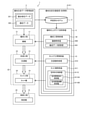
- FIG. 1 is an overall configuration diagram showing an example of a knitted fabric production system 1 to which the knitted fabric production support device 4 according to the first embodiment is applied.
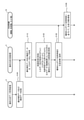
- FIG. 2 is a data flow diagram showing an example of a knitted fabric production system 1 to which the knitted fabric production support device 4 according to the first embodiment is applied.
- the knitted fabric production system 1 is a system for producing the knitted fabric 101 from the knitted yarn 100 through a plurality of production steps 2.
- the production process 2 is roughly divided into a knitting process 21 for knitting the knitted fabric 101 from the knitting yarn 100, a finishing step 22 for finishing the knitted fabric 101 knitted in the knitting process 21, and a finishing process 22. It includes an inspection step 25 for inspecting the finished state of the knitted fabric 101. Further, the finishing step 22 includes a washing step 23 for washing the knitted fabric 101 and a setting step 24 for finishing the knitted fabric 101 in a desired finished state.
- the production step 2 may be further subdivided into the above steps, or may further include steps other than the above steps (for example, sewing step, dyeing step, etc.). Further, each production process 2 may be performed in the same factory or may be performed in different factories.
- the knitted fabric production system 1 is a knitting machine 11 used in the knitting process 21, a washing machine 13 used in the washing process 23, and a setting machine used in the setting process 24 as the production equipment 10 for realizing the production process 2.
- a 14 and an inspection machine 15 used in the inspection step 25 are provided.
- Each of the knitting machine 11, the washing machine 13, the setting machine 14, and the inspection machine 15 has, for example, a control panel composed of a microcontroller and the like, and an operation display panel composed of a touch panel, a monitor, a projector, a switch, a button, and the like.
- An actuator composed of a motor, an air cylinder, or the like, and a sensor for detecting the state of each part (for example, position, speed, temperature, image, etc.) in contact or non-contact.
- the control panel is connected to the actuator and the sensor to control the operation of each part, accepts the operation of the operator by the operation display panel, and outputs various information by display or sound.
- the knitted fabric production system 1 is a knitted fabric production data management device 3 that manages various data required for producing the knitted fabric 101 from the knitted yarn 100 as a management support device for managing and supporting the production process 2. And a knitted fabric production support device 4 that supports workers working in the production facility 10 and the production process 2.
- the production equipment 10, the knitted fabric production data management device 3, and the knitted fabric production support device 4 are connected by a network 16 capable of transmitting and receiving data.
- Each of the knitted fabric production data management device 3 and the knitted fabric production support device 4 is composed of a general-purpose or dedicated computer or the like, and is, for example, a storage unit composed of a calculation means such as a CPU or GPU and a ROM or RAM.
- the means, a communication means for communicating with other equipment or devices via the network 16 by wire or wireless, and a bus connecting each of these parts are provided.
- the knitted fabric production data management device 3 and the knitted fabric production support device 4 may be configured as a single device.
- each of the production equipment 10 (knitting machine 11, washing machine 13, set machine 14, inspection machine 15) and management support device (knitted fabric production data management device 3, knitted fabric production support device 4) will be described. ..
- the knitted fabric production data management device 3 As a production management database, the knitted fabric production data management device 3 includes knitted fabric design data 300 including design data of a knit product which is a finished product of knitted fabric 101, and knitted yarn physical property data 301 indicating physical property values of knitted yarn 100.
- the production management data storage unit 30 for storing the knitting data 302 for knitting the knitted fabric 101 from the knitting yarn 100 is provided.
- the production control data storage unit 30 is configured by the above storage means.
- the knitted fabric design data 300 includes, as design data, the outer shape, structure, pattern, pattern, etc. of the knitted fabric 101, the type of knitting yarn 100 used for knitting the knitted fabric 101, and the finished dimensions of the knitted fabric 101 based on the outer shape. Etc. are recorded for each type of knitted fabric 101. Examples of the type of the knitted fabric 101 include the product model number of the knitted fabric 101, the size and color of the product, and the like.
- the finished dimensions of the knitted fabric 101 are design values for a plurality of measurement items (for example, shoulder width, chest width, width of the body, length, sleeve length, armhole, neck circumference, etc.) when the knitted fabric 101 is inspected in the inspection step 25. And the permissible value for the design value are specified. Therefore, in the inspection step 25, the measurement value, which is the value obtained by measuring the knitted fabric 101, is compared with the design value for each measurement item, and if the difference value (dimensional error) is equal to or less than the allowable value, it is regarded as acceptable. If it is determined and the difference value exceeds the permissible value, it is determined to be rejected (defective).
- the knitting physical property data 301 as the physical property values of the knitting yarn 100, for example, the yarn width, the count, the number of twists, the breaking tension, the elongation rate, the bending rigidity, the friction coefficient, the friction strength, the material, the color and the like are set as the knitting yarn 100. It is recorded for each type of.
- the knitted yarn property data 301 may include at least one of the characteristic values listed above, and may further include any characteristic values other than the above.
- the knitting data 302 is data obtained by converting the design data into the operation of the knitting machine 11 in order to knit the knitted fabric 101 according to the design data in the knitting process 21, for example, the arrangement and type of the stitches, and the connection between the stitches.
- the relationship, the pulling tension, the operation data of the knitting machine 11 (control data of the knitting needle, the carriage, etc., which will be described later) and the like are recorded for each type of the knitted fabric 101.
- the organization data 302 may include at least one of the data listed as described above, and may further include arbitrary data other than the above.
- the knitted fabric design data 300, the knitted yarn physical property data 301, and the knitted fabric data 302 are stored in association with each type of the knitted fabric 101. Therefore, when the knitted fabric 101 specified by the predetermined product model number is produced in the production process 2, each data associated with the product model number is read out from the production control data storage unit 30 and used. ..
- the knitting machine 11 is composed of an arbitrary type of knitting machine such as a flat knitting machine, a circular knitting machine, and a warp knitting machine.
- the knitting machine 11 is knitted around a yarn cone with tension applied to the knitting yarn 100 as a knitting operation in the knitting process 21.
- the knitted fabric 101 is knitted by supplying the yarn 100 to the knitting needle and repeatedly moving the carriage for advancing and retreating the knitting needle along the needle bed.
- the knitting machine 11 executes the knitting operation according to the knitting data 302 transmitted from the knitted fabric production data management device 3. At that time, the knitting machine 11 is in the knitting process 21 based on the knitting process control amount 60 (specifically, the knitting machine control amount 600 and the knitting data adjustment amount 601) transmitted from the knitted fabric production support device 4. The control amount that affects the finished size of the knitted fabric 101 is changed, and the knitting operation is performed according to the changed control amount. The details of the knitting process control amount 60 will be described later.
- washing machine 13 As a washing operation in the washing process 23, the washing machine 13 rotates the drum at a predetermined rotation speed with water, hot water, a solvent, etc. charged into the drum together with the knitted fabric 101, and then blows hot air at a predetermined drying temperature. The knitted fabric 101 is washed by hitting and drying the knitted fabric 101.
- the washing machine 13 controls to affect the finished size of the knitted fabric 101 in the washing process 23 based on the finishing process control amount 61 (specifically, the washing machine control amount 610) transmitted from the knitted fabric production support device 4.
- the amount is changed, and the washing operation is performed according to the changed controlled amount.
- the details of the finishing process control amount 61 will be described later.
- (Set machine 14) As a setting operation in the setting process 24, the setting machine 14 is placed on a work table with a mold fitted inside the knitted fabric 101, and steam of a predetermined steam temperature is applied while sucking the knitted fabric 101. This sets (molds) the knitted fabric 101.
- the set machine 14 controls to affect the finished dimensions of the knitted fabric 101 in the set process 24 based on the finishing process control amount 61 (specifically, the set machine control amount 611) transmitted from the knitted fabric production support device 4.
- the amount is changed, and the set operation is performed according to the changed control amount.
- the details of the finishing process control amount 61 will be described later.
- the formwork used in the set machine 14 forms a predetermined formwork shape, but it is necessary to adjust the formwork shape according to the design and finished dimensions of the knitted fabric 101.
- a type of the set machine 14 there are a first set machine 14A for manually adjusting the formwork shape and a second set machine 14B for automatically adjusting the formwork shape.
- FIG. 3 is an upper view showing an example of the first set machine 14A provided with the formwork shape adjustment instruction unit.
- the first set machine 14A includes an adjustment instruction unit 142 capable of instructing an operator to adjust the formwork shapes of the formwork 140A and 140B.
- the formwork 140A and 140B used in the first set machine 14A are formed by connecting a plurality of formwork constituent members formed along the outer shape of the knitted fabric 101, and the operator can use the formwork constituent members.
- the formwork shapes of the formwork 140A and 140B can be adjusted by expanding and contracting the connecting portion and changing the angle. Further, the formwork 140A and 140B are prepared in a plurality of types having different sizes and shapes (in the example of FIG. 3, two types, types A and B).
- the adjustment instruction unit 142 is composed of, for example, a projector whose projection surface is the work table 141, and as shown in FIG. 3A, the formwork shape control amount 6110 transmitted from the knitted fabric production data management device 3 (Specifically, the projection image 142a showing the formwork shapes of the formwork 140A and 140B is projected onto the work table 141 based on the formwork adjustment instruction control amount 6110A).
- the projected image 142a includes, for example, a character image instructing the types of the formwork 140A and 140B by the formwork name and the like, and a pattern image instructing the formwork shapes of the formwork 140A and 140B matching the knitted fabric 101.
- the operator visually recognizes the character image and selects a specific formwork 140A (type A in the example of FIG. 3) from the plurality of formwork 140A and 140B.
- a specific formwork 140A type A in the example of FIG. 3
- the formwork 140A is placed on the work table 141 and the formwork shapes of the formwork 140A and 140B are adjusted so as to match the pattern image.
- the first set machine 14A performs the set operation in a state where the knitted fabric 101 is fitted in the adjusted formwork 140A and 140B.
- FIG. 4 is an upper view showing an example of a second set machine 14B provided with a formwork shape adjusting mechanism unit.
- the second set machine 14B includes an adjustment mechanism unit 144 capable of adjusting the shape of the formwork of the formwork 143.
- the formwork 143 used in the second set machine 14B moves a plurality of formwork constituent members that can be inserted inside the knitted fabric 101 by combining forward / backward movement, parallel movement, rotational movement, and the like by an actuator.
- the formwork shape of the formwork 143 can be adjusted.
- the formwork constituent members constituting the formwork 143 may be interchangeable by preparing a plurality of types having different sizes and shapes.
- the adjustment mechanism unit 144 is composed of an actuator, a sensor, or the like, and as shown in FIG. 4A, the formwork shape control amount 6110 (specifically, the formwork) transmitted from the knitted fabric production support device 4 is used. Based on the adjustment mechanism control amount 6110B), the formwork constituent member of the formwork 143 is inserted into and removed from the knitted fabric 101 so that the knitted fabric 101 is fitted into the formwork 140A, and the formwork 143 at that time is formed. Adjust the frame shape. Then, as shown in FIG. 4B, the second setting machine 14B performs the setting operation in a state where the knitted fabric 101 is fitted in the adjusted formwork 143.
- the inspection machine 15 takes an image of the knitted fabric 101 with, for example, a camera or the like, performs image processing on the captured image, measures the knitted fabric 101 for each measurement item, and the knitted fabric 101 has a desired finished size. Check if there is one.
- the inspection machine 15 measures the knitted fabric 101 for each measuring item, and the design value for each measuring item included in the knitted fabric design data 300 transmitted from the knitted fabric production data management device 3. Pass or fail (defective) is determined based on the allowable value. Then, the inspection machine 15 notifies the operator of the determined inspection result, and also outputs the inspection result data including the measurement data indicating the measurement value for each inspection item at that time and the pass / fail data indicating pass or fail. It is transmitted to the knitted fabric production data management device 3.
- the measurement data may include not only the measurement value but also the difference between the measurement value and the design value, that is, the dimensional error.
- the knitted fabric production support device 4 responds to the knitting material property data 301 and the knitting data 302 by using the trained model storage unit 40 that stores the trained model 5 which is an example of the correlation data and the trained model 5. It is provided with a processing unit 41 that provides the knitted fabric finished dimension control amount 6 to the production equipment 10 so that it can be used in the production process 2.
- the trained model storage unit 40 is configured by the storage means, and the processing unit 41 is configured by the calculation means.
- the knitted yarn physical property data 301 and the knitting data 302 are input variables, and the knitted fabric finished dimension control amount 6 for controlling the finished dimensions of the knitted fabric 101 in the production process 2 of the knitted fabric 101 is an output variable.
- the correlation between the input variable and the output variable is learned by machine learning using a machine learning device 7 (details will be described later).
- the knitted fabric finished dimension control amount 6 is provided to each production facility 10 via the network 16 in order to control the finished dimension of the knitted fabric 101, for example. If the worker working in each production process 2 has a mobile terminal, or if a display terminal is installed in each production process 2, the knitted fabric finish dimension control amount 6 may be a mobile terminal or the like. It may be provided to the display terminal via a network. In that case, the worker may operate each production facility 10 based on the knitted fabric finished dimension control amount 6 displayed on the display screen of the mobile terminal or the display terminal.
- the knitted fabric finished dimension control amount 6 is a reference control amount (hereinafter referred to as “reference control amount”) and an adjustment amount with respect to the reference control amount (hereinafter referred to as “adjustment control amount”). It is defined by at least one. Therefore, the knitted fabric finished dimension control amount 6 may be determined by the reference control amount or the adjustment control amount, or may be determined by the combination of the reference control amount and the adjustment control amount. The various control amounts included in the knitted fabric finished dimension control amount 6 are also determined by at least one of the reference control amount and the adjustment control amount, as described above.
- the knitted fabric finished dimension control amount 6 includes at least one of a knitting process control amount 60 for controlling the knitting process 21 and a finishing process control amount 61 for controlling the finishing process 22.
- the knitting process control amount 60 includes at least one of a knitting machine control amount 600 that controls the operation of the knitting machine 11 used in the knitting process 21 and a knitting data adjustment amount 601 that adjusts the knitting data 302.
- the knitting machine control amount 600 is at least one of a degree value, a tension of the knitting yarn 100, a pulling amount of the knitted fabric 101, and a movement speed (knitting speed) of the carriage as parameters for controlling the knitting operation of the knitting machine 11. Including one.
- the reference control amount specifies the value of the degree value itself
- the adjustment control amount is the degree set as standard when the knitting machine 11 operates according to the knitting data 302. It specifies the amount to change relative to the value.
- the knitting data adjustment amount 601 is, as parameters related to the knitting data 302, the arrangement and type of stitches, the connection relationship between stitches, the operation data of the knitting machine 11, the loop length, the loop width, the loop length, the knitting width, and (the stitches in the width direction). Number) and at least one of knitting length (number of stitches in the length direction). At that time, if the knitting width is taken as an example, the adjustment control amount specifies an amount to be changed relative to the knitting width recorded in the knitting data 302.
- the organization data adjustment amount 601 is preferably determined as an adjustment control amount rather than as a reference control amount.
- the finishing process control amount 61 is the washing machine control amount 610 that controls the operation of the washing machine 13 used in the washing process 23 in the finishing process 22, and the setting machine 14 used in the setting process 24 in the finishing process 22. Includes at least one of the set machine control amount 611 that controls the operation.
- the washing machine control amount 610 is a parameter for controlling the washing operation of the washing machine 13, such as a washing course, a drum rotation speed, a rotation speed, a rotation time, a water temperature, a type and input amount of a solvent, a drying temperature, and drying. Includes at least one of the hours.
- the reference control amount specifies the value of the rotation speed itself, and the adjustment control amount is set as standard when the washing machine 13 operates. It specifies the amount to be changed relative to the rotation speed.
- the set machine control amount 611 includes a formwork shape control amount 6110 that controls the formwork shape formed by the formwork when the set machine 14 fits the knitted fabric 101 into the formwork and performs steam processing. Further, the set machine control amount 611 is a parameter for controlling the set operation of the set machine 14, in addition to the formwork shape control amount 6110, the steam temperature of the steam processing, the steam processing time, the suction time, and the suction force. Includes at least one of. At that time, to explain by taking the steam temperature as an example, the reference control amount specifies the value of the steam temperature itself, and the adjustment control amount is the steam temperature set as standard when the set machine 14 operates. It specifies the amount to be changed relative to.
- the formwork shape control amount 6110 is a formwork adjustment instruction control amount that controls the adjustment instruction unit 142 when the set machine 14 includes the adjustment instruction unit 142 as in the first set machine 14A shown in FIG. 6110A, and when the set machine 14 includes the adjustment mechanism unit 144 as in the second set machine 14B shown in FIG. 4, the formwork adjustment mechanism control amount 6110B controls the adjustment mechanism unit 144.
- the formwork adjustment instruction control amount 6110A is a control amount for instructing the formwork shape of the formwork 140A by the adjustment instruction unit 142.
- the reference control amount is, for example, when a plurality of formwork 140A and 140B are prepared, the reference control amount to be used is specified from among the plurality of formwork 140A and 140B, and the adjustment control amount is ,
- the amount to be changed relative to the formwork shape formed by the reference formwork that is, the amount of expansion and contraction to expand and contract the formwork constituent members and the amount of angle change to change the angle are specified.
- the formwork adjustment instruction control amount 6110A specifies the type A formwork 140A and is adjusted.
- the control amount specifies the expansion / contraction amount and the angle change fee for the type A formwork 140A.
- the formwork adjustment mechanism control amount 6110B is a control amount for adjusting the formwork shape of the formwork 143 by the formwork adjustment mechanism unit 144.
- the reference control amount indicates, for example, a reference formwork pattern to be used from among a plurality of formwork patterns when a plurality of formwork patterns forming different formwork shapes are prepared.
- the adjustment control amount specifies an amount that changes relative to the formwork shape according to the reference formwork pattern, that is, an actuator drive amount.
- the knitted fabric finished dimension control amount 6 may include at least one of the above control amounts. At that time, when the knitted fabric finished dimension control amount 6 includes, for example, only the set machine control amount 611, the knitted fabric finished dimension control amount 6 (set machine control amount 611) is provided only to the set machine 14. You can do it. Further, the knitted fabric finished dimension control amount 6 may be different depending on the type of the knitting yarn 100 and the type of the knitted fabric 101. For example, when producing the knitted fabric 101 of the type A, only the set machine control amount 611 is used. When producing the knitted fabric 101 of type B, the washing machine control amount 610 and the set machine control amount 611 may be included.
- FIG. 5 is a flowchart showing an example of the knitted fabric production support method by the knitted fabric production support device 4 according to the first embodiment.
- the knitting yarn 100 as a raw material is prepared at the stage before the knitted fabric production support method shown in FIG. 5 is executed, and it is necessary to produce the knitted fabric 101 from the knitting yarn 100. It is assumed that a production control database (knitted fabric design data 300, knitted yarn property data 301, and knitting data 302) is prepared.
- the knitted fabric production data management device 3 corresponds to the knitted yarn physical property data 301 corresponding to the knitted yarn and the knitted fabric 101.
- the knitting data 302 and the knitting data 302 are transmitted to the knitted fabric production support device 4 (step S100).
- the processing unit 41 of the knitted fabric production support device 4 acquires the knitted yarn property data 301 and the knitting data 302 as input data (step S110).
- the processing unit 41 refers to the trained model 5 stored in the trained model storage unit 40, and performs inference processing using the trained model 5 (step S120). Specifically, the processing unit 41 performs predetermined preprocessing on the knitting material property data 301 and the knitting data 302 acquired in step S100, and inputs them to the trained model 5 as input data. Then, the processing unit 41 performs predetermined post-processing on the output data output from the trained model 5 to acquire the knitted fabric finished dimension control amount 6 as the inference result of the trained model 5.
- the processing unit 41 transmits (provides) the knitted fabric finished dimension control amount 6 acquired as a result of the inference processing performed in step S120 to the production equipment 10 (step S130).
- the knitted fabric finished dimension control amount 6 may be transmitted to each corresponding production facility 10, for example, the knitting process control amount 60 is transmitted to the knitting machine 11, and the washing machine control amount 610 is the washing machine. It is transmitted to 13, and the set machine control amount 611 is transmitted to the set machine 14.
- step S140 when each production facility 10 receives the knitted fabric finished dimension control amount 6, the control amount that affects the finished dimension of the knitted fabric 101 is changed in each production process 2 based on the knitted fabric finished dimension control amount 6. Then, it operates according to the changed control amount (step S140).
- the adjustment instruction unit 142 of the first set machine 14A is a formwork adjustment instruction included in the knitted fabric finish dimension control amount 6.
- the projection image 142a showing the formwork shape of the formwork 140A is projected onto the work table 141. Then, after the operator adjusts the formwork shape of the formwork 140A while visually recognizing the projected image 142a, the first set machine 14A is in a state where the knitted fabric 101 is fitted in the adjusted formwork 140A. Perform the set operation.
- the adjustment mechanism unit 144 of the second set machine 14B is a formwork adjustment mechanism included in the knitted fabric finish dimension control amount 6. Based on the control amount 6110B, the actuator is driven to adjust the formwork shape of the formwork 143. Then, the second setting machine 14B performs the setting operation in a state where the knitted fabric 101 is fitted in the adjusted formwork 143.
- the knitted fabric finished dimension control amount 6 is acquired from the knitted yarn physical property data 301 and the knitting data 302, and the knitted fabric finished dimension control amount 6 is obtained. It is provided to the production facility 10 so that it can be used in the production process 2. Therefore, the production step 2 is carried out in a state where the control amount that affects the finished size of the knitted fabric 101 is changed. Therefore, in the production process 2 of the knitted fabric 101, the adjustment work can be simplified and the finished dimensions of the knitted fabric 101 can be stabilized without requiring the experience and ability of the operator.
- FIG. 6 is a schematic block diagram showing an example of the machine learning device 7 according to the first embodiment.
- the machine learning device 7 generates a learning model (learned model 5) capable of inferring the knitted fabric finished dimension control amount 6 based on the knitted yarn physical property data 301 and the knitting data 302.
- the trained model 5 generated by the machine learning device 7 is provided to the knitted fabric production support device 4, stored in the trained model storage unit 40, and used for inference processing by the processing unit 41.
- the machine learning device 7 and the knitted fabric production support device 4 may be configured as a single device.
- the machine learning device 7 is composed of a general-purpose or dedicated computer or the like, and is, for example, a calculation means such as a CPU or GPU, and a ROM or RAM. It is provided with a storage means composed of the above, a communication means for communicating with other equipment or devices via the network 16 by wire or wirelessly, and a bus connecting these parts.
- the machine learning device 7 includes a learning data set acquisition unit 70, a learning data set storage unit 71, a machine learning unit 72, and a learned model storage unit 73.
- the learning data set acquisition unit 70 and the machine learning unit 72 are configured by the above-mentioned calculation means, and the learning data set storage unit 71 and the learned model storage unit 73 are composed of the above-mentioned storage means.
- the learning data set acquisition unit 70 is, for example, an interface unit for acquiring a plurality of data constituting the learning (training) data set from other equipment or devices connected via the network 16.
- the learning data set acquisition unit 70 acquires the knitting material property data 301 and the knitting data 302 as input data from, for example, the knitted fabric production data management device 3 and the terminal device 8 used by the operator, and the knitted fabric finished dimensions.
- the control amount 6 is acquired from the production equipment 10 and the terminal device 8 as output data (teacher data). Then, by associating these input data with the output data, one learning data set is constructed.
- the finished dimensions of the knitted fabric 101 were judged to pass by the inspection machine 15 (or visual inspection).
- the knitted yarn physical property data 301 and the knitting data 302 when the knitted fabric 101 is produced are associated with the knitted fabric finished dimension control amount 6 actually used in the production process 2.
- the knitting material property data 301 and the knitting data 302 constituting the learning data set may be data stored in the knitted fabric production data management device 3, or may be a terminal by the operator based on the production record of the knitted fabric 101.
- the data may be input using the device 8.
- the knitted fabric finished dimension control amount 6 constituting the learning data set corresponds to the operation history of the production equipment 10 when the knitted fabric 101 whose finished dimension is determined to be acceptable is produced.
- the data may be data in which the production equipment 10 automatically records the operating state of the actuator and the detection state of the sensor, or is input by the operator using the terminal device 8 based on the operation record of the operator for the production equipment 10. Data may be used.
- the learning data set storage unit 71 is a database for storing the learning data set acquired by the learning data set acquisition unit 70.
- the specific configuration of the database constituting the learning data set storage unit 71 may be appropriately changed.
- the training data set storage unit 71 and the trained model storage unit 73 are shown as separate storage units, but these may be configured as a single storage unit (database). ..
- the machine learning unit 72 performs machine learning using a plurality of learning data sets stored in the learning data set storage unit 71, so that the input data and the output data included in the plurality of learning data sets can be obtained.
- a learning model (learned model 5) for inferring the correlation is generated.
- supervised learning using a neural network which will be described later, is adopted as a specific method of machine learning, but if the correlation between input and output can be learned from the learning data set, it is possible.
- Other machine learning methods may be adopted, for example, ensemble learning (random forest, boosting, etc.) may be used.
- the trained model storage unit 73 is a database for storing the trained model 5 generated by the machine learning unit 72.
- the trained model 5 stored in the trained model storage unit 73 is, upon request, a real system (for example, a knitted fabric production support device) via a communication line including the Internet or a storage medium in addition to the network 16. Provided in 4).
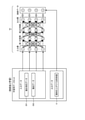
- FIG. 7 is a schematic diagram showing an example of the inference model 50 used in the machine learning device 7 according to the first embodiment.
- FIG. 8 is a schematic diagram showing an example of a neural network model for supervised learning.
- the inference model 50 adopts a neural network model, and is specifically configured as the neural network model shown in FIG.
- the neural network model consists of l neurons (x1 to xl) in the input layer, m neurons (y11 to y1m) in the first intermediate layer, and n neurons (y21 to y2n) in the second intermediate layer. , And o neurons (z1 to zo) in the output layer.
- the first intermediate layer and the second intermediate layer are also called hidden layers, and the neural network may have a plurality of hidden layers in addition to the first intermediate layer and the second intermediate layer. 1 Only the intermediate layer may be used as a hidden layer.
- synapses connecting the neurons between the layers are stretched between the input layer and the first intermediate layer, between the first intermediate layer and the second intermediate layer, and between the second intermediate layer and the output layer. Each synapse is associated with a weight wi (i is a natural number).
- the neural network model uses the training data set to input the input data of the training data set to the input layer, and as a result, the output data output from the output layer and the output data of the training data set ( By comparing with the teacher data), the correlation between the input data and the output data is learned.
- each of the knitting physical property data 301 and the knitting data 302 as input data of the training data set is associated with the neurons of the input layer, and the values of the neurons in the output layer are output from a general neural network.
- the value of the neuron on the output side is associated with the value of the neuron on the input side connected to the neuron and the synapse connecting the neuron on the output side and the neuron on the input side. It is calculated as the sum of several sequences of multiplication values with wi by using the method performed for all neurons other than the neurons in the input layer.
- the format in which the input data is input may be appropriately set in consideration of the accuracy of the trained model 5 and the like.
- preprocessing may be performed on specific input data in order to adjust the number of input data to the number of neurons, or to adjust the value of the input data to a value that can be input to the neurons.
- the values of o neurons z1 to zo in the calculated output layer and the teacher data t1 to to consisting of the knitted fabric finished dimension control amount 6 (operation history) as the output data of the learning data set are obtained, respectively.
- the error is obtained by comparison, and the weight wi associated with each synapse is adjusted (back provacancy) so that the error becomes small.
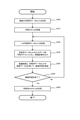
- FIG. 9 is a flowchart showing an example of the machine learning method according to the first embodiment.
- a desired number of learning data sets are prepared, and a plurality of prepared learning data sets are stored in the learning data set storage unit 71 (step S200).
- the number of training data sets prepared here may be set in consideration of the inference accuracy required for the finally obtained trained model 5.
- the method for preparing the learning data set For example, when the knitted fabric 101 is trial-knitted or the main production is performed, and the worker produces the knitted fabric 101 whose finished dimension of the knitted fabric 101 is determined to be acceptable by the inspection machine 15 (or visual inspection). By specifying and inputting the knitted yarn physical property data 301 and the knitting data 302 of the above, and the knitted fabric finished dimension control amount 6 obtained as the operation history when the production equipment 10 actually operates, using the terminal device 8 or the like. , Prepare the input data and output data that make up the training data set. Then, by repeating such work, a desired number of training data sets are prepared.
- a pre-learning inference model 50 is prepared (S210).
- the pre-learning inference model 50 prepared here is composed of the neural network model illustrated in FIG. 8, and the weight of each synapse is set to the initial value.
- one learning data set is randomly selected from the plurality of learning data sets stored in the learning data set storage unit 71 (step S220), and the input data in the one learning data set is selected. Is input to the prepared pre-learning inference model 50 (step S230).
- step S230 Since the output data output as the inference result from the output layer as a result of step S230 is generated by the neural network model before training, the value different from the desired result in most cases, that is, the knitted fabric 101. Information different from the knitted fabric finished dimension control amount 6 (operation history) suitable for producing the knitted fabric 101 whose finished dimension is determined to be acceptable is shown. Therefore, next, the knitted fabric finished dimension control amount 6 (operation history) as the teacher data in one learning data set acquired in step S220, and the knitted fabric finished dimension control output from the output layer in step S230. Machine learning is performed using the quantity 6 (inference result) (step S240).
- Step S250 whether or not it is necessary to continue machine learning is determined by, for example, the error between the output data and the teacher data, and the remaining number of unlearned learning data sets stored in the learning data set storage unit 71.
- Step S250 If the learning end condition is not satisfied and machine learning is continued (No in step S250), the process returns to step S220, and if the learning end condition is satisfied and machine learning is ended (Yes in step S250).
- step S260 When the machine learning is continued, the steps S220 to S240 are performed a plurality of times for the inference model 50 being learned using the unlearned learning data set. The accuracy of the finally generated trained model 5 generally increases in proportion to this number of times.
- step S250 When machine learning is terminated (Yes in step S250), the inference model 50 generated by adjusting the weights associated with each synapse is stored in the trained model storage unit 73 as the trained model 5. (Step S260), the series of machine learning steps is completed.
- one machine learning process is repeatedly executed for one (pre-learning) inference model 50.
- the accuracy is improved, and a trained model 5 sufficient to be applied to the knitted fabric production support device 4 is acquired.
- the present invention is not limited to this acquisition method.
- a plurality of trained models are stored in the trained model storage unit 73 with the trained model 5 that has been subjected to machine learning a predetermined number of times as one candidate, and the data for determining validity is stored in the plurality of trained models.
- One of the best trained models 5 to apply to the knitted fabric production support device 4 by inputting a set to generate an output layer (values of neurons) and comparing the accuracy of the values specified in the output layer. You may choose.
- the validity determination data set is configured in the same manner as the learning data set, but is data that is not used for machine learning.
- the knitted fabric finished dimension control amount 6 for realizing the desired finished dimension is obtained from the knitted yarn physical property data 301 and the knitting data 302. It is possible to generate a trained model 5 that can be accurately provided (inferred).
- the knitted fabric production data management device 3 manages the knitted yarn property data 301 and the knitting data 302, and provides these data to the production equipment 10.
- an IC tag recording the knitted yarn physical property data 301 and the knitting data 302 is attached to the knitted fabric 101, and these are transmitted from the IC tag by the IC tag reading unit. The data is read out and used in the production facility 10.
- FIG. 10 is a configuration diagram showing an example of a knitted fabric production support device 4 according to a second embodiment and a first set machine 14A including an IC tag reading unit 145.
- the first set machine 14A includes an IC tag reading unit 145 that reads the knitted yarn physical property data 301 and the knitting data 302 from the IC tag 102 attached to the knitted fabric 101.
- an index for calling these data (knitting material property data 301 and knitting data 302) from the knitted fabric production data management device 3
- the data may be stored, the IC tag reading unit 145 may read the index data from the IC tag 102, and the knitting material property data 301 and the knitting data 302 may be called from the read index data.
- the amount of data stored in the IC tag 102 can be reduced.
- the first set machine 14A transmits the knitted yarn physical characteristic data 301 and the knitting data 302 read from the IC tag 102 by the IC tag reading unit 145 to the knitted fabric production support device 4.
- the processing unit 41 of the knitted fabric production support device 4 inputs the knitted yarn physical characteristic data 301 and the knitting data 302 transmitted from the first set machine 14A into the trained model 5, so that the knitted fabric finished dimension control amount 6 (specifically).
- the formwork adjustment instruction control amount 6110A) is acquired and transmitted to the first set machine 14A.
- the adjustment instruction unit 142 of the first set machine 14A projects a projection image showing the formwork shape of the formwork 140A onto the work table 141 based on the formwork adjustment instruction control amount 6110A. When the formwork shape of the formwork 140A is adjusted by the operator, the first set machine 14A performs the set operation.
- FIG. 10 illustrates the set machine 14 (first set machine 14A), but the other production equipment 10 (knitting machine 11, washing machine 13) is provided with an IC tag reading unit.
- the ground production support device 4 may transmit the knitted fabric finished dimension control amount 6 according to the knitted yarn physical property data 301 and the knitting data 302 read from the IC tag 102 to each production facility 10.
- the knitted fabric finished dimension control amount 6 is acquired based on the knitted yarn physical property data 301 and the knitting data 302 read from the IC tag 102.
- the knitted fabric finished dimension control amount 6 is provided to the production equipment 10 so as to be available in the production process 2. Therefore, since the knitted fabric finished dimension control amount 6 suitable for the knitted fabric 101 can be easily used, the finished dimension of the knitted fabric 101 can be stabilized.
- the present invention is not limited to the above-described embodiment, and can be variously modified and implemented without departing from the gist of the present invention. And all of them are included in the technical idea of the present invention.
- the present invention can be provided not only by the mode of the knitted fabric production support device described above, but also by the mode of an inference device for performing inference.
- the inference device may include a memory and at least one processor, of which the processor may execute a series of processes.
- the series of processes includes a process of inputting knitting physical property data indicating a physical property value of a thread and knitting data for knitting a knitted fabric from a knitted yarn, and inputting a knitting physical property data and knitting data. And the process of inferring the control amount of the knitted fabric finished dimension for controlling the finished dimension of the knitted fabric in the production process.
- the inference device can be configured by a stand-alone computer, a portable computer owned by a worker, or the like, and a knitted fabric production support device can be provided. It can be easily applied to various devices as compared with the case of mounting.
- the inference device is configured by the computer as described above, when the operator inputs the yarn physical property data and the knitting data to the computer, the optimum knitted fabric finished dimension control amount according to the input data is obtained. For example, by being displayed on the screen, the operator can operate the production equipment based on the display content of the screen.
- the machine learning device 7 in the present invention and the trained model 5 learned by the machine learning method are used as described above, and the knitted fabric production support device is used. It can be naturally understood by those skilled in the art that the inference method implemented by the processing unit 41 of 4 may be applied.
- the knitted fabric production support device 4 has been described as being composed of a device different from each production facility 10.
- the knitted fabric production support device 4 may be incorporated in each production facility 10 as one function of the control panel of each production facility 10, for example.
- the trained model 5 has been described as an example of the correlation data.
- the correlation data can be in any format as long as it is data showing the correlation between the input variable and the output variable, with the knitting material property data and the knitting data as the input variable and the knitted fabric finished dimension control amount as the output variable. It may be adopted. Therefore, instead of the trained model 5, the correlation data may be, for example, a data table in which the knitted fabric finished dimension control amount according to the knitted yarn property data and the knitting data is stored in a table shape, or a multiple regression analysis or the like. It may be by multivariate analysis.
- the machine learning device 7 generates a trained model 5 based on the learning data set acquired by the learning data set acquisition unit 70 and stored in the learning data set storage unit 71. , It has been described as being provided to the knitted fabric production support device 4. On the other hand, the machine learning device 7 produces the knitted yarn property data 301 and the knitted yarn property data 301 when the knitted fabric 101 determined to pass in the inspection step 25 is produced when the knitted fabric 101 is produced by trial knitting or main production. A new training data set is acquired by collecting the knitting data 302 and the knitted fabric finished dimension control amount 6 (operation history) of the production equipment 10 at any time, and the trained model is based on the new training data set. 5 may be updated (re-learned).
- the knitted fabric production data management device 3, the knitted fabric production support device 4, and the machine learning device 7 have been described as being provided as devices that operate independently.
- the operations realized by each of the knitted fabric production data management device 3, the knitted fabric production support device 4, and the machine learning device 7 are provided in the form of a program to be executed by an arbitrary processor. It may be provided in the form of a non-temporary computer-readable medium containing one or more instructions for causing the processor to perform the operation.
- Knitted fabric production data management device 30 ... Production management data storage unit, 300 ... knitted fabric design data, 301 ... knitting material property data, 302 ... knitting data, 4 ... knitted fabric production support device, 40 ... learned model storage unit, 41 ... processing unit, 5 ... trained model, 50 ... inference model, 6 ... Knitted fabric finish dimension control amount, 60 ... Knitting process control amount, 61 ... Finishing process control amount, 600 ... Knitting machine control amount, 601 ... Knitting data adjustment amount, 610 ... Washing machine control amount, 611 ... Set machine control amount, 6110 ... Formwork shape control amount, 6110A ... Formwork adjustment instruction control amount, 6110B ... Formwork adjustment mechanism control amount, 7 ... Machine learning device, 70 ... Learning data set acquisition unit, 71 ... Learning data set storage unit, 72 ... Machine learning unit, 73 ... Learned model storage unit
Landscapes
- Engineering & Computer Science (AREA)
- Textile Engineering (AREA)
- General Engineering & Computer Science (AREA)
- Manufacturing & Machinery (AREA)
- Quality & Reliability (AREA)
- Physics & Mathematics (AREA)
- General Physics & Mathematics (AREA)
- Automation & Control Theory (AREA)
- Knitting Machines (AREA)
Abstract
【課題】編地の生産工程における調整作業を簡略化するとともに、作業者の経験や能力を必要とすることなく、編地の仕上がり寸法を安定化させることを可能とする編地生産支援装置を提供する。 【解決手段】編地生産支援装置4は、編糸の物性値を示す編糸物性データ301と、編糸から編地を編成するための編成データ302とを入力変数、編地の生産工程2において編地の仕上がり寸法を制御するための編地仕上がり寸法制御量6を出力変数として、入力変数及び出力変数の相関関係を示す学習済みモデル5(相関関係データ)を記憶する学習済みモデル記憶部40と、学習済みモデル5を用いて、編糸物性データ301及び編成データ302に応じた編地仕上がり寸法制御量6を、生産工程2にて利用可能に提供する処理部41とを備える。
Description
本発明は、編地生産支援装置、機械学習装置、及び、推論装置に関するものである。
編地(例えば、ニット製品等)を生産する生産工程では、編糸から編地を編成する編成工程と、編地に対して各種の仕上げ処理を施す仕上げ工程とを行い、デザイン通りの仕上がり寸法を満たす編地を生産することが求められる。
特に、仕上げ工程に含まれるセット工程と呼ばれる工程では、編地を型枠に嵌めた状態でスチーム処理を施して編地を成形するため、編地のサイズや形状に応じて複数種類の型枠を用意する必要がある。そこで、事前に用意する型枠の種類を減らすため、特許文献1には、型枠が形成する型枠形状を変更することが可能な型枠が開示されている。
特許文献1に開示された型枠は、型枠形状を変更可能に構成されているため、セット工程で作業する作業者が仕上がり寸法に合わせて型枠形状を調整することになる。このとき、作業者は、セット工程の完了後に編地を型枠から外した後の編地の収縮量を考慮しながら、型枠形状を調整する必要があるが、編地の収縮量は一様ではなく、編糸の物性値や編地の編成方法に応じて変動する。そのため、型枠形状の調整作業には時間と手間を要し、作業者の経験や能力も求められるため、編地の仕上がり寸法が安定しない要因となっていた。さらに、セット工程だけでなく、セット工程以外の他の仕上げ工程や編成工程においても、編糸の物性値や編地の編成方法に応じて編地の仕上がり寸法に影響を与える要素が存在することが分かった。
本発明は、上述した課題に鑑み、編地の生産工程における調整作業を簡略化するとともに、作業者の経験や能力を必要とすることなく、編地の仕上がり寸法を安定化させることを可能とする編地生産支援装置、機械学習装置、及び、推論装置を提供することを目的とする。
上記目的を達成するために、本発明の第1の態様に係る編地生産支援装置は、
編糸の物性値を示す編糸物性データと、前記編糸から編地を編成するための編成データとを入力変数、前記編地の生産工程において前記編地の仕上がり寸法を制御するための編地仕上がり寸法制御量を出力変数として、前記入力変数及び前記出力変数の相関関係を示す相関関係データを記憶する記憶部と、
前記相関関係データを用いて、前記編糸物性データ及び前記編成データに応じた前記編地仕上がり寸法制御量を、前記生産工程にて利用可能に提供する処理部と、を備える、
編糸の物性値を示す編糸物性データと、前記編糸から編地を編成するための編成データとを入力変数、前記編地の生産工程において前記編地の仕上がり寸法を制御するための編地仕上がり寸法制御量を出力変数として、前記入力変数及び前記出力変数の相関関係を示す相関関係データを記憶する記憶部と、
前記相関関係データを用いて、前記編糸物性データ及び前記編成データに応じた前記編地仕上がり寸法制御量を、前記生産工程にて利用可能に提供する処理部と、を備える、
また、上記目的を達成するために、本発明の第2の態様に係る機械学習装置は、
編地の生産工程を支援するために用いられる機械学習装置であって、
編糸の物性値を示す編糸物性データと前記編糸から前記編地を編成するための編成データとからなる入力データと、前記入力データに対応付けられ、前記生産工程において前記編地の仕上がり寸法を制御するための編地仕上がり寸法制御量からなる出力データとで構成される学習用データセットを複数組記憶する学習用データセット記憶部と、
前記学習用データセットが複数組入力されることで、前記入力データと前記出力データとの相関関係を推論する学習モデルを学習する機械学習部と、
前記機械学習部により学習された前記学習モデルを学習済みモデルとして記憶する学習済みモデル記憶部と、を備える。
編地の生産工程を支援するために用いられる機械学習装置であって、
編糸の物性値を示す編糸物性データと前記編糸から前記編地を編成するための編成データとからなる入力データと、前記入力データに対応付けられ、前記生産工程において前記編地の仕上がり寸法を制御するための編地仕上がり寸法制御量からなる出力データとで構成される学習用データセットを複数組記憶する学習用データセット記憶部と、
前記学習用データセットが複数組入力されることで、前記入力データと前記出力データとの相関関係を推論する学習モデルを学習する機械学習部と、
前記機械学習部により学習された前記学習モデルを学習済みモデルとして記憶する学習済みモデル記憶部と、を備える。
また、上記目的を達成するために、本発明の第3の態様に係る推論装置は、
編地の生産工程を支援するために用いられる推論装置であって、
前記推論装置は、メモリと、少なくとも1つのプロセッサとを備え、
前記少なくとも1つのプロセッサは、
編糸の物性値を示す編糸物性データと、前記編糸から前記編地を編成するための編成データとが入力される処理と、
前記編糸物性データ及び前記編成データが入力されると、前記生産工程において前記編地の仕上がり寸法を制御するための編地仕上がり寸法制御量を推論する処理と、を実行するように構成される。
編地の生産工程を支援するために用いられる推論装置であって、
前記推論装置は、メモリと、少なくとも1つのプロセッサとを備え、
前記少なくとも1つのプロセッサは、
編糸の物性値を示す編糸物性データと、前記編糸から前記編地を編成するための編成データとが入力される処理と、
前記編糸物性データ及び前記編成データが入力されると、前記生産工程において前記編地の仕上がり寸法を制御するための編地仕上がり寸法制御量を推論する処理と、を実行するように構成される。
本発明の編地生産支援装置及び推論装置によれば、編糸物性データ及び編成データから編地の生産工程において編地の仕上がり寸法を制御するための編地仕上がり寸法制御量を取得し、その編地仕上がり寸法制御量を生産工程にて利用可能に提供する。そのため、編地の仕上がり寸法に影響を与える制御量が変更された状態で生産工程が実施される。したがって、編地の生産工程において、調整作業を簡略化するとともに、作業者の経験や能力を必要とすることなく、編地の仕上がり寸法を安定化させることができる。
また、本発明の機械学習装置によれば、編糸物性データと編成データとから、編地の生産工程において編地の仕上がり寸法を制御するための編地仕上がり寸法制御量を的確に取得(推論)することが可能な学習済みモデルを生成することができる。
以下、図面を参照して本発明を実施するための各実施形態について説明する。なお、以下では本発明の目的を達成するための説明に必要な範囲を模式的に示し、本発明の該当部分の説明に必要な範囲を主に説明することとし、説明を省略する箇所については公知技術によるものとする。
(第1の実施形態)
図1は、第1の実施形態に係る編地生産支援装置4が適用された編地生産システム1の一例を示す全体構成図である。図2は、第1の実施形態に係る編地生産支援装置4が適用された編地生産システム1の一例を示すデータフロー図である。
図1は、第1の実施形態に係る編地生産支援装置4が適用された編地生産システム1の一例を示す全体構成図である。図2は、第1の実施形態に係る編地生産支援装置4が適用された編地生産システム1の一例を示すデータフロー図である。
編地生産システム1は、編糸100から複数の生産工程2を経て編地101を生産するシステムである。
生産工程2は、大別すると、編糸100から編地101を編成する編成工程21と、編成工程21にて編成された編地101を仕上げする仕上げ工程22と、仕上げ工程22にて仕上げされた編地101の仕上がり状態を検査する検査工程25とからなる。また、仕上げ工程22は、編地101を洗濯する洗濯工程23と、編地101を所望の仕上がり状態に仕上げるセット工程24とからなる。なお、生産工程2としては、上記の工程がさらに細分化されていてもよいし、上記の工程以外の工程(例えば、縫製工程、染色工程等)がさらに含まれるものでもよい。また、各生産工程2は、同一の工場内で行われてもよいし、別々の工場で行われてもよい。
編地生産システム1は、生産工程2を実現する生産設備10として、編成工程21にて用いられる編機11と、洗濯工程23にて用いられる洗濯機13、セット工程24にて用いられるセット機14と、検査工程25にて用いられる検査機15とを備える。
編機11、洗濯機13、セット機14及び検査機15の各々は、例えば、マイクロコントローラ等で構成される制御盤と、タッチパネル、モニタ、プロジェクタ、スイッチ、ボタン等で構成される操作表示盤と、モータやエアシリンダ等で構成されるアクチュエータと、各部の状態(例えば、位置、速度、温度、画像等)を接触又は非接触で検出するセンサとを備える。制御盤は、アクチュエータ及びセンサに接続されて各部の動作を制御し、操作表示盤により作業者の操作を受け付けるとともに、各種の情報を表示や音で出力する。
また、編地生産システム1は、生産工程2を管理・支援する管理支援装置として、編糸100から編地101を生産する際に必要となる各種のデータを管理する編地生産データ管理装置3と、生産設備10や生産工程2にて作業する作業者を支援する編地生産支援装置4とを備える。編地生産システム1において、生産設備10、編地生産データ管理装置3及び編地生産支援装置4は、データを送受信可能なネットワーク16により接続されている。
編地生産データ管理装置3及び編地生産支援装置4の各々は、汎用又は専用のコンピュータ等で構成されており、例えば、CPU、GPU等の演算手段と、ROM、RAM等で構成される記憶手段と、有線又は無線によりネットワーク16を介して他の設備や装置と通信するための通信手段と、これら各部を接続するバスとを備える。なお、編地生産データ管理装置3及び編地生産支援装置4は、単一の装置として構成されていてもよい。
次に、生産設備10(編機11、洗濯機13、セット機14、検査機15)、及び、管理支援装置(編地生産データ管理装置3、編地生産支援装置4)の各々について説明する。
(編地生産データ管理装置3)
編地生産データ管理装置3は、生産管理データベースとして、編地101の完成品となるニット製品のデザインデータを含む編地設計データ300と、編糸100の物性値を示す編糸物性データ301と、編糸100から編地101を編成するための編成データ302とを記憶する生産管理データ記憶部30を備える。なお、生産管理データ記憶部30は、上記記憶手段により構成される。
編地生産データ管理装置3は、生産管理データベースとして、編地101の完成品となるニット製品のデザインデータを含む編地設計データ300と、編糸100の物性値を示す編糸物性データ301と、編糸100から編地101を編成するための編成データ302とを記憶する生産管理データ記憶部30を備える。なお、生産管理データ記憶部30は、上記記憶手段により構成される。
編地設計データ300は、デザインデータとして、編地101の外形、組織、柄、パターン等とともに、編地101の編成に用いられる編糸100の種類、及び、外形に基づく編地101の仕上がり寸法等を、編地101の種類毎に記録したものである。編地101の種類は、例えば、編地101の製品型番や製品のサイズ及び色等が挙げられる。
編地101の仕上がり寸法は、検査工程25において編地101を検査するときの複数の採寸項目(例えば、肩幅、胸幅、身幅、着丈、袖丈、アームホール、首回り等)に対して、設計値と、その設計値に対する許容値とが指定されたものである。したがって、検査工程25では、採寸項目毎に、編地101を採寸した値である採寸値と設計値とを比較し、その差分値(寸法誤差)が許容値以下である場合には、合格と判定され、その差分値が許容値を超える場合には、不合格(不良)と判定される。
編糸物性データ301は、編糸100の物性値として、例えば、糸幅、番手、撚数、破断張力、伸び率、曲げ剛性、摩擦係数、摩擦強度、素材、及び、色等を編糸100の種類毎に記録したものである。なお、編糸物性データ301は、上記のように列挙した特性値の少なくとも1つを含むものであればよく、上記以外の任意の特性値をさらに含むものでもよい。
編成データ302は、編成工程21においてデザインデータ通りの編地101を編成するために、そのデザインデータを編機11の動作に変換したデータであり、例えば、編目の配列や種類、編目間の接続関係、引下げ張力、及び、編機11の動作データ(後述する編針やキャリッジ等の制御データ)等を編地101の種類毎に記録したものである。なお、編成データ302は、上記のように列挙したデータの少なくとも1つを含むものであればよく、上記以外の任意のデータをさらに含むものでもよい。
編地設計データ300、編糸物性データ301及び編成データ302は、編地101の種類毎に対応付けられて記憶されている。したがって、生産工程2において所定の製品型番により特定される編地101を生産する場合には、当該製品型番により対応付けられた各データが、生産管理データ記憶部30から読み出されて利用される。
(編機11)
編機11は、例えば、横編機、丸編機、経編機等の任意の形式の編機で構成されている。以下、編機11が横編機によって構成される場合を例にすると、編機11は、編成工程21における編成動作として、編糸100に張力を付与した状態で糸コーンに巻回された編糸100を編針に供給し、編針を進退操作するキャリッジをニードルベッドに沿って繰り返し移動することで編地101を編成する。
編機11は、例えば、横編機、丸編機、経編機等の任意の形式の編機で構成されている。以下、編機11が横編機によって構成される場合を例にすると、編機11は、編成工程21における編成動作として、編糸100に張力を付与した状態で糸コーンに巻回された編糸100を編針に供給し、編針を進退操作するキャリッジをニードルベッドに沿って繰り返し移動することで編地101を編成する。
編機11は、編地生産データ管理装置3から送信された編成データ302に従って編成動作を実行する。その際、編機11は、編地生産支援装置4から送信された編成工程制御量60(具体的には、編機制御量600、及び、編成データ調整量601)に基づいて編成工程21において編地101の仕上がり寸法に影響を与える制御量を変更し、変更した制御量に応じて編成動作を行う。なお、編成工程制御量60の詳細は後述する。
(洗濯機13)
洗濯機13は、洗濯工程23における洗濯動作として、ドラム内に編地101とともに水、湯、溶剤等を投入した状態で所定の回転速度でドラムを回転し、その後に所定の乾燥温度の熱風を当てて編地101を乾燥させることで編地101を洗濯(洗浄)する。
洗濯機13は、洗濯工程23における洗濯動作として、ドラム内に編地101とともに水、湯、溶剤等を投入した状態で所定の回転速度でドラムを回転し、その後に所定の乾燥温度の熱風を当てて編地101を乾燥させることで編地101を洗濯(洗浄)する。
洗濯機13は、編地生産支援装置4から送信された仕上げ工程制御量61(具体的には、洗濯機制御量610)に基づいて洗濯工程23において編地101の仕上がり寸法に影響を与える制御量を変更し、変更した制御量に応じて洗濯動作を行う。なお、仕上げ工程制御量61の詳細は後述する。
(セット機14)
セット機14は、セット工程24におけるセット動作として、編地101の内側に型枠が嵌められた状態で作業テーブルに載置し、編地101を吸引しながら、所定のスチーム温度のスチームを当てることで編地101をセット(成形)する。
セット機14は、セット工程24におけるセット動作として、編地101の内側に型枠が嵌められた状態で作業テーブルに載置し、編地101を吸引しながら、所定のスチーム温度のスチームを当てることで編地101をセット(成形)する。
セット機14は、編地生産支援装置4から送信された仕上げ工程制御量61(具体的には、セット機制御量611)に基づいてセット工程24において編地101の仕上がり寸法に影響を与える制御量を変更し、変更した制御量に応じてセット動作を行う。なお、仕上げ工程制御量61の詳細は後述する。
セット機14で使用される型枠は、所定の型枠形状を形成するものであるが、編地101のデザインや仕上がり寸法に応じて型枠形状を調整する必要がある。その際、セット機14の形式として、型枠形状を手動で調整する第1のセット機14Aと、型枠形状を自動で調整する第2のセット機14Bとがある。
図3は、型枠形状の調整指示部を備える第1のセット機14Aの一例を示す上視図である。
第1のセット機14Aは、型枠140A、140Bの型枠形状を調整するように作業者に指示可能な調整指示部142を備える。第1のセット機14Aで使用される型枠140A、140Bは、編地101の外形に沿うように形成された複数の型枠構成部材を連結したものであり、作業者が型枠構成部材の連結部を伸縮したり角度を変更したりすることで、型枠140A、140Bの型枠形状を調整可能に構成されている。また、型枠140A、140Bは、サイズや形状が異なる複数の種類(図3の例では、タイプA、Bの2種類)が用意されている。
調整指示部142は、例えば、作業テーブル141を投影面とするプロジェクタで構成されており、図3(a)に示すように、編地生産データ管理装置3から送信された型枠形状制御量6110(具体的には、型枠調整指示制御量6110A)に基づいて、型枠140A、140Bの型枠形状を示す投影画像142aを作業テーブル141に投影する。投影画像142aは、例えば、型枠140A、140Bの種類を型枠名称等で指示する文字画像と、編地101に合わせた型枠140A、140Bの型枠形状を指示するパターン画像とを含む。
したがって、作業者は、図3(a)に示すように、文字画像を視認して複数の型枠140A、140Bの中から特定の型枠140A(図3の例では、タイプA)を選択し、図3(b)に示すように、その型枠140Aを作業テーブル141に載置してパターン画像に合わせるようにして型枠140A、140Bの型枠形状を調整する。そして、第1のセット機14Aは、図3(c)に示すように、その調整済みの型枠140A、140Bに編地101が嵌められた状態でセット動作を行う。
図4は、型枠形状の調整機構部を備える第2のセット機14Bの一例を示す上視図である。
第2のセット機14Bは、型枠143の型枠形状を調整可能な調整機構部144を備える。第2のセット機14Bで使用される型枠143は、編地101の内側に挿入可能な複数の型枠構成部材をアクチュエータにより進退移動、平行移動、回転移動等を組み合わせて移動させることで、型枠143の型枠形状を調整可能に構成されている。また、型枠143を構成する型枠構成部材は、サイズや形状が異なる複数の種類が用意されて交換可能であってもよい。
調整機構部144は、アクチュエータやセンサ等で構成されており、図4(a)に示すように、編地生産支援装置4から送信された型枠形状制御量6110(具体的には、型枠調整機構制御量6110B)に基づいて、型枠143の型枠構成部材を編地101に抜き差ししながら型枠140Aに編地101が嵌められた状態にするとともに、そのときの型枠143の型枠形状を調整する。そして、第2のセット機14Bは、図4(b)に示すように、その調整済みの型枠143に編地101が嵌められた状態でセット動作を行う。
(検査機15)
検査機15は、例えば、カメラ等で編地101を撮像し、その撮像した画像に対して画像処理を施して、採寸項目毎に編地101を採寸し、編地101が所望の仕上がり寸法であるか否かを検査する。
検査機15は、例えば、カメラ等で編地101を撮像し、その撮像した画像に対して画像処理を施して、採寸項目毎に編地101を採寸し、編地101が所望の仕上がり寸法であるか否かを検査する。
具体的には、検査機15は、採寸項目毎に編地101を採寸した採寸値と、編地生産データ管理装置3から送信された編地設計データ300に含まれる採寸項目毎の設計値及び許容値とに基づいて、合格又は不合格(不良)を判定する。そして、検査機15は、その判定した検査結果を作業者に報知するとともに、そのときの検査項目毎の採寸値を示す採寸データと、合格又は不合格を示す合否データとを含む検査結果データを編地生産データ管理装置3に送信する。なお、採寸データは、採寸値だけでなく、採寸値と設計値との差、すなわち、寸法誤差を含むようにしてもよい。
(編地生産支援装置4)
編地生産支援装置4は、相関関係データの一例である学習済みモデル5を記憶する学習済みモデル記憶部40と、学習済みモデル5を用いて、編糸物性データ301及び編成データ302に応じた編地仕上がり寸法制御量6を、生産工程2にて利用可能に生産設備10に提供する処理部41とを備える。なお、学習済みモデル記憶部40は、上記記憶手段により構成され、処理部41は、上記演算手段により構成される。
編地生産支援装置4は、相関関係データの一例である学習済みモデル5を記憶する学習済みモデル記憶部40と、学習済みモデル5を用いて、編糸物性データ301及び編成データ302に応じた編地仕上がり寸法制御量6を、生産工程2にて利用可能に生産設備10に提供する処理部41とを備える。なお、学習済みモデル記憶部40は、上記記憶手段により構成され、処理部41は、上記演算手段により構成される。
学習済みモデル5は、編糸物性データ301と、編成データ302とを入力変数、編地101の生産工程2において編地101の仕上がり寸法を制御するための編地仕上がり寸法制御量6を出力変数として、入力変数及び出力変数の相関関係を、機械学習装置7(詳細は後述する)を用いて機械学習により学習させたものである。
編地仕上がり寸法制御量6は、編地101の仕上がり寸法を制御するために、例えば、各生産設備10にネットワーク16を介して提供される。なお、各生産工程2で作業する作業者が携帯端末を所持している場合や、各生産工程2に表示端末が設置されている場合には、編地仕上がり寸法制御量6は、携帯端末や表示端末にネットワークを介して提供されてもよい。その場合には、作業者が、携帯端末や表示端末の表示画面に表示された編地仕上がり寸法制御量6に基づいて各生産設備10を操作すればよい。
また、編地仕上がり寸法制御量6は、基準となる制御量(以下、「基準制御量」という。)と、基準となる制御量に対する調整量(以下、「調整制御量」という。)との少なくも一方により定められたものである。したがって、編地仕上がり寸法制御量6は、基準制御量又は調整制御量により定められていてもよいし、基準制御量及び調整制御量の組み合わせにより定められていてもよい。なお、編地仕上がり寸法制御量6に含まれる各種の制御量についても、上記と同様に、基準制御量と、調整制御量との少なくも一方により定められたものである。
編地仕上がり寸法制御量6は、編成工程21を制御する編成工程制御量60と、仕上げ工程22を制御する仕上げ工程制御量61と、の少なくとも一方を含む。
編成工程制御量60は、編成工程21にて用いられる編機11の動作を制御する編機制御量600と、編成データ302を調整する編成データ調整量601と、の少なくとも一方を含む。
編機制御量600は、編機11の編成動作を制御する際のパラメータとして、度目値、編糸100の張力、編地101の引下げ量、及び、キャリッジの移動速度(編成速度)の少なくとも1つを含む。度目値を例にして説明すると、基準制御量は、度目値そのものの値を指定するものであり、調整制御量は、編機11が編成データ302に従って動作するときに標準的に設定された度目値に対して相対的に変更する量を指定するものである。
編成データ調整量601は、編成データ302に関するパラメータとして、編目の配列や種類、編目間の接続関係、編機11の動作データ、ループ長、ループ幅、ループ丈、編み幅、(幅方向の目数)、及び、編み丈(丈方向の目数)の少なくとも1つを含む。その際、編み幅を例にして説明すると、調整制御量は、編成データ302に記録された編み幅に対して相対的に変更する量を指定するものである。なお、編成データ調整量601は、基準制御量として定められるよりも調整制御量として定められる方が好ましい。
仕上げ工程制御量61は、仕上げ工程22のうち洗濯工程23にて用いられる洗濯機13の動作を制御する洗濯機制御量610と、仕上げ工程22のうちセット工程24にて用いられるセット機14の動作を制御するセット機制御量611と、の少なくとも一方を含む。
洗濯機制御量610は、洗濯機13の洗濯動作を制御する際のパラメータとして、洗濯コース、ドラムの回転速度、回転数、回転時間、水温、溶剤の種類や投入量、乾燥温度、及び、乾燥時間の少なくとも1つを含む。その際、ドラムの回転速度を例にして説明すると、基準制御量は、回転速度そのものの値を指定するものであり、調整制御量は、洗濯機13が動作するときに標準的に設定された回転速度に対して相対的に変更する量を指定するものである。
セット機制御量611は、セット機14が編地101を型枠に嵌めてスチーム処理を行うものであるとき、型枠により形成される型枠形状を制御する型枠形状制御量6110を含む。また、セット機制御量611は、セット機14のセット動作を制御する際のパラメータとして、型枠形状制御量6110以外にも、スチーム処理のスチーム温度やスチーム処理時間、吸引時間、及び、吸引力の少なくとも1つを含む。その際、スチーム温度を例にして説明すると、基準制御量は、スチーム温度そのものの値を指定するものであり、調整制御量は、セット機14が動作するときに標準的に設定されたスチーム温度に対して相対的に変更する量を指定するものである。
型枠形状制御量6110は、セット機14が、図3で示す第1のセット機14Aのように、調整指示部142を備える場合には、調整指示部142を制御する型枠調整指示制御量6110Aであり、セット機14が、図4で示す第2のセット機14Bのように、調整機構部144を備える場合には、調整機構部144を制御する型枠調整機構制御量6110Bである。
型枠調整指示制御量6110Aは、調整指示部142により型枠140Aの型枠形状を指示するための制御量である。基準制御量は、例えば、複数の型枠140A、140Bが用意されている場合に、複数の型枠140A、140Bの中から使用すべき基準の型枠を指定するものであり、調整制御量は、基準の型枠が形成する型枠形状に対して相対的に変更する量、すなわち、型枠構成部材を伸縮させる伸縮量や角度を変更する角度変更量を指定するものである。図3の例において、型枠調整指示制御量6110Aが、基準制御量及び調整制御量の組み合わせにより定められている場合、基準制御量は、タイプAの型枠140Aを指定するものであり、調整制御量は、タイプAの型枠140Aに対しての伸縮量や角度変更料を指定するものである、
型枠調整機構制御量6110Bは、調整機構部144により型枠143の型枠形状を調整するための制御量である。基準制御量は、例えば、異なる型枠形状を形成する複数の型枠パターンが用意されている場合に、複数の型枠パターンの中から使用すべき基準の型枠パターンを指示するものであり、調整制御量は、基準の型枠パターンによる型枠形状に対して相対的に変更する量、すなわち、アクチュエータの駆動量を指定するものである。
なお、編地仕上がり寸法制御量6は、上記の制御量の少なくとも1つを含むものであればよい。その際、編地仕上がり寸法制御量6が、例えば、セット機制御量611だけを含むものである場合には、編地仕上がり寸法制御量6(セット機制御量611)は、セット機14だけに提供されるようにすればよい。また、編地仕上がり寸法制御量6は、編糸100の種類や編地101の種類に応じて異なるものでもよく、例えば、種類Aの編地101を生産するときは、セット機制御量611だけを含み、種類Bの編地101を生産するときは、洗濯機制御量610とセット機制御量611を含むようにしてもよい。
(編地生産支援装置4による編地生産支援方法)
図5は、第1の実施形態に係る編地生産支援装置4による編地生産支援方法の一例を示すフローチャートである。以下の説明では、図5に示す編地生産支援方法が実行される事前の段階で、原材料となる編糸100が用意されるともに、その編糸100から編地101を生産するために必要となる生産管理データベース(編地設計データ300、編糸物性データ301、及び、編成データ302)が用意されているものとして説明する。
図5は、第1の実施形態に係る編地生産支援装置4による編地生産支援方法の一例を示すフローチャートである。以下の説明では、図5に示す編地生産支援方法が実行される事前の段階で、原材料となる編糸100が用意されるともに、その編糸100から編地101を生産するために必要となる生産管理データベース(編地設計データ300、編糸物性データ301、及び、編成データ302)が用意されているものとして説明する。
まず、生産工程2において、編糸100から新たな編地101を編成する際、編地生産データ管理装置3が、当該編糸に対応する編糸物性データ301と、当該編地101に対応する編成データ302とを編地生産支援装置4に送信する(ステップS100)。その結果、編地生産支援装置4の処理部41は、編糸物性データ301及び編成データ302を入力データとして取得する(ステップS110)。
次に、処理部41は、学習済みモデル記憶部40に格納された学習済みモデル5を参照し、当該学習済みモデル5を用いた推論処理を行う(ステップS120)。具体的には、処理部41は、ステップS100で取得した編糸物性データ301及び編成データ302に所定の前処理を施して、学習済みモデル5に入力データとして入力する。そして、処理部41は、当該学習済みモデル5から出力された出力データに対して所定の後処理を施すことにより、学習済みモデル5の推論結果として、編地仕上がり寸法制御量6を取得する。
次に、処理部41は、ステップS120にて推論処理が行われた結果として取得した編地仕上がり寸法制御量6を、生産設備10に送信(提供)する(ステップS130)。その際、編地仕上がり寸法制御量6は、対応する各生産設備10に送信されればよく、例えば、編成工程制御量60は、編機11に送信され、洗濯機制御量610は、洗濯機13に送信され、セット機制御量611は、セット機14に送信される。
そして、各生産設備10が、編地仕上がり寸法制御量6を受信すると、その編地仕上がり寸法制御量6に基づいて、各生産工程2において編地101の仕上がり寸法に影響を与える制御量を変更し、変更した制御量に応じて動作する(ステップS140)。
例えば、セット機14が、図3で示す第1のセット機14Aである場合には、第1のセット機14Aの調整指示部142は、編地仕上がり寸法制御量6に含まれる型枠調整指示制御量6110Aに基づいて、型枠140Aの型枠形状を示す投影画像142aを作業テーブル141に投影する。そして、作業者がその投影画像142aを視認しながら型枠140Aの型枠形状を調整した後、第1のセット機14Aは、その調整済みの型枠140Aに編地101が嵌められた状態でセット動作を行う。
また、セット機14が、図4で示す第2のセット機14Bである場合には、第2のセット機14Bの調整機構部144は、編地仕上がり寸法制御量6に含まれる型枠調整機構制御量6110Bに基づいて、アクチュエータを駆動させて、型枠143の型枠形状を調整する。そして、第2のセット機14Bは、その調整済みの型枠143に編地101が嵌められた状態でセット動作を行う。
以上のように、本実施形態に係る編地生産支援装置4によれば、編糸物性データ301及び編成データ302から編地仕上がり寸法制御量6を取得し、その編地仕上がり寸法制御量6を生産工程2にて利用可能に生産設備10に提供する。そのため、編地101の仕上がり寸法に影響を与える制御量が変更された状態で生産工程2が実施される。したがって、編地101の生産工程2において、調整作業を簡略化するとともに、作業者の経験や能力を必要とすることなく、編地101の仕上がり寸法を安定化させることができる。
(機械学習装置7)
次に、編地101の生産工程2を支援するために用いられる機械学習装置7について、図6を参照して説明する。図6は、第1の実施形態に係る機械学習装置7の一例を示す概略ブロック図である。
次に、編地101の生産工程2を支援するために用いられる機械学習装置7について、図6を参照して説明する。図6は、第1の実施形態に係る機械学習装置7の一例を示す概略ブロック図である。
機械学習装置7は、編糸物性データ301及び編成データ302に基づいて編地仕上がり寸法制御量6を推論することが可能な学習モデル(学習済みモデル5)を生成する。機械学習装置7により生成された学習済みモデル5は、編地生産支援装置4に提供され、学習済みモデル記憶部40に格納されることで、処理部41による推論処理に用いられる。なお、機械学習装置7及び編地生産支援装置4は、単一の装置として構成されていてもよい。
機械学習装置7は、編地生産データ管理装置3及び編地生産支援装置4と同様に、汎用又は専用のコンピュータ等で構成されており、例えば、CPU、GPU等の演算手段と、ROM、RAM等で構成される記憶手段と、有線又は無線によりネットワーク16を介して他の設備や装置と通信するための通信手段と、これら各部を接続するバスとを備える。
機械学習装置7は、図6に示すように、学習用データセット取得部70と、学習用データセット記憶部71と、機械学習部72と、学習済みモデル記憶部73とを備える。学習用データセット取得部70及び機械学習部72は、上記演算手段により構成され、学習用データセット記憶部71及び学習済みモデル記憶部73は上記記憶手段により構成される。
学習用データセット取得部70は、例えば、ネットワーク16を介して接続された他の設備や装置から学習(トレーニング)用データセットを構成する複数のデータを取得するためのインタフェースユニットである。
学習用データセット取得部70は、編糸物性データ301及び編成データ302を入力データとして、例えば、編地生産データ管理装置3や作業者が使用する端末装置8から取得するとともに、編地仕上がり寸法制御量6を出力データ(教師データ)として、生産設備10や端末装置8から取得する。そして、これらの入力データと出力データとを対応付けることで、一の学習用データセットを構成する。
学習用データセットは、試編みや本生産により様々な生産条件で各種の編地101を生産した場合において、検査機15(又は目視検査)にて編地101の仕上がり寸法が合格と判定された編地101を生産したときの編糸物性データ301及び編成データ302と、生産工程2にて実際に用いられた編地仕上がり寸法制御量6とを対応付けたものである。
その際、学習用データセットを構成する編糸物性データ301及び編成データ302は、編地生産データ管理装置3に記憶されたデータでもよいし、編地101の生産記録に基づいて作業者により端末装置8を用いて入力されたデータでもよい。また、学習用データセットを構成する編地仕上がり寸法制御量6は、編地101の仕上がり寸法が合格と判定された編地101を生産したときの生産設備10の動作履歴に相当するものであり、例えば、生産設備10がアクチュエータの動作状態やセンサの検出状態を自動的に記録したデータでもよいし、生産設備10に対する作業者の操作記録に基づいて作業者により端末装置8を用いて入力されたデータでもよい。
学習用データセット記憶部71は、学習用データセット取得部70で取得した学習用データセットを格納するためのデータベースである。学習用データセット記憶部71を構成するデータベースの具体的な構成については適宜変更してもよい。例えば、図6では、学習用データセット記憶部71と、学習済みモデル記憶部73とを別々の記憶部として示しているが、これらは単一の記憶部(データベース)で構成されていてもよい。
機械学習部72は、学習用データセット記憶部71に記憶された複数の学習用データセットを用いて機械学習を実施することで、複数の学習用データセットに含まれる入力データと出力データとの相関関係を推論する学習モデル(学習済みモデル5)を生成する。なお、本実施形態では、機械学習の具体的な手法として、後述するニューラルネットワークを用いた教師あり学習を採用しているが、入出力の相関関係を学習用データセットから学習可能であれば、他の機械学習の手法を採用してもよく、例えば、アンサンブル学習(ランダムフォレスト、ブースティング等)を用いてもよい。
学習済みモデル記憶部73は、機械学習部72により生成された学習済みモデル5を格納するためのデータベースである。学習済みモデル記憶部73に記憶された学習済みモデル5は、要求に応じて、ネットワーク16の他に、例えば、インターネットを含む通信回線や記憶媒体を介して実システム(例えば、編地生産支援装置4)に提供される。
次に、機械学習部72における学習手法について、図7、図8を参照して説明する。図7は、第1の実施形態に係る機械学習装置7にて用いられる推論モデル50の一例を示す概略図である。図8は、教師あり学習のためのニューラルネットワークモデルの一例を示す模式図である。
推論モデル50は、ニューラルネットワークモデルを採用したものであり、具体的には、図8に示すニューラルネットワークモデルとして構成されている。
ニューラルネットワークモデルは、入力層にあるl個のニューロン(x1~xl)、第1中間層にあるm個のニューロン(y11~y1m)、第2中間層にあるn個のニューロン(y21~y2n)、及び、出力層にあるo個のニューロン(z1~zo)から構成されている。第1中間層及び第2中間層は、隠れ層とも呼ばれており、ニューラルネットワークとしては、第1中間層及び第2中間層の他に、さらに複数の隠れ層を有するものでもよいし、第1中間層のみを隠れ層とするものでもよい。また、入力層と第1中間層との間、第1中間層と第2中間層との間、第2中間層と出力層との間には、層間のニューロンを接続するシナプスが張られており、それぞれのシナプスには、重みwi(iは自然数)が対応付けられている。
ニューラルネットワークモデルは、学習用データセットを用いて、当該学習用データセットの入力データを入力層に入力し、その結果として出力層から出力された出力データと、当該学習用データセットの出力データ(教師データ)とを比較することで、入力データ及び出力データの相関関係を学習する。
具体的には、学習用データセットの入力データとしての編糸物性データ301及び編成データ302のそれぞれを入力層のニューロンに対応付け、出力層にあるニューロンの値を、一般的なニューラルネットワークの出力値の算出方法で、つまり、出力側のニューロンの値を、当該ニューロンに接続される入力側のニューロンの値と、出力側のニューロンと入力側のニューロンとを接続するシナプスに対応付けられた重みwiとの乗算値の数列の和として算出することを、入力層にあるニューロン以外の全てのニューロンに対して行う方法を用いることで算出する。なお、入力データを入力層のニューロンに入力する際に、入力データをどのような形式として入力するかは、学習済みモデル5の精度等を考慮して適宜設定すればよい。例えば、入力データの数をニューロンの数に調整するため、又は、入力データの値をニューロンに入力可能な値に調整するために、特定の入力データに対して前処理を実行してもよい。
そして、算出された出力層にあるo個のニューロンz1~zoの値と、学習用データセットの出力データとしての編地仕上がり寸法制御量6(動作履歴)からなる教師データt1~toとをそれぞれ比較して誤差を求め、その誤差が小さくなるように、各シナプスに対応付けられた重みwiを調整する(バックプロバケーション)ことを反復する。
そして、上記の一連の工程を所定回数反復実施すること、又は、上記の誤差が許容値より小さくなること等の所定の条件が満たされた場合には、学習を終了して、そのニューラルネットワークモデル(シナプスのそれぞれに対応付けられた全ての重みwi)を学習済みモデル5として学習済みモデル記憶部73に記憶する。
(機械学習方法)
次に、上記の機械学習装置7により実行される機械学習方法について、図9を参照して説明する。図9は、第1の実施形態に係る機械学習方法の一例を示すフローチャートである。
次に、上記の機械学習装置7により実行される機械学習方法について、図9を参照して説明する。図9は、第1の実施形態に係る機械学習方法の一例を示すフローチャートである。
まず、機械学習を開始するための事前準備として、所望の数の学習用データセットを準備し、準備した複数個の学習用データセットを学習用データセット記憶部71に記憶する(ステップS200)。ここで準備する学習用データセットの数については、最終的に得られる学習済みモデル5に求められる推論精度を考慮して設定すればよい。
学習用データセットを準備する方法には、いくつかの方法を採用することができる。例えば、編地101の試編みや本生産を行った場合に、作業者が、検査機15(又は目視検査)にて編地101の仕上がり寸法が合格と判定された編地101を生産したときの編糸物性データ301及び編成データ302と、生産設備10が実際に動作したときの動作履歴として得られた編地仕上がり寸法制御量6とを端末装置8等を用いて特定・入力することで、学習データセットを構成する入力データと出力データとを準備する。そして、このような作業を繰り返すことで所望の数の学習用データセットを準備する。
次に、機械学習部72における学習を開始すべく、学習前の推論モデル50を準備する(S210)。ここで準備される学習前の推論モデル50は、図8に例示したニューラルネットワークモデルで構成されており、各シナプスの重みが初期値に設定されている。そして、学習用データセット記憶部71に記憶された複数個の学習用データセットから、例えばランダムに一の学習用データセットを選択し(ステップS220)、当該一の学習用データセット中の入力データを、準備された学習前の推論モデル50に入力する(ステップS230)。
上記ステップS230の結果として出力層から推論結果として出力された出力データは、学習前のニューラルネットワークモデルによって生成されたものであるため、ほとんどの場合望ましい結果とは異なる値、すなわち、編地101の仕上がり寸法が合格と判定されるような編地101を生産するために適した編地仕上がり寸法制御量6(動作履歴)とは異なる情報を示す。そこで、次に、ステップS220において取得された一の学習用データセット中の教師データとしての編地仕上がり寸法制御量6(動作履歴)と、ステップS230において出力層から出力された編地仕上がり寸法制御量6(推論結果)とを用いて、機械学習を実施する(ステップS240)。
次に、機械学習を継続する必要があるか否かを、例えば、出力データと教師データとの誤差や、学習用データセット記憶部71内に記憶された未学習の学習用データセットの残数に基づいて判定する(ステップS250)。そして、学習終了条件が満たされておらず機械学習を継続する場合(ステップS250でNo)には、ステップS220に戻り、学習終了条件が満たされて機械学習を終了する場合(ステップS250でYes)には、ステップS260に移る。上記機械学習を継続する場合には、学習中の推論モデル50に対してステップS220~S240の工程を未学習の学習用データセットを用いて複数回実施する。最終的に生成される学習済みモデル5の精度は、一般にこの回数に比例して高くなる。
機械学習を終了する場合(ステップS250でYes)には、各シナプスに対応付けられた重みが調整されることで生成された推論モデル50を学習済みモデル5として、学習済みモデル記憶部73に記憶し(ステップS260)、一連の機械学習工程を終了する。
上記の機械学習装置7の学習手法及び機械学習方法においては、1つの学習済みモデル5を生成するために、1つの(学習前の)推論モデル50に対して複数回の機械学習処理を繰り返し実行することでその精度を向上させ、編地生産支援装置4に適用するに足る学習済みモデル5を取得するものを説示している。しかし、本発明はこの取得方法に限定されない。例えば、所定回数の機械学習を実施した学習済みモデル5を一候補として複数個の学習済みモデルを学習済みモデル記憶部73に格納しておき、この複数個の学習済みモデルに妥当性判断用データセットを入力して出力層(のニューロンの値)を生成し、出力層で特定された値の精度を比較検討して、編地生産支援装置4に適用する最良の学習済みモデル5を1つ選定するようにしてもよい。なお、妥当性判断用データセットは、学習用データセットと同様に構成されているが、機械学習に用いられていないデータである。
以上のように、本実施形態に係る機械学習装置7及び機械学習方法によれば、編糸物性データ301及び編成データ302から、所望の仕上がり寸法を実現するための編地仕上がり寸法制御量6を的確に提供(推論)することが可能な学習済みモデル5を生成することができる。
(第2の実施形態)
第1の実施形態に係る編地生産システム1では、編地生産データ管理装置3が、編糸物性データ301及び編成データ302を管理し、これらのデータを生産設備10に提供するものである。これに対し、第2の実施形態に係る編地生産システム1では、編糸物性データ301及び編成データ302を記録したICタグが編地101に取り付けられ、ICタグ読取部によりICタグからこれらのデータを読み出して生産設備10にて利用するものである。
第1の実施形態に係る編地生産システム1では、編地生産データ管理装置3が、編糸物性データ301及び編成データ302を管理し、これらのデータを生産設備10に提供するものである。これに対し、第2の実施形態に係る編地生産システム1では、編糸物性データ301及び編成データ302を記録したICタグが編地101に取り付けられ、ICタグ読取部によりICタグからこれらのデータを読み出して生産設備10にて利用するものである。
図10は、第2の実施形態に係る編地生産支援装置4、及び、ICタグ読取部145を備える第1のセット機14Aの一例を示す構成図である。
第1のセット機14Aは、上記の調整指示部142の他に、編地101に取り付けられたICタグ102から編糸物性データ301及び編成データ302を読み出すICタグ読取部145を備える。ここでは、ICタグ102に編糸物性データ301及び編成データ302を記憶させるに代えて、編地生産データ管理装置3からこれらのデータ(編糸物性データ301及び編成データ302)を呼び出すためのインデックスデータを記憶させておき、ICタグ読取部145がICタグ102から当該インデックスデータを読み出し、読み出されたインデックスデータから、編糸物性データ301及び編成データ302を呼び出す構成とすることでもよい。このように構成することで、ICタグ102に記憶させるデータ量を小さくすることができる。
第1のセット機14Aは、ICタグ読取部145によりICタグ102から読み出された編糸物性データ301及び編成データ302を編地生産支援装置4に送信する。編地生産支援装置4の処理部41は、第1のセット機14Aから送信された編糸物性データ301及び編成データ302を学習済みモデル5に入力することで編地仕上がり寸法制御量6(具体的には、型枠調整指示制御量6110A)を取得し、第1のセット機14Aに送信する。第1のセット機14Aの調整指示部142は、その型枠調整指示制御量6110Aに基づいて型枠140Aの型枠形状を示す投影画像を作業テーブル141に投影する。作業者により型枠140Aの型枠形状の調整が行われると、第1のセット機14Aはセット動作を行う。
なお、図10は、セット機14(第1のセット機14A)を例示したものであるが、他の生産設備10(編機11、洗濯機13)がICタグ読取部を備えることで、編地生産支援装置4が、ICタグ102から読み出された編糸物性データ301及び編成データ302に応じた編地仕上がり寸法制御量6を、各生産設備10に送信するようにしてもよい。
以上のように、本実施形態に係る編地生産支援装置4によれば、ICタグ102から読み出された編糸物性データ301及び編成データ302に基づいて編地仕上がり寸法制御量6を取得し、その編地仕上がり寸法制御量6を生産工程2にて利用可能に生産設備10に提供する。そのため、編地101に適した編地仕上がり寸法制御量6を簡単に利用することできるので、編地101の仕上がり寸法を安定化させることができる。
(他の実施形態)
本発明は、上記の実施形態に制約されるものではなく、本発明の主旨を逸脱しない範囲内で種々変更して実施することが可能である。そして、それらはすべて、本発明の技術思想に含まれるものである。
本発明は、上記の実施形態に制約されるものではなく、本発明の主旨を逸脱しない範囲内で種々変更して実施することが可能である。そして、それらはすべて、本発明の技術思想に含まれるものである。
(推論装置)
例えば、本発明は、上記の編地生産支援装置の態様によるもののみならず、推論を行うための推論装置の態様で提供することもできる。その場合、推論装置としては、メモリと、少なくとも1つのプロセッサとを含み、このうちのプロセッサが、一連の処理を実行するものとすることができる。当該一連の処理とは、糸の物性値を示す編糸物性データと、編糸から編地を編成するための編成データとが入力される処理と、編糸物性データ及び編成データが入力されると、生産工程において編地の仕上がり寸法を制御するための編地仕上がり寸法制御量を推論する処理とを含む。本発明を、上記の推論装置の態様で提供することで、推論装置は、スタンドアローン型のコンピュータや作業者が所持する携帯型のコンピュータ等で構成することが可能となり、編地生産支援装置を実装する場合に比較して簡単に種々の装置への適用が可能となる。推論装置が、上記のようなコンピュータで構成された場合には、オペレータが糸物性データ及び編成データをコンピュータに入力したときに、その入力されたデータに応じた最適な編地仕上がり寸法制御量が、例えば、画面に表示されることにより、オペレータはその画面の表示内容に基づいて生産設備を操作することができる。このとき、編地仕上がり寸法制御量を推論する処理を行うに際しては、上記のように、本発明における機械学習装置7及び機械学習方法によって学習された学習済みモデル5を用い、編地生産支援装置4の処理部41が実施する推論手法を適用してもよいことは、当業者にとって当然に理解され得るものである。
例えば、本発明は、上記の編地生産支援装置の態様によるもののみならず、推論を行うための推論装置の態様で提供することもできる。その場合、推論装置としては、メモリと、少なくとも1つのプロセッサとを含み、このうちのプロセッサが、一連の処理を実行するものとすることができる。当該一連の処理とは、糸の物性値を示す編糸物性データと、編糸から編地を編成するための編成データとが入力される処理と、編糸物性データ及び編成データが入力されると、生産工程において編地の仕上がり寸法を制御するための編地仕上がり寸法制御量を推論する処理とを含む。本発明を、上記の推論装置の態様で提供することで、推論装置は、スタンドアローン型のコンピュータや作業者が所持する携帯型のコンピュータ等で構成することが可能となり、編地生産支援装置を実装する場合に比較して簡単に種々の装置への適用が可能となる。推論装置が、上記のようなコンピュータで構成された場合には、オペレータが糸物性データ及び編成データをコンピュータに入力したときに、その入力されたデータに応じた最適な編地仕上がり寸法制御量が、例えば、画面に表示されることにより、オペレータはその画面の表示内容に基づいて生産設備を操作することができる。このとき、編地仕上がり寸法制御量を推論する処理を行うに際しては、上記のように、本発明における機械学習装置7及び機械学習方法によって学習された学習済みモデル5を用い、編地生産支援装置4の処理部41が実施する推論手法を適用してもよいことは、当業者にとって当然に理解され得るものである。
また、上記実施形態では、編地生産支援装置4は、各生産設備10とは別の装置で構成されているものとして説明した。これに対し、編地生産支援装置4は、例えば、各生産設備10の制御盤の一機能として、各生産設備10に組み込まれていてもよい。
また、上記実施形態では、学習済みモデル5が、相関関係データの一例であるものとして説明した。これに対し、相関関係データは、編糸物性データ及び編成データを入力変数、編地仕上がり寸法制御量を出力変数として、入力変数及び出力変数の相関関係を示すデータであれば、任意の形式を採用してもよい。したがって、相関関係データは、学習済みモデル5に代えて、例えば、編糸物性データ及び編成データに応じた編地仕上がり寸法制御量をテーブル状に格納したデータテーブルでもよいし、重回帰分析等の多変量解析によるものでもよい。
また、上記実施形態では、機械学習装置7が、学習用データセット取得部70により取得され、学習用データセット記憶部71に格納された学習用データセットに基づいて、学習済みモデル5を生成し、編地生産支援装置4に提供されるものとして説明した。これに対し、機械学習装置7は、試編みや本生産により編地101が生産された際に、検査工程25にて合格と判定された編地101を生産したときの編糸物性データ301及び編成データ302と、生産設備10の編地仕上がり寸法制御量6(動作履歴)とを随時収集して新たな学習用データセットを取得し、その新たな学習用データセットに基づいて、学習済みモデル5を更新(再学習)するようにしてもよい。
また、上記実施形態では、編地生産データ管理装置3,編地生産支援装置4、及び、機械学習装置7は、各々が単独で動作する装置として提供されるものとして説明した。これに対し、編地生産データ管理装置3、編地生産支援装置4、及び、機械学習装置7の各々で実現される動作は、任意のプロセッサで実行させるためのプログラムの形式で提供されるものでもよいし、当該動作をプロセッサに実行させるための1乃至複数の命令を格納した非一時的なコンピュータ読取可能媒体の形式で提供されるものでもよい。
1…編地生産システム、10…生産設備、11…編機、13…洗濯機、
14…セット機、14A…第1のセット機、14B…第2のセット機、
100…編糸、101…編地、102…ICタグ、
140A…型枠、140B…型枠、141…作業テーブル、
142…調整指示部、142a…投影画像、
143…型枠、144…調整機構部、145…ICタグ読取部、
15…検査機、16…ネットワーク、
2…生産工程、21…編成工程、22…仕上げ工程、23…洗濯工程、
24…セット工程、25…検査工程、
3…編地生産データ管理装置、30…生産管理データ記憶部、
300…編地設計データ、301…編糸物性データ、302…編成データ、
4…編地生産支援装置、40…学習済みモデル記憶部、41…処理部、
5…学習済みモデル、50…推論モデル、
6…編地仕上がり寸法制御量、60…編成工程制御量、61…仕上げ工程制御量、
600…編機制御量、601…編成データ調整量、
610…洗濯機制御量、611…セット機制御量、6110…型枠形状制御量、
6110A…型枠調整指示制御量、6110B…型枠調整機構制御量、
7…機械学習装置、
70…学習用データセット取得部、71…学習用データセット記憶部、
72…機械学習部、73…学習済みモデル記憶部
14…セット機、14A…第1のセット機、14B…第2のセット機、
100…編糸、101…編地、102…ICタグ、
140A…型枠、140B…型枠、141…作業テーブル、
142…調整指示部、142a…投影画像、
143…型枠、144…調整機構部、145…ICタグ読取部、
15…検査機、16…ネットワーク、
2…生産工程、21…編成工程、22…仕上げ工程、23…洗濯工程、
24…セット工程、25…検査工程、
3…編地生産データ管理装置、30…生産管理データ記憶部、
300…編地設計データ、301…編糸物性データ、302…編成データ、
4…編地生産支援装置、40…学習済みモデル記憶部、41…処理部、
5…学習済みモデル、50…推論モデル、
6…編地仕上がり寸法制御量、60…編成工程制御量、61…仕上げ工程制御量、
600…編機制御量、601…編成データ調整量、
610…洗濯機制御量、611…セット機制御量、6110…型枠形状制御量、
6110A…型枠調整指示制御量、6110B…型枠調整機構制御量、
7…機械学習装置、
70…学習用データセット取得部、71…学習用データセット記憶部、
72…機械学習部、73…学習済みモデル記憶部
Claims (9)
- 編糸の物性値を示す編糸物性データと、前記編糸から編地を編成するための編成データとを入力変数、前記編地の生産工程において前記編地の仕上がり寸法を制御するための編地仕上がり寸法制御量を出力変数として、前記入力変数及び前記出力変数の相関関係を示す相関関係データを記憶する記憶部と、
前記相関関係データを用いて、前記編糸物性データ及び前記編成データに応じた前記編地仕上がり寸法制御量を、前記生産工程にて利用可能に提供する処理部と、を備える、
編地生産支援装置。 - 前記編地仕上がり寸法制御量は、
前記編成データに従って前記編糸から前記編地を編成する編成工程を制御する編成工程制御量と、
前記編成工程にて編成された前記編地を仕上げする仕上げ工程を制御する仕上げ工程制御量と、の少なくとも一方を含む、
請求項1に記載の編地生産支援装置。 - 前記編成工程制御量は、
前記編成工程にて用いられる編機の動作を制御する編機制御量と、
前記編成データを調整する編成データ調整量と、の少なくとも一方を含む、
請求項2に記載の編地生産支援装置。 - 前記仕上げ工程制御量は、
前記仕上げ工程のうち洗濯工程にて用いられる洗濯機の動作を制御する洗濯機制御量と、
前記仕上げ工程のうちセット工程(24)にて用いられるセット機の動作を制御するセット機制御量と、の少なくとも一方を含む、
請求項2に記載の編地生産支援装置。 - 前記セット機制御量は、
前記セット機が前記編地の内側に型枠が嵌められた状態でスチーム処理を行うものであるとき、前記型枠により形成される型枠形状を制御する型枠形状制御量を含む、
請求項4に記載の編地生産支援装置。 - 前記型枠形状制御量は、
前記セット機が前記型枠形状を調整するように作業者に指示可能な調整指示部を備える場合には、前記調整指示部を制御する型枠調整指示制御量であり、
前記セット機が前記型枠形状を調整可能な調整機構部を備える場合には、前記調整機構部を制御する型枠調整機構制御量である、
請求項5に記載の編地生産支援装置。 - 前記相関関係データは、
前記相関関係を機械学習により学習させた学習済みモデルである、
請求項1乃至請求項6のいずれか一項に記載の編地生産支援装置。 - 編地の生産工程を支援するために用いられる機械学習装置であって、
編糸の物性値を示す編糸物性データと前記編糸から前記編地を編成するための編成データとからなる入力データと、前記入力データに対応付けられ、前記生産工程において前記編地の仕上がり寸法を制御するための編地仕上がり寸法制御量からなる出力データとで構成される学習用データセットを複数組記憶する学習用データセット記憶部と、
前記学習用データセットが複数組入力されることで、前記入力データと前記出力データとの相関関係を推論する学習モデルを学習する機械学習部と、
前記機械学習部により学習された前記学習モデルを学習済みモデルとして記憶する学習済みモデル記憶部と、を備える、
機械学習装置。 - 編地の生産工程を支援するために用いられる推論装置であって、
前記推論装置は、メモリと、少なくとも1つのプロセッサとを備え、
前記少なくとも1つのプロセッサは、
編糸の物性値を示す編糸物性データと、前記編糸から前記編地を編成するための編成データとが入力される処理と、
前記編糸物性データ及び前記編成データが入力されると、前記生産工程において前記編地の仕上がり寸法を制御するための編地仕上がり寸法制御量を推論する処理と、を実行するように構成される、
推論装置。
Priority Applications (1)
| Application Number | Priority Date | Filing Date | Title |
|---|---|---|---|
| JP2022545605A JPWO2022044752A1 (ja) | 2020-08-28 | 2021-08-05 |
Applications Claiming Priority (2)
| Application Number | Priority Date | Filing Date | Title |
|---|---|---|---|
| JP2020-144957 | 2020-08-28 | ||
| JP2020144957 | 2020-08-28 |
Publications (1)
| Publication Number | Publication Date |
|---|---|
| WO2022044752A1 true WO2022044752A1 (ja) | 2022-03-03 |
Family
ID=80355074
Family Applications (1)
| Application Number | Title | Priority Date | Filing Date |
|---|---|---|---|
| PCT/JP2021/029075 Ceased WO2022044752A1 (ja) | 2020-08-28 | 2021-08-05 | 編地生産支援装置、機械学習装置、及び、推論装置 |
Country Status (2)
| Country | Link |
|---|---|
| JP (1) | JPWO2022044752A1 (ja) |
| WO (1) | WO2022044752A1 (ja) |
Citations (2)
| Publication number | Priority date | Publication date | Assignee | Title |
|---|---|---|---|---|
| JPH09143869A (ja) * | 1995-11-17 | 1997-06-03 | Tsudakoma Corp | 編み地のスチームセット仕上げ方法およびその装置 |
| US20190382931A1 (en) * | 2018-06-15 | 2019-12-19 | Nike, Inc. | Tool for design and fabrication of knitted components |
-
2021
- 2021-08-05 WO PCT/JP2021/029075 patent/WO2022044752A1/ja not_active Ceased
- 2021-08-05 JP JP2022545605A patent/JPWO2022044752A1/ja active Pending
Patent Citations (2)
| Publication number | Priority date | Publication date | Assignee | Title |
|---|---|---|---|---|
| JPH09143869A (ja) * | 1995-11-17 | 1997-06-03 | Tsudakoma Corp | 編み地のスチームセット仕上げ方法およびその装置 |
| US20190382931A1 (en) * | 2018-06-15 | 2019-12-19 | Nike, Inc. | Tool for design and fabrication of knitted components |
Also Published As
| Publication number | Publication date |
|---|---|
| JPWO2022044752A1 (ja) | 2022-03-03 |
Similar Documents
| Publication | Publication Date | Title |
|---|---|---|
| Nayak et al. | Automation in garment manufacturing | |
| JP2676182B2 (ja) | ニット製品の生産方法 | |
| CN118789944B (zh) | 用于印花机的打印参数动态调整系统和方法 | |
| CN110387635B (zh) | 袜机及其花型编织方法和存储介质 | |
| WO2025015976A1 (zh) | 一种布匹质量管控方法、系统、电子设备和存储介质 | |
| CN105785933A (zh) | 衣物护理机及其控制方法和控制系统 | |
| CN119151972B (zh) | 一种结构层次分析下的西服布料缝合方法 | |
| CN118814353B (zh) | 基于智能学习与多传感器融合的织带编织控制方法及系统 | |
| WO2022044752A1 (ja) | 編地生産支援装置、機械学習装置、及び、推論装置 | |
| IT202000004072A1 (it) | Sistema di identificazione di difetti su tessuti, relativa apparecchiatura e relativo metodo | |
| CN117743051A (zh) | 一种屏幕点击响应时间测试方法及系统 | |
| CN120401211B (zh) | 一种基于涤纶布绷紧设备的绷紧效果实时监测方法 | |
| KR20220024612A (ko) | 자동 직물 생산을 위한 방법 | |
| CN120997562A (zh) | 一种服装款式数字化识别方法及系统 | |
| JP2022075068A (ja) | ゴム材料の混練工程管理システムおよびゴム材料の混練方法 | |
| CN117223940B (zh) | 一种经编提花鞋面数量统计和质量检测方法及设备 | |
| JP7607656B2 (ja) | 画像処理装置、機械学習装置、及び、推論装置 | |
| CN118668397A (zh) | 一种智能刺绣机故障检测方法、电子设备及介质 | |
| CN116912180A (zh) | 一种织物表面缺陷检测方法及系统 | |
| CN120797358B (zh) | 一种基于智能传感器的绒毛机速度调节方法 | |
| CN108038310A (zh) | 一种拉幅热定型机干布热定型实时温度估算方法 | |
| Jansen | Image-Based Condition Monitoring of Air-Jet Spinning Machines with Artificial Neural Networks | |
| TWI844236B (zh) | 縫紉機量產前學習方法及輔助套件 | |
| CN115787213B (zh) | 一种缝纫机空针断线智能修复方法及系统 | |
| CN119002340A (zh) | 一种一次性成型针刺电控方法及系统 |
Legal Events
| Date | Code | Title | Description |
|---|---|---|---|
| 121 | Ep: the epo has been informed by wipo that ep was designated in this application |
Ref document number: 21861180 Country of ref document: EP Kind code of ref document: A1 |
|
| ENP | Entry into the national phase |
Ref document number: 2022545605 Country of ref document: JP Kind code of ref document: A |
|
| NENP | Non-entry into the national phase |
Ref country code: DE |
|
| 122 | Ep: pct application non-entry in european phase |
Ref document number: 21861180 Country of ref document: EP Kind code of ref document: A1 |