WO2022044284A1 - 情報処理方法 - Google Patents
情報処理方法 Download PDFInfo
- Publication number
- WO2022044284A1 WO2022044284A1 PCT/JP2020/032721 JP2020032721W WO2022044284A1 WO 2022044284 A1 WO2022044284 A1 WO 2022044284A1 JP 2020032721 W JP2020032721 W JP 2020032721W WO 2022044284 A1 WO2022044284 A1 WO 2022044284A1
- Authority
- WO
- WIPO (PCT)
- Prior art keywords
- item
- sias
- evaluation
- information processing
- index
- Prior art date
- Legal status (The legal status is an assumption and is not a legal conclusion. Google has not performed a legal analysis and makes no representation as to the accuracy of the status listed.)
- Ceased
Links
Images







Classifications
-
- G—PHYSICS
- G16—INFORMATION AND COMMUNICATION TECHNOLOGY [ICT] SPECIALLY ADAPTED FOR SPECIFIC APPLICATION FIELDS
- G16H—HEALTHCARE INFORMATICS, i.e. INFORMATION AND COMMUNICATION TECHNOLOGY [ICT] SPECIALLY ADAPTED FOR THE HANDLING OR PROCESSING OF MEDICAL OR HEALTHCARE DATA
- G16H20/00—ICT specially adapted for therapies or health-improving plans, e.g. for handling prescriptions, for steering therapy or for monitoring patient compliance
- G16H20/30—ICT specially adapted for therapies or health-improving plans, e.g. for handling prescriptions, for steering therapy or for monitoring patient compliance relating to physical therapies or activities, e.g. physiotherapy, acupressure or exercising
-
- G—PHYSICS
- G16—INFORMATION AND COMMUNICATION TECHNOLOGY [ICT] SPECIALLY ADAPTED FOR SPECIFIC APPLICATION FIELDS
- G16H—HEALTHCARE INFORMATICS, i.e. INFORMATION AND COMMUNICATION TECHNOLOGY [ICT] SPECIALLY ADAPTED FOR THE HANDLING OR PROCESSING OF MEDICAL OR HEALTHCARE DATA
- G16H50/00—ICT specially adapted for medical diagnosis, medical simulation or medical data mining; ICT specially adapted for detecting, monitoring or modelling epidemics or pandemics
- G16H50/30—ICT specially adapted for medical diagnosis, medical simulation or medical data mining; ICT specially adapted for detecting, monitoring or modelling epidemics or pandemics for calculating health indices; for individual health risk assessment
-
- A—HUMAN NECESSITIES
- A61—MEDICAL OR VETERINARY SCIENCE; HYGIENE
- A61B—DIAGNOSIS; SURGERY; IDENTIFICATION
- A61B10/00—Instruments for taking body samples for diagnostic purposes; Other methods or instruments for diagnosis, e.g. for vaccination diagnosis, sex determination or ovulation-period determination; Throat striking implements
-
- G—PHYSICS
- G16—INFORMATION AND COMMUNICATION TECHNOLOGY [ICT] SPECIALLY ADAPTED FOR SPECIFIC APPLICATION FIELDS
- G16H—HEALTHCARE INFORMATICS, i.e. INFORMATION AND COMMUNICATION TECHNOLOGY [ICT] SPECIALLY ADAPTED FOR THE HANDLING OR PROCESSING OF MEDICAL OR HEALTHCARE DATA
- G16H10/00—ICT specially adapted for the handling or processing of patient-related medical or healthcare data
- G16H10/60—ICT specially adapted for the handling or processing of patient-related medical or healthcare data for patient-specific data, e.g. for electronic patient records
-
- G—PHYSICS
- G16—INFORMATION AND COMMUNICATION TECHNOLOGY [ICT] SPECIALLY ADAPTED FOR SPECIFIC APPLICATION FIELDS
- G16H—HEALTHCARE INFORMATICS, i.e. INFORMATION AND COMMUNICATION TECHNOLOGY [ICT] SPECIALLY ADAPTED FOR THE HANDLING OR PROCESSING OF MEDICAL OR HEALTHCARE DATA
- G16H40/00—ICT specially adapted for the management or administration of healthcare resources or facilities; ICT specially adapted for the management or operation of medical equipment or devices
- G16H40/60—ICT specially adapted for the management or administration of healthcare resources or facilities; ICT specially adapted for the management or operation of medical equipment or devices for the operation of medical equipment or devices
- G16H40/67—ICT specially adapted for the management or administration of healthcare resources or facilities; ICT specially adapted for the management or operation of medical equipment or devices for the operation of medical equipment or devices for remote operation
-
- G—PHYSICS
- G16—INFORMATION AND COMMUNICATION TECHNOLOGY [ICT] SPECIALLY ADAPTED FOR SPECIFIC APPLICATION FIELDS
- G16H—HEALTHCARE INFORMATICS, i.e. INFORMATION AND COMMUNICATION TECHNOLOGY [ICT] SPECIALLY ADAPTED FOR THE HANDLING OR PROCESSING OF MEDICAL OR HEALTHCARE DATA
- G16H50/00—ICT specially adapted for medical diagnosis, medical simulation or medical data mining; ICT specially adapted for detecting, monitoring or modelling epidemics or pandemics
- G16H50/20—ICT specially adapted for medical diagnosis, medical simulation or medical data mining; ICT specially adapted for detecting, monitoring or modelling epidemics or pandemics for computer-aided diagnosis, e.g. based on medical expert systems
-
- G—PHYSICS
- G16—INFORMATION AND COMMUNICATION TECHNOLOGY [ICT] SPECIALLY ADAPTED FOR SPECIFIC APPLICATION FIELDS
- G16H—HEALTHCARE INFORMATICS, i.e. INFORMATION AND COMMUNICATION TECHNOLOGY [ICT] SPECIALLY ADAPTED FOR THE HANDLING OR PROCESSING OF MEDICAL OR HEALTHCARE DATA
- G16H50/00—ICT specially adapted for medical diagnosis, medical simulation or medical data mining; ICT specially adapted for detecting, monitoring or modelling epidemics or pandemics
- G16H50/50—ICT specially adapted for medical diagnosis, medical simulation or medical data mining; ICT specially adapted for detecting, monitoring or modelling epidemics or pandemics for simulation or modelling of medical disorders
-
- G—PHYSICS
- G16—INFORMATION AND COMMUNICATION TECHNOLOGY [ICT] SPECIALLY ADAPTED FOR SPECIFIC APPLICATION FIELDS
- G16H—HEALTHCARE INFORMATICS, i.e. INFORMATION AND COMMUNICATION TECHNOLOGY [ICT] SPECIALLY ADAPTED FOR THE HANDLING OR PROCESSING OF MEDICAL OR HEALTHCARE DATA
- G16H50/00—ICT specially adapted for medical diagnosis, medical simulation or medical data mining; ICT specially adapted for detecting, monitoring or modelling epidemics or pandemics
- G16H50/70—ICT specially adapted for medical diagnosis, medical simulation or medical data mining; ICT specially adapted for detecting, monitoring or modelling epidemics or pandemics for mining of medical data, e.g. analysing previous cases of other patients
Definitions
- the present invention relates to an information processing method, an information processing device, and a program.
- Injuries, illnesses, old age, etc. may reduce movement and cognitive functions in daily life.
- rehabilitation is performed at a rehabilitation facility for activities of daily living and recovery of cognitive function.
- it is necessary to grasp the state of motor / cognitive function related to activities of daily living of the patient undergoing rehabilitation.
- FIM Frctional Independent Measure: an index for measuring motor / cognitive function related to activities of daily living
- the FIM is composed of a total of 18 items such as 13 types of exercise items and 5 types of cognitive items, and each item requires assistance in 4 or 7 stages. It is decided to evaluate by degree.
- the FIM is an example as an index for measuring the condition of the human body as a patient, and it is possible to predict the evaluation of items set in other indexes for evaluating the condition of the human body different from the FIM.
- SIAS Stroke Impairment Assessment Set (stroke dysfunction evaluation method)
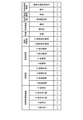
- SIAS is a comprehensive evaluation set for quantifying stroke dysfunction. As shown in Fig. 2, it consists of 22 items classified into 9 types of dysfunction, and each item has a maximum of 3 or 5 points. I will evaluate it. Similar to the FIM described above, this SIAS is also required to predict the later evaluation from the current situation of the new patient by referring to the case showing the result of the rehabilitation of the past patient.
- SIAS small senor
- an object of the present invention is an information processing method and information processing capable of solving the above-mentioned problem that it is difficult to accurately predict the evaluation of the item of the index for evaluating the state of the human body. It is to propose equipment and programs.
- the information processing method which is one embodiment of the present invention, is The first evaluation value representing the evaluation of the subject at a predetermined time in each of the SIAS (Stroke Impairment Assessment Set) item and the second index item for evaluating the state of the human body different from the SIAS, and Accepting the input of the second evaluation value, which represents the evaluation of the subject after the lapse of a predetermined time from the predetermined time point, The second evaluation for the first evaluation value in each of the SIAS item and the second index item based on the information indicating the relationship between the SIAS item and the second index item. Generate a model to calculate the value, It takes the composition.
- the information processing method is Based on the information showing the relationship between the item of SIAS (Stroke Impairment Assessment Set) and the item of the second index for evaluating the state of the human body different from the SIAS, the item of the SIAS and the item of the second For the model generated to calculate the second evaluation value representing the evaluation of the subject after the lapse of a predetermined time from the predetermined time with respect to the first evaluation value representing the evaluation of the subject at a predetermined time in each of the index items of. Then, a new first evaluation value in each of the SIAS item and the second index item is input, and the value calculated by the model is output in response to the input of the new first evaluation value. do, It takes the composition.
- SIAS String Impairment Assessment Set
- the information processing apparatus which is one embodiment of the present invention is The first evaluation value representing the evaluation of the subject at a predetermined time in each of the SIAS (Stroke Impairment Assessment Set) item and the second index item for evaluating the condition of the human body different from the SIAS, and An input unit that accepts input of a second evaluation value that represents the evaluation of the subject after the lapse of a predetermined time from the predetermined time point.
- the second evaluation for the first evaluation value in each of the SIAS item and the second index item based on the information indicating the relationship between the SIAS item and the second index item.
- a generator that generates a model that calculates values, and a generator With, It takes the composition.
- the information processing apparatus which is one embodiment of the present invention is Based on the information showing the relationship between the item of SIAS (Stroke Impairment Assessment Set) and the item of the second index for evaluating the condition of the human body different from the SIAS, the item of the SIAS and the item of the second For the model generated to calculate the second evaluation value representing the evaluation of the subject after the lapse of a predetermined time from the predetermined time with respect to the first evaluation value representing the evaluation of the subject at a predetermined time in each of the index items of. Then, an input unit for inputting a new first evaluation value in each of the SIAS item and the second index item, and A prediction unit that outputs the value calculated by the model in response to the input of the new first evaluation value, and With, It takes the composition.
- SIAS String Impairment Assessment Set
- the program which is one form of the present invention is For information processing equipment
- An input unit that accepts input of a second evaluation value that represents the evaluation of the subject after the lapse of a predetermined time from the predetermined time point.
- the second evaluation for the first evaluation value in each of the SIAS item and the second index item based on the information indicating the relationship between the SIAS item and the second index item.
- a generator that generates a model that calculates values, and a generator To realize, It takes the composition.
- the program which is one form of the present invention is For information processing equipment Based on the information showing the relationship between the item of SIAS (Stroke Impairment Assessment Set) and the item of the second index for evaluating the condition of the human body different from the SIAS, the item of the SIAS and the item of the second For the model generated to calculate the second evaluation value representing the evaluation of the subject after the lapse of a predetermined time from the predetermined time with respect to the first evaluation value representing the evaluation of the subject at a predetermined time in each of the index items of. Then, an input unit for inputting a new first evaluation value in each of the SIAS item and the second index item, and A prediction unit that outputs the value calculated by the model in response to the input of the new first evaluation value, and To realize, It takes the composition.
- SIAS String Impairment Assessment Set
- the present invention can accurately predict the evaluation of the item of the index for evaluating the state of the human body.
- FIGS. 1 to 9. are diagrams for explaining the configuration of the information processing apparatus, and FIG. 8 is a diagram for explaining the processing operation of the information processing apparatus.
- the information processing device 10 is used for rehabilitation of a patient (subject) whose activities of daily living and cognitive function have deteriorated due to injury, illness, old age, etc., at a rehabilitation facility for recovery of activities of daily living / cognitive function. Is used to predict the patient's condition later.
- the patients to be rehabilitated include, but are not limited to, patients with cerebrovascular diseases such as cerebral infarction and cerebral hemorrhage.
- the evaluation value of at least one item set in SIAS which is a comprehensive evaluation set for quantifying stroke dysfunction.
- SIAS Stroke Impairment Assessment Set
- FIM Field Independent Measure
- the time of admission predetermined time point.
- the evaluation value of each item of SIAS and FIM at the time of later discharge is predicted from the patient information including the evaluation value of each item of SIAS and FIM.
- the above-mentioned time of admission is not necessarily limited to the day of admission, but even when it can be regarded as the time of admission, such as when each item of SIAS or FIM is evaluated several days after the day of admission. good.
- the above-mentioned discharge time is not necessarily limited to the day of discharge, but may be the day when discharge is scheduled from the time of admission or the time when a preset period such as two weeks or one month has elapsed from the time of admission. ..
- the above-mentioned hospitalization and discharge are examples, and the information processing apparatus 10 is an evaluation value of each item of SIAS and FIM at an arbitrary time point after the patient's hospitalization. May be predicted.
- SIAS which is an index of the stroke dysfunction evaluation method
- SIAS has "paralyzed side motor function", “muscle tone”, “sensory disorder”, “range of motion”, “pain”, “trunk function”, “visual space cognitive function”, It consists of 22 items classified into 9 types of dysfunction such as "language function” and "non-paralyzed side function".
- SIAS includes "proximal upper limb”, “distal upper limb”, “proximal lower limb (crotch)”, “proximal lower limb (knee)”, and “distal lower limb” as "motor function on the paralyzed side”.
- the FIM which is an index for measuring the motor / cognitive function related to the activities of daily living of the patient, will be described with reference to FIG.
- the FIM is composed of a total of 18 items, including 13 types of motor items for evaluating the patient's "motor function” and 5 types of cognitive items for evaluating the patient's "cognitive function”. ..
- the FIM is an item for evaluating the movement function of the patient's "self-care” category as the above-mentioned exercise items, such as "meal”, “conditioning”, “bed bath”, “changing clothes (upper body)", and “changing clothes (upper body)".
- “transfer” category which is an item to evaluate the movement function of the patient.
- Items such as “bed / chair / wheelchair”, “toilet”, “tub / shower”, and “walking / wheelchair” and “stairs” that evaluate the movement function of the patient's "movement” category.
- FIM is an item that evaluates the function of the patient's “communication” category as the above cognitive items, “understanding (auditory / visual)”, “expression (voice / non-voice)", and patient's “social recognition”. Includes items such as “social interaction,” “problem solving,” and “memory,” which are items that evaluate the function of a category.
- the degree of care required by the patient is evaluated on a 4-point or 7-point scale for each of the above-mentioned items.
- levels such as “L1: complete assistance”, “L2: with assistance”, “L3: partial assistance”, and “L4: independence”. May be evaluated.
- levels such as “total caregiving”, “maximum caregiving”, “moderate caregiving”, “minimum caregiving”, “monitoring”, “corrected independence", and “complete independence”. It may be evaluated.
- the patient may be evaluated by totaling for each item, each category, and each function by using the points given according to each evaluation degree.
- each item of SIAS and FIM described above is usually performed by an expert who assists the patient as an evaluator. For example, it is evaluated by an "occupational therapist”, a “physiotherapist”, a “nurse”, a “speech-language pathologist”, and the like.
- the evaluation values of each item of the SIAS and FIM are input to the data management device 20 by the expert who is the evaluator described above, and are stored as patient data.
- the data management device 20 stores patient data for each patient as an electronic medical record.
- patient data for example, "gender”, "age group”, “consciousness level (JCS: JapanComaScale)", "disease name”, “paralyzed state”, “SIAS and FIM at the time of admission” Information such as “evaluation value of item (first evaluation value)” and “evaluation value of each item of SIAS and FIM at discharge (second evaluation value)" is stored.
- the patient data is not necessarily limited to including the information of the above-mentioned contents, and may be only a part of the above-mentioned information, or may contain other information.
- the patient data of patients who are still in the hospital does not include "evaluation values of each item of SIAS and FIM at the time of discharge".
- the information processing device 10 determines each item of SIAS and FIM at the time of discharge of the patient at the time of admission or at the time of discharge of the patient. Predict the evaluation value. Therefore, the information processing apparatus 10 generates a model for predicting the evaluation value of each item of SIAS and FIM at the time of discharge of the patient (model generation process), and at the time of discharge of the patient using the generated model.
- model generation process a model for predicting the evaluation value of each item of SIAS and FIM at the time of discharge of the patient.
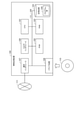
- the information processing device 10 is composed of one or a plurality of information processing devices including an arithmetic unit and a storage device. Then, as shown in FIG. 3, the information processing apparatus 10 includes an input unit 11, a learning unit 12, and an output unit 13 constructed by the arithmetic unit executing a program. Further, the information processing device 10 includes a data storage unit 14 and a model storage unit 15 formed in the storage device.
- the information processing apparatus 10 includes an input unit 11, a learning unit 12, and an output unit 13 constructed by the arithmetic unit executing a program. Further, the information processing device 10 includes a data storage unit 14 and a model storage unit 15 formed in the storage device.
- the input unit 11 requests patient data from the data management device 20, receives the input of the patient data, and stores it in the data storage unit 14. At the time of model generation processing, the input unit 11 requests and acquires patient data of a patient who has already been discharged as learning data. For example, the input unit 11 requests patient data in which a flag indicating that the patient has been discharged is set, and patient data in which the evaluation value of each item of the FIM at the time of discharge is input, and is used for learning data. Get as. Further, the input unit 11 may acquire the patient data as learning data without requesting the patient data from the data management device 20. For example, each time the patient data of a patient who has already been discharged from the hospital is updated in the data management device 20, the input unit 11 may acquire the patient data as learning data.
- the input unit 11 requests and acquires the patient data of the patient to be the target of the prediction processing that has not been discharged yet as the prediction data. For example, the input unit 11 requests patient data in which a flag indicating that the patient has been discharged is not set, or patient data in which the evaluation value of each item of the FIM at the time of discharge is not input, and is predictive data. Get as.
- the patient data as the prediction data of the patient to be the target of the prediction processing is acquired after the model is generated as described later, but the timing of acquiring the patient data is not limited to this.
- a model function represented by a function (f_i (X_n)) such that the "evaluation value (second evaluation value) of each item of" is the output value (y_i: i 1, ..., 40 (item)).
- the learning unit 12 generates a model function for calculating the output value (y_i) with respect to the input value (X_n) for each item of SIAS and FIM.
- model functions are generated for each of 40 items in total.
- the learning unit 12 generates a model function f_i using ridge regression. Specifically, the learning unit 12 calculates the parameters (W) (coefficients) of each term constituting the model function (f_i) so as to minimize the evaluation function (loss function) shown in the upper part of FIG. , Generate the model function (f_i).
- an evaluation function including two regularization terms including the parameter (W) is used.
- the first regularization term is " ⁇ 1
- ⁇ 1 and ⁇ 2 are parameters that adjust the degree of influence of each regularization term on the loss function. This parameter shall be given in advance. The larger the magnitude of ⁇ 1 and ⁇ 2, the stronger the influence on the loss function.
- " ⁇ (W)" constituting the regularization term of the final term includes an adjacency matrix represented by "Si, j" as shown in the lower part of FIG.
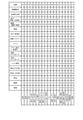
- the adjacency matrix Si, j is information indicating the relationship between the items of SIAS and FIM. For example, “1" is set between the items related to each other and "0" is set between the items not related to each other. Will be done.
- FIG. 5 shows the relationship between each item of SIAS and each item of FIM.
- the SIAS "grip strength" item and the FIM "meal” item have similar evaluation contents, that is, there is a correlation, so “1” is set between these items. ..
- “1" is set between such items.
- the relationship between each item of SIAS and each item of FIM shown in FIG. 5 is an example, and the relationship may be set according to other criteria.
- FIG. 6 shows the relationship between each item of FIM, and "1" is set between the items having similar evaluation contents of each item of FIM, that is, having a correlation.
- the "function" ("motor” or “cognition" to which the item belongs in FIM
- the "motor” function is used.
- "1" is set between the items to which it belongs and between the items belonging to the "cognitive” function.
- the relationship between each item of FIM shown in FIG. 6 is an example, and the relationship may be set according to other criteria.
- each item of SIAS is also set, and the evaluation contents of each item of SIAS are similar, that is, "1" is set between the items having a correlation. Will be.
- the relationship between each item of SIAS may be set by any standard.
- FIG. 7 summarizes the relationship between each item of SIAS and each item of FIM, the relationship between each item of SIAS, and the relationship between each item of FIM in one matrix.
- An example of the adjacency matrix Si, j is shown. At this time, since there are 22 items in SIAS and 18 items in FIM, the total number of items is 40, and the adjacency matrix Si and j are 40 ⁇ 40.
- the SIAS item and the FIM item that are related to each other are provided.
- the function (f_i) can be generated so that the parameters included in the function (f_i) corresponding to and are similar to each other. That is, in the formula shown in the lower part of FIG. 4, the difference between the parameters of the functions corresponding to the SIAS item and the FIM item associated with each other is squared, but the value of the evaluation function is made small. Therefore, the parameters are optimized to be similar to each other.
- the function (f_i) can be generated so that the parameters to be used and the parameters included in the corresponding function (f_i) between the FIM items are similar to each other.
- the output unit 13 (prediction unit) inputs the patient data of the patient who has not been discharged yet acquired as the prediction data by the input unit 11 into the model function (f_i) generated as described above. That is, the output unit 13 uses the model function as "basic information” such as "gender", “age group”, “consciousness level”, “disease name”, and "paralyzed state” in the patient data just hospitalized, and "hospitalization”. "Information at the time of admission” such as “evaluation value (first evaluation value) of each item of SIAS and FIM at the time” is input to the model function as an input value (X_n'), and the model function (f_i (X_n')) Calculate the output value (y_i') by. Thereby, it is possible to predict the evaluation value of each item of SIAS and FIM at the time of discharge of the patient who has just been hospitalized.
- the information processing apparatus 10 performs a model generation process for generating a model for predicting the evaluation values of each item of SIAS and FIM at the time of discharge of the patient. Therefore, the information processing device 10 requests the past patient data from the data management device 20, and acquires the patient data as learning data (step S1).
- the information processing apparatus 10 has "basic information” such as “gender”, “age group”, “consciousness level”, “disease name”, and “paralyzed state” in the patient data, and "SIAS and FIM at the time of admission”.
- Machine learning of a model function represented by a function that uses "information at admission” such as "evaluation value of item” as an input value and "evaluation value of each item of SIAS and FIM at discharge” as an output value.
- the information processing apparatus 10 generates a model function using ridge regression, and in particular, as described above, a regularization term including an adjacent matrix which is information indicating the relationship between the items of SIAS and FIM is used.
- the added evaluation function is used to optimize the parameters of each term that make up the model function. This makes it possible to generate a model function in which the parameters included in the model functions corresponding to the mutually related SIAS and FIM items are similar to each other.
- the information processing apparatus 10 uses the generated model to perform prediction processing for predicting the evaluation values of each item of SIAS and FIM at the time of discharge of the patient. Therefore, the information processing apparatus 10 requests the data management apparatus 20 for newly admitted patients or patient data that has been admitted but has not been discharged, and acquires such patient data as predictive data. (Step S3).
- the patient data acquired as predictive data does not include the evaluation values of each item of SIAS and FIM at the time of discharge because the patient has not been discharged yet.
- the information processing apparatus 10 has "basic information” such as “gender”, “age group”, “consciousness level”, “disease name”, and “paralyzed state” in the patient data, and "SIAS and FIM at the time of admission”.
- “Information at admission” such as "evaluation value of item” is input to the model function as an input value (step S4).
- the information processing apparatus 10 outputs the "evaluation value of each item of SIAS and FIM at the time of discharge” calculated by the model function as a predicted value (step S5). This makes it possible to predict the evaluation values of each item of SIAS and FIM at the time of discharge of the hospitalized patient. Then, the output prediction result can be used, for example, to create an efficient rehabilitation plan for the patient at the facility, or to give advice on future care for the patient himself / herself and the patient's family.
- the evaluation of each item of SIAS and FIM at the time of discharge can be predicted accurately and promptly by using the evaluation of other indicators and the evaluation of other items of the same index.
- the evaluation of each item of SIAS is performed by using the evaluation of FIM, which is easy to measure and collect a large amount of data. It can be predicted accurately.
- each item of SIAS and FIM at the time of discharge from the patient data at the time of admission of the patient is illustrated.
- the evaluation value of each item of SIAS and FIM at the time of is may be predicted.
- the evaluation values of the items set in SIAS and FIM are used, but the values of the items set in other indexes for evaluating the state of the human body may be used.
- an index for evaluating the balance function of elderly people and stroke patients such as BBS (Berg Balance Scale) may be used.
- the BBS has a total of 14 items, from simple balance functions such as "posture maintenance” and “standing movement” to advanced balance functions such as "functional reach test”, “tandem walking test", and "one-leg standing test”. Is evaluated on a scale of "0 to 4 points".
- a model for calculating the evaluation value of the items set in SIAS and BBS may be generated, and the predicted value of each item may be calculated.
- information indicating the relationship between the SIAS item and the BBS item is used. That is, similar to the information showing the relationship between the SIAS item and the FIM item shown in FIG. 5, the information showing the relationship between the SIAS item and the BBS item is prepared in advance. Similarly, information showing the relationship between each item of SIAS and information showing the relationship between each item of BBS are prepared. By using this information, it is possible to generate an adjacency matrix Si, j between 36 items including 22 items of SIAS and 14 items of BBS, similar to the adjacency matrix Si, j shown in FIG.
- a model for calculating the evaluation values of the items set for each of the three indicators is generated, and the predicted values of each item are calculated. May be good. That is, in order to predict the evaluation value of the item of SIAS, the evaluation value of each item of the other two indicators such as FIM and BBS may be used. At this time, information indicating the relationship between the SIAS item, the FIM item, and the BBS item is used. That is, in addition to the information showing the relationship between the SIAS item and the FIM item shown in FIG. 5, the information showing the relationship between the SIAS item and the BBS item, and the FIM item and the BBS item.
- Information indicating the relationship between the items and the information are prepared in advance. Similarly, information showing the relationship between each item of SIAS, information showing the relationship between each item of FIM, and information showing the relationship between each item of BBS are prepared. By using this information, as shown in FIG. 9, it is possible to generate an adjacency matrix Si, j among a total of 54 items, including 22 items of SIAS, 18 items of FIM, and 14 items of BBS.
- the present invention is not limited to being applied to the above-mentioned indexes such as SIAS, FIM, and BBS, and may be applied to other indexes for evaluating the state of the human body. Further, in the above, the case where two indexes or three indexes are used has been described, but a larger number of indexes may be used.
- FIGS. 10 to 14 are block diagrams showing the configuration of the information processing apparatus according to the second embodiment
- FIGS. 13 to 14 are flowcharts showing the operation of the information processing apparatus.
- the outline of the configuration of the information processing apparatus and the information processing method described in the first embodiment is shown.
- the information processing device 100 is composed of a general information processing device, and is equipped with the following hardware configuration as an example.
- -CPU Central Processing Unit
- -ROM Read Only Memory
- RAM Random Access Memory
- 103 storage device
- -Program group 104 loaded into RAM 303
- a storage device 105 for storing the program group 304.
- a drive device 106 that reads / writes the storage medium 110 external to the information processing device.
- -Communication interface 107 that connects to the communication network 111 outside the information processing device.
- -I / O interface 108 for inputting / outputting data -Bus 109 connecting each component
- the information processing apparatus 100 can construct and equip the input unit 121 and the generation unit 122 shown in FIG. 11 by acquiring the program group 104 by the CPU 101 and executing the program group 104.
- the program group 104 is stored in, for example, a storage device 105 or a ROM 102 in advance, and the CPU 101 loads the program group 104 into the RAM 103 and executes the program group 104 as needed. Further, the program group 104 may be supplied to the CPU 101 via the communication network 111, or may be stored in the storage medium 110 in advance, and the drive device 106 may read the program and supply the program to the CPU 101.
- the above-mentioned input unit 121 and generation unit 122 may be constructed by an electronic circuit.
- FIG. 10 shows an example of the hardware configuration of the information processing apparatus 100, and the hardware configuration of the information processing apparatus is not limited to the above case.
- the information processing device may be configured from a part of the above-mentioned configuration, such as not having the drive device 106.
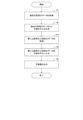
- the information processing apparatus 100 executes the information processing method shown in the flowchart of FIG. 13 by the functions of the input unit 121 and the generation unit 122 constructed by the program as described above.
- the information processing apparatus 100 is The first evaluation value representing the evaluation of the subject at a predetermined time in each of the SIAS (Stroke Impairment Assessment Set) item and the second index item for evaluating the state of the human body different from the SIAS, and Accepting the input of the second evaluation value, which represents the evaluation of the subject after the lapse of a predetermined time from the predetermined time point (step S11), The second evaluation for the first evaluation value in each of the SIAS item and the second index item based on the information indicating the relationship between the SIAS item and the second index item. A model for calculating the value is generated (step S12).
- the information processing apparatus 100 can also construct and equip the input unit 123 and the prediction unit 124 shown in FIG. 12 by acquiring the program group 104 by the CPU 101 and executing the program group 104.
- the input unit 123 and the prediction unit 124 described above may be constructed by an electronic circuit.
- the information processing apparatus 100 executes the information processing method shown in the flowchart of FIG. 14 by the functions of the input unit 123 and the prediction unit 124 constructed by the program as described above.
- the information processing apparatus 100 is Based on the information showing the relationship between the item of SIAS (Stroke Impairment Assessment Set) and the item of the second index for evaluating the state of the human body different from the SIAS, the item of the SIAS and the item of the second For the model generated to calculate the second evaluation value representing the evaluation of the subject after the lapse of a predetermined time from the predetermined time with respect to the first evaluation value representing the evaluation of the subject at a predetermined time in each of the index items of. Then, a new first evaluation value in each of the SIAS item and the second index item is input (step S21), and the model is calculated in response to the input of the new first evaluation value. The value is output (step S22).
- SIAS Se Impairment Assessment Set
- the information processing device 100 described above is composed of, for example, a server computer installed in a facility such as a hospital where the target patient performs rehabilitation, or a so-called cloud server computer operated and managed by the facility. .. Further, as described above, the values calculated and output by the information processing apparatus 100 are information processing terminals (personal computers, tablet terminals, smartphones) used by medical professionals such as therapists and nurses who assist the rehabilitation of patients in the facility. , Etc.) and will be referred to by the healthcare professional.
- a model for calculating the evaluation value of each item of SIAS is generated in consideration of the relationship between the item of SIAS and the item of other indicators. There is.
- the relationship between the items of SIAS and the items of other indicators in this way, even if it is an evaluation index such as SIAS where it is difficult to collect data, the evaluation value of each item can be accurately and quickly. Can be predicted.
- the index to which the present invention is applied is not limited to SIAS, and can be applied to any other index for evaluating the state of the human body.
- Appendix 2 The information processing method described in Appendix 1 The model is generated based on the information indicating whether or not the item of the SIAS and the item of the second index are related to each other.
- Information processing method. (Appendix 3) The information processing method according to Appendix 1 or 2. The model is generated based on the information associated between the items according to the evaluation contents in the SIAS item and the second index item.
- Information processing method. (Appendix 4) The information processing method described in Appendix 2 or 3, Generate the model so that the parameters contained in the model corresponding to the interconnected SIAS item and the second index item are similar.
- Information processing method. (Appendix 5) The information processing method according to any one of Supplementary Provisions 2 to 4.
- the model is generated using a loss function with an additional regularization term containing an adjacency matrix representing the association between the SIAS item and the second index item.
- Information processing method (Appendix 6) The information processing method according to any one of Supplementary Provisions 1 to 5.
- the value representing the evaluation degree of the subject at the predetermined time point is defined as the first evaluation value, and the evaluation degree of the subject after the lapse of a predetermined time from the predetermined time point.
- the value representing the above is used as the second evaluation value, and the input is accepted.
- Information processing method (Appendix 7) The information processing method according to any one of Supplementary Provisions 1 to 6.
- a new first evaluation value in each of the SIAS item and the second index item is input to the model, and the model is calculated in response to the input of the new first evaluation value.
- Output the value, Information processing method. (Appendix 8) The information processing method according to any one of Supplementary Provisions 1 to 7. The input of the first evaluation value and the second evaluation value in each item of the SIAS and a plurality of the second indexes different from each other is accepted. Based on the information indicating the relationship between the SIAS item and each of the plurality of second index items, the first evaluation value for the SIAS and the plurality of second index items is described. (2) Generate a model to calculate the evaluation value, Information processing method.
- the second evaluation for the first evaluation value in each of the SIAS item and the second index item based on the information indicating the relationship between the SIAS item and the second index item.
- a generator that generates a model that calculates values
- a generator Information processing device equipped with (Appendix 13)
- the second evaluation for the first evaluation value in each of the SIAS item and the second index item based on the information indicating the relationship between the SIAS item and the second index item.
- a generator that generates a model that calculates values, and a generator
- a storage medium that can be read by a computer that stores a program to realize the above.
- Appendix 16 A storage medium that can be read by a computer that stores the program described in Appendix 15.
- a prediction unit that outputs a value calculated by the model in response to input of a new first evaluation value in each of the SIAS item and the second index item for the model.
- a computer-readable storage medium that stores programs to further realize this.
- an input unit for inputting a new first evaluation value in each of the SIAS item and the second index item and A prediction unit that outputs the value calculated by the model in response to the input of the new first evaluation value, and A storage medium that can be read by a computer that stores a program to realize the above.
- Appendix 18 A first index item for evaluating the condition of the human body and a second index item for evaluating the condition of the human body different from the first index, which represent the evaluation of the subject at a predetermined time point.
- the first evaluation in each of the first index item and the second index item based on the information indicating the relationship between the first index item and the second index item.
- Generate a model to calculate the second evaluation value for the value Information processing method.
- the first index is based on information indicating the relationship between the item of the first index for evaluating the state of the human body and the item of the second index for evaluating the condition of the human body different from the first index.
- the second evaluation value representing the evaluation of the subject after the lapse of a predetermined time from the predetermined time with respect to the first evaluation value representing the evaluation of the subject at a predetermined time in each of the item of the index 1 and the item of the second index.
- a new first evaluation value in each of the first index item and the second index item is input, and the new first evaluation value is input.
- the value calculated by the model is output accordingly.
- Non-temporary computer-readable media include various types of tangible storage mediums.
- Examples of non-temporary computer-readable media include magnetic recording media (eg, flexible disks, magnetic tapes, hard disk drives), magneto-optical recording media (eg, magneto-optical disks), CD-ROMs (ReadOnlyMemory), CD-Rs, Includes CD-R / W, semiconductor memory (eg, mask ROM, PROM (Programmable ROM), EPROM (Erasable PROM), flash ROM, RAM (RandomAccessMemory)).
- the program may also be supplied to the computer by various types of transient computer readable medium.
- Examples of temporary computer readable media include electrical, optical, and electromagnetic waves.
- the temporary computer-readable medium can supply the program to the computer via a wired communication path such as an electric wire and an optical fiber, or a wireless communication path.
- Information processing device 11 Input unit 12 Learning unit 13 Output unit 14 Data storage unit 15 Model storage unit 20 Data management device 100 Information processing device 101 CPU 102 ROM 103 RAM 104 Program group 105 Storage device 106 Drive device 107 Communication interface 108 Input / output interface 109 Bus 110 Storage medium 111 Communication network 121 Input unit 122 Generation unit 123 Input unit 124 Prediction unit
Landscapes
- Health & Medical Sciences (AREA)
- Engineering & Computer Science (AREA)
- Medical Informatics (AREA)
- Public Health (AREA)
- Biomedical Technology (AREA)
- General Health & Medical Sciences (AREA)
- Epidemiology (AREA)
- Primary Health Care (AREA)
- Data Mining & Analysis (AREA)
- Pathology (AREA)
- Databases & Information Systems (AREA)
- Life Sciences & Earth Sciences (AREA)
- Veterinary Medicine (AREA)
- Molecular Biology (AREA)
- Animal Behavior & Ethology (AREA)
- Heart & Thoracic Surgery (AREA)
- Surgery (AREA)
- Biophysics (AREA)
- Physical Education & Sports Medicine (AREA)
- Business, Economics & Management (AREA)
- General Business, Economics & Management (AREA)
- Management, Administration, Business Operations System, And Electronic Commerce (AREA)
Priority Applications (3)
| Application Number | Priority Date | Filing Date | Title |
|---|---|---|---|
| JP2022545220A JP7563461B2 (ja) | 2020-08-28 | 2020-08-28 | 情報処理方法 |
| PCT/JP2020/032721 WO2022044284A1 (ja) | 2020-08-28 | 2020-08-28 | 情報処理方法 |
| US18/022,728 US20230395259A1 (en) | 2020-08-28 | 2020-08-28 | Information processing method |
Applications Claiming Priority (1)
| Application Number | Priority Date | Filing Date | Title |
|---|---|---|---|
| PCT/JP2020/032721 WO2022044284A1 (ja) | 2020-08-28 | 2020-08-28 | 情報処理方法 |
Publications (1)
| Publication Number | Publication Date |
|---|---|
| WO2022044284A1 true WO2022044284A1 (ja) | 2022-03-03 |
Family
ID=80352943
Family Applications (1)
| Application Number | Title | Priority Date | Filing Date |
|---|---|---|---|
| PCT/JP2020/032721 Ceased WO2022044284A1 (ja) | 2020-08-28 | 2020-08-28 | 情報処理方法 |
Country Status (3)
| Country | Link |
|---|---|
| US (1) | US20230395259A1 (https=) |
| JP (1) | JP7563461B2 (https=) |
| WO (1) | WO2022044284A1 (https=) |
Citations (1)
| Publication number | Priority date | Publication date | Assignee | Title |
|---|---|---|---|---|
| US20190209022A1 (en) * | 2018-01-05 | 2019-07-11 | CareBand Inc. | Wearable electronic device and system for tracking location and identifying changes in salient indicators of patient health |
Family Cites Families (3)
| Publication number | Priority date | Publication date | Assignee | Title |
|---|---|---|---|---|
| CA3076219A1 (en) * | 2017-09-27 | 2019-04-04 | Rehabilitation Institute Of Chicago | Assessment and management system for rehabilitative conditions and related methods |
| CN109344889B (zh) | 2018-09-19 | 2021-01-29 | 深圳大学 | 脑疾病分类装置、用户终端和计算机可读存储介质 |
| JP7255392B2 (ja) * | 2019-06-27 | 2023-04-11 | トヨタ自動車株式会社 | リハビリ支援システム、推定装置、学習装置、方法、プログラム、及び学習済みモデル |
-
2020
- 2020-08-28 WO PCT/JP2020/032721 patent/WO2022044284A1/ja not_active Ceased
- 2020-08-28 US US18/022,728 patent/US20230395259A1/en not_active Abandoned
- 2020-08-28 JP JP2022545220A patent/JP7563461B2/ja active Active
Patent Citations (1)
| Publication number | Priority date | Publication date | Assignee | Title |
|---|---|---|---|---|
| US20190209022A1 (en) * | 2018-01-05 | 2019-07-11 | CareBand Inc. | Wearable electronic device and system for tracking location and identifying changes in salient indicators of patient health |
Non-Patent Citations (2)
| Title |
|---|
| HAYASHI, SHINTARO: "Consideration for preparing prognostic evaluation chart using SIAS in the ADL prognostic prediction for stroke", BULLETIN OF NARAGAKUEN UNIVERSITY, NARAGAKUEN UNIVERSITY, vol. 10, 2019, pages 171 - 177, ISSN: 2188-918X * |
| OKA SHINICHIRO, TAKUMA EGASHIRA, HIROKATSU HIRATA, TAKEYOSHI SHIMODA ET AL. : "Reliability and validity of the Short Form Berg Balance Scale for acute cerebrovascular disorder patients", RIGAKURYOHO KAGAKU, 1 January 2016 (2016-01-01), pages 293 - 296, XP055912513, Retrieved from the Internet <URL:https://www.jstage.jst.go.jp/article/rika/31/2/31_293/_pdf/-char/en> [retrieved on 20220413] * |
Also Published As
| Publication number | Publication date |
|---|---|
| US20230395259A1 (en) | 2023-12-07 |
| JPWO2022044284A1 (https=) | 2022-03-03 |
| JP7563461B2 (ja) | 2024-10-08 |
Similar Documents
| Publication | Publication Date | Title |
|---|---|---|
| Mounis et al. | Assist-as-needed control strategy for upper-limb rehabilitation based on subject’s functional ability | |
| Watanabe et al. | Effects of gait training using the Hybrid Assistive Limb® in recovery-phase stroke patients: a 2-month follow-up, randomized, controlled study | |
| Huang | Remote health monitoring adoption model based on artificial neural networks | |
| WO2019168334A1 (ko) | 기계 학습을 통한 치매 예측용 데이터 처리 장치 및 그 방법, 이를 수록한 기록 매체 | |
| JP7409384B2 (ja) | 情報処理方法 | |
| Ngo et al. | Federated deep learning for the diagnosis of cerebellar ataxia: Privacy preservation and auto-crafted feature extractor | |
| Hichert et al. | Fatigue-free operation of most body-powered prostheses not feasible for majority of users with trans-radial deficiency | |
| Pimentel et al. | Muscle metabolic energy costs while modifying propulsive force generation during walking | |
| Xie et al. | A long short-term memory neural network model for knee joint acceleration estimation using mechanomyography signals | |
| Miramontes et al. | A hybrid intelligent system model for hypertension risk diagnosis | |
| JP7327498B2 (ja) | 情報処理方法 | |
| US20200381118A1 (en) | Artificial intelligence (ai) system for individual health maintenance recommendations | |
| CN113996013A (zh) | 训练系统、训练方法和程序 | |
| Matsumoto et al. | Outcomes of repetitive facilitation exercises in convalescent patients after stroke with impaired health status | |
| Serrancolí et al. | A weighted cost function to deal with the muscle force sharing problem in injured subjects: A single case study | |
| WO2022044284A1 (ja) | 情報処理方法 | |
| Ensastiga et al. | Speed controller-based fuzzy logic for a biosignal-feedbacked cycloergometer | |
| US20240423861A1 (en) | Rehabilitation assistance system, rehabilitation assistance method, and program | |
| CN118471426B (zh) | 一种脑卒中辅具配置的辅助方法及其系统 | |
| CN113643798A (zh) | 为失能人员匹配照护人员的方法、装置及计算机设备 | |
| Gordon et al. | An interim prosthesis program for lower limb amputees: comparison of public and private models of service | |
| Hirano et al. | Development of a prognostic scale for severely hemiplegic stroke patients in a rehabilitation hospital | |
| de la Tejera et al. | Smart health: the use of a lower limb exoskeleton in patients with sarcopenia | |
| CN111432712A (zh) | 数据处理装置、数据处理方法以及数据处理程序 | |
| Kara et al. | Estimation of balance status in patients with hemiparesis: An artificial neural network implementation |
Legal Events
| Date | Code | Title | Description |
|---|---|---|---|
| 121 | Ep: the epo has been informed by wipo that ep was designated in this application |
Ref document number: 20951534 Country of ref document: EP Kind code of ref document: A1 |
|
| ENP | Entry into the national phase |
Ref document number: 2022545220 Country of ref document: JP Kind code of ref document: A |
|
| NENP | Non-entry into the national phase |
Ref country code: DE |
|
| 122 | Ep: pct application non-entry in european phase |
Ref document number: 20951534 Country of ref document: EP Kind code of ref document: A1 |