WO2022016840A1 - 数据处理方法、装置、设备及介质 - Google Patents
数据处理方法、装置、设备及介质 Download PDFInfo
- Publication number
- WO2022016840A1 WO2022016840A1 PCT/CN2021/072925 CN2021072925W WO2022016840A1 WO 2022016840 A1 WO2022016840 A1 WO 2022016840A1 CN 2021072925 W CN2021072925 W CN 2021072925W WO 2022016840 A1 WO2022016840 A1 WO 2022016840A1
- Authority
- WO
- WIPO (PCT)
- Prior art keywords
- target
- payment
- activated
- mark
- electronic device
- Prior art date
- Legal status (The legal status is an assumption and is not a legal conclusion. Google has not performed a legal analysis and makes no representation as to the accuracy of the status listed.)
- Ceased
Links
Images




Classifications
-
- G—PHYSICS
- G06—COMPUTING OR CALCULATING; COUNTING
- G06Q—INFORMATION AND COMMUNICATION TECHNOLOGY [ICT] SPECIALLY ADAPTED FOR ADMINISTRATIVE, COMMERCIAL, FINANCIAL, MANAGERIAL OR SUPERVISORY PURPOSES; SYSTEMS OR METHODS SPECIALLY ADAPTED FOR ADMINISTRATIVE, COMMERCIAL, FINANCIAL, MANAGERIAL OR SUPERVISORY PURPOSES, NOT OTHERWISE PROVIDED FOR
- G06Q20/00—Payment architectures, schemes or protocols
- G06Q20/38—Payment protocols; Details thereof
- G06Q20/382—Payment protocols; Details thereof insuring higher security of transaction
- G06Q20/3821—Electronic credentials
- G06Q20/38215—Use of certificates or encrypted proofs of transaction rights
-
- G—PHYSICS
- G06—COMPUTING OR CALCULATING; COUNTING
- G06Q—INFORMATION AND COMMUNICATION TECHNOLOGY [ICT] SPECIALLY ADAPTED FOR ADMINISTRATIVE, COMMERCIAL, FINANCIAL, MANAGERIAL OR SUPERVISORY PURPOSES; SYSTEMS OR METHODS SPECIALLY ADAPTED FOR ADMINISTRATIVE, COMMERCIAL, FINANCIAL, MANAGERIAL OR SUPERVISORY PURPOSES, NOT OTHERWISE PROVIDED FOR
- G06Q20/00—Payment architectures, schemes or protocols
- G06Q20/30—Payment architectures, schemes or protocols characterised by the use of specific devices or networks
- G06Q20/32—Payment architectures, schemes or protocols characterised by the use of specific devices or networks using wireless devices
- G06Q20/327—Short range or proximity payments by means of M-devices
- G06Q20/3278—RFID or NFC payments by means of M-devices
-
- G—PHYSICS
- G06—COMPUTING OR CALCULATING; COUNTING
- G06Q—INFORMATION AND COMMUNICATION TECHNOLOGY [ICT] SPECIALLY ADAPTED FOR ADMINISTRATIVE, COMMERCIAL, FINANCIAL, MANAGERIAL OR SUPERVISORY PURPOSES; SYSTEMS OR METHODS SPECIALLY ADAPTED FOR ADMINISTRATIVE, COMMERCIAL, FINANCIAL, MANAGERIAL OR SUPERVISORY PURPOSES, NOT OTHERWISE PROVIDED FOR
- G06Q20/00—Payment architectures, schemes or protocols
- G06Q20/30—Payment architectures, schemes or protocols characterised by the use of specific devices or networks
- G06Q20/34—Payment architectures, schemes or protocols characterised by the use of specific devices or networks using cards, e.g. integrated circuit [IC] cards or magnetic cards
- G06Q20/354—Card activation or deactivation
-
- G—PHYSICS
- G06—COMPUTING OR CALCULATING; COUNTING
- G06Q—INFORMATION AND COMMUNICATION TECHNOLOGY [ICT] SPECIALLY ADAPTED FOR ADMINISTRATIVE, COMMERCIAL, FINANCIAL, MANAGERIAL OR SUPERVISORY PURPOSES; SYSTEMS OR METHODS SPECIALLY ADAPTED FOR ADMINISTRATIVE, COMMERCIAL, FINANCIAL, MANAGERIAL OR SUPERVISORY PURPOSES, NOT OTHERWISE PROVIDED FOR
- G06Q20/00—Payment architectures, schemes or protocols
- G06Q20/38—Payment protocols; Details thereof
Definitions
- the present application belongs to the technical field of data processing, and in particular, relates to a data processing method, apparatus, device and medium.
- NFC Near Field Communication
- Embodiments of the present application provide a data processing method, apparatus, device, and medium, which can solve the problem that errors are prone to occur in the process of setting a default payment card.
- an embodiment of the present application provides a data processing method, including:
- the target activation data includes the to-be-activated payment mark corresponding to the to-be-activated payment card account;
- the target payment mark in the target personalized data is updated to the payment mark to be activated; wherein, the transaction card type to which the target personalized data belongs is the same as the transaction card type to which the target activation instruction belongs;
- an embodiment of the present application provides a data processing method, including:
- the transaction card type of the payment card account to be activated is the same as the transaction card type to which the target activation instruction belongs;
- the target activation instruction is used to make the target electronic device update the target payment mark in the target personalization data to the payment mark to be activated and set the updated target payment mark as In the activation state, the transaction card type to which the target personalized data belongs is the same as the transaction card type to which the target activation instruction belongs.
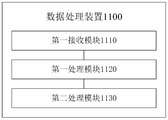
- an embodiment of the present application provides a data processing device, including:
- a first receiving module configured to receive target activation data and target activation instructions sent by the target server; wherein, the target activation data includes a to-be-activated payment mark corresponding to a to-be-activated payment card account;
- the first processing module is used to update the target payment mark in the target personalized data to the payment mark to be activated in response to the target activation instruction; wherein, the transaction card type to which the target personalized data belongs and the transaction card type to which the target activation instruction belongs same;
- the second processing module is configured to set the updated target payment mark to an active state.
- an embodiment of the present application provides a data processing device, including:
- the first obtaining module is used to obtain the payment mark to be activated and the target activation instruction stored in association with the payment card account to be activated; wherein, the transaction card type of the payment card account to be activated is the same as the transaction card type to which the target activation instruction belongs;
- the first generation module is used for generating target activation data according to the payment mark to be activated
- the first sending module is used to send the target activation data and the target activation instruction to the target electronic device; wherein, the target activation instruction is used to make the target electronic device update the target payment mark in the target personalization data to the payment mark to be activated and update the update
- the subsequent target payment flag is set to an active state, and the transaction card type to which the target personalized data belongs is the same as the transaction card type to which the target activation instruction belongs.
- an embodiment of the present application provides a data processing device, the device comprising: a processor and a memory storing computer program instructions;
- the data processing method according to the first aspect or the second aspect is implemented when the processor executes the computer program instructions.
- an embodiment of the present application provides a computer-readable storage medium, where computer program instructions are stored on the computer-readable storage medium, and when the computer program instructions are executed by a processor, the implementation is as described in the first aspect or the second aspect data processing method.
- the data processing method, device, device and medium of the embodiments of the present application can directly activate the transaction card type and target activation after receiving the payment mark to be activated and the target activation instruction corresponding to the payment card account to be activated sent by the target server.
- the target payment mark in the target personalization data of the same transaction card type to which the instruction belongs is updated to the payment mark to be activated, and the updated target payment mark is set to the active state, and then the target personalization data can be directly modified by the payment mark to be activated.
- FIG. 1 is an architectural diagram of an example of data processing provided by the present application.
- FIG 2 is an architectural diagram of another example of data processing provided by the present application.
- FIG. 3 is an architectural diagram of another example of data processing provided by the present application.
- FIG. 4 is an architectural diagram of yet another example of data processing provided by the present application.
- FIG. 5 is a schematic flowchart of an embodiment of a data processing method provided by the present application.
- FIG. 6 is a schematic flowchart of another embodiment of the data processing method provided by the present application.
- FIG. 7 is a schematic flowchart of an example of a process of binding a payment card provided by an embodiment of the present application.
- FIG. 8 is a schematic flowchart of an example of a process of setting a default payment card provided by an embodiment of the present application.
- FIG. 9 is a schematic flowchart of an example of a process of changing a default payment card provided by an embodiment of the present application.
- FIG. 10 is a schematic flowchart of an example of a process of unbinding a payment card provided by an embodiment of the present application
- FIG. 11 is a schematic structural diagram of an embodiment of a data processing apparatus provided by the present application.
- FIG. 12 is a schematic structural diagram of another embodiment of a data processing apparatus provided by the present application.
- FIG. 13 is a schematic diagram of a hardware structure of an embodiment of a data processing device provided by the present application.
- the data processing method provided by the present application can be applied to the architectures as shown in FIGS. 1 to 4 , and will be described in detail with reference to FIGS. 1 to 4 .
- FIG. 1 shows an architecture diagram of an example of data processing provided by an embodiment of the present application.
- the architecture diagram may include at least one electronic device 110 and an Internet financial platform server 120 .
- the electronic device 110 may be a device with a communication function, such as a mobile phone, a tablet computer, a desktop computer, a vehicle terminal, and a wearable device, and the electronic device 110 has an NFC payment function.
- a wearable device can be a portable device that can be worn by the user, or integrated into the user's clothing or accessories, such as smart bracelets, smart watches, smart sports shoes, smart clothing, smart glasses, smart helmets, smart rings, Smart accessories, etc.
- the Internet financial platform server 120 may be used to provide Internet financial services.
- the Internet financial platform server 120 may be a device with storage and computing functions, such as a cloud server or a server cluster.
- each electronic device 110 may be installed with a financial application program corresponding to the Internet financial platform, and communicate with the Internet financial platform server 120 .
- the Internet financial platform may be a third-party financial platform or a card organization platform.
- the Internet finance platform server 120 can obtain the payment token to be activated stored in association with the payment card account to be activated of the electronic device 110 and the target activation instruction of the transaction card type to which the transaction card type is the same as the transaction card type of the activated payment card account, and use The payment token to be activated and the target activation instruction are sent to the target electronic device.
- the payment card account number may include an account number of a physical bank card or an electronic bank card, and the payment mark and the payment card account number have a one-to-one correspondence.
- the electronic device 110 can receive the payment mark to be activated and the target activation instruction corresponding to the payment card account to be activated sent by the Internet financial platform server 120, and then assign the transaction card type to which the target activation instruction belongs to the same target personalized data of the transaction card type to which the target activation instruction belongs.
- the target payment mark in is updated to the payment mark to be activated, and the updated target payment mark is set to the active state.
- FIG. 2 shows an architectural diagram of another example of data processing provided by an embodiment of the present application.
- the architecture diagram may include at least one electronic device 110 , an Internet financial platform server 120 and a payment tokenization service system (Token Service Provider, TSP) platform server 130 .
- TSP payment tokenization service system
- the TSP platform server 130 may be used to generate payment tokens.
- the TSP platform server 130 may be a device with storage and computing functions, such as a cloud server or a server cluster.
- the Internet financial platform server 120 may communicate with the TSP platform server 130 to obtain the payment mark corresponding to the payment card account number for the user.
- the Internet financial platform server 120 can generate the payment card account number of the payment mark as needed, generate the mark generation request, and send the mark generation request to the TSP platform server 130, so that the TSP platform server 130 generates the payment mark corresponding to the payment card account, and sends the mark to the Internet.
- the financial platform server 120 feeds back the payment token.
- the Internet financial platform server 120 may store the payment card account number in association with the received payment token.
- FIG. 3 shows an architectural diagram of yet another example of data processing provided by the present application.
- the architecture diagram may include at least one electronic device 110 , an Internet financial platform server 120 , a TSP platform server 130 and a Trusted Service Management (Trusted Service Management, TSM) platform server 140 .
- TSM Trusted Service Management
- the principles of the electronic device 110 , the Internet financial platform server 120 and the TSP platform server 130 are the same as those of the embodiment shown in FIG. 2 , and will not be repeated here.
- the TSM platform server 140 may be used to implement information forwarding, and the TSM platform server 140 may be a device with storage and computing functions, such as a cloud server or a server cluster. Specifically, the TSM platform server 140 may communicate with the TSP platform server 130 through a trusted channel, so as to improve the security of information transmission.
- the internet finance platform server 120 may communicate with the TSM platform server 140 .
- the Internet financial platform server 120 may send the token generation request to the TSM platform server 140, and then the TSM platform server 140 sends the request to the TSP platform server 130 through a trusted channel.
- the TSP platform server 130 may send the payment token to the TSM platform server 140 through a trusted channel, so that the TSM platform server 140 forwards the payment token to the Internet financial platform server 120 .
- the communication security between the Internet financial platform server 120 and the TSP platform server 130 can be improved through the TSM platform server 140 and the trusted channel.
- FIG. 4 shows an architecture diagram of yet another embodiment of data processing provided by the present application.
- the architecture diagram may include at least one electronic device 110 , Internet financial platform server 120 , TSP platform server 130 , TSM platform server 140 , at least one acquiring device 150 and acquiring platform server 160 .
- the principles of the electronic device 110 , the Internet financial platform server 120 , the TSP platform server 130 and the TSM platform server 140 are the same as those of the embodiment shown in FIG. 3 , which will not be repeated here.
- the acquiring device 150 may be a mobile phone, a tablet computer, a point of sale (POS) terminal, etc., and the acquiring device 150 has an NFC information reading function.
- POS point of sale
- the acquiring platform server 160 may be used to provide acquiring services.
- the acquiring platform server 160 may be a device with storage and computing functions, such as a cloud server or a server cluster.
- the user can first log in to the account of the financial application program of the electronic device 110, make the financial application program in the login state, and enter the payment status of the specified electronic device bound to the account in the application interface of the financial application program.
- the designated electronic device may be the electronic device 110 being operated by the user, or may be other electronic devices bound to the account, as long as it is an electronic device bound to the account that has passed device verification.
- the user can select the payment card account whose status needs to be changed from among the multiple payment card accounts bound with the designated electronic device displayed in the application interface of the financial application program, so that the electronic device 110 can make the electronic device 110 according to the bank card account number and the designated electronic device.
- the payment status of the device which generates a status change request.
- the electronic device 110 may send the state change request to the Internet financial platform server 120 corresponding to the Internet financial platform.
- the Internet financial platform server 120 may parse the received state change request to obtain the payment card account number and payment state carried in the state change request. Then, the payment mark stored in association with the payment card account number is acquired, and the mark state corresponding to the payment mark is updated to the payment status carried in the state change request. If the payment card account number is the account number of the default payment card of the electronic device 110, the Internet financial platform server 120 receives the transaction that is sent by the acquiring device 150 through the acquiring platform server 160 and carries the payment token stored in association with the payment card account number. When the request is made, whether to execute the transaction corresponding to the transaction request may be determined according to the tag status corresponding to the payment tag.
- Each acquiring device 150 may be configured to send a transaction request carrying an activated payment token read from the secure element (Secure Element, SE) of the electronic device 110 to the Internet financial platform server through the acquiring platform server 160 120.
- SE Secure Element
- an acquiring application program corresponding to the acquiring platform may be installed in the acquiring device 150 .
- the acquiring device 150 can read the payment token in the SE of the electronic device 110 through the acquiring application, and then send the payment token carrying the read payment token to the Internet financial platform server 120 through the acquiring platform server 160 corresponding to the acquiring platform. transaction request.
- the Internet financial platform server 120 determines whether to execute the transaction corresponding to the transaction request according to the tag status corresponding to the payment tag carried in the transaction request.
- the method in the server 120 to change the mark state corresponding to the payment mark stored in association with the payment card account bound to the designated electronic device realizes the change of the payment state of the designated electronic device, thereby reducing the payment card account associated with the target electronic device. There is a risk of being stolen and brushed, improving the security of the user's payment card account.
- FIG. 5 shows a schematic flowchart of an embodiment of the data processing method provided by the present application.
- the method shown in FIG. 5 may be executed by the target electronic device in the electronic device 110 shown in FIG. 1 to FIG. 4 .
- the target electronic device may be any electronic device 110 .
- the data processing method may include the following steps.
- S510 Receive target activation data and target activation instructions sent by the target server.
- the target server may be the Internet financial platform server 120 shown in FIG. 1 to FIG. 4 .
- the target activation data may include a to-be-activated payment mark corresponding to the to-be-activated payment card account number.
- the payment card account to be activated may include any one of the default payment card account to be set and the default payment card account to be changed, which is not limited herein.
- the transaction card type to which the target activation instruction belongs is the same as the transaction card type of the payment card account to be activated, so that the target activation instruction can load the payment mark to be activated corresponding to the payment card account to be activated on the transaction card type to which it belongs and the payment card to be activated.
- the account's trading card type is in the same target personalization data.
- the transaction card type to which the target personalized data belongs is the same as the transaction card type to which the target activation instruction belongs. Therefore, it can be ensured that the to-be-activated payment mark corresponding to the to-be-activated payment card account number is loaded into the transaction card type and the to-be-activated payment card account number. In the target personalization data of the same transaction card type, avoid errors in the activation process of the payment token to be activated.
- Personalized data can be a personalized application identifier (AID), which is composed of strings.
- the personalized AID contains a common string, a payment tag, and a status value.
- the payment tag is also composed of strings.
- the payment tag and The state value can come after the generic string.
- a generic string for personalizing AID could be: A000000333 010102 00 63020000 01 0000.
- the first 10 digits can be fixed strings
- the 11-16 digits can be used to indicate the account type, such as the debit type is 010101
- the credit type is 010102
- the quasi-credit type is 010103
- the 17-18 digits can indicate Application type, such as 00 for financial applications and 01 for non-financial applications
- the 19th-26th digits can be the institution code of the application provider
- the 27th-28th digits can be extended, and its functions can be customized
- the chip card type can be indicated, such as 0000 for PBOC2.0 type and 1000 for PBOC3.0 type.
- the target payment mark in the target personalization data may be an initialization mark.
- the target electronic device may replace the initialization token with the payment token to be activated in response to the target activation instruction.
- the target activation instruction may be an application protocol data unit (Application Protocol Data Unit, APDU) instruction, such as: an Install for install command, specifically, refer to the parameter definition in GP Amendment C.
- APDU Application Protocol Data Unit
- the target electronic device can be installed with the target personalized data activation program corresponding to the target personalized data, and execute the target loading operation corresponding to the target activation instruction through the target personalized data activation program, that is, through the target personalized data activation program, the target personalized data is activated.
- the target payment token in is updated to the payment token to be activated.
- the target electronic device can execute the target activation operation corresponding to the target activation instruction through the target personalized data activation program, that is, activate the target personalized data through the target personalized data activation program, thereby realizing the activation of the target payment mark.
- the transaction card type to which the target activation instruction belongs can be directly changed to the same transaction card type as the transaction card type to which the target activation instruction belongs.
- the target payment mark in the target personalization data is updated to the payment mark to be activated, and the updated target payment mark is set to the active state, and then the target payment mark in the target personalization data can be updated and updated directly by the payment mark to be activated.
- Activating the updated target payment token eliminates the need to delete the activated payment token and its corresponding personalized data in the process of activating the payment token to be activated, thereby reducing the deletion of personalized data and personalization data in the process of activating the payment token to be activated.
- the process of verification and personalized data download avoids errors caused by the above process when setting the default payment card, and improves the success rate of setting the default card.
- the data processing method may further include:
- a default card setting request is sent to the target server; wherein the default card setting request is used to make the target server feed back target activation data and target activation instructions corresponding to the default payment card account to be set.
- the user may select any payment card account number as the default payment card account to be set from at least one payment card account number bound to the target electronic device displayed in the application interface of the financial application program of the target electronic device.
- the electronic device can generate a default card setting request according to the default payment card account number to be set and the target electronic device identifier, and then send the default card setting request to the Internet financial platform server, so that the Internet financial platform server can feed back the corresponding default payment card account number to be set.
- Target activation data and target activation instructions The method for the Internet financial platform server to feed back target activation data and target activation instructions will be described in detail later.
- the target electronic device identifier may be an Internet Protocol (Internet Protocol, IP) address of the target electronic device.
- IP Internet Protocol
- the target electronic device identifier may also be a device identification code (Identity document, ID) of the target electronic device.
- the target personalized data may be the target electronic device Personalization data for which the payment token stored in the target secure element is inactive.
- the target electronic device when receiving the target activation data and the target activation instruction sent by the target server, may directly execute S520 if the target personalization data has been stored in the target secure element of the target electronic device.
- the target activation data received by the target electronic device Data when receiving the target activation data and the target activation instruction sent by the target server, in the case that the target personalization data is not stored in the target secure element of the target electronic device, the target activation data received by the target electronic device Data also includes personalization data that can be targeted.
- the data processing method may further include:
- the target personalization data is stored in the target secure element.
- the target personalized data can be loaded into the target security element first, so as to ensure that the payment mark to be activated corresponding to the payment card account to be activated is activated. reliability.
- the data processing method may further include:
- a default card change request is sent to the target server, wherein the default card change request is used to make the target server feed back target activation data and target activation instructions corresponding to the default payment card account to be changed.
- the user can select any payment card account other than the payment card account that has been set as the default payment card from at least one payment card account number bound to the target electronic device displayed in the application interface of the financial application program of the target electronic device.
- the card account number is used as the default payment card account number to be changed.
- the target electronic device can generate a default card change request according to the default payment card account number to be changed and the target electronic device identifier, and then send the default card change request to the Internet financial platform server, so that the Internet financial platform server can feed back the corresponding default payment card account number to be changed.
- target activation data and target activation instructions The method for the Internet financial platform server to feed back target activation data and target activation instructions will be described in detail later.
- the target personalization data may be the personalization data in which the payment token stored in the target secure element is in an active state. In other embodiments, the target personalization data may also be the personalization data in which the payment tag stored in the target secure element is in an inactive state, which is not limited herein.
- the target electronic device when receiving the target activation data and the target activation instruction sent by the target server, may directly execute S520 if the target personalization data has been stored in the target secure element of the target electronic device.
- the target activation data received by the target electronic device Data when receiving the target activation data and the target activation instruction sent by the target server, in the case that the target personalization data is not stored in the target secure element of the target electronic device, the target activation data received by the target electronic device Data also includes personalization data that can be targeted.
- the data processing method may further include:
- the target personalization data is stored in the target secure element.
- the target personalized data can be loaded into the target security element first, so as to ensure that the payment mark to be activated corresponding to the payment card account to be activated is activated. reliability.
- the data processing method may further include:
- the target electronic device may execute the target restoration operation corresponding to the target activation instruction through the target personalized data activation program, that is, through the target personalized data activation program, the personalized data of the payment mark that is in the activated state is set as Inactive state, and then cancel the activation of the payment mark originally in the active state, to ensure that only one payment mark in the target security element of the target electronic device is in the active state.
- FIG. 6 shows a schematic flowchart of another embodiment of the data processing method provided by the present application.
- the method shown in FIG. 6 may be executed by the Internet financial platform server 120 shown in FIG. 1 to FIG. 4 .
- the data processing method may include the following steps.
- S610 Acquire the payment mark to be activated and the target activation instruction stored in association with the account of the payment card to be activated.
- the transaction card type of the payment card account to be activated is the same as the transaction card type to which the target activation instruction belongs.
- the Internet financial platform server can obtain the payment mark to be activated stored in association with the account of the payment card to be activated from the locally stored payment mark, and obtain the type of transaction card to which it belongs and the payment card to be activated from the activation instruction stored locally.
- the payment mark to be activated may be loaded into a data packet corresponding to the target activation data, so as to generate the target activation data.
- the target activation instruction is used to make the target electronic device update the target payment mark in the target personalization data to the payment mark to be activated and set the updated target payment mark to the active state, the transaction card type to which the target personalization data belongs and the target activation
- the transaction card type to which the order belongs is the same.
- the target activation instruction to be activated Pay mark after obtaining the payment mark to be activated stored in association with the payment card account to be activated and the target activation instruction to which the transaction card type to which it belongs is the same as the transaction card type of the payment card account to be activated, according to the target activation instruction to be activated Pay mark, generate target activation data, and send target activation data and target activation instruction to the target electronic device, so that the target electronic device will assign the transaction card type to which the target activation instruction belongs to the target in the target personalized data of the same transaction card type
- the payment mark is updated to the payment mark to be activated, and the updated target payment mark is set to an active state, and then the target payment mark in the target personalized data can be updated directly by using the payment mark to be activated and the updated target payment mark is activated , there is no need to delete the activated payment token and its corresponding personalized data in the process of activating the payment token to be activated, thereby reducing the personalization data deletion, personalized data verification and personalized data download in the process of
- the data processing method may further include:
- S620 may specifically include:
- Target activation data is generated according to the payment token to be activated and the target personalization data.
- the Internet financial platform server can obtain the target personalized data of the same transaction card type as the transaction card type to which the target activation instruction belongs from the locally stored personalized data, and store the target personalized data together with the payment mark to be activated. Loaded into the data package corresponding to the target activation data to generate target activation data.
- the data processing method may further include:
- obtaining target personalized data may specifically include:
- the target personalization data is acquired.
- the Internet financial platform server needs to first send a data query request to the target electronic device to query whether the target security element of the target electronic device has stored the target personalized data. After receiving the data query request, the target electronic device can query whether the target personalization data is stored in the target security element, and feed back the data query result to the Internet financial platform server. The Internet financial platform server can receive the data query result fed back by the target electronic device.
- the target activation data can be generated directly according to the payment mark to be activated; if the data query result is If the target personalization data is not queried in the target secure element, the target personalization data can be obtained, and the target activation data can be generated according to the payment mark to be activated and the target personalization data.
- the target security element of the target electronic device stores the target personalization data required to activate the payment mark to be activated, and then, according to the judgment result, it is determined whether to send the target individual to the target electronic device. to enable the target electronic device to reliably effect the activation of the payment token to be activated.
- the target personalized data required for the payment mark to be activated may be the personalized data of the same transaction card type as the transaction card type to which the target activation instruction belongs.
- a payment card type can correspond to a set of personalized data.
- a credit card type may correspond to a set of personalized data
- a debit card type may correspond to a set of personalized data
- One type of payment card can correspond to a set of general personalization data, which can eliminate the differences in the personalization data among various payment card issuers, and improve the compatibility between the device card and the industry machine.
- the payment card account number to be activated may include a default payment card account number to be set.
- the data processing method may further include:
- the default card setting request is parsed to obtain default card setting request information; wherein the default card setting request information includes the default payment card account number to be set.
- the Internet finance platform server can parse the default card setting request in response to the default card setting request, obtain the default payment card account number to be set and the target electronic device identifier of the target electronic device, and then query and The payment mark stored in association with the default payment card account to be set is used as the payment mark to be activated.
- the Internet financial platform server can send target activation data and target activation instructions corresponding to the default payment card account to be set for the target electronic device when the user has a default card setting requirement for the target electronic device.
- the data processing method may further include:
- An association relationship between the payment token to be activated and the target electronic device is established.
- the target electronic device after executing the target activation instruction, the target electronic device will feed back the activation result to the Internet financial platform server.
- the activation result may be used to indicate that the target electronic device has set the payment flag to be activated to an activated state, or may be used to indicate that the target electronic device has failed to activate the payment flag to be activated.
- the Internet financial platform server may, after sending the target activation data and the target activation instruction to the target electronic device, receive the activation result sent by the target electronic device, and when the activation result is used to indicate that the target electronic device has set the to-be-activated payment flag to the activated state
- the attribute of the payment card corresponding to the account of the payment card to be activated is set as the default payment card of the target electronic device
- the mark state corresponding to the payment mark to be activated is set to the activated state
- the payment mark to be activated is established with the The association relationship between the target electronic device identifiers of the target electronic device enables the NFC payment function of the target electronic device to be available.
- the Internet financial platform server may feed back the first prompt information to the target electronic device.
- the first prompt information is used to prompt the user that the default payment card of the target electronic device is successfully set, and the NFC payment function can be used normally through the default payment card.
- the bound payment card account number and the personalized data in the target electronic device belong to a loosely coupled relationship, that is, a dynamic mapping relationship.
- the payment card account number to be activated may further include a default payment card account number to be changed.
- the data processing method may further include:
- the default card change request is parsed to obtain default card change request information; wherein the default card change request information includes the default payment card account number to be changed.
- the Internet financial platform server can respond to the default card change request, parse the default card change request, obtain the default payment card account number to be changed and the target electronic device identifier of the target electronic device, and then query and The payment mark stored in association with the default payment card account to be changed is used as the payment mark to be activated.
- the Internet financial platform server can send target activation data and target activation instruction corresponding to the default payment card account number to be changed to the target electronic device when the user has a demand for changing the default card of the target electronic device.
- the data processing method may further include:
- the target payment card account number wherein, the payment card attribute corresponding to the target payment card account number is the target attribute, and the target attribute is the default payment card of the target electronic device.
- sending a data query request to the target electronic device may specifically include:
- a data query request is sent to the target electronic device.
- the Internet financial platform server may query the target payment card account number of the default payment card whose current payment card attribute is the target electronic device, that is, the original default payment card account number. Then, the payment card type of the target payment card account number is compared with the payment card type of the default payment card account number to be changed. Finally, if the comparison result is that the payment card type of the target payment card account is the same as the payment card type of the default payment card account to be changed, it means that the target personalization data is stored in the target secure element of the target electronic device, which can be directly activated according to the type of the target payment card. Pay token, generate target activation data.
- the comparison result is that the payment card type of the target payment card account is different from the payment card type of the default payment card account to be changed, it means that the target security element of the target electronic device does not store the target personalized data, and it needs to be sent to the target electronic device.
- Target personalization data therefore, the target personalization data can be acquired, and the target activation data can be generated according to the payment token to be activated and the target personalization data.
- the data processing method may further include:
- An association relationship between the payment mark to be activated and the target electronic device is established, and the association relationship between the target payment mark and the target electronic device is deleted.
- the target electronic device after executing the target activation instruction, the target electronic device will feed back the activation result to the Internet financial platform server.
- the activation result may be used to indicate that the target electronic device has set the payment flag to be activated to an activated state, or may be used to indicate that the target electronic device has failed to activate the payment flag to be activated.
- the Internet financial platform server may, after sending the target activation data and the target activation instruction to the target electronic device, receive the activation result sent by the target electronic device, and when the activation result is used to indicate that the target electronic device has set the to-be-activated payment flag to the activated state
- the payment card attribute corresponding to the payment card account to be activated can be set as the default payment card of the target electronic device, and the payment card attribute corresponding to the original default payment card account number can be set as the non-target attribute
- the mark state corresponding to the payment mark to be activated can be set to the active state, and the mark state corresponding to the original target payment mark stored in association with the original default payment card account number can be set to the inactive state.
- the payment mark to be activated and the target electronic The association relationship between the target electronic device identifiers of the device, make the payment mark to be activated as the new target payment mark, and delete the association relationship between the original target payment mark and the target electronic device identification of the target electronic device.
- the Internet financial platform server may feed back the second prompt information to the target electronic device.
- the second prompt information is used to prompt the user that the default payment card of the target electronic device is successfully changed, and the NFC payment function can be used normally through the new default payment card.
- the association between the payment mark to be activated and the target electronic device can be established, and the association between the original target payment mark and the target electronic device can be deleted, so as to realize the connection between the default payment card account and the target electronic device. Changes in the mapping relationship between target electronic devices.
- the data processing method may further include:
- the payment card binding request parsing the payment card binding request to obtain payment card binding request information; wherein the payment card binding request information includes the payment card account number to be bound;
- the mark generation request is used to make the payment mark management server generate a payment mark corresponding to the payment card account to be bound;
- the payment card account to be bound and the payment mark corresponding to the payment card account to be bound are associated and stored.
- the user can first log in to the account of the financial application program of the target electronic device, keep the financial application program in the login state, and select the target electronic device bound to the account in the application interface of the financial application program, that is, the electronic device that the user is operating. Then, the user can add the payment card account number bound to the target electronic device in the application interface of the financial application program as the payment card account number to be bound, so that the target electronic device can generate a payment card binding request according to the payment card account number to be bound . Next, the target electronic device may send the payment card binding request to the Internet financial platform server.
- the Internet financial platform server can parse the payment card binding request to obtain the target electronic device identifier of the payment card account to be bound and the target electronic device. According to the payment card account to be bound, a mark generation request is generated, and the mark generation request is sent to the payment mark management server.
- the payment token management server may be the TSP platform server 130 shown in FIG. 2 to FIG. 4 .
- the TSP platform server may parse the token generation request to obtain the payment to be bound. card account number, then generate a payment mark corresponding to the payment card account to be bound, and associate and store the payment card account to be bound with the payment mark corresponding to the payment card account to be bound.
- the payment mark corresponding to the payment card account to be bound is fed back to the Internet financial platform server.
- the Internet finance platform server can receive the payment token corresponding to the payment card account to be bound fed back by the TSP platform server, and then associate and store the payment token corresponding to the payment card account to be bound and the payment card account to be bound, so that the user can When the bound payment card account number is set for the target electronic device or the default payment card account number is changed, the payment mark corresponding to the default payment card account number may be sent to the target electronic device.
- the Internet financial platform server may also send third prompt information to the target electronic device after binding the target payment card account number to the target electronic device.
- the third prompt information is used to prompt the user that the payment card account to be bound is successfully bound with the target electronic device.
- the TSP platform server may generate a payment mark corresponding to the payment card account to be bound by using a preset mark generation method.
- the mark generation method may be to use a preset encryption algorithm to encrypt all numbers of the account to be bound with the payment card to obtain an encrypted encrypted string, and use the encrypted string as the payment mark corresponding to the account of the payment card to be bound.
- the mark generation method may be to use a preset encryption algorithm to encrypt part of the numbers to be bound with the payment card account, to obtain an encrypted encrypted string, and to perform encryption between the unencrypted numbers to be bound with the payment card account and the encrypted string. Splicing to obtain the payment mark corresponding to the payment card account to be bound.
- the Internet financial platform server may communicate with the TSP platform server through the TSM platform server, so as to improve data security.
- the data processing method may further include:
- the state change request In response to the state change request, analyze the state change request to obtain state change request information; wherein, the state change request information includes the payment card account number of the state to be changed and the target payment state of the target electronic device;
- the status change request is used to request the Internet finance platform server to update the mark status corresponding to the payment mark in the status to be changed stored in association with the payment card account of the status to be changed specified by the user to the target electronic device specified by the user
- the target payment status of the device can be a state change request sent by the target electronic device, or a state change request sent by other electronic devices other than the target electronic device, as long as the electronic device is installed with the financial application corresponding to the Internet financial platform and the financial application is installed.
- the logged-in account is bound to the target electronic device whose payment status of the NFC payment function needs to be changed.
- the user can first log in to the account of the financial application program of the electronic device, make the financial application program in the login state, and select the target electronic device to which the account has been bound in the application interface of the financial application program. Then, the user can input the payment card account number to be changed and the target payment status of the target electronic device in the application interface of the financial application program, and the target payment status can be the payment status of the target electronic device the user wants to change.
- the electronic device operated by the user can generate a state change request according to the payment card account number to be changed and the target payment state, and send the state change request to the Internet financial platform server.
- the target payment state may include any one of an activation state, a loss reporting state, and an unbinding state.
- the target payment state can be divided into a normal state and an abnormal state, the abnormal state can include any one of the loss reporting state and the unbinding state, and the normal state can include the activated state.
- the activated state means that the NFC payment function of the electronic device is activated and available.
- the loss-reporting state means that the NFC payment function of the electronic device has been activated and is in the loss-reporting registration state. In the loss-reporting state, the NFC payment function is suspended.
- the unbound state means that the NFC payment function of the electronic device has been activated and the payment card account is not bound. In the unbound state, the NFC payment function is also suspended.
- the target electronic device or other electronic devices may directly communicate with the Internet financial platform server.
- the status change request information may further include an identifier of the target electronic device.
- the electronic device operated by the user after the electronic device operated by the user receives the payment card account number to be changed and the target payment state of the target electronic device input by the user, it can also obtain the target electronic device identification corresponding to the target electronic device, and then can obtain the target electronic device identification based on the target electronic device identification, The payment card account number to be changed and the target payment state generate a state change request.
- the Internet financial platform server may store the mark state corresponding to the payment mark. For example, the Internet financial platform server may add a status bit to the payment mark, the status bit is provided with a status value, one status value corresponds to one mark status, and different status values correspond to different mark statuses. Meanwhile, the token status is the same as the payment status.
- the Internet finance platform server may determine the target status value corresponding to the marked status that is the same as the target payment status, and set the payment mark status bit of the status to be changed to The target state value is used to update the tag state corresponding to the payment tag of the state to be changed to the target payment state.
- the Internet financial platform server can, according to the mark status corresponding to the payment mark, The payment status of the electronic device corresponding to the payment mark is determined, and then it can be determined whether to execute the transaction corresponding to the transaction request carrying the payment mark according to the payment status of the electronic device.
- the target payment status of the target electronic device can be updated through the target mark status corresponding to the target payment mark, without deleting the target payment mark in the target electronic device, only the target mark of the target payment mark in the Internet financial platform server needs to be changed.
- By updating the status of the target electronic device it can avoid the problem that the user cannot change the payment status of the target electronic device after the target electronic device is lost, thereby reducing the risk of the bank account associated with the target electronic device being stolen, and improving the security of the user's bank account. sex.
- the payment mark corresponding to the state to be changed can be directly marked.
- the marked state is updated to the target payment state, and then the fourth prompt information is fed back to the target electronic device.
- the fourth prompt information is used to prompt the user that the payment status of the payment card account whose status is to be changed and bound to the target electronic device has been changed to the target payment status.
- the information processing method may further include:
- the transaction request is parsed to obtain transaction request information; wherein the transaction request information includes a target payment mark;
- the abnormal state includes any one of the loss reporting state and the unbinding state.
- the merchant can read the activated payment mark stored in the target secure element of the target electronic device through the target acquiring device, that is, the target payment mark.
- the target payment mark, the target acquiring device identification of the target acquiring device, and the transaction amount generate a transaction request, and then send the transaction request to the Internet financial platform server.
- the target acquiring device identification may be the IP address of the target acquiring device identification, or may be the device ID of the target acquiring device identification.
- the Internet financial platform server can receive the transaction request sent by the target acquiring device, and analyze the transaction request to obtain the target payment mark, the target acquiring device identification and the transaction amount, and then query the mark status corresponding to the target payment mark.
- the Internet financial platform server may refuse to execute the transaction corresponding to the transaction request when the mark state corresponding to the target payment mark is abnormal; when the mark state corresponding to the target payment mark is normal, the query is stored in association with the target payment mark the target transaction card account number, send the target transaction card account number, target acquiring device identification and transaction amount to the card issuer server, so that the card issuer server completes the transaction corresponding to the transaction request, and realizes the transfer of the transaction amount from the target transaction card account number to the target recipient.
- the single device ID corresponds to the transaction card account number, and then the transaction completion result is fed back to the Internet financial platform server. After receiving the transaction completion result, the Internet financial platform server may forward the transaction completion result to the target acquiring device.
- the target acquiring device may directly communicate with the Internet financial platform server, and the target acquiring device may also communicate with the Internet financial platform server through the acquiring platform server, which is not limited herein.
- the user does not need to delete the personalized data or the payment mark stored in the target secure element of the target electronic device, but only needs to change the payment status of the target electronic device to an abnormal state, so that the target electronic device
- the marked status of the corresponding payment mark is changed to the abnormal status, so that when the target electronic device is used for payment again, the Internet financial platform server can refuse to execute the transaction, so as to avoid the bank account associated with the target electronic device from being stolen and swiped.
- the information processing method may further include:
- the payment card attribute corresponding to the payment card account in the state to be changed is the target attribute
- the association relationship between the payment card account in the state to be changed and the target electronic device is deleted.
- the target attribute is the default payment card of the target electronic device.
- the Internet financial platform server can determine whether there is an association relationship between the payment mark and the target electronic device, and then determine the payment card attribute corresponding to the payment card account number stored in association with the payment mark. If there is a relationship between the payment mark and the target electronic device association relationship, then the payment card attribute corresponding to the payment card account number stored in association with the payment tag is the default payment card of the target electronic device, otherwise the payment card attribute corresponding to the payment card account number stored in association with the payment tag is the non-default payment card of the target electronic device Card.
- the payment token Since the payment token is stored in the target secure element of the target electronic device only when the payment card attribute corresponding to the payment card account number stored in association with the payment token is the default payment card of the target electronic device, the payment token will be stored in the target secure element of the target electronic device.
- the payment card attribute corresponding to the payment card account in the state is a non-default payment card of the target electronic device, it is only necessary to update the mark state corresponding to the payment mark whose status is to be changed to the target payment status.
- the payment card attribute corresponding to the payment card account whose status is to be changed is the default payment card of the target electronic device
- the target secure element of the target electronic device since the target secure element of the target electronic device stores the payment mark to be changed, in order to avoid the occurrence of the Internet financial platform server If there is a verification error, the association relationship between the payment card account in the state to be changed and the target electronic device can be further deleted, so that after receiving the transaction request corresponding to the payment mark in the state to be changed and determining that the target payment state is normal, It is further determined whether there is an associated relationship between the payment mark to be changed and the target electronic device, and then it is determined whether to execute the transaction corresponding to the transaction request.
- the transaction corresponding to the transaction request is executed; if there is no association between the payment mark to be changed and the target electronic device, the transaction is not executed. Request the corresponding transaction.
- the security of the bank account associated with the target electronic device can be further improved.
- the information processing method may further include:
- the Internet financial platform server can generate transaction feedback information corresponding to the transaction request, so that the transaction feedback information carries the mark state corresponding to the target payment mark, and then sends the transaction feedback information to the target acquiring device.
- the target acquiring device receives the transaction feedback information, it can display the mark status corresponding to the target payment mark carried by the transaction feedback information, so as to show the target payment status of the target electronic device to the transaction-related personnel (payee or payer). Inform the person involved in the transaction of the reason for the refusal of the transaction.
- FIG. 7 shows a schematic flowchart of an example of a process of binding a payment card provided by an embodiment of the present application.
- the process of binding the payment card may include:
- the user opens the application interface of the financial application program of the target electronic device, logs in the account in the application interface of the financial application program, and selects the payment card type to be bound to the target electronic device, so that the target electronic device receives the payment card input by the user type;
- the user inputs the payment card account number to be bound to the target electronic device on the application interface of the financial application program, so that the target electronic device receives the payment card account number input by the user;
- the target electronic device judges the type of the payment card, if the type of the payment card is a debit card type, execute S704, and if the type of the payment card is a credit card type, execute S705;
- the target electronic device displays the debit card verification page, so that the user checks the payment card information corresponding to the payment card account, and inputs the withdrawal password and the verification code sent by the Internet financial platform server of the financial application under the condition that the withdrawal password is correct, Make the target electronic device receive the verification code input by the user, and then execute S706;
- the target electronic device displays a credit card verification page, enabling the user to check the payment card information corresponding to the payment card account, and to receive the inputted CVN2 code of the credit card, the validity period of the credit card, and the Internet financial platform server of the financial application confirming the credit card.
- the verification code sent when the CVN2 code of the debit card and the valid period of the credit card are correct, so that the target electronic device receives the verification code input by the user, and then executes S706;
- the target electronic device generates a payment card binding request according to the verification code, the payment card account number and the target electronic device identifier of the target electronic device;
- the target electronic device sends a payment card binding request to the Internet financial platform server;
- the Internet financial platform server in response to the payment card binding request, parses the payment card binding request, and obtains the verification code, the payment card account number and the target electronic device identifier of the target electronic device, and in the case of successful verification of the verification code, Generate a token generation request based on the payment card account number;
- the Internet financial platform server sends a tag generation request to the TSP platform server;
- the TSP platform server generates a payment mark corresponding to the payment card account number in response to the mark generation request, and stores the payment card account number and the payment mark in association;
- the TSP platform server sends the payment mark corresponding to the payment card account number to the Internet financial platform server;
- the Internet financial platform server associates and stores the payment card account number and the payment mark;
- the Internet financial platform server sends third prompt information to the target electronic device
- the target electronic device displays third prompt information to prompt the user that the payment card account number and the target electronic device are successfully bound.
- FIG. 8 shows a schematic flowchart of an example of a process of setting a default payment card provided by an embodiment of the present application. As shown in Figure 8, the process of setting a default payment card may include:
- the user opens the application interface of the financial application program of the target electronic device, logs in to the account in the application interface of the financial application program, and selects a payment card account to be set as the target electronic device in at least one payment card account bound with the target electronic device The payment card account number of the default payment card, so that the target electronic device receives the payment card account number to be set entered by the user;
- the target electronic device generates a default card setting request according to the payment card account number and the target electronic device identifier of the target electronic device;
- the target electronic device sends a default card setting request to the Internet financial platform server;
- the Internet financial platform server in response to the default card setting request, parses the default card setting request to obtain the payment card account number and the target electronic device identifier;
- the Internet financial platform server queries the payment token stored in association with the payment card account, and then sends a data query request to the target electronic device;
- the target electronic device can query whether the personalized data corresponding to the payment mark is stored in the target security element, and feed back the data query result to the Internet financial platform server;
- the Internet financial platform server can judge the data query result. If the data query result is that the personalized data corresponding to the payment token is queried in the target security element, then execute S808, and if the data query result is that the target security element is not found in the target security element If the personalized data corresponding to the payment token is found, then execute S809;
- the Internet financial platform server sends the payment token and the activation instruction corresponding to the payment token to the target electronic device, and then executes S810;
- the Internet financial platform server sends the payment mark, the activation instruction corresponding to the payment mark, and the personalized data corresponding to the payment mark to the target electronic device, and then executes S810;
- the target electronic device loads the payment mark into the personalized data corresponding to the payment mark and activates the payment mark to an active state
- the target electronic device sends an activation result to the Internet financial platform server to indicate that the target electronic device has set the payment flag to an activated state;
- the Internet financial platform server sets the mark state corresponding to the payment mark to the active state, then sets the payment card attribute corresponding to the payment card account number stored in association with the payment mark as the default payment card of the target electronic device, and establishes The association relationship between the payment token and the target electronic device;
- the Internet financial platform server feeds back the first prompt information to the target electronic device
- the target electronic device displays the first display information to prompt the user that the default payment card setting of the target electronic device is successful.
- FIG. 9 shows a schematic flowchart of an example of a process of changing a default payment card provided by an embodiment of the present application.
- the change default payment card process may include:
- the user opens the application interface of the financial application program of the target electronic device, logs in to the account in the application interface of the financial application program, and selects a payment card account to be replaced with the target electronic device in at least one payment card account bound to the target electronic device.
- the payment card account number of the new default payment card so that the target electronic device receives the payment card account number to be changed input by the user;
- the target electronic device generates a default card change request according to the payment card account number and the target electronic device identifier of the target electronic device;
- the target electronic device sends a default card change request to the Internet financial platform server;
- the Internet financial platform server in response to the default card change request, parses the default card change request, and obtains the payment card account number and the target electronic device identifier;
- the Internet financial platform server queries the payment token stored in association with the payment card account number and the payment token currently associated with the target electronic device identifier, and queries the payment card account number stored in association with the queried payment token, and the query finds
- the payment card account number is the original default payment card account number, that is, the payment card account whose payment card attribute is the default payment card of the target electronic device;
- the Internet financial platform server compares the payment card type of the original default payment card account with the payment card type of the received payment card account, if they are the same, execute S907, if not, execute S908;
- the Internet financial platform server sends the received payment token corresponding to the payment card account number and the activation instruction corresponding to the payment token to the target electronic device, and then executes S909;
- the Internet financial platform server sends the received payment token corresponding to the payment card account number, the activation instruction corresponding to the payment token, and the personalized data corresponding to the payment token to the target electronic device, and then executes S909;
- the target electronic device loads the payment mark into the personalized data corresponding to the payment mark and activates the payment mark to an active state
- the target electronic device sends an activation result to the Internet financial platform server to indicate that the target electronic device has set the payment flag to an activated state;
- the Internet financial platform server first sets the payment card attribute corresponding to the payment card account number stored in association with the payment mark as the default payment card of the target electronic device, and sets the payment card attribute corresponding to the original default payment card account number as a non-target attribute, Then, the mark state corresponding to the payment mark is set to the active state, and the mark state corresponding to the payment mark stored in association with the original default payment card account number is set to the inactive state, and finally, the connection between the payment mark and the target electronic device is established. , and delete the association between the payment token stored in association with the original default payment card account and the target electronic device;
- the Internet financial platform server feeds back second prompt information to the target electronic device
- the target electronic device displays second prompt information to prompt the user that the default payment card of the target electronic device is successfully changed.
- FIG. 10 shows a schematic flowchart of an example of a process of unbinding a payment card provided by an embodiment of the present application.
- the process of unbinding the payment card may include:
- the user opens the application interface of the financial application program of the target electronic device, logs in to the account in the application interface of the financial application program, and selects the to-be-unbound to be unbound in at least one payment card account bound to the target electronic device
- the payment card account number so that the target electronic device receives the payment card account number to be unbound and the target payment state of the target electronic device input by the user, wherein the target payment state is the unbound state
- the target electronic device generates an unbinding request according to the target electronic device identifier, the payment card account number and the target payment status;
- the target electronic device sends an unbinding request to the Internet financial platform server
- the Internet financial platform server in response to the unbinding request, parses the unbinding request to obtain the target electronic device identifier, the payment card account number and the target payment status;
- the Internet financial platform server queries the payment card attribute corresponding to the payment card account, and judges the payment card attribute corresponding to the payment card account. If the payment card attribute is a non-default payment card of the target electronic device, execute S1006. If the payment card attribute is the default payment card of the target electronic device, execute S1007;
- the Internet financial platform updates the mark state corresponding to the payment mark stored in association with the payment card account to the unbound state, and then executes S1008;
- the Internet financial platform updates the mark state corresponding to the payment mark stored in association with the payment card account to an unbound state, and deletes the association relationship between the payment mark stored in association with the payment card account and the target electronic device, and then executes S1008;
- the Internet financial platform server sends fourth prompt information to the target electronic device
- the target electronic device displays fourth prompt information to prompt the user that the payment status of the payment card account to be unbound has been changed to the unbound state.
- the payment card attribute corresponding to the payment card account to be unbound is the default payment card of the target electronic device
- the Internet financial platform server receives the After the transaction request corresponding to the payment token stored in association with the payment card account is sent, the transaction corresponding to the transaction request may be rejected when it is found that the token status of the payment token is an unbound state.
- the mark state corresponding to the payment mark stored in the Internet financial platform server can be updated to the unbinding state.
- Users can also click the loss reporting function to update the marked status corresponding to the payment mark stored in the Internet financial platform server to the reporting status.
- the process of reporting the loss of the payment card is similar to the process of unbinding the payment card, and details are not described here.
- the user can also click the rebinding function and cancel the loss reporting function to make the payment mark stored in the Internet financial platform server.
- the corresponding marked state is re-updated to the activated state, and the process is similar to the process of unbinding the payment card, which is not repeated here.
- the target electronic device and the bound payment card account number and the personalized data loaded in the target secure element belong to a loosely coupled relationship and a dynamic mapping relationship. Therefore, the default payment is re-bound in the subsequent During the card process, it will not cause frequent verification, download and rewriting process of the card.
- the target secure element can store general personalized data loading payment tags, which can eliminate the differences between the personalized data of various card issuers, improve the compatibility between the personalized data and the acquiring device, and has a good industry reputation. Cooperation promotion prospects.
- FIG. 11 shows a schematic structural diagram of an embodiment of a data processing apparatus provided by the present application.
- the apparatus shown in FIG. 11 may be the target electronic device in the electronic devices 110 shown in FIG. 1 to FIG. 4 .
- the target electronic device may be any electronic device 110 .
- the data processing apparatus 1100 may include a first receiving module 1110 , a first processing module 1120 and a second processing module 1130 .
- the first receiving module 1110 may be configured to receive target activation data and target activation instructions sent by the target server.
- the target activation data includes a to-be-activated payment mark corresponding to the to-be-activated payment card account number.
- the first processing module 1120 may be configured to update the target payment mark in the target personalization data to the payment mark to be activated in response to the target activation instruction.
- the transaction card type to which the target personalized data belongs is the same as the transaction card type to which the target activation instruction belongs.
- the second processing module 1130 may be configured to set the updated target payment flag to an active state.
- the transaction card type to which the target activation instruction belongs can be directly changed to the same transaction card type as the transaction card type to which the target activation instruction belongs.
- the target payment mark in the target personalization data is updated to the payment mark to be activated, and the updated target payment mark is set to the active state, and then the target payment mark in the target personalization data can be updated and updated directly by the payment mark to be activated.
- Activating the updated target payment token eliminates the need to delete the activated payment token and its corresponding personalized data in the process of activating the payment token to be activated, thereby reducing the deletion of personalized data and personalization data in the process of activating the payment token to be activated.
- the process of verification and personalized data download avoids errors caused by the above process when setting the default payment card, and improves the success rate of setting the default card.
- the target personalization data may be the personalization data in which the payment token stored in the target secure element is in an activated state.
- the target personalization data may be the personalization data in which the payment token stored in the target secure element is in an inactive state.
- the target activation data may also include target personalization data
- the data processing apparatus 1100 may further include a first storage module, and the first storage module may be used for storing the target personalization data in the target security element.
- the data processing apparatus 1100 may further include a third processing module, and the third processing module may be configured to set an activated payment flag other than the updated target payment flag to an inactive state.
- the payment card account to be activated may include a default payment card account to be set.
- the data processing apparatus 1100 may further include a second receiving module, a second generating module and a second sending module.
- the second receiving module may be configured to receive the default payment card account number to be set.
- the second generating module may be configured to generate a default card setting request according to the default payment card account number to be set.
- the second sending module may be configured to send a default card setting request to the target server, wherein the default card setting request is used to make the target server feed back target activation data and target activation instructions corresponding to the default payment card account to be set.
- the payment card account number to be activated may include a default payment card account number to be changed.
- the data processing apparatus 1100 may further include a third receiving module, a third generating module and a third sending module.
- the third receiving module may be configured to receive the default payment card account number to be changed.
- the third generation module may be configured to generate a default card change request according to the default payment card account number to be changed.
- the third sending module may be configured to send a default card change request to the target server.
- the default card change request is used to make the target server feed back target activation data and target activation instructions corresponding to the default payment card account to be changed.
- the data processing apparatus 1100 shown in FIG. 11 can execute various steps in the method embodiment shown in FIG. 5 , and realize various processes and effects in the method embodiment shown in FIG. 5 , which will not be described here. Repeat.
- FIG. 12 shows a schematic structural diagram of another embodiment of the data processing apparatus provided by the present application.
- the apparatus shown in FIG. 12 may be the Internet financial platform server 120 shown in FIG. 1 to FIG. 4 .
- the data processing apparatus 1200 may include a first obtaining module 1210 , a first generating module 1220 and a first sending module 1230 .
- the first obtaining module 1210 may be configured to obtain the payment mark to be activated and the target activation instruction stored in association with the payment card account to be activated; wherein, the transaction card type of the payment card account to be activated is the same as the transaction card type to which the target activation instruction belongs.
- the first generating module 1220 may be configured to generate target activation data according to the payment mark to be activated.
- the first sending module 1230 can be used to send the target activation data and the target activation instruction to the target electronic device; wherein, the target activation instruction is used to make the target electronic device update the target payment mark in the target personalization data to the payment mark to be activated and the target payment mark to be activated.
- the updated target payment flag is set to an active state, and the transaction card type to which the target personalized data belongs is the same as the transaction card type to which the target activation instruction belongs.
- the target activation instruction to be activated Pay mark after obtaining the payment mark to be activated stored in association with the payment card account to be activated and the target activation instruction to which the transaction card type to which it belongs is the same as the transaction card type of the payment card account to be activated, according to the target activation instruction to be activated Pay mark, generate target activation data, and send target activation data and target activation instruction to the target electronic device, so that the target electronic device will assign the transaction card type to which the target activation instruction belongs to the target in the target personalized data of the same transaction card type
- the payment mark is updated to the payment mark to be activated and the updated target payment mark is set to an active state, and then the target payment mark in the target personalized data can be updated directly by using the payment mark to be activated and the updated target payment mark is activated, There is no need to delete the activated payment token and its corresponding personalized data in the process of activating the payment token to be activated, thereby reducing the process of personal data deletion, personal data verification and personal data download in the process of activ
- the data processing apparatus 1200 may further include a second acquisition module, and the second acquisition module may be used to acquire target personalized data.
- the first generating module 1220 may be specifically configured to generate the target activation data according to the payment mark to be activated and the target personalized data.
- the data processing apparatus 1200 may further include a fourth sending module and a fourth receiving module.
- the fourth sending module may be configured to send a data query request to the target electronic device.
- the data query request is used to query the target personalization data in the target secure element of the target electronic device.
- the fourth receiving module may be configured to receive the data query result fed back by the target electronic device.
- the second acquisition module may be specifically configured to acquire the target personalized data when the data query result is that the target personalized data is not queried in the target security element.
- the payment card account to be activated may include a default payment card account to be set.
- the data processing apparatus 1200 may further include a fifth receiving module and a first parsing module.
- the fifth receiving module may be configured to receive a default card setting request sent by the target electronic device.
- the first parsing module may be configured to parse the default card setting request in response to the default card setting request to obtain default card setting request information.
- the default card setting request information includes the default payment card account number to be set.
- the data processing apparatus 1200 may further include a sixth receiving module, a fourth processing module, a fifth processing module and a sixth processing module.
- the sixth receiving module may be configured to receive the activation result sent by the target electronic device.
- the activation result is used to indicate that the target electronic device has set the payment flag to be activated to an activated state.
- the fourth processing module may be configured to, in response to the activation result, set the payment card attribute corresponding to the account number of the payment card to be activated as the target attribute.
- the target attribute is the default payment card of the target electronic device.
- the fifth processing module may be configured to set the mark state corresponding to the payment mark to be activated to the active state.
- the sixth processing module may be used to establish an association relationship between the payment mark to be activated and the target electronic device.
- the payment card account number to be activated may include a default payment card account number to be changed.
- the data processing apparatus 1200 may further include a seventh receiving module and a second parsing module.
- the seventh receiving module may be configured to receive a default card change request sent by the target electronic device.
- the second parsing module may be configured to parse the default card change request in response to the default card change request to obtain default card change request information.
- the default card change request information includes the default payment card account number to be changed.
- the data processing apparatus 1200 may further include a third acquisition module, and the third acquisition module may be used to acquire the target payment card account number.
- the payment card attribute corresponding to the target payment card account number is the target attribute, and the target attribute is the default payment card of the target electronic device.
- the fourth sending module may be specifically configured to send a data query request to the target electronic device when the payment card type of the target payment card account is different from the payment card type of the default payment card account to be changed.
- the data processing apparatus 1200 may further include an eighth receiving module, a seventh processing module, an eighth processing module and a ninth processing module.
- the eighth receiving module may be configured to receive the activation result sent by the target electronic device.
- the activation result is used to indicate that the target electronic device has set the payment flag to be activated to an activated state.
- the seventh processing module may be configured to, in response to the activation result, set the payment card attribute corresponding to the payment card account number to be activated as the target attribute, and set the payment card attribute corresponding to the target payment card account number as the non-target attribute.
- the eighth processing module may be configured to set the mark state corresponding to the payment mark to be activated to the active state, and set the mark state corresponding to the target payment mark stored in association with the target payment card account number to the inactive state.
- the ninth processing module may be configured to establish an association relationship between the payment mark to be activated and the target electronic device, and delete the association relationship between the target payment mark and the target electronic device.
- the data processing apparatus 1200 may further include a ninth receiving module, a third parsing module, a fourth generating module, a fifth sending module, a tenth receiving module, and a second storage module.
- the ninth receiving module may be configured to receive a payment card binding request sent by the target electronic device.
- the third parsing module may be configured to parse the payment card binding request in response to the payment card binding request to obtain payment card binding request information.
- the payment card binding request information includes the payment card account to be bound.
- the fourth generation module may be configured to generate a tag generation request according to the payment card account to be bound.
- the fifth sending module may be configured to send a mark generation request to the payment mark management server, wherein the mark generation request is used to make the payment mark management server generate a payment mark corresponding to the payment card account to be bound.
- the tenth receiving module may be configured to receive the payment mark corresponding to the account of the payment card to be bound fed back by the payment mark management server.
- the second storage module may be configured to associate and store the payment card account to be bound and the payment mark corresponding to the payment card account to be bound.
- the data processing apparatus 1200 may further include an eleventh receiving module, a fourth parsing module, a fourth acquiring module, and a tenth processing module.
- the eleventh receiving module may be configured to receive a state change request.
- the fourth parsing module may be configured to parse the state change request in response to the state change request to obtain the state change request information.
- the state change request information includes the payment card account number of the state to be changed and the target payment state of the target electronic device.
- the fourth obtaining module may be configured to obtain the payment mark of the to-be-changed state stored in association with the payment card account of the to-be-changed state.
- the tenth processing module may be configured to update the mark state corresponding to the payment mark of the to-be-changed state to the target payment state.
- the target payment state may include any one of a loss reporting state and an unbinding state
- the data processing apparatus 1200 may further include an eleventh processing module, and the eleventh processing module may be configured to delete the payment in the to-be-changed state under the condition that the payment card attribute corresponding to the payment card account of the to-be-changed state is the target attribute The association between the card account number and the target electronic device.
- the target attribute is the default payment card of the target electronic device.
- the target payment state may include any one of a loss reporting state, an unbinding state, and an activated state.
- the data processing apparatus 1200 may further include a twelfth receiving module, a fifth parsing module, a twelfth processing module, and a thirteenth processing module.
- the twelfth receiving module may be configured to receive the transaction request sent by the target acquiring device.
- the fifth parsing module may be configured to parse the transaction request in response to the transaction request to obtain transaction request information.
- the transaction request information includes the target payment mark.
- the twelfth processing module may be used to query the mark state corresponding to the target payment mark.
- the thirteenth processing module may be configured to refuse to execute the transaction corresponding to the transaction request when the mark state corresponding to the target payment mark is an abnormal state.
- the abnormal state includes any one of the loss reporting state and the unbinding state.
- the data processing apparatus 1200 may further include a fifth generating module and a sixth sending module.
- the fifth generation module may be configured to generate transaction feedback information corresponding to the transaction request according to the mark state corresponding to the target payment mark.
- the sixth sending module may be configured to send transaction feedback information to the target acquiring device.
- the data processing apparatus 1200 shown in FIG. 12 can execute various steps in the method embodiment shown in FIG. 6 , and realize various processes and effects in the method embodiment shown in FIG. 6 , which will not be described here. Repeat.
- FIG. 13 shows a schematic diagram of the hardware structure of an embodiment of the data processing device provided by the present application.
- the data processing apparatus may include a processor 1301 and a memory 1302 having computer program instructions stored thereon.
- the above-mentioned processor 1301 may include a central processing unit (CPU), or a specific integrated circuit (Application Specific Integrated Circuit, ASIC), or may be configured to implement one or more integrated circuits of the embodiments of the present application.
- CPU central processing unit
- ASIC Application Specific Integrated Circuit
- Memory 1302 may include mass storage for data or instructions.
- memory 1302 may include a Hard Disk Drive (HDD), a floppy disk drive, a flash memory, an optical disk, a magneto-optical disk, a magnetic tape, or a Universal Serial Bus (USB) drive or two or more A combination of more than one of the above.
- Memory 1302 may include removable or non-removable (or fixed) media, where appropriate.
- Memory 1302 may be internal or external to the data processing device, where appropriate.
- memory 1302 is non-volatile solid state memory.
- memory 1302 includes read only memory (ROM).
- the ROM may be a mask programmed ROM, programmable ROM (PROM), erasable PROM (EPROM), electrically erasable PROM (EEPROM), electrically rewritable ROM (EAROM) or flash memory or A combination of two or more of the above.
- PROM programmable ROM
- EPROM erasable PROM
- EEPROM electrically erasable PROM
- EAROM electrically rewritable ROM
- flash memory or A combination of two or more of the above.
- the processor 1301 reads and executes the computer program instructions stored in the memory 1302 to implement any one of the data processing methods in the foregoing embodiments.
- the data processing device may also include a communication interface 1303 and a bus 1310 .
- the processor 1301 , the memory 1302 , and the communication interface 1303 are connected through the bus 1310 and complete the mutual communication.
- the communication interface 1303 is mainly used to implement communication between modules, apparatuses, units and/or devices in the embodiments of the present application.
- Bus 1310 includes hardware, software, or both, coupling components of the data processing device to each other.
- bus 1310 may include an Accelerated Graphics Port (AGP) or other graphics bus, Enhanced Industry Standard Architecture (EISA) bus, Front Side Bus (FSB), HyperTransport (HT) interconnect, Industry Standard Architecture (ISA) ) bus, Infiniband Interconnect, Low Pin Count (LPC) bus, Memory Bus, Microchannel Architecture (MCA) bus, Peripheral Component Interconnect (PCI) bus, PCI-Express (PCI-X) bus, Serial Advanced Technology Attachment (SATA) bus, Video Electronics Standards Association Local (VLB) bus or other suitable bus or a combination of two or more of the above.
- Bus 1310 may include one or more buses, where appropriate. Although embodiments of this application describe and illustrate a particular bus, this application contemplates any suitable bus or interconnect.
- the data processing device can execute the information processing method in the embodiments of the present application, thereby implementing the data processing method and apparatus described in conjunction with FIG. 5 to FIG. 12 .
- the embodiments of the present application may be implemented by providing a computer-readable storage medium.
- Computer program instructions are stored on the computer-readable storage medium; when the computer program instructions are executed by the processor, any one of the data processing methods in the foregoing embodiments is implemented.
- the functional blocks shown in the above-described structural block diagrams may be implemented as hardware, software, firmware, or a combination thereof.
- it When implemented in hardware, it may be, for example, an electronic circuit, an application specific integrated circuit (ASIC), suitable firmware, a plug-in, a function card, or the like.
- ASIC application specific integrated circuit
- elements of the present application are programs or code segments used to perform the required tasks.
- the program or code segments may be stored in a machine-readable medium or transmitted over a transmission medium or communication link by a data signal carried in a carrier wave.
- a "machine-readable medium” may include any medium that can store or transmit information.
- machine-readable media examples include electronic circuits, semiconductor memory devices, ROM, flash memory, erasable ROM (EROM), floppy disks, CD-ROMs, optical disks, hard disks, fiber optic media, radio frequency (RF) links, and the like.
- the code segments may be downloaded via a computer network such as the Internet, an intranet, or the like.
- processors may be, but are not limited to, general purpose processors, special purpose processors, application specific processors, or field programmable logic circuits. It will also be understood that each block of the block diagrams and/or flowchart illustrations, and combinations of blocks in the block diagrams and/or flowchart illustrations, can also be implemented by special purpose hardware that performs the specified functions or actions, or that special purpose hardware and/or A combination of computer instructions is implemented.
Landscapes
- Business, Economics & Management (AREA)
- Engineering & Computer Science (AREA)
- Accounting & Taxation (AREA)
- General Business, Economics & Management (AREA)
- Strategic Management (AREA)
- Physics & Mathematics (AREA)
- General Physics & Mathematics (AREA)
- Theoretical Computer Science (AREA)
- Computer Networks & Wireless Communication (AREA)
- Microelectronics & Electronic Packaging (AREA)
- Finance (AREA)
- Computer Security & Cryptography (AREA)
- Financial Or Insurance-Related Operations Such As Payment And Settlement (AREA)
- Signal Processing For Digital Recording And Reproducing (AREA)
Abstract
Description
Claims (25)
- 一种数据处理方法,包括:接收目标服务器发送的目标激活数据和目标激活指令;其中,所述目标激活数据包括待激活支付卡账号对应的待激活支付标记;响应于所述目标激活指令,将目标个人化数据中的目标支付标记更新为所述待激活支付标记;其中,所述目标个人化数据所属的交易卡类型与所述目标激活指令所属的交易卡类型相同;将更新后的目标支付标记设置为激活状态。
- 根据权利要求1所述的方法,其中,所述目标个人化数据为目标安全元件中所存储的支付标记处于激活状态的个人化数据。
- 根据权利要求1所述的方法,其中,所述目标个人化数据为目标安全元件中所存储的支付标记处于非激活状态的个人化数据。
- 根据权利要求3所述的方法,其中,所述目标激活数据还包括所述目标个人化数据;其中,所述将目标个人化数据中的目标支付标记更新为所述待激活支付标记之前,所述方法还包括:将所述目标个人化数据存储于所述目标安全元件中。
- 根据权利要求3所述的方法,其中,所述将更新后的目标支付标记设置为激活状态之后,所述方法还包括:将所述更新后的目标支付标记以外的激活支付标记设置为非激活状态。
- 根据权利要求3或4所述的方法,其中,所述待激活支付卡账号包括待设置的默认支付卡账号;其中,所述接收目标服务器发送的目标激活数据和目标激活指令之前,所述方法还包括:接收所述待设置的默认支付卡账号;根据所述待设置的默认支付卡账号,生成默认卡设置请求;向所述目标服务器发送所述默认卡设置请求;其中,所述默认卡设置 请求用于使所述目标服务器反馈所述待设置的默认支付卡账号对应的所述目标激活数据和所述目标激活指令。
- 根据权利要求2至5任一项所述的方法,其中,所述待激活支付卡账号包括待变更的默认支付卡账号;其中,所述接收目标服务器发送的目标激活数据和目标激活指令之前,所述方法还包括:接收所述待变更的默认支付卡账号;根据所述待变更的默认支付卡账号,生成默认卡变更请求;向所述目标服务器发送所述默认卡变更请求;其中,所述默认卡变更请求用于使所述目标服务器反馈所述待变更的默认支付卡账号对应的所述目标激活数据和所述目标激活指令。
- 一种数据处理方法,包括:获取与待激活支付卡账号关联存储的待激活支付标记和目标激活指令;其中,所述待激活支付卡账号的交易卡类型与所述目标激活指令所属的交易卡类型相同;根据所述待激活支付标记,生成目标激活数据;向目标电子设备发送所述目标激活数据和所述目标激活指令;其中,所述目标激活指令用于使所述目标电子设备将目标个人化数据中的目标支付标记更新为所述待激活支付标记以及将更新后的目标支付标记设置为激活状态,所述目标个人化数据所属的交易卡类型与所述目标激活指令所属的交易卡类型相同。
- 根据权利要求8所述的方法,其中,所述根据所述待激活支付标记,生成目标激活数据之前,所述方法还包括:获取所述目标个人化数据;其中,所述根据所述待激活支付标记,生成目标激活数据,包括:根据所述待激活支付标记和所述目标个人化数据,生成所述目标激活数据。
- 根据权利要求9所述的方法,其中,所述获取所述目标个人化数据之前,所述方法还包括:向所述目标电子设备发送数据查询请求;其中,所述数据查询请求用于查询所述目标电子设备的目标安全元件中的所述目标个人化数据;接收所述目标电子设备反馈的数据查询结果;其中,所述获取所述目标个人化数据,包括:在所述数据查询结果为在所述目标安全元件中未查询到所述目标个人化数据的情况下,获取所述目标个人化数据。
- 根据权利要求10所述的方法,其中,所述待激活支付卡账号包括待设置的默认支付卡账号;其中,所述获取与待激活支付卡账号关联存储的待激活支付标记和目标激活指令之前,所述方法还包括:接收所述目标电子设备发送的默认卡设置请求;响应于所述默认卡设置请求,对所述默认卡设置请求进行解析,得到默认卡设置请求信息;其中,所述默认卡设置请求信息包括所述待设置的默认支付卡账号。
- 根据权利要求11所述的方法,其中,所述向目标电子设备发送所述目标激活数据和所述目标激活指令之后,所述方法还包括:接收所述目标电子设备发送的激活结果;其中,所述激活结果用于指示所述目标电子设备已将所述待激活支付标记设置为激活状态;响应于所述激活结果,将所述待激活支付卡账号对应的支付卡属性设置为目标属性;其中,所述目标属性为所述目标电子设备的默认支付卡;将所述待激活支付标记对应的标记状态设置为激活状态;建立所述待激活支付标记与所述目标电子设备之间的关联关系。
- 根据权利要求10所述的方法,其中,所述待激活支付卡账号包括待变更的默认支付卡账号;其中,所述获取与待激活支付卡账号关联存储的待激活支付标记和目标激活指令之前,所述方法还包括:接收所述目标电子设备发送的默认卡变更请求;响应于所述默认卡变更请求,对所述默认卡变更请求进行解析,得到默认卡变更请求信息;其中,所述默认卡变更请求信息包括所述待变更的 默认支付卡账号。
- 根据权利要求13所述的方法,其中,所述向所述目标电子设备发送数据查询请求之前,所述方法还包括:获取目标支付卡账号;其中,所述目标支付卡账号对应的支付卡属性为目标属性,所述目标属性为所述目标电子设备的默认支付卡;其中,所述向所述目标电子设备发送数据查询请求,包括:在所述目标支付卡账号的支付卡类型与所述待变更的默认支付卡账号的支付卡类型不相同的情况下,向所述目标电子设备发送数据查询请求。
- 根据权利要求14所述的方法,其中,所述向目标电子设备发送所述目标激活数据和所述目标激活指令之后,所述方法还包括:接收所述目标电子设备发送的激活结果;其中,所述激活结果用于指示所述目标电子设备已将所述待激活支付标记设置为激活状态;响应于所述激活结果,将所述待激活支付卡账号对应的支付卡属性设置为所述目标属性,并且将所述目标支付卡账号对应的支付卡属性为非目标属性;将所述待激活支付标记对应的标记状态设置为激活状态,并且将与所述目标支付卡账号关联存储的目标支付标记对应的标记状态设置为非激活状态;建立所述待激活支付标记与所述目标电子设备之间的关联关系,并且删除所述目标支付标记与所述目标电子设备之间的关联关系。
- 根据权利要求8所述的方法,其中,所述获取与待激活支付卡账号关联存储的待激活支付标记和目标激活指令之前,所述方法还包括:接收所述目标电子设备发送的支付卡绑定请求;响应于所述支付卡绑定请求,对所述支付卡绑定请求进行解析,得到支付卡绑定请求信息;其中,所述支付卡绑定请求信息包括待绑定支付卡账号;根据所述待绑定支付卡账号,生成标记生成请求;向支付标记管理服务器发送所述标记生成请求;其中,所述标记生成请求用于使所述支付标记管理服务器生成所述待绑定支付卡账号对应的支 付标记;接收所述支付标记管理服务器反馈的所述待绑定支付卡账号对应的支付标记;将所述待绑定支付卡账号和所述待绑定支付卡账号对应的支付标记关联存储。
- 根据权利要求8所述的方法,其中,所述方法还包括:接收状态变更请求;响应于所述状态变更请求,对所述状态变更请求进行解析,得到状态变更请求信息;其中,所述状态变更请求信息包括待变更状态的支付卡账号和所述目标电子设备的目标支付状态;获取与所述待变更状态的支付卡账号关联存储的待变更状态的支付标记;将所述待变更状态的支付标记对应的标记状态更新为所述目标支付状态。
- 根据权利要求17所述的方法,其中,所述目标支付状态包括挂失状态和解绑状态中的任一种;其中,所述得到状态变更请求信息之后,所述方法还包括:在所述待变更状态的支付卡账号对应的支付卡属性为目标属性的情况下,删除所述待变更状态的支付卡账号与所述目标电子设备之间的关联关系;其中,所述目标属性为所述目标电子设备的默认支付卡。
- 根据权利要求17所述的方法,其中,所述目标支付状态包括挂失状态、解绑状态和激活状态中的任一种。
- 根据权利要求8所述的方法,其中,所述方法还包括:接收目标收单设备发送的交易请求;响应于所述交易请求,对所述交易请求进行解析,得到交易请求信息;其中,所述交易请求信息包括所述目标支付标记;查询所述目标支付标记对应的标记状态;在所述目标支付标记对应的标记状态为异常状态的情况下,拒绝执行所述交易请求对应的交易;其中,所述异常状态包括挂失状态和解绑状态中的任一种。
- 根据权利要求20所述的方法,其中,所述拒绝执行所述交易请求对应的交易之后,所述方法还包括:根据所述目标支付标记对应的标记状态,生成所述交易请求对应的交易反馈信息;向所述目标收单设备发送所述交易反馈信息。
- 一种数据处理装置,包括:第一接收模块,用于接收目标服务器发送的目标激活数据和目标激活指令;其中,所述目标激活数据包括待激活支付卡账号对应的待激活支付标记;第一处理模块,用于响应于所述目标激活指令,将目标个人化数据中的目标支付标记更新为所述待激活支付标记;其中,所述目标个人化数据所属的交易卡类型与所述目标激活指令所属的交易卡类型相同;第二处理模块,用于将更新后的目标支付标记设置为激活状态。
- 一种数据处理装置,包括:第一获取模块,用于获取与待激活支付卡账号关联存储的待激活支付标记和目标激活指令;其中,所述待激活支付卡账号的交易卡类型与所述目标激活指令所属的交易卡类型相同;第一生成模块,用于根据所述待激活支付标记,生成目标激活数据;第一发送模块,用于向目标电子设备发送所述目标激活数据和所述目标激活指令;其中,所述目标激活指令用于使所述目标电子设备将目标个人化数据中的目标支付标记更新为所述待激活支付标记以及将更新后的目标支付标记设置为激活状态,所述目标个人化数据所属的交易卡类型与所述目标激活指令所属的交易卡类型相同。
- 一种数据处理设备,包括:处理器以及存储有计算机程序指令的存储器;所述处理器执行所述计算机程序指令时实现如权利要求1-21中任意一项所述的数据处理方法。
- 一种计算机可读存储介质,所述计算机可读存储介质上存储有计 算机程序指令,所述计算机程序指令被处理器执行时实现如权利要求1-21中任意一项所述的数据处理方法。
Priority Applications (3)
| Application Number | Priority Date | Filing Date | Title |
|---|---|---|---|
| AU2021312655A AU2021312655A1 (en) | 2020-07-24 | 2021-01-20 | Data processing method and apparatus, device and medium |
| US17/910,676 US20230058201A1 (en) | 2020-07-24 | 2021-01-20 | Data processing method, apparatus, device and computer-readable storage medium |
| JP2022541670A JP7454052B2 (ja) | 2020-07-24 | 2021-01-20 | データ処理方法、装置、デバイス及び媒体 |
Applications Claiming Priority (2)
| Application Number | Priority Date | Filing Date | Title |
|---|---|---|---|
| CN202010725073.2A CN111932245B (zh) | 2020-07-24 | 2020-07-24 | 数据处理方法、装置、设备及介质 |
| CN202010725073.2 | 2020-07-24 |
Publications (1)
| Publication Number | Publication Date |
|---|---|
| WO2022016840A1 true WO2022016840A1 (zh) | 2022-01-27 |
Family
ID=73314595
Family Applications (1)
| Application Number | Title | Priority Date | Filing Date |
|---|---|---|---|
| PCT/CN2021/072925 Ceased WO2022016840A1 (zh) | 2020-07-24 | 2021-01-20 | 数据处理方法、装置、设备及介质 |
Country Status (6)
| Country | Link |
|---|---|
| US (1) | US20230058201A1 (zh) |
| JP (1) | JP7454052B2 (zh) |
| CN (1) | CN111932245B (zh) |
| AU (1) | AU2021312655A1 (zh) |
| TW (1) | TWI784456B (zh) |
| WO (1) | WO2022016840A1 (zh) |
Families Citing this family (5)
| Publication number | Priority date | Publication date | Assignee | Title |
|---|---|---|---|---|
| CN111932245B (zh) * | 2020-07-24 | 2023-09-19 | 中国银联股份有限公司 | 数据处理方法、装置、设备及介质 |
| CN112581123B (zh) * | 2020-12-08 | 2024-02-23 | 中国银联股份有限公司 | 卡管理方法、用户终端、服务器、系统及存储介质 |
| CN112232805B (zh) * | 2020-12-15 | 2021-03-02 | 中国银联股份有限公司 | 卡管理方法、用户终端、服务器、系统及存储介质 |
| US20220391896A1 (en) * | 2021-06-02 | 2022-12-08 | American Express Travel Related Services Company, Inc. | Hosted point-of-sale service |
| JP7230120B2 (ja) * | 2021-06-30 | 2023-02-28 | 楽天グループ株式会社 | サービス提供システム、サービス提供方法、及びプログラム |
Citations (6)
| Publication number | Priority date | Publication date | Assignee | Title |
|---|---|---|---|---|
| US20100057624A1 (en) * | 2008-08-29 | 2010-03-04 | First Data Corporation | Car wallet application |
| CN105741106A (zh) * | 2016-01-29 | 2016-07-06 | 宇龙计算机通信科技(深圳)有限公司 | 一种nfc支付方式的选择方法及装置 |
| CN106920090A (zh) * | 2017-02-24 | 2017-07-04 | 北京小米移动软件有限公司 | Nfc支付方法及装置 |
| CN110462663A (zh) * | 2017-03-31 | 2019-11-15 | 维萨国际服务协会 | 用于表示动态真实凭证的静态令牌系统和方法 |
| CN110781699A (zh) * | 2019-10-31 | 2020-02-11 | 北京小米支付技术有限公司 | Nfc卡片的切换方法及装置 |
| CN111932245A (zh) * | 2020-07-24 | 2020-11-13 | 中国银联股份有限公司 | 数据处理方法、装置、设备及介质 |
Family Cites Families (11)
| Publication number | Priority date | Publication date | Assignee | Title |
|---|---|---|---|---|
| US9955332B2 (en) * | 2009-01-28 | 2018-04-24 | Headwater Research Llc | Method for child wireless device activation to subscriber account of a master wireless device |
| CN101511074B (zh) * | 2009-03-30 | 2012-03-07 | 宇龙计算机通信科技(深圳)有限公司 | 移动终端支付的账户选择方法、系统、服务器及终端 |
| US9558481B2 (en) * | 2010-09-28 | 2017-01-31 | Barclays Bank Plc | Secure account provisioning |
| WO2014055772A1 (en) * | 2012-10-03 | 2014-04-10 | Globesherpa, Inc. | Mobile ticketing |
| KR102008206B1 (ko) * | 2016-07-20 | 2019-08-07 | 코나아이 (주) | 카드 거래 서비스를 관리하는 서버, 방법 및 시스템 |
| US11507935B1 (en) * | 2017-02-14 | 2022-11-22 | Wells Fargo Bank, N.A. | Mobile wallet card control |
| CN107016486B (zh) * | 2017-03-03 | 2021-05-04 | 北京小米支付技术有限公司 | 信息变更方法及装置 |
| TWM563013U (zh) * | 2017-07-13 | 2018-07-01 | 熊子傑 | 結合行動通訊裝置及應用場域系統的快捷付費系統 |
| CN109034818B (zh) * | 2018-06-19 | 2022-05-13 | 创新先进技术有限公司 | 生成支付标记、利用支付标记进行验证的方法及装置 |
| US11847635B2 (en) * | 2018-07-24 | 2023-12-19 | Royal Bank Of Canada | Payment card with secure element and replenishable tokens |
| CN109993513A (zh) * | 2019-03-22 | 2019-07-09 | 北京三快在线科技有限公司 | 支付账户绑定银行卡的方法、装置和系统 |
-
2020
- 2020-07-24 CN CN202010725073.2A patent/CN111932245B/zh active Active
-
2021
- 2021-01-20 US US17/910,676 patent/US20230058201A1/en active Pending
- 2021-01-20 JP JP2022541670A patent/JP7454052B2/ja active Active
- 2021-01-20 AU AU2021312655A patent/AU2021312655A1/en not_active Abandoned
- 2021-01-20 WO PCT/CN2021/072925 patent/WO2022016840A1/zh not_active Ceased
- 2021-03-29 TW TW110111411A patent/TWI784456B/zh active
Patent Citations (6)
| Publication number | Priority date | Publication date | Assignee | Title |
|---|---|---|---|---|
| US20100057624A1 (en) * | 2008-08-29 | 2010-03-04 | First Data Corporation | Car wallet application |
| CN105741106A (zh) * | 2016-01-29 | 2016-07-06 | 宇龙计算机通信科技(深圳)有限公司 | 一种nfc支付方式的选择方法及装置 |
| CN106920090A (zh) * | 2017-02-24 | 2017-07-04 | 北京小米移动软件有限公司 | Nfc支付方法及装置 |
| CN110462663A (zh) * | 2017-03-31 | 2019-11-15 | 维萨国际服务协会 | 用于表示动态真实凭证的静态令牌系统和方法 |
| CN110781699A (zh) * | 2019-10-31 | 2020-02-11 | 北京小米支付技术有限公司 | Nfc卡片的切换方法及装置 |
| CN111932245A (zh) * | 2020-07-24 | 2020-11-13 | 中国银联股份有限公司 | 数据处理方法、装置、设备及介质 |
Also Published As
| Publication number | Publication date |
|---|---|
| JP7454052B2 (ja) | 2024-03-21 |
| TW202205168A (zh) | 2022-02-01 |
| JP2023510731A (ja) | 2023-03-15 |
| US20230058201A1 (en) | 2023-02-23 |
| AU2021312655A1 (en) | 2022-05-26 |
| TWI784456B (zh) | 2022-11-21 |
| CN111932245A (zh) | 2020-11-13 |
| CN111932245B (zh) | 2023-09-19 |
Similar Documents
| Publication | Publication Date | Title |
|---|---|---|
| US11374943B2 (en) | Secure interface using non-secure element processors | |
| US20260105442A1 (en) | Payment card with secure element and replenishable tokens | |
| US10776101B2 (en) | Systems and methods for updatable applets | |
| CN111932245B (zh) | 数据处理方法、装置、设备及介质 | |
| US11250391B2 (en) | Token check offline | |
| US11640592B2 (en) | System, method, and apparatus for integrating multiple payment options on a merchant webpage | |
| US20160132875A1 (en) | Enhancement of mobile device initiated transactions | |
| TWI797638B (zh) | 資訊處理方法、裝置、設備及介質 | |
| US11580531B2 (en) | Systems and methods for minimizing user interactions for cardholder authentication | |
| WO2019178075A1 (en) | Digital access code | |
| KR20250047749A (ko) | 분산형 디지털화된 대리자를 사용한 지불 처리를 위한 방법 및 시스템 | |
| WO2025170641A2 (en) | Token portfolio migration system and method | |
| US20250061457A1 (en) | Platform-agnostic universal transaction profiles | |
| WO2024215307A1 (en) | Devices, systems, and methods for seamlessly integrating and facilitating the use of fiat and digital assets | |
| HK40040570B (zh) | 数据处理方法、装置、设备及介质 | |
| US20240370862A1 (en) | Mutual authentication of peer-to-peer payments | |
| HK40040570A (zh) | 数据处理方法、装置、设备及介质 | |
| HK40040571B (zh) | 信息处理方法、装置、设备及介质 | |
| WO2025071589A1 (en) | Validation of non-fungible token by associating issuer payment link token on a mobile device | |
| WO2025147250A1 (en) | Tap to provision device binding technique | |
| EP4740162A2 (en) | Platform-agnostic universal transaction profiles |
Legal Events
| Date | Code | Title | Description |
|---|---|---|---|
| 121 | Ep: the epo has been informed by wipo that ep was designated in this application |
Ref document number: 21847234 Country of ref document: EP Kind code of ref document: A1 |
|
| ENP | Entry into the national phase |
Ref document number: 2021312655 Country of ref document: AU Date of ref document: 20210120 Kind code of ref document: A |
|
| ENP | Entry into the national phase |
Ref document number: 2022541670 Country of ref document: JP Kind code of ref document: A |
|
| NENP | Non-entry into the national phase |
Ref country code: DE |
|
| 122 | Ep: pct application non-entry in european phase |
Ref document number: 21847234 Country of ref document: EP Kind code of ref document: A1 |