WO2021210607A1 - 情報処理装置および情報処理プログラム - Google Patents
情報処理装置および情報処理プログラム Download PDFInfo
- Publication number
- WO2021210607A1 WO2021210607A1 PCT/JP2021/015440 JP2021015440W WO2021210607A1 WO 2021210607 A1 WO2021210607 A1 WO 2021210607A1 JP 2021015440 W JP2021015440 W JP 2021015440W WO 2021210607 A1 WO2021210607 A1 WO 2021210607A1
- Authority
- WO
- WIPO (PCT)
- Prior art keywords
- user
- information processing
- data
- unit
- cognitive capacity
- Prior art date
- Legal status (The legal status is an assumption and is not a legal conclusion. Google has not performed a legal analysis and makes no representation as to the accuracy of the status listed.)
- Ceased
Links
Images




























Classifications
-
- A—HUMAN NECESSITIES
- A61—MEDICAL OR VETERINARY SCIENCE; HYGIENE
- A61B—DIAGNOSIS; SURGERY; IDENTIFICATION
- A61B5/00—Measuring for diagnostic purposes; Identification of persons
- A61B5/16—Devices for psychotechnics; Testing reaction times ; Devices for evaluating the psychological state
- A61B5/162—Testing reaction times
-
- A—HUMAN NECESSITIES
- A61—MEDICAL OR VETERINARY SCIENCE; HYGIENE
- A61B—DIAGNOSIS; SURGERY; IDENTIFICATION
- A61B5/00—Measuring for diagnostic purposes; Identification of persons
- A61B5/16—Devices for psychotechnics; Testing reaction times ; Devices for evaluating the psychological state
- A61B5/165—Evaluating the state of mind, e.g. depression, anxiety
-
- A—HUMAN NECESSITIES
- A61—MEDICAL OR VETERINARY SCIENCE; HYGIENE
- A61B—DIAGNOSIS; SURGERY; IDENTIFICATION
- A61B5/00—Measuring for diagnostic purposes; Identification of persons
- A61B5/24—Detecting, measuring or recording bioelectric or biomagnetic signals of the body or parts thereof
- A61B5/316—Modalities, i.e. specific diagnostic methods
- A61B5/369—Electroencephalography [EEG]
- A61B5/372—Analysis of electroencephalograms
-
- A—HUMAN NECESSITIES
- A61—MEDICAL OR VETERINARY SCIENCE; HYGIENE
- A61B—DIAGNOSIS; SURGERY; IDENTIFICATION
- A61B5/00—Measuring for diagnostic purposes; Identification of persons
- A61B5/24—Detecting, measuring or recording bioelectric or biomagnetic signals of the body or parts thereof
- A61B5/316—Modalities, i.e. specific diagnostic methods
- A61B5/369—Electroencephalography [EEG]
- A61B5/377—Electroencephalography [EEG] using evoked responses
-
- A—HUMAN NECESSITIES
- A61—MEDICAL OR VETERINARY SCIENCE; HYGIENE
- A61B—DIAGNOSIS; SURGERY; IDENTIFICATION
- A61B5/00—Measuring for diagnostic purposes; Identification of persons
- A61B5/24—Detecting, measuring or recording bioelectric or biomagnetic signals of the body or parts thereof
- A61B5/316—Modalities, i.e. specific diagnostic methods
- A61B5/369—Electroencephalography [EEG]
- A61B5/377—Electroencephalography [EEG] using evoked responses
- A61B5/383—Somatosensory stimuli, e.g. electric stimulation
-
- A—HUMAN NECESSITIES
- A61—MEDICAL OR VETERINARY SCIENCE; HYGIENE
- A61B—DIAGNOSIS; SURGERY; IDENTIFICATION
- A61B5/00—Measuring for diagnostic purposes; Identification of persons
- A61B5/40—Detecting, measuring or recording for evaluating the nervous system
- A61B5/4076—Diagnosing or monitoring particular conditions of the nervous system
- A61B5/4088—Diagnosing of monitoring cognitive diseases, e.g. Alzheimer, prion diseases or dementia
-
- G—PHYSICS
- G16—INFORMATION AND COMMUNICATION TECHNOLOGY [ICT] SPECIALLY ADAPTED FOR SPECIFIC APPLICATION FIELDS
- G16H—HEALTHCARE INFORMATICS, i.e. INFORMATION AND COMMUNICATION TECHNOLOGY [ICT] SPECIALLY ADAPTED FOR THE HANDLING OR PROCESSING OF MEDICAL OR HEALTHCARE DATA
- G16H20/00—ICT specially adapted for therapies or health-improving plans, e.g. for handling prescriptions, for steering therapy or for monitoring patient compliance
- G16H20/70—ICT specially adapted for therapies or health-improving plans, e.g. for handling prescriptions, for steering therapy or for monitoring patient compliance relating to mental therapies, e.g. psychological therapy or autogenous training
-
- G—PHYSICS
- G16—INFORMATION AND COMMUNICATION TECHNOLOGY [ICT] SPECIALLY ADAPTED FOR SPECIFIC APPLICATION FIELDS
- G16H—HEALTHCARE INFORMATICS, i.e. INFORMATION AND COMMUNICATION TECHNOLOGY [ICT] SPECIALLY ADAPTED FOR THE HANDLING OR PROCESSING OF MEDICAL OR HEALTHCARE DATA
- G16H40/00—ICT specially adapted for the management or administration of healthcare resources or facilities; ICT specially adapted for the management or operation of medical equipment or devices
- G16H40/60—ICT specially adapted for the management or administration of healthcare resources or facilities; ICT specially adapted for the management or operation of medical equipment or devices for the operation of medical equipment or devices
- G16H40/63—ICT specially adapted for the management or administration of healthcare resources or facilities; ICT specially adapted for the management or operation of medical equipment or devices for the operation of medical equipment or devices for local operation
-
- G—PHYSICS
- G16—INFORMATION AND COMMUNICATION TECHNOLOGY [ICT] SPECIALLY ADAPTED FOR SPECIFIC APPLICATION FIELDS
- G16H—HEALTHCARE INFORMATICS, i.e. INFORMATION AND COMMUNICATION TECHNOLOGY [ICT] SPECIALLY ADAPTED FOR THE HANDLING OR PROCESSING OF MEDICAL OR HEALTHCARE DATA
- G16H50/00—ICT specially adapted for medical diagnosis, medical simulation or medical data mining; ICT specially adapted for detecting, monitoring or modelling epidemics or pandemics
- G16H50/20—ICT specially adapted for medical diagnosis, medical simulation or medical data mining; ICT specially adapted for detecting, monitoring or modelling epidemics or pandemics for computer-aided diagnosis, e.g. based on medical expert systems
Definitions
- Modifications P and Q An example in which the present disclosure is applied to game data (FIG. 67).
- Modification R An example of recording a user's behavior (FIGS. 68 to 75)
- Example using another regression equation Example using another regression equation (Fig. 76, Fig. 77)
- FIGS. 3 and 4 show the power spectrum density obtained by performing an FFT on the observation data of the user's electroencephalogram ( ⁇ wave) when the user solves a large number of high-difficulty problems in succession.
- FIGS. 3 and 4 show graphs obtained by measuring an electroencephalogram ( ⁇ wave) in a segment of about 20 seconds and performing an FFT in an analysis window of about 200 seconds.
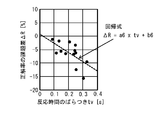
- FIG. 6 shows the task difference ⁇ tv [s] of the variation in the reaction time of the user (75% percentile-25% percentile) when solving the high-difficulty problem and when solving the low-difficulty problem. It shows an example of the relationship between the problem difference ⁇ R [%] of the correct answer rate of the problem when the problem of high difficulty is solved and the problem of low difficulty is solved.
- the task difference ⁇ R is obtained by subtracting the correct answer rate when solving a low-difficulty problem from the correct answer rate when solving a high-difficulty problem.
- the cognitive capacity of the user can be controlled by using the problem difference ⁇ tv of the variation in reaction time and the regression equation of FIG. 5 or FIG.
- the cognitive capacity of the user can be controlled by using the task difference ⁇ P of the peak value of the power of the slow electroencephalogram ( ⁇ wave) and the regression equation of FIG.
- regression equation a regression equation (regression line).
- ⁇ P a4 ⁇ ⁇ k + b4
- ⁇ R a5 ⁇ ⁇ k + b5.
- the user's cognitive capacity is lower than the predetermined standard when the task difference ⁇ k of the arousal level is large. Further, when the task difference ⁇ k of the arousal degree is small, it is possible to infer that the cognitive capacity of the user is higher than the predetermined standard. If the user's cognitive capacity is lower than a given criterion, the problem may be too difficult (ie, overloaded) for the user. On the other hand, if the user's cognitive capacity is higher than a predetermined criterion, the difficulty of the problem may be too low (that is, the load is low) for the user.
- the cognitive capacity of the user is lower than the predetermined standard when the variation tv of the reaction time is large. Further, when the variation tv of the reaction time is small, it is possible to infer that the cognitive capacity of the user is higher than the predetermined reference. If the user's cognitive capacity is lower than a given criterion, the problem may be too difficult (ie, overloaded) for the user. On the other hand, if the user's cognitive capacity is higher than a predetermined criterion, the difficulty of the problem may be too low (that is, the load is low) for the user.
- the cognitive capacity of the user When the cognitive capacity of the user is lower than the predetermined standard, the cognitive capacity of the user may approach the predetermined standard by lowering the difficulty level of the problem. In other words, when the variation tv of the reaction time is large, the cognitive capacity of the user may approach a predetermined standard by lowering the difficulty level of the problem. Further, when the cognitive capacity of the user is higher than the predetermined standard, the cognitive capacity of the user may approach the predetermined standard by increasing the difficulty level of the problem. In other words, when the variation tv of the reaction time is small, the cognitive capacity of the user may approach a predetermined standard by increasing the difficulty of the problem.
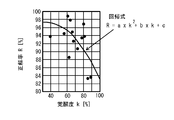
- the user's cognitive capacity is lower than the predetermined standard when the arousal level k is large. Further, when the arousal degree k is small, it is possible to infer that the cognitive capacity of the user is higher than the predetermined standard. If the user's cognitive capacity is lower than a given criterion, the problem may be too difficult (ie, overloaded) for the user. On the other hand, if the user's cognitive capacity is higher than a predetermined criterion, the difficulty of the problem may be too low (that is, the load is low) for the user.
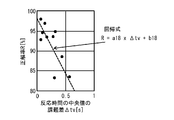
- FIG. 13 shows the task difference ⁇ tv [s] of the variation in the reaction time of the user (75% percentile-25% percentile) when the high-difficulty problem is solved and when the low-difficulty problem is solved. It shows an example of the relationship with the correct answer rate R [%] of a problem when solving a high-difficulty problem.
- data for each user is plotted, and the characteristics of the entire user are represented by a regression equation (regression line).
- the cognitive capacity of the user is lower than the predetermined standard when the problem difference ⁇ tv of the variation in reaction time is large. Further, when the problem difference ⁇ tv of the variation in reaction time is small, it is possible to infer that the cognitive capacity of the user is higher than the predetermined reference. If the user's cognitive capacity is lower than a given criterion, the problem may be too difficult (ie, overloaded) for the user. On the other hand, if the user's cognitive capacity is higher than a predetermined criterion, the difficulty of the problem may be too low (that is, the load is low) for the user.
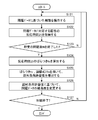
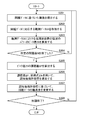
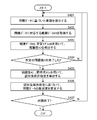
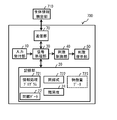
- the signal processing unit 30 reads out the problem data of a plurality of difficulty levels corresponding to the setting data included in the difficulty level 24 from the problem data 22, and sequentially controls the stimulus control of the read problem data of the plurality of difficulty levels. Output to unit 40.
- the stimulus control unit 40 generates a control signal for controlling the stimulus presentation unit 50 based on the problem data input from the signal processing unit 30, and outputs the control signal to the stimulus presentation unit 50.
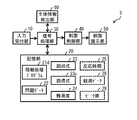
- the information processing device 1 is provided with a stimulus presentation unit 50 that presents a plurality of problem data.
- the presentation timing of each problem data can be controlled, so that the reaction time 25 can be derived accurately.
- the cognitive capacity can be accurately derived regardless of whether or not there is a correct answer in the reaction time 25.
- the signal processing unit 30 reads out the problem data of a plurality of difficulty levels corresponding to the setting data included in the difficulty level 24 from the problem data 22, and sequentially controls the stimulus control of the read problem data of the plurality of difficulty levels. Output to unit 40.
- the stimulus control unit 40 generates a control signal for controlling the stimulus presentation unit 50 based on the problem data input from the signal processing unit 30, and outputs the control signal to the stimulus presentation unit 50.
- the signal processing unit 30 calculates, for example, the variation tv of the reaction time 25 when the questions of the predetermined number of questions N are completed.
- the signal processing unit 30 derives the cognitive capacity based on, for example, the calculated variation tv and the regression equation 23b read from the storage unit 20.
- the signal processing unit 30 determines, for example, the difficulty level of the question to be asked from the next time onward based on the derived cognitive capacity.
- the signal processing unit 30 determines, for example, the difficulty level of the question to be asked from the next time onward based on the table included in the difficulty level 24 read from the storage unit 20.
- the signal processing unit 30 sets the difficulty level of the question to be asked from the next time onward by writing the determined difficulty level in the setting data of the storage unit 20, for example.
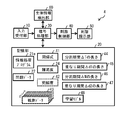
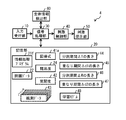
- the signal processing unit 30 executes the information processing program 21c stored in the storage unit 20.
- the function of the signal processing unit 30 is realized, for example, by executing the information processing program 21c by the signal processing unit 30.
- the signal processing unit 30 reads out the problem data of a plurality of difficulty levels corresponding to the setting data included in the difficulty level 24 from the problem data 22, and sequentially controls the stimulus control of the read problem data of the plurality of difficulty levels. Output to unit 40.
- the signal processing unit 30 acquires, for example, the signal data of the user's brain waves corresponding to a plurality of problem data having different difficulty levels from the biological information detection unit 60.
- the signal processing unit 30 acquires the user's brain wave signal data (observation data 28) corresponding to a plurality of problem data having different difficulty levels from the biological information detection unit 60 (step S202).
- the signal processing unit 30 extracts the signal data of the observation target waveform ( ⁇ wave) included in the acquired signal data of the brain wave.
- the signal processing unit 30 calculates the peak value 29 of the power of the slow brain wave ( ⁇ wave) in the signal data of the observation target waveform ( ⁇ wave) (step S203).
- the signal processing unit 30 derives the cognitive capacity as a group when a plurality of users are viewed as a group, based on the cognitive capacity derived for each user. In this case, for example, it is possible to determine how much the task is burdened on the group or how much the group can afford the task.
- the signal processing unit 30 reads out the problem data of a plurality of difficulty levels corresponding to the setting data included in the difficulty level 24 from the problem data 22, and sequentially controls the stimulus control of the read problem data of the plurality of difficulty levels. Output to unit 40.
- the stimulus control unit 40 generates a control signal for controlling the stimulus presentation unit 50 based on the problem data input from the signal processing unit 30, and outputs the control signal to the stimulus presentation unit 50.
- the signal processing unit 30 executes the above series of processes until the application for a predetermined number of problems is completed (step S308; N).
- the signal processing unit 30 completes the questions for a predetermined number of questions (step S308; Y)
- the signal processing unit 30 finishes the questions.
- the signal processing unit 30 executes the above series of processes until the questions of the predetermined number of questions N are completed (step S415; N).
- the signal processing unit 30 has the task difference ⁇ R of the correct answer rate of the answers obtained so far and the task difference ⁇ k of the alertness degree 42 calculated so far. Is calculated (step S416).
- the signal processing unit 30 derives the regression equation 41 based on the calculated task differences ⁇ R and ⁇ k, and stores the derived regression equation 41 in the storage unit 20 (step S417).
- the cognitive capacity of the user is derived based on the above-mentioned evaluation value (alertness 42). This makes it possible to determine the difficulty level of the problem data to be presented to the user based on the derived cognitive capacity, and to determine the problem data from the next time onward. Therefore, the cognitive capacity can be derived with or without reaction time.
- the task difference ⁇ k of the evaluation value (alertness 42) and the regression equation 41 for the task difference ⁇ k of the evaluation value (alertness 42) are used.
- the cognitive capacity is derived. This makes it possible to derive cognitive capacity with or without reaction time.
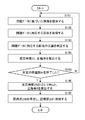
- FIG. 37 shows an example of the procedure for deriving the regression equation 41a in the information processing apparatus 4 in this modified example.
- the signal processing unit 30 reads out the problem data of a predetermined difficulty level corresponding to the setting data included in the difficulty level 24 from the problem data 22, and sequentially reads a plurality of the read problem data of the predetermined difficulty level. Output to the stimulus control unit 40.
- the stimulus control unit 40 generates a control signal for controlling the stimulus presentation unit 50 based on the problem data input from the signal processing unit 30, and outputs the control signal to the stimulus presentation unit 50.
- the signal processing unit 30 executes the above series of processes until the questions of the predetermined number of questions N are completed (step S435; N).
- the signal processing unit 30 calculates the correct answer rate R of the answers obtained so far and the arousal degree 42 calculated so far (step S436). ..
- the signal processing unit 30 derives the regression equation 41a based on the calculated correct answer rate R and the arousal degree 42, and stores the derived regression equation 41a in the storage unit 20 (step S437).
- the regression equation 41a is used. Even in this case, the cognitive capacity can be derived regardless of whether or not there is a correct answer in the reaction time 25.
- the biometric information detection unit 60 may detect brain waves of a plurality of users.
- the signal processing unit 30 derives the emotional state Out_b (alertness 42) for each user based on the signal data of the brain waves obtained from each user, and the task of the derived emotional state Out_b (alertness 42).
- the difference ⁇ k is calculated for each user.
- the signal processing unit 30 derives the cognitive capacity for each user based on the calculated task difference ⁇ k and the regression equation 41 read from the storage unit 20.
- the signal processing unit 30 derives the cognitive capacity as a group when a plurality of users are viewed as a group, based on the cognitive capacity derived for each user. In this case, for example, it is possible to determine how much the task is burdened on the group or how much the group can afford the task.
- the signal processing unit 30 calculates the task difference ⁇ tv of the variation tv of the reaction time 25.
- the signal processing unit 30 derives the cognitive capacity based on, for example, the calculated task difference ⁇ tv and the regression equation 23 g read from the storage unit 20.
- the signal processing unit 30 determines, for example, the difficulty level of the question to be asked from the next time onward based on the derived cognitive capacity.
- the signal processing unit 30 determines, for example, the difficulty level of the question to be asked from the next time onward based on the table included in the difficulty level 24 read from the storage unit 20.
- the signal processing unit 30 sets the difficulty level of the question to be asked from the next time onward by writing the determined difficulty level in the setting data of the storage unit 20, for example.
- the signal processing unit 30 executes the above series of processes until the application for a predetermined number of problems is completed (step S167; N).
- the signal processing unit 30 completes the questions for a predetermined number of questions (step S167; Y)
- the signal processing unit 30 finishes the questions.
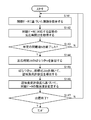
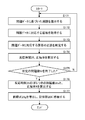
- FIG. 40 shows an example of the procedure for deriving the regression equation 23 g in the information processing apparatus 1.
- the signal processing unit 30 reads out the problem data of a plurality of difficulty levels corresponding to the setting data included in the difficulty level 24 from the problem data 22, and sequentially controls the stimulus control of the read problem data of the plurality of difficulty levels. Output to unit 40.
- the stimulus control unit 40 generates a control signal for controlling the stimulus presentation unit 50 based on the problem data input from the signal processing unit 30, and outputs the control signal to the stimulus presentation unit 50.
- the stimulus presentation unit 50 presents the stimulus to the user based on the problem data of a predetermined difficulty level based on the control signal input from the stimulus control unit 40 (step S171).
- the stimulus presentation unit 50 presents, for example, a video including the problem data, a voice for uttering the problem data, or a light corresponding to the problem data to the user.
- the stimulus presentation unit 50 may present, for example, a taste, a touch sensation, an odor, or the like according to the problem data to the user.
- the user inputs the answer corresponding to the question data to the input reception unit 10.
- the input receiving unit 10 acquires an answer corresponding to the problem data from the user (step S172).
- the input reception unit 10 outputs the acquired answer to the signal processing unit 30.
- the signal processing unit 30 uses the correct answer data included in the question data 22 to determine the correctness of the answer corresponding to the question data (step S173).
- the signal processing unit 30 calculates (acquires) the reaction time 25 of the answer corresponding to the question data and the correct answer rate (step S174).
- the information processing apparatus 1 separates the series of procedures for deriving the regression equation 23g shown in FIG. 40 from the series of procedures for changing the difficulty level in the information processing apparatus 1 shown in FIG. 39 ( That is, you may go (in advance). At this time, the user who answers the question for deriving the regression equation 23g and the user who answers the question in the series of procedures shown in FIG. 39 may be the same or different from each other. good.
- the information processing apparatus 1 may perform a series of procedures for deriving the regression equation 23g shown in FIG. 40 in a series of procedures of steps S161 to S163 shown in FIG. 39. ..
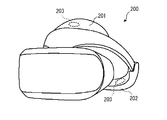
- the senor S can be mounted on the headphone 400 as shown in FIG. 43, for example.
- the detection electrode 403 of the sensor S can be provided on the inner surface of the band portion 401 in contact with the head, the ear pad 402, or the like.
- the signal processing unit 30 derives the feature amount data 723 when the questions of the predetermined number of questions N are completed.
- the signal processing unit 30 derives the cognitive capacity based on, for example, the derived feature amount data 723 and the regression equation 722 read from the storage unit 20.
- the signal processing unit 30 determines, for example, the difficulty level of the question to be asked from the next time onward based on the derived cognitive capacity.
- the signal processing unit 30 determines, for example, the difficulty level of the question to be asked from the next time onward based on the table included in the difficulty level 24 read from the storage unit 20.
- the signal processing unit 30 sets the difficulty level of the question to be asked from the next time onward by writing the determined difficulty level in the setting data of the storage unit 20, for example.
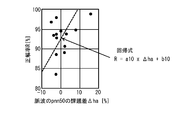
- the cognitive capacity of the user When the cognitive capacity of the user is lower than the predetermined standard, the cognitive capacity of the user may approach the predetermined standard by lowering the difficulty level of the problem. In other words, when the task difference ⁇ ha of the pulse wave pnn50 is small, the cognitive capacity of the user may approach a predetermined standard by lowering the difficulty level of the problem. Further, when the cognitive capacity of the user is higher than the predetermined standard, the cognitive capacity of the user may approach the predetermined standard by increasing the difficulty level of the problem. In other words, when the task difference ⁇ ha of the pulse wave pnn50 is large, the cognitive capacity of the user may approach a predetermined standard by increasing the difficulty of the problem.
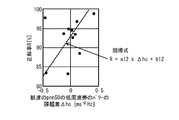
- FIG. 50 shows a low frequency band (0.01 Hz) of the power spectrum obtained by performing an FFT on the pulse wave pnn50 when solving a high-difficulty problem and when solving a low-difficulty problem. It shows an example of the relationship between the task difference ⁇ hc [ms -2 Hz] of the power (nearby) and the correct answer rate R [%] when solving a high-difficulty problem.
- the power in the low frequency band (around 0.01 Hz) of the power spectrum obtained by performing FFT on the pulse wave pnn50” will be referred to as "the power in the low frequency band of the pulse wave pnn50". do.
- the task difference ⁇ hc is obtained by subtracting the power of the pulse wave pnn50 low frequency band when the low-difficulty problem is solved from the power of the pulse wave pnn50 low-frequency band when the high-difficulty problem is solved. Obtained by doing.
- data for each user is plotted, and the characteristics of the entire user are represented by a regression equation (regression line).
- the fact that the problem difference ⁇ hc of the power in the low frequency band of the pulse wave pnn50 is small means that the low frequency of the pulse wave pnn50 is small when the high-difficulty problem is solved and when the low-difficulty problem is solved. It means that the difference in the power of the band is small. It can be said that the user who has obtained such a result tends to be able to solve the problem with the power of the low frequency band of pnn50 of the pulse wave in a certain range regardless of the difficulty level of the problem.
- the fact that the problem difference ⁇ hc of the power in the low frequency band of the pulse wave pnn50 is large in the negative direction means that the pulse wave occurs when the high-difficulty problem is solved and when the low-difficulty problem is solved. This means that the difference in power in the low frequency band of pnn50 is large. It can be said that the user who obtained such a result tends to reduce the power in the low frequency band of the pulse wave pnn50 as the difficulty level of the problem increases.
- FIG. 51 shows the problem difference ⁇ hd [ms] of the pulse wave rmssd when the high difficulty problem is solved and the low difficulty problem, and the correct answer when the high difficulty problem is solved. It shows an example of the relationship with the rate R [%].
- the task difference ⁇ hd is obtained by subtracting the pulse wave rmssd when the low-difficulty problem is solved from the pulse wave rmssd when the high-difficulty problem is solved.
- the user's cognitive capacity is higher than the predetermined standard when the task difference ⁇ hd of the pulse wave rmssd is small. Further, when the task difference ⁇ hd of the pulse wave rmssd is large in the negative direction, it can be inferred that the cognitive capacity of the user is lower than the predetermined reference. If the user's cognitive capacity is lower than a given criterion, the problem may be too difficult (ie, overloaded) for the user. On the other hand, if the user's cognitive capacity is higher than a predetermined criterion, the difficulty of the problem may be too low (that is, the load is low) for the user.
- the cognitive capacity of the user When the cognitive capacity of the user is lower than the predetermined standard, the cognitive capacity of the user may approach the predetermined standard by lowering the difficulty level of the problem. In other words, when the task difference ⁇ hd of the pulse wave rmssd is large in the negative direction, the cognitive capacity of the user may approach a predetermined standard by lowering the difficulty level of the problem. Further, when the cognitive capacity of the user is higher than the predetermined standard, the cognitive capacity of the user may approach the predetermined standard by increasing the difficulty level of the problem. In other words, when the task difference ⁇ hd of the pulse wave rmssd is small, the cognitive capacity of the user may approach a predetermined standard by increasing the difficulty of the problem.
- FIG. 52 shows the problem difference ⁇ he [ms] of the variation in the rmssd of the pulse wave when the high difficulty problem is solved and when the low difficulty problem is solved, and when the high difficulty problem is solved. It shows an example of the relationship with the correct answer rate R [%] of.
- the task difference ⁇ he is obtained by subtracting the variation in the pulse wave rmssd when the low-difficulty problem is solved from the variation in the pulse wave rmssd when the high-difficulty problem is solved.
- the task difference ⁇ hf subtracts the power of the pulse wave rmssd low frequency band when the low-difficulty problem is solved from the power of the pulse wave rmssd low-frequency band when the high-difficulty problem is solved. Obtained by doing.
- data for each user is plotted, and the characteristics of the entire user are represented by a regression equation (regression line).
- the fact that the problem difference ⁇ hf of the power in the low frequency band of the pulse wave rmssd is small means that the low frequency of the pulse wave rmssd is low when the high difficulty problem is solved and when the low difficulty problem is solved. It means that the difference in the power of the band is small. It can be said that the user who obtained such a result tends to be able to solve the problem with the power of the low frequency band of rmssd of the pulse wave in a certain range regardless of the difficulty level of the problem.
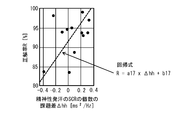
- the cognitive capacity of the user can be controlled by using the problem difference ⁇ hgf of the variation in the number of SCRs of mental sweating and the regression equation of FIG. 54.
- FIG. 55 shows the problem difference of the number of SCRs of mental sweating when the problem of high difficulty is solved and the problem of low difficulty ⁇ hh [ms 2 / Hz], and the problem of high difficulty. It shows an example of the relationship with the correct answer rate R [%] when solving.
- the task difference ⁇ hh is obtained by subtracting the number of mental sweating SCRs when solving a low-difficulty problem from the number of mental sweating SCRs when solving a high-difficulty problem.
- data for each user is plotted, and the characteristics of the entire user are represented by a regression equation (regression line).
- the fact that the task difference ⁇ hh in the number of SCRs for mental sweating is small means that there is a difference in the number of SCRs for mental sweating between when solving a high-difficulty problem and when solving a low-difficulty problem. It means small. It can be said that the user who obtained such a result tends to be able to solve the problem with the number of SCRs of mental sweating within a certain range regardless of the difficulty level of the problem.
- the fact that the task difference ⁇ hh of the number of SCRs of mental sweating is large in the negative direction means that the SCR of mental sweating occurs when the high difficulty problem is solved and when the low difficulty problem is solved. It means that the difference in the number of It can be said that the number of SCRs for mental sweating tends to decrease as the difficulty level of the problem increases for the user who obtains such a result.
- a plurality of problem data to be presented to the user are determined based on the user's feature amount data 723 with respect to the problem data.
- the present discloser has obtained the finding through experiments that the feature amount data 723 of the user changes depending on the task. Therefore, it is possible to determine the problem data to be presented to the user based on the feature amount data 723 of the user. Therefore, the cognitive capacity can be derived with or without reaction time.
- the control unit 61 When the information processing program 63B is loaded, the control unit 61 has a series of procedures for causing the signal processing unit 30 to execute the information processing program 21c, excluding a series of procedures until the observation data 28 is acquired. To execute. As a result, the control unit 61 derives the cognitive capacity of the user, determines the difficulty level of the problem data based on the derived cognitive capacity, and converts the determined difficulty level into the setting data in the difficulty level 24 of the storage unit 63. By writing, set the difficulty level of the questions that will be asked from the next time onwards.
- the control unit 61 When the information processing program 63C is loaded, the control unit 61 has a series of procedures for the signal processing unit 30 to execute the information processing program 21d until the reaction time 25 and the observation data 28 are acquired. Execute the procedure excluding. As a result, the control unit 61 derives the cognitive capacity of the user, determines the difficulty level of the problem data based on the derived cognitive capacity, and converts the determined difficulty level into the setting data in the difficulty level 24 of the storage unit 63. By writing, set the difficulty level of the questions that will be asked from the next time onwards.
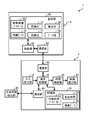
- a part of the functions of the information processing program 21e is performed by an external device configured to be able to communicate with the information processing device 4. Even in this case, the cognitive capacity can be derived regardless of whether or not there is a reaction time, as in the information processing apparatus 4 according to the fourth embodiment.
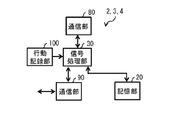
- the biological information detection unit 60 may be provided separately from the information processing device 4.
- the signal processing unit 30 may communicate with the biometric information detection unit 60 via, for example, the communication unit 90.
- the game data 49 includes a plurality of game data having different difficulty levels.
- the game data corresponds to a specific example of the "request” and "problem” of the present disclosure.
- the game data 49 also includes data on the difficulty level of each game data included in the game data 49.
- the game data 49 may further include correct answer data for each game data.
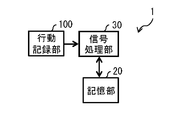
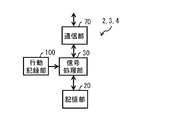
- the action recording unit 100 may be provided instead of the input receiving unit 10.
- an action recording unit 100 may be provided instead of the input receiving unit 10.
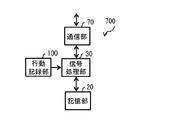
- an action recording unit 100 may be provided instead of the input receiving unit 10.
- the problem in which the user responds (answers) and the problem in which the problem is determined (selected) using the difficulty level 24 are data belonging to a common field. You may.
- the game in which the user reacts (answers) and the game in which the game is determined (selected) using the difficulty level 24 may be data belonging to a common field.
- the question that the user responds to (answers) and the question that is determined (selected) using the difficulty level 24 may correspond to the question data in the learning of a specific subject.
- the characteristic value of the observation target waveform is determined as the observation data.
- the characteristic value generator generated for each,
- An evaluation value generation unit that generates an evaluation value for a difference between the observation data with respect to the observation target waveform based on the characteristic value for each observation data generated by the characteristic value generation unit.
- An information processing device including a determination unit that determines a task for the user based on the evaluation value generated by the evaluation value generation unit.
- An information processing program that causes a computer to determine a task for a user based on a user's biological signal in response to a request.
- the characteristic value of the observation target waveform is determined as the observation data.
- an evaluation value for a difference between the observation data with respect to the observation target waveform is generated.
- the problem for the user is changed based on the variation in the reaction time of the user corresponding to a plurality of requests.
- the present disclosure has obtained the finding through experiments that the variation in reaction time changes depending on the task. Therefore, it is possible to change the task for the user based on the variation in the reaction time. Therefore, the cognitive capacity can be detected regardless of whether or not there is a correct answer in the reaction time.
Landscapes
- Health & Medical Sciences (AREA)
- Life Sciences & Earth Sciences (AREA)
- Engineering & Computer Science (AREA)
- Biomedical Technology (AREA)
- Medical Informatics (AREA)
- Public Health (AREA)
- General Health & Medical Sciences (AREA)
- Pathology (AREA)
- Psychiatry (AREA)
- Psychology (AREA)
- Animal Behavior & Ethology (AREA)
- Physics & Mathematics (AREA)
- Veterinary Medicine (AREA)
- Surgery (AREA)
- Molecular Biology (AREA)
- Heart & Thoracic Surgery (AREA)
- Biophysics (AREA)
- Epidemiology (AREA)
- Child & Adolescent Psychology (AREA)
- Primary Health Care (AREA)
- Hospice & Palliative Care (AREA)
- Developmental Disabilities (AREA)
- Social Psychology (AREA)
- Neurology (AREA)
- Data Mining & Analysis (AREA)
- Educational Technology (AREA)
- Databases & Information Systems (AREA)
- Business, Economics & Management (AREA)
- General Business, Economics & Management (AREA)
- Neurosurgery (AREA)
- Physiology (AREA)
- Measurement And Recording Of Electrical Phenomena And Electrical Characteristics Of The Living Body (AREA)
- Measurement Of The Respiration, Hearing Ability, Form, And Blood Characteristics Of Living Organisms (AREA)
Priority Applications (3)
| Application Number | Priority Date | Filing Date | Title |
|---|---|---|---|
| US17/916,978 US20230157600A1 (en) | 2020-04-14 | 2021-04-14 | Information processor and information processing program |
| JP2022515414A JP7838476B2 (ja) | 2020-04-14 | 2021-04-14 | 情報処理装置および情報処理プログラム |
| CN202180027103.5A CN115426950A (zh) | 2020-04-14 | 2021-04-14 | 信息处理装置和信息处理程序 |
Applications Claiming Priority (4)
| Application Number | Priority Date | Filing Date | Title |
|---|---|---|---|
| JP2020072585 | 2020-04-14 | ||
| JP2020-072585 | 2020-04-14 | ||
| JP2020203058 | 2020-12-07 | ||
| JP2020-203058 | 2020-12-07 |
Publications (1)
| Publication Number | Publication Date |
|---|---|
| WO2021210607A1 true WO2021210607A1 (ja) | 2021-10-21 |
Family
ID=78083989
Family Applications (1)
| Application Number | Title | Priority Date | Filing Date |
|---|---|---|---|
| PCT/JP2021/015440 Ceased WO2021210607A1 (ja) | 2020-04-14 | 2021-04-14 | 情報処理装置および情報処理プログラム |
Country Status (4)
| Country | Link |
|---|---|
| US (1) | US20230157600A1 (https=) |
| JP (1) | JP7838476B2 (https=) |
| CN (1) | CN115426950A (https=) |
| WO (1) | WO2021210607A1 (https=) |
Families Citing this family (1)
| Publication number | Priority date | Publication date | Assignee | Title |
|---|---|---|---|---|
| US20250165571A1 (en) * | 2023-11-22 | 2025-05-22 | Paypal, Inc. | Video verification systems with generative artificial intelligence |
Citations (4)
| Publication number | Priority date | Publication date | Assignee | Title |
|---|---|---|---|---|
| JP2009101057A (ja) * | 2007-10-25 | 2009-05-14 | Sony Corp | 生体情報処理装置、生体情報処理方法及びプログラム |
| JP2016189955A (ja) * | 2015-03-31 | 2016-11-10 | 株式会社日立製作所 | 脳機能指標演算装置および脳機能指標演算方法 |
| JP2018130193A (ja) * | 2017-02-13 | 2018-08-23 | 国立大学法人福井大学 | 生体信号処理装置、生体信号処理システム、および制御プログラム |
| JP2019208758A (ja) * | 2018-06-01 | 2019-12-12 | レデックス株式会社 | 認知機能測定システム、認知機能測定通信システム及びプログラム |
Family Cites Families (7)
| Publication number | Priority date | Publication date | Assignee | Title |
|---|---|---|---|---|
| US6435878B1 (en) * | 1997-02-27 | 2002-08-20 | Bci, Llc | Interactive computer program for measuring and analyzing mental ability |
| US6434419B1 (en) * | 2000-06-26 | 2002-08-13 | Sam Technology, Inc. | Neurocognitive ability EEG measurement method and system |
| JP4635179B2 (ja) * | 2004-09-24 | 2011-02-16 | 独立行政法人情報通信研究機構 | 認識能力測定装置及び認識能力測定方法 |
| AU2012249185A1 (en) * | 2011-02-15 | 2013-09-19 | Axon Sports, Llc | Interactive cognitive recognition sports training system and methods |
| WO2020081617A1 (en) * | 2018-10-15 | 2020-04-23 | Akili Interactive Labs, Inc. | Cognitive platform for deriving effort metric for optimizing cognitive treatment |
| US20210212619A1 (en) * | 2020-01-13 | 2021-07-15 | Paxmentys, LLC | Cognitive Readiness Determination and Control System and Method |
| US20210312942A1 (en) * | 2020-04-06 | 2021-10-07 | Winterlight Labs Inc. | System, method, and computer program for cognitive training |
-
2021
- 2021-04-14 JP JP2022515414A patent/JP7838476B2/ja active Active
- 2021-04-14 CN CN202180027103.5A patent/CN115426950A/zh active Pending
- 2021-04-14 WO PCT/JP2021/015440 patent/WO2021210607A1/ja not_active Ceased
- 2021-04-14 US US17/916,978 patent/US20230157600A1/en active Pending
Patent Citations (4)
| Publication number | Priority date | Publication date | Assignee | Title |
|---|---|---|---|---|
| JP2009101057A (ja) * | 2007-10-25 | 2009-05-14 | Sony Corp | 生体情報処理装置、生体情報処理方法及びプログラム |
| JP2016189955A (ja) * | 2015-03-31 | 2016-11-10 | 株式会社日立製作所 | 脳機能指標演算装置および脳機能指標演算方法 |
| JP2018130193A (ja) * | 2017-02-13 | 2018-08-23 | 国立大学法人福井大学 | 生体信号処理装置、生体信号処理システム、および制御プログラム |
| JP2019208758A (ja) * | 2018-06-01 | 2019-12-12 | レデックス株式会社 | 認知機能測定システム、認知機能測定通信システム及びプログラム |
Also Published As
| Publication number | Publication date |
|---|---|
| JPWO2021210607A1 (https=) | 2021-10-21 |
| CN115426950A (zh) | 2022-12-02 |
| US20230157600A1 (en) | 2023-05-25 |
| JP7838476B2 (ja) | 2026-04-01 |
Similar Documents
| Publication | Publication Date | Title |
|---|---|---|
| JP7262006B2 (ja) | ストレス評価装置、ストレス評価方法及びプログラム | |
| Kaongoen et al. | A novel hybrid auditory BCI paradigm combining ASSR and P300 | |
| Appel et al. | Predicting cognitive load in an emergency simulation based on behavioral and physiological measures | |
| JP2019513516A (ja) | 人の視覚パフォーマンスを査定するために視覚データを入手し、集計し、解析する方法およびシステム | |
| BR112021001717A2 (pt) | métodos implementados por processador para personalizar uma experiência educacional com base em treinamento de neuro-feedback, sistema de treinamento de neuro-feedback, meios legíveis por computador, método e sistema de avaliação de atenção | |
| US10390722B2 (en) | Method for quantifying the perceptive faculty of a person | |
| McMahan et al. | Evaluating Electroencephalography Engagement Indices During Video Game Play. | |
| US10987014B2 (en) | Information processing apparatus, information processing system, and non-transitory computer readable medium | |
| US20220338785A1 (en) | Information processing apparatus, information processing system, and non-transitory computer readable medium | |
| JP2017518845A (ja) | 筋肉痛の診断のための方法およびシステム | |
| Harrison et al. | EEG and fMRI agree: Mental arithmetic is the easiest form of imagery to detect | |
| WO2021210607A1 (ja) | 情報処理装置および情報処理プログラム | |
| Tarara et al. | Motor imagery-based brain-computer interfaces: an exploration of multiclass motor imagery-based control for Emotiv EPOC X | |
| US20240161543A1 (en) | Biological information processing device and biological information processing system | |
| Ghiasi et al. | The role of haptic stimuli on affective reading: a pilot study | |
| JP2019022540A (ja) | プログラム、情報処理装置およびストレス評価方法 | |
| Xavier Fidêncio et al. | A generic error-related potential classifier based on simulated subjects | |
| JP7843663B2 (ja) | 推定装置、推定システム、および、推定方法 | |
| CN110693509A (zh) | 一种案件相关性确定方法、装置、计算机设备和存储介质 | |
| Angrisani et al. | An open Steady-State Visually Evoked Potentials Dataset for Augmented Reality-based Brain-Computer Interfaces | |
| JP2019154868A (ja) | 推定システム、推定装置及び推定方法 | |
| Rajendra Desai | EEG-based evaluation of cognitive and emotional arousal when coding in different programming languages | |
| Rostami et al. | Evaluation of mental workload and familiarity in human computer interaction with integrated development environments using single-channel EEG | |
| Camilleri et al. | Assessing task difficulty in software testing using biometric measures | |
| Marochko et al. | A survey on the application of virtual reality in event-related potential research |
Legal Events
| Date | Code | Title | Description |
|---|---|---|---|
| 121 | Ep: the epo has been informed by wipo that ep was designated in this application |
Ref document number: 21787963 Country of ref document: EP Kind code of ref document: A1 |
|
| ENP | Entry into the national phase |
Ref document number: 2022515414 Country of ref document: JP Kind code of ref document: A |
|
| NENP | Non-entry into the national phase |
Ref country code: DE |
|
| 122 | Ep: pct application non-entry in european phase |
Ref document number: 21787963 Country of ref document: EP Kind code of ref document: A1 |