WO2021186897A1 - 移動距離算出方法、移動距離算出装置及び移動距離算出プログラム - Google Patents
移動距離算出方法、移動距離算出装置及び移動距離算出プログラム Download PDFInfo
- Publication number
- WO2021186897A1 WO2021186897A1 PCT/JP2021/002466 JP2021002466W WO2021186897A1 WO 2021186897 A1 WO2021186897 A1 WO 2021186897A1 JP 2021002466 W JP2021002466 W JP 2021002466W WO 2021186897 A1 WO2021186897 A1 WO 2021186897A1
- Authority
- WO
- WIPO (PCT)
- Prior art keywords
- sensor
- person
- detected
- distance
- detection information
- Prior art date
- Legal status (The legal status is an assumption and is not a legal conclusion. Google has not performed a legal analysis and makes no representation as to the accuracy of the status listed.)
- Ceased
Links
Images








Classifications
-
- G—PHYSICS
- G01—MEASURING; TESTING
- G01C—MEASURING DISTANCES, LEVELS OR BEARINGS; SURVEYING; NAVIGATION; GYROSCOPIC INSTRUMENTS; PHOTOGRAMMETRY OR VIDEOGRAMMETRY
- G01C22/00—Measuring distance traversed on the ground by vehicles, persons, animals or other moving solid bodies, e.g. using odometers, using pedometers
-
- A—HUMAN NECESSITIES
- A61—MEDICAL OR VETERINARY SCIENCE; HYGIENE
- A61B—DIAGNOSIS; SURGERY; IDENTIFICATION
- A61B5/00—Measuring for diagnostic purposes; Identification of persons
- A61B5/103—Measuring devices for testing the shape, pattern, colour, size or movement of the body or parts thereof, for diagnostic purposes
- A61B5/11—Measuring movement of the entire body or parts thereof, e.g. head or hand tremor or mobility of a limb
- A61B5/1113—Local tracking of patients, e.g. in a hospital or private home
-
- G—PHYSICS
- G01—MEASURING; TESTING
- G01C—MEASURING DISTANCES, LEVELS OR BEARINGS; SURVEYING; NAVIGATION; GYROSCOPIC INSTRUMENTS; PHOTOGRAMMETRY OR VIDEOGRAMMETRY
- G01C21/00—Navigation; Navigational instruments not provided for in groups G01C1/00 - G01C19/00
- G01C21/20—Instruments for performing navigational calculations
- G01C21/206—Instruments for performing navigational calculations specially adapted for indoor navigation
-
- A—HUMAN NECESSITIES
- A61—MEDICAL OR VETERINARY SCIENCE; HYGIENE
- A61B—DIAGNOSIS; SURGERY; IDENTIFICATION
- A61B2505/00—Evaluating, monitoring or diagnosing in the context of a particular type of medical care
- A61B2505/07—Home care
-
- A—HUMAN NECESSITIES
- A61—MEDICAL OR VETERINARY SCIENCE; HYGIENE
- A61B—DIAGNOSIS; SURGERY; IDENTIFICATION
- A61B5/00—Measuring for diagnostic purposes; Identification of persons
- A61B5/0002—Remote monitoring of patients using telemetry, e.g. transmission of vital signals via a communication network
- A61B5/0015—Remote monitoring of patients using telemetry, e.g. transmission of vital signals via a communication network characterised by features of the telemetry system
- A61B5/0022—Monitoring a patient using a global network, e.g. telephone networks, internet
-
- A—HUMAN NECESSITIES
- A61—MEDICAL OR VETERINARY SCIENCE; HYGIENE
- A61B—DIAGNOSIS; SURGERY; IDENTIFICATION
- A61B5/00—Measuring for diagnostic purposes; Identification of persons
- A61B5/103—Measuring devices for testing the shape, pattern, colour, size or movement of the body or parts thereof, for diagnostic purposes
- A61B5/11—Measuring movement of the entire body or parts thereof, e.g. head or hand tremor or mobility of a limb
- A61B5/1118—Determining activity level
Definitions
- This disclosure relates to a technique for calculating the distance traveled by a person in a residence.
- the care recipient In order to measure the amount of activity in daily life, the care recipient must wear an activity meter. However, the care recipient may forget to wear the activity meter, or the care recipient may not wear the activity meter due to the troublesome operation, and it is difficult to accurately measure the activity amount. ..
- the technology for measuring the amount of activity is being developed without having the care recipient wear an activity meter.
- the human body is installed in each indoor room and uses the human body position information sensed by a plurality of passive sensors arranged at regular intervals at the positions of the vertical axis and the horizontal axis in the plan view of the room.
- the amount of exercise indoors is calculated.
- the present disclosure has been made to solve the above problems, and an object of the present disclosure is to provide a technique capable of calculating the moving distance of a person even when an erroneous reaction occurs in the sensor. Is.
- the movement distance calculation method is a movement distance calculation method in a movement distance calculation device for calculating the movement distance of a person in the residence, and is a first space provided in the first space in the residence.
- the person is detected by the first detection information indicating that the person has been detected by the first sensor and the second sensor provided in the second space in the house different from the first space.
- the third detection information shown is acquired, and the person is detected by the third sensor after the person is detected by the first sensor based on the first detection information and the third detection information.
- the distance between the first sensor and the third sensor is defined as the distance between the first sensor and the third sensor.
- the distance between the second sensor and the third sensor is added to the movement distance.
- Embodiment 1 It is a block diagram which shows the structure of the movement distance calculation system in Embodiment 1 of this disclosure. It is a figure which shows an example of the floor plan of the house where the main sensor and the hub sensor are installed in Embodiment 1. It is a figure which shows an example of the distance table which is stored in the distance table storage part in this Embodiment 1. It is a 1st flowchart for demonstrating the movement distance calculation process in the movement distance calculation apparatus which concerns on Embodiment 1 of this disclosure. It is a 2nd flowchart for demonstrating the movement distance calculation process in the movement distance calculation apparatus which concerns on Embodiment 1 of this disclosure.
- the main sensor and the hub sensor when the main sensor and the hub sensor normally detect a person, the main sensor and the hub sensor that output the detection information are arranged in chronological order. In the first embodiment, when the hub sensor does not normally detect a person, the main sensor and the hub sensor that output the detection information are arranged in chronological order. In the first embodiment, when the main sensor erroneously detects a person, the main sensor and the hub sensor that output the detection information are arranged in chronological order.
- a plurality of sensors are required for each indoor room, and the cost for installing the plurality of sensors is high.
- the main focus is on capturing the activities of people in a room by installing a plurality of sensors in one space called a room. Therefore, in the past, movement over a relatively short distance was measured, but when measuring a relatively long distance such as movement between rooms indoors, a large amount of time is required to install multiple sensors. There was a problem that it was costly.
- the movement distance calculation method is a movement distance calculation method in the movement distance calculation device for calculating the movement distance of a person in the residence, and is the movement distance calculation method in the residence.
- the first detection information indicating that the person has been detected by the first sensor provided in the first space, and the second space provided in the dwelling different from the first space.
- the second detection information indicating that the person has been detected by the second sensor, and the third sensor provided in the third space in the dwelling connecting the first space and the second space. After acquiring the third detection information indicating that the person has been detected by the first sensor and detecting the person by the first sensor based on the first detection information and the third detection information.
- the first sensor and the third sensor When the person is detected by the third sensor, or when the person is detected by the first sensor after the person is detected by the third sensor, the first sensor and the third sensor.
- the distance between the sensor and the sensor is added to the movement distance, and the third sensor is detected after the person is detected by the second sensor based on the second detection information and the third detection information.
- the person is detected by the second sensor or when the person is detected by the second sensor after the person is detected by the third sensor, between the second sensor and the third sensor. Is added to the movement distance, and the person is detected by the second sensor after the person is detected by the first sensor based on the first detection information and the second detection information.
- the movement is performed by the distance between the first sensor and the second sensor.
- the added movement distance is output without adding to the distance.
- a person cannot move from the first space to the second space without passing through the third space in the dwelling that connects the first space and the second space. Therefore, when the first sensor provided in the first space detects a person and then the third sensor provided in the third space detects a person, or the third sensor provided in the third space When the first sensor provided in the first space detects a person after the sensor detects a person, the distance between the first sensor and the third sensor is added to the moving distance.
- the second sensor provided in the second space detects a person and then the third sensor provided in the third space detects a person, or the third sensor provided in the third space
- the distance between the second sensor and the third sensor is added to the moving distance.
- the first sensor provided in the first space detects a person and then the second sensor provided in the second space detects a person, or the second sensor provided in the second space
- the first sensor provided in the first space detects a person after the sensor detects a person
- the distance between the first sensor and the second sensor is not added to the movement distance.
- the first sensor provided in the first space detects a person and then the second sensor provided in the second space detects a person, the person passes through the third space.
- the distance between the first sensor and the second sensor is not added to the movement distance because the flow line of the person is not correctly captured. Therefore, since the distance between the sensors is added to the movement distance in consideration of the flow line of the person, the movement distance of the person can be calculated even when an erroneous reaction occurs in the sensor.
- first sensor By providing one first sensor, one second sensor, and one third sensor in each of the first space, the second space, and the third space, a plurality of sensors are provided in each space. There is no need, and the cost for installing multiple sensors can be reduced. In addition, it is possible to capture a relatively long movement such as a movement between spaces in a house at low cost.
- the moving distance calculation method when the person is detected by the first sensor and then the person is detected by the third sensor, or after the person is detected by the third sensor.
- the combination of the installation location of the first sensor and the installation location of the third sensor and the space between the first sensor and the third sensor And the combination of the installation location of the second sensor and the installation location of the third sensor, and the distance between the second sensor and the third sensor. From the table, the distance associated with the combination of the installation location of the first sensor and the installation location of the third sensor is read out and added to the movement distance, and the person is moved by the second sensor.
- the person is detected by the third sensor after being detected, or when the person is detected by the second sensor after being detected by the third sensor, the person is detected from the table.
- the distance associated with the combination of the installation location of the second sensor and the installation location of the third sensor may be read out and added to the movement distance.
- the table is associated with the combination of the installation locations of the two sensors and the distance between the two sensors. Therefore, the distance associated with the combination of the installation locations of the two sensors can be easily calculated by reading the distance from the table.
- the table does not have to associate the combination of the installation location of the first sensor and the installation location of the second sensor with the distance between the first sensor and the second sensor.
- the second sensor detects a person after the first sensor detects a person, it is associated with the combination of the installation location of the first sensor and the installation location of the second sensor.
- the distance is not read from the table because the distance is not in the table. Therefore, since only the distance associated with the table is added to the moving distance, it is possible to reduce the process of adding the distance between the sensors to the moving distance.
- the person is further detected by a fourth sensor provided at a position different from the position where the first sensor is provided in the first space.
- the fourth detection information indicating the above is acquired, and further, based on the first detection information and the fourth detection information, the person is detected by the first sensor, and then the fourth sensor detects the person.
- the fourth sensor is provided at a position different from the position where the first sensor is provided, and the first sensor is provided.
- the person is detected by the third sensor, the person is detected by the second sensor, and the person is detected by the second sensor.
- the person is continuously detected by at least one of the first sensor and the fourth sensor three times or more in succession.
- the distance between the third sensor and the second sensor is not added to the movement distance, and the distance between the third sensor and the first sensor is the movement. It may be added to the distance.
- the second sensor detects a person after the third sensor detects a person
- the first sensor detects a person after the second sensor detects a person
- the first sensor detects a person. If at least one of the first sensor and the fourth sensor detects a person three or more times in a row, it can be estimated that an erroneous reaction has occurred in the second sensor, and the person has a second sensor. It can be estimated that the sensor did not move from the third space to the second space, but moved from the third space to the first space. Therefore, even if an erroneous reaction occurs in the sensor, the moving distance of a person can be calculated more accurately.
- the movement distance calculation method when the person is detected at the same time by any two of the first sensor, the second sensor, and the third sensor, the movement is further performed. It is not necessary to calculate the distance.
- the moving distance of only the target person who calculates the moving distance When multiple people are in the house, it is difficult to calculate the moving distance of only the target person who calculates the moving distance. Therefore, when any two of the first sensor, the second sensor, and the third sensor detect a person at the same time, the calculation of the moving distance may be stopped. As a result, when a person other than the target person for whom the moving distance is calculated is in the residence, the moving distance is not calculated, so that the moving distance of only the target person can be calculated.
- the present disclosure can be realized not only as a moving distance calculation method for executing the above-mentioned characteristic processing, but also has a characteristic configuration corresponding to the characteristic method executed by the moving distance calculation method. It can also be realized as a moving distance calculation device or the like. It can also be realized as a computer program that causes a computer to execute characteristic processing included in such a moving distance calculation method. Therefore, the same effect as the above-mentioned moving distance calculation method can be obtained in the following other aspects as well.
- the movement distance calculation device is a movement distance calculation device for calculating the movement distance of a person in the residence, and is provided by a first sensor provided in the first space in the residence. It indicates that the person has been detected by the first detection information indicating that the person has been detected and the second sensor provided in the second space in the residence different from the first space. A third indicating that the person has been detected by the second detection information and a third sensor provided in the third space in the dwelling that connects the first space and the second space. Based on the acquisition unit that acquires the detection information, the first detection information, and the third detection information, the person is detected by the third sensor after the person is detected by the first sensor.
- the movement is performed by the distance between the first sensor and the third sensor.
- the third sensor after the person is detected by the second sensor or the person is detected based on the second detection information and the third detection information by adding to the distance.
- the distance between the second sensor and the third sensor is added to the movement distance.
- a movement distance calculation unit that does not add the distance between the first sensor and the second sensor to the movement distance, and It includes an output unit that outputs the added movement distance.
- the movement distance calculation program is a movement distance calculation program for calculating the movement distance of a person in the residence, and is a first movement distance calculation program provided in the first space in the residence.
- the person was detected by the first detection information indicating that the person was detected by the sensor and the second sensor provided in the second space in the house different from the first space.
- the second detection information indicating that the person is detected by the third sensor provided in the third space in the dwelling that connects the first space and the second space.
- the person is detected by the third sensor after the person is detected by the first sensor based on the first detection information and the third detection information. If the person is detected by the first sensor after the person is detected by the third sensor, the moving distance is the distance between the first sensor and the third sensor.
- the third sensor When the person is detected by the third sensor after the person is detected by the second sensor or the person is detected by the third sensor based on the second detection information and the third detection information.
- the distance between the second sensor and the third sensor is added to the movement distance, and the movement distance is added.
- the distance between the first sensor and the second sensor is not added to the movement distance, but the added movement distance. Make the computer function to output.
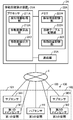
- FIG. 1 is a block diagram showing a configuration of a moving distance calculation system according to the first embodiment of the present disclosure.
- the movement distance calculation system shown in FIG. 1 includes a first main sensor M1, a second main sensor M2, a hub sensor H1, and a movement distance calculation device 2.
- the first main sensor M1 is provided in the first space 101 in the residence 100, and detects a person in the first space 101.
- the first main sensor M1 is, for example, a motion sensor or a door open / close sensor provided at the entrance / exit of the first space 101.
- the first space 101 is, for example, a room in a dwelling 100 such as a living room, a dining room, a bedroom, a toilet, or a washroom.
- the first main sensor M1 transmits the first detection information indicating that the person has been detected to the moving distance calculation device 2.
- the first detection information includes time information indicating the time when a person is detected.
- the second main sensor M2 is provided in the second space 102 in the residence 100 different from the first space 101, and detects a person in the second space 102.
- the second main sensor M2 is, for example, a motion sensor or a door open / close sensor provided at the entrance / exit of the second space 102.
- the second space 102 is, for example, a room in the residence 100 such as a living room, a dining room, a bedroom, a toilet, or a washroom.
- the second main sensor M2 transmits the second detection information indicating that the person has been detected to the moving distance calculation device 2.
- the second detection information includes time information indicating the time when a person is detected.
- the hub sensor H1 is provided in the third space 103 in the residence 100 connecting the first space 101 and the second space 102, and detects a person in the third space 103.
- the hub sensor H1 is, for example, a motion sensor.
- the third space 103 is, for example, a corridor, which is a place where a person passes when moving between the first space 101 and the second space 102.
- the hub sensor H1 detects a person in the third space 103
- the hub sensor H1 transmits the third detection information indicating that the person has been detected to the moving distance calculation device 2.
- the third detection information includes time information indicating the time when a person is detected.
- the first main sensor M1 is an example of the first sensor
- the second main sensor M2 is an example of the second sensor
- the hub sensor H1 is an example of the third sensor.
- the dwelling 100 shown in FIG. 1 includes a first space 101, a second space 102, and a third space 103, but the present disclosure is not particularly limited to this, and may include four or more spaces. .. Further, a main sensor or a hub sensor may be installed in each of the four or more spaces. Either one of the main sensor and the hub sensor is installed in each space.
- a plurality of hub sensors H1 may be installed in the third space. This is effective when the third space is wide and one hub sensor H1 cannot detect a person in the third space. Further, the place where the hub sensor H1 is installed is not limited to the corridor, and the hub sensor H1 may be installed in a room where people frequently pass. Further, the hub sensor H1 may be installed in each of the plurality of spaces.
- the moving distance calculation device 2 calculates the moving distance of a person in the house 100.
- the moving distance calculation device 2 is, for example, a server.
- the moving distance calculation device 2 is communicably connected to each of the first main sensor M1, the second main sensor M2, and the hub sensor H1 via the network 4.
- the network 4 is, for example, the Internet.
- the moving distance calculation device 2 includes a processor 21, a memory 22, and a communication unit 23.
- the communication unit 23 receives the first detection information transmitted by the first main sensor M1, the second detection information transmitted by the second main sensor M2, and the third detection information transmitted by the hub sensor H1. do.
- the memory 22 is a storage device capable of storing various information such as a RAM (Random Access Memory), an HDD (Hard Disk Drive), an SSD (Solid State Drive), or a flash memory.
- the memory 22 includes a detection information storage unit 221, a distance table storage unit 222, and a moving distance storage unit 223.
- the detection information storage unit 221 includes the first detection information transmitted by the first main sensor M1, the second detection information transmitted by the second main sensor M2, and the third detection information transmitted by the hub sensor H1.
- the distance table storage unit 222 associates the combination of the installation location of the first main sensor M1 and the installation location of the hub sensor H1 with the distance between the first main sensor M1 and the hub sensor H1 and the second main.
- a distance table in which the combination of the installation location of the sensor M2 and the installation location of the hub sensor H1 and the distance between the second main sensor M2 and the hub sensor H1 are associated with each other is stored.
- the travel distance storage unit 223 stores the travel distance of the inhabitants of the residence 100.
- the movement distance storage unit 223 may store the movement distance for each residence 100 or may store the movement distance for each resident.
- the processor 21 is, for example, a central processing unit (CPU).
- the processor 21 realizes the detection information acquisition unit 211, the movement distance calculation unit 212, and the movement distance output unit 213.
- the detection information acquisition unit 211 is different from the first detection information indicating that a person has been detected by the first main sensor M1 provided in the first space 101 in the residence 100 and the first space 101.
- the third detection information indicating that a person has been detected by the hub sensor H1 provided in the third space 103 in 100 is acquired.
- the detection information acquisition unit 211 reads out the first detection information, the second detection information, and the third detection information stored in the detection information storage unit 221.
- the moving distance calculation unit 212 arranges the first detection information, the second detection information, and the third detection information output from each sensor in a predetermined period in chronological order.
- the predetermined period is, for example, one day.
- the movement distance calculation unit 212 determines when a person is detected by the hub sensor H1 after the person is detected by the first main sensor M1 or when the person is detected by the hub sensor H1 based on the first detection information and the third detection information. When a person is detected by the first main sensor M1 after being detected, the distance between the first main sensor M1 and the hub sensor H1 is added to the moving distance.
- the moving distance calculation unit 212 may detect a person by the hub sensor H1 after the person is detected by the second main sensor M2 or by the hub sensor H1 based on the second detection information and the third detection information. When a person is detected by the second main sensor M2 after the person is detected, the distance between the second main sensor M2 and the hub sensor H1 is added to the moving distance.
- the movement distance calculation unit 212 detects a person by the first main sensor M1 and then by the second main sensor M2 based on the first detection information and the second detection information.
- the distance between the first main sensor M1 and the second main sensor M2 is used as the moving distance. Do not add.
- the moving distance calculation unit 212 detects a person by the first main sensor M1 when a person is detected by the hub sensor H1 after the person is detected by the first main sensor M1 or after the person is detected by the hub sensor H1. In this case, the distance associated with the combination of the installation location of the first main sensor M1 and the installation location of the hub sensor H1 is read from the distance table stored in the distance table storage unit 222 and added to the moving distance. ..
- the moving distance calculation unit 212 detects a person by the second main sensor M2 when a person is detected by the hub sensor H1 after the person is detected by the second main sensor M2 or after the person is detected by the hub sensor H1. In this case, the distance associated with the combination of the installation location of the second main sensor M2 and the installation location of the hub sensor H1 is read from the distance table stored in the distance table storage unit 222 and added to the moving distance. ..
- the movement distance calculation unit 212 sets the first main sensor M1 and the first main sensor M1. Do not add the distance between to the distance traveled. This is because when a person is detected by the first main sensor M1 after the person is detected by the first main sensor M1, it is estimated that the person has not moved from the first space 101. Similarly, when a person is detected by the second main sensor M2 and then a person is detected by the second main sensor M2, the movement distance calculation unit 212 sets the second main sensor M2 and the second main sensor M2. The distance between and is not added to the travel distance. Further, when a person is detected by the hub sensor H1 after the person is detected by the hub sensor H1, the movement distance calculation unit 212 does not add the distance between the hub sensor H1 and the hub sensor H1 to the movement distance.
- the distance table associates the combination of the installation location of the first main sensor M1 and the installation location of the second main sensor M2 with the distance between the first main sensor M1 and the second main sensor M2. Not. Therefore, when a person is detected by the second main sensor M2 after the person is detected by the first main sensor M1, or after the person is detected by the second main sensor M2, the person is detected by the first main sensor M1. When is detected, the distances associated with the combination of the installation location of the first main sensor M1 and the installation location of the second main sensor M2 are not in the distance table, so that the first main sensor M1 and the first main sensor M1 and the first The distance between 2 and the main sensor M2 is not added to the movement distance.
- the combination of the installation location of the first main sensor M1 and the installation location of the second main sensor M2 may be associated with 0 meters.
- the first main sensor M1 detects the person.
- 0 meter is added to the moving distance, so that the distance between the first main sensor M1 and the second main sensor M2 is not added to the moving distance.
- the movement distance output unit 213 outputs the movement distance added by the movement distance calculation unit 212.
- the movement distance output unit 213 may output the movement distance of a person in a predetermined period to the memory 22 and store the movement distance in the movement distance storage unit 223. Further, the moving distance output unit 213 may output the moving distance of a person in a predetermined period to the communication unit 23.
- the communication unit 23 may transmit the travel distance of a person in a predetermined period to an information terminal (not shown).
- the information terminal is, for example, a smartphone, a tablet computer, or a personal computer. The information terminal is used, for example, by a resident of dwelling 100, a caregiver of a resident of dwelling 100, or a care manager of a resident of dwelling 100.
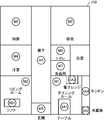
- FIG. 2 is a diagram showing an example of the floor plan of the house where the main sensor and the hub sensor are installed in the first embodiment.
- the first to eighth main sensors M1 to M8 and the hub sensor H1 are installed one by one in each room in the house 100.
- the first to eighth main sensors M1 to M8 are installed in the dining room, living room, bedroom, Western-style room, storeroom, toilet, washroom and entrance, respectively, and the hub sensor H1 is installed in the corridor.
- the hub sensor H1 is installed in the corridor.
- FIG. 3 is a diagram showing an example of a distance table stored in the distance table storage unit 222 in the first embodiment.
- a distance is associated with the combination of the corridor in which the hub sensor H1 is installed and each room in which the first to eighth main sensors M1 to M8 are installed.
- the combination of the corridor and the dining room is associated with a distance of 4 meters between the hub sensor H1 and the first main sensor M1. For example, if a person moves from the dining room to the corridor, 4 meters will be added to the distance traveled.
- the first detection information may include information indicating the installation location (dining room) of the first main sensor M1, and the second detection information may include the installation location (living room) of the second main sensor M2.
- the third detection information may include information indicating the installation location (corridor) of the hub sensor H1. As a result, the installation location can be specified from the detection information.
- the first detection information may include identification information for identifying the first main sensor M1
- the second detection information may include identification information for identifying the second main sensor M2.
- the third detection information may include identification information for identifying the hub sensor H1.
- the memory 22 may store a table in which the identification information of each sensor is associated with the installation location of each sensor. As a result, the installation location can be specified from the detection information.
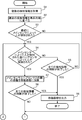
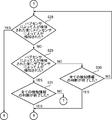
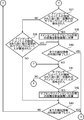
- FIG. 4 is a first flowchart for explaining a moving distance calculation process in the moving distance calculation device 2 according to the first embodiment of the present disclosure
- FIG. 5 is a moving distance according to the first embodiment of the present disclosure. It is a 2nd flowchart for demonstrating the movement distance calculation process in the calculation apparatus 2.
- the main sensor MN is a general term for the first to eighth main sensors M1 to M8.
- step S1 the detection information acquisition unit 211 acquires a plurality of detection information output by the main sensor MN and the hub sensor H1 from the detection information storage unit 221.
- the movement distance calculation process shown in FIGS. 4 and 5 is performed once a day.
- the detection information acquisition unit 211 acquires the detection information for one day at midnight, for example.
- the time for acquiring the detection information is not limited to midnight.
- the movement distance calculation process shown in FIGS. 4 and 5 is not limited to once a day, but may be performed a plurality of times a day or once a week, and may be performed every predetermined period. May be done in.
- step S2 the moving distance calculation unit 212 arranges a plurality of detection information acquired by the detection information acquisition unit 211 in chronological order.
- step S3 the moving distance calculation unit 212 first determines whether or not a person has been detected by the main sensor MN based on the detection information arranged in chronological order.
- the process proceeds to step S9.
- step S4 when it is first determined that a person is detected by the main sensor MN (YES in step S3), in step S4, the moving distance calculation unit 212 is performed by the main sensor MN based on the detection information arranged in chronological order. After the person is detected, it is determined whether or not the person is detected by the hub sensor H1.
- step S5 the moving distance calculation unit 212 determines whether or not the determination of all the acquired detection information has been completed.
- the movement distance output unit 213 calculates the movement distance added by the movement distance calculation unit 212. Output.
- the movement distance output unit 213 outputs the movement distance to the movement distance storage unit 223.
- the moving distance storage unit 223 stores the moving distance output by the moving distance output unit 213.
- step S5 if it is determined that the determination of all the acquired detection information has not been completed (NO in step S5), the process returns to step S4.
- the process returns to step S4.
- a person is continuously detected by the same main sensor MN, it is estimated that the person has not moved from the room where the main sensor MN is installed, so that the distance between the two main sensors moves. It is not added to the distance.
- the subsequent main sensor MN erroneously detects a person, so that the distance between the two main sensors is added to the moving distance. There is no.
- step S7 the moving distance calculation unit 212 connects the main sensor MN and the hub sensor H1. Add the distance between them to the distance traveled. At this time, the moving distance calculation unit 212 reads out the distance associated with the combination of the installation location of the main sensor MN and the installation location of the hub sensor H1 from the distance table stored in the distance table storage unit 222, and moves. Add to the distance.
- step S8 the moving distance calculation unit 212 determines whether or not the determination of all the acquired detection information has been completed.
- the process shifts to step S6.
- step S9 the moving distance calculation unit 212 is based on the detection information arranged in chronological order. After the person is detected by the hub sensor H1, it is determined whether or not the person is detected by the main sensor MN.
- step S10 determines whether or not the determination of all the acquired detection information has been completed.
- the movement distance output unit 213 calculates the movement distance added by the movement distance calculation unit 212. Output.
- the movement distance output unit 213 outputs the movement distance to the movement distance storage unit 223.
- the moving distance storage unit 223 stores the moving distance output by the moving distance output unit 213.
- step S10 if it is determined that the determination of all the acquired detection information has not been completed (NO in step S10), the process returns to step S9. In this way, when a person is continuously detected by the same hub sensor H1, it is estimated that the person has not moved from the room in which the hub sensor H1 is installed, so that the distance between the two hub sensors is added to the moving distance. Will not be done.
- step S12 the moving distance calculation unit 212 connects the hub sensor H1 and the main sensor MN. Add the distance between them to the distance traveled. At this time, the moving distance calculation unit 212 reads out the distance associated with the combination of the installation location of the hub sensor H1 and the installation location of the main sensor MN from the distance table stored in the distance table storage unit 222, and moves. Add to the distance.
- step S13 the moving distance calculation unit 212 determines whether or not the determination of all the acquired detection information has been completed.
- the process shifts to step S11.
- step S13 if it is determined that the determination of all the acquired detection information has not been completed (NO in step S13), the process returns to step S4.
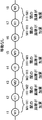
- FIG. 6 is a diagram showing the main sensor and the hub sensor that output the detection information in chronological order when the main sensor and the hub sensor normally detect a person in the first embodiment.
- the hub sensor H1 detects a person at time t2 after the first main sensor M1 detects a person at time t1, the distance between the first main sensor M1 and the hub sensor H1 is added to the moving distance. ing. Further, since the second main sensor M2 detects a person at time t3 after the hub sensor H1 detects a person at time t2, the distance between the hub sensor H1 and the second main sensor M2 becomes the moving distance. It has been added. Further, since the hub sensor H1 detects a person at time t4 after the second main sensor M2 detects a person at time t3, the distance between the second main sensor M2 and the hub sensor H1 becomes the moving distance. It has been added.
- the first main sensor M1 detects a person at time t5 after the hub sensor H1 detects a person at time t4, the distance between the hub sensor H1 and the first main sensor M1 becomes the moving distance. It has been added. Further, since the first main sensor M1 detects a person at time t5 and then the first main sensor M1 detects a person at time t6, the first main sensor M1 and the first main sensor M1 The distance between is not added to the travel distance. This is because it is presumed that the person has not moved from the first space 101.
- the hub sensor H1 detects a person at time t7 after the first main sensor M1 detects a person at time t6, the distance between the first main sensor M1 and the hub sensor H1 becomes the moving distance. It has been added. Further, since the first main sensor M1 detects a person at time t8 after the hub sensor H1 detects a person at time t7, the distance between the hub sensor H1 and the first main sensor M1 becomes the moving distance. It has been added.
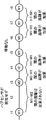
- FIG. 7 is a diagram showing the main sensor and the hub sensor that output the detection information in chronological order when the hub sensor does not normally detect a person in the first embodiment.
- the hub sensor H1 does not normally detect a person at time t2, the first main sensor M1 detects a person at time t1, and then the second main sensor M2 detects a person at time t3. ing. In this case, since the person is detected by the second main sensor M2 after the person is detected by the first main sensor M1, the distance between the first main sensor M1 and the second main sensor M2 moves. Not added to the distance.
- FIG. 8 is a diagram showing the main sensor and the hub sensor that output the detection information in chronological order when the main sensor erroneously detects a person in the first embodiment.
- the third main sensor M3 erroneously detects a person at time t3. Therefore, after the hub sensor H1 detects a person at time t2, the third main sensor M3 detects a person at time t3. In this case, since the person is detected by the third main sensor M3 after the person is detected by the hub sensor H1, the distance between the hub sensor H1 and the third main sensor M3 is added to the moving distance. On the other hand, after the third main sensor M3 detects a person at time t3, the second main sensor M2 detects a person at time t4. In this case, since the person is detected by the second main sensor M2 after the person is detected by the third main sensor M3, the distance between the third main sensor M3 and the second main sensor M2 moves. Not added to the distance.
- the person is detected. Does not pass through the third space 103, and the flow line of a person is not correctly captured, so that the distance between the first main sensor M1 and the second main sensor M2 is not added to the moving distance. Therefore, since the distance between the sensors is added to the movement distance in consideration of the flow line of the person, the movement distance of the person can be calculated even when an erroneous reaction occurs in the sensor.
- each space is provided. It is not necessary to provide a plurality of sensors, and the cost for installing a plurality of sensors can be reduced.
- the moving distance calculation unit 212 detects a person at the same time by any two of the first main sensor M1, the second main sensor M2, and the hub sensor H1. It is not necessary to calculate the travel distance. For example, when the caregiver visits the care recipient's residence while the travel distance calculation device 2 calculates the travel distance of the resident who is the care recipient, the main sensor and the hub sensor are not only the care recipient but also the care recipient. , The caregiver will also be detected, and it will not be possible to calculate the exact distance traveled by the care recipient. Therefore, when a person is detected at the same time by any two of the plurality of main sensors and the hub sensor, the movement distance calculation unit 212 estimates that a plurality of people are in the house and stops the calculation of the movement distance. You may. As a result, when a person other than the target person (resident) for which the moving distance is calculated is in the residence, the moving distance is not calculated, so that only the moving distance of the target person can be calculated.
- Emodiment 2 In the first embodiment described above, one main sensor or one hub sensor is installed in each space in the house 100. On the other hand, in the second embodiment, at least one sub-sensor is installed in addition to the main sensor or the hub sensor installed in each space.
- FIG. 9 is a block diagram showing the configuration of the movement distance calculation system according to the second embodiment of the present disclosure.
- the movement distance calculation system shown in FIG. 9 includes a first main sensor M1, a second main sensor M2, a hub sensor H1, subsensors SA1 and SB1, and a movement distance calculation device 2A.
- a first main sensor M1 a second main sensor M2
- a hub sensor H1 a hub sensor
- the same components as those in the first embodiment are designated by the same reference numerals, and the description thereof will be omitted.
- the first main sensor M1 is provided at the first position of the first space 101 in the residence 100, and detects a person at the first position in the first space 101.
- the first position is, for example, the entrance of the first space 101.
- the first main sensor M1 transmits the first detection information indicating that the person has been detected to the moving distance calculation device 2A.
- the first detection information includes time information indicating the time when a person is detected.
- the sub-sensor SA1 is provided at a second position in the first space 101 different from the first position where the first main sensor M1 is provided, and detects a person at the second position.
- the sub-sensor SA1 is, for example, a motion sensor or an open / close sensor for the door of an electric device provided at a second position in the first space 101.
- the sub-sensor SA1 transmits a fourth detection information indicating that the person has been detected to the moving distance calculation device 2A.
- the fourth detection information includes time information indicating the time when a person is detected.
- the second main sensor M2 is provided at the first position of the second space 102 in the residence 100 different from the first space 101, and detects a person at the first position in the second space 102. do.
- the first position is, for example, the entrance of the second space 102.
- the second main sensor M2 detects a person at the first position in the second space 102
- the second main sensor M2 transmits the second detection information indicating that the person has been detected to the moving distance calculation device 2A.
- the second detection information includes time information indicating the time when a person is detected.
- the sub-sensor SB1 is provided at a second position in the second space 102 different from the first position where the second main sensor M2 is provided, and detects a person at the second position.
- the sub-sensor SB1 is, for example, a motion sensor or a door open / close sensor for an electric device provided at a second position in the second space 102.
- the sub-sensor SB1 transmits a fourth detection information indicating that the person has been detected to the moving distance calculation device 2A.
- the fourth detection information includes time information indicating the time when a person is detected.
- the sub-sensors SA1 and SB1 are examples of the fourth sensor. Further, the number of sub-sensors installed in one space is not limited to one, and a plurality of sub-sensors may be installed in one space.
- the moving distance calculation device 2A is communicably connected to each of the first main sensor M1, the second main sensor M2, the hub sensor H1 and the sub-sensors SA1 and SB1 via the network 4.
- the moving distance calculation device 2A includes a processor 21A, a memory 22A, and a communication unit 23A.
- the communication unit 23A includes the first detection information transmitted by the first main sensor M1, the second detection information transmitted by the second main sensor M2, the third detection information transmitted by the hub sensor H1, and the sub-sensor.
- the fourth detection information transmitted by SA1 and SB1 is received.
- the memory 22A is a storage device capable of storing various information such as RAM, HDD, SSD or flash memory, for example.
- the memory 22A includes a detection information storage unit 221A, a distance table storage unit 222A, and a moving distance storage unit 223.
- the detection information storage unit 221A has the first detection information transmitted by the first main sensor M1, the second detection information transmitted by the second main sensor M2, and the third detection information transmitted by the hub sensor H1. And the fourth detection information transmitted by the sub-sensors SA1 and SB1 is stored.
- the distance table storage unit 222A associates the combination of the installation location of the first main sensor M1 and the installation location of the hub sensor H1 with the distance between the first main sensor M1 and the hub sensor H1 and the second main.
- a distance table in which the combination of the installation location of the sensor M2 and the installation location of the hub sensor H1 and the distance between the second main sensor M2 and the hub sensor H1 are associated with each other is stored.
- the distance table associates the combination of the installation location of the first main sensor M1 and the installation location of the sub-sensor SA1 with the distance between the first main sensor M1 and the sub-sensor SA1.
- the distance table includes a combination of the installation location of the first main sensor M1 and the installation location of each sub-sensor, and the first main sensor M1 and each.
- the combination of the installation locations of the two sub-sensors and the distance between the two sub-sensors may be associated with each other.
- the distance table associates the combination of the installation location of the second main sensor M2 and the installation location of the sub sensor SB1 with the distance between the second main sensor M2 and the sub sensor SB1.
- the distance table includes a combination of the installation location of the second main sensor M2 and the installation location of each sub-sensor, and the second main sensor M2 and each.
- the combination of the installation locations of the two sub-sensors and the distance between the two sub-sensors may be associated with each other.
- the processor 21A is, for example, a CPU.
- the processor 21A realizes the detection information acquisition unit 211A, the movement distance calculation unit 212A, and the movement distance output unit 213.
- the detection information acquisition unit 211A includes first detection information indicating that a person has been detected by the first main sensor M1 and second detection information indicating that a person has been detected by the second main sensor M2. , The third detection information indicating that a person has been detected by the hub sensor H1 provided in the third space 103 is acquired.
- the detection information acquisition unit 211A reads out the first detection information, the second detection information, and the third detection information stored in the detection information storage unit 221A.
- the detection information acquisition unit 211A indicates that a person has been detected by the sub-sensor SA1 provided at a position different from the position where the first main sensor M1 is provided in the first space 101. Acquire detection information.
- the detection information acquisition unit 211A reads out the fourth detection information stored in the detection information storage unit 221A.
- the moving distance calculation unit 212A arranges the first detection information, the second detection information, the third detection information, and the fourth detection information output from each sensor in a predetermined period in chronological order.
- the predetermined period is, for example, one day.
- the moving distance calculation unit 212A determines when a person is detected by the hub sensor H1 after the person is detected by the first main sensor M1 or when the person is detected by the hub sensor H1 based on the first detection information and the third detection information. When a person is detected by the first main sensor M1 after being detected, the distance between the first main sensor M1 and the hub sensor H1 is added to the moving distance.
- the moving distance calculation unit 212A may detect a person by the hub sensor H1 after the person is detected by the second main sensor M2 or by the hub sensor H1 based on the second detection information and the third detection information.
- the distance between the second main sensor M2 and the hub sensor H1 is added to the moving distance.
- the moving distance calculation unit 212A detects a person by the first main sensor M1 and then detects a person by the second main sensor M2 based on the first detection information and the second detection information.
- the distance between the first main sensor M1 and the second main sensor M2 is used as the moving distance. Do not add.
- the moving distance calculation unit 212A detects a person by the sub-sensor SA1 of the first space 101 after the person is detected by the first main sensor M1 based on the first detection information and the fourth detection information. In this case, or when a person is detected by the first main sensor M1 after the person is detected by the sub-sensor SA1 of the first space 101, the distance between the first main sensor M1 and the sub-sensor SA1 is used as the moving distance. to add.
- the moving distance calculation unit 212A detects a person by the sub-sensor SB1 of the second space 102 after the person is detected by the second main sensor M2 based on the second detection information and the fourth detection information. If a person is detected by the sub-sensor SB1 in the second space 102 and then a person is detected by the second main sensor M2, the distance between the second main sensor M2 and the sub-sensor SB1 is used as the moving distance. to add.
- the moving distance calculation unit 212A detects a person by the sub-sensor SB1 of the second space 102 after the person is detected by the first main sensor M1 based on the first detection information and the fourth detection information. In this case, or when a person is detected by the first main sensor M1 after the person is detected by the sub-sensor SB1 in the second space 102, the distance between the first main sensor M1 and the sub-sensor SB1 is used as the moving distance. Do not add.
- the moving distance calculation unit 212A detects a person by the sub-sensor SA1 of the first space 101 after the person is detected by the second main sensor M2 based on the second detection information and the fourth detection information. If a person is detected by the sub-sensor SA1 of the first space 101 and then a person is detected by the second main sensor M2, the distance between the second main sensor M2 and the sub-sensor SA1 is used as the moving distance. Do not add.
- the moving distance calculation unit 212A detects a person by the sub-sensor SA1 of the first space 101 after the person is detected by the first main sensor M1, or the person is detected by the sub-sensor SA1 of the first space 101.
- the distance table stored in the distance table storage unit 222 is associated with the combination of the installation location of the first main sensor M1 and the installation location of the sub sensor SA1. The distance is read out and added to the movement distance.
- the moving distance calculation unit 212A detects a person by the sub-sensor SB1 of the second space 102 after the person is detected by the second main sensor M2, or the person is detected by the sub-sensor SB1 of the second space 102.
- the distance table stored in the distance table storage unit 222 is used to combine the installation location of the second main sensor M2 and the installation location of the sub sensor SB1. Read the associated distance and add it to the travel distance.
- the moving distance calculation unit 212A after the person is detected by the hub sensor H1, the person is detected by the second main sensor M2, and after the person is detected by the second main sensor M2, the first main sensor M1 and the first main sensor M1 and When a person is detected three or more times in succession by at least one of the sub-sensors SA1 of the first space 101, the distance between the hub sensor H1 and the second main sensor M2 is not added to the moving distance, and the hub sensor The distance between H1 and the first main sensor M1 is added to the moving distance.
- the hub sensor H1 when the hub sensor H1, the second main sensor M2, and the first main sensor M1 detect a person in order, the hub sensor H1 does not detect a person after the second main sensor M2, so that the second main sensor There is a possibility that either M2 or the first main sensor M1 has erroneously detected.
- the first main sensor M1 and the sub-sensor SA1 of the first space 101 continuously detects a person three times or more after the second main sensor M2 detects a person, the person It can be estimated that the sensor did not move from the third space 103 to the second space 102, but moved from the third space 103 to the first space 101. Therefore, the movement distance calculation unit 212A does not add the distance between the hub sensor H1 and the second main sensor M2 to the movement distance, but adds the distance between the hub sensor H1 and the first main sensor M1 to the movement distance. Add to.
- FIG. 10 is a diagram showing an example of the floor plan of the house where the main sensor, the hub sensor, and the sub sensor are installed in the second embodiment.
- the first to eighth main sensors M1 to M8 and the hub sensor H1 are installed one by one in each room in the house 100.
- the first to eighth main sensors M1 to M8 are installed in the dining room, living room, bedroom, Western-style room, storeroom, toilet, washroom and entrance, respectively, and the hub sensor H1 is installed in the corridor.
- the first main sensor M1 is installed at the entrance of the dining room
- the second main sensor M2 is installed at the entrance of the living room.
- the sub-sensors SA1 to SA4 are installed at a position different from the position where the first main sensor M1 in the dining room is installed.
- the sub-sensor SA1 is a motion sensor installed near the table and detects a person at the table.
- the sub-sensor SA2 is an open / close sensor installed on the refrigerator door, and detects a person who has opened / closed the refrigerator door.
- the sub-sensor SA3 is an open / close sensor installed on the door of the microwave oven, and detects a person who has opened / closed the door of the microwave oven.
- the sub-sensor SA4 is a motion sensor installed near the kitchen and detects a person in the kitchen.
- the sub-sensor SB1 is installed at a position different from the position where the second main sensor M2 in the living room is installed. Specifically, the sub-sensor SB1 is a motion sensor installed near the sofa and detects a person on the sofa.
- FIG. 11 is a diagram showing an example of a distance table stored in the distance table storage unit 222A in the second embodiment.
- a distance is associated with the combination of the corridor in which the hub sensor H1 is installed and each room in which the first to eighth main sensors M1 to M8 are installed.
- the combination of the corridor and the dining room is associated with a distance of 4 meters between the hub sensor H1 and the first main sensor M1. For example, if a person moves from the dining room to the corridor, 4 meters will be added to the distance traveled.
- the first main sensor M1 is installed at the entrance of the dining room
- the second main sensor M2 is installed at the entrance of the living room.
- a distance is associated with each combination of the position where the first main sensor M1 is installed (the entrance of the dining room) and the position where the sub-sensors SA1 to SA4 are installed (table, refrigerator, microwave oven or kitchen).
- the combination of the entrance of the dining room and the table is associated with a distance of 6 meters between the first main sensor M1 and the sub-sensor SA1. For example, if a person moves from the entrance of the dining room to the table, 6 meters will be added to the distance traveled.
- the distance is associated with the combination of the two sub-sensors.
- the combination of the table and the refrigerator is associated with a distance of 2 meters between the subsensor SA1 and the subsensor SA2. For example, if a person moves from a table in the dining room to the refrigerator, 2 meters will be added to the distance traveled.
- the first detection information may include information indicating the installation location (dining room) of the first main sensor M1, and the second detection information may include the installation location (living room) of the second main sensor M2.
- the third detection information may include information indicating the installation location (corridor) of the hub sensor H1, and the fourth detection information may include information indicating the installation location of the sub-sensors SA1 to SA4. But it may be. As a result, the installation location can be specified from the detection information.
- the first detection information may include identification information for identifying the first main sensor M1
- the second detection information may include identification information for identifying the second main sensor M2.
- the third detection information may include identification information for identifying the hub sensor H1
- the fourth detection information may include identification information for identifying the sub-sensors SA1 to SA4.
- the memory 22 may store a table in which the identification information of each sensor is associated with the installation location of each sensor. As a result, the installation location can be specified from the detection information.
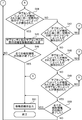
- FIG. 12 is a first flowchart for explaining a moving distance calculation process in the moving distance calculation device 2A according to the second embodiment of the present disclosure
- FIG. 13 is a moving distance according to the second embodiment of the present disclosure
- 2 is a second flowchart for explaining the moving distance calculation process in the calculation device 2A
- FIG. 14 is a third flowchart for explaining the moving distance calculation process in the moving distance calculation device 2A according to the second embodiment of the present disclosure
- FIG. 15 is a fourth flowchart for explaining a moving distance calculation process in the moving distance calculation device 2A according to the second embodiment of the present disclosure
- FIG. 16 is a fourth flowchart for explaining the moving distance calculation process according to the second embodiment of the present disclosure.
- the main sensor MN is a general term for the first to eighth main sensors M1 to M8, and the sub sensor SN is a general term for the sub sensors SA1 to SA4 and SB1.
- steps S21 to S22 are the same as the processes of steps S1 to S2 shown in FIG. 4, the description thereof will be omitted.
- step S23 the moving distance calculation unit 212A first determines whether or not a person has been detected by the main sensor MN.
- the moving distance in step S27 when it is first determined that a person is not detected by the main sensor MN, that is, when a person is first detected by the hub sensor H1 or the sub-sensor SN (NO in step S23), the moving distance in step S27.
- the calculation unit 212A first determines whether or not a person has been detected by the hub sensor H1.
- step S27 When it is first determined that a person has been detected by the hub sensor H1 (YES in step S27), the process shifts to step S28. Further, when it is first determined that no person is detected by the hub sensor H1, that is, when a person is first detected by the sub-sensor SN (NO in step S27), the process proceeds to step S41.
- step S24 the moving distance calculation unit 212A is performed by the main sensor MN based on the detection information arranged in chronological order. After the person is detected, it is determined whether or not the person is detected by the hub sensor H1. Here, when it is determined that the person is not detected by the hub sensor H1 after the person is detected by the main sensor MN, that is, the person is detected by the main sensor MN or the sub sensor SN after the person is detected by the main sensor MN. If it is determined that the process has been performed (NO in step S24), the process proceeds to step S37.
- step S25 the moving distance calculation unit 212A connects the main sensor MN and the hub sensor H1. Add the distance between them to the distance traveled. At this time, the moving distance calculation unit 212A reads out the distance associated with the combination of the installation location of the main sensor MN and the installation location of the hub sensor H1 from the distance table stored in the distance table storage unit 222A and moves. Add to the distance.
- step S26 the moving distance calculation unit 212A determines whether or not the determination of all the acquired detection information has been completed.
- the movement distance output unit 213 calculates the movement distance added by the movement distance calculation unit 212. Output.
- the movement distance output unit 213 outputs the movement distance to the movement distance storage unit 223.
- the moving distance storage unit 223 stores the moving distance output by the moving distance output unit 213.
- the moving distance calculation unit 212A determines whether or not a person is detected by the main sensor MN after the person is detected by the hub sensor H1 based on the detection information arranged in chronological order.
- the person is detected by the hub sensor H1 or the sub sensor SN after the person is detected by the hub sensor H1.
- step S29 the moving distance calculation unit 212A determines whether or not a person is detected by the sub-sensor SN after the person is detected by the hub sensor H1 based on the detection information arranged in chronological order. to decide.
- step S30 the moving distance calculation unit 212A determines whether or not the determination of all the acquired detection information has been completed. Here, if it is determined that the determination of all the acquired detection information has not been completed (NO in step S30), the process returns to step S28. In this way, when a person is continuously detected by the same hub sensor H1, it is estimated that the person has not moved from the room in which the hub sensor H1 is installed, so that the distance between the two hub sensors is added to the moving distance. Will not be done.
- step S30 when it is determined that the determination of all the acquired detection information is completed (YES in step S30), the process shifts to step S51.
- step S31 the moving distance calculation unit 212A determines all the acquired detection information. Determine if is finished.
- step S31 the process shifts to step S51.
- step S31 if it is determined that the determination of all the acquired detection information has not been completed (NO in step S31), the process shifts to step S41.
- step S32 the moving distance calculation unit 212A displays the detection information arranged in chronological order. Based on this, it is determined whether or not a person is detected by another main sensor MN after the person is detected by the main sensor MN. That is, when a person is detected by the main sensor MN after the person is detected by the hub sensor H1, the distance between the hub sensor H1 and the main sensor MN is not added to the movement distance, but the person is detected by the main sensor MN. After being detected, it is determined whether or not a person has been detected by another main sensor MN.
- step S35 the moving distance calculation unit 212A uses the hub sensor H1.
- the distance between the main sensor MN and the main sensor MN is added to the travel distance.
- the moving distance calculation unit 212A reads out the distance associated with the combination of the installation location of the hub sensor H1 and the installation location of the main sensor MN from the distance table stored in the distance table storage unit 222A, and moves. Add to the distance.
- step S36 the moving distance calculation unit 212A determines whether or not the determination of all the acquired detection information has been completed.
- the process shifts to step S51.
- step S36 if it is determined that the determination of all the acquired detection information has not been completed (NO in step S36), the process returns to step S24.
- the movement distance calculation unit 212A is arranged in chronological order in step S33. Based on the detection information, it is determined whether or not a person has been detected three or more times in succession by another main sensor MN or a sub-sensor SN in the same space as the other main sensor MN.
- the process proceeds to step S35. Will migrate.
- the movement distance is calculated in step S34.
- the unit 212A adds the distance between the hub sensor H1 and the other main sensor MN to the moving distance.
- the moving distance calculation unit 212A reads out the distance associated with the combination of the installation location of the hub sensor H1 and the installation location of the other main sensor MN from the distance table stored in the distance table storage unit 222A. And add to the travel distance.
- the moving distance calculation unit 212A is not the distance between the main sensor MN that detects a person next to the hub sensor H1 and the hub sensor H1, but the other main sensor MN that detects a person next to the main sensor MN and the hub sensor.
- the distance to and from H1 is added to the travel distance.
- the moving distance calculation unit 212A adds the distance between the hub sensor H1 and the other main sensor MN to the moving distance. You may. Further, when a person is detected by another main sensor MN in step S33 and then a person is detected twice in succession by the same sub-sensor SN in the same space as the other main sensor MN, the moving distance calculation unit 212A May add the distance between the hub sensor H1 and the other main sensor MN to the travel distance.
- step S37 the moving distance calculation unit 212A determines whether or not a person is detected by the sub-sensor SN in the same space after the person is detected by the main sensor MN based on the detection information arranged in chronological order. to decide.
- the movement distance calculation unit 212A detects the person by the main sensor MN based on the detection information arranged in chronological order.
- step S38 it is determined whether or not a person is detected by the sub-sensor SN in another space.
- step S38 when it is determined that the person is not detected by the sub-sensor SN in another space after the person is detected by the main sensor MN, that is, the person is detected by the main sensor MN after the person is detected by the main sensor MN. If it is detected (NO in step S38), the process shifts to step S43.
- step S39 when it is determined that the person is detected by the sub-sensor SN in the same space after the person is detected by the main sensor MN (YES in step S37), in step S39, the moving distance calculation unit 212A and the main sensor MN The distance to the sub-sensor SN is added to the moving distance. At this time, the moving distance calculation unit 212A reads out the distance associated with the combination of the installation location of the main sensor MN and the installation location of the sub sensor SN from the distance table stored in the distance table storage unit 222A and moves. Add to the distance.
- step S40 the moving distance calculation unit 212A determines whether or not the determination of all the acquired detection information has been completed.
- the process shifts to step S51.
- step S41 the moving distance calculation unit 212A is based on the detection information arranged in chronological order. After the person is detected by the sub-sensor SN, it is determined whether or not the person is detected by the main sensor MN in the same space.
- step S42 the moving distance calculation unit 212A and the sub-sensor SN The distance to the main sensor MN is added to the travel distance.
- the moving distance calculation unit 212A reads out the distance associated with the combination of the installation location of the sub sensor SN and the installation location of the main sensor MN from the distance table stored in the distance table storage unit 222A. Add to the travel distance.
- step S43 the moving distance calculation unit 212A determines whether or not the determination of all the acquired detection information has been completed.
- the process shifts to step S51.
- step S43 if it is determined that the determination of all the acquired detection information has not been completed (NO in step S43), the process returns to step S24.
- step S44 the movement distance calculation unit 212A is arranged in chronological order. Based on the detection information, it is determined whether or not a person is detected by another subsensor SN in the same space after the person is detected by the subsensor SN.
- step S45 the moving distance calculation unit 212A uses the subsensor SN.
- the distance between the sub-sensor SN and the other sub-sensor SN is added to the moving distance.
- the moving distance calculation unit 212A reads out from the distance table stored in the distance table storage unit 222A the distance associated with the combination of the installation location of the subsensor SN and the installation location of the other subsensor SN. And add to the travel distance.
- step S46 the moving distance calculation unit 212A determines whether or not the determination of all the acquired detection information has been completed.
- the process shifts to step S51.
- step S46 if it is determined that the determination of all the acquired detection information has not been completed (NO in step S46), the process returns to step S41.
- step S47 the movement distance calculation unit 212A is arranged in chronological order. Based on the detection information, it is determined whether or not a person is detected by the same sub-sensor SN in the same space after the person is detected by the sub-sensor SN.
- step S48 when it is determined that a person is detected by the same subsensor SN in the same space after the person is detected by the subsensor SN (YES in step S48), the process returns to step S41. That is, when a person is continuously detected by the same subsensor SN, it is estimated that the person is not moving, so that the process returns to step S41 without adding the distance.
- step S48 the moving distance calculation unit 212A uses the sub-sensor SN based on the detection information arranged in chronological order. After the person is detected by the hub sensor H1, it is determined whether or not the person is detected by the hub sensor H1. Here, if it is determined that a person has been detected by the hub sensor H1 after the person has been detected by the sub-sensor SN (YES in step S48), the process returns to step S28.
- step S49 the moving distance calculation unit 212A performs another after the person is detected by the sub-sensor SN based on the detection information arranged in chronological order. It is determined whether or not a person is detected by the sub-sensor SN in the space.
- step S49 when it is determined that the person is not detected by the sub-sensor SN in the other space after the person is detected by the sub-sensor SN, that is, the main sensor in the other space after the person is detected by the sub-sensor SN.
- the process returns to step S24.
- step S50 determines whether the person is detected by the subsensor SN in another space after the person is detected by the subsensor SN. If it is determined that the person is detected by the subsensor SN in another space after the person is detected by the subsensor SN (YES in step S49), the determination of all the acquired detection information is completed in step S50. Determine if you did.
- step S50 determines whether the determination of all the acquired detection information is completed (YES in step S50).
- step S50 if it is determined that the determination of all the acquired detection information has not been completed (NO in step S50), the process returns to step S41.
- FIG. 17 is a diagram showing the main sensor, hub sensor, and sub-sensor that output detection information in chronological order when the main sensor, hub sensor, and sub-sensor normally detect a person in the second embodiment.
- the hub sensor H1 detects a person at time t2, so that the distance between the first main sensor M1 and the hub sensor H1 becomes the moving distance. It has been added. Further, since the second main sensor M2 detects a person at time t3 after the hub sensor H1 detects a person at time t2, the distance between the hub sensor H1 and the second main sensor M2 becomes the moving distance. It has been added. Further, after the second main sensor M2 detects a person at time t3, the sub-sensor SB1 installed in the same space as the second main sensor M2 detects a person at time t4, so that the second main sensor M2 detects a person. The distance between the sensor M2 and the sub-sensor SB1 is added to the moving distance.
- the second main sensor M2 detects a person at time t5 after the sub-sensor SB1 detects a person at time t4, the distance between the sub-sensor SB1 and the second main sensor M2 becomes the moving distance. It has been added.
- the hub sensor H1 detects a person at time t6 after the second main sensor M2 detects a person at time t5, the distance between the second main sensor M2 and the hub sensor H1 becomes the moving distance. It has been added.
- the first main sensor M1 detects a person at time t7 after the hub sensor H1 detects a person at time t6, the distance between the hub sensor H1 and the first main sensor M1 becomes the moving distance. It has been added. Further, since the first main sensor M1 detects a person at time t7 and then the first main sensor M1 detects a person at time t8, the first main sensor M1 and the first main sensor M1 The distance between is not added to the travel distance. This is because it is presumed that the person has not moved from the first space 101.
- the hub sensor H1 detects a person at time t9 after the first main sensor M1 detects a person at time t8, the distance between the first main sensor M1 and the hub sensor H1 becomes the moving distance. It has been added. Further, since the first main sensor M1 detects a person at time t10 after the hub sensor H1 detects a person at time t9, the distance between the hub sensor H1 and the first main sensor M1 becomes the moving distance. It has been added.
- FIG. 18 is a diagram showing the main sensor, hub sensor, and sub-sensor that output detection information in chronological order when the main sensor erroneously detects a person in the second embodiment.
- the hub sensor H1 detects a person at time t2, so that the distance between the first main sensor M1 and the hub sensor H1 becomes the moving distance. It has been added. Further, after the hub sensor H1 detects a person at time t2, the first main sensor M1 detects a person at time t3, but it is not known whether the first main sensor M1 correctly detects a person. At this point, the distance between the hub sensor H1 and the first main sensor M1 is not added to the travel distance.
- the second main sensor M2 detects a person at time t4, and the second main sensor M2 is installed in the same space as the second main sensor M2 at time t5.
- the sub-sensor SB1 detects a person
- the second main sensor M2 detects a person at time t6. That is, after the first main sensor M1 detects a person, the second main sensor M2, the sub-sensor SB1 of the second space 102, and the second main sensor M2 continuously detect the person. Can be presumed to have moved from the third space 103 to the second space 102, not from the third space 103 to the first space 101.
- the distance calculation unit 212A considers that the person is in the second space 102, and adds the distance between the hub sensor H1 and the second main sensor M2 installed in the second space 102 to the moving distance. May be good.
- the subsensors that have detected a person at least three times in a row may include the same subsensor or may include different subsensors.
- each component may be configured by dedicated hardware or may be realized by executing a software program suitable for each component.
- Each component may be realized by a program execution unit such as a CPU or a processor reading and executing a software program recorded on a recording medium such as a hard disk or a semiconductor memory.
- the program may also be implemented by another independent computer system by recording and transporting the program on a recording medium or by transporting the program via a network.
- LSI Large Scale Integration
- FPGA Field Programmable Gate Array
- reconfigurable processor that can reconfigure the connection and settings of the circuit cells inside the LSI may be used.
- a part or all of the functions of the device according to the embodiment of the present disclosure may be realized by executing a program by a processor such as a CPU.
- each step shown in the above flowchart is executed is for exemplifying the present disclosure in detail, and may be an order other than the above as long as the same effect can be obtained. .. Further, a part of the above steps may be executed at the same time (parallel) as other steps.
- the technique according to the present disclosure is useful for the technique of calculating the moving distance of a person in a house because the moving distance of a person can be calculated even when an erroneous reaction occurs in the sensor.
Landscapes
- Health & Medical Sciences (AREA)
- Engineering & Computer Science (AREA)
- Life Sciences & Earth Sciences (AREA)
- Radar, Positioning & Navigation (AREA)
- Remote Sensing (AREA)
- Physics & Mathematics (AREA)
- Biomedical Technology (AREA)
- Molecular Biology (AREA)
- Oral & Maxillofacial Surgery (AREA)
- Physiology (AREA)
- Biophysics (AREA)
- Pathology (AREA)
- General Physics & Mathematics (AREA)
- Heart & Thoracic Surgery (AREA)
- Medical Informatics (AREA)
- Dentistry (AREA)
- Surgery (AREA)
- Animal Behavior & Ethology (AREA)
- General Health & Medical Sciences (AREA)
- Public Health (AREA)
- Veterinary Medicine (AREA)
- Automation & Control Theory (AREA)
- Telephonic Communication Services (AREA)
- Measurement Of The Respiration, Hearing Ability, Form, And Blood Characteristics Of Living Organisms (AREA)
- Radar Systems Or Details Thereof (AREA)
Abstract
Description
上記の従来技術では、センサの誤反応が考慮されておらず、センサに誤反応が発生した場合に、人の移動距離を算出することが困難であった。
図1は、本開示の実施の形態1における移動距離算出システムの構成を示すブロック図である。
上記の実施の形態1では、住居100内の各空間に1つずつメインセンサ又はハブセンサが設置されている。これに対し、実施の形態2では、各空間に設置されたメインセンサ又はハブセンサに加えて少なくとも1つのサブセンサが設置される。
Claims (7)
- 住居内にいる人の移動距離を算出する移動距離算出装置における移動距離算出方法であって、
前記住居内の第1の空間に設けられた第1のセンサによって前記人が検知されたことを示す第1の検知情報と、前記第1の空間とは異なる前記住居内の第2の空間に設けられた第2のセンサによって前記人が検知されたことを示す第2の検知情報と、前記第1の空間と前記第2の空間とを繋ぐ前記住居内の第3の空間に設けられた第3のセンサによって前記人が検知されたことを示す第3の検知情報とを取得し、
前記第1の検知情報及び前記第3の検知情報に基づいて、前記第1のセンサによって前記人が検知された後に前記第3のセンサによって前記人が検知された場合又は前記第3のセンサによって前記人が検知された後に前記第1のセンサによって前記人が検知された場合、前記第1のセンサと前記第3のセンサとの間の距離を前記移動距離に加算し、前記第2の検知情報及び前記第3の検知情報に基づいて、前記第2のセンサによって前記人が検知された後に前記第3のセンサによって前記人が検知された場合又は前記第3のセンサによって前記人が検知された後に前記第2のセンサによって前記人が検知された場合、前記第2のセンサと前記第3のセンサとの間の距離を前記移動距離に加算し、前記第1の検知情報及び前記第2の検知情報に基づいて、前記第1のセンサによって前記人が検知された後に前記第2のセンサによって前記人が検知された場合又は前記第2のセンサによって前記人が検知された後に前記第1のセンサによって前記人が検知された場合、前記第1のセンサと前記第2のセンサとの間の距離を前記移動距離に加算せず、
加算した前記移動距離を出力する、
移動距離算出方法。 - 前記第1のセンサによって前記人が検知された後に前記第3のセンサによって前記人が検知された場合又は前記第3のセンサによって前記人が検知された後に前記第1のセンサによって前記人が検知された場合、前記第1のセンサの設置場所と前記第3のセンサの設置場所との組み合わせと、前記第1のセンサと前記第3のセンサとの間の距離とを対応付けるとともに、前記第2のセンサの設置場所と前記第3のセンサの設置場所との組み合わせと、前記第2のセンサと前記第3のセンサとの間の距離とを対応付けたテーブルから、前記第1のセンサの設置場所と前記第3のセンサの設置場所との組み合わせに対応付けられている前記距離を読み出して前記移動距離に加算し、
前記第2のセンサによって前記人が検知された後に前記第3のセンサによって前記人が検知された場合又は前記第3のセンサによって前記人が検知された後に前記第2のセンサによって前記人が検知された場合、前記テーブルから、前記第2のセンサの設置場所と前記第3のセンサの設置場所との組み合わせに対応付けられている前記距離を読み出して前記移動距離に加算する、
請求項1記載の移動距離算出方法。 - さらに、前記第1の空間内の前記第1のセンサが設けられている位置とは異なる位置に設けられた第4のセンサによって前記人が検知されたことを示す第4の検知情報を取得し、
さらに、前記第1の検知情報及び前記第4の検知情報に基づいて、前記第1のセンサによって前記人が検知された後に前記第4のセンサによって前記人が検知された場合又は前記第4のセンサによって前記人が検知された後に前記第1のセンサによって前記人が検知された場合、前記第1のセンサと前記第4のセンサとの間の距離を前記移動距離に加算する、
請求項1又は2記載の移動距離算出方法。 - さらに、前記第3のセンサによって前記人が検知された後に前記第2のセンサによって前記人が検知され、前記第2のセンサによって前記人が検知された後に前記第1のセンサによって前記人が検知され、前記第1のセンサによって前記人が検知された後に前記第1のセンサ及び前記第4のセンサのうちの少なくとも一方によって3回以上連続して前記人が検知された場合、前記第3のセンサと前記第2のセンサとの間の距離を前記移動距離に加算せず、前記第3のセンサと前記第1のセンサとの間の距離を前記移動距離に加算する、
請求項3記載の移動距離算出方法。 - さらに、前記第1のセンサ、前記第2のセンサ及び前記第3のセンサのうちのいずれか2つによって同時刻に前記人が検知された場合、前記移動距離を算出しない、
請求項1~4のいずれか1項に記載の移動距離算出方法。 - 住居内にいる人の移動距離を算出する移動距離算出装置であって、
前記住居内の第1の空間に設けられた第1のセンサによって前記人が検知されたことを示す第1の検知情報と、前記第1の空間とは異なる前記住居内の第2の空間に設けられた第2のセンサによって前記人が検知されたことを示す第2の検知情報と、前記第1の空間と前記第2の空間とを繋ぐ前記住居内の第3の空間に設けられた第3のセンサによって前記人が検知されたことを示す第3の検知情報とを取得する取得部と、
前記第1の検知情報及び前記第3の検知情報に基づいて、前記第1のセンサによって前記人が検知された後に前記第3のセンサによって前記人が検知された場合又は前記第3のセンサによって前記人が検知された後に前記第1のセンサによって前記人が検知された場合、前記第1のセンサと前記第3のセンサとの間の距離を前記移動距離に加算し、前記第2の検知情報及び前記第3の検知情報に基づいて、前記第2のセンサによって前記人が検知された後に前記第3のセンサによって前記人が検知された場合又は前記第3のセンサによって前記人が検知された後に前記第2のセンサによって前記人が検知された場合、前記第2のセンサと前記第3のセンサとの間の距離を前記移動距離に加算し、前記第1の検知情報及び前記第2の検知情報に基づいて、前記第1のセンサによって前記人が検知された後に前記第2のセンサによって前記人が検知された場合又は前記第2のセンサによって前記人が検知された後に前記第1のセンサによって前記人が検知された場合、前記第1のセンサと前記第2のセンサとの間の距離を前記移動距離に加算しない移動距離算出部と、
加算された前記移動距離を出力する出力部と、
を備える移動距離算出装置。 - 住居内にいる人の移動距離を算出するための移動距離算出プログラムであって、
前記住居内の第1の空間に設けられた第1のセンサによって前記人が検知されたことを示す第1の検知情報と、前記第1の空間とは異なる前記住居内の第2の空間に設けられた第2のセンサによって前記人が検知されたことを示す第2の検知情報と、前記第1の空間と前記第2の空間とを繋ぐ前記住居内の第3の空間に設けられた第3のセンサによって前記人が検知されたことを示す第3の検知情報とを取得し、
前記第1の検知情報及び前記第3の検知情報に基づいて、前記第1のセンサによって前記人が検知された後に前記第3のセンサによって前記人が検知された場合又は前記第3のセンサによって前記人が検知された後に前記第1のセンサによって前記人が検知された場合、前記第1のセンサと前記第3のセンサとの間の距離を前記移動距離に加算し、前記第2の検知情報及び前記第3の検知情報に基づいて、前記第2のセンサによって前記人が検知された後に前記第3のセンサによって前記人が検知された場合又は前記第3のセンサによって前記人が検知された後に前記第2のセンサによって前記人が検知された場合、前記第2のセンサと前記第3のセンサとの間の距離を前記移動距離に加算し、前記第1の検知情報及び前記第2の検知情報に基づいて、前記第1のセンサによって前記人が検知された後に前記第2のセンサによって前記人が検知された場合又は前記第2のセンサによって前記人が検知された後に前記第1のセンサによって前記人が検知された場合、前記第1のセンサと前記第2のセンサとの間の距離を前記移動距離に加算せず、
加算した前記移動距離を出力するようにコンピュータを機能させる、
移動距離算出プログラム。
Priority Applications (3)
| Application Number | Priority Date | Filing Date | Title |
|---|---|---|---|
| JP2022508101A JP7607631B2 (ja) | 2020-03-16 | 2021-01-25 | 移動距離算出方法、移動距離算出装置及び移動距離算出プログラム |
| CN202180018278.XA CN115243612B (zh) | 2020-03-16 | 2021-01-25 | 移动距离计算方法、移动距离计算装置以及移动距离计算程序产品 |
| US17/900,591 US12345545B2 (en) | 2020-03-16 | 2022-08-31 | Travel distance calculation method, travel distance calculation device, and non-transitory computer readable recording medium storing travel distance calculation program |
Applications Claiming Priority (4)
| Application Number | Priority Date | Filing Date | Title |
|---|---|---|---|
| US202062990250P | 2020-03-16 | 2020-03-16 | |
| US62/990,250 | 2020-03-16 | ||
| JP2020-207580 | 2020-12-15 | ||
| JP2020207580 | 2020-12-15 |
Related Child Applications (1)
| Application Number | Title | Priority Date | Filing Date |
|---|---|---|---|
| US17/900,591 Continuation US12345545B2 (en) | 2020-03-16 | 2022-08-31 | Travel distance calculation method, travel distance calculation device, and non-transitory computer readable recording medium storing travel distance calculation program |
Publications (1)
| Publication Number | Publication Date |
|---|---|
| WO2021186897A1 true WO2021186897A1 (ja) | 2021-09-23 |
Family
ID=77770803
Family Applications (1)
| Application Number | Title | Priority Date | Filing Date |
|---|---|---|---|
| PCT/JP2021/002466 Ceased WO2021186897A1 (ja) | 2020-03-16 | 2021-01-25 | 移動距離算出方法、移動距離算出装置及び移動距離算出プログラム |
Country Status (4)
| Country | Link |
|---|---|
| US (1) | US12345545B2 (ja) |
| JP (1) | JP7607631B2 (ja) |
| CN (1) | CN115243612B (ja) |
| WO (1) | WO2021186897A1 (ja) |
Citations (3)
| Publication number | Priority date | Publication date | Assignee | Title |
|---|---|---|---|---|
| US20040183667A1 (en) * | 2003-03-21 | 2004-09-23 | Home Data Source | Method of distinguishing the presence of a single versus multiple persons |
| JP2008099843A (ja) * | 2006-10-19 | 2008-05-01 | Univ Of Miyazaki | 自宅型自動運動量算出システム |
| JP2017164462A (ja) * | 2016-03-15 | 2017-09-21 | ヒデア ソリューションズ カンパニー リミテッド | 二元化されたパラメータを用いた保護客体管理システム |
Family Cites Families (12)
| Publication number | Priority date | Publication date | Assignee | Title |
|---|---|---|---|---|
| JP2009008638A (ja) * | 2007-06-01 | 2009-01-15 | Murata Mach Ltd | 直線型絶対変位センサ |
| JP2011220793A (ja) * | 2010-04-08 | 2011-11-04 | Seiko Epson Corp | 位置算出方法及び位置算出装置 |
| JP2012056043A (ja) * | 2010-09-10 | 2012-03-22 | Toyota Motor Corp | ロボット及びロボットの異常判定方法 |
| NO20130439A1 (no) * | 2012-03-30 | 2013-10-01 | Klatrefabrikken As | Fremgangsmåte ved bevegelse i fysisk konfigurerbart rom og anordning til bruk ved fremgangsmåten |
| JP2014115093A (ja) * | 2012-12-06 | 2014-06-26 | Casio Comput Co Ltd | Gps受信装置およびプログラム |
| JP6160097B2 (ja) * | 2013-01-31 | 2017-07-12 | カシオ計算機株式会社 | 走行状態検出装置、走行状態検出方法およびプログラム |
| CN104316075B (zh) * | 2014-11-13 | 2018-05-25 | 深圳市宝尔爱迪科技有限公司 | 带距离计算的电子装置及距离测量方法 |
| CN108474653B (zh) * | 2016-01-20 | 2020-03-20 | 三菱电机株式会社 | 三维计测装置及其计测辅助处理方法 |
| JP2019015706A (ja) * | 2017-07-11 | 2019-01-31 | ソニーセミコンダクタソリューションズ株式会社 | 撮像装置及びモニタリング装置 |
| JP6603290B2 (ja) * | 2017-10-27 | 2019-11-06 | ファナック株式会社 | 複数のセンサを備えた物体監視装置 |
| JP2019130045A (ja) * | 2018-01-31 | 2019-08-08 | パナソニックIpマネジメント株式会社 | 情報処理装置、情報処理方法及び情報処理システム |
| CN110490266B (zh) * | 2019-08-23 | 2022-04-22 | 北京邮电大学 | 一种传感器数据上传、传感器故障检测方法及装置 |
-
2021
- 2021-01-25 JP JP2022508101A patent/JP7607631B2/ja active Active
- 2021-01-25 WO PCT/JP2021/002466 patent/WO2021186897A1/ja not_active Ceased
- 2021-01-25 CN CN202180018278.XA patent/CN115243612B/zh active Active
-
2022
- 2022-08-31 US US17/900,591 patent/US12345545B2/en active Active
Patent Citations (3)
| Publication number | Priority date | Publication date | Assignee | Title |
|---|---|---|---|---|
| US20040183667A1 (en) * | 2003-03-21 | 2004-09-23 | Home Data Source | Method of distinguishing the presence of a single versus multiple persons |
| JP2008099843A (ja) * | 2006-10-19 | 2008-05-01 | Univ Of Miyazaki | 自宅型自動運動量算出システム |
| JP2017164462A (ja) * | 2016-03-15 | 2017-09-21 | ヒデア ソリューションズ カンパニー リミテッド | 二元化されたパラメータを用いた保護客体管理システム |
Also Published As
| Publication number | Publication date |
|---|---|
| CN115243612B (zh) | 2025-09-12 |
| US12345545B2 (en) | 2025-07-01 |
| CN115243612A (zh) | 2022-10-25 |
| JP7607631B2 (ja) | 2024-12-27 |
| JPWO2021186897A1 (ja) | 2021-09-23 |
| US20220412773A1 (en) | 2022-12-29 |
Similar Documents
| Publication | Publication Date | Title |
|---|---|---|
| Schweiker et al. | Verification of stochastic models of window opening behaviour for residential buildings | |
| CN105190233B (zh) | 位置确定处理装置、位置确定处理方法、位置确定处理程序、移动信息处理装置、移动信息处理方法、移动信息处理程序和存储介质 | |
| US7893843B2 (en) | Activity windowing | |
| US10686744B2 (en) | Location data for defining places and traffic | |
| Yamaguchi et al. | Monitoring behavior in the home using positioning sensors | |
| US10378936B2 (en) | Identification of failed sensors in a system of interconnected devices | |
| US20190110741A1 (en) | Life rhythm measurement system and life rhythm measurement method | |
| Deconinck et al. | Is stochastic grey-box modelling suited for physical properties estimation of building components from on-site measurements? | |
| US10169971B2 (en) | Method and apparatus for monitoring person and home | |
| US20160171378A1 (en) | Time out-of-home monitoring | |
| WO2021186897A1 (ja) | 移動距離算出方法、移動距離算出装置及び移動距離算出プログラム | |
| US7962313B2 (en) | Method and apparatus for using mobile code for distributed data fusion in networked sensing systems | |
| Rahal et al. | Location estimation in a smart home: System implementation and evaluation using experimental data | |
| WO2013035022A1 (en) | Activity monitoring for demand-controlled ventilation | |
| Armknecht et al. | Privacy implications of room climate data | |
| JP6944402B2 (ja) | 在不在判定方法、プログラム、センサ処理システム、及びセンサシステム | |
| Matsui et al. | Multi-person daily activity recognition with non-contact sensors based on activity co-occurrence | |
| JP2024172633A (ja) | 呼吸推定システム、センサシステム、呼吸推定方法、及びプログラム | |
| Shokrollahi et al. | Pir sensor-based occupancy monitoring in smart buildings: a review of methodologies and machine learning approaches | |
| Crandall | Behaviometrics for multiple residents in a smart environment | |
| WO2017170831A1 (ja) | 健康状態推定システム、健康状態推定装置、健康状態推定方法、およびコンピュータ読み取り可能な記録媒体 | |
| WO2016159067A1 (ja) | 活動量算出システム、活動量算出装置、活動量算出方法、およびコンピュータ読み取り可能な記録媒体 | |
| Stjelja | Scalable and Robust Machine Learning Solutions for Adaptive Building Operations | |
| Knoefel et al. | Sensor Technologies: Collecting the Data in the Home | |
| JP6962856B2 (ja) | 世帯変更推定システム及び世帯変更管理システム |
Legal Events
| Date | Code | Title | Description |
|---|---|---|---|
| 121 | Ep: the epo has been informed by wipo that ep was designated in this application |
Ref document number: 21771970 Country of ref document: EP Kind code of ref document: A1 |
|
| ENP | Entry into the national phase |
Ref document number: 2022508101 Country of ref document: JP Kind code of ref document: A |
|
| NENP | Non-entry into the national phase |
Ref country code: DE |
|
| 32PN | Ep: public notification in the ep bulletin as address of the adressee cannot be established |
Free format text: NOTING OF LOSS OF RIGHTS PURSUANT TO RULE 112(1) EPC (EPO FORM 1205N DATED 24.02.2023) |
|
| 122 | Ep: pct application non-entry in european phase |
Ref document number: 21771970 Country of ref document: EP Kind code of ref document: A1 |
|
| WWG | Wipo information: grant in national office |
Ref document number: 202180018278.X Country of ref document: CN |