WO2021186572A1 - 情報処理方法、情報処理装置、及び情報処理プログラム - Google Patents
情報処理方法、情報処理装置、及び情報処理プログラム Download PDFInfo
- Publication number
- WO2021186572A1 WO2021186572A1 PCT/JP2020/011782 JP2020011782W WO2021186572A1 WO 2021186572 A1 WO2021186572 A1 WO 2021186572A1 JP 2020011782 W JP2020011782 W JP 2020011782W WO 2021186572 A1 WO2021186572 A1 WO 2021186572A1
- Authority
- WO
- WIPO (PCT)
- Prior art keywords
- processing
- beacon
- base stations
- base station
- mac address
- Prior art date
- Legal status (The legal status is an assumption and is not a legal conclusion. Google has not performed a legal analysis and makes no representation as to the accuracy of the status listed.)
- Ceased
Links
Images

Classifications
-
- H—ELECTRICITY
- H04—ELECTRIC COMMUNICATION TECHNIQUE
- H04W—WIRELESS COMMUNICATION NETWORKS
- H04W24/00—Supervisory, monitoring or testing arrangements
- H04W24/10—Scheduling measurement reports ; Arrangements for measurement reports
-
- H—ELECTRICITY
- H04—ELECTRIC COMMUNICATION TECHNIQUE
- H04W—WIRELESS COMMUNICATION NETWORKS
- H04W48/00—Access restriction; Network selection; Access point selection
- H04W48/20—Selecting an access point
-
- H—ELECTRICITY
- H04—ELECTRIC COMMUNICATION TECHNIQUE
- H04B—TRANSMISSION
- H04B17/00—Monitoring; Testing
- H04B17/30—Monitoring; Testing of propagation channels
- H04B17/309—Measuring or estimating channel quality parameters
- H04B17/318—Received signal strength
-
- H—ELECTRICITY
- H04—ELECTRIC COMMUNICATION TECHNIQUE
- H04W—WIRELESS COMMUNICATION NETWORKS
- H04W24/00—Supervisory, monitoring or testing arrangements
- H04W24/08—Testing, supervising or monitoring using real traffic
Definitions
- the present invention relates to an information processing method, an information processing device, and an information processing program.
- OFDM Orthogonal Frequency Division Multiplexing
- MIMO Multiple Input Multiple Output
- a maximum transmission speed of 600 Mbit / s is realized by using a channel bonding technology that utilizes a frequency channel of 40 MHz by simultaneously using two of the above.
- channel bonding technology that simultaneously uses up to eight 20 MHz frequency channels in the 5 GHz band and uses them as a maximum 160 MHz frequency channel, or multiple destinations on the same wireless channel.
- multi-user MIMO technology or the like that simultaneously transmits different signals, wireless communication that is faster and more efficient than the IEEE802.11n standard is realized (see, for example, Non-Patent Document 1).
- wireless communication may be enabled within a predetermined area (cover area) by installing a plurality of base stations whose cells overlap with cells of other base stations. At this time, in order to confirm the reception strength at a plurality of positions in the cover area and tune the radio parameters for the transmitted radio waves of each base station, the operator holds a signal measuring instrument and moves in the cover area. Signal strength may be measured.
- beacon information transmitted by the base station and information on the position where the signal strength was measured should be included in the measurement result.
- the beacon contains a base station-specific MAC address. Therefore, even if the signal measuring instrument receives different beas from a plurality of base stations, it is possible to distinguish each of the beacons.
- IEEE Std 802.11-2016 IEEE Standard for Information technology-Telecommunications and information exchange between systems Local and metropolitan area networks-Specific requirements Part 11: Wireless LAN Medium Access Control (MAC) and Physical Layer (PHY) Specifications, IEEE Std 802.11-2016
- the MAC of the beacon transmitted by each base station is used to identify which base station each beacon is transmitted from. It is necessary to investigate each address separately and to associate the MAC address with the base station on a one-to-one basis, which has been a problem.
- a plurality of base stations transmit each other in an environment in which cells of a plurality of base stations overlap each other, and a pair of base stations as a source can be easily paired with respect to beacon information measured at a plurality of measurement positions. It is an object of the present invention to provide an information processing method, an information processing device, and an information processing program that can be associated with each other in 1.
- a plurality of base stations transmit each other in an environment in which cells of a plurality of base stations overlap each other, and the information of a beacon measured at a plurality of measurement positions is transmitted with a source.
- the first processing step of associating the MAC address and signal strength of a beacon transmitted by one or more base stations with each of the measurement positions is performed.
- a third process of associating the MAC address of the beacon with the strongest signal strength after the second process performed by the second process step with the base station closest to each measurement position as a transmission source After performing the second processing by the third processing step and the second processing step, the MAC address and the base station associated with the third processing step are excluded, and the MAC address of the beacon having the strongest signal strength is used.
- it is characterized by including a control step of controlling so as to repeat a third process of associating the nearest base station as a transmission source for each measurement position.
- a plurality of base stations transmit each other in an environment in which cells of a plurality of base stations overlap each other, and transmit the information of beacons measured at a plurality of measurement positions.
- a first processing unit that performs first processing that associates MAC addresses and signal strengths of beacons transmitted by one or more base stations with each of the measurement positions.
- the third processing unit that performs the second processing and the MAC address of the beacon having the strongest signal strength after the second processing unit performs the second processing are associated with the closest base station for each measurement position as a transmission source.
- the MAC address of the beacon having the strongest signal strength excluding the third processing unit that performs processing and the MAC address and base station associated with the third processing unit after the second processing unit performs the second processing.
- it is characterized by having a control unit that controls the third processing unit to perform the third processing that associates the nearest base station with each measurement position as a transmission source.
- a plurality of base stations transmit each other in an environment in which cells of a plurality of base stations overlap each other, and the base station as a source can be easily selected for beacon information measured at a plurality of measurement positions. It can be associated one-to-one.
- (A) is a figure illustrating the first process of information processing performed by an information processing apparatus.
- (B) is a diagram illustrating the second process of information processing performed by the information processing apparatus.
- (C) is a diagram illustrating the third process of information processing performed by the information processing apparatus. It is a figure which shows the hardware configuration example of the information processing apparatus which concerns on one Embodiment.
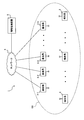
- FIG. 1 is a diagram showing a configuration example of a wireless communication system 1 according to an embodiment.
- the wireless communication system 1 includes, for example, nine base stations 3-1 to 3-9 to which a plurality of terminal stations 2 can be connected by wireless communication, and an information processing device connected to the network 4. Has 5 and.
- base station 3 When any one of a plurality of configurations such as base stations 3-1 to 3-9 is not specified, it is simply abbreviated as base station 3 and the like.
- the terminal station 2 is a wireless communication terminal and performs wireless communication with the base station 3.
- the terminal station 2 also has the function as the signal measuring instrument described above.
- the terminal station 2 has a signal strength measuring function for measuring the signal strength of the beacon transmitted by the base station 3, and a GPS (Global Positioning System) that acquires the longitude and latitude with the position where the beacon is received as the measurement position for the signal strength. It shall have both the function and the function to acquire the MAC address (MediaAccessControladdress) included in the beacon.
- GPS Global Positioning System
- the cells of base stations 3-1 to 3-9 are installed so as to overlap the cells of other base stations 3, and are connected to the network 4. At this time, at least one of the base stations 3-1 to 3-9 is enabled to wirelessly communicate with the terminal station 2 located within the predetermined area (cover area) 100. Further, the base stations 3-1 to 3-9 are made capable of receiving the signal strength measured by the terminal station 2 and the acquired measurement position and MAC address from each of the terminal stations 2.
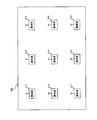
- FIG. 2 is a diagram schematically showing the positions of base stations 3-1 to 3-9 arranged in the cover area 100. As shown in FIG. 2, the base stations 3-1 to 3-9 are arranged within a predetermined range at predetermined intervals so as to form the cover area 100. Here, it is assumed that the base stations 3-1 to 3-9 do not necessarily have the same performance such as transmission power, and the cell shape and size are not the same.
- the information processing device 5 stores the positions where the base stations 3-1 to 3-9 are installed in advance as the base station position information including, for example, longitude and latitude. Further, the information in which the base station 3 and the base station position information of the base station 3 are associated with each other is used as the base station specific information.
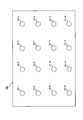
- FIG. 3 is a diagram schematically showing measurement positions 10-1 to 10-16 for measuring the intensity of radio waves transmitted by base stations 3-1 to 3-9 within the cover area 100.
- the terminal station 2 receives the beacon transmitted by the base station 3 at 16 measurement positions 10-1 to 10-16 at predetermined intervals within the cover area 100. Then, the terminal station 2 transmits the measured signal strength, the acquired measurement position, and the MAC address to the connectable base station 3.
- the measurement positions 10-1 to 10-16 are not limited as long as they are within the cover area 100.
- FIG. 4 is a functional block diagram illustrating the functions of the information processing device 5 according to the embodiment.
- the information processing apparatus 5 includes, for example, a communication unit 50, a collection unit 51, a first processing unit 52, an exclusion processing unit 53, a second processing unit 54, a third processing unit 55, and a storage unit 56. And a control unit 57.
- the information processing device 5 transmits the beacon information indicated by the beacons measured at the plurality of measurement positions by the plurality of base stations 3 whose cells overlap with the cells of the other base stations 3, and the base station as the transmission source. There is a one-to-one correspondence with three.
- the communication unit 50 is a communication interface that communicates with each of the base stations 3-1 to 3-9 via the network 4.
- the collecting unit 51 collects the signal strength, the measurement position, and the MAC address received from the terminal station 2 by the base stations 3-1 to 3-9 via the communication unit 50, and outputs the signal strength, the measurement position, and the MAC address to the first processing unit 52. ..
- the first processing unit 52 performs the first processing of associating the MAC address and signal strength of the beacon transmitted by one or more base stations 3 with each of the measurement positions 10-1 to 10-16, and excludes the processing result. Output to unit 53 and second processing unit 54.
- FIG. 5 is a diagram illustrating a processing result in which the first processing unit 52 performs the first processing. As shown in FIG. 5, the first processing unit 52 associates the signal strength of each beacon MAC address with each of the measurement positions 10-1 to 10-16.
- the first processing unit 52 may perform the first processing by associating the measurement positions 10-1 to 10-16 with identification information different from the MAC address included in the beacon.
- the identification information includes, for example, information that identifies the function and performance of the base station 3, the manufacturer, and the like.
- the exclusion processing unit 53 (FIG. 4) excludes any of the base stations 3 from the candidates (source candidates) determined to be the source of the beacon based on the identification information input from the first processing unit 52. Exclusion processing is performed, and the processing result is output to the second processing unit 54.
- the second processing unit 54 performs the second processing based on the processing result input from the first processing unit 52, and outputs the processing result to the third processing unit 55.
- the second processing unit 54 is one or more bases located around the measurement positions 10-1 to 10-16, respectively, where the first processing unit 52 performed the first processing.
- the second process of associating the station 3 as a beacon transmission source candidate in the order of the closest distance is performed.
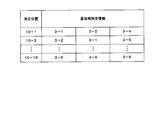
- FIG. 6 is a diagram illustrating a processing result in which the second processing unit 54 performs the second processing.
- the second processing unit 54 sets the measurement position 10 and the base for each of the measurement positions 10-1 to 10-16, with, for example, three base stations 3 located in the vicinity as beacon transmission source candidates. Correspond in order of proximity to station 3.
- the base station specific information is associated with the corresponding base station position information for each of the base stations 3-1 to 3-9. Further, in FIG. 6, based on the base station position information, it is shown that the distance to the measurement position 10 is shorter than that of the base station 3 described on the left side.
- the second processing unit 54 performs the second processing based on the result of the exclusion processing performed by the exclusion processing unit 53.
- the third processing unit 55 performs the third processing of associating the MAC address of the beacon with the strongest signal strength after the second processing unit 54 performs the second processing with the base station closest to each measurement position as the transmission source. This is performed, and the processing result is stored in the storage unit 56.
- the storage unit 56 stores, for example, base station position information including longitude and latitude, data processed in the information processing device 5, and is made accessible from the control unit 57.
- the control unit 57 controls each unit constituting the information processing device 5. For example, in the information processing device 5, after the second processing unit 54 performs the second processing, the MAC address of the beacon having the strongest signal strength is excluded, except for the MAC address associated with the third processing unit 55 and the base station 3. On the other hand, the third processing unit 55 is controlled to perform the third processing of associating the base station 3 closest to each measurement position as a transmission source.
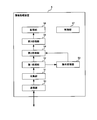
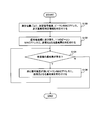
- FIG. 7 is a flowchart showing a specific example of information processing performed by the information processing device 5.
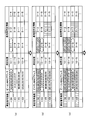
- FIG. 8 is a diagram illustrating the process of information processing performed by the information processing device 5.
- FIG. 8A is a diagram illustrating the first process of information processing performed by the information processing apparatus 5.
- FIG. 8B is a diagram illustrating a second process of information processing performed by the information processing apparatus 5.
- FIG. 8C is a diagram illustrating a third process of information processing performed by the information processing apparatus 5.
- the MAC address (beacon MAC address) of the beacon having the maximum signal strength and the measured signal strength (measured signal strength) of the beacon are used.
- the base station specific information of the three base stations 3 that are candidates for the source of the beacon are associated with each other in ascending order of distance to the measurement position 10 (S100).
- the information processing device 5 rearranges the information associated in the processing of S100 in order of signal strength for each measurement position 10, and associates a base station as a source with one beacon MAC address (S102).
- the information processing apparatus 5 is a source candidate for the beacon MAC address (AA: AA: AA: AA: AA: AA: AA) having the maximum signal strength 3 Among the three base stations 3, the base station 3-1 having the shortest distance to the measurement position 10 is associated with the source base station.
- the information processing device 5 determines whether or not the base station 3 in which the process of associating the beacon MAC address with the base station 3 has not been processed exists in the wireless communication system 1 (S104).
- the information processing apparatus 5 proceeds to the process of S106 when the unprocessed base station 3 exists (S104: Yes), and proceeds to the process of S106 when the unprocessed base station 3 does not exist (S104: No). End the process.
- the information processing device 5 associates the base station 3 as the source with the beacon MAC address having the next strongest signal strength, and returns to the process of S104.
- the information processing apparatus 5 is a source candidate for the beacon MAC address (FF: FF: FF: FF: FF: FF) having the second strongest signal strength.
- the base station 3-9 having the shortest distance to the measurement position 10 is associated with the source base station.
- the information processing apparatus 5 has already completed the mapping of the beacon MAC address (AA: AA: AA: AA: AA: AA: AA) and the base station 3-1. Is excluded from the processing target.
- the information processing apparatus 5 has a beacon MAC address (BB: BB :) having the third strongest signal strength.
- BB: BB: BB: BB) is associated with base station 3-2, which has the shortest distance to the measurement position 10 among the three base stations 3 as source candidates, as the source base station.
- the information processing apparatus 5 has a beacon MAC address (AA: AA: AA: AA: AA: AA: AA, BB: BB: BB: BB: which has already been associated. BB: BB: BB) and base stations 3-1 and 3-9 are excluded from the processing target.
- the exclusion processing unit 53 excludes the beacons that are not the target and is shown in FIG. Information processing.
- the wireless communication system 1 associates the MAC address of the beacon with the strongest signal strength with the nearest base station 3 for each measurement position 10 as a source, so that the beacons measured at a plurality of measurement positions 10 can be associated with each other.
- the indicated beacon information can be easily associated with the base station 3 as the transmission source on a one-to-one basis.
- the terminal station 2, the base station 3, and the information processing device 5 are configured by hardware such as PLD (Programmable Logic Device) or FPGA (Field Programmable Gate Array). Alternatively, it may be configured as a program executed by a processor such as a CPU.
- PLD Programmable Logic Device
- FPGA Field Programmable Gate Array
- the information processing device 5 can be realized by using a computer and a program, and the program can be recorded on a storage medium or provided through a network.
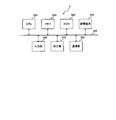
- FIG. 9 is a diagram showing a hardware configuration example of the information processing device 5 according to the embodiment.
- the information processing apparatus 5 has an input unit 500, an output unit 510, a communication unit 520, a CPU 530, a memory 540, and an HDD 550 connected via a bus 560, and has a function as a computer. Further, the information processing device 5 is capable of inputting / outputting data to / from a computer-readable storage medium 570.
- the input unit 500 is, for example, a keyboard, a mouse, or the like.
- the output unit 510 is a display device such as a display.
- the communication unit 520 is, for example, a wired network interface.
- the CPU 530 controls each part constituting the information processing device 5 and performs predetermined processing and the like.
- the memory 540 and the HDD 550 form a storage unit for storing data.
- the memory 540 stores each data used in the above-mentioned processing.
- the storage medium 570 can store a communication control program or the like that executes a function of the information processing device 5.
- the architecture constituting the information processing device 5 is not limited to the example shown in FIG.
- the "computer” here includes hardware such as an OS and peripheral devices.
- the "computer-readable storage medium” refers to a storage device such as a flexible disk, a magneto-optical disk, a ROM, a portable medium such as a CD-ROM, or the like.
- a "computer-readable storage medium” is a communication line for transmitting a program via a network such as the Internet or a communication line such as a telephone line, and dynamically holds the program for a short period of time. It may include a program or a program that holds a program for a certain period of time, such as a volatile memory inside a computer that is a server or a client in that case.
- 1 ... wireless communication system 2 ... terminal station, 3-1 to 3-9 ... base station, 4 ... network, 5 ... information processing device, 10-1 to 10-16, ⁇ ⁇ Measurement position, 50 ⁇ ⁇ ⁇ Communication unit, 51 ⁇ ⁇ ⁇ Collection unit, 52 ⁇ ⁇ ⁇ 1st processing unit, 53 ⁇ ⁇ ⁇ Exclusion processing unit, 54 ⁇ ⁇ ⁇ 2nd processing unit, 55 ⁇ ⁇ ⁇ No. 3 processing unit, 56 ... storage unit, 57 ... control unit, 100 ... cover area, 500 ... input unit, 510 ... output unit, 520 ... communication unit, 530 ... CPU, 540 ... Memory, 550 ... HDD, 560 ... Bus, 570 ... Storage medium
Landscapes
- Engineering & Computer Science (AREA)
- Computer Networks & Wireless Communication (AREA)
- Signal Processing (AREA)
- Quality & Reliability (AREA)
- Physics & Mathematics (AREA)
- Electromagnetism (AREA)
- Computer Security & Cryptography (AREA)
- Mobile Radio Communication Systems (AREA)
- Position Fixing By Use Of Radio Waves (AREA)
Abstract
複数の基地局のセル同士が互いに重なる環境で複数の基地局がそれぞれ送信し、複数の測定位置で測定されたビーコンの情報に対し、送信元となる基地局を1対1で対応付ける情報処理方法において、測定位置それぞれに対し、1つ以上の基地局が送信するビーコンのMACアドレス及び信号強度を対応付ける第1処理を行い、第1処理を行った測定位置それぞれに対し、当該測定位置の周囲に位置する1つ以上の基地局をビーコンの送信元候補として距離が近い順に対応付ける第2処理を行い、第2処理を行った後の最も信号強度が強いビーコンのMACアドレスに対し、測定位置ごとに最も近い基地局を送信元として対応付ける第3処理を行い、第2処理を行った後に、対応付けたMACアドレス及び基地局を除いて、最も信号強度が強いビーコンのMACアドレスに対し、測定位置ごとに最も近い基地局を送信元として対応付ける。
Description
本発明は、情報処理方法、情報処理装置、及び情報処理プログラムに関する。
例えば、2.4GHz帯又は5GHz帯の電波を用いた無線通信システムとして、IEEE802.11a規格、及びIEEE802.11g規格などに基づくものがある。ここで、直交周波数分割多重(OFDM:Orthogonal Frequency Division Multiplexing)変調方式を用いることにより、マルチパスフェージング環境での特性を安定化させて、最大54Mbit/sの伝送速度を実現することが可能である。
また、IEEE802.11n規格に基づく無線通信システムでは、2.4GHz帯又は5GHz帯において、複数アンテナを用いて同一の無線チャネルで空間分割多重を行うMIMO(Multiple Input Multiple Output)や、20MHzの周波数チャネルを2つ同時に利用して40MHzの周波数チャネルを利用するチャネルボンディング技術を用いて、最大600Mbit/sの伝送速度を実現している。
また、IEEE802.11ac規格に基づく無線通信システムでは、5GHz帯において、20MHzの周波数チャネルを8つまで同時に利用し、最大160MHzの周波数チャネルとして利用するチャネルボンディング技術や、同一の無線チャネルで複数の宛先に対して異なる信号を同時伝送するマルチユーザMIMO技術等を利用し、IEEE802.11n規格より高速かつ高効率な無線通信を実現している(例えば、非特許文献1参照)。
また、セルが他の基地局のセルと重なる複数の基地局を設置することによって所定の領域(カバーエリア)内で無線通信を可能にすることがある。このとき、基地局それぞれの送信電波に対し、カバーエリア内の複数の位置における受信強度の確認及び無線パラメータのチューニングを行うために、作業者が信号測定器を持ってカバーエリア内を移動しながら信号強度の測定を行うことがある。
信号強度を測定する場合には、基地局が送信するビーコンの情報、及び、信号強度を測定した位置の情報を測定結果に含めるようにする。ビーコンには、基地局固有のMACアドレスが含まれる。よって、信号測定器が複数の基地局から異なるビーコンを受信しても、ビーコンそれぞれを区別することは可能である。
IEEE Standard for Information technology- Telecommunications and information exchange between systems Local and metropolitan area networks- Specific requirements Part 11: Wireless LAN Medium Access Control (MAC) and Physical Layer (PHY) Specifications, IEEE Std 802.11-2016, Dec. 2016.
しかしながら、所定の位置で複数の基地局から異なるビーコンを受信した場合、それぞれのビーコンがどの基地局から送信されたものであるかを識別するために、各基地局が送信しているビーコンのMACアドレスそれぞれを別途調査し、MACアドレスと基地局とを1対1で対応付ける作業が必要となり、手間がかかることが課題となっていた。
本発明は、複数の基地局のセル同士が互いに重なる環境で複数の基地局がそれぞれ送信し、複数の測定位置で測定されたビーコンの情報に対し、送信元となる基地局を容易に1対1で対応付けることができる情報処理方法、情報処理装置、及び情報処理プログラムを提供することを目的とする。
本発明の一態様にかかる情報処理方法は、複数の基地局のセル同士が互いに重なる環境で複数の基地局がそれぞれ送信し、複数の測定位置で測定されたビーコンの情報に対し、送信元となる基地局にを1対1で対応付ける情報処理方法において、前記測定位置それぞれに対し、1つ以上の基地局が送信するビーコンのMACアドレス及び信号強度を対応付ける第1処理を行う第1処理工程と、前記第1処理工程により第1処理を行った前記測定位置それぞれに対し、当該測定位置の周囲に位置する1つ以上の基地局をビーコンの送信元候補として距離が近い順に対応付ける第2処理を行う第2処理工程と、前記第2処理工程により第2処理を行った後の最も信号強度が強いビーコンのMACアドレスに対し、前記測定位置ごとに最も近い基地局を送信元として対応付ける第3処理を行う第3処理工程と、前記第2処理工程により第2処理を行った後に、前記第3処理工程により対応付けたMACアドレス及び基地局を除いて、最も信号強度が強いビーコンのMACアドレスに対し、前記測定位置ごとに最も近い基地局を送信元として対応付ける第3処理を繰り返すように制御する制御工程とを含むことを特徴とする。
また、本発明の一態様にかかる情報処理装置は、複数の基地局のセル同士が互いに重なる環境で複数の基地局がそれぞれ送信し、複数の測定位置で測定されたビーコンの情報に対し、送信元となる基地局を1対1で対応付ける情報処理装置において、前記測定位置それぞれに対し、1つ以上の基地局が送信するビーコンのMACアドレス及び信号強度を対応付ける第1処理を行う第1処理部と、前記第1処理部が第1処理を行った前記測定位置それぞれに対し、当該測定位置の周囲に位置する1つ以上の基地局をビーコンの送信元候補として距離が近い順に対応付ける第2処理を行う第2処理部と、前記第2処理部が第2処理を行った後の最も信号強度が強いビーコンのMACアドレスに対し、前記測定位置ごとに最も近い基地局を送信元として対応付ける第3処理を行う第3処理部と、前記第2処理部が第2処理を行った後に、前記第3処理部が対応付けたMACアドレス及び基地局を除いて、最も信号強度が強いビーコンのMACアドレスに対し、前記測定位置ごとに最も近い基地局を送信元として対応付ける第3処理を前記第3処理部が行うように制御する制御部とを有することを特徴とする。
本発明によれば、複数の基地局のセル同士が互いに重なる環境で複数の基地局がそれぞれ送信し、複数の測定位置で測定されたビーコンの情報に対し、送信元となる基地局を容易に1対1で対応付けることができる。
以下に、図面を用いて無線通信システムの一実施形態を説明する。図1は、一実施形態にかかる無線通信システム1の構成例を示す図である。図1に示すように、無線通信システム1は、例えば、複数の端末局2が無線通信によって接続可能な9台の基地局3-1~3-9と、ネットワーク4に接続された情報処理装置5とを有する。なお、基地局3-1~3-9のように複数ある構成のいずれかを特定しない場合には、単に基地局3などと略記する。
端末局2は、無線通信端末であり、基地局3との間で無線通信を行う。ここでは、端末局2は、上述した信号測定器としての機能も備えているものとする。例えば、端末局2は、基地局3が送信するビーコンの信号強度を測定する信号強度測定機能、ビーコンを受信した位置を信号強度の測定位置として経度及び緯度などを取得するGPS(Global Positioning System)機能、及びビーコンに含まれるMACアドレス(Media Access Control address)を取得する機能を兼ね備えているものとする。
基地局3-1~3-9は、それぞれセルが他の基地局3のセルと重なるように設置されており、ネットワーク4に接続されている。このとき、基地局3-1~3-9の少なくともいずれかは、所定の領域(カバーエリア)100内に位置する端末局2との間で無線通信を可能にされている。さらに、基地局3-1~3-9は、端末局2が測定した信号強度と、取得した測定位置及びMACアドレスを端末局2それぞれから受信可能にされている。
図2は、カバーエリア100内に配置された基地局3-1~3-9の位置を模式的に示す図である。図2に示すように、基地局3-1~3-9は、カバーエリア100を形成するように、所定の範囲内に所定の間隔を空けて配置されている。ここでは、基地局3-1~3-9それぞれは、送信電力等の性能が同一であるとは限らず、セルの形状及び大きさも同一ではないとする。
また、基地局3-1~3-9それぞれが設置されている位置は、例えば経度及び緯度を含む基地局位置情報として予め情報処理装置5が記憶していることとする。また、基地局3と、当該基地局3の基地局位置情報とを対応付けた情報を基地局特定情報とする。
図3は、カバーエリア100内で基地局3-1~3-9が送信する電波の強度を測定する測定位置10-1~10-16を模式的に示す図である。図3に示すように、例えば端末局2は、カバーエリア100内で所定の間隔を空けられた16箇所の測定位置10-1~10-16において、基地局3が送信するビーコンを受信する。そして、端末局2は、測定した信号強度と、取得した測定位置及びMACアドレスを接続可能な基地局3に対して送信する。なお、測定位置10-1~10-16は、カバーエリア100内であれば、位置は限定されない。
次に、情報処理装置5が有する機能について説明する。図4は、一実施形態にかかる情報処理装置5が有する機能を例示する機能ブロック図である。図4に示すように、情報処理装置5は、例えば、通信部50、収集部51、第1処理部52、除外処理部53、第2処理部54、第3処理部55、記憶部56、及び制御部57を有する。
そして、情報処理装置5は、セルが他の基地局3のセルと重なる複数の基地局3がそれぞれ送信して複数の測定位置で測定されたビーコンが示すビーコン情報を、送信元となる基地局3に対して1対1で対応付ける。
具体的には、通信部50は、ネットワーク4を介して基地局3-1~3-9それぞれとの間で通信を行う通信インターフェースである。
収集部51は、通信部50を介して、基地局3-1~3-9が端末局2から受信する信号強度、測定位置及びMACアドレスを収集し、第1処理部52に対して出力する。
第1処理部52は、測定位置10-1~10-16それぞれに対し、1つ以上の基地局3が送信するビーコンのMACアドレス及び信号強度を対応付ける第1処理を行い、処理結果を除外処理部53及び第2処理部54に対して出力する。
図5は、第1処理部52が第1処理を行った処理結果を例示する図である。図5に示すように、第1処理部52は、測定位置10-1~10-16それぞれに対し、ビーコンMACアドレスそれぞれの信号強度を対応づける。
さらに、第1処理部52は、測定位置10-1~10-16それぞれに対し、ビーコンに含まれるMACアドレスとは異なる識別情報を対応付けて第1処理を行ってもよい。なお、識別情報には、例えば基地局3が有する機能や性能、又は製造メーカなどを特定する情報が含まれる。
除外処理部53(図4)は、第1処理部52から入力される識別情報に基づいて、基地局3のいずれかをビーコンの送信元であると判定される候補(送信元候補)から除外する除外処理を行い、処理結果を第2処理部54に対して出力する。
第2処理部54は、第1処理部52から入力される処理結果に基づいて第2処理を行い、処理結果を第3処理部55に対して出力する。具体的には、第2処理部54は、第1処理部52が第1処理を行った測定位置10-1~10-16それぞれに対し、当該測定位置の周囲に位置する1つ以上の基地局3をビーコンの送信元候補として距離が近い順に対応付ける第2処理を行う。
図6は、第2処理部54が第2処理を行った処理結果を例示する図である。図6に示すように、第2処理部54は、測定位置10-1~10-16それぞれに対し、周囲に位置する例えば3つの基地局3をビーコンの送信元候補として、測定位置10と基地局3との間の距離が近い順に対応付ける。
図6においては、基地局特定情報は、基地局3-1~3-9それぞれに対し、該当する基地局位置情報が対応付けられているとする。また、図6においては、基地局位置情報に基づいて、左側に記載されている基地局3ほど測定位置10までの距離が短いとして示されている。
また、第2処理部54は、除外処理部53が除外処理を行った場合には、除外処理部53が除外処理を行った結果に基づいて第2処理を行う。
第3処理部55は、第2処理部54が第2処理を行った後の最も信号強度が強いビーコンのMACアドレスに対し、測定位置ごとに最も近い基地局を送信元として対応付ける第3処理を行い、処理結果を記憶部56に記憶させる。
記憶部56は、例えば経度及び緯度を含む基地局位置情報、並びに情報処理装置5内で処理されたデータなどを記憶し、制御部57からアクセス可能にされている。
制御部57は、情報処理装置5を構成する各部を制御する。例えば、情報処理装置5は、第2処理部54が第2処理を行った後に、第3処理部55が対応付けたMACアドレス及び基地局3を除いて、最も信号強度が強いビーコンのMACアドレスに対し、測定位置ごとに最も近い基地局3を送信元として対応付ける第3処理を第3処理部55が行うように制御する。
次に、情報処理装置5が行う情報処理の具体例について、図7及び図8を用いて説明する。図7は、情報処理装置5が行う情報処理の具体例を示すフローチャートである。図8は、情報処理装置5が行う情報処理の過程を例示する図である。図8(a)は、情報処理装置5が行う情報処理の第1過程を例示する図である。図8(b)は、情報処理装置5が行う情報処理の第2過程を例示する図である。図8(c)は、情報処理装置5が行う情報処理の第3過程を例示する図である。
図7に示すように、情報処理装置5は、まず、測定位置10ごとに、信号強度が最大であるビーコンのMACアドレス(ビーコンMACアドレス)、当該ビーコンの測定された信号強度(測定信号強度)、及び当該ビーコンの送信元候補となる3つの基地局3の基地局特定情報を測定位置10までの距離が短い順に対応づける(S100)。
次に、情報処理装置5は、S100の処理で対応付けた情報を、測定位置10ごとに信号強度順に並び替え、1つのビーコンMACアドレスに対し、送信元となる基地局を対応付ける(S102)。
例えば、図8(a)に示したように、情報処理装置5は、信号強度が最大であるビーコンMACアドレス(AA:AA:AA:AA:AA:AA)に対し、送信元候補となる3つの基地局3の中で測定位置10までの距離が最も短い基地局3-1を送信元の基地局として対応付ける。
次に、情報処理装置5は、ビーコンMACアドレスと基地局3との対応付けの処理が未処理である基地局3が無線通信システム1内に存在しているか否かを判定する(S104)。情報処理装置5は、未処理の基地局3が存在している場合(S104:Yes)にはS106の処理に進み、未処理の基地局3が存在していない場合(S104:No)には処理を終了する。
S106の処理において、情報処理装置5は、次に信号強度が強いビーコンMACアドレスに対し、送信元となる基地局3を対応づけ、S104の処理に戻る。
例えば、図8(b)に示したように、情報処理装置5は、信号強度が2番目に強いビーコンMACアドレス(FF:FF:FF:FF:FF:FF)に対し、送信元候補となる3つの基地局3の中で測定位置10までの距離が最も短い基地局3-9を送信元の基地局として対応付ける。
このとき、情報処理装置5は、図8(b)に示したように、すでに対応付けが完了しているビーコンMACアドレス(AA:AA:AA:AA:AA:AA)及び基地局3-1を処理対象から除外する。
また、未処理の基地局3が存在している場合には、例えば図8(c)に示したように、情報処理装置5は、信号強度が3番目に強いビーコンMACアドレス(BB:BB:BB:BB:BB:BB)に対し、送信元候補となる3つの基地局3の中で測定位置10までの距離が最も短い基地局3-2を送信元の基地局として対応付ける。
このとき、情報処理装置5は、図8(c)に示したように、すでに対応付けが完了しているビーコンMACアドレス(AA:AA:AA:AA:AA:AA,BB:BB:BB:BB:BB:BB)及び基地局3-1、3-9を処理対象から除外する。
なお、情報処理装置5は、測定位置10において受信される複数のビーコンに対し、上述した識別情報によりビーコンを区別する場合、除外処理部53が対象外となるビーコンを除外して図7に示した情報処理を行う。
このように、無線通信システム1は、最も信号強度が強いビーコンのMACアドレスに対し、測定位置10ごとに最も近い基地局3を送信元として対応付けるので、複数の測定位置10で測定されたビーコンが示すビーコン情報を、送信元となる基地局3に対して容易に1対1で対応付けることができる。
なお、端末局2、基地局3、及び情報処理装置5が有する各機能は、それぞれ一部又は全部がPLD(Programmable Logic Device)やFPGA(Field Programmable Gate Array)等のハードウェアによって構成されてもよいし、CPU等のプロセッサが実行するプログラムとして構成されてもよい。
例えば、本発明にかかる情報処理装置5は、コンピュータとプログラムを用いて実現することができ、プログラムを記憶媒体に記録することも、ネットワークを通して提供することも可能である。
図9は、一実施形態にかかる情報処理装置5のハードウェア構成例を示す図である。図9に示すように、例えば情報処理装置5は、入力部500、出力部510、通信部520、CPU530、メモリ540及びHDD550がバス560を介して接続され、コンピュータとしての機能を備える。また、情報処理装置5は、コンピュータ読み取り可能な記憶媒体570との間でデータを入出力することができるようにされている。
入力部500は、例えばキーボード及びマウス等である。出力部510は、例えばディスプレイなどの表示装置である。通信部520は、例えば有線のネットワークインターフェースである。
CPU530は、情報処理装置5を構成する各部を制御し、所定の処理等を行う。メモリ540及びHDD550は、データを記憶する記憶部を構成する。特に、メモリ540は、上述した処理に用いる各データを記憶する。記憶媒体570は、情報処理装置5が有する機能を実行させる通信制御プログラム等を記憶可能にされている。なお、情報処理装置5を構成するアーキテクチャは図9に示した例に限定されない。
すなわち、ここでいう「コンピュータ」とは、OSや周辺機器等のハードウェアを含むものとする。また、「コンピュータ読み取り可能な記憶媒体」とは、フレキシブルディスク、光磁気ディスク、ROM、CD-ROM等の可搬媒体等の記憶装置のことをいう。
さらに「コンピュータ読み取り可能な記憶媒体」とは、インターネット等のネットワークや電話回線等の通信回線を介してプログラムを送信する場合の通信線のように、短時間の間、動的にプログラムを保持するものや、その場合のサーバやクライアントとなるコンピュータ内部の揮発性メモリのように、一定時間プログラムを保持しているものを含んでもよい。
以上、図面を参照して本発明の実施形態を説明してきたが、上述の実施形態は、本発明の例示に過ぎず、本発明が上述の実施形態に限定されるものではないことは明らかである。したがって、本発明の技術思想及び範囲を逸脱しない範囲で、構成要素の追加、省略、置換、その他の変更が行われてもよい。
1・・・無線通信システム、2・・・端末局、3-1~3-9・・・基地局、4・・・ネットワーク、5・・・情報処理装置、10-1~10-16・・・測定位置、50・・・通信部、51・・・収集部、52・・・第1処理部、53・・・除外処理部、54・・・第2処理部、55・・・第3処理部、56・・・記憶部、57・・・制御部、100・カバーエリア、500・・・入力部、510・・・出力部、520・・・通信部、530・・・CPU、540・・・メモリ、550・・・HDD、560・・・バス、570・・・記憶媒体
Claims (5)
- 複数の基地局のセル同士が互いに重なる環境で複数の基地局がそれぞれ送信し、複数の測定位置で測定されたビーコンの情報に対し、送信元となる基地局を1対1で対応付ける情報処理方法において、
前記測定位置それぞれに対し、1つ以上の基地局が送信するビーコンのMACアドレス及び信号強度を対応付ける第1処理を行う第1処理工程と、
前記第1処理工程により第1処理を行った前記測定位置それぞれに対し、当該測定位置の周囲に位置する1つ以上の基地局をビーコンの送信元候補として距離が近い順に対応付ける第2処理を行う第2処理工程と、
前記第2処理工程により第2処理を行った後の最も信号強度が強いビーコンのMACアドレスに対し、前記測定位置ごとに最も近い基地局を送信元として対応付ける第3処理を行う第3処理工程と、
前記第2処理工程により第2処理を行った後に、前記第3処理工程により対応付けたMACアドレス及び基地局を除いて、最も信号強度が強いビーコンのMACアドレスに対し、前記測定位置ごとに最も近い基地局を送信元として対応付ける第3処理を繰り返すように制御する制御工程と
を含むことを特徴とする情報処理方法。 - 前記第1処理工程では、
前記測定位置それぞれに対し、ビーコンに含まれるMACアドレスとは異なる識別情報をさらに対応付ける第1処理を行い、
前記識別情報に基づいて識別される基地局をビーコンの送信元候補から除外する除外処理を行う除外処理工程をさらに含み、
前記第2処理工程では、
前記除外処理工程により除外処理を行った後に第2処理を行うこと
を特徴とする請求項1に記載の情報処理方法。 - 複数の基地局のセル同士が互いに重なる環境で複数の基地局がそれぞれ送信し、複数の測定位置で測定されたビーコンの情報に対し、送信元となる基地局を1対1で対応付ける情報処理装置において、
前記測定位置それぞれに対し、1つ以上の基地局が送信するビーコンのMACアドレス及び信号強度を対応付ける第1処理を行う第1処理部と、
前記第1処理部が第1処理を行った前記測定位置それぞれに対し、当該測定位置の周囲に位置する1つ以上の基地局をビーコンの送信元候補として距離が近い順に対応付ける第2処理を行う第2処理部と、
前記第2処理部が第2処理を行った後の最も信号強度が強いビーコンのMACアドレスに対し、前記測定位置ごとに最も近い基地局を送信元として対応付ける第3処理を行う第3処理部と、
前記第2処理部が第2処理を行った後に、前記第3処理部が対応付けたMACアドレス及び基地局を除いて、最も信号強度が強いビーコンのMACアドレスに対し、前記測定位置ごとに最も近い基地局を送信元として対応付ける第3処理を前記第3処理部が行うように制御する制御部と
を有することを特徴とする情報処理装置。 - 前記第1処理部は、
前記測定位置それぞれに対し、ビーコンに含まれるMACアドレスとは異なる識別情報をさらに対応付ける第1処理を行い、
前記識別情報に基づいて識別される基地局をビーコンの送信元候補から除外する除外処理を行う除外処理部をさらに有し、
前記第2処理部は、
前記除外処理部が除外処理を行った後に第2処理を行うこと
を特徴とする請求項3に記載の情報処理装置。 - 請求項3又は4に記載の情報処理装置の各部としてコンピュータを機能させるための情報処理プログラム。
Priority Applications (3)
| Application Number | Priority Date | Filing Date | Title |
|---|---|---|---|
| JP2022508672A JP7359289B2 (ja) | 2020-03-17 | 2020-03-17 | 情報処理方法、情報処理装置、及び情報処理プログラム |
| US17/911,360 US20230102173A1 (en) | 2020-03-17 | 2020-03-17 | Information processing method, information processing apparatus, and information processing program |
| PCT/JP2020/011782 WO2021186572A1 (ja) | 2020-03-17 | 2020-03-17 | 情報処理方法、情報処理装置、及び情報処理プログラム |
Applications Claiming Priority (1)
| Application Number | Priority Date | Filing Date | Title |
|---|---|---|---|
| PCT/JP2020/011782 WO2021186572A1 (ja) | 2020-03-17 | 2020-03-17 | 情報処理方法、情報処理装置、及び情報処理プログラム |
Publications (1)
| Publication Number | Publication Date |
|---|---|
| WO2021186572A1 true WO2021186572A1 (ja) | 2021-09-23 |
Family
ID=77770959
Family Applications (1)
| Application Number | Title | Priority Date | Filing Date |
|---|---|---|---|
| PCT/JP2020/011782 Ceased WO2021186572A1 (ja) | 2020-03-17 | 2020-03-17 | 情報処理方法、情報処理装置、及び情報処理プログラム |
Country Status (3)
| Country | Link |
|---|---|
| US (1) | US20230102173A1 (ja) |
| JP (1) | JP7359289B2 (ja) |
| WO (1) | WO2021186572A1 (ja) |
Citations (2)
| Publication number | Priority date | Publication date | Assignee | Title |
|---|---|---|---|---|
| US20120172051A1 (en) * | 2010-12-31 | 2012-07-05 | Kt Corporation | Location measuring method and apparatus using access point and lamp |
| JP2015106911A (ja) * | 2013-12-03 | 2015-06-08 | 日本電信電話株式会社 | 出力決定方法、出力決定装置及び出力決定プログラム |
Family Cites Families (8)
| Publication number | Priority date | Publication date | Assignee | Title |
|---|---|---|---|---|
| US8396485B2 (en) * | 2010-11-09 | 2013-03-12 | Apple Inc. | Beacon-based geofencing |
| US8862154B2 (en) * | 2011-09-12 | 2014-10-14 | Kt Corporation | Location measuring method and apparatus using access point for wireless local area network service |
| US9369845B2 (en) * | 2012-03-23 | 2016-06-14 | Skyhook Wireless, Inc. | Methods and systems of assigning estimated positions and attributes to wireless access points in a positioning system |
| US9456311B2 (en) * | 2014-04-07 | 2016-09-27 | At&T Intellectual Property I, L.P. | Determining indoor location of devices using reference points and sensors |
| KR102598798B1 (ko) * | 2016-12-06 | 2023-11-07 | 삼성전자주식회사 | 비콘과 관련된 정보를 송/수신하는 서버 및 전자 장치 |
| LU100599B1 (en) * | 2017-12-29 | 2019-07-01 | Luxembourg Inst Science & Tech List | Method for subjectively mapping a wireless network environment |
| JP7206676B2 (ja) * | 2018-07-30 | 2023-01-18 | セイコーエプソン株式会社 | 端末装置、通信システム、プログラム及び端末装置の制御方法 |
| US11553449B1 (en) * | 2020-01-29 | 2023-01-10 | Skyhook Wireless, Inc. | Positioning system with multi-location beacons |
-
2020
- 2020-03-17 US US17/911,360 patent/US20230102173A1/en not_active Abandoned
- 2020-03-17 JP JP2022508672A patent/JP7359289B2/ja active Active
- 2020-03-17 WO PCT/JP2020/011782 patent/WO2021186572A1/ja not_active Ceased
Patent Citations (2)
| Publication number | Priority date | Publication date | Assignee | Title |
|---|---|---|---|---|
| US20120172051A1 (en) * | 2010-12-31 | 2012-07-05 | Kt Corporation | Location measuring method and apparatus using access point and lamp |
| JP2015106911A (ja) * | 2013-12-03 | 2015-06-08 | 日本電信電話株式会社 | 出力決定方法、出力決定装置及び出力決定プログラム |
Also Published As
| Publication number | Publication date |
|---|---|
| JP7359289B2 (ja) | 2023-10-11 |
| JPWO2021186572A1 (ja) | 2021-09-23 |
| US20230102173A1 (en) | 2023-03-30 |
Similar Documents
| Publication | Publication Date | Title |
|---|---|---|
| US11424808B2 (en) | Electronic device, method and medium for wireless communication | |
| US12143188B2 (en) | Network device, user equipment, wireless communication method and storage medium | |
| CN115104356B (zh) | 用于ul定位的参考信号传输上的波束扫描 | |
| EP3026971B1 (en) | Device and method for managing spectrum resources, and wireless communication device and method | |
| US10485004B2 (en) | Optimizing network resources in a telecommunications system | |
| RU2739588C2 (ru) | Оконечное устройство, базовая станция, способ и носитель информации | |
| CN117321449A (zh) | 使用射频感测的室内地图生成 | |
| CN116074892A (zh) | 位置信息上报方法、接收方法、终端、卫星和存储介质 | |
| WO2018020900A1 (ja) | 端末装置、基地局、方法及び記録媒体 | |
| CN109842890B (zh) | 信号测量方法、相关装置及系统 | |
| KR20200017481A (ko) | 빔 관리 방법, 네트워크 장치 및 단말기 | |
| JP2024500395A (ja) | より高いランクの送信をサポートするためのタイプiiポート選択コードブックを拡張する方法 | |
| US20240243790A1 (en) | Beamformed transmission towards groups of terminal devices | |
| US10972930B2 (en) | Method and device for wireless communication | |
| US20200045772A1 (en) | Apparatus, system and method of active scanning | |
| CN107689855B (zh) | 信号发送、接收方法和设备 | |
| CN106464329B (zh) | 对定向天线进行导向的装置、系统和方法 | |
| JP7400969B2 (ja) | 情報処理方法、情報処理装置、無線通信システム、及び情報処理プログラム | |
| JP7244316B2 (ja) | 端末及び基地局 | |
| JP7359289B2 (ja) | 情報処理方法、情報処理装置、及び情報処理プログラム | |
| US20180343687A1 (en) | Beamforming based on combined beams | |
| WO2017175500A1 (ja) | 通信制御装置、端末装置、方法及びプログラム | |
| CN107258096B (zh) | 具有不同坐标域的无线网络之间的通信的装置、系统及方法 | |
| JP2020150418A (ja) | 端末装置及び通信方法 | |
| WO2024023394A1 (en) | Network measurement device with combined receivers |
Legal Events
| Date | Code | Title | Description |
|---|---|---|---|
| 121 | Ep: the epo has been informed by wipo that ep was designated in this application |
Ref document number: 20925427 Country of ref document: EP Kind code of ref document: A1 |
|
| ENP | Entry into the national phase |
Ref document number: 2022508672 Country of ref document: JP Kind code of ref document: A |
|
| NENP | Non-entry into the national phase |
Ref country code: DE |
|
| 122 | Ep: pct application non-entry in european phase |
Ref document number: 20925427 Country of ref document: EP Kind code of ref document: A1 |