WO2021166363A1 - プログラム、画像データ生成装置及び画像データ生成方法 - Google Patents
プログラム、画像データ生成装置及び画像データ生成方法 Download PDFInfo
- Publication number
- WO2021166363A1 WO2021166363A1 PCT/JP2020/044674 JP2020044674W WO2021166363A1 WO 2021166363 A1 WO2021166363 A1 WO 2021166363A1 JP 2020044674 W JP2020044674 W JP 2020044674W WO 2021166363 A1 WO2021166363 A1 WO 2021166363A1
- Authority
- WO
- WIPO (PCT)
- Prior art keywords
- image data
- output
- data
- generated
- similarity
- Prior art date
- Legal status (The legal status is an assumption and is not a legal conclusion. Google has not performed a legal analysis and makes no representation as to the accuracy of the status listed.)
- Ceased
Links
Images



Classifications
-
- G—PHYSICS
- G06—COMPUTING OR CALCULATING; COUNTING
- G06T—IMAGE DATA PROCESSING OR GENERATION, IN GENERAL
- G06T1/00—General purpose image data processing
- G06T1/20—Processor architectures; Processor configuration, e.g. pipelining
-
- G—PHYSICS
- G06—COMPUTING OR CALCULATING; COUNTING
- G06T—IMAGE DATA PROCESSING OR GENERATION, IN GENERAL
- G06T7/00—Image analysis
Definitions
- the present invention relates to a program for generating image data, an image data generation device, and an image data generation method.
- Patent Document 1 discloses a technique for bringing an image generated by using GAN closer to a true image.
- the image data generated by using a method such as GAN may be too different from the desired image data of the user who needs the image data.
- the generated image data is another image data used for generating the image data (for example, an image showing a face image of a celebrity). If it is too similar to the data or image data showing the logo of another company), problems such as copyright or portrait rights may occur.
- the user may want to generate image data corresponding to a face image or a logo image of a specific attribute.
- the generated image data may be too different from the desired image data.
- image data is generated by using a conventional method such as GAN, there is a problem that the image data desired by the user may not be generated.
- the present invention has been made in view of these points, and provides a program and an image data generation device capable of generating image data close to the desired image data of a user who needs the image data.
- the purpose is.
- the target image data acquisition unit for acquiring the target image data which is the target image data for which the computer is compared with the output image data output by the computer, and the input data are input.
- one or more source data selected from a plurality of source data is input as the input data to the training model that outputs the generated image data, and the generated image that acquires the one or more generated image data output from the training model is acquired.
- the one or more whose image data similarity, which is the similarity with the target image data corresponds to the image data within a predetermined range.
- the generated image data output by the learning model due to the input of the source data of the above is made to function as an image data output unit that outputs the output image data.
- the target image data acquisition unit further includes a source data identification unit that specifies the target image source data that is the source data corresponding to the target image data by back-propagating the target image data, and the generated image data acquisition unit has a plurality of the generation image data acquisition units.
- a source data identification unit that specifies the target image source data that is the source data corresponding to the target image data by back-propagating the target image data
- the generated image data acquisition unit has a plurality of the generation image data acquisition units.
- the source data one or more source data different from the target image source data may be selected.
- the generated image data acquisition unit may select one or more of the plurality of source data whose source data similarity, which is the similarity with the target image source data, is less than the source data maximum threshold. ..
- the image data output unit is a similarity specifying unit that specifies the image data similarity between each of the one or more generated image data and the target image data, and the similarity among the one or more generated image data. It may have a selection unit for selecting image data whose similarity of the image data specified by the specific unit is less than the maximum output threshold as the output image data.
- the image data output unit is a similarity specifying unit that specifies the image data similarity between each of the one or more generated image data and the target image data, and the similarity among the one or more generated image data. It may have a selection unit for selecting image data whose image data similarity specified by the specific unit is equal to or greater than the output minimum threshold when the target image data has the same attributes as the output image data.
- the image data output unit is the image data of each of the one or more generated images and the target image data in the similarity specifying unit.
- the similarity is specified and the target image data is image data whose source data can be specified by back-propagating the learning model, each of the one or more generated image data in the similarity specifying unit. At least one of the one or more generated image data may be output as the output image data without specifying the image data similarity between the target image data and the target image data.
- the image data output unit may output the image data similarity specified by the similarity identification unit in association with the output image data.
- the target image data By back-propagating the target image data, it further has a source data specifying unit that specifies the target image source data that is the source data corresponding to the target image data, and the generated image data acquisition unit is a plurality of the above-mentioned generation image data acquisition units.
- the source data of the above one or more source data whose source data similarity, which is the similarity with the target image source data, is equal to or greater than the minimum source data threshold may be selected.
- the program further causes the computer to function as a designated reception unit that receives designation of attributes of the output image data output by the image data output unit, and the target image data acquisition unit receives the designation reception unit.
- the target image data corresponding to the attribute may be acquired.
- the target image data acquisition unit may acquire the learning image data used for learning by the learning model as the target image data.
- a designated reception unit that accepts the designation of the attribute of the target image data, which is the target image for which the computer is compared with the output image data output by the computer, and the input data are input.
- the generated image data acquisition unit that inputs one or more source data selected from a plurality of source data as the input data to the learning model that outputs the generated image data, and one or more generated image data output from the learning model.
- the image data similarity which is the similarity with the image data corresponding to the attribute, is within a predetermined range among the generated image data acquisition unit for acquiring the data and the one or more generated image data output from the learning model. It functions as an image data output unit that outputs the generated image data output by the learning model as output image data by inputting the one or more source data corresponding to the image data.
- the image data generation device of the third aspect of the present invention is an image data generation device that generates image data, and is a target image that is a target image data to be compared with the output image data output by the image data generation device.
- One or more source data selected from a plurality of source data is input as the input data into the target image data acquisition unit for acquiring data and the learning model that outputs the generated image data when the input data is input, and the training is performed.
- An image data output unit that outputs the generated image data output by the learning model as the output image data by inputting the one or more source data corresponding to the image data having a data similarity within a predetermined range. Have.
- the image data generation device of the fourth aspect of the present invention is an image data generation device that generates image data, and is a target image that is a target image data to be compared with the output image data output by the image data generation device.
- One or more source data selected from a plurality of source data is input as the input data into the designated reception unit that accepts the designation of data attributes and the learning model that outputs the generated image data when the input data is input. Similarity between the generated image data acquisition unit that acquires one or more generated image data output from the training model and the image data corresponding to the attribute among the one or more generated image data output from the learning model.
- Image data output unit that outputs the generated image data output by the learning model as output image data when one or more source data corresponding to the image data whose image data similarity is within a predetermined range is input. And have.
- the image data generation method of the fifth aspect of the present invention includes a step of acquiring target image data, which is target image data to be compared with output image data output by the computer, executed by a computer, and input of input data. Then, one or more source data selected from a plurality of source data is input as the input data to the training model that outputs the generated image data, and one or more generated image data output from the learning model is acquired. Of the step and the one or more generated image data output from the learning model, the one or more sources whose image data similarity, which is the similarity with the target image data, corresponds to the image data within a predetermined range. It has a step of outputting the generated image data output by the learning model as the output image data by inputting the data.
- the image data generation method of the sixth aspect of the present invention includes a step of accepting the designation of the attribute of the target image data which is the target image to be compared with the output image data output by the computer, which is executed by the computer, and the input data.
- one or more source data selected from a plurality of source data is input as the input data to the training model that outputs the generated image data, and one or more generated images output from the learning model.
- the image data similarity which is the similarity with the image data corresponding to the attribute, is within a predetermined range. It has a step of outputting the generated image data output by the learning model as output image data by inputting the corresponding one or more source data.
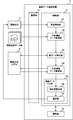
- FIG. 1 is a diagram for explaining an outline of an image data generation device according to the present embodiment.
- the image data generation device is a device that generates image data using an image generation model M, which is a machine learning model capable of generating an image using GAN (Generative Adversarial Networks).
- the image generation model M outputs image data (for example, face image or logo image data) that satisfies a predetermined condition in response to input of source data composed of random numbers, for example.
- image data for example, face image or logo image data
- the image data may be data other than the face image.
- the image data generation device inputs, for example, source data composed of random numbers into the image generation model M, and outputs the image data generated by the image generation model M based on the source data to the outside.
- the image data generation device has a processor and generates image data based on the source data by executing a predetermined program.
- the source data is not limited to random numbers, but may be a numerical value generated based on some rule, or a tensor used for image conversion. Source data may include multiple types of numbers or tensors.
- the source data is, for example, a random number having a predetermined number of dimensions.
- An example of source data composed of 10-dimensional random numbers is [-1.64488044, -0.60640991, -0.873229623, 1.5031189, -0.53544662, 0.9613433211, 0.93294641, -0. 3932147, 1.86438949, 0.06738101].
- the number of dimensions of the source data is arbitrary, but is, for example, 512 dimensions.
- the image data generated by the image data generation device (generated image data in FIG. 1) is similar to the image data showing the face image of a real person among the image data used for learning the image generation model M. If so, copyright or portrait rights issues may arise.
- the image data generation device if the image data generated by the image data generation device is too different from the image data desired by the user who uses the image data, there arises a problem that the user is not satisfied. Therefore, the image data generation device according to the present embodiment generates image data in which the similarity between the generated image data and the target image data to be compared is within an appropriate range so that these problems do not occur. ..
- the configuration and operation of the image data generation device will be described in detail.
- FIG. 2 is a diagram showing a configuration of an image data generation device 1 according to the present embodiment.
- the image data generation device 1 is, for example, a computer, and generates generated image data by executing a predetermined program.
- the image data generation device 1 has, for example, a communication unit 11, a storage unit 12, and a control unit 13.
- the control unit 13 includes a designated reception unit 131, a target image data acquisition unit 132, a source data identification unit 133, a generated image data acquisition unit 134, and an image data output unit 135.
- the image data output unit 135 includes a similarity identification unit 136 and a selection unit 137.
- the image data generation device 1 may not have a part of each of these parts, and may have another processing part.
- the communication unit 11 is a communication interface for transmitting and receiving data to and from other devices, and has, for example, a communication controller for connecting to a network.
- the communication unit 11 transmits / receives data to / from, for example, the information terminal 2.
- the information terminal 2 is a terminal used by a user who desires to generate an image, and is, for example, a personal computer or a smartphone.
- the storage unit 12 is a storage medium such as a ROM (Read Only Memory), a RAM (Random Access Memory), and a hard disk, and stores a program executed by the control unit 13.
- the storage unit 12 also temporarily stores the image data generated by the control unit 13.
- the control unit 13 is, for example, a CPU (Central Processing Unit). By executing the program stored in the storage unit 12, the control unit 13 executes the designated reception unit 131, the target image data acquisition unit 132, the source data identification unit 133, the generated image data acquisition unit 134, and the image data output unit 135. It functions as a similarity identification unit 136 and a selection unit 137. The control unit 13 generates image data to be output by using the image generation model M created in advance.
- a CPU Central Processing Unit
- the designated reception unit 131 accepts the designation of the attributes of the output image data output by the image data output unit 135.
- the designation reception unit 131 accepts the designation of the attribute of the output image data by acquiring the attribute information indicating the attribute of the necessary image data input by the user in the information terminal 2 used by the user who needs the image data. ..
- the designated reception unit 131 notifies the target image data acquisition unit 132 of the received attribute.
- the attributes of the output image data are, for example, the type of object or person indicated by the image.
- the attribute may be a body part, such as a face image or an image of the entire body.
- the attributes are, for example, gender, age, skin color, hair color, and the like.
- the attribute information may be text information indicating such an attribute, or may be image data showing the characteristics of the attribute.
- the target image data acquisition unit 132 acquires one or more target image data which is the target image data to be compared with the output image data output by the image data generation device 1.
- the target image data acquisition unit 132 may acquire the target image data stored in the storage unit 12, or may acquire the target image data from an external device.
- the target image data includes at least one of information indicating what kind of image the data indicates or information indicating the attributes of the image, and the target image data acquisition unit 132 includes, among the plurality of target image data, the target image data. Select one or more target image data corresponding to the attribute notified from the designated reception unit 131.
- the target image data acquisition unit 132 uses the learning used by the image generation model M for training.
- Image data for use is acquired as target image data.
- the target image data acquisition unit 132 acquires the target image data corresponding to the attribute received by the designated reception unit 131.
- the target image data acquisition unit 132 acquires the data of the face image of a woman in her twenties as the target image data.
- the target image data acquisition unit 132 inputs the acquired target image data to the source data identification unit 133.
- the source data specifying unit 133 specifies the target image source data, which is the source data corresponding to the target image data, by performing back propagation processing on the target image data.
- the source data specifying unit 133 identifies a set including a plurality of source data corresponding to the target image data by, for example, mapping the target image data into the space of the source data.
- the back propagation process uses the target image data as input data to specify the source data that can generate an image most similar to the input data among the generated image data that can be output by the image generation model M.
- a method of back propagation for example, the following method can be considered. 1. 1. How to input the target image data to the output side of the generative model and calculate the source data back. 2. A method in which the target image data is input and another trained model trained to directly output the source data most similar to the image data is used.
- the image data corresponding to the source data (for example, the image data output from the image generation model M when the source data is input to the image generation model M) approaches the target image data (that is, the image data corresponding to the source data and the target). How to iteratively update the source data (to maximize similarity to the image data)
- the source data identification unit 133 can use one or more of these methods depending on the type of the image generation model M.
- the source data identification unit 133 identifies the source data (or the closest source data) that is close to the source data used when it is assumed that the target image data is created by using the image generation model M by this back propagation process. can do.
- the generated image data acquisition unit 134 inputs one or more source data selected from a plurality of source data as input data to the image generation model M that outputs the generated image data when the input data is input.
- the generated image data acquisition unit 134 acquires a plurality of source data by referring to a plurality of source data acquired in advance or by creating a plurality of source data based on a predetermined rule.
- the generated image data acquisition unit 134 selects, for example, one or more source data different from the target image source data from a plurality of source data.
- the source data identification unit 133 specifies a set including a plurality of source data corresponding to the target image data
- the generated image data acquisition unit 134 does not include one or more source data not included in the set specified by the source data identification unit 133. May be selected.
- the generated image data acquisition unit 134 is not only different from the target image source data, but also, for example, among a plurality of source data. It is desirable to select one or more source data whose source data similarity, which is the similarity with the target image source data, is less than the maximum source data threshold.
- Source data similarity is represented by the level of correlation between multiple source data.
- No. If the source data is, for example, 512-dimensional data, the correlation value corresponds to the reciprocal of the distance between the two source data in 512-dimensional space. In this case, the correlation value is obtained by, for example, squared the difference between the values in each dimension of the two source data, add 512 squared values, and calculate the reciprocal of the square root of the added value. ..
- the generated image data acquisition unit 134 selects a source data different from the target image source data and inputs it to the selected source data image generation model M, so that the same image as the target image data is obtained based on the input source data. It is possible to prevent the data from being output from the image generation model M.
- the generated image data acquisition unit 134 does not select the source data whose similarity with the target image source data is within the predetermined range, and the similarity is not similar to the target source data (that is, the source data is not similar to the target source data). Source data) may be selected. By selecting source data that is not similar to the target image source data by the generated image data acquisition unit 134, it is possible to reduce the probability that image data similar to the target image data will be generated based on the selected source data.
- the generated image data acquisition unit 134 may select one or more source data whose source data similarity, which is the similarity with the target image source data, is equal to or higher than the source data minimum threshold among the plurality of source data.
- the target image source data in this case is the source data used to generate the target image data corresponding to the attribute desired by the user.
- the generated image data acquisition unit 134 can obtain the target image source data by back-propagating the target image data acquired from the information terminal 2 to the image generation model M.
- the source data minimum threshold is the degree of similarity between the source data corresponding to the image data most dissimilar to the target image data and the target image source data among the image data in which the output image data can be determined to have the attributes desired by the user. It is a corresponding value.
- the generated image data acquisition unit 134 selects one or more source data whose source data similarity is equal to or greater than the minimum source data threshold, so that the image generation model M outputs the generated image data of the attribute desired by the user. Can be done.
- the generated image data acquisition unit 134 acquires one or more generated image data output from the image generation model M. Specifically, the generated image data acquisition unit 134 acquires and acquires the generated image data output from the image generation model M in response to the generation image data acquisition unit 134 inputting the source data into the image generation model M. The generated image data generated is input to the image data output unit 135.
- the image data output unit 135 has one or more of the one or more generated image data output from the image generation model M whose image data similarity, which is the similarity with the target image data, corresponds to the image data within a predetermined range.
- the generated image data output by the image generation model M due to the input of the source data of is output as output image data.
- the predetermined range is, for example, a range that can be judged not to be similar to the target image data in terms of copyright or portrait right, and the threshold value of the predetermined range is preset by the designer or user of the image data generation device 1. Will be done.
- the image data similarity is, for example, the distance between a plurality of feature vectors output from the trained model by inputting two image data for calculating the similarity into a trained model that outputs the feature vector by inputting the image data. Is the reciprocal of.
- the image data similarity is represented by the number of feature points commonly included in the plurality of image data, and the larger the number of common feature points, the larger the image data similarity may be.
- the image data similarity may be expressed based on the result of comparing the pixel values of each pixel of a plurality of image data on a pixel-by-pixel basis. In this case, the smaller the total value of the differences between the pixel values of the plurality of pixels included in the image data, the greater the similarity of the image data.
- One or more source data input to the image generation model M is not similar to the target image data to the extent that, for example, when the target image data is face image data, there is no problem in terms of copyright or portrait right. It is one or more source data that can be used for the image generation model M to generate the image data. It is considered that the generated image data output by the image generation model M to which such one or more source data is input is not similar to the target image data. Therefore, when the image data output unit 135 operates in this way, the image data generation device 1 can output image data that does not resemble the target image data.
- the image data output unit 135 corresponds to the attribute received by the designated reception unit 131 among one or more generated image data output from the image generation model M in order to output the output image data of the attribute desired by the user.
- the generated image data output by the image generation model M due to the input of one or more source data corresponding to the image data having an image data similarity with the image data within a predetermined range may be output as output image data. ..
- the predetermined range is a range in which it can be determined that the image data has the same attributes, and the threshold value in the predetermined range is preset by the designer or user of the image data generation device 1.
- the predetermined range may be a range in which it is determined that the output image data is not similar to the target image data in terms of copyright or portrait right, and it can be determined that the output image data is image data having the same attributes.
- the image data output unit 135 includes a similarity identification unit 136 and a selection unit 137 in order to output the generated image data whose image data similarity with the target image data is within a predetermined range.
- the similarity specifying unit 136 specifies the image data similarity between each of the one or more generated image data and the target image data.
- the similarity specifying unit 136 notifies the selection unit 137 of the specified image data similarity.
- the selection unit 137 is the image data in which the image data similarity specified by the similarity specifying unit 136 is less than the output maximum threshold value (that is, the generated image data that is not too similar to the target image data). ) Is selected as the output image data.
- the maximum output threshold is, for example, the degree of image data similarity between the generated image data and the target image data that are least similar to the target image data among a plurality of generated image data determined to be similar to the target image data. be.
- the selection unit 137 outputs the generated image data whose image data similarity is less than the maximum output threshold value as output image data.
- the selection unit 137 does not output the generated image data whose image data similarity is equal to or higher than the output maximum threshold value (that is, the generated image data that is too similar to the target image data) as the output image data.
- the similarity identification unit 136 and the selection unit 137 operate in this way and the image data generated by the image generation model M is too similar to the target image data, the generated image data is the image data generation device 1. Is not output from. Therefore, it is possible to prevent the problem of copyright or portrait right from occurring due to the image data output by the image data generation device 1.
- the selection unit 137 is the generated image data (that is, the generated image data) in which the image data similarity specified by the similarity specifying unit 136 is equal to or more than the output minimum threshold when the same attribute is the same as the target image data among the one or more generated image data. Generated image data that is determined to have the specified attributes) may be selected as the output image data.
- the output minimum threshold is smaller than the output maximum threshold, and the selection unit 137 outputs the generated image data as output image data on condition that the image data similarity is equal to or more than the output minimum threshold and less than the output maximum threshold. You may. By operating in this way, the selection unit 137 can output generated image data that has the attribute that the designated reception unit 131 has received the designation and that does not resemble the image data that should not be similar.
- the image data output unit 135 has one or more generated images in the similarity identification unit 136 depending on whether or not the target image data is image data whose source data can be specified by back-propagating the learning model. It may be decided whether or not to output the generated image data based on the result of specifying the image data similarity between each of the data and the target image data.
- the target image data is image data whose source data can be specified by back-propagating the learning model
- the target image data is the image data generated by the image generation model M.
- the generated image data acquisition unit 134 generates using the source data. It is considered that the image data similarity between the generated image data and the target image data is within a desired range. Therefore, in this case, the image data output unit 135 may output the generated image data as output image data without specifying the image data similarity between the generated image data and the target image data in the similarity specifying unit 136. ..
- the target image data is not the image data whose source data can be specified by back-propagating the learning model
- the target image data is not the image data generated by the image generation model M.
- the generated image data generated based on the source data input by the generated image data acquisition unit 134 to the image generation model M
- the image data similarity with the target image data is not always within the desired range. Therefore, in this case, the image data output unit 135 specifies the image data similarity between each of the one or more generated images and the target image data in the similarity specifying unit 136. Then, the selection unit 137 selects the generated image data to be output as the output image data based on the image data similarity.
- the image data generation device 135 When the image data output unit 135 operates in this way, it is highly probable that the generated image data acquired by the generated image data acquisition unit 134 from the image generation model M is not similar to the target image data, the similarity identification unit 136. Processing can be omitted. Therefore, the image data generation device 1 can reduce the time required to output the image data while preventing the image data that is too similar to the target image data from being output.
- the image data output unit 135 may output the image data similarity specified by the similarity specification unit 136 in association with the output image data. Since the image data output unit 135 outputs the image data similarity, it becomes easy for the user who uses the output image data to grasp whether or not there is no problem in using the output image data.
- the image data output unit 135 may output the most similar target image data together with the image data similarity in association with the output image data. Since the image data output unit 135 also outputs the target image data, it becomes easier for the user to grasp how similar the output image data and the target image data are.
- FIG. 3 is a flowchart showing the operation flow of the image data generation device 1.
- the flowchart shown in FIG. 3 shows the flow of operation of the image data generation device 1 after the user who needs the image data accesses the image data generation device 1 using the information terminal 2.
- the designated reception unit 131 receives the designation of the attribute requested by the user of the information terminal 2 from the generated image data from the information terminal 2 (S11).
- the designated reception unit 131 notifies the target image data acquisition unit 132 of the received attribute.
- the target image data acquisition unit 132 When the target image data acquisition unit 132 receives the notification of the attribute, it acquires the target image data corresponding to the notified attribute among the plurality of target image data (S12). When the designated reception unit 131 notifies the target image data acquisition unit 132 of, for example, the attribute "young woman's face image", the target image data acquisition unit 132 has a "young woman" out of a plurality of target image data used for learning the image generation model M. Acquire target image data indicating "face image”.
- the source data specifying unit 133 specifies the source data corresponding to the target image data acquired by the target image data acquisition unit 132 (S13). Specifically, the source data specifying unit 133 acquires the source data output from the image generation model M when the target image data is back-propagated in the image generation model M.
- the generated image data acquisition unit 134 selects the source data to be used for generating the image data based on the source data acquired by the source data identification unit 133 (S14).
- the generated image data acquisition unit 134 selects, for example, source data whose similarity with the source data acquired by the source data identification unit 133 is equal to or greater than the source data minimum threshold value and less than the source data maximum threshold value.
- the generated image data acquisition unit 134 inputs the selected source data into the image generation model M (S15), and acquires the generated image data output from the image generation model M (S16).
- the generated image data acquisition unit 134 inputs the acquired generated image data to the image data output unit 135.
- the image data output unit 135 outputs the generated image data input from the generated image data acquisition unit 134 as output image data (S17).
- FIG. 4 is a flowchart showing the operation flow of the image data output unit 135.
- the image data output unit 135 determines whether or not the target image data is the image data generated by using the image generation model M (S171). ).
- the generation image data acquisition unit 134 selects the source data used for generating the generated image data.
- the source data used can be considered to be source data having a one-to-one correspondence with the target image data. Therefore, it is considered that the generated image data generated by using the source data selected by the generated image data acquisition unit 134 based on the source data has an image data similarity with the target image data within an appropriate range.
- the image data output unit 135 determines that the target image data is the image data generated by using the image generation model M, for example, based on the above-mentioned target image data type information (YES in S171),
- the generated image data input from the generated image data acquisition unit 134 is output as it is as output image data (S172).
- the similarity identification unit 136 sets the target image data and the target. It is determined whether or not the image data similarity with the image data is within a predetermined appropriate range (S173).
- the target image data is not the image data generated by using the image generation model M, for example, when the target image data is generated by using an image generation model other than the image generation model M, or by using the image generation model. This is the case when it is generated without.
- the image data output unit 135 determines that the image data similarity is within a predetermined range (YES in S173), the image data output unit 135 outputs the generated image data input from the generated image data acquisition unit 134 as output image data (S172). ). On the other hand, when the image data output unit 135 determines that the image data similarity is not within a predetermined range (NO in S173), the image data output unit 135 does not select the generated image data input from the generated image data acquisition unit 134 as the output image data. Delete (S174).
- the image data generation device 1 acquires the target image data that should not be similar has been illustrated, but the image data generation device 1 does not acquire the target image data and has the specified attribute.
- the image data corresponding to may be output.
- the image data generation device 1 outputs image data that is not similar to the target image data corresponding to the face image of a celebrity or the like used for learning the image generation model M, for example. Therefore, it is possible to prevent problems such as copyright or portrait right from occurring due to the image output by the image data generation device 1.
- the image data generation device 1 outputs image data having an attribute specified by the user. Therefore, the image data generation device 1 can output image data having attributes desired by the user and which is not similar to the image data which may cause problems such as copyright or portrait right.
- the present invention has been described above using the embodiments, the technical scope of the present invention is not limited to the scope described in the above embodiments, and various modifications and changes can be made within the scope of the gist thereof. be.
- all or a part of the device can be functionally or physically distributed / integrated in any unit.
- the process according to the present invention may be realized by a plurality of programs or may be realized by a plurality of computers.
- Also included in the embodiments of the present invention are new embodiments resulting from any combination of the plurality of embodiments. The effect of the new embodiment produced by the combination also has the effect of the original embodiment.
- Image data generation device 1
- Information terminal 11
- Communication unit 12
- Storage unit 13
- Control unit 131
- Designated reception unit 132
- Target image data acquisition unit 133
- Source data identification unit 134
- Generated image data acquisition unit 135
- Image data output unit 136
- Similarity specification unit 137 Selection Department
Landscapes
- Engineering & Computer Science (AREA)
- Physics & Mathematics (AREA)
- General Physics & Mathematics (AREA)
- Theoretical Computer Science (AREA)
- Computer Vision & Pattern Recognition (AREA)
- Image Analysis (AREA)
- Image Processing (AREA)
- Information Retrieval, Db Structures And Fs Structures Therefor (AREA)
Priority Applications (1)
| Application Number | Priority Date | Filing Date | Title |
|---|---|---|---|
| JP2022501636A JP7095935B2 (ja) | 2020-02-18 | 2020-12-01 | プログラム、画像データ生成装置及び画像データ生成方法 |
Applications Claiming Priority (2)
| Application Number | Priority Date | Filing Date | Title |
|---|---|---|---|
| JP2020-025092 | 2020-02-18 | ||
| JP2020025092 | 2020-02-18 |
Publications (1)
| Publication Number | Publication Date |
|---|---|
| WO2021166363A1 true WO2021166363A1 (ja) | 2021-08-26 |
Family
ID=77391721
Family Applications (1)
| Application Number | Title | Priority Date | Filing Date |
|---|---|---|---|
| PCT/JP2020/044674 Ceased WO2021166363A1 (ja) | 2020-02-18 | 2020-12-01 | プログラム、画像データ生成装置及び画像データ生成方法 |
Country Status (2)
| Country | Link |
|---|---|
| JP (1) | JP7095935B2 (https=) |
| WO (1) | WO2021166363A1 (https=) |
Cited By (1)
| Publication number | Priority date | Publication date | Assignee | Title |
|---|---|---|---|---|
| JP2023043852A (ja) * | 2021-09-16 | 2023-03-29 | 株式会社エヌ・ティ・ティ・データ | 画像処理装置、画像処理方法、及びプログラム |
Families Citing this family (1)
| Publication number | Priority date | Publication date | Assignee | Title |
|---|---|---|---|---|
| WO2025158567A1 (ja) * | 2024-01-24 | 2025-07-31 | 日本電気株式会社 | 情報処理装置、情報処理方法、及び記録媒体 |
Citations (2)
| Publication number | Priority date | Publication date | Assignee | Title |
|---|---|---|---|---|
| JP2015114946A (ja) * | 2013-12-13 | 2015-06-22 | 沖電気工業株式会社 | 画像処理装置、プログラムおよび画像処理方法 |
| JP2018055384A (ja) * | 2016-09-28 | 2018-04-05 | 日本電信電話株式会社 | 信号調整装置、信号生成学習装置、方法、及びプログラム |
-
2020
- 2020-12-01 JP JP2022501636A patent/JP7095935B2/ja active Active
- 2020-12-01 WO PCT/JP2020/044674 patent/WO2021166363A1/ja not_active Ceased
Patent Citations (2)
| Publication number | Priority date | Publication date | Assignee | Title |
|---|---|---|---|---|
| JP2015114946A (ja) * | 2013-12-13 | 2015-06-22 | 沖電気工業株式会社 | 画像処理装置、プログラムおよび画像処理方法 |
| JP2018055384A (ja) * | 2016-09-28 | 2018-04-05 | 日本電信電話株式会社 | 信号調整装置、信号生成学習装置、方法、及びプログラム |
Cited By (1)
| Publication number | Priority date | Publication date | Assignee | Title |
|---|---|---|---|---|
| JP2023043852A (ja) * | 2021-09-16 | 2023-03-29 | 株式会社エヌ・ティ・ティ・データ | 画像処理装置、画像処理方法、及びプログラム |
Also Published As
| Publication number | Publication date |
|---|---|
| JP7095935B2 (ja) | 2022-07-05 |
| JPWO2021166363A1 (https=) | 2021-08-26 |
Similar Documents
| Publication | Publication Date | Title |
|---|---|---|
| KR102627802B1 (ko) | 가상 형상 생성 모델의 트레이닝 방법 및 가상 형상 생성 방법 | |
| US20250285465A1 (en) | Face reenactment | |
| JP7490004B2 (ja) | 機械学習を用いた画像カラー化 | |
| CN108898186B (zh) | 用于提取图像的方法和装置 | |
| US10242292B2 (en) | Surgical simulation for training detection and classification neural networks | |
| US20190005399A1 (en) | Learning device, generation device, learning method, generation method, and non-transitory computer readable storage medium | |
| KR20220147545A (ko) | 이미지 편집 모델의 트레이닝 방법 및 이미지 편집 방법 | |
| CN106682632B (zh) | 用于处理人脸图像的方法和装置 | |
| US11288538B2 (en) | Object functionality predication methods, computer device, and storage medium | |
| CN113327191B (zh) | 人脸图像合成方法及装置 | |
| JP7095935B2 (ja) | プログラム、画像データ生成装置及び画像データ生成方法 | |
| WO2023050868A1 (zh) | 融合模型的训练方法、图像融合方法、装置、设备及介质 | |
| KR102229034B1 (ko) | 표정 관련 정보 생성 장치와 방법 및 표정 생성 장치 | |
| US20260065533A1 (en) | Mask conditioned image transformation based on a text prompt | |
| CN119631082A (zh) | 用于确定和使用gan空间的可控方向的方法和设备 | |
| CN106952325A (zh) | 用于操作三维动画角色的方法和装置 | |
| US12541935B2 (en) | Methods, apparatus and systems incorporating GANs minimizing attribute entanglement using self-corrected GANs spaces | |
| Hu et al. | 2CET-GAN: Pixel-level GAN model for human facial expression transfer | |
| KR102688501B1 (ko) | 이미지 변환 장치 및 이미지 변환 방법 | |
| KR20230094951A (ko) | 얼굴 인식에서의 얼굴 정규화 방법 및 장치 | |
| CN116030150B (zh) | 虚拟形象生成方法、装置、电子设备和介质 | |
| CN117058686B (zh) | 特征生成方法 | |
| CN116703792B (zh) | 利用生成网络对低光照图像增强的方法、生成网络的训练方法及设备 | |
| CN113191940B (zh) | 图像处理方法、装置、设备及介质 | |
| JP2024031629A (ja) | 画像処理方法、画像処理装置、及びプログラム |
Legal Events
| Date | Code | Title | Description |
|---|---|---|---|
| 121 | Ep: the epo has been informed by wipo that ep was designated in this application |
Ref document number: 20920465 Country of ref document: EP Kind code of ref document: A1 |
|
| ENP | Entry into the national phase |
Ref document number: 2022501636 Country of ref document: JP Kind code of ref document: A |
|
| NENP | Non-entry into the national phase |
Ref country code: DE |
|
| 122 | Ep: pct application non-entry in european phase |
Ref document number: 20920465 Country of ref document: EP Kind code of ref document: A1 |