WO2021153049A1 - 情報処理装置 - Google Patents
情報処理装置 Download PDFInfo
- Publication number
- WO2021153049A1 WO2021153049A1 PCT/JP2020/046662 JP2020046662W WO2021153049A1 WO 2021153049 A1 WO2021153049 A1 WO 2021153049A1 JP 2020046662 W JP2020046662 W JP 2020046662W WO 2021153049 A1 WO2021153049 A1 WO 2021153049A1
- Authority
- WO
- WIPO (PCT)
- Prior art keywords
- unit
- information
- determination unit
- processing
- dnn
- Prior art date
- Legal status (The legal status is an assumption and is not a legal conclusion. Google has not performed a legal analysis and makes no representation as to the accuracy of the status listed.)
- Ceased
Links
Images




Classifications
-
- G—PHYSICS
- G06—COMPUTING OR CALCULATING; COUNTING
- G06N—COMPUTING ARRANGEMENTS BASED ON SPECIFIC COMPUTATIONAL MODELS
- G06N3/00—Computing arrangements based on biological models
- G06N3/02—Neural networks
- G06N3/06—Physical realisation, i.e. hardware implementation of neural networks, neurons or parts of neurons
- G06N3/063—Physical realisation, i.e. hardware implementation of neural networks, neurons or parts of neurons using electronic means
-
- G—PHYSICS
- G06—COMPUTING OR CALCULATING; COUNTING
- G06N—COMPUTING ARRANGEMENTS BASED ON SPECIFIC COMPUTATIONAL MODELS
- G06N3/00—Computing arrangements based on biological models
- G06N3/02—Neural networks
- G06N3/04—Architecture, e.g. interconnection topology
-
- G—PHYSICS
- G06—COMPUTING OR CALCULATING; COUNTING
- G06N—COMPUTING ARRANGEMENTS BASED ON SPECIFIC COMPUTATIONAL MODELS
- G06N5/00—Computing arrangements using knowledge-based models
- G06N5/04—Inference or reasoning models
-
- G—PHYSICS
- G06—COMPUTING OR CALCULATING; COUNTING
- G06V—IMAGE OR VIDEO RECOGNITION OR UNDERSTANDING
- G06V10/00—Arrangements for image or video recognition or understanding
- G06V10/70—Arrangements for image or video recognition or understanding using pattern recognition or machine learning
- G06V10/74—Image or video pattern matching; Proximity measures in feature spaces
- G06V10/75—Organisation of the matching processes, e.g. simultaneous or sequential comparisons of image or video features; Coarse-fine approaches, e.g. multi-scale approaches; using context analysis; Selection of dictionaries
- G06V10/751—Comparing pixel values or logical combinations thereof, or feature values having positional relevance, e.g. template matching
-
- G—PHYSICS
- G06—COMPUTING OR CALCULATING; COUNTING
- G06V—IMAGE OR VIDEO RECOGNITION OR UNDERSTANDING
- G06V10/00—Arrangements for image or video recognition or understanding
- G06V10/70—Arrangements for image or video recognition or understanding using pattern recognition or machine learning
- G06V10/82—Arrangements for image or video recognition or understanding using pattern recognition or machine learning using neural networks
-
- G—PHYSICS
- G06—COMPUTING OR CALCULATING; COUNTING
- G06V—IMAGE OR VIDEO RECOGNITION OR UNDERSTANDING
- G06V20/00—Scenes; Scene-specific elements
- G06V20/50—Context or environment of the image
- G06V20/56—Context or environment of the image exterior to a vehicle by using sensors mounted on the vehicle
- G06V20/58—Recognition of moving objects or obstacles, e.g. vehicles or pedestrians; Recognition of traffic objects, e.g. traffic signs, traffic lights or roads
-
- G—PHYSICS
- G06—COMPUTING OR CALCULATING; COUNTING
- G06V—IMAGE OR VIDEO RECOGNITION OR UNDERSTANDING
- G06V20/00—Scenes; Scene-specific elements
- G06V20/50—Context or environment of the image
- G06V20/59—Context or environment of the image inside of a vehicle, e.g. relating to seat occupancy, driver state or inner lighting conditions
- G06V20/597—Recognising the driver's state or behaviour, e.g. attention or drowsiness
-
- Y—GENERAL TAGGING OF NEW TECHNOLOGICAL DEVELOPMENTS; GENERAL TAGGING OF CROSS-SECTIONAL TECHNOLOGIES SPANNING OVER SEVERAL SECTIONS OF THE IPC; TECHNICAL SUBJECTS COVERED BY FORMER USPC CROSS-REFERENCE ART COLLECTIONS [XRACs] AND DIGESTS
- Y02—TECHNOLOGIES OR APPLICATIONS FOR MITIGATION OR ADAPTATION AGAINST CLIMATE CHANGE
- Y02D—CLIMATE CHANGE MITIGATION TECHNOLOGIES IN INFORMATION AND COMMUNICATION TECHNOLOGIES [ICT], I.E. INFORMATION AND COMMUNICATION TECHNOLOGIES AIMING AT THE REDUCTION OF THEIR OWN ENERGY USE
- Y02D10/00—Energy efficient computing, e.g. low power processors, power management or thermal management
Definitions
- the present invention relates to an information processing device that uses a deep neural network.
- DNN Deep Neural Network
- DNN executes a learning process for learning the characteristics of an object and an inference process for extracting an object from image data based on the learned result.
- the image data of the outside world is first acquired from the camera and converted into a format that can be used by DNN.
- the inference process the converted image data is used as an input image, and the object is extracted using the DNN that has completed the learning process in advance. After that, a peripheral map is generated from the extraction result of the object, an action plan is made based on the peripheral map, and the vehicle is controlled.
- Patent Document 1 discloses a technique of extracting an object from an input image from a camera using a neural network or the like and determining whether or not the space is a travelable space. Further, Patent Document 2 discloses a technique for gradually reducing the number of pixels of an input image from a camera according to a traveling state.
- DNN repeatedly executes a convolution operation consisting of multiplication and addition, so the amount of operation is very large. Further, especially in the automatic driving of a vehicle, it is necessary to continuously update the action plan within a very short time, so that high-speed calculation is required for object extraction by DNN. Therefore, if a DNN is mounted on a GPU (Graphics Processing Unit), an FPGA (Field Programmable Gate Array), a microcomputer, a CPU, or the like, which is an arithmetic unit that can be mounted on a vehicle, the power consumption and the amount of heat generated by the arithmetic unit become extremely large.
- GPU Graphics Processing Unit
- FPGA Field Programmable Gate Array
- Patent Document 1 does not consider reducing power consumption in either the conversion of the input image or the extraction of the object. Further, in Patent Document 2, it is possible to reduce the power consumption in the image conversion processing by changing the conversion method of the input image depending on the driving environment, but the power consumption in the inference processing using the DNN, which has a particularly large amount of calculation, is taken into consideration. Therefore, a sufficient power consumption reduction effect cannot be expected.
- the present invention determines whether or not the object extraction process by the DNN can be omitted from the arithmetic load state and the driving environment of the arithmetic unit mounted on the vehicle, reduces the arithmetic load and power consumption of the arithmetic unit, and generates heat.
- the purpose is to control the amount.
- the present invention is an information processing apparatus having an arithmetic unit that executes an operation with a processor, a memory, and an inference model, and has a DNN processing unit that receives external information and extracts an object in the outside world from the external information by the inference model.
- the DNN processing unit has a processing content control unit that controls the processing content of the DNN processing unit, and the DNN processing unit has an object extraction unit that executes the inference model in a deep neural network having a plurality of neuron layers.
- the processing content control unit includes an execution layer determination unit that determines the layer to be used in the object extraction unit.
- the information processing apparatus of the present invention reduces the amount of calculation of the deep neural network (DNN) based on the driving environment, thereby ensuring the DNN object extraction accuracy required for automatic driving, and the power consumption of the arithmetic unit. Can be reduced and the amount of heat generated can be suppressed. This makes it possible to increase the mileage of the electric vehicle and reduce the cost of the cooling system.
- DNN deep neural network
- Example 1 of this invention shows an example of the structure of the automatic driving system. It is a figure which shows Example 1 of this invention and shows a part of the process which performs the object extraction by DNN. It is a block diagram which shows Example 2 of this invention and shows an example of the structure of the automatic driving system. It is a block diagram which shows Example 3 of this invention and shows an example of the structure of the automatic driving system. It is a block diagram which shows Example 4 of this invention and shows an example of the structure of the automatic driving system.
- FIG. 5 is a block diagram showing Example 5 of the present invention and showing an example of the configuration of an automatic driving system.
- 6 is a block diagram showing Example 6 of the present invention and showing an example of the configuration of an automatic driving system.
- Example 7 is a block diagram showing Example 7 of the present invention and showing an example of the configuration of an automatic driving system. It is a figure which shows Example 7 of this invention and shows a part of the process which performs the object extraction.
- 8 is a block diagram showing Example 8 of the present invention and showing an example of the configuration of an automatic driving system. It is a figure which shows Example 8 of this invention and shows the image from the camera at the time of traveling through a tunnel.
- 9 is a block diagram showing Example 9 of the present invention and showing an example of the configuration of an automatic driving system.
- FIG. 10 is a block diagram showing Example 10 of the present invention and showing an example of the configuration of an automatic driving system.
- 11 is a block diagram showing Example 11 of the present invention and showing an example of the configuration of an automatic driving system.
- 12 is a block diagram showing Example 12 of the present invention and showing an example of the configuration of an automatic driving system.
- DNN Deep Neural Network
- a deep neural network having a plurality of layers of neurons repeatedly executes a convolution operation composed of multiplication and addition, so that the amount of calculation is very large.
- the power consumption and heat generation amount of the arithmetic unit that executes the DNN are large. Therefore, when the object extraction process using the DNN is performed in the information processing device of the vehicle, the mileage of the electric vehicle may be shortened or the cooling cost may be reduced. Has become an issue.
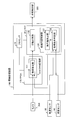
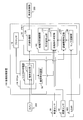
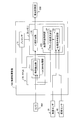
- FIG. 1 is a block diagram showing an example of the configuration of an automatic operation system using the information processing device 100 of this embodiment.
- the automatic driving system using the information processing device 100 includes the information processing device 100, the camera 200, and the vehicle control unit 300.
- the information processing apparatus 100 is a computer including a processor 10, a memory 20, and an FPGA (Field Programmable Gate Array) 170.
- the FPGA 170 is adopted as the arithmetic unit for executing the DNN, but the present invention is not limited to this, and a GPU (Graphics Processing Unit) may be adopted as the arithmetic unit. Further, the arithmetic unit that executes the DNN may be housed in the same package as the processor 10. Further, the processor 10 and the FPGA 170 are connected to the camera 200 and the vehicle control unit 300 via an interface (not shown).
- the action planning unit 130 is loaded into the memory 20 as a program and executed by the processor 10.
- the processor 10 operates as a functional unit that provides a predetermined function by executing a process according to a program of each functional unit.
- the processor 10 functions as the action planning unit 130 by executing the process according to the action planning program.
- the processor 10 also operates as a functional unit that provides each function of a plurality of processes executed by each program.
- a computer and a computer system are devices and systems including these functional parts.
- the FPGA 170 includes a DNN processing unit 110 and a processing content control unit 120. Includes Action Planning Department 130. Further, the DNN processing unit 110 includes an object extraction unit 111. The processing content control unit 120 includes an execution layer determination unit 121. The camera 200 may or may not be included in the information processing device 100. Further, the information processing device 100 may or may not be mounted on the vehicle.
- the object extraction unit 111 holds a DNN (inference model) for use in inference processing after learning processing is performed in a computer such as a PC or a server.
- the FPGA 170 extracts an object from the image data by using a DNN that reflects the information output from the processing content control unit 120, which will be described later, with respect to the external information (image data) acquired by the camera 200.
- the camera 200 is attached to a predetermined position (not shown) of the vehicle, acquires an image of the front of the vehicle as external information in order to detect an object in the outside world (front) of the vehicle, and outputs the image to the information processing device 100. do.
- the action planning unit 130 generates an action plan such as the traveling direction and the traveling speed of the vehicle by using the information extracted by the object extraction unit 111, and outputs the action plan to the vehicle control unit 300.
- the vehicle control unit 300 controls the vehicle based on the output from the action planning unit 130.
- a well-known or known technique may be applied, and thus the details will not be described in this embodiment.
- the execution layer determination unit 121 holds the number of execution layers of the DNN used in the object extraction process, and outputs the information to the object extraction unit 111.
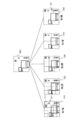
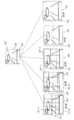
- FIG. 2 is a diagram showing an example in which a part of the processing when the object extraction unit 111 of FIG. 1 performs object extraction by DNN from the information (image data) of the camera 200 is extracted.
- the camera image 500 shows an example of an image output from the camera 200 shown in FIG.
- the image 510 shows an example in which the camera image 500 in the first layer of the DNN of the object extraction unit 111 is divided, and the images 520, 530, 540, and 550 are the second layer, the third layer, and the fourth layer, respectively.
- the division method in the fifth layer is shown.
- the DNN processing unit 110 extracts a small object 511 such as a distant person or a car by dividing the camera image 500 into small pieces in the first layer, and divides the camera image into large pieces in the fifth layer. This indicates that a large object 551 such as a nearby car is being extracted.
- the structure of the DNN is not limited to a structure in which a small object is first extracted and then a large object is extracted as in the structure used in this embodiment, and any structure may be used as long as the object can be extracted. Further, the number of block divisions and the number of layers when calculating with DNN are not limited to the method of FIG. 2 as long as the accuracy required for realizing automatic operation can be ensured.
- the number of blocks for performing object extraction processing may be reduced by reducing the number of layers of DNN.
- the execution layer determination unit 121 determines that the DNN layer executed in the object extraction process is the second layer to the fifth layer excluding the first layer for extracting the smallest object, and transfers the object extraction unit 111 to the object extraction unit 111.
- execution layer determination unit 121 may instruct the object extraction unit 111 to use a layer preset according to the travel environment or the like as a processing condition at the start of travel.
- the object extraction unit 111 By reducing the DNN layer (fixed value) used by the object extraction unit 111 in this way, it is possible to reduce the power consumption of arithmetic units such as FPGA 170 and GPU and suppress the amount of heat generated. As a result, the mileage of the electric vehicle is increased, and the cooling cost of the arithmetic unit can be reduced.
- the above values are used for the number of layers and blocks of DNN in FIG. 2, but the DNN used for actual object extraction can obtain external information from several thousand. It is divided into tens of thousands of blocks and has a large number of layers. Therefore, the actual number of operations is enormous compared to the example shown above, and the effect of reducing the amount of operations by reducing the number of layers is also very large.
- the camera 200 is adopted as a sensor for acquiring external information, but this includes objects such as LiDAR (Light Detection and Ringing), RADAR (Radio Detection and Ringing), and a far-infrared camera. It is not limited to the camera 200 as long as it is a sensor that can acquire the distance and the type of the object. Further, the sensors may be used alone or in combination of two or more.
- LiDAR Light Detection and Ringing
- RADAR Radio Detection and Ringing
- a far-infrared camera It is not limited to the camera 200 as long as it is a sensor that can acquire the distance and the type of the object. Further, the sensors may be used alone or in combination of two or more.
- an example of the object extraction unit 111 that executes the inference model generated by machine learning with DNN is shown, but the present invention is not limited to this, and a model generated by other machine learning or the like is used. It can be used.
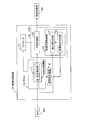
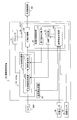
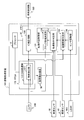
- FIG. 3 is a block diagram showing an example of the configuration of an automatic operation system using the information processing device 100 of the second embodiment.
- the same components as those in FIG. 1 are given the same name and reference numeral, and the description thereof will be omitted unless otherwise specified, assuming that they have the same or similar functions.
- This embodiment shows an example in which the processing condition determination unit 122 and the sensor for detecting external state information are added to the first embodiment, and the execution layer determination unit 121 in the FPGA 170 is moved into the processing content control unit 120. ..
- Other configurations are the same as those in the first embodiment.
- the processing condition determination unit 122 newly added from the first embodiment determines the current traveling environment by inputting information indicating a traveling state from a sensor or the like of a traveling vehicle.
- the execution layer determination unit 121 dynamically changes the number of layers (processing conditions) of the DNN used in the object extraction process based on the traveling environment determined by the processing condition determination unit 122.
- the vehicle speed sensor 30 and the illuminance sensor 40 are connected to the information processing device 100 is shown, but the present invention is not limited thereto. Since it is sufficient if at least the vehicle speed can be detected, the vehicle speed may be calculated from the position information such as GPS (Global Positioning System).
- GPS Global Positioning System
- the processing condition determination unit 122 of the information processing device 100 determines the traveling environment from the information from the vehicle speed sensor 30 and the illuminance sensor 40, and outputs the information to the execution layer determination unit 121.
- the execution layer determination unit 121 determines the layer to be used in the DNN as a processing condition based on the input traveling environment, and commands the object extraction unit 111.
- the execution layer determination unit 121 is loaded into the memory 20 as a program and executed by the processor 10.
- the execution layer of the DNN is statically determined in a limited driving environment.
- the driving environment is various and complicated, and the accuracy of the object extracted from the image data.
- processing condition determination unit 122 will be described with reference to a specific example.
- the processing condition determination unit 122 describes an example in which the current traveling environment is determined to be in a traffic jam if the vehicle speed detected by the vehicle speed sensor 30 is equal to or less than a preset vehicle speed threshold value.
- the object extraction unit 111 recognizes an object several tens of meters away. It is sufficient, and it is not necessary to extract the object with an accuracy for recognizing the object several hundred meters away.
- the execution layer determination unit 121 determines the processing conditions based on the driving environment determined by the processing condition determination unit 122. As a processing condition, the execution layer determination unit 121 detects the smallest object in the DNN layer executed by the object extraction unit 111 so that the amount of DNN calculation can be reduced while ensuring the accuracy of object extraction required for automatic operation. It is determined to be the second layer (520) to the fifth layer (550) excluding the first layer (image 510 in FIG. 2).
- the sensor for detecting the traveling state and the processing condition determining unit 122 for determining the traveling environment of the vehicle from the information indicating the traveling state are added to the configuration of the first embodiment to determine the execution layer.
- the unit 121 determines the processing conditions suitable for the driving environment.
- the information processing device 100 of the second embodiment dynamically affects the accuracy of object extraction and the power consumption and heat generation amount of the arithmetic unit (FPGA170) according to the driving environment as compared with the first embodiment. Can be changed dynamically.
- the mileage of the electric vehicle is increased as compared with the first embodiment, and the cooling cost of the arithmetic unit (FPGA170) can be expected to be reduced.
- the method of determining the traffic jam in the above does not have to be the vehicle speed sensor 30, and may be image information showing the traveling speed or traffic jam information such as a radio or the Internet.
- the processing condition determination unit 122 determines that it is nighttime if the ambient brightness (illuminance) is equal to or less than the preset illuminance threshold value. At night, the surroundings become dark, and the camera 200 cannot obtain detailed external information as compared with the case where the surroundings are bright. Therefore, since it is not possible to obtain external information capable of extracting a distant object several hundred meters away, the object extraction unit 111 only needs to perform an operation with an accuracy of extracting an object several tens of meters away, and an object several hundred meters away. It is not necessary to extract the object with the accuracy to recognize.
- the execution layer determination unit 121 provides information on the DNN layer executed by the object extraction unit 111 based on the traveling environment determined by the processing condition determination unit 122 from the second layer (520) to the fifth layer (550). ). Further, the information indicating the running state for determining the current brightness of the surroundings is not limited to the illuminance sensor 40. For example, day or night may be detected from a sensor such as a camera 200 that can detect the brightness of the surroundings, or a radio, the Internet, GPS, or the like that can determine the time.
- an in-vehicle camera (not shown) may be used as information indicating the running state.
- the processing condition determination unit 122 detects whether or not the driver is operating the steering wheel from the image data of the in-vehicle camera, and if the steering wheel is operated, the automatic driving (AD: Autonomous Driving) is not in use. Is determined.
- AD Autonomous Driving
- AD it is necessary to extract objects with high accuracy so that even small objects can be recognized because the vehicle is controlled only by the automatic driving system, but when AD is not used, the driver can obtain external information. Since it is recognizable, it is sufficient that the accuracy of object extraction capable of driving assistance (ADAS: Advanced Driver Assistance Systems) is maintained.
- ADAS Advanced Driver Assistance Systems
- the execution layer determination unit 121 determines that the information of the DNN layer executed by the object extraction unit 111 is the second layer (520) to the fifth layer (550) based on the traveling environment determined by the processing condition determination unit 122. do.
- the information that the processing condition determination unit 122 determines whether or not the AD is in use is not limited to the in-vehicle camera, and can determine whether the driver is in the driver's seat, such as a sensor that detects the operation of the steering wheel. It may be. Further, it may be determined whether or not AD is used from the data such as the presence or absence of the action plan of the autonomous driving vehicle generated by the action planning unit 130.
- processing condition determination unit 122 may determine the processing condition using any one of the information indicating the traveling state, or may use a plurality of the processing condition determination units 122 to determine the processing condition.
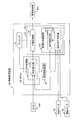
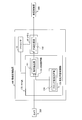
- FIG. 4 is a block diagram showing an example of the configuration of an automatic driving system using the information processing device 100 of this embodiment.
- the same components as those in FIG. 3 are given the same name and reference numeral, and unless otherwise specified, they are assumed to have the same or similar functions, and the description thereof will be omitted.
- processing condition determination unit 122 and the load detection device 50 are added to the first embodiment, and the execution layer determination unit 121 in the FPGA 170 is moved into the processing content control unit 120.
- Other configurations are the same as those in the first embodiment.
- the processing condition determination unit 122 determines the current driving environment by inputting information indicating the traveling state from a running sensor or the like, but in the present embodiment, the processing condition determination unit 122 determines the current driving environment.
- the calculation load of the object extraction unit 111 is used as an input to determine the current load state of the FPGA 170.
- the execution layer determination unit 121 determines the number of DNN layers (processing conditions) used by the object extraction unit 111 based on the load state determined by the processing condition determination unit 122.
- the load detection device 50 newly added from the first embodiment detects the calculation load of the FPGA 170 and inputs it to the processing condition determination unit 122.
- the load detection device 50 can include, for example, a sensor that detects the power consumption of the FPGA 170, the supply current, and the like as an arithmetic load.
- the execution layer determination unit 121 is arranged in the FPGA 170, but in the third embodiment, the execution layer determination unit 121 dynamically moves. In order to change the number of layers (processing conditions), the program is loaded into the memory 20 and executed by the processor 10.
- processing condition determination unit 122 will be described with reference to a specific example.
- the processing condition determination unit 122 calculates the load factor of the FPGA 170 as a calculation load and compares it with a predetermined load factor threshold value.
- a load factor an example is shown in which a value (%) obtained by dividing the power consumption detected by the load detection device 50 by a predetermined maximum power is used.
- the processing condition determination unit 122 determines that the calculation load of the FPGA 170 is reduced when the load factor of the FPGA 170 is higher than the load factor threshold value. Based on the determination result from the processing condition determination unit 122, the execution layer determination unit 121 first obtains the information of the DNN layer used in the object extraction unit 111 so that the load factor of the FPGA 170 is equal to or less than the load factor threshold value. It is determined to be the second layer (520) to the fifth layer (550) excluding the first layer (510) for detecting a small object.
- the processing condition determination unit 122 that determines the load state from the arithmetic load of the FPGA 170
- the load state according to the load factor of the FPGA 170 included in the information processing apparatus 100 is determined, and the execution layer determination unit 121 Can dynamically change the processing conditions according to the load status.
- the information processing apparatus 100 can dynamically reduce the power consumption and the amount of heat generated by the FPGA 170 as compared with the first embodiment.
- the information processing apparatus 100 of the present embodiment it is possible to suppress the occurrence of an abnormality in the FPGA 170 due to thermal runaway or the like and prevent the arithmetic accuracy of the arithmetic unit from being lowered. As a result, the mileage of the electric vehicle can be increased as compared with the first embodiment, and the cooling cost of the FPGA 170 or the like can be reduced.
- the load factor of the FPGA 170 which is the calculation load in this embodiment, is not limited to the power consumption. Values related to the computational load such as the temperature of the FPGA 170 may be used. Further, the arithmetic load may include not only the FPGA 170 but also the arithmetic load of the processor 10.
- processing condition determination unit 122 may determine the load state by using any one of the arithmetic loads, or may determine the load state by using a plurality of arithmetic loads.
- FIG. 5 is a block diagram showing an example of the configuration of an automatic driving system using the information processing device 100 of this embodiment.
- the same components as those in FIGS. 3 and 4 are given the same name and reference numeral, and unless otherwise specified, they are assumed to have the same or similar functions, and the description thereof will be omitted.
- the current driving environment is determined by inputting information indicating a traveling state from a sensor or the like during traveling
- the computing load of the information processing device 100 is input as the current driving environment.
- An example of determining the load state is shown. In this example, an example in which the Example 2 is combined with the Example 3 is shown.
- the processing condition determination unit 122 determines the traveling environment and the load state by inputting both the information indicating the traveling state and the calculation load of the FPGA 170, and outputs the determination result to the execution layer determination unit 121.
- the execution layer determination unit 121 determines the number of layers (processing conditions) of the DNN used by the object extraction unit 111 based on the determination result from the processing condition determination unit 122.
- the object extraction accuracy is dynamically compared to that of the second and third embodiments. And it is possible to change the reduction of power consumption and calorific value.
- Example 2 As a result, an effect that combines the advantages of Example 2 and Example 3 can be expected. That is, it is possible to keep the load of the FPGA 170 in a normal state while maintaining the accuracy of object extraction suitable for various driving environments.
- the processing condition determination unit 122 may determine the processing condition by using any one of the information indicating the traveling state and the calculation load, or may use a plurality of the processing condition determination unit 122 to determine the processing condition.
- FIG. 6 is a block diagram showing an example of the configuration of an automatic operation system using the information processing device 100 of this embodiment.
- the same components as those in FIG. 5 are given the same name and reference numeral, and unless otherwise specified, they are assumed to have the same or similar functions, and the description thereof will be omitted.
- the LiDAR 400, the sensor recognition unit 140, and the recognition accuracy determination unit 150 are added to the components of the fourth embodiment.
- Other configurations are the same as those in the fourth embodiment.
- the sensor recognition unit 140 newly added from the fourth embodiment processes the information (distance and direction) from the LiDAR 400 to recognize the object. Further, the recognition accuracy determination unit 150 determines the difference between the result of object extraction from the object extraction unit 111 and the result of object recognition from the sensor recognition unit 140, so that the accuracy required for object extraction by the object extraction unit 111 is required. Is determined, and the determined result is output to the processing condition determination unit 122.
- the processing condition determination unit 122 updates the reference value that is a condition for reducing the calculation load in the object extraction unit 111 based on the determination result from the recognition accuracy determination unit 150, the running state, and the calculation load. , Prevents the omission of excessive calculation that causes insufficient accuracy of object extraction due to reduction of calculation load.
- the reference value for controlling the number of layers of the DNN used by the object extraction unit 111 by the information indicating the traveling state and the calculation load was static.
- this reference value is dynamic.
- the object extraction unit 111 there are 5 objects extracted by the object extraction unit 111 by inputting image data from the camera 200, and 7 objects recognized by the sensor recognition unit 140 from the information from the LiDAR 400, which are extracted by the object extraction unit 111. It is assumed that the number of objects recognized is less than the number of objects recognized by the sensor recognition unit 140.
- the recognition accuracy determination unit 150 states that the object extraction unit 111 does not maintain the accuracy of object extraction required for automatic operation. Judges.
- the recognition accuracy determination unit 150 Based on the information from the object extraction unit 111 and the sensor recognition unit 140, the recognition accuracy determination unit 150 outputs a command to the processing condition determination unit 122 to change the processing conditions so that the accuracy of object extraction is improved.
- the processing condition determination unit 122 changes the reference value for determining the processing condition.
- the recognition accuracy determination unit 150 calculates the value obtained by dividing the number of objects extracted by the object extraction unit 111 by the number of objects recognized by the sensor recognition unit 140 as the recognition accuracy, and the calculated recognition accuracy is calculated. If it is equal to or less than the preset accuracy threshold, it may be determined that the recognition accuracy has deteriorated and output to the processing condition determination unit 122 may be performed.
- the processing condition determination unit 122 receives a command from the recognition accuracy determination unit 150 to improve the accuracy of object extraction, and the reference value is increased by + 5%. As the load factor threshold is increased. Further, the processing condition determination unit 122 notifies the execution layer determination unit 121 that the load factor threshold value has been increased.
- the execution layer determination unit 121 When the execution layer determination unit 121 receives the notification of the increase in the load factor threshold value, the execution layer determination unit 121 adds a predetermined value to the number of DNN layers currently used by the object extraction unit 111 and commands the object extraction unit 111 of the FPGA 170.
- the predetermined value of the execution layer determination unit 121 is set to, for example, one layer.
- the execution layer determination unit 121 can increase the number of layers of DNN used by the object extraction unit 111 to improve the accuracy of extracting the object.
- the execution layer determination unit 121 cancels the notification of the increase in the load factor threshold because the effect of increasing the number of DNN layers used by the object extraction unit 111 is low when the traveling environment is congested or at night. be able to.
- the object extraction unit It is possible to prevent excessive reduction of arithmetic processing (layers) such that the accuracy of object extraction required for automatic operation is insufficient in 111.
- the information processing apparatus 100 can maintain processing with higher accuracy than the above-described first, second, third, and fourth embodiments.
- the information processing apparatus 100 of the present embodiment can further reduce the power consumption as compared with the first, second, third, and fourth embodiments.
- the sensor used for determining the accuracy of object extraction is LiDAR400, which can determine the distance to an object such as a camera, RADAR, or a far-infrared camera and the type of the object. It may be different from the sensor that outputs the external information input to the extraction unit 111, and is not limited to LiDAR. Further, the sensors may be used alone or in combination of two or more.
- the recognition accuracy determination unit 150 as a method for determining the accuracy of object extraction by the recognition accuracy determination unit 150, it is static that the result of the object extraction unit 111 and the result of the sensor recognition unit 140 are determined whether or not they match. Although it is a process, the reference for determining the accuracy of object extraction may be dynamically changed by providing the recognition accuracy determination unit 150 with a learning function.
- FIG. 7 is a block diagram showing an example of the configuration of an automatic operation system using the information processing device 100 of this embodiment.
- the same components as those in FIG. 5 are given the same name and reference numeral, and unless otherwise specified, they are assumed to have the same or similar functions, and the description thereof will be omitted.
- an information amount determination unit 123 and an external information conversion unit 112 are added to the processing content control unit 120 of the fourth embodiment shown in FIG. 5, and an external information conversion unit 112 is added to the DNN processing unit 110, and the information is input from the camera 200.
- An example of changing the number of pixels (or resolution) of the outside world image according to the driving environment and the load state is shown. Other than that, the configuration is the same as that of the fourth embodiment.
- the information amount determination unit 123 determines the number of pixels (resolution) for inputting the external world image acquired by the camera 200 to the object extraction unit 111 based on the determination result from the processing condition determination unit 122, and converts the external information of the FPGA 170.
- the external information conversion unit 112 converts the external world image acquired by the camera 200 into a format that can be used by DNN based on the command from the information amount determination unit 123. As a result, the object extraction unit 111 extracts the object with the number of pixels that matches the processing conditions (number of layers).
- the size of the object extracted by each layer (510 to 550) of the object extraction unit 111 is different, so that the external world required depending on the processing content of each layer of the object extraction unit 111 is required. Since the number of pixels (resolution) of the image is also different, it is desirable that the number of pixels of the image input to the object extraction unit 111 is dynamically changed according to the number of layers used in the object extraction process.
- the camera 200 outputs an image of 2 million pixels. Further, it is assumed that the information amount determination unit 123 determines from the determination result of the processing condition determination unit 122 that the number of pixels required for object extraction is 250,000 pixels.
- the external information conversion unit 112 converts the 2 million pixel image output from the camera 200 so that it becomes 250,000 pixels.
- the object extraction unit 111 extracts an object using the 250,000-pixel image output from the external information conversion unit 112.
- the DNN processing unit 110 dynamically changes the number of pixels of the input image to the object extraction unit 111 based on the determination result from the processing condition determination unit 122, so that the DNN used by the object extraction unit 111 is used. It is possible to use an image having the same number of pixels as the number of execution layers. Therefore, in addition to reducing the execution layer of the DNN, the number of pixels of the image of the object extraction unit 111 can be reduced, and the amount of calculation can be reduced.
- the information processing apparatus 100 of this embodiment can reduce power consumption and calorific value as compared with Examples 1, 2, 3, and 4.
- the information processing device 100 of the present embodiment has a longer mileage in the electric vehicle than the first, second, third, and fourth embodiments, and can be expected to reduce the cooling cost of the FPGA 170 and the like.
- the information amount determination unit 123 changes the number of pixels from the camera 200, but if the output of external information is LiDAR or RADAR, the number of point clouds is changed, or other information on external information.
- the amount may be changed (reduced) and is not limited to the number of pixels.
- FIG. 8 is a block diagram showing an example of the configuration of the automatic operation system using the information processing device 100 of the seventh embodiment.
- the same components as those in FIG. 1 are given the same name and reference numeral, and unless otherwise specified, they are assumed to have the same or similar functions, and the description thereof will be omitted.
- the block area determination unit 124 newly added in FIG. 8 holds a block area for executing the DNN object extraction process, and outputs the block area information to the object extraction unit 111.
- the block area determination unit 124 of this embodiment holds a preset area as a fixed block area.
- FIG. 9 is a diagram showing an example in which the object extraction unit 111 of FIG. 8 extracts a part of the process of extracting an object by DNN from the image data input from the camera 200.
- the camera image 600 shows the camera image output from the camera 200 in FIG. Further, the image 610 shows the divided state of the camera image 600 in the first layer of the DNN for the object extraction unit 111, the image 620 shows the divided state in the second layer, and the image 630 shows the divided state in the third layer. Image 640 shows the divided state in the fourth layer, and image 650 shows the divided state in the fifth layer.
- the structure of the DNN of the object extraction unit 111 is not limited to the configuration in which a small object is first extracted and then a large object is extracted as in the structure used in this embodiment, and the object is extracted from the camera image 600. Anything that can be extracted will do.
- the number of block divisions and the number of layers when calculating the DNN in this case are not limited to the example of FIG. 9 as long as the accuracy required for realizing automatic operation can be ensured.
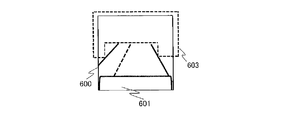
- the camera image 600 from the camera 200 may show an object such as the hood of the own vehicle or the sky 601 as shown in FIG. These objects do not need to be extracted from the camera image 600 when controlling the vehicle. Therefore, by designating the block area in which the object extraction unit 111 executes DNN, it is possible to reduce the processing of object extraction in the block area in which only unnecessary objects are captured.
- the object extraction unit 111 performs the object extraction process only in the area designated as the block area for executing the DNN.
- the area where the object extraction process is not performed is defined as the exclusion area, and the area where the object extraction process is executed is defined as the block area.
- the region of the camera image 600 in which only the sky is captured is designated as the exclusion region 611-A
- the region of the camera image 600 in which only the bonnet is captured is designated as the exclusion region 611-B.
- the object extraction unit 111 may perform object extraction by DNN in the block regions 612 of the third and fourth rows from the top of the image 610.
- the object extraction unit 111 defines the region of the camera image 600 in which only the sky is captured as the exclusion region 621-A, and the region of the camera image 600 in which only the bonnet is captured as the exclusion region 621-B.
- the object extraction unit 111 may perform object extraction by DNN in the block regions of the second and third rows from the top of the image 620.
- the object extraction unit 111 may perform object extraction by DNN in the block areas 632 of the second and third rows from the top of the image 660.
- all the areas are set to the block areas 642 and 652, and the object extraction by DNN is executed in all the blocks.
- the processing of the DNN of the object extraction unit 111 is reduced in the fixed exclusion region of the camera image 600, so that, for example, the power consumption of the arithmetic unit such as the FPGA 170 and the GPU is reduced and the amount of heat generated is suppressed. Is possible. As a result, the mileage of the electric vehicle is increased, and the cooling cost of the arithmetic unit such as the FPGA 170 is reduced.
- the above values are used for the number of layers and the number of blocks of the DNN in FIG. 9 for the sake of simplicity of explanation, but the DNN used for the actual object extraction is external information.
- the camera image 600 is divided into thousands to tens of thousands of blocks, and the number of layers is large. Therefore, the actual number of operations is enormous compared to the example shown above, and the effect of reducing the amount of operations by reducing the block area for executing the operations is also very large.
- external information is acquired from the camera 200, but the present invention is not limited to this.
- the external information may be, for example, a sensor such as LiDAR, RADAR, or a far-infrared camera that can acquire the distance to an object and the type of the object. Further, the sensors may be used alone or in combination of two or more.
- the block area determination unit 124 determines the block area to be executed by the DNN of the object extraction unit 111, even if the layers are deleted as in the first, second, third, fourth, fifth, and sixth embodiments. good. In this case, in addition to reducing the number of blocks used by the object extraction unit 111, the number of layers of the DNN is also reduced, so that the power consumption can be further reduced.
- FIG. 10 is a block diagram showing an example of the configuration of an automatic operation system using the information processing device 100 of this embodiment.
- the same components as those in FIG. 8 are given the same name and reference numeral, and unless otherwise specified, they are assumed to have the same or similar functions, and the description thereof will be omitted.
- This embodiment shows an example in which the processing condition determination unit 122 and the sensor are added to the seventh embodiment and the block area determination unit 124 in the FPGA 170 is moved into the processing content control unit 120.
- Other configurations are the same as those in the seventh embodiment.
- the processing condition determination unit 122 newly added from the seventh embodiment determines the current traveling environment by inputting information indicating a traveling state from a sensor or the like of a traveling vehicle.
- the block area determination unit 124 dynamically determines the block area (similar to 612, 622, 632, 642, 652 and the like in FIG. 9) that executes DNN in the object extraction process based on the driving environment determined by the processing condition determination unit 122. change.
- the present invention is not limited thereto. ..
- the processing condition determination unit 122 of the information processing device 100 determines the traveling environment from the information from the vehicle speed sensor 30 and the illuminance sensor 40, and outputs the information to the block area determination unit 124.
- the block area determination unit 124 determines the block area (or exclusion area) used in the DNN as a processing condition based on the input traveling environment, and commands the object extraction unit 111.
- Example 7 since the block area has a fixed value, an example in which the block area determination unit 124 is arranged in the FPGA 170 is shown, but in Example 8, the block area determination unit 124 dynamically blocks the block area (or exclusion area). ) Is changed. Therefore, the execution layer determination unit 121 is loaded into the memory 20 as a program and executed by the processor 10.
- the block area for executing DNN is statically determined in a limited driving environment.
- the driving environment is various and complicated, and an object extracted from image data. Since the accuracy of extraction changes from moment to moment, it is desirable to be able to dynamically change the block area (or exclusion area) in which DNN is executed according to the driving environment.
- processing condition determination unit 122 will be described with reference to a specific example.
- the processing condition determination unit 122 determines that the current traveling environment is in a traffic jam.
- the change in the image input from the camera 200 is small, so that the object extraction unit 111 can follow the vehicle in front of the vehicle. It suffices if the object extraction accuracy is high, and it is not necessary to execute the object extraction in the entire area of the image from the camera 200.
- the block area determination unit 124 determines the processing conditions based on the driving environment determined by the processing condition determination unit 122. As processing conditions, the block area determination unit 124 excludes areas 611, 621, 631 and DNN that do not extract objects in FIG. 9 so that the amount of DNN calculation can be reduced while ensuring the accuracy of object extraction required for automatic operation.
- the block regions 612, 622, 632, 642, and 652 for object extraction are determined in.
- the object extraction unit 111 extracts the object only in the block areas 612, 622, 632, 642, and 652 determined by the block area determination unit 124. In the following, it may be simply a block area and an exclusion area.
- the processing condition determination unit 122 for determining the external environment (driving environment) from the information indicating the traveling state is added to the configuration of the seventh embodiment to determine the processing conditions suitable for the traveling environment. conduct.
- the information processing apparatus 100 of the present embodiment can dynamically change the accuracy of object extraction, the power consumption of the FPGA 170, and the amount of heat generated according to the traveling environment as compared with the seventh embodiment.
- the method of determining the traffic jam in the above does not have to be the vehicle speed sensor 30, and may be image information showing the traveling speed or traffic jam information such as a radio or the Internet.
- the processing condition determination unit 122 determines that the ambient brightness (illuminance) is equal to or less than the preset illuminance threshold value, the traveling environment is determined to be in the tunnel.
- FIG. 11 is a diagram showing an example in which the object extraction unit 111 performs DNN processing in the camera image 600 from the camera 200 traveling in the tunnel. Since the inside of the tunnel is covered with a wall, it is not necessary to perform the processing of extracting the objects at the left and right ends of the camera image 600.
- the block area determination unit 124 determines the exclusion area 603 in which the object is not extracted as shown in FIG.
- a device or the like capable of specifying the current position such as GPS can be used.
- the block area determination unit 124 may instruct the object extraction unit 111 to set the region that does not change (or is small) between the frames of the camera image 600 as the exclusion region 603.
- an in-vehicle camera (not shown) may be used as information indicating the running state.
- the processing condition determination unit 122 detects whether or not the driver is operating the steering wheel from the image data of the in-vehicle camera, and if the steering wheel is operated, the automatic driving (AD: Autonomous Driving) is not in use. Is determined.
- AD Autonomous Driving
- AD it is necessary to extract objects with high accuracy so that even small objects can be recognized because the vehicle is controlled only by the automatic driving system, but when AD is not used, the driver can obtain external information. Since it is recognizable, it is sufficient that the accuracy of object extraction that can support driving is maintained.
- the block area determination unit 124 determines the block area for executing DNN in the object extraction unit 111 based on the traveling environment determined by the processing condition determination unit 122. Alternatively, the block area determination unit 124 may determine an exclusion area 611 or the like that does not execute DNN. Further, the method of determining whether AD is in use does not have to be an in-vehicle camera, but a sensor that detects the operation of the steering wheel, a method that can determine whether the driver is in the driver's seat, or an autonomous vehicle generated by the action planning unit 130. It may be determined whether or not AD is used from the data such as the presence or absence of the action plan of.
- processing condition determination unit 122 may determine the processing condition using any one of the information indicating the traveling state, or may use a plurality of the processing condition determination units 122 to determine the processing condition.
- FIG. 12 is a block diagram showing an example of the configuration of an automatic driving system using the information processing device 100 of this embodiment.
- the same components as those in FIG. 10 are given the same name and reference numeral, and unless otherwise specified, they are assumed to have the same or similar functions, and the description thereof will be omitted.
- a processing condition determination unit 122 and a load detection device 50 are added to the seventh embodiment, and an example in which the block area determination unit 124 in the FPGA 170 is moved into the processing content control unit 120 is shown.
- Other configurations are the same as those in the seventh embodiment.
- the processing condition determination unit 122 determines the current driving environment by inputting information indicating the traveling state from a running sensor or the like, but in the present embodiment, the processing condition determination unit 122 determines the current traveling environment. Uses the arithmetic load of the information processing apparatus 100 as an input to determine the current load state of the FPGA 170.
- the block area determination unit 124 determines the DNN block area used by the object extraction unit 111 for object extraction based on the load state determined by the processing condition determination unit 122.
- the load detection device 50 newly added from the seventh embodiment detects the calculation load of the FPGA 170 and inputs it to the processing condition determination unit 122.
- the load detection device 50 can include, for example, a sensor that detects the power consumption of the FPGA 170, the supply current, and the like as an arithmetic load.
- the block area determination unit 124 is arranged in the FPGA 170, but in the ninth embodiment, the block area determination unit 124 is arranged. Since 124 dynamically changes the block area (processing condition), it is loaded into the memory 20 as a program and executed by the processor 10.
- processing condition determination unit 122 will be described with reference to a specific example.
- the processing condition determination unit 122 calculates the load factor of the FPGA 170 as a calculation load and compares it with a predetermined load factor threshold value.
- a load factor an example is shown in which a value (%) obtained by dividing the power consumption detected by the load detection device 50 by a predetermined maximum power is used.
- the processing condition determination unit 122 determines that the calculation load of the FPGA 170 is reduced when the load factor of the FPGA 170 is higher than the load factor threshold value. Based on the determination result from the processing condition determination unit 122, the block area determination unit 124 determines an exclusion region in which the object extraction unit 111 does not perform object extraction so that the load factor of the FPGA 170 is equal to or less than the load factor threshold value. ..
- the block area determination unit 124 may instruct the object extraction unit 111 to set the region that does not change (or is small) between the frames of the camera image 600 as the exclusion region 603.
- the processing condition determination unit 122 that determines the load state from the calculation load, the load state according to the load factor of the FPGA 170 included in the information processing apparatus 100 is determined, and the execution layer determination unit 121 loads. It is possible to dynamically change the processing conditions according to the state. As a result, the information processing apparatus 100 can dynamically reduce the power consumption and the amount of heat generated by the FPGA 170 as compared with the first embodiment.
- the information processing apparatus 100 of the present embodiment it is possible to suppress the occurrence of an abnormality in the FPGA 170 due to thermal runaway or the like and prevent the calculation accuracy from being lowered. As a result, the mileage of the electric vehicle can be increased as compared with the first embodiment, and the cooling cost of the FPGA 170 or the like can be reduced.
- the load factor of the FPGA 170 which is the calculation load in this embodiment, is not limited to the power consumption. Values related to the computational load such as the temperature of the FPGA 170 may be used. Further, the arithmetic load may include not only the FPGA 170 but also the arithmetic load of the processor 10.
- processing condition determination unit 122 may determine the load state by using any one of the arithmetic loads, or may determine the load state by using a plurality of arithmetic loads.
- FIG. 13 is a block diagram showing an example of the configuration of an automatic operation system using the information processing device 100 of this embodiment.
- the same components as those in FIGS. 10 and 12 are given the same name and reference numeral, and unless otherwise specified, they are assumed to have the same or similar functions, and the description thereof will be omitted.
- the current driving environment is determined by inputting information indicating a traveling state from a sensor or the like during traveling, and in the ninth embodiment, the calculation load of the information processing device 100 is input as the current load.
- An example of determining the state is shown. In this example, an example in which the Example 8 is combined with the Example 9 is shown.
- the processing condition determination unit 122 receives both the information indicating the traveling state during traveling and the calculation load of the FPGA 170 as inputs, determines the traveling environment and the load state, and outputs the information to the block area determination unit 124.
- the block area determination unit 124 determines the block area (processing condition) of the DNN used for object extraction based on the determination result from the processing condition determination unit 122.
- the block area determination unit 124 may determine the block area or the exclusion area as described above.
- the information processing apparatus 100 of the present embodiment determines the traveling environment and the load state from the information indicating the traveling state by the processing condition determination unit 122 and the calculation load of the FPGA 170, thereby performing the eighth embodiment and the ninth embodiment.
- the accuracy of object extraction and the reduction of power consumption and calorific value can be dynamically changed.
- the information processing apparatus 100 of this embodiment can be expected to have an effect that combines the advantages of Examples 8 and 9. That is, it is possible to keep the load of the FPGA 170 in a normal state while maintaining the accuracy of object extraction suitable for various driving environments.
- the processing condition determination unit 122 may determine the processing condition by using any one of the information indicating the traveling state and the calculation load, or may use a plurality of the processing condition determination unit 122 to determine the processing condition.
- FIG. 14 is a block diagram showing an example of the configuration of an automatic driving system using the information processing device 100 of this embodiment.
- the same components as those in FIG. 13 are given the same name and reference numeral, and unless otherwise specified, they are assumed to have the same or similar functions, and the description thereof will be omitted.
- the LiDAR 400, the sensor recognition unit 140, and the recognition accuracy determination unit 150 are added to the components of the tenth embodiment.
- Other configurations are the same as those in the fourth embodiment.
- the sensor recognition unit 140 newly added from the tenth embodiment processes information (distance and direction) from the LiDAR 400 to recognize an object. Further, the recognition accuracy determination unit 150 determines the difference between the object extraction result from the object extraction unit 111 and the object recognition result from the sensor recognition unit 140, so that the accuracy required for object extraction by the object extraction unit 111 is required. Is determined, and the determined result is output to the processing condition determination unit 122.
- the processing condition determination unit 122 updates the reference value that is a condition for reducing the calculation load in the object extraction unit 111 based on the determination result from the recognition accuracy determination unit 150, the running state, and the calculation load. , Prevents the omission of excessive calculation that causes insufficient accuracy of object extraction due to reduction of calculation load.
- the block area for executing object extraction by DNN by the information indicating the running state and the calculation load is static, but the accuracy of object extraction required for automatic operation is required. It is desirable that this reference value is dynamic in order to maintain.
- the object extraction unit 111 As an example, there are 5 objects extracted by the object extraction unit 111 by inputting image data from the camera 200, and 7 objects are recognized by the sensor recognition unit 140 from the information from the LiDAR 400, and the object extraction unit 111. It is assumed that the number of objects extracted in is less than the number of objects recognized by the sensor recognition unit 140.
- the object extraction unit 111 determines that the accuracy of object extraction required for automatic operation is not maintained.
- the recognition accuracy determination unit 150 Based on the information from the object extraction unit 111 and the sensor recognition unit 140, the recognition accuracy determination unit 150 outputs a command to the processing condition determination unit 122 to change the processing conditions so that the accuracy of object extraction is improved.
- the processing condition determination unit 122 changes the reference value for determining the processing condition.
- the processing condition determination unit 122 receives a command from the recognition accuracy determination unit 150 to improve the accuracy of object extraction, and the reference value is increased by + 5%. As the load factor threshold is increased. Further, the processing condition determination unit 122 notifies the block area determination unit 124 that the load factor threshold value has been increased.
- the block area determination unit 124 When the block area determination unit 124 receives the notification of the increase in the load factor threshold value, the block area determination unit 124 adds a predetermined value to the DNN block area currently used by the object extraction unit 111 and commands the object extraction unit 111 of the FPGA 170.
- the predetermined value of the block area determination unit 124 is set to, for example, 1.
- the block area determination unit 124 can increase the number of DNN block areas used by the object extraction unit 111 to improve the accuracy of extracting the object. ..
- the execution layer determination unit 121 cancels the notification of the increase in the load factor threshold because the effect of increasing the DNN block area used by the object extraction unit 111 is low when the traveling environment is congested or at night. be able to.
- the object extraction unit It is possible to prevent excessive reduction of arithmetic processing (layers) such that the accuracy of object extraction required for automatic operation is insufficient in 111.
- the information processing apparatus 100 of the present embodiment can maintain processing with higher accuracy than the above-mentioned Examples 7, 8, 9, and 10.
- the information processing apparatus 100 of the present embodiment can reduce the power consumption of the FPGA 170 as compared with the examples 7, 8, 9, and 10.
- the sensor used for determining the accuracy of object extraction is Lidar 400, which can determine the distance to an object such as a camera, RADAR, or a far-infrared camera and the type of the object, and is an object extraction unit 111. It is not limited to LiDAR as long as it is different from the sensor that outputs the external information input to. Further, the sensors may be used alone or in combination of two or more.
- the recognition accuracy determination unit 150 as a method for determining the accuracy of object extraction by the recognition accuracy determination unit 150, it is static that the result of the object extraction unit 111 and the result of the sensor recognition unit 140 are determined whether or not they match. Although it is a process, the reference for determining the accuracy of object extraction may be dynamically changed by providing the recognition accuracy determination unit 150 with a learning function.
- FIG. 15 is a block diagram showing an example of the configuration of an automatic operation system using the information processing device 100 of this embodiment.
- the same components as those in FIG. 13 are given the same name and reference numeral, and unless otherwise specified, they are assumed to have the same or similar functions, and the description thereof will be omitted.
- an information amount determination unit 123 and an external information conversion unit 112 are added to the processing content control unit 120 of the tenth embodiment shown in FIG. 13, and an external information conversion unit 112 is added to the DNN processing unit 110, and the information is input from the camera 200.
- An example of changing the number of pixels (or resolution) of the outside world image according to the driving environment and the load state is shown. Other than that, the configuration is the same as that of the tenth embodiment.
- the information amount determination unit 123 determines the number of pixels (resolution) for inputting the external world image acquired by the camera 200 to the object extraction unit 111 based on the result from the processing condition determination unit 122, and determines the number of pixels (resolution) to be input to the object extraction unit 111, and the external information conversion unit of the FPGA 170. Command 112.
- the external information conversion unit 112 converts the external world image acquired by the camera 200 into a format that can be used by DNN based on the command from the information amount determination unit 123. As a result, the object extraction unit 111 extracts the object with the number of pixels according to the processing conditions (block area or exclusion area).
- the camera 200 outputs an image of 2 million pixels. Further, it is assumed that the information amount determination unit 123 determines from the determination result of the processing condition determination unit 122 that the number of pixels required for object extraction is 250,000 pixels. In this case, the external information conversion unit 112 converts the 2 million pixel image output from the camera 200 into 250,000 pixels. The object extraction unit 111 extracts an object using the 250,000-pixel image output from the external information conversion unit 112.
- the object extraction unit 111 executes the DNN by dynamically changing the number of pixels of the input image based on the determination result from the processing condition determination unit 122. It is possible to use an image having the number of pixels according to the area. Therefore, in addition to reducing the execution layer of the DNN, the number of pixels of the image for which the object extraction unit 111 extracts the object can be reduced, and the amount of calculation can be reduced.
- the information processing apparatus 100 of this embodiment can reduce power consumption and calorific value as compared with Examples 7, 8, 9, and 10.
- the information processing apparatus 100 of the present embodiment can be expected to have an increased mileage in the electric vehicle as compared with the examples 7, 8, 9, and 10, and an improvement in the cooling cost of the FPGA 170.
- the information amount determination unit 123 changes the number of pixels from the camera 200, but if the output of external information is LiDAR or RADAR, the number of point clouds is determined, and other information on external information. The amount may be sufficient, and the number of pixels is not limited.
- the information processing apparatus 100 of Examples 1 to 6 (7 to 12) can have the following configuration.
- An information processing device (100) having a processor (10), a memory (20), and an arithmetic unit (FPGA170) that executes an operation with an inference model, and receives external information (output of the camera 200), and is described above. It has a DNN processing unit (110) that extracts an object in the outside world from the external information by an inference model, and a processing content control unit (120) that controls the processing content of the DNN processing unit (110).
- the unit (110) has an object extraction unit (111) that executes the inference model in a deep neural network having a plurality of layers of neurons, and the processing content control unit (120) is the object extraction unit (111).
- An information processing apparatus including an execution layer determination unit (121) for determining the layer used in the above.
- the object extraction unit 111 by reducing the layer (fixed value) of the DNN used by the object extraction unit 111, it is possible to reduce the power consumption and the amount of heat generated by the arithmetic unit such as the FPGA 170 and the GPU. As a result, the mileage of the electric vehicle is increased, and the cooling cost of the arithmetic unit can be reduced.
- the processing content control unit (120) receives external state information (running state) and sets a preset threshold value and external state information.
- the execution layer determination unit (121) includes the processing condition determination unit (122) that compares the values and determines the external environment, and the execution layer determination unit (121) is the DNN processing unit based on the determination result of the processing condition determination unit (122).
- the information processing apparatus 100 dynamically changes the processing conditions that affect the accuracy of object extraction and the power consumption and heat generation amount of the arithmetic unit (FPGA170) according to the driving environment, as compared with the above (1). It is possible to change to.
- the information processing apparatus further including a load detection device (50) for detecting the arithmetic load of the arithmetic unit (170), and the processing content control unit (120). It has a processing condition determination unit (122) that receives the arithmetic load from the load detection device (50), compares the preset load threshold value with the arithmetic load, and determines the load state, and has the execution layer determination unit. (121) is an information processing apparatus characterized in that the number of layers used by the DNN processing unit (110) is determined based on the determination result of the processing condition determination unit (122).
- the load state according to the load of the FPGA 170 included in the information processing apparatus 100 can be determined, and the execution layer determination unit 121 can dynamically change the processing conditions according to the load.
- the information processing apparatus 100 can dynamically reduce the power consumption and the amount of heat generated by the FPGA 170 as compared with the above (1).
- the information processing apparatus 100 of the present embodiment it is possible to suppress the occurrence of an abnormality in the FPGA 170 due to thermal runaway or the like and prevent the arithmetic accuracy of the arithmetic unit from being lowered. As a result, the mileage of the electric vehicle can be increased as compared with the first embodiment, and the cooling cost of the FPGA 170 or the like can be reduced.
- the load detection device (50) for detecting the calculation load of the calculation device (170) is further provided, and the processing condition determination unit (122) receives the calculation load from the load detection device (50) and sets it in advance.
- the load state is determined by comparing the calculated load threshold value with the arithmetic load, and the determination result of the external environment and the determination result of the load state are output to the execution layer determination unit (121) to be output to the execution layer determination unit (121).
- 121) is an information processing apparatus characterized in that the number of layers used by the DNN processing unit (110) is determined based on the determination result of the processing condition determination unit (122).
- the processing condition determination unit 122 determines the running environment and the load state from the information indicating the running state and the calculation load of the FPGA 170, thereby dynamically extracting the object as compared with the above (2) and (3). It is possible to change the accuracy and reduction of power consumption and calorific value. As a result, an effect that combines the above advantages (2) and (3) can be expected. That is, it is possible to keep the load of the FPGA 170 in a normal state while maintaining the accuracy of object extraction suitable for various driving environments.
- the processing content control unit (120) receives sensor information (output of LiDAR400) for detecting an object and recognizes the object from the sensor information.
- the recognition accuracy is calculated by comparing the sensor recognition unit (140), the object recognized by the sensor recognition unit (140), and the object extracted by the DNN processing unit (110), and the recognition accuracy is set in advance.
- the recognition accuracy determination unit (150) for determining the decrease in recognition accuracy is further provided, and the processing condition determination unit (122) further includes the determination result of the external environment and the load.
- the determination result of the recognition accuracy determination unit (150) is added to the determination result of the state and output to the execution layer determination unit (121), and the execution layer determination unit (121) is the processing condition determination unit (122).
- An information processing apparatus characterized in that the number of layers used by the DNN processing unit (110) is determined based on the determination result of the above.
- the object extraction unit by adding a sensor recognition unit 140 that recognizes an object based on information from the LiDAR 400, and a recognition accuracy determination unit 150 that determines the accuracy of object extraction by the object extraction unit 111 and the sensor recognition unit 140, the object extraction unit It is possible to prevent excessive reduction of arithmetic processing (layers) such that the accuracy of object extraction required for automatic operation is insufficient in 111. As a result, the information processing apparatus 100 can maintain processing with higher accuracy than the above (1), (2), (3), and (4). As a result, the power consumption can be further reduced with respect to the above (1), (2), (3), and (4).
- the external information is image information
- the processing content control unit (120) determines the determination result of the processing condition determination unit (122).
- the DNN processing unit (110) further includes an information amount determining unit (123) that determines the amount of information of the image information based on the information amount, and the DNN processing unit (110) is based on the information amount determined by the information amount determining unit (123).
- An information processing device further comprising an external information conversion unit (112) for changing the amount of information of the image information used in the object extraction unit (111).
- the DNN processing unit 110 dynamically changes the number of pixels of the input image based on the determination result from the processing condition determination unit 122 to increase the number of DNN execution layers used by the object extraction unit 111. Images with a combined number of pixels can be used. Therefore, in addition to reducing the execution layer of the DNN, the number of pixels of the image used by the object extraction unit 111 can be reduced, and the amount of calculation can be further reduced. This makes it possible to reduce power consumption and calorific value as compared with the above (1), (2), (3), and (4). As a result, the mileage of the electric vehicle is increased as compared with the above (1), (2), (3), and (4), and the cooling cost of the FPGA 170 or the like can be expected to be reduced.
- the present invention is not limited to the above-described examples, and includes various modifications.
- the above-described embodiment is described in detail in order to explain the present invention in an easy-to-understand manner, and is not necessarily limited to the one including all the configurations described.
- any of addition, deletion, or replacement of other configurations can be applied alone or in combination.
- each of the above configurations, functions, processing units, processing means, etc. may be realized by hardware by designing a part or all of them by, for example, an integrated circuit. Further, each of the above configurations, functions, and the like may be realized by software by the processor interpreting and executing a program that realizes each function. Information such as programs, tables, and files that realize each function can be placed in a memory, a hard disk, a recording device such as an SSD (Solid State Drive), or a recording medium such as an IC card, an SD card, or a DVD.
- SSD Solid State Drive
- control lines and information lines indicate those that are considered necessary for explanation, and not all control lines and information lines are necessarily indicated on the product. In practice, it can be considered that almost all configurations are interconnected.
- An information processing device that has an arithmetic unit that executes operations with a processor, memory, and an inference model.
- the DNN processing unit includes a DNN processing unit that receives external information and extracts an object in the outside world from the external information by the inference model, and a processing content control unit that controls the processing content of the DNN processing unit. It has an object extraction unit including the inference model that divides the external information into a plurality of block regions for extracting objects of different sizes and extracts the objects in the outside world for each block region by a deep neural network.
- the processing content control unit is an information processing device including a block area determination unit that determines the block area used in the object extraction unit.
- the processing content control unit receives external state information, compares a preset threshold value with the value of the external state information, and determines the external environment.
- the block area determination unit determines the block area to be used in the DNN processing unit based on the determination result of the processing condition determination unit, and outputs the block area to the DNN processing unit.
- the information processing device further including a load detection device for detecting the calculation load of the calculation device, and the processing content control unit receives the calculation load from the load detection device. It has a processing condition determination unit that determines a load state by comparing a preset load threshold value with the arithmetic load, and the block area determination unit is the DNN processing unit based on the determination result of the processing condition determination unit.
- An information processing device characterized in determining a pre-block area to be used in.
- the information processing device further including a load detection device for detecting the calculation load of the calculation device, and the processing condition determination unit receives the calculation load from the load detection device.
- the load state is determined by comparing the preset load threshold value with the arithmetic load, the determination result of the external environment and the determination result of the load state are output to the block area determination unit, and the block area determination unit determines the load state.
- An information processing apparatus characterized in that the block region used in the DNN processing unit is determined based on a determination result of the processing condition determination unit.
- the processing content control unit receives sensor information for detecting an object and recognizes the object from the sensor information by the sensor recognition unit and the sensor recognition unit.
- the recognition accuracy is calculated by comparing the processed object with the object extracted by the DNN processing unit, and when the recognition accuracy is equal to or less than a preset accuracy threshold, the recognition accuracy determination unit determines a decrease in the recognition accuracy.
- the processing condition determination unit adds the determination result of the recognition accuracy determination unit to the determination result of the external environment and the determination result of the load state, and outputs the determination result to the block area determination unit.
- An information processing apparatus characterized in that the block area determination unit determines the block area to be used in the DNN processing unit based on a determination result of the processing condition determination unit.
- the external information is image information
- the processing content control unit determines the amount of information of the image information based on the determination result of the processing condition determination unit.
- the DNN processing unit further has an information amount determining unit to be determined, and the DNN processing unit changes the information amount of the image information used in the object extraction unit based on the information amount determined by the information amount determining unit.
- An information processing device characterized by further having a unit.
- Information processing device 110 DNN processing unit 111 Object extraction unit 112 External information conversion unit 120 Processing content control unit 121 Execution layer determination unit 122 Processing condition determination unit 123 Information amount determination unit 124 Block area determination unit 130 Action planning unit 140 Sensor recognition unit 150 Extraction accuracy judgment unit 200 Camera 300 Vehicle control unit 400 LiDAR
Landscapes
- Engineering & Computer Science (AREA)
- Theoretical Computer Science (AREA)
- Physics & Mathematics (AREA)
- Evolutionary Computation (AREA)
- General Physics & Mathematics (AREA)
- Artificial Intelligence (AREA)
- Computing Systems (AREA)
- Software Systems (AREA)
- Health & Medical Sciences (AREA)
- General Health & Medical Sciences (AREA)
- Multimedia (AREA)
- Computer Vision & Pattern Recognition (AREA)
- General Engineering & Computer Science (AREA)
- Data Mining & Analysis (AREA)
- Computational Linguistics (AREA)
- Mathematical Physics (AREA)
- Medical Informatics (AREA)
- Databases & Information Systems (AREA)
- Life Sciences & Earth Sciences (AREA)
- Biophysics (AREA)
- Biomedical Technology (AREA)
- Molecular Biology (AREA)
- Neurology (AREA)
- Traffic Control Systems (AREA)
- Image Analysis (AREA)
Abstract
Description
その他の構成については、前記実施例1と同様である。
例えば、上記した実施例は本発明を分かりやすく説明するために詳細に記載したものであり、必ずしも説明した全ての構成を備えるものに限定されるものではない。また、ある実施例の構成の一部を他の実施例の構成に置き換えることが可能であり、また、ある実施例の構成に他の実施例の構成を加えることも可能である。また、各実施例の構成の一部について、他の構成の追加、削除、又は置換のいずれもが、単独で、又は組み合わせても適用可能である。
特許請求の範囲に記載した以外の本発明の観点の代表的なものとして、次のものがあげられる。
プロセッサとメモリと推論モデルで演算を実行する演算装置を有する情報処理装置であって、
上記<7>に記載の情報処理装置であって、前記処理内容制御部は、外部の状態情報を受け付けて、予め設定された閾値と外部の状態情報の値を比較して、外部環境を判定する処理条件判定部を含み、前記ブロック領域決定部は、前記処理条件判定部の判定結果に基づいて、前記DNN処理部で使用する前記ブロック領域を決定し、前記DNN処理部に出力することを特徴とする情報処理装置。
上記<7>に記載の情報処理装置であって、前記演算装置の演算負荷を検出する負荷検出装置をさらに有し、前記処理内容制御部は、前記負荷検出装置から前記演算負荷を受け付けて、予め設定された負荷閾値と前記演算負荷を比較して負荷状態を判定する処理条件判定部を有し、前記ブロック領域決定部は、前記処理条件判定部の判定結果に基づいて、前記DNN処理部で使用する前ブロック領域を決定することを特徴とする情報処理装置。
上記<8>に記載の情報処理装置であって、前記演算装置の演算負荷を検出する負荷検出装置をさらに有し、前記処理条件判定部は、前記負荷検出装置から前記演算負荷を受け付けて、予め設定された負荷閾値と前記演算負荷を比較して負荷状態を判定し、前記外部環境の判定結果と前記負荷状態の判定結果を前記ブロック領域決定部へ出力し、前記ブロック領域決定部は、前記処理条件判定部の判定結果に基づいて、前記DNN処理部で使用する前記ブロック領域を決定することを特徴とする情報処理装置。
上記<10>に記載の情報処理装置であって、前記処理内容制御部は、物体を検出するセンサ情報を受け付けて、前記センサ情報から物体を認識するセンサ認識部と、前記センサ認識部で認識された物体と、前記DNN処理部で抽出した物体を比較して認識精度を算出し、前記認識精度が予め設定された精度閾値以下の場合には、認識精度の低下を判定する認識精度判定部と、をさらに有し、前記処理条件判定部は、前記外部環境の判定結果と、前記負荷状態の判定結果に、前記認識精度判定部の判定結果を加えて前記ブロック領域決定部へ出力し、前記ブロック領域決定部は前記処理条件判定部の判定結果に基づいて、前記DNN処理部で使用する前記ブロック領域を決定することを特徴とする情報処理装置。
上記<8>に記載の情報処理装置であって、前記外部情報は、画像情報であって、前記処理内容制御部は、前記処理条件判定部の判定結果に基づいて前記画像情報の情報量を決定する情報量決定部をさらに有し、前記DNN処理部は、前記情報量決定部で決定された情報量に基づいて、前記物体抽出部で用いる前記画像情報の情報量を変更する外部情報変換部をさらに有することを特徴とする情報処理装置。
110 DNN処理部
111 物体抽出部
112 外部情報変換部
120 処理内容制御部
121 実行層決定部
122 処理条件判定部
123 情報量決定部
124 ブロック領域決定部
130 行動計画部
140 センサ認識部
150 抽出精度判定部
200 カメラ
300 車両制御部
400 LiDAR
Claims (6)
- プロセッサとメモリと推論モデルで演算を実行する演算装置を有する情報処理装置であって、
外部情報を受け付けて、前記推論モデルによって前記外部情報から外界の物体を抽出するDNN処理部と、
前記DNN処理部の処理内容を制御する処理内容制御部と、を有し、
前記DNN処理部は、
複数のニューロンの層を有するディープニューラルネットワークで前記推論モデルを実行する物体抽出部を有し、
前記処理内容制御部は、
前記物体抽出部で用いる前記層を決定する実行層決定部を含むことを特徴とする情報処理装置。 - 請求項1に記載の情報処理装置であって、
前記処理内容制御部は、
外部の状態情報を受け付けて、予め設定された閾値と外部の状態情報の値を比較して、外部環境を判定する処理条件判定部を含み、
前記実行層決定部は、
前記処理条件判定部の判定結果に基づいて、前記DNN処理部で使用する前記層の数を決定し、前記DNN処理部に出力することを特徴とする情報処理装置。 - 請求項1に記載の情報処理装置であって、
前記演算装置の演算負荷を検出する負荷検出装置をさらに有し、
前記処理内容制御部は、
前記負荷検出装置から前記演算負荷を受け付けて、予め設定された負荷閾値と前記演算負荷を比較して負荷状態を判定する処理条件判定部を有し、
前記実行層決定部は、
前記処理条件判定部の判定結果に基づいて、前記DNN処理部で使用する前記層の数を決定することを特徴とする情報処理装置。 - 請求項2に記載の情報処理装置であって、
前記演算装置の演算負荷を検出する負荷検出装置をさらに有し、
前記処理条件判定部は、
前記負荷検出装置から前記演算負荷を受け付けて、予め設定された負荷閾値と前記演算負荷を比較して負荷状態を判定し、前記外部環境の判定結果と前記負荷状態の判定結果を前記実行層決定部へ出力し、
前記実行層決定部は、
前記処理条件判定部の判定結果に基づいて、前記DNN処理部で使用する前記層の数を決定することを特徴とする情報処理装置。 - 請求項4に記載の情報処理装置であって、
前記処理内容制御部は、
物体を検出するセンサ情報を受け付けて、前記センサ情報から物体を認識するセンサ認識部と、
前記センサ認識部で認識された物体と、前記DNN処理部で抽出した物体を比較して認識精度を算出し、前記認識精度が予め設定された精度閾値以下の場合には、認識精度の低下を判定する認識精度判定部と、をさらに有し、
前記処理条件判定部は、
前記外部環境の判定結果と、前記負荷状態の判定結果に、前記認識精度判定部の判定結果を加えて前記実行層決定部へ出力し、
前記実行層決定部は、
前記処理条件判定部の判定結果に基づいて、前記DNN処理部で使用する前記層の数を決定することを特徴とする情報処理装置。 - 請求項2に記載の情報処理装置であって、
前記外部情報は、画像情報であって、
前記処理内容制御部は、
前記処理条件判定部の判定結果に基づいて前記画像情報の情報量を決定する情報量決定部をさらに有し、
前記DNN処理部は、
前記情報量決定部で決定された情報量に基づいて、前記物体抽出部で用いる前記画像情報の情報量を変更する外部情報変換部をさらに有することを特徴とする情報処理装置。
Priority Applications (4)
| Application Number | Priority Date | Filing Date | Title |
|---|---|---|---|
| CN202080089067.0A CN114846505B (zh) | 2020-01-30 | 2020-12-15 | 信息处理装置 |
| US17/786,680 US20230012843A1 (en) | 2020-01-30 | 2020-12-15 | Information processing apparatus |
| JP2021574516A JP7239747B2 (ja) | 2020-01-30 | 2020-12-15 | 情報処理装置 |
| DE112020005642.2T DE112020005642T5 (de) | 2020-01-30 | 2020-12-15 | Informationsverarbeitungsvorrichtung |
Applications Claiming Priority (2)
| Application Number | Priority Date | Filing Date | Title |
|---|---|---|---|
| JP2020013448 | 2020-01-30 | ||
| JP2020-013448 | 2020-01-30 |
Publications (1)
| Publication Number | Publication Date |
|---|---|
| WO2021153049A1 true WO2021153049A1 (ja) | 2021-08-05 |
Family
ID=77079733
Family Applications (1)
| Application Number | Title | Priority Date | Filing Date |
|---|---|---|---|
| PCT/JP2020/046662 Ceased WO2021153049A1 (ja) | 2020-01-30 | 2020-12-15 | 情報処理装置 |
Country Status (5)
| Country | Link |
|---|---|
| US (1) | US20230012843A1 (ja) |
| JP (1) | JP7239747B2 (ja) |
| CN (1) | CN114846505B (ja) |
| DE (1) | DE112020005642T5 (ja) |
| WO (1) | WO2021153049A1 (ja) |
Families Citing this family (1)
| Publication number | Priority date | Publication date | Assignee | Title |
|---|---|---|---|---|
| JP2024041325A (ja) * | 2022-09-14 | 2024-03-27 | 株式会社日立製作所 | 演算装置 |
Citations (2)
| Publication number | Priority date | Publication date | Assignee | Title |
|---|---|---|---|---|
| JPH0757094A (ja) * | 1993-08-10 | 1995-03-03 | Ricoh Co Ltd | ニューラルネットワークによる画像認識装置 |
| JP2018190045A (ja) * | 2017-04-28 | 2018-11-29 | 日立オートモティブシステムズ株式会社 | 車両電子制御装置 |
Family Cites Families (10)
| Publication number | Priority date | Publication date | Assignee | Title |
|---|---|---|---|---|
| JPH0757904A (ja) * | 1993-08-13 | 1995-03-03 | Kobe Steel Ltd | ダイヤモンド半導体装置 |
| JP5401344B2 (ja) * | 2010-01-28 | 2014-01-29 | 日立オートモティブシステムズ株式会社 | 車両用外界認識装置 |
| US20160328644A1 (en) * | 2015-05-08 | 2016-11-10 | Qualcomm Incorporated | Adaptive selection of artificial neural networks |
| JP6735506B2 (ja) | 2016-09-29 | 2020-08-05 | パナソニックIpマネジメント株式会社 | 画像生成装置、および、画像処理システム |
| JP6846624B2 (ja) * | 2017-02-23 | 2021-03-24 | パナソニックIpマネジメント株式会社 | 画像表示システム、画像表示方法及びプログラム |
| JP2018135068A (ja) * | 2017-02-23 | 2018-08-30 | パナソニックIpマネジメント株式会社 | 情報処理システム、情報処理方法及びプログラム |
| US10007269B1 (en) | 2017-06-23 | 2018-06-26 | Uber Technologies, Inc. | Collision-avoidance system for autonomous-capable vehicle |
| US11093793B2 (en) * | 2017-08-29 | 2021-08-17 | Vintra, Inc. | Systems and methods for a tailored neural network detector |
| US11455538B2 (en) * | 2018-12-20 | 2022-09-27 | GM Global Technology Operations LLC | Correctness preserving optimization of deep neural networks |
| US12456055B2 (en) * | 2019-06-17 | 2025-10-28 | Nvidia Corporation | Weakly-supervised object detection using one or more neural networks |
-
2020
- 2020-12-15 DE DE112020005642.2T patent/DE112020005642T5/de active Pending
- 2020-12-15 WO PCT/JP2020/046662 patent/WO2021153049A1/ja not_active Ceased
- 2020-12-15 CN CN202080089067.0A patent/CN114846505B/zh active Active
- 2020-12-15 JP JP2021574516A patent/JP7239747B2/ja active Active
- 2020-12-15 US US17/786,680 patent/US20230012843A1/en not_active Abandoned
Patent Citations (2)
| Publication number | Priority date | Publication date | Assignee | Title |
|---|---|---|---|---|
| JPH0757094A (ja) * | 1993-08-10 | 1995-03-03 | Ricoh Co Ltd | ニューラルネットワークによる画像認識装置 |
| JP2018190045A (ja) * | 2017-04-28 | 2018-11-29 | 日立オートモティブシステムズ株式会社 | 車両電子制御装置 |
Also Published As
| Publication number | Publication date |
|---|---|
| JP7239747B2 (ja) | 2023-03-14 |
| CN114846505B (zh) | 2025-05-30 |
| DE112020005642T5 (de) | 2022-09-01 |
| CN114846505A (zh) | 2022-08-02 |
| US20230012843A1 (en) | 2023-01-19 |
| JPWO2021153049A1 (ja) | 2021-08-05 |
Similar Documents
| Publication | Publication Date | Title |
|---|---|---|
| US20230012645A1 (en) | Deep neural network processing for sensor blindness detection in autonomous machine applications | |
| JP7633162B2 (ja) | 自律運転アプリケーションのための曲線適合を使用するランドマーク検出 | |
| US12039436B2 (en) | Stereo depth estimation using deep neural networks | |
| US11804047B2 (en) | Method and apparatus for recognizing object | |
| CN111095291B (zh) | 由自动驾驶车辆实时检测车道和边界 | |
| CN113950702B (zh) | 在视频分析应用中使用相关滤波器的多对象跟踪 | |
| US20210046861A1 (en) | Automatic high beam control for autonomous machine applications | |
| US20200324794A1 (en) | Technology to apply driving norms for automated vehicle behavior prediction | |
| CN116263688B (zh) | 在自主系统和应用程序中使用特征描述符绘图进行单个和跨传感器对象追踪 | |
| US11987266B2 (en) | Distributed processing of vehicle sensor data | |
| CN114155272A (zh) | 自主机器应用中的自适应目标跟踪算法 | |
| US20250078532A1 (en) | Path marking detection and classification for autonomous and semi-autonomous systems and applications | |
| CN110494863A (zh) | 确定自主车辆的可驾驶自由空间 | |
| CN108537326A (zh) | 用于自动驾驶车辆的方法、介质和系统 | |
| CN111133447A (zh) | 适于自主驾驶的对象检测和检测置信度 | |
| CN115480092B (zh) | 自主机器应用中多个频率范围内的电压监测 | |
| EP3850539B1 (en) | Deep neural network processing for sensor blindness detection in autonomous machine applications | |
| JP2024544502A (ja) | 効率的なオブジェクト属性および/または意図分類のための機械学習アーキテクチャ | |
| EP3989031B1 (en) | Systems and methods for fusing road friction data to enhance vehicle maneuvering | |
| JP7143269B2 (ja) | 車両挙動予測のための圧縮環境特徴の表示 | |
| CN113609888A (zh) | 利用平面单应性和自监督的场景结构理解进行对象检测 | |
| CN118154639A (zh) | 用于自主系统及应用的对象跟踪管理 | |
| EP4602575A1 (en) | Determining lanes from drivable area | |
| CN119497280A (zh) | 用于自主系统和应用的场景照明检测 | |
| JP7239747B2 (ja) | 情報処理装置 |
Legal Events
| Date | Code | Title | Description |
|---|---|---|---|
| 121 | Ep: the epo has been informed by wipo that ep was designated in this application |
Ref document number: 20916349 Country of ref document: EP Kind code of ref document: A1 |
|
| ENP | Entry into the national phase |
Ref document number: 2021574516 Country of ref document: JP Kind code of ref document: A |
|
| 122 | Ep: pct application non-entry in european phase |
Ref document number: 20916349 Country of ref document: EP Kind code of ref document: A1 |
|
| WWG | Wipo information: grant in national office |
Ref document number: 202080089067.0 Country of ref document: CN |