WO2021065417A1 - 液晶性樹脂組成物、及び当該液晶性樹脂組成物の成形品を含む電子部品 - Google Patents
液晶性樹脂組成物、及び当該液晶性樹脂組成物の成形品を含む電子部品 Download PDFInfo
- Publication number
- WO2021065417A1 WO2021065417A1 PCT/JP2020/034342 JP2020034342W WO2021065417A1 WO 2021065417 A1 WO2021065417 A1 WO 2021065417A1 JP 2020034342 W JP2020034342 W JP 2020034342W WO 2021065417 A1 WO2021065417 A1 WO 2021065417A1
- Authority
- WO
- WIPO (PCT)
- Prior art keywords
- liquid crystal
- resin composition
- crystal resin
- mass
- electronic component
- Prior art date
- Legal status (The legal status is an assumption and is not a legal conclusion. Google has not performed a legal analysis and makes no representation as to the accuracy of the status listed.)
- Ceased
Links
- 0 OC(c1ccc(*c(cc2)ccc2C(O)=O)cc1)=O Chemical compound OC(c1ccc(*c(cc2)ccc2C(O)=O)cc1)=O 0.000 description 1
Images

Classifications
-
- B—PERFORMING OPERATIONS; TRANSPORTING
- B29—WORKING OF PLASTICS; WORKING OF SUBSTANCES IN A PLASTIC STATE IN GENERAL
- B29C—SHAPING OR JOINING OF PLASTICS; SHAPING OF MATERIAL IN A PLASTIC STATE, NOT OTHERWISE PROVIDED FOR; AFTER-TREATMENT OF THE SHAPED PRODUCTS, e.g. REPAIRING
- B29C45/00—Injection moulding, i.e. forcing the required volume of moulding material through a nozzle into a closed mould; Apparatus therefor
-
- C—CHEMISTRY; METALLURGY
- C08—ORGANIC MACROMOLECULAR COMPOUNDS; THEIR PREPARATION OR CHEMICAL WORKING-UP; COMPOSITIONS BASED THEREON
- C08K—Use of inorganic or non-macromolecular organic substances as compounding ingredients
- C08K7/00—Use of ingredients characterised by shape
-
- C—CHEMISTRY; METALLURGY
- C08—ORGANIC MACROMOLECULAR COMPOUNDS; THEIR PREPARATION OR CHEMICAL WORKING-UP; COMPOSITIONS BASED THEREON
- C08K—Use of inorganic or non-macromolecular organic substances as compounding ingredients
- C08K7/00—Use of ingredients characterised by shape
- C08K7/02—Fibres or whiskers
- C08K7/04—Fibres or whiskers inorganic
- C08K7/10—Silicon-containing compounds
-
- C—CHEMISTRY; METALLURGY
- C08—ORGANIC MACROMOLECULAR COMPOUNDS; THEIR PREPARATION OR CHEMICAL WORKING-UP; COMPOSITIONS BASED THEREON
- C08L—COMPOSITIONS OF MACROMOLECULAR COMPOUNDS
- C08L77/00—Compositions of polyamides obtained by reactions forming a carboxylic amide link in the main chain; Compositions of derivatives of such polymers
- C08L77/12—Polyester-amides
Definitions
- the present invention relates to a liquid crystal resin composition and an electronic component including a molded product of the liquid crystal resin composition.
- the liquid crystal resin is a thermoplastic resin having excellent dimensional accuracy, fluidity, etc. Due to these characteristics, liquid crystal resins have been conventionally used as materials for various electronic components.
- a liquid crystal resin composition reinforced with glass fiber is used as a connector material by taking advantage of the above characteristics.
- connectors have become lighter, thinner, shorter, and smaller, and due to insufficient rigidity due to insufficient wall thickness of molded products and internal stress due to metal terminal inserts, warpage deformation occurs after molding and during reflow heating, and soldering to the substrate occurs.
- the molding method has been devised, and from the material aspect, the formulation of a specific plate-like filler has been proposed. That is, in the case of ordinary connectors (electronic parts) that are often found on the market, it is possible to control the dimensional accuracy and warpage of the product by designing the gate position and design so as to maintain symmetry during molding. Further, by using the conventionally proposed low warp material, a product with less warp deformation is obtained.
- a typical example of such an asymmetric electronic component is a connector for a memory module having a latch structure (having fixing claws at both ends) such as a DDR-DIMM connector.
- the connector for a memory module for a notebook computer has a latch structure for mounting and has a notch for alignment, so that the shape becomes very complicated.
- the symmetry is different from a normal connector (symmetrical electronic component) having symmetry with respect to any of the XY axis surface, the YZ axis surface, and the XZ axis surface of the molded product. Therefore, there is a limit to the improvement of warpage deformation from the aspect of the molding method. Further, in the case of an asymmetric electronic component having a complicated shape, the orientation of the resin and the filler in the molded product becomes complicated, higher fluidity is required, and it is more difficult to suppress the warp deformation.
- Patent Document 1 states that a specific fibrous filler and a specific plate-like filler are molded from a liquid crystal resin composition in which a specific amount is blended.
- An asymmetric electronic component having no symmetry with respect to any of the XY-axis plane, the YZ-axis plane, and the XZ-axis plane of the product is disclosed.
- the liquid crystal resin composition disclosed in Patent Document 1 is due to factors such as a shape change due to an increase in the integration rate of asymmetric electronic components in recent years, particularly a decrease in the distance between pitches, a decrease in product height, and an increase in the number of poles. It has been found that the conventional liquid crystal resin composition such as a product may not be able to cope with it. That is, the conventional liquid crystal resin composition does not have sufficient heat resistance and fluidity, and it has been difficult to obtain an asymmetric electronic component in which warpage deformation is suppressed from such a liquid crystal resin composition.
- liquid crystal resin composition may have a problem of blistering. That is, liquid crystal resins such as liquid crystal polyester and liquid crystal polyester amide are often used as materials that require heat treatment at high temperature because they have good high temperature thermal stability. However, if the molded product is left in high temperature air or liquid for a long time, there arises a problem that fine swelling called blister occurs on the surface.
- Another cause of blistering is that the cavities (delamination) caused by the distortion that occurs at the boundary between the skin layer and the core layer and the non-uniform layer structure caused by the complicated molded product shape expand thermally during reflow and soften by heating. The surface of the molded product is pushed up, and the pushed up part appears as a blister.
- the melted liquid crystal resin composition is sufficiently filled in the thick part due to the flow phenomenon peculiar to the liquid crystal resin in the process of flowing from the thin part to the thick part.
- a non-uniform layer structure is likely to be formed without being formed.
- the conventional liquid crystal composition is insufficient to solve the problem of blistering, especially in a molded product having such a large wall thickness difference.
- the present invention has been made to solve the above problems, and an object of the present invention is to provide a liquid crystal resin composition which is excellent in heat resistance and mechanical properties and suppresses warpage deformation and blister generation, and a liquid crystal resin composition.
- An object of the present invention is to provide an electronic component including a molded product of the liquid crystal resin composition.
- the present inventors have conducted extensive research to solve the above problems.
- the liquid crystal resin, the fibrous wollastonite having a specific composition, and the plate-like filler are contained, and the liquid crystal resin is an aromatic polyesteramide, and the fibrous wollastonite, the plate-like filler, and the plate-like filler are contained.
- the present invention provides the following.
- a liquid crystal resin composition containing (1) (A) liquid crystal resin, (B) fibrous wollastonite, and (C) plate-like filler, wherein the (A) liquid crystal resin is aromatic. It is a polyester amide, and in the fibrous wollastonite, the content of Al 2 O 3 is 0.05 to 0.65% by mass, and the content of Fe 2 O 3 is 0.05 to 1.0% by mass. The content of the (B) fibrous wollastonite is 5 to 25% by mass, and the content of the (C) plate-like filler is 22.5 with respect to the entire liquid crystal resin composition.
- a liquid crystal resin composition having an amount of about 40% by mass, and the total content of the (B) fibrous wollastonite and the (C) plate-like filler is 35 to 47.5% by mass.
- liquid crystal resin composition according to (1) or (2) for electronic parts wherein the electronic part includes a molded product of the liquid crystal resin composition, and the molded product is thick.
- Liquid crystal having an unbalanced wall structure in which the wall thickness difference between the wall portion and the thin wall portion is 0.5 mm or more, and the path from the gate portion of the molded product to the thick wall portion passes through the thin wall portion. Resin composition.
- the liquid crystal resin composition according to any one of (1) to (3) for electronic components undergoing a reflow step wherein the reflow step involves heating in a preheat zone and heating in a reflow zone.
- the set temperature is 140 to 170 ° C. and the treatment time is 1 to 3 minutes
- the set temperature is 180 to 210 ° C.
- the treatment time is 30 to 120 seconds
- the actual measurement is performed.
- the liquid crystal resin composition has an average temperature of 183 ° C. or higher and a measured peak temperature of 220 to 270 ° C.
- An electronic component having a product length of 30 mm or more and a product height of 5 mm or more, including a molded product of the liquid crystal resin composition according to (1) or (2).
- the molded product has no symmetry with respect to any of the XY shaft plane, the YZ shaft plane, and the XZ shaft plane, and the electronic component is an asymmetric electronic component according to (5).
- Electronic components are an asymmetric electronic component according to (5).
- the molded product has an uneven wall thickness structure in which the wall thickness difference between the thick portion and the thin wall portion is 0.5 mm or more, and the path from the gate portion of the molded product to the thick wall portion is the thin wall portion.
- the electronic component according to any one of (5) to (7), which has a shape passing through a portion.
- the temperature is 140 to 170 ° C. and the treatment time is 1 to 3 minutes.
- the set temperature is 180 to 210 ° C.
- the treatment time is 30 to 120 seconds
- the measured average temperature is 183 ° C. or higher.
- liquid crystal resin composition that provides a molded product having excellent heat resistance and mechanical properties and suppressed warpage deformation and blister generation, and an electronic component including the molded product of the liquid crystal resin composition. can do.
- the liquid crystal resin composition according to the present invention is a liquid crystal resin composition containing (A) a liquid crystal resin, (B) fibrous wollastonite, and (C) a plate-like filler, and is described in (A).
- the liquid crystal resin is an aromatic polyesteramide, and in the fibrous wollastonite , the content of Al 2 O 3 is 0.05 to 0.65% by mass, and the content of Fe 2 O 3 is 0.
- the content of the (B) fibrous wollastonite is 5 to 25% by mass with respect to the entire liquid resin composition, which is 0.05 to 1.0% by mass, and the (C) plate-like filler.
- the content of is 22.5 to 40% by mass, and the total content of the (B) fibrous wollastonite and the (C) plate-like filler is 35 to 47.5% by mass.
- the liquid crystal resin (A) used in the present invention refers to a melt-processable polymer having a property of forming an optically anisotropic molten phase.
- the properties of the anisotropic molten phase can be confirmed by a conventional polarization inspection method using an orthogonal polarizing element. More specifically, the anisotropic molten phase can be confirmed by observing the molten sample placed on the Leitz hot stage at a magnification of 40 times under a nitrogen atmosphere using a Leitz polarizing microscope.
- the liquid crystal resin applicable to the present invention normally transmits polarized light and exhibits optical anisotropy when inspected between orthogonal polarizers, even in a molten and stationary state.
- the liquid crystal resin (A) as described above is not particularly limited as long as it is an aromatic polyesteramide.
- the aromatic polyesteramide may be a total aromatic polyesteramide or a polyesteramide partially containing the aromatic polyesteramide in the same molecular chain, and the total aromatic polyesteramide is preferable from the viewpoint of heat resistance and the like.
- the liquid crystal resin (A) preferably at least about 2.0 dl / g, more preferably 2.0 to 10.0 dl / g when dissolved in pentafluorophenol at 60 ° C. at a concentration of 0.1% by mass.
- Aromatic polyesteramides having a logarithmic viscosity (IV) of are also preferably used.
- blisters are not determined only by the melt viscosity, and even if the liquid crystal resin compositions exhibit the same melt viscosity, it is possible that blisters are generated on one side and no blisters are generated on the other side. The same applies to the type or content of filler or polymer and compound conditions. In this way, blistering is an index determined by the complex relationship of complex factors.
- the liquid crystal resin (A) is an aromatic polyesteramide, provided that the other requirements of the present invention are satisfied, in the molded article having a large wall thickness difference. Blister generation is suppressed.
- a mold When molding a complicated molded product, for example, a mold is used in which a cavity branched in a direction perpendicular to the mainstream of the melt of the liquid crystal resin composition extends.
- the liquid crystal resin (A) is an aromatic polyester amide
- the melt easily spreads even in the cavity extending in the vertical direction and fills the voids, so that the blister in the molded product having a large wall thickness difference It is easy to suppress the occurrence.
- the aromatic polyesteramide (A) as the liquid crystal resin applicable to the present invention is particularly preferably selected from the group consisting of a repeating unit derived from an aromatic hydroxycarboxylic acid and an aromatic hydroxyamine and an aromatic diamine. It is an aromatic polyester amide having a repeating unit derived from one kind of compound and a constituent component thereof.
- aromatic dicarboxylic acids aliphatic dicarboxylic acids, and repeating units derived from one or more of their derivatives
- aromatic diols alicyclics.
- polyesteramides composed of group diols, aliphatic diols, and repeating units derived from at least one or more of the derivatives thereof.
- a molecular weight adjusting agent may be used in combination with the above-mentioned constituent components, if necessary.
- Preferred examples of the specific compound constituting the (A) liquid crystal resin applicable to the present invention are aromatic hydroxycarboxylic acids such as p-hydroxybenzoic acid and 6-hydroxy-2-naphthoic acid; 2,6-dihydroxy.
- Aromatic diols such as naphthalene, 1,4-dihydroxynaphthalene, 4,4'-dihydroxybiphenyl, hydroquinone, resorcin, a compound represented by the following general formula (I), and a compound represented by the following general formula (II).
- Aromatic dicarboxylic acids such as terephthalic acid, isophthalic acid, 4,4'-diphenyldicarboxylic acid, 2,6-naphthalenedicarboxylic acid, and compounds represented by the following general formula (III); p-aminophenol, p- Examples include aromatic amines such as phenylenediamine.
- X A group selected from alkylene (C 1 to C 4 ), alkylidene, -O-, -SO-, -SO 2- , -S-, and -CO-)
- the liquid crystal resin (A) used in the present invention can be prepared from the above-mentioned monomer compound (or mixture of monomers) by a known method using a direct polymerization method or a transesterification method, and is usually a melt polymerization method.
- a melt polymerization method Solution polymerization method, slurry polymerization method, solid phase polymerization method, etc., or a combination of two or more of these is used, and a melt polymerization method or a combination of a melt polymerization method and a solid phase polymerization method is preferably used.
- the above compounds having an ester-forming ability may be used for polymerization as they are, or may be modified from a precursor to a derivative having the ester-forming ability by using an acylating agent or the like in the pre-polymerization step.
- an acylating agent include acetic anhydride and other anhydrous carboxylic acids.
- Typical usable catalysts are potassium acetate, magnesium acetate, stannous acetate, tetrabutyl titanate, lead acetate, sodium acetate, antimony trioxide, tris (2,4-pentandionato) cobalt (III).
- other metal salt-based catalysts and organic compound-based catalysts such as N-methylimidazole and 4-dimethylaminopyridine.
- the amount of the catalyst used is preferably about 0.001 to 1% by mass, particularly preferably about 0.01 to 0.2% by mass, based on the total weight of the monomer.
- the melt viscosity of the liquid crystal resin (A) obtained by the above method is not particularly limited. Generally, those having a melt viscosity at a molding temperature of 1000 sec -1 and a shear rate of 10 Pa ⁇ s or more and 600 Pa ⁇ s or less can be used. However, the one having a very high viscosity by itself is not preferable because the fluidity is very deteriorated.
- the liquid crystal resin (A) may be a mixture of two or more kinds of liquid crystal resins.
- Tm The melting point (hereinafter, also referred to as "Tm”) and the crystallization temperature (hereinafter, also referred to as "Tc") of the liquid crystal resin are not particularly limited. Difference between Tm and Tc Tm-Tc is preferably 45 ° C. or lower, more preferably 42 ° C. or lower, and even more preferably 40 ° C. or lower, in that blister generation is easily suppressed and mechanical strength is easily maintained.
- the lower limit of Tm-Tc is not particularly limited, and may be any of 0 ° C, 1 ° C, 5 ° C, 10 ° C, 20 ° C, 30 ° C, and 37 ° C.
- the preferable content of the liquid crystal resin (A) is 52.5 to 65% by mass.
- the content of the component (A) is within the above range, the composition tends to suppress the generation of blisters while maintaining the fluidity.
- the content of the component (A) is more preferably 53.5 to 62.5% by mass, and even more preferably 55 to 60% by mass.
- the component (B) is fibrous wollastonite, and in the component (B), the content of Al 2 O 3 is 0.05 to 0.65% by mass, and the content of Fe 2 O 3 is 0.05. ⁇ 1.0% by mass. That is, the component (B) contains Al 2 O 3 and Fe 2 O 3 in an amount in the above range in addition to SiO 2 and CaO, which are the main components thereof.
- the composition has a low melt viscosity and is easy to maintain fluidity, but Al 2 O 3 and Fe in the component (B) If each content of 2 O 3 is too large, a problem of blister generation may occur.
- the composition tends to suppress the generation of blisters while maintaining the fluidity.
- the values analyzed in accordance with JIS K 0119 are adopted as the respective contents of Al 2 O 3 and Fe 2 O 3 in the component (B).
- the content of Al 2 O 3 is preferably 0.08 to 0.45% by mass, more preferably 0.11 to 0.30% by mass, and the content of Fe 2 O 3 is , It is preferably 0.1 to 0.5% by mass, and more preferably 0.18 to 0.23% by mass.
- the content of Al 2 O 3 and the content of Fe 2 O 3 are within the above ranges, the composition is more likely to suppress the generation of blisters.
- the average fiber length of the component (B) is preferably 50 to 200 ⁇ m, more preferably 70 to 180 ⁇ m, and even more preferably 90 to 160 ⁇ m. When the average fiber length is within the above range, the composition is more likely to suppress the generation of blisters.
- the average fiber length is a value measured by an image processing method by an image measuring machine by capturing a stereomicroscopic image from a CCD camera into a PC.
- the component (B) in the liquid crystal resin composition can be obtained by heating the liquid crystal resin composition at 600 ° C. for 2 hours to incinerate it.
- the preferable average fiber diameter of the component (B) is 1 to 20 ⁇ m or less, and the more preferable average fiber diameter is 5 to 16 ⁇ m. When the average fiber diameter is within the above range, the composition is more likely to suppress the generation of blisters.
- the average fiber diameter is a value measured by an image processing method using a stereomicroscope image taken from a CCD camera into a PC and an image measuring machine.
- the content of the component (B) is 5 to 25% by mass.
- the content of the component (B) is within the above range, the composition is excellent in fluidity while maintaining mechanical properties, so that the minimum filling pressure at the time of molding is unlikely to become excessive, and further, blisters are generated. Easy to suppress.
- the content of the component (B) is more preferably 7.5 to 22.5% by mass, and even more preferably 10 to 20% by mass.
- the component (B) can be used alone or in combination of two or more.
- the component (C) is a plate-shaped filler. Since the liquid crystal resin composition according to the present invention contains the component (C), the minimum filling pressure at the time of molding is unlikely to be excessive, and it is easy to obtain a molded product in which warpage deformation is suppressed.
- the component (C) can be used alone or in combination of two or more.
- the content of the component (C) is 22.5 to 40% by mass.
- the minimum filling pressure at the time of molding of the composition is unlikely to be excessive, and it is easy to obtain a molded product from the composition in which warpage deformation is suppressed.
- the content of the component (C) is more preferably 23.5 to 37.5% by mass, and even more preferably 25 to 35% by mass.
- Examples of the plate-like filler in the present invention include talc, mica, glass flakes, and various metal foils.
- talc and mica are preferable, and talc is more preferable, in that the warp deformation of the molded product obtained from the liquid crystal resin composition is suppressed without deteriorating the fluidity of the liquid crystal resin composition.
- the average particle size of the plate-shaped filler is not particularly limited, and a smaller one is desirable in consideration of the fluidity in the thin-walled portion.
- the total content of Fe 2 O 3 , Al 2 O 3 and Ca O is 2.5% by mass or less with respect to the total solid content of the talc, and Fe 2 O 3 and Al It is preferable that the total content of 2O 3 is more than 1.0% by mass and 2.0% by mass or less, and the content of CaO is less than 0.5% by mass. That is, the talc that can be used in the present invention contains at least one of Fe 2 O 3 , Al 2 O 3, and CaO in addition to SiO 2 and MgO, which are the main components thereof, and each component is in the above content range. It may be contained in. In this specification, the values analyzed in accordance with JIS M 8851 are adopted as the respective contents of Fe 2 O 3 , Al 2 O 3, and CaO in talc.
- the total content of Fe 2 O 3 , Al 2 O 3 and CaO is preferably 1.0% by mass or more and 2.0% by mass or less.
- talc having a total content of Fe 2 O 3 and Al 2 O 3 of more than 1.0% by mass is easily available.
- the liquid crystal resin composition is molded from the moldability and the liquid crystal resin composition.
- the heat resistance of molded products such as electronic parts does not deteriorate easily. Therefore, the total content of Fe 2 O 3 and Al 2 O 3 is preferably more than 1.0% by mass and 1.7% by mass or less.
- the CaO content is preferably 0.01% by mass or more and 0.4% by mass or less.
- the mass-based or volume-based cumulative average particle size (D 50 ) of talc in the present invention measured by a laser diffraction method is determined from the viewpoint of preventing warpage deformation of the molded product and maintaining the fluidity of the liquid crystal resin composition. It is preferably 4.0 to 20.0 ⁇ m, more preferably 10 to 18 ⁇ m.
- Mica is a pulverized product of silicate minerals containing aluminum, potassium, magnesium, sodium, iron and the like.
- Examples of mica that can be used in the present invention include muscovite, phlogopite, biotite, and artificial mica. Of these, muscovite is preferable because it has a good hue and is inexpensive.
- a wet pulverization method and a dry pulverization method are known as methods for pulverizing minerals.
- the wet pulverization method is a method in which rough mica is roughly pulverized by a dry pulverizer, water is added, and the main pulverization is performed by wet pulverization in a slurry state, and then dehydration and drying are performed.
- the dry pulverization method is a low-cost and general method as compared with the wet pulverization method, it is easier to pulverize the mineral thinly and finely by using the wet pulverization method.
- the present invention it is preferable to use a thin and fine pulverized product because mica having a preferable average particle size and thickness described later can be obtained. Therefore, in the present invention, it is preferable to use mica produced by the wet pulverization method.
- a coagulation sedimentation agent and / or a sedimentation aid is added to the object to be pulverized in order to improve the dispersion efficiency of the object to be pulverized.
- a coagulation sedimentation agent and sedimentation aid that can be used in the present invention include polyaluminum chloride, aluminum sulfate, ferrous sulfate, ferric sulfate, copper chloride, polyiron sulfate, ferric chloride, and iron-silica inorganic high.
- coagulation sedimentation agents and sedimentation aids have an alkaline or acidic pH.
- the mica used in the present invention is preferably one that does not use a coagulation sedimentation agent and / or a sedimentation aid during wet pulverization.
- the mica that can be used in the present invention preferably has an average particle size of 10 to 100 ⁇ m measured by a microtrack laser diffraction method, and particularly preferably an average particle size of 20 to 80 ⁇ m.
- the average particle size of mica is 10 ⁇ m or more, the effect of improving the rigidity of the molded product is likely to be sufficient, which is preferable.
- the average particle size of mica is 100 ⁇ m or less, the rigidity of the molded product is likely to be sufficiently improved, and the weld strength is also likely to be sufficient, which is preferable.
- the average particle size of mica is 100 ⁇ m or less, it is easy to secure sufficient fluidity for molding the electronic component or the like of the present invention.
- the thickness of mica that can be used in the present invention is preferably 0.01 to 1 ⁇ m, particularly preferably 0.03 to 0.3 ⁇ m, as measured by observation with an electron microscope.
- the thickness of the mica is 0.01 ⁇ m or more, the mica is less likely to crack during the melt processing of the liquid crystal resin composition, and the rigidity of the molded product may be easily improved, which is preferable.
- the thickness of mica is 1 ⁇ m or less, the effect of improving the rigidity of the molded product is likely to be sufficient, which is preferable.
- the mica that can be used in the present invention may be surface-treated with a silane coupling agent or the like, and / or may be granulated with a binder to form granules.
- the total content of the component (B) and the component (C) is 35 to 47.5% by mass, preferably 37.5 to 46.5% by mass in the liquid crystal resin composition of the present invention. It is more preferably 40 to 45% by mass.
- the total content is 35% by mass or more, it is easy to obtain a molded product in which warpage deformation is suppressed.
- the total content is 47.5% by mass or less, the composition is excellent in fluidity while maintaining mechanical properties, so that the minimum filling pressure at the time of molding is unlikely to become excessive, and blisters are generated. Is easy to suppress.
- the liquid crystal resin composition according to the present invention includes other polymers, other fillers, and known substances generally added to synthetic resins, that is, antioxidants and ultraviolet rays, as long as the effects of the present invention are not impaired.
- Stabilizers such as absorbents, antistatic agents, flame retardants, colorants such as dyes and pigments, lubricants, mold release agents, crystallization accelerators, crystal nucleating agents and other other components are also added as appropriate according to the required performance. be able to.
- Other components may be used alone or in combination of two or more.
- the other fillers refer to fillers other than (B) fibrous wollastonite and (C) plate-like fillers, and examples thereof include granular fillers such as silica.
- the method for preparing the liquid crystal resin composition of the present invention is not particularly limited.
- the liquid crystal resin composition can be obtained by blending the above components (A) to (C) and optionally other components and melt-kneading them using a single-screw or twin-screw extruder. Preparation is done.
- the liquid crystal resin composition according to the present invention has excellent fluidity, the minimum filling pressure during molding is unlikely to be excessive, and an electronic component, particularly a complex shape such as an asymmetric electronic component having a latch structure or a notch, etc. Parts and the like can be preferably molded.
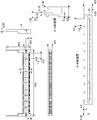
- the degree of fluidity is determined by the minimum filling pressure of the connector. That is, the minimum injection filling pressure at which a good molded product can be obtained when the DDR-DIMM connector shown in FIG. 1 is injection molded is specified as the minimum filling pressure. The lower the minimum filling pressure, the better the fluidity is evaluated.
- the melt viscosity of the liquid resin composition was measured according to ISO11443, the following preferably 1 ⁇ 10 5 Pa ⁇ s, more It is preferably 5 Pa ⁇ s or more and 1 ⁇ 10 2 Pa ⁇ s or less.
- the melt viscosity is less than 1 ⁇ 10 5 Pa ⁇ s, at the time of molding parts having a complicated shape in the electronic component, in particular, the portion having a complicated shape such as a lack latch structure and cut in an asymmetric electronic component At the time of molding, it is easy to secure the fluidity of the liquid crystal resin composition, and the filling pressure is unlikely to become excessive.
- the liquid crystal resin composition of the present invention is preferably for electronic parts, the electronic parts include a molded product of the liquid crystal resin composition, and the molded product has a thickness of a thick portion and a thin portion. It has an uneven wall structure with a difference of 0.5 mm or more, and has a shape in which the path from the gate portion of the molded product to the thick portion passes through the thin portion. Since the molded product has the above-mentioned shape, it is necessary for the molten liquid crystal resin composition to flow from the thin portion to the thick portion at the time of its production.
- the liquid crystal resin composition of the present invention not only has an unbalanced wall structure in which the wall thickness difference between the thick portion and the thin portion is 0.5 mm or more, but also the liquid crystal resin from the thin portion to the thick portion.
- the generation of blisters can be effectively suppressed in electronic parts including molded products that require the flow of the composition.
- a typical example of such an electronic component is a connector for a memory module such as a DDR connector; an interface connector such as a SATA connector. An example of the DDR connector will be described later.
- the liquid crystal resin composition of the present invention is preferably for an electronic component that undergoes a reflow step, and the reflow step includes heating in the preheat zone and heating in the reflow zone, and the set temperature in the preheat zone is set.
- the temperature is 140 to 170 ° C. and the treatment time is 1 to 3 minutes.
- the set temperature is 180 to 210 ° C.
- the treatment time is 30 to 120 seconds
- the average temperature actually measured is 183 ° C. or higher.
- the peak temperature is 220 to 270 ° C.
- the preheat zone by maintaining the temperature at 140 to 170 ° C.
- the solder paste is heated, and the surface to which the flux in the paste is soldered can be appropriately cleaned.
- the transition to heating in the reflow zone can be made, for example, by raising the oven temperature at 1 to 3 ° C. per second.
- the actual temperature of the electronic component is at least 60 seconds or more and 183 ° C. (melting point of solder) or more, resulting in soldering.
- the processing time at the measured peak temperature of 220 to 260 ° C is maintained for 30 to 120 seconds, so sufficient reflow is completed. be able to.
- the liquid crystal resin composition of the present invention can effectively suppress the generation of blisters in electronic components that have undergone the above reflow process.
- the electronic component of the present invention can be obtained by molding the liquid crystal resin composition according to the present invention.
- the electronic component of the present invention is not particularly limited, and examples thereof include an electronic component having a total length of 30 mm or more and a product height of 5 mm or more, including a molded product of the liquid crystal resin composition according to the present invention.
- the asymmetric electronic component refers to an electronic component including the molded product having no symmetry with respect to any of the XY axis surface, the YZ axis surface, and the XZ axis surface.
- Typical examples of such electronic components include connectors and sockets.
- the connector include a memory module connector and an interface connector.
- memory module connectors include DIMM connectors; DDR-DIMM connectors, DDR2-DIMM connectors, DDR-SO-DIMM connectors, DDR2-SO-DIMM connectors, DDR-Micro-DIMM connectors, DDR2-Micro-DIMM connectors, etc. DDR connector and the like.
- Examples of the interface connector include a SATA connector, a SAS connector, and an NGFF connector.
- the DDR connector, SATA connector, SAS connector, and NGFF connector are preferable, and in particular, they are thin-walled and complicated memory module connectors for notebook computers, with a pitch-to-pitch distance of 0.6 mm or less and a total product length.
- Those having a product height of 60.0 mm or more, a product height of 5 mm or more and 10.0 mm or less, and a number of poles of 200 poles or more are particularly suitable.
- Such a connector for a memory module is used in an IR reflow process for surface mounting at a peak temperature of 230 to 280 ° C., the warp before the IR reflow process is 0.1 mm or less, and the warp before and after the reflow.
- the difference is required to be 0.05 mm or less, and according to the present invention, such a requirement can be satisfied.
- sockets include memory card sockets such as card buses, CF cards, memory sticks, PC cards, SD cards, SDMos, smart cards, and smart media cards.
- the molding method for obtaining the electronic component of the present invention is not particularly limited, and it is preferable to select molding conditions without residual internal stress in order to obtain the electronic component in which warpage deformation is suppressed.
- the cylinder temperature of the molding machine is preferably a temperature equal to or higher than the melting point of the liquid crystal polymer.
- the mold temperature is preferably 70 to 100 ° C. If the mold temperature is low, the liquid crystal resin composition filled in the mold may cause poor flow, which is not preferable. If the mold temperature is high, problems such as burrs may occur, which is not preferable.
- the injection speed is preferably 150 mm / sec or more. If the injection rate is low, only an unfilled molded product may be obtained, and even if a completely filled molded product is obtained, the filling pressure is high and the residual internal stress is large, resulting in a molded product with large warpage deformation. Only parts may be available.
- the electronic component of the present invention is suppressed from warpage deformation.
- the degree of warpage of electronic components is determined as follows. That is, with the DDR-DIMM connector shown in FIG. 1, the height is measured at a plurality of positions indicated by black circles in FIG. 2, and the difference between the maximum height and the minimum height from the least squares plane is used as a sled.
- the change in warpage is suppressed before and after performing IR reflow.
- the electronic component of the present invention suppresses the generation of blisters.
- the degree of blister generation is determined by the blister temperature. That is, the presence or absence of blister generation on the surface of the molded product sandwiched in a hot press at a predetermined temperature for 5 minutes is visually observed, and the maximum temperature at which the number of blister generation becomes zero is defined as the blister temperature. It is evaluated that the higher the blister temperature, the more the blister generation is suppressed.
- the electronic component of the present invention is excellent in heat resistance, for example, heat resistance as evaluated by high temperature rigidity.
- High temperature rigidity is evaluated by measuring the deflection temperature under load in accordance with ISO75-1 and ISO75-1.
- the molded product has an uneven wall thickness structure in which the wall thickness difference between the thick portion and the thin wall portion is 0.5 mm or more, and the molded product is described from the gate portion of the molded product.
- the path leading to the thick portion has a shape that passes through the thin portion. According to the present invention, the generation of blisters can be effectively suppressed in such electronic components.
- the electronic component undergoes a reflow process.
- the reflow step includes heating in the preheat zone and heating in the reflow zone.
- the set temperature is 140 to 170 ° C. and the processing time is 1 to 3 minutes.
- the set temperature is 180 to 210 ° C.
- the processing time is 30 to 120 seconds
- the measured average temperature is 183 ° C. or higher
- the measured peak temperature is 220 to 270 ° C.
- Liquid crystal resin Manufacturing method of liquid crystal resin 1
- the following raw material monomers, metal catalysts, and acylating agents were charged into a polymerization vessel equipped with a stirrer, a reflux column, a monomer inlet, a nitrogen inlet, and a depressurization / outflow line, and nitrogen substitution was started.
- the temperature of the reaction system was raised to 140 ° C., and the reaction was carried out at 140 ° C. for 1 hour. Then, the temperature is further raised to 340 ° C. over 4.5 hours, and then the pressure is reduced to 10 Torr (that is, 1330 Pa) over 15 minutes while distilling acetic acid, excess acetic anhydride, and other low boiling points. Melt polymerization was performed. After the stirring torque reached a predetermined value, nitrogen was introduced to bring the mixture from a reduced pressure state to a pressurized state through normal pressure, the polymer was discharged from the lower part of the polymerization vessel, and the strands were pelletized and pelletized. The melting point of the obtained pellet was 336 ° C., the difference Tm-Tc between the melting point and the crystallization temperature was 40 ° C., and the melt viscosity was 20 Pa ⁇ s.
- the temperature of the reaction system was raised to 140 ° C., and the reaction was carried out at 140 ° C. for 1 hour. Then, the temperature is further raised to 360 ° C. over 5.5 hours, and then the pressure is reduced to 5 Torr (that is, 667 Pa) over 20 minutes while distilling acetic acid, excess acetic anhydride, and other low boiling points. Melt polymerization was performed. After the stirring torque reached a predetermined value, nitrogen was introduced to bring the mixture from a reduced pressure state to a pressurized state through normal pressure, the polymer was discharged from the lower part of the polymerization vessel, and the strands were pelletized and pelletized.
- 5 Torr that is, 667 Pa
- the obtained pellet had a melting point of 355 ° C, a Tm-Tc of 48 ° C, and a melt viscosity of 10 Pa ⁇ s.
- the melt viscosities of the liquid crystal resins 1 to 3 were measured in the same manner as the method for measuring the melt viscosities of the liquid crystal resin compositions described later.
- Fibrous Wollastonite Fibrous Wollastonite 1: SH-1250BJ manufactured by Kinsei Matek Co., Ltd.
- Fibrous Wollastonite 2 NYGLOS 8 manufactured by NYCO Materials
- Fibrous Wollastonite 3 FPW # 150 manufactured by Kinsei Matek Co., Ltd.
- Fibrous Wollastonite 4 SH-800 manufactured by Kinsei Matek Co., Ltd.
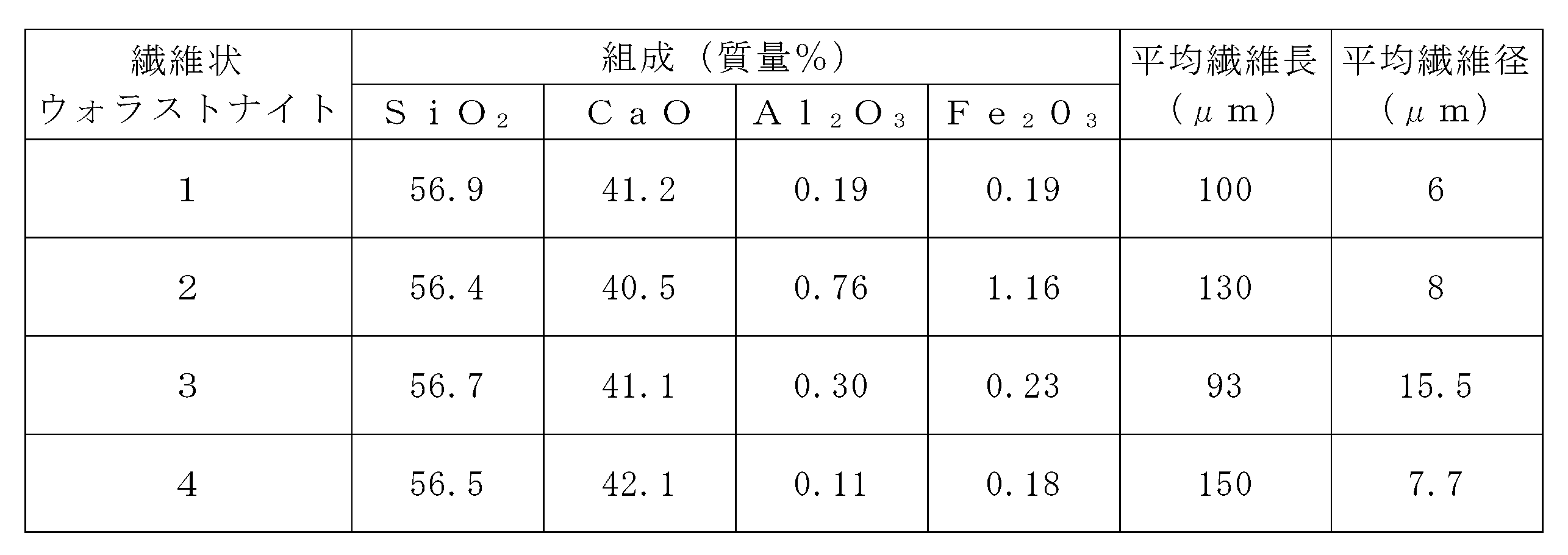
- the composition, average fiber length, and average fiber diameter of the fibrous wollastonites 1 to 4 are as shown in Table 1.
- the contents of SiO 2 , CaO, Al 2 O 3 , and Fe 2 O 3 in the fibrous wollastonite are about 3 g of the fibrous wollastonite and cellulose powder (manufactured by GE Healthcare Bioscience Co., Ltd.). About 3 g of Whatman CC31) was mixed and pressed, and the tablet-shaped sample was obtained in accordance with JIS K 0119 using a fully automatic fluorescent X-ray analyzer (MagiX Pro Pw2540/00, manufactured by Spectris Co., Ltd.). Then, quantitative analysis was performed by the fundamental parameter (FP) method, and the calculation was performed.
- FP fundamental parameter
- the liquid crystal resin composition was injection-molded under the following molding condition 1 (gate: tunnel gate, gate size: ⁇ 0.75 mm), and the overall size was 70.0 mm ⁇ 26.0 mm ⁇ 4.
- the obtained connector was allowed to stand on a horizontal desk, and the height of the connector was measured by a Mitutoyo Quick Vision 404PROCNC image measuring machine. At that time, the heights were measured at a plurality of positions indicated by black circles in FIG. 2, and the difference between the maximum height and the minimum height from the least squares plane was defined as the warp of the DDR connector.
- the warp was measured before and after the IR reflow performed under the following conditions, and evaluated according to the following criteria. The results are shown in Tables 2 and 3.
- [DDR connector deformation amount] The difference in warpage before and after reflow measured by the above method was determined as the amount of deformation of the DDR connector and evaluated according to the following criteria. The results are shown in Tables 2 and 3. ⁇ (Good): The amount of deformation was 0.04 mm or less. X (defective): The amount of deformation was more than 0.04 mm.
- the liquid crystal resin composition is injection-molded to obtain a molded product having a size of 12.5 mm ⁇ 120 mm ⁇ 0.8 mm, and 30 of these molded products are immersed in silicone oil at a predetermined temperature and washed with a detergent. After that, it was naturally dried, and it was visually examined whether or not blisters were generated on the surface.
- the blister temperature was set to the maximum temperature at which the number of blisters generated was zero among the 30 molded products, and was evaluated according to the following criteria. The results are shown in Tables 2 and 3.
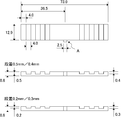
- Step sensitivity blister evaluation Using a molding machine (“TR100EH” manufactured by Sodick Co., Ltd.), the liquid crystal resin composition was injection-molded under the following molding condition 2, and the step 0.5 mm / 0.4 mm or step 0 as shown in FIG. A 12.9 mm ⁇ 73 mm ⁇ 0.8 mm molded product having .2 mm / 0.3 mm was obtained.
- the obtained molded product was subjected to IR reflow under the following conditions, and the presence or absence of blisters was visually observed.
- each step was regarded as an independent sample in this evaluation.
- Ten samples were evaluated for each of a total of 16 conditions (4 steps 4 conditions ⁇ 4 injection speed conditions), and the number of samples in which blisters were generated was counted out of a total of 160 samples. The results are shown in Tables 2 and 3.
- X (defective) The number of blisters generated was more than 20.
- IR reflow condition Measuring machine: Large desktop reflow soldering device RF-300 (using far-infrared heater) manufactured by Japan Pulse Technology Research Institute Sample feed rate: 140 mm / sec Reflow furnace transit time: 5 minutes Preheat zone set temperature: 150 ° C (processing time: 60 seconds) Measured average temperature: 150 ° C Reflow zone set temperature: 190 ° C (processing time: 60 seconds) Measured average temperature: 230 ° C or higher Actual peak temperature: 251 ° C
- Molding condition 1 Molding machine: SE100DU manufactured by Sumitomo Heavy Industries, Ltd. (for bending test, deflection temperature under load, blister temperature) SE30DUZ manufactured by Sumitomo Heavy Industries, Ltd. (in the case of DDR connector sled) Cylinder temperature: 350 ° C. (Examples 1 to 4, 8 and 9, Comparative Examples 1 to 5) 360 ° C (Examples 5 to 7) 370 ° C (Comparative Example 6) Mold temperature: 90 ° C Injection speed: 33 mm / sec
- the molded product of the liquid crystal resin composition according to the present invention is excellent in heat resistance and mechanical properties, and warpage deformation and blister generation are suppressed.
Landscapes
- Chemical & Material Sciences (AREA)
- Health & Medical Sciences (AREA)
- Chemical Kinetics & Catalysis (AREA)
- Medicinal Chemistry (AREA)
- Polymers & Plastics (AREA)
- Organic Chemistry (AREA)
- Engineering & Computer Science (AREA)
- Manufacturing & Machinery (AREA)
- Mechanical Engineering (AREA)
- Compositions Of Macromolecular Compounds (AREA)
- Polyamides (AREA)
Abstract
耐熱性及び機械的性質に優れ、そり変形及びブリスター発生が抑制された成形品を与える液晶性樹脂組成物、及び当該液晶性樹脂組成物の成形品を含む電子部品を提供する。 本発明に係る液晶性樹脂組成物は、(A)液晶性樹脂、(B)繊維状ウォラストナイト、及び(C)板状充填剤を含有する液晶性樹脂組成物であって、前記(A)液晶性樹脂は、芳香族ポリエステルアミドであり、前記繊維状ウォラストナイトにおいて、Al2O3の含有量は、0.05~0.65質量%、Fe2O3の含有量は、0.05~1.0質量%であり、前記液晶性樹脂組成物全体に対して、前記(B)繊維状ウォラストナイトの含有量は、5~25質量%、前記(C)板状充填剤の含有量は、22.5~40質量%、前記(B)繊維状ウォラストナイトと前記(C)板状充填剤との合計の含有量は、35~47.5質量%である。
Description
本発明は、液晶性樹脂組成物、及び当該液晶性樹脂組成物の成形品を含む電子部品に関する。
液晶性樹脂は、寸法精度、流動性等に優れる熱可塑性樹脂である。このような特徴を有するため、液晶性樹脂は、従来より各種電子部品の材料として採用されてきた。
特に、近年のエレクトロニクス機器の高性能化に伴う、コネクターの高耐熱化(実装技術による生産性向上)、高密度化(多芯化)、及び小型化という時代の要請もあり、上記液晶性樹脂の特徴を活かし、ガラス繊維で強化された液晶性樹脂組成物がコネクター材料として採用されている。
しかし、近年、コネクターにおいて軽薄短小化が更に進み、成形品の肉厚不足による剛性不足や金属端子のインサートによる内部応力により、成形後及びリフロー加熱中にそり変形が発生し、基板とのハンダ付け不良となる問題が生じている。即ち、従来のガラス繊維のみによる強化では、剛性を上げるためにガラス繊維の添加量を増やすと薄肉部分に樹脂が充填せず、又は成形時の圧力によりインサート端子が変形する問題があった。
かかるそり変形の問題を解決するため、成形手法を工夫することが行われ、また材料面からは特定の板状充填剤の配合が提案されている。即ち、市場に多く存在する通常のコネクター(電子部品)の場合、成形に際し、対称性を保つようなゲート位置、設計をすることで、製品の寸法精度、そりをコントロールすることが可能であり、更に従来提案されている低そり材料を使用することで、そり変形の少ない製品が得られている。
しかしながら、近年における電子部品の形状の複雑化に伴い、成形品のXY軸面、YZ軸面、及びXZ軸面の何れの軸面に対しても対称性がない非対称電子部品の提供が求められている。かかる非対称電子部品としては、DDR-DIMMコネクター等のラッチ構造(両端に固定用の爪がある)を持つメモリーモジュール用コネクターが代表例として挙げられる。特にノートパソコン用メモリーモジュール用コネクターでは、取り付けのためのラッチ構造を有し、また位置合わせのための切り欠きがあるため、非常に複雑な形状となる。
このような非対称電子部品の場合、成形品のXY軸面、YZ軸面、及びXZ軸面の何れかの軸面に対して対称性を有する通常のコネクター(対称電子部品)と異なり、対称性を有しないことから、成形手法の面からのそり変形改善には限界がある。また、複雑な形状を有する非対称電子部品の場合、成形品内の樹脂及びフィラーの配向が複雑となり、より高い流動性も必要となり、そり変形の抑制がより困難である。
このような問題点を解決する技術として、例えば、特許文献1には、特定の繊維状充填剤と特定の板状充填剤とを特定量配合してなる液晶性樹脂組成物から成形され、成形品のXY軸面、YZ軸面、及びXZ軸面の何れの軸面に対しても対称性がない非対称電子部品が開示されている。
しかしながら、最近の非対称電子部品における集積率の増加等に伴う形状変化、特にピッチ間距離や製品高さの減少、極数の増加等の要因により、上記特許文献1に開示された液晶性樹脂組成物等の従来の液晶性樹脂組成物では対処しきれない場合があることが判明した。即ち、従来の液晶性樹脂組成物は耐熱性及び流動性が十分ではなく、このような液晶性樹脂組成物から、そり変形が抑制された非対称電子部品を得ることは困難であった。
また、液晶性樹脂組成物には、ブリスター発生の問題が生じ得る。即ち、液晶性ポリエステル、液晶性ポリエステルアミド等の液晶性樹脂は、高温熱安定性が良いため、高温での熱処理を要する材料に使用される場合が多い。しかし、成形品を高温の空気中及び液体中に長時間放置すると、表面にブリスターと呼ばれる細かい膨れが生じるという問題が起こる。
この現象の一原因は、液晶性樹脂が溶融状態にある時に発生する分解ガス等が成形品内部に持ち込まれ、その後、高温の熱処理を行う際にそのガスが膨張し、加熱で軟化した成形品表面を押し上げ、押し上げられた部分がブリスターとして現れることである。ブリスターの発生は、材料の溶融押出し時にベント孔から充分脱気することや成形する際に成形機内に長く滞留させないこと等によって、少なくすることもできる。しかし、非常に条件範囲が狭く、ブリスターの発生を抑えた成形品、即ち、耐ブリスター性を有する成形品を得るには充分ではない。ブリスター発生の根本的な解決には、液晶性樹脂そのものの品質の向上を要し、公知の液晶性樹脂やそれを用いた方法では、ブリスター発生の問題を解決するには不充分である。
ブリスター発生の別の原因は、スキン層とコア層との境界に生じる歪みや複雑な成形品形状がもたらす不均一層構造に起因する空洞(層間剥離)がリフロー時に熱膨張して、加熱で軟化した成形品表面を押し上げ、押し上げられた部分がブリスターとして現れることである。特に肉厚差の大きな成形品の製造においては、溶融した液晶性樹脂組成物が薄肉部から厚肉部へ流動する過程で、液晶性樹脂特有の流動現象により、肉厚部に十分な充填がなされずに不均一層構造が形成されやすい問題がある。従来の液晶性組成物では、特に、このような肉厚差の大きな成形品におけるブリスター発生の問題を解決するには不充分である。
本発明は、上記課題を解決するためになされたものであり、その目的は、耐熱性及び機械的性質に優れ、そり変形及びブリスター発生が抑制された成形品を与える液晶性樹脂組成物、及び当該液晶性樹脂組成物の成形品を含む電子部品を提供することにある。
本発明者らは、上記課題を解決するために鋭意研究を重ねた。その結果、液晶性樹脂と特定の組成を有する繊維状ウォラストナイトと板状充填剤とを含有し、液晶性樹脂が芳香族ポリエステルアミドであり、繊維状ウォラストナイト、板状充填剤、及びこれらの合計の各々の含有量が所定の範囲である液晶性樹脂組成物を用いることにより、上記課題を解決できることを見出し、本発明を完成するに至った。より具体的には本発明は以下のものを提供する。
(1) (A)液晶性樹脂、(B)繊維状ウォラストナイト、及び(C)板状充填剤を含有する液晶性樹脂組成物であって、前記(A)液晶性樹脂は、芳香族ポリエステルアミドであり、前記繊維状ウォラストナイトにおいて、Al2O3の含有量は、0.05~0.65質量%、Fe2O3の含有量は、0.05~1.0質量%であり、前記液晶性樹脂組成物全体に対して、前記(B)繊維状ウォラストナイトの含有量は、5~25質量%、前記(C)板状充填剤の含有量は、22.5~40質量%、前記(B)繊維状ウォラストナイトと前記(C)板状充填剤との合計の含有量は、35~47.5質量%である液晶性樹脂組成物。
(2) 前記(C)板状充填剤は、タルクである(1)に記載の液晶性樹脂組成物。
(3) 電子部品用である(1)又は(2)に記載の液晶性樹脂組成物であって、前記電子部品は、前記液晶性樹脂組成物の成形品を含み、前記成形品は、厚肉部と薄肉部との肉厚差が0.5mm以上である偏肉構造を有し、前記成形品のゲート部から前記厚肉部に至る経路が前記薄肉部を経由する形状を有する液晶性樹脂組成物。
(4) リフロー工程を経る電子部品用である(1)から(3)のいずれかに記載の液晶性樹脂組成物であって、前記リフロー工程は、プレヒートゾーンにおける加熱とリフローゾーンにおける加熱とを含み、前記プレヒートゾーンにおいて、設定温度は140~170℃、処理時間は1~3分間であり、前記リフローゾーンにおいて、設定温度は180~210℃、処理時間は30~120秒であるとともに、実測の平均温度は183℃以上、実測のピーク温度は220~270℃である液晶性樹脂組成物。
(5) (1)又は(2)に記載の液晶性樹脂組成物の成形品を含み、製品全長が30mm以上であり、製品高さが5mm以上である電子部品。
(6) 前記成形品は、XY軸面、YZ軸面、及びXZ軸面の何れの軸面に対しても対称性がなく、前記電子部品は、非対称電子部品である(5)に記載の電子部品。
(7) ピッチ間距離が0.6mm以下、製品全長が60.0mm以上、製品高さが5mm以上10.0mm以下、極数が200極以上のメモリーモジュール用コネクターである(5)又は(6)に記載の電子部品。
(8) 前記成形品は、厚肉部と薄肉部との肉厚差が0.5mm以上である偏肉構造を有し、前記成形品のゲート部から前記厚肉部に至る経路が前記薄肉部を経由する形状を有する(5)から(7)のいずれかに記載の電子部品。
(9) リフロー工程を経る(5)から(8)のいずれかに記載の電子部品であって、前記リフロー工程は、プレヒートゾーンにおける加熱とリフローゾーンにおける加熱とを含み、前記プレヒートゾーンにおいて、設定温度は140~170℃、処理時間は1~3分間であり、前記リフローゾーンにおいて、設定温度は180~210℃、処理時間は30~120秒であるとともに、実測の平均温度は183℃以上、実測のピーク温度は220~270℃である電子部品。
本発明によれば、耐熱性及び機械的性質に優れ、そり変形及びブリスター発生が抑制された成形品を与える液晶性樹脂組成物、及び当該液晶性樹脂組成物の成形品を含む電子部品を提供することができる。
<液晶性樹脂組成物>
本発明に係る液晶性樹脂組成物は、(A)液晶性樹脂、(B)繊維状ウォラストナイト、及び(C)板状充填剤を含有する液晶性樹脂組成物であって、前記(A)液晶性樹脂は、芳香族ポリエステルアミドであり、前記繊維状ウォラストナイトにおいて、Al2O3の含有量は、0.05~0.65質量%、Fe2O3の含有量は、0.05~1.0質量%であり、前記液晶性樹脂組成物全体に対して、前記(B)繊維状ウォラストナイトの含有量は、5~25質量%、前記(C)板状充填剤の含有量は、22.5~40質量%、前記(B)繊維状ウォラストナイトと前記(C)板状充填剤との合計の含有量は、35~47.5質量%である。
本発明に係る液晶性樹脂組成物は、(A)液晶性樹脂、(B)繊維状ウォラストナイト、及び(C)板状充填剤を含有する液晶性樹脂組成物であって、前記(A)液晶性樹脂は、芳香族ポリエステルアミドであり、前記繊維状ウォラストナイトにおいて、Al2O3の含有量は、0.05~0.65質量%、Fe2O3の含有量は、0.05~1.0質量%であり、前記液晶性樹脂組成物全体に対して、前記(B)繊維状ウォラストナイトの含有量は、5~25質量%、前記(C)板状充填剤の含有量は、22.5~40質量%、前記(B)繊維状ウォラストナイトと前記(C)板状充填剤との合計の含有量は、35~47.5質量%である。
[(A)液晶性樹脂]
本発明で使用する(A)液晶性樹脂とは、光学異方性溶融相を形成し得る性質を有する溶融加工性ポリマーを指す。異方性溶融相の性質は、直交偏光子を利用した慣用の偏光検査法により確認することが出来る。より具体的には、異方性溶融相の確認は、Leitz偏光顕微鏡を使用し、Leitzホットステージに載せた溶融試料を窒素雰囲気下で40倍の倍率で観察することにより実施できる。本発明に適用できる液晶性樹脂は直交偏光子の間で検査したときに、たとえ溶融静止状態であっても偏光は通常透過し、光学的に異方性を示す。
本発明で使用する(A)液晶性樹脂とは、光学異方性溶融相を形成し得る性質を有する溶融加工性ポリマーを指す。異方性溶融相の性質は、直交偏光子を利用した慣用の偏光検査法により確認することが出来る。より具体的には、異方性溶融相の確認は、Leitz偏光顕微鏡を使用し、Leitzホットステージに載せた溶融試料を窒素雰囲気下で40倍の倍率で観察することにより実施できる。本発明に適用できる液晶性樹脂は直交偏光子の間で検査したときに、たとえ溶融静止状態であっても偏光は通常透過し、光学的に異方性を示す。
上記のような(A)液晶性樹脂しては、芳香族ポリエステルアミドである限り、特に限定されない。芳香族ポリエステルアミドは、全芳香族ポリエステルアミドでも、芳香族ポリエステルアミドを同一分子鎖中に部分的に含むポリエステルアミドでもよく、耐熱性等の観点から、全芳香族ポリエステルアミドが好ましい。(A)液晶性樹脂としては、60℃でペンタフルオロフェノールに濃度0.1質量%で溶解したときに、好ましくは少なくとも約2.0dl/g、更に好ましくは2.0~10.0dl/gの対数粘度(I.V.)を有する芳香族ポリエステルアミドも好ましく使用される。
ブリスター発生は、溶融粘度だけで決まるわけではなく、同じ溶融粘度を示す液晶性樹脂組成物同士であっても、一方ではブリスターが発生し、他方ではブリスターが発生しないということが起こり得る。同様のことは、充填剤又はポリマーの種類又は含有量及びコンパウンド条件についても当てはまる。このように、ブリスター発生は、複合的要素が複雑に関係して決まる指標である。ここで、実施例及び比較例において実証されている通り、本発明における他の要件の具備を条件に、(A)液晶性樹脂が芳香族ポリエステルアミドであると、肉厚差の大きな成形品におけるブリスター発生が抑制される。複雑な成形品を成形する際には、例えば、液晶性樹脂組成物の溶融物の主流に対して垂直な方向に分岐したキャビティが延びるような金型が使用される。(A)液晶性樹脂が芳香族ポリエステルアミドであると、このように垂直な方向に延びるキャビティにまでも上記溶融物が広がりやすく、空隙を埋め尽くしやすいため、肉厚差の大きな成形品におけるブリスター発生を抑制しやすい。
本発明に適用できる(A)液晶性樹脂としての芳香族ポリエステルアミドは、特に好ましくは、芳香族ヒドロキシカルボン酸に由来する繰り返し単位と、芳香族ヒドロキシアミン及び芳香族ジアミンからなる群より選ばれる少なくとも1種の化合物に由来する繰り返し単位と、を構成成分として有する芳香族ポリエステルアミドである。
より具体的には、
(1)主として(a)芳香族ヒドロキシカルボン酸及びその誘導体の1種又は2種以上に由来する繰り返し単位と、(b)芳香族ヒドロキシアミン、芳香族ジアミン、及びそれらの誘導体の1種又は2種以上に由来する繰り返し単位と、(c)芳香族ジカルボン酸、脂環族ジカルボン酸、及びそれらの誘導体の1種又は2種以上に由来する繰り返し単位、とからなるポリエステルアミド;
(2)主として(a)芳香族ヒドロキシカルボン酸及びその誘導体の1種又は2種以上に由来する繰り返し単位と、(b)芳香族ヒドロキシアミン、芳香族ジアミン、及びそれらの誘導体の1種又は2種以上に由来する繰り返し単位と、(c)芳香族ジカルボン酸、脂環族ジカルボン酸、及びそれらの誘導体の1種又は2種以上に由来する繰り返し単位と、(d)芳香族ジオール、脂環族ジオール、脂肪族ジオール、及びそれらの誘導体の少なくとも1種又は2種以上に由来する繰り返し単位、とからなるポリエステルアミド等が挙げられる。更に上記の構成成分に必要に応じ分子量調整剤を併用してもよい。
(1)主として(a)芳香族ヒドロキシカルボン酸及びその誘導体の1種又は2種以上に由来する繰り返し単位と、(b)芳香族ヒドロキシアミン、芳香族ジアミン、及びそれらの誘導体の1種又は2種以上に由来する繰り返し単位と、(c)芳香族ジカルボン酸、脂環族ジカルボン酸、及びそれらの誘導体の1種又は2種以上に由来する繰り返し単位、とからなるポリエステルアミド;
(2)主として(a)芳香族ヒドロキシカルボン酸及びその誘導体の1種又は2種以上に由来する繰り返し単位と、(b)芳香族ヒドロキシアミン、芳香族ジアミン、及びそれらの誘導体の1種又は2種以上に由来する繰り返し単位と、(c)芳香族ジカルボン酸、脂環族ジカルボン酸、及びそれらの誘導体の1種又は2種以上に由来する繰り返し単位と、(d)芳香族ジオール、脂環族ジオール、脂肪族ジオール、及びそれらの誘導体の少なくとも1種又は2種以上に由来する繰り返し単位、とからなるポリエステルアミド等が挙げられる。更に上記の構成成分に必要に応じ分子量調整剤を併用してもよい。
本発明に適用できる(A)液晶性樹脂を構成する具体的化合物の好ましい例としては、p-ヒドロキシ安息香酸、6-ヒドロキシ-2-ナフトエ酸等の芳香族ヒドロキシカルボン酸;2,6-ジヒドロキシナフタレン、1,4-ジヒドロキシナフタレン、4,4’-ジヒドロキシビフェニル、ハイドロキノン、レゾルシン、下記一般式(I)で表される化合物、及び下記一般式(II)で表される化合物等の芳香族ジオール;テレフタル酸、イソフタル酸、4,4’-ジフェニルジカルボン酸、2,6-ナフタレンジカルボン酸、及び下記一般式(III)で表される化合物等の芳香族ジカルボン酸;p-アミノフェノール、p-フェニレンジアミン等の芳香族アミン類が挙げられる。

(X:アルキレン(C1~C4)、アルキリデン、-O-、-SO-、-SO2-、-S-、及び-CO-より選ばれる基である)


(Y:-(CH2)n-(n=1~4)及び-O(CH2)nO-(n=1~4)より選ばれる基である。)
本発明に用いられる(A)液晶性樹脂の調製は、上記のモノマー化合物(又はモノマーの混合物)から直接重合法やエステル交換法を用いて公知の方法で行うことができ、通常は溶融重合法、溶液重合法、スラリー重合法、固相重合法等、又はこれらの2種以上の組み合わせが用いられ、溶融重合法、又は溶融重合法と固相重合法との組み合わせが好ましく用いられる。エステル形成能を有する上記化合物類はそのままの形で重合に用いてもよく、また、重合の前段階でアシル化剤等を用いて前駆体から該エステル形成能を有する誘導体に変性されたものでもよい。アシル化剤としては、無水酢酸等の無水カルボン酸等を挙げることができる。
重合に際しては、種々の触媒の使用が可能である。使用可能な触媒の代表的なものとしては、酢酸カリウム、酢酸マグネシウム、酢酸第一錫、テトラブチルチタネート、酢酸鉛、酢酸ナトリウム、三酸化アンチモン、トリス(2,4-ペンタンジオナト)コバルト(III)等の金属塩系触媒、N-メチルイミダゾール、4-ジメチルアミノピリジン等の有機化合物系触媒を挙げることができる。触媒の使用量は、一般には、モノマーの全重量に対して、約0.001~1質量%であることが好ましく、約0.01~0.2質量%であることが特に好ましい。
上記のような方法で得られた(A)液晶性樹脂の溶融粘度は特に限定されない。一般には成形温度での溶融粘度が剪断速度1000sec-1で10Pa・s以上600Pa・s以下のものが使用可能である。しかし、それ自体あまり高粘度のものは流動性が非常に悪化するため好ましくない。なお、上記(A)液晶性樹脂は2種以上の液晶性樹脂の混合物であってもよい。
(A)液晶性樹脂の融点(以下、「Tm」ともいう。)及び結晶化温度(以下、「Tc」ともいう。)は特に限定されない。TmとTcとの差Tm-Tcは、ブリスター発生を抑制しやすく、機械的強度を維持しやすい点で、45℃以下が好ましく、42℃以下がより好ましく、40℃以下が更により好ましい。Tm-Tcの下限は、特に限定されず、0℃、1℃、5℃、10℃、20℃、30℃、及び37℃のいずれでもよい。
本発明の液晶性樹脂組成物において、(A)液晶性樹脂の好ましい含有量は、52.5~65質量%である。(A)成分の含有量が上記範囲内であると、組成物は、流動性を維持しつつ、ブリスター発生を抑制しやすい。(A)成分の含有量は、より好ましくは53.5~62.5質量%、更により好ましくは55~60質量%である。
[(B)繊維状ウォラストナイト]
(B)成分は繊維状ウォラストナイトであり、(B)成分において、Al2O3の含有量は、0.05~0.65質量%、Fe2O3の含有量は、0.05~1.0質量%である。即ち、(B)成分は、その主成分たるSiO2及びCaOの他に、Al2O3及びFe2O3を上記範囲の量で含有するものである。(B)成分にAl2O3及びFe2O3が含まれることにより、組成物は、溶融粘度が低くなり、流動性を維持しやすくなるが、(B)成分におけるAl2O3及びFe2O3の各含有量が多すぎると、ブリスター発生の問題が生じ得る。(B)成分にAl2O3及びFe2O3が上記範囲の量で含まれることにより、組成物は、流動性を維持しつつ、ブリスター発生を抑制しやすい。なお、本明細書において、(B)成分におけるAl2O3及びFe2O3の各含有量としては、JIS K 0119に準拠して分析した値を採用する。
(B)成分は繊維状ウォラストナイトであり、(B)成分において、Al2O3の含有量は、0.05~0.65質量%、Fe2O3の含有量は、0.05~1.0質量%である。即ち、(B)成分は、その主成分たるSiO2及びCaOの他に、Al2O3及びFe2O3を上記範囲の量で含有するものである。(B)成分にAl2O3及びFe2O3が含まれることにより、組成物は、溶融粘度が低くなり、流動性を維持しやすくなるが、(B)成分におけるAl2O3及びFe2O3の各含有量が多すぎると、ブリスター発生の問題が生じ得る。(B)成分にAl2O3及びFe2O3が上記範囲の量で含まれることにより、組成物は、流動性を維持しつつ、ブリスター発生を抑制しやすい。なお、本明細書において、(B)成分におけるAl2O3及びFe2O3の各含有量としては、JIS K 0119に準拠して分析した値を採用する。
(B)成分において、Al2O3の含有量は、好ましくは0.08~0.45質量%、より好ましくは0.11~0.30質量%であり、Fe2O3の含有量は、好ましくは0.1~0.5質量%、より好ましくは0.18~0.23質量%である。Al2O3の含有量及びFe2O3の含有量が上記範囲内であると、組成物は、ブリスター発生をより抑制しやすい。
(B)成分の平均繊維長は、好ましくは50~200μmであり、より好ましくは70~180μmであり、更により好ましくは90~160μmである。上記平均繊維長が上記範囲内であると、組成物は、ブリスター発生をより抑制しやすい。なお、平均繊維長は実体顕微鏡画像をCCDカメラからPCに取り込み、画像測定機によって画像処理手法により測定された値を採用する。なお、液晶性樹脂組成物中の(B)成分は、液晶性樹脂組成物を600℃で2時間加熱して灰化することで得られる。
(B)成分の好ましい平均繊維径は1~20μm以下であり、より好ましい平均繊維径は5~16μmである。上記平均繊維径が上記範囲内であると、組成物は、ブリスター発生をより抑制しやすい。なお、平均繊維径は実体顕微鏡画像をCCDカメラからPCに取り込み、画像測定機によって画像処理手法により測定された値を採用する。
本発明の液晶性樹脂組成物において、(B)成分の含有量は、5~25質量%である。(B)成分の含有量が上記範囲内であると、組成物は、機械的性質を維持しつつ、流動性に優れるため、成形時の最小充填圧力が過度になりにくく、更に、ブリスター発生を抑制しやすい。(B)成分の含有量は、より好ましくは7.5~22.5質量%、更により好ましくは10~20質量%である。(B)成分は、1種単独で又は2種以上組み合わせて使用することができる。
[(C)板状充填剤]
(C)成分は板状充填剤である。本発明に係る液晶性樹脂組成物に(C)成分が含まれることにより、成形時の最小充填圧力が過度になりにくく、また、そり変形が抑制された成形品を得やすい。(C)成分は、1種単独で又は2種以上組み合わせて使用することができる。
(C)成分は板状充填剤である。本発明に係る液晶性樹脂組成物に(C)成分が含まれることにより、成形時の最小充填圧力が過度になりにくく、また、そり変形が抑制された成形品を得やすい。(C)成分は、1種単独で又は2種以上組み合わせて使用することができる。
本発明の液晶性樹脂組成物において、(C)成分の含有量は、22.5~40質量%である。(C)成分の含有量が上記範囲内であると、組成物は、成形時の最小充填圧力が過度になりにくく、また、該組成物からは、そり変形が抑制された成形品を得やすい。(C)成分の含有量は、より好ましくは23.5~37.5質量%、更により好ましくは25~35質量%である。
本発明における板状充填剤としては、タルク、マイカ、ガラスフレーク、各種の金属箔等が挙げられる。液晶性樹脂組成物の流動性を悪化させることなく、液晶性樹脂組成物から得られる成形品のそり変形を抑制させるという点で、タルク及びマイカから選択される1種以上が好ましく、タルクがより好ましい。板状充填剤の平均粒径については、特に限定されず、薄肉部における流動性を考慮すると小さい方が望ましい。一方、液晶性樹脂組成物から得られる電子部品等の成形品のそり変形を小さくするためには、一定の大きさを維持している必要がある。具体的には、1~100μmが好ましく、5~50μmがより好ましい。
〔タルク〕
本発明において使用できるタルクとしては、当該タルクの全固形分量に対して、Fe2O3、Al2O3及びCaOの合計含有量が2.5質量%以下であり、Fe2O3及びAl2O3の合計含有量が1.0質量%超2.0質量%以下であり、かつCaOの含有量が0.5質量%未満であるものが好ましい。即ち、本発明において使用できるタルクは、その主成分たるSiO2及びMgOの他、Fe2O3、Al2O3及びCaOのうちの少なくとも1種を含有し、各成分が上記の含有量範囲で含有するものであってもよい。なお、本明細書において、タルクにおけるFe2O3、Al2O3、及びCaOの各含有量としては、JIS M 8851に準拠して分析した値を採用する。
本発明において使用できるタルクとしては、当該タルクの全固形分量に対して、Fe2O3、Al2O3及びCaOの合計含有量が2.5質量%以下であり、Fe2O3及びAl2O3の合計含有量が1.0質量%超2.0質量%以下であり、かつCaOの含有量が0.5質量%未満であるものが好ましい。即ち、本発明において使用できるタルクは、その主成分たるSiO2及びMgOの他、Fe2O3、Al2O3及びCaOのうちの少なくとも1種を含有し、各成分が上記の含有量範囲で含有するものであってもよい。なお、本明細書において、タルクにおけるFe2O3、Al2O3、及びCaOの各含有量としては、JIS M 8851に準拠して分析した値を採用する。
上記タルクにおいて、Fe2O3、Al2O3及びCaOの合計含有量が2.5質量%以下であると、液晶性樹脂組成物の成形加工性及び当該液晶性樹脂組成物から成形された電子部品等の成形品の耐熱性が悪化しにくい。そのため、Fe2O3、Al2O3及びCaOの合計含有量は、1.0質量%以上2.0質量%以下が好ましい。
また、上記タルクのうち、Fe2O3及びAl2O3の合計含有量が1.0質量%超のタルクは入手しやすい。また、上記タルクにおいて、Fe2O3及びAl2O3の合計含有量が2.0質量%以下であると、液晶性樹脂組成物の成形加工性及び当該液晶性樹脂組成物から成形された電子部品等の成形品の耐熱性が悪化しにくい。そのため、Fe2O3及びAl2O3の合計含有量は、1.0質量%超1.7質量%以下が好ましい。
また、上記タルクにおいて、CaOの含有量が0.5質量%未満であると、液晶性樹脂組成物の成形加工性及び当該液晶性樹脂組成物から成形された電子部品等の成形品の耐熱性が悪化しにくい。そのため、CaOの含有量は、0.01質量%以上0.4質量%以下が好ましい。
本発明におけるタルクの、レーザー回折法で測定した質量基準又は体積基準の累積平均粒子径(D50)は、成形品のそり変形の防止及び液晶性樹脂組成物の流動性の維持という観点から、4.0~20.0μmであることが好ましく、10~18μmであることがより好ましい。
〔マイカ〕
マイカとは、アルミニウム、カリウム、マグネシウム、ナトリウム、鉄等を含んだケイ酸塩鉱物の粉砕物である。本発明において使用できるマイカとしては、白雲母、金雲母、黒雲母、人造雲母等が挙げられるが、これらのうち色相が良好であり、低価格であるという点で白雲母が好ましい。
マイカとは、アルミニウム、カリウム、マグネシウム、ナトリウム、鉄等を含んだケイ酸塩鉱物の粉砕物である。本発明において使用できるマイカとしては、白雲母、金雲母、黒雲母、人造雲母等が挙げられるが、これらのうち色相が良好であり、低価格であるという点で白雲母が好ましい。
また、マイカの製造において、鉱物を粉砕する方法としては、湿式粉砕法及び乾式粉砕法が知られている。湿式粉砕法とは、マイカ原石を乾式粉砕機にて粗粉砕した後、水を加えてスラリー状態にて湿式粉砕で本粉砕し、その後、脱水、乾燥を行う方法である。湿式粉砕法と比較して、乾式粉砕法は低コストで一般的な方法であるが、湿式粉砕法を用いると、鉱物を薄く細かく粉砕することがより容易である。後述する好ましい平均粒径及び厚みを有するマイカが得られるという理由で、本発明においては薄く細かい粉砕物を使用することが好ましい。したがって、本発明においては、湿式粉砕法により製造されたマイカを使用するのが好ましい。
また、湿式粉砕法においては、被粉砕物を水に分散させる工程が必要であるため、被粉砕物の分散効率を高めるために、被粉砕物に凝集沈降剤及び/又は沈降助剤を加えることが一般的である。本発明において使用できる凝集沈降剤及び沈降助剤としては、ポリ塩化アルミニウム、硫酸アルミニウム、硫酸第一鉄、硫酸第二鉄、塩化コッパラス、ポリ硫酸鉄、ポリ塩化第二鉄、鉄-シリカ無機高分子凝集剤、塩化第二鉄-シリカ無機高分子凝集剤、消石灰(Ca(OH)2)、苛性ソーダ(NaOH)、ソーダ灰(Na2CO3)等が挙げられる。これらの凝集沈降剤及び沈降助剤は、pHがアルカリ性又は酸性である。本発明で使用するマイカは、湿式粉砕する際に凝集沈降剤及び/又は沈降助剤を使用していないものが好ましい。凝集沈降剤及び/又は沈降助剤で処理されていないマイカを使用すると、液晶性樹脂組成物中のポリマーの分解が生じにくく、多量のガス発生やポリマーの分子量低下等が起きにくいため、電子部品等の成形品の性能をより良好に維持するのが容易である。
本発明において使用できるマイカは、マイクロトラックレーザー回折法により測定した平均粒径が10~100μmであるものが好ましく、平均粒径が20~80μmであるものが特に好ましい。マイカの平均粒径が10μm以上であると、成形品の剛性に対する改良効果が十分となりやすいため好ましい。マイカの平均粒径が100μm以下であると、成形品の剛性の向上が十分となりやすく、ウェルド強度も十分となりやすいため好ましい。更に、マイカの平均粒径が100μm以下であると、本発明の電子部品等を成形するのに十分な流動性を確保しやすい。
本発明において使用できるマイカの厚みは、電子顕微鏡の観察により実測した厚みが0.01~1μmであることが好ましく、0.03~0.3μmであることが特に好ましい。マイカの厚みが0.01μm以上であると、液晶性樹脂組成物の溶融加工の際にマイカが割れにくくなるため、成形品の剛性が向上しやすい可能性があるため好ましい。マイカの厚みが1μm以下であると、成形品の剛性に対する改良効果が十分となりやすいため好ましい。
本発明において使用できるマイカは、シランカップリング剤等で表面処理されていてもよく、かつ/又は、結合剤で造粒し顆粒状とされていてもよい。
更に、(B)成分と(C)成分との合計の含有量は、本発明の液晶性樹脂組成物において、35~47.5質量%であり、好ましくは37.5~46.5質量%であり、より好ましくは40~45質量%である。上記合計の含有量が35質量%以上であると、そり変形が抑制された成形品を得やすい。上記合計の含有量が47.5質量%以下であると、組成物は、機械的性質を維持しつつ、流動性に優れるため、成形時の最小充填圧力が過度になりにくく、更に、ブリスター発生を抑制しやすい。
[その他の成分]
本発明に係る液晶性樹脂組成物には、本発明の効果を害さない範囲で、その他の重合体、その他の充填剤、一般に合成樹脂に添加される公知の物質、即ち、酸化防止剤や紫外線吸収剤等の安定剤、帯電防止剤、難燃剤、染料や顔料等の着色剤、潤滑剤、離型剤、結晶化促進剤、結晶核剤等のその他の成分も要求性能に応じ適宜添加することができる。その他の成分は1種単独で用いても2種以上を組み合わせて用いてもよい。その他の充填剤とは、(B)繊維状ウォラストナイト及び(C)板状充填剤以外の充填剤をいい、例えば、シリカ等の粒状充填剤が挙げられる。
本発明に係る液晶性樹脂組成物には、本発明の効果を害さない範囲で、その他の重合体、その他の充填剤、一般に合成樹脂に添加される公知の物質、即ち、酸化防止剤や紫外線吸収剤等の安定剤、帯電防止剤、難燃剤、染料や顔料等の着色剤、潤滑剤、離型剤、結晶化促進剤、結晶核剤等のその他の成分も要求性能に応じ適宜添加することができる。その他の成分は1種単独で用いても2種以上を組み合わせて用いてもよい。その他の充填剤とは、(B)繊維状ウォラストナイト及び(C)板状充填剤以外の充填剤をいい、例えば、シリカ等の粒状充填剤が挙げられる。
[液晶性樹脂組成物の調製方法]
本発明の液晶性樹脂組成物の調製方法は特に限定されない。例えば、上記(A)~(C)成分、及び、任意に、その他の成分を配合して、これらを1軸又は2軸押出機を用いて溶融混練処理することで、液晶性樹脂組成物の調製が行われる。
本発明の液晶性樹脂組成物の調製方法は特に限定されない。例えば、上記(A)~(C)成分、及び、任意に、その他の成分を配合して、これらを1軸又は2軸押出機を用いて溶融混練処理することで、液晶性樹脂組成物の調製が行われる。
本発明に係る液晶性樹脂組成物は流動性に優れるため、成形時の最小充填圧力が過度になりにくく、電子部品、特に、ラッチ構造や切り欠き等を備える非対称電子部品のような複雑な形状を有する部品等を好ましく成形できる。流動性の程度は、コネクターの最小充填圧力により判断する。即ち、図1に示すDDR-DIMMコネクターを射出成形する際に良好な成形品を得られる最小の射出充填圧力を最小充填圧力として特定する。最小充填圧力が低いほど、流動性が優れていると評価される。
液晶性樹脂の融点より10~30℃高い温度で、剪断速度1000/秒で、ISO11443に準拠して測定した液晶性樹脂組成物の溶融粘度は、好ましくは1×105Pa・s以下、より好ましくは5Pa・s以上1×102Pa・s以下である。上記溶融粘度が1×105Pa・s以下であると、電子部品における複雑な形状を有する部分の成形時において、特に、非対称電子部品におけるラッチ構造や切り欠き等の複雑な形状を有する部分の成形時において、液晶性樹脂組成物の流動性を確保しやすく、充填圧力が過度になりにくい。
本発明の液晶性樹脂組成物は、好ましくは電子部品用であり、前記電子部品は、前記液晶性樹脂組成物の成形品を含み、前記成形品は、厚肉部と薄肉部との肉厚差が0.5mm以上である偏肉構造を有し、前記成形品のゲート部から前記厚肉部に至る経路が前記薄肉部を経由する形状を有する。前記成形品は、上述の形状を有するため、その製造時には、溶融した液晶性樹脂組成物が薄肉部から厚肉部へ流動することが必要である。本発明の液晶性樹脂組成物は、単に、厚肉部と薄肉部との肉厚差が0.5mm以上である偏肉構造を有するだけではなく、薄肉部から厚肉部への液晶性樹脂組成物の流動が必要な成形品を含む電子部品において、ブリスターの発生を効果的に抑制することができる。なお、かかる電子部品の代表例としては、DDRコネクター等のメモリーモジュール用コネクター;SATAコネクター等のインターフェースコネクターが挙げられる。DDRコネクターの例は、後述の通りである。
また、本発明の液晶性樹脂組成物は、好ましくはリフロー工程を経る電子部品用であり、前記リフロー工程は、プレヒートゾーンにおける加熱とリフローゾーンにおける加熱とを含み、前記プレヒートゾーンにおいて、設定温度は140~170℃、処理時間は1~3分間であり、前記リフローゾーンにおいて、設定温度は180~210℃、処理時間は30~120秒であるとともに、実測の平均温度は183℃以上、実測のピーク温度は220~270℃である。前記プレヒートゾーンでは、温度を140~170℃で1~3分間維持することにより、半田ペーストが加熱され、ペースト内のフラックスが半田付けされる表面を適切に洗浄することができる。プレヒートゾーンにおける加熱後、例えば、オーブンの温度を毎秒1~3℃で上昇させることによって、前記リフローゾーンにおける加熱に遷移することができる。前記リフローゾーンでは、設定温度が180~210℃、処理時間が30~120秒であることにより、電子部品の実温度が少なくとも60秒以上、183℃(半田の融点)以上になる結果、半田付けによる歪やブリッジ、低温状態での接続等を効果的に防ぐことができることに加え、実測のピーク温度220~260℃での処理時間が30~120秒維持されるため、十分なリフローを完結することができる。本発明の液晶性樹脂組成物は、上記リフロー工程を経る電子部品において、ブリスターの発生を効果的に抑制することができる。
<電子部品>
本発明に係る液晶性樹脂組成物を成形することにより、本発明の電子部品を得ることができる。本発明の電子部品としては、特に限定されず、例えば、本発明に係る液晶性樹脂組成物の成形品を含み、製品全長が30mm以上、製品高さが5mm以上である電子部品が挙げられる。本発明の電子部品のうち、非対称電子部品とは、XY軸面、YZ軸面、及びXZ軸面の何れの軸面に対しても対称性がない前記成形品を含む電子部品をいう。
本発明に係る液晶性樹脂組成物を成形することにより、本発明の電子部品を得ることができる。本発明の電子部品としては、特に限定されず、例えば、本発明に係る液晶性樹脂組成物の成形品を含み、製品全長が30mm以上、製品高さが5mm以上である電子部品が挙げられる。本発明の電子部品のうち、非対称電子部品とは、XY軸面、YZ軸面、及びXZ軸面の何れの軸面に対しても対称性がない前記成形品を含む電子部品をいう。
市場に多く存在する通常のコネクター(電子部品)の場合、XY軸面、YZ軸面、及びXZ軸面の何れかの軸面において対称性を有するものであり、成形に際し、対称性を保つようなゲート位置及び設計とすることで、製品の寸法精度及びそりをコントロールすることが可能である。これに対し、非対称電子部品は、形状が複雑であり、成形手法ではそり変形を抑制することが困難なものである。本発明の電子部品、特に、非対称電子部品では、本発明の液晶性樹脂組成物を用いることで、そり変形が抑制されている。
このような電子部品の代表例としては、コネクター、ソケットが挙げられる。
コネクターとしては、例えば、メモリーモジュール用コネクター、インターフェースコネクターが挙げられる。メモリーモジュール用コネクターとしては、例えば、DIMMコネクター;DDR-DIMMコネクター、DDR2-DIMMコネクター、DDR-SO-DIMMコネクター、DDR2-SO-DIMMコネクター、DDR-Micro-DIMMコネクター、DDR2-Micro-DIMMコネクター等のDDRコネクター等が挙げられる。インターフェースコネクターとしては、例えば、SATAコネクター、SASコネクター、NGFFコネクター等が挙げられる。中でも、DDRコネクター、SATAコネクター、SASコネクター、及びNGFFコネクターが好適であり、特にノートパソコン用途の薄肉で形状の複雑なメモリーモジュール用コネクターであって、ピッチ間距離が0.6mm以下、製品全長が60.0mm以上、製品高さが5mm以上10.0mm以下、極数が200極以上のものが特に好適である。このようなメモリーモジュール用コネクターは、ピーク温度230~280℃で表面実装のためのIRリフロー工程に供せられ、IRリフロー工程を経る前のそりが0.1mm以下であり、なおかつリフロー前後のそりの差が0.05mm以下であることが求められるが、本発明によればこのような要求を満足できる。
コネクターとしては、例えば、メモリーモジュール用コネクター、インターフェースコネクターが挙げられる。メモリーモジュール用コネクターとしては、例えば、DIMMコネクター;DDR-DIMMコネクター、DDR2-DIMMコネクター、DDR-SO-DIMMコネクター、DDR2-SO-DIMMコネクター、DDR-Micro-DIMMコネクター、DDR2-Micro-DIMMコネクター等のDDRコネクター等が挙げられる。インターフェースコネクターとしては、例えば、SATAコネクター、SASコネクター、NGFFコネクター等が挙げられる。中でも、DDRコネクター、SATAコネクター、SASコネクター、及びNGFFコネクターが好適であり、特にノートパソコン用途の薄肉で形状の複雑なメモリーモジュール用コネクターであって、ピッチ間距離が0.6mm以下、製品全長が60.0mm以上、製品高さが5mm以上10.0mm以下、極数が200極以上のものが特に好適である。このようなメモリーモジュール用コネクターは、ピーク温度230~280℃で表面実装のためのIRリフロー工程に供せられ、IRリフロー工程を経る前のそりが0.1mm以下であり、なおかつリフロー前後のそりの差が0.05mm以下であることが求められるが、本発明によればこのような要求を満足できる。
また、ソケットとしては、カードバス、CFカード、メモリースティック、PCカード、SDカード、SDMo、スマートカード、スマートメディアカード等のメモリーカードソケットが挙げられる。
本発明の電子部品を得る成形方法としては特に限定されず、そり変形が抑制された電子部品を得るために、残留内部応力のない成形条件を選ぶことが好ましい。充填圧力を低くし、電子部品の残留内部応力を低下させるために、成形機のシリンダー温度は、液晶性ポリマーの融点以上の温度が好ましい。
また、金型温度は70~100℃が好ましい。金型温度が低いと、金型に充填された液晶性樹脂組成物が流動不良を起こす可能性があるため好ましくない。金型温度が高いと、バリ発生等の問題が生じる可能性があるため好ましくない。射出速度については、150mm/秒以上で成形することが好ましい。射出速度が低いと、未充填成形品しか得られない可能性があり、完全に充填した成形品が得られたとしても、充填圧力が高く残留内部応力の大きい成形品となり、そり変形の大きい電子部品しか得られない可能性がある。
本発明の電子部品は、そり変形が抑制されている。電子部品のそりの程度は、以下の通りにして判断する。即ち、図1に示すDDR-DIMMコネクターにて、図2において黒丸で示す複数の位置で高さを測定し、最小二乗平面からの最大高さと最小高さとの差をそりとする。本発明の電子部品は、IRリフローを行う前後において、そりの変化が抑制されている。
また、本発明の電子部品は、ブリスター発生が抑制されている。ブリスター発生の程度は、ブリスター温度により判断する。即ち、所定温度のホットプレスに5分間挟んだ成形品の表面におけるブリスター発生の有無を目視にて観察し、ブリスターの発生個数がゼロとなる最高温度をブリスター温度とする。ブリスター温度が高いほど、ブリスター発生が抑制されていると評価される。
また、本発明の電子部品は、耐熱性、例えば、高温剛性により評価されるような耐熱性に優れる。高温剛性は、ISO75-1,2に準拠して荷重たわみ温度を測定することで評価する。
本発明に係る電子部品の一実施形態において、前記成形品は、厚肉部と薄肉部との肉厚差が0.5mm以上である偏肉構造を有し、前記成形品のゲート部から前記厚肉部に至る経路が前記薄肉部を経由する形状を有する。本発明によれば、このような電子部品において、ブリスターの発生を効果的に抑制することができる。
本発明に係る電子部品の別の実施形態において、当該電子部品は、リフロー工程を経るものであり、
前記リフロー工程は、プレヒートゾーンにおける加熱とリフローゾーンにおける加熱とを含み、
前記プレヒートゾーンにおいて、設定温度は140~170℃、処理時間は1~3分間であり、
前記リフローゾーンにおいて、設定温度は180~210℃、処理時間は30~120秒であるとともに、実測の平均温度は183℃以上、実測のピーク温度は220~270℃である。本発明によれば、上記リフロー工程を経るこのような電子部品において、ブリスターの発生を効果的に抑制することができる。
前記リフロー工程は、プレヒートゾーンにおける加熱とリフローゾーンにおける加熱とを含み、
前記プレヒートゾーンにおいて、設定温度は140~170℃、処理時間は1~3分間であり、
前記リフローゾーンにおいて、設定温度は180~210℃、処理時間は30~120秒であるとともに、実測の平均温度は183℃以上、実測のピーク温度は220~270℃である。本発明によれば、上記リフロー工程を経るこのような電子部品において、ブリスターの発生を効果的に抑制することができる。
以下、実施例により本発明を更に詳しく説明するが、本発明は以下の実施例に限定されない。
(A)液晶性樹脂
(液晶性樹脂1の製造方法)
撹拌機、還流カラム、モノマー投入口、窒素導入口、減圧/流出ラインを備えた重合容器に、以下の原料モノマー、金属触媒、アシル化剤を仕込み、窒素置換を開始した。
(I)4-ヒドロキシ安息香酸:1380g(60モル%)(HBA)
(II)6-ヒドロキシ-2-ナフトエ酸:157g(5モル%)(HNA)
(III)テレフタル酸:484g(17.5モル%)(TA)
(IV)4,4’-ジヒドロキシビフェニル:388g(12.5モル%)(BP)
(V)4-アセトキシアミノフェノール:17.2g(5モル%)(APAP)
酢酸カリウム触媒:110mg
無水酢酸:1659g
(液晶性樹脂1の製造方法)
撹拌機、還流カラム、モノマー投入口、窒素導入口、減圧/流出ラインを備えた重合容器に、以下の原料モノマー、金属触媒、アシル化剤を仕込み、窒素置換を開始した。
(I)4-ヒドロキシ安息香酸:1380g(60モル%)(HBA)
(II)6-ヒドロキシ-2-ナフトエ酸:157g(5モル%)(HNA)
(III)テレフタル酸:484g(17.5モル%)(TA)
(IV)4,4’-ジヒドロキシビフェニル:388g(12.5モル%)(BP)
(V)4-アセトキシアミノフェノール:17.2g(5モル%)(APAP)
酢酸カリウム触媒:110mg
無水酢酸:1659g
重合容器に原料を仕込んだ後、反応系の温度を140℃に上げ、140℃で1時間反応させた。その後、更に340℃まで4.5時間かけて昇温し、そこから15分かけて10Torr(即ち、1330Pa)まで減圧して、酢酸、過剰の無水酢酸、その他の低沸分を留出させながら溶融重合を行った。撹拌トルクが所定の値に達した後、窒素を導入して減圧状態から常圧を経て加圧状態にして、重合容器の下部からポリマーを排出し、ストランドをペレタイズしてペレット化した。得られたペレットの融点は336℃、融点と結晶化温度との差Tm-Tcは40℃、溶融粘度は20Pa・sであった。
(液晶性樹脂2の製造方法)
撹拌機、還流カラム、モノマー投入口、窒素導入口、減圧/流出ラインを備えた重合容器に、以下の原料モノマー、脂肪酸金属塩触媒、アシル化剤を仕込み、窒素置換を開始した。
(I)4-ヒドロキシ安息香酸1385g(60モル%)(HBA)
(II)6-ヒドロキシ-2-ナフトエ酸88g(2.8モル%)(HNA)
(III)テレフタル酸504g(18.15モル%)(TA)
(IV)イソフタル酸19g(0.7モル%)(IA)
(V)4,4’-ジヒドロキシビフェニル415g(13.35モル%)(BP)
(VI)N-アセチル-p-アミノフェノール126g(5モル%)(APAP)
酢酸カリウム触媒120mg
無水酢酸1662g
原料を仕込んだ後、反応系の温度を140℃に上げ、140℃で1時間反応させた。その後、更に360℃まで5.5時間かけて昇温し、そこから20分かけて10Torr(即ち1330Pa)まで減圧にして、酢酸、過剰の無水酢酸、その他の低沸分を留出させながら溶融重合を行った。撹拌トルクが所定の値に達した後、窒素を導入して減圧状態から常圧を経て加圧状態にして、重合容器の下部からポリマーを排出し、ストランドをペレタイズしてペレット化した。得られたペレットの融点は345℃、Tm-Tcは37℃、溶融粘度は10Pa・sであった。
撹拌機、還流カラム、モノマー投入口、窒素導入口、減圧/流出ラインを備えた重合容器に、以下の原料モノマー、脂肪酸金属塩触媒、アシル化剤を仕込み、窒素置換を開始した。
(I)4-ヒドロキシ安息香酸1385g(60モル%)(HBA)
(II)6-ヒドロキシ-2-ナフトエ酸88g(2.8モル%)(HNA)
(III)テレフタル酸504g(18.15モル%)(TA)
(IV)イソフタル酸19g(0.7モル%)(IA)
(V)4,4’-ジヒドロキシビフェニル415g(13.35モル%)(BP)
(VI)N-アセチル-p-アミノフェノール126g(5モル%)(APAP)
酢酸カリウム触媒120mg
無水酢酸1662g
原料を仕込んだ後、反応系の温度を140℃に上げ、140℃で1時間反応させた。その後、更に360℃まで5.5時間かけて昇温し、そこから20分かけて10Torr(即ち1330Pa)まで減圧にして、酢酸、過剰の無水酢酸、その他の低沸分を留出させながら溶融重合を行った。撹拌トルクが所定の値に達した後、窒素を導入して減圧状態から常圧を経て加圧状態にして、重合容器の下部からポリマーを排出し、ストランドをペレタイズしてペレット化した。得られたペレットの融点は345℃、Tm-Tcは37℃、溶融粘度は10Pa・sであった。
(液晶性樹脂3の製造方法)
撹拌機、還流カラム、モノマー投入口、窒素導入口、減圧/流出ラインを備えた重合容器に、以下の原料モノマー、金属触媒、アシル化剤を仕込み、窒素置換を開始した。
(I)4-ヒドロキシ安息香酸:1040g(48モル%)(HBA)
(II)6-ヒドロキシ-2-ナフトエ酸:89g(3モル%)(HNA)
(III)テレフタル酸:547g(21モル%)(TA)
(IV)イソフタル酸:91g(3.5モル%)(IA)
(V)4,4’-ジヒドロキシビフェニル:716g(24.5モル%)(BP)
酢酸カリウム触媒:110mg
無水酢酸:1644g
撹拌機、還流カラム、モノマー投入口、窒素導入口、減圧/流出ラインを備えた重合容器に、以下の原料モノマー、金属触媒、アシル化剤を仕込み、窒素置換を開始した。
(I)4-ヒドロキシ安息香酸:1040g(48モル%)(HBA)
(II)6-ヒドロキシ-2-ナフトエ酸:89g(3モル%)(HNA)
(III)テレフタル酸:547g(21モル%)(TA)
(IV)イソフタル酸:91g(3.5モル%)(IA)
(V)4,4’-ジヒドロキシビフェニル:716g(24.5モル%)(BP)
酢酸カリウム触媒:110mg
無水酢酸:1644g
重合容器に原料を仕込んだ後、反応系の温度を140℃に上げ、140℃で1時間反応させた。その後、更に360℃まで5.5時間かけて昇温し、そこから20分かけて5Torr(即ち、667Pa)まで減圧して、酢酸、過剰の無水酢酸、その他の低沸分を留出させながら溶融重合を行った。撹拌トルクが所定の値に達した後、窒素を導入して減圧状態から常圧を経て加圧状態にして、重合容器の下部からポリマーを排出し、ストランドをペレタイズしてペレット化した。得られたペレットの融点は355℃、Tm-Tcは48℃、溶融粘度は10Pa・sであった。
なお、液晶性樹脂1~3の溶融粘度は、後述する液晶性樹脂組成物の溶融粘度の測定方法と同様にして測定した。
なお、液晶性樹脂1~3の溶融粘度は、後述する液晶性樹脂組成物の溶融粘度の測定方法と同様にして測定した。
(充填剤)
(B)繊維状ウォラストナイト
繊維状ウォラストナイト1:キンセイマテック(株)製SH-1250BJ
繊維状ウォラストナイト2:NYCO Materials社製NYGLOS 8
繊維状ウォラストナイト3:キンセイマテック(株)製FPW#150
繊維状ウォラストナイト4:キンセイマテック(株)製SH-800
繊維状ウォラストナイト1~4の組成、平均繊維長、及び平均繊維径は、表1に示す通りである。なお、繊維状ウォラストナイトにおけるSiO2、CaO、Al2O3、及びFe2O3の各含有量は、繊維状ウォラストナイト約3gとセルロースパウダー(GEヘルスケア バイオサイエンス(株)製、Whatman CC31)約3gとを混合し、プレスして得たタブレット状試料について、全自動蛍光X線分析装置(スペクトリス(株)製、MagiX Pro Pw2540/00)を用いて、JIS K 0119に準拠して、ファンダメンタルパラメーター(FP)法にて定量分析を行い、算出した。
(B)繊維状ウォラストナイト
繊維状ウォラストナイト1:キンセイマテック(株)製SH-1250BJ
繊維状ウォラストナイト2:NYCO Materials社製NYGLOS 8
繊維状ウォラストナイト3:キンセイマテック(株)製FPW#150
繊維状ウォラストナイト4:キンセイマテック(株)製SH-800
繊維状ウォラストナイト1~4の組成、平均繊維長、及び平均繊維径は、表1に示す通りである。なお、繊維状ウォラストナイトにおけるSiO2、CaO、Al2O3、及びFe2O3の各含有量は、繊維状ウォラストナイト約3gとセルロースパウダー(GEヘルスケア バイオサイエンス(株)製、Whatman CC31)約3gとを混合し、プレスして得たタブレット状試料について、全自動蛍光X線分析装置(スペクトリス(株)製、MagiX Pro Pw2540/00)を用いて、JIS K 0119に準拠して、ファンダメンタルパラメーター(FP)法にて定量分析を行い、算出した。
(C)板状充填剤
タルク:松村産業(株)製クラウンタルクPP、平均粒子径12.8μm
タルク:松村産業(株)製クラウンタルクPP、平均粒子径12.8μm
[液晶性樹脂組成物の製造]
上記成分を、表2又は表3に示す割合(単位:質量%)で二軸押出機((株)日本製鋼所製TEX30α型)を用いて、下記シリンダー温度にて溶融混練し、液晶性樹脂組成物ペレットを得た。その際、上記押出機のメインフィード口から液晶性樹脂を供給し、上記メインフィード口より押出方向後方に設けられたサイドフィード口から充填剤を供給した。
シリンダー温度:
350℃(実施例1~4、8、及び9、比較例1~5)
360℃(実施例5~7)
370℃(比較例6)
上記成分を、表2又は表3に示す割合(単位:質量%)で二軸押出機((株)日本製鋼所製TEX30α型)を用いて、下記シリンダー温度にて溶融混練し、液晶性樹脂組成物ペレットを得た。その際、上記押出機のメインフィード口から液晶性樹脂を供給し、上記メインフィード口より押出方向後方に設けられたサイドフィード口から充填剤を供給した。
シリンダー温度:
350℃(実施例1~4、8、及び9、比較例1~5)
360℃(実施例5~7)
370℃(比較例6)
[融点の測定]
TAインスツルメント社製DSCにて、液晶性樹脂を室温から20℃/分の昇温条件で測定した際に観測される吸熱ピーク温度(Tm1)の観測後、(Tm1+40)℃の温度で2分間保持した後、20℃/分の降温条件で室温まで一旦冷却した後、再度、20℃/分の昇温条件で測定した際に観測される吸熱ピークの温度を測定した。
TAインスツルメント社製DSCにて、液晶性樹脂を室温から20℃/分の昇温条件で測定した際に観測される吸熱ピーク温度(Tm1)の観測後、(Tm1+40)℃の温度で2分間保持した後、20℃/分の降温条件で室温まで一旦冷却した後、再度、20℃/分の昇温条件で測定した際に観測される吸熱ピークの温度を測定した。
[結晶化温度の測定]
TAインスツルメント社製DSCにて、液晶性樹脂を室温から20℃/分の昇温条件で測定した際に観測される吸熱ピーク温度(Tm1)の観測後、(Tm1+40)℃の温度で2分間保持した後、20℃/分の降温条件で測定した際に観測される発熱ピーク温度を測定した。
TAインスツルメント社製DSCにて、液晶性樹脂を室温から20℃/分の昇温条件で測定した際に観測される吸熱ピーク温度(Tm1)の観測後、(Tm1+40)℃の温度で2分間保持した後、20℃/分の降温条件で測定した際に観測される発熱ピーク温度を測定した。
[液晶性樹脂組成物の溶融粘度の測定]
(株)東洋精機製作所製キャピログラフ1B型を使用し、液晶性樹脂の融点よりも10~30℃高い温度で、内径1mm、長さ20mmのオリフィスを用いて、剪断速度1000/秒で、ISO11443に準拠して、液晶性樹脂組成物の溶融粘度を測定し、以下の基準に従って評価した。なお、測定温度は、液晶性樹脂1を使用した液晶性樹脂組成物については360℃、液晶性樹脂2を使用した液晶性樹脂組成物については350℃、液晶性樹脂3を使用した液晶性樹脂組成物については380℃であった。結果を表2及び3に示す。
○(良好):上記溶融粘度が35Pa・s以下であった。
×(不良):上記溶融粘度が35Pa・s超であった。
(株)東洋精機製作所製キャピログラフ1B型を使用し、液晶性樹脂の融点よりも10~30℃高い温度で、内径1mm、長さ20mmのオリフィスを用いて、剪断速度1000/秒で、ISO11443に準拠して、液晶性樹脂組成物の溶融粘度を測定し、以下の基準に従って評価した。なお、測定温度は、液晶性樹脂1を使用した液晶性樹脂組成物については360℃、液晶性樹脂2を使用した液晶性樹脂組成物については350℃、液晶性樹脂3を使用した液晶性樹脂組成物については380℃であった。結果を表2及び3に示す。
○(良好):上記溶融粘度が35Pa・s以下であった。
×(不良):上記溶融粘度が35Pa・s超であった。
[曲げ試験]
下記成形条件1で、液晶性樹脂組成物を射出成形して0.8mm厚の成形品を得、ASTM D790に準拠し、曲げ強度、破断歪、及び曲げ弾性率を測定し、以下の基準に従って評価した。結果を表2及び3に示す。
・曲げ強度
○(良好):上記曲げ強度が140MPa以上であった。
×(不良):上記曲げ強度が140MPa未満であった。
・曲げ弾性率
○(良好):上記曲げ弾性率が10000MPa以上であった。
×(不良):上記曲げ弾性率が10000MPa未満であった。
・破断歪
○(良好):上記破断歪が2.4%以上であった。
×(不良):上記破断歪が2.4%未満であった。
下記成形条件1で、液晶性樹脂組成物を射出成形して0.8mm厚の成形品を得、ASTM D790に準拠し、曲げ強度、破断歪、及び曲げ弾性率を測定し、以下の基準に従って評価した。結果を表2及び3に示す。
・曲げ強度
○(良好):上記曲げ強度が140MPa以上であった。
×(不良):上記曲げ強度が140MPa未満であった。
・曲げ弾性率
○(良好):上記曲げ弾性率が10000MPa以上であった。
×(不良):上記曲げ弾性率が10000MPa未満であった。
・破断歪
○(良好):上記破断歪が2.4%以上であった。
×(不良):上記破断歪が2.4%未満であった。
[荷重たわみ温度]
下記成形条件1で、液晶性樹脂組成物を射出成形して成形品を得、ISO75-1,2に準拠して荷重たわみ温度を測定し、以下の基準に従って評価した。なお、曲げ応力としては、1.8MPaを用いた。結果を表2及び3に示す。
○(良好):上記荷重たわみ温度が240℃以上であった。
×(不良):上記荷重たわみ温度が240℃未満であった。
下記成形条件1で、液晶性樹脂組成物を射出成形して成形品を得、ISO75-1,2に準拠して荷重たわみ温度を測定し、以下の基準に従って評価した。なお、曲げ応力としては、1.8MPaを用いた。結果を表2及び3に示す。
○(良好):上記荷重たわみ温度が240℃以上であった。
×(不良):上記荷重たわみ温度が240℃未満であった。
[DDRコネクターそり]
下記成形条件1で、液晶性樹脂組成物を射出成形し(ゲート:トンネルゲート、ゲートサイズ:φ0.75mm)、図1に示すような、全体の大きさ70.0mm×26.0mm×4.0mmt、ピッチ間距離0.6mm、ピン孔数100×2のDDR-DIMMコネクターを得た。
下記成形条件1で、液晶性樹脂組成物を射出成形し(ゲート:トンネルゲート、ゲートサイズ:φ0.75mm)、図1に示すような、全体の大きさ70.0mm×26.0mm×4.0mmt、ピッチ間距離0.6mm、ピン孔数100×2のDDR-DIMMコネクターを得た。
得られたコネクターを水平な机の上に静置し、コネクターの高さをミツトヨ製クイックビジョン404PROCNC画像測定機により測定した。その際、図2において黒丸で示す複数の位置で高さを測定し、最小二乗平面からの最大高さと最小高さとの差をDDRコネクターのそりとした。なお、そりは、下記条件で行ったIRリフローの前後で測定し、以下の基準に従って評価した。結果を表2及び3に示す。
・リフロー前
○(良好):上記そりが0.06mm以下であった。
×(不良):上記そりが0.06mm超であった。
・リフロー後
○(良好):上記そりが0.1mm以下であった。
×(不良):上記そりが0.1mm超であった。
(IRリフロー条件)
測定機:日本パルス技術研究所製大型卓上リフローハンダ付け装置RF-300(遠赤外線ヒーター使用)
試料送り速度:140mm/sec
リフロー炉通過時間:5分
プレヒートゾーンの温度条件:150℃
リフローゾーンの温度条件:190℃
ピーク温度:251℃
・リフロー前
○(良好):上記そりが0.06mm以下であった。
×(不良):上記そりが0.06mm超であった。
・リフロー後
○(良好):上記そりが0.1mm以下であった。
×(不良):上記そりが0.1mm超であった。
(IRリフロー条件)
測定機:日本パルス技術研究所製大型卓上リフローハンダ付け装置RF-300(遠赤外線ヒーター使用)
試料送り速度:140mm/sec
リフロー炉通過時間:5分
プレヒートゾーンの温度条件:150℃
リフローゾーンの温度条件:190℃
ピーク温度:251℃
[DDRコネクター変形量]
上述の方法で測定したリフロー前後のそりの差をDDRコネクター変形量として求め、以下の基準に従って評価した。結果を表2及び3に示す。
○(良好):上記変形量が0.04mm以下であった。
×(不良):上記変形量が0.04mm超であった。
上述の方法で測定したリフロー前後のそりの差をDDRコネクター変形量として求め、以下の基準に従って評価した。結果を表2及び3に示す。
○(良好):上記変形量が0.04mm以下であった。
×(不良):上記変形量が0.04mm超であった。
[DDRコネクター最小充填圧力]
図1のDDR-DIMMコネクターを射出成形する際に良好な成形品を得られる最小の射出充填圧力を最小充填圧力として測定し、以下の基準に従って評価した。結果を表2及び3に示す。
○(良好):上記最小充填圧力が130MPa以下であった。
×(不良):上記最小充填圧力が130MPa超であった。
図1のDDR-DIMMコネクターを射出成形する際に良好な成形品を得られる最小の射出充填圧力を最小充填圧力として測定し、以下の基準に従って評価した。結果を表2及び3に示す。
○(良好):上記最小充填圧力が130MPa以下であった。
×(不良):上記最小充填圧力が130MPa超であった。
[ブリスター温度]
下記成形条件1で、液晶性樹脂組成物を射出成形して12.5mm×120mm×0.8mmの成形品を得、この成形品30個を所定温度のシリコーンオイルに浸漬して、洗剤で洗浄後、自然乾燥し、目視にて表面にブリスターが発生しているかどうかを調べた。ブリスター温度は、成形品30個中、ブリスターの発生個数がゼロとなる最高温度とし、以下の基準に従って評価した。結果を表2及び3に示す。
○(良好):上記ブリスター温度が300℃以上であった。
×(不良):上記ブリスター温度が300℃未満であった
下記成形条件1で、液晶性樹脂組成物を射出成形して12.5mm×120mm×0.8mmの成形品を得、この成形品30個を所定温度のシリコーンオイルに浸漬して、洗剤で洗浄後、自然乾燥し、目視にて表面にブリスターが発生しているかどうかを調べた。ブリスター温度は、成形品30個中、ブリスターの発生個数がゼロとなる最高温度とし、以下の基準に従って評価した。結果を表2及び3に示す。
○(良好):上記ブリスター温度が300℃以上であった。
×(不良):上記ブリスター温度が300℃未満であった
[段差感度ブリスター評価]
成形機((株)ソディック製 「TR100EH」)を用いて、下記成形条件2で、液晶性樹脂組成物を射出成形し、図3に示すような、段差0.5mm/0.4mm又は段差0.2mm/0.3mmを有する12.9mm×73mm×0.8mmの成形品を得た。
成形機((株)ソディック製 「TR100EH」)を用いて、下記成形条件2で、液晶性樹脂組成物を射出成形し、図3に示すような、段差0.5mm/0.4mm又は段差0.2mm/0.3mmを有する12.9mm×73mm×0.8mmの成形品を得た。
得られた成形品に対し、下記条件でIRリフローを行い、ブリスター発生の有無を目視で観察した。なお、上記成形品はゲートを境に異なる段差を有するが、本評価においては各段差を独立した検体と見なした。段差4条件×射出速度4条件の計16条件の各々について、10本の検体の評価を行い、合計160本の検体中で、ブリスターが発生した検体の本数をカウントした。結果を表2及び3に示す。
○(良好):上記ブリスター発生本数が20本以下であった。
×(不良):上記ブリスター発生本数が20本超であった。
(IRリフロー条件)
測定機:日本パルス技術研究所製大型卓上リフローハンダ付け装置RF-300(遠赤外線ヒーター使用)
試料送り速度:140mm/sec
リフロー炉通過時間:5分
プレヒートゾーンの設定温度:150℃(処理時間:60秒)
実測の平均温度:150℃
リフローゾーンの設定温度:190℃(処理時間:60秒)
実測の平均温度:230℃以上
実則のピーク温度:251℃
○(良好):上記ブリスター発生本数が20本以下であった。
×(不良):上記ブリスター発生本数が20本超であった。
(IRリフロー条件)
測定機:日本パルス技術研究所製大型卓上リフローハンダ付け装置RF-300(遠赤外線ヒーター使用)
試料送り速度:140mm/sec
リフロー炉通過時間:5分
プレヒートゾーンの設定温度:150℃(処理時間:60秒)
実測の平均温度:150℃
リフローゾーンの設定温度:190℃(処理時間:60秒)
実測の平均温度:230℃以上
実則のピーク温度:251℃
[成形条件]
(成形条件1)
成形機:
住友重機械工業(株)製SE100DU(曲げ試験、荷重たわみ温度、ブリスター温度の場合)
住友重機械工業(株)製SE30DUZ(DDRコネクターそりの場合)
シリンダー温度:
350℃(実施例1~4、8、及び9、比較例1~5)
360℃(実施例5~7)
370℃(比較例6)
金型温度:90℃
射出速度:33mm/sec
(成形条件1)
成形機:
住友重機械工業(株)製SE100DU(曲げ試験、荷重たわみ温度、ブリスター温度の場合)
住友重機械工業(株)製SE30DUZ(DDRコネクターそりの場合)
シリンダー温度:
350℃(実施例1~4、8、及び9、比較例1~5)
360℃(実施例5~7)
370℃(比較例6)
金型温度:90℃
射出速度:33mm/sec
(成形条件2)
シリンダー温度:
350℃(実施例1~4、8、及び9、比較例1~5,)
360℃(実施例5~7)
370℃(比較例6)
金型温度:80℃
射出速度:100、200、300、又は400mm/sec
シリンダー温度:
350℃(実施例1~4、8、及び9、比較例1~5,)
360℃(実施例5~7)
370℃(比較例6)
金型温度:80℃
射出速度:100、200、300、又は400mm/sec
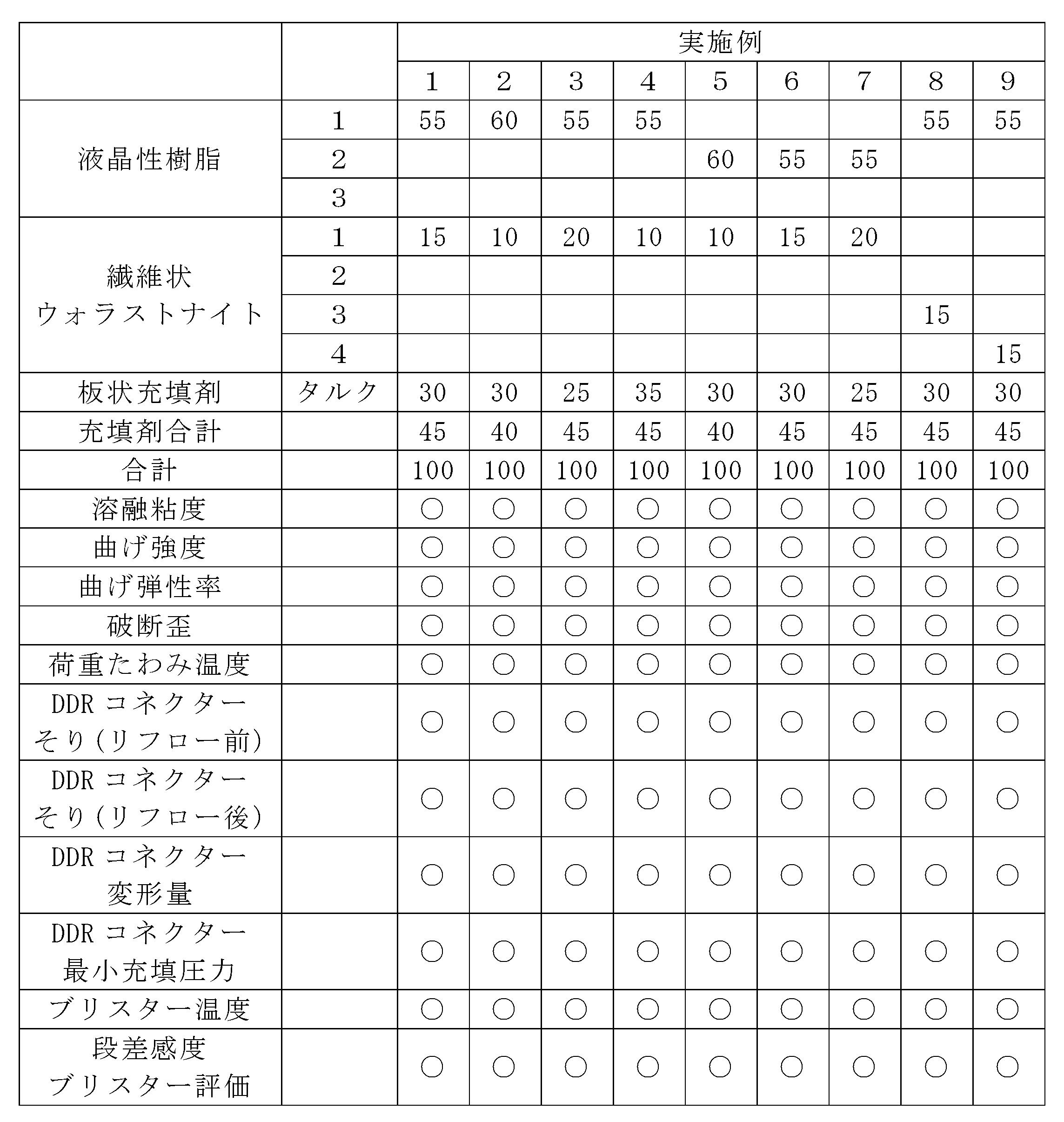

表2及び表3から分かる通り、本発明に係る液晶性樹脂組成物の成形品は、耐熱性及び機械的性質に優れ、そり変形及びブリスター発生が抑制されている。
Claims (9)
- (A)液晶性樹脂、
(B)繊維状ウォラストナイト、及び
(C)板状充填剤
を含有する液晶性樹脂組成物であって、
前記(A)液晶性樹脂は、芳香族ポリエステルアミドであり、
前記繊維状ウォラストナイトにおいて、Al2O3の含有量は、0.05~0.65質量%、Fe2O3の含有量は、0.05~1.0質量%であり、
前記液晶性樹脂組成物全体に対して、
前記(B)繊維状ウォラストナイトの含有量は、5~25質量%、
前記(C)板状充填剤の含有量は、22.5~40質量%、
前記(B)繊維状ウォラストナイトと前記(C)板状充填剤との合計の含有量は、35~47.5質量%
である液晶性樹脂組成物。 - 前記(C)板状充填剤は、タルクである請求項1に記載の液晶性樹脂組成物。
- 電子部品用である請求項1又は2に記載の液晶性樹脂組成物であって、
前記電子部品は、前記液晶性樹脂組成物の成形品を含み、
前記成形品は、厚肉部と薄肉部との肉厚差が0.5mm以上である偏肉構造を有し、前記成形品のゲート部から前記厚肉部に至る経路が前記薄肉部を経由する形状を有する液晶性樹脂組成物。 - リフロー工程を経る電子部品用である請求項1から3のいずれかに記載の液晶性樹脂組成物であって、
前記リフロー工程は、プレヒートゾーンにおける加熱とリフローゾーンにおける加熱とを含み、
前記プレヒートゾーンにおいて、設定温度は140~170℃、処理時間は1~3分間であり、
前記リフローゾーンにおいて、設定温度は180~210℃、処理時間は30~120秒であるとともに、実測の平均温度は183℃以上、実測のピーク温度は220~270℃である液晶性樹脂組成物。 - 請求項1又は2に記載の液晶性樹脂組成物の成形品を含み、製品全長が30mm以上であり、製品高さが5mm以上である電子部品。
- 前記成形品は、XY軸面、YZ軸面、及びXZ軸面の何れの軸面に対しても対称性がなく、前記電子部品は、非対称電子部品である請求項5に記載の電子部品。
- ピッチ間距離が0.6mm以下、製品全長が60.0mm以上、製品高さが5mm以上10.0mm以下、極数が200極以上のメモリーモジュール用コネクターである請求項5又は6に記載の電子部品。
- 前記成形品は、厚肉部と薄肉部との肉厚差が0.5mm以上である偏肉構造を有し、前記成形品のゲート部から前記厚肉部に至る経路が前記薄肉部を経由する形状を有する請求項5から7のいずれかに記載の電子部品。
- リフロー工程を経る請求項5から8のいずれかに記載の電子部品であって、
前記リフロー工程は、プレヒートゾーンにおける加熱とリフローゾーンにおける加熱とを含み、
前記プレヒートゾーンにおいて、設定温度は140~170℃、処理時間は1~3分間であり、
前記リフローゾーンにおいて、設定温度は180~210℃、処理時間は30~120秒であるとともに、実測の平均温度は183℃以上、実測のピーク温度は220~270℃である電子部品。
Priority Applications (1)
| Application Number | Priority Date | Filing Date | Title |
|---|---|---|---|
| JP2021532980A JP7038260B2 (ja) | 2019-09-30 | 2020-09-10 | 液晶性樹脂組成物、及び当該液晶性樹脂組成物の成形品を含む電子部品 |
Applications Claiming Priority (2)
| Application Number | Priority Date | Filing Date | Title |
|---|---|---|---|
| JP2019-180568 | 2019-09-30 | ||
| JP2019180568 | 2019-09-30 |
Publications (1)
| Publication Number | Publication Date |
|---|---|
| WO2021065417A1 true WO2021065417A1 (ja) | 2021-04-08 |
Family
ID=75337379
Family Applications (1)
| Application Number | Title | Priority Date | Filing Date |
|---|---|---|---|
| PCT/JP2020/034342 Ceased WO2021065417A1 (ja) | 2019-09-30 | 2020-09-10 | 液晶性樹脂組成物、及び当該液晶性樹脂組成物の成形品を含む電子部品 |
Country Status (3)
| Country | Link |
|---|---|
| JP (1) | JP7038260B2 (ja) |
| TW (1) | TW202116923A (ja) |
| WO (1) | WO2021065417A1 (ja) |
Cited By (2)
| Publication number | Priority date | Publication date | Assignee | Title |
|---|---|---|---|---|
| WO2023186187A1 (zh) * | 2022-04-01 | 2023-10-05 | 珠海万通特种工程塑料有限公司 | 一种液晶聚合物及其制备方法和应用 |
| US20240030558A1 (en) * | 2022-07-22 | 2024-01-25 | Ticona Llc | Busbar for a Battery Assembly |
Citations (5)
| Publication number | Priority date | Publication date | Assignee | Title |
|---|---|---|---|---|
| JPS59147034A (ja) * | 1983-02-07 | 1984-08-23 | ヘキスト・セラニーズ・コーポレーション | 表面摩耗の少ないサ−モトロピック液晶性ポリマ−ブレンド |
| JPS61285249A (ja) * | 1985-06-12 | 1986-12-16 | Polyplastics Co | 歯車用樹脂組成物 |
| JP2008214573A (ja) * | 2007-03-07 | 2008-09-18 | Toray Ind Inc | 液晶性樹脂組成物、およびそれからなる成形品 |
| WO2017038421A1 (ja) * | 2015-09-01 | 2017-03-09 | ポリプラスチックス株式会社 | カメラモジュール用液晶性樹脂組成物及びそれを用いたカメラモジュール |
| JP2018106005A (ja) * | 2016-12-26 | 2018-07-05 | ポリプラスチックス株式会社 | カメラモジュール用液晶性樹脂組成物及びそれを用いたカメラモジュール |
-
2020
- 2020-09-10 JP JP2021532980A patent/JP7038260B2/ja active Active
- 2020-09-10 WO PCT/JP2020/034342 patent/WO2021065417A1/ja not_active Ceased
- 2020-09-17 TW TW109132038A patent/TW202116923A/zh unknown
Patent Citations (5)
| Publication number | Priority date | Publication date | Assignee | Title |
|---|---|---|---|---|
| JPS59147034A (ja) * | 1983-02-07 | 1984-08-23 | ヘキスト・セラニーズ・コーポレーション | 表面摩耗の少ないサ−モトロピック液晶性ポリマ−ブレンド |
| JPS61285249A (ja) * | 1985-06-12 | 1986-12-16 | Polyplastics Co | 歯車用樹脂組成物 |
| JP2008214573A (ja) * | 2007-03-07 | 2008-09-18 | Toray Ind Inc | 液晶性樹脂組成物、およびそれからなる成形品 |
| WO2017038421A1 (ja) * | 2015-09-01 | 2017-03-09 | ポリプラスチックス株式会社 | カメラモジュール用液晶性樹脂組成物及びそれを用いたカメラモジュール |
| JP2018106005A (ja) * | 2016-12-26 | 2018-07-05 | ポリプラスチックス株式会社 | カメラモジュール用液晶性樹脂組成物及びそれを用いたカメラモジュール |
Cited By (2)
| Publication number | Priority date | Publication date | Assignee | Title |
|---|---|---|---|---|
| WO2023186187A1 (zh) * | 2022-04-01 | 2023-10-05 | 珠海万通特种工程塑料有限公司 | 一种液晶聚合物及其制备方法和应用 |
| US20240030558A1 (en) * | 2022-07-22 | 2024-01-25 | Ticona Llc | Busbar for a Battery Assembly |
Also Published As
| Publication number | Publication date |
|---|---|
| JP7038260B2 (ja) | 2022-03-17 |
| TW202116923A (zh) | 2021-05-01 |
| JPWO2021065417A1 (ja) | 2021-11-25 |
Similar Documents
| Publication | Publication Date | Title |
|---|---|---|
| JP6837184B2 (ja) | 液晶性樹脂組成物 | |
| JP5769888B2 (ja) | 電子部品用複合樹脂組成物、及び当該複合樹脂組成物から成形された電子部品 | |
| JP6345376B1 (ja) | 複合樹脂組成物、及び当該複合樹脂組成物から成形された電子部品 | |
| JPWO2008023839A1 (ja) | 非対称電子部品 | |
| JP7393590B1 (ja) | 平面状コネクター用液晶性樹脂組成物及びそれを用いた平面状コネクター | |
| JP6841978B2 (ja) | 液晶性樹脂組成物、及び当該液晶性樹脂組成物の成形品を含むコネクター | |
| JP6321898B1 (ja) | 複合樹脂組成物、及び当該複合樹脂組成物から成形された電子部品 | |
| WO2017110867A1 (ja) | 複合樹脂組成物、及び当該複合樹脂組成物から成形されたコネクター | |
| JP7038260B2 (ja) | 液晶性樹脂組成物、及び当該液晶性樹脂組成物の成形品を含む電子部品 | |
| JP2018095683A (ja) | 複合樹脂組成物、及び当該複合樹脂組成物から成形された電子部品 | |
| JP6895032B1 (ja) | 液晶性樹脂組成物、及び当該液晶性樹脂組成物の成形品を含むコネクター | |
| JP6944615B1 (ja) | 樹脂組成物及びコネクター |
Legal Events
| Date | Code | Title | Description |
|---|---|---|---|
| 121 | Ep: the epo has been informed by wipo that ep was designated in this application |
Ref document number: 20873188 Country of ref document: EP Kind code of ref document: A1 |
|
| ENP | Entry into the national phase |
Ref document number: 2021532980 Country of ref document: JP Kind code of ref document: A |
|
| NENP | Non-entry into the national phase |
Ref country code: DE |
|
| 122 | Ep: pct application non-entry in european phase |
Ref document number: 20873188 Country of ref document: EP Kind code of ref document: A1 |