WO2020213530A1 - 発話文拡張装置、発話文生成装置、発話文拡張方法、およびプログラム - Google Patents
発話文拡張装置、発話文生成装置、発話文拡張方法、およびプログラム Download PDFInfo
- Publication number
- WO2020213530A1 WO2020213530A1 PCT/JP2020/016148 JP2020016148W WO2020213530A1 WO 2020213530 A1 WO2020213530 A1 WO 2020213530A1 JP 2020016148 W JP2020016148 W JP 2020016148W WO 2020213530 A1 WO2020213530 A1 WO 2020213530A1
- Authority
- WO
- WIPO (PCT)
- Prior art keywords
- utterance
- noun
- sentence
- extension
- dictionary
- Prior art date
- Legal status (The legal status is an assumption and is not a legal conclusion. Google has not performed a legal analysis and makes no representation as to the accuracy of the status listed.)
- Ceased
Links
Images






Classifications
-
- G—PHYSICS
- G06—COMPUTING OR CALCULATING; COUNTING
- G06F—ELECTRIC DIGITAL DATA PROCESSING
- G06F40/00—Handling natural language data
- G06F40/20—Natural language analysis
- G06F40/237—Lexical tools
- G06F40/242—Dictionaries
-
- G—PHYSICS
- G06—COMPUTING OR CALCULATING; COUNTING
- G06F—ELECTRIC DIGITAL DATA PROCESSING
- G06F40/00—Handling natural language data
- G06F40/10—Text processing
- G06F40/166—Editing, e.g. inserting or deleting
-
- G—PHYSICS
- G06—COMPUTING OR CALCULATING; COUNTING
- G06F—ELECTRIC DIGITAL DATA PROCESSING
- G06F40/00—Handling natural language data
- G06F40/20—Natural language analysis
- G06F40/253—Grammatical analysis; Style critique
-
- G—PHYSICS
- G06—COMPUTING OR CALCULATING; COUNTING
- G06F—ELECTRIC DIGITAL DATA PROCESSING
- G06F40/00—Handling natural language data
- G06F40/20—Natural language analysis
- G06F40/268—Morphological analysis
Definitions
- the present invention relates to an utterance sentence expansion device, an utterance sentence generation device, an utterance sentence extension method, and a program.
- the dialogue system Through the dialogue system, humans interact with computers to obtain various information and meet their needs.
- the dialogue system also includes a dialogue system that not only accomplishes a predetermined task but also conducts daily conversation. Through such a dialogue system, human beings gain mental stability, satisfy their desire for approval, and build relationships of trust.
- the types of dialogue systems are described in Reference 1.
- an utterance generation model using Deep Learning has been attracting attention as a method of outputting the output utterance of the system in response to the input user's utterance.
- This method prepares learning data in which utterances and output utterances are paired, and learns a model that generates utterances based on the training data.
- the utterance generation model catches the input utterance sentence and the output utterance as vectors, and learns the correspondence between the vectors.
- the information generally available is only the information included in the utterance.
- the output utterance is generated based on the token sequence (morpheme string in the case of Japanese) included in the utterance.
- the learning data is used to learn the correspondence from the utterance to the output utterance.
- the generative model may not be able to generate an appropriate output utterance for an unknown input that does not include a token sequence similar to the training data.
- An unknown input is, for example, an unknown word that is an unknown noun contained in a token sequence.
- the unknown word is a noun that does not appear in the input utterance sentence of the learning data, and is a noun that appears in the utterance sentence at the time of utterance generation.
- a mechanism for discovering an unknown input and a case where the token sequence is different but semantically similar by using a resource different from the training data is required in the generative model.
- the present invention has been made in view of the above circumstances, and is an utterance sentence expansion device and a utterance sentence extension capable of generating an expanded utterance used for outputting a more appropriate output utterance for an utterance.
- the purpose is to provide methods and programs.
- Another object of the present invention is to provide an utterance sentence generator capable of outputting a more appropriate output utterance for an utterance.
- the utterance sentence expansion device is an extension that includes a noun and includes a higher category for the noun for the utterance to be expanded and the utterance that has been morphologically analyzed in advance.
- An extension unit that generates an extended utterance by inserting one or more higher categories of the extension dictionary corresponding to the noun included in the utterance before the noun of the utterance using the information of the utterance. Is configured to include.
- the expansion unit when the expansion unit inserts a plurality of upper categories of the expansion dictionary corresponding to the nouns included in the utterance, the expansion unit has a plurality of higher categories.
- the extended utterance may be generated by ordering the categories in the higher hierarchy so as to be closer to the beginning of the sentence and inserting them before the noun of the utterance.
- the utterance sentence generation device is the expansion unit described in the first invention, in which the utterance sentence is input, and the expanded utterance generated from the utterance sentence is pre-learned utterance.
- An utterance sentence generation device that outputs an output utterance as an input to the generation model.
- the utterance generation model is generated from the input utterance sentence by inputting the input utterance sentence included in the training data in the extension unit.
- the expanded utterance is pre-learned as an input utterance sentence of the learning data.
- the utterance sentence extension method uses information from an extension dictionary, which is a dictionary containing higher categories for nouns, for utterances to be expanded that include nouns and have been morphologically analyzed in advance. It is characterized by including a step of generating an extended utterance by inserting one or more upper categories of the extended dictionary corresponding to the noun included in the utterance before the noun of the utterance. To do.
- an extension dictionary is a dictionary containing higher categories for nouns, for utterances to be expanded that include nouns and have been morphologically analyzed in advance. It is characterized by including a step of generating an extended utterance by inserting one or more upper categories of the extended dictionary corresponding to the noun included in the utterance before the noun of the utterance. To do.
- the program according to the fourth invention uses information from an extension dictionary, which is a dictionary containing higher categories for nouns, for utterances to be extended that include nouns and have been morphologically analyzed in advance on a computer. It is a program for executing that the extended utterance is generated by inserting one or more upper categories of the extended dictionary corresponding to the noun included in the utterance before the noun of the utterance.
- an extension dictionary is a dictionary containing higher categories for nouns, for utterances to be extended that include nouns and have been morphologically analyzed in advance on a computer. It is a program for executing that the extended utterance is generated by inserting one or more upper categories of the extended dictionary corresponding to the noun included in the utterance before the noun of the utterance.
- the utterance sentence extension device According to the utterance sentence expansion device, the utterance sentence extension method, and the program of the present invention, it is possible to obtain an effect that an extended utterance used for outputting a more appropriate output utterance can be generated for the utterance. Be done.
- the utterance sentence generator of the present invention it is possible to obtain an effect that a more appropriate output utterance can be output for the utterance.
- the extended utterance is made as a generalized utterance of the noun. create. Based on the expanded utterance, it is possible to learn the utterance generation model and generate the output utterance using the test data.
- the information of the extension dictionary which is a dictionary containing the information of the upper category of the word, is used.
- the information of the extension dictionary for example, the thesaurus and the category information of Wikipedia (registered trademark) can be used.
- Wikipedia (registered trademark) covers various nouns, and the superordinate concepts of nouns are recorded as a tree of categories.
- category information is used as the category information of the extension dictionary will be described as an example.
- Category information can be created by analyzing the dump data of Wikipedia (registered trademark) and compiling it as a database.
- FIG. 1 is a block diagram showing an example of a system configuration of the utterance sentence expansion device 10 according to the embodiment of the present invention.
- the utterance sentence expansion device 10 having the configuration shown in FIG. 1 can be configured by a computer including a CPU, a RAM, a program for executing each processing routine described later, and a ROM storing various data.
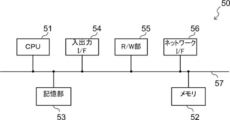
- FIG. 2 is a schematic block diagram showing an example of a computer functioning as the utterance sentence expansion device 10.
- the utterance sentence expansion device 10 can be realized by the computer 50 shown in FIG.
- the computer 50 includes a CPU 51, a memory 52 as a temporary storage area, and a non-volatile storage unit 53. Further, the computer 50 has an input / output interface (I / F) 54 to which an input / output device or the like (not shown) is connected, and a read / write (R / W) unit 55 that controls reading and writing of data to a recording medium. To be equipped. Further, the computer 50 includes a network I / F 56 connected to a network such as the Internet.
- the CPU 51, the memory 52, the storage unit 53, the input / output I / F 54, the R / W unit 55, and the network I / F 56 are connected to each other via the bus 57.
- the storage unit 53 can be realized by a Hard Disk Drive (HDD), a solid state drive (SSD), a flash memory, or the like.
- a program for operating the computer 50 is stored in the storage unit 53 as a storage medium.
- the CPU 51 reads the program from the storage unit 53, expands it in the memory 52, and sequentially executes the processes included in the program.
- the utterance sentence expansion device 10 of FIG. 1 includes a morphological analysis unit 12, an expansion dictionary 14, and an expansion unit 16.
- the utterance sentence expansion device 10 will be described by taking as an example a case where the dialogue system is used as a support utterance generation system and the utterance of the support utterance pair data is expanded.
- Supporting utterance pair data is utterance that expresses a positive (or negative) opinion on a specific topic, and data in which the specific reason is paired as an utterance and an output utterance.
- Supporting utterance pair The pair of data utterance and output utterance is, for example, a pair of output utterances saying "the sea is beautiful" for the utterance "Yokohama is good”.
- the application target of this method is not limited to the utterance of the support utterance pair data, but can be applied to the utterance of any utterance pair data such as the utterance pair data related to the question and the utterance pair data related to the counterargument.
- the morphological analysis unit 12 receives an utterance of an arbitrary sentence, performs morphological analysis, divides the utterance, and outputs a noun that appears first.
- the noun that appears first is the noun that is the target of expansion using the category information of the extension dictionary 14. If nouns are not included, the output does not contain noun information and the utterance is not extended.
- the extension unit 16 searches whether the noun to be expanded output by the morphological analysis unit 12 is included in the category information in the extension dictionary 14, and if it is recorded, the corresponding category is used as a character string for the noun. Output the text added to the front as an extended utterance.
- utterance is, for example, "surfing is fun".
- "surfing” is the noun that appears first in the utterance, so it is the noun to be extended.
- JTAG Reference 2 developed by NTT is used.
- FIG. 3 is a diagram showing an example of the output of the morphological analysis unit 12.
- the utterances are divided and written, and the noun "surfing" to be extended is given "*" indicating that it is an extension target.
- morphological analysis may be performed by an external device to accept utterances for which morphological analysis has been performed in advance. Further, it is desirable that the unit of the word-separation written by the morphological analysis unit 12 matches the unit of the utterance input when the utterance is generated by the utterance generation model. The same applies to the unit of the noun to be extended.
- FIG. 4 is a diagram showing an example of hierarchical categories of category information.
- the categories of these nouns are “extreme sports” and “water sports”.
- Sports is one of the higher categories.
- leisure is one of the higher category of "sports” and "water sports”. Since the category connected to the upper category by a short distance tends to be a typical category, when the extension unit 16 expands, the category connected to the main category by a short distance is applied as the category to be expanded.
- “water sports” and “leisure” are applied to the category for the noun “surfing”.
- "Extreme sports", “sports”, and “leisure” are applied to the category for the noun "skydiving”.
- the expansion unit 16 generates an expanded utterance that expands the utterance category for the utterance that has been morphologically analyzed by the morphological analysis unit 12.
- the extended utterance is generated by using the category information of the extended dictionary 14 and inserting N categories of the extended dictionary 14 corresponding to the first noun included in the utterance before the noun.
- the extension unit 16 confirms whether the noun at the beginning of the received utterance of the extension target is registered in the category information of the extension dictionary 14, and if it is registered, N upper categories are the nouns to be expanded. Extend by inserting before. As the value of N, any number of 1 or more can be specified. In the example of the support utterance generation system, the best performance was obtained when the value was 2, so the value of N is set to 2 in this embodiment.
- FIG. 5 is a diagram showing an example of the output of the expanded utterance expanded by the expansion unit 16. Since the value of N is set to 2 for the noun "surfing", “water sports” and “leisure”, which are the categories of the category information of the extension dictionary 14, are given as categories. Here, in the extension unit 16, the order in which the categories are inserted is such that the higher the category, the closer to the beginning of the sentence. This is a process corresponding to the nature of the utterance generation model described in detail in Non-Patent Document 1.
- the utterance generation model reads the token at the beginning of the utterance, that is, the morpheme in the Japanese utterance into the utterance generation model in order, the morpheme on the back side is more likely to be prioritized as the information used in the utterance generation. It has the property of. In view of such a property, when the extension unit 16 inserts a plurality of N categories of the extension dictionary 14, the category in the higher hierarchy among the N categories is closer to the beginning of the sentence. Generate extended utterances by ordering and inserting before the noun. Compared to the upper category, the lower category and the noun to be extended have a deeper relationship with the output utterance recorded in the learning data.
- an output utterance that is appropriate for an utterance that includes a noun to be extended is not always appropriate for an utterance that includes a higher category. Therefore, more appropriate output can be obtained by inserting the category so that the lower category or the noun to be extended is behind.
- FIG. 6 is an example of a flowchart showing a processing routine of the utterance sentence expansion device 10.
- step S100 the morphological analysis unit 12 receives an utterance consisting of an arbitrary sentence, performs morphological analysis, and outputs a morphologically analyzed utterance including a word-separated utterance and the first noun that appears.
- step S102 the expansion unit 16 generates an expanded utterance in which the utterance category is expanded for the utterance that has been morphologically analyzed by the morphological analysis unit 12.
- the extended utterance is generated by using the category information of the extended dictionary 14 and inserting N categories of the extended dictionary 14 corresponding to the first noun included in the utterance before the noun. When a plurality of N categories are inserted, they are inserted before the noun in an order so that the category in the higher hierarchy is closer to the beginning among the N categories.
- the utterance sentence expansion device As described above, according to the utterance sentence expansion device according to the embodiment of the present invention, it is possible to generate an extended utterance used for outputting a more appropriate output utterance for the utterance.
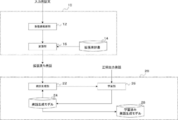
- FIG. 7 is a diagram showing a configuration when applied to an utterance sentence generation device for learning an utterance sentence generation model.
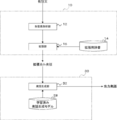
- FIG. 8 is a diagram showing a configuration when applied to an utterance sentence generation device for utterance sentence generation.
- a learned utterance generation model is obtained by using the extended utterance as an input utterance sentence of learning data.
- the utterance sentence generation device 20 receives the expanded utterance
- the utterance generation unit 22 generates an output utterance using the utterance generation model 24 and outputs it to the learning unit 26.
- the learning unit 26 receives and learns the output utterance and the correct answer output utterance, and learns the model parameters of the utterance generation model 24.
- the learning method for example, the learning method of the utterance generation model described in Non-Patent Document 1 (for example, Reference 3) may be used.
- the finally learned utterance generation model 24 becomes the trained utterance generation model 28.
- the processing target of the expansion unit 16 of the utterance sentence expansion device 10 shown in FIG. 7 is an input utterance sentence included in the learning data.
- the expansion unit 16 generates an expanded utterance by inputting an input utterance sentence included in the learning data.
- the utterance sentence generation device 20 learns the utterance generation model 24 in advance using the expanded utterance generated from the input utterance sentence as the input utterance sentence of the learning data.
- the utterance generation unit 32 when the utterance sentence generation device 30 receives the extended utterance, the utterance generation unit 32 generates and outputs an output utterance using the learned utterance generation model 28.
- the processing target of the expansion unit 16 of the utterance sentence expansion device 10 shown in FIG. 8 is the utterance sentence.
- the expansion unit 16 generates an expanded utterance by inputting an utterance sentence.
- the utterance sentence generation device 30 outputs an output utterance as an input to the learned utterance generation model 28 using the extended utterance generated from the utterance sentence.
- the utterance sentence generation device shown in FIGS. 7 and 8 may be configured as an integral unit to learn and apply the utterance generation model.
- FIG. 9 is a diagram showing an example of comparison results before and after expansion in the experiment.
- each column shows the "utterance ID”, "evaluation result of the output of the generative model before expansion (evaluation of two experts)", and “evaluation result of the output of the utterance generation model after expansion (experts)”. Evaluation of two people) ”,“ Output of the utterance generation model before expansion ”, and“ Output of the utterance generation model after expansion ”.
- ⁇ indicates a correct answer and ⁇ indicates an incorrect answer. Comparing before and after expansion, it can be seen that the output after expansion is able to output more appropriate utterances.
- the utterance generation model uses the learning data about surfing to perform snorkeling. It becomes possible to generate output for the utterance including it, and it becomes possible to generate an appropriate output utterance.
- the present invention is not limited to the above-described embodiment, and various modifications and applications are possible within a range that does not deviate from the gist of the present invention.
- Utterance sentence expansion device 12 Morphological analysis unit 14 Expansion dictionary 16 Expansion unit 20, 30 Utterance sentence generation device 22, 32 Utterance generation unit 24 Speech generation model 26 Learning unit 28 Learned utterance generation model
Landscapes
- Engineering & Computer Science (AREA)
- Theoretical Computer Science (AREA)
- Health & Medical Sciences (AREA)
- Artificial Intelligence (AREA)
- Audiology, Speech & Language Pathology (AREA)
- Computational Linguistics (AREA)
- General Health & Medical Sciences (AREA)
- Physics & Mathematics (AREA)
- General Engineering & Computer Science (AREA)
- General Physics & Mathematics (AREA)
- Machine Translation (AREA)
Abstract
発話に対して、より適切な出力発話を出力するために用いられる拡張済み発話を生成することができる。 発話文拡張装置は、名詞を含む、拡張対象の発話であって予め形態素解析済みの発話について、名詞に対する上位のカテゴリを含む辞書である拡張用辞書の情報を用いて、前記発話に含まれる名詞に対応する前記拡張用辞書の上位のカテゴリを、前記発話の名詞の前に一つ以上挿入することで拡張済み発話を生成する拡張部、を含む。
Description
本発明は、発話文拡張装置、発話文生成装置、発話文拡張方法、およびプログラムに関する。
対話システムを介して、人間はコンピュータと対話を行い、種々の情報を得たり、要望を満たしたりする。また、対話システムには、所定のタスクを達成するだけではなく、日常会話を行う対話システムも存在する。このような対話システムによって、人間は精神的な安定を得たり、承認欲を満たしたり、信頼関係を築いたりする。対話システムの類型については参考文献1に記載されている。
[参考文献1]河原達也,音声対話システムの進化と淘汰-歴史と最近の技術動向-,人工知能学会誌,Vol. 28,No. 1,p45-51,2013
近年、対話システムにおいて、入力されたユーザの発話に対して、システムの出力発話を出力する方法として、Deep Learningを用いた発話生成モデルが注目されている。この手法は、発話と出力発話がペアになった学習データを用意し、それを元に発話を生成するモデルを学習する手法である。発話生成モデルは、入力発話文と出力発話とをそれぞれベクトルとして捉えて、ベクトルの対応関係を学習する。発話生成モデルを利用することで、入力発話文の文字列ではなく意味内容が理解できるようになるため、出力する出力発話の品質が向上する。発話生成モデルの詳細は非特許文献1に記載されている。
発話生成モデルの学習、および、発話生成モデルを用いた出力発話の生成において、一般的に利用可能な情報は発話に含まれる情報のみとなる。具体的には、発話に含まれるトークン列(日本語の場合は形態素列)を元に出力発話を生成する。
Vinyals, O., Le, Q.: A neural conversational model. In: Proc. ICML Deep Learning Workshop (2015)
発話生成モデルの学習において、学習データは発話から出力発話への対応付けを学習するために利用される。また、学習に利用できる学習データは量に限りがあるため、生成モデルは、学習データに類似するトークン列が含まれない未知の入力に対して、適切な出力発話を生成できない場合がある。未知の入力とは、例えばトークン列に含まれる未知の名詞である未知語である。未知語は、具体的には、学習データの入力発話文に出現しない名詞であって、発話生成時の発話文に出現する名詞である。この問題を解決するためには、学習データとは異なるリソースを用いて、未知の入力とトークン列は異なるが意味的に類似する事例、を発見する機構が生成モデルに必要となる。
本発明は、上記事情を鑑みて成されたものであり、発話に対して、より適切な出力発話を出力するために用いられる拡張済み発話を生成することができる発話文拡張装置、発話文拡張方法、およびプログラムを提供することを目的とする。
また、発話に対して、より適切な出力発話を出力することができる発話文生成装置を提供することを目的とする。
上記目的を達成するために、第1の発明に係る発話文拡張装置は、名詞を含む、拡張対象の発話であって予め形態素解析済みの発話について、名詞に対する上位のカテゴリを含む辞書である拡張用辞書の情報を用いて、前記発話に含まれる名詞に対応する前記拡張用辞書の上位のカテゴリを、前記発話の名詞の前に一つ以上挿入することで拡張済み発話を生成する拡張部、を含んで構成されている。
また、第1の発明に係る発話文拡張装置において、前記拡張部は、前記発話に含まれる名詞に対応する前記拡張用辞書の上位のカテゴリを複数挿入する場合に、複数の前記上位のカテゴリのうち、上位の階層にあるカテゴリほど文の先頭に近くなるように順序付けて前記発話の名詞の前に挿入することで、前記拡張済み発話を生成するようにしてもよい。
また、第2の発明に係る発話文生成装置は、第1の発明に記載の前記拡張部で、発話文を入力とし、前記発話文から生成された前記拡張済み発話を、予め学習済みの発話生成モデルへの入力として、出力発話を出力する発話文生成装置であって、前記発話生成モデルは、前記拡張部で、学習データに含まれる入力発話文を入力とし、前記入力発話文から生成された前記拡張済み発話を、前記学習データの入力発話文として予め学習されたものである。
第3の発明に係る発話文拡張方法は、名詞を含む、拡張対象の発話であって予め形態素解析済みの発話について、名詞に対する上位のカテゴリを含む辞書である拡張用辞書の情報を用いて、前記発話に含まれる名詞に対応する前記拡張用辞書の上位のカテゴリを、前記発話の名詞の前に一つ以上挿入することで拡張済み発話を生成するステップ、を含んで実行することを特徴とする。
第4の発明に係るプログラムは、コンピュータに、名詞を含む、拡張対象の発話であって予め形態素解析済みの発話について、名詞に対する上位のカテゴリを含む辞書である拡張用辞書の情報を用いて、前記発話に含まれる名詞に対応する前記拡張用辞書の上位のカテゴリを、前記発話の名詞の前に一つ以上挿入することで拡張済み発話を生成する、ことを実行させるためのプログラムである。
本発明の発話文拡張装置、発話文拡張方法、およびプログラムによれば、発話に対して、より適切な出力発話を出力するために用いられる拡張済み発話を生成することができる、という効果が得られる。
また、本発明の発話文生成装置によれば、発話に対して、より適切な出力発話を出力することができる、という効果が得られる。
以下、図面を参照して本発明の実施の形態を詳細に説明する。
本発明の実施の形態では、学習データ、および、テストデータにおいて、発話に含まれる名詞にカテゴリ(名詞の上位概念となる情報)を付与することで、名詞を汎化した発話として拡張済み発話を作成する。拡張済み発話を元に、発話生成モデルの学習、およびテストデータを用いた出力発話の生成を行うことができる。カテゴリの付与には、単語の上位カテゴリの情報を含む辞書である拡張用辞書の情報を用いる。拡張用辞書の情報としては、例えばシソーラスや、Wikipedia(登録商標)のカテゴリ情報が利用できる。Wikipedia(登録商標)であれば、さまざまな名詞を網羅しており、名詞の上位概念をカテゴリのツリーとして収録している。本発明の実施の形態では、拡張用辞書のカテゴリ情報として、Wikipedia(登録商標)のカテゴリ情報を用いる場合を例に説明する。カテゴリ情報は、Wikipedia(登録商標)のダンプデータを解析してデータベースとしてまとめることで作成が可能である。
<本発明の実施の形態に係る発話文拡張装置の構成>
図1は、本発明の実施の形態の発話文拡張装置10のシステム構成の一例を示すブロック図である。図1に示す構成の発話文拡張装置10は、CPUと、RAMと、後述する各処理ルーチンを実行するためのプログラムおよび各種データを記憶したROMと、を含むコンピュータで構成することが出来る。
図2は、発話文拡張装置10として機能するコンピュータの一例を示す概略ブロック図である。例えば、発話文拡張装置10は、図2に示すコンピュータ50で実現することができる。コンピュータ50はCPU51、一時記憶領域としてのメモリ52、及び不揮発性の記憶部53を備える。また、コンピュータ50は、入出力装置等(図示省略)が接続される入出力interface(I/F)54、及び記録媒体に対するデータの読み込み及び書き込みを制御するread/write(R/W)部55を備える。また、コンピュータ50は、インターネット等のネットワークに接続されるネットワークI/F56を備える。CPU51、メモリ52、記憶部53、入出力I/F54、R/W部55、及びネットワークI/F56は、バス57を介して互いに接続される。
記憶部53は、Hard Disk Drive(HDD)、solid state drive(SSD)、フラッシュメモリ等によって実現できる。記憶媒体としての記憶部53には、コンピュータ50を機能させるためのプログラムが記憶されている。CPU51は、プログラムを記憶部53から読み出してメモリ52に展開し、プログラムが有するプロセスを順次実行する。
以上が図2におけるコンピュータの電気的な構成の一例の説明である。なお、後述する発話文生成装置におけるコンピュータの電気的な構成も同様である。
以下、図1の発話文拡張装置10について説明する。図1に示すように、発話文拡張装置10は、形態素解析部12と、拡張用辞書14と、拡張部16とを含んで構成されている。
本発明の実施の形態では、発話文拡張装置10は、対話システムを支持発話生成システムとして、支持発話ペアデータの発話を拡張する場合を例に説明を行う。支持発話ペアデータとは、特定のトピックに対して肯定的(または否定的)な意見を述べる発話、および、その具体的な理由を、発話と出力発話としてペアにしたデータである。支持発話ペアデータの発話と出力発話とのペアは、例えば、「横浜は良い」という発話に対する「海が綺麗だ」という出力発話のペアである。
なお、本手法の適用対象は、支持発話ペアデータの発話に限定されるものではなく、質問に関する発話ペアデータ、反論に関する発話ペアデータといった任意の発話ペアデータの発話に適用することができる。
以下、発話文拡張装置10の各処理部について説明を行う。
形態素解析部12は、任意の1文の発話を受け取り、形態素解析を行って発話の分かち書き、および、最初に出現する名詞を出力する。最初に出現する名詞は、拡張用辞書14のカテゴリ情報を用いた拡張の対象となる名詞である。名詞が含まれない場合、出力に名詞の情報は含まれず、発話の拡張は行われない。拡張部16は、形態素解析部12が出力した拡張対象の名詞が、拡張用辞書14におけるカテゴリ情報に含まれているかを検索し、収録されている場合は、該当したカテゴリを文字列として名詞の前方に付け加えたテキストを拡張済み発話として出力する。拡張済み発話、および、元の発話とペアの出力発話を元に発話生成モデルを学習することで、よりさまざまな発話に対して適切な支持発話の生成が可能になる。
発話の例は、例えば、「サーフィンは楽しい」である。この例の場合、「サーフィン」は発話の中で最初に出現する名詞となるため、拡張対象の名詞となる。
形態素解析部12で用いる形態素解析器には、入力された日本語の分かち書きが可能な任意のツールを使用することができる。本実施の形態では、NTTが開発したJTAG(参考文献2)を用いる。
[参考文献2]Fuchi, T., Takagi, S.: Japanese morphological analyzer using word co-occurrence-JTAG-. In: Proc. COLING (1998)
図3は、形態素解析部12の出力の一例を示す図である。形態素解析を行った結果として、発話が分かち書きされており,拡張対象の名詞「サーフィン」には拡張対象であることを表す「*」が付与されている。
なお、外部の装置により形態素解析を行って、予め形態素解析済みの発話を受け付けるようにしてもよい。また、形態素解析部12による分かち書きの単位は、発話生成モデルによって発話生成を行う際に入力する発話の単位と、一致していることが望ましい。拡張対象となる名詞の単位も同様である。
拡張用辞書14には、上述したカテゴリ情報が格納されている。図4は、カテゴリ情報の階層的なカテゴリの一例を示す図である。図4に示すように、名詞「サーフィン」に対して、その同列の階層の名詞に「スカイダイビング」、「シュノーケリング」がある。これら名詞のカテゴリとして、「エクストリームスポーツ」、「ウォータースポーツ」がある。その一つ上位のカテゴリに「スポーツ」がある。また、「スポーツ」、「ウォータースポーツ」の上位のカテゴリとして「レジャー」がある。上位のカテゴリに短い距離で繋がるカテゴリが代表的なカテゴリであるという傾向から、拡張部16で拡張する際には、主要カテゴリに短い距離で繋がるカテゴリを、拡張対象のカテゴリとして適用する。図4の例であれば、名詞「サーフィン」に対するカテゴリには、「ウォータースポーツ」、「レジャー」を適用する。名詞「スカイダイビング」に対するカテゴリには、「エクストリームスポーツ」、「スポーツ」、「レジャー」を適用する。
拡張部16は、形態素解析部12で形態素解析済みの発話について、発話のカテゴリを拡張した拡張済み発話を生成する。拡張済み発話は、拡張用辞書14のカテゴリ情報を用いて、発話に含まれる先頭の名詞に対応する拡張用辞書14のN個のカテゴリを、当該名詞の前に挿入することで生成する。
拡張部16では、受け取った拡張対象の発話の先頭の名詞が、拡張用辞書14のカテゴリ情報に登録されているかを確認し、登録されている場合は、その上位カテゴリN個を拡張対象の名詞の前に挿入することで拡張を行う。Nの値は1以上の任意の個数を指定可能である。支持発話生成システムの例では2のとき最も良い性能が出たため、本実施の形態ではNの値を2とする。
図5は、拡張部16で拡張した拡張済み発話の出力の一例を示す図である。名詞「サーフィン」に対して、Nの値が2と設定されているため、拡張用辞書14のカテゴリ情報のカテゴリである「ウォータースポーツ」および「レジャー」がカテゴリとして付与されている。ここで、拡張部16で、カテゴリを挿入する順番は、上位のカテゴリほど文の先頭に近くなるように順序付けする。これは、非特許文献1に詳述される発話生成モデルの性質に対応するための処理である。発話生成モデルは、発話の先頭のトークン、すなわち日本語の発話における形態素から順に発話生成モデルに読み込みを行うため、後ろ側にある形態素の方が発話生成の際に用いられる情報として優先されやすい、という性質がある。このような性質に鑑みて、拡張部16は、拡張用辞書14のN個のカテゴリを複数挿入する場合に、N個のカテゴリのうち、上位の階層にあるカテゴリほど文の先頭に近くなるように順序付けて名詞の前に挿入することで、拡張済み発話を生成する。上位のカテゴリに比べて、下位のカテゴリや拡張対象の名詞の方が、学習データに収録されている出力発話とより深い関係を持つ。言い換えれば、拡張対象の名詞を含む発話に対して適切な出力発話が、上位のカテゴリを含む発話に対しても必ずしも適切とは限らない。そのため、下位のカテゴリや拡張対象の名詞が後ろになるようカテゴリの挿入を行うことで、より適切な出力が得られるようになる。
なお、発話を、「レジャーは楽しい」、「ウォータースポーツは楽しい」、「サーフィンは楽しい」のように複数文に拡張することも考えられる。しかし、このように複数文による拡張を行ってしまうと、それぞれの発話文ごとに、発話生成モデルに入力し、異なる出力発話が生成される可能性がある。その場合、どの発話を最終的な出力発話とすればよいか選択することが必要となる。そこで、本手法では、上述したように一つの文の中で、カテゴリを先頭に並べる形式を採用することで、発話生成モデルから生成される出力発話を1つ絞ることができる。
<本発明の実施の形態に係る発話文拡張装置の作用>
次に、本発明の実施の形態に係る発話文拡張装置10の作用について説明する。図6は、発話文拡張装置10の処理ルーチンを示すフローチャートの一例である。
ステップS100では、形態素解析部12は、任意の1文から成る発話を受け取って形態素解析を行い、発話の分かち書きと最初に出現した名詞を含む、形態素解析済みの発話を出力する。
ステップS102では、拡張部16は、形態素解析部12で形態素解析済みの発話について、発話のカテゴリを拡張した拡張済み発話を生成する。拡張済み発話は、拡張用辞書14のカテゴリ情報を用いて、発話に含まれる先頭の名詞に対応する拡張用辞書14のN個のカテゴリを、当該名詞の前に挿入することで生成する。N個のカテゴリは、複数挿入する場合に、N個のカテゴリのうち、上位の階層にあるカテゴリほど先頭に近くなるように順序付けて名詞の前に挿入する。
以上説明したように、本発明の実施の形態に係る発話文拡張装置によれば、発話に対して、より適切な出力発話を出力するために用いられる拡張済み発話を生成することができる。
<発話文生成装置の例>
次に、発話文拡張装置10で生成した拡張済み発話を、発話文生成装置に適用する場合の例を説明する。図7は、発話文生成モデルの学習のための発話文生成装置に適用した場合の構成を示す図である。図8は、発話文生成のための発話文生成装置に適用した場合の構成を示す図である。
図7に示すように、拡張済み発話を学習データの入力発話文として用いて学習済み発話生成モデルを得る。図7では、発話文生成装置20は、拡張済み発話を受け付けると、発話生成部22により、発話生成モデル24を用いて出力発話を生成し、学習部26に出力する。学習部26は、出力発話と、正解出力発話とを受け付けて学習を行い、発話生成モデル24のモデルパラメータを学習する。学習手法は、例えば非特許文献1に記載の発話生成モデルの学習手法(例えば参考文献3)を利用すればよい。
[参考文献3]OpenNMT,URL:https://github.com/OpenNMT/OpenNMT-py
最終的に学習された発話生成モデル24が学習済み発話生成モデル28となる。このように、図7に示す発話文拡張装置10の拡張部16の処理対象を学習データに含まれる入力発話文とする。拡張部16で、学習データに含まれる入力発話文を入力として、拡張済み発話を生成する。発話文生成装置20は、入力発話文から生成された拡張済み発話を学習データの入力発話文として発話生成モデル24を予め学習しておく。
図8では、発話文生成装置30は、拡張済み発話を受け付けると、発話生成部32により、学習済み発話生成モデル28を用いて出力発話を生成して出力する。このように、図8に示す発話文拡張装置10の拡張部16の処理対象を発話文とする。拡張部16で、発話文を入力として、拡張済み発話を生成する。発話文生成装置30は、発話文から生成された拡張済み発話を学習済みの発話生成モデル28への入力として、出力発話を出力する。なお、図7および図8に示した発話文生成装置は一体として構成し、発話生成モデルの学習および適用を行うようにしてもよい。
<実験例>
上記図7および図8の例による支持発話生成システムの発話生成モデルの学習および適用に関する実験を行った。図9は、実験における拡張前後の比較結果の一例を示す図である。図9において、各列はそれぞれ「発話のID」、「拡張前の生成モデルの出力の評価結果(専門家2名の評価)」、「拡張後の発話生成モデルの出力の評価結果(専門家2名の評価)」、「拡張前の発話生成モデルの出力」、「拡張後の発話生成モデルの出力」となっている。評価結果は○が正解、×が不正解を表す。拡張の前と後を比較すると、拡張後の出力の方がより適切な発話を出力できていることがわかる。
実験における発話生成モデルの作成にあたっては、入力と出力とのペアを収録した4万ペアの学習データを利用した。学習データはクラウドソーシングを用いて人手で発話を記述することで収集した。発話、および、出力発話の分かち書きには参考文献2のJTAGを利用し、発話生成モデルの学習には参考文献3のOpenNMTを利用した。実験結果のように、拡張済み発話を用いて学習した発話生成モデルを用いることで、発話に対して、尤もらしい出力発話を出力されやすくなる。
以上説明したように、本発明の実施の形態に係る発話文生成装置によれば、カテゴリを拡張した拡張済み用いて発話生成モデルの学習および適用を行うことで、発話に対して、より適切な出力発話を出力することができる。
また、対話システムの課題として、発話と出力発話をペアにした一般的な学習データの量には限界があるため、テストデータ中の発話に含まれる名詞を全てカバーする発話生成モデルを学習することは難しい。そこで、本発明の実施の形態の手法を用いることで、拡張用辞書のカテゴリ情報を用いることで、学習データに含まれないが拡張用辞書にエントリとして含まれる名詞と同じカテゴリに分類される学習データ中の名詞を類似する事例として扱うことができるようになる。これにより、さまざまな種類の発話に対して適切な出力発話を生成可能な発話生成モデルを学習することができる。例えば、「サーフィン」について述べた発話が学習データに含まれているが、「シュノーケリング」について述べた発話が学習データに含まれていない場合が考えられる。この場合、サーフィンとシュノーケリングが類似した概念であることは発話生成モデルの学習時に明示的に与えられないため、シュノーケリングについて適切な出力発話が生成されるとは限らない。このとき、拡張用辞書を用いて、サーフィンが、および、シュノーケリングが「海に関するレジャー」であるということを考慮した発話を作成することで、発話生成モデルはサーフィンに関する学習データを用いて、シュノーケリングを含む発話に対する出力を生成できるようになり、適切な出力発話の生成が可能になる。
なお、本発明は、上述した実施の形態に限定されるものではなく、この発明の要旨を逸脱しない範囲内で様々な変形や応用が可能である。
10 発話文拡張装置
12 形態素解析部
14 拡張用辞書
16 拡張部
20、30 発話文生成装置
22、32 発話生成部
24 発話生成モデル
26 学習部
28 学習済み発話生成モデル
12 形態素解析部
14 拡張用辞書
16 拡張部
20、30 発話文生成装置
22、32 発話生成部
24 発話生成モデル
26 学習部
28 学習済み発話生成モデル
Claims (5)
- 名詞を含む、拡張対象の発話であって予め形態素解析済みの発話について、名詞に対する上位のカテゴリを含む辞書である拡張用辞書の情報を用いて、前記発話に含まれる名詞に対応する前記拡張用辞書の上位のカテゴリを、前記発話の名詞の前に一つ以上挿入することで拡張済み発話を生成する拡張部、
を含む発話文拡張装置。 - 前記拡張部は、前記発話に含まれる名詞に対応する前記拡張用辞書の上位のカテゴリを複数挿入する場合に、複数の前記上位のカテゴリのうち、上位の階層にあるカテゴリほど文の先頭に近くなるように順序付けて前記発話の名詞の前に挿入することで、前記拡張済み発話を生成する請求項1に記載の発話文拡張装置。
- 請求項1または請求項2に記載の前記拡張部で、発話文を入力とし、前記発話文から生成された前記拡張済み発話を、予め学習済みの発話生成モデルへの入力として、出力発話を出力する発話文生成装置であって、
前記発話生成モデルは、前記拡張部で、学習データに含まれる入力発話文を入力とし、前記入力発話文から生成された前記拡張済み発話を、前記学習データの入力発話文として予め学習されたものである。 - 名詞を含む、拡張対象の発話であって予め形態素解析済みの発話について、名詞に対する上位のカテゴリを含む辞書である拡張用辞書の情報を用いて、前記発話に含まれる名詞に対応する前記拡張用辞書の上位のカテゴリを、前記発話の名詞の前に一つ以上挿入することで拡張済み発話を生成するステップ、
を含む発話文拡張方法。 - コンピュータに、
名詞を含む、拡張対象の発話であって予め形態素解析済みの発話について、名詞に対する上位のカテゴリを含む辞書である拡張用辞書の情報を用いて、前記発話に含まれる名詞に対応する前記拡張用辞書の上位のカテゴリを、前記発話の名詞の前に一つ以上挿入することで拡張済み発話を生成する、
ことを実行させるためのプログラム。
Priority Applications (1)
| Application Number | Priority Date | Filing Date | Title |
|---|---|---|---|
| US17/603,418 US12182497B2 (en) | 2019-04-16 | 2020-04-10 | Utterance sentence extension apparatus, utterance sentence generator apparatus, utterance sentence extension method, and program |
Applications Claiming Priority (2)
| Application Number | Priority Date | Filing Date | Title |
|---|---|---|---|
| JP2019078135A JP7215309B2 (ja) | 2019-04-16 | 2019-04-16 | 発話文拡張装置、発話文生成装置、発話文拡張方法、およびプログラム |
| JP2019-078135 | 2019-04-16 |
Publications (1)
| Publication Number | Publication Date |
|---|---|
| WO2020213530A1 true WO2020213530A1 (ja) | 2020-10-22 |
Family
ID=72837171
Family Applications (1)
| Application Number | Title | Priority Date | Filing Date |
|---|---|---|---|
| PCT/JP2020/016148 Ceased WO2020213530A1 (ja) | 2019-04-16 | 2020-04-10 | 発話文拡張装置、発話文生成装置、発話文拡張方法、およびプログラム |
Country Status (3)
| Country | Link |
|---|---|
| US (1) | US12182497B2 (ja) |
| JP (1) | JP7215309B2 (ja) |
| WO (1) | WO2020213530A1 (ja) |
Citations (3)
| Publication number | Priority date | Publication date | Assignee | Title |
|---|---|---|---|---|
| JP2007149087A (ja) * | 2005-10-27 | 2007-06-14 | Reitekku:Kk | 文書作成支援装置 |
| JP2007172404A (ja) * | 2005-12-22 | 2007-07-05 | Internatl Business Mach Corp <Ibm> | 文字列処理方法、装置、およびプログラム |
| JP2017091368A (ja) * | 2015-11-13 | 2017-05-25 | 日本電信電話株式会社 | 言い換え装置、方法、及びプログラム |
Family Cites Families (5)
| Publication number | Priority date | Publication date | Assignee | Title |
|---|---|---|---|---|
| US9830321B2 (en) * | 2014-09-30 | 2017-11-28 | Rovi Guides, Inc. | Systems and methods for searching for a media asset |
| JP6601069B2 (ja) * | 2015-09-01 | 2019-11-06 | カシオ計算機株式会社 | 対話制御装置、対話制御方法及びプログラム |
| JP2017049471A (ja) * | 2015-09-03 | 2017-03-09 | カシオ計算機株式会社 | 対話制御装置、対話制御方法及びプログラム |
| US10133735B2 (en) * | 2016-02-29 | 2018-11-20 | Rovi Guides, Inc. | Systems and methods for training a model to determine whether a query with multiple segments comprises multiple distinct commands or a combined command |
| JP6819990B2 (ja) * | 2016-08-16 | 2021-01-27 | 国立研究開発法人情報通信研究機構 | 対話システム及びそのためのコンピュータプログラム |
-
2019
- 2019-04-16 JP JP2019078135A patent/JP7215309B2/ja active Active
-
2020
- 2020-04-10 US US17/603,418 patent/US12182497B2/en active Active
- 2020-04-10 WO PCT/JP2020/016148 patent/WO2020213530A1/ja not_active Ceased
Patent Citations (3)
| Publication number | Priority date | Publication date | Assignee | Title |
|---|---|---|---|---|
| JP2007149087A (ja) * | 2005-10-27 | 2007-06-14 | Reitekku:Kk | 文書作成支援装置 |
| JP2007172404A (ja) * | 2005-12-22 | 2007-07-05 | Internatl Business Mach Corp <Ibm> | 文字列処理方法、装置、およびプログラム |
| JP2017091368A (ja) * | 2015-11-13 | 2017-05-25 | 日本電信電話株式会社 | 言い換え装置、方法、及びプログラム |
Also Published As
| Publication number | Publication date |
|---|---|
| US12182497B2 (en) | 2024-12-31 |
| JP2020177365A (ja) | 2020-10-29 |
| JP7215309B2 (ja) | 2023-01-31 |
| US20220261536A1 (en) | 2022-08-18 |
Similar Documents
| Publication | Publication Date | Title |
|---|---|---|
| CN112905735A (zh) | 用于自然语言处理的方法和设备 | |
| US20080059190A1 (en) | Speech unit selection using HMM acoustic models | |
| JP6810580B2 (ja) | 言語モデル学習装置およびそのプログラム | |
| CN117892736B (zh) | 基于情境感知与情绪推理的共情对话生成方法 | |
| CN114424209A (zh) | 序列到序列神经模型中的结构保留关注机制 | |
| Goriely et al. | From babble to words: Pre-training language models on continuous streams of phonemes | |
| Chennoufi et al. | Impact of morphological analysis and a large training corpus on the performances of Arabic diacritization | |
| CN104021117A (zh) | 语言处理方法与电子设备 | |
| JP7852932B2 (ja) | 対話装置及びその訓練装置 | |
| Bigi | A phonetization approach for the forced-alignment task in SPPAS | |
| JP6082657B2 (ja) | ポーズ付与モデル選択装置とポーズ付与装置とそれらの方法とプログラム | |
| Pascual et al. | Prosodic break prediction with RNNs | |
| CN119314466B (zh) | 多语言场景下基于ai大模型的语音合成方法、装置以及设备 | |
| Pakoci et al. | Language model optimization for a deep neural network based speech recognition system for Serbian | |
| JP6067616B2 (ja) | 発話生成手法学習装置、発話生成手法選択装置、発話生成手法学習方法、発話生成手法選択方法、プログラム | |
| WO2021106069A1 (ja) | ポーズ推定モデル学習装置、ポーズ推定装置、それらの方法、およびプログラム | |
| JP2021135839A (ja) | 情報処理システム、文生成方法およびプログラム | |
| WO2020213530A1 (ja) | 発話文拡張装置、発話文生成装置、発話文拡張方法、およびプログラム | |
| CN114818684B (zh) | 文本复述模型的训练方法、文本复述方法和装置 | |
| JP6309852B2 (ja) | 強調位置予測装置、強調位置予測方法及びプログラム | |
| JP2013109738A (ja) | 意味ラベル付与モデル学習装置、意味ラベル付与装置、意味ラベル付与モデル学習方法、及びプログラム | |
| Singh et al. | Deep learning for predicting the next word in bilingual social media texts | |
| Mirbostani et al. | Deep active learning for morphophonological processing | |
| Carson-Berndsen | Multilingual time maps: portable phonotactic models for speech technology | |
| CN119314460B (zh) | 基于ByT5的跨语种情感语音合成方法、装置、设备及介质 |
Legal Events
| Date | Code | Title | Description |
|---|---|---|---|
| 121 | Ep: the epo has been informed by wipo that ep was designated in this application |
Ref document number: 20790571 Country of ref document: EP Kind code of ref document: A1 |
|
| NENP | Non-entry into the national phase |
Ref country code: DE |
|
| 122 | Ep: pct application non-entry in european phase |
Ref document number: 20790571 Country of ref document: EP Kind code of ref document: A1 |