WO2020183541A1 - 情報処理システム、プログラム及び情報処理方法 - Google Patents
情報処理システム、プログラム及び情報処理方法 Download PDFInfo
- Publication number
- WO2020183541A1 WO2020183541A1 PCT/JP2019/009462 JP2019009462W WO2020183541A1 WO 2020183541 A1 WO2020183541 A1 WO 2020183541A1 JP 2019009462 W JP2019009462 W JP 2019009462W WO 2020183541 A1 WO2020183541 A1 WO 2020183541A1
- Authority
- WO
- WIPO (PCT)
- Prior art keywords
- demand
- information
- unit
- clothing
- user
- Prior art date
- Legal status (The legal status is an assumption and is not a legal conclusion. Google has not performed a legal analysis and makes no representation as to the accuracy of the status listed.)
- Ceased
Links
Images




Classifications
-
- G—PHYSICS
- G06—COMPUTING OR CALCULATING; COUNTING
- G06Q—INFORMATION AND COMMUNICATION TECHNOLOGY [ICT] SPECIALLY ADAPTED FOR ADMINISTRATIVE, COMMERCIAL, FINANCIAL, MANAGERIAL OR SUPERVISORY PURPOSES; SYSTEMS OR METHODS SPECIALLY ADAPTED FOR ADMINISTRATIVE, COMMERCIAL, FINANCIAL, MANAGERIAL OR SUPERVISORY PURPOSES, NOT OTHERWISE PROVIDED FOR
- G06Q10/00—Administration; Management
- G06Q10/08—Logistics, e.g. warehousing, loading or distribution; Inventory or stock management
Definitions
- the present invention relates to an information processing system, a program, and an information processing method.
- Patent Document 1 Japanese Patent Application Laid-Open No. 2018-527662
- Patent Document 2 Japanese Patent Application Laid-Open No. 2017-165509
- Patent Document 1 cannot automatically order a product that the user has not ordered in the past. For example, even if a user of the above system wants to change his / her belongings on the go, the system cannot respond to the user's request. Further, Patent Document 2 merely discloses that an operation schedule of a delivery vehicle is generated after a collection place and a delivery place are determined.
- an information processing system is provided.
- the above-mentioned information processing system is, for example, an information processing system for managing a moving body on which clothing is mounted.
- the above information processing system is, for example, in a delivery area where a mobile body can deliver clothing, (i) the user tries on or purchases clothing, or (ii) the user wears or carries it. It is provided with an area extraction unit that extracts demand areas where demand for changing or adding clothing is expected.
- the above-mentioned information processing system includes, for example, an operation management unit that manages the operation of a moving body based on the position of a demand area extracted by the area extraction unit and the content of demand.
- the above information processing system may include a demand determination unit that determines whether or not the degree of demand exceeds a predetermined degree for at least a part of one or more points arranged in the delivery area.
- the area extraction unit may extract points where the degree of demand determined by the demand determination unit exceeds a predetermined degree as a demand area.
- the above-mentioned information processing system may include a request receiving unit that receives a delivery request requesting delivery of clothing to a specific point from a user's communication terminal.
- the delivery request may include delivery type information indicating the attributes of the clothing items that the user wishes to deliver.
- the operation management unit operates the moving body based on (i) the position of a specific point indicated by the delivery request and (ii) the attribute of the clothing item indicated by the delivery type information. You may manage it.
- the above information processing system may include a user information acquisition unit that acquires information indicating a user's schedule.
- the information indicating the user's schedule may include information indicating the time or period and information indicating the position of the user in the time or period.
- the demand determination unit determines the degree of demand at the position indicated by the information acquired by the user information acquisition unit at the beginning or end of the time or period indicated by the information acquired by the user information acquisition unit. , It may be determined that the degree exceeds a predetermined degree.
- the information indicating the user's schedule may include information indicating the user's behavior at the time or period.
- the above-mentioned information processing system may include a first demand type determination unit that determines the attributes of clothing items that are expected to be in demand based on the user's behavior.
- the operation management unit operates the moving body based on (i) the position of the user in the time or period and (ii) the attribute of the clothing item determined by the first demand type determination unit. You may manage it.
- the above information processing system may include a facility information acquisition unit that acquires information indicating a time zone in which facilities arranged at at least a part of the delivery area are used.
- the demand determination unit determines that the degree of demand at at least a part of the delivery area exceeds a predetermined degree in the time zone indicated by the information acquired by the facility information acquisition unit. You may judge.
- the facility information acquisition unit may acquire information indicating the type of facility arranged at at least a part of the delivery area.
- the above information processing system refers to the facility information storage unit that stores the type of facility and the attribute of the clothing item of the user of the facility in association with each other, and the facility indicated by the information acquired by the facility information acquisition unit.
- a second demand type determination unit that determines the attributes of clothing items that are expected to be in demand may be provided in the facilities arranged at at least some points in the delivery area based on the type of clothing.
- the operation management unit moves based on (i) the position of at least a part of the points in the delivery area and (ii) the attribute of the clothing item determined by the second demand type determination unit. You may manage the movement of your body.
- the above information processing system may include an image acquisition unit that acquires image data of an image captured by an image pickup device arranged in a delivery area.
- the above information processing system may include a group detection unit that analyzes the image data acquired by the image acquisition unit and detects a group of people.
- the demand determination unit may determine that the degree of demand at the point where the group is detected exceeds a predetermined degree.
- the above-mentioned information processing system analyzes the image data acquired by the image acquisition unit, and sets a third demand type determination unit that determines the attributes of the clothing of each of a plurality of people constituting the group detected by the group detection unit. You may be prepared.
- the operation management unit operates the moving body based on (i) the position of the point where the group is detected and (ii) the attribute of the clothing item determined by the third demand type determination unit. May be managed.
- the area extraction unit may analyze at least one of the weather information, the news information, and the information on the SNS to extract one or more demand areas.
- the above information processing system may manage a plurality of mobile objects.
- each of the plurality of moving objects may be equipped with a plurality of clothing items.
- the operation management unit refers to the clothing information storage unit that stores information indicating the attributes of the plurality of clothing items mounted on the moving body for each of the plurality of moving objects.
- It may have an allocation unit that determines one or more mobiles to be assigned to the demand area among a plurality of mobiles based on the attributes of clothing items that are expected to be in demand in the demand area.
- the allocation unit may determine the allocation of one or more moving objects so that more clothing items than necessary for the change or addition are delivered to the demand area.
- the allocation unit has a demand area so that the number of garments that meet the demand for women's garments is greater than the number of garments that meet the demand for men's garments.
- One or more moving objects to be assigned to may be determined.
- the allocation unit may determine the number of mobiles to be allocated to the specific demand area based on the number or ratio of women present in the specific demand area.
- the operation management unit has a plurality of mobile bodies such that other mobile bodies having different attributes of at least a part of the mounted clothing are arranged in the delivery area of the specific mobile body. You may manage the operation of.
- the clothing information storage unit may store information indicating the usage history of each of the plurality of clothing items mounted on the moving body for each of the plurality of moving bodies.
- the operation management unit refers to the clothing information storage unit and selects a moving body in which the number or ratio of unused clothing items is smaller than a predetermined value among the plurality of moving bodies. It may be extracted.
- the operation management unit may decide to move the extracted moving body to a support center where maintenance or management of the plurality of moving bodies or a plurality of clothing items is carried out.
- an information processing method is provided.
- the above information processing method is, for example, an information processing method for managing a moving body on which clothing is mounted.
- the above information processing method is, for example, (i) the user trying on or purchasing the clothing, or (ii) the user wearing or carrying the clothing in a delivery area where the moving body can deliver the clothing. It has an area extraction stage to extract demand areas where demand is expected for changes or additions of clothing.
- the above information processing method has, for example, an operation management stage for managing the operation of the moving body based on the position of the demand area extracted in the area extraction stage and the content of the demand.
- the program is provided.
- a non-transitory computer-readable medium containing the above program may be provided.
- the above program is, for example, a program for causing a computer to function as the above information processing system.
- the above program may be a program for causing a computer to execute the above information processing method.
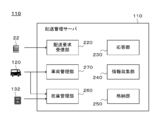
- An example of the system configuration of the delivery system 100 is shown schematically.
- An example of the internal configuration of the delivery management server 110 is shown schematically.
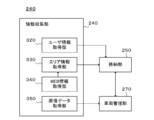
- An example of the internal configuration of the information collecting unit 240 is shown schematically.
- An example of the internal configuration of the storage unit 250 is shown schematically.
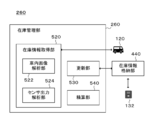
- An example of the internal configuration of the inventory management unit 260 is shown schematically.
- An example of the internal configuration of the vehicle management unit 270 is shown schematically.
- An example of the internal configuration of the demand forecasting unit 630 is shown schematically.
- An example of the demand map 800 is shown schematically.
- An example of the internal configuration of the vehicle dispatching unit 650 is shown schematically.
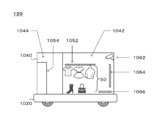
- An example of the vehicle 120 is shown schematically.
- An example of the system configuration of the computer 3000 is shown schematically.
- FIG. 1 schematically shows an example of the system configuration of the delivery system 100.
- the delivery system 100 includes a delivery management server 110 and a plurality of vehicles 120.
- the delivery system 100 may include a distribution center 130.
- the distribution center 130 has a warehousing / delivery management server 132.
- the delivery management server 110 and each of the plurality of vehicles 120 send and receive information to and from each other via the communication network 10.
- the delivery management server 110 may send and receive information to and from the communication terminal 22 of the user 20 who uses the delivery system 100.
- Each of the plurality of vehicles 120 may send and receive information to and from the communication terminal 22 of the user 20 who uses the vehicle.
- the communication network 10 may be a wired communication transmission line, a wireless communication transmission line, or a combination of a wireless communication transmission line and a wired communication transmission line. ..
- the communication network 10 may include a wireless packet communication network, the Internet, a P2P network, a dedicated line, a VPN, a power line communication line, and the like.
- the communication network 10 may include (i) a mobile communication network such as a mobile phone network, (ii) a wireless MAN (for example, WiMAX®), a wireless LAN (for example, a WiFi®). ), Bluetooth (registered trademark), Zigbee (registered trademark), NFC (Near Field Communication) and other wireless data communication networks may be included.
- the communication terminal 22 transmits and receives various types of information between the delivery management server 110 and at least one of the vehicles 120.
- the communication terminal 22 has an input device and an output device, and may be used as a user interface of the delivery system 100.
- the communication terminal 22 may be any information processing device that can be used by the user 20, and the details thereof are not particularly limited. Examples of the communication terminal 22 include a personal computer and a mobile terminal. Examples of the mobile terminal include a mobile phone, a smartphone, a PDA, a tablet, a notebook computer or a laptop computer, a wearable computer, and the like.
- the delivery system 100 delivers the clothing item in response to the request from the user 20.
- the clothing of the size suitable for the user 20 is delivered, or the clothing of the color or material suitable for the user 20 is used by using artificial intelligence. Services have been developed to deliver. However, many users 20 want to actually see and try on the actual item before purchasing or temporarily wearing it.
- the delivery system 100 delivers the clothing item in response to the request from the user 20.
- the delivery system 100 may deliver a larger number of clothing items than the number actually worn or carried by the user 20.
- the delivery system 100 may deliver a larger number of clothing items than the number specified by the user 20 by the above request.
- the delivery system 100 may adjust the number of items to be delivered according to the type of clothing. As a result, even if the clothing item specified by the user 20 is different from the one that the user 20 imagined, the user 20 can use the more preferable clothing item from the other clothing items delivered at the same time. Can be selected. As a result, delivery efficiency is improved.
- the user 20 can easily change clothes or change accessories on the go, for example.
- the vehicle 120 provides a fitting space
- the user 20 actually tries on the delivered clothing to bring the delivered clothing and other clothing worn or carried by the user 20. It is possible to select new clothing to be worn or carried in consideration of the balance between the two.
- the user 20 wants to change his / her clothes according to the clothes of another person. For example, consider the case where the user 20 attends a party held at the facility 30. At the party venue, if the clothing of the user 20 is significantly different from the clothing of other attendees, the user 20 may wish to change the clothing. When the user 20 wishes to change his / her clothes, the user 20 requests the delivery system 100 to deliver the clothes suitable for the above party to, for example, the facility 30 or its vicinity.
- the user 20 wishes to purchase or rent out of the plurality of delivered outfits in consideration of the clothes of other attendees, the balance with other outfits worn, and the like. Can be selected. Further, when the vehicle 120 provides a fitting space, the user 20 can try on the delivered clothing item or change into the clothing item.
- the user 20 may wish to change the clothes. If the user 20 wishes to change his or her outfit, the user 20 tells the delivery system 100, for example, up to or near the facility 30, which is suitable for the party and is the user's current outfit or Require delivery of clothing that is different from the clothing of the other attendees above.
- the user 20 may want to see the clothes of another person that he / she sees while going out and change into the same clothes.
- the user 20 requests the delivery system 100 to deliver clothing that is the same as or similar to the clothes of the other person described above, for example, to the current location or destination of the user 20 or its vicinity.
- the current location or destination of the user 20 may be an example of the facility 30.
- the user 20 wants to change his / her clothes according to the schedule of the user 20. For example, consider the case where the user 20 plans to have a meal at a restaurant after finishing work at the workplace. In this case, the user 20 may wish to change from work clothes to clothes suitable for the atmosphere of the restaurant. When the user 20 wishes to change his / her clothes, the user 20 requests the delivery system 100 to deliver the clothes to, for example, a workplace or a restaurant or their vicinity. The workplace or restaurant, or the facility in which they reside, may be an example of facility 30.
- the user 20 wants to change his / her clothes according to the change of schedule. For example, when the user 20 is out, he may suddenly attend a night or a funeral. In this way, if the schedule is suddenly changed while the user 20 is out, the user 20 may wish to change his / her clothes.
- the user 20 delivers clothes suitable for the night or funeral to the delivery system 100, for example, to the facility 30 which is the venue for the night or the funeral or its vicinity. Demand that.
- the user 20 wants to change his clothes in response to changes in the weather. For example, if the weather suddenly changes while the user 20 is out, the user 20 may wish to change into clothes suitable for the changed weather.
- the user 20 delivers the clothes suitable for the changed weather to the delivery system 100, for example, to the user 20's current location or destination or their vicinity.
- the current location or destination of the user 20 may be an example of the facility 30.
- the delivery system 100 delivers, for example, a larger number of clothing items than the number specified by the user 20 in response to a request from the user 20. Therefore, even when the user 20 changes clothes while going out, the user 20 can change into clothes that are more suitable for his / her body by using the delivery system 100. In addition, the user 20 can change into clothes that are well-balanced with other clothing items worn or carried by the user 20. As described above, the delivery system 100 can provide a service having a higher degree of user satisfaction as compared with the conventional delivery system.
- the delivery management server 110 manages a plurality of vehicles 120.
- the delivery management server 110 may manage the current positions of the plurality of vehicles 120.
- the delivery management server 110 may manage the usage status of each of the plurality of vehicles 120.
- the delivery management server 110 may manage the allocation of a plurality of vehicles 120.
- the delivery management server 110 may divide the area to be managed into a plurality of sub-areas, and assign one or more vehicles 120 in charge of providing services in the sub-area to each sub-area.
- the delivery management server 110 may manage vehicle allocation for each sub-area.
- the delivery management server 110 manages a plurality of clothing items. In one embodiment, the delivery management server 110 may manage the current position of each of the plurality of clothing items. The delivery management server 110 may manage the current position of the vehicle 120 on which the specific clothing item is mounted as the current position of the clothing item. The delivery management server 110 may manage the position of the distribution center 130 in which the specific clothing item is stored as the current position of the clothing item.
- the delivery management server 110 may manage the usage status of each of the plurality of clothing items.
- the usage status of clothing (i) it is stored in the distribution center 130, (ii) it is waiting for the start of maintenance work such as cleaning work, ironing work, repair work, or maintenance work is carried out.
- Delivery preparation work such as loading work on the vehicle 120 is being carried out,
- Delivery to the delivery destination by the vehicle 120 (v) Stopping at the delivery destination
- the state of being stored inside the vehicle 120 the state of being tried on by the (vi) user 20, the state of being rented to the (vii) user 20, the state of being transferred to the (viii) user 20, (ix).
- An example is a state in which the vehicle 120 is returned to the distribution center 130.
- the usage status of clothing items is not limited to the above example.
- Other examples of the usage of clothing include the number of times it was lent to user 20, the number of times it was tried on by user 20, the number of times maintenance work was performed, the position of dirt or damage, the degree of dirt or damage, and the time of purchase. , Latest maintenance time, latest delivery time, latest lending time, delivery destination location, estimated arrival time at the delivery destination, scheduled time to move from the delivery destination, scheduled return time, scheduled maintenance completion time, etc. Illustrated.
- the delivery management server 110 receives information (sometimes referred to as a delivery request) requesting delivery of clothing to a specific point from the communication terminal 22 of the user 20.
- the delivery request may include information about a time or period (sometimes referred to as a desired delivery time) that the user 20 desires to deliver.
- the delivery request may include information about the clothing that the user 20 wants to deliver.
- Examples of information on clothing include information on the attributes of the clothing and information on the dimensions of the clothing.
- Examples of the attributes of clothing include at least one of user groups, strains, types, uses, manufacturers, sellers, colors, patterns, and materials.
- the user group of clothing at least one of the age group and gender of the main users is exemplified.
- clothing systems include full dress, formal wear, business, and casual wear.
- Examples of the types of clothing include jackets, shirts, pants, skirts, leather shoes, sandals, high heels, bags, necklaces, earrings, and eyewear.
- Examples of the use of clothing include rain, snow, spring, summer, autumn, winter, work, work, and ceremonial occasions.
- the dimensions of the clothing include the gender, height, weight, body shape, chest circumference, waist circumference, waist circumference, shoulder width, width of the body, length, sleeve length, sleeve width, and cuffs of the person or object that is expected to use the clothing. Width, rise, inseam, hem width and the like are exemplified.
- the dimensions may be represented by a numerical value or a numerical range, or may be represented by a symbol indicating a stepwise division.
- Information about clothing may include information about the current clothing of user 20.
- the information about the current clothing of the user 20 may include image data indicating the current clothing of the user 20.
- the information about the clothing item may include image data indicating the clothing item that the user 20 desires to deliver.
- the information about the clothing item may include image data indicating the clothing item that the user 20 does not want to deliver.
- the delivery management server 110 extracts one or a plurality of vehicles 120 equipped with clothing items that match the request from the user 20 from the plurality of vehicles 120 under the control of the delivery management server 110.
- the delivery management server 110 may adjust the position of the place where the clothing is delivered (sometimes referred to as the delivery destination) with the user 20.
- the delivery management server 110 determines one of one or more parking spaces or stop spaces existing in the vicinity of the point specified by the delivery request as the delivery destination position.
- the delivery management server 110 may coordinate with the user 20 the time or period during which the vehicle 120 is expected to arrive (sometimes referred to as the scheduled delivery time).
- the delivery management server 110 provides (i) identification information of the user 20 who has transmitted the delivery request to the extracted vehicle 120 or a communication terminal (not shown) used by the driver of the vehicle, and (ii) the delivery destination. Information indicating the position of, and (iii) desired delivery time or scheduled delivery time are transmitted. As a result, the delivery management server 110 can manage the operation of each of the plurality of vehicles 120. The delivery management server 110 may further transmit authentication information for authenticating the user 20 who has sent the delivery request.
- the identification information of the user 20 includes account information given to the user 20 by the delivery management server 110, account information of the user 20 in an arbitrary SNS, image data of the user 20, information indicating the physical characteristics of the user 20, and the user 20. Information showing the current clothes of the user is exemplified.
- the identification information of the user 20 may be used as the authentication information of the user.
- the delivery management server 110 is a facility where demand is expected for (i) trying on or purchasing clothing by the user 20, or (ii) changing or adding clothing worn or carried by the user 20.
- One or more vehicles 120 are arranged in advance in the vicinity of 30. As a result, the time from when the delivery management server 110 receives the delivery request from the user 20 until the vehicle 120 arrives at the delivery destination can be shortened.
- the delivery management server 110 is (i) tried on by the user 20 or (ii) worn by the user 20 in the delivery area of a plurality of vehicles 120 based on the distribution center 130. Or, extract the area (sometimes referred to as the demand area) where demand is expected for the change or addition of the clothing items carried.
- the delivery area may be an area where the vehicle 120 can deliver the clothing.
- the delivery area may be an area where the delivery service of clothing by the delivery management server 110 is provided.
- the delivery area may be an area where the vehicle 120 can deliver the clothing.
- the area where the vehicle 120 can deliver the clothing may be an area where the vehicle 120 accepts the delivery of the clothing.
- the delivery management server 110 determines one or more vehicles 120 to be arranged in the demand area based on the position of each demand area and the content of the demand in the demand area. Further, the delivery management server 110 extracts a place (sometimes referred to as a standby place) in which one or more vehicles 120 can stand by inside or near each demand area.
- a place sometimes referred to as a standby place
- the delivery management server 110 moves the vehicle 120 to the above-mentioned waiting place even when the delivery request requesting the delivery of the clothing to the specific position in the demand area is not received. Execute the processing of. Specifically, the delivery management server 110 sets the position of the waiting place of the vehicle on the vehicle 120 arranged in each demand area or the communication terminal (not shown) used by the driver of the vehicle. Send the information shown. As a result, the delivery management server 110 can manage the operation of each of the plurality of vehicles 120.
- the vehicle 120 is equipped with one or more clothing items.
- the destination of the vehicle 120 is designated by the delivery management server 110. The vehicle 120 moves so as to arrive at the position indicated by the instruction by the time indicated by the instruction from the delivery management server 110.
- the vehicle 120 may be moved by the driver's operation, or may be moved by automatic driving or remote control.
- Examples of the vehicle 120 include a bicycle, an automobile, and a motorcycle.
- Examples of automobiles include engine vehicles, electric vehicles, fuel cell vehicles, hybrid vehicles, and work machines.
- Examples of the motorcycle include (i) a motorcycle, (ii) a three-wheeled motorcycle, and (iii) a standing two-wheeled vehicle or a three-wheeled vehicle having a power unit.
- the distribution center 130 stores clothing items.
- a plurality of clothing items are brought into the distribution center 130 from the owner or seller of the clothing items.
- a plurality of clothing items are loaded into each of the plurality of vehicles 120.
- one or more clothing items are taken out from at least a part of the plurality of vehicles 120. For example, clothing items whose number of uses exceeds a predetermined value, clothing items whose mounting period exceeds a predetermined value, and the like are taken out from the vehicle 120.
- the clothing items taken out from the vehicle 120 are delivered to, for example, a cleaning facility. Examples of the number of uses include the number of fittings, the number of trials, and the number of lending.
- the user 20 may request the storage or delivery of the clothing that the user has been wearing.
- the vehicle 120 stores the clothing of the user 20 while moving in the delivery area, or delivers the clothing to the delivery destination designated by the user 20.
- the vehicle 120 temporarily brings back the clothing of the user 20 to the distribution center 130.
- the clothing items of the user 20 are taken out from at least a part of the plurality of vehicles 120.
- the clothing items taken out from the vehicle 120 may be stored in the distribution center 130 or delivered to a designated place.
- the warehousing / delivery management server 132 manages warehousing and warehousing of clothing items at the distribution center 130.
- the warehousing / delivery management server 132 manages information on clothing items stored in the distribution center 130.
- the warehousing / delivery management server 132 may manage information on clothing items mounted on each of one or more vehicles 120 at the distribution center 130.
- information regarding clothing items taken out from each of one or more vehicles 120 may be managed.
- Examples of information on clothing include information indicating the attributes of the clothing, information on the dimensions of the clothing, and the like.
- the information about the garment may include identification information for identifying each of the plurality of garments.
- Facility 30 may be an example of facilities arranged at at least a part of the delivery area.
- the delivery system 100 may be an example of an information processing system.
- the delivery management server 110 may be an example of an information processing system.
- the vehicle 120 may be an example of a moving body.
- the details of the delivery system 100 will be described by taking as an example the case where the delivery management server 110 manages the vehicle 120 and the clothing items.
- the delivery system 100 is not limited to this embodiment.
- at least some of the functions of the delivery management server 110 may be realized by the vehicle 120 or the warehousing / delivery management server 132.
- the vehicle 120 or the warehousing / delivery management server 132 can be an example of an information processing system.
- the details of the delivery system 100 will be described by taking the case where the vehicle 120 delivers the clothing as an example.
- the delivery system 100 is not limited to this embodiment. In other embodiments, any type of mobile may deliver the garment.
- Examples of moving objects include bicycles, automobiles, motorcycles, trains, ships, and flying objects.
- Examples of automobiles include engine vehicles, electric vehicles, fuel cell vehicles, hybrid vehicles, and work machines.
- Examples of the motorcycle include (i) a motorcycle, (ii) a three-wheeled motorcycle, and (iii) a standing two-wheeled vehicle or a three-wheeled vehicle having a power unit.
- Examples of ships include ships, hovercraft, surface bikes, submarines, submarines, and underwater scooters.
- Examples of the flying object include an airplane, an airship or a balloon, a balloon, a helicopter, and a drone.
- Each part of the delivery system 100 may be realized by hardware, may be realized by software, or may be realized by hardware and software. At least a part of each part of the delivery system 100 may be realized by a single server or may be realized by a plurality of servers. At least a part of each part of the delivery system 100 may be realized on a virtual server or a cloud system. At least a part of each part of the delivery system 100 may be realized by a personal computer or a mobile terminal. Examples of the mobile terminal include a mobile phone, a smartphone, a PDA, a tablet, a notebook computer or a laptop computer, a wearable computer, and the like. Each part of the delivery system 100 may store information by using a distributed ledger technology such as a blockchain or a distributed network.
- a distributed ledger technology such as a blockchain or a distributed network.
- the information processing device having the above general configuration includes (i) a data processing device having a processor such as a CPU and GPU, a ROM, a RAM, and a communication interface, and (ii) a keyboard, a pointing device, a touch panel, a camera, and a voice input.
- Input devices such as devices, gesture input devices, various sensors, GPS receivers, output devices such as (iii) display devices, audio output devices, vibration devices, and storage devices such as (iv) memory, HDD, SSD (external). It may include a storage device).
- the above-mentioned data processing device or storage device may store the above-mentioned program.
- the above program is executed by the processor to cause the above information processing apparatus to execute the operation specified by the program.
- the above program may be stored on a non-temporary computer-readable recording medium.
- the above program may be stored in a computer-readable medium such as a CD-ROM, a DVD-ROM, a memory, or a hard disk, or may be stored in a storage device connected to a network.
- the above program may be a program for operating the computer as the delivery system 100 or a part thereof.
- the above program may include a module that defines the operation of each part of the delivery system 100. These programs or modules work on data processing devices, input devices, output devices, storage devices, etc. to make the computer function as each part of the delivery system 100, or cause the computer to execute the information processing method in each part of the delivery system 100. Or something.
- the above program may be installed on a computer that constitutes at least a portion of the delivery system 100 from a computer-readable medium or a storage device connected to a network. By executing the above program, the computer may function as at least a part of each part of the delivery system 100.
- the information processing described in the above program is concrete in that the software related to the program and various hardware resources of the delivery system 100 or a part thereof cooperate with each other by reading the program into the computer. Functions as a means. Then, the above-mentioned specific means realizes the calculation or processing of information according to the purpose of use of the computer in the present embodiment, thereby constructing the delivery system 100 according to the purpose of use.
- the above program may be a program for making the computer function as the delivery management server 110.
- the above program may be a program for causing the computer to execute the information processing method in the delivery management server 110.
- the above information processing method may be a method for managing a moving body on which clothing is mounted.
- the above method is, for example, (i) trying on the clothing by the user, or (ii) changing the clothing worn or carried by the user in the delivery area where the moving body can deliver the clothing.
- it has an area extraction stage for extracting one or more demand areas where additional demand is expected.
- the above method has, for example, an operation management stage for managing the operation of the moving body based on the positions of one or more demand areas extracted in the area extraction stage and the content of the demand.
- FIG. 2 schematically shows an example of the internal configuration of the delivery management server 110.
- the delivery management server 110 includes a delivery request receiving unit 220, a response unit 230, an information collecting unit 240, a storage unit 250, an inventory management unit 260, and a vehicle management unit 270.
- the delivery request receiving unit 220 receives the delivery request from the communication terminal 22 of the user 20.
- the delivery request receiving unit 220 may output the delivery request from the user 20 to the vehicle management unit 270.
- the delivery request indicates that the specific user 20 requests that the clothing be delivered to a specific point.
- the delivery request includes, for example, identification information of the user 20 who sent the request and information indicating the position of the delivery destination desired by the user 20.
- the delivery request may include information indicating a desired delivery time.
- the delivery request may include information indicating the attributes of the clothing items that the user 20 desires to deliver (sometimes referred to as delivery type information).
- delivery type information At least one of the user group, system, type, use, manufacturer, seller, color, pattern, and material is exemplified as the attribute of the clothing item.
- the response unit 230 functions as an interface between the delivery management server 110, the user 20, the operator of the delivery management server 110, and the like.
- the response unit 230 generates an input screen for accepting a delivery request from the user 20, and transmits the input screen to the communication terminal 22.
- the delivery request receiving unit 220 receives the delivery request from the user 20, the response unit 230 responds to the delivery request.
- the response unit 230 transmits information indicating whether or not the delivery request of the user 20 has been accepted to the communication terminal 22.
- the response unit 230 may generate a screen for adjusting the position of the delivery destination with the user 20 and transmit the screen to the communication terminal 22.
- the response unit 230 may determine the position of the delivery destination based on the information input by the user 20 on the screen.
- the response unit 230 may generate a screen for adjusting the scheduled delivery time with the user 20 and transmit the screen to the communication terminal 22.
- the response unit 230 may determine the scheduled delivery time based on the information input by the user 20 on the screen.
- the information collecting unit 240 collects various kinds of information.
- the information collecting unit 240 may store the collected information in the storage unit 250. Details of the information collecting unit 240 will be described later.
- the storage unit 250 stores various types of information.
- the storage unit 250 stores information used for information processing in each unit of the delivery management server 110.
- the storage unit 250 may store the information generated in the information processing of each unit of the delivery management server 110. Details of the storage unit 250 will be described later.
- the inventory management unit 260 manages the inventory of clothing items.
- the inventory management unit 260 manages the current status of a plurality of clothing items managed by the delivery management server 110. Details of the inventory management unit 260 will be described later.
- the vehicle management unit 270 manages the vehicle 120.
- the vehicle management unit 270 manages the current status of the plurality of vehicles 120 managed by the delivery management server 110.
- the vehicle management unit 270 may manage the operation of each of the plurality of vehicles 120. Details of the vehicle management unit 270 will be described later.
- the delivery request receiving unit 220 may be an example of the request receiving unit.
- the information collecting unit 240 may be an example of a user information acquisition unit, a facility information acquisition unit, and an image acquisition unit.
- the storage unit 250 may be an example of a facility information storage unit and a clothing information storage unit.
- the vehicle management unit 270 may be an example of an information processing system.
- FIG. 3 schematically shows an example of the internal configuration of the information collecting unit 240.
- the information collecting unit 240 includes a user information acquisition unit 320, an area information acquisition unit 330, a WEB information acquisition unit 340, and an image data acquisition unit 350.
- the user information acquisition unit 320 acquires information about each of one or a plurality of users 20. For example, the user information acquisition unit 320 acquires information indicating each profile of one or a plurality of users 20. The user information acquisition unit 320 may store the information indicating the above profile in the storage unit 250.
- the information indicating the profile includes identification information of the user 20, information indicating the age of the user 20, information indicating the gender of the user 20, measurement data of the body of the user 20, information on clothing owned by the user 20, and the user.
- Information on clothing worn by 20 when using the delivery management server 110 in the past is exemplified.
- the identification information of the user 20 includes the account information given to the user by the delivery management server 110, the account information of the user 20 in an arbitrary SNS, the image data of the image of the user 20, and the face or body used for identifying the user 20. Information showing the characteristics is exemplified.
- measurement data examples include data such as height, weight, body shape, chest circumference, waist circumference, waist circumference, shoulder width, width of the body, length, sleeve length, sleeve width, cuff width, rise, inseam, and hem width.
- information regarding the clothing item examples include information indicating the attributes of the clothing item, information indicating the dimensions of the clothing item, and the like.
- the user information acquisition unit 320 may acquire information indicating each schedule of one or a plurality of users 20.
- the user information acquisition unit 320 may store the information indicating the above schedule in the storage unit 250.
- the information indicating the schedule of the user 20 may be information in which the information indicating the time or period and the information indicating the position of the user 20 in the time or period are associated with each other.
- the information indicating the schedule of the user 20 may be information in which the information indicating the time or period, the information indicating the position of the user 20 at the time or period, and the action of the user 20 at the position are associated with each other. ..
- the area information acquisition unit 330 acquires information on one or more facilities 30 arranged in the delivery area.
- the facility 30 is not limited to the building. Other examples of the facility 30 include land, parts of land, land settlements, objects, monuments and the like. Facility 30 may be a part of the street, a parking lot, a park, or a vacant lot.
- the area information acquisition unit 330 acquires information about each facility from a website that introduces each of the one or a plurality of facilities 30 via, for example, the communication network 10.
- the area information acquisition unit 330 may analyze the information acquired by the WEB information acquisition unit 340 to acquire information about the facility 30.
- the area information acquisition unit 330 may store information about the facility 30 in the storage unit 250.
- Information about the facility 30 includes identification information of the facility, information indicating the location of the facility, information indicating the time zone in which the facility is used, information indicating the attributes of the facility, and schedule of events held at the facility.
- Information indicating the above is exemplified.
- Examples of the information indicating the attributes of the facility include information indicating the type of the facility, information indicating the user group of the facility, and information indicating the attributes of the clothing of the users of the facility.
- the information indicating the schedule of the event may include information indicating the time or period when the event is held.
- the information indicating the schedule of the event may further include the identification information of the event and the information indicating the attributes of the event. Examples of the information indicating the attributes of the event include information indicating the type of the event, information indicating the participants of the event, information indicating the attributes of the clothing of the participants of the event, and the like.
- the WEB information acquisition unit 340 collects various types of information existing on the WEB.
- the WEB information acquisition unit 340 collects immediate information such as weather information, news information, and information posted on any SNS.
- the WEB information acquisition unit 340 may collect information indicating a time or period and information associated with information indicating a location or area.
- the WEB information acquisition unit 340 acquires the information posted on the SNS and the information indicating the time when the information is posted on the SNS.
- the WEB information acquisition unit 340 may output the collected information to the area information acquisition unit 330.
- the WEB information acquisition unit 340 may store the collected information in the storage unit 250.
- the image data acquisition unit 350 acquires image data of an image captured by an image pickup device (not shown) arranged in the delivery area.
- the image data acquisition unit 350 may acquire the above-mentioned image data and information indicating the time when the image was captured.
- the imaging device is mounted on a moving body that moves within the delivery area.
- the imaging device is installed at a specific location within the delivery area.
- the image data acquisition unit 350 outputs the above image data to the vehicle management unit 270.
- the image data acquisition unit 350 may store the above image data in the storage unit 250.
- the user information acquisition unit 320 may be an example of the user information acquisition unit.
- the area information acquisition unit 330 may be an example of the facility information acquisition unit.
- the image data acquisition unit 350 may be an example of an image acquisition unit.
- FIG. 4 schematically shows an example of the internal configuration of the storage unit 250.
- the storage unit 250 includes a user information storage unit 420, an area information storage unit 430, an inventory information storage unit 440, and a vehicle information storage unit 450.
- the user information storage unit 420 stores the information acquired by the user information acquisition unit 320. In response to a request from the vehicle management unit 270, the user information storage unit 420 extracts information that matches the conditions indicated by the request. The user information storage unit 420 may output the extracted information to the vehicle management unit 270.
- the area information storage unit 430 stores the information acquired by the area information acquisition unit 330.
- the area information storage unit 430 may store the information acquired by the WEB information acquisition unit 340.
- the area information storage unit 430 may store the image data acquired by the image data acquisition unit 350.
- the area information storage unit 430 extracts information that matches the conditions indicated by the request in response to the request from the vehicle management unit 270.
- the area information storage unit 430 may output the extracted information to the vehicle management unit 270.
- the inventory information storage unit 440 acquires information on each of the plurality of clothing items stored in the distribution center 130 from the warehousing / delivery management server 132, and stores the information.
- the inventory information storage unit 440 acquires information about each of the plurality of clothing items managed by the delivery management server 110 from the inventory management unit 260, and stores the information.
- the inventory information storage unit 440 extracts information that matches the conditions indicated by the request in response to the request from the vehicle management unit 270.
- the inventory information storage unit 440 may output the extracted information to the vehicle management unit 270.
- the vehicle information storage unit 450 acquires information about each of the plurality of vehicles 120 managed by the delivery system 100 from the vehicle management unit 270, and stores the information. For example, the vehicle information storage unit 450 acquires information from the vehicle 120 in which the identification information of the vehicle 120, the information indicating the time, and the information indicating the position of the vehicle 120 at the time are associated with each other.
- the vehicle information storage unit 450 extracts information that matches the conditions indicated by the request in response to the request from the vehicle management unit 270.
- the vehicle information storage unit 450 may output the extracted information to the vehicle management unit 270.
- the area information storage unit 430 may be an example of the facility information storage unit.
- the inventory information storage unit 440 may be an example of the clothing information storage unit.
- FIG. 5 schematically shows an example of the internal configuration of the inventory management unit 260.
- the inventory management unit 260 includes an inventory information acquisition unit 520, an update unit 530, and a settlement unit 540.
- the inventory information acquisition unit 520 has an in-vehicle image analysis unit 522 and a sensor output analysis unit 524.
- the inventory information acquisition unit 520 acquires information on the inventory of clothing mounted on each vehicle from each of the plurality of vehicles 120.
- the information regarding the inventory of the clothing items mounted on the vehicle 120 includes, for example, the identification information of the vehicle, the identification information of each of the plurality of clothing items mounted on the vehicle at the distribution center 130, and the above-mentioned plurality of clothing items. Includes information indicating the usage status of each of. Examples of the usage status include available, unusable, reserved, rented, and sold.
- the warehousing / delivery management server 132 stores the information indicating the inventory of the clothing items stored in the distribution center 130 in the inventory information storage unit 440.
- the inventory management unit 260 is not limited to this embodiment.
- the inventory information acquisition unit 520 may acquire information indicating the inventory of clothing items stored in the distribution center 130 from the warehousing / delivery management server 132.
- the vehicle interior image analysis unit 522 acquires image data of an image obtained by the image pickup device in the vehicle interior of the vehicle 120 from the image pickup device arranged in the vehicle interior of the vehicle 120.
- the vehicle interior image analysis unit 522 analyzes the above image and detects changes in the usage status of the clothing items mounted on the vehicle 120. For example, the vehicle interior image analysis unit 522 detects that the user 20 using the vehicle 120 has changed into a specific clothing item. In this case, the usage status of the above-mentioned clothing items changes from "available" to "rental” or "sold".
- the in-vehicle image analysis unit 522 may output information indicating the detection result to the update unit 530.
- the vehicle interior image analysis unit 522 may output information indicating the detection result to the settlement unit 540.
- the sensor output analysis unit 524 acquires information indicating the output result of the sensor from various sensors arranged in the vehicle 120.
- the sensor output analysis unit 524 analyzes the above output result and detects a change in the usage status of the clothing item mounted on the vehicle 120. For example, the sensor output analysis unit 524 detects that a specific clothing item has been taken out of the vehicle. In this case, the usage status of the above-mentioned clothing items changes from "available" to "rental” or "sold".
- the in-vehicle image analysis unit 522 may output information indicating the detection result to the update unit 530.
- the vehicle interior image analysis unit 522 may output information indicating the detection result to the settlement unit 540.
- the update unit 530 acquires information indicating a change in the usage status of the clothing items mounted on the vehicle 120 from the inventory information acquisition unit 520.
- the update unit 530 updates the information stored in the inventory information storage unit 440 based on the information indicating the change in the usage status of the clothing items.
- the update unit 530 may generate information indicating the usage history of each clothing item based on the information indicating the change in the usage status of each clothing item.
- the update unit 530 may store information indicating the usage history of each clothing item in the inventory information storage unit 440.
- the settlement unit 540 acquires information indicating a change in the usage status of the clothing items mounted on the vehicle 120 from the inventory information acquisition unit 520.
- the settlement unit 540 executes a process for charging the user 20 based on the above information.
- the settlement unit 540 calculates the usage fee of the service provided to the user 20, the price of the goods transferred to the user 20, and the like.
- the settlement unit 540 may present the user 20 with information on various calculated charges.
- the settlement unit 540 transmits an instruction for notifying the user 20 of the above-mentioned charge information to the display device or the voice output device mounted on the vehicle 120.
- the settlement unit 540 may transmit the information regarding the above charges to the communication terminal 22 of the user 20.
- the settlement unit 540 calculates the rental fee of the clothing used by the user 20. In another embodiment, the settlement unit 540 calculates the selling fee of the clothing item purchased by the user 20. In another embodiment, the settlement unit 540 calculates the fitting fee for the clothing that the user 20 has tried on. In still another embodiment, the settlement unit 540 calculates the delivery charge for the clothing delivered to the user 20.
- the settlement unit 540 executes the settlement processing of the above expenses.
- the settlement unit 540 may execute the above-mentioned expense settlement process.
- the payment method is not particularly limited.
- the settlement unit 540 sends a request for starting the electronic payment process for the account of the user 20 to a server that provides an arbitrary electronic payment service.
- a process for charging a penalty may be executed. For example, when the fraudulent activity of the user 20 is detected and the user 20 is detected to leave or leave the vehicle 120 without resolving the fraudulent state, the vehicle 120 prompts the user 20 for confirmation. Output a message for.
- the delivery system 100 may send the above message to the communication terminal 22 of the user 20.
- the settlement unit 540 may incur a penalty if the user 20 does not contact within a predetermined period.
- the settlement unit 540 may send the above message a plurality of times. If the contact from the user 20 is not confirmed within the above period, the settlement unit 540 may execute the settlement process of the penalty. For example, the settlement unit 540 sends a request for starting the electronic payment process for the account of the user 20 to a server that provides an arbitrary electronic payment service.
- FIG. 6 schematically shows an example of the internal configuration of the vehicle management unit 270.
- the vehicle management unit 270 includes a vehicle information acquisition unit 620, a demand forecast unit 630, a return determination unit 640, and a vehicle allocation unit 650.
- the vehicle information acquisition unit 620 acquires information on the operation of the vehicle from each of the plurality of vehicles 120 managed by the delivery system 100. For example, the vehicle information acquisition unit 620 obtains information from each of the above-mentioned plurality of vehicles 120 in which the identification information of the vehicle, the information indicating the time, and the information indicating the position of the vehicle at the time are associated with each other. get.
- the vehicle information acquisition unit 620 may store the information acquired from each vehicle by the vehicle information acquisition unit 620 in the vehicle information storage unit 450.
- the demand forecasting unit 630 forecasts the demand for clothing in the delivery area.
- the demand forecasting unit 630 expects demand for (i) trying on or purchasing clothing by the user 20 or (ii) changing or adding clothing worn or carried by the user 20 in the delivery area1
- the above demand area may be extracted.
- the demand forecasting unit 630 may determine whether or not the degree of demand exceeds a predetermined degree for at least a part of one or more points arranged in the delivery area. Details of the demand forecasting unit 630 will be described later.
- the return determination unit 640 determines whether or not to return each of the plurality of vehicles 120 managed by the delivery system 100 to the distribution center 130. For example, the return determination unit 640 extracts a vehicle 120 that meets a specific condition from the plurality of vehicles 120. The return determination unit 640 decides to return the extracted vehicle 120 to the distribution center 130.
- the specific condition may be a condition relating to the usage of the vehicle or clothing.
- the return determination unit 640 outputs the extracted identification information of the vehicle 120 and the information indicating that the next destination of the vehicle is the distribution center 130 to the vehicle allocation unit 650. In another embodiment, the return determination unit 640 transmits information indicating that the return to the distribution center 130 should be performed to the extracted vehicle 120 or a communication terminal (not shown) used by the driver of the vehicle. To do. As a result, the return determination unit 640 can move each of the plurality of vehicles 120 to the distribution center 130 at an appropriate timing according to the situation of the vehicle.
- the return determination unit 640 analyzes the usage status of one or a plurality of clothing items mounted on the plurality of vehicles 120 for each of the plurality of vehicles 120.
- the return determination unit 640 refers to the inventory information storage unit 440, and for each of the plurality of vehicles 120, (i) the number of unused clothing items mounted on the vehicle is predetermined. Whether or not it is smaller than the value of, and (ii) whether or not the ratio of unused clothing to one or more clothing mounted on the vehicle is smaller than a predetermined second value. At least one of them is judged.
- the return determination unit 640 extracts the vehicle 120 whose determination result satisfies the predetermined condition as the vehicle 120 to be returned to the distribution center 130. Examples of the predetermined conditions include a condition that the number of unused clothing items is smaller than the first value, a condition that the ratio of unused clothing items is smaller than the second value, and the like.
- the return determination unit 640 may execute the above determination process for a specific type of clothing.
- the return determination unit 640 may extract the vehicle 120 in which the above-mentioned determination result regarding the specific type of clothing item satisfies the predetermined condition as the vehicle 120 to be returned to the distribution center 130.
- the return determination unit 640 may execute the above determination process for each type of clothing. In this case, the return determination unit 640 may extract the vehicle 120 in which the above-mentioned determination result regarding at least one type of clothing item satisfies the predetermined condition as the vehicle 120 to be returned to the distribution center 130.
- the user 20 may leave the user's belongings in the vehicle. There is. Therefore, if it is detected that the user 20 leaves or leaves the vehicle 120 after the suspicious object is detected and before the suspicious object is no longer detected, the vehicle 120 prompts the user 20 for confirmation. Is output.
- the delivery system 100 may send the above message to the communication terminal 22 of the user 20.
- the return determination unit 640 sets the vehicle 120 in which the suspicious object is detected to the distribution center 130. You may decide to return to. Further, the return determination unit 640 may send a message indicating that the suspicious object is stored in the distribution center 130 to the communication terminal 22 of the user 20.
- the vehicle allocation unit 650 manages the operation of the vehicle 120. In one embodiment, the vehicle allocation unit 650 manages the operation of one or more vehicles 120 based on the distribution request from the user 20. In another embodiment, the vehicle dispatching unit 650 manages the operation of one or more vehicles 120 based on the prediction result of the demand forecasting unit 630. In yet another embodiment, the vehicle allocation unit 650 manages the operation of each of the one or more vehicles 120 based on the determination result of the return determination unit 640. Details of the vehicle dispatching unit 650 will be described later.
- the demand forecast unit 630 may be an example of an area extraction unit and a demand determination unit.
- the vehicle allocation unit 650 may be an example of an operation management unit and an allocation unit.
- FIG. 7 schematically shows an example of the internal configuration of the demand forecasting unit 630.
- the demand forecasting unit 630 includes a delivery event detection unit 720, a demand map generation unit 740, and a vehicle allocation area determination unit 760.
- the delivery event detection unit 720 includes a delivery request analysis unit 730, a user information analysis unit 732, an area information analysis unit 734, a WEB information analysis unit 736, and an area image analysis unit 738.
- the delivery event detection unit 720 detects an event (sometimes referred to as a delivery event) related to the delivery of clothing.
- the delivery event detection unit 720 is an event that stimulates demand for (i) trying on or purchasing clothing by the user 20, or (ii) changing or adding clothing worn or carried by the user 20. Is detected.
- the delivery event detection unit 720 determines the degree of demand described above based on the detection result of the delivery event.
- the degree of demand may be indicated by continuous numerical values or by gradual division.
- the delivery event detection unit 720 may output the information indicating the position of the point where the delivery event is detected to the demand map generation unit 740 in association with the information indicating the degree of demand at the point.
- the delivery event detection unit 720 may output the above information to the vehicle allocation area determination unit 760.
- the delivery event detection unit 720 may extract a point where the degree of demand exceeds a predetermined degree as one of the demand areas.
- the delivery event detection unit 720 may output information indicating the position of the demand area to the demand map generation unit 740.
- the delivery event detection unit 720 may output the above information to the vehicle allocation area determination unit 760.
- the delivery request analysis unit 730 acquires the delivery request from the user 20 received by the delivery request receiving unit 220.
- the delivery request analysis unit 730 analyzes the above delivery request and determines the degree of the above demand based on the analysis result.
- the delivery request analysis unit 730 determines that the degree of demand at a specific point indicated by the delivery request exceeds a predetermined degree. Further, the delivery request analysis unit 730 may extract a specific point indicated by the delivery request as a demand area.
- the delivery request analysis unit 730 may determine that the degree of demand at a specific point indicated by the delivery request exceeds a predetermined degree at the desired delivery time or the scheduled delivery time related to the delivery request. Further, the delivery request analysis unit 730 may extract a specific point indicated by the delivery request as a demand area at the desired delivery time or the scheduled delivery time related to the delivery request.
- the delivery request analysis unit 730 specifies a plurality of delivery requests received by the delivery request receiving unit 220 for each of the plurality of areas set in the delivery area based on the points indicated by each delivery request.
- the number or reception frequency may be calculated.
- the delivery request analysis unit 730 may extract as a demand area an area in which the number of delivery requests or the reception frequency satisfies the predetermined criteria.
- the delivery request analysis unit 730 delivers a plurality of delivery requests received by the delivery request receiving unit 220 by designating each of the plurality of areas set in the delivery area based on the point and time indicated by each delivery request.
- the number of requests or the reception frequency may be calculated for each time zone classified by an arbitrary standard. As a result, the delivery request analysis unit 730 can extract the demand area for each time zone.
- the delivery request analysis unit 730 generates (i) information indicating the position of the demand area, or (ii) information indicating the position of the demand area, and information indicating the desired delivery time or the scheduled delivery time in the demand map generation unit 740. You may output to.
- the delivery request analysis unit 730 may output the above information to the vehicle allocation area determination unit 760.
- the delivery request analysis unit 730 may analyze the delivery type information included in the delivery request and specify the type of clothing to be delivered. Examples of the type of clothing include the attributes of the clothing, the dimensions of the clothing, and the like. The delivery request analysis unit 730 may output information regarding the type of clothing to be delivered to the vehicle allocation unit 650.
- the operation of the vehicle 120 can be managed based on the attribute of the clothing item indicated by the delivery type information.
- the operation of the vehicle 120 can be managed based on the position indicated by the delivery request and the attribute of the clothing item indicated by the delivery type information.
- the user information analysis unit 732 refers to the user information storage unit 420 and acquires information indicating the schedule of the user 20.
- the user information analysis unit 732 may determine that the degree of demand at the position indicated by the information exceeds a predetermined degree at the beginning or end of the time or period indicated by the information indicating the schedule. Further, the user information analysis unit 732 may extract the position indicated by the information indicating the schedule as the demand area.
- the user information analysis unit 732 includes (i) information indicating the position of the demand area, or (ii) information indicating the position of the demand area, and information indicating the start or end of the time or period indicated by the information indicating the schedule. May be output to the demand map generation unit 740.
- the delivery event detection unit 720 may output the above information to the vehicle allocation area determination unit 760.
- the user information analysis unit 732 may analyze the information indicating the behavior of the user 20 included in the information indicating the schedule of the user 20 to determine the type of clothing to be delivered. Specifically, the user information analysis unit 732 determines the attributes of clothing items that are expected to be in demand based on the behavior of the user 20. The user information analysis unit 732 may output information regarding the type of clothing to be delivered to the vehicle allocation unit 650.
- the operation of the vehicle 120 can be managed based on the attribute of the clothing item determined by the user information analysis unit 732. Further, the operation of the vehicle 120 can be managed based on the position of the user 20 at the time or period indicated by the above schedule and the attribute of the clothing item determined by the user information analysis unit 732.
- the area information analysis unit 734 refers to the area information storage unit 430 and acquires information about each of the one or a plurality of facilities 30 arranged in the delivery area.
- the area information analysis unit 734 may analyze the information about each facility to determine the degree of demand for the location of each facility.
- the area information analysis unit 734 may analyze the information about each facility to determine the degree of demand for the location of each facility at a specific time or period.
- the area information analysis unit 734 refers to the area information storage unit 430 to acquire information indicating the location of each facility and information indicating the time zone in which each facility is used.
- the area information analysis unit 734 may determine that the degree of demand in the facility exceeds a predetermined degree in the time zone when each facility is used. Further, the area information analysis unit 734 may extract the position of the facility 30 for which the degree of demand is determined to exceed a predetermined degree as a demand area.
- the area information analysis unit 734 has (i) information indicating the position of the demand area, or (ii) information indicating the position of the demand area, and information indicating the time zone in which the facility 30 arranged in the demand area is used. May be output to the demand map generation unit 740.
- the area information analysis unit 734 may output the above information to the vehicle allocation area determination unit 760.
- the area information analysis unit 734 may determine the type of clothing to be delivered based on the type of facility 30 for which the degree of demand is determined to exceed a predetermined degree.
- the area information analysis unit 734 refers to a database that stores the type of facility and the information indicating the attributes of the clothing of the user of the facility in association with each other, and refers to the clothing corresponding to the above facility 30. Extract information that indicates attributes.
- the area information analysis unit 734 may output the extracted information to the vehicle allocation unit 650 as the type of clothing to be delivered.
- the area information analysis unit 734 refers to the area information storage unit 430 and determines the degree of demand in advance. Information indicating the attributes of the clothing of the user of the facility 30 determined to exceed the specified degree is acquired. The area information analysis unit 734 may output the acquired information to the vehicle allocation unit 650 as the type of clothing to be delivered.
- the operation of the vehicle 120 can be managed based on the attribute of the clothing item determined by the area information analysis unit 734. Further, the operation of the vehicle 120 can be managed based on the position of at least a part of the points in the delivery area and the attribute of the clothing item determined by the area information analysis unit 734.
- the WEB information analysis unit 736 analyzes various information existing on the WEB and extracts one or more demand areas.
- the WEB information analysis unit 736 may analyze the information acquired by the WEB information acquisition unit 340 and extract one or more demand areas.
- the WEB information analysis unit 736 may analyze the information indicating the time or period and the information associated with the information indicating the position or region to extract one or more demand areas.
- the WEB information analysis unit 736 may analyze at least one of the weather information, the news information, and the information on the SNS to extract one or more demand areas.
- the WEB information analysis unit 736 compares the weather at the current time with the weather at a specific other time for each position or each area in the delivery area.
- the WEB information analysis unit 736 may determine that the degree of demand for clothing exceeds the predetermined degree at a position where the degree of change in the weather is greater than the predetermined degree.
- the area information analysis unit 734 may extract a position where the degree of demand is determined to exceed a predetermined degree as a demand area.
- the WEB information analysis unit 736 analyzes news information or information on SNS to detect that a predetermined type of event has occurred or that a predetermined type of event has occurred. To do.
- the WEB information analysis unit 736 specifies the position or area where the event occurs.
- the WEB information analysis unit 736 may specify the type of the above-mentioned event, the occurrence time or period of the above-mentioned event, and the occurrence position or area of the above-mentioned event.
- the WEB information analysis unit 736 may extract the occurrence position or area of the event as a demand area.
- the WEB information analysis unit 736 has (i) information indicating the position of the demand area, (ii) information indicating the position of the demand area, and information indicating the time zone in which the facility 30 arranged in the demand area is used. May be output to the demand map generation unit 740.
- the WEB information analysis unit 736 may output the above information to the vehicle allocation area determination unit 760. As a result, the operation of the vehicle 120 can be managed based on the analysis result of the WEB information analysis unit 736.
- the area image analysis unit 738 acquires the image data acquired by the image data acquisition unit 350 from the image data acquisition unit 350.
- the area image analysis unit 738 analyzes the above image data and detects a group of people. When the size of the detected group exceeds a predetermined size, the area image analysis unit 738 may determine that the degree of demand at the point where the group is detected exceeds the predetermined degree.
- the area image analysis unit 738 determines that when the degree of matching of the attributes of the clothing items of each person constituting the detected group exceeds a predetermined degree, the degree of demand at the point where the group is detected is determined. , It may be determined that the degree exceeds a predetermined degree. Further, the area image analysis unit 738 may extract a position where the degree of demand is determined to exceed a predetermined degree as a demand area.
- the area image analysis unit 738 includes (i) information indicating the position of the demand area, (ii) information indicating the position of the demand area, and information indicating the time zone when the facility 30 arranged in the demand area is used. May be output to the demand map generation unit 740.
- the area image analysis unit 738 may output the above information to the vehicle allocation area determination unit 760.
- the area image analysis unit 738 may analyze the above image data to determine the type of clothing to be delivered. For example, the area image analysis unit 738 may analyze the above image data to identify the attributes of each of the clothing items of a plurality of people constituting the above group. The area image analysis unit 738 may determine the type of clothing of the above group based on the above analysis result. Examples of the type of clothing include the attributes of the clothing, the dimensions of the clothing, and the like. The area image analysis unit 738 may determine the type of clothing of the above group as the type of clothing to be delivered. The area image analysis unit 738 may output information indicating the type of clothing to be delivered to the vehicle allocation unit 650.
- the operation of the vehicle 120 can be managed based on the attribute of the clothing item determined by the area image analysis unit 738.
- the operation of the vehicle 120 can be managed based on the position of the point where the group is detected and the attribute of the clothing item determined by the area image analysis unit 738.
- the demand map generation unit 740 generates a demand map in the delivery area based on the information output by the delivery event detection unit 720.
- the demand map generation unit 740 may generate the above demand map based on the past actual demand.
- the demand map generation unit 740 may generate the above demand map based on the information output by the delivery event detection unit 720 and the past actual demand.
- the demand map generation unit 740 may generate a demand map for each attribute of the clothing item.
- the demand map generation unit 740 may generate a demand map at the current time, or may generate a demand map at a specific time or period.
- the demand map may be information in which information indicating a position in the delivery area and information indicating the degree of demand for clothing at the position are associated with each other.
- the demand map may be information in which information indicating the attributes of the clothing item, information indicating the position in the delivery area, and information indicating the degree of demand for the clothing item at the position are associated with each other.
- the demand map may be information in which information indicating a position in the delivery area, information indicating the degree of demand for clothing at the position, and information indicating the content of the demand are associated with each other.
- the vehicle allocation area determination unit 760 determines a position or area for allocating a plurality of vehicles 120 based on the information output by the delivery event detection unit 720. For example, the vehicle allocation area determination unit 760 determines that the vehicle 120 is arranged in each of the one or more demand areas extracted by the delivery event detection unit 720. The vehicle allocation area determination unit 760 may decide to arrange the vehicle 120 in an area where the degree of demand is large among the one or more demand areas extracted by the delivery event detection unit 720. The vehicle allocation area determination unit 760 may determine a position or area to allocate a plurality of vehicles 120 based on the information output by the delivery event detection unit 720 and the actual demand in the past.
- the operator of the delivery management server 110 may revise the vehicle allocation plan determined by the vehicle allocation area determination unit 760.
- the vehicle allocation plan includes (i) information indicating a time or time zone, (ii) information indicating a position or area, and (iii) the number of vehicles 120 to be allocated to the position or area at the time or time zone. The information may be associated with the indicated information.
- the operator of the delivery management server 110 modifies the vehicle allocation plan determined by the vehicle allocation area determination unit 760 based on the demand map generated by the demand map generation unit 740, for example.
- the operator of the delivery management server 110 may input a correction instruction regarding the correction of the vehicle allocation plan to the delivery management server 110. When the correction instruction from the above operator is input, the vehicle allocation area determination unit 760 may modify the vehicle allocation plan based on the correction instruction.
- the delivery event detection unit 720 may be an example of a demand determination unit.
- the delivery request analysis unit 730 may be an example of a request reception unit and a demand determination unit.
- the user information analysis unit 732 may be an example of a user information acquisition unit, a demand determination unit, and a first demand type determination unit.
- the area information analysis unit 734 may be an example of a facility information acquisition unit, a demand determination unit, and a second demand type determination unit.
- the WEB information analysis unit 736 may be an example of the demand determination unit.
- the area image analysis unit 738 may be an example of an image acquisition unit, a group detection unit, a demand determination unit, and a third demand type determination unit.
- the vehicle allocation area determination unit 760 may be an example of a demand determination unit and an area extraction unit.
- FIG. 8 schematically shows an example of the demand map 800.
- the demand map 800 shows the position of the demand area 830 extracted inside the delivery area 810.
- the delivery area 810 is divided into a plurality of unit areas 820.
- the demand map 800 shows the positions of the parking spaces 40 provided in each of the plurality of unit areas 820.
- FIG. 9 schematically shows an example of the internal configuration of the vehicle allocation unit 650.
- the vehicle allocation unit 650 includes a vehicle allocation determination unit 920 and a destination information transmission unit 930.
- the vehicle allocation determination unit 920 determines one or a plurality of vehicles 120 to be arranged in the demand area for each of the one or more demand areas determined by the delivery event detection unit 720.
- the vehicle allocation determination unit 920 refers to the inventory information storage unit 440, and a plurality of vehicles 120 based on the attributes of clothing items that are expected to be in demand in each of the one or more demand areas determined by the delivery event detection unit 720. Among them, one or more vehicles 120 to be assigned to each of one or more demand areas are determined.
- the clothing to be mounted on the particular vehicle 120 is selected for the particular user 20.
- the clothing to be mounted on the particular vehicle 120 may be determined in conjunction with a commercial project.
- the clothing to be mounted on the particular vehicle 120 may be determined based on the ideas or suggestions of the particular stylist.
- a particular vehicle 120 may be loaded with a single brand of clothing.
- the particular vehicle 120 may be loaded with a plurality of brands of clothing.
- the specific vehicle 120 may be equipped with clothing having a specific attribute.
- the specific vehicle 120 may be equipped with only a specific type of clothing or only a specific type of clothing.
- the specific vehicle 120 may be equipped with clothing items having specific dimensions. Therefore, the operating rate of the vehicle 120 can be improved by the vehicle allocation determination unit 920 planning the vehicle allocation in consideration of the attributes of the clothing items mounted on each vehicle.
- the vehicle allocation determination unit 920 may determine the allocation of one or more vehicles 120 so that more clothing items than necessary for the change or addition are delivered to each of the one or more demand areas.
- the vehicle allocation decision unit 920 has each of one or more demand areas so that the number of garments that meet the demand for women's garments is greater than the number of garments that meet the demand for men's garments.
- One or more vehicles 120 to be assigned to may be determined.
- the vehicle allocation determination unit 920 may determine the number of vehicles 120 to be allocated to the specific demand area based on the number or ratio of women present in the specific demand area.
- the vehicle allocation determination unit 920 may determine the number of vehicles 120 to be assigned to the vehicle allocation request or the number of clothing items to be allocated to the vehicle allocation request based on the gender of the user 20 who sent the vehicle allocation request.
- the number of vehicles 120 allocated when the user 20 who sent the vehicle allocation request is female may be larger than the number of vehicles allocated when the user 20 who transmitted the vehicle allocation request is male.
- the number of clothing items assigned when the user 20 who sent the vehicle allocation request is female may be larger than the number of clothing items assigned when the user 20 who sent the vehicle allocation request is male.
- the vehicle allocation determination unit 920 determines the number of vehicles 120 to be assigned to the vehicle allocation request or the number of clothing items to be allocated to the vehicle allocation request based on the occupation or position of the user 20 who sent the vehicle allocation request. Good.
- the number of vehicles 120 assigned when the occupation or position of the user 20 who sent the vehicle allocation request satisfies the predetermined conditions is when the occupation or position of the user 20 who sent the vehicle allocation request does not satisfy the above conditions. It may be more than the number of vehicles assigned.
- the number of clothing items assigned when the occupation or position of the user 20 who sent the vehicle allocation request satisfies the predetermined conditions is determined when the occupation or position of the user 20 who sent the vehicle allocation request does not satisfy the above conditions. It may be more than the number of clothing items assigned.
- Examples of the predetermined conditions include a condition that the type of occupation is a specific type, a condition that the type of job title is a specific type, and the like.
- the vehicle allocation determination unit 920 determines the arrangement of the plurality of vehicles 120 so that other vehicles 120 having at least a part of the attributes of the clothing to be mounted are arranged in the delivery area of the specific vehicle 120. Good.
- the vehicle allocation determination unit 920 may output the determination result to the destination information transmission unit 930. As a result, the operating rate of the plurality of vehicles 120 can be improved.
- the destination information transmission unit 930 manages the operation of the plurality of vehicles 120 based on the determination result of the vehicle allocation determination unit 920.
- the destination information transmission unit 930 refers to the vehicle 120 assigned by the vehicle allocation determination unit 920 for a specific delivery request or a communication terminal (not shown) used by the driver of the vehicle.
- Information indicating the destination of the vehicle, information indicating the scheduled delivery time, and identification information of the user 20 are transmitted.
- the destination information transmission unit 930 is attached to the vehicle 120 to which the vehicle allocation determination unit 920 is assigned to wait in a specific demand area or a communication terminal (not shown) used by the driver of the vehicle.
- the information indicating the destination of the vehicle and the information indicating the estimated time of arrival are transmitted.
- the destination information transmission unit 930 may manage the operation of the plurality of vehicles 120 based on the determination result of the return determination unit 640.
- the destination information transmission unit 930 returns to the vehicle 120 determined to be returned to the distribution center 130 by the return determination unit 640 or a communication terminal (not shown) used by the driver of the vehicle.
- the return order may include information indicating a return deadline or a target time.
- the vehicle dispatching unit 650 may be referred to as a vehicle allocation target area (may be referred to as a vehicle allocation target area) in a position or area where demand is expected at the first time or period (sometimes referred to as the first hour) according to the following procedure, for example. ) To determine one or more vehicles 120 to be dispatched. The order of each procedure may be changed as long as there is no technical contradiction.
- the vehicle allocation decision unit 920 extracts the vehicle 120 equipped with at least one clothing item that is expected to be in demand in the first hour from the vehicle 120 that can be dispatched.
- the vehicle allocation determination unit 920 ranks the extracted vehicles 120 based on at least one of the loading amount of the clothing items expected to be in demand in the first hour and the number of the types of the clothing items.
- the vehicle allocation determination unit 920 determines the vehicle 120 higher than the predetermined ranking as a candidate for the vehicle 120 to be allocated to the vehicle allocation target area.
- the vehicle allocation determination unit 920 extracts the vehicles 120 that can arrive at the vehicle allocation target area within a predetermined period from the vehicles 120 selected as the above candidates.
- the vehicle allocation determination unit 920 determines one of the extracted vehicles 120 as the first candidate. For example, among the extracted vehicles 120, the vehicle allocation determination unit 920 determines the vehicle 120 having the highest rank or the vehicle 120 having the earliest estimated time of arrival in the vehicle allocation target area as the first candidate. When the estimated value of the length of the period in which the demand is expected is smaller than the predetermined value, the vehicle allocation determination unit 920 selects the vehicle 120 having the highest ranking among the extracted vehicles 120. It may be decided as one candidate.
- the vehicle allocation decision unit 920 determines the vehicle 120 extracted based on the loading amount of clothing items expected to be in demand in the first hour, at least one of the number of types of clothing items, and the estimated time of arrival. A score may be given to each.
- the vehicle allocation determination unit 920 may determine the vehicle 120 as the first candidate based on the above score. For example, the vehicle allocation determination unit 920 determines the vehicle 120 to which the most excellent score is given as the first candidate.
- the vehicle allocation determination unit 920 may determine a vehicle 120 as a first candidate from a plurality of vehicles 120 to which a score superior to a predetermined standard is given.
- the vehicle allocation decision unit 920 is a clothing item that is expected to be in demand in the area based on the past record of demand in the vehicle allocation target area, and is different from the clothing item that is expected to be in demand in the first hour. Determine the attributes of clothing. Then, the vehicle allocation determination unit 920 ranks the plurality of vehicles 120 based on at least one of the loading amount of the clothing items having the newly determined attributes and the number of the types of the clothing items. The vehicle allocation determination unit 920 determines the vehicle 120 having the highest ranking as the first candidate.
- the vehicle allocation decision unit 920 is based on the demand of the vehicle allocation target area at the time when a predetermined period elapses from the end of the first hour (sometimes referred to as the second hour).
- the vehicle 120 as the first candidate is determined.
- the vehicle allocation determination unit 920 determines the attributes of the clothing items that are expected to be in demand in the second hour and are different from the clothing items that are expected to be in demand in the first hour.
- the vehicle allocation decision unit 920 ranks the above-mentioned plurality of vehicles 120 based on at least one of the loading amount of the clothing items having the newly determined attributes and the number of the types of the clothing items.
- the vehicle allocation determination unit 920 determines the vehicle 120 having the highest ranking as the first candidate. For example, if demand for high heels is expected in the first hour and demand for high heels and sneakers is expected in the second hour two hours after the first hour, the vehicle allocation decision unit 920 has a large load of sneakers.
- the vehicle 120 or the vehicle 120 equipped with many types of sneakers is determined as the first candidate.
- the vehicle allocation determination unit 920 may extend the period and execute the extraction process again. The vehicle allocation determination unit 920 may repeat the above extraction process until the vehicle 120 satisfying the conditions is extracted. In another embodiment, if the vehicle 120 capable of arriving at the vehicle allocation target area is not extracted within a predetermined period, the vehicle allocation determination unit 920 determines that the vehicle cannot be dispatched to meet the demand. , The vehicle allocation process may be completed.
- the vehicle allocation determination unit 920 determines whether or not the vehicle 120 determined as the first candidate can meet the above demand.
- the destination information transmission unit 930 uses the vehicle 120 determined as the first candidate or the communication terminal used by the driver of the vehicle (not shown). ), Information indicating the destination of the vehicle may be transmitted, and the vehicle allocation process may be completed.
- the vehicle allocation decision unit 920 determines the attributes and quantity of the insufficient clothing items. For example, the vehicle allocation determination unit 920 first extracts one or more vehicles 120 capable of delivering the shortage of clothing from the vehicles 120 selected as the above candidates.
- the vehicle allocation determination unit 920 determines one or more vehicles 120 extracted in the above extraction process as the first candidate.
- the vehicle 120 is determined as the vehicle 120 to be distributed to the vehicle allocation target area.
- the destination information transmission unit 930 refers to the destination of the vehicle 120 or the communication terminal (not shown) used by the driver of the vehicle, which is determined to be distributed to the vehicle allocation target area.
- Information indicating that the vehicle may be dispatched may be transmitted to end the vehicle allocation process.
- the vehicle allocation determination unit 920 performs the same procedure as the procedure for determining the first candidate, and the clothing is insufficient.
- the vehicle 120 capable of delivering the goods may be determined.
- the destination information transmission unit 930 refers to the destination of the vehicle 120 or the communication terminal (not shown) used by the driver of the vehicle, which is determined to be distributed to the vehicle allocation target area. Information indicating that the vehicle may be dispatched may be transmitted to end the vehicle allocation process.
- the vehicle allocation decision unit 920 may be an example of an operation management unit and an allocation unit.
- the destination information transmission unit 930 may be an example of the operation management unit.
- FIG. 10 schematically shows an example of the vehicle 120.
- the details of the vehicle 120 will be described by taking the case where the vehicle 120 is an autonomous vehicle as an example.
- the vehicle 120 is not limited to this embodiment. In other embodiments, the vehicle 120 may be moved by the driver's operation.
- the vehicle 120 includes a carriage 1020 and a container 1040.
- the trolley 1020 carries the container 1040.
- the trolley 1020 has, for example, an automatic driving function and transports the container 1040 to the destination.
- an exhibition space 1042 and a fitting space 1044 are provided inside the container 1040.
- the exhibition space 1042 is provided with a display member 1052 for displaying the clothing item 50.
- the fitting space 1044 is provided with a locker 1054 for temporarily storing the clothing items worn by the user 20 until then.
- one or more surveillance cameras 1062, one or more electronic tag readers 1064, and one or more load cells 1066 are arranged in the exhibition space 1042.
- a part of the plurality of electronic tag readers 1064 and the plurality of load cells 1066 may be provided on the display member 1052.
- a part of the plurality of electronic tag readers 1064 and the plurality of load cells 1066 may be arranged inside the fitting space 1044.
- the surveillance camera 1062 is not arranged in the fitting space 1044.
- the surveillance camera 1062 images the inside of the exhibition space 1042.
- the image data of the image captured by the surveillance camera 1062 may be transmitted to the delivery management server 110.
- the image may be a moving image or a still image.
- the electronic tag reader 1064 detects the electronic tag existing inside the container 1040.
- the electronic tag include an IC tag and an RFID tag.
- one or a plurality of electronic tags are arranged for each of the plurality of clothing items mounted on the vehicle 120.
- the electronic tag reader 1064 outputs information indicating the detection result.
- the electronic tag reader 1064 may output the information indicating the detection result and the information indicating the detection time in association with each other.
- the data output by the electronic tag reader 1064 may be transmitted to the delivery management server 110.
- the load cell 1066 measures the mass of the user 20 when the user 20 enters the inside of the exhibition space 1042.
- the load cell 1066 measures the mass of the user 20 as the user 20 exits the exhibition space 1042.
- the load cell 1066 outputs information indicating the measurement result.
- the load cell 1066 may output the information indicating the measurement result and the information indicating the measurement time in association with each other.
- the data output by the load cell 1066 may be transmitted to the delivery management server 110.
- FIG. 11 shows an example of a computer 3000 in which a plurality of aspects of the present invention may be embodied in whole or in part.
- the delivery system 100 or a part thereof may be realized by the computer 3000.
- the delivery management server 110 is realized by the computer 3000.
- the program installed on the computer 3000 causes the computer 3000 to function as an operation associated with the device according to an embodiment of the present invention or as one or more "parts" of the device, or the operation or the one or more "parts".
- a unit can be run and / or a computer 3000 can be run a process according to an embodiment of the invention or a stage of the process.
- Such a program may be executed by the CPU 3012 to cause the computer 3000 to perform a specific operation associated with some or all of the blocks of the flowcharts and block diagrams described herein.
- the computer 3000 includes a CPU 3012, a RAM 3014, a graphic controller 3016, and a display device 3018, which are connected to each other by a host controller 3010.
- Computer 3000 also includes input / output units such as communication interface 3022, hard disk drive 3024, DVD-ROM drive 3026, and IC card drive, which are connected to host controller 3010 via input / output controller 3020.
- the computer also includes legacy I / O units such as the ROM 3030 and keyboard 3042, which are connected to the I / O controller 3020 via an I / O chip 3040.
- the CPU 3012 operates according to the programs stored in the ROM 3030 and the RAM 3014, thereby controlling each unit.
- the graphic controller 3016 acquires the image data generated by the CPU 3012 in a frame buffer or the like provided in the RAM 3014 or itself so that the image data is displayed on the display device 3018.
- the communication interface 3022 communicates with other electronic devices via the network.
- the hard disk drive 3024 stores programs and data used by the CPU 3012 in the computer 3000.
- the DVD-ROM drive 3026 reads the program or data from the DVD-ROM 3001 and provides the program or data to the hard disk drive 3024 via the RAM 3014.
- the IC card drive reads the program and data from the IC card and / or writes the program and data to the IC card.
- the ROM 3030 stores a boot program or the like executed by the computer 3000 at the time of activation and / or a program depending on the hardware of the computer 3000.
- the input / output chip 3040 may also connect various input / output units to the input / output controller 3020 via a parallel port, a serial port, a keyboard port, a mouse port, and the like.
- the program is provided by a computer-readable storage medium such as a DVD-ROM 3001 or an IC card.
- the program is read from a computer-readable storage medium, installed on a hard disk drive 3024, RAM 3014, or ROM 3030, which is also an example of a computer-readable storage medium, and executed by the CPU 3012.
- the information processing described in these programs is read by the computer 3000 and provides a link between the program and the various types of hardware resources described above.
- the device or method may be configured to implement the operation or processing of information in accordance with the use of computer 3000.
- the CPU 3012 executes a communication program loaded in the RAM 3014, and performs communication processing on the communication interface 3022 based on the processing described in the communication program. You may order.
- the communication interface 3022 reads and reads transmission data stored in a transmission buffer area provided in a recording medium such as a RAM 3014, a hard disk drive 3024, a DVD-ROM 3001, or an IC card. The data is transmitted to the network, or the received data received from the network is written to the reception buffer area or the like provided on the recording medium.
- the CPU 3012 makes the RAM 3014 read all or necessary parts of the file or database stored in the external recording medium such as the hard disk drive 3024, the DVD-ROM drive 3026 (DVD-ROM3001), and the IC card. Various types of processing may be performed on the data on the RAM 3014. The CPU 3012 may then write back the processed data to an external recording medium.
- the external recording medium such as the hard disk drive 3024, the DVD-ROM drive 3026 (DVD-ROM3001), and the IC card.
- Various types of processing may be performed on the data on the RAM 3014.
- the CPU 3012 may then write back the processed data to an external recording medium.
- the CPU 3012 describes various types of operations, information processing, conditional judgment, conditional branching, unconditional branching, and information retrieval described in various parts of the present disclosure with respect to the data read from the RAM 3014, and is specified by the instruction sequence of the program. Various types of processing may be performed, including / replacement, etc., and the results are written back to RAM 3014. Further, the CPU 3012 may search for information in a file, a database, or the like in the recording medium. For example, when a plurality of entries each having an attribute value of the first attribute associated with the attribute value of the second attribute are stored in the recording medium, the CPU 3012 is the first of the plurality of entries. The attribute value of the attribute of is searched for the entry that matches the specified condition, the attribute value of the second attribute stored in the entry is read, and the first attribute satisfying the predetermined condition is selected. You may get the attribute value of the associated second attribute.
- the program or software module described above may be stored on or in a computer-readable storage medium on or near the computer 3000.
- a recording medium such as a hard disk or RAM provided in a dedicated communication network or a server system connected to the Internet can be used as a computer-readable storage medium, whereby the above program can be transmitted via the network. Provided to computer 3000.
- the specification of the present application discloses an information processing system that manages a moving body or an article mounted on the moving body.
- the delivery system 100, the delivery management server 110, the inventory management unit 260, and the vehicle management unit 270 may be examples of the above information processing system.
- the specification of the present application discloses a moving body or a method of managing an article mounted on the moving body.
- the specification of the present application discloses a program for causing a computer to function as an information processing system for managing a moving body or an article mounted on the moving body.
- the present specification discloses a program for causing a computer to execute a moving body or a method of managing an article mounted on the moving body.
- the above program may be stored on a non-temporary computer-readable medium.
Landscapes
- Business, Economics & Management (AREA)
- Engineering & Computer Science (AREA)
- Economics (AREA)
- Quality & Reliability (AREA)
- Entrepreneurship & Innovation (AREA)
- Human Resources & Organizations (AREA)
- Marketing (AREA)
- Operations Research (AREA)
- Development Economics (AREA)
- Strategic Management (AREA)
- Tourism & Hospitality (AREA)
- Physics & Mathematics (AREA)
- General Business, Economics & Management (AREA)
- General Physics & Mathematics (AREA)
- Theoretical Computer Science (AREA)
- Management, Administration, Business Operations System, And Electronic Commerce (AREA)
Abstract
服飾品を搭載する移動体を管理する情報処理システムが、移動体が服飾品を配送することのできる配送エリア内において、(i)ユーザによる服飾品の試着若しくは購入、又は、(ii)ユーザが装着若しくは携行している服飾品の変更若しくは追加に関する需要が見込まれる需要エリアを抽出するエリア抽出部と、エリア抽出部が抽出した需要エリアの位置、及び、需要の内容に基づいて、移動体の運行を管理する運行管理部とを備える。情報処理システムは、配送エリア内に配された1以上の地点の少なくとも一部について、需要の程度が予め定められた程度を超えるか否かを判定する需要判定部を備えてもよい。
Description
本発明は、情報処理システム、プログラム及び情報処理方法に関する。
以前に注文された商品を自動的に再注文するシステムが知られている(例えば、特許文献1を参照)。また、配送車両の運行を管理するシステムが知られている(例えば、特許文献2を参照)。
[先行技術文献]
[特許文献]
[特許文献1] 特表2018-527662号公報
[特許文献2] 特開2017-165509号公報
[先行技術文献]
[特許文献]
[特許文献1] 特表2018-527662号公報
[特許文献2] 特開2017-165509号公報
しかしながら、特許文献1に記載されたシステムは、ユーザが過去に注文したことのない商品を自動的に注文することはできない。例えば、上記のシステムのユーザが、外出先で携行品を変更したいと思っても、当該システムはユーザの要望に対応することができない。また、特許文献2には、集荷場所及び配送場所が決定された後で、配送車両の運行予定計画を生成することが開示されているに過ぎない。
本発明の第1の態様においては、情報処理システムが提供される。上記の情報処理システムは、例えば、服飾品を搭載する移動体を管理するための情報処理システムである。上記の情報処理システムは、例えば、移動体が服飾品を配送することのできる配送エリア内において、(i)ユーザによる服飾品の試着若しくは購入、又は、(ii)ユーザが装着若しくは携行している服飾品の変更若しくは追加に関する需要が見込まれる需要エリアを抽出するエリア抽出部を備える。上記の情報処理システムは、例えば、エリア抽出部が抽出した需要エリアの位置、及び、需要の内容に基づいて、移動体の運行を管理する運行管理部を備える。
上記の情報処理システムは、配送エリア内に配された1以上の地点の少なくとも一部について、需要の程度が予め定められた程度を超えるか否かを判定する需要判定部を備えてよい。上記の情報処理システムにおいて、エリア抽出部は、需要判定部が判定した需要の程度が予め定められた程度を超える地点を、需要エリアとして抽出してよい。上記の情報処理システムは、ユーザの通信端末から、特定の地点に服飾品を配送することを要求する配送要求を受信する要求受信部を備えてよい。配送要求は、ユーザが配送を希望する服飾品の属性を示す配送種別情報を含んでよい。上記の情報処理システムにおいて、運行管理部は、(i)配送要求により示される特定の地点の位置と、(ii)配送種別情報により示される服飾品の属性とに基づいて、移動体の運行を管理してよい。
上記の情報処理システムは、ユーザのスケジュールを示す情報を取得するユーザ情報取得部をそなえてよい。ユーザのスケジュールを示す情報は、時刻又は期間を示す情報と、時刻又は期間におけるユーザの位置を示す情報とを含んでよい。上記の情報処理システムにおいて、需要判定部は、ユーザ情報取得部が取得した情報により示される時刻又は期間の始期若しくは終期において、記ユーザ情報取得部が取得した情報により示される位置における需要の程度が、予め定められた程度を超えると判定してよい。
上記の情報処理システムにおいて、ユーザのスケジュールを示す情報は、時刻又は期間におけるユーザの行動を示す情報を含んでよい。上記の情報処理システムは、ユーザの行動に基づいて、需要が見込まれる服飾品の属性を決定する第1需要種別決定部を備えてよい。上記の情報処理システムにおいて、運行管理部は、(i)時刻又は期間におけるユーザの位置と、(ii)第1需要種別決定部が決定した服飾品の属性とに基づいて、移動体の運行を管理してよい。
上記の情報処理システムは、配送エリア内の少なくとも一部の地点に配された施設が利用される時間帯を示す情報を取得する施設情報取得部を備えてよい。上記の情報処理システムにおいて、需要判定部は、施設情報取得部が取得した情報により示される時間帯において、配送エリア内の少なくとも一部の地点における需要の程度が、予め定められた程度を超えると判定してよい。
上記の情報処理システムにおいて、施設情報取得部は、配送エリア内の少なくとも一部の地点に配された施設の種類を示す情報を取得してよい。上記の情報処理システムは、施設の種類と、当該施設の利用者の服飾品の属性とを対応付けて格納する施設情報格納部を参照して、施設情報取得部が取得した情報により示される施設の種類に基づいて、配送エリア内の少なくとも一部の地点に配された施設において、需要が見込まれる服飾品の属性を決定する第2需要種別決定部を備えてよい。上記の情報処理システムにおいて、運行管理部は、(i)配送エリア内の少なくとも一部の地点の位置と、(ii)第2需要種別決定部が決定した服飾品の属性とに基づいて、移動体の運行を管理してよい。
上記の情報処理システムは、配送エリア内に配された撮像装置が撮像した画像の画像データを取得する画像取得部を備えてよい。上記の情報処理システムは、画像取得部が取得した画像データを解析して、人の集団を検出する集団検出部を備えてよい。上記の情報処理システムにおいて、需要判定部は、集団検出部が集団を検出した場合に、当該集団が検出された地点における需要の程度が、予め定められた程度を超えると判定してよい。上記の情報処理システムは、画像取得部が取得した画像データを解析して、集団検出部が検出した集団を構成する複数の人のそれぞれの服飾品の属性を決定する第3需要種別決定部を備えてよい。上記の情報処理システムにおいて、運行管理部は、(i)集団が検出された地点の位置と、(ii)第3需要種別決定部が決定した服飾品の属性とに基づいて、移動体の運行を管理してよい。上記の情報処理システムにおいて、エリア抽出部は、気象情報、ニュース情報、及び、SNS上の情報の少なくとも1つを解析して、1以上の需要エリアを抽出してよい。
上記の情報処理システムは、複数の移動体を管理してよい。上記の情報処理システムにおいて、複数の移動体のそれぞれは、複数の服飾品を搭載してよい。上記の情報処理システムにおいて、運行管理部は、複数の移動体のそれぞれについて、当該移動体に搭載される複数の服飾品のそれぞれの属性を示す情報を格納する服飾品情報格納部を参照して、需要エリアにおいて需要が見込まれる服飾品の属性に基づいて、複数の移動体のうち、需要エリアに割り当てる1以上の移動体を決定する割当部を有してよい。
上記の情報処理システムにおいて、割当部は、需要エリアに、変更又は追加に必要な数よりも多くの数の服飾品が配送されるように、1以上の移動体の割り当てを決定してよい。上記の情報処理システムにおいて、割当部は、女性用の服飾品に関する需要に対応する服飾品の個数が、男性用の服飾品に関する需要に対応する服飾品の個数よりも多くなるように、需要エリアに割り当てる1以上の移動体を決定してよい。上記の情報処理システムにおいて、割当部は、特定の需要エリアに存在する女性の数又は比率に基づいて、当該特定の需要エリアに割り当てる移動体の数を決定してよい。
上記の情報処理システムにおいて、運行管理部は、特定の移動体の配送エリア内に、搭載される服飾品の属性の少なくとも一部が異なる他の移動体が配されるように、複数の移動体の運行を管理してよい。上記の情報処理システムにおいて、服飾品情報格納部は、複数の移動体のそれぞれについて、当該移動体に搭載される複数の服飾品のそれぞれの使用履歴を示す情報を格納してよい。上記の情報処理システムにおいて、運行管理部は、服飾品情報格納部を参照して、複数の移動体のうち、未使用の服飾品の個数又は比率が予め定められた値よりも小さな移動体を抽出してよい。上記の情報処理システムにおいて、運行管理部は、抽出された移動体を、複数の移動体又は複数の服飾品の保守又は管理が実施される支援センターに移動させることを決定してよい。
本発明の第2の態様においては、情報処理方法が提供される。上記の情報処理方法は、例えば、服飾品を搭載する移動体を管理するための情報処理方法である。上記の情報処理方法は、例えば、移動体が服飾品を配送することのできる配送エリア内において、(i)ユーザによる服飾品の試着若しくは購入、又は、(ii)ユーザが装着若しくは携行している服飾品の変更若しくは追加に関する需要が見込まれる需要エリアを抽出するエリア抽出段階を有する。上記の情報処理方法は、例えば、エリア抽出段階において抽出された需要エリアの位置、及び、需要の内容に基づいて、移動体の運行を管理する運行管理段階を有する。
本発明の第3の態様においては、プログラムが提供される。上記のプログラムを格納する非一時的コンピュータ可読媒体が提供されてもよい。上記のプログラムは、例えば、コンピュータを、上記の情報処理システムとして機能させるためのプログラムである。上記のプログラムは、コンピュータに、上記の情報処理方法を実行させるためのプログラムであってもよい。
なお、上記の発明の概要は、本発明の必要な特徴の全てを列挙したものではない。また、これらの特徴群のサブコンビネーションもまた、発明となりうる。
以下、発明の実施の形態を通じて本発明を説明するが、以下の実施形態は特許請求範囲にかかる発明を限定するものではない。また、実施形態の中で説明されている特徴の組み合わせの全てが発明の解決手段に必須であるとは限らない。なお、図面において、同一または類似の部分には同一の参照番号を付して、重複する説明を省く場合がある。
[配送システム100の概要]
図1は、配送システム100のシステム構成の一例を概略的に示す。本実施形態において、配送システム100は、配送管理サーバ110と、複数の車両120とを備える。配送システム100は、物流センター130を備えてもよい。本実施形態において、物流センター130は、入出庫管理サーバ132を有する。
図1は、配送システム100のシステム構成の一例を概略的に示す。本実施形態において、配送システム100は、配送管理サーバ110と、複数の車両120とを備える。配送システム100は、物流センター130を備えてもよい。本実施形態において、物流センター130は、入出庫管理サーバ132を有する。
本実施形態において、配送管理サーバ110と、複数の車両120のそれぞれとは、通信ネットワーク10を介して、互いに情報を送受する。配送管理サーバ110は、配送システム100を利用するユーザ20の通信端末22との間で、情報を送受してよい。複数の車両120のそれぞれは、当該車両を利用するユーザ20の通信端末22との間で、情報を送受してよい。
本実施形態において、通信ネットワーク10は、有線通信の伝送路であってもよく、無線通信の伝送路であってもよく、無線通信の伝送路及び有線通信の伝送路の組み合わせであってもよい。通信ネットワーク10は、無線パケット通信網、インターネット、P2Pネットワーク、専用回線、VPN、電力線通信回線などを含んでもよい。通信ネットワーク10は、(i)携帯電話回線網などの移動体通信網を含んでもよく、(ii)無線MAN(例えば、WiMAX(登録商標)である。)、無線LAN(例えば、WiFi(登録商標)である。)、Bluetooth(登録商標)、Zigbee(登録商標)、NFC(Near Field Communication)などの無線データ通信網を含んでもよい。
本実施形態において、通信端末22は、配送管理サーバ110及び車両120の少なくとも一方との間で、各種の情報を送受する。通信端末22は、入力デバイス及び出力デバイスを有し、配送システム100のユーザインタフェースとして利用されてよい。通信端末22は、ユーザ20が利用することのできる情報処理装置であればよく、その詳細については特に限定されない。通信端末22としては、パーソナルコンピュータ、携帯端末などが例示される。携帯端末としては、携帯電話、スマートフォン、PDA、タブレット、ノートブック・コンピュータ又はラップトップ・コンピュータ、ウエアラブル・コンピュータなどが例示される。
本実施形態において、配送システム100は、ユーザ20からの要求に応じて、服飾品を配送する。近年、ユーザ20の身体を採寸して得られた情報に基づいて、ユーザ20に合った寸法の服飾品を配送したり、人工知能を利用して、ユーザ20に合った色又は素材の服飾品を配送したりするサービスが開発されている。しかしながら、多くのユーザ20は、服飾品を購入したり、一時的に着用したりする前に、実際に現物を確認したり、試着したりすることを希望する。
本実施形態によれば、配送システム100は、ユーザ20からの要求に応じて、服飾品を配送する。配送システム100は、ユーザ20が実際に着用又は携行する個数よりも多くの個数の服飾品を配送してよい。配送システム100は、上記の要求によりユーザ20に指定された個数よりも多くの個数の服飾品を配送してよい。配送システム100は、服飾品の種類に応じて、配送される個数を調整してもよい。これにより、ユーザ20により指定された服飾品が、ユーザ20が想像していたものとは異なる場合であっても、ユーザ20は、同時に配送された他の服飾品の中から、より好ましい服飾品を選択することができる。その結果、配送効率が向上する。
また、本実施形態によれば、ユーザ20は、例えば、外出先で気軽に服を着替えたり、アクセサリー類を変更したりすることができる。特に、車両120が試着スペースを提供する場合、ユーザ20は、配送された服飾品を実際に試着することで、配送された服飾品と、ユーザ20が着用又は携行している他の服飾品とのバランスを考慮した上で、新たに着用又は携行する服飾品を選択することができる。
一実施形態において、ユーザ20は、他人の服装に応じて、服装の変更を希望する。例えば、ユーザ20が、施設30で開催されるパーティに出席する場合を考える。パーティ会場において、ユーザ20の服装が、他の出席者の服装と大きく異なる場合、ユーザ20は、服装の変更を希望する可能性がある。ユーザ20が服装の変更を希望する場合、ユーザ20は、配送システム100に対して、例えば、施設30又はその近傍まで、上記のパーティに適した服飾品を配送することを要求する。
これにより、ユーザ20は、配送された複数の服飾品の中から、他の出席者の服装、着用している他の服飾品とのバランスなどを考慮して、購入又は貸出を希望する服飾品を選択することができる。また、車両120が試着スペースを提供する場合、ユーザ20は、配送された服飾品を試着したり、当該服飾品に着替えたりすることができる。
同様に、パーティ会場において、ユーザ20の服装が、他の出席者の服装と非常によく似ている場合、ユーザ20は、服装の変更を希望する可能性がある。ユーザ20が服装の変更を希望する場合、ユーザ20は、配送システム100に対して、例えば、施設30又はその近傍まで、上記のパーティに適した服飾品であって、ユーザ20の現在の服装又は上記の他の出席者の服装とは趣の異なる服飾品を配送することを要求する。
他の例として、ユーザ20が、外出中に見かけた他人の服装を見て、同じような服装に着替えることを希望する場合もある。この場合、ユーザ20は、配送システム100に対して、例えば、ユーザ20の現在地若しくは目的地又はそれらの近傍まで、上記の他人の服装と同一又は類似する服飾品を配送することを要求する。ユーザ20の現在地又は目的地は、施設30の一例であってよい。
他の実施形態において、ユーザ20は、ユーザ20の予定に応じて、服装の変更を希望する。例えば、ユーザ20が、職場での仕事が終わった後、レストランで食事をすることを予定している場合を考える。この場合、ユーザ20は、仕事用の服装から、レストランの雰囲気に合わせた服装に着替えることを希望する可能性がある。ユーザ20が服装の変更を希望する場合、ユーザ20は、配送システム100に対して、例えば、職場若しくはレストラン又はそれらの近傍まで服飾品を配送することを要求する。職場若しくはレストラン、又は、それらが入居している施設は、施設30の一例であってよい。
他の実施形態において、ユーザ20は、予定の変更に応じて、服装の変更を希望する。例えば、ユーザ20が外出しているときに、急に、通夜又は葬儀に出席することになる場合がある。このように、ユーザ20の外出中に予定が急に変更された場合、ユーザ20は、服装の変更を希望する可能性がある。ユーザ20が服装の変更を希望する場合、ユーザ20は、配送システム100に対して、例えば、通夜又は葬儀の会場となる施設30又はそれらの近傍まで、通夜又は葬儀に適した服飾品を配送することを要求する。
さらに他の実施形態において、ユーザ20は、天候の変化に応じて、服装の変更を希望する。例えば、ユーザ20の外出中に天候が急変した場合、ユーザ20は、変更後の天候に適した服装に着替えることを希望する可能性がある。ユーザ20が服装の変更を希望する場合、ユーザ20は、配送システム100に対して、例えば、ユーザ20の現在地若しくは目的地又はそれらの近傍まで、変更後の天候に適した服飾品を配送することを要求する。ユーザ20の現在地又は目的地は、施設30の一例であってよい。
上述されたとおり、本実施形態において、配送システム100は、例えば、ユーザ20からの要求に応じて、ユーザ20に指定された個数よりも多くの個数の服飾品を配送する。そのため、ユーザ20が外出中に服装を着替える場合であっても、ユーザ20は、配送システム100を利用することにより、より自分の身体に合った服装に着替えることができる。また、ユーザ20は、ユーザ20が着用又は携行している他の服飾品とのバランスが考慮された服装に着替えることができる。このように配送システム100は、従来の配送システムと比較して、ユーザ満足度のより大きなサービスを提供することができる。
[配送システム100の各部の概要]
本実施形態において、配送管理サーバ110は、複数の車両120を管理する。配送管理サーバ110は、複数の車両120のそれぞれの現在位置を管理してよい。配送管理サーバ110は、複数の車両120のそれぞれの利用状況を管理してよい。配送管理サーバ110は、複数の車両120の配車を管理してよい。配送管理サーバ110は、管理対象となるエリアを複数のサブエリアに分割し、サブエリアごとに、当該サブエリアにおけるサービスの提供を担当する1以上の車両120を割り当ててよい。配送管理サーバ110は、サブエリアごとに、配車を管理してもよい。
本実施形態において、配送管理サーバ110は、複数の車両120を管理する。配送管理サーバ110は、複数の車両120のそれぞれの現在位置を管理してよい。配送管理サーバ110は、複数の車両120のそれぞれの利用状況を管理してよい。配送管理サーバ110は、複数の車両120の配車を管理してよい。配送管理サーバ110は、管理対象となるエリアを複数のサブエリアに分割し、サブエリアごとに、当該サブエリアにおけるサービスの提供を担当する1以上の車両120を割り当ててよい。配送管理サーバ110は、サブエリアごとに、配車を管理してもよい。
本実施形態において、配送管理サーバ110は、複数の服飾品を管理する。一実施形態において、配送管理サーバ110は、複数の服飾品のそれぞれの現在位置を管理してよい。配送管理サーバ110は、特定の服飾品が搭載されている車両120の現在位置を、当該服飾品の現在位置として管理してよい。配送管理サーバ110は、特定の服飾品が保管されている物流センター130の位置を、当該服飾品の現在位置として管理してよい。
他の実施形態において、配送管理サーバ110は、複数の服飾品のそれぞれの利用状況を管理してよい。服飾品の利用状況としては、(i)物流センター130に保管されている状態、(ii)クリーニング作業、アイロン作業、補修作業などのメンテナンス作業の開始を待っている状態、又は、メンテナンス作業が実施されている状態、(iii)車両120への積込作業などの配送準備作業が実施されている状態、(iv)車両120により配送先に配送されている状態、(v)配送先に停車している車両120の内部に保管されている状態、(vi)ユーザ20により試着されている状態、(vii)ユーザ20に貸し出された状態、(viii)ユーザ20に譲渡された状態、(ix)車両120により物流センター130に返送されている状態などが例示される。
服飾品の利用状況は、上記の例に限定されない。服飾品の利用状況の他の例としては、ユーザ20に貸し出された回数、ユーザ20に試着された回数、メンテナンス作業が実施された回数、汚れ又は破損の位置、汚れ又は破損の程度、購入時期、直近のメンテナンス時期、直近の配送時期、直近の貸出時期、配送先の位置、配送先への到着予定時刻、配送先から移動可能になる予定時刻、返却予定時刻、メンテナンスの完了予定時刻などが例示される。
本実施形態において、配送管理サーバ110は、ユーザ20の通信端末22から、特定の地点に服飾品を配送することを要求する情報(配送要求と称される場合がある。)を受信する。配送要求には、ユーザ20が配送を希望する時刻又は期間(配送希望時刻と称される場合がある。)に関する情報が含まれていてもよい。配送要求には、ユーザ20が配送を希望する服飾品に関する情報が含まれていてもよい。
服飾品に関する情報としては、当該服飾品の属性に関する情報、当該服飾品の寸法に関する情報などが例示される。服飾品の属性としては、利用者層、系統、種類、用途、製造者、販売者、色、模様、及び、素材の少なくとも1つが例示される。
服飾品の利用者層としては、主な利用者の年齢層及び性別の少なくとも一方が例示される。服飾品の系統としては、正装、礼装、ビジネス、カジュアルなどが例示される。服飾品の種類としては、ジャケット、シャツ、パンツ、スカート、革靴、サンダル、ハイヒール、鞄、ネックレス、イヤリング、アイウエアなどが例示される。服飾品の用途としては、雨用、雪用、春用、夏用、秋用、冬用、仕事用、作業用、冠婚葬祭用などが例示される。服飾品の寸法としては、当該服飾品を利用することが想定される人又は物の性別、身長、体重、体型、胸囲、胴囲、腰囲、肩幅、身幅、着丈、袖丈、袖幅、袖口幅、股上、股下、裾幅などが例示される。寸法は、数値又は数値範囲で表現されてもよく、段階的な区分を示す記号で表現されてもよい。
服飾品に関する情報は、ユーザ20の現在の服装に関する情報を含んでよい。ユーザ20の現在の服装に関する情報は、ユーザ20の現在の服装を示す画像データを含んでよい。服飾品に関する情報は、ユーザ20が配送を希望する服飾品を示す画像データを含んでよい。服飾品に関する情報は、ユーザ20が配送を希望しない服飾品を示す画像データを含んでよい。
配送管理サーバ110は、配送管理サーバ110の管理下にある複数の車両120の中から、ユーザ20からの要求に合致する服飾品を搭載した1又は複数の車両120を抽出する。配送管理サーバ110は、ユーザ20との間で、服飾品が配送される場所(配送先と称される場合がある。)の位置を調整してよい。例えば、配送管理サーバ110は、配送要求により指定された地点の近傍に存在する1以上の駐車スペース又は停車スペースのうちの1つを、配送先の位置として決定する。配送管理サーバ110は、ユーザ20との間で、車両120の到着が予想される時刻又は期間(配送予定時刻と称される場合がある。)を調整してもよい。
配送管理サーバ110は、抽出された車両120又は当該車両の運転手が利用する通信端末(図示されていない。)に、(i)配送要求を送信したユーザ20の識別情報、(ii)配送先の位置を示す情報、及び、(iii)配送希望時刻又は配送予定時刻を送信する。これにより、配送管理サーバ110は、複数の車両120のそれぞれの運行を管理することができる。配送管理サーバ110は、配送要求を送信したユーザ20を認証するための認証情報をさらに送信してもよい。
ユーザ20の識別情報としては、配送管理サーバ110がユーザ20に付与したアカウント情報、任意のSNSにおけるユーザ20のアカウント情報、ユーザ20の画像データ、ユーザ20の身体的な特徴を示す情報、ユーザ20の現在の服装を示す情報などが例示される。ユーザ20の識別情報が、当該ユーザの認証情報として利用されてもよい。
本実施形態において、配送管理サーバ110は、(i)ユーザ20による服飾品の試着若しくは購入、又は、(ii)ユーザ20が装着若しくは携行している服飾品の変更若しくは追加に関する需要が見込まれる施設30の近傍に、予め、1又は複数の車両120を配置する。これにより、配送管理サーバ110がユーザ20からの配送要求を受け付けてから、車両120が配送先に到着するまでの時間が短縮され得る。
具体的には、まず、配送管理サーバ110は、物流センター130を拠点とする複数の車両120の配送エリア内において、(i)ユーザ20による服飾品の試着、又は、(ii)ユーザ20が装着又は携行している服飾品の変更又は追加に関する需要が見込まれるエリア(需要エリアと称される場合がある。)を抽出する。配送エリアは、車両120が服飾品を配送することのできるエリアであってよい。配送エリアは、配送管理サーバ110による服飾品の配送サービスが提供されるエリアであってよい。配送エリアは、車両120が服飾品を配送することのできるエリアであってよい。車両120が服飾品を配送することのできるエリアは、車両120が服飾品の配送を受け付けているエリアであってよい。
次に、配送管理サーバ110は、各需要エリアの位置、及び、当該需要エリアにおける需要の内容に基づいて、当該需要エリアに配置する1又は複数の車両120を決定する。また、配送管理サーバ110は、各需要エリアの内部又は近傍において、1又は複数の車両120が待機することのできる場所(待機場所と称される場合がある。)を抽出する。
次に、配送管理サーバ110は、需要エリア内の特定の位置に服飾品を配送することを要求する配送要求が受け付けられていない場合であっても、上記の待機場所に車両120を移動させるための処理を実行する。具体的には、配送管理サーバ110は、各需要エリアに配置される車両120、又は、当該車両の運転手が利用する通信端末(図示されていない。)に、当該車両の待機場所の位置を示す情報を送信する。これにより、配送管理サーバ110は、複数の車両120のそれぞれの運行を管理することができる。
本実施形態において、車両120は、1又は複数の服飾品を搭載する。本実施形態において、車両120の目的地は、配送管理サーバ110により指定される。車両120は、配送管理サーバ110からの命令により示された時刻までに、当該命令により示された位置に到着するように移動する。
車両120は、運転手の操作により移動してもよく、自動運転又は遠隔操作により移動してもよい。車両120としては、自転車、自動車、自動二輪車などが例示される。自動車としては、エンジン車、電気自動車、燃料電池車、ハイブリッド車、作業機械などが例示される。自動二輪車としては、(i)バイク、(ii)三輪バイク、(iii)動力ユニットを有する立ち乗り二輪車又は三輪車などが例示される。
本実施形態において、物流センター130は、服飾品を保管する。物流センター130には、服飾品の所有者又は販売者から、複数の服飾品が搬入される。物流センター130において、複数の車両120のそれぞれに、複数の服飾品が積み込まれる。物流センター130において、複数の車両120の少なくとも一部から、1又は複数の服飾品が取り出される。例えば、利用回数が予め定められた値を超えた服飾品、搭載期間の長さが予め定められた値を超えた服飾品などが、車両120から取り出される。車両120から取り出された服飾品は、例えば、クリーニング施設に配送される。利用回数としては、試着回数、試用回数、貸出回数などが例示される。
車両120がユーザ20に服飾品を配送し、ユーザ20が服を着替えた後、ユーザ20によっては、当該ユーザがそれまで着用していた服飾品の保管又は配送を要求することがある。一実施形態によれば、車両120は、配送エリア内を移動しながら上記のユーザ20の服飾品を保管したり、ユーザ20に指定された配送先に上記の服飾品を配送したりする。他の実施形態によれば、車両120は、上記のユーザ20の服飾品を、一旦、物流センター130に持ち帰る。この場合、物流センター130において、複数の車両120の少なくとも一部から、ユーザ20の服飾品が取り出される。車両120から取り出された服飾品は、物流センター130において保管されたり、指定された場所に配送されたりしてよい。
本実施形態において、入出庫管理サーバ132は、物流センター130における服飾品の入庫及び出庫を管理する。例えば、入出庫管理サーバ132は、物流センター130に保管されている服飾品に関する情報を管理する。入出庫管理サーバ132は、物流センター130において、1以上の車両120のそれぞれに搭載された服飾品に関する情報を管理してよい。物流センター130において、1以上の車両120のそれぞれから取り出された服飾品に関する情報を管理してよい。
服飾品に関する情報としては、当該服飾品の属性を示す情報、当該服飾品の寸法に関する情報などが例示される。服飾品に関する情報には、複数の服飾品のそれぞれを識別するための識別情報が含まれてよい。
施設30は、配送エリア内の少なくとも一部の地点に配された施設の一例であってよい。配送システム100は、情報処理システムの一例であってよい。配送管理サーバ110は、情報処理システムの一例であってよい。車両120は、移動体の一例であってよい。
なお、本実施形態においては、配送管理サーバ110が、車両120及び服飾品を管理する場合を例として、配送システム100の詳細が説明される。しかしながら、配送システム100は、本実施形態に限定されない。他の実施形態において、配送管理サーバ110の機能の少なくとも一部が、車両120又は入出庫管理サーバ132により実現されてもよい。この場合、車両120又は入出庫管理サーバ132は、情報処理システムの一例となり得る。
なお、本実施形態においては、車両120が服飾品を配送する場合を例として、配送システム100の詳細が説明される。しかしながら、配送システム100は、本実施形態に限定されない。他の実施形態において、任意の種類の移動体が服飾品を配送してよい。
移動体としては、自転車、自動車、自動二輪車、電車、船舶、飛行体などが例示される。自動車としては、エンジン車、電気自動車、燃料電池車、ハイブリッド車、作業機械などが例示される。自動二輪車としては、(i)バイク、(ii)三輪バイク、(iii)動力ユニットを有する立ち乗り二輪車又は三輪車などが例示される。船舶としては、船、ホバークラフト、水上バイク、潜水艦、潜水艇、水中スクータなどが例示される。飛行体としては、飛行機、飛行船又は風船、気球、ヘリコプター、ドローンなどが例示される。
[配送システム100の各部の具体的な構成]
配送システム100の各部は、ハードウエアにより実現されてもよく、ソフトウエアにより実現されてもよく、ハードウエア及びソフトウエアにより実現されてもよい。配送システム100の各部は、その少なくとも一部が、単一のサーバによって実現されてもよく、複数のサーバによって実現されてもよい。配送システム100の各部は、その少なくとも一部が、仮想サーバ上又はクラウドシステム上で実現されてもよい。配送システム100の各部は、その少なくとも一部が、パーソナルコンピュータ又は携帯端末によって実現されてもよい。携帯端末としては、携帯電話、スマートフォン、PDA、タブレット、ノートブック・コンピュータ又はラップトップ・コンピュータ、ウエアラブル・コンピュータなどを例示することができる。配送システム100の各部は、ブロックチェーンなどの分散型台帳技術又は分散型ネットワークを利用して、情報を格納してもよい。
配送システム100の各部は、ハードウエアにより実現されてもよく、ソフトウエアにより実現されてもよく、ハードウエア及びソフトウエアにより実現されてもよい。配送システム100の各部は、その少なくとも一部が、単一のサーバによって実現されてもよく、複数のサーバによって実現されてもよい。配送システム100の各部は、その少なくとも一部が、仮想サーバ上又はクラウドシステム上で実現されてもよい。配送システム100の各部は、その少なくとも一部が、パーソナルコンピュータ又は携帯端末によって実現されてもよい。携帯端末としては、携帯電話、スマートフォン、PDA、タブレット、ノートブック・コンピュータ又はラップトップ・コンピュータ、ウエアラブル・コンピュータなどを例示することができる。配送システム100の各部は、ブロックチェーンなどの分散型台帳技術又は分散型ネットワークを利用して、情報を格納してもよい。
配送システム100を構成する構成要素の少なくとも一部がソフトウエアにより実現される場合、当該ソフトウエアにより実現される構成要素は、一般的な構成の情報処理装置において、当該構成要素に関する動作を規定したプログラムを起動することにより実現されてよい。上記の一般的な構成の情報処理装置は、(i)CPU、GPUなどのプロセッサ、ROM、RAM、通信インタフェースなどを有するデータ処理装置と、(ii)キーボード、ポインティングデバイス、タッチパネル、カメラ、音声入力装置、ジェスチャ入力装置、各種センサ、GPS受信機などの入力装置と、(iii)表示装置、音声出力装置、振動装置などの出力装置と、(iv)メモリ、HDD、SSDなどの記憶装置(外部記憶装置を含む。)とを備えてよい。
上記の一般的な構成の情報処理装置において、上記のデータ処理装置又は記憶装置は、上記のプログラムを記憶してよい。上記のプログラムは、プロセッサによって実行されることにより、上記の情報処理装置に、当該プログラムによって規定された動作を実行させる。上記のプログラムは、非一時的なコンピュータ可読記録媒体に格納されていてもよい。上記のプログラムは、CD-ROM、DVD-ROM、メモリ、ハードディスクなどのコンピュータ読み取り可能な媒体に記憶されていてもよく、ネットワークに接続された記憶装置に記憶されていてもよい。
上記のプログラムは、コンピュータを、配送システム100又はその一部として機能させるためのプログラムであってよい。上記のプログラムは、配送システム100の各部の動作を規定したモジュールを備えてよい。これらのプログラム又はモジュールは、データ処理装置、入力装置、出力装置、記憶装置等に働きかけて、コンピュータを配送システム100の各部として機能させたり、コンピュータに配送システム100の各部における情報処理方法を実行させたりする。上記のプログラムは、コンピュータ読み取り可能な媒体又はネットワークに接続された記憶装置から、配送システム100の少なくとも一部を構成するコンピュータにインストールされてよい。上記のプログラムが実行されることにより、コンピュータが、配送システム100の各部の少なくとも一部として機能してもよい。上記のプログラムに記述された情報処理は、当該プログラムがコンピュータに読み込まれることにより、当該プログラムに関連するソフトウエアと、配送システム100又はその一部の各種のハードウエア資源とが協働した具体的手段として機能する。そして、上記の具体的手段が、本実施形態におけるコンピュータの使用目的に応じた情報の演算又は加工を実現することにより、当該使用目的に応じた配送システム100が構築される。
上記のプログラムは、コンピュータを、配送管理サーバ110として機能させるためのプログラムであってよい。上記のプログラムは、コンピュータに、配送管理サーバ110における情報処理方法を実行させるためのプログラムであってよい。
上記の情報処理方法は、服飾品を搭載する移動体を管理するための方法であってよい。上記の方法は、例えば、移動体が服飾品を配送することのできる配送エリア内において、(i)ユーザによる服飾品の試着、又は、(ii)ユーザが装着又は携行している服飾品の変更又は追加に関する需要が見込まれる1以上の需要エリアを抽出するエリア抽出段階を有する。上記の方法は、例えば、エリア抽出段階において抽出された1以上の需要エリアの位置、及び、需要の内容に基づいて、移動体の運行を管理する運行管理段階を有する。
図2は、配送管理サーバ110の内部構成の一例を概略的に示す。本実施形態において、配送管理サーバ110は、配送要求受信部220と、応答部230と、情報収集部240と、格納部250と、在庫管理部260と、車両管理部270とを備える。
本実施形態において、配送要求受信部220は、ユーザ20の通信端末22からの配送要求を受信する。配送要求受信部220は、ユーザ20からの配送要求を、車両管理部270に出力してよい。
上述されたとおり、配送要求は、特定のユーザ20が、特定の地点に服飾品を配送することを要求していることを示す。配送要求は、例えば、当該要求を送信したユーザ20の識別情報と、ユーザ20が希望する配送先の位置を示す情報とを含む。配送要求は、配送希望時刻を示す情報を含んでもよい。配送要求は、ユーザ20が配送を希望する服飾品の属性を示す情報(配送種別情報と称される場合がある。)を含んでもよい。上述されたとおり、服飾品の属性としては、利用者層、系統、種類、用途、製造者、販売者、色、模様、及び、素材の少なくとも1つが例示される。
本実施形態において、応答部230は、配送管理サーバ110と、ユーザ20及び配送管理サーバ110のオペレータなどとのインターフェースとして機能する。例えば、応答部230は、ユーザ20からの配送要求を受け付けるための入力画面を生成し、当該入力画面を通信端末22に送信する。配送要求受信部220がユーザ20からの配信要求を受信した場合、応答部230は、当該配送要求に対して応答する。
例えば、応答部230は、ユーザ20の配送要求が受け付けられたか否かを示す情報を、通信端末22に送信する。応答部230は、ユーザ20との間で配送先の位置を調整するための画面を生成し、当該画面を通信端末22に送信してよい。応答部230は、ユーザ20が当該画面に入力した情報に基づいて、配送先の位置を決定してよい。応答部230は、ユーザ20との間で配送予定時刻を調整するための画面を生成し、当該画面を通信端末22に送信してよい。応答部230は、ユーザ20が当該画面に入力した情報に基づいて、配送予定時刻を決定してよい。
本実施形態において、情報収集部240は、各種の情報を収集する。情報収集部240は、収集された情報を、格納部250に格納してよい。情報収集部240の詳細は後述される。
本実施形態において、格納部250は、各種の情報を格納する。例えば、格納部250は、配送管理サーバ110の各部における情報処理に利用される情報を格納する。格納部250は、配送管理サーバ110の各部の情報処理において生成された情報を格納してよい。格納部250の詳細は後述される。
本実施形態において、在庫管理部260は、服飾品の在庫を管理する。例えば、在庫管理部260は、配送管理サーバ110が管理する複数の服飾品の現在の状況を管理する。在庫管理部260の詳細は後述される。
本実施形態において、車両管理部270は、車両120を管理する。例えば、車両管理部270は、配送管理サーバ110が管理する複数の車両120の現在の状況を管理する。車両管理部270は、複数の車両120のそれぞれの運行を管理してよい。車両管理部270の詳細は後述される。
配送要求受信部220は、要求受信部の一例であってよい。情報収集部240は、ユーザ情報取得部、施設情報取得部、及び、画像取得部の一例であってよい。格納部250は、施設情報格納部、及び、服飾品情報格納部の一例であってよい。車両管理部270は、情報処理システムの一例であってよい。
図3は、情報収集部240の内部構成の一例を概略的に示す。本実施形態において、情報収集部240は、ユーザ情報取得部320と、エリア情報取得部330と、WEB情報取得部340と、画像データ取得部350とを備える。
本実施形態において、ユーザ情報取得部320は、1又は複数のユーザ20のそれぞれに関する情報を取得する。例えば、ユーザ情報取得部320は、1又は複数のユーザ20のそれぞれのプロフィールを示す情報を取得する。ユーザ情報取得部320は、上記のプロフィールを示す情報を、格納部250に格納してよい。
プロフィールを示す情報としては、ユーザ20の識別情報、ユーザ20の年齢を示す情報、ユーザ20の性別を示す情報、ユーザ20の身体の採寸データ、ユーザ20が所有している服飾品に関する情報、ユーザ20が過去に配送管理サーバ110を利用したときに着用した服飾品に関する情報などが例示される。ユーザ20の識別情報としては、配送管理サーバ110がユーザに付与したアカウント情報、任意のSNSにおけるユーザ20のアカウント情報、ユーザ20の画像の画像データ、ユーザ20の識別に利用される顔又は身体の特徴を示す情報などが例示される。
採寸データとしては、身長、体重、体型、胸囲、胴囲、腰囲、肩幅、身幅、着丈、袖丈、袖幅、袖口幅、股上、股下、裾幅などのデータが例示される。服飾品に関する情報としては、当該服飾品の属性を示す情報、当該服飾品の寸法を示す情報などが例示される。
ユーザ情報取得部320は、1又は複数のユーザ20のそれぞれのスケジュールを示す情報を取得してもよい。ユーザ情報取得部320は、上記のスケジュールを示す情報を、格納部250に格納してよい。
ユーザ20のスケジュールを示す情報は、時刻又は期間を示す情報と、当該時刻又は期間におけるユーザ20の位置を示す情報とが対応付けられた情報であってよい。ユーザ20のスケジュールを示す情報は、時刻又は期間を示す情報と、当該時刻又は期間におけるユーザ20の位置を示す情報と、当該位置におけるユーザ20の行動とが対応付けられた情報であってもよい。
本実施形態において、エリア情報取得部330は、配送エリア内に配される1又は複数の施設30に関する情報を取得する。なお、施設30は、建物に限定されない。施設30の他の例としては、土地、土地の一部、土地の定着物、オブジェ、モニュメントなどが例示される。施設30は、路上の一部、駐車場、公園、又は、空き地であってもよい。
エリア情報取得部330は、例えば、通信ネットワーク10を介して、1又は複数の施設30のそれぞれを紹介するWebサイトから、各施設に関する情報を取得する。エリア情報取得部330は、WEB情報取得部340が取得した情報を解析して、施設30に関する情報を取得してもよい。エリア情報取得部330は、施設30に関する情報を、格納部250に格納してよい。
施設30に関する情報としては、当該施設の識別情報、当該施設の位置を示す情報、当該施設が利用される時間帯を示す情報、当該施設の属性を示す情報、当該施設で開催されるイベントのスケジュールを示す情報などが例示される。施設の属性を示す情報としては、当該施設の種類を示す情報、当該施設の利用者層を示す情報、当該施設の利用者の服飾品の属性を示す情報などが例示される。
イベントのスケジュールを示す情報は、イベントが開催される時刻又は期間を示す情報を含んでよい。イベントのスケジュールを示す情報は、イベントの識別情報、及び、イベントの属性を示す情報をさらに含んでよい。イベントの属性を示す情報としては、当該イベントの種類を示す情報、当該イベントの参加者層を示す情報、当該イベントの参加者の服飾品の属性を示す情報などが例示される。
本実施形態において、WEB情報取得部340は、WEB上に存在する各種の情報を収集する。例えば、WEB情報取得部340は、気象情報、ニュース情報、任意のSNSに掲載された情報のような、即時性のある情報を収集する。WEB情報取得部340は、時刻又は期間を示す情報、及び、位置又は地域を示す情報と対応付けられた情報を収集してよい。例えば、WEB情報取得部340は、SNSに掲載された情報と、当該情報がSNS上に掲載された時刻を示す情報とを取得する。WEB情報取得部340は、収集された情報を、エリア情報取得部330に出力してよい。WEB情報取得部340は、収集された情報を、格納部250に格納してもよい。
本実施形態において、画像データ取得部350は、配送エリア内に配された撮像装置(図示されていない。)が撮像した画像の画像データを取得する。画像データ取得部350は、上記の画像データと、画像が撮像された時刻を示す情報とを取得してもよい。一実施形態において、上記の撮像装置は、配送エリア内を移動する移動体に搭載される。他の実施形態において、上記の撮像装置は、配送エリア内の特定の位置に設置される。本実施形態において、画像データ取得部350は、上記の画像データを、車両管理部270に出力する。画像データ取得部350は、上記の画像データを、格納部250に格納してもよい。
ユーザ情報取得部320は、ユーザ情報取得部の一例であってよい。エリア情報取得部330は、施設情報取得部の一例であってよい。画像データ取得部350は、画像取得部の一例であってよい。
図4は、格納部250の内部構成の一例を概略的に示す。本実施形態において、格納部250は、ユーザ情報格納部420と、エリア情報格納部430と、在庫情報格納部440と、車両情報格納部450とを備える。
本実施形態において、ユーザ情報格納部420は、ユーザ情報取得部320が取得した情報を格納する。ユーザ情報格納部420は、車両管理部270からの要求に応じて、当該要求により示される条件に合致する情報を抽出する。ユーザ情報格納部420は、抽出された情報を車両管理部270に出力してよい。
本実施形態において、エリア情報格納部430は、エリア情報取得部330が取得した情報を格納する。エリア情報格納部430は、WEB情報取得部340が取得した情報を格納してもよい。エリア情報格納部430は、画像データ取得部350が取得した画像データを格納してもよい。エリア情報格納部430は、車両管理部270からの要求に応じて、当該要求により示される条件に合致する情報を抽出する。エリア情報格納部430は、抽出された情報を車両管理部270に出力してよい。
本実施形態において、在庫情報格納部440は、入出庫管理サーバ132から、物流センター130に保管されている複数の服飾品のそれぞれに関する情報を取得し、当該情報を格納する。在庫情報格納部440は、在庫管理部260から、配送管理サーバ110が管理する複数の服飾品のそれぞれに関する情報を取得し、当該情報を格納する。
在庫情報格納部440は、車両管理部270からの要求に応じて、当該要求により示される条件に合致する情報を抽出する。在庫情報格納部440は、抽出された情報を車両管理部270に出力してよい。
本実施形態において、車両情報格納部450は、車両管理部270から、配送システム100が管理する複数の車両120のそれぞれに関する情報を取得し、当該情報を格納する。例えば、車両情報格納部450は、車両120から、車両120の識別情報と、時刻を示す情報と、当該時刻における車両120の位置を示す情報とが対応付けられた情報を取得する。
車両情報格納部450は、車両管理部270からの要求に応じて、当該要求により示される条件に合致する情報を抽出する。車両情報格納部450は、抽出された情報を車両管理部270に出力してよい。
エリア情報格納部430は、施設情報格納部の一例であってよい。在庫情報格納部440は、服飾品情報格納部の一例であってよい。
図5は、在庫管理部260の内部構成の一例を概略的に示す本実施形態において、在庫管理部260は、在庫情報取得部520と、更新部530と、精算部540とを備える。本実施形態において、在庫情報取得部520は、車内画像解析部522と、センサ出力解析部524とを有する。
本実施形態において、在庫情報取得部520は、複数の車両120のそれぞれから、各車両に搭載された服飾品の在庫に関する情報を取得する。車両120に搭載された服飾品の在庫に関する情報は、例えば、当該車両の識別情報と、物流センター130において当該車両に搭載された複数の服飾品のそれぞれの識別情報と、上記の複数の服飾品のそれぞれの利用状況を示す情報とを含む。利用状況としては、利用可能、利用不可、予約中、貸出中、販売済などが例示される。
なお、上述されたとおり、本実施形態において、物流センター130において保管されている服飾品の在庫を示す情報は、入出庫管理サーバ132が、在庫情報格納部440に格納する。しかしながら、在庫管理部260は本実施形態に限定されない。他の実施形態において、在庫情報取得部520が、入出庫管理サーバ132から、物流センター130において保管されている服飾品の在庫を示す情報を取得してもよい。
本実施形態において、車内画像解析部522は、車両120の車内に配された撮像装置から、当該撮像装置が車両120の車内の様子を撮像した画像の画像データを取得する。車内画像解析部522は、上記の画像を解析して、車両120に搭載されている服飾品の利用状況の変化を検出する。例えば、車内画像解析部522は、車両120を利用したユーザ20が、特定の服飾品に着替えたことを検出する。この場合、上記の服飾品の利用状況は、「利用可能」から、「貸出中」又は「販売済」へと変化する。
車内画像解析部522は、検出結果を示す情報を更新部530に出力してよい。車内画像解析部522は、検出結果を示す情報を精算部540に出力してよい。
本実施形態において、センサ出力解析部524は、車両120の車内に配された各種のセンサから、当該センサの出力結果を示す情報を取得する。センサ出力解析部524は、上記の出力結果を解析して、車両120に搭載されている服飾品の利用状況の変化を検出する。例えば、センサ出力解析部524は、特定の服飾品が車外に持ち出されたことを検出する。この場合、上記の服飾品の利用状況は、「利用可能」から、「貸出中」又は「販売済」へと変化する。
車内画像解析部522は、検出結果を示す情報を更新部530に出力してよい。車内画像解析部522は、検出結果を示す情報を精算部540に出力してよい。
本実施形態において、更新部530は、在庫情報取得部520から、車両120に搭載されている服飾品の利用状況の変化を示す情報を取得する。更新部530は、服飾品の利用状況の変化を示す情報に基づいて、在庫情報格納部440に格納された情報を更新する。更新部530は、各服飾品の利用状況の変化を示す情報に基づいて、各服飾品の使用履歴を示す情報を生成してよい。更新部530は、各服飾品の使用履歴を示す情報を在庫情報格納部440に格納してよい。
本実施形態において、精算部540は、在庫情報取得部520から、車両120に搭載されている服飾品の利用状況の変化を示す情報を取得する。精算部540は、上記の情報に基づいて、ユーザ20に費用を請求するための処理を実行する。例えば、精算部540は、ユーザ20に提供されたサービスの利用料金、ユーザ20に譲渡された物品の代金などを算出する。精算部540は、算出された各種の料金に関する情報を、ユーザ20に提示してよい。例えば、精算部540は、車両120に搭載された表示装置又は音声出力装置に、上記の料金に関する情報を、ユーザ20に通知するための命令を送信する。精算部540は、上記の料金に関する情報を、ユーザ20の通信端末22に送信してよい。
一実施形態において、精算部540は、ユーザ20が利用した服飾品の貸出料金を算出する。他の実施形態において、精算部540は、ユーザ20が購入した服飾品の販売料金を算出する。他の実施形態において、精算部540は、ユーザ20が試着した服飾品の試着料金を算出する。さらに他の実施形態において、精算部540は、ユーザ20に配送した服飾品の配送料金を算出する。
また、精算部540は、上記の費用の決済処理を実行する。ユーザ20が車両120から離脱することが検出された場合、精算部540は、上記の費用の決済処理を実行してよい。なお、決済手段は、特に限定されない。例えば、精算部540は、任意の電子決済サービスを提供するサーバに、ユーザ20のアカウントに関する電子決済処理の開始を要求するリクエストを送信する。
また、ユーザ20が配送システム100により提供されるサービスを利用している期間中に、ユーザ20の不正行為が検出された場合、違約金を請求するための処理を実行してよい。例えば、ユーザ20の不正行為が検出された場合において、当該不正な状態が解消されないまま、ユーザ20が車両120から退出又は離脱することが検出されたとき、車両120が、ユーザ20に確認を促すためのメッセージを出力する。なお、配送システム100が、上記のメッセージを、ユーザ20の通信端末22に送信してもよい。
上記のメッセージが通知されても、上記の不正な状態が解消されない場合、精算部540は、予め定められた期間内にユーザ20からの連絡がない場合には違約金の発生する可能性があることを示すメッセージを、ユーザ20の通信端末22に送信してよい。精算部540は、上記のメッセージを複数回送信してもよい。上記の期間内にユーザ20からの連絡が確認されなかった場合、精算部540は、精算部540は、違約金の決済処理を実行してよい。例えば、精算部540は、任意の電子決済サービスを提供するサーバに、ユーザ20のアカウントに関する電子決済処理の開始を要求するリクエストを送信する。
図6は、車両管理部270の内部構成の一例を概略的に示す。本実施形態において、車両管理部270は、車両情報取得部620と、需要予測部630と、帰還決定部640と、配車部650とを備える。
本実施形態において、車両情報取得部620は、配送システム100が管理する複数の車両120のそれぞれから、当該車両の運行に関する情報を取得する。例えば、車両情報取得部620は、上記の複数の車両120のそれぞれから、当該車両の識別情報と、時刻を示す情報と、当該時刻における当該車両の位置を示す情報とが対応付けられた情報を取得する。車両情報取得部620は、車両情報取得部620が各車両から取得した情報を、車両情報格納部450に格納してよい。
本実施形態において、需要予測部630は、配送エリア内における服飾品の需要を予測する。需要予測部630は、配送エリア内において、(i)ユーザ20による服飾品の試着若しくは購入、又は、(ii)ユーザ20が装着若しくは携行している服飾品の変更若しくは追加に関する需要が見込まれる1以上の需要エリアを抽出してよい。需要予測部630は、配送エリア内に配された1以上の地点の少なくとも一部について、需要の程度が予め定められた程度を超えるか否かを判定してもよい。需要予測部630の詳細は後述される。
本実施形態において、帰還決定部640は、配送システム100が管理する複数の車両120のそれぞれについて、物流センター130に帰還させるか否かを決定する。例えば、帰還決定部640は、複数の車両120の中から、特定の条件に合致する車両120を抽出する。帰還決定部640は、抽出された車両120を、物流センター130に帰還させることを決定する。特定の条件は、車両又は服飾品の利用状況に関する条件であってよい。
一実施形態において、帰還決定部640は、抽出された車両120の識別情報と、当該車両の次の移動先が物流センター130であることを示す情報とを、配車部650に出力する。他の実施形態において、帰還決定部640は、抽出された車両120又は当該車両の運転手が利用する通信端末(図示されていない。)に、物流センター130に帰還すべきことを示す情報を送信する。これにより、帰還決定部640は、複数の車両120のそれぞれを、当該車両の状況に応じた適切なタイミングで、物流センター130に移動させることができる。
より具体的には、帰還決定部640は、複数の車両120のそれぞれについて、当該車両に搭載されている1又は複数の服飾品の利用状況を解析する。例えば、帰還決定部640は、在庫情報格納部440を参照して、複数の車両120のそれぞれについて、(i)当該車両に搭載されている未使用の服飾品の個数が予め定められた第1の値よりも小さいか否か、及び、(ii)当該車両に搭載されている1以上の服飾品に対する、未使用の服飾品の比率が予め定められた第2の値よりも小さいか否かの少なくとも一方を判定する。帰還決定部640は、上記の判定結果が予め定められた条件を満足する車両120を、物流センター130に帰還させる車両120として抽出する。予め定められた条件としては、未使用の服飾品の個数が第1の値よりも小さいという条件、未使用の服飾品の比率が第2の値よりも小さいという条件などが例示される。
帰還決定部640は、特定の種類の服飾品について、上記の判定処理を実行してもよい。帰還決定部640は、上記の特定の種類の服飾品に関する上記の判定結果が予め定められた条件を満足する車両120を、物流センター130に帰還させる車両120として抽出してよい。
帰還決定部640は、服飾品の種類ごとに、上記の判定処理を実行してもよい。この場合、帰還決定部640は、少なくとも1つの種類の服飾品に関する上記の判定結果が予め定められた条件を満足する車両120を、物流センター130に帰還させる車両120として抽出してよい。
また、ユーザ20が配送システム100により提供されるサービスを利用している期間中に、車両120の内部に不審物が検出された場合、ユーザ20が、ユーザ20の所持品を車内に置き忘れる可能性がある。そこで、不審物が検出された後、当該不審物が検出されなくなる前に、ユーザ20が車両120から退出又は離脱することが検出された場合、車両120が、ユーザ20に確認を促すためのメッセージを出力する。なお、配送システム100が、上記のメッセージを、ユーザ20の通信端末22に送信してもよい。
上記のメッセージが通知された後、予め定められた期間が経過しても、上記の不審物が検出されている場合、帰還決定部640は、不審物が検出された車両120を、物流センター130に帰還させることを決定してよい。また、帰還決定部640は、上記の不審物が物流センター130に保管されることを示すメッセージを、ユーザ20の通信端末22に送信してもよい。
本実施形態において、配車部650は、車両120の運行を管理する。一実施形態において、配車部650は、ユーザ20からの配信要求に基づいて、1以上の車両120のそれぞれの運行を管理する。他の実施形態において、配車部650は、需要予測部630の予測結果に基づいて、1以上の車両120のそれぞれの運行を管理する。さらに他の実施形態において、配車部650は、帰還決定部640の決定結果に基づいて、1以上の車両120のそれぞれの運行を管理する。配車部650の詳細は後述される。
需要予測部630は、エリア抽出部、及び、需要判定部の一例であってよい。配車部650は、運行管理部、及び、割当部の一例であってよい。
図7は、需要予測部630の内部構成の一例を概略的に示す。本実施形態において、需要予測部630は、配送イベント検出部720と、需要マップ生成部740と、配車エリア決定部760とを備える。本実施形態において、配送イベント検出部720は、配送要求解析部730と、ユーザ情報解析部732と、エリア情報解析部734と、WEB情報解析部736と、エリア画像解析部738とを有する。
本実施形態において、配送イベント検出部720は、服飾品の配送に関連するイベント(配送イベントと称される場合がある。)を検出する。例えば、配送イベント検出部720は、(i)ユーザ20による服飾品の試着若しくは購入、又は、(ii)ユーザ20が装着若しくは携行している服飾品の変更若しくは追加に関する需要を喚起するようなイベントを検出する。
配送イベント検出部720は、配送イベントの検出結果に基づいて、上記の需要の程度を決定する。需要の程度は、連続的な数値により示されてもよく、段階的な区分により示されてもよい。配送イベント検出部720は、配送イベントが検出された地点の位置を示す情報と、当該地点における需要の程度を示す情報とを対応付けて、需要マップ生成部740に出力してよい。配送イベント検出部720は、上記の情報を、配車エリア決定部760に出力してもよい。
配送イベント検出部720は、需要の程度が予め定められた程度を超える地点を、需要エリアの1つとして抽出してよい。配送イベント検出部720は、需要エリアの位置を示す情報を、需要マップ生成部740に出力してよい。配送イベント検出部720は、上記の情報を、配車エリア決定部760に出力してもよい。
本実施形態において、配送要求解析部730は、配送要求受信部220が受信したユーザ20からの配送要求を取得する。配送要求解析部730は、上記の配送要求を解析し、当該解析結果に基づいて、上記の需要の程度を決定する。
例えば、配送要求解析部730は、配送要求受信部220が配送要求を受信した場合に、配送要求により示される特定の地点における需要の程度が、予め定められた程度を超えると判定する。また、配送要求解析部730は、配送要求により示される特定の地点を、需要エリアとして抽出してよい。
配送要求解析部730は、配送要求に関連する配送希望時刻又は配送予定時刻において、当該配送要求により示される特定の地点における需要の程度が、予め定められた程度を超えると判定してよい。また、配送要求解析部730は、配送要求に関連する配送希望時刻又は配送予定時刻において、配送要求により示される特定の地点を、需要エリアとして抽出してもよい。
配送要求解析部730は、配送要求受信部220が受信した複数の配信要求を、各配信要求により示される地点に基づいて、配送エリア内に設定された複数のエリアのそれぞれを指定する配信要求の個数又は受信頻度を算出してよい。配送要求解析部730は、上記の配信要求の個数又は受信頻度が予め定められた基準を満足するエリアを、需要エリアとして抽出してよい。配送要求解析部730は、配送要求受信部220が受信した複数の配信要求を、各配信要求により示される地点及び時刻に基づいて、配送エリア内に設定された複数のエリアのそれぞれを指定する配信要求の個数又は受信頻度を、任意の基準により区分された時間帯ごとに算出してもよい。これにより、配送要求解析部730は、時間帯ごとに需要エリアを抽出することができる。
配送要求解析部730は、(i)需要エリアの位置を示す情報、又は、(ii)需要エリアの位置を示す情報、及び、配送希望時刻又は配送予定時刻を示す情報を、需要マップ生成部740に出力してよい。配送要求解析部730は、上記の情報を、配車エリア決定部760に出力してもよい。
配送要求解析部730は、配送要求に含まれる配送種別情報を解析して、配送されるべき服飾品の種別を特定してよい。服飾品の種別としては、当該服飾品の属性、当該服飾品の寸法などが例示される。配送要求解析部730は、配送されるべき服飾品の種別に関する情報を、配車部650に出力してよい。
これにより、例えば、配送種別情報により示される服飾品の属性に基づいて、車両120の運行が管理され得る。また、配送要求により示される位置と、配送種別情報により示される服飾品の属性とに基づいて、車両120の運行が管理され得る。
本実施形態において、ユーザ情報解析部732は、ユーザ情報格納部420を参照して、ユーザ20のスケジュールを示す情報を取得する。ユーザ情報解析部732は、上記のスケジュールを示す情報により示される時刻又は期間の始期若しくは終期において、当該情報により示される位置における需要の程度が、予め定められた程度を超えると判定してよい。また、ユーザ情報解析部732は、スケジュールを示す情報により示される位置を、需要エリアとして抽出してよい。
ユーザ情報解析部732は、(i)需要エリアの位置を示す情報、又は、(ii)需要エリアの位置を示す情報、及び、スケジュールを示す情報により示される時刻又は期間の始期若しくは終期を示す情報を、需要マップ生成部740に出力してよい。配送イベント検出部720は、上記の情報を、配車エリア決定部760に出力してもよい。
ユーザ情報解析部732は、ユーザ20のスケジュールを示す情報に含まれるユーザ20の行動を示す情報を解析して、配送されるべき服飾品の種別を決定してよい。具体的には、ユーザ情報解析部732は、ユーザ20の行動に基づいて、需要が見込まれる服飾品の属性を決定する。ユーザ情報解析部732は、配送されるべき服飾品の種別に関する情報を、配車部650に出力してよい。
これにより、例えば、ユーザ情報解析部732が決定した服飾品の属性に基づいて、車両120の運行が管理され得る。また、上記のスケジュールにより示される時刻又は期間におけるユーザ20の位置と、ユーザ情報解析部732が決定した服飾品の属性とに基づいて、車両120の運行が管理され得る。
本実施形態において、エリア情報解析部734は、エリア情報格納部430を参照して、配送エリア内に配される1又は複数の施設30のそれぞれに関する情報を取得する。エリア情報解析部734は、各施設に関する情報を解析して、各施設の位置の需要の程度を判定してよい。エリア情報解析部734は、各施設に関する情報を解析して、特定の時刻又は期間における、各施設の位置の需要の程度を判定してもよい。
具体的には、エリア情報解析部734は、エリア情報格納部430を参照して、各施設の位置を示す情報と、各施設が利用される時間帯を示す情報とを取得する。エリア情報解析部734は、各施設が利用される時間帯において、当該施設における需要の程度が、予め定められた程度を超えると判定してよい。また、エリア情報解析部734は、需要の程度が予め定められた程度を超えると判定された施設30の位置を、需要エリアとして抽出してよい。
エリア情報解析部734は、(i)需要エリアの位置を示す情報、又は、(ii)需要エリアの位置を示す情報、及び、需要エリアに配された施設30が利用される時間帯を示す情報を、需要マップ生成部740に出力してよい。エリア情報解析部734は、上記の情報を、配車エリア決定部760に出力してもよい。
エリア情報解析部734は、需要の程度が予め定められた程度を超えると判定された施設30の種類に基づいて、配送されるべき服飾品の種別を決定してよい。例えば、エリア情報解析部734は、施設の種類と、当該施設の利用者の服飾品の属性を示す情報とを対応付けて格納するデータベースを参照して、上記の施設30に対応する服飾品の属性を示す情報を抽出する。エリア情報解析部734は、抽出された情報を、配送されるべき服飾品の種別として、配車部650に出力してよい。
エリア情報格納部430が、各施設の利用者の服飾品の属性を示す情報を格納している場合、エリア情報解析部734は、エリア情報格納部430を参照して、需要の程度が予め定められた程度を超えると判定された施設30の利用者の服飾品の属性を示す情報を取得する。エリア情報解析部734は、取得された情報を、配送されるべき服飾品の種別として、配車部650に出力してよい。
これにより、例えば、エリア情報解析部734が決定した服飾品の属性に基づいて、車両120の運行が管理され得る。また、配送エリア内の少なくとも一部の地点の位置と、エリア情報解析部734が決定した服飾品の属性とに基づいて、車両120の運行が管理され得る。
本実施形態において、WEB情報解析部736は、WEB上に存在する各種の情報を解析して、1以上の需要エリアを抽出する。WEB情報解析部736は、WEB情報取得部340が取得した情報を解析して、1以上の需要エリアを抽出してよい。WEB情報解析部736は、時刻又は期間を示す情報、及び、位置又は地域を示す情報と対応付けられた情報を解析して、1以上の需要エリアを抽出してよい。WEB情報解析部736は、気象情報、ニュース情報、及び、SNS上の情報の少なくとも1つを解析して、1以上の需要エリアを抽出してよい。
例えば、WEB情報解析部736は、配送エリア内の各位置又は各エリアについて、現在の時刻における天候と、特定の他の時刻における天候とを比較する。WEB情報解析部736は、天候の変化の程度が予め定められた程度よりも大きな位置において、服飾品の需要の程度が予め定められた程度を超えると判定してよい。また、エリア情報解析部734は、需要の程度が予め定められた程度を超えると判定された位置を、需要エリアとして抽出してよい。
例えば、WEB情報解析部736は、ニュース情報、又は、SNS上の情報を解析して、予め定められた種類のイベントが発生したこと、又は、予め定められた種類のイベントが発生することを検出する。また、WEB情報解析部736は、上記イベントの発生位置又はエリアを特定する。WEB情報解析部736は、上記のイベントの種類、上記のイベントの発生時刻又は期間、及び、上記イベントの発生位置又はエリアを特定してもよい。WEB情報解析部736は、上記イベントの発生位置又はエリアを、需要エリアとして抽出してよい。
WEB情報解析部736は、(i)需要エリアの位置を示す情報、又は、(ii)需要エリアの位置を示す情報、及び、需要エリアに配された施設30が利用される時間帯を示す情報を、需要マップ生成部740に出力してよい。WEB情報解析部736は、上記の情報を、配車エリア決定部760に出力してもよい。これにより、WEB情報解析部736の解析結果に基づいて、車両120の運行が管理され得る。
本実施形態において、エリア画像解析部738は、画像データ取得部350から、画像データ取得部350が取得した画像データを取得する。エリア画像解析部738は、上記の画像データを解析して、人の集団を検出する。エリア画像解析部738は、検出された集団の規模が予め定められた規模を超える場合に、当該集団が検出された地点における需要の程度が、予め定められた程度を超えると判定してよい。エリア画像解析部738は、検出された集団を構成する各人の服飾品の属性の一致の程度が、予め定められた程度を超えた場合に、当該集団が検出された地点における需要の程度が、予め定められた程度を超えると判定してよい。また、エリア画像解析部738は、需要の程度が予め定められた程度を超えると判定された位置を、需要エリアとして抽出してよい。
エリア画像解析部738は、(i)需要エリアの位置を示す情報、又は、(ii)需要エリアの位置を示す情報、及び、需要エリアに配された施設30が利用される時間帯を示す情報を、需要マップ生成部740に出力してよい。エリア画像解析部738は、上記の情報を、配車エリア決定部760に出力してもよい。
エリア画像解析部738は、上記の画像データを解析して、配送されるべき服飾品の種別を決定してよい。例えば、エリア画像解析部738は、上記の画像データを解析して、上記の集団を構成する複数の人のそれぞれの服飾品の属性を特定してよい。エリア画像解析部738は、上記の解析結果に基づいて、上記の集団の服飾品の種別を決定してよい。服飾品の種別としては、当該服飾品の属性、当該服飾品の寸法などが例示される。エリア画像解析部738は、上記の集団の服飾品の種別を、配送されるべき服飾品の種別として決定してよい。エリア画像解析部738は、配送されるべき服飾品の種別を示す情報を、配車部650に出力してよい。
これにより、例えば、エリア画像解析部738が決定した服飾品の属性に基づいて、車両120の運行が管理され得る。また、集団が検出された地点の位置と、エリア画像解析部738が決定した服飾品の属性に基づいて、車両120の運行が管理され得る。
本実施形態において、需要マップ生成部740は、配送イベント検出部720が出力した情報に基づいて、配送エリアにおける需要マップを生成する。需要マップ生成部740は、過去の需要の実績に基づいて、上記の需要マップを生成してもよい。需要マップ生成部740は、配送イベント検出部720が出力した情報と、過去の需要の実績とに基づいて、上記の需要マップを生成してもよい。需要マップ生成部740は、服飾品の属性ごとに需要マップを生成してもよい。需要マップ生成部740は、現在の時刻における需要マップを生成してもよく、特定の時刻又は期間における需要マップを生成してもよい。
需要マップは、配送エリア内の位置を示す情報と、当該位置における服飾品の需要の程度を示す情報とが対応付けられた情報であってよい。需要マップは、服飾品の属性を示す情報と、配送エリア内の位置を示す情報と、当該位置における服飾品の需要の程度を示す情報とが対応付けられた情報であってよい。需要マップは、配送エリア内の位置を示す情報と、当該位置における服飾品の需要の程度を示す情報と、当該需要の内容を示す情報とが対応付けられた情報であってもよい。
本実施形態において、配車エリア決定部760は、配送イベント検出部720が出力した情報に基づいて、複数の車両120を配車する位置又はエリアを決定する。例えば、配車エリア決定部760は、配送イベント検出部720が抽出した1以上の需要エリアのそれぞれに、車両120を配置することを決定する。配車エリア決定部760は、配送イベント検出部720が抽出した1以上の需要エリアのうち、需要の程度が大きなエリアに車両120を配置することを決定してもよい。配車エリア決定部760は、配送イベント検出部720が出力した情報と、過去の需要の実績とに基づいて、複数の車両120を配車する位置又はエリアを決定してもよい。
配送管理サーバ110のオペレータは、配車エリア決定部760が決定した配車計画を修正してもよい。配車計画は、(i)時刻又は時間帯を示す情報と、(ii)位置又はエリアを示す情報と、(iii)当該時刻又は時間帯に、当該位置又はエリアに配車される車両120の台数を示す情報とが対応付けられた情報であってよい。配送管理サーバ110のオペレータは、例えば、需要マップ生成部740が生成した需要マップに基づいて、配車エリア決定部760が決定した配車計画を修正する。配送管理サーバ110のオペレータは、配車計画の修正に関する修正指示を配送管理サーバ110に入力してよい。配車エリア決定部760は、上記のオペレータからの修正指示が入力されると、当該修正指示に基づいて、配車計画を修正してよい。
配送イベント検出部720は、需要判定部の一例であってよい。配送要求解析部730は、要求受信部、及び、需要判定部の一例であってよい。ユーザ情報解析部732は、ユーザ情報取得部、需要判定部、及び、第1需要種別決定部の一例であってよい。エリア情報解析部734は、施設情報取得部、需要判定部、及び、第2需要種別決定部の一例であってよい。WEB情報解析部736は、需要判定部の一例であってよい。エリア画像解析部738は、画像取得部、集団検出部、需要判定部、及び、第3需要種別決定部の一例であってよい。配車エリア決定部760は、需要判定部、及び、エリア抽出部の一例であってよい。
図8は、需要マップ800の一例を概略的に示す。本実施形態において、需要マップ800は、配送エリア810の内部において抽出された需要エリア830の位置を示す。本実施形態において、配送エリア810は、複数の単位エリア820に分割されている。本実施形態において、需要マップ800は、複数の単位エリア820のそれぞれに設けられた駐車スペース40の位置を示す。
[配車部650の概要]
図9は、配車部650の内部構成の一例を概略的に示す。本実施形態において、配車部650は、配車決定部920と、目的地情報送信部930とを備える。
図9は、配車部650の内部構成の一例を概略的に示す。本実施形態において、配車部650は、配車決定部920と、目的地情報送信部930とを備える。
本実施形態において、配車決定部920は、配送イベント検出部720が決定した1以上の需要エリアのそれぞれについて、当該需要エリアに配置する1又は複数の車両120を決定する。例えば、配車決定部920は、在庫情報格納部440を参照して、配送イベント検出部720が決定した1以上の需要エリアのそれぞれにおいて需要が見込まれる服飾品の属性に基づいて、複数の車両120のうち、1以上の需要エリアのそれぞれに割り当てる1以上の車両120を決定する。
一実施形態において、特定の車両120に搭載される服飾品は、特定のユーザ20のために選択される。一方、他の実施形態において、特定の車両120に搭載される服飾品は、商業的な企画と連動して決定されてよい。特定の車両120に搭載される服飾品は、特定のスタイリストの発案又は提案に基づいて決定されてよい。特定の車両120には、単一のブランドの服飾品が搭載されてよい。特定の車両120には、複数のブランドの服飾品が搭載されてよい。特定の車両120には、特定の属性を有する服飾品が搭載されてよい。例えば、特定の車両120には、特定の種類の服飾品のみが搭載されたり、特定の系統の服飾品のみが搭載されたりする。また、特定の車両120には、特定の寸法の服飾品が搭載されてよい。そこで、配車決定部920が、各車両に搭載された服飾品の属性を考慮して配車を計画することで、車両120の稼働率が向上し得る。
配車決定部920は、1以上の需要エリアのそれぞれに、変更又は追加に必要な数よりも多くの数の服飾品が配送されるように、1以上の車両120の割り当てを決定してよい。配車決定部920は、女性用の服飾品に関する需要に対応する服飾品の個数が、男性用の服飾品に関する需要に対応する服飾品の個数よりも多くなるように、1以上の需要エリアのそれぞれに割り当てる1以上の車両120を決定してよい。配車決定部920は、特定の需要エリアに存在する女性の数又は比率に基づいて、当該特定の需要エリアに割り当てる車両120の数を決定してよい。
配車決定部920は、配車要求を送信したユーザ20の性別に基づいて、当該配車要求に対して割り当てる車両120の台数、又は、当該配車要求に対して割り当てる服飾品の個数を決定してよい。配車要求を送信したユーザ20が女性である場合に割り当てられる車両120の台数は、配車要求を送信したユーザ20が男性である場合に割り当てられる車両の台数より多くてよい。配車要求を送信したユーザ20が女性である場合に割り当てられる服飾品の個数は、配車要求を送信したユーザ20が男性である場合に割り当てられる服飾品の個数より多くてよい。
配車決定部920は、配車要求を送信したユーザ20の職業又は職位に基づいて、当該配車要求に対して割り当てる車両120の台数、又は、当該配車要求に対して割り当てる服飾品の個数を決定してよい。配車要求を送信したユーザ20の職業又は職位が予め定められた条件を満足する場合に割り当てられる車両120の台数は、配車要求を送信したユーザ20の職業又は職位が上記の条件を満足しない場合に割り当てられる車両の台数より多くてよい。配車要求を送信したユーザ20の職業又は職位が予め定められた条件を満足する場合に割り当てられる服飾品の個数は、配車要求を送信したユーザ20の職業又は職位が上記の条件を満足しない場合に割り当てられる服飾品の個数より多くてよい。予め定められた条件としては、職業の種類が特定の種類であるという条件、職位の種類が特定の種類であるという条件などが例示される。
配車決定部920は、特定の車両120の配送エリア内に、搭載される服飾品の属性の少なくとも一部が異なる他の車両120が配されるように、複数の車両120の配置を決定してよい。配車決定部920は、決定結果を、目的地情報送信部930に出力してよい。これにより、複数の車両120の稼働率が向上し得る。
本実施形態において、目的地情報送信部930は、配車決定部920の決定結果に基づいて、複数の車両120の運行を管理する。一実施形態において、目的地情報送信部930は、配車決定部920が特定の配送要求に対して割り当てた車両120又は当該車両の運転手が利用する通信端末(図示されていない。)に対して、当該車両の目的地を示す情報と、配送予定時刻を示す情報と、ユーザ20の識別情報とを送信する。他の実施形態において、目的地情報送信部930は、配車決定部920が特定の需要エリアでの待機を割り当てた車両120又は当該車両の運転手が利用する通信端末(図示されていない。)に対して、当該車両の目的地を示す情報と、到着予定時刻を示す情報とを送信する。
目的地情報送信部930は、帰還決定部640の決定結果に基づいて、複数の車両120の運行を管理してもよい。目的地情報送信部930は、帰還決定部640により、物流センター130に帰還することが決定された車両120又は当該車両の運転手が利用する通信端末(図示されていない。)に対して、帰還命令を送信する。帰還命令は、帰還の期限又は目標時刻を示す情報を含んでよい。
[配車部650における配車処理の概要]
配車部650は、例えば、下記の手順に従って、第1の時刻又は期間(第1時間と称される場合がある。)において需要が見込まれる位置又はエリア(配車対象エリアと称される場合がある。)に配車される1又は複数の車両120を決定する。なお、技術的に矛盾が生じない範囲において、各手順の順番が入れ替えられてもよい。
配車部650は、例えば、下記の手順に従って、第1の時刻又は期間(第1時間と称される場合がある。)において需要が見込まれる位置又はエリア(配車対象エリアと称される場合がある。)に配車される1又は複数の車両120を決定する。なお、技術的に矛盾が生じない範囲において、各手順の順番が入れ替えられてもよい。
本実施形態によれば、まず、配車決定部920が、配車可能な車両120の中から、第1時間において需要が見込まれる服飾品を1つでも搭載する車両120を抽出する。次に、配車決定部920は、第1時間において需要が見込まれる服飾品の搭載量、及び、当該服飾品の種類の数の少なくとも一方に基づいて、抽出された車両120を順位づけする。配車決定部920は、予め定められた順位よりも上位の車両120を、配車対象エリアに配車される車両120の候補として決定する。
次に、配車決定部920は、上記の候補に選出された車両120のうち、予め定められた期間内に配車対象エリアに到着することのできる車両120を抽出する。配車決定部920は、抽出された車両120のうちの1台を第1候補として決定する。例えば、配車決定部920は、抽出された車両120のうち、上記の順位が最も上位の車両120、又は、配車対象エリアへの到着予定時刻が最も早い車両120を、第1候補として決定する。上記の需要が見込まれる期間の長さの推定値が予め定められた値よりも小さい場合、配車決定部920は、抽出された車両120のうち、上記の順位が最も上位の車両120を、第1候補として決定してよい。
また、配車決定部920は、第1時間において需要が見込まれる服飾品の搭載量、及び、当該服飾品の種類の数の少なくとも一方と、到着予定時刻とに基づいて、抽出された車両120のそれぞれにスコアを付与してよい。配車決定部920は、上記のスコアに基づいて、第1候補となる車両120を決定してもよい。例えば、配車決定部920は、最も優秀なスコアの付与された車両120を、第1候補として決定する。配車決定部920は、予め定められた基準よりも優れたスコアの付与された複数の車両120の中から、第1候補となる車両120を決定してもよい。
一実施形態において、配車決定部920は、配車対象エリアの過去の需要の実績に基づいて、当該エリアにおいて需要が見込まれる服飾品であって、第1時間において需要が見込まれる服飾品とは異なる服飾品の属性を決定する。そして、配車決定部920は、新たに決定された属性を有する服飾品の搭載量、及び、当該服飾品の種類の数の少なくとも一方に基づいて、上記の複数の車両120を順位づけする。配車決定部920は、上記の順位が最も上位の車両120を、第1候補として決定する。
他の実施形態において、配車決定部920は、第1時間の終期から予め定められた期間が経過した時刻(第2時間と称される場合がある)における、配車対象エリアの需要に基づいて、第1候補となる車両120を決定する。例えば、配車決定部920は、第2時間において需要が見込まれる服飾品であって、第1時間において需要が見込まれる服飾品とは異なる服飾品の属性を決定する。
そして、配車決定部920は、新たに決定された属性を有する服飾品の搭載量、及び、当該服飾品の種類の数の少なくとも一方に基づいて、上記の複数の車両120を順位づけする。配車決定部920は、上記の順位が最も上位の車両120を、第1候補として決定する。例えば、第1時間においてはハイヒールの需要が見込まれ、第1時間から2時間後の第2時間においては、ハイヒール及びスニーカの需要が見込まれる場合、配車決定部920は、スニーカの搭載量の大きな車両120、又は、多くの種類のスニーカが搭載される車両120を、第1候補として決定する。
なお、予め定められた期間内に配車対象エリアに到着することのできる車両120が抽出されなかった場合、配車決定部920は、当該期間を延ばして、再度、抽出処理を実行してよい。配車決定部920は、条件を満足する車両120が抽出されるまで、上記の抽出処理を繰り返してよい。他の実施形態において、予め定められた期間内に配車対象エリアに到着することのできる車両120が抽出されなかった場合、配車決定部920は、当該需要に対して配車を実行できないことを決定し、配車処理を終了してよい。
次に、配車決定部920は、第1候補として決定された車両120により、上記の需要に対応することができるか否かを判定する。上記の需要への対応が十分であると判定された場合、目的地情報送信部930が、第1候補として決定された車両120又は当該車両の運転手が利用する通信端末(図示されていない。)に対して、当該車両の目的地を示す情報などを送信し、配車処理を終了してよい。
一方、上記の需要への対応が不十分であると判定された場合、配車決定部920は、不足する服飾品の属性及び量を決定する。例えば、配車決定部920は、まず、上記の候補に選出された車両120の中から、不足する服飾品を配送することのできる1以上の車両120を抽出する。
上記の抽出処理において、不足する服飾品を配送することのできる車両120が抽出された場合、配車決定部920は、上記の抽出処理において抽出された1以上の車両120と、第1候補として決定された車両120とを、配車対象エリアに配車される車両120として決定する。そして、目的地情報送信部930が、配車対象エリアに配車されることが決定した車両120又は当該車両の運転手が利用する通信端末(図示されていない。)に対して、当該車両の目的地を示す情報などを送信し、配車処理を終了してよい。
一方、上記の候補に選出された車両120の中に、適切な車両120が含まれていない場合、配車決定部920は、第1候補を決定するための手順と同様の手順により、不足する服飾品を配送することのできる車両120を決定してよい。そして、目的地情報送信部930が、配車対象エリアに配車されることが決定した車両120又は当該車両の運転手が利用する通信端末(図示されていない。)に対して、当該車両の目的地を示す情報などを送信し、配車処理を終了してよい。
配車決定部920は、運行管理部、及び、割当部の一例であってよい。目的地情報送信部930は、運行管理部の一例であってよい。
図10は、車両120の一例を概略的に示す。本実施形態において、車両120が、自動運転車である場合を例として、車両120の詳細が説明される。しかしながら、車両120は本実施形態に限定されないことに留意されたい。他の実施形態において、車両120は、運転手の操作により移動してよい。
本実施形態において、車両120は、台車1020と、コンテナ1040とを備える。本実施形態において、台車1020は、コンテナ1040を運搬する。台車1020は、例えば、自動運転機能を有し、コンテナ1040を目的地まで運搬する。
本実施形態において、コンテナ1040の内部には、展示スペース1042と、試着スペース1044とが設けられる。本実施形態において、展示スペース1042には、服飾品50を陳列するための陳列部材1052が配される。本実施形態において、試着スペース1044には、ユーザ20がそれまで着用していた服飾品を一時的に保管するためのロッカー1054が配される。
本実施形態において、展示スペース1042には、1又は複数の監視カメラ1062と、1又は複数の電子タグリーダ1064と、1又は複数のロードセル1066とが配される。複数の電子タグリーダ1064及び複数のロードセル1066の一部は、陳列部材1052に設けられてよい。なお、複数の電子タグリーダ1064及び複数のロードセル1066の一部が、試着スペース1044の内部に配されてもよい。一方、本実施形態において、試着スペース1044には、監視カメラ1062が配されない。
本実施形態において、監視カメラ1062は、展示スペース1042の内部を撮像する。監視カメラ1062が撮像した画像の画像データは、配送管理サーバ110に送信されてよい。画像は、動画像であってもよく、静止画像であってもよい。
本実施形態において、電子タグリーダ1064は、コンテナ1040の内部に存在する電子タグを検出する。電子タグとしては、ICタグ、RFIDタグなどが例示される。例えば、車両120に搭載されている複数の服飾品のそれぞれに、1又は複数の電子タグが配される。電子タグリーダ1064は、検出結果を示す情報を出力する。電子タグリーダ1064は、検出結果を示す情報と、検出時刻を示す情報とを対応付けて出力してよい。電子タグリーダ1064が出力したデータは、配送管理サーバ110に送信されてよい。
本実施形態において、ロードセル1066は、ユーザ20が展示スペース1042の内部に進入する時のユーザ20の質量を測定する。ロードセル1066は、ユーザ20が展示スペース1042から退出する時のユーザ20の質量を測定する。ロードセル1066は、測定結果を示す情報を出力する。ロードセル1066は、測定結果を示す情報と、測定時刻を示す情報とを対応付けて出力してよい。ロードセル1066が出力したデータは、配送管理サーバ110に送信されてよい。
図11は、本発明の複数の態様が全体的又は部分的に具現化されてよいコンピュータ3000の一例を示す。配送システム100又はその一部は、コンピュータ3000により実現されてよい。例えば、配送管理サーバ110は、コンピュータ3000により実現される。
コンピュータ3000にインストールされたプログラムは、コンピュータ3000に、本発明の実施形態に係る装置に関連付けられるオペレーション又は当該装置の1又は複数の「部」として機能させ、又は当該オペレーション又は当該1又は複数の「部」を実行させることができ、及び/又はコンピュータ3000に、本発明の実施形態に係るプロセス又は当該プロセスの段階を実行させることができる。そのようなプログラムは、コンピュータ3000に、本明細書に記載のフローチャート及びブロック図のブロックのうちのいくつか又はすべてに関連付けられた特定のオペレーションを実行させるべく、CPU3012によって実行されてよい。
本実施形態によるコンピュータ3000は、CPU3012、RAM3014、グラフィックコントローラ3016、及びディスプレイデバイス3018を含み、それらはホストコントローラ3010によって相互に接続されている。コンピュータ3000はまた、通信インターフェース3022、ハードディスクドライブ3024、DVD-ROMドライブ3026、及びICカードドライブのような入出力ユニットを含み、それらは入出力コントローラ3020を介してホストコントローラ3010に接続されている。コンピュータはまた、ROM3030及びキーボード3042のようなレガシの入出力ユニットを含み、それらは入出力チップ3040を介して入出力コントローラ3020に接続されている。
CPU3012は、ROM3030及びRAM3014内に格納されたプログラムに従い動作し、それにより各ユニットを制御する。グラフィックコントローラ3016は、RAM3014内に提供されるフレームバッファ等又はそれ自体の中に、CPU3012によって生成されるイメージデータを取得し、イメージデータがディスプレイデバイス3018上に表示されるようにする。
通信インターフェース3022は、ネットワークを介して他の電子デバイスと通信する。ハードディスクドライブ3024は、コンピュータ3000内のCPU3012によって使用されるプログラム及びデータを格納する。DVD-ROMドライブ3026は、プログラム又はデータをDVD-ROM3001から読み取り、ハードディスクドライブ3024にRAM3014を介してプログラム又はデータを提供する。ICカードドライブは、プログラム及びデータをICカードから読み取り、及び/又はプログラム及びデータをICカードに書き込む。
ROM3030はその中に、アクティブ化時にコンピュータ3000によって実行されるブートプログラム等、及び/又はコンピュータ3000のハードウエアに依存するプログラムを格納する。入出力チップ3040はまた、様々な入出力ユニットをパラレルポート、シリアルポート、キーボードポート、マウスポート等を介して、入出力コントローラ3020に接続してよい。
プログラムが、DVD-ROM3001又はICカードのようなコンピュータ可読記憶媒体によって提供される。プログラムは、コンピュータ可読記憶媒体から読み取られ、コンピュータ可読記憶媒体の例でもあるハードディスクドライブ3024、RAM3014、又はROM3030にインストールされ、CPU3012によって実行される。これらのプログラム内に記述される情報処理は、コンピュータ3000に読み取られ、プログラムと、上記様々なタイプのハードウエアリソースとの間の連携をもたらす。装置又は方法が、コンピュータ3000の使用に従い情報のオペレーション又は処理を実現することによって構成されてよい。
例えば、通信がコンピュータ3000及び外部デバイス間で実行される場合、CPU3012は、RAM3014にロードされた通信プログラムを実行し、通信プログラムに記述された処理に基づいて、通信インターフェース3022に対し、通信処理を命令してよい。通信インターフェース3022は、CPU3012の制御の下、RAM3014、ハードディスクドライブ3024、DVD-ROM3001、又はICカードのような記録媒体内に提供される送信バッファ領域に格納された送信データを読み取り、読み取られた送信データをネットワークに送信し、又はネットワークから受信した受信データを記録媒体上に提供される受信バッファ領域等に書き込む。
また、CPU3012は、ハードディスクドライブ3024、DVD-ROMドライブ3026(DVD-ROM3001)、ICカード等のような外部記録媒体に格納されたファイル又はデータベースの全部又は必要な部分がRAM3014に読み取られるようにし、RAM3014上のデータに対し様々なタイプの処理を実行してよい。CPU3012は次に、処理されたデータを外部記録媒体にライトバックしてよい。
様々なタイプのプログラム、データ、テーブル、及びデータベースのような様々なタイプの情報が記録媒体に格納され、情報処理を受けてよい。CPU3012は、RAM3014から読み取られたデータに対し、本開示の随所に記載され、プログラムの命令シーケンスによって指定される様々なタイプのオペレーション、情報処理、条件判断、条件分岐、無条件分岐、情報の検索/置換等を含む、様々なタイプの処理を実行してよく、結果をRAM3014に対しライトバックする。また、CPU3012は、記録媒体内のファイル、データベース等における情報を検索してよい。例えば、各々が第2の属性の属性値に関連付けられた第1の属性の属性値を有する複数のエントリが記録媒体内に格納される場合、CPU3012は、当該複数のエントリの中から、第1の属性の属性値が指定されている条件に一致するエントリを検索し、当該エントリ内に格納された第2の属性の属性値を読み取り、それにより予め定められた条件を満たす第1の属性に関連付けられた第2の属性の属性値を取得してよい。
上で説明したプログラム又はソフトウエアモジュールは、コンピュータ3000上又はコンピュータ3000近傍のコンピュータ可読記憶媒体に格納されてよい。また、専用通信ネットワーク又はインターネットに接続されたサーバシステム内に提供されるハードディスク又はRAMのような記録媒体が、コンピュータ可読記憶媒体として使用可能であり、それにより、上記のプログラムを、ネットワークを介してコンピュータ3000に提供する。
以上、本発明を実施の形態を用いて説明したが、本発明の技術的範囲は上記実施の形態に記載の範囲には限定されない。上記実施の形態に、多様な変更または改良を加えることが可能であることが当業者に明らかである。また、技術的に矛盾しない範囲において、特定の実施形態について説明した事項を、他の実施形態に適用することができる。また、各構成要素は、名称が同一で、参照符号が異なる他の構成要素と同様の特徴を有してもよい。その様な変更または改良を加えた形態も本発明の技術的範囲に含まれ得ることが、請求の範囲の記載から明らかである。
請求の範囲、明細書、および図面中において示した装置、システム、プログラム、および方法における動作、手順、ステップ、および段階等の各処理の実行順序は、特段「より前に」、「先立って」等と明示しておらず、また、前の処理の出力を後の処理で用いるのでない限り、任意の順序で実現しうることに留意すべきである。請求の範囲、明細書、および図面中の動作フローに関して、便宜上「まず、」、「次に、」等を用いて説明したとしても、この順で実施することが必須であることを意味するものではない。
本願明細書には、移動体又は移動体に搭載される物品を管理する情報処理システムが開示されている。配送システム100、配送管理サーバ110、在庫管理部260及び車両管理部270は、上記の情報処理システムの一例であってよい。本願明細書には、移動体又は移動体に搭載される物品を管理する方法が開示されている。本願明細書には、コンピュータを、移動体又は移動体に搭載される物品を管理する情報処理システムとして機能させるためのプログラムが開示されている。本願明細書には、コンピュータに、移動体又は移動体に搭載される物品を管理する方法を実行させるためのプログラムが開示されている。上記のプログラムは、非一時的コンピュータ可読媒体に格納されてよい。
10 通信ネットワーク、20 ユーザ、22 通信端末、30 施設、40 駐車スペース、50 服飾品、100 配送システム、110 配送管理サーバ、120 車両、130 物流センター、132 入出庫管理サーバ、220 配送要求受信部、230 応答部、240 情報収集部、250 格納部、260 在庫管理部、270 車両管理部、320 ユーザ情報取得部、330 エリア情報取得部、340 WEB情報取得部、350 画像データ取得部、420 ユーザ情報格納部、430 エリア情報格納部、440 在庫情報格納部、450 車両情報格納部、520 在庫情報取得部、522 車内画像解析部、524 センサ出力解析部、530 更新部、540 精算部、620 車両情報取得部、630 需要予測部、640 帰還決定部、650 配車部、720 配送イベント検出部、730 配送要求解析部、732 ユーザ情報解析部、734 エリア情報解析部、736 WEB情報解析部、738 エリア画像解析部、740 需要マップ生成部、760 配車エリア決定部、800 需要マップ、810 配送エリア、820 単位エリア、830 需要エリア、920 配車決定部、930 目的地情報送信部、1020 台車、1040 コンテナ、1042 展示スペース、1044 試着スペース、1052 陳列部材、1054 ロッカー、1062 監視カメラ、1064 電子タグリーダ、1066 ロードセル、3000 コンピュータ、3001 DVD-ROM、3010 ホストコントローラ、3012 CPU、3014 RAM、3016 グラフィックコントローラ、3018 ディスプレイデバイス、3020 入出力コントローラ、3022 通信インターフェース、3024 ハードディスクドライブ、3026 DVD-ROMドライブ、3030 ROM、3040 入出力チップ、3042 キーボード
Claims (18)
- 服飾品を搭載する移動体を管理する情報処理システムであって、
前記移動体が前記服飾品を配送することのできる配送エリア内において、(i)ユーザによる服飾品の試着若しくは購入、又は、(ii)ユーザが装着若しくは携行している服飾品の変更若しくは追加に関する需要が見込まれる需要エリアを抽出するエリア抽出部と、
前記エリア抽出部が抽出した前記需要エリアの位置、及び、前記需要の内容に基づいて、前記移動体の運行を管理する運行管理部と、
を備える、情報処理システム。 - 前記配送エリア内に配された1以上の地点の少なくとも一部について、前記需要の程度が予め定められた程度を超えるか否かを判定する需要判定部をさらに備え、
前記エリア抽出部は、前記需要判定部が判定した前記需要の程度が予め定められた程度を超える地点を、前記需要エリアとして抽出する、
請求項1に記載の情報処理システム。 - 前記ユーザのスケジュールを示す情報を取得するユーザ情報取得部をさらに備え、
前記ユーザのスケジュールを示す情報は、時刻又は期間を示す情報と、前記時刻又は期間における前記ユーザの位置を示す情報とを含み、
前記需要判定部は、前記ユーザ情報取得部が取得した前記情報により示される前記時刻又は前記期間の始期若しくは終期において、記ユーザ情報取得部が取得した前記情報により示される前記位置における前記需要の程度が、前記予め定められた程度を超えると判定する、
請求項2に記載の情報処理システム。 - 前記ユーザのスケジュールを示す情報は、前記時刻又は期間における前記ユーザの行動を示す情報をさらに含み、
前記情報処理システムは、
前記ユーザの行動に基づいて、前記需要が見込まれる服飾品の属性を決定する第1需要種別決定部、
をさらに備え、
前記運行管理部は、(i)前記時刻又は期間における前記ユーザの位置と、(ii)前記第1需要種別決定部が決定した服飾品の属性とに基づいて、前記移動体の運行を管理する、
請求項3に記載の情報処理システム。 - 前記配送エリア内の前記少なくとも一部の地点に配された施設が利用される時間帯を示す情報を取得する施設情報取得部をさらに備え、
前記需要判定部は、前記施設情報取得部が取得した前記情報により示される前記時間帯において、前記配送エリア内の前記少なくとも一部の地点における前記需要の程度が、前記予め定められた程度を超えると判定する、
請求項2から請求項4までの何れか一項に記載の情報処理システム。 - 前記施設情報取得部は、前記配送エリア内の前記少なくとも一部の地点に配された前記施設の種類を示す情報をさらに取得し、
前記情報処理システムは、
施設の種類と、当該施設の利用者の服飾品の属性とを対応付けて格納する施設情報格納部を参照して、前記施設情報取得部が取得した前記情報により示される前記施設の種類に基づいて、前記配送エリア内の前記少なくとも一部の地点に配された前記施設において、前記需要が見込まれる服飾品の属性を決定する第2需要種別決定部、
をさらに備え、
前記運行管理部は、(i)前記配送エリア内の前記少なくとも一部の地点の位置と、(ii)前記第2需要種別決定部が決定した服飾品の属性とに基づいて、前記移動体の運行を管理する、
請求項5に記載の情報処理システム。 - 前記配送エリア内に配された撮像装置が撮像した画像の画像データを取得する画像取得部と、
前記画像取得部が取得した前記画像データを解析して、人の集団を検出する集団検出部と、
をさらに備え、
前記需要判定部は、前記集団検出部が前記集団を検出した場合に、当該集団が検出された地点における前記需要の程度が、前記予め定められた程度を超えると判定する、
請求項2から請求項6までの何れか一項に記載の情報処理システム。 - 前記画像取得部が取得した前記画像データを解析して、前記集団検出部が検出した前記集団を構成する複数の人のそれぞれの服飾品の属性を決定する第3需要種別決定部をさらに備え、
前記運行管理部は、(i)前記集団が検出された地点の位置と、(ii)前記第3需要種別決定部が決定した服飾品の属性とに基づいて、前記移動体の運行を管理する、
請求項7に記載の情報処理システム。 - 前記ユーザの通信端末から、特定の地点に服飾品を配送することを要求する配送要求を受信する要求受信部をさらに備え、
前記配送要求は、前記ユーザが配送を希望する服飾品の属性を示す配送種別情報を含み、
前記運行管理部は、(i)前記配送要求により示される前記特定の地点の位置と、(ii)前記配送種別情報により示される前記服飾品の属性とに基づいて、前記移動体の運行を管理する、
請求項1から請求項8までの何れか一項に記載の情報処理システム。 - 前記エリア抽出部は、気象情報、ニュース情報、及び、SNS上の情報の少なくとも1つを解析して、前記需要エリアを抽出する、
請求項1から請求項9までの何れか一項に記載の情報処理システム。 - 前記情報処理システムは、複数の前記移動体を管理し、
前記複数の移動体のそれぞれは、複数の服飾品を搭載し、
前記運行管理部は、
前記複数の移動体のそれぞれについて、当該移動体に搭載される複数の服飾品のそれぞれの属性を示す情報を格納する服飾品情報格納部を参照して、前記需要エリアにおいて前記需要が見込まれる服飾品の属性に基づいて、前記複数の移動体のうち、前記需要エリアに割り当てる1以上の移動体を決定する割当部、
を有する、
請求項1から請求項10までの何れか一項に記載の情報処理システム。 - 前記割当部は、前記需要エリアに、変更又は追加に必要な数よりも多くの数の服飾品が配送されるように、前記1以上の移動体の割り当てを決定する、
請求項11に記載の情報処理システム。 - 前記割当部は、女性用の服飾品に関する需要に対応する服飾品の個数が、男性用の服飾品に関する需要に対応する服飾品の個数よりも多くなるように、前記需要エリアに割り当てる前記1以上の移動体を決定する、
請求項11又は請求項12に記載の情報処理システム。 - 前記割当部は、特定の需要エリアに存在する女性の数又は比率に基づいて、当該特定の需要エリアに割り当てる移動体の数を決定する、
請求項11から請求項13までの何れか一項に記載の情報処理システム。 - 前記運行管理部は、特定の移動体の前記配送エリア内に、搭載される服飾品の属性の少なくとも一部が異なる他の移動体が配されるように、前記複数の移動体の運行を管理する、
請求項11から請求項14までの何れか一項に記載の情報処理システム。 - 前記服飾品情報格納部は、前記複数の移動体のそれぞれについて、当該移動体に搭載される複数の服飾品のそれぞれの使用履歴を示す情報をさらに格納し、
前記運行管理部は、
前記服飾品情報格納部を参照して、前記複数の移動体のうち、未使用の服飾品の個数又は比率が予め定められた値よりも小さな移動体を抽出し、
抽出された移動体を、前記複数の移動体又は前記複数の服飾品の保守又は管理が実施される支援センターに移動させることを決定する、
請求項11から請求項15までの何れか一項に記載の情報処理システム。 - コンピュータを、請求項1から請求項16までの何れか一項に記載の情報処理システムとして機能させるためのプログラム。
- 服飾品を搭載する移動体を管理する情報処理方法であって、
前記移動体が前記服飾品を配送することのできる配送エリア内において、(i)ユーザによる服飾品の試着若しくは購入、又は、(ii)ユーザが装着若しくは携行している服飾品の変更若しくは追加に関する需要が見込まれる需要エリアを抽出するエリア抽出段階と、
前記エリア抽出段階において抽出された前記需要エリアの位置、及び、前記需要の内容に基づいて、前記移動体の運行を管理する運行管理段階と、
を備える、情報処理方法。
Priority Applications (3)
| Application Number | Priority Date | Filing Date | Title |
|---|---|---|---|
| JP2021504625A JP7224436B2 (ja) | 2019-03-08 | 2019-03-08 | 情報処理装置、プログラム及び情報処理方法 |
| CN201980091785.9A CN113454664A (zh) | 2019-03-08 | 2019-03-08 | 信息处理系统、程序和信息处理方法 |
| PCT/JP2019/009462 WO2020183541A1 (ja) | 2019-03-08 | 2019-03-08 | 情報処理システム、プログラム及び情報処理方法 |
Applications Claiming Priority (1)
| Application Number | Priority Date | Filing Date | Title |
|---|---|---|---|
| PCT/JP2019/009462 WO2020183541A1 (ja) | 2019-03-08 | 2019-03-08 | 情報処理システム、プログラム及び情報処理方法 |
Publications (1)
| Publication Number | Publication Date |
|---|---|
| WO2020183541A1 true WO2020183541A1 (ja) | 2020-09-17 |
Family
ID=72426190
Family Applications (1)
| Application Number | Title | Priority Date | Filing Date |
|---|---|---|---|
| PCT/JP2019/009462 Ceased WO2020183541A1 (ja) | 2019-03-08 | 2019-03-08 | 情報処理システム、プログラム及び情報処理方法 |
Country Status (3)
| Country | Link |
|---|---|
| JP (1) | JP7224436B2 (ja) |
| CN (1) | CN113454664A (ja) |
| WO (1) | WO2020183541A1 (ja) |
Cited By (3)
| Publication number | Priority date | Publication date | Assignee | Title |
|---|---|---|---|---|
| WO2022153784A1 (ja) * | 2021-01-14 | 2022-07-21 | パナソニック インテレクチュアル プロパティ コーポレーション オブ アメリカ | ドローン制御システム、ドローン、ドローン制御方法、及びプログラム |
| JP2023011248A (ja) * | 2021-07-12 | 2023-01-24 | トヨタ自動車株式会社 | 配送システム、配送方法、及びプログラム |
| JP2023019187A (ja) * | 2021-07-28 | 2023-02-09 | トヨタ自動車株式会社 | 情報処理装置、情報処理方法、およびプログラム |
Citations (3)
| Publication number | Priority date | Publication date | Assignee | Title |
|---|---|---|---|---|
| JPS5930740U (ja) * | 1982-08-21 | 1984-02-25 | 日本光学機器設備株式会社 | 衣服の移動販売車 |
| JP2016062415A (ja) * | 2014-09-19 | 2016-04-25 | ヤフー株式会社 | 情報処理装置、情報処理方法及びプログラム |
| JP2017102502A (ja) * | 2015-11-30 | 2017-06-08 | 沖電気工業株式会社 | スケジューリング装置、スケジューリングシステム、及びスケジューリング方法 |
Family Cites Families (5)
| Publication number | Priority date | Publication date | Assignee | Title |
|---|---|---|---|---|
| US9009093B1 (en) * | 2012-10-04 | 2015-04-14 | Amazon Technologies, Inc. | Deal scheduling based on user location predictions |
| MX2018012794A (es) * | 2016-04-20 | 2019-08-05 | Walmart Apollo Llc | Sistemas y metodos para uso en pronosticos de cambios en ventas. |
| CN106355345A (zh) * | 2016-09-08 | 2017-01-25 | 京东方科技集团股份有限公司 | 自动售货机器人智能调度系统及方法 |
| CN107609747A (zh) * | 2017-08-18 | 2018-01-19 | 刘英学 | 基于预测和预订模式的连锁零售店运营系统及方法 |
| CN107729804A (zh) * | 2017-08-31 | 2018-02-23 | 广东数相智能科技有限公司 | 一种基于服饰特征的人流量统计方法及装置 |
-
2019
- 2019-03-08 CN CN201980091785.9A patent/CN113454664A/zh active Pending
- 2019-03-08 WO PCT/JP2019/009462 patent/WO2020183541A1/ja not_active Ceased
- 2019-03-08 JP JP2021504625A patent/JP7224436B2/ja active Active
Patent Citations (3)
| Publication number | Priority date | Publication date | Assignee | Title |
|---|---|---|---|---|
| JPS5930740U (ja) * | 1982-08-21 | 1984-02-25 | 日本光学機器設備株式会社 | 衣服の移動販売車 |
| JP2016062415A (ja) * | 2014-09-19 | 2016-04-25 | ヤフー株式会社 | 情報処理装置、情報処理方法及びプログラム |
| JP2017102502A (ja) * | 2015-11-30 | 2017-06-08 | 沖電気工業株式会社 | スケジューリング装置、スケジューリングシステム、及びスケジューリング方法 |
Cited By (5)
| Publication number | Priority date | Publication date | Assignee | Title |
|---|---|---|---|---|
| WO2022153784A1 (ja) * | 2021-01-14 | 2022-07-21 | パナソニック インテレクチュアル プロパティ コーポレーション オブ アメリカ | ドローン制御システム、ドローン、ドローン制御方法、及びプログラム |
| JP2023011248A (ja) * | 2021-07-12 | 2023-01-24 | トヨタ自動車株式会社 | 配送システム、配送方法、及びプログラム |
| JP7574755B2 (ja) | 2021-07-12 | 2024-10-29 | トヨタ自動車株式会社 | 配送システム、配送方法、及びプログラム |
| JP2023019187A (ja) * | 2021-07-28 | 2023-02-09 | トヨタ自動車株式会社 | 情報処理装置、情報処理方法、およびプログラム |
| JP7521500B2 (ja) | 2021-07-28 | 2024-07-24 | トヨタ自動車株式会社 | 情報処理装置、情報処理方法、およびプログラム |
Also Published As
| Publication number | Publication date |
|---|---|
| JPWO2020183541A1 (ja) | 2021-10-21 |
| CN113454664A (zh) | 2021-09-28 |
| JP7224436B2 (ja) | 2023-02-17 |
Similar Documents
| Publication | Publication Date | Title |
|---|---|---|
| JP7135014B2 (ja) | ライドシェア管理装置、ライドシェア管理方法、およびプログラム | |
| US11908026B2 (en) | Determining user interface information based on location information | |
| US10482421B1 (en) | System for expediting delivery of items | |
| JP5782939B2 (ja) | 店舗情報提供装置 | |
| JP2021504850A (ja) | 電動乗り物の充電のためのシステムおよび方法 | |
| US12182904B2 (en) | Information processing device and information processing method | |
| TW201909055A (zh) | 用於分配服務請求的系統和方法 | |
| CN110766391B (zh) | 一种服务订单支付方法、装置、电子设备及存储介质 | |
| US20210304295A1 (en) | Utilizing machine learning to generate augmented reality vehicle information for a vehicle captured by cameras in a vehicle lot | |
| JP7224436B2 (ja) | 情報処理装置、プログラム及び情報処理方法 | |
| TWI724958B (zh) | 用於線上到線下服務的系統、方法和電腦可讀取媒體 | |
| US20060040679A1 (en) | In-facility information provision system and in-facility information provision method | |
| CN110750709A (zh) | 一种服务推荐方法及装置 | |
| CN111367575A (zh) | 一种用户行为预测方法、装置、电子设备及存储介质 | |
| US20210192592A1 (en) | Indoor Localization Enabled Shopping Assistance in Retail Stores | |
| KR102137967B1 (ko) | 의류 공유 서비스 제공 방법 및 시스템 | |
| JP7211336B2 (ja) | サーバ装置、端末装置のプログラム、及び情報処理システムの動作方法 | |
| JP7093887B2 (ja) | 移動体 | |
| CN111915043A (zh) | 服务数据处理方法、装置、服务器及存储介质 | |
| CN111489214A (zh) | 订单分配方法、条件设置方法、装置及电子设备 | |
| CN107545386A (zh) | 一种商品配送方法和装置 | |
| CN111353093A (zh) | 问题推荐方法、装置、服务器及可读存储介质 | |
| AU2013286819A1 (en) | Methods, systems or computer programs for logistic planning based on proximity constraints and/or price optimization | |
| JP2017191500A (ja) | 携帯端末に対して地点情報を提供する装置、方法、およびプログラム | |
| KR20240115157A (ko) | 배송 순번을 바탕으로 배송 경로를 생성하는 시스템 |
Legal Events
| Date | Code | Title | Description |
|---|---|---|---|
| 121 | Ep: the epo has been informed by wipo that ep was designated in this application |
Ref document number: 19918699 Country of ref document: EP Kind code of ref document: A1 |
|
| ENP | Entry into the national phase |
Ref document number: 2021504625 Country of ref document: JP Kind code of ref document: A |
|
| NENP | Non-entry into the national phase |
Ref country code: DE |
|
| 122 | Ep: pct application non-entry in european phase |
Ref document number: 19918699 Country of ref document: EP Kind code of ref document: A1 |