WO2020175648A1 - ジブロック型オリゴ糖及びそれを含む界面活性剤 - Google Patents
ジブロック型オリゴ糖及びそれを含む界面活性剤 Download PDFInfo
- Publication number
- WO2020175648A1 WO2020175648A1 PCT/JP2020/008157 JP2020008157W WO2020175648A1 WO 2020175648 A1 WO2020175648 A1 WO 2020175648A1 JP 2020008157 W JP2020008157 W JP 2020008157W WO 2020175648 A1 WO2020175648 A1 WO 2020175648A1
- Authority
- WO
- WIPO (PCT)
- Prior art keywords
- oligomer
- diblock
- block
- less
- pyranose
- Prior art date
- Legal status (The legal status is an assumption and is not a legal conclusion. Google has not performed a legal analysis and makes no representation as to the accuracy of the status listed.)
- Ceased
Links
Classifications
-
- C—CHEMISTRY; METALLURGY
- C07—ORGANIC CHEMISTRY
- C07H—SUGARS; DERIVATIVES THEREOF; NUCLEOSIDES; NUCLEOTIDES; NUCLEIC ACIDS
- C07H15/00—Compounds containing hydrocarbon or substituted hydrocarbon radicals directly attached to hetero atoms of saccharide radicals
- C07H15/02—Acyclic radicals, not substituted by cyclic structures
- C07H15/04—Acyclic radicals, not substituted by cyclic structures attached to an oxygen atom of the saccharide radical
-
- C—CHEMISTRY; METALLURGY
- C08—ORGANIC MACROMOLECULAR COMPOUNDS; THEIR PREPARATION OR CHEMICAL WORKING-UP; COMPOSITIONS BASED THEREON
- C08B—POLYSACCHARIDES; DERIVATIVES THEREOF
- C08B37/00—Preparation of polysaccharides not provided for in groups C08B1/00 - C08B35/00; Derivatives thereof
Definitions
- the present disclosure relates to a diblock type oligosaccharide (or oligomer) having a glucose block as a hydrophilic part and a methylated or ethylated glucose block as a hydrophobic part, and more specifically, a glucose in a specific range of number.
- Cellulose has three hydroxyl groups per anhydroglucose unit, and by chemically modifying the hydroxyl groups, it is possible to obtain a cellulose derivative having various functions not present in cellulose.
- Methylcellulose ⁇ a typical cellulose derivative, is a cellulose with methylated hydroxyl groups and is already used for foods, pharmaceuticals, etc. due to its tasteless and high biocompatibility.
- Patent Document 1 discloses a surfactant composed of a cellooligosaccharide derivative in which a hydrophobic part composed of an alkylated glucose or cellooligosaccharide and a hydrophilic part composed of a monosaccharide or an oligosaccharide are block-bonded to each other ( Patent Document 1 Patent Request Refer to the range).
- Patent Document 1 the block methylated cellooligosaccharide library obtained in Example 1 was fractionated, and the surface tension of an aqueous solution containing a chloroform-soluble part (PartA) was measured to be about 45 mN/m. (See Patent Document 1, [0189]).
- Non-Patent Document 1 synthesizes a diblock oligomer (specifically, pentamer 1 and hexammer 2) of a non-modified cellooligosaccharide block and a tree-methylated cellooligosaccharide block, and the surface tension of their aqueous solution is , And reported that it can be reduced to about 30 mN/m (see Non-Patent Document 1, Fig10 [0189]).
- Patent Document 1 Patent No. 4749339
- Non-Patent Document 1 Hiroshi Kami takahara, Fumiaki Nakatsubo, Dieter Klemm,
- Patent Document 1 discloses the surface tension of an aqueous solution containing a chloroform-soluble part (Part A) obtained by fractionating a block methylated cellooligosaccharide library.
- Part A chloroform-soluble part
- its surface tension is about 45 mN/m, and it is required to further improve the surface activity.
- the material produced by Patent Document 1 is required to be a material that is produced by a long and labor-intensive method and that can be produced more easily and efficiently.
- Non-Patent Document 1 synthesized diblock oligomers (specifically, pentamer 1 and hexomer 2), and reported that the surface tension of their aqueous solution could be lowered to about 30 mN/m. .. Surfactant capacity appears to show a considerable level ⁇ 02020/175648 3 ((171?2020/008157
- the oligomer material is also long and produced by a labor-intensive production method, and it is required to be a material (having such a chemical structure) that can be produced more easily and efficiently.
- a methylated or ethylated glucose block is a diblock type oligomer containing an unmodified glucose block and a methylated or ethylated glucose block Dispersion
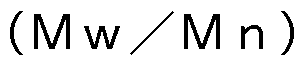
- methyl or ethyl is 1.0 or more and 30 or less, and is 1.0 or more and 13.0 or less, the number average molecular weight (IV! 11) and the weight average molecular weight (IV! Ratio with ⁇ «) Is
- a diblock type oligomer having a pyranose block and an alkylpyranose block having a pyranose block and an alkylpyranose block.
- Alkylpyranose block IV w/Mn is greater than 1.0 3.
- the diblock oligomer according to 1 above which is 0 or less.
- n 2.0 or more and 6.0 or less
- n/m is 2.0 or more and 3.0 or less.
- the diblock type oligomer according to any one of 1 to 4 above which has a hydrodynamic diameter of less than 1,000 n at 25°.
- the diblock oligomer of the embodiment of the present disclosure includes an unmodified glucose block and a methylated or ethylated glucose block, and the methylated or ethylated glucose block has a specific dispersity (Mw/ Mn ). It has excellent interfacial activity and can be easily produced. Furthermore, the diblock type oligomer is suitable for surfactant applications.
- FIG. 1 shows a chemical formula of a diblock type oligomer having a pyranose block and an alkylpyranose block.
- Figure 2 shows for temperature, oligomer 8 3 ⁇ , the hydrodynamic diameter of 8 spoon ⁇ 8 ⁇ . ⁇ 02020/175648 5 (:171?2020/008157
- Fig. 3-1 shows an image of Ting IV! by negative staining method. (3) and ( ⁇ ) are 830, ( ⁇ ) and ( ⁇ is 8) and) are 80, ( 9
- Fig. 3-2 shows the image of "So" 1//1. (3) and ( ⁇ ) are 830, and ( ⁇ ) and ( ⁇ 1) are 801. The bar indicates 200 000!.
- Fig. 3-3 shows Eight IV! images.
- the left two columns are on a silicon wafer and the right two columns are on mica.
- the left side is the height image and the right side is the phase image on both the silicon wafer and the mica.
- FIG. 4 shows the tension curve of an aqueous solution of oligomeric 8 3 ⁇ _ ⁇ 8 NOTE.
- the present disclosure provides a novel diblock oligomer, which has the formula (I):
- 01 is the average value for the pyranose block, and the number of pyranose is ⁇ 02020/175648 6 ⁇ (: 171?2020/008157
- the diblock type oligomer alkylpyranose block of the embodiment of the present disclosure are each independently a methyl group or an ethyl group. All may be methyl groups or all ethyl groups.
- the term is the average value for the alkylpyranose block, and the number of alkylpyranose may or may not be an integer.
- the door is...! It is more than 0 and less than 1 3.0.
- the door is...! .2 or more, and ! .4 or more, and! .5 or more, 1.6 or more, 2.0 or more, 2.5 or more. May be 1 2.0 or less, 1 0.0 or less, 8.0 or less, and 6.0 or less. Is! When it is 0.0 or more and 13.0 or less, more suitable surface-active ability can be exhibited without gelation.
- n/m is, for example,! It can be greater than or equal to 0.0 and less than or equal to 13.0, and can be greater than or equal to 3.0 and less than or equal to 6.0. In another aspect, the / may be 2.0 or more and 3.0 or less.
- Mw/Mn may be 1.05 or more and 2.0 or less in one embodiment, and in another embodiment, for example,! .05 and above! .7 or less, and in a further embodiment, it may be 1.10 or more and 1.5 or less.
- the number average molecular weight (IV! n) and the weight average molecular weight (1 ⁇ /1) are values measured using ⁇ (3, more specifically, the values measured by the method described in the examples. ..
- the hydrodynamic diameter at 25° is in other embodiments, the hydrodynamic diameter at 25° may be 100 n or less. When the hydrodynamic diameter at 25° is less than 100 n, gelation is less likely to occur and it is easy to use as a surfactant.
- the diblock oligomer of the embodiment of the present disclosure may or may not be observed to have a sharp increase in its hydrodynamic diameter at 25 ° to 70 ° .
- the thermal characteristics of the diblock type oligomer can be appropriately utilized.
- the present disclosure can provide a surfactant including the diblock oligomer of the embodiment of the present disclosure.
- surfactant refers to a material that can be dissolved in water to reduce the surface tension of water.
- Such a surfactant can be used for various purposes, and for example, it can be used as a foaming agent, an emulsifying agent, a dispersing agent, a wetting agent and the like.
- the surfactant of the embodiment of the present disclosure can appropriately contain other components as necessary.
- the diblock oligomer (or oligosaccharide) of the embodiment of the present disclosure is a material having a molecular weight distribution as a whole. Therefore, although it is a mixture as a whole of oligomers having various molecular weights, as described above, while having an appropriate surfactant activity, as described below, the production (or production) method is significantly shortened, It has the feature of cost reduction.
- the present disclosure provides a new method for producing a diblock oligomer (or oligosaccharide), which comprises:
- Methyl or ethyl cellulose is decomposed with methanol or ethanol in the presence of an acid to form a methyl or ethyl pyranose block;
- the production method according to the embodiment of the present disclosure further includes
- the (0) pyranose block (precursor) can be prepared before the (N) methyl or ethyl pyranose block and the pyranose block are linked by a glycosylation reaction.
- Methyl or ethyl cellulose may be prepared before (8) methyl or ethyl cellulose decomposition in the presence of an acid before methanol decomposition or ethanol decomposition.
- the pyranose block preparation step can be performed using a conventionally known method.
- cellopyose 3 is used as a starting material.
- a glycosyl donor (pyranose block precursor) 6 can be produced in three steps.
- Glucose, cellotriose, etc. can be used in place of cellopiose. Since it is protected by a protecting group (specifically, acetyl group), it must be noted that the protecting group (acetyl group) must be eliminated later.
- the (mouth) methyl or ethyl cellulose preparation step can be performed using a conventionally known method. For example, as shown in the following reaction formula, it can be carried out by reacting cellulose or commercially available methyl or ethyl cellulose with methyl iodide or ethyl iodide to methylate or ethylate all the hydroxyl groups.
- methyl or ethyl cellulose is decomposed with methanol or ethanol in the presence of an acid, and the step of producing a methyl or ethylpyranose block is the above-mentioned completely methyl. It can be carried out, if necessary, by dissolving the ethylated or ethylated cellulose in a solvent and subjecting it to methanol decomposition or ethanol decomposition in the presence of an acid.
- reaction formula For example, as shown in the following reaction formula, it is dissolved in a solvent such as chloroform, dichloromethane, tetrahydrofuran, 1,4-dioxane, etc., and the presence of an acid such as sulfuric acid, hydrochloric acid, nitric acid, methanesulfonic acid, trifluoromethanesulfonic acid, etc.
- a solvent such as chloroform, dichloromethane, tetrahydrofuran, 1,4-dioxane, etc.
- an acid such as sulfuric acid, hydrochloric acid, nitric acid, methanesulfonic acid, trifluoromethanesulfonic acid, etc.
- the above-mentioned completely methylated or ethylated cellulose can be decomposed with methanol or decomposed with ethanol.
- reaction conditions such as reaction temperature, reaction time, concentration of solute during reaction, and equivalence relationship can be appropriately selected depending on the molecular weight of the target methyl or ethyl pyranose oligomer.
- the reaction time may be 10 minutes to 10 hours, may be 15 minutes to 5 hours, may be 20 minutes to 3 hours, and may be 30 minutes to 2 hours. ..
- the reaction temperature may be from 30 to 80°°, from 35 to 75°°, from 40 to 70°° and from 45° to 65°°. You can The amounts of the acid and methanol can be appropriately selected.
- the methyl or ethylpyranose oligomer 2 and the pyranose block precursor 6 are bound using, for example, a glycosylation reaction as shown in the following reaction formula. You can do it here.
- the protecting group can be removed.
- the acetyl group is removed based on the following reaction formula.
- the hydroxyl group can be deprotected.
- the production method of the embodiment of the present disclosure is significantly shortened in the step of producing a methyl or ethyl pyranose block as compared with the production methods of diblock type oligomers described in the conventionally known Patent Document 1 and Non-Patent Document 1. ing. Therefore, overall, faster, easier, higher yield, lower cost, diblock Type oligomers can be produced. Furthermore, it is possible to produce a surfactant containing such a diblock oligomer.
- the reaction solution was poured into distilled water (2.0 L), stirred with a homogenizer for 10 minutes, neutralized with H 2 SO 4 and allowed to stand.
- the resulting precipitate A and the supernatant were separated, and the precipitate A was dried under reduced pressure.
- the supernatant was spun down and the precipitate was collected, dispersed twice with water, spun down twice, and then dispersed twice with isopropanol, spun down and spin down with Hexane.
- the solution was dispersed once and spun down by centrifugation, and the obtained precipitate B was dried under reduced pressure. 3.10 g of precipitate A and 4.10 g of precipitate B were obtained. Overall yield 33%.
- a general method for synthesizing an oligomer by decomposing methanol is as follows.
- Oligomer _2a (128 mg) was obtained from compound 1'(101 mg) by stirring at 60°C for 60 minutes.
- the compound 1 (1.009) was stirred at 55 ° ⁇ for 120 minutes, and the product was further purified by gel filtration chromatography (61 ⁇ 20% 1 ⁇ 0 (3 ⁇ 4 ⁇ 2 ) to obtain the oligomer 2( ⁇ (149.9111 9, 14.9 Got
- the compound 1 (104 !11 9 ) was stirred at 55° for 60 minutes to obtain an oligomer 26 (119.6 »1 9 ).
- Acetic anhydride 120 111 ⁇ was dissolved in cellopiose (20.0 9 , 3) and ( ⁇ / ⁇ ⁇ (10.3 9), stirred at 100 ° ⁇ for 3 hours, and at 110 ° ⁇ for 1.5 hours, and reprecipitated with water to react.
- the precipitate was filtered, washed with distilled water, recrystallized with, filtered, Wash twice with 3 times and dry to give a white solid of acetylated cellopyose 4 (37.9 9 ⁇ 02020/175648 16 ⁇ (: 171?2020/008157
- Oligomers 2 (56.51119) and Compound 6 (367 1119, 46911,), oligomer 7 0 (78.1 1 ⁇ 66.0%), 73 (25.51 ⁇ , 14.0%) was obtained.
- Oligomer 83 ⁇ 4 (21.9 1 ⁇ , 74.7%) was obtained from oligomer 73 ⁇ 4 (44.7 1 ⁇ ).
- Oligomer 8 (14.9 1119, Li 3 1 ⁇ 1:) was obtained from oligomer 7 (14.9 1119).
- Oligomer 8 (17.0 1 ⁇ , 95.5 %) was obtained from oligomer 7 (21.3 1 ⁇ ).
- Oligomer 801 (35.8(119, Li 8:1:) was obtained from oligomer 71(45.8 (119))
- the oligomer 86 (38.9 1 ⁇ , 78.9 %) was obtained from the oligomer ⁇ (54.3 1 ⁇ ).
- 1 ⁇ 1_ ⁇ 02020/175648 24 (: 17 2020 /008157
- Table 1 shows the molecular weights and 0 n of the oligomers 830 to 89 collectively.
- Matrix assisted laser desorpt i on/ i on i zat i on t ime-of-fight mass (MA LDI-TOF MS) It was measured at. 2,5-dihydroxybenzonic acid (DHB) was used as a matrix.
- Dynamic light scattering was measured using an ELS-Z Zeta-potentia I&Particule size analyzer Otsuka El ectronics Co., Ltd. The temperature was raised from 25°C to 70°C in 5°C increments, and the hydrodynamic diameter was determined using the average of three measurements at each temperature. A 1 wt% aqueous solution was prepared and filtered with a pore size 2.7yu, m syringe filter before measurement.
- a 1% aqueous solution was placed on the grid, and immediately after absorbing the solvent with a piece of filter paper, the sample was prepared by rapidly freezing with liquid ethane.
- the JEOL JEM-2000EII was used and observed at liquid nitrogen temperature with a caloric voltage of 100 kV.
- each 1 wt% aqueous solution was dropped onto Silicon Wafer or mica and air-dried to obtain a sample. After that, using a Shimadzu SPM-9600, AFM observation was performed in the atmosphere.
- the surface tension of the aqueous solution was measured by the Wi Ihelmy Plate method using a surface tensiometer (CBVP-A3, Kyowa Interface Science Co, Ltd). The measurement is 700 L ⁇ 02020/175648 27 ⁇ (: 171?2020/008157
- a Teflon (registered trademark) cell was used at room temperature of about 23 ° . From 5 minutes to 30 minutes after the start of measurement, the stable value was read as the measured value.
- Dynamic light scattering measurement was performed for each of the diblock oligomers 8 30 to 8 to determine the hydrodynamic diameter.
- the measured concentration was 1.0 ⁇ 1%, and the measured temperature range was 25-70 °.
- the results are shown in Figure 2 and Table 2.
- Figure 2 shows the hydrodynamic diameter of diblock oligomers 880 to dried as a function of temperature. Although the oligomers 880 to 8 are extremely small, it is shown that the oligomers 80 to 6 can generate a thermal response, and the oligomer 8 can generate a considerably large thermal response as compared with other oligomers. Table 2 shows that the thermal response temperature of the oligomer 80-dry is 40-55° and the hydrodynamic diameter of 8 is much larger than the others.
- Table 2 below shows the hydrodynamic diameter and thermal response temperature of oligomer 8.
- Oligomer 83 ⁇ 4, 81), 8 (;, 8 Observing the oligomers 83 0 , 80 1 ⁇ ⁇ ⁇ -Observing the oligomers 83 0 , 8 80 1 Part of the observation results is shown in Figure 3-1.
- Oligomer -83 0 (Fig. 3 - 1 (3) (1)) in), it was observed that small aggregates of particulate or short rod-shaped are set in more dense state.
- Fig. 3-1 ( ⁇ ) ( ⁇ 0) it was observed that small aggregates in the form of granules or short rods were partially aggregated.
- 1 (6) to (”) it was observed that fibrous aggregates having a width of about 10 to 20 were roughly aggregated. ⁇ 02020/175648 28 ⁇ (: 171?2020/008157
- ⁇ ⁇ -Fig. 3 _ 2 shows the observed morphology.
- compound 83 ⁇ 4 (Fig. 3 — 2 (3) (1))
- Fig. 3 — 2 (3) (1) it was observed that the rod-shaped aggregates were further aggregated. Since there is a part that looks very dark, it is considered that the molecules are stacked and the electron density is increased accordingly.
- the morphology observed with compound 80 (Fig. 3-2 ( ⁇ ) (( ⁇ ) was very similar to that observed with the negative staining method. ,, after, .. The height and phase images obtained from the observation are shown in Fig. 3_3 right and left, respectively.
- relatively hydrophobic portion is shorter diblock type oligomer (oligo-mer 83 0, 81)), but a small aggregate of about 3 at maximum height has been observed, relatively hydrophobic portion is long In the diblock type oligomer (oligomer 80-8), a structure having a height of several tens to several hundreds, which is considerably larger than the former, was observed.
- the surface tension of each aqueous solution with respect to the concentration of ⁇ 8° is shown.
- the surface tension curve of a commercially available aqueous solution of methylcellulose (311/1-4) is also shown.
- Diblock type oligomer (83 ⁇ 4-8 Aqueous solution surface tension curve shows that the average rate of change of surface tension with respect to the logarithm of the concentration decreases as the hydrophobic part of the oligomer becomes longer. It was shown to approach the surface tension curve of.
- the surface tension at 1.01% is adopted to evaluate the surface activity.
- Table 3 compares the surface tensions of the oligomers 83 0 and 83-8 ⁇ at 11 «. When the oligomer is 8 3 and 8 wells (4.2, 5.4 in the hydrophobic part), 1. And became particularly low. Especially 0? 4.2 diblock oligomer ⁇ 02020/175648 29 ⁇ (: 171?2020/008157
- the hydrophobic part of 1.5 is extremely short (oligomer 830) and when the comparative hydrophobic part of 0? su6.7 or more is long (oligomer 80 to 8), general surface activity is shown. Therefore, the hydrophobic part of the diblock type oligomer has an effect on its surface activity, and by adjusting the hydrophobic block, it has an excellent surface activity equivalent to that of a commercially available surfactant. It is possible to obtain a diblock type oligomer, and various diblock type oligomers whose surface activity is appropriately adjusted.
- Table 4 shows the average values of the two panelists.
- the results of this taste analysis indicate that the diblock type oligomer has a weaker bitterness than that of saccharose lauric acid, which is a general food surfactant.
- the diblock oligomer of the embodiment of the present disclosure includes an unmodified glucose block and a methylated or ethylated glucose block, and the methylated or ethylated glucose block has a specific dispersity (Mw/ Mn ). It has excellent surface activity, and can be easily produced. Furthermore, the diblock oligomer is suitable for surfactant applications.
Landscapes
- Chemical & Material Sciences (AREA)
- Health & Medical Sciences (AREA)
- Life Sciences & Earth Sciences (AREA)
- Organic Chemistry (AREA)
- General Health & Medical Sciences (AREA)
- Molecular Biology (AREA)
- Engineering & Computer Science (AREA)
- Biochemistry (AREA)
- Chemical Kinetics & Catalysis (AREA)
- Medicinal Chemistry (AREA)
- Polymers & Plastics (AREA)
- Materials Engineering (AREA)
- Crystallography & Structural Chemistry (AREA)
- Biotechnology (AREA)
- Genetics & Genomics (AREA)
- Saccharide Compounds (AREA)
- Emulsifying, Dispersing, Foam-Producing Or Wetting Agents (AREA)
- Pharmaceuticals Containing Other Organic And Inorganic Compounds (AREA)
Abstract
図1に記載の式(I)[式(I)中、R1は、各々独立してメチル又はエチル、mは、1.0以上3.0以下、nは、1.0以上13.0以下、アルキルピラノースブロックの数平均分子量(Mn)と重量平均分子量(Mw)との比(Mw/Mn)は、1.0より大きく4.0以下]で示される、ピラノースブロックとアルキルピラノースブロックとを有するジブロック型オリゴマーである。
Description
\¥0 2020/175648 1 卩(:17 2020 /008157 明 細 書
発明の名称 : ジブロック型オリゴ糖及びそれを含む界面活性剤 技術分野
[0001 ] 本開示は、 親水部としてグルコースブロックを有し、 疎水部としてメチル 化又はエチル化グルコースブロックを有する、 ジブロック型オリゴ糖 (又は オリゴマー) に関し、 さらに詳しくは特定の範囲の数のグルコースブロック と、 特定の範囲の数のメチル又はエチル化グルコースブロックを有する、 ジ ブロック型オリゴ糖を含む界面活性剤に関する。
背景技術
[0002] -グルコピラノースが /3 -1 , 4結合した剛直な直鎖状高分子であるセルロー スは、 植物細胞壁を構成する主成分であり、 地球上で最も多量に生産される 有機化合物である。 またセルロースは再生産可能であり、 焼却によっても有 害物質を出すことが少ないので、 近い将来に枯渴することが予想される化石 資源に代わる環境負荷の小さい地球に優しい天然資源として注目されており 、 セルロースの高付加価値化に向けた新規利用法の開発が盛んに行われてい る。
[0003] セルロースは無水グルコース単位当たりに 3つの水酸基を有し、 その水酸基 を化学修飾することで、 セルロースにはない様々な機能を有するセルロース 誘導体を得ることができる。 代表的なセルロース誘導体であるメチルセルロ —ス 〇〇は水酸基をメチル化したセルロースであり、 無味で高い生体適合性 を持つという性質のために、 既に食品、 医薬品などの用途に使用されている
[0004] その用途の一つに界面活性能があり、 IV!(3水溶液は常温で界面活性剤とし て機能する。
特許文献 1は、 アルキル化されたグルコース又はセロオリゴ糖からなる疎 水部分と単糖又はオリゴ糖からなる親水性部分とがブロック的に結合してい るセロオリゴ糖誘導体からなる界面活性剤を開示する (特許文献 1特許請求
の範囲参照) 。 特許文献 1は、 その実施例 1で得られるブロック的メチル化 セロオリゴ糖ライブラリーを分画して、 クロロホルム可溶部 (PartA) を含む 水溶液の表面張力を測定して、 約 45 m N/mであることを報告した (特許 文献 1、 [0189] 参照) 。
[0005] 非特許文献 1は、 非変性セロオリゴ糖ブロックとトリー〇ーメチル化セロ オリゴ糖ブロックのジブロックオリゴマー (具体的にはペンタマー 1 とヘキ サマー 2) を合成し、 それらの水溶液の表面張力は、 約 30m N/mまで低 下し得ることを報告した (非特許文献 1、 Fig10 [0189] 参照) 。
先行技術文献
特許文献
[0006] 特許文献 1 :特許第 4749339号
非特許文献
[0007] 非特許文献 1 : Hiroshi Kami takahara, Fumiaki Nakatsubo, Dieter Klemm,
New class of carbohydrate-based nonionic surfactant : diblock co-oUgo mers of tr i-O-methy lated and unmodified ce I lo-o Ugosacchar ides”, Ce 11 ulose (2007) 14: 513-528
発明の概要
発明が解決しようとする課題
[0008] 特許文献 1は、 ブロック的メチル化セロオリゴ糖ライブラリーを分画して 、 クロロホルム可溶部 (PartA) を含む水溶液の表面張力を開示する。 しかし 、 その表面張力は、 約 45 mN/mであり、 界面活性能をより向上させるこ とが求められる。 更に、 特許文献 1 によって生産される材料は、 長く、 手間 が掛かる方法で生産され、 より簡単に効率的に生産可能な材料であることが 求められる。
[0009] 非特許文献 1は、 ジブロックオリゴマー (具体的にはペンタマー 1 とヘキ サマー 2) を合成し、 それらの水溶液の表面張力は、 約 30m N/mまで低 下し得ることを報告した。 界面活性能は、 相当なレベルを示すように見える
\¥02020/175648 3 卩(:171?2020/008157
が、 そのオリゴマー材料も長く、 手間がかかる生産方法で生産されており、 より簡単に効率的に生産可能な (そのような化学構造を有する) 材料である ことが求められる。
[0010] 従って、 本開示は、 より効率的に生産 (又は製造) 可能であって、 高い界 面活性能を示し得る、 セルロースに基づくジブロック型オリゴマーを提供す ることを目的とする。
課題を解決するための手段
[001 1 ] 本発明者等は、 鋭意検討を重ねた結果、 非修飾グルコースブロックとメチ ル化又はエチル化グルコースブロックを含むジブロック型オリゴマーであっ て、 メチル化又はエチル化グルコースブロックが特定の分散度

) (数平均分子量 (IV! 11) と重量平均分子量 (IV! \«) との比

) を有する場合、 優れた界面活性能を示すとともに、 容易に生産することが できることを見出した。 更に、 そのようなジブロックオリゴマーは界面活性 剤用途に好適であることを見出して、 本開示の技術を完成させるに至った。
[0012] 本明細書は、 下記の形態を含む。
1 . 下記式 (I) :
[化 1 ]

[式 (丨) 中、
 各々独立してメチル又はェチル、 は、 1 . 0以上 3 0以下、 门は、 1 . 0以上 1 3 . 0以下、 アルキルピラノースブロックの 数平均分子量 (IV! 11) と重量平均分子量 (IV! \«) との比
 は、
は、
1 . 0より大きく 4 . 0以下]
で示される、 ピラノースブロックとアルキルピラノースブロックとを有する ジブロック型オリゴマー。
\¥02020/175648 4 卩(:171?2020/008157
2. アルキルピラノースブロックの IV! w/Mnは、 1. 0より大きく 3.
0以下である、 上記 1 に記載のジブロック型オリゴマー。
3.
 ·! . 5以上 2. 5以下、 nは、 2. 0以上 6. 0以下である、 上記 1又は 2に記載のジブロック型オリゴマー。
4. n/mは、 2. 0以上 3. 0以下である、 上記 1〜 3のいずれか 1つ に記載のジブロック型オリゴマー。
5. 25 °〇の流体力学的直径が、 1 000 n 未満である、 上記 1〜 4の いずれか 1つに記載のジブロック型オリゴマー。
6.
 全てメチルである、 上記 1〜 5のいずれか 1つに記載のジブロ ック型オリゴマー。
7. 上記 1〜 6のいずれか 1つに記載のジブロック型オリゴマーを含む界 面活性剤。
8. メチル又はエチルセルロースを酸の存在下でメタノール分解又はエタ ノール分解して、 メチル又はエチルピラノースオリゴマーを生成すること ; 及びメチル又はエチルピラノースオリゴマーと、 ピラノースブロックとを結 合させること を含む、 上記 1〜 6のいずれか 1つに記載のジブロック型才 リゴマーの生産方法。
発明の効果
[0013] 本開示の実施形態のジブロック型オリゴマーは、 非修飾グルコースブロッ クとメチル化又はエチル化グルコースブロックを含み、 メチル化又はエチル 化グルコースブロックが特定の分散度 (Mw/Mn) を有し、 優れた界面活 性能を示すとともに、 容易に生産することができる。 更に、 そのジブロック 型オリゴマーは界面活性剤用途に好適である。
図面の簡単な説明
[0014] [図 1]図 1は、 ピラノースブロックとアルキルピラノースブロックとを有する ジブロック型オリゴマーを化学式で示す。
[図 2]図 2は、 温度に対する、 オリゴマー 83〇、 8匕 ~8†の流体力学的直 径を示す。
\¥02020/175648 5 卩(:171?2020/008157
[図 3-1]図 3- 1は、 ネガティブ染色法による丁巳 IV!画像を示す。 (3) と ( 匕) は、 830, (〇) と (〇〇 は、 8 ) と ) は、 8〇, (9
) と ) は、 8干である。 パーは、 (干)
 (a) (匕) (
〇) (〇1) ( 6) ( 9) (11) (」) 中 2001^ 111、 (」) 中 50011111を 示す。
[図 3-2]図 3 -2は、 〇 「ソ〇丁巳1\/1画像を示す。 (3) と (匕) は、 830 、 (〇) と (〇1) は、 8〇1である。 バーは、 200 〇!を示す。
[図 3-3]図 3 -3は、 八 IV!画像を示す。 左側 2列はシリコンウェハ上であり 、 右側 2列は雲母上である。 シリコンウェハ上も雲母上も各々左側が高さ画 像であり、 右側がフェーズ画像である。
[図 4]図 4は、 オリゴマー83〇〜 8干の水溶液の表面張力曲線を示す。
発明を実施するための形態
[0015] 本開示は、 新たなジブロック型オリゴマーを提供し、 それは、 下記式 (I)
[化 2]

[式 (丨) 中、
 各々独立してメチル又はエチル、 は、 1. 0以上 3 . 0以下、 门は、 1. 0以上 1 3. 0以下、 アルキルピラノースブロックの 数平均分子量 (IV! 11) と重量平均分子量 (IV! \«) との比
 は、
は、
1. 0より大きく 4. 0以下]
で示される、 ピラノースブロックとアルキルピラノースブロックとを有する ジブロック型オリゴマーである。
[0016] 本開示の実施形態のジブロック型オリゴマーのピラノースブロックについ て、 01は、 ピラノースブロックに関する平均値であり、 ピラノースの数は、
\¥02020/175648 6 卩(:171?2020/008157
整数であっても、 整数でなくてもよい。 は、 1. 0以上 3. 0以下である 。 1. 2以上であってよく、 1. 4以上であってよく、 1. 5以上で あってよく、 ·! . 6以上であってよい。
 は、 2. 8以下であってよく、 2
. 6以下であってよく、 2. 5以下であってよく、 2. 4以下であってよい 。 は、 1. 0以上 3. 0以下である場合、 より高い界面活性を示し得る。
[0017] 本開示の実施形態のジブロック型オリゴマーのアルキルピラノースブロッ クについて、
 は、 各々独立してメチル基又はエチル基である。 全てがメチ ル基又は全てがエチル基であってよい。
[0018] アルキルピラノースブロックについて、 门は、 アルキルピラノースブロッ クに関する平均値であり、 アルキルピラノースの数は、 整数であっても整数 でなくてもよい。 门は、 ·! . 0以上 1 3. 0以下である。 门は、 ·! . 2以上 であってよく、 ·! . 4以上であってよく、 ·! . 5以上であってよく、 1. 6 以上であってよく、 2. 0以上であってよく、 2. 5以上であってよい。
 は、 1 2. 0以下であってよく、 1 0. 0以下であってよく、 8. 0以下で あってよく、 6. 0以下であってよい。 は、 ·! . 0以上 1 3. 0以下であ る場合、 ゲル化することなく、 より適度な界面活性能を発揮し得る。
[0019] n/mは、 一の態様では、 例えば、 ·! . 0以上 1 3. 0以下であり得、 3 . 0以上 6. 0以下であってよい。 门/ は、 他の態様では、 2. 0以上 3 . 0以下であってよい。
[0020] アルキルピラノースブロックそのもの (ピラノースブロックと結合前) の 数平均分子量 (IV! 11) と重量平均分子量 (IV! \«) との比
 は、
は、
1. 0より大きく 4. 0以下であり、 ·! . 0より大きく 3. 0以下であって よい。 Mw/Mnは、 一の態様において、 1. 05以上 2. 0以下であって よく、 他の態様では、 例えば、 ·! . 05以上·! . 7以下であってよく、 更な る態様では、 1. 1 0以上 1. 5以下であってよい。 数平均分子量 (IV! n) と重量平均分子量 (1\/1 ) は、 ◦ (3を用いて測定した値をいい、 より具体 的には、 実施例に記載した方法で測定した値をいう。
[0021] 本開示の実施形態のジブロック型オリゴマーの 25 °〇での流体力学的直径
\¥02020/175648 7 卩(:171?2020/008157
は、 例えば、 1 0 0 0门 01未満でありえ、 5 0 0 n 01以下であってよい。 一 の態様では、 2 5 °〇での流体力学的直径は、
 以下であってよく、 他の態様では、 2 5 °〇での流体力学的直径は、 1 0 0 n 以下であってよい 。 2 5 °〇での流体力学的直径が、 1 0 0 0 n 未満である場合、 ゲル化を生 じ難く、 界面活性剤として利用しやすい。
[0022] 本開示の実施形態のジブロック型オリゴマーは、 2 5 °〇~ 7 0 °〇でその流 体力学的直径の急激な増加が観察されても、 観察されなくてもよい。 ジブロ ック型オリゴマーの熱的特性は、 適宜利用することができる。
[0023] 本開示は、 本開示の実施形態のジブロック型オリゴマーを含む、 界面活性 剤を提供することができる。 本明細書で界面活性剤とは、 水に溶けて、 水の 表面張力を低下させることができる材料をいう。 そのような界面活性剤は、 種々の用途に使用することができるが、 例えば、 泡立て剤、 乳化剤、 分散剤 、 湿潤剤等として、 利用することができる。 本開示の実施形態の界面活性剤 は、 必要に応じて、 適宜他の成分を含むことができる。
[0024] 本開示の実施形態のジブロック型オリゴマー (又はオリゴ糖) は、 全体と して分子量分布を有する材料である。 そのため、 種々の分子量を有するオリ ゴマーの全体として混合物であるが、 上述のように、 適度な界面活性能を有 しながら、 以下に説明するように、 生産 (又は製造) 方法の著しい短縮化、 コストダウンが可能であるという特徴を有する。
[0025] 本開示は、 新たなジブロック型オリゴマー (又はオリゴ糖) の生産方法を 提供し、 それは、
(八) メチル又はエチルセルロースを、 酸の存在下で、 メタノール分解又 はエタノール分解して、 メチル又はエチルピラノースブロックを生成するこ と ;及び
(巳) メチル又はエチルピラノースブロックと、 ピラノースブロック (前 駆体) とを結合させることを含む。
[0026] 本開示の実施形態の生産方法は、 更に、
(〇) ピラノースブロック (前駆体) を準備すること ;及び/又は
\¥02020/175648 8 卩(:171?2020/008157
(0) メチル又はエチルセルロースを準備すること
を含むことができる。
(0) ピラノースブロック (前駆体) の準備は、 (巳) メチル又はエチル ピラノースブロックと、 ピラノースブロックとをグリコシル化反応によって 結合させる前に行うことができる。
(〇 メチル又はエチルセルロースの準備は、 (八) メチル又はエチルセ ルロースを酸の存在下でメタノール分解又はエタノール分解する前に行うこ とができる。
[0027] 本開示の実施形態の生産方法において、 (〇 ピラノースブロック準備エ 程は、 従来既知の方法を用いて行うことができる。 例えば、 下記反応式に示 すように、 セロピオース 3を出発原料として、 3段階で、 グリコシルドナー (ピラノースブロック前駆体) 6を生成することができる。 セロピオースの 代わりに、 グルコース、 セロトリオース等を使用することができる。 尚、 下 記グリコシルドナー 6は、 その水酸基が保護基 (具体的にはアセチル基) で 保護されているので、 後ほど、 保護基 (アセチル基) の脱離が必要であるこ とに注意が必要である。
[0028] [化 3]

[0029] 本開示の実施形態の生産方法において、 (口) メチル又はエチルセルロー ス準備工程は、 従来既知の方法を用いて行うことができる。 例えば、 下記反 応式に示すように、 セルロース又は市販のメチル又はエチルセルロースを、 ヨウ化メチル又はヨウ化エチルと反応させて、 全ての水酸基をメチル化又は ェチル化することで行うことができる。
[0030]
\¥0 2020/175648 9 卩(:17 2020 /008157
[化 4]

[0031 ] 本開示の実施形態の生産方法において、 ( ) メチル又はエチルセルロー スを、 酸の存在下で、 メタノール分解又はエタノール分解する、 メチル又は エチルピラノースブロックの生成工程は、 上述の完全にメチル化又はエチル 化されたセルロースを、 必要であれば、 溶媒に溶解して、 酸の存在下で、 メ タノール分解又はエタノール分解することで行うことができる。 例えば、 下 記反応式に示すように、 クロロホルム、 ジクロロメタン、 テトラヒドロフラ ン、 1 , 4—ジオキサン等の溶媒に溶解して、 硫酸、 塩酸、 硝酸、 メタンス ルホン酸、 トリフルオロメタンスルホン酸等の酸の存在下、 上述の完全にメ チル化又はエチル化されたセルロ _スを、 メタノ _ル分解又はエタノ _ル分 解することで行うことができる。
[0032] [化 5]

¾304 0^1 /(^(¾
〇「日 (¾
[0033] 反応温度、 反応時間、 反応時の溶質の濃度、 当量関係等の反応条件は、 目 的とするメチル又はエチルピラノースオリゴマーの分子量などに応じて、 適 宜、 選択することができる。 例えば、 反応時間は、 1 0分〜 1 0時間であっ てよく、 1 5分〜 5時間であってよく、 2 0分〜 3時間であってよく、 3 0 分〜 2時間であってよい。 反応温度は、 3 0〜 8 0 °〇であってよく、 3 5〜 7 5 °◦であってよく、 4 0〜 7 0 °◦であってよく、 4 5 °0〜6 5 °◦であって よい。 酸及びメタノールの量等は、 適宜選択することができる。
[0034] 本開示の実施形態の生産方法において、 (巳) メチル又はェチルピラノー
\¥0 2020/175648 10 卩(:17 2020 /008157
スブロックと、 ピラノースブロックとを結合させる工程は、 メチル又はエチ ルピラノースオリ ゴマー 2とピラノースブロック前駆体 6とを、 例えば、 下 記反応式に示すように、 グリコシル化反応を用いて結合させることで行うこ とができる。
[0035] [化 6]

[0036] 本開示の実施形態の生産方法において、 ピラノースブロックの水酸基が保 護基によって保護されている場合、 保護基を外すことができる、 例えば、 下 記反応式に基づいて、 アセチル基を外して、 水酸基を脱保護することができ る。
[0037] [化 7]

[0038] 本開示の実施形態の生産方法は、 従来既知の特許文献 1及び非特許文献 1 記載のジブロック型オリゴマーの生産方法と比較すると、 メチル又はエチル ピラノースブロックの生成工程が、 著しく短縮されている。 従って、 全体的 により短時間で、 より容易に、 より高収率で、 より低コストで、 ジブロック
型オリゴマーを生産することができる。 更に、 そのようなジブロック型オリ ゴマーを含む界面活性剤を生産することができる。
実施例
[0039] 以下、 本開示を実施例及び比較例により具体的かつ詳細に説明するが、 こ れらの実施例は本開示の一態様にすぎず、 本開示はこれらの例によって何ら 限定されるものではない。
[0040] 実施例又は比較例で使用したオリゴマー等は、 下記のように生産した。
1. 疏水部の合成
1 - 1. 完全メチル化セルロース 1の合成
(1^1:1^ I 2, 3, 6-1;「丨-0-11161;1^ I 〇6111|1〇3丨〇16の合成)
[化 8]

乾燥したメチルセルロース (20.0 g) を DMS0 (500 mL) に溶解し、 NaH 60% dispersion in mineral oil (4.03 g) を加えたあと、 CH3I (6.0 mL) を加 え、 25時間携拌した。 さらに NaH 60% dispersion in mineral oil (6.03 g) を加え、 CH3I (7.0 mL) を加え、 16時間撹拌した。 その後、 NaH 60% dispersi on in mineral oil を (7.67g) 加え、 CH3I (10.0mL) を加え、 6時間携拌後 、 NaH 60% dispersion in mineral oil (2.08 g) , CH3I (10mL) を加え、 4日 間撹拌した。 MeOH (10 mL) を添加することで反応は停止した。
反応溶液を蒸留水 (2.0 L)に注ぎ、 ホモジナイザーで 10分間撹拌したあと、 H2S04で中和し静置した。 生じた沈殿 Aと上澄みを分け、 沈殿 Aは減圧乾燥した 上澄みは遠心沈降して、 沈殿を回収し、 2回水で分散、 遠心沈降したあと、 イソプロパノールで 2回分散、 遠心沈降、 Hexaneで 2回分散、 遠心沈降し、 得 られた沈殿 Bを減圧乾燥した。 沈殿 Aを 3.10 g、 沈殿 Bを 4.10 g得た。 全体収率 33%。 沈殿 A : M„ = 2.6X10⁴、 MW=8.0X10⁴、 Mw/M„=3.12、 沈殿 B : M„=1.9X
104 , MW=5.4X10 Mw/Mn=2.76
以後、 沈殿 Bを (1) として用いた。
また、 同様の方法で合成された、 Mn=4.6Xl04, MW=1.7X10⁵, Mw/M„ = 3.7の完 全メチル化セルロース (T ) も準備した。
[0041] 1 -2. メタノリシスによるオリゴマー2の合成 (完全メチル化セルロースの メタノール分解による完全メチル化セルロースオリゴマーの合成)
(Methyl 2, 3, 6-tr i-〇-methy I ce l lu los ide Oligomers having a methoxy l g roup at C-1 of reducing end and hydroxy l group at C-4 of non-reducing endの合成)
[化 9]

CH(U3に上述の完全メチル化セルロース (1 or 1’ ) を溶解し、 MeOH (100eq uiv.)を加えた。 その後、 アイスバス中で H2S04 (40 equiv.)をゆっくりと滴下 し、 適切な反応温度、 時間で撹拌した。 アイスバスに移し NaHC03で中和するこ とで反応を停止した。 塩を含んだ反応液をろ過、 EtOAcで 1回洗浄後、 濃縮及 び減圧乾燥し、 オリゴマー 2を得た。
具体的な合成例を、 以下に示す。
[0042] オリゴマー2a (n = 2. 3) の合成
化合物 1’ (101mg) から、 60°Cで 60分撹拌しオリゴマ _2a (128 mg)を得た


[0043] オリゴマー 2 (1^ =4. 6) の合成
化合物 1, (154019)から、 60 で 70分撹拌し、 オリゴマー 2 (179[119)を得 た。

[0044] オリゴマー
 (1^ = 1 1. 2) の合成
化合物 1, (97.2 019)から、 60 で 40分撹拌し、 オリゴマー 2〇 (108.6 〇19) を得た。


[0045] オリゴマー 2〇1 (1^ =4. 3) の合成
化合物 1 (1.009)から、 55°〇で 120分撹拌し、 生成物をゲル濾過クロマトグ ラフイー (61^^20% 1^0 (¾^2)でさらに精製し、 オリゴマー2(^ (149.9111 9, 14.9
 を得た。
を得た。
1^八1_01-1"0 11/18 (卩03’|1; 6 「6'(:16〇1;0「 1110〇16; 83 11131;「’I X) : 卩 = 3 : 0& 1〇〇1

082^1148〇46» 2073.02; 1:〇11门〇1, 2095.34 [11/1+ ]+,

2277.12; 干〇 2299.19 [1!/1+ ]+· 1^ =8.79X10², 1^ =1.48X10³, 1^/1^ =1· 68,
[0046] オリゴマー 26 (1^ = 1 4. 2) の合成
化合物 1 (104 !119)から、 55°〇で 60分撹拌し、 オリゴマー 26 (119.6 »19)を得 た。
1^八1_01-1"0 11/18 (卩03’|1; 6 「6'(:16〇1;0「 1110〇16; 83 11131;「’IX) : 卩 = 2: 〇& 1〇〇1

[0047] オリゴマー 2† (1^ = 1 6. 6) の合成
化合物 1’ (105 1119)から、 55°〇で 40分撹拌し、 オリゴマ _2干 (114.9 〇19)を 得た。

[0048] 2. 親水部の合成
2 - 1. セロピオース(3)のアセチル化
(〇611〇6'|〇86 0(^3306士8士64の合成)
[化 10]

無水酢酸 (120 111〇にセロピオース (20.0 9、 3)と (^/〇〇 (10.3 9)を溶解 し、 100 °〇で 3時間、 110°〇で 1.5時間撹拌後、 水で再沈殿し反応を止めた。 沈 殿をろ過し、 蒸留水で洗浄後、 による再結晶を行い、 ろ過し、
 乂 3 で 2回ずつ洗浄後乾燥し、 白色固体のアセチル化セロピオース 4 (37.9 9
\¥02020/175648 16 卩(:171?2020/008157
乂 3 で 2回ずつ洗浄後乾燥し、 白色固体のアセチル化セロピオース 4 (37.9 9
\¥02020/175648 16 卩(:171?2020/008157
、 95.5%) を得た。
[0049] 2-2. 化合物 5の合成
(2, 3, 4, 6-士61;「3-0-3。6士 [-(3-^-2111。〇卩 「3门〇3 1-(1 , 4)-2, 3, 6-1;「 .1-0-3。6士 I - (X -0-9111。0卩 「3门03_1〇16の合成)
[化 11]

ェチル、 水を加え、 水溶液で中和し、 水、
 芒硝 ろ過後、 濃縮、 減圧乾燥して化合物 5 (9.229, 97.0%)を得た。
[0050] 2-3. グリコシルドナー (6)の合成
(2, 3, 4, 6-士61;「3-0-3。6士 [- (3-^-2111。〇卩 「3门〇3 1-(1 , 4)-2, 3, 6-1;「 .1-0-3。6士 I - (X -0-911100卩 「3门03 I 2, 2, 2-1;「 I 1〇「08061;0丨111丨〇13士6の合取)
[化 12]


つ洗浄し、 減圧乾燥して、 化合物 6 (3.1 9, 65.7%)を得た。
-關 (00013): 51.99, 2.01, 2.02, 2.03, 2.05, 2.10, 2.12 (00^3), 3.6 7((^ 1 」=2.1, 」=3.9, 」=9.6, ’ ), 3.85 (
 」=9· 9, ), 4.05

3, ’ ) 5.53 ( 1 」=10.2, ), 6.49 ( 1 」=3.9, ’ ), 8.66 ( ,1 _
[0051 ] 3. ジブロック型オリゴマーの合成
3- 1. オリゴマー2 (23-†) と化合物 6のグリコシル化によるオリゴマー7 の合成
[化 13]

General method
グリコシル化反応は高減圧下 (>1 10_3 了〇「「)で行った。 化合物 23-†及び化合 物 6 (4 〇「
 をスターラーとともに高減圧下で 1日乾燥し、 そこに高 減圧状態を保った状態で無水 (^2(^2 (11.9 し)加えた。 氷浴中で
 (0.2 を加え、 21時間 0°〇で撹拌した。 反応の進行を 1\/1八!_ 0 丨 一丁〇 IV! 3により確認し反応を止めた。 その後、 £ 八〇で抽出し、 飽和 03水溶液 、 で洗浄し、 芒硝ろ過後、 濃縮して減圧乾燥し、 粗生成物を得た。 これ をシリカゲルカラムクロマトグラフィ _(61116^;: [1;0八(; 6乂3 =2: 1 )で精製 し、 同時に丁
 0.24 (0?„=1), 0.13 卩„=2 )) の低分子フラクションをほぼ除去した後、 化合物 7を得た。
[0052] オリゴマー 780, 78の合成
オリゴマー 2 (56.51119)と化合物 6(367 1119, 46911 ·)から、 オリゴマー 7 0 ( 78.1 1^, 66.0 %), 73 (25.51^, 14.0 %)を得た。 ただし、 オリゴマー 7 0はシ リカゲルカラムクロマトグラフィー (61116^;: £1;0八(;:^16乂3 =2:1)で精製する 際に低分子フラクションとして得た。
\¥02020/175648 18 卩(:171?2020/008157
730 (门 = 1 . 5) ; -關 (00013): 5 1.98, 2.01, 2.01, 2.04, 2.06, 2.0

02.09 [1!/1+ ]+·
 1.55 103,
 ( 以後 は疎水部のみの重合度を示している)
[0053] オリゴマー71)の合成

94.41 [1!/1+ ]+,
 1874.81 ; 干〇 1898.56
 8]+,
8]+,
 2078.91; 干。 , 2102.71 [1!/1+ ]十, 卩 =
10: 〇81〇〇1 干〇 。9#66058, 2283.01 ; 干〇 〇!. 2306.87 [!!/1+ ]+, 卩 = 11 :
\¥02020/175648 19 卩(:171?2020/008157 干〇「 0,^182063, 2487.11 ; 干〇 2511.01 [1!/1+ ]+·
 103,
103,

.13X103, 1^/1^ =1.19 , 5.3
[0054] オリゴマー7¢;の合成
オリゴマー 2〇 (43.5
 と化合物 6 (178 1119, 12equi V· )からオリゴマー 7〇 (1^ = 6. 7) (44.0 1119, 9 门1;·)を得た。
1^八1_01-1"0 11/18 (卩03’|1; 6 「6'(:16〇1;0「 1110〇16; 83 11131;「’I X) : 卩 = 4 : 〇& 1〇〇1 干〇 〇45 0〇28, 1058.41; 1:〇11门〇1, 1081.33 [1!/1+ ]十,

, 1262.51 ; 干〇 1285.41 [1!/1+ ]+, 〇卩 = 6:
 干〇「 〇6#102〇38, 1466.61 ; 干。 , 1489.37 [1!/1+ ]+,
 1670.71 ; 1:〇11门〇1, 16
93.56 [1!/1+ ]+,
 1874.81 ; 干〇 1897.62
 8]+, 卩 = 9:
 2078.91; 干。 , 2100.59 [1!/1+ ]十, 卩 =
10: 〇81〇〇1 干〇 。99^1166058, 2283.01 ; 干〇 〇!, 2305.73 [1!/1+ ]+, 卩 = 11 :
 干〇 。湖 82063, 2487.11 ; 干〇 〇!, 2509.79 [1!/1+ ]+, 卩 = 12: 〇81〇〇1 干〇 0117 98068, 2691.21 ; 1:〇11门〇1, 2713.79 [1!/1+ ]十, 〇卩 = 13:
 2
2
895.31 ; 干〇 2917.79 [1!/1+ ]十, ^?=]4:
 干〇「 35¾30〇78, 3099.41 ; 干〇 3121.81.

[0055] オリゴマー 7 79の合成
オリゴマー 2(^ (98.1 1^)と化合物 6 (917 1^, 12691^1 V· )を無水 (^3(^3 (50 し)中で反応させて得られた生成物 (211.4 1^)をゲル濾過クロマトグラフィー (41^^20 % 1^0 (^2 2)でさらに精製し、 オリゴマー7(^ (门 = 9. 1 ) (
64.51^, 22.0 %) 及びオリゴマ _79 (n = 5. 4) (133.8 1^, 66.9 %)を得 た。


干〇 0126^1214073, 2895.31 ; 干。 , 2917.44 [1!/1+ ]十, 卩=14: 〇81。〇1 干〇 。135¾ 0〇78, 3099.41; 干〇 〇!, 3122.44, 0卩=15: 〇81〇〇1 干〇 0144^1246083, 3303.51 ; 干〇 3326.09.
 103,
103,


[0056] オリゴマー 76の合成
オリゴマー 26 (58.9
 と化合物 6 (190 1119, 12equi V· )からオリゴマー 76 (1^ = 1 2. 3) (87.6 1119, 门〇を得た。
1^八1_01-1"0 11/18 (卩03’|1; 6 「6'(:16〇1;0「 1110〇16; 83 11131;「’IX) : 卩 = 4: 〇& 1〇〇1 干〇 〇45 0〇28, 1058.41; 1:〇11门〇1, 1081.40 [1!/1+ ]十,

, 1262.51 ; 干〇 1285.51 [1!/1+ ]+, 〇卩 = 6:
 干〇「 〇6#102〇38, 1466.61 ; 干。 , 1489.58 [1!/1+ ]+,
 1670.71 ; 1:〇11门〇1, 16
93.68 [1!/1+ ]+,
 1874.81 ; 干〇 1898.76
 8]+, 卩 = 9:
 2078.91; 干。 , 2102.84 [1!/1+ ]十, 卩 =
10: 〇81〇〇1 干〇 。99^1166058, 2283.01 ; 干〇 〇!, 2308.88 [1!/1+ ]+, 卩 = 11 :
 干〇 。湖 82063, 2487.11 ; 干〇 〇!, 2510.93 [1!/1+ ]十, 卩 = 12: 〇81〇〇1 干〇 0117

[0057] オリゴマー7†の合成
オリゴマー 2干 (79.2 1^)と化合物 6 (222 1^, 1269リ丨 V. )からオリゴマー 7干 (1^ = 1 3. 8) (85.6 1119, 门〇を得た。
-關(¾ (00013): 5 1.99, 2.01, 2.04, 2.07, 2.09, 2.11 (-〇⑶ 2.96 ( 2’ ), 3.21 ( 3’ ), 3.29, 3.39 (06-0(^3), 3.42, 3.51, 3.52, 3. 54 (02-0(^3), 3.56, 3.57, 3.58 (03-0(^3), 3.6-3.83 ’ , 6’ ), 4.0 3, 4.16, 4.30, 4.34 ( 」 = 7.8, 1’ ), 4.50, 4.71, 4.87, 4.94, 5.07 , 5.14

:
 \¥02020/175648 21 卩(:17 2020 /008157 (^5/86033, 1262.51 ; 千〇11门〇1, 1284.89 [¾/1+ ]十,

1466.61; 1488.88 [11/1+ ]+, 〇卩 = 7:
 千〇 18043, 1670.71 ; 千〇11门〇1, 1692.85 [¾/1+ ]+, ^? = 8:
 1874.81 ; 千〇11门〇1, 189
6.82 [¾/1+ ]十,
 2078.91 ; 千〇11门〇1, 2100.79 [¾/1+
]十, ^9 = 10:
 2283.01 ; 千〇 2304.75 [11/1+ ]十, 〇卩 =
11: 〇81〇〇1 千〇 。108 82〇63, 2487.11; 千〇 〇!, 2508.71 [¾/1+ ]十, 〇卩 = 12: ca[c 〇! 千〇 0117^1198068, 2691.21 ; 千〇 〇!, 2712.67 [¾/1+ ]十, 〇卩 = 13: 〇81〇〇1 千〇 。12 6^^ 214073, 2895.31 ; 千〇 〇!, 2916.62 [¾/1+ ]十,
 30
30
99.41; 千〇 〇!, 3120.56, 0卩=15: 〇81〇〇1 千〇 (^144¾46083, 3303.51 ; 千〇 〇!, 332
4.51 .
 103, |^ = 6.42X10³, 11/1ノ1^ =1.83 , ^9, =13.8
[0058] 3-2. アセチル基の除去によるジブロック型オリゴマー 8の合成
[化 14]

General Method
オリゴマー 730-9を 1^(^/丁 (1/4,
 に溶解し、 28% 〇〇
 (1
(1
 を加え、 2時間撹拌し、 〇〇 乂 #で中和して反応をとめた。 ろ過、 濃 縮、 減圧乾燥して、 オリゴマー 830-9を得た。
[0059] オリゴマー 80
オリゴマー7¾ (44.7 1^)からオリゴマー8¾ (21.9 1^, 74.7%)を得た。 -關 20): 53.30 ( 」 =9.0 , , ), 3.33 ( 」 = 8.4, , , ), ,
3.3-3.4 ( ), 3.38, 3.40, 3.46, 3.58 (0^3), 3.82 ((^, 」 = 4.8, 」 = 1 2.9, ’ , ), 3.90 ((^, 」=1.8, 」 = 12.9, ’ ), 3.97 ((^, 」=1.8, 」 = 12.6., ’ , ), 4.40 ( 1 」 = 7.8, ’ , ), 4.50 ( 」 = 7.8, ’
) , 4.99 ( 」 = 3.6, 〇〇; 】3〇|\| (〇2〇) : 557.6 (01-0^3), 60.5, 60 .9, 62.1, 62.7 (06' 〇「 ¢6, ’ ),63.2 (。6, 〇「 ¢6, ’ ),71.9, 72.1, 72.5 (06), , 75.8 (02, 〇「 ¢2, ’ ), 75.9 (02, 〇「 ¢2, ’ ). 76.9, 77.6, 78.
\¥02020/175648 22 卩(:171?2020/008157
1, 78.4, 78.6 (04), 81.2 (04' ), 82.2 (02), 83.1 (03), 99.2 (01 «), 1
(pos.it 6 「6干4(^〇「 〇1〇(^;
 560.23; 干。 , 583.15 [1!/1+ ]十
[0060] オリゴマー88
オリゴマー7 (14.9 1119)からオリゴマー8 (14.9 1119, リ 3 1^ 1: ) を得 た。
1^八1_01-1"0 11/18 (卩03’|1; 6 「6'(:16〇1;0「 1110〇16; 83 11131;「’I X) : 卩 = 5 : 0& 1〇〇1 干〇 〇40 2〇26, 968.43; 干。 , 991.28 [1!/1+ ]十,

1172.53; 干〇 1195.34 [1!/1+ ]+, 〇卩 = 7:
 干〇「 。5#04〇36, 1376.63; 干 〇11门〇1, 1399.40 [1!/1+ ]+, 〇卩 = 8:
 1580.73; 1:〇11门〇1, 1603 46 [1!/1+ ]十,
 1784.83; 干〇 1807.53 [1!/1+
]+■
[0061] オリゴマー
オリゴマー 7 (21.3 1^)からオリゴマー8 (17.0 1^, 95.5 %)を得た。
1^八1_01-1"0 11/18 (卩03’|1; 6 「6'(:16〇1;0「 1110〇16; 83 11131;「’IX) : 卩 = 5: 〇& 1〇〇1 干〇 〇40 2〇26, 968.43; 干。 , 991.42 [1!/1+ ]十, 〇卩 = 6: 〇81。〇1 干〇 。49¾8031, 1172.53; 干〇 1195.50 [1!/1+ ]+, 〇卩 = 7:
 干〇「 。5#04〇36, 1376.63; 干 〇11门〇1, 1399.59 [1!/1+ ]+,
 = 8 31。〇1 1:〇「 〇6 120〇41, 1580.73; 1:〇11门〇1, 1603.6
7 [1!/1+ ]十, 〇卩 = 9:
 1784.83; 干〇 1807.74 [1!/1+ ]+,

「 〇103^1184〇61, 2397.13; 干。 , 2419.95 [1!/1+ ]十, 卩 = 13:

66, 2601.23; 干〇 2624.00 [!!/1+ ]十, 〇卩 = 14:
 〒〇「 0121¾16071, 2805 33; 干〇 〇! , 2828.08 [11/1+ ]十·
[0062] オリゴマー 8〇
オリゴマー 7〇 (24.4 1119)からオリゴマー 8〇 (22.8 1119,
 を得た
\¥02020/175648 23 卩(:17 2020 /008157
を得た
\¥02020/175648 23 卩(:17 2020 /008157
 , ,
, ,

千〇 〇!, 2623.27 [¾/1+ ]十,
 14:
14:
 2805.33; 千〇 〇! ,
2827.03 [¾/1+ ]十, 〇卩 = 15:
 千〇 。130¾32〇76, 3009.43 ; 千〇 〇!, 3030.
68 [¾/1+ +·
[0063] オリゴマー 8(^
オリゴマー 7〇1 (45.8 (119)からオリゴマー8〇1 (35.8(119, リ 8门 1: )を得た

00〇66, 2601.23; 千〇11门〇1, 2624.00 [¾/1+ ]十, 〇卩 = 14:
 28
28
05.33; 〇 , 2828.08 [11/1+ ]十.
[0064] オリゴマー86
オリゴマー ㊀ (54.3 1^)からオリゴマー86 (38.9 1^, 78.9 %)を得た。 1^1_
\¥02020/175648 24 卩(:17 2020 /008157

3235.30 [11/1+ ]+·
[0065] オリゴマ _8千
オリゴマー 7千 (36.41119)からオリゴマー 8千 (30.31119, 90.9 %)を得た。 -關[¾ (020): 5 3.14 (士, 2’ ), 3.41 (。6-0(^3), 3.4-3.5 ( 3’ ), 3.57 (03-0^3), 3.5-3.7 ( 5’ ), 3.59 (02-0^3), 3.7-4.0 ’ , 6’ ), 4

[0066] オリゴマー 89
化合物 79
 から化合物 89 (81.8 1119,
 を得た。
を得た。
[0067] 下記表 1 に、 オリゴマー830から 89の分子量と 0 n等をまとめて示す
[表 1]

& 0.71 1.2 3.5 1.5 1,63
8 a 1.3 1 ,§ 6.2 4.2 1.18 8t> ),5 1.8 7.4 5.4 113 Be 1.5 2.$ 8.7 §.? 1.30 Bd 2.3 2.8 11.1 9,1 1.25 $$ Z.S 4.2 14,3 12.3 1.44 ar %1 6,1 !§8 138 1.91 H 1.5 1.§ 74 5.4 1.23
[0068] 上述のオリゴマーについて、 下記のような機器分析等を行った。
NMR
〗H-、 13C-及び二次元 NMRスペク トルは、 Varian NMR, INOVA300及び Ag Kent, 5 00NMRを用いて測定した。 試料を CH(U3に溶解させ、 内部標準物質として tetram ethy Isi laneを用いて測定した。
[0069] MALDI-TOF MS
Matrix assisted laser desorpt i on/ i on i zat i on t ime-of-f l ight mass (MA LDI-TOF MS) スぺク トルは、 Bruker MALDI-TOF MS Autoflex IIIを用いて、 p ositive ion modeで測定した。 2, 5-d i hydroxybenzon i c acid (DHB) をマトリ ックスとして用いた。
[0070] GPC
液体クロマトグラフ装置 (Gel Permeation Chromatography, GPC) (Shimadz u, CBM-10A, SPD-10A, SIL-10A, LC-10AT, FCV-10AL, CTO-10A, RID-10A and FRC-10A) を用いて GPC分析を行った。 カラムは Shodex columm (K802, K802.5
, K805)、 溶出溶媒は CHCl3を用い、 温度は 40°C、 流量は 1.0 mL/min で測定し た。 数平均分子量 (Mn)、 重量平均分子量 (Mw)、 及び分散度 (Mw/Mn)はポリスチ レン (Shodex) 換算により見積もった。
[0071] DLS
動的光散乱は ELS-Z Zeta-potent i a I &Part i c le size Analyzer Otsuka El ectronics Co., Ltdを用いて測定した。 25°Cから 70°Cまで 5°Cずつ昇温し、 各 温度 3回の測定の平均値を用いて、 流体力学的直径を求めた。 1 wt%水溶液を 調整し、 測定前に pore size 2.7yu, m syringe filterでろ過した。
[0072] 透過型電子顕微鏡 (TEM)
透過型電子顕微鏡画像は、 JEOL JEM-1400を用いて撮影した。 加速電圧は 10 0 kVであった。
1) 8a0, 8c, 8dの場合: 各々の 1 %水溶液を、 炭素コートされた Cuグリッ ド上に滴下した。 ろ紙片に溶媒を吸収させると同時に 2 %酢酸ウラニルをア プライし、 染色液をろ紙で吸い取った後、 30分乾燥させた。
2) 8b, 8fの場合: 各々の 1 %水溶液を炭素コートされた Cuグリッ ド上に滴 下し、 ろ紙片に溶媒を吸収させた。 その後 10倍希釈した EMステイナーをアブ ライし、 しばらく静置した後、 染色液をろ紙片で吸い取った。
[0073] クライオ走査電子顕微鏡 (Cryo-TEM)
1 %水溶液をグリッ ド上にのせ、 ろ紙片で溶媒を吸い取った直後に、 液体エ タンで急速に凍らせてサンプルを作成した。 JEOL JEM-2000EIIを用いて、 カロ 速電圧 100 kVで液体窒素温度下で観察した。
[0074] 原子間力顕微鏡 (AFM)
AFM観察は各々の 1 wt%水溶液を、 Silicon Wafer, 又は mica 上に滴下し、 風乾して、 試料を得た。 その後、 Shimadzu SPM-9600を用い、 大気雰囲気下で AFM観察を行った。
[0075] 表面張力測定
水溶液の表面張力測定は、 Wi Ihelmy Plate法により、 表面張力計 (CBVP-A3 , Kyowa Interface Science Co, Ltd) を用いて行った。 測定は、 700 Lの
\¥02020/175648 27 卩(:171?2020/008157
テフロン (登録商標) セルを用いて、 およそ 23 °〇の室温で行った。 測定開始 の 5分後から 30分後の間で、 安定した時の値を、 測定値として読み取った。
[0076] 動的光散乱 (0し3)測定結果
ジブロック型オリゴマー8 3 0 ~ 8干の各々について、 動的光散乱測定を 行い、 流体力学的直径を求めた。 測定濃度は 1 . 0 ^1%、 測定温度範囲は 25-70 °〇であった。 結果を、 図 2及び表 2に示した。 図 2は、 温度に対するジブロ ック型オリゴマー 8 8 0 ~干の流体力学的直径を示す。 オリゴマー 8 8 0 ~ 匕は、 極めて小さいが、 オリゴマー 8〇 ~ 6では、 熱応答を生じ得、 オリゴ マー 8干は、 他のオリゴマーと比べて、 相当大きな熱応答を生じ得ることを 示す。 表 2は、 オリゴマー 8〇 ~干の熱応答温度が、 4 0〜 5 5 °〇であるこ と、 8チの流体力学直径は、 他と比べて極めて大きいことを示す。
[0077] 下記表 2に、 オリゴマー 8の流体力学的直径と熱応答温度を示す。
[表 2]

[0078] 形態観察
オリゴマー 8¾, 81), 8(;, 8
 観察を 行い、 オリゴマー 830, 8〇1に対して〇「 〇- 観察を行い、 オリゴマー 830, 8 8〇
 観察の結果の一部を図 3 - 1 に示す。 オリゴマ -830 (図 3 - 1 (3)(1)))では、 粒状あるいは短い棒状の小さな会合体がさらに 密な状態で集合していることが観察された。 オリゴマー8匕 (図 3 - 1 (〇 ) (¢0 ) では、 部分的に粒状あるいは短い棒状の小さな会合体が集合して いることが観察された。 オリゴマ _8〇, 8 8干 (図 3 - 1 (6)〜(」))では、 幅 10 〜20 程度の繊維状会合体が粗に集合している様子が観察された。
 \¥02020/175648 28 卩(:171?2020/008157
〇 〇- 観察で主に観察された形態を図 3 _ 2に示す。 化合物 8¾(図 3 _ 2 (3)(1)))では棒状の会合体がさらに凝集している様子が観察された。 非常に濃 く見える部分があるため、 それだけ分子が積層し電子密度が高くなっている と考えられる。 化合物 8〇(図 3 - 2(〇)((〇)で観察された形態は、 ネガティブ 染色法で丁巳 IV!観察された形態とよく類似した。
 , 、 後 、
 。 , 観察から得られたそれぞれ の高さ像及び位相像を、 図 3 _ 3右及び左に各々示す。
どちらの基板上でも比較的疎水部が短いジブロック型オリゴマー (オリゴ マー 830, 81))においては、 高さが最大でも 3 程度の小さな集合体が観察され たが、 比較的疎水部が長いジブロック型オリゴマー (オリゴマー 8〇-8 では 、 高さが数十〜数百 に及ぶほどの前者よりかなり大きな構造体が観察され た。
[0082] 表面張力測定
疎水部が界面活性能に与える影響を調べるため、 オリゴマー 8¾-8†に対して

〜 8チの濃度に対する、 各々の水溶液の表面張力を示す。 参考に市販のメチ ルセルロース(311/1-4)水溶液の表面張力曲線も示す。 ジブロック型オリゴマー (8¾-8 水溶液の表面張力曲線は、 オリゴマーの疎水部が長くなるにつれて濃 度の対数に対する表面張力の平均変化率が小さくなり、 市販のメチルセルロ —ス(311/1-4)の表面張力曲線に近づくことが示された。
[0083] 表面張力の代表値として、 1 . 0 1%での表面張力を採用して、 界面活性能 を評価する。 オリゴマー 830, 83-8†の 1 1« での表面張力を比較して、 表 3に 示した。 オリゴマー8 3及び 8匕 (疎水部の 4. 2, 5. 4) の時、 その 1 .
 と特に低くなった。 特に0? 4. 2 のジブロック型オリゴマー
 \¥02020/175648 29 卩(:171?2020/008157
1 . 5の疎水部が極めて短い場合 (オリゴマー 8 3 0 ) と、 0?„ 6. 7以上の比 較的疎水部が長い場合 (オリゴマー 8〇〜8チ ) 、 一般的な界面活性能を示 す。 したがって、 ジブロック型オリゴマーの疎水部は、 その界面活性能に対 して影響を及ぼし、 疎水性ブロックを調節することで、 市販の界面活性剤と 同等の優れた界面活性能を有するジブロック型オリゴマーを得ることができ る。 更に、 界面活性能を適宜調節した種々のジブロック型オリゴマーを得る ことができる。
[0084] [表 3]

880 (/7 % 1,5) 41,4
83 (£)/¾ % 4, 2) 24,5
85 (£)8^ 5,4) 29.9
8〇魄 ½ 6、7) 46,5
8(1 ( / ¾ 9,1) 41 2
 35,9
35,9
81 (£)^ % 13.8) 42.8
[0085] 味分析
味分析は、 下記の手順で、 下記の評価基準に基づいて、 2名のパネラーが 評価した。 2名のパネラーの平均値を表 4に示す。
異なる鎖長を有する 2種類のジブロック型オリゴマー (8¾, 89)及びシヨ糖 ラウリン酸エステルを用いた。 シヨ糖ラウリン酸エステルは、 食品用界面活 性剤として、 一般に利用されている。 各々の 0. 1
 水溶液を準備した。 各パ ネラーは、 口を 3回水で濯いだ後、 各々の水溶液を口に含んで評価した。 評価基準
\¥02020/175648 30 卩(:171?2020/008157
水溶液を準備した。 各パ ネラーは、 口を 3回水で濯いだ後、 各々の水溶液を口に含んで評価した。 評価基準
\¥02020/175648 30 卩(:171?2020/008157
5 :苦味及び渋味を全く感じず、 無味であった。
4 :苦味及び渋味をごく僅かに感じたが、 気にするほどではなかった。 3 :苦味及び渋味をわずかに感じたが、 許容範囲であった。
2 :苦味及び渋味を明確に感じた。
1 :苦味及び渋味を強く感じた。
[0086] [表 4]

[0087] 表 4より、 ジブロック型オリゴマーの苦味と渋味は、 シヨ糖ラウリン酸エ ステルより、 全体的に抑制されており、 実質的に無味といえる。
この味分析の結果は、 ジブロック型オリゴマーは、 一般的な食品用界面活 性剤であるシヨ糖ラウリン酸と比べて苦味が弱いことを示す。
産業上の利用可能性
[0088] 本開示の実施形態のジブロック型オリゴマーは、 非修飾グルコースブロッ クとメチル化又はエチル化グルコースブロックを含み、 メチル化又はエチル 化グルコースブロックが特定の分散度 (M w/M n) を有し、 優れた界面活 性能を示すとともに、 容易に生産することができる。 更に、 そのジブロック オリゴマーは界面活性剤用途に好適である。
[0089] [関連出願]
尚、 本出願は、 2 0 1 9年2月 2 8日に日本国でされた出願番号 2 0 1 9 - 3 5 7 3 5を基礎出願とするパリ条約第 4条に基づく優先権を主張する。 この基礎出願の内容は、 参照することによって、 本明細書に組み込まれる。
Claims
\¥02020/175648 31 卩(:171?2020/008157 請求の範囲
[請求項 1] 下記式 (I) :
[化 1]

0以上 3. 0以下、 门は、 ·! . 0以上 1 3. 0以下、 アルキルピラノ —スブロックの数平均分子量 (IV! 11) と重量平均分子量 (IV! \«) との 比 (1\/1 /1\/^) は、 ·! . 0より大きく 4. 0以下] で示される、 ピラノースブロックとアルキルピラノースブロックとを 有するジブロック型オリゴマー。
[請求項 2] アルキルピラノースブロックの IV! w/Mnは、 1. 0より大きく 3
. 0以下である、 請求項 1 に記載のジブロック型オリゴマー。
[請求項 3] は、 ·! . 5以上 2. 5以下、 nは、 2. 0以上 6. 0以下である 、 請求項 1又は 2に記載のジブロック型オリゴマー。
[請求項 4] 门/ は、 2. 0以上 3. 0以下である、 請求項 1〜 3のいずれか
1項に記載のジブロック型オリゴマー。
[請求項 5] 25 °〇の流体力学的直径が、 1 000 n 未満である、 請求項 1〜
4のいずれか 1項に記載のジブロック型オリゴマー。
[請求項 6]
 全てメチルである、 請求項 1〜 5のいずれか 1項に記載の ジブロック型オリゴマー。
[請求項 7] 請求項 1〜 6のいずれか 1項に記載のジブロック型オリゴマーを含 む界面活性剤。
[請求項 8] メチル又はエチルセルロースを酸の存在下でメタノール分解又はエ タノール分解して、 メチル又はエチルピラノースオリゴマーを生成す ること ;及び
メチル又はエチルピラノースオリゴマーと、 ピラノースブロックと
\¥0 2020/175648 32 卩(:17 2020 /008157
を結合させることを含む、
請求項 1〜 6のいずれか 1項に記載のジブロック型オリゴマーの生

Priority Applications (1)
| Application Number | Priority Date | Filing Date | Title |
|---|---|---|---|
| JP2021502381A JP7483673B2 (ja) | 2019-02-28 | 2020-02-27 | ジブロック型オリゴ糖及びそれを含む界面活性剤 |
Applications Claiming Priority (2)
| Application Number | Priority Date | Filing Date | Title |
|---|---|---|---|
| JP2019035735 | 2019-02-28 | ||
| JP2019-035735 | 2019-02-28 |
Publications (1)
| Publication Number | Publication Date |
|---|---|
| WO2020175648A1 true WO2020175648A1 (ja) | 2020-09-03 |
Family
ID=72238993
Family Applications (1)
| Application Number | Title | Priority Date | Filing Date |
|---|---|---|---|
| PCT/JP2020/008157 Ceased WO2020175648A1 (ja) | 2019-02-28 | 2020-02-27 | ジブロック型オリゴ糖及びそれを含む界面活性剤 |
Country Status (2)
| Country | Link |
|---|---|
| JP (1) | JP7483673B2 (ja) |
| WO (1) | WO2020175648A1 (ja) |
Cited By (2)
| Publication number | Priority date | Publication date | Assignee | Title |
|---|---|---|---|---|
| JP2023543738A (ja) * | 2020-09-23 | 2023-10-18 | シャンドン ベンジェン コスメティックス カンパニー, リミテッド | 界面活性剤フリーの発泡性口腔ケア組成物 |
| WO2025115179A1 (ja) * | 2023-11-30 | 2025-06-05 | 株式会社ダイセル | エチルセルロース、低重合度化エチルセルロースの製造方法、及びエチルセルロースの低重合度化法 |
Citations (1)
| Publication number | Priority date | Publication date | Assignee | Title |
|---|---|---|---|---|
| WO2006067883A1 (ja) * | 2004-12-21 | 2006-06-29 | Kyoto University | セロオリゴ糖誘導体及びその製造方法 |
-
2020
- 2020-02-27 WO PCT/JP2020/008157 patent/WO2020175648A1/ja not_active Ceased
- 2020-02-27 JP JP2021502381A patent/JP7483673B2/ja active Active
Patent Citations (1)
| Publication number | Priority date | Publication date | Assignee | Title |
|---|---|---|---|---|
| WO2006067883A1 (ja) * | 2004-12-21 | 2006-06-29 | Kyoto University | セロオリゴ糖誘導体及びその製造方法 |
Non-Patent Citations (5)
Cited By (4)
| Publication number | Priority date | Publication date | Assignee | Title |
|---|---|---|---|---|
| JP2023543738A (ja) * | 2020-09-23 | 2023-10-18 | シャンドン ベンジェン コスメティックス カンパニー, リミテッド | 界面活性剤フリーの発泡性口腔ケア組成物 |
| JP7808597B2 (ja) | 2020-09-23 | 2026-01-29 | シャンドン ベンジェン コスメティックス カンパニー, リミテッド | 界面活性剤フリーの発泡性口腔ケア組成物 |
| WO2025115179A1 (ja) * | 2023-11-30 | 2025-06-05 | 株式会社ダイセル | エチルセルロース、低重合度化エチルセルロースの製造方法、及びエチルセルロースの低重合度化法 |
| WO2025116032A1 (ja) * | 2023-11-30 | 2025-06-05 | 株式会社ダイセル | エチルセルロース、低重合度化エチルセルロースの製造方法、及びエチルセルロースの低重合度化法 |
Also Published As
| Publication number | Publication date |
|---|---|
| JP7483673B2 (ja) | 2024-05-15 |
| JPWO2020175648A1 (ja) | 2021-12-23 |
Similar Documents
| Publication | Publication Date | Title |
|---|---|---|
| Guo et al. | Preparation of cellulose-graft-poly (ɛ-caprolactone) nanomicelles by homogeneous ROP in ionic liquid | |
| Halila et al. | Syntheses of Well‐Defined Glyco‐Polyorganosiloxanes by “Click” Chemistry and their Surfactant Properties | |
| Köhler et al. | Interactions of ionic liquids with polysaccharides. VI. Pure cellulose nanoparticles from trimethylsilyl cellulose synthesized in ionic liquids | |
| DE60218891T2 (de) | Saccharide-enthaltende funktionelle organopolycarbosiloxane und verfahren zu deren herstellung | |
| Taylor et al. | Synthesis of a glycosaminoglycan polymer mimetic using an N‐alkyl‐N, N‐linked urea oligomer containing glucose pendant groups | |
| JP7483673B2 (ja) | ジブロック型オリゴ糖及びそれを含む界面活性剤 | |
| Park et al. | Preparation and structural characterization of water‐soluble O‐hydroxypropyl chitin derivatives | |
| Petrelli et al. | Oligosaccharide-based block copolymers: Metal-free thiol–maleimide click conjugation and self-assembly into nanoparticles | |
| Suriano et al. | Carbohydrate‐based amphiphilic diblock copolymers: Synthesis, characterization, and aqueous properties | |
| Kamitakahara et al. | A versatile pathway to end-functionalized cellulose ethers for click chemistry applications | |
| Wang et al. | Osmotic dehydration with different agents induced pectin diversity: Physicochemical and structural properties of pectin from instant controlled pressure drop dried peach chips | |
| Togashi et al. | Maltopentaose-Conjugated CTA for RAFT polymerization generating nanostructured bioresource-block copolymer | |
| Fuchs et al. | Copper (I)‐catalyzed azide‐alkyne cycloaddition‐assisted polymerization of linear glucose‐derived co/polymers | |
| Kamitakahara et al. | Synthesis of diblock copolymers with cellulose derivatives. 2. Characterization and thermal properties of cellulose triacetate-block-oligoamide-15 | |
| CN102453477B (zh) | 磺乙基纤维素醚-丙烯酰胺接枝共聚物及其制备方法 | |
| JP2008184583A (ja) | 擬ポリロタキサンおよびポリロタキサンならびにそれらの製造方法 | |
| Dias et al. | Regioselective protection and deprotection of nanocellulose molecular design architecture: robust platform for multifunctional applications | |
| JP2022516860A (ja) | シリコングリカンおよびその調製方法 | |
| Ma et al. | Construction of micelles and hollow spheres via the self-assembly behavior of poly (styrene-alt-p HPMI) copolymers with poly (4-vinylpyridine) derivatives mediated by hydrogen bonding interactions | |
| Nasiri Oskooie et al. | Design and synthesis of vinylic glycomonomers and glycopolymer based on α-D-glucofuranose moieties | |
| Worzakowska | Synthesis and Some Physico‐Chemical Properties of Novel Starch‐g‐poly (citronellyl acrylate) Copolymers | |
| JP2010053038A (ja) | 糖類のアルキルエーテル化物の製造方法 | |
| Nakagawa et al. | Synthesis of diblock methylcellulose derivatives with regioselective functionalization patterns | |
| CN110655748A (zh) | 一种富勒醇改性pmma/pc复合材料的制备方法 | |
| JP5463541B2 (ja) | 修飾擬ポリロタキサンおよび修飾ポリロタキサン、ならびにそれらの製造方法 |
Legal Events
| Date | Code | Title | Description |
|---|---|---|---|
| 121 | Ep: the epo has been informed by wipo that ep was designated in this application |
Ref document number: 20763902 Country of ref document: EP Kind code of ref document: A1 |
|
| ENP | Entry into the national phase |
Ref document number: 2021502381 Country of ref document: JP Kind code of ref document: A |
|
| NENP | Non-entry into the national phase |
Ref country code: DE |
|
| 122 | Ep: pct application non-entry in european phase |
Ref document number: 20763902 Country of ref document: EP Kind code of ref document: A1 |