WO2020166089A1 - ユーザ装置 - Google Patents
ユーザ装置 Download PDFInfo
- Publication number
- WO2020166089A1 WO2020166089A1 PCT/JP2019/005717 JP2019005717W WO2020166089A1 WO 2020166089 A1 WO2020166089 A1 WO 2020166089A1 JP 2019005717 W JP2019005717 W JP 2019005717W WO 2020166089 A1 WO2020166089 A1 WO 2020166089A1
- Authority
- WO
- WIPO (PCT)
- Prior art keywords
- resource
- transmission
- reservation signal
- user
- communication
- Prior art date
- Legal status (The legal status is an assumption and is not a legal conclusion. Google has not performed a legal analysis and makes no representation as to the accuracy of the status listed.)
- Ceased
Links
Images





Classifications
-
- H—ELECTRICITY
- H04—ELECTRIC COMMUNICATION TECHNIQUE
- H04W—WIRELESS COMMUNICATION NETWORKS
- H04W28/00—Network traffic management; Network resource management
- H04W28/16—Central resource management; Negotiation of resources or communication parameters, e.g. negotiating bandwidth or QoS [Quality of Service]
- H04W28/26—Resource reservation
-
- H—ELECTRICITY
- H04—ELECTRIC COMMUNICATION TECHNIQUE
- H04W—WIRELESS COMMUNICATION NETWORKS
- H04W72/00—Local resource management
- H04W72/20—Control channels or signalling for resource management
-
- H—ELECTRICITY
- H04—ELECTRIC COMMUNICATION TECHNIQUE
- H04W—WIRELESS COMMUNICATION NETWORKS
- H04W4/00—Services specially adapted for wireless communication networks; Facilities therefor
- H04W4/30—Services specially adapted for particular environments, situations or purposes
- H04W4/40—Services specially adapted for particular environments, situations or purposes for vehicles, e.g. vehicle-to-pedestrians [V2P]
-
- H—ELECTRICITY
- H04—ELECTRIC COMMUNICATION TECHNIQUE
- H04W—WIRELESS COMMUNICATION NETWORKS
- H04W72/00—Local resource management
- H04W72/04—Wireless resource allocation
- H04W72/044—Wireless resource allocation based on the type of the allocated resource
- H04W72/0446—Resources in time domain, e.g. slots or frames
-
- H—ELECTRICITY
- H04—ELECTRIC COMMUNICATION TECHNIQUE
- H04W—WIRELESS COMMUNICATION NETWORKS
- H04W92/00—Interfaces specially adapted for wireless communication networks
- H04W92/16—Interfaces between hierarchically similar devices
- H04W92/18—Interfaces between hierarchically similar devices between terminal devices
-
- H—ELECTRICITY
- H04—ELECTRIC COMMUNICATION TECHNIQUE
- H04W—WIRELESS COMMUNICATION NETWORKS
- H04W72/00—Local resource management
- H04W72/02—Selection of wireless resources by user or terminal
Definitions
- the present invention relates to a user device in a wireless communication system.
- LTE Long Term Evolution
- LTE-A Long Term Evolution Advanced
- NR New Radio
- 5G New Radio
- D2D reduces the traffic between the user equipment and the base station equipment, and enables communication between the user equipment even when the base station equipment becomes unable to communicate due to a disaster or the like.
- D2D is referred to as “sidelink”, but in this specification, a more general term D2D is used. However, side links are also used as necessary in the description of the embodiments below.
- the D2D communication is a D2D discovery (D2D discovery, also referred to as D2D discovery) for discovering another user device with which communication is possible, and a D2D communication (D2D direct communication, D2D communication, a terminal) for directly communicating between user devices. Also referred to as direct communication between.), and.
- D2D communication, D2D discovery, and the like will be simply referred to as D2D unless otherwise distinguished.
- a signal transmitted/received in D2D is called a D2D signal.
- Various use cases of services related to V2X (Vehicle to Everything) in NR have been studied (for example, Non-Patent Document 2).
- a transmission mode in which a user device selects autonomous resources is supported.
- reserved resources may conflict with each other.
- the present invention has been made in view of the above points, and an object thereof is to prevent contention of resources reserved by user devices in direct communication between terminals.
- a control unit that specifies a resource reserved by another user apparatus and determines any of resources other than the specified resource as a transmission candidate, and the transmission
- a user apparatus is provided in which a plurality of resources for transmitting the reservation signal, which are arranged in the above, are associated with different resource sets that are mutually orthogonal.
- V2X It is a figure for demonstrating V2X. It is a figure for demonstrating the example (1) of the transmission mode of V2X. It is a figure for demonstrating the example (2) of the transmission mode of V2X. It is a figure for demonstrating the example (3) of the transmission mode of V2X. It is a figure for demonstrating the example (4) of the transmission mode of V2X. It is a figure which shows the example of a channel structure. It is a figure which shows the example of resource reservation. It is a figure for demonstrating the resource excluded by resource reservation. It is a figure for explaining a case where a plurality of resource reservations occur within a predetermined range. It is a figure for demonstrating the example (1) of the resource set in embodiment of this invention.
- FIG. 5 is a flowchart for explaining a transmission operation by resource reservation according to the embodiment of the present invention. It is a figure showing an example of functional composition of base station device 10 in an embodiment of the invention. It is a figure showing an example of functional composition of user device 20 in an embodiment of the invention. It is a figure which shows an example of the hardware constitutions of the base station apparatus 10 or the user apparatus 20 in embodiment of this invention.
- LTE Long Term Evolution
- NR Universal Terrestrial Radio Access
- LAN Local Area Network
- the duplex system may be a TDD (Time Division Duplex) system, an FDD (Frequency Division Duplex) system, or other (for example, Flexible Duplex). May be used.
- “configuring” a wireless parameter and the like may mean that a predetermined value is preset (Pre-configure), or the base station device 10 Alternatively, the wireless parameter notified from the user device 20 may be set.
- FIG. 1 is a diagram for explaining V2X.
- V2X Vehicle to Everything
- eV2X enhanced V2X
- V2X is a part of ITS (Intelligent Transport Systems), meaning V2V (Vehicle to Vehicle), which means a communication mode between vehicles, and a roadside installed alongside a vehicle and a roadside.
- V2I Vehicle to Infrastructure
- V2N Vehicle to Network
- V2P Vehicle to Pedestrian
- V2X using LTE or NR cellular communication is also referred to as cellular V2X.
- V2X using cellular communication is also referred to as cellular V2X.
- studies are underway to realize large capacity, low delay, high reliability, and QoS (Quality of Service) control.
- the communication device is mounted on a vehicle, but the embodiment of the present invention is not limited to the form.
- the communication device may be a terminal held by a person, the communication device may be a device installed in a drone or an aircraft, the communication device may be a base station, an RSU, a relay station (relay node), It may be a user equipment or the like having a scheduling capability.
- SL may be distinguished based on any one or a combination of UL (Uplink) or DL (Downlink) and 1)-4) below. Further, SL may have another name. 1) Resource allocation in time domain 2) Resource allocation in frequency domain 3) Reference synchronization signal (including SLSS (Sidelink Synchronization Signal)) 4) Reference signal used for path loss measurement for transmission power control
- OFDM Orthogonal Frequency Division Multiplexing
- CP-OFDM Cyclic-Prefix OFDM
- DFT-S-OFDM Discrete Fourier Transform-Spread-OFDM
- OFDM Orthogonal Frequency Division Multiplexing
- Any of the existing OFDM may be applied.
- Mode 3 and Mode 4 are defined with respect to SL resource allocation to the user device 20.
- transmission resources are dynamically allocated by DCI (Downlink Control Information) transmitted from the base station device 10 to the user device 20.
- DCI Downlink Control Information
- SPS Semi Persistent Scheduling
- the user device 20 autonomously selects a transmission resource from the resource pool.
- the slot in the embodiment of the present invention may be read as a symbol, a minislot, a subframe, a radio frame, or a TTI (Transmission Time Interval).
- the cell in the embodiment of the present invention may be replaced with a cell group, carrier component, BWP, resource pool, resource, RAT (Radio Access Technology), system (including wireless LAN), and the like.
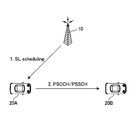
- FIG. 2 is a diagram for explaining an example (1) of the V2X transmission mode.
- the base station device 10 transmits the side link scheduling to the user device 20A.
- the user apparatus 20A transmits a PSCCH (Physical Sidelink Control Channel) and a PSSCH (Physical Sidelink Shared Channel) to the user apparatus 20B based on the received scheduling (step 2).
- the transmission mode of the side link communication shown in FIG. 2 may be referred to as side link transmission mode 3 in LTE.
- side link transmission mode 3 in LTE Uu-based side link scheduling is performed.
- Uu is a wireless interface between UTRAN (Universal Terrestrial Radio Access Network) and UE (User Equipment).
- the transmission mode of the side link communication shown in FIG. 2 may be called side link transmission mode 1 in NR.
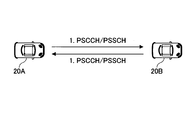
- FIG. 3 is a diagram for explaining an example (2) of the V2X transmission mode.
- the user equipment 20A uses the autonomously selected resource to transmit the PSCCH and PSSCH to the user equipment 20B.
- the user equipment 20B uses the autonomously selected resource to transmit the PSCCH and PSSCH to the user equipment 20A (step 1).
- the transmission mode of the side link communication shown in FIG. 3 may be called a side link transmission mode 2a in NR.
- the UE In the side link transmission mode 2a in NR, the UE itself performs resource selection.
- FIG. 4 is a diagram for explaining an example (3) of the V2X transmission mode.
- the base station device 10 transmits the side link scheduling grant to the user device 20A via the RRC (Radio Resource Control) setting.
- the user apparatus 20A transmits the PSSCH to the user apparatus 20B based on the received scheduling (step 1).
- the transmission mode of the side link communication shown in FIG. 4 may be called the side link transmission mode 2c in NR.
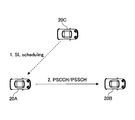
- FIG. 5 is a diagram for explaining an example (4) of the V2X transmission mode.
- the user equipment 20A transmits the side link scheduling to the user equipment 20B via the PSCCH.
- the user apparatus 20B transmits the PSSCH to the user apparatus 20A based on the received scheduling (step 2).
- the transmission mode of the side link communication shown in FIG. 5 may be called a side link transmission mode 2d in NR.
- the sensing procedure may be performed by decoding SCI (Sidelink Control Information) transmitted from another user device 20, or may be performed by sidelink measurement.
- SFCI Sidelink Feedback Control Information
- PSFCH Physical Sidelink Feedback Channel
- the resource selection procedure for determining the resources used for sidelink transmission is performed based on the result of the sensing procedure.
- the granularity of resources applied to the sensing procedure and the resource selection procedure may be specified in PRB units, slot units, and other resource pattern units.
- the SCI applied to the sensing procedure at least the information about the resources of the side link notified by the user equipment 20 transmitting the SCI is acquired.
- sub-channel based resource allocation may be supported on the PSSCH.
- the sub-channel may be applied to measurement, designation by PSCCH, or the like.
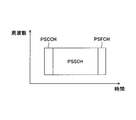
- FIG. 6 is a diagram showing an example of a channel configuration.
- FIG. 6 shows an assumed side-link channel configuration, in which PSCCH, PSSCH, and PSFCH are arranged in order in the time domain.
- the arrangement of PSCCH, PSSCH, and PSFCH is not limited to that shown in FIG. 6, and may be frequency domain multiplexed.
- FIG. 7 is a diagram showing an example of resource reservation.
- FIG. 7 shows an example of resource reservation in the channel configuration of FIG.
- the resource used for reserved transmission may be PSSCH, PSCCH, PSFCH, or a combination thereof.
- FIG. 7 shows an example in which PSCCH and PSSCH are reserved by resource reservation.
- FIG. 8 is a diagram for explaining an example of resource selection. As shown in FIG. 8, a plurality of other user devices 20 make resource reservations, and resources to be excluded from the resource selection window are designated. When the packet arrives, the user equipment 20 performs resource selection on the resources not excluded from the resources of the resource selection window.
- FIG. 9 is a diagram for explaining a case where a plurality of resource reservations occur within a predetermined range.
- UE#1 and UE#2 when packet arrivals in two UE devices 20 close to each other, UE#1 and UE#2, occur in the same slot, for example, the user devices 20 mutually perform half-duplex communication.
- the reservation signal cannot be decoded due to the limitation due to. Therefore, the user device 20 cannot exclude the reserved resource from the resource selection candidates, and resource competition occurs.
- n orthogonal resource sets are set or specified in advance, for example, for each resource pool.
- different resource sets are associated with the resources of the reservation signal transmitted at the same timing (for example, the same slot). That is, the resources reserved by the reservation signals transmitted at the same timing are arranged in different resource sets, so that resource competition does not occur.
- the resource set may be composed of, for example, PSSCH, PSCCH or PSFCH associated with PSSCH and PSSCH, or may be composed of PSCCH or PSFCH.
- the same number of sets as the resource set may be set or may be specified in advance.
- the resources for transmitting the reservation signal may be time division multiplexed for each set and/or frequency division multiplexed for each set.
- the length of the resource for transmitting the reservation signal in the frequency domain may be the size of the resource for transmitting the reservation signal in the frequency domain.
- the position of the resource for transmitting the reservation signal in the time domain may be set or may be defined in advance.
- the set of resources for transmitting the reservation signal and the association with the resource set may be set or pre-specified. Further, the association may be implicitly defined.
- the resource for transmitting the reservation signal for each resource set may be associated with the resources included in the resource set. That is, which resource in the resource set is reserved by the reservation signal may be defined in advance by mapping.
- the reservation signal may include information indicating which resource in the resource set is to be reserved.
- the reservation signal may be a kind of SCI format used for reservation of PSSCH and associated PSCCH and PSFCH. Each resource for transmitting the reservation signal may be used for transmitting one reservation signal.
- the user equipment 20 when the user equipment 20 reserves a resource from the PSSCH or a PSCCH or PSFCH resource set associated with the PSSCH, the user equipment 20 transmits a reservation signal associated with the resource set. Further, when the user equipment 20 reserves a resource from a plurality of resource sets of PSSCH or PSCCH or PSFCH associated with PSSCH, the user equipment 20 transmits a plurality of reservation signals. Each of the plurality of reserved signals corresponds to the associated PSSCH/PSCCH/PSFCH resource set.
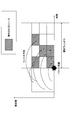
- FIG. 10 is a diagram for explaining an example (1) of a resource set according to the embodiment of the present invention.
- resource sets orthogonal to each other in the frequency domain may be set or defined in advance.
- the reservation signals for respectively reserving the resources included in the resource set 1, the resource set 2 and the resource set 3 are transmitted. Since the resources of the reserved signals arranged in the same slot are associated with different resource sets, resource competition does not occur.
- the association between the resource of the reservation signal associated with the resource set 1 illustrated in FIG. 10 and the resource in the resource set 1 may be determined based on a predefined mapping, or based on the information included in the reservation signal. May be determined by
- the resource of the reserved signal may be associated with the subchannel of the resource in the resource set, or the subchannel may be determined based on the information included in the reserved signal.
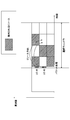
- FIG. 11 is a diagram for explaining an example (2) of the resource set according to the embodiment of the present invention.
- resource sets orthogonal to each other in the time domain may be set or defined in advance.
- the reservation signals for respectively reserving the resources included in the resource set 1, the resource set 2 and the resource set 3 are transmitted. Since the resources of the reserved signals arranged in the same slot are associated with different resource sets, resource competition does not occur.
- One resource set occupies the entire frequency domain of the resource pool, and the time domain may be set or pre-defined by the parameter set.
- the parameter set may include a resource set length, a resource set period or a resource set offset.
- the association between the resource of the reservation signal associated with the resource set 1 shown in FIG. 11 and the resource within the resource set 1 may be determined based on a predefined mapping, or the reservation signal. May be determined based on the information included in.
- the resource of the reserved signal may be associated with the subchannel of the resource in the resource set, or the subchannel may be determined based on the information included in the reserved signal.
- the resource set is frequency division multiplexed or time division multiplexed, but both frequency division multiplexing and time division multiplexed may be applied to the resource set. That is, orthogonal resource sets may be frequency division multiplexed and time division multiplexed.
- the frequency domain may be set by a parameter set or may be defined in advance.
- the parameter set may include a plurality of sets of frequency domain lengths of resource sets or frequency domain offsets of resource sets.
- the time domain may be set by a parameter set or may be defined in advance.
- the parameter set may include a plurality of sets of the time domain length of the resource set, the time domain period of the resource set, or the time domain offset of the resource set.
- FIG. 12 is a flowchart for explaining a transmission operation by resource reservation in the embodiment of the present invention. A packet transmission operation by resource reservation in the user apparatus 20 will be described with reference to FIG.
- step S11 when the UE is in the side link transmission mode 2a for autonomous resource selection, the user equipment 20 executes SCI decoding or side link measurement to start the sensing procedure (S12).
- the user apparatus 20 transmits the reservation signal using the resource of the reservation signal associated with the resource set including the resource not excluded from the resource candidates by the sensing procedure (S14). Then, the user apparatus 20 transmits a packet with the resource in the resource set reserved by the reservation signal (S15).
- the base station device 10 and the user device 20 include a function for implementing the above-described embodiment. However, each of the base station device 10 and the user device 20 may be provided with only a part of the functions in the embodiment.
- FIG. 13 is a diagram showing an example of a functional configuration of the base station device 10.
- the base station device 10 includes a transmission unit 110, a reception unit 120, a setting unit 130, and a control unit 140.
- the functional configuration shown in FIG. 13 is merely an example. As long as the operation according to the embodiment of the present invention can be executed, the function classification and the names of the function units may be any names.
- the transmitting unit 110 includes a function of generating a signal to be transmitted to the user device 20 side and wirelessly transmitting the signal.
- the reception unit 120 includes a function of receiving various signals transmitted from the user device 20 and acquiring, for example, information of a higher layer from the received signals. Further, the transmission unit 110 has a function of transmitting NR-PSS, NR-SSS, NR-PBCH, DL/UL control signal, DL reference signal, etc. to the user apparatus 20.
- the setting unit 130 stores preset setting information and various setting information to be transmitted to the user device 20 in the storage device, and reads it from the storage device as necessary.
- the content of the setting information is, for example, information related to the setting of D2D communication.
- the control unit 140 performs processing related to the setting for the user device 20 to perform D2D communication, as described in the embodiment. In addition, the control unit 140 transmits the D2D communication scheduling to the user device 20 via the transmission unit 110.
- the functional unit related to signal transmission in the control unit 140 may be included in the transmission unit 110, and the functional unit related to signal reception in the control unit 140 may be included in the reception unit 120.
- FIG. 14 is a diagram illustrating an example of a functional configuration of the user device 20.
- the user device 20 includes a transmission unit 210, a reception unit 220, a setting unit 230, and a control unit 240.
- the functional configuration shown in FIG. 14 is merely an example. As long as the operation according to the embodiment of the present invention can be executed, the function classification and the names of the function units may be any names.
- the transmitter 210 creates a transmission signal from the transmission data and wirelessly transmits the transmission signal.
- the receiving unit 220 wirelessly receives various signals and acquires signals of higher layers from the received physical layer signals. Further, the receiving unit 220 has a function of receiving NR-PSS, NR-SSS, NR-PBCH, DL/UL/SL control signals or reference signals transmitted from the base station apparatus 10.
- the transmission unit 210 performs P2CH communication to other user apparatuses 20 by using PSCCH (Physical Sidelink Control Channel), PSSCH (Physical Sidelink Shared Channel), PSDCH (Physical Sidelink Discovery Channel), and PSBCH (Physical Sidelink Broadcast Channel). ) Etc., and the receiving part 220 receives PSCCH, PSSCH, PSDCH, PSBCH, etc. from the other user apparatus 20.
- PSCCH Physical Sidelink Control Channel
- PSSCH Physical Sidelink Shared Channel
- PSDCH Physical Sidelink Discovery Channel
- PSBCH Physical Sidelink Broadcast Channel
- the setting unit 230 stores various setting information received from the base station device 10 or the user device 20 by the receiving unit 220 in a storage device, and reads from the storage device as necessary.
- the setting unit 230 also stores preset setting information.
- the content of the setting information is, for example, information related to the setting of D2D communication.
- the control unit 240 controls D2D communication with another user device 20, as described in the embodiment. In addition, the control unit 240 performs processing relating to a sensing procedure in D2D communication. The control unit 240 may also schedule D2D communication with another user device 20.
- the functional unit related to signal transmission in the control unit 240 may be included in the transmission unit 210, and the functional unit related to signal reception in the control unit 240 may be included in the reception unit 220.
- each functional block may be realized by using one device physically or logically coupled, or directly or indirectly (for example, two or more devices physically or logically separated). , Wired, wireless, etc.) and may be implemented using these multiple devices.
- the functional block may be implemented by combining the one device or the plurality of devices with software.
- Functions include judgment, decision, judgment, calculation, calculation, processing, derivation, investigation, search, confirmation, reception, transmission, output, access, resolution, selection, selection, establishment, comparison, assumption, expectation, observation, Broadcasting, notifying, communicating, forwarding, configuration, reconfiguring, allocating, mapping, assigning, etc., but not limited to these.
- I can't.
- functional blocks (components) that function transmission are called a transmitting unit and a transmitter.
- the implementation method is not particularly limited.
- the base station device 10, the user device 20, and the like according to the embodiment of the present disclosure may function as a computer that performs the process of the wireless communication method of the present disclosure.
- FIG. 15 is a diagram illustrating an example of a hardware configuration of the base station device 10 and the user device 20 according to the embodiment of the present disclosure.
- the base station device 10 and the user device 20 described above are physically configured as a computer device including a processor 1001, a storage device 1002, an auxiliary storage device 1003, a communication device 1004, an input device 1005, an output device 1006, a bus 1007, and the like. May be done.
- the word “apparatus” can be read as a circuit, device, unit, or the like.
- the hardware configurations of the base station device 10 and the user device 20 may be configured to include one or a plurality of each device illustrated in the figure, or may be configured not to include some devices.
- Each function in the base station device 10 and the user device 20 causes a predetermined software (program) to be loaded onto hardware such as the processor 1001, the storage device 1002, etc., so that the processor 1001 performs an arithmetic operation and communication by the communication device 1004. It is realized by controlling or at least one of reading and writing of data in the storage device 1002 and the auxiliary storage device 1003.
- the processor 1001 operates an operating system to control the entire computer, for example.
- the processor 1001 may be configured by a central processing unit (CPU) including an interface with peripheral devices, a control device, a calculation device, a register, and the like.
- CPU central processing unit
- the control unit 140, the control unit 240, and the like described above may be realized by the processor 1001.
- the processor 1001 reads a program (program code), software module, data, or the like from at least one of the auxiliary storage device 1003 and the communication device 1004 to the storage device 1002, and executes various processes according to these.
- a program that causes a computer to execute at least part of the operations described in the above-described embodiments is used.
- the control unit 140 of the base station device 10 illustrated in FIG. 13 may be realized by a control program stored in the storage device 1002 and operated by the processor 1001.
- the control unit 240 of the user device 20 illustrated in FIG. 14 may be realized by a control program stored in the storage device 1002 and operated by the processor 1001.
- the various processes described above are executed by one processor 1001, they may be executed simultaneously or sequentially by two or more processors 1001.
- the processor 1001 may be implemented by one or more chips.
- the program may be transmitted from the network via an electric communication line.
- the storage device 1002 is a computer-readable recording medium, and is, for example, at least one of ROM (Read Only Memory), EPROM (Erasable Programmable ROM), EEPROM (ElectricallyErasable Programmable ROM), RAM (Random Access Memory), and the like. It may be configured.
- the storage device 1002 may be called a register, a cache, a main memory (main storage device), or the like.
- the storage device 1002 can store an executable program (program code), a software module, or the like for implementing the communication method according to the embodiment of the present disclosure.
- the auxiliary storage device 1003 is a computer-readable recording medium, and is, for example, an optical disc such as a CD-ROM (Compact Disc ROM), a hard disk drive, a flexible disc, a magneto-optical disc (for example, a compact disc, a digital versatile disc, a Blu disc). -Ray disk), smart card, flash memory (eg card, stick, key drive), floppy disk, magnetic strip, etc.
- the above-described storage medium may be, for example, a database including at least one of the storage device 1002 and the auxiliary storage device 1003, a server, or another appropriate medium.
- the communication device 1004 is hardware (transmission/reception device) for performing communication between computers via at least one of a wired network and a wireless network, and is also called, for example, a network device, a network controller, a network card, a communication module, or the like.
- the communication device 1004 includes, for example, a high frequency switch, a duplexer, a filter, a frequency synthesizer, etc. in order to realize at least one of frequency division duplex (FDD: Frequency Division Duplex) and time division duplex (TDD). May be composed of
- FDD Frequency Division Duplex
- TDD time division duplex
- the transmitter/receiver may be implemented by physically or logically separating the transmitter and the receiver.
- the input device 1005 is an input device (eg, keyboard, mouse, microphone, switch, button, sensor, etc.) that receives an input from the outside.
- the output device 1006 is an output device (for example, a display, a speaker, an LED lamp, etc.) that outputs to the outside.
- the input device 1005 and the output device 1006 may be integrated (for example, a touch panel).
- each device such as the processor 1001 and the storage device 1002 is connected by a bus 1007 for communicating information.
- the bus 1007 may be configured using a single bus, or may be configured using different buses for each device.
- the base station device 10 and the user device 20 include a microprocessor, a digital signal processor (DSP: Digital Signal Processor), an ASIC (Application Specific Integrated Circuit), a PLD (Programmable Logic Device), an FPGA (Field Programmable Gate Array), and the like. It may be configured to include hardware, and the hardware may implement part or all of each functional block. For example, the processor 1001 may be implemented using at least one of these hardware.
- DSP Digital Signal Processor
- ASIC Application Specific Integrated Circuit
- PLD Programmable Logic Device
- FPGA Field Programmable Gate Array
- a resource reserved by another user apparatus is specified, and any resource other than the specified resource is transmitted.
- a plurality of resources for transmitting the reservation signal which are arranged in a predetermined time domain section, are associated with different resource sets that are orthogonal to each other.
- the user device 20 can specify a transmission candidate by excluding the resource reserved by another UE by the sensing procedure.
- the resource included in the resource set may be determined based on the resource transmitting the reservation signal or may be determined based on the information included in the reservation signal. With this configuration, the user device 20 can execute the reservation specifying the resource in the resource set.
- the resources for transmitting the reservation signal may be time-division multiplexed for each of the associated resource sets.
- the resource sets may be orthogonal to each other in the frequency domain or orthogonal to each other in the time domain. With this configuration, the user equipment 20 can use resource sets orthogonal to each other.
- the frequency domain is configured with a plurality of length and offset pairs of the resource set
- the time domain is the length, period and offset of the resource set. May be set in plural.
- the operation of the plurality of functional units may be physically performed by one component, or the operation of one functional unit may be physically performed by the plurality of components.
- the order of processing may be changed as long as there is no contradiction.
- the base station apparatus 10 and the user apparatus 20 have been described using functional block diagrams for convenience of processing description, such an apparatus may be realized by hardware, software, or a combination thereof.
- the software operated by the processor included in the base station device 10 according to the embodiment of the present invention and the software operated by the processor included in the user device 20 according to the embodiment of the present invention are respectively a random access memory (RAM), a flash memory, and a read memory. It may be stored in a dedicated memory (ROM), EPROM, EEPROM, register, hard disk (HDD), removable disk, CD-ROM, database, server, or any other suitable storage medium.
- the notification of information is not limited to the mode/embodiment described in the present disclosure, and may be performed using another method.
- information is notified by physical layer signaling (for example, DCI (Downlink Control Information), UCI (Uplink Control Information)), upper layer signaling (for example, RRC (Radio Resource Control) signaling, MAC (Medium Access Control) signaling, It may be implemented by broadcast information (MIB (Master Information Block), SIB (System Information Block)), other signals, or a combination thereof, and RRC signaling may be called an RRC message, for example, RRC message. It may be a connection setup (RRC Connection Setup) message, an RRC connection reconfiguration message, or the like.
- LTE Long Term Evolution
- LTE-A Long Term Evolution-Advanced
- SUPER 3G IMT-Advanced
- 4G 4th generation mobile communication system
- 5G 5th generation mobile communication system
- FRA Full Radio Access
- NR new Radio
- W-CDMA registered trademark
- GSM registered trademark
- CDMA2000 Code Division Multiple Access 2000
- UMB Universal Mobile Broadband
- IEEE 802.11 Wi-Fi (registered trademark)
- IEEE 802.16 WiMAX (registered trademark)
- IEEE 802.20 UWB (Ultra-WideBand
- Bluetooth registered trademark
- It may be applied to at least one of the next-generation systems.
- a plurality of systems may be combined and applied (for example, a combination of at least one of LTE and LTE-A and 5G).
- the specific operation that is assumed to be performed by the base station device 10 in this specification may be performed by its upper node in some cases.
- various operations performed for communication with the user device 20 are other than the base station device 10 and the base station device 10. It is clear that it can be performed by at least one of the network nodes of (for example, but not limited to, MME or S-GW, etc.).
- the other network node may be a combination of a plurality of other network nodes (for example, MME and S-GW). Good.
- Information, signals, etc. described in the present disclosure may be output from the upper layer (or lower layer) to the lower layer (or upper layer). Input/output may be performed via a plurality of network nodes.
- Information that has been input and output may be stored in a specific location (for example, memory), or may be managed using a management table. Information that is input/output may be overwritten, updated, or added. The output information and the like may be deleted. The input information and the like may be transmitted to another device.
- the determination in the present disclosure may be performed by a value (0 or 1) represented by 1 bit, may be performed by a Boolean value (Boolean: true or false), and may be performed by comparing numerical values (for example, , Comparison with a predetermined value).
- software, instructions, information, etc. may be transmitted and received via a transmission medium.
- the software uses a wired technology (coaxial cable, optical fiber cable, twisted pair, digital subscriber line (DSL: Digital Subscriber Line), etc.) and/or wireless technology (infrared, microwave, etc.) websites, When sent from a server, or other remote source, at least one of these wired and wireless technologies is included within the definition of transmission medium.
- wired technology coaxial cable, optical fiber cable, twisted pair, digital subscriber line (DSL: Digital Subscriber Line), etc.
- wireless technology infrared, microwave, etc.
- data, instructions, commands, information, signals, bits, symbols, chips, etc. that may be referred to throughout the above description include voltage, current, electromagnetic waves, magnetic fields or magnetic particles, optical fields or photons, or any of these. May be represented by a combination of
- At least one of the channel and the symbol may be a signal (signaling).
- the signal may also be a message.
- a component carrier CC:Component Carrier
- CC Component Carrier
- system and “network” used in this disclosure are used interchangeably.
- the information, parameters, etc. described in the present disclosure may be represented by using an absolute value, may be represented by using a relative value from a predetermined value, or by using other corresponding information. May be represented.
- the radio resources may be those indicated by the index.
- base station Base Station
- radio base station base station
- base station device fixed station
- NodeB NodeB
- eNodeB eNodeB
- GNB NodeB
- access point “transmission point”, “reception point”, “transmission/reception point”, “cell”, “sector”
- a base station may be referred to by terms such as macro cell, small cell, femto cell, and pico cell.
- a base station can accommodate one or more (eg, three) cells.
- a base station accommodates multiple cells, the entire coverage area of the base station can be divided into multiple smaller areas, each smaller area being defined by a base station subsystem (eg, indoor small base station (RRH: It is also possible to provide communication services by Remote Radio Head).
- RRH indoor small base station
- the term "cell” or “sector” means a part or the whole coverage area of at least one of the base station and the base station subsystem that perform communication services in this coverage. Refers to.
- MS Mobile Station
- UE User Equipment
- Mobile stations are defined by those skilled in the art as subscriber stations, mobile units, subscriber units, wireless units, remote units, mobile devices, wireless devices, wireless communication devices, remote devices, mobile subscriber stations, access terminals, mobile terminals, wireless. It may also be referred to as a terminal, remote terminal, handset, user agent, mobile client, client, or some other suitable term.
- At least one of the base station and the mobile station may be called a transmission device, a reception device, a communication device, or the like.
- the base station and the mobile station may be a device mounted on the mobile body, the mobile body itself, or the like.
- the moving body may be a vehicle (eg, car, airplane, etc.), an unmanned moving body (eg, drone, self-driving car, etc.), or a robot (manned type or unmanned type).
- At least one of the base station and the mobile station also includes a device that does not necessarily move during communication operation.
- at least one of the base station and the mobile station may be an IoT (Internet of Things) device such as a sensor.
- IoT Internet of Things
- the base station in the present disclosure may be replaced by the user terminal.
- the communication between the base station and the user terminal is replaced with communication between a plurality of user devices 20 (eg, may be called D2D (Device-to-Device), V2X (Vehicle-to-Everything), etc.)
- a plurality of user devices 20 eg, may be called D2D (Device-to-Device), V2X (Vehicle-to-Everything), etc.
- the user apparatus 20 may have the function of the above-described base station apparatus 10.
- the wording such as “up” and “down” may be replaced with the wording corresponding to the terminal-to-terminal communication (for example, “side”).
- the uplink channel and the downlink channel may be replaced with the side channel.
- the user terminal in the present disclosure may be replaced by the base station.
- the base station may have the function of the above-mentioned user terminal.
- determining and “determining” as used in this disclosure may encompass a wide variety of actions.
- “Judgment” and “decision” are, for example, judgment, calculating, computing, processing, deriving, investigating, and looking up, search, inquiry. (Eg, searching in a table, database, or another data structure), considering ascertaining as “judging” or “deciding”, and the like.
- “decision” and “decision” include receiving (eg, receiving information), transmitting (eg, transmitting information), input (input), output (output), access (accessing) (for example, accessing data in a memory) may be regarded as “judging” and “deciding”.
- judgment and “decision” are considered to be “judgment” and “decision” when things such as resolving, selecting, choosing, selecting, establishing, and comparing are done. May be included. That is, the “judgment” and “decision” may include considering some action as “judgment” and “decision”. In addition, “determination (decision)” may be read as “assuming”, “expecting”, “considering”, and the like.
- connection means any direct or indirect connection or coupling between two or more elements, and It can include the presence of one or more intermediate elements between two elements that are “connected” or “coupled”.
- the connections or connections between the elements may be physical, logical, or a combination thereof.
- connection may be read as “access”.
- two elements are in the radio frequency domain, with at least one of one or more wires, cables and printed electrical connections, and as some non-limiting and non-exhaustive examples. , Can be considered to be “connected” or “coupled” to each other, such as with electromagnetic energy having wavelengths in the microwave and light (both visible and invisible) regions.
- the reference signal may be abbreviated as RS (Reference Signal), or may be referred to as a pilot (Pilot) depending on the applied standard.
- RS Reference Signal
- Pilot pilot
- the phrase “based on” does not mean “based only on,” unless expressly specified otherwise. In other words, the phrase “based on” means both "based only on” and “based at least on.”
- references to elements using designations such as “first”, “second”, etc. used in this disclosure does not generally limit the amount or order of those elements. These designations may be used in this disclosure as a convenient way to distinguish between two or more elements. Thus, references to the first and second elements do not mean that only two elements may be employed, or that the first element must precede the second element in any way.
- a radio frame may be composed of one or more frames in the time domain. Each frame or frames in the time domain may be referred to as a subframe. A subframe may also be composed of one or more slots in the time domain. A subframe may have a fixed time length (eg, 1 ms) that does not depend on numerology.
- Numerology may be a communication parameter applied to at least one of transmission and reception of a signal or channel.
- Numerology includes, for example, subcarrier spacing (SCS: SubCarrier Spacing), bandwidth, symbol length, cyclic prefix length, transmission time interval (TTI: Transmission Time Interval), number of symbols per TTI, radio frame configuration, transceiver At least one of specific filtering processing performed in the frequency domain and specific windowing processing performed by the transceiver in the time domain may be shown.
- a slot may be composed of one or more symbols (OFDM (Orthogonal Frequency Division Multiplexing) symbol, SC-FDMA (Single Carrier Frequency Division Multiple Access) symbol, etc.) in the time domain.
- a slot may be a time unit based on numerology.
- a slot may include multiple minislots. Each minislot may be composed of one or more symbols in the time domain. The minislot may also be called a subslot. Minislots may be configured with fewer symbols than slots.
- a PDSCH (or PUSCH) transmitted in a time unit larger than a minislot may be referred to as PDSCH (or PUSCH) mapping type A.
- the PDSCH (or PUSCH) transmitted using the minislot may be referred to as PDSCH (or PUSCH) mapping type B.
- Radio frame, subframe, slot, minislot, and symbol all represent the time unit for signal transmission. Radio frames, subframes, slots, minislots, and symbols may have different names corresponding to them.
- one subframe may be called a transmission time interval (TTI)
- TTI transmission time interval
- TTI transmission time interval
- TTI transmission time interval
- TTI transmission time interval
- TTI means, for example, a minimum time unit of scheduling in wireless communication.
- the base station performs scheduling to allocate radio resources (frequency bandwidth that can be used in each user device 20, transmission power, etc.) to each user device 20 in units of TTI.
- the definition of TTI is not limited to this.
- the TTI may be a transmission time unit of a channel-encoded data packet (transport block), code block, codeword, or the like, or may be a processing unit of scheduling, link adaptation, or the like.
- the time interval for example, the number of symbols
- the transport block, code block, codeword, etc. may be shorter than the TTI.
- one slot or one minislot is called a TTI
- one or more TTIs may be the minimum time unit for scheduling.
- the number of slots (the number of mini-slots) forming the minimum time unit of the scheduling may be controlled.
- a TTI having a time length of 1 ms may be called a normal TTI (TTI in LTE Rel. 8-12), a normal TTI, a long TTI, a normal subframe, a normal subframe, a long subframe, a slot, or the like.
- a TTI shorter than the normal TTI may be called a shortened TTI, a short TTI, a partial TTI (partial or fractional TTI), a shortened subframe, a short subframe, a minislot, a subslot, a slot, and the like.
- a long TTI (eg, normal TTI, subframe, etc.) may be read as a TTI having a time length of more than 1 ms, and a short TTI (eg, shortened TTI, etc.) is less than the TTI length of the long TTI and 1 ms. It may be read as a TTI having the above TTI length.
- a resource block is a resource allocation unit in the time domain and the frequency domain, and may include one or a plurality of continuous subcarriers in the frequency domain.
- the number of subcarriers included in the RB may be the same regardless of the numerology, and may be 12, for example.
- the number of subcarriers included in the RB may be determined based on numerology.
- the time domain of RB may include one or more symbols, and may be one slot, one minislot, one subframe, or one TTI in length.
- One TTI, one subframe, etc. may be configured with one or a plurality of resource blocks.
- One or more RBs are physical resource blocks (PRBs: Physical RBs), subcarrier groups (SCGs: Sub-Carrier Groups), resource element groups (REGs: Resource Element Groups), PRB pairs, RB pairs, etc. May be called.
- PRBs Physical resource blocks
- SCGs Sub-Carrier Groups
- REGs Resource Element Groups
- PRB pairs RB pairs, etc. May be called.
- a resource block may be composed of one or more resource elements (RE: Resource Element).
- RE Resource Element
- 1 RE may be a radio resource area of 1 subcarrier and 1 symbol.
- a bandwidth part (may also be called a partial bandwidth) may represent a subset of consecutive common RBs (common resource blocks) for a certain numerology in a certain carrier.
- the common RB may be specified by the index of the RB based on the common reference point of the carrier.
- PRBs may be defined in a BWP and numbered within the BWP.
- BWP may include BWP for UL (UL BWP) and BWP for DL (DL BWP).
- BWP for UL
- DL BWP DL BWP
- one or more BWPs may be set in one carrier.
- At least one of the configured BWPs may be active, and the UE does not have to expect to send and receive a given signal/channel outside the active BWP.
- “cell”, “carrier”, and the like in the present disclosure may be read as “BWP”.
- the structure of the wireless frame, subframe, slot, minislot, symbol, etc. described above is just an example.
- the number of subframes included in a radio frame, the number of slots per subframe or radio frame, the number of minislots included in a slot, the number of symbols and RBs included in a slot or minislot, and included in RBs The number of subcarriers, the number of symbols in the TTI, the symbol length, the cyclic prefix (CP: Cyclic Prefix) length, and the like can be variously changed.
- the term “A and B are different” may mean “A and B are different from each other”.
- the term may mean that “A and B are different from C”.
- the terms “remove”, “coupled” and the like may be construed similarly as “different”.
- the notification of the predetermined information (for example, the notification of “being X”) is not limited to the explicit notification, and is performed implicitly (for example, the notification of the predetermined information is not performed). Good.
- the side link communication is an example of direct communication between terminals.
- the SCI is an example of control information for direct communication between terminals.
- a slot is an example of a predetermined time domain section.
- base station device 110 transmission unit 120 reception unit 130 setting unit 140 control unit 20 user device 210 transmission unit 220 reception unit 230 setting unit 240 control unit 1001 processor 1002 storage device 1003 auxiliary storage device 1004 communication device 1005 input device 1006 output device
Landscapes
- Engineering & Computer Science (AREA)
- Computer Networks & Wireless Communication (AREA)
- Signal Processing (AREA)
- Quality & Reliability (AREA)
- Mobile Radio Communication Systems (AREA)
Abstract
ユーザ装置は、リソースを選択する選択ウィンドウにおいて、他のユーザ装置が予約するリソースを特定し、前記特定されたリソース以外のリソースのいずれかを送信候補に決定する制御部と、前記送信候補に決定されたリソースを含むリソースセットに関連付けられる予約信号を送信するリソースで、前記送信候補に決定されたリソースを予約する予約信号を送信する送信部とを有し、所定の時間領域区間内に配置される前記予約信号を送信する複数のリソースは、それぞれ異なる互いに直交する前記リソースセットに関連付けられる。
Description
本発明は、無線通信システムにおけるユーザ装置に関する。
LTE(Long Term Evolution)及びLTEの後継システム(例えば、LTE-A(LTE Advanced)、NR(New Radio)(5Gともいう。))では、ユーザ装置同士が基地局装置を介さないで直接通信を行うD2D(Device to Device)技術が検討されている(例えば非特許文献1)。
D2Dは、ユーザ装置と基地局装置との間のトラフィックを軽減し、災害時等に基地局装置が通信不能になった場合でもユーザ装置間の通信を可能とする。なお、3GPP(3rd Generation Partnership Project)では、D2Dを「サイドリンク(sidelink)」と称しているが、本明細書では、より一般的な用語であるD2Dを使用する。ただし、後述する実施の形態の説明では必要に応じてサイドリンクも使用する。
D2D通信は、通信可能な他のユーザ装置を発見するためのD2Dディスカバリ(D2D discovery、D2D発見ともいう。)と、ユーザ装置間で直接通信するためのD2Dコミュニケーション(D2D direct communication、D2D通信、端末間直接通信等ともいう。)と、に大別される。以下では、D2Dコミュニケーション、D2Dディスカバリ等を特に区別しないときは、単にD2Dと呼ぶ。また、D2Dで送受信される信号を、D2D信号と呼ぶ。NRにおけるV2X(Vehicle to Everything)に係るサービスの様々なユースケースが検討されている(例えば非特許文献2)。
3GPP TS 36.211 V15.4.0(2018-12)
3GPP TR 22.886 V15.1.0(2017-03)
V2Xにおける端末間直接通信では、ユーザ装置が自律リソース選択を行う送信モードがサポートされる。複数のユーザ装置が自律リソース選択を行う送信モードで送信を行うとき、予約されるリソースが競合することがあった。
本発明は上記の点に鑑みてなされたものであり、端末間直接通信において、ユーザ装置が予約するリソースの競合を防ぐことを目的とする。
開示の技術によれば、リソースを選択する選択ウィンドウにおいて、他のユーザ装置が予約するリソースを特定し、前記特定されたリソース以外のリソースのいずれかを送信候補に決定する制御部と、前記送信候補に決定されたリソースを含むリソースセットに関連付けられる予約信号を送信するリソースで、前記送信候補に決定されたリソースを予約する予約信号を送信する送信部とを有し、所定の時間領域区間内に配置される前記予約信号を送信する複数のリソースは、それぞれ異なる互いに直交する前記リソースセットに関連付けられるユーザ装置が提供される。
開示の技術によれば、端末間直接通信において、ユーザ装置が予約するリソースの競合を防ぐことを目的とする。
以下、図面を参照して本発明の実施の形態を説明する。なお、以下で説明する実施の形態は一例であり、本発明が適用される実施の形態は、以下の実施の形態に限られない。
本発明の実施の形態の無線通信システムの動作にあたっては、適宜、既存技術が使用される。ただし、当該既存技術は、例えば既存のLTEであるが、既存のLTEに限られない。また、本明細書で使用する用語「LTE」は、特に断らない限り、LTE-Advanced、及び、LTE-Advanced以降の方式(例:NR)、又は無線LAN(Local Area Network)を含む広い意味を有するものとする。
また、本発明の実施の形態において、複信(Duplex)方式は、TDD(Time Division Duplex)方式でもよいし、FDD(Frequency Division Duplex)方式でもよいし、又はそれ以外(例えば、Flexible Duplex等)の方式でもよい。
また、本発明の実施の形態において、無線パラメータ等が「設定される(Configure)」とは、所定の値が予め設定(Pre-configure)されることであってもよいし、基地局装置10又はユーザ装置20から通知される無線パラメータが設定されることであってもよい。
図1は、V2Xを説明するための図である。3GPPでは、D2D機能を拡張することでV2X(Vehicle to Everything)あるいはeV2X(enhanced V2X)を実現することが検討され、仕様化が進められている。図1に示されるように、V2Xとは、ITS(Intelligent Transport Systems)の一部であり、車両間で行われる通信形態を意味するV2V(Vehicle to Vehicle)、車両と道路脇に設置される路側機(RSU:Road-Side Unit)との間で行われる通信形態を意味するV2I(Vehicle to Infrastructure)、車両とITSサーバとの間で行われる通信形態を意味するV2N(Vehicle to Network)、及び、車両と歩行者が所持するモバイル端末との間で行われる通信形態を意味するV2P(Vehicle to Pedestrian)の総称である。
また、3GPPにおいて、LTE又はNRのセルラ通信及び端末間通信を用いたV2Xが検討されている。セルラ通信を用いたV2XをセルラV2Xともいう。NRのV2Xにおいては、大容量化、低遅延、高信頼性、QoS(Quality of Service)制御を実現する検討が進められている。
LTE又はNRのV2Xについて、今後3GPP仕様に限られない検討も進められることが想定される。例えば、インターオペラビリティの確保、上位レイヤの実装によるコストの低減、複数RAT(Radio Access Technology)の併用又は切替方法、各国におけるレギュレーション対応、LTE又はNRのV2Xプラットフォームのデータ取得、配信、データベース管理及び利用方法が検討されることが想定される。
本発明の実施の形態において、通信装置が車両に搭載される形態を主に想定するが、本発明の実施の形態は、当該形態に限定されない。例えば、通信装置は人が保持する端末であってもよいし、通信装置がドローンあるいは航空機に搭載される装置であってもよいし、通信装置が基地局、RSU、中継局(リレーノード)、スケジューリング能力を有するユーザ装置等であってもよい。
なお、SL(Sidelink)は、UL(Uplink)又はDL(Downlink)と以下1)-4)のいずれか又は組み合わせに基づいて区別されてもよい。また、SLは、他の名称であってもよい。
1)時間領域のリソース配置
2)周波数領域のリソース配置
3)参照する同期信号(SLSS(Sidelink Synchronization Signal)を含む)
4)送信電力制御のためのパスロス測定に用いる参照信号
1)時間領域のリソース配置
2)周波数領域のリソース配置
3)参照する同期信号(SLSS(Sidelink Synchronization Signal)を含む)
4)送信電力制御のためのパスロス測定に用いる参照信号
また、SL又はULのOFDM(Orthogonal Frequency Division Multiplexing)に関して、CP-OFDM(Cyclic-Prefix OFDM)、DFT-S-OFDM(Discrete Fourier Transform - Spread - OFDM)、Transform precodingされていないOFDM又はTransform precodingされているOFDMのいずれが適用されてもよい。
LTEのSLにおいて、ユーザ装置20へのSLのリソース割り当てに関してMode3とMode4が規定されている。Mode3では、基地局装置10からユーザ装置20に送信されるDCI(Downlink Control Information)によりダイナミックに送信リソースが割り当てられる。また、Mode3ではSPS(Semi Persistent Scheduling)も可能である。Mode4では、ユーザ装置20はリソースプールから自律的に送信リソースを選択する。
なお、本発明の実施の形態におけるスロットは、シンボル、ミニスロット、サブフレーム、無線フレーム、TTI(Transmission Time Interval)と読み替えられてもよい。また、本発明の実施の形態におけるセルは、セルグループ、キャリアコンポーネント、BWP、リソースプール、リソース、RAT(Radio Access Technology)、システム(無線LAN含む)等に読み替えられてもよい。
図2は、V2Xの送信モードの例(1)を説明するための図である。図2に示されるサイドリンク通信の送信モードでは、ステップ1において、基地局装置10がサイドリンクのスケジューリングをユーザ装置20Aに送信する。続いて、ユーザ装置20Aは、受信したスケジューリングに基づいて、PSCCH(Physical Sidelink Control Channel)及びPSSCH(Physical Sidelink Shared Channel)をユーザ装置20Bに送信する(ステップ2)。図2に示されるサイドリンク通信の送信モードを、LTEにおけるサイドリンク送信モード3と呼んでもよい。LTEにおけるサイドリンク送信モード3では、Uuベースのサイドリンクスケジューリングが行われる。Uuとは、UTRAN(Universal Terrestrial Radio Access Network)とUE(User Equipment)間の無線インタフェースである。なお、図2に示されるサイドリンク通信の送信モードを、NRにおけるサイドリンク送信モード1とよんでもよい。
図3は、V2Xの送信モードの例(2)を説明するための図である。図3に示されるサイドリンク通信の送信モードでは、ステップ1において、ユーザ装置20Aは、自律的に選択したリソースを使用して、PSCCH及びPSSCHをユーザ装置20Bに送信する。同様に、ユーザ装置20Bは、自律的に選択したリソースを使用して、PSCCH及びPSSCHをユーザ装置20Aに送信する(ステップ1)。図3に示されるサイドリンク通信の送信モードを、NRにおけるサイドリンク送信モード2aと呼んでもよい。NRにおけるサイドリンク送信モード2aでは、UE自身がリソース選択を実行する。
図4は、V2Xの送信モードの例(3)を説明するための図である。図4に示されるサイドリンク通信の送信モードでは、ステップ0において、基地局装置10がサイドリンクのスケジューリンググラントをRRC(Radio Resource Control)設定を介してユーザ装置20Aに送信する。続いて、ユーザ装置20Aは、受信したスケジューリングに基づいて、PSSCHをユーザ装置20Bに送信する(ステップ1)。図4に示されるサイドリンク通信の送信モードを、NRにおけるサイドリンク送信モード2cと呼んでもよい。
図5は、V2Xの送信モードの例(4)を説明するための図である。図5に示されるサイドリンク通信の送信モードでは、ステップ1において、ユーザ装置20AがサイドリンクのスケジューリングをPSCCHを介してユーザ装置20Bに送信する。続いて、ユーザ装置20Bは、受信したスケジューリングに基づいて、PSSCHをユーザ装置20Aに送信する(ステップ2)。図5に示されるサイドリンク通信の送信モードを、NRにおけるサイドリンク送信モード2dと呼んでもよい。
以下、上記のサイドリンク通信の送信モード2a、すなわちユーザ装置20が自律的にリソースを選択して送信を行う動作を前提として、本発明の実施の形態を説明する。
サイドリンク送信モード2aにおいて、センシング手順は、他のユーザ装置20から送信されるSCI(Sidelink Control Information)をデコードすることにより実行されてもよいし、サイドリンク測定により実行されてもよい。PSFCH(Physical Sidelink Feedback Channel)を介して送信されるSFCI(Sidelink Feedback Control Information)がセンシング手順に使用されてもよい。サイドリンク送信に使用されるリソースを決定するリソース選択手順は、センシング手順の結果に基づいて実行される。
また、センシング手順及びリソース選択手順に適用されるリソースの粒度は、PRB単位、スロット単位、他のリソースパターンの単位で規定されてもよい。センシング手順に適用されるSCIのデコードによって、当該SCIを送信するユーザ装置20によって通知されるサイドリンクのリソースに関する情報が少なくとも取得される。なお、サブチャネルベースのリソース割り当てがPSSCHにおいてサポートされてもよい。サブチャネルは、測定又はPSCCHによる指定等に適用されてもよい。
図6は、チャネル構成の例を示す図である。図6は、想定されるサイドリンクのチャネル構成であり、時間領域で順に、PSCCH、PSSCH、PSFCHが配置される。なお、PSCCH、PSSCH、PSFCHの配置は図6に限定されず、周波数領域多重されてもよい。
図7は、リソース予約の例を示す図である。図7は、図6のチャネル構成におけるリソース予約の例を示す。ユーザ装置20は、パケットを送信するため、スロットnのPSCCHによって、スロットn+x(x>=0)の送信に使用するリソースを予約する。予約される送信に使用するリソースは、PSSCHであってもよいし、PSCCHであってもよいし、PSFCHであってもよいし、それらの組み合わせであってもよい。図7においては、リソース予約によってPSCCH及びPSSCHが予約される例を示している。
図8は、リソース選択の例を説明するための図である。図8に示されるように、他の複数のユーザ装置20がリソース予約を行い、リソースの選択ウィンドウから除外されるリソースが指定される。パケットが到着したユーザ装置20は、リソースの選択ウィンドウのリソースのうち、除外されていないリソースを対象にリソース選択を実行する。
図9は、複数のリソース予約が所定の範囲内で発生する場合を説明するための図である。図9に示されるように、近接する2台のユーザ装置20であるUE#1及びUE#2におけるパケット到着が、例えば、同一スロットにおいて発生した場合、互いのユーザ装置20は、半二重通信による制限のため予約信号をデコードすることができない。そのため、ユーザ装置20は予約されるリソースをリソース選択候補から除外することができず、リソースの競合が発生する。
そこで、リソースの競合を防ぐため、直交するn個のリソースセットを、例えばリソースプールごとに、設定するか予め規定する。次に、同一タイミング(例えば、同一スロット)で送信される予約信号の各リソースに、互いに異なるリソースセットを関連付ける。すなわち、同一タイミングで送信される予約信号により予約されるリソースは、互いに異なるリソースセットに配置されるため、リソースの競合が発生しない。
リソースセットは、例えば、PSSCHから構成されてもよいし、PSSCH及びPSSCHと関連付けられるPSCCH又はPSFCHから構成されてもよいし、PSCCH又はPSFCHから構成されてもよい。
予約信号を送信するためのリソースは、リソースセットと同じ数のセットが設定されるか予め規定されてもよい。予約信号を送信するためのリソースは、セットごとに時分割多重されてもよいし、且つ/又は、セットごとに周波数分割多重されてもよい。予約信号を送信するためのリソースの周波数領域での長さは、予約信号を送信するためのリソースの周波数領域でのサイズであってもよい。予約信号を送信するためのリソースの時間領域における位置は、設定されてもよいし予め規定されてもよい。
予約信号を送信するためのリソースのセットと、リソースセットとの関連付けは、設定されるか予め規定されてもよい。また、当該関連付けは暗黙的に定義されてもよい。例えば、リソースセットごとの予約信号を送信するためのリソースは、当該リソースセットに含まれるリソースに関連付けられてもよい。すなわち、予約信号によりリソースセット内のいずれのリソースが予約されるかは、予めマッピングされて規定されてもよい。なお、リソースセット内のいずれのリソースを予約するかを示す情報が予約信号に含まれてもよい。
なお、予約信号は、PSSCH及び関連付けられるPSCCH及びPSFCHの予約に使用されるSCIフォーマットの一種であってもよい。なお、予約信号を送信するためのリソースそれぞれは、ひとつの予約信号の送信に使用されてもよい。
なお、ユーザ装置20が、PSSCH、又はPSSCHと関連付けられるPSCCH又はPSFCHのリソースセットからリソースを予約するとき、ユーザ装置20は、当該リソースセットに関連付けられた予約信号を送信する。また、ユーザ装置20が、PSSCH、又はPSSCHと関連付けられるPSCCH又はPSFCHの複数のリソースセットからリソースを予約するとき、ユーザ装置20は、複数の予約信号を送信する。複数の予約信号それぞれは、関連付けられるPSSCH/PSCCH/PSFCHのリソースセットに対応する。
図10は、本発明の実施の形態におけるリソースセットの例(1)を説明するための図である。図10に示されるように、周波数領域で直交するリソースセットが設定されるか予め規定されてもよい。リソースセット1、リソースセット2及びリソースセット3に関連付けられる予約信号のリソースにおいて、リソースセット1、リソースセット2及びリソースセット3に含まれるリソースを予約する予約信号がそれぞれ送信される。同一スロットに配置される予約信号のリソースは、それぞれ互いに異なるリソースセットに関連付けられるため、リソースの競合は発生しない。直交するリソースセットのそれぞれは、x(図10ではx=2)個のサブチャネルと、限定されない時間領域とで構成される。
図10に示されるリソースセット1に関連付けられる予約信号のリソースとリソースセット1内のリソースとの関連付けは、予め規定されたマッピングに基づいて決定されてもよいし、予約信号に含まれる情報に基づいて決定されてもよい。なお、リソースセット内のリソースのサブチャネルに、予約信号のリソースが関連付けられてもよいし、予約信号に含まれる情報に基づいて、サブチャネルが決定されてもよい。
図11は、本発明の実施の形態におけるリソースセットの例(2)を説明するための図である。図11に示されるように、時間領域で直交するリソースセットが設定されるか予め規定されてもよい。リソースセット1、リソースセット2及びリソースセット3に関連付けられる予約信号のリソースにおいて、リソースセット1、リソースセット2及びリソースセット3に含まれるリソースを予約する予約信号がそれぞれ送信される。同一スロットに配置される予約信号のリソースは、それぞれ互いに異なるリソースセットに関連付けられるため、リソースの競合は発生しない。ひとつのリソースセットは、リソースプールのすべての周波数領域を占め、時間領域はパラメータセットにより設定されるか予め規定されてもよい。例えば、パラメータセットは、リソースセットの長さ、リソースセットの周期又はリソースセットのオフセットを含んでもよい。
図10と同様に、図11に示されるリソースセット1に関連付けられる予約信号のリソースとリソースセット1内のリソースとの関連付けは、予め規定されたマッピングに基づいて決定されてもよいし、予約信号に含まれる情報に基づいて決定されてもよい。なお、リソースセット内のリソースのサブチャネルに、予約信号のリソースが関連付けられてもよいし、予約信号に含まれる情報に基づいて、サブチャネルが決定されてもよい。
図10及び図11においては、リソースセットは周波数分割多重又は時分割多重されるが、周波数分割多重及び時分割多重の双方がリソースセットに適用されてもよい。すなわち、直交するリソースセットが、周波数分割多重及び時分割多重されてもよい。周波数領域はパラメータセットにより設定されるか予め規定されてもよい。例えば、パラメータセットは、リソースセットの周波数領域の長さ又はリソースセットの周波数領域のオフセットの組を複数含んでもよい。時間領域はパラメータセットにより設定されるか予め規定されてもよい。例えば、パラメータセットは、リソースセットの時間領域の長さ、リソースセットの時間領域の周期又はリソースセットの時間領域のオフセットの組を複数含んでもよい。
図12は、本発明の実施の形態におけるリソース予約による送信動作を説明するためのフローチャートである。図12を用いて、ユーザ装置20におけるリソース予約によるパケット送信動作を説明する。
ステップS11において、UEが自律リソース選択をするサイドリンク送信モード2aである場合、ユーザ装置20は、SCIデコード又はサイドリンク測定を実行してセンシング手順を開始する(S12)。ステップS13において、送信すべきパケットが到着すると、ユーザ装置20は、センシング手順によりリソース候補から除外されていないリソースを含むリソースセットに関連付けられた予約信号のリソースで予約信号を送信する(S14)。続いて、ユーザ装置20は、予約信号でリソース予約したリソースセット内のリソースでパケットを送信する(S15)。
上述の実施例により、近接するユーザ装置20間で、同じタイミングでの予約信号送信に起因するパケット送信衝突の確率を低減することができる。
すなわち、端末間直接通信において、ユーザ装置が予約するリソースの競合を防ぐことができる。
(装置構成)
次に、これまでに説明した処理及び動作を実行する基地局装置10及びユーザ装置20の機能構成例を説明する。基地局装置10及びユーザ装置20は上述した実施例を実施する機能を含む。ただし、基地局装置10及びユーザ装置20はそれぞれ、実施例の中の一部の機能のみを備えることとしてもよい。
次に、これまでに説明した処理及び動作を実行する基地局装置10及びユーザ装置20の機能構成例を説明する。基地局装置10及びユーザ装置20は上述した実施例を実施する機能を含む。ただし、基地局装置10及びユーザ装置20はそれぞれ、実施例の中の一部の機能のみを備えることとしてもよい。
<基地局装置10>
図13は、基地局装置10の機能構成の一例を示す図である。図13に示されるように、基地局装置10は、送信部110と、受信部120と、設定部130と、制御部140とを有する。図13に示される機能構成は一例に過ぎない。本発明の実施の形態に係る動作を実行できるのであれば、機能区分及び機能部の名称はどのようなものでもよい。
図13は、基地局装置10の機能構成の一例を示す図である。図13に示されるように、基地局装置10は、送信部110と、受信部120と、設定部130と、制御部140とを有する。図13に示される機能構成は一例に過ぎない。本発明の実施の形態に係る動作を実行できるのであれば、機能区分及び機能部の名称はどのようなものでもよい。
送信部110は、ユーザ装置20側に送信する信号を生成し、当該信号を無線で送信する機能を含む。受信部120は、ユーザ装置20から送信された各種の信号を受信し、受信した信号から、例えばより上位のレイヤの情報を取得する機能を含む。また、送信部110は、ユーザ装置20へNR-PSS、NR-SSS、NR-PBCH、DL/UL制御信号、DL参照信号等を送信する機能を有する。
設定部130は、予め設定される設定情報、及び、ユーザ装置20に送信する各種の設定情報を記憶装置に格納し、必要に応じて記憶装置から読み出す。設定情報の内容は、例えば、D2D通信の設定に係る情報等である。
制御部140は、実施例において説明したように、ユーザ装置20がD2D通信を行うための設定に係る処理を行う。また、制御部140は、D2D通信のスケジューリングを送信部110を介してユーザ装置20に送信する。制御部140における信号送信に関する機能部を送信部110に含め、制御部140における信号受信に関する機能部を受信部120に含めてもよい。
<ユーザ装置20>
図14は、ユーザ装置20の機能構成の一例を示す図である。図14に示されるように、ユーザ装置20は、送信部210と、受信部220と、設定部230と、制御部240とを有する。図14に示される機能構成は一例に過ぎない。本発明の実施の形態に係る動作を実行できるのであれば、機能区分及び機能部の名称はどのようなものでもよい。
図14は、ユーザ装置20の機能構成の一例を示す図である。図14に示されるように、ユーザ装置20は、送信部210と、受信部220と、設定部230と、制御部240とを有する。図14に示される機能構成は一例に過ぎない。本発明の実施の形態に係る動作を実行できるのであれば、機能区分及び機能部の名称はどのようなものでもよい。
送信部210は、送信データから送信信号を作成し、当該送信信号を無線で送信する。受信部220は、各種の信号を無線受信し、受信した物理レイヤの信号からより上位のレイヤの信号を取得する。また、受信部220は、基地局装置10から送信されるNR-PSS、NR-SSS、NR-PBCH、DL/UL/SL制御信号又は参照信号等を受信する機能を有する。また、例えば、送信部210は、D2D通信として、他のユーザ装置20に、PSCCH(Physical Sidelink Control Channel)、PSSCH(Physical Sidelink Shared Channel)、PSDCH(Physical Sidelink Discovery Channel)、PSBCH(Physical Sidelink Broadcast Channel)等を送信し、受信部220は、他のユーザ装置20から、PSCCH、PSSCH、PSDCH又はPSBCH等を受信する。
設定部230は、受信部220により基地局装置10又はユーザ装置20から受信した各種の設定情報を記憶装置に格納し、必要に応じて記憶装置から読み出す。また、設定部230は、予め設定される設定情報も格納する。設定情報の内容は、例えば、D2D通信の設定に係る情報等である。
制御部240は、実施例において説明したように、他のユーザ装置20との間のD2D通信を制御する。また、制御部240は、D2D通信におけるセンシング手順に係る処理を行う。また、制御部240は、他のユーザ装置20にD2D通信のスケジューリングを行ってもよい。制御部240における信号送信に関する機能部を送信部210に含め、制御部240における信号受信に関する機能部を受信部220に含めてもよい。
(ハードウェア構成)
上記実施形態の説明に用いたブロック図(図13及び図14)は、機能単位のブロックを示している。これらの機能ブロック(構成部)は、ハードウェア及びソフトウェアの少なくとも一方の任意の組み合わせによって実現される。また、各機能ブロックの実現方法は特に限定されない。すなわち、各機能ブロックは、物理的又は論理的に結合した1つの装置を用いて実現されてもよいし、物理的又は論理的に分離した2つ以上の装置を直接的又は間接的に(例えば、有線、無線などを用いて)接続し、これら複数の装置を用いて実現されてもよい。機能ブロックは、上記1つの装置又は上記複数の装置にソフトウェアを組み合わせて実現されてもよい。
上記実施形態の説明に用いたブロック図(図13及び図14)は、機能単位のブロックを示している。これらの機能ブロック(構成部)は、ハードウェア及びソフトウェアの少なくとも一方の任意の組み合わせによって実現される。また、各機能ブロックの実現方法は特に限定されない。すなわち、各機能ブロックは、物理的又は論理的に結合した1つの装置を用いて実現されてもよいし、物理的又は論理的に分離した2つ以上の装置を直接的又は間接的に(例えば、有線、無線などを用いて)接続し、これら複数の装置を用いて実現されてもよい。機能ブロックは、上記1つの装置又は上記複数の装置にソフトウェアを組み合わせて実現されてもよい。
機能には、判断、決定、判定、計算、算出、処理、導出、調査、探索、確認、受信、送信、出力、アクセス、解決、選択、選定、確立、比較、想定、期待、見做し、報知(broadcasting)、通知(notifying)、通信(communicating)、転送(forwarding)、構成(configuring)、再構成(reconfiguring)、割り当て(allocating、mapping)、割り振り(assigning)などがあるが、これらに限られない。たとえば、送信を機能させる機能ブロック(構成部)は、送信部(transmitting unit)や送信機(transmitter)と呼称される。いずれも、上述したとおり、実現方法は特に限定されない。
例えば、本開示の一実施の形態における基地局装置10、ユーザ装置20等は、本開示の無線通信方法の処理を行うコンピュータとして機能してもよい。図15は、本開示の一実施の形態に係る基地局装置10及びユーザ装置20のハードウェア構成の一例を示す図である。上述の基地局装置10及びユーザ装置20は、物理的には、プロセッサ1001、記憶装置1002、補助記憶装置1003、通信装置1004、入力装置1005、出力装置1006、バス1007などを含むコンピュータ装置として構成されてもよい。
なお、以下の説明では、「装置」という文言は、回路、デバイス、ユニット等に読み替えることができる。基地局装置10及びユーザ装置20のハードウェア構成は、図に示した各装置を1つ又は複数含むように構成されてもよいし、一部の装置を含まずに構成されてもよい。
基地局装置10及びユーザ装置20における各機能は、プロセッサ1001、記憶装置1002等のハードウェア上に所定のソフトウェア(プログラム)を読み込ませることによって、プロセッサ1001が演算を行い、通信装置1004による通信を制御したり、記憶装置1002及び補助記憶装置1003におけるデータの読み出し及び書き込みの少なくとも一方を制御したりすることによって実現される。
プロセッサ1001は、例えば、オペレーティングシステムを動作させてコンピュータ全体を制御する。プロセッサ1001は、周辺装置とのインタフェース、制御装置、演算装置、レジスタ等を含む中央処理装置(CPU:Central Processing Unit)で構成されてもよい。例えば、上述の制御部140、制御部240等は、プロセッサ1001によって実現されてもよい。
また、プロセッサ1001は、プログラム(プログラムコード)、ソフトウェアモジュール又はデータ等を、補助記憶装置1003及び通信装置1004の少なくとも一方から記憶装置1002に読み出し、これらに従って各種の処理を実行する。プログラムとしては、上述の実施の形態において説明した動作の少なくとも一部をコンピュータに実行させるプログラムが用いられる。例えば、図13に示した基地局装置10の制御部140は、記憶装置1002に格納され、プロセッサ1001で動作する制御プログラムによって実現されてもよい。また、例えば、図14に示したユーザ装置20の制御部240は、記憶装置1002に格納され、プロセッサ1001で動作する制御プログラムによって実現されてもよい。上述の各種処理は、1つのプロセッサ1001によって実行される旨を説明してきたが、2以上のプロセッサ1001により同時又は逐次に実行されてもよい。プロセッサ1001は、1以上のチップによって実装されてもよい。なお、プログラムは、電気通信回線を介してネットワークから送信されてもよい。
記憶装置1002は、コンピュータ読み取り可能な記録媒体であり、例えば、ROM(Read Only Memory)、EPROM(Erasable Programmable ROM)、EEPROM(Electrically Erasable Programmable ROM)、RAM(Random Access Memory)等の少なくとも1つによって構成されてもよい。記憶装置1002は、レジスタ、キャッシュ、メインメモリ(主記憶装置)等と呼ばれてもよい。記憶装置1002は、本開示の一実施の形態に係る通信方法を実施するために実行可能なプログラム(プログラムコード)、ソフトウェアモジュール等を保存することができる。
補助記憶装置1003は、コンピュータ読み取り可能な記録媒体であり、例えば、CD-ROM(Compact Disc ROM)等の光ディスク、ハードディスクドライブ、フレキシブルディスク、光磁気ディスク(例えば、コンパクトディスク、デジタル多用途ディスク、Blu-ray(登録商標)ディスク)、スマートカード、フラッシュメモリ(例えば、カード、スティック、キードライブ)、フロッピー(登録商標)ディスク、磁気ストリップ等の少なくとも1つによって構成されてもよい。上述の記憶媒体は、例えば、記憶装置1002及び補助記憶装置1003の少なくとも一方を含むデータベース、サーバその他の適切な媒体であってもよい。
通信装置1004は、有線ネットワーク及び無線ネットワークの少なくとも一方を介してコンピュータ間の通信を行うためのハードウェア(送受信デバイス)であり、例えばネットワークデバイス、ネットワークコントローラ、ネットワークカード、通信モジュールなどともいう。通信装置1004は、例えば周波数分割複信(FDD:Frequency Division Duplex)及び時分割複信(TDD:Time Division Duplex)の少なくとも一方を実現するために、高周波スイッチ、デュプレクサ、フィルタ、周波数シンセサイザなどを含んで構成されてもよい。例えば、送受信アンテナ、アンプ部、送受信部、伝送路インターフェース等は、通信装置1004によって実現されてもよい。送受信部は、送信部と受信部とで、物理的に、または論理的に分離された実装がなされてもよい。
入力装置1005は、外部からの入力を受け付ける入力デバイス(例えば、キーボード、マウス、マイクロフォン、スイッチ、ボタン、センサ等)である。出力装置1006は、外部への出力を実施する出力デバイス(例えば、ディスプレイ、スピーカー、LEDランプ等)である。なお、入力装置1005及び出力装置1006は、一体となった構成(例えば、タッチパネル)であってもよい。
また、プロセッサ1001及び記憶装置1002等の各装置は、情報を通信するためのバス1007によって接続される。バス1007は、単一のバスを用いて構成されてもよいし、装置間ごとに異なるバスを用いて構成されてもよい。
また、基地局装置10及びユーザ装置20は、マイクロプロセッサ、デジタル信号プロセッサ(DSP:Digital Signal Processor)、ASIC(Application Specific Integrated Circuit)、PLD(Programmable Logic Device)、FPGA(Field Programmable Gate Array)等のハードウェアを含んで構成されてもよく、当該ハードウェアにより、各機能ブロックの一部又は全てが実現されてもよい。例えば、プロセッサ1001は、これらのハードウェアの少なくとも1つを用いて実装されてもよい。
(実施の形態のまとめ)
以上、説明したように、本発明の実施の形態によれば、リソースを選択する選択ウィンドウにおいて、他のユーザ装置が予約するリソースを特定し、前記特定されたリソース以外のリソースのいずれかを送信候補に決定する制御部と、前記送信候補に決定されたリソースを含むリソースセットに関連付けられる予約信号を送信するリソースで、前記送信候補に決定されたリソースを予約する予約信号を送信する送信部とを有し、所定の時間領域区間内に配置される前記予約信号を送信する複数のリソースは、それぞれ異なる互いに直交する前記リソースセットに関連付けられるユーザ装置が提供される。
以上、説明したように、本発明の実施の形態によれば、リソースを選択する選択ウィンドウにおいて、他のユーザ装置が予約するリソースを特定し、前記特定されたリソース以外のリソースのいずれかを送信候補に決定する制御部と、前記送信候補に決定されたリソースを含むリソースセットに関連付けられる予約信号を送信するリソースで、前記送信候補に決定されたリソースを予約する予約信号を送信する送信部とを有し、所定の時間領域区間内に配置される前記予約信号を送信する複数のリソースは、それぞれ異なる互いに直交する前記リソースセットに関連付けられるユーザ装置が提供される。
上記の構成により、近接するユーザ装置20間で、同じタイミングでの予約信号送信に起因するパケット送信衝突の確率を低減することができる。すなわち、端末間直接通信において、ユーザ装置が予約するリソースの競合を防ぐことができる。
端末間直接通信の制御情報を受信し、端末間直接通信の信号を測定する受信部をさらに有し、前記制御部は、前記他のユーザ装置が予約するリソースを、前記制御情報をデコードした結果又は前記信号の測定結果に基づいて特定してもよい。当該構成により、ユーザ装置20は、センシング手順により他UEが予約するリソースを除外して送信候補を特定することができる。
前記リソースセットに含まれるリソースは、前記予約信号を送信するリソースに基いて決定されるか、又は前記予約信号に含まれる情報に基づいて決定されてもよい。当該構成により、ユーザ装置20は、リソースセット内のリソースを指定する予約を実行することができる。
前記予約信号を送信するリソースは、関連付けられる前記リソースセットごとに時分割多重されてもよい。当該構成により、ユーザ装置20は、近接するユーザ装置20間で、同じタイミングでの予約信号送信に起因するパケット送信衝突の確率を低減することができる。
前記リソースセットは、互いに周波数領域で直交するか又は互いに時間領域で直交してもよい。当該構成により、ユーザ装置20は、互いに直交するリソースセットを使用することができる。
前記リソースセットが周波数領域及び時間領域の双方で多重化される場合、周波数領域は前記リソースセットの長さ及びオフセットの組の複数で設定され、時間領域は前記リソースセットの長さ、周期及びオフセットの組の複数で設定されてもよい。当該構成により、ユーザ装置20は、柔軟に配置されたリソースセットを使用することができる。
(実施形態の補足)
以上、本発明の実施の形態を説明してきたが、開示される発明はそのような実施形態に限定されず、当業者は様々な変形例、修正例、代替例、置換例等を理解するであろう。発明の理解を促すため具体的な数値例を用いて説明がなされたが、特に断りのない限り、それらの数値は単なる一例に過ぎず適切な如何なる値が使用されてもよい。上記の説明における項目の区分けは本発明に本質的ではなく、2以上の項目に記載された事項が必要に応じて組み合わせて使用されてよいし、ある項目に記載された事項が、別の項目に記載された事項に(矛盾しない限り)適用されてよい。機能ブロック図における機能部又は処理部の境界は必ずしも物理的な部品の境界に対応するとは限らない。複数の機能部の動作が物理的には1つの部品で行われてもよいし、あるいは1つの機能部の動作が物理的には複数の部品により行われてもよい。実施の形態で述べた処理手順については、矛盾の無い限り処理の順序を入れ替えてもよい。処理説明の便宜上、基地局装置10及びユーザ装置20は機能的なブロック図を用いて説明されたが、そのような装置はハードウェアで、ソフトウェアで又はそれらの組み合わせで実現されてもよい。本発明の実施の形態に従って基地局装置10が有するプロセッサにより動作するソフトウェア及び本発明の実施の形態に従ってユーザ装置20が有するプロセッサにより動作するソフトウェアはそれぞれ、ランダムアクセスメモリ(RAM)、フラッシュメモリ、読み取り専用メモリ(ROM)、EPROM、EEPROM、レジスタ、ハードディスク(HDD)、リムーバブルディスク、CD-ROM、データベース、サーバその他の適切な如何なる記憶媒体に保存されてもよい。
以上、本発明の実施の形態を説明してきたが、開示される発明はそのような実施形態に限定されず、当業者は様々な変形例、修正例、代替例、置換例等を理解するであろう。発明の理解を促すため具体的な数値例を用いて説明がなされたが、特に断りのない限り、それらの数値は単なる一例に過ぎず適切な如何なる値が使用されてもよい。上記の説明における項目の区分けは本発明に本質的ではなく、2以上の項目に記載された事項が必要に応じて組み合わせて使用されてよいし、ある項目に記載された事項が、別の項目に記載された事項に(矛盾しない限り)適用されてよい。機能ブロック図における機能部又は処理部の境界は必ずしも物理的な部品の境界に対応するとは限らない。複数の機能部の動作が物理的には1つの部品で行われてもよいし、あるいは1つの機能部の動作が物理的には複数の部品により行われてもよい。実施の形態で述べた処理手順については、矛盾の無い限り処理の順序を入れ替えてもよい。処理説明の便宜上、基地局装置10及びユーザ装置20は機能的なブロック図を用いて説明されたが、そのような装置はハードウェアで、ソフトウェアで又はそれらの組み合わせで実現されてもよい。本発明の実施の形態に従って基地局装置10が有するプロセッサにより動作するソフトウェア及び本発明の実施の形態に従ってユーザ装置20が有するプロセッサにより動作するソフトウェアはそれぞれ、ランダムアクセスメモリ(RAM)、フラッシュメモリ、読み取り専用メモリ(ROM)、EPROM、EEPROM、レジスタ、ハードディスク(HDD)、リムーバブルディスク、CD-ROM、データベース、サーバその他の適切な如何なる記憶媒体に保存されてもよい。
また、情報の通知は、本開示で説明した態様/実施形態に限られず、他の方法を用いて行われてもよい。例えば、情報の通知は、物理レイヤシグナリング(例えば、DCI(Downlink Control Information)、UCI(Uplink Control Information))、上位レイヤシグナリング(例えば、RRC(Radio Resource Control)シグナリング、MAC(Medium Access Control)シグナリング、報知情報(MIB(Master Information Block)、SIB(System Information Block))、その他の信号又はこれらの組み合わせによって実施されてもよい。また、RRCシグナリングは、RRCメッセージと呼ばれてもよく、例えば、RRC接続セットアップ(RRC Connection Setup)メッセージ、RRC接続再構成(RRC Connection Reconfiguration)メッセージ等であってもよい。
本開示において説明した各態様/実施形態は、LTE(Long Term Evolution)、LTE-A(LTE-Advanced)、SUPER 3G、IMT-Advanced、4G(4th generation mobile communication system)、5G(5th generation mobile communication system)、FRA(Future Radio Access)、NR(new Radio)、W-CDMA(登録商標)、GSM(登録商標)、CDMA2000、UMB(Ultra Mobile Broadband)、IEEE 802.11(Wi-Fi(登録商標))、IEEE 802.16(WiMAX(登録商標))、IEEE 802.20、UWB(Ultra-WideBand)、Bluetooth(登録商標)、その他の適切なシステムを利用するシステム及びこれらに基づいて拡張された次世代システムの少なくとも一つに適用されてもよい。また、複数のシステムが組み合わされて(例えば、LTE及びLTE-Aの少なくとも一方と5Gとの組み合わせ等)適用されてもよい。
本明細書で説明した各態様/実施形態の処理手順、シーケンス、フローチャート等は、矛盾の無い限り、順序を入れ替えてもよい。例えば、本開示において説明した方法については、例示的な順序を用いて様々なステップの要素を提示しており、提示した特定の順序に限定されない。
本明細書において基地局装置10によって行われるとした特定動作は、場合によってはその上位ノード(upper node)によって行われることもある。基地局装置10を有する1つ又は複数のネットワークノード(network nodes)からなるネットワークにおいて、ユーザ装置20との通信のために行われる様々な動作は、基地局装置10及び基地局装置10以外の他のネットワークノード(例えば、MME又はS-GW等が考えられるが、これらに限られない)の少なくとも1つによって行われ得ることは明らかである。上記において基地局装置10以外の他のネットワークノードが1つである場合を例示したが、他のネットワークノードは、複数の他のネットワークノードの組み合わせ(例えば、MME及びS-GW)であってもよい。
本開示において説明した情報又は信号等は、上位レイヤ(又は下位レイヤ)から下位レイヤ(又は上位レイヤ)へ出力され得る。複数のネットワークノードを介して入出力されてもよい。
入出力された情報等は特定の場所(例えば、メモリ)に保存されてもよいし、管理テーブルを用いて管理してもよい。入出力される情報等は、上書き、更新、又は追記され得る。出力された情報等は削除されてもよい。入力された情報等は他の装置へ送信されてもよい。
本開示における判定は、1ビットで表される値(0か1か)によって行われてもよいし、真偽値(Boolean:true又はfalse)によって行われてもよいし、数値の比較(例えば、所定の値との比較)によって行われてもよい。
ソフトウェアは、ソフトウェア、ファームウェア、ミドルウェア、マイクロコード、ハードウェア記述言語と呼ばれるか、他の名称で呼ばれるかを問わず、命令、命令セット、コード、コードセグメント、プログラムコード、プログラム、サブプログラム、ソフトウェアモジュール、アプリケーション、ソフトウェアアプリケーション、ソフトウェアパッケージ、ルーチン、サブルーチン、オブジェクト、実行可能ファイル、実行スレッド、手順、機能などを意味するよう広く解釈されるべきである。
また、ソフトウェア、命令、情報などは、伝送媒体を介して送受信されてもよい。例えば、ソフトウェアが、有線技術(同軸ケーブル、光ファイバケーブル、ツイストペア、デジタル加入者回線(DSL:Digital Subscriber Line)など)及び無線技術(赤外線、マイクロ波など)の少なくとも一方を使用してウェブサイト、サーバ、又は他のリモートソースから送信される場合、これらの有線技術及び無線技術の少なくとも一方は、伝送媒体の定義内に含まれる。
本開示において説明した情報、信号などは、様々な異なる技術のいずれかを使用して表されてもよい。例えば、上記の説明全体に渡って言及され得るデータ、命令、コマンド、情報、信号、ビット、シンボル、チップなどは、電圧、電流、電磁波、磁界若しくは磁性粒子、光場若しくは光子、又はこれらの任意の組み合わせによって表されてもよい。
なお、本開示において説明した用語及び本開示の理解に必要な用語については、同一の又は類似する意味を有する用語と置き換えてもよい。例えば、チャネル及びシンボルの少なくとも一方は信号(シグナリング)であってもよい。また、信号はメッセージであってもよい。また、コンポーネントキャリア(CC:Component Carrier)は、キャリア周波数、セル、周波数キャリアなどと呼ばれてもよい。
本開示において使用する「システム」及び「ネットワーク」という用語は、互換的に使用される。
また、本開示において説明した情報、パラメータなどは、絶対値を用いて表されてもよいし、所定の値からの相対値を用いて表されてもよいし、対応する別の情報を用いて表されてもよい。例えば、無線リソースはインデックスによって指示されるものであってもよい。
上述したパラメータに使用する名称はいかなる点においても限定的な名称ではない。さらに、これらのパラメータを使用する数式等は、本開示で明示的に開示したものと異なる場合もある。様々なチャネル(例えば、PUCCH、PDCCHなど)及び情報要素は、あらゆる好適な名称によって識別できるので、これらの様々なチャネル及び情報要素に割り当てている様々な名称は、いかなる点においても限定的な名称ではない。
本開示においては、「基地局(BS:Base Station)」、「無線基地局」、「基地局装置」、「固定局(fixed station)」、「NodeB」、「eNodeB(eNB)」、「gNodeB(gNB)」、「アクセスポイント(access point)」、「送信ポイント(transmission point)」、「受信ポイント(reception point)、「送受信ポイント(transmission/reception point)」、「セル」、「セクタ」、「セルグループ」、「キャリア」、「コンポーネントキャリア」などの用語は、互換的に使用され得る。基地局は、マクロセル、スモールセル、フェムトセル、ピコセルなどの用語で呼ばれる場合もある。
基地局は、1つ又は複数(例えば、3つ)のセルを収容することができる。基地局が複数のセルを収容する場合、基地局のカバレッジエリア全体は複数のより小さいエリアに区分でき、各々のより小さいエリアは、基地局サブシステム(例えば、屋内用の小型基地局(RRH:Remote Radio Head)によって通信サービスを提供することもできる。「セル」又は「セクタ」という用語は、このカバレッジにおいて通信サービスを行う基地局及び基地局サブシステムの少なくとも一方のカバレッジエリアの一部又は全体を指す。
本開示においては、「移動局(MS:Mobile Station)」、「ユーザ端末(user terminal)」、「ユーザ装置(UE:User Equipment)」、「端末」などの用語は、互換的に使用され得る。
移動局は、当業者によって、加入者局、モバイルユニット、加入者ユニット、ワイヤレスユニット、リモートユニット、モバイルデバイス、ワイヤレスデバイス、ワイヤレス通信デバイス、リモートデバイス、モバイル加入者局、アクセス端末、モバイル端末、ワイヤレス端末、リモート端末、ハンドセット、ユーザエージェント、モバイルクライアント、クライアント、又はいくつかの他の適切な用語で呼ばれる場合もある。
基地局及び移動局の少なくとも一方は、送信装置、受信装置、通信装置などと呼ばれてもよい。なお、基地局及び移動局の少なくとも一方は、移動体に搭載されたデバイス、移動体自体などであってもよい。当該移動体は、乗り物(例えば、車、飛行機など)であってもよいし、無人で動く移動体(例えば、ドローン、自動運転車など)であってもよいし、ロボット(有人型又は無人型)であってもよい。なお、基地局及び移動局の少なくとも一方は、必ずしも通信動作時に移動しない装置も含む。例えば、基地局及び移動局の少なくとも一方は、センサなどのIoT(Internet of Things)機器であってもよい。
また、本開示における基地局は、ユーザ端末で読み替えてもよい。例えば、基地局及びユーザ端末間の通信を、複数のユーザ装置20間の通信(例えば、D2D(Device-to-Device)、V2X(Vehicle-to-Everything)などと呼ばれてもよい)に置き換えた構成について、本開示の各態様/実施形態を適用してもよい。この場合、上述の基地局装置10が有する機能をユーザ装置20が有する構成としてもよい。また、「上り」及び「下り」などの文言は、端末間通信に対応する文言(例えば、「サイド(side)」)で読み替えられてもよい。例えば、上りチャネル、下りチャネルなどは、サイドチャネルで読み替えられてもよい。
同様に、本開示におけるユーザ端末は、基地局で読み替えてもよい。この場合、上述のユーザ端末が有する機能を基地局が有する構成としてもよい。
本開示で使用する「判断(determining)」、「決定(determining)」という用語は、多種多様な動作を包含する場合がある。「判断」、「決定」は、例えば、判定(judging)、計算(calculating)、算出(computing)、処理(processing)、導出(deriving)、調査(investigating)、探索(looking up、search、inquiry)(例えば、テーブル、データベース又は別のデータ構造での探索)、確認(ascertaining)した事を「判断」「決定」したとみなす事などを含み得る。また、「判断」、「決定」は、受信(receiving)(例えば、情報を受信すること)、送信(transmitting)(例えば、情報を送信すること)、入力(input)、出力(output)、アクセス(accessing)(例えば、メモリ中のデータにアクセスすること)した事を「判断」「決定」したとみなす事などを含み得る。また、「判断」、「決定」は、解決(resolving)、選択(selecting)、選定(choosing)、確立(establishing)、比較(comparing)などした事を「判断」「決定」したとみなす事を含み得る。つまり、「判断」「決定」は、何らかの動作を「判断」「決定」したとみなす事を含み得る。また、「判断(決定)」は、「想定する(assuming)」、「期待する(expecting)」、「みなす(considering)」などで読み替えられてもよい。
「接続された(connected)」、「結合された(coupled)」という用語、又はこれらのあらゆる変形は、2又はそれ以上の要素間の直接的又は間接的なあらゆる接続又は結合を意味し、互いに「接続」又は「結合」された2つの要素間に1又はそれ以上の中間要素が存在することを含むことができる。要素間の結合又は接続は、物理的なものであっても、論理的なものであっても、或いはこれらの組み合わせであってもよい。例えば、「接続」は「アクセス」で読み替えられてもよい。本開示で使用する場合、2つの要素は、1又はそれ以上の電線、ケーブル及びプリント電気接続の少なくとも一つを用いて、並びにいくつかの非限定的かつ非包括的な例として、無線周波数領域、マイクロ波領域及び光(可視及び不可視の両方)領域の波長を有する電磁エネルギーなどを用いて、互いに「接続」又は「結合」されると考えることができる。
参照信号は、RS(Reference Signal)と略称することもでき、適用される標準によってパイロット(Pilot)と呼ばれてもよい。
本開示において使用する「に基づいて」という記載は、別段に明記されていない限り、「のみに基づいて」を意味しない。言い換えれば、「に基づいて」という記載は、「のみに基づいて」と「に少なくとも基づいて」の両方を意味する。
本開示において使用する「第1の」、「第2の」などの呼称を使用した要素へのいかなる参照も、それらの要素の量又は順序を全般的に限定しない。これらの呼称は、2つ以上の要素間を区別する便利な方法として本開示において使用され得る。したがって、第1及び第2の要素への参照は、2つの要素のみが採用され得ること、又は何らかの形で第1の要素が第2の要素に先行しなければならないことを意味しない。
上記の各装置の構成における「手段」を、「部」、「回路」、「デバイス」等に置き換えてもよい。
本開示において、「含む(include)」、「含んでいる(including)」及びそれらの変形が使用されている場合、これらの用語は、用語「備える(comprising)」と同様に、包括的であることが意図される。さらに、本開示において使用されている用語「又は(or)」は、排他的論理和ではないことが意図される。
無線フレームは時間領域において1つ又は複数のフレームによって構成されてもよい。時間領域において1つ又は複数の各フレームはサブフレームと呼ばれてもよい。サブフレームは更に時間領域において1つ又は複数のスロットによって構成されてもよい。サブフレームは、ニューメロロジ(numerology)に依存しない固定の時間長(例えば、1ms)であってもよい。
ニューメロロジは、ある信号又はチャネルの送信及び受信の少なくとも一方に適用される通信パラメータであってもよい。ニューメロロジは、例えば、サブキャリア間隔(SCS:SubCarrier Spacing)、帯域幅、シンボル長、サイクリックプレフィックス長、送信時間間隔(TTI:Transmission Time Interval)、TTIあたりのシンボル数、無線フレーム構成、送受信機が周波数領域において行う特定のフィルタリング処理、送受信機が時間領域において行う特定のウィンドウイング処理などの少なくとも1つを示してもよい。
スロットは、時間領域において1つ又は複数のシンボル(OFDM(Orthogonal Frequency Division Multiplexing)シンボル、SC-FDMA(Single Carrier Frequency Division Multiple Access)シンボル等)で構成されてもよい。スロットは、ニューメロロジに基づく時間単位であってもよい。
スロットは、複数のミニスロットを含んでもよい。各ミニスロットは、時間領域において1つ又は複数のシンボルによって構成されてもよい。また、ミニスロットは、サブスロットと呼ばれてもよい。ミニスロットは、スロットよりも少ない数のシンボルによって構成されてもよい。ミニスロットより大きい時間単位で送信されるPDSCH(又はPUSCH)は、PDSCH(又はPUSCH)マッピングタイプAと呼ばれてもよい。ミニスロットを用いて送信されるPDSCH(又はPUSCH)は、PDSCH(又はPUSCH)マッピングタイプBと呼ばれてもよい。
無線フレーム、サブフレーム、スロット、ミニスロット及びシンボルは、いずれも信号を伝送する際の時間単位を表す。無線フレーム、サブフレーム、スロット、ミニスロット及びシンボルは、それぞれに対応する別の呼称が用いられてもよい。
例えば、1サブフレームは送信時間間隔(TTI:Transmission Time Interval)と呼ばれてもよいし、複数の連続したサブフレームがTTIと呼ばれてよいし、1スロット又は1ミニスロットがTTIと呼ばれてもよい。つまり、サブフレーム及びTTIの少なくとも一方は、既存のLTEにおけるサブフレーム(1ms)であってもよいし、1msより短い期間(例えば、1-13シンボル)であってもよいし、1msより長い期間であってもよい。なお、TTIを表す単位は、サブフレームではなくスロット、ミニスロットなどと呼ばれてもよい。
ここで、TTIは、例えば、無線通信におけるスケジューリングの最小時間単位のことをいう。例えば、LTEシステムでは、基地局が各ユーザ装置20に対して、無線リソース(各ユーザ装置20において使用することが可能な周波数帯域幅、送信電力など)を、TTI単位で割り当てるスケジューリングを行う。なお、TTIの定義はこれに限られない。
TTIは、チャネル符号化されたデータパケット(トランスポートブロック)、コードブロック、コードワードなどの送信時間単位であってもよいし、スケジューリング、リンクアダプテーションなどの処理単位となってもよい。なお、TTIが与えられたとき、実際にトランスポートブロック、コードブロック、コードワードなどがマッピングされる時間区間(例えば、シンボル数)は、当該TTIよりも短くてもよい。
なお、1スロット又は1ミニスロットがTTIと呼ばれる場合、1以上のTTI(すなわち、1以上のスロット又は1以上のミニスロット)が、スケジューリングの最小時間単位となってもよい。また、当該スケジューリングの最小時間単位を構成するスロット数(ミニスロット数)は制御されてもよい。
1msの時間長を有するTTIは、通常TTI(LTE Rel.8-12におけるTTI)、ノーマルTTI、ロングTTI、通常サブフレーム、ノーマルサブフレーム、ロングサブフレーム、スロットなどと呼ばれてもよい。通常TTIより短いTTIは、短縮TTI、ショートTTI、部分TTI(partial又はfractional TTI)、短縮サブフレーム、ショートサブフレーム、ミニスロット、サブスロット、スロットなどと呼ばれてもよい。
なお、ロングTTI(例えば、通常TTI、サブフレームなど)は、1msを超える時間長を有するTTIで読み替えてもよいし、ショートTTI(例えば、短縮TTIなど)は、ロングTTIのTTI長未満かつ1ms以上のTTI長を有するTTIで読み替えてもよい。
リソースブロック(RB)は、時間領域及び周波数領域のリソース割当単位であり、周波数領域において、1つ又は複数個の連続した副搬送波(subcarrier)を含んでもよい。RBに含まれるサブキャリアの数は、ニューメロロジに関わらず同じであってもよく、例えば12であってもよい。RBに含まれるサブキャリアの数は、ニューメロロジに基づいて決定されてもよい。
また、RBの時間領域は、1つ又は複数個のシンボルを含んでもよく、1スロット、1ミニスロット、1サブフレーム、又は1TTIの長さであってもよい。1TTI、1サブフレームなどは、それぞれ1つ又は複数のリソースブロックで構成されてもよい。
なお、1つ又は複数のRBは、物理リソースブロック(PRB:Physical RB)、サブキャリアグループ(SCG:Sub-Carrier Group)、リソースエレメントグループ(REG:Resource Element Group)、PRBペア、RBペアなどと呼ばれてもよい。
また、リソースブロックは、1つ又は複数のリソースエレメント(RE:Resource Element)によって構成されてもよい。例えば、1REは、1サブキャリア及び1シンボルの無線リソース領域であってもよい。
帯域幅部分(BWP:Bandwidth Part)(部分帯域幅などと呼ばれてもよい)は、あるキャリアにおいて、あるニューメロロジ用の連続する共通RB(common resource blocks)のサブセットのことを表してもよい。ここで、共通RBは、当該キャリアの共通参照ポイントを基準としたRBのインデックスによって特定されてもよい。PRBは、あるBWPで定義され、当該BWP内で番号付けされてもよい。
BWPには、UL用のBWP(UL BWP)と、DL用のBWP(DL BWP)とが含まれてもよい。UEに対して、1キャリア内に1つ又は複数のBWPが設定されてもよい。
設定されたBWPの少なくとも1つがアクティブであってもよく、UEは、アクティブなBWPの外で所定の信号/チャネルを送受信することを想定しなくてもよい。なお、本開示における「セル」、「キャリア」などは、「BWP」で読み替えられてもよい。
上述した無線フレーム、サブフレーム、スロット、ミニスロット及びシンボルなどの構造は例示に過ぎない。例えば、無線フレームに含まれるサブフレームの数、サブフレーム又は無線フレームあたりのスロットの数、スロット内に含まれるミニスロットの数、スロット又はミニスロットに含まれるシンボル及びRBの数、RBに含まれるサブキャリアの数、並びにTTI内のシンボル数、シンボル長、サイクリックプレフィックス(CP:Cyclic Prefix)長などの構成は、様々に変更することができる。
本開示において、例えば、英語でのa, an及びtheのように、翻訳により冠詞が追加された場合、本開示は、これらの冠詞の後に続く名詞が複数形であることを含んでもよい。
本開示において、「AとBが異なる」という用語は、「AとBが互いに異なる」ことを意味してもよい。なお、当該用語は、「AとBがそれぞれCと異なる」ことを意味してもよい。「離れる」、「結合される」などの用語も、「異なる」と同様に解釈されてもよい。
本開示において説明した各態様/実施形態は単独で用いてもよいし、組み合わせて用いてもよいし、実行に伴って切り替えて用いてもよい。また、所定の情報の通知(例えば、「Xであること」の通知)は、明示的に行うものに限られず、暗黙的(例えば、当該所定の情報の通知を行わない)ことによって行われてもよい。
なお、本開示において、サイドリンク通信は、端末間直接通信の一例である。SCIは、端末間直接通信の制御情報の一例である。スロットは、所定の時間領域区間の一例である。
以上、本開示について詳細に説明したが、当業者にとっては、本開示が本開示中に説明した実施形態に限定されるものではないということは明らかである。本開示は、請求の範囲の記載により定まる本開示の趣旨及び範囲を逸脱することなく修正及び変更態様として実施することができる。したがって、本開示の記載は、例示説明を目的とするものであり、本開示に対して何ら制限的な意味を有するものではない。
10 基地局装置
110 送信部
120 受信部
130 設定部
140 制御部
20 ユーザ装置
210 送信部
220 受信部
230 設定部
240 制御部
1001 プロセッサ
1002 記憶装置
1003 補助記憶装置
1004 通信装置
1005 入力装置
1006 出力装置
110 送信部
120 受信部
130 設定部
140 制御部
20 ユーザ装置
210 送信部
220 受信部
230 設定部
240 制御部
1001 プロセッサ
1002 記憶装置
1003 補助記憶装置
1004 通信装置
1005 入力装置
1006 出力装置
Claims (6)
- リソースを選択する選択ウィンドウにおいて、他のユーザ装置が予約するリソースを特定し、前記特定されたリソース以外のリソースのいずれかを送信候補に決定する制御部と、
前記送信候補に決定されたリソースを含むリソースセットに関連付けられる予約信号を送信するリソースで、前記送信候補に決定されたリソースを予約する予約信号を送信する送信部とを有し、
所定の時間領域区間内に配置される前記予約信号を送信する複数のリソースは、それぞれ異なる互いに直交する前記リソースセットに関連付けられるユーザ装置。 - 端末間直接通信の制御情報を受信し、端末間直接通信の信号を測定する受信部をさらに有し、
前記制御部は、前記他のユーザ装置が予約するリソースを、前記制御情報をデコードした結果又は前記信号の測定結果に基づいて特定する請求項1記載のユーザ装置。 - 前記リソースセットに含まれるリソースは、前記予約信号を送信するリソースに基いて決定されるか、又は前記予約信号に含まれる情報に基づいて決定される請求項1記載のユーザ装置。
- 前記予約信号を送信するリソースは、関連付けられる前記リソースセットごとに時分割多重される請求項1記載のユーザ装置。
- 前記リソースセットは、互いに周波数領域で直交するか又は互いに時間領域で直交する請求項4記載のユーザ装置。
- 前記リソースセットが周波数領域及び時間領域の双方で多重化される場合、周波数領域は前記リソースセットの長さ及びオフセットの組の複数で設定され、時間領域は前記リソースセットの長さ、周期及びオフセットの組の複数で設定される請求項4記載のユーザ装置。
Priority Applications (3)
| Application Number | Priority Date | Filing Date | Title |
|---|---|---|---|
| US17/428,088 US20220124563A1 (en) | 2019-02-15 | 2019-02-15 | User device |
| PCT/JP2019/005717 WO2020166089A1 (ja) | 2019-02-15 | 2019-02-15 | ユーザ装置 |
| JP2020572061A JP7241101B2 (ja) | 2019-02-15 | 2019-02-15 | ユーザ装置 |
Applications Claiming Priority (1)
| Application Number | Priority Date | Filing Date | Title |
|---|---|---|---|
| PCT/JP2019/005717 WO2020166089A1 (ja) | 2019-02-15 | 2019-02-15 | ユーザ装置 |
Publications (1)
| Publication Number | Publication Date |
|---|---|
| WO2020166089A1 true WO2020166089A1 (ja) | 2020-08-20 |
Family
ID=72044434
Family Applications (1)
| Application Number | Title | Priority Date | Filing Date |
|---|---|---|---|
| PCT/JP2019/005717 Ceased WO2020166089A1 (ja) | 2019-02-15 | 2019-02-15 | ユーザ装置 |
Country Status (3)
| Country | Link |
|---|---|
| US (1) | US20220124563A1 (ja) |
| JP (1) | JP7241101B2 (ja) |
| WO (1) | WO2020166089A1 (ja) |
Cited By (2)
| Publication number | Priority date | Publication date | Assignee | Title |
|---|---|---|---|---|
| CN115529670A (zh) * | 2020-12-21 | 2022-12-27 | 北京小米移动软件有限公司 | 辅助资源集确定方法、装置及存储介质 |
| CN115997435A (zh) * | 2020-09-09 | 2023-04-21 | 株式会社Ntt都科摩 | 终端以及通信方法 |
Family Cites Families (2)
| Publication number | Priority date | Publication date | Assignee | Title |
|---|---|---|---|---|
| CN102014514B (zh) * | 2009-11-10 | 2014-01-15 | 电信科学技术研究院 | 一种用户设备双工制式信息的获取方法及设备 |
| US11425723B2 (en) * | 2019-01-11 | 2022-08-23 | Huawei Technologies Co., Ltd. | Transmission pattern indication and selection for sidelink grant free transmission |
-
2019
- 2019-02-15 WO PCT/JP2019/005717 patent/WO2020166089A1/ja not_active Ceased
- 2019-02-15 US US17/428,088 patent/US20220124563A1/en not_active Abandoned
- 2019-02-15 JP JP2020572061A patent/JP7241101B2/ja active Active
Non-Patent Citations (2)
| Title |
|---|
| "Resource Allocation for NR V2X", 3GPP TSG RAN WG1 #95 R1-1813164, 2 November 2018 (2018-11-02), XP051479441, Retrieved from the Internet <URL:https://www.3gpp.org/ftp/tsg_ran/WG1_RL1/TSGR1_95/Docs/Rl-1813164.zip> [retrieved on 20190425] * |
| "Sidelink resource allocation mechanism", 3GPP TSG RAN WG1 #95 R1-1813320, 2 November 2018 (2018-11-02), XP051479630, Retrieved from the Internet <URL:https://www.3gpp.org/ftp/tsg_ran/WG1_RL1/TSGR1_95/Docs/R1-1813320.zip> [retrieved on 20190425] * |
Cited By (2)
| Publication number | Priority date | Publication date | Assignee | Title |
|---|---|---|---|---|
| CN115997435A (zh) * | 2020-09-09 | 2023-04-21 | 株式会社Ntt都科摩 | 终端以及通信方法 |
| CN115529670A (zh) * | 2020-12-21 | 2022-12-27 | 北京小米移动软件有限公司 | 辅助资源集确定方法、装置及存储介质 |
Also Published As
| Publication number | Publication date |
|---|---|
| JP7241101B2 (ja) | 2023-03-16 |
| JPWO2020166089A1 (ja) | 2021-12-09 |
| US20220124563A1 (en) | 2022-04-21 |
Similar Documents
| Publication | Publication Date | Title |
|---|---|---|
| US20220060286A1 (en) | User apparatus | |
| WO2020136852A1 (ja) | ユーザ装置、及び通信装置 | |
| WO2020136854A1 (ja) | ユーザ装置 | |
| JP7213893B2 (ja) | 端末及び通信方法 | |
| JP7544380B2 (ja) | 端末、無線通信システム、及び通信方法 | |
| WO2020144787A1 (ja) | ユーザ装置、及びフィードバック情報送信方法 | |
| WO2020202485A1 (ja) | ユーザ装置 | |
| JPWO2020053965A1 (ja) | ユーザ装置及び基地局装置 | |
| WO2021048990A1 (ja) | 端末 | |
| JP7248779B2 (ja) | 端末、通信方法、及び無線通信システム | |
| WO2021029083A1 (ja) | 端末及び通信方法 | |
| WO2022085204A1 (ja) | 端末及び通信方法 | |
| US20220256507A1 (en) | User equipment | |
| JP7148622B2 (ja) | 端末及び通信方法 | |
| WO2021205664A1 (ja) | 端末及び通信方法 | |
| WO2021157042A1 (ja) | 端末及び通信方法 | |
| WO2020222266A1 (ja) | ユーザ装置 | |
| JP7241101B2 (ja) | ユーザ装置 | |
| WO2020179129A1 (ja) | ユーザ装置 | |
| WO2021059539A1 (ja) | 端末及び通信方法 | |
| WO2022107293A1 (ja) | 端末及び通信方法 | |
| WO2022085093A1 (ja) | 端末及び通信方法 | |
| WO2022085054A1 (ja) | 端末及び通信方法 |
Legal Events
| Date | Code | Title | Description |
|---|---|---|---|
| 121 | Ep: the epo has been informed by wipo that ep was designated in this application |
Ref document number: 19915311 Country of ref document: EP Kind code of ref document: A1 |
|
| ENP | Entry into the national phase |
Ref document number: 2020572061 Country of ref document: JP Kind code of ref document: A |
|
| NENP | Non-entry into the national phase |
Ref country code: DE |
|
| 122 | Ep: pct application non-entry in european phase |
Ref document number: 19915311 Country of ref document: EP Kind code of ref document: A1 |