WO2020162515A1 - 制御方法、サーバ、および、プログラム - Google Patents
制御方法、サーバ、および、プログラム Download PDFInfo
- Publication number
- WO2020162515A1 WO2020162515A1 PCT/JP2020/004453 JP2020004453W WO2020162515A1 WO 2020162515 A1 WO2020162515 A1 WO 2020162515A1 JP 2020004453 W JP2020004453 W JP 2020004453W WO 2020162515 A1 WO2020162515 A1 WO 2020162515A1
- Authority
- WO
- WIPO (PCT)
- Prior art keywords
- fee
- transaction
- transaction data
- distributed ledger
- terminal
- Prior art date
- Legal status (The legal status is an assumption and is not a legal conclusion. Google has not performed a legal analysis and makes no representation as to the accuracy of the status listed.)
- Ceased
Links
Images






Classifications
-
- G—PHYSICS
- G06—COMPUTING OR CALCULATING; COUNTING
- G06Q—INFORMATION AND COMMUNICATION TECHNOLOGY [ICT] SPECIALLY ADAPTED FOR ADMINISTRATIVE, COMMERCIAL, FINANCIAL, MANAGERIAL OR SUPERVISORY PURPOSES; SYSTEMS OR METHODS SPECIALLY ADAPTED FOR ADMINISTRATIVE, COMMERCIAL, FINANCIAL, MANAGERIAL OR SUPERVISORY PURPOSES, NOT OTHERWISE PROVIDED FOR
- G06Q40/00—Finance; Insurance; Tax strategies; Processing of corporate or income taxes
- G06Q40/04—Trading; Exchange, e.g. stocks, commodities, derivatives or currency exchange
-
- G—PHYSICS
- G06—COMPUTING OR CALCULATING; COUNTING
- G06F—ELECTRIC DIGITAL DATA PROCESSING
- G06F16/00—Information retrieval; Database structures therefor; File system structures therefor
- G06F16/20—Information retrieval; Database structures therefor; File system structures therefor of structured data, e.g. relational data
- G06F16/23—Updating
- G06F16/2379—Updates performed during online database operations; commit processing
-
- G—PHYSICS
- G06—COMPUTING OR CALCULATING; COUNTING
- G06Q—INFORMATION AND COMMUNICATION TECHNOLOGY [ICT] SPECIALLY ADAPTED FOR ADMINISTRATIVE, COMMERCIAL, FINANCIAL, MANAGERIAL OR SUPERVISORY PURPOSES; SYSTEMS OR METHODS SPECIALLY ADAPTED FOR ADMINISTRATIVE, COMMERCIAL, FINANCIAL, MANAGERIAL OR SUPERVISORY PURPOSES, NOT OTHERWISE PROVIDED FOR
- G06Q20/00—Payment architectures, schemes or protocols
- G06Q20/02—Payment architectures, schemes or protocols involving a neutral party, e.g. certification authority, notary or trusted third party [TTP]
-
- G—PHYSICS
- G06—COMPUTING OR CALCULATING; COUNTING
- G06Q—INFORMATION AND COMMUNICATION TECHNOLOGY [ICT] SPECIALLY ADAPTED FOR ADMINISTRATIVE, COMMERCIAL, FINANCIAL, MANAGERIAL OR SUPERVISORY PURPOSES; SYSTEMS OR METHODS SPECIALLY ADAPTED FOR ADMINISTRATIVE, COMMERCIAL, FINANCIAL, MANAGERIAL OR SUPERVISORY PURPOSES, NOT OTHERWISE PROVIDED FOR
- G06Q20/00—Payment architectures, schemes or protocols
- G06Q20/08—Payment architectures
- G06Q20/10—Payment architectures specially adapted for electronic funds transfer [EFT] systems; specially adapted for home banking systems
- G06Q20/102—Bill distribution or payments
-
- G—PHYSICS
- G06—COMPUTING OR CALCULATING; COUNTING
- G06Q—INFORMATION AND COMMUNICATION TECHNOLOGY [ICT] SPECIALLY ADAPTED FOR ADMINISTRATIVE, COMMERCIAL, FINANCIAL, MANAGERIAL OR SUPERVISORY PURPOSES; SYSTEMS OR METHODS SPECIALLY ADAPTED FOR ADMINISTRATIVE, COMMERCIAL, FINANCIAL, MANAGERIAL OR SUPERVISORY PURPOSES, NOT OTHERWISE PROVIDED FOR
- G06Q20/00—Payment architectures, schemes or protocols
- G06Q20/38—Payment protocols; Details thereof
-
- G—PHYSICS
- G06—COMPUTING OR CALCULATING; COUNTING
- G06Q—INFORMATION AND COMMUNICATION TECHNOLOGY [ICT] SPECIALLY ADAPTED FOR ADMINISTRATIVE, COMMERCIAL, FINANCIAL, MANAGERIAL OR SUPERVISORY PURPOSES; SYSTEMS OR METHODS SPECIALLY ADAPTED FOR ADMINISTRATIVE, COMMERCIAL, FINANCIAL, MANAGERIAL OR SUPERVISORY PURPOSES, NOT OTHERWISE PROVIDED FOR
- G06Q20/00—Payment architectures, schemes or protocols
- G06Q20/38—Payment protocols; Details thereof
- G06Q20/389—Keeping log of transactions for guaranteeing non-repudiation of a transaction
-
- G—PHYSICS
- G06—COMPUTING OR CALCULATING; COUNTING
- G06Q—INFORMATION AND COMMUNICATION TECHNOLOGY [ICT] SPECIALLY ADAPTED FOR ADMINISTRATIVE, COMMERCIAL, FINANCIAL, MANAGERIAL OR SUPERVISORY PURPOSES; SYSTEMS OR METHODS SPECIALLY ADAPTED FOR ADMINISTRATIVE, COMMERCIAL, FINANCIAL, MANAGERIAL OR SUPERVISORY PURPOSES, NOT OTHERWISE PROVIDED FOR
- G06Q20/00—Payment architectures, schemes or protocols
- G06Q20/38—Payment protocols; Details thereof
- G06Q20/40—Authorisation, e.g. identification of payer or payee, verification of customer or shop credentials; Review and approval of payers, e.g. check credit lines or negative lists
- G06Q20/405—Establishing or using transaction specific rules
-
- G—PHYSICS
- G06—COMPUTING OR CALCULATING; COUNTING
- G06Q—INFORMATION AND COMMUNICATION TECHNOLOGY [ICT] SPECIALLY ADAPTED FOR ADMINISTRATIVE, COMMERCIAL, FINANCIAL, MANAGERIAL OR SUPERVISORY PURPOSES; SYSTEMS OR METHODS SPECIALLY ADAPTED FOR ADMINISTRATIVE, COMMERCIAL, FINANCIAL, MANAGERIAL OR SUPERVISORY PURPOSES, NOT OTHERWISE PROVIDED FOR
- G06Q20/00—Payment architectures, schemes or protocols
- G06Q20/38—Payment protocols; Details thereof
- G06Q20/42—Confirmation, e.g. check or permission by the legal debtor of payment
-
- G—PHYSICS
- G06—COMPUTING OR CALCULATING; COUNTING
- G06Q—INFORMATION AND COMMUNICATION TECHNOLOGY [ICT] SPECIALLY ADAPTED FOR ADMINISTRATIVE, COMMERCIAL, FINANCIAL, MANAGERIAL OR SUPERVISORY PURPOSES; SYSTEMS OR METHODS SPECIALLY ADAPTED FOR ADMINISTRATIVE, COMMERCIAL, FINANCIAL, MANAGERIAL OR SUPERVISORY PURPOSES, NOT OTHERWISE PROVIDED FOR
- G06Q2220/00—Business processing using cryptography
Definitions
- the present invention relates to a control method, a server, and a program.
- Patent Document 1 in virtual currency, in order to encourage the user to consume the virtual currency without making the virtual currency an investment target, the purchased virtual currency depreciates with the passage of time from the time of purchase of the virtual currency. Is disclosed.
- the present disclosure provides a control method and the like that can stabilize the processing of each server that manages token transactions.
- a control method is a plurality of servers that manage token transactions using a plurality of distributed ledgers, each managing one or more distributed ledgers of the plurality of distributed ledgers.
- Transmitting the fee information including the calculated fee to the terminal receiving from the terminal the first transaction data including the first token amount indicating the amount of tokens involved in the transaction corresponding to the schedule, and receiving the first transaction data.
- Second transaction data including a second token amount indicating a token amount for the fee is received from a terminal, the received second transaction data is transferred to the plurality of other servers, and the second transaction data is received.
- the second block including the is stored in the first distributed ledger.
- a recording medium such as a system, an apparatus, an integrated circuit, a computer program, or a computer-readable CD-ROM, and the system, the apparatus, the integrated circuit, the computer program. It may be realized by any combination of the recording medium and the recording medium.
- the control method of the present disclosure can stabilize the processing of each server that manages token transactions.
- FIG. 1 is a block diagram schematically showing the configuration of the transaction management system in this embodiment.
- FIG. 2 is a block diagram schematically showing the configuration of the server according to the present embodiment.
- FIG. 3 is an explanatory diagram showing an example of the fee calculation information according to the present embodiment.
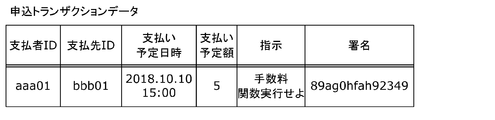
- FIG. 4 is an explanatory diagram schematically showing the application transaction data in the present embodiment.
- FIG. 5 is an explanatory diagram schematically showing payment transaction data according to the present embodiment.
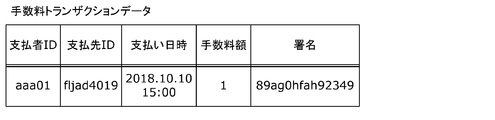
- FIG. 6 is an explanatory diagram schematically showing the fee transaction data in the present embodiment.
- FIG. 7 is a flow chart showing an example of processing of the transaction management system in the present embodiment.
- FIG. 8 is a diagram illustrating an example of a UI displayed on the display unit of the terminal.
- FIG. 9 is a diagram showing a UI displayed on the display unit of the terminal.
- FIG. 10 is a diagram illustrating an example of a UI displayed on the display unit of the terminal.
- FIG. 11 is a diagram showing an example of a UI displayed on the display unit of the terminal.
- FIG. 12 is a block diagram schematically showing the configuration of the transaction management system in Modification 3.
- FIG. 13 is a block diagram schematically showing the configuration of the transaction management system in Modification 3.
- FIG. 14 is a flowchart showing the processing of the server in the modification 4.
- FIG. 15 is a block diagram schematically showing the configuration of the server in Modification 4 of the embodiment.
- FIG. 16 is an explanatory diagram showing the data structure of the block chain.
- FIG. 17 is an explanatory diagram showing the data structure of transaction data.
- the present disclosure aims to stabilize the processing of the plurality of servers by controlling the timing when the transactions occur so that the processing of the plurality of servers that manage the transaction of the token is not biased to a specific period, and A control method and the like that can reduce consumption of power without performing processing relating to transactions.
- a control method is a plurality of servers that manage a transaction of tokens by using a plurality of distributed ledgers, each of which has a plurality of distributed ledgers.
- a control method executed by one of a plurality of servers that manage one or more distributed ledgers, of which the date and time when the first user plans to make a transaction from a terminal operated by the first user The first distributed ledger managed by the one server is received, and the first distributed ledger recorded on the first distributed ledger before the scheduled date and time included in the received application information is received.
- a first token amount that includes calculating a fee based on a transaction by a user, transmitting fee information including the calculated fee to the terminal, and indicating a token amount for a transaction corresponding to the schedule from the terminal
- Receiving transaction data transferring the received first transaction data to a plurality of other servers different from the one server of the plurality of servers, and including a first block including the first transaction data.
- the second transaction data which is stored in the first distributed ledger and includes the second token amount indicating the amount of tokens for the fee, is received from the terminal, and the received second transaction data is transmitted to the plurality of other servers.
- the second block which is transferred and includes the second transaction data, is stored in the first distributed ledger.
- the application information is third transaction data including the scheduled date and time
- each of the plurality of distributed ledgers includes a contract code for calculating the fee based on the third transaction data
- the fee may be calculated by executing the contract code included in the first distributed ledger.
- control method can reduce power consumption of a plurality of servers that manage token transactions.
- a consensus algorithm is executed together with the plurality of other servers to store the first block in the first distributed ledger and in the second block.
- a consensus algorithm may be executed together with the plurality of other servers to store the second block in the first distributed ledger.
- the distributed ledger is stored after executing the consensus algorithm. Therefore, the control method according to the present disclosure can appropriately manage the token transaction more appropriately by executing the consensus algorithm.
- a higher fee may be calculated as the balance of the token of the first user in the first distributed ledger increases.
- a higher fee may be calculated as the elapsed time from the last transaction timing by the first user in the first distributed ledger is longer.
- the fee information may be information for displaying the fee on the display unit of the terminal.
- the first user can be prompted to use the token early. Therefore, the timing at which a transaction occurs can be controlled.
- the token includes a plurality of types of tokens
- the first distributed ledger includes a plurality of sub distributed ledger different for each type of tokens
- the schedule included in the application information Based on the transaction by the first user recorded in the plurality of sub-distributed ledgers before the date and time, a plurality of fees are calculated for each token of different types, and in the transmission of the fees, the fees are calculated as the fee information.
- Information including a plurality of fees may be transmitted to the terminal.
- the fee information may be information for displaying the fee for each different type of token on the display unit of the terminal.
- the first user can be encouraged to use the token quickly for each type. Therefore, it is possible to control the timing at which a transaction occurs for each type of token.
- the fee information may include inquiry information for inquiring of the first user whether to agree with the fee included in the fee information.
- the timing at which the first user uses the token since it is possible to inquire the first user via the terminal whether or not to agree to the fee, it is possible to adjust the timing at which the first user uses the token. For example, the greater the fee amount, the earlier the token can be used. Therefore, the timing at which a transaction occurs can be controlled.
- a server is a plurality of servers that manage token transactions using a plurality of distributed ledgers, and each manages one or more distributed ledgers of the plurality of distributed ledgers. Which is one of the plurality of servers, which manages a first distributed ledger of the plurality of distributed ledger, and a terminal operated by the first user, and makes a transaction by the first user.
- Application information including the scheduled date and time, first transaction data including the first token amount indicating the amount of tokens for the transaction corresponding to the schedule from the terminal, and first token data indicating the amount of tokens for the commission from the terminal.
- the receiving unit that receives the second transaction data including the amount of 2 tokens, and the first distributed ledger in the management unit are referred to, and the first distributed ledger is included before the scheduled date and time included in the received application information.
- the receiving unit which includes: a calculating unit that calculates the fee based on the transaction by the first user recorded in 1.; and a transmitting unit that transmits fee information including the calculated fee to the terminal.
- the transmission unit transfers the received first transaction data to a plurality of other servers different from the one server of the plurality of servers, and
- the management unit records a first block including the first transaction data in the first distributed ledger, and (ii) when the reception unit receives the second transaction data, the transmission unit causes the transmission unit to receive the received first block.
- the two transaction data are transferred to the other servers, and the management unit records the second block including the second transaction data in the first distributed ledger.
- a program according to one aspect of the present invention is a program for causing a computer to execute the above control method.
- a recording medium such as a system, an apparatus, an integrated circuit, a computer program, or a computer-readable CD-ROM, and the system, the apparatus, the integrated circuit, the computer program.
- a recording medium such as a system, an apparatus, an integrated circuit, a computer program, or a computer-readable CD-ROM, and the system, the apparatus, the integrated circuit, the computer program.
- it may be realized by any combination of recording media.
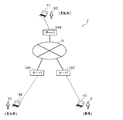
- FIG. 1 is a block diagram schematically showing the configuration of the transaction management system 1 in this embodiment.
- the transaction management system 1 includes servers 10A, 10B and 10C, and terminals 40, 41 and 42.
- the devices included in the transaction management system 1 are communicably connected to each other via a network N.
- the network N may be composed of any communication line or network, and includes, for example, the Internet, a carrier network of mobile phones, and the like.
- the servers 10A, 10B, and 10C are also referred to as "server 10A and the like".
- the multiple servers 10A, 10B, and 10C manage token transactions using multiple distributed ledgers.
- the server 10A is one of the plurality of servers 10A, 10B, and 10C.
- the server 10A is one of the plurality of servers 10A, 10B, and 10C holding the distributed ledger.
- the distributed ledger held by the server 10A stores various transaction data relating to procedures or processing (application, payment, payment of fees, etc.) in transaction of transaction currency. By receiving the transaction data, the server 10A receives the procedure or process in the token transaction.
- the token is, for example, a token.
- the token is value information managed by the distributed ledger, corresponds to money, points (royalties), gift certificates or coupons, or can be exchanged.
- Each of the servers 10B and 10C is a device having the same function as the server 10A, and operates independently of the server 10A. Note that the number of servers is not limited to three and may be any number.
- the servers 10A and the like are communicably connected to each other, and may be connected via the network N.
- the server 10A receives transaction data from the terminal 40 or the like or sends a notification to the terminal 40 or the like, but another server (server 10B or 10C). May perform the above processing.
- the terminal 40 is a terminal device owned by the payer U1.
- the terminal 40 is a terminal for applying for a token transaction, token transaction, and payment of a fee to the server 10A or the like.
- the terminal 40 accepts, for example, an input indicating the scheduled date and time of the token transaction and an input indicating the scheduled transaction amount from the payer U1.
- the terminal 40 generates transaction data (also referred to as application transaction data or third transaction data) for the transaction application based on the received input, and transmits the generated application transaction data to the server 10A or the like.
- the terminal 40 generates transaction data including the planned transaction date and time and the planned transaction amount as the application transaction data.
- the application transaction data need only include the information indicating the transaction schedule, and need not include the transaction scheduled date and time and the transaction transaction amount.
- the terminal 40 may receive the fee information received from the server 10A or the like and display the received fee information. That is, the fee information is information for displaying the fee on the display unit 60 (see FIG. 8) of the terminal 40. Further, the terminal 40 generates transaction data (also referred to as fee transaction data or second transaction data) for paying the trader X who manages the transaction procedure based on the received fee information, and generates the generated transaction data. It is transmitted to the server 10A or the like. Specifically, the terminal 40 generates transaction data including the amount of the fee included in the fee information as the fee transaction data.
- the fee transaction data also referred to as fee transaction data or second transaction data
- the terminal 40 generates transaction data for payment transaction (also referred to as payment transaction data, first transaction data) based on the input for application, and transmits the generated payment transaction data to the server 10A or the like. Specifically, the terminal 40 generates, as payment transaction data, transaction data including the same transaction date and time as the scheduled transaction date and time, and the transaction amount of the same amount as the scheduled transaction amount.
- the fee information may include inquiry information for inquiring of the payer U1 who is the user of the terminal 40 whether to agree with the fee included in the fee information. That is, the terminal 40 may present a UI (User Interface) for inquiring the payer U1 whether or not to agree with the amount of the fee included in the fee information.
- the terminal 40 determines whether or not an input indicating consent has been received for the presented UI, and when the input indicating consent is received, the fee transaction data is generated, and when the input indicating consent is not received. , It is not necessary to generate fee transaction data.
- the terminal 40 is, for example, a personal computer, a smartphone, a tablet, or the like.
- the terminal 41 is a terminal device possessed by the user of the payment destination U2, which is the payment destination for the transaction by the payer U1.
- the terminal 41 receives, from the server 10A or the like, a notification indicating that payment for the transaction has been made.
- the terminal 41 may display information indicating that the payment amount included in the payment transaction data has been paid by the payer U1 at the transaction date and time.
- the terminal 41 is, for example, a personal computer, a smartphone, a tablet, or the like.
- the terminal 42 is a terminal device owned by the trader X.
- the terminal 42 receives from the server 10A or the like a notification indicating that the payer U1 has paid the fee.
- the terminal 42 may display information indicating that the amount of the fee included in the fee transaction data was paid by the payer U1 at the transaction date and time.
- the terminal 42 is, for example, a personal computer, a smartphone, a tablet, or the like.
- the terminal 40 may further have the function of the terminal 41 and may have the function of the terminal 42.
- the terminal 41 may have the function of the terminal 40, or may have the function of the terminal 42.
- the terminal 42 may have the function of the terminal 40 or may have the function of the terminal 41.
- Each of the terminals 40 to 42 operates independently of the other terminals.
- FIG. 2 is a block diagram schematically showing the configuration of the server 10A in this embodiment.
- the server 10A includes a processing unit 11, a ledger management unit 12, and a control unit 13.
- the functional unit included in the server 10A can be realized by, for example, a CPU (Central Processing Unit) executing a program using a memory.
- a CPU Central Processing Unit
- the processing unit 11 is a processing unit that manages various information by a distributed ledger.
- the processing unit 11 provides the received or acquired transaction data to the ledger management unit 12 when the transaction data is received from the device in the transaction management system 1 or when the transaction data generated by the control unit 13 is acquired. It is stored in the distributed ledger.
- the transaction data includes application transaction data, payment transaction data, and fee transaction data. Details of each transaction data will be described later.
- the ledger management unit 12 is a processing unit that manages the distributed ledger. Specifically, when receiving the transaction data, the ledger management unit 12 transfers the received transaction data to a plurality of other servers, and stores the received transaction data in the distributed ledger. For example, the ledger management unit 12 receives payment transaction data from the terminal 40 and transfers the received payment transaction data to a plurality of other servers 10B and 10C different from the server 10A among the plurality of servers 10A, 10B and 10C. Then, the first block including the payment transaction data is stored in the distributed ledger stored in the ledger storage unit 16.
- the ledger management unit 12 receives the fee transaction data from the terminal 40, transfers the received fee transaction data to the plurality of other servers 10B and 10C, and stores the second block including the second transaction data in the ledger.
- the data is stored in the distributed ledger stored in the section 16.
- the ledger management unit 12 stores the transaction data provided by the processing unit 11 in the distributed ledger. Transaction data from the past to the present is stored in the distributed ledger. In the distributed ledger, the transaction data is managed so as not to be tampered with based on the characteristic that it is difficult to tamper with the information recorded in the distributed ledger.
- the ledger management unit 12 has a storage unit 15 and a ledger storage unit 16.
- the storage unit 15 is a processing unit that stores new transaction data to be stored in the distributed ledger in the ledger storage unit 16.
- the storage unit 15 stores new transaction data in the ledger storage unit 16 by a method according to the type of distributed ledger.
- the storage unit 15 also transmits/receives communication data to/from the storage unit 15 of another server such as the server 10A, and causes the ledger storage unit 16 of the other server to store the new transaction data.
- the distributed ledger is a block chain
- the storage unit 15 generates a block including new transaction data, synchronizes the generated block with the server 10A, and stores the block in the ledger. It is stored in the section 16.
- the storage unit 15 executes the consensus algorithm together with the plurality of other servers 10B and 10C, and stores the first block in the distributed ledger. Further, for example, when storing the second block in the distributed ledger, the storage unit 15 executes the consensus algorithm together with the plurality of other servers 10B and 10C, and stores the second block in the distributed ledger.
- the ledger storage unit 16 is a storage device that stores a distributed ledger.
- the distributed ledger stored in the ledger storage unit 16 stores one or more transaction data and is managed so as to be difficult to tamper with by using a characteristic such as a hash value. The details will be described later.
- the distributed ledger stored in the ledger storage unit 16 fee calculation information used for calculating a fee for performing a payment procedure by a payer is stored in advance.
- the distributed ledger also contains a smart contract code for calculating fees based on the application transaction data. The calculation of the fee will be described later.
- the distributed ledger is, for example, a block chain, and this case will be described as an example, but a distributed ledger of another method (for example, IOTA or hash graph) can be adopted.
- the distributed ledger may execute a consensus algorithm (for example, PBFT (Practical Byzantine Fault Tolerance), PoW (Proof of Work), or PoS (Proof of Stake)) when storing new data. , May not be executed.
- PBFT Practice Byzantine Fault Tolerance
- PoW Proof of Work
- PoS Proof of Stake
- Hyperledger fabric As an example of the distributed ledger technology that does not execute the consensus algorithm, there is Hyperledger fabric.
- the control unit 13 is a processing unit that controls processing related to token provision. By receiving the application transaction data from the terminal 40, the control unit 13 receives from the terminal 40 the information including the date and time when the payer is expected to make a token transaction. Further, the control unit 13 refers to the distributed ledger stored in the ledger storage unit 16, and based on the transaction by the payer U1 recorded in the distributed ledger before the scheduled transaction date and time included in the application transaction data, The amount of the fee for the transaction scheduled to be performed by the payer U1 is calculated. The control unit 13 sends the fee information including the calculated fee amount to the terminal 40.
- the control unit 13 calculates, for example, a higher fee as the balance of payer tokens in the distributed ledger at the scheduled transaction date and time increases. Further, the control unit 13 calculates, for example, a higher fee as the elapsed time from the previous transaction timing by the payer in the distributed ledger is longer. The elapsed time is, for example, the time from the last transaction timing to the timing when the application transaction data is received. Further, for example, in the transaction by the payer in the distributed ledger, the control unit 13 calculates a higher fee as the average of the transaction amount per unit time in the period from the timing of receiving the application transaction data to the predetermined time period is smaller. To do.
- the transaction volume during the period is, for example, the total amount of payments made by the payer during the period. The payment may be remittance, withdrawal, transfer, or the like.
- control unit 13 executes the contract code included in the distributed ledger to calculate the fee.
- the contract code is the code executed to realize the smart contract.
- the fee charged to the payer is determined based on the fee calculation information and the timing of the transaction application by the payer. Specifically, the fee is (i) the balance of the payer's token in the distributed ledger at the timing of application, (ii) the elapsed time from the last transaction timing by the payer in the distributed ledger, and (iii) the distribution In the transaction by the payer in the ledger, it is determined based on at least one of the average per unit time of the transaction amount in the period from the timing of receiving the application transaction data to the predetermined time.
- the fee calculation information is, for example, a function or table that defines fees.
- FIG. 3 is an explanatory diagram showing an example of fee calculation information in the present embodiment.
- the fee calculation information shown in FIG. 3 is an example of fee calculation information that defines a fee amount by a function.
- the horizontal axis shows the payer token balance x
- the vertical axis shows the commission amount F(x) at each balance x.
- the function F(x) generally has a tendency to increase as x increases. In other words, the fee amount tends to increase as the balance increases. More specifically, the function F(x) is a monotonically increasing function with respect to x. However, the function F(x) may include a section in which the value is maintained with respect to the change of x.
- the control unit 13 determines by calculating the amount of commission as follows using the function F(x) which is the commission calculation information shown in FIG.
- FIG. 4 is an explanatory diagram schematically showing application transaction data in the present embodiment.
- the application transaction data is generated by the terminal 40 owned by the payer U1 and transmitted to the server 10A or the like.
- the application transaction data includes a payer ID, a payee ID, a planned payment date and time, a planned payment amount, an instruction, and a signature.
- the payer ID is an identifier for uniquely identifying the payer in the transaction (payment) schedule.
- the payee ID is an identifier for uniquely identifying the payee in the transaction (payment) schedule.
- the scheduled payment date and time is information indicating the timing of the scheduled transaction (payment). Although the scheduled payment date and time indicates the date and time when the transaction is scheduled to be performed, the scheduled time when the transaction is scheduled to be performed may not be indicated, and only the day of the date and time may be indicated.
- the planned payment amount is information indicating the amount to be paid in the transaction.
- the amount is, for example, the amount of tokens.
- the instruction is information for instructing the server 10A to calculate the transaction fee.
- the application transaction data may include information indicating that the transaction data is application transaction data including information indicating that a transaction will be scheduled, instead of the instruction.
- the server 10A or the like may calculate the fee when it detects that the received transaction data includes information indicating that the application transaction data.
- the signature is an electronic signature given by the device or person who generated the application transaction data.
- the application transaction data shown in FIG. 4 is application transaction data indicating that the payer whose payer ID is “aaa001” will pay to the payee whose payee ID is “bbb01”.
- the planned payment amount is “5” tokens
- the planned payment date and time is “2018.10.10 15:00”.
- the signature is the electronic signature of the payer.
- FIG. 5 is an explanatory diagram schematically showing payment transaction data in the present embodiment.
- the payment transaction data is generated by the terminal 40 owned by the payer U1 and transmitted to the server 10A or the like.
- the payment transaction data includes a payer ID, a payee ID, a payment date and time, a payment amount, and a signature.
- the payer ID is an identifier for uniquely identifying the payer in the transaction (payment).
- the payee ID is an identifier for uniquely identifying the payee in the transaction (payment).
- the payment date and time is information indicating the timing of the transaction (payment).
- the payment date and time indicates the date and time at which the transaction is made, but the time and date at which the transaction is made may not be indicated, and only the day of the date and time may be indicated.
- the payment amount is information indicating the amount paid in the transaction.
- the amount is, for example, the amount of tokens.
- the signature is an electronic signature given by the device or person who generated the payment transaction data.
- the payment transaction data shown in FIG. 5 is payment transaction data of a transaction in which the payer whose payer ID is “aaa001” pays to the payee whose payee ID is “bbb01”. In this transaction, the payment amount is “5” token, and the payment date and time is “2018.10.10 15:00”.
- the signature is the electronic signature of the payer.
- FIG. 6 is an explanatory diagram schematically showing fee transaction data in the present embodiment.
- the fee transaction data is generated by the terminal 40 owned by the payer U1 and transmitted to the server 10A or the like.
- the fee transaction data includes a payer ID, a payee ID, a payment date and time, a fee amount, and a signature.
- Payer ID is an identifier for uniquely identifying the payer in the payment of transaction fees.
- the payee ID is an identifier for uniquely identifying the payee of the transaction fee.
- the payment date and time is information indicating the timing of payment of transaction fees. Although the date and time when the fee is paid is shown as the payment date and time, the time when the fee is paid may not be shown, and only the day of the date and time may be shown.
- the fee amount is information indicating the amount of the transaction fee.
- the amount is, for example, the amount of tokens.
- the signature is an electronic signature given by the device or person who generated the application transaction data.
- the application transaction data shown in FIG. 6 is fee transaction data indicating that the payer whose payer ID is “aaa001” pays a commission to the payee whose payee ID is “fljad4019”. In the payment of this fee, the payment amount is “1” token and the scheduled payment date and time is “2018.10.10 15:00”.
- the signature is the electronic signature of the payer.
- FIG. 7 is a flow chart showing an example of processing of the transaction management system 1 in the present embodiment.
- the terminal 40 of the payer U1 accepts an input indicating the scheduled transaction date and time and an input indicating the scheduled transaction amount from the payer U1 (S101).
- the terminal 40 generates application transaction data including the scheduled transaction date and time and the scheduled transaction amount based on the received input (S102).
- the terminal 40 transmits the generated application transaction data to the server 10A etc. (S103). At this time, the terminal 40 may transmit the generated application transaction data to one of the servers 10A or the like, or may transmit to the plurality of servers.
- the server 10A or the like receives the application transaction data transmitted by the terminal 40 and stores it in the distributed ledger (S104).
- the server 10A or the like calculates the amount of the fee required to perform the payment procedure by the payer U1 related to the terminal 40 that is the transmission source of the application transaction data (S105).
- the server 10A or the like transmits the fee information including the calculated fee amount to the terminal 40 owned by the payer U1 (S106).
- all of the plurality of servers included in the server 10A or the like may not transmit the fee information to the terminal 40.
- the server that has finished calculating the amount of the fee may transmit the fee information to the terminal 40, and may also transmit the completion information indicating that the amount of the fee has been calculated to another server.
- the other server may not transmit the fee information to the terminal 40 if the fee information is not transmitted to the terminal 40 when the completion information is received.
- the terminal 40 Upon receiving the fee information transmitted from the server 10A or the like, the terminal 40 causes the terminal 40 to display the amount of the fee included in the fee information (S107). At this time, the terminal 40 may present a UI (User Interface) for inquiring of the payer U1 whether to agree with the amount of the fee included in the fee information.
- UI User Interface
- FIG. 8 is a diagram showing an example of the UI 50 displayed by the display unit 60 of the terminal 40.
- the UI 50 includes a fee amount 51, an agreement button 52 for accepting an input indicating that the payment of the fee is agreed, and a disagree button 53 for accepting an input indicating that the payment of the fee is not agreed (disagree).
- the terminal 40 determines whether or not an input indicating consent has been received for the presented UI (S108).
- the terminal 40 When the terminal 40 receives an input indicating consent (Yes in S108), for example, when the UI 50 receives an input to the consent button 52, the same transaction date and time as the scheduled transaction date and time based on the input received in step S101, and , Payment transaction data including the same transaction amount as the expected transaction amount is generated (S109).
- the terminal 40 receives an input indicating disagreement, for example, an input to the disagreement button 53 in the UI 50, or an input indicating consent is not received for a certain period of time (No in S108)
- the processing relating to the transaction is completed. In this case, the terminal 40 may send the end information indicating that the processing has ended to the server 10A or the like.
- the server 10A or the like Upon receiving the termination information, the server 10A or the like terminates the processing relating to the transaction. It should be noted that the server 10A and the like are not limited to receiving the end information, and if the information (for example, payment transaction data or fee transaction data) is not received from the terminal 40 for a certain period after transmitting the fee information, the server 10A or the like takes the transaction. The processing may be ended.
- the terminal 40 transmits the generated payment transaction data to the server 10A or the like (S110). At this time, the terminal 40 may send the generated payment transaction data to one of the servers 10A or the like, or may send it to a plurality of servers.
- the server 10A or the like receives the payment transaction data transmitted by the terminal 40 and stores it in the distributed ledger (S111).
- the server 10A or the like notifies the terminal 41 of the payee U2 that the payment amount included in the payment transaction data has been paid by the payer U1 at the transaction date and time (S112).
- step S109 the terminal 40 generates fee transaction data including the amount of the fee based on the fee information (S113).
- the terminal 40 transmits the generated fee transaction data to the server 10A etc. (S114). At this time, the terminal 40 may transmit the generated fee transaction data to one of the servers 10A or the like, or to a plurality of servers.
- the server 10A or the like receives the fee transaction data transmitted by the terminal 40 and stores it in the distributed ledger (S115).
- the server 10A or the like notifies the terminal 42 of the trader X that the payment of the amount of the fee included in the fee transaction data was made by the payer U1 at the transaction date and time (S116).
- step S109 may be performed after step S113, or may be performed in parallel with step S113.
- step S110 may be performed after step S114, or may be performed in parallel with step S114.
- step S111 may be performed after step S115, or may be performed in parallel with step S115.
- step S112 may be performed after step S116, or may be performed in parallel with step S116.
- the fee is calculated based on the transaction by the payer U1 recorded in the distributed ledger before the scheduled date and time included in the received application transaction data, Request to pay a fee. Therefore, for example, by adjusting the amount of the calculated fee amount, it is possible to control the timing of the transaction so that the processes of the plurality of servers that manage the token transaction are not biased to a specific period. .. Therefore, it is possible to stabilize the processing of a plurality of servers and reduce the consumption of electric power without performing the processing related to the transaction.
- control method can reduce power consumption of a plurality of servers that manage token transactions.
- the distributed ledger is stored after executing the consensus algorithm. Therefore, the control method according to the present disclosure can appropriately manage the token transaction more appropriately by executing the consensus algorithm.
- the higher the token balance of the payer U1 in the distributed ledger the higher the fee is calculated.
- a higher fee is calculated as the elapsed time from the previous transaction timing by the payer U1 in the distributed ledger is longer.
- the higher the fee is calculated. Therefore, the payer U1 can request a high fee so that the payer U1 does not use the token. Therefore, the payer U1 can be urged to use the token early, and the timing when the transaction occurs can be controlled.
- the fee information is information for displaying the fee on the display unit 60 of the terminal 40. Therefore, by displaying the fee on the display unit 60 of the terminal 40, it is possible to urge the payer U1 to quickly use the token. Therefore, the timing at which a transaction occurs can be controlled.
- the fee information includes inquiry information for inquiring the payer U1 whether to agree with the fee included in the fee information. According to this, since it is possible to inquire the payer U1 via the terminal 40 whether or not to agree to the fee, the timing at which the payer U1 uses the token can be adjusted. For example, the greater the fee amount, the earlier the token can be used. Therefore, the timing at which a transaction occurs can be controlled.
- the token may include multiple types of tokens. That is, the transaction management system 1 may manage transactions of a plurality of types of tokens.
- the distributed ledger held by the server 10A or the like includes a plurality of sub-distributed ledger different for each different type of token. For example, when there are two types of token A and token B, the distributed ledger includes a sub-distributed ledger A indicating a transaction of the token A and a sub-distributed ledger B indicating a transaction of the token B.
- the control unit 13 of the server 10A or the like based on the transaction by the payer U1 recorded in the plurality of sub distributed ledgers before the scheduled date and time included in the application information, different types of tokens. Calculate multiple fees for each. For example, the control unit 13 calculates the fee A for the transaction of the token A based on the transaction of the token A by the payer U1 recorded in the sub distributed ledger A before the scheduled date and time included in the application information. At the same time, the control unit 13 calculates the fee B for the transaction of the token B based on the transaction of the token B by the payer U1 recorded in the sub distributed ledger B before the scheduled date and time included in the application information. ..
- the control unit 13 calculates the transaction amount of the token B in order to increase the distribution amount of the token B. May be less than the transaction fee for the token A.
- the distribution volume may be, for example, an average of transaction volumes by a plurality of users per unit time in a period from the present time to a predetermined time ago.
- the transaction volume by a plurality of users may be the sum of the transaction volumes of all users who are using a particular type of token.
- the average may be an average of users per person in addition to the average per unit time.
- To make the transaction fee for the token B less than the transaction fee for the token A means that the value of the token A and the value of the token B are the same when compared with a common value for comparison. It is calculated so that the value of token B is less than the value of token A. Further, in this case, for example, in the calculation of the fee, the relationship indicating the fee calculation information for calculating the fee for the token B is more common than the relationship indicating the fee calculation information for calculating the fee for the token A. Even if the commission amount for the value conversion of is adjusted to be small for any balance, any elapsed time, or any average, and the commission of token A and the commission of token B are calculated using the two adjusted relations. Good.
- the relationship of token B may be made smaller than the relationship of token A by multiplying the amount of charge of the relationship of token B by a coefficient smaller than 1.
- the relationship of token B may be made smaller than the relationship of token A by multiplying by a large coefficient. In the adjustment, for example, even if the relationship of the token B is made smaller than the relationship of the token A by subtracting a predetermined amount of the charge from the relationship of the token B (that is, offsetting in the negative direction).
- the relationship of the token B may be made smaller than the relationship of the token A by adding a predetermined amount of the charge to the relationship of the token A (that is, offsetting in the positive direction).
- the control unit 13 transmits, as the fee information, a plurality of calculated fees, that is, information including the fee A and the fee B to the terminal 40. In this way, since the fee is calculated for each of a plurality of types of tokens, the transaction amount can be adjusted for each type of token.
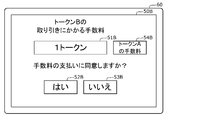
- the terminal 40 Upon receiving the fee information transmitted from the server 10A or the like, the terminal 40 displays the amount of the fee included in the fee information on the display unit 60 of the terminal 40 for each token of a different type (S107). That is, the fee information is information for displaying the fee on the display unit 60 of the terminal 40 for each token of a different type. Therefore, by displaying the fee for each type of token on the display unit of the terminal, it is possible to prompt the payer U1 to quickly use the token for each type. Therefore, it is possible to control the timing at which a transaction occurs for each type of token.
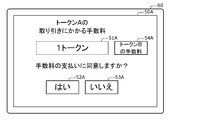
- FIG. 9 is a diagram showing an example of the UI 50A displayed by the display unit 60 of the terminal 40.
- the UI 50A displays the fee A for the transaction of token A.
- the UI 50A includes an amount 51A of the fee A, an agreement button 52A for receiving an input indicating that the payment of the fee A is agreed, and an unacceptable input for indicating that the payment of the fee A is not agreed (disagree).
- a consent button 53A and a switching button 54A for switching the display to the UI 50B displaying the fee B are included.
- the terminal 40 When the terminal 40 receives an input indicating the consent of the token A to the fee A, for example, when the UI 50A receives an input to the consent button 52A, the same transaction date and time as the scheduled transaction date and time based on the input accepted in step S101. , And payment transaction data including the same transaction amount as the planned transaction amount. The generated payment transaction data further includes information indicating that token A will be used in the transaction.
- the terminal 40 receives an input indicating disagreement, for example, an input to the disagreement button 53A in the UI 50A, or when an input indicating consent is not received for a certain period of time, the process related to the transaction. Or the display is switched to the UI 50B displaying the fee B.
- FIG. 10 is a diagram showing an example of the UI 50B displayed by the display unit 60 of the terminal 40.
- the UI 50B displays the fee B for the transaction of token B.
- the UI 50B includes an amount 51B of the fee B, an agreement button 52B for accepting an input indicating that the user agrees to pay the fee B, and an input for accepting an input indicating that he/she does not agree to pay the fee B (disagree).
- An agreement button 53B and a switching button 54B for switching the display to the UI 50A displaying the fee A are included.
- the terminal 40 When the terminal 40 receives an input indicating consent to the fee B of the token B, for example, an input to the consent button 52B in the UI 50B, the same transaction date and time as the scheduled transaction date and time based on the input accepted in step S101. , And payment transaction data including the same transaction amount as the planned transaction amount. The generated payment transaction data further includes information indicating that token B will be used in the transaction.
- the terminal 40 receives an input indicating disagreement, for example, an input to the disagreement button 53B in the UI 50B, or an input indicating consent is not received for a certain period of time, the process related to the transaction. Or the display is switched to the UI 50A displaying the fee A.
- the terminal 40 may send the end information indicating that the process has ended to the server 10A or the like.
- the server 10A or the like terminates the processing relating to the transaction. It should be noted that the server 10A and the like are not limited to receiving the end information, and if the information (for example, payment transaction data or fee transaction data) is not received from the terminal 40 for a certain period after transmitting the fee information, the server 10A or the like takes the transaction. The processing may be ended.
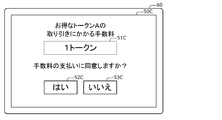
- FIG. 11 is a diagram showing a UI 50C displayed on the display unit 60 of the terminal 40.
- the UI 50C is a UI different from the UI 50A and the UI 50B.
- the UI50C displays the fee A for the transaction of token A, which is the cheaper fee (that is, cheaper) of token A and token B.
- the UI 50C includes an amount 51C of the fee C, an agreement button 52C for accepting an input indicating that the user agrees to pay the fee C, and an input for accepting an input indicating that he/she does not agree to pay the fee C (disagree).
- a consent button 53C is included.
- the UI 50C may further include a switching button for switching the display to the UI for displaying the fee B.
- each UI may further include a message indicating the reason why the fee to be presented has been calculated.
- the message may indicate, for example, that the offered fee has been calculated because the payer's token balance in the distributed ledger is a predetermined balance at the scheduled transaction date and time. In this case, the message may indicate that the smaller the token balance, the cheaper the fee. Further, the message may indicate that the presented fee has been calculated, for example, because the elapsed time from the previous transaction timing by the payer in the distributed ledger is a predetermined elapsed time. In this case, the message may indicate that the shorter the elapsed time, the cheaper the fee.
- the message is, for example, in the transaction by the payer in the distributed ledger, because the average of the transaction amount per unit time in the period from the timing of receiving the application transaction data to the predetermined time is the predetermined average value. , May indicate that the presented fee has been calculated. In this case, the message may indicate that the higher the average value, the cheaper the fee.
- FIG. 12 is a block diagram schematically showing the configuration of the transaction management system 2 in this modification.
- the transaction management system 2 includes servers 10A, 10B and 10C, and terminals 40, 41 and 42.
- the devices included in the transaction management system 2 are communicably connected to each other via a network N.
- the network N may be composed of any communication line or network, and includes, for example, the Internet, a carrier network of mobile phones, and the like.
- the servers 10A, 10B and 10C are connected to each other via the network N.
- a terminal 40 is connected to the server 10A
- a terminal 41 is connected to the server 10B
- a terminal 42 is connected to the server 10C.
- Such a configuration can be used, for example, when a plurality of groups operate the transaction management system 2 and when connecting servers managed by the respective groups via the network N.
- the server 10A and the terminal 40 belong to the group A
- the server 10B and the terminal 41 belong to the group B
- the server 10C and the terminal 42 belong to the group C.
- FIG. 13 is a block diagram schematically showing the configuration of the transaction management system 3 in this modification.
- the transaction management system 3 includes a server 10D and terminals 40, 41 and 42.
- the devices included in the transaction management system 3 are communicably connected to each other via a network N.
- the network N may be composed of any communication line or network, and includes, for example, the Internet, a carrier network of mobile phones, and the like.
- the server 10D and the terminals 40 and 41 are connected to each other via the network N. Further, the terminal 42 is connected to the server 10D.
- the server 10D and the terminals 40 and 41 each operate as the server 10A and the like in each of the above embodiments.
- the server 10D and the terminal 42 belong to the group D, and the group D and individual payers U1 and payees U2 operate the transaction management system 3.
- FIG. 14 is a flowchart showing the processing of the server in this modification.
- the server 10A or the like receives the application information including the date and time when the payer U1 is scheduled to make a transaction from the terminal 40 operated by the payer U1 as the first user (S201).
- Each of the servers 10A to 10C refers to the first distributed ledger managed by the server, and charges based on the transaction by the payer U1 recorded in the first distributed ledger before the scheduled date and time included in the received application information. Is calculated (S202).
- Each of the servers 10A to 10C transmits fee information including the calculated fee to the terminal 40 (S203).
- Each of the servers 10A to 10C receives the first transaction data including the first token amount indicating the amount of tokens for the transaction corresponding to the transaction schedule from the terminal 40, and receives the received first transaction data from the plurality of servers 10A to 10C.
- the first block including the first transaction data is transferred to a plurality of other servers different from the server (the server serving as the main body of the processing in step S204) of 10C, and is stored in the first distributed ledger (S204). ).
- Each of the servers 10A to 10C receives the second transaction data including the second token amount indicating the amount of tokens for the fee from the terminal 40, transfers the received second transaction data to a plurality of other servers, and The second block including the second transaction data is stored in the first distributed ledger (S205).
- FIG. 15 is a block diagram schematically showing the configuration of the server according to the fourth modification of the embodiment.
- one server 60A of the plurality of servers includes a processing unit 61 and a control unit 63.
- the processing unit 61 receives, from the terminal 40 operated by the payer U1 as the first user, application information including the date and time on which the payer U1 is scheduled to make a transaction.
- the control unit 63 refers to the first distributed ledger managed by the server, and calculates the fee based on the transaction by the payer U1 recorded in the first distributed ledger before the scheduled date and time included in the received application information. To do.
- the control unit 63 transmits the fee information including the calculated fee to the terminal 40.
- the processing unit 61 further receives, from the terminal 40, the first transaction data including the first token amount indicating the amount of tokens for the transaction corresponding to the transaction schedule, and receives the received first transaction data from the plurality of servers 10A to 10A.
- the first block including the first transaction data is transferred to a plurality of other servers different from the server (the server including the processing unit 61) of 10C, and is stored in the first distributed ledger.
- the processing unit 61 further receives from the terminal 40 the second transaction data including the second token amount indicating the amount of tokens for the fee, and transfers the received second transaction data to a plurality of other servers, Further, the second block including the second transaction data is stored in the first distributed ledger.
- FIG. 16 is an explanatory diagram showing the data structure of the block chain.
- a block chain is one in which blocks, which are the recording units, are connected in a chain.
- Each block has a plurality of transaction data and the hash value of the immediately preceding block.
- the block B2 includes the hash value of the previous block B1.
- the hash value calculated from the plurality of transaction data included in the block B2 and the hash value of the block B1 is included in the block B3 as the hash value of the block B2.
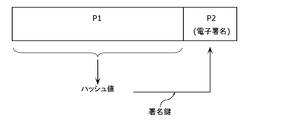
- FIG. 17 is an explanatory diagram showing the data structure of transaction data.
- the transaction data shown in FIG. 17 includes a transaction body P1 and a digital signature P2.
- the transaction body P1 is a data body included in the transaction data.
- the electronic signature P2 is generated by signing the hash value of the transaction body P1 with the signature key of the creator of the transaction data, more specifically, by encrypting with the private key of the creator. is there.
- each component may be configured by dedicated hardware, or may be realized by executing a software program suitable for each component.
- Each component may be realized by a program execution unit such as a CPU or a processor reading and executing a software program recorded in a recording medium such as a hard disk or a semiconductor memory.
- the software that realizes the content management system and the like of the above embodiment is the following program.
- this program is a plurality of servers that manage a transaction of tokens by using a plurality of distributed ledgers in a computer, each of which manages a plurality of distributed ledgers of the plurality of distributed ledgers.
- the first transaction data including the first token amount indicating the amount of tokens involved in the transaction corresponding to the schedule is received from the terminal, the fee information including the above-mentioned fee is transmitted to the terminal, and the received first transaction is received.
- the present disclosure can be used for a transaction management system that manages token transactions.
Landscapes
- Business, Economics & Management (AREA)
- Accounting & Taxation (AREA)
- Engineering & Computer Science (AREA)
- Finance (AREA)
- Theoretical Computer Science (AREA)
- Physics & Mathematics (AREA)
- General Physics & Mathematics (AREA)
- Strategic Management (AREA)
- General Business, Economics & Management (AREA)
- Development Economics (AREA)
- Economics (AREA)
- Databases & Information Systems (AREA)
- Technology Law (AREA)
- Marketing (AREA)
- Computer Security & Cryptography (AREA)
- Data Mining & Analysis (AREA)
- General Engineering & Computer Science (AREA)
- Financial Or Insurance-Related Operations Such As Payment And Settlement (AREA)
- Management, Administration, Business Operations System, And Electronic Commerce (AREA)
Abstract
制御方法は、端末(40)から、取り引きを行う予定の日時を含む申し込み情報を受信し(S201)、分散台帳を参照し、申し込み情報に含まれる予定の日時以前に分散台帳に記録されている第1ユーザによる取り引きに基づいて手数料を算出し(S202)、算出した手数料を含む手数料情報を端末(40)に送信し(S203)、取り引きにかかる第1トークン量を含む第1トランザクションデータを受信し、第1トランザクションデータを複数のサーバのうちの一のサーバ(10A)とは異なる複数の他のサーバ(10B、10C)に転送し、かつ、第1トランザクションデータを含む第1ブロックを分散台帳に格納し(S204)、手数料にかかる第2トークン量を含む第2トランザクションデータを受信し、受信した第2トランザクションデータを複数の他のサーバに転送し、かつ、第2トランザクションデータを含む第2ブロックを分散台帳に格納する(S205)。
Description
本発明は、制御方法、サーバ、および、プログラムに関する。
特許文献1には、仮想通貨において、仮想通貨を投資対象とさせずにユーザに仮想通貨の消費を促すために、仮想通貨の購入時からの時間の経過とともに、購入した仮想通貨が減価する仕組みについて開示されている。
しかしながら、仮想通貨などのトークンの取引を管理する複数のサーバの処理が不安定になるおそれがある。
そこで、本開示は、トークンの取引を管理する各サーバの処理を安定化することができる制御方法などを提供する。
本発明の一態様に係る制御方法は、複数の分散台帳を利用してトークンの取り引きを管理する複数のサーバであって、それぞれが前記複数の分散台帳のうちの1以上の分散台帳を管理する複数のサーバのうちの一のサーバによって実行される制御方法であって、第1ユーザにより操作された端末から、前記第1ユーザが取り引きを行う予定の日時を含む申し込み情報を受信し、前記一のサーバが管理する第1分散台帳を参照し、受信した前記申し込み情報に含まれる前記予定の日時以前に前記第1分散台帳に記録されている前記第1ユーザによる取り引きに基づいて手数料を算出し、算出した前記手数料を含む手数料情報を前記端末に送信し、前記端末から前記予定に対応する取り引きにかかるトークンの量を示す第1トークン量を含む第1トランザクションデータを受信し、受信した前記第1トランザクションデータを前記複数のサーバのうちの前記一のサーバとは異なる複数の他のサーバに転送し、かつ、前記第1トランザクションデータを含む第1ブロックを前記第1分散台帳に格納し、前記端末から前記手数料にかかるトークンの量を示す第2トークン量を含む第2トランザクションデータを受信し、受信した前記第2トランザクションデータを前記複数の他のサーバに転送し、かつ、前記第2トランザクションデータを含む第2ブロックを前記第1分散台帳に格納する。
なお、これらの包括的または具体的な態様は、システム、装置、集積回路、コンピュータプログラムまたはコンピュータ読み取り可能なCD-ROMなどの記録媒体で実現されてもよく、システム、装置、集積回路、コンピュータプログラムおよび記録媒体の任意な組み合わせで実現されてもよい。
本開示の制御方法は、トークンの取引を管理する各サーバの処理を安定化することができる。
(本発明の基礎となった知見)
本発明者は、「背景技術」の欄において記載した、トークンの取り引きに関する技術に関し、以下の問題が生じることを見出した。
本発明者は、「背景技術」の欄において記載した、トークンの取り引きに関する技術に関し、以下の問題が生じることを見出した。
特許文献1に記載の仕組みでは、時間の経過に応じた仮想通貨などのトークンの減価量が予め定められているため、取り引きの状況に応じて取り引きの制御が難しい。例えば、ある期間に多くの取り引きが集中した場合、トークンを管理している複数のサーバの処理負荷が増加して複数のサーバによる処理が不安定になるおそれがある。また、例えば、他の期間では取り引きが生じずに取り引きに関する処理が複数のサーバで行われないおそれがあり、この場合、複数のサーバは、取り引きが発生するのを待機することとなるため、取り引きに関する処理が行われていないのにもかかわらず電力を消費するおそれがある。
そこで、本開示は、トークンの取り引きを管理する複数のサーバの処理が特定の期間に偏らないように取り引きが発生するタイミングを制御することで、複数のサーバの処理の安定化を図り、かつ、取り引きに関する処理が行われずに電力が消費されることを低減することができる制御方法などを提供する。
このような問題を解決するために、本発明の一態様に係る制御方法は、複数の分散台帳を利用してトークンの取り引きを管理する複数のサーバであって、それぞれが前記複数の分散台帳のうちの1以上の分散台帳を管理する複数のサーバのうちの一のサーバによって実行される制御方法であって、第1ユーザにより操作された端末から、前記第1ユーザが取り引きを行う予定の日時を含む申し込み情報を受信し、前記一のサーバが管理する第1分散台帳を参照し、受信した前記申し込み情報に含まれる前記予定の日時以前に前記第1分散台帳に記録されている前記第1ユーザによる取り引きに基づいて手数料を算出し、算出した前記手数料を含む手数料情報を前記端末に送信し、前記端末から前記予定に対応する取り引きにかかるトークンの量を示す第1トークン量を含む第1トランザクションデータを受信し、受信した前記第1トランザクションデータを前記複数のサーバのうちの前記一のサーバとは異なる複数の他のサーバに転送し、かつ、前記第1トランザクションデータを含む第1ブロックを前記第1分散台帳に格納し、前記端末から前記手数料にかかるトークンの量を示す第2トークン量を含む第2トランザクションデータを受信し、受信した前記第2トランザクションデータを前記複数の他のサーバに転送し、かつ、前記第2トランザクションデータを含む第2ブロックを前記第1分散台帳に格納する。
これによれば、トークンの取り引きを管理する複数のサーバの処理が特定の期間に偏らないように取り引きが発生するタイミングを制御することができる。このため、複数のサーバの処理の安定化を図り、かつ、取り引きに関する処理が行われずに電力が消費されることを低減することができる。
例えば、前記申し込み情報は、前記予定の日時を含む第3トランザクションデータであり、前記複数の分散台帳のそれぞれは、前記第3トランザクションデータに基づいて前記手数料を算出するためのコントラクトコードを含み、前記手数料の算出では、前記第3トランザクションデータを受信すると、前記第1分散台帳に含まれる前記コントラクトコードを実行することで前記手数料を算出してもよい。
これによれば、手数料の算出を、他の人または他のシステムを介在することなく、早期かつ安全に実行することができる。よって、本開示に係る制御方法は、トークンの取り引きを管理する複数のサーバの消費電力を削減することができる。
例えば、前記第1ブロックの前記第1分散台帳への格納では、前記複数の他のサーバと共にコンセンサスアルゴリズムを実行し、前記第1ブロックを前記第1分散台帳に格納し、前記第2ブロックの前記第1分散台帳への格納では、前記複数の他のサーバと共にコンセンサスアルゴリズムを実行し、前記第2ブロックを前記第1分散台帳に格納してもよい。
これによれば、コンセンサスアルゴリズムの実行を経て分散台帳を格納する。よって、本開示に係る制御方法は、コンセンサスアルゴリズムの実行を経ることによって、より容易に、トークンの取り引きを適切に管理することができる。
例えば、前記手数料の算出では、前記第1分散台帳における前記第1ユーザの前記トークンの残高が多いほど高い額の手数料を算出してもよい。
このため、第1ユーザにトークンを早く使用するように促すことができる。よって、取り引きが発生するタイミングを制御することができる。
例えば、前記手数料の算出では、前記第1分散台帳における前記第1ユーザによる前回の取り引きタイミングからの経過時間が長いほど高い額の手数料を算出してもよい。
このため、第1ユーザにトークンを早く使用するように促すことができる。よって、取り引きが発生するタイミングを制御することができる。
例えば、前記手数料の算出では、前記第1分散台帳における前記第1ユーザによる取り引きにおいて、現時点から所定時間前までの期間における取引量の単位時間当たりの平均が小さいほど高い額の手数料を算出してもよい。
このため、第1ユーザにトークンを早く使用するように促すことができる。よって、取り引きが発生するタイミングを制御することができる。
例えば、前記手数料情報は、前記端末の表示部に前記手数料を表示させるための情報であってもよい。
このため、手数料を端末の表示部に表示させることで、第1ユーザにトークンを早く使用するように促すことができる。よって、取り引きが発生するタイミングを制御することができる。
例えば、前記トークンは、複数種類のトークンを含み、前記第1分散台帳は、異なる種類のトークン毎に異なる複数のサブ分散台帳を含み、前記手数料の算出では、前記申し込み情報に含まれる前記予定の日時以前に前記複数のサブ分散台帳に記録されている前記第1ユーザによる取り引きに基づいて、異なる種類のトークン毎に手数料を複数算出し、前記手数料の送信では、前記手数料情報として、算出した前記複数の手数料を含む情報を前記端末に送信してもよい。
これによれば、複数種類のトークン毎に手数料を算出するため、トークンの種類毎に取引量の調整を行うことができる。
例えば、前記手数料情報は、前記端末の表示部に、異なる種類のトークン毎に前記手数料を表示させるための情報であってもよい。
このため、トークンの種類毎に手数料を端末の表示部に表示させることで、第1ユーザに種類毎にトークンを早く使用するように促すことができる。よって、トークンの種類毎に取り引きが発生するタイミングを制御することができる。
例えば、前記手数料情報は、前記第1ユーザに前記手数料情報に含まれる前記手数料に同意するか否かを問い合わせる問い合わせ情報を含んでもよい。
これによれば、端末を介して、手数料に同意するか否かを第1ユーザに問い合わせることができるため、第1ユーザがトークンを使用するタイミングを調整することができる。例えば、手数料の額を大きくするほどトークンを使用するタイミングを早めることができる。よって、取り引きが発生するタイミングを制御することができる。
また、本発明の一態様にかかるサーバは、複数の分散台帳を利用してトークンの取り引きを管理する複数のサーバであって、それぞれが前記複数の分散台帳のうちの1以上の分散台帳を管理する複数のサーバのうちの一のサーバであって、前記複数の分散台帳のうちの第1分散台帳を管理する管理部と、第1ユーザにより操作された端末から、前記第1ユーザにより取り引きを行う予定の日時を含む申し込み情報と、前記端末から前記予定に対応する取り引きにかかるトークンの量を示す第1トークン量を含む第1トランザクションデータと、前記端末から手数料にかかるトークンの量を示す第2トークン量を含む第2トランザクションデータとを受信する受信部と、前記管理部における前記第1分散台帳を参照し、受信された前記申し込み情報に含まれる前記予定の日時以前に前記第1分散台帳に記録されている前記第1ユーザによる取り引きに基づいて前記手数料を算出する算出部と、前記端末に算出した前記手数料を含む手数料情報を送信する送信部と、を備え、(i)前記受信部が前記第1トランザクションデータを受信すると、前記送信部は、受信された前記第1トランザクションデータを前記複数のサーバのうちの前記一のサーバとは異なる複数の他のサーバに転送し、かつ、前記管理部は、前記第1トランザクションデータを含む第1ブロックを前記第1分散台帳に記録し、(ii)前記受信部が前記第2トランザクションデータを受信すると、前記送信部は、受信された前記第2トランザクションデータを前記複数の他のサーバに転送し、かつ、前記管理部は、前記第2トランザクションデータを含む第2ブロックを前記第1分散台帳に記録する。
これによれば、トークンの取り引きを管理する複数のサーバの処理が特定の期間に偏らないように取り引きが発生するタイミングを制御することができる。このため、複数のサーバの処理の安定化を図り、かつ、取り引きに関する処理が行われずに電力が消費されることを低減することができる。
また、本発明の一態様に係るプログラムは、上記の制御方法をコンピュータに実行させるためのプログラムである。
上記態様により、上記制御方法と同様の効果を奏する。
なお、これらの包括的または具体的な態様は、システム、装置、集積回路、コンピュータプログラムまたはコンピュータ読み取り可能なCD-ROMなどの記録媒体で実現されてもよく、システム、装置、集積回路、コンピュータプログラムまたは記録媒体の任意な組み合わせで実現されてもよい。
以下、実施の形態について、図面を参照しながら具体的に説明する。
なお、以下で説明する実施の形態は、いずれも包括的または具体的な例を示すものである。以下の実施の形態で示される数値、形状、材料、構成要素、構成要素の配置位置及び接続形態、ステップ、ステップの順序などは、一例であり、本発明を限定する主旨ではない。また、以下の実施の形態における構成要素のうち、最上位概念を示す独立請求項に記載されていない構成要素については、任意の構成要素として説明される。
(実施の形態)
本実施の形態において、トークンの取引管理システムの複数のサーバの処理の安定化、および、無駄な電力消費の低減を図ることができる取引管理システムおよびその制御方法などについて説明する。
本実施の形態において、トークンの取引管理システムの複数のサーバの処理の安定化、および、無駄な電力消費の低減を図ることができる取引管理システムおよびその制御方法などについて説明する。
図1は、本実施の形態における取引管理システム1の構成を模式的に示すブロック図である。
図1に示されるように、取引管理システム1は、サーバ10A、10B及び10Cと、端末40、41および42とを備える。取引管理システム1が備える各装置は、ネットワークNによって互いに通信可能に接続されている。ネットワークNは、どのような通信回線又はネットワークから構成されてもよく、例えば、インターネット、携帯電話のキャリアネットワークなどを含む。サーバ10A、10B及び10Cを「サーバ10A等」ともいう。
複数のサーバ10A、10B及び10Cは、複数の分散台帳を利用してトークンの取引を管理する。サーバ10Aは、複数のサーバ10A、10B及び10Cのうちの1つである。サーバ10Aは、分散台帳を保有している複数のサーバ10A、10B及び10Cのうちの1つである。サーバ10Aが保有している分散台帳には、取り引き通貨の取り引きにおける手続または処理(申込、支払い、手数料の支払いなど)に関する各種トランザクションデータが格納される。サーバ10Aは、上記トランザクションデータを受信することで、トークンの取り引きにおける手続または処理を受け付ける。なお、トークンは、例えば、トークンである。トークンは、分散台帳により管理されている価値情報であり、金銭、ポイント(ロイヤリティ)、商品券またはクーポン等に相当し、又は、交換可能である。
サーバ10B及び10Cは、それぞれ、サーバ10Aと同じ機能を有する装置であり、サーバ10Aとは独立に動作する。なお、サーバの台数は、3に限られず、複数であればよい。また、サーバ10A等同士は、通信可能に接続されており、ネットワークNを介して接続されていてもよい。
ここでは例として、サーバ10A等のうち、サーバ10Aが端末40等からトランザクションデータを受信したり、端末40等に通知を送信したりする場合を説明するが、他のサーバ(サーバ10Bまたは10C)が上記の処理を行ってもよい。
端末40は、支払者U1が保有する端末装置である。端末40は、サーバ10A等に対してトークンの取り引きの申し込み、トークンの取り引き、および、手数料の支払いを行うための端末である。端末40は、例えば、トークンの取り引きの予定日時を示す入力、および、取り引き予定額を示す入力を支払者U1から受け付ける。端末40は、受け付けた入力に基づいて、取り引きの申込のためのトランザクションデータ(申込トランザクションデータ、第3トランザクションデータともいう)を生成し、生成した申込トランザクションデータをサーバ10A等に送信する。端末40は、具体的には、取り引き予定日時、および、取り引き予定額を含むトランザクションデータを、申込トランザクションデータとして生成する。なお、申込トランザクションデータは、取り引き予定を示す情報を含んでいればよく、取り引き予定日時および取り引き予定額を含んでいなくてもよい。
また、端末40は、サーバ10A等から受信した手数料情報を受信し、受信した手数料情報を表示してもよい。つまり、手数料情報は、端末40の表示部60(図8参照)に手数料を表示させるための情報である。また、端末40は、受信した手数料情報に基づいて手数料を取り引きの手続きを管理する業者Xに支払うためのトランザクションデータ(手数料トランザクションデータ、第2トランザクションデータともいう)を生成し、生成したトランザクションデータをサーバ10A等に送信する。端末40は、具体的には、手数料情報に含まれる手数料の額を含むトランザクションデータを、手数料トランザクションデータとして生成する。
また、端末40は、申し込みのための入力に基づいて支払い取り引きのためのトランザクションデータ(支払トランザクションデータ、第1トランザクションデータともいう)を生成し、生成した支払トランザクションデータをサーバ10A等に送信する。端末40は、具体的には、取り引き予定日時と同じ取り引き日時、および、取り引き予定額と同じ額の取り引き額を含むトランザクションデータを、支払トランザクションデータとして生成する。手数料情報は、端末40のユーザである支払者U1に手数料情報に含まれる手数料に同意するか否かを問い合わせる問い合わせ情報を含んでいてもよい。つまり、端末40は、手数料情報に含まれる手数料の額に同意するか否かを支払者U1に問い合わせるUI(User Interface)を提示してもよい。端末40は、提示したUIに対して同意を示す入力を受け付けたか否かを判定し、同意を示す入力を受け付けた場合に、手数料トランザクションデータを生成し、同意を示す入力を受け付けなかった場合に、手数料トランザクションデータを生成しなくてもよい。
端末40は、例えばパーソナルコンピュータ、スマートフォン、タブレットなどである。
端末41は、支払者U1による取り引きによる支払いが行われる先である支払先U2のユーザが保有する端末装置である。端末41は、取り引きによる支払いが行われたことを示す通知をサーバ10A等から受信する。端末41は、通知を受信すると、支払トランザクションデータに含まれる支払額の支払いが支払者U1によって取り引き日時に行われたことを示す情報を表示してもよい。
端末41は、例えばパーソナルコンピュータ、スマートフォン、タブレットなどである。
端末42は、業者Xが保有する端末装置である。端末42は、支払者U1による手数料の支払いが行われたことを示す通知をサーバ10A等から受信する。端末42は、通知を受信すると、手数料トランザクションデータに含まれる手数料の額の支払いが支払者U1によって取り引き日時に行われたことを示す情報を表示してもよい。
端末42は、例えばパーソナルコンピュータ、スマートフォン、タブレットなどである。
端末40は、さらに、端末41の機能を有していてもよいし、端末42の機能を有していてもよい。同様に、端末41は、端末40の機能を有していてもよいし、端末42の機能を有していてもよい。同様に、端末42は、端末40の機能を有していてもよいし、端末41の機能を有していてもよい。各端末40~42は、他の端末とは独立に動作する。
以降において、取引管理システム1が備えるサーバ10A等の構成について詳細に説明する。
図2は、本実施の形態におけるサーバ10Aの構成を模式的に示すブロック図である。
図2に示されるように、サーバ10Aは、処理部11と、台帳管理部12と、制御部13とを備える。サーバ10Aが備える上記機能部は、例えばCPU(Central Processing Unit)がメモリを用いてプログラムを実行することで実現され得る。
処理部11は、分散台帳によって各種情報の管理を行う処理部である。処理部11は、取引管理システム1内の装置からトランザクションデータを受信した場合、又は、制御部13が生成したトランザクションデータを取得した場合に、受信又は取得したトランザクションデータを台帳管理部12に提供することで分散台帳に格納する。トランザクションデータには、申込トランザクションデータ、支払トランザクションデータおよび手数料トランザクションデータが含まれる。各トランザクションデータの詳細は後述する。
台帳管理部12は、分散台帳を管理している処理部である。具体的には、台帳管理部12は、トランザクションデータを受信した場合、受信したトランザクションデータを他の複数のサーバに転送し、かつ、受信したトランザクションデータを分散台帳に格納する。例えば、台帳管理部12は、端末40から支払トランザクションデータを受信し、受信した支払トランザクションデータを複数のサーバ10A、10B及び10Cのうちのサーバ10Aとは異なる複数の他のサーバ10B及び10Cに転送し、かつ、支払トランザクションデータを含む第1ブロックを台帳記憶部16に記憶されている分散台帳に格納する。また、台帳管理部12は、端末40から手数料トランザクションデータを受信し、受信した手数料トランザクションデータを複数の他のサーバ10B及び10Cに転送し、かつ、第2トランザクションデータを含む第2ブロックを台帳記憶部16に記憶されている分散台帳に格納する。
このように、台帳管理部12は、処理部11から提供されたトランザクションデータを分散台帳に格納する。分散台帳には、過去から現在までのトランザクションデータが格納される。分散台帳では、分散台帳に記録された情報の改ざんが困難であるという特性に基づいて、上記トランザクションデータが改ざんされないように管理されている。
台帳管理部12は、格納部15と、台帳記憶部16とを有する。
格納部15は、分散台帳に格納すべき新しいトランザクションデータを台帳記憶部16に格納する処理部である。格納部15は、分散台帳の種別に応じた方式で新しいトランザクションデータを台帳記憶部16に格納する。また、格納部15は、サーバ10A等のうちの他のサーバの格納部15との間で通信データを送受信し、他のサーバの台帳記憶部16にも上記新しいトランザクションデータを格納させる。例えば、格納部15は、分散台帳がブロックチェーンである場合には、新しいトランザクションデータを含むブロックを生成し、生成したブロックをサーバ10A等の間で同期をとった上で、上記ブロックを台帳記憶部16に格納する。格納部15は、例えば、第1ブロックの分散台帳への格納では、複数の他のサーバ10B及び10Cと共にコンセンサスアルゴリズムを実行し、第1ブロックを分散台帳に格納する。また、格納部15は、例えば、第2ブロックの分散台帳への格納では、複数の他のサーバ10B及び10Cと共にコンセンサスアルゴリズムを実行し、第2ブロックを分散台帳に格納する。
台帳記憶部16は、分散台帳を記憶している記憶装置である。台帳記憶部16に格納されている分散台帳は、1以上のトランザクションデータを記憶しており、ハッシュ値などの特性を用いて改ざんが困難であるように管理されている。この詳細は、後述する。
また、台帳記憶部16に格納されている分散台帳には、支払者による支払いの手続きを行うための手数料を算出に用いられる手数料算出情報が予め格納されている。また、分散台帳には、申込トランザクションデータに基づいて手数料を算出するためのスマートコントラクトのコードが含まれている。手数料の算出については、後述する。
なお、分散台帳は、例えばブロックチェーンであり、この場合を例として説明するが、他の方式の分散台帳(例えば、IOTA又はハッシュグラフ等)を採用することも可能である。なお、分散台帳は、新しいデータの格納の際にコンセンサスアルゴリズム(例えば、PBFT(Practical Byzantine Fault Tolerance)、PoW(Proof of Work)又はPoS(Proof of Stake))を実行するものであってもよいし、実行しないものであってもよい。コンセンサスアルゴリズムを実行しない分散台帳技術の一例としてHyperledger fabricがある。
制御部13は、トークンの提供に係る処理を制御する処理部である。制御部13は、申込トランザクションデータを端末40から受信することにより、支払者がトークンの取り引きを行う予定の日時を含む情報を端末40から受信する。また、制御部13は、台帳記憶部16に格納されている分散台帳を参照し、申込トランザクションデータに含まれる取り引き予定の日時以前に分散台帳に記録されている支払者U1による取り引きに基づいて、支払者U1の取り引き予定の取り引きにかかる手数料の額を算出する。制御部13は、算出した手数料の額を含む手数料情報を端末40に送信する。
制御部13は、例えば、取り引き予定日時における、分散台帳における支払者のトークンの残高が多いほど高い額の手数料を算出する。また、制御部13は、例えば、分散台帳における支払者による前回の取り引きタイミングからの経過時間が長いほど高い額の手数料を算出する。経過時間は、例えば、前回の取り引きタイミングから申込トランザクションデータを受信したタイミングまでの時間である。また、制御部13は、例えば、分散台帳における支払者による取り引きにおいて、申込トランザクションデータを受信したタイミングから所定時間前までの期間における取引量の単位時間当たりの平均が小さいほど高い額の手数料を算出する。なお、期間における取引量とは、例えば、支払者の当該期間における支払額の合計である。支払いとは送金、出金、振り込みなどであってもよい。
なお、制御部13の上記の処理の一部または全部は、台帳記憶部16に記憶されたコントラクトコードを実行することで実現されるスマートコントラクトによりなされる。制御部13は、申込トランザクションデータを端末40から受信すると、分散台帳に含まれるコントラクトコードを実行することで手数料を算出する。コントラクトコードは、スマートコントラクトを実現するために実行されるコードである。
以降において、支払者に請求される、支払者による取り引きにかかる手数料について説明する。
支払者に請求される手数料は、手数料算出情報に基づいて、支払者による取り引きの申し込みのタイミングに基づいて決定される。具体的には、手数料は、(i)申し込みのタイミングにおける、分散台帳における支払者のトークンの残高、(ii)分散台帳における支払者による前回の取り引きタイミングからの経過時間、および、(iii)分散台帳における支払者による取り引きにおいて、申込トランザクションデータを受信したタイミングから所定時間前までの期間における取引量の単位時間当たりの平均の少なくとも1つに基づいて決定される。手数料算出情報は、例えば、手数料を規定する関数またはテーブルである。
図3は、本実施の形態における手数料算出情報の一例を示す説明図である。図3に示される手数料算出情報は、手数料額を関数によって規定する手数料算出情報の例である。
図3において、横軸は、支払者のトークンの残高xを示しており、縦軸は、各残高xにおける手数料額F(x)を示している。
関数F(x)は、原則として、xの増加に対して増加する傾向を有する。言い換えれば、手数料額は、残高が多くなるにつれて増加する傾向を有する。より具体的には、関数F(x)は、xに対して単調増加の関数である。ただし、関数F(x)は、xの変化に対して値を維持する区間を含んでもよい。
制御部13は、図3に示される手数料算出情報である関数F(x)を用いて以下のように手数料額を算出することで決定する。
以降において、処理部11が分散台帳に格納する各種トランザクションデータである、(1)申込トランザクションデータ、(2)支払トランザクションデータ、および(3)手数料トランザクションデータについて説明する。
(1)申込トランザクションデータ
図4は、本実施の形態における申込トランザクションデータを模式的に示す説明図である。申込トランザクションデータは、支払者U1が取り引きを行う際に、支払者U1が保有する端末40によって生成され、サーバ10A等に送信される。
図4は、本実施の形態における申込トランザクションデータを模式的に示す説明図である。申込トランザクションデータは、支払者U1が取り引きを行う際に、支払者U1が保有する端末40によって生成され、サーバ10A等に送信される。
図4に示されるように、申込トランザクションデータは、支払者IDと、支払先IDと、支払い予定日時と、支払い予定額と、指示と、署名とを含む。
支払者IDは、取り引き(支払い)予定における支払者を一意に特定するための識別子である。
支払先IDは、取り引き(支払い)予定における支払先を一意に特定するための識別子である。
支払い予定日時は、取り引き(支払い)が行われる予定のタイミングを示す情報である。支払い予定日時は、取り引きが行われる予定の日時が示されているが、取り引きが行われる予定の時刻が示されていなくてもよく、日時のうちの日のみが示されていてもよい。
支払い予定額は、取り引きで支払われる予定の額を示す情報である。額は、例えば、トークンの量である。
指示は、取り引きにかかる手数料の算出処理をサーバ10Aに行わせることを指示するための情報である。なお、申込トランザクションデータは、指示の代わりに、当該トランザクションデータが、取り引きが行われる予定を示す情報が含まれる申込トランザクションデータであることを示す情報を含んでいてもよい。この場合、サーバ10A等は、申込トランザクションデータを受信した場合、申込トランザクションデータであることを示す情報が受信したトランザクションデータに含まれていることを検出すると、手数料の算出を行ってもよい。
署名は、当該申込トランザクションデータを生成した装置又は人が付した電子署名である。
図4に示される申込トランザクションデータは、支払者IDが「aaa001」である支払者が、支払先IDが「bbb01」である支払先に支払う予定を示す申込トランザクションデータである。この取り引きの予定において、支払い予定額は「5」トークンであり、支払い予定日時は「2018.10.10 15:00」である。署名は、支払者の電子署名である。
(2)支払トランザクションデータ
図5は、本実施の形態における支払トランザクションデータを模式的に示す説明図である。支払トランザクションデータは、支払者U1が取り引きを行う際に、支払者U1が保有する端末40によって生成され、サーバ10A等に送信される。
図5は、本実施の形態における支払トランザクションデータを模式的に示す説明図である。支払トランザクションデータは、支払者U1が取り引きを行う際に、支払者U1が保有する端末40によって生成され、サーバ10A等に送信される。
図5に示されるように、支払トランザクションデータは、支払者IDと、支払先IDと、支払い日時と、支払い額と、署名とを含む。
支払者IDは、取り引き(支払い)における支払者を一意に特定するための識別子である。
支払先IDは、取り引き(支払い)における支払先を一意に特定するための識別子である。
支払い日時は、取り引き(支払い)が行われるタイミングを示す情報である。支払い日時は、取り引きが行われる日時が示されているが、取り引きが行われる時刻が示されていなくてもよく、日時のうちの日のみが示されていてもよい。
支払い額は、取り引きで支払われる額を示す情報である。額は、例えば、トークンの量である。
署名は、当該支払トランザクションデータを生成した装置又は人が付した電子署名である。
図5に示される支払トランザクションデータは、支払者IDが「aaa001」である支払者が、支払先IDが「bbb01」である支払先に支払う取り引きの支払トランザクションデータである。この取り引きにおいて、支払い額は「5」トークンであり、支払い日時は「2018.10.10 15:00」である。署名は、支払者の電子署名である。
(3)手数料トランザクションデータ
図6は、本実施の形態における手数料トランザクションデータを模式的に示す説明図である。手数料トランザクションデータは、支払者U1が取り引き行う際に、支払者U1が保有する端末40によって生成され、サーバ10A等に送信される。
図6は、本実施の形態における手数料トランザクションデータを模式的に示す説明図である。手数料トランザクションデータは、支払者U1が取り引き行う際に、支払者U1が保有する端末40によって生成され、サーバ10A等に送信される。
図6に示されるように、手数料トランザクションデータは、支払者IDと、支払先IDと、支払い日時と、手数料額と、署名とを含む。
支払者IDは、取り引きにかかる手数料の支払いにおける支払者を一意に特定するための識別子である。
支払先IDは、取り引きにかかる手数料の支払先を一意に特定するための識別子である。
支払い日時は、取り引きにかかる手数料の支払いが行われるタイミングを示す情報である。支払い日時は、手数料の支払いが行われる日時が示されているが、手数料の支払いが行われる時刻が示されていなくてもよく、日時のうちの日のみが示されていてもよい。
手数料額は、取り引きにかかる手数料の額を示す情報である。額は、例えば、トークンの量である。
署名は、当該申込トランザクションデータを生成した装置又は人が付した電子署名である。
図6に示される申込トランザクションデータは、支払者IDが「aaa001」である支払者が、支払先IDが「fljad4019」である支払先に手数料を支払うこと示す手数料トランザクションデータである。この手数料の支払いにおいて、支払い額は「1」トークンであり、支払い予定日時は「2018.10.10 15:00」である。署名は、支払者の電子署名である。
以降において、取引管理システム1の処理について、具体例を説明する。
図7は、本実施の形態における取引管理システム1の処理の一例を示すフロー図である。
支払者U1の端末40は、支払者U1から取り引き予定の日時を示す入力、および、取り引き予定の額を示す入力を受け付けて(S101)。
端末40は、受け付けた入力に基づいて、取り引き予定の日時、および、取り引き予定の額を含む申込トランザクションデータを生成する(S102)。
端末40は、生成した申込トランザクションデータをサーバ10A等に送信する(S103)。このとき、端末40は、生成した申込トランザクションデータをサーバ10A等のうちの1つのサーバに送信してもよいし、複数のサーバに送信してもよい。
サーバ10A等は、端末40により送信された申込トランザクションデータを受信し、分散台帳に格納する(S104)。
サーバ10A等は、申込トランザクションデータの送信元である端末40に係る支払者U1による支払いの手続きを行うために要する手数料の額を算出する(S105)。
サーバ10A等は、算出した手数料の額を含む手数料情報を支払者U1が保有する端末40に送信する(S106)。この時、サーバ10A等に含まれる複数のサーバの全てが手数料情報を端末40に送信しなくてもよい。例えば、手数料の額を算出し終えたサーバは、手数料情報を端末40に送信すると共に、手数料の額を算出し終えたことを示す完了情報を他のサーバに送信してもよい。他のサーバは、完了情報を受信したときに手数料情報を端末40へ送信していない場合、手数料情報を端末40に送信しなくてもよい。
端末40は、サーバ10A等から送信された手数料情報を受信すると、手数料情報に含まれる手数料の額を端末40に表示させる(S107)。このとき、端末40は、手数料情報に含まれる手数料の額に同意するか否かを支払者U1に問い合わせるUI(User Interface)を提示してもよい。
図8は、端末40の表示部60が表示するUI50の一例を示す図である。
UI50は、手数料の額51と、手数料の支払いに同意することを示す入力を受け付けるための同意ボタン52と、手数料の支払いに同意しないこと(不同意)を示す入力を受け付けるための不同意ボタン53とを含む。
端末40は、提示したUIに対して同意を示す入力を受け付けたか否かを判定する(S108)。
端末40は、同意を示す入力を受け付けた場合(S108でYes)、例えばUI50において同意ボタン52への入力を受け付けた場合、ステップS101で受け付けた入力に基づく、取り引き予定日時と同じ取り引き日時、および、取り引き予定額と同じ額の取り引き額を含む支払トランザクションデータを生成する(S109)。一方で、端末40は、不同意を示す入力を受け付けた場合、例えばUI50において不同意ボタン53への入力を受け付けた場合、または、同意を示す入力を一定期間受け付けない場合(S108でNo)、当該取り引きに係る処理を終了する。この場合、端末40は、処理が終了したことを示す終了情報をサーバ10A等に送信してもよい。サーバ10A等は、終了情報を受信すると、当該取り引きに係る処理を終了する。なお、サーバ10A等は、終了情報を受信することに限らずに、手数料情報を送信してから一定期間端末40から情報(例えば、支払トランザクションデータまたは手数料トランザクションデータ)を受信しない場合、当該取り引きに係る処理を終了してもよい。
ステップS109の後で、端末40は、生成した支払トランザクションデータをサーバ10A等に送信する(S110)。このとき、端末40は、生成した支払トランザクションデータをサーバ10A等のうちの1つのサーバに送信してもよいし、複数のサーバに送信してもよい。
サーバ10A等は、端末40により送信された支払トランザクションデータを受信し、分散台帳に格納する(S111)。
サーバ10A等は、支払トランザクションデータに含まれる支払額の支払いが支払者U1によって取り引き日時に行われたことを支払先U2の端末41に通知する(S112)。
また、ステップS109の後で、端末40は、手数料情報に基づく、手数料の額を含む手数料トランザクションデータを生成する(S113)。
端末40は、生成した手数料トランザクションデータをサーバ10A等に送信する(S114)。このとき、端末40は、生成した手数料トランザクションデータをサーバ10A等のうちの1つのサーバに送信してもよいし、複数のサーバに送信してもよい。
サーバ10A等は、端末40により送信された手数料トランザクションデータを受信し、分散台帳に格納する(S115)。
サーバ10A等は、手数料トランザクションデータに含まれる手数料の額の支払いが支払者U1によって取り引き日時に行われたことを業者Xの端末42に通知する(S116)。
なお、ステップS109は、ステップS113の後に行われてもよいし、ステップS113と並行して行われてもよい。また、ステップS110は、ステップS114の後に行われてもよいし、ステップS114と並行して行われてもよい。また、ステップS111は、ステップS115の後に行われてもよいし、ステップS115と並行して行われてもよい。また、ステップS112は、ステップS116の後に行われてもよいし、ステップS116と並行して行われてもよい。
以上のように、本実施の形態に係る制御方法によれば、受信した申込トランザクションデータに含まれる予定の日時以前に分散台帳に記録されている支払者U1による取り引きに基づいて手数料を算出し、手数料を支払うように要求する。このため、例えば、算出する手数料の額の大きさを調整することで、トークンの取り引きを管理する複数のサーバの処理が特定の期間に偏らないように取り引きが発生するタイミングを制御することができる。このため、複数のサーバの処理の安定化を図り、かつ、取り引きに関する処理が行われずに電力が消費されることを低減することができる。
また、手数料の算出を、他の人または他のシステムを介在することなく、早期かつ安全に実行することができる。よって、本開示に係る制御方法は、トークンの取り引きを管理する複数のサーバの消費電力を削減することができる。
また、コンセンサスアルゴリズムの実行を経て分散台帳を格納する。よって、本開示に係る制御方法は、コンセンサスアルゴリズムの実行を経ることによって、より容易に、トークンの取り引きを適切に管理することができる。
また、手数料の算出では、分散台帳における支払者U1のトークンの残高が多いほど高い額の手数料を算出する。また、手数料の算出では、分散台帳における支払者U1による前回の取り引きタイミングからの経過時間が長いほど高い額の手数料を算出する。また、手数料の算出では、分散台帳における支払者U1による取り引きにおいて、現時点から所定時間前までの期間における取引量の単位時間当たりの平均が小さいほど高い額の手数料を算出する。このため、支払者U1がトークンを使用していないほど高い額の手数料を要求することができる。よって、支払者U1にトークンを早く使用するように促すことができ、取り引きが発生するタイミングを制御することができる。
また、手数料情報は、端末40の表示部60に手数料を表示させるための情報である。このため、手数料を端末40の表示部60に表示させることで、支払者U1にトークンを早く使用するように促すことができる。よって、取り引きが発生するタイミングを制御することができる。
また、手数料情報は、支払者U1に手数料情報に含まれる手数料に同意するか否かを問い合わせる問い合わせ情報を含む。これによれば、端末40を介して、手数料に同意するか否かを支払者U1に問い合わせることができるため、支払者U1がトークンを使用するタイミングを調整することができる。例えば、手数料の額を大きくするほどトークンを使用するタイミングを早めることができる。よって、取り引きが発生するタイミングを制御することができる。
(変形例1)
上記実施の形態では、トークンは、複数種類のトークンを含んでいてもよい。つまり、取引管理システム1は、複数種類のトークンの取り引きを管理していてもよい。この場合、サーバ10A等が保有する分散台帳は、異なる種類のトークン毎に異なる複数のサブ分散台帳を含む。分散台帳は、例えば、2種類のトークンAおよびトークンBがある場合、トークンAの取り引きを示すサブ分散台帳Aと、トークンBの取り引きを示すサブ分散台帳Bとを含む。
上記実施の形態では、トークンは、複数種類のトークンを含んでいてもよい。つまり、取引管理システム1は、複数種類のトークンの取り引きを管理していてもよい。この場合、サーバ10A等が保有する分散台帳は、異なる種類のトークン毎に異なる複数のサブ分散台帳を含む。分散台帳は、例えば、2種類のトークンAおよびトークンBがある場合、トークンAの取り引きを示すサブ分散台帳Aと、トークンBの取り引きを示すサブ分散台帳Bとを含む。
サーバ10A等の制御部13は、手数料の算出(S105)において、申し込み情報に含まれる予定の日時以前に複数のサブ分散台帳に記録されている支払者U1による取り引きに基づいて、異なる種類のトークン毎に手数料を複数算出する。制御部13は、例えば、申し込み情報に含まれる予定の日時以前にサブ分散台帳Aに記録されている支払者U1によるトークンAの取り引きに基づいて、トークンAの取り引きにかかる手数料Aを算出する。これと共に、制御部13は、申し込み情報に含まれる予定の日時以前にサブ分散台帳Bに記録されている支払者U1によるトークンBの取り引きに基づいて、トークンBの取り引きにかかる手数料Bを算出する。
なお、手数料の算出では、制御部13は、トークンAの流通量が多く、トークンBの流通量がトークンAと比較して少ない場合、トークンBの流通量を増加させるために、トークンBの取り引きにかかる手数料をトークンAの取り引きに係る手数料よりも少なくしてもよい。ここで、流通量とは、例えば、現時点から所定時間前までの期間における、複数のユーザによる取引量の単位時間当たりの平均であってもよい。複数のユーザによる取引量とは、特定の種類のトークンを利用しているユーザ全ての取引量の総和であってもよい。平均とは、単位時間当たりの平均に加えて、さらに、一人当たりのユーザの平均であってもよい。トークンBの取り引きにかかる手数料をトークンAの取り引きに係る手数料よりも少なくするとは、トークンAの価値およびトークンBの価値を比較するための共通の価値で比較したときに当該価値に換算したときのトークンBの価値がトークンAの価値よりも少なくなるように算出することである。また、この場合、例えば、手数料の算出では、トークンBの手数料を算出するための手数料算出情報を示す関係が、トークンAの手数料を算出するための手数料算出情報を示す関係よりも、上記の共通の価値換算における手数料額が、どの残高、どの経過時間、またはどの平均においても小さくなるように調整し、調整後の2つの関係を用いてトークンAの手数料およびトークンBの手数料を算出してもよい。調整では、例えば、トークンBの関係における手数料額に1より小さい係数を乗じることで、トークンBの関係をトークンAの関係よりも小さくしてもよいし、トークンAの関係における手数料額に1より大きい係数を乗じることで、トークンBの関係をトークンAの関係よりも小さくしてもよい。また、調整では、例えば、トークンBの関係における手数料額に所定の手数料額を減算する(つまり、負の方向にオフセットする)ことで、トークンBの関係をトークンAの関係よりも小さくしてもよいし、トークンAの関係における手数料額に所定の手数料額を加算する(つまり、正の方向にオフセットする)ことで、トークンBの関係をトークンAの関係よりも小さくしてもよい。
制御部13は、手数料の送信(S106)において、手数料情報として、算出した複数の手数料、つまり、手数料Aおよび手数料Bを含む情報を端末40に送信する。このように、複数種類のトークン毎に手数料を算出するため、トークンの種類毎に取引量の調整を行うことができる。
端末40は、サーバ10A等から送信された手数料情報を受信すると、手数料情報に含まれる手数料の額を、異なる種類のトークン毎に端末40の表示部60に表示させる(S107)。つまり、手数料情報は、端末40の表示部60に、異なる種類のトークン毎に手数料を表示させるための情報である。このため、トークンの種類毎に手数料を端末の表示部に表示させることで、支払者U1に種類毎にトークンを早く使用するように促すことができる。よって、トークンの種類毎に取り引きが発生するタイミングを制御することができる。
図9は、端末40の表示部60が表示するUI50Aの一例を示す図である。
UI50Aは、トークンAの取り引きにかかる手数料Aを表示する。UI50Aは、手数料Aの額51Aと、手数料Aの支払いに同意することを示す入力を受け付けるための同意ボタン52Aと、手数料Aの支払いに同意しないこと(不同意)を示す入力を受け付けるための不同意ボタン53Aと、手数料Bを表示するUI50Bに表示を切り替える切り替えボタン54Aとを含む。
端末40は、トークンAの手数料Aへの同意を示す入力を受け付けた場合、例えばUI50Aにおいて同意ボタン52Aへの入力を受け付けた場合、ステップS101で受け付けた入力に基づく、取り引き予定日時と同じ取り引き日時、および、取り引き予定額と同じ額の取り引き額を含む支払トランザクションデータを生成する。生成される支払トランザクションデータは、トークンAを取り引きに用いることを示す情報をさらに含む。一方で、端末40は、不同意を示す入力を受け付けた場合、例えばUI50Aにおいて不同意ボタン53Aへの入力を受け付けた場合、または、同意を示す入力を一定期間受け付けない場合、当該取り引きに係る処理を終了する、または、手数料Bを表示するUI50Bに表示を切り替える。
図10は、端末40の表示部60が表示するUI50Bの一例を示す図である。
UI50Bは、トークンBの取り引きにかかる手数料Bを表示する。UI50Bは、手数料Bの額51Bと、手数料Bの支払いに同意することを示す入力を受け付けるための同意ボタン52Bと、手数料Bの支払いに同意しないこと(不同意)を示す入力を受け付けるための不同意ボタン53Bと、手数料Aを表示するUI50Aに表示を切り替える切り替えボタン54Bとを含む。
端末40は、トークンBの手数料Bへの同意を示す入力を受け付けた場合、例えばUI50Bにおいて同意ボタン52Bへの入力を受け付けた場合、ステップS101で受け付けた入力に基づく、取り引き予定日時と同じ取り引き日時、および、取り引き予定額と同じ額の取り引き額を含む支払トランザクションデータを生成する。生成される支払トランザクションデータは、トークンBを取り引きに用いることを示す情報をさらに含む。一方で、端末40は、不同意を示す入力を受け付けた場合、例えばUI50Bにおいて不同意ボタン53Bへの入力を受け付けた場合、または、同意を示す入力を一定期間受け付けない場合、当該取り引きに係る処理を終了する、または、手数料Aを表示するUI50Aに表示を切り替える。
なお、処理を終了する場合、端末40は、処理が終了したことを示す終了情報をサーバ10A等に送信してもよい。サーバ10A等は、終了情報を受信すると、当該取り引きに係る処理を終了する。なお、サーバ10A等は、終了情報を受信することに限らずに、手数料情報を送信してから一定期間端末40から情報(例えば、支払トランザクションデータまたは手数料トランザクションデータ)を受信しない場合、当該取り引きに係る処理を終了してもよい。
図11は、端末40の表示部60が表示するUI50Cを示す図である。UI50Cは、UI50AおよびUI50Bとは別の例におけるUIである。
UI50Cは、トークンAおよびトークンBのうちで、手数料がお得である(つまり安い)方のトークンAの取り引きにかかる手数料Aを表示する。UI50Cは、手数料Cの額51Cと、手数料Cの支払いに同意することを示す入力を受け付けるための同意ボタン52Cと、手数料Cの支払いに同意しないこと(不同意)を示す入力を受け付けるための不同意ボタン53Cとを含む。なお、UI50Cは、さらに、手数料Bを表示するUIに表示を切り替える切り替えボタンを含んでいてもよい。
なお、各UIには、さらに、提示する手数料が算出されることとなった理由を示すメッセージを含んでいてもよい。メッセージは、例えば、取り引き予定日時における、分散台帳における支払者のトークンの残高が所定の残高であることが理由で、提示された手数料が算出されたことを示してもよい。この場合、メッセージには、トークンの残高が少ないほど手数料が安くなることが示されてもよい。また、メッセージは、例えば、分散台帳における支払者による前回の取り引きタイミングからの経過時間が所定の経過時間であることが理由で、提示された手数料が算出されたことを示してもよい。この場合、メッセージには、経過時間が短いほど手数料が安くなることが示されてもよい。また、メッセージは、例えば、分散台帳における支払者による取り引きにおいて、申込トランザクションデータを受信したタイミングから所定時間前までの期間における取引量の単位時間当たりの平均が所定の平均値であることが理由で、提示された手数料が算出されたことを示してもよい。この場合、メッセージには、平均値が大きいほど手数料が安くなることが示されてもよい。
(変形例2)
本変形例において、上記各実施の形態の取引管理システムの別の構成について説明する。
本変形例において、上記各実施の形態の取引管理システムの別の構成について説明する。
図12は、本変形例における取引管理システム2の構成を模式的に示すブロック図である。
図12に示されるように、取引管理システム2は、サーバ10A、10B及び10Cと、端末40、41および42とを備える。取引管理システム2が備える各装置は、ネットワークNによって互いに通信可能に接続されている。ネットワークNは、どのような通信回線又はネットワークから構成されてもよく、例えば、インターネット、携帯電話のキャリアネットワークなどを含む。
特に、取引管理システム2では、サーバ10A、10B及び10Cが互いにネットワークNを介して接続されている。また、サーバ10Aに端末40が接続されており、サーバ10Bに端末41が接続されており、サーバ10Cに端末42が接続されている。
このような構成は、例えば、複数の団体が取引管理システム2を運営する場合において、各団体が管理するサーバを、ネットワークNを介して接続する場合に利用され得る。例えば、団体Aにサーバ10Aと端末40とが所属しており、団体Bにサーバ10Bと端末41とが所属しており、団体Cにサーバ10Cと端末42とが所属している。
サーバ10A等及び端末40等の動作は、上記各実施の形態における場合と同様であるので説明を省略する。
(変形例3)
本変形例において、上記各実施の形態の取引管理システムの別の構成について説明する。
本変形例において、上記各実施の形態の取引管理システムの別の構成について説明する。
図13は、本変形例における取引管理システム3の構成を模式的に示すブロック図である。
図13に示されるように、取引管理システム3は、サーバ10Dと、端末40、41および42とを備える。取引管理システム3が備える各装置は、ネットワークNによって互いに通信可能に接続されている。ネットワークNは、どのような通信回線又はネットワークから構成されてもよく、例えば、インターネット、携帯電話のキャリアネットワークなどを含む。
特に、取引管理システム3では、サーバ10D、並びに、端末40および41が互いにネットワークNを介して接続されている。また、サーバ10Dに端末42が接続されている。この場合、サーバ10D、端末40および41それぞれが、上記各実施の形態におけるサーバ10A等の動作をする。
このような構成は、例えば、1以上の団体と1以上の個人とが取引管理システム3を運営する場合において、各団体又は各個人が管理するサーバ又は端末を、ネットワークNを介して接続する場合に利用され得る。例えば、団体Dにサーバ10Dと端末42とが所属しており、団体Dと、個人である支払者U1及び支払先U2とが取引管理システム3を運営している。
サーバ10A等及び端末40等の動作は、上記各実施の形態における場合と同様であるので説明を省略する。
(変形例4)
ここで、実施の形態の変形例4について説明する。
ここで、実施の形態の変形例4について説明する。
図14は、本変形例におけるサーバの処理を示すフロー図である。
図14に示されるように、サーバ10A等は、第1ユーザとしての支払者U1により操作された端末40から、支払者U1が取り引きを行う予定の日時を含む申し込み情報を受信する(S201)。
各サーバ10A~10Cは、当該サーバが管理する第1分散台帳を参照し、受信した申し込み情報に含まれる予定の日時以前に第1分散台帳に記録されている支払者U1による取り引きに基づいて手数料を算出する(S202)。
各サーバ10A~10Cは、端末40に算出した手数料を含む手数料情報を送信する(S203)。
各サーバ10A~10Cは、端末40から取り引きの予定に対応する取り引きにかかるトークンの量を示す第1トークン量を含む第1トランザクションデータを受信し、受信した第1トランザクションデータを複数のサーバ10A~10Cのうちの当該サーバ(ステップS204の処理の主体となるサーバ)とは異なる複数の他のサーバに転送し、かつ、第1トランザクションデータを含む第1ブロックを第1分散台帳に格納する(S204)。
各サーバ10A~10Cは、端末40から手数料にかかるトークンの量を示す第2トークン量を含む第2トランザクションデータを受信し、受信した第2トランザクションデータを複数の他のサーバに転送し、かつ、第2トランザクションデータを含む第2ブロックを第1分散台帳に格納する(S205)。
これにより、トークンの取り引きを管理する複数のサーバの処理が特定の期間に偏らないように取り引きが発生するタイミングを制御することができる。よって、複数のサーバの処理の安定化を図り、かつ、取り引きに関する処理が行われずに電力が消費されることを低減することができる。
図15は、実施の形態の変形例4におけるサーバの構成を模式的に示すブロック図である。
図15に示されるように、分散台帳を保有している複数のサーバを備える取り引き管理システムにおいて、当該複数のサーバのうちの一のサーバ60Aは、処理部61と制御部63とを備える。
処理部61は、第1ユーザとしての支払者U1により操作された端末40から、支払者U1が取り引きを行う予定の日時を含む申し込み情報を受信する。
制御部63は、当該サーバが管理する第1分散台帳を参照し、受信した申し込み情報に含まれる予定の日時以前に第1分散台帳に記録されている支払者U1による取り引きに基づいて手数料を算出する。制御部63は、端末40に算出した手数料を含む手数料情報を送信する。
処理部61は、さらに、端末40から取り引きの予定に対応する取り引きにかかるトークンの量を示す第1トークン量を含む第1トランザクションデータを受信し、受信した第1トランザクションデータを複数のサーバ10A~10Cのうちの当該サーバ(当該処理部61を備えるサーバ)とは異なる複数の他のサーバに転送し、かつ、第1トランザクションデータを含む第1ブロックを第1分散台帳に格納する。また、処理部61は、さらに、端末40から手数料にかかるトークンの量を示す第2トークン量を含む第2トランザクションデータを受信し、受信した第2トランザクションデータを複数の他のサーバに転送し、かつ、第2トランザクションデータを含む第2ブロックを第1分散台帳に格納する。
これにより、トークンの取り引きを管理する複数のサーバの処理が特定の期間に偏らないように取り引きが発生するタイミングを制御することができる。よって、複数のサーバの処理の安定化を図り、かつ、取り引きに関する処理が行われずに電力が消費されることを低減することができる。
(補足)
上記各実施の形態、又は、変形例におけるブロックチェーンについて補足的に説明する。
上記各実施の形態、又は、変形例におけるブロックチェーンについて補足的に説明する。
図16は、ブロックチェーンのデータ構造を示す説明図である。
ブロックチェーンは、その記録単位であるブロックがチェーン(鎖)状に接続されたものである。それぞれのブロックは、複数のトランザクションデータと、直前のブロックのハッシュ値とを有している。具体的には、ブロックB2には、その前のブロックB1のハッシュ値が含まれている。そして、ブロックB2に含まれる複数のトランザクションデータと、ブロックB1のハッシュ値とから演算されたハッシュ値が、ブロックB2のハッシュ値として、ブロックB3に含められる。このように、前のブロックの内容をハッシュ値として含めながら、ブロックをチェーン状に接続することで、記録されたトランザクションデータの改ざんを有効に防止する。
仮に過去のトランザクションデータが変更されると、ブロックのハッシュ値が変更前と異なる値になり、改ざんしたブロックを正しいものとみせかけるには、それ以降のブロックすべてを作り直さなければならず、この作業は現実的には非常に困難である。この性質を使用して、ブロックチェーンに改ざん困難性が担保されている。
図17は、トランザクションデータのデータ構造を示す説明図である。
図17に示されるトランザクションデータは、トランザクション本体P1と、電子署名P2とを含む。トランザクション本体P1は、当該トランザクションデータに含まれるデータ本体である。電子署名P2は、トランザクション本体P1のハッシュ値に対して、当該トランザクションデータの作成者の署名鍵で署名する、より具体的には、作成者の秘密鍵で暗号化することで生成されたものである。
トランザクションデータは、電子署名P2を有するので、改ざんが実質的に不可能である。これにより、トランザクション本体の改ざんが防止される。
なお、上記実施の形態において、各構成要素は、専用のハードウェアで構成されるか、各構成要素に適したソフトウェアプログラムを実行することによって実現されてもよい。各構成要素は、CPUまたはプロセッサなどのプログラム実行部が、ハードディスクまたは半導体メモリなどの記録媒体に記録されたソフトウェアプログラムを読み出して実行することによって実現されてもよい。ここで、上記実施の形態のコンテンツ管理システムなどを実現するソフトウェアは、次のようなプログラムである。
すなわち、このプログラムは、コンピュータに、複数の分散台帳を利用してトークンの取り引きを管理する複数のサーバであって、それぞれが前記複数の分散台帳のうちの1以上の分散台帳を管理する複数のサーバのうちの一のサーバによって実行される制御方法であって、第1ユーザにより操作された端末から、前記第1ユーザが取り引きを行う予定の日時を含む申し込み情報を受信し、前記一のサーバが管理する第1分散台帳を参照し、受信した前記申し込み情報に含まれる前記予定の日時以前に前記第1分散台帳に記録されている前記第1ユーザによる取り引きに基づいて手数料を算出し、算出した前記手数料を含む手数料情報を前記端末に送信し、前記端末から前記予定に対応する取り引きにかかるトークンの量を示す第1トークン量を含む第1トランザクションデータを受信し、受信した前記第1トランザクションデータを前記複数のサーバのうちの前記一のサーバとは異なる複数の他のサーバに転送し、かつ、前記第1トランザクションデータを含む第1ブロックを前記第1分散台帳に格納し、前記端末から前記手数料にかかるトークンの量を示す第2トークン量を含む第2トランザクションデータを受信し、受信した前記第2トランザクションデータを前記複数の他のサーバに転送し、かつ、前記第2トランザクションデータを含む第2ブロックを前記第1分散台帳に格納する制御方法を実行させるプログラムである。
以上、一つまたは複数の態様に係るファンド管理システムなどについて、実施の形態に基づいて説明したが、本発明は、この実施の形態に限定されるものではない。本発明の趣旨を逸脱しない限り、当業者が思いつく各種変形を本実施の形態に施したものや、異なる実施の形態における構成要素を組み合わせて構築される形態も、一つまたは複数の態様の範囲内に含まれてもよい。
本開示は、トークンの取り引きを管理する取引管理システムに利用可能である。
1~3 取引管理システム
10A~10C、60A サーバ
11、61 処理部
12 台帳管理部
13、63 制御部
15 格納部
16 台帳記憶部
40~42 端末
50、50A~50C UI(User Interface)
51、51A~51C 手数料の額
52、52A~52C 同意ボタン
53、53A~53C 不同意ボタン
54A、54B 切り替えボタン
B1、B2、B3 ブロック
N ネットワーク
U1 支払者
U2 支払先
X 業者
10A~10C、60A サーバ
11、61 処理部
12 台帳管理部
13、63 制御部
15 格納部
16 台帳記憶部
40~42 端末
50、50A~50C UI(User Interface)
51、51A~51C 手数料の額
52、52A~52C 同意ボタン
53、53A~53C 不同意ボタン
54A、54B 切り替えボタン
B1、B2、B3 ブロック
N ネットワーク
U1 支払者
U2 支払先
X 業者
Claims (12)
- 複数の分散台帳を利用してトークンの取り引きを管理する複数のサーバであって、それぞれが前記複数の分散台帳のうちの1以上の分散台帳を管理する複数のサーバのうちの一のサーバによって実行される制御方法であって、
第1ユーザにより操作された端末から、前記第1ユーザが取り引きを行う予定の日時を含む申し込み情報を受信し、
前記一のサーバが管理する第1分散台帳を参照し、受信した前記申し込み情報に含まれる前記予定の日時以前に前記第1分散台帳に記録されている前記第1ユーザによる取り引きに基づいて手数料を算出し、
算出した前記手数料を含む手数料情報を前記端末に送信し、
前記端末から前記予定に対応する取り引きにかかるトークンの量を示す第1トークン量を含む第1トランザクションデータを受信し、受信した前記第1トランザクションデータを前記複数のサーバのうちの前記一のサーバとは異なる複数の他のサーバに転送し、かつ、前記第1トランザクションデータを含む第1ブロックを前記第1分散台帳に格納し、
前記端末から前記手数料にかかるトークンの量を示す第2トークン量を含む第2トランザクションデータを受信し、受信した前記第2トランザクションデータを前記複数の他のサーバに転送し、かつ、前記第2トランザクションデータを含む第2ブロックを前記第1分散台帳に格納する
制御方法。 - 前記申し込み情報は、前記予定の日時を含む第3トランザクションデータであり、
前記複数の分散台帳のそれぞれは、前記第3トランザクションデータに基づいて前記手数料を算出するためのコントラクトコードを含み、
前記手数料の算出では、前記第3トランザクションデータを受信すると、前記第1分散台帳に含まれる前記コントラクトコードを実行することで前記手数料を算出する
請求項1に記載の制御方法。 - 前記第1ブロックの前記第1分散台帳への格納では、前記複数の他のサーバと共にコンセンサスアルゴリズムを実行し、前記第1ブロックを前記第1分散台帳に格納し、
前記第2ブロックの前記第1分散台帳への格納では、前記複数の他のサーバと共にコンセンサスアルゴリズムを実行し、前記第2ブロックを前記第1分散台帳に格納する
請求項1または2に記載の制御方法。 - 前記手数料の算出では、前記第1分散台帳における前記第1ユーザの前記トークンの残高が多いほど高い額の手数料を算出する
請求項1から3のいずれか1項に記載の制御方法。 - 前記手数料の算出では、前記第1分散台帳における前記第1ユーザによる前回の取り引きタイミングからの経過時間が長いほど高い額の手数料を算出する
請求項1から4のいずれか1項に記載の制御方法。 - 前記手数料の算出では、前記第1分散台帳における前記第1ユーザによる取り引きにおいて、現時点から所定時間前までの期間における取引量の単位時間当たりの平均が小さいほど高い額の手数料を算出する
請求項1から5のいずれか1項に記載の制御方法。 - 前記手数料情報は、前記端末の表示部に前記手数料を表示させるための情報である
請求項1から6のいずれか1項に記載の制御方法。 - 前記トークンは、複数種類のトークンを含み、
前記第1分散台帳は、異なる種類のトークン毎に異なる複数のサブ分散台帳を含み、
前記手数料の算出では、前記申し込み情報に含まれる前記予定の日時以前に前記複数のサブ分散台帳に記録されている前記第1ユーザによる取り引きに基づいて、異なる種類のトークン毎に手数料を複数算出し、
前記手数料の送信では、前記手数料情報として、算出した前記複数の手数料を含む情報を前記端末に送信する
請求項1から6のいずれか1項に記載の制御方法。 - 前記手数料情報は、前記端末の表示部に、異なる種類のトークン毎に前記手数料を表示させるための情報である
請求項8に記載の制御方法。 - 前記手数料情報は、前記第1ユーザに前記手数料情報に含まれる前記手数料に同意するか否かを問い合わせる問い合わせ情報を含む
請求項1から9のいずれか1項に記載の制御方法。 - 複数の分散台帳を利用してトークンの取り引きを管理する複数のサーバであって、それぞれが前記複数の分散台帳のうちの1以上の分散台帳を管理する複数のサーバのうちの一のサーバであって、
前記複数の分散台帳のうちの第1分散台帳を管理する管理部と、
第1ユーザにより操作された端末から、前記第1ユーザにより取り引きを行う予定の日時を含む申し込み情報と、前記端末から前記予定に対応する取り引きにかかるトークンの量を示す第1トークン量を含む第1トランザクションデータと、前記端末から手数料にかかるトークンの量を示す第2トークン量を含む第2トランザクションデータとを受信する受信部と、
前記管理部における前記第1分散台帳を参照し、受信された前記申し込み情報に含まれる前記予定の日時以前に前記第1分散台帳に記録されている前記第1ユーザによる取り引きに基づいて前記手数料を算出する算出部と、
前記端末に算出した前記手数料を含む手数料情報を送信する送信部と、を備え、
(i)前記受信部が前記第1トランザクションデータを受信すると、前記送信部は、受信された前記第1トランザクションデータを前記複数のサーバのうちの前記一のサーバとは異なる複数の他のサーバに転送し、かつ、前記管理部は、前記第1トランザクションデータを含む第1ブロックを前記第1分散台帳に記録し、
(ii)前記受信部が前記第2トランザクションデータを受信すると、前記送信部は、受信された前記第2トランザクションデータを前記複数の他のサーバに転送し、かつ、前記管理部は、前記第2トランザクションデータを含む第2ブロックを前記第1分散台帳に記録する
サーバ。 - 請求項1から10のいずれか1項に記載の制御方法をコンピュータに実行させるためのプログラム。
Priority Applications (3)
| Application Number | Priority Date | Filing Date | Title |
|---|---|---|---|
| CN202080012331.0A CN113383358A (zh) | 2019-02-08 | 2020-02-06 | 控制方法、服务器、以及程序 |
| JP2020571245A JP7402187B2 (ja) | 2019-02-08 | 2020-02-06 | 制御方法、サーバ、および、プログラム |
| US17/392,687 US20210365936A1 (en) | 2019-02-08 | 2021-08-03 | Control method, server, and recording medium |
Applications Claiming Priority (2)
| Application Number | Priority Date | Filing Date | Title |
|---|---|---|---|
| US201962802856P | 2019-02-08 | 2019-02-08 | |
| US62/802,856 | 2019-02-08 |
Related Child Applications (1)
| Application Number | Title | Priority Date | Filing Date |
|---|---|---|---|
| US17/392,687 Continuation US20210365936A1 (en) | 2019-02-08 | 2021-08-03 | Control method, server, and recording medium |
Publications (1)
| Publication Number | Publication Date |
|---|---|
| WO2020162515A1 true WO2020162515A1 (ja) | 2020-08-13 |
Family
ID=71947218
Family Applications (1)
| Application Number | Title | Priority Date | Filing Date |
|---|---|---|---|
| PCT/JP2020/004453 Ceased WO2020162515A1 (ja) | 2019-02-08 | 2020-02-06 | 制御方法、サーバ、および、プログラム |
Country Status (4)
| Country | Link |
|---|---|
| US (1) | US20210365936A1 (ja) |
| JP (1) | JP7402187B2 (ja) |
| CN (1) | CN113383358A (ja) |
| WO (1) | WO2020162515A1 (ja) |
Cited By (2)
| Publication number | Priority date | Publication date | Assignee | Title |
|---|---|---|---|---|
| WO2022163457A1 (ja) * | 2021-01-28 | 2022-08-04 | パナソニック インテレクチュアル プロパティ コーポレーション オブ アメリカ | 制御方法、サーバ、及びプログラム |
| JP7490916B1 (ja) | 2024-02-02 | 2024-05-28 | 株式会社Synquery | 情報処理装置 |
Families Citing this family (1)
| Publication number | Priority date | Publication date | Assignee | Title |
|---|---|---|---|---|
| CN113781227B (zh) * | 2021-09-17 | 2024-03-29 | 北京快来文化传播集团有限公司 | 虚拟金币兑换方法、电子设备及计算机可读存储介质 |
Citations (2)
| Publication number | Priority date | Publication date | Assignee | Title |
|---|---|---|---|---|
| JP2018515833A (ja) * | 2015-03-31 | 2018-06-14 | ナスダック, インコーポレイテッドNasdaq, Inc. | ブロックチェーン取引記録のシステムおよび方法 |
| US20180189753A1 (en) * | 2017-01-05 | 2018-07-05 | Beskatta, LLC | Infrastructure for obligation management and validation |
Family Cites Families (3)
| Publication number | Priority date | Publication date | Assignee | Title |
|---|---|---|---|---|
| US11341488B2 (en) * | 2017-02-06 | 2022-05-24 | Northern Trust Corporation | Systems and methods for issuing and tracking digital tokens within distributed network nodes |
| US10944546B2 (en) * | 2017-07-07 | 2021-03-09 | Microsoft Technology Licensing, Llc | Blockchain object interface |
| US10880074B2 (en) * | 2018-10-15 | 2020-12-29 | Adobe Inc. | Smart contract platform for generating and customizing smart contracts |
-
2020
- 2020-02-06 CN CN202080012331.0A patent/CN113383358A/zh active Pending
- 2020-02-06 WO PCT/JP2020/004453 patent/WO2020162515A1/ja not_active Ceased
- 2020-02-06 JP JP2020571245A patent/JP7402187B2/ja active Active
-
2021
- 2021-08-03 US US17/392,687 patent/US20210365936A1/en not_active Abandoned
Patent Citations (2)
| Publication number | Priority date | Publication date | Assignee | Title |
|---|---|---|---|---|
| JP2018515833A (ja) * | 2015-03-31 | 2018-06-14 | ナスダック, インコーポレイテッドNasdaq, Inc. | ブロックチェーン取引記録のシステムおよび方法 |
| US20180189753A1 (en) * | 2017-01-05 | 2018-07-05 | Beskatta, LLC | Infrastructure for obligation management and validation |
Cited By (2)
| Publication number | Priority date | Publication date | Assignee | Title |
|---|---|---|---|---|
| WO2022163457A1 (ja) * | 2021-01-28 | 2022-08-04 | パナソニック インテレクチュアル プロパティ コーポレーション オブ アメリカ | 制御方法、サーバ、及びプログラム |
| JP7490916B1 (ja) | 2024-02-02 | 2024-05-28 | 株式会社Synquery | 情報処理装置 |
Also Published As
| Publication number | Publication date |
|---|---|
| US20210365936A1 (en) | 2021-11-25 |
| CN113383358A (zh) | 2021-09-10 |
| JP7402187B2 (ja) | 2023-12-20 |
| JPWO2020162515A1 (ja) | 2021-12-23 |
Similar Documents
| Publication | Publication Date | Title |
|---|---|---|
| US20220156738A1 (en) | Methods and systems of using a cryptocurrency system to manage payments and payment alternatives | |
| CN110458543B (zh) | 数据处理方法、相关设备及介质 | |
| Warren et al. | 0x: An open protocol for decentralized exchange on the Ethereum blockchain | |
| CN115147112B (zh) | 用于使用数字签名创建可信数字资产转移的方法和系统 | |
| CN109478997B (zh) | 区块链实现的系统和方法 | |
| CN110599323B (zh) | 一种资源处理方法及处理设备 | |
| US20200020032A1 (en) | System and method for cryptocurrency trading | |
| JP2021061021A (ja) | 信頼度が低い、または信頼度が皆無の当事者間での価値転送を円滑化する装置、システム、または方法 | |
| US20200099518A1 (en) | Methods and systems for using digital signatures to create trusted digital asset transfers | |
| WO2018060951A1 (en) | A system for trading in a contract-free manner | |
| JP2019523495A (ja) | 分散トランザクションコンセンサスネットワークのデジタル財管理 | |
| JP2016219014A (ja) | リソース転送システム | |
| EP3906517A1 (en) | Methods and systems for margin lending and trading on a decentralized exchange | |
| CN111242603B (zh) | 基于区块链的乘车结算方法及装置 | |
| JP7402187B2 (ja) | 制御方法、サーバ、および、プログラム | |
| JP6943282B2 (ja) | 仮想通貨の支払代行装置、仮想通貨の支払代行方法およびプログラム | |
| CN110866753A (zh) | 一种第三方结算的控制方法、装置、电子设备和存储介质 | |
| US20180152429A1 (en) | Systems and methods for publicly verifiable authorization | |
| US20200027082A1 (en) | Virtual currency payment agent device, virtual currency payment agent method, and program recording medium | |
| CN110930257A (zh) | 一种数据处理方法、装置、设备及存储介质 | |
| JP7410890B2 (ja) | 制御方法、サーバおよびプログラム | |
| JP7503497B2 (ja) | 制御方法、ファンド管理システム、及び、プログラム | |
| CN110852731A (zh) | 一种基金交易的方法以及相关装置 | |
| JP7524066B2 (ja) | 制御方法、ファンド管理システム、及び、プログラム | |
| CN112016114A (zh) | 基于加密货币的智能合约生成方法、相关设备及存储介质 |
Legal Events
| Date | Code | Title | Description |
|---|---|---|---|
| 121 | Ep: the epo has been informed by wipo that ep was designated in this application |
Ref document number: 20752111 Country of ref document: EP Kind code of ref document: A1 |
|
| ENP | Entry into the national phase |
Ref document number: 2020571245 Country of ref document: JP Kind code of ref document: A |
|
| NENP | Non-entry into the national phase |
Ref country code: DE |
|
| 122 | Ep: pct application non-entry in european phase |
Ref document number: 20752111 Country of ref document: EP Kind code of ref document: A1 |