WO2020153423A1 - 投薬量管理支援システム - Google Patents
投薬量管理支援システム Download PDFInfo
- Publication number
- WO2020153423A1 WO2020153423A1 PCT/JP2020/002305 JP2020002305W WO2020153423A1 WO 2020153423 A1 WO2020153423 A1 WO 2020153423A1 JP 2020002305 W JP2020002305 W JP 2020002305W WO 2020153423 A1 WO2020153423 A1 WO 2020153423A1
- Authority
- WO
- WIPO (PCT)
- Prior art keywords
- value
- support system
- patient
- dosage
- determination
- Prior art date
- Legal status (The legal status is an assumption and is not a legal conclusion. Google has not performed a legal analysis and makes no representation as to the accuracy of the status listed.)
- Ceased
Links
Images


Classifications
-
- A—HUMAN NECESSITIES
- A61—MEDICAL OR VETERINARY SCIENCE; HYGIENE
- A61M—DEVICES FOR INTRODUCING MEDIA INTO, OR ONTO, THE BODY; DEVICES FOR TRANSDUCING BODY MEDIA OR FOR TAKING MEDIA FROM THE BODY; DEVICES FOR PRODUCING OR ENDING SLEEP OR STUPOR
- A61M5/00—Devices for bringing media into the body in a subcutaneous, intra-vascular or intramuscular way; Accessories therefor, e.g. filling or cleaning devices, arm rests
- A61M5/14—Infusion devices, e.g. infusing by gravity; Blood infusion; Accessories therefor
- A61M5/168—Means for controlling media flow to the body or for metering media to the body, e.g. drip meters, counters
- A61M5/172—Means for controlling media flow to the body or for metering media to the body, e.g. drip meters, counters electrical or electronic
- A61M5/1723—Means for controlling media flow to the body or for metering media to the body, e.g. drip meters, counters electrical or electronic using feedback of body parameters, e.g. blood sugar or pressure
-
- G—PHYSICS
- G16—INFORMATION AND COMMUNICATION TECHNOLOGY [ICT] SPECIALLY ADAPTED FOR SPECIFIC APPLICATION FIELDS
- G16H—HEALTHCARE INFORMATICS, i.e. INFORMATION AND COMMUNICATION TECHNOLOGY [ICT] SPECIALLY ADAPTED FOR THE HANDLING OR PROCESSING OF MEDICAL OR HEALTHCARE DATA
- G16H20/00—ICT specially adapted for therapies or health-improving plans, e.g. for handling prescriptions, for steering therapy or for monitoring patient compliance
- G16H20/10—ICT specially adapted for therapies or health-improving plans, e.g. for handling prescriptions, for steering therapy or for monitoring patient compliance relating to drugs or medications, e.g. for ensuring correct administration to patients
- G16H20/17—ICT specially adapted for therapies or health-improving plans, e.g. for handling prescriptions, for steering therapy or for monitoring patient compliance relating to drugs or medications, e.g. for ensuring correct administration to patients delivered via infusion or injection
-
- G—PHYSICS
- G16—INFORMATION AND COMMUNICATION TECHNOLOGY [ICT] SPECIALLY ADAPTED FOR SPECIFIC APPLICATION FIELDS
- G16H—HEALTHCARE INFORMATICS, i.e. INFORMATION AND COMMUNICATION TECHNOLOGY [ICT] SPECIALLY ADAPTED FOR THE HANDLING OR PROCESSING OF MEDICAL OR HEALTHCARE DATA
- G16H50/00—ICT specially adapted for medical diagnosis, medical simulation or medical data mining; ICT specially adapted for detecting, monitoring or modelling epidemics or pandemics
- G16H50/70—ICT specially adapted for medical diagnosis, medical simulation or medical data mining; ICT specially adapted for detecting, monitoring or modelling epidemics or pandemics for mining of medical data, e.g. analysing previous cases of other patients
-
- A—HUMAN NECESSITIES
- A61—MEDICAL OR VETERINARY SCIENCE; HYGIENE
- A61M—DEVICES FOR INTRODUCING MEDIA INTO, OR ONTO, THE BODY; DEVICES FOR TRANSDUCING BODY MEDIA OR FOR TAKING MEDIA FROM THE BODY; DEVICES FOR PRODUCING OR ENDING SLEEP OR STUPOR
- A61M5/00—Devices for bringing media into the body in a subcutaneous, intra-vascular or intramuscular way; Accessories therefor, e.g. filling or cleaning devices, arm rests
- A61M5/14—Infusion devices, e.g. infusing by gravity; Blood infusion; Accessories therefor
- A61M5/142—Pressure infusion, e.g. using pumps
- A61M2005/14208—Pressure infusion, e.g. using pumps with a programmable infusion control system, characterised by the infusion program
-
- A—HUMAN NECESSITIES
- A61—MEDICAL OR VETERINARY SCIENCE; HYGIENE
- A61M—DEVICES FOR INTRODUCING MEDIA INTO, OR ONTO, THE BODY; DEVICES FOR TRANSDUCING BODY MEDIA OR FOR TAKING MEDIA FROM THE BODY; DEVICES FOR PRODUCING OR ENDING SLEEP OR STUPOR
- A61M5/00—Devices for bringing media into the body in a subcutaneous, intra-vascular or intramuscular way; Accessories therefor, e.g. filling or cleaning devices, arm rests
- A61M5/14—Infusion devices, e.g. infusing by gravity; Blood infusion; Accessories therefor
- A61M5/142—Pressure infusion, e.g. using pumps
- A61M2005/14288—Infusion or injection simulation
- A61M2005/14292—Computer-based infusion planning or simulation of spatio-temporal infusate distribution
-
- A—HUMAN NECESSITIES
- A61—MEDICAL OR VETERINARY SCIENCE; HYGIENE
- A61M—DEVICES FOR INTRODUCING MEDIA INTO, OR ONTO, THE BODY; DEVICES FOR TRANSDUCING BODY MEDIA OR FOR TAKING MEDIA FROM THE BODY; DEVICES FOR PRODUCING OR ENDING SLEEP OR STUPOR
- A61M2205/00—General characteristics of the apparatus
- A61M2205/50—General characteristics of the apparatus with microprocessors or computers
- A61M2205/52—General characteristics of the apparatus with microprocessors or computers with memories providing a history of measured variating parameters of apparatus or patient
Definitions
- the present invention relates to a dosage management support system.
- the target prescription data to be processed is the same as the target prescription data from the therapy history data, and the administration time in one course is the target prescription.
- a medication management system including: an extraction processing unit that extracts specific history data corresponding to immediately preceding prescription data that is the same as the data; and an output processing unit that outputs the target prescription data and the specific history data.
- ESA erythropoietin
- ESA preparations erythropoietin preparations
- the ESA preparation is expensive, administration of a large amount exceeding the required amount causes a rise in medical cost. Furthermore, overdose of the ESA preparation causes headache, high blood pressure, vascular occlusion, etc. of the patient. Therefore, the dosage of the ESA preparation needs to be accurately controlled.
- iron-containing drug containing iron which is a material for red blood cells, by injection or oral administration.
- Iron-containing drugs also cause anemia when the dosage is insufficient, while they are cytotoxic when administered in excess. Therefore, iron-containing agents also require precise dosage control.
- Adequate blood sugar level management for patients after cardiovascular surgery is extremely important for preventing complications and improving prognosis.
- surgical invasion itself and cardiotonic drugs administered after surgery are factors that increase blood glucose levels. This is a factor that increases the mortality rate after surgery.
- hypoglycemia below 70 mg/dL becomes a factor that worsens the prognosis of the patient. Therefore, it is ideal to control the blood glucose level of the patient to 120-180 mg/dL by continuously administering insulin to the patient after surgery.
- the dosage of ESA preparations and iron-containing agents has been determined by advanced judgment of a skilled specialist. That is, the specialist determines whether to maintain the current dose, increase the dose, or reduce the dose on the basis of the experience based on various components in the blood of the patient and the history of the medication up to the previous time.
- the number of such specialists is not sufficient.
- the present invention has been made in view of these problems, and an object thereof is to provide a system for supporting dosage management for patients who need to receive medication and appropriately manage the dose.
- a dosage management support system includes an input unit and a calculation unit.
- the input unit the time elapsed since the previous administration to the patient and/or the value of the biological substance in the blood of the patient and/or the change in the value is input as input data.
- the calculation unit calculates, based on the calculation model, the drug administration probability of the drug to the patient from the input data by the three values of the current state maintenance, the dose increase, and the dose reduction, and determines whether or not the current state is maintained from the calculated medication probability.
- the judgment of 1 and the second judgment of judging whether the amount is increased or decreased when the result of the first judgment is that the current state is not maintained are calculated.
- the computational model is based on the time elapsed since the last dose to multiple patients and/or the value of biomaterials in the blood of multiple patients and/or changes in such values, and of the drugs determined by the physician for these patients. It is generated by machine learning using data indicating whether the medication determination is the current state maintenance, increase, or decrease as teacher data.
- the dosage management support system may further include a calculation model update unit for updating the calculation model with a new calculation model.
- the teacher data may further include data indicating whether or not the medication determination previously determined by the doctor for the patient was to maintain the current state, increase the dose, or decrease the dose.
- the teacher data may further include previous dosage data.
- the patient may be a patient with chronic renal failure
- the value of the biological substance in the blood may be an Hb value, a Ferittin value, and a TSAT value
- the change in the value may be a change in the Hb value.
- the drug provided may be an ESA formulation and/or an iron-containing agent.
- the value of the biological substance in the blood may further include the MCV value, and the change in the value may further include the change in the MCV value.
- the calculation model is based on the determination of the current state, increase, and decrease in the dosage determination, which balances the supply amount of EPO from the outside of the patient with the necessary amount, the lack of the in-vivo amount, and the excess of the in-vivo amount. It may be output which of the following.
- the calculation unit may calculate a third determination that determines whether the amount should be greatly increased or decreased when the second determination is an increase, and a large reduction amount when the second determination is a reduction amount.
- a fourth judgment for deciding whether or not to reduce the amount may be calculated.
- the patient may be a patient after cardiovascular surgery, the blood substance level in the blood may be blood glucose level, and the drug to be administered may be insulin.
- the calculation model may output whether the patient's insulin is sufficient, insufficient, or excessive, based on the current status regarding the medication determination, the dose increase, and the dose determination.
- any combination of the above components, or the components or expressions of the present invention are mutually replaced between a method, a device, a program, a temporary or non-temporary storage medium storing a program, a system, and the like. Is also effective as an aspect of the present invention.
- the present invention it is possible to realize a system that calculates the maintenance of the current state, the increase, and the decrease of the dosage for a patient who needs to receive medication and appropriately manage the dosage.
- Hb hemoglobin
- Ferittin stored iron
- TSAT functional iron
- the input data may further include a mean red blood cell volume (hereinafter referred to as “MCV”) value and a change in MCV value.
- MCV mean red blood cell volume
- the calculation model is Hb value, MCV value, TSAT value, Ferittin value, change in Hb value, change in MCV value in blood of patients with chronic renal failure, and change of the drug determined by a doctor for these patients.
- Data indicating whether the medication determination is the current state maintenance, the dose increase, or the dose reduction may be generated by machine learning as teacher data.
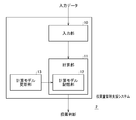
- FIG. 1 is a functional block diagram of a dosage management support system 1 according to the first embodiment of the present invention.
- the dosage management support system 1 includes an input unit 10 and a calculation unit 11.
- the calculation unit 11 includes a calculation model storage unit 12.
- the changes in the Hb value, the Ferittin value, the TSAT value and the Hb value in the blood of a chronic renal failure patient are input to the input unit 10 as input data. These input data are transmitted to the calculation unit 11.
- the calculation unit 11 determines, based on the calculation model stored in the calculation model storage unit 12 based on the input data received from the input unit 10, whether or not to determine the medication of the drug for the patient with chronic renal failure such as the current state maintenance, the dose increase, and the dose reduction. Calculate by value. Specifically, the calculation unit 11 inputs the input data received from the input unit 10 into the calculation model, and obtains the probability of maintaining the current state, increasing the amount, and decreasing the amount regarding the medication determination of the drug. Based on these probabilities, the calculation unit 11 calculates the medication determination based on the three values of maintaining the current state, increasing the dose, and decreasing the dose.
- the calculation model stored in the calculation model storage unit 12 is generated by machine learning.
- the teacher data used at this time include changes in the blood Hb value, Ferittin value, TSAT value, Hb value in the blood of a plurality of patients with chronic renal failure, and the medication decisions made by a doctor for these multiple patients. It is data indicating whether the current state was maintained, the amount increased, or the amount decreased.
- the calculation model stored in the calculation model storage unit 12 outputs the probabilities of maintaining the current state, increasing the dose, and decreasing the dose regarding the medication administration when the changes in the Hb value, the Ferittin value, the TSAT value and the Hb value are input. Good.
- the calculation model does not output the probability of maintaining the current state, increasing the dose, and decreasing the dose related to the medication decision, but instead of this decision, the supply of EPO from the outside of the patient and the necessary amount are balanced, and the amount in the body is insufficient. , The amount inside the body is excessive, may be output.
- the ESA formulation is administered when the patient is deficient in EPO. Therefore, the determination of the current state of dose, the increase, and the decrease of dose using the calculation model are such that the supply amount of EPO from the outside of the body and the necessary amount are balanced, the internal amount is insufficient, and the internal amount is excessive. It corresponds to.
- the calculation model can be output as a balance between the extracorporeal supply amount and the required amount of EPO of the patient, an in-vivo amount is insufficient, and an in-vivo amount is excessive.
- the doctor can know the pathological condition of the patient by looking at this output result.
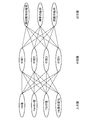
- FIG. 2 is a schematic diagram showing an example of a calculation model stored in the calculation model storage unit 12.
- changes in the Hb value, the Ferittin value, the TSAT value, and the Hb value in the blood of a chronic renal insufficiency patient for which medication judgment is required are input.
- a calculation model generated by machine learning is stored in the network including the intermediate layer. Calculation is executed using this calculation model, and the probability of maintaining the current state of medication, increasing the dose, and decreasing the dose is output to the output layer.
- the dosage management support system 1 includes an input unit 10 and a calculation unit 11.
- the calculation unit 11 includes a calculation model storage unit 12.
- the Hb value, the MCV value, the Ferittin value, the TSAT value, the change in the Hb value and the change in the MCV value in the blood of the chronic renal failure patient are input to the input unit 10 as input data. These input data are transmitted to the calculation unit 11.
- the calculation unit 11 determines, based on the calculation model stored in the calculation model storage unit 12 based on the input data received from the input unit 10, whether or not to determine the medication of the drug for the patient with chronic renal failure such as the current state maintenance, the dose increase, and the dose reduction. Calculate by value. Specifically, the calculation unit 11 inputs the input data received from the input unit 10 into the calculation model, and obtains the probability of maintaining the current state, increasing the amount, and decreasing the amount regarding the medication determination of the drug. Based on these probabilities, the calculation unit 11 calculates the medication determination based on the three values of maintaining the current state, increasing the dose, and decreasing the dose.
- the calculation model stored in the calculation model storage unit 12 is generated by machine learning.
- the teacher data used at this time are Hb value, MCV value, Ferittin value, TSAT value, change in Hb value, change in MCV value in blood of a plurality of patients with chronic renal failure, and doctors for these patients. It is data indicating whether the medication decision for which the decision was made was to maintain the current state, increase the dose, or decrease the dose.
- the calculation model stored in the calculation model storage unit 12 is such that when the Hb value, the MCV value, the Ferittin value, the TSAT value, the change in the Hb value and the change in the MCV value are input, the current state is maintained and the dose is increased with respect to the medication determination. , Probability of weight loss is output.
- the MCV value and the change in the MCV value are added as further teacher data to the teacher data of the first embodiment to calculate the maintenance of the current state, the increase, and the decrease. It is possible to realize a dosage management support system that enables
- the teacher data of the dosage management support system 1 according to the third embodiment of the present invention further includes data indicating whether or not the previous drug administration decision made by the doctor for the patient was to maintain the current state, increase the dose, or decrease the dose.
- the other configuration of the third embodiment is common to the first and second embodiments.
- the dosage is often maintained immediately after the dosage is changed. Therefore, the accuracy of the calculation model is improved by adding to the teacher data for generating the calculation model, data indicating whether the medication decision made by the doctor for the patient last time was the current status, increased dose, or reduced dose. be able to.
- the teacher data of the dosage management support system 1 according to the fourth embodiment of the present invention further includes previous dosage data.
- the other configurations of the fourth embodiment are common to the first and second embodiments.
- the “previous dose data” may be considered to be “the dose data from one week to two weeks ago”.
- the teacher data of the dosage management support system 1 according to the fifth embodiment of the present invention further includes data indicating whether or not the previous dosage was 0.
- the other configurations of the fifth embodiment are the same as those of the first and second embodiments.
- the “data indicating whether or not the previous dosage was 0” is generally considered to be “data indicating whether or not the dosage 1 to 2 weeks ago was 0”.
- the calculation unit 11 of the dosage management support system 1 maintains the current state based on the probability of the current state, the dose increase, and the dose decrease obtained from the calculation model stored in the calculation model storage unit 12. A first judgment for determining whether or not the result and a second judgment for determining whether to increase or decrease the dose when the result of the first medication determination is not the current condition are calculated.
- the calculation model storage unit 12 outputs the probabilities regarding the three values of the current state maintenance, the dose increase, and the dose decrease regarding the medication administration determination.
- the result obtained from the computational model generated by machine learning is binary (for example, when determining whether to increase or decrease the dose regarding medication)
- the performance of the model is calculated using a ROC curve (Receiver Operating Characteristic curve) and the like. Can be evaluated.
- the final calculation result can be made highly accurate.
- the result obtained from the calculation model is ternary, it is difficult to evaluate the model accurately. This is because it is necessary to set two threshold values when expanding the ROC curve method for ternary determination, but it is difficult to find an optimal solution while simultaneously changing these two threshold values. is there.
- first determination when the medication is judged based on the three values of maintaining the current state, increasing the dose, and decreasing the dose.
- second judgment the characteristics of the judgment are different from the judgment whether to increase or decrease the amount. That is, the first judgment is relatively difficult, but the second judgment is relatively easy if the first judgment is made. Based on this knowledge, the accuracy of the determination can be improved by performing the three-valued determination in the two stages of the first determination and the subsequent second determination as described below.
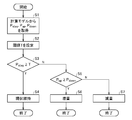
- FIG. 3 is a flowchart showing the operation of the calculation unit 11 of the dosage management support system 1 according to the sixth embodiment.
- step S ⁇ b>1 the calculation unit 11 acquires the probability P stay of maintaining the current state, the probability P up of increasing dose, and the probability P down of decreasing dose from the calculation model stored in the calculation model storage unit 12 in regard to medication determination.
- P stay +P up +P down 1.
- step S2 the calculation unit 11 sets a threshold T for the first determination.
- step S3 the calculation unit 11 makes a first determination, that is, a determination as to whether or not the current state is maintained. Specifically, the calculation unit 11 determines whether or not P stay ⁇ T.
- step S3 If the first judgment in step S3 is affirmative, the process proceeds to step S4.
- step S4 the calculation unit 11 outputs the calculation result indicating that the medication is maintained as it is, and the process ends.
- step S3 If the second judgment in step S3 is negative, the process proceeds to step S5.
- step S5 the calculation unit 11 makes a second determination, that is, whether the amount is to be increased or decreased. Specifically, the calculation unit 11 determines whether P up ⁇ P down .
- step S5 If the second judgment in step S5 is affirmative, the process proceeds to step S6.
- step S6 the calculation unit 11 outputs the calculation result indicating that the medication is increased, and the process ends.
- step S5 If the second judgment in step S5 is negative, the process proceeds to step S7.
- step S7 the calculation unit 11 outputs the calculation result indicating that the medication is reduced, and the process ends.
- the teacher data of the dosage management support system 1 according to the seventh embodiment of the present invention does not include data of a patient who has an infection or surgery.
- the other configurations of the seventh embodiment are common to the first and second embodiments.
- the accuracy of learning decreases when teacher data includes data of patients with infectious diseases and data of patients with surgery. Therefore, the accuracy of the calculation model can be improved by excluding the data of the patient having the infectious disease or the surgery from the teacher data.
- FIG. 4 is a functional block diagram of the dosage management support system 2 according to the eighth embodiment of the present invention.
- the dosage management support system 2 includes a calculation model updating unit 13 for updating the calculation model with a new calculation model.
- Other configurations of the dosage management support system are the same as the configurations of the dosage management support system 1 and the second embodiment in FIG. 1.
- the calculation model once generated can be updated to a calculation model that can produce more accurate results by newly giving teacher data and executing machine learning.
- the new calculation model updated in this way is given to the calculation model updating unit 13 periodically or as needed, so that the calculation model stored in the calculation model storage unit 12 is updated. This makes it possible to make the medication determination more accurate.
- the dosage management support system it is possible to upgrade the dosage management support system to a system that enables the dosage determination with higher accuracy.
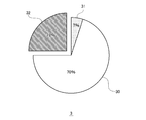
- FIG. 5 is a graph 3 showing whether or not the judgment result and the judgment result of the specialist in the following embodiment match. That is, this embodiment is a dosage management support system having the requirements of the first embodiment.
- the input data includes the MCV value and the change in the MCV value.
- the teacher data is data indicating whether the medication determination of the medicine determined by the doctor for the patient last time was the current state maintenance, the dose increase or decrease, the previous dose data, and the data indicating whether the previous dose was 0.
- the calculation unit determines whether or not to maintain the current state based on the probability of maintaining the current state, the amount of increase and the amount of decrease obtained from the calculation model, and the result of the first determination is that the current state is not maintained.
- a second judgment for judging whether the amount is increased or decreased is calculated.
- Teacher data does not include data for patients with infectious diseases or surgery.
- the region 30 is the ratio of the judgment results of the current state maintenance that the dosage management support system 1 and the specialist judge.
- the area 31 is the ratio of the judgment results of the dosage increase or decrease that the dosage management support system 1 and the specialist judge.
- the area 32 is the proportion of those in which the dosage management support system 1 and the specialist's judgment did not match.
- FIG. 5 shows simple agreement and inconsistency between the determination result of the dosage management support system 1 and the determination result of a specialist.
- the dosage management support system 1 and the specialist have different judgment timings. Specifically, the dosage management support system 1 made the determination earlier than the specialist, and therefore the apparent mismatch. It is necessary to keep in mind that the following items are also included.
- FIG. 6 is a graph 4 showing whether or not the judgment result of the dosage management support system according to the above-described embodiment and the judgment result of a specialist match.
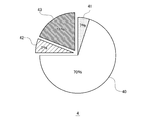
- FIG. 6 shows each area of FIG. 5 in detail.
- the area 40 is the proportion of the cases where the judgment of the dosage management support system 1 and the judgment of the specialist are on the same day, and the judgment results of both sides are the same as to the judgment result of the current state maintenance.
- the area 41 is the ratio of the cases where the judgment of the dosage management support system 1 and the judgment of the specialist are on the same day, and the judgment results of the increase or decrease are the same.
- the region 42 is the proportion of those in which the determination of the dosage management support system 1 is made on a day earlier than the determination of the specialist, and both determinations coincide on the date of the determination of the specialist.
- the region 43 is the ratio of those in which the judgments of the dosage management support system 1 and the specialist did not match, regardless of the judgment date.
- the dosage management support system 1 can make a dosage judgment with an accuracy sufficient for clinical use.
- Hospital A The hospital that generated the learning data of this dosage management support system (learning data: 131 patients, target week: 6080; evaluation data: 87 patients, target week: 1857)
- Hospital B Hospitals that are not involved in the learning data generation of this dosage management support system (As for the evaluation data, the number of patients is 16, the number of target weeks is 298. (Note: the learning data is from the hospital A above))
- the rates of agreement between the judgment of the specialist at hospital A and the judgment of the present dosage management support system for each of the judgments at hospital B were as follows. (Case 3)
- the judgment of the dosage management support system 1 and the judgment of a specialist are on the same day, and both judgments are the same. 77% at A hospital and 72% at B hospital.
- a dosage management support system 1 according to a ninth embodiment of the present invention will be described with reference to FIG.
- the dosage management support system 1 includes an input unit 10 and a calculation unit 11.
- the calculation unit 11 includes a calculation model storage unit 12.
- the blood glucose level in the patient's blood after the cardiovascular surgery, the insulin dose, and the elapsed time from the end of the cardiovascular surgery to the time when insulin is administered are input as input data. These input data are transmitted to the calculation unit 11.
- the calculation unit 11 determines, based on the calculation model stored in the calculation model storage unit 12 from the input data received from the input unit 10, the insulin administration determination for the patient after the cardiovascular surgery, maintaining the current state, increasing the dose, and decreasing the dose. It is calculated with 3 values. Specifically, the calculation unit 11 inputs the input data received from the input unit 10 into the calculation model, and obtains the probability of maintaining the current state, increasing the dose, and decreasing the dose regarding the insulin administration determination. Based on these probabilities, the calculation unit 11 calculates the insulin administration determination based on the three values of the current state, the dose increase, and the dose decrease.
- the calculation model stored in the calculation model storage unit 12 is generated by machine learning.
- the teacher data used at this time are the blood glucose level in the blood of the patient after the cardiovascular surgery, the insulin dose, the elapsed time from the end of the cardiovascular surgery to the time when the insulin was administered, and for these patients. It is data showing whether the administration decision of the insulin determined by a doctor was to maintain the current state, increase the dose, or decrease the dose.
- the calculation model stored in the calculation model storage unit 12 is input with the blood glucose level in the blood of the patient after cardiovascular surgery, the insulin dose, and the elapsed time from the end of the cardiovascular surgery to the time when the insulin is administered. Then, the probability of maintaining the current state, increasing the dose, and decreasing the dose is output regarding the insulin administration decision.
- the calculation model does not output the probability of maintaining the current state, increasing the dose, and decreasing the dose related to the insulin administration decision, but instead of this decision, the insulin supply to the patient from the outside body is balanced with the necessary amount, and the body amount is insufficient. , The amount inside the body is excessive, may be output. As mentioned above, it is administered when the patient is deficient in blood insulin. Therefore, the determination of the current state of dose, the increase, and the decrease of dose using a calculation model are such that the supply of insulin from the patient outside the body is in balance with the necessary amount, the body dose is insufficient, and the body dose is excessive. It corresponds to.
- the calculation model can be output as a balance between the amount of insulin supplied from the outside of the body of the patient and the required amount, the amount of the body is insufficient, and the amount of the body is excessive.
- the doctor can know the pathological condition of the patient by looking at this output result.
- the teacher data of the dosage management support system 1 according to the tenth embodiment of the present invention further includes previous insulin dose data.
- Other configurations of the tenth embodiment are common to the ninth embodiment.
- the calculation unit 11 of the dosage management support system 1 maintains the current state based on the probabilities of the current state maintenance, the dose increase, and the dose reduction obtained from the calculation model stored in the calculation model storage unit 12. A first judgment for judging whether or not it is determined, and a second judgment for judging whether the dose is increased or decreased when the result of the first insulin administration judgment is not the current condition is calculated.
- step S2 the calculation unit 11 sets a threshold T for the first determination.
- step S3 the calculation unit 11 makes a first determination, that is, a determination as to whether or not the current state is maintained. Specifically, the calculation unit 11 determines whether or not P stay ⁇ T.
- step S3 If the first judgment in step S3 is affirmative, the process proceeds to step S4.
- step S4 the calculation unit 11 outputs the calculation result indicating that insulin administration is maintained as it is, and the process ends.
- step S3 If the second judgment in step S3 is negative, the process proceeds to step S5.
- step S5 the calculation unit 11 makes a second determination, that is, whether the amount is to be increased or decreased. Specifically, the calculation unit 11 determines whether P up ⁇ P down .
- step S5 If the second judgment in step S5 is affirmative, the process proceeds to step S6.
- step S6 the calculation unit 11 outputs the calculation result indicating that the insulin dose is increased, and the process ends.
- step S5 If the second judgment in step S5 is negative, the process proceeds to step S7.
- step S7 the calculation unit 11 outputs the calculation result that the insulin administration is a dose reduction, and the process ends.
- the dosage management support system 1 includes an input unit 10 and a calculation unit 11.
- the calculation unit 11 includes a calculation model storage unit 12.
- the blood glucose level in the patient's blood after cardiovascular surgery, the insulin dose, and the elapsed time from the end of cardiovascular surgery to the time when insulin is administered are input to the input unit 10. These input data are transmitted to the calculation unit 11.
- the calculation unit 11 based on the input data received from the input unit 10, based on the calculation model stored in the calculation model storage unit 12, the insulin administration determination for the patient after the cardiovascular surgery is maintained as it is, the dose is increased, It is calculated with 5 values: small increase, large decrease, and small decrease.
- the calculation unit 11 inputs the input data received from the input unit 10 into the calculation model, and obtains the probability of maintaining the current state, increasing the dose, and decreasing the dose regarding the insulin administration determination. Based on these probabilities, the calculation unit 11 calculates the insulin administration determination based on five values: current state maintained, large increase, small increase, large decrease, and small decrease.
- the insulin dose control for patients after cardiovascular surgery is more advantageous than the dose control for chronic renal insufficiency patients described in the first to eighth embodiments. ing.
- the dose of insulin to a patient after cardiovascular surgery can be managed on the basis of the five criteria of maintaining the current state, large increase, small increase, large decrease, and small decrease. Therefore, according to this embodiment, it is possible to realize a dosage management support system capable of calculating a more detailed administration determination.
- the calculation unit 11 of the dosage management support system 1 maintains the current state obtained from the calculation model stored in the calculation model storage unit 12, large increase, small increase, large decrease, small decrease. Based on the probability of, the first judgment to judge whether or not to maintain the current status, the second judgment to judge whether to increase or decrease if the result of the first judgment is not to maintain the current status, and the second judgment If it is determined that the amount is increased, the third determination is made to determine whether the amount is to be increased largely or smallly, and if the determination is determined to be the decreased amount, then it is determined whether the amount is greatly decreased or is decreased slightly. Calculate and judge.
- FIG. 7 is a flowchart showing the operation of the calculation unit 11 of the dosage management support system 1 according to the thirteenth embodiment.
- step S12 the calculation unit 11 sets a threshold T for the first determination.
- step S13 the calculation unit 11 makes a first determination, that is, a determination as to whether or not the current state is maintained. Specifically, the calculation unit 11 determines whether or not P stay ⁇ T.
- step S13 If the first judgment in step S13 is affirmative, the process proceeds to step S14.
- step S14 the calculation unit 11 outputs the calculation result indicating that insulin administration is maintained as it is, and the process ends.
- step S13 If the second judgment in step S13 is negative, the process proceeds to step S15.
- step S15 the calculation unit 11 makes a second determination, that is, whether the amount is to be increased or decreased. Specifically, the calculation unit 11 determines whether P up ⁇ P down .
- step S15 If the second judgment in step S15 is affirmative, the process proceeds to step S16.
- step S16 the calculation unit 11 makes a third determination, that is, whether the insulin dose should be increased largely or decreased when the insulin dose is increased. Specifically, the calculation unit 11 determines whether or not P up_1 ⁇ P up_2 .
- P Up_1 is the probability is greater increase
- P Up_2 is the probability is small increase
- a P up_1 + P up_2 P up .
- step S16 If the third judgment in step S16 is affirmative, the process proceeds to step S17.
- step S17 the calculation unit 11 outputs the calculation result indicating that the medication is largely increased, and the process ends.
- step S16 If the third judgment in step S16 is negative, the process proceeds to step S18.
- step S18 the calculation unit 11 outputs the calculation result indicating that the medication is small and the dose is increased, and the process ends.
- step S15 If the second judgment in step S15 is negative, the process proceeds to step S19.
- step S19 the calculation unit 11 makes a fourth determination, that is, whether the insulin dose should be greatly reduced or small when the insulin dose is reduced. Specifically, the calculation unit 11 determines whether or not P down — 1 ⁇ P down — 2 .
- P Down_1 is the probability is reduced significantly
- P Down_2 is the probability a loss small
- P down_1 + P down_2 P down .
- step S19 If the fourth judgment in step S19 is affirmative, the process proceeds to step S20.
- step S20 the calculation unit 11 outputs the calculation result indicating that the medication is largely reduced, and the process ends.
- step S19 If the fourth judgment in step S19 is negative, the process proceeds to step S21.
- step S21 the calculation unit 11 outputs the calculation result indicating that the medication is small and the dose is reduced, and the process ends.
- the insulin dosage can be calculated in five stages of maintaining the current state, large increase, small increase, large decrease, and small decrease. Therefore, it is possible to realize a dosage management support system capable of detailed management. it can.
- the dosage management support system 2 of FIG. 4 may include a calculation model generation unit that generates a calculation model by machine learning.
- the calculation model stored in the calculation model storage unit 12 may be updated by giving the newly generated calculation model to the calculation model updating unit 13 regularly or as needed. According to this modification, it is possible to generate or update the calculation model by the present dosage management support system alone, without preparing or preparing the calculation model externally.
- Modified example has the same operation and effect as the embodiment.
- the present invention can be used for a dosage management support system.
Landscapes
- Health & Medical Sciences (AREA)
- Engineering & Computer Science (AREA)
- Public Health (AREA)
- General Health & Medical Sciences (AREA)
- Medical Informatics (AREA)
- Primary Health Care (AREA)
- Epidemiology (AREA)
- Biomedical Technology (AREA)
- Heart & Thoracic Surgery (AREA)
- Medicinal Chemistry (AREA)
- Life Sciences & Earth Sciences (AREA)
- Hematology (AREA)
- Veterinary Medicine (AREA)
- Chemical & Material Sciences (AREA)
- Bioinformatics & Cheminformatics (AREA)
- Animal Behavior & Ethology (AREA)
- Anesthesiology (AREA)
- Vascular Medicine (AREA)
- Diabetes (AREA)
- Data Mining & Analysis (AREA)
- Databases & Information Systems (AREA)
- Pathology (AREA)
- Medical Treatment And Welfare Office Work (AREA)
- Investigating Or Analysing Biological Materials (AREA)
Abstract
投薬量管理支援システムは、入力部と計算部とを備える。入力部には、患者への前回投薬からの経過時間および/または患者の血液中の生体物質の値および/または当該値の変化が入力データとして入力される入力される。計算部は、計算モデルに基づいて、入力データから、患者に対する薬の投薬確率を、現状維持、増量、減量の3値で計算し、計算された投薬確率から現状維持か否かを判断する第1の判断と、第1の判断の結果が現状維持でなかった場合に増量か減量かを判断する第2の判断とを計算する。計算モデルは、複数の患者への前回投薬からの経過時間および/または複数の患者の血液中の生体物質の値および/または当該値の変化、およびこれらの患者に対して医師が決定した薬の投薬判断が現状維持、増量、減量のいずれであったかを示すデータを教師データとして機械学習によって生成される。
Description
本発明は、投薬量管理支援システムに関する。
抗がん剤の投与履歴に関する療法履歴データを取得する取得処理部と、前記療法履歴データから、処理対象である対象処方データと患者及び療法が同一であって1クールにおける投与時期が前記対象処方データと同一である直前のクールの処方データに対応する特定履歴データを抽出する抽出処理部と、前記対象処方データと前記特定履歴データとを出力する出力処理部と、を備える投薬管理システムが開示されている(例えば、特許文献1参照)。
人工透析が必要な慢性腎不全患者は、腎機能の低下に伴い、腎臓から分泌される造血ホルモンであるエリスロポエチン(以下「EPO」と呼ぶ)が低下する。これを補うため、慢性腎不全患者にはエリスロポエチン製剤(以下「ESA製剤」と呼ぶ)を投与する治療が行われる。このときESA製剤の投薬量が不足すると、患者は貧血になってしまう。貧血は免疫力の低下を招き、感冒その他の疾患罹患のリスクが増加することから、予後増悪因子となる。一方、ESA製剤は高価であるため、必要量を超えて多量に投与すると医療費の高騰を招く。さらにはESA製剤の過剰投与は、患者の頭痛や高血圧、血管閉塞などの原因となる。従ってESA製剤の投薬量は正確にコントロールする必要がある。
また慢性腎不全患者には、赤血球の材料となる鉄分を含む鉄含有剤が注射または内服により投与される。鉄含有剤も、投薬量が不足すると貧血の原因となる一方、過剰に投与すると細胞毒になる。従って鉄含有剤もまた、投薬量を正確にコントロールする必要がある。
心臓血管手術後の患者への適切な血糖値管理は、合併症予防や予後改善の上で極めて重要である。一般に手術侵襲そのものや、手術後に投与される強心剤などは、血糖値を上昇させる因子となる。これは、手術後の死亡率を増大させる要因となる。一方、70mg/dLを下回るような低血糖は、患者の予後を悪化させる要因となる。従って、手術後の患者にインシュリンを持続投与することにより、患者の血糖値を120-180mg/dLに管理することが理想的であるとされる。
従来、ESA製剤や鉄含有剤の投薬量は、熟練した専門医の高度な判断により決定されてきた。すなわち専門医は、患者の血液中の様々な成分や前回までの投薬履歴などから、経験をもとに、次回の投薬を現状維持、増量、あるいは減量とするかを判断する。しかしながら、このような専門医の数は十分とはいえない。
これは、心臓血管手術後の患者への血糖値管理にもあてはまる。すなわち、心臓血管手術を受けた患者へのインシュリンの適切な投与量は、従来医師や看護師の経験や暗黙知により決定されてきた。医師や看護師は、患者の血液中の血糖値や、前回までの投与記録などから経験をもとに、次回の投与を現状維持、増量、あるいは減量とするかを判断する。しかしながら、このような医師や看護師の数は十分とはいえない。
熟練した専門医が不足する状況で、このような投薬量管理を支援する手段として、機械学習により生成した計算モデルを用いて、投薬量を自動的に判断することが考えられる。しかしながら医療分野における機械学習には、ビッグデータに基づく通常の機械学習とは異なる以下の課題が存在する。
課題の一つは、機械学習に利用可能な教師データの数が少ないという点である。患者の血液データや投薬データは個人データであるため、機械学習に使う場合は患者の同意を得る必要がある。しかしながら、多くの患者から同意を得ることは現実的には困難である。また患者のデータが一旦電子カルテに収納されてしまうと、これを抽出して機械学習用のデータとして利用するのは難しいという技術的な問題もある。このように医療分野における機械学習は、限られた数のスモールデータに基づく学習とならざるを得ない。
いま一つの課題は、教師データの正解度が安定しないという点である。投薬量を機械学習で計算する場合、過去に医師が決定した判断結果が教師データとして必要となる。しかしながら医師の判断結果は、個々の医師の熟練度や患者の症例に依存して、常に正解であるとは限らない。このように医療分野における機械学習は、正解度が安定しない教師データに基づく学習とならざるを得ない。
従って、スモールデータであってかつ正解度が安定しない教師データに基づいて機械学習を行うことにより、投薬量を計算することができるシステムを実現することが求められる。
特許文献1に記載の投薬管理システムは、このような課題の解決に寄与するものではない。
本発明はこうした課題に鑑みてなされたものであり、その目的は、投薬を受けその量を適切に管理されることが必要な患者に対する投薬量管理を支援するシステムを提供することにある。
上記課題を解決するために、本発明のある態様の投薬量管理支援システムは、入力部と計算部とを備える。入力部には、患者への前回投薬からの経過時間および/または患者の血液中の生体物質の値および/または当該値の変化が入力データとして入力される入力される。計算部は、計算モデルに基づいて、入力データから、患者に対する薬の投薬確率を、現状維持、増量、減量の3値で計算し、計算された投薬確率から現状維持か否かを判断する第1の判断と、第1の判断の結果が現状維持でなかった場合に増量か減量かを判断する第2の判断とを計算する。計算モデルは、複数の患者への前回投薬からの経過時間および/または複数の患者の血液中の生体物質の値および/または当該値の変化、およびこれらの患者に対して医師が決定した薬の投薬判断が現状維持、増量、減量のいずれであったかを示すデータを教師データとして機械学習によって生成される。
この投薬量管理支援システムは、計算モデルを新たな計算モデルに更新するための計算モデル更新部をさらに備えてもよい。
教師データは、教師データは、前回患者に対して医師が決定した前記投薬判断が現状維持、増量、減量であったかを示すデータをさらに含んでもよい。
教師データは、前回の投薬量データをさらに含んでもよい。
教師データは、感染症または手術があった患者のデータを含まなくてもよい。
患者は慢性腎不全患者であってもよく、血液中の生体物質の値は、Hb値、Ferittin値およびTSAT値であってもよく、値の変化はHb値の変化であってもよく、投薬される薬は、ESA製剤または鉄含有剤の少なくとも一方であってもよい。
血液中の生体物質の値はMCV値をさらに含んでもよく、値の変化はMCV値の変化をさらに含んでもよい。
計算モデルは、投薬判断に関する現状維持、増量、減量の判断から、前記患者のEPOの体外からの供給量と必要量とがバランスしている、体内量が不足している、体内量が過剰である、のいずれであるかを出力してもよい。
計算部は、第2の判断が増量であった場合に大きく増量するか小さく増量するかを判断する第3の判断を計算してもよく、第2の判断が減量であった場合に大きく減量するか小さく減量するかを判断する第4の判断を計算してもよい。
患者は心臓血管手術後の患者であってもよく、血液中の生体物質の値は血糖値であってもよく、投薬される薬はインシュリンであってもよい。
計算モデルは、投薬判断に関する現状維持、増量、減量の判断から、患者のインシュリンが充足、不足、過剰のいずれであるかを出力してもよい。
なお、以上の構成要素の任意の組み合わせや、本発明の構成要素や表現を方法、装置、プログラム、プログラムを記録した一時的なまたは一時的でない記憶媒体、システムなどの間で相互に置換したものもまた、本発明の態様として有効である。
本発明によれば、投薬を受けその量を適切に管理されることが必要な患者に対する投薬量に関し、現状維持、増量、減量を計算するシステムを実現することができる。
以下、本発明を好適な実施の形態をもとに各図面を参照しながら説明する。実施の形態および変形例では、同一または同等の構成要素、部材には、同一の符号を付するものとし、適宜重複した説明は省略する。また、各図面における部材の寸法は、理解を容易にするために適宜拡大、縮小して示される。また、各図面において実施の形態を説明する上で重要ではない部材の一部は省略して表示する。また、第1、第2などの序数を含む用語は多様な構成要素を説明するために用いられるが、この用語は一つの構成要素を他の構成要素から区別する目的でのみ用いられ、この用語によって構成要素が限定されるものではない。
本発明の実施形態を具体的に説明する前に、基礎となった知見を説明する。前述のように、一般に医療分野における機械学習は、スモールデータであってかつ正解度が安定しない教師データに基づくものであることが強いられる。本発明者らは研究の結果、慢性腎不全患者に対するESA製剤や鉄含有剤の投薬量を学習する場合、入力する教師データを的確に設定することにより、学習の精度を向上できることに気が付いた。
具体的には、ESA製剤や鉄含有剤の投薬量を学習するための教師データとして、複数の慢性腎不全患者の血液中のヘモグロビン(以下「Hb」と呼ぶ)値、貯蔵鉄(以下「Ferittin」と呼ぶ)値、機能鉄(以下「TSAT」と呼ぶ)値、Hb値の変化、およびこれら複数の患者に対して医師が決定した薬の投薬判断が現状維持、増量、減量のいずれであったかを示すデータを用いる。これにより、新たな投薬に関し、患者の血液中のHb値、Ferittin値、TSAT値およびHb値の変化を与えると、この投薬を現状維持、増量、減量とするかの判断を高い精度で計算することができる。
入力データは、平均赤血球容積(以下「MCV」と呼ぶ)値およびMCV値の変化をさらに含んでもよい。計算モデルは、複数の慢性腎不全患者の血液中のHb値、MCV値、TSAT値、Ferittin値、Hb値の変化、MCV値の変化、およびこれらの患者に対して医師が決定した前記薬の投薬判断が現状維持、増量、減量のいずれであったかを示すデータを教師データとして機械学習によって生成してもよい。
[第1実施形態]
図1は、本発明の第1実施形態に係る投薬量管理支援システム1の機能ブロック図である。投薬量管理支援システム1は、入力部10と、計算部11とを備える。計算部11は、計算モデル記憶部12を備える。
図1は、本発明の第1実施形態に係る投薬量管理支援システム1の機能ブロック図である。投薬量管理支援システム1は、入力部10と、計算部11とを備える。計算部11は、計算モデル記憶部12を備える。
入力部10には、慢性腎不全患者の血液中のHb値、Ferittin値、TSAT値およびHb値の変化が入力データとして入力される。これらの入力データは、計算部11に送信される。
計算部11は、入力部10から受信した入力データから、計算モデル記憶部12に記憶された計算モデルに基づいて、当該慢性腎不全患者に対する薬の投薬判断を、現状維持、増量、減量の3値で計算する。具体的には計算部11は、入力部10から受信した入力データを計算モデルに入力し、薬の投薬判断に関し、現状維持、増量、減量の確率を得る。計算部11は、これらの確率に基づいて、薬の投薬判断を、現状維持、増量、減量の3値で計算する。
計算モデル記憶部12に記憶される計算モデルは、機械学習によって生成される。このとき用いられる教師データは、複数の慢性腎不全患者の血液中のHb値、Ferittin値、TSAT値、Hb値の変化、およびこれらの複数の患者に対して医師が決定した薬の投薬判断が現状維持、増量、減量のいずれであったかを示すデータである。
計算モデル記憶部12に記憶された計算モデルは、Hb値、Ferittin値、TSAT値およびHb値の変化が入力されると、薬の投薬判断に関し、現状維持、増量、減量の確率を出力してもよい。
計算モデルは、薬の投薬判断に関する現状維持、増量、減量の確率を出力することに代えて、この判断から、前記患者のEPOの体外からの供給量と必要量とがバランス、体内量が不足、体内量が過剰、を出力してもよい。前述のように、ESA製剤は患者のEPOが不足したときに投与される。従って、計算モデルによる投与量の現状維持、増量、減量の判断は、それぞれ患者のEPOの体外からの供給量と必要量とがバランスしている、体内量が不足している、体内量が過剰である、に対応する。すなわち計算モデルは、患者のEPOの体外からの供給量と必要量とがバランス、体内量が不足、体内量が過剰、として出力することができる。例えば医師は、この出力結果を見ることにより、患者の病態を知ることができる。
図2は、計算モデル記憶部12に記憶される計算モデルの一例を示す模式図である。入力層には、投薬判断が必要な慢性腎不全患者の血液中のHb値、Ferittin値、TSAT値およびHb値の変化が入力される。中間層を含むネットワークには、機械学習によって生成された計算モデルが記憶されている。この計算モデルを用いて計算が実行され、出力層に投薬の現状維持、増量、減量の確率が出力される。
本実施形態によれば、慢性腎不全患者に対する薬の投薬量に関し、現状維持、増量、減量を計算する投薬量管理支援システムを実現することができる。
[第2実施形態]
やはり図1を用いて、本発明の第2実施形態に係る投薬量管理支援システム1を説明する。投薬量管理支援システム1は、入力部10と、計算部11とを備える。計算部11は、計算モデル記憶部12を備える。
やはり図1を用いて、本発明の第2実施形態に係る投薬量管理支援システム1を説明する。投薬量管理支援システム1は、入力部10と、計算部11とを備える。計算部11は、計算モデル記憶部12を備える。
入力部10には、慢性腎不全患者の血液中のHb値、MCV値、Ferittin値、TSAT値、Hb値の変化およびMCV値の変化が入力データとして入力される。これらの入力データは、計算部11に送信される。
計算部11は、入力部10から受信した入力データから、計算モデル記憶部12に記憶された計算モデルに基づいて、当該慢性腎不全患者に対する薬の投薬判断を、現状維持、増量、減量の3値で計算する。具体的には計算部11は、入力部10から受信した入力データを計算モデルに入力し、薬の投薬判断に関し、現状維持、増量、減量の確率を得る。計算部11は、これらの確率に基づいて、薬の投薬判断を、現状維持、増量、減量の3値で計算する。
計算モデル記憶部12に記憶される計算モデルは、機械学習によって生成される。このとき用いられる教師データは、複数の慢性腎不全患者の血液中のHb値、MCV値、Ferittin値、TSAT値、Hb値の変化、MCV値の変化、およびこれらの複数の患者に対して医師が決定した薬の投薬判断が現状維持、増量、減量のいずれであったかを示すデータである。
計算モデル記憶部12に記憶された計算モデルは、Hb値、MCV値、Ferittin値、TSAT値、Hb値の変化およびMCV値の変化が入力されると、薬の投薬判断に関し、現状維持、増量、減量の確率を出力する。
本実施形態によれば、慢性腎不全患者に対する薬の投薬量に関し、第1実施形態の教師データに、MCV値とMCV値の変化をさらなる教師データとして加えて、現状維持、増量、減量を計算する投薬量管理支援システムを実現することができる。
[第3実施形態]
本発明の第3実施形態に係る投薬量管理支援システム1の教師データは、前回患者に対して医師が決定した薬の投薬判断が現状維持、増量、減量であったかを示すデータをさらに含む。第3実施形態のその他の構成は、第1実施形態および第2実施形態と共通である。
本発明の第3実施形態に係る投薬量管理支援システム1の教師データは、前回患者に対して医師が決定した薬の投薬判断が現状維持、増量、減量であったかを示すデータをさらに含む。第3実施形態のその他の構成は、第1実施形態および第2実施形態と共通である。
本発明者らによる研究の結果、投薬量が変化した直後は、投薬量を現状維持として様子を見ることが多いことが分かった。そこで計算モデルを生成するための教師データに、前回患者に対して医師が決定した薬の投薬判断が現状維持、増量、減量であったかを示すデータを追加することにより、計算モデルの精度を改善することができる。
一般に人工透析を受ける患者は、1週間から2週間に1度採血をされ、その都度投薬量が決定される。従って、上記の「前回患者に対して医師が決定した薬の投薬判断」は、概ね「1週間から2週間前に患者に対して医師が決定した薬の投薬判断」であると考えてよい。
本実施形態によれば、高い精度で投薬判断を計算することのできる投薬量管理支援システムを実現することができる。
[第4実施形態]
本発明の第4実施形態に係る投薬量管理支援システム1の教師データは、前回の投薬量データをさらに含む。第4実施形態のその他の構成は、第1実施形態および第2実施形態と共通である。
本発明の第4実施形態に係る投薬量管理支援システム1の教師データは、前回の投薬量データをさらに含む。第4実施形態のその他の構成は、第1実施形態および第2実施形態と共通である。
なお第3実施形態と同様に「前回の投薬量データ」は、概ね「1週間から2週間前の投薬量データ」であると考えてよい。
本実施形態によれば、正確な投薬判断を計算することのできる投薬量管理支援システムを実現することができる。
[第5実施形態]
本発明の第5実施形態に係る投薬量管理支援システム1の教師データは、前回の投薬量が0だったか否かを示すデータをさらに含む。第5実施形態のその他の構成は、第1実施形態および第2実施形態と共通である。
本発明の第5実施形態に係る投薬量管理支援システム1の教師データは、前回の投薬量が0だったか否かを示すデータをさらに含む。第5実施形態のその他の構成は、第1実施形態および第2実施形態と共通である。
本発明者らによる研究の結果、前回の投薬量が0だった場合に、増量の投薬判断をすることは困難であることが分かった。そこで計算モデルを生成するための教師データに、前回の投薬量が0だったか否かを示すデータを追加することにより、投薬量0からの投薬判断に関する計算モデルの精度を改善することができる。
なお第3実施形態と同様に「前回の投薬量が0だったか否かを示すデータ」は、概ね「1週間から2週間前の投薬量が0だったか否かを示すデータ」であると考えてよい。
本実施形態によれば、高い精度で投薬判断を計算することのできる投薬量管理支援システムを実現することができる。
[第6実施形態]
本発明の第6実施形態に係る投薬量管理支援システム1の計算部11は、計算モデル記憶部12に記憶された計算モデルから得られた現状維持、増量、減量の確率に基づいて、現状維持か否かを判断する第1の判断と、この第1の投薬判断の結果が現状維持でなかった場合に増量か減量かを判断する第2の判断とを計算する。
本発明の第6実施形態に係る投薬量管理支援システム1の計算部11は、計算モデル記憶部12に記憶された計算モデルから得られた現状維持、増量、減量の確率に基づいて、現状維持か否かを判断する第1の判断と、この第1の投薬判断の結果が現状維持でなかった場合に増量か減量かを判断する第2の判断とを計算する。
前述のように計算モデル記憶部12は、薬の投薬判断に関し、現状維持、増量、減量の3つの値に関する確率を出力する。
機械学習によって生成された計算モデルから得られる結果が2値である場合(例えば投薬に関し、増量または減量を判断する場合)、ROC曲線(Receiver Operatorating Characteristic curve)等を用いて、当該モデルの性能を評価することができる。これにより、最終的な計算結果を精度の高いものとすることができる。しかしながら計算モデルから得られる結果が3値の場合、モデルを正確に評価することは困難となる。なぜなら、3値判断のためにROC曲線の手法を拡張しようとする場合、2つの閾値を設定することが必要となるが、これら2つの閾値を同時に変動させながら最適解を見出すのは困難だからである。
本発明者らは研究の結果、現状維持、増量、減量の3値で投薬を判断する場合、現状維持か否かの判断(以下「第1の判断」と呼ぶ)と、現状維持でなかった場合における増量か減量かの判断(以下「第2の判断」と呼ぶ)とでは、判断の特性が異なることに気が付いた。すなわち、第1の判断は比較的困難であるが、第1の判断がされていれば第2の判断は比較的容易である。この知見に基づき、以下に説明するように3値の判断を、最初の第1の判断と、それに続く第2の判断の2段階で行うことにより、判断の精度を向上させることができる。
図3は、第6実施形態に係る投薬量管理支援システム1の計算部11の動作を示すフロー図である。
ステップS1で計算部11は、投薬判断に関し、現状維持である確率Pstay、増量である確率Pup、減量である確率Pdownを、計算モデル記憶部12に記憶された計算モデルから取得する。ただし、Pstay+Pup+Pdown=1である。
ステップS2で計算部11は、第1の判断に関する閾値Tを設定する。ただし、0<T<1である。T=0は常に現状維持と判断することを意味し、T=1は常に増量または減量と判断することを意味する。
ステップS3で計算部11は、第1の判断、すなわち現状維持か否かの判断を実行する。具体的には計算部11は、Pstay≧Tであるか否かを判断する。
ステップS3における第1の判断が肯定的だった場合は、処理はステップS4に移行する。
ステップS4で計算部11は、投薬が現状維持であるとする計算結果を出力し、処理は終了する。
ステップS3における第2の判断が否定的だった場合は、処理はステップS5に移行する。
ステップS5で計算部11は、第2の判断、すなわち増量か減量かの判断を実行する。具体的には計算部11は、Pup≧Pdownであるか否かを判断する。
ステップS5における第2の判断が肯定的だった場合は、処理はステップS6に移行する。
ステップS6で計算部11は、投薬が増量であるとする計算結果を出力し、処理は終了する。
ステップS5における第2の判断が否定的だった場合は、処理はステップS7に移行する。
ステップS7で計算部11は、投薬が減量であるとする計算結果を出力し、処理は終了する。
本実施形態によれば、高い精度で投薬判断を計算することのできる投薬量管理支援システムを実現することができる。
[第7実施形態]
本発明の第7実施形態に係る投薬量管理支援システム1の教師データは、感染症または手術があった患者のデータを含まない。第7実施形態のその他の構成は、第1実施形態および第2実施形態と共通である。
本発明の第7実施形態に係る投薬量管理支援システム1の教師データは、感染症または手術があった患者のデータを含まない。第7実施形態のその他の構成は、第1実施形態および第2実施形態と共通である。
本発明者らによる研究の結果、教師データに感染症があった患者のデータや手術があった患者のデータが含まれると、学習の精度が低下することが分かった。そこで教師データから感染症または手術があった患者のデータを除外することにより、計算モデルの精度を改善することができる。
本実施形態によれば、高い精度で投薬判断を計算することのできる投薬量管理支援システムを実現することができる。
[第8実施形態]
図4は、本発明の第8実施形態に係る投薬量管理支援システム2の機能ブロック図である。投薬量管理支援システム2は、計算モデルを新たな計算モデルに更新するための計算モデル更新部13を備える。投薬量管理支援システムのその他の構成は、図1の投薬量管理支援システム1および第2実施形態の構成と共通である。
図4は、本発明の第8実施形態に係る投薬量管理支援システム2の機能ブロック図である。投薬量管理支援システム2は、計算モデルを新たな計算モデルに更新するための計算モデル更新部13を備える。投薬量管理支援システムのその他の構成は、図1の投薬量管理支援システム1および第2実施形態の構成と共通である。
一度生成された計算モデルは、新たに教師データを与えて機械学習を実行することにより、より正確な結果を出すことのできる計算モデルに更新することができる。こうして更新された新たな計算モデルを、定期的に、あるいは必要に応じて、計算モデル更新部13に与えることで、計算モデル記憶部12に記憶される計算モデルは更新される。これにより、投薬判断をより正確なものにすることができる。
本実施形態によれば、投薬量管理支援システムを、より高い精度で投薬判断ができるものにバージョンアップすることができる。
[検証1]
本発明の臨床での利用性を検証するために、本発明に係る投薬量管理支援システムが計算した投薬判断と、専門医が下した判断とを比較した。検証は、ESA製剤の投薬の現状維持、増加、減少に関し、検証用のデータセットを用いて行った。
本発明の臨床での利用性を検証するために、本発明に係る投薬量管理支援システムが計算した投薬判断と、専門医が下した判断とを比較した。検証は、ESA製剤の投薬の現状維持、増加、減少に関し、検証用のデータセットを用いて行った。
図5は、以下の実施形態における判断結果と専門医の判断結果の一致および不一致を示すグラフ3である。すなわちこの実施形態は、第1の実施形態の要件を具備する投薬量管理支援システムである。入力データは、MCV値およびMCV値の変化を含む。教師データは、前回患者に対して医師が決定した前記薬の投薬判断が現状維持、増量、減量であったかを示すデータと前回の投薬量データと前回の投薬量が0だったか否かを示すデータとを含む。計算部は、前記計算モデルから得られた現状維持、増量、減量の確率に基づいて、現状維持か否かを判断する第1の判断と、前記第1の判断の結果が現状維持でなかった場合に増量か減量かを判断する第2の判断とを計算する。教師データは、感染症または手術があった患者のデータを含まない。このとき領域30は、現状維持の判断結果に関し、投薬量管理支援システム1と専門医の判断が一致したものの割合である。領域31は、増量または減量の判断結果に関し、投薬量管理支援システム1と専門医の判断が一致したものの割合である。領域32は、投薬量管理支援システム1と専門医の判断が一致しなかったものの割合である。
図5から、領域30と領域31とをあわせて77%の割合で、投薬量管理支援システム1と専門医の判断が一致したことが分かる。そして23%の割合で、投薬量管理支援システム1と専門医の判断が一致しなかったことが分かる。
図5は、投薬量管理支援システム1の判断結果と専門医の判断結果の単純な一致および不一致を示している。ただし、この不一致の中には、投薬量管理支援システム1と専門医の判断のタイミングが異なるために、具体的には投薬量管理支援システム1が専門医より早い日に判断をしたために、見かけ上不一致となるものも含まれている点に留意する必要がある。
図6は、前述の実施形態に係る投薬量管理支援システムの判断結果と専門医の判断結果の一致および不一致を示すグラフ4である。ただし図6は、図5の各領域を詳細化して示す。領域40は、投薬量管理支援システム1の判断と専門医の判断とが同日であって、現状維持の判断結果に関し、両者の判断が一致したものの割合である。領域41は、投薬量管理支援システム1の判断と専門医の判断とが同日であって、増量または減量の判断結果に関し、両者の判断が一致したものの割合である。領域42は、投薬量管理支援システム1の判断の方が専門医の判断より早い日に行われ、専門医が判断した日に両者の判断が一致したものの割合である。領域43は、投薬量管理支援システム1と専門医の判断の日に関わらず、両者の判断が一致しなかったものの割合である。
図6から、領域40と領域41と領域42をあわせて83%の割合で、投薬量管理支援システム1と専門医の判断が一致したことが分かる。そして17%の割合で、投薬量管理支援システム1と専門医の判断が一致しなかったことが分かる。
図6の領域43内の各事例についてさらに詳細な検証を行った結果、領域43には、明らかに投薬量管理支援システム1の判断が誤りだったものの他、投薬量管理支援システム1の判断の方が正しく専門医の判断が誤りだったものや、どちらの判断が正しいか不明のものも含まれることが分かった。結果的に、明らかに投薬量管理支援システム1の判断が誤りだったものの割合は、全体の13%程度であった。すなわち、投薬量管理支援システム1は、専門医の判断に対して約87%の正解度で投薬量を計算できることが分かった。
以上の検証結果から、本発明に係る投薬量管理支援システム1は、臨床での利用に十分耐える精度で投薬判断ができるものであると考えることができる。
[検証2]
第1実施形態(教師データおよび入力データにMCV値およびMCV値の変化を含まないもの)と第2実施形態(教師データおよび入力データにMCV値およびMCV値の変化を含むもの)との効果の相違を確認するために、実際の患者の症例を対象に検証を行った。ここでは、学習データに関して、患者数131、対象週数6080のものを用いた。また、評価データに関して、患者数87、対象週数1857のものを用いた。結果は以下の通りである。
(ケース1)投薬量管理支援システム1の判断と専門医の判断とが同日であって、両者の判断が一致したもの。第1の実施形態で80%、第2の実施形態で77%。
(ケース2)ケース1の結果に投薬量管理支援システム1の判断の方が専門医の判断より早い日に行われ、専門医が判断した日に両者の判断が一致したものも加えたもの。第1の実施形態で86%、第2の実施形態で84%。
いずれのケースも、第1実施形態の方が一致率の点で若干よい結果が得られている。この理由については現時点では不明な点もあるが、例えば貧血にはMCVからは見えない因子もあるため、MCVなしの方が結果がよい可能性があることが考えられる。また本発明は、確率的な方法を用いているため、試行によって正解率の値が変化する。上記の正解率の数値は、何回か試行してその中で一番高い値を取っている。ここでMCVの有無によって現れている差はそのときの変化の範囲と同程度なので、本質的に大きな差はないといってもよい。いずれにしても、第1および第2のいずれの実施形態でも、臨床での利用に十分な投薬判断ができると考えられる。
[検証3]
上記の検証1および検証2はいずれも、本投薬量管理支援システムの学習データ生成と、専門医による判断とが同じ医療機関に属するものであった。これに対し、本投薬量管理支援システムの学習データ生成と、専門医による判断とが異なる医療機関に属するものであった場合の有効性を確認するための検証を行った。ここでは、第2の実施形態(教師データおよび入力データにMCV値およびMCV値の変化を含むもの)を用いた。
A病院:本投薬量管理支援システムの学習データ生成を行った病院(学習データに関して、患者数131、対象週数6080。評価データに関して、患者数87、対象週数1857)
B病院:本投薬量管理支援システムの学習データ生成に関与しない病院(評価データに関して、患者数16、対象週数298。(注:学習データは上記A病院のものを使用)
このとき、A病院の専門医の判断と、B病院の判断のそれぞれに関し、本投薬量管理支援システムの判断との一致率は以下の通りであった。
(ケース3)投薬量管理支援システム1の判断と専門医の判断とが同日であって、両者の判断が一致したもの。A病院で77%、B病院で72%。
(ケース4)ケース3の結果に投薬量管理支援システム1の判断の方が専門医の判断より早い日に行われ、専門医が判断した日に両者の判断が一致したものも加えたもの。A病院で84%、B病院で81%。
いずれのケースでも、学習データの生成を行ったA病院の専門医の判断の方が一致率が高かったものの、B病院の専門医の判断も十分な一致率を得ている。このことから本投薬量管理支援システムは、学習データ生成への関与の有無に関わらず、十分汎用的に専門医と近い投薬判断ができることが分かる。
[第9実施形態]
図1を用いて、本発明の第9実施形態に係る投薬量管理支援システム1を説明する。投薬量管理支援システム1は、入力部10と、計算部11とを備える。計算部11は、計算モデル記憶部12を備える。
図1を用いて、本発明の第9実施形態に係る投薬量管理支援システム1を説明する。投薬量管理支援システム1は、入力部10と、計算部11とを備える。計算部11は、計算モデル記憶部12を備える。
入力部10には、心臓血管手術後の患者の血液中の血糖値、インシュリン投与量および心臓血管手術終了時からインシュリンが投与された時までの経過時間が入力データとして入力される。これらの入力データは、計算部11に送信される。
計算部11は、入力部10から受信した入力データから、計算モデル記憶部12に記憶された計算モデルに基づいて、当該心臓血管手術後の患者に対するインシュリンの投与判断を、現状維持、増量、減量の3値で計算する。具体的には計算部11は、入力部10から受信した入力データを計算モデルに入力し、インシュリンの投与判断に関し、現状維持、増量、減量の確率を得る。計算部11は、これらの確率に基づいて、インシュリンの投与判断を、現状維持、増量、減量の3値で計算する。
計算モデル記憶部12に記憶される計算モデルは、機械学習によって生成される。このとき用いられる教師データは、心臓血管手術後の患者の血液中の血糖値、インシュリン投与量、前記心臓血管手術終了時から前記インシュリンが投与された時までの経過時間、およびこれらの患者に対して医師が決定した前記インシュリンの投与判断が現状維持、増量、減量のいずれであったかを示すデータである。
計算モデル記憶部12に記憶された計算モデルは、心臓血管手術後の患者の血液中の血糖値、インシュリン投与量、前記心臓血管手術終了時から前記インシュリンが投与された時までの経過時間が入力されると、インシュリンの投与判断に関し、現状維持、増量、減量の確率を出力する。
計算モデルは、インシュリンの投与判断に関する現状維持、増量、減量の確率を出力することに代えて、この判断から、前記患者のインシュリンの体外からの供給量と必要量とがバランス、体内量が不足、体内量が過剰、を出力してもよい。前述のように、患者の血中インシュリンが不足したときに投与される。従って、計算モデルによる投与量の現状維持、増量、減量の判断は、それぞれ患者のインシュリンの体外からの供給量と必要量とがバランスしている、体内量が不足している、体内量が過剰である、に対応する。すなわち計算モデルは、患者のインシュリンの体外からの供給量と必要量とがバランス、体内量が不足、体内量が過剰、として出力することができる。例えば医師は、この出力結果を見ることにより、患者の病態を知ることができる。
[第10実施形態]
本発明の第10実施形態に係る投薬量管理支援システム1の教師データは、前回のインシュリン投与量データをさらに含む。第10実施形態のその他の構成は、第9実施形態と共通である。
本発明の第10実施形態に係る投薬量管理支援システム1の教師データは、前回のインシュリン投与量データをさらに含む。第10実施形態のその他の構成は、第9実施形態と共通である。
[第11実施形態]
本発明の第11実施形態に係る投薬量管理支援システム1の計算部11は、計算モデル記憶部12に記憶された計算モデルから得られた現状維持、増量、減量の確率に基づいて、現状維持か否かを判断する第1の判断と、この第1のインシュリン投与判断の結果が現状維持でなかった場合に増量か減量かを判断する第2の判断とを計算する。
本発明の第11実施形態に係る投薬量管理支援システム1の計算部11は、計算モデル記憶部12に記憶された計算モデルから得られた現状維持、増量、減量の確率に基づいて、現状維持か否かを判断する第1の判断と、この第1のインシュリン投与判断の結果が現状維持でなかった場合に増量か減量かを判断する第2の判断とを計算する。
図3を用いて、第11実施形態に係る投薬量管理支援システム1の計算部11の動作を説明する。
ステップS1で計算部11は、インシュリン投与判断に関し、現状維持である確率Pstay、増量である確率Pup、減量である確率Pdownを、計算モデル記憶部12に記憶された計算モデルから取得する。ただし、Pstay+Pup+Pdown=1である。
ステップS2で計算部11は、第1の判断に関する閾値Tを設定する。ただし、0<T<1である。T=0は常に現状維持と判断することを意味し、T=1は常に増量または減量と判断することを意味する。
ステップS3で計算部11は、第1の判断、すなわち現状維持か否かの判断を実行する。具体的には計算部11は、Pstay≧Tであるか否かを判断する。
ステップS3における第1の判断が肯定的だった場合は、処理はステップS4に移行する。
ステップS4で計算部11は、インシュリン投与が現状維持であるとする計算結果を出力し、処理は終了する。
ステップS3における第2の判断が否定的だった場合は、処理はステップS5に移行する。
ステップS5で計算部11は、第2の判断、すなわち増量か減量かの判断を実行する。具体的には計算部11は、Pup≧Pdownであるか否かを判断する。
ステップS5における第2の判断が肯定的だった場合は、処理はステップS6に移行する。
ステップS6で計算部11は、インシュリン投与が増量であるとする計算結果を出力し、処理は終了する。
ステップS5における第2の判断が否定的だった場合は、処理はステップS7に移行する。
ステップS7で計算部11は、インシュリン投与が減量であるとする計算結果を出力し、処理は終了する。
本実施形態によれば、高い精度でインシュリン投与判断を計算することのできる投薬量管理支援システムを実現することができる。
[第12実施形態]
図7を用いて、本発明の第12実施形態に係る投薬量管理支援システム1を説明する。投薬量管理支援システム1は、入力部10と、計算部11とを備える。計算部11は、計算モデル記憶部12を備える。
入力部10には、心臓血管手術後の患者の血液中の血糖値、インシュリン投与量および心臓血管手術終了時からインシュリンが投与された時までの経過時間が入力データとして入力される。これらの入力データは、計算部11に送信される。
計算部11は、入力部10から受信した入力データから、計算モデル記憶部12に記憶された計算モデルに基づいて、当該心臓血管手術後の患者に対するインシュリンの投与判断を、現状維持、大きく増量、小さく増量、大きく減量、小さく減量の5値で計算する。具体的には計算部11は、入力部10から受信した入力データを計算モデルに入力し、インシュリンの投与判断に関し、現状維持、増量、減量の確率を得る。計算部11は、これらの確率に基づいて、インシュリンの投与判断を、現状維持、大きく増量、小さく増量、大きく減量、小さく減量の5値で計算する。
心臓血管手術後の患者に対するインシュリンの投与量管理は、第1~第8実施形態で説明した慢性腎不全患者への投薬量管理に比べて、よりきめ細かい管理を行うと有利であることが知られている。本実施形態は、心臓血管手術後の患者に対するインシュリンの投与量を、現状維持、大きく増量、小さく増量、大きく減量、小さく減量の5つの基準で管理することができる。従って本実施形態によれば、よりきめ細かい投与判断を計算することのできる投薬量管理支援システムを実現することができる。
[第13実施形態]
本発明の第13実施形態に係る投薬量管理支援システム1の計算部11は、計算モデル記憶部12に記憶された計算モデルから得られた現状維持、大きく増量、小さく増量、大きく減量、小さく減量の確率に基づいて、現状維持か否かを判断する第1の判断と、この第1の判断の結果が現状維持でなかった場合に増量か減量かを判断する第2の判断と、第2の判断が増量であった場合に大きく増量するか小さく増量するかを判断する第3の判断と、第2の判断が減量であった場合に大きく減量するか小さく減量するかを判断する第4の判断とを計算する。
本発明の第13実施形態に係る投薬量管理支援システム1の計算部11は、計算モデル記憶部12に記憶された計算モデルから得られた現状維持、大きく増量、小さく増量、大きく減量、小さく減量の確率に基づいて、現状維持か否かを判断する第1の判断と、この第1の判断の結果が現状維持でなかった場合に増量か減量かを判断する第2の判断と、第2の判断が増量であった場合に大きく増量するか小さく増量するかを判断する第3の判断と、第2の判断が減量であった場合に大きく減量するか小さく減量するかを判断する第4の判断とを計算する。
図7は、第13実施形態に係る投薬量管理支援システム1の計算部11の動作を示すフロー図である。
ステップS11で計算部11は、インシュリン投与判断に関し、現状維持である確率Pstay、増量である確率Pup、減量である確率Pdownを、計算モデル記憶部12に記憶された計算モデルから取得する。ただし、Pstay+Pup+Pdown=1である。
ステップS12で計算部11は、第1の判断に関する閾値Tを設定する。ただし、0<T<1である。T=0は常に現状維持と判断することを意味し、T=1は常に増量または減量と判断することを意味する。
ステップS13で計算部11は、第1の判断、すなわち現状維持か否かの判断を実行する。具体的には計算部11は、Pstay≧Tであるか否かを判断する。
ステップS13における第1の判断が肯定的だった場合は、処理はステップS14に移行する。
ステップS14で計算部11は、インシュリン投与が現状維持であるとする計算結果を出力し、処理は終了する。
ステップS13における第2の判断が否定的だった場合は、処理はステップS15に移行する。
ステップS15で計算部11は、第2の判断、すなわち増量か減量かの判断を実行する。具体的には計算部11は、Pup≧Pdownであるか否かを判断する。
ステップS15における第2の判断が肯定的だった場合は、処理はステップS16に移行する。
ステップS16で計算部11は、第3の判断、すなわちインシュリン投与が増量であるときに大きく増量するか小さく増量するかを判断する。具体的には、計算部11は、Pup_1≧Pup_2であるか否かを判断する。ここでPup_1は大きく増量である確率であり、Pup_2は小さく増量である確率であり、Pup_1+Pup_2=Pupである。
ステップS16における第3の判断が肯定的だった場合は、処理はステップS17に移行する。
ステップS17で計算部11は、投薬が大きく増量であるとする計算結果を出力し、処理は終了する。
ステップS16における第3の判断が否定的だった場合は、処理はステップS18に移行する。
ステップS18で計算部11は、投薬が小さく増量であるとする計算結果を出力し、処理は終了する。
ステップS15における第2の判断が否定的だった場合は、処理はステップS19に移行する。
ステップS19で計算部11は、第4の判断、すなわちインシュリン投与が減量であるときに大きく減量するか小さく減量するかを判断する。具体的には、計算部11は、Pdown_1≧Pdown_2であるか否かを判断する。ここでPdown_1は大きく減量である確率であり、Pdown_2は小さく減量である確率であり、Pdown_1+Pdown_2=Pdownである。
ステップS19における第4の判断が肯定的だった場合は、処理はステップS20に移行する。
ステップS20で計算部11は、投薬が大きく減量であるとする計算結果を出力し、処理は終了する。
ステップS19における第4の判断が否定的だった場合は、処理はステップS21に移行する。
ステップS21で計算部11は、投薬が小さく減量であるとする計算結果を出力し、処理は終了する。
本実施形態によれば、現状維持、大きく増量、小さく増量、大きく減量、小さく減量の5段階でインシュリン投与量を計算することができるので、きめ細かい管理のできる投薬量管理支援システムを実現することができる。
[検証4]
本発明の心臓血管手術後の患者への利用性を検証するために、実際の患者の18症例について、手術後24時間の血糖値の時間的推移とインシュリンの投与量のデータを用いて、本投薬量管理支援システムの判断と、熟練医師の判断とを比較した。この結果、ほぼ60%の一致率で両者の判断が一致した。これにより、本投薬量管理支援システムが、心臓血管手術後の患者に対する血糖値管理に十分利用可能であることが分かる。
本発明の心臓血管手術後の患者への利用性を検証するために、実際の患者の18症例について、手術後24時間の血糖値の時間的推移とインシュリンの投与量のデータを用いて、本投薬量管理支援システムの判断と、熟練医師の判断とを比較した。この結果、ほぼ60%の一致率で両者の判断が一致した。これにより、本投薬量管理支援システムが、心臓血管手術後の患者に対する血糖値管理に十分利用可能であることが分かる。
以上、本発明のいくつかの実施形態をもとに説明した。これらの実施形態は例示であり、いろいろな変形および変更が本発明の特許請求の範囲内で可能なこと、またそうした変形例および変更も本発明の特許請求の範囲にあることは当業者に理解されるところである。従って、本明細書での記述および図面は限定的ではなく例証的に扱われるべきものである。
例えば図4の投薬量管理支援システム2は、計算モデルを機械学習により生成する計算モデル生成部を備えてもよい。そして新たに生成された計算モデルを、定期的に、あるいは必要に応じて、計算モデル更新部13に与えることで、計算モデル記憶部12に記憶される計算モデルが更新されてもよい。本変形例によれば、計算モデルを外部で生成または更新して用意することなく、本投薬量管理支援システム単独で計算モデルを生成または更新することができる。
変形例は実施の形態と同様の作用・効果を奏する。
上述した各実施形態と変形例の任意の組み合わせもまた本発明の実施形態として有用である。組み合わせによって生じる新たな実施形態は、組み合わされる各実施形態および変形例それぞれの効果をあわせもつ。
本発明は、投薬量管理支援システムに利用可能である。
1・・投薬量管理支援システム、
2・・投薬量管理支援システム、
10・・入力部、
11・・計算部、
12・・計算モデル記憶部、
13・・計算モデル更新部、
S3・・第1の判断、
S5・・第2の判断
S13・・第1の判断、
S15・・第2の判断、
S16・・第3の判断、
S19・・第4の判断。
2・・投薬量管理支援システム、
10・・入力部、
11・・計算部、
12・・計算モデル記憶部、
13・・計算モデル更新部、
S3・・第1の判断、
S5・・第2の判断
S13・・第1の判断、
S15・・第2の判断、
S16・・第3の判断、
S19・・第4の判断。
Claims (11)
- 患者への前回投薬からの経過時間および/または前記患者の血液中の生体物質の値および/または当該値の変化が入力データとして入力される入力部と、
計算モデルに基づいて、前記入力データから、前記患者に対する薬の投薬確率を、現状維持、増量、減量の3値で計算し、計算された投薬確率から現状維持か否かを判断する第1の判断と、前記第1の判断の結果が現状維持でなかった場合に増量か減量かを判断する第2の判断とを計算する計算部と、を備え、
前記計算モデルは、複数の患者への前回投薬からの経過時間および/または前記複数の患者の血液中の生体物質の値および/または当該値の変化、およびこれらの患者に対して医師が決定した前記薬の投薬判断が現状維持、増量、減量のいずれであったかを示すデータを教師データとして機械学習によって生成される投薬量管理支援システム。 - 前記計算モデルを新たな計算モデルに更新するための計算モデル更新部をさらに備える請求項1に記載の投薬量管理支援システム。
- 前記教師データは、前回患者に対して医師が決定した前記投薬判断が現状維持、増量、減量であったかを示すデータをさらに含む請求項1または2に記載の投薬量管理支援システム。
- 前記教師データは、前回の投薬量データをさらに含む請求項1から3のいずれかに記載の投薬量管理支援システム。
- 前記教師データは、感染症または手術があった患者のデータを含まない請求項1から4のいずれかに記載の投薬量管理支援システム。
- 前記患者は慢性腎不全患者であり、
前記血液中の生体物質の値は、Hb値、Ferittin値およびTSAT値であり、前記値の変化はHb値の変化であり、
前記投薬される薬は、ESA製剤または鉄含有剤の少なくとも一方である請求項1から5のいずれかに記載の投薬量管理支援システム。 - 前記血液中の生体物質の値はMCV値をさらに含み、前記値の変化はMCV値の変化をさらに含む請求項6に記載の投薬量管理支援システム。
- 前記計算モデルは、前記投薬判断に関する現状維持、増量、減量の判断から、前記患者のEPOの体外からの供給量と必要量とがバランス、体内量が不足、体内量が過剰、のいずれであるかを出力する請求項6または7に記載の投薬量管理支援システム。
- 前記計算部は、第2の判断が増量であった場合に大きく増量するか小さく増量するかを判断する第3の判断と、前記第2の判断が減量であった場合に大きく減量するか小さく減量するかを判断する第4の判断とを計算する請求項1から4のいずれかに記載の投薬量管理支援システム。
- 前記患者は心臓血管手術後の患者であり、
前記血液中の生体物質の値は血糖値であり、
前記投薬される薬はインシュリンである請求項1から4のいずれかまたは9に記載の投薬量管理支援システム。 - 前記計算モデルは、前記投薬判断に関する現状維持、増量、減量の判断から、前記患者のインシュリンの体外からの供給量と必要量とがバランス、体内量が不足、体内量が過剰、のいずれであるかを出力する請求項10に記載の投薬量管理支援システム。
Priority Applications (3)
| Application Number | Priority Date | Filing Date | Title |
|---|---|---|---|
| JP2020568194A JP7412009B2 (ja) | 2019-01-23 | 2020-01-23 | 投薬量管理支援システム |
| CN202080007771.7A CN113261064B (zh) | 2019-01-23 | 2020-01-23 | 给药量管理支援系统 |
| US17/382,853 US20220016344A1 (en) | 2019-01-23 | 2021-07-22 | Dosage management assistance program |
Applications Claiming Priority (2)
| Application Number | Priority Date | Filing Date | Title |
|---|---|---|---|
| JP2019-009333 | 2019-01-23 | ||
| JP2019009333 | 2019-01-23 |
Related Child Applications (1)
| Application Number | Title | Priority Date | Filing Date |
|---|---|---|---|
| US17/382,853 Continuation US20220016344A1 (en) | 2019-01-23 | 2021-07-22 | Dosage management assistance program |
Publications (1)
| Publication Number | Publication Date |
|---|---|
| WO2020153423A1 true WO2020153423A1 (ja) | 2020-07-30 |
Family
ID=71736187
Family Applications (1)
| Application Number | Title | Priority Date | Filing Date |
|---|---|---|---|
| PCT/JP2020/002305 Ceased WO2020153423A1 (ja) | 2019-01-23 | 2020-01-23 | 投薬量管理支援システム |
Country Status (4)
| Country | Link |
|---|---|
| US (1) | US20220016344A1 (ja) |
| JP (1) | JP7412009B2 (ja) |
| CN (1) | CN113261064B (ja) |
| WO (1) | WO2020153423A1 (ja) |
Cited By (2)
| Publication number | Priority date | Publication date | Assignee | Title |
|---|---|---|---|---|
| WO2022202359A1 (ja) * | 2021-03-23 | 2022-09-29 | テルモ株式会社 | 情報処理装置、情報処理方法およびプログラム |
| WO2023111224A1 (en) * | 2021-12-15 | 2023-06-22 | Diamante Srl | Apparatus for determining administrative form of a composition of an engineered virus-based nanoparticle for a treatment of an autoimmune condition |
Citations (3)
| Publication number | Priority date | Publication date | Assignee | Title |
|---|---|---|---|---|
| WO2010124137A1 (en) * | 2009-04-22 | 2010-10-28 | Millennium Pharmacy Systems, Inc. | Pharmacy management and administration with bedside real-time medical event data collection |
| WO2017191227A1 (en) * | 2016-05-04 | 2017-11-09 | Koninklijke Philips N.V. | Estimation and use of clinician assessment of patient acuity |
| JP2018043003A (ja) * | 2016-09-08 | 2018-03-22 | 株式会社アドバンス | 透析個体差情報管理システム |
Family Cites Families (22)
| Publication number | Priority date | Publication date | Assignee | Title |
|---|---|---|---|---|
| US20050177398A1 (en) * | 2002-04-25 | 2005-08-11 | Motokazu Watanabe | Dosage determination supporting device, injector, and health management supporting system |
| CA3175850A1 (en) * | 2011-08-26 | 2013-03-07 | Stephen D. Patek | Method, system and computer readable medium for adaptive advisory control of diabetes |
| US20130316946A1 (en) * | 2012-05-24 | 2013-11-28 | Cebix, Inc. | Extended recombinant polypeptide-modified c-peptide |
| US9364609B2 (en) * | 2012-08-30 | 2016-06-14 | Medtronic Minimed, Inc. | Insulin on board compensation for a closed-loop insulin infusion system |
| US10049187B2 (en) * | 2012-09-14 | 2018-08-14 | University Of Massachusetts | Methods and devices for determining optimal agent dosages |
| US20140129151A1 (en) * | 2012-11-07 | 2014-05-08 | Dexcom, Inc. | Systems and methods for managing glycemic variability |
| EP2967506B1 (en) * | 2013-03-15 | 2020-04-29 | Becton, Dickinson and Company | Smart adapter for infusion devices |
| US11284815B2 (en) * | 2013-04-26 | 2022-03-29 | Roche Diabetes Care, Inc. | Bolus calculator time keeping between mobile phone application and bG meters |
| US20160082187A1 (en) * | 2014-09-23 | 2016-03-24 | Animas Corporation | Decisions support for patients with diabetes |
| US11062797B2 (en) * | 2014-10-10 | 2021-07-13 | Continuous Precision Medicine | Method and system for obtaining and using pharmacokinetic data in drug administration |
| JP6989262B2 (ja) * | 2014-10-27 | 2022-01-05 | アセコー インコーポレイテッド | 皮下外来患者管理 |
| WO2017040927A1 (en) * | 2015-09-02 | 2017-03-09 | University Of Virginia Patent Foundation | System, method, and computer readable medium for dynamic insulin sensitivity in diabetic pump users |
| EP3407940A4 (en) * | 2016-01-29 | 2019-09-04 | Companion Medical, Inc. | PURPOSES OF AUTOMATIC DRUG DISPOSAL |
| CN108697580B (zh) * | 2016-02-26 | 2021-04-27 | 株式会社丰崎会计事务所 | 信息处理装置 |
| CN106108846A (zh) * | 2016-06-20 | 2016-11-16 | 中山大学 | 一种智能化药物风险监控方法及系统 |
| EP3273373A1 (en) * | 2016-07-18 | 2018-01-24 | Fresenius Medical Care Deutschland GmbH | Drug dosing recommendation |
| CN106292296B (zh) * | 2016-10-25 | 2017-11-03 | 阳城国际发电有限责任公司 | 基于ga‑svm的水岛加药在线控制方法和装置 |
| US11670422B2 (en) * | 2017-01-13 | 2023-06-06 | Microsoft Technology Licensing, Llc | Machine-learning models for predicting decompensation risk |
| AU2017201991B1 (en) * | 2017-03-24 | 2018-06-21 | Othman Abdul Rahim Radi Al Hanbali | System and method for drug dosage medicament regime adherence monitoring |
| CN107715242A (zh) * | 2017-11-24 | 2018-02-23 | 中国科学院苏州生物医学工程技术研究所 | 基于智能专家库的无线智能镇痛泵管理系统 |
| RU2673646C1 (ru) * | 2018-04-13 | 2018-11-28 | федеральное государственное бюджетное учреждение "Национальный медицинский исследовательский центр профилактической медицины" Министерства здравоохранения Российской Федерации (ФГБУ "НМИЦ ПМ" Минздрава России) | Способ диагностики скрытой артериальной гипертонии |
| US11367519B1 (en) * | 2018-07-19 | 2022-06-21 | Great Lakes Neurotechnologies Inc. | Systems and methods for precision or personal pharmaceutical dosing |
-
2020
- 2020-01-23 WO PCT/JP2020/002305 patent/WO2020153423A1/ja not_active Ceased
- 2020-01-23 CN CN202080007771.7A patent/CN113261064B/zh active Active
- 2020-01-23 JP JP2020568194A patent/JP7412009B2/ja active Active
-
2021
- 2021-07-22 US US17/382,853 patent/US20220016344A1/en active Pending
Patent Citations (3)
| Publication number | Priority date | Publication date | Assignee | Title |
|---|---|---|---|---|
| WO2010124137A1 (en) * | 2009-04-22 | 2010-10-28 | Millennium Pharmacy Systems, Inc. | Pharmacy management and administration with bedside real-time medical event data collection |
| WO2017191227A1 (en) * | 2016-05-04 | 2017-11-09 | Koninklijke Philips N.V. | Estimation and use of clinician assessment of patient acuity |
| JP2018043003A (ja) * | 2016-09-08 | 2018-03-22 | 株式会社アドバンス | 透析個体差情報管理システム |
Non-Patent Citations (1)
| Title |
|---|
| "Introducing Al to drug information service Information retrieval with natural spoken language", 1 August 2018 (2018-08-01), Retrieved from the Internet <URL:https://yakuyomi.jp/industry_news/%E5%8C%BB%E8%96% AC%E5%93%81%E6%83%85%E5%A0%Bl%E6%A5%AD%E5%8B%99%E3 %81%ABai%E5%B0%8E%E5%85%A5%E2%80%90%E8%87%AA%E7%84 %B6%E3%81%AA%E8%A9%Bl%E3%81%97%E8%A8%80%E8%91%89%E 3%81%A7%E6%83%85%E5%A0%Bl%E6%A4%9C/>> * |
Cited By (2)
| Publication number | Priority date | Publication date | Assignee | Title |
|---|---|---|---|---|
| WO2022202359A1 (ja) * | 2021-03-23 | 2022-09-29 | テルモ株式会社 | 情報処理装置、情報処理方法およびプログラム |
| WO2023111224A1 (en) * | 2021-12-15 | 2023-06-22 | Diamante Srl | Apparatus for determining administrative form of a composition of an engineered virus-based nanoparticle for a treatment of an autoimmune condition |
Also Published As
| Publication number | Publication date |
|---|---|
| CN113261064B (zh) | 2024-03-08 |
| JPWO2020153423A1 (ja) | 2021-12-02 |
| US20220016344A1 (en) | 2022-01-20 |
| CN113261064A (zh) | 2021-08-13 |
| JP7412009B2 (ja) | 2024-01-12 |
Similar Documents
| Publication | Publication Date | Title |
|---|---|---|
| Yuzefpolskaya et al. | The society of thoracic surgeons intermacs 2022 annual report: focus on the 2018 heart transplant allocation system | |
| Kirklin et al. | Eighth annual INTERMACS report: special focus on framing the impact of adverse events | |
| Barbieri et al. | An international observational study suggests that artificial intelligence for clinical decision support optimizes anemia management in hemodialysis patients | |
| Oehl et al. | Compliance with antipsychotic treatment | |
| Kirklin et al. | Long-term mechanical circulatory support (destination therapy): on track to compete with heart transplantation? | |
| Minto et al. | Perioperative fluid management: science, art or random chaos? | |
| Palevsky et al. | Intensity of renal replacement therapy in acute kidney injury: perspective from within the Acute Renal Failure Trial Network Study | |
| Haeck et al. | Treatment options in end-stage heart failure: where to go from here? | |
| WO2012122096A2 (en) | Systems and methods for optimizing medical care through data monitoring and feedback treatment | |
| Eggers | Medicare's end stage renal disease program | |
| Griffiths et al. | Eighth annual society of thoracic surgeons pedimacs report | |
| Habal et al. | Advanced therapies for advanced heart failure in women | |
| Salamonsen et al. | Anatomy and physiology of left ventricular suction induced by rotary blood pumps | |
| CN113261064B (zh) | 给药量管理支援系统 | |
| CN113795285B (zh) | 使用内置传感器的个性化透析 | |
| House et al. | Transfusion and recombinant human erythropoietin requirements differ between dialysis modalities. | |
| Hrobowski et al. | Ventricular assist devices: is destination therapy a viable alternative in the non-transplant candidate? | |
| KR20210023133A (ko) | 스마트 인퓨전 펌프 | |
| Castagna et al. | DanGer ous Extrapolations Within and Beyond STEMI Cardiogenic Shock | |
| Mariani et al. | Device profile of the heartware HVAD system as a bridge-to-transplantation in patients with advanced heart failure: overview of its safety and efficacy | |
| Bhimaraj et al. | Comparison of heart failure cardiogenic shock patients with axillary and femoral intra-aortic balloon pump: Cardiogenic Shock Working Group report | |
| Darbaidze et al. | Peritoneal dialysis in patients supported by left ventricular assist device | |
| JPWO2020153423A5 (ja) | ||
| US20230158234A1 (en) | Method of Insulin Administration | |
| McMahon et al. | KHA‐CARI guideline: Biochemical and haematological targets: Haemoglobin concentrations in patients using erythropoietin‐stimulating agents |
Legal Events
| Date | Code | Title | Description |
|---|---|---|---|
| 121 | Ep: the epo has been informed by wipo that ep was designated in this application |
Ref document number: 20744339 Country of ref document: EP Kind code of ref document: A1 |
|
| ENP | Entry into the national phase |
Ref document number: 2020568194 Country of ref document: JP Kind code of ref document: A |
|
| NENP | Non-entry into the national phase |
Ref country code: DE |
|
| 122 | Ep: pct application non-entry in european phase |
Ref document number: 20744339 Country of ref document: EP Kind code of ref document: A1 |