WO2020137706A1 - シクロアストラゲノール類縁体を生産する方法 - Google Patents
シクロアストラゲノール類縁体を生産する方法 Download PDFInfo
- Publication number
- WO2020137706A1 WO2020137706A1 PCT/JP2019/049408 JP2019049408W WO2020137706A1 WO 2020137706 A1 WO2020137706 A1 WO 2020137706A1 JP 2019049408 W JP2019049408 W JP 2019049408W WO 2020137706 A1 WO2020137706 A1 WO 2020137706A1
- Authority
- WO
- WIPO (PCT)
- Prior art keywords
- lactobacillus
- genus
- cycloastragenol
- bacterium
- bacteria
- Prior art date
- Legal status (The legal status is an assumption and is not a legal conclusion. Google has not performed a legal analysis and makes no representation as to the accuracy of the status listed.)
- Ceased
Links
Images



Classifications
-
- A—HUMAN NECESSITIES
- A61—MEDICAL OR VETERINARY SCIENCE; HYGIENE
- A61K—PREPARATIONS FOR MEDICAL, DENTAL OR TOILETRY PURPOSES
- A61K31/00—Medicinal preparations containing organic active ingredients
- A61K31/56—Compounds containing cyclopenta[a]hydrophenanthrene ring systems; Derivatives thereof, e.g. steroids
- A61K31/58—Compounds containing cyclopenta[a]hydrophenanthrene ring systems; Derivatives thereof, e.g. steroids containing heterocyclic rings, e.g. danazol, stanozolol, pancuronium or digitogenin
-
- A—HUMAN NECESSITIES
- A61—MEDICAL OR VETERINARY SCIENCE; HYGIENE
- A61K—PREPARATIONS FOR MEDICAL, DENTAL OR TOILETRY PURPOSES
- A61K31/00—Medicinal preparations containing organic active ingredients
- A61K31/70—Carbohydrates; Sugars; Derivatives thereof
- A61K31/7042—Compounds having saccharide radicals and heterocyclic rings
- A61K31/7048—Compounds having saccharide radicals and heterocyclic rings having oxygen as a ring hetero atom, e.g. leucoglucosan, hesperidin, erythromycin, nystatin, digitoxin or digoxin
-
- A—HUMAN NECESSITIES
- A61—MEDICAL OR VETERINARY SCIENCE; HYGIENE
- A61P—SPECIFIC THERAPEUTIC ACTIVITY OF CHEMICAL COMPOUNDS OR MEDICINAL PREPARATIONS
- A61P9/00—Drugs for disorders of the cardiovascular system
-
- C—CHEMISTRY; METALLURGY
- C07—ORGANIC CHEMISTRY
- C07H—SUGARS; DERIVATIVES THEREOF; NUCLEOSIDES; NUCLEOTIDES; NUCLEIC ACIDS
- C07H15/00—Compounds containing hydrocarbon or substituted hydrocarbon radicals directly attached to hetero atoms of saccharide radicals
- C07H15/26—Acyclic or carbocyclic radicals, substituted by hetero rings
-
- C—CHEMISTRY; METALLURGY
- C07—ORGANIC CHEMISTRY
- C07J—STEROIDS
- C07J17/00—Normal steroids containing carbon, hydrogen, halogen or oxygen, having an oxygen-containing hetero ring not condensed with the cyclopenta(a)hydrophenanthrene skeleton
-
- C—CHEMISTRY; METALLURGY
- C12—BIOCHEMISTRY; BEER; SPIRITS; WINE; VINEGAR; MICROBIOLOGY; ENZYMOLOGY; MUTATION OR GENETIC ENGINEERING
- C12P—FERMENTATION OR ENZYME-USING PROCESSES TO SYNTHESISE A DESIRED CHEMICAL COMPOUND OR COMPOSITION OR TO SEPARATE OPTICAL ISOMERS FROM A RACEMIC MIXTURE
- C12P17/00—Preparation of heterocyclic carbon compounds with only O, N, S, Se or Te as ring hetero atoms
- C12P17/02—Oxygen as only ring hetero atoms
- C12P17/04—Oxygen as only ring hetero atoms containing a five-membered hetero ring, e.g. griseofulvin, vitamin C
-
- C—CHEMISTRY; METALLURGY
- C12—BIOCHEMISTRY; BEER; SPIRITS; WINE; VINEGAR; MICROBIOLOGY; ENZYMOLOGY; MUTATION OR GENETIC ENGINEERING
- C12P—FERMENTATION OR ENZYME-USING PROCESSES TO SYNTHESISE A DESIRED CHEMICAL COMPOUND OR COMPOSITION OR TO SEPARATE OPTICAL ISOMERS FROM A RACEMIC MIXTURE
- C12P19/00—Preparation of compounds containing saccharide radicals
- C12P19/44—Preparation of O-glycosides, e.g. glucosides
- C12P19/56—Preparation of O-glycosides, e.g. glucosides having an oxygen atom of the saccharide radical directly bound to a condensed ring system having three or more carbocyclic rings, e.g. daunomycin, adriamycin
-
- C—CHEMISTRY; METALLURGY
- C12—BIOCHEMISTRY; BEER; SPIRITS; WINE; VINEGAR; MICROBIOLOGY; ENZYMOLOGY; MUTATION OR GENETIC ENGINEERING
- C12P—FERMENTATION OR ENZYME-USING PROCESSES TO SYNTHESISE A DESIRED CHEMICAL COMPOUND OR COMPOSITION OR TO SEPARATE OPTICAL ISOMERS FROM A RACEMIC MIXTURE
- C12P33/00—Preparation of steroids
- C12P33/20—Preparation of steroids containing heterocyclic rings
-
- Y—GENERAL TAGGING OF NEW TECHNOLOGICAL DEVELOPMENTS; GENERAL TAGGING OF CROSS-SECTIONAL TECHNOLOGIES SPANNING OVER SEVERAL SECTIONS OF THE IPC; TECHNICAL SUBJECTS COVERED BY FORMER USPC CROSS-REFERENCE ART COLLECTIONS [XRACs] AND DIGESTS
- Y02—TECHNOLOGIES OR APPLICATIONS FOR MITIGATION OR ADAPTATION AGAINST CLIMATE CHANGE
- Y02A—TECHNOLOGIES FOR ADAPTATION TO CLIMATE CHANGE
- Y02A50/00—TECHNOLOGIES FOR ADAPTATION TO CLIMATE CHANGE in human health protection, e.g. against extreme weather
- Y02A50/30—Against vector-borne diseases, e.g. mosquito-borne, fly-borne, tick-borne or waterborne diseases whose impact is exacerbated by climate change
Definitions
- the present invention relates to methods of producing cycloastragenol analogs.
- Astragaloside IV contained in Astragalus membranaceus Bge. has a cardiovascular pharmacological activity and the like, but has poor solubility and low bioavailability (Non-Patent Document 1). Based on the studies conducted so far, cycloastragenol-6-O- ⁇ -D-glucoside obtained by hydrolyzing astragaloside IV is astragaloside IV. It is known that it has the same pharmacological activity as that of and is excellent in solubility.
- Non-Patent Document 1 discloses that five metabolites are obtained when astragaloside IV is cultured with rat intestinal bacteria under anaerobic conditions.
- Non-Patent Document 2 discloses a method for efficiently producing cycloastragenol by biotransformation using LG-502 of the genus Bacillus. However, the production of cycloastragenol has not been successful for cells other than LG-502.
- the present invention aims to provide a new method for producing a cycloastragenol analog from astragaloside IV.
- the present invention is as follows. [1] Including a contact step of contacting astragaloside IV and bacteria, A method for producing a cycloastragenol analog. [2]
- the bacterium is at least one selected from the group consisting of a food-derived bacterium or a bacterium of the same genus, a gut bacterium, a crop-related bacterium, a herbal medicine-related bacterium, and a flower-related bacterium, A method for producing the cycloastragenol analog according to [1].
- the bacterium is Lactobacillus sp., Bifidobacterium sp., Enterococcus sp., Lactococcus sp., Leuconostoc sp., Pediococcus sp., Streptococcus sp., Oenococcus sp., Tetragenococcus sp., Bacteroides sp., Clostridium sp.
- Propionibacterium sp Propionibacterium sp.
- Luminococcus sp Ruminococcus sp.
- Fusobacterium sp Fusobacterium sp (Fusobacterium sp.)
- Corynebacterium sp Corynebacterium sp.
- Haloanerobium Haloanaerobium sp.
- Acetobacter. Genus Acetobacter sp.
- Gluconobacter sp. Micrococcus sp., Pseudomonas sp., Sporolactobacillus sp., and Weissella sp.
- the bacteria are Bacteroides sp., Bifidobacterium sp., Clostridium sp., Enterococcus sp., Lactobacillus sp., Lactobacillus sp. (Lactococcus sp.), Leuconostoc sp., Pediococcus sp., Luminococcus sp., Streptococcus sp., Tetragenococcus sp. .) and at least one selected from the group consisting of Weissella sp.
- the bacterium includes Bacteroides sp., Bifidobacterium sp., Clostridium sp., Lactobacillus sp., Leuconostoc sp., and Pepe. It is selected from the group consisting of Diococcus (Pediococcus sp.), Luminococcus (Ruminococcus sp.), Streptococcus (Streptococcus sp.), Tetragenococcus sp., and Weissella sp. At least one, A method for producing the cycloastragenol analog according to [1].
- the bacteria are Bacteroides uniformis, Bifidobacterium breve, Bifidobacterium pseudocatenulatum, Clostridium difficile, Lactobacillus acidipistis. Lactobacillus acidipiscis), Lactobacillus acidophilus, Lactobacillus alimentarius, Lactobacillus brevis, Lactobacillulus bacillus cabbage, Lactobacillus cabbage, Lactobacillus cabbage.
- Lactobacillus fermentum Lactobacillus mali (Lactobacillus mali), Lactobacillus paracasei (Lactobacillus paralimentarius), Lactobacillus plantarum (Lactobacillus poilarus), Lactobacillus plantarum, Lactobacillus plantarum Lactobacillus sakei, Leuconostoc carnosum, Leuconostoc citreum, Leuconostoc lactis, Leuconostoc mesenteroides, Pediococcus Acidiolactis (Pediococcus acidilactici), Pediococcus argentinicus, Pediococcus pentosaceus, Luminococcus prodac Rusinococcus productus, Streptococcus citrovorum, Streptococcus faecalis R, Tetragenococcus halophilus, Weissella ciissaria, and Weiss
- the bacteria are Bacteroides sp., Bifidobacterium sp., Clostridium sp., Enterococcus sp., Lactobacillus sp., Lactobacillus sp. (Lactococcus sp.), Leuconostoc sp., Pediococcus sp., Luminococcus sp., Streptococcus sp., Tetragenococcus sp. .) and at least one selected from the group consisting of Weissella sp.
- the bacteria are Bacteroides uniformis, Bifidobacterium pseudocatenulatum, Clostridium difficile, Enterococcus thailandicus, Lactobacillus acidipitis lus. acidipiscis), Lactobacillus acidophilus, Lactobacillus alimentarius, Lactobacillus brevis, Lactobacillus buchnerioba, Lactobacillus buchnerioba, Lactobacillus buchneri Lactobacillus casei), Lactobacillus coryniformis, Lactobacillus crustorum, Lactobacillus delbrueckii, Lactobacillus lactis lactus, Lactobacillus lactis basil, fermentum.
- Lactobacillus helvericus Lactobacillus johnsonii, Lactobacillus mali, Lactobacillus parabuchneri, Lactobacillus parabazeneri, Lactobacillus parabazenerus, Lactobacillus paracasei ⁇ Lactobacillus paraplantarum, Lactobacillus pentosus ), Lactobacillus plantarum, Lactobacillus pobuzihii, Lactobacillus rapi, Lactobacillus rhamnosis, Lactobacillus racinos ), Lactococcus lactis, Leuconostoc carnosum, Leuconostoc citreum, Leuconostoc lactis, Leuconostoc mesenteroides , Leuconostocs dextranicum, Pediococcus acidilactici, Pediococcus argentinicus, Pediococcus ethanololidurans, Pedio
- the bacterium is at least one selected from the group consisting of Bacteroides sp., Bifidobacterium sp., and Leuconostoc sp. A method for producing the cycloastragenol analog according to [1].
- the bacterium comprises Bacteroides uniformis, Bifidobacterium breve, Bifidobacterium pseudocatenulatum, and Leuconostoc carnosum. At least one selected from the group, A method for producing the cycloastragenol analog according to [1].
- the bacterium is Bifidobacterium sp., Clostridium sp., Enterococcus sp., Lactobacillus sp., Lactococcus sp., Leucono.
- Leuconostoc sp. Pediococcus sp., Ruminococcus sp., Streptococcus sp., Tetragenococcus sp., and Weissella. sp.
- the said bacteria are Bifidobacterium breve, Bifidobacterium longum, Clostridium difficile, Enterococcus thailandicus, Lactobacillus acidipistis acid (Lactobacillus).
- Lactobacillus acidophilus Lactobacillus alimentarius, Lactobacillus brevis, Lactobacillus buchneri, Lactobacillus bulvis, Lactobacillus bulacti casei), Lactobacillus coryniformis, Lactobacillus crustorum, Lactobacillus delbrueckii, Lactobacillus fermentum, Lactobacillus fermentum, Lactobacillus fermentum, Lactobacillus fermentum, Lactobacillus fermentum, Lactobacillus fermentum, Lactobacillus fermentum (Lactobacillus helvericus), Lactobacillus johnsonii (Lactobacillus johnsonii), Lactobacillus mali (Lactobacillus parabuchneri), Lactobacillus parabuchnerus (Lactobacillus parabuchnerus) Lactobacillus paraplantarum, Lactobacillus pentosus, Lactobacillus plantarum c
- the bacterium belongs to the genus Bacteroides sp., the genus Bifidobacterium sp., the genus Lactobacillus sp., the genus Leuconostoc sp., and the genus Pediococcus sp. , Genus Ruminococcus (Ruminococcus sp.), and genus Streptococcus (Streptococcus sp.) is at least one selected from the group consisting of, A method for producing the cycloastragenol analog according to [1].
- the bacteria are Bacteroides uniformis, Bifidobacterium breve, Bifidobacterium pseudocatenulatum, Lactobacillus acidipiscis, Lactobacillus acidophilus. Lactobacillus acidophilus), Lactobacillus casei, Lactobacillus paracasei, Lactobacillus paralimentarius, Lactobacillus sumeucon, Lactobacillus sakenoost Diopococcus acidilactici, Pediococcus pentosaceus, Ruminococcus productus, and at least one species of Streptococcus faecalis R selected from Streptococcus faecalis is there, A method for producing the cycloastragenol analog according to [1].
- the bacterium is Clostridium sp., Lactobacillus sp., Leuconostoc sp., Pediococcus sp., Streptococcus sp., Tetrageno. At least one selected from the group consisting of the genus Coccus (Tetragenococcus sp.) and the genus Weissella (Weissella sp.), A method for producing the cycloastragenol analog according to [1].
- the bacteria are Clostridium difficile, Lactobacillus acidophilus, Lactobacillus alimentarius, Lactobacillus maribactus, Lactobacillus bacillus, Lactobacillus fermentum.
- the bacterium is at least one selected from the group consisting of Bacteroides sp., Bifidobacterium sp., Lactobacillus sp., and Streptococcus sp. A method for producing the cycloastragenol analog according to [1].
- the bacteria are Bacteroides uniformis, Bifidobacterium adolescentis, Bifidobacterium breve, Bifidobacterium pseudocatenulatum, At least one selected from the group consisting of Lactobacillus pentosus and Lactobacillus salivarius, A method for producing the cycloastragenol analog according to [1].
- the bacterium is Lactobacillus sp., Leuconostoc sp., Pediococcus sp., Tetragenococcus sp., and Weissella sp. Is at least one selected from the group consisting of A method for producing the cycloastragenol analog according to [1].
- the bacterium is Lactobacillus acidipiscis, Lactobacillus acidophilus, Lactobacillus alimentarius, Lactobacillus brevis lucibacillus Lactobacillus Lactobacillus Lactobacillus Lactobacillus Lactobacillus lactobacillus paracasei (Lactobacillus paracasei), Lactobacillus paralimentarius (Lactobacillus paralimentarius), Lactobacillus rapi (Lactobacillus rapi), Lactobacillus sakei (Lactobacillus sakei), Leuconoteu con eutre citreum Leuconostoc lactis, Leuconostoc mesenteroides, Pediococcus argentinicus, Pediococcus pentosaceus (Pediococcus pentosaceus), Tetragenococcus tetragenoscus At least one selected from the group consisting of Weissella ci
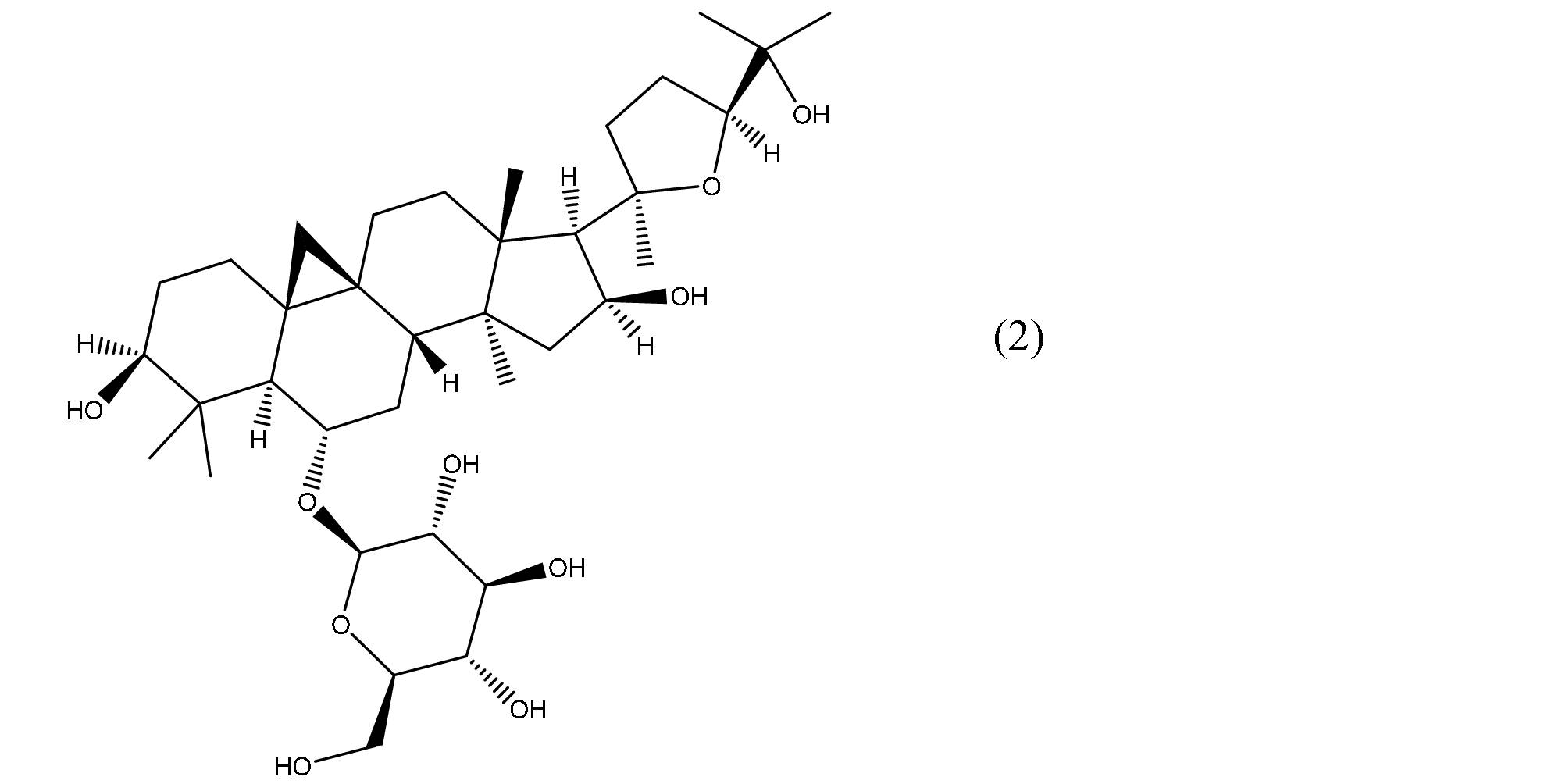
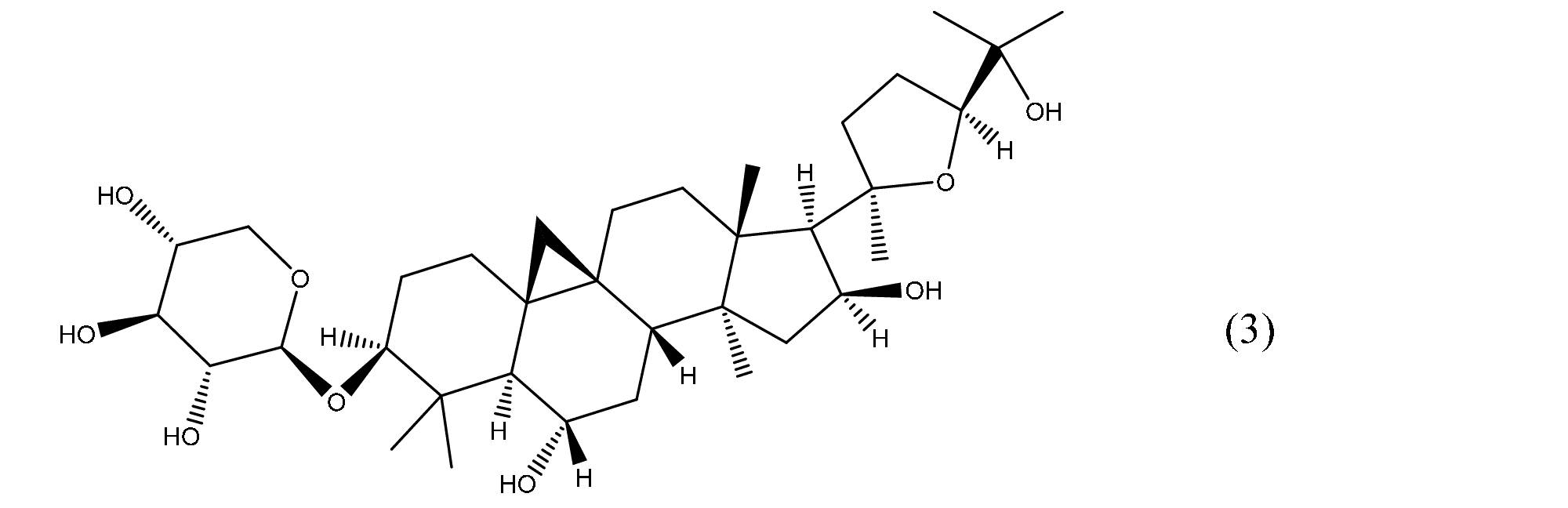
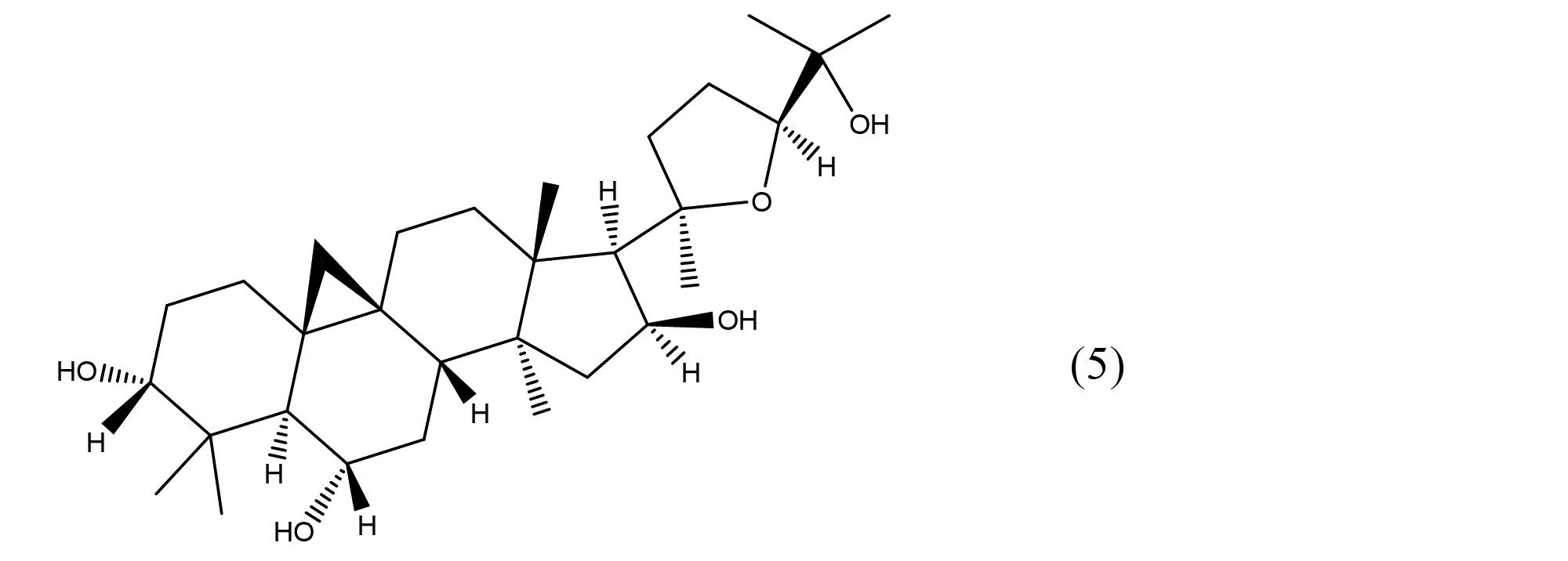
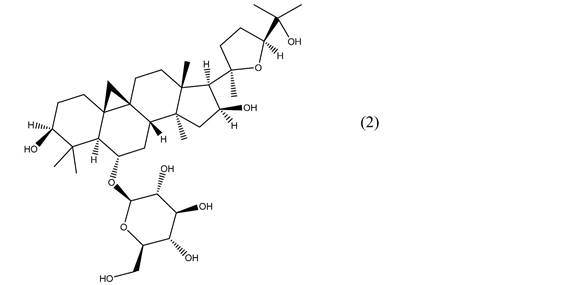
- the cycloastragenol analog is one or more selected from the group consisting of the following formulas (2) to (6): The method according to any one of [1] to [20].
- the contacting step is performed in a buffer, The method according to any one of [1] to [21].
- the contacting step is performed in a medium, The method according to any one of [1] to [21].
- [24] Obtained by the method according to any one of [1] to [23], Cycloastragenol analog.
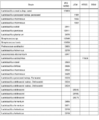
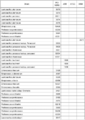
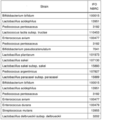
- the list of the bacterial cells verified in the examples is shown.
- the list of the bacterial cells verified in the examples is shown.
- the list of the bacterial cells verified in the examples is shown.
- the list of the bacterial cells verified in the examples is shown.
- the list of the bacterial cells verified in the examples is shown.
- the list of the bacterial cells verified in the examples is shown.
- the present embodiment an embodiment of the present invention (hereinafter referred to as “the present embodiment”) will be described in detail, but the present invention is not limited to this, and various modifications can be made without departing from the gist thereof. Is.
- the method for producing a cycloastragenol analog of the present embodiment includes a contact step of contacting astragaloside IV with a bacterium.
- the method for producing a cycloastragenol analog of the present embodiment may include a recovery step of recovering the cycloastragenol analog from the mixture obtained in the contacting step, if necessary.
- the contact between the astragaloside IV and the bacterium can be performed in a buffer or in a medium.
- the conditions of the contacting step will be described, but the conditions of the contacting step of the present embodiment are not limited to the following.
- the astragaloside IV is contacted with the bacterium by including the bacterium in the medium.
- the contact step in the medium it is preferable to contact the astragaloside IV and the bacteria while culturing the bacteria in the medium.
- the contacting step can be carried out by a method according to a known method as a culture method.
- a culture method a so-called batch culture method, a semi-batch culture method (also referred to as a "fed-batch culture method"), or a continuous culture method can be applied.
- the culturing temperature is not particularly limited as long as it is within the range known as the optimum temperature for culturing the bacteria used in the contact step, and is generally 25°C to 50°C, preferably 37°C to 50°C. ..
- the culture time is generally 10 to 240 hours, preferably 15 to 160 hours.
- the average residence time in the case of a continuous culture method is generally 10 to 150 hours, preferably 15 to 100 hours.
- the pH of the medium is not particularly limited as long as it is within the range known as the optimum pH for culturing the bacteria used in the contacting step.
- the pH of the medium is generally 6.5 to 7.5, and preferably 6.8 to 7.2.
- Examples of the method for disturbing the medium include static culture without disturbance, aeration culture for bubbling, stirring culture using a stirring bar, and shaking culture for shaking the culture vessel.
- the culture is performed under anaerobic conditions or aerobic conditions depending on the target bacterial species.
- These atmospheric conditions may be adjusted by a disturbance method, or may be adjusted to an optimum environment by using other known devices.
- a pre-culture step may be performed before the main culture including the contact step.
- cells are added to a small amount of medium to increase the number of cells, and the medium volume is gradually increased.
- astragaloside IV is added to the medium and the contacting step is performed. Astragaloside IV may be included in the preculture medium.
- the medium used in the contact step is appropriately selected by those skilled in the art depending on the type of bacteria and the like, and is not particularly limited, but as an enrichment medium for lactic acid bacteria, for example, GAM (Gifu Anaerobic Medium) medium, MRS (deMan, Rogosa and Sharpe) medium and the like.
- GAM Ga Anaerobic Medium
- MRS deMan, Rogosa and Sharpe
- the medium used in the preculture step is not particularly limited, and may be the same medium as the medium used in the contact step, or may be different.
- the astragaloside IV and the bacteria are brought into contact by including the bacteria in the buffer.
- the contacting step can be performed if the bacteria are mixed in the buffer solution.
- the conditions for carrying out the contacting step in a buffer solution are not particularly limited, and may be the same as above except that the buffer solution is used instead of the medium.
- the buffer solution can be appropriately selected from buffer solutions having a buffering capacity within a range known as optimum pH for survival of bacteria used in the contact step, and is not particularly limited, and examples thereof include a phosphate buffer solution, Examples thereof include a citrate buffer solution, a tris (trishydroxymethylaminomethane) buffer solution, an acetate buffer solution, a borate buffer solution and the like.
- the concentration of the buffer solution is not particularly limited, but is generally 1 to 100 mM, preferably 2 to 50 mM, and more preferably 5 to 30 mM.
- the pH of the buffer solution is not particularly limited, but is generally pH 2 to 9, preferably pH 3 to 8, and more preferably pH 4 to 7.5.
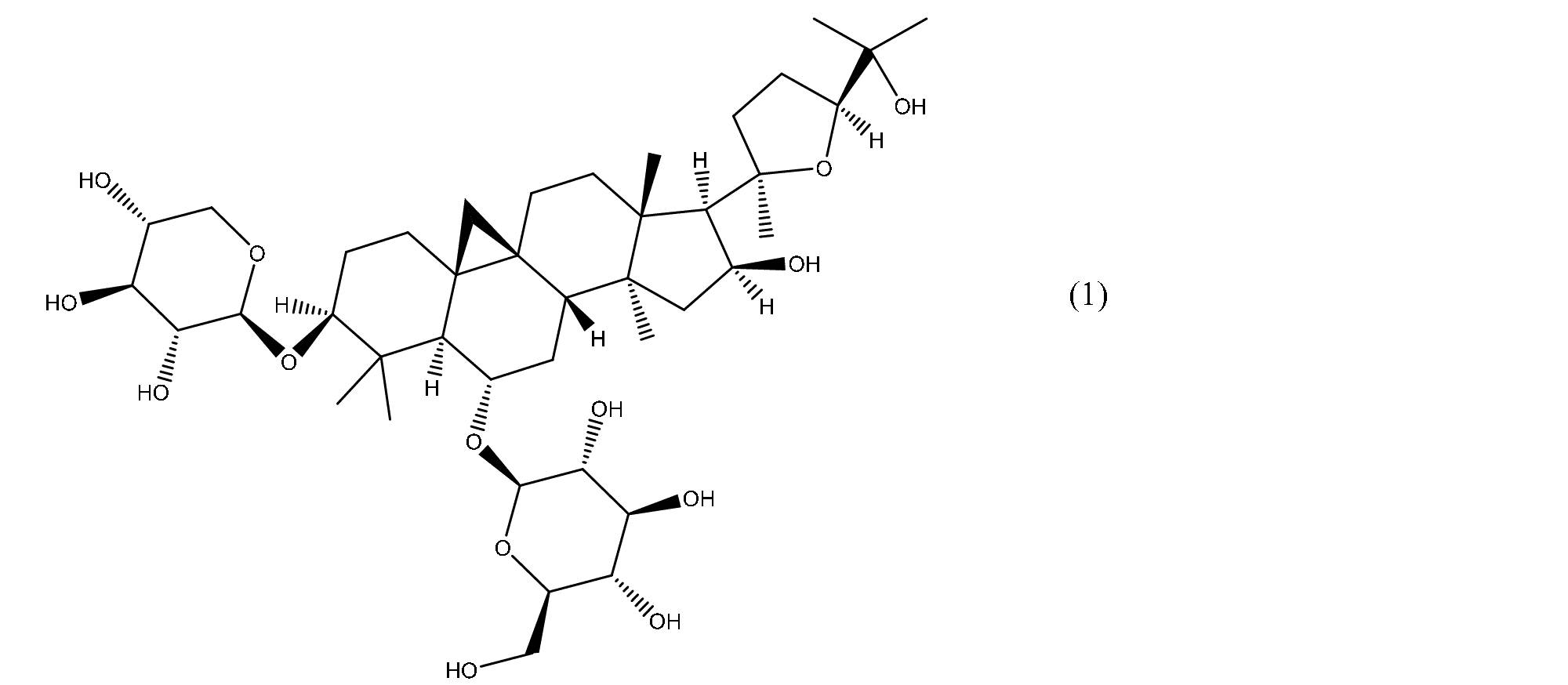
- Astragaloside IV is a compound represented by the following formula (1).
- Astragaloside IV is a kind of lanostane tetracyclic triterpenoid saponin contained in Ougi, and is known to have an antioxidant effect.
- Astragaloside IV is obtained, for example, in the form of a powder by purifying a Japanese ougi extract extracted from Japanese ougi.
- the astragaloside IV can be used in a powder state, a state in which the powder is dissolved in a solvent, or a state in which the powder is contained in an Ougi extract.
- the solvent that dissolves the powder include methanol and dimethyl sulfoxide (DMSO).
- the bacterium is preferably at least one selected from the group consisting of a food-derived bacterium or a bacterium of the same genus thereof, an intestinal bacterium, a crop-related bacterium, a herbal medicine-related bacterium, and a flower-related bacterium.
- Such bacteria are not particularly limited, but include, for example, genus Acetobacter (Acetobacter sp.), genus Bacteroides (Bacteroides sp.), genus Bifidobacterium (Bifidobacterium sp.), genus Clostridium (Clostridium sp.), Corynebacterium (Corynebacterium sp.), Enterococcus (Enterococcus sp.), Fusobacterium (Fusobacterium sp.), Gluconobacter (Gluconobacter sp.), Haloanerobium (Haloanaerobium sp.), Lactobacillus sp.
- Lactococcus Lactococcus (Lactococcus sp.), Leuconostoc (Leuconostoc sp.), Micrococcus (Micrococcus sp.), Oenococcus (Oenococcus sp.), Pediococcus (Pediococcus sp.), Propioni Bacterium (Propionibacterium sp.), Pseudomonas sp., Luminococcus sp., Sporolactobacillus sp., Streptococcus sp., Tetragenococcus sp. sp.) and the genus Weissella (Weissella sp.).
- intestinal bacteria bacteria isolated from intestinal flora
- bacteria isolated from fermented foods and other foods are preferable.
- the enterobacteria include lactic acid bacteria and other anaerobic bacteria or aerobic bacteria.
- bacteria that are resident in the intestine and have a function of adjusting the intestinal environment are preferable for the purpose of the present invention.
- the source of isolation of intestinal bacteria is not limited to the intestinal flora.
- lactic acid bacteria that produce lactic acid by metabolism of sugars are preferable for the purpose of the present invention.
- lactic acid bacteria include Bifidobacterium, Enterococcus, Lactobacillus, Lactococcus, Leuconostoc, Oenococcus, Pediococcus, Streptococcus, and Tetragenococcus.
- the lactic acid bacterium may be a bacterium isolated from the intestinal flora or a bacterium isolated from a fermented food or other food.
- the species of the anaerobic bacterium is not particularly limited, and examples thereof include bacteria belonging to the genera Bacteroides, Clostridium, Corynebacterium, Fusobacterium, Haloanerobium, Propionibacterium, and Luminococcus.
- the anaerobic bacterium may be a bacterium isolated from intestinal flora or a bacterium isolated from fermented food or other food.
- aerobic bacteria examples include bacteria such as Acetobacter, Gluconobacter, Micrococcus, and Pseudomonas that metabolize alcohol to produce acetic acid.
- the aerobic bacterium may be a bacterium isolated from intestinal flora or a bacterium isolated from fermented food or other food.
- a bacterium useful for food production and industrial production (hereinafter, also referred to as “food useful bacterium”) is preferable.
- Such food-useful bacteria include, for example, Acetobacter, Bifidobacterium, Clostridium, Corynebacterium, Enterococcus, Gluconobacter, Haloanerobium, Lactococcus, Lactobacillus, Micrococcus. , Oenococcus, Pediococcus, Pseudomonas, Sporolactobacillus, Streptococcus, and Tetragenococcus.
- the useful food bacteria may be bacteria isolated from intestinal flora or bacteria isolated from fermented foods and other foods.
- Bacteria can also be classified by the type of cycloastragenol analog they produce.
- a bacterium that mainly produces the compound (M3) represented by the formula (4), the compound (M4) represented by the formula (5), and the compound (M5) represented by the formula (6) described below.
- the genus is not particularly limited, for example, Bacteroides, Bifidobacterium, Clostridium, Lactobacillus, Leuconostoc, Pediococcus, Luminococcus, Streptococcus, Tetragenococcus, and, Weissella is mentioned.
- the genus species of these bacteria are not particularly limited, and include, for example, Bacteroides uniformis, Bifidobacterium breve, and Bifidobacterium pseudocatenulatum. , Clostridium difficile, Lactobacillus acidipiscis, Lactobacillus acidophilus, Lactobacillus alimentarius, Lactobacillus alimentarius, Lactobacillus lactis, Lactobacillus lactis , Lactobacillus delbrueckii, Lactobacillus fermentum, Lactobacillus mali, Lactobacilluus paramentalius Lactobacillus plank, Lactobacillus paramentarius, Lactobacillus planment plantarum), Lactobacillus pobuzihii, Lactobacillus sakei, Leuconostoc carnosum, Leuconostoc citreum, Leuconostoc lactis, Leuconost, Leuconost Leuconostoc mes
- the genus of bacteria that mainly produces the compound (M1) represented by the formula (2) and the compound (M2) represented by the formula (3) described below is not particularly limited, but, for example, genus Bacteroides , Bifidobacterium, Clostridium, Enterococcus, Lactobacillus, Lactococcus, Leuconostoc, Pediococcus, Luminococcus, Streptococcus, Tetragenococcus, and Weissella.
- the genus species of these bacteria are not particularly limited, and include, for example, Bacteroides uniformis, Bifidobacterium pseudocatenulatum, Clostridium difficile, and Enterococcus. Enterococcus thailandicus, Lactobacillus acidipiscis, Lactobacillus acidophilus, Lactobacillulus alimentarius, Lactobacillus bluvis, Lactobacillus bluvis, Lactobacillus Lactobacillus bulgaricus, Lactobacillus casei, Lactobacillus coryniformis, Lactobacillus lubacillus bacillus, and Lactobacillus delobacillus fermentum), Lactobacillus hammesii, Lactobacillus helvericus, Lactobacillus johnsonii, Lactobacillus mali, Lactobacillus mali, Lactobacillus mali, Lactobacillus parabactus , Lactobacillus par
- Lactobacillus versmoldensis Lactococcus lactis, Leuconostoc carnosum, Leuconostoc citreum, Leuconostoc lactis, Leuconostoc lactis (Leuconostoc mesenteroides), Leuconostoc dextranicum (Leuconostocs dextranicum), Pediococcus acidilactici, Pediococcus argentinicus, Pediococcus urgentis ), Pediococcus parvulus, Pediococcus pentosaceus, Ruminococcus gnavus, Ruminococcus trochococcus trochocothus, ept.
- Weepella R Streptococcus faecalis R
- Tetragenococcus halophilus Weissella cibaria
- Weissella confusa Weissella paramecenteroides paramesenteroides.
- the genus of bacteria mainly producing the compound (M1), the compound (M3), and the compound (M4) is not particularly limited, and examples thereof include Bacteroides, Bifidobacterium, and Leuconostoc. Are listed.
- the genus species of these bacteria are not particularly limited, and include, for example, Bacteroides uniformis, Bifidobacterium breve, and Bifidobacterium pseudocatenulatum. , And Leuconostoc carnosum.
- the genus of bacteria that mainly produces the compound (M2), the compound (M3), and the compound (M4) is not particularly limited, and examples thereof include Bifidobacterium, Clostridium, Enterococcus, and Lactobacillus. , Lactococcus, Leuconostoc, Pediococcus, Luminococcus, Streptococcus, Tetragenococcus, and Weissera.
- the genus species of these bacteria are not particularly limited, and examples thereof include Bifidobacterium breve, Bifidobaterium longum, Clostridium difficile, and Enterococcus typhi. Randobas (Enterococcus thailandicus), Lactobacillus acidipiscis, Lactobacillus acidophilus, Lactobacillulus blivis, Lactobacillus bluvis, and Lactobacillus lactis. ⁇ Bulgaricus (Lactobacillus bulgaricus), Lactobacillus casei (Lactobacillus casei), Lactobacillus coryniformis (Lactobacillus coryniformis), Lactobacillus (Lactobacillus crustorum), Lactobacillus delbrucrulus (Lactobacillus) ), Lactobacillus hammesii, Lactobacillus helvericus, Lactobacillus johnsonii, Lac
- Lactobacillus paralimentarius Lactobacillus paraplantarum, Lactobacillus pentosas osus), Lactobacillus plantarum, Lactobacillus pobuzihii, Lactobacillus rapi, Lactobacillus rhamnosus, Lactobacillus Lactobacillus Lactobacillus versmoldensis, Lactococcus lactis, Leuconostoc carnosum, Leuconostoc citreum, Leuconostoc lactis, Leuconostoc lactis, Leuconostoc mesenteroides mesenteroides ), Leuconostocs dextranicum, Pediococcus acidilactici, Pediococcus argentinicus, Pediococcus etanolidurepeus, Pediococcus ethanol Pediococcus parvulus, Pediococcus pentosaceus, Rum
- the genus of bacteria that mainly produces the compound (M3) and the compound (M4) is not particularly limited, and examples thereof include Bacteroides, Bifidobacterium, Lactobacillus, Leuconostoc, and Pediococcus. , Luminococcus, and Streptococcus Are listed.
- the genus species of these bacteria are not particularly limited, and include, for example, Bacteroides uniformis, Bifidobacterium breve, and Bifidobacterium pseudocatenulatum. , Lactobacillus acidipiscis, Lactobacillus acidophilus, Lactobacillus casei, Lactobacilluus para Lactobacillus paraLactobacillus para Lactobacillus paralimentalis ), Leuconostoc carnosum, Pediococcus acidilactici, Pediococcus pentosaceus, Ruminococcus productus, and Strumococcus feculiscus. Streptococcus faecalis R).
- the genus of bacteria that mainly produces the compound (M5) is not particularly limited, and examples thereof include Clostridium, Lactobacillus, Leuconostoc, Pediococcus, Streptococcus, Tetragenococcus, and Weicella. Genus.
- the genus species of these bacteria are not particularly limited, and for example, Clostridium difficile, Lactobacillus acidophilus, Lactobacillus alimentarius, Lactobacillus delbrueckiis. Lactobacillus fermentum Lactobacillus mali Lactobacillus parabuchneri Lactobacillus Lactobacillus paralimentarius Lactobacillus plantlirum Lactobacillus plantarum pobuzihii), Lactobacillus sakei, Leuconostoc carnosum, Pediococcus argentinicus, Pediococcus pentosoccus Streptococus streptocorus, Pediococcus pentosaceus, , Tetragenococcus halophilus, Weissella cibaria, and Weissella confusa.
- the genus of bacteria that mainly produces the compound (M1) is not particularly limited, and examples thereof include Bacteroides, Bifidobacterium, Lactobacillus, and Streptococcus.
- the genus species of these bacteria are not particularly limited, and examples thereof include Bacteroides uniformis, Bifidobacterium adolescentis, Bifidobacterium breve, and Bifidobacterium breve. Bacteria pseudocatenulatum (Bifidobacterium pseudocatenulatum), Lactobacillus pentosus, and Lactobacillus salivarius
- the genus of bacteria that mainly produces the compound (M2) is not particularly limited, and examples thereof include Lactobacillus, Leuconostoc, Pediococcus, Tetragenococcus, and Weissella.
- the genus species of these bacteria are not particularly limited, and include, for example, Lactobacillus acidipiscis, Lactobacillus acidophilus, Lactobacillus alimentarius, and Lactobacillus brevis. Lactobacillus casei, Lactobacillus delbrueckii, Lactobacillus paracasei, Lactobacillus caulilus, Lactobacillus paralimentarius, Lactobacillus paralimentarius, Lactobacillus ), Leuconostoc citreum, Leuconostoc lactis, Leuconostoc mesenteroides, Pediococcus argentinicus, Pediococcus pentocus Pediococcus pentosaceus), Tetragenococcus halophilus, Weissella cibaria, and Weissella confusa.
- the first step of contacting AIV with a cell that synthesizes compound (M2) from AIV, and contacting the obtained compound (M2) with the cell The second step of synthesizing the compound (M3) may be carried out.
- one or more lactic acid bacteria selected from the group consisting of bacteria belonging to the genus Pediococcus, the genus Streptococcus, the genus Lactobacillus, and the genus Bifidobacterium are preferably used.
- Bifidobacterium pseudocatenulatum, Bifidobacterium breve, Lactobacillus johnsonii, Pediococcus acidilactis, Pediococcus pentosaceus, Streptococcus faecalis R and More preferably, one or two or more kinds of bacteria selected from the group consisting of Streptococcus citrovolum are used.
- these bacteria can be cultured using a normal bacterial culture medium such as GAM medium and MRS medium.
- a normal bacterial culture medium such as GAM medium and MRS medium.
- the culture solution in the culture medium for bacterial culture may be used as it is, or may be concentrated, and the separated and collected bacterial cells may be used as they are or suspended in sterile purified water or lyophilized. Can also be used after drying.
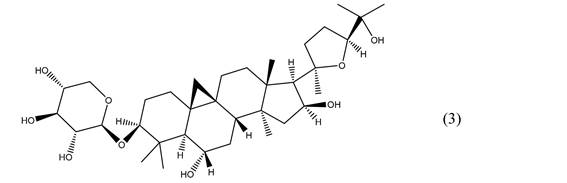
- cycloastragenol analog examples include one or more selected from the group consisting of compounds represented by the following formulas (2) to (6).
- the cycloastragenol analog may be one kind of compound represented by the above formulas (2) to (6), or 2 represented by the following formulas (2) to (6). It may be a mixture of two or more compounds.
- the cycloastragenol analog is preferably a mixture of two or more compounds represented by the above formulas (2) to (6), which is obtained by contacting astragaloside IV and bacteria. ..
- the compound represented by the formula (2) (hereinafter, also referred to as “M1”) is a glucose glycoside of cycloastragenol having a structure in which xylose is eliminated from AIV.
- the compound represented by the formula (3) (hereinafter, also referred to as “M2”) is a xylose glycoside of cycloastragenol having a structure in which glucose is eliminated from AIV.
- the compound represented by the formula (4) (hereinafter, also referred to as “M3”) is cycloastragenol having a structure in which glucose and xylose are eliminated from AIV.
- the compound represented by the formula (6) (hereinafter, also referred to as “M5”) is a compound having a ketone structure in which the hydroxyl group of M3 is oxidized. Furthermore, the compound represented by the formula (5) (hereinafter, also referred to as “M4”) is a stereoisomer of M3.
- the contacting step By the contacting step, a mixture of cycloastragenol analog and bacteria is obtained.
- unnecessary components may be removed from this mixture.
- only the cycloastragenol analog may be isolated and recovered from the mixture, or the cycloastragenol analog may be recovered as a mixture with bacteria.
- the recovery step in the case of isolating and recovering only cycloastragenol analog is as follows: After removing insoluble substances (such as bacterial cells) from the mixture obtained in the contacting step by centrifugation or filtration, etc. And a cycloastragenol analog is separated from the solution by a conventional method such as crystallization or column chromatography.
- the recovery step in the case of recovering the cycloastragenol analog as a mixture with bacteria includes a method of appropriately concentrating the mixture obtained in the contacting step and removing impurities.
- the composition of the present embodiment includes astragaloside IV and a bacterium, and the cycloastragenol analog obtained as described above by contacting with the bacterium, and the bacterium used by the production method.
- the composition may appropriately contain necessary components depending on its use.
- the composition, in the above-mentioned production method may be used as it is a mixture such as a solution in which astragaloside IV and bacteria are contacted, or the obtained mixture is subjected to additional recovery such as separation or concentration. You may use the mixture obtained by performing a process.
- glycerol stock of each cell was cultured in 15 mL of GAM medium (seed medium) at 37° C. for 24 hours under anaerobic conditions at a shaking speed of 120 rpm.
- 150 ⁇ L of the culture was cultured in 15 mL of GAM medium containing 3 mM glucose at 37° C. for 120 hours under anaerobic conditions at a shaking speed of 120 rpm.
- 1 mL of the obtained culture solution was collected and analyzed by HPLC.
- the remaining 14 mL of the culture broth was centrifuged at 3000 rpm for 15 minutes, and the supernatant was decanted to obtain a bacterial cell pellet.
- the obtained cell pellet was washed with 1 mL of a 0.85% sodium chloride solution, the washing solution was transferred between centrifugations, and further centrifuged at 15000 rpm for 15 minutes to obtain cell pellets again.
- a potassium phosphate buffer solution having a pH of 6.5 and a concentration of 0.1 M was mixed with 20 ⁇ L of a DMSO solution containing 15 mg/mL of astragaloside IV, and a bacterial cell pellet was added to the mixed solution to prepare a buffer solution.
- Astragaloside IV was contacted with the bacterial cells. The contact was carried out at 37° C. for 72 hours with a shaking speed of 1750 rpm. Then, the mixed solution was centrifuged to precipitate bacterial cells, and the supernatant was collected.
- a sample for HPLC analysis was obtained by freeze-drying and re-dissolving the collected supernatant. The obtained sample was used for analysis by HPLC.
- Table 1 shows the HPLC analysis results when the cells described in Table 1 were used as the cells in the above method.
- Example B Among the bacterial cells listed in FIGS. 1 to 6, the following bacterial strains were obtained as being excellent in the production of the compound (M3), the compound (M4) and the compound (M5).
- Example C Among the bacterial cells listed in FIGS. 1 to 6, the following bacterial strains were obtained as the top 20 strains particularly excellent in the production of compound (M1) and compound (M2).
- Example D Among the bacterial cells listed in FIGS. 1 to 6, the following bacterial strains were obtained as the top 20 strains with excellent production of compound (M1), compound (M3) and compound (M4).
- Example E Among the bacterial cells listed in FIGS. 1 to 6, the following bacterial strains were obtained as the top 20 strains with excellent production of compound (M2), compound (M3) and compound (M4).
- Example F Among the bacterial cells listed in FIGS. 1 to 6, the following bacterial strains were obtained as the top 20 strains with excellent production of compound (M3) and compound (M4).
- Example G Among the bacterial cells listed in FIGS. 1 to 6, the following bacterial strains were obtained as the top 20 strains having particularly excellent production of compound (M5).
- Example H Among the bacterial cells listed in FIGS. 1 to 6, the following bacterial strains were obtained as those having excellent production of the compound (M1).
- Example I Among the bacterial cells listed in FIGS. 1 to 6, the following bacterial strains were obtained as those having excellent production of the compound (M2).
- the method of the present invention has industrial applicability as a method for producing a cycloastragenol analog.
Landscapes
- Chemical & Material Sciences (AREA)
- Health & Medical Sciences (AREA)
- Organic Chemistry (AREA)
- Life Sciences & Earth Sciences (AREA)
- General Health & Medical Sciences (AREA)
- Engineering & Computer Science (AREA)
- Wood Science & Technology (AREA)
- Zoology (AREA)
- General Chemical & Material Sciences (AREA)
- Chemical Kinetics & Catalysis (AREA)
- Biotechnology (AREA)
- Biochemistry (AREA)
- Bioinformatics & Cheminformatics (AREA)
- Genetics & Genomics (AREA)
- Public Health (AREA)
- Microbiology (AREA)
- Veterinary Medicine (AREA)
- General Engineering & Computer Science (AREA)
- Animal Behavior & Ethology (AREA)
- Medicinal Chemistry (AREA)
- Pharmacology & Pharmacy (AREA)
- Molecular Biology (AREA)
- Epidemiology (AREA)
- Nuclear Medicine, Radiotherapy & Molecular Imaging (AREA)
- Heart & Thoracic Surgery (AREA)
- Cardiology (AREA)
- Preparation Of Compounds By Using Micro-Organisms (AREA)
- Pharmaceuticals Containing Other Organic And Inorganic Compounds (AREA)
- Steroid Compounds (AREA)
- Saccharide Compounds (AREA)
- Medicines Containing Material From Animals Or Micro-Organisms (AREA)
Abstract
【課題】アストラガロシドIVからシクロアストラゲノール類縁体を製造する新たな方法を提供することを目的とする。 【解決手段】アストラガロシドIVと、細菌と、を接触する接触工程を含む、シクロアストラゲノール類縁体を製造する方法。
Description
本発明は、シクロアストラゲノール類縁体を生産する方法に関する。
オウギ(Astragalus membranaceus Bge.)に含まれるアストラガロシドIV(Astragaloside IV)は、心臓血管に対する薬理活性等を有するが、溶解性に乏しく、生体利用効率が低い(非特許文献1)。これまでの研究から、アストラガロシドIVを加水分解して得られるシクロアストラゲノール-6-O-β-D-グルコシド(cycloastragenol-6-O-β-D-glucoside)が、アストラガロシドIVと同種の薬理活性を有し、溶解性に優れることが知られている。
特許文献1には、このシクロアストラゲノール-6-O-β-D-グルコシドを工業的に生産する方法として、加水分解酵素によりアストラガロシドIVを加水分解し、これを多孔性樹脂により分離する方法が開示されている。
非特許文献1には、アストラガロシドIVをラットの腸内細菌とともに嫌気条件下で培養した際に、5つの代謝物が得られることが示されている。また、非特許文献2には、バシラス属のLG-502を用いて、生体内変換によってシクロアストラゲノールを効率的に生産する方法が開示されている。しかしながら、LG-502以外の菌体についてシクロアストラゲノールの製造には、成功していない。
"Pharmacokinetic Evidence on the Contribution of Intestinal Bacterial Conversion to Beneficial Effects of Astragaroside IV, a Marker Compound of Astragali Radix, in Traditional Oral Use of the Herb" Drug Metab. Pharmacokinet. 27(6): 586-597 (2012), Ru Yan et al. "Efficient Biotransformation of Astragaloside IV to Cycloastragenol by Bacillus sp. LG-502"Appl Biochem Biotechnol. 07 June 2017, Liming Wang, Yan Chen.
本発明は、アストラガロシドIVからシクロアストラゲノール類縁体を製造する新たな方法を提供することを目的とする。
本発明者らが、鋭意検討した結果、細菌を用いることで、上記課題を解決しうることを見出して、本発明を完成した。
本発明は、以下のとおりである。
〔1〕
アストラガロシドIVと、細菌と、を接触する接触工程を含む、
シクロアストラゲノール類縁体を製造する方法。
〔2〕
前記細菌が、食品由来菌乃至はその同属種の菌、腸内細菌、農作物関連細菌、生薬類関連細菌、及び花卉関連細菌からなる群より選ばれる少なくとも一種である、
〔1〕に記載のシクロアストラゲノール類縁体を製造する方法。
〔3〕
前記細菌が、ラクトバシラス属(Lactobacillus sp.)、ビフィドバクテリウム属(Bifidobacterium sp.)、エンテロコッカス属(Enterococcus sp.)、ラクトコッカス属(Lactococcus sp.)、リューコノストック属(Leuconostoc sp.)、ペディオコッカス属(Pediococcus sp.)、ストレプトコッカス属(Streptococcus sp.)、オエノコッカス属(Oenococcus sp.)、テトラジェノコッカス属(Tetragenococcus sp.)、バクテロイデス属(Bacteroides sp.)、クロストリジウム属(Clostridium sp.)、プロピオニバクテリウム属(Propionibacterium sp.)、ルミノコッカス属(Ruminococcus sp.)、フソバクテリウム属(Fusobacterium sp.)、コリネバクテリウム属(Corynebacterium sp.)、ハロアネロビウム属(Haloanaerobium sp.)、アセトバクター属(Acetobacter sp.)、グルコノバクター属(Gluconobacter sp.)、ミクロコッカス属(Micrococcus sp.)、シュードモナス属(Pseudomonas sp.)、スポロラクトバシラス属(Sporolactobacillus sp.)、及びワイセラ属(Weissella sp.)からなる群より選ばれる少なくとも一種である、
〔1〕に記載のシクロアストラゲノール類縁体を製造する方法。
〔4〕
前記細菌が、バクテロイデス属(Bacteroides sp.)、ビフィドバクテリウム属(Bifidobacterium sp.)、クロストリジウム属(Clostridium sp.)、エンテロコッカス属(Enterococcus sp.)、ラクトバシラス属(Lactobacillus sp.)、ラクトコッカス属(Lactococcus sp.)、リューコノストック属(Leuconostoc sp.)、ペディオコッカス属(Pediococcus sp.)、ルミノコッカス属(Ruminococcus sp.)、ストレプトコッカス属(Streptococcus sp.)、テトラジェノコッカス属(Tetragenococcus sp.)、及びワイセラ属(Weissella sp.)からなる群より選ばれる少なくとも一種である、
〔1〕に記載のシクロアストラゲノール類縁体を製造する方法。
〔5〕
前記細菌が、バクテロイデス属(Bacteroides sp.)、ビフィドバクテリウム属(Bifidobacterium sp.)、クロストリジウム属(Clostridium sp.)、ラクトバシラス属(Lactobacillus sp.)、リューコノストック属(Leuconostoc sp.)、ペディオコッカス属(Pediococcus sp.)、ルミノコッカス属(Ruminococcus sp.)、ストレプトコッカス属(Streptococcus sp.)、テトラジェノコッカス属(Tetragenococcus sp.)、及びワイセラ属(Weissella sp.)からなる群より選ばれる少なくとも一種である、
〔1〕に記載のシクロアストラゲノール類縁体を製造する方法。
〔6〕
前記細菌が、バクテロイデス・ユニフォルミス(Bacteroides uniformis)、ビフィドバクテリウム・ブレーベ(Bifidobacterium breve)、ビフィドバクテリウム・シュードカテニュレイタム(Bifidobacterium pseudocatenulatum)、クロストリジウム・ディフィシル(Clostridium difficile)、ラクトバシラス・アシディピスチス(Lactobacillus acidipiscis)、ラクトバシラス・アシドフィルス(Lactobacillus acidophilus)、ラクトバシラス・アリメンタリウス(Lactobacillus alimentarius)、ラクトバシラス・ブレビス(Lactobacillus brevis)、ラクトバシラス・カゼイ(Lactobacillus casei)、ラクトバシラス・デルブリュック(Lactobacillus delbrueckii)、ラクトバシラス・ファーメンタム(Lactobacillus fermentum)、ラクトバシラス・マリ(Lactobacillus mali)、ラクトバシラス・パラカゼイ(Lactobacillus paracasei)、ラクトバシラス・パラアリメンタリウス(Lactobacillus paralimentarius)、ラクトバシラス・プランタルム(Lactobacillus plantarum)、ラクトバシラス・ポブジヒイ(Lactobacillus pobuzihii)、ラクトバシラス・サケイ(Lactobacillus sakei)、リューコノストック・カルノーサム(Leuconostoc carnosum)、リューコノストック・シトレウム(Leuconostoc citreum)、リューコノストック・ラクティス(Leuconostoc lactis)、リューコノストック・メゼンテロイデス(Leuconostoc mesenteroides)、ペディオコッカス・アシディラクティシ(Pediococcus acidilactici)、ペディオコッカス・アルジェンチニクス(Pediococcus argentinicus)、ペディオコッカス・ペントサセウス(Pediococcus pentosaceus)、ルミノコッカス・プロダクタス(Ruminococcus productus)、ストレプトコッカス・シトロボラム(Streptococcus citrovorum)、ストレプトコッカス・フェカリスR(Streptococcus faecalis R)、テトラジェノコッカス・ハロフィルス(Tetragenococcus halophilus)、ワイセラ・シバリア(Weissella cibaria)、及びワイセラ・コンフーサ(Weissella confusa)からなる群より選ばれる少なくとも一種である、
〔1〕に記載のシクロアストラゲノール類縁体を製造する方法。
〔7〕
前記細菌が、バクテロイデス属(Bacteroides sp.)、ビフィドバクテリウム属(Bifidobacterium sp.)、クロストリジウム属(Clostridium sp.)、エンテロコッカス属(Enterococcus sp.)、ラクトバシラス属(Lactobacillus sp.)、ラクトコッカス属(Lactococcus sp.)、リューコノストック属(Leuconostoc sp.)、ペディオコッカス属(Pediococcus sp.)、ルミノコッカス属(Ruminococcus sp.)、ストレプトコッカス属(Streptococcus sp.)、テトラジェノコッカス属(Tetragenococcus sp.)、及びワイセラ属(Weissella sp.)からなる群より選ばれる少なくとも一種である、
〔1〕に記載のシクロアストラゲノール類縁体を製造する方法。
〔8〕
前記細菌が、バクテロイデス・ユニフォルミス(Bacteroides uniformis)、ビフィドバクテリウム・シュードカテニュレイタム(Bifidobacterium pseudocatenulatum)、クロストリジウム・ディフィシル(Clostridium difficile)、エンテロコッカス・タイランディカス(Enterococcus thailandicus)、ラクトバシラス・アシディピスチス(Lactobacillus acidipiscis)、ラクトバシラス・アシドフィルス(Lactobacillus acidophilus)、ラクトバシラス・アリメンタリウス(Lactobacillus alimentarius)、ラクトバシラス・ブレビス(Lactobacillus brevis)、ラクトバシラス・ブフネリ(Lactobacillus buchneri)、ラクトバシラス・ブルガリクス(Lactobacillus bulgaricus)、ラクトバシラス・カゼイ(Lactobacillus casei)、ラクトバシラス・コリニフォルミス(Lactobacillus coryniformis)、ラクトバシラス・クラストラム(Lactobacillus crustorum)、ラクトバシラス・デルブリュック(Lactobacillus delbrueckii)、ラクトバシラス・ファーメンタム(Lactobacillus fermentum)、ラクトバシラス・ハメシイ(Lactobacillus hammesii)、ラクトバシラス・ヘルベティカス(Lactobacillus helvericus)、ラクトバシラス・ジョンソニイ(Lactobacillus johnsonii)、ラクトバシラス・マリ(Lactobacillus mali)、ラクトバシラス・パラブフネリ(Lactobacillus parabuchneri)、ラクトバシラス・パラカゼイ(Lactobacillus paracasei)、ラクトバシラス・パラアリメンタリウス(Lactobacillus paralimentarius)、ラクトバシラス・パラプランタラム(Lactobacillus paraplantarum)、ラクトバシラス・ペントーサス(Lactobacillus pentosus)、ラクトバシラス・プランタルム(Lactobacillus plantarum)、ラクトバシラス・ポブジヒイ(Lactobacillus pobuzihii)、ラクトバシラス・ラピ(Lactobacillus rapi)、ラクトバシラス・ラムノサス(Lactobacillus rhamnosus)、ラクトバシラス・サケイ(Lactobacillus sakei)、ラクトバシラス・バースモルデンシス(Lactobacillus versmoldensis)、ラクトコッカス・ラクティス(Lactococcus lactis)、リューコノストック・カルノーサム(Leuconostoc carnosum)、リューコノストック・シトレウム(Leuconostoc citreum)、リューコノストック・ラクティス(Leuconostoc lactis)、リューコノストック・メゼンテロイデス(Leuconostoc mesenteroides)、リューコノストック・デキストラニカム(Leuconostocs dextranicum)、ペディオコッカス・アシディラクティシ(Pediococcus acidilactici)、ペディオコッカス・アルジェンチニクス(Pediococcus argentinicus)、ペディオコッカス・エタノリデュランス(Pediococcus ethanolidurans)、ペディオコッカス・パーブルス(Pediococcus parvulus)、ペディオコッカス・ペントサセウス(Pediococcus pentosaceus)、ルミノコッカス・グナバス(Ruminococcus gnavus)、ルミノコッカス・プロダクタス(Ruminococcus productus)、ストレプトコッカス・シトロボラム(Streptococcus citrovorum)、ストレプトコッカス・フェカリスR(Streptococcus faecalis R)、テトラジェノコッカス・ハロフィルス(Tetragenococcus halophilus)、ワイセラ・シバリア(Weissella cibaria)、ワイセラ・コンフーサ(Weissella confusa)、及びワイセラ・パラメセンテロイデス(Weissella paramesenteroides)からなる群より選ばれる少なくとも一種である、
〔1〕に記載のシクロアストラゲノール類縁体を製造する方法。
〔9〕
前記細菌が、バクテロイデス属(Bacteroides sp.)、ビフィドバクテリウム属(Bifidobacterium sp.)、及びリューコノストック属(Leuconostoc sp.)からなる群より選ばれる少なくとも一種である、
〔1〕に記載のシクロアストラゲノール類縁体を製造する方法。
〔10〕
前記細菌が、バクテロイデス・ユニフォルミス(Bacteroides uniformis)、ビフィドバクテリウム・ブレーベ(Bifidobacterium breve)、ビフィドバクテリウム・シュードカテニュレイタム(Bifidobacterium pseudocatenulatum)、及びリューコノストック・カルノーサム(Leuconostoc carnosum)からなる群より選ばれる少なくとも一種である、
〔1〕に記載のシクロアストラゲノール類縁体を製造する方法。
〔11〕
前記細菌が、ビフィドバクテリウム属(Bifidobacterium sp.)、クロストリジウム属(Clostridium sp.)、エンテロコッカス属(Enterococcus sp.)、ラクトバシラス属(Lactobacillus sp.)、ラクトコッカス属(Lactococcus sp.)、リューコノストック属(Leuconostoc sp.)、ペディオコッカス属(Pediococcus sp.)、ルミノコッカス属(Ruminococcus sp.)、ストレプトコッカス属(Streptococcus sp.)、テトラジェノコッカス属(Tetragenococcus sp.)、及びワイセラ属(Weissella sp.)からなる群より選ばれる少なくとも一種である、
〔1〕に記載のシクロアストラゲノール類縁体を製造する方法。
〔12〕
前記細菌が、ビフィドバクテリウム・ブレーベ(Bifidobacterium breve)、ビフィドバクテリウム・ロンガム(Bifidobacterium longum)、クロストリジウム・ディフィシル(Clostridium difficile)、エンテロコッカス・タイランディカス(Enterococcus thailandicus)、ラクトバシラス・アシディピスチス(Lactobacillus acidipiscis)、ラクトバシラス・アシドフィルス(Lactobacillus acidophilus)、ラクトバシラス・アリメンタリウス(Lactobacillus alimentarius)、ラクトバシラス・ブレビス(Lactobacillus brevis)、ラクトバシラス・ブフネリ(Lactobacillus buchneri)、ラクトバシラス・ブルガリクス(Lactobacillus bulgaricus)、ラクトバシラス・カゼイ(Lactobacillus casei)、ラクトバシラス・コリニフォルミス(Lactobacillus coryniformis)、ラクトバシラス・クラストラム(Lactobacillus crustorum)、ラクトバシラス・デルブリュック(Lactobacillus delbrueckii)、ラクトバシラス・ファーメンタム(Lactobacillus fermentum)、ラクトバシラス・ハメシイ(Lactobacillus hammesii)、ラクトバシラス・ヘルベティカス(Lactobacillus helvericus)、ラクトバシラス・ジョンソニイ(Lactobacillus johnsonii)、ラクトバシラス・マリ(Lactobacillus mali)、ラクトバシラス・パラブフネリ(Lactobacillus parabuchneri)、ラクトバシラス・パラカゼイ(Lactobacillus paracasei)、ラクトバシラス・パラアリメンタリウス(Lactobacillus paralimentarius)、ラクトバシラス・パラプランタラム(Lactobacillus paraplantarum)、ラクトバシラス・ペントーサス(Lactobacillus pentosus)、ラクトバシラス・プランタルム(Lactobacillus plantarum)、ラクトバシラス・ポブジヒイ(Lactobacillus pobuzihii)、ラクトバシラス・ラピ(Lactobacillus rapi)、ラクトバシラス・ラムノサス(Lactobacillus rhamnosus)、ラクトバシラス・サケイ(Lactobacillus sakei)、ラクトバシラス・バースモルデンシス(Lactobacillus versmoldensis)、ラクトコッカス・ラクティス(Lactococcus lactis)、リューコノストック・カルノーサム(Leuconostoc carnosum)、リューコノストック・シトレウム(Leuconostoc citreum)、リューコノストック・ラクティス(Leuconostoc lactis)、リューコノストック・メゼンテロイデス(Leuconostoc mesenteroides)、リューコノストック・デキストラニカム(Leuconostocs dextranicum)、ペディオコッカス・アシディラクティシ(Pediococcus acidilactici)、ペディオコッカス・アルジェンチニクス(Pediococcus argentinicus)、ペディオコッカス・エタノリデュランス(Pediococcus ethanolidurans)、ペディオコッカス・パーブルス(Pediococcus parvulus)、ペディオコッカス・ペントサセウス(Pediococcus pentosaceus)、ルミノコッカス・グナバス(Ruminococcus gnavus)、ルミノコッカス・プロダクタス(Ruminococcus productus)、ストレプトコッカス・シトロボラム(Streptococcus citrovorum)、ストレプトコッカス・フェカリスR(Streptococcus faecalis R)、テトラジェノコッカス・ハロフィルス(Tetragenococcus halophilus)、ワイセラ・シバリア(Weissella cibaria)、ワイセラ・コンフーサ(Weissella confusa)、及びワイセラ・パラメセンテロイデス(Weissella paramesenteroides)からなる群より選ばれる少なくとも一種である、
〔1〕に記載のシクロアストラゲノール類縁体を製造する方法。
〔13〕
前記細菌が、バクテロイデス属(Bacteroides sp.)、ビフィドバクテリウム属(Bifidobacterium sp.)、ラクトバシラス属(Lactobacillus sp.)、リューコノストック属(Leuconostoc sp.)、ペディオコッカス属(Pediococcus sp.)、ルミノコッカス属(Ruminococcus sp.)、及びストレプトコッカス属(Streptococcus sp.)からなる群より選ばれる少なくとも一種である、
〔1〕に記載のシクロアストラゲノール類縁体を製造する方法。
〔14〕
前記細菌が、バクテロイデス・ユニフォルミス(Bacteroides uniformis)、ビフィドバクテリウム・ブレーベ(Bifidobacterium breve)、ビフィドバクテリウム・シュードカテニュレイタム(Bifidobacterium pseudocatenulatum)、ラクトバシラス・アシディピスチス(Lactobacillus acidipiscis)、ラクトバシラス・アシドフィルス(Lactobacillus acidophilus)、ラクトバシラス・カゼイ(Lactobacillus casei)、ラクトバシラス・パラカゼイ(Lactobacillus paracasei)、ラクトバシラス・パラアリメンタリウス(Lactobacillus paralimentarius)、ラクトバシラス・サケイ(Lactobacillus sakei)、リューコノストック・カルノーサム(Leuconostoc carnosum)、ペディオコッカス・アシディラクティシ(Pediococcus acidilactici)、ペディオコッカス・ペントサセウス(Pediococcus pentosaceus)、ルミノコッカス・プロダクタス(Ruminococcus productus)、及びストレプトコッカス・フェカリスR(Streptococcus faecalis R)からなる群より選ばれる少なくとも一種である、
〔1〕に記載のシクロアストラゲノール類縁体を製造する方法。
〔15〕
前記細菌が、クロストリジウム属(Clostridium sp.)、ラクトバシラス属(Lactobacillus sp.)、リューコノストック属(Leuconostoc sp.)、ペディオコッカス属(Pediococcus sp.)、ストレプトコッカス属(Streptococcus sp.)、テトラジェノコッカス属(Tetragenococcus sp.)、及びワイセラ属(Weissella sp.)からなる群より選ばれる少なくとも一種である、
〔1〕に記載のシクロアストラゲノール類縁体を製造する方法。
〔16〕
前記細菌が、クロストリジウム・ディフィシル(Clostridium difficile)、ラクトバシラス・アシドフィルス(Lactobacillus acidophilus)、ラクトバシラス・アリメンタリウス(Lactobacillus alimentarius)、ラクトバシラス・デルブリュック(Lactobacillus delbrueckii)、ラクトバシラス・ファーメンタム(Lactobacillus fermentum)、ラクトバシラス・マリ(Lactobacillus mali)、ラクトバシラス・パラブフネリ(Lactobacillus parabuchneri)、ラクトバシラス・パラアリメンタリウス(Lactobacillus paralimentarius)、ラクトバシラス・プランタルム(Lactobacillus plantarum)、ラクトバシラス・ポブジヒイ(Lactobacillus pobuzihii)、ラクトバシラス・サケイ(Lactobacillus sakei)、リューコノストック・カルノーサム(Leuconostoc carnosum)、ペディオコッカス・アルジェンチニクス(Pediococcus argentinicus)、ペディオコッカス・ペントサセウス(Pediococcus pentosaceus)、ストレプトコッカス・シトロボラム(Streptococcus citrovorum)、テトラジェノコッカス・ハロフィルス(Tetragenococcus halophilus)、及びワイセラ・シバリア(Weissella cibaria)、ワイセラ・コンフーサ(Weissella confusa)、からなる群より選ばれる少なくとも一種である、
〔1〕に記載のシクロアストラゲノール類縁体を製造する方法。
〔17〕
前記細菌が、バクテロイデス属(Bacteroides sp.)、ビフィドバクテリウム属(Bifidobacterium sp.)、ラクトバシラス属(Lactobacillus sp.)、及びストレプトコッカス属(Streptococcus sp.)からなる群より選ばれる少なくとも一種である、
〔1〕に記載のシクロアストラゲノール類縁体を製造する方法。
〔18〕
前記細菌が、バクテロイデス・ユニフォルミス(Bacteroides uniformis)、ビフィドバクテリウム・アドレセンティス(Bifidobacterium adolescentis)、ビフィドバクテリウム・ブレーベ(Bifidobacterium breve)、ビフィドバクテリウム・シュードカテニュレイタム(Bifidobacterium pseudocatenulatum)、ラクトバシラス・ペントーサス(Lactobacillus pentosus)、及びラクトバシラス・サリバリウス(Lactobacillus salivarius)からなる群より選ばれる少なくとも一種である、
〔1〕に記載のシクロアストラゲノール類縁体を製造する方法。
〔19〕
前記細菌が、ラクトバシラス属(Lactobacillus sp.)、リューコノストック属(Leuconostoc sp.)、ペディオコッカス属(Pediococcus sp.)、テトラジェノコッカス属(Tetragenococcus sp.)、及びワイセラ属(Weissella sp.)からなる群より選ばれる少なくとも一種である、
〔1〕に記載のシクロアストラゲノール類縁体を製造する方法。
〔20〕
前記細菌が、ラクトバシラス・アシディピスチス(Lactobacillus acidipiscis)、ラクトバシラス・アシドフィルス(Lactobacillus acidophilus)、ラクトバシラス・アリメンタリウス(Lactobacillus alimentarius)、ラクトバシラス・ブレビス(Lactobacillus brevis)ラクトバシラス・カゼイ(Lactobacillus casei)、ラクトバシラス・デルブリュック(Lactobacillus delbrueckii)、ラクトバシラス・パラカゼイ(Lactobacillus paracasei)、ラクトバシラス・パラアリメンタリウス(Lactobacillus paralimentarius)、ラクトバシラス・ラピ(Lactobacillus rapi)、ラクトバシラス・サケイ(Lactobacillus sakei)、リューコノストック・シトレウム(Leuconostoc citreum)、リューコノストック・ラクティス(Leuconostoc lactis)、リューコノストック・メゼンテロイデス(Leuconostoc mesenteroides)、ペディオコッカス・アルジェンチニクス(Pediococcus argentinicus)、ペディオコッカス・ペントサセウス(Pediococcus pentosaceus)、テトラジェノコッカス・ハロフィルス(Tetragenococcus halophilus)、ワイセラ・シバリア(Weissella cibaria)、及びワイセラ・コンフーサ(Weissella confusa)、からなる群より選ばれる少なくとも一種である、
〔1〕に記載のシクロアストラゲノール類縁体を製造する方法。
〔21〕
前記シクロアストラゲノール類縁体が、下記式(2)~(6)からなる群より選ばれる1種又は2種以上である、
〔1〕~〔20〕のいずれか一項に記載の方法。


〔22〕
前記接触工程が、緩衝液中で実施される、
〔1〕~〔21〕のいずれか一項に記載の方法。
〔23〕
前記接触工程が、培地中で実施される、
〔1〕~〔21〕のいずれか一項に記載の方法。
〔24〕
〔1〕~〔23〕のいずれか一項に記載の方法により得られる、
シクロアストラゲノール類縁体。
〔25〕
〔24〕に記載のシクロアストラゲノール類縁体と、細菌と、を含む、
組成物。
本発明によれば、アストラガロシドIVからシクロアストラゲノール類縁体を製造する新たな方法を提供することができる。
以下、本発明の実施の形態(以下、「本実施形態」という。)について詳細に説明するが、本発明はこれに限定されるものではなく、その要旨を逸脱しない範囲で様々な変形が可能である。
〔シクロアストラゲノール類縁体の製造方法〕
本実施形態のシクロアストラゲノール類縁体の製造方法は、アストラガロシドIVと、細菌と、を接触する接触工程を含む。
本実施形態のシクロアストラゲノール類縁体の製造方法は、必要に応じて、接触工程において得られる混合物から、シクロアストラゲノール類縁体を回収する回収工程を含んでいてもよい。
〔接触工程〕
アストラガロシドIVと、細菌の接触は、緩衝液中又は培地中で行うことができる。以下、接触工程の条件について記載するが、本実施形態の接触工程の条件は以下に限定されるものではない。
培地中における接触工程では、細菌を培地中に含めることにより、アストラガロシドIVと、細菌と、を接触させる。
培地中における接触工程では、細菌を培地中で培養しながら、アストラガロシドIVと、細菌と、を接触させることが好ましい。
当該接触工程は、培養法として公知の方法に準じた方法により実施することができる。
培養法として、所謂、回分培養法、半回分培養法(「流加培養法」ともいう。)、又は連続培養法を適用することができる。
培養温度は、接触工程において用いる細菌の培養のための至適温度として知られた範囲内であれば特に制限されず、一般に、25℃~50℃であり、好ましくは37℃~50℃である。
回分培養法又は半回分培養法の場合の培養時間は、一般に、10~240時間であり、好ましくは15~160時間である。連続培養法の場合の平均滞留時間は、一般に、10~150時間であり、好ましくは15~100時間である。
培地のpHは、接触工程において用いる細菌の培養のための至適pHとして知られた範囲内であれば特に制限されない。中性環境下で培養する場合、培地のpHは、一般に、6.5~7.5であり、好ましくは6.8~7.2である。
培地の撹乱方式としては、撹乱を与えない静置培養、バブリングを行う通気培養、撹拌子を用いる撹拌培養、培養容器を振り動かす振盪培養が挙げられる。培養は、対象となる菌種によって、嫌気条件下又は好気条件下で行う。これら雰囲気条件は、撹乱方式により調整してもよいし、その他公知の装置等を用いて至適環境に調整してもよい。
上記接触工程を含む本培養の前には前培養工程を行ってもよい。前培養工程においては、少量の培地へ菌体を入れて菌体数を増やし、段階的に培地容量を増やしていく。その後、培地に対してアストラガロシドIVを加え上記接触工程を行う。前培養の培地にアストラガロシドIVを含めてもよい。
接触工程において用いる培地は細菌の種類などに応じて当業者により適宜選択されるものであり、特に制限されないが、乳酸菌の増菌培地として、例えば、GAM(Gifu Anaerobic Medium)培地、MRS(deMan,Rogosa and Sharpe)培地などが挙げられる。
前培養工程において用いる培地としては、特に制限されず、接触工程において用いる培地と同様の培地であってもよく、異なっていてもよい。
緩衝液中における接触工程では、細菌を緩衝液中に含めることにより、アストラガロシドIVと、細菌と、を接触させる。
当該接触工程は、細菌が、緩衝液中に混合されていれば実施することができる。接触工程を緩衝液中で実施する際の条件は、特に制限されず、培地に代えて緩衝液を用いること以外は、上記と同様としてもよい。
緩衝液としては、接触工程において用いる細菌の生存のための至適pHとして知られた範囲で緩衝能を有する緩衝液から適宜選択することができ、特に制限されないが、例えば、リン酸緩衝液、クエン酸緩衝液、トリス(トリスヒドロキシメチルアミノメタン)緩衝液、酢酸緩衝液、ホウ酸緩衝液等が挙げられる。
緩衝液の濃度は、特に制限されないが、一般に、1~100mMであり、好ましくは2~50mMであり、より好ましくは5~30mMである。
緩衝液のpHは、特に制限されないが、一般に、pH2~9であり、好ましくはpH3~8であり、より好ましくはpH4~7.5である。
(アストラガロシドIV)
アストラガロシドIV(以下、「AIV」ともいう。)は、下記式(1)で表される化合物である。アストラガロシドIVは、オウギに含まれるラノスタン四環トリテルペノイドサポニンの一種であり、抗酸化作用を有することが知られている。アストラガロシドIVは、例えば、オウギから抽出したオウギエキスを精製して粉末の状態で得られる。本実施形態において、アストラガロシドIVは、粉末の状態のほか、粉末を溶剤に溶解した状態、あるいはオウギエキスに含まれた状態で用いることができる。粉末を溶解する溶剤としては、メタノールやジメチルスルホキシド(DMSO)等が挙げられる。
(細菌)
細菌としては、食品由来菌乃至はその同属種の菌、腸内細菌、農作物関連細菌、生薬類関連細菌、及び花卉関連細菌からなる群より選ばれる少なくとも一種が好ましい。
このような細菌としては、特に制限されないが、例えば、アセトバクター属(Acetobacter sp.)、バクテロイデス属(Bacteroides sp.)、ビフィドバクテリウム属(Bifidobacterium sp.)、クロストリジウム属(Clostridium sp.)、コリネバクテリウム属(Corynebacterium sp.)、エンテロコッカス属(Enterococcus sp.)、フソバクテリウム属(Fusobacterium sp.)、グルコノバクター属(Gluconobacter sp.)、ハロアネロビウム属(Haloanaerobium sp.)、ラクトバシラス属(Lactobacillus sp.)、ラクトコッカス属(Lactococcus sp.)、リューコノストック属(Leuconostoc sp.)、ミクロコッカス属(Micrococcus sp.)、オエノコッカス属(Oenococcus sp.)、ペディオコッカス属(Pediococcus sp.)、プロピオニバクテリウム属(Propionibacterium sp.)、シュードモナス属(Pseudomonas sp.)、ルミノコッカス属(Ruminococcus sp.)、スポロラクトバシラス属(Sporolactobacillus sp.)、ストレプトコッカス属(Streptococcus sp.)、テトラジェノコッカス属(Tetragenococcus sp.)、ワイセラ属(Weissella sp.)等が挙げられる。
上記細菌の中でも、本発明の目的には、腸内細菌叢から単離される細菌(以下、「腸内細菌」ともいう。)、又は、発酵食品やその他食品から単離される細菌が好ましい。腸内細菌には、乳酸菌及びその他の嫌気性菌又は好気性菌等が含まれる。腸内細菌の中でも、本発明の目的には、腸内に常在し、腸内環境を整える働きを有する細菌が好ましい。なお、腸内細菌の単離源は腸内細菌叢に限られるものではない。
上記細菌の中でも、本発明の目的には、糖類の代謝により乳酸を産生する乳酸菌が好ましい。乳酸菌としては、例えば、ビフィドバクテリウム属、エンテロコッカス属、ラクトバシラス属、ラクトコッカス属、リューコノストック属、オエノコッカス属、ペディオコッカス属、ストレプトコッカス属、及びテトラジェノコッカス属が含まれる。なお、乳酸菌は、腸内細菌叢から単離される細菌であっても、発酵食品やその他食品から単離される細菌であってもよい。
嫌気性菌の種としては、特に制限されないが、例えば、バクテロイデス属、クロストリジウム属、コリネバクテリウム属、フソバクテリウム属、ハロアネロビウム属、プロピオニバクテリウム属、ルミノコッカス属に属する菌などが挙げられる。なお、嫌気性菌は、腸内細菌叢から単離される細菌であっても、発酵食品やその他食品から単離される細菌であってもよい。
好気性菌としては、アルコールを代謝して酢酸を生産するアセトバクター属、グルコノバクター属、ミクロコッカス属、シュードモナス属等の細菌が挙げられる。なお、好気性菌は、腸内細菌叢から単離される細菌であっても、発酵食品やその他食品から単離される細菌であってもよい。
上記細菌の中でも、安全性の観点から、食品の製造及び工業生産に有用な菌(以下、「食品有用菌」ともいう。)が好ましい。このような食品有用菌としては、例えば、アセトバクター属、ビフィドバクテリウム属、クロストリジウム属、コリネバクテリウム属、エンテロコッカス属、グルコノバクター属、ハロアネロビウム属、ラクトコッカス属、ラクトバシラス属、ミクロコッカス属、オエノコッカス属、ペディオコッカス属、シュウドモナス属、スポロラクトバシラス属、ストレプトコッカス属、及びテトラジェノコッカス属が含まれる。なお、食品有用菌は、腸内細菌叢から単離される細菌であっても、発酵食品やその他食品から単離される細菌であってもよい。
細菌は、生産するシクロアストラゲノール類縁体の種類によっても分類することができる。
例えば、後述する式(4)で表される化合物(M3)と、式(5)で表される化合物(M4)と、式(6)で表される化合物(M5)を主に生産する細菌の属としては、特に制限されないが、例えば、バクテロイデス属、ビフィドバクテリウム属、クロストリジウム属、ラクトバシラス属、リューコノストック属、ペディオコッカス属、ルミノコッカス属、ストレプトコッカス属、テトラジェノコッカス属、及びワイセラ属が挙げられる。
また、これら細菌の属種としては、特に制限されないが、例えば、バクテロイデス・ユニフォルミス(Bacteroides uniformis)、ビフィドバクテリウム・ブレーベ(Bifidobacterium breve)、ビフィドバクテリウム・シュードカテニュレイタム(Bifidobacterium pseudocatenulatum)、クロストリジウム・ディフィシル(Clostridium difficile)、ラクトバシラス・アシディピスチス(Lactobacillus acidipiscis)、ラクトバシラス・アシドフィルス(Lactobacillus acidophilus)、ラクトバシラス・アリメンタリウス(Lactobacillus alimentarius)、ラクトバシラス・ブレビス(Lactobacillus brevis)、ラクトバシラス・カゼイ(Lactobacillus casei)、ラクトバシラス・デルブリュック(Lactobacillus delbrueckii)、ラクトバシラス・ファーメンタム(Lactobacillus fermentum)、ラクトバシラス・マリ(Lactobacillus mali)、ラクトバシラス・パラカゼイ(Lactobacillus paracasei)、ラクトバシラス・パラアリメンタリウス(Lactobacillus paralimentarius)、ラクトバシラス・プランタルム(Lactobacillus plantarum)、ラクトバシラス・ポブジヒイ(Lactobacillus pobuzihii)、ラクトバシラス・サケイ(Lactobacillus sakei)、リューコノストック・カルノーサム(Leuconostoc carnosum)、リューコノストック・シトレウム(Leuconostoc citreum)、リューコノストック・ラクティス(Leuconostoc lactis)、リューコノストック・メゼンテロイデス(Leuconostoc mesenteroides)、ペディオコッカス・アシディラクティシ(Pediococcus acidilactici)、ペディオコッカス・アルジェンチニクス(Pediococcus argentinicus)、ペディオコッカス・ペントサセウス(Pediococcus pentosaceus)、ルミノコッカス・プロダクタス(Ruminococcus productus)、ストレプトコッカス・シトロボラム(Streptococcus citrovorum)、ストレプトコッカス・フェカリスR(Streptococcus faecalis R)、テトラジェノコッカス・ハロフィルス(Tetragenococcus halophilus)、ワイセラ・シバリア(Weissella cibaria)、及びワイセラ・コンフーサ(Weissella confusa)が挙げられる。
例えば、後述する式(2)で表される化合物(M1)と、式(3)で表される化合物(M2)を主に生産する細菌の属としては、特に制限されないが、例えば、バクテロイデス属、ビフィドバクテリウム属、クロストリジウム属、エンテロコッカス属、ラクトバシラス属、ラクトコッカス属、リューコノストック属、ペディオコッカス属、ルミノコッカス属、ストレプトコッカス属、テトラジェノコッカス属、及びワイセラ属が挙げられる。
また、これら細菌の属種としては、特に制限されないが、例えば、バクテロイデス・ユニフォルミス(Bacteroides uniformis)、ビフィドバクテリウム・シュードカテニュレイタム(Bifidobacterium pseudocatenulatum)、クロストリジウム・ディフィシル(Clostridium difficile)、エンテロコッカス・タイランディカス(Enterococcus thailandicus)、ラクトバシラス・アシディピスチス(Lactobacillus acidipiscis)、ラクトバシラス・アシドフィルス(Lactobacillus acidophilus)、ラクトバシラス・アリメンタリウス(Lactobacillus alimentarius)、ラクトバシラス・ブレビス(Lactobacillus brevis)、ラクトバシラス・ブフネリ(Lactobacillus buchneri)、ラクトバシラス・ブルガリクス(Lactobacillus bulgaricus)、ラクトバシラス・カゼイ(Lactobacillus casei)、ラクトバシラス・コリニフォルミス(Lactobacillus coryniformis)、ラクトバシラス・クラストラム(Lactobacillus crustorum)、ラクトバシラス・デルブリュック(Lactobacillus delbrueckii)、ラクトバシラス・ファーメンタム(Lactobacillus fermentum)、ラクトバシラス・ハメシイ(Lactobacillus hammesii)、ラクトバシラス・ヘルベティカス(Lactobacillus helvericus)、ラクトバシラス・ジョンソニイ(Lactobacillus johnsonii)、ラクトバシラス・マリ(Lactobacillus mali)、ラクトバシラス・パラブフネリ(Lactobacillus parabuchneri)、ラクトバシラス・パラカゼイ(Lactobacillus paracasei)、ラクトバシラス・パラアリメンタリウス(Lactobacillus paralimentarius)、ラクトバシラス・パラプランタラム(Lactobacillus paraplantarum)、ラクトバシラス・ペントーサス(Lactobacillus pentosus)、ラクトバシラス・プランタルム(Lactobacillus plantarum)、ラクトバシラス・ポブジヒイ(Lactobacillus pobuzihii)、ラクトバシラス・ラピ(Lactobacillus rapi)、ラクトバシラス・ラムノサス(Lactobacillus rhamnosus)、ラクトバシラス・サケイ(Lactobacillus sakei)、ラクトバシラス・バースモルデンシス(Lactobacillus versmoldensis)、ラクトコッカス・ラクティス(Lactococcus lactis)、リューコノストック・カルノーサム(Leuconostoc carnosum)、リューコノストック・シトレウム(Leuconostoc citreum)、リューコノストック・ラクティス(Leuconostoc lactis)、リューコノストック・メゼンテロイデス(Leuconostoc mesenteroides)、リューコノストック・デキストラニカム(Leuconostocs dextranicum)、ペディオコッカス・アシディラクティシ(Pediococcus acidilactici)、ペディオコッカス・アルジェンチニクス(Pediococcus argentinicus)、ペディオコッカス・エタノリデュランス(Pediococcus ethanolidurans)、ペディオコッカス・パーブルス(Pediococcus parvulus)、ペディオコッカス・ペントサセウス(Pediococcus pentosaceus)、ルミノコッカス・グナバス(Ruminococcus gnavus)、ルミノコッカス・プロダクタス(Ruminococcus productus)、ストレプトコッカス・シトロボラム(Streptococcus citrovorum)、ストレプトコッカス・フェカリスR(Streptococcus faecalis R)、テトラジェノコッカス・ハロフィルス(Tetragenococcus halophilus)、ワイセラ・シバリア(Weissella cibaria)、ワイセラ・コンフーサ(Weissella confusa)、及びワイセラ・パラメセンテロイデス(Weissella paramesenteroides)が挙げられる。
例えば、化合物(M1)と、化合物(M3)と、化合物(M4)を主に生産する細菌の属としては、特に制限されないが、例えば、バクテロイデス属、ビフィドバクテリウム属、及びリューコノストック属が挙げられる。
また、これら細菌の属種としては、特に制限されないが、例えば、バクテロイデス・ユニフォルミス(Bacteroides uniformis)、ビフィドバクテリウム・ブレーベ(Bifidobacterium breve)、ビフィドバクテリウム・シュードカテニュレイタム(Bifidobacterium pseudocatenulatum)、及びリューコノストック・カルノーサム(Leuconostoc carnosum)が挙げられる。
例えば、化合物(M2)と、化合物(M3)と、化合物(M4)を主に生産する細菌の属としては、特に制限されないが、例えば、ビフィドバクテリウム属、クロストリジウム属、エンテロコッカス属、ラクトバシラス属、ラクトコッカス属、リューコノストック属、ペディオコッカス属、ルミノコッカス属、ストレプトコッカス属、テトラジェノコッカス属、及びワイセラ属が挙げられる。
また、これら細菌の属種としては、特に制限されないが、例えば、ビフィドバクテリウム・ブレーベ(Bifidobacterium breve)、ビフィドバクテリウム・ロンガム(Bifidobaterium longum)、クロストリジウム・ディフィシル(Clostridium difficile)、エンテロコッカス・タイランディカス(Enterococcus thailandicus)、ラクトバシラス・アシディピスチス(Lactobacillus acidipiscis)、ラクトバシラス・アシドフィルス(Lactobacillus acidophilus)、ラクトバシラス・アリメンタリウス(Lactobacillus alimentarius)、ラクトバシラス・ブレビス(Lactobacillus brevis)、ラクトバシラス・ブフネリ(Lactobacillus buchneri)、ラクトバシラス・ブルガリクス(Lactobacillus bulgaricus)、ラクトバシラス・カゼイ(Lactobacillus casei)、ラクトバシラス・コリニフォルミス(Lactobacillus coryniformis)、ラクトバシラス・クラストラム(Lactobacillus crustorum)、ラクトバシラス・デルブリュック(Lactobacillus delbrueckii)、ラクトバシラス・ファーメンタム(Lactobacillus fermentum)、ラクトバシラス・ハメシイ(Lactobacillus hammesii)、ラクトバシラス・ヘルベティカス(Lactobacillus helvericus)、ラクトバシラス・ジョンソニイ(Lactobacillus johnsonii)、ラクトバシラス・マリ(Lactobacillus mali)、ラクトバシラス・パラブフネリ(Lactobacillus parabuchneri)、ラクトバシラス・パラカゼイ(Lactobacillus paracasei)、ラクトバシラス・パラアリメンタリウス(Lactobacillus paralimentarius)、ラクトバシラス・パラプランタラム(Lactobacillus paraplantarum)、ラクトバシラス・ペントーサス(Lactobacillus pentosus)、ラクトバシラス・プランタルム(Lactobacillus plantarum)、ラクトバシラス・ポブジヒイ(Lactobacillus pobuzihii)、ラクトバシラス・ラピ(Lactobacillus rapi)、ラクトバシラス・ラムノサス(Lactobacillus rhamnosus)、ラクトバシラス・サケイ(Lactobacillus sakei)、ラクトバシラス・バースモルデンシス(Lactobacillus versmoldensis)、ラクトコッカス・ラクティス(Lactococcus lactis)、リューコノストック・カルノーサム(Leuconostoc carnosum)、リューコノストック・シトレウム(Leuconostoc citreum)、リューコノストック・ラクティス(Leuconostoc lactis)、リューコノストック・メゼンテロイデス(Leuconostoc mesenteroides)、リューコノストック・デキストラニカム(Leuconostocs dextranicum)、ペディオコッカス・アシディラクティシ(Pediococcus acidilactici)、ペディオコッカス・アルジェンチニクス(Pediococcus argentinicus)、ペディオコッカス・エタノリデュランス(Pediococcus ethanolidurans)、ペディオコッカス・パーブルス(Pediococcus parvulus)、ペディオコッカス・ペントサセウス(Pediococcus pentosaceus)、ルミノコッカス・グナバス(Ruminococcus gnavus)、ルミノコッカス・プロダクタス(Ruminococcus productus)、ストレプトコッカス・シトロボラム(Streptococcus citrovorum)、ストレプトコッカス・フェカリスR(Streptococcus faecalis R)、テトラジェノコッカス・ハロフィルス(Tetragenococcus halophilus)、ワイセラ・シバリア(Weissella cibaria)、ワイセラ・コンフーサ(Weissella confusa)、及びワイセラ・パラメセンテロイデス(Weissella paramesenteroides)が挙げられる。
例えば、化合物(M3)と化合物(M4)を主に生産する細菌の属としては、特に制限されないが、例えば、バクテロイデス属、ビフィドバクテリウム属、ラクトバシラス属、リューコノストック属、ペディオコッカス属、ルミノコッカス属、及びストレプトコッカス属
が挙げられる。
また、これら細菌の属種としては、特に制限されないが、例えば、バクテロイデス・ユニフォルミス(Bacteroides uniformis)、ビフィドバクテリウム・ブレーベ(Bifidobacterium breve)、ビフィドバクテリウム・シュードカテニュレイタム(Bifidobacterium pseudocatenulatum)、ラクトバシラス・アシディピスチス(Lactobacillus acidipiscis)、ラクトバシラス・アシドフィルス(Lactobacillus acidophilus)、ラクトバシラス・カゼイ(Lactobacillus casei)、ラクトバシラス・パラカゼイ(Lactobacillus paracasei)、ラクトバシラス・パラアリメンタリウス(Lactobacillus paralimentarius)、ラクトバシラス・サケイ(Lactobacillus sakei)、リューコノストック・カルノーサム(Leuconostoc carnosum)、ペディオコッカス・アシディラクティシ(Pediococcus acidilactici)、ペディオコッカス・ペントサセウス(Pediococcus pentosaceus)、ルミノコッカス・プロダクタス(Ruminococcus productus)、及びストレプトコッカス・フェカリスR(Streptococcus faecalis R)が挙げられる。
例えば、化合物(M5)を主に生産する細菌の属としては、特に制限されないが、例えば、クロストリジウム属、ラクトバシラス属、リューコノストック属、ペディオコッカス属、ストレプトコッカス属、テトラジェノコッカス属、及びワイセラ属が挙げられる。
また、これら細菌の属種としては、特に制限されないが、例えば、クロストリジウム・ディフィシル(Clostridium difficile)、ラクトバシラス・アシドフィルス(Lactobacillus acidophilus)、ラクトバシラス・アリメンタリウス(Lactobacillus alimentarius)、ラクトバシラス・デルブリュック(Lactobacillus delbrueckii)、ラクトバシラス・ファーメンタム(Lactobacillus fermentum)、ラクトバシラス・マリ(Lactobacillus mali)、ラクトバシラス・パラブフネリ(Lactobacillus parabuchneri)、ラクトバシラス・パラアリメンタリウス(Lactobacillus paralimentarius)、ラクトバシラス・プランタルム(Lactobacillus plantarum)、ラクトバシラス・ポブジヒイ(Lactobacillus pobuzihii)、ラクトバシラス・サケイ(Lactobacillus sakei)、リューコノストック・カルノーサム(Leuconostoc carnosum)、ペディオコッカス・アルジェンチニクス(Pediococcus argentinicus)、ペディオコッカス・ペントサセウス(Pediococcus pentosaceus)、ストレプトコッカス・シトロボラム(Streptococcus citrovorum)、テトラジェノコッカス・ハロフィルス(Tetragenococcus halophilus)、ワイセラ・シバリア(Weissella cibaria)、及びワイセラ・コンフーサ(Weissella confusa)が挙げあられる。
例えば、化合物(M1)を主に生産する細菌の属としては、特に制限されないが、例えば、バクテロイデス属、ビフィドバクテリウム属、ラクトバシラス属、及びストレプトコッカス属が挙げられる。
また、これら細菌の属種としては、特に制限されないが、例えば、バクテロイデス・ユニフォルミス(Bacteroides uniformis)、ビフィドバクテリウム・アドレセンティス(Bifidobacterium adolescentis)、ビフィドバクテリウム・ブレーベ(Bifidobacterium breve)、ビフィドバクテリウム・シュードカテニュレイタム(Bifidobacterium pseudocatenulatum)、ラクトバシラス・ペントーサス(Lactobacillus pentosus)、及びラクトバシラス・サリバリウス(Lactobacillus salivarius)
例えば、化合物(M2)を主に生産する細菌の属としては、特に制限されないが、例えば、ラクトバシラス属、リューコノストック属、ペディオコッカス属、テトラジェノコッカス属、及びワイセラ属が挙げられる。
また、これら細菌の属種としては、特に制限されないが、例えば、ラクトバシラス・アシディピスチス(Lactobacillus acidipiscis)、ラクトバシラス・アシドフィルス(Lactobacillus acidophilus)、ラクトバシラス・アリメンタリウス(Lactobacillus alimentarius)、ラクトバシラス・ブレビス(Lactobacillus brevis)、ラクトバシラス・カゼイ(Lactobacillus casei)、ラクトバシラス・デルブリュック(Lactobacillus delbrueckii)、ラクトバシラス・パラカゼイ(Lactobacillus paracasei)、ラクトバシラス・パラアリメンタリウス(Lactobacillus paralimentarius)、ラクトバシラス・ラピ(Lactobacillus rapi)、ラクトバシラス・サケイ(Lactobacillus sakei)、リューコノストック・シトレウム(Leuconostoc citreum)、リューコノストック・ラクティス(Leuconostoc lactis)、リューコノストック・メゼンテロイデス(Leuconostoc mesenteroides)、ペディオコッカス・アルジェンチニクス(Pediococcus argentinicus)、ペディオコッカス・ペントサセウス(Pediococcus pentosaceus)、テトラジェノコッカス・ハロフィルス(Tetragenococcus halophilus)、ワイセラ・シバリア(Weissella cibaria)、及びワイセラ・コンフーサ(Weissella confusa)が挙げられる。
なお、所望のシクロアストラゲノール類縁体を得るために、例えば、AIVから化合物(M2)を合成する菌体をAIVに接触させる第1工程と、得られた化合物(M2)を菌体に接触させて化合物(M3)を合成する第2工程とを行ってもよい。
これらのなかでも、本発明の目的には、ペディオコッカス属、ストレプトコッカス属、ラクトバシラス属、及びビフィドバクテリウム属に属する細菌からなる群より選ばれる1種又は2種以上の乳酸菌が好ましく用いられ、ビフィドバクテリウム・シュードカテニュレイタム菌、ビフィドバクテリウム・ブレーベ菌、ラクトバシラス・ジョンソニイ菌、ペディオコッカス・アシディラクティシ菌、ペディオコッカス・ペントサセウス菌、ストレプトコッカス・フェカリスR菌、及びストレプトコッカス・シトロボラム菌からなる群より選ばれる1種又は2種以上の菌がより好ましく用いられる。
これら細菌は、通常の菌培養用培地、例えば、GAM培地、MRS培地等を用いて培養することができる。本実施形態において、細菌は、菌培養用培地による培養液をそのまま、もしくは濃縮して用いてもよく、また分離、集菌した菌体をそのままもしくは滅菌精製水等に懸濁し、あるいは凍結乾燥等により乾燥して用いることもできる。
(シクロアストラゲノール類縁体)
シクロアストラゲノール類縁体は、下記式(2)~(6)で表される化合物からなる群より選ばれる1種又は2種以上が挙げられる。


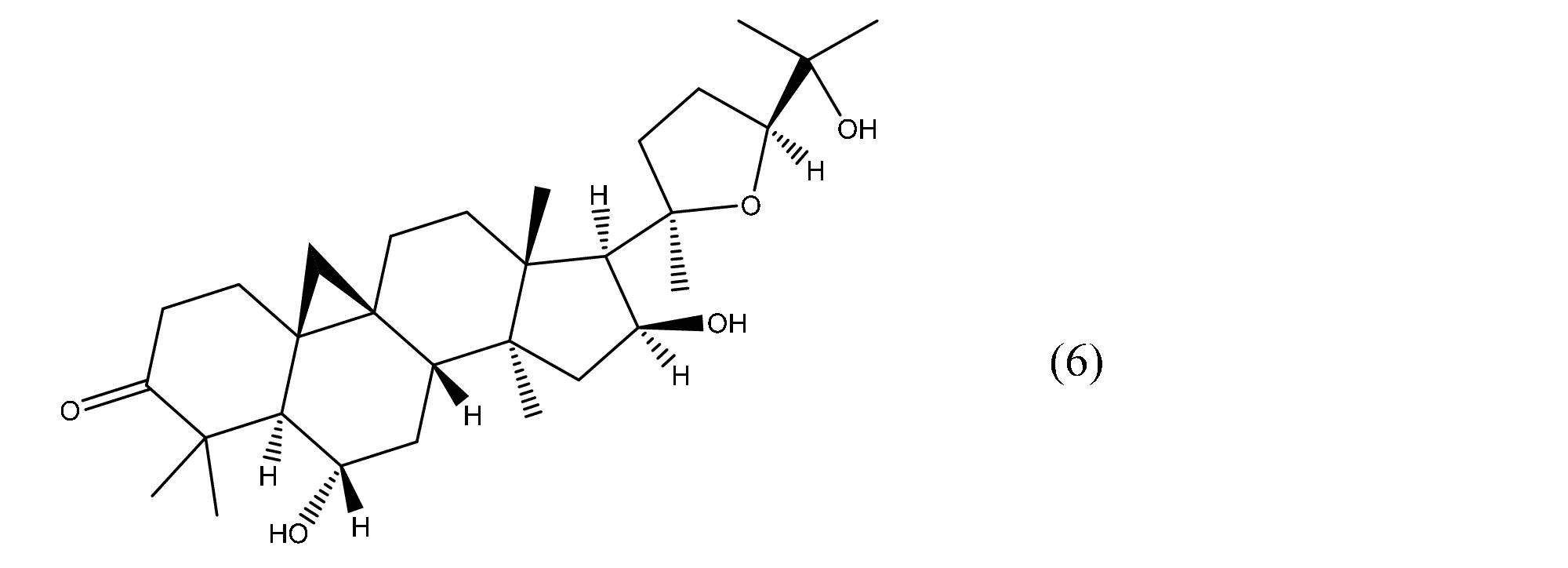
本実施形態において、シクロアストラゲノール類縁体は、上記式(2)~(6)で表される1種の化合物であってもよく、下記式(2)~(6)で表される2種以上の化合物の混合物であってもよい。
シクロアストラゲノール類縁体は、アストラガロシドIVと、細菌と、を接触して得られた、上記式(2)~(6)で表される2種以上の化合物の混合物であることが好ましい。
式(2)で表される化合物(以下、「M1」ともいう。)は、AIVからキシロースが脱離した構造を有するシクロアストラゲノールのグルコース配糖体である。また、式(3)で表される化合物(以下、「M2」ともいう。)は、AIVからグルコースが脱離した構造を有するシクロアストラゲノールのキシロース配糖体である。さらに、式(4)で表される化合物(以下、「M3」ともいう。)は、AIVからグルコース及びキシロースが脱離した構造を有するシクロアストラゲノールである。また、式(6)で表される化合物(以下、「M5」ともいう。)は、M3の水酸基が酸化されたケトン構造を有する化合物である。さらに、式(5)で表される化合物(以下、「M4」ともいう。)は、M3の立体異性体である。
〔回収工程〕
上記接触工程により、シクロアストラゲノール類縁体と細菌の混合物が得られる。回収工程においては、この混合物から不必要な成分を除いてもよい。例えば、混合物からシクロアストラゲノール類縁体のみを単離回収してもよいし、細菌と混合物としてシクロアストラゲノール類縁体を回収してもよい。シクロアストラゲノール類縁体のみを単離回収する場合の回収工程としては、接触工程において得られる混合物から、遠心分離や濾過等によって不溶な物質(菌体など)を除去した後、イオン交換樹脂などで脱塩し、その溶液から、結晶化やカラムクロマトグラフィー等の常法に従って、シクロアストラゲノール類縁体を分離する方法が挙げられる。また、細菌と混合物としてシクロアストラゲノール類縁体を回収する場合の回収工程としては、接触工程により得られた混合物を適宜濃縮し、また不純物を除去する方法が挙げられる。
〔組成物〕
本実施形態の組成物は、アストラガロシドIVと、細菌と、を接触させて上記のようにして得られたシクロアストラゲノール類縁体と、当該製造方法により用いた細菌と、を含む。当該組成物は、その用途に応じて適宜必要な成分を含んでもよい。当該組成物は、上記製造方法において、アストラガロシドIVと、細菌と、を接触させた溶液等の混合物を、そのまま用いてもよいし、得られた混合物を、分離、濃縮などの追加の回収工程を行って得られた混合物を用いてもよい。
以下、本発明を実施例及び比較例を用いてより具体的に説明する。本発明は、以下の実施例によって何ら限定されるものではない。
各菌体のグリセロールストック50μLを、GAM培地(種培地)15mL中で、37℃、24時間、嫌気性条件下で、振とう速度120rpmで培養した。その培養液150μLを、3mMのグルコースを含むGAM培地15mL中で、37℃、120時間、嫌気性条件下で、振とう速度120rpmで培養した。次いで、得られた培養液のうち1mLを分取し、HPLCにより分析した。
残りの培養液14mLは、3000rpmで15分間遠心分離を行い、上澄みをデカントし、菌体ペレットを得た。得られた細胞ペレットを、0.85%の塩化ナトリウム溶液1mLで洗浄し、洗浄液を遠心分離間に移して、さらに15000rpmで15分間遠心分離をして、再度、菌体ペレットを得た。
pH6.5、濃度0.1Mのリン酸カリウム緩衝液と、アストラガロシドIVを15mg/mL含むDMSO溶液20μLと、を混合し、混合液に菌体ペレットを添加して、緩衝液中にてアストラガロシドIVと菌体とを接触させた。なお、接触は37℃、72時間、振とう速度1750rpmとした。その後、混合液を遠心して菌体を沈殿させ、上清を回収した。回収した上清を凍結乾燥して再溶解することにより、HPLC分析用のサンプルを得た。得られたサンプルを用いて、HPLCにより分析を行った。
HPLCによる分析は、非特許文献1に記載の方法に準じて行い、HPLC分析により、AIV、M1~M5を測定した。
〔実施例A〕
上記方法において、菌体として表1に記載の菌体を用いた場合のHPLC分析結果を表1に示す。
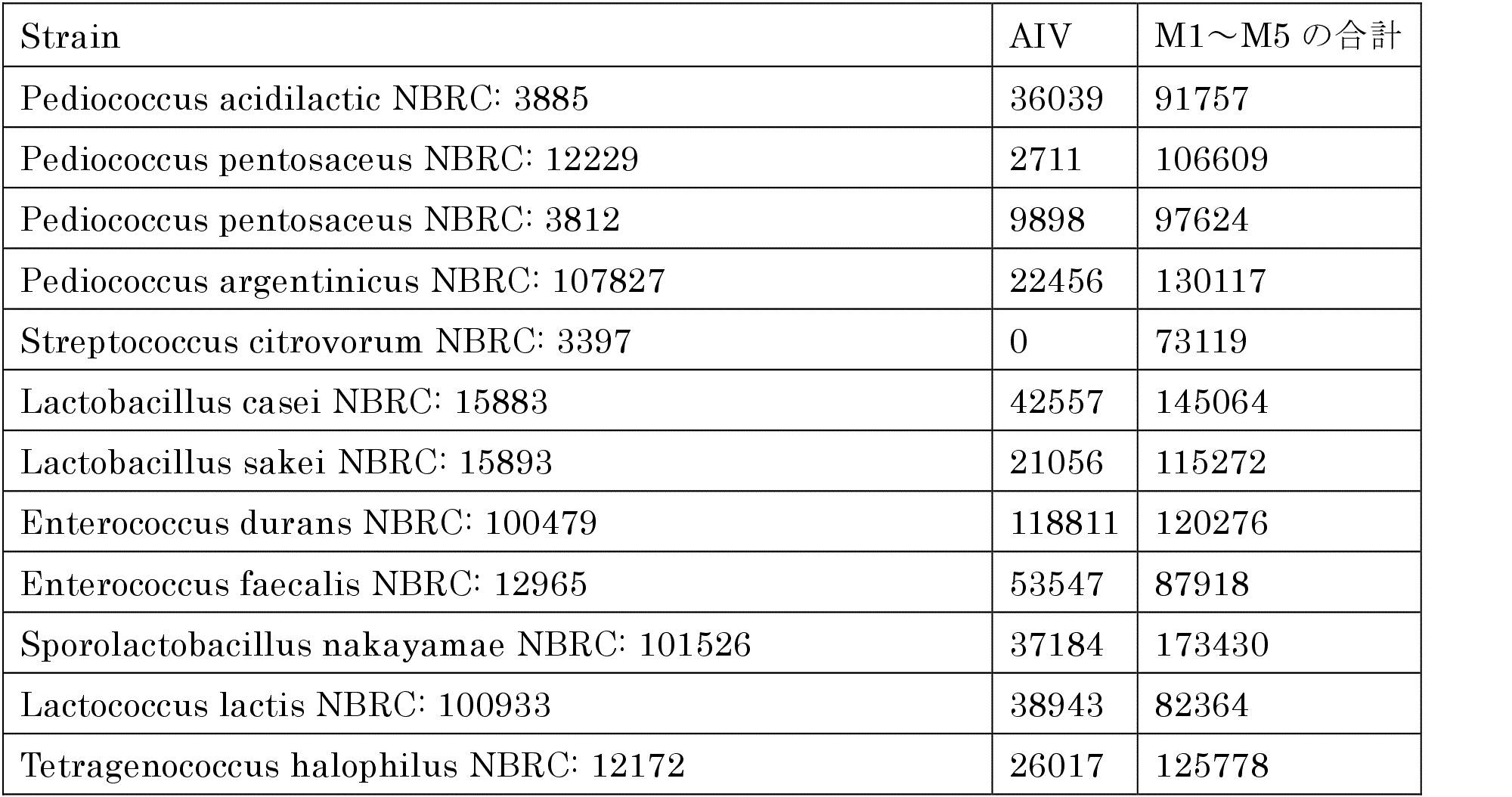
図1~6に示すに列記する各菌体についても、上記同様の操作を行い、M1~M5の生産を確認した。
〔実施例B〕
図1~6に示すに列記する各菌体のなかでも、化合物(M3)、化合物(M4)、及び、化合物(M5)の生産に優れるものとして以下の菌株が得られた。


〔実施例C〕
図1~6に示すに列記する各菌体のなかでも、特に、化合物(M1)及び化合物(M2)の生産に優れるものの上位20株として以下の菌株が得られた。
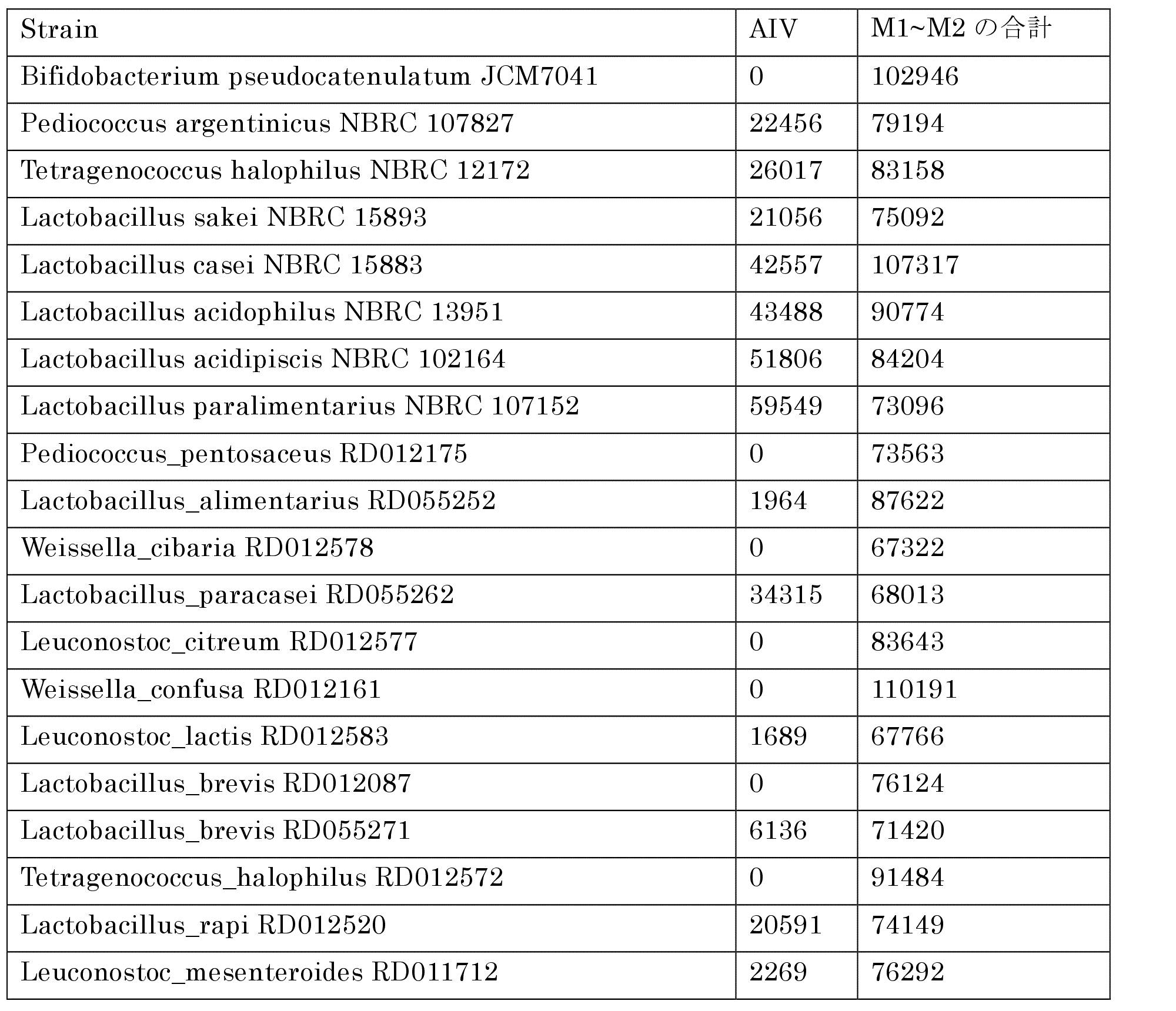
〔実施例D〕
図1~6に示すに列記する各菌体のなかでも、特に、化合物(M1)、化合物(M3)及び化合物(M4)の生産に優れるものの上位20株として以下の菌株が得られた。

〔実施例E〕
図1~6に示すに列記する各菌体のなかでも、特に、化合物(M2)、化合物(M3)及び化合物(M4)の生産に優れるものの上位20株として以下の菌株が得られた。

〔実施例F〕
図1~6に示すに列記する各菌体のなかでも、特に、化合物(M3)、及び、化合物(M4)の生産に優れるものの上位20株として以下の菌株が得られた。

〔実施例G〕
図1~6に示すに列記する各菌体のなかでも、特に、化合物(M5)の生産に優れるものの上位20株として以下の菌株が得られた。
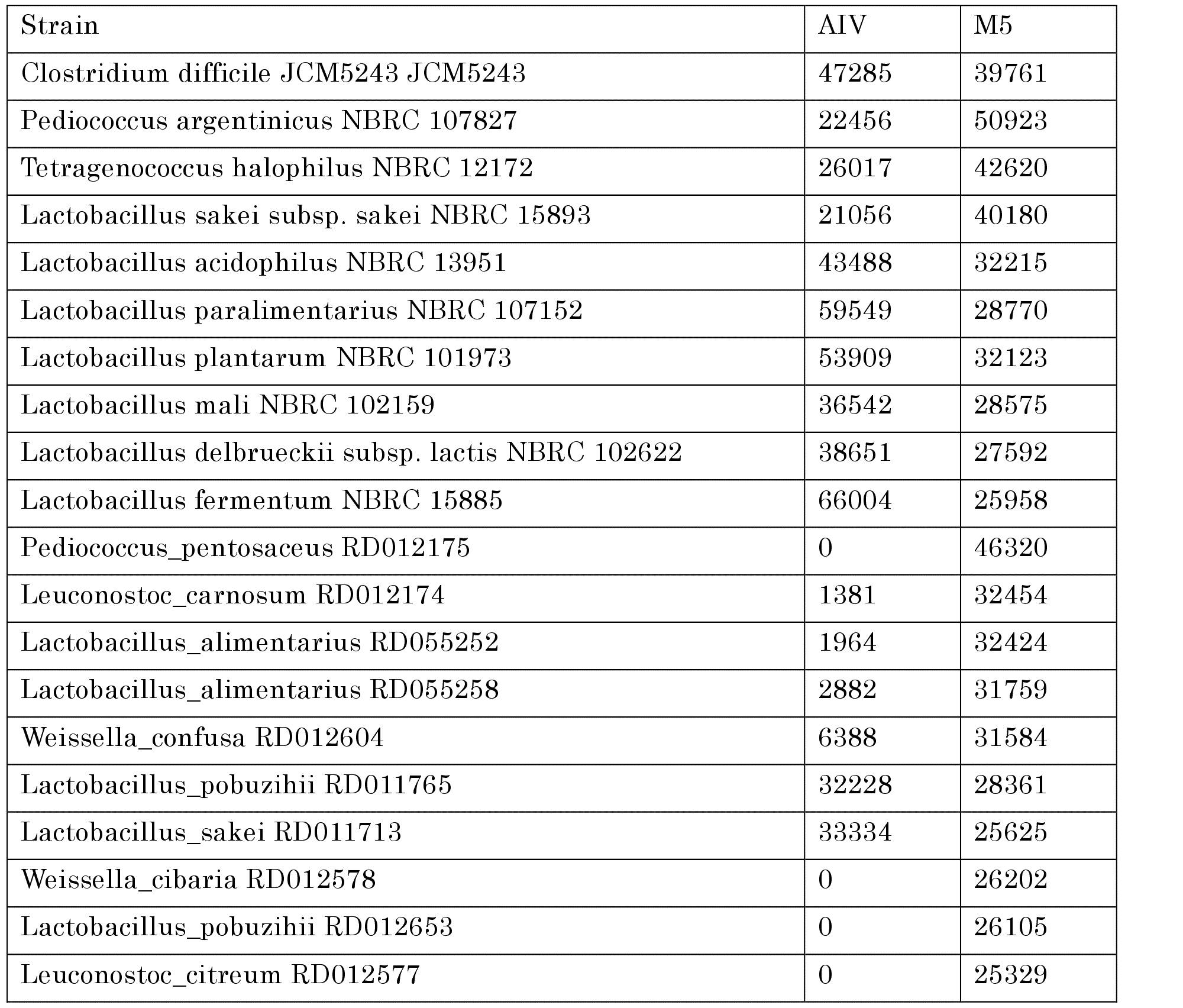
〔実施例H〕
図1~6に示すに列記する各菌体のなかでも、特に、化合物(M1)の生産に優れるものとして以下の菌株が得られた。

〔実施例I〕
図1~6に示すに列記する各菌体のなかでも、特に、化合物(M2)の生産に優れるものとして以下の菌株が得られた。

本発明の方法は、シクロアストラゲノール類縁体を製造する方法として、産業上の利用可能性を有する。
Claims (8)
- アストラガロシドIVと、細菌と、を接触する接触工程を含む、
シクロアストラゲノール類縁体を製造する方法。 - 前記細菌が、食品由来菌乃至はその同属種の菌、腸内細菌、農作物関連細菌、生薬類関連細菌、及び花卉関連細菌からなる群より選ばれる少なくとも一種である、
請求項1に記載のシクロアストラゲノール類縁体を製造する方法。 - 前記細菌が、アセトバクター属、バクテロイデス属、ビフィドバクテリウム属、クロストリジウム属、コリネバクテリウム属、エンテロコッカス属、フソバクテリウム属、グルコノバクター属、ハロアネロビウム属、ラクトバシラス属、ラクトコッカス属、リューコノストック属、ミクロコッカス属、オエノコッカス属、ペディオコッカス属、プロピオニバクテリウム属、シュードモナス属、ルミノコッカス属、スポロラクトバシラス属、ストレプトコッカス属、テトラジェノコッカス属、及びワイセラ属からなる群より選ばれる少なくとも一種である、
請求項1に記載のシクロアストラゲノール類縁体を製造する方法。 - 前記シクロアストラゲノール類縁体が、下記式(2)~(6)からなる群より選ばれる1種又は2種以上である、
請求項1~3のいずれか一項に記載の方法。


- 前記接触工程が、緩衝液中で実施される、
請求項1~4のいずれか一項に記載の方法。 - 前記接触工程が、培地中で実施される、
請求項1~4のいずれか一項に記載の方法。 - 請求項1~6のいずれか一項に記載の方法により得られる、
シクロアストラゲノール類縁体。 - 請求項7に記載のシクロアストラゲノール類縁体と、細菌と、を含む、
組成物。
Applications Claiming Priority (2)
| Application Number | Priority Date | Filing Date | Title |
|---|---|---|---|
| JP2018-247700 | 2018-12-28 | ||
| JP2018247700A JP7327937B2 (ja) | 2018-12-28 | 2018-12-28 | シクロアストラゲノール類縁体を生産する方法 |
Publications (1)
| Publication Number | Publication Date |
|---|---|
| WO2020137706A1 true WO2020137706A1 (ja) | 2020-07-02 |
Family
ID=71129814
Family Applications (1)
| Application Number | Title | Priority Date | Filing Date |
|---|---|---|---|
| PCT/JP2019/049408 Ceased WO2020137706A1 (ja) | 2018-12-28 | 2019-12-17 | シクロアストラゲノール類縁体を生産する方法 |
Country Status (3)
| Country | Link |
|---|---|
| JP (1) | JP7327937B2 (ja) |
| TW (1) | TWI900473B (ja) |
| WO (1) | WO2020137706A1 (ja) |
Cited By (1)
| Publication number | Priority date | Publication date | Assignee | Title |
|---|---|---|---|---|
| CN113995142A (zh) * | 2021-11-08 | 2022-02-01 | 英国纽歌芬生物科技国际集团控股有限公司 | 一种含有植物螯合肽的组合物及其制备方法 |
Families Citing this family (1)
| Publication number | Priority date | Publication date | Assignee | Title |
|---|---|---|---|---|
| JP7695776B2 (ja) * | 2020-06-12 | 2025-06-19 | 小林製薬株式会社 | シクロアストラゲノール含有組成物を生産する方法 |
-
2018
- 2018-12-28 JP JP2018247700A patent/JP7327937B2/ja active Active
-
2019
- 2019-12-11 TW TW108145216A patent/TWI900473B/zh active
- 2019-12-17 WO PCT/JP2019/049408 patent/WO2020137706A1/ja not_active Ceased
Non-Patent Citations (3)
| Title |
|---|
| ITOH, KIKUJI: "Non-official translation: Enteric bacteria and animal experimental system", KAGAKU TO SEIBUTSU, vol. 32, no. 1, 1994, pages 44 - 47, ISSN: 1883-6852 * |
| JIN, Y ET AL.: "Disposition of Astragaloside IV via Enterohepatic Circulation Is Affected by the Activity of the Intestinal Microbiome", JOURNAL OF AGRICULTURAL AND FOOD CHEMISTRY, vol. 63, no. 23, 2015, pages 6084 - 6093, XP055724315, ISSN: 0021-8561 * |
| WANG, L ET AL.: "Efficient Biotransformation of Astragaloside IV to Cycloastragenol by Bacillus sp. LG-502", APPLIED BIOCHEMISTRY AND BIOTECHNOLOGY, vol. 183, no. 4, 2017, pages 1488 - 1502, XP036370345, ISSN: 0273-2289, DOI: 10.1007/s12010-017-2517-1 * |
Cited By (2)
| Publication number | Priority date | Publication date | Assignee | Title |
|---|---|---|---|---|
| CN113995142A (zh) * | 2021-11-08 | 2022-02-01 | 英国纽歌芬生物科技国际集团控股有限公司 | 一种含有植物螯合肽的组合物及其制备方法 |
| CN113995142B (zh) * | 2021-11-08 | 2022-04-26 | 英国纽歌芬生物科技国际集团控股有限公司 | 一种含有植物螯合肽的组合物及其制备方法 |
Also Published As
| Publication number | Publication date |
|---|---|
| JP2020103223A (ja) | 2020-07-09 |
| TWI900473B (zh) | 2025-10-11 |
| TW202038971A (zh) | 2020-11-01 |
| JP7327937B2 (ja) | 2023-08-16 |
Similar Documents
| Publication | Publication Date | Title |
|---|---|---|
| Hati et al. | Short-chain fatty acid and vitamin production potentials of Lactobacillus isolated from fermented foods of Khasi Tribes, Meghalaya, India | |
| Fei et al. | High-throughput sequencing and culture-based approaches to analyze microbial diversity associated with chemical changes in naturally fermented tofu whey, a traditional Chinese tofu-coagulant | |
| JP7695776B2 (ja) | シクロアストラゲノール含有組成物を生産する方法 | |
| Liu et al. | Metabolic profiles of carbohydrates in Streptococcus thermophilus during pH-controlled batch fermentation | |
| EP3609514A1 (en) | Consortia of living bacteria useful for treatment of microbiome dysbiosis | |
| CN117625476B (zh) | 一株植物乳植杆菌TRG22及其在发酵转化人参皂苷Rg1制备稀有人参皂苷中的用途 | |
| Aziz et al. | Biotransformation of linoleic acid into different metabolites by food derived Lactobacillus plantarum 12-3 and in silico characterization of relevant reactions | |
| JPWO2011105335A1 (ja) | 新規ビフィドバクテリウム属細菌の作出方法 | |
| KR101671435B1 (ko) | 진세노사이드 생물전환능을 갖는 균주 및 이를 이용한 발효홍삼 추출물의 제조방법 | |
| CN118497056B (zh) | 一株戊糖片球菌TRE15及其在发酵转化人参皂苷Re制备稀有人参皂苷中的应用 | |
| JP2010187647A (ja) | ダイゼイン代謝物産生菌含有組成物及びダイゼイン代謝物の製造方法 | |
| KR20040013653A (ko) | 사포닌분해물을 함유하는 발효인삼 및 그 제조방법 | |
| US20190345268A1 (en) | Exopolysaccharides and uses thereof | |
| WO2004050890A1 (ja) | マクロライド系化合物の製造方法 | |
| FR2938552A1 (fr) | Souche hypocholesterolemiante de lactobacillus delbrueckii | |
| JP7327937B2 (ja) | シクロアストラゲノール類縁体を生産する方法 | |
| KR20120125113A (ko) | 인삼 발효능을 갖는 신규 락토바실러스 플랜타럼 crnb?22 〔kctc11931 bp〕균주 및 이를 이용한 사포닌 전환 방법 | |
| KR20160047755A (ko) | 락토바실러스플란타룸 wikim18을 포함하는 진세노사이드 생물전환용 조성물 | |
| CN118834777A (zh) | 一种生产18α-GAMG和/或18α-GL的工程菌及其构建方法、应用和生产方法 | |
| KR101285681B1 (ko) | 사포닌 생물전환능을 갖는 균주 및 이를 이용한 체내흡수율이 증진된 발효인삼의 제조방법 | |
| CN116179407B (zh) | 一株屎肠球菌及其在亚麻木酚素生物转化中的应用 | |
| CN120060077A (zh) | 一株棒状腐败乳杆菌CY-06及其在发酵转化人参皂苷Re制备稀有人参皂苷中的用途 | |
| Malashree et al. | β-Glucosidase activity of Lactobacilli for biotransformation of soy isoflavones | |
| KR101915847B1 (ko) | 미생물을 이용한 생물전환 화합물의 생산 방법 | |
| US11332766B2 (en) | Strain of Serratia liquefaciens and a method of producing heliotropin with the same strain |
Legal Events
| Date | Code | Title | Description |
|---|---|---|---|
| 121 | Ep: the epo has been informed by wipo that ep was designated in this application |
Ref document number: 19904049 Country of ref document: EP Kind code of ref document: A1 |
|
| NENP | Non-entry into the national phase |
Ref country code: DE |
|
| 122 | Ep: pct application non-entry in european phase |
Ref document number: 19904049 Country of ref document: EP Kind code of ref document: A1 |