WO2020134941A1 - 一种视频处理方法、装置、设备和存储介质 - Google Patents
一种视频处理方法、装置、设备和存储介质 Download PDFInfo
- Publication number
- WO2020134941A1 WO2020134941A1 PCT/CN2019/123293 CN2019123293W WO2020134941A1 WO 2020134941 A1 WO2020134941 A1 WO 2020134941A1 CN 2019123293 W CN2019123293 W CN 2019123293W WO 2020134941 A1 WO2020134941 A1 WO 2020134941A1
- Authority
- WO
- WIPO (PCT)
- Prior art keywords
- video
- user
- editing
- segmented
- abnormally
- Prior art date
- Legal status (The legal status is an assumption and is not a legal conclusion. Google has not performed a legal analysis and makes no representation as to the accuracy of the status listed.)
- Ceased
Links
Images




Classifications
-
- H—ELECTRICITY
- H04—ELECTRIC COMMUNICATION TECHNIQUE
- H04N—PICTORIAL COMMUNICATION, e.g. TELEVISION
- H04N5/00—Details of television systems
- H04N5/76—Television signal recording
-
- G—PHYSICS
- G06—COMPUTING OR CALCULATING; COUNTING
- G06F—ELECTRIC DIGITAL DATA PROCESSING
- G06F11/00—Error detection; Error correction; Monitoring
-
- H—ELECTRICITY
- H04—ELECTRIC COMMUNICATION TECHNIQUE
- H04N—PICTORIAL COMMUNICATION, e.g. TELEVISION
- H04N21/00—Selective content distribution, e.g. interactive television or video on demand [VOD]
- H04N21/40—Client devices specifically adapted for the reception of or interaction with content, e.g. set-top-box [STB]; Operations thereof
- H04N21/43—Processing of content or additional data, e.g. demultiplexing additional data from a digital video stream; Elementary client operations, e.g. monitoring of home network or synchronising decoder's clock; Client middleware
- H04N21/433—Content storage operation, e.g. storage operation in response to a pause request, caching operations
-
- H—ELECTRICITY
- H04—ELECTRIC COMMUNICATION TECHNIQUE
- H04N—PICTORIAL COMMUNICATION, e.g. TELEVISION
- H04N21/00—Selective content distribution, e.g. interactive television or video on demand [VOD]
- H04N21/40—Client devices specifically adapted for the reception of or interaction with content, e.g. set-top-box [STB]; Operations thereof
- H04N21/43—Processing of content or additional data, e.g. demultiplexing additional data from a digital video stream; Elementary client operations, e.g. monitoring of home network or synchronising decoder's clock; Client middleware
- H04N21/433—Content storage operation, e.g. storage operation in response to a pause request, caching operations
- H04N21/4334—Recording operations
-
- H—ELECTRICITY
- H04—ELECTRIC COMMUNICATION TECHNIQUE
- H04N—PICTORIAL COMMUNICATION, e.g. TELEVISION
- H04N21/00—Selective content distribution, e.g. interactive television or video on demand [VOD]
- H04N21/40—Client devices specifically adapted for the reception of or interaction with content, e.g. set-top-box [STB]; Operations thereof
- H04N21/43—Processing of content or additional data, e.g. demultiplexing additional data from a digital video stream; Elementary client operations, e.g. monitoring of home network or synchronising decoder's clock; Client middleware
- H04N21/44—Processing of video elementary streams, e.g. splicing a video clip retrieved from local storage with an incoming video stream or rendering scenes according to encoded video stream scene graphs
-
- H—ELECTRICITY
- H04—ELECTRIC COMMUNICATION TECHNIQUE
- H04N—PICTORIAL COMMUNICATION, e.g. TELEVISION
- H04N21/00—Selective content distribution, e.g. interactive television or video on demand [VOD]
- H04N21/40—Client devices specifically adapted for the reception of or interaction with content, e.g. set-top-box [STB]; Operations thereof
- H04N21/43—Processing of content or additional data, e.g. demultiplexing additional data from a digital video stream; Elementary client operations, e.g. monitoring of home network or synchronising decoder's clock; Client middleware
- H04N21/443—OS processes, e.g. booting an STB, implementing a Java virtual machine in an STB or power management in an STB
-
- H—ELECTRICITY
- H04—ELECTRIC COMMUNICATION TECHNIQUE
- H04N—PICTORIAL COMMUNICATION, e.g. TELEVISION
- H04N21/00—Selective content distribution, e.g. interactive television or video on demand [VOD]
- H04N21/40—Client devices specifically adapted for the reception of or interaction with content, e.g. set-top-box [STB]; Operations thereof
- H04N21/47—End-user applications
- H04N21/472—End-user interface for requesting content, additional data or services; End-user interface for interacting with content, e.g. for content reservation or setting reminders, for requesting event notification, for manipulating displayed content
-
- H—ELECTRICITY
- H04—ELECTRIC COMMUNICATION TECHNIQUE
- H04N—PICTORIAL COMMUNICATION, e.g. TELEVISION
- H04N21/00—Selective content distribution, e.g. interactive television or video on demand [VOD]
- H04N21/40—Client devices specifically adapted for the reception of or interaction with content, e.g. set-top-box [STB]; Operations thereof
- H04N21/47—End-user applications
- H04N21/472—End-user interface for requesting content, additional data or services; End-user interface for interacting with content, e.g. for content reservation or setting reminders, for requesting event notification, for manipulating displayed content
- H04N21/47205—End-user interface for requesting content, additional data or services; End-user interface for interacting with content, e.g. for content reservation or setting reminders, for requesting event notification, for manipulating displayed content for manipulating displayed content, e.g. interacting with MPEG-4 objects, editing locally
-
- H—ELECTRICITY
- H04—ELECTRIC COMMUNICATION TECHNIQUE
- H04N—PICTORIAL COMMUNICATION, e.g. TELEVISION
- H04N21/00—Selective content distribution, e.g. interactive television or video on demand [VOD]
- H04N21/80—Generation or processing of content or additional data by content creator independently of the distribution process; Content per se
- H04N21/85—Assembly of content; Generation of multimedia applications
- H04N21/854—Content authoring
- H04N21/8543—Content authoring using a description language, e.g. Multimedia and Hypermedia information coding Expert Group [MHEG], eXtensible Markup Language [XML]
Definitions
- the embodiments of the present application relate to the field of Internet technologies, such as a video processing method, device, device, and storage medium.
- the embodiments of the present application provide a video processing method, device, device, and storage medium, which can realize the recovery of a video when a user quits abnormally, reduce the repetitive operations performed by the user, and improve the convenience of video processing.
- an embodiment of the present application provides a video processing method, the method includes: acquiring a user's recovery trigger operation; acquiring, according to the recovery trigger operation, pre-stored operation state data of the video before the user abnormally exits; based on the operation State data restores the video.
- an embodiment of the present application provides a video processing apparatus, the apparatus includes: an operation acquisition module configured to acquire a recovery trigger operation; an operation state acquisition module configured to acquire a video before a user abnormally exits according to the confirmation operation Pre-stored operating state data;
- the video restoration module is configured to restore the video according to the operation state data.
- an embodiment of the present application provides an apparatus including: at least one processor; a storage device configured to store at least one program; when the at least one program is executed by the at least one processor, so that The at least one processor implements the video processing method described in any embodiment of the present application.
- an embodiment of the present application provides a computer-readable storage medium that stores a computer program, and when the computer program is executed by a processor, realizes the video described in any embodiment of the present application Approach.
- FIG. 1A is a flowchart of a video processing method according to an embodiment of the present application.
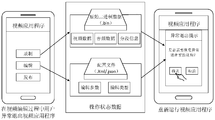
- FIG. 1B is a schematic diagram of a video creation process in a video processing method provided by an embodiment of this application;
- 1C is a schematic diagram of an abnormal exit prompt box in the video processing method provided by an embodiment of the present application.
- 1D is a schematic diagram of the principle of storing operation state data in the video processing method provided by an embodiment of the present application
- FIG. 2 is a schematic diagram of the principle of a video processing process provided by an embodiment of the present application.
- FIG. 3 is a schematic diagram of another video processing procedure provided by an embodiment of the present application.
- FIG. 4 is a schematic diagram of another video processing process provided by an embodiment of the present application.
- FIG. 5 is a schematic structural diagram of a video processing device according to an embodiment of the present application.
- FIG. 6 is a schematic structural diagram of a device provided by an embodiment of the present application.
- the video application generally does not set corresponding abnormal recovery measures during the recording and editing of the video.
- the video application crashes during the video creation process the user quits the video application abnormally, then The content of the currently created video will be lost.
- the corresponding operation state data may be stored in advance during video creation.
- the user's abnormality may be recovered directly according to the corresponding operation state data stored
- the video created before exiting does not require the user to perform multiple repeated operations, which provides corresponding abnormal recovery operations for video creation in the video application and improves the convenience of video processing.
- FIG. 1A is a flowchart of a video processing method according to an embodiment of the present application.
- This embodiment can be applied to any video application that can create videos.
- the technical solutions of the embodiments of the present application are applicable to how to recover videos created before a user abnormally quits a video application.
- the video processing method provided in this embodiment may be executed by the video processing apparatus provided in the embodiment of the present application, and the apparatus may be implemented in at least one of software and hardware, and integrated in a device that executes the method. It may be a mobile terminal such as a smart phone, tablet computer, notebook, etc. configured with a video application with video creation function.
- the method may include steps S110 to S130.
- step S110 the user's recovery trigger operation is acquired.
- the recovery trigger operation means that after the video application (Application, APP) crashes during the video creation process, if the user wants to recover the video that has been created during the video creation process before the crash, the user will use the video application Perform the corresponding trigger operation in order to instruct to restore the previously created video.
- the video application Application, APP
- the video application refers to a software program capable of corresponding video creation functions.
- the video creation process generally includes three steps: recording, editing, and publishing; as shown in FIG. 1B, the user opens the video APP and clicks the corresponding Record button 10, to record the corresponding video, after the recording is completed, edit the recorded video by selecting the corresponding various special effects, and after the editing is completed, publish the currently created video, so as to upload to the Internet for dissemination, by other users Watch.
- the video APP may encounter some unexpected conditions during the video creation process, or the user needs to temporarily quit, so that the video APP interrupts the current video creation operation, and the currently created video is lost.
- This embodiment is mainly to solve the problem that the video content created before the user abnormally exits the video APP is lost.
- the user When the user opens the video APP, it will first determine whether the user last exited the video APP is an abnormal exit. During the video APP, the user will perform the corresponding recovery trigger operation, such as clicking the recovery button in the interface, or issuing a voice recovery instruction, etc. At this time, the video application obtains the corresponding recovery trigger operation, thereby performing the subsequent video recovery process.
- the recovery trigger operation is determined by: when a user abnormally quits and the video application is re-run, a corresponding abnormal notification is popped up; the user's confirmation operation on the abnormal notification is obtained as recovery Trigger the operation.
- the abnormal notification is displayed on the screen after the user abnormally quits the video application and reruns the video application.
- the abnormal notification may be in any form of notification.
- the user exit prompt box is used as an example for description.
- an abnormal exit prompt box for instructing the user to abnormally quit the video APP last time is automatically popped up on the screen, that is, the user encountered an error during the video creation process.
- the video APP will be re-run.
- the video APP will detect the last abnormal exit of the user and automatically pop up the corresponding abnormal exit prompt box on the screen.
- the abnormal exit prompt box is used to Indicate whether the user needs to restore the video created before the last abnormal exit.
- This embodiment mainly describes the recovery process of the created video when the user abnormally exits the video APP. Therefore, after popping up the corresponding abnormal exit prompt box on the screen, this embodiment will obtain the user by clicking the abnormal exit prompt box
- the confirmation operation generated by the confirmation button in indicates that it is necessary to restore the video that was created when the user last abnormally quit the video APP.
- the user’s cancel operation in the abnormal exit prompt box will also be obtained in this embodiment.
- the video that has been created when the user abnormally quit the video APP last time can be recovered, and the video that has been created when the abnormally quit video APP was last quit can be cleared, so as to obtain new video creation content.
- step S120 the operation state data pre-stored in the video before the user exits abnormally is acquired according to the recovery trigger operation.
- the operation status data is the information indicating the current creation status of the video that has been created before the user abnormally exits the video APP.
- the corresponding storage is performed during the video creation process before the user abnormally exits the video APP, which can clearly indicate the video that has been created Various video operations included in the. Since video creation generally includes three steps of recording, editing and publishing, the corresponding time for users to abnormally quit the video APP also includes three kinds of abnormal exits during video recording, abnormal exit during video editing and abnormal exit during video publishing For different video creation states, for different video creation states, the content contained in the pre-stored operation state data of the video is also different.
- the operation state data at this time may include the video data recorded in segments during the video recording process before the user abnormally exits, the audio data recorded in segments, and the points Segment information
- segment recording refers to storing the recorded video in segments according to the preset recording duration during the recording process, where the video data is the video frame data corresponding to the segment recording, and the audio data is the segmented recording matching the video frame Audio data, segment information is the segment time and segment duration corresponding to segment recording, which indicates the segment situation;
- the operation state data at this time can include the video data recorded in segments during the video recording process before the user abnormally exits, the audio data and segment information recorded in segments, and the video editing process before the user abnormally exits
- the editing type and editing parameters, where the editing type refers to the special effect type selected for the segmented video such as
- the editing parameter refers to the special effect parameters used by different editing types, which can include all Select the attribute value of special effects and special effect participation information, such as the image in the map, the position of the map, the size of the map, and the length of time the map participates in the video; if the user quits the video app abnormally during the video release process, the video release is The segmented video that has been recorded and edited is released.
- the operation status data can include video data recorded in segments during the video recording process before the user exits abnormally, audio data recorded in segments, and segment information.
- the editing type and editing parameters during the video editing process, and the publishing parameters set during the video publishing process before the user quits abnormally where the publishing parameters are the permissions or upload requirements set by the user when uploading the recorded and edited video Data, such as permission information corresponding to users who are allowed to watch this video or users who are not allowed to watch this video.
- the recovery trigger operation when the user's recovery trigger operation is obtained, for example, when the user confirms the operation in the abnormal exit prompt box, it indicates that the user wishes to recover the video that was created before the last abnormal exit.
- the recovery trigger operation can be used locally in advance.
- the operation status data corresponds to different creation stages Information.
- the principle of pre-storing the corresponding operation state data in this embodiment is shown in FIG. 1D. Since the video recording, video data, audio data, and segment information of the segment recording are large in the video recording process, Therefore, in this embodiment, the acquired video data, audio data, and segment information are stored in the original binary data format, which facilitates the rapid loading of the stored data during subsequent recovery; the editing types and editing parameters in the video editing process are mainly For the operation records of some editing functions in the video creation process, the editing type matches the function selection state in the video editing process, and the editing parameters match the material selection state in the video editing process.
- the data volume in this part is relatively Small, can be stored in common configuration formats such as Extensible Markup Language (eXtensible Markup Language, XML) or JS Object Notation (JavaScript) Object; Notation (JSON); the publishing parameters during the video publishing process are mainly aimed at the user’s
- the record of the release requirement has a relatively small amount of data, and can also be stored in common configuration formats such as XML or JSON.
- the operation status data in this embodiment may also include statistical data during the video creation process. The statistical data is used to count user behavior data of the video APP during the video creation process, such as the user's commonly used editing preferences, etc.
- Common configuration formats such as XML or JSON are stored.
- the operating state data may be stored in a temporary directory, which is dynamically updated.
- the video APP when a user needs to create a new video in the video APP, the video APP will generate a temporary directory for the video created this time, so that the operation status data obtained in this video creation is stored in the temporary directory. And according to the sequence of video creation, the corresponding operation state data is stored in sequence.
- this embodiment may further include: clearing the temporary directory when it is detected that the user normally exits the video application.
- the video APP when the user normally exits the video APP after completing the video creation, the video APP can detect that the user normally exits, and at this time, the temporary directory of the video creation can be cleared so that the new creation can be dynamically stored later Video content.
- the operation status data of the video before the abnormal exit stored in the temporary directory will not be cleared.
- the user when the user abnormally exits the video APP and re-runs the video APP, the user can be prompted according to the abnormal exit
- the confirmation operation in the box obtains the operation state data pre-stored in the video before the user's last abnormal exit in the temporary directory, so that the video before the abnormal exit can be recovered later.
- the user needs to permanently save the created video he only needs to rename the temporary directory to an official directory and include it in the user’s video draft management list. You can find videos that have been created in the management list.
- step S130 the video is restored according to the operation state data.
- the corresponding video creation content can be loaded in sequence according to the storage order in the operation state data, that is, the The corresponding video operation in the video created before the user abnormally exits the video APP is reapplied in sequence, thereby restoring the state of creation before the user abnormally exited the video APP.
- the corresponding recovery steps for recovering the video according to the operation state data are different.
- the video recording process is respectively Abnormal exit, abnormal exit during video editing and abnormal exit during video publishing are described in detail in three video creation states, which will not be introduced in this embodiment.
- the technical solution provided by this embodiment can obtain the operation state data pre-stored in the video before the user abnormally exits when the user's recovery trigger operation is obtained, so that the video when the user last abnormally exits is restored according to the operation state data as a video
- the video in the running process of the application program provides abnormal recovery measures, which avoids the loss of video content due to abnormal conditions such as the collapse of the video application program in the related art, and improves the convenience of video processing.
- FIG. 2 is a schematic diagram of the principle of a video processing process provided by an embodiment of the present application. This embodiment is refined based on the above-mentioned embodiment. As shown in FIG. 2, in this embodiment, the video recovery process in which the user abnormally quits the video APP during the video publishing process is explained in detail.
- the video processing method in this embodiment may include steps S201 to S210.
- step S201 a video recording instruction is obtained.
- the user runs the video application, if he needs to upload the corresponding video on the Internet, he first needs to record the corresponding video. At this time, the user generates the corresponding video recording instruction by clicking the record button in the video APP, In order to control the terminal where the video APP is located to turn on the corresponding camera for video recording. At the same time, when a new video needs to be recorded, the video APP will generate a corresponding temporary directory for the created video, and the corresponding temporary directory is set to store the created video content.
- step S202 according to the video recording instruction, the segmented videos are sequentially stored.
- the corresponding video can be recorded in segments according to the recording requirements.
- the video can be generated according to the sequence of the segmented recording.
- the temporary recorded videos are stored in sequence in the temporary directory, and the recorded videos include the corresponding video data, audio data and segment information, so that subsequent users can abnormally exit the video APP and re-run the video APP The video is restored.
- step S203 a video editing instruction is acquired.
- the video editing instructions include the editing type and editing parameters of the segmented video.
- the user can click the edit button in the video APP to generate the corresponding video editing instruction to perform special effect editing on the segmented video.
- the video editing instruction can specify which segmented video the edited video is, as well as the editing type and editing parameters performed on the video, that is, the function selection state and material selection state of the special effect.
- step S204 the editing type and editing parameters of the video are sequentially recorded, and the segmented video is edited according to the video editing instruction to obtain the edited video.
- the video editing instruction can be parsed to obtain the editing type and editing parameters included in this video editing, in order to restore the editing in the video when the user quits the video APP abnormally Operation
- the editing type and editing parameters of the video in this editing process can be recorded according to the editing operations performed in sequence, that is, the editing type and editing parameters of the video are triggered once in each editing operation
- the editing types and editing parameters performed in the video editing process are triggered once in each editing operation
- step S205 during the video publishing process, it is detected that the user abnormally quits the video application, and the video application is controlled to re-run.
- the video created this time can be uploaded to the Internet for distribution by setting the corresponding publishing parameters.
- Correspondingly stored in a temporary directory if it is detected during the video publishing process that the user quits the video application abnormally due to some unexpected conditions, resulting in the unsuccessful release of the video created this time, the user will control the video by clicking the video application The video application is re-run to subsequently restore the video that was created before the user exited abnormally in the re-run video application.
- step S206 the user's recovery trigger operation is acquired.
- step S207 the operation state data pre-stored in the video before the user exits abnormally is acquired according to the recovery trigger operation.
- step S208 the corresponding segment video is generated according to the segment-recorded video data, segment-recorded audio data, and segment information.
- the acquired operation state data may include Segmented video data, segmented audio data, and segment information during video recording, editing types and parameters in the video editing process before the user exits abnormally, and settings during the video publishing process before the user exits abnormally 'S release parameters.
- step S209 the corresponding segmented video is edited according to the editing type and editing parameters in order to restore the video.
- the specified segmented video is sequentially edited according to the editing order, thereby restoring the video before the user exits abnormally All editing operations in, get the edited video.
- step S210 the video is distributed according to the distribution parameters.
- the release parameters set before the user abnormally exits can also be obtained from the operation state data and based on the release The parameter releases the restored video and completes the operation before the user exits the video APP abnormally.
- the technical solution provided in this embodiment stores the corresponding operation state data according to the trigger operation of video creation during video recording, editing, and publishing.
- You can restore the video before the user exits abnormally according to the operation status data, to realize the recovery of the recorded and edited video before the user exits the video application abnormally, avoiding the video caused by abnormal conditions such as the crash of the video application in the related technology
- the loss of content improves the convenience of video processing.
- FIG. 3 is a schematic diagram of another video processing procedure provided by an embodiment of the present application. This embodiment is refined based on the above-mentioned embodiment. As shown in FIG. 3, in this embodiment, the video recovery process in which the user abnormally quits the video APP during video recording is mainly explained in detail.
- the video processing method in this embodiment may include steps S310 to S360.
- step S310 a video recording instruction is obtained.
- step S320 according to the video recording instruction, the segmented videos are sequentially stored.
- step S330 it is detected that the user abnormally quits the video application during the video recording process, and the video application is controlled to re-run.
- the user if it is detected that the user quits the video application abnormally due to some unexpected conditions during the video recording process, and the video recording is not completed, the user will control the video application to re-run by clicking the video application , In order to subsequently restore the video that was recorded before the user quit abnormally in the re-run video application, so that on the basis of resuming the recorded video, continue to record the subsequent video without re-run the video application, the user is abnormal Re-record the video that has been recorded before exiting, to reduce the user's repeated operations of recording the same video.
- step S340 the user's recovery trigger operation is acquired.
- step S350 the operation state data pre-stored in the video before the user exits abnormally is acquired according to the recovery trigger operation.
- step S360 the corresponding segmented video is generated based on the segmented video data, segmented audio data, and segment information.
- the obtained operation state data includes the video recording before the user abnormally quits Video data recorded in segments, audio data recorded in segments, and segment information.
- the video data of the segment recording, the audio data of the segment recording and the segment information can be obtained in sequence according to the video recording sequence, and the corresponding segments can be generated in sequence according to the sequence of the segment recording Video to restore the video that was recorded before the user exited abnormally, and then continue to complete the subsequent recording operations that need to be performed before the user exits abnormally based on the recovery of the recorded video.
- the technical solution provided in this embodiment stores video data, audio data, and segment information recorded in segments according to the trigger operation of video recording during the video recording process.
- the user abnormally quits the video application and
- the video recorded before the user exits abnormally can be recovered according to the video data recorded in segments, the audio data recorded in segments, and the segment information, to avoid abnormalities such as the crash of the video application in the related art
- the situation leads to the loss of video content, which improves the convenience of video processing.
- FIG. 4 is a schematic diagram of another video processing procedure provided by an embodiment of the present application. This embodiment is refined based on the above-mentioned embodiment. As shown in FIG. 4, in this embodiment, the video recovery process in which the user abnormally exits the video APP during the video editing process is explained in detail.
- the video processing method in this embodiment may include steps S410 to S470.
- step S410 the recorded video and the video editing instruction corresponding to the recorded video are acquired, and the video editing instruction includes the editing type and editing parameters of the recorded video.
- step S420 the editing type and editing parameters of the video are sequentially recorded, and the recorded video is edited according to the video editing instruction to obtain the edited video.
- step S430 it is detected that the user abnormally quits the video application during the video editing process, and the video application is controlled to re-run.
- the user will control the video application to re-run by clicking the video application .
- the video application In order to restore the video that has been recorded and edited before the user exited abnormally in the re-run video application, so that on the basis of resuming the recorded and edited video, continue to perform subsequent editing operations on the recorded video without having to restart
- re-record and edit the video that has been recorded and edited before the user exited abnormally reducing repeated operations when the user additionally records and edits the same video.
- step S440 the user's recovery trigger operation is acquired.
- step S450 the operation state data pre-stored in the video before the user exits abnormally is acquired according to the recovery trigger operation.
- step S460 the corresponding segment video is generated according to the segment-recorded video data, segment-recorded audio data, and segment information.
- step S470 the segmented video is edited according to the editing type and editing parameters in order to restore the video.
- the method before acquiring the user's recovery trigger operation, the method further includes: acquiring a video recording instruction; sequentially storing segmented recorded videos according to the video recording instruction; acquiring a video editing instruction, the video editing instruction includes all The editing type and editing parameters of the segmented recorded video; record the editing type and editing parameters of the video in sequence, and edit the segmented recorded video according to the video editing instruction to obtain the edited video.
- the video information of the video recording and editing stage has been stored before the user abnormally quits, so the obtained operation state data may include the user before abnormally quitting
- the video data recorded in segments, the audio data recorded in segments, and the segment information, as well as the editing type and parameters in the video editing process before the user exits abnormally may include the user before abnormally quitting
- the video data of the segment recording, the audio data of the segment recording and the segment information can be obtained in sequence according to the video recording sequence, and the corresponding segments can be generated in sequence according to the sequence of the segment recording
- the video and according to the editing type and editing parameters in the video editing process before the user exits abnormally included in the operation status data, sequentially edit the specified segmented video according to the editing order, thereby restoring the edit in the video before the user exits abnormally
- the edited video is obtained, so that the video that has been recorded and edited before the user's abnormal exit is restored, and the subsequent editing operations that need to be performed before the user's abnormal exit are directly completed on the basis of restoring the recorded and edited video directly.
- the technical solution provided in this embodiment stores the corresponding recorded and edited video information according to the trigger operation of video recording and editing during the video editing process.
- the user abnormally quits the video application and reruns the video application during the video editing process , Can restore the video recorded before the user exits abnormally according to the segmented video data, segmented audio data and segment information, and edit the segmented video according to the editing type and editing parameters to realize the user's abnormal exit video
- the recovery of the recorded and edited video before the application avoids the loss of video content due to abnormal conditions such as the collapse of the video application in the related art, and improves the convenience of video processing.
- FIG. 5 is a schematic structural diagram of a video processing device according to an embodiment of the present application. As shown in FIG. 5, the device may include an operation acquisition module 510, an operation state acquisition module 520, and a video recovery module 530.
- the operation obtaining module 510 is configured to obtain the user's recovery trigger operation.
- the operation state obtaining module 520 is configured to obtain the operation state data pre-stored in the video before the user exits abnormally according to the confirmation operation.
- the video restoration module 530 is configured to restore the video according to the operation state data.
- the device includes a processor 60, a storage device 61, a communication device 62, an input device 63, and an output device 64; a processor in the device
- the number of 60 may be at least one, and one processor 60 is taken as an example in FIG. 6; the processor 60, the storage device 61, the communication device 62, the input device 63, and the output device 64 in the device may be connected by a bus or other means, the figure Take connection via bus as an example in 6.
- the storage device 61 may be configured to store software programs, computer executable programs, and modules, such as program instructions/modules corresponding to the video processing method described in any embodiment of the present application.
- the processor 60 executes software applications, instructions, and modules stored in the storage device 61 to execute various functional applications and data processing of the device, that is, to implement the above-described video processing method.
- An embodiment of the present application further provides a computer-readable storage medium that stores a computer program.
- the computer program is executed by a processor, the video processing method in any of the foregoing embodiments may be implemented.
- the method includes:
Landscapes
- Engineering & Computer Science (AREA)
- Signal Processing (AREA)
- Multimedia (AREA)
- Human Computer Interaction (AREA)
- Software Systems (AREA)
- Databases & Information Systems (AREA)
- Computer Security & Cryptography (AREA)
- Theoretical Computer Science (AREA)
- Quality & Reliability (AREA)
- Physics & Mathematics (AREA)
- General Engineering & Computer Science (AREA)
- General Physics & Mathematics (AREA)
- Television Signal Processing For Recording (AREA)
Abstract
本申请公开了一种视频处理方法、装置、设备和存储介质,其中,该方法包括:获取用户的恢复触发操作;根据所述恢复触发操作获取用户异常退出前视频预先存储的操作状态数据;根据所述操作状态数据恢复所述视频。
Description
本申请要求在2018年12月28日提交中国专利局、申请号为201811627713.5的中国专利申请的优先权,该申请的全部内容通过引用结合在本申请中。
本申请实施例涉及互联网技术领域,例如一种视频处理方法、装置、设备和存储介质。
随着互联网技术的快速发展,网络短视频的录制也越来越广泛地应用到人们的日常生活中,用户将录制的短视频上传至网络传播之前,一般包括三个步骤:录制、编辑和发布。
目前,相关技术中能够创作短视频的应用程序,在短视频的录制和编辑功能中,大多没有对于短视频创作的异常恢复措施,如果在短视频的录制和编辑过程中,应用程序由于外部原因出现程序崩溃,会导致录制或编辑的短视频内容丢失,需要用户重新录制或编辑,使得用户需要额外执行多次重复的操作,极大降低了用户的使用体验。
发明内容
本申请实施例提供了一种视频处理方法、装置、设备和存储介质,实现用户异常退出时视频的恢复,减少用户额外执行的重复操作,提高视频处理的便利性。
第一方面,本申请实施例提供了一种视频处理方法,该方法包括:获取用户的恢复触发操作;根据所述恢复触发操作获取用户异常退出前视频预先存储的操作状态数据;根据所述操作状态数据恢复所述视频。
第二方面,本申请实施例提供了一种视频处理装置,该装置包括:操作获取模块,设置为获取的恢复触发操作;操作状态获取模块,设置为根据所述确认操作获取用户异常退出前视频预先存储的操作状态数据;
视频恢复模块,设置为根据所述操作状态数据恢复所述视频。
第三方面,本申请实施例提供了一种设备,该设备包括:至少一个处理器; 存储装置,设置为存储至少一个程序;当所述至少一个程序被所述至少一个处理器执行,使得所述至少一个处理器实现本申请任意实施例所述的视频处理方法。
第四方面,本申请实施例提供了一种计算机可读存储介质,所述计算机可读存储介质存储有计算机程序,所述计算机程序被处理器执行时,实现本申请任意实施例所述的视频处理方法。
图1A为本申请一实施例提供的一种视频处理方法的流程图;
图1B为本申请一实施例提供的视频处理方法中视频创作过程的示意图;
图1C为本申请一实施例提供的视频处理方法中异常退出提示框的示意图;
图1D为本申请一实施例提供的视频处理方法中存储操作状态数据的原理示意图;
图2为本申请一实施例提供的视频处理过程的原理示意图;
图3为本申请一实施例提供的另一种视频处理过程的原理示意图;
图4为本申请一实施例提供的又一种视频处理过程的原理示意图;
图5为本申请一实施例提供的一种视频处理装置的结构示意图;
图6为本申请一实施例提供的一种设备的结构示意图。
目前,视频应用程序在对视频进行录制和编辑的过程中,一般没有设置相应的异常恢复措施,此时该视频应用程序如果在视频创作过程中发生崩溃,使用户异常退出该视频应用程序,那么当前创作的视频内容则会丢失,在再次运行该视频应用程序后需要用户重新创作对应的视频,使得用户额外执行多次重复的操作。因此,本申请实施例在视频创作时,可以预先存储对应的操作状态数据,此时用户异常退出视频应用程序并重新运行该视频应用程序后,可以直接根据存储对应的操作状态数据来恢复用户异常退出前创作的视频,无需用户额外执行多次重复的操作,为视频应用程序中的视频创作提供对应的异常恢复操作,提高视频处理的便利性。
图1A为本申请一实施例提供的一种视频处理方法的流程图,本实施例可应用于任一种能够创作视频的视频应用程序中。本申请实施例的技术方案适用于 如何对用户异常退出视频应用程序前创作的视频进行恢复的情况中。本实施例提供的一种视频处理方法可以由本申请实施例提供的视频处理装置来执行,该装置可以通过软件和硬件中至少一种方式来实现,并集成在执行本方法的设备中,该设备可以是配置有具备视频创作功能的视频应用程序的智能手机、平板电脑、笔记本等移动终端。
参考图1A,该方法可以包括步骤S110至步骤S130。
在步骤S110中,获取用户的恢复触发操作。
其中,恢复触发操作是指视频应用程序(Application,APP)在视频创作过程中发生崩溃后,如果用户想要恢复发生崩溃之前在视频创作过程中已经创作好的视频,用户会在该视频应用程序中执行对应的触发操作,以指示恢复之前创作好的视频。
在一实施例中,视频应用程序是指能够具备相应视频创作功能的软件程序,视频创作过程一般包括三步:录制、编辑和发布;如图1B所示,用户通过开启视频APP并点击对应的录制按钮10,录制对应的视频,在录制完成后通过选择对应的各类特效对录制好的视频进行编辑,在编辑完成后对当前创作的视频进行发布,从而上传至互联网进行传播,由其他用户观看。此时视频APP在视频创作过程中可能由于遭遇一些意外状况,或者用户需要临时退出的情况,使得该视频APP中断当前的视频创作操作,而使当前创作的视频丢失。
本实施例主要为了解决用户异常退出视频APP前创作的视频内容丢失的问题,在用户开启视频APP时,首先会判断用户上一次退出该视频APP是否属于异常退出,在确定用户上一次异常退出该视频APP时,用户会执行对应的恢复触发操作,如点击界面中的恢复按钮,或者发出语音恢复指令等,此时该视频应用程序获取到对应的恢复触发操作,从而执行后续的视频恢复过程。
示例性的,本实施例中通过如下方式确定恢复触发操作:在检测到用户异常退出并重新运行视频应用程序的情况下,弹出对应的异常通知;获取用户在异常通知上的确认操作,作为恢复触发操作。
其中,异常通知是在用户异常退出视频应用程序并重新运行该视频应用程序后在屏幕上展示,该异常通知可以是任一种通知形式,本实施例中以用户退出提示框为例进行说明。在确定用户上一次异常退出该视频APP时,如图1C所示,会在屏幕上自动弹出用于指示用户上一次异常退出视频APP的异常退出提示框,也就是用户在视频创作过程中由于遭遇一些意外状况而异常退出视频 APP后,会重新运行该视频APP,此时该视频APP会检测到用户上一次异常退出而在屏幕上自动弹出对应的异常退出提示框,该异常退出提示框用于指示用户是否需要恢复上一次异常退出前创作的视频。
本实施例主要针对用户异常退出视频APP时,对于已经创作的视频的恢复过程进行说明,因此本实施例在屏幕上弹出对应的异常退出提示框后,会获取到用户通过点击该异常退出提示框中的确认按钮而生成的确认操作,指示需要恢复用户上一次异常退出该视频APP时已经创作的视频。此外,在用户当前不希望恢复上一次异常退出时创作的视频,想要重新创作新的视频的情况下,此时本实施例中还会获取到用户在异常退出提示框中的取消操作,无需对用户上一次异常退出视频APP时已经创作的视频进行恢复,可以清除上一次异常退出视频APP时已经创作的视频,从而获取新的视频创作内容。
在步骤S120中,根据恢复触发操作获取用户异常退出前视频预先存储的操作状态数据。
其中,操作状态数据是表示用户异常退出视频APP前已经创作的视频当前所处的创作状态的信息,在用户异常退出该视频APP前的视频创作过程中进行对应存储,能够明确指示已经创作的视频中所包含的各类视频操作。由于视频创作一般包括录制、编辑和发布三步,因此用户异常退出视频APP所对应的时间也包括在视频录制过程中异常退出、在视频编辑过程中异常退出和在视频发布过程中异常退出三种不同的视频创作状态,针对不同的视频创作状态,视频预先存储的操作状态数据中所包含的内容也不相同。
在一实施例中,若用户在视频录制过程中异常退出该视频APP,此时操作状态数据可以包括用户异常退出前在视频录制过程中分段录制的视频数据、分段录制的音频数据和分段信息,分段录制是指在录制过程中按照预设录制时长分段存储所录制的视频,其中视频数据为对应分段录制的视频帧数据,音频数据为分段录制的与视频帧匹配的声音数据,分段信息为分段录制对应的分段时间、分段时长等表示分段情况的数据;若用户在视频编辑过程中异常退出该视频APP,由于视频编辑是对已经录制完成的分段视频进行特效编辑,此时操作状态数据可以包括用户异常退出前在视频录制过程中分段录制的视频数据、分段录制的音频数据和分段信息,以及用户异常退出前在视频编辑过程中的编辑类型和编辑参数,其中编辑类型是指为分段录制的视频所选择的特效类型,如贴图、美颜或滤镜等,编辑参数是指不同编辑类型所采用的特效参数,可以包 括所选用特效的属性值和特效参与信息等,如贴图中的图像、贴图位置、贴图大小、以及该贴图参与视频的时长等;若用户在视频发布过程中异常退出该视频APP,由于视频发布是对已经录制和编辑完成的分段视频进行发布,此时操作状态数据可以包括用户异常退出前在视频录制过程中分段录制的视频数据、分段录制的音频数据和分段信息,用户异常退出前在视频编辑过程中的编辑类型和编辑参数,以及用户异常退出前在视频发布过程中设定的发布参数,其中发布参数为用户在上传录制和编辑完成的视频时所设定的权限或者上传要求的数据,如允许观看本次发布的视频的用户或者不允许观看本次发布的视频的用户对应的权限信息等。
本实施例在获取到用户的恢复触发操作,如用户在异常退出提示框中的确认操作时,说明用户希望恢复上一次异常退出前已经创作的视频,此时可以根据该恢复触发操作在本地预先设定的存储位置上获取用户在上一次异常退出该视频APP前对已经创作的视频所存储的操作状态数据,针对用户异常退出时所处的视频创作状态,该操作状态数据对应包含不同创作阶段的信息。
此外,本实施例中预先存储对应的操作状态数据的原理如图1D所示,由于在视频录制过程中分段录制的视频数据、分段录制的音频数据和分段信息的数据量较大,因此本实施例中以获取的视频数据、音频数据和分段信息原有的二进制数据格式进行存储,便于后续恢复时对存储数据的快速加载;在视频编辑过程中的编辑类型和编辑参数主要是针对视频创作过程中的一些编辑功能的操作记录,编辑类型与视频编辑过程中的功能选择状态相匹配,编辑参数与视频编辑过程中的素材选择状态相匹配,此时该部分的数据量相对较小,可以通过可扩展标记语言(eXtensible Markup Language,XML)或者JS对象简谱(JavaScript Object Notation,JSON)等常用配置格式进行存储;在视频发布过程中的发布参数主要针对用户对于所创作的视频的发布需求的记录,数据量相对较小,也可以通过XML或者JSON等常用配置格式进行存储。此外,本实施例中的操作状态数据还可以包括视频创作过程中的统计数据,该统计数据用于统计视频APP在视频创作过程中的用户行为数据,如用户常用的编辑喜好等,也可以通过XML或者JSON等常用配置格式进行存储。
在一实施例中,操作状态数据可以存储于临时目录中,该临时目录是动态更新的。示例性的,用户在视频APP中需要创作新的视频时,该视频APP会为本次创作的视频生成一个临时目录,使得本次视频创作中得到的操作状态数据 均存储于该临时目录中,且按照视频创作顺序依次存储对应的操作状态数据。示例性的,对于临时目录中存储内容的更新,本实施例中还可以包括:在检测到用户正常退出视频应用程序的情况下,清空临时目录。
在一实施例中,在用户在完成视频创作后正常退出视频APP的情况下,该视频APP可以检测到用户正常退出,此时可以清空本次视频创作的临时目录,以便后续可以动态存储新创作的视频内容。此外,用户异常退出视频APP时,临时目录中存储的用户异常退出前视频的操作状态数据不会被清空,此时用户异常退出视频APP并重新运行该视频APP时,能够根据用户在异常退出提示框中的确认操作在临时目录中获取到用户上一次异常退出前视频预先存储的操作状态数据,以便后续对异常退出前的视频进行恢复。在一实施例中,在用户需要对所创作的视频进行永久保存的情况下,只需要把临时目录重命名为一个正式的目录,并纳入用户的视频草稿管理列表即可,后续可以在视频草稿管理列表中查找到已经创作的视频。
在步骤S130中,根据操作状态数据恢复视频。
在一实施例中,在根据用户在异常退出提示框中的确认操作获取到预先存储的操作状态数据时,可以根据该操作状态数据中的存储顺序,依次加载对应的视频创作内容,也就是将用户异常退出视频APP前所创作的视频中对应视频操作依次重新应用一遍,从而恢复至用户异常退出视频APP前的创作状态。
需要说明的是,本实施例中对于用户异常退出视频APP所对应的三种不同的视频创作状态,根据操作状态数据恢复视频的对应恢复步骤不同,在下述实施例中分别对在视频录制过程中异常退出、在视频编辑过程中异常退出和在视频发布过程中异常退出三种视频创作状态下的视频恢复进行详细说明,本实施例中不作介绍,
本实施例提供的技术方案,在获取到用户的恢复触发操作时,能够得到用户异常退出前视频预先存储的操作状态数据,从而根据该操作状态数据恢复上一次用户异常退出时的视频,为视频应用程序在运行过程中的视频提供异常恢复措施,避免了相关技术中因为视频应用程序崩溃等异常状况而导致视频内容丢失的情况,提高了视频处理的便利性。
图2为本申请一实施例提供的视频处理过程的原理示意图。本实施例是在上述实施例的基础上进行细化。如图2所示,本实施例中主要对于在视频发布过程中用户异常退出视频APP的视频恢复过程进行详细的解释说明。
本实施例中的视频处理方法可以包括步骤S201至步骤S210。
在步骤S201中,获取视频录制指令。
在一实施例中,用户运行视频应用程序后,如果需要在互联网中上传对应的视频,首先需要录制相应的视频,此时用户通过点击该视频APP中的录制按钮,生成对应的视频录制指令,从而控制该视频APP所在终端开启对应的摄像头进行视频录制。同时,在需要录制新的视频时,该视频APP会为本次创作的视频生成对应的临时目录,该对应的临时目录设置为存储所创作的视频内容。
在步骤S202中,根据视频录制指令,依次存储分段录制的视频。
本实施例在得到视频录制指令后,可以根据录制需求分段录制相应的视频,为了在用户异常退出视频APP时可以恢复已经创作的视频,本实施例中可以根据分段录制的顺序,在生成的临时目录中依次存储分段录制的视频,该分段录制的视频中包括对应的视频数据、音频数据和分段信息,以便后续用户异常退出视频APP并重新运行该视频APP时对已经录制的视频进行恢复。
在步骤S203中,获取视频编辑指令。
其中,视频编辑指令包括分段录制的视频的编辑类型和编辑参数。在一实施例中,在完成视频录制后,用户可以通过点击该视频APP中的编辑按钮,生成对应的视频编辑指令,从而对分段录制的视频进行特效编辑。此时该视频编辑指令可以指定编辑的视频为哪一个分段录制的视频,以及对该视频执行的编辑类型和编辑参数,也就是特效的功能选择状态和素材选择状态。
在步骤S204中,依次记录视频的编辑类型和编辑参数,并根据视频编辑指令对分段录制的视频进行编辑,得到编辑后的视频。
在一实施例中,获取到视频编辑指令后,可以对该视频编辑指令进行解析,得到本次视频编辑中包含的编辑类型和编辑参数,为了在用户异常退出视频APP时可以恢复视频中的编辑操作,本实施例中可以根据依次执行的编辑操作,记录该视频在本次编辑过程中的编辑类型和编辑参数,也就是在每次编辑操作中都触发一次对该视频的编辑类型和编辑参数的存储,从而依次记录在视频编辑过程中全部执行的编辑类型和编辑参数,并依次根据视频编辑指令中的编辑类型和编辑参数对相应指定编辑的视频进行编辑,得到编辑后的视频。
在步骤S205中,在视频发布过程中检测到用户异常退出视频应用程序,控制视频应用程序重新运行。
在一实施例中,在完成对分段录制的视频的全部编辑后,本实施例中可以 通过设定对应的发布参数,将本次创作的视频上传至互联网中传播,通过该发布参数也会对应存储至临时目录中,此时如果在视频发布过程中检测到由于一些意外状况用户异常退出视频应用程序,而导致本次创作的视频未成功发布,用户会通过点击该视频应用程序而控制该视频应用程序重新运行,以便后续在重新运行的视频应用程序中恢复用户异常退出前已经创作的视频。
在步骤S206中,获取用户的恢复触发操作。
在步骤S207中,根据恢复触发操作获取用户异常退出前视频预先存储的操作状态数据。
在步骤S208中,根据分段录制的视频数据、分段录制的音频数据和分段信息,生成对应的分段视频。
在一实施例中,由于用户在视频发布过程中异常退出视频应用程序,此时用户异常退出前已经存储了各个视频创作阶段的视频信息,因此获取的操作状态数据中可以包括用户异常退出前在视频录制过程中分段录制的视频数据、分段录制的音频数据和分段信息,用户异常退出前在视频编辑过程中的编辑类型和编辑参数,以及用户异常退出前在视频发布过程中设定的发布参数。在对用户异常退出前的视频进行恢复时,可以根据视频创作顺序,首先获取分段录制的视频数据、分段录制的音频数据和分段信息,并根据分段录制顺序依次生成对应的分段视频。
在步骤S209中,依次根据编辑类型和编辑参数对对应的分段视频进行编辑,以恢复视频。
在一实施例中,根据操作状态数据中包括的用户异常退出前在视频编辑过程中的编辑类型和编辑参数,依次根据编辑顺序对指定的分段视频进行相应编辑,从而恢复用户异常退出前视频中的全部编辑操作,得到编辑后的视频。
在步骤S210中,根据发布参数发布视频。
在一实施例中,在得到编辑后的视频,而对用户异常退出前所创作的视频进行恢复后,还可以在操作状态数据中获取到用户异常退出前设定的发布参数,并根据该发布参数发布恢复后的视频,完成用户异常退出视频APP前的操作。
本实施例提供的技术方案,在视频录制、编辑和发布过程中分别根据视频创作的触发操作存储对应的操作状态数据,在视频发布过程中用户异常退出视频应用程序并重新运行该视频应用程序时,可以根据操作状态数据对用户异常退出前的视频进行恢复,实现用户异常退出视频应用程序前的已经录制和编辑 的视频的恢复,避免了相关技术中因为视频应用程序崩溃等异常状况而导致视频内容丢失的情况,提高了视频处理的便利性。
图3为本申请一实施例提供的另一种视频处理过程的原理示意图。本实施例是在上述实施例的基础上进行细化。如图3所示,本实施例中主要对于在视频录制过程中用户异常退出视频APP的视频恢复过程进行详细的解释说明。
本实施例中的视频处理方法可以包括步骤S310至步骤S360。
在步骤S310中,获取视频录制指令。
在步骤S320中,根据视频录制指令,依次存储分段录制的视频。
在步骤S330中,在视频录制过程中检测到用户异常退出视频应用程序,控制视频应用程序重新运行。
在一实施例中,如果在视频录制过程中检测到由于一些意外状况用户异常退出视频应用程序,而导致视频录制未完成,此时用户会通过点击该视频应用程序而控制该视频应用程序重新运行,以便后续在重新运行的视频应用程序中恢复用户异常退出前已经录制的视频,从而在恢复录制的视频的基础上,继续录制后续的视频,而无需在重新运行视频应用程序后,对用户异常退出前已经录制的视频进行重新录制,减少用户额外录制相同视频的重复操作。
在步骤S340中,获取用户的恢复触发操作。
在步骤S350中,根据恢复触发操作获取用户异常退出前视频预先存储的操作状态数据。
在步骤S360中,根据分段录制的视频数据、分段录制的音频数据和分段信息,生成对应的分段视频。
在一实施例中,由于用户在视频录制过程中异常退出视频应用程序,此时用户异常退出前仅存储了视频录制阶段的视频信息,因此获取的操作状态数据中包括用户异常退出前在视频录制过程中分段录制的视频数据、分段录制的音频数据和分段信息。在对用户异常退出前的视频进行恢复时,可以根据视频录制顺序,依次获取分段录制的视频数据、分段录制的音频数据和分段信息,并根据分段录制顺序依次生成对应的分段视频,从而恢复用户异常退出前已经录制的视频,后续直接在恢复录制的视频的基础上,继续完成用户异常退出前需要执行的后续录制操作。
本实施例提供的技术方案,在视频录制过程中根据视频录制的触发操作存储分段录制的视频数据、分段录制的音频数据和分段信息,在视频录制过程中 用户异常退出视频应用程序并重新运行该视频应用程序时,可以根据分段录制的视频数据、分段录制的音频数据和分段信息对用户异常退出前录制的视频进行恢复,避免了相关技术中因为视频应用程序崩溃等异常状况而导致视频内容丢失的情况,提高了视频处理的便利性。
图4为本申请一实施例提供的又一种视频处理过程的原理示意图。本实施例是在上述实施例的基础上进行细化。如图4所示,本实施例中主要对于在视频编辑过程中用户异常退出视频APP的视频恢复过程进行详细的解释说明。
本实施例中的视频处理方法可以包括步骤S410至步骤S470。
在步骤S410中,获取已录制的视频和与已录制视频对应的视频编辑指令,该视频编辑指令包括已录制视频的编辑类型和编辑参数。
在步骤S420中,依次记录视频的编辑类型和编辑参数,并根据视频编辑指令对已录制视频进行编辑,得到编辑后的视频。
在步骤S430中,在视频编辑过程中检测到用户异常退出视频应用程序,控制视频应用程序重新运行。
在一实施例中,如果在视频编辑过程中检测到由于一些意外状况用户异常退出视频应用程序,而导致视频编辑未完成,此时用户会通过点击该视频应用程序而控制该视频应用程序重新运行,以便后续在重新运行的视频应用程序中恢复用户异常退出前已经录制和编辑的视频,从而在恢复录制和编辑的视频的基础上,继续执行对录制的视频后续的编辑操作,而无需在重新运行视频应用程序后,对用户异常退出前已经录制和编辑的视频进行重新录制和编辑,减少用户额外录制和编辑相同视频时的重复操作。
在步骤S440中,获取用户的恢复触发操作。
在步骤S450中,根据恢复触发操作获取用户异常退出前视频预先存储的操作状态数据。
在步骤S460中,根据分段录制的视频数据、分段录制的音频数据和分段信息,生成对应的分段视频。
在步骤S470中,依次根据编辑类型和编辑参数对分段视频进行编辑,以恢复视频。
在一实施例中,在获取用户的恢复触发操作之前,还包括:获取视频录制指令;根据所述视频录制指令,依次存储分段录制的视频;获取视频编辑指令,所述视频编辑指令包括所述分段录制的视频的编辑类型和编辑参数;依次记录 所述视频的编辑类型和编辑参数,并根据所述视频编辑指令对所述分段录制的视频进行编辑,得到编辑后的视频。
在一实施例中,由于用户在视频编辑过程中异常退出视频应用程序,此时用户异常退出前已经存储了视频录制和编辑阶段的视频信息,因此获取的操作状态数据中可以包括用户异常退出前在视频录制过程中分段录制的视频数据、分段录制的音频数据和分段信息,以及用户异常退出前在视频编辑过程中的编辑类型和编辑参数。在对用户异常退出前的视频进行恢复时,可以根据视频录制顺序,依次获取分段录制的视频数据、分段录制的音频数据和分段信息,并根据分段录制顺序依次生成对应的分段视频,并根据操作状态数据中包括的用户异常退出前在视频编辑过程中的编辑类型和编辑参数,依次根据编辑顺序对指定的分段视频进行相应编辑,从而恢复用户异常退出前视频中的编辑操作,得到编辑后的视频,从而恢复用户异常退出前已经录制和编辑的视频,后续直接在恢复录制和编辑的视频的基础上,继续完成用户异常退出前需要执行的后续编辑操作。
本实施例提供的技术方案,在视频编辑过程中根据视频录制和编辑的触发操作存储对应的录制和编辑的视频信息,在视频编辑过程中用户异常退出视频应用程序并重新运行该视频应用程序时,可以根据分段录制的视频数据、分段录制的音频数据和分段信息对用户异常退出前录制的视频进行恢复,并根据编辑类型和编辑参数对分段视频进行编辑,实现用户异常退出视频应用程序前的已经录制和编辑的视频的恢复,避免了相关技术中因为视频应用程序崩溃等异常状况而导致视频内容丢失的情况,提高了视频处理的便利性。
图5为本申请一实施例提供的一种视频处理装置的结构示意图,如图5所示,该装置可以包括操作获取模块510、操作状态获取模块520及视频恢复模块530。
操作获取模块510,设置为获取用户的恢复触发操作。
操作状态获取模块520,设置为根据确认操作获取用户异常退出前视频预先存储的操作状态数据。
视频恢复模块530,设置为根据操作状态数据恢复视频。
图6为本申请一实施例提供的一种设备的结构示意图,如图6所示,该设备包括处理器60、存储装置61、通信装置62、输入装置63和输出装置64;设备中处理器60的数量可以是至少一个,图6中以一个处理器60为例;设备中 的处理器60、存储装置61、通信装置62、输入装置63和输出装置64可以通过总线或其他方式连接,图6中以通过总线连接为例。
存储装置61作为一种计算机可读存储介质,可设置为存储软件程序、计算机可执行程序以及模块,如本申请任意实施例所述的视频处理方法对应的程序指令/模块。处理器60通过运行存储在存储装置61中的软件程序、指令以及模块,从而执行设备的各种功能应用以及数据处理,即实现上述视频处理方法。
本申请一实施例还提供了一种计算机可读存储介质,该计算机可读存储介质存储有计算机程序,该计算机程序被处理器执行时,可实现上述任意实施例中的视频处理方法。该方法包括:
获取用户的恢复触发操作;
根据确认操作获取用户异常退出前视频预先存储的操作状态数据;
根据操作状态数据恢复视频。
值得注意的是,上述视频处理装置的实施例中,所包括的各个单元和模块只是按照功能逻辑进行划分的,但并不局限于上述的划分,只要能够实现相应的功能即可;另外,功能单元的名称也只是为了便于相互区分,并不用于限制本申请的保护范围。
Claims (16)
- 一种视频处理方法,包括:获取用户的恢复触发操作;根据所述恢复触发操作获取用户异常退出前视频预先存储的操作状态数据;根据所述操作状态数据恢复所述视频。
- 根据权利要求1所述的方法,其中,所述操作状态数据包括用户异常退出前在视频录制过程中分段录制的视频数据、分段录制的音频数据和分段信息。
- 根据权利要求2所述的方法,其中,所述根据所述操作状态数据恢复所述视频,包括:根据所述分段录制的视频数据、分段录制的音频数据和分段信息,生成对应的分段视频。
- 根据权利要求1所述的方法,其中,所述操作状态数据包括用户异常退出前在视频录制过程中分段录制的视频数据、分段录制的音频数据和分段信息,以及用户异常退出前在视频编辑过程中的编辑类型和编辑参数。
- 根据权利要求4所述的方法,其中,所述根据所述操作状态数据恢复所述视频,包括:根据所述分段录制的视频数据、分段录制的音频数据和分段信息,生成对应的分段视频;依次根据所述编辑类型和编辑参数对所述分段视频进行编辑,以恢复所述视频。
- 根据权利要求1所述的方法,其中,所述操作状态数据包括用户异常退出前在视频录制过程中分段录制的视频数据、分段录制的音频数据、分段信息、用户异常退出前在视频编辑过程中的编辑类型和编辑参数,以及用户异常退出前在视频发布过程中设定的发布参数。
- 根据权利要求6所述的方法,其中,所述根据所述操作状态数据恢复所述视频,包括:根据所述分段录制的视频数据、分段录制的音频数据和分段信息,生成对应的分段视频;依次根据所述编辑类型和编辑参数对对应的分段视频进行编辑,以恢复所述视频;根据所述发布参数发布所述视频。
- 根据权利要求4或6所述的方法,在获取用户的恢复触发操作之前,还 包括:获取视频录制指令;根据所述视频录制指令,依次存储分段录制的视频;获取视频编辑指令,所述视频编辑指令包括所述分段录制的视频的编辑类型和编辑参数;依次记录所述视频的编辑类型和编辑参数,并根据所述视频编辑指令对所述分段录制的视频进行编辑,得到编辑后的视频。
- 根据权利要求2所述的方法,在获取用户的恢复触发操作之前,还包括:获取视频录制指令;根据所述视频录制指令,依次存储分段录制的视频。
- 根据权利要求4所述的方法,在获取用户的恢复触发操作之前,还包括:获取已录制视频和与所述已录制视频对应的视频编辑指令,所述视频编辑指令包括所述已录制视频的编辑类型和编辑参数;依次记录所述视频的编辑类型和编辑参数,并根据所述视频编辑指令对所述已录制视频进行编辑,得到编辑后的视频。
- 根据权利要求1所述的方法,其中,所述获取用户的恢复触发操作,包括:在检测到用户异常退出并重新运行视频应用程序的情况下,弹出对应的异常通知;获取用户在所述异常通知上的确认操作,作为所述恢复触发操作。
- 根据权利要求1所述的方法,其中,所述操作状态数据存储于临时目录中。
- 根据权利要求12所述的方法,在获取用户的恢复触发操作之前,还包括:在检测到用户正常退出所述视频应用程序的情况下,清空所述临时目录。
- 一种视频处理装置,包括操作获取模块、操作状态获取模块及视频恢复模块;操作获取模块,设置为获取用户的恢复触发操作;操作状态获取模块,设置为根据所述恢复触发操作获取用户异常退出前视频预先存储的操作状态数据;视频恢复模块,设置为根据所述操作状态数据恢复所述视频。
- 一种设备,包括:至少一个处理器;存储装置,设置为存储至少一个程序;当所述至少一个程序被所述至少一个处理器执行,使得所述至少一个处理器实现如权利要求1-13中任一项所述的视频处理方法。
- 一种计算机可读存储介质,所述计算机可读存储介质存储有计算机程序,所述计算机程序被处理器执行时,实现如权利要求1-13中任一项所述的视频处理方法。
Applications Claiming Priority (2)
| Application Number | Priority Date | Filing Date | Title |
|---|---|---|---|
| CN201811627713.5A CN111385508B (zh) | 2018-12-28 | 2018-12-28 | 一种视频处理方法、装置、设备和存储介质 |
| CN201811627713.5 | 2018-12-28 |
Publications (1)
| Publication Number | Publication Date |
|---|---|
| WO2020134941A1 true WO2020134941A1 (zh) | 2020-07-02 |
Family
ID=71125697
Family Applications (1)
| Application Number | Title | Priority Date | Filing Date |
|---|---|---|---|
| PCT/CN2019/123293 Ceased WO2020134941A1 (zh) | 2018-12-28 | 2019-12-05 | 一种视频处理方法、装置、设备和存储介质 |
Country Status (2)
| Country | Link |
|---|---|
| CN (1) | CN111385508B (zh) |
| WO (1) | WO2020134941A1 (zh) |
Families Citing this family (2)
| Publication number | Priority date | Publication date | Assignee | Title |
|---|---|---|---|---|
| CN115484396B (zh) * | 2021-06-16 | 2023-12-22 | 荣耀终端有限公司 | 一种视频处理方法及电子设备 |
| CN113538696B (zh) * | 2021-07-20 | 2024-08-13 | 广州博冠信息科技有限公司 | 特效生成方法、装置、存储介质及电子设备 |
Citations (6)
| Publication number | Priority date | Publication date | Assignee | Title |
|---|---|---|---|---|
| US5818440A (en) * | 1997-04-15 | 1998-10-06 | Time Warner Entertainment Co. L.P. | Automatic execution of application on interactive television |
| US6611919B1 (en) * | 1999-06-30 | 2003-08-26 | International Business Machines Corporation | Method and system for managing computer low power mode |
| CN1937064A (zh) * | 2005-09-20 | 2007-03-28 | 联发科技股份有限公司 | 数据录制的数据恢复方法与系统与其数据录制方法 |
| CN104063447A (zh) * | 2014-06-17 | 2014-09-24 | 惠州华阳通用电子有限公司 | 一种监控视频文件修复方法 |
| CN108108268A (zh) * | 2017-11-28 | 2018-06-01 | 北京川上科技有限公司 | 一种视频录制应用的退出重启处理方法和装置 |
| CN108520569A (zh) * | 2018-03-30 | 2018-09-11 | 深圳市华宝电子科技有限公司 | 视频数据的存储方法、装置、系统及存储介质 |
Family Cites Families (3)
| Publication number | Priority date | Publication date | Assignee | Title |
|---|---|---|---|---|
| US7146640B2 (en) * | 2002-09-05 | 2006-12-05 | Exobox Technologies Corp. | Personal computer internet security system |
| CN105847724B (zh) * | 2016-04-12 | 2018-12-07 | 深圳市极酷威视科技有限公司 | 一种视频录制断电保护方法及装置 |
| CN108900791B (zh) * | 2018-07-19 | 2019-10-18 | 北京微播视界科技有限公司 | 一种视频发布方法、装置、设备及存储介质 |
-
2018
- 2018-12-28 CN CN201811627713.5A patent/CN111385508B/zh active Active
-
2019
- 2019-12-05 WO PCT/CN2019/123293 patent/WO2020134941A1/zh not_active Ceased
Patent Citations (6)
| Publication number | Priority date | Publication date | Assignee | Title |
|---|---|---|---|---|
| US5818440A (en) * | 1997-04-15 | 1998-10-06 | Time Warner Entertainment Co. L.P. | Automatic execution of application on interactive television |
| US6611919B1 (en) * | 1999-06-30 | 2003-08-26 | International Business Machines Corporation | Method and system for managing computer low power mode |
| CN1937064A (zh) * | 2005-09-20 | 2007-03-28 | 联发科技股份有限公司 | 数据录制的数据恢复方法与系统与其数据录制方法 |
| CN104063447A (zh) * | 2014-06-17 | 2014-09-24 | 惠州华阳通用电子有限公司 | 一种监控视频文件修复方法 |
| CN108108268A (zh) * | 2017-11-28 | 2018-06-01 | 北京川上科技有限公司 | 一种视频录制应用的退出重启处理方法和装置 |
| CN108520569A (zh) * | 2018-03-30 | 2018-09-11 | 深圳市华宝电子科技有限公司 | 视频数据的存储方法、装置、系统及存储介质 |
Also Published As
| Publication number | Publication date |
|---|---|
| CN111385508B (zh) | 2021-08-20 |
| CN111385508A (zh) | 2020-07-07 |
Similar Documents
| Publication | Publication Date | Title |
|---|---|---|
| KR101278822B1 (ko) | 애플리케이션 셧다운 후의 애플리케이션 상태 복구 방법 및컴퓨터 판독 가능 매체 | |
| US20140037268A1 (en) | Moving image recording apparatus capable of recording moving images to recording media, and control method and storage medium therefor | |
| WO2021042933A1 (zh) | 处理方法、处理装置、电子装置和存储介质 | |
| CN108108268B (zh) | 一种视频录制应用的退出重启处理方法和装置 | |
| CN110309041A (zh) | 浏览器性能实时监控方法、装置、设备及可读存储介质 | |
| CN117492601A (zh) | 用于显示作品的方法、装置、设备和存储介质 | |
| WO2020134941A1 (zh) | 一种视频处理方法、装置、设备和存储介质 | |
| CN111163358A (zh) | Gif图像生成方法、装置、服务器及存储介质 | |
| CN114430460A (zh) | 拍摄方法、装置和电子设备 | |
| CN112286554B (zh) | 应用程序更新方法、装置、电子设备和可读存储介质 | |
| CN106936979A (zh) | 撤销操作的方法和设备 | |
| CN113076288A (zh) | 文件处理方法、装置、电子设备及存储介质 | |
| CN112256179A (zh) | 文本处理方法及装置 | |
| CN112312021B (zh) | 拍摄参数调整方法及装置 | |
| CN108563485A (zh) | 输入面板显示方法及装置 | |
| WO2025189960A1 (zh) | 特效编辑方法、装置、电子设备、存储介质及程序产品 | |
| CN111913918A (zh) | 文件存储方法、装置和电子设备 | |
| US20220414058A1 (en) | Processing apparatus and control method thereof | |
| JP2017060154A (ja) | デジタル証拠作成装置、デジタル証拠作成プログラム及びデジタル証拠作成方法 | |
| CN117675997A (zh) | 信息录入方法及装置 | |
| CN111966259B (zh) | 截图方法、装置及电子设备 | |
| JP6300581B2 (ja) | 画像処理装置、その制御方法及びプログラム | |
| CN111813303B (zh) | 文本处理方法、装置、电子设备及可读存储介质 | |
| CN116257310A (zh) | 业务流程执行方法、装置、设备及计算机可读存储介质 | |
| CN113760437A (zh) | 消息提示的方法及装置、电子设备 |
Legal Events
| Date | Code | Title | Description |
|---|---|---|---|
| 121 | Ep: the epo has been informed by wipo that ep was designated in this application |
Ref document number: 19902421 Country of ref document: EP Kind code of ref document: A1 |
|
| NENP | Non-entry into the national phase |
Ref country code: DE |
|
| 122 | Ep: pct application non-entry in european phase |
Ref document number: 19902421 Country of ref document: EP Kind code of ref document: A1 |