WO2020128196A1 - TERPOLYMÈRES D'ÉTHYLÈNE, DE 1,3-BUTADIÈNE ET D'UNE α-MONOOLÉFINE AROMATIQUE - Google Patents
TERPOLYMÈRES D'ÉTHYLÈNE, DE 1,3-BUTADIÈNE ET D'UNE α-MONOOLÉFINE AROMATIQUE Download PDFInfo
- Publication number
- WO2020128196A1 WO2020128196A1 PCT/FR2019/052887 FR2019052887W WO2020128196A1 WO 2020128196 A1 WO2020128196 A1 WO 2020128196A1 FR 2019052887 W FR2019052887 W FR 2019052887W WO 2020128196 A1 WO2020128196 A1 WO 2020128196A1
- Authority
- WO
- WIPO (PCT)
- Prior art keywords
- terpolymer
- units
- group
- ethylene
- mole
- Prior art date
- Legal status (The legal status is an assumption and is not a legal conclusion. Google has not performed a legal analysis and makes no representation as to the accuracy of the status listed.)
- Ceased
Links
Classifications
-
- C—CHEMISTRY; METALLURGY
- C08—ORGANIC MACROMOLECULAR COMPOUNDS; THEIR PREPARATION OR CHEMICAL WORKING-UP; COMPOSITIONS BASED THEREON
- C08F—MACROMOLECULAR COMPOUNDS OBTAINED BY REACTIONS ONLY INVOLVING CARBON-TO-CARBON UNSATURATED BONDS
- C08F210/00—Copolymers of unsaturated aliphatic hydrocarbons having only one carbon-to-carbon double bond
- C08F210/02—Ethene
-
- B—PERFORMING OPERATIONS; TRANSPORTING
- B60—VEHICLES IN GENERAL
- B60C—VEHICLE TYRES; TYRE INFLATION; TYRE CHANGING; CONNECTING VALVES TO INFLATABLE ELASTIC BODIES IN GENERAL; DEVICES OR ARRANGEMENTS RELATED TO TYRES
- B60C1/00—Tyres characterised by the chemical composition or the physical arrangement or mixture of the composition
-
- C—CHEMISTRY; METALLURGY
- C08—ORGANIC MACROMOLECULAR COMPOUNDS; THEIR PREPARATION OR CHEMICAL WORKING-UP; COMPOSITIONS BASED THEREON
- C08F—MACROMOLECULAR COMPOUNDS OBTAINED BY REACTIONS ONLY INVOLVING CARBON-TO-CARBON UNSATURATED BONDS
- C08F2420/00—Metallocene catalysts
- C08F2420/10—Heteroatom-substituted bridge, i.e. Cp or analog where the bridge linking the two Cps or analogs is substituted by at least one group that contains a heteroatom
-
- C—CHEMISTRY; METALLURGY
- C08—ORGANIC MACROMOLECULAR COMPOUNDS; THEIR PREPARATION OR CHEMICAL WORKING-UP; COMPOSITIONS BASED THEREON
- C08F—MACROMOLECULAR COMPOUNDS OBTAINED BY REACTIONS ONLY INVOLVING CARBON-TO-CARBON UNSATURATED BONDS
- C08F2800/00—Copolymer characterised by the proportions of the comonomers expressed
- C08F2800/10—Copolymer characterised by the proportions of the comonomers expressed as molar percentages
-
- C—CHEMISTRY; METALLURGY
- C08—ORGANIC MACROMOLECULAR COMPOUNDS; THEIR PREPARATION OR CHEMICAL WORKING-UP; COMPOSITIONS BASED THEREON
- C08F—MACROMOLECULAR COMPOUNDS OBTAINED BY REACTIONS ONLY INVOLVING CARBON-TO-CARBON UNSATURATED BONDS
- C08F2810/00—Chemical modification of a polymer
- C08F2810/20—Chemical modification of a polymer leading to a crosslinking, either explicitly or inherently
-
- C—CHEMISTRY; METALLURGY
- C08—ORGANIC MACROMOLECULAR COMPOUNDS; THEIR PREPARATION OR CHEMICAL WORKING-UP; COMPOSITIONS BASED THEREON
- C08K—Use of inorganic or non-macromolecular organic substances as compounding ingredients
- C08K3/00—Use of inorganic substances as compounding ingredients
- C08K3/01—Use of inorganic substances as compounding ingredients characterized by their specific function
- C08K3/013—Fillers, pigments or reinforcing additives
Definitions
- TitrG I Terpolymers of ethylene, 1,3-butadiene and an aromatic ⁇ -monoolefin.
- the field of the present invention is that of polymers which are terpolymers of ethylene, 1,3-butadiene and an aromatic ⁇ -monoolefin.
- the polymers traditionally used in rubber compositions for tires are elastomers, homopolymers or copolymers of 1,3-butadiene or isoprene, such as polybutadienes (BR), synthetic polyisoprenes (IR), natural rubber (NR) , copolymers of 1,3-butadiene and styrene (SBR).
- BR polybutadienes
- IR synthetic polyisoprenes
- NR natural rubber
- SBR styrene
- What these polymers have in common is the high molar proportion of 1,3-diene units in the polymer, generally much greater than 50%, which can make them sensitive to oxidation, in particular under the action of ozone. . They are hereinafter called polymers rich in 1,3-diene units.
- ethylene and 1,3-diene copolymers which are even richer in ethylene, for example to further increase the resistance of the copolymer to oxidation or to reduce the cost of manufacturing the copolymer.
- the copolymers of ethylene and of 1,3-diene can be crystalline when the proportion of ethylene in the copolymer becomes very large, for example greater than 70 mol%.
- the Applicant has described in WO2018 / 104669 a diene polymer rich in ethylene units whose crystallinity is reduced.
- This polymer is composed of ethylene units, 1,3-diene units and aromatic ⁇ -monoolefin units in which the molar ratio between the rate of ethylene units and the sum of the rates of ethylene units and 1,3 units -diene is greater than 0.7.
- This terpolymer contains more than 50% to 80% by mole of ethylene units and from 10% to less than 40% by mole of units aromatic monoolefin, the 1,3-diene being 1,3-butadiene or isoprene. It nevertheless remains of interest to have diene polymers based on ethylene, the rate of ethylene units of which can be increased without increasing the crystallinity of the polymer.
- the Applicant has discovered a new diene polymer rich in ethylene units, the crystallinity of which is reduced or even eliminated.
- a first subject of the invention is a terpolymer of ethylene, 1,3-butadiene and a aromatic monoolefin containing more than 60 mol% of ethylene units and at most 10 mol% of aromatic ⁇ -monoolefin units, as well as 1,2-cyclohexanediyl units.
- the terpolymer is an elastomer.
- the invention also relates to a process for preparing the terpolymer according to the invention.
- Another subject of the invention is a rubber composition based on the elastomer according to the invention, a reinforcing filler and a crosslinking system.
- the invention also relates to a semi-finished article which comprises the rubber composition according to the invention.
- the invention also relates to a tire comprising the rubber composition according to the invention or the semi-finished article according to the invention.
- any range of values designated by the expression “between a and b” represents the range of values greater than “a” and less than “b” (ie limits a and b excluded) while any range of values designated by the expression “from a to b” signifies the range of values going from “a” to "b” (that is to say including the strict limits a and b).
- ethylene unit refers to the motif - (CH 2 -CH 2 ) - resulting from the insertion of ethylene into the terpolymer.
- 1,3-butadiene unit refers to the units resulting from the insertion of 1,3-butadiene by a 1,4 addition or a 1,2 addition.
- 1,3-butadiene unit rate is understood to mean the sum of the rates of units 1,2 and unit 1,4.
- unit 1,2 and “units 1,4” refer respectively to the units resulting from the insertion of 1,3-butadiene by an addition 1,2 and by an addition 1,4, cis and trans, corresponding to the formulas below (1,4-cis unit not shown).
- aromatic ⁇ -monoolefin unit refers to the motif - (CH 2 -CHAr) - resulting from the insertion of the aromatic ⁇ -monoolefin into the terpolymer.
- 1,2-cyclohexanediyl unit refers to the 1,2-cyclohexanediyl unit of formula
- the levels of the units resulting from the insertion of a monomer into the terpolymer are expressed in molar percentage relative to all the monomer units of the terpolymer.
- each of the molar percentages of the ethylene units, the styrene units, the 1,3-butadiene units and the 1,2-cyclohexanediyl units in the polymer is strictly greater than 0.
- the compounds mentioned in the description can be of fossil origin or bio-based. In the latter case, they can be, partially or totally, from biomass or obtained from renewable raw materials from biomass.
- the monomers are concerned in particular.
- the essential characteristic of the terpolymer according to the invention is that it is a terpolymer of ethylene, 1,3-butadiene and an aromatic ⁇ -monoolefin, and of comprising 1,2-cyclohexanediyl units. Another characteristic is that it contains more than 60 mol% of ethylene units, preferably at least 70% and more preferably at least 80%, or even more than 80%. Due to this rate, the terpolymer according to the invention is considered to be a diene polymer rich in ethylene units.
- the terpolymer according to the invention advantageously comprises at most 90% by mole of ethylene units. According to a preferred variant, the terpolymer according to the invention comprises at least 70%, more preferably at least 80%, or even more than 80%, and at most 90% by mole of ethylene unit.
- the terpolymer in accordance with the invention also has the further characteristic of containing at most 10% by mole of aromatic ⁇ -monoolefin units, preferably less than 10%.
- the advantage of such a low rate of aromatic ⁇ -monoolefin units lies in particular in the contribution to reducing the manufacturing cost of such a terpolymer.
- crystallinity levels of less than 10%, or even harmful, can be obtained with on the one hand a high rate of ethylene unit and on the other hand a low rate of styrene unit.
- the crystallinity and glass transition temperature characteristics of the terpolymers according to the invention are attributable to the microstructure of the terpolymers, in particular to the presence of 1,2-cyclohexanediyl units and to the relative level of monomers in the terpolymer, as well as to the statistical distribution of the aromatic ⁇ -monoolefin units in the terpolymer.
- the terpolymer is preferably a random terpolymer.
- alpha olefin a-olefin
- monoolefin a monomer which contains a single carbon carbon double bond apart from those of the benzene nucleus of the aromatic group.
- the aromatic group can be a phenyl, substituted or not.
- aromatic ⁇ -monoolefins styrene, styrenes substituted by one or more alkyl groups in para, meta or ortho or their mixtures are suitable.
- the aromatic ⁇ -monoolefin is styrene.
- the level of 1,3-butadiene units in the terpolymer is greater than 3% by mole of the monomeric units of the terpolymer, preferably at least 5%.
- a level of 1,3-butadiene units greater than 3%, in particular of at least 5% allows the obtaining within the rubber composition of a crosslinked polymer particularly suitable for use in a semi-finished article for tires.
- the level of 1,3-butadiene units in the terpolymer is preferably less than 30 mol% of the monomer units of the terpolymer, more preferably less than 20 mol% of the monomer units of the terpolymer, more preferably still less than 15 % by mole, which makes it possible to increase the oxidation resistance of the terpolymer.
- the terpolymer according to the invention may contain less than 60% of 1,4 units by mole of 1,3-butadiene units.
- 1.4 units are preferably essentially 1,4-trans units, the 1,4-cis units being in negligible quantity.
- the units 1,2 represent at least 50 mol% of the 1,3-butadiene units.
- the terpolymer according to the invention is a terpolymer in which
- the rate of ethylene unit varies from 70% to 90%, preferably from 80% to 90% by mole of the monomer units of the terpolymer,
- the level of aromatic ⁇ -monoolefin unit of at most 10%, preferably less than 10%, in mole of the monomer units of the terpolymer
- the units 1,2 then preferably represent at least 50 mol% of the units 1,3-butadiene
- Such a polymer has a very low degree of crystallinity, even zero.
- the terpolymer according to this particularly preferred embodiment of the invention has the most suitable characteristics for use in a rubber composition for tires.
- the terpolymer is preferably a terpolymer of ethylene, 1,3-butadiene and styrene.
- the terpolymer according to the invention can be synthesized by a process, another object of the invention, which comprises the polymerization of ethylene, 1,3-butadiene and aromatic ⁇ -monoolefin in the presence of a catalytic system based on a rare earth metallocene and an organometallic compound as co-catalyst.
- the metallocene corresponds to formula (I):
- Met represents a rare earth metal atom
- Cpl and Cp2 are identical and are chosen from the group consisting of indenyl groups substituted in position 2, substituted fluorenyl groups and the fluorenyl group.
- P is a group bridging the 2 groups Cpl and Cp2, and includes a silicon or carbon atom,
- b is 1 or 2.
- position 2 designates the position of the carbon atom which is adjacent to the carbon atom to which the P bridge is attached, whether PI or P2, as shown in the diagram below.
- Mention may more particularly be made, as indenyl groups substituted in position 2, of 2-methylindenyl and 2-phenylindenyl.
- substituted fluorenyl groups mention may be made of those substituted by alkyl radicals having 1 to 6 carbon atoms or by aryl radicals having 6 to 12 carbon atoms.
- the choice of radicals is also oriented by the accessibility to the corresponding molecules that are substituted fluorenes, because the latter are available commercially or easily synthesized.
- substituted fluorenyl groups there may be mentioned more particularly the 2,7-ditertiobutyl-fluorenyl and 3,6-ditertiobutyl-fluorenyl groups.
- positions 2, 3, 6 and 7 respectively designate the position of the carbon atoms of the rings as shown in the diagram below, position 9 corresponding to the carbon atom to which is attached the P. bridge
- Cp 1 and Cp 2 each represent a substituted fluorenyl group or a fluorenyl group, preferably a fluorenyl group C I3 H 8 .
- the symbol Met represents a rare earth metal atom. It is recalled that the rare earths are metals and designate the elements scandium, yttrium and the lanthanides whose atomic number varies from 57 to 71.
- the symbol Met preferably represents a lanthanide atom (Ln), more preferably an atom of neodymium (Nd).
- the metallocene corresponds to formula (II):
- Nd denotes a neodymium atom
- G denotes a group comprising the borohydride unit BH 4 or denotes a halogen atom X chosen from the group consisting of chlorine, fluorine, bromine and iodine,
- - Flu denotes a fluorenyl group of formula C I3 H 8
- - P is a group bridging the two Flu groups, and includes a silicon or carbon atom
- the symbol G denotes a chlorine atom or the group of formula (III):
- L represents an alkali metal chosen from the group consisting of lithium, sodium and potassium,
- - N represents a molecule of an ether
- ether suitable any ether which has the power to complex the alkali metal, in particular diethyl ether and tetrahydrofuran.
- the bridge P connecting the Flu groups preferably corresponds to the formula ZF ⁇ R 2 , in which Z represents a silicon or carbon atom, R 1 and R 2 , identical or different, each represent an alkyl group comprising from 1 to 20 carbon atoms, preferably methyl.
- Z advantageously denotes a silicon atom, Si.
- the metallocene used for the preparation of the catalytic system can be in the form of powder crystallized or not, or in the form of single crystals.
- the metallocene can be in a monomer or dimer form, these forms depending on the method of preparation of the metallocene, as for example that is described in application WO 2007054224 A2.
- the metallocene can be prepared in a traditional way by a process analogous to that described in documents EP 1 092731 and WO 2007054224, in particular by reaction under inert and anhydrous conditions of the salt of an alkali metal of the ligand with a salt of rare earth as a rare earth halide or borohydride, in a suitable solvent, such as an ether, such as diethyl ether or tetrahydrofuran or any other solvent known to those skilled in the art. After reaction, the metallocene is separated from the reaction by-products by techniques known to those skilled in the art, such as filtration or precipitation in a second solvent. The metallocene is finally dried and isolated in solid form.
- a suitable solvent such as an ether, such as diethyl ether or tetrahydrofuran or any other solvent known to those skilled in the art.
- the metallocene is of formula (IIa), (Mb), (Ic), (Id) or (Ic) in which the symbol Flu presents the fluorenyl group of formula C I3 H 8 .
- Another basic constituent of the catalytic system according to the invention is the co-catalyst capable of activating the metallocene with respect to polymerization, in particular in the initiation reaction of polymerization.
- the co-catalyst is, in a well known manner, a compound
- organometallic May be suitable organometallic compounds capable of activating the metallocene, such as organomagnesium, organoaluminum and organolithium compounds.
- the cocatalyst is preferably an organomagnesium, that is to say a compound which has at least one C-Mg bond. Mention may be made, as organomagnesium compounds, of
- diorganomagnesians in particular dialkylmagnesians
- organomagnesium halides in particular alkylmagnesians halides.
- the diorganomagnesium compound has two C-Mg bonds, in this case C-Mg-C; the organomagnesium halide has a C-Mg bond. More preferably, the co-catalyst is a diorganomagnesium.
- alkylmagnesians also called alkylmagnesium
- dialkylmagnesians also called dialkylmagnesium
- alkylmagnesium halides also called alkylmagnesium halides
- the level of co-catalyst used is generally indexed to the level of metal provided by the metallocene; a molar ratio (co-catalyst / metallocene metal) preferably ranging from 1 to 100 can be used, the lower values being more favorable for obtaining polymers of high molar masses.
- the molar ratio (co-catalyst / metallocene metal) is greater than or equal to 1 and less than 10.
- the range of values going from 1 to less than 10 is in particular more favorable for obtaining copolymers of molar masses. high.
- the catalytic system can be prepared in a traditional way by a process analogous to that described in documents EP 1 092731 and WO 2007054224.
- the cocatalyst and the metallocene are reacted in a hydrocarbon solvent typically at a temperature ranging from 20 to 80 ° C for a period between 5 and 60 minutes.
- the catalytic system is generally prepared in a hydrocarbon solvent, aliphatic such as methylcyclohexane or aromatic such as toluene.
- the catalytic system is used as it is in the process for the synthesis of the terpolymer according to the invention.
- the reactions are carried out using solvents and anhydrous compounds under anhydrous nitrogen or argon.
- the polymerization is preferably carried out in solution, continuously or discontinuously.
- the polymerization solvent can be a hydrocarbon, aromatic or aliphatic solvent.
- a polymerization solvent mention may be made of toluene and methylcyclohexane.
- the monomers can be introduced into the reactor containing the polymerization solvent and the catalytic system or conversely the catalytic system can be introduced into the reactor containing the polymerization solvent and the monomers.
- the polymerization is typically carried out under anhydrous conditions and in the absence of oxygen, in the optional presence of an inert gas.
- the polymerization temperature generally varies in a range from 30 to 150 ° C, preferably from 30 to 120 ° C.
- the polymerization can be stopped by cooling the polymerization medium.
- the polymer can be recovered according to conventional techniques known to those skilled in the art, such as for example by precipitation, by evaporation of the solvent under reduced pressure or by steam stripping.
- the terpolymer according to the invention is an elastomer.
- This elastomer according to the invention can be used in a rubber composition.
- the essential characteristic of the rubber composition therefore is to be based on an elastomeric matrix comprising the elastomer according to the invention, a reinforcing filler and a crosslinking system.
- reinforcing filler for example carbon black, a reinforcing filler other than carbon black, in particular of the aluminous or siliceous type such as silica with which a coupling agent is associated in known manner, or still a mixture of these two types of charge.
- the reinforcing filler can be used at a rate of between 25 and 200 parts by weight per hundred parts of the elastomer matrix (phr).
- elastomeric matrix in the present invention all the elastomers present in the rubber composition, whether or not they conform to the invention.
- the elastomer matrix can effectively contain at least one elastomer other than that according to the invention, in particular an elastomer traditionally used in rubber compositions such as polymers rich in 1,3-diene units, in particular homopolymers or copolymers of 1, 3-butadiene or isoprene.
- the crosslinking system can be based on sulfur, sulfur donors, peroxides, bismaleimides or their mixtures.
- the crosslinking system is preferably a vulcanization system, that is to say a system based on sulfur (or on a sulfur-donating agent) and on a primary vulcanization accelerator.
- various secondary accelerators or known vulcanization activators such as zinc oxide , stearic acid or equivalent compounds, guanidine derivatives (in particular diphenylguanidine), or else known vulcanization retardants.
- Sulfur is used at a preferential rate of between 0.5 and 12 phr, in particular between 1 and 10 phr.
- the primary vulcanization accelerator is used at a preferential rate of between 0.5 and 10 phr, more preferably of between 0.5 and 5.0 phr.
- the rubber composition may further contain other additives known for use in rubber compositions for tires.
- additives known for use in rubber compositions for tires.
- the rubber composition in accordance with the invention is typically produced in suitable mixers, using two successive preparation phases well known to those skilled in the art: a first working phase or thermomechanical kneading (so-called “non-productive” phase) at high temperature, up to a maximum temperature between 130 ° C and 200 ° C, followed by a second phase of mechanical work (so-called “productive” phase) up to a lower temperature, typically less than 110 ° C, for example between 40 ° C and 100 ° C, finishing phase during which the crosslinking system is incorporated.
- the rubber composition according to the invention which can be either in the raw state (before crosslinking or vulcanization), or in the cooked state (after crosslinking or vulcanization), can be used in a semi-finished article for a tire.
- the ethylene, of N35 quality, comes from the company Air Liquide and is used without prior purification.
- the 1,3-butadiene and the styrene are purified by passage on alumina guards.
- the microstructure of the polymer is determined by NMR analysis. For these measurements, a Bruker Avance III HD 400 MHz spectrometer is used, equipped with a Bruker cryo-BBFO z-grad 5 mm probe. .
- the X H experiments are recorded using a radiofrequency pulse with a tilt angle of 30 °, the number of repetitions is 128 with a recycling time of 5 seconds.
- the experiments are carried out at 25 ° C. Two-dimensional experiments 1 H / 13 C are used in order to determine the structure of the units of the polymers. 25 mg of sample are dissolved in 1 mL CS 2 , 100 ⁇ L of deuterated cyclohexane (C 6 D I2 ).
- microstructure quantifications are carried out by integrating the NMR signals recorded in 1 H NMR 1 H
- molar% of a motif integral 1 H of a motif * 100 / ⁇ (integrals 1 H of each motif)
- the molar percentage of each pattern is calculated as follows:
- the ISO 11357-3: 2011 standard is used to determine the temperature and the enthalpy of fusion and crystallization of the polymers used by differential scanning calorimetry (DSC).
- the reference enthalpy of polyethylene is 277.1 J / g (from Handbook of Polymer 4th Edition, J. BRANDRUP, E. H. IMMERGUT, and E. A. GRULKE, 1999)
- the glass transition temperature is measured using a differential calorimeter
- the polymers are synthesized according to the following procedure:
- Example 1 non-conforming example of a SEBR synthesized according to WO2018 / 104669
- the polymer is synthesized according to the following procedure:
- the first monomer to be introduced is aromatic vinyl: styrene, for which the total amount is introduced at the start of polymerization. Then, a gaseous ethylene / butadiene mixture in the desired proportions is introduced into the reactor.
- the polymerization is carried out at 80 ° C. and at a constant pressure of 4 bars.
- the polymerization reaction is stopped by cooling, degassing of the reactor and addition of 10 ml of ethanol.
- An antioxidant is added to the polymer solution.
- the copolymer is recovered by drying in an oven under vacuum to constant mass. The mass weighed makes it possible to determine the average catalytic activity of the catalytic system expressed in kilogram of polymer synthesized per mole of neodymium metal and per hour (kg / mol.h).
- the polymer is synthesized according to the following procedure:
- the first monomer to be introduced is aromatic vinyl: styrene, for which the total amount is introduced at the start of polymerization. Then, a gaseous ethylene / butadiene mixture in the desired proportions is introduced into the reactor.
- the polymerization is carried out at 80 ° C. and at a constant pressure of 4 bars.
- the polymerization reaction is stopped by cooling, degassing of the reactor and addition of 10 ml of ethanol.
- An antioxidant is added to the polymer solution.
- the copolymer is recovered by drying in an oven under vacuum to constant mass. The mass weighed makes it possible to determine the average catalytic activity of the catalytic system expressed in kilograms of polymer synthesized per mole of neodymium metal and per hour (kg / mol.h).
- Example 1 is not in accordance with the invention due to the absence of a 1,2-cyclohexanediyl ring.
- Examples 2 and 3 are examples according to the invention.
- the diene polymer of Example 1 (example not in accordance with the invention) is a diene terpolymer rich in ethylene, with a content of 78% by mole of the monomers of the terpolymer, and comprising styrene according to a content of less than 10% in mole of the monomers of the terpolymer, but which exhibits still too great a crystallinity (crystallinity greater than 10%).
- the polymers of Examples 2 and 3 (according to the invention) have a much lower crystallinity than that of the polymer of Example 1, although the level of ethylene is much higher than that of the polymer of Example 1.
- crystallinity and glass transition temperature characteristics of the terpolymers of Examples 2 and 3 probably result from the microstructure of the terpolymers, in particular from the relative rate of ethylene unit, the low rate of styrene unit, the presence of 1,2-rings. - cyclohexanediyles.
- the polymers of Examples 2 and 3 are quite suitable for use in a rubber composition, in particular because of the value of their glass transition temperature below 0 ° C.
- polymers of Examples 2 and 3 have the most suitable characteristics for being able to be used in a rubber composition for tires, since they combine both a very low crystallinity, even zero crystallinity, and a glass transition temperature. less than 0 ° C. Table 2
- the rate of 1,4 units is essentially the rate of 1,4-trans unit because the rate of 1,4-cis unit is not quantifiable, the signals are negligible
Landscapes
- Chemical & Material Sciences (AREA)
- Engineering & Computer Science (AREA)
- Mechanical Engineering (AREA)
- Health & Medical Sciences (AREA)
- Chemical Kinetics & Catalysis (AREA)
- Medicinal Chemistry (AREA)
- Polymers & Plastics (AREA)
- Organic Chemistry (AREA)
- Addition Polymer Or Copolymer, Post-Treatments, Or Chemical Modifications (AREA)
- Compositions Of Macromolecular Compounds (AREA)
- Transition And Organic Metals Composition Catalysts For Addition Polymerization (AREA)
Abstract
La présente invention concerne un terpolymère d'éthylène, de 1,3-butadiène et d'une α-monooléfine aromatique caractérisé en ce qu'il contient - plus de 60%, de préférence au moins 70%, et de préférence au plus 90% en mole d'unités éthylène, - au plus 10% en mole d'unités α-monooléfine aromatique et - des unités 1,2-cyclohexanediyle. Un tel terpolymère diénique riche en unité éthylène a l'avantage de présenter une cristallinité réduite, voire nulle.
Description
TitrG I Terpolymères d'éthylène, de 1,3-butadiène et d'une a-monooléfine aromatique.
Domaine technique
Le domaine de la présente invention est celui des polymères qui sont des terpolymères d'éthylène, de 1,3-butadiène et d'une a-monooléfine aromatique.
Technique antérieure
Les polymères traditionnellement utilisés dans les compositions de caoutchouc pour pneumatique sont des élastomères, homopolymères ou copolymères de 1,3-butadiène ou d'isoprène, tels que les polybutadiènes (BR), les polyisoprènes synthétiques (IR), le caoutchouc naturel (NR), les copolymères de 1,3-butadiène et de styrène (SBR). Le point commun à ces polymères est la forte proportion molaire d'unités 1,3-diène dans le polymère, généralement très supérieure à 50%, ce qui peut les rendre sensibles à l'oxydation, notamment sous l'action de l'ozone. Ils sont ci-après dénommés polymères riches en unités 1,3-diène.
Il est connu d'utiliser dans des compositions de caoutchouc pour pneumatique des copolymères présentant une sensibilité moindre à l'oxydation. On peut citer par exemple les caoutchoucs butyls, les terpolymères EPDM, les copolymères d'éthylène et de 1,3-butadiène qui contiennent tous plus de 50% en mole d'une a-monooléfine ou d'éthylène. Les copolymères d'éthylène et de 1,3-butadiène, lorsqu'ils sont utilisés dans une composition de caoutchouc pour pneumatique à la place des polymères riches en unités 1,3-diène, sont aussi connus pour modifier le compromis de performance entre la résistance à l'usure et la résistance au roulement du pneumatique. La synthèse de ces copolymères et leur utilisation dans une composition de caoutchouc pour pneumatique sont par exemple décrits dans les documents EP 1 092 731, WO 200754224, WO 2007054223 et
WO 2014114607.
On peut avoir intérêt à disposer de copolymères d'éthylène et de 1,3-diène encore plus riches en éthylène par exemple pour augmenter davantage la résistance du copolymère à l'oxydation ou pour diminuer le coût de fabrication du copolymère. Or il se trouve que les copolymères d'éthylène et de 1,3-diène peuvent être cristallins lorsque la proportion d'éthylène dans le copolymère devient très importante, par exemple supérieure à 70% en mole. La fusion des parties cristallines du copolymère entraînant une baisse de sa rigidité, une composition de caoutchouc contenant un tel copolymère et utilisée dans un pneumatique voit aussi sa rigidité diminuer lorsqu'elle est portée à des températures égalant ou dépassant la température de fusion des parties cristallines, ce qui peut être le cas pendant les phases répétées de freinage et d'accélération du pneumatique. Cette dépendance de la rigidité en fonction de la température peut donc entraîner des fluctuations non maîtrisées des performances du pneumatique.
La Demanderesse a décrit dans WO2018/104669 un polymère diénique riche en unités éthylène dont la cristallinité est réduite. Ce polymère est composé d'unités éthylène, d'unités 1,3-diène et d'unités a-monooléfine aromatique dans lequel le rapport molaire entre le taux des unités éthylène et la somme des taux des unités éthylène et des unités 1,3-diène est supérieur à 0,7. Ce terpolymère contient plus de 50% à 80% en mole d'unités éthylène et de 10% à moins de 40% en mole d'unités
 monooléfine aromatique, le 1,3-diène étant le 1,3-butadiène ou l'isoprène.
Il reste néanmoins d'intérêt de disposer de polymères diéniques à base d'éthylène dont le taux en unités éthylène peut être accru sans pour autant augmenter la cristallinité du polymère.
monooléfine aromatique, le 1,3-diène étant le 1,3-butadiène ou l'isoprène.
Il reste néanmoins d'intérêt de disposer de polymères diéniques à base d'éthylène dont le taux en unités éthylène peut être accru sans pour autant augmenter la cristallinité du polymère.
Exposé de l'invention
La Demanderesse a découvert un nouveau polymère diénique riche en unités éthylène dont la cristallinité est réduite, voire supprimée.
Ainsi, un premier objet de l'invention est un terpolymère d'éthylène, de 1,3-butadiène et d'une
 monooléfine aromatique contenant plus de 60% en mole d'unités éthylène et au plus 10% en mole d'unités a-monooléfine aromatique, ainsi que des unités 1,2-cyclohexanediyles. En particulier, le terpolymère est un élastomère.
L'invention porte aussi sur un procédé de préparation du terpolymère conforme à l'invention.
Un autre objet de l'invention est une composition de caoutchouc à base de l'élastomère conforme à l'invention, d'une charge renforçante et d'un système de réticulation.
L'invention a aussi pour objet un article semi-fini qui comprend la composition de caoutchouc conforme à l'invention.
L'invention a également pour objet un pneumatique comportant la composition de caoutchouc conforme à l'invention ou l'article semi-fini conforme à l'invention.
Description détaillée
Dans la présente description, tout intervalle de valeurs désigné par l’expression "entre a et b" représente le domaine de valeurs supérieur à "a" et inférieur à "b" (c'est-à-dire bornes a et b exclues) tandis que tout intervalle de valeurs désigné par l’expression "de a à b" signifie le domaine de valeurs allant de "a" jusqu'à "b" (c'est-à-dire incluant les bornes strictes a et b).
Par l'expression « à base de » utilisée pour définir les constituants d'un système catalytique ou d'une composition, on entend le mélange de ces constituants, ou le produit de la réaction d'une partie ou de la totalité de ces constituants entre eux.
L'expression « unité éthylène » fait référence au motif -(CH2-CH2)- résultant de l'insertion de l'éthylène dans le terpolymère. L'expression « unité 1,3-butadiène » fait référence aux unités résultant de l'insertion du 1,3-butadiène par une addition 1,4 ou une addition 1,2. Selon la description, on entend par « taux d'unité 1,3-butadiène » la somme des taux d'unités 1,2 et d'unité 1,4. Les expressions « unités 1,2 » et « unités 1,4 » font référence respectivement aux unités résultant de l'insertion du 1,3-butadiène par une addition 1,2 et par une addition 1,4, cis et trans, répondant aux formules ci-dessous (unité 1,4-cis non représentée).

Unité 1,2
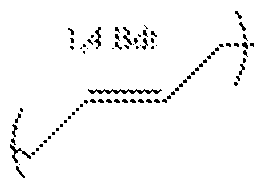
Unité 1,4-trans
L'expression « unité a-monooléfine aromatique » fait référence au motif -(CH2-CHAr)- résultant de l'insertion de l'a-monooléfine aromatique dans le terpolymère.
L'expression « unité 1,2-cyclohexanediyle » fait référence au motif 1,2-cyclohexanediyle de formule

qui résulte d'une insertion très particulière des monomères éthylène et 1,3-butadiène dans le terpolymère..
Sauf indication contraire, les taux des unités résultant de l'insertion d'un monomère dans le terpolymère sont exprimés en pourcentage molaire par rapport à la totalité des unités monomères du terpolymère. Par définition, chacun des pourcentages molaires des unités éthylène, des unités styrène, des unités 1,3-butadiène et des unités 1,2-cyclohexanediyle dans le polymère est strictement supérieur à 0.
Les composés mentionnés dans la description peuvent être d’origine fossile ou biosourcés. Dans ce dernier cas, ils peuvent être, partiellement ou totalement, issus de la biomasse ou obtenus à partir de matières premières renouvelables issues de la biomasse. Sont concernés notamment les monomères.
Le terpolymère conforme à l'invention a pour caractéristique essentielle d'être un terpolymère d'éthylène, de 1,3-butadiène et d'une a-monooléfine aromatique, et de comprendre des unités 1,2- cyclohexanediyles.
Il a aussi pour autre caractéristique de contenir plus de 60% en mole d'unités éthylène, de préférence au moins 70% et plus préférentiellement au moins 80%, voire plus de 80%. En raison de ce taux, le terpolymère conforme à l'invention est considéré comme un polymère diénique riche en unités éthylène. Le terpolymère conforme à l'invention comprend avantageusement au plus 90% en mole d'unités éthylène. Selon une variante préférentielle, le terpolymère conforme à l'invention comprend au moins 70%, plus préférentiellement au moins 80%, voire plus de 80%, et au plus 90% en mole d'unité éthylène.
Le terpolymère conforme à l'invention a aussi pour autre caractéristique de contenir au plus 10% en mole d'unités a-monooléfine aromatique, de préférence moins de 10%. Ainsi, l'intérêt d'un taux aussi bas d'unités a-monooléfine aromatique réside notamment dans la contribution à diminuer le coût de fabrication d'un tel terpolymère.
Ainsi, des taux de cristallinité inférieurs à 10%, voire nuis, peuvent être obtenus avec d'une part un taux élevé d'unité d'éthylène et d'autre part un taux faible d'unité styrène.
Les caractéristiques de cristallinité et de température de transition vitreuse des terpolymères conformes à l'invention sont attribuables à la microstructure des terpolymères, notamment à la présence des unités 1,2-cyclohexanediyle et au taux relatif des monomères dans le terpolymère, ainsi qu'à la répartition statistique des unités a-monooléfine aromatique dans le terpolymère.
Selon l'un quelconque des modes de réalisation de l'invention, le terpolymère est de préférence un terpolymère statistique.
Par alpha oléfine (a-oléfine), on entend une oléfine terminale, c'est-à-dire qu'elle contient le groupe vinylique de formule -CH=CH2. Par monooléfine, on entend un monomère qui contient une seule double liaison carbone carbone hormis celles du noyau benzénique du groupe aromatique.
Typiquement, I'a-monooléfine aromatique est de formule CH2=CH-Ar, dans lequel le symbole Ar représente un groupe aromatique. Le groupe aromatique peut être un phényle, substitué ou non. A titre d'a-monooléfine aromatique conviennent le styrène, les styrènes substitués par un ou plusieurs groupes alkyles en para, méta ou ortho ou leurs mélanges. De préférence, l'a-monooléfine aromatique est le styrène.
Selon un autre mode de réalisation de l'invention, le taux des unités 1,3-butadiène dans le terpolymère est supérieur à 3% en mole des unités monomères du terpolymère, de préférence d'au moins 5%. Lorsque le terpolymère est mis en présence d'un agent de réticulation, notamment de vulcanisation, dans une composition de caoutchouc, un taux d'unités 1,3-butadiène supérieur à 3%, notamment d'au moins 5%, permet l'obtention au sein de la composition de caoutchouc d'un polymère réticulé particulièrement adapté pour une utilisation dans un article semi-fini pour pneumatique.
Le taux d'unités 1,3-butadiène dans le terpolymère est de préférence inférieur à 30% en mole des unités monomères du terpolymère, de manière plus préférentielle inférieur à 20% en mole des unités monomères du terpolymère, plus préférentiellement encore inférieur à 15% en mole, ce qui permet d'augmenter la résistance à l'oxydation du terpolymère.
Selon un mode de réalisation préférentiel, le terpolymère conforme à l'invention peut contenir moins de 60% d'unités 1,4 en mole des unités 1,3-butadiène. Les unités 1,4 sont préférentiellement
essentiellement des unités 1,4-trans, les unités 1,4-cis étant en quantité négligeable. Plus préférentiellement encore, les unités 1,2 représentent au moins 50% en mole des unités 1,3- butadiène.
Selon un mode de réalisation particulièrement préférentiel de l'invention, le terpolymère conforme à l'invention est un terpolymère dans lequel
- le taux d'unité éthylène varie de 70% à 90%, de préférence de 80% à 90% en mole des unités monomères du terpolymère,
- le taux d'unités 1,3-butadiène de 5 à 20%, de préférence de 5% à 15%, en mole des unités monomères du terpolymère,
- le taux d'unité a-monooléfine aromatique d'au plus 10%, de préférence moins de 10%, en mole des unités monomères du terpolymère
et le terpolymère comprenant des unités 1,2-cyclohexanediyle. Les unités 1,2 représentent alors de préférence au moins 50 % en mole des unités 1,3-butadiène
Un tel polymère présente un taux de cristallinité très faible, voire nul. Le terpolymère selon ce mode de réalisation particulièrement préférentiel de l'invention présente les caractéristiques les plus appropriées pour une utilisation dans une composition de caoutchouc pour pneumatique.
Selon l'un quelconque des modes de réalisation de l'invention, le terpolymère est de préférence un terpolymère d'éthylène, de 1,3-butadiène et de styrène.
Les modes de réalisation de l'invention, préférentiels ou non, ainsi que les variantes et aspects préférentiels sont combinables entre eux sous réserve de leur compatibilité.
Le terpolymère conforme à l'invention peut être synthétisé par un procédé, autre objet de l'invention, qui comprend la polymérisation d'éthylène, du 1,3-butadiène et de l'a-monooléfine aromatique en présence d'un système catalytique à base d'un métallocène de terre rare et d'un composé organométallique à titre de co-catalyseur.
Le métallocène répond à la formule (I) :
{P(Cp1)(Cp2)Met-G}b (I)
dans laquelle
Met représente un atome de métal de terre rare,
le symbole G désignant un atome d'halogène X choisi dans le groupe constitué par le chlore, le fluor, le brome et l'iode, ou un groupe comprenant le motif borohydrure BH4,
Cpl et Cp2 sont identiques et sont choisis dans le groupe constitué par les groupes indényles substitués en position 2, les groupes fluorényles substitués et le groupe fluorényle.
P est un groupe pontant les 2 groupes Cpl et Cp2, et comprend un atome de silicium ou de carbone,
b est égal à 1 ou 2.
Dans le cas du groupe indényle, la position 2 désigne la position de l'atome de carbone qui est adjacent à l'atome de carbone auquel est attaché le pont P, qu'il soit PI ou P2, comme cela est représenté dans le schéma ci-après.

A titre de groupes indényles substitués en position 2, on peut citer plus particulièrement le 2- méthylindényle, le 2-phénylindényle.
A titre de groupes fluorényles substitués, on peut citer ceux substitués par des radicaux alkyles ayant 1 à 6 atomes de carbone ou par des radicaux aryles ayant 6 à 12 atomes de carbone. Le choix des radicaux est aussi orienté par l'accessibilité aux molécules correspondantes que sont les fluorènes substitués, parce que ces derniers sont disponibles commercialement ou facilement synthétisables.
A titre de groupes fluorényles substitués, on peut citer plus particulièrement les groupes 2,7- ditertiobutyle-fluorényle et 3,6-ditertiobutyle-fluorényle.
Dans le cas du groupe fluorényle, les positions 2, 3, 6 et 7 désignent respectivement la position des atomes de carbone des cycles comme cela est représenté dans le schéma ci-après, la position 9 correspondant à l'atome de carbone auquel est attaché le pont P.

Avantageusement, dans la formule (I) Cp1 et Cp2 représentent chacun un groupe fluorényle substitué ou un groupe fluorényle, de préférence un groupe fluorényle CI3H8.
Le symbole Met représente un atome de métal de terre rare. On rappelle que les terres rares sont des métaux et désignent les éléments scandium, yttrium et les lanthanides dont le numéro atomique varie de 57 à 71. Le symbole Met représente de préférence un atome de lanthanide (Ln), de manière plus préférentielle un atome de néodyme (Nd).
Selon un mode de réalisation préférentiel du procédé de synthèse du terpolymère conforme à l'invention, le métallocène répond à la formule (II) :
{P(Flu)2NdG}b (II)
dans laquelle :
- Nd désigne un atome de néodyme,
- G désigne un groupe comprenant le motif borohydrure BH4 ou désigne un atome d'halogène X choisi dans le groupe constitué par le chlore, le fluor, le brome et l'iode,
- Flu désigne un groupe fluorényle de formule CI3H8 ,
- P est un groupe pontant les deux groupes Flu, et comprend un atome de silicium ou de carbone
- b étant égal à 1 ou 2.
Selon un mode de réalisation préférentiel de l'invention, le symbole G désigne un atome de chlore ou le groupe de formule (III) :
(BH4)(l+y)-Ly-NX (III)
dans laquelle
- L représente un métal alcalin choisi dans le groupe constitué par le lithium, le sodium et le potassium,
- N représente une molécule d'un éther,
- x, nombre entier ou non, est égal ou supérieur à 0,
- y, nombre entier, est égal ou supérieur à 0.
Comme éther convient tout éther qui a le pouvoir de complexer le métal alcalin, notamment le diéthyléther et le tétrahydrofuranne.
Le pont P reliant les groupes Flu répond de préférence à la formule ZF^R2, dans laquelle Z représente un atome de silicium ou de carbone, R1 et R2, identiques ou différents, représentent chacun un groupe alkyle comprenant de 1 à 20 atomes de carbone, de préférence un méthyle. Dans la formule ZRXR2, Z désigne avantageusement un atome de silicium, Si.
Le métallocène utilisé pour la préparation du système catalytique peut se trouver sous la forme de poudre cristallisée on non, ou encore sous la forme de monocristaux. Le métallocène peut se présenter sous une forme monomère ou dimère, ces formes dépendant du mode de préparation du métallocène, comme par exemple cela est décrit dans la demande WO 2007054224 A2. Le métallocène peut être préparé de façon traditionnelle par un procédé analogue à celui décrit dans les documents EP 1 092731 et WO 2007054224, notamment par réaction dans des conditions inertes et anhydres du sel d'un métal alcalin du ligand avec un sel de terre rare comme un halogénure ou un borohydrure de terre rare, dans un solvant adapté, tel un éther, comme le diéthyléther ou le tétrahydrofuranne ou tout autre solvant connu de l'homme de l'art. Après réaction, le métallocène est séparé des sous-produits de réaction par les techniques connues de l'homme de l'art, telles que la filtration ou la précipitation dans un second solvant. Le métallocène est au final séché et isolé sous forme solide.
Selon un mode de réalisation particulièrement préférentiel, le métallocène est de formule (lia), (Mb), (le), (Id) ou (le) dans lesquelles le symbole Flu présente le groupe fluorényle de formule CI3H8.
[{Me2SiFlu2Nd(p-BH4)2Li(THF)}2] (lia)
[Me2SiFlu2Nd(p-BH4)2Li(THF)] (Mb)
[Me2SiFlu2Nd(p-BH4)(THF)] (Mc)
[{Me2SiFlu2Nd(p-BH4)(THF)}2] (Md)
[Me2SiFlu2Nd(p-BH4)] (Me)
Un autre constituant de base du système catalytique conforme à l'invention est le co-catalyseur capable d'activer le métallocène vis-à-vis de la polymérisation, notamment dans la réaction d'amorçage de polymérisation. Le co-catalyseur est de manière bien connu un composé
organométallique. Peuvent convenir les composés organométalliques capables d'activer le métallocène, tels que les composés organomagnésiens, organoaluminiques et organolithiens.
Le co-catalyseur est préférentiellement un organomagnésien, c'est-à-dire un composé qui présente au moins une liaison C-Mg. A titre de composés organomagnésiens on peut citer les
diorganomagnésiens, en particulier les dialkylmagnésiens, et les halogénures d'organomagnésien, en particulier les halogénures d'alkylmagnésien. Le composé diorganomagnésien présente deux liaisons C-Mg, en l'espèce C-Mg-C ; l'halogénure d'organomagnésien présente une liaison C-Mg. De manière plus préférentielle, le co-catalyseur est un diorganomagnésien.
A titre de co-catalyseur, également appelé agent d'alkylation, conviennent particulièrement les alkylmagnésiens (également appelés alkylmagnésium), tout particulièrement les dialkylmagnésiens (également appelés dialkylmagnésium) ou les halogénures d'alkylmagnésien (également appelés halogénures d'alkylmagnésium), comme par exemple le butyloctylmagnésium, le dibutylmagnésium, le butyléthylmagnésium et le chlorure de butylmagnésium. Le co-catalyseur est avantageusement le butyloctylmagnésium.
Le taux de co-catalyseur utilisé est généralement indexé sur le taux de métal apporté par le métallocène ; un rapport molaire (co-catalyseur / métal du métallocène) allant de préférence de 1 à 100 peut être utilisé, les valeurs les plus faibles étant plus favorables pour l'obtention de polymères de masses molaires élevées. De manière préférentielle le rapport molaire (co-catalyseur / métal du métallocène) est supérieur ou égal à 1 et inférieur à 10. La plage de valeurs allant de 1 à moins de 10 est notamment plus favorable pour l'obtention de copolymères de masses molaires élevées.
Le système catalytique peut être préparé de façon traditionnelle par un procédé analogue à celui décrit dans les documents EP 1 092731 et WO 2007054224. Par exemple on fait réagir dans un solvant hydrocarboné le co-catalyseur et le métallocène typiquement à une température allant de 20 à 80°C pendant une durée comprise entre 5 et 60 minutes. Le système catalytique est généralement préparé dans un solvant hydrocarboné, aliphatique comme le méthylcyclohexane ou aromatique comme le toluène. Généralement après sa synthèse, le système catalytique est utilisé en l'état dans le procédé de synthèse du terpolymère conforme à l'invention.
Comme toute synthèse faite en présence de composé organométallique, la synthèse du métallocène et celle du système catalytique ont lieu dans des conditions anhydres sous atmosphère inerte.
Typiquement, les réactions sont conduites à partir de solvants et de composés anhydres sous azote ou argon anhydre.
La polymérisation est conduite de préférence en solution, en continu ou discontinu. Le solvant de polymérisation peut être un solvant hydrocarboné, aromatique ou aliphatique. A titre d'exemple de solvant de polymérisation, on peut citer le toluène et le méthylcyclohexane. Les monomères peuvent être introduits dans le réacteur contenant le solvant de polymérisation et le système catalytique ou inversement le système catalytique peut être introduit dans le réacteur contenant le solvant de polymérisation et les monomères. La polymérisation est conduite typiquement dans des conditions anhydres et en l'absence d'oxygène, en présence éventuelle d'un gaz inerte. La température de polymérisation varie généralement dans un domaine allant de 30 à 150°C, préférentiellement de 30 à 120°C.
La polymérisation peut être stoppée par refroidissement du milieu de polymérisation. Le polymère peut être récupéré selon les techniques classiques connues de l'homme du métier comme par
exemple par précipitation, par évaporation du solvant sous pression réduite ou par stripping à la vapeur d'eau.
De manière préférentielle, le terpolymère selon l'invention est un élastomère.
Cet élastomère conforme à l'invention peut être utilisé dans une composition de caoutchouc.
La composition de caoutchouc a donc pour caractéristique essentielle d'être à base d'une matrice élastomère comprenant l'élastomère conforme à l'invention, d'une charge renforçante et d'un système de réticulation.
On entend par charge renforçante selon l'invention par exemple du noir de carbone, une charge renforçante autre que du noir de carbone, notamment de type alumineuse ou siliceuse telle que de la silice à laquelle est associé de manière connue un agent de couplage, ou encore un mélange de ces deux types de charge.
La charge renforçante peut être utilisée à un taux compris entre 25 et 200 parties en poids pour cent parties de la matrice élastomère (pce).
Par matrice élastomère, on entend dans la présente invention l'ensemble des élastomères présents dans la composition de caoutchouc, qu'ils soient conformes ou non à l'invention.
La matrice élastomère peut effectivement contenir au moins un élastomère autre que celui conforme à l'invention, notamment un élastomère traditionnellement utilisé dans les compositions de caoutchouc comme les polymères riches en unités 1,3-diène, en particulier les homopolymères ou copolymères de 1,3-butadiène ou d'isoprène.
Le système de réticulation peut être à base de soufre, de donneurs de soufre, de peroxydes, de bismaléimides ou de leurs mélanges. Le système de réticulation est préférentiellement un système de vulcanisation, c'est-à-dire un système à base de soufre (ou d’un agent donneur de soufre) et d’un accélérateur primaire de vulcanisation. A ce système de vulcanisation de base viennent s'ajouter, incorporés au cours de la première phase non-productive et/ou au cours de la phase productive telles que décrites ultérieurement, divers accélérateurs secondaires ou activateurs de vulcanisation connus tels qu'oxyde de zinc, acide stéarique ou composés équivalents, dérivés guanidiques (en particulier diphénylguanidine), ou encore des retardateurs de vulcanisation connus. Le soufre est utilisé à un taux préférentiel compris entre 0,5 et 12 pce, en particulier entre 1 et 10 pce.
L'accélérateur primaire de vulcanisation est utilisé à un taux préférentiel compris entre 0,5 et 10 pce, plus préférentiellement compris entre 0,5 et 5,0 pce.
La composition de caoutchouc peut contenir en outre d'autres additifs connus pour être utilisés dans des compositions de caoutchouc pour pneumatiques. A titre d'exemples, on peut citer des plastifiants, des anti-ozonants, des antioxydants.
La composition de caoutchouc conforme à l'invention est typiquement fabriquée dans des mélangeurs appropriés, en utilisant deux phases de préparation successives bien connues de l’homme du métier : une première phase de travail ou malaxage thermomécanique (phase dite « non-productive ») à haute température, jusqu'à une température maximale comprise entre 130°C et 200°C, suivie d'une seconde phase de travail mécanique (phase dite « productive ») jusqu'à une
plus basse température, typiquement inférieure à 110°C, par exemple entre 40°C et 100°C, phase de finition au cours de laquelle est incorporé le système de réticulation.
La composition de caoutchouc conforme à l'invention, pouvant être soit à l'état cru (avant réticulation ou vulcanisation), soit à l'état cuit (après réticulation ou vulcanisation), peut être utilisée dans un article semi-fini pour pneumatique.
Les caractéristiques précitées de la présente invention, ainsi que d'autres, seront mieux comprises à la lecture de la description suivante de plusieurs exemples de réalisation de l'invention, donnés à titre illustratif et non limitatif.
Exemple
Tous les réactifs sont obtenus commercialement excepté les métallocènes [{Me2(Flu)2Nd(p- BH4)2Li(THF)}] et [Me2SiCpFluNd(p-BH4)2Li(THF)] qui sont préparés selon le mode opératoire décrit dans le document WO 2007054224 et WO 2007054223.
Le butyloctylmagnésium BOMAG (20% dans l'heptane, C = 0,88 mol L-l) provient de Chemtura et est stocké dans un tube de Schlenk sous atmosphère inerte. L'éthylène, de qualité N35, provient de la société Air Liquide et est utilisé sans purification préalable. Le 1,3-butadiène et le styrène sont purifiés par passage sur gardes d'alumine.
1) Détermination de la microstructure des polymères :
La détermination de la microstructure du polymère est réalisée par une analyse RMN. Pour ces mesures, un spectromètre Bruker Avance III HD 400 MHz est utilisé, équipé d'une sonde Bruker cryo-BBFO z-grad 5 mm. .
Les expériences XH sont enregistrées à l'aide d'une impulsion radiofréquence avec un angle de basculement de 30°, le nombre de répétitions est de 128 avec un délai de recyclage de 5 secondes.
Les expériences RMN de corrélation 1H-13C HSQC (Heteronuclear Single Quantum Cohérence) et HMBC (Heteronuclear Multiple-Bond Corrélation) sont enregistrées avec un nombre de répétition de 128 et un nombre d'incréments de 128. Ces expériences permettent de réaliser l'attribution structurale des signaux RMN protons et carbones.
Les expériences sont réalisées à 25 °CLes expériences bidimensionnelles 1H/13C sont utilisées dans le but de déterminer la structure des unités des polymères. 25 mg d'échantillon sont solubilisés dans 1 mL CS2, 100 pL de cyclohexane deutéré (C6DI2).
Les quantifications de microstructure sont réalisées via l'intégration des signaux RMN enregistrés en RMN 1D 1H.
L'attribution des protons utilisés pour la quantification est reportée dans le tableau la :
Tableau la : Déplacements chimiques observés pour la quantification des échantillons
L'axe des déplacements chimiques 1H est calibré par rapport à l'impureté protonée du solvant (CS2) à d1H = 7,18 pp.
Tableau 1

Les signaux intégrés pour la quantification des différents motifs sont :
Tableau 2

La quantification de la microstructure est réalisée en pourcentage molaire (% molaire) comme suit: % molaire d'un motif = intégrale 1H d'un motif * 100 / å (intégrales 1H de chaque motif)
A partir des intégrales obtenues sur le spectre RMN CH :
1H Styrène = 11/5 = IA
1H PB1-2 = (13 - (2l5))/2 = IB
1H P B 1-4 linéaire = (I2-IB)/2=IC
1H P B 1-4 branché = 14
1H Cycle cyclohexane substitué vinyl = 15
1H cycles EBR = 16/2 = ID
1H Ethylène = (l7-(4IC)-(3IB)-(13l5)-(14ID)-(3l4)-(3IA))/4 = IG
On calcule S = IA + IB + IC + 14 + 15 + ID + IG
Le pourcentage molaire de chaque motif est calculé de la manière suivante :
% Styrène/ matrice totale = IAxl00/S
% PB1-2 / matrice totale = IBxl00/S
% PB1-4 linéaire / matrice totale = ICxl00/S
% PB1-4 branché / matrice totale = I4xl00/S
%c cyclohexane substitué vinyl / matrice totale = I5xl00/S
% cycles EBR / matrice totale = IDxl00/S
% Ethylène / matrice totale = IGxlOO/S
Microstructure du terpolymère :

La norme ISO 11357-3 :2011 est utilisée pour déterminer la température et l'enthalpie de fusion et de cristallisation des polymères utilisés par analyse calorimétrique différentielle (DSC). L'enthalpie de référence du polyéthylène est de 277,1 J/g (d'après Handbook of Polymer 4th Edition, J. BRANDRUP, E. H. IMMERGUT, and E. A. GRULKE, 1999)
3) Détermination de la température de transition vitreuse des polymères :
La température de transition vitreuse est mesurée au moyen d'un calorimètre différentiel
("Differential Scanning Calorimeter") selon la norme ASTM D3418 (1999).
4) Synthèse des polymères :
Les polymères sont synthétisés selon le mode opératoire suivant :
Exemple 1 : exemple non conforme d'un SEBR synthétisé selon WO2018/104669
Le polymère est synthétisé selon le mode opératoire suivant :
Dans un réacteur en verre de 500 ml contenant 300 ml de toluène, on ajoute le co-catalyseur, le butyloctylmagnésium (BOMAG) puis le métallocène [Me2SiCpFluNd(p-BH4)2Li(THF)]. La durée d'alkylation est de 10 minutes, la température de réaction est de 20 °C. Les quantités respectives des constituants du système catalytique figurent dans le tableau 2.
Le premier monomère à être introduit est le vinyl aromatique : le styrène, pour lequel la quantité totale est introduite en début de polymérisation. Puis, un mélange gazeux éthylène/butadiène dans les proportions désirées est introduit dans le réacteur.
La polymérisation est conduite à 80°C et à une pression constante de 4 bars.
La réaction de polymérisation est stoppée par refroidissement, dégazage du réacteur et ajout de 10 mL d'éthanol. Un anti-oxydant est ajouté à la solution de polymère. Le copolymère est récupéré par séchage en étuve sous vide jusqu'à masse constante. La masse pesée permet de déterminer l'activité catalytique moyenne du système catalytique exprimée en kilogramme de polymère synthétisé par mole de métal néodyme et par heure (kg/mol.h).
Exemple 2 et exemple 3 exemples conformes de SEBR selon l'invention
Le polymère est synthétisé selon le mode opératoire suivant :
Dans un réacteur en verre de 500 ml contenant 300 ml de toluène, on ajoute le co-catalyseur, le butyloctylmagnésium (BOMAG) puis le métallocène [Me2Si(Flu)2Nd(p-BH4)2Li(THF)]. La durée d'alkylation est de 10 minutes, la température de réaction est de 20 °C. Les quantités respectives des constituants du système catalytique figurent dans le tableau 2.
Le premier monomère à être introduit est le vinyl aromatique : le styrène, pour lequel la quantité totale est introduite en début de polymérisation. Puis, un mélange gazeux éthylène/butadiène dans les proportions désirées est introduit dans le réacteur.
La polymérisation est conduite à 80°C et à une pression constante de 4 bars.
La réaction de polymérisation est stoppée par refroidissement, dégazage du réacteur et ajout de 10 mL d'éthanol. Un anti-oxydant est ajouté à la solution de polymère. Le copolymère est récupéré par séchage en étuve sous vide jusqu'à masse constante. La masse pesée permet de déterminer l'activité catalytique moyenne du système catalytique exprimée en kilogramme de polymère synthétisé par mole de métal néodyme et par heure (kg/mol.h).
Les quantités respectives des constituants du système catalytique et des monomères figurent dans le tableau 2 et la microstructure du terpolymère obtenu ainsi que des propriétés physico-chimiques du terpolymère sont présentées dans le tableau 3.
L'exemple 1 n'est pas conforme à l'invention en raison de l'absence de cycle 1,2-cyclohexanediyles. Les exemples 2 et 3 sont des exemples conformes à l'invention.
Il est à noter que la cristallinité est fortement réduite pour les polymères des exemples 2 et 3, voire supprimée pour l'exemple 3, comparativement au polymère de l'exemple 1.
Le polymère diénique de l'exemple 1 (exemple non conforme à l'invention) est un terpolymère diénique riche en éthylène, avec un taux de 78% en mole des monomères du terpolymère, et comprenant du styrène selon un taux inférieur à 10% en mole des monomères du terpolymère, mais qui présente une cristallinité encore trop importante (taux de cristallinité supérieure à 10%). Les polymères des exemples 2 et 3 (conformes à l'invention) présentent une cristallinité bien inférieure à celle du polymère de l'exemple 1, bien que le taux d'éthylène soit bien supérieur à celui du polymère de l'exemple 1.
Les caractéristiques de cristallinité et de température de transition vitreuse des terpolymères des exemples 2 et 3 résultent vraisemblablement de la microstructure des terpolymères, notamment du taux relatif d'unité éthylène, du faible taux d'unité styrène, de la présence de cycles 1,2- cyclohexanediyles.
Les polymères des exemples 2 et 3 sont tout à fait adaptés pour une utilisation dans une composition de caoutchouc, en particulier en raison de la valeur de leur température de transition vitreuse inférieure à 0°C.
Enfin, les polymères des exemples 2 et 3 présentent les caractéristiques les plus appropriées pour pouvoir être utilisés dans une composition de caoutchouc pour pneumatique, puisqu'ils allient à la fois une très faible cristallinité, voire une cristallinité nulle, et une température de transition vitreuse inférieure à 0°C.
Tableau 2

Tableau 3

Les pourcentages molaires sont donnés pour chaque type d'unité par rapport aux unités du terpolymère
(1) le taux d'unités 1,4 est essentiellement le taux d'unité 1,4-trans car le taux d'unité 1,4-cis n'est pas quantifiable, les signaux sont négligeables
Claims
1. Terpolymère d'éthylène, de 1,3-butadiène et d'une a-monooléfine aromatique caractérisé en ce qu'il contient :
- plus de 60%, de préférence au moins 70%, et de préférence au plus 90% en mole d'unités éthylène,
- au plus 10% en mole d'unités a-monooléfine aromatique et
- des unités 1,2-cyclohexanediyle.
2. Terpolymère selon la revendication 1, dans lequel le taux d'unités éthylène est d'au moins 80% et d'au plus 90% en mole des unités monomères du terpolymère.
3. Terpolymère selon l'une quelconque des revendications 1 à 2 dans lequel le taux des unités 1,3-butadiène est supérieur à 3% en mole des unités monomères du terpolymère et de préférence inférieur à 20% en mole des unités monomères du terpolymère.
4. Terpolymère selon l'une quelconque des revendications 1 à 3 dans lequel Ga-monooléfine aromatique est le styrène, un styrène substitué par un ou plusieurs groupes alkyles en para, méta ou ortho ou leurs mélanges, de préférence le styrène.
5. Terpolymère selon l'une quelconque des revendications 1 à 4, dans lequel le taux d'unités éthylène varie de 70 à 90%, de préférence de 80 à 90%, en mole des unités monomères du terpolymère, le taux des unités 1,3-butadiène varie de 5 % à 20%, de préférence de 5 % à 15%, en mole des unités monomères du terpolymère.
6. Terpolymère selon l'une quelconque des revendications 1 à 5 dans lequel les unités 1,2
représentent au moins 50% en mole des unités 1,3-butadiène.
7. Terpolymère selon l'une quelconque des revendications 1 à 6, lequel terpolymère est un élastomère.
8. Procédé de synthèse d'un terpolymère défini à l'une quelconque des revendications 1 à 7 qui comprend la polymérisation d'éthylène, de 1,3-butadiène et d'une a-monooléfine aromatique en présence d'un système catalytique à base d'un métallocène de terre rare de formule (I) et d'un composé organométallique à titre de co-catalyseur,
{P(Cp1)(Cp2)Met-G}b (I)
dans laquelle
Met représente un atome de métal de terre rare,
le symbole G désignant un atome d'halogène X choisi dans le groupe constitué par le chlore, le fluor, le brome et l'iode, ou un groupe comprenant le motif borohydrure BH4,
Cpl et Cp2 sont identiques et sont choisis dans le groupe constitué par les groupes indényles substitués en position 2, les groupes fluorényles substitués et le groupe fluorényle.
P est un groupe pontant les 2 groupes Cpl et Cp2, et comprend un atome de silicium ou de carbone,
b est égal à 1 ou 2.
9. Procédé selon la revendication 8 dans lequel le métallocène de terre rare répond à la
formule de formule (II)
{P(Flu)2NdG}b (II)
- Nd désignant un atome de néodyme,
- G désignant un groupe comprenant le motif borohydrure BH4 ou désignant un atome d'halogène X choisi dans le groupe constitué par le chlore, le fluor, le brome et l'iode,
- Flu désignant un groupe fluorényle de formule CI3H8 ,
- P étant un groupe pontant les deux groupes Flu, et comprenant un atome de silicium ou de carbone,
- b est égale à 1 ou 2.
10. Procédé selon la revendication 8 ou 9 dans lequel le co-catalyseur est un dialkylmagnésien ou un halogénure d'alkylmagnésien, préférentiellement le butyloctylmagnésium, le
dibutylmagnésium, le butyléthylmagnésium ou le chlorure de butylmagnésium, plus préférentiellement le butyloctylmagnésium.
11. Procédé selon l'une quelconque des revendications 8 à 10 dans lequel G désigne un atome de chlore ou le groupe de formule (III)
( BH4)(i+y)-Lv-Nx (III)
dans laquelle
- L représente un métal alcalin choisi dans le groupe constitué par le lithium, le sodium et le potassium,
- N représente une molécule d'un éther, de préférence diéthyléther ou
tétrahydrofuranne,
- x, nombre entier ou non, est égal ou supérieur à 0,
- y, nombre entier, est égal ou supérieur à 0.
12. Procédé selon l'une quelconque des revendications 8 à 11 dans lequel le pont P répond à la formule ZRXR2, Z représentant un atome de silicium ou de carbone, R1 et R2, identiques ou
différents, représentant chacun un groupe alkyle comprenant de 1 à 20 atomes de carbone, de préférence un méthyle.
13. Procédé selon l'une quelconque des revendications 8 à 12 dans lequel le métallocène est le borohydrure de diméthylsilyl bisfluorényle de néodyme de formule (lia) à (Ile) :
[{Me2SiFlu2Nd(p-BH4)2Li(THF)}2] (lia)
[Me2SiFlu2Nd(p-BH4)2Li(THF)] (Mb)
[Me2SiFlu2Nd(p-BH4)(THF)] (Ile)
[{Me2SiFlu2Nd(p-BH4)(THF)}2] (lld)
[Me2SiFlu2Nd(p-BH4)] (Me)
Flu représentant le groupe CI3H8.
14. Composition de caoutchouc à base d'une charge renforçante, d'un système de réticulation et d'un terpolymère défini selon l'une quelconque des revendications 1 à 7.
15. Pneumatique qui comprend une composition définie à la revendication 14.
Priority Applications (1)
| Application Number | Priority Date | Filing Date | Title |
|---|---|---|---|
| US17/415,540 US12006383B2 (en) | 2018-12-20 | 2019-12-02 | Terpolymers of ethylene, 1,3-butadiene and an aromatic a-monoolefin |
Applications Claiming Priority (2)
| Application Number | Priority Date | Filing Date | Title |
|---|---|---|---|
| FR1873543A FR3090639A3 (fr) | 2018-12-20 | 2018-12-20 | Terpolymères d’éthylène, de 1,3-butadiène et d’une α-monooléfine aromatique. |
| FRFR1873543 | 2018-12-20 |
Publications (1)
| Publication Number | Publication Date |
|---|---|
| WO2020128196A1 true WO2020128196A1 (fr) | 2020-06-25 |
Family
ID=69528871
Family Applications (1)
| Application Number | Title | Priority Date | Filing Date |
|---|---|---|---|
| PCT/FR2019/052887 Ceased WO2020128196A1 (fr) | 2018-12-20 | 2019-12-02 | TERPOLYMÈRES D'ÉTHYLÈNE, DE 1,3-BUTADIÈNE ET D'UNE α-MONOOLÉFINE AROMATIQUE |
Country Status (3)
| Country | Link |
|---|---|
| US (1) | US12006383B2 (fr) |
| FR (2) | FR3090639A3 (fr) |
| WO (1) | WO2020128196A1 (fr) |
Cited By (1)
| Publication number | Priority date | Publication date | Assignee | Title |
|---|---|---|---|---|
| FR3116535A1 (fr) | 2020-11-24 | 2022-05-27 | Compagnie Generale Des Etablissements Michelin | Polymères téléchéliques à base d’éthylène et de 1,3-diène |
Citations (7)
| Publication number | Priority date | Publication date | Assignee | Title |
|---|---|---|---|---|
| EP1092731A1 (fr) | 1999-10-12 | 2001-04-18 | Société de Technologie Michelin | Système catalytique, son procédé de préparation et procédé de préparation d'un copolymère d'éthylène et d'un diène conjugué |
| WO2007054224A2 (fr) | 2005-11-09 | 2007-05-18 | Societe De Technologie Michelin | Complexe metallocene borohydrure d’un lanthanide, systeme catalytique l’incorporant, procede de polymerisation l’utilisant et copolymere ethylene/butadiene obtenu par ce procede |
| WO2007054223A2 (fr) | 2005-11-09 | 2007-05-18 | Societe De Technologie Michelin | Complexe metallocene borohydrure d’un lanthanide, systeme catalytique l’incorporant, procede de polymerisation l’utilisant et copolymere ethylene/butadiene obtenu par ce procede |
| WO2014114607A1 (fr) | 2013-01-22 | 2014-07-31 | Compagnie Generale Des Etablissements Michelin | Composition de caoutchouc comprenant un élastomère diénique fortement saturé |
| WO2018104669A1 (fr) | 2016-12-09 | 2018-06-14 | Compagnie Generale Des Etablissements Michelin | Terpolymeres d'ethylene, de 1,3-butadiene ou d'isoprene, et d'une alpha-monoolefine aromatique |
| WO2018224775A1 (fr) * | 2017-06-08 | 2018-12-13 | Compagnie Generale Des Etablissements Michelin | Copolymere fonctionnel d'un 1,3-diene et d'une olefine |
| WO2018224776A1 (fr) * | 2017-06-08 | 2018-12-13 | Compagnie Generale Des Etablissements Michelin | Composition de caoutchouc |
Family Cites Families (1)
| Publication number | Priority date | Publication date | Assignee | Title |
|---|---|---|---|---|
| CA2502345A1 (fr) * | 2002-10-16 | 2004-04-29 | Michelin Recherche Et Technique S.A. | Copolymeres ethylene/ butadiene, system catalytique et les produires et production desdits polymers |
-
2018
- 2018-12-20 FR FR1873543A patent/FR3090639A3/fr active Pending
-
2019
- 2019-01-31 FR FR1900902A patent/FR3090638B1/fr active Active
- 2019-12-02 WO PCT/FR2019/052887 patent/WO2020128196A1/fr not_active Ceased
- 2019-12-02 US US17/415,540 patent/US12006383B2/en active Active
Patent Citations (7)
| Publication number | Priority date | Publication date | Assignee | Title |
|---|---|---|---|---|
| EP1092731A1 (fr) | 1999-10-12 | 2001-04-18 | Société de Technologie Michelin | Système catalytique, son procédé de préparation et procédé de préparation d'un copolymère d'éthylène et d'un diène conjugué |
| WO2007054224A2 (fr) | 2005-11-09 | 2007-05-18 | Societe De Technologie Michelin | Complexe metallocene borohydrure d’un lanthanide, systeme catalytique l’incorporant, procede de polymerisation l’utilisant et copolymere ethylene/butadiene obtenu par ce procede |
| WO2007054223A2 (fr) | 2005-11-09 | 2007-05-18 | Societe De Technologie Michelin | Complexe metallocene borohydrure d’un lanthanide, systeme catalytique l’incorporant, procede de polymerisation l’utilisant et copolymere ethylene/butadiene obtenu par ce procede |
| WO2014114607A1 (fr) | 2013-01-22 | 2014-07-31 | Compagnie Generale Des Etablissements Michelin | Composition de caoutchouc comprenant un élastomère diénique fortement saturé |
| WO2018104669A1 (fr) | 2016-12-09 | 2018-06-14 | Compagnie Generale Des Etablissements Michelin | Terpolymeres d'ethylene, de 1,3-butadiene ou d'isoprene, et d'une alpha-monoolefine aromatique |
| WO2018224775A1 (fr) * | 2017-06-08 | 2018-12-13 | Compagnie Generale Des Etablissements Michelin | Copolymere fonctionnel d'un 1,3-diene et d'une olefine |
| WO2018224776A1 (fr) * | 2017-06-08 | 2018-12-13 | Compagnie Generale Des Etablissements Michelin | Composition de caoutchouc |
Non-Patent Citations (1)
| Title |
|---|
| J. BRANDRUPE. H. IMMERGUTE. A. GRULKE: "Handbook of Polymer", 1999 |
Cited By (3)
| Publication number | Priority date | Publication date | Assignee | Title |
|---|---|---|---|---|
| FR3116535A1 (fr) | 2020-11-24 | 2022-05-27 | Compagnie Generale Des Etablissements Michelin | Polymères téléchéliques à base d’éthylène et de 1,3-diène |
| WO2022112693A1 (fr) | 2020-11-24 | 2022-06-02 | Compagnie Generale Des Etablissements Michelin | Polymères téléchéliques à base d'éthylène et de 1,3-diène |
| US12606656B2 (en) | 2020-11-24 | 2026-04-21 | Compagnie Generale Des Etablissements Michelin | Telechelic polymers based on ethylene and 1,3 diene |
Also Published As
| Publication number | Publication date |
|---|---|
| US12006383B2 (en) | 2024-06-11 |
| FR3090638A1 (fr) | 2020-06-26 |
| FR3090638B1 (fr) | 2021-01-01 |
| FR3090639A3 (fr) | 2020-06-26 |
| US20220056175A1 (en) | 2022-02-24 |
Similar Documents
| Publication | Publication Date | Title |
|---|---|---|
| EP3768737B1 (fr) | Copolymere d'ethylene et d'un 1,3-diene | |
| EP3551471B1 (fr) | Terpolymeres d'ethylene, de 1,3-butadiene ou d'isoprene, et d'une alpha-monoolefine aromatique | |
| EP3383928B1 (fr) | Systeme catalytique preforme comprenant un metallocene de terre rare | |
| EP1554321B1 (fr) | Copolymeres ethylene/butadiene, systeme catalytique pour les produires et production desdits polymeres | |
| EP3864057B1 (fr) | Copolymère d'éthylène et de beta-farnésène | |
| EP3861035B1 (fr) | Procédé de synthèse de copolymère d'éthylène et de 1,3-diène | |
| EP3898267B1 (fr) | Copolymères de diène conjugué et d'éthylène | |
| EP3768736B1 (fr) | Copolymere d'ethylene et de myrcene | |
| WO2020070442A1 (fr) | Procédé de synthèse de copolymère d'éthylène et de myrcène | |
| EP4031621B1 (fr) | Terpolymère d'éthylène et de 1,3-diènes | |
| WO2020128196A1 (fr) | TERPOLYMÈRES D'ÉTHYLÈNE, DE 1,3-BUTADIÈNE ET D'UNE α-MONOOLÉFINE AROMATIQUE | |
| FR3136774A1 (fr) | Composition de caoutchouc comprenant un élastomère diénique fortement saturé | |
| EP3802638B1 (fr) | Copolymere d'ethylene et d'isoprene | |
| WO2026068278A1 (fr) | Polymères diblocs constitués d'un bloc poly(1,3-cyclohexadiène) et d'un bloc copolymère statistique à base d'éthylène et d'un 1,3-diène | |
| FR3163649A1 (fr) | Fonctionnalisation vinylidène en extrémité de chaîne des polyéthylènes et des copolymères contenant des unités éthylène et des unités d’un 1,3-diène. | |
| WO2026068276A1 (fr) | Polymères triblocs ayant un bloc poly(1,3-cyclohexadiène) et un bloc polyéthylène reliés entre eux par un copolymère statistique à base d'éthylène et d'un 1,3-diène | |
| FR3136772A1 (fr) | Composition de caoutchouc comprenant un élastomère diénique fortement saturé |
Legal Events
| Date | Code | Title | Description |
|---|---|---|---|
| 121 | Ep: the epo has been informed by wipo that ep was designated in this application |
Ref document number: 19849026 Country of ref document: EP Kind code of ref document: A1 |
|
| NENP | Non-entry into the national phase |
Ref country code: DE |
|
| 122 | Ep: pct application non-entry in european phase |
Ref document number: 19849026 Country of ref document: EP Kind code of ref document: A1 |