WO2020116065A1 - 情報処理装置、化粧料生成装置、及び、プログラム - Google Patents
情報処理装置、化粧料生成装置、及び、プログラム Download PDFInfo
- Publication number
- WO2020116065A1 WO2020116065A1 PCT/JP2019/043133 JP2019043133W WO2020116065A1 WO 2020116065 A1 WO2020116065 A1 WO 2020116065A1 JP 2019043133 W JP2019043133 W JP 2019043133W WO 2020116065 A1 WO2020116065 A1 WO 2020116065A1
- Authority
- WO
- WIPO (PCT)
- Prior art keywords
- skin
- information
- cosmetics
- class
- field
- Prior art date
- Legal status (The legal status is an assumption and is not a legal conclusion. Google has not performed a legal analysis and makes no representation as to the accuracy of the status listed.)
- Ceased
Links
Images



Classifications
-
- G—PHYSICS
- G06—COMPUTING OR CALCULATING; COUNTING
- G06F—ELECTRIC DIGITAL DATA PROCESSING
- G06F30/00—Computer-aided design [CAD]
- G06F30/20—Design optimisation, verification or simulation
- G06F30/27—Design optimisation, verification or simulation using machine learning, e.g. artificial intelligence, neural networks, support vector machines [SVM] or training a model
-
- A—HUMAN NECESSITIES
- A45—HAND OR TRAVELLING ARTICLES
- A45D—HAIRDRESSING OR SHAVING EQUIPMENT; EQUIPMENT FOR COSMETICS OR COSMETIC TREATMENTS, e.g. FOR MANICURING OR PEDICURING
- A45D44/00—Other cosmetic or toiletry articles, e.g. for hairdressers' rooms
- A45D44/005—Other cosmetic or toiletry articles, e.g. for hairdressers' rooms for selecting or displaying personal cosmetic colours or hairstyle
-
- A—HUMAN NECESSITIES
- A45—HAND OR TRAVELLING ARTICLES
- A45D—HAIRDRESSING OR SHAVING EQUIPMENT; EQUIPMENT FOR COSMETICS OR COSMETIC TREATMENTS, e.g. FOR MANICURING OR PEDICURING
- A45D40/00—Casings or accessories specially adapted for storing or handling solid or pasty toiletry or cosmetic substances, e.g. shaving soaps or lipsticks
- A45D40/24—Casings for two or more cosmetics
-
- A—HUMAN NECESSITIES
- A61—MEDICAL OR VETERINARY SCIENCE; HYGIENE
- A61B—DIAGNOSIS; SURGERY; IDENTIFICATION
- A61B5/00—Measuring for diagnostic purposes; Identification of persons
-
- G—PHYSICS
- G06—COMPUTING OR CALCULATING; COUNTING
- G06Q—INFORMATION AND COMMUNICATION TECHNOLOGY [ICT] SPECIALLY ADAPTED FOR ADMINISTRATIVE, COMMERCIAL, FINANCIAL, MANAGERIAL OR SUPERVISORY PURPOSES; SYSTEMS OR METHODS SPECIALLY ADAPTED FOR ADMINISTRATIVE, COMMERCIAL, FINANCIAL, MANAGERIAL OR SUPERVISORY PURPOSES, NOT OTHERWISE PROVIDED FOR
- G06Q50/00—Information and communication technology [ICT] specially adapted for implementation of business processes of specific business sectors, e.g. utilities or tourism
- G06Q50/10—Services
-
- G—PHYSICS
- G16—INFORMATION AND COMMUNICATION TECHNOLOGY [ICT] SPECIALLY ADAPTED FOR SPECIFIC APPLICATION FIELDS
- G16H—HEALTHCARE INFORMATICS, i.e. INFORMATION AND COMMUNICATION TECHNOLOGY [ICT] SPECIALLY ADAPTED FOR THE HANDLING OR PROCESSING OF MEDICAL OR HEALTHCARE DATA
- G16H50/00—ICT specially adapted for medical diagnosis, medical simulation or medical data mining; ICT specially adapted for detecting, monitoring or modelling epidemics or pandemics
- G16H50/30—ICT specially adapted for medical diagnosis, medical simulation or medical data mining; ICT specially adapted for detecting, monitoring or modelling epidemics or pandemics for calculating health indices; for individual health risk assessment
-
- A—HUMAN NECESSITIES
- A45—HAND OR TRAVELLING ARTICLES
- A45D—HAIRDRESSING OR SHAVING EQUIPMENT; EQUIPMENT FOR COSMETICS OR COSMETIC TREATMENTS, e.g. FOR MANICURING OR PEDICURING
- A45D34/00—Containers or accessories specially adapted for handling liquid toiletry or cosmetic substances, e.g. perfumes
- A45D2034/005—Containers or accessories specially adapted for handling liquid toiletry or cosmetic substances, e.g. perfumes with a cartridge
-
- A—HUMAN NECESSITIES
- A45—HAND OR TRAVELLING ARTICLES
- A45D—HAIRDRESSING OR SHAVING EQUIPMENT; EQUIPMENT FOR COSMETICS OR COSMETIC TREATMENTS, e.g. FOR MANICURING OR PEDICURING
- A45D44/00—Other cosmetic or toiletry articles, e.g. for hairdressers' rooms
- A45D2044/007—Devices for determining the condition of hair or skin or for selecting the appropriate cosmetic or hair treatment
Definitions
- the present invention relates to an information processing device, a cosmetics generation device, and a program.
- Japanese Unexamined Patent Publication No. 2014-064949 discloses a technique of estimating the internal state of the skin based on the light reflection characteristics of the subcutaneous tissue of the skin.
- the change in the skin condition obtained by the cosmetic is not determined when the cosmetic is used once, but is determined by the duration of use of the cosmetic, the frequency of use, and the amount used per time. ..
- the skin condition is estimated based on the condition of the subcutaneous tissue when the cosmetic is used once. Therefore, the estimation result shows the skin condition at the time of using the cosmetic. However, it does not indicate the future skin condition when the cosmetic is continuously used.
- the purpose of the present invention is to predict future skin condition when cosmetics are used continuously.
- One aspect of the present invention is An information processing device for executing a simulation for predicting a future skin condition when a cosmetic is used on the skin, Equipped with means for acquiring the target person's skin information of the simulation target person, A plurality of subject skin information indicating changes over time of the skin when each of the plurality of subjects uses a cosmetic on the skin, and subject state information regarding the subject's skin condition corresponding to each subject skin information, and the cosmetics Cosmetics information, and a state transition model relating to the transition of the skin state based on, by inputting the target person skin information, means for predicting the transition of the skin state of the simulation target person, A means for presenting the transition of the predicted skin condition is provided, It is an information processing device.
- FIG. 11 is a diagram showing an example of a screen displayed in the information processing of the first modification.
- 9 is a flowchart of information processing of modification 2. It is an explanatory view of the outline of the modification 3. It is a figure which shows the data structure of the community information database of the modification 3.
- FIG. 13 is a sequence diagram of a community analysis process of Modification 3;
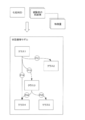
- FIG. 1 is a block diagram showing the configuration of the information processing system of this embodiment.
- the information processing system 1 includes a client device 10, a server 30, and a cosmetics generation device 50.
- the client device 10, the server 30, and the cosmetics generation device 50 are connected via a network (for example, the Internet or an intranet) NW.
- NW a network
- the client device 10 is an example of an information processing device that transmits a request to the server 30.
- the client device 10 is, for example, a smartphone, a tablet terminal, or a personal computer.
- the server 30 is an example of an information processing device that provides the client device 10 with a response in response to a request transmitted from the client device 10.
- the server 30 is, for example, a web server.
- the cosmetics generation device 50 is configured to generate cosmetics based on the cosmetics information transmitted from the client device 10 or the server 30.
- the cosmetic is, for example, at least one of the following: ⁇ Cosmetics for skin care (as an example, at least one of lotion, emulsion, beauty essence, face wash, cream, and face mask)
- ⁇ Cosmetics for makeup as one example, at least one of makeup base, foundation, concealer, face powder, lipstick, lip gloss, eye shadow, eye liner, mascara, eyebrow, cheek, and collaborativet
- the client device 10 includes a storage device 11, a processor 12, an input/output interface 13, and a communication interface 14.
- the storage device 11 is configured to store programs and data.
- the storage device 11 is, for example, a combination of a ROM (Read Only Memory), a RAM (Random Access Memory), and a storage (for example, a flash memory or a hard disk).
- the programs include, for example, the following programs.
- -OS Operating System
- Application for example, web browser
- the data includes, for example, the following data.
- -Database referred to in information processing-Data obtained by executing information processing that is, execution result of information processing
- the processor 12 is configured to realize the function of the client device 10 by activating a program stored in the storage device 11.
- the processor 12 is an example of a computer.
- the input/output interface 13 is configured to acquire a user instruction from an input device connected to the client apparatus 10 and output information to an output device connected to the client apparatus 10.
- the input device is, for example, a keyboard, a pointing device, a touch panel, or a combination thereof.
- the output device is, for example, a display.
- the communication interface 14 is configured to control communication via the network NW.
- the server 30 includes a storage device 31, a processor 32, an input/output interface 33, and a communication interface 34.
- the storage device 31 is configured to store programs and data.
- the storage device 31 is, for example, a combination of a ROM, a RAM, and a storage (for example, a flash memory or a hard disk).
- the programs include, for example, the following programs.
- -OS program-Application program that executes information processing
- the data includes, for example, the following data. ⁇ Database referred to in information processing ⁇ Results of information processing execution
- the processor 32 is configured to realize the function of the server 30 by activating a program stored in the storage device 31.
- the processor 32 is an example of a computer.
- the input/output interface 33 is configured to acquire a user instruction from an input device connected to the server 30 and output information to an output device connected to the server 30.
- the input device is, for example, a keyboard, a pointing device, a touch panel, or a combination thereof.
- the output device is, for example, a display.
- the communication interface 34 is configured to control communication via the network NW.
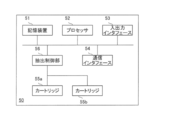
- FIG. 2 is a block diagram showing the configuration of the cosmetics production device 50 of FIG.
- the cosmetic material generation device 50 includes a storage device 51, a processor 52, an input/output interface 53, a communication interface 54, an extraction control unit 56, and a plurality of cartridges 55a to 55b. ..
- the storage device 51 is configured to store programs and data.
- the storage device 51 is, for example, a combination of a ROM, a RAM, and a storage (for example, a flash memory or a hard disk).
- the programs include, for example, the following programs. -OS program-Control program for cosmetics generator 50
- the data includes, for example, the following data. -Information regarding history of generation of cosmetics-Information regarding remaining amount of raw materials accommodated in a plurality of cartridges 55a-55b
- the processor 52 is configured to realize the function of the cosmetics production device 50 by activating a program stored in the storage device 51.
- the processor 52 is an example of a computer.
- the input/output interface 53 is configured to obtain a user's instruction from an input device connected to the cosmetics production device 50 and output information to an output device connected to the cosmetics production device 50.
- the input device is, for example, a keyboard, a pointing device, a touch panel, or a combination thereof.
- the output device is, for example, a display.
- the communication interface 54 is configured to control communication via the network NW.
- Raw materials for cosmetics are stored in the cartridges 55a and 55b.
- the extraction control unit 56 is configured to extract the raw material from each of the cartridges 55a and 55b based on the cosmetic information transmitted from the client device 10 or the server 30.
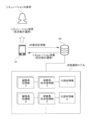
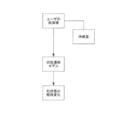
- FIG. 3 is an explanatory diagram of the outline of the present embodiment.
- the server 30 is configured to execute a simulation of the skin condition when the cosmetic is used on the skin.
- the server 30 includes a plurality of pieces of subject skin information indicating changes with time of the skin when each of the plurality of subjects uses a cosmetic, and subject skin state information relating to the subject's skin state corresponding to each subject skin information.
- a state transition model relating to the state transition of the skin is generated based on the cosmetics information regarding the cosmetics.
- the server 30 acquires cosmetics information regarding the target cosmetics to be simulated through the client device 10.
- the server 30 acquires the subject skin information of the simulation subject via the client device 10.
- the server 30 predicts the transition of the skin condition of the simulation target person by inputting the cosmetic information of the target cosmetic and the target person's skin information into the state transition model.
- the server 30 presents the predicted transition of the skin condition via the client device 10.
- FIG. 4 is a diagram showing a data structure of the user information database of this embodiment.
- the user information database of FIG. 4 stores user information regarding users.
- the user information database includes a "user ID” field, a "user name” field, and a "user attribute” field. Each field is associated with each other.
- a user ID is stored in the "user ID" field.
- the user ID is an example of user identification information that identifies a user.
- Information related to the user name (for example, text) is stored in the “user name” field.
- the "user attribute” field includes a plurality of subfields ("gender” field and "age” field).
- Information related to the age of the user is stored in the "age" field.
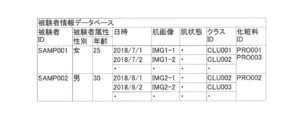
- FIG. 5 is a diagram showing a data structure of the subject information database of this embodiment.
- the subject information regarding the subject is stored in the subject information database of FIG.
- the subject information database includes a “subject ID” field, a “subject attribute” field, a “date and time” field, a “skin image” field, a “skin condition” field, a “class ID” field, and a “cosmetic ID”. Field. Each field is associated with each other.
- the subject ID is stored in the “subject ID” field.
- the subject ID is an example of subject identification information that identifies a subject.
- Subject attribute field stores subject attribute information related to the attribute of the subject.
- the “subject attribute” field includes a plurality of subfields (“gender” field and “age” field).
- Information related to the age of the subject is stored in the "age" field.
- the “Date and time” field stores information about the date and time when the measurement for the subject was performed.
- Image data relating to the skin of the subject is stored in the “skin image” field.
- the “skin condition” field stores skin condition information (an example of “subject condition information”) regarding the skin condition determined based on the image data of the skin of the subject.
- the “date and time” field, the “skin image” field, and the “skin condition” field are associated with each other. Records are added to the “date and time” field, the “skin image” field, and the “skin condition” field each time measurement is performed. That is, in the “skin image” field, image data showing the change over time of the skin when the subject uses the cosmetic on the skin is stored.
- the “skin condition” field stores information indicating the change over time of the skin condition when the subject uses the cosmetic on the skin.
- a class ID (an example of “class identification information”) for identifying a class corresponding to the skin image data (that is, a class to which the skin state determined from the feature amount of the skin image data belongs) is stored. To be done.
- a cosmetics ID (an example of “cosmetics identification information”) for identifying the cosmetics used by the subject is stored.
- FIG. 6 is a diagram showing a data structure of the cosmetics information master database of this embodiment.
- the cosmetic information master database in FIG. 6 stores cosmetic information about cosmetics.
- the cosmetic information master database includes a "cosmetic ID” field, a "cosmetic name” field, a “recommended usage amount” field, and a “ingredient” field. Each field is associated with each other.
- the cosmetics ID is stored in the “cosmetics ID” field.
- the "ingredient” field includes a plurality of subfields ("ingredient name” field and “content ratio” field).
- the “ingredient name” field information about the name of the ingredient of the cosmetic (for example, text or an ingredient code for identifying the ingredient) is stored.
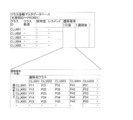
- FIG. 7 is a diagram showing a data structure of the class information master database of this embodiment.
- FIG. 8 is a conceptual diagram of a state transition model corresponding to the class information master database of FIG.
- FIG. 9 is a conceptual diagram showing inputs and outputs of the state transition model of FIG.
- Class information is stored in the class information master database of FIG.
- the class information is information about skin classification based on the feature amount of the skin image data of a plurality of subjects.
- the class information master database includes a “class ID” field, a “class outline” field, a “skin characteristic” field, a “recommendation” field, and a “transition probability” field. Each field is associated with each other.
- the class information master database is associated with the cosmetic ID.
- the class ID is stored in the "class ID" field.
- Information for example, text
- the information in the “class summary” field is determined by the administrator of the server 30.
- the “skin characteristics” field stores skin characteristic information relating to the characteristics of the skin corresponding to each class.
- the skin characteristic information indicates at least one of the following. ⁇ Characteristics of skin texture (texture flow and texture distribution range, for example) ⁇ Characteristics of the furrow (for example, the condition of the furrow and the shape of the furrow) -Characteristics of pores (for example, pore condition, pore size, number of pores, and pore density) ⁇ Curicle characteristics (for example, skin size, number of skins, density of skins)
- the recommendation information corresponding to each class is stored in the "Recommendation" field.
- the recommendation information includes recommendation information regarding skin care and recommendation information regarding makeup.
- the recommendation information regarding skin care includes at least one of the following, for example.
- ⁇ Type of makeup base ⁇ Type of foundation
- Applying means (as an example, application with finger or application with sponge)
- Coating method ⁇ Cosmetic type
- Cosmetic usage for example, thin or thick coating
- the recommendation information regarding makeup includes at least one of the following, for example. ⁇ Recommended skin care method (for example, daily care method using lotion or emulsion, and special care method using beauty essence, cream or mask) ⁇ How to use the cosmetics in use (as an example, frequency of use and amount used per time) ⁇ Cosmetics recommended for use (hereinafter referred to as "recommended cosmetics") ⁇ Recommended amount of cosmetics used (as an example, frequency of use and amount used per time)
- the "transition probability” field includes a plurality of subfields.
- the plurality of subfields are configured for each future time point (for example, one day, one week, one month, three months, six months, and one year).
- a class ID is assigned to each subfield, and a transition probability between classes is stored.
- the subfield to which the future time point “one day later” is assigned is the class ID “ The transition probabilities P11 to P15 one day after the class of “CLU001” is stored.
- the subfield to which the future time point “one day later” is assigned is the one from the class with the class ID “CLU002”.
- the transition probabilities P21 to P25 after one day are stored.
- the subfield to which the future time point “one year later” is assigned is the class with the class ID “CLU001”. The transition probability one year after is stored.
- the state transition model in Figure 8 corresponds to the class information master database in Figure 7. That is, the state transition model is associated with the cosmetic ID, and the plurality of skin image data of each of the plurality of subjects who used the cosmetic corresponding to the cosmetic ID (that is, the change over time of the skin is shown. Image).
- the state transition model is composed of a plurality of classes and links between the classes.
- the link indicates the probability of transition between each class.
- the state transition model of FIG. 8 includes class 1 of class ID “CLU001” to class 5 of class ID “CLU005”.
- the links between each class are as follows. ⁇ Probability of transition from class 1 to class 2 one day later: P12 ⁇ Probability of transition from class 1 to class 3 one day later: P13 ⁇ Probability of transition from class 1 to class 4 one day later: P14 ⁇ Probability of transition from class 2 to class 5 one day later: P25 ⁇ Probability of transition from class 3 to class 4 one day later: P34 ⁇ Probability of transition from class 3 to class 5 one day later: P35
- the input of the state transition model is image data.
- the output of the state transition model is the prediction result of the change over time of the skin state when the cosmetic corresponding to the cosmetic ID is used.
- the class information master database (FIG. 7) and the state transition model (FIG. 8) are generated by any of the following methods. ⁇ Unsupervised learning ⁇ Supervised learning ⁇ Network analysis
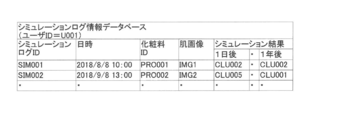
- FIG. 10 is a diagram showing the data structure of the simulation log information database of this embodiment.
- the simulation log information database of FIG. 10 stores simulation log information regarding the history of simulation execution results.
- the simulation log information database includes a “simulation log ID” field, a “date and time” field, a “cosmetic ID” field, a “skin image” field, and a “simulation result” field. Each field is associated with each other.
- the simulation log information database is associated with the user ID.
- a simulation log ID that identifies the simulation log information is stored in the “simulation log ID” field.
- the cosmetics ID of the cosmetics to be simulated is stored.
- the image data of the skin image to be simulated is stored in the “skin image” field.
- the “simulation result” field stores information related to the simulation execution result.
- the “simulation result” field includes the "1 day later” field, the "1 week later” field, the “1 month later” field, the “3 month later” field, the “6 month later” field, and the "1 year later” field.
- the “1 day later” field stores the class ID of the class to which the skin one day after the simulation execution date belongs.
- the “1 week later” field stores the class ID of the class to which the skin one week after the simulation execution date belongs.
- the “1 month later” field stores the class ID of the class to which the skin one month after the simulation execution date belongs.
- In the "3 months later” field the class ID of the class to which the skin 3 months after the simulation execution date belongs is stored.
- the “6 months later” field stores the class ID of the class to which the skin 6 months after the simulation execution date belongs.
- the “1 year later” field stores the class ID of the class to which the skin one year after the simulation execution date belongs.
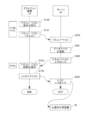
- FIG. 11 is a sequence diagram of the simulation processing of this embodiment.
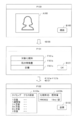
- FIG. 12 is a diagram showing an example of a screen displayed in the information processing of FIG.
- the client device 10 executes acceptance of simulation conditions (S100). Specifically, the processor 12 displays the screen P100 (FIG. 12) on the display.
- the screen P100 includes a display object A100 and an operation object B100.
- the display object A100 includes an image captured by a camera (not shown) arranged in the client device 10.
- the operation object B100 is an object that receives a user instruction for executing shooting.
- the processor 12 When the user (an example of “simulation target person”) operates the operation object B100 when the display object A100 includes an image of the skin of itself (for example, a face image), the processor 12 causes the display object A100 to display. Image data of an included image (an example of “subject skin information”) is generated. The processor 12 displays the screen P101 (FIG. 12) on the display.
- the screen P101 includes an operation object B101 and field objects F101a to F101c.
- the field object F101a is an object that receives a user instruction for designating a target cosmetic (for example, a cosmetic used by the user) to be a simulation target.
- the field object F101b is an object that receives a user instruction for designating a user's skin feature amount (an example of “subject skin information”).
- the feature amount of the user's skin is, for example, at least one of water content, pores, texture, amount of sebum, stratum corneum state, and skin color.
- the field object F101c is an object that receives a user instruction for designating a target to be simulated.
- the client device 10 executes a simulation request (S101). Specifically, when the user inputs a user instruction to the field objects F101a to F101b and operates the operation object B101, the processor 12 transmits the simulation request data to the server 30.
- the simulation request data includes the following information. -User ID of simulation target person (hereinafter referred to as "target user ID")
- target user ID The image data generated in step S100
- the target cosmetic ID of the target cosmetic corresponding to the user instruction given to the field object F101a A feature amount corresponding to the user instruction given to the field object F101b
- the server 30 executes the simulation (S300). Specifically, the processor 32 extracts the feature amount from the image data included in the simulation request data. The processor 32 identifies the skin characteristics of the user based on at least one of the feature amount extracted from the image data and the feature amount included in the simulation request data. The processor 32 refers to the “skin characteristic” field of the class information master database to identify the class ID associated with the skin characteristic having the highest similarity to the identified skin characteristic. The specified class ID indicates the class to which the skin corresponding to the image data included in the simulation request data belongs. The processor 32 refers to the “class outline” field associated with the identified class ID to identify the information about the outline description of the class to which the skin belongs.
- the processor 32 refers to the “recommendation” field associated with the identified class ID to identify the recommendation information corresponding to the class to which the skin belongs.
- the processor 32 refers to each subfield of the “transition probability” field of the class information master database to identify the transition probability for each subfield.
- the identified transition probabilities are the class to which the skin after 1 day belongs, the class to which the skin after 1 week belongs, the class to which the skin condition after 1 month belongs, the class where the skin condition after 3 months belongs, and the skin after 6 months.
- the class to which the skin belongs and the class to which the skin after one year belongs are shown.
- the server 30 updates the database (S301). Specifically, the processor 32 adds a new record to the simulation log information database (FIG. 10) associated with the target user ID included in the simulation request data.
- the following information is stored in each field of the new record.
- a new simulation ID is stored in the "simulation log ID” field.
- the information regarding the execution date and time of step S300 is stored in the "date and time” field.
- the target cosmetics ID included in the simulation request data is stored in the “cosmetics ID” field.
- the image data included in the simulation request data is stored in the “skin image” field.
- the class ID of the class to which the skin one day later belongs is stored in the “one day later” field of the “simulation result” field.
- the class ID of the class to which the skin after one week belongs is stored in the “after one week” field of the “simulation result” field.
- the class ID of the class to which the skin after one month belongs is stored in the “one month after” field of the “simulation result” field.
- the class ID of the class to which the skin after 3 months belongs is stored in the “3 months after” field of the “simulation result” field.
- the class ID of the class to which the skin after 6 months belongs is stored in the “6 months after” field of the “simulation result” field.
- the class ID of the class to which the skin after one year belongs is stored in the “one year after” field of the “simulation result” field.
- the server 30 executes a simulation response (S302). Specifically, the processor 32 transmits the simulation response data to the client device 10.
- the simulation response data includes the following information. ⁇ Class ID of the class to which the skin after 1 day belongs ⁇ Class ID of the class to which the skin after one week belongs ⁇ Class ID of the class to which the skin after one month belongs ⁇ Class ID of the class to which the skin after 3 months belongs ⁇ Class ID of the class to which the skin after 6 months belongs ⁇ Class ID of the class to which the skin after one year belongs -Information on the outline description of the class specified in step S300-Recommendation information specified in step S300
- the client device 10 presents the simulation result (S102). Specifically, the processor 12 displays the screen P102 (FIG. 12) on the display based on the simulation response data.
- the screen P102 includes display objects A102a and A102b and an operation object B102.
- the display object A 102a includes a general description of a class to which the skin after 1 day belongs, a general description of a class to which the skin after 1 week belongs, a general description of a class to which the skin after 1 month belongs, and a skin after 3 months. It includes an overview of the classes, an overview of the classes to which the skin after one week belongs, and an overview of the classes to which the skin after one year belongs.
- the display object A 102b includes recommendation information suitable for the skin corresponding to the image data acquired in step S100.
- the recommendation information is, for example, recommended cosmetics information on recommended cosmetics (as an example, the cosmetics ID and usage amount of the recommended cosmetics).
- the operation object B102 is an object that receives a user instruction for transmitting the recipe information of the recommended cosmetics to the cosmetics generation device 50.
- the client device 10 executes a recipe request (S103). Specifically, when the user operates the operation object B102, the processor 12 transmits recipe request data to the server 30.
- the recipe request data includes the cosmetic ID of the recommended cosmetic.
- the server 30 executes the recipe response (S303).
- the processor 32 refers to the cosmetics master database (FIG. 6) to identify the information (ingredient name and content ratio) in the “ingredient” field associated with the cosmetic ID included in the recipe request data. To do.
- the processor 32 transmits the recipe information to the cosmetics production device 50.
- the recipe information includes the following information. -Information on the identified "ingredient" field-Information on the amount of recommended cosmetics used
- the cosmetics production device 50 produces cosmetics based on the recipe information transmitted from the server 30.
- the processor 52 determines the total extraction amount of the raw material extracted from the plurality of cartridges 55a to 55b based on the information regarding the usage amount included in the recipe information.
- the processor 52 determines the extraction amount of each of the raw materials contained in the plurality of cartridges 55a to 55b based on the determined total extraction amount and the component names and the content ratios included in the recipe information.
- the processor 52 generates a control signal for extracting each raw material contained in the plurality of cartridges 55a and 55b by the determined extraction amount.
- the extraction control unit 56 extracts the raw material contained in the plurality of cartridges 55a to 55b based on the control signal generated by the processor 52. As a result, an appropriate amount of cosmetics recommended for use on the skin corresponding to the image data received in step S100 is generated.
- the user can know the future skin condition when the use of the used cosmetic is continued through the display object A 102a by giving the image of the skin to the client device 10.
- the recommended cosmetics can be known via the display object A 102b, and an appropriate amount of recommended cosmetics can be obtained via the cosmetics generation device 50.
- Modification 1 is an example in which the simulation subject designates a target skin condition.
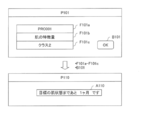
- FIG. 13 is a diagram showing an example of a screen displayed in the information processing of the first modification.
- step S100 the user specifies the target cosmetics in the field object F101a and the target (as an example, the target skin condition) in the field object F101c.
- a class ID an example of “target information” corresponding to the target skin condition is assigned to the target specified in the field object F101c.
- step S101 the processor 12 transmits the simulation request data to the server 30.
- the simulation request data includes the following information.
- ⁇ Target user ID The image data generated in step S100 The target cosmetic ID of the target cosmetic corresponding to the user instruction given to the field object F101a -Feature amount corresponding to the user instruction given to the field object F101b-Class ID assigned to the goal given to the field object F101c (hereinafter referred to as "target class ID”)
- the processor 32 includes the state transition model (FIG. 8) corresponding to the class information master database (FIG. 7) associated with the target cosmetic ID included in the simulation request data, in the simulation request data.
- the processor 32 extracts a feature amount from the image data.
- the processor 32 identifies the skin characteristics of the user based on at least one of the feature amount extracted from the image data and the feature amount included in the simulation request data.
- the processor 32 refers to the “skin characteristic” field of the class information master database to identify the class ID associated with the skin characteristic having the highest similarity to the identified skin characteristic.
- the specified class ID indicates the class to which the skin corresponding to the image data included in the simulation request data belongs.
- the processor 32 refers to the transition probability stored in the "transition probability" field associated with the identified class ID, and identifies the time required until the predetermined transition probability is reached. For example, the class of the skin condition corresponding to the image data included in the simulation data is class 1, the class of the target skin condition is class 2, and the transition probability P12 equal to or higher than the predetermined transition probability is “1 month. When stored in the “after” field, the processor 32 determines that the time required to reach the target skin condition is “1 month”.
- step S302 the processor 32 transmits the simulation response data to the client device 10.
- the simulation response data includes information about the required time determined in step S300.
- step S102 the processor 12 displays the screen P110 (FIG. 13) on the display.
- the screen P110 includes a display object A110.
- the display object A110 includes the time required to reach the target skin condition.
- the user can know the time required to reach the target skin state via the display object A110 by giving the image of the skin and the target skin state to the client device 10. it can.
- Modification 2 is an example of a method for generating a class information master database.
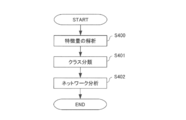
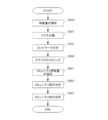
- FIG. 14 is a flowchart of information processing of the second modification.
- the server 30 executes a feature amount analysis (S400). Specifically, the processor 32 extracts the skin feature amount from the image data in the “skin image” field of the subject information database (FIG. 5).
- the characteristic amount of skin is, for example, at least one of water content, pores, texture, amount of sebum, state of stratum corneum, and skin color.
- the server 30 executes class classification (S401).
- a class classification model is stored in the storage device 31.
- the class classification model is a trained model generated using deep learning.
- the class classification model defines the correlation between the skin feature amount and the class.
- the processor 32 determines the class ID corresponding to the feature amount of each skin image data for each skin image data by inputting the feature amount obtained in step S400 into the class classification model.
- the determined class ID is assigned to the feature amount. As a result, the class to which the skin condition determined from the feature amount belongs is determined.
- the server 30 executes network analysis (S402).
- the processor 32 refers to the subject information database (FIG. 5) and analyzes the class of the feature amount of the plurality of skin image data associated with the certain subject ID to correspond to the certain subject ID. Identify the transition of the class to which the subject's skin belongs.
- the processor 32 refers to the transition of the classes of all the subject IDs, the class to which the skin after one day belongs, the class to which the skin after one week belongs, the class to which the skin state after one month belongs, and the skin state after three months , A class to which the skin after 6 months belongs, and a statistical value (for example, an average value) of transition probabilities to the class to which the skin after 1 year belongs are calculated.
- the processor 32 stores the calculated transition probability in the “transition probability” field of the class information master database (FIG. 7).
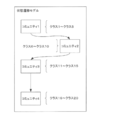
- FIG. 15 is an explanatory diagram of the outline of the third modification.
- a community is assigned to each class of the modified example 3. For example, classes 1 to 5 are assigned to community 1. Class 6 to class 10 are assigned to community 2. Classes 11 to 15 are assigned to the community 3. Classes 16 to 20 are assigned to community 4.
- the class belonging to the community 1 is likely to transit to the class belonging to the adjacent community (for example, the community 2).
- the class belonging to the community 2 is likely to transition to the class belonging to the adjacent community (for example, the community 1 or the community 3).
- the class belonging to the community 3 is likely to transition to the class belonging to the adjacent community (for example, the community 2 or the community 4).
- the state transition model of Modification 3 defines the probability of transition between communities.
- the state transition model defines the transition of changes in skin characteristics.
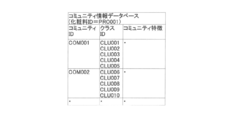
- FIG. 16 is a diagram illustrating a data structure of the community information database according to the modified example 3.
- the community information is stored in the community information database of FIG.
- the community information is information about a community composed of a plurality of classes having common characteristics.
- the community information database includes a "community ID” field, a "class ID” field, and a "community feature” field. Each field is associated with each other.
- the community information database is associated with the cosmetic ID.
- a community ID is stored in the “community ID” field.
- the community ID is an example of community identification information that identifies a community.
- the class ID of the class assigned to the community is stored in the “class ID” field.
- the “community feature” field stores information about the feature of the community (hereinafter referred to as “community feature information”).
- the community characteristic information includes, for example, at least one of the following information. ⁇ Information on skin groove uniformity ⁇ Information on skin groove area ⁇ Information on skin emissivity ⁇ Information on skin fineness ⁇ Information on pore size
- FIG. 17 is a sequence diagram of a community analysis process of the third modification.
- the server 30 executes graph clustering (S500) after executing steps S400 to S402, as in the second modification.
- the processor 32 performs the following with respect to the information (that is, the combination of the skin image data and the skin condition information) of the “skin image” field and the “skin condition” field of the subject information master database (FIG. 5):
- the community of each class is extracted by applying either method. This means that skin classes that belong to the same community are likely to transition (that is, the transition probability between classes is high).
- ⁇ Modularity Q maximization method ⁇ A method using greedy algorithm
- the processor 32 assigns a unique community ID to the extracted community.
- the processor 32 stores the community ID assigned to each community in the “community ID” field of the community information database (FIG. 16).
- the processor 32 stores the class ID of the class to which each community is assigned in the “class ID” field.
- the server 30 executes analysis between communities (S501). Specifically, the processor 32 extracts, for each community, a feature amount (hereinafter referred to as “community feature amount”) of skin image data corresponding to a class assigned to the community.
- the community feature amount includes, for example, the following. ⁇ Skin groove uniformity ⁇ Skin groove area ⁇ Skin groove emissivity ⁇ Skin groove definition ⁇ Pore size
- the processor 32 calculates the statistical value of the feature amount of each community by normalizing the extracted community feature amount.
- the processor 32 stores the statistical value of each community feature amount in each subfield of the “community feature” field of the community information database (FIG. 16). Thereby, as shown in FIG. 16, a transition path between communities can be obtained.
- the server 30 executes the analysis within the community (S502). Specifically, the processor 32 calculates the statistical value of the community feature amount (hereinafter referred to as “community feature amount”) for each class belonging to each community. The processor 32 identifies a feature (specifically, a change in the community feature amount) between the classes constituting each community in each community based on the feature amount in the community.
- community feature amount the statistical value of the community feature amount
- the first aspect of this embodiment is An information processing device (for example, a server 30) that executes a simulation for predicting a future skin condition when a cosmetic is used on the skin,
- a means for example, the processor 32 that executes step S300 for acquiring the subject skin information of the simulation subject is provided,
- a plurality of subject skin information indicating changes over time of the skin when each of the plurality of subjects uses the cosmetics on the skin, subject state information regarding the subject's skin condition corresponding to each subject skin information, and a cosmetics related to the cosmetics Means for predicting the transition of the skin state of the simulation target person by inputting the subject person's skin information to the state transition model regarding the transition of the skin state based on the information (for example, the processor 32 executing step S300). Equipped with A means for presenting the predicted transition of the skin condition (for example, the processor 32 that executes step S302) is provided.
- Information processing device for example, a server 30 that executes a simulation for predicting a future skin condition when a cosmetic is
- the skin state of the simulation subject Predict transitions. This makes it possible to predict the future skin condition when the use of the cosmetic is continued.
- the simulation target includes means (for example, the processor 32 that executes step S300) that acquires target information regarding the target skin condition,
- the means for predicting predicts the time required for the skin condition of the simulation target person to reach the skin condition corresponding to the target information, It is an information processing device.
- the time required to reach the target skin condition of the simulation subject is predicted.
- the simulation subject can be motivated to continue the care action until the target skin condition is reached.
- the third aspect of the present embodiment is Means for presenting recommended information regarding skin care or makeup suitable for the predicted skin condition (for example, the processor 32 executing step S302), It is an information processing device.
- the recommendation information corresponding to the prediction result of the skin condition is presented.
- the person to be simulated can be guided to appropriate skin care or makeup.
- the fourth aspect of the present embodiment is The simulation subject is provided with a unit (for example, the processor 32 that executes step S300) that acquires cosmetics information regarding the cosmetics used for the skin, A means (for example, the processor 32 that executes step S302) that presents the recommendation information regarding the usage method of the cosmetics based on the combination of the predicted skin condition and the cosmetics information, It is an information processing device.
- a unit for example, the processor 32 that executes step S300
- a means for example, the processor 32 that executes step S302
- It is an information processing device.
- the recommendation information regarding the usage method of the cosmetics in use is presented according to the prediction result of the skin condition.
- the person to be simulated can be guided to appropriate skin care or makeup.
- the fifth aspect of the present embodiment is A means for presenting recommended cosmetic information regarding recommended cosmetics recommended for use according to the predicted skin condition is provided. It is an information processing device.
- information on recommended cosmetics is presented according to the result of skin condition prediction.
- the person to be simulated can be guided to appropriate skin care or makeup.
- the sixth aspect of the present embodiment is The recommended cosmetic information includes information on the amount of recommended cosmetics used, It is an information processing device.
- the sixth aspect information regarding the usage amount of recommended cosmetics according to the prediction result of the skin condition is presented.
- the person to be simulated can be guided to appropriate skin care or makeup.
- the seventh aspect of the present embodiment is A means (for example, the processor 32 that executes step S303) that transmits recipe information for generating recommended cosmetics to a cosmetics generation device that generates cosmetics is provided. It is an information processing device.
- the recipe information of recommended cosmetics according to the prediction result of the skin condition is transmitted to the cosmetics generation device 50. This allows the simulation target person to easily obtain the recommended cosmetics.
- the eighth aspect of the present embodiment is A means (for example, the processor 32 that executes step S300) for acquiring cosmetics information regarding the target cosmetics to be simulated is provided,
- the means for predicting predicts the transition of the skin state of the simulation target person by inputting the cosmetic information and the target person skin information of the target cosmetic material to the state transition model, It is an information processing device.
- the ninth aspect of the present embodiment is The state transition model (for example, FIG. 8) defines a class corresponding to each skin state and a link between a plurality of classes, It is an information processing device.
- the tenth aspect of the present embodiment is The state transition model (for example, FIG. 15) is Including a plurality of communities to which skin conditions having a common tendency of changes in skin features are assigned, Stipulate the transition between each community, It is an information processing device.
- the tenth aspect it is possible to identify the main transition of the user's skin.
- the eleventh aspect of this embodiment is A cosmetics generation device 50 connectable to the information processing device (for example, the server 30) described above, A plurality of cartridges 55a-55b for accommodating cosmetic raw materials, A means (for example, a processor 52) that determines the extraction amount of the raw material contained in each of the cartridges 55a and 55b based on the recipe information transmitted by the information processing device, A means (for example, a processor 52) for extracting the raw material contained in each cartridge based on the determined extraction amount, It is the cosmetics generation device 50.
- the recipe information of recommended cosmetics according to the prediction result of the skin condition is transmitted to the cosmetics generation device 50. This allows the simulation target person to easily obtain the recommended cosmetics.
- the twelfth aspect of this embodiment is The means to determine is that if the recipe information contains information on the recommended amount of cosmetics recommended for use according to the predicted skin condition, the total extracted amount of the raw materials contained in multiple cartridges becomes the amount used. To determine the extraction amount of the raw material contained in each cartridge, It is the cosmetics generation device 50.
- recipe information of recommended cosmetics according to the prediction result of the skin condition is transmitted to the cosmetics generation device 50. This allows the simulation target person to easily obtain the recommended cosmetics.
- a thirteenth aspect of the present embodiment is a program for causing a computer (for example, the processor 32) to function as each unit described in any of the above.
- the storage device 11 may be connected to the client device 10 via the network NW.
- the storage device 31 may be connected to the server 30 via the network NW.
- Each of the above information processing steps can be executed by either the client device 10 or the server 30.
- the present embodiment is also applicable to the case where the characteristic amount is placed from the moisture measuring device.
- Information processing system 10 Client device 11: Storage device 12: Processor 13: Input/output interface 14: Communication interface 30: Server 31: Storage device 32: Processor 33: Input/output interface 34: Communication interface 50: Cosmetics generation device 51: storage device 52: processor 53: input/output interface 54: communication interfaces 55a and 55b: cartridge 56: extraction control unit
Landscapes
- Engineering & Computer Science (AREA)
- Health & Medical Sciences (AREA)
- Medical Informatics (AREA)
- Physics & Mathematics (AREA)
- Public Health (AREA)
- Theoretical Computer Science (AREA)
- General Health & Medical Sciences (AREA)
- Life Sciences & Earth Sciences (AREA)
- Business, Economics & Management (AREA)
- Evolutionary Computation (AREA)
- Pathology (AREA)
- General Physics & Mathematics (AREA)
- Primary Health Care (AREA)
- Biomedical Technology (AREA)
- Tourism & Hospitality (AREA)
- General Engineering & Computer Science (AREA)
- Epidemiology (AREA)
- Databases & Information Systems (AREA)
- Artificial Intelligence (AREA)
- Data Mining & Analysis (AREA)
- Geometry (AREA)
- Computer Vision & Pattern Recognition (AREA)
- Computer Hardware Design (AREA)
- Software Systems (AREA)
- Molecular Biology (AREA)
- General Business, Economics & Management (AREA)
- Economics (AREA)
- Human Resources & Organizations (AREA)
- Marketing (AREA)
- Animal Behavior & Ethology (AREA)
- Strategic Management (AREA)
- Veterinary Medicine (AREA)
- Surgery (AREA)
- Heart & Thoracic Surgery (AREA)
- Biophysics (AREA)
- Management, Administration, Business Operations System, And Electronic Commerce (AREA)
- Measuring And Recording Apparatus For Diagnosis (AREA)
- Medical Treatment And Welfare Office Work (AREA)
Abstract
化粧料を肌に使用したときの未来の肌状態を予測するシミュレーションを実行する情報処理装置は、シミュレーション対象者の対象者肌情報を取得する手段を備え、複数の被験者のそれぞれが化粧料を肌に使用したときの肌の経時変化を示す複数の被験者肌情報と、各被験者肌情報に対応する被験者の肌状態に関する被験者状態情報と、化粧料に関する化粧料情報と、に基づく肌状態の遷移に関する状態遷移モデルに対して、対象者肌情報を入力することにより、シミュレーション対象者の肌状態の遷移を予測する手段を備え、予測された肌状態の遷移を提示する手段を備える。
Description
本発明は、情報処理装置、化粧料生成装置、及び、プログラムに関する。
一般に、化粧料の消費者が化粧料を選定する場合、化粧料によって得られる肌状態の変化を知ることが重要である。
肌状態は、肌の皮下組織から予測可能であることが知られている。例えば、特開2014-064949号公報には、肌の皮下組織の光反射特性に基づいて、肌の内部の状態を推定する技術が開示されている。
肌状態は、肌の皮下組織から予測可能であることが知られている。例えば、特開2014-064949号公報には、肌の皮下組織の光反射特性に基づいて、肌の内部の状態を推定する技術が開示されている。
実際には、化粧料によって得られる肌状態の変化は、化粧料を1回使用した時点で決まるのではなく、化粧料の使用の継続期間、使用頻度、及び、1回あたりの使用量によって決まる。
しかし、特開2014-064949号公報では、化粧料を1回使用したときの皮下組織の状態に基づいて肌状態を推定するので、推定結果は、化粧料を使用した時点の肌状態を示すものに過ぎず、化粧料の使用を継続したときの未来の肌状態を示すものではない。
しかし、特開2014-064949号公報では、化粧料を1回使用したときの皮下組織の状態に基づいて肌状態を推定するので、推定結果は、化粧料を使用した時点の肌状態を示すものに過ぎず、化粧料の使用を継続したときの未来の肌状態を示すものではない。
本発明の目的は、化粧料の使用を継続したときの未来の肌状態を予測することである。
本発明の一態様は、
化粧料を肌に使用したときの未来の肌状態を予測するシミュレーションを実行する情報処理装置であって、
シミュレーション対象者の対象者肌情報を取得する手段を備え、
複数の被験者のそれぞれが化粧料を肌に使用したときの肌の経時変化を示す複数の被験者肌情報と、各被験者肌情報に対応する前記被験者の肌状態に関する被験者状態情報と、前記化粧料に関する化粧料情報と、に基づく肌状態の遷移に関する状態遷移モデルに対して、前記対象者肌情報を入力することにより、前記シミュレーション対象者の肌状態の遷移を予測する手段を備え、
前記予測された肌状態の遷移を提示する手段を備える、
情報処理装置である。
化粧料を肌に使用したときの未来の肌状態を予測するシミュレーションを実行する情報処理装置であって、
シミュレーション対象者の対象者肌情報を取得する手段を備え、
複数の被験者のそれぞれが化粧料を肌に使用したときの肌の経時変化を示す複数の被験者肌情報と、各被験者肌情報に対応する前記被験者の肌状態に関する被験者状態情報と、前記化粧料に関する化粧料情報と、に基づく肌状態の遷移に関する状態遷移モデルに対して、前記対象者肌情報を入力することにより、前記シミュレーション対象者の肌状態の遷移を予測する手段を備え、
前記予測された肌状態の遷移を提示する手段を備える、
情報処理装置である。
本発明によれば、化粧料の使用を継続したときの未来の肌状態を予測することができる。
以下、本発明の一実施形態について、図面に基づいて詳細に説明する。なお、実施形態を説明するための図面において、同一の構成要素には原則として同一の符号を付し、その繰り返しの説明は省略する。
(1)情報処理システムの構成
情報処理システムの構成について説明する。図1は、本実施形態の情報処理システムの構成を示すブロック図である。
情報処理システムの構成について説明する。図1は、本実施形態の情報処理システムの構成を示すブロック図である。
図1に示すように、情報処理システム1は、クライアント装置10と、サーバ30と、化粧料生成装置50と、を備える。
クライアント装置10、サーバ30、及び、化粧料生成装置50は、ネットワーク(例えば、インターネット又はイントラネット)NWを介して接続される。
クライアント装置10、サーバ30、及び、化粧料生成装置50は、ネットワーク(例えば、インターネット又はイントラネット)NWを介して接続される。
クライアント装置10は、サーバ30にリクエストを送信する情報処理装置の一例である。クライアント装置10は、例えば、スマートフォン、タブレット端末、又は、パーソナルコンピュータである。
サーバ30は、クライアント装置10から送信されたリクエストに応じたレスポンスをクライアント装置10に提供する情報処理装置の一例である。サーバ30は、例えば、ウェブサーバである。
化粧料生成装置50は、クライアント装置10又はサーバ30から送信される化粧料情報に基づいて、化粧料を生成するように構成される。化粧料は、例えば、以下の少なくとも1つである。
・スキンケア用化粧料(一例として、化粧水、乳液、美容液、洗顔料、クリーム、及び、フェイスマスクの少なくとも1つ)
・メーキャップ用化粧料(一例として、化粧下地、ファンデーション、コンシーラ、フェイスパウダ、口紅、リップグロス、アイシャドウ、アイライナ、マスカラ、アイブロウ、チーク、及び、コフレの少なくとも1つ)
・スキンケア用化粧料(一例として、化粧水、乳液、美容液、洗顔料、クリーム、及び、フェイスマスクの少なくとも1つ)
・メーキャップ用化粧料(一例として、化粧下地、ファンデーション、コンシーラ、フェイスパウダ、口紅、リップグロス、アイシャドウ、アイライナ、マスカラ、アイブロウ、チーク、及び、コフレの少なくとも1つ)
(1-1)クライアント装置の構成
図1を参照して、クライアント装置10の構成について説明する。
図1を参照して、クライアント装置10の構成について説明する。
図1に示すように、クライアント装置10は、記憶装置11と、プロセッサ12と、入出力インタフェース13と、通信インタフェース14とを備える。
記憶装置11は、プログラム及びデータを記憶するように構成される。記憶装置11は、例えば、ROM(Read Only Memory)、RAM(Random Access Memory)、及び、ストレージ(例えば、フラッシュメモリ又はハードディスク)の組合せである。
プログラムは、例えば、以下のプログラムを含む。
・OS(Operating System)のプログラム
・情報処理を実行するアプリケーション(例えば、ウェブブラウザ)のプログラム
・OS(Operating System)のプログラム
・情報処理を実行するアプリケーション(例えば、ウェブブラウザ)のプログラム
データは、例えば、以下のデータを含む。
・情報処理において参照されるデータベース
・情報処理を実行することによって得られるデータ(つまり、情報処理の実行結果)
・情報処理において参照されるデータベース
・情報処理を実行することによって得られるデータ(つまり、情報処理の実行結果)
プロセッサ12は、記憶装置11に記憶されたプログラムを起動することによって、クライアント装置10の機能を実現するように構成される。プロセッサ12は、コンピュータの一例である。
入出力インタフェース13は、クライアント装置10に接続される入力デバイスからユーザの指示を取得し、かつ、クライアント装置10に接続される出力デバイスに情報を出力するように構成される。
入力デバイスは、例えば、キーボード、ポインティングデバイス、タッチパネル、又は、それらの組合せである。
出力デバイスは、例えば、ディスプレイである。
入力デバイスは、例えば、キーボード、ポインティングデバイス、タッチパネル、又は、それらの組合せである。
出力デバイスは、例えば、ディスプレイである。
通信インタフェース14は、ネットワークNWを介した通信を制御するように構成される。
(1-2)サーバの構成
図1を参照して、サーバ30の構成について説明する。
図1を参照して、サーバ30の構成について説明する。
図1に示すように、サーバ30は、記憶装置31と、プロセッサ32と、入出力インタフェース33と、通信インタフェース34とを備える。
記憶装置31は、プログラム及びデータを記憶するように構成される。記憶装置31は、例えば、ROM、RAM、及び、ストレージ(例えば、フラッシュメモリ又はハードディスク)の組合せである。
プログラムは、例えば、以下のプログラムを含む。
・OSのプログラム
・情報処理を実行するアプリケーションのプログラム
・OSのプログラム
・情報処理を実行するアプリケーションのプログラム
データは、例えば、以下のデータを含む。
・情報処理において参照されるデータベース
・情報処理の実行結果
・情報処理において参照されるデータベース
・情報処理の実行結果
プロセッサ32は、記憶装置31に記憶されたプログラムを起動することによって、サーバ30の機能を実現するように構成される。プロセッサ32は、コンピュータの一例である。
入出力インタフェース33は、サーバ30に接続される入力デバイスからユーザの指示を取得し、かつ、サーバ30に接続される出力デバイスに情報を出力するように構成される。
入力デバイスは、例えば、キーボード、ポインティングデバイス、タッチパネル、又は、それらの組合せである。
出力デバイスは、例えば、ディスプレイである。
入力デバイスは、例えば、キーボード、ポインティングデバイス、タッチパネル、又は、それらの組合せである。
出力デバイスは、例えば、ディスプレイである。
通信インタフェース34は、ネットワークNWを介した通信を制御するように構成される。
(1-3)化粧料生成装置の構成
本実施形態の化粧料生成装置50の構成について説明する。図2は、図1の化粧料生成装置50の構成を示すブロック図である。
本実施形態の化粧料生成装置50の構成について説明する。図2は、図1の化粧料生成装置50の構成を示すブロック図である。
図2に示すように、化粧料生成装置50は、記憶装置51と、プロセッサ52と、入出力インタフェース53と、通信インタフェース54と、抽出制御部56と、複数のカートリッジ55a~55bと、を備える。
記憶装置51は、プログラム及びデータを記憶するように構成される。記憶装置51は、例えば、ROM、RAM、及び、ストレージ(例えば、フラッシュメモリ又はハードディスク)の組合せである。
プログラムは、例えば、以下のプログラムを含む。
・OSのプログラム
・化粧料生成装置50の制御プログラム
・OSのプログラム
・化粧料生成装置50の制御プログラム
データは、例えば、以下のデータを含む。
・化粧料の生成の履歴に関する情報
・複数のカートリッジ55a~55bに収容された原料の残量に関する情報
・化粧料の生成の履歴に関する情報
・複数のカートリッジ55a~55bに収容された原料の残量に関する情報
プロセッサ52は、記憶装置51に記憶されたプログラムを起動することによって、化粧料生成装置50の機能を実現するように構成される。プロセッサ52は、コンピュータの一例である。
入出力インタフェース53は、化粧料生成装置50に接続される入力デバイスからユーザの指示を取得し、かつ、化粧料生成装置50に接続される出力デバイスに情報を出力するように構成される。
入力デバイスは、例えば、キーボード、ポインティングデバイス、タッチパネル、又は、それらの組合せである。
出力デバイスは、例えば、ディスプレイである。
入力デバイスは、例えば、キーボード、ポインティングデバイス、タッチパネル、又は、それらの組合せである。
出力デバイスは、例えば、ディスプレイである。
通信インタフェース54は、ネットワークNWを介した通信を制御するように構成される。
各カートリッジ55a~55bには、化粧料の原料が収容される。
抽出制御部56は、クライアント装置10又はサーバ30から送信された化粧料情報に基づいて、各カートリッジ55a~55bから原料を抽出するように構成される。
抽出制御部56は、クライアント装置10又はサーバ30から送信された化粧料情報に基づいて、各カートリッジ55a~55bから原料を抽出するように構成される。
(2)実施形態の概要
本実施形態の概要について説明する。図3は、本実施形態の概要の説明図である。
本実施形態の概要について説明する。図3は、本実施形態の概要の説明図である。
図3に示すように、サーバ30は、化粧料を肌に使用したときの肌状態のシミュレーションを実行するように構成される。
サーバ30は、複数の被験者のそれぞれが化粧料を肌に使用したときの肌の経時変化を示す複数の被験者肌情報と、各被験者肌情報に対応する前記被験者の肌状態に関する被験者肌状態情報と、化粧料に関する化粧料情報と、に基づいて、肌の状態遷移に関する状態遷移モデルを生成する。
サーバ30は、クライアント装置10を介して、シミュレーションの対象となる対象化粧料に関する化粧料情報を取得する。
サーバ30は、クライアント装置10を介して、シミュレーション対象者の対象者肌情報を取得する。
サーバ30は、対象化粧料の化粧料情報及び対象者肌情報を状態遷移モデルに入力することにより、シミュレーション対象者の肌状態の遷移を予測する。
サーバ30は、クライアント装置10を介して、予測された肌状態の遷移を提示する。
本実施形態によれば、化粧料の使用を継続したときの未来の肌状態を予測することができる。
(3)データベース
本実施形態のデータベースについて説明する。以下のデータベースは、記憶装置31に記憶される。
本実施形態のデータベースについて説明する。以下のデータベースは、記憶装置31に記憶される。
(3-1)ユーザ情報データベース
本実施形態のユーザ情報データベースについて説明する。図4は、本実施形態のユーザ情報データベースのデータ構造を示す図である。
本実施形態のユーザ情報データベースについて説明する。図4は、本実施形態のユーザ情報データベースのデータ構造を示す図である。
図4のユーザ情報データベースには、ユーザに関するユーザ情報が格納されている。
ユーザ情報データベースは、「ユーザID」フィールドと、「ユーザ名」フィールドと、「ユーザ属性」フィールドと、を含む。各フィールドは、互いに関連付けられている。
ユーザ情報データベースは、「ユーザID」フィールドと、「ユーザ名」フィールドと、「ユーザ属性」フィールドと、を含む。各フィールドは、互いに関連付けられている。
「ユーザID」フィールドには、ユーザIDが格納される。ユーザIDは、ユーザを識別するユーザ識別情報の一例である。
「ユーザ名」フィールドには、ユーザ名に関する情報(例えば、テキスト)が格納される。
「ユーザ属性」フィールドには、ユーザの属性に関するユーザ属性情報が格納される。「ユーザ属性」フィールドは、複数のサブフィールド(「性別」フィールド及び「年齢」フィールド)を含む。
「性別」フィールドには、ユーザの性別に関する情報が格納される。
「年齢」フィールドには、ユーザの年齢に関する情報が格納される。
(3-2)被験者情報データベース
本実施形態の被験者情報データベースについて説明する。図5は、本実施形態の被験者情報データベースのデータ構造を示す図である。
本実施形態の被験者情報データベースについて説明する。図5は、本実施形態の被験者情報データベースのデータ構造を示す図である。
図5の被験者情報データベースには、被験者に関する被験者情報が格納される。被験者情報データベースは、「被験者ID」フィールドと、「被験者属性」フィールドと、「日時」フィールドと、「肌画像」フィールドと、「肌状態」フィールドと、「クラスID」フィールドと、「化粧料ID」フィールドと、を含む。各フィールドは、互いに関連付けられている。
「被験者ID」フィールドには、被験者IDが格納される。被験者IDは、被験者を識別する被験者識別情報の一例である。
「被験者属性」フィールドには、被験者の属性に関する被験者属性情報が格納される。「被験者属性」フィールドは、複数のサブフィールド(「性別」フィールド及び「年齢」フィールド)を含む。
「性別」フィールドには、被験者の性別に関する情報が格納される。
「年齢」フィールドには、被験者の年齢に関する情報が格納される。
「日時」フィールドには、被験者に対する測定が実施された日時に関する情報が格納される。
「肌画像」フィールドには、被験者の肌に関する画像データが格納される。
「肌状態」フィールドには、被験者の肌の画像データに基づいて判定された肌状態に関する肌状態情報(「被験者状態情報」の一例)が格納される。
「日時」フィールド、「肌画像」フィールド、及び、「肌状態」フィールドは、互いに関連付けられている。「日時」フィールド、「肌画像」フィールド、及び、「肌状態」フィールドは、測定が実施される度にレコードが追加される。
つまり、「肌画像」フィールドには、被験者が化粧料を肌に使用したときの肌の経時変化を示す画像データが格納される。「肌状態」フィールドには、被験者が化粧料を肌に使用したときの肌状態の経時変化を示す情報が格納される。
つまり、「肌画像」フィールドには、被験者が化粧料を肌に使用したときの肌の経時変化を示す画像データが格納される。「肌状態」フィールドには、被験者が化粧料を肌に使用したときの肌状態の経時変化を示す情報が格納される。
「クラスID」フィールドには、肌画像データに対応するクラス(つまり、肌画像データの特徴量から判定された肌状態が属するクラス)を識別するクラスID(「クラス識別情報」の一例)が格納される。
「化粧料ID」フィールドには、被験者が使用している化粧料を識別する化粧料ID(「化粧料識別情報」の一例)が格納される。
(3-3)化粧料情報マスタデータベース
本実施形態の化粧料情報マスタデータベースについて説明する。図6は、本実施形態の化粧料情報マスタデータベースのデータ構造を示す図である。
本実施形態の化粧料情報マスタデータベースについて説明する。図6は、本実施形態の化粧料情報マスタデータベースのデータ構造を示す図である。
図6の化粧料情報マスタデータベースには、化粧料に関する化粧料情報が格納される。化粧料情報マスタデータベースは、「化粧料ID」フィールドと、「化粧料名」フィールドと、「推奨使用量」フィールドと、「成分」フィールドと、を含む。各フィールドは、互いに関連付けられている。
「化粧料ID」フィールドには、化粧料IDが格納される。
「化粧料名」フィールドには、化粧料の名称に関する情報(例えば、テキスト)が格納される。
「推奨使用量」フィールドには、化粧料の推奨使用量に関する情報が格納される。
「成分」フィールドには、化粧料の成分に関する情報が格納される。「成分」フィールドは、複数のサブフィールド(「成分名」フィールド及び「含有比率」フィールド)を含む。
「成分名」フィールドには、化粧料の成分の名称に関する情報(例えば、テキスト、又は、成分を識別する成分コード)が格納される。
「含有比率」フィールドには、各成分の含有比率に関する情報が格納される。
(3-4)クラス情報マスタデータベース
本実施形態のクラス情報マスタデータベースについて説明する。図7は、本実施形態のクラス情報マスタデータベースのデータ構造を示す図である。図8は、図7のクラス情報マスタデータベースに対応する状態遷移モデルの概念図である。図9は、図8の状態遷移モデルの入力及び出力を示す概念図である。
本実施形態のクラス情報マスタデータベースについて説明する。図7は、本実施形態のクラス情報マスタデータベースのデータ構造を示す図である。図8は、図7のクラス情報マスタデータベースに対応する状態遷移モデルの概念図である。図9は、図8の状態遷移モデルの入力及び出力を示す概念図である。
図7のクラス情報マスタデータベースには、クラス情報が格納される。クラス情報とは、複数の被験者の肌画像データの特徴量に基づく肌の分類に関する情報である。
クラス情報マスタデータベースは、「クラスID」フィールドと、「クラス概要」フィールドと、「肌特性」フィールドと、「レコメンド」フィールドと、「遷移確率」フィールドと、を含む。各フィールドは、互いに関連付けられている。
クラス情報マスタデータベースは、化粧料IDに関連付けられている。
クラス情報マスタデータベースは、「クラスID」フィールドと、「クラス概要」フィールドと、「肌特性」フィールドと、「レコメンド」フィールドと、「遷移確率」フィールドと、を含む。各フィールドは、互いに関連付けられている。
クラス情報マスタデータベースは、化粧料IDに関連付けられている。
「クラスID」フィールドには、クラスIDが格納されている。
「クラス概要」フィールドには、クラスの概要説明に関する情報(例えば、テキスト)が格納される。「クラス概要」フィールドの情報は、サーバ30の管理者によって決定される。
「肌特性」フィールドには、各クラスに対応する肌の特性に関する肌特性情報が格納されている。肌特性情報は、以下の少なくとも1つを示す。
・肌のキメの特性(一例として、キメの流れ、及び、キメの分布範囲)
・皮溝の特性(一例として、皮溝の状態、及び、皮溝の形状)
・毛穴の特性(一例として、毛穴の状態、毛穴のサイズ、毛穴の数、及び、毛穴の密度)
・皮丘の特性(一例として、皮丘のサイズ、皮丘の数、皮丘の密度)
・肌のキメの特性(一例として、キメの流れ、及び、キメの分布範囲)
・皮溝の特性(一例として、皮溝の状態、及び、皮溝の形状)
・毛穴の特性(一例として、毛穴の状態、毛穴のサイズ、毛穴の数、及び、毛穴の密度)
・皮丘の特性(一例として、皮丘のサイズ、皮丘の数、皮丘の密度)
「レコメンド」フィールドには、各クラスに対応するレコメンド情報が格納されている。レコメンド情報は、スキンケアに関するレコメンド情報と、メーキャップに関するレコメンド情報と、を含む。
スキンケアに関するレコメンド情報は、例えば、以下の少なくとも1つを含む。
・化粧下地の種類
・ファンデーションの種類
・塗布手段(一例として、指による塗布、又は、スポンジによる塗布)
・塗布方法
・化粧料の種類
・化粧料の使用量(一例として、薄塗り又は厚塗り)
・化粧下地の種類
・ファンデーションの種類
・塗布手段(一例として、指による塗布、又は、スポンジによる塗布)
・塗布方法
・化粧料の種類
・化粧料の使用量(一例として、薄塗り又は厚塗り)
メーキャップに関するレコメンド情報は、例えば、以下の少なくとも1つを含む。
・実施が推奨される肌のケア方法(一例として、化粧水又は乳液を用いた日常ケア方法、及び、美容液、クリーム又はマスクを用いた特別ケア方法)
・使用中の化粧料の使用方法(一例として、使用頻度、及び、1回あたりの使用量)
・使用が推奨される化粧料(以下「推奨化粧料」という)
・推奨化粧料の使用量(一例として、使用頻度、及び、1回あたりの使用量)
・実施が推奨される肌のケア方法(一例として、化粧水又は乳液を用いた日常ケア方法、及び、美容液、クリーム又はマスクを用いた特別ケア方法)
・使用中の化粧料の使用方法(一例として、使用頻度、及び、1回あたりの使用量)
・使用が推奨される化粧料(以下「推奨化粧料」という)
・推奨化粧料の使用量(一例として、使用頻度、及び、1回あたりの使用量)
「遷移確率」フィールドは、複数のサブフィールドを含む。複数のサブフィールドは、将来の時点(例えば、1日後、1週間後、1ヶ月後、3ヶ月後、6ヶ月後、及び、1年後)毎に構成される。各サブフィールドには、クラスIDが割り当てられており、且つ、クラス間の遷移確率が格納される。
図7の例では、「クラスID」フィールドにクラスID「CLU001」が格納されたレコードの「遷移確率」フィールドのうち、将来の時点「1日後」が割り当てられたサブフィールドには、クラスID「CLU001」のクラスからの1日後の遷移確率P11~P15が格納される。
「クラスID」フィールドにクラスID「CLU002」が格納されたレコードの「遷移確率」フィールドのうち、将来の時点「1日後」が割り当てられたサブフィールドには、クラスID「CLU002」のクラスからの1日後の遷移確率P21~P25が格納される。
「クラスID」フィールドにクラスID「CLU001」が格納されたレコードの「遷移確率」フィールドのうち、将来の時点「1年後」が割り当てられたサブフィールドには、クラスID「CLU001」のクラスからの1年後の遷移確率が格納される。
図8の状態遷移モデルは、図7のクラス情報マスタデータベースに対応する。つまり、状態遷移モデルは、化粧料IDに関連付けられており、且つ、当該化粧料IDに対応する化粧料を使用した複数の被験者のそれぞれの複数の肌画像データ(つまり、肌の経時変化を示す画像)に基づいて生成される。
状態遷移モデルは、複数のクラスと、各クラス間のリンクと、から構成される。リンクは、各クラス間の遷移の確率を示している。
一例として、図8の状態遷移モデルは、クラスID「CLU001」のクラス1~クラスID「CLU005」のクラス5を含む。各クラス間のリンクは、以下のとおりである。
・1日後のクラス1からクラス2への遷移確率:P12
・1日後のクラス1からクラス3への遷移確率:P13
・1日後のクラス1からクラス4への遷移確率:P14
・1日後のクラス2からクラス5への遷移確率:P25
・1日後のクラス3からクラス4への遷移確率:P34
・1日後のクラス3からクラス5への遷移確率:P35
一例として、図8の状態遷移モデルは、クラスID「CLU001」のクラス1~クラスID「CLU005」のクラス5を含む。各クラス間のリンクは、以下のとおりである。
・1日後のクラス1からクラス2への遷移確率:P12
・1日後のクラス1からクラス3への遷移確率:P13
・1日後のクラス1からクラス4への遷移確率:P14
・1日後のクラス2からクラス5への遷移確率:P25
・1日後のクラス3からクラス4への遷移確率:P34
・1日後のクラス3からクラス5への遷移確率:P35
図9に示すように、状態遷移モデルの入力は、画像データである。
状態遷移モデルの出力は、当該化粧料IDに対応する化粧料を使用したときの肌状態の経時変化の予測結果である。
状態遷移モデルの出力は、当該化粧料IDに対応する化粧料を使用したときの肌状態の経時変化の予測結果である。
クラス情報マスタデータベース(図7)及び状態遷移モデル(図8)は、以下の何れかの手法により生成される。
・教師なし学習
・教師あり学習
・ネットワーク分析
・教師なし学習
・教師あり学習
・ネットワーク分析
(3-5)シミュレーションログ情報データベース
本実施形態のシミュレーションログ情報データベースについて説明する。図10は、本実施形態のシミュレーションログ情報データベースのデータ構造を示す図である。
本実施形態のシミュレーションログ情報データベースについて説明する。図10は、本実施形態のシミュレーションログ情報データベースのデータ構造を示す図である。
図10のシミュレーションログ情報データベースには、シミュレーションの実行結果の履歴に関するシミュレーションログ情報が格納される。シミュレーションログ情報データベースは、「シミュレーションログID」フィールドと、「日時」フィールドと、「化粧料ID」フィールドと、「肌画像」フィールドと、「シミュレーション結果」フィールドと、を含む。各フィールドは、互いに関連付けられている。
シミュレーションログ情報データベースは、ユーザIDに関連付けられている。
シミュレーションログ情報データベースは、ユーザIDに関連付けられている。
「シミュレーションログID」フィールドには、シミュレーションログ情報を識別するシミュレーションログIDが格納される。
「日時」フィールドには、シミュレーションの実行日時に関する情報が格納される。
「化粧料ID」フィールドには、シミュレーションの対象となる化粧料の化粧料IDが格納される。
「肌画像」フィールドには、シミュレーションの対象となる肌画像の画像データが格納される。
「シミュレーション結果」フィールドには、シミュレーションの実行結果に関する情報が格納される。「シミュレーション結果」フィールドは、「1日後」フィールドと、「1週間後」フィールドと、「1ヶ月後」フィールドと、「3ヶ月後」フィールドと、「6ヶ月後」フィールドと、「1年後」フィールドと、を含む。
「1日後」フィールドには、シミュレーションの実行日時から1日後の肌が属するクラスのクラスIDが格納される。
「1週間後」フィールドには、シミュレーションの実行日時から1週間後の肌が属するクラスのクラスIDが格納される。
「1ヶ月後」フィールドには、シミュレーションの実行日時から1ヶ月後の肌が属するクラスのクラスIDが格納される。
「3ヶ月後」フィールドには、シミュレーションの実行日時から3ヶ月後の肌が属するクラスのクラスIDが格納される。
「6ヶ月後」フィールドには、シミュレーションの実行日時から6ヶ月後の肌が属するクラスのクラスIDが格納される。
「1年後」フィールドには、シミュレーションの実行日時から1年後の肌が属するクラスのクラスIDが格納される。
(4)情報処理
本実施形態の情報処理について説明する。図11は、本実施形態のシミュレーションの処理のシーケンス図である。図12は、図11の情報処理において表示される画面例を示す図である。
本実施形態の情報処理について説明する。図11は、本実施形態のシミュレーションの処理のシーケンス図である。図12は、図11の情報処理において表示される画面例を示す図である。
図11に示すように、クライアント装置10は、シミュレーション条件の受付(S100)を実行する。
具体的には、プロセッサ12は、画面P100(図12)をディスプレイに表示する。
具体的には、プロセッサ12は、画面P100(図12)をディスプレイに表示する。
画面P100は、表示オブジェクトA100と、操作オブジェクトB100と、を含む。
表示オブジェクトA100は、クライアント装置10に配置されたカメラ(不図示)が撮影する画像を含む。
操作オブジェクトB100は、撮影を実行するためのユーザ指示を受け付けるオブジェクトである。
表示オブジェクトA100は、クライアント装置10に配置されたカメラ(不図示)が撮影する画像を含む。
操作オブジェクトB100は、撮影を実行するためのユーザ指示を受け付けるオブジェクトである。
ユーザ(「シミュレーション対象者」の一例)が、表示オブジェクトA100に自身の肌の画像(例えば、顔の画像)が含まれているときに操作オブジェクトB100を操作すると、プロセッサ12は、表示オブジェクトA100に含まれる画像の画像データ(「対象者肌情報」の一例)を生成する。
プロセッサ12は、画面P101(図12)をディスプレイに表示する。
プロセッサ12は、画面P101(図12)をディスプレイに表示する。
画面P101は、操作オブジェクトB101と、フィールドオブジェクトF101a~F101cと、を含む。
フィールドオブジェクトF101aは、シミュレーションの対象とする対象化粧料(例えば、ユーザが使用している化粧料)を指定するためのユーザ指示を受け付けるオブジェクトである。
フィールドオブジェクトF101bは、ユーザの肌の特徴量(「対象者肌情報」の一例)を指定するためのユーザ指示を受け付けるオブジェクトである。ユーザの肌の特徴量は、例えば、水分量、毛穴、キメ、皮脂量、角層の状態、及び、肌色の少なくとも1つである。
フィールドオブジェクトF101cは、シミュレーションの対象とする目標を指定するためのユーザ指示を受け付けるオブジェクトである。
フィールドオブジェクトF101aは、シミュレーションの対象とする対象化粧料(例えば、ユーザが使用している化粧料)を指定するためのユーザ指示を受け付けるオブジェクトである。
フィールドオブジェクトF101bは、ユーザの肌の特徴量(「対象者肌情報」の一例)を指定するためのユーザ指示を受け付けるオブジェクトである。ユーザの肌の特徴量は、例えば、水分量、毛穴、キメ、皮脂量、角層の状態、及び、肌色の少なくとも1つである。
フィールドオブジェクトF101cは、シミュレーションの対象とする目標を指定するためのユーザ指示を受け付けるオブジェクトである。
ステップS100の後、クライアント装置10は、シミュレーションリクエスト(S101)を実行する。
具体的には、ユーザが、フィールドオブジェクトF101a~F101bにユーザ指示を入力し、且つ、操作オブジェクトB101を操作すると、プロセッサ12は、シミュレーションリクエストデータをサーバ30に送信する。
シミュレーションリクエストデータは、以下の情報を含む。
・シミュレーション対象者のユーザID(以下「対象ユーザID」という)
・ステップS100で生成された画像データ
・フィールドオブジェクトF101aに与えられたユーザ指示に対応する対象化粧料の対象化粧料ID
・フィールドオブジェクトF101bに与えられたユーザ指示に対応する特徴量
具体的には、ユーザが、フィールドオブジェクトF101a~F101bにユーザ指示を入力し、且つ、操作オブジェクトB101を操作すると、プロセッサ12は、シミュレーションリクエストデータをサーバ30に送信する。
シミュレーションリクエストデータは、以下の情報を含む。
・シミュレーション対象者のユーザID(以下「対象ユーザID」という)
・ステップS100で生成された画像データ
・フィールドオブジェクトF101aに与えられたユーザ指示に対応する対象化粧料の対象化粧料ID
・フィールドオブジェクトF101bに与えられたユーザ指示に対応する特徴量
ステップS101の後、サーバ30は、シミュレーション(S300)を実行する。
具体的には、プロセッサ32は、シミュレーションリクエストデータに含まれる画像データから特徴量を抽出する。
プロセッサ32は、画像データから抽出した特徴量、及び、シミュレーションリクエストデータに含まれる特徴量の少なくとも1つに基づいて、ユーザの肌特性を特定する。
プロセッサ32は、クラス情報マスタデータベースの「肌特性」フィールドを参照して、特定した肌特性との類似度が最も高い肌特性に関連付けられたクラスIDを特定する。特定されたクラスIDは、シミュレーションリクエストデータに含まれる画像データに対応する肌が属するクラスを示す。
プロセッサ32は、特定されたクラスIDに関連付けられた「クラス概要」フィールドを参照して、当該肌が属するクラスの概要説明に関する情報を特定する。
プロセッサ32は、特定されたクラスIDに関連付けられた「レコメンド」フィールドを参照して、当該肌が属するクラスに対応するレコメンド情報を特定する。
プロセッサ32は、クラス情報マスタデータベースの「遷移確率」フィールドの各サブフィールドを参照して、サブフィールド毎の遷移確率を特定する。特定された遷移確率は、1日後の肌が属するクラス、1週間後の肌が属するクラス、1ヶ月後の肌状態が属するクラス、3ヶ月後の肌状態が属するクラス、6ヶ月後の肌が属するクラス、及び、1年後の肌が属するクラスを示す。
ステップS300の後、サーバ30は、データベースの更新(S301)を実行する。
具体的には、プロセッサ32は、シミュレーションリクエストデータに含まれる対象ユーザIDに関連付けられたシミュレーションログ情報データベース(図10)に新規レコードを追加する。新規レコードの各フィールドには、以下の情報が格納される。
・「シミュレーションログID」フィールドには、新規のシミュレーションIDが格納される。
・「日時」フィールドには、ステップS300の実行日時に関する情報が格納される。
・「化粧料ID」フィールドには、シミュレーションリクエストデータに含まれる対象化粧料IDが格納される。
・「肌画像」フィールドには、シミュレーションリクエストデータに含まれる画像データが格納される。
・「シミュレーション結果」フィールドの「1日後」フィールドには、1日後の肌が属するクラスのクラスIDが格納される。
・「シミュレーション結果」フィールドの「1週間後」フィールドには、1週間後の肌が属するクラスのクラスIDが格納される。
・「シミュレーション結果」フィールドの「1ヶ月後」フィールドには、1ヶ月後の肌が属するクラスのクラスIDが格納される。
・「シミュレーション結果」フィールドの「3ヶ月後」フィールドには、3ヶ月後の肌が属するクラスのクラスIDが格納される。
・「シミュレーション結果」フィールドの「6ヶ月後」フィールドには、6ヶ月後の肌が属するクラスのクラスIDが格納される。
・「シミュレーション結果」フィールドの「1年後」フィールドには、1年後の肌が属するクラスのクラスIDが格納される。
ステップS301の後、サーバ30は、シミュレーションレスポンス(S302)を実行する。
具体的には、プロセッサ32は、シミュレーションレスポンスデータをクライアント装置10に送信する。
シミュレーションレスポンスデータは、以下の情報を含む。
・1日後の肌が属するクラスのクラスID
・1週間後の肌が属するクラスのクラスID
・1ヶ月後の肌が属するクラスのクラスID
・3ヶ月後の肌が属するクラスのクラスID
・6ヶ月後の肌が属するクラスのクラスID
・1年後の肌が属するクラスのクラスID
・ステップS300で特定されたクラスの概要説明に関する情報
・ステップS300で特定されたレコメンド情報
具体的には、プロセッサ32は、シミュレーションレスポンスデータをクライアント装置10に送信する。
シミュレーションレスポンスデータは、以下の情報を含む。
・1日後の肌が属するクラスのクラスID
・1週間後の肌が属するクラスのクラスID
・1ヶ月後の肌が属するクラスのクラスID
・3ヶ月後の肌が属するクラスのクラスID
・6ヶ月後の肌が属するクラスのクラスID
・1年後の肌が属するクラスのクラスID
・ステップS300で特定されたクラスの概要説明に関する情報
・ステップS300で特定されたレコメンド情報
ステップS302の後、クライアント装置10は、シミュレーション結果の提示(S102)を実行する。
具体的には、プロセッサ12は、シミュレーションレスポンスデータに基づいて、画面P102(図12)をディスプレイに表示する。
具体的には、プロセッサ12は、シミュレーションレスポンスデータに基づいて、画面P102(図12)をディスプレイに表示する。
画面P102は、表示オブジェクトA102a~A102bと、操作オブジェクトB102と、を含む。
表示オブジェクトA102aは、1日後の肌が属するクラスの概要説明と、1週間後の肌が属するクラスの概要説明と、1ヶ月後の肌が属するクラスの概要説明と、3ヶ月後の肌が属するクラスの概要説明と、1週間後の肌が属するクラスの概要説明と、1年後の肌が属するクラスの概要説明と、を含む。
表示オブジェクトA102bは、ステップS100で取得された画像データに対応する肌に適したレコメンド情報を含む。レコメンド情報は、例えば、推奨化粧料に関する推奨化粧料情報(一例として、推奨化粧料の化粧料ID及び使用量)である。
操作オブジェクトB102は、推奨化粧料のレシピ情報を化粧料生成装置50に送信するためのユーザ指示を受け付けるオブジェクトである。
ステップS102の後、クライアント装置10は、レシピリクエスト(S103)を実行する。
具体的には、ユーザが操作オブジェクトB102を操作すると、プロセッサ12は、レシピリクエストデータをサーバ30に送信する。レシピリクエストデータは、推奨化粧料の化粧料IDを含む。
具体的には、ユーザが操作オブジェクトB102を操作すると、プロセッサ12は、レシピリクエストデータをサーバ30に送信する。レシピリクエストデータは、推奨化粧料の化粧料IDを含む。
ステップS103の後、サーバ30は、レシピレスポンス(S303)を実行する。
具体的には、プロセッサ32は、化粧料マスタデータベース(図6)を参照して、レシピリクエストデータに含まれる化粧料IDに関連付けられた「成分」フィールドの情報(成分名及び含有比率)を特定する。
プロセッサ32は、レシピ情報を化粧料生成装置50に送信する。レシピ情報は、以下の情報を含む。
・特定された「成分」フィールドの情報
・推奨化粧料の使用量に関する情報
具体的には、プロセッサ32は、化粧料マスタデータベース(図6)を参照して、レシピリクエストデータに含まれる化粧料IDに関連付けられた「成分」フィールドの情報(成分名及び含有比率)を特定する。
プロセッサ32は、レシピ情報を化粧料生成装置50に送信する。レシピ情報は、以下の情報を含む。
・特定された「成分」フィールドの情報
・推奨化粧料の使用量に関する情報
化粧料生成装置50は、サーバ30から送信されたレシピ情報に基づいて、化粧料を生成する。
具体的には、プロセッサ52は、レシピ情報に含まれる使用量に関する情報に基づいて、複数のカートリッジ55a~55bから抽出する原料の総抽出量を決定する。
プロセッサ52は、決定した総抽出量と、レシピ情報に含まれる成分名及び含有比率と、に基づいて、複数のカートリッジ55a~55bに収容された原料のそれぞれの抽出量を決定する。
プロセッサ52は、決定した抽出量の分だけ複数のカートリッジ55a~55bに収容された各原料を抽出するための制御信号を生成する。
抽出制御部56は、プロセッサ52によって生成された制御信号に基づいて、複数のカートリッジ55a~55bに収容された原料を抽出する。
これにより、ステップS100で受け付けられた画像データに対応する肌への使用が推奨される適量の化粧料が生成される。
本実施形態によれば、ユーザは、肌の画像をクライアント装置10に与えることにより、表示オブジェクトA102aを介して、使用中の化粧料の使用を継続したときの未来の肌状態を知ることができ、表示オブジェクトA102bを介して推奨化粧料を知ることができ、且つ、化粧料生成装置50を介して適量の推奨化粧料を得ることができる。
(5)変形例
本実施形態の変形例について説明する。
本実施形態の変形例について説明する。
(5-1)変形例1
本実施形態の変形例1について説明する。変形例1は、シミュレーション対象者が目標とする肌状態を指定する例である。図13は、変形例1の情報処理において表示される画面例を示す図である。
本実施形態の変形例1について説明する。変形例1は、シミュレーション対象者が目標とする肌状態を指定する例である。図13は、変形例1の情報処理において表示される画面例を示す図である。
変形例1では、ステップS100において、ユーザは、フィールドオブジェクトF101aに対象化粧料を指定し、且つ、フィールドオブジェクトF101cに目標(一例として、目標とする肌状態)を指定する。この場合、フィールドオブジェクトF101cに指定された目標には、目標とする肌状態に対応するクラスID(「目標情報」の一例)が割り当てられる。
ステップS101において、プロセッサ12は、シミュレーションリクエストデータをサーバ30に送信する。
シミュレーションリクエストデータは、以下の情報を含む。
・対象ユーザID
・ステップS100で生成された画像データ
・フィールドオブジェクトF101aに与えられたユーザ指示に対応する対象化粧料の対象化粧料ID
・フィールドオブジェクトF101bに与えられたユーザ指示に対応する特徴量
・フィールドオブジェクトF101cに与えられた目標に割り当てられたクラスID(以下「目標クラスID」という)
シミュレーションリクエストデータは、以下の情報を含む。
・対象ユーザID
・ステップS100で生成された画像データ
・フィールドオブジェクトF101aに与えられたユーザ指示に対応する対象化粧料の対象化粧料ID
・フィールドオブジェクトF101bに与えられたユーザ指示に対応する特徴量
・フィールドオブジェクトF101cに与えられた目標に割り当てられたクラスID(以下「目標クラスID」という)
ステップS300において、プロセッサ32は、シミュレーションリクエストデータに含まれる対象化粧料IDに関連付けられたクラス情報マスタデータベース(図7)に対応する状態遷移モデル(図8)に対して、シミュレーションリクエストデータに含まれる画像データを入力する。
プロセッサ32は、画像データから特徴量を抽出する。
プロセッサ32は、画像データから抽出した特徴量、及び、シミュレーションリクエストデータに含まれる特徴量の少なくとも1つに基づいて、ユーザの肌特性を特定する。
プロセッサ32は、クラス情報マスタデータベースの「肌特性」フィールドを参照して、特定した肌特性との類似度が最も高い肌特性に関連付けられたクラスIDを特定する。特定されたクラスIDは、シミュレーションリクエストデータに含まれる画像データに対応する肌が属するクラスを示す。
プロセッサ32は、特定したクラスIDに関連付けられた「遷移確率」フィールドに格納された遷移確率を参照して、所定の遷移確率以上になるまでの所要時間を特定する。例えば、シミュレーションデータに含まれる画像データに対応する肌状態のクラスがクラス1であり、目標とする肌状態のクラスがクラス2であり、且つ、所定の遷移確率以上の遷移確率P12が「1ヶ月後」フィールドに格納されている場合、プロセッサ32は、目標とする肌状態になるまでの所要時間を「1ヶ月」と判定する。
ステップS301の後、ステップS302において、プロセッサ32は、シミュレーションレスポンスデータをクライアント装置10に送信する。
シミュレーションレスポンスデータは、ステップS300で判定された所要時間に関する情報を含む。
シミュレーションレスポンスデータは、ステップS300で判定された所要時間に関する情報を含む。
ステップS302の後、ステップS102において、プロセッサ12は、画面P110(図13)をディスプレイに表示する。
画面P110は、表示オブジェクトA110を含む。
表示オブジェクトA110は、目標とする肌状態になるまでの所要時間を含む。
表示オブジェクトA110は、目標とする肌状態になるまでの所要時間を含む。
変形例1によれば、ユーザは、肌の画像及び目標とする肌状態をクライアント装置10に与えることにより、表示オブジェクトA110を介して、目標とする肌状態になるまでの所要時間を知ることができる。
(5-2)変形例2
本実施形態の変形例2について説明する。変形例2は、クラス情報マスタデータベースの生成方法の例である。図14は、変形例2の情報処理のフローチャートである。
本実施形態の変形例2について説明する。変形例2は、クラス情報マスタデータベースの生成方法の例である。図14は、変形例2の情報処理のフローチャートである。
図14に示すように、サーバ30は、特徴量の解析(S400)を実行する。
具体的には、プロセッサ32は、被験者情報データベース(図5)の「肌画像」フィールドの画像データから肌の特徴量を抽出する。肌の特徴量は、例えば、水分量、毛穴、キメ、皮脂量、角層の状態、及び、肌色の少なくとも1つである。
具体的には、プロセッサ32は、被験者情報データベース(図5)の「肌画像」フィールドの画像データから肌の特徴量を抽出する。肌の特徴量は、例えば、水分量、毛穴、キメ、皮脂量、角層の状態、及び、肌色の少なくとも1つである。
ステップS400の後、サーバ30は、クラス分類(S401)を実行する。
記憶装置31には、クラス分類モデルが記憶されている。クラス分類モデルは、ディープラーニングを用いて生成された学習済モデルである。クラス分類モデルには、肌の特徴量と、クラスと、の相関関係が規定されている。
プロセッサ32は、ステップS400で得られた特徴量をクラス分類モデルに入力することにより、肌画像データ毎に、各肌画像データの特徴量に対応するクラスIDを決定する。当該特徴量には、決定されたクラスIDが割り当てられる。これにより、当該特徴量から判定される肌状態が属するクラスが決まる。
記憶装置31には、クラス分類モデルが記憶されている。クラス分類モデルは、ディープラーニングを用いて生成された学習済モデルである。クラス分類モデルには、肌の特徴量と、クラスと、の相関関係が規定されている。
プロセッサ32は、ステップS400で得られた特徴量をクラス分類モデルに入力することにより、肌画像データ毎に、各肌画像データの特徴量に対応するクラスIDを決定する。当該特徴量には、決定されたクラスIDが割り当てられる。これにより、当該特徴量から判定される肌状態が属するクラスが決まる。
ステップS401の後、サーバ30は、ネットワーク分析(S402)を実行する。
具体的には、プロセッサ32は、被験者情報データベース(図5)を参照して、ある被験者IDに関連付けられた複数の肌画像データの特徴量のクラスを分析することにより、ある被験者IDに対応する被験者の肌が属するクラスの遷移を特定する。
プロセッサ32は、全ての被験者IDのクラスの遷移を参照して、1日後の肌が属するクラス、1週間後の肌が属するクラス、1ヶ月後の肌状態が属するクラス、3ヶ月後の肌状態が属するクラス、6ヶ月後の肌が属するクラス、及び、1年後の肌が属するクラスへの遷移確率の統計値(例えば、平均値)を計算する。
プロセッサ32は、計算した遷移確率を、クラス情報マスタデータベース(図7)の「遷移確率」フィールドに格納する。
(5-3)変形例3
複数のクラスのコミュニティを生成する例である。
複数のクラスのコミュニティを生成する例である。
(5-3-1)変形例3の概要
変形例3の概要を説明する。図15は、変形例3の概要の説明図である。
変形例3の概要を説明する。図15は、変形例3の概要の説明図である。
図15に示すように、変形例3の各クラスには、コミュニティが割り当てられる。
例えば、クラス1~クラス5は、コミュニティ1に割り当てられる。
クラス6~クラス10は、コミュニティ2に割り当てられる。
クラス11~クラス15は、コミュニティ3に割り当てられる。
クラス16~20は、コミュニティ4に割り当てられる。
例えば、クラス1~クラス5は、コミュニティ1に割り当てられる。
クラス6~クラス10は、コミュニティ2に割り当てられる。
クラス11~クラス15は、コミュニティ3に割り当てられる。
クラス16~20は、コミュニティ4に割り当てられる。
これは、以下のことを意味している。
・クラス1~クラス5の肌特性の変化の傾向は互いに共通している。
・クラス6~クラス10の肌特性の変化の傾向は互いに共通している。
・クラス11~クラス15の肌特性の変化の傾向は互いに共通している。
・クラス16~クラス20の肌特性の変化の傾向は互いに共通している。
・コミュニティ1に属するクラスは、隣接するコミュニティ(例えば、コミュニティ2)に属するクラスに遷移し易い。
・コミュニティ2に属するクラスは、隣接するコミュニティ(例えば、コミュニティ1又はコミュニティ3)に属するクラスに遷移し易い。
・コミュニティ3に属するクラスは、隣接するコミュニティ(例えば、コミュニティ2又はコミュニティ4)に属するクラスに遷移し易い。
つまり、変形例3の状態遷移モデルには、コミュニティ間の遷移の確率が規定される。換言すると、この状態遷移モデルは、肌特性の変化の傾向の遷移が規定されている。
(5-3-2)コミュニティ情報データベース
変形例3のコミュニティ情報データベースについて説明する。図16は、変形例3のコミュニティ情報データベースのデータ構造を示す図である。
変形例3のコミュニティ情報データベースについて説明する。図16は、変形例3のコミュニティ情報データベースのデータ構造を示す図である。
図16のコミュニティ情報データベースには、コミュニティ情報が格納される。コミュニティ情報とは、共通の特徴を有する複数のクラスから構成されるコミュニティに関する情報である。
コミュニティ情報データベースは、「コミュニティID」フィールドと、「クラスID」フィールドと、「コミュニティ特徴」フィールドと、を含む。各フィールドは、互いに関連付けられている。
コミュニティ情報データベースは、化粧料IDに関連付けられている。
コミュニティ情報データベースは、「コミュニティID」フィールドと、「クラスID」フィールドと、「コミュニティ特徴」フィールドと、を含む。各フィールドは、互いに関連付けられている。
コミュニティ情報データベースは、化粧料IDに関連付けられている。
「コミュニティID」フィールドには、コミュニティIDが格納される。コミュニティIDは、コミュニティを識別するコミュニティ識別情報の一例である。
「クラスID」フィールドには、コミュニティに割り当てられるクラスのクラスIDが格納される。
「コミュニティ特徴」フィールドには、コミュニティの特徴に関する情報(以下「コミュニティ特徴情報」という)が格納される。コミュニティ特徴情報は、例えば、以下の少なくとも1つの情報を含む。
・皮溝均一性に関する情報
・皮溝面積に関する情報
・皮溝放射度に関する情報
・皮溝精細度に関する情報
・毛穴サイズに関する情報
・皮溝均一性に関する情報
・皮溝面積に関する情報
・皮溝放射度に関する情報
・皮溝精細度に関する情報
・毛穴サイズに関する情報
(5-3-3)情報処理
変形例3の情報処理について説明する。図17は、変形例3のコミュニティ分析の処理のシーケンス図である。
変形例3の情報処理について説明する。図17は、変形例3のコミュニティ分析の処理のシーケンス図である。
図17に示すように、サーバ30は、変形例2と同様に、ステップS400~S402を実行した後、グラフクラスタリング(S500)を実行する。
具体的には、プロセッサ32は、被験者情報マスタデータベース(図5)の「肌画像」フィールド及び「肌状態」フィールドの情報(つまり、肌画像データ及び肌状態情報の組合せ)に対して、以下の何れかの方法を適用することにより、各クラスのコミュニティを抽出する。同一のコミュニティに属する肌クラスの間は、遷移し易い(つまり、クラス間の遷移確率が高い)ことを意味する。
・Modularity Q最大化法
・貪欲アルゴリズムを用いた手法
・辺媒介性を用いた手法
具体的には、プロセッサ32は、被験者情報マスタデータベース(図5)の「肌画像」フィールド及び「肌状態」フィールドの情報(つまり、肌画像データ及び肌状態情報の組合せ)に対して、以下の何れかの方法を適用することにより、各クラスのコミュニティを抽出する。同一のコミュニティに属する肌クラスの間は、遷移し易い(つまり、クラス間の遷移確率が高い)ことを意味する。
・Modularity Q最大化法
・貪欲アルゴリズムを用いた手法
・辺媒介性を用いた手法
プロセッサ32は、抽出したコミュニティにユニークなコミュニティIDを割り当てる。
プロセッサ32は、コミュニティ情報データベース(図16)の「コミュニティID」フィールドに、各コミュニティに割り当てられたコミュニティIDを格納する。
プロセッサ32は、「クラスID」フィールドに、各コミュニティが割り当てられたクラスのクラスIDを格納する。
プロセッサ32は、コミュニティ情報データベース(図16)の「コミュニティID」フィールドに、各コミュニティに割り当てられたコミュニティIDを格納する。
プロセッサ32は、「クラスID」フィールドに、各コミュニティが割り当てられたクラスのクラスIDを格納する。
ステップS500の後、サーバ30は、コミュニティ間の分析(S501)を実行する。
具体的には、プロセッサ32は、コミュニティ毎に、当該コミュニティに割り当てられたクラスに対応する肌画像データの特徴量(以下「コミュニティ特徴量」という)を抽出する。コミュニティ特徴量は、例えば、以下を含む。
・皮溝均一性
・皮溝面積
・皮溝放射度
・皮溝精細度
・毛穴サイズ
具体的には、プロセッサ32は、コミュニティ毎に、当該コミュニティに割り当てられたクラスに対応する肌画像データの特徴量(以下「コミュニティ特徴量」という)を抽出する。コミュニティ特徴量は、例えば、以下を含む。
・皮溝均一性
・皮溝面積
・皮溝放射度
・皮溝精細度
・毛穴サイズ
プロセッサ32は、抽出されたコミュニティ特徴量を正規化することにより、各コミュニティの特徴量の統計値を計算する。
プロセッサ32は、コミュニティ情報データベース(図16)の「コミュニティ特徴」フィールドの各サブフィールドに、各コミュニティ特徴量の統計値を格納する。
これにより、図16に示すように、コミュニティ間の遷移パスが得られる。
プロセッサ32は、コミュニティ情報データベース(図16)の「コミュニティ特徴」フィールドの各サブフィールドに、各コミュニティ特徴量の統計値を格納する。
これにより、図16に示すように、コミュニティ間の遷移パスが得られる。
ステップS501の後、サーバ30は、コミュニティ内の分析(S502)を実行する。
具体的には,プロセッサ32は、各コミュニティに属するクラス毎に、コミュニティ特徴量の統計値(以下「コミュニティ内特徴量」という)を計算する。
プロセッサ32は、コミュニティ内特徴量に基づいて、各コミュニティ内において、各コミュニティを構成するクラス間の特徴(具体的には、コミュニティ特徴量の変化)を特定する。
具体的には,プロセッサ32は、各コミュニティに属するクラス毎に、コミュニティ特徴量の統計値(以下「コミュニティ内特徴量」という)を計算する。
プロセッサ32は、コミュニティ内特徴量に基づいて、各コミュニティ内において、各コミュニティを構成するクラス間の特徴(具体的には、コミュニティ特徴量の変化)を特定する。
変形例3によれば、ユーザの肌の主要な遷移を特定することができる。
(6)本実施形態の小括
本実施形態について小括する。
本実施形態について小括する。
本実施形態の第1態様は、
化粧料を肌に使用したときの未来の肌状態を予測するシミュレーションを実行する情報処理装置(例えば、サーバ30)であって、
シミュレーション対象者の対象者肌情報を取得する手段(例えば、ステップS300を実行するプロセッサ32)を備え、
複数の被験者のそれぞれが化粧料を肌に使用したときの肌の経時変化を示す複数の被験者肌情報と、各被験者肌情報に対応する被験者の肌状態に関する被験者状態情報と、化粧料に関する化粧料情報と、に基づく肌状態の遷移に関する状態遷移モデルに対して、対象者肌情報を入力することにより、シミュレーション対象者の肌状態の遷移を予測する手段(例えば、ステップS300を実行するプロセッサ32)を備え、
予測された肌状態の遷移を提示する手段(例えば、ステップS302を実行するプロセッサ32)を備える、
情報処理装置。
第1態様によれば、複数の被験者肌情報と、被験者状態情報と、化粧料情報と、に基づく状態遷移モデルに対して、対象者肌情報を入力することにより、シミュレーション対象者の肌状態の遷移を予測する。これにより、化粧料の使用を継続したときの未来の肌状態を予測することができる。
本実施形態の第2態様は、
シミュレーション対象者が目標とする肌状態に関する目標情報を取得する手段(例えば、ステップS300を実行するプロセッサ32)を備え、
予測する手段は、シミュレーション対象者の肌状態が目標情報に対応する肌状態になるまでの所要時間を予測する、
情報処理装置である。
シミュレーション対象者が目標とする肌状態に関する目標情報を取得する手段(例えば、ステップS300を実行するプロセッサ32)を備え、
予測する手段は、シミュレーション対象者の肌状態が目標情報に対応する肌状態になるまでの所要時間を予測する、
情報処理装置である。
第2態様によれば、シミュレーション対象者の目標とする肌状態になるまでの所要時間を予測する。これにより、シミュレーション対象者に対して、目標とする肌状態になるまでケア行動を継続することのモチベーションを与えることができる。
本実施形態の第3態様は、
予測された肌状態に適したスキンケア又はメーキャップに関するレコメンド情報を提示する手段(例えば、ステップS302を実行するプロセッサ32)を備える、
情報処理装置である。
予測された肌状態に適したスキンケア又はメーキャップに関するレコメンド情報を提示する手段(例えば、ステップS302を実行するプロセッサ32)を備える、
情報処理装置である。
第3態様によれば、肌状態の予測結果に応じたレコメンド情報を提示する。これにより、シミュレーション対象者を適切なスキンケア又はメーキャップに誘導することができる。
本実施形態の第4態様は、
シミュレーション対象者が肌に使用する化粧料に関する化粧料情報を取得する手段(例えば、ステップS300を実行するプロセッサ32)を備え、
予測された肌状態及び化粧料情報の組合せに基づく化粧料の使用方法に関するレコメンド情報を提示する手段(例えば、ステップS302を実行するプロセッサ32)を備える、
情報処理装置である。
シミュレーション対象者が肌に使用する化粧料に関する化粧料情報を取得する手段(例えば、ステップS300を実行するプロセッサ32)を備え、
予測された肌状態及び化粧料情報の組合せに基づく化粧料の使用方法に関するレコメンド情報を提示する手段(例えば、ステップS302を実行するプロセッサ32)を備える、
情報処理装置である。
第4態様によれば、肌状態の予測結果に応じて、使用中の化粧料の使用方法に関するレコメンド情報を提示する。これにより、シミュレーション対象者を適切なスキンケア又はメーキャップに誘導することができる。
本実施形態の第5態様は、
予測された肌状態に応じて使用が推奨される推奨化粧料に関する推奨化粧料情報を提示する手段を備える、
情報処理装置である。
予測された肌状態に応じて使用が推奨される推奨化粧料に関する推奨化粧料情報を提示する手段を備える、
情報処理装置である。
第5態様によれば、肌状態の予測結果に応じた推奨化粧料に関する情報を提示する。これにより、シミュレーション対象者を適切なスキンケア又はメーキャップに誘導することができる。
本実施形態の第6態様は、
推奨化粧料情報は、推奨化粧料の使用量に関する情報を含む、
情報処理装置である。
推奨化粧料情報は、推奨化粧料の使用量に関する情報を含む、
情報処理装置である。
第6態様によれば、肌状態の予測結果に応じた推奨化粧料の使用量に関する情報を提示する。これにより、シミュレーション対象者を適切なスキンケア又はメーキャップに誘導することができる。
本実施形態の第7態様は、
化粧料を生成する化粧料生成装置に対して、推奨化粧料を生成するためのレシピ情報を送信する手段(例えば、ステップS303を実行するプロセッサ32)を備える、
情報処理装置である。
化粧料を生成する化粧料生成装置に対して、推奨化粧料を生成するためのレシピ情報を送信する手段(例えば、ステップS303を実行するプロセッサ32)を備える、
情報処理装置である。
第7態様によれば、肌状態の予測結果に応じた推奨化粧料のレシピ情報を化粧料生成装置50に送信する。これにより、シミュレーション対象者に対して、推奨化粧料を容易に入手させることができる。
本実施形態の第8態様は、
シミュレーションの対象となる対象化粧料に関する化粧料情報を取得する手段(例えば、ステップS300を実行するプロセッサ32)を備え、
予測する手段は、状態遷移モデルに対して、対象化粧料の化粧料情報及び対象者肌情報を入力することにより、シミュレーション対象者の肌状態の遷移を予測する、
情報処理装置である。
シミュレーションの対象となる対象化粧料に関する化粧料情報を取得する手段(例えば、ステップS300を実行するプロセッサ32)を備え、
予測する手段は、状態遷移モデルに対して、対象化粧料の化粧料情報及び対象者肌情報を入力することにより、シミュレーション対象者の肌状態の遷移を予測する、
情報処理装置である。
第8態様によれば、ユーザが任意に指定した対象化粧料の使用を継続したときの未来の肌状態を予測することができる。
本実施形態の第9態様は、
状態遷移モデル(例えば、図8)は、各肌状態に対応するクラスと、複数のクラス間のリンクと、を規定する、
情報処理装置である。
状態遷移モデル(例えば、図8)は、各肌状態に対応するクラスと、複数のクラス間のリンクと、を規定する、
情報処理装置である。
本実施形態の第10態様は、
状態遷移モデル(例えば、図15)は、
肌の特徴量の変化の傾向が共通する肌状態が割り当てられる複数のコミュニティを含み、
各コミュニティ間の遷移を規定する、
情報処理装置である。
状態遷移モデル(例えば、図15)は、
肌の特徴量の変化の傾向が共通する肌状態が割り当てられる複数のコミュニティを含み、
各コミュニティ間の遷移を規定する、
情報処理装置である。
第10態様によれば、ユーザの肌の主要な遷移を特定することができる。
本実施形態の第11態様は、
上記に記載の情報処理装置(例えば、サーバ30)と接続可能な化粧料生成装置50であって、
化粧料の原料を収容する複数のカートリッジ55a~55bを備え、
情報処理装置によって送信されたレシピ情報に基づいて、各カートリッジ55a~55bに収容された原料の抽出量を決定する手段(例えば、プロセッサ52)を備え、
決定された抽出量に基づいて、各カートリッジに収容された原料を抽出する手段(例えば、プロセッサ52)を備える、
化粧料生成装置50である。
上記に記載の情報処理装置(例えば、サーバ30)と接続可能な化粧料生成装置50であって、
化粧料の原料を収容する複数のカートリッジ55a~55bを備え、
情報処理装置によって送信されたレシピ情報に基づいて、各カートリッジ55a~55bに収容された原料の抽出量を決定する手段(例えば、プロセッサ52)を備え、
決定された抽出量に基づいて、各カートリッジに収容された原料を抽出する手段(例えば、プロセッサ52)を備える、
化粧料生成装置50である。
第11態様によれば、肌状態の予測結果に応じた推奨化粧料のレシピ情報を化粧料生成装置50に送信する。これにより、シミュレーション対象者に対して、推奨化粧料を容易に入手させることができる。
本実施形態の第12態様は、
決定する手段は、予測された肌状態に応じて使用が推奨される推奨化粧料の使用量に関する情報がレシピ情報に含まれる場合、複数のカートリッジに収容された原料の総抽出量が使用量になるように、各カートリッジに収容された原料の抽出量を決定する、
化粧料生成装置50である。
決定する手段は、予測された肌状態に応じて使用が推奨される推奨化粧料の使用量に関する情報がレシピ情報に含まれる場合、複数のカートリッジに収容された原料の総抽出量が使用量になるように、各カートリッジに収容された原料の抽出量を決定する、
化粧料生成装置50である。
第12態様によれば、肌状態の予測結果に応じた推奨化粧料のレシピ情報を化粧料生成装置50に送信する。これにより、シミュレーション対象者に対して、推奨化粧料を容易に入手させることができる。
本実施形態の第13態様は、コンピュータ(例えば、プロセッサ32)を、上記の何れかに記載の各手段として機能させるためのプログラムである。
(7)その他の変形例
その他の変形例について説明する。
その他の変形例について説明する。
記憶装置11は、ネットワークNWを介して、クライアント装置10と接続されてもよい。記憶装置31は、ネットワークNWを介して、サーバ30と接続されてもよい。
上記の情報処理の各ステップは、クライアント装置10及びサーバ30の何れでも実行可能である。
上記実施形態では、ユーザ指示に基づいてユーザの肌の特徴量を取得する例を示した。しかし、本実施形態は、水分測定機器から当該特徴量を取置する場合にも適用可能である。
以上、本発明の実施形態について詳細に説明したが、本発明の範囲は上記の実施形態に限定されない。また、上記の実施形態は、本発明の主旨を逸脱しない範囲において、種々の改良や変更が可能である。また、上記の実施形態及び変形例は、組合せ可能である。
1 :情報処理システム
10 :クライアント装置
11 :記憶装置
12 :プロセッサ
13 :入出力インタフェース
14 :通信インタフェース
30 :サーバ
31 :記憶装置
32 :プロセッサ
33 :入出力インタフェース
34 :通信インタフェース
50 :化粧料生成装置
51 :記憶装置
52 :プロセッサ
53 :入出力インタフェース
54 :通信インタフェース
55a,55b:カートリッジ
56 :抽出制御部
10 :クライアント装置
11 :記憶装置
12 :プロセッサ
13 :入出力インタフェース
14 :通信インタフェース
30 :サーバ
31 :記憶装置
32 :プロセッサ
33 :入出力インタフェース
34 :通信インタフェース
50 :化粧料生成装置
51 :記憶装置
52 :プロセッサ
53 :入出力インタフェース
54 :通信インタフェース
55a,55b:カートリッジ
56 :抽出制御部
Claims (13)
- 化粧料を肌に使用したときの未来の肌状態を予測するシミュレーションを実行する情報処理装置であって、
シミュレーション対象者の肌に関する対象者肌情報を取得する手段を備え、
複数の被験者のそれぞれが化粧料を肌に使用したときの肌の経時変化を示す複数の被験者肌情報と、各被験者肌情報に対応する前記被験者の肌状態に関する被験者状態情報と、前記化粧料に関する化粧料情報と、に基づく肌状態の遷移に関する状態遷移モデルに対して、前記対象者肌情報を入力することにより、前記シミュレーション対象者の肌状態の遷移を予測する手段を備え、
前記予測された肌状態の遷移を提示する手段を備える、
情報処理装置。 - 前記シミュレーション対象者が目標とする肌状態に関する目標情報を取得する手段を備え、
前記予測する手段は、前記シミュレーション対象者の肌状態が前記目標情報に対応する肌状態になるまでの所要時間を予測する、
請求項1に記載の情報処理装置。 - 前記予測された肌状態に適したスキンケア又はメーキャップに関するレコメンド情報を提示する手段を備える、
請求項1又は2に記載の情報処理装置。 - 前記シミュレーション対象者が肌に使用する化粧料に関する化粧料情報を取得する手段を備え、
前記予測された肌状態及び前記化粧料情報の組合せに基づく前記化粧料の使用方法に関するレコメンド情報を提示する手段を備える、
請求項3に記載の情報処理装置。 - 前記予測された肌状態に応じて使用が推奨される推奨化粧料に関する推奨化粧料情報を提示する手段を備える、
請求項1~4の何れかに記載の情報処理装置。 - 前記推奨化粧料情報は、前記推奨化粧料の使用量に関する情報を含む、
請求項5に記載の情報処理装置。 - 化粧料を生成する化粧料生成装置に対して、前記推奨化粧料を生成するためのレシピ情報を送信する手段を備える、
請求項5又は6に記載の情報処理装置。 - 前記シミュレーションの対象となる対象化粧料に関する化粧料情報を取得する手段を備え、
前記予測する手段は、前記状態遷移モデルに対して、前記対象化粧料の化粧料情報及び前記対象者肌情報を入力することにより、前記シミュレーション対象者の肌状態の遷移を予測する、
請求項1~7の何れかに記載の情報処理装置。 - 前記状態遷移モデルは、各肌状態に対応するクラスと、複数のクラス間のリンクと、を規定する、
請求項1~8の何れかに記載の情報処理装置。 - 前記状態遷移モデルは、
肌の特徴量の変化の傾向が共通する肌状態が割り当てられる複数のコミュニティを含み、
各コミュニティ間の遷移を規定する、
請求項9に記載の情報処理装置。 - 請求項1~10の何れかに記載の情報処理装置と接続可能な化粧料生成装置であって、
化粧料の原料を収容する複数のカートリッジを備え、
前記情報処理装置によって送信されたレシピ情報に基づいて、各カートリッジに収容された原料の抽出量を決定する手段を備え、
前記決定された抽出量に基づいて、各カートリッジに収容された原料を抽出する手段を備える、
化粧料生成装置。 - 前記決定する手段は、前記予測された肌状態に応じて使用が推奨される推奨化粧料の使用量に関する情報が前記レシピ情報に含まれる場合、前記複数のカートリッジに収容された原料の総抽出量が前記使用量になるように、各カートリッジに収容された原料の抽出量を決定する、
請求項11に記載の化粧料生成装置。 - コンピュータを、請求項1~10の何れかに記載の各手段として機能させるためのプログラム。
Priority Applications (3)
| Application Number | Priority Date | Filing Date | Title |
|---|---|---|---|
| CN201980078607.2A CN113163929B (zh) | 2018-12-06 | 2019-11-01 | 信息处理装置、化妆品生成装置及程序 |
| JP2020559809A JP7438132B2 (ja) | 2018-12-06 | 2019-11-01 | 情報処理装置、化粧料生成装置、プログラム、シミュレーション方法、及び、情報処理システム |
| US17/296,271 US20220027535A1 (en) | 2018-12-06 | 2019-11-01 | Information processing apparatus, cosmetic generator, and computer program |
Applications Claiming Priority (4)
| Application Number | Priority Date | Filing Date | Title |
|---|---|---|---|
| JP2018228649 | 2018-12-06 | ||
| JP2018-228649 | 2018-12-06 | ||
| JP2019091393 | 2019-05-14 | ||
| JP2019-091393 | 2019-05-14 |
Publications (1)
| Publication Number | Publication Date |
|---|---|
| WO2020116065A1 true WO2020116065A1 (ja) | 2020-06-11 |
Family
ID=70974555
Family Applications (1)
| Application Number | Title | Priority Date | Filing Date |
|---|---|---|---|
| PCT/JP2019/043133 Ceased WO2020116065A1 (ja) | 2018-12-06 | 2019-11-01 | 情報処理装置、化粧料生成装置、及び、プログラム |
Country Status (4)
| Country | Link |
|---|---|
| US (1) | US20220027535A1 (ja) |
| JP (1) | JP7438132B2 (ja) |
| CN (1) | CN113163929B (ja) |
| WO (1) | WO2020116065A1 (ja) |
Cited By (3)
| Publication number | Priority date | Publication date | Assignee | Title |
|---|---|---|---|---|
| CN116056608A (zh) * | 2020-10-12 | 2023-05-02 | 株式会社资生堂 | 触感分类方法 |
| WO2024219254A1 (ja) * | 2023-04-19 | 2024-10-24 | 株式会社資生堂 | 予測装置及び予測方法 |
| CN116056608B (zh) * | 2020-10-12 | 2026-08-14 | 株式会社资生堂 | 触感分类方法 |
Citations (6)
| Publication number | Priority date | Publication date | Assignee | Title |
|---|---|---|---|---|
| JP2003006452A (ja) * | 2001-06-25 | 2003-01-10 | Nec Fielding Ltd | 化粧品購入システム及び化粧品購入方法 |
| JP2007175469A (ja) * | 2005-12-28 | 2007-07-12 | Fumio Mizoguchi | 肌状態管理システム |
| JP2014525094A (ja) * | 2011-07-19 | 2014-09-25 | ジーン オニキス エルティーディー | 製品を選択する方法と装置 |
| JP2017510389A (ja) * | 2014-01-23 | 2017-04-13 | メディスカ ファーマシューティック インコーポレイテッド | カスタマイズド化粧品を選択かつ調製するためのシステム、方法、及びキット |
| JP2018190176A (ja) * | 2017-05-02 | 2018-11-29 | ポーラ化成工業株式会社 | 画像表示装置、肌状態サポートシステム、画像表示プログラム及び画像表示方法 |
| JP2018190422A (ja) * | 2017-05-02 | 2018-11-29 | ポーラ化成工業株式会社 | 画像表示装置、画像表示システム、画像表示プログラム及び画像表示方法 |
Family Cites Families (10)
| Publication number | Priority date | Publication date | Assignee | Title |
|---|---|---|---|---|
| US5016173A (en) * | 1989-04-13 | 1991-05-14 | Vanguard Imaging Ltd. | Apparatus and method for monitoring visually accessible surfaces of the body |
| US6571003B1 (en) * | 1999-06-14 | 2003-05-27 | The Procter & Gamble Company | Skin imaging and analysis systems and methods |
| JPWO2002069215A1 (ja) * | 2001-02-28 | 2004-07-02 | ホメオスタイル株式会社 | 個別対応化粧品調製システム |
| JP2002358353A (ja) * | 2001-06-04 | 2002-12-13 | Nadei:Kk | 化粧に関する情報の収集および提供方法 |
| US6935386B2 (en) * | 2003-10-30 | 2005-08-30 | Fluid Management, Inc. | Automated cosmetics dispenser for point of sale cosmetics products |
| US7445372B1 (en) * | 2004-10-01 | 2008-11-04 | Access Business Group International Llc | Custom cosmetic mixer |
| KR100708319B1 (ko) * | 2006-09-18 | 2007-04-18 | 아람휴비스(주) | 고객별 맞춤 화장품 제공방법 및 제공시스템 |
| TWI556116B (zh) * | 2012-02-15 | 2016-11-01 | Hitachi Maxell | Skin condition analysis and analysis information management system, skin condition analysis and analysis information management method, and data management server |
| ITTO20120773A1 (it) * | 2012-09-06 | 2012-12-06 | Start Up S R L | Cartuccia perfezionata per dosatore automatico portatile e dosatore automatico portatile dotato di tali cartucce. |
| KR101981470B1 (ko) * | 2016-10-17 | 2019-05-23 | 주식회사 엔또롱 | 피부 상태의 학습을 통한 가이드 및 보상의 제공 방법 및 이를 수행하는 서버 |
-
2019
- 2019-11-01 US US17/296,271 patent/US20220027535A1/en not_active Abandoned
- 2019-11-01 JP JP2020559809A patent/JP7438132B2/ja active Active
- 2019-11-01 CN CN201980078607.2A patent/CN113163929B/zh active Active
- 2019-11-01 WO PCT/JP2019/043133 patent/WO2020116065A1/ja not_active Ceased
Patent Citations (6)
| Publication number | Priority date | Publication date | Assignee | Title |
|---|---|---|---|---|
| JP2003006452A (ja) * | 2001-06-25 | 2003-01-10 | Nec Fielding Ltd | 化粧品購入システム及び化粧品購入方法 |
| JP2007175469A (ja) * | 2005-12-28 | 2007-07-12 | Fumio Mizoguchi | 肌状態管理システム |
| JP2014525094A (ja) * | 2011-07-19 | 2014-09-25 | ジーン オニキス エルティーディー | 製品を選択する方法と装置 |
| JP2017510389A (ja) * | 2014-01-23 | 2017-04-13 | メディスカ ファーマシューティック インコーポレイテッド | カスタマイズド化粧品を選択かつ調製するためのシステム、方法、及びキット |
| JP2018190176A (ja) * | 2017-05-02 | 2018-11-29 | ポーラ化成工業株式会社 | 画像表示装置、肌状態サポートシステム、画像表示プログラム及び画像表示方法 |
| JP2018190422A (ja) * | 2017-05-02 | 2018-11-29 | ポーラ化成工業株式会社 | 画像表示装置、画像表示システム、画像表示プログラム及び画像表示方法 |
Cited By (3)
| Publication number | Priority date | Publication date | Assignee | Title |
|---|---|---|---|---|
| CN116056608A (zh) * | 2020-10-12 | 2023-05-02 | 株式会社资生堂 | 触感分类方法 |
| CN116056608B (zh) * | 2020-10-12 | 2026-08-14 | 株式会社资生堂 | 触感分类方法 |
| WO2024219254A1 (ja) * | 2023-04-19 | 2024-10-24 | 株式会社資生堂 | 予測装置及び予測方法 |
Also Published As
| Publication number | Publication date |
|---|---|
| US20220027535A1 (en) | 2022-01-27 |
| CN113163929A (zh) | 2021-07-23 |
| JP7438132B2 (ja) | 2024-02-26 |
| JPWO2020116065A1 (ja) | 2021-11-11 |
| CN113163929B (zh) | 2024-11-05 |
Similar Documents
| Publication | Publication Date | Title |
|---|---|---|
| US20230335288A1 (en) | Systems and methods for formulating personalized skincare products | |
| JP6650423B2 (ja) | シミュレート装置及びコンピュータ読取可能記憶媒体 | |
| Entink et al. | A multivariate multilevel approach to the modeling of accuracy and speed of test takers | |
| US20220164852A1 (en) | Digital Imaging and Learning Systems and Methods for Analyzing Pixel Data of an Image of a Hair Region of a User's Head to Generate One or More User-Specific Recommendations | |
| JP7493532B2 (ja) | 毛の外観の変更 | |
| Liu et al. | Reinforcement online learning for emotion prediction by using physiological signals | |
| US20220375601A1 (en) | Artificial intelligence based systems and methods for analyzing user-specific skin or hair data to predict user-specific skin or hair conditions | |
| US20230354979A1 (en) | Scalp and hair management system | |
| JP2011511681A (ja) | 美容分析および美容治療診断のシステムおよび方法 | |
| CN114627330A (zh) | 时序流量预测方法及装置、存储介质及电子设备 | |
| Erickson et al. | When age-progressed images are unreliable: The roles of external features and age range | |
| JP7438132B2 (ja) | 情報処理装置、化粧料生成装置、プログラム、シミュレーション方法、及び、情報処理システム | |
| WO2024146718A1 (en) | Method for modelling and assessing the evolution of signs of ageing in a user. | |
| KR102528021B1 (ko) | Ai에 기반하여 개인 화장품 구독 서비스를 제공하는 방법 및 장치 | |
| WO2020261531A1 (ja) | 情報処理装置、メーキャップシミュレーションの学習済モデルの生成方法、メーキャップシミュレーションの実行方法、及び、プログラム | |
| CN117813661A (zh) | 皮肤分析系统和方法具体实施 | |
| KR20240011324A (ko) | 개인의 하루 감성 정보와 얼굴 피부 상태에 따른 맞춤형 화장기법 추천 디스플레이 시스템 | |
| KR102502944B1 (ko) | 화장품 사용 및 피부 관리 비대면 컨설팅 시스템 | |
| WO2020170845A1 (ja) | 情報処理装置、及び、プログラム | |
| US20260141680A1 (en) | System and method for image and video transmission optimization using a trained model | |
| KR20250157823A (ko) | 고객감성 기반 맞춤형 화장품 제조 시스템 | |
| CN121811460A (zh) | 人脸衰老预测方法、装置、电子设备、存储介质和程序产品 | |
| KR20250157810A (ko) | 사용자 리뷰분석 결과를 기반으로 한 최적화 제품 개발 시스템 | |
| JP2022007559A (ja) | 情報処理装置、情報処理システム、脳活動予測方法、及びプログラム | |
| CN121057539A (zh) | 信息处理系统 |
Legal Events
| Date | Code | Title | Description |
|---|---|---|---|
| 121 | Ep: the epo has been informed by wipo that ep was designated in this application |
Ref document number: 19892967 Country of ref document: EP Kind code of ref document: A1 |
|
| ENP | Entry into the national phase |
Ref document number: 2020559809 Country of ref document: JP Kind code of ref document: A |
|
| NENP | Non-entry into the national phase |
Ref country code: DE |
|
| 122 | Ep: pct application non-entry in european phase |
Ref document number: 19892967 Country of ref document: EP Kind code of ref document: A1 |