WO2020095620A1 - 通信システム、通信装置、通信方法、プログラム及び広告通信システム - Google Patents
通信システム、通信装置、通信方法、プログラム及び広告通信システム Download PDFInfo
- Publication number
- WO2020095620A1 WO2020095620A1 PCT/JP2019/040188 JP2019040188W WO2020095620A1 WO 2020095620 A1 WO2020095620 A1 WO 2020095620A1 JP 2019040188 W JP2019040188 W JP 2019040188W WO 2020095620 A1 WO2020095620 A1 WO 2020095620A1
- Authority
- WO
- WIPO (PCT)
- Prior art keywords
- certificate
- communication
- advertisement
- unit
- dsp
- Prior art date
- Legal status (The legal status is an assumption and is not a legal conclusion. Google has not performed a legal analysis and makes no representation as to the accuracy of the status listed.)
- Ceased
Links
Images


Classifications
-
- G—PHYSICS
- G06—COMPUTING OR CALCULATING; COUNTING
- G06Q—INFORMATION AND COMMUNICATION TECHNOLOGY [ICT] SPECIALLY ADAPTED FOR ADMINISTRATIVE, COMMERCIAL, FINANCIAL, MANAGERIAL OR SUPERVISORY PURPOSES; SYSTEMS OR METHODS SPECIALLY ADAPTED FOR ADMINISTRATIVE, COMMERCIAL, FINANCIAL, MANAGERIAL OR SUPERVISORY PURPOSES, NOT OTHERWISE PROVIDED FOR
- G06Q30/00—Commerce
- G06Q30/02—Marketing; Price estimation or determination; Fundraising
- G06Q30/0241—Advertisements
- G06Q30/0273—Determination of fees for advertising
- G06Q30/0275—Auctions
-
- G—PHYSICS
- G06—COMPUTING OR CALCULATING; COUNTING
- G06F—ELECTRIC DIGITAL DATA PROCESSING
- G06F21/00—Security arrangements for protecting computers, components thereof, programs or data against unauthorised activity
- G06F21/30—Authentication, i.e. establishing the identity or authorisation of security principals
- G06F21/44—Program or device authentication
-
- G—PHYSICS
- G06—COMPUTING OR CALCULATING; COUNTING
- G06Q—INFORMATION AND COMMUNICATION TECHNOLOGY [ICT] SPECIALLY ADAPTED FOR ADMINISTRATIVE, COMMERCIAL, FINANCIAL, MANAGERIAL OR SUPERVISORY PURPOSES; SYSTEMS OR METHODS SPECIALLY ADAPTED FOR ADMINISTRATIVE, COMMERCIAL, FINANCIAL, MANAGERIAL OR SUPERVISORY PURPOSES, NOT OTHERWISE PROVIDED FOR
- G06Q20/00—Payment architectures, schemes or protocols
- G06Q20/08—Payment architectures
- G06Q20/12—Payment architectures specially adapted for electronic shopping systems
- G06Q20/123—Shopping for digital content
-
- G—PHYSICS
- G06—COMPUTING OR CALCULATING; COUNTING
- G06Q—INFORMATION AND COMMUNICATION TECHNOLOGY [ICT] SPECIALLY ADAPTED FOR ADMINISTRATIVE, COMMERCIAL, FINANCIAL, MANAGERIAL OR SUPERVISORY PURPOSES; SYSTEMS OR METHODS SPECIALLY ADAPTED FOR ADMINISTRATIVE, COMMERCIAL, FINANCIAL, MANAGERIAL OR SUPERVISORY PURPOSES, NOT OTHERWISE PROVIDED FOR
- G06Q20/00—Payment architectures, schemes or protocols
- G06Q20/38—Payment protocols; Details thereof
- G06Q20/382—Payment protocols; Details thereof insuring higher security of transaction
- G06Q20/3821—Electronic credentials
- G06Q20/38215—Use of certificates or encrypted proofs of transaction rights
-
- G—PHYSICS
- G06—COMPUTING OR CALCULATING; COUNTING
- G06Q—INFORMATION AND COMMUNICATION TECHNOLOGY [ICT] SPECIALLY ADAPTED FOR ADMINISTRATIVE, COMMERCIAL, FINANCIAL, MANAGERIAL OR SUPERVISORY PURPOSES; SYSTEMS OR METHODS SPECIALLY ADAPTED FOR ADMINISTRATIVE, COMMERCIAL, FINANCIAL, MANAGERIAL OR SUPERVISORY PURPOSES, NOT OTHERWISE PROVIDED FOR
- G06Q30/00—Commerce
- G06Q30/02—Marketing; Price estimation or determination; Fundraising
-
- H—ELECTRICITY
- H04—ELECTRIC COMMUNICATION TECHNIQUE
- H04L—TRANSMISSION OF DIGITAL INFORMATION, e.g. TELEGRAPHIC COMMUNICATION
- H04L9/00—Cryptographic mechanisms or cryptographic arrangements for secret or secure communications; Network security protocols
- H04L9/32—Cryptographic mechanisms or cryptographic arrangements for secret or secure communications; Network security protocols including means for verifying the identity or authority of a user of the system or for message authentication, e.g. authorization, entity authentication, data integrity or data verification, non-repudiation, key authentication or verification of credentials
- H04L9/3247—Cryptographic mechanisms or cryptographic arrangements for secret or secure communications; Network security protocols including means for verifying the identity or authority of a user of the system or for message authentication, e.g. authorization, entity authentication, data integrity or data verification, non-repudiation, key authentication or verification of credentials involving digital signatures
-
- H—ELECTRICITY
- H04—ELECTRIC COMMUNICATION TECHNIQUE
- H04L—TRANSMISSION OF DIGITAL INFORMATION, e.g. TELEGRAPHIC COMMUNICATION
- H04L9/00—Cryptographic mechanisms or cryptographic arrangements for secret or secure communications; Network security protocols
- H04L9/32—Cryptographic mechanisms or cryptographic arrangements for secret or secure communications; Network security protocols including means for verifying the identity or authority of a user of the system or for message authentication, e.g. authorization, entity authentication, data integrity or data verification, non-repudiation, key authentication or verification of credentials
- H04L9/3263—Cryptographic mechanisms or cryptographic arrangements for secret or secure communications; Network security protocols including means for verifying the identity or authority of a user of the system or for message authentication, e.g. authorization, entity authentication, data integrity or data verification, non-repudiation, key authentication or verification of credentials involving certificates, e.g. public key certificate [PKC] or attribute certificate [AC]; Public key infrastructure [PKI] arrangements
-
- H—ELECTRICITY
- H04—ELECTRIC COMMUNICATION TECHNIQUE
- H04L—TRANSMISSION OF DIGITAL INFORMATION, e.g. TELEGRAPHIC COMMUNICATION
- H04L9/00—Cryptographic mechanisms or cryptographic arrangements for secret or secure communications; Network security protocols
- H04L9/32—Cryptographic mechanisms or cryptographic arrangements for secret or secure communications; Network security protocols including means for verifying the identity or authority of a user of the system or for message authentication, e.g. authorization, entity authentication, data integrity or data verification, non-repudiation, key authentication or verification of credentials
- H04L9/3263—Cryptographic mechanisms or cryptographic arrangements for secret or secure communications; Network security protocols including means for verifying the identity or authority of a user of the system or for message authentication, e.g. authorization, entity authentication, data integrity or data verification, non-repudiation, key authentication or verification of credentials involving certificates, e.g. public key certificate [PKC] or attribute certificate [AC]; Public key infrastructure [PKI] arrangements
- H04L9/3268—Cryptographic mechanisms or cryptographic arrangements for secret or secure communications; Network security protocols including means for verifying the identity or authority of a user of the system or for message authentication, e.g. authorization, entity authentication, data integrity or data verification, non-repudiation, key authentication or verification of credentials involving certificates, e.g. public key certificate [PKC] or attribute certificate [AC]; Public key infrastructure [PKI] arrangements using certificate validation, registration, distribution or revocation, e.g. certificate revocation list [CRL]
-
- G—PHYSICS
- G06—COMPUTING OR CALCULATING; COUNTING
- G06Q—INFORMATION AND COMMUNICATION TECHNOLOGY [ICT] SPECIALLY ADAPTED FOR ADMINISTRATIVE, COMMERCIAL, FINANCIAL, MANAGERIAL OR SUPERVISORY PURPOSES; SYSTEMS OR METHODS SPECIALLY ADAPTED FOR ADMINISTRATIVE, COMMERCIAL, FINANCIAL, MANAGERIAL OR SUPERVISORY PURPOSES, NOT OTHERWISE PROVIDED FOR
- G06Q30/00—Commerce
- G06Q30/02—Marketing; Price estimation or determination; Fundraising
- G06Q30/0241—Advertisements
- G06Q30/0248—Avoiding fraud
Definitions
- the present invention relates to a communication system, a communication device, a communication method, a program, and an advertisement communication system.
- ⁇ Services that mediate between the supply side and the demand side of content are widespread on the Internet.
- an ad network which is a platform for Internet advertising, has been receiving attention in recent years.
- the ad network incorporates a mechanism in which the advertiser side and the medium side perform an automatic bid through their respective agents, thereby enabling efficient advertisement transactions (see Non-Patent Document 1, for example).
- Non-Patent Document 1 a mechanism for performing authentication on the advertiser side and the medium side is being considered as an upgrade of Non-Patent Document 1 (see Non-Patent Document 2, for example).
- each of the DSP (Demand Side Platform), which is the agent of the advertiser
- the SSP (Supply Side Platform), which is the agent of the medium, optimizes advertisement placement and advertisement on the medium.
- publisher various companies that perform advertisement management, etc. on behalf of the DSP and advertiser are collectively referred to as "publisher”.
- SSP various companies that manage advertising space on behalf of media, and advertising bidding platforms such as Ad Exchange are collectively referred to as “brokers”.
- media and user terminals that communicate through the media are collectively referred to as “publishers”.
- business operator the term "business operator" is used.
- the above-mentioned automatic bidding mechanism is communication performed between the publisher, the intermediary, and the publisher, and incorporates authentication of communication between the medium which is the terminal communication and the DSP.
- this authentication mechanism does not work if the publisher and publisher are unauthorized businesses.
- a business operator whose existence cannot be confirmed (whose responsibility cannot be traced) is defined as an “illegal business operator”.
- An example of an unauthorized business operator is a click on an advertisement by a bot (Ad Fraud).
- An example in which the publisher is a fraudulent business operator is a case in which a malicious advertisement is distributed and placed in a medium (Malvertizing).
- PMP Primary Market Place
- the advertising platform using PMP has problems such as the need to build a whitelist and the restrictions on the whitelist limit the market.
- SSL Secure Socket Layer
- Electronic certificates used in SSL communication include DV (Domain Validation) certificates, OV (Organization Validation) certificates, and EV (Extended Validation) certificates.
- the DV certificate is a domain authentication, so real authentication is not performed. There are cases of fraud utilizing this in the advertising industry as well, and it has been confirmed that businesses that have DV certificates embed malware in advertisements.
- the site operator proves that it is correct.
- the EV certificate also proves that the business operator is legally and physically present.
- the EV certificate is only used to display the address bar in green on the website using the EV certificate on the web browser, and the terminal itself equipped with the web browser does not use the EV certificate. No special processing (for example, access restriction to a website) is executed depending on whether or not the certificate is an EV certificate.
- agent-to-agent communication communication between devices
- AI Artificial Intelligence
- IoT Internet of Things
- the present invention has been made in view of the above points, and an object thereof is to make it possible to detect a communication partner whose validity is not guaranteed.
- the receiving device is an electronic certificate of the transmitting device used for communication with the transmitting device.
- the determination unit has a determination unit that determines whether the certificate is an EV certificate, and changes the process to be executed according to the determination result by the determination unit.
- FIG. 1 is a diagram illustrating a functional configuration example of an advertisement communication system according to the first embodiment.
- the advertisement communication system 1 includes a DSP device 10, an SSP device 20, a media device 30, and the like.
- Each of the DSP device 10, the SSP device 20, and the medium device 30 is connected to each of the other devices via a network by bidirectional communication.
- the communication is authenticated by public key infrastructure or the like, and is performed by SSL (Secure Socket Layer).
- SSL Secure Socket Layer
- the advertisement communication system 1 in the present embodiment is a system that is particularly intended for application in an ad network.
- the DSP device 10 is one or more computers that function as agents (agents) of a plurality of advertisers in an ad network. Specifically, the DSP device 10 functions as a DSP (Demand Side Platform) in RTB (Real Time Bidding) in the ad network. That is, the DSP device 10 makes an advertisement creative (advertisement material) to be placed in the advertisement frame, which is included in the medium (website or the like) accessed by the user terminal, according to the bid request transmitted from the SSP device 20. The DSP auction is executed, and the result of the DSP auction is transmitted to the SSP device 20. At this time, the DSP device 10 performs communication for confirming the validity of the medium device 30 with the medium device 30.
- the user terminal is a terminal such as a smartphone, a tablet terminal, or a PC (Personal Computer) used by the user to browse a medium (website or the like).
- the SSP device 20 is one or more computers that function as agents (agents) of a plurality of media in the ad network. Specifically, the SSP device 20 functions as an SSP (Supply Side Platform) in RTB (Real Time Bidding) in the ad network. That is, the SSP device 20 requests each of the DSP devices 10 to bid for the advertisement space of the medium device 30 in response to a request (successful bid) of the advertisement space from the medium accessed from the user terminal, and also the DSPs. The winner of the auction in the device 10 is auctioned, and the media device 30 is notified of the advertising tag of the winning advertising creative.
- SSP Service Side Platform
- RTB Real Time Bidding
- the medium device 30 is one or more computers that provide a user with a medium (such as a website) having an advertisement frame.
- the medium device 30 includes not only the medium but also the user terminal.
- the user terminal performs communication with the SSP device 20, and the medium performs communication with the DSP device 10.
- the advertisement communication system 1 in the first embodiment is a system that uses an EV (Extended Validation) certificate verification mechanism based on Open RTB 3.0. Since Open RTB 3.0 will have a signature function, it cannot be tampered with by the SSP device 20. Due to the fact that the SSP device 20 is not trusted, the SSP device 20 does not have an EV certificate.
- EV Extended Validation
- each of the DSP device 10, the SSP device 20, and the media device 30 is shown as one rectangle, but the multiplicity of the relationship between the devices is many-to-many.
- FIG. 2 is a diagram showing a hardware configuration example of the DSP device 10 according to the first embodiment.
- the DSP device 10 of FIG. 2 includes a drive device 100, an auxiliary storage device 102, a memory device 103, a CPU 104, an interface device 105, and the like, which are connected to each other by a bus B.
- a program that realizes the processing in the DSP device 10 is provided by a recording medium 101 such as a CD-ROM.
- a recording medium 101 such as a CD-ROM.
- the program is installed from the recording medium 101 to the auxiliary storage device 102 via the drive device 100.
- the auxiliary storage device 102 stores the installed program and also stores necessary files and data.
- the memory device 103 reads the program from the auxiliary storage device 102 and stores it when an instruction to activate the program is given.
- the CPU 104 realizes the function related to the DSP device 10 according to the program stored in the memory device 103.
- the interface device 105 is used as an interface for connecting to a network.
- SSP device 20 and the medium device 30 may also be configured by one or more computers as shown in FIG.
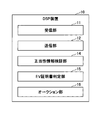
- FIG. 3 is a diagram illustrating a functional configuration example of the DSP device 10 according to the first embodiment.
- the DSP device 10 includes a reception unit 11, a transmission unit 12, a signature verification unit 13, a validity information verification unit 14, an EV certificate determination unit 15, and an auction unit 16.
- Each of these units is realized by a process that causes the CPU 104 to execute one or more programs installed in the DSP device 10.
- the receiving unit 11 receives a bid request (bid request) transmitted from the SSP device 20 and information (validity information described below) transmitted from the medium device 30.
- the transmission unit 12 transmits information regarding bids (results of auction in DSP, etc.) to the SSP device 20, and a transmission request for information regarding legitimacy of the medium (hereinafter referred to as “validity information”) to the medium device 30.
- the signature verification unit 13 determines whether or not the bid request (bid request to the advertisement space) received from the SSP device 20 has been tampered with based on the signature verification.
- the legitimacy information verification unit 14 verifies whether or not there is an error in the legitimacy information returned from the medium device 30 in response to the transmission request for the legitimacy information of the medium.
- the EV certificate determination unit 15 determines whether the electronic certificate (hereinafter, simply referred to as “certificate”) of the medium (medium device 30) obtained by SSL communication with the medium device 30 is an EV certificate. To do.
- the auction unit 16 responds to the bid request from the SSP device 20 based on information held in advance and whether the certificate of the medium (medium device 30) is an EV certificate or the like, and the like. The DSP auction will be held for the ad creative (advertising material).
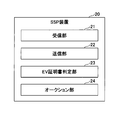
- FIG. 4 is a diagram showing a functional configuration example of the SSP device 20 according to the first embodiment.
- the SSP device 20 includes a receiving unit 21, a transmitting unit 22, an EV certificate determination unit 23, and an auction unit 24.
- Each of these units is realized by a process that causes the CPU of the SSP device 20 to execute one or more programs installed in the SSP device 20.
- the receiving unit 21 receives a response to the bid request from the DSP device 10 and an advertisement request from the media device 30.
- the transmission unit 22 transmits a bid request to the DSP device 10 and information regarding the successful bid advertisement to the media device 30.
- the EV certificate determination unit 23 determines whether the certificate of the DSP device 10 in SSL communication with the DSP device 10 is an EV certificate.
- the auction unit 24 responds to the advertisement request from the medium device 30, information held in advance, the in-DSP auction result from each DSP device 10, whether the certificate of the DSP device 10 is an EV certificate, and the like. Based on the above, the auction for the advertising creative of the auction winner in each DSP device 10 is performed.
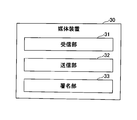
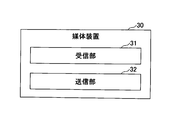
- FIG. 5 is a diagram showing a functional configuration example of the medium device 30 according to the first embodiment.
- the medium device 30 has a receiving unit 31, a transmitting unit 32, and a signature unit 33. Each of these units is realized by a process that causes the CPU of the medium device 30 to execute one or more programs installed in the medium device 30.
- the receiving unit 31 receives the transmission request for the validity information of the medium transmitted from the DSP device 10 and the information regarding the successful bid advertisement transmitted from the SSP device 20.
- the transmission unit 32 transmits the advertisement request to the SSP device 20 and the medium legitimacy information to the DSP device 10.
- the signature unit 33 adds a digital signature to the information included in the advertisement request.
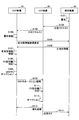
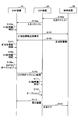
- FIG. 6 is a sequence diagram illustrating an example of a processing procedure executed in the advertisement communication system according to the first embodiment.
- the example shown in FIG. 6 shows an example in which steps S101 to S114 are executed, but it is assumed that communication for authentication, which is a prerequisite, is separately performed. Further, steps S101 to S114 are based on communication incorporated in the publicly-known automatic bidding mechanism (RTB) for advertisement transactions.
- RTB publicly-known automatic bidding mechanism
- a process for excluding an unauthorized business operator is executed while following this communication procedure.
- the signature unit 33 of the medium device 30 related to the medium accessed from the user terminal gives a digital signature to the advertisement information (medium domain, IP address, advertisement content information, advertiser industry, etc.).
- the advertisement information (medium domain, IP address, advertisement content information, advertiser industry, etc.).
- the medium domain is the domain name of the medium accessed from the user terminal.
- the IP address is the IP address of the medium.
- the advertisement content information is, for example, information indicating an advertisement suitable for the advertisement space of the medium.
- the advertiser industry is information indicating the industry preferred for the advertising space.
- the transmission unit 32 of the medium device 30 transmits an advertisement request including the advertisement information with the digital signature to the SSP device 20 (S102).
- the receiving unit 21 of the SSP device 20 receives the advertisement request.
- the transmission unit 22 of the SSP device 20 transmits a bid request for the medium related to the advertisement request to the plurality of DSP devices 10 (S103).
- the bid request includes the advertisement information included in the advertisement request.
- the receiving unit 11 of each DSP device 10 receives the bid request.
- the signature verification unit 13 of each DSP device 10 determines whether or not the advertisement information has been tampered with by verifying the signature attached to the advertisement information included in the bid request (S104).
- the process proceeds to step S105.
- the signature verification unit 13 rejects the bid request. In this case, the process after step S105 is not executed.
- step S105 the transmission unit 12 of each DSP device 10 transmits a transmission request for validity information to the medium device 30.
- the receiving unit 31 of the medium device 30 receives the request.
- the transmission unit 32 of the medium device 30 responds to the request and prepares in advance the validity information including the SSP and the medium information (for example, ads.txt (https://iabtechlab.com/ads (-txt /) is transmitted to the DSP device 10 (S106)
- the receiving unit 11 of each DSP device 10 receives the validity information.
- the validity information verification unit 14 of each DSP device 10 confirms the validity of the medium based on the validity information (S107).
- the confirmation method may be performed according to the confirmation method using ads.txt. If the legitimacy of the medium cannot be confirmed, the process from step S108 is not executed.
- the EV certificate determination unit 15 of the DSP device 10 determines whether the certificate of the medium device 30 in the SSL communication of step S106 is the EV certificate (S108). Whether or not the certificate is an EV certificate may be determined based on, for example, an OID (Object IDentifier) included in the extended field of the certificate policy of the certificate.
- OID Object IDentifier
- the auction unit 16 of each DSP device 10 executes an in-DSP auction according to the bid request received in step S103 based on the determination result in step S108, and determines the advertisement creative and the bid amount of the auction winner. Is determined (S109).
- the auction unit 16 may reduce the bid amount of the winner of the auction. By doing so, it is possible to reduce the possibility that the winner will finally win the advertisement frame in the auction executed in the SSP device 20. That is, it is possible to reduce the possibility that the advertising creative of the winner will be placed on a medium whose existence is not guaranteed.
- the auction unit 16 may reject the bid request received in step S103 and not execute the DSP auction. In this case, the winner of the DSP auction is not determined.
- the transmission unit 12 of each DSP device 10 obtains the auction result in the DSP obtained in step S109 (information indicating the advertising creative and the bid amount won in the auction within the DSP, or the like, or information indicating that the bid request is rejected, or the like). ) Is transmitted to the SSP device 20 as a response to the bid request (S110). The receiving unit 21 of the SSP device 20 receives the in-DSP auction result.
- the EV certificate determination unit 23 of the SSP device 20 determines whether the certificate of each DSP device 10 in the SSL communication (response to the bid request) in step S110 is an EV certificate (S111). That is, it is determined for each DSP device 10 whether the certificate of the DSP device 10 is an EV certificate.
- the auction unit 24 of the SSP device 20 conducts an auction with each DSP internal winner creative based on the valid DSP auction result of the DSP internal auction results received in step S110 and the determination result of step S111.
- Auction winner is determined (S112).
- the valid in-DSP auction result refers to an in-DSP auction result including information indicating an advertising creative that won in the in-DSP auction and a bid amount.
- the auction in step S112 is, for example, (Mukherjee, A., Sundarraj, RP, Dutta, K .: AN ONLINE ALGORITHM FOR PROGRAMMATIC ADVERTISEMENT PLACEMENT IN SUPPLY SIDE PLATFORM. Pacific Asia ConferenceInformation onon May be done using.
- the evaluation of the DSP device 10 indicating that the determination result in step S111 is not the EV certificate is lowered. That is, the possibility that the winner of the DSP auction in the DSP device 10 will win the bid is reduced. For example, the bid price of the winner may be reduced to half the price, or the winner may be excluded from the auction. By doing so, it is possible to reduce the possibility that the advertisement creative of the advertiser relating to the DSP device 10 whose existence is not guaranteed is won.
- the transmission unit 22 of the SSP device 20 transmits the result of the auction (successful bid result) in step S112 to each DSP device 10 (S113).
- the receiving unit 11 of each DSP device 10 receives the successful bid result.
- the successful bid result includes the advertisement creative that won the auction, information indicating the winning bid amount, and the like.
- the transmission unit 22 of the SSP device 20 transmits the advertisement tag of the creative of the auction winner in step S112 to the medium device 30 (S114).
- the receiving unit 31 of the medium device 30 receives the advertisement tag.
- the DSP device 10 determines whether or not the certificate of the medium device 30 is the EV certificate, so that the communication partner (medium) whose legitimacy is not guaranteed The device 30) may be detectable. Similarly, by determining whether the certificate of the DSP device 10 is an EV certificate, the SSP device 20 can detect a communication partner (DSP device 10) whose validity is not guaranteed.
- the advertisement communication system 1 is a system that uses an EV certificate verification mechanism based on Open RTB2.5. Since the Open RTB2.5 does not have a signature function, the SSP device 20 can tamper with the data. In response to this, the EV certificate is installed in the SSP device 20.
- FIG. 7 is a diagram illustrating a functional configuration example of the DSP device 10 according to the second embodiment. 7, those parts that are the same as or correspond to those in FIG. 3 are designated by the same reference numerals, and a description thereof will be omitted.
- the DSP device 10 does not have the signature verification unit 13. Further, the EV certificate determination unit 15 determines whether not only the certificate obtained by the communication with the medium device 30 but also the certificate of the SSP device 20 obtained by the communication with the SSP device 20 is the EV certificate. To judge.
- FIG. 8 is a diagram showing a functional configuration example of the medium device 30 according to the second embodiment. 8, those parts that are the same as or correspond to those in FIG. 5 are designated by the same reference numerals, and a description thereof will be omitted as appropriate. As shown in FIG. 8, the medium device 30 of the second embodiment does not have the signature unit 33.
- FIG. 9 is a sequence diagram for explaining an example of a processing procedure executed in the advertisement communication system according to the second embodiment. 9, those steps which are the same as those corresponding steps in FIG. 6 are designated by the same step numbers, and a description thereof will be omitted.
- step S101 is not executed. Therefore, the digital signature is not added to the advertisement information.
- step S102a the signature unit 33 of the medium device 30 transmits the advertisement request including the advertisement information not provided with the digital signature to the SSP device 20.
- the receiving unit 21 of the SSP device 20 receives the advertisement request.
- the transmission unit 22 of the SSP device 20 transmits a bid request including the advertisement information included in the advertisement request to the DSP device 10 (S103a).
- the receiving unit 11 of the DSP device 10 receives the bid request.
- the EV certificate determination unit 15 of the DSP device 10 determines whether the certificate of the SSP device 20 in the SSL communication of step S103a is an EV certificate (S104a).
- the determination result affects the DSP auction in step S109a. That is, in step S109a, the auction unit 16 of each DSP device 10 executes an in-DSP auction according to the bid request received in step S103 based on the determination result in step S104a and the determination result in step S108.
- the advertisement creative of the auction winner and the bid amount are determined (S109).
- the auction unit 16 determines the bid amount of the advertisement creative of the winner of the in-DSP auction. It may be lowered. By doing so, it is possible to reduce the possibility that the winner will finally win the advertisement frame in the auction executed in the SSP device 20. Note that the auction unit 16 determines that both the determination result in step S104a and the determination result in step S108 are EV, as compared with the case where only one of the determination result in step S104a and the determination result in step S108 indicates that the EV certificate is not an EV certificate. If the certificate is not a certificate, the amount of decrease in the bid amount may be increased. This is because in the latter case, the existence of the SSP device 20 is not guaranteed, and it is considered that the validity or reliability of the bid request is lower.
- the DSP device 10 determines whether the certificate of the SSP device 20 is an EV certificate, thereby detecting a communication partner (SSP device 20) whose validity is not guaranteed. It can be possible. Therefore, in particular, if a policy that does not accept a bid unless it is an EV certificate is adopted in steps S109 and S112, it is possible to exclude unauthorized DSPs, SSPs, and media.
- the receiving device which is the communication device on the information receiving side, determines whether or not the certificate of the transmitting device, which is the communication device on the information transmitting side, is the validity of the transmitting device based on whether the certificate is the EV certificate. It is also possible to have a determination unit that evaluates the above, and to change the process that the receiving device executes after receiving the information according to the determination result by the determination unit.
- the DSP device 10 is an example of the first device.
- the medium device 30 is an example of a second device.
- the SSP device 20 is an example of a third device.
- the EV certificate determination unit 15 is an example of a first determination unit.
- the auction unit 16 is an example of a first processing unit.
- the EV certificate determination unit 23 is an example of a second determination unit.
- the auction unit 24 is an example of a second processing unit.
- Advertisement Communication System 10 DSP Device 11 Receiving Unit 12 Transmitting Unit 13 Signature Verifying Unit 14 Validity Information Verifying Unit 15 EV Certificate Judging Unit 16 Auction Unit 20 SSP Device 21 Receiving Unit 22 Transmitting Unit 23 EV Certificate Judging Unit 24 Auctioning Unit 30 medium device 31 receiver 32 transmitter 33 signature unit 100 drive device 101 recording medium 102 auxiliary storage device 103 memory device 104 CPU 105 Interface device B bus
Landscapes
- Engineering & Computer Science (AREA)
- Business, Economics & Management (AREA)
- Accounting & Taxation (AREA)
- Computer Security & Cryptography (AREA)
- Finance (AREA)
- Strategic Management (AREA)
- Theoretical Computer Science (AREA)
- Physics & Mathematics (AREA)
- General Physics & Mathematics (AREA)
- Development Economics (AREA)
- General Business, Economics & Management (AREA)
- Entrepreneurship & Innovation (AREA)
- Game Theory and Decision Science (AREA)
- Economics (AREA)
- Marketing (AREA)
- Computer Networks & Wireless Communication (AREA)
- Signal Processing (AREA)
- Computer Hardware Design (AREA)
- Software Systems (AREA)
- General Engineering & Computer Science (AREA)
- Management, Administration, Business Operations System, And Electronic Commerce (AREA)
Abstract
情報を送信する送信装置と前記情報を受信する受信装置とを含む通信システムの、前記受信装置は、前記送信装置との通信に使用される前記送信装置の電子証明書がEV証明書であるか否かを判定する判定部を有し、前記判定部による判定結果に応じて実行する処理を変化させることで、正当性が保証されない通信相手を検出可能とする。
Description
本発明は、通信システム、通信装置、通信方法、プログラム及び広告通信システムに関する。
インターネット上でコンテンツの供給側と需要側を媒介するサービスが普及している。その一例として、近年、インターネット広告のプラットフォームである、アドネットワークが注目されている。アドネットワークは広告主側と媒体側がそれぞれのエージェントを介して自動入札を行なう仕組みを取り入れることで、効率的な広告取引を可能にしている(例えば、非特許文献1参照)。
更に、上記自動入札の仕組みでは広告主側と媒体側での認証を行うための機構が非特許文献1のアップグレードとして検討されている(例えば、非特許文献2参照)。
IAB Tech Lab.、"OpenRTB API Specification Version 2.5"、[online]、[平成30年10月15日検索]、インターネット<https://www.iab.com/wp-content/uploads/2016/03/OpenRTB-API-Specification-Version-2-5-FINAL.pdf>
IAB Tech Lab.、"OpenRTB 3.0 Framework"、[online]、[平成30年10月15日検索]、インターネット<https://iabtechlab.com/wp-content/uploads/2017/09/OpenRTB-3.0-Draft-Framework-for-Public-Comment.pdf>
PMPの仕組みと特徴、[online]、[平成30年10月15日検索]、インターネット<https://dmlab.jp/adtech/pmp.html>
アドネットワークでは、広告主と媒体の間に、それぞれの役割に特化した業者がおり、効率的な広告通信を行っている。特に、広告主の代理業者であるDSP(Demand Side Platform)と媒体の代理業者であるSSP(Supply Side Platform)のそれぞれが、広告出稿の最適化、媒体掲載広告の最適化を行っている。
以降の記述では、DSP及び広告主の代理で広告管理等を行う業者の種々を総称して「出稿者」という。また、SSP、媒体の代理で広告枠管理等を行う業者の種々、及びAd Exchange等の広告入札プラットフォームを総称して「仲介者」という。また、媒体及び媒体を通じて通信するユーザ端末を総称して「掲載者」という。また、出稿者、仲介者、掲載者を区別しない場合、「事業者」という。
上述した自動入札機構は、出稿者、仲介者、掲載者の間で行われる通信であり、終端通信となる媒体、DSP間の通信の認証を取り入れている。
しかし、掲載者、出稿者自体が不正な事業者であれば、この認証の仕組みは機能しない。ここでは、存在の確認できない(責任追跡が不能な)事業者を、「不正な事業者」とする。掲載者が不正な事業者である例として、ボットによる広告のクリック(Ad Fraud)が挙げられる。出稿者が不正な事業者である例として、悪意を持った広告が配布され、媒体に掲載される事例(Malvertising)が挙げられる。
アドネットワークにおける不正な事業者対策として、PMP(Private Market Place)と呼ばれるホワイトリストによる広告プラットフォームが存在する(例えば、非特許文献3参照)。
しかし、PMPによる広告プラットフォームは、ホワイトリストの構築が必要なことや、ホワイトリストの制限によって市場が制限される等の問題点がある。
一方、Webサイトでの通信としてはSSL(Secure Socket Layer)通信による暗号化通信が広まっており、広告業界にも浸透し始めている。SSL通信で使用される電子証明書には、DV(Domain Validation)証明書、OV(Organization Validation)証明書、EV(Extended Validation)証明書がある。
DV証明書は、ドメイン認証であるため、実在認証がなされない。これを利用した不正事例が広告業界でもおきており、DV証明書を所持した事業者が広告にマルウェアを埋め込むMalvertisingが確認されている。
これに対し、OV証明書は、組織情報の審査を経てから発行されるため、サイト運営者が正しいことを証明している。また、EV証明書は、さらに法的かつ物理的に事業者が存在することを証明している。
しかしながら、EV証明書は、Webブラウザ上において、EV証明書を使用したWebサイトについてはアドレスバーを緑色で表示させるために利用されているにとどまり、Webブラウザを搭載した端末自体が、Webサイトの証明書がEV証明書であるか否かによって特段の処理(例えば、Webサイトへのアクセス制限等)を実行するということは行われていない。
なお、上記では、広告取引に関する通信を一例として説明したが、AI(Artificial Intelligence)やIoT(Internet of Things)等におけるエージェント間通信(装置間の通信)においても、不正な通信相手の排除が求められる。
本発明は、上記の点に鑑みてなされたものであって、正当性が保証されない通信相手を検出可能とすることを目的とする。
そこで上記課題を解決するため、情報を送信する送信装置と前記情報を受信する受信装置とを含む通信システムの、前記受信装置は、前記送信装置との通信に使用される前記送信装置の電子証明書がEV証明書であるか否かを判定する判定部を有し、前記判定部による判定結果に応じて実行する処理を変化させる。
正当性が保証されない通信相手を検出可能とすることができる。
以下、図面に基づいて本発明の実施の形態を説明する。図1は、第1の実施の形態における広告通信システムの機能構成例を示す図である。図1に示すように、広告通信システム1は、DSP装置10、SSP装置20及び媒体装置30等を含む。DSP装置10、SSP装置20及び媒体装置30のそれぞれは、他の各装置とネットワークを介して双方向の通信で接続される。当該通信は、公開鍵基盤等によって認証がなされ、SSL(Secure Socket Layer)によって行われる。本実施の形態における広告通信システム1は、特にアドネットワークでの適用を想定したシステムである。
DSP装置10は、アドネットワークにおいて、複数の広告主のエージェント(代理業者)として機能する1以上のコンピュータである。具体的には、DSP装置10は、アドネットワークにおけるRTB(Real Time Bidding)でのDSP(Demand Side Platform)として機能する。すなわち、DSP装置10は、ユーザ端末によってアクセスされた媒体(Webサイト等)が有する広告枠について、SSP装置20から送信される入札リクエストに応じ、当該広告枠に掲載させる広告クリエイティブ(広告素材)についてDSP内オークションを実行し、DSP内オークションの結果をSSP装置20へ送信する。この際、DSP装置10は、媒体装置30の正当性を確認するための通信を、媒体装置30との間で行う。なお、ユーザ端末とは、媒体(Webサイト等)の閲覧にユーザが利用するスマートフォン、タブレット端末、PC(Personal Computer)等の端末である。
SSP装置20は、アドネットワークにおいて、複数の媒体のエージェント(代理業者)として機能する1以上のコンピュータである。具体的には、SSP装置20は、アドネットワークにおけるRTB(Real Time Bidding)でのSSP(Supply Side Platform)として機能する。すなわち、SSP装置20は、ユーザ端末からアクセスされた媒体からの広告枠の(落札の)リクエストに応じ、当該媒体装置30が有する広告枠への入札を各DSP装置10に要求すると共に、各DSP装置10におけるオークションにおける勝者についてオークションを行い、落札した広告クリエイティブの広告タグを媒体装置30へ通知する。
媒体装置30は、広告枠を有する媒体(Webサイト等)をユーザに対して提供する1以上のコンピュータである。なお、以下において、便宜上、媒体装置30は、媒体のみならずユーザ端末をも含むこととする。媒体装置30が行う通信のうち、SSP装置20との通信は、ユーザ端末が行い、DSP装置10との通信は、媒体が行う。
なお、第1の実施の形態における広告通信システム1は、Open RTB3.0を基本としたEV(Extended Validation)証明書検証機構を利用したシステムである。Open RTB3.0には署名機能が搭載される予定のため、SSP装置20による改ざんができない。SSP装置20を信頼しない形態であることに則り、SSP装置20は、EV証明書を有さない。
また、図1では、DSP装置10、SSP装置20及び媒体装置30のそれぞれが1つの矩形で示されているが、各装置間の関係の多重度は、それぞれ多対多である。
図2は、第1の実施の形態におけるDSP装置10のハードウェア構成例を示す図である。図2のDSP装置10は、それぞれバスBで相互に接続されているドライブ装置100、補助記憶装置102、メモリ装置103、CPU104、及びインタフェース装置105等を有する。
DSP装置10での処理を実現するプログラムは、CD-ROM等の記録媒体101によって提供される。プログラムを記憶した記録媒体101がドライブ装置100にセットされると、プログラムが記録媒体101からドライブ装置100を介して補助記憶装置102にインストールされる。但し、プログラムのインストールは必ずしも記録媒体101より行う必要はなく、ネットワークを介して他のコンピュータよりダウンロードするようにしてもよい。補助記憶装置102は、インストールされたプログラムを格納すると共に、必要なファイルやデータ等を格納する。
メモリ装置103は、プログラムの起動指示があった場合に、補助記憶装置102からプログラムを読み出して格納する。CPU104は、メモリ装置103に格納されたプログラムに従ってDSP装置10に係る機能を実現する。インタフェース装置105は、ネットワークに接続するためのインタフェースとして用いられる。
なお、SSP装置20及び媒体装置30も、図2に示されるような1以上のコンピュータによっても構成されてもよい。
図3は、第1の実施の形態におけるDSP装置10の機能構成例を示す図である。図3において、DSP装置10は、受信部11、送信部12、署名検証部13、正当性情報検証部14、EV証明書判定部15及びオークション部16を有する。これら各部は、DSP装置10にインストールされた1以上のプログラムが、CPU104に実行させる処理により実現される。
受信部11は、SSP装置20から送信される入札リクエスト(入札要求)や、媒体装置30から送信される情報(後述の正当性情報)等を受信する。送信部12は、入札に関する情報(DSP内オークションの結果等)をSSP装置20に、媒体の正当性に関する情報(以下、「正当性情報」という。)の送信要求を媒体装置30に送信する。署名検証部13は、SSP装置20から受信した入札リクエスト(広告枠への入札要求)について、署名検証に基づいて改ざんの有無を判定する。正当性情報検証部14は、媒体の正当性情報の送信要求に応じて媒体装置30から返信される正当性情報について、誤りの有無を検証する。EV証明書判定部15は、媒体装置30とのSSL通信で得た媒体(媒体装置30)の電子証明書(以下、単に「証明書」という。)がEV証明書であるか否かを判定する。オークション部16は、SSP装置20からの入札リクエストに応じ、予め所持している情報、及び媒体(媒体装置30)の証明書がEV証明書であるか否か等に基づいて、複数の広告主の広告クリエイティブ(広告素材)について、DSP内オークションを行う。
図4は、第1の実施の形態におけるSSP装置20の機能構成例を示す図である。図4において、SSP装置20は、受信部21、送信部22、EV証明書判定部23及びオークション部24を有する。これら各部は、SSP装置20にインストールされた1以上のプログラムが、SSP装置20のCPUに実行させる処理により実現される。
受信部21は、入札リクエストに対するDSP装置10からの応答や、媒体装置30からの広告リクエストを受信する。送信部22は、入札リクエストをDSP装置10に送信し、落札した広告に関する情報を媒体装置30に送信する。EV証明書判定部23は、DSP装置10とのSSL通信におけるDSP装置10の証明書がEV証明書であるか否かを判定する。オークション部24は、媒体装置30からの広告リクエストに応じ、予め所持している情報、各DSP装置10からのDSP内オークション結果、及びDSP装置10の証明書がEV証明書であるか否か等に基づいて、各DSP装置10内のオークションの勝者の広告クリエイティブについてのオークションを行う。
図5は、第1の実施の形態における媒体装置30の機能構成例を示す図である。図5において、媒体装置30は、受信部31、送信部32及び署名部33を有する。これら各部は、媒体装置30にインストールされた1以上のプログラムが、媒体装置30のCPUに実行させる処理により実現される。
受信部31は、DSP装置10から送信される、媒体の正当性情報の送信要求、及びSSP装置20から送信される、落札した広告に関する情報を受信する。送信部32は、広告リクエストをSSP装置20に送信し、媒体の正当性情報をDSP装置10に送信する。署名部33は、広告リクエストに含める情報にデジタル署名を付与する。
以下、第1の実施形態の広告通信システム1において実行される処理手順について説明する。図6は、第1の実施の形態における広告通信システムにおいて実行される処理手順の一例を説明するためのシーケンス図である。図6に示す例では、ステップS101~S114が実行される場合の例を示しているが、前提としている認証のための通信は別途行われているものとする。また、ステップS101~S114は、公知の広告取引の自動入札機構(RTB)で取り入れられている通信をベースとする。第1の実施形態ではこの通信手順に沿いつつ、不正な事業者を排除するための処理が実行される。
ステップS101において、ユーザ端末からアクセスされた媒体に係る媒体装置30の署名部33は、広告情報(媒体ドメイン、IPアドレス、広告コンテンツ情報、広告主業種等)にデジタル署名を付与する。例えば、ads.cert(https://iabtechlab.com/wp-content/uploads/2017/09/OpenRTB-3.0-Draft-Signed-Requests-RFC.pdf)を使用して、デジタル署名が行われてもよい。なお、媒体ドメインとは、ユーザ端末からアクセスされた媒体のドメイン名である。IPアドレスとは、当該媒体のIPアドレスである。広告コンテンツ情報とは、媒体が有する広告枠にとって好ましい広告を示す情報等である。広告主業種とは、当該広告枠にとって好ましい業種を示す情報である。
続いて、媒体装置30の送信部32は、デジタル署名が付与された広告情報を含む広告リクエストをSSP装置20に送信する(S102)。SSP装置20の受信部21は、当該広告リクエストを受信する。
続いて、SSP装置20の送信部22は、当該広告リクエストに係る媒体への入札リクエストを複数のDSP装置10へ送信する(S103)。当該入札リクエストには、当該広告リクエストに含まれている広告情報が含まれる。各DSP装置10の受信部11は、当該入札リクエストを受信する。
続いて、各DSP装置10の署名検証部13は、当該入札リクエストに含まれている広告情報に付与されている署名検証を行うことで、当該広告情報の改ざんの有無を判定する(S104)。署名検証の結果が真であった場合(当該入札リクエストが改ざんされていない場合)、ステップS105に進む。署名検証の結果が偽であった場合(当該入札リクエストが改ざんされている場合)、署名検証部13は、当該入札リクエストを棄却する。この場合、ステップS105以降は実行されない。
ステップS105において、各DSP装置10の送信部12は、正当性情報の送信要求を媒体装置30に送信する。媒体装置30の受信部31は、当該要求を受信する。
続いて、媒体装置30の送信部32は、当該要求に応じ、予め用意している、SSP及び媒体の情報を載せた正当性情報(例えば、ads.txt(https://iabtechlab.com/ads-txt/)をDSP装置10に送信する(S106)。各DSP装置10の受信部11は、当該正当性情報を受信する。
続いて、各DSP装置10の正当性情報検証部14は、当該正当性情報に基づいて、媒体の正当性を確認する(S107)。斯かる確認の方法は、ads.txtを用いた確認方法に従って行われてもよい。媒体の正当性が確認できない場合、ステップS108以降は実行されない。媒体の正当性が確認できた場合、DSP装置10のEV証明書判定部15は、ステップS106のSSL通信における媒体装置30の証明書がEV証明書であるか否かを判定する(S108)。証明書がEV証明書であるか否かは、例えば、当該証明書の証明書ポリシの拡張フィールドに含まれているOID(Object IDentifier)に基づいて行われてもよい。
続いて、各DSP装置10のオークション部16は、ステップS103において受信された入札リクエストに応じたDSP内オークションを、ステップS108における判定結果に基づいて実行し、オークションの勝者の広告クリエイティブと入札額とを決定する(S109)。この際、ステップS108における判定結果がEV証明書でないことを示す場合、オークション部16は、オークションの勝者の入札額を低下させるようにしてもよい。そうすることで、当該勝者が、最終的にSSP装置20において実行されるオークションにおいて広告枠を落札できる可能性を低下させることができる。すなわち、当該勝者の広告クリエイティブが、実在が保証されていない媒体へ出稿される可能性を低下させることができる。又は、ステップS108における判定結果がEV証明書でないことを示す場合、オークション部16は、ステップS103において受信された入札リクエストを棄却して、DSP内オークションを実行しないようにしてもよい。この場合、DSP内オークションの勝者等は決定されない。
なお、DSP内オークションは、例えば、(Weinan Zhang, Shuai Yuan, Jun Wang: "Optimal Real-Time Bidding for Display Advertising", 20th ACM SIGKDD Conference on Knowledge Discovery and Data Mining. (2014))による関数を使用して行われもよい。
続いて、各DSP装置10の送信部12は、ステップS109で得たDSP内オークション結果(DSP内オークションにおいて勝利した広告クリエイティブ及び入札額を示す情報等、又は入札リクエストを棄却したことを示す情報等)を、入札リクエストに対する応答としてSSP装置20へ送信する(S110)。SSP装置20の受信部21は、当該DSP内オークション結果を受信する。
続いて、SSP装置20のEV証明書判定部23は、ステップS110のSSL通信(入札リクエストに対する応答)における各DSP装置10の証明書がEV証明書であるか否かを判定する(S111)。すなわち、DSP装置10ごとに、当該DSP装置10の証明書がEV証明書であるか否かが判定される。
続いて、SSP装置20のオークション部24は、ステップS110において受信されたDSP内オークション結果のうち有効なDSPオークション結果と、ステップS111における判定結果とに基づいて、各DSP内勝者クリエイティブでオークションを行い、オークション勝者を決定する(S112)。有効なDSP内オークション結果とは、DSP内オークションにおいて勝利した広告クリエイティブ及び入札額とを示す情報等を含むDSP内オークション結果をいう。なお、ステップS112におけるオークションは、例えば、(Mukherjee, A., Sundarraj, R.P., Dutta, K.: AN ONLINE ALGORITHM FOR PROGRAMMATIC ADVERTISEMENT PLACEMENT IN SUPPLY SIDE PLATFORM. Pacific Asia Conference on Information Systems. (2015))のアルゴリズムを使用して行われてもよい。但し、本実施の形態では、ステップS111における判定結果がEV証明書でないことを示すDSP装置10の評価が下げられる。すなわち、当該DSP装置10におけるDSP内オークションの勝者が落札できる可能性が低くされる。例えば、当該勝者の入札額が半額等に減額されてもよいし、当該勝者がオークションから除外されるようにしてもよい。そうすることで、実在が保証されていないDSP装置10に係る広告主の広告クリエイティブが落札される可能性を低下させることができる。
続いて、SSP装置20の送信部22は、ステップS112におけるオークションの結果(落札結果)を各DSP装置10に送信する(S113)。各DSP装置10の受信部11は、当該落札結果を受信する。なお、当該落札結果には、オークションにおいて勝利した広告クリエイティブ及び落札額を示す情報等が含まれる。
続いて、SSP装置20の送信部22は、ステップS112におけるオークションの勝者であるクリエイティブの広告タグを媒体装置30へ送信する(S114)。媒体装置30の受信部31は、当該広告タグを受信する。
上述したように、第1の実施の形態によれば、DSP装置10が、媒体装置30の証明書がEV証明書であるか否かを判定することで、正当性が保証されない通信相手(媒体装置30)を検出可能とすることができる。同様に、SSP装置20が、DSP装置10の証明書がEV証明書であるか否かを判定することで、正当性が保証されない通信相手(DSP装置10)を検出可能とすることができる。
その結果、非特許文献2の機構を取りいれた(署名検証のある)アドネットワークの参加事業者において、EV証明書を有するか否かに基づく実在確認を評価に含む通信によって、入札コントロールを可能とすることができる。
特に、EV証明書でなければ入札を受け付けないポリシをステップS109、ステップS112で採用すれば、市場に制限をかけずに不正なDSP及び媒体の排除を可能とすることができる。
次に、第2の実施の形態について説明する。第2の実施の形態では第1の実施の形態と異なる点について説明する。第2の実施の形態において特に言及されない点については、第1の実施の形態と同様でもよい。なお、第2の実施の形態における広告通信システム1は、Open RTB2.5を基本としたEV証明書検証機構を利用したシステムである。Open RTB2.5には署名機能が搭載されていないため、SSP装置20によるデータ改ざんがなされうる。これに応じて、SSP装置20には、EV証明書が搭載される。
図7は、第2の実施の形態におけるDSP装置10の機能構成例を示す図である。図7中、図3と同一又は対応する部分には同一符号を付し、その説明は適宜省略する。
図7に示されるように、第2の実施の形態のDSP装置10は、署名検証部13を有さない。また、EV証明書判定部15は、媒体装置30との通信で得た証明書だけでなく、SSP装置20との通信で得たSSP装置20の証明書についてもEV証明書であるか否かを判定する。
図8は、第2の実施の形態における媒体装置30の機能構成例を示す図である。図8中、図5と同一又は対応する部分には同一符号を付し、その説明は適宜省略する。図8に示されるように、第2の実施の形態の媒体装置30は、署名部33を有さない。
図9は、第2の実施の形態における広告通信システムにおいて実行される処理手順の一例を説明するためのシーケンス図である。図9中、図6と同一ステップには同一ステップ番号を付し、その説明は省略する。
図9に示されるように、第2の実施の形態では、ステップS101が実行されない。したがって、広告情報に対してデジタル署名が付与されない。その結果、ステップS102aにおいて、媒体装置30の署名部33は、デジタル署名が付与されていない広告情報を含む広告リクエストをSSP装置20に送信する。SSP装置20の受信部21は、当該広告リクエストを受信する。
続いて、SSP装置20の送信部22は、当該広告リクエストに含まれている広告情報を含む入札リクエストをDSP装置10へ送信する(S103a)。DSP装置10の受信部11は、当該入札リクエストを受信する。
続いて、DSP装置10のEV証明書判定部15は、ステップS103aのSSL通信におけるSSP装置20の証明書がEV証明書であるか否かを判定する(S104a)。当該判定結果は、ステップS109aにおけるDSP内オークションに影響する。すなわち、ステップS109aにおいて、各DSP装置10のオークション部16は、ステップS103において受信された入札リクエストに応じたDSP内オークションを、ステップS104aにおける判定結果とステップS108における判定結果とに基づいて実行し、オークション勝者の広告クリエイティブと入札額とを決定する(S109)。
具体的には、オークション部16は、ステップS104aにおける判定結果及びステップS108における判定結果の双方又はいずれか一方のみがEV証明書でないことを示す場合、DSP内オークションの勝者の広告クリエイティブの入札額を低下させるようにしてもよい。そうすることで、当該勝者が、最終的にSSP装置20において実行されるオークションにおいて広告枠を落札できる可能性を低下させることができる。なお、オークション部16は、ステップS104aにおける判定結果及びステップS108における判定結果のいずれか一方のみがEV証明書でないことを示す場合よりも、ステップS104aにおける判定結果及びステップS108における判定結果の双方がEV証明書でないことを示す場合の方が、入札額の低下幅を大きくしてもよい。後者の場合は、SSP装置20の実在も保証されない状態であり、入札リクエストの正当性又は信頼性がより低い状態であると考えられるからである。
上述したように、第2の実施の形態によれば、第1の実施の形態と同様の効果を得ることができる。更に、第2の実施の形態では、DSP装置10が、SSP装置20の証明書がEV証明書であるか否かを判定することで、正当性が保証されない通信相手(SSP装置20)を検出可能とすることができる。したがって、特に、EV証明書でなければ入札を受け付けないポリシをステップS109、ステップS112で採用すれば、不正なDSP、SSP、媒体の排除を可能とすることができる。
なお、上記各実施の形態では、広告取引におけるSSL通信に関して、使用された証明書がEV証明書であるか否かに基づいて、通信相手の正当性又は信頼性を評価する例を示したが、SSL通信における証明書がEV証明書であるか否かに基づく通信相手の正当性の評価は、AI(Artificial Intelligence)やIoT(Internet of Things)等におけるエージェント間通信(装置間の通信)に適用されてもよい。この場合、情報を受信する側の通信装置である受信装置は、情報の送信側の通信装置である送信装置の証明書がEV証明書であるか否かに基づいて、当該送信装置の正当性を評価する判定部を有し、当該判定部による判定結果に応じて受信装置が当該情報の受信後に実行する処理を変化させてもよい。
なお、上記各実施の形態において、DSP装置10は、第1の装置の一例である。媒体装置30は、第2の装置の一例である。SSP装置20は、第3の装置の一例である。EV証明書判定部15は、第1の判定部の一例である。オークション部16は、第1の処理部の一例である。EV証明書判定部23は、第2の判定部の一例である。オークション部24は、第2の処理部の一例である。
以上、本発明の実施の形態について詳述したが、本発明は斯かる特定の実施形態に限定されるものではなく、請求の範囲に記載された本発明の要旨の範囲内において、種々の変形・変更が可能である。
本出願は、2018年11月7日に出願された日本国特許出願第2018-209834号に基づきその優先権を主張するものであり、同日本国特許出願の全内容を参照することにより本願に援用する。
1 広告通信システム
10 DSP装置
11 受信部
12 送信部
13 署名検証部
14 正当性情報検証部
15 EV証明書判定部
16 オークション部
20 SSP装置
21 受信部
22 送信部
23 EV証明書判定部
24 オークション部
30 媒体装置
31 受信部
32 送信部
33 署名部
100 ドライブ装置
101 記録媒体
102 補助記憶装置
103 メモリ装置
104 CPU
105 インタフェース装置
B バス
10 DSP装置
11 受信部
12 送信部
13 署名検証部
14 正当性情報検証部
15 EV証明書判定部
16 オークション部
20 SSP装置
21 受信部
22 送信部
23 EV証明書判定部
24 オークション部
30 媒体装置
31 受信部
32 送信部
33 署名部
100 ドライブ装置
101 記録媒体
102 補助記憶装置
103 メモリ装置
104 CPU
105 インタフェース装置
B バス
Claims (7)
- 情報を送信する送信装置と前記情報を受信する受信装置とを含む通信システムであって、
前記受信装置は、
前記送信装置との通信に使用される前記送信装置の電子証明書がEV証明書であるか否かを判定する判定部を有し、
前記判定部による判定結果に応じて実行する処理を変化させる、
ことを特徴とする通信システム。 - 送信装置から送信される情報を受信する通信装置であって、
前記送信装置との通信に使用される前記送信装置の電子証明書がEV証明書であるか否かを判定する判定部を有し、
前記判定部による判定結果に応じて実行する処理を変化させる、
ことを特徴とする通信装置。 - 送信装置から送信される情報を受信する通信装置が、
前記送信装置との通信に使用される前記送信装置の電子証明書がEV証明書であるか否かを判定する判定手順と、
前記判定手順における判定結果に応じて実行する処理を変化させる処理手順と、
を実行することを特徴とする通信方法。 - 送信装置から送信される情報を受信する通信装置に、
前記送信装置との通信に使用される前記送信装置の電子証明書がEV証明書であるか否かを判定する判定手順と、
前記判定手順における判定結果に応じて実行する処理を変化させる処理手順と、
を実行させることを特徴とするプログラム。 - 複数の広告主のエージェントとして機能する第1の装置と、広告枠を有する媒体を提供する第2の装置とを含む広告通信システムであって、
前記第1の装置は、
前記広告枠に対する広告の入札要求に応じて行われる前記第2の装置との通信における前記第2の装置の証明書がEV証明書であるか否かを判定する第1の判定部と、
前記第2の装置の証明書がEV証明書でない場合に、前記複数の広告主が前記広告枠を落札する可能性を低下させるための処理を実行する第1の処理部と、
を有することを特徴とする広告通信システム。 - 前記広告通信システムは、更に、前記媒体のエージェントとして機能する第3の装置を含み、
前記第3の装置は、
前記入札要求に対する第1の装置からの応答に関する通信における前記第1の装置の証明書がEV証明書であるか否かを判定する第2の判定部と、
前記第1の装置の証明書がEV証明書でない場合に、当該第1の装置に係る広告主が前記広告枠を落札する可能性を低下させるための処理を実行する第2の処理部と、
を有することを特徴とする請求項5記載の広告通信システム。 - 前記第1の判定部は、前記第3の装置からの前記入札要求の送信における前記第3の装置の証明書がEV証明書であるか否かを判定し、
前記第1の処理部は、前記第2の装置の証明書がEV証明書でない場合、又は前記第3の装置の証明書がEV証明書でない場合に、前記複数の広告主が前記広告枠を落札する可能性を低下させるための処理を実行する、
ことを特徴とする請求項6記載の広告通信システム。
Priority Applications (2)
| Application Number | Priority Date | Filing Date | Title |
|---|---|---|---|
| US17/282,982 US11783377B2 (en) | 2018-11-07 | 2019-10-11 | Communication system, communication apparatus, communication method, program and advertisement communication system |
| JP2020556710A JP7052883B2 (ja) | 2018-11-07 | 2019-10-11 | 広告通信システム及び広告通信方法 |
Applications Claiming Priority (2)
| Application Number | Priority Date | Filing Date | Title |
|---|---|---|---|
| JP2018209834 | 2018-11-07 | ||
| JP2018-209834 | 2018-11-07 |
Publications (1)
| Publication Number | Publication Date |
|---|---|
| WO2020095620A1 true WO2020095620A1 (ja) | 2020-05-14 |
Family
ID=70611007
Family Applications (1)
| Application Number | Title | Priority Date | Filing Date |
|---|---|---|---|
| PCT/JP2019/040188 Ceased WO2020095620A1 (ja) | 2018-11-07 | 2019-10-11 | 通信システム、通信装置、通信方法、プログラム及び広告通信システム |
Country Status (3)
| Country | Link |
|---|---|
| US (1) | US11783377B2 (ja) |
| JP (1) | JP7052883B2 (ja) |
| WO (1) | WO2020095620A1 (ja) |
Cited By (1)
| Publication number | Priority date | Publication date | Assignee | Title |
|---|---|---|---|---|
| JP2025182694A (ja) * | 2024-06-03 | 2025-12-15 | Originator Profile技術研究組合 | 配信システム、配信方法、生成aiシステム、生成ai方法、コンテンツ提供システム、およびサービス提供方法 |
Citations (3)
| Publication number | Priority date | Publication date | Assignee | Title |
|---|---|---|---|---|
| JP2015018293A (ja) * | 2013-07-08 | 2015-01-29 | 株式会社マイクロアド | 広告配信方法、サーバ、システムおよびプログラム |
| US20170032413A1 (en) * | 2015-07-31 | 2017-02-02 | Wideorbit Inc. | Verifying ad requests |
| JP2017220769A (ja) * | 2016-06-07 | 2017-12-14 | 日本電信電話株式会社 | 通信システム及び方法、クライアント端末並びにプログラム |
Family Cites Families (9)
| Publication number | Priority date | Publication date | Assignee | Title |
|---|---|---|---|---|
| US7509498B2 (en) * | 2001-06-29 | 2009-03-24 | Intel Corporation | Digital signature validation |
| US8607361B2 (en) * | 2010-12-23 | 2013-12-10 | Microsoft Corporation | Email trust service |
| US20140180835A1 (en) * | 2012-12-20 | 2014-06-26 | Microsoft Corporation | Digital signatures for online advertisement security |
| US20150074390A1 (en) * | 2013-09-10 | 2015-03-12 | Opera Software Asa | Method and device for classifying risk level in user agent by combining multiple evaluations |
| US20160379275A1 (en) * | 2015-06-23 | 2016-12-29 | Vizury Interactive Solutions Pvt Ltd | System and method for buying advertising inventory |
| US20170053307A1 (en) * | 2015-08-19 | 2017-02-23 | Sizmek Technologies Ltd. | Techniques for detecting and verifying fraudulent impressions |
| US20170236165A1 (en) * | 2016-02-16 | 2017-08-17 | Sizmek Technologies Ltd. | Techniques for targeted real-time bidding on on-line advertisements |
| US10581909B2 (en) * | 2017-06-26 | 2020-03-03 | Oath Inc. | Systems and methods for electronic signing of electronic content requests |
| WO2019236925A1 (en) * | 2018-06-06 | 2019-12-12 | KR8OS, Inc dba Lucidity | Systems and methods for enforcing advertising standards and digital advertisement measurements |
-
2019
- 2019-10-11 WO PCT/JP2019/040188 patent/WO2020095620A1/ja not_active Ceased
- 2019-10-11 JP JP2020556710A patent/JP7052883B2/ja active Active
- 2019-10-11 US US17/282,982 patent/US11783377B2/en active Active
Patent Citations (3)
| Publication number | Priority date | Publication date | Assignee | Title |
|---|---|---|---|---|
| JP2015018293A (ja) * | 2013-07-08 | 2015-01-29 | 株式会社マイクロアド | 広告配信方法、サーバ、システムおよびプログラム |
| US20170032413A1 (en) * | 2015-07-31 | 2017-02-02 | Wideorbit Inc. | Verifying ad requests |
| JP2017220769A (ja) * | 2016-06-07 | 2017-12-14 | 日本電信電話株式会社 | 通信システム及び方法、クライアント端末並びにプログラム |
Cited By (1)
| Publication number | Priority date | Publication date | Assignee | Title |
|---|---|---|---|---|
| JP2025182694A (ja) * | 2024-06-03 | 2025-12-15 | Originator Profile技術研究組合 | 配信システム、配信方法、生成aiシステム、生成ai方法、コンテンツ提供システム、およびサービス提供方法 |
Also Published As
| Publication number | Publication date |
|---|---|
| US11783377B2 (en) | 2023-10-10 |
| US20210342895A1 (en) | 2021-11-04 |
| JP7052883B2 (ja) | 2022-04-12 |
| JPWO2020095620A1 (ja) | 2021-09-30 |
Similar Documents
| Publication | Publication Date | Title |
|---|---|---|
| TWI723658B (zh) | 基於區塊鏈中智慧合約保護交易活動敏感資料的方法和設備 | |
| US7769998B2 (en) | Method and apparatus to authenticate and authorize user access to a system | |
| US8225387B2 (en) | Method and system for access authentication | |
| JP6728414B2 (ja) | セキュアインタラクションにおけるサービス運用妨害攻撃を検出するための方法及びデバイス | |
| JP7545330B2 (ja) | 保護された電子商取引および電子金融取引のシステム、デバイス、および方法 | |
| JP4506837B2 (ja) | 権限譲渡装置、権限譲渡システム、権限譲渡方法及び権限譲渡プログラム | |
| Angel et al. | Verifiable auctions for online ad exchanges | |
| CN111414650A (zh) | 一种基于区块链存证的订单处理方法及系统 | |
| CN110691066A (zh) | 用于匿名交易管理的分布式分类账系统 | |
| US20020087881A1 (en) | System, method and program for identifying and binding a process in a heterogeneous network | |
| CN108650077A (zh) | 基于区块链的信息传输方法、终端、设备及可读存储介质 | |
| CN111460457A (zh) | 不动产权登记监管方法、装置、电子设备及存储介质 | |
| Aldweesh | BlockTicket: A framework for electronic tickets based on smart contract | |
| US11423438B2 (en) | Real-time online asset display campaign auditing system | |
| US20020087473A1 (en) | System, method and program for creating an authenticatable, non-repudiatable transactional identity in a heterogeneous network | |
| CN111444416B (zh) | 金融业务的推广方法、系统及装置 | |
| JP2017204182A (ja) | 広告アクセス数測定方法、広告配信サーバ、プログラム | |
| US20260017693A1 (en) | Advertising payment system and method | |
| JP7052883B2 (ja) | 広告通信システム及び広告通信方法 | |
| JP2005174304A (ja) | 電子取引において収集されたプライバシ・ポリシをディジタル的に検証するための方法、システム、およびコンピュータ・プログラム | |
| US8880433B2 (en) | Dynamic authentication of mark use | |
| Carbonell et al. | Secure multiparty payment with an intermediary entity | |
| US20060080256A1 (en) | Method and system for establishing a trustworthy supplier | |
| KR20000037038A (ko) | 인터넷을 통한 온라인 소프트웨어 판매를 위한 온라인다운로드 시스템 및 재다운로드보안인증시스템 | |
| CN114697114B (zh) | 数据处理方法、装置、电子设备和介质 |
Legal Events
| Date | Code | Title | Description |
|---|---|---|---|
| 121 | Ep: the epo has been informed by wipo that ep was designated in this application |
Ref document number: 19881132 Country of ref document: EP Kind code of ref document: A1 |
|
| ENP | Entry into the national phase |
Ref document number: 2020556710 Country of ref document: JP Kind code of ref document: A |
|
| NENP | Non-entry into the national phase |
Ref country code: DE |
|
| 122 | Ep: pct application non-entry in european phase |
Ref document number: 19881132 Country of ref document: EP Kind code of ref document: A1 |