WO2020071517A1 - 糖尿病性腎臓病特異的バイオマーカー、糖尿病性腎臓病の診断方法、糖尿病性腎臓病の検査用キット、動物治療方法、及び糖尿病性腎臓病用医薬 - Google Patents
糖尿病性腎臓病特異的バイオマーカー、糖尿病性腎臓病の診断方法、糖尿病性腎臓病の検査用キット、動物治療方法、及び糖尿病性腎臓病用医薬Info
- Publication number
- WO2020071517A1 WO2020071517A1 PCT/JP2019/039226 JP2019039226W WO2020071517A1 WO 2020071517 A1 WO2020071517 A1 WO 2020071517A1 JP 2019039226 W JP2019039226 W JP 2019039226W WO 2020071517 A1 WO2020071517 A1 WO 2020071517A1
- Authority
- WO
- WIPO (PCT)
- Prior art keywords
- mirna
- kidney disease
- diabetic kidney
- diabetic
- diabetic nephropathy
- Prior art date
- Legal status (The legal status is an assumption and is not a legal conclusion. Google has not performed a legal analysis and makes no representation as to the accuracy of the status listed.)
- Ceased
Links
Images





Classifications
-
- A—HUMAN NECESSITIES
- A61—MEDICAL OR VETERINARY SCIENCE; HYGIENE
- A61K—PREPARATIONS FOR MEDICAL, DENTAL OR TOILETRY PURPOSES
- A61K31/00—Medicinal preparations containing organic active ingredients
- A61K31/70—Carbohydrates; Sugars; Derivatives thereof
- A61K31/7088—Compounds having three or more nucleosides or nucleotides
- A61K31/7105—Natural ribonucleic acids, i.e. containing only riboses attached to adenine, guanine, cytosine or uracil and having 3'-5' phosphodiester links
-
- A—HUMAN NECESSITIES
- A61—MEDICAL OR VETERINARY SCIENCE; HYGIENE
- A61K—PREPARATIONS FOR MEDICAL, DENTAL OR TOILETRY PURPOSES
- A61K45/00—Medicinal preparations containing active ingredients not provided for in groups A61K31/00 - A61K41/00
-
- A—HUMAN NECESSITIES
- A61—MEDICAL OR VETERINARY SCIENCE; HYGIENE
- A61P—SPECIFIC THERAPEUTIC ACTIVITY OF CHEMICAL COMPOUNDS OR MEDICINAL PREPARATIONS
- A61P13/00—Drugs for disorders of the urinary system
- A61P13/12—Drugs for disorders of the urinary system of the kidneys
-
- A—HUMAN NECESSITIES
- A61—MEDICAL OR VETERINARY SCIENCE; HYGIENE
- A61P—SPECIFIC THERAPEUTIC ACTIVITY OF CHEMICAL COMPOUNDS OR MEDICINAL PREPARATIONS
- A61P3/00—Drugs for disorders of the metabolism
- A61P3/08—Drugs for disorders of the metabolism for glucose homeostasis
- A61P3/10—Drugs for disorders of the metabolism for glucose homeostasis for hyperglycaemia, e.g. antidiabetics
-
- C—CHEMISTRY; METALLURGY
- C12—BIOCHEMISTRY; BEER; SPIRITS; WINE; VINEGAR; MICROBIOLOGY; ENZYMOLOGY; MUTATION OR GENETIC ENGINEERING
- C12N—MICROORGANISMS OR ENZYMES; COMPOSITIONS THEREOF; PROPAGATING, PRESERVING, OR MAINTAINING MICROORGANISMS; MUTATION OR GENETIC ENGINEERING; CULTURE MEDIA
- C12N15/00—Mutation or genetic engineering; DNA or RNA concerning genetic engineering, vectors, e.g. plasmids, or their isolation, preparation or purification; Use of hosts therefor
- C12N15/09—Recombinant DNA-technology
- C12N15/11—DNA or RNA fragments; Modified forms thereof; Non-coding nucleic acids having a biological activity
- C12N15/113—Non-coding nucleic acids modulating the expression of genes, e.g. antisense oligonucleotides; Antisense DNA or RNA; Triplex- forming oligonucleotides; Catalytic nucleic acids, e.g. ribozymes; Nucleic acids used in co-suppression or gene silencing
-
- G—PHYSICS
- G01—MEASURING; TESTING
- G01N—INVESTIGATING OR ANALYSING MATERIALS BY DETERMINING THEIR CHEMICAL OR PHYSICAL PROPERTIES
- G01N33/00—Investigating or analysing materials by specific methods not covered by groups G01N1/00 - G01N31/00
- G01N33/48—Biological material, e.g. blood, urine; Haemocytometers
- G01N33/50—Chemical analysis of biological material, e.g. blood, urine; Testing involving biospecific ligand binding methods; Immunological testing
Definitions
- the present invention relates to a biomarker, a diagnostic method, a test kit, an animal treatment method, and a medicament, particularly a diabetic kidney disease-specific biomarker, a diagnostic method for diabetic kidney disease, a diabetic kidney disease test kit,
- the present invention relates to a method for treating animals and a medicament for diabetic kidney disease.
- Diabetic nephropathy accompanying this diabetes is a kidney disease with a poor prognosis.
- diabetic nephropathy since there are few subjective symptoms, the disease progresses to end-stage renal failure, and dialysis is often introduced. Introduction of dialysis significantly reduces the quality of life of diabetic patients and, in severe cases, is life-threatening.
- Kidney biopsy is an invasive test that requires hospitalization and carries the risk of complications. For this reason, repeated examinations cannot be performed for the purpose of evaluating the medical condition.
- the disease state of the kidney has been conventionally evaluated by examining renal function by proteinuria (albuminuria) and eGFR.
- proteinuria albuminuria
- eGFR proteinuria
- DKD diabetic kidney disease
- CKD @ with ⁇ diabetes there is a broader concept of diabetic CKD (CKD @ with ⁇ diabetes) as a broader concept including a case where a patient with a renal disease not directly related to diabetes (IgA nephropathy, PKD, etc.) has diabetes.
- miRNA is involved in various disease states and is effective as a biomarker for early diagnosis of disease.
- miR-1, miR-144, miR-146a, miR-200b, miR-320, and miR-450 are used as indices indicating the state of chronic diabetes, particularly as biomarkers for diabetic retinopathy. Is described.
- Patent Document 1 cannot specifically diagnose diabetic kidney disease.
- the present invention has been made in view of such a situation, and has as its object to solve the above-mentioned problems.
- the diabetic kidney disease-specific biomarker of the present invention is characterized in that it is miRNA-125b-5p and / or miRNA-181b-5p.
- the method for diagnosing diabetic kidney disease of the present invention is characterized by using the diabetic kidney disease-specific biomarker.
- the method for diagnosing diabetic kidney disease of the present invention provides a method for diagnosing diabetic kidney disease when the expression of the miRNA-125b-5p is increased and / or when the expression of the miRNA-181b-5p is decreased. It is characterized by doing.
- the diagnosis includes distinguishing diabetic kidney disease (DKD) from other renal disorders accompanied by diabetes.
- the test kit of the present invention is characterized by containing a reagent for measuring miRNA-125b-5p and / or miRNA-181b-5p.
- the method for treating an animal of the present invention is a method for treating an animal other than a human, wherein the functional activity of miRNA-125b-5p and / or miRNA-181b-5p is adjusted.
- the medicament for diabetic kidney disease of the present invention is characterized by containing a miRNA-125b-5p and / or a functional activity regulator of miRNA-181b-5p.
- the medicament for diabetic kidney disease of the present invention is characterized in that the functional activity modifier comprises the miRNA-125b-5p functional activity inhibitor and / or the miRNA-181b-5p functional activity enhancer. I do.
- the functional activity inhibitor is a miRNA inhibitor corresponding to the miRNA-125b-5p
- the functional activity enhancer is a miRNA mimic corresponding to the miRNA-181b-5p. It is characterized by being.
- a biomarker capable of specifically diagnosing diabetic kidney disease can be provided by using miRNA-125b-5p and / or miRNA-181b-5p.
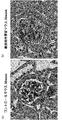
- FIG. 4 is a photograph showing a change in kidney of a diabetic kidney disease model mouse according to Example 1 of the present invention.
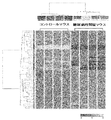
- 5 is a photograph showing a result of microarray analysis according to Example 1 of the present invention.
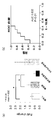
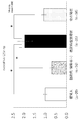
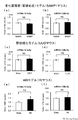
- 5 is a graph showing changes in the expression level of miRNA-125b-5p according to Example 1 of the present invention.
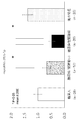
- 4 is a graph showing changes in the expression level of miRNA-181b-5p according to Example 1 of the present invention.
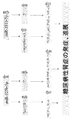
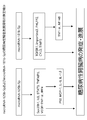
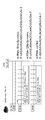
- FIG. 3 is a conceptual diagram showing the mechanism of action of diabetic kidney disease by miRNA according to Example 1 of the present invention. It is a conceptual diagram which shows the action mechanism of diabetic kidney disease by miRNA which concerns on Example 2 of this invention.
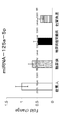
- 4 is a graph showing changes in the expression level of miRNA-125b-5p according to Example 2 of the present invention.
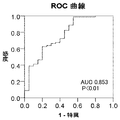
- 5 is a graph showing the result of ROC analysis of the expression level of miRNA-125b-5p according to Example 2 of the present invention.
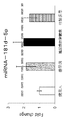
- 4 is a graph showing changes in the expression level of miRNA-181b-5p according to Example 2 of the present invention.
- 5 is a graph showing the result of ROC analysis of the expression level of miRNA-181b-5p according to Example 2 of the present invention.
- 5 is a graph showing the diagnostic results of a combination of miRNA-181b-5p and miRNA-181b-5p according to Example 2 of the present invention. It is a graph which shows the analysis result of the discrimination performance of diabetes combined CKD which concerns on Example 2 of this invention.
- FIG. 4 is a graph showing changes in the expression level of family RNA (miRNA-125a-5p) in human serum according to Example 2 of the present invention.
- 4 is a graph showing changes in the expression level of family RNA (miRNA-181c-3p) in human serum according to Example 2 of the present invention.
- 5 is a graph showing changes in the expression level of family RNA (miRNA-181d-5p) in human serum according to Example 2 of the present invention. It is a conceptual diagram which shows the administration protocol of the mimic in the mouse which concerns on Example 2 of this invention.
- FIG. 4 is a graph showing changes in the expression level of miRNA-181b in the kidney after mimic administration in mice according to Example 2 of the present invention.
- ⁇ Embodiment> Conventionally, renal biopsy is performed for the definitive diagnosis of diabetic kidney disease.
- their pathology has been evaluated for albuminuria, renal function, etc., both were not specific to diabetic kidney disease but were only markers common to most kidney diseases.
- the present inventors focused on miRNAs that have been known to be involved in various disease states. It is known that there are about 2,000 types of miRNAs in mammals including humans, and their nucleotide sequences are registered in public databases (miRBase and the like). However, a miRNA useful as a biomarker for diabetic kidney disease has not been established.
- the present inventors repeatedly conducted intensive experiments and searched for miRNAs that could be biomarkers specific to diabetic kidney disease. Specifically, as will be described in detail in Example 1 below, the present inventors analyzed miRNAs that are altered in kidney and blood of diabetic kidney disease model mice by a microarray method and a type of real-time PCR. It was comprehensively analyzed and identified by a certain qRT-PCR method. Furthermore, the identified miRNA expression changes were determined for human serum samples by qRT-PCR in healthy subjects, diabetic patients without renal impairment, diabetic kidney disease patients histologically diagnosed by renal biopsy, diabetic kidney disease. Comparative studies were conducted on patients with other kidney diseases, and miRNAs that specifically changed in the serum of patients with diabetic kidney disease were identified, thereby completing the present invention.
- the diabetic kidney disease-specific biomarker is characterized by being miRNA of a patient.
- miRNA is RNA that is not translated into protein and is a kind of functional non-coding RNA.
- the miRNA is encoded on the eukaryotic genome, undergoes a multi-step production process, and finally becomes a single-stranded RNA of about 20 to 25 bases, and participates in post-transcriptional regulation of the gene. miRNAs play important roles in a wide range of biological processes such as development, proliferation, differentiation, apoptosis, and metabolism by regulating post-transcriptional expression.
- the diabetic kidney disease-specific biomarker according to the embodiment of the present invention is characterized in that miRNA-125b-5p and / or miRNA-181b-5p.
- miRNA-125b-5p miRNA-125b-5p
- miRNA-181b-5p miRNA-181b-5p
- sequence of the mature mouse miRNA-125b-5p is shown below: 5'-acccugagacccuaaccuuguga-3 '(SEQ ID NO: 1)
- miRNA-125b-5p and miRNA-181b-5p of the present embodiment can be used alone or in combination of two or more in each species.
- miRNA-125b-5p and / or miRNA-181b-5p of the present embodiment it is possible to use homologous miRNAs in eukaryotes other than mice and humans, specifically in various animals.
- This animal is not particularly limited, and includes, for example, domestic animal species, wild animals, and the like. Since each miRNA has almost the same nucleotide sequence in mammals, it can be used by searching based on homology.
- the homology is preferably 80% or more, and more preferably 90% or more. Furthermore, it may contain a sequence complementary to these sequences or a sequence identical to the extent capable of hybridizing.
- each miRNA of the present embodiment and the functional activity regulator described below may be provided as a pri-miRNA (primary miRNA, early transcription product) or a pre-miRNA (precursor miRNA, precursor).
- the miRNA of the present embodiment may not be single-stranded, and may form a double-stranded portion by a stem and loop structure or the like.
- each miRNA of the present embodiment may be a nucleic acid molecule such as RNA, DNA or the like encoding miRNA, pri-miRNA, pre-miRNA, or the like.
- the nucleic acid molecule also includes an artificial nucleic acid molecule, for example, a peptide nucleic acid (Peptide Nucleic Acid, PNA), a locked nucleic acid (Locked Nucleic Acid, LNA) and the like.
- PNA peptide nucleic Acid
- LNA locked nucleic acid
- a method for diagnosing diabetic kidney disease according to an embodiment of the present invention is characterized by using the above-mentioned diabetic kidney disease-specific biomarker.
- diabetic kidney disease is mainly detected by detecting the level of miRNA present in the serum or plasma (hereinafter simply referred to as “blood”) of the patient. Diagnose the disease. That is, the method for diagnosing diabetic kidney disease of the present embodiment can also be used as a method for testing diabetic kidney disease.
- both miRNA-181b-5p and miRNA-125b-5p can discriminate diabetic kidney disease from other renal disorders associated with diabetes.
- miRNA-125b-5p in the patient's serum when the expression of miRNA-125b-5p in the patient's serum is elevated, it is possible to diagnose diabetic kidney disease.
- miRNA-125b-5p in the kidney when the expression of miRNA-125b-5p in the kidney is reduced, it is possible to diagnose diabetic kidney disease.
- miRNA-181b-5p when the expression of miRNA-181b-5p is decreased in serum and / or kidney, it is possible to diagnose diabetic kidney disease.
- the increase in the expression of miRNA-125b-5p in the serum or in the kidney and the decrease in the expression of miRNA-181b-5p in the serum and / or the kidney, these may be determined in any combination. The determination may be made only based on the expression of the above.
- the difference between the expression levels is determined by, for example, measuring the expression level present in the blood of the patient, and testing whether the obtained numerical value has a statistically significant difference.
- RNA extraction column common to those skilled in the art, and the like can be used. Then, the expression level of each miRNA of the present embodiment is measured from the extracted total RNA.
- This measurement can be realized using a method common to those skilled in the art, such as a Northern blot, a microarray, a QCM (Quartz Crystal Microbalance) sensor measuring method, a real-time PCR method including qRT-PCR, and the like.
- a real-time PCR method it is possible to perform expression correction using an endogenous control (endogenous @ control) miRNA.
- endogenous control endogenous @ control
- those skilled in the art appropriately select an endogenous control that does not change between healthy and diseased ones from sequences previously reported as appropriate as the endogenous control.
- the patient when testing a statistically significant difference from the measured expression level, it is compared with the expression level of miRNA obtained from a sample derived from a healthy subject, and is, for example, 5%, preferably 1% significant or not. Is statistically tested. For this test, for example, a technique such as a T test, an F test, a chi-square test, or the like can be used as appropriate according to the amount of data, the nature of data, and the like. If the result of the test is statistically significant, the patient can be diagnosed with diabetic kidney disease. Conversely, if not statistically significant, the patient can be diagnosed as not having diabetic kidney disease.
- the diagnostic method of the present embodiment comprises the steps of collecting blood and / or kidney tissue from a patient suspected of having diabetic kidney disease, and miRNA-181b-5p and / or miRNA-125b-collected blood and / or kidney tissue.
- Measuring the expression level of 5p, the measured expression levels of miRNA-181b-5p and / or miRNA-125b-5p and the expression levels of miRNA-181b-5p and / or miRNA-125b-5p in healthy subjects (standard Amount)
- detecting that the expression level of miRNA-181b-5p is lower than the standard level of miRNA-181b-5p and / or detecting that the expression level of miRNA-125b-5p is lower than the standard level of miRNA-125b-5p Characterized in that that step is a method of diagnosing diabetic kidney disease including.
- a test kit for diabetic kidney disease according to an embodiment of the present invention is characterized by containing a reagent for measuring miRNA as a diabetic kidney disease-specific biomarker.
- a reagent for miRNA measurement include those corresponding to detection methods such as Northern blot, microarray, QCM sensor measurement, and real-time PCR. That is, various enzymes, buffers, washing solutions, lysing solutions, and the like, such as probes and primers for detecting each miRNA of the present embodiment, are also included.
- materials and equipment for detecting miRNA by the above-described method may be included.
- test kit for diabetic kidney disease of the present embodiment in order to analyze the diagnostic results, to determine the test results on a computer, data processing, a program for visualizing, an apparatus equipped with the computer and A system or the like may be included.
- Such devices and systems can be developed using techniques and methods common to those skilled in the art. With such an apparatus and system, a high-throughput examination becomes possible, and diagnosis of a patient becomes easy.
- the medicament for diabetic kidney disease (medical composition) of the present embodiment is characterized by containing a composition that increases or decreases the expression level of miRNA.
- the medical composition of the present embodiment is characterized by containing a functional activity regulator of miRNA-125b-5p and / or miRNA-181b-5p.
- This functional activity regulator is a composition having an action of regulating the expression of miRNA.
- the functional activity regulator for miRNA-125b-5p uses a functional activity inhibitor.
- a functional activity inhibitor for example, a miRNA inhibitor corresponding to miRNA-125b-5p is used.
- This miRNA inhibitor can be used, for example, in various compositions containing nucleic acid molecules such as antisense, siRNA, and ribozyme that inhibit expression by inhibiting the production of mature miRNAs, cleaving pri-miRNAs and pre-miRNAs, and the like. It can be used.
- a functional activity enhancer for miRNA-181b-5p uses a functional activity enhancer.
- This functional activity enhancer includes a miRNA mimic corresponding to miRNA-181b-5p.
- the miRNA mimic may be a composition containing the synthesized miRNA.
- the medicament for diabetic kidney disease of the present embodiment is introduced into a patient's cells in a manner common to those skilled in the art, which is introduced into a desired target cell in vitro or in vivo. You.
- the medical composition of the present embodiment may be provided including various media commonly used by those skilled in the art.
- a plasmid or a viral vector may be used as this medium.
- This viral vector may be constructed using a virus commonly used by those skilled in the art, such as an adenovirus, an adeno-associated virus, and a retrovirus.
- the medicament for diabetic kidney disease may contain any pharmaceutically acceptable carrier.
- This carrier may be, for example, a liposome carrier, colloidal gold particles, polypeptide, lipopolysaccharide, polysaccharide, lipid membrane and the like.
- a carrier that improves the effect of regulating the expression of the functional activity regulator.
- liposomes especially cationic liposomes.
- the pharmaceutically acceptable carrier may include, for example, physiological saline, isotonic solution containing glucose and other adjuvants, for example, D-sorbitol, D-mannose, D-mannitol, sodium chloride and the like.
- a suitable solubilizing agent for example, alcohol, specifically, ethanol, polyalcohol, for example, propylene glycol, polyethylene glycol, a nonionic surfactant, for example, polysorbate 80 (TM), HCO-50 or the like. It is possible. It may further contain a suitable excipient or the like.
- the medicament for diabetic kidney disease of the present embodiment may contain a suitable pharmaceutically acceptable carrier in order to prepare a pharmaceutically acceptable carrier.
- the carrier may include a biocompatible material such as silicone, collagen, gelatin, and the like.
- the carrier may be provided as an emulsion.
- any one or any combination of pharmaceutical additives such as a diluent, a fragrance, a preservative, an excipient, a disintegrant, a lubricant, a binder, an emulsifier, and a plasticizer may be contained. .
- the administration route of the pharmaceutical composition of the medicament for diabetic kidney disease according to the present invention is not particularly limited, and it is possible to administer parenterally or orally.
- Parenteral administration includes, for example, intravenous, intraarterial, subcutaneous, intradermal, intramuscular, intraperitoneal administration, or direct administration to the kidney and the like.
- the medicament for diabetic kidney disease according to the embodiment of the present invention can be formulated in a dosage form suitable for parenteral or oral administration using a pharmaceutically acceptable carrier well known in the art.
- the administration interval and the dosage are appropriately selected and changed according to various conditions such as the condition of the disease and the condition of the subject.
- the single dose and the number of times of administration of the medicament for diabetic kidney disease according to the embodiment of the present invention may vary depending on the purpose of administration, and may further include various conditions such as the age and weight of the patient, and the severity of symptoms and diseases. Can be selected and changed as appropriate.
- the administration frequency and the period may be only once or may be administered once to several times a day for several weeks, the state of the disease may be monitored, and the administration may be performed again or repeatedly depending on the state.
- composition of the present invention can be used in combination with other compositions and the like.
- the composition of the present invention may be administered simultaneously with other compositions, or may be administered at intervals, but the order of administration is not particularly limited.
- the period during which the disease is improved or reduced is not particularly limited, but may be a temporary improvement or reduction, or may be a fixed period of improvement or reduction.
- the medicament for diabetic kidney disease of the present embodiment for prevention it is possible to suppress the progress of the pathological condition of diabetic kidney disease and to preserve the function of the kidney in combination with the treatment of diabetes and hypertension. .
- An animal treatment method is a method for treating an animal, wherein the functional activity of miRNA-125b-5p and / or miRNA-181b-5p is adjusted.
- the medicament for diabetic kidney disease according to the embodiment of the present invention can be used for animal treatment for treating animals.
- This animal is not particularly limited, and widely includes vertebrates and invertebrates. Vertebrates include fish, amphibians, reptiles, birds, and mammals.
- a mammal is a rodent, such as a mouse, rat, ferret, hamster, guinea pig, or rabbit, a dog, cat, sheep, pig, cow, horse, or non-human transgenic primate, for example. Etc., and humans.
- Wild animals include fish, birds including poultry, reptiles, and the like, in addition to mammals.
- crustaceans including shrimp and insects, and other invertebrates such as squid are widely included. That is, the medicament for diabetic kidney disease according to the embodiment of the present invention can be used for not only treatment of humans but also methods of treatment of various animals and growth promotion of livestock. For this reason, the patients of the present embodiment include humans and the above-mentioned non-human animals.
- the treatment method according to the present embodiment comprises the steps of collecting blood and / or kidney tissue from a patient suspected of having diabetic kidney disease, and collecting the collected blood and / or kidney. Measuring the expression level of miRNA-181b-5p and / or miRNA-125b-5p in the tissue; measuring the measured expression levels of miRNA-181b-5p and / or miRNA-125b-5p and miRNA-181b- Comparing the expression level (standard amount) of 5p and / or miRNA-125b-5p, respectively, detecting that the expression level of miRNA-181b-5p is lower than the standard amount of miRNA-181b-5p and / or miRNA Detecting that the expression level of -125b-5p is higher than the standard level of miRNA-125b-5p And wherein the step of treating the detected patient, a method of diagnosing diabetic kidney disease including.
- the treatment of diabetic kidney disease is characterized in that it includes treatment for modulating the functional activity of miRNA-181b-5p and / or miRNA-125b-5p.
- the treatment for modulating the functional activity of miRNA-181b-5p and / or miRNA-125b-5p is characterized by including administering the above-mentioned medicament for diabetic kidney disease.
- the functional activity of miRNA-181b-5p and / or miRNA-125b-5p is determined as a treatment specific to diabetic kidney disease regardless of the disease state (pathogenesis), stage, and the like.
- diabetic kidney is obtained by replacement therapy for overexpressing miRNA-181b-5p by administering the above-mentioned drug for diabetic kidney disease and / or therapy for suppressing the expression of miRNA-125b-5p by mi inhibitor.
- Diseases can be prevented and treated.
- DDS drug delivery system
- the combination of typical therapies performed by those skilled in the art, such as those described below, enables more effective treatment of diabetic kidney disease.
- stage 1 in diabetic kidney disease, the stages are stage 1 (early nephropathy), stage 2 (early nephropathy), stage 3A (early overt nephropathy), stage 4 (renal failure stage), stage 5 Phase (dialysis therapy phase).
- stage 1 lesions occur in the kidney and the glomerular basement membrane becomes thicker.
- stage 3A glomerular nodules and the like occur, and proteinuria becomes apparent.
- stage 5 stage a decrease in renal function is also observed.
- renal function deteriorates remarkably.
- Phase 5 artificial dialysis is required.
- an angiotensin converting enzyme inhibitor an angiotensin receptor antagonist, a calcium antagonist, or the like is generally used to treat hypertension.
- a diuretic is administered as an antihypertensive, and edema is managed.
- the medicament for diabetic kidney disease according to the embodiment of the present invention can be used as a therapeutic target for a part of the body of an animal, or for an organ or tissue extracted or excreted from the animal.
- this treatment is a treatment in a broad sense, and is applicable to culture in a bioreactor, a model animal, culture of a cultured organ like a human transplant, and the like.
- diabetic kidney disease has been the most frequently used kidney disease for dialysis.
- Diabetic kidney disease is a renal disorder caused by diabetes and accounts for about 40% of all dialysis patients and newly introduced dialysis patients. Since diabetic kidney disease is more prevalent in the elderly, it is thought that the number of patients will further increase in an aging society in the future. Thus, the prognosis of diabetic kidney disease is extremely poor, and the major problem is that the number of diabetic patients is extremely large, despite that it is thought that about half of them are suffering from diabetic kidney disease. , Accurate diagnosis of diabetic kidney disease, lack of specific treatment.
- the biggest problem was that the specificity of whether or not the reported miRNA specifically changed only in diabetic kidney disease was not examined. Furthermore, the correlation with the renal biopsy tissue was not elucidated, and the accuracy was unknown. That is, miRNAs useful as biomarkers and therapeutic targets for diabetic nephropathy have not been identified.
- the diabetic kidney disease-specific biomarker according to the embodiment of the present invention is a miRNA present in blood, and by using miRNA-125b-5p and / or miRNA-181b-5p, It can be used for diagnosis of diabetic kidney disease. That is, with the biomarker of the present embodiment, diabetic kidney disease, which is a kidney disease having a poor prognosis, can be accurately diagnosed in an early stage. Thereby, a therapeutic effect can be expected.
- the biomarker of the present embodiment has a correlation with an actual renal biopsy tissue, it is highly relevant to an actual pathological symptom of diabetic kidney disease, and is useful for diagnosis.
- the diagnosis method of the present embodiment can invasively diagnose diabetic kidney disease among nephropathy at an early stage. Further, in the method for diagnosing diabetic kidney disease according to the embodiment of the present invention, diabetic kidney disease which is difficult to discriminate, and other renal disorders having diabetes can be distinguished by clinical diagnosis. Can provide useful therapeutic indicators.
- the miRNA of the present embodiment can be used collectively from diagnosis to treatment of diabetic kidney disease, and the diagnosis and treatment can improve the prognosis of diabetic kidney disease.
- miRNA is stably present in blood as well as in urine, for example. For this reason, it can be configured to detect diabetic kidney disease based on the amount of miRNA obtained from tissues other than blood, body fluids, urine, and the like.
- the diagnostic method of the present embodiment can also be used as a diabetic kidney disease prognosis diagnostic method for diagnosing the prognosis of nephropathy. That is, in diabetic kidney disease, unlike normal nephropathy, symptoms are hard to appear. For this reason, by diagnosing early and predicting the prognosis as nephropathy, it is possible to strive for early treatment and delay the time when dialysis is introduced.
- miRNA-125b-5p and / or miRNA-181b-5p which is a medicament for diabetic kidney disease
- miRNA-125b-5p and miRNA-181b-5p expression-regulated genes, gene products, agonists / antagonists, and other compositions via actions on pathways Can also be used as a functional activity regulator.
- miRNA-125b-5p and / or miRNA-181b-5p are used as a functional activity regulator of miRNA-125b-5p and / or miRNA-181b-5p, other miRNA transcriptional regulators are used, expression is regulated by various vectors, and gene therapy is performed by CRISPR / Cas. It is also possible. In addition, it is also possible to perform gene therapy via the action on the target gene or pathway described in Example 1 described later.
- miRNA-125b-5p and miRNA-181b-5p may be used alone or in combination. Is also good.
- the medicament according to the embodiment of the present invention can be used in combination with another composition or the like.
- the composition of the present invention may be administered, sprayed, applied, or the like simultaneously with another composition.
- the functional activity modifier according to the embodiment of the present invention can be used as a reagent for uses other than pharmaceuticals. That is, it can be used for animal experiments and models of the mechanism of action in diabetic kidney disease.
- the diabetic kidney disease-specific biomarker according to the embodiment of the present invention will be described more specifically as an example based on a specific experiment.
- this embodiment is merely an example, and the present invention is not limited to this.
- ⁇ experimental method ⁇ The analysis of miRNA expression was performed by outsourcing to Hokkaido System Science (Hokkaido, Japan) using microRNA Complete Labeling Reagent and Hyb kit (Agilent Technologies, CA, USA). 100 ng of total RNA was dephosphorylated with calf intestinal phosphatase at 37 ° C. for 30 minutes and denatured with 100% dimethyl sulfoxide at 100 ° C. for 7 minutes. The sample was then cooled on ice for 2 minutes. The samples were then incubated with T4 ligase at 16 ° C. for 2 hours and labeled with pCp-Cy3.
- the pCp-Cy-labeled sample was hybridized on an 8 ⁇ 15K format Agilent mouse microRNA array.
- the plate was then washed and scanned using an Agilent Technologies Microarray scanner at a resolution of 3 ⁇ m. Data was analyzed using Agilent Feature Extraction software version 10.7.3.1.
- QRT-PCR (Mouse kidney) Mouse kidneys were homogenized using a glass homogenizer and a filter column shredder (QIA Shredder, Qiagen, Valencia, CA, USA). Thereafter, miRNA including miRNA was isolated from the homogenized kidney sample using the miRNeasy mini kit (Qiagen). Next, 1 ⁇ g of the isolated total RNA was reverse transcribed using a miScript II RT kit (Qiagen). Next, real-time RT-PCR (qRT-PCR) was performed using the miScript SYBR green PCR kit (Qiagen). The conditions for qRT-PCR were as follows: QuantStudio 12K Flex Flex Real-Time PCR system, pre-incubation at 95 ° C.
- RNA was isolated from 400 ⁇ l of serum using a NucleoSpin miRNA Plasma column (manufactured by Macherey-Nagel, PA, USA). Next, the isolated total RNA was reverse-transcribed using a miScript II RT kit (Qiagen). Next, real-time RT-PCR was performed using a miScript SYBR green PCR kit (Qiagen). The conditions for qRT-PCR were as follows: QuantStudio-12K Flex Flex Real-Time PCR system, pre-incubation at 95 ° C. for 15 minutes, then (1) denaturation at 94 ° C. for 15 seconds, and (2) denaturation at 55 ° C. for 30 seconds. Forty cycles of annealing, (3) and extension at 70 ° C. for 30 seconds were performed, and the results were analyzed by 2- ⁇ CT method using miRNA-16-5p (manufactured by QUIAGEN) as endogenous control.
- Mouse miRNA-125b-5p 5'-UCCCUGAGACCCCUAACUGUGGA-3 '(SEQ ID NO: 5)
- Mouse miRNA-181b-5p 5'-AACAUUCAUUGCUGUCGGGUGGU-3 '(SEQ ID NO: 6)
- Human miRNA-125b-5p 5'-UCCCUGAGACCCCUAACUGUGGA-3 '(SEQ ID NO: 7)
- Diabetic kidney disease mouse type I diabetes model mouse
- AKITA / SLc mouse purchased from Japan SLC, Inc.
- Diabetic kidney disease mouse type II diabetes model mouse
- db / db mouse C57BLKS / JInvent- + Leprdb / + Leprdb mouse; purchased from the Animal Breeding Laboratory
- Control mouse normal mouse (C57 / B6 strain), purchased from the Animal Breeding Laboratory.
- FIG. 1 shows changes in kidney of AKITA / SLc mouse, which is a diabetic kidney disease model mouse.
- FIG. 1A shows the kidney of a control mouse (normal mouse)
- FIG. 1B shows the kidney of a diabetic kidney disease model mouse (AKTA mouse). In diabetic kidney disease mice, glomerular swelling and increased mesangial matrix were observed.
- FIG. 2 shows the results of the microarray analysis.
- microarray analysis of 1,880 miRNAs was performed on kidneys of diabetic kidney disease mice (4 mice) and normal mice (control mice) (4 mice).
- AKITA / SLc kidney of diabetic kidney disease mice
- thirteen kinds of miRNAs which are increased 1.2 times or more and 28 kinds of miRNAs whose 1.2 times or more decrease are selected a total of 41 kinds are selected.
- qRT-PCR Since diabetic nephropathy mice (AKITA / SLc mice) are also type I diabetes model mice, changes in type II diabetes model mice (db / db mice) were also confirmed by qRT-PCR. It was confirmed that the sera of diabetic nephropathy mice and db / db mice also changed as compared to control mice.
- RNA-125b-5p 10 cases
- diabetic kidney disease patients diagnosed by renal biopsy (10 cases) diabetic kidney disease patients diagnosed by renal biopsy
- kidney disease patients other than diabetic kidney disease diagnosed by renal biopsy miRNA-125b-5p: 18 cases
- miRNA181b-5p was used in 17 cases, including IgA nephropathy in 5 cases, membranous nephropathy in 4 cases, renal sclerosis in 3 cases, interstitial nephritis in 3 cases and minimal change nephrosis in 3 cases).
- MiRNA-125b-5p and miRNA-181b-5p were identified as two types of miRNAs whose expression is specifically changed only in the sera of diseased patients.
- all kidney diseases were diagnosed histologically by renal biopsy.
- FIG. 3 shows the measurement of miRNA-125b-5p in serum by real-time PCR for healthy subjects (15 cases), diabetic patients (22 cases), diabetic kidney disease patients (10 cases), and diabetic kidney patients.
- FIG. 4 is a graph showing the difference in expression level by qRT-PCR for normal patients with kidney disease patients (15 cases) other than the disease, which was normalized as 1.
- FIG. The expression level of miRNA-125b-5p was significantly increased at P ⁇ 0.05 as compared with a similar control patient. Table 1 below shows the average and standard deviation of the analysis results.
- FIG. 3B is a graph showing the accuracy evaluation (credibility) of the miRNA-125b-5p by the ROC curve (sensitivity / 1-specificity).
- analysis was performed on a total of 50 cases divided into 10 cases of diabetic kidney disease and 40 cases other than the above (15 healthy subjects, 10 cases of diabetes without renal impairment, and 15 cases of other kidney diseases).
- the AUC was 0.778, a specific marker at P ⁇ 0.05.
- the test results for the area product under this curve are shown in Table 2 below.
- FIG. 4 (a) is a graph showing the differences in the expression levels by qRT-PCR for healthy subjects, diabetic patients, diabetic kidney disease patients, and kidney disease patients other than diabetic kidney disease, where the healthy subjects were normalized to 1 and the expression levels were determined. is there.
- the expression level of miRNA-181b-5p was significantly reduced at P ⁇ 0.05. Table 3 below shows the average and standard deviation of the results of this analysis.
- FIG. 4B is a graph showing the accuracy evaluation (credibility) of the miRNA-181b-5p by the ROC curve.
- analysis was performed on a total of 50 cases divided into 10 cases of diabetic kidney disease and 40 cases other than the above (15 healthy subjects, 10 cases of diabetes without renal impairment, and 15 cases of other kidney diseases).
- the AUC was 0.832, which was a specific marker at P ⁇ 0.01.
- miRNA-181b-5p showed slightly higher accuracy than miRNA-181b-5p.
- Table 4 The test results for the area product under this curve are shown in Table 4 below.
- FIG. 5 explains the mechanism of action of diabetic kidney disease due to changes in the expression of miRNA-125b-5p and miRNA-181b-5p.
- miRNA-125b-5p has been conventionally used to inhibit Suv39h1, a histone methyltransferase that plays a central role in heterochromatin formation and maintenance of function in vascular smooth muscle cells, as a target mRNA, and as a result, MCP-1 , Is known to increase IL-6.
- miRNA-125b-5p is known to increase TNF- ⁇ , IL-6, and IL-1 ⁇ , and to activate macrophages, in synovial fibroblasts via I ⁇ B and p65 elevation. Therefore, it is considered that an increase in the expression level of miRNA-125b-5p causes diabetic kidney disease symptoms due to inflammation-related factors.
- miRNA-181b-5p is known to suppress p65, which is a transcription factor relating to an inflammatory pathway by NF- ⁇ B, in vascular endothelial cells and suppress arteriosclerosis. Furthermore, it is also known that miRNA-181b-5p suppresses TNF- ⁇ and NF- ⁇ B via suppression using importin- ⁇ 3 as a target mRNA in vascular endothelial cells. In addition, miRNA-181b-5p is also known to suppress TGF- ⁇ 1 in vascular smooth muscle and suppress arterial calcification. For this reason, it is thought that when the expression level of miRNA-181b-5p decreases, these factors are activated and inflammation is likely to occur, thereby causing symptoms of diabetic kidney disease. The use of the regulators relating to the pathways of these mechanisms of action can be expected to have further diagnostic and therapeutic effects on diabetic kidney disease. It can also be used for gene therapy.
- FIG. 6 illustrates the mechanism of estimation of the onset and progress of diabetic kidney disease caused by miRNA-125b-5p and miRNA-181b-5p, including other preliminary experiments.
- miRNA-125b-5p regulates the expression of IkB, STAT3, TNFAIP3, VEGF, TNF- ⁇ , IRF4, etc. in addition to Suv39h1, via which at least a part of P53, MCP-1, IL- 6. It is thought that adjusting the expression of IL-1 ⁇ is involved in the development and progression of diabetic kidney disease.
- miRNA-181b-5p regulates the expression of TGF ⁇ R1, importin ⁇ 3, PHLPP2, CYLD, TIMP3, etc., and at least partially suppresses the expression of TNF- ⁇ and NF-kB. It is thought to be involved in the onset and progress of diabetic kidney disease.
- FIG. 7A shows measurement of miRNA-125b-5p in serum by real-time PCR for healthy subjects (20 cases), diabetic patients (10 cases), diabetic kidney disease patients (15 cases), and non-diabetic kidney disease patients.
- FIG. 4 is a graph showing the difference in expression level by qRT-PCR for a kidney disease patient (50 cases) normalized with a healthy person as 1.
- FIG. In the graph, “*” in the graph indicates that P ⁇ 0.05.
- the expression level of miRNA-125b-5p was significantly increased at P ⁇ 0.05 as compared with a similar control patient.
- Table 5 shows the analysis results of the average, standard deviation, and 2 ⁇ SE (standard error).
- FIG. 7B shows the accuracy evaluation (credibility) by the ROC curve (sensitivity / (1-specificity)) for miRNA-125b-5p.
- ROC curve sensitivity / (1-specificity
- FIGS. 8A and 8B a result of examining a change in the expression level of miRNA-181b-5p by increasing the number of patients by the same method as the experiment in Example 1 described above will be described.
- FIG. 8A shows that normal subjects are defined as 1 for healthy subjects (20 cases), diabetic patients (10 cases), diabetic kidney disease patients (20 cases), and kidney disease patients other than diabetic kidney disease (50 cases). And the difference in expression level by qRT-PCR. The expression level of miRNA-181b-5p was significantly reduced at P ⁇ 0.05.
- Table 9 below shows the analysis results of the analysis results for the average, standard deviation, and 2 ⁇ SE (standard error).
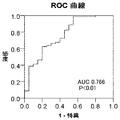
- FIG. 8B shows the accuracy evaluation (credibility) by the ROC curve for miRNA-181b-5p.
- analysis was performed on a total of 100 cases divided into 20 cases of diabetic kidney disease and 80 cases other than that (20 healthy subjects, 10 cases of diabetes without renal impairment, and 50 cases of other kidney diseases).
- the AUC was 0.766, a specific marker with P ⁇ 0.01.
- the test results for the area product under this curve are shown in Table 12 below.
- FIG. 9 (a) is a graph showing the results of calculating the ratio of two microRNAs of miRNA-125b-5p and miRNA-181b-5p in each individual and analyzing the diagnostic ability.
- Ratio of expression level expression level of miRNA-125b-5p / expression level of miRNA-181b-5p was calculated and normalized by setting a healthy person to 1, thereby calculating a relative change amount. As a result, this relative change was statistically significantly increased at P ⁇ 0.01 in diabetic kidney disease patients.
- FIG. 9B is a graph showing the accuracy evaluation (reliability) of the above-mentioned relative change amount by the ROC curve.
- AUC was a specific marker at 0.853, P ⁇ 0.01.
- the cut off value was 1.8 times, the sensitivity was 0.87, and the specificity was 0.75.
- miRNA-125b-5p and miRNA-181b-5p further increases the sensitivity and specificity of the ability to diagnose diabetic kidney disease. was completed.
- FIG. 10 shows the result of this analysis.
- FIG. 10 (a) shows the result of miRNA-181b-5p
- FIG. 10 (b) shows the result of miRNA-125b-5p.
- the expression level of miRNA-181b-5p was significantly reduced at P ⁇ 0.01.
- the expression level of miRNA-125b-5p was not significantly 5%, but was clearly increased.
- both miRNA-181b-5p and miRNA-125b-5p were distinguishable from diabetic kidney disease (DKD) and other renal disorders associated with diabetes.
- DKD diabetic kidney disease
- the ratio (relative change) of the combination (miRNA-125b-5p / miRNA-181b-5p) of miRNA-125b-5p and miRNA-181b-5p is determined to obtain diabetic kidney disease (DKD).
- DKD diabetic kidney disease
- other renal disorders associated with diabetes could be distinguished (discriminated) more remarkably. That is, the sensitivity and specificity of the ability to diagnose diabetic kidney disease were further increased.
- Human miRNA-125a-3p 5'-ACAGGUGAGUGUCUUGGGGAGCC-3 '(SEQ ID NO: 9)
- Human miRNA-125a-5p 5'-UCCCUGAGACCCUUUAACCUGUGA-3 '(SEQ ID NO: 10)
- Human miRNA-125b-1-3p 5'-ACGGGUUAGGCUCUUGGGGAGCU-3 '(SEQ ID NO: 11)
- miRNA-181b-5p family RNA examples include miRNA-181a-3p, miRNA-181a-5p, miRNA-181b-3p, miRNA-181c-3p, miRNA-181c-5p, miRNA-181d-3p, and miRNA-181. 181d-5p was used.
- Human miRNA-181a-3p 5'-ACCAUCGACCGUUGAUUGGUACC-3 '(SEQ ID NO: 12) Human miRNA-181a-5p: 5′-AACAUUCAACGCUGUCGGUGAGU-3 ′ (SEQ ID NO: 13) Human miRNA-181b-3p: 5'-CUCACUGAACAAUGAAUUGCAA-3 '(SEQ ID NO: 14) Human miRNA-181c-3p: 5'-AACCAUCGACCGUUGAGUGGAC-3 '(SEQ ID NO: 15) Human miRNA-181c-5p: 5'-AACAUUCAACCUGGUCGGUGAGU-3 '(SEQ ID NO: 16) Human miRNA-181d-3p: 5'-CCACCGGGGGAUGAAUGUCAC-3 '(SEQ ID NO: 17) Human miRNA-181d-5p: 5'-AACAUUCAUUGUGUGUCGGUGGGGU-3 '(SEQ ID NO: 18)
- FIGS. 11A, 11B and 11C show changes in the relative expression levels of these family RNAs. Specifically, FIG. 11A shows miRNA-125a-5p, FIG. 11B shows miRNA-181c-3p, and FIG. 11C shows miRNA-181d-5p for healthy individuals, diabetic patients, diabetic kidney disease patients, and other kidney disease patients. It is the result of investigating the difference of the expression level. In each case, the gray dotted line indicates the relative expression level (fold) of diabetic kidney disease when a healthy person is normalized to 1. As a result, no specific tendency was observed in diabetic kidney disease. That is, it was found that only the above-mentioned miRNA-181b-5p and miRNA-125b-5p can be effectively used specifically as diabetic kidney disease-specific biomarkers.
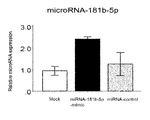
- miRNA-181b-5p-mimic-PEI-NP Linear polyethylene-based nanoparticle (in vivo-jet PEI (TM), hereafter referred to as "PEI-NP") was purchased from Polypaste transfection SA, Illkirch-Graffen, purchased from Illkirch-Graffen.
- miRNA-181b-5p mimic manufactured by Gene Design
- This miRNA mimic and PEI-NP were mixed and incubated at room temperature for 15 minutes to prepare miRNA-181b-5p mimic-PEI-NP (hereinafter, referred to as "miRNA-181b-5p-mimic” in the drawings). .
- miRNA-125b-5p mimic-PEI-NP hereinafter, referred to as “miRNA-125b-5p-mimic” in the drawings
- miRNA control-PEI-NP hereinafter, “miRNA in the drawings”
- the miRNA-125b-5p mimic and miRNA control are both manufactured by Gene Design.
- db / db mice were administered water (Mock) only (hereinafter referred to as “db / db” in the drawings), and normal mice were administered miRNA-181b-5p mimic-PEI-NP (hereinafter, referred to as “mock”). In the drawings, it is described as “m + / m +”).
- administration was performed once a week from 10 weeks of age, a total of 10 times.
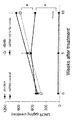
- FIG. 14 shows the results of measurement of the proteinuria state of mice to which miRNA-181b-5p mimic-PEI-NP was administered.
- the horizontal axis of this graph indicates the week of administration (weeks after treatment), and the vertical axis indicates the value of UACR ( ⁇ g / mg Cr).
- administration of miRNA-181b-5p mimic-PEI-NP suppressed an increase in proteinuria in db / db mice.
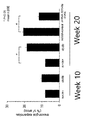
- FIG. 15 shows the results of evaluation of mesangial expansion, which indicates impairment of renal mesangial cells, in each mouse.
- This graph shows the mesangial expression (% of area) of each mouse at 10 weeks (Week 10) and 20 weeks (Week 20).
- db / db mice treated with miRNA-181b-5p mimic-PEI-NP had p ⁇ 0 compared to db / db mice treated with miRNA control-PEI-NP.
- the mesangial index decreased. That is, the increase in mesangial cells was suppressed.
- FIG. 16 shows the state of the kidney fixed in this 20-week state.
- mesangial cells can be confirmed in db / db mice and those obtained by administering miRNA control-PEI-NP to db / db mice.
- miRNA-181b-5p mimic-PEI-NP was administered to db / db mice, the number of mesangial cells was not much increased as compared with the normal mice.
- miRNA-181b-5p As a result, it was found that increasing the expression of miRNA-181b-5p can be used as a therapeutic agent specific to diabetic kidney disease. In other words, it was proved that a nucleic acid drug such as miRNA-181b-5p mimic-PEI-NP, a low-molecular compound simulating the nucleic acid drug, and the like can be provided as a novel drug for diabetic kidney disease.
- SAMP1 mouse (purchased from Japan SLC, Inc.) which is a model mouse for aging renal disorder (nephrosclerosis), UUO mouse which is a renal fibrosis model mouse, and ischemia which is an acute kidney injury (AKI) model mouse
- IRI mice were created by unilaterally ligating the ureters of normal mice (UUO). IRI mice were isolated from C57 / B6 mice (9 weeks old, male), after removing the right kidney, clamping the left renal artery for 45 minutes to block renal blood flow, inducing acute renal failure, and dissecting 24 hours later. .
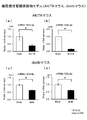
- FIG. 17 shows changes in the expression level in the kidneys of AKITA mice and db / db mice.
- 17 (a) shows the expression level of miRNA-181b-5p in AKITA mice
- FIG. 17 (b) shows the expression level of miRNA-125b-5p in AKITA mice
- FIG. 17 (c) shows the expression levels of db / db mice
- 17D shows the expression level of miRNA-181b-5p
- FIG. 17D shows the expression level of miRNA-125b-5p in db / db mice.
- Each graph shows the relative expression level obtained by normalizing the expression level of the control (Mock) group by 1.
- the expression levels of miRNA-181b-5p and miRNA-125b-5p in the kidney were lower in the group to which the high calorie diet was administered than in the control group. That is, the expression level of miRNA-125b-5p was lower in kidney than in serum.
- FIG. 18 shows changes in the expression level in model mice other than diabetic kidney disease.
- FIGS. 18 (a) and 18 (b) show expression of miRNA-181b-5p and miRNA-125b-5p in SAMP1 mice, FIGS. 18 (c) and (d) in UUO mice, and FIGS. 18 (e) and (f) in IRI mice. The results of the determination are shown below. Each graph is obtained by normalizing the control (SAMR, sham, Mock) as 1, and examining the relative expression level. As a result, in the model mice other than diabetic kidney disease, none of the expression levels was changed. These results suggest that miRNA-125b-5p and miRNA-181b-5p are specific for diabetic kidney disease.
- miRNA present in blood as a diabetic kidney disease-specific biomarker, it is expected to provide a drug for early diagnosis and treatment of diabetic kidney disease, and is industrially applicable. .
Landscapes
- Health & Medical Sciences (AREA)
- Life Sciences & Earth Sciences (AREA)
- Chemical & Material Sciences (AREA)
- Engineering & Computer Science (AREA)
- General Health & Medical Sciences (AREA)
- Biomedical Technology (AREA)
- Medicinal Chemistry (AREA)
- Molecular Biology (AREA)
- Pharmacology & Pharmacy (AREA)
- Bioinformatics & Cheminformatics (AREA)
- Organic Chemistry (AREA)
- Genetics & Genomics (AREA)
- Animal Behavior & Ethology (AREA)
- Public Health (AREA)
- Veterinary Medicine (AREA)
- Biochemistry (AREA)
- Hematology (AREA)
- Diabetes (AREA)
- Urology & Nephrology (AREA)
- Biotechnology (AREA)
- General Chemical & Material Sciences (AREA)
- Microbiology (AREA)
- Nuclear Medicine, Radiotherapy & Molecular Imaging (AREA)
- Chemical Kinetics & Catalysis (AREA)
- Immunology (AREA)
- Physics & Mathematics (AREA)
- Epidemiology (AREA)
- Zoology (AREA)
- General Engineering & Computer Science (AREA)
- Wood Science & Technology (AREA)
- Biophysics (AREA)
- Plant Pathology (AREA)
- Endocrinology (AREA)
- Emergency Medicine (AREA)
- Cell Biology (AREA)
- Obesity (AREA)
- Food Science & Technology (AREA)
- Analytical Chemistry (AREA)
- General Physics & Mathematics (AREA)
- Pathology (AREA)
Abstract
糖尿病性腎臓病を特異的に診断可能なバイオマーカーを提供する。糖尿病性腎臓病特異的バイオマーカーは、主に血液中に存在するmiRNAである。このmiRNAは、miRNA-125b-5p及び/又はmiRNA-181b-5pである。さらに、糖尿病性腎臓病の診断方法として、miRNA-125b-5p及び/又はmiRNA-181b-5pを用いることが可能である。この診断では、血液中において、miRNA-125b-5pの発現が上昇している場合及び/又はmiRNA-181b-5pの発現が低下している場合、糖尿病性腎臓病と診断する。
Description
本発明は、バイオマーカー、診断方法、検査用キット、動物治療方法、及び医薬に係り、特に糖尿病性腎臓病特異的バイオマーカー、糖尿病性腎臓病の診断方法、糖尿病性腎臓病の検査用キット、動物治療方法、及び糖尿病性腎臓病用医薬に関する。
近年、糖尿病の患者数が年々急増している。この糖尿病に伴う糖尿病性腎症は、予後の悪い腎疾患である。
糖尿病性腎症では、自覚症状が殆どないため、病状が進行して末期腎不全に至り、透析導入となることが多い。透析導入は、糖尿病患者のQOLを著しく低下させ、更に、重篤な場合には生命に関わってくる。
糖尿病性腎症では、自覚症状が殆どないため、病状が進行して末期腎不全に至り、透析導入となることが多い。透析導入は、糖尿病患者のQOLを著しく低下させ、更に、重篤な場合には生命に関わってくる。
従来、この糖尿病性腎症の確定診断は、腎生検で行われている。腎生検は入院が必要な侵襲的検査であり、合併症の危険もある。このため、病状評価の目的などで繰り返しの検査はできない。その他、従来から、蛋白尿(アルブミン尿)、eGFRによる腎機能の検査等で、腎臓の病状が評価されている。しかしながら、これらは、糖尿病性腎症に特異的な検査ではなく、殆どの腎疾患で共通したマーカーとなるにすぎない。
このように、糖尿病性腎症を早期に正確に診断できる診断方法は存在しなかった。
このように、糖尿病性腎症を早期に正確に診断できる診断方法は存在しなかった。
また、近年、微量アルブミン尿や蛋白尿を認めていなくても腎機能低下を示す糖尿病性腎症の患者が多数存在することが明らかになってきている。
このような従来の経過をとらない糖尿病性腎症を含めて、国際的に、病名として糖尿病性腎臓病(Diabetic kidney disease、DKD)と呼ばれるようになってきている。
このような従来の経過をとらない糖尿病性腎症を含めて、国際的に、病名として糖尿病性腎臓病(Diabetic kidney disease、DKD)と呼ばれるようになってきている。
一方、DKDに加え、糖尿病と直接関連しない腎疾患(IgA腎症、PKD等)患者が糖尿病を合併した場合を含む、より広い概念として、糖尿病合併CKD(CKD with diabetes)が存在する。
ところで、近年、miRNA(microRNA、マイクロRNA)が多様な病態に関与し、疾病早期診断のバイオマーカーとして有効であることが報告されている。
特許文献1を参照すると、慢性的な糖尿病の状態を示す指標、特に糖尿病性網膜症のバイオマーカーとして、miR-1、miR-144、miR-146a、miR-200b、miR-320、miR-450が記載されている。
特許文献1を参照すると、慢性的な糖尿病の状態を示す指標、特に糖尿病性網膜症のバイオマーカーとして、miR-1、miR-144、miR-146a、miR-200b、miR-320、miR-450が記載されている。
しかしながら、特許文献1のバイオマーカーは、糖尿病性腎臓病を特異的に診断できるものではなかった。
本発明は、このような状況に鑑みてなされたものであり、上述の課題を解消することを課題とする。
本発明の糖尿病性腎臓病特異的バイオマーカーは、miRNA-125b-5p及び/又はmiRNA-181b-5pであることを特徴とする。
本発明の糖尿病性腎臓病の診断方法は、前記糖尿病性腎臓病特異的バイオマーカーを用いることを特徴とする。
本発明の糖尿病性腎臓病の診断方法は、前記miRNA-125b-5pの発現が上昇している場合及び/又は前記miRNA-181b-5pの発現が低下している場合、糖尿病性腎臓病と診断することを特徴とする。
本発明の糖尿病性腎臓病の診断方法は、前記診断は、糖尿病性腎臓病(DKD)と、糖尿病を合併しているその他の腎障害との判別を含むことを特徴とする。
本発明の検査用キットは、miRNA-125b-5p及び/又はmiRNA-181b-5pを測定する試薬を含むことを特徴とする。
本発明の動物治療方法は、ヒト以外の動物の治療方法であって、miRNA-125b-5p、及び/又はmiRNA-181b-5pの機能活性を調整することを特徴とする。
本発明の糖尿病性腎臓病用医薬は、miRNA-125b-5p、及び/又はmiRNA-181b-5pの機能活性調整剤を含むことを特徴とする。
本発明の糖尿病性腎臓病用医薬は、前記機能活性調整剤は、前記miRNA-125b-5pの機能活性抑制剤、及び/又は前記miRNA-181b-5pの機能活性亢進剤を含むことを特徴とする。
本発明の糖尿病性腎臓病用医薬は、前記機能活性抑制剤は、前記miRNA-125b-5pに対応したmiRNAインヒビターであり、前記機能活性亢進剤は、前記miRNA-181b-5pに対応したmiRNAミミックであることを特徴とする。
本発明によれば、miRNA-125b-5p及び/又はmiRNA-181b-5pを用いることで、糖尿病性腎臓病を特異的に診断可能なバイオマーカーを提供することができる。
<実施の形態>
従来、糖尿病性腎臓病の確定診断は腎生検が行われている。また、アルブミン尿、腎機能などで病状評価されているが、両者とも糖尿病性腎臓病に特異的ではなくほとんどの腎疾患で共通したマーカーにすぎなかった。
このため、本発明者らは、多様な病態に関与していることが知られてきたmiRNAに着目した。miRNAは人を含む哺乳類で2000種類程度あることがわかっており、その塩基配列は、公共のデータベース(miRBase等)に登録されている。
しかしながら、糖尿病性腎臓病のバイオマーカーとして有用なmiRNAは確立されていなかった。
従来、糖尿病性腎臓病の確定診断は腎生検が行われている。また、アルブミン尿、腎機能などで病状評価されているが、両者とも糖尿病性腎臓病に特異的ではなくほとんどの腎疾患で共通したマーカーにすぎなかった。
このため、本発明者らは、多様な病態に関与していることが知られてきたmiRNAに着目した。miRNAは人を含む哺乳類で2000種類程度あることがわかっており、その塩基配列は、公共のデータベース(miRBase等)に登録されている。
しかしながら、糖尿病性腎臓病のバイオマーカーとして有用なmiRNAは確立されていなかった。
このため、本発明者らは、鋭意実験を繰り返し、糖尿病性腎臓病に特異的なバイオマーカーとなり得るmiRNAを探索した。
具体的には、後述の実施例1で詳細を説明するように、本発明者らは、糖尿病性腎臓病モデルマウスの腎臓と血液で変化しているmiRNAをマイクロアレイ法、及びリアルタイムPCRの一種であるqRT-PCR法で網羅的に解析、同定した。さらに、同定したmiRNA発現変化をヒトの血清サンプルについて、qRT-PCRで、健常人、腎障害のない糖尿病患者、腎生検で組織学的に診断された糖尿病性腎臓病患者、糖尿病性腎臓病以外の腎疾患患者で比較検討し、糖尿病性腎臓病患者の血清で特異的に変化するmiRNAを同定し、本発明を完成させるに至った。
具体的には、後述の実施例1で詳細を説明するように、本発明者らは、糖尿病性腎臓病モデルマウスの腎臓と血液で変化しているmiRNAをマイクロアレイ法、及びリアルタイムPCRの一種であるqRT-PCR法で網羅的に解析、同定した。さらに、同定したmiRNA発現変化をヒトの血清サンプルについて、qRT-PCRで、健常人、腎障害のない糖尿病患者、腎生検で組織学的に診断された糖尿病性腎臓病患者、糖尿病性腎臓病以外の腎疾患患者で比較検討し、糖尿病性腎臓病患者の血清で特異的に変化するmiRNAを同定し、本発明を完成させるに至った。
〔バイオマーカー〕
より詳細に説明すると、本発明の実施の形態に係る糖尿病性腎臓病特異的バイオマーカーは、患者のmiRNAであることを特徴とする。
miRNAは、タンパク質へ翻訳されないRNAであり、機能性のノンコーディングRNAの一種である。miRNAは、真核生物のゲノム上にコードされ、多段階的な生成過程を経て、最終的に20~25塩基程度の一本鎖RNAとなり、遺伝子の転写後発現調節に関与する。miRNAは、転写後発現調節により、発生、増殖、分化、アポトーシス、代謝といった広範な生物学的プロセスに重要な働きをする。
より詳細に説明すると、本発明の実施の形態に係る糖尿病性腎臓病特異的バイオマーカーは、患者のmiRNAであることを特徴とする。
miRNAは、タンパク質へ翻訳されないRNAであり、機能性のノンコーディングRNAの一種である。miRNAは、真核生物のゲノム上にコードされ、多段階的な生成過程を経て、最終的に20~25塩基程度の一本鎖RNAとなり、遺伝子の転写後発現調節に関与する。miRNAは、転写後発現調節により、発生、増殖、分化、アポトーシス、代謝といった広範な生物学的プロセスに重要な働きをする。
具体的には、本発明の実施の形態に係る糖尿病性腎臓病特異的バイオマーカーは、miRNA-125b-5p及び/又はmiRNA-181b-5pであることを特徴とする。
このうち、マウスの成熟型miRNA-125b-5p(miRbase No:MIMAT0000136)の配列を以下に示す:
5’-ucccugagacccuaacuuguga-3’ (配列番号1)
このうち、マウスの成熟型miRNA-125b-5p(miRbase No:MIMAT0000136)の配列を以下に示す:
5’-ucccugagacccuaacuuguga-3’ (配列番号1)
ヒトの成熟型miRNA-125b-5p(miRbase No:MIMAT0000423)の配列を以下に示す:
5’-ucccugagacccuaacuuguga-3’ (配列番号2)
5’-ucccugagacccuaacuuguga-3’ (配列番号2)
さらに、マウスの成熟型miRNA-181b-5p(miRbase No:MIMAT0000673)の配列を以下に示す:
5’-aacauucauugcugucgguggguu-3’(配列番号3)
5’-aacauucauugcugucgguggguu-3’(配列番号3)
ヒトの成熟型miRNA-181b-5p(miRbase No:MIMAT0000257)の配列を以下に示す:
5’-aacauucauugcugucggugggu-3’ (配列番号4)
5’-aacauucauugcugucggugggu-3’ (配列番号4)
ここで、本実施形態のmiRNA-125b-5p及びmiRNA-181b-5pは、それぞれの種において、一種単独でも二種以上併用することも可能である。
さらに、本実施形態のmiRNA-125b-5p及び/又はmiRNA-181b-5pとして、マウス及びヒト以外の真核生物、具体的には各種動物において、相同性のあるmiRNAを用いることが可能である。この動物は特に限定されず、例えば、家畜動物種、野生動物等を含む。各miRNAは、哺乳類で、ほぼ同じ塩基配列であるため、相同性を基に検索して用いることが可能である。この相同性としては、80%以上であることが好適であり、90%以上であることが更に好適である。さらに、これらの配列と相補的な配列、又は、ハイブリダイズ可能な程度に同一な配列を含んでいてもよい。
加えて、本実施形態の各miRNA及び後述する機能活性調整剤は、pri-miRNA(primary miRNA、初期転写産物)又はpre-miRNA(precursor miRNA、前駆体)として提供されてもよい。この場合、本実施形態のmiRNAは、一本鎖ではなくてもよく、ステム及びループ構造等により、二本鎖部分を形成していてもよい。
さらに、本実施形態の各miRNAは、miRNA、pri-miRNA、pre-miRNA等をコードするRNA、DNA等の核酸分子であってもよい。また、この核酸分子は、人工核酸分子、例えば、ペプチド核酸(Peptide Nucleic Acid、PNA)、ロックド核酸(Locked Nucleic Acid、LNA)等も含む。
さらに、本実施形態の各miRNAは、miRNA、pri-miRNA、pre-miRNA等をコードするRNA、DNA等の核酸分子であってもよい。また、この核酸分子は、人工核酸分子、例えば、ペプチド核酸(Peptide Nucleic Acid、PNA)、ロックド核酸(Locked Nucleic Acid、LNA)等も含む。
本実施形態の各miRNA、及び機能活性調整剤の製造は、当業者に一般的な化学合成法、又は組換え手法等で製造することが可能である。この組み換え手法では、上述のような成熟(mature)型のmiRNA、pri-miRNA、及びpre-miRNAのいずれか又はこれらをコードするDNAの塩基配列が、適切なベクターに含まれるようにしてもよい。このベクターは、例えば、真核生物において、核酸の発現に適した発現ベクターである。このベクターに含まれる核酸分子は、各miRNA分子の転写、miRNAに成熟するまでの前駆体又は一次転写産物を標的としていてもよい。さらに、各miRNAのゲノム上のコピー等を変更するような配列、転写調製配列等を含んでいてもよい。
〔診断方法〕
本発明の実施の形態に係る糖尿病性腎臓病の診断方法は、上述の糖尿病性腎臓病特異的バイオマーカーを用いることを特徴とする。
本発明の実施の形態に係る糖尿病性腎臓病の診断方法では、主に、患者の血清中又は血漿(以下、単に「血液」という。)に存在するmiRNAレベルを検出することで、糖尿病性腎臓病であることを診断する。すなわち、本実施形態の糖尿病性腎臓病の診断方法は、糖尿病性腎臓病の検査方法としても用いることが可能である。
さらに、miRNA-181b-5p及びmiRNA-125b-5pは、いずれも、糖尿病性腎臓病と、糖尿病を合併しているその他の腎障害と判別することが可能である。
本発明の実施の形態に係る糖尿病性腎臓病の診断方法は、上述の糖尿病性腎臓病特異的バイオマーカーを用いることを特徴とする。
本発明の実施の形態に係る糖尿病性腎臓病の診断方法では、主に、患者の血清中又は血漿(以下、単に「血液」という。)に存在するmiRNAレベルを検出することで、糖尿病性腎臓病であることを診断する。すなわち、本実施形態の糖尿病性腎臓病の診断方法は、糖尿病性腎臓病の検査方法としても用いることが可能である。
さらに、miRNA-181b-5p及びmiRNA-125b-5pは、いずれも、糖尿病性腎臓病と、糖尿病を合併しているその他の腎障害と判別することが可能である。
具体的には、患者のmiRNA-125b-5pの血清での発現が上昇している場合には、糖尿病性腎臓病と診断することが可能である。加えて、miRNA-125b-5pの腎臓での発現が低下している場合には、糖尿病性腎臓病と診断することが可能である。
さらに、miRNA-181b-5pの発現が血清及び/又は腎臓中で低下している場合、糖尿病性腎臓病と診断することが可能である。
これら、miRNA-125b-5pの血清での発現の上昇若しくは腎臓中での発現低下、miRNA-181b-5pの血清並びに/若しくは腎臓中での発現の低下については、組み合わせて判断しても、いずれかの発現のみで判断してもよい。
miRNA-181b-5pの発現が低下と、miRNA-125b-5pの発現の上昇とを組み合わせて判断すると、より確実に糖尿病性腎臓病と診断することが可能となる。後述の実施例2では、この組み合わせの効果について、実際の実験結果を示している。
さらに、miRNA-181b-5pの発現が血清及び/又は腎臓中で低下している場合、糖尿病性腎臓病と診断することが可能である。
これら、miRNA-125b-5pの血清での発現の上昇若しくは腎臓中での発現低下、miRNA-181b-5pの血清並びに/若しくは腎臓中での発現の低下については、組み合わせて判断しても、いずれかの発現のみで判断してもよい。
miRNA-181b-5pの発現が低下と、miRNA-125b-5pの発現の上昇とを組み合わせて判断すると、より確実に糖尿病性腎臓病と診断することが可能となる。後述の実施例2では、この組み合わせの効果について、実際の実験結果を示している。
これらの発現量の差は、例えば、患者の血液中に存在する発現量を測定し、得られた数値について、統計的に有意差があるか否かを検定する。
この血液中の発現量の測定としては、例えば、ヒト等の患者から採血をし、その上澄みを遠心し、血球を除いた血清又は血漿からトータルRNAを抽出する。トータルRNAの抽出方法としては、例えば、グアニジン-塩化セシウム超遠心法、AGPC(Acid Guanidinium-Phenol-Chloroform)法、当業者に一般的なRNA抽出用カラム等を用いることが可能である。この上で、抽出されたトータルRNA中から、本実施形態の各miRNAの発現量を測定する。この測定は、例えば、ノーザンブロット、マイクロアレイ、QCM(Quartz Crystal Microbalance)センサ測定法、qRT-PCRを含むリアルタイムPCR法等、当業者に一般的な方法を用いて実現することが可能である。リアルタイムPCR法を用いる場合、内在性コントロール(endogenous control)miRNAを用いた発現補正を行うことが可能である。この際の内在性コントロールは、以前に内在性コントロールとして適切と報告されている配列から、健常と病気で変化しないものを当業者が適切に選択することが好適である。
その後、測定された発現量から統計的な有意差を検定する場合、健常者に由来するサンプルから得られたmiRNAの発現量と比較し、例えば、5%、好ましくは1%有意であるか否かを統計検定する。この検定は、例えば、T検定、F検定、カイ二乗検定等の手法をデータ量やデータの性質等に対応して、適宜用いることが可能である。
検定の結果、統計的に有意であれば、当該患者は、糖尿病性腎臓病であると診断され得る。逆に、統計的に有意でなければ、当該患者は、糖尿病性腎臓病ではないと診断され得る。この場合、他の指標等から、糖尿病性腎臓病ではない、別の腎症の患者であると診断することも可能である。
このような診断方法により、発症初期の段階でも、高い信頼性をもって糖尿病性腎臓病であることを判定することができる。これにより、治療方針の決定に対して重要な情報を提供することができる。
検定の結果、統計的に有意であれば、当該患者は、糖尿病性腎臓病であると診断され得る。逆に、統計的に有意でなければ、当該患者は、糖尿病性腎臓病ではないと診断され得る。この場合、他の指標等から、糖尿病性腎臓病ではない、別の腎症の患者であると診断することも可能である。
このような診断方法により、発症初期の段階でも、高い信頼性をもって糖尿病性腎臓病であることを判定することができる。これにより、治療方針の決定に対して重要な情報を提供することができる。
本発明の実施の形態に係る診断方法についてまとめると、本実施形態の診断方法は、
本実施形態の診断方法は、糖尿病性腎臓病の疑いのある患者から血液及び/又は腎臓組織を採取する工程、採取した血液及び/又は腎臓組織についてmiRNA-181b-5p及び/又はmiRNA-125b-5pの発現量を測定する工程、測定されたmiRNA-181b-5p及び/又はmiRNA-125b-5pの発現量と健常者のmiRNA-181b-5p及び/又はmiRNA-125b-5pの発現量(標準量)とを比較する工程、miRNA-181b-5pの発現量がmiRNA-181b-5pの標準量よりも低いこと検出する及び/又はmiRNA-125b-5pの発現量がmiRNA-125b-5pの標準量よりも高いこと検出する工程、及び検出された患者は糖尿病性腎臓病であるリスクが高いと決定する工程、を含む糖尿病性腎臓病の診断方法であることを特徴とする。
本実施形態の診断方法は、糖尿病性腎臓病の疑いのある患者から血液及び/又は腎臓組織を採取する工程、採取した血液及び/又は腎臓組織についてmiRNA-181b-5p及び/又はmiRNA-125b-5pの発現量を測定する工程、測定されたmiRNA-181b-5p及び/又はmiRNA-125b-5pの発現量と健常者のmiRNA-181b-5p及び/又はmiRNA-125b-5pの発現量(標準量)とを比較する工程、miRNA-181b-5pの発現量がmiRNA-181b-5pの標準量よりも低いこと検出する及び/又はmiRNA-125b-5pの発現量がmiRNA-125b-5pの標準量よりも高いこと検出する工程、及び検出された患者は糖尿病性腎臓病であるリスクが高いと決定する工程、を含む糖尿病性腎臓病の診断方法であることを特徴とする。
〔検査用キット〕
本発明の実施の形態に係る糖尿病性腎臓病の検査用キットは、上述の糖尿病性腎臓病特異的バイオマーカーとなるmiRNAを測定する試薬を含むことを特徴とする。
このようなmiRNA測定用の試薬としては、例えば、ノーザンブロット、マイクロアレイ、QCMセンサ測定法、リアルタイムPCR法等の検出用の方式に対応したものを含む。すなわち、本実施形態の各miRNA検出用のプローブやプライマー等、各種酵素類、緩衝液、洗浄液、溶解液等も含まれる。これに加えて、上述の方式によりmiRNAを検出するための資材、器材等を含んでもよい。
本発明の実施の形態に係る糖尿病性腎臓病の検査用キットは、上述の糖尿病性腎臓病特異的バイオマーカーとなるmiRNAを測定する試薬を含むことを特徴とする。
このようなmiRNA測定用の試薬としては、例えば、ノーザンブロット、マイクロアレイ、QCMセンサ測定法、リアルタイムPCR法等の検出用の方式に対応したものを含む。すなわち、本実施形態の各miRNA検出用のプローブやプライマー等、各種酵素類、緩衝液、洗浄液、溶解液等も含まれる。これに加えて、上述の方式によりmiRNAを検出するための資材、器材等を含んでもよい。
さらに、本実施形態の糖尿病性腎臓病の検査用キットは、診断結果を解析するために、コンピュータ上で検査結果を判断し、データ処理し、可視化するためのプログラム、当該コンピュータを備えた装置及びシステム等を含んでいてもよい。このような装置及びシステム等は、当業者に一般的な技術、方式等を用いて開発可能である。このような装置及びシステム等により、ハイスループットでの検査が可能となり、患者の診断が容易となる。
〔糖尿病性腎臓病用医薬〕
本実施形態の糖尿病性腎臓病用医薬(医療用組成物)は、miRNAの発現量の増加又は低下させる組成物を含むことを特徴とする。
具体的には、本実施形態の医療用組成物は、miRNA-125b-5p、及び/又はmiRNA-181b-5pの機能活性調整剤を含むことを特徴とする。この機能活性調整剤は、miRNAの発現を調節する作用を有する組成物である。
本実施形態の糖尿病性腎臓病用医薬(医療用組成物)は、miRNAの発現量の増加又は低下させる組成物を含むことを特徴とする。
具体的には、本実施形態の医療用組成物は、miRNA-125b-5p、及び/又はmiRNA-181b-5pの機能活性調整剤を含むことを特徴とする。この機能活性調整剤は、miRNAの発現を調節する作用を有する組成物である。
本実施形態においては、miRNA-125b-5pに対する機能活性調整剤は、機能活性抑制剤を用いる。この機能活性抑制剤は、例えば、miRNA-125b-5pに対応したmiRNAインヒビターを用いる。このmiRNAインヒビターは、例えば、成熟型のmiRNAの生成を阻害、pri-miRNA、及びpre-miRNAを切断等して、発現を抑制するアンチセンス、siRNA、リボザイム等の核酸分子を含む各種組成物を用いることが可能である。
一方、miRNA-181b-5pに対する機能活性調整剤は、機能活性亢進剤を用いる。この機能活性亢進剤は、miRNA-181b-5pに対応したmiRNAミミックを含む。このmiRNAミミックは、合成されたmiRNAを含む組成物であってもよい。
一方、miRNA-181b-5pに対する機能活性調整剤は、機能活性亢進剤を用いる。この機能活性亢進剤は、miRNA-181b-5pに対応したmiRNAミミックを含む。このmiRNAミミックは、合成されたmiRNAを含む組成物であってもよい。
加えて、本実施形態の糖尿病性腎臓病用医薬は、インビトロ(in vitro)又はインビボ(in vivo)で所望の標的細胞に導入される当業者に一般的な方式で、患者の細胞に導入される。このため、本実施形態の医療用組成物は、当業者に一般的な各種媒体を含んで提供されてもよい。
この媒体としては、例えば、プラスミドやウイルスベクターを用いてもよい。このウイルスベクターは、アデノウイルス、アデノ随伴ウイルス、レトロウイルス等の当業者に一般的なウイルスを用いて構成されてもよい。
この媒体としては、例えば、プラスミドやウイルスベクターを用いてもよい。このウイルスベクターは、アデノウイルス、アデノ随伴ウイルス、レトロウイルス等の当業者に一般的なウイルスを用いて構成されてもよい。
また、本発明の実施の形態に係る糖尿病性腎臓病用医薬は、任意の製剤上許容しうる担体を含んでいてもよい。この担体は、例えば、リポソーム担体、コロイド金粒子、ポリペプチド、リポ多糖類、多糖類、脂質膜等であってもよい。これらの中で、機能活性調整剤の発現調整効果を向上させる担体を用いることが好適である。たとえば、miRNAインヒビターやmiRNAミミックについては、リポソーム、特にカチオン性リポソームを用いることが好適である。
さらに、製薬上許容される担体としては、例えば生理食塩水、ブドウ糖やその他の補助薬を含む等張液、例えばD-ソルビトール、D-マンノース、D-マンニトール、塩化ナトリウム等を含んでいてもよい。さらに、適当な溶解補助剤、例えばアルコール、具体的にはエタノール、ポリアルコール、例えばプロピレングリコール、ポリエチレングリコール、非イオン性界面活性剤、例えばポリソルベート80(TM)、HCO-50等と共に投与することが可能である。また、適切な賦形剤等を更に含んでもよい。
また、本実施形態の糖尿病性腎臓病用医薬は、製剤上許容しうる担体を調製するために、適切な薬学的に許容可能なキャリアを含んでいてもよい。このキャリアは、シリコーン、コラーゲン、ゼラチン等の生体親和性材料を含んでもよい。また、キャリアは、乳濁液として提供されてもよい。さらには、例えば、希釈剤、香料、防腐剤、賦形剤、崩壊剤、滑沢剤、結合剤、乳化剤、可塑剤等の製剤用添加物のいずれか又は任意の組み合わせを含有させてもよい。
本発明に係る糖尿病性腎臓病用医薬の医薬組成物の投与経路は、特に限定されず、非経口的又は経口的に投与を行うことが可能である。非経口投与としては、例えば、静脈内、動脈内、皮下、真皮内、筋肉内、腹腔内の投与、又は、腎臓等への直接投与が可能である。
本発明の実施の形態に係る糖尿病性腎臓病用医薬は、非経口的又は経口的の投与に適した投与形態において、当該分野で周知の製剤上許容しうる担体を用いて処方され得る。
本発明の実施の形態に係る糖尿病性腎臓病用医薬は、非経口的又は経口的の投与に適した投与形態において、当該分野で周知の製剤上許容しうる担体を用いて処方され得る。
本発明の実施の形態に係る糖尿病性腎臓病用医薬を上述の治療に用いる際に、投与間隔および投与量は、疾患の状況、さらに対象の状態などの種々の条件に応じて適宜選択および変更することが可能である。
本発明の実施の形態に係る糖尿病性腎臓病用医薬の1回の投与量および投与回数は、投与の目的により、更に、患者の年齢および体重、症状および疾患の重篤度などの種々の条件に応じて適宜選択および変更することが可能である。
投与回数及び期間は、1回のみでもよいし、1日1回~数回、数週間程度投与し、疾患の状態をモニターし、その状態により再度又は繰り返し投与を行ってもよい。
本発明の実施の形態に係る糖尿病性腎臓病用医薬の1回の投与量および投与回数は、投与の目的により、更に、患者の年齢および体重、症状および疾患の重篤度などの種々の条件に応じて適宜選択および変更することが可能である。
投与回数及び期間は、1回のみでもよいし、1日1回~数回、数週間程度投与し、疾患の状態をモニターし、その状態により再度又は繰り返し投与を行ってもよい。
加えて、本発明の組成物は、他の組成物等と併用することも可能である。また、他の組成物と同時に本発明の組成物を投与してもよく、また間隔を空けて投与してもよいが、その投与順序は特に問わない。
また、本発明の実施の形態において、疾患が改善又は軽減される期間は特に限定されないが、一時的な改善又は軽減であってもよいし、一定期間の改善又は軽減であってもよい。
さらに、本実施形態の糖尿病性腎臓病用医薬を予防用に用いることで、糖尿病性腎臓病の病態の進行を抑え、糖尿病や高血圧の治療と合わせて腎臓の機能を温存することが可能となる。
また、本発明の実施の形態において、疾患が改善又は軽減される期間は特に限定されないが、一時的な改善又は軽減であってもよいし、一定期間の改善又は軽減であってもよい。
さらに、本実施形態の糖尿病性腎臓病用医薬を予防用に用いることで、糖尿病性腎臓病の病態の進行を抑え、糖尿病や高血圧の治療と合わせて腎臓の機能を温存することが可能となる。
〔治療法〕
本発明の実施の形態に係る動物治療方法は、動物の治療方法であって、miRNA-125b-5p、及び/又はmiRNA-181b-5pの機能活性を調整することを特徴とする。
具体的には、本発明の実施の形態に係る糖尿病性腎臓病用医薬は、動物の治療を行う動物治療にも用いることが可能である。この動物は、特に限定されるものではなく、脊椎動物及び無脊椎動物を広く含む。脊椎動物としては、魚類、両生類、は虫類、鳥類、及び哺乳類を含む。具体的には、例えば、哺乳類は、例えば、マウス、ラット、フェレット、ハムスター、モルモット、又はウサギ等のげっ歯類、イヌ、ネコ、ヒツジ、ブタ、ウシ、ウマ、又は非ヒューマンのトランスジェニック霊長類等、及びヒトを含んでいてもよい。また、野生動物としては、哺乳類の他にも、魚類、家禽を含む鳥類、爬虫類等を含む。また、エビや昆虫等を含む甲殻類、その他のイカ等の無脊椎動物等も広く含む。
すなわち、本発明の実施の形態に係る糖尿病性腎臓病用医薬は、ヒトの治療の他に、各種動物の治療、家畜の発育増進等の方法にも用いることができる。このため、本実施形態の患者は、ヒト、及び、上述のヒト以外の動物も含む。
本発明の実施の形態に係る治療方法についてまとめると、本実施形態の治療方法は、糖尿病性腎臓病の疑いのある患者から血液及び/又は腎臓組織を採取する工程、採取した血液及び/又は腎臓組織についてmiRNA-181b-5p及び/又はmiRNA-125b-5pの発現量を測定する工程、測定されたmiRNA-181b-5p及び/又はmiRNA-125b-5pの発現量と健常者のmiRNA-181b-5p及び/又はmiRNA-125b-5pの発現量(標準量)とをそれぞれ比較する工程、miRNA-181b-5pの発現量がmiRNA-181b-5pの標準量よりも低いこと検出する及び/又はmiRNA-125b-5pの発現量がmiRNA-125b-5pの標準量よりも高いこと検出する工程、及び検出された患者を治療する工程、を含む糖尿病性腎臓病の診断方法であることを特徴とする。
そして、この糖尿病性腎臓病の治療は、miRNA-181b-5p及び/又はmiRNA-125b-5pの機能活性を調整する治療を含むことを特徴とする。このmiRNA-181b-5p及び/又はmiRNA-125b-5pの機能活性を調整する治療は、上述の糖尿病性腎臓病用医薬を投与すること含むことを特徴とする。
そして、この糖尿病性腎臓病の治療は、miRNA-181b-5p及び/又はmiRNA-125b-5pの機能活性を調整する治療を含むことを特徴とする。このmiRNA-181b-5p及び/又はmiRNA-125b-5pの機能活性を調整する治療は、上述の糖尿病性腎臓病用医薬を投与すること含むことを特徴とする。
具体的には、本実施形態では、病態(病因)、病期等に依らず、糖尿病性腎臓病に特異的な治療として、miRNA-181b-5p及び/又はmiRNA-125b-5pの機能活性を調整することで、糖尿病性腎臓病の治療を行うことが可能である。特に、上述した糖尿病性腎臓病用医薬を投与する等して、miRNA-181b-5pを過剰発現させる補充療法、及び/又はmiRNA-125b-5pのmiインヒビターによる発現抑制療法等により、糖尿病性腎臓病を予防及び治療することが可能となる。この際、例えば、上述のリポソームのようなDDS(ドラッグデリバリーシステム)等でmiRNA-181b-5p等を投与することが可能である。
さらに、下記に示すような、当業者により実行される典型的な治療法を組み合わせることで、より効果的に糖尿病性腎臓病を治療することが可能となる。
さらに、下記に示すような、当業者により実行される典型的な治療法を組み合わせることで、より効果的に糖尿病性腎臓病を治療することが可能となる。
ここで、糖尿病性腎臓病では、病期として、1期(腎症前期)、2期(早期腎症期)、3A期(前期顕性腎症期)、4期(腎不全期)、5期(透析療法期)に分類される。1期では、腎臓に病変が生じ、糸球体の基底膜が厚くなる。2期では、微量のアルブミンが尿に漏れるようになる。3A期では、糸球体結節等が生じ、蛋白尿が明らかになる。そして、4期では、腎機能の低下も認められるようなる。4期では、腎機能の悪化が顕著となる。5期では、人工透析が必要となる。
これらの進行に応じた治療では、早期に診断をして、インスリン治療を含めた血糖管理をする。この際、糖尿病性腎症では、糖尿病の食事療法に加え、慢性腎不全の食事療法を併用する必要がある。薬物療法としては、高血圧の治療を行うため、一般にはアンジオテンシン変換酵素阻害薬又はアンジオテンシン受容体拮抗薬、カルシウム拮抗薬等を用いる。そして、降圧薬として利尿剤を投与し、浮腫の管理を行う。
これらの進行に応じた治療では、早期に診断をして、インスリン治療を含めた血糖管理をする。この際、糖尿病性腎症では、糖尿病の食事療法に加え、慢性腎不全の食事療法を併用する必要がある。薬物療法としては、高血圧の治療を行うため、一般にはアンジオテンシン変換酵素阻害薬又はアンジオテンシン受容体拮抗薬、カルシウム拮抗薬等を用いる。そして、降圧薬として利尿剤を投与し、浮腫の管理を行う。
加えて、本発明の実施の形態に係る糖尿病性腎臓病用医薬は、動物の体内の一部分、又は動物から摘出又は排出された臓器や組織等についても、治療用の対象とすることができる。さらに、この治療は広義の治療であり、バイオリアクター、モデル動物での培養、人体移植様の培養臓器の培養等にも適用可能である。
以上のように構成することで、以下のような効果を得ることができる。
従来から、透析導入となる腎疾患でもっとも多いのが糖尿病性腎臓病である。糖尿病性腎臓病は糖尿病に合併しておこる腎障害で全透析患者、新規導入透析患者のともに約4割を占めている。糖尿病性腎臓病は高齢者に多いため、今後の高齢化社会でさらに患者数が増加すると考えられている。このように糖尿病性腎臓病の予後が極めて悪く、大きな問題である原因は、糖尿病患者数が極めて多いこと、そのうち約半数が糖尿病性腎臓病に罹患していると考えられているにも関わらず、糖尿病性腎臓病の正確な診断法、特異的な治療法がないことである。糖尿病性腎臓病に特異的で有効な治療法が開発されない理由は、糖尿病性腎臓病を特異的に診断できる検査法がないため、正確な早期診断ができないこと、治療法の効果、病状の進行を正確に判断することができないことがある。
従来から、透析導入となる腎疾患でもっとも多いのが糖尿病性腎臓病である。糖尿病性腎臓病は糖尿病に合併しておこる腎障害で全透析患者、新規導入透析患者のともに約4割を占めている。糖尿病性腎臓病は高齢者に多いため、今後の高齢化社会でさらに患者数が増加すると考えられている。このように糖尿病性腎臓病の予後が極めて悪く、大きな問題である原因は、糖尿病患者数が極めて多いこと、そのうち約半数が糖尿病性腎臓病に罹患していると考えられているにも関わらず、糖尿病性腎臓病の正確な診断法、特異的な治療法がないことである。糖尿病性腎臓病に特異的で有効な治療法が開発されない理由は、糖尿病性腎臓病を特異的に診断できる検査法がないため、正確な早期診断ができないこと、治療法の効果、病状の進行を正確に判断することができないことがある。
従来、糖尿病性腎臓病の確定診断は腎生検で行われていたものの、腎生検は入院が必要な侵襲的検査であり、合併症の危険もあった。そのため、病状評価の目的などで繰り返しの検査はできなかった。その他、アルブミン尿、腎機能などで病状評価されているが、これらの評価は、糖尿病性腎臓病に特異的ではなく、殆どの腎疾患で共通したマーカーにすぎなかった。
また、特許文献1に記載されたような、従来の糖尿病についてのmiRNAについては、少数の患者研究、コントロールが健常人のみの研究、特定miRNAのみの研究等、糖尿病性腎臓病特異的なmiRNAの解析ではなかった。すなわち、最大の問題は、報告されたmiRNAが糖尿病性腎臓病のみで特異的に変化するのかどうかという特異性の検討がなされていなかった。さらに、腎生検組織との相関が解明されておらず、精度が不明であった。すなわち、従来、糖尿病性腎症のバイオマーカー及び治療ターゲットとして有用なmiRNAは同定されていなかった。
また、特許文献1に記載されたような、従来の糖尿病についてのmiRNAについては、少数の患者研究、コントロールが健常人のみの研究、特定miRNAのみの研究等、糖尿病性腎臓病特異的なmiRNAの解析ではなかった。すなわち、最大の問題は、報告されたmiRNAが糖尿病性腎臓病のみで特異的に変化するのかどうかという特異性の検討がなされていなかった。さらに、腎生検組織との相関が解明されておらず、精度が不明であった。すなわち、従来、糖尿病性腎症のバイオマーカー及び治療ターゲットとして有用なmiRNAは同定されていなかった。
これに対して、本発明の実施の形態に係る糖尿病性腎臓病特異的バイオマーカーは、血液中に存在するmiRNAであり、miRNA-125b-5p及び/又はmiRNA-181b-5pを用いることで、糖尿病性腎臓病の診断に用いることが可能となる。
すなわち、本実施形態のバイオマーカーにより、予後の悪い腎疾患である糖尿病性腎臓病を、早期のうちに正確に診断できる。これにより、治療効果が期待できる。
加えて、本実施形態のバイオマーカーは、実際の腎生検組織との相関があったため、糖尿病性腎臓病の実際の病理的な症状との関連性が高く、診断用として有用である。
すなわち、本実施形態のバイオマーカーにより、予後の悪い腎疾患である糖尿病性腎臓病を、早期のうちに正確に診断できる。これにより、治療効果が期待できる。
加えて、本実施形態のバイオマーカーは、実際の腎生検組織との相関があったため、糖尿病性腎臓病の実際の病理的な症状との関連性が高く、診断用として有用である。
加えて、本発明の実施の形態に係る糖尿病性腎臓病の診断方法では、本実施形態の各miRNAが疾患早期から発現変化しているため、早期診断に用いることが可能である。すなわち、本実施形態の診断方法は、腎症のうち糖尿病性腎臓病であることを早期に、被侵襲的に診断することが可能である。
また、本発明の実施の形態に係る糖尿病性腎臓病の診断方法では、判別の難しい糖尿病性腎臓病と、糖尿病を合併しているその他の腎障害とを、臨床上の診断にて判別可能となり、治療上の有益な指標を提供することができる。
また、本発明の実施の形態に係る糖尿病性腎臓病の診断方法では、判別の難しい糖尿病性腎臓病と、糖尿病を合併しているその他の腎障害とを、臨床上の診断にて判別可能となり、治療上の有益な指標を提供することができる。
さらに、糖尿病性腎臓病の治療では、腎機能障害が軽度の段階で治療を開始する必要があるものの、特異的な治療薬も存在しなかった。
これに対して、miRNA-125b-5p及び/又はmiRNA-181b-5pの機能活性調整剤を用いることで、新規の糖尿病性腎臓病用医薬を提供でき、上述の診断と合わせて早期治療が可能となる。
これに対して、miRNA-125b-5p及び/又はmiRNA-181b-5pの機能活性調整剤を用いることで、新規の糖尿病性腎臓病用医薬を提供でき、上述の診断と合わせて早期治療が可能となる。
実際に、miRNA-181b-5pの発現量を増大させるmiRNAミミックを用いることで、後述の実施例2に示したように、糖尿病モデルマウスに投与して蛋白尿の増加を抑制し、メサンギウム基質の増大を抑制することが可能である。
このように、本実施形態のmiRNAは、糖尿病性腎臓病の診断から治療まで一括して使用でき、診断及び治療による糖尿病性腎臓病の予後改善が可能となる。
このように、本実施形態のmiRNAは、糖尿病性腎臓病の診断から治療まで一括して使用でき、診断及び治療による糖尿病性腎臓病の予後改善が可能となる。
なお、上述の実施の形態において、糖尿病性腎臓病の検査方法として、血液からmiRNAを取得する例について記載した。
しかしながら、miRNAは血液以外、例えば、尿中にも安定して存在している。このため、血液以外の組織、体液、尿等から取得されたmiRNAの量により、糖尿病性腎臓病であると検出するように構成することも可能である。
しかしながら、miRNAは血液以外、例えば、尿中にも安定して存在している。このため、血液以外の組織、体液、尿等から取得されたmiRNAの量により、糖尿病性腎臓病であると検出するように構成することも可能である。
さらに、本実施形態の診断方法は、腎症の予後を診断する糖尿病性腎臓病予後診断方法としても用いることが可能である。すなわち、糖尿病性腎臓病では、通常の腎症とは異なり、症状が出にくい。このため、早期に診断し、腎症としての予後を予測することで、早期治療に努めて、透析導入となる時期を遅らせることが可能となる。
加えて、糖尿病性腎臓病用医薬となるmiRNA-125b-5p、及び/又はmiRNA-181b-5pの機能活性調整剤として、miRNAインヒビター及びmiRNAミミック以外のものを用いることも可能である。
さらに、後述する実施例1に記載したような、miRNA-125b-5p及びmiRNA-181b-5pの発現調整の対象となる遺伝子、遺伝子産物、アゴニスト/アンタゴニスト、その他のパスウェイに対する作用を介した組成物を、機能活性調整剤として用いることも可能である。
さらに、後述する実施例1に記載したような、miRNA-125b-5p及びmiRNA-181b-5pの発現調整の対象となる遺伝子、遺伝子産物、アゴニスト/アンタゴニスト、その他のパスウェイに対する作用を介した組成物を、機能活性調整剤として用いることも可能である。
さらに、miRNA-125b-5p、及び/又はmiRNA-181b-5pの機能活性調整剤として、その他のmiRNAの転写調節因子を用いたり、各種ベクターによる発現調節、CRISPR/Cas等による遺伝子治療等を行うことも可能である。
加えて、後述する実施例1に記載した対象とする遺伝子やパスウェイに対する作用を介した遺伝子治療を行うことも可能である。
加えて、後述する実施例1に記載した対象とする遺伝子やパスウェイに対する作用を介した遺伝子治療を行うことも可能である。
ここで、上述のバイオマーカー、診断方法、検査用キット、治療方法、及び医薬のいずれにおいても、miRNA-125b-5p及びmiRNA-181b-5pは、いずれか単独でも、両方を組み合わせて使用してもよい。
また、本発明の実施の形態に係る医薬は、他の組成物等と併用することも可能である。本発明の組成物を、他の組成物と同時に投与、散布、塗布等をしてもよい。
加えて、本発明の実施の形態に係る機能活性調整剤を、医薬以外の用途の試薬として用いることも可能である。すなわち、糖尿病性腎臓病における作用機序の動物実験やモデル等に使用可能である。
以下で、本発明の実施の形態に係る糖尿病性腎臓病特異的バイオマーカーについて、具体的な実験を基にして、実施例としてさらに具体的に説明する。しかしながら、この実施例は一例にすぎず、これに限定されるものではない。
〔実験方法〕
(マイクロアレイ分析)
miRNA発現の分析は、microRNA Complete Labeling Reagent及びHybキット(Agilent Technologies、CA、USA社製)を用いて、北海道システムサイエンス社(北海道、日本)に外注して実行した。100ngのトータルRNAを、仔ウシ腸ホスファターゼを用いて37℃で30分間脱リン酸化し、100℃で7分間、100%ジメチルスルホキシドを用いて変性させた。次いで、このサンプルを氷上で2分間冷却した。次いで、サンプルにT4リガーゼを用いて16℃で、2時間インキュベーションさせpCp-Cy3で標識した。その後pCp-Cy標識サンプルを8×15KフォーマットAgilentマウスmicroRNAアレイ上でハイブリダイズさせた。その後プレートを洗浄し、Agilent Technologies Microarrayスキャナーを用いて3μmの分解能でスキャンした。データは、Agilent Feature Extractionソフトウェアバージョン10.7.3.1を使用して解析した。
(マイクロアレイデータ処理及び統計解析)
AgilentデータをGeneSpring GX(Agilent Technologies社製)にインポートし、チップあたり90パーセンタイルに正規化した。 一元配置分散分析(ANOVA)を用いて異なる群間の差異を解析した。ANOVAによって統計的有意性が検出された場合、2つの異なる群の平均を比較するためにポストホック検定としてTukey検定を行った。P<0.05を有意差ありと判定した。
AgilentデータをGeneSpring GX(Agilent Technologies社製)にインポートし、チップあたり90パーセンタイルに正規化した。 一元配置分散分析(ANOVA)を用いて異なる群間の差異を解析した。ANOVAによって統計的有意性が検出された場合、2つの異なる群の平均を比較するためにポストホック検定としてTukey検定を行った。P<0.05を有意差ありと判定した。
(qRT-PCR)
(マウス腎臓)
ガラスホモジナイザー及びフィルターカラムシュレッダー(QIAシュレッダー、Qiagen、Valencia、CA、USA製)を用いて、マウス腎臓をホモジナイズした。その後、miRNeasy mini kit(Qiagen)を使用して、均質化した腎臓サンプルからmiRNAを含むトータルRNAを単離した。次に、miScript II RTキット(Qiagen)を用いて、単離された1μgのtotal RNAを逆転写した。次に、miScript SYBR green PCRキット(Qiagen)を用いてリアルタイムRT-PCR(qRT-PCR)を行った。qRT-PCRの条件はQuantStudio 12K Flex Flex Real-Time PCR systemを用いて、95℃で15分間のプレインキュベーション、次いで、(1)94℃で15秒間の変性、(2)55℃で30秒間のアニーリング、(3)70℃で30秒間の伸長のサイクルを40サイクル行い、結果は、RNU6-2(QUIAGEN社製)をendogenous controlとして用いて、2-ΔΔCT methodで解析した。
(ヒト血清)
ヒト血清のmiRNAレベル解析は、NucleoSpin miRNA Plasmaカラム(Macherey-Nagel、PA、USA製)を用いて400μlの血清からトータルRNAを単離した。次に、単離したトータルRNAをmiScript II RTキット(Qiagen)を用いて逆転写した。次に、miScript SYBR green PCRキット(Qiagen)を用いてリアルタイムRT-PCRを行った。qRT-PCRの条件はQuantStudio-12K Flex Flex Real-Time PCR systemを用いて、95℃で15分間のプレインキュベーション、次いで(1)94℃で15秒間の変性、(2)55℃で30秒間のアニーリング、(3)及び70℃で30秒間の伸長のサイクルを40サイクル行い、結果は、miRNA-16-5p(QUIAGEN社製)をendogenous controlとして用いて、2-ΔΔCT methodで解析した。
ヒト血清のmiRNAレベル解析は、NucleoSpin miRNA Plasmaカラム(Macherey-Nagel、PA、USA製)を用いて400μlの血清からトータルRNAを単離した。次に、単離したトータルRNAをmiScript II RTキット(Qiagen)を用いて逆転写した。次に、miScript SYBR green PCRキット(Qiagen)を用いてリアルタイムRT-PCRを行った。qRT-PCRの条件はQuantStudio-12K Flex Flex Real-Time PCR systemを用いて、95℃で15分間のプレインキュベーション、次いで(1)94℃で15秒間の変性、(2)55℃で30秒間のアニーリング、(3)及び70℃で30秒間の伸長のサイクルを40サイクル行い、結果は、miRNA-16-5p(QUIAGEN社製)をendogenous controlとして用いて、2-ΔΔCT methodで解析した。
以下のプライマーを用いた。
マウスmiRNA-125b-5p:
5’-UCCCUGAGACCCUAACUUGUGA-3’ (配列番号5)
マウスmiRNA-181b-5p:
5’-AACAUUCAUUGCUGUCGGUGGGU-3’(配列番号6)
ヒトmiRNA-125b-5p:
5’-UCCCUGAGACCCUAACUUGUGA-3’ (配列番号7)
ヒトmiRNA-181b-5p:
5’-AACAUUCAUUGCUGUCGGUGGGU-3’(配列番号8)
マウスmiRNA-125b-5p:
5’-UCCCUGAGACCCUAACUUGUGA-3’ (配列番号5)
マウスmiRNA-181b-5p:
5’-AACAUUCAUUGCUGUCGGUGGGU-3’(配列番号6)
ヒトmiRNA-125b-5p:
5’-UCCCUGAGACCCUAACUUGUGA-3’ (配列番号7)
ヒトmiRNA-181b-5p:
5’-AACAUUCAUUGCUGUCGGUGGGU-3’(配列番号8)
(マウス)
糖尿病性腎臓病マウス(I型糖尿病モデルマウス):AKITA/SLcマウス(日本エスエルシー株式会社より購入)。
糖尿病性腎臓病マウス(II型糖尿病モデルマウス):db/dbマウス(C57BLKS/J Iar-+Leprdb/+Leprdb マウス。動物繁殖研究所より購入)。
コントロールマウス:正常マウス(C57/B6系統)、動物繁殖研究所より購入。
糖尿病性腎臓病マウス(I型糖尿病モデルマウス):AKITA/SLcマウス(日本エスエルシー株式会社より購入)。
糖尿病性腎臓病マウス(II型糖尿病モデルマウス):db/dbマウス(C57BLKS/J Iar-+Leprdb/+Leprdb マウス。動物繁殖研究所より購入)。
コントロールマウス:正常マウス(C57/B6系統)、動物繁殖研究所より購入。
〔結果〕
(糖尿病性腎臓病マウスの腎臓の変化)
図1に、糖尿病性腎臓病モデルマウスであるAKITA/SLcマウスの腎臓の変化を示す。図1(a)がコントロールマウス(正常マウス)、図1(b)が糖尿病性腎臓病モデルマウス(AKTAマウス)の腎臓を示す。糖尿病性腎臓病マウスでは、糸球体腫大とメサンギウム基質の増大が認められた。
(糖尿病性腎臓病マウスの腎臓の変化)
図1に、糖尿病性腎臓病モデルマウスであるAKITA/SLcマウスの腎臓の変化を示す。図1(a)がコントロールマウス(正常マウス)、図1(b)が糖尿病性腎臓病モデルマウス(AKTAマウス)の腎臓を示す。糖尿病性腎臓病マウスでは、糸球体腫大とメサンギウム基質の増大が認められた。
(マイクロアレイ解析及びqRT-PCR結果)
図2に、マイクロアレイ解析の結果を示す。本実施例1では、糖尿病性腎臓病マウス(4匹)と正常マウス(コントロールマウス)(4匹)の腎臓で、1,880種類のmiRNAのマイクロアレイ解析を行った。
結果として、糖尿病性腎臓病マウス(AKITA/SLc)の腎臓で1.2倍以上上昇しているmiRNAを13種類、1.2倍以上低下しているmiRNAを28種類、合計41種類を選出し、更に、qRT-PCRで確認した。
なお、糖尿病性腎症マウス(AKITA/SLcマウス)はI型糖尿病モデルマウスでもあるため、II型糖尿病モデルマウス(db/dbマウス)での変化も、qRT-PCRで確認した。糖尿病性腎症マウス及びdb/dbマウスの血清でも、コントロールマウスに比べて変化していることを確認した。
(ヒトでのqRT-PCR結果)
マウスの血清で特異的に変化するmiRNAについて、ヒトにおいて、健常人、腎障害のない糖尿病患者、他の腎疾患患者と比較し、糖尿病性腎臓病のバイオマーカーとなるmiRNAを同定した。
具体的には、上述の41種類のmiRNAの血清での発現変化をqRT-PCR法を用いて、健常人(17例)、腎障害のない糖尿病患者(miRNA-125b-5pは22例、miRNA181b-5pは10例)、腎生検で診断された糖尿病性腎臓病患者(10例)、腎生検で診断された糖尿病性腎臓病以外の腎疾患患者(miRNA-125b-5pは18例、miRNA181b-5pは17例。このうち、IgA腎症5例、膜性腎症4例、腎硬化症3例、間質性腎炎3例、微小変化ネフローゼ3例)で比較検討し、糖尿病性腎臓病患者の血清でのみ特異的に発現変化する2種類のmiRNAとして、miRNA-125b-5pと、miRNA-181b-5pとを同定した。なお、腎疾診断は全て腎生検で、組織学的診断した。
(miRNA-125b-5pの発現解析)
ここで、図3により、miRNA-125b-5pの発現量の変化について説明する。
図3(a)は、リアルタイムPCRによる血清中のmiRNA-125b-5pの測定について、健常人(15例)、糖尿病患者(22例)、糖尿病性腎臓病患者(10例)、及び糖尿病性腎臓病以外の腎疾患患者(15例)について、健常人を1として正規化し、qRT-PCRによる発現量の差をみたグラフである。miRNA-125b-5pは、同様の対照患者に比べて、P<0.05で有意に発現量が増加した。
この解析結果について、下記の表1に平均及び標準偏差を示す。
ここで、図3により、miRNA-125b-5pの発現量の変化について説明する。
図3(a)は、リアルタイムPCRによる血清中のmiRNA-125b-5pの測定について、健常人(15例)、糖尿病患者(22例)、糖尿病性腎臓病患者(10例)、及び糖尿病性腎臓病以外の腎疾患患者(15例)について、健常人を1として正規化し、qRT-PCRによる発現量の差をみたグラフである。miRNA-125b-5pは、同様の対照患者に比べて、P<0.05で有意に発現量が増加した。
この解析結果について、下記の表1に平均及び標準偏差を示す。

図3(b)は、miRNA-125b-5pについてのROC曲線(感度/1-特異度)による精度評価(信用性)を示すグラフである。ここでは、糖尿病性腎臓病10例と、それ以外の40例(健常人15例、腎障害のない糖尿病10例、その他の腎疾患15例)に分けた合計50例での解析を行った。AUCは0.778となり、P<0.05で特異的なマーカーであった。
この曲線の下の領域積についての検定結果を、下記の表2に示す。
この曲線の下の領域積についての検定結果を、下記の表2に示す。
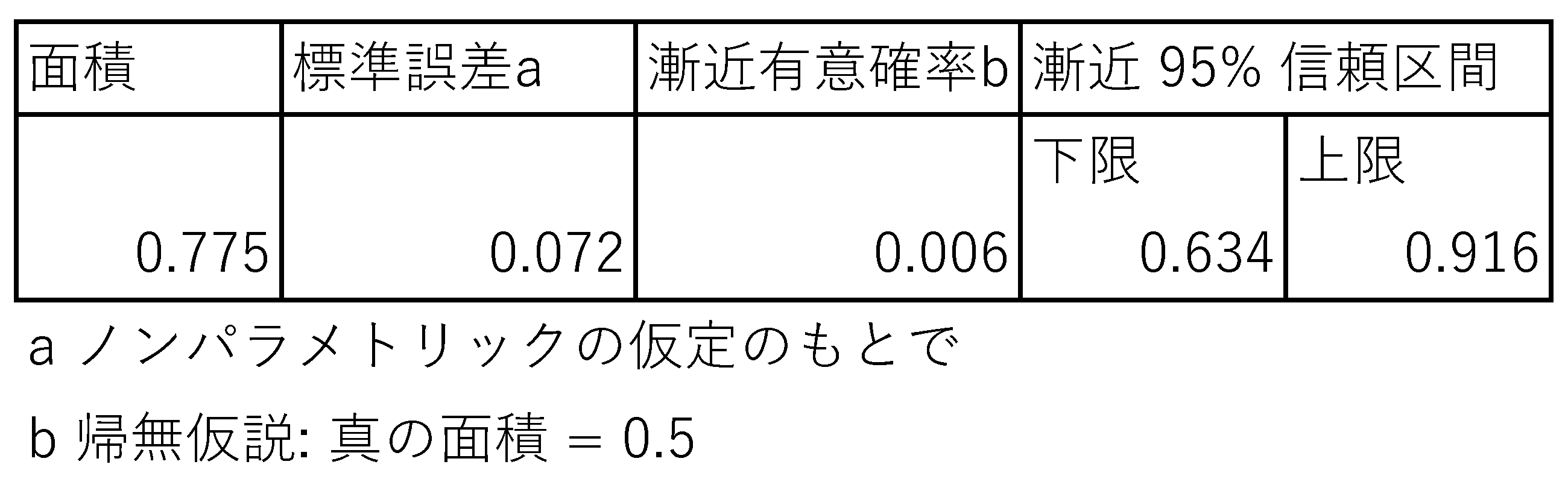
(miRNA-181b-5pの発現解析)
次に、図4により、miRNA-181b-5pの発現量の変化について説明する。
図4(a)は、健常人、糖尿病患者、糖尿病性腎臓病患者、糖尿病性腎臓病以外の腎疾患患者について、健常人を1として正規化し、qRT-PCRによる発現量の差をみたグラフである。miRNA-181b-5pの発現量は、P<0.05で有意に低下していた。
この解析結果について、下記の表3に平均及び標準偏差を示す。
次に、図4により、miRNA-181b-5pの発現量の変化について説明する。
図4(a)は、健常人、糖尿病患者、糖尿病性腎臓病患者、糖尿病性腎臓病以外の腎疾患患者について、健常人を1として正規化し、qRT-PCRによる発現量の差をみたグラフである。miRNA-181b-5pの発現量は、P<0.05で有意に低下していた。
この解析結果について、下記の表3に平均及び標準偏差を示す。
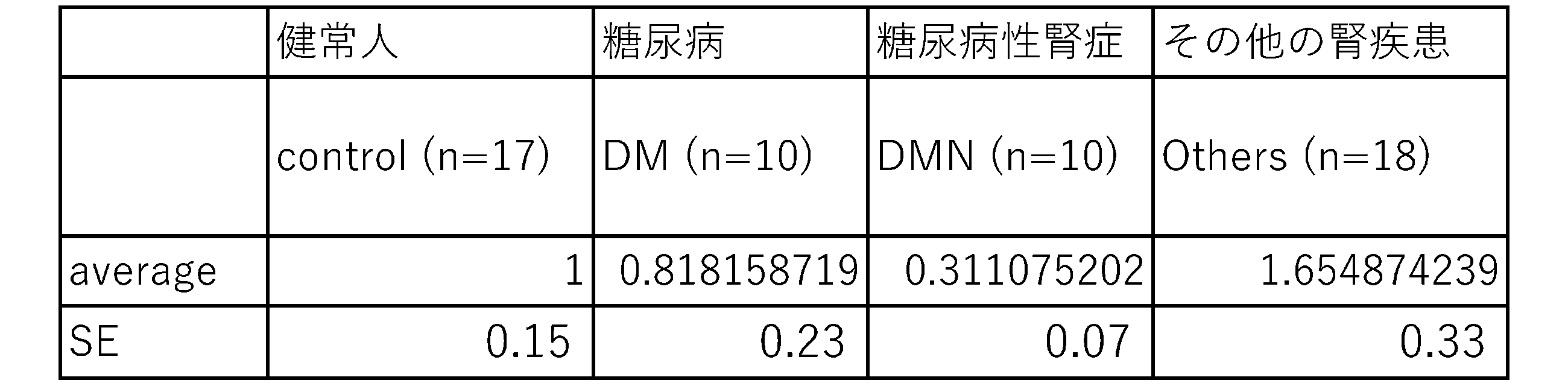
図4(b)は、miRNA-181b-5pについてのROC曲線による精度評価(信用性)を示すグラフである。ここでは、糖尿病性腎臓病10例と、それ以外の40例(健常人15例、腎障害のない糖尿病10例、その他の腎疾患15例)に分けた合計50例での解析を行った。AUCは0.832となり、P<0.01で特異的なマーカーであった。加えて、miRNA-181b-5pよりも、miRNA-181b-5pの方がやや高い精度を示した。
この曲線の下の領域積についての検定結果を、下記の表4に示す。
この曲線の下の領域積についての検定結果を、下記の表4に示す。
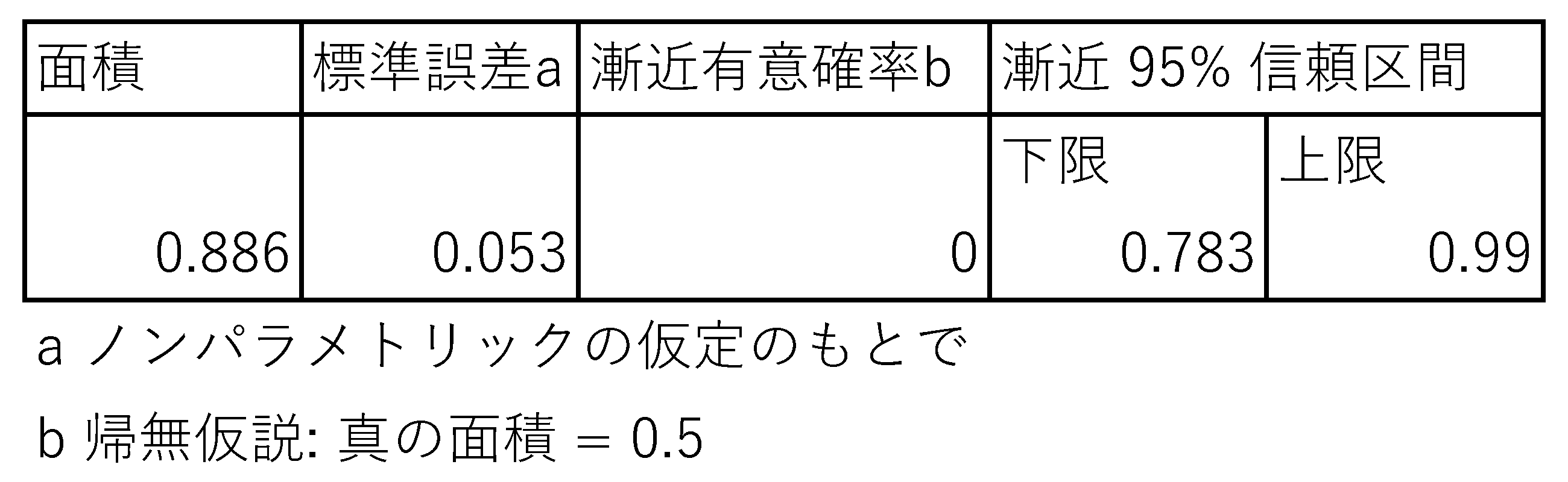
〔まとめ〕
図5により、miRNA-125b-5p及びmiRNA-181b-5pの発現の変化による糖尿病性腎臓病の作用機序についての考察について説明する。
miRNA-125b-5pは、従来から、血管平滑筋細胞で、ヘテロクロマチンの形成や機能の維持に中心的な役割を果たすヒストンメチル化酵素であるSuv39h1を標的mRNAとして抑制し、その結果MCP-1、IL-6を上昇させることが知られている。さらに、miRNA-125b-5pは、滑膜繊維芽細胞でIκB及びp65上昇を介して、TNF-α、IL-6、IL-1βを上昇させ、マクロファージを活性化させることが知られている。このため、miRNA-125b-5pの発現量が上昇することで、炎症関連の因子により、糖尿病性腎臓病の症状を生じさせると考えられる。
一方、miRNA-181b-5pは、血管内皮細胞でNF-κBによる炎症パスウェイに関する転写因子であるp65を抑制し、動脈硬化を抑制することが知られている。さらに、miRNA-181b-5pは、血管内皮細胞でimportin-α3を標的mRNAとして抑制を介してTNF-α、NF-κBを抑制することも知られている。これに加えて、miRNA-181b-5pは、血管平滑筋でTGF-β1を抑制し、動脈石灰化を抑制することも知られている。このため、miRNA-181b-5pの発現量が下降することで、これらの因子が活性化して炎症が生じやすくなり、糖尿病性腎臓病の症状を生じさせると考えられる。
これらの作用機序のパスウェイに関する調整剤を用いることで、さらなる糖尿病性腎臓病の診断及び治療効果が期待できる。また、遺伝子治療にも用いることが可能である。
これらの作用機序のパスウェイに関する調整剤を用いることで、さらなる糖尿病性腎臓病の診断及び治療効果が期待できる。また、遺伝子治療にも用いることが可能である。
〔追加試験結果〕
(糖尿病性腎臓病の作用機序)
図6に、他の予備実験を含めて推定された、miRNA-125b-5p及びmiRNA-181b-5pによる糖尿病性腎臓病の発症、進展の推定機序について説明する。
miRNA-125b-5pは、Suv39h1の他にもIkB、STAT3、TNFAIP3、VEGF、TNF-α、IRF4等の発現を調整し、これを介して、少なくとも一部は、P53、MCP-1、IL-6、IL-1βの発現を調整することで、糖尿病性腎臓病の発症、進展に関わると考えられる。
一方、miRNA-181b-5pは、TGFβR1、importin α3、PHLPP2、CYLD、TIMP3等の発現を調整し、これを介して、少なくとも一部は、TNF-α、NF-kBの発現を抑制することで、糖尿病性腎臓病の発症、進展に関わると考えられる。
(miRNA-125b-5pの発現解析)
次に、図7A及び図7Bにより、上述の実施例1における実験と同様の手法により、患者数を増加させて、miRNA-125b-5pの発現量の変化を調べた結果について説明する。
図7Aは、リアルタイムPCRによる血清中のmiRNA-125b-5pの測定について、健常人(20例)、糖尿病患者(10例)、糖尿病性腎臓病患者(15例)、及び糖尿病性腎臓病以外の腎疾患患者(50例)について、健常人を1として正規化し、qRT-PCRによる発現量の差をみたグラフである。グラフは、グラフ中の「*」は、P<0.05であることを示す。miRNA-125b-5pは、同様の対照患者に比べて、P<0.05で有意に発現量が増加した。
この解析結果について、下記の表5に、平均、標準偏差、2±SE(標準誤差)の解析結果を示す。
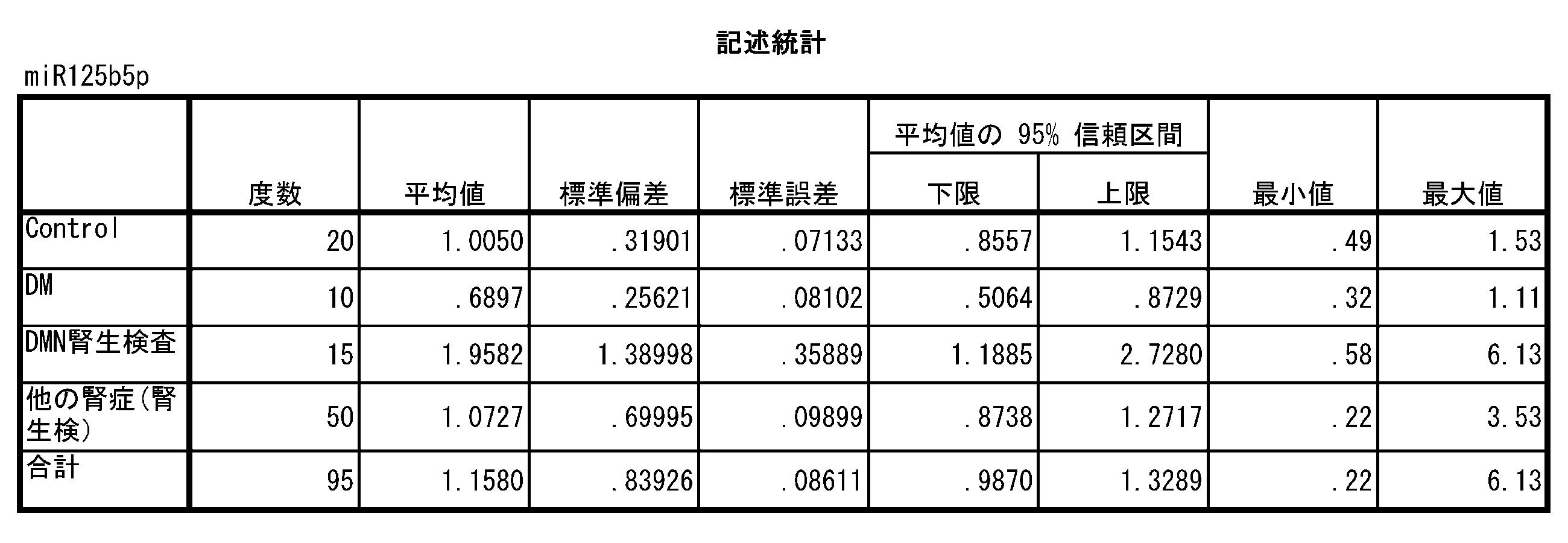
次に、この解析結果のうち、分散分析を行った結果を下記の表6に示す。
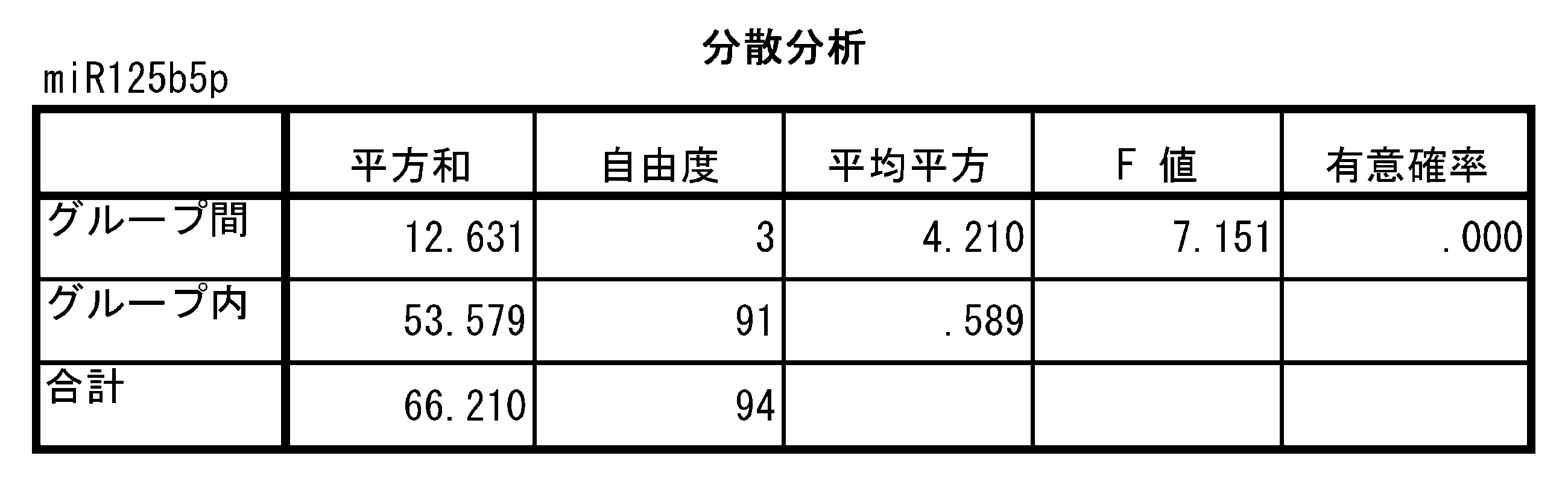
次に、この解析結果のうち、多重比較を行った結果を下記の表7に示す。
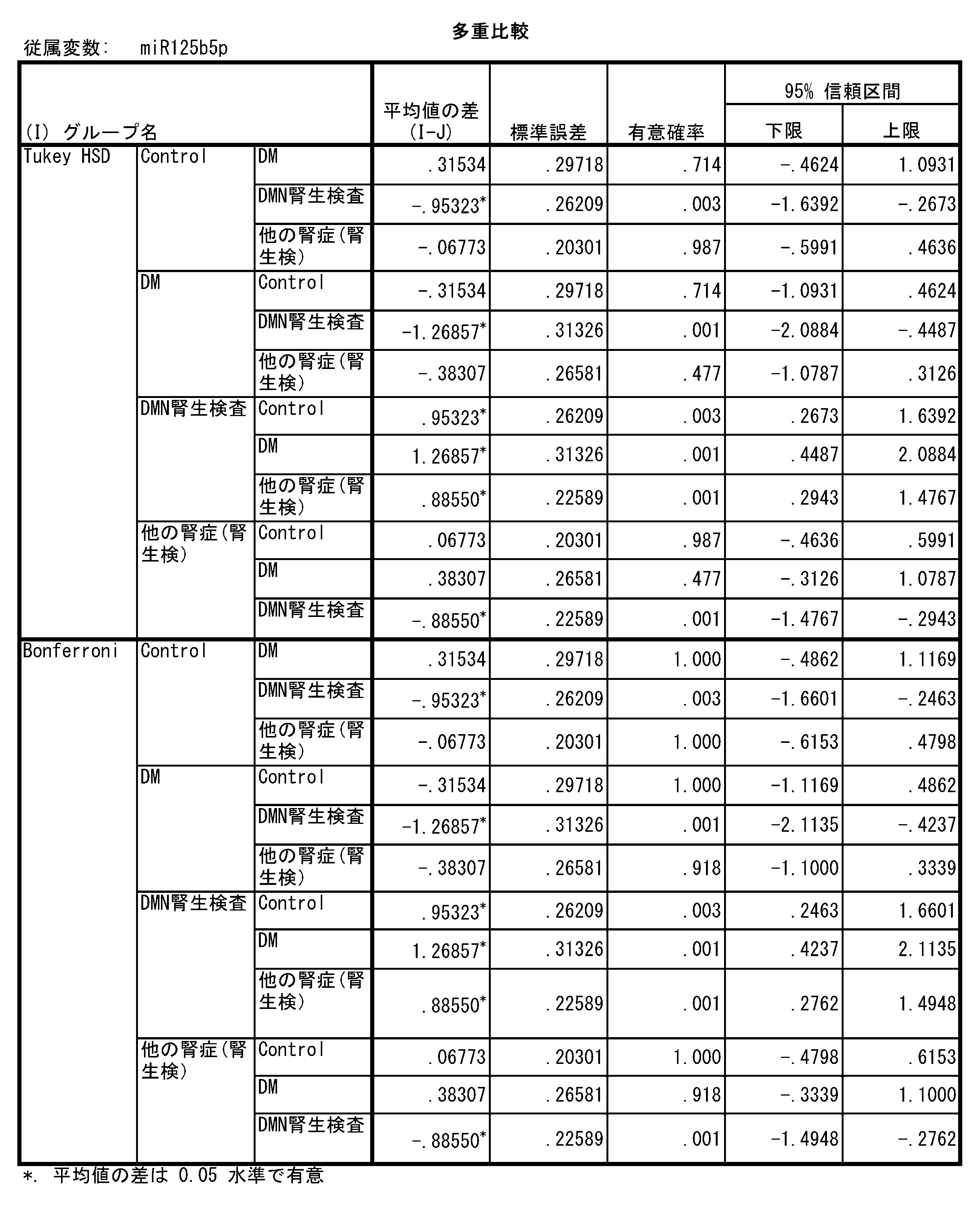
図7Bは、miRNA-125b-5pについてのROC曲線(感度/(1-特異度))による精度評価(信用性)を示す。ここでは、糖尿病性腎臓病15例と、それ以外の80例(健常人20例、腎障害のない糖尿病10例、その他の腎疾患50例)に分けた合計95例での解析を行った。AUCは0.853となり、P<0.01であった。これにより、特異的なマーカーであることがより裏付けられた。
この曲線の下の領域積についての検定結果を、下記の表8に示す。
この曲線の下の領域積についての検定結果を、下記の表8に示す。

(miRNA-181b-5pの発現解析)
次に、図8A、図8Bにより、上述の実施例1における実験と同様の手法により、患者数を増加させて、miRNA-181b-5pの発現量の変化を調べた結果について説明する。
図8Aは、健常人(20例)、糖尿病患者(10例)、糖尿病性腎臓病患者(20例)、及び糖尿病性腎臓病以外の腎疾患患者(50例)について、健常人を1として正規化し、qRT-PCRによる発現量の差をみたものである。miRNA-181b-5pの発現量は、P<0.05で有意に低下していた。
この解析結果について、下記の表9に、平均、標準偏差、2±SE(標準誤差)の解析結果を示す。
次に、図8A、図8Bにより、上述の実施例1における実験と同様の手法により、患者数を増加させて、miRNA-181b-5pの発現量の変化を調べた結果について説明する。
図8Aは、健常人(20例)、糖尿病患者(10例)、糖尿病性腎臓病患者(20例)、及び糖尿病性腎臓病以外の腎疾患患者(50例)について、健常人を1として正規化し、qRT-PCRによる発現量の差をみたものである。miRNA-181b-5pの発現量は、P<0.05で有意に低下していた。
この解析結果について、下記の表9に、平均、標準偏差、2±SE(標準誤差)の解析結果を示す。
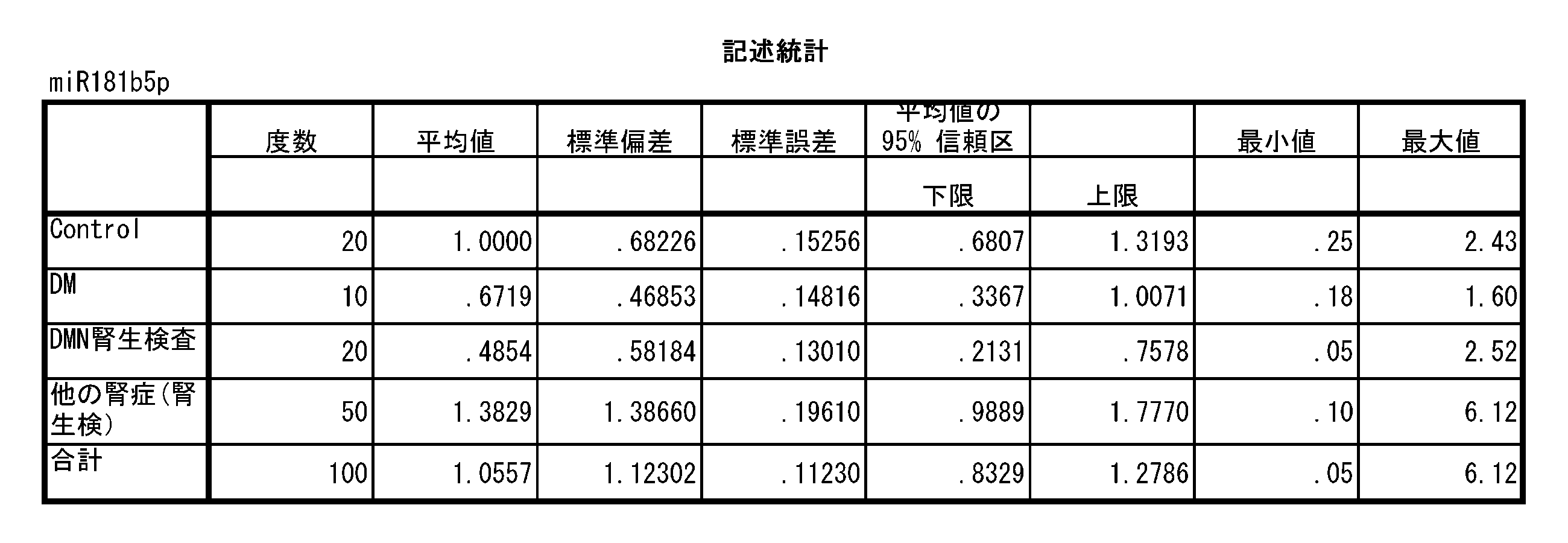
次に、この解析結果のうち、分散分析を行った結果を下記の表10に示す。
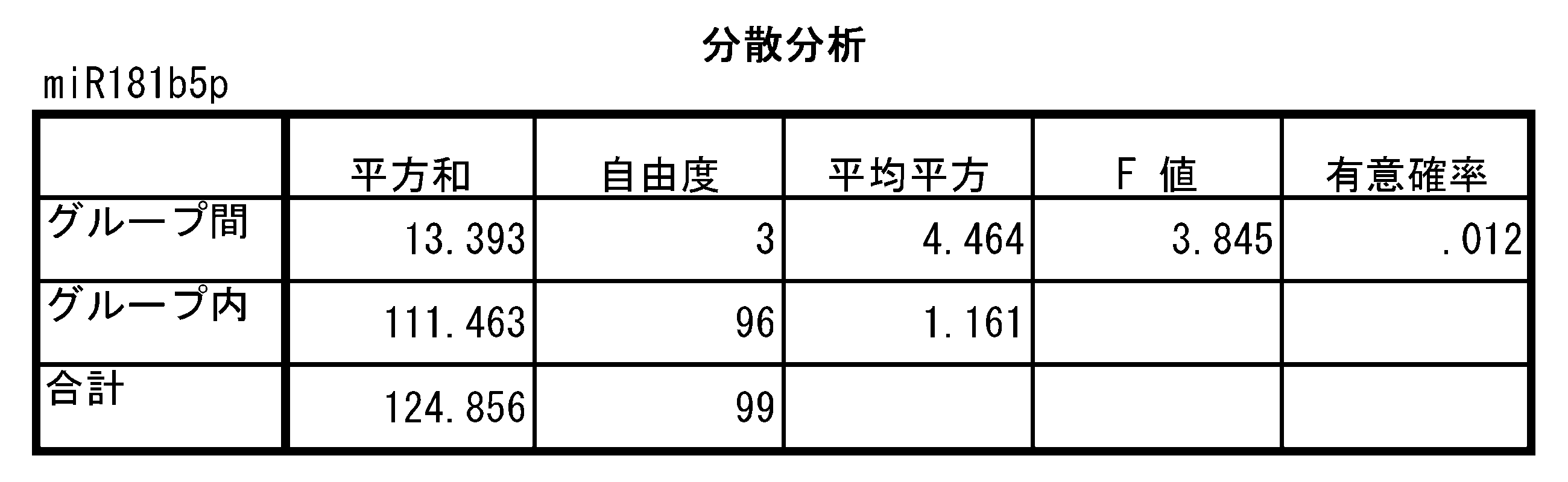
次に、この解析結果のうち、多重比較を行った結果を下記の表11に示す。
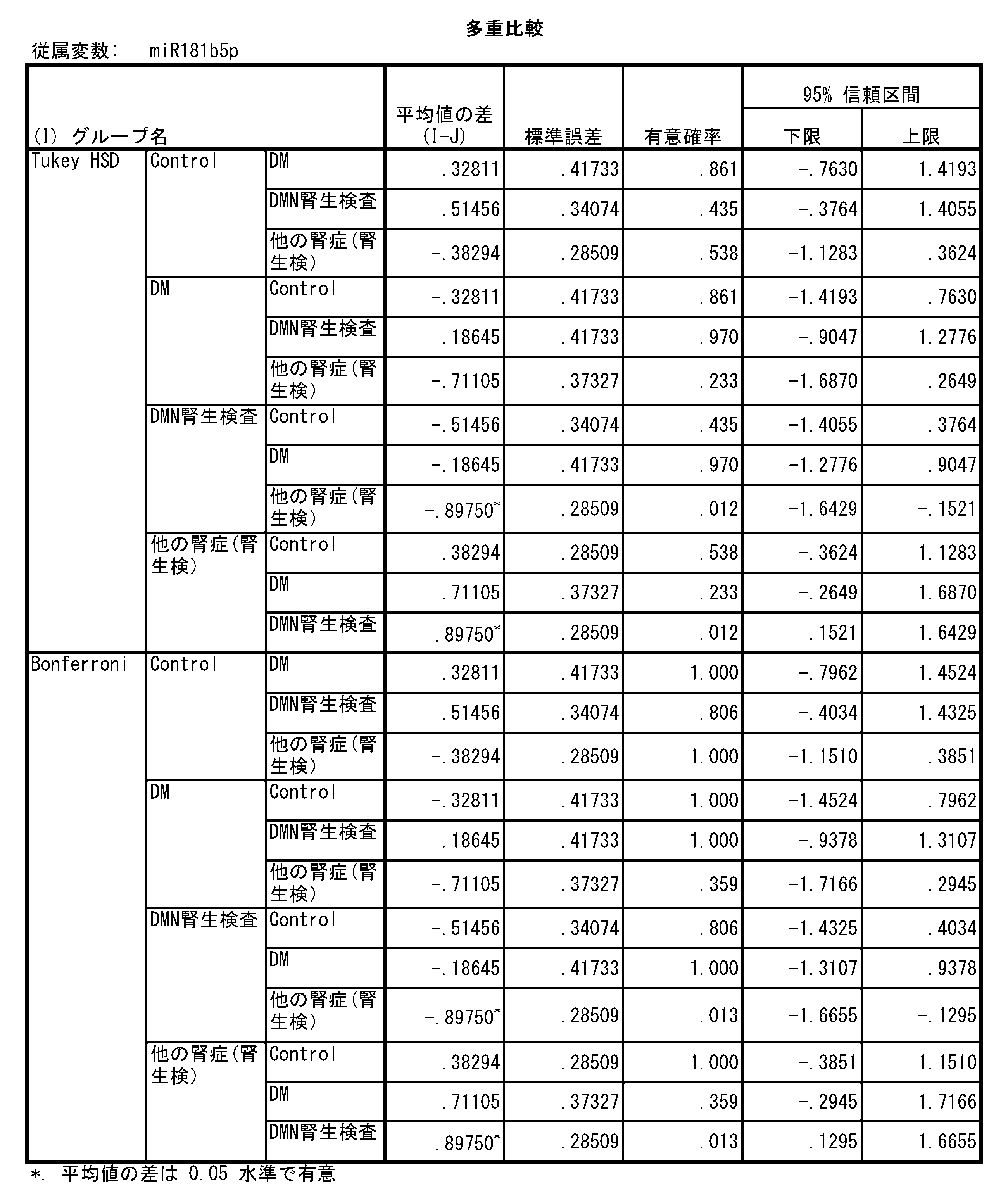
図8Bは、miRNA-181b-5pについてのROC曲線による精度評価(信用性)を示す。ここでは、糖尿病性腎臓病20例と、それ以外の80例(健常人20例、腎障害のない糖尿病10例、その他の腎疾患50例)にわけた合計100例での解析を行った。AUCは0.766となり、P<0.01で特異的なマーカーであった。
この曲線の下の領域積についての検定結果を、下記の表12に示す。
この曲線の下の領域積についての検定結果を、下記の表12に示す。
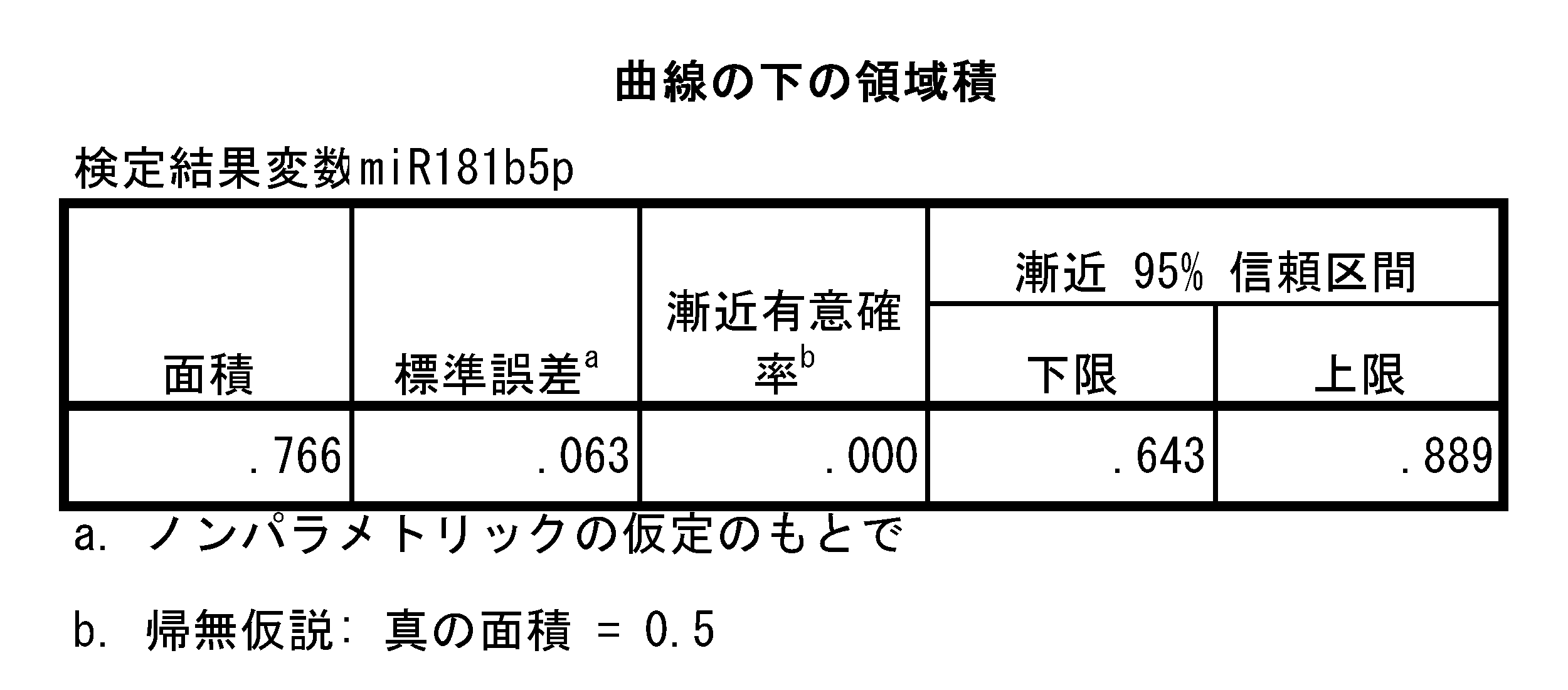
(miRNA-181b-5p及びmiRNA-181b-5pの組み合わせ)
次に、図9により、miRNA-181b-5p及びmiRNA-181b-5pを組み合わせて診断した結果について説明する。
図9(a)は、各個人でmiRNA-125b-5p及びmiRNA-181b-5pの2つのマイクロRNAの比を算出し、診断能力について解析した結果を示すグラフである。
具体的には、健常人(20例)、糖尿病患者(10例)、糖尿病性腎臓病患者(15例)、及び糖尿病性腎臓病以外の腎疾患患者(50例)について、
発現量の比 = miRNA-125b-5pの発現量/miRNA-181b-5pの発現量
を算出し、健常人を1として正規化することで、相対的な変化量を算出した。結果として、この相対的な変化量は、糖尿病性腎臓病患者で、P<0.01で統計的に有意に上昇した。
図9(b)は、上述の相対的な変化量についてのROC曲線による精度評価(信用性)を示すグラフである。AUCは0.853、P<0.01で特異的なマーカーであった。また、Cut off valueは1.8倍、感度は0.87、特異度は0.75となった。
このように、miRNA-125b-5pとmiRNA-181b-5pとの組み合わせ(miRNA-125b-5p/miRNA-181b-5p)により、更に糖尿病性腎臓病の診断能の感度と特異度を上昇させることができた。
このように、miRNA-125b-5pとmiRNA-181b-5pとの組み合わせ(miRNA-125b-5p/miRNA-181b-5p)により、更に糖尿病性腎臓病の診断能の感度と特異度を上昇させることができた。
〔糖尿病合併CKDの判別性能〕
次に、糖尿病合併CKDのうち、糖尿病性腎臓病(DKD)(13例)と、糖尿病を合併しているその他の腎障害(10例)とについて、miRNA-125b-5p及びmiRNA-181b-5pで鑑別可能であるかを調べた。いずれも腎生検で確定診断している症例について調べた。
図10に、この解析結果を示す。図10(a)はmiRNA-181b-5pの結果、図10(b)はmiRNA-125b-5pの結果を示す。
結果として、miRNA-181b-5pの発現量は、P<0.01で有意に低下していた。一方、miRNA-125b-5pの発現量については、5%有意にはならなかったものの、明らかに増加していた。
次に、糖尿病合併CKDのうち、糖尿病性腎臓病(DKD)(13例)と、糖尿病を合併しているその他の腎障害(10例)とについて、miRNA-125b-5p及びmiRNA-181b-5pで鑑別可能であるかを調べた。いずれも腎生検で確定診断している症例について調べた。
図10に、この解析結果を示す。図10(a)はmiRNA-181b-5pの結果、図10(b)はmiRNA-125b-5pの結果を示す。
結果として、miRNA-181b-5pの発現量は、P<0.01で有意に低下していた。一方、miRNA-125b-5pの発現量については、5%有意にはならなかったものの、明らかに増加していた。
上述のように、miRNA-181b-5p及びmiRNA-125b-5pは、いずれも、糖尿病性腎臓病(DKD)と糖尿病を合併しているその他の腎障害と判別可能であった。このように、臨床上で診断の難しい症状の判別が可能となり、有用性が高い。
なお、更に、miRNA-125b-5pとmiRNA-181b-5pの組み合わせ(miRNA-125b-5p/miRNA-181b-5p)の比(相対的な変化量)を求めることで、糖尿病性腎臓病(DKD)と、糖尿病を合併しているその他の腎障害とを、より顕著に鑑別(判別)可能であった。すなわち、さらに糖尿病性腎臓病の診断能の感度と特異度とが上昇した。
なお、更に、miRNA-125b-5pとmiRNA-181b-5pの組み合わせ(miRNA-125b-5p/miRNA-181b-5p)の比(相対的な変化量)を求めることで、糖尿病性腎臓病(DKD)と、糖尿病を合併しているその他の腎障害とを、より顕著に鑑別(判別)可能であった。すなわち、さらに糖尿病性腎臓病の診断能の感度と特異度とが上昇した。
〔ヒト血清でのファミリーRNAのバイオマーカー評価〕
miRNA-125b-5p及びmiRNA-181b-5pと相同性のあるファミリーRNAについて、上述の実施例1と同様にqRT-PCRで発現量が変化するか評価した。このうち、miRNA-125b-5pのファミリーRNAとして、miRNA-125a-3p、miRNA-125a-5p、及びmiRNA-125b-3pを用いた。
miRNA-125b-5p及びmiRNA-181b-5pと相同性のあるファミリーRNAについて、上述の実施例1と同様にqRT-PCRで発現量が変化するか評価した。このうち、miRNA-125b-5pのファミリーRNAとして、miRNA-125a-3p、miRNA-125a-5p、及びmiRNA-125b-3pを用いた。
プライマーは、以下のものを用いた:
ヒトmiRNA-125a-3p:
5’-ACAGGUGAGGUUCUUGGGAGCC-3’ (配列番号9)
ヒトmiRNA-125a-5p:
5’-UCCCUGAGACCCUUUAACCUGUGA-3’(配列番号10)
ヒトmiRNA-125b-1-3p:
5’-ACGGGUUAGGCUCUUGGGAGCU-3’ (配列番号11)
ヒトmiRNA-125a-3p:
5’-ACAGGUGAGGUUCUUGGGAGCC-3’ (配列番号9)
ヒトmiRNA-125a-5p:
5’-UCCCUGAGACCCUUUAACCUGUGA-3’(配列番号10)
ヒトmiRNA-125b-1-3p:
5’-ACGGGUUAGGCUCUUGGGAGCU-3’ (配列番号11)
miRNA-181b-5pのファミリーRNAとしては、miRNA-181a-3p、miRNA-181a-5p、miRNA-181b-3p、miRNA-181c-3p、miRNA-181c-5p、miRNA-181d-3p、及びmiRNA-181d-5pを用いた。
プライマーは、以下のものを用いた:
ヒトmiRNA-181a-3p:
5’-ACCAUCGACCGUUGAUUGUACC-3’ (配列番号12)
ヒトmiRNA-181a-5p:
5’-AACAUUCAACGCUGUCGGUGAGU-3’ (配列番号13)
ヒトmiRNA-181b-3p:
5’-CUCACUGAACAAUGAAUGCAA-3’ (配列番号14)
ヒトmiRNA-181c-3p:
5’-AACCAUCGACCGUUGAGUGGAC-3’ (配列番号15)
ヒトmiRNA-181c-5p:
5’-AACAUUCAACCUGUCGGUGAGU-3’ (配列番号16)
ヒトmiRNA-181d-3p:
5’-CCACCGGGGGAUGAAUGUCAC-3’ (配列番号17)
ヒトmiRNA-181d-5p:
5’-AACAUUCAUUGUUGUCGGUGGGU-3’ (配列番号18)
これらのうち、患者血清で発現があったファミリーRNAは、miRNA-125a-5p、miRNA-181c-3p、及びmiRNA-181d-5pの3種類のみであった。
図11A、図11B、図11Cに、これらのファミリーRNAの相対発現量の変化を示す。具体的には、図11AはmiRNA-125a-5p、図11BはmiRNA-181c-3p、図11CはmiRNA-181d-5pにおける健常人、糖尿病患者、糖尿病性腎臓病患者、他腎疾患患者についての発現量の差をそれぞれ調べた結果である。いずれも、灰色の点線は、健常人を1と正規化した際の、糖尿病性腎臓病の相対発現量(fold)を示す。
結果として、いずれも糖尿病性腎臓病で特異的に変化する傾向は、認められなかった。すなわち、上述のmiRNA-181b-5p及びmiRNA-125b-5pのみが特異的に糖尿病性腎臓病特異的バイオマーカーとして効果的に利用可能であることが分かった。
〔マウスでの治療効果〕
次に、DDS(ドラッグデリバリーシステム)として、Polyethylenimine nanoparticle(PEI-NPs)を用いて、miRNAミミックをマウス腎臓へのデリバリーし、実際の糖尿病性腎臓病への治療効果について調べた。
次に、DDS(ドラッグデリバリーシステム)として、Polyethylenimine nanoparticle(PEI-NPs)を用いて、miRNAミミックをマウス腎臓へのデリバリーし、実際の糖尿病性腎臓病への治療効果について調べた。
(方法)
(マウス)
本実施例においては、上述の実施例1と同じII型糖尿病モデルマウスdb/db(C57BLKS/J Iar-+Leprdb/+Leprdb マウス(動物繁殖研究所より購入)を、糖尿病性腎臓病(DKD)のモデルマウスとして用いた。
(マウス)
本実施例においては、上述の実施例1と同じII型糖尿病モデルマウスdb/db(C57BLKS/J Iar-+Leprdb/+Leprdb マウス(動物繁殖研究所より購入)を、糖尿病性腎臓病(DKD)のモデルマウスとして用いた。
(miRNA-181b-5p-mimic-PEI-NPの調製)
DDSとして、Linear polyethylenimine-based nanoparticle(in vivo-jetPEI(TM)、以下「PEI-NP」という。)は、Polyplust transfection SA, Illkirch-Graffenstaden、France)から購入した。miRNA-181b-5pミミック(ジーンデザイン社製)を蒸留水に溶解し100μMとした。このmiRNAミミック及びPEI-NPを混合し、室温で15分間インキュベートし、miRNA-181b-5pミミック-PEI-NPとして調整した(以下、図面では「miRNA-181b-5p-mimic」と記載する。)。同じ方法を用いて、miRNA-125b-5pミミック-PEI-NP(以下、図面では「miRNA-125b-5p-mimic」と記載する。)、及びmiRNAコントロール-PEI-NP(以下、図面では「miRNA-control」と記載する。)を調製した。miRNA-125b-5pミミック、miRNAコントロールは、いずれもジーンデザイン社製である。
DDSとして、Linear polyethylenimine-based nanoparticle(in vivo-jetPEI(TM)、以下「PEI-NP」という。)は、Polyplust transfection SA, Illkirch-Graffenstaden、France)から購入した。miRNA-181b-5pミミック(ジーンデザイン社製)を蒸留水に溶解し100μMとした。このmiRNAミミック及びPEI-NPを混合し、室温で15分間インキュベートし、miRNA-181b-5pミミック-PEI-NPとして調整した(以下、図面では「miRNA-181b-5p-mimic」と記載する。)。同じ方法を用いて、miRNA-125b-5pミミック-PEI-NP(以下、図面では「miRNA-125b-5p-mimic」と記載する。)、及びmiRNAコントロール-PEI-NP(以下、図面では「miRNA-control」と記載する。)を調製した。miRNA-125b-5pミミック、miRNAコントロールは、いずれもジーンデザイン社製である。
これらのミミック及びコントロールの配列は以下の通りである:
マウスmiRNA-181b-5pミミック:
5’-AACAUUCAUUGCUGUCGGUGGGUU-3’(配列番号19)
マウスmiRNA-125b-5pミミック:
5’-UCCCUGAGACCCUAACUUGUGA-3’ (配列番号20)
miRNAコントロール:
5’-GGUUCGUACGUACACUGUUCA-3’ (配列番号21)
マウスmiRNA-181b-5pミミック:
5’-AACAUUCAUUGCUGUCGGUGGGUU-3’(配列番号19)
マウスmiRNA-125b-5pミミック:
5’-UCCCUGAGACCCUAACUUGUGA-3’ (配列番号20)
miRNAコントロール:
5’-GGUUCGUACGUACACUGUUCA-3’ (配列番号21)
(投与プロトコル)
図12によると、ミミックの添付プロトコルに従って、各db/dbマウスに、合計200μLのmiRNA-181b-5pミミック-PEI-NP(miRNA:50μg、N/P比=6)を尾静脈から静脈注射して投与した。コントロールとして、db/dbマウスに水(Mock)だけ投与(以下、図面では「db/db」と記載する。)、正常マウスにmiRNA-181b-5pミミック-PEI-NPを投与したもの(以下、図面では「m+/m+」と記載する。)も用意した。期間、回数としては、10週齢から週1回、合計10回投与し、20週齢で解剖して比較した。
図12によると、ミミックの添付プロトコルに従って、各db/dbマウスに、合計200μLのmiRNA-181b-5pミミック-PEI-NP(miRNA:50μg、N/P比=6)を尾静脈から静脈注射して投与した。コントロールとして、db/dbマウスに水(Mock)だけ投与(以下、図面では「db/db」と記載する。)、正常マウスにmiRNA-181b-5pミミック-PEI-NPを投与したもの(以下、図面では「m+/m+」と記載する。)も用意した。期間、回数としては、10週齢から週1回、合計10回投与し、20週齢で解剖して比較した。
(蛋白尿の測定)
24時間尿を蓄尿し尿中アルブミンを免疫比濁法で測定(μg/L)し、同時に尿中クレアチニンを酵素法で測定(mg/L)し、UACR(尿アルブミン/クレアチニン比)(μg/mg Cr)を算出して、蛋白尿の評価とした。
24時間尿を蓄尿し尿中アルブミンを免疫比濁法で測定(μg/L)し、同時に尿中クレアチニンを酵素法で測定(mg/L)し、UACR(尿アルブミン/クレアチニン比)(μg/mg Cr)を算出して、蛋白尿の評価とした。
(メサンギウム拡張の評価)
マウスの腎臓を4%パラホルムアルデヒドで固定し、その後パラフィンに包埋した。PAS染色を使用して、AMDCCプロトコルに従ってメサンギウムインデックス(PAS染色の面積/糸球体の総面積)を決定し、メサンギウム拡張を評価した。マウスから各々10個の糸球体をランダムに選出し、その平均を計算した。個体数は各群3匹(n=3)ずつで、糸球体の総計は30個である。
マウスの腎臓を4%パラホルムアルデヒドで固定し、その後パラフィンに包埋した。PAS染色を使用して、AMDCCプロトコルに従ってメサンギウムインデックス(PAS染色の面積/糸球体の総面積)を決定し、メサンギウム拡張を評価した。マウスから各々10個の糸球体をランダムに選出し、その平均を計算した。個体数は各群3匹(n=3)ずつで、糸球体の総計は30個である。
(結果)
(ミミックの腎臓での発現量の確認)
図13により説明すると、まず、実施例1と同様のqRT-PCRで、Mock(水のみ投与)、miRNA-181b-5pミミックの投与、miRNAコントロール-PEI-NPの投与について発現量の変化を調べた。結果として、miRNA-181b-5pミミック-PEI-NPの投与により、miRNA-181b-5pの発現量増加(over expression)が1週間程度持続できることを確認した。
(ミミックの腎臓での発現量の確認)
図13により説明すると、まず、実施例1と同様のqRT-PCRで、Mock(水のみ投与)、miRNA-181b-5pミミックの投与、miRNAコントロール-PEI-NPの投与について発現量の変化を調べた。結果として、miRNA-181b-5pミミック-PEI-NPの投与により、miRNA-181b-5pの発現量増加(over expression)が1週間程度持続できることを確認した。
(糖尿病性腎臓病の治療効果評価)
図14に、miRNA-181b-5pミミック-PEI-NPを投与したマウスの蛋白尿の状態を測定した結果を示す。このグラフの横軸は、投与週(Weeks after treatment)、縦軸はUACR(μg/mg Cr)の値を示す。
結果として、miRNA-181b-5pミミック-PEI-NPの投与により、db/dbマウスにおいて、蛋白尿の増加が抑制された。
図14に、miRNA-181b-5pミミック-PEI-NPを投与したマウスの蛋白尿の状態を測定した結果を示す。このグラフの横軸は、投与週(Weeks after treatment)、縦軸はUACR(μg/mg Cr)の値を示す。
結果として、miRNA-181b-5pミミック-PEI-NPの投与により、db/dbマウスにおいて、蛋白尿の増加が抑制された。
(メサンギウム拡張の評価結果)
図15に、各マウスにおいて、腎臓のメサンギウム細胞の機能障害を示すメサンギウム拡張の評価を行った結果を示す。このグラフは、10週(Week 10)、20週(Week 20)における、各マウスのメサンギウムインデックス(mesangial expression (% of area))を示す。
結果として、20週では、db/dbマウスにmiRNA-181b-5pミミック-PEI-NPを投与したものは、db/dbマウスにmiRNAコントロール-PEI-NPを投与したものに比べて、p<0.05でメサンギウムインデックスが減少した。すなわち、メサンギウム細胞の増加を抑制した。
図16に、この20週の状態で固定した腎臓の状態を示す。db/dbマウスと、db/dbマウスにmiRNAコントロール-PEI-NPを投与したものは、メサンギウム細胞の増加が確認できる。これに対して、db/dbマウスにmiRNA-181b-5pミミック-PEI-NPを投与したものは、正常マウスに比べて、あまりメサンギウム細胞が増加していなかった。
(血液生化学検査及び組織病理)
上述の各マウス(n=3)の血液について、AST、ALT、γ-GTP、LDHの生化学検査を行った。
この結果を、下記の表13に示す。
上述の各マウス(n=3)の血液について、AST、ALT、γ-GTP、LDHの生化学検査を行った。
この結果を、下記の表13に示す。
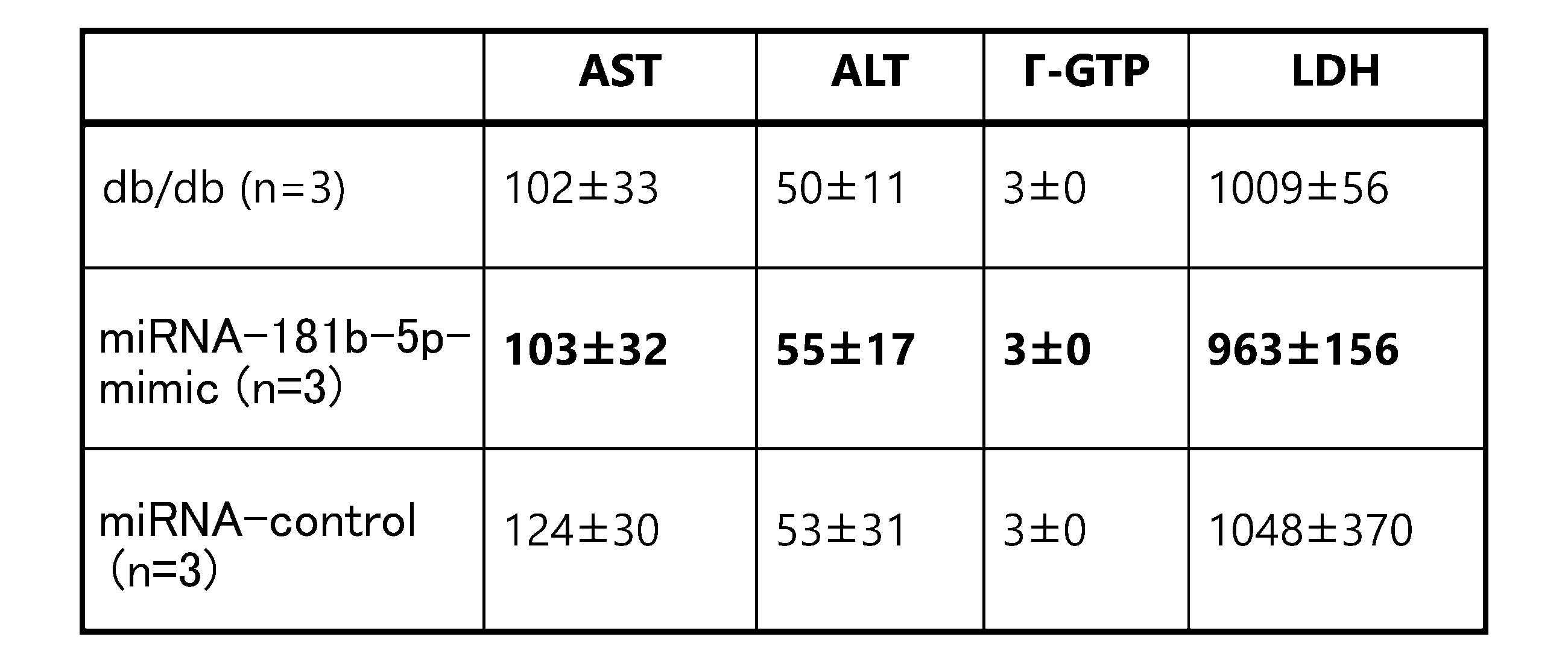
結果として、血清学的に肝機能に異常は認められなかった。
また、投与後の組織病理についても目視で確認した。結果として、肉眼的所見で肝、脾、肺、心には、異常は認められなかった。
また、投与後の組織病理についても目視で確認した。結果として、肉眼的所見で肝、脾、肺、心には、異常は認められなかった。
(まとめ)
結果として、miRNA-181b-5pの発現を増加させることで、糖尿病性腎臓病に特異的な治療薬として用いることが可能であることが分かった。すなわち、miRNA-181b-5pミミック-PEI-NPのような核酸医薬、これを模した低分子化合物等を新規の糖尿病性腎臓病用医薬として提供可能であることが裏付けられた。
結果として、miRNA-181b-5pの発現を増加させることで、糖尿病性腎臓病に特異的な治療薬として用いることが可能であることが分かった。すなわち、miRNA-181b-5pミミック-PEI-NPのような核酸医薬、これを模した低分子化合物等を新規の糖尿病性腎臓病用医薬として提供可能であることが裏付けられた。
〔マウスでの追加評価項目〕
(方法)
次に、上述の実施例1のAKITA/SLcマウス(AKITAマウス)、及び実施例1並びに実施例2のdb/dbマウスにおいて、高カロリー食を投与した群と、水のみ投与のコントロール(Mock)とについて、miRNA-181b-5p及びmiRNA-125b-5pの腎臓での発現量が変化するかどうか、20週の腎臓を取得し、上述と同様のqRT-PCRで調べた。
さらに、miRNAの発現量を経時的に観察して解析した。具体的には、AKITAマウス及びdb/dbマウスにおいて、5週(5w)、12週(12w)、28週(28w)の血清及び腎臓におけるmiRNA-125b-5p及びmiRNA-181b-5pの発現量の変化をqRT-PCRで調べた。
これに加え、老化腎障害(腎硬化症)モデルマウスであるSAMP1マウス(日本エスエルシー株式会社より購入)、腎繊維化モデルマウスであるUUOマウス、急性腎臓損傷(AKI)モデルマウスである虚血再灌流(IRI)マウス)でも同様に、腎臓で発現量が変化するかどうか調べた。
UUOマウスは、正常マウスの尿管を片側性に結紮する(UUO)ことで作成した。
IRIマウスは、C57/B6 mice(9週齢、雄)の右腎臓を摘出後、左腎動脈を45分間クランプして腎血流を遮断し、急性腎不全を誘導し、24時間後に解剖した。
UUOマウスは、正常マウスの尿管を片側性に結紮する(UUO)ことで作成した。
IRIマウスは、C57/B6 mice(9週齢、雄)の右腎臓を摘出後、左腎動脈を45分間クランプして腎血流を遮断し、急性腎不全を誘導し、24時間後に解剖した。
(結果)
図17に、AKITAマウス及びdb/dbマウスにおける腎臓での発現量の変化を示す。図17(a)は、AKITAマウスでのmiRNA-181b-5pの発現量、図17(b)はAKITAマウスでのmiRNA-125b-5pの発現量、図17(c)はdb/dbマウスでのmiRNA-181b-5pの発現量、図17(d)はdb/dbマウスでのmiRNA-125b-5pの発現量を、それぞれ示す。各グラフは、コントロール(Mock)群の発現量を1で正規化した、相対発現量を示す。
いずれも、高カロリー食を投与した群では、コントロール群に比べて、miRNA-181b-5p及びmiRNA-125b-5pの腎臓での発現量は低下していた。つまり、miRNA-125b-5pの発現量については、血清とは異なり、腎臓では低下していた。
図18に、糖尿病性腎臓病以外のモデルマウスでの発現量の変化を示す。図18(a)(b)にSAMP1マウス、図18(c)(d)にUUOマウス、図18(e)(f)にIRIマウスでのmiRNA-181b-5p及びmiRNA-125b-5pの発現量を調べた結果を、それぞれ示す。各グラフは、コントロール(SAMR、sham、Mock)を1として正規化し、相対発現量を調べたものである。
結果として、糖尿病性腎臓病以外のモデルマウスでは、いずれの発現量も変化していなかった。
これらの結果から、miRNA-125b-5p及びmiRNA-181b-5pは、糖尿病性腎臓病に特異的であると考えられる。
結果として、糖尿病性腎臓病以外のモデルマウスでは、いずれの発現量も変化していなかった。
これらの結果から、miRNA-125b-5p及びmiRNA-181b-5pは、糖尿病性腎臓病に特異的であると考えられる。
なお、上記実施の形態の構成及び動作は例であって、本発明の趣旨を逸脱しない範囲で適宜変更して実行することができることは言うまでもない。
本発明によれば、血液中に存在するmiRNAを糖尿病性腎臓病特異的バイオマーカーとして用いることで、糖尿病性腎臓病の早期診断と治療用の医薬の提供が期待でき、産業上利用可能である。
Claims (9)
- miRNA-125b-5p及び/又はmiRNA-181b-5pである
ことを特徴とする糖尿病性腎臓病特異的バイオマーカー。 - 請求項1に記載の糖尿病性腎臓病特異的バイオマーカーを用いる
ことを特徴とする糖尿病性腎臓病の診断方法。 - 前記miRNA-125b-5pの血清中での発現が上昇している場合及び/又は前記miRNA-181b-5pの発現が低下している場合、糖尿病性腎臓病と診断する
ことを特徴とする請求項2に記載の糖尿病性腎臓病の診断方法。 - 前記診断は、糖尿病性腎臓病(DKD)と、糖尿病を合併しているその他の腎障害との判別を含む
ことを特徴とする請求項1乃至3のいずれか1項に記載の糖尿病性腎臓病の診断方法。 - miRNA-125b-5p及び/又はmiRNA-181b-5pを測定する試薬を含む
ことを特徴とする糖尿病性腎臓病の検査用キット。 - ヒト以外の動物の治療方法であって、
miRNA-125b-5p、及び/又はmiRNA-181b-5pの機能活性を調整する
ことを特徴とする動物治療方法。 - miRNA-125b-5p、及び/又はmiRNA-181b-5pの機能活性調整剤を含む
ことを特徴とする糖尿病性腎臓病用医薬。 - 前記機能活性調整剤は、
前記miRNA-125b-5pの機能活性抑制剤、及び/又は前記miRNA-181b-5pの機能活性亢進剤を含む
ことを特徴とする請求項7に記載の糖尿病性腎臓病用医薬。 - 前記機能活性抑制剤は、前記miRNA-125b-5pに対応したmiRNAインヒビターであり、
前記機能活性亢進剤は、前記miRNA-181b-5pに対応したmiRNAミミックである
ことを特徴とする請求項7に記載の糖尿病性腎臓病用医薬。
Priority Applications (1)
| Application Number | Priority Date | Filing Date | Title |
|---|---|---|---|
| JP2020551094A JP7120663B2 (ja) | 2018-10-04 | 2019-10-04 | 糖尿病性腎臓病の診断することを補助する方法、糖尿病性腎臓病の検査用キット、動物治療方法、及び糖尿病性腎臓病用医薬 |
Applications Claiming Priority (2)
| Application Number | Priority Date | Filing Date | Title |
|---|---|---|---|
| JP2018-188745 | 2018-10-04 | ||
| JP2018188745 | 2018-10-04 |
Publications (1)
| Publication Number | Publication Date |
|---|---|
| WO2020071517A1 true WO2020071517A1 (ja) | 2020-04-09 |
Family
ID=70055259
Family Applications (1)
| Application Number | Title | Priority Date | Filing Date |
|---|---|---|---|
| PCT/JP2019/039226 Ceased WO2020071517A1 (ja) | 2018-10-04 | 2019-10-04 | 糖尿病性腎臓病特異的バイオマーカー、糖尿病性腎臓病の診断方法、糖尿病性腎臓病の検査用キット、動物治療方法、及び糖尿病性腎臓病用医薬 |
Country Status (2)
| Country | Link |
|---|---|
| JP (1) | JP7120663B2 (ja) |
| WO (1) | WO2020071517A1 (ja) |
Cited By (5)
| Publication number | Priority date | Publication date | Assignee | Title |
|---|---|---|---|---|
| CN115247215A (zh) * | 2020-10-28 | 2022-10-28 | 郑州大学第一附属医院 | 用于鉴别糖尿病肾病及膜性肾病的微生物基因标记物及其应用 |
| CN116004849A (zh) * | 2020-06-10 | 2023-04-25 | 石河子大学 | 一种用于母猪早期妊娠诊断的外泌体miRNA标志物及其应用 |
| KR20230076213A (ko) * | 2021-11-24 | 2023-05-31 | 순천향대학교 산학협력단 | 만성 신장병 환자에 대한 안지오텐신 시스템 억제제 치료 효과 예측 바이오마커 및 이의 용도 |
| JP2023547681A (ja) * | 2020-11-04 | 2023-11-13 | ベーリンガー インゲルハイム インターナショナル ゲゼルシャフト ミット ベシュレンクテル ハフツング | Ild、pf-ildおよびipf治療用ウイルスベクターおよび核酸 |
| WO2025091145A1 (zh) | 2023-10-30 | 2025-05-08 | 复旦大学 | 糖尿病肾病诊断药物及应用 |
Citations (1)
| Publication number | Priority date | Publication date | Assignee | Title |
|---|---|---|---|---|
| WO2017195268A1 (ja) * | 2016-05-10 | 2017-11-16 | 株式会社アイシーエレクトロニクス | miRNAをマーカーとする歯周炎検査キット、及び検査方法 |
-
2019
- 2019-10-04 WO PCT/JP2019/039226 patent/WO2020071517A1/ja not_active Ceased
- 2019-10-04 JP JP2020551094A patent/JP7120663B2/ja active Active
Patent Citations (1)
| Publication number | Priority date | Publication date | Assignee | Title |
|---|---|---|---|---|
| WO2017195268A1 (ja) * | 2016-05-10 | 2017-11-16 | 株式会社アイシーエレクトロニクス | miRNAをマーカーとする歯周炎検査キット、及び検査方法 |
Non-Patent Citations (5)
| Title |
|---|
| KIM, K. H. ET AL.: "Novel inhibitory function of miR-125b in melanogenesis", PIGMENT CELL MELANOMA RES., vol. 27, 2013, pages 140 - 144 * |
| LI, C. ET AL.: "Rs12976445 Polymorphism is Associated with Risk of Diabetic Nephropathy Through Modulating Expression of MicroRNA-125 and Interleukin-6R", MED. SCI. MONIT., vol. 21, 2015, pages 3490 - 3497, XP055699383 * |
| MORISHITA, YOSHIYUKI: "Non-official translation: Suppression of renal and peritoneal fibrosis by small RNA delivery", KIDNEY AND DIALYSIS, vol. 80, 2016, pages 415 - 422 * |
| WATANABE, NORIKO ET AL.: "Diabetic Nephropathy", JOURNAL OF KYOTO PREFECTURAL UNIVERSITY OF MEDICINE, vol. 126, 2017, pages 685 - 695 * |
| ZAIOU, M. ET AL.: "The clinical potential of adipogenesis and obesity-related microRNAs", NUTR. METAB. CARDIOVASC. DIS., vol. 28, 2017, pages 91 - 111, XP055699366 * |
Cited By (7)
| Publication number | Priority date | Publication date | Assignee | Title |
|---|---|---|---|---|
| CN116004849A (zh) * | 2020-06-10 | 2023-04-25 | 石河子大学 | 一种用于母猪早期妊娠诊断的外泌体miRNA标志物及其应用 |
| CN115247215A (zh) * | 2020-10-28 | 2022-10-28 | 郑州大学第一附属医院 | 用于鉴别糖尿病肾病及膜性肾病的微生物基因标记物及其应用 |
| JP2023547681A (ja) * | 2020-11-04 | 2023-11-13 | ベーリンガー インゲルハイム インターナショナル ゲゼルシャフト ミット ベシュレンクテル ハフツング | Ild、pf-ildおよびipf治療用ウイルスベクターおよび核酸 |
| JP7853297B2 (ja) | 2020-11-04 | 2026-04-28 | ベーリンガー インゲルハイム インターナショナル ゲゼルシャフト ミット ベシュレンクテル ハフツング | Ild、pf-ildおよびipf治療用ウイルスベクターおよび核酸 |
| KR20230076213A (ko) * | 2021-11-24 | 2023-05-31 | 순천향대학교 산학협력단 | 만성 신장병 환자에 대한 안지오텐신 시스템 억제제 치료 효과 예측 바이오마커 및 이의 용도 |
| KR102705563B1 (ko) * | 2021-11-24 | 2024-09-10 | 순천향대학교 산학협력단 | 만성 신장병 환자에 대한 안지오텐신 시스템 억제제 치료 효과 예측 바이오마커 및 이의 용도 |
| WO2025091145A1 (zh) | 2023-10-30 | 2025-05-08 | 复旦大学 | 糖尿病肾病诊断药物及应用 |
Also Published As
| Publication number | Publication date |
|---|---|
| JP7120663B2 (ja) | 2022-08-17 |
| JPWO2020071517A1 (ja) | 2021-12-02 |
Similar Documents
| Publication | Publication Date | Title |
|---|---|---|
| JP7120663B2 (ja) | 糖尿病性腎臓病の診断することを補助する方法、糖尿病性腎臓病の検査用キット、動物治療方法、及び糖尿病性腎臓病用医薬 | |
| Xiong et al. | ABCG2 is upregulated in Alzheimer's brain with cerebral amyloid angiopathy and may act as a gatekeeper at the blood–brain barrier for Aβ1–40 peptides | |
| EP2715366B1 (en) | Biomarkers for hedgehog inhibitor therapy | |
| JP2010524427A (ja) | 慢性移植片機能障害のためのバイオマーカー | |
| Nair et al. | GLIS1 regulates trabecular meshwork function and intraocular pressure and is associated with glaucoma in humans | |
| Zhang et al. | Glis2 is an early effector of polycystin signaling and a target for therapy in polycystic kidney disease | |
| Morishita et al. | MicroRNA expression profiling in peritoneal fibrosis | |
| US12157889B2 (en) | Methods to detect motor neuron disease comprising micro-RNAs | |
| Xu et al. | Microarray profiling analysis identifies the mechanism of miR‐200b‐3p/mRNA‐CD36 affecting diabetic cardiomyopathy via peroxisome proliferator activated receptor‐γ signaling pathway | |
| CN111518884B (zh) | miRNA30簇作为阿尔茨海默病诊断标志物的应用 | |
| Guo et al. | Differential expression of urinary exosomal miRNA in idiopathic membranous nephropathy and evaluation of its diagnostic value | |
| JP2025020109A (ja) | リンパ系疾患の診断および治療のための組成物および方法 | |
| CN117089611B (zh) | lncRNA-Gm13561作为新靶标在糖尿病肾病诊断和治疗中的应用 | |
| JP7166659B2 (ja) | 急性腎障害の検査方法、急性腎障害の検査用キット、動物治療方法、及び急性腎障害用医薬 | |
| US20200225249A1 (en) | Compositions and methods for the diagnosis and treatment of diseases of the liver | |
| CN112877437B (zh) | 一种lncRNA在诊断和治疗口腔鳞癌中的应用 | |
| CN116218987B (zh) | Zhx2/Tipe1在糖尿病中的应用 | |
| WO2010084668A1 (ja) | ネフローゼ症候群の検査方法、並びにネフローゼ症候群の予防又は治療薬およびそのスクリーニング方法 | |
| CN116497115A (zh) | LncRNA SNHG16作为初发2型糖尿病诊断标志物的应用 | |
| Pawnikar et al. | Allosteric Mechanism of PC1 Tethered Agonist-Mediated Signaling: PO1239 | |
| HK40064127A (en) | Compositions and methods for the diagnosis and treatment of lymphatic system disorders | |
| Hsiung et al. | Hyperglycemia does not affect tissue repair in mouse models of arterial lesions with different morphologies | |
| CN120585860A (zh) | 靶向药物、调控rage来治疗慢阻肺的评估方法及应用 | |
| Jansen et al. | Mild Phenotype in Tuberous Sclerosis Patients with Codon 905 Missense Mutations in the Tsc2 Gene | |
| HK1101426A1 (en) | Method for identifying a subject at risk of developing heart failure by determining the level of galectin-3 or thrombospondin-2 |
Legal Events
| Date | Code | Title | Description |
|---|---|---|---|
| 121 | Ep: the epo has been informed by wipo that ep was designated in this application |
Ref document number: 19869905 Country of ref document: EP Kind code of ref document: A1 |
|
| DPE2 | Request for preliminary examination filed before expiration of 19th month from priority date (pct application filed from 20040101) | ||
| ENP | Entry into the national phase |
Ref document number: 2020551094 Country of ref document: JP Kind code of ref document: A |
|
| NENP | Non-entry into the national phase |
Ref country code: DE |
|
| 122 | Ep: pct application non-entry in european phase |
Ref document number: 19869905 Country of ref document: EP Kind code of ref document: A1 |