WO2020051957A1 - 一种乙醇催化转化制备甲基苯甲醇的方法及所用催化剂 - Google Patents
一种乙醇催化转化制备甲基苯甲醇的方法及所用催化剂 Download PDFInfo
- Publication number
- WO2020051957A1 WO2020051957A1 PCT/CN2018/108268 CN2018108268W WO2020051957A1 WO 2020051957 A1 WO2020051957 A1 WO 2020051957A1 CN 2018108268 W CN2018108268 W CN 2018108268W WO 2020051957 A1 WO2020051957 A1 WO 2020051957A1
- Authority
- WO
- WIPO (PCT)
- Prior art keywords
- catalyst
- transition metal
- ethanol
- metal
- hours
- Prior art date
- Legal status (The legal status is an assumption and is not a legal conclusion. Google has not performed a legal analysis and makes no representation as to the accuracy of the status listed.)
- Ceased
Links
Images

Classifications
-
- B—PERFORMING OPERATIONS; TRANSPORTING
- B01—PHYSICAL OR CHEMICAL PROCESSES OR APPARATUS IN GENERAL
- B01J—CHEMICAL OR PHYSICAL PROCESSES, e.g. CATALYSIS OR COLLOID CHEMISTRY; THEIR RELEVANT APPARATUS
- B01J35/00—Catalysts, in general, characterised by their form or physical properties
- B01J35/19—Catalysts containing parts with different compositions
-
- C—CHEMISTRY; METALLURGY
- C07—ORGANIC CHEMISTRY
- C07C—ACYCLIC OR CARBOCYCLIC COMPOUNDS
- C07C29/00—Preparation of compounds having hydroxy or O-metal groups bound to a carbon atom not belonging to a six-membered aromatic ring
- C07C29/32—Preparation of compounds having hydroxy or O-metal groups bound to a carbon atom not belonging to a six-membered aromatic ring increasing the number of carbon atoms by reactions without formation of -OH groups
- C07C29/34—Preparation of compounds having hydroxy or O-metal groups bound to a carbon atom not belonging to a six-membered aromatic ring increasing the number of carbon atoms by reactions without formation of -OH groups by condensation involving hydroxy groups or the mineral ester groups derived therefrom, e.g. Guerbet reaction
-
- B—PERFORMING OPERATIONS; TRANSPORTING
- B01—PHYSICAL OR CHEMICAL PROCESSES OR APPARATUS IN GENERAL
- B01J—CHEMICAL OR PHYSICAL PROCESSES, e.g. CATALYSIS OR COLLOID CHEMISTRY; THEIR RELEVANT APPARATUS
- B01J21/00—Catalysts comprising the elements, oxides, or hydroxides of magnesium, boron, aluminium, carbon, silicon, titanium, zirconium, or hafnium
- B01J21/06—Silicon, titanium, zirconium or hafnium; Oxides or hydroxides thereof
- B01J21/066—Zirconium or hafnium; Oxides or hydroxides thereof
-
- B—PERFORMING OPERATIONS; TRANSPORTING
- B01—PHYSICAL OR CHEMICAL PROCESSES OR APPARATUS IN GENERAL
- B01J—CHEMICAL OR PHYSICAL PROCESSES, e.g. CATALYSIS OR COLLOID CHEMISTRY; THEIR RELEVANT APPARATUS
- B01J21/00—Catalysts comprising the elements, oxides, or hydroxides of magnesium, boron, aluminium, carbon, silicon, titanium, zirconium, or hafnium
- B01J21/06—Silicon, titanium, zirconium or hafnium; Oxides or hydroxides thereof
- B01J21/08—Silica
-
- B—PERFORMING OPERATIONS; TRANSPORTING
- B01—PHYSICAL OR CHEMICAL PROCESSES OR APPARATUS IN GENERAL
- B01J—CHEMICAL OR PHYSICAL PROCESSES, e.g. CATALYSIS OR COLLOID CHEMISTRY; THEIR RELEVANT APPARATUS
- B01J21/00—Catalysts comprising the elements, oxides, or hydroxides of magnesium, boron, aluminium, carbon, silicon, titanium, zirconium, or hafnium
- B01J21/10—Magnesium; Oxides or hydroxides thereof
-
- B—PERFORMING OPERATIONS; TRANSPORTING
- B01—PHYSICAL OR CHEMICAL PROCESSES OR APPARATUS IN GENERAL
- B01J—CHEMICAL OR PHYSICAL PROCESSES, e.g. CATALYSIS OR COLLOID CHEMISTRY; THEIR RELEVANT APPARATUS
- B01J21/00—Catalysts comprising the elements, oxides, or hydroxides of magnesium, boron, aluminium, carbon, silicon, titanium, zirconium, or hafnium
- B01J21/18—Carbon
-
- B—PERFORMING OPERATIONS; TRANSPORTING
- B01—PHYSICAL OR CHEMICAL PROCESSES OR APPARATUS IN GENERAL
- B01J—CHEMICAL OR PHYSICAL PROCESSES, e.g. CATALYSIS OR COLLOID CHEMISTRY; THEIR RELEVANT APPARATUS
- B01J23/00—Catalysts comprising metals or metal oxides or hydroxides, not provided for in group B01J21/00
- B01J23/06—Catalysts comprising metals or metal oxides or hydroxides, not provided for in group B01J21/00 of zinc, cadmium or mercury
-
- B—PERFORMING OPERATIONS; TRANSPORTING
- B01—PHYSICAL OR CHEMICAL PROCESSES OR APPARATUS IN GENERAL
- B01J—CHEMICAL OR PHYSICAL PROCESSES, e.g. CATALYSIS OR COLLOID CHEMISTRY; THEIR RELEVANT APPARATUS
- B01J23/00—Catalysts comprising metals or metal oxides or hydroxides, not provided for in group B01J21/00
- B01J23/70—Catalysts comprising metals or metal oxides or hydroxides, not provided for in group B01J21/00 of the iron group metals or copper
- B01J23/72—Copper
-
- B—PERFORMING OPERATIONS; TRANSPORTING
- B01—PHYSICAL OR CHEMICAL PROCESSES OR APPARATUS IN GENERAL
- B01J—CHEMICAL OR PHYSICAL PROCESSES, e.g. CATALYSIS OR COLLOID CHEMISTRY; THEIR RELEVANT APPARATUS
- B01J23/00—Catalysts comprising metals or metal oxides or hydroxides, not provided for in group B01J21/00
- B01J23/70—Catalysts comprising metals or metal oxides or hydroxides, not provided for in group B01J21/00 of the iron group metals or copper
- B01J23/74—Iron group metals
- B01J23/755—Nickel
-
- B—PERFORMING OPERATIONS; TRANSPORTING
- B01—PHYSICAL OR CHEMICAL PROCESSES OR APPARATUS IN GENERAL
- B01J—CHEMICAL OR PHYSICAL PROCESSES, e.g. CATALYSIS OR COLLOID CHEMISTRY; THEIR RELEVANT APPARATUS
- B01J23/00—Catalysts comprising metals or metal oxides or hydroxides, not provided for in group B01J21/00
- B01J23/70—Catalysts comprising metals or metal oxides or hydroxides, not provided for in group B01J21/00 of the iron group metals or copper
- B01J23/76—Catalysts comprising metals or metal oxides or hydroxides, not provided for in group B01J21/00 of the iron group metals or copper combined with metals, oxides or hydroxides provided for in groups B01J23/02 - B01J23/36
- B01J23/80—Catalysts comprising metals or metal oxides or hydroxides, not provided for in group B01J21/00 of the iron group metals or copper combined with metals, oxides or hydroxides provided for in groups B01J23/02 - B01J23/36 with zinc, cadmium or mercury
-
- B—PERFORMING OPERATIONS; TRANSPORTING
- B01—PHYSICAL OR CHEMICAL PROCESSES OR APPARATUS IN GENERAL
- B01J—CHEMICAL OR PHYSICAL PROCESSES, e.g. CATALYSIS OR COLLOID CHEMISTRY; THEIR RELEVANT APPARATUS
- B01J27/00—Catalysts comprising the elements or compounds of halogens, sulfur, selenium, tellurium, phosphorus or nitrogen; Catalysts comprising carbon compounds
- B01J27/14—Phosphorus; Compounds thereof
- B01J27/16—Phosphorus; Compounds thereof containing oxygen, i.e. acids, anhydrides and their derivates with N, S, B or halogens without carriers or on carriers based on C, Si, Al or Zr; also salts of Si, Al and Zr
- B01J27/18—Phosphorus; Compounds thereof containing oxygen, i.e. acids, anhydrides and their derivates with N, S, B or halogens without carriers or on carriers based on C, Si, Al or Zr; also salts of Si, Al and Zr with metals other than Al or Zr
-
- B—PERFORMING OPERATIONS; TRANSPORTING
- B01—PHYSICAL OR CHEMICAL PROCESSES OR APPARATUS IN GENERAL
- B01J—CHEMICAL OR PHYSICAL PROCESSES, e.g. CATALYSIS OR COLLOID CHEMISTRY; THEIR RELEVANT APPARATUS
- B01J27/00—Catalysts comprising the elements or compounds of halogens, sulfur, selenium, tellurium, phosphorus or nitrogen; Catalysts comprising carbon compounds
- B01J27/14—Phosphorus; Compounds thereof
- B01J27/16—Phosphorus; Compounds thereof containing oxygen, i.e. acids, anhydrides and their derivates with N, S, B or halogens without carriers or on carriers based on C, Si, Al or Zr; also salts of Si, Al and Zr
- B01J27/18—Phosphorus; Compounds thereof containing oxygen, i.e. acids, anhydrides and their derivates with N, S, B or halogens without carriers or on carriers based on C, Si, Al or Zr; also salts of Si, Al and Zr with metals other than Al or Zr
- B01J27/1802—Salts or mixtures of anhydrides with compounds of other metals than V, Nb, Ta, Cr, Mo, W, Mn, Tc, Re, e.g. phosphates, thiophosphates
-
- B—PERFORMING OPERATIONS; TRANSPORTING
- B01—PHYSICAL OR CHEMICAL PROCESSES OR APPARATUS IN GENERAL
- B01J—CHEMICAL OR PHYSICAL PROCESSES, e.g. CATALYSIS OR COLLOID CHEMISTRY; THEIR RELEVANT APPARATUS
- B01J27/00—Catalysts comprising the elements or compounds of halogens, sulfur, selenium, tellurium, phosphorus or nitrogen; Catalysts comprising carbon compounds
- B01J27/14—Phosphorus; Compounds thereof
- B01J27/16—Phosphorus; Compounds thereof containing oxygen, i.e. acids, anhydrides and their derivates with N, S, B or halogens without carriers or on carriers based on C, Si, Al or Zr; also salts of Si, Al and Zr
- B01J27/18—Phosphorus; Compounds thereof containing oxygen, i.e. acids, anhydrides and their derivates with N, S, B or halogens without carriers or on carriers based on C, Si, Al or Zr; also salts of Si, Al and Zr with metals other than Al or Zr
- B01J27/1802—Salts or mixtures of anhydrides with compounds of other metals than V, Nb, Ta, Cr, Mo, W, Mn, Tc, Re, e.g. phosphates, thiophosphates
- B01J27/1806—Salts or mixtures of anhydrides with compounds of other metals than V, Nb, Ta, Cr, Mo, W, Mn, Tc, Re, e.g. phosphates, thiophosphates with alkaline or alkaline earth metals
-
- B—PERFORMING OPERATIONS; TRANSPORTING
- B01—PHYSICAL OR CHEMICAL PROCESSES OR APPARATUS IN GENERAL
- B01J—CHEMICAL OR PHYSICAL PROCESSES, e.g. CATALYSIS OR COLLOID CHEMISTRY; THEIR RELEVANT APPARATUS
- B01J27/00—Catalysts comprising the elements or compounds of halogens, sulfur, selenium, tellurium, phosphorus or nitrogen; Catalysts comprising carbon compounds
- B01J27/14—Phosphorus; Compounds thereof
- B01J27/185—Phosphorus; Compounds thereof with iron group metals or platinum group metals
- B01J27/1853—Phosphorus; Compounds thereof with iron group metals or platinum group metals with iron, cobalt or nickel
-
- B—PERFORMING OPERATIONS; TRANSPORTING
- B01—PHYSICAL OR CHEMICAL PROCESSES OR APPARATUS IN GENERAL
- B01J—CHEMICAL OR PHYSICAL PROCESSES, e.g. CATALYSIS OR COLLOID CHEMISTRY; THEIR RELEVANT APPARATUS
- B01J35/00—Catalysts, in general, characterised by their form or physical properties
- B01J35/50—Catalysts, in general, characterised by their form or physical properties characterised by their shape or configuration
-
- B—PERFORMING OPERATIONS; TRANSPORTING
- B01—PHYSICAL OR CHEMICAL PROCESSES OR APPARATUS IN GENERAL
- B01J—CHEMICAL OR PHYSICAL PROCESSES, e.g. CATALYSIS OR COLLOID CHEMISTRY; THEIR RELEVANT APPARATUS
- B01J37/00—Processes, in general, for preparing catalysts; Processes, in general, for activation of catalysts
- B01J37/02—Impregnation, coating or precipitation
- B01J37/0201—Impregnation
-
- B—PERFORMING OPERATIONS; TRANSPORTING
- B01—PHYSICAL OR CHEMICAL PROCESSES OR APPARATUS IN GENERAL
- B01J—CHEMICAL OR PHYSICAL PROCESSES, e.g. CATALYSIS OR COLLOID CHEMISTRY; THEIR RELEVANT APPARATUS
- B01J37/00—Processes, in general, for preparing catalysts; Processes, in general, for activation of catalysts
- B01J37/02—Impregnation, coating or precipitation
- B01J37/0201—Impregnation
- B01J37/0207—Pretreatment of the support
-
- B—PERFORMING OPERATIONS; TRANSPORTING
- B01—PHYSICAL OR CHEMICAL PROCESSES OR APPARATUS IN GENERAL
- B01J—CHEMICAL OR PHYSICAL PROCESSES, e.g. CATALYSIS OR COLLOID CHEMISTRY; THEIR RELEVANT APPARATUS
- B01J37/00—Processes, in general, for preparing catalysts; Processes, in general, for activation of catalysts
- B01J37/02—Impregnation, coating or precipitation
- B01J37/0236—Drying, e.g. preparing a suspension, adding a soluble salt and drying
-
- B—PERFORMING OPERATIONS; TRANSPORTING
- B01—PHYSICAL OR CHEMICAL PROCESSES OR APPARATUS IN GENERAL
- B01J—CHEMICAL OR PHYSICAL PROCESSES, e.g. CATALYSIS OR COLLOID CHEMISTRY; THEIR RELEVANT APPARATUS
- B01J37/00—Processes, in general, for preparing catalysts; Processes, in general, for activation of catalysts
- B01J37/02—Impregnation, coating or precipitation
- B01J37/03—Precipitation; Co-precipitation
- B01J37/031—Precipitation
-
- B—PERFORMING OPERATIONS; TRANSPORTING
- B01—PHYSICAL OR CHEMICAL PROCESSES OR APPARATUS IN GENERAL
- B01J—CHEMICAL OR PHYSICAL PROCESSES, e.g. CATALYSIS OR COLLOID CHEMISTRY; THEIR RELEVANT APPARATUS
- B01J37/00—Processes, in general, for preparing catalysts; Processes, in general, for activation of catalysts
- B01J37/02—Impregnation, coating or precipitation
- B01J37/03—Precipitation; Co-precipitation
- B01J37/031—Precipitation
- B01J37/033—Using Hydrolysis
-
- B—PERFORMING OPERATIONS; TRANSPORTING
- B01—PHYSICAL OR CHEMICAL PROCESSES OR APPARATUS IN GENERAL
- B01J—CHEMICAL OR PHYSICAL PROCESSES, e.g. CATALYSIS OR COLLOID CHEMISTRY; THEIR RELEVANT APPARATUS
- B01J37/00—Processes, in general, for preparing catalysts; Processes, in general, for activation of catalysts
- B01J37/08—Heat treatment
- B01J37/082—Decomposition and pyrolysis
-
- B—PERFORMING OPERATIONS; TRANSPORTING
- B01—PHYSICAL OR CHEMICAL PROCESSES OR APPARATUS IN GENERAL
- B01J—CHEMICAL OR PHYSICAL PROCESSES, e.g. CATALYSIS OR COLLOID CHEMISTRY; THEIR RELEVANT APPARATUS
- B01J37/00—Processes, in general, for preparing catalysts; Processes, in general, for activation of catalysts
- B01J37/16—Reducing
- B01J37/18—Reducing with gases containing free hydrogen
-
- B—PERFORMING OPERATIONS; TRANSPORTING
- B01—PHYSICAL OR CHEMICAL PROCESSES OR APPARATUS IN GENERAL
- B01J—CHEMICAL OR PHYSICAL PROCESSES, e.g. CATALYSIS OR COLLOID CHEMISTRY; THEIR RELEVANT APPARATUS
- B01J8/00—Chemical or physical processes in general, conducted in the presence of fluids and solid particles; Apparatus for such processes
- B01J8/02—Chemical or physical processes in general, conducted in the presence of fluids and solid particles; Apparatus for such processes with stationary particles, e.g. in fixed beds
- B01J8/06—Chemical or physical processes in general, conducted in the presence of fluids and solid particles; Apparatus for such processes with stationary particles, e.g. in fixed beds in tube reactors; the solid particles being arranged in tubes
-
- C—CHEMISTRY; METALLURGY
- C07—ORGANIC CHEMISTRY
- C07C—ACYCLIC OR CARBOCYCLIC COMPOUNDS
- C07C29/00—Preparation of compounds having hydroxy or O-metal groups bound to a carbon atom not belonging to a six-membered aromatic ring
- C07C29/32—Preparation of compounds having hydroxy or O-metal groups bound to a carbon atom not belonging to a six-membered aromatic ring increasing the number of carbon atoms by reactions without formation of -OH groups
-
- C—CHEMISTRY; METALLURGY
- C07—ORGANIC CHEMISTRY
- C07C—ACYCLIC OR CARBOCYCLIC COMPOUNDS
- C07C29/00—Preparation of compounds having hydroxy or O-metal groups bound to a carbon atom not belonging to a six-membered aromatic ring
- C07C29/36—Preparation of compounds having hydroxy or O-metal groups bound to a carbon atom not belonging to a six-membered aromatic ring increasing the number of carbon atoms by reactions with formation of hydroxy groups, which may occur via intermediates being derivatives of hydroxy, e.g. O-metal
-
- B—PERFORMING OPERATIONS; TRANSPORTING
- B01—PHYSICAL OR CHEMICAL PROCESSES OR APPARATUS IN GENERAL
- B01J—CHEMICAL OR PHYSICAL PROCESSES, e.g. CATALYSIS OR COLLOID CHEMISTRY; THEIR RELEVANT APPARATUS
- B01J2208/00—Processes carried out in the presence of solid particles; Reactors therefor
- B01J2208/02—Processes carried out in the presence of solid particles; Reactors therefor with stationary particles
- B01J2208/023—Details
- B01J2208/024—Particulate material
- B01J2208/025—Two or more types of catalyst
-
- B—PERFORMING OPERATIONS; TRANSPORTING
- B01—PHYSICAL OR CHEMICAL PROCESSES OR APPARATUS IN GENERAL
- B01J—CHEMICAL OR PHYSICAL PROCESSES, e.g. CATALYSIS OR COLLOID CHEMISTRY; THEIR RELEVANT APPARATUS
- B01J2235/00—Indexing scheme associated with group B01J35/00, related to the analysis techniques used to determine the catalysts form or properties
- B01J2235/15—X-ray diffraction
Definitions
- the invention relates to a method for preparing methylbenzyl alcohol by catalytic conversion of ethanol and a used catalyst, and belongs to the technical field of chemical catalysis.
- Methyl benzyl alcohol has oxygen-containing functional groups and is an important organic chemical intermediate. It is mainly produced by the oxidation of xylene under high pressure (0.4-3.0 MPa). Xylene is produced by steam cracking or catalytic reforming of naphthol, a petroleum product. However, under severe oxidation conditions, the target product obtained is further deeply oxidized, resulting in a large number of acid and ester derivatives, resulting in a low selectivity of the target product ( ⁇ 40%) and difficulty in product separation. In addition, the refinery's shift to gasoline has caused a global shortage of aromatics feedstocks. Therefore, it is urgent to develop a route to directly synthesize methyl benzyl alcohol from other alternative resources.
- the purpose of the present invention is to develop a route for preparing methylbenzyl alcohol from sustainable ethanol, and provide a catalyst for the catalytic conversion route, with particular emphasis on a low reaction temperature and a double-layer catalyst reaction system.
- this reaction route Compared with the traditional petroleum-based route, this reaction route has the advantages of simple process, environmental friendliness, easy separation of products, etc. It is a disruptive methyl benzyl alcohol production route.
- the reaction temperature of this route is 150-450 ° C, and the total selectivity of methyl benzyl alcohol is as high as 72%, which is much higher than the currently reported catalyst level, and has good industrial application prospects.
- the innovation points of this patent include two aspects of innovation of catalytic synthesis and innovation of reaction path.
- a method for preparing methylbenzyl alcohol by catalytic conversion of ethanol the steps are as follows:
- step (1.2) impregnating the carrier with an equal volume of the aqueous transition metal salt solution and / or alcohol solution prepared in step (1.1) 1 to 3 times; after impregnation, it is allowed to stand at room temperature for 0.1 to 2 hours;
- step (1.3) The mixture after step (1.2) is allowed to stand in a 50 ° C oven for drying for 0.1 to 20 hours;
- step (1.4) The product dried in step (1.3) is dried at 100 to 150 ° C for 0.5 to 2 hours.
- the catalyst precursor is then treated in an inert, hydrogen atmosphere or directly in a hydrogen atmosphere in order to obtain a carrier-supported transition metal catalyst.
- Dehydrogenation catalyst recorded as transition metal / support;
- the transition metal is selected from one, or a combination of two or more of Cu, Ni, Co, Ag, Pd, Rh, Ru, Pt, Ir, Zn, and Y.
- the obtained catalyst precursor is treated in an inert atmosphere at 350 to 450 ° C for 1 to 5 hours, and then reduced in a hydrogen atmosphere at 350 to 600 ° C for 0.5 to 5 hours;
- the obtained catalyst precursor is directly reduced in a hydrogen atmosphere at 350 to 600 ° C. for 2 to 5 hours;
- step (2.3) The nitrate solution prepared in step (2.1) is added dropwise to step (2.2) and fully stirred; wherein the molar ratio of metal to phosphorus is 1.5 to 1.67;
- step (2.4) adjusting the pH of the turbid liquid obtained in step (2.3) to 8-12 with ammonia water, and then stirring at 50-80 ° C for 24h;
- step (2.5) The precipitate obtained in step (2.4) is dried at 25 to 200 ° C for 1 to 10 hours under a certain treatment atmosphere, and then heat treated at 350 to 700 ° C for 0.5 to 10 hours to obtain the metal hydroxyphosphate as an aromatic compound.
- Chemical catalyst
- the metals A, B, C, D, and E are the same or different, and are selected from one or two or more combinations of Mg, Ca, Sr, Ba, Pb, Cu, Ni, Co, Zn, Zr, and Hf;
- the precipitate obtained in step (2.4) is heat-treated at 350 to 550 ° C;
- step (3.2) filling the dehydrogenation catalyst and the aromatization catalyst formed in step (3.1) into a single fixed tube in sequence, and separating the two with quartz wool;
- step (3.3) The double-layer catalyst obtained in step (3.2) is reduced under a hydrogen atmosphere at 350 to 750 ° C for 1 to 5 hours.
- the transition metal salt solution is an aqueous solution and / or an alcohol solution; the concentration of the transition metal salt aqueous solution is 0.075 g / mL to 0.75 g / mL, and the concentration of the transition metal salt alcohol solution is 0.075 to 0.225 g / mL; the soluble salt of the transition metal is selected from one or a combination of two or more of chloride, nitrate, acetylacetonate, sulfate, and acetate; and the alcohol solvent is methanol and / or ethanol.
- the inert atmosphere is one or a combination of two or more of He, Ar, and N 2 .
- the processing atmosphere is one or a combination of two or more of H 2 , He, Ar, N 2 , and O 2 .
- the hydrogen reduction concentration is one of 5-20 vol% H 2 / N 2 , H 2 / He, and H 2 / Ar.
- a catalyst for the catalytic conversion of ethanol to prepare methyl benzyl alcohol includes two parts: a dehydrogenation catalyst and an aromatization catalyst; the two catalysts are packed in a reactor or in separate reactors; based on weight percent Contained components:
- Dehydrogenation catalyst which is a transition metal or its oxide; the transition metal is a single or multiple composite component; the chloride, nitrate, acetate, sulfate, or acetate of the transition metal is used as the precursor, through The metal or its oxide is obtained by calcination and reduction, or it is supported on the carrier, and the loading amount is 0.01 to 50% by weight of the carrier;
- the transition metal is selected from one, or a combination of two or more of Cu, Ni, Co, Ag, Pd, Rh, Ru, Pt, Ir, Zn, and Y;
- the metals A, B, C, D, and E are the same or different, and are selected from one or two or more combinations of Mg, Ca, Sr, Ba, Pb, Cu, Ni, Co, Zn, Zr, and Hf;
- the transition metal is preferably Cu, and a supported catalyst is used.
- the carrier is Al 2 O 3 , SiO 2 , ZrO 2 , ZnO, MgO, carbon, and carbon / oxide composite.
- a carbon support is preferred, and the supported amount of Cu is 0.01 to 50% by weight, and preferably 0.1 to 5% by weight.
- the aromatization catalyst is preferably Ca x Co y (OH) 2 (PO 4 ) 6 , Ca 10 (OH) 2 (PO 4 ) 6 , Sr 10 (OH) 2 (PO 4 ) 6 .
- the dehydrogenation catalyst and the aromatization catalyst can be a mechanically mixed single bed or double bed structure.
- the bed of dehydrogenation catalyst comes first.
- the present invention provides a path for directly producing methyl benzyl alcohol and corresponding catalyst starting from a wide range of ethanol.
- the selectivity of methyl benzyl alcohol is as high as 72%.
- This reaction route generates a large amount of hydrogen, which can be directly used in fuel cells.
- this route also produces high carbon chain (C 4-12 ) alcohols, which can be used as fuel or oil additives, partially replacing petroleum products, and reducing China's dependence on crude oil.
- the fatty alcohol and methyl benzyl alcohol are easy to be separated by rectification, and the later operation cost is low, so the reaction path provided by the present invention has great industrial application prospects.
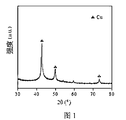
- Example 1 is an XRD pattern of a 10Cu / carbon catalyst of Example 1;
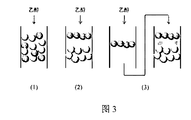
- FIG. 3 shows different catalyst mixing methods in Example 6
- FIG. 4 is a graph showing a specific product distribution at a reaction temperature of 225 ° C. in Example 8.
- Dehydrogenation catalysts are represented by wMetal / support, where:
- w Metal content as a percentage of total catalyst weight x 100.
- the aromatization catalyst phosphate is represented by HAP-M and PO-M, where:
- HAP represents a hydroxy metal phosphate
- PO represents a metal phosphate
- M refers to a metal, which is one or more of Mg, Ca, Sr, Ba, Pb, Cu, Ni, Co, Zn, Zr, Hf, and the like.
- step (4) The precursor obtained in step (4) is dried at 140 ° C. for 0.5 h, treated at 350 ° C. for 1 h, and then treated at 450 ° C. for 2 h to obtain a carbon-supported copper catalyst. (No. 1 in Table 1).
- step (4) The precursor obtained in step (4) was treated at 450 ° C for 2 h in a hydrogen atmosphere to obtain a SiO 2 -supported copper catalyst, which is denoted as 10Cu / SiO 2 (No. 2 in Table 1).
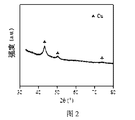
- the XRD pattern of the 10Cu / SiO 2 catalyst is shown in FIG. 2.
- Diammonium hydrogen phosphate is dissolved in water to prepare an aqueous solution with a molar fraction of 0.4M, wherein the molar ratio of Ca + Co to P is 1.67;
- step (3) Add the calcium nitrate and cobalt nitrate solutions prepared in step (1) dropwise (10 mL / min) to (2), and stir thoroughly for 60 min;
- step (4) The pink precipitate obtained in step (4) is dried at 50 ° C. for 10 h under a specific atmosphere, and then calcined at 550 ° C. for 2 h to obtain the Ca 8 Co 2 (OH) 2 (PO 4 ) 6 .
- the type and ratio of metal atoms can be adjusted by controlling the added nitrate, and the preparation method is the same as that in Example 3.
- the correspondence between sample numbers and preparation conditions is shown in Table 2.
- step (3) Add the phosphoric acid solution prepared in step (2) dropwise to (1) and stir thoroughly, control the amount of phosphoric acid added by the pH value of the suspension, and then vigorously stir for 3h;
- step (3) The white precipitate obtained in step (3) is dried at 25 to 200 ° C. for 2 h under a specific atmosphere, and then calcined at 600 ° C. for 2 h to obtain the Ca 2 Co (PO 4 ) 2 .
- the type and ratio of metal atoms can be adjusted by controlling the added nitrate, and the preparation method is the same as that in Example 4.
- the correspondence between sample numbers and preparation conditions is shown in Table 2.
- an ethanol upgrading reaction is carried out in a fixed-bed reactor.
- the reaction conditions are as follows: a fixed-bed reactor with an inner diameter of 8 mm is packed with a catalyst, the pressure is normal pressure, the reaction temperature is 225 ° C, and the ethanol liquid flow rate is 0.3 mL / h. After the reaction is stable, the reaction materials and products are analyzed by online chromatography. The corresponding relationship between the sample number and ethanol upgrading activity is shown in Table 3.
- the ethanol upgrading reaction was carried out in a fixed-bed reactor.
- the dehydrogenation catalyst was 10Cu / carbon and the aromatization catalyst was HAP-8Ca2Co.
- Three catalyst mixing methods are used: single reactor single bed (1), single reactor double bed (2), and double reactor (3). After the reaction is stable, the reaction materials and products are analyzed by online chromatography. The reaction results are shown in Table 4.
- the catalyst mixing method is shown in Figure 3.
- the ethanol upgrading reaction was carried out in a fixed-bed reactor.
- the dehydrogenation catalyst was 10Cu / carbon and the aromatization catalyst was HAP-8Ca2Co.
- the ethanol upgrading reaction was carried out in a fixed-bed reactor.
- the dehydrogenation catalyst was 10Cu / carbon and the aromatization catalyst was HAP-8Ca2Co.
Landscapes
- Chemical & Material Sciences (AREA)
- Organic Chemistry (AREA)
- Chemical Kinetics & Catalysis (AREA)
- Engineering & Computer Science (AREA)
- Materials Engineering (AREA)
- Physics & Mathematics (AREA)
- Thermal Sciences (AREA)
- Catalysts (AREA)
- Organic Low-Molecular-Weight Compounds And Preparation Thereof (AREA)
Abstract
本发明提供了一种乙醇催化转化制备甲基苯甲醇的方法及所用催化剂,属于化工催化技术领域。本发明开发一条从绿色可持续的乙醇出发制备甲基苯甲醇的路线,并提供该催化转化路线所采用的催化剂。与传统的石油基路线相比,该反应路径具有过程简单、环境友好、产物易分离等优点,是具有颠覆性的甲基苯甲醇生产路线。该路线的反应温度为150-450℃,甲基苯甲醇的总选择性高达72%,具有良好的工业应用前景。本专利的创新为催化合成创新和反应路径的创新两个方面。
Description
本发明涉及一种乙醇催化转化制备甲基苯甲醇的方法及所用催化剂,属于化工催化技术领域。
甲基苯甲醇具有含氧功能化基团,是重要的有机化工中间体,主要由二甲苯在高压(0.4-3.0MPa)下氧化生成。二甲苯是通过石油产品萘酚的蒸汽裂解或催化重整生产。然而在苛刻的氧化条件下,所得目标产物进一步深度氧化,产生大量的酸和酯的衍生物,导致目标产物选择性低(~40%),产品分离困难。此外,炼油厂目标转向汽油使全球芳烃原料短缺。因此,亟需开发一条从其它可替代资源出发直接合成甲基苯甲醇的路线。
生物质发酵法以及由合成气制乙醇工业化开发使得乙醇的可用性显著增加。2015年,我国乙醇产量高达1500万吨。乙醇作为一种可用的低碳含氧平台分子,通过脱氢、碳-碳偶联、环化脱氢反应转化为乙醛、高碳醇(C
4-12)等含氧化学品。然而,由于乙醇链增长过程中存在复杂的竞争反应,目前报道的催化剂对于高碳数产物的选择性都较低,尤其是芳香含氧化学品。Resasco等人采用乙醛-乙醇混合物为反应物,在MgO和MgO改性的八面沸石上检测到仅少量的甲基苯甲醛生成[ChemSusChem 2016,9,736]。Flaherty等人采用乙醛-乙醇混合物共进料(乙醛/乙醇=1:3),在羟基磷灰石催化剂上检测到了有甲基苯甲醛和甲基苄醇生成,其选择性分别为30%和3%,乙醛转化率为55%[ACS Catal.2016,6,7278]。综上所述,由乙醇高效催化转化制备芳香含氧化合物极具挑战性。
因此,开发一条由乙醇直接催化转化制备甲基苯甲醇的路线既节能高效,又符合我国可持续发展的战略需求,可以替代或部分替代石油基路线,缓解我 国芳烃的缺口,保障我国社会经济发展安全。
发明内容
本发明的目的在于开发一条从可持续的乙醇出发制备甲基苯甲醇的路线,并提供该催化转化路线所采用的催化剂,特别强调低的反应温度和双床层催化剂反应体系。
其总反应式如下:

与传统的石油基路线相比,该反应路径具有过程简单、环境友好、产物易分离等优点,是具有颠覆性的甲基苯甲醇生产路线。该路线的反应温度为150-450℃,甲基苯甲醇的总选择性高达72%,远高于目前报道催化剂的水平,具有良好的工业应用前景。本专利的创新点包括催化合成创新和反应路径的创新两个方面。
本发明的技术方案:
一种乙醇催化转化制备甲基苯甲醇的方法,步骤如下:
(1)脱氢催化剂的制备
(1.1)配制过渡金属盐水溶液和/或醇溶液;
(1.2)以步骤(1.1)配制的过渡金属盐水溶液和/或醇溶液等体积浸渍载体1~3次;浸渍完后室温静置0.1~2h;
(1.3)将步骤(1.2)静置后的混合物于50℃烘箱放置干燥0.1~20h;
(1.4)将步骤(1.3)干燥后的产物于100~150℃干燥0.5~2h,催化剂前驱体再依次于惰性、氢气氛围处理或直接于氢气氛围处理,即得到载体负载的过渡金属催化剂即为脱氢催化剂,记为过渡金属/载体;
所述的过渡金属选自Cu、Ni、Co、Ag、Pd、Rh、Ru、Pt、Ir、Zn、Y中的一种或两种以上组合。
所述的载体为炭或炭/氧化物复合物时,所得催化剂前驱体于350~450℃惰性氛围下处理1~5h,随后在350~600℃经氢气氛围还原0.5-5h;
所述的载体为Al
2O
3、SiO
2、ZrO
2、ZnO、MgO时,所得催化剂前驱体于350~600℃直接经氢气气氛还原2~5h;
(2)芳构化催化剂的制备
(2.1)将金属A、B、C、D和E的硝酸盐加入到水中溶解,配制相应的水溶液;
(2.2)将磷酸氢二铵加入到水中溶解,配制相应的水溶液;
(2.3)将步骤(2.1)配制的硝酸盐溶液逐滴加入到步骤(2.2)中,并充分搅拌;其中,金属与磷的摩尔比为1.5~1.67;
(2.4)采用氨水调节步骤(2.3)所得浑浊液的pH值为8~12,然后在50~80℃搅拌24h;
(2.5)将步骤(2.4)所得的沉淀物在一定处理气氛下于25~200℃干燥1~10h,再于350~700℃热处理0.5~10h,即得到所述金属羟基磷酸盐即为芳构化催化剂;
所述的芳构化催化剂为金属羟基磷酸盐(A
xB
yC
zD
mE
n(OH)
2(PO
4)
6,x+y+z+m+n=9~10,9~10≥x,y,z,m,n≥0)和金属磷酸盐(A
xB
yC
zD
mE
n(PO
4)
2,x+y+z+m+n=3,3≥x,y,z,m,n≥0);
所述的金属A、B、C、D和E相同或不同,选自Mg、Ca、Sr、Ba、Pb、Cu、Ni、Co、Zn、Zr、Hf中的一种或两种以上组合;
当芳构化催化剂中包含过渡金属Cu、Ni、Co、Zn、Zr、Hf时,将步骤(2.4) 所得沉淀物于350~550℃热处理;
(3)催化剂装填方式
(3.1)将上述步骤制备的脱氢催化剂和芳构化催化剂分别压片、成型、过筛到指定颗粒大小;
(3.2)将步骤(3.1)中成型的脱氢催化剂和芳构化催化剂依次装填到单根固定管中,二者之间用石英棉隔开;
(3.3)将步骤(3.2)中所得的双床层催化剂在氢气氛围下于350~750℃还原1~5h。
(4)在反应温度150~450℃,反应压力1-50atm条件下,将乙醇通入载有上述催化剂的反应器中,生产甲基苯甲醇。
步骤(1.1)中,所述的过渡金属盐的溶液为水溶液和/或醇溶液;所述的过渡金属盐水溶液浓度为0.075g/mL~0.75g/mL,过渡金属盐醇溶液浓度为0.075~0.225g/mL;过渡金属的可溶性盐选自氯化物、硝酸盐、乙酰丙酮盐、硫酸盐、醋酸盐中的一种或两种以上组合;醇溶剂选择甲醇和/或乙醇。
步骤(1.4)中,惰性氛围是He、Ar、N
2中的一种或两种以上组合。
步骤(2.5)中,处理气氛是H
2、He、Ar、N
2、O
2中一种或两种以上组合。
步骤(1.4)和步骤(3.3)中,氢还原浓度为5~20vol%H
2/N
2、H
2/He、H
2/Ar中的一种。
一种乙醇催化转化制备甲基苯甲醇的催化剂,所述的催化剂包括脱氢催化剂和芳构化催化剂两部分;两个催化剂装填在一个反应器中或各自独立的反应器中;以重量百分比计所包含的组分:
(1)脱氢催化剂,为过渡金属或其氧化物;过渡金属是单一或多元复合组分;采用过渡金属的氯化物、硝酸盐、乙酸丙酮盐、硫酸盐或醋酸盐为前驱体, 通过焙烧和还原得到金属或其氧化物,或负载在载体上,担载量为载体重量的0.01~50wt%;
所述的过渡金属选自Cu、Ni、Co、Ag、Pd、Rh、Ru、Pt、Ir、Zn、Y中的一种或两种以上组合;
(2)芳构化催化剂为金属羟基磷酸盐和/或金属磷酸盐,金属羟基磷酸盐A
xB
yC
zD
mE
n(OH)
2(PO
4)
6,x+y+z+m+n=9~10,9~10≥x,y,z,m,n≥0;金属磷酸盐A
xB
yC
zD
mE
n(PO
4)
2,x+y+z+m+n=3,3≥x,y,z,m,n≥0;磷酸盐化合物任选一种或两种以上的机械混合物。
所述的金属A、B、C、D和E相同或不同,选自Mg、Ca、Sr、Ba、Pb、Cu、Ni、Co、Zn、Zr、Hf中的一种或两种以上组合;
所述的脱氢催化剂中,过渡金属优选Cu,采用负载型催化剂,载体为Al
2O
3、SiO
2、ZrO
2、ZnO、MgO、炭、炭/氧化物复合物。优选炭载体,Cu的担载量为炭载体的0.01~50wt%,优选为0.1~5wt%。
所述的芳构化催化剂优选Ca
xCo
y(OH)
2(PO
4)
6、Ca
10(OH)
2(PO
4)
6、Sr
10(OH)
2(PO
4)
6。
此外优选固定床、常压反应器。采用单个反应器时,脱氢催化剂和芳构化催化剂可以为机械混合的单床层或者双床层结构。采用多反应器时,脱氢催化剂床层在前。
与现有技术相比,本发明提供了从来源广泛的乙醇出发直接生产甲基苯甲醇的路径及相应催化剂,在225℃的反应温度下,甲基苯甲醇的选择性高达72%。该反应路线生成大量的氢气,可直接用于燃料电池中。此外该路线还生成了高碳链(C
4-12)醇,其可作为燃料或油品添加剂,部分替代石油产品,减少我国对原油的依赖。脂肪醇和甲基苯甲醇易于通过精馏分离,后期操作成本低, 所以本发明所提供的反应路径具有极大地工业化应用前景。
图1是实施例1的10Cu/炭催化剂的XRD图谱;
图2是实施例2的10Cu/SiO
2催化剂的XRD图谱;
图3是实施例6的不同的催化剂混料方式;
图4是实施例8的反应温度为225℃下具体的产物分布的图谱。
以下通过一些实施例对本发明做出详细表述,但本发明并不局限于这些实施例。
脱氢催化剂用wMetal/载体表示,其中:
w=Metal担载量占催化剂总重量的百分含量×100。
芳香化催化剂磷酸盐用HAP-M和PO-M表示,其中:
HAP表示羟基金属磷酸盐,PO表示金属磷酸盐,M指代金属,是Mg、Ca、Sr、Ba、Pb、Cu、Ni、Co、Zn、Zr、Hf等中的一种或几种。
实施例1
炭负载Cu催化剂的制备过程:
(1)取炭载体,在120℃烘箱中干燥2h,除去表面物理吸附水;
(2)配制质量浓度分别为0.75g/mL的Cu(NO
3)
2·3H
2O水溶液;
(3)在25℃下,取(2)中溶液等体积浸渍到炭上,静置0.1h;
(4)将步骤(3)静置后的混合物在50℃干燥0.5h,得到催化剂前驱体;
(5)将步骤(4)得到的前驱体在140℃干燥0.5h,于350℃惰性氛围处理1h,然后在450℃经氢气气氛处理2h,即得到炭负载的铜催化剂,记为10Cu/炭(表1中编号1)。
10Cu/炭催化剂的XRD图谱如图1所示。
表1实施例1的样品编号与制备条件的对应关系

实施例2
SiO
2负载Cu催化剂的制备过程:
(1)取SiO
2载体,在120℃烘箱中干燥2h,除去表面物理吸附水;
(2)配制质量浓度分别为0.75g/mL的Cu(NO
3)
2·3H
2O水溶液;
(3)在25℃下,取(2)中溶液等体积浸渍到SiO
2上,静置2h;
(4)将步骤(3)静置后的混合物在50℃干燥8h,得到催化剂前驱体;
(5)将步骤(4)得到的前驱体于450℃经氢气气氛处理2h,即得到SiO
2负载的铜催化剂,记为10Cu/SiO
2(表1中编号2)。
10Cu/SiO
2催化剂的XRD图谱如图2所示。
其他氧化物担载金属催化剂的制备条件过程与实施例2相同。样品编号与制备条件的对应关系如表1所示。
实施例3
金属羟基磷酸盐Ca
8Co
2(OH)
2(PO
4)
6的制备过程:
(1)将硝酸钙和硝酸钴加入水中溶解,配制成总摩尔分数为0.6M的水溶液;
(2)将磷酸氢二铵加入水中溶解,配制成摩尔分数为0.4M的水溶液,其中Ca+Co与P的摩尔比为1.67;
(3)将步骤(1)配制的硝酸钙和硝酸钴溶液逐滴(10mL/min)加入到(2)中,并充分搅拌60min;;
(4)在上述步骤(3)所得浑浊液中加入浓氨水(~25wt%),调节整个体系的pH值大于11,然后在80℃搅拌24h;
(5)将步骤(4)所得的粉色沉淀物在特定气氛下于50℃干燥10h,再于550℃焙烧2h,即得到所述Ca
8Co
2(OH)
2(PO
4)
6。
通过控制加入硝酸钙和硝酸钴的质量比值,可以调节Ca和Co的原子比例,其制备方法与实施例3相同。样品编号与制备条件的对应关系如表2所示。
通过控制所加入的硝酸盐,可以调节金属原子的种类和比例,其制备方法与实施例3相同。样品编号与制备条件的对应关系如表2所示。
表2实施例3的样品编号与制备条件的对应关系
| 编号 | 催化剂 | 金属盐 | 还原/处理温度/℃ |
| 1 | HAP-8Ca2Co | 硝酸钙和硝酸钴 | 550 |
| 2 | HAP-5Ca5Co | 硝酸钙和硝酸钴 | 550 |
| 3 | HAP-Ca | 硝酸钙 | 600 |
| 4 | HAP-Sr | 硝酸锶 | 600 |
| 5 | HAP-Mg | 硝酸镁 | 600 |
| 6 | HAP-Ba | 硝酸钡 | 600 |
| 7 | PO-2Ca1Co | 硝酸钙和硝酸钴 | 550 |
| 8 | PO-Ca | 硝酸钙 | 600 |
| 9 | PO-Mg | 硝酸镁 | 600 |
实施例4
金属磷酸盐Ca
2Co(PO
4)
2的制备过程:
(1)将氢氧化钙和氢氧化钴(Ca
2+/Co
2+=2:1,摩尔比)固体分散到水中,配制成相应的固体悬浮液,搅拌;
(2)配制10wt%H
3PO
4溶液;
(3)将步骤(2)配制的磷酸溶液逐滴加入到(1)中,并充分搅拌,通过悬浮物的pH值控制加入磷酸的量,然后剧烈搅拌3h;
(4)将步骤(3)所得的白色沉淀物在特定气氛下于25~200℃干燥2h,再于600℃焙烧2h,即得到所述Ca
2Co(PO
4)
2。
通过控制加入硝酸钙和硝酸钴的质量比值,可以调节Ca和Co的原子比例,其制备方法与实施例4相同。样品编号与制备条件的对应关系如表2所示。
通过控制所加入的硝酸盐,可以调节金属原子的种类和比例,其制备方法与实施例4相同。样品编号与制备条件的对应关系如表2所示。
实施例5
单反应器、双床层结构的脱氢和芳构化复合催化剂催化乙醇到甲基苯甲醇的活性
以乙醇为原料,在固定床反应器内开展乙醇提质反应。反应条件如下:在内径为8mm的固定床反应器内装填催化剂,常压,反应温度225℃,乙醇液相流量为0.3mL/h。反应稳定后,反应原料及产物利用在线色谱分析。样品编号与乙醇提质活性的对应关系如表3所示。
表3实施例5的样品编号与乙醇转化率和甲基苯甲醇选择性的对应关系
| 编号 | 催化剂 | 转化率/% | 选择性/% |
| 1 | 10Cu/炭//HAP-8Ca2Co | 16.1 | 72.5 |
| 2 | 10Cu/SiO 2//HAP-8Ca2Co | 15.5 | 73.1 |
| 3 | 10Cu/Al 2O 3//HAP-8Ca2Co | 19.0 | 40.5 |
| 4 | 10Cu/ZrO 2//HAP-8Ca2Co | 20.1 | 45.0 |
| 5 | 10Cu/ZnO//HAP-8Ca2Co | 16.5 | 72.1 |
| 6 | 10Cu/MgO//HAP-8Ca2Co | 16.2 | 71.2 |
| 7 | 10Cu/C/SiO 2//HAP-8Ca2Co | 17.6 | 70.1 |
| 8 | 5Cu/炭//HAP-8Ca2Co | 15.9 | 71.1 |
| 9 | 10Ni/炭//HAP-8Ca2Co | 15 | 65.6 |
| 10 | 10Cu/炭//HAP-5Ca5Co | 17.6 | 72.8 |
| 11 | 10Cu/炭//HAP-Ca | 15.5 | 60.1 |
| 12 | 10Cu/炭//HAP-Sr | 14.9 | 61.0 |
| 13 | 10Cu/炭//HAP-Mg | 17.1 | 59.5 |
| 14 | 10Cu/炭//HAP-Ba | 13.5 | 54.9 |
| 15 | 10Cu/炭//PO-2Ca1Co | 15.9 | 32.5 |
| 16 | 10Cu/炭//PO-Ca | 16.0 | 36.2 |
| 17 | 10Cu/炭//PO-Mg | 16.2 | 30.1 |
实施例6
脱氢和芳构化复合催化剂混合方式对甲基苯甲醇选择性影响
以乙醇为原料,在固定床反应器内开展乙醇提质反应,脱氢催化剂为10Cu/炭,芳构化催化剂为HAP-8Ca2Co。反应条件如下:常压,反应温度225℃,乙醇液相流量为0.3mL/h,WHSV=1.0h
-1。采用三种催化剂混料方式:单反应器单床层(1)、单反应器双床层(2)、双反应器(3)。反应稳定后,反应原料及产物利用在线色谱分析。反应结果如表4所示。
催化剂混料方式如图3所示。
表4实施例6的脱氢和芳构化复合催化剂混合方式调变甲基苯甲醇选择性
| 混料方式 | 转化率/% | 选择性/% |
| (1) | 14.5 | 25.1 |
| (2) | 16.1 | 72.5 |
| (3) | 17.5 | 71.8 |
实施例7
单反应器、双床层结构的脱氢和芳构化复合催化剂催化不同浓度乙醇转化的产物分布
以乙醇为原料,在固定床反应器内开展乙醇提质反应,脱氢催化剂为10Cu/炭,芳构化催化剂为HAP-8Ca2Co。反应条件如下:在内径为8mm的固定床反应器内装填催化剂,常压,反应温度225℃,乙醇液相流量为0.3mL/h,WHSV=1.0h
-1。反应稳定后,反应原料及产物利用在线色谱分析。反应结果如表5所示。
表5实施例7的乙醇浓度对甲基苯甲醇选择性的调变
| 流量(mL/h) | 转化率/% | 选择性/% |
| 0.05 | 34.8 | 50.1 |
| 0.1 | 27.5 | 58.9 |
| 0.15 | 21.0 | 62.3 |
| 0.2 | 18.6 | 67.1 |
| 0.27 | 16.1 | 72.5 |
| 0.32 | 13.4 | 72.1 |
| 2.7 | 2.2 | 28.9 |
实施例8
单反应器、双床层结构的脱氢和芳构化复合催化剂在不同温度下催化乙醇转化的产物分布
以乙醇为原料,在固定床反应器内开展乙醇提质反应,脱氢催化剂为10Cu/炭,芳构化催化剂为HAP-8Ca2Co。反应条件如下:在内径为8mm的固定床反 应器内装填催化剂,常压,反应温度100~450℃,乙醇液相流量为0.3mL/h,WHSV=1.0h
-1。反应稳定后,反应原料及产物利用在线色谱分析。反应结果如表6所示。
反应温度为225℃下的产物分布如图4所示。
表6实施例8的不同温度下催化乙醇转化的产物分布
| 温度 | 转化率/% | 选择性/% |
| 150 | 1.2 | 42.7 |
| 175 | 3.9 | 61.1 |
| 200 | 8.9 | 68.3 |
| 225 | 16.1 | 72.5 |
| 250 | 20.4 | 67.2 |
| 275 | 28.7 | 65.0 |
| 300 | 37.7 | 65.3 |
| 325 | 36.7 | 54.0 |
| 350 | 45.8 | 43.1 |
| 400 | 75.1 | 22.0 |
Claims (9)
- 一种乙醇催化转化制备甲基苯甲醇的方法,其特征在于,步骤如下:(1)制备脱氢催化剂(1.1)配制过渡金属盐水溶液和/或醇溶液;(1.2)以步骤(1.1)配制的过渡金属盐水溶液和/或醇溶液等体积浸渍载体1~3次;浸渍完后室温静置0.1~2h;(1.3)将步骤(1.2)静置后的混合物于50℃烘箱放置干燥0.1~20h;(1.4)将步骤(1.3)干燥后的产物于100~150℃干燥0.5~2h,催化剂前驱体再依次于惰性、氢气氛围处理或直接于氢气氛围处理,即得到载体负载的过渡金属催化剂即为脱氢催化剂,记为过渡金属/载体;所述的过渡金属选自Cu、Ni、Co、Ag、Pd、Rh、Ru、Pt、Ir、Zn、Y中的一种或两种以上组合;所述的载体为炭或炭/氧化物复合物时,所得催化剂前驱体于350~450℃惰性氛围下处理1~5h,随后在350~600℃经氢气氛围还原0.5-5h;所述的载体为Al 2O 3、SiO 2、ZrO 2、ZnO或MgO时,所得催化剂前驱体于350~600℃直接经氢气气氛还原2~5h;(2)制备芳构化催化剂(2.1)将金属A、B、C、D和E的硝酸盐加入到水中溶解,配制相应的水溶液;(2.2)将磷酸氢二铵加入到水中溶解,配制相应的水溶液;(2.3)将步骤(2.1)配制的硝酸盐溶液逐滴加入到步骤(2.2)中,并充分搅拌;其中,金属与磷的摩尔比为1.5~1.67;(2.4)采用氨水调节步骤(2.3)所得浑浊液的pH值为8~12,然后在50~80℃搅拌24h;(2.5)将步骤(2.4)所得的沉淀物在一定处理气氛下于25~200℃干燥1~10h,再于350~700℃热处理0.5~10h,即得到所述金属羟基磷酸盐即为芳构化催化剂;所述的芳构化催化剂为金属羟基磷酸盐(A xB yC zD mE n(OH) 2(PO 4) 6,x+y+z+m+n=9~10,9~10≥x,y,z,m,n≥0)和金属磷酸盐(A xB yC zD mE n(PO 4) 2,x+y+z+m+n=3,3≥x,y,z,m,n≥0);所述的金属A、B、C、D和E相同或不同,选自Mg、Ca、Sr、Ba、Pb、Cu、Ni、Co、Zn、Zr、Hf中的一种或两种以上组合;当芳构化催化剂中包含过渡金属Cu、Ni、Co、Zn、Zr、Hf时,将步骤(2.4)所得沉淀物于350~550℃热处理;(3)催化剂装填方式(3.1)将上述步骤制备的脱氢催化剂和芳构化催化剂分别压片、成型、过筛到指定颗粒大小;(3.2)将步骤(3.1)中成型的脱氢催化剂和芳构化催化剂依次装填到单根固定管中,二者之间用石英棉隔开;(3.3)将步骤(3.2)中所得的双床层催化剂在氢气氛围下于350~750℃还原1~5h;(4)在反应温度150~450℃,反应压力1-50atm条件下,将乙醇通入载有上述催化剂的反应器中,生产甲基苯甲醇。
- 根据权利要求1所述的方法,其特征在于,步骤(1.1)中,所述的过渡金属盐的溶液为水溶液和/或醇溶液;所述的过渡金属盐水溶液浓度为0.075g/mL~0.75g/mL,过渡金属盐醇溶液浓度为0.075~0.225g/mL;过渡金属的可溶性盐选自氯化物、硝酸盐、乙酰丙酮盐、硫酸盐、醋酸盐中的一种或两种以上 组合;醇溶剂选择甲醇和/或乙醇。
- 根据权利要求1或2所述的方法,其特征在于,步骤(1.4)中,惰性氛围是He、Ar、N 2中的一种或两种以上组合。
- 根据权利要求3所述的方法,其特征在于,步骤(2.5)中,处理气氛是H 2、He、Ar、N 2、O 2中一种或两种以上组合。
- 根据权利要求1、2或4所述的方法,其特征在于,步骤(1.4)和步骤(3.3)中,氢还原浓度为5~20vol%H 2/N 2、H 2/He、H 2/Ar中的一种。
- 根据权利要求3所述的方法,其特征在于,步骤(1.4)和步骤(3.3)中,氢还原浓度为5~20vol%H 2/N 2、H 2/He、H 2/Ar中的一种。
- 一种乙醇催化转化制备甲基苯甲醇的催化剂,其特征在于,所述的催化剂包括脱氢催化剂和芳构化催化剂两部分;两个催化剂装填在一个反应器中或各自独立的反应器中;以重量百分比计所包含的组分:(1)脱氢催化剂,为过渡金属或其氧化物;过渡金属是单一或多元复合组分;采用过渡金属的氯化物、硝酸盐、乙酸丙酮盐、硫酸盐或醋酸盐为前驱体,通过焙烧和还原得到金属或其氧化物,或负载在载体上,担载量为载体重量的0.01~50wt%;所述的过渡金属选自Cu、Ni、Co、Ag、Pd、Rh、Ru、Pt、Ir、Zn、Y中的一种或两种以上组合;(2)芳构化催化剂为金属羟基磷酸盐和/或金属磷酸盐,金属羟基磷酸盐A xB yC zD mE n(OH) 2(PO 4) 6,x+y+z+m+n=9~10,9~10≥x,y,z,m,n≥0;金属磷酸盐A xB yC zD mE n(PO 4) 2,x+y+z+m+n=3,3≥x,y,z,m,n≥0;磷酸盐化合物任选一种或两种以上的机械混合物。所述的金属A、B、C、D和E相同或不同,选自Mg、Ca、Sr、Ba、Pb、 Cu、Ni、Co、Zn、Zr、Hf中的一种或两种以上组合;
- 根据权利要求7所述的脱氢催化剂,其特征在于,所述的过渡金属优选Cu,采用负载型催化剂,载体为Al 2O 3、SiO 2、ZrO 2、ZnO、MgO、炭、炭/氧化物复合物。所述的载体优选炭,Cu担载量为炭载体的0.01~50wt%
- 根据权利要求7所述的芳构化催化剂,其特征在于,金属羟基磷酸盐优选Ca xCo y(OH) 2(PO 4) 6、Ca 10(OH) 2(PO 4) 6、Sr 10(OH) 2(PO 4) 6。
Priority Applications (1)
| Application Number | Priority Date | Filing Date | Title |
|---|---|---|---|
| US16/973,592 US11578023B2 (en) | 2018-09-10 | 2018-09-28 | Method and catalyst for producing methylbenzyl alcohol from ethanol by catalytic conversion |
Applications Claiming Priority (2)
| Application Number | Priority Date | Filing Date | Title |
|---|---|---|---|
| CN201811048385.3 | 2018-09-10 | ||
| CN201811048385.3A CN109111344B (zh) | 2018-09-10 | 2018-09-10 | 一种乙醇催化转化制备甲基苯甲醇的方法及所用催化剂 |
Publications (1)
| Publication Number | Publication Date |
|---|---|
| WO2020051957A1 true WO2020051957A1 (zh) | 2020-03-19 |
Family
ID=64858967
Family Applications (1)
| Application Number | Title | Priority Date | Filing Date |
|---|---|---|---|
| PCT/CN2018/108268 Ceased WO2020051957A1 (zh) | 2018-09-10 | 2018-09-28 | 一种乙醇催化转化制备甲基苯甲醇的方法及所用催化剂 |
Country Status (3)
| Country | Link |
|---|---|
| US (1) | US11578023B2 (zh) |
| CN (1) | CN109111344B (zh) |
| WO (1) | WO2020051957A1 (zh) |
Cited By (1)
| Publication number | Priority date | Publication date | Assignee | Title |
|---|---|---|---|---|
| CN116020491A (zh) * | 2021-10-26 | 2023-04-28 | 中国石油化工股份有限公司 | 一种用于酰胺脱水的固体酸催化剂及其制备方法和应用 |
Families Citing this family (8)
| Publication number | Priority date | Publication date | Assignee | Title |
|---|---|---|---|---|
| CN109111344B (zh) | 2018-09-10 | 2021-05-18 | 大连理工大学 | 一种乙醇催化转化制备甲基苯甲醇的方法及所用催化剂 |
| CN109908932B (zh) * | 2019-02-25 | 2020-05-05 | 苏斌 | 一种甲醇燃烧的催化相变介质球及其制备方法 |
| CN114605245B (zh) * | 2020-12-09 | 2023-07-07 | 中国科学院大连化学物理研究所 | 一种制备芳香醛的方法 |
| WO2023010391A1 (en) * | 2021-08-05 | 2023-02-09 | Solvay Sa | Production of benzoic acid from a biomass |
| WO2024130468A1 (en) * | 2022-12-19 | 2024-06-27 | Specialty Operations France | A method for producing benzyl alcohol and/or benzaldehyde from short-chain alcohols |
| WO2024184704A1 (en) * | 2023-03-08 | 2024-09-12 | King Abdullah University Of Science And Technology | Feedstock to aromatic hydrocarbons conversion via formaldehyde route in dual bed reactor |
| CN118218001B (zh) * | 2024-05-27 | 2024-09-27 | 上海复翼环保科技有限公司 | 一种用于CO2高选择性加氢制乙醇的PdCu负载型合金催化剂的制备方法 |
| CN119143578B (zh) * | 2024-08-26 | 2025-09-16 | 大连理工大学 | 一种间甲基苯甲醇的制备方法 |
Citations (2)
| Publication number | Priority date | Publication date | Assignee | Title |
|---|---|---|---|---|
| CN104039741A (zh) * | 2011-11-23 | 2014-09-10 | 维仁特公司 | 链烷醇脱氢来提高芳香族化合物的产率 |
| CN109111344A (zh) * | 2018-09-10 | 2019-01-01 | 大连理工大学 | 一种乙醇催化转化制备甲基苯甲醇的方法及所用催化剂 |
Family Cites Families (1)
| Publication number | Priority date | Publication date | Assignee | Title |
|---|---|---|---|---|
| CN107999100B (zh) * | 2018-01-10 | 2020-12-15 | 中国科学院上海高等研究院 | 一种轻质烷烃芳构化的催化剂及其制备方法和应用 |
-
2018
- 2018-09-10 CN CN201811048385.3A patent/CN109111344B/zh active Active
- 2018-09-28 US US16/973,592 patent/US11578023B2/en active Active
- 2018-09-28 WO PCT/CN2018/108268 patent/WO2020051957A1/zh not_active Ceased
Patent Citations (2)
| Publication number | Priority date | Publication date | Assignee | Title |
|---|---|---|---|---|
| CN104039741A (zh) * | 2011-11-23 | 2014-09-10 | 维仁特公司 | 链烷醇脱氢来提高芳香族化合物的产率 |
| CN109111344A (zh) * | 2018-09-10 | 2019-01-01 | 大连理工大学 | 一种乙醇催化转化制备甲基苯甲醇的方法及所用催化剂 |
Non-Patent Citations (1)
| Title |
|---|
| MOTEKI, T. ET AL.: "Self-Terminated Cascade Reactions that Produce Methylbenzaldehydes from Ethanol", CATALYSIS, vol. 6, no. 11, 28 September 2016 (2016-09-28), pages 7281, XP055694287, ISSN: 2155-5435 * |
Cited By (1)
| Publication number | Priority date | Publication date | Assignee | Title |
|---|---|---|---|---|
| CN116020491A (zh) * | 2021-10-26 | 2023-04-28 | 中国石油化工股份有限公司 | 一种用于酰胺脱水的固体酸催化剂及其制备方法和应用 |
Also Published As
| Publication number | Publication date |
|---|---|
| CN109111344B (zh) | 2021-05-18 |
| US11578023B2 (en) | 2023-02-14 |
| US20210246092A1 (en) | 2021-08-12 |
| CN109111344A (zh) | 2019-01-01 |
Similar Documents
| Publication | Publication Date | Title |
|---|---|---|
| WO2020051957A1 (zh) | 一种乙醇催化转化制备甲基苯甲醇的方法及所用催化剂 | |
| Liu et al. | Recent advances in the routes and catalysts for ethanol synthesis from syngas | |
| Zhou et al. | Enhanced catalytic transfer hydrogenation of biomass-based furfural into 2-methylfuran over multifunctional Cu–Re bimetallic catalysts | |
| CN109111345B (zh) | 一种乙醇催化转化制备甲基苯甲醇的方法 | |
| Gong et al. | In situ synthesis of highly dispersed Cu–Co bimetallic nanoparticles for tandem hydrogenation/rearrangement of bioderived furfural in aqueous-phase | |
| CN113443964B (zh) | 一种乙醇催化转化合成高级醇的方法 | |
| WO2020051955A1 (zh) | 一种低碳醇催化转化制备苄醇及同系物的方法及所用催化剂 | |
| Wu et al. | Carbon promoted ZrO2 catalysts for aqueous-phase ketonization of acetic acid | |
| CN108745333B (zh) | 一种多孔碳气凝胶催化剂及其制备方法与应用 | |
| Yu et al. | Recent applications of nickel and nickel-based bimetallic catalysts for hydrodeoxygenation of biomass-derived oxygenates to fuels | |
| CN108246322A (zh) | 一种CoNiP/SiO2催化剂及其制备方法与应用 | |
| Tabassum et al. | A review on synthesis and transformation of ethanol into olefins using various catalysts | |
| CN102139223A (zh) | 一种负载型双金属催化剂及其应用 | |
| Huang et al. | Research progress in Cu–ZrO 2 catalysts: a systematic review of their preparation, doping, and applications | |
| US11583833B2 (en) | Calcium salts-supported metal catalyst, method for preparing the same, and method for hydrodeoxygenation reaction of oxygenates using the same | |
| CN118237057B (zh) | 一种氧空位调控的负载型磷化镍基催化剂 | |
| KR101670515B1 (ko) | 케톤으로부터 파라핀 제조 방법 | |
| Zhao et al. | Metal organic frameworks derived catalysts for the upgrading of platform chemicals | |
| CN116459824B (zh) | 多金属负载的过渡金属氧化物催化剂及其制备方法和在生产可再生燃油中的应用 | |
| CN102268045A (zh) | 一类Rh-金属配位聚合物及其用于合成气制低碳醇催化剂的制备方法及应用 | |
| Zhao et al. | Regulating Surface Acidity/Basicity by Hybrid Acid/Base Carrier for Selective Hydrogenation Isobutyraldehyde | |
| Figueredo et al. | Production of pentyl valerate from γ-valerolactone, pentanol and H 2 using Pd and Rh-based bifunctional catalysts | |
| CN105642305A (zh) | 一种用于甲烷水蒸气重整制氢的催化剂制备方法 | |
| CN118616115B (zh) | 一种铁基催化剂及应用 | |
| CN121911413A (zh) | 一种复合金属氧化物催化剂及其制备方法和在催化生物质热解油脱酸增碳中的应用 |
Legal Events
| Date | Code | Title | Description |
|---|---|---|---|
| 121 | Ep: the epo has been informed by wipo that ep was designated in this application |
Ref document number: 18933220 Country of ref document: EP Kind code of ref document: A1 |
|
| NENP | Non-entry into the national phase |
Ref country code: DE |
|
| 122 | Ep: pct application non-entry in european phase |
Ref document number: 18933220 Country of ref document: EP Kind code of ref document: A1 |