WO2020037531A1 - 一种基于细胞水平筛选通过5-羟色氨酸相关途径实现抗抑郁功能的益生菌的方法 - Google Patents
一种基于细胞水平筛选通过5-羟色氨酸相关途径实现抗抑郁功能的益生菌的方法 Download PDFInfo
- Publication number
- WO2020037531A1 WO2020037531A1 PCT/CN2018/101684 CN2018101684W WO2020037531A1 WO 2020037531 A1 WO2020037531 A1 WO 2020037531A1 CN 2018101684 W CN2018101684 W CN 2018101684W WO 2020037531 A1 WO2020037531 A1 WO 2020037531A1
- Authority
- WO
- WIPO (PCT)
- Prior art keywords
- probiotics
- hydroxytryptophan
- screening
- cells
- related pathway
- Prior art date
- Legal status (The legal status is an assumption and is not a legal conclusion. Google has not performed a legal analysis and makes no representation as to the accuracy of the status listed.)
- Ceased
Links
Images


Classifications
-
- C—CHEMISTRY; METALLURGY
- C12—BIOCHEMISTRY; BEER; SPIRITS; WINE; VINEGAR; MICROBIOLOGY; ENZYMOLOGY; MUTATION OR GENETIC ENGINEERING
- C12N—MICROORGANISMS OR ENZYMES; COMPOSITIONS THEREOF; PROPAGATING, PRESERVING, OR MAINTAINING MICROORGANISMS; MUTATION OR GENETIC ENGINEERING; CULTURE MEDIA
- C12N1/00—Microorganisms; Compositions thereof; Processes of propagating, maintaining or preserving microorganisms or compositions thereof; Processes of preparing or isolating a composition containing a microorganism; Culture media therefor
- C12N1/20—Bacteria; Culture media therefor
- C12N1/205—Bacterial isolates
-
- C—CHEMISTRY; METALLURGY
- C12—BIOCHEMISTRY; BEER; SPIRITS; WINE; VINEGAR; MICROBIOLOGY; ENZYMOLOGY; MUTATION OR GENETIC ENGINEERING
- C12R—INDEXING SCHEME ASSOCIATED WITH SUBCLASSES C12C - C12Q, RELATING TO MICROORGANISMS
- C12R2001/00—Microorganisms ; Processes using microorganisms
- C12R2001/01—Bacteria or Actinomycetales ; using bacteria or Actinomycetales
Definitions
- the invention relates to the technical field of probiotic screening, and in particular to a method for screening a probiotic that achieves an antidepressant function through a 5-hydroxytryptophan-related pathway based on a cell level.
- Depression also known as depressive disorder, is characterized by significant and persistent depression. Currently, more than 350 million people worldwide suffer from depression. It is estimated that by 2030, depression will rank first in the global burden of disease. A large number of studies have shown that the occurrence of depression is related to the disorder of monoamine neurotransmitters in the brain, which is mainly manifested by the reduction of serotonin (5-HT) concentration in the cerebral synaptic cleft.
- the current treatments for depression are mainly focused on increasing 5-HT levels in the brain, such as selective first-line antidepressants-selective serotonin reuptake inhibitors (SSRI).
- 5-HT Tryptophan the precursor of 5-HT, also has certain antidepressant effects, but because of its short half-life in the human body, it cannot be used as a clinical drug.
- the current treatments for depression are focused on increasing 5-HT levels in the brain.
- Brain-gut axis is a new concept proposed in recent years. As a two-way communication system between intestinal bacteria and the brain, it mainly regulates brain functions and behaviors through neural, endocrine and immune pathways. Studies have shown that the intestinal flora of depressed patients will change, and animal experiments have found that the depressive symptoms of sterile mice can be reduced, which proves that the intestinal flora is related to the occurrence and development of depression. Regulation of intestinal flora through probiotics can be a new way to alleviate depression.
- the present invention provides the following technical solution: a method for screening probiotics that achieve antidepressant function through a 5-hydroxytryptophan-related pathway based on a cell level, including:
- Cell culture the cells are capable of expressing tryptophan hydroxylase 1 and secreting 5-hydroxytryptophan;
- the cells are treated with bovine serum albumin and fluoxetine, they are incubated with probiotics to screen probiotics with antidepressant function.
- the cells include rat islet tumor cells RIN14B.
- the cell culture As a preferred scheme of the method for screening probiotics that achieve antidepressant function through a 5-hydroxytryptophan-related pathway according to the present invention: the cell culture, wherein the cell culture medium includes RPMI1640 medium.
- the probiotics include Bifidobacterium, Lactobacillus, Streptomyces Coccus, Lactococcus, Leuconostoc, Propionibacterium, Pediococcus, Bacillus.
- the screen has antidepressant effects through a 5-hydroxytryptophan-related pathway probiotic function, including, cells were passaged 10 5 ⁇ 10 6 / mL were seeded in 24-well plates, the cells were washed with Hank's balanced salt solution containing 0.1% bovine serum albumin and 1-4 ⁇ mol / L fluoxetine, after Add HBSS suspension containing different probiotics, adjust the concentration of probiotics to 10 7 -10 9 cfu / mL, and incubate at 37 ° C for 20min, collect the suspension, centrifuge at 5000 ⁇ 6000g for 5 ⁇ 10min to remove the precipitate, and take the supernatant to wait Measurement.
- the screen has antidepressant effects through a 5-hydroxytryptophan-related pathway
- Functional probiotics include the detection of 5-hydroxytryptophan secreted by the cells and the mRNA level of tryptophan hydroxylase 1 in the cells after incubation with the probiotics.
- the secreted amount of 5-hydroxytryptophan in the cell is increased by 10 times.
- the above probiotic strains were used as effective strains for screening.
- the secreted amount of 5-hydroxytryptophan is a fluorescent high-performance liquid Chromatographic analysis.
- the tryptophan hydroxylase 1 mRNA is increased by more than 50% in probiotics.
- Bacterial strains as effective strains.
- the mRNA level of the tryptophan hydroxylase 1 is detected by qPCR .
- the present invention uses RIN14B cells as a screening model. After treatment with fluoxetine, adding probiotics for incubation, taking the cell supernatant to detect the content of 5-HTP, and lysing the cells to detect its tryptophan hydroxylation Tryptophan hydroxylase1 (TPH1) mRNA expression to determine whether probiotics can promote intestinal cells to produce 5-hydroxytryptophan (5-HTP), a neurotransmitter precursor, and thus exert antidepressant effects efficacy.
- TPH1 tryptophan hydroxylation Tryptophan hydroxylase1
- the experiment proves that the probiotics can stimulate the intestinal chromaffin cells to secrete 5-HTP continuously and slowly through colonization of the intestine, thereby providing precursor substances for the synthesis of 5-HT in the brain and achieving antidepressant effects.
- the present invention uses "simulated intestinal chromaffin cells" (that is, RIN14B cells) to detect 5-HTP secretion and TPH1 mRNA expression through probiotic stimulation to screen probiotics with antidepressant functions. The validity of the screening model was verified in animal experiments.
- the invention provides a method for quickly and efficiently screening anti-depressant probiotic strains based on the 5-HTP pathway.
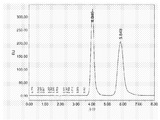
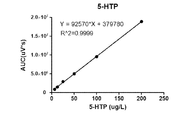
- Figure 1 shows the chromatographic retention time and standard curve of 5-HTP.
- A Chromatographic retention times of 5-HTP and 5-HT;
- B 5-HTP standard curve.
- Figure 2 is a schematic diagram of the content of 5-HTP secreted by RIN14B cells stimulated by probiotics; among them, * P ⁇ 0.05, ** P ⁇ 0.01, **** P ⁇ 0.0001 (vs. control group).
- Figure 3 is a schematic diagram of TPH1 mRNA levels in RIN14B cells after probiotic stimulation; where * P ⁇ 0.05, **** P ⁇ 0.0001 (vs. control group).
- Figure 4 is a schematic diagram of the behavioral changes of mice in each group after probiotics interfered with depression mice for six weeks.
- A forced swimming experiment
- B sugar water preference experiment
- C platform jumping experiment
- Figure 5 is a schematic diagram of the changes in 5-HT (A) and 5-HTP (B) levels in the hippocampus of mice in each group after probiotics interfered with depression for six weeks; * P ⁇ 0.05, ** P ⁇ 0.01 (vs model group).
- Figure 6 is a schematic diagram of the changes of BDNF levels in the prefrontal cortex of mice in each group after probiotics interfered with depression for six weeks; * P ⁇ 0.05, ** P ⁇ 0.01, *** P ⁇ 0.001 (vs model group) .
- FIG. 7 is a schematic diagram showing changes in ACTH and corticosterone levels in serum of mice after six weeks of intervention in depressed mice; * P ⁇ 0.05 (vs model group)
- Figure 8 is a schematic diagram of the correlation between the 5-HTP and TPH1 mRNA detection results of cells and animal experimental indicators; blue represents negative correlation and red represents positive correlation.
- Figure 9 is a schematic diagram of indicators with significant correlation between cell models and animal experiments.
- an embodiment or “an embodiment” referred to herein refers to a particular feature, structure, or characteristic that can be included in at least one implementation of the present invention.
- the appearances of "in one embodiment” in various places in this specification do not all refer to the same embodiment, nor are they separate or selectively mutually exclusive embodiments.
- Example 1 Using RIN14B cells to screen probiotics with the potential to achieve antidepressant through 5-hydroxytryptophan related pathways
- RIN14B (ATCC CRL-2059) cells belong to a rat islet tumor cell line.
- the medium is RPMI-1640 supplemented with 1% double antibody (100U / mL penicillin and 100 ⁇ g / mL streptomycin) and 10% fetal bovine serum (FBS). Complete medium (or DMEM medium).
- the cells were cultured in a closed incubator at 37 ° C and 5% CO 2 , and the culture medium was changed every 2-3 days according to the cell growth status.
- Cells were digested with 0.25% trypsin for passage and cryopreservation. The digestion time is 1-2min.
- the number of generations of cells used in this example is 10-20 generations.
- the strains used are shown in Table 1. After the strains were activated, they were inoculated in MRS liquid medium at 1% inoculation amount, cultured at 37 ° C for 20 hours, and centrifuged at 3000 rpm for 10 minutes to collect the bacterial cells. The collected bacterial cells were washed 3 times with Hank's balanced salt solution (HBSS) and resuspended in HBSS. In order to adjust the concentration of live bacteria to 2 ⁇ 10 8 CFU / mL.
- HBSS Hank's balanced salt solution
- RIN14B cells were seeded at a density of 4 ⁇ 10 5 / mL in a 24-well plate and incubated for 72 h. The medium was discarded, cells were washed with HBSS (1 mL) containing 0.1% bovine serum albumin (BSA) and 2 ⁇ M fluoxetine, and 1 mL of HBSS suspension containing different probiotics was added (the control group was HBSS without bacteria) Incubate at 37 ° C for 20min, collect the supernatant, centrifuge at 6000g for 5min to remove the precipitate, and freeze the supernatant at -80 ° C for measurement. HPLC-FLD detection of 5-HTP in cell supernatants:
- 5-HTP and 5-HT mixed standard solutions Take 5-HTP and 5-HT standards (Sigma-Aldrich, Chemicals, USA) and dissolve them in 2.5% perchloric acid solution to prepare 1-g / L 5-HTP Standard stock solution. Gradient dilution methods were used to prepare 200 ⁇ g / L, 100 ⁇ g / L, 50 ⁇ g / L, 25 ⁇ g / L, 12.5 ⁇ g / L, and 6.25 ⁇ g / L standard solutions, which were filtered through 0.22 ⁇ m filters and transferred to liquid phase vials. Machine determination.
- the retention time of the peak is used for qualitative analysis, and the peak area of the external standard method is used for quantification.
- the 5-HTP retention time is about 4.0min
- the 5-HT retention time is about 5.8min.
- the peak shape of the chromatogram is stable, the baseline is stable, and no other impurities interfere with the peak. The two have a good separation effect, can accurately characterize 5-HTP, and the detection time is short. The measurement can be completed in 8 minutes.
- a standard curve was plotted against the concentration using the peak area values detected by a series of standard solutions of 200 ⁇ g / L, 100 ⁇ g / L, 50 ⁇ g / L, 25 ⁇ g / L, 12.5 ⁇ g / L, and 6.25 ⁇ g / L (Figure 1B).
- the peak area of the sample to be measured is brought into the formula and then multiplied by the dilution factor to obtain the 5-HTP content in the sample.
- TPH1 tryptophan hydroxylase 1
- Extraction of cellular RNA Take the cells in step 3, after probiotic stimulation, wash the adherent cells in the wells three times with HBSS, add 1 mL of Trizol, and incubate on ice for 5-10 min. The lysate was transferred to an enzyme-free EP tube. After adding 200 ⁇ L of chloroform and shaking to make it fully emulsified, it was left at room temperature for 15 minutes, and then centrifuged at 4 ° C and 12000 g for 15 minutes. Pipette 300-400 ⁇ L of the supernatant and transfer it to a new enzyme-free EP tube. Add an equal volume of isopropanol, gently invert and mix.
- cDNA synthesis was performed according to the instructions of the reverse transcription kit (Prime Script RT reagent Kit gDNAEraser, Takara). The synthesized cDNA samples were tested for concentration and purity (A 260 / A 280 ) by ultra-micro spectrophotometer (NanoDrop 2000C), and stored at -80 ° C until use.
- TPH1 mRNA measurement The samples were mixed with the fluorescent dye SYBR Green super mix (Qiagen, Germany). The PCR system was 5 ⁇ L mix, 1 ⁇ L cDNA, 1 ⁇ L forward and reverse primers, and the total volume was made up to 10 ⁇ L with dd water. Detection was performed on a real-time fluorescence quantitative gene amplification instrument CFX96 TM Real-Time System (Bio-Rad, USA). Three parallel wells were set up for each sample, and the housekeeping gene ⁇ -Actin was used as an internal reference. The results were obtained using 2 - ⁇ Cq For analysis; the primer sequences used are shown in Table 2.
- FIG. 3 shows the TPH1 mRNA expression of RIN14B cells stimulated by different probiotics.
- the results showed that the probiotics Bi1 and BB4 can not only increase the secretion of 5-HTP, but also increase the mRNA level of TPH1 in RIN14B cells.
- the experimental results of TPH1 further narrowed the scope of effective bacteria.
- probiotics capable of significantly increasing both TPH1 mRNA expression and 5-HTP secretion of RIN14B cells were identified as strains with potential antidepressant functions, namely Bi1 and BB4. Next, animal experiments were performed for verification.
- Example 2 Animal experiment verification of effective strains for cell screening
- mice 78 6-week-old male C57BL / 6J mice were randomly divided into four groups based on body weight after one week of adaptation: control group, model group, fluoxetine intervention group, and probiotic intervention group (intragastrically as shown in Table 1) 10 strains of probiotics), each group contains 6 mice. Animal grouping and processing methods are shown in Table 2.
- Chronic unpredictable stress depression mouse model 1-2 stimuli are randomly used daily, and the timing of each stimulus is randomly determined to avoid circadian rhythm. Each method does not exceed three for five weeks. Stimulating factors include: (1) fasting for 24h; (2) water-free + empty bottle stimulation for 24h; (3) tail clamping for 3min; (4) wet litter for 24h; (5) braking for 1 to 2h; (6) 45 Tilt the cage for 24h at °C; (7) continuous light for 24h; (8) no litter for 24h; (9) forced swimming for 15 minutes; (10) orphanage for 24h.
- Probiotics gavage take activated second-generation probiotics and incubate at 37 ° C for 24h, centrifuge at 3 ° C, 8000r / min for 3min to collect the bacteria, discard the supernatant and resuspend the bacteria with 5% sterilized skim emulsion , So that the probiotic concentration reaches 5 ⁇ 10 9 CFU / mL.
- the gavage volume was 0.2 mL / piece / day.
- the forced swimming test is a behavioral despair experiment, and it is a classic experimental model for evaluating the antidepressant effect of drugs.
- the experimental bucket was filled with about 20 cm of clear water, and the water temperature was about 24 ⁇ 1 °.
- Each mouse was subjected to a 15-minute swimming training test 24 hours before the official experiment. For formal experiments, each mouse was tested for 6 minutes. Use the camera to record the entire experiment. Record the immobility (floating) time, that is, the limbs are not moving or only the hind limbs are slightly moving.
- the experimental results are shown in Figure 4A.
- the mice in the depression group significantly reduced their swimming time in the water, showing behavioral despair. And taking Bi1 and BB4 can significantly improve this phenomenon, demonstrating the antidepressant effect of Bi1 and BB4. It has been demonstrated in Example 1 that Bi1 and BB4 can increase the expression of TPH1 mRNA and 5-HTP secretion in RIN14B cells. The results of this animal experiment are consistent with the screening results of cell models.
- the sugar water preference test is a model for detecting a lack of pleasure in depression. Before starting the test, two identical drinking bottles were placed in the cage to allow the mice to adaptively drink water for at least 3 days. After acclimation, one of the bottles was replaced with an aqueous solution containing 1% sucrose. The water and sucrose solution intake was measured by weighing the bottle. Change the position of two bottles daily to reduce drinking preferences due to different amounts of water.
- the platform jump test can reflect the degree of memory of passive injury and the degree of anxiety of memory recurrence in mice.
- the first phase is the electric shock training phase. The mice were placed on the platform of the jumping platform reaction box, and the electric grid at the bottom of the reaction box was energized (38V). When the mice jumped off the platform, they received an electric shock. The training time is 3 minutes. If individual mice do not jump off the platform within 3 minutes, they will be artificially kicked off to ensure that all animals have been injured by electric shock, causing nociceptive memory. After training, return to the original cage.
- the second phase (24h after electric shock training) is the memory reproduction test phase. Put the mouse on the platform of the reaction box.
- the test time is 3 minutes. This test is not powered. Record the time from when the mouse jumps from the platform to the first jump (time spent on the platform), that is, the platform incubation period. The mouse has not jumped off the platform at 180s. Try to avoid human interference with animal behavior throughout the experiment.
- the experimental results show (Figure 4C) that the depression latency of depressed mice is significantly increased, representing an increase in depression and anxiety, while taking Bi1, Bi3, BB2, BB4 and BB5 can significantly reduce the latency of depression of depressed mice, indicating that these strains Can alleviate the symptoms of depression, and can improve the anxiety symptoms associated with depression.
- Bi1 and BB4 meet the results of cell model screening.
- mice in Example 2 were euthanized at the sixth weekend, the brain tissues of the mice were taken, and the hippocampus and prefrontal cortex were separated on ice. Take fresh seahorse and prefrontal cortex tissues of a certain quality (weight not less than 50mg), add 9 times the volume of sterile PBS buffer (equivalent to 1g tissue plus 9ml homogenate), and homogenize with a tissue homogenizer. After the tissue fluid was centrifuged at 3000g and 20min, the supernatant was collected, and the 5-HT and BDNF contents were detected by an ELISA kit.
- sterile PBS buffer equivalent to 1g tissue plus 9ml homogenate
- Example 2 The mice in Example 2 were sacrificed euthanized on the sixth weekend, and the blood of the mice was collected and centrifuged at 1000 g for 15 min to obtain serum.
- ELISA kit was used to detect the content of adreno-cortico-tropic-hormone (ACTH) and corticosterone in serum.
- the experimental results showed that (Figure 7), due to the persistent chronic stress, the hypothalamus-pituitary-adrenal axis (HPA) hyperfunction occurred, and serum ACTH and corticosterone levels (P ⁇ 0.05) increased.
- BB2 can significantly reduce the concentration of ACTH in serum, and taking Bi3, BB4 and LF2 can significantly reduce the level of corticosterone in serum. Among them, BB4 meets the expected results of cell experiments.
- the 5-HTP secretion of RIN14B cells was significantly positively correlated with the sugar and water preference of mice, the shortening of the platform incubation latency, and the level of BDNF in the brain.
- the expression of TPH1 mRNA in RIN14B cells was significantly positively correlated with the swimming time of mice and the level of BDNF in the brain (Figure 9).
- the above results show that the probiotics screened by the RIN14B cell model with the potential to achieve antidepressant through 5-hydroxytryptophan-related pathways can be validated in animal experiments, and the results of animal experiments and cell model screening The results are significantly correlated. Therefore, using RIN14B cells as a model and assays based on 5-HTP-related pathways (TPH1 and 5-HTP) can become a fast and effective screening method for antidepressant probiotics through 5-hydroxytryptophan-related pathways.
Landscapes
- Health & Medical Sciences (AREA)
- Life Sciences & Earth Sciences (AREA)
- Chemical & Material Sciences (AREA)
- Engineering & Computer Science (AREA)
- Bioinformatics & Cheminformatics (AREA)
- Genetics & Genomics (AREA)
- Organic Chemistry (AREA)
- Zoology (AREA)
- Biotechnology (AREA)
- Wood Science & Technology (AREA)
- Microbiology (AREA)
- Medicinal Chemistry (AREA)
- Biomedical Technology (AREA)
- Virology (AREA)
- Biochemistry (AREA)
- General Engineering & Computer Science (AREA)
- General Health & Medical Sciences (AREA)
- Tropical Medicine & Parasitology (AREA)
- Measuring Or Testing Involving Enzymes Or Micro-Organisms (AREA)
Abstract
一种基于细胞水平筛选通过5-羟色氨酸相关途径实现抗抑郁功能的益生菌的方法。利用RIN14B细胞作为筛选模型,通过益生菌与细胞共孵育,检测细胞上清中5-羟色氨酸的分泌量和细胞中的色氨酸羟化酶1的mRNA水平,以确定能够通过5-羟色氨酸发挥抗抑郁功效的益生菌。
Description
本发明涉及益生菌筛选技术领域,具体涉及一种基于细胞水平筛选通过5-羟色氨酸相关途径实现抗抑郁功能的益生菌的方法。
抑郁症又称抑郁障碍,以显著而持久的情绪低落为主要临床特征。目前全球有超过3.5亿人患有抑郁症,预计到2030年,抑郁症将在全球疾病负担中居第1位。大量研究表明,抑郁症的发生与脑中单胺类神经递质失调有关,主要表现为大脑神经突触间隙的5-羟色胺(5-HT)浓度降低。目前针对抑郁的治疗方式主要集中在提高脑中5-HT的水平,例如临床一线的抗抑郁药物——选择性5-羟色胺重摄取抑制剂(SSRI)。此外,服用5-HT的前体——5羟色氨酸(5-HTP)也具有一定的抗抑郁效果,但因其在人体内半衰期较短,不能用作临床药物。目前针对抑郁的治疗方式主要集中在提高脑中5-HT的水平上。
“脑肠轴”是近年来提出的一个新概念,作为肠内细菌与大脑间的双向通信系统,主要通过神经途径、内分泌途径和免疫途径来调节大脑的功能以及行为。研究表明,抑郁患者的肠道菌群会发生改变,而在动物实验中发现,无菌小鼠的抑郁症状能够减轻,这证明肠道菌群和抑郁的发生、发展存在联系。通过益生菌调节肠道菌群,可成为缓解抑郁症的一种新途径。
目前报道的对抑郁具有缓解作用的益生菌,均通过动物实验证明。然而采用动物作为抗抑郁益生菌的筛选模型,耗时长、成本高,且无法解释其发挥作用的具体机制。细胞模型具有耗时短、成本低、通量高等优点,但目前尚未有抗抑郁益生菌的细胞筛选模型。因此,开发一种基于细胞水平测定来筛选抗抑郁功能益生菌的方法,具有十分重要的科学和实践意义。
发明内容
本部分的目的在于概述本发明的实施例的一些方面以及简要介绍一些较佳实施例。在本部分以及本申请的说明书摘要和发明名称中可能会做些简化或省略以避免使本部分、说明书摘要和发明名称的目的模糊,而这种简化或省略不能用于限制本发明的范围。
为解决上述技术问题,本发明提供了如下技术方案:一种基于细胞水平筛 选通过5-羟色氨酸相关途径实现抗抑郁功能的益生菌的方法,其包括,
细胞培养:所述细胞能够表达色氨酸羟化酶1并分泌5-羟色氨酸;
所述细胞用牛血清白蛋白和氟西汀处理后与益生菌共孵育,筛选具有抗抑郁功能的益生菌。
作为本发明所述的基于细胞水平筛选通过5-羟色氨酸相关途径实现抗抑郁功能的益生菌的方法的一种优选方案:所述细胞包括大鼠胰岛瘤细胞RIN14B。
作为本发明所述的基于细胞水平筛选通过5-羟色氨酸相关途径实现抗抑郁功能的益生菌的方法的一种优选方案:所述细胞培养,其中,细胞培养基包括RPMI1640培养基。
作为本发明所述的基于细胞水平筛选通过5-羟色氨酸相关途径实现抗抑郁功能的益生菌的方法的一种优选方案:所述益生菌,包括双歧杆菌属、乳杆菌属、链球菌属、乳球菌属、明串珠菌属、丙酸杆菌属、片球菌属、芽孢杆菌属。
作为本发明所述的基于细胞水平筛选通过5-羟色氨酸相关途径实现抗抑郁功能的益生菌的方法的一种优选方案:所述筛选具有通过5-羟色氨酸相关途径实现抗抑郁功能的益生菌,包括,将传代细胞以10
5~10
6/mL接种于24孔板,用含有0.1%牛血清白蛋白和1-4μmol/L氟西汀的Hank's平衡盐溶液清洗细胞,后加入含有不同益生菌的HBSS悬液,益生菌的浓度调整到10
7-10
9cfu/mL,37℃孵育20min后,收集悬液,5000~6000g离心5~10min去除沉淀,取上清液待测。
作为本发明所述的基于细胞水平筛选通过5-羟色氨酸相关途径实现抗抑郁功能的益生菌的方法的一种优选方案:所述筛选具有通过5-羟色氨酸相关途径实现抗抑郁功能的益生菌,包括,与益生菌共同孵育后的所述细胞分泌的5-羟色氨酸和细胞中色氨酸羟化酶1的mRNA水平的检测。
作为本发明所述的基于细胞水平筛选通过5-羟色氨酸相关途径实现抗抑郁功能的益生菌的方法的一种优选方案:将所述细胞5-羟色氨酸的分泌量提高10倍以上的益生菌菌株作为筛选的有效菌株。
作为本发明所述的基于细胞水平筛选通过5-羟色氨酸相关途径实现抗抑郁功能的益生菌的方法的一种优选方案:所述5-羟色氨酸的分泌量采用荧光高效液相色谱进行检测分析。
作为本发明所述的基于细胞水平筛选通过5-羟色氨酸相关途径实现抗抑郁功能的益生菌的方法的一种优选方案:将色氨酸羟化酶1的mRNA提高50%以上的益生菌菌株作为有效菌株。
作为本发明所述的基于细胞水平筛选通过5-羟色氨酸相关途径实现抗抑郁功能的益生菌的方法的一种优选方案:所述色氨酸羟化酶1的mRNA水平用qPCR进行检测。
本发明有益效果:本发明采用RIN14B细胞作为筛选模型,在经过氟西汀处理之后,加入益生菌共孵育后,取细胞上清检测5-HTP的含量,并裂解细胞检测其色氨酸羟化酶1(Tryptophan hydroxylase 1,TPH1)mRNA的表达量,以确定益生菌能否促进肠道细胞产生神经递质前体5-羟色氨酸(5-hydroxytryptophan,5-HTP),进而发挥抗抑郁功效。
本发明采用实验证明:益生菌能够通过定植肠道,刺激肠道嗜铬细胞持续而缓慢的分泌5-HTP,进而为脑中5-HT的合成提供前体物质,实现抗抑郁效果。具体来说,本发明利用“模拟肠嗜铬细胞”(即RIN14B细胞),通过益生菌刺激,检测其5-HTP的分泌量和TPH1mRNA的表达量,以此筛选具有抗抑郁功能的益生菌,并在动物试验中验证了筛选模型的有效性。本发明提供了一种基于5-HTP途径快速、高效地筛选抗抑郁功能益生菌株的方法。
为了更清楚地说明本发明实施例的技术方案,下面将对实施例描述中所需要使用的附图作简单地介绍,显而易见地,下面描述中的附图仅仅是本发明的一些实施例,对于本领域普通技术人员来讲,在不付出创造性劳动性的前提下,还可以根据这些附图获得其它的附图。其中:
图1为5-HTP的色谱保留时间和标准曲线示意图。(A)5-HTP和5-HT的色谱保留时间;(B)5-HTP标准曲线。
图2为益生菌刺激RIN14B细胞分泌5-HTP的含量示意图;其中*P<0.05,**P<0.01,****P<0.0001(vs对照组)。
图3为益生菌刺激后,RIN14B细胞中TPH1mRNA水平示意图;其中*P<0.05,****P<0.0001(vs对照组)。
图4为益生菌干预抑郁小鼠六周后,各组小鼠的行为学变化示意图。(A)强迫游泳实验;(B)糖水偏好实验;(C)跳台实验;其中*P<0.05,**P<0.01, ***P<0.0001(vs模型组)。
图5为益生菌干预抑郁小鼠六周后,各组小鼠的海马组织中5-HT(A)和5-HTP(B)的水平变化示意图;其中*P<0.05,**P<0.01(vs模型组)。
图6为益生菌干预抑郁小鼠六周后,各组小鼠前额叶皮质中BDNF的水平变化示意图;其中*P<0.05,**P<0.01,***P<0.001(vs模型组)。
图7为本菌株干预抑郁小鼠六周后,小鼠血清中ACTH和皮质酮水平变化示意图;其中*P<0.05(vs模型组)
图8为细胞5-HTP和TPH1mRNA检测结果与动物实验指标之间的相关性示意图;其中蓝色代表负相关,红色代表正相关。
图9为细胞模型和动物实验之间具有显著相关性的指标示意图。
为使本发明的上述目的、特征和优点能够更加明显易懂,下面结合具体实施例对本发明的具体实施方式做详细的说明。
在下面的描述中阐述了很多具体细节以便于充分理解本发明,但是本发明还可以采用其他不同于在此描述的其它方式来实施,本领域技术人员可以在不违背本发明内涵的情况下做类似推广,因此本发明不受下面公开的具体实施例的限制。
其次,此处所称的“一个实施例”或“实施例”是指可包含于本发明至少一个实现方式中的特定特征、结构或特性。在本说明书中不同地方出现的“在一个实施例中”并非均指同一个实施例,也不是单独的或选择性的与其他实施例互相排斥的实施例。
实施例1:利用RIN14B细胞筛选具有通过5-羟色氨酸相关途径实现抗抑郁潜力的益生菌
细胞培养:
RIN14B(ATCC CRL-2059)细胞属于大鼠胰岛瘤细胞系,培养基为添加1%双抗(100U/mL青霉素和100μg/mL链霉素)和10%胎牛血清(FBS)的RPMI-1640完全培养液(或DMEM培养液)。细胞在37℃、含有5%CO
2的密闭孵箱中培养,根据细胞生长状态每隔2-3d更换一次培养液。传代和冻存时,采用0.25%胰酶消化液消化细胞。消化时间为1-2min。本实施例中使用的细胞代数为10-20代。
益生菌培养:
所用菌株如表1所示。菌株活化后,以1%接种量接种于MRS液体培养基,37℃静置培养20h,3000rpm离心10min收集菌体,收集的菌体经Hank's平衡盐溶液(HBSS)洗涤3次,重悬于HBSS中,调整活菌浓度至2×10
8CFU/mL。
表1 菌株名称和编号

益生菌刺激RIN14细胞分泌5-HTP:
RIN14B细胞以4×10
5/mL的密度种在24孔板,孵育72h。弃去培养基,用含有0.1%牛血清白蛋白(BSA)和2μM氟西汀的HBSS(1mL)清洗细胞,加入1mL含有不同益生菌的HBSS悬液(对照组为不含菌体的HBSS),37℃孵育20min,收集上清,6000g离心5min去除沉淀,取上清液冷冻于-80℃待测。HPLC-FLD检测细胞上清中的5-HTP:
液相条件:在配备有荧光检测器(Waters 2695)的Waters 2695Alliance HPLC装置上进行5-HTP的检测分析。色谱柱为Inert Sustain C18(150mm×4.6mm,5um)。流动相A为乙酸盐缓冲液(0.1M NaAC和0.1mM EDTA-2Na,pH 5.1),流动相B为甲醇。流动相A:B=85:15(v/v),流速为1mL/min,柱温为25℃,荧光检测器激发波长为290nm,发射波长为330nm。进样量为20μL。
5-HTP和5-HT混合标准液的配制:取5-HTP、5-HT标准品(Sigma-Aldrich,Chemicals,USA)溶解于2.5%高氯酸溶液,配制成1g/L的5-HTP标准储存液。采用梯度稀释的方法,分别配制200μg/L、100μg/L、50μg/L、25μg/L、12.5μg/L 和6.25μg/L的标准液,经0.22μm滤膜过滤后转移至液相小瓶上机测定。
定性和定量:用出峰的保留时间来定性,采用外标法测峰面积来定量,如图1A所示,5-HTP保留时间在4.0min左右,5-HT的保留时间在5.8min左右,色谱峰型稳定,基线平稳,无其它杂质干扰峰出现,两者分离效果好,能够准确地定性5-HTP,且检测时间短,在8分钟内即可完成测定。以200μg/L、100μg/L、50μg/L、25μg/L、12.5μg/L和6.25μg/L的系列标准液检测的峰面积值对浓度作标准曲线(图1B)。待测样品峰面积带入公式再乘以稀释倍数,得到样品中5-HTP的含量。
不同菌株刺激RIN14B细胞后,上清中5-HTP含量如图2所示。Bi1、Bi3、BB1、BB2、BB4、BB5和LH1均能显著提高RIN14B细胞中5-HTP的分泌(图2)。5-HTP作为神经递质5-HT的前体,能够进入血液循环并穿过血脑屏障,参与脑组织中5-HT的合成。因此,能够刺激RIN14B细胞分泌5-HTP的菌株,具有潜在抗抑郁功能。
益生菌刺激RIN14B细胞色氨酸羟化酶1(TPH1)的基因表达:
细胞RNA的提取:取步骤3中的细胞,在经过益生菌刺激后,用HBSS洗涤孔板中的贴壁细胞三次,加入1mL Trizol,置于冰上孵育5-10min,吹打使细胞脱落,将裂解液转移至无酶EP管。加入200μL氯仿,震荡使充分乳化后,室温静置15min,然后4℃、12000g离心15min。吸取300-400μL上清转移至新的无酶EP管,加入等体积的异丙醇,轻轻颠倒混匀,室温静置10min,然后4℃、12000g离心10min。小心弃去上清,缓慢沿着管壁加入1mL 75%的冰乙醇,混匀后4℃、8000g离心10min。小心弃去上清,短暂离心后吸去残留液体,在超净台中干燥5min使乙醇挥发。最后,加入20μL DEPC水,50℃孵育10min使沉淀溶解。取1μL RNA样品经过超微量分光光度计(NanoDrop 2000C)检测其浓度和纯度(A
260/A
280),其余样品-80℃保存待用。
细胞cDNA的合成:根据反转录试剂盒的说明进行cDNA的合成(Prime Script RT reagent Kit gDNAEraser,Takara)。合成的cDNA样品经过超微量分光光度计(NanoDrop 2000C)检测其浓度和纯度(A
260/A
280),-80℃保存待用。
TPH1的mRNA测定:用荧光染料SYBR Green super mix(Qiagen,Germany)混合样本,PCR体系为5μL mix、1μL cDNA、1μL正向和反向引物,用dd水补至总体积为10μL。在实时荧光定量基因扩增仪器CFX96
TMReal-Time System (Bio-Rad,USA)上进行检测,每个样本设立3个平行孔,并以管家基因β-Actin为内参,所得结果用2
-ΔΔCq的方法进行分析;所用的引物序列见表2。不同益生菌刺激RIN14B细胞的TPH1mRNA表达量见图3。结果表明,益生菌Bi1和BB4不仅能够提高5-HTP的分泌,还能提高RIN14B细胞TPH1的mRNA水平。TPH1的实验结果,进一步缩小了有效菌的范围。本实施例中将能够同时显著提高RIN14B细胞的TPH1mRNA表达和5-HTP分泌的益生菌,认定为具有潜在的抗抑郁功能的菌株,即Bi1和BB4。接下来进行动物实验验证。
表2 qPCR引物序列

实施例2:细胞筛选的有效菌株的动物实验验证
1.慢性应激抑郁小鼠模型的建立及处理方法
6周龄雄性C57BL/6J小鼠78只,适应环境一周后,根据体重随机分为四组:对照组、模型组、氟西汀干预组、益生菌干预组(分别灌胃表1所示的10株益生菌),每组含6只小鼠。动物分组及处理方法见表2。
表2 动物实验分组及处理方法


慢性不可预知应激抑郁小鼠模型:每天随机采用1-2种刺激,每天刺激的时间随机决定,避免昼夜节律。每种方法不超过三次,为期五周。刺激因素包括:(1)禁食24h;(2)禁水+空瓶刺激24h;(3)夹尾3min;(4)潮湿垫料24h;(5)制动1~2h;(6)45℃倾斜笼盒24h;(7)持续光照24h;(8)无垫料24h;(9)强迫游泳15分钟;(10)孤养24h。
益生菌灌胃剂:取活化2代的益生菌并于37℃下培养至24h,于4℃、8000r/min离心3min收集菌体,弃去上清并用5%灭菌脱脂乳液重悬菌体,使益生菌浓度达到5×10
9CFU/mL。灌胃体积为0.2mL/只/天。
2.益生菌对小鼠抑郁行为的改善作用
第五周开始,停止每日的慢性不可预知应激以及药物和益生菌的干预,同时对所有小鼠进行行为学测试。包括强迫游泳实验、糖水偏好实验和跳台实验。具体实施方法和结果如下:
(1)强迫游泳实验:
强迫游泳实验是一种行为绝望实验法,是用于评价药物抗抑郁作用的经典实验模型。实验桶内装入大约20cm高的清水,水温在24±1°左右,在正式实验前24小时,每只小鼠均进行15分钟的游泳训练测试。正式实验时,每只小鼠进行6分钟测试。使用摄像头对实验全程录像。记录不动(漂浮)时间,即四肢不动或仅后肢轻微运动。实验结果如图4A所示,抑郁组小鼠在水中的游泳时间显著降低,表现出行为绝望的特点。而服用Bi1和BB4能够显著改善这一现象,证明了Bi1和BB4的抗抑郁功效。实施例1中已经证明,Bi1和BB4能够提高RIN14B细胞中TPH1mRNA的表达和5-HTP的分泌,该动物实验的结果与细胞模型的筛选结果具有一致性。
(2)糖水偏好实验:
糖水偏好测试是检测抑郁症快感缺失的模型。在开始测试之前,笼内放置两个相同的饮水瓶,使小鼠适应性饮水至少3天。适应结束后,将其中一瓶水替换为含有1%蔗糖的水溶液。通过称量瓶子重量来检测水和蔗糖溶液的摄入量。每天更换两个瓶子的位置,以减少因水量不同引起的饮水偏好。蔗糖偏好计算公式为:蔗糖偏好=V(蔗糖溶液)/[V(蔗糖溶液)+V(水)]×100%, 总共测试3天,取平均值。实验结果如图4B所示,抑郁小鼠的糖水偏好程度显著下降,服用Bi1、BB2、BB4和LH1后,小鼠恢复至正常的糖水偏好程度。其中Bi1和BB4符合细胞模型筛选的结果。
(3)跳台实验:
抑郁通常伴随着一定程度的焦虑和记忆障碍。跳台实验能反映小鼠对被动伤害的记忆程度和记忆重现时的焦虑程度。第一阶段为电击训练阶段。将小鼠放入跳台反应箱的平台上,反应箱底部电栅通电(38V),当小鼠从平台上跳下时,即遭受一次电击刺激。训练时间为3min,若个别小鼠3分钟内没有跳下平台,则人为将其赶下,确保所有动物均遭受到电击伤害,造成伤害感受性记忆。训练完毕后放回原笼饲养。第二阶段(电击训练后24h)为记忆再现测试阶段。将小鼠放入反应箱平台上,测试时间为3分钟,本次测试不通电,记录小鼠从站上平台到第1次跳下的时间(在平台上停留的时间)即跳台潜伏期,如果小鼠一直未跳下平台则以180s计算。整个实验过程中尽量避免对动物行为的人为干扰。实验结果表明(图4C),抑郁小鼠的跳台潜伏期显著升高,代表抑郁和焦虑程度增加,而服用Bi1、Bi3、BB2、BB4和BB5能显著减少抑郁小鼠的跳台潜伏期,表明这些菌株不仅能缓解抑郁症状,而且能改善抑郁伴随的焦虑症状。其中Bi1和BB4符合细胞模型筛选的结果。
3.益生菌对抑郁小鼠脑中神经递质和神经营养因子的影响
实施例2中的小鼠于第六周末安乐处死,取小鼠脑组织,并于冰上分离海马和前额叶皮质。分别取一定质量的新鲜海马和前额叶皮质组织(重量不低于50mg),加入9倍体积的无菌PBS缓冲液(相当于1g组织加9ml的匀浆液),用组织匀浆器进行匀浆,组织液经过3000g、20min离心后取上清,用ELISA试剂盒检测5-HT和BDNF含量。海马组织液上清液中加入等体积的5%高氯酸沉淀蛋白,10000g离心10min,吸取上清液经0.22μm水系滤膜过滤后,采用高效液相色谱-荧光检测法(HPLC-FLD)进行5-HTP的含量测定。实验结果如图2所示,结果表明,服用Bi1、LF3能够显著逆转应激造成的海马组织5-HT和5-HTP水平降低(图5)。其中Bi1和细胞实验结果一致。此外,服用Bi1、BB4和BB5能够显著提高小鼠前额叶皮质中脑源神经营养因子的浓度(图6),其中Bi1和BB4符合细胞筛选的结果。
4.益生菌对小鼠HPA亢进的缓解作用:
实施例2中的小鼠于第六周末安乐处死,收集小鼠血液,1000g离心15min获得血清。用ELISA试剂盒检测血清中促肾上腺皮质激素(adreno-cortico-tropic-hormone,ACTH)和皮质酮(Corticosterone)的含量。实验结果表明(图7),抑郁小鼠由于持续的慢性应激,出现下丘脑-垂体-肾上腺轴(HPA)功能亢进,血清中ACTH和皮质酮水平(P<0.05)升高,服用BB1、BB2能显著降低血清中ACTH的浓度,服用Bi3、BB4和LF2能显著降低血清中皮质酮的水平。其中BB4符合细胞实验的预期的结果。
实施例3细胞筛选结果和动物实验结果的相关性分析:
为了进一步验证细胞筛选模型的有效性,将细胞实验结果(5-HTP和TPH1)与动物实验的各个检测指标做皮尔森相关性分析。结果如图8所示,其中蓝色代表正相关,红色代表负相关,圆点面积大小反映相关性系数的大小。可以看出,RIN14B细胞TPH1mRNA的表达量和5-HTP的分泌量,与动物实验中行为学表现(抑郁症状的减轻)、前额叶皮质中BDNF水平呈正相关,与HPA功能亢进呈负相关。其中,RIN14B细胞5-HTP分泌量与小鼠糖水偏好性、跳台潜伏期的缩短、脑中BDNF的水平呈显著正相关。RIN14B细胞中TPH1mRNA的表达量和小鼠游泳时间、脑中BDNF的水平呈显著正相关(图9)。以上结果均表明,通过RIN14B细胞模型筛选出的具有通过5-羟色氨酸相关途径实现抗抑郁潜力的益生菌,能够在动物实验中验证其有效性,且动物实验的结果与细胞模型筛选的结果具有明显相关性。因此,以RIN14B细胞为模型,基于5-HTP相关途径的测定(TPH1和5-HTP),能够成为一种快速有效的通过5-羟色氨酸相关途径实现抗抑郁益生菌的筛选方法。
应说明的是,以上实施例仅用以说明本发明的技术方案而非限制,尽管参照较佳实施例对本发明进行了详细说明,本领域的普通技术人员应当理解,可以对本发明的技术方案进行修改或者等同替换,而不脱离本发明技术方案的精神和范围,其均应涵盖在本发明的权利要求范围当中。
Claims (10)
- 一种基于细胞水平筛选通过5-羟色氨酸相关途径实现抗抑郁功能的益生菌的方法,其特征在于:包括,细胞培养:所述细胞能够表达色氨酸羟化酶1并分泌5-羟色氨酸;所述细胞用牛血清白蛋白和氟西汀处理后与益生菌共孵育,筛选具有抗抑郁功能的益生菌。
- 根据权利要求1所述的基于细胞水平筛选通过5-羟色氨酸相关途径实现抗抑郁功能的益生菌的方法,其特征在于:所述细胞包括大鼠胰岛瘤细胞RIN14B。
- 根据权利要求1或2所述的基于细胞水平筛选通过5-羟色氨酸相关途径实现抗抑郁功能的益生菌的方法,其特征在于:所述细胞培养,其中,细胞培养基包括RPMI1640培养基。
- 根据权利要求1或2所述的基于细胞水平筛选通过5-羟色氨酸相关途径实现抗抑郁功能的益生菌的方法,其特征在于:所述益生菌,包括双歧杆菌属、乳杆菌属、链球菌属、乳球菌属、明串珠菌属、丙酸杆菌属、片球菌属、芽孢杆菌属。
- 根据权利要求1或2所述的基于细胞水平筛选通过5-羟色氨酸相关途径实现抗抑郁功能的益生菌的方法,其特征在于:所述筛选具有通过5-羟色氨酸相关途径实现抗抑郁功能的益生菌,包括,将传代细胞以105~106/mL接种于24孔板,用含有0.1%牛血清白蛋白和1-4μmol/L氟西汀的Hank's平衡盐溶液清洗细胞,后加入含有不同益生菌的HBSS悬液,益生菌的浓度调整到107-109cfu/mL,37℃孵育20min后,收集悬液,5000~6000g离心5~10min去除沉淀,取上清液待测。
- 根据权利要求1或2所述的基于细胞水平筛选通过5-羟色氨酸相关途径实现抗抑郁功能的益生菌的方法,其特征在于:所述筛选具有通过5-羟色氨酸相关途径实现抗抑郁功能的益生菌,包括,与益生菌共同孵育后的所述细胞分泌的5-羟色氨酸和细胞中色氨酸羟化酶1的mRNA水平的检测。
- 根据权利要求6所述的基于细胞水平筛选通过5-羟色氨酸相关途径实现抗抑郁功能的益生菌的方法,其特征在于:将所述细胞5-羟色氨酸的分泌量提高10倍以上的益生菌菌株作为筛选的有效菌株。
- 根据权利要求7所述的基于细胞水平筛选通过5-羟色氨酸相关途径实现 抗抑郁功能的益生菌的方法,其特征在于:所述5-羟色氨酸的分泌量采用荧光高效液相色谱进行检测分析。
- 根据权利要求6所述的基于细胞水平筛选通过5-羟色氨酸相关途径实现抗抑郁功能的益生菌的方法,其特征在于:将色氨酸羟化酶1的mRNA提高50%以上的益生菌菌株作为有效菌株。
- 根据权利要求9所述的基于细胞水平筛选通过5-羟色氨酸相关途径实现抗抑郁功能的益生菌的方法,其特征在于:所述色氨酸羟化酶1的mRNA水平用qPCR进行检测。
Priority Applications (1)
| Application Number | Priority Date | Filing Date | Title |
|---|---|---|---|
| PCT/CN2018/101684 WO2020037531A1 (zh) | 2018-08-22 | 2018-08-22 | 一种基于细胞水平筛选通过5-羟色氨酸相关途径实现抗抑郁功能的益生菌的方法 |
Applications Claiming Priority (1)
| Application Number | Priority Date | Filing Date | Title |
|---|---|---|---|
| PCT/CN2018/101684 WO2020037531A1 (zh) | 2018-08-22 | 2018-08-22 | 一种基于细胞水平筛选通过5-羟色氨酸相关途径实现抗抑郁功能的益生菌的方法 |
Publications (1)
| Publication Number | Publication Date |
|---|---|
| WO2020037531A1 true WO2020037531A1 (zh) | 2020-02-27 |
Family
ID=69592353
Family Applications (1)
| Application Number | Title | Priority Date | Filing Date |
|---|---|---|---|
| PCT/CN2018/101684 Ceased WO2020037531A1 (zh) | 2018-08-22 | 2018-08-22 | 一种基于细胞水平筛选通过5-羟色氨酸相关途径实现抗抑郁功能的益生菌的方法 |
Country Status (1)
| Country | Link |
|---|---|
| WO (1) | WO2020037531A1 (zh) |
Citations (3)
| Publication number | Priority date | Publication date | Assignee | Title |
|---|---|---|---|---|
| CN102181449A (zh) * | 2011-03-06 | 2011-09-14 | 浙江大学 | 表达人有机阳离子转运体1的细胞模型构建及应用 |
| CN103087963A (zh) * | 2013-01-31 | 2013-05-08 | 武汉工业学院 | 一种筛选益生菌的方法 |
| CN106520603A (zh) * | 2016-10-27 | 2017-03-22 | 江南大学 | 一种在细胞水平筛选具有增强肠道细胞紧密连接功能益生菌的方法 |
-
2018
- 2018-08-22 WO PCT/CN2018/101684 patent/WO2020037531A1/zh not_active Ceased
Patent Citations (3)
| Publication number | Priority date | Publication date | Assignee | Title |
|---|---|---|---|---|
| CN102181449A (zh) * | 2011-03-06 | 2011-09-14 | 浙江大学 | 表达人有机阳离子转运体1的细胞模型构建及应用 |
| CN103087963A (zh) * | 2013-01-31 | 2013-05-08 | 武汉工业学院 | 一种筛选益生菌的方法 |
| CN106520603A (zh) * | 2016-10-27 | 2017-03-22 | 江南大学 | 一种在细胞水平筛选具有增强肠道细胞紧密连接功能益生菌的方法 |
Non-Patent Citations (3)
| Title |
|---|
| CHEN YI ET AL: "Changes of 5-hydroxytryptamine and Tryptophan Hydroxylase Expressions in Tissues of Depression Model Rats Induced by Chronic Low-intensity Stress", CHINA PHARMACY, vol. 28, no. 22, 10 August 2017 (2017-08-10), pages 3061 - 3064, XP055688636, ISSN: 1001-0408, DOI: 10.6039/j.issn.1001-0408.2017.22.10 * |
| WACLAWIKOVA: "Role of Microbiota and Tryptophan Metabolites in the Re- mote Effect of", PHARMACEUTICALS (BASEL, 25 June 2018 (2018-06-25) * |
| YANO: "Indigenous Bacteria from the Gut Microbiota Regulate Host Se- rotonin Biosynthesis", CELL, vol. 161, no. 2, 9 April 2015 (2015-04-09) * |
Similar Documents
| Publication | Publication Date | Title |
|---|---|---|
| Tian et al. | Towards a psychobiotic therapy for depression: Bifidobacterium breve CCFM1025 reverses chronic stress-induced depressive symptoms and gut microbial abnormalities in mice | |
| Fan et al. | Microbiota-gut-brain axis drives overeating disorders | |
| Wang et al. | Tryptophan-rich diet ameliorates chronic unpredictable mild stress induced depression-and anxiety-like behavior in mice: The potential involvement of gut-brain axis | |
| Goo et al. | The effect of fecal microbiota transplantation on autistic-like behaviors in Fmr1 KO mice | |
| Neufeld et al. | Reduced anxiety‐like behavior and central neurochemical change in germ‐free mice | |
| El-Marasy et al. | Anti-depressant effect of cerebrolysin in reserpine-induced depression in rats: Behavioral, biochemical, molecular and immunohistochemical evidence | |
| Sen et al. | The live biotherapeutic Blautia stercoris MRx0006 attenuates social deficits, repetitive behaviour, and anxiety-like behaviour in a mouse model relevant to autism | |
| Palepu et al. | Faecalibacterium prausnitzii, FOS and GOS loaded synbiotic reverses treatment-resistant depression in rats: restoration of gut-brain crosstalk | |
| Tiwari et al. | Role of probiotics in depression: connecting dots of gut-brain-axis through hypothalamic-pituitary adrenal axis and tryptophan/kynurenic pathway involving indoleamine-2, 3-dioxygenase | |
| Furuse et al. | Galacto‐oligosaccharides attenuate renal injury with microbiota modification | |
| WO2020037533A1 (zh) | 长双歧杆菌婴儿亚种ccfm687、其发酵食品及其应用 | |
| Barrera-Bugueño et al. | Anxiogenic effects of a Lactobacillus, inulin and the synbiotic on healthy juvenile rats | |
| Scabia et al. | Reduced ccl11/eotaxin mediates the beneficial effects of environmental stimulation on the aged hippocampus | |
| WO2020037532A1 (zh) | 短双歧杆菌ccfm1025、其发酵食品及其应用 | |
| Kern et al. | Mechanisms by which microbiome-derived metabolites exert their impacts on neurodegeneration | |
| Zhang et al. | Lactobacillus plantarum AR495 improves colonic transport hyperactivity in irritable bowel syndrome through tryptophan metabolism | |
| Wang et al. | Pediococcus acidilactici attenuates chronic stress-induced depression via generating metabolite indole-3-lactic acid and downregulating neuroinflammation | |
| Shi et al. | Procyanidin improves experimental colitis by regulating macrophage polarization | |
| Li et al. | Microbiota derived D-malate inhibits skeletal muscle growth and angiogenesis during aging via acetylation of Cyclin A | |
| Dai et al. | The kynurenine pathway regulated by intestinal innate lymphoid cells mediates postoperative cognitive dysfunction | |
| An et al. | Electroacupuncture promotes the gastrointestinal motility of diabetic mice by CNP/NPR‐B‐cGMP and PDE3A‐cGMP signaling | |
| Li et al. | Lachnospira eligens attenuates epileptogenesis via gut-brain axis regulation of blood-brain barrier integrity and neuroinflammation | |
| Li et al. | Prebiotics chronotherapy alleviates depression-like behaviors in FMT mice through enhancing short-chain fatty acids receptors and intestinal barrier | |
| Yu et al. | Corticotropin‐releasing factor induces inflammatory cytokines via the NLRP6‐inflammatory cytokine axis in a murine model of irritable bowel syndrome | |
| Liu et al. | Limosilactobacillus reuteri-butyrate axis in depression therapy: A key pathway discovered through a novel preclinical human flora-associated animal model |
Legal Events
| Date | Code | Title | Description |
|---|---|---|---|
| 121 | Ep: the epo has been informed by wipo that ep was designated in this application |
Ref document number: 18930777 Country of ref document: EP Kind code of ref document: A1 |
|
| NENP | Non-entry into the national phase |
Ref country code: DE |
|
| 122 | Ep: pct application non-entry in european phase |
Ref document number: 18930777 Country of ref document: EP Kind code of ref document: A1 |