WO2020021845A1 - 文書分類装置及び学習済みモデル - Google Patents
文書分類装置及び学習済みモデル Download PDFInfo
- Publication number
- WO2020021845A1 WO2020021845A1 PCT/JP2019/021289 JP2019021289W WO2020021845A1 WO 2020021845 A1 WO2020021845 A1 WO 2020021845A1 JP 2019021289 W JP2019021289 W JP 2019021289W WO 2020021845 A1 WO2020021845 A1 WO 2020021845A1
- Authority
- WO
- WIPO (PCT)
- Prior art keywords
- document
- word
- feature amount
- character
- information
- Prior art date
- Legal status (The legal status is an assumption and is not a legal conclusion. Google has not performed a legal analysis and makes no representation as to the accuracy of the status listed.)
- Ceased
Links
Images

Classifications
-
- G—PHYSICS
- G06—COMPUTING OR CALCULATING; COUNTING
- G06F—ELECTRIC DIGITAL DATA PROCESSING
- G06F40/00—Handling natural language data
- G06F40/20—Natural language analysis
- G06F40/279—Recognition of textual entities
- G06F40/284—Lexical analysis, e.g. tokenisation or collocates
-
- G—PHYSICS
- G06—COMPUTING OR CALCULATING; COUNTING
- G06F—ELECTRIC DIGITAL DATA PROCESSING
- G06F16/00—Information retrieval; Database structures therefor; File system structures therefor
- G06F16/20—Information retrieval; Database structures therefor; File system structures therefor of structured data, e.g. relational data
- G06F16/28—Databases characterised by their database models, e.g. relational or object models
- G06F16/284—Relational databases
- G06F16/285—Clustering or classification
-
- G—PHYSICS
- G06—COMPUTING OR CALCULATING; COUNTING
- G06F—ELECTRIC DIGITAL DATA PROCESSING
- G06F16/00—Information retrieval; Database structures therefor; File system structures therefor
- G06F16/90—Details of database functions independent of the retrieved data types
- G06F16/93—Document management systems
-
- G—PHYSICS
- G06—COMPUTING OR CALCULATING; COUNTING
- G06F—ELECTRIC DIGITAL DATA PROCESSING
- G06F40/00—Handling natural language data
- G06F40/30—Semantic analysis
-
- G—PHYSICS
- G06—COMPUTING OR CALCULATING; COUNTING
- G06N—COMPUTING ARRANGEMENTS BASED ON SPECIFIC COMPUTATIONAL MODELS
- G06N3/00—Computing arrangements based on biological models
- G06N3/02—Neural networks
- G06N3/04—Architecture, e.g. interconnection topology
- G06N3/0499—Feedforward networks
-
- G—PHYSICS
- G06—COMPUTING OR CALCULATING; COUNTING
- G06N—COMPUTING ARRANGEMENTS BASED ON SPECIFIC COMPUTATIONAL MODELS
- G06N3/00—Computing arrangements based on biological models
- G06N3/02—Neural networks
- G06N3/08—Learning methods
- G06N3/084—Backpropagation, e.g. using gradient descent
-
- G—PHYSICS
- G06—COMPUTING OR CALCULATING; COUNTING
- G06N—COMPUTING ARRANGEMENTS BASED ON SPECIFIC COMPUTATIONAL MODELS
- G06N3/00—Computing arrangements based on biological models
- G06N3/02—Neural networks
- G06N3/08—Learning methods
- G06N3/09—Supervised learning
-
- G—PHYSICS
- G06—COMPUTING OR CALCULATING; COUNTING
- G06V—IMAGE OR VIDEO RECOGNITION OR UNDERSTANDING
- G06V30/00—Character recognition; Recognising digital ink; Document-oriented image-based pattern recognition
- G06V30/40—Document-oriented image-based pattern recognition
-
- G—PHYSICS
- G06—COMPUTING OR CALCULATING; COUNTING
- G06F—ELECTRIC DIGITAL DATA PROCESSING
- G06F40/00—Handling natural language data
- G06F40/20—Natural language analysis
- G06F40/279—Recognition of textual entities
- G06F40/289—Phrasal analysis, e.g. finite state techniques or chunking
Definitions
- the present invention relates to a document classification device and a trained model.
- a technology for classifying documents using a model generated by machine learning is known.
- Non-Patent Document 1 describes that a document classification model is generated based on a word-based feature amount using a feedforward neural network, which is a type of machine learning method, to perform document classification.
- Patent Document 1 discloses that a character string corresponding to a predetermined collation condition is extracted from a document as a feature token, and a character obtained by dividing a character string that is not extracted as a feature token is extracted as a non-feature token. A technique is described in which a feature token is used for learning for document classification.
- Patent Document 2 describes a technique of creating a dictionary for coping with fluctuations in word notation.
- words may include typographical errors and omissions due to, for example, typographical errors and erroneous recognition by a user using a chatbot. If the input document contains typographical errors, omissions, or the like, the classification accuracy is reduced.
- the fluctuation of the word notation can be dealt with by using a dictionary in which a plurality of notations are associated with one word as described in Patent Document 2. However, it is costly to create such a dictionary in advance.
- Patent Literature 1 a plurality of variations in which the notation of a certain word fluctuates is not used for learning, so that it is impossible to prevent a decrease in classification accuracy when a document including an erroneous character, a missing character, or the like is input. .
- An object of the present invention is to provide a document classification device and a trained model.
- a document classification device is a model for classifying documents, and outputs identification information for identifying a classification result based on an input document.
- a document classification device that generates a document classification model by machine learning, comprising: an acquisition unit configured to acquire learning data including a document and identification information associated with the document; a word included in the document; and a word included in the document.
- a feature amount extraction unit that extracts, as a feature amount, one character of a character or a character string including a plurality of continuous characters in the word, and character information that is information that can be extracted from the word;
- a model generation unit that performs machine learning based on the feature amount extracted from the document and the identification information associated with the document to generate a document classification model.
- a document classification model is generated by using, as a feature amount, a word extracted from a learning document for generating a document classification model and character information including characters included in the word. Therefore, information in units of characters included in words is also reflected in the document classification model. Accordingly, even if a word included in a document to be classified includes an erroneous character, a misspelling, or the like, the character included in the word is also included in the document by being input as a feature amount to the document classification model. The characteristics of the characters that make up the word are added to the classification. Therefore, it is possible to prevent a decrease in the accuracy of document classification.
- a trained model is a trained model for causing a computer to function so as to classify an input document and output identification information for identifying a result of the classification. And a character string consisting of a word included in the document and one of the characters constituting the word or a plurality of consecutive characters in the word, and one or more information that can be extracted from the word And machine information based on learning data that uses as input values a feature amount including the character information and an output value of identification information associated with the document.
- the trained model of is constructed. Accordingly, even if a word included in a document to be classified includes an erroneous character, a misspelling, or the like, the character included in the word is also included in the document by being input as a feature amount to the learned model. The characteristics of the characters that make up the word are added to the classification. Therefore, it is possible to prevent a decrease in the accuracy of document classification.
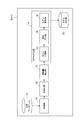
- FIG. 3 is a functional block diagram illustrating a functional configuration of the document classification device according to the embodiment in a generation state of the document classification model by machine learning.
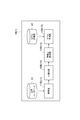
- FIG. 2 is a functional block diagram illustrating a functional configuration of the document classification device according to the present embodiment in a stage of document classification (prediction) using a document classification model. It is a hardware block diagram of a demand forecast system.
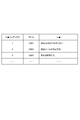
- FIG. 4 is a diagram illustrating an example of a labeled document stored in a document database.
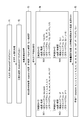
- FIG. 9 is a diagram illustrating a specific example of a process from normalization of a document by a normalization unit to extraction of a feature by a feature extraction unit.
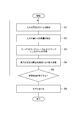
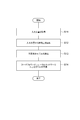
- 5 is a flowchart illustrating processing contents of a generation method according to the embodiment. It is a flowchart which shows the processing content of the classification method of this embodiment.
- FIG. 3 is a diagram illustrating a configuration of a document classification program.
- FIGS. 1 and 2 are diagrams showing a functional configuration of the document classification device 1 according to the present embodiment.
- the document classification device 1 generates, by machine learning, a document classification model that outputs identification information for identifying a result of document classification based on an input document, and classifies the document using the generated document classification model. , And outputs identification information indicating the result of the classification.
- FIG. 1 is a functional block diagram showing a functional configuration of the document classification device 1A (1) in a stage of generation by machine learning of a document classification model, which is a model for classifying documents.
- FIG. 2 is a block diagram showing a functional configuration of the document classification device 1B (1) in a document classification (prediction) phase using a document classification model.
- the document classification device 1A includes an acquisition unit 11, a normalization unit 12, a feature amount extraction unit 13, and a model generation unit 14.
- the model generation unit 14 includes a label prediction unit 15, a loss calculation unit 16, and a model update unit 17. Further, the document classification device 1A includes a document database 21 and a model storage unit 22.
- the document classification device 1B includes an acquisition unit 11B (11), a normalization unit 12B (12), a feature amount extraction unit 13B (13), and a label prediction unit 15B (15).
- the document classification device 1B includes a model storage unit 22 and a document database 23.
- the document classification device 1A and the document classification device 1B may each be configured as separate devices or may be configured integrally. Further, each functional unit included in the document classification device 1A and the document classification device 1B may be configured to be distributed to a plurality of devices.
- each functional block may be realized by one device physically and / or logically coupled, or two or more devices physically and / or logically separated from each other directly and / or indirectly. (For example, wired and / or wireless) and may be realized by these multiple devices.
- the document classification device 1 may function as a computer.
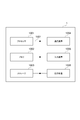
- FIG. 3 is a diagram illustrating an example of a hardware configuration of the document classification device 1 according to the present embodiment.
- the document classification device 1 may be physically configured as a computer device including a processor 1001, a memory 1002, a storage 1003, a communication device 1004, an input device 1005, an output device 1006, a bus 1007, and the like.
- the term “apparatus” can be read as a circuit, a device, a unit, or the like.
- the hardware configuration of the document classification device 1 may be configured to include one or more devices shown in FIG. 3 or may be configured without including some devices.
- the functions of the document classifying apparatus 1 are executed by reading predetermined software (program) on hardware such as the processor 1001 and the memory 1002, so that the processor 1001 performs an arithmetic operation, communication by the communication device 1004, and communication between the memory 1002 and the storage device. This is realized by controlling the reading and / or writing of data in 1003.
- the processor 1001 controls the entire computer by operating an operating system, for example.
- the processor 1001 may be configured by a central processing unit (CPU: Central Processing Unit) including an interface with a peripheral device, a control device, an arithmetic device, a register, and the like.
- the processor 1001 may include a GPU (Graphics Processing Unit).
- the functional units 11 to 17 shown in FIGS. 1 and 2 may be realized by the processor 1001.
- the processor 1001 reads out a program (program code), a software module, and data from the storage 1003 and / or the communication device 1004 to the memory 1002, and executes various processes according to these.
- a program program code
- a software module software module
- data data from the storage 1003 and / or the communication device 1004 to the memory 1002, and executes various processes according to these.
- the program a program that causes a computer to execute at least a part of the operation described in the above embodiment is used.
- each of the functional units 11 to 17 of the document classification device 1 may be realized by a control program stored in the memory 1002 and operated by the processor 1001.
- Processor 1001 may be implemented with one or more chips.
- the program may be transmitted from a network via a telecommunication line.
- the memory 1002 is a computer-readable recording medium, and includes at least one of a ROM (Read Only Memory), an EPROM (Erasable Programmable ROM), an EEPROM (Electrically Erasable Programmable ROM), and a RAM (Random Access Memory). May be done.
- the memory 1002 may be called a register, a cache, a main memory (main storage device), or the like.
- the memory 1002 can store a program (program code), a software module, and the like that can be executed to execute the document classification method according to an embodiment of the present invention.
- the storage 1003 is a computer-readable recording medium, for example, an optical disk such as a CD-ROM (Compact Disc), a hard disk drive, a flexible disk, and a magneto-optical disk (for example, a compact disk, a digital versatile disk, a Blu-ray). (Registered trademark) disk), a smart card, a flash memory (for example, a card, a stick, a key drive), a floppy (registered trademark) disk, and a magnetic strip.
- the storage 1003 may be called an auxiliary storage device.
- the storage medium described above may be, for example, a database including the memory 1002 and / or the storage 1003, a server, or any other suitable medium.
- the communication device 1004 is hardware (transmitting / receiving device) for performing communication between computers via a wired and / or wireless network, and is also referred to as, for example, a network device, a network controller, a network card, a communication module, or the like.
- the input device 1005 is an input device (for example, a keyboard, a mouse, a microphone, a switch, a button, a sensor, and the like) that receives an external input.
- the output device 1006 is an output device that performs output to the outside (for example, a display, a speaker, an LED lamp, and the like). Note that the input device 1005 and the output device 1006 may have an integrated configuration (for example, a touch panel).
- the devices such as the processor 1001 and the memory 1002 are connected by a bus 1007 for communicating information.
- the bus 1007 may be configured by a single bus, or may be configured by a different bus between the devices.
- the document classification device 1 includes hardware such as a microprocessor, a digital signal processor (DSP), an ASIC (Application Specific Integrated Circuit), a PLD (Programmable Logic Device), and an FPGA (Field Programmable Gate Array). And some or all of the functional blocks may be realized by the hardware.
- the processor 1001 may be implemented by at least one of these hardware.
- the acquisition unit 11 acquires learning data including a document and identification information associated with the document.
- the acquisition unit 11 acquires from the document database 21 a labeled document to which a label constituting identification information is attached.
- the document database 21 is storage means for storing a document with a label.
- FIG. 4 is a diagram illustrating an example of a document with a label stored in the document database 21.
- the document database 21 stores a document and a label in association with a document index for identifying the document.
- the document with the document index “1” is a document “Bluetooth cannot be connected”, and this document is labeled “C001”.
- the normalization unit 12 normalizes the document acquired by the acquisition unit 11. Specifically, the normalization unit 12 performs Unicode normalization on the document, for example, in order to unify the notation of the document.
- the normalization format may be, for example, NFKC (Normalization Form Compatibility Composition). Further, the normalization unit 12 may further convert the alphabet included in the document into lowercase letters as the normalization processing.
- the feature extraction unit 13 extracts a word included in the document and character information on characters constituting the word as a feature.
- the character information is a character string including one character or a plurality of consecutive characters in a word included in the word included in the document. Character information is information that can be extracted one or more from one word.
- the feature quantity extraction unit 13 extracts the words included in the document normalized by the normalization unit 12 and the parts of speech of the words by a well-known morphological analysis method. Further, from the extracted word, the feature amount extracting unit 13 extracts, as character information, one character of the characters constituting the word or a character string including a plurality of consecutive characters in the word. The word and character information extracted from the document in this way constitutes the feature amount of the document.
- the normalization unit 12 performs a character string normalization process on the input sentence f1 “Bluetooth is not connected” acquired by the acquisition unit 11, and obtains a normalization result f2 “Bluetooth is not connected”.
- the word "Bluetooth” is erroneously input and becomes "Bluetooth”.
- the feature quantity extraction unit 13 performs a morphological analysis process on the normalization result f2 “bluetooth is not connected”, and extracts a word and the part of speech of the word from the normalization result f2.
- the feature extraction unit 13 performs a partial character string extraction process for extracting a partial character string from each word extracted as the morphological analysis result f3, and obtains a partial character string extraction result f4.
- the feature amount extraction unit 13 extracts a word unigram consisting of one extracted word, a character unigram consisting of one character that constitutes the extracted word, and an extracted word , A character bigram consisting of two consecutive characters is extracted from each word.
- the feature amount extraction unit 13 converts the word “bluetooth / noun” having the word ID of 1 into “word unigram: bluetooth”, “character unigram: b, l, u, e, t, o, h "and” character bigram: bl, lu, ue, et, to, oo, oh, h are ".
- the first character of the word located next to the word in the input sentence may be added to the last element of the extracted character bigram.
- the feature amount extraction unit 13 extracts the word "word / gram” having the word ID of 2 from the "word unigram: ga”, “character unigram: ga”, and “character bigram: ga”. One "is extracted.
- the feature amount extraction unit 13 converts the word “tsutsutsu / verb” whose word ID is 3 into “word unigram: tsutsutsu” and “character unigram: tsu, na, ga, hara”. And "character bigram: tsuna, nana, hira, nana”.
- the feature amount extraction unit 13 converts the word “none / auxiliary verb” whose word ID is 4 into “word unigram: none”, “character unigram: na, i”, and “character bigram”. : No, ⁇ E> ”is extracted.
- a character bigram from a word located at the end of the sentence in the input sentence, a special character indicating the end of the sentence, such as “ ⁇ E>”, is added to the last element of the extracted character bigram. It may be good.
- the feature amount extraction unit 13 performs a feature amount selection process on the partial character string extraction result f4 to extract the feature amount f5.
- the feature amount extraction unit 13 extracts a word unigram “bluetooth, is not connected,” which is a word extracted from the input sentence, as a feature amount.
- the feature amount extraction unit 13 extracts a character unigram and a character bigram, which are character information included in a word extracted from the input sentence, as a feature amount.
- the feature amount extraction unit 13 may extract character information from all the words included in the input sentence. However, as shown in an example shown in FIG. Character information may be extracted. If character information is extracted from all words included in an input document and all extracted character information is used as a feature amount, the number of dimensions of the feature amount (vector) input to the document classification model becomes enormous, The processing load related to model generation and document classification increases. By extracting only characters included in a word corresponding to the predetermined condition as character information, the processing load can be reduced.
- the feature extracting unit 13 extracts character information from a word corresponding to a predetermined part of speech, among words included in the input sentence. By extracting character information from a word corresponding to a predetermined part of speech as a predetermined part of speech where a part of speech in which typographical errors and omissions are likely to occur, such a word was input as a document to be classified, including a typo, etc. Even in this case, it is possible to prevent the accuracy of the classification from lowering.
- the feature information extraction unit 13 sets the extraction of the character information included in the noun as the feature information as the character information use condition, and sets the character information included in the noun word “bluetooth”.
- a group (“character unigram: b, l, u, e, t, o, h” and “character bigram: bl, lu, ue, et, to, oo, oh, h") is extracted as a feature amount.
- the feature amount extraction unit 13 outputs the word information “b, l, u, e, t, o, h,“ b, l, u, e, t, o, h ”included in the word“ bluetooth is not connected ”and the word“ bluetooth ”included in the input sentence.
- bl, lu, ue, et, to, oo, oh, h ” are extracted as the feature value f5.
- the feature amount extraction unit 13 may exclude a word corresponding to a predetermined part of speech from words included in the input sentence from words for extracting character information. For example, a part-of-speech that does not greatly affect the classification of a document, such as a particle, is regarded as a predetermined part-of-speech, and character information is not extracted from such a predetermined part-of-speech.
- the amount of information input to the classification model can be appropriately reduced.
- the feature amount extraction unit 13 may extract character information included at a predetermined frequency or less from the learning data acquired by the acquisition unit 11 as a feature amount.
- a character included more than a predetermined frequency is likely to be a character such as a particle that does not greatly contribute to the accuracy of document classification.
- the feature extraction unit 13 may remove duplicate character information from character information extracted from words included in the document. For example, in the example shown in FIG. 5, the character “na” is included in the word “tsutsuna” and the word “none” in an overlapping manner, so that one of the characters "na” obtained from each word is It may be removed. By removing overlapping characters from the feature amount in this way, the amount of information input to the document classification model can be reduced.
- the model generation unit 14 performs machine learning based on the feature amount extracted from the document and the identification information associated with the document, and generates a document classification model.
- the model generation unit 14 performs machine learning based on a feature amount extracted from an input sentence and a label associated with the input sentence.
- the model generation unit 14 includes the label prediction unit 15, the loss calculation unit 16, and the model update unit 17.
- the document classification model of this embodiment is configured to include a neural network (feedforward neural network).
- a document classification model which is a model including a learned neural network, can be read or referenced by a computer, and can be regarded as a program that causes a computer to execute a predetermined process and realize a predetermined function.
- the learned model of the present embodiment is used in a computer including a CPU and a memory.
- the CPU of the computer responds to input from the input layer of the neural network (for example, a feature amount including word and character information) in accordance with an instruction from the learned model stored in the memory. Is performed based on the learned weighting coefficient corresponding to the above, the response function, and the like, and outputs the result (label) from the output layer.
- the ⁇ ⁇ label predicting unit 15 converts a feature amount extracted from an input sentence into a feature vector using a feedforward neural network, and further performs affine transformation. Then, the label prediction unit 15 adapts the activation function to the feature vector, obtains a probability value of the label corresponding to the input sentence, and obtains a predicted label having the maximum probability value. The label predicting unit 15 acquires a label associated with the input sentence as a correct answer label.
- the "correct label” is identification information for identifying the classification result of the input document.
- the loss calculating unit 16 calculates a loss between the correct label and the predicted label using the probability value of each label obtained by the label predicting unit 15.
- the model updating unit 17 propagates the loss back to the feedforward neural network, and updates the weight of the neural network.
- the model generating unit 14 performs machine learning by the label predicting unit 15, the loss calculating unit 16, and the model updating unit 17, and when the updated neural network satisfies a predetermined condition regarding generation of a preset model, the neural network
- the model including the network is stored in the model storage unit 22 as a learned document classification model.
- the label predicting unit 15 predicts a label based on the feature extracted by the feature extracting unit 13.
- Each element of X indicates each feature amount.
- n indicates the number of features included in the input sentence.
- a general feedforward neural network includes an input layer, a hidden layer, and an output layer.
- the input layer converts a feature amount extracted from an input sentence into a feature vector.
- the feature vector is a d-dimensional vector, and has a one-to-one correspondence with the feature amount of the input sentence (document) acquired from the document database 21.
- E be a d1 ⁇ V-dimensional matrix that stores the feature vectors.
- h W_in ⁇ S + b_in
- W_in is a d2 ⁇ d1 dimension weight matrix
- b_in is a bias vector of dimension d2.
- h ′ tanh (h) is obtained using the activation function tanh.
- affen transformation is performed on h ′, and an N-dimensional output layer O is obtained as follows.
- N is the number of labels of the labels extracted from the document database associated with the labels.
- O W_out ⁇ h ′ + b_out
- W_out is an N ⁇ d two-dimensional weight matrix
- b_out is a bias vector of dimension N.
- the loss L between the correct label and the predicted label can be calculated. Is calculated.
- the ⁇ model updating unit 17 updates the weight of the network by back-propagating the loss to the feedforward neural network using the error propagation method.
- the model generation unit 14 causes the model storage unit 22 to store the generated model as a trained document classification model after reading the document associated with the label N times and updating the model.
- each functional unit of the document classification device 1B will be described with reference to FIG.
- the functions of the acquisition unit 11B, the normalization unit 12B, the feature amount extraction unit 13B, and the label prediction unit 15B of the document classification device 1B are the same as the acquisition unit 11, the normalization unit 12, the feature amount extraction unit 13, and the label prediction unit of the document classification device 1A. Since the function is the same as that of the unit 15, a brief description will be given.
- the acquisition unit 11B acquires a document to be classified from the document database 23.
- the document database 23 is a storage unit that stores documents to be classified.
- the document to be classified is a document to which no label is associated.
- the normalization unit 12B normalizes the document acquired by the acquisition unit 11B. Specifically, the normalization unit 12B performs, for example, Unicode normalization and a process of converting alphabets included in the document into lowercase letters in order to unify the notation of the document.
- the feature amount extraction unit 13B extracts, as feature amounts, words included in the document and character information relating to characters constituting the words.
- the label predicting unit 15B classifies the document based on the feature amount extracted by the feature amount extracting unit 13B, using the learned document classification model read from the model storage unit 22. Specifically, the label predicting unit 15B inputs a feature amount to the document classification model, and outputs a label output from the document classification model as identification information for identifying a result of the classification of the document.
- FIG. 6 is a flowchart illustrating the processing content of the generation method according to the present embodiment.
- step S1 the acquiring unit 11 acquires learning data including an input document and a label associated with the input document.
- step S2 the feature amount extraction unit 13 extracts, as feature amounts, words included in the input document and character information on characters forming the words from the input document acquired in step S1.
- the normalization unit 12 may normalize the input document prior to the extraction of the feature amount.
- the model generation unit 14 performs machine learning based on the feature amount extracted from the document and the identification information associated with the document to generate a document classification model. More specifically, in step S3, the label predicting unit 15 obtains a predicted label having the maximum probability value based on the feature amount extracted from the input document using the feedforward neural network. I do.
- step S4 the loss calculating unit 16 calculates a loss between the correct answer label and the predicted label using the label probability value obtained in step S3.
- the correct answer label is a label associated with the input document acquired in step S1.
- the model updating unit 17 propagates the loss back to the feedforward neural network, and updates the weight of the neural network.
- step S5 the model generation unit 14 determines whether to end the learning process for generating a model in steps S1 to S4. This determination is made, for example, based on whether a predetermined condition is satisfied.
- the predetermined condition may be, for example, that the number of pieces of learning data used for learning exceeds a threshold, or is not limited to this condition. If it is determined that the learning process is to be ended, the process returns to step S1. On the other hand, if it is not determined that the learning process is to be ended, the process proceeds to step S6.
- step S6 the model generator 14 outputs the generated document classification model.
- FIG. 7 is a flowchart showing the processing content of the classification method of the present embodiment.
- step S11 the acquiring unit 11B acquires an input document that is a document to be classified.
- step S12 the feature amount extraction unit 13B extracts, from the input document acquired in step S1, a word included in the input document and character information on characters constituting the word as a feature amount. Note that the normalization of the input document by the normalization unit 12B may be performed prior to the extraction of the feature amount.
- step S13 the label prediction unit 15B reads the learned document classification model stored in the model storage unit 22.
- the label predicting unit 15B classifies the input document using a document classification model including a feedforward neural network. Specifically, the label predicting unit 15B inputs a feature amount to the document classification model, and outputs a label output from the document classification model as identification information for identifying a result of the classification of the document.
- FIG. 8 is a diagram showing a configuration of the document classification program P1.
- the document classification program P1 includes a main module m10, an acquisition module m11, a normalization module m12, a feature amount extraction module m13, and a model generation module m14 that comprehensively control a model generation process in the document classification device 1.
- the model generation module m14 includes a label prediction module m15, a loss calculation module m16, and a model update module m17.
- the modules m11 to m17 are used for the acquisition unit 11, the normalization unit 12, the feature amount extraction unit 13, the model generation unit 14, the label prediction unit 15, the loss calculation unit 16, and the model update unit 17 in the document classification device 1. Functions are realized.
- the document classification program P1 may be transmitted via a transmission medium such as a communication line, or may be stored in a recording medium M1 as shown in FIG.
- a document extracted by using a word extracted from a learning document for generating a document classification model and character information including characters included in the word as a feature amount Since the classification model is generated, the information of each character included in the word is also reflected in the document classification model. Accordingly, even if a word included in a document to be classified includes an erroneous character, a misspelling, or the like, the character included in the word is also included in the document by being input as a feature amount to the document classification model. The characteristics of the characters that make up the word are added to the classification. Therefore, it is possible to prevent a decrease in the accuracy of document classification.
- the learned document classification model not only a word extracted from a text to be classified but also a feature amount including character information including characters included in the word is used as learning data.
- the feature amount extracting unit may extract character information from words included in the document and satisfying a predetermined condition.
- the processing load can be reduced by extracting only the characters included in the word corresponding to the predetermined condition as character information.
- the feature extraction unit may extract character information from a word corresponding to the first part of speech in words included in the document.
- a part of speech in which erroneous characters and misspellings are likely to occur is used as a predetermined part of speech, and character information is extracted from a word corresponding to the predetermined part of speech. Even if the document is input as a document, it is possible to prevent a decrease in the accuracy of classification.
- the feature amount extraction unit may exclude a word corresponding to the second part of speech from words included in the document from words for extracting character information.
- a part of speech that does not significantly affect the classification of a document is set as a predetermined part of speech, and character information is not extracted from such a predetermined part of speech. And appropriately reducing the amount of information input to the document classification model.
- the feature amount extraction unit may extract, as the feature amount, character information included at a predetermined frequency or lower in the learning data acquired by the acquisition unit.
- a character included more than a predetermined frequency is likely to be a character such as a particle that does not greatly contribute to the accuracy of document classification. According to the above embodiment, by extracting characters included in the learning data as character information at an appropriately set predetermined frequency or less, it is possible to configure a feature amount that effectively contributes to prevention of a decrease in classification accuracy.
- the feature amount extraction unit may remove duplicate character information from character information extracted from words included in the document.
- the amount of information input to the document classification model can be reduced without lowering the classification accuracy.
- Information and the like can be output from an upper layer (or lower layer) to a lower layer (or upper layer). Input and output may be performed via a plurality of network nodes.
- Input and output information and the like may be stored in a specific place (for example, a memory) or may be managed in a management table. Information that is input and output can be overwritten, updated, or added. The output information or the like may be deleted. The input information or the like may be transmitted to another device.
- the determination may be made based on a value (0 or 1) represented by one bit, a Boolean value (Boolean: true or false), or a comparison of numerical values (for example, a predetermined value). Value).
- Each aspect / embodiment described in this specification may be used alone, may be used in combination, or may be switched with execution. Further, the notification of the predetermined information (for example, the notification of “X”) is not limited to being explicitly performed, and is performed implicitly (for example, not performing the notification of the predetermined information). Is also good.
- software, instructions, and the like may be transmitted and received via a transmission medium.
- a transmission medium such as coaxial cable, fiber optic cable, twisted pair and digital subscriber line (DSL) and / or a wireless technology such as infrared, wireless and microwave, the website, server, or other When transmitted from a remote source, these wired and / or wireless technologies are included within the definition of transmission medium.
- the information, signals, etc. described herein may be represented using any of a variety of different technologies.
- data, instructions, commands, information, signals, bits, symbols, chips, etc. that can be referred to throughout the above description are not limited to voltages, currents, electromagnetic waves, magnetic or magnetic particles, optical or photons, or any of these. May be represented by a combination of
- system and “network” are used interchangeably.
- information, parameters, and the like described in this specification may be represented by an absolute value, may be represented by a relative value from a predetermined value, or may be represented by another corresponding information. .
- any reference to the element does not generally limit the quantity or order of the element. These designations may be used herein as a convenient way to distinguish between two or more elements. Thus, reference to a first and second element does not mean that only two elements may be employed therein, or that the first element must somehow precede the second element.
- 1, 1A, 1B Document classifier, 11, 11B: Acquisition unit, 12, 12B: Normalization unit, 13, 13B: Feature extraction unit, 14: Model generation unit, 15, 15B: Label prediction unit, 16 ... Loss calculation unit, 17 model updating unit, 21 document database, 22 model storage unit, 23 document database, M1 recording medium, m10 main module, m11 acquisition module, m12 normalization module, m13 feature Quantity extraction module, m14: Model generation module, m15: Label prediction module, m16: Loss calculation module, m17: Model update module, P1: Document classification program.
Landscapes
- Engineering & Computer Science (AREA)
- Theoretical Computer Science (AREA)
- Physics & Mathematics (AREA)
- General Physics & Mathematics (AREA)
- General Engineering & Computer Science (AREA)
- Databases & Information Systems (AREA)
- Artificial Intelligence (AREA)
- Computational Linguistics (AREA)
- General Health & Medical Sciences (AREA)
- Health & Medical Sciences (AREA)
- Data Mining & Analysis (AREA)
- Audiology, Speech & Language Pathology (AREA)
- Computer Vision & Pattern Recognition (AREA)
- Software Systems (AREA)
- Life Sciences & Earth Sciences (AREA)
- Biomedical Technology (AREA)
- Biophysics (AREA)
- Evolutionary Computation (AREA)
- Molecular Biology (AREA)
- Computing Systems (AREA)
- Mathematical Physics (AREA)
- Multimedia (AREA)
- Business, Economics & Management (AREA)
- General Business, Economics & Management (AREA)
- Information Retrieval, Db Structures And Fs Structures Therefor (AREA)
- Machine Translation (AREA)
Abstract
文書分類装置は、文書を分類するためのモデルであって、入力された文書に基づいて、分類の結果を識別する識別情報を出力する文書分類モデルを機械学習により生成する装置であって、文書と該文書に関連付けられた識別情報とを含む学習データを取得する取得部と、文書に含まれる単語と、単語を構成する文字のうちの一の文字または単語において連続する複数の文字からなる文字列であって、前記単語から1または複数抽出可能な情報である文字情報と、を特徴量として抽出する特徴量抽出部と、文書から抽出された特徴量及び当該文書に関連付けられた識別情報に基づいて機械学習を行い、文書分類モデルを生成するモデル生成部と、を備える。
Description
本発明は、文書分類装置及び学習済みモデルに関する。
機械学習により生成されたモデルを用いて文書を分類する技術が知られている。このような技術においては、学習用の文書に対して形態素解析を行うことにより単語を抽出し、抽出した単語を特徴量として機械学習に供することが一般的である。
非特許文献1には、機械学習手法の一種であるフィードフォワードニューラルネットワークを用いて単語単位の特徴量に基づいて文書分類モデルを生成し、文書分類を行うことが記載されている。
特許文献1には、所定の照合条件に該当する文字列を特徴トークンとして文書から抽出し、特徴トークンとして抽出されなかった文字列を分割した文字を非特徴トークンとして抽出して、特徴トークン及び非特徴トークンを文書分類のための学習に用いる技術が記載されている。
特許文献2には、語の表記揺れに対応するための辞書を作成する技術が記載されている。
Mohit Iyyer, Varun Manjunatha, Jordan Boyd-Graber and Hal Daume III. Deep Unordered Composition Rivals Syntactic Methods for Text Classification. Proceedings of the 53rd Annual Meeting of the Association for Computational Linguistics and the 7th International Joint Conference on Natural Language Processing, pages 1681-1691.
分類対象として入力された文書において、例えば、チャットボットを利用するユーザーによるタイプミス及び誤認識等に起因して、単語に誤字及び脱字等が含まれる場合がある。入力された文書に誤字及び脱字等が含まれていると、分類精度の低下を招くこととなる。単語の表記揺れに対しては、特許文献2に記載されたような、一の単語に対して複数の表記を関連付けた辞書を用いることにより対応することができる。しかし、このような辞書を予め作成することにはコストがかかる。
特許文献1に記載された技術では、ある単語に関して、表記が揺れた複数のバリエーションを学習に用いるわけではないので、誤字及び脱字等を含む文書が入力された場合の分類精度の低下を防止できない。
そこで、本発明は、上記問題点に鑑みてなされたものであり、機械学習により生成されるモデルを用いた文書の分類において、誤字及び脱字等を含む文書の分類の精度の低下を防止可能な文書分類装置及び学習済モデルを提供することを目的とする。
上記課題を解決するために、本発明の一形態に係る文書分類装置は、文書を分類するためのモデルであって、入力された文書に基づいて、分類の結果を識別する識別情報を出力する文書分類モデルを機械学習により生成する文書分類装置であって、文書と該文書に関連付けられた識別情報とを含む学習データを取得する取得部と、文書に含まれる単語と、当該単語を構成する文字のうちの一の文字または当該単語において連続する複数の文字からなる文字列であって、当該単語から1または複数抽出可能な情報である文字情報と、を特徴量として抽出する特徴量抽出部と、文書から抽出された特徴量及び当該文書に関連付けられた識別情報に基づいて機械学習を行い、文書分類モデルを生成するモデル生成部と、を備える。
上記の形態によれば、文書分類モデルの生成のための学習用の文書から抽出された単語と共に、当該単語に含まれる文字からなる文字情報が特徴量として用いられて文書分類モデルが生成されるので、単語に含まれる文字単位の情報も文書分類モデルに反映される。これにより、分類対象の文書に含まれる単語に誤字及び脱字等が含まれている場合であっても、その単語に含まれる文字も特徴量として文書分類モデルに入力することにより、文書に含まれる単語を構成する文字に関する特徴が分類に加味される。従って、文書の分類の精度の低下を防止できる。
上記課題を解決するために、本発明の一形態に係る学習済モデルは、入力された文書を分類し、分類の結果を識別する識別情報を出力するよう、コンピュータを機能させるための学習済みモデルであって、文書に含まれる単語と、当該単語を構成する文字のうちの一の文字または当該単語において連続する複数の文字からなる文字列であって、当該単語から1または複数抽出可能な情報である文字情報と、を含む特徴量を入力値とし、文書に関連付けられた識別情報を出力値とする学習データに基づく機械学習により構成される。
上記の形態によれば、分類対象の文章から抽出された単語だけではなく、当該単語に含まれる文字からなる文字情報を含む特徴量が学習データとして用いられた機械学習により、文書を分類するための学習済みモデルが構成される。これにより、分類対象の文書に含まれる単語に誤字及び脱字等が含まれている場合であっても、その単語に含まれる文字も特徴量として学習済みモデルに入力することにより、文書に含まれる単語を構成する文字に関する特徴が分類に加味される。従って、文書の分類の精度の低下を防止できる。
機械学習により生成されるモデルを用いた文書の分類において、誤字及び脱字等を含む文書の分類の精度の低下を防止可能な文書分類装置及び学習済モデルを提供することが可能となる。
本発明に係る文書分類装置及び学習済モデルの実施形態について図面を参照して説明する。なお、可能な場合には、同一の部分には同一の符号を付して、重複する説明を省略する。
図1及び図2は、本実施形態に係る文書分類装置1の機能的構成を示す図である。文書分類装置1は、入力された文書に基づいて、文書の分類の結果を識別する識別情報を出力する文書分類モデルを機械学習により生成し、生成された文書分類モデルを用いて文書を分類し、分類の結果を示す識別情報を出力する。
図1は、文書を分類するためのモデルである文書分類モデルの機械学習による生成の局面における文書分類装置1A(1)の機能的構成を示す機能ブロック図である。図2は、文書分類モデルを用いた文書の分類(予測)の局面における文書分類装置1B(1)の機能的構成を示すブロック図である。
図1に示すように、文書分類装置1Aは、取得部11、正規化部12、特徴量抽出部13及びモデル生成部14を含む。モデル生成部14は、ラベル予測部15、損失計算部16及びモデル更新部17を含む。また、文書分類装置1Aは、文書データベース21及びモデル記憶部22を含む。
図2に示すように、文書分類装置1Bは、取得部11B(11)、正規化部12B(12)、特徴量抽出部13B(13)及びラベル予測部15B(15)を含む。また、文書分類装置1Bは、モデル記憶部22及び文書データベース23を含む。
文書分類装置1A及び文書分類装置1Bは、各々が別の装置として構成されてもよいし、一体に構成されてもよい。また、文書分類装置1A及び文書分類装置1Bに含まれる各機能部は、複数の装置に分散されて構成されてもよい。
なお、図1及び図2に示したブロック図は、機能単位のブロックを示している。これらの機能ブロック(構成部)は、ハードウェア及び/又はソフトウェアの任意の組み合わせによって実現される。また、各機能ブロックの実現手段は特に限定されない。すなわち、各機能ブロックは、物理的及び/又は論理的に結合した1つの装置により実現されてもよいし、物理的及び/又は論理的に分離した2つ以上の装置を直接的及び/又は間接的に(例えば、有線及び/又は無線)で接続し、これら複数の装置により実現されてもよい。
例えば、本発明の一実施の形態における文書分類装置1は、コンピュータとして機能してもよい。図3は、本実施形態に係る文書分類装置1のハードウェア構成の一例を示す図である。文書分類装置1は、物理的には、プロセッサ1001、メモリ1002、ストレージ1003、通信装置1004、入力装置1005、出力装置1006、バス1007などを含むコンピュータ装置として構成されてもよい。
なお、以下の説明では、「装置」という文言は、回路、デバイス、ユニットなどに読み替えることができる。文書分類装置1のハードウェア構成は、図3に示した各装置を1つ又は複数含むように構成されてもよいし、一部の装置を含まずに構成されてもよい。
文書分類装置1における各機能は、プロセッサ1001、メモリ1002などのハードウェア上に所定のソフトウェア(プログラム)を読み込ませることで、プロセッサ1001が演算を行い、通信装置1004による通信や、メモリ1002及びストレージ1003におけるデータの読み出し及び/又は書き込みを制御することで実現される。
プロセッサ1001は、例えば、オペレーティングシステムを動作させてコンピュータ全体を制御する。プロセッサ1001は、周辺装置とのインターフェース、制御装置、演算装置、レジスタなどを含む中央処理装置(CPU:Central Processing Unit)で構成されてもよい。また、プロセッサ1001は、GPU(Graphics Processing Unit)を含んで構成されてもよい。例えば、図1及び図2に示した各機能部11~17などは、プロセッサ1001で実現されてもよい。
また、プロセッサ1001は、プログラム(プログラムコード)、ソフトウェアモジュールやデータを、ストレージ1003及び/又は通信装置1004からメモリ1002に読み出し、これらに従って各種の処理を実行する。プログラムとしては、上述の実施の形態で説明した動作の少なくとも一部をコンピュータに実行させるプログラムが用いられる。例えば、文書分類装置1の各機能部11~17は、メモリ1002に格納され、プロセッサ1001で動作する制御プログラムによって実現されてもよい。上述の各種処理は、1つのプロセッサ1001で実行される旨を説明してきたが、2以上のプロセッサ1001により同時又は逐次に実行されてもよい。プロセッサ1001は、1以上のチップで実装されてもよい。なお、プログラムは、電気通信回線を介してネットワークから送信されても良い。
メモリ1002は、コンピュータ読み取り可能な記録媒体であり、例えば、ROM(Read Only Memory)、EPROM(Erasable Programmable ROM)、EEPROM(Electrically Erasable Programmable ROM)、RAM(Random Access Memory)などの少なくとも1つで構成されてもよい。メモリ1002は、レジスタ、キャッシュ、メインメモリ(主記憶装置)などと呼ばれてもよい。メモリ1002は、本発明の一実施の形態に係る文書分類方法を実施するために実行可能なプログラム(プログラムコード)、ソフトウェアモジュールなどを保存することができる。
ストレージ1003は、コンピュータ読み取り可能な記録媒体であり、例えば、CD-ROM(Compact Disc ROM)などの光ディスク、ハードディスクドライブ、フレキシブルディスク、光磁気ディスク(例えば、コンパクトディスク、デジタル多用途ディスク、Blu-ray(登録商標)ディスク)、スマートカード、フラッシュメモリ(例えば、カード、スティック、キードライブ)、フロッピー(登録商標)ディスク、磁気ストリップなどの少なくとも1つで構成されてもよい。ストレージ1003は、補助記憶装置と呼ばれてもよい。上述の記憶媒体は、例えば、メモリ1002及び/又はストレージ1003を含むデータベース、サーバその他の適切な媒体であってもよい。
通信装置1004は、有線及び/又は無線ネットワークを介してコンピュータ間の通信を行うためのハードウェア(送受信デバイス)であり、例えばネットワークデバイス、ネットワークコントローラ、ネットワークカード、通信モジュールなどともいう。
入力装置1005は、外部からの入力を受け付ける入力デバイス(例えば、キーボード、マウス、マイクロフォン、スイッチ、ボタン、センサなど)である。出力装置1006は、外部への出力を実施する出力デバイス(例えば、ディスプレイ、スピーカー、LEDランプなど)である。なお、入力装置1005及び出力装置1006は、一体となった構成(例えば、タッチパネル)であってもよい。
また、プロセッサ1001やメモリ1002などの各装置は、情報を通信するためのバス1007で接続される。バス1007は、単一のバスで構成されてもよいし、装置間で異なるバスで構成されてもよい。
また、文書分類装置1は、マイクロプロセッサ、デジタル信号プロセッサ(DSP:Digital Signal Processor)、ASIC(Application Specific Integrated Circuit)、PLD(Programmable Logic Device)、FPGA(Field Programmable Gate Array)などのハードウェアを含んで構成されてもよく、当該ハードウェアにより、各機能ブロックの一部又は全てが実現されてもよい。例えば、プロセッサ1001は、これらのハードウェアの少なくとも1つで実装されてもよい。
再び図1を参照して、文書分類装置1Aの各機能部について説明する。取得部11は、文書と当該文書に関連付けられた識別情報とを含む学習データを取得する。本実施形態では、取得部11は、識別情報を構成するラベルが付されたラベル付き文書を文書データベース21から取得する。
文書データベース21は、ラベル付き文書を記憶している記憶手段である。図4は、文書データベース21に記憶されているラベル付き文書の例を示す図である。図4に示すように、文書データベース21は、文書を識別する文書インデックスに関連付けて文書及びラベルを記憶している。例えば、文書インデックス「1」の文書は、「Bluetoothがつながらない」という文書であり、この文書には、ラベル「C001」が付されている。
正規化部12は、取得部11により取得された文書を正規化する。具体的には、正規化部12は、例えば、文書の表記を統一するために、文書に対してUnicode正規化を実施する。正規化形式は、例えば、NFKC(Normalization Form Compatibility Composition)であってもよい。また、正規化部12は、さらに、正規化処理として、文書に含まれるアルファベットを小文字に変換してもよい。
特徴量抽出部13は、文書に含まれる単語と、当該単語を構成する文字に関する文字情報とを特徴量として抽出する。文字情報は、文書に含まれる単語を構成する文字のうちの一の文字または単語において連続する複数の文字からなる文字列である。文字情報は、一の単語から1または複数抽出可能な情報である。
具体的には、特徴量抽出部13は、周知の形態素解析の手法により、正規化部12により正規化された文書に含まれる単語及び当該単語の品詞を抽出する。さらに、特徴量抽出部13は、抽出した単語から、当該単語を構成する文字のうちの一の文字または当該単語において連続する複数の文字からなる文字列を、文字情報として抽出する。このように文書から抽出された単語及び文字情報が、文書の特徴量を構成する。
ここで、図5を参照して、正規化部12による文書の正規化から特徴量抽出部13による特徴量の抽出に至る処理の具体例を説明する。まず、正規化部12は、取得部11により取得された入力文f1「Bluetoohがつながらない」に対して文字列正規化処理を実施して、正規化結果f2「bluetoohがつながらない」を得る。なお、この入力文f1では、「Bluetooth」という単語が誤入力されて、「Bluetooh」となっている。
次に、特徴量抽出部13は、正規化結果f2「bluetoohがつながらない」に対して形態素解析処理を実施して、正規化結果f2から単語及びその単語の品詞を抽出する。図5の例では、特徴量抽出部13は、形態素解析結果f3として、「bluetooh/名詞」、「が/助詞」、「つながら/動詞」、「ない/助動詞」を得る。これらの単語はそれぞれ、単語ID=1~4により識別される。
特徴量抽出部13は、形態素解析結果f3として抽出した各単語から部分文字列を抽出する部分文字列抽出処理を実施して、部分文字列抽出結果f4を得る。図5に示す例では、特徴量抽出部13は、抽出された一の単語からなる単語ユニグラムを抽出すると共に、抽出された単語を構成する一の文字からなる文字ユニグラム、及び、抽出された単語において連続する2文字からなる文字バイグラムを、各単語から抽出する。
具体的には、特徴量抽出部13は、符号f41に示すように、単語IDが1である単語「bluetooh/名詞」から、「単語ユニグラム:bluetooh」、「文字ユニグラム:b、l、u、e、t、o、h」及び「文字バイグラム:bl、lu、ue、et、to、oo、oh、hが」を抽出する。ここで、抽出される文字バイグラムの最後の要素には、入力文において当該単語の次に位置する単語の一文字目が付加されることとしてもよい。
同様に、特徴量抽出部13は、符号f42に示すように、単語IDが2である単語「が/助詞」から、「単語ユニグラム:が」、「文字ユニグラム:が」及び「文字バイグラム:がつ」を抽出する。
同様に、特徴量抽出部13は、符号f43に示すように、単語IDが3である単語「つながら/動詞」から、「単語ユニグラム:つながら」、「文字ユニグラム:つ、な、が、ら」及び「文字バイグラム:つな、なが、がら、らな」を抽出する。
同様に、特徴量抽出部13は、符号f44に示すように、単語IDが4である単語「ない/助動詞」から、「単語ユニグラム:ない」、「文字ユニグラム:な、い」及び「文字バイグラム:ない、い<E>」を抽出する。ここで、入力文において文末に位置する単語から文字バイグラムを抽出する場合において、抽出される文字バイグラムの最後の要素には、例えば「<E>」のような、文末を示す特殊文字が付加されることとしてもよい。
特徴量抽出部13は、部分文字列抽出結果f4に対して特徴量選択処理を実施して、特徴量f5を抽出する。特徴量抽出部13は、図5に示す例では、入力文から抽出された単語である単語ユニグラム「bluetooh、が、つながら、ない」を特徴量として抽出する。また、特徴量抽出部13は、入力文から抽出された単語に含まれる文字情報である文字ユニグラム及び文字バイグラムを特徴量として抽出する。
特徴量抽出部13は、入力文に含まれる全ての単語から文字情報を抽出してもよいが、図5に示す例のように、入力文に含まれる単語のうち所定条件に該当する単語から文字情報を抽出することとしてもよい。入力される文書に含まれる全ての単語から文字情報を抽出して抽出した全ての文字情報を特徴量とすると、文書分類モデルに入力する特徴量(ベクトル)の次元数が膨大になってしまい、モデルの生成及び文書の分類に係る処理負荷が大きくなる。所定条件に該当する単語に含まれる文字のみを文字情報として抽出することにより、処理負荷を軽減できる。
特徴量抽出部13は、入力文に含まれる単語のうち、所定の品詞に該当する単語から文字情報を抽出する。誤字及び脱字等が発生しやすい品詞を所定の品詞として、所定の品詞に該当する単語から文字情報を抽出することにより、そのような単語が誤字等を含んで、分類対象の文書として入力された場合であっても、分類の精度の低下を防止できる。
図5に示す例では、特徴量抽出部13は、具体的には名詞に含まれる文字情報を特徴量として抽出することを文字情報利用条件として、名詞である単語「bluetooh」に含まれる文字情報群(「文字ユニグラム:b、l、u、e、t、o、h」及び「文字バイグラム:bl、lu、ue、et、to、oo、oh、hが」)を特徴量として抽出する。
そして、特徴量抽出部13は、入力文に含まれる単語「bluetooh、が、つながら、ない」及び単語「bluetooh」に含まれる文字情報群「b、l、u、e、t、o、h、bl、lu、ue、et、to、oo、oh、hが」を特徴量f5として抽出する。
また、特徴量抽出部13は、入力文に含まれる単語のうち所定の品詞に該当する単語を、文字情報を抽出するための単語から除外することとしてもよい。例えば助詞等のような文書の分類に大きな影響を与えない品詞を所定の品詞として、そのような所定の品詞からの文字情報の抽出を行わないことにより、分類精度の低下を防止しつつ、文書分類モデルに入力する情報量を適切に削減できる。
また、特徴量抽出部13は、取得部11により取得された学習データにおいて、所定頻度以下で含まれる文字情報を特徴量として抽出することとしてもよい。機械学習に用いる複数の学習データの文書において、所定頻度を超えて含まれる文字は、助詞等のように文書の分類の精度に大きく寄与しない文字である可能性が高い。適切に設定された所定頻度以下で学習データに含まれる文字を文字情報として抽出することにより、分類精度の低下の防止に効果的に寄与する特徴量を構成できる。
また、特徴量抽出部13は、文書に含まれる単語から抽出した文字情報から、重複する文字情報を除去することとしてもよい。例えば、図5に示す例において、文字「な」は、単語「つながら」及び単語「ない」に重複して含まれているので、それぞれの単語から取得された文字「な」のうちの一方を除去することとしてもよい。このように重複する文字を特徴量から除去することにより、文書分類モデルに入力する情報量を削減できる。
再び図1を参照して、文書分類装置1Aの機能部を説明する。モデル生成部14は、文書から抽出された特徴量及び当該文書に関連付けられた識別情報に基づいて機械学習を行い、文書分類モデルを生成する。本実施形態では、モデル生成部14は、入力文から抽出された特徴量及び当該入力文に関連付けられているラベルに基づいて機械学習を行う。前述のとおり、モデル生成部14は、ラベル予測部15、損失計算部16及びモデル更新部17を含む。
本実施形態の文書分類モデルは、ニューラルネットワーク(フィードフォワードニューラルネットワーク)を含んで構成される。学習済みのニューラルネットワークを含むモデルである文書分類モデルは、コンピュータにより読み込まれ又は参照され、コンピュータに所定の処理を実行させ及びコンピュータに所定の機能を実現させるプログラムとして捉えることができる。
即ち、本実施形態の学習済みモデルは、CPU及びメモリを備えるコンピュータにおいて用いられる。具体的には、コンピュータのCPUが、メモリに記憶された学習済みモデルからの指令に従って、ニューラルネットワークの入力層に入力された入力データ(例えば、単語及び文字情報を含む特徴量)に対し、各層に対応する学習済みの重み付け係数と応答関数等に基づく演算を行い、出力層から結果(ラベル)を出力するよう動作する。
ラベル予測部15は、フィードフォワードニューラルネットワークを用いて、入力文より抽出した特徴量を特徴ベクトルに変換し、さらにアフィン変換を行う。そして、ラベル予測部15は、特徴ベクトルに活性化関数を適応させ、入力文に対応するラベルの確率値を求め、確率値が最大となる予測ラベルを取得する。ラベル予測部15は、入力文に関連付けられているラベルを正解ラベルとして取得する。ここで、「正解ラベル」は、入力文書の分類結果を識別する識別情報である。
損失計算部16は、ラベル予測部15により求められた各ラベルの確率値を用いて、正解ラベルと予測ラベルのとの間の損失を算出する。モデル更新部17は、損失をフィードフォワードニューラルネットワークに逆伝搬させ、ニューラルネットワークの重みを更新する。
モデル生成部14は、ラベル予測部15、損失計算部16及びモデル更新部17による機械学習を実施し、更新されたニューラルネットワークが予め設定されたモデルの生成に関する所定条件を満たした場合に、ニューラルネットワークを含むモデルを、学習済みの文書分類モデルとして、モデル記憶部22に保存する。
以下にモデル生成部14によるモデル生成の例をより具体的に説明する。ラベル予測部15は、特徴量抽出部13により抽出された特徴量に基づいてラベルを予測する。ここで、入力文より得られた特徴量は、X={x_1,x_2,・・・、x_n}のように表される。Xの各要素はそれぞれ、各特徴量を示す。nは入力文に含まれる特徴量の数を示す。一般的なフィードフォワードニューラルネットワークは、入力層、中間層、出力層により構成される。まず、入力層では、入力文より抽出した特徴量を特徴ベクトルに変換する。ここで特徴ベクトルは、d次元のベクトルであり、文書データベース21から取得された入力文(文書)の特徴量と一対一に対応している。また、特徴ベクトルを格納するd1×V次元の行列をEとする。入力文から抽出された特徴量Xの各要素は、特徴ベクトルに変換され、特徴ベクトル列C={c_1,c_2,・・・、c_n}となる。
次に、中間層の入力とするため、特徴ベクトル列の平均をとり、d1次元のベクトルとなるSを求める。次に、Sに対してアフェン変換を行い、d2次元の中間層hを得る。さらに、以下の式の計算により、hを得る。
h=W_in・S+b_in
ただし、W_inはd2×d1次元の重み行列であり、b_inは次元d2のバイアスベクトルである。
h=W_in・S+b_in
ただし、W_inはd2×d1次元の重み行列であり、b_inは次元d2のバイアスベクトルである。
次に、活性化関数tanhを用いて、h’=tanh(h)を得る。そして、h’に対してアフェン変換を行い、以下のようにN次元の出力層Oを求める。ここで、Nはラベルが関連付けられた文書データベースから抽出されたラベルのラベル数である。
O=W_out・h’+b_out
ただし、W_outはN×d2次元の重み行列であり、b_outは次元Nのバイアスベクトルである。
O=W_out・h’+b_out
ただし、W_outはN×d2次元の重み行列であり、b_outは次元Nのバイアスベクトルである。
求められたh’に、ソフトマックス関数を適応することで、各ラベルに対応する確率値を求めることができるので、各ラベルの確率値を用いて、正解ラベルと予測ラベルとの間の損失Lを算出する。損失Lは、クロスエントロピーにより以下の式により求められる。

ただし、上記式において、y_i∈{0,1}であり、ラベルが正解ラベルである場合には、y_i=1となり、正解ラベルでない場合には、y_i=0となる。
モデル更新部17は、誤差伝搬法を用いて、損失をフィードフォワードニューラルネットワークに逆伝搬させ、ネットワークの重みを更新する。ここで更新すべき重みは、W={E,W_in、b_in、W_out、b_out}である。
モデル生成部14は、ラベルが関連付けられた文書のN回の読み込み及びモデルの更新の後、生成されたモデルを学習済みの文書分類モデルとしてモデル記憶部22に記憶させる。
次に、図2を参照して、文書分類装置1Bの各機能部について説明する。文書分類装置1Bの取得部11B、正規化部12B、特徴量抽出部13B及びラベル予測部15Bの機能は、文書分類装置1Aの取得部11、正規化部12、特徴量抽出部13及びラベル予測部15の機能と同様であるので、簡単に説明する。
取得部11Bは、文書データベース23から分類対象の文書を取得する。文書データベース23は、分類対象の文書を記憶している記憶手段である。分類対象の文書は、ラベルが関連付けられていない文書である。
正規化部12Bは、取得部11Bにより取得された文書を正規化する。具体的には、正規化部12Bは、例えば、文書の表記を統一するために、文書に対してUnicode正規化及び文書に含まれるアルファベットを小文字に変換する処理等を実施する。
特徴量抽出部13Bは、文書に含まれる単語と、当該単語を構成する文字に関する文字情報とを特徴量として抽出する。
ラベル予測部15Bは、特徴量抽出部13Bにより抽出された特徴量に基づいて、モデル記憶部22から読み出した学習済みの文書分類モデルを用いて、文書を分類する。具体的には、ラベル予測部15Bは、文書分類モデルに特徴量を入力し、文書分類モデルから出力されるラベルを、文書の分類の結果を識別する識別情報として出力する。
次に、図6を参照して、文書分類装置1における、文書分類モデルを機械学習により生成する生成方法について説明する。図6は、本実施形態の生成方法の処理内容を示すフローチャートである。
ステップS1において、取得部11は、入力文書と当該入力文書に関連付けられたラベルとを含む学習データを取得する。
ステップS2において、特徴量抽出部13は、ステップS1において取得された入力文書から、入力文書に含まれる単語と、当該単語を構成する文字に関する文字情報とを特徴量として抽出する。なお、特徴量の抽出に先立って、正規化部12による入力文書の正規化が実施されてもよい。
ステップS3及びステップ4において、モデル生成部14は、文書から抽出された特徴量及び当該文書に関連付けられた識別情報に基づいて機械学習を行い、文書分類モデルを生成する。具体的には、ステップS3において、ラベル予測部15は、ラベル予測部15は、フィードフォワードニューラルネットワークを用いて、入力文書より抽出した特徴量に基づいて、確率値が最大となる予測ラベルを取得する。
ステップS4において、損失計算部16は、ステップS3において求められたラベルの確率値を用いて、正解ラベルと予測ラベルとの間の損失を算出する。正解ラベルはステップS1において取得された入力文書に関連付けられているラベルである。そして、モデル更新部17は、損失をフィードフォワードニューラルネットワークに逆伝搬させ、ニューラルネットワークの重みを更新する。
ステップS5において、モデル生成部14は、ステップS1~S4のモデルの生成のための学習処理を終了するか否かを判定する。この判定は、例えば、所定条件が充足されたか否かにより行われる。所定条件は、例えば、学習に用いた学習データの数が閾値を超えること等とすることができるか、この条件に限定されない。学習処理を終了すると判定された場合には、処理はステップS1に戻る。一方、学習処理を終了すると判定されなかった場合には、処理はステップS6に進む。
ステップS6において、モデル生成部14は、生成された文書分類モデルを出力する。
次に、図7を参照して、文書分類装置1B(1)における、文書分類モデルを用いた文書の分類(予測)方法について説明する。図7は、本実施形態の分類方法の処理内容を示すフローチャートである。
ステップS11において、取得部11Bは、分類対象の文書である入力文書を取得する。
ステップS12において、特徴量抽出部13Bは、ステップS1において取得された入力文書から、入力文書に含まれる単語と、当該単語を構成する文字に関する文字情報とを特徴量として抽出する。なお、特徴量の抽出に先立って、正規化部12Bによる入力文書の正規化が実施されてもよい。
ステップS13において、ラベル予測部15Bは、モデル記憶部22に記憶されている学習済みの文書分類モデルを読み込む。
ステップS14において、ラベル予測部15Bは、フィードフォワードニューラルネットワークを含む文書分類モデルを用いて、入力文書を分類する。具体的には、ラベル予測部15Bは、文書分類モデルに特徴量を入力し、文書分類モデルから出力されるラベルを、文書の分類の結果を識別する識別情報として出力する。
次に、コンピュータを、本実施形態の文書分類装置1として機能させるための文書分類プログラムについて説明する。図8は、文書分類プログラムP1の構成を示す図である。
文書分類プログラムP1は、文書分類装置1におけるモデルの生成処理を統括的に制御するメインモジュールm10、取得モジュールm11、正規化モジュールm12、特徴量抽出モジュールm13及びモデル生成モジュールm14を備えて構成される。モデル生成モジュールm14は、ラベル予測モジュールm15、損失計算モジュールm16及びモデル更新モジュールm17を含む。そして、各モジュールm11~m17により、文書分類装置1における取得部11、正規化部12、特徴量抽出部13、モデル生成部14、ラベル予測部15、損失計算部16及びモデル更新部17のための各機能が実現される。なお、文書分類プログラムP1は、通信回線等の伝送媒体を介して伝送される態様であってもよいし、図8に示されるように、記録媒体M1に記憶される態様であってもよい。
以上説明した本実施形態の文書分類装置1では、文書分類モデルの生成のための学習用の文書から抽出された単語と共に、当該単語に含まれる文字からなる文字情報が特徴量として用いられて文書分類モデルが生成されるので、単語に含まれる文字単位の情報も文書分類モデルに反映される。これにより、分類対象の文書に含まれる単語に誤字及び脱字等が含まれている場合であっても、その単語に含まれる文字も特徴量として文書分類モデルに入力することにより、文書に含まれる単語を構成する文字に関する特徴が分類に加味される。従って、文書の分類の精度の低下を防止できる。
また、本実施形態の学習済みの文書分類モデルでは、分類対象の文章から抽出された単語だけではなく、当該単語に含まれる文字からなる文字情報を含む特徴量が学習データとして用いられた機械学習により、文書を分類するための学習済みモデルが構成される。これにより、分類対象の文書に含まれる単語に誤字及び脱字等が含まれている場合であっても、その単語に含まれる文字も特徴量として学習済みモデルに入力することにより、文書に含まれる単語を構成する文字に関する特徴が分類に加味される。従って、文書の分類の精度の低下を防止できる。
また、別の形態に係る文書分類装置では、特徴量抽出部は、文書に含まれる単語のうち所定条件に該当する単語から、文字情報を抽出することとしてもよい。
入力される文書に含まれる全ての文字を特徴量とすると、文書分類モデルに入力する特徴量(ベクトル)の次元数が膨大になってしまい、モデルの生成及び文書の分類に係る処理負荷が大きくなる。上記形態によれば、所定条件に該当する単語に含まれる文字のみを文字情報として抽出することにより、処理負荷を軽減できる。
また、別の形態に係る文書分類装置は、特徴量抽出部は、文書に含まれる単語のうち第1の品詞に該当する単語から、文字情報を抽出することとしてもよい。
上記形態によれば、誤字及び脱字等が発生しやすい品詞を所定の品詞として、所定の品詞に該当する単語から文字情報を抽出することにより、そのような単語が誤字等を含んで、分類対象の文書として入力された場合であっても、分類の精度の低下を防止できる。
また、別の形態に係る文書分類装置では、特徴量抽出部は、文書に含まれる単語のうち第2の品詞に該当する単語を、文字情報を抽出する単語から除外することとしてもよい。
上記形態によれば、例えば助詞等のような文書の分類に大きな影響を与えない品詞を所定の品詞として、そのような所定の品詞からの文字情報の抽出を行わないことにより、分類精度の低下を防止しつつ、文書分類モデルに入力する情報量を適切に削減できる。
また、別の形態に係る文書分類装置では、特徴量抽出部は、取得部により取得された学習データにおいて、所定頻度以下で含まれる文字情報を、特徴量として抽出することとしてもよい。
機械学習に用いる複数の学習データの文書において、所定頻度を超えて含まれる文字は、助詞等のように文書の分類の精度に大きく寄与しない文字である可能性が高い。上記形態によれば、適切に設定された所定頻度以下で学習データに含まれる文字を文字情報として抽出することにより、分類精度の低下の防止に効果的に寄与する特徴量を構成できる。
また、別の形態に係る文書分類装置では、特徴量抽出部は、文書に含まれる単語から抽出した文字情報から、重複する文字情報を除去することとしてもよい。
上記形態によれば、分類精度の低下を招くことなく、文書分類モデルに入力する情報量を削減できる。
以上、本実施形態について詳細に説明したが、当業者にとっては、本実施形態が本明細書中に説明した実施形態に限定されるものではないということは明らかである。本実施形態は、特許請求の範囲の記載により定まる本発明の趣旨及び範囲を逸脱することなく修正及び変更態様として実施することができる。したがって、本明細書の記載は、例示説明を目的とするものであり、本実施形態に対して何ら制限的な意味を有するものではない。
本明細書で説明した各態様/実施形態の処理手順、シーケンス、フローチャートなどは、矛盾の無い限り、順序を入れ替えてもよい。例えば、本明細書で説明した方法については、例示的な順序で様々なステップの要素を提示しており、提示した特定の順序に限定されない。
情報等は、上位レイヤ(または下位レイヤ)から下位レイヤ(または上位レイヤ)へ出力され得る。複数のネットワークノードを介して入出力されてもよい。
入出力された情報等は特定の場所(例えば、メモリ)に保存されてもよいし、管理テーブルで管理してもよい。入出力される情報等は、上書き、更新、または追記され得る。出力された情報等は削除されてもよい。入力された情報等は他の装置へ送信されてもよい。
判定は、1ビットで表される値(0か1か)によって行われてもよいし、真偽値(Boolean:trueまたはfalse)によって行われてもよいし、数値の比較(例えば、所定の値との比較)によって行われてもよい。
本明細書で説明した各態様/実施形態は単独で用いてもよいし、組み合わせて用いてもよいし、実行に伴って切り替えて用いてもよい。また、所定の情報の通知(例えば、「Xであること」の通知)は、明示的に行うものに限られず、暗黙的(例えば、当該所定の情報の通知を行わない)ことによって行われてもよい。
ソフトウェアは、ソフトウェア、ファームウェア、ミドルウェア、マイクロコード、ハードウェア記述言語と呼ばれるか、他の名称で呼ばれるかを問わず、命令、命令セット、コード、コードセグメント、プログラムコード、プログラム、サブプログラム、ソフトウェアモジュール、アプリケーション、ソフトウェアアプリケーション、ソフトウェアパッケージ、ルーチン、サブルーチン、オブジェクト、実行可能ファイル、実行スレッド、手順、機能などを意味するよう広く解釈されるべきである。
また、ソフトウェア、命令などは、伝送媒体を介して送受信されてもよい。例えば、ソフトウェアが、同軸ケーブル、光ファイバケーブル、ツイストペア及びデジタル加入者回線(DSL)などの有線技術及び/又は赤外線、無線及びマイクロ波などの無線技術を使用してウェブサイト、サーバ、又は他のリモートソースから送信される場合、これらの有線技術及び/又は無線技術は、伝送媒体の定義内に含まれる。
本明細書で説明した情報、信号などは、様々な異なる技術のいずれかを使用して表されてもよい。例えば、上記の説明全体に渡って言及され得るデータ、命令、コマンド、情報、信号、ビット、シンボル、チップなどは、電圧、電流、電磁波、磁界若しくは磁性粒子、光場若しくは光子、又はこれらの任意の組み合わせによって表されてもよい。
なお、本明細書で説明した用語及び/又は本明細書の理解に必要な用語については、同一の又は類似する意味を有する用語と置き換えてもよい。
本明細書で使用する「システム」および「ネットワーク」という用語は、互換的に使用される。
また、本明細書で説明した情報、パラメータなどは、絶対値で表されてもよいし、所定の値からの相対値で表されてもよいし、対応する別の情報で表されてもよい。
本明細書で使用する「に基づいて」という記載は、別段に明記されていない限り、「のみに基づいて」を意味しない。言い換えれば、「に基づいて」という記載は、「のみに基づいて」と「に少なくとも基づいて」の両方を意味する。
本明細書で「第1の」、「第2の」などの呼称を使用した場合においては、その要素へのいかなる参照も、それらの要素の量または順序を全般的に限定するものではない。これらの呼称は、2つ以上の要素間を区別する便利な方法として本明細書で使用され得る。したがって、第1および第2の要素への参照は、2つの要素のみがそこで採用され得ること、または何らかの形で第1の要素が第2の要素に先行しなければならないことを意味しない。
「含む(include)」、「含んでいる(including)」、およびそれらの変形が、本明細書あるいは特許請求の範囲で使用されている限り、これら用語は、用語「備える(comprising)」と同様に、包括的であることが意図される。さらに、本明細書あるいは特許請求の範囲において使用されている用語「または(or)」は、排他的論理和ではないことが意図される。
本明細書において、文脈または技術的に明らかに1つのみしか存在しない装置である場合以外は、複数の装置をも含むものとする。
本開示の全体において、文脈から明らかに単数を示したものではなければ、複数のものを含むものとする。
1,1A,1B…文書分類装置、11,11B…取得部、12,12B…正規化部、13,13B…特徴量抽出部、14…モデル生成部、15,15B…ラベル予測部、16…損失計算部、17…モデル更新部、21…文書データベース、22…モデル記憶部、23…文書データベース、M1…記録媒体、m10…メインモジュール、m11…取得モジュール、m12…正規化モジュール、m13…特徴量抽出モジュール、m14…モデル生成モジュール、m15…ラベル予測モジュール、m16…損失計算モジュール、m17…モデル更新モジュール、P1…文書分類プログラム。
Claims (7)
- 文書を分類するためのモデルであって、入力された文書に基づいて、分類の結果を識別する識別情報を出力する文書分類モデルを機械学習により生成する文書分類装置であって、
文書と該文書に関連付けられた前記識別情報とを含む学習データを取得する取得部と、
前記文書に含まれる単語と、前記単語を構成する文字のうちの一の文字または前記単語において連続する複数の文字からなる文字列であって、前記単語から1または複数抽出可能な情報である文字情報と、を特徴量として抽出する特徴量抽出部と、
前記文書から抽出された特徴量及び当該文書に関連付けられた前記識別情報に基づいて機械学習を行い、前記文書分類モデルを生成するモデル生成部と、
を備える文書分類装置。 - 前記特徴量抽出部は、前記文書に含まれる単語のうち所定条件に該当する単語から、前記文字情報を抽出する、
請求項1に記載の文書分類装置。 - 前記特徴量抽出部は、前記文書に含まれる単語のうち第1の品詞に該当する単語から、前記文字情報を抽出する、
請求項2に記載の文書分類装置。 - 前記特徴量抽出部は、前記文書に含まれる単語のうち第2の品詞に該当する単語を、前記文字情報を抽出する単語から除外する、
請求項2または3に記載の文書分類装置。 - 前記特徴量抽出部は、前記取得部により取得された前記学習データにおいて、所定頻度以下で含まれる文字情報を、特徴量として抽出する、
請求項1~4のいずれか一項に記載の文書分類装置。 - 前記特徴量抽出部は、前記文書に含まれる単語から抽出した文字情報から、重複する文字情報を除去する、
請求項1~5のいずれか一項に記載の文書分類装置。 - 入力された文書を分類し、分類の結果を識別する識別情報を出力するよう、コンピュータを機能させるための学習済みモデルであって、
前記文書に含まれる単語と、前記単語を構成する文字のうちの一の文字または前記単語において連続する複数の文字からなる文字列であって、前記単語から1または複数抽出可能な情報である文字情報と、を含む特徴量を入力値とし、前記文書に関連付けられた前記識別情報を出力値とする学習データに基づく機械学習により構成された、
学習済みモデル。
Priority Applications (2)
| Application Number | Priority Date | Filing Date | Title |
|---|---|---|---|
| US17/041,299 US12118308B2 (en) | 2018-07-24 | 2019-05-29 | Document classification device and trained model |
| JP2020532182A JPWO2020021845A1 (ja) | 2018-07-24 | 2019-05-29 | 文書分類装置及び学習済みモデル |
Applications Claiming Priority (2)
| Application Number | Priority Date | Filing Date | Title |
|---|---|---|---|
| JP2018-138453 | 2018-07-24 | ||
| JP2018138453 | 2018-07-24 |
Publications (1)
| Publication Number | Publication Date |
|---|---|
| WO2020021845A1 true WO2020021845A1 (ja) | 2020-01-30 |
Family
ID=69181637
Family Applications (1)
| Application Number | Title | Priority Date | Filing Date |
|---|---|---|---|
| PCT/JP2019/021289 Ceased WO2020021845A1 (ja) | 2018-07-24 | 2019-05-29 | 文書分類装置及び学習済みモデル |
Country Status (3)
| Country | Link |
|---|---|
| US (1) | US12118308B2 (ja) |
| JP (1) | JPWO2020021845A1 (ja) |
| WO (1) | WO2020021845A1 (ja) |
Cited By (2)
| Publication number | Priority date | Publication date | Assignee | Title |
|---|---|---|---|---|
| CN114155546A (zh) * | 2022-02-07 | 2022-03-08 | 北京世纪好未来教育科技有限公司 | 一种图像矫正方法、装置、电子设备和存储介质 |
| WO2023062799A1 (ja) * | 2021-10-14 | 2023-04-20 | 株式会社Pfu | 情報処理システム、原稿種識別方法、モデル生成方法及びプログラム |
Families Citing this family (10)
| Publication number | Priority date | Publication date | Assignee | Title |
|---|---|---|---|---|
| US12307351B2 (en) * | 2020-09-09 | 2025-05-20 | Allegro Microsystems, Llc | Method and apparatus for trimming sensor output using a neural network engine |
| CN112906380B (zh) * | 2021-02-02 | 2024-09-27 | 北京有竹居网络技术有限公司 | 文本中角色的识别方法、装置、可读介质和电子设备 |
| US12360181B2 (en) * | 2021-04-20 | 2025-07-15 | Allegro Microsystems, Llc | Multi-domain detector based on artificial neural network |
| US11704352B2 (en) | 2021-05-03 | 2023-07-18 | Bank Of America Corporation | Automated categorization and assembly of low-quality images into electronic documents |
| US11798258B2 (en) | 2021-05-03 | 2023-10-24 | Bank Of America Corporation | Automated categorization and assembly of low-quality images into electronic documents |
| US11881041B2 (en) | 2021-09-02 | 2024-01-23 | Bank Of America Corporation | Automated categorization and processing of document images of varying degrees of quality |
| US20230214403A1 (en) * | 2021-12-30 | 2023-07-06 | Breakwater Solutions Llc | Method and System for Segmenting Unstructured Data Sources for Analysis |
| US20230350954A1 (en) * | 2022-05-02 | 2023-11-02 | SparkCognition, Inc. | Systems and methods of filtering topics using parts of speech tagging |
| US11989506B2 (en) * | 2022-07-27 | 2024-05-21 | Capital One Services, Llc | Systems for database searching and database schemas management and methods of use thereof |
| US11816427B1 (en) * | 2022-10-27 | 2023-11-14 | Intuit, Inc. | Automated data classification error correction through spatial analysis using machine learning |
Citations (4)
| Publication number | Priority date | Publication date | Assignee | Title |
|---|---|---|---|---|
| JPH0554037A (ja) * | 1991-08-28 | 1993-03-05 | Fujitsu Ltd | 文書分類方式 |
| JPH08166965A (ja) * | 1994-12-14 | 1996-06-25 | Nippon Telegr & Teleph Corp <Ntt> | 日本語テキスト自動分類方法 |
| US20060089924A1 (en) * | 2000-09-25 | 2006-04-27 | Bhavani Raskutti | Document categorisation system |
| CN108108351A (zh) * | 2017-12-05 | 2018-06-01 | 华南理工大学 | 一种基于深度学习组合模型的文本情感分类方法 |
Family Cites Families (6)
| Publication number | Priority date | Publication date | Assignee | Title |
|---|---|---|---|---|
| JP2000231560A (ja) * | 1999-02-10 | 2000-08-22 | Ricoh Co Ltd | 文書自動分類方式 |
| JP5056337B2 (ja) | 2007-10-17 | 2012-10-24 | 三菱電機株式会社 | 情報検索システム |
| US8805689B2 (en) * | 2008-04-11 | 2014-08-12 | The Nielsen Company (Us), Llc | Methods and apparatus to generate and use content-aware watermarks |
| KR20120009200A (ko) * | 2010-07-23 | 2012-02-01 | 삼성전자주식회사 | 휴대용 단말기에서 문자 입력 방법 및 장치 |
| JP6613569B2 (ja) | 2015-01-26 | 2019-12-04 | 日本電気株式会社 | 表記揺れ辞書作成支援装置、表記揺れ辞書作成支援方法、及び表記揺れ辞書作成支援プログラム |
| US10698926B2 (en) * | 2017-04-20 | 2020-06-30 | Microsoft Technology Licensing, Llc | Clustering and labeling streamed data |
-
2019
- 2019-05-29 JP JP2020532182A patent/JPWO2020021845A1/ja active Pending
- 2019-05-29 US US17/041,299 patent/US12118308B2/en active Active
- 2019-05-29 WO PCT/JP2019/021289 patent/WO2020021845A1/ja not_active Ceased
Patent Citations (4)
| Publication number | Priority date | Publication date | Assignee | Title |
|---|---|---|---|---|
| JPH0554037A (ja) * | 1991-08-28 | 1993-03-05 | Fujitsu Ltd | 文書分類方式 |
| JPH08166965A (ja) * | 1994-12-14 | 1996-06-25 | Nippon Telegr & Teleph Corp <Ntt> | 日本語テキスト自動分類方法 |
| US20060089924A1 (en) * | 2000-09-25 | 2006-04-27 | Bhavani Raskutti | Document categorisation system |
| CN108108351A (zh) * | 2017-12-05 | 2018-06-01 | 华南理工大学 | 一种基于深度学习组合模型的文本情感分类方法 |
Cited By (5)
| Publication number | Priority date | Publication date | Assignee | Title |
|---|---|---|---|---|
| WO2023062799A1 (ja) * | 2021-10-14 | 2023-04-20 | 株式会社Pfu | 情報処理システム、原稿種識別方法、モデル生成方法及びプログラム |
| JPWO2023062799A1 (ja) * | 2021-10-14 | 2023-04-20 | ||
| JP7705468B2 (ja) | 2021-10-14 | 2025-07-09 | 株式会社Pfu | 情報処理システム、原稿種識別方法、モデル生成方法及びプログラム |
| CN114155546A (zh) * | 2022-02-07 | 2022-03-08 | 北京世纪好未来教育科技有限公司 | 一种图像矫正方法、装置、电子设备和存储介质 |
| CN114155546B (zh) * | 2022-02-07 | 2022-05-20 | 北京世纪好未来教育科技有限公司 | 一种图像矫正方法、装置、电子设备和存储介质 |
Also Published As
| Publication number | Publication date |
|---|---|
| JPWO2020021845A1 (ja) | 2021-02-15 |
| US20210026874A1 (en) | 2021-01-28 |
| US12118308B2 (en) | 2024-10-15 |
Similar Documents
| Publication | Publication Date | Title |
|---|---|---|
| WO2020021845A1 (ja) | 文書分類装置及び学習済みモデル | |
| Wang et al. | A neural transition-based model for nested mention recognition | |
| US8380488B1 (en) | Identifying a property of a document | |
| US8655646B2 (en) | Apparatus and method for detecting named entity | |
| US20180293228A1 (en) | Device and method for converting dialect into standard language | |
| US10585989B1 (en) | Machine-learning based detection and classification of personally identifiable information | |
| US8909514B2 (en) | Unsupervised learning using global features, including for log-linear model word segmentation | |
| CN111291195A (zh) | 一种数据处理方法、装置、终端及可读存储介质 | |
| JP6799562B2 (ja) | 言語特徴の抽出装置、固有表現の抽出装置、抽出方法、及びプログラム | |
| KR20210138266A (ko) | 딥러닝 기반 키워드 추출 방법 및 장치 | |
| US20190095525A1 (en) | Extraction of expression for natural language processing | |
| JPWO2014073206A1 (ja) | 情報処理装置、及び、情報処理方法 | |
| JP6737025B2 (ja) | 符号化プログラム、検索プログラム、符号化装置、検索装置、符号化方法、及び検索方法 | |
| Noshin Jahan et al. | Bangla real-word error detection and correction using bidirectional lstm and bigram hybrid model | |
| Anam et al. | A deep learning approach for Named Entity Recognition in Urdu language | |
| KR102599980B1 (ko) | 텍스트 데이터 복호화를 위한 데이터 처리 방법 및 그 데이터 처리 장치 | |
| Jin et al. | Duluth UROP at SemEval-2018 task 2: Multilingual emoji prediction with ensemble learning and oversampling | |
| Venčkauskas et al. | Problems of authorship identification of the national language electronic discourse | |
| US11842152B2 (en) | Sentence structure vectorization device, sentence structure vectorization method, and storage medium storing sentence structure vectorization program | |
| Al-Mubaid | A Learning-Classification Based Approach for Word Prediction. | |
| CN112182337B (zh) | 从海量短新闻中识别相似新闻的方法及相关设备 | |
| CN119358544B (zh) | 模型训练方法、分类及要素抽取方法、装置、设备和介质 | |
| CN113282717A (zh) | 文本中实体关系的抽取方法、装置、电子设备及存储介质 | |
| JP6303508B2 (ja) | 文書分析装置、文書分析システム、文書分析方法およびプログラム | |
| US20210142007A1 (en) | Entity identification system |
Legal Events
| Date | Code | Title | Description |
|---|---|---|---|
| 121 | Ep: the epo has been informed by wipo that ep was designated in this application |
Ref document number: 19841499 Country of ref document: EP Kind code of ref document: A1 |
|
| ENP | Entry into the national phase |
Ref document number: 2020532182 Country of ref document: JP Kind code of ref document: A |
|
| NENP | Non-entry into the national phase |
Ref country code: DE |
|
| 122 | Ep: pct application non-entry in european phase |
Ref document number: 19841499 Country of ref document: EP Kind code of ref document: A1 |