WO2019208564A1 - Dispositif d'apprentissage de réseau neuronal, procédé d'apprentissage de réseau neuronal et programme - Google Patents
Dispositif d'apprentissage de réseau neuronal, procédé d'apprentissage de réseau neuronal et programme Download PDFInfo
- Publication number
- WO2019208564A1 WO2019208564A1 PCT/JP2019/017216 JP2019017216W WO2019208564A1 WO 2019208564 A1 WO2019208564 A1 WO 2019208564A1 JP 2019017216 W JP2019017216 W JP 2019017216W WO 2019208564 A1 WO2019208564 A1 WO 2019208564A1
- Authority
- WO
- WIPO (PCT)
- Prior art keywords
- neural network
- model
- group
- network learning
- distribution
- Prior art date
- Legal status (The legal status is an assumption and is not a legal conclusion. Google has not performed a legal analysis and makes no representation as to the accuracy of the status listed.)
- Ceased
Links
Images
Classifications
-
- G—PHYSICS
- G06—COMPUTING OR CALCULATING; COUNTING
- G06N—COMPUTING ARRANGEMENTS BASED ON SPECIFIC COMPUTATIONAL MODELS
- G06N3/00—Computing arrangements based on biological models
- G06N3/02—Neural networks
- G06N3/08—Learning methods
-
- G—PHYSICS
- G06—COMPUTING OR CALCULATING; COUNTING
- G06N—COMPUTING ARRANGEMENTS BASED ON SPECIFIC COMPUTATIONAL MODELS
- G06N3/00—Computing arrangements based on biological models
- G06N3/02—Neural networks
- G06N3/08—Learning methods
- G06N3/082—Learning methods modifying the architecture, e.g. adding, deleting or silencing nodes or connections
-
- G—PHYSICS
- G06—COMPUTING OR CALCULATING; COUNTING
- G06N—COMPUTING ARRANGEMENTS BASED ON SPECIFIC COMPUTATIONAL MODELS
- G06N3/00—Computing arrangements based on biological models
- G06N3/02—Neural networks
- G06N3/04—Architecture, e.g. interconnection topology
- G06N3/047—Probabilistic or stochastic networks
-
- G—PHYSICS
- G06—COMPUTING OR CALCULATING; COUNTING
- G06N—COMPUTING ARRANGEMENTS BASED ON SPECIFIC COMPUTATIONAL MODELS
- G06N3/00—Computing arrangements based on biological models
- G06N3/02—Neural networks
- G06N3/04—Architecture, e.g. interconnection topology
- G06N3/0495—Quantised networks; Sparse networks; Compressed networks
-
- G—PHYSICS
- G06—COMPUTING OR CALCULATING; COUNTING
- G06N—COMPUTING ARRANGEMENTS BASED ON SPECIFIC COMPUTATIONAL MODELS
- G06N3/00—Computing arrangements based on biological models
- G06N3/02—Neural networks
- G06N3/08—Learning methods
- G06N3/09—Supervised learning
Definitions
- the present invention relates to a neural network learning apparatus, a neural network learning method, and a program that sparsely learn model parameters of a neural network.
- Non-Patent Document 1 is disclosed as an example of a general neural network learning method. Hereinafter, this learning method is referred to as Conventional Technique 1.
- a method for learning a neural network type acoustic model for speech recognition (hereinafter simply referred to as “acoustic model” or simply “model”) is disclosed. Yes.
- a pair (teacher data) of a feature quantity (real vector) extracted from each sample of learning data in advance and a correct unit number (correct answer label) corresponding to each feature quantity, and an appropriate initial model are prepared.
- an initial model a neural network in which a random number is assigned to each parameter, a neural network that has already been learned with different learning data, or the like can be used.
- the neural network learning apparatus 100 includes an intermediate feature amount extraction unit 101, an output probability distribution calculation unit 102, and a model update unit 103.
- the operation of each component will be described with reference to FIG.
- the intermediate feature quantity extraction unit 101 extracts an intermediate feature quantity (formula (1) of Non-Patent Document 1) for making it easy to identify the correct unit in the output probability distribution calculation unit 102 from the input feature quantity (S101). ).
- the intermediate feature amount extraction unit 101 is constructed by a neural network having a plurality of layers, and performs calculation for extracting intermediate feature amounts by the number of layers.
- Output probability distribution calculation unit 102 Input: Intermediate feature output: Output probability distribution processing: The output probability distribution calculation unit 102 inputs the intermediate feature amount extracted by the intermediate feature amount extraction unit 101 to the current model, and outputs the probability distribution of the units in the output layer (formula (2 in Non-Patent Document 1) )) Is calculated (S102).
- the output probability distribution calculation unit 102 calculates which speech output symbol (phoneme state) is an intermediate feature that makes it easy to identify a speech feature, and uses it as a feature of the input speech. Get the corresponding output probability distribution.
- Model update unit 103 Input: Model (before update), Output probability distribution, Correct unit number
- model parameters are the weight w and the bias b in Equation (1) of Non-Patent Document 1.
- model parameters For each pair of learning data features and correct unit numbers, repeat the above extraction of intermediate features ⁇ output probability distribution calculation ⁇ model update process a predetermined number of times (usually tens of millions to hundreds of millions) The model at the time when the iteration is completed is used as the learned model.
- Non-Patent Document 2 discloses a learning method while reducing the model size in a neural network.
- this learning method is referred to as Prior Art 2.
- a loss function in learning of a general neural network is expressed by the following equation.
- L (w) E (w)
- E (w) is C in Equation (3) of Non-Patent Document 1
- w is a model parameter that the intermediate feature amount extraction unit 101 and the output probability calculation unit 102 learn in the prior art 1.
- learning is performed such that a part of the model parameters of the neural network becomes sparse (a value close to 0) by adding regularization to the above equation.
- the model parameter update unit is referred to as a sparse model update unit.
- the model update is executed by The second term ⁇ R (w) of this equation is a regularization term.
- a regularization term called Ridge (L2) and Group Lasso is used.
- ⁇ is a hyperparameter for adjusting the influence of the regularization term.
- the regularization terms of L2 (R L2 (w)) and Group Lasso (R group (w)) when only the weight parameter w in each layer l is updated are shown below.
- the unit of a group is an element of a neural network (for each row or column of the matrix W).
- R group (w) is an element of a neural network (for each row or column of the matrix W).
- Regularization term is a technology that avoids overlearning, and there are various regularization terms depending on the purpose.
- Group Lasso and Ridge (L2) are used.
- Non-Patent Document 2 uses Group Lasso to learn to be sparse for each group (eg, each row in the matrix) as determined by the user, and the user decides from the model parameters after learning. It is disclosed that the size of the entire model is reduced by deleting a model parameter of a group having a value smaller than the threshold value.
- the neural network learning apparatus 200 includes an intermediate feature amount extraction unit 101, an output probability distribution calculation unit 102, and a sparse model update unit 201.
- the unit 102 executes the same operation as the configuration requirement of the same name in the related art 1.
- the operation of the sparse model updating unit 201 will be described with reference to FIG.
- the sparse model updating unit 201 calculates a regularization term ⁇ R (w), calculates a loss function from the correct unit number, output probability distribution, and regularization term ⁇ R (w), and reduces the value of the loss function. And a model that is sparser than the model obtained by the model updating unit 103 that does not perform regularization is output (S201).
- the sparse model update unit 201 includes a regularization term calculation unit 202 and a model update unit 203.
- FIG. 6 the operation of each component in the sparse model update unit 201 will be described.
- the regularization term uses a hyperparameter ⁇ for adjusting the influence on the loss function.
- Model update unit 203 Input: Model (before update), Output probability distribution, correct answer unit number, regularization term output: Model (after update) processing:
- the model update unit 203 includes an output probability distribution obtained by inputting a correct unit number (correct label in the teacher data) and an intermediate feature amount corresponding to the correct unit number (correct label in the teacher data) to the neural network model, and regular
- the prior art 2 proposes a method for reducing the model size by deleting unnecessary model parameters (values close to 0) while learning the model as usual.
- normal L2 regularization described above
- the value of the entire parameter decreases (the number of elements close to 0 in the matrix increases), but the model size and the amount of calculation cannot be reduced because it is not possible to delete each row or column.
- Prior art 2 uses Group Lasso (described above) that makes the norm value of each group close to 0, so that the row or column is grouped, and after learning, the model size is deleted by deleting the row or column whose norm value is close to 0 And reduced the amount of calculation.
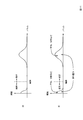
- Group Lasso rows or columns are grouped, and the frequency when the norm value is calculated for each group as shown in FIG. 11A is regarded as a distribution, and the value corresponding to the boundary between the distributions is used as a threshold value.
- the model size is reduced by deleting the model parameter corresponding to the row or column corresponding to the group whose norm is smaller than the threshold.
- Group Lasso cannot adjust the frequency distribution of the norm value, there is a problem that the number of model parameters to be reduced cannot be adjusted (Problem 2). Due to the problem 2, it is difficult to adjust the reduction amount of the model size in the method of reducing the model size of the neural network using the current Group Lasso.
- an object of the present invention is to provide a neural network learning apparatus that can adjust the reduction amount of the model size.
- the neural network learning device of the present invention includes a group parameter generation unit, a regularization term calculation unit, and a model update unit.
- the group parameter generation unit divides the model parameters of the neural network model into arbitrarily defined groups, and generates group parameters representing the characteristics of each group.
- the regularization term calculation unit calculates the regularization term on the assumption that the distribution of the group parameter follows the distribution defined by the hyperparameter that is a parameter that defines the characteristics of the distribution.
- the model update unit calculates the loss function from the correct label in the teacher data and the output probability distribution obtained by inputting the feature quantity corresponding to the correct label in the teacher data to the neural network model and the regularization term. Update the neural network model to decrease the value.
- the reduction amount of the model size can be adjusted.
- FIG. 10 is a flowchart showing the operation of the neural network learning device of the prior art 1; The block diagram which shows the structure of the neural network learning apparatus of the prior art 2.
- FIG. 10 is a flowchart showing the operation of the neural network learning device of the conventional technique 2; The block diagram which shows the structure of the sparse model update part of the prior art 2.
- FIG. 9 is a flowchart showing the operation of a sparse model update unit of Conventional Technique 2.
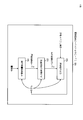
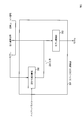
- 1 is a block diagram illustrating a configuration of a neural network learning device according to a first embodiment.
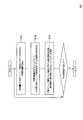
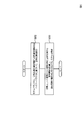
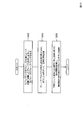
- 3 is a flowchart showing the operation of the neural network learning apparatus according to the first embodiment.
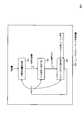
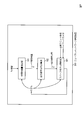
- FIG. 3 is a block diagram illustrating a configuration of a sparse model update unit according to the first embodiment.
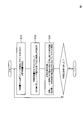
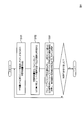
- 6 is a flowchart illustrating an operation of a sparse model update unit according to the first embodiment.
- FIG. 11A is a conceptual diagram for explaining the difference between the prior art 2 and the neural network learning apparatus of the first embodiment, and FIG. 11A is a diagram showing an outline of model parameter deletion of the neural network learning apparatus of the prior art 2.
- FIG. 5B is a diagram illustrating an outline of model parameter deletion of the neural network learning device according to the first embodiment.
- the regularization technique in the conventional technique 2 is improved.
- the neural network learning apparatus of the first embodiment can adjust the reduction amount of the model size by introducing a parameter that affects the reduction amount of the model size. it can.
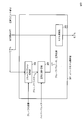
- the neural network learning apparatus 300 includes an intermediate feature amount extraction unit 101, an output probability distribution calculation unit 102, and a sparse model update unit 301.
- the operation of the sparse model updating unit 301 will be described with reference to FIG.
- the sparse model update unit 301 includes a group parameter generation unit 302, a regularization term calculation unit 303, and a model update unit 203.
- the model update unit 203 performs the same operation as the configuration requirement of the same name in the related art 2.
- FIG. 10 the operation of each component in the sparse model updating unit 301 will be described.
- Group Parameter Generation Unit 302 Input: Model (before update), group definition (specific grouping methods such as rows and columns) Output: Group parameter processing: The group parameter generation unit 302 groups the model parameters of the input model (before update) into groups that are arbitrarily defined according to the group definition (a specific grouping method such as rows and columns), and features of each group Is generated (S302). In another expression, the group parameter generation unit 302 defines a group based on the definition of the group for the input model parameter, and acquires a group parameter based on the distribution in the group space. Specific examples of group parameters include, for example, a model parameter as a matrix, and a group definition that defines a group as a row or column of a matrix of model parameters, and a norm value for each row vector or column vector. It is.
- Regularization term calculation unit 303 Input: Group parameter, Hyperparameter output: Regularization term processing: The regularization term calculation unit 303 calculates the regularization term on the assumption that the distribution of the group parameter follows the distribution defined by the hyperparameter that is a parameter that defines the characteristics of the distribution (S303). The regularization term calculation unit 303 performs processing different from that of the regularization term calculation unit 202 in that the regularization term R proposed (w) that assumes that the group parameter w g follows the distribution as described below is used.
- w g is an arbitrary parameter (for example, norm) in a group (vector or matrix) that can be arbitrarily determined, and according to the related art 2, an arbitrary parameter (for example, norm) in the row vector or column vector of the matrix of model parameters.
- ⁇ * ⁇ in the above equation represent a mixed Gaussian distribution
- j and m represent the number of mixed distributions assuming a group parameter distribution.
- the mixing weight ⁇ j , average ⁇ j , and variance ⁇ j are hyperparameters for adjusting the distribution of group parameters.
- the second term is a mixed Laplace distribution
- the mixture weight ⁇ k , average ⁇ ′ k , and variance ⁇ ′ k are hyperparameters that adjust the reduction amount of the model size in the same manner as the hyperparameter of the first term.
- the mixing weight ⁇ j , average ⁇ j , and variance ⁇ j represent hyperparameters of an arbitrary distribution function.
- the amount of model size reduction can be adjusted, and customization such as reducing the model size over Group Lasso while maintaining recognition accuracy is possible. Therefore, in incorporating a model using a neural network into a local system, it is very effective in terms of model size and calculation amount.
- the apparatus of the present invention includes, for example, a single hardware entity as an input unit to which a keyboard or the like can be connected, an output unit to which a liquid crystal display or the like can be connected, and a communication device (for example, a communication cable) capable of communicating outside the hardware entity.
- a communication unit a CPU (Central Processing Unit, may include a cache memory or a register), a RAM or ROM that is a memory, an external storage device that is a hard disk, and an input unit, an output unit, or a communication unit thereof ,
- the hardware entity may be provided with a device (drive) that can read and write a recording medium such as a CD-ROM.
- a physical entity having such hardware resources includes a general-purpose computer.
- the processing functions in the hardware entity (the device of the present invention) described in the above embodiment are realized by a computer, the processing contents of the functions that the hardware entity should have are described by a program. Then, by executing this program on a computer, the processing functions in the hardware entity are realized on the computer.
- the program describing the processing contents can be recorded on a computer-readable recording medium.
- a computer-readable recording medium for example, any recording medium such as a magnetic recording device, an optical disk, a magneto-optical recording medium, and a semiconductor memory may be used.
- a magnetic recording device a hard disk device, a flexible disk, a magnetic tape or the like, and as an optical disk, a DVD (Digital Versatile Disc), a DVD-RAM (Random Access Memory), a CD-ROM (Compact Disc Read Only) Memory), CD-R (Recordable) / RW (ReWritable), etc., magneto-optical recording media, MO (Magneto-Optical disc), etc., semiconductor memory, EEP-ROM (Electronically Erasable and Programmable-Read Only Memory), etc. Can be used.
- this program is distributed by selling, transferring, or lending a portable recording medium such as a DVD or CD-ROM in which the program is recorded. Furthermore, the program may be distributed by storing the program in a storage device of the server computer and transferring the program from the server computer to another computer via a network.
- a computer that executes such a program first stores a program recorded on a portable recording medium or a program transferred from a server computer in its own storage device.
- the computer reads a program stored in its own recording medium and executes a process according to the read program.
- the computer may directly read the program from a portable recording medium and execute processing according to the program, and the program is transferred from the server computer to the computer.
- the processing according to the received program may be executed sequentially.
- the program is not transferred from the server computer to the computer, and the above-described processing is executed by a so-called ASP (Application Service Provider) type service that realizes the processing function only by the execution instruction and result acquisition. It is good.
- ASP Application Service Provider
- the program in this embodiment includes information that is used for processing by an electronic computer and that conforms to the program (data that is not a direct command to the computer but has a property that defines the processing of the computer).
- the hardware entity is configured by executing a predetermined program on the computer.
- a predetermined program on the computer.
- at least a part of these processing contents may be realized in hardware.
Landscapes
- Engineering & Computer Science (AREA)
- Physics & Mathematics (AREA)
- Theoretical Computer Science (AREA)
- Evolutionary Computation (AREA)
- Molecular Biology (AREA)
- Artificial Intelligence (AREA)
- Biomedical Technology (AREA)
- Biophysics (AREA)
- Computational Linguistics (AREA)
- Data Mining & Analysis (AREA)
- Health & Medical Sciences (AREA)
- General Health & Medical Sciences (AREA)
- Life Sciences & Earth Sciences (AREA)
- Computing Systems (AREA)
- General Engineering & Computer Science (AREA)
- General Physics & Mathematics (AREA)
- Mathematical Physics (AREA)
- Software Systems (AREA)
- Probability & Statistics with Applications (AREA)
- Image Analysis (AREA)
- Information Retrieval, Db Structures And Fs Structures Therefor (AREA)
Abstract
L'invention concerne un dispositif d'apprentissage de réseau neuronal permettant d'ajuster une quantité de réduction d'une taille de modèle. Le dispositif d'apprentissage de réseau neuronal comprend une unité de génération de paramètres de groupe qui sépare les paramètres de modèle d'un modèle de réseau neuronal en des groupes définis arbitrairement et génère des paramètres de groupes représentant des caractéristiques des groupes respectifs, une unité de calcul de terme de régularisation qui calcule un terme de régularisation conformément à l'hypothèse selon laquelle la distribution des paramètres de groupes se conforme à la distribution définie par un hyperparamètre en tant que paramètre définissant la caractéristique de la distribution, et une unité de mise à jour de modèle qui calcule la fonction de perte à partir d'une étiquette de réponse exacte dans les données d'enseignant, la distribution de probabilité en sortie obtenue en introduisant la quantité de caractéristiques correspondant à l'étiquette de réponse exacte dans les données d'enseignant dans le modèle de réseau neuronal, et le terme de régulation et met à jour le modèle de réseau neuronal de sorte à réduire une valeur de la fonction de perte.
Priority Applications (2)
| Application Number | Priority Date | Filing Date | Title |
|---|---|---|---|
| US17/050,265 US12159222B2 (en) | 2018-04-26 | 2019-04-23 | Neural network learning apparatus, neural network learning method and program |
| JP2020515482A JP7085158B2 (ja) | 2018-04-26 | 2019-04-23 | ニューラルネットワーク学習装置、ニューラルネットワーク学習方法、プログラム |
Applications Claiming Priority (2)
| Application Number | Priority Date | Filing Date | Title |
|---|---|---|---|
| JP2018084760 | 2018-04-26 | ||
| JP2018-084760 | 2018-04-26 |
Publications (1)
| Publication Number | Publication Date |
|---|---|
| WO2019208564A1 true WO2019208564A1 (fr) | 2019-10-31 |
Family
ID=68295050
Family Applications (1)
| Application Number | Title | Priority Date | Filing Date |
|---|---|---|---|
| PCT/JP2019/017216 Ceased WO2019208564A1 (fr) | 2018-04-26 | 2019-04-23 | Dispositif d'apprentissage de réseau neuronal, procédé d'apprentissage de réseau neuronal et programme |
Country Status (3)
| Country | Link |
|---|---|
| US (1) | US12159222B2 (fr) |
| JP (1) | JP7085158B2 (fr) |
| WO (1) | WO2019208564A1 (fr) |
Cited By (4)
| Publication number | Priority date | Publication date | Assignee | Title |
|---|---|---|---|---|
| CN111275183A (zh) * | 2020-01-14 | 2020-06-12 | 北京迈格威科技有限公司 | 视觉任务的处理方法、装置和电子系统 |
| CN113762327A (zh) * | 2020-06-05 | 2021-12-07 | 宏达国际电子股份有限公司 | 机器学习方法、机器学习系统以及非暂态电脑可读取媒体 |
| WO2022007349A1 (fr) * | 2020-07-09 | 2022-01-13 | 中国科学院深圳先进技术研究院 | Procédé et système de syntonisation de réseau neuronal, terminal et support de stockage |
| WO2025178022A1 (fr) * | 2024-02-22 | 2025-08-28 | 国立大学法人 東京大学 | Dispositif de spectroscopie à étirement temporel et procédé de spectroscopie à étirement temporel |
Family Cites Families (6)
| Publication number | Priority date | Publication date | Assignee | Title |
|---|---|---|---|---|
| WO2014145203A2 (fr) * | 2013-03-15 | 2014-09-18 | Biogen Idec Ma Inc. | Systèmes et procédés de caractérisation de la sclérose en plaques |
| CN107341679A (zh) * | 2016-04-29 | 2017-11-10 | 腾讯科技(深圳)有限公司 | 获取用户画像的方法及装置 |
| US20180121814A1 (en) * | 2016-10-31 | 2018-05-03 | Microsoft Technology Licensing, Llc | Hyperparameter tuning |
| US10679129B2 (en) * | 2017-09-28 | 2020-06-09 | D5Ai Llc | Stochastic categorical autoencoder network |
| US10423861B2 (en) * | 2017-10-16 | 2019-09-24 | Illumina, Inc. | Deep learning-based techniques for training deep convolutional neural networks |
| US11295232B2 (en) * | 2017-10-30 | 2022-04-05 | Microsoft Technology Licensing, Llc | Learning the structure of hierarchical extraction models |
-
2019
- 2019-04-23 JP JP2020515482A patent/JP7085158B2/ja active Active
- 2019-04-23 WO PCT/JP2019/017216 patent/WO2019208564A1/fr not_active Ceased
- 2019-04-23 US US17/050,265 patent/US12159222B2/en active Active
Non-Patent Citations (2)
| Title |
|---|
| SCARDAPANE, S. ET AL., GROUP SPARSE REGULARIZATION FOR DEEP NEURAL NETWORKS, 2 July 2016 (2016-07-02), pages 1 - 10, XP029946330, Retrieved from the Internet <URL:URL:https://arxiv.org/pdf/1607.00485.pdf> [retrieved on 20190610] * |
| U, X. F. ET AL., BAYESIAN VARIABLE SELECTION AND ESTIMATION FOR GROUP LASSO, vol. 10, no. 4, 3 December 2015 (2015-12-03), pages 909 - 936, XP055648755, Retrieved from the Internet <URL:https://arxiv.org/pdf/1512.01013.pdf> [retrieved on 20190610] * |
Cited By (5)
| Publication number | Priority date | Publication date | Assignee | Title |
|---|---|---|---|---|
| CN111275183A (zh) * | 2020-01-14 | 2020-06-12 | 北京迈格威科技有限公司 | 视觉任务的处理方法、装置和电子系统 |
| CN111275183B (zh) * | 2020-01-14 | 2023-06-16 | 北京迈格威科技有限公司 | 视觉任务的处理方法、装置和电子系统 |
| CN113762327A (zh) * | 2020-06-05 | 2021-12-07 | 宏达国际电子股份有限公司 | 机器学习方法、机器学习系统以及非暂态电脑可读取媒体 |
| WO2022007349A1 (fr) * | 2020-07-09 | 2022-01-13 | 中国科学院深圳先进技术研究院 | Procédé et système de syntonisation de réseau neuronal, terminal et support de stockage |
| WO2025178022A1 (fr) * | 2024-02-22 | 2025-08-28 | 国立大学法人 東京大学 | Dispositif de spectroscopie à étirement temporel et procédé de spectroscopie à étirement temporel |
Also Published As
| Publication number | Publication date |
|---|---|
| US20210081792A1 (en) | 2021-03-18 |
| US12159222B2 (en) | 2024-12-03 |
| JPWO2019208564A1 (ja) | 2021-04-22 |
| JP7085158B2 (ja) | 2022-06-16 |
Similar Documents
| Publication | Publication Date | Title |
|---|---|---|
| CN110366734B (zh) | 优化神经网络架构 | |
| US11081105B2 (en) | Model learning device, method and recording medium for learning neural network model | |
| AU2017437537B2 (en) | Training tree-based machine-learning modeling algorithms for predicting outputs and generating explanatory data | |
| US20210303970A1 (en) | Processing data using multiple neural networks | |
| US20210073641A1 (en) | Learning device, learning system, and learning method | |
| JP7085158B2 (ja) | ニューラルネットワーク学習装置、ニューラルネットワーク学習方法、プログラム | |
| US20220405639A1 (en) | Information processing apparatus, information processing method and program | |
| US12182711B2 (en) | Generation of neural network containing middle layer background | |
| KR102799590B1 (ko) | 분류 모델에 기반하여 바꿔 쓰기 모델을 학습하는 방법, 바꿔 쓰기 모델을 이용한 텍스트 데이터의 증강 방법 및 이를 이용한 텍스트 처리 장치 | |
| JP2019095600A (ja) | 音響モデル学習装置、音声認識装置、それらの方法、及びプログラム | |
| CN106022517A (zh) | 一种基于核极限学习机的风险预测的方法和装置 | |
| JP6925546B1 (ja) | 演算システム、情報処理装置、および最適解探索処理方法 | |
| JP2021184148A (ja) | 最適化装置、最適化方法、および最適化プログラム | |
| US20180082167A1 (en) | Recurrent neural network processing pooling operation | |
| CN118922838A (zh) | 使用深度强化学习的合成数据生成 | |
| CN115936802A (zh) | 基于用户画像和序列建模的个性化营销方法、装置、设备和存储介质 | |
| JP7036054B2 (ja) | 音響モデル学習装置、音響モデル学習方法、プログラム | |
| CN111967941B (zh) | 一种构建序列推荐模型的方法和序列推荐方法 | |
| JP7624420B2 (ja) | 情報処理システム、情報処理方法、及び情報処理プログラム | |
| US20220004868A1 (en) | Acoustic model learning apparatus, model learning apparatus, method and program for the same | |
| CN116304607A (zh) | 用于使用深度强化学习进行预测建模的自动特征工程 | |
| WO2019194128A1 (fr) | Dispositif d'apprentissage de modèle, procédé d'apprentissage de modèle, et programme | |
| US20220092380A1 (en) | Optimization device, optimization method, and computer-readable recording medium storing optimization program | |
| JP2019095599A (ja) | 音響モデル学習装置、音声認識装置、それらの方法、及びプログラム | |
| Zhu et al. | A hybrid model for nonlinear regression with missing data using quasilinear kernel |
Legal Events
| Date | Code | Title | Description |
|---|---|---|---|
| 121 | Ep: the epo has been informed by wipo that ep was designated in this application |
Ref document number: 19791569 Country of ref document: EP Kind code of ref document: A1 |
|
| ENP | Entry into the national phase |
Ref document number: 2020515482 Country of ref document: JP Kind code of ref document: A |
|
| NENP | Non-entry into the national phase |
Ref country code: DE |
|
| 122 | Ep: pct application non-entry in european phase |
Ref document number: 19791569 Country of ref document: EP Kind code of ref document: A1 |