WO2019093418A1 - 哺乳動物細胞内の標的染色体部位で目的遺伝子を含むポリヌクレオチドを増幅させる方法およびベクター、ならびにその利用 - Google Patents
哺乳動物細胞内の標的染色体部位で目的遺伝子を含むポリヌクレオチドを増幅させる方法およびベクター、ならびにその利用 Download PDFInfo
- Publication number
- WO2019093418A1 WO2019093418A1 PCT/JP2018/041473 JP2018041473W WO2019093418A1 WO 2019093418 A1 WO2019093418 A1 WO 2019093418A1 JP 2018041473 W JP2018041473 W JP 2018041473W WO 2019093418 A1 WO2019093418 A1 WO 2019093418A1
- Authority
- WO
- WIPO (PCT)
- Prior art keywords
- polynucleotide
- target
- plasmid
- gene
- mar
- Prior art date
- Legal status (The legal status is an assumption and is not a legal conclusion. Google has not performed a legal analysis and makes no representation as to the accuracy of the status listed.)
- Ceased
Links
Images




Classifications
-
- C—CHEMISTRY; METALLURGY
- C12—BIOCHEMISTRY; BEER; SPIRITS; WINE; VINEGAR; MICROBIOLOGY; ENZYMOLOGY; MUTATION OR GENETIC ENGINEERING
- C12N—MICROORGANISMS OR ENZYMES; COMPOSITIONS THEREOF; PROPAGATING, PRESERVING, OR MAINTAINING MICROORGANISMS; MUTATION OR GENETIC ENGINEERING; CULTURE MEDIA
- C12N15/00—Mutation or genetic engineering; DNA or RNA concerning genetic engineering, vectors, e.g. plasmids, or their isolation, preparation or purification; Use of hosts therefor
- C12N15/09—Recombinant DNA-technology
-
- C—CHEMISTRY; METALLURGY
- C12—BIOCHEMISTRY; BEER; SPIRITS; WINE; VINEGAR; MICROBIOLOGY; ENZYMOLOGY; MUTATION OR GENETIC ENGINEERING
- C12N—MICROORGANISMS OR ENZYMES; COMPOSITIONS THEREOF; PROPAGATING, PRESERVING, OR MAINTAINING MICROORGANISMS; MUTATION OR GENETIC ENGINEERING; CULTURE MEDIA
- C12N5/00—Undifferentiated human, animal or plant cells, e.g. cell lines; Tissues; Cultivation or maintenance thereof; Culture media therefor
- C12N5/10—Cells modified by introduction of foreign genetic material
- C12N5/12—Fused cells, e.g. hybridomas
- C12N5/16—Animal cells
-
- C—CHEMISTRY; METALLURGY
- C12—BIOCHEMISTRY; BEER; SPIRITS; WINE; VINEGAR; MICROBIOLOGY; ENZYMOLOGY; MUTATION OR GENETIC ENGINEERING
- C12P—FERMENTATION OR ENZYME-USING PROCESSES TO SYNTHESISE A DESIRED CHEMICAL COMPOUND OR COMPOSITION OR TO SEPARATE OPTICAL ISOMERS FROM A RACEMIC MIXTURE
- C12P21/00—Preparation of peptides or proteins
-
- C—CHEMISTRY; METALLURGY
- C12—BIOCHEMISTRY; BEER; SPIRITS; WINE; VINEGAR; MICROBIOLOGY; ENZYMOLOGY; MUTATION OR GENETIC ENGINEERING
- C12N—MICROORGANISMS OR ENZYMES; COMPOSITIONS THEREOF; PROPAGATING, PRESERVING, OR MAINTAINING MICROORGANISMS; MUTATION OR GENETIC ENGINEERING; CULTURE MEDIA
- C12N9/00—Enzymes; Proenzymes; Compositions thereof; Processes for preparing, activating, inhibiting, separating or purifying enzymes
- C12N9/14—Hydrolases (3)
Definitions
- the present invention relates to methods and vectors for amplifying a polynucleotide containing a target gene at a target chromosomal site in mammalian cells, and uses thereof.
- the inventor refers to a vector ("IR / MAR vector” or "IR / MAR plasmid”) comprising a mammalian replication initiation region (IR; initiation region) and a nuclear matrix binding region (MAR; matrix attachment region).
- IR mammalian replication initiation region
- MAR nuclear matrix binding region
- Is introduced into cells eg, COLO 320 or CHO DG44
- the protein to be expressed is encoded by selecting a stable transformant using a drug resistance gene present on the vector
- the target gene in other words, the target gene
- the target gene when the target gene is introduced into the cell as a gene construct (cis) identical to the IR / MAR vector.
- IR / MAR gene amplification method for highly amplifying a target gene using the above-mentioned IR / MAR vector.
- high-level gene amplification system or "IR / MAR gene amplification system”
- IR / MAR gene amplification method for highly amplifying a target gene using the above-mentioned IR / MAR vector.
- IR / MAR gene amplification method a gene amplification method using an advanced gene amplification system (IR / MAR gene amplification system) is referred to as “IR / MAR gene amplification method”.
- Japanese Patent Publication Japanese Patent Application Publication No. 2003-245083 (release date: September 2, 2003)
- Japanese Patent Publication Japanese Patent Application Laid-Open No. 2004-337066 (release date: December 2, 2004)"
- Noriaki Shimizu et. Al. Plasmids with a Mammalian Replication Origin and a Matrix Attachment Region Initiate the Event Similar to Gene Amplification, Cancer Research, Vol. 61, No. 19, No. 19, p6987-6990, (2001) Noriaki Shimizu et. Al., Amplification of plasmids containing a mammalian replication initiation region is mediated by controllable conflict between replication and transcription, Cancer Research, Vol.63, No.17, p5281-5290, (2003) Jinek M et al. (2012) “A Programmable Dual-RNA Guided DNA Endonuclease in Adaptive Bacterial Immunity”, Science, Vol. 337 (Issue 6096), pp. 816-821
- IR / MAR gene amplification method When gene amplification is performed by the IR / MAR gene amplification method, simple repetitive sequences of the target gene are formed in the amplified region. However, amplification of the target gene by IR / MAR gene amplification method occurs at random sites on the chromosome, so it was difficult to target the specific site on the chromosome to amplify the target gene.
- One aspect of the present invention has been made in view of the above-mentioned conventional problems, and its object is to provide a method for amplifying a polynucleotide containing a target gene at a specific site of a chromosome.
- the present inventors call an IR / MAR plasmid containing a target gene and a nucleotide sequence homologous to a target chromosomal site, and a guide RNA (hereinafter "g RNA").
- Target chromosome site by co-introducing into a mammalian cell a plasmid (hereinafter sometimes referred to as “Crisps / Cas9 plasmid”) containing a polynucleotide containing a nucleotide sequence corresponding to that of and Cas9). It has been found that amplification of a target gene can be performed by the present inventors, and the present invention has been completed. That is, one aspect of the present invention includes the following configurations.
- a method of amplifying a polynucleotide containing a target gene at a target chromosomal site in a mammalian cell (A) a polynucleotide comprising a base sequence homologous to a target chromosomal site, (B) a polynucleotide containing a target gene, (C) a polynucleotide comprising a nucleotide sequence corresponding to a mammalian replication initiation region (IR) and a nuclear matrix binding region (MAR), and (d) a polynucleotide comprising a nucleotide sequence corresponding to a guide RNA and Cas9 as a mammalian cell Including the steps of: introducing simultaneously.
- IR mammalian replication initiation region
- MAR nuclear matrix binding region
- Mammalian cells into which the following (a) to (d) have been introduced (A) a polynucleotide comprising a base sequence homologous to a target chromosomal site, (B) a polynucleotide containing a target gene, (C) A polynucleotide comprising a nucleotide sequence corresponding to a mammalian replication initiation region (IR) and a nuclear matrix binding region (MAR), and (d) a polynucleotide comprising a nucleotide sequence corresponding to guide RNA and Cas9.
- A a polynucleotide comprising a base sequence homologous to a target chromosomal site
- B a polynucleotide containing a target gene
- C A polynucleotide comprising a nucleotide sequence corresponding to a mammalian replication initiation region (IR) and a nuclear matrix binding region (MAR)
- MAR nuclear matrix binding region
- a polynucleotide having a target gene introduced into a cell can be amplified at a specific site of a chromosome.
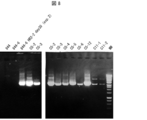
- FIG. 8 is a diagram showing a mechanism for introducing a polynucleotide containing a target gene into a target chromosomal site in a mammalian cell by the method according to one embodiment of the present invention and highly amplifying the polynucleotide containing the target gene.
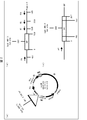
- A is a figure which shows the structure of IR / MAR plasmid (plasmid 6) used in the Example.
- B) is a figure which shows the position cut
- C is a figure which shows the position cut
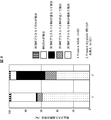
- FIG. 1 shows the structure of MAC used in the examples and the vector for its construction. It is a figure which shows the result of the fluorescent staining to MAC and IR / MAR plasmid. It is a figure which shows the ratio of the cell according to the grade of the overlap with MAC and IR / MAR plasmid in the case where only IR / MAR plasmid is introduce
- gene intends a polymer of nucleotides, and is used synonymously with “polynucleotide”, “nucleic acid” or “nucleic acid molecule”.
- the gene may be present in the form of DNA (eg, cDNA or genomic DNA) or in the form of RNA (eg, mRNA).
- the DNA or RNA may be double stranded or single stranded. Single-stranded DNA or RNA may be the coding strand (sense strand) or the non-coding strand (antisense strand).
- the gene may be chemically synthesized.
- it describes as “polynucleotide” in this specification it may be DNA or RNA.
- protein is used synonymously with “peptide” or “polypeptide”.
- base and amino acid notations appropriately use one-letter notation or three-letter notation defined by IUPAC and IUB.
- IR / MAR plasmids resulting from co-introduction of plasmid 6 (IR / MAR plasmid) and pCas9 HR2-2 (Crisps / Cas9 plasmid) is caused by recombination due to non-homologous end joining. It found (Example 2, FIG. 7).
- recombination between IR / MAR plasmid and MAC which is caused by co-introduction of plasmid 6 (IR / MAR plasmid) and pCas9 HR2-2 (Crisps / Cas9 plasmid) is caused by homologous recombination. (Example 3, FIG. 8).
- a polynucleotide containing a target base gene is arranged so as to be sandwiched by a polynucleotide containing a base sequence homologous to a target site (target chromosomal site) (Ie, the polynucleotide containing the gene of interest is designed to be located inside the polynucleotide containing a base sequence homologous to the target site (target chromosomal site)).
- target chromosomal site only the base sequence of the target site (target chromosomal site) is cleaved, and homologous recombination occurs between the cleaved target site (target chromosomal site) and the plasmid containing the polynucleotide containing the uncut target gene.
- the polynucleotide containing the target gene is not sandwiched by the polynucleotide containing the base sequence homologous to the target chromosomal site (in other words, contains the base sequence homologous to the target chromosomal site)
- the polynucleotide is placed on the plasmid at a different position from the polynucleotide containing the base sequence homologous to the target chromosomal site, without being divided by the polynucleotide containing the target gene).
- the method in one aspect of the present invention is a mammalian cell by the mechanism as shown in FIG. It is considered that a polynucleotide containing a target gene is amplified at a target chromosomal site within (refer to FIG. 1 as appropriate).
- vector and "plasmid” are treated as synonymous unless otherwise noted.
- a method of amplifying a polynucleotide comprising a gene of interest at a target chromosomal site in a mammalian cell (A) a polynucleotide comprising a base sequence homologous to a target chromosomal site, (B) a polynucleotide containing a target gene, (C) a polynucleotide comprising a nucleotide sequence corresponding to a mammalian replication initiation region (IR) and a nuclear matrix binding region (MAR), and (d) a polynucleotide comprising a nucleotide sequence corresponding to a guide RNA and Cas9 as a mammalian cell
- a method comprising the steps of:
- target chromosomal site refers to a specific position on a chromosome where it is desired to introduce and amplify a polynucleotide containing a target gene.
- a base sequence homologous to a target chromosomal site means a base sequence similar to the extent that introduction of the component (b) into the target chromosomal site is possible to the target chromosomal site,
- the target chromosomal site and the base sequence of at least 80% or more, 90% or more, 95% or more, and 99% or more are identical.
- the length of the “base sequence homologous to the target chromosomal site” is not particularly limited, and may be any length.
- target gene refers to a nucleotide sequence that is desired to be introduced into a target chromosomal site, and that functions in the cell into which it is introduced. "Function in the cell into which the gene is introduced” means that the introduced nucleotide sequence has some physiological influence on the cell into which the gene is introduced.
- the “target gene” may be, for example, a polynucleotide encoding a protein to be expressed (in other words, a target protein). Further, in the present specification, the “target gene” may be a polynucleotide encoding an RNA to be expressed (in other words, a target RNA).
- the target RNA is, for example, non-coding RNA, and may be, for example, miRNA, snRNA, shRNA, siRNA, antisense RNA and the like. Therefore, the target gene is not particularly limited, and a polynucleotide encoding a desired protein, a polynucleotide encoding a desired RNA, and the like may be appropriately selected and adopted.
- the “target gene” may be obtained based on its nucleotide sequence information using known techniques (for example, PCR method, chemical synthesis method).
- the polynucleotide containing the target gene is preferably linked to a promoter so that expression control of the target gene can be performed.
- the promoter is not particularly limited as long as it functions in introduced mammalian cells.
- the promoter may be a promoter whose transcription activity is controlled to be activated or inactivated by a predetermined operation using a transcription factor or the like (in other words, a transcriptional activity regulated promoter), or the transcription is constitutively performed. It may be a constitutive promoter in which the activity is activated.
- the transcriptional activity-regulated promoter is not particularly limited, and commercially available products such as, for example, TRE promoter (manufactured by Clontech) and T-REX promoter (manufactured by Invitrogen) can be used.
- TRE promoter manufactured by Clontech
- T-REX promoter manufactured by Invitrogen
- a constitutive promoter a CMV promoter, an SV40 early region-derived promoter (SV40 promoter), an SRalpha promoter (SR ⁇ promoter), an LTR promoter, an MMTV promoter, etc. can be used.
- the polynucleotide containing the target gene may further include a polynucleotide necessary for expression of the target gene such as a terminator, a polynucleotide necessary for cloning a restriction enzyme recognition site, a drug resistance gene and the like.
- the polynucleotide (component (b)) containing the target gene may be carried on the same vector as the components (a), (c) and (d). And the components (a), (c) and (d) may be carried on another vector.
- the components (a) to (d) may be divided into two or more vectors and introduced into the host cell. preferable. Therefore, the polynucleotide (component (b)) containing the target gene is carried on the same vector (for example, referred to as "first vector") as the above components (a) and (c), and the above ((the component)).
- the d) component is carried on another vector (for example, referred to as "second vector").
- the component (a) when the polynucleotide (component (b)) containing at least the target gene and the component (a) are carried on the same vector, the component (a) is (b) ) Are placed at different positions on the vector without being separated by components.
- a polynucleotide containing a target gene is arranged to be sandwiched by a polynucleotide containing a base sequence homologous to a target site (ie, a polynucleotide containing a base sequence homologous to a target site)
- the polynucleotide containing the target gene is arranged so as to be located inside the
- the polynucleotide containing the target gene is not sandwiched by the polynucleotide containing the base sequence homologous to the target chromosomal site (in other words, the base sequence homologous to the target chromosomal site)
- the polynucleotide contained is not divided by the polynucleotide containing the target gene), and is arranged at the same position on the same vector as the polynucleotide containing the base sequence homologous to the target chromosomal site
- Polynucleotide containing base sequences corresponding to mammalian replication initiation region (IR) and nuclear matrix binding region (MAR) A method of amplifying a polynucleotide containing a target gene at a target chromosomal site in a mammalian cell in one embodiment of the present invention comprises a nucleotide sequence corresponding to a mammalian replication initiation region (IR) and a nuclear matrix binding region (MAR) Including the step of introducing the polynucleotide (component (c)) into mammalian cells.
- the "mammalian replication initiation region (IR)” and the “nuclear matrix binding region (MAR)” are IR / MAR gene amplification methods (eg, patents) previously developed by the inventor. It will not be particularly limited as long as it is used in the methods described in documents 1 and 2 and non-patent documents 1 and 2.
- IR mammalian replication initiation region
- c-myc locus c-myc locus, dihydrofolate reductase locus, replication initiation region of ⁇ -globin locus, and the like can be mentioned.
- the replication initiation region of the c-myc locus is described, for example, in McWhinney, C. et al., Nucleic Acids Res. Vol. 18, p 1233-1242 (1990).
- the replication initiation region of the dihydrofolate reductase locus is described in, for example, Dijkwel, PA et al., Mol. Cell. Biol. Vol. 8, p5398-5409 (1988).
- the replication initiation region of the ⁇ -globin locus is described, for example, in Aladjem, M. et al., Science vol. 281, p 1005-1009 (1998).
- the “nuclear matrix binding region (MAR)” is not particularly limited, and can include nuclear matrix binding regions such as Ig ⁇ locus, SV40 early region, dihydrofolate reductase locus and the like.
- the nuclear matrix binding region of the Ig ⁇ ⁇ ⁇ locus is described, for example, in Tsutsui, K. et. Al., J. Biol. Chem. Vol. 268, p12886-12894 (1993).
- the nuclear matrix binding region of the SV40 early region is described, for example, in Pommier, Y. et. Al., J. Virol., Vol. 64, p 419-423 (1990).
- the nuclear matrix binding region of the dihydrofolate reductase locus is described, for example, in Shimizu N. et al., Cancer Res. Vol. 61, p 6987-6990 (2001).
- a method for amplifying a polynucleotide comprising a gene of interest at a target chromosomal site in a mammalian cell comprises: guiding RNA and a polynucleotide (component (d) component) comprising a base sequence corresponding to Cas9 The process of introduce
- introduction of a polynucleotide comprising a base sequence corresponding to guide RNA and Cas9 into a mammalian cell results in cleavage of a target chromosomal site and / or the above-mentioned component (a) in mammalian cells.
- Cleavage (DNA cleavage) of a target sequence by a polynucleotide containing a base sequence corresponding to the guide RNA and Cas9 is produced, for example, by the mechanism described in Non-Patent Document 3.
- guide RNA is RNA that forms part of a CRISPR / Cas system, and has a base sequence complementary to a target sequence for cleaving a target chromosomal site.
- the length of the guide RNA is not particularly limited as long as it can recognize the target sequence, and generally, it is a single-stranded RNA of about 61 to 65 bases.
- the guide RNA recognizes, for example, a sequence having a length of 10 to 60 bases, preferably 20 to 50 bases, more preferably 25 to 40 bases, still more preferably 32 to 36 bases as a target sequence.
- the sequence of the guide RNA may be appropriately designed according to the target sequence for cleaving the target chromosomal site. Also, synthesis of guide RNA can be performed using any method known in the art.
- Cas9 is an endonuclease that functions in the CRISPR / Cas system, and is not particularly limited as long as it has a target sequence cleavage activity in cooperation with the guide RNA.
- Cas9 in one embodiment of the present invention is, for example, any protein selected from the group consisting of the following (i) to (iii): (I) a protein consisting of the amino acid sequence set forth in SEQ ID NO: 1; (Ii) A protein consisting of an amino acid sequence in which one or several amino acid residues are substituted, deleted, inserted and / or added in the amino acid sequence described in SEQ ID NO: 1, and a protein having DNA cleavage activity And (iii) an amino acid having 80% or more homology with the amino acid sequence described in SEQ ID NO: 1.
- the protein of (i) above is a protein consisting of the amino acid sequence shown by SEQ ID NO: 1, and is a polypeptide consisting of 1371 amino acid residues in total derived from Streptococcus pyogenes.
- the protein of (ii) above is a functionally equivalent variant, derivative, variant, allele, homologue, orthologue, partial peptide, or other protein or peptide of the protein having the amino acid sequence shown in SEQ ID NO: 1 It is a fusion protein etc., and as long as it has DNA cleavage activity, the specific sequence is not limited.
- the number of amino acids that may be deleted, substituted or added is not limited as long as the above-mentioned function is not lost, but deletion, substitution or deletion may be performed by known introduction methods such as site-directed mutagenesis.
- the number refers to the number that can be added, preferably within 5 amino acids, more preferably within 3 amino acids (eg, 3, 2 or 1 amino acids).
- “mutation” mainly refers to a mutation artificially introduced by site-directed mutagenesis and the like, but may be a naturally occurring similar mutation.
- amino acid residue to be substituted is substituted with another amino acid whose nature of the amino acid side chain is conserved.
- hydrophobic amino acids A, I, L, M, F, P, W, Y, V
- hydrophilic amino acids R, D, N, C, E, Q, G) , H, K, S, T
- amino acids having aliphatic side chains G, A, V, L, I, P
- amino acids having hydroxyl-containing side chains S, T, Y
- sulfur atom-containing side Amino acids having a chain C, M
- amino acids having a carboxylic acid and an amide-containing side chain D, N, E, Q
- amino acids having a base-containing side chain R, K, H
- an aromatic-containing side chain Amino acids H, F, Y, W having the following (all in parentheses represent one-letter notation of amino acids).
- a polypeptide having an amino acid sequence modified by deletion, addition and / or substitution of one or more amino acid residues to a certain amino acid sequence maintains its biological activity.
- the mutated amino acid residues are more preferably mutated to amino acid residues having as many common properties as possible.
- “functionally equivalent” is intended that the protein of interest has the same (identical and / or similar) biological function or biochemical function as the target protein.
- the biological properties can also include the specificity of the site to be expressed, the amount of expression, and the like. Whether a protein into which a mutation has been introduced has a desired function can be determined by examining whether it has DNA cleavage activity when the protein is used as part of a subunit.
- the homology of the amino acid sequences is at least 80% or more, more preferably 90% or more, still more preferably 95% or more (eg, 95%, 96 or more) in the entire amino acid sequence (or a region necessary for functional expression). %, 97%, 98%, 99% or more) is meant to have sequence identity.
- the homology of amino acid sequences can be determined using BLASTN (nucleic acid level) or BLASTX (amino acid level) programs (Altschul et al. J. Mol. Biol., 215: 403-410, 1990). The program is based on the algorithm BLAST by Karlin and Altschul (Proc. Natl. Acad. Sci.
- homology is intended as a percentage of amino acid residue numbers (homology, positive, etc.) having similar properties, but more preferably, percentage of amino acid residue numbers that are identical, ie, identity It is.
- the nature of the amino acid is as described above.
- a polynucleotide modification method which is usually performed may be used. That is, a polynucleotide having genetic information of a desired recombinant protein can be prepared by substituting, deleting, inserting and / or adding a specific base of the polynucleotide having genetic information of the protein.
- Specific methods for converting the bases of polynucleotides include, for example, commercially available kits (KOD-Plus Site-Directed Mutagenesis Kit (Toyobo), Transformer Site-Directed Mutagenesis Kit (Clontech), QuickChange Site Directed Mutagenesis Kit (Stratagene), etc. Or the use of polymerase chain reaction (PCR). These methods are known to those skilled in the art.
- Cas9 derived from Streptococcus pyogenes
- Cas9 derived from other organisms can be used in one embodiment of the present invention.
- “Cas9” in the present specification may be a nuclease that sequence-specifically cleaves a target homologous sequence, and an alternative to be used as a substitute for Cas9 is also in the scope of “Cas9” in the present specification. Is included in
- a polynucleotide comprising a base sequence corresponding to guide RNA and Cas9 includes a base sequence corresponding to guide RNA and Cas9, and operates the CRISPR / Cas system in the cells into which it is introduced, It is not particularly limited as long as it is a polynucleotide capable of cleaving the target nucleotide sequence.
- a step of simultaneously introducing a selection marker (component (e)) into mammalian cells may be included.
- a selection marker component (e)
- cells into which the components (a) to (d) have been introduced can be easily selected.
- the “selection marker” is a mixture of mammalian cells into which the components (a) to (d) have been introduced and mammalian cells into which the components (a) to (d) have not been introduced.
- the substance is not particularly limited as long as it is a substance capable of selecting a mammalian cell into which the components (a) to (d) have been introduced from among the above cell populations.
- a drug resistant gene eg, blasticidin resistance gene, neomycin resistance gene, hygromycin resistance gene, puromycin resistance gene, etc.
- a fluorescent protein which can be used as a selection marker can be encoded.
- Genes eg, EGFP gene etc.
- fluorescent substances eg FITC, Cy3, Cy5, Alexa488 etc.
- radioactive isotopes eg. HRP, alkaline phosphatase etc.
- enzymes eg peroxidase (eg HRP), alkaline phosphatase etc.
- a drug resistant gene is used.
- the polynucleotide (component (b)) containing the target gene is carried on the same vector (for example, referred to as “first vector”) as the components (a) and (c),
- the component (d) is preferably carried on another vector (for example, referred to as "second vector").
- the component (e) can be selected in such a manner that cells into which both the first vector and the second vector have been introduced can be selected, for example, carried in both the first vector and the second vector. Is preferred.
- the selection markers loaded on each vector be of different types.
- the first vector is loaded with the blasticidin resistance gene as a drug resistance gene
- the second vector contains a drug resistance gene other than the blasticidin resistance gene (eg, hygromycin resistant gene, Puromycin resistance gene etc. can be loaded.
- a drug resistance gene other than the blasticidin resistance gene eg, hygromycin resistant gene, Puromycin resistance gene etc.
- a method of amplifying a polynucleotide containing a target gene at a target chromosomal site in a mammalian cell comprises the steps of simultaneously introducing the above components (a) to (d) into a mammalian cell (in other words, For example, the introduction step).
- the mammalian cells are not particularly limited, and cells derived from various mammals (eg, cultured cells derived from various mammals) may be used.
- CHO derived from Chinese hamster, various tumor cells and the like can be mentioned.
- Examples of CHO include CHO-K1 (ATCC CCL-61, RIKEN RCB 0285, RIKEN RCB 0403, etc.) and CHO DG44.
- CHO is a cell which is currently used for the actual production of a useful protein such as a drug, has been confirmed to be safe, and is preferable as a mammalian cell to which the method in one embodiment of the present invention is applied.
- tumor cells having infinite proliferation ability are preferred.
- the tumor cells include HeLa (available from, for example, ATCC CCL-2, ATCC CCL-2.2, RIKEN RCB 0007, RIKEN RCB 0191, etc.), human colon cancer COLO 320 DM (available from: eg, ATCC CCL- 220), human colon cancer COLO 320 HSR (available from, for example, ATCC CCL-220.1), NS0 (available from, for example, RIKEN RCB 0213), and the like.
- human colon cancer COLO 320 DM see Shimizu, N., Kanda, T., and Wahl, G. M. Selective capture of acentric fragments by micronuclei providing a rapid method for purifying extrachromosomally amplified DNA. Nat. Genet., 12: 65-71, 1996.
- the method of simultaneously introducing into mammalian cells in one embodiment of the present invention is not particularly limited, and known methods such as lipofection, electroporation, particle gun method and the like can be used. Moreover, about the detailed conditions, what is necessary is just to consider and adopt an optimal condition according to the mammal introduce
- a method of amplifying a polynucleotide containing a target gene at a target chromosomal site in a mammalian cell comprises a mammal into which the components (a) to (d) have been introduced in addition to the introducing step. Including a step of separating the cells (in other words, a selection step) and a step of culturing the mammalian cells (in other words, transformed cells) selected in the selection step (in other words, a culture step) It is also good. In addition, a step of purifying the target protein produced by the culture step (in other words, a purification step) may be included.
- the mammalian cell into which the components (a) to (d) are introduced is used. Also included are methods of producing a protein of interest.
- the selection step is a step of separating the mammalian cells into which the components (a) to (d) have been introduced. More specifically, in the selection step, a cell population in which the mammalian cells into which the components (a) to (d) are introduced and the mammalian cells into which the components (a) to (d) are not introduced are mixed. Among them, the step of selecting mammalian cells into which the above components (a) to (d) have been introduced is selected. By the selection step, mammalian cells capable of highly expressing the target protein can be selected.
- the specific method of the selection step is not particularly limited, and the selection step may be performed by detecting a polynucleotide such as a target gene contained in cells by PCR or Southern blotting.
- a polynucleotide such as a target gene contained in cells by PCR or Southern blotting.
- the drug resistance is A desired cell may be selected using the same.
- a selection process can be easily performed by using the said (e) component.
- the specific method of selection using drug resistance, PCR method, Southern blot method is not particularly limited, and known methods can be appropriately used.
- the culture step is a step of culturing the mammalian cells already selected by the selection step.
- the target protein can be highly expressed in mammalian cells.
- the specific method of the culture step is not particularly limited, and may be selected as appropriate after examining the optimal conditions for the mammalian cell to be cultured.
- the purification step is a step of purifying the target protein produced by the culture step.
- a specific purification method of the protein in the purification step for example, after suspending mammalian cells in a buffer solution such as PBS (Phosphate Buffered Saline), the cells are disrupted by a homogenizer or ultrasonic waves, etc. After the suspension is subjected to centrifugation, the supernatant may be recovered.
- a surfactant for promoting the solubilization of the target protein, a reducing agent for stabilizing the three-dimensional structure of the target protein, and a protease inhibitor for preventing the degradation of the target protein are appropriately added. May be
- CHAPS 3-[(3-cholamidopropyl) -dimethylaminoio] -1-propanesulfonate
- Triton X-100 Nikkol, n-octyl glycoside and the like
- DTT dithiothreitol
- DET dithioerythritol
- aprotinin and leupeptin can be used.
- the target protein can be purified using column chromatography such as affinity chromatography, ion exchange chromatography, filtration chromatography and the like.
- unnecessary salts may be removed from the solution containing the target protein by dialyzing the solution containing the purified target protein against a suitable buffer.
- the purification step is preferably performed under low temperature conditions to suppress degradation of the target protein.
- the purification step is preferably performed under low temperature conditions of 4 ° C. or less.
- purification process is not this limitation, but a well-known method can be utilized suitably.
- mammalian cells In one embodiment of the present invention, there is provided a mammalian cell into which the following (a) to (d) have been introduced.
- A a polynucleotide comprising a base sequence homologous to a target chromosomal site,
- B a polynucleotide containing a target gene,
- C A polynucleotide comprising a nucleotide sequence corresponding to a mammalian replication initiation region (IR) and a nuclear matrix binding region (MAR), and
- MAR nuclear matrix binding region
- the cells described in the above section [2-6] may be used.
- the introduction of the above components (a) to (d) into mammalian cells may be carried out using the method described in the above section [2-6].
- the mammalian cells in one embodiment of the present invention may be those to which a (e) selection marker is further introduced in addition to the above (a) to (d) components.
- a (e) selection marker is further introduced in addition to the above (a) to (d) components.
- the component (e) used in one embodiment of the present invention the component (e) described in the above section [2-5] may be used.
- a target protein can be produced in large quantities and stably.
- cell A CHO DG44 cell line (hereinafter referred to as "CD / M2 # 44 cell") into which a mouse artificial chromosome (MAC) has been introduced by the MMCT (Micronuclei-mediated chromosome transfer) method was used.
- the cell line was obtained from chromocenter.
- the structure of MAC and the vector for its construction are as shown in FIG.
- the mouse artificial chromosome carries Hygromycin.
- IR / MAR plasmid PCR is performed from the HR2 region (see FIG. 9) of MAC (manufactured by chromocenter) at the Mlu I cleavage site (between CMV promoter and Amp) of p ⁇ BMd2EGFP (PlosONE, 2017, 12 (4): e0175585, Ohsaki et al)
- the amplified 2838 bp DNA fragment was inserted (see FIG. 2 (a)).
- ⁇ F CTGGTAGAGTCTGGAGTGAA (SEQ ID NO: 4)
- R GCTCTTCCCTGACAAGACCC (SEQ ID NO: 5)
- This plasmid has IR / MAR, blasticidin resistance gene (BS resistance gene) and the like.
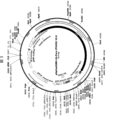
- PCas9 plasmid PSpCas9 (BB) -2A-Puro (PX459) V2.0 plasmid was obtained from Addgene (see FIG. 3).
- a double-stranded DNA of any of the following sequences was inserted between the Bbs I-Bbs I cleavage site (not shown in FIG. 3) between the U6 promoter and the gRNA scaffold of this plasmid.
- the following sequence is a nucleotide sequence homologous to a part of the nucleotide sequence of the HR2 region on MAC (see FIG. 9).
- pCas9 HR2-1 The plasmid into which the double stranded DNA of the sequence of (1) above is inserted is referred to as pCas9 HR2-1, and the plasmid into which the double stranded DNA of the sequence of (2) above is inserted is referred to as pCas9 HR2-2.
- pCas9 HR2-2 Each sequence described above is transcribed as a guide RNA, the guide RNA recognizes a target chromosomal site, and Cas9 recruited to the guide RNA cleaves the target chromosomal site.
- This plasmid carries the Cas9 gene and the puromycin resistance gene.
- Example 1 Transformation and selection
- the above plasmid was introduced into CD / M2 # 44 cells.
- the plasmid 6 alone or the plasmid 6 and pCas9 HR2-2 DNAs are mixed in a ratio of 4: 1 to 9: 1, and CD / M2 is prepared using Lipofectamine 2000 (manufactured by Invitrogen). It was introduced into # 44 cells. Subsequently, drug co-selection was performed using blasticidin and puromycin. About one month later, stable transformants were selected, chromosome specimens were prepared, and total genomic DNA in cells was extracted. After that, chromosome analysis was performed by FISH method.
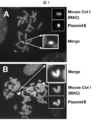
- FISH method For detection of MAC, a biotin-labeled probe was prepared from Mouse Cot-I DNA (DNA enriched in highly repetitive sequences in mouse genome). Also, for the detection of plasmid 6, a DIG-labeled probe was prepared from p ⁇ BMd2EGFP which does not have a homologous sequence to MAC. The above two types of probes were mixed and hybridized to a chromosome sample. The biotin-labeled probe was detected with red fluorescence and the DIG-labeled probe with green fluorescence. The DNA was counterstained with blue fluorescence using DAPI. The results are shown in FIGS. 5 and 6.
- Example 2 By the same method as in Example 1, transformation, selection of stable transformants, and extraction of total genomic DNA in cells were performed. In order to analyze the recombination mechanism between IR / MAR plasmids, PCR was performed using the obtained primers and the following primers and PCR conditions.
- ⁇ MW HyperLadder I (manufactured by BioLine) # 44: CD / M2 # 44 cells described in the example # 44-6: # 44 cells introduced with plasmid 6 and blastcidin-sorted cells for 30 days # 44-6 HR2- 2 days 30 (exp. 2): A mixture of plasmid 6 and pCas9 HR2-2 mixed in a ratio of 9: 1 was introduced into cells of # 44, and cells sorted with blasticidin and puromycin for 30 days. # 44-6 HR2-1 day6 (exp.
- Example 3 By the same method as in Example 1, transformation, selection of stable transformants, and extraction of total genomic DNA in cells were performed. In order to analyze the recombination mechanism between IR / MAR plasmid and MAC, PCR was performed using the following primers and PCR conditions using the obtained genomic DNA.
- FIG. 8 Each notation in FIG. 8 indicates the following, respectively.
- the method in one aspect of the present invention is by the mechanism as shown in FIG. It is suggested that the plasmid sequence (target gene) is amplified at the target chromosomal site.
- One aspect of the present invention can be used in fields where it is desired to produce large amounts of desired proteins (eg, useful proteins), for example, in a wide variety of industries such as pharmaceuticals, chemicals, foods, cosmetics, fibers, etc. .
- desired proteins eg, useful proteins
- one embodiment of the present invention can be used in the field where amplification of a target gene is desired at a specific site of a chromosome, for example, the field of gene therapy and the like.
Landscapes
- Health & Medical Sciences (AREA)
- Life Sciences & Earth Sciences (AREA)
- Engineering & Computer Science (AREA)
- Genetics & Genomics (AREA)
- Organic Chemistry (AREA)
- Chemical & Material Sciences (AREA)
- Zoology (AREA)
- Wood Science & Technology (AREA)
- Biotechnology (AREA)
- Bioinformatics & Cheminformatics (AREA)
- General Engineering & Computer Science (AREA)
- Biomedical Technology (AREA)
- General Health & Medical Sciences (AREA)
- Microbiology (AREA)
- Biochemistry (AREA)
- Molecular Biology (AREA)
- Physics & Mathematics (AREA)
- Biophysics (AREA)
- Plant Pathology (AREA)
- Cell Biology (AREA)
- Chemical Kinetics & Catalysis (AREA)
- General Chemical & Material Sciences (AREA)
- Micro-Organisms Or Cultivation Processes Thereof (AREA)
- Preparation Of Compounds By Using Micro-Organisms (AREA)
- Medicines That Contain Protein Lipid Enzymes And Other Medicines (AREA)
Abstract
染色体の特定の部位で、目的遺伝子を含むポリヌクレオチドの増幅を行う方法を提供する。本発明の一態様に係る方法は、(a)標的染色体部位と相同な塩基配列を含むポリヌクレオチド、(b)目的遺伝子を含むポリヌクレオチド、(c)哺乳動物複製開始領域(IR)および核マトリックス結合領域(MAR)に相当する塩基配列を含むポリヌクレオチド、および(d)guide RNAおよびCas9に相当する塩基配列を含むポリヌクレオチドを上記哺乳動物細胞に同時に導入する工程を含む。
Description
本発明は、哺乳動物細胞内の標的染色体部位で目的遺伝子を含むポリヌクレオチドを増幅させる方法およびベクター、ならびにその利用に関する。
本発明者は、哺乳動物複製開始領域(IR;Initiation Region)と核マトリックス結合領域(MAR;Matrix Attachment Region)とを具備するベクター(「IR/MARベクター」または「IR/MARプラスミド」と呼ぶ。)を細胞(例えば、COLO 320、または、CHO DG44)に導入し、ベクター上に存在する薬剤耐性遺伝子を利用して安定な形質転換体を選択することによって、(i)発現させるべきタンパク質をコードする遺伝子(換言すれば、目的遺伝子)の細胞内コピー数を増幅できること、および、(ii)目的遺伝子を、IR/MARベクターに対して同一の遺伝子構築物(シス)として細胞へ導入した場合であっても、IR/MARベクターに対して別の遺伝子構築物(トランス)として細胞へ導入した場合であっても、目的遺伝子の細胞内コピー数を増幅できること、を見出した。そして、本発明者は、上記IR/MARベクターを用いて目的遺伝子を高度に増幅する系(「高度遺伝子増幅系」または「IR/MAR遺伝子増幅系」と呼ぶ。)を完成させるに至った(例えば、特許文献1および2、ならびに非特許文献1および2参照)。ここで、高度遺伝子増幅系(IR/MAR遺伝子増幅系)を用いた遺伝子増幅法を、「IR/MAR遺伝子増幅法」と呼ぶ。
ところで、細菌、古細菌は、外から侵入しようとするファージなどの生物を特異的に認識し、排除する適応免疫機構を有している。CRISPR/Casシステムと呼ばれるこのシステムは、外来生物のゲノム情報を自己ゲノムに取り込み(アダプテーション)、再度同じ外来生物が侵入しようとする際に、自己ゲノムに取り込まれた情報とゲノム配列の相補性を利用して外来ゲノムを切断し、排除する(インターフェアランス)システムである。最近になって、上記のCRISPR/Casシステムを、「DNA編集用の道具」として用いた、ゲノム編集(DNA編集)技術の開発が盛んに行われている(非特許文献3)。
Noriaki Shimizu et. al., Plasmids with a Mammalian Replication Origin and a Matrix Attachment Region Initiate the Event Similar to Gene Amplification, Cancer Research, Vol.61, No.19, p6987-6990, (2001)
Noriaki Shimizu et. al., Amplification of plasmids containing a mammalian replication initiation region is mediated by controllable conflictbetween replication and transcription, Cancer Research, Vol.63, No.17, p5281-5290, (2003)
Jinek M et al. (2012) "A Programmable Dual-RNA Guided DNA Endonuclease in Adaptive Bacterial Immunity", Science, Vol.337 (Issue 6096), pp.816-821
IR/MAR遺伝子増幅法によって遺伝子増幅を行った場合、増幅した領域には、目的遺伝子の単純反復配列が形成される。しかしながら、IR/MAR遺伝子増幅法による目的遺伝子の増幅は、染色体のランダムな部位で生じるため、染色体の特定の部位を狙って、目的遺伝子の増幅を行うことは困難であった。
本発明の一態様は、上記従来の問題点に鑑みなされたものであって、その目的は、染色体の特定の部位で、目的遺伝子を含むポリヌクレオチドの増幅を行う方法を提供することにある。
本発明者は、上記目的を達成するために鋭意検討を重ねた結果、目的遺伝子および標的染色体部位と相同な塩基配列を含むIR/MARプラスミドと、guide RNA(以下、「g RNA」と称することもある。)およびCas9に相当する塩基配列を含むポリヌクレオチドを含むプラスミド(以下、「CRISPR/Cas9プラスミド」と称することもある。)とを、哺乳動物細胞に共導入することにより、標的染色体部位で目的遺伝子の増幅を行うことができることを見出し、本発明を完成するに至った。すなわち、本発明の一態様は、以下の構成を包含する。
〔1〕哺乳動物細胞内の標的染色体部位で目的遺伝子を含むポリヌクレオチドを増幅させる方法であり、
(a)標的染色体部位と相同な塩基配列を含むポリヌクレオチド、
(b)目的遺伝子を含むポリヌクレオチド、
(c)哺乳動物複製開始領域(IR)および核マトリックス結合領域(MAR)に相当する塩基配列を含むポリヌクレオチド、および
(d)guide RNAおよびCas9に相当する塩基配列を含むポリヌクレオチドを哺乳動物細胞に同時に導入する工程を含むことを特徴とする、方法。
(a)標的染色体部位と相同な塩基配列を含むポリヌクレオチド、
(b)目的遺伝子を含むポリヌクレオチド、
(c)哺乳動物複製開始領域(IR)および核マトリックス結合領域(MAR)に相当する塩基配列を含むポリヌクレオチド、および
(d)guide RNAおよびCas9に相当する塩基配列を含むポリヌクレオチドを哺乳動物細胞に同時に導入する工程を含むことを特徴とする、方法。
〔2〕さらに(e)選択マーカーを、哺乳動物細胞に同時に導入する工程を含むことを特徴とする、〔1〕に記載の方法。
〔3〕上記(a)~(c)および(e)が、第1のベクター上に搭載されており、上記(d)および(e)が、第2のベクター上に搭載されていることを特徴とする、〔2〕に記載の方法。
〔4〕上記(e)が薬剤耐性遺伝子であることを特徴とする、〔2〕または〔3〕に記載の方法。
〔5〕上記(a)が(b)によって分断されることなく、上記(a)と(b)とが同一のベクター上の異なる位置に配置されていることを特徴とする、〔3〕または〔4〕に記載の方法。
〔6〕以下の(a)~(c)を含む、〔2〕から〔5〕のいずれかに記載の方法で使用されるためのベクター:
(a)標的染色体部位と相同な塩基配列を含むポリヌクレオチド、
(b)目的遺伝子を含むポリヌクレオチド、および
(c)哺乳動物複製開始領域(IR)および核マトリックス結合領域(MAR)に相当する塩基配列を含むポリヌクレオチド。
(a)標的染色体部位と相同な塩基配列を含むポリヌクレオチド、
(b)目的遺伝子を含むポリヌクレオチド、および
(c)哺乳動物複製開始領域(IR)および核マトリックス結合領域(MAR)に相当する塩基配列を含むポリヌクレオチド。
〔7〕以下の(a)~(d)が導入されてなる哺乳動物細胞:
(a)標的染色体部位と相同な塩基配列を含むポリヌクレオチド、
(b)目的遺伝子を含むポリヌクレオチド、
(c)哺乳動物複製開始領域(IR)および核マトリックス結合領域(MAR)に相当する塩基配列を含むポリヌクレオチド、および
(d)guide RNAおよびCas9に相当する塩基配列を含むポリヌクレオチド。
(a)標的染色体部位と相同な塩基配列を含むポリヌクレオチド、
(b)目的遺伝子を含むポリヌクレオチド、
(c)哺乳動物複製開始領域(IR)および核マトリックス結合領域(MAR)に相当する塩基配列を含むポリヌクレオチド、および
(d)guide RNAおよびCas9に相当する塩基配列を含むポリヌクレオチド。
〔8〕〔7〕に記載の哺乳動物細胞を用いた、目的タンパク質を生産する方法。
本発明の一態様によれば、細胞に導入された目的遺伝子を含むポリヌクレオチドを、染色体の特定の部位で増幅することができるという効果を奏する。
以下、本発明の実施の形態の一例について詳細に説明するが、本発明は、これらに限定されない。
本明細書において特記しない限り、数値範囲を表す「A~B」は、「A以上、B以下」を意味する。
本明細書において、「遺伝子」とはヌクレオチドの重合体を意図し、「ポリヌクレオチド」、「核酸」または「核酸分子」と同義で使用される。遺伝子は、DNAの形態(例えば、cDNAもしくはゲノムDNA)でも存在しうるし、RNA(例えば、mRNA)の形態でも存在しうる。DNAまたはRNAは、二本鎖であっても、一本鎖であってもよい。一本鎖DNAまたはRNAは、コード鎖(センス鎖)であっても、非コード鎖(アンチセンス鎖)であってもよい。遺伝子は化学的に合成してもよい。また、本明細書において「ポリヌクレオチド」と記載した場合、DNAであってもよいし、RNAであってもよい。
本明細書において、「タンパク質」は、「ペプチド」または「ポリペプチド」と同義で使用される。本明細書中、塩基およびアミノ酸の表記は、IUPACおよびIUBの定める1文字表記または3文字表記を適宜使用する。
〔1.本発明のメカニズム(モデル)〕
〔1-1.本発明者による知見〕
本発明者は、染色体の特定の部位で、目的遺伝子を含むポリヌクレオチドの増幅を行う方法について検討を行った。その結果、plasmid 6(IR/MARプラスミド)およびpCas9 HR2-2(CRISPR/Cas9プラスミド)を共導入することにより、MAC(すなわち、標的染色体部位)にplasmid 6が導入されること、一つのMACあたり少なくとも数十コピーのプラスミド配列が増幅されていること、MACへのIR/MARプラスミドの導入効率が顕著に増加すること、およびMAC上で目的遺伝子を含むプラスミド配列の増幅が顕著に増加することを見出した(実施例1、図5、図6)。
〔1-1.本発明者による知見〕
本発明者は、染色体の特定の部位で、目的遺伝子を含むポリヌクレオチドの増幅を行う方法について検討を行った。その結果、plasmid 6(IR/MARプラスミド)およびpCas9 HR2-2(CRISPR/Cas9プラスミド)を共導入することにより、MAC(すなわち、標的染色体部位)にplasmid 6が導入されること、一つのMACあたり少なくとも数十コピーのプラスミド配列が増幅されていること、MACへのIR/MARプラスミドの導入効率が顕著に増加すること、およびMAC上で目的遺伝子を含むプラスミド配列の増幅が顕著に増加することを見出した(実施例1、図5、図6)。
また、本発明者は、plasmid 6(IR/MARプラスミド)およびpCas9 HR2-2(CRISPR/Cas9プラスミド)の共導入により生じるIR/MARプラスミド間の組み換えが、非相同末端結合による組み換えにより生じることを見出した(実施例2、図7)。
さらに、本発明者は、plasmid 6(IR/MARプラスミド)およびpCas9 HR2-2(CRISPR/Cas9プラスミド)の共導入により生じるIR/MARプラスミドおよびMAC間の組み換えが、相同組み換えにより生じることを見出した(実施例3、図8)。
〔1-2.本発明のメカニズム(モデル)〕
相同組み換えのためのベクターを設計する際、通常の相同組み換えにおいては、目的塩基遺伝子を含むポリヌクレオチドが、標的部位(標的染色体部位)と相同な塩基配列を含むポリヌクレオチドで挟み込まれるように配置される(すなわち、目的遺伝子を含むポリヌクレオチドが、標的部位(標的染色体部位)と相同な塩基配列を含むポリヌクレオチドの内部に位置するように設計される)。その結果、標的部位(標的染色体部位)の塩基配列のみが切断され、切断された標的部位(標的染色体部位)と、未切断の目的遺伝子を含むポリヌクレオチドを含むプラスミドとの間で相同組み換えが生じる。
相同組み換えのためのベクターを設計する際、通常の相同組み換えにおいては、目的塩基遺伝子を含むポリヌクレオチドが、標的部位(標的染色体部位)と相同な塩基配列を含むポリヌクレオチドで挟み込まれるように配置される(すなわち、目的遺伝子を含むポリヌクレオチドが、標的部位(標的染色体部位)と相同な塩基配列を含むポリヌクレオチドの内部に位置するように設計される)。その結果、標的部位(標的染色体部位)の塩基配列のみが切断され、切断された標的部位(標的染色体部位)と、未切断の目的遺伝子を含むポリヌクレオチドを含むプラスミドとの間で相同組み換えが生じる。
しかし、本発明の一態様においては、目的遺伝子を含むポリヌクレオチドは、標的染色体部位と相同な塩基配列を含むポリヌクレオチドで挟み込まれることなく(換言すれば、標的染色体部位と相同な塩基配列を含むポリヌクレオチドは目的遺伝子を含むポリヌクレオチドによって分断されることなく)、プラスミド上の、標的染色体部位と相同な塩基配列を含むポリヌクレオチドとは異なる位置に配置される。その結果、標的染色体部位のみならず、目的遺伝子を含むポリヌクレオチドを含むプラスミドにおいても、標的染色体部位と相同な塩基配列の切断が生じる。
そうすると、IR/MARプラスミドおよびCRISPR/Cas9プラスミドの導入直後には、IR/MARプラスミドと標的染色体部位との間で組み換えが起こらず、IR/MARプラスミドの標的染色体部位と相同な塩基配列が、CRISPR/Cas9プラスミドにより切断されない配列(切断不可配列)となった後に、IR/MARプラスミドと標的染色体部位との間で組み換えが起こると予測される。
以上の結果と、本発明者により以前に見出されていたIR/MARプラスミドの増幅機構に関する知見を併せると、本発明の一態様における方法は、図1に示すようなメカニズムにより、哺乳動物細胞内の標的染色体部位で目的遺伝子を含むポリヌクレオチドが増幅されると考えられる(適宜、図1を参照)。
(1)CRISPR/Casシステムによる、標的染色体部位、およびIR/MARプラスミド上の標的染色体部位と相同な塩基配列の切断。
(2)IR/MARプラスミドの多量体化および切断/再結合による切断付加配列への変換(非相同末端結合による組み換え)。
(3)多量体化IR/MARプラスミドの標的染色体部位への導入(相同組み換え)。
(4)BFBサイクルによる、染色体上での目的遺伝子の増幅。
なお、本明細書において、「ベクター」と「プラスミド」は、特に断りがない限り、同義のものとして扱う。
〔2.哺乳動物細胞内の標的染色体部位で目的遺伝子を含むポリヌクレオチドを増幅させる方法〕
本発明の一実施形態において、哺乳動物細胞内の標的染色体部位で目的遺伝子を含むポリヌクレオチドを増幅させる方法であり、
(a)標的染色体部位と相同な塩基配列を含むポリヌクレオチド、
(b)目的遺伝子を含むポリヌクレオチド、
(c)哺乳動物複製開始領域(IR)および核マトリックス結合領域(MAR)に相当する塩基配列を含むポリヌクレオチド、および
(d)guide RNAおよびCas9に相当する塩基配列を含むポリヌクレオチド
を哺乳動物細胞に同時に導入する工程を含むことを特徴とする方法を提供する。
本発明の一実施形態において、哺乳動物細胞内の標的染色体部位で目的遺伝子を含むポリヌクレオチドを増幅させる方法であり、
(a)標的染色体部位と相同な塩基配列を含むポリヌクレオチド、
(b)目的遺伝子を含むポリヌクレオチド、
(c)哺乳動物複製開始領域(IR)および核マトリックス結合領域(MAR)に相当する塩基配列を含むポリヌクレオチド、および
(d)guide RNAおよびCas9に相当する塩基配列を含むポリヌクレオチド
を哺乳動物細胞に同時に導入する工程を含むことを特徴とする方法を提供する。
なお、上記「(a)標的染色体部位と相同な塩基配列を含むポリヌクレオチド」、「(b)目的遺伝子を含むポリヌクレオチド」、「(c)哺乳動物複製開始領域(IR)および核マトリックス結合領域(MAR)に相当する塩基配列を含むポリヌクレオチド」、「(d)guide RNAおよびCas9に相当する塩基配列を含むポリヌクレオチド」のそれぞれを、「(a)成分」、「(b)成分」、「(c)成分」、「(d)成分」と称することもある。また、「(a)成分」、「(b)成分」、「(c)成分」および「(d)成分」を併せて、「(a)~(d)成分」と称することもある。
以下、上記の各構成について説明する。
〔2-1.標的染色体部位と相同な塩基配列を含むポリヌクレオチド〕
本明細書において、「標的染色体部位」とは、目的遺伝子を含むポリヌクレオチドを導入して増幅させることが所望される、染色体上の特定の位置を意味する。
本明細書において、「標的染色体部位」とは、目的遺伝子を含むポリヌクレオチドを導入して増幅させることが所望される、染色体上の特定の位置を意味する。
本明細書において、「標的染色体部位と相同な塩基配列」とは、上記(b)成分の、標的染色体部位への相同組み換えによる導入が可能な程度にまで類似している塩基配列を意味し、例えば、標的染色体部位と、少なくとも80%以上、90%以上、95%以上、99%以上の塩基配列が同一である。「標的染色体部位と相同な塩基配列」の長さは、特に限定されず、任意の長さであり得る。
〔2-2.目的遺伝子を含むポリヌクレオチド〕
本明細書において、「目的遺伝子」は、標的染色体部位への導入が所望される塩基配列であって、導入先の細胞で機能する塩基配列を意味する。「導入先の細胞で機能する」とは、導入された塩基配列が、導入先の細胞に対して何らかの生理学的な影響を及ぼすことを意味する。
本明細書において、「目的遺伝子」は、標的染色体部位への導入が所望される塩基配列であって、導入先の細胞で機能する塩基配列を意味する。「導入先の細胞で機能する」とは、導入された塩基配列が、導入先の細胞に対して何らかの生理学的な影響を及ぼすことを意味する。
本明細書において、「目的遺伝子」は、例えば、発現させるべきタンパク質(換言すれば、目的タンパク質)をコードするポリヌクレオチドであり得る。また、本明細書において、「目的遺伝子」は、発現させるべきRNA(換言すれば、目的RNA)をコードするポリヌクレオチドであってもよい。目的RNAは、例えば、non-coding RNAであり、例えば、miRNA、snRNA、shRNA、siRNA、アンチセンスRNA等であり得る。よって、目的遺伝子は、特に限定されることなく、所望のタンパク質をコードするポリヌクレオチド、所望のRNAをコードするポリヌクレオチド等を適宜選択の上、採用すればよい。
上記「目的遺伝子」は、その塩基配列情報を元に、公知の技術(例えば、PCR法、化学合成法)を用いて取得すればよい。
目的遺伝子を含むポリヌクレオチドは、目的遺伝子の発現制御が可能なようにプロモーターに連結されていることが好ましい。上記プロモーターは、導入される哺乳動物細胞内で機能するものであれば特に限定されない。例えば、転写因子等による所定の操作によって、プロモーターの転写活性が制御されて活性化または不活性化されるプロモーター(換言すれば、転写活性調節型プロモーター)であってもよいし、恒常的に転写活性が活性化されている恒常型プロモーターであってもよい。
転写活性調節型プロモーターは、特に限定されず、例えば、TREプロモーター(クロンテック社製)、T-REXプロモーター(インビトロジェン社製)等の市販品を利用可能である。恒常型プロモーターとしては、CMVプロモーター、SV40初期領域由来プロモーター(SV40プロモーター)、SRalphaプロモーター(SRαプロモーター)、LTRプロモーター、MMTVプロモーター等が利用可能である。
目的遺伝子を含むポリヌクレオチドには、その他、ターミネーター等の目的遺伝子の発現に必要なポリヌクレオチド、制限酵素認識部位、薬剤耐性遺伝子等のクローニングに必要なポリヌクレオチドが含まれていてもよい。
本発明の一実施形態において、目的遺伝子を含むポリヌクレオチド((b)成分)は、上記(a)成分、(c)成分および(d)成分と同一のベクター上に搭載されていてもよいし、上記(a)成分、(c)成分および(d)成分と別のベクター上に搭載されていてもよい。ベクターサイズが大きくなりすぎることによる宿主細胞への導入率の低下を回避するためには、上記(a)成分~(d)成分は2つ以上のベクターに分けて宿主細胞に導入されることが好ましい。よって、目的遺伝子を含むポリヌクレオチド((b)成分)は、上記(a)成分および(c)成分と同一のベクター(例えば、「第1のベクター」と称する。)上に搭載され、上記(d)成分は別のベクター(例えば、「第2のベクター」と称する。)上に搭載されていることが好ましい。
また、本発明の一実施形態において、少なくとも目的遺伝子を含むポリヌクレオチド((b)成分)と(a)成分とが、同一のベクター上に搭載されている場合、上記(a)成分は(b)成分によって分断されることなく、当該ベクター上の異なる位置に配置されている。
すなわち、通常の相同組み換えにおいては、目的遺伝子を含むポリヌクレオチドが、標的部位と相同な塩基配列を含むポリヌクレオチドで挟み込まれるように配置される(すなわち、標的部位と相同な塩基配列を含むポリヌクレオチドの内部に位置するように、目的遺伝子を含むポリヌクレオチドが配置される)。一方、本発明の一実施形態においては、目的遺伝子を含むポリヌクレオチドは、標的染色体部位と相同な塩基配列を含むポリヌクレオチドで挟み込まれることなく(換言すれば、標的染色体部位と相同な塩基配列を含むポリヌクレオチドは目的遺伝子を含むポリヌクレオチドによって分断されることなく)、同一ベクター上で標的染色体部位と相同な塩基配列を含むポリヌクレオチドとは異なる位置に配置される。そのような構成を採用することにより、染色体の特定の部位で、目的遺伝子を含むポリヌクレオチドの増幅を行うことができるという、本発明の一実施形態における効果を発揮することを可能にする。
〔2-3.哺乳動物複製開始領域(IR)および核マトリックス結合領域(MAR)に相当する塩基配列を含むポリヌクレオチド〕
本発明の一実施形態における哺乳動物細胞内の標的染色体部位で目的遺伝子を含むポリヌクレオチドを増幅させる方法は、哺乳動物複製開始領域(IR)および核マトリックス結合領域(MAR)に相当する塩基配列を含むポリヌクレオチド((c)成分)を哺乳動物細胞に導入する工程を含む。
本発明の一実施形態における哺乳動物細胞内の標的染色体部位で目的遺伝子を含むポリヌクレオチドを増幅させる方法は、哺乳動物複製開始領域(IR)および核マトリックス結合領域(MAR)に相当する塩基配列を含むポリヌクレオチド((c)成分)を哺乳動物細胞に導入する工程を含む。
本発明の一実施形態において、「哺乳動物複製開始領域(IR)」および「核マトリックス結合領域(MAR)」は、以前に、本発明者により開発されたIR/MAR遺伝子増幅法(例えば、特許文献1および2、ならびに非特許文献1および2に記載の方法)に用いられるものであれば特に限定されない。
本明細書において、「哺乳動物複製開始領域(IR)」は、特に限定されず、c-myc遺伝子座、ジヒドロ葉酸リダクターゼ遺伝子座、β-グロビン遺伝子座の複製開始領域等を挙げることができる。なおc-myc遺伝子座の複製開始領域については、例えば、McWhinney, C. et al., Nucleic Acids Res. vol. 18, p1233-1242(1990)に記載されている。ジヒドロ葉酸リダクターゼ遺伝子座の複製開始領域については、例えば、Dijkwel, P.A. et al., Mol. Cell. Biol. vol.8, p5398-5409(1988)に記載されている。β-グロビン遺伝子座の複製開始領域については、例えば、Aladjem, M. et al., Science vol. 281, p1005-1009(1998)に記載されている。
本明細書において、「核マトリックス結合領域(MAR)」は、特に限定されず、Igκ遺伝子座、SV40初期領域、ジヒドロ葉酸リダクターゼ遺伝子座等の核マトリックス結合領域を挙げることができる。なお、Igκ遺伝子座の核マトリックス結合領域については、例えば、Tsutsui, K. et. al., J. Biol. Chem. Vol.268, p12886-12894(1993)に記載されている。SV40初期領域の核マトリックス結合領域については、例えば、Pommier, Y. et. al., J. Virol., Vol.64, p419-423(1990)に記載されている。ジヒドロ葉酸リダクターゼ遺伝子座の核マトリックス結合領域については、例えば、Shimizu N. et al., Cancer Res. Vol.61, p6987-6990(2001)に記載されている。
〔2-4.guide RNAおよびCas9に相当する塩基配列を含むポリヌクレオチド〕
本発明の一実施形態における哺乳動物細胞内の標的染色体部位で目的遺伝子を含むポリヌクレオチドを増幅させる方法は、guide RNAおよびCas9に相当する塩基配列を含むポリヌクレオチド((d)成分)を哺乳動物細胞に導入する工程を含む。
本発明の一実施形態における哺乳動物細胞内の標的染色体部位で目的遺伝子を含むポリヌクレオチドを増幅させる方法は、guide RNAおよびCas9に相当する塩基配列を含むポリヌクレオチド((d)成分)を哺乳動物細胞に導入する工程を含む。
本発明の一実施形態において、guide RNAおよびCas9に相当する塩基配列を含むポリヌクレオチドの哺乳動物細胞への導入により、哺乳動物細胞内の標的染色体部位および/または上記(a)成分の切断が生じる。guide RNAおよびCas9に相当する塩基配列を含むポリヌクレオチドによる標的配列の切断(DNA切断)は、例えば、非特許文献3に記載されたメカニズムにより生じる。
本明細書において、「guide RNA」は、CRISPR/Casシステムの一部を形成するRNAであり、標的染色体部位を切断するための標的配列と相補的な塩基配列を有する。guide RNAの長さは、標的配列を認識できる長さであれば特段限定されず、一般的には、61~65塩基程度の1本鎖RNAである。guide RNAは、例えば、10~60塩基、好ましくは20~50塩基、より好ましくは25~40塩基、さらに好ましくは32~36塩基の長さの配列を標的配列として認識する。
なお、guide RNAの配列は、標的染色体部位を切断するための標的配列に応じて適宜設計すればよい。また、guide RNAの合成は、当該分野で既知の任意の方法を用いて行うことができる。
本明細書において、「Cas9」は、CRISPR/Casシステムで機能するエンドヌクレアーゼであり、guide RNAと協調して標的配列の切断活性を有する限り特段限定されない。
本発明の一実施形態におけるCas9は、例えば、以下の(i)~(iii)からなる群より選択されるいずれかのタンパク質である:
(i)配列番号1に記載されるアミノ酸配列からなるタンパク質;
(ii)配列番号1に記載されるアミノ酸配列において、1または数個のアミノ酸残基が置換、欠失、挿入および/または付加されたアミノ酸配列からなるタンパク質で、かつ、DNA切断活性を有するタンパク質;および
(iii)配列番号1に記載されるアミノ酸配列と80%以上の相同性を有するアミノ酸。
(i)配列番号1に記載されるアミノ酸配列からなるタンパク質;
(ii)配列番号1に記載されるアミノ酸配列において、1または数個のアミノ酸残基が置換、欠失、挿入および/または付加されたアミノ酸配列からなるタンパク質で、かつ、DNA切断活性を有するタンパク質;および
(iii)配列番号1に記載されるアミノ酸配列と80%以上の相同性を有するアミノ酸。
上記(i)のタンパク質は、配列番号1で示されるアミノ酸配列からなるタンパク質であり、Streptococcus pyogenesに由来する、全長1371アミノ酸残基から構成されるポリペプチドである。
上記(ii)のタンパク質は、配列番号1で示されるアミノ酸配列を有するタンパク質の、機能的に同等の変異体、誘導体、バリアント、アレル、ホモログ、オルソログ、部分ペプチド、または他のタンパク質・ペプチドとの融合タンパク質等であって、DNA切断活性を有する限りにおいて、その具体的な配列については限定されない。ここで欠失、置換または付加されてもよいアミノ酸の数は、上記機能を失わせない限り、限定されてないが、部位特異的突然変異誘発法等の公知の導入法によって欠失、置換または付加できる程度の数をいい、好ましくは5アミノ酸以内であり、より好ましくは3アミノ酸以内(例えば、3、2または1アミノ酸)である。また、明細書中において「変異」とは、部位特異的突然変異誘発法等によって人為的に導入された変異を主に意味するが、天然に存在する同様の変異であってもよい。
置換されるアミノ酸残基は、アミノ酸側鎖の性質が保存されている別のアミノ酸に置換されていることが好ましい。例えば、アミノ酸側鎖の性質としては、疎水性アミノ酸(A、I、L、M、F、P、W、Y、V)、親水性アミノ酸(R、D、N、C、E、Q、G、H、K、S、T)、脂肪族側鎖を有するアミノ酸(G、A、V、L、I、P)、水酸基含有側鎖を有するアミノ酸(S、T、Y)、硫黄原子含有側鎖を有するアミノ酸(C、M)、カルボン酸およびアミド含有側鎖を有するアミノ酸(D、N、E、Q)、塩基含有側鎖を有するアミノ酸(R、K、H)、芳香族含有側鎖を有するアミノ酸(H、F、Y、W)が挙げられる(括弧内はいずれもアミノ酸の一文字表記を表す)。あるアミノ酸配列に対する1または複数個のアミノ酸残基の欠失、付加および/または他のアミノ酸による置換により修飾されたアミノ酸配列を有するポリペプチドがその生物学的活性を維持することはすでに知られている。さらに、変異後のアミノ酸残基は、共通した性質をできるだけ多く有するアミノ酸残基に変異していることがより好ましい。
本明細書において「機能的に同等」とは、対象となるタンパク質が、目的とするタンパク質と同等(同一および/または類似)の生物学的機能や生化学的機能を有することを意図する。生物学的な性質には発現する部位の特異性や、発現量等も含まれ得る。変異を導入したタンパク質が所望の機能を有するかどうかは、そのタンパク質をサブユニットの一部として用いた場合に、DNA切断活性を有するかどうか調べることにより判断できる。
上記(iii)のタンパク質も、配列番号1で示されるアミノ酸配列を有するタンパク質の、機能的に同等の変異体、誘導体、バリアント、アレル、ホモログ、オルソログ、部分ペプチド、または他のタンパク質・ペプチドとの融合タンパク質等を意図しており、DNA切断活性を有する限りにおいて、その具体的な配列については限定されない。
Cas9に関して、アミノ酸配列の相同性とは、アミノ酸配列全体(または機能発現に必要な領域)で、少なくとも80%以上、より好ましくは90%以上、さらに好ましくは95%以上(例えば、95%、96%、97%、98%、99%以上)の配列の同一性を有することを意味する。アミノ酸配列の相同性は、BLASTN(核酸レベル)やBLASTX(アミノ酸レベル)のプログラム(Altschul et al. J. Mol. Biol., 215: 403-410, 1990)を利用して決定することができる。該プログラムは、KarlinおよびAltschulによるアルゴリズムBLAST(Proc. Natl. Acad. Sci. USA, 87:2264-2268, 1990, Proc. Natl. Acad. Sci. USA, 90: 5873-5877, 1993)に基づいている。BLASTNによって塩基配列を解析する場合には、パラメーターは例えばscore=100、wordlength=12とする。また、BLASTXによってアミノ酸配列を解析する場合には、パラメーターは例えばscore=50、wordlength=3とする。また、Gapped BLASTプログラムを用いて、アミノ酸配列を解析する場合は、Altschulら(Nucleic Acids Res. 25: 3389-3402, 1997)に記載されているように行うことができる。BLASTとGapped BLASTプログラムを用いる場合には、各プログラムのデフォルトパラメーターを用いる。これらの解析方法の具体的な手法は公知である。比較対象の塩基配列またはアミノ酸配列を最適な状態にアラインメントするために、付加または欠失(例えば、ギャップ等)を許容してもよい。
Cas9に関して、相同性とは、性質が類似のアミノ酸残基数の割合(homology、positive等)を意図しているが、より好ましくは、同一のアミノ酸残基数の割合、すなわち同一性(identity)である。なお、アミノ酸の性質については上述したとおりである。
上記タンパク質を得る方法としては、通常行われるポリヌクレオチド改変方法を用いてもよい。すなわち、タンパク質の遺伝情報を有するポリヌクレオチドの特定の塩基を置換、欠失、挿入および/または付加することで、所望の組換えタンパク質の遺伝情報を有するポリヌクレオチドを作製することができる。ポリヌクレオチドの塩基を変換する具体的な方法としては、例えば市販のキット(KOD-Plus Site-Directed Mutagenesis Kit(東洋紡)、Transformer Site-Directed Mutagenesis Kit(Clontech)、QuickChange Site Directed Mutagenesis Kit(Stratagene)等)の使用、またはポリメラーゼ連鎖反応法(polymerase chain reaction:PCR)の利用が挙げられる。これらの方法は当業者に公知である。
なお、上記実施形態においては、Streptococcus pyogenes由来のCas9について言及したが、他の生物由来のCas9を本発明の一実施形態において使用可能であることは言うまでもない。また、本明細書における「Cas9」は、標的とする相同配列を配列特異的に切断するヌクレアーゼであればよく、Cas9の代替として使用される代替物もまた、本明細書における「Cas9」の範囲に包含される。
本明細書において、「guide RNAおよびCas9に相当する塩基配列を含むポリヌクレオチド」は、guide RNAおよびCas9に相当する塩基配列を含み、かつ、導入先の細胞内でCRISPR/Casシステムを作動させ、目的の塩基配列を切断することができるポリヌクレオチドであれば特に限定されない。
〔2-5.選択マーカー〕
本発明の一実施形態において、上記(a)~(d)成分に加えて、さらに選択マーカー((e)成分)を、哺乳動物細胞に同時に導入する工程を含んでもよい。哺乳動物細胞に、上記選択マーカーを上記(a)~(d)成分と同時に導入することにより、上記(a)~(d)成分が導入された細胞を容易に選抜することができる。
本発明の一実施形態において、上記(a)~(d)成分に加えて、さらに選択マーカー((e)成分)を、哺乳動物細胞に同時に導入する工程を含んでもよい。哺乳動物細胞に、上記選択マーカーを上記(a)~(d)成分と同時に導入することにより、上記(a)~(d)成分が導入された細胞を容易に選抜することができる。
本明細書において、「選択マーカー」は、上記(a)~(d)成分が導入された哺乳動物細胞と、上記(a)~(d)成分が導入されていない哺乳動物細胞と、が混在した細胞集団の中から、上記(a)~(d)成分が導入された哺乳動物細胞を選抜することができる物質であれば特に限定されない。「選択マーカー」としては、例えば、薬剤耐性遺伝子(例えば、ブラストサイジン抵抗性遺伝子、ネオマイシン抵抗性遺伝子、ヒグロマイシン抵抗性遺伝子、ピューロマイシン抵抗性遺伝子等)、選択マーカーとして利用可能な蛍光タンパク質をコードする遺伝子(例えば、EGFP遺伝子等)、蛍光物質(例えば、FITC、Cy3、Cy5、Alexa488等)、放射性同位体、酵素(例えば、ペルオキシダーゼ(例えばHRP)、アルカリホスファターゼ等)等が挙げられる。操作の容易性の観点から、好ましくは、薬剤耐性遺伝子が使用される。
上述の通り、目的遺伝子を含むポリヌクレオチド((b)成分)は、上記(a)成分および(c)成分と同一のベクター(例えば、「第1のベクター」と称する。)上に搭載され、上記(d)成分は別のベクター(例えば、「第2のベクター」と称する。)上に搭載されていることが好ましい。よって、(e)成分は、上記第1のベクターおよび第2のベクターの両方が導入されている細胞を選抜できるような態様、例えば、上記第1のベクターおよび第2のベクターの両方に搭載されることが好ましい。
本発明の一実施形態において、(e)成分が複数のベクターに搭載される場合、各々のベクターに搭載される選択マーカーは異なる種類のものであることが好ましい。例えば、第1のベクターに、薬剤耐性遺伝子として、ブラストサイジン抵抗性遺伝子を搭載した場合、第2のベクターには、ブラストサイジン抵抗性遺伝子以外の薬剤耐性遺伝子(例えば、ヒグロマイシン抵抗性遺伝子、ピューロマイシン抵抗性遺伝子等)が搭載され得る。異なる選抜マーカーを搭載することにより、所望の複数のベクターのすべてが導入された細胞の選抜を行うことができる。
〔2-6.哺乳動物細胞に同時に導入する工程〕
本発明の一実施形態において、哺乳動物細胞内の標的染色体部位で目的遺伝子を含むポリヌクレオチドを増幅させる方法は、上記(a)~(d)成分を哺乳動物細胞に同時に導入する工程(換言すれば、導入工程)を含んでいる。
本発明の一実施形態において、哺乳動物細胞内の標的染色体部位で目的遺伝子を含むポリヌクレオチドを増幅させる方法は、上記(a)~(d)成分を哺乳動物細胞に同時に導入する工程(換言すれば、導入工程)を含んでいる。
哺乳動物細胞としては、特に限定されず、各種哺乳動物由来の細胞(例えば、各種哺乳動物由来の培養細胞)が用いられ得る。例えば、チャイニーズハムスター由来のCHOや、各種腫瘍細胞等が挙げられる。CHOとしては、例えば、CHO-K1(ATCC CCL-61、RIKEN RCB0285、RIKEN RCB0403等)や、CHO DG44が挙げられる。CHOは、現在、医薬等の有用タンパク質の実生産に用いられており、安全性が確認されている細胞であり、本発明の一実施形態における方法が適用される哺乳動物細胞としては好ましい。
遺伝子増幅効率が高いという点では、無限増殖能を有する腫瘍細胞が好ましい。上記腫瘍細胞としては、例えば、HeLa(入手先:例えば、ATCC CCL-2、ATCC CCL-2.2、RIKEN RCB0007、RIKEN RCB0191等)、ヒト大腸がんCOLO 320DM(入手先:例えば、ATCC CCL-220)、ヒト大腸がんCOLO 320HSR(入手先:例えば、ATCC CCL-220.1)、NS0(入手先:例えば、RIKEN RCB0213)等が挙げられる。なおヒト大腸がんCOLO 320DMについては、Shimizu, N., Kanda, T., and Wahl, G. M. Selective capture of acentricfragments by micronuclei provides a rapid method for purifying extrachromosomally amplified DNA. Nat. Genet., 12: 65-71, 1996.を参照のこと。
本発明の一実施形態における哺乳動物細胞に同時に導入する方法は、特に限定されるものではなく、リポフェクション、エレクトロポレーション法、パーティクルガン法等の公知の方法を利用可能である。またその詳細な条件については、導入される哺乳動物や、各エレメント等に応じて適宜最適な条件を検討の上、採用すればよい。
〔2-7.その他の工程〕
本発明の一実施形態において、哺乳動物細胞内の標的染色体部位で目的遺伝子を含むポリヌクレオチドを増幅させる方法は、導入工程の他に、上記(a)~(d)成分が導入された哺乳動物細胞を分離する工程(換言すれば、選抜工程)や、当該選抜工程によって選抜された哺乳動物細胞(換言すれば、形質転換細胞)を培養する工程(換言すれば、培養工程)を含んでいてもよい。また、培養工程によって生産された目的タンパク質を精製する工程(換言すれば、精製工程)を含んでいてもよい。つまり、本発明の一実施形態における哺乳動物細胞内の標的染色体部位で目的遺伝子を含むポリヌクレオチドを増幅させる方法は、上記(a)~(d)成分が導入された哺乳動物細胞を用いた、目的タンパク質を生産する方法をも包含する。
本発明の一実施形態において、哺乳動物細胞内の標的染色体部位で目的遺伝子を含むポリヌクレオチドを増幅させる方法は、導入工程の他に、上記(a)~(d)成分が導入された哺乳動物細胞を分離する工程(換言すれば、選抜工程)や、当該選抜工程によって選抜された哺乳動物細胞(換言すれば、形質転換細胞)を培養する工程(換言すれば、培養工程)を含んでいてもよい。また、培養工程によって生産された目的タンパク質を精製する工程(換言すれば、精製工程)を含んでいてもよい。つまり、本発明の一実施形態における哺乳動物細胞内の標的染色体部位で目的遺伝子を含むポリヌクレオチドを増幅させる方法は、上記(a)~(d)成分が導入された哺乳動物細胞を用いた、目的タンパク質を生産する方法をも包含する。
選抜工程は、上記(a)~(d)成分が導入された哺乳動物細胞を分離する工程である。より詳細に、選抜工程は、上記(a)~(d)成分が導入された哺乳動物細胞と、上記(a)~(d)成分が導入されていない哺乳動物細胞と、が混在した細胞集団の中から、上記(a)~(d)成分が導入された哺乳動物細胞を選抜する工程である。選抜工程によって、目的タンパク質を高発現し得る哺乳動物細胞を選抜することができる。
選抜工程の具体的な方法は特に限定されることなく、PCR法やサザンブロット法によって、細胞に含まれる目的遺伝子等のポリヌクレオチドを検出することにより選抜工程を行い得る。また、上記(a)~(d)成分に加えて、上記(e)成分が哺乳動物細胞に同時に導入されており、上記(e)成分が薬剤耐性遺伝子である場合には、その薬剤耐性を利用して所望の細胞を選抜すればよい。上記(e)成分を用いることにより、容易に選抜工程を行い得る。薬剤耐性、PCR法、サザンブロット法を利用した選抜の具体的な方法は、特に限定されるものではなく、公知の方法が適宜利用され得る。
培養工程は、選抜工程によって既に選抜された哺乳動物細胞を培養する工程である。かかる培養工程によって、目的タンパク質を哺乳動物細胞において高発現させることができる。培養工程の具体的方法は特に限定されるものではなく、培養する哺乳動物細胞に最適な条件を検討の上、適宜採用すればよい。
精製工程は、培養工程によって生産された目的タンパク質を精製する工程である。精製工程におけるタンパク質の具体的な精製方法としては、例えば、哺乳動物細胞をPBS(Phosphate Buffered Saline)等の緩衝溶液に懸濁した後、ホモジェナイザーまたは超音波等で細胞を破砕し、当該懸濁液を遠心分離に供した後、上清を回収すればよい。上記緩衝溶液には、目的タンパク質の可溶化を促進するための界面活性剤や、目的タンパク質の立体構造を安定化するための還元剤、目的タンパク質の分解を防止するためのプロテアーゼインヒビターを適宜添加してもよい。
上記界面活性剤としては、CHAPS(3-[(3-cholamidopropyl)-dimethylammonio]-1-propanesulfonate)、Triton X-100、Nikkol、n-オクチルグリコシド等を利用することができる。また、上記還元剤としては、DTT(dithiothreitol)、DET(dithioerythritol)等を利用することができる。上記プロテアーゼインヒビターとしては、アプロチニンや、ロイペプチンを利用することができる。
上記上清から、目的タンパク質をアフィニティークロマトグラフィー、イオン交換クロマトグラフィー、ろ過クロマトグラフィー等のカラムクロマトグラフィーを用いて、精製することができる。また、精製された目的タンパク質を含む溶液を適当な緩衝液に対して透析することで、目的タンパク質を含む溶液から不要な塩を除去してもよい。精製工程は、目的タンパク質の分解を抑えるために低温条件下で行われることが好ましい。特に4℃以下の低温条件下で精製工程が行われることが好ましい。なお、精製工程の具体的な方法は、この限りではなく、公知の方法を適宜利用し得る。
〔3.哺乳動物細胞〕
本発明の一実施形態において、以下の(a)~(d)が導入されてなる哺乳動物細胞を提供する。
本発明の一実施形態において、以下の(a)~(d)が導入されてなる哺乳動物細胞を提供する。
(a)標的染色体部位と相同な塩基配列を含むポリヌクレオチド、
(b)目的遺伝子を含むポリヌクレオチド、
(c)哺乳動物複製開始領域(IR)および核マトリックス結合領域(MAR)に相当する塩基配列を含むポリヌクレオチド、および
(d)guide RNAおよびCas9に相当する塩基配列を含むポリヌクレオチド。
(b)目的遺伝子を含むポリヌクレオチド、
(c)哺乳動物複製開始領域(IR)および核マトリックス結合領域(MAR)に相当する塩基配列を含むポリヌクレオチド、および
(d)guide RNAおよびCas9に相当する塩基配列を含むポリヌクレオチド。
本発明の一実施形態において使用される細胞については、上記〔2-6〕の項に記載した細胞を用いればよい。
本発明の一実施形態において使用される上記(a)~(d)成分については、上記〔2-2〕~〔2-4〕の項に記載した(a)~(d)成分を用いればよい。
本発明の一実施形態において、上記(a)~(d)成分の哺乳動物細胞への導入は、上記〔2-6〕の項に記載した方法を用いればよい。
本発明の一実施形態における哺乳動物細胞は、上記(a)~(d)成分に加えて、さらに(e)選択マーカーが導入されたものでもよい。本発明の一実施形態において使用される上記(e)成分については、上記〔2-5〕の項に記載した(e)成分を用いればよい。
本発明の一実施形態における哺乳動物細胞を用いることにより、目的タンパク質を、大量かつ安定的に生産することができる。
本発明は上述した各実施形態に限定されるものではなく、請求項に示した範囲で種々の変更が可能であり、異なる実施形態にそれぞれ開示された技術的手段を適宜組み合わせて得られる実施形態についても本発明の技術的範囲に含まれる。
以下、実施例に基づいて本発明をより詳細に説明するが、本発明は以下の実施例に限定されるものではない。
(細胞)
MMCT(Micronuclei-mediated chromosome transfer)法により、マウス人工染色体(MAC;Mouse artificial chrmosome)を導入したCHO DG44細胞株(以下、「CD/M2 #44細胞」と称する。)を用いた。当該細胞株は、chromocenter社から入手した。MACの構造およびその構築のためのベクターは、図4に示す通りである。なお、マウス人工染色体は、Hygromycinを搭載している。
MMCT(Micronuclei-mediated chromosome transfer)法により、マウス人工染色体(MAC;Mouse artificial chrmosome)を導入したCHO DG44細胞株(以下、「CD/M2 #44細胞」と称する。)を用いた。当該細胞株は、chromocenter社から入手した。MACの構造およびその構築のためのベクターは、図4に示す通りである。なお、マウス人工染色体は、Hygromycinを搭載している。
(IR/MARプラスミド)
pΔBMd2EGFP(PlosONE, 2017, 12(4): e0175585, Ohsaki et al)のMlu I切断部位(CMV promoterとAmpとの間)に、MAC(chromocenter社製)のHR2領域(図9を参照)からPCR増幅した2838bpのDNA断片を挿入した(図2(a)を参照)。PCRのためのプライマーとしては、以下を使用した。
・F:CTGGTAGAGTCTGGAGTGAA(配列番号4)
・R:GCTCTTCCCTGACAAGACCC(配列番号5)
これを、plasmid 6と称する。このプラスミドは、IR/MAR、ブラストサイジン耐性遺伝子(BS耐性遺伝子)等を有する。
pΔBMd2EGFP(PlosONE, 2017, 12(4): e0175585, Ohsaki et al)のMlu I切断部位(CMV promoterとAmpとの間)に、MAC(chromocenter社製)のHR2領域(図9を参照)からPCR増幅した2838bpのDNA断片を挿入した(図2(a)を参照)。PCRのためのプライマーとしては、以下を使用した。
・F:CTGGTAGAGTCTGGAGTGAA(配列番号4)
・R:GCTCTTCCCTGACAAGACCC(配列番号5)
これを、plasmid 6と称する。このプラスミドは、IR/MAR、ブラストサイジン耐性遺伝子(BS耐性遺伝子)等を有する。
(pCas9プラスミド)
Addgene社から、pSpCas9(BB)-2A-Puro(PX459)V2.0プラスミドを入手した(図3を参照)。このプラスミドのU6 promoterとgRNA scaffoldとの間にあるBbs I-Bbs I切断部位(図3には記載されてない)間に、以下のいずれかの配列の2本鎖DNAを挿入した。なお、以下の配列は、MAC上のHR2領域の塩基配列の一部と相同な塩基配列である(図9を参照)。
Addgene社から、pSpCas9(BB)-2A-Puro(PX459)V2.0プラスミドを入手した(図3を参照)。このプラスミドのU6 promoterとgRNA scaffoldとの間にあるBbs I-Bbs I切断部位(図3には記載されてない)間に、以下のいずれかの配列の2本鎖DNAを挿入した。なお、以下の配列は、MAC上のHR2領域の塩基配列の一部と相同な塩基配列である(図9を参照)。
(1)GCATTACAGTCACAGTTGTC(配列番号2)
(2)GCTGAACAAGAAAGCTAGTA(配列番号3)
上記(1)の配列の2本鎖DNAを挿入したプラスミドをpCas9 HR2-1と称し、上記(2)の配列の2本鎖DNAを挿入したプラスミドをpCas9 HR2-2と称する。上記の各配列がguide RNAとして転写され、当該guide RNAが標的染色体部位を認識し、当該guide RNAにリクルートされたCas9が標的染色体部位を切断する。このプラスミドは、Cas9遺伝子およびピューロマイシン耐性遺伝子を有する。
(2)GCTGAACAAGAAAGCTAGTA(配列番号3)
上記(1)の配列の2本鎖DNAを挿入したプラスミドをpCas9 HR2-1と称し、上記(2)の配列の2本鎖DNAを挿入したプラスミドをpCas9 HR2-2と称する。上記の各配列がguide RNAとして転写され、当該guide RNAが標的染色体部位を認識し、当該guide RNAにリクルートされたCas9が標的染色体部位を切断する。このプラスミドは、Cas9遺伝子およびピューロマイシン耐性遺伝子を有する。
〔実施例1〕
(形質転換および選択)
上記のプラスミドを、CD/M2 #44細胞に導入した。具体的には、plasmid 6を単独で、または、plasmid 6およびpCas9 HR2-2のDNAを4:1~9:1の比率で混合し、リポフェクタミン2000(Invitrogen社製)を用いて、CD/M2 #44細胞に導入した。続いて、ブラストサイジンおよびピューロマイシンを用いて、薬剤同時選択を行った。約一か月後に、安定的な形質転換体を選択し、染色体標本を作製すると共に、細胞内の全ゲノムDNAを抽出した。その後、FISH法により、染色体の解析を行った。
(形質転換および選択)
上記のプラスミドを、CD/M2 #44細胞に導入した。具体的には、plasmid 6を単独で、または、plasmid 6およびpCas9 HR2-2のDNAを4:1~9:1の比率で混合し、リポフェクタミン2000(Invitrogen社製)を用いて、CD/M2 #44細胞に導入した。続いて、ブラストサイジンおよびピューロマイシンを用いて、薬剤同時選択を行った。約一か月後に、安定的な形質転換体を選択し、染色体標本を作製すると共に、細胞内の全ゲノムDNAを抽出した。その後、FISH法により、染色体の解析を行った。
(FISH法)
MACの検出のために、Mouse Cot-I DNA(マウスゲノム中の高度反復配列が濃縮されているDNA)からビオチン標識プローブを調製した。また、plasmid 6の検出のために、MACとの相同配列を有していないpΔBMd2EGFPからDIG標識プローブを調製した。上記2種類のプローブを混合し、染色体標本とハイブリダイズした。ビオチン標識プローブは赤色蛍光で、DIG標識プローブは緑色蛍光で検出した。DNAはDAPIを用いて青色蛍光で対比染色した。結果を図5および6に示す。
MACの検出のために、Mouse Cot-I DNA(マウスゲノム中の高度反復配列が濃縮されているDNA)からビオチン標識プローブを調製した。また、plasmid 6の検出のために、MACとの相同配列を有していないpΔBMd2EGFPからDIG標識プローブを調製した。上記2種類のプローブを混合し、染色体標本とハイブリダイズした。ビオチン標識プローブは赤色蛍光で、DIG標識プローブは緑色蛍光で検出した。DNAはDAPIを用いて青色蛍光で対比染色した。結果を図5および6に示す。
その結果、ビオチン標識プローブの蛍光とDIG標識プローブの蛍光との重なりが見られたことから、MAC(すなわち、標的染色体部位)にplasmid 6が導入されていることが示唆された(図5)。また、plasmid 6のプラスミド配列のシグナル強度とその形態から、一つのMACあたり少なくとも数十コピーのプラスミド配列が増幅されていることが示唆された(図5)。さらに、plasmid 6のみを導入したときと比べて、plasmid 6およびpCas9 HR2-2を共導入したときには、MACとplasmid 6とが重なって検出される細胞の割合が劇的に増加していた(図6)。このことより、IR/MARプラスミドとpCas9プラスミドとの共導入により、MACへのIR/MARプラスミドの導入効率が顕著に増加すること、およびMAC上でプラスミド配列(目的遺伝子)の増幅が顕著に増加することが示唆された。
なお、plasmid 6およびpCas9 HR2-1を共導入した実験の結果は示していないが、plasmid 6およびpCas9 HR2-2を共導入した場合と同様の結果となった。
〔実施例2〕
実施例1と同様の方法により、形質転換、安定的な形質転換体の選択、および細胞内の全ゲノムDNAの抽出を行った。IR/MARプラスミド間の組み換え機構を解析するために、得られたゲノムDNAを用いて、以下のプライマーおよびPCR条件によりPCRを行った。
実施例1と同様の方法により、形質転換、安定的な形質転換体の選択、および細胞内の全ゲノムDNAの抽出を行った。IR/MARプラスミド間の組み換え機構を解析するために、得られたゲノムDNAを用いて、以下のプライマーおよびPCR条件によりPCRを行った。
(プライマー)
・F4:TGGATACAACGTATGCAATGG(配列番号6)
・R5:TCTACCTGCCTGGACAGCAT(配列番号7)
・R7:GCGAGAAGAATCATAATGGG(配列番号8)
なお、各プライマーは、図2(b)に示す、plasmid 6上のそれぞれの位置に対応する。
・F4:TGGATACAACGTATGCAATGG(配列番号6)
・R5:TCTACCTGCCTGGACAGCAT(配列番号7)
・R7:GCGAGAAGAATCATAATGGG(配列番号8)
なお、各プライマーは、図2(b)に示す、plasmid 6上のそれぞれの位置に対応する。
(PCR条件)
・95℃、15秒間
・58℃、15秒間
・68℃、4分間、を35サイクル
続いて、PCR後の試料を電気泳動にかけ、PCR産物の評価を行った。結果を図7に示す。
・95℃、15秒間
・58℃、15秒間
・68℃、4分間、を35サイクル
続いて、PCR後の試料を電気泳動にかけ、PCR産物の評価を行った。結果を図7に示す。
図7中の各表記は、それぞれ、以下を示す。
・MW:HyperLadder I(BioLine社製)
・#44:実施例に記載のCD/M2 #44細胞
・#44-6:#44の細胞に、plasmid 6を導入し、30日間、ブラストサイジンで選別した細胞
・#44-6 HR2-2 day30 (exp.2):#44の細胞に、plasmid 6とpCas9 HR2-2とを9:1の比率で混合した混合物を導入し、30日間、ブラストサイジンおよびピューロマイシンで選別した細胞
・#44-6 HR2-1 day6 (exp.1):#44の細胞に、plasmid 6とpCas9 HR2-1とを9:1の比率で混合した混合物を導入し、6日間、ブラストサイジンおよびピューロマイシンで選別した細胞
・#44-6 HR2-2 day6 (exp.1):#44の細胞に、plasmid 6とpCas9 HR2-2とを4:1の比率で混合した混合物を導入し、6日間、ブラストサイジンおよびピューロマイシンで選別した細胞
・C5-2、C5-5、C5-6:#44-6 HR2-2 day30 (exp.2)から得られたクローン化細胞
図7より、IR/MARプラスミドとpCas9プラスミドとを共導入した場合には、目的の長さのバンドの他にスメアが検出された。このことは、F4-R5のプライマー対を用いた場合も、F4-R7のプライマー対を用いた場合も同様の結果であった。また、IR/MARプラスミドとpCas9プラスミドとを共導入した細胞(#44-6 HR2-2 day30 (exp.2))から得られたC5-2、C5-5、C5-6のクローン化細胞では、目的の長さのバンドの他に、鎖長の異なる別のバンドが検出された。
・MW:HyperLadder I(BioLine社製)
・#44:実施例に記載のCD/M2 #44細胞
・#44-6:#44の細胞に、plasmid 6を導入し、30日間、ブラストサイジンで選別した細胞
・#44-6 HR2-2 day30 (exp.2):#44の細胞に、plasmid 6とpCas9 HR2-2とを9:1の比率で混合した混合物を導入し、30日間、ブラストサイジンおよびピューロマイシンで選別した細胞
・#44-6 HR2-1 day6 (exp.1):#44の細胞に、plasmid 6とpCas9 HR2-1とを9:1の比率で混合した混合物を導入し、6日間、ブラストサイジンおよびピューロマイシンで選別した細胞
・#44-6 HR2-2 day6 (exp.1):#44の細胞に、plasmid 6とpCas9 HR2-2とを4:1の比率で混合した混合物を導入し、6日間、ブラストサイジンおよびピューロマイシンで選別した細胞
・C5-2、C5-5、C5-6:#44-6 HR2-2 day30 (exp.2)から得られたクローン化細胞
図7より、IR/MARプラスミドとpCas9プラスミドとを共導入した場合には、目的の長さのバンドの他にスメアが検出された。このことは、F4-R5のプライマー対を用いた場合も、F4-R7のプライマー対を用いた場合も同様の結果であった。また、IR/MARプラスミドとpCas9プラスミドとを共導入した細胞(#44-6 HR2-2 day30 (exp.2))から得られたC5-2、C5-5、C5-6のクローン化細胞では、目的の長さのバンドの他に、鎖長の異なる別のバンドが検出された。
これらの結果は、Cas9で切断したIR/MARプラスミド間で、大きな挿入および/または欠失が生じていることを示唆している。また、IR/MARプラスミド間の組み換えは、非相同末端結合による組み換えにより生じたことを示唆している。
〔実施例3〕
実施例1と同様の方法により、形質転換、安定的な形質転換体の選択、および細胞内の全ゲノムDNAの抽出を行った。IR/MARプラスミドおよびMAC間の組み換え機構を解析するために、得られたゲノムDNAを用いて、以下のプライマーおよびPCR条件によりPCRを行った。
実施例1と同様の方法により、形質転換、安定的な形質転換体の選択、および細胞内の全ゲノムDNAの抽出を行った。IR/MARプラスミドおよびMAC間の組み換え機構を解析するために、得られたゲノムDNAを用いて、以下のプライマーおよびPCR条件によりPCRを行った。
(プライマー)
・α6:GCTGGTAGGCAAGACCAATTAATTACTGGC(配列番号9)
・R10:GAGATGGCGGACGCGATGGATATGTTCTGC(配列番号10)
なお、各プライマーは、図2(b)および(c)に示す、plasmid 6およびMAC上のそれぞれの位置に対応する。
・α6:GCTGGTAGGCAAGACCAATTAATTACTGGC(配列番号9)
・R10:GAGATGGCGGACGCGATGGATATGTTCTGC(配列番号10)
なお、各プライマーは、図2(b)および(c)に示す、plasmid 6およびMAC上のそれぞれの位置に対応する。
(PCR条件)
・95℃、15秒間
・68℃、15秒間
・70℃、5分間、を35サイクル
続いて、PCR後の試料を電気泳動にかけ、PCR産物の評価を行った。結果を図8に示す。
・95℃、15秒間
・68℃、15秒間
・70℃、5分間、を35サイクル
続いて、PCR後の試料を電気泳動にかけ、PCR産物の評価を行った。結果を図8に示す。
図8中の各表記は、それぞれ、以下を示す。
・MW:HyperLadder I(BioLine社製)
・#44:実施例に記載のCD/M2 #44細胞
・#44-6:#44の細胞に、plasmid 6を導入し、30日間、ブラストサイジンで選別した細胞
・#44-6 HR2-2 day30 (exp.2):#44の細胞に、plasmid 6とpCas9 HR2-2とを4:1の比率で混合した混合物を導入し、30日間、ブラストサイジンおよびピューロマイシンで選別した細胞
・C5-2~C5-6、C5-12、C11-1、C11-2:#44-6 HR2-2 day30 (exp.2)から得られたクローン化細胞
図8より、IR/MARプラスミドとpCas9プラスミドとを共導入した場合には、目的の長さのバンドは検出されたものの、スメアは検出されなかった。
・MW:HyperLadder I(BioLine社製)
・#44:実施例に記載のCD/M2 #44細胞
・#44-6:#44の細胞に、plasmid 6を導入し、30日間、ブラストサイジンで選別した細胞
・#44-6 HR2-2 day30 (exp.2):#44の細胞に、plasmid 6とpCas9 HR2-2とを4:1の比率で混合した混合物を導入し、30日間、ブラストサイジンおよびピューロマイシンで選別した細胞
・C5-2~C5-6、C5-12、C11-1、C11-2:#44-6 HR2-2 day30 (exp.2)から得られたクローン化細胞
図8より、IR/MARプラスミドとpCas9プラスミドとを共導入した場合には、目的の長さのバンドは検出されたものの、スメアは検出されなかった。
すなわち、IR/MARプラスミドおよびMAC間では、挿入および/または欠失が生じていないため、この結果は、相同組み換えにより、IR/MARプラスミドがMACに導入されたことを示唆している。
実施例1~3の結果、および本発明者により以前に見出されていたIR/MARプラスミドの増幅機構に関する知見を併せると、本発明の一態様における方法は、図1に示すようなメカニズムにより、プラスミド配列(目的遺伝子)が標的染色体部位で増幅されることが示唆される。
本発明の一態様は、所望のタンパク質(例えば、有用タンパク質)を大量に生産することが所望される分野、例えば、医薬品、化学、食品、化粧品、繊維等の種々広範な産業において利用可能である。また、本発明の一態様は、染色体の特定の部位で目的遺伝子の増幅が所望される分野、例えば、遺伝子治療等の分野において利用可能である。
Claims (8)
- 哺乳動物細胞内の標的染色体部位で目的遺伝子を含むポリヌクレオチドを増幅させる方法であり、
(a)標的染色体部位と相同な塩基配列を含むポリヌクレオチド、
(b)目的遺伝子を含むポリヌクレオチド、
(c)哺乳動物複製開始領域(IR)および核マトリックス結合領域(MAR)に相当する塩基配列を含むポリヌクレオチド、および
(d)guide RNAおよびCas9に相当する塩基配列を含むポリヌクレオチドを哺乳動物細胞に同時に導入する工程を含むことを特徴とする、方法。 - さらに(e)選択マーカーを、哺乳動物細胞に同時に導入する工程を含むことを特徴とする、請求項1に記載の方法。
- 上記(a)~(c)および(e)が、第1のベクター上に搭載されており、上記(d)および(e)が、第2のベクター上に搭載されていることを特徴とする、請求項2に記載の方法。
- 上記(e)が薬剤耐性遺伝子であることを特徴とする、請求項2または3に記載の方法。
- 上記(a)が(b)によって分断されることなく、上記(a)と(b)とが同一のベクター上の異なる位置に配置されていることを特徴とする、請求項3または4に記載の方法。
- 以下の(a)~(c)を含む、請求項2から5のいずれか1項に記載の方法で使用されるためのベクター:
(a)標的染色体部位と相同な塩基配列を含むポリヌクレオチド、
(b)目的遺伝子を含むポリヌクレオチド、および
(c)哺乳動物複製開始領域(IR)および核マトリックス結合領域(MAR)に相当する塩基配列を含むポリヌクレオチド。 - 以下の(a)~(d)が導入されてなる哺乳動物細胞:
(a)標的染色体部位と相同な塩基配列を含むポリヌクレオチド、
(b)目的遺伝子を含むポリヌクレオチド、
(c)哺乳動物複製開始領域(IR)および核マトリックス結合領域(MAR)に相当する塩基配列を含むポリヌクレオチド、および
(d)guide RNAおよびCas9に相当する塩基配列を含むポリヌクレオチド。 - 請求項7に記載の哺乳動物細胞を用いた、目的タンパク質を生産する方法。
Priority Applications (1)
| Application Number | Priority Date | Filing Date | Title |
|---|---|---|---|
| JP2019552374A JPWO2019093418A1 (ja) | 2017-11-13 | 2018-11-08 | 哺乳動物細胞内の標的染色体部位で目的遺伝子を含むポリヌクレオチドを増幅させる方法およびベクター、ならびにその利用 |
Applications Claiming Priority (2)
| Application Number | Priority Date | Filing Date | Title |
|---|---|---|---|
| JP2017-218640 | 2017-11-13 | ||
| JP2017218640 | 2017-11-13 |
Publications (1)
| Publication Number | Publication Date |
|---|---|
| WO2019093418A1 true WO2019093418A1 (ja) | 2019-05-16 |
Family
ID=66437890
Family Applications (1)
| Application Number | Title | Priority Date | Filing Date |
|---|---|---|---|
| PCT/JP2018/041473 Ceased WO2019093418A1 (ja) | 2017-11-13 | 2018-11-08 | 哺乳動物細胞内の標的染色体部位で目的遺伝子を含むポリヌクレオチドを増幅させる方法およびベクター、ならびにその利用 |
Country Status (2)
| Country | Link |
|---|---|
| JP (1) | JPWO2019093418A1 (ja) |
| WO (1) | WO2019093418A1 (ja) |
Citations (4)
| Publication number | Priority date | Publication date | Assignee | Title |
|---|---|---|---|---|
| JP2004337066A (ja) * | 2003-05-15 | 2004-12-02 | Univ Hiroshima | 哺乳動物細胞内にトランスフェクションした遺伝子の安定性を向上させるためのベクターおよび方法 |
| JP2016512048A (ja) * | 2013-03-15 | 2016-04-25 | リージェンツ オブ ザ ユニバーシティ オブ ミネソタ | CRISPR/Casシステムを使用した植物ゲノム操作 |
| JP2016537982A (ja) * | 2013-11-19 | 2016-12-08 | プレジデント アンド フェローズ オブ ハーバード カレッジ | 巨大遺伝子の切除および挿入 |
| WO2017029833A1 (ja) * | 2015-08-20 | 2017-02-23 | 大学共同利用機関法人情報・システム研究機構 | 動物細胞ゲノム部位特異的外来dna挿入方法及び前記挿入方法を用いて得られる細胞 |
-
2018
- 2018-11-08 WO PCT/JP2018/041473 patent/WO2019093418A1/ja not_active Ceased
- 2018-11-08 JP JP2019552374A patent/JPWO2019093418A1/ja active Pending
Patent Citations (4)
| Publication number | Priority date | Publication date | Assignee | Title |
|---|---|---|---|---|
| JP2004337066A (ja) * | 2003-05-15 | 2004-12-02 | Univ Hiroshima | 哺乳動物細胞内にトランスフェクションした遺伝子の安定性を向上させるためのベクターおよび方法 |
| JP2016512048A (ja) * | 2013-03-15 | 2016-04-25 | リージェンツ オブ ザ ユニバーシティ オブ ミネソタ | CRISPR/Casシステムを使用した植物ゲノム操作 |
| JP2016537982A (ja) * | 2013-11-19 | 2016-12-08 | プレジデント アンド フェローズ オブ ハーバード カレッジ | 巨大遺伝子の切除および挿入 |
| WO2017029833A1 (ja) * | 2015-08-20 | 2017-02-23 | 大学共同利用機関法人情報・システム研究機構 | 動物細胞ゲノム部位特異的外来dna挿入方法及び前記挿入方法を用いて得られる細胞 |
Non-Patent Citations (5)
| Title |
|---|
| ASOSHIMA, MANAMI ET AL.: "Amplification of the gene of interest on the mouse artificial chromosome vector, and live- cell imaging of the artificial chromosome", PROGRAMS AND ABSTRACTS (WEB) OF THE 41ST ANNUAL MEETING OF THE MOLECULAR BIOLOGY SOCIETY OF JAPAN, 9 November 2018 (2018-11-09), pages 1P-0742 * |
| ASOSHIMA, MANAMI ET AL.: "Study for amplifying the gene of the interest on mouse artificial chromosome vector", ABSTRACTS OF CONSORTIUM OF BIOLOGICAL SCIENCES 2017, 15 November 2018 (2018-11-15), pages 1P-1346 * |
| SHIMIZU, N. ET AL.: "Plasmids with a mammalian replication origin and a matrix attachment region initiate the event similar to gene amplification", CANCER RES., vol. 61, 2001, pages 6987 - 6990, XP003021239 * |
| SHIMIZU, NORIAKI: "Mammalian Extrachromosomal Elements of Genomic Origin", KAGAKU TO SEIBUTSU, vol. 48, no. 6, 2010, pages 395 - 401 * |
| SIMIZU, NORIAKI: "IR/MAR gene amplification technology and its application to recombinant protein production", BIOSCIENCE AND INDUSTRY, vol. 73, no. 3, 2015, pages 194 - 197 * |
Also Published As
| Publication number | Publication date |
|---|---|
| JPWO2019093418A1 (ja) | 2021-01-21 |
Similar Documents
| Publication | Publication Date | Title |
|---|---|---|
| EP3344766B1 (en) | Systems and methods for selection of grna targeting strands for cas9 localization | |
| WO2023046153A1 (en) | Circular rna and preparation method thereof | |
| AU2019204675B2 (en) | Using rna-guided foki nucleases (rfns) to increase specificity for rna-guided genome editing | |
| EP3414333B1 (en) | Replicative transposon system | |
| US7244609B2 (en) | Synthetic genes and bacterial plasmids devoid of CpG | |
| US20140273226A1 (en) | Crispr/cas systems for genomic modification and gene modulation | |
| JP2020191879A (ja) | 細胞の有する二本鎖dnaの標的部位を改変する方法 | |
| Baillat et al. | CRISPR-Cas9 mediated genetic engineering for the purification of the endogenous integrator complex from mammalian cells | |
| CN109337904B (zh) | 基于C2c1核酸酶的基因组编辑系统和方法 | |
| US20220010304A1 (en) | Methods for measuring and improving crispr reagent function | |
| US20220017896A1 (en) | Dna cutting means based on cas9 protein from defluviimonas sp. | |
| KR20240051994A (ko) | 레트로트랜스포존 및 이의 기능적 단편을 포함하는 시스템, 조성물, 및 방법 | |
| EP3402884A1 (en) | Gene modification assays | |
| WO2019093418A1 (ja) | 哺乳動物細胞内の標的染色体部位で目的遺伝子を含むポリヌクレオチドを増幅させる方法およびベクター、ならびにその利用 | |
| EP2516653A1 (en) | Promoter sequences | |
| KR20190115717A (ko) | 동물 세포에서 표적 dna의 메틸화 감소와 표적 유전자의 발현 증가를 위한 조성물, 키트, 및 이를 이용한 방법 | |
| WO2025208428A1 (en) | A high-fidelity cas protein and uses thereof | |
| WO2025232923A1 (en) | Programmable dna pyrimidine base editing via engineered uracil-dna glycosylase-based excision | |
| EP4209589A1 (en) | Miniaturized cytidine deaminase-containing complex for modifying double-stranded dna | |
| JP2022001038A (ja) | 哺乳動物細胞内で増幅された目的遺伝子の発現を高める方法および哺乳動物細胞内で目的遺伝子の発現を高めるためのキット | |
| Yan et al. | Base editing in the AUTS2 gene and high-throughput NGS genotyping of clones: a strategy for generating a cellular model | |
| HK40092826A (en) | Miniaturized cytidine deaminase-containing complex for modifying double-stranded dna | |
| WO2025160202A1 (en) | Engineered large serine recombinases | |
| Morrison | The New Language of Oncology: Terms Used in Molecular Biology Relating to Cancer | |
| HK1176976A (en) | Method for the selection of a long-term producing cell |
Legal Events
| Date | Code | Title | Description |
|---|---|---|---|
| 121 | Ep: the epo has been informed by wipo that ep was designated in this application |
Ref document number: 18876463 Country of ref document: EP Kind code of ref document: A1 |
|
| ENP | Entry into the national phase |
Ref document number: 2019552374 Country of ref document: JP Kind code of ref document: A |
|
| NENP | Non-entry into the national phase |
Ref country code: DE |
|
| 122 | Ep: pct application non-entry in european phase |
Ref document number: 18876463 Country of ref document: EP Kind code of ref document: A1 |