WO2019047958A1 - Improvements in or relating to paging in new radio - Google Patents
Improvements in or relating to paging in new radio Download PDFInfo
- Publication number
- WO2019047958A1 WO2019047958A1 PCT/CN2018/104907 CN2018104907W WO2019047958A1 WO 2019047958 A1 WO2019047958 A1 WO 2019047958A1 CN 2018104907 W CN2018104907 W CN 2018104907W WO 2019047958 A1 WO2019047958 A1 WO 2019047958A1
- Authority
- WO
- WIPO (PCT)
- Prior art keywords
- paging
- registered
- transmission
- beams
- last
- Prior art date
- Legal status (The legal status is an assumption and is not a legal conclusion. Google has not performed a legal analysis and makes no representation as to the accuracy of the status listed.)
- Ceased
Links
Images

Classifications
-
- H—ELECTRICITY
- H04—ELECTRIC COMMUNICATION TECHNIQUE
- H04B—TRANSMISSION
- H04B7/00—Radio transmission systems, i.e. using radiation field
- H04B7/02—Diversity systems; Multi-antenna system, i.e. transmission or reception using multiple antennas
- H04B7/04—Diversity systems; Multi-antenna system, i.e. transmission or reception using multiple antennas using two or more spaced independent antennas
- H04B7/0408—Diversity systems; Multi-antenna system, i.e. transmission or reception using multiple antennas using two or more spaced independent antennas using two or more beams, i.e. beam diversity
-
- H—ELECTRICITY
- H04—ELECTRIC COMMUNICATION TECHNIQUE
- H04W—WIRELESS COMMUNICATION NETWORKS
- H04W16/00—Network planning, e.g. coverage or traffic planning tools; Network deployment, e.g. resource partitioning or cells structures
- H04W16/24—Cell structures
- H04W16/28—Cell structures using beam steering
-
- H—ELECTRICITY
- H04—ELECTRIC COMMUNICATION TECHNIQUE
- H04W—WIRELESS COMMUNICATION NETWORKS
- H04W68/00—User notification, e.g. alerting and paging, for incoming communication, change of service or the like
- H04W68/04—User notification, e.g. alerting and paging, for incoming communication, change of service or the like multi-step notification using statistical or historical mobility data
-
- H—ELECTRICITY
- H04—ELECTRIC COMMUNICATION TECHNIQUE
- H04W—WIRELESS COMMUNICATION NETWORKS
- H04W68/00—User notification, e.g. alerting and paging, for incoming communication, change of service or the like
- H04W68/02—Arrangements for increasing efficiency of notification or paging channel
- H04W68/025—Indirect paging
Definitions
- Embodiments of the present invention generally relate to wireless communication systems and in particular to devices and methods for enabling a wireless communication system to operate, particularly but nor exclusively in respect of improvements in or relating to paging in New Radio (NR) .
- NR New Radio
- Wireless communication systems enable communications which enable devices such as a User Equipment (UE) or mobile device to access a Radio Access Technology (RAT) or Radio Access Network (RAN) , such as the third-generation (3G) of mobile telephone standards and technology are well known.
- UE User Equipment
- RAT Radio Access Technology
- RAN Radio Access Network
- 3G Third Generation Partnership Project
- 3GPP Third Generation Partnership Project
- the 3 rd generation of wireless communications has generally been developed to support macro-cell mobile phone communications.
- Communication systems and networks have developed towards a broadband and mobile system.
- LTE Long Term Evolution
- E-UTRAN Evolved Universal Mobile Telecommunication System Territorial Radio Access Network
- 5G NR
- 4G/LTE systems where one or more cells are supported by a base station known as a gNB.
- NR One aspect of NR is the requirement to provide a paging design which has a similar functionality to that currently provided in LTE. This means that beam sweeping overhead for paging in NR needs to be considered.
- PI is used to indicate Paging Indication transmitted on NR-Physical Dedicated Control Channel (PDCCH) ; and PM indicates Paging Message transmitted on NR-Physical Downlink Shared Channel (PDSCH) .
- PDCCH NR-Physical Dedicated Control Channel
- PM indicates Paging Message transmitted on NR-Physical Downlink Shared Channel (PDSCH) .
- Paging design in LTE is as follows:
- ⁇ UE in IDLE mode periodically wakes up and monitors PDCCH at Paging Occasion (PO) in Paging Frame (PF) in order to check the presence of PM.
- Paging Occasion PO
- PF Paging Frame
- - PO is a subframe which may carry PDCCH addressing the PM.
- - PF is a radio frame which may contain one or multiple PO.
- ⁇ PO and PF are derived by UE-ID and the network (NW) configuration (Discontinuous receiving (DRX) cycle and parameter nB, which is the number of paging occasions per DRX cycle. ) .
- NW Network
- DRX discontinuous receiving
- nB parameter that is the number of paging occasions per DRX cycle.
- - UE in IDLE mode wakes up once every ⁇ 32, 64, 128, 256 ⁇ radio frames.
- P-RNTI Paging Radio Network Temporary Identity
- SS Common-Synchronization signaling
- NR should support similar paging functionality as in LTE, as the paging requirements for NR should be similar.
- the PM would need to be transmitted multiple times for a UE using different Tx beams (i.e. using beam sweeping operation) .
- the gNB would not know where the UE exactly is within the network, further, the gNB would not be aware of the best transmission (Tx) beams for the UE. This would result in:
- DCI Downlink Control Information
- Figure 2 and 3 show two examples for the PM transmission for multi-beam based operation with beam sweeping on continuous and discontinuous resources respectively.
- each SS burst set contains only one SS block.
- each SS burst set can have as many as 64 SS blocks.
- LTE has 20 MHz bandwidth whereas a component carrier of mmW can have 100 MHz bandwidth.
- cell edge spectral efficiency of LTE is 0.1 bps/Hz. Simulation results suggest that it might be possible to achieve 0.225 bps/Hz at the cell edge for NR.
- LTE consumes approximately 13%of DL capacity at maximum paging rate of 6400 UEs per second.
- the DL capacity demand for the same paging rate is substantially higher, and it can reach up to 73%of DL capacity for 64 SS blocks. This is 5-6 times higher than the corresponding DL capacity demand for paging in LTE networks.
- the present invention has as a goal the need to provide a solution to at least some of the outstanding problems in this domain.
- a method for providing a paging related transmission to a UE which is operating in a wireless system operable at least in a beam sweeping mode comprising sending the paging related transmission on an associated transmission beam to the UE.
- the paging related transmission compromises at least one of a paging indication, a paging message and both.
- the associated transmission is signalled by at least one of over a paging indication; a higher layer configuration; a beam registration procedure and according to a previously used transmission beam.
- a paging indication conveys a schedule for a paging message.
- the schedule includes at least one of timing and frequency.
- the signalling of the associated beams can be at least one of a 2*log2L bits for start and end indices with a wraparound and by a bitmap of L-bits, where L is the number of beams.
- the UE is in an inactive or idle state then the UE is registered on a specific beam of a specific cell for paging.
- one or more UEs are known to be in static or semi static location.
- the UE which is configured by a network to monitor a paging message on a registered beam shall store the last registered beam for paging monitoring and shall become beam registered.
- the UE shall acquire the paging message, otherwise, the UE shall ignore the paging indicator.
- the UE Preferably, if during an idle or inactive state the UE can no longer monitor the registered beam it shall be considered not beam registered.
- the UE shall ignore the paging indication, otherwise, UE shall seek a further method for paging acquisition.
- the further method comprises at least one of a random access process and a reply with a special signal.
- a core network provides the UE last registered beam over an interface.
- the interface is at least one of an NG interface and an Xn interface.
- the associated beam for a page message transmission are derived by the base station and the UE according to the last beams that were directed by the gNB and acknowledged by the UE in a PHY channels
- the PHY channel is one of PDSCH and PUCCH.
- a last associated beam is listed and recorded by the base station and the UE.
- a number of last associated beams is signalled to the UE in a higher layer configuration.
- the UE which acquires a paging indication and identifies that a paging message may be relevant for it but cannot receive the paging message may connect to a base station to retrieve the paging message.
- the paging message is transmitted on at least one of a single beam or on several beams but not on all beams.
- a partial beam sweeping occurs from a latest to a next less latest associated beam.
- the paging indication is sent on at least one of a single cell or multiple cells in a tracking area.
- the paging indication includes no resource allocation for a paging message.
- the UE uses the paging indication to determine if the paging message is relevant for it or not.
- the resource allocation may be empty on the beams in which paging message is not transmitted.
- the resource allocation includes the beam identification for the paging message transmission.
- the paging related transmission includes both a paging indication and a paging message.
- the UE is in an inactive or idle state then the UE is registered on a specific beam of a specific cell for paging.
- one or more UEs are known to be in a static or semi static location.
- the UE which is configured by a network to monitor one or more paging related transmissions on a registered beam for paging monitoring shall store the last registered beam for paging monitoring.
- the UE is in an idle mode, a core network provides the UE last registered beam over an interface.
- the interface is at least one of an NG interface and an Xn is the interface.
- a configuration of the or each associated beam for the paging indication and paging message transmission is according to at least one of a last registered beams and a number of last registered beams.
- the transmission is on the last used beam.
- the associated beam for paging indication and paging message transmission is derived by a base station and the UE according to the last beams that were directed by the base station and acknowledged by the UE.
- the last associated transmission beam is listed and recorded by both the base station and UE.
- a number of last associated beams is signalled to the UE via a higher layer configuration.
- the paging indication and the paging message are transmitted on at least one of a single beam or on several beams but not on all beams.
- the paging indication is delivered by one or more of: omnidirectional transmission with repetitions, wide beam transmission with repetitions, sweeping of narrow beams, and a system frame numbering transmission.
- the repetitions can be in any one of a time domain or in a frequency domain and a combination of both.
- a base station capable of performing the method of another aspect of the present invention.
- a User equipment capable of performing the method of another aspect of the present invention.
- a non-transitory computer readable medium having computer readable instructions stored thereon for execution by a processor to perform the method of another aspect of the present invention.
- the non-transitory computer readable medium may comprise at least one from a group consisting of: a hard disk, a CD-ROM, an optical storage device, a magnetic storage device, a Read Only Memory, a Programmable Read Only Memory, an Erasable Programmable Read Only Memory, EPROM, an Electrically Erasable Programmable Read Only Memory and a Flash memory.
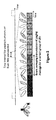
- Figure 1 is simplified diagram showing an example configuration of paging in LTE, according to an embodiment of the present invention
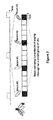
- Figure 2 is a simplified diagram showing possible paging transmission design for multi-beam based operation, according to an embodiment of the present invention
- Figure 3 is a simplified diagram showing possible paging transmission design with beam sweeping on discontinuous resources, according to an embodiment of the present invention.
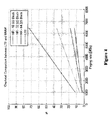
- Figure 4 is a graph showing a comparison of paging overhead between LTE and MMW networks, according to an embodiment of the present invention.
- This invention relates to wireless communication systems with paging mechanism.
- a paging procedure with a beam-sweeping operation provides enhanced coverage for distant UEs or when carrier frequency is high and the transmitted signals fade faster with the distance (e.g. in mmWaves) .
- This invention also provides a way to reduce signalling overhead in a paging procedure in a wireless system which utilizes beam sweeping, by a partial to full tracking procedure; furthermore, the minimum paging latency and UE power consumption are reduced with partial tracking and paging reliability is kept by having a well-defined fallback to full tracking.
- the present invention utilizes associated transmission beam (s) for PM only or for both PI and PM, to reduce beam sweeping overhead for paging transmission by partial to full tracking procedure; the minimum paging latency and UE power consumption are reduced with partial tracking and paging reliability is kept by having a well-defined fallback to full tracking.
- the PI and PM may both be referred to as paging related transmissions.
- PI is transmitted in all spatial directions whereas the PM is transmitted only on the associated beam (s) , that are provided to the UE by either an indication within the PI or according to higher layer configuration and/or beam registration procedure or according the last used beams in the PHY.
- the UE acquiring the PI is thus able to identify that PM may be relevant for it but cannot receive the PM and for this case it connects to the gNB (e.g., by Random Access (RA) ) . Therefore, in case of potentially relevant PM, the UE either receives PM and connects if necessary or not receives PM and connects; thus there is a reliable paging procedure.
- RA Random Access
- both PI and PM are transmitted on the associated beam (s) , that are provided to the UE by either higher layer configuration and/or beam registration procedure or according the last used beams in the PHY; in case the UE does not response accordingly to gNB (i.e. connects if paged) , the paging procedure falls back to either the former method or to a complementary partial tracking (transmitting the PI and PM on other beams) or any other solution to provide a full tracking.
- the proposed partial to full tracking is optimized for fixed location wireless devices (for example, customer premises equipment (CPE) ) and low-mobility UEs, but it could be applied to all UEs.
- the gNB may gather statistics to characterise the UEs’ mobility or base on the application type or UE assistance information and decide whether to operate in the proposed mode or to operate in non-reduced paging overhead mode, which means transmitting the PI and PM on all beams or in another paging method.
- Advantages of this invention include the reduction of beam sweeping overhead, reduction in UE power consumption and reduction of minimum latency for the paging transmission.
- the present invention does not require additional connection after PI and before PM in order to mitigate the PM overhead. It can also work in parallel to other proposals. This leaves the gNB the freedom to decide which optimization suits which application.
- the gNB upon a paging request from the Core Network (CN) the gNB broad/group-casts a PI according to one or more different delivery mechanisms:
- SFN System Frame Numbering
- TRP Transmission Reception Points
- Repetitions can be either in a time domain or in a frequency domain (e.g., by higher aggregation level of the PDCCH) or as a combination of both. Since the exact starting point of the repeated transmission might be missed at the UE side, it is proposed that the PI conveys the PM’s scheduling time/frequency (resource allocation) . Resource scheduling time may not be required if PO defines the exact starting point of repeated transmission. Nearer UEs (closer to the paging gNB) would be able to identify sooner that the PM may be relevant for them but may not be able to receive the PM as they would not need all the repeated indications. Thus, at least these UEs can reduce power consumption and also latency if the PM is transmitted before the end of repeated PI transmission.
- the PM may follow after the last PI repetition or it can be sent after the first PI transmission and before the last PI repetition.
- the UE acquiring a PI may buffer the radio samples containing the PM transmission and later decode the PM according to the decoded PI. This would allow UEs in good radio conditions to acquire both PI and PM in a shorter latency than would normally be the case.
- the PI may signal the associated beam (s) in which the PM is transmitted, or the associated beam (s) may be determined according to higher layer configuration and/or beam registration procedure (e.g. the last registered beams and/or a number of last registered beams) or according to the last used beams in the PHY.
- the indication of the associated beams can be either by 2*log 2 L bits for start and end indices with a wraparound or by a bitmap of L-bits, where L is the number of beams.
- L is the number of beams.
- the PM size could be for example about 90 bytes (720 bits) if 16 UEs are paged based on contents of the 16 Temporary Mobile Subscriber Identity (TMSI) . This means that the additional signalling of the associated beams for PM transmission over the PI to reduce the PM number of beams is negligible compared to the reduced PM transmission overhead.
- TMSI Temporary Mobile Subscriber Identity
- An important concept of the idea is not the selection of the beams on which the PM would be transmitted (e.g., last associated transmission beams) , but how to signal the location of the beam (s) in which PM is transmitted without adding overhead to the PI.
- UEs For UEs in an inactive state or for UEs in an idle state, possibly limited to UEs which are known to be static or semi static location applications, UEs are registered on a specific beam of a specific cell for paging (e.g. by dedicated signaling or with a function of UE_ID) .
- Radio Resource Control RRC
- RRC_CONNECTED RRC_IDLE or RRC_INACTIVE
- the UE which is configured by the NW to monitor PM on a registered beam shall store the last registered beam for paging monitoring and shall be considered as “beam registered” .
- RRC_IDLE or RRC_INACTIVE if the UE can no longer monitor the registered beam it shall be considered not “beam registered” .
- the UE shall monitor PI (all UEs) .
- the UE shall acquire the PM message. Otherwise, the UE shall ignore the PI.
- the UE shall ignore the PI. Otherwise, UE shall fall back to another method for paging acquisition (e.g. perform RA or reply with a special signal) .
- the CN For UEs in RRC_IDLE mode, the CN provides the UE last registered beam (s) over the NG/Xn interfaces.
- the gNBs and ng-eNBs are connected by means of the NG interfaces to the 5GC.
- the gNBs and ng-eNBs are interconnected with each other by means of the Xn interface.
- the source gNB provides the UE last registered beam (s) to the target gNB over the Xn interface.
- the configuration of the associated beam (s) for the PM transmission can be according to the last registered beams and the number of last registered beams.
- the associated beam (s) for PM transmission are implicitly derived by the gNB and the UE according to the last beams that were directed by the gNB and acknowledged by the UE in the PHY channels (e.g., via PDSCH and PUCCH) .
- the last associated beam (s) are listed and recorded by both sides, gNB and UE.
- the number of last associated beams may be signalled to the UE (e.g., by higher layer configuration) .
- a UE which acquires a PI and identifies that the PM may be relevant for it but cannot receive the PM may connect to the gNB (e.g. perform RA procedure) .
- PM is transmitted only on a single beam or on several beams but not on all beams.
- the order of the partial beam sweeping may be from latest to next less latest registered/associated beams. Other schemes are also possible.
- the PI may be sent on a single cell or for multiple cells (potentially from different gNBs) in the tracking area.
- PI may include no resource allocation for PM (e.g. PI sent by gNB which does not include the associated beam (s) to the UE for which the paging is directed) .
- the UE may use this indication to determine if the PM is relevant for it or not (e.g., as specified above for UE behaviour in the beam registration procedure) .
- the resource allocation may be empty on the beams in which PM is not transmitted, and in case the PI is omnidirectional transmitted the resource allocation may include the beam indices for the PM transmission.
- the gNB upon a paging request from the Core Network (CN) the gNB broad/group-casts on the associated beam (s) for PI and PM transmission. In case of no reply from the UE side (i.e., UE does not connect) , the gNB falls back to the first method or to a complementary partial tracking (on the non-included beam (s) for the partial tracking of this second method, to have full tracking) or to any other solution.
- CN Core Network
- the associated beam (s) for PI and PM transmission can be determined according to higher layer configuration and/or beam registration procedure or according to the last used beams in the physical layer (PHY) .
- UEs For UEs in an inactive state or for UEs in an idle state, possibly limited to UEs which are known to be static or semi static location applications, UEs are registered on a specific beam of a specific cell for paging (e.g. by dedicated signaling or with a function of UE_ID) .
- Radio Resource Control RRC
- RRC_CONNECTED RRC_IDLE
- RRC_INACTIVE the UE which is configured by the NW to monitor PI and PM on a registered beam shall store the last registered beam for paging monitoring.
- the UE shall monitor PI (all UEs) .
- the CN For UEs in RRC_IDLE mode, the CN provides the UE last registered beam (s) over the NG/Xn interfaces.
- the source gNB provides the UE last registered beam (s) to the target gNB over the Xn interface.
- the configuration of the associated beam (s) for the PI and PM transmission can be according to the last registered beams and the number of last registered beams.
- the associated beam (s) for PI and PM transmission are implicitly derived by the gNB and the UE according to the last beams that were directed by the gNB and acknowledged by the UE in the PHY channels (e.g., via PDSCH and PUCCH) .
- the last associated beam (s) are listed and recorded by both sides, gNB and UE.
- the number of last associated beams may be signalled to the UE (e.g., by higher layer configuration) .
- PI and PM are transmitted only on a single beam or on several beams but not on all beams.
- the order of the partial beam sweeping may be from latest to next less latest registered/associated beams. Other schemes are also possible.
- the NW may configure the UE to utilize the proposed paging method or not; for example by dedicated signaling while the UE is connected to the RAN or by broadcast signaling over System Information.
- the NW may also configure the fallback method; for example reconnection to the NW by means of RA or the use of other methods as for example mentioned above.
- a comparison of the first and second methods with trivial beam sweeping as for synchronization in NR serves as a reference, as illustrated in the table below.
- omnidirectional repeated transmission and narrow beam sweeping transmission can reach the same coverage; whereas wider beam sweeping with fewer repetitions is in between both.
- RO indicates the resource overhead
- the second method reduces the PI overhead and both methods reduce the PM’s overhead.
- the penalty for this overhead reduction may be by supporting a fallback procedure to full tracking.
- Minimum Coupling Losses (MCL) can be more flexible if the PI is transmitted in a repeated manner (since the number of repetitions for network and scheduling optimizations can be adapted) . Both methods reduce the minimal paging delay.
- the overhead that can be achieved in accordance with Equation 1 would be reduced in the example given in figure 4 from 73%to 1.14% (in best case for only a single last associated beam with no fallbacks) .
- the evaluation is more complexed since the PI versus PM single TX overhead is dependent on more parameters. These parameters include DL-Control Information (DCI) /PI length and PDCCH aggregation level, DL-Shared Channel (SCH) /PM length and coding rate. Nevertheless, in LTE the PM length is much larger than the PI length, thus the PI part can be ignored and the conclusion is that the first method’s overhead may be slightly more those of the second method.
- DCI DL-Control Information
- SCH DL-Shared Channel
- the present scheme may be combined with schemes proposing Iossy compression and PI association with SS block beam sweeping. This would work well and give some benefits.
- the present invention thus addresses the issue of beam sweeping overhead for paging transmission and it can be readily implemented along with existing schemes. It will be appreciated that Iow-mobility UEs and fixed location applications will benefit most from the present invention, but it could equally be applied to all UEs. In term of standard implementation, this solution could be implemented as the only solution or side by side with another solution. In the latter case it could be left to gNB implementation which solution to use according to UE application characteristics, e.g. it could be based on history of mobility and paging ratio or on the application type or on assistance information from the UE.
- the schemes proposed in the present invention are relevant to any paging or related activity in any type of radio network.
- any of the devices or apparatus that form part of the network may include at least a processor, a storage unit and a communications interface, wherein the processor unit, storage unit, and communications interface are configured to perform the method of any aspect of the present invention. Further options and choices are described below.
- the signal processing functionality of the embodiments of the invention especially the gNB and the UE may be achieved using computing systems or architectures known to those who are skilled in the relevant art.
- Computing systems such as, a desktop, laptop or notebook computer, hand-held computing device (PDA, cell phone, palmtop, etc. ) , mainframe, server, client, or any other type of special or general-purpose computing device as may be desirable or appropriate for a given application or environment can be used.
- the computing system can include one or more processors which can be implemented using a general or special-purpose processing engine such as, for example, a microprocessor, microcontroller or other control module.
- the computing system can also include a main memory, such as random access memory (RAM) or other dynamic memory, for storing information and instructions to be executed by a processor. Such a main memory also may be used for storing temporary variables or other intermediate information during execution of instructions to be executed by the processor.
- the computing system may likewise include a read only memory (ROM) or other static storage device for storing static information and instructions for a processor.
- ROM read only memory
- the computing system may also include an information storage system which may include, for example, a media drive and a removable storage interface.
- the media drive may include a drive or other mechanism to support fixed or removable storage media, such as a hard disk drive, a floppy disk drive, a magnetic tape drive, an optical disk drive, a compact disc (CD) or digital video drive (DVD) read or write drive (R or RW) , or other removable or fixed media drive.
- Storage media may include, for example, a hard disk, floppy disk, magnetic tape, optical disk, CD or DVD, or other fixed or removable medium that is read by and written to by media drive.
- the storage media may include a computer-readable storage medium having particular computer software or data stored therein.
- an information storage system may include other similar components for allowing computer programs or other instructions or data to be loaded into the computing system.
- Such components may include, for example, a removable storage unit and an interface, such as a program cartridge and cartridge interface, a removable memory (for example, a flash memory or other removable memory module) and memory slot, and other removable storage units and interfaces that allow software and data to be transferred from the removable storage unit to computing system.
- the computing system can also include a communications interface.
- a communications interface can be used to allow software and data to be transferred between a computing system and external devices.
- Examples of communications interfaces can include a modem, a network interface (such as an Ethernet or other NIC card) , a communications port (such as for example, a universal serial bus (USB) port) , a PCMCIA slot and card, etc.
- Software and data transferred via a communications interface are in the form of signals which can be electronic, electromagnetic, and optical or other signals capable of being received by a communications interface medium.
- computer program product may be used generally to refer to tangible media such as, for example, a memory, storage device, or storage unit.
- These and other forms of computer-readable media may store one or more instructions for use by the processor comprising the computer system to cause the processor to perform specified operations.
- Such instructions generally referred to as ‘computer program code’ (which may be grouped in the form of computer programs or other groupings) , when executed, enable the computing system to perform functions of embodiments of the present invention.
- the code may directly cause a processor to perform specified operations, be compiled to do so, and/or be combined with other software, hardware, and/or firmware elements (e.g., libraries for performing standard functions) to do so.
- the non-transitory computer readable medium may comprise at least one from a group consisting of: a hard disk, a CD-ROM, an optical storage device, a magnetic storage device, a Read Only Memory, a Programmable Read Only Memory, an Erasable Programmable Read Only Memory, EPROM, an Electrically Erasable Programmable Read Only Memory and a Flash memory
- the software may be stored in a computer-readable medium and loaded into computing system using, for example, removable storage drive.
- a control module in this example, software instructions or executable computer program code
- the processor in the computer system when executed by the processor in the computer system, causes a processor to perform the functions of the invention as described herein.
- inventive concept can be applied to any circuit for performing signal processing functionality within a network element. It is further envisaged that, for example, a semiconductor manufacturer may employ the inventive concept in a design of a stand-alone device, such as a microcontroller of a digital signal processor (DSP) , or application-specific integrated circuit (ASIC) and/or any other sub-system element.
- DSP digital signal processor
- ASIC application-specific integrated circuit
- aspects of the invention may be implemented in any suitable form including hardware, software, firmware or any combination of these.
- the invention may optionally be implemented, at least partly, as computer software running on one or more data processors and/or digital signal processors or configurable module components such as FPGA devices.
- the elements and components of an embodiment of the invention may be physically, functionally and logically implemented in any suitable way. Indeed, the functionality may be implemented in a single unit, in a plurality of units or as part of other functional units.
Landscapes
- Engineering & Computer Science (AREA)
- Computer Networks & Wireless Communication (AREA)
- Signal Processing (AREA)
- Physics & Mathematics (AREA)
- Probability & Statistics with Applications (AREA)
- Mobile Radio Communication Systems (AREA)
Abstract
A method for providing a paging related transmission to a UE which is operating in a wireless system operable at least in a beam sweeping mode, the method comprising sending the paging related transmission on an associated transmission beam to the UE.
Description
Embodiments of the present invention generally relate to wireless communication systems and in particular to devices and methods for enabling a wireless communication system to operate, particularly but nor exclusively in respect of improvements in or relating to paging in New Radio (NR) .
Wireless communication systems enable communications which enable devices such as a User Equipment (UE) or mobile device to access a Radio Access Technology (RAT) or Radio Access Network (RAN) , such as the third-generation (3G) of mobile telephone standards and technology are well known. Such 3G standards and technology have been developed by the Third Generation Partnership Project (3GPP) . The 3
rd generation of wireless communications has generally been developed to support macro-cell mobile phone communications. Communication systems and networks have developed towards a broadband and mobile system.
The 3rd Generation Partnership Project has developed the so-called Long Term Evolution (LTE) system, namely, an Evolved Universal Mobile Telecommunication System Territorial Radio Access Network, (E-UTRAN) , for a mobile access network where one or more macro-cells are supported by a base station known as an eNodeB or eNB (evolved NodeB) . More recently, LTE is evolving further towards the so-called 5G; NR and 4G/LTE systems where one or more cells are supported by a base station known as a gNB.
One aspect of NR is the requirement to provide a paging design which has a similar functionality to that currently provided in LTE. This means that beam sweeping overhead for paging in NR needs to be considered.
In the present document the following notations are used PI is used to indicate Paging Indication transmitted on NR-Physical Dedicated Control Channel (PDCCH) ; and PM indicates Paging Message transmitted on NR-Physical Downlink Shared Channel (PDSCH) .
Paging design in LTE is as follows:
· UE in IDLE mode periodically wakes up and monitors PDCCH at Paging Occasion (PO) in Paging Frame (PF) in order to check the presence of PM.
- PO is a subframe which may carry PDCCH addressing the PM.
- PF is a radio frame which may contain one or multiple PO.
· PO and PF are derived by UE-ID and the network (NW) configuration (Discontinuous receiving (DRX) cycle and parameter nB, which is the number of paging occasions per DRX cycle. ) .
- UE in IDLE mode wakes up once every {32, 64, 128, 256} radio frames.
- From the NW perspective, different UEs can be distributed in different PO and PF.
- An example configuration of paging in LTE is shown in Figure 1.
· PDCCH that is scrambled by Paging Radio Network Temporary Identity (P-RNTI) in Common-Synchronization signaling (SS) is used for scheduling PM.
· The same PM is sent by all eNBs in a tracking area.
NR should support similar paging functionality as in LTE, as the paging requirements for NR should be similar. However, in multi-beam operation scenarios of NR, the PM would need to be transmitted multiple times for a UE using different Tx beams (i.e. using beam sweeping operation) . This is because the gNB would not know where the UE exactly is within the network, further, the gNB would not be aware of the best transmission (Tx) beams for the UE. This would result in:
· Increase of UE power consumption.
- If UE in IDLE or inactive state is not aware of the paging Downlink Control Information (DCI) resource location which is transmitted by appropriate Tx beam for the UE, UE would need to keep waking up and
performing DCI blind detection during the beam sweeping transmission of paging DCI and it would consume battery.
· Increase of paging transmission overhead
- PM transmission overhead would be increased due to beam sweeping transmission, i.e., PM transmission on some beams will not reach to the target UE.
Figure 2 and 3 show two examples for the PM transmission for multi-beam based operation with beam sweeping on continuous and discontinuous resources respectively.
Comparison of LTE-and millimetre wave (mmW) -capacity demand for paging is analysed and based on the parameters given in the following table.

Where DL paging overhead can be calculated using Equation 1 below:

In LTE, each SS burst set contains only one SS block. However, in mmW each SS burst set can have as many as 64 SS blocks.
On the other hand, LTE has 20 MHz bandwidth whereas a component carrier of mmW can have 100 MHz bandwidth. Besides, the cell edge spectral efficiency of LTE is 0.1 bps/Hz. Simulation results suggest that it might be possible to achieve 0.225 bps/Hz at the cell edge for NR.
Based on these numbers, the DL paging overhead for LTE and mmW are shown in figure 4. LTE consumes approximately 13%of DL capacity at maximum paging rate of 6400 UEs per second. In mmW networks, the DL capacity demand for the same paging rate is substantially higher, and it can reach up to 73%of DL capacity for 64 SS blocks. This is 5-6 times higher than the corresponding DL capacity demand for paging in LTE networks.
Various proposals have been made in an attempt to address the issues relating to paging and the overheads this uses. Generally the proposals to date have failed to provide an effective and implementable solution. Thus a need exist to address the issues relating to paging in NR.
The present invention has as a goal the need to provide a solution to at least some of the outstanding problems in this domain.
Summary
This Summary is provided to introduce a selection of concepts in a simplified form that are further described below in the Detailed Description. This Summary is not intended to identify key features or essential features of the claimed subject matter, nor is it intended to be used as an aid in determining the scope of the claimed subject matter.
According to a first aspect of the present invention there is provided a method for providing a paging related transmission to a UE which is operating in a wireless system operable at least in a beam sweeping mode, the method comprising sending the paging related transmission on an associated transmission beam to the UE.
Preferably, the paging related transmission, compromises at least one of a paging indication, a paging message and both.
Preferably, the associated transmission is signalled by at least one of over a paging indication; a higher layer configuration; a beam registration procedure and according to a previously used transmission beam.
Preferably, a paging indication conveys a schedule for a paging message.
Preferably, the schedule includes at least one of timing and frequency.
Preferably, the signalling of the associated beams can be at least one of a 2*log2L bits for start and end indices with a wraparound and by a bitmap of L-bits, where L is the number of beams.
Preferably, if the UE is in an inactive or idle state then the UE is registered on a specific beam of a specific cell for paging.
Preferably, one or more UEs are known to be in static or semi static location.
Preferably, if the UE is in transition from a connected state to an idle or inactive state the UE which is configured by a network to monitor a paging message on a registered beam shall store the last registered beam for paging monitoring and shall become beam registered.
Preferably, if the UE is beam registered and the paging indication includes resource allocation for a paging message and the UE is beam registered on the same beam signalled by the paging indicator, the UE shall acquire the paging message, otherwise, the UE shall ignore the paging indicator.
Preferably, if during an idle or inactive state the UE can no longer monitor the registered beam it shall be considered not beam registered.
Preferably, if the UE is not beam registered and if the paging indication includes no resource allocation for a paging message and the UE is still under the coverage of the same cell in which it was last beam registered, the UE shall ignore the paging indication, otherwise, UE shall seek a further method for paging acquisition.
Preferably, the further method comprises at least one of a random access process and a reply with a special signal.
Preferably, if the UE is in an idle mode, a core network provides the UE last registered beam over an interface.
Preferably, the interface is at least one of an NG interface and an Xn interface.
Preferably, the associated beam for a page message transmission are derived by the base station and the UE according to the last beams that were directed by the gNB and acknowledged by the UE in a PHY channels
Preferably, the PHY channel is one of PDSCH and PUCCH.
Preferably, a last associated beam is listed and recorded by the base station and the UE.
Preferably, a number of last associated beams is signalled to the UE in a higher layer configuration.
Preferably, the UE which acquires a paging indication and identifies that a paging message may be relevant for it but cannot receive the paging message may connect to a base station to retrieve the paging message.
Preferably, the paging message is transmitted on at least one of a single beam or on several beams but not on all beams.
Preferably, a partial beam sweeping occurs from a latest to a next less latest associated beam.
Preferably, the paging indication is sent on at least one of a single cell or multiple cells in a tracking area.
Preferably, the paging indication includes no resource allocation for a paging message.
Preferably, the UE uses the paging indication to determine if the paging message is relevant for it or not.
Preferably, in the case of beam sweeping, the resource allocation may be empty on the beams in which paging message is not transmitted.
Preferably, when the paging indication is omnidirectional transmitted the resource allocation includes the beam identification for the paging message transmission.
Preferably, the paging related transmission includes both a paging indication and a paging message.
Preferably, if the UE is in an inactive or idle state then the UE is registered on a specific beam of a specific cell for paging.
Preferably, one or more UEs are known to be in a static or semi static location.
Preferably, on transition from a connected state to an idle or inactive state the UE which is configured by a network to monitor one or more paging related transmissions on a registered beam for paging monitoring shall store the last registered beam for paging monitoring.
Preferably, the UE is in an idle mode, a core network provides the UE last registered beam over an interface.
Preferably, the interface is at least one of an NG interface and an Xn is the interface.
Preferably, a configuration of the or each associated beam for the paging indication and paging message transmission is according to at least one of a last registered beams and a number of last registered beams.
Preferably, the transmission is on the last used beam.
Preferably, the associated beam for paging indication and paging message transmission is derived by a base station and the UE according to the last beams that were directed by the base station and acknowledged by the UE.
Preferably, the last associated transmission beam is listed and recorded by both the base station and UE.
Preferably, a number of last associated beams is signalled to the UE via a higher layer configuration.
Preferably, the paging indication and the paging message are transmitted on at least one of a single beam or on several beams but not on all beams.
Preferably, the paging indication is delivered by one or more of: omnidirectional transmission with repetitions, wide beam transmission with repetitions, sweeping of narrow beams, and a system frame numbering transmission.
Preferably, the repetitions can be in any one of a time domain or in a frequency domain and a combination of both.
According to a second aspect of the present invention there is provided a base station capable of performing the method of another aspect of the present invention.
According to a third aspect of the present invention there is provided a User equipment capable of performing the method of another aspect of the present invention.
According to a fourth aspect of the present invention there is provided a non-transitory computer readable medium having computer readable instructions stored thereon for execution by a processor to perform the method of another aspect of the present invention.
The non-transitory computer readable medium may comprise at least one from a group consisting of: a hard disk, a CD-ROM, an optical storage device, a magnetic storage device, a Read Only Memory, a Programmable Read Only Memory, an Erasable Programmable Read Only Memory, EPROM, an Electrically Erasable Programmable Read Only Memory and a Flash memory.
Further details, aspects and embodiments of the invention will be described, by way of example only, with reference to the drawings. Elements in the figures are illustrated for simplicity and clarity and have not necessarily been drawn to scale. Like reference numerals have been included in the respective drawings to ease understanding.
Figure 1 is simplified diagram showing an example configuration of paging in LTE, according to an embodiment of the present invention;
Figure 2 is a simplified diagram showing possible paging transmission design for multi-beam based operation, according to an embodiment of the present invention;
Figure 3 is a simplified diagram showing possible paging transmission design with beam sweeping on discontinuous resources, according to an embodiment of the present invention; and
Figure 4, is a graph showing a comparison of paging overhead between LTE and MMW networks, according to an embodiment of the present invention.
Detailed description of the preferred embodiments
Those skilled in the art will recognise and appreciate that the specifics of the examples described are merely illustrative of some embodiments and that the teachings set forth herein are applicable in a variety of alternative settings.
This invention relates to wireless communication systems with paging mechanism. A paging procedure with a beam-sweeping operation provides enhanced coverage for distant UEs or when carrier frequency is high and the transmitted signals fade faster with the distance (e.g. in mmWaves) .
This invention also provides a way to reduce signalling overhead in a paging procedure in a wireless system which utilizes beam sweeping, by a partial to full tracking procedure; furthermore, the minimum paging latency and UE power consumption are reduced with partial tracking and paging reliability is kept by having a well-defined fallback to full tracking.
In general terms the present invention utilizes associated transmission beam (s) for PM only or for both PI and PM, to reduce beam sweeping overhead for paging transmission by partial to full tracking procedure; the minimum paging latency and UE power consumption are reduced with partial tracking and paging reliability is kept by having a well-defined fallback to full tracking. In the present invention the PI and PM may both be referred to as paging related transmissions.
Two methods for partial tracking are discussed below.
In the first method, PI is transmitted in all spatial directions whereas the PM is transmitted only on the associated beam (s) , that are provided to the UE by either an indication within the PI or according to higher layer configuration and/or beam registration procedure or according the last used beams in the PHY. The UE acquiring the PI is thus able to identify that PM may be relevant for it but cannot receive the PM and for this case it connects to the gNB (e.g., by Random Access (RA) ) . Therefore, in case of potentially relevant PM, the UE either receives PM and connects if necessary or not receives PM and connects; thus there is a reliable paging procedure.
In the second method, both PI and PM are transmitted on the associated beam (s) , that are provided to the UE by either higher layer configuration and/or beam registration procedure or according the last used beams in the PHY; in case the UE does not response accordingly to gNB (i.e. connects if paged) , the paging procedure falls back to either the former method or to a complementary partial tracking (transmitting the PI and PM on other beams) or any other solution to provide a full tracking.
Both methods are described in detail below.
The proposed partial to full tracking is optimized for fixed location wireless devices (for example, customer premises equipment (CPE) ) and low-mobility UEs, but it could be applied to all UEs. The gNB may gather statistics to characterise the UEs’ mobility or base on the application type or UE assistance information and decide whether to operate in the proposed mode or to operate in non-reduced paging overhead mode, which means transmitting the PI and PM on all beams or in another paging method.
Advantages of this invention include the reduction of beam sweeping overhead, reduction in UE power consumption and reduction of minimum latency for the paging transmission. In addition, as will be demonstrated below the present invention does not require additional connection after PI and before PM in order to mitigate the PM overhead. It can also work in parallel to other proposals. This leaves the gNB the freedom to decide which optimization suits which application.
It should be noted that the very first deployments of the 5G technology are expected to include mostly if not only fixed location applications so optimization which takes this application characteristic into account will be useful.
A detailed description of the embodiments of the invention will now follow.
Two methods for partial to full tracking are proposed to reduce the beam sweeping overhead for paging transmission will now be described.
In accordance with a first method, upon a paging request from the Core Network (CN) the gNB broad/group-casts a PI according to one or more different delivery mechanisms:
(1) omnidirectional transmission with repetitions,
(2) wide beam (e.g. sector) transmission with (fewer) repetitions,
(3) sweeping of narrow beams (e.g., as for SS block transmission) , and
(4) System Frame Numbering (SFN) transmission involving multiple cells or multiple Transmission Reception Points (TRPs) serving the same cell. All relevant UEs (e.g. according to assigned PO) that are camped on a cell that transmits the PI should be able to receive it.
Repetitions can be either in a time domain or in a frequency domain (e.g., by higher aggregation level of the PDCCH) or as a combination of both. Since the exact starting point of the repeated transmission might be missed at the UE side, it is proposed that the PI conveys the PM’s scheduling time/frequency (resource allocation) . Resource scheduling time may not be required if PO defines the exact starting point of repeated transmission. Nearer UEs (closer to the paging gNB) would be able to identify sooner that the PM may be relevant for them but may not be able to receive the PM as they would not need all the repeated indications. Thus, at least these UEs can reduce power consumption and also latency if the PM is transmitted before the end of repeated PI transmission. The PM may follow after the last PI repetition or it can be sent after the first PI transmission and before the last PI repetition. For the later situation, i.e. if a PM is transmitted after the first PI transmission and before the last PI repetition, the UE acquiring a PI may buffer the radio samples containing the PM transmission and later decode the PM according to the decoded PI. This would allow UEs in good radio conditions to acquire both PI and PM in a shorter latency than would normally be the case.
The PI may signal the associated beam (s) in which the PM is transmitted, or the associated beam (s) may be determined according to higher layer configuration and/or beam registration procedure (e.g. the last registered beams and/or a number of last registered beams) or according to the last used beams in the PHY.
For indication of associated beam (s) for PM transmission within the PI:
The indication of the associated beams can be either by 2*log
2L bits for start and end indices with a wraparound or by a bitmap of L-bits, where L is the number of beams. With the former, for 64 beams 6 bits are needed for one beam index, thus a total of 12 bits; for example beams # 0 to #63 would indicate all beams, beams #3 to #5 would indicate three beams starting from beam # 3, and beams #5 to #3 would indicate all beams except beam # 4. With the later, for 64 beams there is a 64-bits bitmap.
The PM size could be for example about 90 bytes (720 bits) if 16 UEs are paged based on contents of the 16 Temporary Mobile Subscriber Identity (TMSI) . This means that the additional signalling of the associated beams for PM transmission over the PI to reduce the PM number of beams is negligible compared to the reduced PM transmission overhead.
An important concept of the idea is not the selection of the beams on which the PM would be transmitted (e.g., last associated transmission beams) , but how to signal the location of the beam (s) in which PM is transmitted without adding overhead to the PI.
For associated beam (s) for PM transmission according to higher layer configuration and/or beam registration procedure:
For UEs in an inactive state or for UEs in an idle state, possibly limited to UEs which are known to be static or semi static location applications, UEs are registered on a specific beam of a specific cell for paging (e.g. by dedicated signaling or with a function of UE_ID) .
On transition from Radio Resource Control (RRC) _CONNECTED to RRC_IDLE or RRC_INACTIVE the UE which is configured by the NW to monitor PM on a registered beam shall store the last registered beam for paging monitoring and shall be considered as “beam registered” . During RRC_IDLE or RRC_INACTIVE if the UE can no longer monitor the registered beam it shall be considered not “beam registered” . During PO the UE shall monitor PI (all UEs) .
If the UE is “beam registered” and if the PI includes resource allocation for PM and the UE is beam registered on the same beam indicated by the PI, the UE shall acquire the PM message. Otherwise, the UE shall ignore the PI.
If the UE is not “beam registered” and if PI includes no resource allocation for PM and the UE is still under the coverage of the same cell in which it was last “beam registered” , the UE shall ignore the PI. Otherwise, UE shall fall back to another method for paging acquisition (e.g. perform RA or reply with a special signal) .
The following may occur. For UEs in RRC_IDLE mode, the CN provides the UE last registered beam (s) over the NG/Xn interfaces. The gNBs and ng-eNBs are connected by means of the NG interfaces to the 5GC. The gNBs and ng-eNBs are interconnected with each other by means of the Xn interface. The source gNB provides the UE last registered beam (s) to the target gNB over the Xn interface.
The configuration of the associated beam (s) for the PM transmission can be according to the last registered beams and the number of last registered beams.
For associated beam (s) for PM transmission according to the last used beams in the PHY:
The associated beam (s) for PM transmission are implicitly derived by the gNB and the UE according to the last beams that were directed by the gNB and acknowledged by the UE in the PHY channels (e.g., via PDSCH and PUCCH) .
The last associated beam (s) are listed and recorded by both sides, gNB and UE. The number of last associated beams may be signalled to the UE (e.g., by higher layer configuration) .
A UE which acquires a PI and identifies that the PM may be relevant for it but cannot receive the PM may connect to the gNB (e.g. perform RA procedure) .
With this method, PM is transmitted only on a single beam or on several beams but not on all beams. The order of the partial beam sweeping may be from latest to next less latest registered/associated beams. Other schemes are also possible.
The PI may be sent on a single cell or for multiple cells (potentially from different gNBs) in the tracking area. PI may include no resource allocation for PM (e.g. PI sent by gNB which does not include the associated beam (s) to the UE for which the paging is directed) . The UE may use this indication to determine if the PM is relevant for it or not (e.g., as specified above for UE behaviour in the beam registration procedure) . In case the PI is beam swept, the resource allocation may be empty on the beams in which PM is not transmitted, and in case the PI is omnidirectional transmitted the resource allocation may include the beam indices for the PM transmission.
In accordance with a second method, upon a paging request from the Core Network (CN) the gNB broad/group-casts on the associated beam (s) for PI and PM transmission. In case of no reply from the UE side (i.e., UE does not connect) , the gNB falls back to the first method or to a complementary partial tracking (on the non-included beam (s) for the partial tracking of this second method, to have full tracking) or to any other solution.
The associated beam (s) for PI and PM transmission can be determined according to higher layer configuration and/or beam registration procedure or according to the last used beams in the physical layer (PHY) .
For associated beam (s) for PI and PM transmission according to higher layer configuration and/or beam registration procedure:
For UEs in an inactive state or for UEs in an idle state, possibly limited to UEs which are known to be static or semi static location applications, UEs are registered on a specific beam of a specific cell for paging (e.g. by dedicated signaling or with a function of UE_ID) .
On transition from Radio Resource Control (RRC) _CONNECTED to RRC_IDLE or RRC_INACTIVE the UE which is configured by the NW to monitor PI and PM on a registered beam shall store the last registered beam for paging monitoring. During PO the UE shall monitor PI (all UEs) .
The following may occur. For UEs in RRC_IDLE mode, the CN provides the UE last registered beam (s) over the NG/Xn interfaces. The source gNB provides the UE last registered beam (s) to the target gNB over the Xn interface.
The configuration of the associated beam (s) for the PI and PM transmission can be according to the last registered beams and the number of last registered beams.
For associated beam (s) for PI and PM transmission according to the last used beams in the PHY:
The associated beam (s) for PI and PM transmission are implicitly derived by the gNB and the UE according to the last beams that were directed by the gNB and acknowledged by the UE in the PHY channels (e.g., via PDSCH and PUCCH) .
The last associated beam (s) are listed and recorded by both sides, gNB and UE. The number of last associated beams may be signalled to the UE (e.g., by higher layer configuration) .
With this second method, PI and PM are transmitted only on a single beam or on several beams but not on all beams. The order of the partial beam sweeping may be from latest to next less latest registered/associated beams. Other schemes are also possible.
As a result, for both methods the paging overhead due to beamforming in NR can be mitigated.
For both methods the NW may configure the UE to utilize the proposed paging method or not; for example by dedicated signaling while the UE is connected to the RAN or by broadcast signaling over System Information. The NW may also configure the fallback method; for example reconnection to the NW by means of RA or the use of other methods as for example mentioned above.
A comparison of the first and second methods with trivial beam sweeping as for synchronization in NR serves as a reference, as illustrated in the table below. In theory, omnidirectional repeated transmission and narrow beam sweeping transmission can reach the same coverage; whereas wider beam sweeping with fewer repetitions is in between both. For example, when the number of omnidirectional repetitions R equals the number of non-repeated beams L (where L equals the number of possible candidates SS block locations, L = 4 or 8 or 64 according to the frequency range) .


RO indicates the resource overhead.
From this table it can be seen that the second method reduces the PI overhead and both methods reduce the PM’s overhead. The penalty for this overhead reduction may be by supporting a fallback procedure to full tracking. Minimum Coupling Losses (MCL) can be more flexible if the PI is transmitted in a repeated manner (since the number of repetitions for network and scheduling optimizations can be adapted) . Both methods reduce the minimal paging delay.
For the second method, the overhead that can be achieved in accordance with Equation 1 would be reduced in the example given in figure 4 from 73%to 1.14% (in best case for only a single last associated beam with no fallbacks) . For the first method, the evaluation is more complexed since the PI versus PM single TX overhead is dependent on more parameters. These parameters include DL-Control Information (DCI) /PI length and PDCCH aggregation level, DL-Shared Channel (SCH) /PM length and coding rate. Nevertheless, in LTE the PM length is much larger than the PI length, thus the PI part can be ignored and the conclusion is that the first method’s overhead may be slightly more those of the second method.
It may be possible to combine the present invention with other schemes. For example, the present scheme may be combined with schemes proposing Iossy compression and PI association with SS block beam sweeping. This would work well and give some benefits.
The present invention thus addresses the issue of beam sweeping overhead for paging transmission and it can be readily implemented along with existing schemes. It will be appreciated that Iow-mobility UEs and fixed location applications will benefit most from the present invention, but it could equally be applied to all UEs. In term of standard implementation, this solution could be implemented as the only solution or side by side with another solution. In the latter case it could be left to gNB implementation which solution to use according to UE application characteristics, e.g. it could be based on history of mobility and paging ratio or on the application type or on assistance information from the UE.
The schemes proposed in the present invention are relevant to any paging or related activity in any type of radio network.
Although not shown in detail any of the devices or apparatus that form part of the network may include at least a processor, a storage unit and a communications interface, wherein the processor unit, storage unit, and communications interface are configured to perform the method of any aspect of the present invention. Further options and choices are described below.
The signal processing functionality of the embodiments of the invention especially the gNB and the UE may be achieved using computing systems or architectures known to those who are skilled in the relevant art. Computing systems such as, a desktop, laptop or notebook computer, hand-held computing device (PDA, cell phone, palmtop, etc. ) , mainframe, server, client, or any other type of special or general-purpose computing device as may be desirable or appropriate for a given application or environment can be used. The computing system can include one or more processors which can be implemented using a general or special-purpose processing engine such as, for example, a microprocessor, microcontroller or other control module.
The computing system can also include a main memory, such as random access memory (RAM) or other dynamic memory, for storing information and instructions to be executed by a processor. Such a main memory also may be used for storing temporary variables or other intermediate information during execution of instructions to be executed by the processor. The computing system may likewise include a read only memory (ROM) or other static storage device for storing static information and instructions for a processor.
The computing system may also include an information storage system which may include, for example, a media drive and a removable storage interface. The media drive may include a drive or other mechanism to support fixed or removable storage media, such as a hard disk drive, a floppy disk drive, a magnetic tape drive, an optical disk drive, a compact disc (CD) or digital video drive (DVD) read or write drive (R or RW) , or other removable or fixed media drive. Storage media may include, for example, a hard disk, floppy disk, magnetic tape, optical disk, CD or DVD, or other fixed or removable medium that is read by and written to by media drive. The storage media may include a computer-readable storage medium having particular computer software or data stored therein.
In alternative embodiments, an information storage system may include other similar components for allowing computer programs or other instructions or data to be loaded into the computing system. Such components may include, for example, a removable storage unit and an interface, such as a program cartridge and cartridge interface, a removable memory (for example, a flash memory or other removable memory module) and memory slot, and other removable storage units and interfaces that allow software and data to be transferred from the removable storage unit to computing system.
The computing system can also include a communications interface. Such a communications interface can be used to allow software and data to be transferred between a computing system and external devices. Examples of communications interfaces can include a modem, a network interface (such as an Ethernet or other NIC card) , a communications port (such as for example, a universal serial bus (USB) port) , a PCMCIA slot and card, etc. Software and data transferred via a communications interface are in the form of signals which can be electronic, electromagnetic, and optical or other signals capable of being received by a communications interface medium.
In this document, the terms ‘computer program product’ , ‘computer-readable medium’ and the like may be used generally to refer to tangible media such as, for example, a memory, storage device, or storage unit. These and other forms of computer-readable media may store one or more instructions for use by the processor comprising the computer system to cause the processor to perform specified operations. Such instructions, generally referred to as ‘computer program code’ (which may be grouped in the form of computer programs or other groupings) , when executed, enable the computing system to perform functions of embodiments of the present invention. Note that the code may directly cause a processor to perform specified operations, be compiled to do so, and/or be combined with other software, hardware, and/or firmware elements (e.g., libraries for performing standard functions) to do so.
The non-transitory computer readable medium may comprise at least one from a group consisting of: a hard disk, a CD-ROM, an optical storage device, a magnetic storage device, a Read Only Memory, a Programmable Read Only Memory, an Erasable Programmable Read Only Memory, EPROM, an Electrically Erasable Programmable Read Only Memory and a Flash memory
In an embodiment where the elements are implemented using software, the software may be stored in a computer-readable medium and loaded into computing system using, for example, removable storage drive. A control module (in this example, software instructions or executable computer program code) , when executed by the processor in the computer system, causes a processor to perform the functions of the invention as described herein.
Furthermore, the inventive concept can be applied to any circuit for performing signal processing functionality within a network element. It is further envisaged that, for example, a semiconductor manufacturer may employ the inventive concept in a design of a stand-alone device, such as a microcontroller of a digital signal processor (DSP) , or application-specific integrated circuit (ASIC) and/or any other sub-system element.
It will be appreciated that, for clarity purposes, the above description has described embodiments of the invention with reference to a single processing logic. However, the inventive concept may equally be implemented by way of a plurality of different functional units and processors to provide the signal processing functionality. Thus, references to specific functional units are only to be seen as references to suitable means for providing the described functionality, rather than indicative of a strict logical or physical structure or organisation.
Aspects of the invention may be implemented in any suitable form including hardware, software, firmware or any combination of these. The invention may optionally be implemented, at least partly, as computer software running on one or more data processors and/or digital signal processors or configurable module components such as FPGA devices. Thus, the elements and components of an embodiment of the invention may be physically, functionally and logically implemented in any suitable way. Indeed, the functionality may be implemented in a single unit, in a plurality of units or as part of other functional units.
Although the present invention has been described in connection with some embodiments, it is not intended to be limited to the specific form set forth herein. Rather, the scope of the present invention is limited only by the accompanying claims. Additionally, although a feature may appear to be described in connection with particular embodiments, one skilled in the art would recognize that various features of the described embodiments may be combined in accordance with the invention. In the claims, the term ‘comprising’ does not exclude the presence of other elements or steps.
Furthermore, although individually listed, a plurality of means, elements or method steps may be implemented by, for example, a single unit or processor. Additionally, although individual features may be included in different claims, these may possibly be advantageously combined, and the inclusion in different claims does not imply that a combination of features is not feasible and/or advantageous. In addition, the inclusion of a feature in one category of claims does not imply a limitation to this category, but rather indicates that the feature is equally applicable to other claim categories, as appropriate.
Furthermore, the order of features in the claims does not imply any specific order in which the features must be performed and in particular, the order of individual steps in a method claim does not imply that the steps must be performed in this order. Rather, the steps may be performed in any suitable order. In addition, singular references do not exclude a plurality. Thus, references to ‘a’ , ‘an’ , ‘first’ , ‘second’ , etc. do not preclude a plurality.
Although the present invention has been described in connection with some embodiments, it is not intended to be limited to the specific form set forth herein. Rather, the scope of the present invention is limited only by the accompanying claims. Additionally, although a feature may appear to be described in connection with particular embodiments, one skilled in the art would recognise that various features of the described embodiments may be combined in accordance with the invention. In the claims, the term ‘comprising’ or “including” does not exclude the presence of other elements.
Claims (45)
- A method for providing a paging related transmission to a UE which is operating in a wireless system operable at least in a beam sweeping mode, the method comprising sending the paging related transmission on an associated transmission beam to the UE.
- The method of claim 1, wherein the paging related transmission, compromises at least one of a paging indication, a paging message and both.
- The method of claim 1 or claim 2 wherein the associated transmission is signalled by at least one of over a paging indication; a higher layer configuration; a beam registration procedure and according to a previously used transmission beam.
- The method of claim 3, wherein a paging indication conveys a schedule for a paging message.
- The method of claim 4, wherein the schedule includes at least one of timing and frequency.
- The method of any of claims 3 to 5, wherein signalling of the associated beams can be at least one of a 2*log 2L bits for start and end indices with a wraparound and by a bitmap of L-bits, where L is the number of beams.
- The method of any of claims 3 to 5 wherein, if the UE is in an inactive or idle state then the UE is registered on a specific beam of a specific cell for paging.
- The method of claim 7, wherein one or more UEs are known to be in static or semi static location.
- The method of claim 7 or claim 8 wherein, if the UE is in transition from a connected state to an idle or inactive state the UE which is configured by a network to monitor a paging message on a registered beam shall store the last registered beam for paging monitoring and shall become beam registered.
- The method of claim 9, wherein if the UE is beam registered and the paging indication includes resource allocation for a paging message and the UE is beam registered on the same beam signalled by the paging indicator, the UE shall acquire the paging message, otherwise, the UE shall ignore the paging indicator.
- The method of claim 9 or claim 10, wherein if during an idle or inactive state the UE can no longer monitor the registered beam it shall be considered not beam registered.
- The method of claim 11, wherein if the UE is not beam registered and if the paging indication includes no resource allocation for a paging message and the UE is still under the coverage of the same cell in which it was last beam registered, the UE shall ignore the paging indication, otherwise, UE shall seek a further method for paging acquisition.
- The method of claim 12, wherein the further method comprises at least one of a random access process and a reply with a special signal.
- The method of any of claims 3 to 5, wherein if the UE is in an idle mode, a core network provides the UE last registered beam over an interface.
- The method of claims 14, wherein the interface is at least one of an NG interface and an Xn interface.
- The method of any of claims 3 to 5, wherein the associated beam for a page message transmission are derived by the base station and the UE according to the last beams that were directed by the gNB and acknowledged by the UE in aPHY channels
- The method of claim 16, wherein the PHY channel is one of PDSCH and PUCCH.
- The method of claim 16 or claim 17, wherein a last associated beam is listed and recorded by the base station and the UE.
- The method of any of claims 16 to 18, wherein a number of last associated beams is signalled to the UE in a higher layer configuration.
- The method of any of claims 2 to 19 wherein the UE which acquires a paging indication and identifies that a paging message may be relevant for it but cannot receive the paging message may connect to a base station to retrieve the paging message.
- The method of claim 20, wherein, the paging message is transmitted on at least one of a single beam or on several beams but not on all beams.
- The method of claim 21, wherein a partial beam sweeping occurs from a latest to a next less latest associated beam.
- The method of any of claims 20 to 22, wherein the paging indication is sent on at least one of a single cell or multiple cells in a tracking area.
- The method of any of claims 20 to 23, wherein the paging indication includes no resource allocation for a paging message.
- The method of claim 23, wherein the UE uses the paging indication to determine if the paging message is relevant for it or not.
- The method of any of claims 20 to 25, wherein in the case of beam sweeping, the resource allocation may be empty on the beams in which paging message is not transmitted.
- The method of any of claims 20 to 26, wherein when the paging indication is omnidirectional transmitted the resource allocation includes the beam identification for the paging message transmission.
- The method of any of claims 1 to 5, wherein the paging related transmission includes both a paging indication and a paging message.
- The method of claim 28, wherein if the UE is in an inactive or idle state then the UE is registered on a specific beam of a specific cell for paging.
- The method of claims 29, wherein one or more UEs are known to be in a static or semi static location.
- The method of any of claims 28 to 30, wherein on transition from a connected state to an idle or inactive state the UE which is configured by a network to monitor one or more paging related transmissions on a registered beam for paging monitoring shall store the last registered beam for paging monitoring.
- The method of any of claims 28 to 31, wherein if the UE is in an idle mode, a core network provides the UE last registered beam over an interface.
- The method of claims 32, wherein the interface is at least one of an NG interface and an Xn is the interface.
- The method of any of claims 28 to 33, wherein a configuration of the or each associated beam for the paging indication and paging message transmission is according to at least one of a last registered beams and a number of last registered beams.
- The method of claim 34, wherein the transmission is on the last used beam.
- The method of any of claims 28 to 35, wherein an associated beam for paging indication and paging message transmission is derived by a base station and the UE according to the last beam that was directed by the base station and acknowledged by the UE.
- The method of any claim 36, wherein a last associated transmission beam is listed and recorded by both the base station and UE.
- The method of claim 37, wherein a number of last associated beams is signalled to the UE via a higher layer configuration.
- The method of any of claims 36 to 38, wherein the paging indication and the paging message are transmitted on at least one of a single beam or on several beams but not on all beams.
- The method of claim 2 or any of claims 3 to 39 when dependent on claim 2, wherein the paging indication is delivered by one or more of: omnidirectional transmission with repetitions, wide beam transmission with repetitions, sweeping of narrow beams, and a system frame numbering transmission.
- The method of claim 40, wherein the repetitions can be in any one of a time domain or in a frequency domain and a combination of both.
- The method of any preceding claim, wherein the Radio Access Network is a New Radio/5G network.
- A user equipment, UE, apparatus comprising a processor, a storage unit and a communications interface, wherein the processor unit, storage unit, and communications interface are configured to perform the method as claimed in any one of claims 1-42.
- A base station, BS, apparatus comprising a processor, a storage unit and a communications interface, wherein the processor unit, storage unit, and communications interface are configured to perform the method as claimed in any one of claims 1-42.
- A non-transitory computer readable medium having computer readable instructions stored thereon for execution by a processor to perform the method according to any of claims 1-42.
Priority Applications (1)
| Application Number | Priority Date | Filing Date | Title |
|---|---|---|---|
| CN201880055955.3A CN111034307B (en) | 2017-09-11 | 2018-09-10 | Improvements in or related to paging in new radios |
Applications Claiming Priority (2)
| Application Number | Priority Date | Filing Date | Title |
|---|---|---|---|
| GB1714552.5A GB2566316A (en) | 2017-09-11 | 2017-09-11 | Improvements in or relating to paging in new radio |
| GB1714552.5 | 2017-09-11 |
Publications (1)
| Publication Number | Publication Date |
|---|---|
| WO2019047958A1 true WO2019047958A1 (en) | 2019-03-14 |
Family
ID=60117261
Family Applications (1)
| Application Number | Title | Priority Date | Filing Date |
|---|---|---|---|
| PCT/CN2018/104907 Ceased WO2019047958A1 (en) | 2017-09-11 | 2018-09-10 | Improvements in or relating to paging in new radio |
Country Status (3)
| Country | Link |
|---|---|
| CN (1) | CN111034307B (en) |
| GB (1) | GB2566316A (en) |
| WO (1) | WO2019047958A1 (en) |
Cited By (2)
| Publication number | Priority date | Publication date | Assignee | Title |
|---|---|---|---|---|
| US20210360579A1 (en) * | 2020-05-13 | 2021-11-18 | Qualcomm Incorporated | Paging procedures with increased granularities |
| US11950206B2 (en) | 2019-04-30 | 2024-04-02 | Nokia Technologies Oy | Paging on narrow beam and alignment with default DRX |
Families Citing this family (7)
| Publication number | Priority date | Publication date | Assignee | Title |
|---|---|---|---|---|
| EP3711396B1 (en) | 2017-11-17 | 2024-07-24 | Panasonic Intellectual Property Corporation of America | Schemes for ssb to paging coreset mapping in nr |
| WO2020089072A1 (en) | 2018-10-31 | 2020-05-07 | Sony Mobile Communications Inc. | Beam management in disconnected mode |
| WO2021002863A1 (en) * | 2019-07-03 | 2021-01-07 | Nokia Solutions And Networks Oy | Paging using beam parameters for beam-based operation |
| IL290724A (en) * | 2022-02-18 | 2023-09-01 | Qualcomm Inc | Techniques for maintaining beam information in an inactive state |
| CN117177360A (en) * | 2022-05-25 | 2023-12-05 | 华为技术有限公司 | Paging method and communication device |
| US12581455B2 (en) * | 2022-08-17 | 2026-03-17 | Qualcomm Incorporated | Reduced beam for paging |
| US20250133417A1 (en) * | 2023-10-19 | 2025-04-24 | Dell Products, L.P. | Non-terrestrial progressive paging |
Citations (2)
| Publication number | Priority date | Publication date | Assignee | Title |
|---|---|---|---|---|
| WO2014189279A1 (en) * | 2013-05-21 | 2014-11-27 | Samsung Electronics Co., Ltd. | Apparatus and method for transmitting/receiving paging in a beam formed wireless communication network |
| US20170231011A1 (en) * | 2016-02-04 | 2017-08-10 | Samsung Electronics Co., Ltd. | Method and apparatus for ue signal transmission in 5g cellular communications |
Family Cites Families (3)
| Publication number | Priority date | Publication date | Assignee | Title |
|---|---|---|---|---|
| JP6590944B2 (en) * | 2015-04-20 | 2019-10-16 | テレフオンアクチーボラゲット エルエム エリクソン(パブル) | Method and device for broadcast transmission and reception |
| WO2017123060A1 (en) * | 2016-01-14 | 2017-07-20 | Samsung Electronics Co., Ltd. | System, method, and apparatus of beam-tracking and beam feedback operation in a beam-forming based system |
| CN107079404B (en) * | 2017-01-06 | 2020-10-30 | 北京小米移动软件有限公司 | Paging signal sending method, paging signal receiving method, device and system |
-
2017
- 2017-09-11 GB GB1714552.5A patent/GB2566316A/en not_active Withdrawn
-
2018
- 2018-09-10 CN CN201880055955.3A patent/CN111034307B/en active Active
- 2018-09-10 WO PCT/CN2018/104907 patent/WO2019047958A1/en not_active Ceased
Patent Citations (2)
| Publication number | Priority date | Publication date | Assignee | Title |
|---|---|---|---|---|
| WO2014189279A1 (en) * | 2013-05-21 | 2014-11-27 | Samsung Electronics Co., Ltd. | Apparatus and method for transmitting/receiving paging in a beam formed wireless communication network |
| US20170231011A1 (en) * | 2016-02-04 | 2017-08-10 | Samsung Electronics Co., Ltd. | Method and apparatus for ue signal transmission in 5g cellular communications |
Non-Patent Citations (1)
| Title |
|---|
| "NR paging based on paging indication", 3GPP TSG-RAN WGI MEETING #90 RL-17L4119, 25 August 2017 (2017-08-25), XP051316908 * |
Cited By (6)
| Publication number | Priority date | Publication date | Assignee | Title |
|---|---|---|---|---|
| US11950206B2 (en) | 2019-04-30 | 2024-04-02 | Nokia Technologies Oy | Paging on narrow beam and alignment with default DRX |
| US20210360579A1 (en) * | 2020-05-13 | 2021-11-18 | Qualcomm Incorporated | Paging procedures with increased granularities |
| WO2021231066A1 (en) * | 2020-05-13 | 2021-11-18 | Qualcomm Incorporated | Paging procedures with increased granularities |
| CN115516946A (en) * | 2020-05-13 | 2022-12-23 | 高通股份有限公司 | Paging procedure with increased granularity |
| US11659518B2 (en) | 2020-05-13 | 2023-05-23 | Qualcomm Incorporated | Paging procedures with increased granularities |
| CN115516946B (en) * | 2020-05-13 | 2025-08-01 | 高通股份有限公司 | Paging procedure with increased granularity |
Also Published As
| Publication number | Publication date |
|---|---|
| CN111034307A (en) | 2020-04-17 |
| GB201714552D0 (en) | 2017-10-25 |
| GB2566316A (en) | 2019-03-13 |
| CN111034307B (en) | 2024-01-26 |
Similar Documents
| Publication | Publication Date | Title |
|---|---|---|
| WO2019047958A1 (en) | Improvements in or relating to paging in new radio | |
| US10568066B2 (en) | Paging mechanisms for link-budget-limited user devices | |
| EP3996427B1 (en) | Wake-up signal (wus) detection method and apparatus | |
| CN111466142B (en) | Paging system | |
| WO2022083761A1 (en) | User equipment and method for power saving | |
| US11234210B2 (en) | Energy efficiency paging reception mechanisms | |
| US20230397113A1 (en) | Signal monitoring method and apparatus | |
| US10117233B2 (en) | Method for downlink control information transmission, base station and terminal | |
| WO2022214081A1 (en) | Methods and apparatus for supporting common design of pdcch skipping and search space set switching | |
| US12035237B2 (en) | Method for detecting control channel and terminal device | |
| US11838864B2 (en) | Method for detecting wake-up signal and terminal device | |
| EP3925312B1 (en) | Wireless communication device, radio access network node, methods, and computer programs for power efficient paging escalation | |
| CN106358277B (en) | Increase power after Nth paging attempt | |
| JP2022543243A (en) | Physical downlink control channel transmission method, physical downlink control channel detection method, network device and terminal | |
| US20230337185A1 (en) | Wake-up signals in cellular systems | |
| US20230085723A1 (en) | Methods for enhancing paging of a wireless device of a set or wireless devices, network nodes and wireless devices using retransmission of pages | |
| WO2024198926A1 (en) | Paging method, communication apparatus, communication base station, and computer-readable medium | |
| US20230232330A1 (en) | Sleep indication method, user equipment, network side device and storage medium | |
| WO2023070688A1 (en) | Base station, user equipment, and method for processing paging early indication |
Legal Events
| Date | Code | Title | Description |
|---|---|---|---|
| 121 | Ep: the epo has been informed by wipo that ep was designated in this application |
Ref document number: 18852856 Country of ref document: EP Kind code of ref document: A1 |
|
| NENP | Non-entry into the national phase |
Ref country code: DE |
|
| 122 | Ep: pct application non-entry in european phase |
Ref document number: 18852856 Country of ref document: EP Kind code of ref document: A1 |