WO2018103136A1 - 一种基于温室番茄叶片长度的营养液管理技术 - Google Patents
一种基于温室番茄叶片长度的营养液管理技术 Download PDFInfo
- Publication number
- WO2018103136A1 WO2018103136A1 PCT/CN2016/110901 CN2016110901W WO2018103136A1 WO 2018103136 A1 WO2018103136 A1 WO 2018103136A1 CN 2016110901 W CN2016110901 W CN 2016110901W WO 2018103136 A1 WO2018103136 A1 WO 2018103136A1
- Authority
- WO
- WIPO (PCT)
- Prior art keywords
- leaf
- nutrient solution
- characteristic
- length
- leaves
- Prior art date
- Legal status (The legal status is an assumption and is not a legal conclusion. Google has not performed a legal analysis and makes no representation as to the accuracy of the status listed.)
- Ceased
Links
Classifications
-
- A—HUMAN NECESSITIES
- A01—AGRICULTURE; FORESTRY; ANIMAL HUSBANDRY; HUNTING; TRAPPING; FISHING
- A01C—PLANTING; SOWING; FERTILISING
- A01C21/00—Methods of fertilising, sowing or planting
- A01C21/007—Determining fertilization requirements
Definitions
- the invention relates to a nutrient solution management technology based on the length of a greenhouse tomato leaf, which is to evaluate the nutritional status of the crop by the length of the blade, and to carry out the management of the nutrient solution according to the evaluation result, and belongs to the technical field of facility cultivation.
- the horticultural area of facilities in China has reached 3.3 million hectares, accounting for about 85% of the total area of facilities and horticulture in the world.
- nutrient solution irrigation is widely used, and solar greenhouses and plastic greenhouses are increasingly being irrigated with nutrient solution.
- the nutrient solution management mode currently adopted is based on the conductivity (EC) and pH-based nutrient solution management mode. This management model does not consider the response of crops to the supply of nutrient solution.
- the comprehensive evaluation of the water and fertilizer status of the crop by the leaf length of the crop, and the management of the nutrient solution based on the evaluation results is of great significance for improving the management level of nutrient solution in China and promoting the promotion of nutrient solution cultivation technology.
- the present invention provides a nutrient solution management method based on leaf length, taking greenhouse tomato as an example, and comprehensively evaluating the water and fertilizer status of tomato by using the leaf length of the greenhouse tomato, according to the evaluation.
- nutrient solution management was performed. It can be briefly described as "the lack of lack, how much and how to make up.”
- a nutrient solution management technique based on the length of greenhouse tomato leaves comprising the following steps:
- Characteristics of greenhouse tomato leaf position before the result of greenhouse tomato, the inverted 3 leaves are characteristic leaves; since the greenhouse tomato starts in the 8th or 9th leaves, when the greenhouse tomato results, the 7 leaves are inverted. Its characteristic leaf; the standard leaf length is the characteristic leaf length calculated by the standard leaf length model, that is, the leaf length of the characteristic leaf under the condition of lack of water deficit;
- Step 2 How much is missing:
- Step 3 how to make up:
- the conductivity (EC) value of the current watering nutrient solution if the nutrient solution is applied more, the conductivity (EC) value of the current watering nutrient solution is reduced by 10%. If the nutrient solution is applied less, the conductivity (EC) value of the current watering nutrient solution is increased by 10%; then the leaf length of the characteristic leaf is measured daily and compared with the standard leaf length output by the standard leaf length model. Until the measured characteristic leaf length is equal to the standard leaf length of the model output, the nutrient solution is watered according to the conductivity (EC) value of the nutrient solution when the measured characteristic leaf length is equal to the standard leaf length of the model output.
- step 1-1 the specific determination method of the characteristic leaf position of the greenhouse tomato is:
- Step a1 selecting tomato varieties and plants, and designing different conductivity nutrients to water the selected tomato plants;
- Step a2 after the first true leaf of the tomato plant is unfolded, a fixed plant observation is performed every 3 days, and the observation items include the plant height, the number of leaves, the leaf length of each leaf position, and the diameter of each node fruit, and records the daily day. Average temperature; when the leaf length increase is less than 0.5 cm for three consecutive measurements, it is considered that the leaf has reached the maximum leaf length and the leaf length measurement is no longer performed;
- Step a3 Before the greenhouse tomato result, correlation analysis between plant height and leaf growth rate was carried out by using excel software, and the coefficient of determination a between plant height and leaf growth rate was determined to determine the node leaf where the coefficient a is the largest. Characteristic leaves, the characteristic leaves before finalizing the result are inverted 3 leaves;
- the mathematical relationship formula between the diameter of the tomato fruit and the fresh weight of the fruit was established.
- the fresh fruit weight of the tomato plant was obtained by using the measured fruit diameter, and the daily growth of fresh fruit weight of the whole tomato fruit was obtained.
- the leaf of the node where the value is located is the characteristic leaf, and the characteristic leaf after the final determination result is the inverted 7 leaf.
- fresh fruit weight 0.5 ⁇ fruit diameter cube.
- steps 1 and 3 the method for determining the standard leaf length of the characteristic leaves is:
- Step b1 determining the cumulative effective accumulated temperature of the first true leaf to the nth day after the expansion of any leaf, which satisfies the following formula:
- G is the cumulative effective accumulated temperature of the first true leaf to the nth day after the development of any leaf;
- Tmean is the daily average temperature of the day;
- Tb is the boundary temperature, and the limit temperature is common knowledge;
- Step b2 determining the cumulative effective accumulated temperature from the rth day to the jth day after the blade is deployed, satisfying the following formula:
- ⁇ Grj is the cumulative effective accumulated temperature from the rth day to the jth day after the first true leaf is expanded to any leaf
- Gr is the cumulative effective accumulated temperature of the first true leaf to the rth day after any leaf unfolding
- Gj The cumulative effective accumulated temperature for the first true leaf to the jth day after deployment of any leaf
- step b3 the total number of blades is determined by using the cumulative effective accumulated temperature, and the total number of blades satisfies the following formula:
- N is the total number of blades
- Step b4 determining the leaf position of the characteristic leaf according to the total number of blades, and satisfying the following formula:
- Step b5 calculating an average growth rate b of the characteristic leaves in the standard leaf length model according to the leaf position of the characteristic leaves, wherein the average growth rate b of the characteristic leaves in the standard leaf length model satisfies the following formula:
- Step b6 determining the standard leaf length of the characteristic leaf, and the standard leaf length of the characteristic leaf satisfies the following formula:
- Ls is the standard leaf length of the characteristic leaves.
- step 2-2 the current conductivity (EC) value of the current watering nutrient solution is calculated as follows:
- Vm 0.58e 0.167EC
- Vm is the average growth rate a of the characteristic leaves
- EC is the electrical conductivity (EC) value of the current watering nutrient solution
- the EC value of the current nutrient solution is determined by counteracting the average growth rate of the measured characteristic leaves.
- the greenhouse nutrient solution management model is generally based on EC's nutrient solution management strategy, which does not consider crop demand for nutrients.
- the methods for evaluating the nutrient status of crops mainly include spectral image method and photosynthetic rate method. Although these two methods can achieve real-time online detection, there is a problem that the one-time investment is too high, and the prices of spectrometers, imagers, and photosynthetic instruments are generally more than 300,000 yuan.
- the leaf length-based crop nutrient evaluation method and the nutrient solution management strategy proposed by the present invention only need to determine the characteristic leaf length of the greenhouse tomato, and the one-time input is low, and the measurement is very simple and easy.
- Different EC electrical conductivity, (0, 1.5, 2.0, 2.5 ds/cm) nutrient solution were designed to water the greenhouse tomato.
- the test tomato variety was pink-906, which was watered with Hoagland nutrient solution twice a day, 200 ml/plant.
- Measurement item After the first true leaf is unfolded, the fixed plants are carried out every 3 days (10 plants per seedling period, and reduced to 3 plants per flowering after flowering).
- the observation items include plant height, leaf number, and leaves of each leaf position. The diameter of the fruit and the length of each node, while recording the daily average temperature of each day. When the leaf length increase is less than 0.5 cm for three consecutive measurements, it is considered that the leaf has reached the maximum leaf length and the leaf length measurement is no longer performed.
- the characteristic leaf, the characteristic leaf before the final determination result is the inverted 3 leaf; the leaf growth rate is the effective accumulated temperature of the leaf length/feature leaf from the appearance to the measurement period in the characteristic leaf measurement period, that is, the measured leaf length/feature of the characteristic leaf The effective accumulated temperature of the leaves from the appearance to the measurement period.
- the mathematical relationship formula between the diameter of the tomato fruit and the fresh weight of the fruit was established.
- the fresh fruit weight of the tomato plant was obtained by using the measured fruit diameter, and the daily growth of fresh fruit weight of the whole tomato fruit was obtained.
- the daily growth rate of fresh fruit weight of tomato fruit and the coefficient of determination b of fruit diameter of different nodes the leaf of the node where the maximum value of coefficient b is determined is the characteristic leaf, and the characteristic leaf after the final determination result is inverted 7 leaf; after analysis, it is determined
- the node with the largest coefficient b is not fixed, but varies with the growth of tomato plants.
- fresh fruit weight 0.5 ⁇ fruit diameter cube.
- Step 2 How much is missing:
- Vm 0.58e 0.167EC
- Vm is the average growth rate of characteristic leaves a (cm per day);
- EC is the electrical conductivity (EC) value of the current watering nutrient solution; determining the EC value of the current nutrient solution by inversely measuring the average growth rate of the measured characteristic leaves .
- Step 3 how to make up:
- the conductivity (EC) value of the current watering nutrient solution is reduced by 10%; If the amount of nutrients is less, then The conductivity (EC) value of the current watering nutrient solution is increased by 10%; then the leaf length of the characteristic leaf is measured daily and compared with the standard leaf length output by the standard leaf length model until the measured characteristic leaf length and model output are measured. The standard leaf lengths are equal, and the nutrient solution is watered according to the conductivity (EC) value of the nutrient solution when the measured leaf length is equal to the standard leaf length of the model output.
- steps 1 and 3 the method for determining the standard leaf length of the characteristic leaves is:
- Step b1 determining the cumulative effective accumulated temperature of the first true leaf to the nth day after the expansion of any leaf, which satisfies the following formula:
- G is the cumulative effective accumulated temperature of the first true leaf to the nth day after the development of any leaf; Tmean is the daily average temperature of the day; Tb is the boundary temperature, the boundary temperature is the common sense; the limit temperature Tb of each growth period of the tomato See Table 1 for the values:
- Step b2 determining the cumulative effective accumulated temperature from the rth day to the jth day after the blade is deployed, satisfying the following formula:
- ⁇ Grj is the cumulative effective accumulated temperature from the rth day to the jth day after the first true leaf is expanded to any leaf
- Gr is the cumulative effective accumulated temperature of the first true leaf to the rth day after any leaf unfolding
- Gj The cumulative effective accumulated temperature for the first true leaf to the jth day after deployment of any leaf
- step b3 the total number of blades is determined by using the cumulative effective accumulated temperature, and the total number of blades satisfies the following formula:
- N is the total number of blades
- Step b4 determining the leaf position of the characteristic leaf according to the total number of blades, and satisfying the following formula:
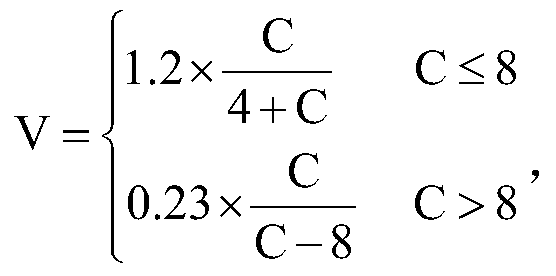
- Step b5 calculating an average growth rate b of the characteristic leaves in the standard leaf length model according to the leaf position of the characteristic leaves, wherein the average growth rate b of the characteristic leaves in the standard leaf length model satisfies the following formula:
- V is the average growth rate b of the characteristic leaves in the standard leaf length model, in centimeters per day.
- Step b6 determining the standard leaf length of the characteristic leaf, and the standard leaf length of the characteristic leaf satisfies the following formula:
- Ls is the standard leaf length of the characteristic leaves.
Landscapes
- Life Sciences & Earth Sciences (AREA)
- Soil Sciences (AREA)
- Environmental Sciences (AREA)
- Hydroponics (AREA)
- Cultivation Of Plants (AREA)
Abstract
Description



Claims (4)
- 一种基于温室番茄叶片长度的营养液管理技术,其特征在于,包括如下步骤:步骤1、1-1、温室番茄的特征叶叶位为:温室番茄结果前,倒3叶为其特征叶;由于温室番茄在第8或第9叶出现时开始结果,当温室番茄结果后,倒7叶为其特征叶;标准叶长为通过标准叶长模型计算出的特征叶长,即在无水肥亏缺条件下特征叶的叶片长度;1-2、测定温室番茄特征叶的叶长,然后将测定日之前温室内的温度资料输入至标准叶长模型中,标准叶长模型的输出值即为特征叶的标准叶长;将特征叶长减去标准叶长,结果大于零表明水肥供应过多,结果小于零表明水肥供应不足,结果等于零说明水肥供应适当;步骤2、2-1、计算特征叶的平均生长速率a:利用特征叶测定时段的叶长/特征叶从出现至测定时段的有效积温得到特征叶的平均生长速率a;2-2、利用特征叶的平均生长速率a,计算当前浇灌营养液的电导率值;2-3、利用当前浇灌营养液的电导率值减去无水肥亏缺条件下营养液的电导率值,将差值乘以浇灌此营养液的天数,得到的结果为多施或者少施的营养液养分量;步骤3、根据获得的当前浇灌营养液的电导率值和多施或者少施的营养液养分量,若营养液养分量多施,则对当前浇灌营养液的电导率值降低10%;若营养液养分量少施,则对当前浇灌营养液的电导率值提升10%;然后每天测定特征叶的叶长,并与标准叶长模型输出的标准叶长进行大小比较,直至测定的特征叶叶长与模型输出的标准叶长相等,按照测定的特征叶叶长与模型输出的标准叶长相等时的营养液的电导率值进行营养液的浇灌。
- 根据权利要求1所述的一种基于温室番茄叶片长度的营养液管理技术,其特征在于,步骤1-1中,所述温室番茄的特征叶叶位的具体确定方法为:步骤a1、选取番茄品种和植株,并设计不同电导率的营养液浇灌所选取的番茄植株;步骤a2、番茄植株的第一真叶展开后,每3天进行一次定株观测,观测项目包括株高、叶数、各叶位的叶长和各节位果实的直径,同时记录每天的日平均温度;当叶长增长量连续3次测量都低于0.5cm,则认为该叶片已达最大叶长,不再进行叶长测量;步骤a3、在温室番茄结果前,采用excel软件对株高与叶片生长速率进行相关性分析,求得株高与叶片生长速率之间的决定系数a,以决定系数a最大的所在节位叶片为特 征叶,最终确定结果前的特征叶为倒3叶;在温室番茄结果后,首先建立番茄果实直径与果实鲜重的数学关系公式,利用测定的果实直径获得番茄植株每日的果实鲜重,进而得到整株番茄果实的鲜重日增长量;分析整株番茄果实的鲜重日增长量与不同节位果实直径的决定系数b,以决定系数b最大值所在节位叶片为特征叶,最终确定结果后的特征叶为倒7叶。
- 根据权利要求1所述的一种基于温室番茄叶片长度的营养液管理技术,其特征在于,步骤1、3中,所述特征叶的标准叶长的确定方法为:步骤b1、确定第一真叶展开至任一叶展开后第n天的累积有效积温,满足如下公式:G=∑(Tmean-Tb),其中,G为第一真叶展开至任一叶展开后第n天的累积有效积温;Tmean为一天的日平均温度;Tb为界限温度,界限温度为公知常识;步骤b2、确定叶片展开后从第r天至第j天的累积有效积温,满足如下公式:ΔGrj=Gj-Gr,其中,ΔGrj为第一真叶展开至任一叶展开后从第r天到第j天的累积有效积温;Gr为第一真叶展开至任一叶展开后第r天的累积有效积温;Gj为第一真叶展开至任一叶展开后第j天的累积有效积温;步骤b3、采用累积有效积温确定叶片总数,所述总叶片数满足如下公式:N=0.038×G-5.5,其中,N为叶片总数;步骤b4、根据叶片总数确定特征叶的叶位,满足如下公式:
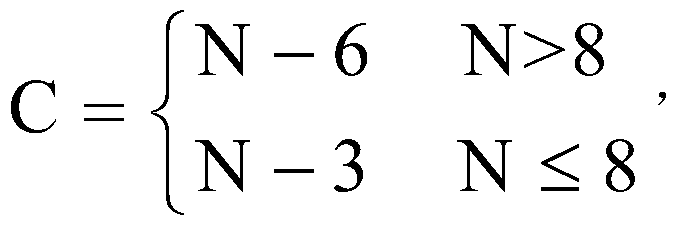 其中,C为特征叶的叶位;步骤b5、根据特征叶的叶位计算标准叶长模型中特征叶的平均生长速率b,所述标准叶长模型中特征叶的平均生长速率b满足如下公式:
 其中,V为标准叶长模型中特征叶的平均生长速率b,单位为厘米每天。步骤b6、确定特征叶的标准叶长,特征叶的标准叶长所述满足如下公式:Ls=V×ΔGrj,其中,Ls为特征叶的标准叶长。
 - 根据权利要求1所述的一种基于温室番茄叶片长度的营养液管理技术,其特征在于,步骤2-2中,所述当前浇灌营养液的电导率值计算方法如下:当温室番茄叶片数小于等于8时:Vm=0.03×EC+0.3,当温室番茄叶片数大于8时:Vm=0.58e0.167EC,其中,Vm为特征叶的平均生长速率a;EC为当前浇灌营养液的电导率值;通过对测定的特征叶的平均生长速率反推,确定当前营养液的电导率值。
Priority Applications (1)
| Application Number | Priority Date | Filing Date | Title |
|---|---|---|---|
| GB1909164.4A GB2571684B (en) | 2016-12-09 | 2016-12-20 | Nutrient Solution Management Technique Based on Length of Leaf of Greenhouse Tomato |
Applications Claiming Priority (2)
| Application Number | Priority Date | Filing Date | Title |
|---|---|---|---|
| CN201611128697.6A CN106576547A (zh) | 2016-12-09 | 2016-12-09 | 一种基于温室番茄叶片长度的营养液管理技术 |
| CN201611128697.6 | 2016-12-09 |
Publications (1)
| Publication Number | Publication Date |
|---|---|
| WO2018103136A1 true WO2018103136A1 (zh) | 2018-06-14 |
Family
ID=58597790
Family Applications (1)
| Application Number | Title | Priority Date | Filing Date |
|---|---|---|---|
| PCT/CN2016/110901 Ceased WO2018103136A1 (zh) | 2016-12-09 | 2016-12-20 | 一种基于温室番茄叶片长度的营养液管理技术 |
Country Status (3)
| Country | Link |
|---|---|
| CN (1) | CN106576547A (zh) |
| GB (1) | GB2571684B (zh) |
| WO (1) | WO2018103136A1 (zh) |
Families Citing this family (4)
| Publication number | Priority date | Publication date | Assignee | Title |
|---|---|---|---|---|
| CN108062602B (zh) * | 2017-12-28 | 2019-08-02 | 江苏大学 | 一种预测温室茄果类作物同化产物产量的方法 |
| CN109284771B (zh) * | 2018-08-03 | 2020-09-15 | 中国农业大学 | 一种番茄生长模型判定方法及装置 |
| CN112489211B (zh) * | 2020-11-27 | 2024-06-11 | 广州极飞科技股份有限公司 | 农作物长势状态确定方法、农作物作业方法及相关装置 |
| CN118525741A (zh) * | 2024-03-29 | 2024-08-23 | 济南大学 | 一种温室环境下利用危机信号诱导西红柿的生长的方法 |
Citations (3)
| Publication number | Priority date | Publication date | Assignee | Title |
|---|---|---|---|---|
| CN101950321A (zh) * | 2010-07-30 | 2011-01-19 | 沈阳农业大学 | 一种建立日光温室长季节栽培番茄植株叶片数模型用于控制番茄长势的方法 |
| US20140324490A1 (en) * | 2013-04-29 | 2014-10-30 | Michael H. Gurin | Distributed Farm Optimization System |
| CN104429264A (zh) * | 2014-11-13 | 2015-03-25 | 沈阳远大科技园有限公司 | 通过检测作物叶片的营养状况来指导施肥的方法 |
Family Cites Families (3)
| Publication number | Priority date | Publication date | Assignee | Title |
|---|---|---|---|---|
| CN101803555B (zh) * | 2010-04-09 | 2011-07-20 | 中国农业大学 | 一种莲雾营养液栽培方法 |
| CN103004408A (zh) * | 2012-12-06 | 2013-04-03 | 王世德 | 一种日光温室番茄育苗方法 |
| CN103583272B (zh) * | 2013-10-16 | 2016-04-20 | 中国农业科学院蔬菜花卉研究所 | 温室番茄坐果采收期肥水气一体化施用方法 |
-
2016
- 2016-12-09 CN CN201611128697.6A patent/CN106576547A/zh active Pending
- 2016-12-20 WO PCT/CN2016/110901 patent/WO2018103136A1/zh not_active Ceased
- 2016-12-20 GB GB1909164.4A patent/GB2571684B/en not_active Expired - Fee Related
Patent Citations (3)
| Publication number | Priority date | Publication date | Assignee | Title |
|---|---|---|---|---|
| CN101950321A (zh) * | 2010-07-30 | 2011-01-19 | 沈阳农业大学 | 一种建立日光温室长季节栽培番茄植株叶片数模型用于控制番茄长势的方法 |
| US20140324490A1 (en) * | 2013-04-29 | 2014-10-30 | Michael H. Gurin | Distributed Farm Optimization System |
| CN104429264A (zh) * | 2014-11-13 | 2015-03-25 | 沈阳远大科技园有限公司 | 通过检测作物叶片的营养状况来指导施肥的方法 |
Non-Patent Citations (2)
| Title |
|---|
| FAN ET AL: "Effect of Nutrient Solution Conductivity Regulation on Quality and Yield of Kaluo Tomato", ACTA AGRICULTURAE BOREALI-OCCIDENTALIS SINICA, vol. 20, no. 4, 30 April 2011 (2011-04-30), pages 102 - 105, 193 * |
| ZHANG ET AL: "Effects of nutrient solution supplying mode on growth, yield and quality of tomatoes using leaf number growth dynamic", JOURNAL OF PLANT NUTRITION AND FERTILIZER, vol. 22, no. 5, 5 April 2016 (2016-04-05), pages 1374 - 1383 * |
Also Published As
| Publication number | Publication date |
|---|---|
| GB201909164D0 (en) | 2019-08-07 |
| GB2571684A (en) | 2019-09-04 |
| CN106576547A (zh) | 2017-04-26 |
| GB2571684B (en) | 2022-04-06 |
Similar Documents
| Publication | Publication Date | Title |
|---|---|---|
| Huang et al. | Modeling evapotranspiration for cucumber plants based on the Shuttleworth-Wallace model in a Venlo-type greenhouse | |
| Zhang et al. | Multi-scale evapotranspiration of summer maize and the controlling meteorological factors in north China | |
| Velez et al. | Scheduling deficit irrigation of citrus trees with maximum daily trunk shrinkage | |
| Zhang et al. | Contribution of cultivar, fertilizer and weather to yield variation of winter wheat over three decades: A case study in the North China Plain | |
| CN110447365B (zh) | 一种稻田水肥优化方法 | |
| Li et al. | Optimum planting date and cultivar maturity to optimize potato yield and yield stability in North China | |
| Liu et al. | Reponses and sensitivities of maize phenology to climate change from 1981 to 2009 in Henan Province, China | |
| Silber et al. | The roles of fruit sink in the regulation of gas exchange and water uptake: a case study for avocado | |
| CN104584751A (zh) | 基于冬油菜氮素营养无损检测的施肥方法 | |
| WO2018103136A1 (zh) | 一种基于温室番茄叶片长度的营养液管理技术 | |
| Bu et al. | The effect of adapting cultivars on the water use efficiency of dryland maize (Zea mays L.) in northwestern China | |
| CN111798028A (zh) | 一种作物产量预测方法、装置、电子设备和存储介质 | |
| CN108401634B (zh) | 一种大棚鲜食番茄氮素营养诊断及推荐施氮方法 | |
| Wang et al. | Simulating cucumber plant heights using optimized growth functions driven by water and accumulated temperature in a solar greenhouse | |
| Song et al. | Influence of climate on winter wheat productivity in different climate regions of China, 1961–2000 | |
| Xu et al. | Evaluation and application of AquaCrop in simulation of alternate irrigation with brackish and fresh water for cotton under mulch drip irrigation in southern Xinjiang | |
| CN106717425A (zh) | 一种利用植株叶片相对spad值对作物进行氮肥推荐的方法 | |
| CN108062602B (zh) | 一种预测温室茄果类作物同化产物产量的方法 | |
| CN114202702B (zh) | 基于D-fG参数遥感获取的冬小麦动态收获指数遥感估算方法 | |
| Yin et al. | Optimizing bent branch numbers improves transpiration and crop water productivity of cut rose (Rosa hybrida) in greenhouse | |
| CN118627699B (zh) | 柑橘产量预估方法、装置及其应用 | |
| Gallardo et al. | Adaptation of VegSyst-DSS for N, P and K recommendations for grafted tomato grown in perlite in Mediterranean greenhouses | |
| Hueso et al. | Harvest prediction in ‘Algerie’loquat | |
| Dhankhar et al. | Thermal requirements for flowering and fruit yield attainment in advance lines of okra | |
| Yan et al. | Spatiotemporal patterns and driving factors of evapotranspiration (natural and artificial) in the Ziya River Basin, China |
Legal Events
| Date | Code | Title | Description |
|---|---|---|---|
| 121 | Ep: the epo has been informed by wipo that ep was designated in this application |
Ref document number: 16923335 Country of ref document: EP Kind code of ref document: A1 |
|
| NENP | Non-entry into the national phase |
Ref country code: DE |
|
| ENP | Entry into the national phase |
Ref document number: 201909164 Country of ref document: GB Kind code of ref document: A Free format text: PCT FILING DATE = 20161220 |
|
| 122 | Ep: pct application non-entry in european phase |
Ref document number: 16923335 Country of ref document: EP Kind code of ref document: A1 |