WO2018074518A1 - 二次元ホウ化水素含有シート、二次元ホウ素化合物含有シートの製造方法 - Google Patents
二次元ホウ化水素含有シート、二次元ホウ素化合物含有シートの製造方法 Download PDFInfo
- Publication number
- WO2018074518A1 WO2018074518A1 PCT/JP2017/037709 JP2017037709W WO2018074518A1 WO 2018074518 A1 WO2018074518 A1 WO 2018074518A1 JP 2017037709 W JP2017037709 W JP 2017037709W WO 2018074518 A1 WO2018074518 A1 WO 2018074518A1
- Authority
- WO
- WIPO (PCT)
- Prior art keywords
- dimensional
- containing sheet
- boron
- borohydride
- sheet
- Prior art date
- Legal status (The legal status is an assumption and is not a legal conclusion. Google has not performed a legal analysis and makes no representation as to the accuracy of the status listed.)
- Ceased
Links
Images










Classifications
-
- C—CHEMISTRY; METALLURGY
- C01—INORGANIC CHEMISTRY
- C01B—NON-METALLIC ELEMENTS; COMPOUNDS THEREOF; METALLOIDS OR COMPOUNDS THEREOF NOT COVERED BY SUBCLASS C01C
- C01B35/00—Boron; Compounds thereof
- C01B35/02—Boron; Borides
- C01B35/026—Higher boron hydrides, i.e. containing at least three boron atoms
-
- C—CHEMISTRY; METALLURGY
- C01—INORGANIC CHEMISTRY
- C01B—NON-METALLIC ELEMENTS; COMPOUNDS THEREOF; METALLOIDS OR COMPOUNDS THEREOF NOT COVERED BY SUBCLASS C01C
- C01B35/00—Boron; Compounds thereof
- C01B35/02—Boron; Borides
- C01B35/04—Metal borides
-
- C—CHEMISTRY; METALLURGY
- C01—INORGANIC CHEMISTRY
- C01B—NON-METALLIC ELEMENTS; COMPOUNDS THEREOF; METALLOIDS OR COMPOUNDS THEREOF NOT COVERED BY SUBCLASS C01C
- C01B6/00—Hydrides of metals including fully or partially hydrided metals, alloys or intermetallic compounds ; Compounds containing at least one metal-hydrogen bond, e.g. (GeH3)2S, SiH GeH; Monoborane or diborane; Addition complexes thereof
-
- H—ELECTRICITY
- H01—ELECTRIC ELEMENTS
- H01M—PROCESSES OR MEANS, e.g. BATTERIES, FOR THE DIRECT CONVERSION OF CHEMICAL ENERGY INTO ELECTRICAL ENERGY
- H01M10/00—Secondary cells; Manufacture thereof
- H01M10/05—Accumulators with non-aqueous electrolyte
- H01M10/052—Li-accumulators
- H01M10/0525—Rocking-chair batteries, i.e. batteries with lithium insertion or intercalation in both electrodes; Lithium-ion batteries
-
- H—ELECTRICITY
- H01—ELECTRIC ELEMENTS
- H01M—PROCESSES OR MEANS, e.g. BATTERIES, FOR THE DIRECT CONVERSION OF CHEMICAL ENERGY INTO ELECTRICAL ENERGY
- H01M4/00—Electrodes
- H01M4/02—Electrodes composed of, or comprising, active material
- H01M4/36—Selection of substances as active materials, active masses, active liquids
- H01M4/58—Selection of substances as active materials, active masses, active liquids of inorganic compounds other than oxides or hydroxides, e.g. sulfides, selenides, tellurides, halogenides or LiCoFy; of polyanionic structures, e.g. phosphates, silicates or borates
-
- B—PERFORMING OPERATIONS; TRANSPORTING
- B01—PHYSICAL OR CHEMICAL PROCESSES OR APPARATUS IN GENERAL
- B01J—CHEMICAL OR PHYSICAL PROCESSES, e.g. CATALYSIS OR COLLOID CHEMISTRY; THEIR RELEVANT APPARATUS
- B01J31/00—Catalysts comprising hydrides, coordination complexes or organic compounds
- B01J31/02—Catalysts comprising hydrides, coordination complexes or organic compounds containing organic compounds or metal hydrides
- B01J31/12—Catalysts comprising hydrides, coordination complexes or organic compounds containing organic compounds or metal hydrides containing organo-metallic compounds or metal hydrides
- B01J31/14—Catalysts comprising hydrides, coordination complexes or organic compounds containing organic compounds or metal hydrides containing organo-metallic compounds or metal hydrides of aluminium or boron
- B01J31/146—Catalysts comprising hydrides, coordination complexes or organic compounds containing organic compounds or metal hydrides containing organo-metallic compounds or metal hydrides of aluminium or boron of boron
-
- C—CHEMISTRY; METALLURGY
- C01—INORGANIC CHEMISTRY
- C01P—INDEXING SCHEME RELATING TO STRUCTURAL AND PHYSICAL ASPECTS OF SOLID INORGANIC COMPOUNDS
- C01P2002/00—Crystal-structural characteristics
- C01P2002/70—Crystal-structural characteristics defined by measured X-ray, neutron or electron diffraction data
- C01P2002/74—Crystal-structural characteristics defined by measured X-ray, neutron or electron diffraction data by peak-intensities or a ratio thereof only
-
- C—CHEMISTRY; METALLURGY
- C01—INORGANIC CHEMISTRY
- C01P—INDEXING SCHEME RELATING TO STRUCTURAL AND PHYSICAL ASPECTS OF SOLID INORGANIC COMPOUNDS
- C01P2002/00—Crystal-structural characteristics
- C01P2002/70—Crystal-structural characteristics defined by measured X-ray, neutron or electron diffraction data
- C01P2002/76—Crystal-structural characteristics defined by measured X-ray, neutron or electron diffraction data by a space-group or by other symmetry indications
-
- C—CHEMISTRY; METALLURGY
- C01—INORGANIC CHEMISTRY
- C01P—INDEXING SCHEME RELATING TO STRUCTURAL AND PHYSICAL ASPECTS OF SOLID INORGANIC COMPOUNDS
- C01P2002/00—Crystal-structural characteristics
- C01P2002/80—Crystal-structural characteristics defined by measured data other than those specified in group C01P2002/70
- C01P2002/85—Crystal-structural characteristics defined by measured data other than those specified in group C01P2002/70 by XPS, EDX or EDAX data
-
- C—CHEMISTRY; METALLURGY
- C01—INORGANIC CHEMISTRY
- C01P—INDEXING SCHEME RELATING TO STRUCTURAL AND PHYSICAL ASPECTS OF SOLID INORGANIC COMPOUNDS
- C01P2004/00—Particle morphology
- C01P2004/01—Particle morphology depicted by an image
- C01P2004/03—Particle morphology depicted by an image obtained by SEM
-
- C—CHEMISTRY; METALLURGY
- C01—INORGANIC CHEMISTRY
- C01P—INDEXING SCHEME RELATING TO STRUCTURAL AND PHYSICAL ASPECTS OF SOLID INORGANIC COMPOUNDS
- C01P2004/00—Particle morphology
- C01P2004/20—Particle morphology extending in two dimensions, e.g. plate-like
- C01P2004/24—Nanoplates, i.e. plate-like particles with a thickness from 1-100 nanometer
-
- C—CHEMISTRY; METALLURGY
- C01—INORGANIC CHEMISTRY
- C01P—INDEXING SCHEME RELATING TO STRUCTURAL AND PHYSICAL ASPECTS OF SOLID INORGANIC COMPOUNDS
- C01P2006/00—Physical properties of inorganic compounds
- C01P2006/40—Electric properties
-
- H—ELECTRICITY
- H10—SEMICONDUCTOR DEVICES; ELECTRIC SOLID-STATE DEVICES NOT OTHERWISE PROVIDED FOR
- H10N—ELECTRIC SOLID-STATE DEVICES NOT OTHERWISE PROVIDED FOR
- H10N60/00—Superconducting devices
- H10N60/80—Constructional details
- H10N60/85—Superconducting active materials
-
- Y—GENERAL TAGGING OF NEW TECHNOLOGICAL DEVELOPMENTS; GENERAL TAGGING OF CROSS-SECTIONAL TECHNOLOGIES SPANNING OVER SEVERAL SECTIONS OF THE IPC; TECHNICAL SUBJECTS COVERED BY FORMER USPC CROSS-REFERENCE ART COLLECTIONS [XRACs] AND DIGESTS
- Y02—TECHNOLOGIES OR APPLICATIONS FOR MITIGATION OR ADAPTATION AGAINST CLIMATE CHANGE
- Y02E—REDUCTION OF GREENHOUSE GAS [GHG] EMISSIONS, RELATED TO ENERGY GENERATION, TRANSMISSION OR DISTRIBUTION
- Y02E60/00—Enabling technologies; Technologies with a potential or indirect contribution to GHG emissions mitigation
- Y02E60/10—Energy storage using batteries
Definitions
- the present invention relates to a method for producing a two-dimensional borohydride-containing sheet and a two-dimensional boron compound-containing sheet.
- Atomic network materials are attracting attention as functional materials. Although the potential of atomic network materials has not been fully developed, there are some that appear to be superior to other materials. Potentials of atomic network materials that are superior to other materials include, for example, the creation and control of functions by insertion and selection of metal atoms into the atomic network, the flexibility of the atomic network, and the large specific surface area. Examples thereof include a function as a catalyst carrier and a catalyst, and high functionality inherent in the atomic network.
- the atomic network material forms a base of metal, semiconductor or insulator by the network structure.
- metal atoms By inserting metal atoms into the atomic network, charge transfer occurs and electronic properties can be controlled.
- Graphene in which only carbon atoms form a two-dimensional network has electrical conductivity superior to silicon and strength superior to iron.
- Graphene is expected to be applied to various fields including semiconductor materials and electrode materials for secondary batteries.
- a two-dimensional boron sheet in which boron atoms form a two-dimensional network is also expected to have the same properties as graphene.
- Non-Patent Document 1 As a method of synthesizing a two-dimensional boron sheet, for example, a method of decomposing diborane at a high temperature is known (for example, see Non-Patent Document 1).
- Ultrathin Nanosheets Ultrathin Single-Crystalline Boron Nanosheets for Enhanced Electro-Optical Performance, JunqiXu, YangZhangLang.
- the present invention has been made in view of the above circumstances, and is a production of a two-dimensional borohydride-containing sheet and a two-dimensional boron compound-containing sheet having a two-dimensional network composed of boron atoms and other atoms such as hydrogen. It aims to provide a method.
- the two-dimensional network has a network shape in which boron atoms are arranged in a hexagonal ring shape and hexagons formed by the boron atoms are connected, and two adjacent boron atoms are the same.
- Hydrogen boride [3] The two-dimensional borohydride-containing sheet according to [1] or [2], wherein the length in at least one direction is 100 nm or more.
- MB 2 (wherein M is at least one selected from the group consisting of Al, Mg, Ta, Zr, Re, Cr, Ti, and V.)
- a method for producing a sheet containing a two-dimensional boron compound comprising a step of mixing a metal ion constituting a metal diboride and an ion exchange resin coordinated with an ion-exchangeable ion in a polar organic solvent.
- the present invention can be used as an electronic material, a catalyst carrier material, a catalyst material, a superconducting material, etc., and has a two-dimensional network comprising a two-dimensional network composed of boron atoms and other atoms such as hydrogen.
- the manufacturing method of a content sheet and a two-dimensional boron compound content sheet can be provided.
- Embodiments of the method for producing a two-dimensional borohydride-containing sheet and a two-dimensional boron compound-containing sheet of the present invention will be described. Note that this embodiment is specifically described in order to better understand the gist of the invention, and does not limit the present invention unless otherwise specified.
- the two-dimensional borohydride-containing sheet of the present embodiment is a sheet having a two-dimensional network composed of (HB) n (n ⁇ 4, where n is an integer). That is, in the two-dimensional borohydride-containing sheet of the present embodiment, boron atoms (B) and hydrogen atoms (H) are present at a molar ratio of 1: 1.
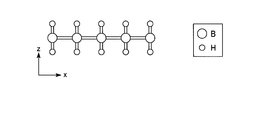
- boron atoms (B) are arranged in a hexagonal ring like a benzene ring. Moreover, a boron atom (B) exists in the vertex of the hexagon. Furthermore, hexagons formed by boron atoms (B) are connected without gaps to form a network-like surface structure (two-dimensional network). As shown in FIGS. 1B and 1C, the two-dimensional borohydride-containing sheet of the present embodiment has a site where two adjacent boron atoms (B) are bonded to the same hydrogen atom (H).
- the hexagonal network formed by boron atoms (B) refers to, for example, a honeycomb.
- Such a two-dimensional borohydride-containing sheet of this embodiment is a thin-film substance having a two-dimensional network composed of boron atoms (B) and hydrogen atoms (H).
- the two-dimensional hydrogen boride-containing sheet of the present embodiment is a metal atom derived from a metal diboride used in the method for producing a two-dimensional boron compound-containing sheet of the present embodiment, which will be described later, or other metal atoms. Contains almost no.
- the total number of boron atoms (B) and hydrogen atoms (H) that form the network-like surface structure is 1000 or more.
- the bond distance d 1 between two adjacent boron atoms (B) shown in FIG. 1A is 0.17 nm to 0.18 nm.
- the bond distance d 2 between two adjacent boron atoms (B) through one hydrogen atom (H) shown in FIG. 1B is 0.17 nm to 0.18 nm.
- the bond distance d 3 between adjacent boron atoms (B) and hydrogen atoms (H) shown in FIG. 1B is 0.125 nm to 0.135 nm.
- the thickness of the two-dimensional borohydride-containing sheet of this embodiment is 0.23 nm to 0.50 nm.
- the length in at least one direction (for example, the length in the X direction or the Y direction in FIG. 1A) is 100 nm or more.
- the two-dimensional hydrogen boride-containing sheet of the present embodiment if the length in at least one direction is 100 nm or more, the two-dimensional hydrogen boride-containing sheet of the present embodiment is an electronic material, a catalyst carrier material, a catalyst material, It can be effectively used as a superconducting material.
- seat of this embodiment is not specifically limited.
- the size of the two-dimensional borohydride-containing sheet of the present embodiment can be formed to an arbitrary size by the method for producing a two-dimensional boron compound-containing sheet of the present embodiment described later.
- Such a two-dimensional borohydride-containing sheet of this embodiment is a substance having a crystal structure. Moreover, in the two-dimensional borohydride containing sheet
- the two-dimensional borohydride-containing sheet of this embodiment can be used as an electronic material, a catalyst carrier material, a superconducting material, or the like.
- the two-dimensional borohydride-containing sheet of the present embodiment is predicted to exhibit an electronic structure called Dirac Fermion that exhibits a mobility comparable to that of graphene (Two-Dimensional Boron Hydrostatic Sheets: High Stability, Massess Dirac Fermion). , And Excellent Mechanical Properties, Angew. Chem. Int. Ed., 2016, 55, 1.). For this reason, the two-dimensional borohydride-containing sheet of the present embodiment is expected to be used as a new electronic device material.
- the two-dimensional sheet of boron becomes a superconductor at 10K to 20K (Can Two-Dimensional Boron Superconductor ?, Evgeni S. Penev, Alex Kutana, and Boris I. Yakobson, NanoLet. , 2016, 16, 2522.). Therefore, the two-dimensional borohydride-containing sheet of the present embodiment is expected to be used as a new superconductor base material exceeding this.
- the two-dimensional sheet of boron is predicted to have four times the mechanical strength of iron (Mechanical properties and Stabilites of ⁇ -boro monolayers, Peng Q, Han L, Wen X, Liu S, Chen Z , Lian J, De S., Phys. Chem. Chem. Phys. 2015, 17, 2160.). Therefore, the two-dimensional borohydride-containing sheet of the present embodiment is expected to be used as a new high-strength material base material that exceeds this.
- the hydrogen storage property can be 12.3% by mass by coating the surface of a two-dimensional boron sheet with lithium (Boron-double-ring sheet, fullrene, and nanotubes: potentialial).
- hydrogen storage materials Wang J, Zhao HY, Liu Y., Chem. Phys. Chem. 2014, 15, 3453. Therefore, the two-dimensional borohydride-containing sheet of the present embodiment is expected to be used as a new hydrogen storage material exceeding this.
- the capacity of the lithium ion secondary battery including the electrode is equal to that of the lithium ion secondary battery including an electrode made of graphite.
- the two-dimensional borohydride-containing sheet of the present embodiment is expected to be used as a new electrode material for lithium ion secondary batteries exceeding this.
- the two-dimensional hydrogen boride-containing sheet of this embodiment can be used as a solid fuel. Be expected.
- the manufacturing method of the two-dimensional boron compound-containing sheet of this embodiment is MB 2 (where M is at least one selected from the group consisting of Al, Mg, Ta, Zr, Re, Cr, Ti, and V). .)
- a step of mixing a metal diboride having a mold structure and a metal ion constituting the metal diboride and an ion exchange resin coordinated with an ion-exchangeable ion in a polar organic solvent hereinafter referred to as “first” It is a method having a process of ".
- the diboride metal MB 2 -type structure those having a structure of hexagonal ring is used.
- aluminum diboride (AlB 2 ), magnesium diboride (MgB 2 ), tantalum diboride (TaB 2 ), zirconium diboride (ZrB 2 ), rhenium diboride (ReB 2 ), diboride Chromium (CrB 2 ), titanium diboride (TiB 2 ), and vanadium diboride (VB 2 ) are used.
- Magnesium diboride is preferably used because ion exchange with an ion exchange resin can be easily performed in a polar organic solvent.
- ion exchange resin which coordinated the ion which can ion-exchange with the metal ion which comprises a metal diboride.
- an ion exchange resin for example, a polymer of styrene having a functional group (hereinafter referred to as “functional group ⁇ ”) in which ions capable of ion exchange with metal ions constituting metal diboride are coordinated.
- the functional group ⁇ include a sulfo group and a carboxyl group. Among these, a sulfo group is preferable because ion exchange with a metal ion constituting a metal diboride can be easily performed in a polar organic solvent.
- the polar organic solvent is not particularly limited, and examples thereof include acetonitrile, N, N-dimethylformamide, methanol and the like. Among these, acetonitrile is preferable because it does not contain oxygen.
- a metal diboride and an ion exchange resin are added to a polar organic solvent, a mixed solution containing the polar organic solvent, the metal diboride and the ion exchange resin is stirred, and the metal diboride and the ion exchange resin are stirred. Make sufficient contact.
- the metal ion constituting the metal diboride and the ion of the functional group ⁇ of the ion exchange resin are ion-exchanged to form the boron atom and the atom derived from the functional group ⁇ of the ion exchange resin.
- a two-dimensional boron compound-containing sheet having a dimensional network is produced.
- magnesium diboride is used as the metal diboride and an ion exchange resin having a sulfo group is used as the ion exchange resin
- the ion (H + ) is substituted to produce a two-dimensional borohydride-containing sheet having a two-dimensional network composed of boron atoms (B) and hydrogen atoms (H) as described above.
- the temperature of the mixed solution is preferably 15 ° C. to 35 ° C.
- the time for stirring the mixed solution is not particularly limited, but is, for example, 700 minutes to 7000 minutes.
- the first step is performed in an inert atmosphere made of an inert gas such as nitrogen (N 2 ) or argon (Ar).
- an inert gas such as nitrogen (N 2 ) or argon (Ar).
- the filtration method of a mixed solution is not specifically limited, For example, methods, such as natural filtration, vacuum filtration, pressure filtration, and centrifugal filtration, are used.
- a filter medium the filter paper etc. which compression-molded the filter paper which uses cellulose as a base material, a membrane filter, a cellulose, a glass fiber etc. are used, for example.
- a solution containing the product separated from the precipitate by filtration and recovered is air-dried or dried by heating to finally obtain only the product.
- This product is a two-dimensional boron compound-containing sheet having a two-dimensional network formed by boron atoms and atoms derived from the functional group ⁇ of the ion exchange resin.
- Examples of the method for analyzing the product obtained by the method for producing a two-dimensional boron compound-containing sheet of the present embodiment include X-ray photoelectron spectroscopy (X-ray photoelectron spectroscopy, XPS), transmission electron microscope (transmission), and the like.
- XPS X-ray photoelectron spectroscopy
- JPS9010TR X-ray photoelectron spectrometer manufactured by JEOL
- JPS9010TR X-ray photoelectron spectrometer
- JPS9010TR X-ray photoelectron spectrometer manufactured by JEOL
- the constituent elements of the product and their electronic states are analyzed by measuring the energy of the photoelectrons generated in the product.
- almost no photoelectron energy caused by the metal element constituting the raw material metal diboride is detected, and only the photoelectron energy caused by the element derived from boron and the functional group ⁇ of the above ion exchange resin.
- the product is composed only of elements derived from boron and the functional group ⁇ of the ion exchange resin.
- TEM transmission electron microscope
- the product is observed by using a transmission electron microscope (trade name: JEM-2100F TEM / STEM) manufactured by JEOL. Analyze the shape (appearance) etc.
- a film-like (sheet-like) substance is observed, it can be said that the product is a two-dimensional sheet-like substance.
- EDS energy dispersive X-ray analysis
- a two-dimensional boron compound-containing sheet having a two-dimensional network formed by boron atoms and atoms derived from the functional group ⁇ of the ion exchange resin can be easily obtained. Can be generated.
- a larger-area two-dimensional boron compound-containing sheet can be produced by using a large crystal of the raw material MB 2 type metal diboride.
- an acidic solution is used to ion-exchange the metal ions constituting the metal diboride and the functional group ⁇ ions of the ion exchange resin.
- a polar organic solvent is used. Therefore, it is not necessary to adjust the pH of the mixed solution containing the polar organic solvent, the metal diboride and the ion exchange resin.
- magnesium diboride is used as a metal diboride and an ion exchange resin having a sulfo group as an ion exchange resin.
- the magnesium ion (Mg + ) of magnesium diboride and the hydrogen ion (H + ) of the sulfo group of the ion exchange resin are substituted to form a minimum unit (HB) as a two-dimensional hydrogen boride-containing sheet. 4 can be manufactured.
- Example 1 X-ray photoelectron spectroscopy (XPS) analysis of magnesium diboride (Rare Metallic) was performed.
- XPS X-ray photoelectron spectroscopy
- an analyzer for X-ray photoelectron spectroscopy an X-ray photoelectron spectrometer (trade name: JPS9010TR) manufactured by JEOL Ltd. was used. The result of X-ray photoelectron spectroscopy is shown in FIG.
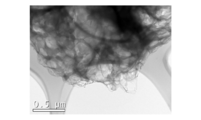
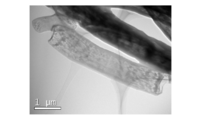
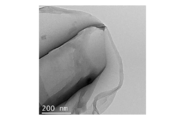
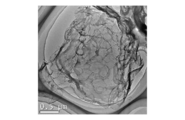
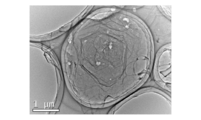
- Example 3 The product obtained in Experimental Example 2 was observed with a scanning transmission electron microscope (trade name: JEM-2100F TEM / STEM) manufactured by JEOL. The observation results are shown in FIGS. From the results shown in FIGS. 4 to 8, it is considered that the obtained product forms a two-dimensional sheet and each sheet exists in a state where it can be peeled one by one.
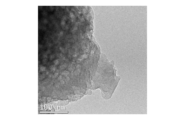
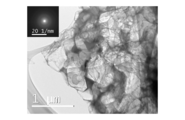
- Example 4 The product obtained in Experimental Example 2 was heated at 200 ° C. for 60 minutes, and observed with a scanning transmission electron microscope (trade name: JEM-2100F TEM / STEM) manufactured by JEOL. The observation results are shown in FIGS. From the results of FIGS. 9 to 12, it is considered that the obtained product forms a two-dimensional sheet, and each sheet exists in a state where it can be peeled one by one.
- the product was heated to 200 ° C. for dehydration, and the product of Experimental Example 4 after heating to 200 ° C. and the product of Experimental Example 3 have the same molecular structure.
- Example 5 The product obtained in Experimental Example 2 was observed with a scanning transmission electron microscope (STEM) (trade name: JEM-2100F TEM / STEM) manufactured by JEOL and subjected to electron beam energy loss spectroscopy. The observation results are shown in FIG. Moreover, the result of the electron beam energy loss spectroscopy regarding this product is shown in FIG. 14 and FIG. From the result of FIG. 13, a sheet-like substance was observed. Further, as shown in FIG. 14, a peak of electron beam energy loss spectroscopy of 191 eV indicating the sp2 structure of boron (B) is observed, and peaks caused by carbon (C), nitrogen (N), and oxygen (O) are observed.
- STEM scanning transmission electron microscope
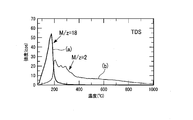
- Example 6 The product obtained in Experimental Example 2 was subjected to thermal desorption gas analysis (Thermal Desorption Spectrometry, TDS) using TDS1400TV manufactured by ESCO. The analysis results are shown in FIG. In FIG. 16, (a) shows a spectrum caused by water, and (b) shows a spectrum caused by hydrogen. When the product obtained in Experimental Example 2 was heated, it was found that water was released at around 180 ° C. due to the presence of by-product boron. Further, it was found that when the product obtained in Experimental Example 2 was further heated, hydrogen was desorbed at 200 ° C. or higher.
- TDS Thermal Desorption Gas analysis
- the molar ratio of boron to hydrogen contained in the precipitate obtained in Experimental Example 2 was calculated to be 0.97: 1. This result suggests that the precipitate obtained in Experimental Example 2 contains boron atoms (B) and hydrogen atoms (H) at a molar ratio of 1: 1.
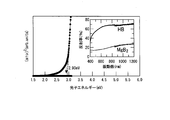
- Example 7 The product obtained in Experimental Example 2 was subjected to visible / ultraviolet spectroscopic analysis (UV-VIS) using V-660 manufactured by JASCO Corporation. The analysis results are shown in FIG. From the results of FIG. 17, it was found that the product obtained in Experimental Example 2 has a light absorption of 2.90 eV, which is not found in magnesium diboride or boric acid.
- UV-VIS visible / ultraviolet spectroscopic analysis
- Example 8 The product obtained in Experimental Example 2 was observed with a scanning transmission electron microscope (trade name: JEM-2100F TEM / STEM) manufactured by JEOL. The observation results are shown in FIG. In FIG. 18, the thickness of the portion indicated by L was measured by image analysis. The analysis result is shown in FIG. From the results of FIG. 19, it was found that the product obtained in Experimental Example 2 was a sheet-like substance having a thickness of 1 to several atomic layers.
- Example 9 The product obtained in Experimental Example 2 was subjected to Fourier transform infrared spectroscopic analysis (FTIR) using FT / IR-300 manufactured by JASCO Analytical Instruments. The analysis result is shown in FIG. From the results of FIG 20, absorption at 1619cm -1 had almost the same absorption 1613Cm -1 due to the theoretically calculated B-H-B bonds. Also, the absorption at 2509 cm ⁇ 1 indicates a termination structure that does not exist in the defect part, boundary part, or infinitely large two-dimensional borohydride-containing sheet of the two-dimensional borohydride-containing sheet.
- FTIR Fourier transform infrared spectroscopic analysis
- the two-dimensional borohydride-containing sheet of the present invention can be used as an electronic material, a catalyst support material, a superconducting material, and the like.
Landscapes
- Chemical & Material Sciences (AREA)
- Organic Chemistry (AREA)
- Inorganic Chemistry (AREA)
- Engineering & Computer Science (AREA)
- Chemical Kinetics & Catalysis (AREA)
- Electrochemistry (AREA)
- General Chemical & Material Sciences (AREA)
- Materials Engineering (AREA)
- Manufacturing & Machinery (AREA)
- Catalysts (AREA)
Abstract
本発明の二次元ホウ化水素含有シートは、(HB)n(n≧4)からなる二次元ネットワークを有する。
Description
本発明は、二次元ホウ化水素含有シートおよび二次元ホウ素化合物含有シートの製造方法に関する。
近年、原子が二次元的なネットワークをなす物質(以下、「原子ネットワーク物質」と言う。)について、新規な機能性を伴う現象が見出されている。また、原子ネットワーク物質は、機能性材料としてのポテンシャルが注目されている。原子ネットワーク物質のポテンシャルは、充分に開発されていないものの、他の材料に比べて優れていると思われるものがある。他の材料よりも優れている原子ネットワーク物質のポテンシャルとしては、例えば、原子ネットワークへの金属原子の挿入やその選択等による機能の創生・制御、原子ネットワークの柔軟性、広い比表面積を活かした触媒担体や触媒としての機能、原子ネットワークに内在する高機能性等が挙げられる。
また、原子ネットワーク物質は、ネットワーク構造によって金属や半導体的や絶縁体の母体を形成する。原子ネットワークへの金属原子の挿入により、電荷の移動が起こり、電子的な性質の制御が可能である。炭素原子のみが二次元ネットワークをなすグラフェンは、シリコンよりも優れた電気伝導性と鉄よりも優れた強度を有する。また、グラフェンは、半導体材料や二次電池の電極材料を初めとして、様々な分野への応用が期待されている。また、ホウ素原子が二次元ネットワークをなす二次元ホウ素シートも、グラフェンと同様の性質を有することが期待される。
二次元ホウ素シートを合成する方法としては、例えば、高温でジボランを分解させる方法が知られている(例えば、非特許文献1参照)。
Ultrathin Nanosheets:Ultrathin Single-Crystalline Boron Nanosheets for Enhanced Electro-Optical Performances,Junqi Xu,Yangyang Chang,Lin Gan,Ying Ma and Tianyou Zhai Advanced Science,2(2015)1500023.
しかしながら、従来、ホウ素原子と他の原子からなり、高機能性を有する二次元ホウ素化合物含有シートの製造方法は確立されていなかった。したがって、二次元ホウ素化合物含有シートを製造することはできなかった。
本発明は、上記事情に鑑みてなされたものであって、ホウ素原子と、水素等の他の原子とからなる二次元ネットワークを有する二次元ホウ化水素含有シートおよび二次元ホウ素化合物含有シートの製造方法を提供することを目的とする。
[1](HB)n(n≧4)からなる二次元ネットワークを有することを特徴とする二次元ホウ化水素含有シート。
[2]前記二次元ネットワークは、ホウ素原子が六角形の環状に配列し、前記ホウ素原子によって形成される六角形が連接してなる網目状をなし、前記ホウ素原子のうち隣接する2つが同一の水素原子と結合する部位を有することを特徴とする[1]に記載の二次元ホウ化水素含有シート。
ホウ化水素[3]少なくとも一方向の長さが100nm以上であることを特徴とする[1]または[2]に記載の二次元ホウ化水素含有シート。
[4]MB2(但し、Mは、Al、Mg、Ta、Zr、Re、Cr、TiおよびVからなる群から選択される少なくとも1種である。)型構造の二ホウ化金属と、前記二ホウ化金属を構成する金属イオンとイオン交換可能なイオンを配位したイオン交換樹脂とを極性有機溶媒中で混合する工程を有することを特徴とする二次元ホウ素化合物含有シートの製造方法。
[5]前記イオン交換樹脂は、スルホ基を有することを特徴とする[4]に記載の二次元ホウ素化合物含有シートの製造方法。
[6]前記極性有機溶媒は、アセトニトリルまたはメタノールであることを特徴とする[4]または[5]に記載の二次元ホウ素化合物含有シートの製造方法。
本発明によれば、電子材料、触媒の担体材料、触媒材料、超伝導材料等として利用可能であり、ホウ素原子と、水素等の他の原子とからなる二次元ネットワークを有する二次元ホウ化水素含有シートおよび二次元ホウ素化合物含有シートの製造方法を提供することができる。
本発明の二次元ホウ化水素含有シートおよび二次元ホウ素化合物含有シートの製造方法の実施の形態について説明する。
なお、本実施の形態は、発明の趣旨をより良く理解させるために具体的に説明するものであり、特に指定のない限り、本発明を限定するものではない。
なお、本実施の形態は、発明の趣旨をより良く理解させるために具体的に説明するものであり、特に指定のない限り、本発明を限定するものではない。
[二次元ホウ化水素含有シート]
本実施形態の二次元ホウ化水素含有シートは、(HB)n(n≧4、ただしnは整数)からなる二次元ネットワークを有するシートである。すなわち、本実施形態の二次元ホウ化水素含有シートは、ホウ素原子(B)と水素原子(H)がモル比で1:1の割合で存在する。また、本実施形態の二次元ホウ化水素含有シートは、ホウ素原子(B)と水素原子(H)のみから形成される二次元ネットワークを有するシートである。
また、(HB)n(n≧4、ただしnは整数)においてn=4の場合、本実施形態の二次元ホウ化水素含有シートの単位格子を表わす。
本実施形態の二次元ホウ化水素含有シートは、(HB)n(n≧4、ただしnは整数)からなる二次元ネットワークを有するシートである。すなわち、本実施形態の二次元ホウ化水素含有シートは、ホウ素原子(B)と水素原子(H)がモル比で1:1の割合で存在する。また、本実施形態の二次元ホウ化水素含有シートは、ホウ素原子(B)と水素原子(H)のみから形成される二次元ネットワークを有するシートである。
また、(HB)n(n≧4、ただしnは整数)においてn=4の場合、本実施形態の二次元ホウ化水素含有シートの単位格子を表わす。
本実施形態の二次元ホウ化水素含有シートは、図1Aに示すように、ホウ素原子(B)が、ベンゼン環のような六角形の環状に配列する。また、ホウ素原子(B)が、その六角形の頂点に存在する。さらに、ホウ素原子(B)によって形成される六角形が隙間なく連接して、網目状の面構造(二次元ネットワーク)をなしている。本実施形態の二次元ホウ化水素含有シートは、図1B,図1Cに示すように、ホウ素原子(B)のうち隣接する2つが同一の水素原子(H)と結合する部位を有する。
本実施形態の二次元ホウ化水素含有シートにおいて、ホウ素原子(B)によって形成される六角形の網目状とは、例えば、ハニカム状のことを言う。
本実施形態の二次元ホウ化水素含有シートにおいて、ホウ素原子(B)によって形成される六角形の網目状とは、例えば、ハニカム状のことを言う。
このような本実施形態の二次元ホウ化水素含有シートは、ホウ素原子(B)と水素原子(H)からなる二次元ネットワークを有する薄膜状の物質である。また、本実施形態の二次元ホウ化水素含有シートは、後述する本実施形態の二次元ホウ素化合物含有シートの製造方法に用いられる二ホウ化金属に由来する金属原子、または、その他の金属原子をほとんど含まない。
本実施形態の二次元ホウ化水素含有シートにおいて、上記の網目状の面構造を形成するホウ素原子(B)と水素原子(H)の総数は、1000個以上である。
本実施形態の二次元ホウ化水素含有シートにおいて、上記の網目状の面構造を形成するホウ素原子(B)と水素原子(H)の総数は、1000個以上である。
図1Aに示す、隣り合う2つのホウ素原子(B)間の結合距離d1は、0.17nm~0.18nmである。また、図1Bに示す、1つの水素原子(H)を介して、隣り合う2つのホウ素原子(B)間の結合距離d2は、0.17nm~0.18nmである。また、図1Bに示す、隣り合うホウ素原子(B)と水素原子(H)間の結合距離d3は、0.125nm~0.135nmである。
本実施形態の二次元ホウ化水素含有シートの厚さは、0.23nm~0.50nmである。
本実施形態の二次元ホウ化水素含有シートにおいて、少なくとも一方向の長さ(例えば、図1AにおいてX方向またはY方向の長さ)が100nm以上であることが好ましい。本実施形態の二次元ホウ化水素含有シートにおいて、少なくとも一方向の長さが100nm以上であれば、本実施形態の二次元ホウ化水素含有シートは、電子材料、触媒の担体材料、触媒材料、超伝導材料等として有効に利用することができる。
本実施形態の二次元ホウ化水素含有シートの大きさ(面積)は、特に限定されない。本実施形態の二次元ホウ化水素含有シートの大きさは、後述する本実施形態の二次元ホウ素化合物含有シートの製造方法によって、任意の大きさに形成することができる。
本実施形態の二次元ホウ化水素含有シートにおいて、少なくとも一方向の長さ(例えば、図1AにおいてX方向またはY方向の長さ)が100nm以上であることが好ましい。本実施形態の二次元ホウ化水素含有シートにおいて、少なくとも一方向の長さが100nm以上であれば、本実施形態の二次元ホウ化水素含有シートは、電子材料、触媒の担体材料、触媒材料、超伝導材料等として有効に利用することができる。
本実施形態の二次元ホウ化水素含有シートの大きさ(面積)は、特に限定されない。本実施形態の二次元ホウ化水素含有シートの大きさは、後述する本実施形態の二次元ホウ素化合物含有シートの製造方法によって、任意の大きさに形成することができる。
このような本実施形態の二次元ホウ化水素含有シートは、結晶構造を有する物質である。また、本実施形態の二次元ホウ化水素含有シートでは、六角形の環を形成するホウ素原子(B)間、および、ホウ素原子(B)と水素原子(H)の間の結合力が強い。そのため、本実施形態の二次元ホウ化水素含有シートは、製造時に複数積層されてなる結晶(凝集体)を形成したとしても、グラファイトと同様に結晶面に沿って容易に劈開し、単層の二次元シートとして分離(回収)することができる。
本実施形態の二次元ホウ化水素含有シートは、電子材料、触媒の担体材料、超伝導材料等として利用することができる。
本実施形態の二次元ホウ化水素含有シートは、グラフェンと同程度の移動度を示すDirac Fermionと呼ばれる電子構造を示すことが予測されている(Two-Dimensional Boron Hydride Sheets:High Stability,Massless Dirac Fermions,and Excellent Mechanical Properties,Angew.Chem.Int.Ed.,2016,55,1.参照)。そのため、本実施形態の二次元ホウ化水素含有シートは、新しい電子デバイス材料としての利用が期待される。
本実施形態の二次元ホウ化水素含有シートは、グラフェンと同程度の移動度を示すDirac Fermionと呼ばれる電子構造を示すことが予測されている(Two-Dimensional Boron Hydride Sheets:High Stability,Massless Dirac Fermions,and Excellent Mechanical Properties,Angew.Chem.Int.Ed.,2016,55,1.参照)。そのため、本実施形態の二次元ホウ化水素含有シートは、新しい電子デバイス材料としての利用が期待される。
また、ホウ素の二次元シートは、10K~20Kで超伝導体となることが予測されている(Can Two-Dimensional Boron Superconduct?,Evgeni S.Penev,Alex Kutana,and Boris I.Yakobson,Nano Lett.,2016,16,2522.参照)。そのため、本実施形態の二次元ホウ化水素含有シートは、これを上回る新しい超伝導体母材としての利用が期待される。
また、ホウ素の二次元シートは、鉄の4倍の機械的強度を有することが予測されている(Mechanical properties and Stabilities of α-boron monolayers,Peng Q,Han L,Wen X,Liu S,Chen Z,Lian J,De S.,Phys.Chem.Chem.Phys.2015,17,2160.参照)。そのため、本実施形態の二次元ホウ化水素含有シートは、これを上回る新しい高強度材料母材としての利用が期待される。
また、ホウ素の二次元シートの表面をリチウムで被覆することにより、水素吸蔵特性を12.3質量%とすることができると予測されている(Boron-duble-ring sheet,fullerene,and nanotubes:potential hydrogen storage materials.,Wang J,Zhao HY,Liu Y.,Chem.Phys.Chem.2014,15,3453)。そのため、本実施形態の二次元ホウ化水素含有シートは、これを上回る新しい水素吸蔵材料としての利用が期待される。
また、ホウ素の二次元シートは、リチウムイオン二次電池の電極に用いた場合に、その電極を備えたリチウムイオン二次電池の容量が、グラファイトからなる電極を備えたリチウムイオン二次電池の容量の4倍となることが予測されている(Borophene:A promising anode material offerig high specific capacity and high rate capability for lithium-ion batteries,H.R.Jiang,Ziheng Lu,M.C.Wu,Francesco Ciucci,T.S.Zhao,Nano Energy 23(2016)97.)。そのため、本実施形態の二次元ホウ化水素含有シートは、これを上回る新しいリチウムイオン二次電池用電極材料としての利用が期待される。
さらに、ホウ素の二次元シートは、加熱すると水素を放出する(燃やすと水素が出て、水素により爆発する)ことから、本実施形態の二次元ホウ化水素含有シートは、固体燃料としての利用が期待される。
[二次元ホウ素化合物含有シートの製造方法]
本実施形態の二次元ホウ素化合物含有シートの製造方法は、MB2(但し、Mは、Al、Mg、Ta、Zr、Re、Cr、TiおよびVからなる群から選択される少なくとも1種である。)型構造の二ホウ化金属と、その二ホウ化金属を構成する金属イオンとイオン交換可能なイオンを配位したイオン交換樹脂とを極性有機溶媒中で混合する工程(以下、「第1の工程」と言う。)を有する方法である。
本実施形態の二次元ホウ素化合物含有シートの製造方法は、MB2(但し、Mは、Al、Mg、Ta、Zr、Re、Cr、TiおよびVからなる群から選択される少なくとも1種である。)型構造の二ホウ化金属と、その二ホウ化金属を構成する金属イオンとイオン交換可能なイオンを配位したイオン交換樹脂とを極性有機溶媒中で混合する工程(以下、「第1の工程」と言う。)を有する方法である。
MB2型構造の二ホウ化金属としては、六角形の環状の構造を有するものが用いられる。例えば、二ホウ化アルミニウム(AlB2)、二ホウ化マグネシウム(MgB2)、二ホウ化タンタル(TaB2)、二ホウ化ジルコニウム(ZrB2)、二ホウ化レニウム(ReB2)、二ホウ化クロム(CrB2)、二ホウ化チタン(TiB2)、二ホウ化バナジウム(VB2)が用いられる。
極性有機溶媒中にて、容易にイオン交換樹脂とのイオン交換を行うことができることから、二ホウ化マグネシウムを用いることが好ましい。
極性有機溶媒中にて、容易にイオン交換樹脂とのイオン交換を行うことができることから、二ホウ化マグネシウムを用いることが好ましい。
二ホウ化金属を構成する金属イオンとイオン交換可能なイオンを配位したイオン交換樹脂としては、特に限定されない。このようなイオン交換樹脂としては、例えば、二ホウ化金属を構成する金属イオンとイオン交換可能なイオンを配位した官能基(以下、「官能基α」と言う。)を有するスチレンの重合体、官能基αを有するジビニルベンゼンの重合体、官能基αを有するスチレンと官能基αを有するジビニルベンゼンの共重合体等が挙げられる。
官能基αとしては、例えば、スルホ基、カルボキシル基等が挙げられる。これらの中でも、極性有機溶媒中にて、容易に二ホウ化金属を構成する金属イオンとのイオン交換を行うことができることから、スルホ基が好ましい。
官能基αとしては、例えば、スルホ基、カルボキシル基等が挙げられる。これらの中でも、極性有機溶媒中にて、容易に二ホウ化金属を構成する金属イオンとのイオン交換を行うことができることから、スルホ基が好ましい。
極性有機溶媒としては、特に限定されず、例えば、アセトニトリル、N,N-ジメチルホルムアミド、メタノール等が挙げられる。これらの中でも、酸素を含んでいない点からアセトニトリルが好ましい。
第1の工程では、極性有機溶媒に二ホウ化金属とイオン交換樹脂を投入し、極性有機溶媒、二ホウ化金属およびイオン交換樹脂を含む混合溶液を撹拌し、二ホウ化金属とイオン交換樹脂を充分に接触させる。これにより、二ホウ化金属を構成する金属イオンと、イオン交換樹脂の官能基αのイオンとがイオン交換して、ホウ素原子と、イオン交換樹脂の官能基αに由来する原子によって形成される二次元ネットワークを有する二次元ホウ素化合物含有シートが生成する。
例えば、二ホウ化金属として二ホウ化マグネシウムを用い、イオン交換樹脂としてスルホ基を有するイオン交換樹脂を用いれば、二ホウ化マグネシウムのマグネシウムイオン(Mg+)と、イオン交換樹脂のスルホ基の水素イオン(H+)とが置換して、上述のようなホウ素原子(B)と水素原子(H)からなる二次元ネットワークを有する二次元ホウ化水素含有シートが生成する。
第1の工程では、混合液に超音波等を加えることなく、二ホウ化金属を構成する金属イオンと、イオン交換樹脂の官能基αのイオンとがイオン交換する反応を、穏やかに進めることが好ましい。
混合溶液を撹拌する際、混合溶液の温度は、15℃~35℃であることが好ましい。
混合溶液を撹拌する時間は、特に限定されないが、例えば、700分~7000分とする。
混合溶液を撹拌する時間は、特に限定されないが、例えば、700分~7000分とする。
また、第1の工程は、窒素(N2)やアルゴン(Ar)等の不活性ガスからなる不活性雰囲気下で行う。
次いで、撹拌が終了した混合溶液を濾過する(第2の工程)。
混合溶液の濾過方法は、特に限定されず、例えば、自然濾過、減圧濾過、加圧濾過、遠心濾過等の方法が用いられる。また、濾材としては、例えば、セルロースを基材とする濾紙、メンブレンフィルター、セルロースやグラスファイバー等を圧縮成型した濾過板等が用いられる。
混合溶液の濾過方法は、特に限定されず、例えば、自然濾過、減圧濾過、加圧濾過、遠心濾過等の方法が用いられる。また、濾材としては、例えば、セルロースを基材とする濾紙、メンブレンフィルター、セルロースやグラスファイバー等を圧縮成型した濾過板等が用いられる。
濾過により沈殿物と分離されて回収された生成物を含む溶液を、自然乾燥するか、または、加熱により乾燥することにより、最終的に生成物のみを得る。
この生成物は、ホウ素原子と、イオン交換樹脂の官能基αに由来する原子によって形成される二次元ネットワークを有する二次元ホウ素化合物含有シートである。
この生成物は、ホウ素原子と、イオン交換樹脂の官能基αに由来する原子によって形成される二次元ネットワークを有する二次元ホウ素化合物含有シートである。
本実施形態の二次元ホウ素化合物含有シートの製造方法によって得られた、生成物の分析方法としては、例えば、X線光電子分光分析法(X-ray Photoelectron Spectroscopy、XPS)、透過型電子顕微鏡(Transmission Electron Microscope、TEM)および透過型電子顕微鏡内で行うエネルギー分散型X線分析(Energy dispersive X-ray Spectroscopy、EDS)と電子エネルギー損失分光(Electron energy loss Spectroscopy、EELS)による観察等が挙げられる。
X線光電子分光分析法(XPS)では、例えば、日本電子(JEOL)社製のX線光電子分光分析装置(商品名:JPS9010TR)を用いて、生成物の表面にX線を照射し、そのときに生じる光電子のエネルギーを測定することによって、生成物の構成元素とその電子状態を分析する。この分析において、原料の二ホウ化金属を構成する金属元素に起因する光電子のエネルギーがほとんど検出されず、ホウ素と上記のイオン交換樹脂の官能基αに由来する元素に起因する光電子のエネルギーのみが検出された場合、生成物はホウ素と上記のイオン交換樹脂の官能基αに由来する元素のみから構成されていると言える。
透過型電子顕微鏡(TEM)による観察では、例えば、日本電子(JEOL)社製の透過型電子顕微鏡(商品名:JEM-2100F TEM/STEM)を用いて、生成物を観察することにより、生成物の形状(外観)等を分析する。この分析において、膜状(シート状)の物質が観察されれば、生成物は二次元的なシート状の物質であると言える。透過型電子顕微鏡内において、エネルギー分散型X線分析(EDS)を行うことにより、生成物のTEM観察した部位における金属元素の存在の有無を観察できる。この分析において、原料の二ホウ化金属を構成する金属元素に起因するX線のエネルギーがほとんど検出されず、金属元素(例えば、Mg)のピークが現われない場合、金属元素が存在しないと言える。また、透過型電子顕微鏡内において、電子エネルギー損失分光(EELS)を行うことにより、生成物のTEM観察した部位における構成元素を観察できる。この分析において、ホウ素と上記のイオン交換樹脂の官能基αに由来する元素に起因するX線エネルギーのみが検出された場合、生成物はホウ素と上記のイオン交換樹脂の官能基αに由来する元素のみから構成されていると言える。
本実施形態の二次元ホウ素化合物含有シートの製造方法によれば、ホウ素原子と、イオン交換樹脂の官能基αに由来する原子によって形成される二次元ネットワークを有する二次元ホウ素化合物含有シートを容易に生成することができる。
なお、原料のMB2型構造の二ホウ化金属の大きな結晶を用いることにより、より大面積の二次元ホウ素化合物含有シートを製造することができる。
なお、原料のMB2型構造の二ホウ化金属の大きな結晶を用いることにより、より大面積の二次元ホウ素化合物含有シートを製造することができる。
また、本実施形態の二次元ホウ素化合物含有シートの製造方法によれば、二ホウ化金属を構成する金属イオンと、イオン交換樹脂の官能基αのイオンとをイオン交換させるために酸性溶液を用いずに、極性有機溶媒を用いている。そのため、極性有機溶媒、二ホウ化金属およびイオン交換樹脂を含む混合溶液のpHの調整が不要である。
また、本実施形態の二次元ホウ素化合物含有シートの製造方法によれば、第1の工程において、例えば、二ホウ化金属として二ホウ化マグネシウムを用い、イオン交換樹脂としてスルホ基を有するイオン交換樹脂を用いれば、二ホウ化マグネシウムのマグネシウムイオン(Mg+)と、イオン交換樹脂のスルホ基の水素イオン(H+)とが置換して、二次元ホウ化水素含有シートとして、最小単位(HB)4を製造することができる。
以下、実験例により本発明をさらに具体的に説明するが、本発明は以下の実験例に限定されるものではない。
[実験例1]
二ホウ化マグネシウム(レアメタリック社製)のX線光電子分光(XPS)分析を行った。
X線光電子分光分析の分析装置として、日本電子(JEOL)社製のX線光電子分光分析装置(商品名:JPS9010TR)を用いた。X線光電子分光分析の結果を図2に示す。
二ホウ化マグネシウム(レアメタリック社製)のX線光電子分光(XPS)分析を行った。
X線光電子分光分析の分析装置として、日本電子(JEOL)社製のX線光電子分光分析装置(商品名:JPS9010TR)を用いた。X線光電子分光分析の結果を図2に示す。
[実験例2]
アセトニトリルに、二ホウ化マグネシウム(純度:99%、レアメタリック社製)60mgを加えるとともに、スルホ基を有するイオン交換樹脂(アンバーライト(登録商標)IR120B、オルガノ社製)を体積で30mL加えて、ガラス棒で撹拌し、二ホウ化マグネシウムとイオン交換樹脂の混合溶液を調製した。
この混合溶液を25℃にて72時間撹拌した後、この混合溶液を、孔径1.0μmのメンブレンフィルターで濾過し、濾液を回収した。その後、窒素雰囲気下、ホットプレートを用いて、80℃にて濾液を乾燥させて、生成物を得た。
得られた生成物について、実験例1と同様にして、X線光電子分光分析を行った。結果を図3に示す。
アセトニトリルに、二ホウ化マグネシウム(純度:99%、レアメタリック社製)60mgを加えるとともに、スルホ基を有するイオン交換樹脂(アンバーライト(登録商標)IR120B、オルガノ社製)を体積で30mL加えて、ガラス棒で撹拌し、二ホウ化マグネシウムとイオン交換樹脂の混合溶液を調製した。
この混合溶液を25℃にて72時間撹拌した後、この混合溶液を、孔径1.0μmのメンブレンフィルターで濾過し、濾液を回収した。その後、窒素雰囲気下、ホットプレートを用いて、80℃にて濾液を乾燥させて、生成物を得た。
得られた生成物について、実験例1と同様にして、X線光電子分光分析を行った。結果を図3に示す。
図2の結果において、51.3eVにマグネシウムのMg2pのピーク、188.2eVにホウ素のB1sのピーク、193.2eVに二ホウ化マグネシウム(MgB2)の表面を覆っている酸化ホウ素(B2O3)のピークが現われている。これは、典型的な市販のMgB2のX線光電子分光分析の結果と一致する。
図3の結果から、図2にて現われていたMg2pのピークが観測されなかった。その結果、実験例2の生成物には、マグネシウム(Mg)が存在しておらず、ホウ素(B)を含んでいることが分かった。なお、図3において、193.2eVに現われている小さなピークは、副生生物のホウ酸のピークである。この結果は、二ホウ化マグネシウム(MgB2)のMgイオンとイオン交換樹脂のスルホ基の水素イオンがイオン交換したことを示唆している。
図3の結果から、図2にて現われていたMg2pのピークが観測されなかった。その結果、実験例2の生成物には、マグネシウム(Mg)が存在しておらず、ホウ素(B)を含んでいることが分かった。なお、図3において、193.2eVに現われている小さなピークは、副生生物のホウ酸のピークである。この結果は、二ホウ化マグネシウム(MgB2)のMgイオンとイオン交換樹脂のスルホ基の水素イオンがイオン交換したことを示唆している。
[実験例3]
実験例2で得た生成物について、日本電子(JEOL)社製の走査型透過電子顕微鏡(商品名:JEM-2100F TEM/STEM)による観察を行った。観察結果を、図4~図8に示す。
図4~図8の結果から、得られた生成物は二次元シートを形成し、かつ、各シートが1枚ずつ剥離可能な状態で存在していると考えられる。
実験例2で得た生成物について、日本電子(JEOL)社製の走査型透過電子顕微鏡(商品名:JEM-2100F TEM/STEM)による観察を行った。観察結果を、図4~図8に示す。
図4~図8の結果から、得られた生成物は二次元シートを形成し、かつ、各シートが1枚ずつ剥離可能な状態で存在していると考えられる。
[実験例4]
実験例2で得た生成物を200℃にて60分間加熱したものについて、日本電子(JEOL)社製の走査型透過電子顕微鏡(商品名:JEM-2100F TEM/STEM)による観察を行った。観察結果を、図9~図12に示す。
図9~図12の結果から、得られた生成物は二次元シートを形成し、かつ、各シートが1枚ずつ剥離可能な状態で存在していると考えられる。
なお、生成物を200℃に加熱したのは脱水のためであり、200℃に加熱した後の実験例4の生成物と、実験例3の生成物とは分子構造が等しい。
実験例2で得た生成物を200℃にて60分間加熱したものについて、日本電子(JEOL)社製の走査型透過電子顕微鏡(商品名:JEM-2100F TEM/STEM)による観察を行った。観察結果を、図9~図12に示す。
図9~図12の結果から、得られた生成物は二次元シートを形成し、かつ、各シートが1枚ずつ剥離可能な状態で存在していると考えられる。
なお、生成物を200℃に加熱したのは脱水のためであり、200℃に加熱した後の実験例4の生成物と、実験例3の生成物とは分子構造が等しい。
[実験例5]
実験例2で得た生成物について、日本電子(JEOL)社製の走査型透過電子顕微鏡(STEM)(商品名:JEM-2100F TEM/STEM)による観察および電子線エネルギー損失分光を行った。観察結果を、図13に示す。また、この生成物に関する電子線エネルギー損失分光の結果を図14と図15に示す。図13の結果から、シート状の物質が観察された。また、図14に示すように、ホウ素(B)のsp2構造を示す191eVの電子線エネルギー損失分光のピークが観測され、炭素(C)、窒素(N)および酸素(O)に起因するピークが観測されなかったことから、シート状の物質は、sp2構造を有するホウ素のみで構成されていることが分かった。また、図15の結果から、マグネシウム(Mg)に起因するピークが観測されなかったことから、シート状の物質は、ホウ素のみで構成されていることが分かった。なお、図15において、酸素(O)、硫黄(S)、銅(Cu)等に起因するピークが観測されているが、これは高感度測定によるノイズである。
実験例2で得た生成物について、日本電子(JEOL)社製の走査型透過電子顕微鏡(STEM)(商品名:JEM-2100F TEM/STEM)による観察および電子線エネルギー損失分光を行った。観察結果を、図13に示す。また、この生成物に関する電子線エネルギー損失分光の結果を図14と図15に示す。図13の結果から、シート状の物質が観察された。また、図14に示すように、ホウ素(B)のsp2構造を示す191eVの電子線エネルギー損失分光のピークが観測され、炭素(C)、窒素(N)および酸素(O)に起因するピークが観測されなかったことから、シート状の物質は、sp2構造を有するホウ素のみで構成されていることが分かった。また、図15の結果から、マグネシウム(Mg)に起因するピークが観測されなかったことから、シート状の物質は、ホウ素のみで構成されていることが分かった。なお、図15において、酸素(O)、硫黄(S)、銅(Cu)等に起因するピークが観測されているが、これは高感度測定によるノイズである。
[実験例6]
実験例2で得た生成物について、ESCO社製のTDS1400TVによる昇温脱離ガス分析(Thermal Desorption Spectrometry、TDS)を行った。分析結果を、図16に示す。図16において、(a)は水に起因するスペクトルを示し、(b)は水素に起因するスペクトルを示す。実験例2で得た生成物を加熱すると、副生生物のホウ素の存在により、180℃付近で水が脱離することが分かった。また、実験例2で得た生成物をさらに加熱すると、200℃以上で水素が脱離することが分かった。水の脱離量と水素の脱離量を測定し、それらを比較したところ、実験例2で得た沈殿物に含まれるホウ素と水素のモル比が0.97:1と算出された。この結果は、実験例2で得た沈殿物は、ホウ素原子(B)と水素原子(H)がモル比で1:1の割合で存在していることを示唆している。
実験例2で得た生成物について、ESCO社製のTDS1400TVによる昇温脱離ガス分析(Thermal Desorption Spectrometry、TDS)を行った。分析結果を、図16に示す。図16において、(a)は水に起因するスペクトルを示し、(b)は水素に起因するスペクトルを示す。実験例2で得た生成物を加熱すると、副生生物のホウ素の存在により、180℃付近で水が脱離することが分かった。また、実験例2で得た生成物をさらに加熱すると、200℃以上で水素が脱離することが分かった。水の脱離量と水素の脱離量を測定し、それらを比較したところ、実験例2で得た沈殿物に含まれるホウ素と水素のモル比が0.97:1と算出された。この結果は、実験例2で得た沈殿物は、ホウ素原子(B)と水素原子(H)がモル比で1:1の割合で存在していることを示唆している。
[実験例7]
実験例2で得た生成物について、日本分光社製のV-660による可視・紫外分光分析(UV-VIS)を行った。分析結果を、図17に示す。図17の結果から、実験例2で得た生成物は、二ホウ化マグネシウムやホウ酸にはない2.90eVの光吸収があることが分かった。
実験例2で得た生成物について、日本分光社製のV-660による可視・紫外分光分析(UV-VIS)を行った。分析結果を、図17に示す。図17の結果から、実験例2で得た生成物は、二ホウ化マグネシウムやホウ酸にはない2.90eVの光吸収があることが分かった。
[実験例8]
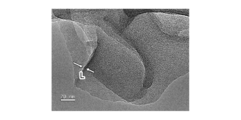
実験例2で得た生成物について、日本電子(JEOL)社製の走査型透過電子顕微鏡(商品名:JEM-2100F TEM/STEM)による観察を行った。観察結果を、図18に示す。
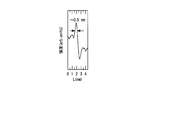
図18において、Lで示す部分の厚さを画像解析により測定した。分析結果を、図19に示す。図19の結果から、実験例2で得た生成物は、1~数原子層の厚さのシート状の物質であることが分かった。
実験例2で得た生成物について、日本電子(JEOL)社製の走査型透過電子顕微鏡(商品名:JEM-2100F TEM/STEM)による観察を行った。観察結果を、図18に示す。
図18において、Lで示す部分の厚さを画像解析により測定した。分析結果を、図19に示す。図19の結果から、実験例2で得た生成物は、1~数原子層の厚さのシート状の物質であることが分かった。
[実験例9]
実験例2で得た生成物について、JASCO Analytical Instruments社製のFT/IR-300によるフーリエ変換赤外分光分析(FTIR)を行った。分析結果を、図20に示す。図20の結果から、1619cm-1における吸収は、理論的に計算されたB-H-B結合に起因する吸収1613cm-1にほぼ一致していた。また、2509cm-1における吸収は、二次元ホウ化水素含有シートの欠陥部位、境界部位、または、無限に大きい二次元ホウ化水素含有シートに存在しない終端構造を示す。
実験例2で得た生成物について、JASCO Analytical Instruments社製のFT/IR-300によるフーリエ変換赤外分光分析(FTIR)を行った。分析結果を、図20に示す。図20の結果から、1619cm-1における吸収は、理論的に計算されたB-H-B結合に起因する吸収1613cm-1にほぼ一致していた。また、2509cm-1における吸収は、二次元ホウ化水素含有シートの欠陥部位、境界部位、または、無限に大きい二次元ホウ化水素含有シートに存在しない終端構造を示す。
本発明の二次元ホウ化水素含有シートは、電子材料、触媒の担体材料、超伝導材料等として利用可能である。
Claims (6)
- (HB)n(n≧4)からなる二次元ネットワークを有することを特徴とする二次元ホウ化水素含有シート。
- 前記二次元ネットワークは、ホウ素原子が六角形の環状に配列し、前記ホウ素原子によって形成される六角形が連接してなる網目状をなし、前記ホウ素原子のうち隣接する2つが同一の水素原子と結合する部位を有することを特徴とする請求項1に記載の二次元ホウ化水素含有シート。
- 少なくとも一方向の長さが100nm以上であることを特徴とする請求項1または2に記載の二次元ホウ化水素含有シート。
- MB2(但し、Mは、Al、Mg、Ta、Zr、Re、Cr、TiおよびVからなる群から選択される少なくとも1種である。)型構造の二ホウ化金属と、前記二ホウ化金属を構成する金属イオンとイオン交換可能なイオンを配位したイオン交換樹脂とを極性有機溶媒中で混合する工程を有することを特徴とする二次元ホウ素化合物含有シートの製造方法。
- 前記イオン交換樹脂は、スルホ基を有することを特徴とする請求項4に記載の二次元ホウ素化合物含有シートの製造方法。
- 前記極性有機溶媒は、アセトニトリルまたはメタノールであることを特徴とする請求項4または5に記載の二次元ホウ素化合物含有シートの製造方法。
Priority Applications (3)
| Application Number | Priority Date | Filing Date | Title |
|---|---|---|---|
| EP17862010.0A EP3514114B1 (en) | 2016-10-18 | 2017-10-18 | Sheet containing two-dimensional borohydride and production method for sheet containing two-dimensional boron compound |
| JP2018546383A JP7057569B2 (ja) | 2016-10-18 | 2017-10-18 | 二次元ホウ化水素含有シート、二次元ホウ素化合物含有シートの製造方法 |
| US16/342,178 US10781108B2 (en) | 2016-10-18 | 2017-10-18 | Sheet containing two-dimensional hydrogen boride and production method for sheet containing two-dimensional boron compound |
Applications Claiming Priority (2)
| Application Number | Priority Date | Filing Date | Title |
|---|---|---|---|
| JP2016204477 | 2016-10-18 | ||
| JP2016-204477 | 2016-10-18 |
Publications (1)
| Publication Number | Publication Date |
|---|---|
| WO2018074518A1 true WO2018074518A1 (ja) | 2018-04-26 |
Family
ID=62018707
Family Applications (1)
| Application Number | Title | Priority Date | Filing Date |
|---|---|---|---|
| PCT/JP2017/037709 Ceased WO2018074518A1 (ja) | 2016-10-18 | 2017-10-18 | 二次元ホウ化水素含有シート、二次元ホウ素化合物含有シートの製造方法 |
Country Status (4)
| Country | Link |
|---|---|
| US (1) | US10781108B2 (ja) |
| EP (1) | EP3514114B1 (ja) |
| JP (1) | JP7057569B2 (ja) |
| WO (1) | WO2018074518A1 (ja) |
Cited By (15)
| Publication number | Priority date | Publication date | Assignee | Title |
|---|---|---|---|---|
| JP2019218251A (ja) * | 2018-06-22 | 2019-12-26 | 国立大学法人東京工業大学 | 水素発生方法、水素発生システムおよび燃料電池システム |
| JP2020069428A (ja) * | 2018-10-31 | 2020-05-07 | 国立大学法人 筑波大学 | 二酸化炭素貯蔵放出材料およびその製造方法 |
| WO2020179779A1 (ja) * | 2019-03-07 | 2020-09-10 | 国立大学法人筑波大学 | 還元材料、複合体、還元方法 |
| JP2021028285A (ja) * | 2019-08-09 | 2021-02-25 | 国立大学法人 筑波大学 | 層状ホウ化水素 |
| JPWO2021095619A1 (ja) * | 2019-11-15 | 2021-05-20 | ||
| WO2021100481A1 (ja) * | 2019-11-18 | 2021-05-27 | 国立大学法人筑波大学 | 水素貯蔵放出材料およびその製造方法 |
| WO2021210496A1 (ja) | 2020-04-13 | 2021-10-21 | 三菱重工業株式会社 | 水素放出・貯蔵システム、水素放出・貯蔵方法、アンモニア製造装置、ガスタービン、燃料電池、および製鉄所 |
| WO2021210351A1 (ja) | 2020-04-13 | 2021-10-21 | 三菱重工業株式会社 | 水素放出・貯蔵システム、水素放出・貯蔵方法、アンモニア製造装置、ガスタービン、燃料電池、および製鉄所 |
| DE102021125508A1 (de) | 2020-10-05 | 2022-04-07 | Denso Corporation | Wasserstoffgenerator |
| WO2022260116A1 (ja) * | 2021-06-09 | 2022-12-15 | 国立大学法人東京工業大学 | ホウ素、水素、及び酸素を含む構造体、及びその製造方法 |
| JPWO2023286830A1 (ja) * | 2021-07-16 | 2023-01-19 | ||
| JP2023019912A (ja) * | 2021-07-30 | 2023-02-09 | 国立大学法人東京工業大学 | 抗菌・抗ウイルス用ホウ化水素含有シート、抗菌・抗ウイルス用組成物および抗菌・抗ウイルス性部材 |
| WO2023026768A1 (ja) * | 2021-08-24 | 2023-03-02 | 三菱重工業株式会社 | 水素製造システム |
| WO2023026765A1 (ja) * | 2021-08-24 | 2023-03-02 | 三菱重工業株式会社 | 炭化水素製造システム |
| WO2025154701A1 (ja) * | 2024-01-19 | 2025-07-24 | 国立大学法人筑波大学 | 金属担持二次元ホウ化水素シート含有物質、金属担持二次元ホウ化水素シート含有物質の製造方法 |
Families Citing this family (3)
| Publication number | Priority date | Publication date | Assignee | Title |
|---|---|---|---|---|
| US11702543B2 (en) * | 2019-03-29 | 2023-07-18 | Arizona Board Of Regents On Behalf Of Arizona State University | 3D-printed nanocomposites with metal diboride nanosheets |
| CN117699745B (zh) * | 2023-11-22 | 2025-11-07 | 东北大学 | 一种二维钼氮化物和晶态Mo2N纳米片的无氨气制备方法 |
| CN118373399B (zh) * | 2024-06-24 | 2024-09-06 | 湖南裕能新能源电池材料股份有限公司 | 磷酸铁锂正极材料的制备方法及锂电池 |
Family Cites Families (1)
| Publication number | Priority date | Publication date | Assignee | Title |
|---|---|---|---|---|
| JP5757587B2 (ja) * | 2013-05-24 | 2015-07-29 | 国立大学法人東京工業大学 | 鉄系超電導材料、及びこれからなる鉄系超電導層、鉄系超電導テープ線材、鉄系超電導線材 |
-
2017
- 2017-10-18 JP JP2018546383A patent/JP7057569B2/ja active Active
- 2017-10-18 WO PCT/JP2017/037709 patent/WO2018074518A1/ja not_active Ceased
- 2017-10-18 EP EP17862010.0A patent/EP3514114B1/en active Active
- 2017-10-18 US US16/342,178 patent/US10781108B2/en active Active
Non-Patent Citations (3)
| Title |
|---|
| ABTEW, T. A. ET AL.: "Prediction of a multicenter-bonded solid boron hydride for hydrogen strage", PHYSICAL REVIEW B, vol. 83, no. 9, 7 March 2011 (2011-03-07), pages 094108.1 - 094108.6, XP080398328 * |
| JIAO, Y. ET AL.: "Two-dimensinal boron hydride sheets: high stability, massless dirac fermions, and excellent mechanical properties", ANGEWANDTE CHEMIE, vol. 55, no. 35, 27 July 2016 (2016-07-27), pages 10292 - 10295, XP055477653 * |
| See also references of EP3514114A4 * |
Cited By (37)
| Publication number | Priority date | Publication date | Assignee | Title |
|---|---|---|---|---|
| JP7079932B2 (ja) | 2018-06-22 | 2022-06-03 | 国立大学法人東京工業大学 | 水素発生方法、水素発生システムおよび燃料電池システム |
| JP2019218251A (ja) * | 2018-06-22 | 2019-12-26 | 国立大学法人東京工業大学 | 水素発生方法、水素発生システムおよび燃料電池システム |
| JP2020069428A (ja) * | 2018-10-31 | 2020-05-07 | 国立大学法人 筑波大学 | 二酸化炭素貯蔵放出材料およびその製造方法 |
| JP7302840B2 (ja) | 2018-10-31 | 2023-07-04 | 国立大学法人 筑波大学 | 二酸化炭素貯蔵放出材料の製造方法 |
| WO2020179779A1 (ja) * | 2019-03-07 | 2020-09-10 | 国立大学法人筑波大学 | 還元材料、複合体、還元方法 |
| JPWO2020179779A1 (ja) * | 2019-03-07 | 2020-09-10 | ||
| JP2021028285A (ja) * | 2019-08-09 | 2021-02-25 | 国立大学法人 筑波大学 | 層状ホウ化水素 |
| JPWO2021095619A1 (ja) * | 2019-11-15 | 2021-05-20 | ||
| WO2021095619A1 (ja) * | 2019-11-15 | 2021-05-20 | 国立大学法人東京工業大学 | 二次元ホウ化水素含有シートの製造方法、二次元ホウ化水素含有シート組成物およびその製造方法 |
| JP7578961B2 (ja) | 2019-11-15 | 2024-11-07 | 国立大学法人東京科学大学 | 二次元ホウ化水素含有シートの製造方法、二次元ホウ化水素含有シート組成物およびその製造方法 |
| US12384675B2 (en) * | 2019-11-18 | 2025-08-12 | University of Tsukba | Hydrogen storage and release material and method of producing same |
| US20220402756A1 (en) * | 2019-11-18 | 2022-12-22 | University Of Tsukuba | Hydrogen storage and release material and method of producing same |
| WO2021100481A1 (ja) * | 2019-11-18 | 2021-05-27 | 国立大学法人筑波大学 | 水素貯蔵放出材料およびその製造方法 |
| JPWO2021100481A1 (ja) * | 2019-11-18 | 2021-05-27 | ||
| JP7606707B2 (ja) | 2019-11-18 | 2024-12-26 | 国立大学法人 筑波大学 | 水素貯蔵放出材料およびその製造方法 |
| US12503362B2 (en) | 2020-04-13 | 2025-12-23 | Mitsubishi Heavy Industries, Ltd. | Hydrogen release and storage system, hydrogen release and storage method, ammonia production apparatus, gas turbine, fuel cell, and steel mill |
| US12582953B2 (en) | 2020-04-13 | 2026-03-24 | Mitsubishi Heavy Industries, Ltd. | Hydrogen release/storage system, hydrogen release/storage method, ammonia production equipment, gas turbine, fuel cell, and steel mill |
| WO2021210496A1 (ja) | 2020-04-13 | 2021-10-21 | 三菱重工業株式会社 | 水素放出・貯蔵システム、水素放出・貯蔵方法、アンモニア製造装置、ガスタービン、燃料電池、および製鉄所 |
| WO2021210351A1 (ja) | 2020-04-13 | 2021-10-21 | 三菱重工業株式会社 | 水素放出・貯蔵システム、水素放出・貯蔵方法、アンモニア製造装置、ガスタービン、燃料電池、および製鉄所 |
| DE102021125508A1 (de) | 2020-10-05 | 2022-04-07 | Denso Corporation | Wasserstoffgenerator |
| US11583820B2 (en) * | 2020-10-05 | 2023-02-21 | Denso Corporation | Hydrogen generator |
| JP2022060865A (ja) * | 2020-10-05 | 2022-04-15 | 株式会社デンソー | 水素発生装置 |
| JP7485287B2 (ja) | 2020-10-05 | 2024-05-16 | 株式会社デンソー | 水素発生装置 |
| US20220105488A1 (en) * | 2020-10-05 | 2022-04-07 | Denso Corporation | Hydrogen generator |
| CN117425617A (zh) * | 2021-06-09 | 2024-01-19 | 国立大学法人东京工业大学 | 含有硼、氢及氧的结构体及其制备方法 |
| WO2022260116A1 (ja) * | 2021-06-09 | 2022-12-15 | 国立大学法人東京工業大学 | ホウ素、水素、及び酸素を含む構造体、及びその製造方法 |
| WO2023286830A1 (ja) * | 2021-07-16 | 2023-01-19 | 国立大学法人東京工業大学 | ホウ化水素含有組成物、水素発生システムおよび燃料電池システム |
| JPWO2023286830A1 (ja) * | 2021-07-16 | 2023-01-19 | ||
| JP2023019912A (ja) * | 2021-07-30 | 2023-02-09 | 国立大学法人東京工業大学 | 抗菌・抗ウイルス用ホウ化水素含有シート、抗菌・抗ウイルス用組成物および抗菌・抗ウイルス性部材 |
| JP7745195B2 (ja) | 2021-07-30 | 2025-09-29 | 国立大学法人東京科学大学 | 抗菌用または/および抗ウイルス用のホウ化水素含有シートおよび組成物、並びに抗菌性または/および抗ウイルス性の部材 |
| JP2023030977A (ja) * | 2021-08-24 | 2023-03-08 | 三菱重工業株式会社 | 水素製造システム |
| JP7386211B2 (ja) | 2021-08-24 | 2023-11-24 | 三菱重工業株式会社 | 水素製造システム |
| JP2023030964A (ja) * | 2021-08-24 | 2023-03-08 | 三菱重工業株式会社 | 炭化水素製造システム |
| WO2023026765A1 (ja) * | 2021-08-24 | 2023-03-02 | 三菱重工業株式会社 | 炭化水素製造システム |
| WO2023026768A1 (ja) * | 2021-08-24 | 2023-03-02 | 三菱重工業株式会社 | 水素製造システム |
| JP7671208B2 (ja) | 2021-08-24 | 2025-05-01 | 三菱重工業株式会社 | 炭化水素製造システム |
| WO2025154701A1 (ja) * | 2024-01-19 | 2025-07-24 | 国立大学法人筑波大学 | 金属担持二次元ホウ化水素シート含有物質、金属担持二次元ホウ化水素シート含有物質の製造方法 |
Also Published As
| Publication number | Publication date |
|---|---|
| EP3514114B1 (en) | 2024-12-04 |
| EP3514114A1 (en) | 2019-07-24 |
| EP3514114A4 (en) | 2020-04-15 |
| JP7057569B2 (ja) | 2022-04-20 |
| US20190315628A1 (en) | 2019-10-17 |
| JPWO2018074518A1 (ja) | 2019-08-29 |
| US10781108B2 (en) | 2020-09-22 |
Similar Documents
| Publication | Publication Date | Title |
|---|---|---|
| JP7057569B2 (ja) | 二次元ホウ化水素含有シート、二次元ホウ素化合物含有シートの製造方法 | |
| Nasrin et al. | In‐situ synergistic 2D/2D MXene/BCN heterostructure for superlative energy density supercapacitor with super‐long life | |
| Kim et al. | Graphene phosphonic acid as an efficient flame retardant | |
| Huang et al. | Functional two-dimensional coordination polymeric layer as a charge barrier in Li–S batteries | |
| Dato et al. | Clean and highly ordered graphene synthesized in the gas phase | |
| Compton et al. | Chemically active reduced graphene oxide with tunable C/O ratios | |
| Ghidiu et al. | Alkylammonium cation intercalation into Ti3C2 (MXene): effects on properties and ion-exchange capacity estimation | |
| Wang et al. | Heteroatom-doped graphene materials: syntheses, properties and applications | |
| Kumar et al. | Polyaniline-grafted reduced graphene oxide for efficient electrochemical supercapacitors | |
| Hu et al. | MXene: a new family of promising hydrogen storage medium | |
| Lee et al. | Soft X-ray absorption spectroscopy studies of the electronic structure recovery of graphene oxide upon chemical defunctionalization | |
| Naguib et al. | Synthesis of two-dimensional materials by selective extraction | |
| Chen et al. | Controlling the thickness of thermally expanded films of graphene oxide | |
| Venkateshalu et al. | Recent advances in MXenes: beyond Ti-only systems | |
| Zhang et al. | A hydrogen-initiated chemical epitaxial growth strategy for in-plane heterostructured photocatalyst | |
| Xiao et al. | Ni (OH) 2 nanosheets grown on graphene-coated nickel foam for high-performance pseudocapacitors | |
| Mallick et al. | Asymmetric supercapacitor based on chemically coupled hybrid material of Fe2O3‐Fe3O4 heterostructure and nitrogen‐doped reduced graphene oxide | |
| Chen et al. | Turbostratic boron–carbon–nitrogen and boron nitride by flash Joule heating | |
| Nursanto et al. | Facile synthesis of reduced graphene oxide in supercritical alcohols and its lithium storage capacity | |
| Singh et al. | Electrochemical synthesis of graphene oxide and its application as counter electrode in dye sensitized solar cell | |
| KR101689337B1 (ko) | 급속팽창법을 이용한 그래핀의 제조방법 및 이러한 방법으로 제조된 그래핀 | |
| Khan et al. | A simple and robust functionalization of graphene for advanced energy devices | |
| Roh et al. | Carbon lattice structures in nitrogen-doped reduced graphene oxide: implications for carbon-based electrical conductivity | |
| Sarno et al. | Supercapacitor electrodes made of exhausted activated carbon-derived SiC nanoparticles coated by graphene | |
| Kamedulski et al. | Highly effective three-dimensional functionalization of graphite to graphene by wet chemical exfoliation methods |
Legal Events
| Date | Code | Title | Description |
|---|---|---|---|
| 121 | Ep: the epo has been informed by wipo that ep was designated in this application |
Ref document number: 17862010 Country of ref document: EP Kind code of ref document: A1 |
|
| WWE | Wipo information: entry into national phase |
Ref document number: 2018546383 Country of ref document: JP |
|
| ENP | Entry into the national phase |
Ref document number: 2017862010 Country of ref document: EP Effective date: 20190416 |
|
| NENP | Non-entry into the national phase |
Ref country code: DE |