WO2017221978A1 - 藻類育成資材 - Google Patents
藻類育成資材 Download PDFInfo
- Publication number
- WO2017221978A1 WO2017221978A1 PCT/JP2017/022855 JP2017022855W WO2017221978A1 WO 2017221978 A1 WO2017221978 A1 WO 2017221978A1 JP 2017022855 W JP2017022855 W JP 2017022855W WO 2017221978 A1 WO2017221978 A1 WO 2017221978A1
- Authority
- WO
- WIPO (PCT)
- Prior art keywords
- humic acid
- iron
- kda
- humic
- algae
- Prior art date
- Legal status (The legal status is an assumption and is not a legal conclusion. Google has not performed a legal analysis and makes no representation as to the accuracy of the status listed.)
- Ceased
Links
Classifications
-
- A—HUMAN NECESSITIES
- A01—AGRICULTURE; FORESTRY; ANIMAL HUSBANDRY; HUNTING; TRAPPING; FISHING
- A01G—HORTICULTURE; CULTIVATION OF VEGETABLES, FLOWERS, RICE, FRUIT, VINES, HOPS OR SEAWEED; FORESTRY; WATERING
- A01G33/00—Cultivation of seaweed or algae
-
- Y—GENERAL TAGGING OF NEW TECHNOLOGICAL DEVELOPMENTS; GENERAL TAGGING OF CROSS-SECTIONAL TECHNOLOGIES SPANNING OVER SEVERAL SECTIONS OF THE IPC; TECHNICAL SUBJECTS COVERED BY FORMER USPC CROSS-REFERENCE ART COLLECTIONS [XRACs] AND DIGESTS
- Y02—TECHNOLOGIES OR APPLICATIONS FOR MITIGATION OR ADAPTATION AGAINST CLIMATE CHANGE
- Y02A—TECHNOLOGIES FOR ADAPTATION TO CLIMATE CHANGE
- Y02A40/00—Adaptation technologies in agriculture, forestry, livestock or agroalimentary production
- Y02A40/80—Adaptation technologies in agriculture, forestry, livestock or agroalimentary production in fisheries management
Definitions
- the present invention relates to an algae growing material, an algae growing method, and an algae growing material manufacturing method.
- Patent Documents 1, 2, 3, 4, and 5 There is a phenomenon called “sake burning” along the coast of Japan. The cause is considered to be a shortage of nutrients such as iron in coastal areas, and various techniques for improving these have been proposed (Patent Documents 1, 2, 3, 4, and 5).
- Marine algae absorb various inorganic salts and grow, but iron is considered to be mainly particulate iron oxide in seawater. Particulate iron oxide is agglomerated and precipitated, so that it may be less useful for algae. For this reason, in the above proposal, there are many techniques in which chelating agents such as humic substances are blended.
- Humic substances are classified for convenience as fulvic acid that does not precipitate even below pH 1.0, humic acid that dissolves above pH 1.0, and humin that does not dissolve in any pH range due to the difference in solubility in pH of the solution (non-patent) Reference 1).
- An object of the present invention is to provide an industrially stable humic substance that is produced stably, and to provide an iron complex with a humic acid fraction that is stable in seawater and has a high growth promoting effect on living organisms.
- the humic acid fraction according to the present invention uses humic acid obtained by extracting nitrate from young charcoal according to the International Society of Humic Substances (Non-patent Document 1), and further by ultrafiltration to enhance the effect on algae. It is characterized by being a complex of iron and humic acid that has undergone molecular weight fractionation.
- the present invention it is possible to provide an industrially produced stable humic substance, and further to provide an iron complex with an effective humic acid fraction that exhibits the effect of promoting the growth of marine algae.
- the total organic carbon (TOC) concentration of the humic acid solution is a value measured by a combustion catalytic oxidation method using a total organic carbon meter (TOC-L manufactured by Shimadzu Corporation).
- the average molecular weight of humic acid is the value measured by HPSEC method (GPC method) using Alliance HPLC System made from Waters.
- the column was manufactured by SHODEX, SB-803HQ, and the standard sample was sodium polystyrene sulfonate.
- the mobile phase is 10 mmol / L sodium phosphate buffer containing 25% acetonitrile, and the detection wavelength is 260 nm.
- “young coal” is coal having a low carbon content, and the carbon content is defined as 83 mass% or less.
- Young coal is, for example, peat, lignite, lignite, subbituminous coal, etc., and a mixture of one or more of these is used.
- oxidation reaction of lignite for about 1 hour in a water bath of about 70 ° C. using nitric acid having a concentration of 48% by mass it is appropriately dried to obtain a crude humic acid product.
- Humic acid is prepared from this crude humic acid product according to the International Society for Humic Substances Method (Non-Patent Document 1).
- the humic acid is diluted with 0.05 mol / L phosphate buffer (pH 9) to obtain a humic acid solution.
- Humic acid solution is ultrafiltered by the tangential flow method (also called cross flow method) to obtain fractions by molecular weight (Sartorius Technical Manual) https://www.sartorius.co.jp/fileadmin/fm-dam/sartorius_media/Lab-Products-and-Services/Lab-Filtration/Ultrafiltration-Devices/Vivaflow/Manuals/Manual_Vivaflow50_200_SLU6097-e.pdf P11-21, Supervised by the Japanese Society of Humic Substances, "Humic substances in the environment-characteristics and research methods", P82-97, Sankyo Publishing, 2008)
- the retentate of each fraction is adjusted to pH 1.0 by adding 6 mol / L hydrochloric acid, and centrifuged and washed by centrifugation (5000 ⁇ g, 30 minutes, 5 ° C.). This operation is repeated 3 times and freeze-dried.
- the iron humic acid complex according to the present invention is a complex of nitrate and iron of juvenile charcoal, which can be eluted and stabilized in seawater, and in order to increase biological activity, the molecular weight fraction can be obtained by ultrafiltration. It is obtained by drawing. *
- humic acid iron complex that exhibits the effect of promoting the growth of marine algae.
- a more effective molecular size humic acid fraction can be provided.
- Example 1 One tablet product was placed in a 100 mL Erlenmeyer flask, and 60 mL of artificial seawater (Wako Pure Chemical Industries, Ltd.) was added. The culture was rotated at 120 rpm for 30 days, the supernatant was collected, and the iron in the solution was quantified with an ICP emission spectrometer.
- Example 1 It implemented like Example 1 except having set it as the mineral fertilizer 0.25g instead of the tablet.
- the solid-liquid ratio between the artificial seawater and the iron material is substantially the same as that in the first embodiment.
- Comparative Example 1 As shown in the results of Table 1, in Comparative Example 1, it is considered that the dissolved iron is agglomerated and precipitated in addition to the small amount of iron dissolved. In Example 1, the elution amount of iron increases and it turns out that it melt
- humic acid was prepared from this crude humic acid product according to the International Society for Humic Substances (Non-Patent Document 1). This humic acid was suspended in purified water, diluted with purified water to a pH of 8.0 using a 1 mol / L sodium hydroxide solution and a TOC concentration of 5000 mg / L. This solution was diluted with 0.05 mol / L Na 2 HPO 4 solution (pH 9) to prepare a humic acid solution so that the TOC concentration was 5 mg / L.
- Wakame was used as a test material, and a cultivation test was conducted under the conditions shown in Tables 3 and 4 in a 250-mL polycarbonate container.
- Example 2 The culture solution was cultivated by adding a humic acid fraction of 100 kDa or more to the medium so that the TOC was 1.5 mg / L and iron chloride was 0.3 ⁇ mol / L.
- Example 3 It implemented like Example 2 except having added the humic acid fraction of 10 kDa or more and less than 30 kDa instead of the humic acid fraction of 100 kDa or more.
- Example 3 The culture period was 14 days, and the same procedure as in Example 2 was performed except that ethylenediaminetetraacetic acid (EDTA) was added to 10 mmol / L instead of the humic acid fraction of 100 kDa or more.
- EDTA10mmol / L is corresponded in about TOC1.5mg / L.
- Example 4 It was carried out in the same manner as in Example 2 except that the culture period was 14 days and diethylenetriaminepentaacetic acid (DTPA) was added to 10 mmol / L instead of the humic acid fraction of 100 kDa or more. Note that DTPA 10 mmol / L corresponds approximately to TOC 1.5 mg / L.
- DTPA diethylenetriaminepentaacetic acid
Landscapes
- Life Sciences & Earth Sciences (AREA)
- Marine Sciences & Fisheries (AREA)
- Environmental Sciences (AREA)
- Cultivation Of Seaweed (AREA)
- Fertilizers (AREA)
Abstract
【課題】腐植酸を含有する鉄錯体とその製造方法を提供する。 【解決手段】本発明に係る腐植酸は堆肥などから抽出される天然の腐植酸と異なり、工業的に安定的に製造可能である。腐植酸は若年炭の硝酸酸化物で、海水中でも安定な鉄錯体となる。さらに限外ろ過によって10kDa以上30kDa未満で分画された腐植酸画分が藻類に対し活性が高い事が判明した。この腐植酸画分との鉄錯体は、ワカメなどの海産藻類に対して生育促進効果を有し、沿岸域の養殖等で使用可能である。また、陸上での海産養殖の場面でも利用可能である。これらの技術により、省資源での養殖技術の普及が考えられ、産業上の利点がある。
Description
本発明は藻類育成資材、藻類の育成方法、及び藻類育成資材の製造方法に関する。
日本沿岸で「磯焼け」と呼ばれる現象が発生している。沿岸域の鉄等の栄養成分不足が原因と考えられ、これらを改善する技術が種々提案されている(特許文献1、2、3、4、5)。
海産藻類は種々の無機塩類を吸収し生育するが、鉄は海水中で主に粒子状酸化鉄になっていると考えられている。粒子状酸化鉄は凝集、沈殿するため藻類にとって利用性が劣る場合がある。このため、上記提案では腐植物質等のキレート剤を配合している技術が多い。
ここで腐植物質としては、土壌中、陸水中に存在する天然高分子有機物が挙げられる。その具体例として、褐炭、泥炭中に含まれるもの、細菌群の代謝産物と動植物由来の天然腐植酸が挙げられる。また工業的に製造される腐植物質として、褐炭等の若年炭を酸化分解したもの(特許文献6)、あるいは該酸化分解物のアルカリ金属塩又はアルカリ土類金属塩等の合成物等、多くのものが挙げられる(特許文献7、8)。
腐植物質はその溶液のpHに対する溶解性の違いから、pH1.0以下でも沈殿しないフルボ酸、pH1.0以上で溶解する腐植酸、どのpH範囲でも溶解しないヒューミンに便宜上分類されている(非特許文献1)。
これらの腐植物質を使用する場合、腐植物質の平均分子量の制御が重要であると考えられる。腐植物質のなかでもフルボ酸に着目し、より生物活性の高い効果的なフルボ酸の分子量画分についての提案もある(特許文献9)。
藤嶽、Humic Substances Research Vol3、P1-9、2006年
これまで上記の様に腐植物質の効果が提案されているが、海水中でより効果を発揮する腐植物質の特徴が明確ではない。また、腐植物質が含まれる堆肥や腐植土等は天然物由来のため、腐植物質の品質が不安定となる懸念がある。
本発明の目的は、工業的に安定して生産された腐植物質を提供し、海水中でも安定であり、生物に対する生育促進効果が高い腐植酸画分との鉄錯体を提供することにある。
本発明に係る腐植酸画分は、若年炭の硝酸酸化物を国際腐植物質学会法(非特許文献1)に従い抽出した腐植酸を使用し、さらに藻類に対する効果を高めるために限外ろ過にて分子量分画を行った腐植酸画分と鉄の錯体であることを特徴とする。
本発明によれば、工業的に生産された安定的な腐植物質を提供し、さらに海産藻類の生育促進効果を発揮する有効な腐植酸画分との鉄錯体を提供できる。
以下に、本発明に係る腐植酸鉄錯体の実施形態を説明する。
本実施形態に係る腐植酸は、褐炭等の若年炭を硝酸で酸化して得られる腐植酸であり、この腐植酸の抽出液を限外ろ過により分画することにより得ることができる。本実施形態に係る鉄資材として、塩化鉄等の塩、または鉱さい質肥料が利用できる。鉱さい質肥料は入手が容易な肥料であり、鉄鋼スラグ等を原料としたケイ酸質肥料であるが、その副産物として大量の鉄を含有する。これらは事前に混合する事も可能であるが、両成分を培地などへ同時添加する事も可能である。この添加成分は、鉄錯体としてふるまうが、培地成分の銅等の金属との錯体を形成し安定化させるなどの副次的な効果も期待できる。
[全有機炭素濃度]
腐植酸溶液の全有機炭素(TOC)濃度は、全有機体炭素計(島津製作所製TOC-L)を用いて燃焼触媒酸化方式で測定した値である。
腐植酸溶液の全有機炭素(TOC)濃度は、全有機体炭素計(島津製作所製TOC-L)を用いて燃焼触媒酸化方式で測定した値である。
[平均分子量]
腐植酸の平均分子量は、Waters社製 Alliance HPLC System を用い、HPSEC法(GPC法)により測定した値である。カラムはSHODEX社製、 SB-803HQ、標準試料はポリスチレンスルホン酸ナトリウムとした。移動相は25%アセトニトリル含有の10mmol/Lりん酸ナトリウム緩衝液、検出波長は260nmである。
腐植酸の平均分子量は、Waters社製 Alliance HPLC System を用い、HPSEC法(GPC法)により測定した値である。カラムはSHODEX社製、 SB-803HQ、標準試料はポリスチレンスルホン酸ナトリウムとした。移動相は25%アセトニトリル含有の10mmol/Lりん酸ナトリウム緩衝液、検出波長は260nmである。
[腐植酸の製造方法]
ここで、「若年炭」とは炭素含有量の少ない石炭であり、炭素含有率が83質量%以下と定義される。若年炭は、例えば、泥炭、亜炭、褐炭、亜瀝青炭等であり、これらの1種又は2種以上を混合したものが使用される。例えば濃度48質量%の硝酸を用いた70℃程度の水浴中で約1時間褐炭の酸化反応を行った後、適宜乾燥し腐植酸粗製物を得る。
ここで、「若年炭」とは炭素含有量の少ない石炭であり、炭素含有率が83質量%以下と定義される。若年炭は、例えば、泥炭、亜炭、褐炭、亜瀝青炭等であり、これらの1種又は2種以上を混合したものが使用される。例えば濃度48質量%の硝酸を用いた70℃程度の水浴中で約1時間褐炭の酸化反応を行った後、適宜乾燥し腐植酸粗製物を得る。
この腐植酸粗製物に鉱さいけい酸質肥料を混合し、圧密造粒や転動造粒を実施し造粒品を得ることも可能である。
[腐植酸の分画法]
この腐植酸粗製物から国際腐植物質学会法(非特許文献1)に従い、腐植酸を調製する。この腐植酸を0.05mol/L リン酸緩衝液(pH9)で希釈し、腐植酸溶液を得る。
この腐植酸粗製物から国際腐植物質学会法(非特許文献1)に従い、腐植酸を調製する。この腐植酸を0.05mol/L リン酸緩衝液(pH9)で希釈し、腐植酸溶液を得る。
腐植酸溶液はタンジェンシャルフロー法(クロスフロー法とも言う)により限外ろ過を行い、分子量別画分を得る(ザルトリウス社技術マニュアル
https://www.sartorius.co.jp/fileadmin/fm-dam/sartorius_media/Lab-Products-and-Services/Lab-Filtration/Ultrafiltration-Devices/Vivaflow/Manuals/Manual_Vivaflow50_200_SLU6097-e.pdf P11-21、
日本腐植物質学会監修、『環境中の腐植物質~その特徴と研究法~』、P82~97、三共出版、2008年を参照)
https://www.sartorius.co.jp/fileadmin/fm-dam/sartorius_media/Lab-Products-and-Services/Lab-Filtration/Ultrafiltration-Devices/Vivaflow/Manuals/Manual_Vivaflow50_200_SLU6097-e.pdf P11-21、
日本腐植物質学会監修、『環境中の腐植物質~その特徴と研究法~』、P82~97、三共出版、2008年を参照)
各画分の保持液は、6mol/L塩酸を加えてpHを1.0とし、遠心分離(5000×g、30分間、5℃)によって遠心洗浄する。この操作を3回繰り返し凍結乾燥する。
〈作用効果〉
以下、上記実施形態に係る腐植酸分画の作用効果について説明する。
以下、上記実施形態に係る腐植酸分画の作用効果について説明する。
本発明に係る腐植酸鉄錯体は、若年炭の硝酸酸化物と鉄との錯体であり、鉄の海水中での溶出や安定化が図れ、さらに生物活性を高めるため限外ろ過にて分子量分画を行うことにより得られることを特徴とする。
本発明によれば、海産藻類の生育促進効果を発揮する有効な腐植酸鉄錯体を提供できる。また、藻類の活性を高めるために、より効果的な分子サイズの腐植酸画分を提供できる。
これらのメカニズムは鋭意研究中であるが、腐植酸と鉄との化合物の分子サイズと安定度定数が重要であり、海産藻類が利用可能なサイズ分布に合致する画分が最も有効であると考えられる。これらは、鉄の吸収性に深く関与していると推察される。
以下、実施例によって本発明を具体的に説明するが、本発明はこれらの実施例によって限定されるものではない。
[海水中での鉄の安定化]
炭素含有率77質量%の褐炭を粉砕し、250μmの篩を通過した粉体状褐炭500gを2Lのビーカーに入れて、濃度48質量%の硝酸630gを添加した。70℃の水浴中で約1時間酸化反応を行った後、105℃で乾燥し腐植酸粗製物を得た。
炭素含有率77質量%の褐炭を粉砕し、250μmの篩を通過した粉体状褐炭500gを2Lのビーカーに入れて、濃度48質量%の硝酸630gを添加した。70℃の水浴中で約1時間酸化反応を行った後、105℃で乾燥し腐植酸粗製物を得た。
この腐植酸粗製物50質量%に鉄資材として鉱さいけい酸質肥料(商品名:ミネカル、産業振興株式会社製)を45質量%、バインダーとしてポリビニルアルコール(デンカ株式会社製)を5質量%混合し適宜加水したうえで圧密造粒を行い105℃で乾燥した。1cm径、厚さ0.6cm、0.5gのタブレット造粒品を得た。
[実施例1]
上記タブレット品を1粒、100mL容の三角フラスコに入れ、人工海水(和光純薬工業株式会社製)60mLを入れた。30日間、120rpmで回転培養し、上澄みを採取し溶液中の鉄をICP発光分析装置にて定量した。
上記タブレット品を1粒、100mL容の三角フラスコに入れ、人工海水(和光純薬工業株式会社製)60mLを入れた。30日間、120rpmで回転培養し、上澄みを採取し溶液中の鉄をICP発光分析装置にて定量した。
[比較例1]
タブレットの代わりに鉱さいけい酸質肥料0.25gとした以外、実施例1と同様に実施した。尚、人工海水と鉄資材の固液比は実施例1とほぼ同等となる。
タブレットの代わりに鉱さいけい酸質肥料0.25gとした以外、実施例1と同様に実施した。尚、人工海水と鉄資材の固液比は実施例1とほぼ同等となる。

表1の結果に示すように、比較例1では鉄の溶解量が少ない事に加え、溶解した鉄が凝集沈殿していると考えられる。実施例1では鉄の溶出量が増加し、30日間の長期にわたり安定的に溶解していることがわかる。以上のように、褐炭を硝酸酸化した腐植酸と鉄との錯体は海水中で安定的に存在する事がわかる。
[分子量分画品の栽培試験]
次に、この腐植酸粗製物から国際腐植物質学会法(非特許文献1)に従い腐植酸を調製した。この腐植酸を精製水に懸濁し、1mol/L水酸化ナトリウム溶液を用いてpHを8.0とし、TOC濃度として5000mg/Lとなるように精製水で希釈した。この溶液を0.05mol/L Na2HPO4溶液(pH9)で希釈し、TOC濃度として5mg/Lとなるように腐植酸溶液を調製した。
次に、この腐植酸粗製物から国際腐植物質学会法(非特許文献1)に従い腐植酸を調製した。この腐植酸を精製水に懸濁し、1mol/L水酸化ナトリウム溶液を用いてpHを8.0とし、TOC濃度として5000mg/Lとなるように精製水で希釈した。この溶液を0.05mol/L Na2HPO4溶液(pH9)で希釈し、TOC濃度として5mg/Lとなるように腐植酸溶液を調製した。
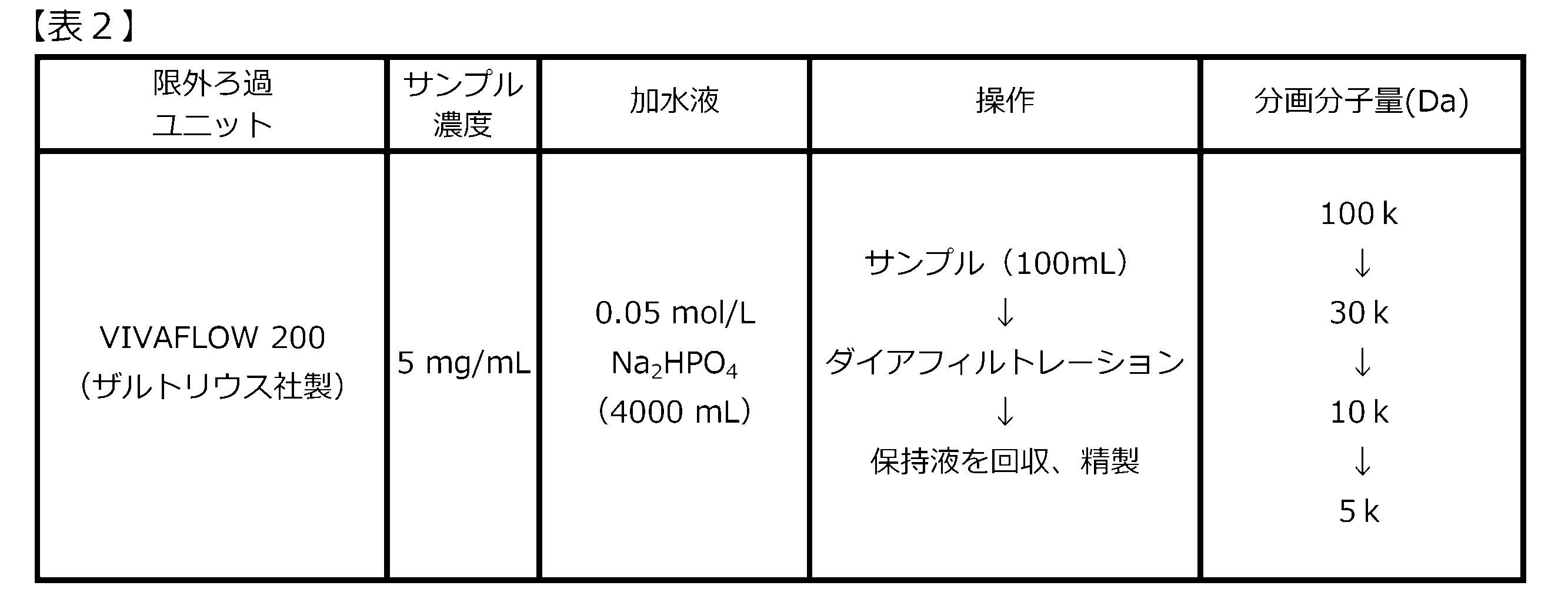
表2の条件で腐植酸溶液を限外ろ過し、それぞれ透過液と保持液に分画した。保持画分として、100kDa以上、30kDa以上100kDa未満、10kDa以上30kDa未満、5kDa以上10kDa未満の4つの分子量画分を得た。
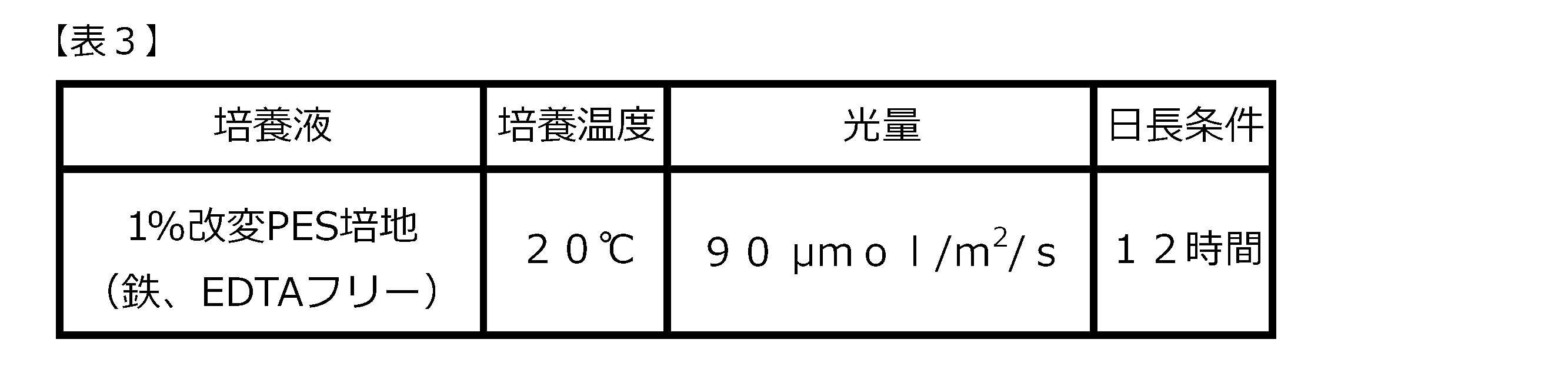
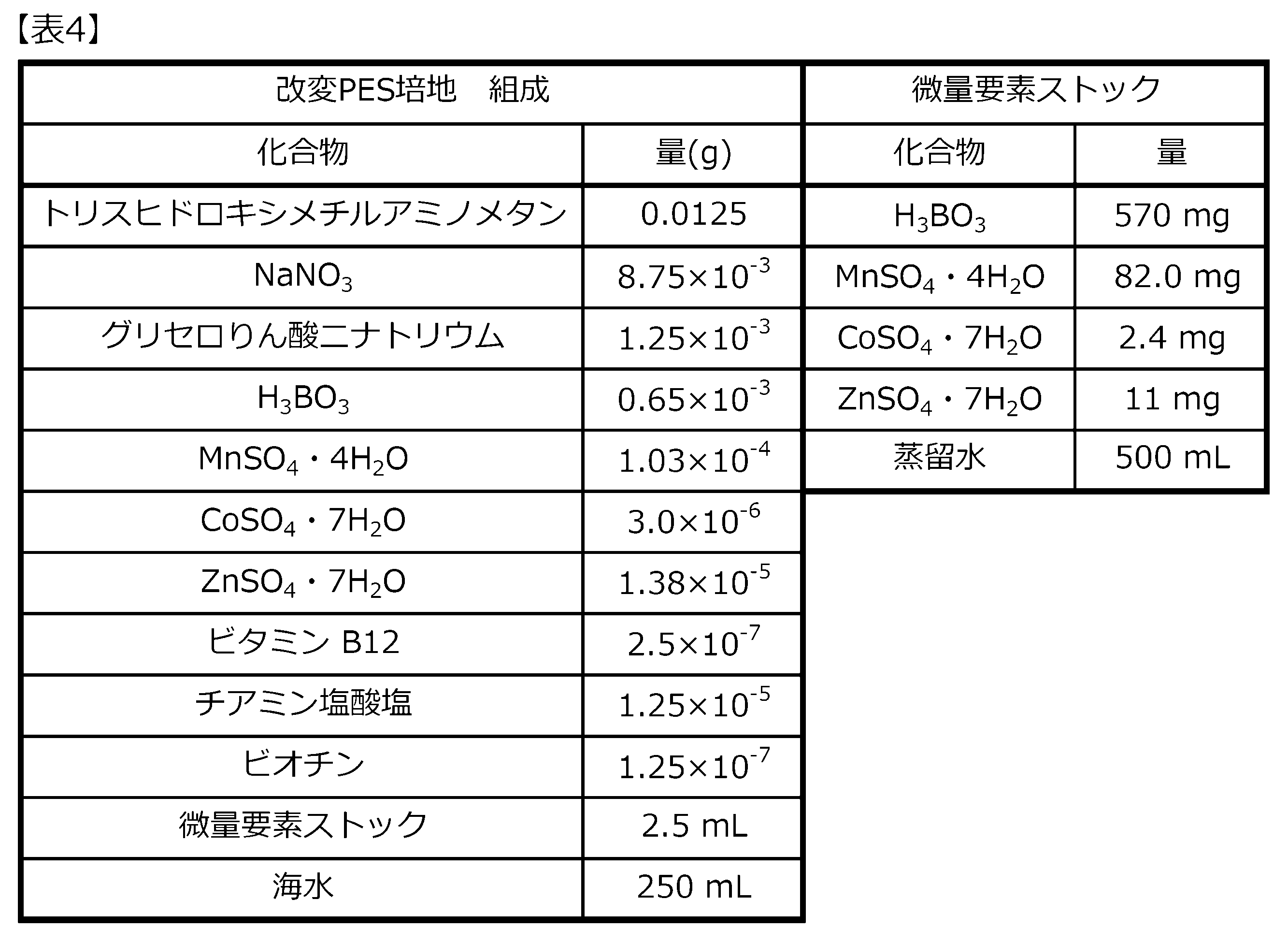
ワカメを供試材料とし、250 mLポリカーボネート製容器で表3、4に示す条件で栽培試験を実施した。
葉長0.5cmの胞子体を接種(移植)し、1週間毎に同じ組成の培地に植え継いで空気供給しながら28日間培養した。資材の効果をワカメの生育量(接種時の葉長を除いた葉長)で評価した。
[実施例2]
培養液に100kDa以上の腐植酸画分をTOCとして1.5mg/Lとなるように、また塩化鉄を0.3μmol/Lとなるように培地に添加して栽培した。
培養液に100kDa以上の腐植酸画分をTOCとして1.5mg/Lとなるように、また塩化鉄を0.3μmol/Lとなるように培地に添加して栽培した。
[実施例3]
100kDa以上の腐植酸画分の代わりに10kDa以上30kDa未満の腐植酸画分を添加した以外、実施例2と同様に実施した。
100kDa以上の腐植酸画分の代わりに10kDa以上30kDa未満の腐植酸画分を添加した以外、実施例2と同様に実施した。
[実施例4]
100kDa以上の腐植酸画分の代わりに5kDa以上10kDa未満の腐植酸画分を添加した以外、実施例2と同様に実施した。
100kDa以上の腐植酸画分の代わりに5kDa以上10kDa未満の腐植酸画分を添加した以外、実施例2と同様に実施した。
[比較例2]
培養液に塩化鉄を0.3μmol/Lとなるように添加して栽培した。腐植酸画分等の成分は添加していない。
培養液に塩化鉄を0.3μmol/Lとなるように添加して栽培した。腐植酸画分等の成分は添加していない。
[比較例3]
培養期間を14日とし、100kDa以上の腐植酸画分の代わりにエチレンジアミン四酢酸(EDTA)を10mmol/Lとなるように添加した以外、実施例2と同様に実施した。尚、EDTA10mmol/Lは、ほぼTOC1.5mg/Lに相当する。
培養期間を14日とし、100kDa以上の腐植酸画分の代わりにエチレンジアミン四酢酸(EDTA)を10mmol/Lとなるように添加した以外、実施例2と同様に実施した。尚、EDTA10mmol/Lは、ほぼTOC1.5mg/Lに相当する。
[比較例4]
培養期間を14日とし、100kDa以上の腐植酸画分の代わりにジエチレントリアミン五酢酸(DTPA)を10mmol/Lとなるように添加した以外、実施例2と同様に実施した。尚、DTPA10mmol/Lは、ほぼTOC1.5mg/Lに相当する。
培養期間を14日とし、100kDa以上の腐植酸画分の代わりにジエチレントリアミン五酢酸(DTPA)を10mmol/Lとなるように添加した以外、実施例2と同様に実施した。尚、DTPA10mmol/Lは、ほぼTOC1.5mg/Lに相当する。

表5の結果に示すように、比較例2の鉄のみ添加したものに比べ、腐植酸画分を添加したものは生育量が増加した。また、比較例3、4で示した一般的なキレート剤であるEDTAやDTPAに比べてもその効果は大きい。腐植酸の分子量画分の中では、特に実施例3の10kDa以上30kDa未満の腐植酸画分は生育促進効果が著しく、腐植酸の分子量により生育促進効果を高めることが可能である。
本発明に係る腐植酸は工業的に生産された腐植酸であるため、これまでの堆肥などに比べ品質の安定化が可能であり、海水中でも安定な鉄錯体を供給できる。さらに分画された10kDa以上30kDa未満の腐植酸画分は、わずかな添加量にて藻類に対する生育促進効果がある。本発明に係る腐植酸はEDTA等のキレート剤に比べても効果が優り、生分解性があるため環境中に残存する等のデメリットが無い。また、本発明に係る腐植酸は沿岸域での養殖や、近年の陸上での海産物養殖の場でも利用可能である。
Claims (10)
- 若年炭を硝酸酸化した腐植酸と鉄資材を含む藻類育成資材。
- 腐植酸が、泥炭、亜炭、褐炭、亜瀝青炭からなる群から選択される1種以上の若年炭を硝酸酸化した腐植酸である、請求項1に記載の藻類育成資材。
- 分子量画分が10kDa以上30kDa未満である腐植酸を用いることを特徴とする、請求項1または請求項2に記載の藻類育成資材。
- 鉄資材が、塩化鉄、または鉱さいけい酸質肥料であることを特徴とする、請求項1~3のいずれか一項に記載の藻類育成資材。
- 請求項1~4のいずれか一項に記載の藻類育成資材を用いた、藻類の育成方法。
- 若年炭を硝酸酸化して腐植酸を調製し、前記腐植酸と鉄資材とを混合する、藻類育成資材の製造方法。
- 腐植酸が、泥炭、亜炭、褐炭、亜瀝青炭からなる群から選択される1種以上の若年炭を硝酸酸化した腐植酸である、請求項6に記載の藻類育成資材の製造方法。
- 分子量画分が10kDa以上30kDa未満である腐植酸を用いることを特徴とする、請求項6または請求項7に記載の藻類育成資材の製造方法。
- 鉄資材が、塩化鉄、または鉱さいけい酸質肥料であることを特徴とする、請求項6~8のいずれか一項に記載の藻類育成資材の製造方法。
- 圧密造粒または転動造粒を用いることを特徴とする、請求項6~9のいずれか一項に記載の藻類育成資材の製造方法。
Priority Applications (1)
| Application Number | Priority Date | Filing Date | Title |
|---|---|---|---|
| JP2018524138A JP6987758B2 (ja) | 2016-06-24 | 2017-06-21 | 藻類育成資材 |
Applications Claiming Priority (2)
| Application Number | Priority Date | Filing Date | Title |
|---|---|---|---|
| JP2016-125089 | 2016-06-24 | ||
| JP2016125089 | 2016-06-24 |
Publications (1)
| Publication Number | Publication Date |
|---|---|
| WO2017221978A1 true WO2017221978A1 (ja) | 2017-12-28 |
Family
ID=60783268
Family Applications (1)
| Application Number | Title | Priority Date | Filing Date |
|---|---|---|---|
| PCT/JP2017/022855 Ceased WO2017221978A1 (ja) | 2016-06-24 | 2017-06-21 | 藻類育成資材 |
Country Status (2)
| Country | Link |
|---|---|
| JP (1) | JP6987758B2 (ja) |
| WO (1) | WO2017221978A1 (ja) |
Cited By (1)
| Publication number | Priority date | Publication date | Assignee | Title |
|---|---|---|---|---|
| JP2024544323A (ja) * | 2021-12-21 | 2024-11-28 | ポスコ カンパニー リミテッド | 海藻類の生長促進用肥料組成物 |
Citations (3)
| Publication number | Priority date | Publication date | Assignee | Title |
|---|---|---|---|---|
| JP2013102743A (ja) * | 2011-11-15 | 2013-05-30 | Nippon Steel & Sumitomo Metal Corp | 水域環境保全用人工ミネラル供給材及びその水域環境保全方法 |
| JP2015078155A (ja) * | 2013-10-17 | 2015-04-23 | 国際石油開発帝石株式会社 | 藻類の成長促進剤および藻類の増殖方法 |
| JP2015154726A (ja) * | 2014-02-20 | 2015-08-27 | 新日鐵住金株式会社 | コンブの生育促進方法 |
-
2017
- 2017-06-21 WO PCT/JP2017/022855 patent/WO2017221978A1/ja not_active Ceased
- 2017-06-21 JP JP2018524138A patent/JP6987758B2/ja active Active
Patent Citations (3)
| Publication number | Priority date | Publication date | Assignee | Title |
|---|---|---|---|---|
| JP2013102743A (ja) * | 2011-11-15 | 2013-05-30 | Nippon Steel & Sumitomo Metal Corp | 水域環境保全用人工ミネラル供給材及びその水域環境保全方法 |
| JP2015078155A (ja) * | 2013-10-17 | 2015-04-23 | 国際石油開発帝石株式会社 | 藻類の成長促進剤および藻類の増殖方法 |
| JP2015154726A (ja) * | 2014-02-20 | 2015-08-27 | 新日鐵住金株式会社 | コンブの生育促進方法 |
Cited By (2)
| Publication number | Priority date | Publication date | Assignee | Title |
|---|---|---|---|---|
| JP2024544323A (ja) * | 2021-12-21 | 2024-11-28 | ポスコ カンパニー リミテッド | 海藻類の生長促進用肥料組成物 |
| JP7856253B2 (ja) | 2021-12-21 | 2026-05-11 | ポスコ カンパニー リミテッド | 海藻類の生長促進用肥料組成物 |
Also Published As
| Publication number | Publication date |
|---|---|
| JPWO2017221978A1 (ja) | 2019-04-11 |
| JP6987758B2 (ja) | 2022-01-05 |
Similar Documents
| Publication | Publication Date | Title |
|---|---|---|
| Hossain et al. | Biochar and its importance on nutrient dynamics in soil and plant | |
| Yan et al. | Effects of digestate-encapsulated biochar on plant growth, soil microbiome and nitrogen leaching | |
| Goswami et al. | Phycoremediation of nitrogen and phosphate from wastewater using Picochlorum sp.: a tenable approach | |
| Liu et al. | The effect of salinity concentration on algal biomass production and nutrient removal from municipal wastewater by Dunaliella salina | |
| Nielsen et al. | Cultivation of Ulva lactuca with manure for simultaneous bioremediation and biomass production | |
| AU2007320856B2 (en) | Structurally modified lignite with or without extraction of functionally enhanced organic molecules | |
| Lu et al. | Can biochar and phytoextractors be jointly used for cadmium remediation? | |
| JP2020537623A (ja) | 木材、樹皮、穀物わら、葉、草本植物、木菌、下水汚泥およびその他の有機廃棄物などのバイオマスからの腐植物質の生産プロセス | |
| WO2014038596A1 (ja) | 可溶性シリカを含んだフルボ酸鉄資材の製造方法 | |
| Bedussi et al. | Pattern of pore water nutrients in planted and non-planted soilless substrates as affected by the addition of biochars from wood gasification | |
| Orlowska et al. | Benzoic hydroxamate-based iron complexes as model compounds for humic substances: synthesis, characterization and algal growth experiments | |
| Banu et al. | Biochar: A black carbon for sustainable agriculture | |
| Li et al. | Comparative study of vermicomposting of garden waste and cow dung using Eisenia fetida | |
| Ren et al. | Effect of culture conditions on the growth rate and lipid production of microalgae Nannochloropsis gaditana | |
| Ramesh et al. | Nitrogen assessment in Indian coastal systems | |
| An et al. | Development of a cost-effective medium suitable for the growth and fucoxanthin production of the microalgae Odontella aurita using jeju lava seawater and agricultural fertilizers | |
| JP6987758B2 (ja) | 藻類育成資材 | |
| Yan et al. | Performance of purifying anaerobic fermentation slurry using microalgae in response to various LED light wavelengths and intensities | |
| JP2005089615A (ja) | 腐植酸液の製造方法 | |
| JP5164057B2 (ja) | 焼却灰を利用する光合成生物の培養培地およびその製造方法、並びに光合成生物の培養方法 | |
| JP7348610B1 (ja) | 植物生育用鉄供給剤 | |
| RU2230783C2 (ru) | Среда для выращивания микобактерий туберкулеза | |
| Chabbi et al. | Chemical Composition of Organic Matter in Extremely Acid, Lignite‐Containing Lake Sediments Impacted by Fly Ash Contamination | |
| Shukla et al. | Biochar's Effects and Operations on Microbial Life within the Soil Ecosystem-A Review | |
| Yin et al. | Synergistic construction of functional technosols from electrolytic manganese residue, red mud, and phosphogypsum: contaminants immobilization, nutrient reconfiguration, and microecological restoration |
Legal Events
| Date | Code | Title | Description |
|---|---|---|---|
| 121 | Ep: the epo has been informed by wipo that ep was designated in this application |
Ref document number: 17815446 Country of ref document: EP Kind code of ref document: A1 |
|
| ENP | Entry into the national phase |
Ref document number: 2018524138 Country of ref document: JP Kind code of ref document: A |
|
| NENP | Non-entry into the national phase |
Ref country code: DE |
|
| 122 | Ep: pct application non-entry in european phase |
Ref document number: 17815446 Country of ref document: EP Kind code of ref document: A1 |