WO2017209125A1 - バイオフィルム形成抑制剤及びバイオフィルム形成抑制用組成物 - Google Patents
バイオフィルム形成抑制剤及びバイオフィルム形成抑制用組成物 Download PDFInfo
- Publication number
- WO2017209125A1 WO2017209125A1 PCT/JP2017/020091 JP2017020091W WO2017209125A1 WO 2017209125 A1 WO2017209125 A1 WO 2017209125A1 JP 2017020091 W JP2017020091 W JP 2017020091W WO 2017209125 A1 WO2017209125 A1 WO 2017209125A1
- Authority
- WO
- WIPO (PCT)
- Prior art keywords
- ppm
- biofilm formation
- group
- mass
- less
- Prior art date
- Legal status (The legal status is an assumption and is not a legal conclusion. Google has not performed a legal analysis and makes no representation as to the accuracy of the status listed.)
- Ceased
Links
Images
Classifications
-
- A—HUMAN NECESSITIES
- A01—AGRICULTURE; FORESTRY; ANIMAL HUSBANDRY; HUNTING; TRAPPING; FISHING
- A01N—PRESERVATION OF BODIES OF HUMANS OR ANIMALS OR PLANTS OR PARTS THEREOF; BIOCIDES, e.g. AS DISINFECTANTS, AS PESTICIDES OR AS HERBICIDES; PEST REPELLANTS OR ATTRACTANTS; PLANT GROWTH REGULATORS
- A01N31/00—Biocides, pest repellants or attractants, or plant growth regulators containing organic oxygen or sulfur compounds
- A01N31/08—Oxygen or sulfur directly attached to an aromatic ring system
- A01N31/16—Oxygen or sulfur directly attached to an aromatic ring system with two or more oxygen or sulfur atoms directly attached to the same aromatic ring system
-
- A—HUMAN NECESSITIES
- A01—AGRICULTURE; FORESTRY; ANIMAL HUSBANDRY; HUNTING; TRAPPING; FISHING
- A01N—PRESERVATION OF BODIES OF HUMANS OR ANIMALS OR PLANTS OR PARTS THEREOF; BIOCIDES, e.g. AS DISINFECTANTS, AS PESTICIDES OR AS HERBICIDES; PEST REPELLANTS OR ATTRACTANTS; PLANT GROWTH REGULATORS
- A01N25/00—Biocides, pest repellants or attractants, or plant growth regulators, characterised by their forms, or by their non-active ingredients or by their methods of application, e.g. seed treatment or sequential application; Substances for reducing the noxious effect of the active ingredients to organisms other than pests
- A01N25/02—Biocides, pest repellants or attractants, or plant growth regulators, characterised by their forms, or by their non-active ingredients or by their methods of application, e.g. seed treatment or sequential application; Substances for reducing the noxious effect of the active ingredients to organisms other than pests containing liquids as carriers, diluents or solvents
-
- A—HUMAN NECESSITIES
- A01—AGRICULTURE; FORESTRY; ANIMAL HUSBANDRY; HUNTING; TRAPPING; FISHING
- A01N—PRESERVATION OF BODIES OF HUMANS OR ANIMALS OR PLANTS OR PARTS THEREOF; BIOCIDES, e.g. AS DISINFECTANTS, AS PESTICIDES OR AS HERBICIDES; PEST REPELLANTS OR ATTRACTANTS; PLANT GROWTH REGULATORS
- A01N35/00—Biocides, pest repellants or attractants, or plant growth regulators containing organic compounds containing a carbon atom having two bonds to hetero atoms with at the most one bond to halogen, e.g. aldehyde radical
- A01N35/06—Biocides, pest repellants or attractants, or plant growth regulators containing organic compounds containing a carbon atom having two bonds to hetero atoms with at the most one bond to halogen, e.g. aldehyde radical containing keto or thioketo groups as part of a ring, e.g. cyclohexanone, quinone; Derivatives thereof, e.g. ketals
Definitions
- the present invention relates to a biofilm formation inhibitor, a composition for inhibiting biofilm formation, and a method for inhibiting biofilm formation.
- Biofilm is a structure formed by a community of microorganisms such as bacteria and mold attached to the surface of solid or liquid together with secretions.
- Biofilms generated in household or factory drainage facilities, water circulation systems, and the like cause slimming of pipes, and foul odors. Biofilms also cause equipment degradation, such as sewer pipe corrosion. In the reverse osmosis membranes used in seawater desalination plants, piping facilities in paper mills, etc., adverse effects due to biofilm formation are regarded as problems.
- biofilms cause microbial contamination.
- Biofilm generated in hot spring facilities may cause infections.
- biofilms formed on medical instruments such as dialysis tubes, endoscopes, and contact lenses may be the source of infection. Biofilm formation in the skin and oral cavity can cause disease.
- biofilms formed on food or cooking utensils can cause rot and food poisoning.
- Biofilms in water circulation systems and the like include gram-negative microorganisms such as Pseudomonas genus such as Pseudomonas aeruginosa, Sphingomonas genus, and Sphingopyxis genus. Furthermore, there are reports that microorganisms of the genera Klebsiella, Flavobacterium and Roseomonas were found from the biofilm in the water-cooled cooling tower (Non-patent Documents 1 and 2). Conventionally, bactericides such as chlorine-based chemicals and organic nitrogen-sulfur-based chemicals have been used to prevent biofilms in drainage facilities and water circulation systems.
- chlorinated drugs have a problem of damage to piping and equipment, and organic nitrogen sulfur-based drugs have problems such as skin damage. Therefore, any drug cannot be used at a concentration that can be sufficiently sterilized, and biofilm formation cannot be suppressed for a long time.
- Patent Document 1 discloses that a liquid composition having a pH of 12 or more containing N-alkyl-substituted hydroxylamine and an alkali metal hydroxide together with a quinone derivative is used for boiler anticorrosion.
- quinone compounds are known as antibacterial substances.
- Patent Documents 2 to 3 disclose that benzoquinone or hydroquinone has antibacterial activity against staphylococci, acne bacteria, or propionic acid bacteria.
- Patent Document 4 discloses that benzoquinone or hydroquinone derivatives have antibacterial activity against Staphylococcus aureus and acne.
- Non-Patent Document 3 discloses that quinone or hydroquinone substituted at the 2-position with an alkyl or alkenyl group showed antibacterial activity against Bacillus subtilis, Micrococcus or Candida.
- Non-Patent Document 4 discloses that tert-butylhydroquinone and tert-butylbenzoquinone have antibacterial activity against Staphylococcus aureus and blocked the formation of biofilms by the bacteria. On the other hand, the antibacterial action of the above compounds against Gram-negative bacteria has not been reported so far, and the reported antibacterial activity has not been large.
- Non-Patent Document 3 does not specify a minimum growth inhibitory concentration (MIC) for Gram-negative bacteria
- Non-Patent Document 4 has a minimum growth inhibitory concentration (MIC) of tert-butylhydroquinone for E. coli of 512 ppm. It is described.
- Resorcinol compounds are known as antibacterial substances.
- Patent Document 4 describes that dimethyl and dibutyl resorcinol have antibacterial activity against S. aureus and acne.
- Non-Patent Document 5 describes 4-isopropylresorcinol as an antibacterial substance against Mycobacterium tuberculosis. On the other hand, it has not been clarified until now that these compounds have antibacterial activity against Gram-negative bacteria such as Escherichia coli and Pseudomonas aeruginosa.
- Patent Document 5 describes 4-hexylresorcinol as an antibacterial substance against acne bacteria.
- Non-Patent Document 6 describes that 4-hexylresorcinol suppressed the growth of Pseudomonas sp.
- Patent Document 1 Japanese Patent Application Laid-Open No. 2015-68631 (Patent Document 2) International Publication No. 2007/096601 (Patent Document 3) Japanese Translation of PCT International Publication No. 2008-535814 (Patent Document 4) International Publication No. 2006/100496 (Patent Document 5) International Publication No. 2004/091595
- Non-patent document 1 Biofouling 2011, 27 (4) 393-402 (Non-patent document 2) Biocontrol Science 2013,18 (4) 205-209 (Non-Patent Document 3) J Nat Prod, 1994, 57 (12): 1711-1716 (Non-Patent Document 4) J Antimicrob Chemother, 2013, 68 (6): 1297-1304 (Non-Patent Document 5) Anti-Infective Agents, 2012, 10 (1): 6-14 (Non-Patent Document 6) Microbiology, 2005, 74 (2): 128-135
- the present invention relates to a biofilm formation inhibitor comprising as an active ingredient at least one quinone compound selected from the group consisting of hydroquinone substituted with a hydroxyl group or an alkyl group, and p-benzoquinone substituted with a hydroxyl group or an alkyl group I will provide a.
- the present invention also includes adding at least one quinone compound selected from the group consisting of hydroquinone substituted with a hydroxyl group or an alkyl group and p-benzoquinone substituted with a hydroxyl group or an alkyl group to the target water.
- a method for inhibiting biofilm formation is provided.
- the present invention provides a biofilm formation inhibitor comprising C1-C5 alkyl resorcinol as an active ingredient.
- the present invention also provides a method for inhibiting biofilm formation, which comprises adding C1-C5 alkyl resorcinol to the target water.
- this invention provides the composition for biofilm formation suppression containing a quinone type compound and a chelating agent. Moreover, this invention provides the biofilm formation suppression method including adding a quinone type compound and a chelating agent to an aqueous liquid.
- this invention provides the composition for biofilm formation suppression containing a quinone type compound and an organic solvent. Moreover, this invention provides the biofilm formation suppression method including adding the said composition for biofilm formation suppression to an aqueous liquid.
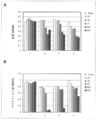
- the bar graph for each sample represents data from the left at test compound concentrations of 7, 20, 33, 67, 200 and 333 ppm. Inhibition of biofilm formation by test compounds a to k.
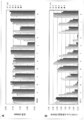
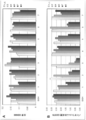
- the bar graph of each sample represents data when the addition amount of the compound solution is 1, 2, 4, 6, 7, 8 ⁇ L from the left. Inhibition of biofilm formation by test compounds 1-7.
- the bar graph of each sample represents data when the addition amount of the compound solution is 1, 2, 4, 6, 7, 8 ⁇ L from the left.
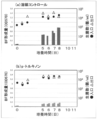
- (b) p-toluquinone, n 2.
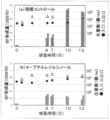
- A) Solvent control; (b) 4-butylresorcinol, n 2.
- the present invention provides a biofilm formation inhibitor capable of effectively suppressing biofilm formation while damaging piping and equipment and being safe for the human body.
- biofilm formation can be effectively suppressed even when specific quinone compounds and resorcinol compounds are used at low concentrations that do not inhibit the growth of microorganisms.
- the present invention relates to a biofilm formation inhibitor comprising as an active ingredient at least one quinone compound selected from the group consisting of hydroquinone substituted with a hydroxyl group or an alkyl group, and p-benzoquinone substituted with a hydroxyl group or an alkyl group I will provide a.
- the present invention also provides a biofilm formation inhibitor containing C1-C5 alkyl resorcinol as an active ingredient.
- the present invention also provides a method for inhibiting biofilm formation, which comprises adding the quinone compound or C1-C5 alkyl resorcinol to the target water.
- the biofilm formation inhibitor of the present invention can suppress biofilm formation regardless of sterilization or antibacterial action. Therefore, according to the present invention, biofilm formation can be more safely suppressed with respect to the human body. In addition, according to the present invention, since it is possible to prevent a reduction in the effect due to acquisition of bacterial resistance as in the case of using a bactericidal agent or an antibacterial agent, biofilm formation is effectively suppressed even when used over a long period of time. Can do. Furthermore, the biofilm formation inhibitor of the present invention is more economical because it is less likely to damage pipes and equipment than conventional biocides.
- the biofilm formation inhibitor of the present invention is used for the suppression of biofilm formation in various environments such as home or factory facilities.
- the biofilm formation inhibitor of the present invention functions by flowing or storing water therein, such as pipes through which water flows, tanks and pools for storing water, water circulation systems, and devices attached thereto. Used to suppress biofilm formation in equipment.
- the biofilm formation inhibitor of the present invention is suitably used at a temperature at which at least a part thereof reaches a temperature at which a biofilm is easily formed, for example, 20 ° C. or higher, preferably 25 ° C. or higher.
- Suitable examples of equipment to which the biofilm formation inhibitor of the present invention is applied include factory equipment and building cooling systems using water-cooled cooling towers, industrial cooling pools, industrial water supply, water storage or drainage paths. And hot water heating systems, wastewater treatment facilities, reverse osmosis membranes used in seawater desalination plants, and paper mill piping facilities.
- target water refers to water to which the biofilm formation inhibitor of the present invention is applied.
- the “target water” is water that flows or is stored in facilities that function by flowing or storing the above-mentioned water, for example, a factory facility using a water-cooled cooling tower or a cooling system for a building. Used in industrial water, industrial cooling pool water, industrial water supply, water in storage or drainage channels, hot water used in hot water heating systems, wastewater from wastewater treatment facilities, seawater desalination plants Water passing through reverse osmosis membranes, water in piping facilities of paper mills, and the like. The biofilm formation inhibitor of the present invention is added to the target water.
- Biofilms generated in such facilities include gram-negative microorganisms such as Pseudomonas genus, Sphingomonas genus, Sphingopyxis genus such as Pseudomonas aeruginosa. Furthermore, gram-negative microorganisms of the genus Klebsiella, the genus Flavobacterium and the genus Roseomonas have been reported as microorganisms present in biofilms in water-cooled cooling towers (Non-patent Documents 1 and 2).
- the biofilm formation inhibitor of the present invention comprises at least one quinone compound selected from the group consisting of hydroquinone substituted with a hydroxyl group or an alkyl group, and p-benzoquinone substituted with a hydroxyl group or an alkyl group. Is used as an active ingredient.
- hydroquinone and p-benzoquinone used as active ingredients in the present invention include compounds represented by the following formulas (I) and (II).
- R 1 represents a hydroxyl group or a linear or branched alkyl group having 1 to 4 carbon atoms
- R 2 , R 3 and R 4 each independently represents hydrogen or a methyl group.
- R 5 represents a hydroxyl group or a linear or branched alkyl group having 1 to 4 carbon atoms
- R 6 , R 7 and R 8 are each independently hydrogen or a methyl group. Represents.
- R 1 is a hydroxyl group or a linear or branched alkyl group having 1 to 4 carbon atoms, and R 2 , R 3 and R 4 are all hydrogen.
- R 1 is a methyl group
- R 3 is hydrogen
- R 2 and R 4 are either one methyl group and the other hydrogen, or both are methyl groups.
- R 1 , R 2 , R 3 and R 4 are all methyl groups.
- R 5 is a linear or branched alkyl group having 1 to 4 carbon atoms
- R 6 , R 7 and R 8 are both hydrogen.
- the quinone compound used as an active ingredient in the present invention may be any one of the compounds represented by the formulas (I) and (II) exemplified above, or any two of them. A combination of the above may be used.
- Preferred examples of the quinone compound used as an active ingredient in the present invention include p-toluquinone, 2-methylhydroquinone, ethylquinol, 2-butylhydroquinone, tert-butylhydroquinone, 2,6-dimethylhydroquinone, 2,3- Examples include dimethylhydroquinone, 2,3,5-trimethylhydroquinone, tetramethylhydroquinone, hydroxyhydroquinone, 3,5-dimethylbenzoquinone and tert-butylbenzoquinone. In the present invention, any one of these or a combination of any two or more thereof can be used.
- the biofilm formation inhibitor of the present invention uses C1-C5 alkyl resorcinol as an active ingredient.
- Examples of the C1-C5 alkyl resorcinol used as an active ingredient in the present invention include compounds represented by the following formula (III).
- R 9 , R 10 and R 11 each independently represent hydrogen or a linear or branched alkyl group having 1 to 5 carbon atoms. However, R 9 , R 10 and R 11 are not hydrogen at the same time.
- any one of R 9 , R 10 and R 11 is a linear or branched alkyl group having 1 to 5 carbon atoms, and the rest are all hydrogen. More preferably, any one of R 9 , R 10 and R 11 is a linear or branched alkyl group having 1 to 4 carbon atoms, and the rest are all hydrogen.
- any two of R 9 , R 10 and R 11 are straight chain alkyl groups having 1 to 5 carbon atoms, and the remainder is hydrogen. More preferably, any two of R 9 , R 10 and R 11 are straight chain alkyl groups having 1 to 4 carbon atoms, and the remainder is hydrogen.
- the C1-C5 alkyl resorcinol used as an active ingredient in the present invention may be any one of the compounds represented by the formula (III) exemplified above, or any two or more thereof. A combination of these may be used.
- C1-C5 alkyl resorcinol used as an active ingredient in the present invention include 4-butyl resorcinol (lucinol), 5-methyl resorcinol, 5-pentyl resorcinol, 2-propyl resorcinol, 2,5-dimethyl resorcinol, Examples include 2-methylresorcinol and 4-isopropylresorcinol. In the present invention, any one of these or a combination of any two or more thereof can be used.
- the active ingredient of the biofilm formation inhibitor of the present invention is selected from the group consisting of hydroquinone substituted with a hydroxyl group or an alkyl group, p-benzoquinone substituted with a hydroxyl group or an alkyl group, and a C1-C5 alkyl resorcinol. It may be at least one compound.
- the biofilm formation inhibitor of the present invention may contain components other than the quinone compound or the C1-C5 alkyl resorcinol.
- examples of such other components include solvents for the quinone compound or C1-C5 alkylresorcinol, substances for cleaning or preventing deterioration of devices and equipment to which the biofilm formation inhibitor of the present invention is applied, antibacterial or bactericidal agents Etc.
- the types and concentrations of the other components are not particularly limited as long as the quinone compound or the C1-C5 alkyl resorcinol does not inhibit the biofilm formation inhibitory action.
- the biofilm formation inhibitor of the present invention does not contain a chelating agent.
- chelating agents include carboxylic acid-based, phosphoric acid-based, or phosphonic acid-based chelating agents.
- carboxylic acid chelating agent include polyvalent carboxylic acid, hydroxycarboxylic acid, aminocarboxylic acid, phosphonocarboxylic acid, and salts thereof.
- the polyvalent carboxylic acid include citric acid, succinic acid, malic acid, fumaric acid, tartaric acid, malonic acid, maleic acid and the like.
- the hydroxycarboxylic acid include aliphatic hydroxycarboxylic acids such as citric acid and malic acid.
- aminocarboxylic acids ethylenediaminetetraacetic acid (EDTA), nitrilotriacetic acid (NTA), iminodiacetic acid, diethylenetriaminepentaacetic acid (DPTA), N-hydroxyethyl-ethylenediaminetriacetic acid (HEDTA), methylglycine diacetic acid (MGDA) , Aspartic acid diacetic acid (ASDA), glutamic acid diacetic acid (GLDA), and the like.
- EDTA ethylenediaminetetraacetic acid
- NTA nitrilotriacetic acid
- DPTA diethylenetriaminepentaacetic acid
- HEDTA N-hydroxyethyl-ethylenediaminetriacetic acid
- MGDA methylglycine diacetic acid
- ASDA Aspartic acid diacetic acid
- GLDA glutamic acid diacetic acid
- phosphonocarboxylic acid include 2-phosphonobutane-1,2,4-tricarboxylic acid
- Examples of the phosphonic acid chelating agent include hydroxyphosphonic acids such as 1-hydroxyethane-1,1-diphosphonic acid (HEDP), aminophosphonic acids such as aminotrimethylenephosphonic acid (ATMP), and salts thereof.
- Examples of the salt include alkali metal salts such as sodium and potassium, ammonium salts, and amine salts.
- the biofilm formation inhibitor of the present invention does not contain an organic solvent.
- the organic solvent include ClogP of ⁇ 3 to 4, ⁇ 3 to 3.5, ⁇ 3 to 3, ⁇ 2.5 to 4, ⁇ 2.5 to 3.5, ⁇ 2.5 to 3, Examples thereof include 2 to 4, -2 to 3.5, or -2 to 3.
- ClogP represents a calculated value of octanol-water-partition coefficient (logP) obtained according to EPIWEB 4.1 (US EPA).
- Specific examples of the organic solvent include alcohol-based organic solvents or ether-based organic solvents, and more specifically, aliphatic alcohol-based organic solvents, aliphatic ether-based organic solvents, and glycol-based organic solvents.
- glycol organic solvents include mono- or polyalkylene glycol monoalkyl ethers. More specific examples include ethylene glycol mono (2-ethylhexyl) ether, 1-phenoxy-2-propanol, 2-phenoxyethanol, 1-butoxy-2-propanol, ethylene glycol monobutyl ether, 2-isobutoxyethanol, 2- (2-n-butoxyethoxy) ethanol, propylene glycol, 2- (2-isobutoxyethoxy) ethanol, triethylene glycol monobutyl ether, diacetone alcohol, 2-ethoxyethanol, 1-methoxy-2-p-propanol, di Propylene glycol, 2- (2-ethoxyethoxy) ethanol, 2-methoxyethanol, diethylene glycol monomethyl ether, diethylene glycol, triethylene glycol monomethyl ether, and Ethylene glycol monomethyl ether.
- biofilm formation inhibitor (1-4. Use of biofilm formation inhibitor) Traditionally, biofilms have been prevented by sterilizing the biofilm causing microorganisms using a bactericidal agent.
- the present invention uses a quinone compound or a C1-C5 alkyl resorcinol to suppress biofilm formation without inhibiting the growth of microorganisms that cause biofilm, as shown in the Examples below. Different from conventional methods of suppressing biofilm formation by bactericidal or antibacterial action. Accordingly, a preferred aspect of the biofilm formation inhibitor of the present invention is a non-antibacterial biofilm formation inhibitor.
- “non-antibacterial biofilm formation inhibition” refers to the action of suppressing biofilm formation regardless of the antibacterial (or bactericidal) action.
- the biofilm formation inhibitor of the present invention can use, as an active ingredient, a low-concentration quinone compound or C1-C5 alkyl resorcinol that cannot exhibit antibacterial activity against microorganisms that cause biofilms.
- the biofilm formation inhibitor of the present invention is used in an amount such that the concentration of the quinone compound in the target water is 270 ppm (mass ppm, the same applies hereinafter).
- the quinone compound is selected from the group consisting of p-toluquinone, 2-methylhydroquinone, ethylquinol, 2-butylhydroquinone, tert-butylhydroquinone, hydroxyhydroquinone, 3,5-dimethylbenzoquinone and tert-butylbenzoquinone.
- the biofilm formation inhibitor of the present invention is used in such an amount that the concentration of the quinone compound in the target water is 270 ppm or less, preferably 200 ppm or less.
- the quinone compound is at least one selected from the group consisting of 2,6-dimethylhydroquinone, 2,3-dimethylhydroquinone and 2,3,5-trimethylhydroquinone
- the present invention is used in such an amount that the concentration of the quinone compound in the target water is 60 ppm or less, preferably 30 ppm or less.
- the quinone compound When the quinone compound is p-toluquinone, its concentration in the target water is preferably 5 ppm or more, more preferably 7 ppm or more, still more preferably 15 ppm or more, still more preferably 20 ppm or more, and preferably less than 200 ppm.
- it is 150 ppm or less, more preferably 140 ppm or less, more preferably 100 ppm or less, or preferably 5 ppm or more and less than 200 ppm, 5 to 150 ppm, 5 to 140 ppm, 5 to 100 ppm, 7 ppm or more and less than 200 ppm, 7 to 150 ppm 7 to 140 ppm, 7 to 100 ppm, 15 ppm to less than 200 ppm, 15 to 150 ppm, 15 to 140 ppm, 15 to 100 ppm, 20 ppm to less than 200 ppm, 20 to 150 ppm, 20 140ppm, or 20 ⁇ 100ppm.
- the concentration in the target water is preferably 10 ppm or more, more preferably 15 ppm or more, still more preferably 30 ppm or more, still more preferably 40 ppm or more, and preferably less than 200 ppm, More preferably 150 ppm or less, further preferably 130 ppm or less, still more preferably 100 ppm or less, or preferably 10 ppm or more and less than 200 ppm, 10 to 150 ppm, 10 to 130 ppm, 10 to 100 ppm, 15 ppm or more and less than 200 ppm, 15 to 150 ppm, 15 to 130 ppm, 15 to 100 ppm, 30 ppm to less than 200 ppm, 30 to 150 ppm, 30 to 130 ppm, 30 to 100 ppm, 40 ppm to 200 ppm not , 40 ⁇ 130ppm, 40 ⁇ 140ppm, or 40 ⁇ 100ppm.
- the quinone compound When the quinone compound is ethylquinol, its concentration in the target water is preferably 7 ppm or more, more preferably 20 ppm or more, still more preferably 30 ppm or more, and preferably 200 ppm or less, more preferably 150 ppm or less, even more preferably.
- the concentration in the target water is preferably 7 ppm or more, more preferably 20 ppm or more, still more preferably 30 ppm or more, and preferably 270 ppm or less, more preferably 200 ppm or less, More preferably 180 ppm or less, still more preferably 150 ppm or less, or preferably 7 to 270 ppm, 7 to 200 ppm, 7 to 180 ppm, 7 to 150 ppm, 20 to 270 ppm, 20 to 200 ppm, 20 to 180 ppm, 20 to 150 ppm, 30 to 270 ppm, 30 to 200 ppm, 30 to 180 ppm, or 30 to 150 ppm.
- the concentration in the target water is preferably 7 ppm or more, more preferably 20 ppm or more, still more preferably 30 ppm or more, and preferably 270 ppm or less, more preferably 200 ppm or less, More preferably 180 ppm or less, still more preferably 150 ppm or less, or preferably 7 to 270 ppm, 7 to 200 ppm, 7 to 180 ppm, 7 to 150 ppm, 20 to 270 ppm, 20 to 200 ppm, 20 to 180 ppm, 20 to 150 ppm, 30 to 270 ppm, 30 to 200 ppm, 30 to 180 ppm, or 30 to 150 ppm.
- the concentration in the target water is preferably 2 ppm or more, more preferably 5 ppm or more, still more preferably 10 ppm or more, and preferably 60 ppm or less, more preferably 40 ppm. Or less, more preferably 35 ppm or less, or preferably 2 to 60 ppm, 2 to 40 ppm, 2 to 35 ppm, 5 to 60 ppm, 5 to 40 ppm, 5 to 35 ppm, 10 to 60 ppm, 10 to 40 ppm, or 10 to 35 ppm.
- the concentration in the target water is preferably 10 ppm or more, more preferably 20 ppm or more, still more preferably 30 ppm or more, still more preferably 35 ppm or more, and preferably 60 ppm. Or less, more preferably 40 ppm or less, still more preferably 35 ppm or less, or preferably 10 to 60 ppm, 10 to 40 ppm, 10 to 35 ppm, 20 to 60 ppm, 20 to 40 ppm, 20 to 35 ppm, 30 to 60 ppm, 30 to 40 ppm, 30 to 35 ppm, 35 to 60 ppm, or 35 to 40 ppm.
- the concentration in the target water is preferably 2 ppm or more, more preferably 5 ppm or more, still more preferably 10 ppm or more, and preferably 30 ppm or less, more preferably Is 20 ppm or less, or preferably 2 to 30 ppm, 2 to 20 ppm, 5 to 30 ppm, 5 to 20 ppm, 10 to 30 ppm, or 10 to 20 ppm.
- the quinone compound When the quinone compound is hydroxyhydroquinone, its concentration in the target water is preferably 10 ppm or more, more preferably 20 ppm or more, still more preferably 30 ppm or more, still more preferably 35 ppm or more, and preferably 200 ppm or less, more preferably Is 150 ppm or less, more preferably 130 ppm or less, or preferably 10 to 200 ppm, 10 to 150 ppm, 10 to 130 ppm, 20 to 200 ppm, 20 to 150 ppm, 20 to 130 ppm, 30 to 200 ppm, 30 to 150 ppm, 30 to 130 ppm, 35 to 200 ppm, 35 to 150 ppm, or 35 to 130 ppm.
- the concentration in the target water is preferably 6 ppm or more, more preferably 15 ppm or more, still more preferably 18 ppm or more, and preferably 60 ppm or less, more preferably 40 ppm. Or less, more preferably 35 ppm or less, or preferably 6 to 60 ppm, 6 to 40 ppm, 6 to 35 ppm, 15 to 60 ppm, 15 to 40 ppm, 15 to 35 ppm, 18 to 60 ppm, 18 to 40 ppm, or 18 to 35 ppm.
- the quinone compound is tert-butylbenzoquinone
- its concentration in the target water is preferably 50 ppm or more, more preferably 150 ppm or more, still more preferably 160 ppm or more, and preferably 270 ppm or less, more preferably 200 ppm or less, More preferably, it is 180 ppm or less, or preferably 50 to 270 ppm, 50 to 200 ppm, 50 to 180 ppm, 150 to 270 ppm, 150 to 200 ppm, 150 to 180 ppm, 160 to 270 ppm, 160 to 200 ppm, or 160 to 180 ppm. is there.
- the biofilm formation inhibitor of the present invention is used in an amount such that the concentration of the C1-C5 alkyl resorcinol in the target water is 1400 ppm (mass ppm, the same applies hereinafter).
- the biofilm formation inhibitor of the present invention is used in an amount such that the concentration of the alkylresorcinol in the target water is 200 ppm or less.
- the C1-C5 alkyl resorcinol consists of 5-methylresorcinol, 5-pentylresorcinol, 2-propylresorcinol, 2,5-dimethylresorcinol, 2-methylresorcinol, and 4-isopropylresorcinol
- the biofilm formation inhibitor of the present invention is used in such an amount that the concentration of the alkylresorcinol in the target water is 1400 ppm or less, more preferably 1000 ppm or less.
- the concentration in the target water is preferably 15 ppm or more, more preferably 40 ppm or more, still more preferably 50 ppm or more, and preferably 200 ppm or less, more preferably 145 ppm or less, more preferably 130 ppm or less, or preferably 15 to 200 ppm, 15 to 145 ppm, 15 to 130 ppm, 40 to 200 ppm, 40 to 145 ppm, 40 to 130 ppm, 50 to 200 ppm, 50 to 145 ppm, or 50 ⁇ 130 ppm.
- the concentration in the target water is preferably 165 ppm or more, more preferably 450 ppm or more, still more preferably 500 ppm or more, and preferably 1000 ppm or less, more preferably 700 ppm or less, more preferably 600 ppm or less, or preferably 165 to 1000 ppm, 165 to 700 ppm, 165 to 600 ppm, 450 to 1000 ppm, 450 to 700 ppm, 450 to 600 ppm, 500 to 1000 ppm, 500 to 700 ppm, or 500 ⁇ 600 ppm.
- the concentration in the target water is preferably 160 ppm or more, more preferably 400 ppm or more, more preferably 500 ppm or more, and preferably 1400 ppm or less, more preferably 1000 ppm or less, more preferably 950 ppm or less, or preferably 160 to 1400 ppm, 160 to 1000 ppm, 160 to 950 ppm, 400 to 1400 ppm, 400 to 1000 ppm, 400 to 950 ppm, 500 to 1400 ppm, 500 to 1000 ppm, or 500 ⁇ 950 ppm.
- the concentration in the target water is preferably 200 ppm or more, more preferably 600 ppm or more, still more preferably 700 ppm or more, and preferably 1200 ppm or less, more preferably 1000 ppm or less, more preferably 850 ppm or less, or preferably 200 to 1200 ppm, 200 to 1000 ppm, 200 to 850 ppm, 600 to 1200 ppm, 600 to 1000 ppm, 600 to 850 ppm, 700 to 1200 ppm, 700 to 1000 ppm, or 700 ⁇ 850 ppm.
- the concentration in the target water is preferably 180 ppm or more, more preferably 550 ppm or more, further preferably 650 ppm or more, and preferably 1100 ppm or less, more Preferably, it is 800 ppm or less, more preferably 740 ppm or less, or preferably 180-1100 ppm, 180-800 ppm, 180-740 ppm, 550-1100 ppm, 550-800 ppm, 550-740 ppm, 650-1100 ppm, 650-800 ppm, Or 650-740 ppm.
- the concentration in the target water is preferably 165 ppm or more, more preferably 450 ppm or more, still more preferably 500 ppm or more, and preferably 1000 ppm or less, more preferably 700 ppm or less, more preferably 650 ppm or less, or preferably 165 to 1000 ppm, 165 to 700 ppm, 165 to 650 ppm, 450 to 1000 ppm, 450 to 700 ppm, 450 to 650 ppm, 500 to 1000 ppm, 500 to 700 ppm, or 500 ⁇ 650 ppm.
- the concentration in the target water is preferably 200 ppm or more, more preferably 500 ppm or more, still more preferably 600 ppm or more, and preferably 1100 ppm or less, more preferably 700 ppm or less, more preferably 650 ppm or less, or preferably 200 to 1100 ppm, 200 to 700 ppm, 200 to 650 ppm, 500 to 1100 ppm, 500 to 700 ppm, 500 to 650 ppm, 600 to 1100 ppm, 600 to 700 ppm, or 600 ⁇ 650 ppm is preferred.
- the biofilm formation inhibitor of the present invention has a concentration of the quinone compound or C1-C5 alkyl resorcinol in the target water, which is a major cause of the biofilm (for example, green). It is preferably used in an amount that is less than the growth inhibitory concentration (MIC) of Pseudomonas aeruginosa.
- the concentration of the quinone compound or C1-C5 alkyl resorcinol in the target water is such that the growth inhibition rate of the main causative microorganism (eg, Pseudomonas aeruginosa) of the biofilm is 20% or less.
- the growth inhibition rate of the microorganism is the growth rate of the microorganism in the target water to which the biofilm formation inhibitor is not added when the growth amount of the microorganism in the target water to which the biofilm formation inhibitor is not added is 100%.
- Reduced amount of growth (%) [1- (microbe growth in the agent added group / microorganism growth in the agent non-added group) ⁇ ⁇ 100].
- the growth amount of the microorganism can be measured based on, for example, OD600.
- the quinone compound or C1-C5 alkyl resorcinol in the target water in such an amount that the concentration in the target water is within the predetermined range described above.
- the concentration of the compound or the C1-C5 alkyl resorcinol may be adjusted to the predetermined range described above and maintained for a certain period of time.
- the concentration of the quinone compound or the C1-C5 alkyl resorcinol in the target water is preferable to maintain the concentration of the quinone compound or the C1-C5 alkyl resorcinol for 24 hours or more in the above-mentioned predetermined range.
- the amount and frequency of the quinone compound or C1-C5 alkyl resorcinol to be added to the target water is the total volume of the target water and the volume to be replaced, the frequency of use of the equipment or facility containing the target water, the internal temperature, the contamination status or the maintenance schedule. , Etc., can be set as appropriate.
- this invention provides the composition for biofilm formation suppression, and the biofilm suppression method which can suppress biofilm formation in an aqueous system effectively.
- the present inventors have found that a quinone compound and a chelating agent can effectively suppress biofilm formation even when used in such a low concentration that does not inhibit the growth of microorganisms. Furthermore, the present inventors have found that the composition containing a quinone compound and an organic solvent is used at a low concentration that not only improves the handleability of the quinone compound but also does not inhibit the growth of microorganisms. However, it has been found that biofilm formation is effectively suppressed.
- the present invention provides a composition for suppressing biofilm formation containing a quinone compound and a chelating agent. Moreover, this invention provides the biofilm formation suppression method using a quinone type compound and a chelating agent. Furthermore, this invention provides the composition for biofilm formation suppression containing a quinone type compound and an organic solvent, and the biofilm formation suppression method using the same.
- the composition for suppressing biofilm formation of the present invention and the method for suppressing biofilm formation of the present invention even when used at a low concentration that does not inhibit the growth of microorganisms, the biofilm formation is effectively performed. Can be suppressed. Furthermore, the biofilm formation inhibiting composition containing the quinone compound of the present invention and an organic solvent is excellent in handleability.
- the “water system” refers to a system that includes piping, a tank, a pool, and the like and functions by flowing or storing an aqueous liquid therein, for example, a factory facility using a water-cooled cooling tower, Examples include building cooling systems, industrial cooling pools, industrial water supply, storage or drainage channels, wastewater treatment facilities, hot water heating systems, tanks and pools, and filtration facilities.
- the aqueous system to which the composition for suppressing biofilm formation of the present invention is applied is a temperature at which at least a part thereof is easy to form a biofilm, for example, preferably 5 ° C or higher, more preferably 10 ° C or higher,
- the aqueous system may reach 15 ° C. or higher, more preferably 20 ° C. or higher, and even more preferably 25 ° C. or higher.
- the “aqueous liquid” may be simply water or a liquid containing water and other compounds.
- the other compounds include organic solvents, salts, antibacterial and antifungal agents, antiseptic / antifungal agents, antibiotics, penetration enhancers, surfactants, deodorants, and fragrances.
- the content of water in the aqueous liquid is preferably 90% by mass or more, more preferably 95% by mass or more, further preferably 98% by mass or more, more preferably 99% by mass or more, and preferably 100% by mass or less. is there.
- the “aqueous liquid” is preferably an aqueous liquid used for industrial use, more preferably an aqueous liquid used in the above-described aqueous system, for example, a factory facility or a building cooling system using a water-cooled cooling tower.
- Aqueous media used in water Aqueous media used in flowing water heating systems, Drainage from wastewater treatment facilities, Aqueous liquids in industrial cooling pools, industrial water supply, storage or drainage paths, or tanks and pools , Etc.
- the composition for suppressing biofilm formation of the present invention is used for suppressing biofilm formation in an aqueous liquid flowing or stored in the aqueous system, and in an equipment or device of the aqueous system in contact with the aqueous liquid.
- the composition for inhibiting biofilm formation of the present invention is used for inhibiting biofilm formation in water-cooled cooling tower equipment, equipment, or an aqueous liquid contained therein (for example, cooling water in a water-cooled cooling tower). used.
- Biofilms generated in the aqueous system as described above include gram-negative microorganisms such as Pseudomonas genus, Sphingomonas genus, and Sphingopyxis genus such as Pseudomonas aeruginosa. Furthermore, gram-negative microorganisms of the genus Klebsiella, the genus Flavobacterium and the genus Roseomonas have been reported as microorganisms present in biofilms in water-cooled cooling towers (Non-patent Documents 1 and 2).
- biofilms have been prevented by sterilizing the microorganisms that cause biofilms using a bactericidal agent.
- the formation of a biofilm may be suppressed by sterilizing a microorganism that causes biofilm using a quinone compound, but the quinone compound is used at a low concentration, Biofilm formation can also be suppressed without inhibiting the growth of causative microorganisms.
- a method of suppressing biofilm formation without inhibiting the growth of causative microorganisms is more preferable from the viewpoint of suppressing the generation of resistant bacteria and the environmental load due to the high concentration of the drug.
- the composition for inhibiting biofilm formation of the present invention contains a quinone compound and a chelating agent.
- the quinone compound and the chelating agent work together as an active ingredient for suppressing biofilm formation.
- the quinone compound used in the composition for suppressing biofilm formation containing the quinone compound of the present invention and a chelating agent is a compound having one benzene ring having two or three ketone groups,
- the benzene ring may be substituted with an alkyl group.
- the alkyl group for substituting the benzene ring is preferably a straight chain having 1 to 12 carbon atoms, more preferably 1 to 8 carbon atoms, still more preferably 1 to 6 carbon atoms, still more preferably 1 to 3 carbon atoms.
- a chain or branched chain alkyl group for example, methyl group, ethyl group, propyl group, isopropyl group, butyl group, t-butyl group, pentyl group, hexyl group, heptyl group, octyl group, 2-ethylhexyl group, etc.
- a methyl group, an ethyl group, a propyl group, and an isopropyl group are mentioned.
- the number of alkyl substituents in the benzene ring is preferably 1 or more and 3 or less, and more preferably 1.
- Each alkyl substituent can be independently selected from the group consisting of the alkyl groups described above.
- the ketone group of the benzene ring of the quinone compound may be reduced to a hydroxy group, and one of the hydroxy groups may be alkoxylated.
- this alkoxy group a C1-C3 thing is preferable, a methoxy group, an ethoxy group, a propoxy group etc. are more preferable, and a methoxy group is further more preferable.
- the quinone compound include hydroquinone substituted with a hydroxyl group or an alkyl group, p-benzoquinone substituted with a hydroxyl group or an alkyl group, and alkylresorcinol. More preferably, examples of the quinone compound include compounds represented by the following formulas (I), (II), and (IV).
- R 1 represents a hydroxyl group or a linear or branched alkyl group having 1 to 4 carbon atoms
- R 2 , R 3 and R 4 each independently represents hydrogen or a methyl group.
- R 1 is a hydroxyl group or a linear or branched alkyl group having 1 to 4 carbon atoms
- R 2 , R 3 and R 4 are all hydrogen, and the carbon number is 1 to 4.
- the linear or branched alkyl group is preferably a methyl group, an ethyl group, a propyl group, an isopropyl group, a butyl group or a t-butyl group.
- R 1 is a methyl group
- R 3 is hydrogen
- R 2 and R 4 are either one methyl group and the other hydrogen, or both are methyl groups.
- R 1 , R 2 , R 3 and R 4 are all methyl groups.
- R 5 represents a hydroxyl group or a linear or branched alkyl group having 1 to 4 carbon atoms
- R 6 , R 7 and R 8 each independently represents hydrogen or a methyl group.
- R 5 is a linear or branched alkyl group having 1 to 4 carbon atoms
- R 6 , R 7 and R 8 are both hydrogen, and the linear chain having 1 to 4 carbon atoms.
- the branched alkyl group is preferably a methyl group, an ethyl group, a propyl group, an isopropyl group, a butyl group or a t-butyl group.
- R 12 , R 13 and R 14 each independently represents hydrogen or a linear or branched alkyl group having 1 to 8, preferably 1 to 6 carbon atoms.
- the branched alkyl group is preferably selected from the group consisting of methyl, ethyl, propyl, isopropyl, butyl, t-butyl, pentyl, hexyl, heptyl, octyl and 2-ethylhexyl. Selected.
- R 12 , R 13 and R 14 are not simultaneously hydrogen.
- any one of R 12 , R 13 and R 14 is a linear or branched alkyl group having 1 to 6 carbon atoms, and the rest are all hydrogen. More preferably, any one of R 12 , R 13 and R 14 is a straight or branched alkyl group having 1 to 5 carbon atoms, and the rest are all hydrogen. More preferably, R 12 , R 13 and R 14 each independently represent hydrogen or a linear or branched alkyl group having 1 to 5 carbon atoms, provided that R 12 , R 13 and R 14 are simultaneously hydrogen.
- the compound represented by the formula (IV) is preferably a compound represented by the formula (III) from the viewpoint of solubility.
- any one of R 12 , R 13 and R 14 is a linear or branched alkyl group having 2 to 5 carbon atoms, and the rest are all hydrogen.
- any two of R 12 , R 13 and R 14 are straight chain alkyl groups having 1 to 6 carbon atoms, and the remainder is hydrogen. More preferably, any two of R 12 , R 13 and R 14 are straight-chain alkyl groups having 1 to 5 carbon atoms, and the remainder is hydrogen. More preferably, any two of R 12 , R 13 and R 14 are straight-chain alkyl groups having 2 to 5 carbon atoms, and the remainder is hydrogen.
- the linear or branched alkyl group represented by R 12 , R 13 or R 14 is preferably a methyl group, an ethyl group, a propyl group, an isopropyl group, a butyl group or a t-butyl group. Selected from the group consisting of
- the quinone compound used in the composition of the present invention may be any one of the quinone compounds described above, or a combination of any two or more thereof.
- the quinone compound is any one of the compounds represented by the formulas (I), (II) and (IV), or a combination of any two or more thereof.
- the quinone compound include p-toluquinone, 2-methylhydroquinone, ethylquinol, 2-butylhydroquinone, tert-butylhydroquinone, 2,6-dimethylhydroquinone, 2,3-dimethylhydroquinone, 2,3 , 5-trimethylhydroquinone, tetramethylhydroquinone, hydroxyhydroquinone, 3,5-dimethylbenzoquinone, p-benzoquinone and hydroquinone such as tert-butylbenzoquinone, 4-butylresorcinol (lucinol), 4-hexylresorcinol, 5-methylresorcinol Alkyl resorcinol such as 5-pentyl resorcinol, 2-propyl resorcinol, 2,5-dimethyl resorcinol, 2-methyl resorcinol and 4-isopropyl resorcino
- Examples of the chelating agent used in the composition for inhibiting biofilm formation containing the quinone compound and the chelating agent of the present invention include carboxylic acid-based, phosphoric acid-based or phosphonic acid-based chelating agents.
- Examples of the carboxylic acid chelating agent include polyvalent carboxylic acid, hydroxycarboxylic acid, aminocarboxylic acid, phosphonocarboxylic acid, and salts thereof.
- Examples of the polyvalent carboxylic acid include citric acid, succinic acid, malic acid, fumaric acid, tartaric acid, malonic acid, maleic acid and the like.
- hydroxycarboxylic acid examples include aliphatic hydroxycarboxylic acids such as citric acid and malic acid.
- aminocarboxylic acids ethylenediaminetetraacetic acid (EDTA), nitrilotriacetic acid (NTA), iminodiacetic acid, diethylenetriaminepentaacetic acid (DPTA), N-hydroxyethyl-ethylenediaminetriacetic acid (HEDTA), methylglycine diacetic acid (MGDA) , Aspartic acid diacetic acid (ASDA), glutamic acid diacetic acid (GLDA), and the like.
- phosphonocarboxylic acid examples include 2-phosphonobutane-1,2,4-tricarboxylic acid.
- Examples of the phosphoric acid chelating agent include tripolyphosphoric acid and a salt thereof.
- Examples of the phosphonic acid chelating agent include hydroxyphosphonic acids such as 1-hydroxyethane-1,1-diphosphonic acid (HEDP), aminophosphonic acids such as aminotrimethylenephosphonic acid (ATMP), and salts thereof.
- the chelating agent used in the composition of the present invention is preferably at least one selected from the group consisting of aminocarboxylic acids, phosphonocarboxylic acids, hydroxycarboxylic acids, hydroxyphosphonic acids, and salts thereof.
- Examples of the salt include alkali metal salts, ammonium salts, and amine salts.
- the salt is preferably an alkali metal salt, more preferably a sodium salt or a potassium salt.
- the composition for suppressing biofilm formation containing the quinone compound and the chelating agent of the present invention may be a composition comprising the above quinone compound and the chelating agent, but may contain other components.
- the composition for suppressing biofilm formation can contain a solvent such as water or an organic solvent from the viewpoint of mixing both in addition to the quinone compound and the chelating agent.
- a solvent such as water or an organic solvent from the viewpoint of mixing both in addition to the quinone compound and the chelating agent.
- Preferable organic solvents include methanol, ethanol, dipropylene glycol, diethylene glycol, diacetone alcohol, diethylene glycol monomethyl ether, propylene glycol, and mixed solvents thereof.
- examples of other components that may be contained in the composition for inhibiting biofilm formation include antibacterial antifungal agents, antiseptic / antifungal agents, antibiotics, penetration enhancers, surfactants, deodorants, Examples include fragrances.
- the type and concentration of the other components are not particularly limited as long as the biofilm formation inhibitory action by the quinone compound and the chelating agent is not inhibited.
- the content of the quinone compound is preferably 0.1% by mass or more, more preferably 0.5%, from the viewpoint of the solubility of the quinone compound and the biofilm formation inhibiting action.
- % By mass or more, more preferably 1% by mass or more, further preferably 3% by mass or more, more preferably 5% by mass or more, and preferably 90% by mass or less, more preferably 70% by mass or less, still more preferably. It is 50 mass% or less, More preferably, it is 30 mass% or less, More preferably, it is 20 mass% or less.
- the content of the quinone compound in the composition for inhibiting biofilm formation of the present invention is preferably 0.1 to 90% by mass, more preferably 0.5 to 70% by mass, and further preferably 1 to 50% by mass. %, More preferably 1 to 30% by mass, further preferably 1 to 20% by mass, more preferably 3 to 20% by mass, and further preferably 5 to 20% by mass.
- the content of the chelating agent is preferably 0.05% by mass or more, more preferably 0.1% by mass or more, and still more preferably 0. 3% by mass or more, more preferably 0.5% by mass or more, and preferably 90% by mass or less, more preferably 70% by mass or less, still more preferably 50% by mass or less, still more preferably 30% by mass or less, More preferably, it is 20 mass% or less.
- the content of the chelating agent in the composition for suppressing biofilm formation of the present invention is preferably 0.05 to 90% by mass, more preferably 0.05 to 70% by mass, and further preferably 0.1 to 50%. % By mass, more preferably 0.3 to 30% by mass, and still more preferably 0.5 to 20% by mass.
- the contents of the quinone compound and the chelating agent in the composition for suppressing biofilm formation are preferably 0.1 to 90% by mass and 0.05 to 90% by mass, more preferably 1 to 50% by mass, respectively. 0.1 to 50% by mass, more preferably 1 to 20% by mass and 0.3 to 30% by mass, more preferably 3 to 20% by mass and 0.3 to 30% by mass, and further preferably 5 to 20% by mass. And 0.5 to 20% by mass.
- the content of the chelating agent in the composition for inhibiting biofilm formation is preferably 0.1 parts by mass or more, more preferably 100 parts by mass with respect to 100 parts by mass of the quinone compound, from the viewpoint of the biofilm formation inhibiting action.
- the amount of the quinone compound is preferably 5000 parts by mass or less, more preferably 2000 parts by mass or less, still more preferably 1000 parts by mass or less, still more preferably 700 parts by mass or less, and still more preferably 500 parts by mass or less. More preferably, it is 300 parts by mass or less.
- the content of the chelating agent in the biofilm formation inhibiting composition is preferably 0.1 to 5000 parts by mass, more preferably 0.5 to 2000 parts by mass, with respect to 100 parts by mass of the quinone compound. More preferably, it is 1 to 1000 parts by mass, more preferably 3 to 700 parts by mass, still more preferably 5 to 500 parts by mass, and even more preferably 7 to 300 parts by mass.
- the total content of the quinone compound and the chelating agent is preferably 1% by mass or more, more preferably 3% by mass or more, further preferably 5% by mass or more, and further preferably 7%. It is not less than 100% by mass and preferably not more than 100% by mass, more preferably not more than 80% by mass, still more preferably not more than 50% by mass, and further preferably not more than 30% by mass.
- the total content of the quinone compound and the chelating agent in the composition for suppressing biofilm formation of the present invention is preferably 1 to 100% by mass, more preferably 3 to 80% by mass, and further preferably 5 to 50%. % By mass, more preferably 7 to 30% by mass.
- the biofilm formation inhibiting composition may contain an organic solvent as an optional component.
- the amount of the organic solvent in the composition is preferably 95% by mass or less, more preferably 93% by mass or less, and preferably 0% by mass or more, more preferably 30% by mass or more, and further preferably 50% by mass. As mentioned above, More preferably, it is 70 mass% or more.
- the content of the organic solvent in the biofilm formation inhibiting composition is preferably 0 to 95% by mass, more preferably 0 to 93% by mass, further preferably 30 to 95% by mass, and further preferably 30 to 95% by mass. It is 93% by mass, more preferably 50 to 95% by mass, further preferably 50 to 93% by mass, more preferably 70 to 95% by mass, and further preferably 70 to 93% by mass.
- the present invention provides a biofilm formation suppression method using the above-described quinone compound and a chelating agent.
- the method is a biofilm formation suppression method in an aqueous system.
- the method of this embodiment includes adding the above-described quinone compound and a chelating agent to an aqueous liquid, preferably an aqueous liquid used in the above-described aqueous system.
- the composition for inhibiting biofilm formation of the present invention containing the quinone compound and the chelating agent may be added to the aqueous liquid, and the composition may be added to water or an organic solvent.
- a dilute solution diluted with the above may be added, or the above-described quinone compound and chelating agent may be added separately.
- the aqueous liquid to which the quinone compound and the chelating agent are added is also simply referred to as “treatment liquid” in the following specification.
- the quinone compound is preferably a compound represented by the above formula (I), (II) or (IV), and is represented by any one of the above formulas (I) to (III) from the viewpoint of solubility. Are preferred.
- the concentration of the quinone compound in the treatment liquid is preferably 1 ppm or more, more preferably 2 ppm or more, further preferably 3 ppm or more, more preferably 5 ppm or more, and further preferably from the viewpoint of suppressing biofilm formation. Is 7 ppm or more, more preferably 8 ppm or more, more preferably 9 ppm or more, more preferably 10 ppm or more.
- it is preferably 1400 ppm or less, more preferably 1000 ppm or less, more preferably 500 ppm or less, More preferably, it is 270 ppm or less, More preferably, it is 200 ppm or less, More preferably, it is 150 ppm or less, More preferably, it is 100 ppm or less, More preferably, it is 70 ppm or less, More preferably, it is 60 ppm or less.
- the concentration of the quinone compound in the treatment liquid is preferably 1 to 1400 ppm, more preferably 2 to 1000 ppm, more preferably 3 to 500 ppm, still more preferably 5 to 270 ppm, still more preferably 5 to 200 ppm, and still more preferably.
- 5 to 150 ppm more preferably 5 to 100 ppm, more preferably 5 to 70 ppm, more preferably 5 to 60 ppm, more preferably 5 to 50 ppm, more preferably 5 to 40 ppm, still more preferably 5 to 30 ppm, more preferably 5 -20 ppm, more preferably 7-20 ppm, more preferably 8-20 ppm, more preferably 9-20 ppm, still more preferably 10-20 ppm, still more preferably 10-15 ppm.
- the quinone compound is used in an amount such that its concentration in the treatment liquid is less than the growth inhibitory concentration (MIC) of the causative microorganism of the biofilm.
- MIC growth inhibitory concentration
- the concentration of the chelating agent in the treatment liquid is preferably 0.05 ppm or more, more preferably 0.1 ppm or more, further preferably 0.3 ppm or more, from the viewpoint of suppressing biofilm formation.
- it is 0.5 ppm or more, more preferably 1 ppm or more, more preferably 2 ppm or more.
- it is preferably 1000 ppm or less, more preferably 500 ppm or less, still more preferably 100 ppm or less, more preferably It is 70 ppm or less, More preferably, it is 50 ppm or less, More preferably, it is 40 ppm or less, More preferably, it is 30 ppm or less, More preferably, it is 25 ppm or less, More preferably, it is 20 ppm or less.
- the concentration of the chelating agent in the treatment liquid is preferably 0.05 to 1000 ppm, more preferably 0.1 to 500 ppm, still more preferably 0.3 to 100 ppm, still more preferably 0.3 to 70 ppm, and still more preferably.
- Preferable concentrations of the quinone compound and the chelating agent in the treatment liquid are preferably 1 to 1400 ppm and 0.05 to 1000 ppm, more preferably 5 to 200 ppm and 0.3 to 100 ppm, respectively, more preferably 5 -50 ppm and 0.3-30 ppm, more preferably 5-30 ppm and 0.5-20 ppm.
- the amount of the chelating agent added to the aqueous liquid is preferably 0.1 parts by mass or more, more preferably 100 parts by mass with respect to 100 parts by mass of the quinone compound from the viewpoint of suppressing biofilm formation. Is 0.5 parts by mass or more, more preferably 1 part by mass or more, more preferably 3 parts by mass or more, more preferably 5 parts by mass or more, and further preferably 7 parts by mass or more.
- the amount of the quinone compound is preferably 5000 parts by mass or less, more preferably 2000 parts by mass or less, still more preferably 1000 parts by mass or less, still more preferably 700 parts by mass or less, and still more preferably 500 parts by mass or less. More preferably, it is 300 parts by mass or less.
- the amount of the chelating agent added to the aqueous liquid is preferably 0.1 to 5000 parts by mass, more preferably 0.5 to 2000 parts by mass with respect to 100 parts by mass of the quinone compound. Parts, more preferably 1 to 1000 parts by weight, more preferably 3 to 700 parts by weight, still more preferably 5 to 500 parts by weight, and even more preferably 7 to 300 parts by weight.
- the concentrations of the quinone compound and the chelating agent in the treatment liquid do not always need to be maintained within the predetermined range described above, and when necessary or periodically, the predetermined concentration described above. Adjust to the range and maintain for a certain period of time.
- the quinone compound and the chelating agent can be added to the aqueous liquid simultaneously or separately.
- the concentration of the quinone compound and the chelating agent in the treatment liquid is preferably within the above-mentioned predetermined range, preferably 24 hours or more, more preferably 36 hours or more, and even more preferably 40 hours or more. It is desirable to maintain.
- the time for which the concentrations of the quinone compound and the chelating agent in the method of the present embodiment are within the predetermined ranges described above may be preferably 240 hours or less, more preferably 120 hours or less.
- the temperature of the aqueous liquid to be treated in the method of the present embodiment and the temperature of the treatment liquid can be appropriately set according to the aqueous system in which the aqueous liquid is used, but are preferably independently 5 ° C. or more. More preferably, it is 10 ° C. or higher, more preferably 15 ° C. or higher, further preferably 20 ° C. or higher, more preferably 25 ° C. or higher, preferably 60 ° C. or lower, more preferably 55 ° C. or lower, still more preferably 50 ° C. or lower. It is.
- the present invention provides the use of a combination of a quinone compound and a chelating agent for biofilm formation inhibition.
- a composition containing a quinone compound and a chelating agent is used for biofilm formation suppression.
- the use is a use for inhibiting biofilm formation in an aqueous system or aqueous liquid.
- the kind of the quinone compound and the chelating agent, the use concentration, and the use method are as described above.
- the composition for inhibiting biofilm formation of the present invention contains a quinone compound and an organic solvent.
- the quinone compound used in the composition for inhibiting biofilm formation containing the quinone compound of the present invention and an organic solvent examples include the above 2-1-1. And the quinone compounds described in 1. above. That is, the quinone compound is preferably a compound represented by the above formula (I), (II) or (IV), and from the viewpoint of solubility, any one of the above formulas (I) to (III) The compounds represented are preferred.
- ClogP of the organic solvent is preferably ⁇ 3 or more, more preferably ⁇ 2.5 or more, still more preferably ⁇ 2 or more, and preferably 4 Hereinafter, more preferably 3.5 or less, and still more preferably 3 or less.
- ClogP of the organic solvent is preferably ⁇ 3 to 4, more preferably ⁇ 3 to 3.5, still more preferably ⁇ 3 to 3, further preferably ⁇ 2.5 to 3, and ⁇ 2.5 to 3 More preferably, it is -2 to 3.
- ClogP refers to a scale representing the distribution of substances between the octanol phase and the aqueous phase.
- ClogP represents a calculated value of octanol-water-partition coefficient (logP) defined by the following formula, which is obtained according to EPIWEB 4.1 (US EPA).
- log P log ([substance] octanol / [substance] water) [In the above formula, [substance] octanol indicates the molar concentration of the substance in the 1-octanol phase, and [substance] water indicates the molar concentration of the substance in the aqueous phase. ]
- the organic solvent is an alcohol organic solvent or an ether organic solvent, more preferably an aliphatic alcohol organic solvent or an aliphatic ether organic solvent. More preferably, the organic solvent is a glycol organic solvent, and among these, a compound having two hydroxyl groups or an ether thereof is preferable.
- the glycol-based organic solvent include mono- or polyalkylene glycol monoalkyl ethers.
- examples of the alkylene glycol include ethylene glycol, propylene glycol, butylene glycol, and “poly” is preferable.
- the alkyl group of the alkyl ether preferably has 1 or more carbon atoms, preferably 8 or less, more preferably 6 or less, still more preferably 4 or less, still more preferably An alkyl group having 2 or less, or preferably an alkyl group having 1 to 8 carbon atoms, more preferably 1 to 6, more preferably 1 to 4, and still more preferably 1 to 2 carbon atoms.
- the carbon number of the organic solvent is preferably 3 or more, more preferably 4 or more, and is preferably 12 or less, more preferably 8 or less, and even more preferably 6 or less.
- the carbon number of the organic solvent is preferably 3 to 12, more preferably 3 to 8, further preferably 3 to 6, and further preferably 4 to 6.
- organic solvent examples include ethylene glycol mono (2-ethylhexyl) ether (2.46), 1-phenoxy-2-propanol (1.52), 2-phenoxyethanol (1.1), 1-butoxy- 2-propanol (0.98), ethylene glycol monobutyl ether (0.57), 2-isobutoxyethanol (0.49), 2- (2-n-butoxyethoxy) ethanol (0.29), propylene glycol ( -0.78), 2- (2-isobutoxyethoxy) ethanol (0.22), triethylene glycol monobutyl ether (0.02), diacetone alcohol (-0.34), 2-ethoxyethanol (-0 .42), 1-methoxy-2-p-propanol (-0.49), dipropylene glycol -0.64), 2- (2-ethoxyethoxy) ethanol (-0.69), 2-methoxyethanol (-0.91), diethylene glycol monomethyl ether (-1.18), diethylene glycol (-1.47) , Triethylene glycol monomethyl ether ( ⁇
- More preferred examples include dipropylene glycol ( ⁇ 0.64), diethylene glycol ( ⁇ 1.47), diacetone alcohol ( ⁇ 0.34), diethylene glycol monomethyl ether ( ⁇ 1.18), and propylene glycol ( ⁇ 0.0. 78).
- the numerical values in parentheses are ClogP values.
- composition for suppressing biofilm formation containing the quinone compound of the present invention and an organic solvent can contain any one of the above-mentioned organic solvents, or a combination of any two or more thereof. .
- the composition for inhibiting biofilm formation containing the quinone compound and the organic solvent of the present invention may be a composition comprising the quinone compound and the organic solvent, but may contain other components. Good. Examples of the other components include water, antibacterial and antifungal agents, antiseptic and antifungal agents, antibiotics, penetration enhancers, surfactants, deodorants, and fragrances.
- the biofilm formation inhibiting composition containing the quinone compound and the organic solvent preferably does not contain a chelating agent.
- chelating agents include carboxylic acid-based, phosphoric acid-based, or phosphonic acid-based chelating agents.
- carboxylic acid chelating agent include polyvalent carboxylic acid, hydroxycarboxylic acid, aminocarboxylic acid, phosphonocarboxylic acid, and salts thereof.
- the polyvalent carboxylic acid include citric acid, succinic acid, malic acid, fumaric acid, tartaric acid, malonic acid, maleic acid and the like.
- the hydroxycarboxylic acid include aliphatic hydroxycarboxylic acids such as citric acid and malic acid.
- aminocarboxylic acids ethylenediaminetetraacetic acid (EDTA), nitrilotriacetic acid (NTA), iminodiacetic acid, diethylenetriaminepentaacetic acid (DPTA), N-hydroxyethyl-ethylenediaminetriacetic acid (HEDTA), methylglycine diacetic acid (MGDA) , Aspartic acid diacetic acid (ASDA), glutamic acid diacetic acid (GLDA), and the like.
- EDTA ethylenediaminetetraacetic acid
- NTA nitrilotriacetic acid
- DPTA diethylenetriaminepentaacetic acid
- HEDTA N-hydroxyethyl-ethylenediaminetriacetic acid
- MGDA methylglycine diacetic acid
- ASDA Aspartic acid diacetic acid
- GLDA glutamic acid diacetic acid
- phosphonocarboxylic acid include 2-phosphonobutane-1,2,4-tricarboxylic acid
- Examples of the phosphonic acid chelating agent include hydroxyphosphonic acids such as 1-hydroxyethane-1,1-diphosphonic acid (HEDP), aminophosphonic acids such as aminotrimethylenephosphonic acid (ATMP), and salts thereof.
- Examples of the salt include alkali metal salts such as sodium and potassium, ammonium salts, and amine salts.
- the content of the quinone compound is preferably 0.1% by mass or more, more preferably 0, from the viewpoint of the solubility and stability of the quinone compound and the biofilm formation inhibiting action. 0.5% by mass or more, more preferably 1% by mass or more, further preferably 3% by mass or more, further preferably 5% by mass or more, and preferably 90% by mass or less, more preferably 70% by mass or less, Preferably it is 50 mass% or less, More preferably, it is 30 mass% or less, More preferably, it is 20 mass% or less.
- the content of the quinone compound in the composition for suppressing biofilm formation is preferably 0.1 to 90% by mass, more preferably 0.5 to 70% by mass, still more preferably 1 to 50% by mass, More preferably, it is 1 to 30% by mass, more preferably 1 to 20% by mass, further preferably 3 to 20% by mass, and further preferably 5 to 20% by mass.
- the content of the organic solvent is preferably 10% by mass or more, more preferably 30% by mass, from the viewpoints of the solubility and stability of the quinone compound and the biofilm formation inhibitory action. More preferably, it is 50% by mass or more, more preferably 60% by mass or more, further preferably 70% by mass or more, further preferably 80% by mass or more, and preferably 99.9% by mass or less, more preferably 99% by mass. 0.5% by mass or less, more preferably 99% by mass or less, further preferably 97% by mass or less, and further preferably 95% by mass or less.
- the content of the organic solvent agent in the biofilm formation inhibiting composition is preferably 10 to 99.9% by mass, more preferably 30 to 99.5% by mass, and still more preferably 50 to 99.5% by mass. %, More preferably 60 to 99% by mass, further preferably 70 to 99% by mass, more preferably 80 to 97% by mass, and further preferably 80 to 95% by mass.
- the contents of the quinone compound and the organic solvent in the biofilm formation inhibiting composition are preferably 0.1 to 90% by mass and 10 to 99.9% by mass, more preferably 1 to 50% by mass and 50-99.5% by weight, more preferably 1-30% by weight and 70-99% by weight, more preferably 1-20% by weight and 80-95% by weight, more preferably 5-20% by weight and 80-95%. % By mass.
- the mass ratio of the organic solvent to the quinone compound (organic solvent mass / quinone compound mass) in the biofilm formation-suppressing composition is preferably 500 or less from the viewpoint of handleability of the quinone compound.
- it is 200 or less, more preferably 150 or less, more preferably 100 or less, more preferably 50 or less, more preferably 20 or less.
- from the viewpoint of solubility and stability of the quinone compound preferably 0 or less. .1 or more, more preferably 0.5 or more, further preferably 1 or more, further preferably 2 or more, further preferably 3 or more.
- the mass ratio of the organic solvent to the quinone compound in the biofilm formation inhibiting composition is preferably 0.1 to 500, more preferably 0.5 to 200, still more preferably 1 to 150, and still more preferably. It is 2 to 100, more preferably 3 to 50, and further preferably 3 to 20.
- the total content of the quinone compound and the organic solvent is preferably 50% by mass or more, more preferably from the viewpoints of biofilm formation inhibition, solubility of the quinone compound, and stability. Is 70% by weight or more, more preferably 80% by weight or more, more preferably 85% by weight or more, more preferably 90% by weight or more, still more preferably 95% by weight or more, more preferably 99% by weight or more, and preferably Is 100 mass% or less.
- the biofilm formation inhibiting composition may contain water as an optional component.
- the content of water in the composition is preferably 50% by mass or less, more preferably 30% by mass or less, still more preferably 10% by mass or less, and still more preferably, from the viewpoints of solubility and stability of the quinone compound. 5% by mass or less, more preferably 1% by mass or less, and preferably 0% by mass or more.
- the present invention provides a biofilm formation inhibiting method using a biofilm formation inhibiting composition containing the above-described quinone compound and an organic solvent.
- the method is a biofilm formation suppression method in an aqueous system.
- a biofilm formation inhibiting composition containing the above-described quinone compound of the present invention and an organic solvent is added to an aqueous liquid, preferably an aqueous liquid used in the above-described aqueous system. including.
- the composition of the present invention when the composition of the present invention is added to the aqueous liquid, the quinone compound and the organic solvent are mixed in advance, and the resulting composition may be added to the aqueous liquid.
- a diluted solution obtained by diluting the composition with an organic solvent may be added, or the quinone compound and the organic solvent may be added separately to the aqueous liquid.
- the aqueous liquid to which the quinone compound and the organic solvent are added is also simply referred to as “treatment liquid” in the following specification.
- the concentration of the quinone compound in the treatment liquid is preferably 1 ppm or more, more preferably 2 ppm or more, further preferably 3 ppm or more, more preferably 5 ppm or more, and further preferably from the viewpoint of suppressing biofilm formation. Is 7 ppm or more, more preferably 8 ppm or more, more preferably 9 ppm or more, more preferably 10 ppm or more.
- it is preferably 1400 ppm or less, more preferably 1000 ppm or less, more preferably 500 ppm or less, More preferably, it is 270 ppm or less, More preferably, it is 200 ppm or less, More preferably, it is 150 ppm or less, More preferably, it is 100 ppm or less, More preferably, it is 70 ppm or less, More preferably, it is 60 ppm or less.
- the concentration of the quinone compound in the treatment liquid is preferably 1 to 1400 ppm, more preferably 2 to 1000 ppm, more preferably 3 to 500 ppm, still more preferably 5 to 270 ppm, still more preferably 5 to 200 ppm, and still more preferably.
- 5 to 150 ppm more preferably 5 to 100 ppm, more preferably 5 to 70 ppm, more preferably 5 to 60 ppm, more preferably 5 to 50 ppm, more preferably 5 to 40 ppm, still more preferably 5 to 30 ppm, more preferably 5 -20 ppm, more preferably 7-20 ppm, more preferably 8-20 ppm, more preferably 9-20 ppm, still more preferably 10-20 ppm, still more preferably 10-15 ppm.
- the quinone compound is used in an amount such that its concentration in the treatment liquid is less than the growth inhibitory concentration (MIC) of the causative microorganism of the biofilm.
- MIC growth inhibitory concentration
- the concentration of the organic solvent in the treatment liquid varies depending on the content of the quinone compound in the treatment liquid, but from the viewpoint of not inhibiting the biofilm formation inhibitory action by the quinone compound, preferably 0.5% by mass or less, more preferably 0.2% by mass or less, further preferably 0.1% by mass or less, further preferably 0.05% by mass or less, and further preferably 0.01% by mass or less. And preferably 0.00001% by mass or more (0.1 ppm or more).
- Preferable concentrations of the quinone compound and the organic solvent in the treatment liquid are preferably 1 to 1400 ppm and 0.1 to 5000 ppm, more preferably 5 to 200 ppm and 0.1 to 2000 ppm, respectively, more preferably 5 -50 ppm and 0.1-1000 ppm, more preferably 5-30 ppm and 0.1-500 ppm.
- the mass ratio of the organic solvent to the quinone compound in the treatment liquid is from the viewpoint of not inhibiting the biofilm formation inhibitory action by the quinone compound.
- it is 500 or less, More preferably, it is 200 or less, More preferably, it is 150 or less, More preferably, it is 100 or less, More preferably, it is 50 or less, More preferably, it is 20 or less, Preferably it is 0.1 or more, More preferably, it is 0.00. It is 5 or more, more preferably 1 or more, more preferably 2 or more, more preferably 3 or more.
- the mass ratio of the organic solvent to the quinone compound in the treatment liquid is preferably 0.1 to 500, more preferably 0.5 to 200, still more preferably 1 to 150, still more preferably 2 to 100, more preferably 3 to 50, more preferably 3 to 20.
- the concentrations of the quinone compound and the organic solvent in the treatment liquid do not always need to be maintained within the predetermined range described above, and when necessary or periodically, the predetermined concentration described above. Adjust to the range and maintain for a certain period of time.
- the quinone compound and the organic solvent can be added to the aqueous liquid simultaneously or separately.
- the concentration of the quinone compound and the organic solvent in the treatment liquid is preferably within the above-mentioned predetermined range, preferably 24 hours or more, more preferably 36 hours or more, and further preferably 40 hours or more. It is desirable to maintain.
- the time for which the concentration of the quinone compound and the organic solvent in the method of the present embodiment is within the predetermined range described above may be preferably 240 hours or less, more preferably 120 hours or less.
- the temperature of the aqueous liquid to be treated in the method of the present embodiment and the temperature of the treatment liquid can be appropriately set according to the aqueous system in which the aqueous liquid is used, but are preferably independently 5 ° C. or more. More preferably, it is 10 ° C. or higher, more preferably 15 ° C. or higher, further preferably 20 ° C. or higher, more preferably 25 ° C. or higher, preferably 60 ° C. or lower, more preferably 55 ° C. or lower, still more preferably 50 ° C. or lower. It is.
- the present invention provides the use of a combination of a quinone compound and an organic solvent for inhibiting biofilm formation.
- the composition for suppressing biofilm formation containing the above-described quinone compound of the present invention and an organic solvent is used for suppressing biofilm formation.
- the use is a use for inhibiting biofilm formation in an aqueous system or aqueous liquid.
- the kind of the quinone compound and the organic solvent, the use concentration, and the use method are as described above.
- Exemplary Embodiment also includes the following substances, production methods, uses, methods and the like as exemplary embodiments. However, the present invention is not limited to these embodiments.
- Film formation inhibitor Preferably, the active ingredient is at least one quinone compound selected from the group consisting of hydroquinone substituted with the hydroxyl group or alkyl group and p-benzoquinone substituted with the hydroxyl group or alkyl group.
- At least one compound selected from the group consisting of the hydroquinone, the p-benzoquinone, and the C1-C5 alkyl resorcinol at a concentration less than the growth inhibitory concentration of the main causative microorganism of the biofilm is effective.
- [7] Preferably, at least one selected from the group consisting of the hydroquinone, the p-benzoquinone, and the C1-C5 alkyl resorcinol at a concentration at which the growth inhibition rate of the main causative microorganism of the biofilm is 20% or less.
- a method for inhibiting biofilm formation comprising: [10] Preferably, at least one quinone compound selected from the group consisting of the hydroquinone substituted with the hydroxyl group or alkyl group and the p-benzoquinone substituted with the hydroxyl group or alkyl group is added to the target water. The method according to [9].
- At least one compound selected from the group consisting of the hydroquinone, the p-benzoquinone, and the C1-C5 alkyl resorcinol is less than the growth inhibiting concentration of the main causative microorganism of the biofilm in the target water.
- at least one compound selected from the group consisting of the hydroquinone, the p-benzoquinone, and the C1-C5 alkyl resorcinol has a growth inhibition rate of a main causative microorganism of the biofilm in the target water.
- the concentration of at least one compound selected from the group consisting of the hydroquinone, the p-benzoquinone, and the C1-C5 alkyl resorcinol in the target water is maintained for 24 hours or more.
- the hydroquinone is a compound represented by the formula (I)
- the p-benzoquinone is a compound represented by the formula (II):
- R 1 and R 5 each independently represent a hydroxyl group or a linear or branched alkyl group having 1 to 4 carbon atoms; R 2 , R 3 , R 4 , R 6 , R 7 and R 8; Each independently represents hydrogen or a methyl group.
- R 1 is a hydroxyl group or a linear or branched alkyl group having 1 to 4 carbon atoms
- R 2 , R 3 and R 4 are all hydrogen
- R 1 is a methyl group
- R 3 is hydrogen
- R 2 and R 4 are either one methyl group and the other is hydrogen, or both are methyl groups, or R 1 , R 2 ,
- the quinone compound is p-toluquinone, 2-methylhydroquinone. , Ethylquinol, 2-butylhydroquinone, tert-butylhydroquinone, 2,6-dimethylhydroquinone, 2,3-dimethylhydroquinone, 2,3,5-trimethylhydroquinone, tetramethylhydroquinone, hydroxyhydroquinone, 3,5-dimethylbenzoquinone And at least one selected from the group consisting of tert-butylbenzoquinone.
- the C1 to C5 alkylresorcinol is a compound represented by the formula (III) : (Wherein R 9 , R 10 and R 11 each independently represent hydrogen or a linear or branched alkyl group having 1 to 5 carbon atoms, provided that R 9 , R 10 and R 11 are simultaneously (It never becomes hydrogen.) [23] In the above [22], preferably, any one of R 9 , R 10 and R 11 is a linear or branched alkyl group having 1 to 5 carbon atoms, and the rest are all hydrogen. . [24] In the above [22], preferably, any two of R 9 , R 10 and R 11 are straight-chain alkyl groups having 1 to 5 carbon atoms, and the remainder is hydrogen.
- the C1 to C5 alkyl resorcinol is 4-butylresorcinol or 5-methylresorcinol. , 5-pentylresorcinol, 2-propylresorcinol, 2,5-dimethylresorcinol, 2-methylresorcinol, and 4-isopropylresorcinol.
- biofilm according to any one of [1] to [25], Preferably, a biofilm containing gram-negative microorganisms, More preferably, the biofilm includes at least one microorganism selected from the group consisting of Pseudomonas aeruginosa, Sphingomonas, Sphingopyxis, Klebsiella, Flavobacterium, and Roseomonas.
- the biofilm is Preferably, a biofilm in a facility that functions by flowing or storing water, or a biofilm in water that flows or stored in the facility.
- a composition for inhibiting biofilm formation comprising a quinone compound and a chelating agent.
- the composition according to [31] which is preferably used for biofilm formation suppression in an aqueous liquid or an aqueous system using an aqueous liquid.
- a method for inhibiting biofilm formation comprising adding a quinone compound and a chelating agent to an aqueous liquid.
- [35] Use of a combination of a quinone compound and a chelating agent for inhibiting biofilm formation.
- the chelating agent is Preferably, a carboxylic acid-based, phosphoric acid-based, or phosphonic acid-based chelating agent, More preferably, it is at least one selected from the group consisting of aminocarboxylic acid, phosphonocarboxylic acid, hydroxycarboxylic acid, hydroxyphosphonic acid, and salts thereof.
- the quinone compound is preferably hydroquinone substituted with a hydroxyl group or an alkyl group, p-benzoquinone substituted with a hydroxyl group or an alkyl group, and At least one compound selected from the group consisting of C1-C5 alkyl resorcinols.
- the quinone compound is Preferably, a compound having one benzene ring having two or three ketone groups, The ketone group may be reduced to a hydroxy group, and one of the hydroxy groups may be alkoxylated,
- the benzene ring is substituted with 1 to 3, preferably 1 alkyl group;
- the alkyl groups are each independently preferably a straight chain having 1 to 12 carbon atoms, more preferably 1 to 8 carbon atoms, more preferably 1 to 6 carbon atoms, and still more preferably 1 to 3 carbon atoms.
- a branched alkyl group and more preferably from a methyl group, ethyl group, propyl group, isopropyl group, butyl group, t-butyl group, pentyl group, hexyl group, heptyl group, octyl group and 2-ethylhexyl group.
- the quinone compound is Preferably, it is one or more selected from the group consisting of compounds represented by formulas (I), (II) and (IV):
- R 1 represents a hydroxyl group or a linear or branched alkyl group having 1 to 4 carbon atoms
- R 2 , R 3 and R 4 each independently represents hydrogen or a methyl group
- R 1 is a hydroxyl group or a linear or branched alkyl group having 1 to 4 carbon atoms
- R 2 , R 3 and R 4 are all hydrogen
- R 1 is a methyl group
- R 3 is hydrogen
- R 2 and R 4 are either one methyl group and the other hydrogen or both methyl groups, or R 1 , R 2 , R 3 and R 4 are all methyl groups
- R 5 represents a hydroxyl group or a linear or branched alkyl group having 1 to 4 carbon atoms
- R 6 represents a hydroxyl group or a linear or branched alkyl group having 1 to 4 carbon
- any one of R 12 , R 13 and R 14 is a straight-chain or branched alkyl group having 1 to 6 carbon atoms, and the rest are all hydrogen, or R 12 , R 13 And any two of R 14 are straight-chain alkyl groups having 1 to 6 carbon atoms, and the remainder is hydrogen, More preferably, R 12 , R 13 and R 14 each independently represent hydrogen or a linear or branched alkyl group having 1 to 5 carbon atoms, provided that R 12 , R 13 and R 14 are simultaneously None become hydrogen. )
- the quinone compound is Preferably, p-toluquinone, 2-methylhydroquinone, ethylquinol, 2-butylhydroquinone, tert-butylhydroquinone, 2,6-dimethylhydroquinone, 2,3-dimethylhydroquinone, 2,3,5-trimethylhydroquinone, tetramethyl Hydroquinone, hydroxyhydroquinone, 3,5-dimethylbenzoquinone, tert-butylbenzoquinone, 4-butylresorcinol, 4-hexylresorcinol, 5-methylresorcinol, 5-pentylresorcinol, 2-propylresorcinol, 2,5-dimethylresorcinol, 2 -One or more selected from the group consisting of methylresorcinol and 4-isopropylresorcinol, More preferably, it is one
- the concentration of the quinone compound in an aqueous liquid to which a quinone compound and a chelating agent are added is as follows: Used as: Preferably 1 ppm or more, more preferably 2 ppm or more, more preferably 3 ppm or more, further preferably 5 ppm or more, more preferably 7 ppm or more, more preferably 8 ppm or more, more preferably 9 ppm or more, more preferably 10 ppm or more, And preferably 1400 ppm or less, more preferably 1000 ppm or less, further preferably 500 ppm or less, further preferably 270 ppm or less, further preferably 200 ppm or less, further preferably 150 ppm or less, further preferably 100 ppm or less, further preferably 70 ppm or less, and further preferably Is 60 ppm or less, more preferably 50 ppm or less, more preferably 40 ppm or less, more
- the chelating agent has a concentration in an aqueous liquid to which a quinone compound and a chelating agent are added as follows: Used for: Preferably it is 0.05 ppm or more, more preferably 0.1 ppm or more, more preferably 0.3 ppm or more, still more preferably 0.5 ppm or more, still more preferably 1 ppm or more, further preferably 2 ppm or more, and preferably 1000 ppm.
- the concentrations of the quinone compound and the chelating agent in the aqueous liquid to which the quinone compound and the chelating agent are added are each preferably 1 ⁇ 1400 ppm and 0.05 ⁇ 1000 ppm, more preferably 5 ⁇ 200 ppm and 0.3 ⁇ 100 ppm, still more preferably 5 ⁇ 50 ppm and 0.3 ⁇ 30 ppm, still more preferably 5 ⁇ 30 ppm and 0.3. 5 to 20 ppm.
- the amount of the chelating agent used is The amount is preferably 0.1 parts by mass or more, more preferably 0.5 parts by mass or more, further preferably 1 part by mass or more, further preferably 3 parts by mass or more, and further preferably 5 parts by mass with respect to 100 parts by mass of the quinone compound. More than 7 parts by weight, more preferably 7 parts by weight or more, and preferably 5000 parts by weight or less, more preferably 2000 parts by weight or less, more preferably 1000 parts by weight or less, and even more preferably 700 parts by weight or less.
- 0.1 to 5000 parts by weight 0.1 to 2000 parts by weight, 0.1 to 1000 parts by weight, 0.1 to 700 parts by weight, 0.1 to 700 parts by weight with respect to 100 parts by weight of the quinone compound.
- the aqueous liquid is cooling water of a water-cooled cooling tower.
- the composition for suppressing biofilm formation is a biofilm in cooling water of a water-cooled cooling tower. It is a composition for suppressing formation.
- the content of the quinone compound in the biofilm formation-suppressing composition is as follows: Is as follows: Preferably it is 0.1% by weight or more, more preferably 0.5% by weight or more, more preferably 1% by weight or more, further preferably 3% by weight or more, more preferably 5% by weight or more, and preferably 90%.
- % By mass or less, more preferably 70% by mass or less, further preferably 50% by mass or less, further preferably 30% by mass or less, and further preferably 20% by mass or less; Or Preferably, 0.1 to 90 mass%, 0.1 to 70 mass%, 0.1 to 50 mass%, 0.1 to 30 mass%, 0.1 to 20 mass%, 0.5 to 90 mass% 0.5-70% by mass, 0.5-50% by mass, 0.5-30% by mass, 0.5-20% by mass, 1-90% by mass, 1-70% by mass, 1-50% by mass 1 to 30% by weight, 1 to 20% by weight, 3 to 90% by weight, 3 to 70% by weight, 3 to 50% by weight, 3 to 30% by weight, 3 to 20% by weight, 5 to 90% by weight, 5 -70 wt%, 5-50 wt%, 5-30 wt%, or 5-20 wt%.
- the content of the chelating agent in the biofilm formation-suppressing composition is as follows: Is: Preferably 0.05% by mass or more, more preferably 0.1% by mass or more, further preferably 0.3% by mass or more, more preferably 0.5% by mass or more, and preferably 90% by mass or less, More preferably, it is 70 mass% or less, More preferably, it is 50 mass% or less, More preferably, it is 30 mass% or less, More preferably, it is 20 mass% or less; Or Preferably, 0.05 to 90 mass%, 0.05 to 70 mass%, 0.05 to 50 mass%, 0.05 to 30 mass%, 0.05 to 20 mass%, 0.1 to 90 mass% 0.1-70% by mass, 0.1-50% by mass, 0.1-30% by mass, 0.1-20% by mass, 0.3-90% by mass, 0.3-70% by mass, 0 .3-50% by mass, 0.3-30% by mass, 0.3-20% by mass
- the content of the quinone compound and the chelating agent in the biofilm formation-suppressing composition according to any one of [31], [32], [37], and [38] to [50] are preferably 0.1 to 90% by mass and 0.05 to 90% by mass, more preferably 1 to 50% by mass and 0.1 to 50% by mass, and still more preferably 1 to 20% by mass and 0.0. It is 3 to 30% by mass, more preferably 3 to 20% by mass and 0.3 to 30% by mass, and further preferably 5 to 20% by mass and 0.5 to 20% by mass.
- the content of the chelating agent in the biofilm formation-suppressing composition is as follows: Is: The amount is preferably 0.1 parts by mass or more, more preferably 0.5 parts by mass or more, further preferably 1 part by mass or more, further preferably 3 parts by mass or more, and further preferably 5 parts by mass with respect to 100 parts by mass of the quinone compound. More than 7 parts by weight, more preferably 7 parts by weight or more, and preferably 5000 parts by weight or less, more preferably 2000 parts by weight or less, more preferably 1000 parts by weight or less, and even more preferably 700 parts by weight or less.
- 0.1 to 5000 parts by weight 0.1 to 2000 parts by weight, 0.1 to 1000 parts by weight, 0.1 to 700 parts by weight, 0.1 to 700 parts by weight with respect to 100 parts by weight of the quinone compound.
- the composition for inhibiting biofilm formation contains an organic solvent as an optional component.
- the amount of organic solvent in the composition is Preferably it is 95 mass% or less, More preferably, it is 93 mass% or less, Preferably it is 0 mass% or more, More preferably, it is 30 mass% or more, More preferably, it is 50 mass% or more, More preferably, it is 70 mass% or more. Or preferably 0 to 95% by weight, 0 to 93% by weight, 30 to 95% by weight, 30 to 93% by weight, 50 to 95% by weight, 50 to 93% by weight, 70 to 95% by weight, or 70 to 95% by weight. 93% by mass.
- a composition for suppressing biofilm formation comprising a quinone compound and an organic solvent.
- composition according to [54] which is preferably used for suppressing biofilm formation in an aqueous liquid or an aqueous system using an aqueous liquid.
- the quinone compound is at least one selected from the group consisting of hydroquinone substituted with a hydroxyl group or an alkyl group, p-benzoquinone substituted with a hydroxyl group or an alkyl group, and C1-C5 alkyl resorcinol.
- the quinone compound is Preferably, a compound having one benzene ring having two or three ketone groups, The ketone group may be reduced to a hydroxy group, and one of the hydroxy groups may be alkoxylated, The benzene ring is substituted with 1 to 3, preferably 1 alkyl group;
- the alkyl groups are each independently preferably a straight chain having 1 to 12 carbon atoms, more preferably 1 to 8 carbon atoms, more preferably 1 to 6 carbon atoms, and still more preferably 1 to 3 carbon atoms.
- a branched alkyl group and more preferably from a methyl group, ethyl group, propyl group, isopropyl group, butyl group, t-butyl group, pentyl group, hexyl group, heptyl group, octyl group and 2-ethylhexyl group. Selected from the group consisting of [54] or [55] The composition.
- the quinone compound is Preferably, it is one or more selected from the group consisting of compounds represented by formulas (I), (II) and (IV):
- R 1 represents a hydroxyl group or a linear or branched alkyl group having 1 to 4 carbon atoms
- R 2 , R 3 and R 4 each independently represents hydrogen or a methyl group
- R 1 is a hydroxyl group or a linear or branched alkyl group having 1 to 4 carbon atoms
- R 2 , R 3 and R 4 are all hydrogen
- R 1 is a methyl group
- R 3 is hydrogen
- R 2 and R 4 are either one methyl group and the other hydrogen or both methyl groups, or R 1 , R 2 , R 3 and R 4 are all methyl groups
- R 5 represents a hydroxyl group or a linear or branched alkyl group having 1 to 4 carbon atoms
- R 6 , R 7 and R 8 each independently represents hydrogen or a
- any one of R 12 , R 13 and R 14 is a straight-chain or branched alkyl group having 1 to 6 carbon atoms, and the rest are all hydrogen, or R 12 , R 13 And any two of R 14 are straight-chain alkyl groups having 1 to 6 carbon atoms, and the remainder is hydrogen, More preferably, R 12 , R 13 and R 14 each independently represent hydrogen or a linear or branched alkyl group having 1 to 5 carbon atoms, provided that R 12 , R 13 and R 14 are simultaneously hydrogen. None become. ), [54] or [55] The composition.
- the quinone compound is Preferably, p-toluquinone, 2-methylhydroquinone, ethylquinol, 2-butylhydroquinone, tert-butylhydroquinone, 2,6-dimethylhydroquinone, 2,3-dimethylhydroquinone, 2,3,5-trimethylhydroquinone, tetramethyl Hydroquinone, hydroxyhydroquinone, 3,5-dimethylbenzoquinone, tert-butylbenzoquinone, 4-butylresorcinol, 4-hexylresorcinol, 5-methylresorcinol, 5-pentylresorcinol, 2-propylresorcinol, 2,5-dimethylresorcinol, 2 -One or more selected from the group consisting of methylresorcinol and 4-isopropylresorcinol, More preferably, one or more selected from the group consisting of p-tolu, 2-
- ClogP of the organic solvent is Preferably it is -3 or more, more preferably -2.5 or more, more preferably -2 or more, and preferably 4 or less, more preferably 3.5 or less, still more preferably 3 or less, or preferably -3 to 4, -3 to 3.5, -3 to 3, -2.5 to 4, -2.5 to 3.5, -2.5 to 3, -2 to 4, -2 to 3. 5 or -2 to 3.
- the organic solvent is Alcohol-based organic solvents or ether-based organic solvents are preferred, aliphatic alcohol-based organic solvents or aliphatic ether-based organic solvents are more preferred, and glycol-based organic solvents are more preferred [54] to [60]. ] The composition of any one of these.
- the organic solvent is Preferably mono- or polyalkylene glycol monoalkyl ether, here,
- the alkylene glycol is ethylene glycol, propylene glycol, or butylene glycol;
- the “poly” represents 2 or more and 3 or less polymerization of the alkylene glycol;
- the alkyl group of the alkyl ether is preferably an alkyl group having 1 or more carbon atoms, preferably 8 or less, more preferably 6 or less, still more preferably 4 or less, still more preferably 2 or less, or 1 to 8, 1-6, 1-4, or 1-2 alkyl groups, [54]
- the composition according to any one of [61].
- the carbon number of the organic solvent is Preferably it is 3 or more, more preferably 4 or more, and preferably 12 or less, more preferably 8 or less, more preferably 6 or less, or Preferably 3 to 12, 3 to 8, 3 to 6, 4 to 12, 4 to 8, or 4 to 6, [54] to [62] The composition.
- the organic solvent is Preferably, ethylene glycol mono (2-ethylhexyl) ether, 1-phenoxy-2-propanol, 2-phenoxyethanol, 1-butoxy-2-propanol, ethylene glycol monobutyl ether, 2-isobutoxyethanol, 2- (2-n -Butoxyethoxy) ethanol, propylene glycol, 2- (2-isobutoxyethoxy) ethanol), triethylene glycol monobutyl ether, diacetone alcohol, 2-ethoxyethanol), 1-methoxy-2-p-propanol, dipropylene glycol 2- (2-ethoxyethoxy) ethanol, 2-methoxyethanol, diethylene glycol monomethyl ether, diethylene glycol, triethylene glycol monomethyl ether), and diethyl At least one element selected from the group consisting of glycol monomethyl ether, More preferably, it is at least one selected from the group consisting of dipropylene glycol, diethylene glycol, diacetone alcohol, diethylene glycol monomethyl ether, and
- the content of the quinone compound is Preferably it is 0.1% by weight or more, more preferably 0.5% by weight or more, more preferably 1% by weight or more, further preferably 3% by weight or more, more preferably 5% by weight or more, and preferably 90%.
- % By mass or less, more preferably 70% by mass or less, more preferably 50% by mass or less, further preferably 30% by mass or less, still more preferably 20% by mass or less, Or Preferably, 0.1 to 90 mass%, 0.1 to 70 mass%, 0.1 to 50 mass%, 0.1 to 30 mass%, 0.1 to 20 mass%, 0.5 to 90 mass% 0.5-70% by mass, 0.5-50% by mass, 0.5-30% by mass, 0.5-20% by mass, 1-90% by mass, 1-70% by mass, 1-50% by mass 1 to 30% by weight, 1 to 20% by weight, 3 to 90% by weight, 3 to 70% by weight, 3 to 50% by weight, 3 to 30% by weight, 3 to 20% by weight, 5 to 90% by weight, 5 70 mass%, 5-50 mass%, 5-30 mass%, or 5-20 mass%, [54] The composition according to any one of [64] to [64].
- the content of the organic solvent is Preferably it is 10 mass% or more, More preferably, it is 30 mass% or more, More preferably, it is 50 mass% or more, More preferably, it is 60 mass% or more, More preferably, it is 70 mass% or more, More preferably, it is 80 mass% or more 90% by mass or more, and preferably 99.9% by mass or less, more preferably 99.5% by mass or less, further preferably 99% by mass or less, further preferably 97% by mass or less, and further preferably 95% by mass or less.
- the content of the quinone compound and the organic solvent is preferably 0.1 to 90% by mass and 10 to 99.9% by mass, more preferably 1 to 50% by mass and 50 to 99.5% by mass, respectively. %, More preferably 1 to 30% by weight and 70 to 99% by weight, more preferably 1 to 20% by weight and 80 to 95% by weight, more preferably 5 to 20% by weight and 80 to 95% by weight.
- the mass ratio of the organic solvent to the quinone compound is Preferably it is 500 or less, More preferably, it is 200 or less, More preferably, it is 150 or less, More preferably, it is 100 or less, More preferably, it is 50 or less, More preferably, it is 20 or less, Preferably it is 0.1 or more, More preferably, it is 0.00.
- the composition according to any one of [67].
- the total content of the quinone compound and the organic solvent is preferably 50% by mass or more, more preferably 70% by mass or more, further preferably 80% by mass or more, further preferably 85% by mass or more,
- Water may be included as an optional component, and the water content is preferably 50% by mass or less, more preferably 30% by mass or less, further preferably 10% by mass or less, and further preferably 5% by mass.
- a method for inhibiting biofilm formation comprising adding a composition for inhibiting biofilm formation containing the quinone compound according to any one of [54] to [71] and an organic solvent to an aqueous liquid.
- the biofilm formation inhibiting composition is added to the aqueous liquid so that the concentration of the quinone compound in the aqueous liquid to which the quinone compound and the organic solvent are added is as follows. [72] or [73] Preferably 1 ppm or more, more preferably 2 ppm or more, more preferably 3 ppm or more, further preferably 5 ppm or more, more preferably 7 ppm or more, more preferably 8 ppm or more, more preferably 9 ppm or more, more preferably 10 ppm or more, And preferably 1400 ppm or less, more preferably 1000 ppm or less, further preferably 500 ppm or less, further preferably 270 ppm or less, further preferably 200 ppm or less, further preferably 150 ppm or less, further preferably 100 ppm or less, further preferably 70 ppm or less, and further preferably Is 60 ppm or less, more preferably 50 ppm or less, more preferably 40 ppm or less,
- the composition for inhibiting biofilm formation is added to the aqueous liquid so that the concentration of the organic solvent in the aqueous liquid to which the quinone compound and the organic solvent are added is as follows: 72] to [74] Preferably it is 0.5 mass% or less, More preferably, it is 0.2 mass% or less, More preferably, it is 0.1 mass% or less, More preferably, it is 0.05 mass% or less, More preferably, it is 0.01 mass% or less And preferably 0.00001% by mass or more.
- the biofilm formation inhibiting composition is added to the aqueous liquid so that the concentration of the quinone compound and the organic solvent in the aqueous liquid to which the quinone compound and the organic solvent are added is as follows.
- the method according to any one of [72] to [75] Each of them is preferably 1 to 1400 ppm and 0.1 to 5000 ppm, more preferably 5 to 200 ppm and 0.1 to 2000 ppm, still more preferably 5 to 50 ppm and 0.1 to 1000 ppm, and even more preferably 5 -30 ppm and 0.1-500 ppm.
- the composition for inhibiting biofilm formation is the aqueous liquid so that the mass ratio of the organic solvent to the quinone compound in the aqueous liquid to which the quinone compound and the organic solvent are added is as follows.
- Test Example 1 Measurement of Biofilm Formation Inhibitory Activity 1
- Preparation of Test Bacteria Pseudomonas aeruginosa PAO1 strain (ATCC 15692) was statically cultured at 37 ° C. for 24 hours in an LB medium (Lysogeny Broth; manufactured by Becton Dickinson). Turbidity (OD600) of the obtained culture solution was measured and diluted with Mueller Hinton Broth (manufactured by BBL) to prepare 15 mL of a suspension having a turbidity (OD600) of 1/10 6 .
- test compounds 2-methylhydroquinone (Sigma Aldrich), p-toluquinone (Tokyo Kasei), and sodium hypochlorite (manufactured by Wako Pure Chemical Industries, Ltd.) were used as reference compounds.
- a control only ethanol solvent (EtOH control) was used.
- the concentration of the test compound in the ethanol solution was 1,000 ppm or 10,000 ppm, and the final concentration of the test compound in the culture solution was about 7 to 333 ppm.
- Test Example 2 Measurement of Biofilm Formation Inhibitory Activity 1 Cultivation and Measurement
- the compounds listed in Table 3 were added to the test bacteria in the same procedure as in Test Example 1 and cultured, and the growth amount (OD600) and biofilm formation amount (OD570) was measured.
- OD600 growth amount
- OD570 biofilm formation amount
- a 20 mM ethanol solution is prepared, and for compounds d, e, and g, a 5 mM ethanol solution is prepared, and 1 to 8 ⁇ L each is added to a 96-well microplate. In addition, it was evaluated.
- the final concentration of each compound is listed in Table 3.
- the growth inhibition rate relative to the control (ethanol only) was calculated according to the following formula.
- Test Example 3 Measurement of Biofilm Formation Inhibitory Activity 1 Culture An ethanol solution of the test compound described in Table 5 was prepared. As a control, only ethanol solvent (EtOH control) was used. The concentration of the test compound in the ethanol solution was 20 mM for test compound 1 and 100 mM for test compounds 2-7. To each well of a 96-well microplate (351172; manufactured by Nippon Becton Dickinson), 6 ⁇ L of DMSO (Tokyo Kasei) and 1-8 ⁇ L of an ethanol solution of each test compound were added, and then the ethanol was allowed to stand at room temperature for 5 hours. Volatilized. Cultivation was started by adding 145 ⁇ L of a suspension of Pseudomonas aeruginosa prepared in the same procedure as in Test Examples 1 and 1) to each well.
- EtOH control ethanol solvent
- Test Example 4 Evaluation of biofilm formation inhibitory activity using an aqueous system model Biofilm formation of p-toluquinone (Tokyo Kasei) using an aqueous system model using an annular reactor (manufactured by Art Science Co., Ltd.) having a 100 mL capacity culture tank Inhibitory activity was evaluated. A cylindrical rotating body that rotates at a rate of 160 revolutions per minute is installed in the culture tank of the annular reactor, and twelve test pieces previously attached to the rotating body are taken out over time and the bioform formed there. The film was quantified.
- Test Example 5 Evaluation of Biofilm Formation Inhibitory Activity Using Aqueous System Model Using the same procedure as Test Example 4, but using 4-butylresorcinol (Tokyo Kasei) instead of p-toluquinone, the number of bacteria and the amount of biofilm formed Asked.
- 4-butylresorcinol Tokyo Kasei
- Test Example 6 Biofilm Formation Inhibiting Composition Containing Quinone Compound and Chelating Agent 1 Reagent and Medium p-Toluquinone (Tokyo Kasei) Chelating agent 1-hydroxyethane-1,1-diphosphonic acid (HEDP) (Tokyo Kasei) Citric acid (Kishida chemistry, special grade) Ethylenediaminetetraacetic acid (EDTA) (Dojindo Laboratories) Diethylene glycol monomethyl ether (MDG) (Wako Pure Chemicals, first grade) R2A medium (Wako Pure Chemical Industries)
- Biofilm suppression test 2-1 Preparation of test bacteria Biofilm-forming bacteria isolated from cooling water collected from a water-cooled cooling tower (in the measurement test of the amount of biofilm described in 2-4 below, OD570 is 0.3). The above bacteria) were cultured with shaking in an R2A medium at 30 ° C. for 16 hours. The turbidity (OD600) of the obtained culture broth was measured and diluted with R2A medium to prepare a suspension of 10 3 cfu / mL.
- Tables 8 to 10 show the results of the BF suppression test. Comparison of Experiment Nos. 2 and 5 to 8 shows that the combined use of HEDP and p-toluquinone increases the BF suppression effect compared to p-toluquinone alone. Comparison of Experiment Nos. 12 and 15 to 18 shows that the combined use of citric acid and p-toluquinone increases the BF suppression effect compared to p-toluquinone alone. Comparison of Experiment Nos. 21 and 24 to 26 shows that the combined use of EDTA and p-toluquinone increases the BF suppression effect compared to p-toluquinone alone. Compared with EDTA, HEDP and citric acid showed a BF inhibitory effect at lower concentrations.
- Test Example 7 Biofilm Formation Inhibiting Composition Containing Quinone Compound and Chelating Agent 1 Reagent and Medium Quinone Compound p-Toluquinone (Tokyo Kasei) 4-hexyl resorcinol (Tokyo Kasei) Organic solvent (ClogP value in parentheses) Dipropylene glycol (-0.64) Diethylene glycol (-1.47) Diacetone alcohol (-0.34) Diethylene glycol monomethyl ether (-1.18) Propylene glycol (-0.78) R2A medium (Wako Pure Chemical Industries)
- test solution As shown in Table 11, a quinone compound and an organic solvent were mixed to prepare a test solution.
- Biofilm Inhibition Test 4-1) Preparation of Test Bacteria Biofilm-forming bacteria isolated from cooling water collected from a water-cooled cooling tower. The above bacteria) were cultured with shaking in an R2A medium at 30 ° C. for 16 hours. The turbidity (OD600) of the obtained culture broth was measured and diluted with R2A medium to prepare a suspension of 10 3 cfu / mL.
- the 96-well microplate was incubated at 30 ° C. for 48 hours, and then the culture solution was removed and washed with water. Subsequently, after each well was stained with 0.1% crystal violet, 200 ⁇ L of ethanol was added, and the absorbance (OD570) was measured to determine the amount of biofilm (BF) formed.
- the results of the storage stability test are shown in Table 12.
- the results of the BF suppression test are shown in Tables 13 to 15.
- Table 12 the stability of the quinone compound was improved by storing the quinone compound in an organic solvent having a specific concentration.
- Tables 13 to 15 when the quinone compound was used in combination with an organic solvent, the BF formation inhibitory effect was reduced compared to the quinone compound alone.
- the degree of reduction in the BF formation inhibitory effect by the quinone compound varied depending on the type of organic solvent and the concentration used. From the results of Table 13, it was evaluated that diethylene glycol had the least degree of decrease in the BF formation inhibitory effect.
Landscapes
- Life Sciences & Earth Sciences (AREA)
- Health & Medical Sciences (AREA)
- General Health & Medical Sciences (AREA)
- Dentistry (AREA)
- Plant Pathology (AREA)
- Engineering & Computer Science (AREA)
- Agronomy & Crop Science (AREA)
- Wood Science & Technology (AREA)
- Zoology (AREA)
- Environmental Sciences (AREA)
- Pest Control & Pesticides (AREA)
- Toxicology (AREA)
- Agricultural Chemicals And Associated Chemicals (AREA)
- Acyclic And Carbocyclic Compounds In Medicinal Compositions (AREA)
Abstract
配管や機器に損傷を与えることがなく、かつ人体にも安全なバイオフィルム形成抑制剤の提供。水酸基又はアルキル基で置換されたヒドロキノン、水酸基又はアルキル基で置換されたp-ベンゾキノン及びC1~C5アルキルレゾルシノールからなる群より選択される少なくとも1種のキノン化合物を有効成分とする、バイオフィルム形成抑制剤。キノン系化合物とキレート剤とを含有する、バイオフィルム形成抑制用組成物。キノン系化合物とキレート剤とを水系液体に添加することを含む、バイオフィルム形成抑制方法。キノン系化合物と有機溶媒とを含有するバイオフィルム形成抑制用組成物。該バイオフィルム形成抑制用組成物を水系液体に添加することを含むバイオフィルム形成抑制方法。
Description
本発明は、バイオフィルム形成抑制剤、バイオフィルム形成抑制用組成物及びバイオフィルム形成抑制方法に関する。
バイオフィルムは、固体や液体の表面に付着した細菌やカビ等の微生物の群落が分泌物等と共に形成した構造体である。家庭又は工場の排水設備や水循環システムなどに発生したバイオフィルムは、配管のぬめりやつまり及び悪臭の原因となる。バイオフィルムはまた、下水管の腐食など、設備の劣化を引き起こす。海水の淡水化プラントで使用される逆浸透膜、製紙工場の配管設備などにおいても、バイオフィルム形成による弊害が問題視されている。さらに、バイオフィルムは微生物汚染の原因となる。温泉施設等に発生したバイオフィルムが感染症を引き起こす場合がある。医療分野では、透析等のチューブや内視鏡、コンタクトレンズ等の医療器具に形成されたバイオフィルムが感染源となることがある。また皮膚や口腔内でのバイオフィルム形成が疾病を引き起こすことがある。食品分野では、食品又は調理器具に形成されたバイオフィルムが腐敗や食中毒の原因となることがある。
微生物がバイオフィルムを形成すると、通常の洗浄や殺菌方法に対して耐性となるため、その排除は容易ではない。排水設備や水循環システムにおけるバイオフィルム形成防止のためには、定期的な水の入れ替えや清掃が必要であるが、これらは当該設備やシステムのメンテナンスコストを上昇させる。
水循環システム等におけるバイオフィルムには、緑膿菌(Pseudomonas aeruginosa)等のPseudomonas属、Sphingomonas属、Sphingopyxis属などのグラム陰性微生物が存在する。さらに、水冷式冷却塔におけるバイオフィルムから、Klebsiella属、Flavobacterium属及びRoseomonas属微生物が見つかったという報告がある(非特許文献1及び2)。従来、排水設備や水循環システムなどにおけるバイオフィルム防止には、塩素系薬剤、有機窒素硫黄系薬剤などの殺菌剤が用いられている。しかし、塩素系薬剤には配管や機器への損傷の問題があり、有機窒素硫黄系薬剤には皮膚損傷などの問題がある。そのため、何れの薬剤も十分に殺菌できる濃度では使用することができず、バイオフィルム形成を長期間抑制することができない。
特許文献1には、N-アルキル置換ヒドロキシルアミンとアルカリ金属水酸化物をキノン誘導体とともに含有するpH12以上の液体組成物をボイラー防食のために使用することが開示されている。またキノン化合物は、抗菌性物質として知られている。例えば、特許文献2~3には、ベンゾキノン又はヒドロキノンがブドウ球菌、アクネ菌、又はプロピオン酸菌に対する抗菌活性を有することが開示されている。特許文献4には、ベンゾキノン又はヒドロキノンの誘導体が黄色ブドウ球菌及びアクネ菌に対する抗菌活性を有することが開示されている。非特許文献3には、2位がアルキル又はアルケニル基で置換されたキノン又はヒドロキノンが、枯草菌、ミクロコッカス属又はカンジダ属菌に対する抗菌活性を示したことが開示されている。非特許文献4には、tert-ブチルヒドロキノン及びtert-ブチルベンゾキノンが、黄色ブドウ球菌に対する抗菌活性を有し、該菌によるバイオフィルムの形成を阻止したことが開示されている。一方、上記化合物のグラム陰性菌に対する抗菌作用については、これまで報告は少なく、また報告されている抗菌活性も大きいものではなかった。非特許文献3には、グラム陰性菌に対する最小生育阻止濃度(MIC)は明記されておらず、非特許文献4には、大腸菌に対するtert-ブチルヒドロキノンの最小生育阻止濃度(MIC)が512ppmであると記載されている。
レゾルシノール化合物は、抗菌性物質として知られている。例えば、特許文献4には、ジメチル及びジブチルレゾルシノールが黄色ブドウ球菌及びアクネ菌に対する抗菌活性を有することが記載されている。非特許文献5には、結核菌に対する抗菌物質として4-イソプロピルレゾルシノールが記載されている。一方、これらの化合物が大腸菌、緑膿菌のようなグラム陰性菌に対して抗菌作用を及ぼすことは、これまで明らかにされていない。特許文献5には、アクネ菌に対する抗菌物質として4-ヘキシルレゾルシノールが記載されている。また非特許文献6には、4-ヘキシルレゾルシノールがPseudomonas属菌の増殖を抑えたことが記載されている。
(特許文献1)特開2015-68631号公報
(特許文献2)国際公開公報第2007/096601号
(特許文献3)特表2008-535814号公報
(特許文献4)国際公開公報第2006/100496号
(特許文献5)国際公開公報第2004/091595号
(特許文献2)国際公開公報第2007/096601号
(特許文献3)特表2008-535814号公報
(特許文献4)国際公開公報第2006/100496号
(特許文献5)国際公開公報第2004/091595号
(非特許文献1)Biofouling 2011,27(4)393-402
(非特許文献2)Biocontrol Science 2013,18(4)205-209
(非特許文献3)J Nat Prod, 1994, 57(12):1711-1716
(非特許文献4)J Antimicrob Chemother, 2013, 68(6):1297-1304
(非特許文献5)Anti-Infective Agents, 2012, 10(1):6-14
(非特許文献6)Microbiology, 2005, 74(2):128-135
(非特許文献2)Biocontrol Science 2013,18(4)205-209
(非特許文献3)J Nat Prod, 1994, 57(12):1711-1716
(非特許文献4)J Antimicrob Chemother, 2013, 68(6):1297-1304
(非特許文献5)Anti-Infective Agents, 2012, 10(1):6-14
(非特許文献6)Microbiology, 2005, 74(2):128-135
本発明は、水酸基又はアルキル基で置換されたヒドロキノン、及び水酸基又はアルキル基で置換されたp-ベンゾキノンからなる群より選択される少なくとも1種のキノン化合物を有効成分とする、バイオフィルム形成抑制剤を提供する。
また本発明は、水酸基又はアルキル基で置換されたヒドロキノン、及び水酸基又はアルキル基で置換されたp-ベンゾキノンからなる群より選択される少なくとも1種のキノン化合物を対象水中に添加することを含む、バイオフィルム形成抑制方法を提供する。
また本発明は、水酸基又はアルキル基で置換されたヒドロキノン、及び水酸基又はアルキル基で置換されたp-ベンゾキノンからなる群より選択される少なくとも1種のキノン化合物を対象水中に添加することを含む、バイオフィルム形成抑制方法を提供する。
さらに本発明は、C1~C5アルキルレゾルシノールを有効成分とする、バイオフィルム形成抑制剤を提供する。
また本発明は、C1~C5アルキルレゾルシノールを対象水中に添加することを含む、バイオフィルム形成抑制方法を提供する。
また本発明は、C1~C5アルキルレゾルシノールを対象水中に添加することを含む、バイオフィルム形成抑制方法を提供する。
さらに本発明は、キノン系化合物とキレート剤とを含有する、バイオフィルム形成抑制用組成物を提供する。
また本発明は、キノン系化合物とキレート剤とを水系液体に添加することを含む、バイオフィルム形成抑制方法を提供する。
また本発明は、キノン系化合物とキレート剤とを水系液体に添加することを含む、バイオフィルム形成抑制方法を提供する。
さらに本発明は、キノン系化合物と有機溶媒とを含有する、バイオフィルム形成抑制用組成物を提供する。
また本発明は、当該バイオフィルム形成抑制用組成物を水系液体に添加することを含む、バイオフィルム形成抑制方法を提供する。
また本発明は、当該バイオフィルム形成抑制用組成物を水系液体に添加することを含む、バイオフィルム形成抑制方法を提供する。
(1.バイオフィルム形成抑制剤)
本発明は、配管や機器に損傷を与えることがなく、かつ人体にも安全でありながら、バイオフィルム形成を効果的に抑制することができる、バイオフィルム形成抑制剤を提供する。
本発明は、配管や機器に損傷を与えることがなく、かつ人体にも安全でありながら、バイオフィルム形成を効果的に抑制することができる、バイオフィルム形成抑制剤を提供する。
本発明者らは、鋭意研究の結果、特定のキノン化合物及びレゾルシノール化合物が、微生物の生育を阻害しない低濃度で使用した場合であっても、バイオフィルム形成を効果的に抑制できることを見出した。
本発明は、水酸基又はアルキル基で置換されたヒドロキノン、及び水酸基又はアルキル基で置換されたp-ベンゾキノンからなる群より選択される少なくとも1種のキノン化合物を有効成分とする、バイオフィルム形成抑制剤を提供する。また本発明は、C1~C5アルキルレゾルシノールを有効成分とする、バイオフィルム形成抑制剤を提供する。また本発明は、当該キノン化合物又はC1~C5アルキルレゾルシノールを対象水中に添加することを含む、バイオフィルム形成抑制方法を提供する。
本発明のバイオフィルム形成抑制剤は、殺菌又は抗菌作用によらずにバイオフィルム形成を抑制することができる。したがって、本発明によれば、人体に対してより安全にバイオフィルム形成を抑制することができる。また本発明によれば、殺菌剤や抗菌剤を用いた場合のような菌の耐性獲得による効果の低減を防止することができるので、長期にわたり使用しても有効にバイオフィルム形成を抑制することができる。さらに、本発明のバイオフィルム形成抑制剤は、従来の殺菌剤と比べて配管や機器を損傷しにくいため、より経済的である。
本発明のバイオフィルム形成抑制剤は、家庭又は工場設備などの様々な環境下におけるバイオフィルム形成の抑制に使用される。好ましくは、本発明のバイオフィルム形成抑制剤は、水の流れる配管、水を貯留するタンクやプール、水循環システム、及びそれらに付属する機器などの、そこに水を流す又は貯留することによって機能する設備におけるバイオフィルム形成の抑制に使用される。上記設備のなかでも、少なくともその一部がバイオフィルムが形成しやすい温度、例えば20℃以上、好ましくは25℃以上に達する設備で、本発明のバイオフィルム形成抑制剤が好適に使用される。本発明のバイオフィルム形成抑制剤が適用される設備の好適な例としては、水冷式冷却塔を用いた工場設備やビルの冷却システム、工業用の冷却プール、工業用の給水、貯水もしくは排水経路、流湯式暖房システム、排水処理設備、海水の淡水化プラントで使用される逆浸透膜、製紙工場の配管設備などが挙げられる。
本明細書において、「対象水」とは、本発明のバイオフィルム形成抑制剤が適用される水をいう。好ましくは、「対象水」としては、上述した水を流す又は貯留することによって機能する設備に流れる又は貯留されている水、例えば、水冷式冷却塔を用いた工場設備やビルの冷却システムに用いられる水、工業用の冷却プールの水、工業用の給水、貯水もしくは排水経路内の水、流湯式暖房システムで使用される湯、排水処理設備の排水、海水の淡水化プラントで使用される逆浸透膜を通る水、製紙工場の配管設備内の水、などが挙げられる。本発明のバイオフィルム形成抑制剤は、当該対象水に対して添加される。
上記のような設備に発生するバイオフィルムには、緑膿菌(Pseudomonas aeruginosa)等のPseudomonas属、Sphingomonas属、Sphingopyxis属などのグラム陰性微生物が含まれている。さらに、Klebsiella属、Flavobacterium属及びRoseomonas属のグラム陰性微生物が、水冷式冷却塔におけるバイオフィルムに存在する微生物として報告されている(非特許文献1及び2)。
(1-1.キノン化合物)
一実施形態において、本発明のバイオフィルム形成抑制剤は、水酸基又はアルキル基で置換されたヒドロキノン、及び水酸基又はアルキル基で置換されたp-ベンゾキノンからなる群より選択される少なくとも1種のキノン化合物を有効成分として使用する。
一実施形態において、本発明のバイオフィルム形成抑制剤は、水酸基又はアルキル基で置換されたヒドロキノン、及び水酸基又はアルキル基で置換されたp-ベンゾキノンからなる群より選択される少なくとも1種のキノン化合物を有効成分として使用する。
本発明で有効成分として使用される当該ヒドロキノン及びp-ベンゾキノンとしては、それぞれ下記の式(I)及び式(II)で示される化合物が挙げられる。
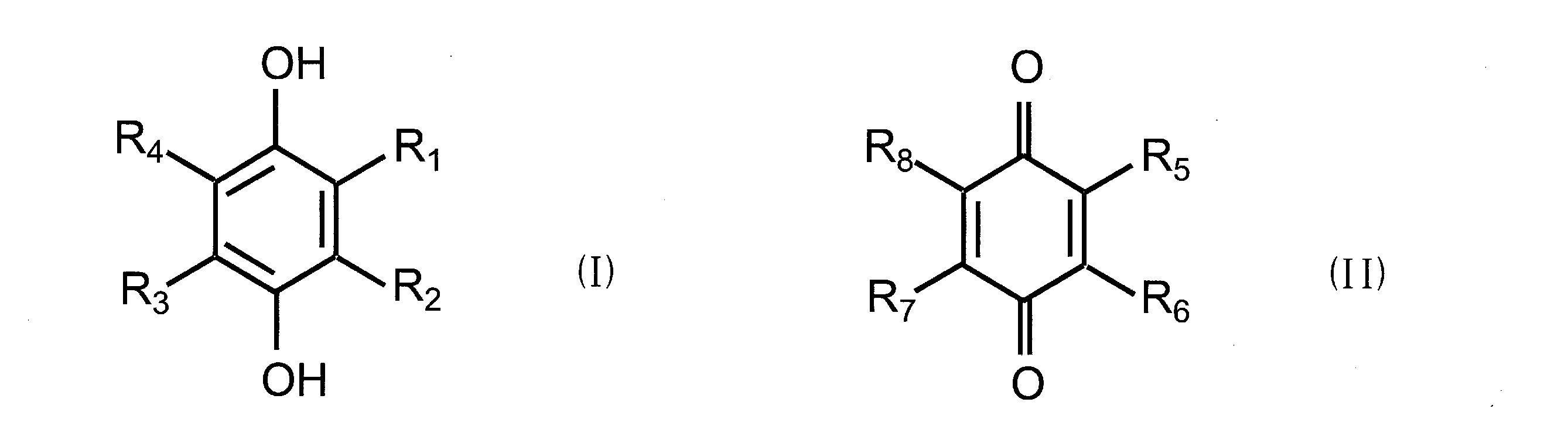
該式(I)中、R1は、水酸基、又は炭素数1~4の直鎖もしくは分枝鎖アルキル基を表し、R2、R3及びR4は、それぞれ独立に、水素又はメチル基を表す。また該式(II)中、R5は、水酸基、又は炭素数1~4の直鎖もしくは分枝鎖アルキル基を表し、R6、R7及びR8は、それぞれ独立に、水素又はメチル基を表す。
好ましい実施形態において、R1は、水酸基、又は炭素数1~4の直鎖もしくは分枝鎖アルキル基であり、かつR2、R3及びR4はともに水素である。別の好ましい実施形態において、R1はメチル基であり、R3が水素であり、かつR2及びR4は、一方がメチル基で他方が水素であるか、もしくはともにメチル基である。別の好ましい実施形態において、R1、R2、R3及びR4はともにメチル基である。
別の好ましい実施形態において、R5は、炭素数1~4の直鎖もしくは分枝鎖アルキル基であり、かつR6、R7及びR8はともに水素である。
本発明で有効成分として使用されるキノン化合物は、上記に例示された式(I)及び(II)で示される化合物のうちのいずれか1種であってもよく、又はそれらのいずれか2種以上の組み合わせであってもよい。
本発明で有効成分として使用されるキノン化合物の好ましい例としては、p-トルキノン、2-メチルヒドロキノン、エチルキノール、2-ブチルヒドロキノン、tert-ブチルヒドロキノン、2,6-ジメチルヒドロキノン、2,3-ジメチルヒドロキノン、2,3,5-トリメチルヒドロキノン、テトラメチルヒドロキノン、ヒドロキシヒドロキノン、3,5-ジメチルベンゾキノン及びtert-ブチルベンゾキノンが挙げられる。本発明においては、これらのいずれか1種又はいずれか2種以上の組み合わせを使用することができる。
(1-2.アルキルレゾルシノール)
別の一実施形態において、本発明のバイオフィルム形成抑制剤は、C1~C5アルキルレゾルシノールを有効成分として使用する。
別の一実施形態において、本発明のバイオフィルム形成抑制剤は、C1~C5アルキルレゾルシノールを有効成分として使用する。
本発明で有効成分として使用されるC1~C5アルキルレゾルシノールとしては、下記の式(III)で示される化合物が挙げられる。

該式(III)中、R9、R10及びR11は、それぞれ独立に、水素、又は炭素数1~5の直鎖もしくは分枝鎖アルキル基を表す。ただし、R9、R10及びR11が同時に水素になることはない。
好ましい実施形態において、R9、R10及びR11のいずれか1つは炭素数1~5の直鎖もしくは分枝鎖アルキル基であり、かつ残りはいずれも水素である。より好ましくは、R9、R10及びR11のいずれか1つは炭素数1~4の直鎖もしくは分枝鎖アルキル基であり、かつ残りはいずれも水素である。
別の好ましい実施形態において、R9、R10及びR11のいずれか2つは炭素数1~5の直鎖アルキル基であり、かつ残りは水素である。より好ましくは、R9、R10及びR11のいずれか2つは炭素数1~4の直鎖アルキル基であり、かつ残りは水素である。
本発明で有効成分として使用されるC1~C5アルキルレゾルシノールは、上記に例示された式(III)で示される化合物のうちのいずれか1種であってもよく、又はそれらのいずれか2種以上の組み合わせであってもよい。
本発明で有効成分として使用されるC1~C5アルキルレゾルシノールの好ましい例としては、4-ブチルレゾルシノール(ルシノール)、5-メチルレゾルシノール、5-ペンチルレゾルシノール、2-プロピルレゾルシノール、2,5-ジメチルレゾルシノール、2-メチルレゾルシノール、及び4-イソプロピルレゾルシノールが挙げられる。本発明においては、これらのいずれか1種又はいずれか2種以上の組み合わせを使用することができる。
さらに、本発明のバイオフィルム形成抑制剤の有効成分は、上述した水酸基又はアルキル基で置換されたヒドロキノン、水酸基又はアルキル基で置換されたp-ベンゾキノン、及びC1~C5アルキルレゾルシノールからなる群より選択される少なくとも1種の化合物であってもよい。
(1-3.他の成分)
本発明のバイオフィルム形成抑制剤は、当該キノン化合物又はC1~C5アルキルレゾルシノール以外の他の成分を含有していてもよい。当該他の成分の例としては、該キノン化合物又はC1~C5アルキルレゾルシノールの溶媒、本発明のバイオフィルム形成抑制剤が適用される機器や設備の洗浄もしくは劣化防止のための物質、抗菌もしくは殺菌剤などが挙げられる。しかし、当該他の成分の種類やその濃度は、該キノン化合物又はC1~C5アルキルレゾルシノールのバイオフィルム形成抑制作用を阻害しない限り、特に限定されない。
本発明のバイオフィルム形成抑制剤は、当該キノン化合物又はC1~C5アルキルレゾルシノール以外の他の成分を含有していてもよい。当該他の成分の例としては、該キノン化合物又はC1~C5アルキルレゾルシノールの溶媒、本発明のバイオフィルム形成抑制剤が適用される機器や設備の洗浄もしくは劣化防止のための物質、抗菌もしくは殺菌剤などが挙げられる。しかし、当該他の成分の種類やその濃度は、該キノン化合物又はC1~C5アルキルレゾルシノールのバイオフィルム形成抑制作用を阻害しない限り、特に限定されない。
好ましくは、本発明のバイオフィルム形成抑制剤はキレート剤を含有しない。キレート剤としては、カルボン酸系、リン酸系、又はホスホン酸系のキレート剤等が挙げられる。カルボン酸系キレート剤としては、多価カルボン酸、ヒドロキシカルボン酸、アミノカルボン酸、ホスホノカルボン酸、及びそれらの塩、等が挙げられる。多価カルボン酸としては、クエン酸、コハク酸、リンゴ酸、フマル酸、酒石酸、マロン酸、マレイン酸等が挙げられる。ヒドロキシカルボン酸としては、クエン酸、リンゴ酸等の脂肪族ヒドロキシカルボン酸等が挙げられる。アミノカルボン酸としては、エチレンジアミン四酢酸(EDTA)、ニトリロ三酢酸(NTA)、イミノ二酢酸、ジエチレントリアミン五酢酸(DPTA)、N-ヒドロキシエチル-エチレンジアミン三酢酸(HEDTA)、メチルグリシン二酢酸(MGDA)、アスパラギン酸二酢酸(ASDA)、グルタミン酸二酢酸(GLDA)等が挙げられる。ホスホノカルボン酸としては、2-ホスホノブタン-1,2,4-トリカルボン酸等が挙げられる。リン酸系キレート剤としては、トリポリリン酸及びその塩等が挙げられる。ホスホン酸系キレート剤としては、1-ヒドロキシエタン-1,1-ジホスホン酸(HEDP)等のヒドロキシホスホン酸、アミノトリメチレンホスホン酸(ATMP)等のアミノホスホン酸、及びそれらの塩等が挙げられる。当該塩としてはナトリウム、カリウム等のアルカリ金属塩、アンモニウム塩、アミン塩が挙げられる。
また好ましくは、本発明のバイオフィルム形成抑制剤は有機溶媒を含有しない。有機溶媒としては、例えば、ClogPが-3~4、-3~3.5、-3~3、-2.5~4、-2.5~3.5、-2.5~3、-2~4、-2~3.5又は-2~3であるものが挙げられる。ここでClogPとは、EPIWEB4.1(US EPA)に従って求められるオクタノール-水-分配係数(logP)の計算値を表す。有機溶媒の詳細な例としては、アルコール系有機溶媒又はエーテル系有機溶媒、より詳細には、脂肪族アルコール系有機溶媒、脂肪族エーテル系有機溶媒及びグリコール系有機溶媒が挙げられる。グリコール系有機溶媒の例としては、モノ又はポリアルキレングリコールモノアルキルエーテルが挙げられる。さらに詳細な例としては、エチレングリコールモノ(2-エチルヘキシル)エーテル、1-フェノキシ-2-プロパノール、2-フェノキシエタノール、1-ブトキシ-2-プロパノール、エチレングリコールモノブチルエーテル、2-イソブトキシエタノール、2-(2-n-ブトキシエトキシ)エタノール、プロピレングリコール、2-(2-イソブトキシエトキシ)エタノール、トリエチレングリコールモノブチルエーテル、ジアセトンアルコール、2-エトキシエタノール、1-メトキシ-2-p-プロパノール、ジプロピレングリコール、2-(2-エトキシエトキシ)エタノール、2-メトキシエタノール、ジエチレングリコールモノメチルエーテル、ジエチレングリコール、トリエチレングリコールモノメチルエーテル、及びジエチレングリコールモノメチルエーテルが挙げられる。
(1-4.バイオフィルム形成抑制剤の使用)
従来、バイオフィルムは、殺菌剤を用いて、バイオフィルムの原因微生物を殺菌することによって防止されていた。一方、本発明は、後述の実施例に示すとおり、当該キノン化合物又はC1~C5アルキルレゾルシノールを用いて、バイオフィルムの原因微生物の生育を阻止することによらずにバイオフィルム形成を抑制する点で、殺菌又は抗菌作用によってバイオフィルム形成を抑える従来の方法とは異なる。したがって、本発明のバイオフィルム形成抑制剤の好ましい一側面は、非抗菌性バイオフィルム形成抑制剤である。ここで「非抗菌性バイオフィルム形成抑制」とは抗菌(又は殺菌)作用によらずにバイオフィルム形成を抑制する作用をいう。
従来、バイオフィルムは、殺菌剤を用いて、バイオフィルムの原因微生物を殺菌することによって防止されていた。一方、本発明は、後述の実施例に示すとおり、当該キノン化合物又はC1~C5アルキルレゾルシノールを用いて、バイオフィルムの原因微生物の生育を阻止することによらずにバイオフィルム形成を抑制する点で、殺菌又は抗菌作用によってバイオフィルム形成を抑える従来の方法とは異なる。したがって、本発明のバイオフィルム形成抑制剤の好ましい一側面は、非抗菌性バイオフィルム形成抑制剤である。ここで「非抗菌性バイオフィルム形成抑制」とは抗菌(又は殺菌)作用によらずにバイオフィルム形成を抑制する作用をいう。
したがって、本発明のバイオフィルム形成抑制剤は、バイオフィルム原因微生物に対して抗菌活性を示すことのできない低濃度のキノン化合物又はC1~C5アルキルレゾルシノールを有効成分として使用することができる。
好ましい実施形態において、本発明のバイオフィルム形成抑制剤は、対象水中における該キノン化合物の濃度が270ppm(質量ppm、本明細書において以下同様)以下となる量で使用される。より好ましい実施形態において、該キノン化合物がp-トルキノン、2-メチルヒドロキノン、エチルキノール、2-ブチルヒドロキノン、tert-ブチルヒドロキノン、ヒドロキシヒドロキノン、3,5-ジメチルベンゾキノン及びtert-ブチルベンゾキノンからなる群より選択される少なくとも1種である場合、本発明のバイオフィルム形成抑制剤は、対象水中における該キノン化合物の濃度が270ppm以下、好ましくは200ppm以下となる量で使用される。別のより好ましい実施形態において、該キノン化合物が2,6-ジメチルヒドロキノン、2,3-ジメチルヒドロキノン及び2,3,5-トリメチルヒドロキノンからなる群より選択される少なくとも1種である場合、本発明のバイオフィルム形成抑制剤は、対象水中における該キノン化合物の濃度が60ppm以下、好ましくは30ppm以下となる量で使用される。
該キノン化合物がp-トルキノンの場合、対象水中におけるその濃度は、好ましくは5ppm以上、より好ましくは7ppm以上、さらに好ましくは15ppm以上、なお好ましくは20ppm以上であって、かつ好ましくは200ppm未満、より好ましくは150ppm以下、さらに好ましくは140ppm以下、なお好ましくは100ppm以下であるか、あるいは、好ましくは、5ppm以上200ppm未満、5~150ppm、5~140ppm、5~100ppm、7ppm以上200ppm未満、7~150ppm、7~140ppm、7~100ppm、15ppm以上200ppm未満、15~150ppm、15~140ppm、15~100ppm、20ppm以上200ppm未満、20~150ppm、20~140ppm、又は20~100ppmである。
該キノン化合物が2-メチルヒドロキノンの場合、対象水中におけるその濃度は、好ましくは10ppm以上、より好ましくは15ppm以上、さらに好ましくは30ppm以上、なお好ましくは40ppm以上であって、かつ好ましくは200ppm未満、より好ましくは150ppm以下、さらに好ましくは130ppm以下、なお好ましくは100ppm以下であるか、あるいは、好ましくは、10ppm以上200ppm未満、10~150ppm、10~130ppm、10~100ppm、15ppm以上200ppm未満、15~150ppm、15~130ppm、15~100ppm、30ppm以上200ppm未満、30~150ppm、30~130ppm、30~100ppm、40ppm以上200ppm未満、40~130ppm、40~140ppm、又は40~100ppmである。
該キノン化合物がエチルキノールの場合、対象水中におけるその濃度は、好ましくは7ppm以上、より好ましくは20ppm以上、さらに好ましくは30ppm以上であって、かつ好ましくは200ppm以下、より好ましくは150ppm以下、さらに好ましくは120ppm以下、なお好ましくは80ppm以下であるか、あるいは、好ましくは、7~200ppm、7~150ppm、7~120ppm、7~80ppm、20~200ppm、20~150ppm、20~120ppm、20~80ppm、30~200ppm、30~150ppm、30~120ppm、又は30~80ppmである。
該キノン化合物が2-ブチルヒドロキノンの場合、対象水中におけるその濃度は、好ましくは7ppm以上、より好ましくは20ppm以上、さらに好ましくは30ppm以上であって、かつ好ましくは270ppm以下、より好ましくは200ppm以下、さらに好ましくは180ppm以下、なお好ましくは150ppm以下であるか、あるいは、好ましくは、7~270ppm、7~200ppm、7~180ppm、7~150ppm、20~270ppm、20~200ppm、20~180ppm、20~150ppm、30~270ppm、30~200ppm、30~180ppm、又は30~150ppmである。
該キノン化合物がtert-ブチルヒドロキノンの場合、対象水中におけるその濃度は、好ましくは7ppm以上、より好ましくは20ppm以上、さらに好ましくは30ppm以上であって、かつ好ましくは270ppm以下、より好ましくは200ppm以下、さらに好ましくは180ppm以下、なお好ましくは150ppm以下であるか、あるいは、好ましくは、7~270ppm、7~200ppm、7~180ppm、7~150ppm、20~270ppm、20~200ppm、20~180ppm、20~150ppm、30~270ppm、30~200ppm、30~180ppm、又は30~150ppmである。
該キノン化合物が2,6-ジメチルヒドロキノンの場合、対象水中におけるその濃度は、好ましくは2ppm以上、より好ましくは5ppm以上、さらに好ましくは10ppm以上であって、かつ好ましくは60ppm以下、より好ましくは40ppm以下、さらに好ましくは35ppm以下であるか、あるいは、好ましくは、2~60ppm、2~40ppm、2~35ppm、5~60ppm、5~40ppm、5~35ppm、10~60ppm、10~40ppm又は10~35ppmである。
該キノン化合物が2,3-ジメチルヒドロキノンの場合、対象水中におけるその濃度は、好ましくは10ppm以上、より好ましくは20ppm以上、さらに好ましくは30ppm以上、なお好ましくは35ppm以上であって、かつ好ましくは60ppm以下、より好ましくは40ppm以下、さらに好ましくは35ppm以下であるか、あるいは、好ましくは、10~60ppm、10~40ppm、10~35ppm、20~60ppm、20~40ppm、20~35ppm、30~60ppm、30~40ppm、30~35ppm、35~60ppm又は35~40ppmである。
該キノン化合物が2,3,5-トリメチルヒドロキノンの場合、対象水中におけるその濃度は、好ましくは2ppm以上、より好ましくは5ppm以上、さらに好ましくは10ppm以上であって、かつ好ましくは30ppm以下、より好ましくは20ppm以下であるか、あるいは、好ましくは、2~30ppm、2~20ppm、5~30ppm、5~20ppm、10~30ppm、又は10~20ppmである。
該キノン化合物がヒドロキシヒドロキノンの場合、対象水中におけるその濃度は、好ましくは10ppm以上、より好ましくは20ppm以上、さらに好ましくは30ppm以上、なお好ましくは35ppm以上であって、かつ好ましくは200ppm以下、より好ましくは150ppm以下、さらに好ましくは130ppm以下であるか、あるいは、好ましくは、10~200ppm、10~150ppm、10~130ppm、20~200ppm、20~150ppm、20~130ppm、30~200ppm、30~150ppm、30~130ppm、35~200ppm、35~150ppm又は35~130ppmである。
該キノン化合物が3,5-ジメチルベンゾキノンの場合、対象水中におけるその濃度は、好ましくは6ppm以上、より好ましくは15ppm以上、さらに好ましくは18ppm以上であって、かつ好ましくは60ppm以下、より好ましくは40ppm以下、さらに好ましくは35ppm以下であるか、あるいは、好ましくは、6~60ppm、6~40ppm、6~35ppm、15~60ppm、15~40ppm、15~35ppm、18~60ppm、18~40ppm又は18~35ppmである。
該キノン化合物がtert-ブチルベンゾキノンの場合、対象水中におけるその濃度は、好ましくは50ppm以上、より好ましくは150ppm以上、さらに好ましくは160ppm以上であって、かつ好ましくは270ppm以下、より好ましくは200ppm以下、さらに好ましくは180ppm以下であるか、あるいは、好ましくは、50~270ppm、50~200ppm、50~180ppm、150~270ppm、150~200ppm、150~180ppm、160~270ppm、160~200ppm又は160~180ppmである。
別の好ましい実施形態において、本発明のバイオフィルム形成抑制剤は、対象水中における当該C1~C5アルキルレゾルシノールの濃度が1400ppm(質量ppm、本明細書において以下同様)以下となる量で使用される。より好ましい実施形態において、該C1~C5アルキルレゾルシノールが4-ブチルレゾルシノールである場合、本発明のバイオフィルム形成抑制剤は、対象水中における該アルキルレゾルシノールの濃度が200ppm以下となる量で使用される。別のより好ましい実施形態において、該C1~C5アルキルレゾルシノールが5-メチルレゾルシノール、5-ペンチルレゾルシノール、2-プロピルレゾルシノール、2,5-ジメチルレゾルシノール、2-メチルレゾルシノール、及び4-イソプロピルレゾルシノールからなる群より選択される少なくとも1種である場合、本発明のバイオフィルム形成抑制剤は、対象水中における該アルキルレゾルシノールの濃度が1400ppm以下、さらに好ましくは1000ppm以下となる量で使用される。
該C1~C5アルキルレゾルシノールが4-ブチルレゾルシノールの場合、対象水中におけるその濃度は、好ましくは15ppm以上、より好ましくは40ppm以上、さらに好ましくは50ppm以上であって、かつ好ましくは200ppm以下、より好ましくは145ppm以下、さらに好ましくは130ppm以下であるか、あるいは、好ましくは15~200ppm、15~145ppm、15~130ppm、40~200ppm、40~145ppm、40~130ppm、50~200ppm、50~145ppm、又は50~130ppmである。
該C1~C5アルキルレゾルシノールが5-メチルレゾルシノールの場合、対象水中におけるその濃度は、好ましくは165ppm以上、より好ましくは450ppm以上、さらに好ましくは500ppm以上であって、かつ好ましくは1000ppm以下、より好ましくは700ppm以下、さらに好ましくは600ppm以下であるか、あるいは、好ましくは165~1000ppm、165~700ppm、165~600ppm、450~1000ppm、450~700ppm、450~600ppm、500~1000ppm、500~700ppm、又は500~600ppmである。
該C1~C5アルキルレゾルシノールが5-ペンチルレゾルシノールの場合、対象水中におけるその濃度は、好ましくは160ppm以上、より好ましくは400ppm以上、さらに好ましくは500ppm以上であって、かつ好ましくは1400ppm以下、より好ましくは1000ppm以下、さらに好ましくは950ppm以下であるか、あるいは、好ましくは160~1400ppm、160~1000ppm、160~950ppm、400~1400ppm、400~1000ppm、400~950ppm、500~1400ppm、500~1000ppm、又は500~950ppmである。
該C1~C5アルキルレゾルシノールが2-プロピルレゾルシノールの場合、対象水中におけるその濃度は、好ましくは200ppm以上、より好ましくは600ppm以上、さらに好ましくは700ppm以上であって、かつ好ましくは1200ppm以下、より好ましくは1000ppm以下、さらに好ましくは850ppm以下であるか、あるいは、好ましくは200~1200ppm、200~1000ppm、200~850ppm、600~1200ppm、600~1000ppm、600~850ppm、700~1200ppm、700~1000ppm、又は700~850ppmである。
該C1~C5アルキルレゾルシノールが2,5-ジメチルレゾルシノールの場合、対象水中におけるその濃度は、好ましくは180ppm以上、より好ましくは550ppm以上、さらに好ましくは650ppm以上であって、かつ好ましくは1100ppm以下、より好ましくは800ppm以下、さらに好ましくは740ppm以下であるか、あるいは、好ましくは180~1100ppm、180~800ppm、180~740ppm、550~1100ppm、550~800ppm、550~740ppm、650~1100ppm、650~800ppm、又は650~740ppmである。
該C1~C5アルキルレゾルシノールが2-メチルレゾルシノールの場合、対象水中におけるその濃度は、好ましくは165ppm以上、より好ましくは450ppm以上、さらに好ましくは500ppm以上であって、かつ好ましくは1000ppm以下、より好ましくは700ppm以下、さらに好ましくは650ppm以下であるか、あるいは、好ましくは165~1000ppm、165~700ppm、165~650ppm、450~1000ppm、450~700ppm、450~650ppm、500~1000ppm、500~700ppm、又は500~650ppmである。
該C1~C5アルキルレゾルシノールが4-イソプロピルレゾルシノールの場合、対象水中におけるその濃度は、好ましくは200ppm以上、より好ましくは500ppm以上、さらに好ましくは600ppm以上であって、かつ好ましくは1100ppm以下、より好ましくは700ppm以下、さらに好ましくは650ppm以下であるか、あるいは、好ましくは200~1100ppm、200~700ppm、200~650ppm、500~1100ppm、500~700ppm、500~650ppm、600~1100ppm、600~700ppm、又は600~650ppmが好ましい。
生物学的な安全性及び経済性を考慮すると、本発明のバイオフィルム形成抑制剤は、対象水中での当該キノン化合物又はC1~C5アルキルレゾルシノールの濃度が、バイオフィルムの主要な原因微生物(例えば緑膿菌)の生育阻止濃度(minimum inhibitory concentration:MIC)未満となる量で使用されることが好ましい。あるいは、本発明のバイオフィルム形成抑制剤は、対象水中での当該キノン化合物又はC1~C5アルキルレゾルシノールの濃度が、バイオフィルムの主要な原因微生物(例えば緑膿菌)の生育阻害率が20%以下となる量で使用されることが好ましい。ここで、微生物の生育阻害率とは、バイオフィルム形成抑制剤非添加の対象水中での微生物の生育量を100%としたときの、バイオフィルム形成抑制剤を添加した対象水中での該微生物の生育量の減少分(%)[1-(剤添加群での微生物の生育量/剤非添加群での微生物の生育量)}×100]をいう。微生物の生育量は、例えばOD600を基準に測定することができる。
本発明に従ってバイオフィルム形成抑制を実施する場合、対象水中に、当該キノン化合物又はC1~C5アルキルレゾルシノールを、該対象水中におけるその濃度が上述した所定の範囲になる量で添加することが好ましい。本発明においては、対象水中における当該キノン化合物又はC1~C5アルキルレゾルシノールの濃度を常時上述した所定の範囲に維持しておく必要はなく、必要なときに、又は定期的に、対象水中における当該キノン化合物又はC1~C5アルキルレゾルシノールの濃度を上述した所定の範囲に調整し、一定時間維持すればよい。バイオフィルム形成抑制効果の観点からは、該対象水中における該キノン化合物又はC1~C5アルキルレゾルシノールの濃度を、上述した所定の範囲に24時間以上維持することが好ましい。対象水中に添加する該キノン化合物又はC1~C5アルキルレゾルシノールの量や頻度は、対象水の総容量及び入れ換わる容量、対象水を含む機器又は設備の使用頻度、内部温度、汚染状況又はメンテナンスのスケジュール、などにあわせて適宜設定することができる。
(2.バイオフィルム形成抑制用組成物及びバイオフィルム形成抑制方法)
また本発明は、水系システムでのバイオフィルム形成を効果的に抑制することができる、バイオフィルム形成抑制用組成物及びバイオフィルム抑制方法を提供する。
また本発明は、水系システムでのバイオフィルム形成を効果的に抑制することができる、バイオフィルム形成抑制用組成物及びバイオフィルム抑制方法を提供する。
本発明者らは、キノン系化合物とキレート剤とが、微生物の生育を阻害しないような低濃度で使用した場合であっても、バイオフィルム形成を効果的に抑制することを見出した。さらに本発明者らは、キノン系化合物と有機溶媒とを含有する組成物が、キノン系化合物の取り扱い性を向上させるだけでなく、微生物の生育を阻害しないような低濃度で使用した場合であっても、バイオフィルム形成を効果的に抑制することを見出した。
本発明は、キノン系化合物とキレート剤とを含有するバイオフィルム形成抑制用組成物を提供する。また本発明は、キノン系化合物とキレート剤とを用いるバイオフィルム形成抑制方法を提供する。さらに本発明は、キノン系化合物と有機溶媒とを含有するバイオフィルム形成抑制用組成物、及びそれを用いたバイオフィルム形成抑制方法を提供する。
本発明のバイオフィルム形成抑制用組成物、及び本発明のバイオフフィルム抑制方法によれば、微生物の生育を阻害しないような低濃度で使用した場合であっても、効果的にバイオフィルム形成を抑制することができる。さらに、本発明のキノン系化合物と有機溶媒とを含有するバイオフィルム形成抑制用組成物は、取り扱い性にも優れている。
本明細書において、「水系システム」とは、配管、タンクやプールなどを備え、そこに水系液体を流す又は貯留することによって機能するシステムをいい、例えば、水冷式冷却塔を用いた工場設備やビルの冷却システム、工業用の冷却プール、工業用の給水、貯水もしくは排水経路、排水処理設備、流湯式暖房システム、タンクやプール、ろ過設備などが挙げられる。好ましくは、本発明のバイオフィルム形成抑制用組成物が適用される水系システムは、少なくともその一部がバイオフィルムが形成しやすい温度、例えば、好ましくは5℃以上、より好ましくは10℃以上、さらに好ましくは15℃以上、さらに好ましくは20℃以上、さらに好ましくは25℃以上に達することがある水系システムである。
本明細書において、「水系液体」とは、単なる水であってもよく、水及び他の化合物を含む液体であってもよい。当該他の化合物としては、有機溶媒、塩、抗菌抗カビ剤、防腐防黴剤、抗生物質、浸透促進剤、界面活性剤、消臭剤及び芳香剤等が挙げられる。該水系液体中の水の含有量は、好ましくは90質量%以上、より好ましくは95質量%以上、さらに好ましくは98質量%以上、さらに好ましくは99質量%以上、かつ好ましくは100質量%以下である。
「水系液体」としては、好ましくは工業用に用いられる水系液体が挙げられ、より好ましくは上述した水系システムで使用される水系液体、例えば、水冷式冷却塔を用いた工場設備やビルの冷却システムに用いられる水系媒体、流湯式暖房システムに用いられる水系媒体、排水処理設備の排水、あるいは工業用の冷却プール内、工業用の給水、貯水もしくは排水経路内、又はタンクやプール内の水系液体、などを含む。
好ましくは、本発明のバイオフィルム形成抑制用組成物は、上記水系システムに流れる又は貯留される水系液体、及び該水系液体と接する該水系システムの設備、機器等におけるバイオフィルム形成の抑制に使用される。より好ましくは、本発明のバイオフィルム形成抑制用組成物は、水冷式冷却塔の設備、機器、又はその中に含まれる水系液体(例えば水冷式冷却塔の冷却水)におけるバイオフィルム形成の抑制に使用される。
上記のような水系システムに発生するバイオフィルムには、緑膿菌(Pseudomonas aeruginosa)等のPseudomonas属、Sphingomonas属、Sphingopyxis属などのグラム陰性微生物が含まれている。さらに、Klebsiella属、Flavobacterium属及びRoseomonas属のグラム陰性微生物が、水冷式冷却塔におけるバイオフィルムに存在する微生物として報告されている(非特許文献1及び2)。
従来、バイオフィルムは、殺菌剤を用いて、バイオフィルムの原因微生物を殺菌することによって防止されていた。一方、本発明においては、バイオフィルムの原因となる微生物をキノン系化合物を用いて殺菌することでバイオフィルムの形成を抑制してもよいが、キノン系化合物を低濃度で用いて、バイオフィルムの原因微生物の生育を阻止することによらずにバイオフィルム形成を抑制することもできる。原因微生物の生育を阻止することなくバイオフィルム形成を抑制する方法は、耐性菌の発生を抑え、薬剤の高濃度化による環境負荷を抑制する観点から、より好ましい。
(2-1.キノン系化合物とキレート剤との併用)
一実施形態において、本発明のバイオフィルム形成抑制用組成物は、キノン系化合物とキレート剤とを含有する。該キノン系化合物とキレート剤とは、協働して、バイオフィルム形成抑制のための有効成分として働く。
一実施形態において、本発明のバイオフィルム形成抑制用組成物は、キノン系化合物とキレート剤とを含有する。該キノン系化合物とキレート剤とは、協働して、バイオフィルム形成抑制のための有効成分として働く。
(2-1-1.キノン系化合物)
本発明のキノン系化合物とキレート剤とを含有するバイオフィルム形成抑制用組成物に用いられるキノン系化合物とは、2つ又は3つのケトン基を持つ1個のベンゼン環を有する化合物であり、該ベンゼン環はアルキル基で置換されていてもよい。該ベンゼン環を置換するアルキル基は、好ましくは炭素数1以上12以下、より好ましくは炭素数1以上8以下、さらに好ましくは炭素数1以上6以下、なお好ましくは炭素数1以上3以下の直鎖又は分枝鎖アルキル基であり、例えばメチル基、エチル基、プロピル基、イソプロピル基、ブチル基、t-ブチル基、ペンチル基、ヘキシル基、ヘプチル基、オクチル基、2-エチルヘキシル基等が挙げられ、好ましくはメチル基、エチル基、プロピル基、イソプロピル基が挙げられる。該ベンゼン環におけるアルキル置換基の個数は、1以上3以下が好ましく、1がより好ましい。各アルキル置換基は、それぞれ独立に、上述したアルキル基からなる群より選択され得る。
本発明のキノン系化合物とキレート剤とを含有するバイオフィルム形成抑制用組成物に用いられるキノン系化合物とは、2つ又は3つのケトン基を持つ1個のベンゼン環を有する化合物であり、該ベンゼン環はアルキル基で置換されていてもよい。該ベンゼン環を置換するアルキル基は、好ましくは炭素数1以上12以下、より好ましくは炭素数1以上8以下、さらに好ましくは炭素数1以上6以下、なお好ましくは炭素数1以上3以下の直鎖又は分枝鎖アルキル基であり、例えばメチル基、エチル基、プロピル基、イソプロピル基、ブチル基、t-ブチル基、ペンチル基、ヘキシル基、ヘプチル基、オクチル基、2-エチルヘキシル基等が挙げられ、好ましくはメチル基、エチル基、プロピル基、イソプロピル基が挙げられる。該ベンゼン環におけるアルキル置換基の個数は、1以上3以下が好ましく、1がより好ましい。各アルキル置換基は、それぞれ独立に、上述したアルキル基からなる群より選択され得る。
当該キノン系化合物のベンゼン環のケトン基はヒドロキシ基に還元されていてもよく、さらに該ヒドロキシ基の1つがアルコキシ化されていてもよい。該アルコキシ基としては、炭素数1以上3以下のものが好ましく、メトキシ基、エトキシ基、プロポキシ基等がより好ましく、メトキシ基がさらに好ましい。
当該キノン系化合物の好ましい例としては、水酸基又はアルキル基で置換されたヒドロキノン、水酸基又はアルキル基で置換されたp-ベンゾキノン、及びアルキルレゾルシノールが挙げられる。さらに好ましくは、当該キノン系化合物としては、下記の式(I)、(II)及び(IV)で示される化合物が挙げられる。
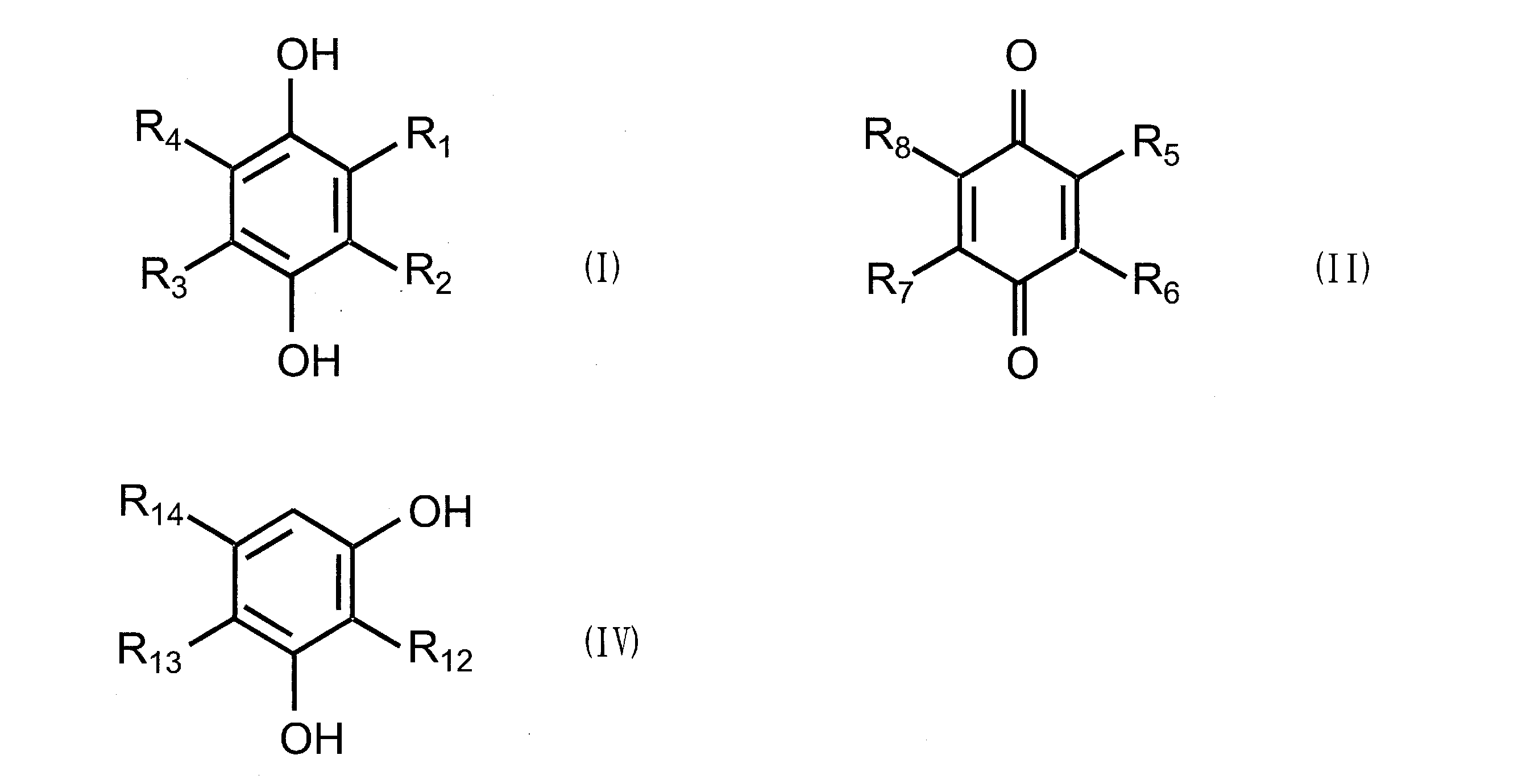
当該式(I)中、R1は、水酸基、又は炭素数1~4の直鎖もしくは分枝鎖アルキル基を表し、R2、R3及びR4は、それぞれ独立に、水素又はメチル基を表す。好ましい実施形態において、R1は、水酸基、又は炭素数1~4の直鎖もしくは分枝鎖アルキル基であり、かつR2、R3及びR4はともに水素であり、該炭素数1~4の直鎖もしくは分枝鎖アルキル基は、好ましくはメチル基、エチル基、プロピル基、イソプロピル基、ブチル基又はt-ブチル基である。別の好ましい実施形態において、R1はメチル基であり、R3が水素であり、かつR2及びR4は、一方がメチル基で他方が水素であるか、もしくはともにメチル基である。別の好ましい実施形態において、R1、R2、R3及びR4はともにメチル基である。
当該式(II)中、R5は、水酸基、又は炭素数1~4の直鎖もしくは分枝鎖アルキル基を表し、R6、R7及びR8は、それぞれ独立に、水素又はメチル基を表す。好ましい実施形態において、R5は、炭素数1~4の直鎖もしくは分枝鎖アルキル基であり、かつR6、R7及びR8はともに水素であり、該炭素数1~4の直鎖もしくは分枝鎖アルキル基は、好ましくはメチル基、エチル基、プロピル基、イソプロピル基、ブチル基又はt-ブチル基である。
当該式(IV)中、R12、R13及びR14は、それぞれ独立に、水素、又は炭素数1~8、好ましくは1~6の直鎖もしくは分枝鎖アルキル基を表し、該直鎖もしくは分枝鎖アルキル基は、好ましくはメチル基、エチル基、プロピル基、イソプロピル基、ブチル基、t-ブチル基、ペンチル基、ヘキシル基、ヘプチル基、オクチル基及び2-エチルヘキシル基からなる群より選択される。ただし、R12、R13及びR14が同時に水素になることはない。好ましい実施形態において、R12、R13及びR14のいずれか1つは炭素数1~6の直鎖もしくは分枝鎖アルキル基であり、かつ残りはいずれも水素である。より好ましくは、R12、R13及びR14のいずれか1つは炭素数1~5の直鎖もしくは分枝鎖アルキル基であり、かつ残りはいずれも水素である。より好ましくはR12、R13及びR14は、それぞれ独立に、水素、又は炭素数1~5の直鎖もしくは分枝鎖アルキル基を表し、ただし、R12、R13及びR14が同時に水素になることはない。すなわち、式(IV)で表される化合物は、溶解性の観点から、式(III)で表される化合物であることが好ましい。
さらに好ましくは、R12、R13及びR14のいずれか1つは炭素数2~5の直鎖もしくは分枝鎖アルキル基であり、かつ残りはいずれも水素である。別の好ましい実施形態において、R12、R13及びR14のいずれか2つは炭素数1~6の直鎖アルキル基であり、かつ残りは水素である。より好ましくは、R12、R13及びR14のいずれか2つは炭素数1~5の直鎖アルキル基であり、かつ残りは水素である。さらに好ましくは、R12、R13及びR14のいずれか2つは炭素数2~5の直鎖アルキル基であり、かつ残りは水素である。式(IV)中、R12、R13又はR14で表される直鎖もしくは分枝鎖アルキル基は、好ましくはメチル基、エチル基、プロピル基、イソプロピル基、ブチル基及びt-ブチル基からなる群より選択される。
当該本発明の組成物で使用されるキノン系化合物は、上述したキノン系化合物のうちのいずれか1種であってもよく、又はそれらのいずれか2種以上の組み合わせであってもよい。好ましくは、当該キノン系化合物は、当該式(I)、(II)及び(IV)で示される化合物のうちのいずれか1種、又はそれらのいずれか2種以上の組み合わせである。
当該キノン系化合物のさらに好ましい例としては、p-トルキノン、2-メチルヒドロキノン、エチルキノール、2-ブチルヒドロキノン、tert-ブチルヒドロキノン、2,6-ジメチルヒドロキノン、2,3-ジメチルヒドロキノン、2,3,5-トリメチルヒドロキノン、テトラメチルヒドロキノン、ヒドロキシヒドロキノン、3,5-ジメチルベンゾキノン、tert-ブチルベンゾキノン等のp-ベンゾキノン及びヒドロキノン、ならびに4-ブチルレゾルシノール(ルシノール)、4-ヘキシルレゾルシノール、5-メチルレゾルシノール、5-ペンチルレゾルシノール、2-プロピルレゾルシノール、2,5-ジメチルレゾルシノール、2-メチルレゾルシノール、及び4-イソプロピルレゾルシノール等のアルキルレゾルシノールからなる群から選ばれる1種以上が挙げられる。このうち、バイオフィルム形成抑制の観点からは、p-トルキノン及び2-メチルヒドロキノンからなる群から選ばれる1種以上がなお好ましい。
(2-1-2.キレート剤)
本発明のキノン系化合物とキレート剤とを含有するバイオフィルム形成抑制用組成物に用いられるキレート剤としては、カルボン酸系、リン酸系、又はホスホン酸系のキレート剤等が挙げられる。カルボン酸系キレート剤としては、多価カルボン酸、ヒドロキシカルボン酸、アミノカルボン酸、ホスホノカルボン酸、及びそれらの塩、等が挙げられる。多価カルボン酸としては、クエン酸、コハク酸、リンゴ酸、フマル酸、酒石酸、マロン酸、マレイン酸等が挙げられる。ヒドロキシカルボン酸としては、クエン酸、リンゴ酸等の脂肪族ヒドロキシカルボン酸等が挙げられる。アミノカルボン酸としては、エチレンジアミン四酢酸(EDTA)、ニトリロ三酢酸(NTA)、イミノ二酢酸、ジエチレントリアミン五酢酸(DPTA)、N-ヒドロキシエチル-エチレンジアミン三酢酸(HEDTA)、メチルグリシン二酢酸(MGDA)、アスパラギン酸二酢酸(ASDA)、グルタミン酸二酢酸(GLDA)等が挙げられる。ホスホノカルボン酸としては、2-ホスホノブタン-1,2,4-トリカルボン酸等が挙げられる。リン酸系キレート剤としては、トリポリリン酸及びその塩等が挙げられる。ホスホン酸系キレート剤としては、1-ヒドロキシエタン-1,1-ジホスホン酸(HEDP)等のヒドロキシホスホン酸、アミノトリメチレンホスホン酸(ATMP)等のアミノホスホン酸、及びそれらの塩等が挙げられる。このうち、当該本発明の組成物に用いられるキレート剤としては、アミノカルボン酸、ホスホノカルボン酸、ヒドロキシカルボン酸、ヒドロキシホスホン酸、及びこれらの塩からなる群より選ばれる1種以上が好ましい。当該塩としては、アルカリ金属塩、アンモニウム塩、アミン塩などが挙げられる。当該塩は、好ましくはアルカリ金属塩であり、より好ましくはナトリウム塩又はカリウム塩である。
本発明のキノン系化合物とキレート剤とを含有するバイオフィルム形成抑制用組成物に用いられるキレート剤としては、カルボン酸系、リン酸系、又はホスホン酸系のキレート剤等が挙げられる。カルボン酸系キレート剤としては、多価カルボン酸、ヒドロキシカルボン酸、アミノカルボン酸、ホスホノカルボン酸、及びそれらの塩、等が挙げられる。多価カルボン酸としては、クエン酸、コハク酸、リンゴ酸、フマル酸、酒石酸、マロン酸、マレイン酸等が挙げられる。ヒドロキシカルボン酸としては、クエン酸、リンゴ酸等の脂肪族ヒドロキシカルボン酸等が挙げられる。アミノカルボン酸としては、エチレンジアミン四酢酸(EDTA)、ニトリロ三酢酸(NTA)、イミノ二酢酸、ジエチレントリアミン五酢酸(DPTA)、N-ヒドロキシエチル-エチレンジアミン三酢酸(HEDTA)、メチルグリシン二酢酸(MGDA)、アスパラギン酸二酢酸(ASDA)、グルタミン酸二酢酸(GLDA)等が挙げられる。ホスホノカルボン酸としては、2-ホスホノブタン-1,2,4-トリカルボン酸等が挙げられる。リン酸系キレート剤としては、トリポリリン酸及びその塩等が挙げられる。ホスホン酸系キレート剤としては、1-ヒドロキシエタン-1,1-ジホスホン酸(HEDP)等のヒドロキシホスホン酸、アミノトリメチレンホスホン酸(ATMP)等のアミノホスホン酸、及びそれらの塩等が挙げられる。このうち、当該本発明の組成物に用いられるキレート剤としては、アミノカルボン酸、ホスホノカルボン酸、ヒドロキシカルボン酸、ヒドロキシホスホン酸、及びこれらの塩からなる群より選ばれる1種以上が好ましい。当該塩としては、アルカリ金属塩、アンモニウム塩、アミン塩などが挙げられる。当該塩は、好ましくはアルカリ金属塩であり、より好ましくはナトリウム塩又はカリウム塩である。
(2-1-3.組成)
本発明のキノン系化合物とキレート剤とを含有するバイオフィルム形成抑制用組成物は、上述のキノン系化合物とキレート剤からなる組成物であってもよいが、その他の成分を含有していてもよい。例えば、当該バイオフィルム形成抑制用組成物は、当該キノン系化合物とキレート剤以外に、両者を混合する観点から、水、有機溶媒等の溶媒を含有することができる。好ましい有機溶媒としては、メタノール、エタノール、ジプロピレングリコール、ジエチレングリコール、ジアセトンアルコール、ジエチレングリコールモノメチルエーテル、プロピレングリコール、及びそれらの混合溶媒、などが挙げられる。
本発明のキノン系化合物とキレート剤とを含有するバイオフィルム形成抑制用組成物は、上述のキノン系化合物とキレート剤からなる組成物であってもよいが、その他の成分を含有していてもよい。例えば、当該バイオフィルム形成抑制用組成物は、当該キノン系化合物とキレート剤以外に、両者を混合する観点から、水、有機溶媒等の溶媒を含有することができる。好ましい有機溶媒としては、メタノール、エタノール、ジプロピレングリコール、ジエチレングリコール、ジアセトンアルコール、ジエチレングリコールモノメチルエーテル、プロピレングリコール、及びそれらの混合溶媒、などが挙げられる。
さらに、当該バイオフィルム形成抑制用組成物に含まれていてもよいその他の成分の例としては、抗菌抗カビ剤、防腐防黴剤、抗生物質、浸透促進剤、界面活性剤、消臭剤、芳香剤などが挙げられる。当該その他の成分の種類やその濃度は、キノン系化合物とキレート剤によるバイオフィルム形成抑制作用を阻害しない限り、特に限定されない。
当該バイオフィルム形成抑制用組成物中、キノン系化合物の含有量は、キノン系化合物の溶解性、及びバイオフィルム形成抑制作用の観点から、好ましくは0.1質量%以上、より好ましくは0.5質量%以上、さらに好ましくは1質量%以上、さらに好ましくは3質量%以上、さらに好ましくは5質量%以上であって、かつ好ましくは90質量%以下、より好ましくは70質量%以下、さらに好ましくは50質量%以下、さらに好ましくは30質量%以下、さらに好ましくは20質量%以下である。あるいは、本発明のバイオフィルム形成抑制用組成物中におけるキノン系化合物の含有量は、好ましくは0.1~90質量%、より好ましくは0.5~70質量%、さらに好ましくは1~50質量%、さらに好ましくは1~30質量%、さらに好ましくは1~20質量%、さらに好ましくは3~20質量%、さらに好ましくは5~20質量%である。
当該バイオフィルム形成抑制用組成物中、キレート剤の含有量は、バイオフィルム形成抑制作用の観点から、好ましくは0.05質量%以上、より好ましくは0.1質量%以上、さらに好ましくは0.3質量%以上、さらに好ましくは0.5質量%以上であって、かつ好ましくは90質量%以下、より好ましくは70質量%以下、さらに好ましくは50質量%以下、さらに好ましくは30質量%以下、さらに好ましくは20質量%以下である。あるいは、本発明のバイオフィルム形成抑制用組成物中におけるキレート剤の含有量は、好ましくは0.05~90質量%、より好ましくは0.05~70質量%、さらに好ましくは0.1~50質量%、さらに好ましくは0.3~30質量%、さらに好ましくは0.5~20質量%である。
当該バイオフィルム形成抑制用組成物中におけるキノン系化合物及びキレート剤の含有量は、それぞれ、好ましくは0.1~90質量%及び0.05~90質量%、より好ましくは1~50質量%及び0.1~50質量%、さらに好ましくは1~20質量%及び0.3~30質量%、さらに好ましくは3~20質量%及び0.3~30質量%、さらに好ましくは5~20質量%及び0.5~20質量%である。
さらに、当該バイオフィルム形成抑制用組成物中におけるキレート剤の含有量は、バイオフィルム形成抑制作用の観点からは、キノン系化合物100質量部に対して、好ましくは0.1質量部以上、より好ましくは0.5質量部以上、さらに好ましくは1質量部以上、さらに好ましくは3質量部以上、さらに好ましくは5質量部以上、さらに好ましくは7質量部以上であり、他方、経済性の観点からは、キノン系化合物100質量部に対して、好ましくは5000質量部以下、より好ましくは2000質量部以下、さらに好ましくは1000質量部以下、さらに好ましくは700質量部以下、さらに好ましくは500質量部以下、さらに好ましくは300質量部以下である。
あるいは、当該バイオフィルム形成抑制用組成物中におけるキレート剤の含有量は、キノン系化合物100質量部に対して、好ましくは0.1~5000質量部、より好ましくは0.5~2000質量部、さらに好ましくは1~1000質量部、さらに好ましくは3~700質量部、さらに好ましくは5~500質量部、さらに好ましくは7~300質量部である。
当該バイオフィルム形成抑制用組成物中、キノン系化合物とキレート剤との合計含有量は、好ましくは1質量%以上、より好ましくは3質量%以上、さらに好ましくは5質量%以上、さらに好ましくは7質量%以上であって、かつ好ましくは100質量%以下、より好ましくは80質量%以下、さらに好ましくは50質量%以下、さらに好ましくは30質量%以下である。あるいは、本発明のバイオフィルム形成抑制用組成物中におけるキノン系化合物とキレート剤との合計含有量は、好ましくは1~100質量%、より好ましくは3~80質量%、さらに好ましくは5~50質量%、さらに好ましくは7~30質量%である。
当該バイオフィルム形成抑制用組成物は任意成分として有機溶媒を含んでいてもよい。当該組成物中の有機溶媒量は、好ましくは95質量%以下、より好ましくは93質量%以下であって、かつ好ましくは0質量%以上、より好ましくは30質量%以上、さらに好ましくは50質量%以上、さらに好ましくは70質量%以上である。あるいは、当該バイオフィルム形成抑制用組成物中における有機溶媒の含有量は、好ましくは0~95質量%、より好ましくは0~93質量%、さらに好ましくは30~95質量%、さらに好ましくは30~93質量%、さらに好ましくは50~95質量%、さらに好ましくは50~93質量%、さらに好ましくは70~95質量%、さらに好ましくは70~93質量%である。
(2-1-4.バイオフィルム形成抑制方法)
一実施形態において、本発明は、上述したキノン系化合物とキレート剤とを用いたバイオフィルム形成抑制方法を提供する。好ましくは、当該方法は、水系システムにおけるバイオフィルム形成抑制方法である。本実施形態の方法は、水系液体、好ましくは上述した水系システムで使用される水系液体に、上述したキノン系化合物とキレート剤とを添加することを含む。本実施形態の方法において、該水系液体には、上述したキノン系化合物とキレート剤とを含有する本発明のバイオフィルム形成抑制用組成物を添加してもよく、該組成物を水や有機溶媒等で希釈した希釈液を添加してもよく、又は上述したキノン系化合物とキレート剤とを別々に添加してもよい。このキノン系化合物とキレート剤とを添加された水系液体を、以下の本明細書において、単に「処理液」とも呼ぶ。キノン系化合物は、前述の式(I)、(II)又は(IV)で表される化合物が好ましく、溶解性の観点からは、前述の式(I)~(III)のいずれかで表される化合物が好ましい。
一実施形態において、本発明は、上述したキノン系化合物とキレート剤とを用いたバイオフィルム形成抑制方法を提供する。好ましくは、当該方法は、水系システムにおけるバイオフィルム形成抑制方法である。本実施形態の方法は、水系液体、好ましくは上述した水系システムで使用される水系液体に、上述したキノン系化合物とキレート剤とを添加することを含む。本実施形態の方法において、該水系液体には、上述したキノン系化合物とキレート剤とを含有する本発明のバイオフィルム形成抑制用組成物を添加してもよく、該組成物を水や有機溶媒等で希釈した希釈液を添加してもよく、又は上述したキノン系化合物とキレート剤とを別々に添加してもよい。このキノン系化合物とキレート剤とを添加された水系液体を、以下の本明細書において、単に「処理液」とも呼ぶ。キノン系化合物は、前述の式(I)、(II)又は(IV)で表される化合物が好ましく、溶解性の観点からは、前述の式(I)~(III)のいずれかで表される化合物が好ましい。
本実施形態において、処理液中におけるキノン系化合物の濃度は、バイオフィルム形成抑制の観点からは、好ましくは1ppm以上、より好ましくは2ppm以上、さらに好ましくは3ppm以上、さらに好ましくは5ppm以上、さらに好ましくは7ppm以上、さらに好ましくは8ppm以上、さらに好ましくは9ppm以上、さらに好ましくは10ppm以上であり、他方、経済性の観点からは、好ましくは1400ppm以下、より好ましくは1000ppm以下、さらに好ましくは500ppm以下、さらに好ましくは270ppm以下、さらに好ましくは200ppm以下、さらに好ましくは150ppm以下、さらに好ましくは100ppm以下、さらに好ましくは70ppm以下、さらに好ましくは60ppm以下、さらに好ましくは50ppm以下、さらに好ましくは40ppm以下、さらに好ましくは30ppm以下、さらに好ましくは20ppm以下、さらに好ましくは15ppm以下である。
あるいは、処理液中におけるキノン系化合物の濃度は、好ましくは1~1400ppm、より好ましくは2~1000ppm、より好ましくは3~500ppm、さらに好ましくは5~270ppm、さらに好ましくは5~200ppm、さらに好ましくは5~150ppm、さらに好ましくは5~100ppm、さらに好ましくは5~70ppm、さらに好ましくは5~60ppm、さらに好ましくは5~50ppm、さらに好ましくは5~40ppm、さらに好ましくは5~30ppm、さらに好ましくは5~20ppm、さらに好ましくは7~20ppm、さらに好ましくは8~20ppm、さらに好ましくは9~20ppm、さらに好ましくは10~20ppm、さらに好ましくは10~15ppmである。
なお好ましくは、本実施形態の方法において、キノン系化合物は、処理液中におけるその濃度が、バイオフィルムの原因微生物の生育阻止濃度(minimum inhibitory concentration:MIC)未満となる量で使用される。
本実施形態の方法において、処理液中におけるキレート剤の濃度は、バイオフィルム形成抑制の観点からは、好ましくは0.05ppm以上、より好ましくは0.1ppm以上、さらに好ましくは0.3ppm以上、さらに好ましくは0.5ppm以上、さらに好ましくは1ppm以上、さらに好ましくは2ppm以上であり、他方、経済性の観点からは、好ましくは1000ppm以下、より好ましくは500ppm以下、さらに好ましくは100ppm以下、さらに好ましくは70ppm以下、さらに好ましくは50ppm以下、さらに好ましくは40ppm以下、さらに好ましくは30ppm以下、さらに好ましくは25ppm以下、さらに好ましくは20ppm以下である。
あるいは、処理液中におけるキレート剤の濃度は、好ましくは0.05~1000ppm、より好ましくは0.1~500ppm、さらに好ましくは0.3~100ppm、さらに好ましくは0.3~70ppm、さらに好ましくは0.3~50ppm、さらに好ましくは0.3~40ppm、さらに好ましくは0.3~30ppm、さらに好ましくは0.3~20ppm、さらに好ましくは0.5~20ppm、さらに好ましくは1~20ppm、さらに好ましくは2~20ppmである。
処理液中におけるキノン系化合物及びキレート剤の好ましい濃度は、それぞれ、好ましくは1~1400ppm及び0.05~1000ppmであり、より好ましくは5~200ppm及び0.3~100ppmであり、さらに好ましくは5~50ppm及び0.3~30ppmであり、さらに好ましくは5~30ppm及び0.5~20ppmである。
さらに、本実施形態の方法において、水系液体へのキレート剤の添加量は、バイオフィルム形成抑制の観点からは、キノン系化合物100質量部に対して、好ましくは0.1質量部以上、より好ましくは0.5質量部以上、さらに好ましくは1質量部以上、さらに好ましくは3質量部以上、さらに好ましくは5質量部以上、さらに好ましくは7質量部以上であり、他方、経済性の観点からは、キノン系化合物100質量部に対して、好ましくは5000質量部以下、より好ましくは2000質量部以下、さらに好ましくは1000質量部以下、さらに好ましくは700質量部以下、さらに好ましくは500質量部以下、さらに好ましくは300質量部以下である。
あるいは、本実施形態の方法において、水系液体へのキレート剤の添加量は、キノン系化合物100質量部に対して、好ましくは、0.1~5000質量部、より好ましくは0.5~2000質量部、さらに好ましくは1~1000質量部、さらに好ましくは3~700質量部、さらに好ましくは5~500質量部、さらに好ましくは7~300質量部である。
本実施形態の方法において、処理液中におけるキノン系化合物とキレート剤の濃度は、常時上述した所定の範囲に維持しておく必要はなく、必要なときに、又は定期的に、上述した所定の範囲に調整し、一定時間維持すればよい。例えば、キノン系化合物とキレート剤とを、同時に又は別々に、水系液体に追加することもできる。バイオフィルム形成抑制効果の観点からは、処理液中におけるキノン系化合物及びキレート剤の濃度を、上述した所定の範囲に、好ましくは24時間以上、より好ましくは36時間以上、さらに好ましくは40時間以上維持することが望ましい。本実施形態の方法におけるキノン系化合物及びキレート剤の濃度を上述した所定の範囲にする時間は、好ましくは240時間以下、より好ましくは120時間以下であり得る。
本実施形態の方法において処理される水系液体の温度、及び処理液の温度は、該水系液体が用いられる水系システムにあわせて適宜設定することができるが、それぞれ独立して、好ましくは5℃以上、より好ましくは10℃以上、さらに好ましくは15℃以上、さらに好ましくは20℃以上、さらに好ましくは25℃以上であり、好ましくは60℃以下、より好ましくは55℃以下、さらに好ましくは50℃以下である。
(2-1-5.使用)
さらなる実施形態として、本発明は、バイオフィルム形成抑制のための、キノン系化合物とキレート剤との組み合わせの使用を提供する。好ましくは、キノン系化合物とキレート剤を含む組成物がバイオフィルム形成抑制に使用される。また好ましくは、当該使用は、水系システム又は水系液体におけるバイオフィルム形成抑制のための使用である。該キノン系化合物とキレート剤の種類、使用濃度、及び使用方法は、上述したとおりである。
さらなる実施形態として、本発明は、バイオフィルム形成抑制のための、キノン系化合物とキレート剤との組み合わせの使用を提供する。好ましくは、キノン系化合物とキレート剤を含む組成物がバイオフィルム形成抑制に使用される。また好ましくは、当該使用は、水系システム又は水系液体におけるバイオフィルム形成抑制のための使用である。該キノン系化合物とキレート剤の種類、使用濃度、及び使用方法は、上述したとおりである。
(2-2.キノン系化合物と有機溶媒との併用)
別の一実施形態において、本発明のバイオフィルム形成抑制用組成物は、キノン系化合物と有機溶媒とを含有する。
別の一実施形態において、本発明のバイオフィルム形成抑制用組成物は、キノン系化合物と有機溶媒とを含有する。
(2-2-1.キノン系化合物)
本発明のキノン系化合物と有機溶媒とを含有するバイオフィルム形成抑制用組成物に用いられるキノン系化合物としては、上記2-1-1.で述べたキノン系化合物が挙げられる。すなわち、キノン系化合物は、前述の式(I)、(II)又は(IV)で表される化合物が好ましく、溶解性の観点からは、前述の式(I)~(III)のいずれかで表される化合物が好ましい。
本発明のキノン系化合物と有機溶媒とを含有するバイオフィルム形成抑制用組成物に用いられるキノン系化合物としては、上記2-1-1.で述べたキノン系化合物が挙げられる。すなわち、キノン系化合物は、前述の式(I)、(II)又は(IV)で表される化合物が好ましく、溶解性の観点からは、前述の式(I)~(III)のいずれかで表される化合物が好ましい。
(2-2-2.有機溶媒)
本発明のキノン系化合物と有機溶媒とを含有するバイオフィルム形成抑制用組成物に用いられる有機溶媒は、その種類は特に限定されず、脂肪族であっても芳香族であってもよい。当該キノン系化合物を溶解させ、安定化する観点からは、該有機溶媒のClogPは、好ましくは-3以上、より好ましくは-2.5以上、さらに好ましくは-2以上であり、かつ好ましくは4以下、より好ましくは3.5以下、さらに好ましくは3以下である。あるいは、該有機溶媒のClogPは、好ましくは-3~4、より好ましくは-3~3.5、さらに好ましくは-3~3、さらに好ましくは-2.5~3、-2.5~3、さらに好ましくは-2~3である。
本発明のキノン系化合物と有機溶媒とを含有するバイオフィルム形成抑制用組成物に用いられる有機溶媒は、その種類は特に限定されず、脂肪族であっても芳香族であってもよい。当該キノン系化合物を溶解させ、安定化する観点からは、該有機溶媒のClogPは、好ましくは-3以上、より好ましくは-2.5以上、さらに好ましくは-2以上であり、かつ好ましくは4以下、より好ましくは3.5以下、さらに好ましくは3以下である。あるいは、該有機溶媒のClogPは、好ましくは-3~4、より好ましくは-3~3.5、さらに好ましくは-3~3、さらに好ましくは-2.5~3、-2.5~3、さらに好ましくは-2~3である。
本明細書において、ClogPとは、オクタノール相と水相の間での物質の分配を表す尺度をいう。ClogPは、EPIWEB4.1(US EPA)に従って求められる、下式で定義されるオクタノール-水-分配係数(logP)の計算値を表す。
logP=log([物質]オクタノール/[物質]水)
〔上記式中、[物質]オクタノールは、1-オクタノール相中の物質のモル濃度を示し、[物質]水は、水相中の物質のモル濃度を示す。〕
logP=log([物質]オクタノール/[物質]水)
〔上記式中、[物質]オクタノールは、1-オクタノール相中の物質のモル濃度を示し、[物質]水は、水相中の物質のモル濃度を示す。〕
好ましくは、当該有機溶媒は、アルコール系有機溶媒又はエーテル系有機溶媒であり、より好ましくは、脂肪族アルコール系有機溶媒又は脂肪族エーテル系有機溶媒である。さらに好ましくは、当該有機溶媒はグリコール系有機溶媒であり、このうち、水酸基を2つ有する化合物又はそのエーテルが好ましい。グリコール系有機溶媒の好ましい例としては、モノ又はポリアルキレングリコールモノアルキルエーテルが挙げられ、ここで、該アルキレングリコールとしては、エチレングリコール、プロピレングリコール、ブチレングリコール等が挙げられ、"ポリ"は、好ましくは2以上3以下のアルキレングリコールの重合を表し、該アルキルエーテルのアルキル基としては、好ましくは炭素数1以上、かつ好ましくは8以下、より好ましくは6以下、さらに好ましくは4以下、さらに好ましくは2以下のアルキル基、あるいは好ましくは炭素数1~8、より好ましくは1~6、さらに好ましくは1~4、さらに好ましくは1~2のアルキル基が挙げられる。
当該有機溶媒の炭素数は、好ましくは3以上、より好ましくは4以上であり、かつ好ましくは12以下、より好ましくは8以下、さらに好ましくは6以下である。あるいは、該有機溶媒の炭素数は、好ましくは3~12、より好ましくは3~8、さらに好ましくは3~6、さらに好ましくは4~6である。
当該有機溶媒の好ましい例としては、エチレングリコールモノ(2-エチルヘキシル)エーテル(2.46)、1-フェノキシ-2-プロパノール(1.52)、2-フェノキシエタノール(1.1)、1-ブトキシ-2-プロパノール(0.98)、エチレングリコールモノブチルエーテル(0.57)、2-イソブトキシエタノール(0.49)、2-(2-n-ブトキシエトキシ)エタノール(0.29)、プロピレングリコール(-0.78)、2-(2-イソブトキシエトキシ)エタノール(0.22)、トリエチレングリコールモノブチルエーテル(0.02)、ジアセトンアルコール(-0.34)、2-エトキシエタノール(-0.42)、1-メトキシ-2-p-プロパノール(-0.49)、ジプロピレングリコール(-0.64)、2-(2-エトキシエトキシ)エタノール(-0.69)、2-メトキシエタノール(-0.91)、ジエチレングリコールモノメチルエーテル(-1.18)、ジエチレングリコール(-1.47)、トリエチレングリコールモノメチルエーテル(-1.46)、及びジエチレングリコールモノメチルエーテル(-1.74)が挙げられる。より好ましい例としては、ジプロピレングリコール(-0.64)、ジエチレングリコール(-1.47)、ジアセトンアルコール(-0.34)、ジエチレングリコールモノメチルエーテル(-1.18)及びプロピレングリコール(-0.78)が挙げられる。なお、上記において括弧内の数値はClogP値である。
本発明のキノン系化合物と有機溶媒とを含有するバイオフィルム形成抑制用組成物は、上述した有機溶媒のうちのいずれか1種、又はそれらのいずれか2種以上を組み合わせて含有することができる。
(2-2-3.組成)
本発明のキノン系化合物と有機溶媒とを含有するバイオフィルム形成抑制用組成物は、上述のキノン系化合物と有機溶媒からなる組成物であってもよいが、その他の成分を含有していてもよい。当該その他の成分の例としては、水、抗菌抗カビ剤、防腐防黴剤、抗生物質、浸透促進剤、界面活性剤、消臭剤、芳香剤などが挙げられる。
本発明のキノン系化合物と有機溶媒とを含有するバイオフィルム形成抑制用組成物は、上述のキノン系化合物と有機溶媒からなる組成物であってもよいが、その他の成分を含有していてもよい。当該その他の成分の例としては、水、抗菌抗カビ剤、防腐防黴剤、抗生物質、浸透促進剤、界面活性剤、消臭剤、芳香剤などが挙げられる。
当該キノン系化合物と有機溶媒とを含有するバイオフィルム形成抑制組成物は、キレート剤を含有しないことが好ましい。キレート剤としては、カルボン酸系、リン酸系、又はホスホン酸系のキレート剤等が挙げられる。カルボン酸系キレート剤としては、多価カルボン酸、ヒドロキシカルボン酸、アミノカルボン酸、ホスホノカルボン酸、及びそれらの塩、等が挙げられる。多価カルボン酸としては、クエン酸、コハク酸、リンゴ酸、フマル酸、酒石酸、マロン酸、マレイン酸等が挙げられる。ヒドロキシカルボン酸としては、クエン酸、リンゴ酸等の脂肪族ヒドロキシカルボン酸等が挙げられる。アミノカルボン酸としては、エチレンジアミン四酢酸(EDTA)、ニトリロ三酢酸(NTA)、イミノ二酢酸、ジエチレントリアミン五酢酸(DPTA)、N-ヒドロキシエチル-エチレンジアミン三酢酸(HEDTA)、メチルグリシン二酢酸(MGDA)、アスパラギン酸二酢酸(ASDA)、グルタミン酸二酢酸(GLDA)等が挙げられる。ホスホノカルボン酸としては、2-ホスホノブタン-1,2,4-トリカルボン酸等が挙げられる。リン酸系キレート剤としては、トリポリリン酸及びその塩等が挙げられる。ホスホン酸系キレート剤としては、1-ヒドロキシエタン-1,1-ジホスホン酸(HEDP)等のヒドロキシホスホン酸、アミノトリメチレンホスホン酸(ATMP)等のアミノホスホン酸、及びそれらの塩等が挙げられる。当該塩としてはナトリウム、カリウム等のアルカリ金属塩、アンモニウム塩、アミン塩が挙げられる。
当該バイオフィルム形成抑制用組成物中、キノン系化合物の含有量は、キノン系化合物の溶解性、安定性及びバイオフィルム形成抑制作用の観点から、好ましくは0.1質量%以上、より好ましくは0.5質量%以上、さらに好ましくは1質量%以上、さらに好ましくは3質量%以上、さらに好ましくは5質量%以上であって、かつ好ましくは90質量%以下、より好ましくは70質量%以下、さらに好ましくは50質量%以下、さらに好ましくは30質量%以下、さらに好ましくは20質量%以下である。あるいは、当該バイオフィルム形成抑制用組成物中におけるキノン系化合物の含有量は、好ましくは0.1~90質量%、より好ましくは0.5~70質量%、さらに好ましくは1~50質量%、さらに好ましくは1~30質量%、さらに好ましくは1~20質量%、さらに好ましくは3~20質量%、さらに好ましくは5~20質量%である。
当該バイオフィルム形成抑制用組成物中、有機溶媒の含有量は、キノン系化合物の溶解性、安定性、及びバイオフィルム形成抑制作用の観点から、好ましくは10質量%以上、より好ましくは30質量%以上、さらに好ましくは50質量%以上、さらに好ましくは60質量%以上、さらに好ましくは70質量%以上、さらに好ましくは80質量%以上であり、かつ好ましくは99.9質量%以下、より好ましくは99.5質量%以下、さらに好ましくは99質量%以下、さらに好ましくは97質量%以下、さらに好ましくは95質量%以下である。あるいは、当該バイオフィルム形成抑制用組成物中における有機溶媒剤の含有量は、好ましくは10~99.9質量%、より好ましくは30~99.5質量%、さらに好ましくは50~99.5質量%、さらに好ましくは60~99質量%、さらに好ましくは70~99質量%、さらに好ましくは80~97質量%、さらに好ましくは80~95質量%である。
当該バイオフィルム形成抑制用組成物中におけるキノン系化合物及び有機溶媒の含有量は、それぞれ、好ましくは0.1~90質量%及び10~99.9質量%、より好ましくは1~50質量%及び50~99.5質量%、さらに好ましくは1~30質量%及び70~99質量%、さらに好ましくは1~20質量%及び80~95質量%、さらに好ましくは5~20質量%及び80~95質量%である。
さらに、当該バイオフィルム形成抑制用組成物中におけるキノン系化合物に対する有機溶媒の質量比(有機溶媒質量/キノン系化合物質量)は、キノン系化合物の取り扱い性の観点からは、好ましくは500以下、より好ましくは200以下、さらに好ましくは150以下、さらに好ましくは100以下、さらに好ましくは50以下、さらに好ましくは20以下であり、他方、キノン系化合物の溶解性、安定性の観点からは、好ましくは0.1以上、より好ましくは0.5以上、さらに好ましくは1以上、さらに好ましくは2以上、さらに好ましくは3以上である。あるいは、当該バイオフィルム形成抑制用組成物中におけるキノン系化合物に対する有機溶媒の質量比は、好ましくは0.1~500、より好ましくは0.5~200、さらに好ましくは1~150、さらに好ましくは2~100、さらに好ましくは3~50、さらに好ましくは3~20である。
当該バイオフィルム形成抑制用組成物中、キノン系化合物と有機溶媒との合計含有量は、バイオフィルム形成抑制、キノン系化合物の溶解性、安定性の観点から、好ましくは50質量%以上、より好ましくは70質量%以上、さらに好ましくは80質量%以上、さらに好ましくは85質量%以上、さらに好ましくは90質量%以上、さらに好ましくは95質量%以上、さらに好ましくは99質量%以上であり、かつ好ましくは100質量%以下である。
当該バイオフィルム形成抑制用組成物は任意成分として水を含んでいてもよい。当該組成物中の水の含有量は、キノン系化合物の溶解性、安定性の観点から、好ましくは50質量%以下、より好ましくは30質量%以下、さらに好ましくは10質量%以下、さらに好ましくは5質量%以下、さらに好ましくは1質量%以下であって、かつ好ましくは0質量%以上である。
(2-2-4.バイオフィルム形成抑制方法)
一実施形態において、本発明は、上述したキノン系化合物と有機溶媒とを含有するバイオフィルム形成抑制用組成物を用いたバイオフィルム形成抑制方法を提供する。好ましくは、当該方法は、水系システムにおけるバイオフィルム形成抑制方法である。本実施形態の方法は、水系液体、好ましくは上述した水系システムで使用される水系液体に、上述した本発明のキノン系化合物と有機溶媒とを含有するバイオフィルム形成抑制用組成物を添加することを含む。本実施形態の方法において、該水系液体に該本発明の組成物を添加する場合、該キノン系化合物と該有機溶媒とを予め混合し、得られた組成物を該水系液体に添加してもよく、該組成物を有機溶媒で希釈した希釈液を添加してもよく、又は該水系液体に対して該キノン系化合物と該有機溶媒とを別々に添加してもよい。キノン系化合物を安定に保持する観点からは、予め調製した該キノン系化合物と該有機溶媒とを含む組成物を添加することが好ましい。このキノン系化合物と有機溶媒とを添加された水系液体を、以下の本明細書において、単に「処理液」とも呼ぶ。
一実施形態において、本発明は、上述したキノン系化合物と有機溶媒とを含有するバイオフィルム形成抑制用組成物を用いたバイオフィルム形成抑制方法を提供する。好ましくは、当該方法は、水系システムにおけるバイオフィルム形成抑制方法である。本実施形態の方法は、水系液体、好ましくは上述した水系システムで使用される水系液体に、上述した本発明のキノン系化合物と有機溶媒とを含有するバイオフィルム形成抑制用組成物を添加することを含む。本実施形態の方法において、該水系液体に該本発明の組成物を添加する場合、該キノン系化合物と該有機溶媒とを予め混合し、得られた組成物を該水系液体に添加してもよく、該組成物を有機溶媒で希釈した希釈液を添加してもよく、又は該水系液体に対して該キノン系化合物と該有機溶媒とを別々に添加してもよい。キノン系化合物を安定に保持する観点からは、予め調製した該キノン系化合物と該有機溶媒とを含む組成物を添加することが好ましい。このキノン系化合物と有機溶媒とを添加された水系液体を、以下の本明細書において、単に「処理液」とも呼ぶ。
本実施形態において、処理液中におけるキノン系化合物の濃度は、バイオフィルム形成抑制の観点からは、好ましくは1ppm以上、より好ましくは2ppm以上、さらに好ましくは3ppm以上、さらに好ましくは5ppm以上、さらに好ましくは7ppm以上、さらに好ましくは8ppm以上、さらに好ましくは9ppm以上、さらに好ましくは10ppm以上であり、他方、経済性の観点からは、好ましくは1400ppm以下、より好ましくは1000ppm以下、さらに好ましくは500ppm以下、さらに好ましくは270ppm以下、さらに好ましくは200ppm以下、さらに好ましくは150ppm以下、さらに好ましくは100ppm以下、さらに好ましくは70ppm以下、さらに好ましくは60ppm以下、さらに好ましくは50ppm以下、さらに好ましくは40ppm以下、さらに好ましくは30ppm以下、さらに好ましくは20ppm以下、さらに好ましくは15ppm以下である。
あるいは、処理液中におけるキノン系化合物の濃度は、好ましくは1~1400ppm、より好ましくは2~1000ppm、より好ましくは3~500ppm、さらに好ましくは5~270ppm、さらに好ましくは5~200ppm、さらに好ましくは5~150ppm、さらに好ましくは5~100ppm、さらに好ましくは5~70ppm、さらに好ましくは5~60ppm、さらに好ましくは5~50ppm、さらに好ましくは5~40ppm、さらに好ましくは5~30ppm、さらに好ましくは5~20ppm、さらに好ましくは7~20ppm、さらに好ましくは8~20ppm、さらに好ましくは9~20ppm、さらに好ましくは10~20ppm、さらに好ましくは10~15ppmである。
なお好ましくは、本実施形態の方法において、キノン系化合物は、処理液中におけるその濃度が、バイオフィルムの原因微生物の生育阻止濃度(minimum inhibitory concentration:MIC)未満となる量で使用される。
本実施形態の方法において、処理液中における有機溶媒の濃度は、処理液中のキノン系化合物の含有量によっても異なるが、キノン系化合物によるバイオフィルム形成抑制作用を阻害しない観点からは、好ましくは0.5質量%以下、より好ましくは0.2質量%以下、さらに好ましくは0.1質量%以下、さらに好ましくは0.05質量%以下であり、さらに好ましくは0.01質量%以下であり、かつ好ましくは0.00001質量%以上(0.1ppm以上)である。
処理液中におけるキノン系化合物及び有機溶媒の好ましい濃度は、それぞれ、好ましくは1~1400ppm及び0.1~5000ppmであり、より好ましくは5~200ppm及び0.1~2000ppmであり、さらに好ましくは5~50ppm及び0.1~1000ppmであり、さらに好ましくは5~30ppm及び0.1~500ppmである。
さらに、本実施形態の方法において、処理液中におけるキノン系化合物に対する有機溶媒の質量比(有機溶媒質量/キノン系化合物質量)は、キノン系化合物によるバイオフィルム形成抑制作用を阻害しない観点からは、好ましくは500以下、より好ましくは200以下、さらに好ましくは150以下、さらに好ましくは100以下、さらに好ましくは50以下、さらに好ましくは20以下であり、かつ好ましくは0.1以上、より好ましくは0.5以上、さらに好ましくは1以上、さらに好ましくは2以上、さらに好ましくは3以上である。あるいは、本発明において、処理液中におけるキノン系化合物に対する有機溶媒の質量比は、好ましくは0.1~500、より好ましくは0.5~200、さらに好ましくは1~150、さらに好ましくは2~100、さらに好ましくは3~50、さらに好ましくは3~20である。
本実施形態の方法において、処理液中におけるキノン系化合物と有機溶媒の濃度は、常時上述した所定の範囲に維持しておく必要はなく、必要なときに、又は定期的に、上述した所定の範囲に調整し、一定時間維持すればよい。例えば、キノン系化合物と有機溶媒とを、同時に又は別々に、水系液体に追加することもできる。バイオフィルム形成抑制効果の観点からは、処理液中におけるキノン系化合物及び有機溶媒の濃度を、上述した所定の範囲に、好ましくは24時間以上、より好ましくは36時間以上、さらに好ましくは40時間以上維持することが望ましい。本実施形態の方法におけるキノン系化合物及び有機溶媒の濃度を上述した所定の範囲にする時間は、好ましくは240時間以下、より好ましくは120時間以下であり得る。
本実施形態の方法において処理される水系液体の温度、及び処理液の温度は、該水系液体が用いられる水系システムにあわせて適宜設定することができるが、それぞれ独立して、好ましくは5℃以上、より好ましくは10℃以上、さらに好ましくは15℃以上、さらに好ましくは20℃以上、さらに好ましくは25℃以上であり、好ましくは60℃以下、より好ましくは55℃以下、さらに好ましくは50℃以下である。
(2-2-5.使用)
さらなる実施形態として、本発明は、バイオフィルム形成抑制のための、キノン系化合物と有機溶媒との組み合わせの使用を提供する。好ましくは、上述した本発明のキノン系化合物と有機溶媒とを含有するバイオフィルム形成抑制用組成物が、バイオフィルム形成抑制に使用される。また好ましくは、当該使用は、水系システム又は水系液体におけるバイオフィルム形成抑制のための使用である。該キノン系化合物と有機溶媒の種類、使用濃度、及び使用方法は、上述したとおりである。
さらなる実施形態として、本発明は、バイオフィルム形成抑制のための、キノン系化合物と有機溶媒との組み合わせの使用を提供する。好ましくは、上述した本発明のキノン系化合物と有機溶媒とを含有するバイオフィルム形成抑制用組成物が、バイオフィルム形成抑制に使用される。また好ましくは、当該使用は、水系システム又は水系液体におけるバイオフィルム形成抑制のための使用である。該キノン系化合物と有機溶媒の種類、使用濃度、及び使用方法は、上述したとおりである。
(3.例示的実施形態)
本発明はまた、例示的実施形態として以下の物質、製造方法、用途、方法等を包含する。ただし、本発明はこれらの実施形態に限定されない。
本発明はまた、例示的実施形態として以下の物質、製造方法、用途、方法等を包含する。ただし、本発明はこれらの実施形態に限定されない。
〔1〕水酸基又はアルキル基で置換されたヒドロキノン、水酸基又はアルキル基で置換されたp-ベンゾキノン、及びC1~C5アルキルレゾルシノールからなる群より選択される少なくとも1種の化合物を有効成分とする、バイオフィルム形成抑制剤。
〔2〕好ましくは前記水酸基又はアルキル基で置換されたヒドロキノン、及び前記水酸基又はアルキル基で置換されたp-ベンゾキノンからなる群より選択される少なくとも1種のキノン化合物を有効成分とする、〔1〕記載のバイオフィルム形成抑制剤。
〔3〕好ましくは、270ppm以下の前記キノン化合物を有効成分とする、〔2〕記載のバイオフィルム形成抑制剤。
〔4〕好ましくは前記C1~C5アルキルレゾルシノールを有効成分とする、〔1〕記載のバイオフィルム形成抑制剤。
〔5〕好ましくは、1400ppm以下の前記C1~C5アルキルレゾルシノールを有効成分とする、〔4〕記載のバイオフィルム形成抑制剤。
〔6〕好ましくは、バイオフィルムの主要な原因微生物の生育阻止濃度未満の濃度の前記ヒドロキノン、前記p-ベンゾキノン、及び前記C1~C5アルキルレゾルシノールからなる群より選択される少なくとも1種の化合物を有効成分とする、〔1〕~〔5〕のいずれか1項記載のバイオフィルム形成抑制剤。
〔7〕好ましくは、バイオフィルムの主要な原因微生物の生育阻害率が20%以下となる濃度の前記ヒドロキノン、前記p-ベンゾキノン、及び前記C1~C5アルキルレゾルシノールからなる群より選択される少なくとも1種の化合物を有効成分とする、〔1〕~〔5〕のいずれか1項記載のバイオフィルム形成抑制剤。
〔8〕好ましくは非抗菌性バイオフィルム形成抑制剤である、〔1〕~〔7〕のいずれか1項記載のバイオフィルム形成抑制剤。
〔2〕好ましくは前記水酸基又はアルキル基で置換されたヒドロキノン、及び前記水酸基又はアルキル基で置換されたp-ベンゾキノンからなる群より選択される少なくとも1種のキノン化合物を有効成分とする、〔1〕記載のバイオフィルム形成抑制剤。
〔3〕好ましくは、270ppm以下の前記キノン化合物を有効成分とする、〔2〕記載のバイオフィルム形成抑制剤。
〔4〕好ましくは前記C1~C5アルキルレゾルシノールを有効成分とする、〔1〕記載のバイオフィルム形成抑制剤。
〔5〕好ましくは、1400ppm以下の前記C1~C5アルキルレゾルシノールを有効成分とする、〔4〕記載のバイオフィルム形成抑制剤。
〔6〕好ましくは、バイオフィルムの主要な原因微生物の生育阻止濃度未満の濃度の前記ヒドロキノン、前記p-ベンゾキノン、及び前記C1~C5アルキルレゾルシノールからなる群より選択される少なくとも1種の化合物を有効成分とする、〔1〕~〔5〕のいずれか1項記載のバイオフィルム形成抑制剤。
〔7〕好ましくは、バイオフィルムの主要な原因微生物の生育阻害率が20%以下となる濃度の前記ヒドロキノン、前記p-ベンゾキノン、及び前記C1~C5アルキルレゾルシノールからなる群より選択される少なくとも1種の化合物を有効成分とする、〔1〕~〔5〕のいずれか1項記載のバイオフィルム形成抑制剤。
〔8〕好ましくは非抗菌性バイオフィルム形成抑制剤である、〔1〕~〔7〕のいずれか1項記載のバイオフィルム形成抑制剤。
〔9〕水酸基又はアルキル基で置換されたヒドロキノン、水酸基又はアルキル基で置換されたp-ベンゾキノン、及びC1~C5アルキルレゾルシノールからなる群より選択される少なくとも1種の化合物を対象水中に添加することを含む、バイオフィルム形成抑制方法。
〔10〕好ましくは前記水酸基又はアルキル基で置換されたヒドロキノン、及び前記水酸基又はアルキル基で置換されたp-ベンゾキノンからなる群より選択される少なくとも1種のキノン化合物を対象水中に添加することを含む、〔9〕記載の方法。
〔11〕好ましくは、前記キノン化合物を前記対象水中に270ppm以下の濃度で添加することを含む、〔10〕記載の方法。
〔12〕好ましくは前記C1~C5アルキルレゾルシノールを対象水中に添加することを含む、〔9〕記載の方法。
〔13〕好ましくは、前記C1~C5アルキルレゾルシノールを前記対象水中に1400ppm以下の濃度で添加することを含む、〔12〕記載の方法。
〔14〕好ましくは、前記ヒドロキノン、前記p-ベンゾキノン、及び前記C1~C5アルキルレゾルシノールからなる群より選択される少なくとも1種の化合物が前記対象水中にバイオフィルムの主要な原因微生物の生育阻止濃度未満の濃度で添加される、〔9〕~〔13〕のいずれか1項記載の方法。
〔15〕好ましくは、前記ヒドロキノン、前記p-ベンゾキノン、及び前記C1~C5アルキルレゾルシノールからなる群より選択される少なくとも1種の化合物が前記対象水中にバイオフィルムの主要な原因微生物の生育阻害率が20%以下となる濃度で添加される、〔9〕~〔13〕のいずれか1項記載の方法。
〔16〕好ましくは、前記対象水中での前記ヒドロキノン、前記p-ベンゾキノン、及び前記C1~C5アルキルレゾルシノールからなる群より選択される少なくとも1種の化合物の濃度が24時間以上維持される、〔9〕~〔15〕のいずれか1項記載の方法。
〔17〕好ましくは非抗菌性にバイオフィルム形成を抑制する、〔9〕~〔16〕のいずれか1項記載の方法。
〔10〕好ましくは前記水酸基又はアルキル基で置換されたヒドロキノン、及び前記水酸基又はアルキル基で置換されたp-ベンゾキノンからなる群より選択される少なくとも1種のキノン化合物を対象水中に添加することを含む、〔9〕記載の方法。
〔11〕好ましくは、前記キノン化合物を前記対象水中に270ppm以下の濃度で添加することを含む、〔10〕記載の方法。
〔12〕好ましくは前記C1~C5アルキルレゾルシノールを対象水中に添加することを含む、〔9〕記載の方法。
〔13〕好ましくは、前記C1~C5アルキルレゾルシノールを前記対象水中に1400ppm以下の濃度で添加することを含む、〔12〕記載の方法。
〔14〕好ましくは、前記ヒドロキノン、前記p-ベンゾキノン、及び前記C1~C5アルキルレゾルシノールからなる群より選択される少なくとも1種の化合物が前記対象水中にバイオフィルムの主要な原因微生物の生育阻止濃度未満の濃度で添加される、〔9〕~〔13〕のいずれか1項記載の方法。
〔15〕好ましくは、前記ヒドロキノン、前記p-ベンゾキノン、及び前記C1~C5アルキルレゾルシノールからなる群より選択される少なくとも1種の化合物が前記対象水中にバイオフィルムの主要な原因微生物の生育阻害率が20%以下となる濃度で添加される、〔9〕~〔13〕のいずれか1項記載の方法。
〔16〕好ましくは、前記対象水中での前記ヒドロキノン、前記p-ベンゾキノン、及び前記C1~C5アルキルレゾルシノールからなる群より選択される少なくとも1種の化合物の濃度が24時間以上維持される、〔9〕~〔15〕のいずれか1項記載の方法。
〔17〕好ましくは非抗菌性にバイオフィルム形成を抑制する、〔9〕~〔16〕のいずれか1項記載の方法。
〔18〕前記〔1〕~〔3〕、〔6〕~〔11〕及び〔14〕~〔17〕のいずれか1項において、好ましくは、前記ヒドロキノンが式(I)で示される化合物であり、かつ前記p-ベンゾキノンが式(II)で示される化合物である:
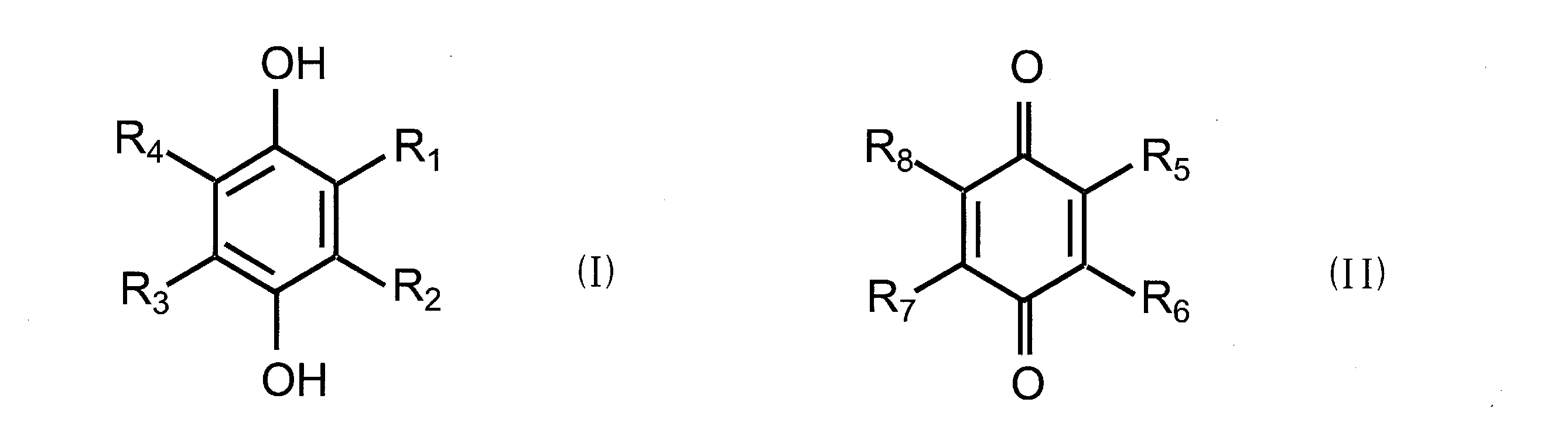
(式中、R1及びR5は、それぞれ独立に水酸基又は炭素数1~4の直鎖もしくは分枝鎖アルキル基を表し、R2、R3、R4、R6、R7及びR8は、それぞれ独立に水素又はメチル基を表す。)
〔19〕前記〔18〕において、好ましくは、前記式(I)中、
R1が水酸基又は炭素数1~4の直鎖もしくは分枝鎖アルキル基であり、かつR2、R3及びR4がともに水素であるか、
R1がメチル基であり、R3が水素であり、かつR2及びR4は一方がメチル基で他方が水素、もしくはともにメチル基であるか、又は
R1、R2、R3及びR4がともにメチル基である。
〔20〕前記〔18〕において、好ましくは、前記式(II)中、R5が炭素数1~4の直鎖もしくは分枝鎖アルキル基であり、かつR6、R7及びR8がともに水素である。
〔19〕前記〔18〕において、好ましくは、前記式(I)中、
R1が水酸基又は炭素数1~4の直鎖もしくは分枝鎖アルキル基であり、かつR2、R3及びR4がともに水素であるか、
R1がメチル基であり、R3が水素であり、かつR2及びR4は一方がメチル基で他方が水素、もしくはともにメチル基であるか、又は
R1、R2、R3及びR4がともにメチル基である。
〔20〕前記〔18〕において、好ましくは、前記式(II)中、R5が炭素数1~4の直鎖もしくは分枝鎖アルキル基であり、かつR6、R7及びR8がともに水素である。
〔21〕前記〔1〕~〔3〕、〔6〕~〔11〕及び〔14〕~〔17〕のいずれか1項において、好ましくは、前記キノン化合物が、p-トルキノン、2-メチルヒドロキノン、エチルキノール、2-ブチルヒドロキノン、tert-ブチルヒドロキノン、2,6-ジメチルヒドロキノン、2,3-ジメチルヒドロキノン、2,3,5-トリメチルヒドロキノン、テトラメチルヒドロキノン、ヒドロキシヒドロキノン、3,5-ジメチルベンゾキノン及びtert-ブチルベンゾキノンからなる群より選択される少なくとも1種である。
〔22〕前記〔1〕、〔4〕~〔9〕及び〔12〕~〔21〕のいずれか1項において、好ましくは、前記C1~C5アルキルレゾルシノールは式(III)で示される化合物である:
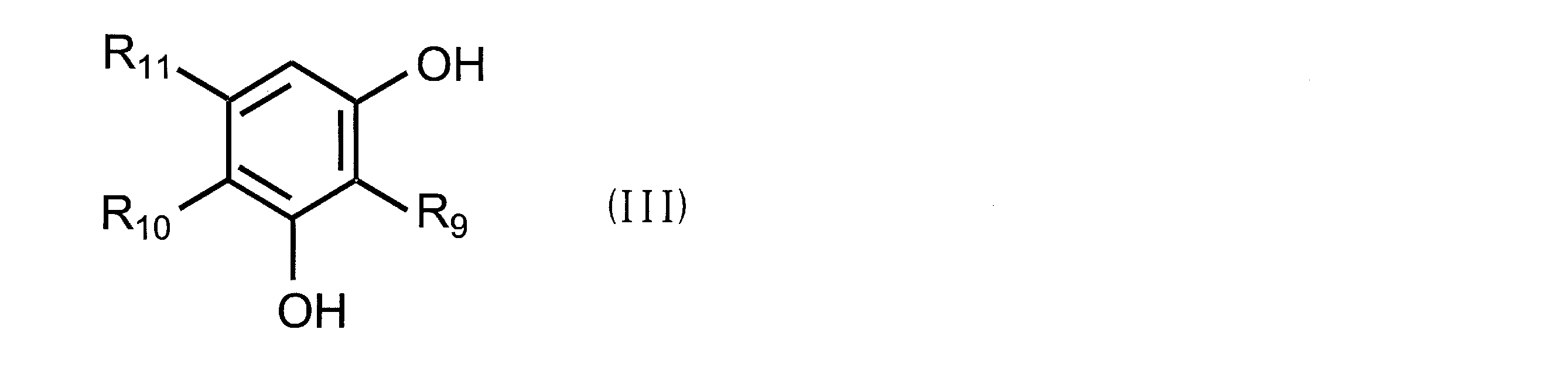
(式中、R9、R10及びR11は、それぞれ独立に、水素、又は炭素数1~5の直鎖もしくは分枝鎖アルキル基を表し、ただし、R9、R10及びR11が同時に水素になることはない。)
〔23〕前記〔22〕において、好ましくは、R9、R10及びR11のいずれか1つが炭素数1~5の直鎖もしくは分枝鎖アルキル基であり、かつ残りがいずれも水素である。
〔24〕前記〔22〕において、好ましくは、R9、R10及びR11のいずれか2つが炭素数1~5の直鎖アルキル基であり、かつ残りが水素である。
〔23〕前記〔22〕において、好ましくは、R9、R10及びR11のいずれか1つが炭素数1~5の直鎖もしくは分枝鎖アルキル基であり、かつ残りがいずれも水素である。
〔24〕前記〔22〕において、好ましくは、R9、R10及びR11のいずれか2つが炭素数1~5の直鎖アルキル基であり、かつ残りが水素である。
〔25〕前記〔1〕、〔4〕~〔9〕及び〔12〕~〔21〕のいずれか1項において、好ましくは、前記C1~C5アルキルレゾルシノールが、4-ブチルレゾルシノール、5-メチルレゾルシノール、5-ペンチルレゾルシノール、2-プロピルレゾルシノール、2,5-ジメチルレゾルシノール、2-メチルレゾルシノール、及び4-イソプロピルレゾルシノールからなる群より選択される少なくとも1種である。
〔26〕前記〔1〕~〔25〕のいずれか1項において、前記バイオフィルムは、
好ましくはグラム陰性微生物を含むバイオフィルムであり、
より好ましくは、緑膿菌(Pseudomonas aeruginosa)、Sphingomonas属、Sphingopyxis属、Klebsiella属微生物、Flavobacterium属微生物、及びRoseomonas属微生物からなる群より選択される少なくとも1種の微生物を含むバイオフィルムである。
好ましくはグラム陰性微生物を含むバイオフィルムであり、
より好ましくは、緑膿菌(Pseudomonas aeruginosa)、Sphingomonas属、Sphingopyxis属、Klebsiella属微生物、Flavobacterium属微生物、及びRoseomonas属微生物からなる群より選択される少なくとも1種の微生物を含むバイオフィルムである。
〔27〕前記〔1〕~〔26〕のいずれか1項において、前記バイオフィルムは、
好ましくは、水を流す又は貯留することによって機能する設備におけるバイオフィルム、又は該設備に流れる又は貯留される水におけるバイオフィルムである。
好ましくは、水を流す又は貯留することによって機能する設備におけるバイオフィルム、又は該設備に流れる又は貯留される水におけるバイオフィルムである。
〔28〕水酸基又はアルキル基で置換されたヒドロキノン、水酸基又はアルキル基で置換されたp-ベンゾキノン、及びC1~C5アルキルレゾルシノールからなる群より選択される少なくとも1種の化合物の、バイオフィルム形成抑制のための使用。
〔29〕好ましくは、前記水酸基又はアルキル基で置換されたヒドロキノン、及び前記水酸基又はアルキル基で置換されたp-ベンゾキノンからなる群より選択される少なくとも1種のキノン化合物が使用される、〔28〕記載の使用。
〔30〕好ましくは、前記C1~C5アルキルレゾルシノールが使用される、〔28〕記載の使用。
〔29〕好ましくは、前記水酸基又はアルキル基で置換されたヒドロキノン、及び前記水酸基又はアルキル基で置換されたp-ベンゾキノンからなる群より選択される少なくとも1種のキノン化合物が使用される、〔28〕記載の使用。
〔30〕好ましくは、前記C1~C5アルキルレゾルシノールが使用される、〔28〕記載の使用。
〔31〕キノン系化合物とキレート剤とを含有する、バイオフィルム形成抑制用組成物。
〔32〕好ましくは、水系液体、又は水系液体を使用する水系システムにおけるバイオフィルム形成抑制に使用される、〔31〕記載の組成物。
〔32〕好ましくは、水系液体、又は水系液体を使用する水系システムにおけるバイオフィルム形成抑制に使用される、〔31〕記載の組成物。
〔33〕キノン系化合物とキレート剤とを水系液体に添加することを含む、バイオフィルム形成抑制方法。
〔34〕好ましくは、前記水系液体、又は前記水系液体を使用する水系システムにおけるバイオフィルム形成が抑制される、〔33〕記載の方法。
〔34〕好ましくは、前記水系液体、又は前記水系液体を使用する水系システムにおけるバイオフィルム形成が抑制される、〔33〕記載の方法。
〔35〕バイオフィルム形成抑制のための、キノン系化合物とキレート剤との組み合わせの使用。
〔36〕前記使用が、好ましくは、水系液体、又は水系液体を使用する水系システムにおけるバイオフィルム形成抑制のための使用である、〔35〕記載の使用。
〔37〕好ましくは、キノン系化合物とキレート剤を含む組成物が使用される、〔35〕又は〔36〕記載の使用。
〔36〕前記使用が、好ましくは、水系液体、又は水系液体を使用する水系システムにおけるバイオフィルム形成抑制のための使用である、〔35〕記載の使用。
〔37〕好ましくは、キノン系化合物とキレート剤を含む組成物が使用される、〔35〕又は〔36〕記載の使用。
〔38〕前記〔31〕~〔37〕のいずれか1項において、前記キレート剤は、
好ましくは、カルボン酸系、リン酸系、又はホスホン酸系のキレート剤であり、
より好ましくは、アミノカルボン酸、ホスホノカルボン酸、ヒドロキシカルボン酸、ヒドロキシホスホン酸、及びこれらの塩からなる群より選ばれる1種以上である。
好ましくは、カルボン酸系、リン酸系、又はホスホン酸系のキレート剤であり、
より好ましくは、アミノカルボン酸、ホスホノカルボン酸、ヒドロキシカルボン酸、ヒドロキシホスホン酸、及びこれらの塩からなる群より選ばれる1種以上である。
〔39〕前記〔31〕~〔38〕のいずれか1項において、前記キノン系化合物は、好ましくは、水酸基又はアルキル基で置換されたヒドロキノン、水酸基又はアルキル基で置換されたp-ベンゾキノン、及びC1~C5アルキルレゾルシノールからなる群より選択される少なくとも1種の化合物である。
〔40〕前記〔31〕~〔38〕のいずれか1項において、前記キノン系化合物は、
好ましくは、2つ又は3つのケトン基を持つ1個のベンゼン環を有する化合物であり、
該ケトン基はヒドロキシ基に還元されていてもよく、さらに該ヒドロキシ基の1つがアルコキシ化されていてもよく、
該ベンゼン環は、1~3個、好ましくは1個のアルキル基で置換されており、
該アルキル基は、それぞれ独立に、好ましくは炭素数1以上12以下、より好ましくは炭素数1以上8以下、さらに好ましくは炭素数1以上6以下、さらに好ましくは炭素数1以上3以下の直鎖又は分枝鎖アルキル基であるか、なお好ましくはメチル基、エチル基、プロピル基、イソプロピル基、ブチル基、t-ブチル基、ペンチル基、ヘキシル基、ヘプチル基、オクチル基及び2-エチルヘキシル基からなる群より選択される。
好ましくは、2つ又は3つのケトン基を持つ1個のベンゼン環を有する化合物であり、
該ケトン基はヒドロキシ基に還元されていてもよく、さらに該ヒドロキシ基の1つがアルコキシ化されていてもよく、
該ベンゼン環は、1~3個、好ましくは1個のアルキル基で置換されており、
該アルキル基は、それぞれ独立に、好ましくは炭素数1以上12以下、より好ましくは炭素数1以上8以下、さらに好ましくは炭素数1以上6以下、さらに好ましくは炭素数1以上3以下の直鎖又は分枝鎖アルキル基であるか、なお好ましくはメチル基、エチル基、プロピル基、イソプロピル基、ブチル基、t-ブチル基、ペンチル基、ヘキシル基、ヘプチル基、オクチル基及び2-エチルヘキシル基からなる群より選択される。
〔41〕前記〔31〕~〔38〕のいずれか1項において、前記キノン系化合物は、
好ましくは、式(I)、(II)及び(IV)で示される化合物からなる群より選択される1種以上である:

(式(I)中、
R1は、水酸基、又は炭素数1~4の直鎖もしくは分枝鎖アルキル基を表し、R2、R3及びR4は、それぞれ独立に、水素又はメチル基を表し、
より好ましくは、
R1が水酸基又は炭素数1~4の直鎖もしくは分枝鎖アルキル基であり、かつR2、R3及びR4がともに水素であるか、
R1がメチル基であり、R3が水素であり、かつR2及びR4が、一方がメチル基で他方が水素であるかもしくはともにメチル基であるか、又は、
R1、R2、R3及びR4はともにメチル基である;
式(II)中、
R5は、水酸基、又は炭素数1~4の直鎖もしくは分枝鎖アルキル基を表し、R6、R7及びR8は、それぞれ独立に、水素又はメチル基を表し、
より好ましくは、R5は炭素数1~4の直鎖もしくは分枝鎖アルキル基であり、かつR6、R7及びR8はともに水素である;
式(IV)中、
R12、R13及びR14は、それぞれ独立に、水素、又は炭素数1~8の直鎖もしくは分枝鎖アルキル基を表し(ただし、R12、R13及びR14が同時に水素になることはない)、
より好ましくは、R12、R13及びR14のいずれか1つが炭素数1~6の直鎖もしくは分枝鎖アルキル基であり、かつ残りがいずれも水素であるか、又はR12、R13及びR14のいずれか2つが炭素数1~6の直鎖アルキル基であり、かつ残りが水素であり、
さらに好ましくは、R12、R13及びR14は、それぞれ独立に、水素、又は炭素数1~5の直鎖もしくは分枝鎖アルキル基を表し、ただし、R12、R13及びR14が同時に水素になることはない。)
好ましくは、式(I)、(II)及び(IV)で示される化合物からなる群より選択される1種以上である:
R1は、水酸基、又は炭素数1~4の直鎖もしくは分枝鎖アルキル基を表し、R2、R3及びR4は、それぞれ独立に、水素又はメチル基を表し、
より好ましくは、
R1が水酸基又は炭素数1~4の直鎖もしくは分枝鎖アルキル基であり、かつR2、R3及びR4がともに水素であるか、
R1がメチル基であり、R3が水素であり、かつR2及びR4が、一方がメチル基で他方が水素であるかもしくはともにメチル基であるか、又は、
R1、R2、R3及びR4はともにメチル基である;
式(II)中、
R5は、水酸基、又は炭素数1~4の直鎖もしくは分枝鎖アルキル基を表し、R6、R7及びR8は、それぞれ独立に、水素又はメチル基を表し、
より好ましくは、R5は炭素数1~4の直鎖もしくは分枝鎖アルキル基であり、かつR6、R7及びR8はともに水素である;
式(IV)中、
R12、R13及びR14は、それぞれ独立に、水素、又は炭素数1~8の直鎖もしくは分枝鎖アルキル基を表し(ただし、R12、R13及びR14が同時に水素になることはない)、
より好ましくは、R12、R13及びR14のいずれか1つが炭素数1~6の直鎖もしくは分枝鎖アルキル基であり、かつ残りがいずれも水素であるか、又はR12、R13及びR14のいずれか2つが炭素数1~6の直鎖アルキル基であり、かつ残りが水素であり、
さらに好ましくは、R12、R13及びR14は、それぞれ独立に、水素、又は炭素数1~5の直鎖もしくは分枝鎖アルキル基を表し、ただし、R12、R13及びR14が同時に水素になることはない。)
〔42〕前記〔31〕~〔41〕のいずれか1項において、前記キノン系化合物は、
好ましくは、p-トルキノン、2-メチルヒドロキノン、エチルキノール、2-ブチルヒドロキノン、tert-ブチルヒドロキノン、2,6-ジメチルヒドロキノン、2,3-ジメチルヒドロキノン、2,3,5-トリメチルヒドロキノン、テトラメチルヒドロキノン、ヒドロキシヒドロキノン、3,5-ジメチルベンゾキノン、tert-ブチルベンゾキノン、4-ブチルレゾルシノール、4-ヘキシルレゾルシノール、5-メチルレゾルシノール、5-ペンチルレゾルシノール、2-プロピルレゾルシノール、2,5-ジメチルレゾルシノール、2-メチルレゾルシノール、及び4-イソプロピルレゾルシノールからなる群から選ばれる1種以上であり、
より好ましくは、p-トルキノン及び2-メチルヒドロキノンからなる群より選ばれる1種以上である。
好ましくは、p-トルキノン、2-メチルヒドロキノン、エチルキノール、2-ブチルヒドロキノン、tert-ブチルヒドロキノン、2,6-ジメチルヒドロキノン、2,3-ジメチルヒドロキノン、2,3,5-トリメチルヒドロキノン、テトラメチルヒドロキノン、ヒドロキシヒドロキノン、3,5-ジメチルベンゾキノン、tert-ブチルベンゾキノン、4-ブチルレゾルシノール、4-ヘキシルレゾルシノール、5-メチルレゾルシノール、5-ペンチルレゾルシノール、2-プロピルレゾルシノール、2,5-ジメチルレゾルシノール、2-メチルレゾルシノール、及び4-イソプロピルレゾルシノールからなる群から選ばれる1種以上であり、
より好ましくは、p-トルキノン及び2-メチルヒドロキノンからなる群より選ばれる1種以上である。
〔43〕前記〔31〕~〔42〕のいずれか1項において、好ましくは、前記キノン系化合物は、キノン系化合物とキレート剤とを添加された水系液体中での濃度が以下のとおりになるように使用される:
好ましくは1ppm以上、より好ましくは2ppm以上、さらに好ましくは3ppm以上、さらに好ましくは5ppm以上、さらに好ましくは7ppm以上、さらに好ましくは8ppm以上、さらに好ましくは9ppm以上、さらに好ましくは10ppm以上であって、かつ好ましくは1400ppm以下、より好ましくは1000ppm以下、さらに好ましくは500ppm以下、さらに好ましくは270ppm以下、さらに好ましくは200ppm以下、さらに好ましくは150ppm以下、さらに好ましくは100ppm以下、さらに好ましくは70ppm以下、さらに好ましくは60ppm以下、さらに好ましくは50ppm以下、さらに好ましくは40ppm以下、さらに好ましくは30ppm以下、さらに好ましくは20ppm以下、さらに好ましくは15ppm以下;
あるいは、
好ましくは、1~1400ppm、1~1000ppm、1~500ppm、1~270ppm、1~200ppm、1~150ppm、1~100ppm、1~70ppm、1~60ppm、1~50ppm、1~40ppm、1~30ppm、1~20ppm、1~15ppm、2~1400ppm、2~1000ppm、2~500ppm、2~270ppm、2~200ppm、2~150ppm、2~100ppm、2~70ppm、2~60ppm、2~50ppm、2~40ppm、2~30ppm、2~20ppm、2~15ppm、3~1400ppm、3~1000ppm、3~500ppm、3~270ppm、3~200ppm、3~150ppm、3~100ppm、3~70ppm、3~60ppm、3~50ppm、3~40ppm、3~30ppm、3~20ppm、3~15ppm、5~1400ppm、5~1000ppm、5~500ppm、5~270ppm、5~200ppm、5~150ppm、5~100ppm、5~70ppm、5~60ppm、5~50ppm、5~40ppm、5~30ppm、5~20ppm、5~15ppm、7~1400ppm、7~1000ppm、7~500ppm、7~270ppm、7~200ppm、7~150ppm、7~100ppm、7~70ppm、7~60ppm、7~50ppm、7~40ppm、7~30ppm、7~20ppm、7~15ppm、8~1400ppm、8~1000ppm、8~500ppm、8~270ppm、8~200ppm、8~150ppm、8~100ppm、8~70ppm、8~60ppm、8~50ppm、8~40ppm、8~30ppm、8~20ppm、8~15ppm、9~1400ppm、9~1000ppm、9~500ppm、9~270ppm、9~200ppm、9~150ppm、9~100ppm、9~70ppm、9~60ppm、9~50ppm、9~40ppm、9~30ppm、9~20ppm、9~15ppm、10~1400ppm、10~1000ppm、10~500ppm、10~270ppm、10~200ppm、10~150ppm、10~100ppm、10~70ppm、10~60ppm、10~50ppm、10~40ppm、10~30ppm、10~20ppm、又は10~15ppm。
好ましくは1ppm以上、より好ましくは2ppm以上、さらに好ましくは3ppm以上、さらに好ましくは5ppm以上、さらに好ましくは7ppm以上、さらに好ましくは8ppm以上、さらに好ましくは9ppm以上、さらに好ましくは10ppm以上であって、かつ好ましくは1400ppm以下、より好ましくは1000ppm以下、さらに好ましくは500ppm以下、さらに好ましくは270ppm以下、さらに好ましくは200ppm以下、さらに好ましくは150ppm以下、さらに好ましくは100ppm以下、さらに好ましくは70ppm以下、さらに好ましくは60ppm以下、さらに好ましくは50ppm以下、さらに好ましくは40ppm以下、さらに好ましくは30ppm以下、さらに好ましくは20ppm以下、さらに好ましくは15ppm以下;
あるいは、
好ましくは、1~1400ppm、1~1000ppm、1~500ppm、1~270ppm、1~200ppm、1~150ppm、1~100ppm、1~70ppm、1~60ppm、1~50ppm、1~40ppm、1~30ppm、1~20ppm、1~15ppm、2~1400ppm、2~1000ppm、2~500ppm、2~270ppm、2~200ppm、2~150ppm、2~100ppm、2~70ppm、2~60ppm、2~50ppm、2~40ppm、2~30ppm、2~20ppm、2~15ppm、3~1400ppm、3~1000ppm、3~500ppm、3~270ppm、3~200ppm、3~150ppm、3~100ppm、3~70ppm、3~60ppm、3~50ppm、3~40ppm、3~30ppm、3~20ppm、3~15ppm、5~1400ppm、5~1000ppm、5~500ppm、5~270ppm、5~200ppm、5~150ppm、5~100ppm、5~70ppm、5~60ppm、5~50ppm、5~40ppm、5~30ppm、5~20ppm、5~15ppm、7~1400ppm、7~1000ppm、7~500ppm、7~270ppm、7~200ppm、7~150ppm、7~100ppm、7~70ppm、7~60ppm、7~50ppm、7~40ppm、7~30ppm、7~20ppm、7~15ppm、8~1400ppm、8~1000ppm、8~500ppm、8~270ppm、8~200ppm、8~150ppm、8~100ppm、8~70ppm、8~60ppm、8~50ppm、8~40ppm、8~30ppm、8~20ppm、8~15ppm、9~1400ppm、9~1000ppm、9~500ppm、9~270ppm、9~200ppm、9~150ppm、9~100ppm、9~70ppm、9~60ppm、9~50ppm、9~40ppm、9~30ppm、9~20ppm、9~15ppm、10~1400ppm、10~1000ppm、10~500ppm、10~270ppm、10~200ppm、10~150ppm、10~100ppm、10~70ppm、10~60ppm、10~50ppm、10~40ppm、10~30ppm、10~20ppm、又は10~15ppm。
〔44〕前記〔31〕~〔43〕のいずれか1項において、好ましくは、前記キレート剤は、キノン系化合物とキレート剤とを添加された水系液体中での濃度が以下のとおりになるように使用される:
好ましくは0.05ppm以上、より好ましくは0.1ppm以上、さらに好ましくは0.3ppm以上、さらに好ましくは0.5ppm以上、さらに好ましくは1ppm以上、さらに好ましくは2ppm以上であって、かつ好ましくは1000ppm以下、より好ましくは500ppm以下、さらに好ましくは100ppm以下、さらに好ましくは70ppm以下、さらに好ましくは50ppm以下、さらに好ましくは40ppm以下、さらに好ましくは30ppm以下、さらに好ましくは25ppm以下、さらに好ましくは20ppm以下;
あるいは、
好ましくは、0.05~1000ppm、0.05~500ppm、0.05~100ppm、0.05~70ppm、0.05~50ppm、0.05~40ppm、0.05~30ppm、0.05~25ppm、0.05~20ppm、0.1~1000ppm、0.1~500ppm、0.1~100ppm、0.1~70ppm、0.1~50ppm、0.1~40ppm、0.1~30ppm、0.1~25ppm、0.1~20ppm、0.3~1000ppm、0.3~500ppm、0.3~100ppm、0.3~70ppm、0.3~50ppm、0.3~40ppm、0.3~30ppm、0.3~25ppm、0.3~20ppm、0.5~1000ppm、0.5~500ppm、0.5~100ppm、0.5~70ppm、0.5~50ppm、0.5~40ppm、0.5~30ppm、0.5~25ppm、0.5~20ppm、1~1000ppm、1~500ppm、1~100ppm、1~70ppm、1~50ppm、1~40ppm、1~30ppm、1~25ppm、1~20ppm、2~1000ppm、2~500ppm、2~100ppm、2~70ppm、2~50ppm、2~40ppm、2~30ppm、2~25ppm、又は2~20ppm。
好ましくは0.05ppm以上、より好ましくは0.1ppm以上、さらに好ましくは0.3ppm以上、さらに好ましくは0.5ppm以上、さらに好ましくは1ppm以上、さらに好ましくは2ppm以上であって、かつ好ましくは1000ppm以下、より好ましくは500ppm以下、さらに好ましくは100ppm以下、さらに好ましくは70ppm以下、さらに好ましくは50ppm以下、さらに好ましくは40ppm以下、さらに好ましくは30ppm以下、さらに好ましくは25ppm以下、さらに好ましくは20ppm以下;
あるいは、
好ましくは、0.05~1000ppm、0.05~500ppm、0.05~100ppm、0.05~70ppm、0.05~50ppm、0.05~40ppm、0.05~30ppm、0.05~25ppm、0.05~20ppm、0.1~1000ppm、0.1~500ppm、0.1~100ppm、0.1~70ppm、0.1~50ppm、0.1~40ppm、0.1~30ppm、0.1~25ppm、0.1~20ppm、0.3~1000ppm、0.3~500ppm、0.3~100ppm、0.3~70ppm、0.3~50ppm、0.3~40ppm、0.3~30ppm、0.3~25ppm、0.3~20ppm、0.5~1000ppm、0.5~500ppm、0.5~100ppm、0.5~70ppm、0.5~50ppm、0.5~40ppm、0.5~30ppm、0.5~25ppm、0.5~20ppm、1~1000ppm、1~500ppm、1~100ppm、1~70ppm、1~50ppm、1~40ppm、1~30ppm、1~25ppm、1~20ppm、2~1000ppm、2~500ppm、2~100ppm、2~70ppm、2~50ppm、2~40ppm、2~30ppm、2~25ppm、又は2~20ppm。
〔45〕前記〔31〕~〔44〕のいずれか1項において、キノン系化合物とキレート剤とを添加された水系液体中での前記キノン系化合物及びキレート剤の濃度は、それぞれ、好ましくは1~1400ppm及び0.05~1000ppmであり、より好ましくは5~200ppm及び0.3~100ppmであり、さらに好ましくは5~50ppm及び0.3~30ppmであり、さらに好ましくは5~30ppm及び0.5~20ppmである。
〔46〕前記〔31〕~〔45〕のいずれか1項において、前記キレート剤の使用量は、
前記キノン系化合物100質量部に対して、好ましくは0.1質量部以上、より好ましくは0.5質量部以上、さらに好ましくは1質量部以上、さらに好ましくは3質量部以上、さらに好ましくは5質量部以上、さらに好ましくは7質量部以上であって、かつ好ましくは5000質量部以下、より好ましくは2000質量部以下、さらに好ましくは1000質量部以下、さらに好ましくは700質量部以下、さらに好ましくは500質量部以下、さらに好ましくは300質量部以下であるか;
あるいは、
前記キノン系化合物100質量部に対して、好ましくは、0.1~5000質量部、0.1~2000質量部、0.1~1000質量部、0.1~700質量部、0.1~500質量部、0.1~300質量部、0.5~5000質量部、0.5~2000質量部、0.5~1000質量部、0.5~700質量部、0.5~500質量部、0.5~300質量部、1~5000質量部、1~2000質量部、1~1000質量部、1~700質量部、1~500質量部、1~300質量部、3~5000質量部、3~2000質量部、3~1000質量部、3~700質量部、3~500質量部、3~300質量部、5~5000質量部、5~2000質量部、5~1000質量部、5~700質量部、5~500質量部、5~300質量部、7~5000質量部、7~2000質量部、75~1000質量部、7~700質量部、7~500質量部、又は7~300質量部である。
前記キノン系化合物100質量部に対して、好ましくは0.1質量部以上、より好ましくは0.5質量部以上、さらに好ましくは1質量部以上、さらに好ましくは3質量部以上、さらに好ましくは5質量部以上、さらに好ましくは7質量部以上であって、かつ好ましくは5000質量部以下、より好ましくは2000質量部以下、さらに好ましくは1000質量部以下、さらに好ましくは700質量部以下、さらに好ましくは500質量部以下、さらに好ましくは300質量部以下であるか;
あるいは、
前記キノン系化合物100質量部に対して、好ましくは、0.1~5000質量部、0.1~2000質量部、0.1~1000質量部、0.1~700質量部、0.1~500質量部、0.1~300質量部、0.5~5000質量部、0.5~2000質量部、0.5~1000質量部、0.5~700質量部、0.5~500質量部、0.5~300質量部、1~5000質量部、1~2000質量部、1~1000質量部、1~700質量部、1~500質量部、1~300質量部、3~5000質量部、3~2000質量部、3~1000質量部、3~700質量部、3~500質量部、3~300質量部、5~5000質量部、5~2000質量部、5~1000質量部、5~700質量部、5~500質量部、5~300質量部、7~5000質量部、7~2000質量部、75~1000質量部、7~700質量部、7~500質量部、又は7~300質量部である。
〔47〕前記〔32〕~〔34〕、及び〔36〕~〔46〕のいずれか1項において、好ましくは、前記水系液体は水冷式冷却塔の冷却水である。
〔48〕前記〔31〕、〔32〕、及び〔38〕~〔47〕のいずれか1項において、好ましくは、前記バイオフィルム形成抑制用組成物は、水冷式冷却塔の冷却水におけるバイオフィルム形成抑制用の組成物である。
〔49〕前記〔31〕、〔32〕、〔37〕、及び〔38〕~〔48〕のいずれか1項において、前記バイオフィルム形成抑制用組成物における前記キノン系化合物の含有量は以下のとおりである:
好ましくは0.1質量%以上、より好ましくは0.5質量%以上、さらに好ましくは1質量%以上、さらに好ましくは3質量%以上、さらに好ましくは5質量%以上であって、かつ好ましくは90質量%以下、より好ましくは70質量%以下、さらに好ましくは50質量%以下、さらに好ましくは30質量%以下、さらに好ましくは20質量%以下;
あるいは、
好ましくは、0.1~90質量%、0.1~70質量%、0.1~50質量%、0.1~30質量%、0.1~20質量%、0.5~90質量%、0.5~70質量%、0.5~50質量%、0.5~30質量%、0.5~20質量%、1~90質量%、1~70質量%、1~50質量%、1~30質量%、1~20質量%、3~90質量%、3~70質量%、3~50質量%、3~30質量%、3~20質量%、5~90質量%、5~70質量%、5~50質量%、5~30質量%、又は5~20質量%。
好ましくは0.1質量%以上、より好ましくは0.5質量%以上、さらに好ましくは1質量%以上、さらに好ましくは3質量%以上、さらに好ましくは5質量%以上であって、かつ好ましくは90質量%以下、より好ましくは70質量%以下、さらに好ましくは50質量%以下、さらに好ましくは30質量%以下、さらに好ましくは20質量%以下;
あるいは、
好ましくは、0.1~90質量%、0.1~70質量%、0.1~50質量%、0.1~30質量%、0.1~20質量%、0.5~90質量%、0.5~70質量%、0.5~50質量%、0.5~30質量%、0.5~20質量%、1~90質量%、1~70質量%、1~50質量%、1~30質量%、1~20質量%、3~90質量%、3~70質量%、3~50質量%、3~30質量%、3~20質量%、5~90質量%、5~70質量%、5~50質量%、5~30質量%、又は5~20質量%。
〔50〕前記〔31〕、〔32〕、〔37〕、及び〔38〕~〔49〕のいずれか1項において、前記バイオフィルム形成抑制用組成物における前記キレート剤の含有量は以下のとおりである:
好ましくは0.05質量%以上、より好ましくは0.1質量%以上、さらに好ましくは0.3質量%以上、さらに好ましくは0.5質量%以上であって、かつ好ましくは90質量%以下、より好ましくは70質量%以下、さらに好ましくは50質量%以下、さらに好ましくは30質量%以下、さらに好ましくは20質量%以下;
あるいは、
好ましくは、0.05~90質量%、0.05~70質量%、0.05~50質量%、0.05~30質量%、0.05~20質量%、0.1~90質量%、0.1~70質量%、0.1~50質量%、0.1~30質量%、0.1~20質量%、0.3~90質量%、0.3~70質量%、0.3~50質量%、0.3~30質量%、0.3~20質量%、0.5~90質量%、0.5~70質量%、0.5~50質量%、0.5~30質量%、又は0.5~20質量%。
好ましくは0.05質量%以上、より好ましくは0.1質量%以上、さらに好ましくは0.3質量%以上、さらに好ましくは0.5質量%以上であって、かつ好ましくは90質量%以下、より好ましくは70質量%以下、さらに好ましくは50質量%以下、さらに好ましくは30質量%以下、さらに好ましくは20質量%以下;
あるいは、
好ましくは、0.05~90質量%、0.05~70質量%、0.05~50質量%、0.05~30質量%、0.05~20質量%、0.1~90質量%、0.1~70質量%、0.1~50質量%、0.1~30質量%、0.1~20質量%、0.3~90質量%、0.3~70質量%、0.3~50質量%、0.3~30質量%、0.3~20質量%、0.5~90質量%、0.5~70質量%、0.5~50質量%、0.5~30質量%、又は0.5~20質量%。
〔51〕前記〔31〕、〔32〕、〔37〕、及び〔38〕~〔50〕のいずれか1項において、前記バイオフィルム形成抑制用組成物における前記キノン系化合物及びキレート剤の含有量は、それぞれ、好ましくは0.1~90質量%及び0.05~90質量%、より好ましくは1~50質量%及び0.1~50質量%、さらに好ましくは1~20質量%及び0.3~30質量%、さらに好ましくは3~20質量%及び0.3~30質量%、さらに好ましくは5~20質量%及び0.5~20質量%である。
〔52〕前記〔31〕、〔32〕、〔37〕、及び〔38〕~〔51〕のいずれか1項において、前記バイオフィルム形成抑制用組成物における前記キレート剤の含有量は以下のとおりである:
前記キノン系化合物100質量部に対して、好ましくは0.1質量部以上、より好ましくは0.5質量部以上、さらに好ましくは1質量部以上、さらに好ましくは3質量部以上、さらに好ましくは5質量部以上、さらに好ましくは7質量部以上であって、かつ好ましくは5000質量部以下、より好ましくは2000質量部以下、さらに好ましくは1000質量部以下、さらに好ましくは700質量部以下、さらに好ましくは500質量部以下、さらに好ましくは300質量部以下;
あるいは、
前記キノン系化合物100質量部に対して、好ましくは、0.1~5000質量部、0.1~2000質量部、0.1~1000質量部、0.1~700質量部、0.1~500質量部、0.1~300質量部、0.5~5000質量部、0.5~2000質量部、0.5~1000質量部、0.5~700質量部、0.5~500質量部、0.5~300質量部、1~5000質量部、1~2000質量部、1~1000質量部、1~700質量部、1~500質量部、1~300質量部、3~5000質量部、3~2000質量部、3~1000質量部、3~700質量部、3~500質量部、3~300質量部、5~5000質量部、5~2000質量部、5~1000質量部、5~700質量部、5~500質量部、5~300質量部、7~5000質量部、7~2000質量部、7~1000質量部、7~700質量部、7~500質量部、又は7~300質量部。
前記キノン系化合物100質量部に対して、好ましくは0.1質量部以上、より好ましくは0.5質量部以上、さらに好ましくは1質量部以上、さらに好ましくは3質量部以上、さらに好ましくは5質量部以上、さらに好ましくは7質量部以上であって、かつ好ましくは5000質量部以下、より好ましくは2000質量部以下、さらに好ましくは1000質量部以下、さらに好ましくは700質量部以下、さらに好ましくは500質量部以下、さらに好ましくは300質量部以下;
あるいは、
前記キノン系化合物100質量部に対して、好ましくは、0.1~5000質量部、0.1~2000質量部、0.1~1000質量部、0.1~700質量部、0.1~500質量部、0.1~300質量部、0.5~5000質量部、0.5~2000質量部、0.5~1000質量部、0.5~700質量部、0.5~500質量部、0.5~300質量部、1~5000質量部、1~2000質量部、1~1000質量部、1~700質量部、1~500質量部、1~300質量部、3~5000質量部、3~2000質量部、3~1000質量部、3~700質量部、3~500質量部、3~300質量部、5~5000質量部、5~2000質量部、5~1000質量部、5~700質量部、5~500質量部、5~300質量部、7~5000質量部、7~2000質量部、7~1000質量部、7~700質量部、7~500質量部、又は7~300質量部。
〔53〕前記〔31〕、〔32〕、〔37〕、及び〔38〕~〔52〕のいずれか1項において、前記バイオフィルム形成抑制用組成物は、任意成分として有機溶媒を含んでいてもよく、かつ
該組成物中の有機溶媒量は、
好ましくは95質量%以下、より好ましくは93質量%以下であって、かつ好ましくは0質量%以上、より好ましくは30質量%以上、さらに好ましくは50質量%以上、さらに好ましくは70質量%以上であるか、あるいは
好ましくは0~95質量%、0~93質量%、30~95質量%、30~93質量%、50~95質量%、50~93質量%、70~95質量%又は70~93質量%である。
該組成物中の有機溶媒量は、
好ましくは95質量%以下、より好ましくは93質量%以下であって、かつ好ましくは0質量%以上、より好ましくは30質量%以上、さらに好ましくは50質量%以上、さらに好ましくは70質量%以上であるか、あるいは
好ましくは0~95質量%、0~93質量%、30~95質量%、30~93質量%、50~95質量%、50~93質量%、70~95質量%又は70~93質量%である。
〔54〕キノン系化合物と有機溶媒とを含有する、バイオフィルム形成抑制用組成物。
〔55〕好ましくは、水系液体、又は水系液体を使用する水系システムにおけるバイオフィルム形成抑制に使用される、〔54〕記載の組成物。
〔56〕好ましくは、前記キノン系化合物が、水酸基又はアルキル基で置換されたヒドロキノン、水酸基又はアルキル基で置換されたp-ベンゾキノン、及びC1~C5アルキルレゾルシノールからなる群より選択される少なくとも1種の化合物である、〔54〕又は〔55〕記載の組成物。
〔57〕前記キノン系化合物が、
好ましくは、2つ又は3つのケトン基を持つ1個のベンゼン環を有する化合物であり、
該ケトン基はヒドロキシ基に還元されていてもよく、さらに該ヒドロキシ基の1つがアルコキシ化されていてもよく、
該ベンゼン環は、1~3個、好ましくは1個のアルキル基で置換されており、
該アルキル基は、それぞれ独立に、好ましくは炭素数1以上12以下、より好ましくは炭素数1以上8以下、さらに好ましくは炭素数1以上6以下、さらに好ましくは炭素数1以上3以下の直鎖又は分枝鎖アルキル基であるか、なお好ましくはメチル基、エチル基、プロピル基、イソプロピル基、ブチル基、t-ブチル基、ペンチル基、ヘキシル基、ヘプチル基、オクチル基及び2-エチルヘキシル基からなる群より選択される、
〔54〕又は〔55〕記載の組成物。
好ましくは、2つ又は3つのケトン基を持つ1個のベンゼン環を有する化合物であり、
該ケトン基はヒドロキシ基に還元されていてもよく、さらに該ヒドロキシ基の1つがアルコキシ化されていてもよく、
該ベンゼン環は、1~3個、好ましくは1個のアルキル基で置換されており、
該アルキル基は、それぞれ独立に、好ましくは炭素数1以上12以下、より好ましくは炭素数1以上8以下、さらに好ましくは炭素数1以上6以下、さらに好ましくは炭素数1以上3以下の直鎖又は分枝鎖アルキル基であるか、なお好ましくはメチル基、エチル基、プロピル基、イソプロピル基、ブチル基、t-ブチル基、ペンチル基、ヘキシル基、ヘプチル基、オクチル基及び2-エチルヘキシル基からなる群より選択される、
〔54〕又は〔55〕記載の組成物。
〔58〕前記キノン系化合物が、
好ましくは、式(I)、(II)及び(IV)で示される化合物からなる群より選択される1種以上である:
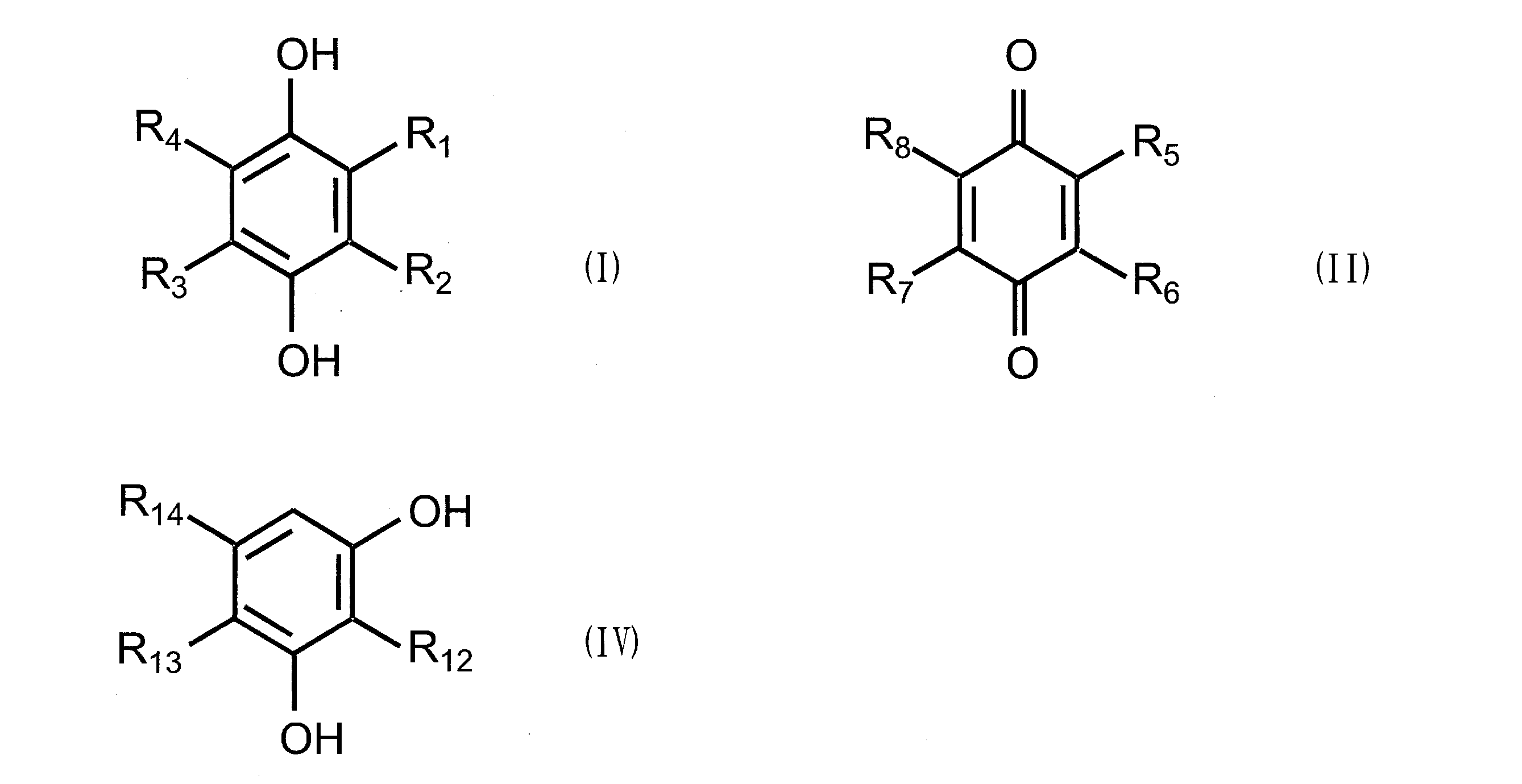
(式(I)中、
R1は、水酸基、又は炭素数1~4の直鎖もしくは分枝鎖アルキル基を表し、R2、R3及びR4は、それぞれ独立に、水素又はメチル基を表し、
より好ましくは、
R1が水酸基又は炭素数1~4の直鎖もしくは分枝鎖アルキル基であり、かつR2、R3及びR4がともに水素であるか、
R1がメチル基であり、R3が水素であり、かつR2及びR4が、一方がメチル基で他方が水素であるかもしくはともにメチル基であるか、又は、
R1、R2、R3及びR4はともにメチル基である;
式(II)中、
R5は、水酸基、又は炭素数1~4の直鎖もしくは分枝鎖アルキル基を表し、R6、R7及びR8は、それぞれ独立に、水素又はメチル基を表し、
より好ましくは、R5は炭素数1~4の直鎖もしくは分枝鎖アルキル基であり、かつR6、R7及びR8はともに水素である;
式(IV)中、
R12、R13及びR14は、それぞれ独立に、水素、又は炭素数1~8の直鎖もしくは分枝鎖アルキル基を表し(ただし、R12、R13及びR14が同時に水素になることはない)、
より好ましくは、R12、R13及びR14のいずれか1つが炭素数1~6の直鎖もしくは分枝鎖アルキル基であり、かつ残りがいずれも水素であるか、又はR12、R13及びR14のいずれか2つが炭素数1~6の直鎖アルキル基であり、かつ残りが水素であり、
さらに好ましくはR12、R13及びR14は、それぞれ独立に、水素、又は炭素数1~5の直鎖もしくは分枝鎖アルキル基を表し、ただし、R12、R13及びR14が同時に水素になることはない。)、
〔54〕又は〔55〕記載の組成物。
好ましくは、式(I)、(II)及び(IV)で示される化合物からなる群より選択される1種以上である:
R1は、水酸基、又は炭素数1~4の直鎖もしくは分枝鎖アルキル基を表し、R2、R3及びR4は、それぞれ独立に、水素又はメチル基を表し、
より好ましくは、
R1が水酸基又は炭素数1~4の直鎖もしくは分枝鎖アルキル基であり、かつR2、R3及びR4がともに水素であるか、
R1がメチル基であり、R3が水素であり、かつR2及びR4が、一方がメチル基で他方が水素であるかもしくはともにメチル基であるか、又は、
R1、R2、R3及びR4はともにメチル基である;
式(II)中、
R5は、水酸基、又は炭素数1~4の直鎖もしくは分枝鎖アルキル基を表し、R6、R7及びR8は、それぞれ独立に、水素又はメチル基を表し、
より好ましくは、R5は炭素数1~4の直鎖もしくは分枝鎖アルキル基であり、かつR6、R7及びR8はともに水素である;
式(IV)中、
R12、R13及びR14は、それぞれ独立に、水素、又は炭素数1~8の直鎖もしくは分枝鎖アルキル基を表し(ただし、R12、R13及びR14が同時に水素になることはない)、
より好ましくは、R12、R13及びR14のいずれか1つが炭素数1~6の直鎖もしくは分枝鎖アルキル基であり、かつ残りがいずれも水素であるか、又はR12、R13及びR14のいずれか2つが炭素数1~6の直鎖アルキル基であり、かつ残りが水素であり、
さらに好ましくはR12、R13及びR14は、それぞれ独立に、水素、又は炭素数1~5の直鎖もしくは分枝鎖アルキル基を表し、ただし、R12、R13及びR14が同時に水素になることはない。)、
〔54〕又は〔55〕記載の組成物。
〔59〕前記キノン系化合物が、
好ましくは、p-トルキノン、2-メチルヒドロキノン、エチルキノール、2-ブチルヒドロキノン、tert-ブチルヒドロキノン、2,6-ジメチルヒドロキノン、2,3-ジメチルヒドロキノン、2,3,5-トリメチルヒドロキノン、テトラメチルヒドロキノン、ヒドロキシヒドロキノン、3,5-ジメチルベンゾキノン、tert-ブチルベンゾキノン、4-ブチルレゾルシノール、4-ヘキシルレゾルシノール、5-メチルレゾルシノール、5-ペンチルレゾルシノール、2-プロピルレゾルシノール、2,5-ジメチルレゾルシノール、2-メチルレゾルシノール、及び4-イソプロピルレゾルシノールからなる群から選ばれる1種以上であり、
より好ましくは、p-トルキノン、2-メチルヒドロキノン及びアルキルレゾルシノールからなる群より選ばれる1種以上(ここで、該アルキルレゾルシノールはtert-ブチルベンゾキノン、4-ブチルレゾルシノール、4-ヘキシルレゾルシノール、5-メチルレゾルシノール、5-ペンチルレゾルシノール、2-プロピルレゾルシノール、2,5-ジメチルレゾルシノール、2-メチルレゾルシノール、及び4-イソプロピルレゾルシノールからなる群より選ばれる)である、
〔54〕又は〔55〕記載の組成物。
好ましくは、p-トルキノン、2-メチルヒドロキノン、エチルキノール、2-ブチルヒドロキノン、tert-ブチルヒドロキノン、2,6-ジメチルヒドロキノン、2,3-ジメチルヒドロキノン、2,3,5-トリメチルヒドロキノン、テトラメチルヒドロキノン、ヒドロキシヒドロキノン、3,5-ジメチルベンゾキノン、tert-ブチルベンゾキノン、4-ブチルレゾルシノール、4-ヘキシルレゾルシノール、5-メチルレゾルシノール、5-ペンチルレゾルシノール、2-プロピルレゾルシノール、2,5-ジメチルレゾルシノール、2-メチルレゾルシノール、及び4-イソプロピルレゾルシノールからなる群から選ばれる1種以上であり、
より好ましくは、p-トルキノン、2-メチルヒドロキノン及びアルキルレゾルシノールからなる群より選ばれる1種以上(ここで、該アルキルレゾルシノールはtert-ブチルベンゾキノン、4-ブチルレゾルシノール、4-ヘキシルレゾルシノール、5-メチルレゾルシノール、5-ペンチルレゾルシノール、2-プロピルレゾルシノール、2,5-ジメチルレゾルシノール、2-メチルレゾルシノール、及び4-イソプロピルレゾルシノールからなる群より選ばれる)である、
〔54〕又は〔55〕記載の組成物。
〔60〕前記有機溶媒のClogPが、
好ましくは-3以上、より好ましくは-2.5以上、さらに好ましくは-2以上であり、かつ好ましくは4以下、より好ましくは3.5以下、さらに好ましくは3以下であるか、あるいは
好ましくは-3~4、-3~3.5、-3~3、-2.5~4、-2.5~3.5、-2.5~3、-2~4、-2~3.5又は-2~3である。
〔54〕~〔59〕のいずれか1項記載の組成物。
好ましくは-3以上、より好ましくは-2.5以上、さらに好ましくは-2以上であり、かつ好ましくは4以下、より好ましくは3.5以下、さらに好ましくは3以下であるか、あるいは
好ましくは-3~4、-3~3.5、-3~3、-2.5~4、-2.5~3.5、-2.5~3、-2~4、-2~3.5又は-2~3である。
〔54〕~〔59〕のいずれか1項記載の組成物。
〔61〕前記有機溶媒が、
好ましくはアルコール系有機溶媒又はエーテル系有機溶媒であり、より好ましくは、脂肪族アルコール系有機溶媒又は脂肪族エーテル系有機溶媒であり、さらに好ましくはグリコール系有機溶媒である、〔54〕~〔60〕のいずれか1項記載の組成物。
好ましくはアルコール系有機溶媒又はエーテル系有機溶媒であり、より好ましくは、脂肪族アルコール系有機溶媒又は脂肪族エーテル系有機溶媒であり、さらに好ましくはグリコール系有機溶媒である、〔54〕~〔60〕のいずれか1項記載の組成物。
〔62〕前記有機溶媒が、
好ましくはモノ又はポリアルキレングリコールモノアルキルエーテルであり、
ここで、
該アルキレングリコールは、エチレングリコール、プロピレングリコール、又はブチレングリコールであり;
該"ポリ"は、該アルキレングリコールの2以上3以下の重合を表し;
該アルキルエーテルのアルキル基は、好ましくは炭素数1以上、かつ好ましくは8以下、より好ましくは6以下、さらに好ましくは4以下、さらに好ましくは2以下のアルキル基であるか、あるいは炭素数1~8、1~6、1~4、又は1~2のアルキル基である、
〔54〕~〔61〕のいずれか1項記載の組成物。
好ましくはモノ又はポリアルキレングリコールモノアルキルエーテルであり、
ここで、
該アルキレングリコールは、エチレングリコール、プロピレングリコール、又はブチレングリコールであり;
該"ポリ"は、該アルキレングリコールの2以上3以下の重合を表し;
該アルキルエーテルのアルキル基は、好ましくは炭素数1以上、かつ好ましくは8以下、より好ましくは6以下、さらに好ましくは4以下、さらに好ましくは2以下のアルキル基であるか、あるいは炭素数1~8、1~6、1~4、又は1~2のアルキル基である、
〔54〕~〔61〕のいずれか1項記載の組成物。
〔63〕前記有機溶媒の炭素数が、
好ましくは3以上、より好ましくは4以上であり、かつ好ましくは12以下、より好ましくは8以下、さらに好ましくは6以下であるか、あるいは、
好ましくは3~12、3~8、3~6、4~12、4~8、又は4~6である、
〔54〕~〔62〕記載の組成物。
好ましくは3以上、より好ましくは4以上であり、かつ好ましくは12以下、より好ましくは8以下、さらに好ましくは6以下であるか、あるいは、
好ましくは3~12、3~8、3~6、4~12、4~8、又は4~6である、
〔54〕~〔62〕記載の組成物。
〔64〕前記有機溶媒が、
好ましくは、エチレングリコールモノ(2-エチルヘキシル)エーテル、1-フェノキシ-2-プロパノール、2-フェノキシエタノール、1-ブトキシ-2-プロパノール、エチレングリコールモノブチルエーテル、2-イソブトキシエタノール、2-(2-n-ブトキシエトキシ)エタノール、プロピレングリコール、2-(2-イソブトキシエトキシ)エタノール)、トリエチレングリコールモノブチルエーテル、ジアセトンアルコール、2-エトキシエタノール)、1-メトキシ-2-p-プロパノール、ジプロピレングリコール、2-(2-エトキシエトキシ)エタノール、2-メトキシエタノール、ジエチレングリコールモノメチルエーテル、ジエチレングリコール、トリエチレングリコールモノメチルエーテル)、及びジエチレングリコールモノメチルエーテルからなる群より選ばれる1種以上であり、
より好ましくは、ジプロピレングリコール、ジエチレングリコール、ジアセトンアルコール、ジエチレングリコールモノメチルエーテル及びプロピレングリコールからなる群より選ばれる1種以上である、
〔54〕~〔63〕のいずれか1項記載の組成物。
好ましくは、エチレングリコールモノ(2-エチルヘキシル)エーテル、1-フェノキシ-2-プロパノール、2-フェノキシエタノール、1-ブトキシ-2-プロパノール、エチレングリコールモノブチルエーテル、2-イソブトキシエタノール、2-(2-n-ブトキシエトキシ)エタノール、プロピレングリコール、2-(2-イソブトキシエトキシ)エタノール)、トリエチレングリコールモノブチルエーテル、ジアセトンアルコール、2-エトキシエタノール)、1-メトキシ-2-p-プロパノール、ジプロピレングリコール、2-(2-エトキシエトキシ)エタノール、2-メトキシエタノール、ジエチレングリコールモノメチルエーテル、ジエチレングリコール、トリエチレングリコールモノメチルエーテル)、及びジエチレングリコールモノメチルエーテルからなる群より選ばれる1種以上であり、
より好ましくは、ジプロピレングリコール、ジエチレングリコール、ジアセトンアルコール、ジエチレングリコールモノメチルエーテル及びプロピレングリコールからなる群より選ばれる1種以上である、
〔54〕~〔63〕のいずれか1項記載の組成物。
〔65〕前記キノン系化合物の含有量が、
好ましくは0.1質量%以上、より好ましくは0.5質量%以上、さらに好ましくは1質量%以上、さらに好ましくは3質量%以上、さらに好ましくは5質量%以上であって、かつ好ましくは90質量%以下、より好ましくは70質量%以下、さらに好ましくは50質量%以下、さらに好ましくは30質量%以下、さらに好ましくは20質量%以下であるか、
あるいは、
好ましくは、0.1~90質量%、0.1~70質量%、0.1~50質量%、0.1~30質量%、0.1~20質量%、0.5~90質量%、0.5~70質量%、0.5~50質量%、0.5~30質量%、0.5~20質量%、1~90質量%、1~70質量%、1~50質量%、1~30質量%、1~20質量%、3~90質量%、3~70質量%、3~50質量%、3~30質量%、3~20質量%、5~90質量%、5~70質量%、5~50質量%、5~30質量%、又は5~20質量%である、
〔54〕~〔64〕のいずれか1項記載の組成物。
好ましくは0.1質量%以上、より好ましくは0.5質量%以上、さらに好ましくは1質量%以上、さらに好ましくは3質量%以上、さらに好ましくは5質量%以上であって、かつ好ましくは90質量%以下、より好ましくは70質量%以下、さらに好ましくは50質量%以下、さらに好ましくは30質量%以下、さらに好ましくは20質量%以下であるか、
あるいは、
好ましくは、0.1~90質量%、0.1~70質量%、0.1~50質量%、0.1~30質量%、0.1~20質量%、0.5~90質量%、0.5~70質量%、0.5~50質量%、0.5~30質量%、0.5~20質量%、1~90質量%、1~70質量%、1~50質量%、1~30質量%、1~20質量%、3~90質量%、3~70質量%、3~50質量%、3~30質量%、3~20質量%、5~90質量%、5~70質量%、5~50質量%、5~30質量%、又は5~20質量%である、
〔54〕~〔64〕のいずれか1項記載の組成物。
〔66〕前記有機溶媒の含有量が、
好ましくは10質量%以上、より好ましくは30質量%以上、さらに好ましくは50質量%以上、さらに好ましくは60質量%以上、さらに好ましくは70質量%以上、さらに好ましくは80質量%以上、さらに好ましくは90質量%以上であり、かつ好ましくは99.9質量%以下、より好ましくは99.5質量%以下、さらに好ましくは99質量%以下、さらに好ましくは97質量%以下、さらに好ましくは95質量%以下であるか、
あるいは、
好ましくは、10~99.9質量%、10~99.5質量%、10~99質量%、10~97質量%、10~95質量%、30~99.9質量%、30~99.5質量%、30~99質量%、30~97質量%、30~95質量%、50~99.9質量%、50~99.5質量%、50~99質量%、50~97質量%、50~95質量%、60~99.9質量%、60~99.5質量%、60~99質量%、60~97質量%、60~95質量%、70~99.9質量%、70~99.5質量%、70~99質量%、70~97質量%、70~95質量%、80~99.9質量%、80~99.5質量%、80~99質量%、80~97質量%、80~95質量%、90~99.9質量%、90~99.5質量%、90~99質量%、90~97質量%、又は90~95質量%である、
〔54〕~〔65〕のいずれか1項記載の組成物。
好ましくは10質量%以上、より好ましくは30質量%以上、さらに好ましくは50質量%以上、さらに好ましくは60質量%以上、さらに好ましくは70質量%以上、さらに好ましくは80質量%以上、さらに好ましくは90質量%以上であり、かつ好ましくは99.9質量%以下、より好ましくは99.5質量%以下、さらに好ましくは99質量%以下、さらに好ましくは97質量%以下、さらに好ましくは95質量%以下であるか、
あるいは、
好ましくは、10~99.9質量%、10~99.5質量%、10~99質量%、10~97質量%、10~95質量%、30~99.9質量%、30~99.5質量%、30~99質量%、30~97質量%、30~95質量%、50~99.9質量%、50~99.5質量%、50~99質量%、50~97質量%、50~95質量%、60~99.9質量%、60~99.5質量%、60~99質量%、60~97質量%、60~95質量%、70~99.9質量%、70~99.5質量%、70~99質量%、70~97質量%、70~95質量%、80~99.9質量%、80~99.5質量%、80~99質量%、80~97質量%、80~95質量%、90~99.9質量%、90~99.5質量%、90~99質量%、90~97質量%、又は90~95質量%である、
〔54〕~〔65〕のいずれか1項記載の組成物。
〔67〕前記キノン系化合物及び有機溶媒の含有量が、それぞれ、好ましくは0.1~90質量%及び10~99.9質量%、より好ましくは1~50質量%及び50~99.5質量%、さらに好ましくは1~30質量%及び70~99質量%、さらに好ましくは1~20質量%及び80~95質量%、さらに好ましくは5~20質量%及び80~95質量%である、
〔54〕~〔66〕のいずれか1項記載の組成物。
〔54〕~〔66〕のいずれか1項記載の組成物。
〔68〕前記キノン系化合物に対する前記有機溶媒の質量比が、
好ましくは500以下、より好ましくは200以下、さらに好ましくは150以下、さらに好ましくは100以下、さらに好ましくは50以下、さらに好ましくは20以下であり、かつ好ましくは0.1以上、より好ましくは0.5以上、さらに好ましくは1以上、さらに好ましくは2以上、さらに好ましくは3以上であるか、
あるいは、
好ましくは、0.1~500、0.1~200、0.1~150、0.1~100、0.1~50、0.1~20、0.5~500、0.5~200、0.5~150、0.5~100、0.5~50、0.5~20、1~500、1~200、1~150、1~100、1~50、1~20、2~500、2~200、2~150、2~100、2~50、2~20、3~500、3~200、3~150、3~100、3~50、又は3~20である、
〔54〕~〔67〕のいずれか1項記載の組成物。
好ましくは500以下、より好ましくは200以下、さらに好ましくは150以下、さらに好ましくは100以下、さらに好ましくは50以下、さらに好ましくは20以下であり、かつ好ましくは0.1以上、より好ましくは0.5以上、さらに好ましくは1以上、さらに好ましくは2以上、さらに好ましくは3以上であるか、
あるいは、
好ましくは、0.1~500、0.1~200、0.1~150、0.1~100、0.1~50、0.1~20、0.5~500、0.5~200、0.5~150、0.5~100、0.5~50、0.5~20、1~500、1~200、1~150、1~100、1~50、1~20、2~500、2~200、2~150、2~100、2~50、2~20、3~500、3~200、3~150、3~100、3~50、又は3~20である、
〔54〕~〔67〕のいずれか1項記載の組成物。
〔69〕前記キノン系化合物と前記有機溶媒との合計含有量が、好ましくは50質量%以上、より好ましくは70質量%以上、さらに好ましくは80質量%以上、さらに好ましくは85質量%以上、さらに好ましくは90質量%以上、さらに好ましくは95質量%以上、さらに好ましくは99質量%以上であり、かつ好ましくは100質量%以下である、〔54〕~〔68〕のいずれか1項記載の組成物。
〔70〕任意成分として水を含んでいてもよく、かつ水の含有量が、好ましくは50質量%以下、より好ましくは30質量%以下、さらに好ましくは10質量%以下、さらに好ましくは5質量%以下、さらに好ましくは1質量%以下であって、かつ好ましくは0質量%以上である、〔54〕~〔69〕のいずれか1項記載の組成物。
〔71〕好ましくは、水冷式冷却塔の冷却水におけるバイオフィルム形成抑制用の組成物である、〔54〕~〔70〕のいずれか1項記載の組成物。
〔72〕前記〔54〕~〔71〕のいずれか1項記載のキノン系化合物と有機溶媒とを含有するバイオフィルム形成抑制用組成物を水系液体に添加することを含む、バイオフィルム形成抑制方法。
〔73〕好ましくは、前記水系液体、又は前記水系液体を使用する水系システムにおけるバイオフィルム形成が抑制される、〔72〕記載の方法。
〔74〕キノン系化合物と有機溶媒とを添加された水系液体中における前記キノン系化合物の濃度が以下のとおりになるように、前記バイオフィルム形成抑制用組成物が該水系液体に添加される、〔72〕又は〔73〕記載の方法:
好ましくは1ppm以上、より好ましくは2ppm以上、さらに好ましくは3ppm以上、さらに好ましくは5ppm以上、さらに好ましくは7ppm以上、さらに好ましくは8ppm以上、さらに好ましくは9ppm以上、さらに好ましくは10ppm以上であって、かつ好ましくは1400ppm以下、より好ましくは1000ppm以下、さらに好ましくは500ppm以下、さらに好ましくは270ppm以下、さらに好ましくは200ppm以下、さらに好ましくは150ppm以下、さらに好ましくは100ppm以下、さらに好ましくは70ppm以下、さらに好ましくは60ppm以下、さらに好ましくは50ppm以下、さらに好ましくは40ppm以下、さらに好ましくは30ppm以下、さらに好ましくは20ppm以下、さらに好ましくは15ppm以下;
あるいは、
好ましくは、1~1400ppm、1~1000ppm、1~500ppm、1~270ppm、1~200ppm、1~150ppm、1~100ppm、1~70ppm、1~60ppm、1~50ppm、1~40ppm、1~30ppm、1~20ppm、1~15ppm、2~1400ppm、2~1000ppm、2~500ppm、2~270ppm、2~200ppm、2~150ppm、2~100ppm、2~70ppm、2~60ppm、2~50ppm、2~40ppm、2~30ppm、2~20ppm、2~15ppm、3~1400ppm、3~1000ppm、3~500ppm、3~270ppm、3~200ppm、3~150ppm、3~100ppm、3~70ppm、3~60ppm、3~50ppm、3~40ppm、3~30ppm、3~20ppm、3~15ppm、5~1400ppm、5~1000ppm、5~500ppm、5~270ppm、5~200ppm、5~150ppm、5~100ppm、5~70ppm、5~60ppm、5~50ppm、5~40ppm、5~30ppm、5~20ppm、5~15ppm、7~1400ppm、7~1000ppm、7~500ppm、7~270ppm、7~200ppm、7~150ppm、7~100ppm、7~70ppm、7~60ppm、7~50ppm、7~40ppm、7~30ppm、7~20ppm、7~15ppm、8~1400ppm、8~1000ppm、8~500ppm、8~270ppm、8~200ppm、8~150ppm、8~100ppm、8~70ppm、8~60ppm、8~50ppm、8~40ppm、8~30ppm、8~20ppm、8~15ppm、9~1400ppm、9~1000ppm、9~500ppm、9~270ppm、9~200ppm、9~150ppm、9~100ppm、9~70ppm、9~60ppm、9~50ppm、9~40ppm、9~30ppm、9~20ppm、9~15ppm、10~1400ppm、10~1000ppm、10~500ppm、10~270ppm、10~200ppm、10~150ppm、10~100ppm、10~70ppm、10~60ppm、10~50ppm、10~40ppm、10~30ppm、10~20ppm、又は10~15ppm。
好ましくは1ppm以上、より好ましくは2ppm以上、さらに好ましくは3ppm以上、さらに好ましくは5ppm以上、さらに好ましくは7ppm以上、さらに好ましくは8ppm以上、さらに好ましくは9ppm以上、さらに好ましくは10ppm以上であって、かつ好ましくは1400ppm以下、より好ましくは1000ppm以下、さらに好ましくは500ppm以下、さらに好ましくは270ppm以下、さらに好ましくは200ppm以下、さらに好ましくは150ppm以下、さらに好ましくは100ppm以下、さらに好ましくは70ppm以下、さらに好ましくは60ppm以下、さらに好ましくは50ppm以下、さらに好ましくは40ppm以下、さらに好ましくは30ppm以下、さらに好ましくは20ppm以下、さらに好ましくは15ppm以下;
あるいは、
好ましくは、1~1400ppm、1~1000ppm、1~500ppm、1~270ppm、1~200ppm、1~150ppm、1~100ppm、1~70ppm、1~60ppm、1~50ppm、1~40ppm、1~30ppm、1~20ppm、1~15ppm、2~1400ppm、2~1000ppm、2~500ppm、2~270ppm、2~200ppm、2~150ppm、2~100ppm、2~70ppm、2~60ppm、2~50ppm、2~40ppm、2~30ppm、2~20ppm、2~15ppm、3~1400ppm、3~1000ppm、3~500ppm、3~270ppm、3~200ppm、3~150ppm、3~100ppm、3~70ppm、3~60ppm、3~50ppm、3~40ppm、3~30ppm、3~20ppm、3~15ppm、5~1400ppm、5~1000ppm、5~500ppm、5~270ppm、5~200ppm、5~150ppm、5~100ppm、5~70ppm、5~60ppm、5~50ppm、5~40ppm、5~30ppm、5~20ppm、5~15ppm、7~1400ppm、7~1000ppm、7~500ppm、7~270ppm、7~200ppm、7~150ppm、7~100ppm、7~70ppm、7~60ppm、7~50ppm、7~40ppm、7~30ppm、7~20ppm、7~15ppm、8~1400ppm、8~1000ppm、8~500ppm、8~270ppm、8~200ppm、8~150ppm、8~100ppm、8~70ppm、8~60ppm、8~50ppm、8~40ppm、8~30ppm、8~20ppm、8~15ppm、9~1400ppm、9~1000ppm、9~500ppm、9~270ppm、9~200ppm、9~150ppm、9~100ppm、9~70ppm、9~60ppm、9~50ppm、9~40ppm、9~30ppm、9~20ppm、9~15ppm、10~1400ppm、10~1000ppm、10~500ppm、10~270ppm、10~200ppm、10~150ppm、10~100ppm、10~70ppm、10~60ppm、10~50ppm、10~40ppm、10~30ppm、10~20ppm、又は10~15ppm。
〔75〕キノン系化合物と有機溶媒とを添加された水系液体中における前記有機溶媒の濃度が以下のとおりになるように、前記バイオフィルム形成抑制用組成物が該水系液体に添加される、〔72〕~〔74〕のいずれか1項記載の方法:
好ましくは0.5質量%以下、より好ましくは0.2質量%以下、さらに好ましくは0.1質量%以下、さらに好ましくは0.05質量%以下であり、さらに好ましくは0.01質量%以下であり、かつ好ましくは0.00001質量%以上。
好ましくは0.5質量%以下、より好ましくは0.2質量%以下、さらに好ましくは0.1質量%以下、さらに好ましくは0.05質量%以下であり、さらに好ましくは0.01質量%以下であり、かつ好ましくは0.00001質量%以上。
〔76〕キノン系化合物と有機溶媒とを添加された水系液体中における前記キノン系化合物及び有機溶媒の濃度が以下のとおりになるように、前記バイオフィルム形成抑制用組成物が該水系液体に添加される、〔72〕~〔75〕のいずれか1項記載の方法:
それぞれ、好ましくは1~1400ppm及び0.1~5000ppmであり、より好ましくは5~200ppm及び0.1~2000ppmであり、さらに好ましくは5~50ppm及び0.1~1000ppmであり、さらに好ましくは5~30ppm及び0.1~500ppmである。
それぞれ、好ましくは1~1400ppm及び0.1~5000ppmであり、より好ましくは5~200ppm及び0.1~2000ppmであり、さらに好ましくは5~50ppm及び0.1~1000ppmであり、さらに好ましくは5~30ppm及び0.1~500ppmである。
〔77〕キノン系化合物と有機溶媒とを添加された水系液体中における前記キノン系化合物に対する前記有機溶媒の質量比が以下のとおりになるように、前記バイオフィルム形成抑制用組成物が該水系液体に添加される、〔72〕~〔76〕のいずれか1項記載の方法:
好ましくは500以下、より好ましくは200以下、さらに好ましくは150以下、さらに好ましくは100以下、さらに好ましくは50以下、さらに好ましくは20以下であり、かつ好ましくは0.1以上、より好ましくは0.5以上、さらに好ましくは1以上、さらに好ましくは2以上、さらに好ましくは3以上;
あるいは、
好ましくは、0.1~500、0.1~200、0.1~150、0.1~100、0.1~50、0.1~20、0.5~500、0.5~200、0.5~150、0.5~100、0.5~50、0.5~20、1~500、1~200、1~150、1~100、1~50、1~20、2~500、2~200、2~150、2~100、2~50、2~20、3~500、3~200、3~150、3~100、3~50、又は3~20。
好ましくは500以下、より好ましくは200以下、さらに好ましくは150以下、さらに好ましくは100以下、さらに好ましくは50以下、さらに好ましくは20以下であり、かつ好ましくは0.1以上、より好ましくは0.5以上、さらに好ましくは1以上、さらに好ましくは2以上、さらに好ましくは3以上;
あるいは、
好ましくは、0.1~500、0.1~200、0.1~150、0.1~100、0.1~50、0.1~20、0.5~500、0.5~200、0.5~150、0.5~100、0.5~50、0.5~20、1~500、1~200、1~150、1~100、1~50、1~20、2~500、2~200、2~150、2~100、2~50、2~20、3~500、3~200、3~150、3~100、3~50、又は3~20。
〔78〕前記水系液体が水冷式冷却塔の冷却水である、〔72〕~〔77〕のいずれか1項記載の方法。
〔79〕バイオフィルム形成抑制のための、前記〔54〕~〔71〕のいずれか1項記載のキノン系化合物と有機溶媒とを含有するバイオフィルム形成抑制用組成物の使用。
〔80〕前記使用が、好ましくは、水系液体、又は水系液体を使用する水系システムにおけるバイオフィルム形成抑制のための使用である、〔79〕記載の使用。
〔81〕前記水系液体が水冷式冷却塔の冷却水である、〔80〕記載の使用。
以下、実施例に基づき本発明をさらに詳細に説明するが、本発明はこれに限定されるものではない。
試験例1 バイオフィルム形成抑制活性の測定
1)試験菌の調製
緑膿菌PAO1株(ATCC 15692)をLB培地(Lysogeny Broth;Becton Dickinson 社製)で37℃、24時間静置培養した。得られた培養液の濁度(OD600)を測定し、Mueller Hinton Broth(BBL社製)で希釈して、濁度(OD600)が1/106の懸濁液を15mL調製した。
1)試験菌の調製
緑膿菌PAO1株(ATCC 15692)をLB培地(Lysogeny Broth;Becton Dickinson 社製)で37℃、24時間静置培養した。得られた培養液の濁度(OD600)を測定し、Mueller Hinton Broth(BBL社製)で希釈して、濁度(OD600)が1/106の懸濁液を15mL調製した。
2)培養
96wellマイクロプレート(351172;日本ベクトンディキンソン社製)の各wellに、6μLのDMSO(東京化成)と、試験化合物のエタノール溶液1μL、3μL、又は5μLを添加した後、室温に5時間放置することによってエタノールを揮発させた。上記1)で調製した緑膿菌の懸濁液を各wellに145μL添加して培養を開始した。試験化合物としては、2-メチルヒドロキノン(シグマアルドリッチ)、p-トルキノン(東京化成)、及び参考化合物として次亜塩素酸ナトリウム(和光純薬社製)を用いた。対照には、エタノール溶媒のみ(EtOH対照)を用いた。エタノール溶液における試験化合物の濃度は、1,000ppm又は10,000ppmであり、培養液中における試験化合物の終濃度は、約7~333ppmであった。
96wellマイクロプレート(351172;日本ベクトンディキンソン社製)の各wellに、6μLのDMSO(東京化成)と、試験化合物のエタノール溶液1μL、3μL、又は5μLを添加した後、室温に5時間放置することによってエタノールを揮発させた。上記1)で調製した緑膿菌の懸濁液を各wellに145μL添加して培養を開始した。試験化合物としては、2-メチルヒドロキノン(シグマアルドリッチ)、p-トルキノン(東京化成)、及び参考化合物として次亜塩素酸ナトリウム(和光純薬社製)を用いた。対照には、エタノール溶媒のみ(EtOH対照)を用いた。エタノール溶液における試験化合物の濃度は、1,000ppm又は10,000ppmであり、培養液中における試験化合物の終濃度は、約7~333ppmであった。
3)測定
上記96wellマイクロプレートを30℃、24時間静置培養した後、濁度(OD600)を測定して生育状況を確認した。続いて、各wellを0.1%クリスタルバイオレットで染色した後、生理食塩水で2回洗浄し、200μLのエタノールを添加し、吸光度(OD570)を測定することによってバイオフィルム形成量を求めた。
上記96wellマイクロプレートを30℃、24時間静置培養した後、濁度(OD600)を測定して生育状況を確認した。続いて、各wellを0.1%クリスタルバイオレットで染色した後、生理食塩水で2回洗浄し、200μLのエタノールを添加し、吸光度(OD570)を測定することによってバイオフィルム形成量を求めた。
4)結果
試験菌の生育量(OD600)を表1に、バイオフィルム形成量(OD570)を表2に示す。またこれらの結果を図1に示す。次亜塩素酸ナトリウムは、菌の生育抑制とバイオフィルム形成抑制をパラレルに引き起こしたことから、殺菌の結果としてバイオフィルム形成抑制をもたらしたと推定された。これに対し、2-メチルヒドロキノン及びp-トルキノンは、200ppm以上の高濃度域では菌の生育抑制とバイオフィルム形成抑制をパラレルに引き起こしたが、それより低い濃度域では、菌の生育抑制作用と対応しないバイオフィルム形成抑制作用が観察された。したがって、2-メチルヒドロキノン及びp-トルキノンが、殺菌又は抗菌によらずにバイオフィルム形成を抑制する作用を有することが示された。
試験菌の生育量(OD600)を表1に、バイオフィルム形成量(OD570)を表2に示す。またこれらの結果を図1に示す。次亜塩素酸ナトリウムは、菌の生育抑制とバイオフィルム形成抑制をパラレルに引き起こしたことから、殺菌の結果としてバイオフィルム形成抑制をもたらしたと推定された。これに対し、2-メチルヒドロキノン及びp-トルキノンは、200ppm以上の高濃度域では菌の生育抑制とバイオフィルム形成抑制をパラレルに引き起こしたが、それより低い濃度域では、菌の生育抑制作用と対応しないバイオフィルム形成抑制作用が観察された。したがって、2-メチルヒドロキノン及びp-トルキノンが、殺菌又は抗菌によらずにバイオフィルム形成を抑制する作用を有することが示された。

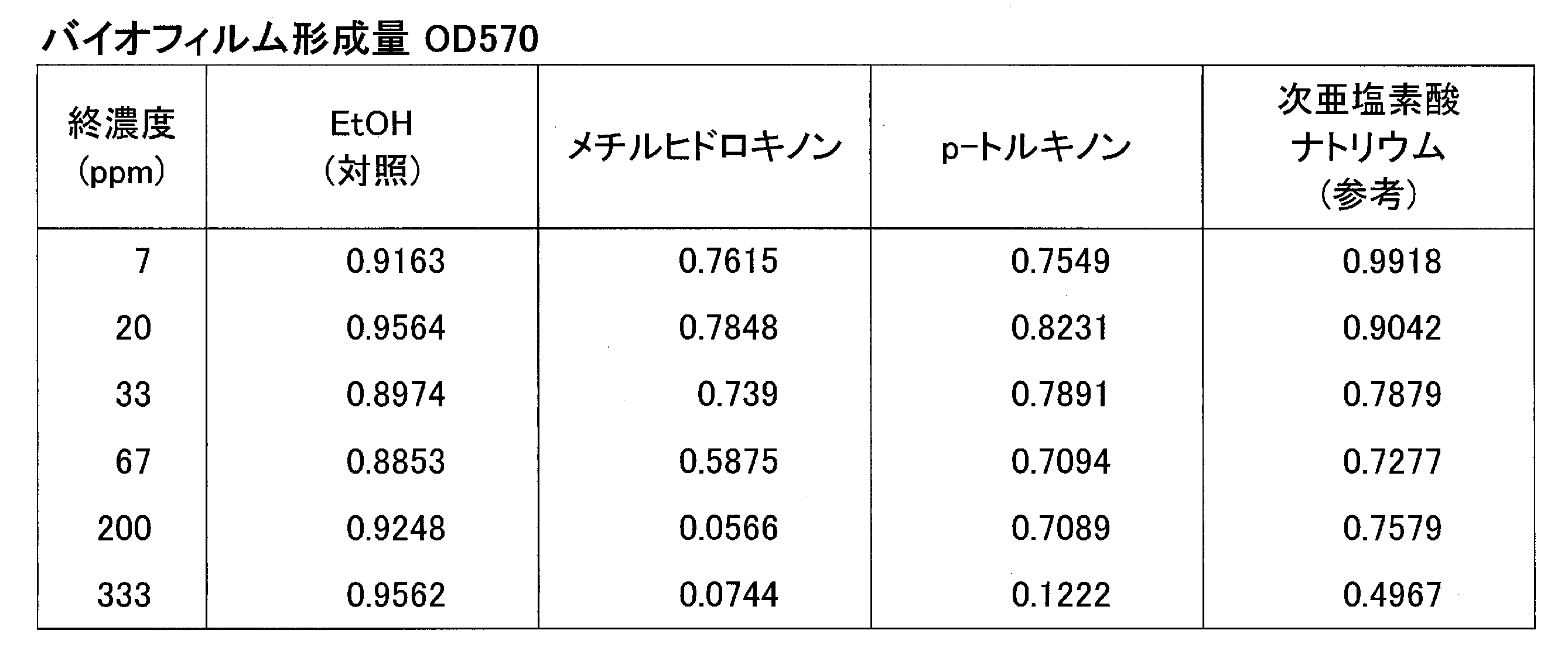
試験例2 バイオフィルム形成抑制活性の測定
1)培養及び測定
表3に記載の化合物を、試験例1と同様の手順で試験菌に添加して培養し、生育量(OD600)及びバイオフィルム形成量(OD570)を測定した。化合物a、b、c、f、h、i、j、kについては、20mMエタノール溶液を調製し、化合物d、e、gについては、5mMエタノール溶液を調製し各々、96wellマイクロプレートに1~8μL加えて評価した。各化合物の終濃度を表3に記載する。
1)培養及び測定
表3に記載の化合物を、試験例1と同様の手順で試験菌に添加して培養し、生育量(OD600)及びバイオフィルム形成量(OD570)を測定した。化合物a、b、c、f、h、i、j、kについては、20mMエタノール溶液を調製し、化合物d、e、gについては、5mMエタノール溶液を調製し各々、96wellマイクロプレートに1~8μL加えて評価した。各化合物の終濃度を表3に記載する。

測定したOD600をもとに、下記式に従って対照(エタノールのみ)に対する生育阻害率を計算した。またOD570をもとに、下記式に従って対照(エタノールのみ)に対するバイオフィルム(BF)抑制率を計算した:
生育阻害(%)={1-(化合物添加群OD600/対照群OD600)}×100
BF抑制(%)={1-(化合物添加群OD570/対照群OD570)}×100
生育阻害(%)={1-(化合物添加群OD600/対照群OD600)}×100
BF抑制(%)={1-(化合物添加群OD570/対照群OD570)}×100
2)結果
生育量(OD600)及びバイオフィルム形成量(OD570)を図2に、生育阻害(%)及びBF抑制(%)を表4に示す。表4においては、生育阻害率又はBF抑制率が0以下の場合は阻害なしと表している。表3記載の化合物は、特に低い濃度域で、菌の生育阻害率よりも明らかに高いBF抑制率を示す傾向があった。また表3記載の化合物は、菌の生育阻害率が20%以下となるような抗菌効果のない濃度でもバイオフィルム形成抑制作用を示した。したがって、表3記載の化合物が、殺菌又は抗菌によらずにバイオフィルム形成を抑制する作用(すなわち、非抗菌性バイオフィルム形成抑制作用)を有することが示された。
生育量(OD600)及びバイオフィルム形成量(OD570)を図2に、生育阻害(%)及びBF抑制(%)を表4に示す。表4においては、生育阻害率又はBF抑制率が0以下の場合は阻害なしと表している。表3記載の化合物は、特に低い濃度域で、菌の生育阻害率よりも明らかに高いBF抑制率を示す傾向があった。また表3記載の化合物は、菌の生育阻害率が20%以下となるような抗菌効果のない濃度でもバイオフィルム形成抑制作用を示した。したがって、表3記載の化合物が、殺菌又は抗菌によらずにバイオフィルム形成を抑制する作用(すなわち、非抗菌性バイオフィルム形成抑制作用)を有することが示された。

試験例3 バイオフィルム形成抑制活性の測定
1)培養
表5記載の試験化合物のエタノール溶液を調製した。対照には、エタノール溶媒のみ(EtOH対照)を用いた。エタノール溶液における試験化合物の濃度は、試験化合物1は20mM、試験化合物2~7は100mMであった。96wellマイクロプレート(351172;日本ベクトンディキンソン社製)の各wellに、6μLのDMSO(東京化成)と、各試験化合物のエタノール溶液1~8μLを添加した後、室温に5時間放置することによってエタノールを揮発させた。試験例1、1)と同様の手順で調製した緑膿菌の懸濁液を各wellに145μL添加して培養を開始した。
1)培養
表5記載の試験化合物のエタノール溶液を調製した。対照には、エタノール溶媒のみ(EtOH対照)を用いた。エタノール溶液における試験化合物の濃度は、試験化合物1は20mM、試験化合物2~7は100mMであった。96wellマイクロプレート(351172;日本ベクトンディキンソン社製)の各wellに、6μLのDMSO(東京化成)と、各試験化合物のエタノール溶液1~8μLを添加した後、室温に5時間放置することによってエタノールを揮発させた。試験例1、1)と同様の手順で調製した緑膿菌の懸濁液を各wellに145μL添加して培養を開始した。
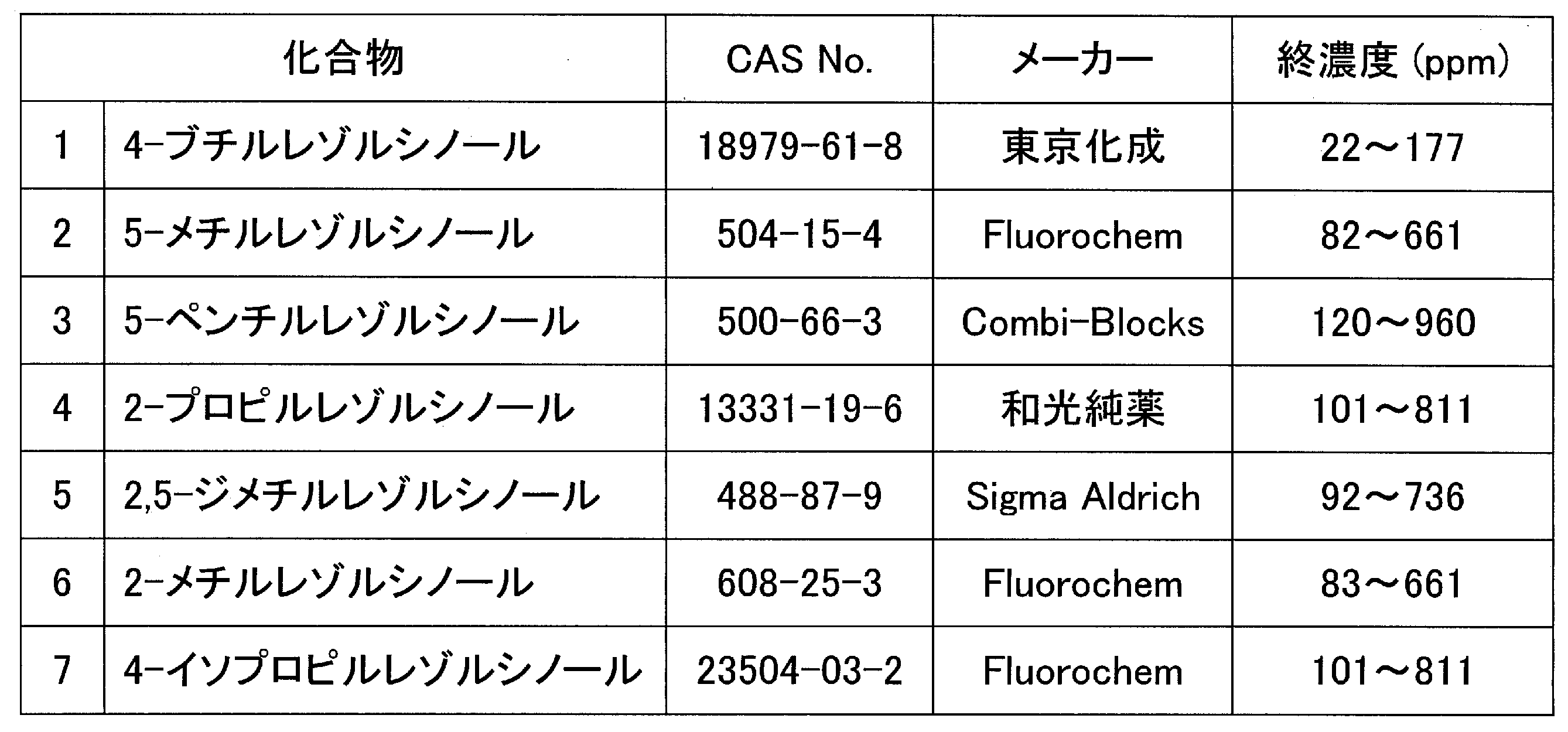
2)測定
上記96wellマイクロプレートを30℃、24時間静置培養した後、濁度(OD600)を測定して生育状況を確認した。続いて、各wellを0.1%クリスタルバイオレットで染色した後、生理食塩水で2回洗浄し、200μLのエタノールを添加し、吸光度(OD570)を測定することによってバイオフィルム形成量を求めた。測定したOD600及びOD570をもとに、試験例2で用いた式に従って生育阻害率及びバイオフィルム(BF)抑制率を計算した。
上記96wellマイクロプレートを30℃、24時間静置培養した後、濁度(OD600)を測定して生育状況を確認した。続いて、各wellを0.1%クリスタルバイオレットで染色した後、生理食塩水で2回洗浄し、200μLのエタノールを添加し、吸光度(OD570)を測定することによってバイオフィルム形成量を求めた。測定したOD600及びOD570をもとに、試験例2で用いた式に従って生育阻害率及びバイオフィルム(BF)抑制率を計算した。
3)結果
生育量(OD600)及びバイオフィルム形成量(OD570)を図3に、生育阻害(%)及びBF抑制(%)を表6に示す。表6においては、上記式にて計算された生育阻害率又はBF抑制率が0以下の場合は阻害なしとしている。表5記載の各化合物は、菌の生育阻害率よりも明らかに高いBF抑制率を示す傾向があった。また表5記載の化合物は、菌の生育阻害率が20%以下となるような抗菌効果のない濃度でもバイオフィルム形成抑制作用を示した。したがって、表5記載の化合物が、殺菌又は抗菌によらずにバイオフィルム形成を抑制する作用(すなわち、非抗菌性バイオフィルム形成抑制作用)を有することが示された。
生育量(OD600)及びバイオフィルム形成量(OD570)を図3に、生育阻害(%)及びBF抑制(%)を表6に示す。表6においては、上記式にて計算された生育阻害率又はBF抑制率が0以下の場合は阻害なしとしている。表5記載の各化合物は、菌の生育阻害率よりも明らかに高いBF抑制率を示す傾向があった。また表5記載の化合物は、菌の生育阻害率が20%以下となるような抗菌効果のない濃度でもバイオフィルム形成抑制作用を示した。したがって、表5記載の化合物が、殺菌又は抗菌によらずにバイオフィルム形成を抑制する作用(すなわち、非抗菌性バイオフィルム形成抑制作用)を有することが示された。

試験例4 水系システムモデルを用いたバイオフィルム形成抑制活性の評価
100mL容量の培養槽を有するアニュラーリアクター(アート科学社製)を用いた水系システムモデルにより、p-トルキノン(東京化成)のバイオフィルム形成抑制活性を評価した。アニュラーリアクターの培養槽には、毎分160回転の速度で回転する円筒形の回転体が設置され、この回転体に予め取り付けた12枚のテストピースを経時的に取り出してそこに形成されたバイオフィルムを定量した。建物屋上に設置された、実際に使用中の水冷式冷却塔から採取した冷却水を、毎分10mLの流速でアニュラーリアクター培養槽(30℃に維持)に供給しながら、別途、p-トルキノンのエタノール溶液(15g/L)を、シリンジポンプYSP-201(YMC社製)を使って毎分10μLの流速で該アニュラーリアクター培養槽に供給した(培養槽内冷却水中におけるp-トルキノン濃度は15ppm)。培養槽から経時的に取り出したテストピース(n=2)を0.1%クリスタルバイオレットで染色し、生理食塩水で2回洗浄した後、15mLのエタノールに回収し、吸光度(OD570)を測定することによってバイオフィルム形成量を求めた。テストピースの取得と同時に、リアクターの入口と出口から水をサンプリング(n=2)してR2A寒天(日本製薬)に塗沫し、30℃、7日間培養した後、菌数を測定した。溶媒コントロールとして、エタノールのみを添加した系で同様の実験を行った。
100mL容量の培養槽を有するアニュラーリアクター(アート科学社製)を用いた水系システムモデルにより、p-トルキノン(東京化成)のバイオフィルム形成抑制活性を評価した。アニュラーリアクターの培養槽には、毎分160回転の速度で回転する円筒形の回転体が設置され、この回転体に予め取り付けた12枚のテストピースを経時的に取り出してそこに形成されたバイオフィルムを定量した。建物屋上に設置された、実際に使用中の水冷式冷却塔から採取した冷却水を、毎分10mLの流速でアニュラーリアクター培養槽(30℃に維持)に供給しながら、別途、p-トルキノンのエタノール溶液(15g/L)を、シリンジポンプYSP-201(YMC社製)を使って毎分10μLの流速で該アニュラーリアクター培養槽に供給した(培養槽内冷却水中におけるp-トルキノン濃度は15ppm)。培養槽から経時的に取り出したテストピース(n=2)を0.1%クリスタルバイオレットで染色し、生理食塩水で2回洗浄した後、15mLのエタノールに回収し、吸光度(OD570)を測定することによってバイオフィルム形成量を求めた。テストピースの取得と同時に、リアクターの入口と出口から水をサンプリング(n=2)してR2A寒天(日本製薬)に塗沫し、30℃、7日間培養した後、菌数を測定した。溶媒コントロールとして、エタノールのみを添加した系で同様の実験を行った。
結果を図4に示す。リアクター入口及び出口の菌数は、溶媒コントロール系(図4(a))及びp-トルキノン添加系(図4(b))ともに104個/mL近辺を維持しており、p-トルキノンが菌数を減少させなかったことが示された。一方で、バイオフィルム形成量(OD570)は、溶媒コントロール系では最終的に0.7を超えたのに対し、p-トルキノン添加系では0.2以下に抑えられていた。これらの結果より、p-トルキノンが、水中の菌数を減少させることなく、バイオフィルム形成を抑制したことが示された。
試験例5 水系システムモデルを用いたバイオフィルム形成抑制活性の評価
試験例4と同様の手順で、p-トルキノンのかわりに4-ブチルレゾルシノール(東京化成)を用いて、菌数及びバイオフィルム形成量を求めた。
試験例4と同様の手順で、p-トルキノンのかわりに4-ブチルレゾルシノール(東京化成)を用いて、菌数及びバイオフィルム形成量を求めた。
結果を図5に示す。リアクター入口及び出口の菌数は、溶媒コントロール系(図5(a))及び4-ブチルレゾルシノール添加系(図5(b))ともに104個/mL近辺を維持しており、4-ブチルレゾルシノールが菌数を減少させなかったことが示された。一方で、バイオフィルム形成量(OD570)は、溶媒コントロール系では最終的に1.0を超えたのに対し、4-ブチルレゾルシノール添加系では0.4以下に抑えられていた。これらの結果より、4-ブチルレゾルシノールが、水中の菌数を減少させることなく、バイオフィルム形成を抑制したことが示された。
試験例6 キノン系化合物とキレート剤とを含有するバイオフィルム形成抑制用組成物
1)試薬及び培地
p-トルキノン(東京化成)
キレート剤
1-ヒドロキシエタン-1,1-ジホスホン酸(HEDP)(東京化成)
クエン酸(キシダ化学、特級)
エチレンジアミン四酢酸(EDTA)(同仁化学研究所)
ジエチレングリコールモノメチルエーテル(MDG)(和光純薬、一級)
R2A培地(和光純薬)
1)試薬及び培地
p-トルキノン(東京化成)
キレート剤
1-ヒドロキシエタン-1,1-ジホスホン酸(HEDP)(東京化成)
クエン酸(キシダ化学、特級)
エチレンジアミン四酢酸(EDTA)(同仁化学研究所)
ジエチレングリコールモノメチルエーテル(MDG)(和光純薬、一級)
R2A培地(和光純薬)
2)バイオフィルム抑制試験
2-1)試験菌の調製
水冷式冷却塔から採取した冷却水より単離したバイオフィルム形成菌(下記2-4のバイオフィルム量の測定試験において、OD570が0.3以上となる菌)をR2A培地で30℃、16時間振とう培養した。得られた培養液の濁度(OD600)を測定し、R2A培地で希釈して103cfu/mLの懸濁液を調製した。
2-1)試験菌の調製
水冷式冷却塔から採取した冷却水より単離したバイオフィルム形成菌(下記2-4のバイオフィルム量の測定試験において、OD570が0.3以上となる菌)をR2A培地で30℃、16時間振とう培養した。得られた培養液の濁度(OD600)を測定し、R2A培地で希釈して103cfu/mLの懸濁液を調製した。
2-2)バイオフィルム形成抑制用組成物の調製
所定量のp-トルキノンとHEDPを量りとり、溶媒(MDG)を加え、組成物を調製した。クエン酸、EDTAはMDGに溶解しなかったため、直接培養液中に添加し、併せてp-トルキノンも直接培養液に添加した。各組成物の組成を表7に示す。
所定量のp-トルキノンとHEDPを量りとり、溶媒(MDG)を加え、組成物を調製した。クエン酸、EDTAはMDGに溶解しなかったため、直接培養液中に添加し、併せてp-トルキノンも直接培養液に添加した。各組成物の組成を表7に示す。

2-3)培養
上記2-1)で調製した試験菌の懸濁液を、96ウェルマイクロプレートの各ウェルに150μL添加した後、上記2-2)で調製した試験液を添加し培養を開始した。
上記2-1)で調製した試験菌の懸濁液を、96ウェルマイクロプレートの各ウェルに150μL添加した後、上記2-2)で調製した試験液を添加し培養を開始した。
2-4)バイオフィルム量の測定
上記96ウェルマイクロプレートを30℃、48時間静置培養した後、培養液を除き水で洗浄した。続いて、各ウェルを0.1%クリスタルバイオレットで染色した後、200μLのエタノールを添加し、吸光度(OD570)を測定することによってバイオフィルム(BF)形成量を求めた。
上記96ウェルマイクロプレートを30℃、48時間静置培養した後、培養液を除き水で洗浄した。続いて、各ウェルを0.1%クリスタルバイオレットで染色した後、200μLのエタノールを添加し、吸光度(OD570)を測定することによってバイオフィルム(BF)形成量を求めた。
2-5)結果及び考察
BF抑制試験の結果を表8~10に示す。実験番号2と5~8とを比較すると、HEDPとp-トルキノンとを併用することにより、p-トルキノン単独と比べてBF抑制効果が高くなることが示された。実験番号12と15~18とを比較すると、クエン酸とp-トルキノンとを併用することにより、p-トルキノン単独と比べてBF抑制効果が高くなることが示された。実験番号21と24~26とを比較すると、EDTAとp-トルキノンとを併用することにより、p-トルキノン単独と比べてBF抑制効果が高くなることが示された。EDTAと比べて、HEDP及びクエン酸は、より低濃度でBF抑制効果を示した。
BF抑制試験の結果を表8~10に示す。実験番号2と5~8とを比較すると、HEDPとp-トルキノンとを併用することにより、p-トルキノン単独と比べてBF抑制効果が高くなることが示された。実験番号12と15~18とを比較すると、クエン酸とp-トルキノンとを併用することにより、p-トルキノン単独と比べてBF抑制効果が高くなることが示された。実験番号21と24~26とを比較すると、EDTAとp-トルキノンとを併用することにより、p-トルキノン単独と比べてBF抑制効果が高くなることが示された。EDTAと比べて、HEDP及びクエン酸は、より低濃度でBF抑制効果を示した。


試験例7 キノン系化合物とキレート剤とを含有するバイオフィルム形成抑制用組成物
1)試薬及び培地
キノン系化合物
p-トルキノン(東京化成)
4-ヘキシルレゾルシノール(東京化成)
有機溶媒(括弧内は、CLogP値)
ジプロピレングリコール(-0.64)
ジエチレングリコール(-1.47)
ジアセトンアルコール(-0.34)
ジエチレングリコールモノメチルエーテル(-1.18)
プロピレングリコール(-0.78)
R2A培地(和光純薬)
1)試薬及び培地
キノン系化合物
p-トルキノン(東京化成)
4-ヘキシルレゾルシノール(東京化成)
有機溶媒(括弧内は、CLogP値)
ジプロピレングリコール(-0.64)
ジエチレングリコール(-1.47)
ジアセトンアルコール(-0.34)
ジエチレングリコールモノメチルエーテル(-1.18)
プロピレングリコール(-0.78)
R2A培地(和光純薬)
2)験液の調製
表11に示すようにキノン系化合物と有機溶媒とを混合し、試験液を調製した。
表11に示すようにキノン系化合物と有機溶媒とを混合し、試験液を調製した。
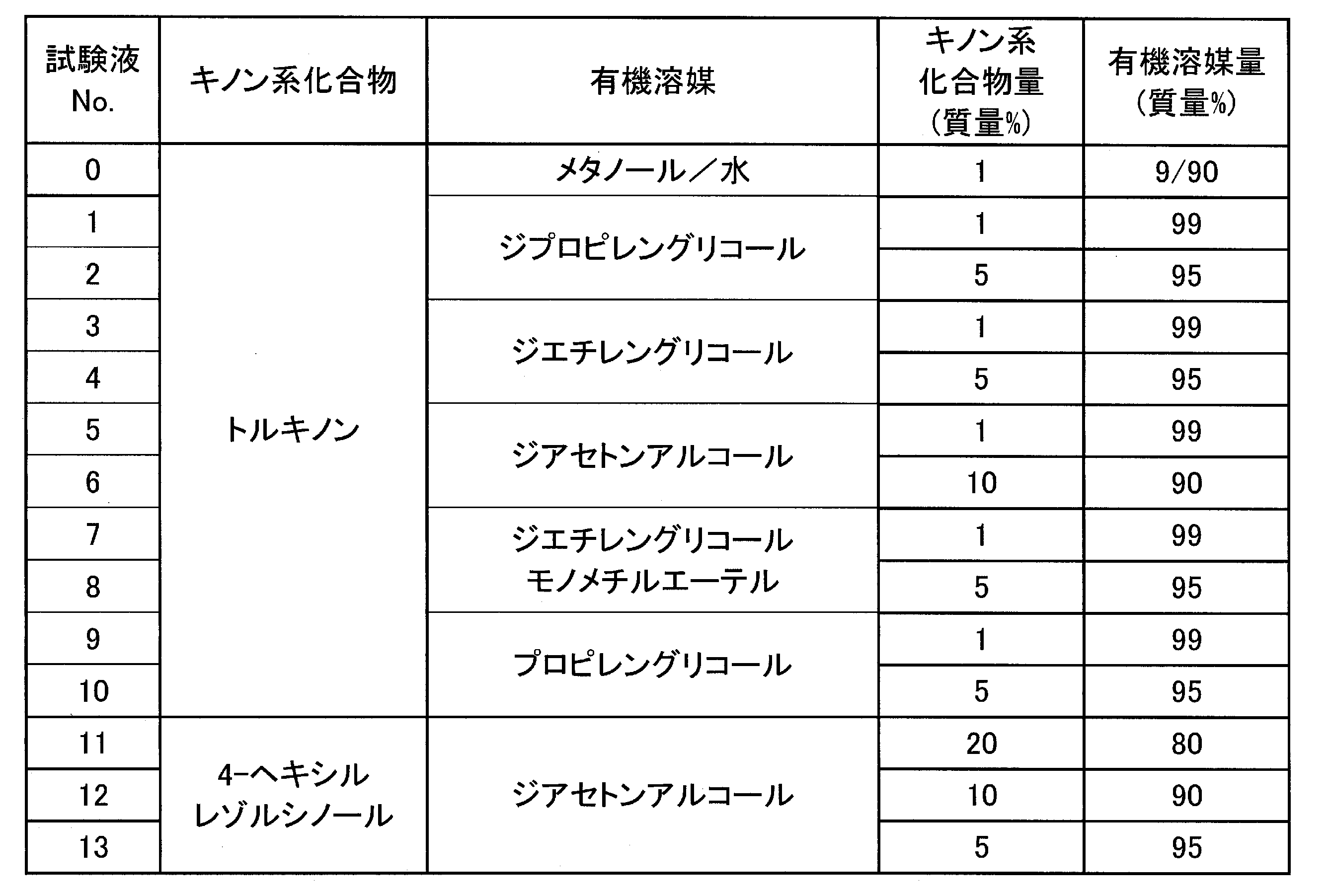
3)保存安定性試験
試験液No.0及び7を表12に示す条件で保存した後、試験液のトルキノン量をHPLCにて測定した。調製直後の試験液のトルキノン量に対する相対値(%)を求め、その保存安定性を評価した。
(HPLC分析条件)
分析装置:prominence UFLC
溶離液:20%アセトニトリル、1%酢酸溶液
カラム:Lカラム ODS 4.6×150mm、5μm
カラム温度:40℃
流速:1mL/min.
注入量:5μL
検出:UV(254nm)
試験液No.0及び7を表12に示す条件で保存した後、試験液のトルキノン量をHPLCにて測定した。調製直後の試験液のトルキノン量に対する相対値(%)を求め、その保存安定性を評価した。
(HPLC分析条件)
分析装置:prominence UFLC
溶離液:20%アセトニトリル、1%酢酸溶液
カラム:Lカラム ODS 4.6×150mm、5μm
カラム温度:40℃
流速:1mL/min.
注入量:5μL
検出:UV(254nm)
4)バイオフィルム抑制試験
4-1)試験菌の調製
水冷式冷却塔から採取した冷却水より単離したバイオフィルム形成菌(下記4-3のバイオフィルム量の測定試験において、OD570が0.3以上となる菌)をR2A培地で30℃、16時間振とう培養した。得られた培養液の濁度(OD600)を測定し、R2A培地で希釈して103cfu/mLの懸濁液を調製した。
4-1)試験菌の調製
水冷式冷却塔から採取した冷却水より単離したバイオフィルム形成菌(下記4-3のバイオフィルム量の測定試験において、OD570が0.3以上となる菌)をR2A培地で30℃、16時間振とう培養した。得られた培養液の濁度(OD600)を測定し、R2A培地で希釈して103cfu/mLの懸濁液を調製した。
(4-2.培養)
上記4-1)で調製した試験菌の懸濁液を、96ウェルマイクロプレートの各ウェルに150μL添加した後、上記2)で調製した試験液を添加して培養を開始した。
上記4-1)で調製した試験菌の懸濁液を、96ウェルマイクロプレートの各ウェルに150μL添加した後、上記2)で調製した試験液を添加して培養を開始した。
(4-3.バイオフィルム量の測定)
上記96ウェルマイクロプレートを30℃、48時間静置培養した後、培養液を除き水で洗浄した。続いて、各ウェルを0.1%クリスタルバイオレットで染色した後、200μLのエタノールを添加し、吸光度(OD570)を測定することによってバイオフィルム(BF)形成量を求めた。
上記96ウェルマイクロプレートを30℃、48時間静置培養した後、培養液を除き水で洗浄した。続いて、各ウェルを0.1%クリスタルバイオレットで染色した後、200μLのエタノールを添加し、吸光度(OD570)を測定することによってバイオフィルム(BF)形成量を求めた。
(5.結果及び考察)
保存安定性試験の結果を表12に示す。またBF抑制試験の結果を表13~15に示す。表12に示すように、キノン系化合物を特定の濃度の有機溶媒中に保存することにより、キノン系化合物の安定性が向上した。その一方で、表13~15に示すように、キノン系化合物を有機溶媒と併用した場合、キノン系化合物単独と比べてBF形成抑制効果は低下した。キノン系化合物によるBF形成抑制効果の低下度は、有機溶媒の種類及び使用濃度に依存して変動した。表13の結果からは、ジエチレングリコールは、BF形成抑制効果の低下度が最も少ないと評価された。
保存安定性試験の結果を表12に示す。またBF抑制試験の結果を表13~15に示す。表12に示すように、キノン系化合物を特定の濃度の有機溶媒中に保存することにより、キノン系化合物の安定性が向上した。その一方で、表13~15に示すように、キノン系化合物を有機溶媒と併用した場合、キノン系化合物単独と比べてBF形成抑制効果は低下した。キノン系化合物によるBF形成抑制効果の低下度は、有機溶媒の種類及び使用濃度に依存して変動した。表13の結果からは、ジエチレングリコールは、BF形成抑制効果の低下度が最も少ないと評価された。

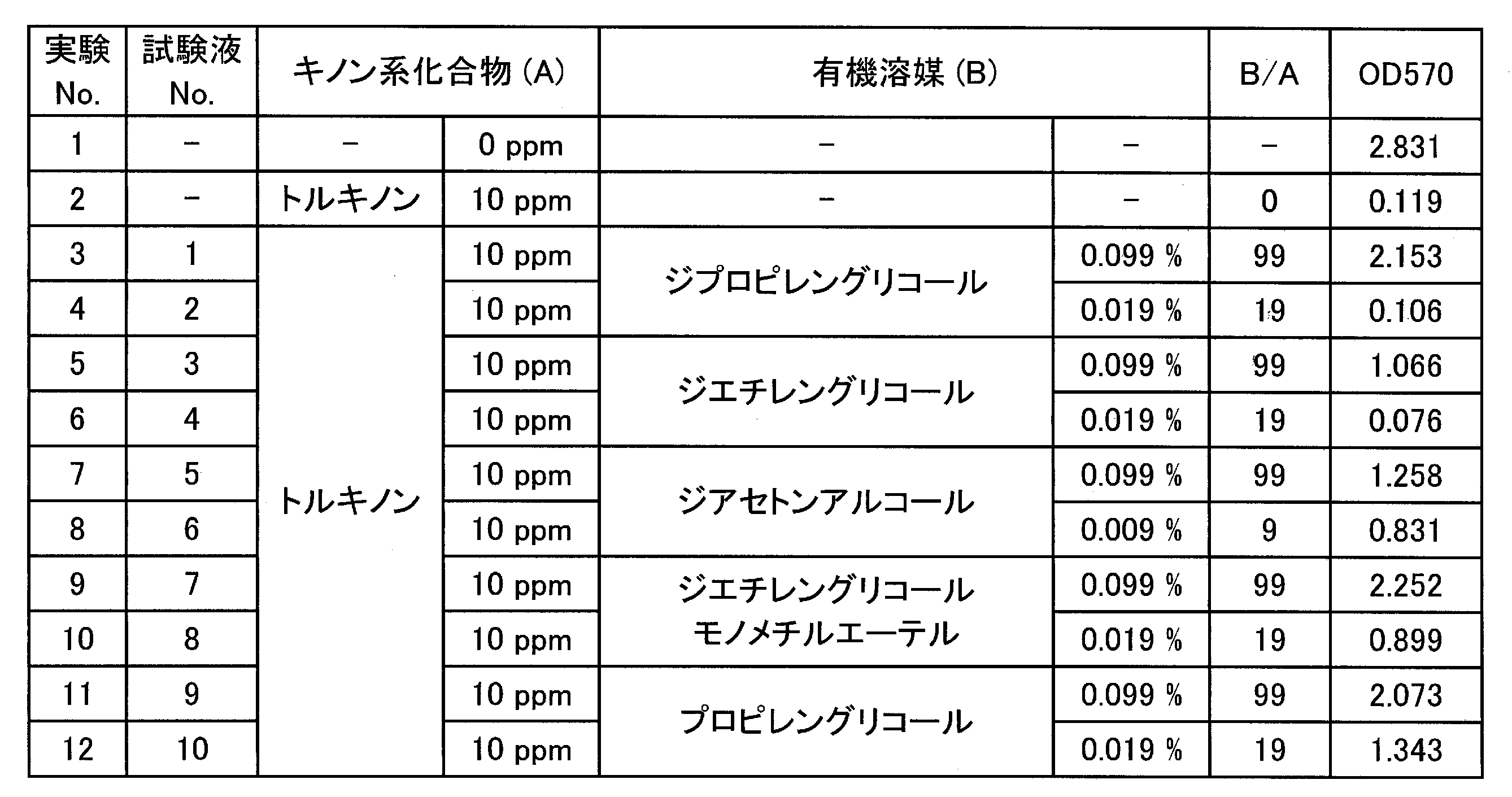

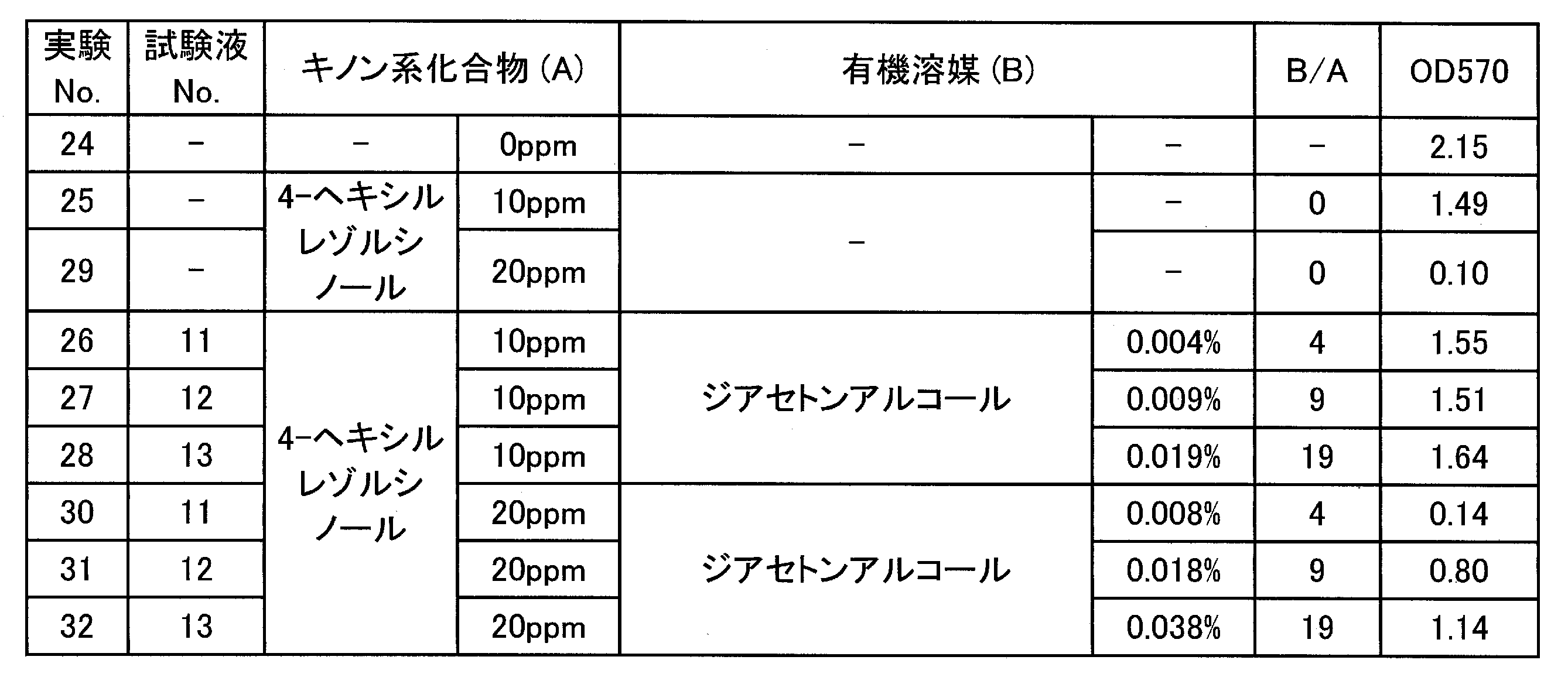
Claims (40)
- 水酸基又はアルキル基で置換されたヒドロキノン、水酸基又はアルキル基で置換されたp-ベンゾキノン、及びC1~C5アルキルレゾルシノールからなる群より選択される少なくとも1種の化合物を有効成分とする、バイオフィルム形成抑制剤。
- 前記水酸基又はアルキル基で置換されたヒドロキノン、及び前記水酸基又はアルキル基で置換されたp-ベンゾキノンからなる群より選択される少なくとも1種のキノン化合物を有効成分とする、請求項1記載のバイオフィルム形成抑制剤。
- 前記ヒドロキノンが式(I)で示される化合物であり、かつ前記p-ベンゾキノンが式(II)で示される化合物である、請求項1又は2記載のバイオフィルム形成抑制剤。

- 前記式(I)中、R1が水酸基又は炭素数1~4の直鎖もしくは分枝鎖アルキル基であり、かつR2、R3及びR4がともに水素であるか;R1がメチル基であり、R3が水素であり、かつR2及びR4は一方がメチル基で他方が水素、もしくはともにメチル基であるか;又は、R1、R2、R3及びR4がともにメチル基である、請求項3記載のバイオフィルム形成抑制剤。
- 前記式(II)中、R5が炭素数1~4の直鎖もしくは分枝鎖アルキル基であり、かつR6、R7及びR8がともに水素である、請求項3記載のバイオフィルム形成抑制剤。
- 前記化合物が、p-トルキノン、2-メチルヒドロキノン、エチルキノール、2-ブチルヒドロキノン、tert-ブチルヒドロキノン、2,6-ジメチルヒドロキノン、2,3-ジメチルヒドロキノン、2,3,5-トリメチルヒドロキノン、テトラメチルヒドロキノン、ヒドロキシヒドロキノン、3,5-ジメチルベンゾキノン及びtert-ブチルベンゾキノンからなる群より選択される少なくとも1種である、請求項1又は2記載のバイオフィルム形成抑制剤。
- 対象水中での前記キノン化合物の濃度が270ppm以下である、請求項2~6のいずれか1項記載のバイオフィルム形成抑制剤。
- 前記C1~C5アルキルレゾルシノールを有効成分とする、請求項1記載のバイオフィルム形成抑制剤。
- 前記C1~C5アルキルレゾルシノールが式(III)で示される化合物である、請求項1又は8記載のバイオフィルム形成抑制剤。
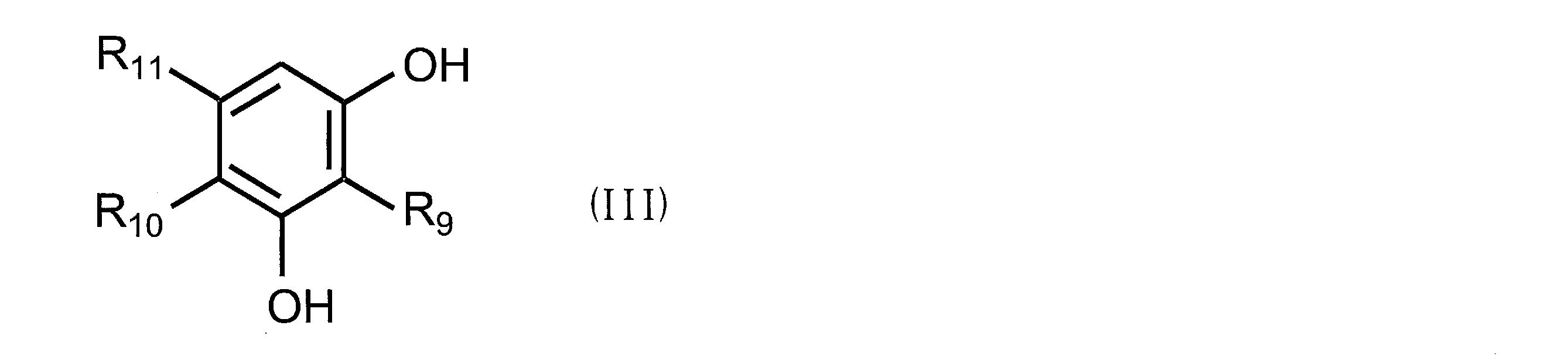
- R9、R10及びR11のいずれか1つが炭素数1~5の直鎖もしくは分枝鎖アルキル基であり、かつ残りがいずれも水素である、請求項9記載のバイオフィルム形成抑制剤。
- R9、R10及びR11のいずれか2つが炭素数1~5の直鎖アルキル基であり、かつ残りが水素である、請求項9記載のバイオフィルム形成抑制剤。
- 前記C1~C5アルキルレゾルシノールが、4-ブチルレゾルシノール、5-メチルレゾルシノール、5-ペンチルレゾルシノール、2-プロピルレゾルシノール、2,5-ジメチルレゾルシノール、2-メチルレゾルシノール、及び4-イソプロピルレゾルシノールからなる群より選択される少なくとも1種である、請求項1又は8記載のバイオフィルム形成抑制剤。
- 対象水中での前記C1~C5アルキルレゾルシノールの濃度が1400ppm以下である、請求項8~12のいずれか1項記載のバイオフィルム形成抑制剤。
- バイオフィルムの主要な原因微生物の生育阻害率が20%以下となる濃度の前記ヒドロキノン、前記p-ベンゾキノン、及び前記C1~C5アルキルレゾルシノールを有効成分とする、請求項1~13のいずれか1項記載のバイオフィルム形成抑制剤。
- 水酸基又はアルキル基で置換されたヒドロキノン、水酸基又はアルキル基で置換されたp-ベンゾキノン、及びC1~C5アルキルレゾルシノールからなる群より選択される少なくとも1種の化合物を対象水中に添加することを含む、バイオフィルム形成抑制方法。
- 前記水酸基又はアルキル基で置換されたヒドロキノン、及び前記水酸基又はアルキル基で置換されたp-ベンゾキノンからなる群より選択される少なくとも1種のキノン化合物を対象水中に添加することを含む、請求項15記載のバイオフィルム形成抑制方法。
- 前記ヒドロキノンが式(I)で示される化合物であり、かつ前記p-ベンゾキノンが式(II)で示される化合物である、請求項15又は16記載のバイオフィルム形成抑制方法
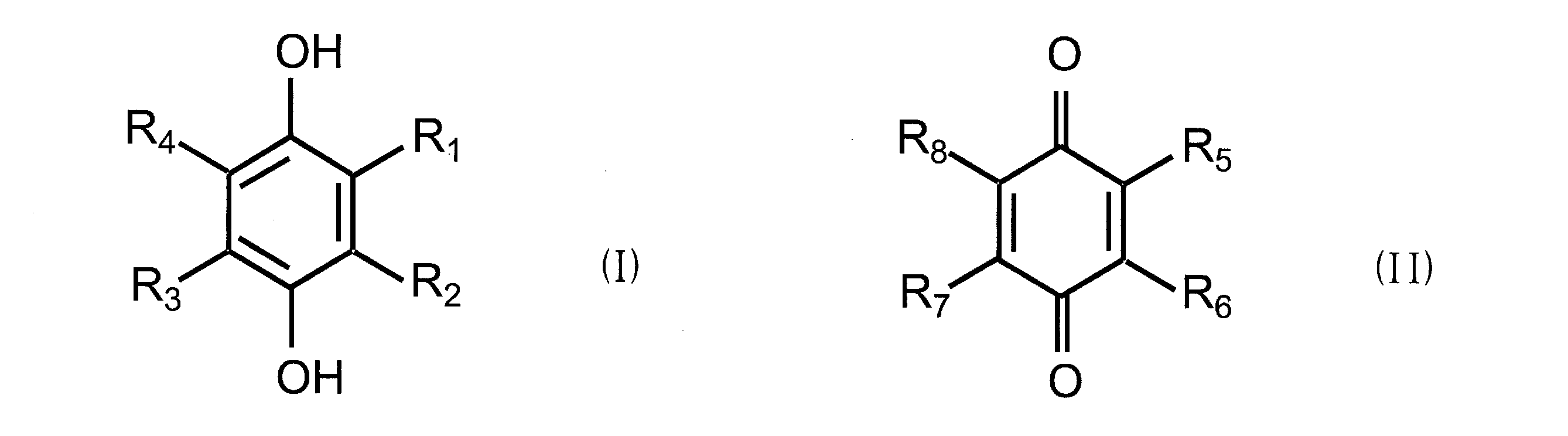
- 前記式(I)中、R1が水酸基又は炭素数1~4の直鎖もしくは分枝鎖アルキル基であり、かつR2、R3及びR4がともに水素であるか;R1がメチル基であり、R3が水素であり、かつR2及びR4は一方がメチル基で他方が水素、もしくはともにメチル基であるか;又は、R1がメチル基であり、R2、R3及びR4がともにメチル基である、請求項17記載のバイオフィルム形成抑制方法。
- 前記式(II)中、R5が炭素数1~4の直鎖もしくは分枝鎖アルキル基であり、かつR6、R7及びR8がともに水素である、請求項17記載のバイオフィルム形成抑制方法。
- 前記化合物が、p-トルキノン、2-メチルヒドロキノン、エチルキノール、2-ブチルヒドロキノン、tert-ブチルヒドロキノン、2,6-ジメチルヒドロキノン、2,3-ジメチルヒドロキノン、2,3,5-トリメチルヒドロキノン、テトラメチルヒドロキノン、ヒドロキシヒドロキノン、3,5-ジメチルベンゾキノン及びtert-ブチルベンゾキノンからなる群より選択される少なくとも1種である、請求項15又は16記載のバイオフィルム形成抑制方法。
- 前記キノン化合物が前記対象水中に270ppm以下の濃度で添加される、請求項16~20のいずれか1項記載のバイオフィルム形成抑制方法。
- 前記C1~C5アルキルレゾルシノールを対象水中に添加することを含む、請求項15記載のバイオフィルム形成抑制方法。
- 前記C1~C5アルキルレゾルシノールが式(III)で示される化合物である、請求項15又は22記載のバイオフィルム形成抑制方法。

- R9、R10及びR11のいずれか1つが炭素数1~5の直鎖もしくは分枝鎖アルキル基であり、かつ残りがいずれも水素である、請求項23記載のバイオフィルム形成抑制方法。
- R9、R10及びR11のいずれか2つが炭素数1~5の直鎖アルキル基であり、かつ残りが水素である、請求項23記載のバイオフィルム形成抑制方法。
- 前記C1~C5アルキルレゾルシノールが、4-ブチルレゾルシノール、5-メチルレゾルシノール、5-ペンチルレゾルシノール、2-プロピルレゾルシノール、2,5-ジメチルレゾルシノール、2-メチルレゾルシノール、及び4-イソプロピルレゾルシノールからなる群より選択される少なくとも1種である、請求項15又は22記載のバイオフィルム形成抑制方法。
- 前記C1~C5アルキルレゾルシノールが前記対象水中に1400ppm以下の濃度で添加される、請求項22~26のいずれか1項記載のバイオフィルム形成抑制方法。
- 前記ヒドロキノン、前記p-ベンゾキノン、及び前記C1~C5アルキルレゾルシノールからなる群より選択される少なくとも1種の化合物が、前記対象水中に、バイオフィルムの主要な原因微生物の生育阻害率が20%以下となる濃度で添加される、請求項15~27のいずれか1項記載のバイオフィルム形成抑制方法。
- 前記バイオフィルムが水冷式冷却塔におけるバイオフィルムである、請求項15~28のいずれか1項記載のバイオフィルム形成抑制方法。
- 水酸基又はアルキル基で置換されたヒドロキノン、水酸基又はアルキル基で置換されたp-ベンゾキノン、及びC1~C5アルキルレゾルシノールからなる群より選択される少なくとも1種の化合物の、バイオフィルム形成抑制のための使用。
- キノン系化合物とキレート剤とを含有する、バイオフィルム形成抑制用組成物。
- 前記キノン系化合物が、水酸基又はアルキル基で置換されたヒドロキノン、水酸基又はアルキル基で置換されたp-ベンゾキノン、及びC1~C5アルキルレゾルシノールからなる群より選択される少なくとも1種の化合物である、請求項31記載のバイオフィルム形成抑制用組成物。
- 前記キノン系化合物が式(I)、(II)及び(IV)で示される化合物からなる群より選択される少なくとも1種である、請求項31又は32記載のバイオフィルム形成抑制用組成物:
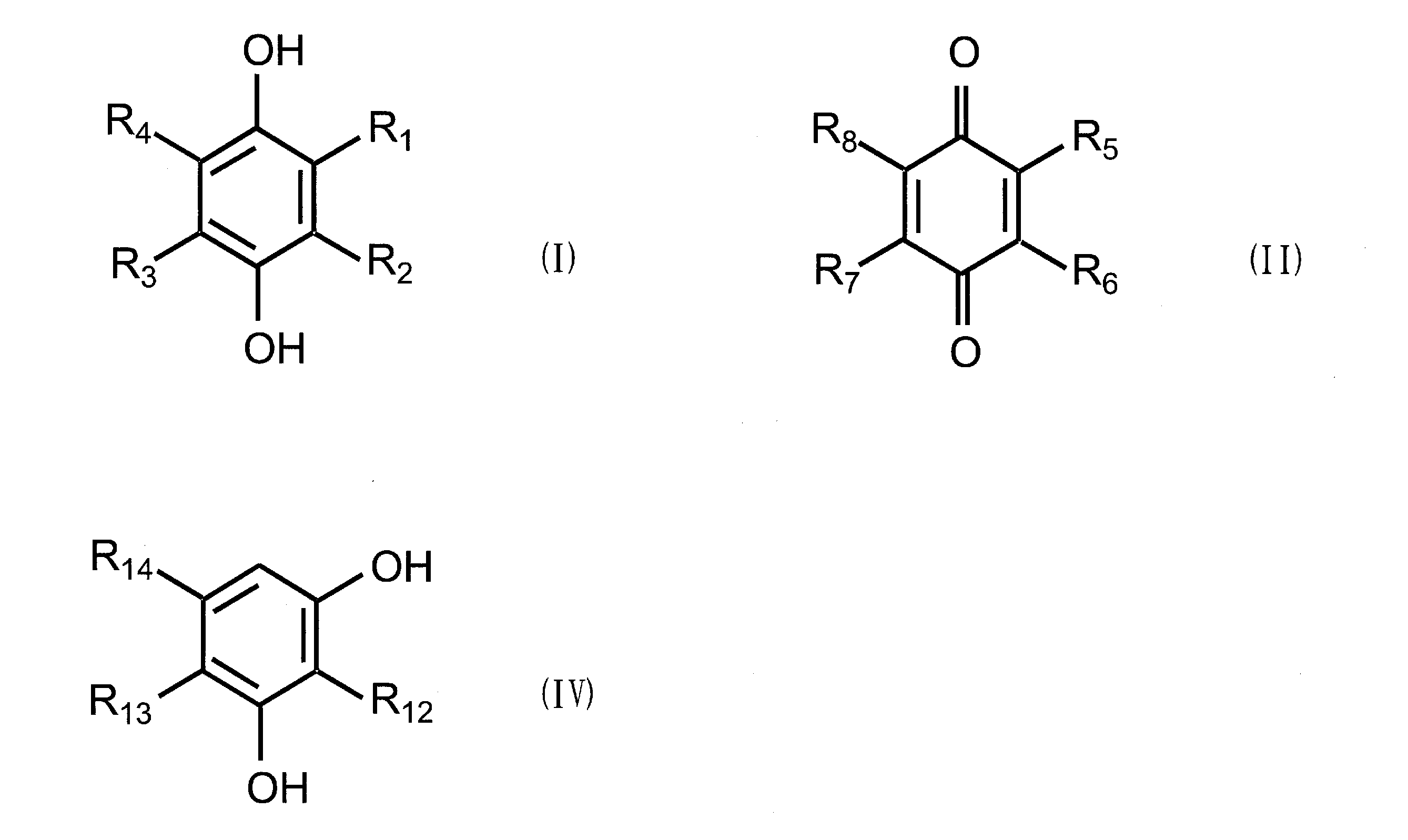
式(II)中、R5は、水酸基、又は炭素数1~4の直鎖もしくは分枝鎖アルキル基を表し、R6、R7及びR8は、それぞれ独立に水素又はメチル基を表し;
式(IV)中、R12、R13及びR14は、それぞれ独立に、水素、又は炭素数1~8の直鎖もしくは分枝鎖アルキル基を表し、ただし、R12、R13及びR14が同時に水素になることはない。) - 前記キノン系化合物100質量部に対して、前記キレート剤0.1~5000質量部を含有する、請求項31~33のいずれか1項記載のバイオフィルム形成抑制用組成物。
- 水冷式冷却塔の冷却水におけるバイオフィルム形成抑制用の組成物である、請求項31~34のいずれか1項記載のバイオフィルム形成抑制用組成物。
- キノン系化合物と有機溶媒とを含有する、バイオフィルム形成抑制用組成物。
- 前記キノン系化合物が、水酸基又はアルキル基で置換されたヒドロキノン、水酸基又はアルキル基で置換されたp-ベンゾキノン、及びC1~C5アルキルレゾルシノールからなる群より選択される少なくとも1種の化合物である、請求項36記載のバイオフィルム形成抑制用組成物。
- 前記キノン系化合物が式(I)、(II)及び(IV)で示される化合物からなる群より選択される少なくとも1種である、請求項36又は37記載のバイオフィルム形成抑制用組成物:
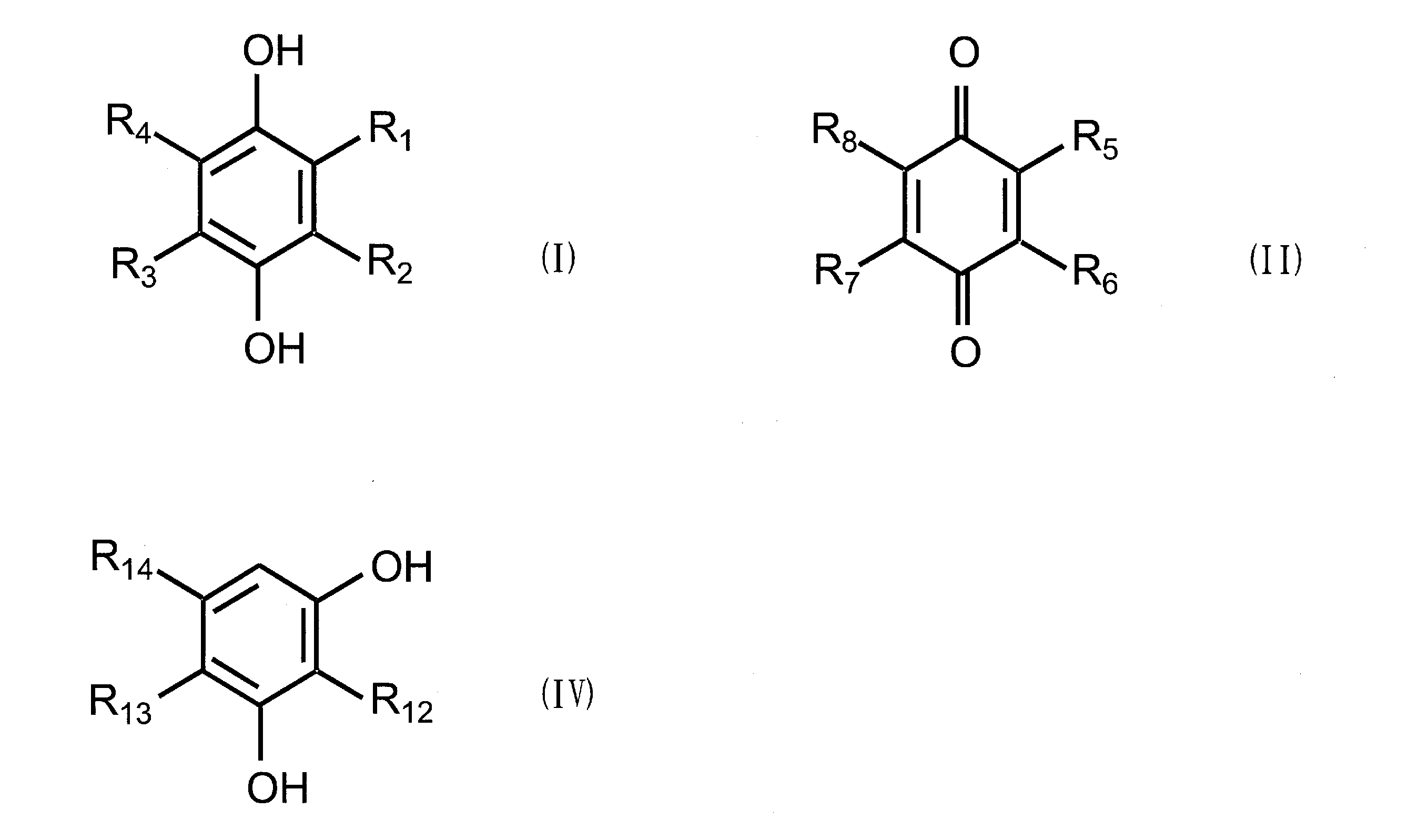
式(II)中、R5は、水酸基、又は炭素数1~4の直鎖もしくは分枝鎖アルキル基を表し、R6、R7及びR8は、それぞれ独立に水素又はメチル基を表し;
式(IV)中、R12、R13及びR14は、それぞれ独立に、水素、又は炭素数1~8の直鎖もしくは分枝鎖アルキル基を表し、ただし、R12、R13及びR14が同時に水素になることはない。) - 前記キノン系化合物に対する前記有機溶媒の質量比が500以下である、請求項36~38のいずれか1項記載のバイオフィルム形成抑制用組成物。
- 水冷式冷却塔の冷却水におけるバイオフィルム形成抑制用の組成物である、請求項36~39のいずれか1項記載のバイオフィルム形成抑制用組成物。
Priority Applications (2)
| Application Number | Priority Date | Filing Date | Title |
|---|---|---|---|
| US16/306,253 US20190124918A1 (en) | 2016-06-03 | 2017-05-30 | Biofilm formation inhibitor and biofilm formation inhibiting composition |
| CN201780034433.0A CN109219349A (zh) | 2016-06-03 | 2017-05-30 | 生物膜形成抑制剂及生物膜形成抑制用组合物 |
Applications Claiming Priority (8)
| Application Number | Priority Date | Filing Date | Title |
|---|---|---|---|
| JP2016-111614 | 2016-06-03 | ||
| JP2016111614A JP2017218389A (ja) | 2016-06-03 | 2016-06-03 | バイオフィルム形成抑制剤 |
| JP2016111611A JP6779041B2 (ja) | 2016-06-03 | 2016-06-03 | バイオフィルム形成抑制用組成物 |
| JP2016-111613 | 2016-06-03 | ||
| JP2016-111610 | 2016-06-03 | ||
| JP2016-111611 | 2016-06-03 | ||
| JP2016111610A JP6779040B2 (ja) | 2016-06-03 | 2016-06-03 | バイオフィルム形成抑制用組成物 |
| JP2016111613A JP2017218388A (ja) | 2016-06-03 | 2016-06-03 | バイオフィルム形成抑制剤 |
Publications (1)
| Publication Number | Publication Date |
|---|---|
| WO2017209125A1 true WO2017209125A1 (ja) | 2017-12-07 |
Family
ID=60477599
Family Applications (1)
| Application Number | Title | Priority Date | Filing Date |
|---|---|---|---|
| PCT/JP2017/020091 Ceased WO2017209125A1 (ja) | 2016-06-03 | 2017-05-30 | バイオフィルム形成抑制剤及びバイオフィルム形成抑制用組成物 |
Country Status (3)
| Country | Link |
|---|---|
| US (1) | US20190124918A1 (ja) |
| CN (1) | CN109219349A (ja) |
| WO (1) | WO2017209125A1 (ja) |
Families Citing this family (2)
| Publication number | Priority date | Publication date | Assignee | Title |
|---|---|---|---|---|
| JP7634346B2 (ja) * | 2019-05-10 | 2025-02-21 | 花王株式会社 | 水系システム用バイオフィルム除去用組成物 |
| KR102701293B1 (ko) * | 2022-09-14 | 2024-08-30 | 영남대학교 산학협력단 | 다이메틸하이드로퀴논을 유효성분으로 포함하는 비브리오균 바이오필름 형성 억제용 조성물 |
Citations (5)
| Publication number | Priority date | Publication date | Assignee | Title |
|---|---|---|---|---|
| JPH10245308A (ja) * | 1997-03-05 | 1998-09-14 | Nippon Soda Co Ltd | 非さらし粉系ヌメリ防除剤 |
| JP2004196677A (ja) * | 2002-12-17 | 2004-07-15 | National Institute Of Advanced Industrial & Technology | 海洋性付着細菌用殺菌剤 |
| JP2008535814A (ja) * | 2005-03-23 | 2008-09-04 | シントピックス リミティド | 抗微生物剤 |
| JP2014176850A (ja) * | 2014-06-17 | 2014-09-25 | Aquas Corp | 開放循環冷却水系の処理方法 |
| JP2015526388A (ja) * | 2012-06-06 | 2015-09-10 | ビーエーエスエフ ソシエタス・ヨーロピアBasf Se | 殺生物剤としてのバナジウム含有粒子の使用 |
Family Cites Families (2)
| Publication number | Priority date | Publication date | Assignee | Title |
|---|---|---|---|---|
| CA2144021A1 (en) * | 1994-05-10 | 1995-11-11 | V. Gerold Luss | Non-toxic, non-corrosive microbicidal composition |
| GB0724278D0 (en) * | 2007-12-13 | 2008-01-30 | Syntopix Ltd | uses for antimicrobial agents |
-
2017
- 2017-05-30 WO PCT/JP2017/020091 patent/WO2017209125A1/ja not_active Ceased
- 2017-05-30 CN CN201780034433.0A patent/CN109219349A/zh active Pending
- 2017-05-30 US US16/306,253 patent/US20190124918A1/en not_active Abandoned
Patent Citations (5)
| Publication number | Priority date | Publication date | Assignee | Title |
|---|---|---|---|---|
| JPH10245308A (ja) * | 1997-03-05 | 1998-09-14 | Nippon Soda Co Ltd | 非さらし粉系ヌメリ防除剤 |
| JP2004196677A (ja) * | 2002-12-17 | 2004-07-15 | National Institute Of Advanced Industrial & Technology | 海洋性付着細菌用殺菌剤 |
| JP2008535814A (ja) * | 2005-03-23 | 2008-09-04 | シントピックス リミティド | 抗微生物剤 |
| JP2015526388A (ja) * | 2012-06-06 | 2015-09-10 | ビーエーエスエフ ソシエタス・ヨーロピアBasf Se | 殺生物剤としてのバナジウム含有粒子の使用 |
| JP2014176850A (ja) * | 2014-06-17 | 2014-09-25 | Aquas Corp | 開放循環冷却水系の処理方法 |
Also Published As
| Publication number | Publication date |
|---|---|
| US20190124918A1 (en) | 2019-05-02 |
| CN109219349A (zh) | 2019-01-15 |
Similar Documents
| Publication | Publication Date | Title |
|---|---|---|
| Xu et al. | Advances in the treatment of problematic industrial biofilms | |
| CN107072216B (zh) | 含有季铵化合物的消毒剂组合物 | |
| EP1017427A1 (en) | Chelators in combination with biocides: treatment of microbially induced biofilm and corrosion | |
| AU2008279285A1 (en) | Methods of and formulations for reducing and inhibiting the growth of the concentration of microbes in water-based fluids and systems used with them | |
| Kim et al. | Tributyl tetradecyl phosphonium chloride for biofouling control in reverse osmosis processes | |
| Araújo et al. | Antimicrobial resistance to disinfectants in biofilms | |
| US10357034B2 (en) | Cleaning liquid | |
| JP7334174B2 (ja) | 膜からバイオフィルムおよび胞子を低減するための組成物および方法 | |
| WO2021005897A1 (ja) | バイオフィルム処理剤及びバイオフィルム処理方法 | |
| JP6787828B2 (ja) | バイオフィルム形成抑制用組成物 | |
| CN110024809A (zh) | 储存稳定的消毒剂浓缩物及其应用 | |
| JP5095308B2 (ja) | 殺菌剤組成物 | |
| US20190124918A1 (en) | Biofilm formation inhibitor and biofilm formation inhibiting composition | |
| JP6779040B2 (ja) | バイオフィルム形成抑制用組成物 | |
| JP5795575B2 (ja) | 殺生剤としてのハロゲン化アミドによるバイオフィルムの制御 | |
| JP2017218388A (ja) | バイオフィルム形成抑制剤 | |
| KR101995351B1 (ko) | 막 세정용 비산화성 살균제 및 이를 이용한 수처리 방법과 막 세정방법 | |
| JP2015124361A (ja) | バイオフィルム除去剤およびバイオフィルムの除去方法 | |
| JP6842338B2 (ja) | バイオフィルム形成抑制用組成物 | |
| JP6779041B2 (ja) | バイオフィルム形成抑制用組成物 | |
| JP2017218390A (ja) | バイオフィルム形成抑制剤 | |
| JP2017218389A (ja) | バイオフィルム形成抑制剤 | |
| JP2018168095A (ja) | バイオフィルム形成抑制用組成物 | |
| JP2018167182A (ja) | バイオフィルム形成抑制剤 | |
| JP2018168093A (ja) | バイオフィルム形成抑制剤 |
Legal Events
| Date | Code | Title | Description |
|---|---|---|---|
| 121 | Ep: the epo has been informed by wipo that ep was designated in this application |
Ref document number: 17806678 Country of ref document: EP Kind code of ref document: A1 |
|
| NENP | Non-entry into the national phase |
Ref country code: DE |
|
| 122 | Ep: pct application non-entry in european phase |
Ref document number: 17806678 Country of ref document: EP Kind code of ref document: A1 |