WO2017185089A2 - Cancer immunotherapy by immune activation or immune modulation via globo series antigens - Google Patents
Cancer immunotherapy by immune activation or immune modulation via globo series antigens Download PDFInfo
- Publication number
- WO2017185089A2 WO2017185089A2 PCT/US2017/029138 US2017029138W WO2017185089A2 WO 2017185089 A2 WO2017185089 A2 WO 2017185089A2 US 2017029138 W US2017029138 W US 2017029138W WO 2017185089 A2 WO2017185089 A2 WO 2017185089A2
- Authority
- WO
- WIPO (PCT)
- Prior art keywords
- cancer
- globo
- globo series
- series antigens
- obi
- Prior art date
- Legal status (The legal status is an assumption and is not a legal conclusion. Google has not performed a legal analysis and makes no representation as to the accuracy of the status listed.)
- Ceased
Links
Classifications
-
- A—HUMAN NECESSITIES
- A61—MEDICAL OR VETERINARY SCIENCE; HYGIENE
- A61K—PREPARATIONS FOR MEDICAL, DENTAL OR TOILETRY PURPOSES
- A61K39/00—Medicinal preparations containing antigens or antibodies
- A61K39/0005—Vertebrate antigens
- A61K39/0011—Cancer antigens
- A61K39/001169—Tumor associated carbohydrates
- A61K39/001173—Globo-H
-
- G—PHYSICS
- G01—MEASURING; TESTING
- G01N—INVESTIGATING OR ANALYSING MATERIALS BY DETERMINING THEIR CHEMICAL OR PHYSICAL PROPERTIES
- G01N33/00—Investigating or analysing materials by specific methods not covered by groups G01N1/00 - G01N31/00
- G01N33/48—Biological material, e.g. blood, urine; Haemocytometers
- G01N33/50—Chemical analysis of biological material, e.g. blood, urine; Testing involving biospecific ligand binding methods; Immunological testing
- G01N33/53—Immunoassay; Biospecific binding assay; Materials therefor
- G01N33/575—Immunoassay; Biospecific binding assay; Materials therefor for cancer
- G01N33/57515—Immunoassay; Biospecific binding assay; Materials therefor for cancer of the breast
-
- A—HUMAN NECESSITIES
- A61—MEDICAL OR VETERINARY SCIENCE; HYGIENE
- A61K—PREPARATIONS FOR MEDICAL, DENTAL OR TOILETRY PURPOSES
- A61K39/00—Medicinal preparations containing antigens or antibodies
- A61K39/0005—Vertebrate antigens
- A61K39/0011—Cancer antigens
-
- A—HUMAN NECESSITIES
- A61—MEDICAL OR VETERINARY SCIENCE; HYGIENE
- A61K—PREPARATIONS FOR MEDICAL, DENTAL OR TOILETRY PURPOSES
- A61K39/00—Medicinal preparations containing antigens or antibodies
- A61K39/0005—Vertebrate antigens
- A61K39/0011—Cancer antigens
- A61K39/00118—Cancer antigens from embryonic or fetal origin
-
- A—HUMAN NECESSITIES
- A61—MEDICAL OR VETERINARY SCIENCE; HYGIENE
- A61K—PREPARATIONS FOR MEDICAL, DENTAL OR TOILETRY PURPOSES
- A61K39/00—Medicinal preparations containing antigens or antibodies
- A61K39/39—Medicinal preparations containing antigens or antibodies characterised by the immunostimulating additives, e.g. chemical adjuvants
-
- A—HUMAN NECESSITIES
- A61—MEDICAL OR VETERINARY SCIENCE; HYGIENE
- A61P—SPECIFIC THERAPEUTIC ACTIVITY OF CHEMICAL COMPOUNDS OR MEDICINAL PREPARATIONS
- A61P35/00—Antineoplastic agents
-
- A—HUMAN NECESSITIES
- A61—MEDICAL OR VETERINARY SCIENCE; HYGIENE
- A61P—SPECIFIC THERAPEUTIC ACTIVITY OF CHEMICAL COMPOUNDS OR MEDICINAL PREPARATIONS
- A61P35/00—Antineoplastic agents
- A61P35/04—Antineoplastic agents specific for metastasis
-
- G—PHYSICS
- G01—MEASURING; TESTING
- G01N—INVESTIGATING OR ANALYSING MATERIALS BY DETERMINING THEIR CHEMICAL OR PHYSICAL PROPERTIES
- G01N33/00—Investigating or analysing materials by specific methods not covered by groups G01N1/00 - G01N31/00
- G01N33/48—Biological material, e.g. blood, urine; Haemocytometers
- G01N33/50—Chemical analysis of biological material, e.g. blood, urine; Testing involving biospecific ligand binding methods; Immunological testing
- G01N33/53—Immunoassay; Biospecific binding assay; Materials therefor
- G01N33/575—Immunoassay; Biospecific binding assay; Materials therefor for cancer
- G01N33/57557—Immunoassay; Biospecific binding assay; Materials therefor for cancer of other specific parts of the body, e.g. brain
-
- G—PHYSICS
- G01—MEASURING; TESTING
- G01N—INVESTIGATING OR ANALYSING MATERIALS BY DETERMINING THEIR CHEMICAL OR PHYSICAL PROPERTIES
- G01N33/00—Investigating or analysing materials by specific methods not covered by groups G01N1/00 - G01N31/00
- G01N33/48—Biological material, e.g. blood, urine; Haemocytometers
- G01N33/50—Chemical analysis of biological material, e.g. blood, urine; Testing involving biospecific ligand binding methods; Immunological testing
- G01N33/53—Immunoassay; Biospecific binding assay; Materials therefor
- G01N33/575—Immunoassay; Biospecific binding assay; Materials therefor for cancer
- G01N33/5758—Immunoassay; Biospecific binding assay; Materials therefor for cancer involving compounds serving as markers for tumours, cancers or neoplasias, e.g. cellular determinants, receptors, heat shock/stress proteins, A-protein, oligosaccharides or metabolites
- G01N33/5759—Immunoassay; Biospecific binding assay; Materials therefor for cancer involving compounds serving as markers for tumours, cancers or neoplasias, e.g. cellular determinants, receptors, heat shock/stress proteins, A-protein, oligosaccharides or metabolites involving compounds localised on the membrane of tumour or cancer cells
-
- A—HUMAN NECESSITIES
- A61—MEDICAL OR VETERINARY SCIENCE; HYGIENE
- A61K—PREPARATIONS FOR MEDICAL, DENTAL OR TOILETRY PURPOSES
- A61K39/00—Medicinal preparations containing antigens or antibodies
- A61K2039/545—Medicinal preparations containing antigens or antibodies characterised by the dose, timing or administration schedule
-
- A—HUMAN NECESSITIES
- A61—MEDICAL OR VETERINARY SCIENCE; HYGIENE
- A61K—PREPARATIONS FOR MEDICAL, DENTAL OR TOILETRY PURPOSES
- A61K39/00—Medicinal preparations containing antigens or antibodies
- A61K2039/555—Medicinal preparations containing antigens or antibodies characterised by a specific combination antigen/adjuvant
- A61K2039/55511—Organic adjuvants
- A61K2039/55577—Saponins; Quil A; QS21; ISCOMS
-
- A—HUMAN NECESSITIES
- A61—MEDICAL OR VETERINARY SCIENCE; HYGIENE
- A61K—PREPARATIONS FOR MEDICAL, DENTAL OR TOILETRY PURPOSES
- A61K39/00—Medicinal preparations containing antigens or antibodies
- A61K2039/57—Medicinal preparations containing antigens or antibodies characterised by the type of response, e.g. Th1, Th2
- A61K2039/575—Medicinal preparations containing antigens or antibodies characterised by the type of response, e.g. Th1, Th2 humoral response
-
- A—HUMAN NECESSITIES
- A61—MEDICAL OR VETERINARY SCIENCE; HYGIENE
- A61K—PREPARATIONS FOR MEDICAL, DENTAL OR TOILETRY PURPOSES
- A61K39/00—Medicinal preparations containing antigens or antibodies
- A61K2039/60—Medicinal preparations containing antigens or antibodies characteristics by the carrier linked to the antigen
- A61K2039/6031—Proteins
- A61K2039/6081—Albumin; Keyhole limpet haemocyanin [KLH]
-
- A—HUMAN NECESSITIES
- A61—MEDICAL OR VETERINARY SCIENCE; HYGIENE
- A61K—PREPARATIONS FOR MEDICAL, DENTAL OR TOILETRY PURPOSES
- A61K39/00—Medicinal preparations containing antigens or antibodies
- A61K2039/80—Vaccine for a specifically defined cancer
- A61K2039/812—Breast
-
- A—HUMAN NECESSITIES
- A61—MEDICAL OR VETERINARY SCIENCE; HYGIENE
- A61K—PREPARATIONS FOR MEDICAL, DENTAL OR TOILETRY PURPOSES
- A61K39/00—Medicinal preparations containing antigens or antibodies
- A61K2039/80—Vaccine for a specifically defined cancer
- A61K2039/892—Reproductive system [uterus, ovaries, cervix, testes]
-
- A—HUMAN NECESSITIES
- A61—MEDICAL OR VETERINARY SCIENCE; HYGIENE
- A61K—PREPARATIONS FOR MEDICAL, DENTAL OR TOILETRY PURPOSES
- A61K2300/00—Mixtures or combinations of active ingredients, wherein at least one active ingredient is fully defined in groups A61K31/00 - A61K41/00
-
- A—HUMAN NECESSITIES
- A61—MEDICAL OR VETERINARY SCIENCE; HYGIENE
- A61K—PREPARATIONS FOR MEDICAL, DENTAL OR TOILETRY PURPOSES
- A61K45/00—Medicinal preparations containing active ingredients not provided for in groups A61K31/00 - A61K41/00
- A61K45/06—Mixtures of active ingredients without chemical characterisation, e.g. antiphlogistics and cardiaca
-
- G—PHYSICS
- G01—MEASURING; TESTING
- G01N—INVESTIGATING OR ANALYSING MATERIALS BY DETERMINING THEIR CHEMICAL OR PHYSICAL PROPERTIES
- G01N2400/00—Assays, e.g. immunoassays or enzyme assays, involving carbohydrates
- G01N2400/10—Polysaccharides, i.e. having more than five saccharide radicals attached to each other by glycosidic linkages; Derivatives thereof, e.g. ethers, esters
- G01N2400/38—Heteroglycans, i.e. polysaccharides having more than one sugar residue in the main chain in either alternating or less regular sequence, e.g. gluco- or galactomannans, Konjac gum, Locust bean gum or Guar gum
-
- G—PHYSICS
- G01—MEASURING; TESTING
- G01N—INVESTIGATING OR ANALYSING MATERIALS BY DETERMINING THEIR CHEMICAL OR PHYSICAL PROPERTIES
- G01N2800/00—Detection or diagnosis of diseases
- G01N2800/52—Predicting or monitoring the response to treatment, e.g. for selection of therapy based on assay results in personalised medicine; Prognosis
Definitions
- This invention relates to methods for immunotherapy of a cancer patient comprising administering to the patient vaccines against Globo series antigens.
- aspects and embodiments of the present disclosure provides methods for treating a subject afflicted with cancer by immunotherapy comprising administering to the subject in need thereof Globo series antigens targeting immunogenic agent (e.g., OBI-822) useful for inducing/modulating an immune response (IgG and/or IgM), said method comprising improving the survival (including overall survival and/or progression free survival) by modulating Globo series antigens interaction, such that survival of the subject is improved.
- the Globo series antigens targeting immunogenic agent is, for example, OBI-822. Please referred to our previous PCT patent application (publication number: WO2015159118A2 and WO2016044326A1).
- immunogenic/therapeutic compositions including Globo H-KLH glycoconjugates (OBI-822) and/or therapeutic adjuvants (OBI-821/OBI-834) as well as methods of making and using the same to treat proliferative diseases such as cancer.
- the therapeutic compositions are in part envisaged to act as cancer vaccines for boosting the body's natural ability to protect itself, through the immune system from dangers posed by damaged or abnormal cells such as cancer cells.
- the Immunogenic agent can include OBI-822 and related variants.
- the immune response can include: IgG (including subclasses IgGl, IgG2, IgG3, IgG4), IgM, CTLs (cytotoxic lymphocyte) directed to Globo H series antigens/tumor.
- IgG including subclasses IgGl, IgG2, IgG3, IgG4
- IgM cytotoxic lymphocyte
- clinically meaningful benefits can include modulations in: Progression free survival; overall survival; (well tolerated and/or no major safety concerns); objective response rate; time to progression; disease free survival; tumor response; improvements in quality of life; reduction in size of solid tumors, and/or reduction in tumor associated antigens (primarily or including Globo H).
- administration regimen can include: Administer vaccine two or more times (e.g., 3, 4, 5, 6, 7, 8, 9, 10 or more times); adjusting time interval and/or dosing amount regimen between two successive administrations; adjusting routes of administration and/or altering/alternating injection sites/locations of administration or ANY combination of any of the above, whereby each administration increases the immune response [e.g. titer - IgG and/or IgM Ab amount, and/or increases affinity/avidity; induction of Abs to less immunogenic sites of Globo H portion of the Globo H antigen-conjugate (e.g., portions of Globo H antigen that may be less accessible in the conjugate)].
- the injections can be altered and/or supplemented by the addition of immune response booster agents.
- modulation of Globo series antigens interaction can include:
- OBI-822 Active cancer immunotherapy induces ADCC and CDC for tumor killing. Globo H-ceramide depletion by OBI-822 effectively blocks TRAX-dependent angiogenesis and achieves tumor regression. Tumor- secreted soluble factors bind to their respective receptors on endothelial cells, trigger phospholipase C (PLC) activation and intracellular calcium release, and promote proliferation, migration, and tube formation of endothelial cells. PLC serves as an "early generator" of second messengers, driving early stages of angiogenesis. PLC activity is regulated by several binding partners, including translin-associated factor X (TRAX), which blocks PLCpi activity.
- TRAX translin-associated factor X
- the molecular mechanism of this event involves the binding of Globo-H ceramide to TRAX with consequent release and activation of PLCpi.
- OBI-822 depletes Globo H-ceramide, which in turns increases Notch 1 degradation, blocking the tumor immunosuppression effect, leading to tumor regression.
- the Notch signaling pathway is an evolutionarily conserved cell signaling system in most organisms, and it can regulate cell proliferation, differentiation, apoptosis, and survival.
- the regulation of Notch 1 is controlled by the E-protein transcription factor E2A and its natural inhibitor ID3. It is degraded by ubiquitination though E3 ubiquitin ligase, ITCH.
- Globo-H ceramide could inhibit their proliferation and cytokine or immunoglobulin secretion. Globo-H ceramide could induce immunosuppression which involved inhibition of Notch 1 signaling through the induction of ID3 and EGR2/3 accompanied ITCH expression.
- FAK Focal adhesion kinase
- Figure 9 showed there was a high anti-KLH IgG immune response after patients received the injections of OBI-822 vaccine.
- Figure 10 illustrated the Negative Control (Patient No: 065) with ovarian cancer clinical trial of OBI-822 Treatment.
- Figure 11 illustrated the Stage III Ovarian Cancer (Patient No: 035) with ovarian cancer clinical trial of OBI-822 Treatment.
- Figure 12 illustrated the Stage IV Fallopian Tube Cancer (Patient No: 041) with ovarian cancer clinical trial of OBI-822 Treatment.
- Figure 13 illustrated the Stage III Ovarian Cancer (Patient No: 060) with ovarian cancer clinical trial of OBI-822 Treatment.
- Figure 14 illustrated the procedure of Investigational Drugs Mixing.
- the present invention relates to methods for immunotherapy of a subj ect afflicted with diseases such as cancer or an infectious disease, which methods comprise administering to the subject a composition comprising a therapeutically effective amount of a compound or agent that potentiates an endogenous immune response, either stimulating the activation of the endogenous response or inhibiting the suppression of the endogenous response. More specifically, this disclosure provides methods for potentiating an endogenous immune response in a subject afflicted with cancer so as to thereby treat the patient, which method comprises administering to the subject a therapeutically effective amount of an immunogenic agent.
- administering can include the following features: 1) Administer vaccine two or more times (e.g., 3, 4, 5, 6, 7, 8, 9, 10 or more times); 2) Each administration increases Immune Response (see above) [titer - IgG and/or IgM Ab amount, and/or increases affinity/avidity; induction of Abs to less immunogenic sites of Globo H portion of the Globo H antigen-conjugate (e.g., portions of Globo H antigen that may be less accessible in the conjugate)].
- treatment refers to clinical intervention in an attempt to alter the natural course of the individual or cell being treated, and can be performed either for prophylaxis or during the course of clinical pathology. Desirable effects of treatment include preventing occurrence or recurrence of disease, alleviation of symptoms, diminishment of any direct or indirect pathological consequences of the disease, preventing or decreasing inflammation and/or tissue/organ damage, decreasing the rate of disease progression, amelioration or palliation of the disease state, and remission or improved prognosis.
- antibodies of the invention are used to delay development of a disease or disorder.
- an “effective amount” refers to an amount effective, at dosages and for periods of time necessary, to achieve the desired therapeutic or prophylactic result.
- a "therapeutically effective amount" of a substance/molecule of the invention may vary according to factors such as the disease state, age, sex, and weight of the individual, and the ability of the substance/molecule, to elicit a desired response in the individual.
- a therapeutically effective amount is also one in which any toxic or detrimental effects of the substance/molecule are outweighed by the therapeutically beneficial effects.
- a “prophylactically effective amount” refers to an amount effective, at dosages and for periods of time necessary, to achieve the desired prophylactic result. Typically but not necessarily, since a prophylactic dose is used in subjects prior to or at an earlier stage of disease, the prophylactically effective amount would be less than the therapeutically effective amount.
- Toxicity Criteria Version 4, developed by the Cancer Therapy Evaluation Program at the National Cancer Institute.
- the criteria for unacceptable toxicities should include any > Grade 4 toxicity, with the exception of local skin reactions, fever, chilling, sweats, urticaria, and/or pruritis since these are common side effects of antibody/adjuvant administration, are reversible, and controlled by supportive management.
- immune complex disease as manifested by skin, joint, renal, or other manifestations could occur, but these should be rare in the absence of prior exposure to mouse protein. These will be an indication to stop therapy in the affected subjects, but accrual of new subjects may continue.
- An adverse event is any physical or clinical change or disease experienced by the subject from the date of randomization and up to two years from randomization for subjects continuing in the follow up period, whether or not considered related to the use of the investigational drug. This includes the onset of new illness and the exacerbation of the preexisting condition. For subjects who withdraw treatment during the treatment period, adverse events should be recorded through 28 days after the last administration of study treatment (OBI-822/OBI-821 or Control).
- Antibody (Ab), “Antibodies” (Abs) and “immunoglobulins” (Igs) are glycoproteins having the same structural characteristics. While antibodies exhibit binding specificity to a specific antigen, immunoglobulins include both antibodies and other antibody - like molecules which generally lack antigen specificity. Polypeptides of the latter kind are, for example, produced at low levels by the lymph system and at increased levels by myelomas.
- antibody and “immunoglobulin” are used interchangeably in the broadest sense and include monoclonal antibodies (e.g., full length or intact monoclonal antibodies), polyclonal antibodies, monovalent, multivalent antibodies, multispecific antibodies (e.g., bispecific antibodies so long as they exhibit the desired biological activity) and may also include certain antibody fragments (as described in greater detail herein).
- An antibody can be chimeric, human, humanized and/or affinity matured.
- variable refers to the fact that certain portions of the variable domains differ extensively in sequence among antibodies and are used in the binding and specificity of each particular antibody for its particular antigen. However, the variability is not evenly distributed throughout the variable domains of antibodies. It is concentrated in three segments called complementarity-determining regions (CDRs) or hypervariable regions both in the light- chain and the heavy-chain variable domains. The more highly conserved portions of variable domains are called the framework (FR).
- CDRs complementarity-determining regions
- FR framework
- the variable domains of native heavy and light chains each comprise four FR regions, largely adopting a beta-sheet configuration, connected by three CDRs, which form loops connecting, and in some cases forming part of, the beta-sheet structure.
- the CDRs in each chain are held together in close proximity by the FR regions and, with the CDRs from the other chain, contribute to the formation of the antigen-binding site of antibodies (see Kabat et al, Sequences of Proteins of Immunological Interest, Fifth Edition, National Institute of Health, Bethesda, Md. (1991)).
- the constant domains are not involved directly in binding an antibody to an antigen, but exhibit various effector functions, such as participation of the antibody in antibody-dependent cellular toxicity.
- Papain digestion of antibodies produces two identical antigen-binding fragments, called "Fab" fragments, each with a single antigen-binding site, and a residual "Fc" fragment, whose name reflects its ability to crystallize readily.
- Pepsin treatment yields an F(ab' )2 fragment that has two antigen- combining sites and is still capable of cross-linking antigen.
- Fv is the minimum antibody fragment which contains a complete antigen- recognition and -binding site. In a two-chain Fv species, this region consists of a dimer of one heavy- and one light-chain variable domain in tight, non-covalent association. In a single-chain Fv species, one heavy- and one light-chain variable domain can be covalently linked by a flexible peptide linker such that the light and heavy chains can associate in a "dimeric" structure analogous to that in a two-chain Fv species. It is in this configuration that the three CDRs of each variable domain interact to define an antigen-binding site on the surface of the VH-VL dimer. Collectively, the six CDRs confer antigen-binding specificity to the antibody. However, even a single variable domain (or half of an Fv comprising only three CDRs specific for an antigen) has the ability to recognize and bind antigen, although at a lower affinity than the entire binding site.
- the Fab fragment also contains the constant domain of the light chain and the first constant domain (CHI) of the heavy chain.
- Fab' fragments differ from Fab fragments by the addition of a few residues at the carboxy terminus of the heavy chain CHI domain including one or more cysteines from the antibody hinge region.
- Fab' -SH is the designation herein for
- the "light chains" of antibodies (immunoglobulins) from any vertebrate species can be assigned to one of two clearly distinct types, called kappa ( ⁇ ) and lambda ( ⁇ ), based on the amino acid sequences of their constant domains.
- antibodies can be assigned to different classes.
- immunoglobulins There are five major classes of immunoglobulins: IgA, IgD, IgE, IgG and IgM, and several of these may be further divided into subclasses (isotypes), e.g., IgGl, IgG2, IgG3, IgG4, IgAl, and IgA2.
- the heavy chain constant domains that correspond to the different classes of immunoglobulins are called ⁇ , ⁇ , ⁇ , ⁇ , and ⁇ , respectively.
- An antibody may be part of a larger fusion molecule, formed by covalent or non-covalent association of the antibody with one or more other proteins or peptides.
- isolated antibody can include an “isolated” antibody is one which has been identified and separated and/or recovered from a component of its natural environment. Contaminant components of its natural environment are materials which would interfere with research, diagnostic or therapeutic uses for the antibody, and may include enzymes, hormones, and other proteinaceous or nonproteinaceous solutes.
- the antibody will be purified (1) to greater than 95% by weight of antibody as determined by, for example, the Lowry method, and in some embodiments more than 99% by weight, (2) to a degree sufficient to obtain at least 15 residues of N-terminal or internal amino acid sequence by use of, for example, a spinning cup sequenator, or (3) to homogeneity by SDS-PAGE under reducing or nonreducing conditions using, for example, Coomassie blue or silver stain.
- Isolated antibody includes the antibody in situ within recombinant cells since at least one component of the antibody's natural environment will not be present. Ordinarily, however, isolated antibody will be prepared by at least one purification step.
- mAB monoclonal antibody
- mAB monoclonal antibody
- Such monoclonal antibody typically includes an antibody comprising a polypeptide sequence that binds a target, wherein the target-binding polypeptide sequence was obtained by a process that includes the selection of a single target binding polypeptide sequence from a plurality of polypeptide sequences.
- the selection process can be the selection of a unique clone from a plurality of clones, such as a pool of hybridoma clones, phage clones or recombinant DNA clones.
- the selected target binding sequence can be further altered, for example, to improve affinity for the target, to humanize the target binding sequence, to improve its production in cell culture, to reduce its immunogenicity in vivo, to create a multispecific antibody, etc., and that an antibody comprising the altered target binding sequence is also a monoclonal antibody of this invention.
- each monoclonal antibody of a monoclonal antibody preparation is directed against a single determinant on an antigen.
- the monoclonal antibody preparations are advantageous in that they are typically uncontaminated by other immunoglobulins.
- the modifier "monoclonal" indicates the character of the antibody as being obtained from a substantially homogeneous population of antibodies, and is not to be construed as requiring production of the antibody by any particular method.
- the monoclonal antibodies to be used in accordance with the present invention may be made by a variety of techniques, including, for example, the hybridoma method (e.g., Kohler et al, Nature, 256: 495 (1975); Harlow et al., Antibodies: A Laboratory Manual, (Cold Spring Harbor Laboratory Press, 2nd ed. 1988); Hammerling et al, in: Monoclonal Antibodies and T-Cell hybridomas 563-681 (Elsevier, N.Y., 1981)), recombinant DNA methods (see, e.g., U.S. Pat. No. 4,816,567), phage display technologies (See, e.g., Clackson et al, Nature, 352: 624-628
- a "human monoclonal antibody” is a mAb which possesses an amino acid sequence which corresponds to that of an antibody produced by a human and/or has been made using any of the techniques for making human antibodies as disclosed herein. This definition of a human antibody specifically excludes a humanized antibody comprising non-human antigen-binding residues.
- Humanized forms of non-human (e.g., murine) antibodies are chimeric antibodies that contain minimal sequence derived from non-human immunoglobulin.
- a humanized antibody is a human immunoglobulin (recipient antibody) in which residues from a hypervariable region of the recipient are replaced by residues from a hypervariable region of a non-human species (donor antibody) such as mouse, rat, rabbit or nonhuman primate having the desired specificity, affinity, and/or capacity.
- donor antibody such as mouse, rat, rabbit or nonhuman primate having the desired specificity, affinity, and/or capacity.
- framework region (FR) residues of the human immunoglobulin are replaced by corresponding non-human residues.
- humanized antibodies may comprise residues that are not found in the recipient antibody or in the donor antibody. These modifications are made to further refine antibody performance.
- the humanized antibody will comprise substantially all of at least one, and typically two, variable domains, in which all or substantially all of the hypervariable loops correspond to those of a non-human immunoglobulin and all or substantially all of the FRs are those of a human immunoglobulin sequence.
- the humanized antibody optionally will also comprise at least a portion of an immunoglobulin constant region (Fc), typically that of a human immunoglobulin.
- Fc immunoglobulin constant region
- the monoclonal antibodies herein specifically include "chimeric" antibodies in which a portion of the heavy and/or light chain is identical with or homologous to corresponding sequences in antibodies derived from a particular species or belonging to a particular antibody class or subclass, while the remainder of the chain(s) is identical with or homologous to corresponding sequences in antibodies derived from another species or belonging to another antibody class or subclass, as well as fragments of such antibodies, so long as they exhibit the desired biological activity (U.S. Pat. No. 4,816,567; and Morrison et al, Proc. Natl. Acad. Sci. USA 81 :6851- 6855 (1984)).
- Antibody fragments comprise only a portion of an intact antibody, wherein the portion retains at least one, and as many as most or all, of the functions normally associated with that portion when present in an intact antibody.
- an antibody fragment comprises an antigen binding site of the intact antibody and thus retains the ability to bind antigen.
- an antibody fragment for example one that comprises the Fc region, retains at least one of the biological functions normally associated with the Fc region when present in an intact antibody, such as FcRn binding, antibody half-life modulation, ADCC function and complement binding.
- an antibody fragment is a monovalent antibody that has an in vivo half-life substantially similar to an intact antibody.
- such an antibody fragment may comprise an antigen binding arm linked to an Fc sequence capable of conferring in vivo stability to the fragment.
- cancer refers to or describe the physiological condition in mammals that is typically characterized by unregulated cell growth/proliferation.
- Examples of cancer include, but are NOT limited to, carcinoma, lymphoma (e.g., Hodgkin's and non-Hodgkin's lymphoma), blastoma, sarcoma, and leukemia.
- cancers include squamous cell cancer, small-cell lung cancer, non-small cell lung cancer, adenocarcinoma of the lung, squamous carcinoma of the lung, cancer of the peritoneum, hepatocellular cancer, gastrointestinal cancer, pancreatic cancer, glioblastoma, cervical cancer, ovarian cancer, liver cancer, bladder cancer, hepatoma, breast cancer, colon cancer, colorectal cancer, endometrial or uterine carcinoma, salivary gland carcinoma, kidney cancer, liver cancer, prostate cancer, vulval cancer, thyroid cancer, hepatic carcinoma, leukemia and other lymphoproliferative disorders, and various types of head and neck cancer.
- Tumor refers to all neoplastic cell growth and proliferation, whether malignant or benign, and all pre-cancerous and cancerous cells and tissues.
- cancer refers to all neoplastic cell growth and proliferation, whether malignant or benign, and all pre-cancerous and cancerous cells and tissues.
- cancer refers to all neoplastic cell growth and proliferation, whether malignant or benign, and all pre-cancerous and cancerous cells and tissues.
- cancer cancer
- cancer cancer
- cancer cancer
- cancer cancer
- cancer cancer
- cancer cancer
- Immuno response refers to the action of a cell of the immune system (for example, T lymphocytes, B lymphocytes, natural killer (NK) cells, macrophages, eosinophils, mast cells, dendritic cells and neutrophils) and soluble macromolecules produced by any of these cells or the liver (including Abs, cytokines, and complement) that results in selective targeting, binding to, damage to, destruction of, and/or elimination from a vertebrate's body of invading pathogens, cells or tissues infected with pathogens, cancerous or other abnormal cells, or, in cases of autoimmunity or pathological inflammation, normal human cells or tissues.
- a cell of the immune system for example, T lymphocytes, B lymphocytes, natural killer (NK) cells, macrophages, eosinophils, mast cells, dendritic cells and neutrophils
- soluble macromolecules produced by any of these cells or the liver (including Abs, cytokines, and complement) that results in selective targeting,
- Immunoregulator refers to a substance, an agent, a signaling pathway or a component thereof that regulates an immune response.
- "Regulating,” “modifying” or “modulating” an immune response refers to any alteration in a cell of the immune system or in the activity of such cell. Such regulation includes stimulation or suppression of the immune system which may be manifested by an increase or decrease in the number of various cell types, an increase or decrease in the activity of these cells, or any other changes which can occur within the immune system.
- Both inhibitory and stimulatory immunoregulators have been identified, some of which may have enhanced function in the cancer microenvironment.
- Immunotherapy refers to the treatment of a subject afflicted with, or at risk of contracting or suffering a recurrence of, a disease by a method comprising inducing, enhancing, suppressing or otherwise modifying an immune response.
- Treatment refers to any type of intervention or process performed on, or the administration of an active agent to, the subject with the objective of reversing, alleviating, ameliorating, inhibiting, slowing down or preventing the onset, progression, development, severity or recurrence of a symptom, complication, condition or biochemical indicia associated with a disease.
- Patentiating an endogenous immune response means increasing the effectiveness or potency of an existing immune response in a subject. This increase in effectiveness and potency may be achieved, for example, by overcoming mechanisms that suppress the endogenous host immune response or by stimulating mechanisms that enhance the endogenous host immune response.
- Subject includes any human or nonhuman animal.
- “Therapeutically effective amount” or “therapeutically effective dosage” of a drug or therapeutic agent, such as an Ab of the invention is any amount of the drug that, when used alone or in combination with another therapeutic agent, protects a subject against the onset of a disease or promotes disease regression evidenced by a decrease in severity of disease symptoms, an increase in frequency and duration of disease symptom- free periods, or a prevention of impairment or disability due to the disease affliction.
- the ability of a therapeutic agent to promote disease regression can be evaluated using a variety of methods known to the skilled practitioner, such as in human subjects during clinical trials, in animal model systems predictive of efficacy in humans, or by assaying the activity of the agent in in vitro assays.
- Promoting cancer regression means that administering an effective amount of the drug, alone or in combination with an anti-neoplastic agent, results in a reduction in tumor growth or size, necrosis of the tumor, a decrease in severity of at least one disease symptom, an increase in frequency and duration of disease symptom- free periods, or a prevention of impairment or disability due to the disease affliction.
- the terms "effective” and “effectiveness” with regard to a treatment includes both pharmacological effectiveness and physiological safety.
- Pharmacological effectiveness refers to the ability of the drug to promote cancer regression in the patient.
- Physiological safety refers to the level of toxicity, or other adverse physiological effects at the cellular, organ and/or organism level (adverse effects) resulting from administration of the drug.
- Immunotherapeutic response pattern refers to a clinical response pattern often observed in cancer patients treated with immunotherapeutic agents that produce antitumor effects by inducing cancer-specific immune responses or by modifying native immune processes. This response pattern is characterized by a beneficial therapeutic effect that follows an initial increase in tumor burden or the appearance of new lesions, which in the evaluation of traditional chemotherapeutic agents would be classified as disease progression and would be synonymous with drug failure. Accordingly, proper evaluation of immunotherapeutic agents may require long-term monitoring of the effects of these agents on the target disease.
- a therapeutically effective amount of a drug includes a "prophylactically effective amount," which is any amount of the drug that, when administered alone or in combination with an anti -neoplastic agent to a subject at risk of developing a cancer (e.g., a subject having a pre-malignant condition) or of suffering a recurrence of cancer, inhibits the development or recurrence of the cancer.
- the prophylactically effective amount prevents the development or recurrence of the cancer entirely. “Inhibiting" the development or recurrence of a cancer means either lessening the likelihood of the cancer's development or recurrence, or preventing the development or recurrence of the cancer entirely.
- Tumor-infiltrating inflammatory cell is any type of cell that typically participates in an inflammatory response in a subject and which infiltrates tumor tissue. Such cells include tumor-infiltrating lymphocytes (TILs), macrophages, monocytes, eosinophils, histiocytes and dendritic cells.
- TILs tumor-infiltrating lymphocytes
- macrophages macrophages
- monocytes eosinophils
- histiocytes histiocytes and dendritic cells.
- Immunogenic agent and Antibodies generated of the present invention may be constituted in a composition, e.g., a pharmaceutical composition, containing one Ab or a combination of Abs, or an antigen- binding portion(s) thereof, and a pharmaceutically acceptable carrier.
- a pharmaceutically acceptable carrier includes any and all solvents, dispersion media, coatings, antibacterial and antifungal agents, isotonic and absorption delaying agents, and the like that are physiologically compatible.
- the carrier is suitable for intravenous, intramuscular, subcutaneous, parenteral, spinal or epidermal administration (e.g., by injection or infusion).
- a pharmaceutical composition of the invention may include one or more pharmaceutically acceptable salts, anti-oxidant, aqueous and nonaqueous carriers, and/or adjuvants such as preservatives, wetting agents, emulsifying agents and dispersing agents.
- Preferred subjects include human patients in need of enhancement of an immune response.
- the immunotherapeutic methods disclosed herein are particularly suitable for treating human patients having a disorder that can be treated by potentiating an immune response.
- the methods are employed for treatment of subjects afflicted with a disease caused by an infectious agent.
- the methods are employed for treatment of subjects afflicted with, or at risk of being afflicted with, a cancer.
- cancer immunotherapy can include, but not limited to, immune-based therapies capable of reducing tumor size in patients with metastatic cancer.
- immune-based therapies capable of reducing tumor size in patients with metastatic cancer.
- a non-specific stimulation of immune reactions by stimulating effector cells and/or inhibiting regulatory cells an active immunization to enhance specific anti-tumor reactions, known as cancer vaccines, and a passive transfer of anti-tumor antibodies or activated immune cells with antitumor activity, also known as adoptive immunotherapy (DeVita et al, 2008).
- the immunomodulatory agents discussed herein may be used in combination with one or more anti-proliferative / chemotherapeutic agent that are effective for reducing tumor burden without significant systemic toxicity and may act to improve the effectiveness of the immune response.
- the agents can be combined as co-administration combination therapy and/or co-formulated combination therapy.
- Combination therapy in which two or more drugs are used together in some dosing regimen or administration form typically has one or more goals of: (i) reducing the frequency at which acquired resistance arises by combining drugs with minimal cross- resistance, (ii) lowering the doses of drugs with non-overlapping toxicity and similar therapeutic profile so as to achieve efficacy with fewer side effects, i.e., increase therapeutic index, (iii) sensitizing cells to the action of one drug through use of another drug, such as altering cell-cycle stage or growth properties, and (iv) achieving enhanced potency by exploiting additivity, or greater than additivity, effects in the biological activity of two drugs (Pegram, M., et al (1999) Oncogene 18:2241-2251; Konecny, G., et al (2001) Breast Cancer Res.
- a "chemotherapeutic agent” is a chemical compound useful in the treatment of cancer, regardless of mechanism of action.
- Classes of chemotherapeutic agents include, but are not limited to: alkylating agents, antimetabolites, spindle poison plant alkaloids, cytotoxic/antitumor antibiotics, topoisomerase inhibitors, antibodies, photosensitizers, and kinase inhibitors.
- Chemotherapeutic agents include compounds used in "targeted therapy” and conventional chemotherapy.
- chemotherapeutic agents include: erlotinib (TARCEVA ® , Genentech/OSI Pharm), docetaxel (TAXOTERE ® , Sanofi-Aventis), 5-FU (fluorouracil, 5-fluorouracil, CAS No. 51-21-8), gemcitabine (GEMZAR ® , Lilly), PD- 0325901 (CAS No. 391210-10-9, Pfizer), cisplatin (cis-diamine,dichloroplatinum(II), CAS No. 15663-27-1), carboplatin (CAS No.
- paclitaxel TAXOL ® , Bristol-Myers Squibb Oncology, Princeton, N.J.
- trastuzumab HERCEPTIN ® , Genentech
- temozolomide 4- methyl-5-oxo-2,3,4,6,8-pentazabicyclo[4.3.0]nona-2,7,9-triene-9-carboxarnide, CAS No.
- TEMODAR ® TEMODAL ®
- Schering Plough tamoxifen ((Z)-2-[4-(l,2- diphenylbut- 1 -enyl)phenoxy] -N,N-dimethyl-ethanamine, NOLVADEX ® , ISTUBAL ® , VALODEX ® ), and doxorubicin (ADRIAMYCIN ® ), Akti-1/2, HPPD, and rapamycin.
- chemotherapeutic agents include: oxaliplatin (ELOXATIN ® ,
- dynemicin dynemicin A
- bisphosphonates such as clodronate
- an esperamicin as well as neocarzinostatin chromophore and related chromoprotein enediyne antibiotic chromophores
- aclacinomysins actinomycin, authramycin, azaserine, bleomycins, cactinomycin, carabicin, caminomycin, carzinophilin, chromomycinis, dactinomycin, daunorubicin, detorubicin, 6-diazo-5-oxo-L-norleucine, morpholino- doxorubicin, cyanomorpholino-doxorubicin, 2-pyrrolino-doxorubicin and deoxydoxorubicin), epirubicin, esorubicin, idarubicin
- chemotherapeutic agent also included in the definition of "chemotherapeutic agent” are: (i) anti-hormonal agents that act to regulate or inhibit hormone action on tumors such as anti-estrogens and selective estrogen receptor modulators (SERMs), including, for example, tamoxifen (NOLVADEX ® ; tamoxifen citrate), raloxifene, droloxifene, 4-hydroxytamoxifen, trioxifene, keoxifene, LY 117018, onapristone, and FARESTON® (toremifine citrate); (ii) aromatase inhibitors that inhibit the enzyme aromatase, which regulates estrogen production in the adrenal glands, such as, for example, 4(5)-imidazoles, aminoglutethimide, MEGASE ® (megestrol acetate), AROMASIN ® (exemestane; Pfizer), formestanie, fadrozole, RIVISOR ® (vorozo
- chemotherapeutic agent therapeutic antibodies such as alemtuzumab (Campath), bevacizumab (AVASTIN ® , Genentech); cetuximab (ERBITUX ® , Imclone); panitumumab (VECTIBIX ® , Amgen), rituximab (RITUXAN ® , Genentech/Biogen pie), pertuzumab (OMNITARGTM, 2C4, Genentech), trastuzumab (HERCEPTIN ® , Genentech), tositumomab (Bexxar, Corixia), and the antibody drug-conjugate, gemtuzumab ozogamicin (MYLOTARG ® , Wyeth).
- chemotherapeutic agent therapeutic antibodies such as alemtuzumab (Campath), bevacizumab (AVASTIN ® , Genentech); cetuximab (ERBITUX ® , Imclone); panit
- Humanized monoclonal antibodies with therapeutic potential as chemotherapeutic agents in combination with the immunogenic/therapeutic agents of the present invention can include or exclude one or more of: alemtuzumab, apolizumab, aselizumab, atlizumab, bapineuzumab, bevacizumab, bivatuzumab mertansine, cantuzumab mertansine, cedelizumab, certolizumab pegol, cidfusituzumab, cidtuzumab, daclizumab, eculizumab, efalizumab, epratuzumab, erlizumab, felvizumab, fontolizumab, gemtuzumab ozogamicin, inotuzumab ozogamicin, ipilimumab, labetuzumab, lintuzumab, matuzumab, mepolizumab, mot
- Standard-of-care therapeutic is a treatment process, including a drug or combination of drugs, radiation therapy (RT), surgery or other medical intervention that is recognized by medical practitioners as appropriate, accepted, and/or widely used for a certain type of patient, disease or clinical circumstance.
- Standard-of-care therapies for different types of cancer are well known by persons of skill in the art.
- NCCN National Comprehensive Cancer Network
- NCCN GUIDELINES ® NCCN Clinical Practice Guidelines in Oncology
- Kits also within the scope of the present invention are kits, including pharmaceutical kits, for therapeutic uses, and diagnostic kits
- additional aspects of the present disclosure includes aspects and factors relating to Dose escalation; patient Cohort; Safety; and Pharmacokinetics / Pharmacodynamics Analyses.
- the immune system can be divided into innate and adaptive immunity.
- Innate immunity is the more primitive of the two and is comprised of non-specific defenses, such physical barriers (e.g., the skin), non-specific defensive cells (e.g., macrophages) and variety of cytokines (e.g., IL-1).
- vaccines will not upregulate innate system to a specific pathogen or disease, but adjuvants added to the vaccines may nonspecific activate the innate immunity, which in turn may improve the adaptive-immune response.
- Adaptive immune can be further divided into humor (i.e., antibody) and cellular (e.g, cytotoxic T cells) immune responses.
- the effector cells of the humor immune response are comprised of cells that specialized solely in adaptive immunity (e.g., T and B lymphocytes); however, cells of innate immunity provide essential functions (e.g., antigen presentation).
- adaptive immunity e.g., T and B lymphocytes
- innate immunity provide essential functions (e.g., antigen presentation).
- the induction of antibody production to a virus would require a series of complex interactions of several cell types. Simplified, these would include capture and processing of viral components (e.g., virus' envelope proteins) by dendritic cells, which would in turn be presented to T cells specific to the presented antigen. Once activated by presented antigen, the T cells would "help" virus-specific B cells to generate antibodies to the invading pathogen.
- viral components e.g., virus' envelope proteins
- the current disclosure features a vaccine capable of disrupting the immune system's tolerance to the tumor antigen Globo H.
- Tolerance can result from either central and/or peripheral tolerance.
- Central tolerance prevents maturation of T and B lymphocytes which recognize self. Self-tolerance is not absolute, and some B cells producing anti-self antibodies may be found in normal individuals. However, because of a lack of anti-self T-cell help to self-antigens ⁇ an essential component of B cell activation—antibodies to self are rarely found.
- Peripheral tolerance is the ongoing active suppression of the immune response to self, and is thought to be primarily maintained by Treg cells. Treg's are thought to prevent the induction of T cell help to self antigens, which include both normal and tumor antigens.
- the current disclosure features compositions and methods to overcome both central and peripheral tolerance to Globo H series tumor antigens.
- the compositions and methods are useful in reducing Treg suppression and stimulating T-cell help to B cells producing anti-Globo H antibodies.
- the current disclosure features co-administration of a Treg downmodulating agent to overcome peripheral tolerance.
- the Treg downmodulating agent may be cyclophosphamide, anti-Treg antibody or other agent that [selectively] inhibits Treg activity (more than other cells of the adaptive immune system).
- cyclophosphamide can be administered to the patient concomitantly with the Globo H-KLH conjugate, thereby inhibiting Treg suppression of anti- Globo H antibody production.
- the Treg downregulating agent may also stimulate expansion of cytotoxic T lymphocytes to Globo H antigen positive cells, allowing the direct killing of Globo-H expressing tumor cells.
- this disclosure features compositions and methods for stimulating T-cell help to B cells producing anti-Globo H antibodies through conjugation of a Globo H series antigen to a strongly immunogenic agent, such as KLH.
- KLH is a phylogenetically distant organism and has a large molecular weight (over 390,000), both attributes known to increase immunogenicity.
- the Globo H conjugate When the Globo H conjugate is administered to a patient, dendritic cells and/or other antigen-presenting cells process the Globo H conjugate, for example, the Globo H -KLH conjugate into Globo H and KLH components. T cells recognize the KLH antigen, which then helps B cells to produce the desired anti-Globo H antibodies.
- compositions and methods of this invention features a clinical benefit by producing an antibody response above a threshold titer. Below the threshold titer, the antitumor response may be insufficient to produce a meaningful clinical benefit.
- the methods of this disclosure feature administering the Globo H conjugate to the patient two, three, four, five, six, seven, eight, nine, or ten or more times.
- repeated administration increases the affinity of the resulting antibody response as B cells expressing surface antibody with the highest affinity to Globo H are preferentially stimulated by injected antigen, because they bind the antigen better that B cells expressing lower affinity antibodies.
- each cycle of administration increases the antibody response, increases the affinity and/or avidity of the antibodies, and/or induces production of antibodies to less immunogenic sites of the Globo H portion of the Globo H conjugate.
- repeated administration further induces low frequency B cells normally not present in sufficient numbers to produce meaningful responses with single (or low repetition of exposure to antigen) (e.g., they may bind to epitopes to which few antibodies bind), expansion of antibody secreting plasma cells ("antibody secreting plasma cells” are what B cells differentiate into) and memory B cells which may be important for long term maintenance of the anti-tumor response, and increase kinetics of Ab class switching.
- repeated administrations also results in expansion of germinal centers of B cells to Globo H series tumor antigens and preferential expansion of germinal centers containing high affinity anti-Globo H antibodies
- IgG subclasses T cell help is able to induce B cells to switch their expression of heavy chain class and sub-classes.
- IgGl IgG2
- IgG3 IgG4.
- Each IgG subclass has biological effector function that differentiates it from the other subclasses. The expression of all four subclasses may maximize the tumor killing activity of the anti- Globo H response.
- OBI-822 can counteract certain negative traits of Globo-H in cancer treatment.
- OBI-822 depletes Globo H, which in turns increases
- Notch 1 degradation blocking the tumor immunosuppression effect, leading to tumor regression.
- OBI-822 can counteract Globo-H associated reduction of T cell proliferation and cytokine secretion.
- OBI-822 can counteract Globo-H associated inhibition of B cell differentiation and Ig secretion.
- Globo Series antigens in cancer development is important. In certain embodiments, they can influence tumor survival by inhibiting the caspase 3 activation. In certain embodiments, revert caspase 3 inactivation, leading to apoptosis.
- Globo-series clustering enhances tumor survival by inhibiting the caspase 3 cascade.
- Globo H is a glycolipid found to be highly expressed in breast cancer. Active immunotherapy with OBI-822, a Globo H-KLH conjugate, and OBI-821, an adjuvant in two Phase I trials, induced Globo H specific antibodies which can mediate in vitro binding and cytotoxicity to Globo H expressing breast cancer cells.
- NCT01516307 Phase II/III trial (NCT01516307), patients with metastatic breast cancer who had ⁇ 2 events of progressive disease (PD), and who achieved at least stable disease (SD) after >1 anticancer regimen are randomized 2: 1 to receive subcutaneous OBI-822 (30 ⁇ g Globo H)/OBI-821 (100 ⁇ g) or control (PBS), in combination with low-dose cyclophosphamide (300 mg/m 2 ) on Weeks 1, 2, 3, 5, 9, 13, 17, 25, 37, or until PD. Hormone therapy is allowed.
- the primary and secondary efficacy end points are progression-free survival (PFS) and overall survival (OS), correlated with humoral antibody response.
- PFS progression-free survival
- OS overall survival
- OBI-822 is a new, investigational anti-cancer treatment that belongs to a novel class of active immunotherapies. It is a synthetic glycoprotein comprised of a tumor-associated carbohydrate antigen (TACA), Globo H, covalent bounded to a carrier protein, Keyhole Limpet Hemocyanin (KLH).
- TACA tumor-associated carbohydrate antigen
- Globo H covalent bounded to a carrier protein
- KLH Keyhole Limpet Hemocyanin
- OBI-821 is a saponin-based adjuvant.
- Globo H is expressed in high levels on the surface of malignant tumors in many epithelial cancers, such as breast, prostate, gastric, lung, colon, pancreatic, and ovarian cancer, etc.
- the immunogenicity of the antigen is enhanced by conjugating Globo H to the KLH carrier protein to form OBI-822 (Globo H-KLH), and co-administered with an adjuvant, OBI
- OBI-822/OBI-821 with cyclophosphamide improved the "Responders" (with increasing Globo H specific IgG/IgM) compared to "Non-Responders" (with no IgG/IgM response) with Metastatic breast cancer.
- Treatment Plan This is a double-blind, randomized, two-arm, Phase II/III trial in subjects with metastatic breast cancer.
- [118] Tumor Assessment at screening Full body CT scans (chest, abdomen, and pelvis) are performed at screening and used as the baseline scan. If full-body CT scan has been performed within 2 weeks of the screening scan, then this performed scan can be used as the baseline scan. If full body CT scans prior to screening is not available, sections with lesions after diagnosis of metastatic breast cancer must have imaging from CT or MRI scan to confirm the tumor status.
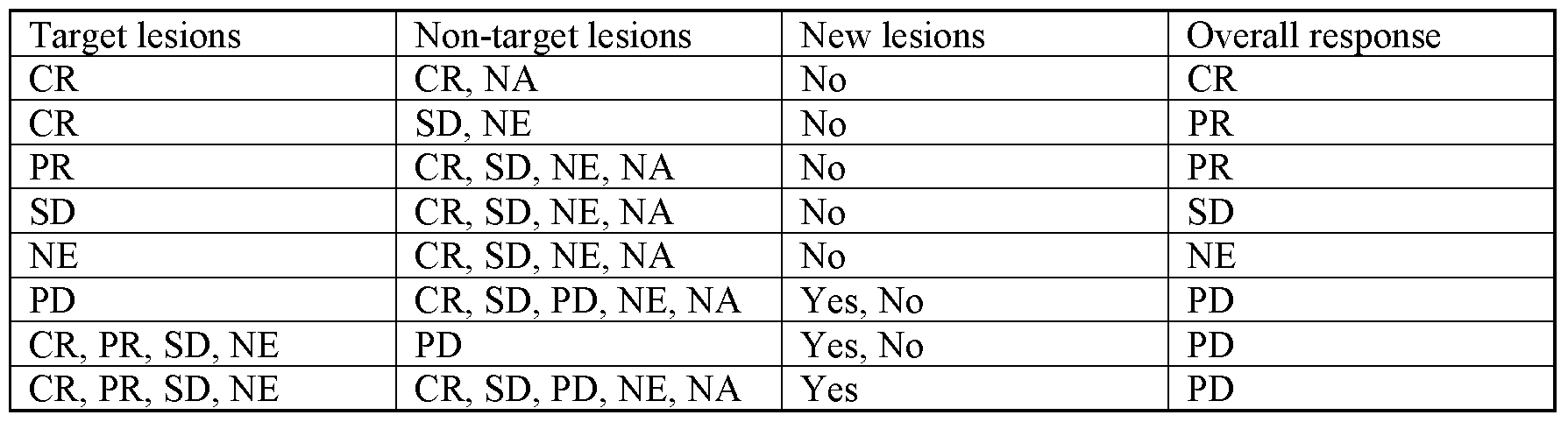
- Tumor response status (SD, PR, CR) is based on RECIST 1.1 criteria.
- the tumor status is recorded as the evidence of disease (PR/SD) if enrolled.
- Imaging is assessed by site radiologists and a copy is sent to central radiology laboratory for an independent review, which is not interfered with the sites' interpretation and decision.
- Subjects are randomized to receive either OBI-822/OBI-821 (Treatment Group) or PBS (Control Group) in a 2: 1 allocation.
- [131] Collect subject tumor biopsy/tissue samples to test for tumor Globo H Expression and to correlate with treatment response.
- treatment subjects are given cyclophosphamide (300 mg/m 2 ) intravenously at Weeks 1, 5, 9, 13, 17, 25 and 37 (Visits 2, 6,
- OBI-822/OBI-821 or Control is given subcutaneously on Weeks 1, 2, 3, 5,
- OS modified intent-to-treat
- Globo H-ceramide was diluted to 4 ⁇ g/mL in ethanol. 50 of diluted Globo H- ceramide solution was added into each well of a standard reaction plate. The plate with the reaction mixture was incubated at room temperature for overnight. The plate was decanted and washed with PBST at 200 ⁇ 7 ⁇ well for three times. 100 of Blocking Buffer was added to each well and incubated at room temperature for 30 minutes. The plate was decanted and washed with PBST 200 ⁇ / ⁇ for three times.
- Serum sample dilution samples were two-fold serial diluted in Blocking Buffer ranging from 20, 40, 80, 160, 320, 640, 1280 to 2560 folds (40 ⁇ , of serum sample was added to 760 Blocking Buffer to make 20 fold dilution). 50 of serum sample was added into each well in coated and un-coated plates, and incubated at room temperature for 60 minutes. The plates were decanted and washed with PBST 200 ⁇ / ⁇ for three times. 40 ⁇ of 0.3 mg/mL stock anti-human IgG-AP secondary antibody was added to 7960 ⁇ of Blocking Buffer for 1:200 dilution.
- the cut-off value was obtained by the difference of mean OD value of secondary antibody only from coated plate and mean OD value of secondary Ab only from un-coated plate plus 0.1.
- Titer was defined as the difference of the OD value of coated plate and OD value of un-coated plate at each dilution. The highest dilution above the cut-off value was the anti- Globo H IgG titer. Statistical analysis was performed using GraphPad Prism 6 software.
- Glycan Array platform utilizes automated Agnitio BioIC system in which ELISA is performed within the microfluidic cartridge.
- the microfluidic cartridge contains an array of microfluidic pumps and valves, a channel network, reagent storage reservoirs, a glycan array reaction zone, and a waste storage reservoir.
- Automated Agnitio BioIC system pumps reagents and samples from their respected reservoirs into a reaction zone for multiplexed ELISA reaction with chemical luminescence.
- the collected data are analyzed by the LabIT software provided by Agnitio Science and Technology Inc.
- the specification of equipment of Agnitio BioIC system was disclosed in a previous PCT patent application (WO2017041027A1).
- KLH Keyhole Limpet Hemocyanin
- Coating buffer carbonate-bicarbonate buffer pH 9.2 (Sigma- Aldrich, Cat #C3041-50CAP); Secondary antibody: Goat anti-human IgG-HRP (KPL, Cat #474-1002); 10X PBS, pH 7.4 (Gibco, Cat #70011-044); Tween-20 (Sigma-Aldrich, Cat #P2287); TMB Substrate Solution (Clinical, Cat #01016-1-500); Blocking buffer (Sigma-Aldrich, Cat #B6429); PBST: 0.05% tween-20 in PBS; Stop solution: IN H2SO4..
- KLH was diluted to 4 ⁇ g/mL with coating buffer. Fifty microliter of diluted KLH solution was added into each well of a standard well. The plate was incubated at 4 °C overnight. The plates was decanted and washed with at 200 well for three times. 100 ⁇ L.
- samples were two-fold serial diluted with blocking buffer ranging from about 1000, 2000, 4000, 8000, 16000, 32000, 64000 to 128000 folds (1 ⁇ , of serum sample was added to 999 ⁇ L. blocking buffer to make 1000 fold dilution). 50 ⁇ L. of samples were added into each well in coated and un-coated plates, then incubated at room temperature for 1.5 hours. The plates were decanted and washed with PBST 200 ⁇ for three times.
- Anti-human IgG-HRP secondary antibody was diluted to 1 :20000 with blocking buffer. 1 was taken from 1 mg/mL stock and added to 20 mL of blocking buffer to make 1 :20000 dilution.
- Figure 9 exhibited high anti-KLH IgG immune response after patients received the injections of OBI-822 vaccine.
- a total of 30 clinical serum samples were divided into three groups (Responder: Receiving OBI-822 vaccine injections with increasing anti-Globo H IgG/IgM level; Non-Responder: Receiving OBI-822 vaccine injections with no increasing anti- Globo H IgG/IgM level). It demonstrated that the administration of OBI-822 vaccine can indeed induce anti-KLH immune response. Therefore, the immunological-reactions generated by the administration of Globo series antigens vaccine can be induced by the Globo series antigens vaccine, the Globo series antigen or the carrier protein.
- OBI-822 (30 meg Globo
- H)/OBI-821 (100 meg), were given subcutaneously on the Weeks 1, 2, 3, 4, 12, 20, 28, 36, 44, and 52 (Visits 1, 2, 3, 4, 5, 6, 7, 8, 9, and 10).
- Disease status was determined according to the results of evaluation incorporating RECIST 1.1 criteria.
- a subject was evaluated to have PD on the basis of objective RECIST 1.1 criteria.
- the CT Scan/MRI for RECIST criteria were performed at screening week 28 and 52.
- Whole abdominal (abdomen and pelvis) CT scan were performed at designated times during treatment with an interval of about 24 weeks.
- the window period for CT scan was +/- 14 days from the planned visit per protocol schedule. Unscheduled tumor assessment was performed under investigator's discretion and at the time of assessment was consistent with the examination performed at baseline. For subjects that were CT-contraindicated, MRI was performed instead.
- NTLs non-target lesions
- Protocol violations are reviewed by the study team prior to database lock to determine which violations disqualify the patient from the EVA population.
- Stage III Ovarian Cancer (Patient No: 060) ( Figure 13): The date of assessment initiated on or before January 6, 2015. The original symptom of patient was "Peritoneum tumor” (Lesion Category: Non-target tumor) through CT scan. It indicated that there was not any tumor progression/metastasis (SD) after treating OBI-822 within 28 weeks (Visit 7). Therefore, the tumor inhibition ability of OBI-822 is confirmed within 28 weeks.
- SD tumor progression/metastasis
- Group A Active treatment group; Dosage Per Injection: OBI-822 (Equivalent to
- Group B Control group; Dosage Per Injection: PBS. Total final injection volume:
- Vial la (PBS: OBI-821 control test article) Fill Volume - 0.5 mL. Contents: 10 mM sodium phosphate, 150 mM NaCl, pH 6.8;
- Vial lb (OBI-821) Fill Volume - 0.5 mL. Contents: 250 ⁇ g/mL OBI-821 in 10 mM sodium phosphate, 150 mM NaCl, pH 6.8; [191] Vial 2a (PBS: OBI-822 control test article) Fill Volume - 0.75 mL. Contents: 100 mM sodium phosphate, 150 mM NaCl, pH 7.2;
- Vial 2b (OBI-822) Fill Volume - 0.75 mL. Contents: Equivalent to 75 ⁇ g of Globo
- the stability of the combined OBI-822 and OBI-821 is stable up to 10 hours from the time of reconstitution at room temperature.
- the administration of the combined product should occur within 2 hours from reconstitution to minimize potential microbial growth. If administration is not possible within 2 hours from reconstitution, the combined product should be destroyed according to the institutional pharmacy Standard Operating Procedure and documented in the drug accountability records.
- Figure 14 illustrates the mixing procedure of investigational drugs
- Opiates It may be used for pain control, and preventive treatment for constipation is also allowed.
- Hormone therapies for subjects who have been stratified as a hormone therapy user.
- hormone therapy needs to be consistent i.e., no switching of treatments, no adding of more therapies, or increasing doses, unless due to intolerance of toxicity. All kind of hormone therapies can be used in this study, the common used hormone therapies are listed below.
- Estrogen inhibitors e.g., tamoxifen, Fareston.
- Aromatase inhibitors e.g., anastrozole [Arimidex], exemestane [Aromasin] and letrozole [Femara]).
- Faslodex ® fullvestran, estrogen receptor down-regulator
- Anticoagulant lepirudin [Refludan]
- the method of administrations is preferably conducted in the absence of the concomitant medications listed in Table 7.
- Prohibited Concomitant Medications e.g., cyclosporin, rapamycin, tacrolimus, rituximab, etc.
Landscapes
- Health & Medical Sciences (AREA)
- Life Sciences & Earth Sciences (AREA)
- Chemical & Material Sciences (AREA)
- Immunology (AREA)
- Medicinal Chemistry (AREA)
- General Health & Medical Sciences (AREA)
- Engineering & Computer Science (AREA)
- Public Health (AREA)
- Veterinary Medicine (AREA)
- Pharmacology & Pharmacy (AREA)
- Animal Behavior & Ethology (AREA)
- Molecular Biology (AREA)
- Microbiology (AREA)
- Biomedical Technology (AREA)
- Hematology (AREA)
- Urology & Nephrology (AREA)
- Epidemiology (AREA)
- Oncology (AREA)
- Mycology (AREA)
- General Chemical & Material Sciences (AREA)
- Chemical Kinetics & Catalysis (AREA)
- Organic Chemistry (AREA)
- Nuclear Medicine, Radiotherapy & Molecular Imaging (AREA)
- Cell Biology (AREA)
- General Physics & Mathematics (AREA)
- Biochemistry (AREA)
- Analytical Chemistry (AREA)
- Pathology (AREA)
- Physics & Mathematics (AREA)
- Food Science & Technology (AREA)
- Biotechnology (AREA)
- Developmental Biology & Embryology (AREA)
- Gynecology & Obstetrics (AREA)
- Pregnancy & Childbirth (AREA)
- Reproductive Health (AREA)
- Medicines Containing Antibodies Or Antigens For Use As Internal Diagnostic Agents (AREA)
- Medicines That Contain Protein Lipid Enzymes And Other Medicines (AREA)
- Peptides Or Proteins (AREA)
- Pharmaceuticals Containing Other Organic And Inorganic Compounds (AREA)
- Medicinal Preparation (AREA)
Description




Claims
Priority Applications (18)
| Application Number | Priority Date | Filing Date | Title |
|---|---|---|---|
| IL262296A IL262296B2 (en) | 2016-04-22 | 2017-04-24 | Cancer immunotherapy using immune activation or immune modulation by Globo-series antigens |
| SG11201809024UA SG11201809024UA (en) | 2016-04-22 | 2017-04-24 | Cancer immunotherapy by immune activation or immune modulation via globo series antigens |
| EP17786800.7A EP3445395A4 (en) | 2016-04-22 | 2017-04-24 | ANTI-CANCER IMMUNOTHERAPY BY IMMUNO-ACTIVATION OR IMMUNOMODULATION THROUGH GLOBO SERIES ANTIGENS |
| KR1020187033397A KR20180128496A (en) | 2016-04-22 | 2017-04-24 | Cancer immunotherapy by immune activation or immunomodulation through glycosylated antigen |
| JP2018555276A JP7544465B2 (en) | 2016-04-22 | 2017-04-24 | Cancer immunotherapy by immune activation or immune regulation via globo-series antigens |
| NZ747262A NZ747262B2 (en) | 2017-04-24 | Cancer immunotherapy by immune activation or immune modulation via globo series antigens | |
| BR112018071683-9A BR112018071683A2 (en) | 2016-04-22 | 2017-04-24 | method for treating breast cancer, method for treating a tumor in a patient, method for treating an individual suffering from cancer by immunotherapy, method for inducing / improving an immune response in an individual, method for improving obi-822 induced vaccine by immune response in an individual in need thereof, method for identifying a patient suitable for cancer therapy, and method for determining a patient's cancer treatment prognosis or drug response |
| AU2017252128A AU2017252128B2 (en) | 2016-04-22 | 2017-04-24 | Cancer immunotherapy by immune activation or immune modulation via Globo series antigens |
| RU2018140976A RU2018140976A (en) | 2016-04-22 | 2017-04-24 | CANCER IMMUNOTHERAPY BY IMMUNE ACTIVATION OR IMMUNE MODULATION THROUGH GLOBO SERIES ANTIGENS |
| CA3021548A CA3021548A1 (en) | 2016-04-22 | 2017-04-24 | Cancer immunotherapy by immune activation or immune modulation via globo series antigens |
| KR1020237023187A KR20230110820A (en) | 2016-04-22 | 2017-04-24 | Cancer immunotherapy by immune activation or immune modulation via globo series antigens |
| KR1020257010358A KR20250048399A (en) | 2016-04-22 | 2017-04-24 | Cancer immunotherapy by immune activation or immune modulation via globo series antigens |
| MYPI2018001766A MY200886A (en) | 2016-04-22 | 2017-04-24 | Cancer Immunotherapy by Immune Activation or Immune Modulation Via Globo Series Antigens |
| CN201780036775.6A CN109379889A (en) | 2016-04-22 | 2017-04-24 | Cancer immunotherapy by immune activation or immunomodulation via antigens of the GLOBO series |
| ZA2018/06919A ZA201806919B (en) | 2016-04-22 | 2018-10-17 | Cancer immunotherapy by immune activation or immune modulation via globo series antigens |
| PH12018502250A PH12018502250A1 (en) | 2016-04-22 | 2018-10-22 | Cancer immunotherapy by immune activation for immune modulation via globo series antigens |
| JP2022074266A JP2022115924A (en) | 2016-04-22 | 2022-04-28 | Cancer immunotherapy by immunostimulation or immunoregulation mediated by antigens of the Globo series |
| JP2024097870A JP2024123105A (en) | 2016-04-22 | 2024-06-18 | Cancer immunotherapy by immune activation or immune regulation via globo-series antigens |
Applications Claiming Priority (8)
| Application Number | Priority Date | Filing Date | Title |
|---|---|---|---|
| US201662326623P | 2016-04-22 | 2016-04-22 | |
| US62/326,623 | 2016-04-22 | ||
| US201662343530P | 2016-05-31 | 2016-05-31 | |
| US62/343,530 | 2016-05-31 | ||
| US201662345755P | 2016-06-04 | 2016-06-04 | |
| US62/345,755 | 2016-06-04 | ||
| US201662381875P | 2016-08-31 | 2016-08-31 | |
| US62/381,875 | 2016-08-31 |
Publications (1)
| Publication Number | Publication Date |
|---|---|
| WO2017185089A2 true WO2017185089A2 (en) | 2017-10-26 |
Family
ID=60088869
Family Applications (1)
| Application Number | Title | Priority Date | Filing Date |
|---|---|---|---|
| PCT/US2017/029138 Ceased WO2017185089A2 (en) | 2016-04-22 | 2017-04-24 | Cancer immunotherapy by immune activation or immune modulation via globo series antigens |
Country Status (17)
| Country | Link |
|---|---|
| US (1) | US11583577B2 (en) |
| EP (1) | EP3445395A4 (en) |
| JP (3) | JP7544465B2 (en) |
| KR (3) | KR20250048399A (en) |
| CN (1) | CN109379889A (en) |
| AU (1) | AU2017252128B2 (en) |
| BR (1) | BR112018071683A2 (en) |
| CA (1) | CA3021548A1 (en) |
| CL (1) | CL2018002994A1 (en) |
| IL (1) | IL262296B2 (en) |
| MY (1) | MY200886A (en) |
| PH (1) | PH12018502250A1 (en) |
| RU (1) | RU2018140976A (en) |
| SG (1) | SG11201809024UA (en) |
| TW (1) | TWI697333B (en) |
| WO (1) | WO2017185089A2 (en) |
| ZA (1) | ZA201806919B (en) |
Cited By (7)
| Publication number | Priority date | Publication date | Assignee | Title |
|---|---|---|---|---|
| WO2022109601A1 (en) * | 2020-11-19 | 2022-05-27 | Obi Pharma, Inc. | Active cancer immunotherapy by immune modulation via globo series antigens |
| US11583577B2 (en) | 2016-04-22 | 2023-02-21 | Obi Pharma, Inc. | Cancer immunotherapy by immune activation or immune modulation via Globo series antigens |
| US11642400B2 (en) | 2016-07-27 | 2023-05-09 | Obi Pharma, Inc. | Immunogenic/therapeutic glycan compositions and uses thereof |
| US11643456B2 (en) | 2016-07-29 | 2023-05-09 | Obi Pharma, Inc. | Human antibodies, pharmaceutical compositions and methods |
| US11833223B2 (en) | 2016-03-29 | 2023-12-05 | Obi Pharma, Inc. | Antibodies, pharmaceutical compositions and methods |
| US12053514B2 (en) | 2013-09-17 | 2024-08-06 | Obi Pharma, Inc. | Compositions of a carbohydrate vaccine for inducing immune responses and uses thereof in cancer treatment |
| US12090212B2 (en) | 2016-11-21 | 2024-09-17 | Obi Pharma, Inc. | Conjugated biological molecules, pharmaceutical compositions and methods |
Families Citing this family (9)
| Publication number | Priority date | Publication date | Assignee | Title |
|---|---|---|---|---|
| JP2018532990A (en) | 2015-09-04 | 2018-11-08 | オービーアイ ファーマ,インコーポレイテッド | Glycan arrays and methods of use |
| US11041017B2 (en) | 2016-03-29 | 2021-06-22 | Obi Pharma, Inc. | Antibodies, pharmaceutical compositions and methods |
| US20210396759A1 (en) * | 2018-05-11 | 2021-12-23 | Obi Pharma, Inc. | Method for Predicting Human Immune Response |
| US11203645B2 (en) | 2018-06-27 | 2021-12-21 | Obi Pharma, Inc. | Glycosynthase variants for glycoprotein engineering and methods of use |
| TWI735210B (en) * | 2019-04-26 | 2021-08-01 | 中國醫藥大學 | Use of adam9 inhibitor as immune modulator |
| CN111053895B (en) * | 2019-12-26 | 2023-08-29 | 深圳大学 | Antigen and its preparation method and application |
| CA3190301A1 (en) * | 2020-07-31 | 2022-02-03 | The Board Of Trustees Of The Leland Stanford Junior University | Combination therapy for cancer |
| CN114259559B (en) * | 2021-12-28 | 2024-03-19 | 天津科技大学 | Synthetic tumor vaccine containing alpha-GalCer endogenous adjuvant |
| CN118903397A (en) * | 2024-10-12 | 2024-11-08 | 成都迈科康生物科技有限公司 | Application of globoH hexose, linker compound, protein conjugate and immunogenic composition in treating or inhibiting epithelial tumor |
Citations (12)
| Publication number | Priority date | Publication date | Assignee | Title |
|---|---|---|---|---|
| US4816567A (en) | 1983-04-08 | 1989-03-28 | Genentech, Inc. | Recombinant immunoglobin preparations |
| WO1991010741A1 (en) | 1990-01-12 | 1991-07-25 | Cell Genesys, Inc. | Generation of xenogeneic antibodies |
| US5545807A (en) | 1988-10-12 | 1996-08-13 | The Babraham Institute | Production of antibodies from transgenic animals |
| US5545806A (en) | 1990-08-29 | 1996-08-13 | Genpharm International, Inc. | Ransgenic non-human animals for producing heterologous antibodies |
| US5569825A (en) | 1990-08-29 | 1996-10-29 | Genpharm International | Transgenic non-human animals capable of producing heterologous antibodies of various isotypes |
| WO1996033735A1 (en) | 1995-04-27 | 1996-10-31 | Abgenix, Inc. | Human antibodies derived from immunized xenomice |
| WO1996034096A1 (en) | 1995-04-28 | 1996-10-31 | Abgenix, Inc. | Human antibodies derived from immunized xenomice |
| US5625126A (en) | 1990-08-29 | 1997-04-29 | Genpharm International, Inc. | Transgenic non-human animals for producing heterologous antibodies |
| US5633425A (en) | 1990-08-29 | 1997-05-27 | Genpharm International, Inc. | Transgenic non-human animals capable of producing heterologous antibodies |
| US5661016A (en) | 1990-08-29 | 1997-08-26 | Genpharm International Inc. | Transgenic non-human animals capable of producing heterologous antibodies of various isotypes |
| WO1998024893A2 (en) | 1996-12-03 | 1998-06-11 | Abgenix, Inc. | TRANSGENIC MAMMALS HAVING HUMAN IG LOCI INCLUDING PLURAL VH AND Vλ REGIONS AND ANTIBODIES PRODUCED THEREFROM |
| WO2016044326A1 (en) | 2014-09-15 | 2016-03-24 | Obi Pharma, Inc. | Immunogenic/therapeutic glycoconjugate compositions and uses thereof |
Family Cites Families (149)
| Publication number | Priority date | Publication date | Assignee | Title |
|---|---|---|---|---|
| US3773919A (en) | 1969-10-23 | 1973-11-20 | Du Pont | Polylactide-drug mixtures |
| CU22545A1 (en) | 1994-11-18 | 1999-03-31 | Centro Inmunologia Molecular | OBTAINING A CHEMICAL AND HUMANIZED ANTIBODY AGAINST THE RECEPTOR OF THE EPIDERMAL GROWTH FACTOR FOR DIAGNOSTIC AND THERAPEUTIC USE |
| AU519567B2 (en) | 1977-07-13 | 1981-12-10 | Akzo Nv | Psychopharmacological penta and hexa-peptides |
| USRE30985E (en) | 1978-01-01 | 1982-06-29 | Serum-free cell culture media | |
| US4419446A (en) | 1980-12-31 | 1983-12-06 | The United States Of America As Represented By The Department Of Health And Human Services | Recombinant DNA process utilizing a papilloma virus DNA as a vector |
| US4522811A (en) | 1982-07-08 | 1985-06-11 | Syntex (U.S.A.) Inc. | Serial injection of muramyldipeptides and liposomes enhances the anti-infective activity of muramyldipeptides |
| US4601978A (en) | 1982-11-24 | 1986-07-22 | The Regents Of The University Of California | Mammalian metallothionein promoter system |
| US4560655A (en) | 1982-12-16 | 1985-12-24 | Immunex Corporation | Serum-free cell culture medium and process for making same |
| US4657866A (en) | 1982-12-21 | 1987-04-14 | Sudhir Kumar | Serum-free, synthetic, completely chemically defined tissue culture media |
| US4767704A (en) | 1983-10-07 | 1988-08-30 | Columbia University In The City Of New York | Protein-free culture medium |
| US4943533A (en) | 1984-03-01 | 1990-07-24 | The Regents Of The University Of California | Hybrid cell lines that produce monoclonal antibodies to epidermal growth factor receptor |
| US4965199A (en) | 1984-04-20 | 1990-10-23 | Genentech, Inc. | Preparation of functional human factor VIII in mammalian cells using methotrexate based selection |
| US4601903A (en) | 1985-05-01 | 1986-07-22 | The United States Of America As Represented By The Department Of Health And Human Services | Vaccine against Neisseria meningitidis Group B serotype 2 invasive disease |
| GB8516415D0 (en) | 1985-06-28 | 1985-07-31 | Celltech Ltd | Culture of animal cells |
| US4676980A (en) | 1985-09-23 | 1987-06-30 | The United States Of America As Represented By The Secretary Of The Department Of Health And Human Services | Target specific cross-linked heteroantibodies |
| US4927762A (en) | 1986-04-01 | 1990-05-22 | Cell Enterprises, Inc. | Cell culture medium with antioxidant |
| US5811128A (en) | 1986-10-24 | 1998-09-22 | Southern Research Institute | Method for oral or rectal delivery of microencapsulated vaccines and compositions therefor |
| IL85035A0 (en) | 1987-01-08 | 1988-06-30 | Int Genetic Eng | Polynucleotide molecule,a chimeric antibody with specificity for human b cell surface antigen,a process for the preparation and methods utilizing the same |
| US4849222A (en) | 1987-03-24 | 1989-07-18 | The Procter & Gamble Company | Mixtures for treating hypercholesterolemia |
| US5057540A (en) | 1987-05-29 | 1991-10-15 | Cambridge Biotech Corporation | Saponin adjuvant |
| US4975278A (en) | 1988-02-26 | 1990-12-04 | Bristol-Myers Company | Antibody-enzyme conjugates in combination with prodrugs for the delivery of cytotoxic agents to tumor cells |
| US5004697A (en) | 1987-08-17 | 1991-04-02 | Univ. Of Ca | Cationized antibodies for delivery through the blood-brain barrier |
| JP2670680B2 (en) | 1988-02-24 | 1997-10-29 | 株式会社ビーエムジー | Polylactic acid microspheres containing physiologically active substance and method for producing the same |
| DE68925971T2 (en) | 1988-09-23 | 1996-09-05 | Cetus Oncology Corp | CELL GROWING MEDIUM FOR INCREASED CELL GROWTH, FOR INCREASING LONGEVITY AND EXPRESSION OF PRODUCTS |
| NZ230747A (en) | 1988-09-30 | 1992-05-26 | Bror Morein | Immunomodulating matrix comprising a complex of at least one lipid and at least one saponin; certain glycosylated triterpenoid saponins derived from quillaja saponaria molina |
| DE3920358A1 (en) | 1989-06-22 | 1991-01-17 | Behringwerke Ag | BISPECIFIC AND OLIGO-SPECIFIC, MONO- AND OLIGOVALENT ANTI-BODY CONSTRUCTS, THEIR PRODUCTION AND USE |
| EP0479909B1 (en) | 1989-06-29 | 1996-10-30 | Medarex, Inc. | Bispecific reagents for aids therapy |
| CA2066428C (en) | 1989-09-08 | 2000-11-28 | Bert Vogelstein | Structural alterations of the egf receptor gene in human gliomas |
| US5061620A (en) | 1990-03-30 | 1991-10-29 | Systemix, Inc. | Human hematopoietic stem cell |
| US5112596A (en) | 1990-04-23 | 1992-05-12 | Alkermes, Inc. | Method for increasing blood-brain barrier permeability by administering a bradykinin agonist of blood-brain barrier permeability |
| US5268164A (en) | 1990-04-23 | 1993-12-07 | Alkermes, Inc. | Increasing blood-brain barrier permeability with permeabilizer peptides |
| US5427908A (en) | 1990-05-01 | 1995-06-27 | Affymax Technologies N.V. | Recombinant library screening methods |
| ATE204902T1 (en) | 1990-06-29 | 2001-09-15 | Large Scale Biology Corp | MELANIN PRODUCTION BY TRANSFORMED MICROORGANISMS |
| US5122469A (en) | 1990-10-03 | 1992-06-16 | Genentech, Inc. | Method for culturing Chinese hamster ovary cells to improve production of recombinant proteins |
| US5264365A (en) | 1990-11-09 | 1993-11-23 | Board Of Regents, The University Of Texas System | Protease-deficient bacterial strains for production of proteolytically sensitive polypeptides |
| US5508192A (en) | 1990-11-09 | 1996-04-16 | Board Of Regents, The University Of Texas System | Bacterial host strains for producing proteolytically sensitive polypeptides |
| ES2113940T3 (en) | 1990-12-03 | 1998-05-16 | Genentech Inc | ENRICHMENT METHOD FOR PROTEIN VARIANTS WITH ALTERED UNION PROPERTIES. |
| US5571894A (en) | 1991-02-05 | 1996-11-05 | Ciba-Geigy Corporation | Recombinant antibodies specific for a growth factor receptor |
| EP0586515B1 (en) | 1991-04-30 | 1997-09-17 | Eukarion, Inc. | Cationized antibodies against intracellular proteins |
| ATE255131T1 (en) | 1991-06-14 | 2003-12-15 | Genentech Inc | HUMANIZED HEREGULIN ANTIBODIES |
| GB9114948D0 (en) | 1991-07-11 | 1991-08-28 | Pfizer Ltd | Process for preparing sertraline intermediates |
| CA2116774C (en) | 1991-09-19 | 2003-11-11 | Paul J. Carter | Expression in e. coli antibody fragments having at least a cysteine present as a free thiol. use for the production of bifunctional f(ab') 2 antibodies |
| US5565332A (en) | 1991-09-23 | 1996-10-15 | Medical Research Council | Production of chimeric antibodies - a combinatorial approach |
| EP0605522B1 (en) | 1991-09-23 | 1999-06-23 | Medical Research Council | Methods for the production of humanized antibodies |
| FI941572L (en) | 1991-10-07 | 1994-05-27 | Oncologix Inc | Combination and method of use of anti-erbB-2 monoclonal antibodies |
| US5288502A (en) | 1991-10-16 | 1994-02-22 | The University Of Texas System | Preparation and uses of multi-phase microspheres |
| WO1993008829A1 (en) | 1991-11-04 | 1993-05-13 | The Regents Of The University Of California | Compositions that mediate killing of hiv-infected cells |
| US5667988A (en) | 1992-01-27 | 1997-09-16 | The Scripps Research Institute | Methods for producing antibody libraries using universal or randomized immunoglobulin light chains |
| WO1993016185A2 (en) | 1992-02-06 | 1993-08-19 | Creative Biomolecules, Inc. | Biosynthetic binding protein for cancer marker |
| US5733743A (en) | 1992-03-24 | 1998-03-31 | Cambridge Antibody Technology Limited | Methods for producing members of specific binding pairs |
| AU687010B2 (en) | 1992-07-17 | 1998-02-19 | Dana-Farber Cancer Institute | Method of intracellular binding of target molecules |
| EP0652775B1 (en) | 1992-07-27 | 2000-04-19 | THE GOVERNMENT OF THE UNITED STATES OF AMERICA as represented by the SECRETARY OF THE DEPARTMENT OF HEALTH AND HUMAN SERVICES | Targeting of liposomes to the blood-brain barrier |
| EP0656064B1 (en) | 1992-08-17 | 1997-03-05 | Genentech, Inc. | Bispecific immunoadhesins |
| DE69303494T2 (en) | 1992-11-13 | 1997-01-16 | Idec Pharma Corp | THERAPEUTIC USE OF CHIMERIC AND LABELED ANTIBODIES AGAINST HUMAN B LYMPHOCYTIC LIMITED DIFFERENTIATION ANTIQUES FOR THE TREATMENT OF B CELL LYMPHOMA |
| EP0724432B1 (en) | 1993-10-22 | 2002-09-18 | Genentech, Inc. | Methods and compositions for microencapsulation of antigens for use as vaccines |
| US6544952B1 (en) | 1994-03-15 | 2003-04-08 | Sloan-Kettering Institute For Cancer Research | Synthesis of glycoconjugates of the globo-H epitope and uses thereof |
| US5804396A (en) | 1994-10-12 | 1998-09-08 | Sugen, Inc. | Assay for agents active in proliferative disorders |
| AUPM873294A0 (en) | 1994-10-12 | 1994-11-03 | Csl Limited | Saponin preparations and use thereof in iscoms |
| US5840523A (en) | 1995-03-01 | 1998-11-24 | Genetech, Inc. | Methods and compositions for secretion of heterologous polypeptides |
| DE69536015D1 (en) | 1995-03-30 | 2009-12-10 | Pfizer Prod Inc | Quinazolinone derivatives |
| US5641870A (en) | 1995-04-20 | 1997-06-24 | Genentech, Inc. | Low pH hydrophobic interaction chromatography for antibody purification |
| US5869046A (en) | 1995-04-14 | 1999-02-09 | Genentech, Inc. | Altered polypeptides with increased half-life |
| GB9508565D0 (en) | 1995-04-27 | 1995-06-14 | Zeneca Ltd | Quiazoline derivative |
| GB9508538D0 (en) | 1995-04-27 | 1995-06-14 | Zeneca Ltd | Quinazoline derivatives |
| US6265150B1 (en) | 1995-06-07 | 2001-07-24 | Becton Dickinson & Company | Phage antibodies |
| JPH11507535A (en) | 1995-06-07 | 1999-07-06 | イムクローン システムズ インコーポレイテッド | Antibodies and antibody fragments that suppress tumor growth |
| AU2660397A (en) | 1996-04-05 | 1997-10-29 | Board Of Regents, The University Of Texas System | Methods for producing soluble, biologically-active disulfide bond-containing eukaryotic proteins in bacterial cells |
| JP3370340B2 (en) | 1996-04-12 | 2003-01-27 | ワーナー―ランバート・コンパニー | Irreversible inhibitors of tyrosine kinase |
| US6231859B1 (en) | 1996-12-02 | 2001-05-15 | Aquila Biopharmaceuticals, Inc. | Saponin adjuvant compositions |
| AUPO517897A0 (en) | 1997-02-19 | 1997-04-11 | Csl Limited | Chelating immunostimulating complexes |
| UA73073C2 (en) | 1997-04-03 | 2005-06-15 | Уайт Холдінгз Корпорейшн | Substituted 3-cyan chinolines |
| US6083715A (en) | 1997-06-09 | 2000-07-04 | Board Of Regents, The University Of Texas System | Methods for producing heterologous disulfide bond-containing polypeptides in bacterial cells |
| ZA986729B (en) | 1997-07-29 | 1999-02-02 | Warner Lambert Co | Irreversible inhibitors of tyrosine kinases |
| ZA986732B (en) | 1997-07-29 | 1999-02-02 | Warner Lambert Co | Irreversible inhibitiors of tyrosine kinases |
| TW436485B (en) | 1997-08-01 | 2001-05-28 | American Cyanamid Co | Substituted quinazoline derivatives |
| US7018637B2 (en) | 1998-02-23 | 2006-03-28 | Aventis Pasteur, Inc | Multi-oligosaccharide glycoconjugate bacterial meningitis vaccines |
| AUPP807399A0 (en) | 1999-01-08 | 1999-02-04 | Csl Limited | Improved immunogenic lhrh composition and methods relating thereto |
| EA200100896A1 (en) | 1999-02-17 | 2002-04-25 | Гликоминдс Лтд. | COMBINATORY LIBRARIES OF COMPLEX CARBOHYDRATES AND METHODS OF THEIR RECEPTION AND USE |
| ES2572834T3 (en) | 1999-02-17 | 2016-06-02 | Csl Limited | Immunogenic complexes and related methods |
| US7854934B2 (en) | 1999-08-20 | 2010-12-21 | Sloan-Kettering Institute For Cancer Research | Glycoconjugates, glycoamino acids, intermediates thereto, and uses thereof |
| US7824687B2 (en) | 1999-08-20 | 2010-11-02 | Sloan-Kettering Institute For Cancer Research | Clustered multi-antigenic carbohydrate constructs, methods for their preparation, and uses thereof |
| US6514221B2 (en) | 2000-07-27 | 2003-02-04 | Brigham And Women's Hospital, Inc. | Blood-brain barrier opening |
| WO2002017930A2 (en) | 2000-08-30 | 2002-03-07 | The Board Of Trustees Of The Leland Stanford Junior University | Glucocorticoid blocking agents for increasing blood-brain barrier permeability |
| US7034036B2 (en) | 2000-10-30 | 2006-04-25 | Pain Therapeutics, Inc. | Inhibitors of ABC drug transporters at the blood-brain barrier |
| US20030083299A1 (en) | 2000-11-04 | 2003-05-01 | Ferguson Ian A. | Non-invasive delivery of polypeptides through the blood-brain barrier |
| US20040018194A1 (en) | 2000-11-28 | 2004-01-29 | Francisco Joseph A. | Recombinant anti-CD30 antibodies and uses thereof |
| US20030104402A1 (en) | 2001-01-23 | 2003-06-05 | University Of Rochester | Methods of producing or identifying intrabodies in eukaryotic cells |
| DE10121982B4 (en) | 2001-05-05 | 2008-01-24 | Lts Lohmann Therapie-Systeme Ag | Nanoparticles of protein with coupled apolipoprotein E to overcome the blood-brain barrier and process for their preparation |
| AU2002322720B2 (en) | 2001-07-25 | 2008-11-13 | Raptor Pharmaceutical Inc. | Compositions and methods for modulating blood-brain barrier transport |
| CA2454853A1 (en) | 2001-08-14 | 2003-02-27 | Biomira, Inc. | Imunogenic conjugate of carbohydrate haptens and aggregated protein carrier |
| JP2005511627A (en) | 2001-11-20 | 2005-04-28 | シアトル ジェネティクス,インコーポレーテッド | Treatment of immunological diseases using anti-CD30 antibodies |
| US20030162695A1 (en) | 2002-02-27 | 2003-08-28 | Schatzberg Alan F. | Glucocorticoid blocking agents for increasing blood-brain barrier permeability |
| WO2003077945A1 (en) | 2002-03-14 | 2003-09-25 | Medical Research Council | Intracellular antibodies |
| EP1575514A2 (en) | 2002-07-31 | 2005-09-21 | Seattle Genetics, Inc. | Anti-cd20 antibody-drug conjugates for the treatment of cancer and immune disorders |
| EP1391213A1 (en) | 2002-08-21 | 2004-02-25 | Boehringer Ingelheim International GmbH | Compositions and methods for treating cancer using maytansinoid CD44 antibody immunoconjugates and chemotherapeutic agents |
| EP1578447A4 (en) | 2002-10-31 | 2009-06-03 | Genentech Inc | METHODS AND COMPOSITIONS THAT CAN INCREASE ANTIBODY PRODUCTION |
| AU2003302676A1 (en) | 2002-12-03 | 2004-06-23 | Blanchette Rockefeller Neurosciences Institute | Artificial low-density lipoprotein carriers for transport of substances across the blood-brain barrier |
| CA2513113A1 (en) | 2003-01-23 | 2004-08-05 | Genentech, Inc. | Methods for producing humanized antibodies and improving yield of antibodies or antigen binding fragments in cell culture |
| US20060035267A1 (en) | 2003-04-09 | 2006-02-16 | Livingston Philip O | Optimal polyvalent vaccine for cancer |
| GB0316294D0 (en) | 2003-07-11 | 2003-08-13 | Polytherics Ltd | Conjugated biological molecules and their preparation |
| EP1667711B1 (en) | 2003-08-25 | 2010-07-28 | UniVax, LLC | Preventive cancer vaccine based on brother of regulator of imprinted sites molecule (boris) |
| EP1663239A4 (en) | 2003-09-10 | 2008-07-23 | Cedars Sinai Medical Center | ASSISTED ADMINISTRATION BY POTASSIUM CHANNELS OF AGENTS THROUGH THE HEMATO-ENCEPHALIC BARRIER |
| WO2005088310A2 (en) | 2004-03-05 | 2005-09-22 | The Scripps Research Institute | High throughput glycan microarrays |
| AU2005333126A1 (en) | 2004-07-18 | 2006-12-21 | Csl Limited | Methods and compositions for inducing innate immune responses |
| CA2572427A1 (en) | 2004-07-18 | 2006-01-18 | Heather L. Davis | Immuno stimulating complex and oligonucleotide formulations for inducing enhanced interferon-gamma responses |
| ES2387402T3 (en) | 2005-03-31 | 2012-09-21 | Stemnion, Inc. | Cellular compositions derived from amnion, manufacturing procedures and uses thereof |
| CN103524392B (en) | 2005-10-07 | 2018-06-01 | 埃克塞利希斯股份有限公司 | As for treating the azetidine of the MEK inhibitor of proliferative disease |
| CA2626238C (en) | 2005-10-17 | 2015-10-06 | Memorial Sloan Kettering Cancer Center | Wt1 hla class ii-binding peptides and compositions and methods comprising same |
| JP5391073B2 (en) | 2006-11-27 | 2014-01-15 | ディアデクサス インコーポレーテッド | Ovr110 antibody compositions and methods of use |
| WO2009035494A2 (en) | 2007-07-30 | 2009-03-19 | The Scripps Research Institute | Methods for producing anti-glycan antibodies, vaccines and methods for treating cancer or infectious disease |
| WO2009044918A1 (en) | 2007-10-05 | 2009-04-09 | Takeda Pharmaceutical Company Limited | Neuromedin u derivative |
| EP2268315B1 (en) | 2008-03-31 | 2019-07-31 | Freie Universität Berlin | Drug conjugates with polyglycerols |
| EP2280987B1 (en) | 2008-04-08 | 2018-05-23 | Sloan-Kettering Institute for Cancer Research | Triterpene saponins, methods of synthesis, and uses thereof |
| JP2011524375A (en) | 2008-06-16 | 2011-09-01 | アカデミア シニカ | Compositions that induce immune responses specific to GloboH and SSEA3 and their use in cancer therapy |
| WO2010023235A1 (en) | 2008-08-29 | 2010-03-04 | Akzo Nobel N.V. | Flame retardant polyolefin composition |
| CN105535955B (en) | 2009-06-16 | 2019-04-23 | 中央研究院 | GLOBO H and related anti-cancer vaccines containing novel glycolipid adjuvants |
| EP2347769A1 (en) | 2010-01-20 | 2011-07-27 | Glycotope GmbH | Cancer stem cell markers and uses thereof |
| CN103108654A (en) | 2010-06-11 | 2013-05-15 | 索隆-基特林癌症研究协会 | Multivalent glycopeptide constructs and uses thereof |
| US9175326B2 (en) | 2011-03-03 | 2015-11-03 | University Of Maryland, Baltimore | Transglycosylation activity of glycosynthase mutants of an endo-beta-N-acetylglucosaminidase (endo-D) from streptococcus pneumoniae |
| EP2500035A1 (en) | 2011-03-15 | 2012-09-19 | Icon Genetics GmbH | Pharmaceutical formulation containing immunglobulin |
| CA2837840C (en) | 2011-06-10 | 2020-08-04 | Mersana Therapeutics, Inc. | Protein-polymer-drug conjugates |
| EP2812442B9 (en) | 2012-02-10 | 2023-02-15 | University of Maryland, Baltimore | Chemoenzymatic glycoengineering of antibodies and fc fragments thereof |
| RU2014138474A (en) | 2012-02-24 | 2016-04-10 | СтемСентРкс, Инк. | NEW MODULATORS AND APPLICATION METHODS |
| NZ631034A (en) | 2012-03-16 | 2016-06-24 | Merck Patent Gmbh | Targeting aminoacid lipids |
| TW201425336A (en) | 2012-12-07 | 2014-07-01 | Amgen Inc | BCMA antigen binding proteins |
| ES2843509T3 (en) | 2013-01-04 | 2021-07-19 | Obi Pharma Inc | Vaccines with higher carbohydrate antigen density and new saponin adjuvant |
| WO2014178195A1 (en) | 2013-05-02 | 2014-11-06 | 独立行政法人産業技術総合研究所 | Immunity inducer for saccharide antigens |
| RU2666141C2 (en) | 2013-09-17 | 2018-09-06 | Оби Фарма, Инк. | Compositions of carbohydrate vaccine for inducing immune responses and uses thereof in cancer treatment |
| US10150818B2 (en) | 2014-01-16 | 2018-12-11 | Academia Sinica | Compositions and methods for treatment and detection of cancers |
| TW201620939A (en) | 2014-01-16 | 2016-06-16 | 中央研究院 | Composition and method for treating and detecting cancer |
| EP3593812A3 (en) | 2014-03-15 | 2020-05-27 | Novartis AG | Treatment of cancer using chimeric antigen receptor |
| MX2016012124A (en) | 2014-03-19 | 2017-04-06 | Mackay Medical Found The Presbyterian Church In Taiwan Mackay Memorial Hospital | Antibodies against immunogenic glycopeptides, composition comprising the same and use thereof. |
| ES2693035T3 (en) | 2014-04-01 | 2018-12-07 | Miltenyi Biotec Gmbh | SSEA4 and ST3GAL2 as biomarkers of response to chemotherapeutic drugs |
| CA3104268A1 (en) | 2014-04-10 | 2015-10-15 | Obi Pharma Inc. | Antibodies, pharmaceutical compositions and uses thereof |
| US10092645B2 (en) | 2014-06-17 | 2018-10-09 | Medimmune Limited | Methods of treatment with antagonists against PD-1 and PD-L1 in combination with radiation therapy |
| KR102387122B1 (en) | 2014-08-19 | 2022-04-14 | 밀테니 비오텍 비.브이. & 씨오. 케이지 | Chimeric antigen receptor specific for ssea4 antigen |
| KR102630294B1 (en) | 2015-01-24 | 2024-01-26 | 아카데미아 시니카 | Cancer markers and how to use them |
| TWI717333B (en) | 2015-01-30 | 2021-02-01 | 中央研究院 | Compositions and methods relating to universal glyoforms for enhanced antibody efficacy |
| US20180185434A1 (en) | 2015-06-29 | 2018-07-05 | The Johns Hopkins University | Immune checkpoint chimeric antigen receptors therapy |
| JP6752203B2 (en) | 2015-07-16 | 2020-09-09 | 第一三共株式会社 | New EndoS mutant enzyme |
| JP2018532990A (en) | 2015-09-04 | 2018-11-08 | オービーアイ ファーマ,インコーポレイテッド | Glycan arrays and methods of use |
| JP2018536628A (en) | 2015-10-07 | 2018-12-13 | オービーアイ ファーマ インコーポレイテッド | Novel carbohydrate antibody, pharmaceutical composition and use thereof |
| US10980894B2 (en) | 2016-03-29 | 2021-04-20 | Obi Pharma, Inc. | Antibodies, pharmaceutical compositions and methods |
| US11041017B2 (en) | 2016-03-29 | 2021-06-22 | Obi Pharma, Inc. | Antibodies, pharmaceutical compositions and methods |
| KR20250048399A (en) | 2016-04-22 | 2025-04-08 | 오비아이 파머 인코퍼레이티드 | Cancer immunotherapy by immune activation or immune modulation via globo series antigens |
| WO2018022933A1 (en) | 2016-07-27 | 2018-02-01 | Obi Pharma, Inc. | Immunogenic/therapeutic glycan compositions and uses thereof |
| EP3491026A4 (en) | 2016-07-29 | 2020-07-29 | OBI Pharma, Inc. | HUMAN ANTIBODIES, PHARMACEUTICAL COMPOSITIONS AND METHODS |
| AU2017316663B2 (en) | 2016-08-22 | 2024-02-22 | CHO Pharma Inc. | Antibodies, binding fragments, and methods of use |
| JP2019535731A (en) | 2016-11-21 | 2019-12-12 | オービーアイ ファーマ,インコーポレイテッド | Conjugated biological molecules, pharmaceutical compositions and methods |
-
2017
- 2017-04-24 KR KR1020257010358A patent/KR20250048399A/en not_active Ceased
- 2017-04-24 MY MYPI2018001766A patent/MY200886A/en unknown
- 2017-04-24 BR BR112018071683-9A patent/BR112018071683A2/en not_active Application Discontinuation
- 2017-04-24 KR KR1020237023187A patent/KR20230110820A/en not_active Ceased
- 2017-04-24 EP EP17786800.7A patent/EP3445395A4/en active Pending
- 2017-04-24 TW TW106113647A patent/TWI697333B/en active
- 2017-04-24 WO PCT/US2017/029138 patent/WO2017185089A2/en not_active Ceased
- 2017-04-24 AU AU2017252128A patent/AU2017252128B2/en active Active
- 2017-04-24 KR KR1020187033397A patent/KR20180128496A/en not_active Ceased
- 2017-04-24 CN CN201780036775.6A patent/CN109379889A/en active Pending
- 2017-04-24 IL IL262296A patent/IL262296B2/en unknown
- 2017-04-24 SG SG11201809024UA patent/SG11201809024UA/en unknown
- 2017-04-24 CA CA3021548A patent/CA3021548A1/en active Pending
- 2017-04-24 US US15/495,470 patent/US11583577B2/en active Active
- 2017-04-24 RU RU2018140976A patent/RU2018140976A/en unknown
- 2017-04-24 JP JP2018555276A patent/JP7544465B2/en active Active
-
2018
- 2018-10-17 ZA ZA2018/06919A patent/ZA201806919B/en unknown
- 2018-10-22 CL CL2018002994A patent/CL2018002994A1/en unknown
- 2018-10-22 PH PH12018502250A patent/PH12018502250A1/en unknown
-
2022
- 2022-04-28 JP JP2022074266A patent/JP2022115924A/en active Pending
-
2024
- 2024-06-18 JP JP2024097870A patent/JP2024123105A/en active Pending
Patent Citations (12)
| Publication number | Priority date | Publication date | Assignee | Title |
|---|---|---|---|---|
| US4816567A (en) | 1983-04-08 | 1989-03-28 | Genentech, Inc. | Recombinant immunoglobin preparations |
| US5545807A (en) | 1988-10-12 | 1996-08-13 | The Babraham Institute | Production of antibodies from transgenic animals |
| WO1991010741A1 (en) | 1990-01-12 | 1991-07-25 | Cell Genesys, Inc. | Generation of xenogeneic antibodies |
| US5545806A (en) | 1990-08-29 | 1996-08-13 | Genpharm International, Inc. | Ransgenic non-human animals for producing heterologous antibodies |
| US5569825A (en) | 1990-08-29 | 1996-10-29 | Genpharm International | Transgenic non-human animals capable of producing heterologous antibodies of various isotypes |
| US5625126A (en) | 1990-08-29 | 1997-04-29 | Genpharm International, Inc. | Transgenic non-human animals for producing heterologous antibodies |
| US5633425A (en) | 1990-08-29 | 1997-05-27 | Genpharm International, Inc. | Transgenic non-human animals capable of producing heterologous antibodies |
| US5661016A (en) | 1990-08-29 | 1997-08-26 | Genpharm International Inc. | Transgenic non-human animals capable of producing heterologous antibodies of various isotypes |
| WO1996033735A1 (en) | 1995-04-27 | 1996-10-31 | Abgenix, Inc. | Human antibodies derived from immunized xenomice |
| WO1996034096A1 (en) | 1995-04-28 | 1996-10-31 | Abgenix, Inc. | Human antibodies derived from immunized xenomice |
| WO1998024893A2 (en) | 1996-12-03 | 1998-06-11 | Abgenix, Inc. | TRANSGENIC MAMMALS HAVING HUMAN IG LOCI INCLUDING PLURAL VH AND Vλ REGIONS AND ANTIBODIES PRODUCED THEREFROM |
| WO2016044326A1 (en) | 2014-09-15 | 2016-03-24 | Obi Pharma, Inc. | Immunogenic/therapeutic glycoconjugate compositions and uses thereof |
Non-Patent Citations (30)
| Title |
|---|
| AKOBOVITS ET AL., NATURE, vol. 362, 1993, pages 255 - 258 |
| BREMER E G ET AL., J BIOL CHEM, vol. 259, 1984, pages 14773 - 14777 |
| BRUGGEMANN ET AL., YEAR IN IMMUNOL, vol. 7, 1993, pages 33 |
| CHANG, Y-J ET AL., PROC NATL ACAD SCI USA, vol. 104, no. 25, 2007, pages 10299 - 10304 |
| CLACKSON ET AL., NATURE, vol. 352, 1991, pages 624 - 628 |
| FELLOUSE, PROC. NATL. ACAD. SCI. USA, vol. 101, no. 34, 2004, pages 12467 - 12472 |
| FISHWILD ET AL., NATURE BIOTECHNOL., vol. 14, 1996, pages 826 - 851 |
| GILEWSKI T ET AL., PROC NATL ACAD SCI USA, vol. 98, 2001, pages 3270 - 3275 |
| HAMMERLING ET AL.: "Monoclonal Antibodies and T-Cell hybridomas", 1981, ELSEVIER, pages: 563 - 681 |
| HARRIS, BIOCHEM. SOC. TRANSACTIONS, vol. 23, 1995, pages 1035 - 1038 |
| HUANG C- Y ET AL., PROC NATL ACAD SCI USA, vol. 103, 2006, pages 15 - 20 |
| HURLEGROSS, CURR. OP. BIOTECH., vol. 5, 1994, pages 428 - 433 |
| JAKOBOVITS ET AL., PROC. NATL. ACAD. SCI. USA, vol. 90, 1993, pages 2551 |
| JONES ET AL., NATURE, vol. 321, 1986, pages 522 - 525 |
| KOHLER ET AL., NATURE, vol. 256, 1975, pages 495 |
| KONECNY, G. ET AL., BREAST CANCER RES. AND TREATMENT, vol. 67, 2001, pages 223 - 233 |
| LEE ET AL., J. IMMUNOL. METHODS, vol. 284, no. 1-2, 2004, pages 119 - 132 |
| LONBERG ET AL., NATURE, vol. 368, 1994, pages 812 - 813 |
| LONBERGHUSZAR, INTERN. REV. IMMUNOL., vol. 13, 1995, pages 65 - 93 |
| MARKS ET AL., BIO. TECHNOLOGY, vol. 10, 1992, pages 779 - 783 |
| MARKS ET AL., J. MOL. BIOL., vol. 222, 1992, pages 581 - 597 |
| MORRISON ET AL., PROC. NATL. ACAD. SCI. USA, vol. 81, 1984, pages 6851 - 6855 |
| PEGRAM, M. ET AL., J. OF THE NAT. CANCER INST., vol. 96, no. 10, 2004, pages 739 |
| PEGRAM, M. ET AL., ONCOGENE, vol. 18, 1999, pages 2241 - 2251 |
| PRESTA, CURR. OP. STRUCT. BIOL., vol. 2, 1992, pages 593 - 596 |
| RAGUPATHI G ET AL., ANGEW CHEM INT ED, vol. 36, 1997, pages 125 - 128 |
| RIECHMANN ET AL., NATURE, vol. 332, 1988, pages 323 - 329 |
| SIDHU ET AL., J. MOL. BIOL., vol. 340, no. 5, 2004, pages 1073 - 1093 |
| VASWANIHAMILTON, ANN. ALLERGY, ASTHMA & IMMUNOL., vol. 1, 1998, pages 105 - 115 |
| WANG C-C ET AL., PROC NATL ACAD SCI USA, vol. 105, no. 33, 2008, pages 11661 - 11666 |
Cited By (7)
| Publication number | Priority date | Publication date | Assignee | Title |
|---|---|---|---|---|
| US12053514B2 (en) | 2013-09-17 | 2024-08-06 | Obi Pharma, Inc. | Compositions of a carbohydrate vaccine for inducing immune responses and uses thereof in cancer treatment |
| US11833223B2 (en) | 2016-03-29 | 2023-12-05 | Obi Pharma, Inc. | Antibodies, pharmaceutical compositions and methods |
| US11583577B2 (en) | 2016-04-22 | 2023-02-21 | Obi Pharma, Inc. | Cancer immunotherapy by immune activation or immune modulation via Globo series antigens |
| US11642400B2 (en) | 2016-07-27 | 2023-05-09 | Obi Pharma, Inc. | Immunogenic/therapeutic glycan compositions and uses thereof |
| US11643456B2 (en) | 2016-07-29 | 2023-05-09 | Obi Pharma, Inc. | Human antibodies, pharmaceutical compositions and methods |
| US12090212B2 (en) | 2016-11-21 | 2024-09-17 | Obi Pharma, Inc. | Conjugated biological molecules, pharmaceutical compositions and methods |
| WO2022109601A1 (en) * | 2020-11-19 | 2022-05-27 | Obi Pharma, Inc. | Active cancer immunotherapy by immune modulation via globo series antigens |
Also Published As
| Publication number | Publication date |
|---|---|
| AU2017252128B2 (en) | 2024-06-06 |
| TWI697333B (en) | 2020-07-01 |
| AU2017252128A1 (en) | 2018-11-01 |
| EP3445395A4 (en) | 2019-12-25 |
| EP3445395A2 (en) | 2019-02-27 |
| PH12018502250A1 (en) | 2019-08-19 |
| CL2018002994A1 (en) | 2019-02-08 |
| IL262296B1 (en) | 2024-05-01 |
| JP2024123105A (en) | 2024-09-10 |
| IL262296A (en) | 2018-11-29 |
| ZA201806919B (en) | 2020-01-29 |
| TW201739467A (en) | 2017-11-16 |
| MY200886A (en) | 2024-01-22 |
| RU2018140976A3 (en) | 2020-07-10 |
| JP2019515916A (en) | 2019-06-13 |
| US11583577B2 (en) | 2023-02-21 |
| RU2018140976A (en) | 2020-05-22 |
| JP7544465B2 (en) | 2024-09-03 |
| KR20180128496A (en) | 2018-12-03 |
| NZ747262A (en) | 2024-12-20 |
| CA3021548A1 (en) | 2017-10-26 |
| JP2022115924A (en) | 2022-08-09 |
| KR20250048399A (en) | 2025-04-08 |
| IL262296B2 (en) | 2024-09-01 |
| BR112018071683A2 (en) | 2019-02-19 |
| CN109379889A (en) | 2019-02-22 |
| KR20230110820A (en) | 2023-07-25 |
| SG11201809024UA (en) | 2018-11-29 |
| US20170304419A1 (en) | 2017-10-26 |
Similar Documents
| Publication | Publication Date | Title |
|---|---|---|
| US11583577B2 (en) | Cancer immunotherapy by immune activation or immune modulation via Globo series antigens | |
| CA3165187A1 (en) | Methods for treatment of cancer with an anti-tigit antagonist antibody | |
| CA2963974A1 (en) | Combination therapy comprising ox40 binding agonists and tigit inhibitors | |
| US11596696B2 (en) | Combination therapy with an anti-CD25 antibody-drug conjugate | |
| WO2018193103A1 (en) | Combination therapy with an anti-psma antibody-drug conjugate | |
| JP7740994B2 (en) | Combination Therapies Comprising Anti-CD19 Antibody Drug Conjugates and PI3K Inhibitors or Second-Line Agents | |
| EP3843748B1 (en) | Combination therapy | |
| US20240139301A1 (en) | Active cancer immunotherapy by immune modulation via globo series antigens | |
| KR20210031696A (en) | Combination therapy | |
| WO2023075798A9 (en) | Methods for treatment of relapsed/refractory follicular lymphoma with mosunetuzumab and lenalidomide | |
| US20230190932A1 (en) | Methods for treatment of relapsed/refractory follicular lymphoma with mosunetuzumab and lenalidomide | |
| HK40000499A (en) | Cancer immunotherapy by immune activation or immune modulation via globo series antigens | |
| TW202348626A (en) | Methods for treatment of relapsed/refractory follicular lymphoma with mosunetuzumab and lenalidomide | |
| EA047973B1 (en) | COMBINATION THERAPY CONTAINING ANTI-CD19 DRUG CONJUGATE AND PI3K INHIBITOR | |
| EA046551B1 (en) | COMBINATION THERAPY |
Legal Events
| Date | Code | Title | Description |
|---|---|---|---|
| ENP | Entry into the national phase |
Ref document number: 3021548 Country of ref document: CA |
|
| ENP | Entry into the national phase |
Ref document number: 2018555276 Country of ref document: JP Kind code of ref document: A |
|
| NENP | Non-entry into the national phase |
Ref country code: DE |
|
| REG | Reference to national code |
Ref country code: BR Ref legal event code: B01A Ref document number: 112018071683 Country of ref document: BR |
|
| ENP | Entry into the national phase |
Ref document number: 2017252128 Country of ref document: AU Date of ref document: 20170424 Kind code of ref document: A |
|
| ENP | Entry into the national phase |
Ref document number: 20187033397 Country of ref document: KR Kind code of ref document: A |
|
| WWE | Wipo information: entry into national phase |
Ref document number: 2017786800 Country of ref document: EP |
|
| 121 | Ep: the epo has been informed by wipo that ep was designated in this application |
Ref document number: 17786800 Country of ref document: EP Kind code of ref document: A2 |
|
| ENP | Entry into the national phase |
Ref document number: 2017786800 Country of ref document: EP Effective date: 20181122 |
|
| ENP | Entry into the national phase |
Ref document number: 112018071683 Country of ref document: BR Kind code of ref document: A2 Effective date: 20181022 |
|
| WWG | Wipo information: grant in national office |
Ref document number: 747262 Country of ref document: NZ |
|
| WWD | Wipo information: divisional of initial pct application |
Ref document number: 1020257010358 Country of ref document: KR |
|
| WWP | Wipo information: published in national office |
Ref document number: 1020257010358 Country of ref document: KR |
|
| WWG | Wipo information: grant in national office |
Ref document number: 11201809024U Country of ref document: SG |
|
| WWP | Wipo information: published in national office |
Ref document number: 11201809024U Country of ref document: SG |
|
| WWR | Wipo information: refused in national office |
Ref document number: 1020257010358 Country of ref document: KR |