WO2017154165A1 - 情報処理装置、勤務シフト生成方法及び勤務シフト生成プログラム - Google Patents
情報処理装置、勤務シフト生成方法及び勤務シフト生成プログラム Download PDFInfo
- Publication number
- WO2017154165A1 WO2017154165A1 PCT/JP2016/057545 JP2016057545W WO2017154165A1 WO 2017154165 A1 WO2017154165 A1 WO 2017154165A1 JP 2016057545 W JP2016057545 W JP 2016057545W WO 2017154165 A1 WO2017154165 A1 WO 2017154165A1
- Authority
- WO
- WIPO (PCT)
- Prior art keywords
- sleep
- work shift
- work
- shift
- generation
- Prior art date
- Legal status (The legal status is an assumption and is not a legal conclusion. Google has not performed a legal analysis and makes no representation as to the accuracy of the status listed.)
- Ceased
Links
Images



Classifications
-
- G—PHYSICS
- G06—COMPUTING OR CALCULATING; COUNTING
- G06Q—INFORMATION AND COMMUNICATION TECHNOLOGY [ICT] SPECIALLY ADAPTED FOR ADMINISTRATIVE, COMMERCIAL, FINANCIAL, MANAGERIAL OR SUPERVISORY PURPOSES; SYSTEMS OR METHODS SPECIALLY ADAPTED FOR ADMINISTRATIVE, COMMERCIAL, FINANCIAL, MANAGERIAL OR SUPERVISORY PURPOSES, NOT OTHERWISE PROVIDED FOR
- G06Q10/00—Administration; Management
- G06Q10/06—Resources, workflows, human or project management; Enterprise or organisation planning; Enterprise or organisation modelling
-
- G—PHYSICS
- G06—COMPUTING OR CALCULATING; COUNTING
- G06Q—INFORMATION AND COMMUNICATION TECHNOLOGY [ICT] SPECIALLY ADAPTED FOR ADMINISTRATIVE, COMMERCIAL, FINANCIAL, MANAGERIAL OR SUPERVISORY PURPOSES; SYSTEMS OR METHODS SPECIALLY ADAPTED FOR ADMINISTRATIVE, COMMERCIAL, FINANCIAL, MANAGERIAL OR SUPERVISORY PURPOSES, NOT OTHERWISE PROVIDED FOR
- G06Q50/00—Information and communication technology [ICT] specially adapted for implementation of business processes of specific business sectors, e.g. utilities or tourism
- G06Q50/40—Business processes related to the transportation industry
Definitions
- the present invention relates to an information processing apparatus, a work shift generation method, and a work shift generation program.
- drivers of railway companies and bus companies need to maintain good physical condition when riding to ensure the safety and security of passengers.
- Patent Documents 1 and 2 Conventionally, a technique for creating a work shift based on the past performance and skills of the staff is known (see, for example, Patent Documents 1 and 2).
- an object of the present invention is to provide an information processing apparatus, a work shift generation method, and a work shift generation program capable of generating a work shift in consideration of the occurrence of sleepiness.
- the information processing device determines whether the subject is sleeping based on the acquisition unit that acquires the sleep history of the subject and the sleep history acquired by the acquisition unit. And a work shift in which work is preferentially assigned to a time zone in which the target person is unlikely to be sleeping based on the possibility of being in sleep calculated by the calculation unit.
- a generating unit for generating for generating.
- FIG. 2A is a diagram illustrating a hardware configuration of the administrator terminal
- FIG. 2B is a diagram illustrating a hardware configuration of the server.
- 4A is a diagram illustrating an example of the data structure of the sleep cycle table (Mr. A)
- FIG. 4B is an example of A's score
- FIG. 4C is Mr. A's correction.
- Mr. A sleep cycle table
- FIG. 4C is Mr. A's correction.
- FIG. 9A is a diagram illustrating an example of the precondition and the constraint condition
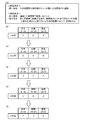
- FIGS. 9B to 9F are diagrams for explaining an example of a method for generating a work shift.
- the work shift generation system 100 is a system that is used in, for example, a railway company, and is a system for generating a work shift for employees after several months and making it viewable.
- FIG. 1 schematically shows the configuration of the work shift generation system 100 of the present embodiment.
- the work shift generation system 100 includes a sensor 70, an administrator terminal 20, and a server 10 as an information processing device.
- the sensor 70, the administrator terminal 20, and the server 10 are connected to a network 80 such as the Internet.
- Sensor 70 is a sensor that is carried by the driver and measures sleep conditions such as whether the driver is sleeping or sleep depth.
- a sensor having a three-dimensional acceleration sensor or the like for example, a sensor disclosed in Japanese Patent Laid-Open No. 2014-240366 can be employed.
- Information (sensing data) detected by the sensor 70 is transmitted to the server 10 in response to a request from the server 10.
- a sensor that uses microwaves and a sensor that uses sound are examples of the sensor 70.
- the administrator terminal 20 is a terminal used by an administrator who manages the work shift of the driver.
- FIG. 2A shows the hardware configuration of the administrator terminal 20.
- the administrator terminal 20 includes a CPU (Central Processing Unit) 90, a ROM (Read Only Memory) 92, a RAM (Random Access Memory) 94, and a storage unit (here, HDD (Hard Disk Drive). )) 96, a network interface 97, a display unit 93, an input unit 95, and a portable storage medium drive 99 capable of reading the portable storage medium 91.
- the display unit 93 includes a liquid crystal display or the like
- the input unit 95 includes a mouse, a keyboard, a touch panel, or the like.
- Each component of the administrator terminal 20 is connected to the bus 98.
- the administrator can confirm the work shift transmitted from the server 10 and displayed on the display unit 93. Further, the administrator can input preconditions and constraint conditions to be described later used for work shift generation via the input unit 95.
- the server 10 is a device that acquires sensing data from the sensor 70, generates a work shift based on the acquired sensing data, and outputs the work shift to the administrator terminal 20.
- FIG. 2B shows the hardware configuration of the server 10.
- the server 10 includes a CPU 190, a ROM 192, a RAM 194, a storage unit (HDD) 196, a network interface 197, a portable storage medium drive 199, and the like.
- Each component of the server 10 is connected to the bus 198.
- the CPU 190 executes a program (including a work shift generation program) stored in the ROM 192 or the HDD 196 or a program read from the portable storage medium 191 by the portable storage medium drive 199, whereby FIG.
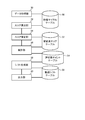
- the server 10 executes a program by the CPU 190, whereby a data acquisition unit 30 as an acquisition unit, a score calculation unit 32 as a calculation unit, a score correction unit 34 as a specifying unit, and a totaling unit 36. , Function as a shift generation unit 38 and an output unit 40 as a generation unit. Note that FIG. 3 also shows various tables stored in the HDD 196 and the like.
- the data acquisition unit 30 acquires the sleep history of the target person who generates the work shift. More specifically, the data acquisition unit 30 collects the measurement result of the driver's sleep state measured by the sensor 70 and stores it in the sleep cycle table 50.
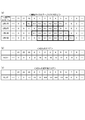
- the sleep cycle table 50 has a data structure as shown in FIG. FIG. 4A is a table for driver A, and it is assumed that tables are prepared for other drivers.
- the sleep cycle table 50 is a table that stores the measurement result of the sleep situation in each time zone of each date. In FIG. 4A, the measurement result is stored every hour, but the measurement result may be stored every other time unit. In consideration of the sleep cycle, the time unit is preferably about 30 minutes to 1 hour and a half. In FIG.
- a time zone with a value of “0” means a time zone where it occurred. Also, a time zone with a value of “0.1” is a time zone in which sleep was shallow, a time zone with a value of “0.3” is a time zone in which sleep was deep, and a time zone with a value of “0.2” Means the time zone that was intermediate sleep (sleep not shallow and deep).
- FIG. 4 (a) shows a four-day sleep cycle for convenience of illustration, and FIGS. 4 (b) and 4 (c) show the score derived from FIG. 4 (a) and the corrected score. Show.
- the score calculation unit 32 calculates a score related to each driver's sleep based on the data stored in the sleep cycle table 50.
- the score regarding sleep shows a smaller value, so that the possibility that it is during sleep is high.
- FIG. 4B shows the score of Mr. A for each time zone calculated from the sleep cycle table 50 of FIG.
- the score calculation unit 32 specifies the number of time zones (four days of sleep time) indicated by a bold frame in FIG. In FIG. 4A, the sleeping time is 25 hours.
- the score correction unit 34 corrects the sleep-related score based on the sleep quality (depth: deep, normal, shallow) in each time zone.
- FIG. 4C shows the corrected score of Mr. A.
- the score correction unit 34 stores the corrected score of each driver calculated as shown in FIG. 4C in the corrected score table 52.
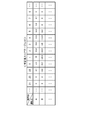
- the corrected score table 52 has a data structure as shown in FIG. Specifically, the corrected score table 52 stores the corrected scores of the drivers A, B,... For each time zone.
- the score correction unit 34 calculates a value (T) obtained by dividing the calculated total value (S) by the number of days.
- the totaling unit 36 calculates the appropriateness points by counting the scores of the respective time zones of the respective drivers every predetermined time, and stores them in the appropriateness point table 54.
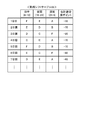
- the appropriateness point table 54 has a data structure as shown in FIG. Specifically, each driver (Mr. A, B, ... F in Fig. 6) is appropriate for daytime (8-16 hours), nighttime (16-24 hours), and midnight (24-8 hours). Degree points are stored.
- the appropriateness point is a value obtained by normalizing the total score after correction for each shift time zone (day, night, and midnight) (normal so that the total value of the appropriateness points of each driver is -100) Stored) is stored.
- the appropriateness point means that the higher the value (closer to 0), the lower the possibility of sleeping in that time zone.
- the appropriateness point table 54 in FIG. 6 is an example, and does not match the corrected score table 52 in FIG.
- the shift generation unit 38 generates a work shift for each driver based on the appropriateness points stored in the appropriateness point table 54 of FIG. 6 and predetermined preconditions and constraint conditions.
- the shift generation unit 38 stores the generated work shift in the work shift table 56.
- the work shift table 56 has a data structure as shown in FIG. Specifically, the work shift table 56 stores work shifts in which drivers A to F are assigned one by one during the day, at night, and at midnight.
- the work shift table 56 also stores the total value of appropriateness points for each day.
- the output unit 40 outputs the duty shift of each driver generated by the shift generation unit 38 to the administrator terminal 20.
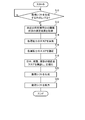
- step S10 the data acquisition unit 30 waits until it is time to generate a work shift.
- the timing for generating a work shift means the timing at which a predetermined day of each predetermined month arrives.
- a work shift for one month after two months is generated at the timing when the 25th day of each month arrives.
- a work shift is generated in which any one of Mr. A to Mr. F (6 people) works in each shift time zone (daytime, nighttime, midnight) of the three shift system. Shall.
- the data acquisition unit 30 acquires the measurement result of the sleep state for the latest predetermined period (for example, for two weeks) from the sensor 70. That is, data as shown in FIG. 4A is acquired for two weeks from the sensor 70 of each driver.
- the data acquisition unit 30 stores the acquired data in the sleep cycle table 50.
- step S14 the score calculation unit 32 calculates the score of each driver.
- the score calculation unit 32 calculates the score of each driver as shown in FIG. 4B based on the sleep cycle table 50 storing data for two weeks.
- step S16 the score correction unit 34 corrects the score of each driver. That is, the score correction unit 34 corrects the score by the method described above using values (0.1, 0.2, 0.3) indicating the quality (depth) of sleep.
- step S18 the tabulation unit 36 tabulates and normalizes the corrected scores of daytime, nighttime, and midnight.
- the counting unit 36 stores the normalized value in the appropriateness point table 54.
- FIG. 6 shows appropriateness points obtained from the data for each driver for two weeks.
- step S20 a case where a work shift is generated based on the appropriateness point of FIG. 6 will be described.
- the shift generation unit 38 When shifting to step S20, the shift generation unit 38 generates a work shift.
- the work shift generation method will be described in detail with reference to FIG.
- preconditions and constraint conditions as shown in FIG. 9A are defined. That is, the precondition is (1) First condition: A person with a high degree of appropriateness point is preferentially selected in the shift time zone, and the constraint condition is (2) Second condition: Do not work in consecutive shift hours (3) Third condition: If you work in the same shift hours, it is not time after you have completed the shift shift frame after work for the number of people to be shifted The band cannot be shifted.
- the first condition which is a precondition, means that work is preferentially assigned to a time zone in which the driver is unlikely to sleep.
- the third condition is that if there are 6 drivers as in this example, it takes 2 days for 6 people to digest 3 slots per day. It means you can't.
- the person with the highest appropriateness point in each shift time zone is selected based on the first condition.
- Mr. F is selected during the day
- Mr. E is selected at night
- Mr. A is selected at midnight. Since the second and third conditions are not violated, the shift on the first day is determined as it is (FIG. 9B). )reference).
- the person with the second most appropriate point in each shift time zone is selected based on the first condition and the third condition.
- Mr. E is selected during the day
- Mr. D is selected at night
- Mr. B is selected at midnight.
- Mr. B or Mr. F can be selected, but here, Mr. B located on the upper side of the table is selected.
- the shift on the second day is determined as it is (see FIG. 9C).
- the person with the third most appropriate point in each shift time zone is selected based on the first condition and the third condition.
- Mr. D is selected during the day
- Mr. C is selected at night
- Mr. F is selected at midnight.
- the shift on the second day is determined as it is (see FIG. 9D).
- Mr. F is selected during the day
- Mr. E is selected at night
- Mr. A is selected at night.
- Mr. F during the day continues from the night of the third day and violates the second condition.
- Mr. E who has a high point is a candidate, but it is against the third condition.
- Mr. D who has the next highest appropriateness point is a candidate, but because it violates the third condition, Mr. C is assigned to work during the day.
- Mr. E at night and Mr. A at midnight satisfy the third condition, the work at night and at midnight is determined by Mr. E and Mr. A (see FIG. 9E).
- the shift on the fifth day selects the person with the first highest relevance point during the day and the person with the second highest relevance point during the day and night based on the first and third conditions .
- Mr. F is selected during the day
- Mr. D is selected at night
- Mr. B is selected at midnight. Since these are not contrary to the second condition, the shift on the fifth day is determined as it is.
- the output unit 40 outputs the work shift. That is, the output unit 40 transmits the work shift table 56 illustrated in FIG. 7 to the administrator terminal 20. On the other hand, the administrator terminal 20 displays the contents of the work shift table 56 on the display unit 93 according to the operation of the administrator.
- the data acquisition unit 30 acquires the measurement result of the driver's sleep state, and the score calculation unit 32 determines the sleep concession based on the acquired measurement result.
- a score indicating the possibility that the driver is sleeping is calculated for each time zone.
- generation part 38 produces
- the score correction unit 34 corrects the score by specifying the quality (depth) of the driver's sleep for each time zone based on the observation result of the sleep situation.
- generation part 38 produces
- the shift generation unit 38 generates a work shift under predetermined constraint conditions (see the second condition and the third condition in FIG. 9A). Thereby, it becomes possible to suppress the occurrence of a bias such as a specific driver repeatedly working in a specific shift time zone.
- the shift generation unit 38 may generate a work shift based on the result of the aggregation unit 36 counting the scores calculated by the score calculation unit 32.
- the correction method of the score correction unit 34 of the above embodiment is an example. That is, the score correction unit 34 may correct the score by a method different from the above-described method based on the quality (depth) of sleep.
- the server 10 connected to the network 80 has the function shown in FIG. 3 and executes the process shown in FIG. 8.
- the present invention is not limited to this.
- the administrator terminal 20 that is not connected to the network 80 may have the function shown in FIG. 3 and execute the processing in FIG.
- the measurement result of the sleep state of the driver may be acquired from the sensor 70 by connecting the sensor 70 to the administrator terminal 20 by wire.
- the above processing functions can be realized by a computer.
- a program describing the processing contents of the functions that the processing apparatus should have is provided.
- the program describing the processing contents can be recorded on a computer-readable recording medium (except for a carrier wave).
- the program When the program is distributed, for example, it is sold in the form of a portable recording medium such as a DVD (Digital Versatile Disc) or CD-ROM (Compact Disc Read Only Memory) on which the program is recorded. It is also possible to store the program in a storage device of a server computer and transfer the program from the server computer to another computer via a network.
- a portable recording medium such as a DVD (Digital Versatile Disc) or CD-ROM (Compact Disc Read Only Memory) on which the program is recorded. It is also possible to store the program in a storage device of a server computer and transfer the program from the server computer to another computer via a network.
- the computer that executes the program stores, for example, the program recorded on the portable recording medium or the program transferred from the server computer in its own storage device. Then, the computer reads the program from its own storage device and executes processing according to the program. The computer can also read the program directly from the portable recording medium and execute processing according to the program. Further, each time the program is transferred from the server computer, the computer can sequentially execute processing according to the received program.
Landscapes
- Business, Economics & Management (AREA)
- Engineering & Computer Science (AREA)
- Human Resources & Organizations (AREA)
- Economics (AREA)
- Strategic Management (AREA)
- General Physics & Mathematics (AREA)
- Tourism & Hospitality (AREA)
- Entrepreneurship & Innovation (AREA)
- Theoretical Computer Science (AREA)
- Marketing (AREA)
- General Business, Economics & Management (AREA)
- Physics & Mathematics (AREA)
- Game Theory and Decision Science (AREA)
- Quality & Reliability (AREA)
- Operations Research (AREA)
- Development Economics (AREA)
- Educational Administration (AREA)
- Health & Medical Sciences (AREA)
- General Health & Medical Sciences (AREA)
- Primary Health Care (AREA)
- Management, Administration, Business Operations System, And Electronic Commerce (AREA)
Abstract
眠気の発生を考慮した勤務シフトを生成するため、データ取得部(30)が、運転士の睡眠状況の測定結果を取得し、スコア算出部(32)が、取得した睡眠譲許の測定結果に基づいて、運転士が睡眠中である可能性を示すスコアを時間帯ごとに算出する。そして、シフト生成部(38)は、スコア算出部が算出したスコアに基づいて、運転士が睡眠中である可能性の低い時間帯に優先的に勤務を割り当てた勤務シフトを生成する。
Description
本発明は、情報処理装置、勤務シフト生成方法及び勤務シフト生成プログラムに関する。
例えば、鉄道会社やバス会社の運転士は、乗客の安心や安全を確保するため、乗務時の体調を良好に維持する必要がある。また、運転士に限らず、一般的な会社においても、従業員が最大限に能力を発揮できるように勤務シフトを作成することが好ましい。
従来、スタッフの過去の実績やスキルに基づいて勤務シフトを作成する技術が知られている(例えば、特許文献1,2等参照)。
勤務シフトを作成する場合、安全性の面や効率の面からすると、運転士や従業員等が強い眠気を感じないであろう時間帯に勤務させることが好ましい。しかしながら、従来においては、各運転士の眠気を考慮した勤務シフト作成技術については提案されていない。
1つの側面では、本発明は、眠気の発生を考慮した勤務シフトを生成することが可能な情報処理装置、勤務シフト生成方法及び勤務シフト生成プログラムを提供することを目的とする。
一つの態様では、情報処理装置は、対象者の睡眠の履歴を取得する取得部と、前記取得部が取得した前記睡眠の履歴に基づいて、前記対象者が睡眠中である可能性を時間帯ごとに算出する算出部と、前記算出部が算出した前記睡眠中である可能性に基づいて、前記対象者が睡眠中である可能性の低い時間帯に優先的に勤務を割り当てた勤務シフトを生成する生成部と、を備える。
眠気の発生を考慮した勤務シフトを生成することができる。
以下、勤務シフト生成システムの一実施形態について、図1~図9に基づいて詳細に説明する。本実施形態の勤務シフト生成システム100は、例えば、鉄道会社で利用されるシステムであり、数か月後の従業員の勤務シフトを生成し、閲覧可能にするためのシステムである。
図1には、本実施形態の勤務シフト生成システム100の構成が概略的に示されている。図1に示すように、勤務シフト生成システム100は、センサ70と、管理者端末20と、情報処理装置としてのサーバ10と、を備える。センサ70、管理者端末20、及びサーバ10は、インターネットなどのネットワーク80に接続されている。
センサ70は、運転士が携帯し、運転士が睡眠中かどうかや睡眠深さなどの睡眠状況を測定するセンサである。センサ70としては、3次元加速度センサ等を有するセンサ、例えば、特開2014-200386号公報に開示されているセンサなどを採用することができる。センサ70が検出した情報(センシングデータ)は、サーバ10からの求めに応じて、サーバ10に対して送信される。なお、マイクロ波を利用するセンサ、音を利用するセンサもセンサ70の一例である。
管理者端末20は、運転士の勤務シフトを管理する管理者が利用する端末である。図2(a)には、管理者端末20のハードウェア構成が示されている。図2(a)に示すように、管理者端末20は、CPU(Central Processing Unit)90、ROM(Read Only Memory)92、RAM(Random Access Memory)94、記憶部(ここではHDD(Hard Disk Drive))96、ネットワークインタフェース97、表示部93、入力部95、及び可搬型記憶媒体91の読み取りが可能な可搬型記憶媒体用ドライブ99等を備えている。表示部93は、液晶ディスプレイ等を含み、入力部95は、マウスやキーボード、タッチパネル等を含む。これら管理者端末20の構成各部は、バス98に接続されている。管理者は、サーバ10から送信され、表示部93に表示される勤務シフトを確認することができる。また、管理者は、入力部95を介して、勤務シフト生成に用いられる後述する前提条件や制約条件を入力することができる。
サーバ10は、センサ70からセンシングデータを取得し、取得したセンシングデータに基づいて勤務シフトを生成し、管理者端末20に出力する装置である。図2(b)には、サーバ10のハードウェア構成が示されている。図2(b)に示すように、サーバ10は、CPU190、ROM192、RAM194、記憶部(HDD)196、ネットワークインタフェース197、及び可搬型記憶媒体用ドライブ199等を備えている。これらサーバ10の構成各部は、バス198に接続されている。サーバ10では、ROM192あるいはHDD196に格納されているプログラム(勤務シフト生成プログラムを含む)、或いは可搬型記憶媒体用ドライブ199が可搬型記憶媒体191から読み取ったプログラムをCPU190が実行することにより、図3に示す、各部の機能が実現される。
サーバ10は、図3に示すように、CPU190がプログラムを実行することで、取得部としてのデータ取得部30、算出部としてのスコア算出部32、特定部としてのスコア補正部34、集計部36、生成部としてのシフト生成部38、及び出力部40、として機能する。なお、図3には、HDD196等に格納されている、各種テーブルについても図示されている。
データ取得部30は、勤務シフトを生成する対象者の睡眠の履歴を取得する。より具体的には、データ取得部30は、センサ70において測定される運転士の睡眠状況の測定結果を収集し、睡眠サイクルテーブル50に格納する。ここで、睡眠サイクルテーブル50は、図4(a)に示すようなデータ構造を有する。なお、図4(a)は、運転士Aさんのテーブルであり、他の運転士に対してもテーブルがそれぞれ用意されているものとする。睡眠サイクルテーブル50は、図4(a)に示すように各日付の各時間帯の睡眠状況の測定結果を格納するテーブルである。なお、図4(a)では、1時間ごとに測定結果が格納されているが、その他の時間単位ごとに測定結果が格納されてもよい。なお、睡眠サイクルを考慮すると、時間単位は30分から1時間半程度が好ましい。図4(a)において、値が「0」の時間帯は起きていた時間帯を意味する。また、値が「0.1」の時間帯は浅い睡眠であった時間帯、値が「0.3」の時間帯は深い睡眠であった時間帯、値が「0.2」の時間帯は中間の睡眠(浅くもなく深くもない睡眠)であった時間帯を意味する。なお、図4(a)は、図示の便宜上4日間の睡眠サイクルを示すものであり、図4(b)、図4(c)は、図4(a)から導き出されるスコアや補正後スコアを示している。
スコア算出部32は、睡眠サイクルテーブル50に格納されているデータに基づいて、各運転士の睡眠に関するスコアを算出する。ここで、睡眠に関するスコアは、睡眠中である可能性が高いほど小さい値を示すものとする。図4(b)には、図4(a)の睡眠サイクルテーブル50から算出された、Aさんの各時間帯のスコアが示されている。
ここで、スコア算出部32の処理について具体的に説明する。スコア算出部32は、まず、図4(a)において、太線枠で示す時間帯の数(4日間の睡眠時間)を特定する。図4(a)では、睡眠時間は、25時間である。次いで、スコア算出部32は、全睡眠時間に対する各時間帯における睡眠時間の比率を求める。例えば、23時の時間帯であれば、睡眠は1時間であるので、1/25=0.04となる。また、0時の時間帯であれば、睡眠は2時間であるので、2/25=0.08、1~4時の時間帯であれば、睡眠は4時間であるので、4/25=0.16となる。そして、スコア算出部32は、各時間帯の比率に-100を積算した値をスコアとして算出する。なお、各運転士のスコアを合計すると-100となる。
スコア補正部34は、各時間帯の睡眠の質(深度:深い、普通、浅い)に基づいて睡眠に関するスコアを補正する。図4(c)には、Aさんの補正後スコアが示されている。スコア補正部34は、図4(c)のように算出された各運転士の補正後スコアを、補正後スコアテーブル52に格納する。ここで、補正後スコアテーブル52は、図5に示すようなデータ構造を有している。具体的には、補正後スコアテーブル52には、運転士Aさん,Bさん,…それぞれの補正後スコアが時間帯ごとに格納されている。
ここで、スコア補正部34の処理について具体的に説明する。スコア補正部34は、まず、時間帯ごとに枠内に記載されている値を合計した値(S)を算出する。例えば、23時の時間帯であれば、S=0.1、0時の時間帯であれば、S=0.3+0+0.1+0=0.4、1時の時間帯であれば、S=0.3+0.3+0.3+0.1=1.0、となる。次いで、スコア補正部34は、算出した合計値(S)を日数で除した値(T)を算出する。例えば、23時の時間帯であればT=0.1/4=0.025、24時の時間帯であれば、T=0.4/4=0.1、1時の時間帯であれば、T=1.0/4=0.25となる。そして、スコア補正部34は、算出した値Tを用いて、次式(1)より、スコアを補正する。
補正後スコア=スコア×(1+T) …(1)
補正後スコア=スコア×(1+T) …(1)
例えば、23時の時間帯(T=0.025)であれば、-4×(1+0.025)=-4.1となり、0時の時間帯(T=0.1)であれば、-8×(1+0.1)=-8.8となる。また、1時の時間帯(T=0.25)であれば、-16×(1+0.25)=-20となる。
図3に戻り、集計部36は、各運転士の各時間帯のスコアを所定時間ごとに集計して適切度ポイントを算出し、適切度ポイントテーブル54に格納する。ここで、適切度ポイントテーブル54は、図6に示すようなデータ構造を有する。具体的には、各運転士(図6では、Aさん、Bさん、…Fさん)の日中(8-16時)、夜間(16-24時)、深夜(24-8時)の適切度ポイントが格納される。なお、適切度ポイントは、シフト時間帯(日中、夜間、深夜)それぞれの補正後スコアの合計値を正規化した値(各運転士の適切度ポイントの合計値が-100になるように正規化した値)が格納される。適切度ポイントは、値が大きいほど(0に近いほど)その時間帯に寝ている可能性が低いことを意味している。なお、図6の適切度ポイントテーブル54は一例であって、図5の補正後スコアテーブル52と整合するものではない。
シフト生成部38は、図6の適切度ポイントテーブル54に格納されている適切度ポイントや、予め定められている前提条件及び制約条件に基づいて、各運転士の勤務シフトを生成する。シフト生成部38は、生成した勤務シフトを勤務シフトテーブル56に格納する。ここで、勤務シフトテーブル56は、図7に示すようなデータ構造を有する。具体的には、勤務シフトテーブル56には、運転士Aさん~Fさんを日中、夜、深夜に1人ずつ割り振った勤務シフトが格納されている。また、勤務シフトテーブル56には、各日の適切度ポイントの合計値についても格納されている。
出力部40は、シフト生成部38が生成した各運転士の勤務シフトを管理者端末20に出力する。
(サーバ10の勤務シフト生成処理)
次に、サーバ10による勤務シフト生成処理について、図8のフローチャートに沿って、その他図面を適宜参照しつつ詳細に説明する。
次に、サーバ10による勤務シフト生成処理について、図8のフローチャートに沿って、その他図面を適宜参照しつつ詳細に説明する。
図8の処理では、まずステップS10において、データ取得部30が、勤務シフトを生成するタイミングになるまで待機する。勤務シフトを生成するタイミングとは、予め定められている各月の所定日が到来したタイミングを意味する。本実施形態では、各月の25日が到来したタイミングで、例えば2か月後の1か月間の勤務シフトを生成するものとする。なお、本実施形態では、一例として、三交代制の各シフト時間帯(日中、夜間、深夜)に、Aさん~Fさん(6人)のいずれか1人を勤務させる勤務シフトを生成するものとする。
勤務シフトを生成するタイミングが到来し、ステップS12に移行すると、データ取得部30は、直近の所定期間分(例えば2週間分)の睡眠状況の測定結果をセンサ70から取得する。すなわち、図4(a)のようなデータを、各運転士のセンサ70から2週間分取得する。データ取得部30は、取得したデータを睡眠サイクルテーブル50に格納する。
次いで、ステップS14では、スコア算出部32が、各運転士のスコアを算出する。スコア算出部32は、2週間分のデータが格納された睡眠サイクルテーブル50に基づいて、図4(b)に示すような各運転士のスコアを算出する。
次いで、ステップS16では、スコア補正部34は、各運転士のスコアを補正する。すなわち、スコア補正部34は、睡眠の質(深さ)を示す値(0.1、0.2、0.3)を利用して、前述した方法でスコアを補正する。
次いで、ステップS18では、集計部36が、日中、夜間、深夜の補正後スコアを集計し、正規化する。集計部36は、正規化した値を適切度ポイントテーブル54に格納する。図6は、各運転士の2週間分のデータから得られた適切度ポイントを示している。なお、次のステップS20においては、図6の適切度ポイントに基づいて勤務シフトが生成される場合について説明する。
ステップS20に移行すると、シフト生成部38は、勤務シフトを生成する。以下、勤務シフトの生成方法について、図9に基づいて詳細に説明する。
本実施形態では、図9(a)に示すような前提条件と制約条件が定義されている。すなわち、前提条件は、
(1)第一条件:そのシフト時間帯で適切度ポイントが高い人を優先的に選択
であり、制約条件は、
(2)第二条件:連続したシフト時間帯で勤務しないこと
(3)第三条件:同じシフト時間帯に勤務する場合、勤務後のシフト交代枠をシフト対象人数分消化した後でないとその時間帯にはシフトを組めない
である。
(1)第一条件:そのシフト時間帯で適切度ポイントが高い人を優先的に選択
であり、制約条件は、
(2)第二条件:連続したシフト時間帯で勤務しないこと
(3)第三条件:同じシフト時間帯に勤務する場合、勤務後のシフト交代枠をシフト対象人数分消化した後でないとその時間帯にはシフトを組めない
である。
なお、前提条件である第一条件は、運転士が睡眠中である可能性が低い時間帯に優先的に勤務を割り当てることを意味する。また、第三条件は、本例のように運転士が全6人である場合、1日3枠を6人が消化するには2日かかるため、同じ時間帯の勤務は3日後でないと入れることができないことを意味している。
上記前提条件及び制約条件の下、図6の適切度ポイントテーブル54に基づく勤務シフトの生成方法について図9(b)~図9(f)に基づいて説明する。
まず、1日目のシフトは、第一条件に基づいて、各シフト時間帯で最も適切度ポイントが高い人を選択する。この場合、日中はFさん、夜間はEさん、深夜はAさんが選択され、第二条件、第三条件に反していないため、1日目のシフトはそのまま決定となる(図9(b)参照)。
次いで、2日目のシフトは、第一条件と第三条件に基づいて、各シフト時間帯で2番目に適切度ポイントが高い人を選択する。この場合、日中はEさん、夜間はDさん、深夜はBさんが選択される。なお、深夜については、Bさん又はFさんが選択可能であるが、ここではテーブルの上側に位置しているBさんが選択されたものとする。この場合も、第二条件には反していないので、2日目のシフトはそのまま決定となる(図9(c)参照)。
次いで、3日目のシフトは、第一条件と第三条件とに基づいて、各シフト時間帯で3番目に適切度ポイントが高い人を選択する。この場合、日中はDさん、夜間はCさん、深夜はFさんが選択される。この場合も、第二条件には反していないので、2日目のシフトはそのまま決定となる(図9(d)参照)。
次いで、4日目のシフトは、第一条件と第三条件とに基づいて、各シフト時間帯で1番目に適切度ポイントが高い人を選択する。この場合、日中はFさん、夜間はEさん、深夜はAさんが選択されるが、日中のFさんは、3日目の夜間から連続になり第二条件に反するので、次に適切度ポイントが高いEさんが候補となるが、第三条件に反する。このため、次に適切度ポイントが高いDさんが候補となるが、第三条件に反するため、Cさんが日中勤務に割り当てられる。一方、夜間のEさんと深夜のAさんは第三条件を満たすので、夜間と深夜の勤務はEさんとAさんに決定される(図9(e)参照)。
次いで、5日目のシフトは、第一条件と第三条件とに基づいて、日中は1番目に適切度ポイントが高い人、夜間と深夜は2番目に適切度ポイントが高い人を選択する。この場合、日中はFさん、夜間はDさん、深夜はBさんが選択され、これらは第二条件に反していないため、5日目のシフトはそのまま決定となる。
以下、同様の処理を繰り返すことで、1か月分の勤務シフトを作成することが可能となる。
図8に戻り、次のステップS22では、出力部40が、勤務シフトを出力する。すなわち、出力部40は、図7に示す勤務シフトテーブル56を管理者端末20に送信する。これに対し、管理者端末20では、管理者の操作に応じて、勤務シフトテーブル56の内容を表示部93上に表示する。
以上、詳細に説明したように、本実施形態によると、データ取得部30が、運転士の睡眠状況の測定結果を取得し、スコア算出部32が、取得した睡眠譲許の測定結果に基づいて、運転士が睡眠中である可能性を示すスコアを時間帯ごとに算出する。そして、シフト生成部38は、スコア算出部32が算出したスコアに基づいて、運転士が睡眠中である可能性の低い時間帯に優先的に勤務を割り当てた勤務シフトを生成する。これにより、本実施形態によると、運転士が強い眠気を感じる時間帯に勤務しなくてよいように、眠気の発生を考慮して調整された勤務シフトを提供することができる。したがって、安全面や仕事の効率を考慮した勤務シフトを提供することが可能となる。
また、本実施形態では、スコア補正部34は、睡眠状況の観測結果に基づいて、時間帯ごとの運転士の睡眠の質(深さ)を特定して、スコアを補正する。そして、シフト生成部38は、時間帯ごとの睡眠の質が考慮された補正後のスコアに基づいて、勤務シフトを生成する。これにより、深い眠りについている可能性が高い時間帯に勤務しなくてよいように、勤務シフトを生成することができる。
また、本実施形態では、シフト生成部38は、予め定められた制約条件(図9(a)の第二条件、第三条件参照)の下、勤務シフトを生成する。これにより、特定の運転士が特定のシフト時間帯に繰り返し勤務するなどの偏りの発生を抑制することが可能となる。
なお、上記実施形態では、スコア補正部34が補正したスコアを集計部36が集計した結果に基づいて、シフト生成部38が勤務シフトを生成する場合について説明したが、これに限られるものではない。例えば、スコア算出部32が算出したスコアを集計部36が集計した結果に基づいて、シフト生成部38が勤務シフトを生成することとしてもよい。
また、上記実施形態のスコア補正部34の補正方法は、一例である。すなわち、スコア補正部34は、睡眠の質(深さ)に基づいて、上述した方法とは異なる方法でスコアを補正することとしてもよい。
なお、上記実施形態では、ネットワーク80に接続されたサーバ10が、図3に示す機能を有し、図8に示す処理を実行する場合について説明したが、これに限られるものではない。例えば、ネットワーク80に接続されていない管理者端末20(すなわち、スタンドアローンの端末)が、図3に示す機能を有し、図8の処理を実行することとしてもよい。この場合、管理者端末20にセンサ70を有線接続等することで、センサ70から運転士の睡眠状況の測定結果を取得するようにしてもよい。
なお、上記実施形態では、勤務シフト生成システム100が、鉄道会社において利用される場合について説明したが、これに限らず、バス会社や航空会社、店舗、交通系以外の会社、官公庁、医療機関等において利用してもよい。
なお、上記の処理機能は、コンピュータによって実現することができる。その場合、処理装置が有すべき機能の処理内容を記述したプログラムが提供される。そのプログラムをコンピュータで実行することにより、上記処理機能がコンピュータ上で実現される。処理内容を記述したプログラムは、コンピュータで読み取り可能な記録媒体(ただし、搬送波は除く)に記録しておくことができる。
プログラムを流通させる場合には、例えば、そのプログラムが記録されたDVD(Digital Versatile Disc)、CD-ROM(Compact Disc Read Only Memory)などの可搬型記録媒体の形態で販売される。また、プログラムをサーバコンピュータの記憶装置に格納しておき、ネットワークを介して、サーバコンピュータから他のコンピュータにそのプログラムを転送することもできる。
プログラムを実行するコンピュータは、例えば、可搬型記録媒体に記録されたプログラムもしくはサーバコンピュータから転送されたプログラムを、自己の記憶装置に格納する。そして、コンピュータは、自己の記憶装置からプログラムを読み取り、プログラムに従った処理を実行する。なお、コンピュータは、可搬型記録媒体から直接プログラムを読み取り、そのプログラムに従った処理を実行することもできる。また、コンピュータは、サーバコンピュータからプログラムが転送されるごとに、逐次、受け取ったプログラムに従った処理を実行することもできる。
上述した実施形態は本発明の好適な実施の例である。但し、これに限定されるものではなく、本発明の要旨を逸脱しない範囲内において種々変形実施可能である。
10 サーバ(情報処理装置)
30 データ取得部(取得部)
32 スコア算出部(算出部)
34 スコア補正部(特定部)
38 シフト生成部(生成部)
30 データ取得部(取得部)
32 スコア算出部(算出部)
34 スコア補正部(特定部)
38 シフト生成部(生成部)
Claims (9)
- 対象者の睡眠の履歴を取得する取得部と、
前記取得部が取得した前記睡眠の履歴に基づいて、前記対象者が睡眠中である可能性を時間帯ごとに算出する算出部と、
前記算出部が算出した前記睡眠中である可能性に基づいて、前記対象者が睡眠中である可能性の低い時間帯に優先的に勤務を割り当てた勤務シフトを生成する生成部と、を備える情報処理装置。 - 前記睡眠の履歴に基づいて、前記時間帯ごとの前記対象者の睡眠の質を特定する特定部を更に備え、
前記生成部は、前記時間帯ごとの睡眠の質に基づいて、前記勤務シフトを生成する、ことを特徴とする請求項1に記載の情報処理装置。 - 前記生成部は、予め定められた制約条件の下、前記勤務シフトを生成する、ことを特徴とする請求項1又は2に記載の情報処理装置。
- 対象者の睡眠の履歴を取得し、
取得した前記睡眠の履歴に基づいて、前記対象者が睡眠中である可能性を時間帯ごとに算出し、
算出した前記睡眠中である可能性に基づいて、前記対象者が睡眠中である可能性の低い時間帯に優先的に勤務を割り当てた勤務シフトを生成する、処理をコンピュータが実行する勤務シフト生成方法。 - 前記睡眠の履歴に基づいて、前記時間帯ごとの前記対象者の睡眠の質を特定し、
前記生成する処理において、前記時間帯ごとの睡眠の質に基づいて、前記勤務シフトを生成する、ことを特徴とする請求項4に記載の勤務シフト生成方法。 - 前記生成する処理において、予め定められた制約条件の下、前記勤務シフトを生成する、ことを特徴とする請求項4又は5に記載の勤務シフト生成方法。
- 対象者の睡眠の履歴を取得し
取得した前記睡眠の履歴に基づいて、前記対象者が睡眠中である可能性を時間帯ごとに算出し、
算出した前記睡眠中である可能性に基づいて、前記対象者が睡眠中である可能性の低い時間帯に優先的に勤務を割り当てた勤務シフトを生成する、処理をコンピュータに実行させる勤務シフト生成プログラム。 - 前記睡眠の履歴に基づいて、前記時間帯ごとの前記対象者の睡眠の質を特定し、
前記生成する処理において、前記時間帯ごとの睡眠の質に基づいて、前記勤務シフトを生成する、ことを特徴とする請求項7に記載の勤務シフト生成プログラム。 - 前記生成する処理において、予め定められた制約条件の下、前記勤務シフトを生成する、ことを特徴とする請求項7又は8に記載の勤務シフト生成プログラム。
Priority Applications (1)
| Application Number | Priority Date | Filing Date | Title |
|---|---|---|---|
| PCT/JP2016/057545 WO2017154165A1 (ja) | 2016-03-10 | 2016-03-10 | 情報処理装置、勤務シフト生成方法及び勤務シフト生成プログラム |
Applications Claiming Priority (1)
| Application Number | Priority Date | Filing Date | Title |
|---|---|---|---|
| PCT/JP2016/057545 WO2017154165A1 (ja) | 2016-03-10 | 2016-03-10 | 情報処理装置、勤務シフト生成方法及び勤務シフト生成プログラム |
Publications (1)
| Publication Number | Publication Date |
|---|---|
| WO2017154165A1 true WO2017154165A1 (ja) | 2017-09-14 |
Family
ID=59790297
Family Applications (1)
| Application Number | Title | Priority Date | Filing Date |
|---|---|---|---|
| PCT/JP2016/057545 Ceased WO2017154165A1 (ja) | 2016-03-10 | 2016-03-10 | 情報処理装置、勤務シフト生成方法及び勤務シフト生成プログラム |
Country Status (1)
| Country | Link |
|---|---|
| WO (1) | WO2017154165A1 (ja) |
Citations (4)
| Publication number | Priority date | Publication date | Assignee | Title |
|---|---|---|---|---|
| JP2005032065A (ja) * | 2003-07-08 | 2005-02-03 | Aioi Insurance Co Ltd | 損失コスト予測システム、損失コスト予測方法及びプログラム |
| JP2006059111A (ja) * | 2004-08-19 | 2006-03-02 | Isac Inc | 勤務管理システム |
| JP2006271897A (ja) * | 2005-03-30 | 2006-10-12 | Toshiba Corp | 眠気予測装置及びその方法 |
| WO2011013227A1 (ja) * | 2009-07-30 | 2011-02-03 | 株式会社日立製作所 | 人員配置システム及びサーバ |
-
2016
- 2016-03-10 WO PCT/JP2016/057545 patent/WO2017154165A1/ja not_active Ceased
Patent Citations (4)
| Publication number | Priority date | Publication date | Assignee | Title |
|---|---|---|---|---|
| JP2005032065A (ja) * | 2003-07-08 | 2005-02-03 | Aioi Insurance Co Ltd | 損失コスト予測システム、損失コスト予測方法及びプログラム |
| JP2006059111A (ja) * | 2004-08-19 | 2006-03-02 | Isac Inc | 勤務管理システム |
| JP2006271897A (ja) * | 2005-03-30 | 2006-10-12 | Toshiba Corp | 眠気予測装置及びその方法 |
| WO2011013227A1 (ja) * | 2009-07-30 | 2011-02-03 | 株式会社日立製作所 | 人員配置システム及びサーバ |
Similar Documents
| Publication | Publication Date | Title |
|---|---|---|
| Kane et al. | Patient characteristics, anaesthetic workload and techniques in the UK: an analysis from the 7th National Audit Project (NAP7) activity survey | |
| Rigotti et al. | The corona crisis: what can we learn from earlier studies in applied psychology? | |
| Bolster et al. | The effect of restricting residents' duty hours on patient safety, resident well-being, and resident education: an updated systematic review | |
| Luther et al. | Discharge processes: What evidence tells us is most effective | |
| Longhurst et al. | Decrease in hospital-wide mortality rate after implementation of a commercially sold computerized physician order entry system | |
| Merandi et al. | Deployment of a second victim peer support program: a replication study | |
| Luft | The essential role of physician as advocate: how and why we pass it on | |
| Joukes et al. | Impact of electronic versus paper-based recording before EHR implementation on health care professionals' perceptions of EHR use, data quality, and data reuse | |
| Overington et al. | Implementing clinical guidelines for chronic obstructive pulmonary disease: barriers and solutions | |
| Grunkemeier et al. | Cumulative sum techniques for assessing surgical results | |
| O’Donnell et al. | Electronic documentation in pediatrics: the rationale and functionality requirements | |
| WO2014188657A1 (ja) | 情報処理システム、プログラム及び情報処理方法 | |
| Walia et al. | Physician transition of care: benefits of I-PASS and an electronic handoff system in a community pediatric residency program | |
| Day et al. | Progressive surgical autonomy in a plastic surgery resident clinic | |
| WO2021044587A1 (ja) | 情報提示装置、情報提示方法、及び情報提示プログラム | |
| Perski et al. | Do daily fluctuations in psychological and app-related variables predict engagement with an alcohol reduction app? A series of N-of-1 studies | |
| Pac | Early childhood education and care programs in the United States: does access improve child safety? | |
| Bailes et al. | Documenting physical therapy dose for individuals with cerebral palsy: a quality improvement initiative | |
| Malenka et al. | Improving handoffs between operating room and pediatric intensive care teams: before and after study | |
| Izudi et al. | Quality improvement interventions for nutritional assessment among pregnant mothers in northeastern Uganda | |
| Beyens et al. | Understanding the relationship between mothers’ attitudes toward television and children’s television exposure: A longitudinal study of reciprocal patterns and the moderating role of maternal stress | |
| Yalch et al. | Effects of prenatal and postbirth intimate partner violence on preschool-age children’s dissociative symptoms | |
| Assael | Residency education in oral and maxillofacial surgery: a new curriculum framework | |
| Cheng et al. | Short-term effects of an eHealth care experiential learning program among patients with type 2 diabetes: randomized controlled trial | |
| WO2017154165A1 (ja) | 情報処理装置、勤務シフト生成方法及び勤務シフト生成プログラム |
Legal Events
| Date | Code | Title | Description |
|---|---|---|---|
| NENP | Non-entry into the national phase |
Ref country code: DE |
|
| 121 | Ep: the epo has been informed by wipo that ep was designated in this application |
Ref document number: 16893494 Country of ref document: EP Kind code of ref document: A1 |
|
| 122 | Ep: pct application non-entry in european phase |
Ref document number: 16893494 Country of ref document: EP Kind code of ref document: A1 |
|
| NENP | Non-entry into the national phase |
Ref country code: JP |