WO2017110866A1 - 複合樹脂組成物、及び当該複合樹脂組成物から成形された電子部品 - Google Patents
複合樹脂組成物、及び当該複合樹脂組成物から成形された電子部品 Download PDFInfo
- Publication number
- WO2017110866A1 WO2017110866A1 PCT/JP2016/088080 JP2016088080W WO2017110866A1 WO 2017110866 A1 WO2017110866 A1 WO 2017110866A1 JP 2016088080 W JP2016088080 W JP 2016088080W WO 2017110866 A1 WO2017110866 A1 WO 2017110866A1
- Authority
- WO
- WIPO (PCT)
- Prior art keywords
- resin composition
- composite resin
- respect
- electronic component
- mol
- Prior art date
- Legal status (The legal status is an assumption and is not a legal conclusion. Google has not performed a legal analysis and makes no representation as to the accuracy of the status listed.)
- Ceased
Links
- LQQKHWUVRBYGOY-UHFFFAOYSA-N C[NH+](c(cc1)ccc1OC)[O-] Chemical compound C[NH+](c(cc1)ccc1OC)[O-] LQQKHWUVRBYGOY-UHFFFAOYSA-N 0.000 description 1
- PMCUAEFIAQRDDU-UHFFFAOYSA-N C[NH+](c(cc1)ccc1[NH+](C)[O-])[O-] Chemical compound C[NH+](c(cc1)ccc1[NH+](C)[O-])[O-] PMCUAEFIAQRDDU-UHFFFAOYSA-N 0.000 description 1
- DLCKABUEKRLQAJ-UHFFFAOYSA-N C[NH+](c1cc([NH+](C)[O-])ccc1)[O-] Chemical compound C[NH+](c1cc([NH+](C)[O-])ccc1)[O-] DLCKABUEKRLQAJ-UHFFFAOYSA-N 0.000 description 1
Images


Classifications
-
- C—CHEMISTRY; METALLURGY
- C08—ORGANIC MACROMOLECULAR COMPOUNDS; THEIR PREPARATION OR CHEMICAL WORKING-UP; COMPOSITIONS BASED THEREON
- C08G—MACROMOLECULAR COMPOUNDS OBTAINED OTHERWISE THAN BY REACTIONS ONLY INVOLVING UNSATURATED CARBON-TO-CARBON BONDS
- C08G63/00—Macromolecular compounds obtained by reactions forming a carboxylic ester link in the main chain of the macromolecule
- C08G63/02—Polyesters derived from hydroxycarboxylic acids or from polycarboxylic acids and polyhydroxy compounds
- C08G63/60—Polyesters derived from hydroxycarboxylic acids or from polycarboxylic acids and polyhydroxy compounds derived from the reaction of a mixture of hydroxy carboxylic acids, polycarboxylic acids and polyhydroxy compounds
-
- C—CHEMISTRY; METALLURGY
- C08—ORGANIC MACROMOLECULAR COMPOUNDS; THEIR PREPARATION OR CHEMICAL WORKING-UP; COMPOSITIONS BASED THEREON
- C08K—Use of inorganic or non-macromolecular organic substances as compounding ingredients
- C08K3/00—Use of inorganic substances as compounding ingredients
- C08K3/34—Silicon-containing compounds
-
- C—CHEMISTRY; METALLURGY
- C08—ORGANIC MACROMOLECULAR COMPOUNDS; THEIR PREPARATION OR CHEMICAL WORKING-UP; COMPOSITIONS BASED THEREON
- C08K—Use of inorganic or non-macromolecular organic substances as compounding ingredients
- C08K7/00—Use of ingredients characterised by shape
-
- C—CHEMISTRY; METALLURGY
- C08—ORGANIC MACROMOLECULAR COMPOUNDS; THEIR PREPARATION OR CHEMICAL WORKING-UP; COMPOSITIONS BASED THEREON
- C08K—Use of inorganic or non-macromolecular organic substances as compounding ingredients
- C08K7/00—Use of ingredients characterised by shape
- C08K7/02—Fibres or whiskers
- C08K7/04—Fibres or whiskers inorganic
- C08K7/14—Glass
-
- C—CHEMISTRY; METALLURGY
- C08—ORGANIC MACROMOLECULAR COMPOUNDS; THEIR PREPARATION OR CHEMICAL WORKING-UP; COMPOSITIONS BASED THEREON
- C08L—COMPOSITIONS OF MACROMOLECULAR COMPOUNDS
- C08L67/00—Compositions of polyesters obtained by reactions forming a carboxylic ester link in the main chain; Compositions of derivatives of such polymers
Definitions
- the present invention relates to a composite resin composition and an electronic component molded from the composite resin composition.
- the liquid crystalline polymer is a thermoplastic resin excellent in dimensional accuracy, fluidity and the like. Due to these characteristics, liquid crystalline polymers have been conventionally employed as materials for various electronic components.
- the connector has become lighter, thinner, and shorter, and due to insufficient rigidity due to insufficient thickness of the molded product and internal stress due to metal terminal inserts, warpage deformation occurs after molding and during reflow heating, and soldering to the board There is a problem that becomes defective. That is, in the conventional reinforcement using only glass fibers, there is a problem that if the addition amount of the glass fibers is increased in order to increase the rigidity, the resin is not filled in the thin portion, or the insert terminal is deformed by the pressure during molding.
- the molding technique has been devised, and a specific plate-like filler has been proposed in terms of material.
- a specific plate-like filler has been proposed in terms of material.
- a typical example of such an asymmetric electronic component is a memory module connector having a latch structure (having fixing claws at both ends) such as a DDR-DIMM connector.
- a memory module connector for a notebook personal computer has a latch structure for mounting and a notch for alignment, and thus has a very complicated shape.
- Patent Document 1 is formed from a liquid crystalline polymer composition obtained by blending a specific amount of a specific fibrous filler and a specific plate-like filler.
- An asymmetric electronic component having no symmetry with respect to any of the XY axis plane, the YZ axis plane, and the XZ axis plane of the product is disclosed.
- the liquid crystalline polymer composition disclosed in the above-mentioned Patent Document 1 due to factors such as a shape change accompanying an increase in the integration rate in recent asymmetric electronic components, particularly a decrease in pitch distance, a product height, and an increase in the number of poles. It has been found that conventional liquid crystalline polymer compositions such as products cannot be dealt with in some cases. That is, the conventional liquid crystalline polymer composition has insufficient heat resistance and fluidity, and it has been difficult to obtain an asymmetric electronic component in which warpage deformation is suppressed from such a liquid crystalline polymer composition.
- the liquid crystalline polymer composition may have a problem of blistering. That is, liquid crystalline polyester, which is a liquid crystalline polymer, is often used as a material that requires heat treatment at a high temperature because of high thermal stability at high temperatures.
- liquid crystalline polyester which is a liquid crystalline polymer
- the molded product is left in high temperature air and liquid for a long time, there arises a problem that fine blisters called blisters are generated on the surface. This phenomenon is caused by the decomposition gas generated when the liquid crystalline polyester is in a molten state, and then the gas expands when the high-temperature heat treatment is performed. This is because the pushed up part appears as a blister.
- the generation of blisters can be reduced by sufficiently degassing the vent hole during melt extrusion of the material, or by not allowing the material to stay in the molding machine for a long time during molding.
- the range of conditions is very narrow, and it is not sufficient to obtain a molded product in which generation of blisters is suppressed, that is, a molded product having blister resistance.
- the present invention has been made in view of such circumstances, and is a composite resin composition that provides an electronic component that is excellent in heat resistance and in which warpage deformation and blister generation are suppressed, and an electronic molded from the composite resin composition.
- the purpose is to provide parts.
- the present inventors have found that the above problem can be solved by combining a liquid crystalline polymer containing a predetermined amount of a specific structural unit, a fibrous filler, and a plate-like filler. Specifically, the present invention provides the following.
- a composite resin composition comprising (A) a liquid crystalline polymer, (B) a fibrous filler, and (C) a plate-like filler,
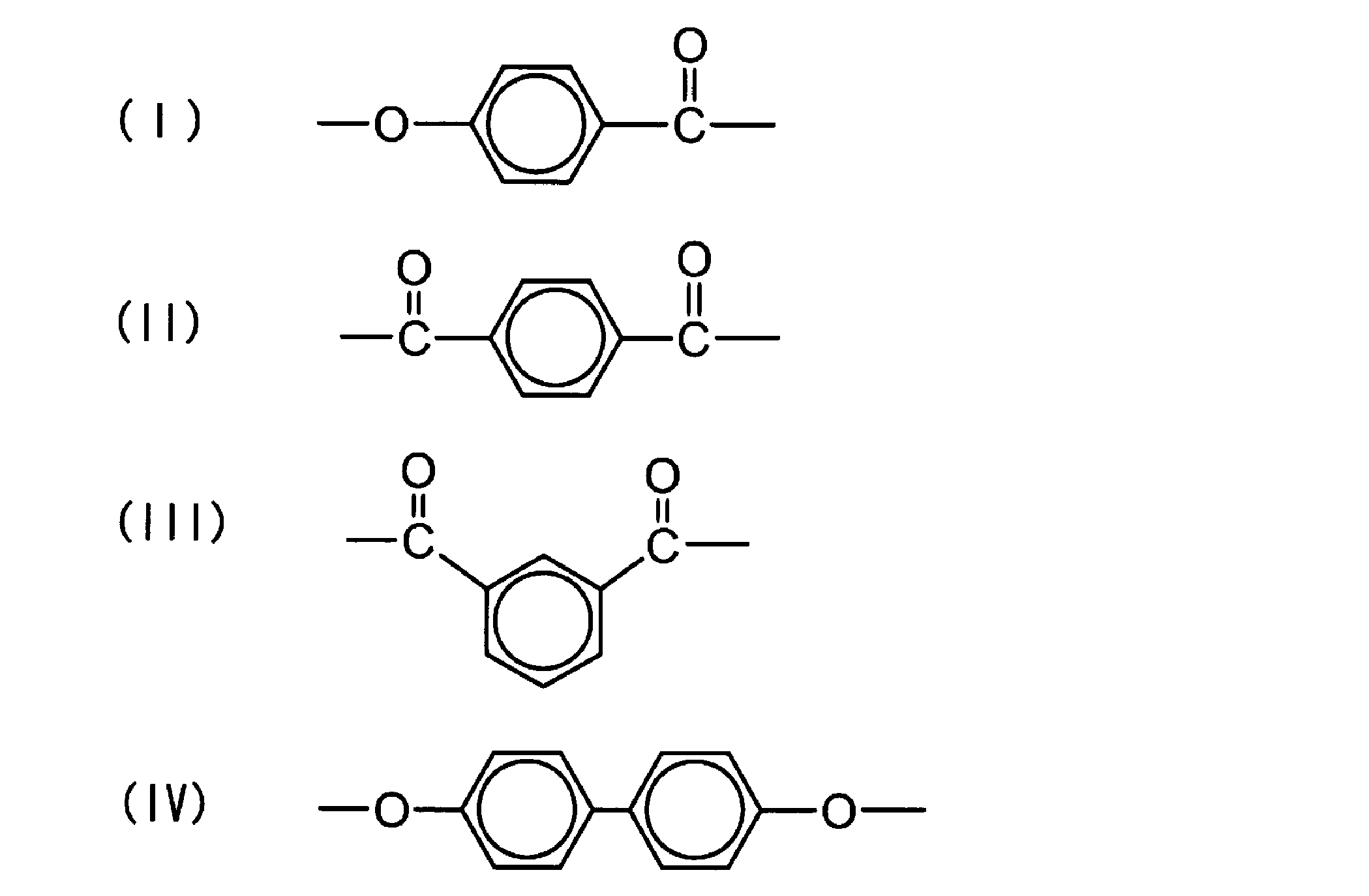
- the (A) liquid crystalline polymer comprises the following structural units (I) to (IV) as essential structural components,
- the content of the structural unit (I) is 61 to 68 mol% with respect to all the structural units,
- the content of the structural unit (II) is 7 to 14 mol% with respect to all the structural units
- the content of the structural unit (III) with respect to all the structural units is 5.5 to 9 mol%,
- the content of the structural unit (IV) is 16 to 19.5 mol% with respect to all the structural units
- the ratio of the structural unit (III) to the total of the structural unit (II) and the structural unit (III) is 0.30 to 0.48
- the total content of the structural units (I) to (IV) is 100 mol% with respect to all the structural units, It has an ester bond or a combination of an ester bond and
- the (A) liquid crystalline polymer is 50 to 70% by mass with respect to the entire composite resin composition
- the (B) fibrous filler is 2.5 to 15% by mass with respect to the entire composite resin composition
- the (C) plate-like filler is 25 to 40% by mass with respect to the entire composite resin composition
- the total amount of the (B) fibrous filler and the (C) plate filler is 30 to 50% by mass with respect to the entire composite resin composition
- the composite resin composition in which the (C) plate-like filler is talc.
- the electronic component according to (3) which is an asymmetric electronic component having no symmetry with respect to any of the XY axis plane, the YZ axis plane, and the XZ axis plane of the molded product.
- the electronic component according to (4) which is a memory module connector having a pitch distance of 0.6 mm or less, a total product length of 60.0 mm or more, a product height of 10.0 mm or less, and a pole number of 200 or more. .
- a composite resin composition capable of obtaining an electronic component having excellent heat resistance and suppressing warpage deformation and blister generation, and an electronic component molded from the composite resin composition.
- the composite resin composition in the present invention contains a predetermined amount of a specific liquid crystalline polymer, a fibrous filler, and a plate-like filler.
- a specific liquid crystalline polymer e.g., polyethylene glycol dimethacrylate copolymer
- fibrous filler e.g., polypropylene glycol dimethacrylate copolymer
- plate-like filler e.g., polymethyl methacrylate-styrene-styrene-styrene-styrene-styrene-styrene-styrene-styrene-styrene-styrene-styrenethacrylate-styrenethacrylate-styrenethacrylate-styrenethacrylate-styrenethacrylate-styrenethacrylate-styrenethacrylate-styrenethacrylate-styrene-
- the composite resin composition in the present invention includes a liquid crystalline polymer that is the above-mentioned wholly aromatic polyester. Since the wholly aromatic polyester has a low melting point, the processing temperature can be lowered, and generation of decomposition gas during melting is suppressed. As a result, in the molded product obtained by molding the composite resin composition containing the wholly aromatic polyester, blister generation is suppressed and blister resistance is improved.
- a liquid crystalline polymer can be used individually by 1 type or in combination of 2 or more types.
- the wholly aromatic polyester in the present invention comprises the following structural unit (I), the following structural unit (II), the following structural unit (III), and the following structural unit (IV).
- the structural unit (I) is derived from 4-hydroxybenzoic acid (hereinafter also referred to as “HBA”).
- HBA 4-hydroxybenzoic acid
- the wholly aromatic polyester in the present invention contains 61 to 68 mol% of the structural unit (I) with respect to all the structural units. When the content of the structural unit (I) is less than 61 mol% or exceeds 68 mol%, at least one of lowering the melting point and heat resistance tends to be insufficient.
- the structural unit (II) is derived from 1,4-phenylenedicarboxylic acid (hereinafter also referred to as “TA”).
- the wholly aromatic polyester in the present invention contains 7 to 14 mol%, preferably 9.5 to 11.5 mol%, of the structural unit (II) with respect to all the structural units. If the content of the structural unit (II) is less than 7 mol% or exceeds 14 mol%, at least one of lowering the melting point and heat resistance tends to be insufficient.
- the structural unit (III) is derived from 1,3-phenylenedicarboxylic acid (hereinafter also referred to as “IA”).
- the wholly aromatic polyester in the present invention contains 5.5 to 9 mol%, preferably 6.5 to 8 mol% of the structural unit (III) with respect to all the structural units.
- the content of the structural unit (III) is less than 5.5 mol% or exceeds 9 mol%, at least one of lowering the melting point and heat resistance tends to be insufficient.
- the structural unit (IV) is derived from 4,4′-dihydroxybiphenyl (hereinafter also referred to as “BP”).
- BP 4,4′-dihydroxybiphenyl
- the wholly aromatic polyester in the present invention contains 16 to 19.5 mol% of the structural unit (IV) with respect to the total structural unit. When the content of the structural unit (IV) is less than 16 mol% or exceeds 19.5 mol%, at least one of lowering the melting point and heat resistance tends to be insufficient.
- the ratio of the structural unit (III) to the total of the structural unit (II) and the structural unit (III) is 0.30 to 0.48 mol%.
- the ratio is less than 0.30 mol% or exceeds 0.48 mol%, at least one of lowering the melting point and heat resistance tends to be insufficient.
- the total number of moles of the structural unit (II) and the structural unit (III) is 1 to 1.06 times the number of moles of the structural unit (IV), or the structural unit (IV ) Is preferably 1 to 1.06 times the total number of moles of the structural unit (II) and the structural unit (III).
- One of the factors affecting all physical properties of wholly aromatic polyesters is a ketone bond formed by a side reaction during polymerization.
- the amount of the ketone bond relative to the total of the ester bond and the ketone bond is 0 to 0.18 mol%.
- the hue tends to be lowered.
- the wholly aromatic polyester in the present invention contains a specific amount of each of the specific structural units (I) to (IV) with respect to all the structural units, and the structural unit (II) and the structural units. Since the ratio of the structural unit (III) to the total of (III) is adjusted to a specific range, and the amount of ketone bond is adjusted to a specific range, both low melting point and heat resistance are compatible. Is sufficient and has excellent hue.
- the wholly aromatic polyester of the present invention contains 100 mol% of the structural units (I) to (IV) in total with respect to the total structural units.
- DTUL a difference between a melting point and a deflection temperature under load
- this difference is 85 ° C. or less, the heat resistance tends to increase, which is preferable.
- DTUL is a polyester resin obtained by melt-kneading 60% by mass of the wholly aromatic polyester and 40% by mass of milled fiber having an average fiber diameter of 11 ⁇ m and an average fiber length of 75 ⁇ m at the melting point of the wholly aromatic polyester + 20 ° C. It is a value measured in the state of the composition, and can be measured in accordance with ISO75-1,2.
- the wholly aromatic polyester in the present invention is polymerized using a direct polymerization method or a transesterification method.
- a melt polymerization method, a solution polymerization method, a slurry polymerization method, a solid phase polymerization method, or the like is used.
- an acylating agent for the polymerization monomer or a monomer having an activated terminal as an acid chloride derivative can be used.
- the acylating agent include fatty acid anhydrides such as acetic anhydride.
- various catalysts can be used. Typical examples include dialkyl tin oxide, diaryl tin oxide, titanium dioxide, alkoxy titanium silicates, titanium alcoholates, fatty acid metal salts, BF 3 Lewis acid salts such as are mentioned, and fatty acid metal salts are preferred.
- the amount of the catalyst used is generally about 0.001 to 1% by weight, particularly about 0.003 to 0.2% by weight, based on the total weight of the monomers.
- liquid paraffin high heat resistant synthetic oil, inert mineral oil, or the like is used as a solvent.
- the reaction conditions are, for example, a reaction temperature of 200 to 380 ° C. and a final ultimate pressure of 0.1 to 760 Torr (that is, 13 to 101,080 Pa).
- the reaction temperature is 260 to 380 ° C., preferably 300 to 360 ° C.
- the final ultimate pressure is 1 to 100 Torr (ie, 133 to 13,300 Pa), preferably 1 to 50 Torr (ie, 133 to 6,670 Pa). ).
- the reaction can be started by charging all the raw material monomers (HBA, TA, IA, and BP), the acylating agent, and the catalyst in the same reaction vessel (one-stage system), or the hydroxyl groups of the raw material monomers HBA and BP. Can be acylated with an acylating agent and then reacted with carboxyl groups of TA and IA (two-stage system).
- the melt polymerization is performed after the inside of the reaction system has reached a predetermined temperature, and the pressure reduction is started to a predetermined degree of pressure reduction. After the torque of the stirrer reaches a predetermined value, an inert gas is introduced, and the total aromatic polyester is discharged from the reaction system by changing from a reduced pressure state to a normal pressure to a predetermined pressure state.
- the molecular weight of the wholly aromatic polyester produced by the above polymerization method can be further increased by solid-phase polymerization which is heated at normal pressure or reduced pressure in an inert gas.
- Preferred conditions for the solid phase polymerization reaction are a reaction temperature of 230 to 330 ° C., preferably 250 to 320 ° C., and a final ultimate pressure of 10 to 760 Torr (ie 1,330 to 101,080 Pa).
- 1,4-phenylenedicarboxylic acid and 1-hydroxydibenzoic acid are obtained by acylating 4-hydroxybenzoic acid and 4,4′-dihydroxybiphenyl with a fatty acid anhydride in the presence of a fatty acid metal salt.
- Preferably comprising a step of transesterification with 3,3-phenylenedicarboxylic acid For all monomers consisting of 4-hydroxybenzoic acid, 1,4-phenylenedicarboxylic acid, 1,3-phenylenedicarboxylic acid, and 4,4′-dihydroxybiphenyl,
- the amount of 4-hydroxybenzoic acid used is 61 to 68 mol%
- the amount of 1,4-phenylene dicarboxylic acid used is 7 to 14 mol%
- the amount of 1,3-phenylenedicarboxylic acid used is 5.5-9 mol%
- the amount of 4,4′-dihydroxybiphenyl used is 16 to 19.5 mol%
- the ratio of the amount of 1,3-phenylene dicarboxylic acid used relative to the total amount of 1,4-phenylene dicarboxylic acid and 1,3-phenylene dicarboxylic acid is preferably 0.30 to 0.48
- the amount of the fatty acid anhydride used is preferably 1.
- the fatty acid metal salt is an acetic acid metal salt and the fatty acid anhydride is acetic anhydride.
- the total number of moles of 1,4-phenylene dicarboxylic acid and 1,3-phenylene dicarboxylic acid is 1 to 1.06 times the number of moles of 4,4′-dihydroxybiphenyl, or 4,4
- the number of moles of '-dihydroxybiphenyl is preferably 1 to 1.06 times the total number of moles of 1,4-phenylenedicarboxylic acid and 1,3-phenylenedicarboxylic acid.
- the wholly aromatic polyester in the present invention exhibits optical anisotropy when melted.
- the optical anisotropy when melted means that the wholly aromatic polyester in the present invention is a liquid crystalline polymer.
- the fact that the wholly aromatic polyester is a liquid crystalline polymer is an indispensable element when the wholly aromatic polyester has both thermal stability and easy processability.
- the wholly aromatic polyester composed of the structural units (I) to (IV) may not form an anisotropic melt phase depending on the constituent components and the sequence distribution in the polymer. Limited to wholly aromatic polyesters that exhibit optical anisotropy when melted.
- melt anisotropy can be confirmed by a conventional polarization inspection method using an orthogonal polarizer. More specifically, the melting anisotropy can be confirmed by melting a sample placed on a hot stage manufactured by Linkham Co., Ltd. using a polarizing microscope manufactured by Olympus and observing it at a magnification of 150 times in a nitrogen atmosphere.
- the liquid crystalline polymer is optically anisotropic and transmits light when inserted between crossed polarizers. If the sample is optically anisotropic, for example, polarized light is transmitted even in a molten stationary liquid state.
- a nematic liquid crystalline polymer causes a significant decrease in viscosity at a melting point or higher, generally exhibiting liquid crystallinity at a melting point or higher is an index of workability.
- the melting point is preferably as high as possible from the viewpoint of heat resistance, but considering the thermal deterioration during the melt processing of the polymer, the heating ability of the molding machine, etc., a preferable standard is 320 to 340 ° C. More preferably, the temperature is 325 to 335 ° C.
- the composite resin composition in the present invention contains the liquid crystalline polymer in the composite resin composition in an amount of 50 to 70% by mass with respect to the total composite resin composition. If the content of the liquid crystalline polymer is less than 50% by mass with respect to the entire composite resin composition, the fluidity of the composite resin composition is likely to deteriorate, and molding of electronic parts and the like obtained from the composite resin composition This is not preferable because warpage of the product may increase. When the content of the liquid crystalline polymer is more than 70% by mass with respect to the entire composite resin composition, it is preferable because the bending elastic modulus and crack resistance of a molded article such as an electronic component obtained from the composite resin composition are decreased. Absent.
- the composite resin composition in the present invention preferably contains 55 to 65% by mass of the above liquid crystalline polymer in the composite resin composition with respect to the total composite resin composition.
- Fibrous filler Since the composite resin composition in the present invention contains the above-mentioned liquid crystalline polymer and a fibrous filler, a molded product obtained by molding the composite resin composition is excellent in high-temperature rigidity.
- a fibrous filler can be used individually by 1 type or in combination of 2 or more types.
- the fibrous filler in the present invention is not particularly limited, and is glass fiber, milled fiber, carbon fiber, asbestos fiber, silica fiber, silica / alumina fiber, zirconia fiber, boron nitride fiber, silicon nitride fiber, boron fiber, titanium.
- a potassium acid fiber etc. are mentioned. Since the high-temperature rigidity of the molded product obtained from the composite resin composition is likely to be improved, the fibrous filler in the present invention is preferably at least one selected from the group consisting of glass fibers and milled fibers.
- the fibrous filler preferably has a weight average fiber length of 50 to 500 ⁇ m. It is preferable for the weight average fiber length to be 50 ⁇ m or more because the molded article obtained from the composite resin composition has sufficient high-temperature rigidity.
- the weight average fiber length is preferably 500 ⁇ m or less because the fluidity of the composite resin composition becomes good and warpage deformation of the molded product is difficult to increase.
- the weight average fiber length of the fibrous filler means that the composite resin composition is heated and ashed at 600 ° C. for 2 hours to obtain an ash residue, and the ash residue is 5% by mass.
- a dispersion is obtained by dispersing in an aqueous polyethylene glycol solution, and the weight average fiber length measured with an image measuring device is used for this dispersion.
- the fiber diameter of the fibrous filler in the present invention is not particularly limited, and generally about 5 to 15 ⁇ m is used.
- the composite resin composition in the present invention contains 2.5 to 15% by mass of the fibrous filler in the composite resin composition with respect to the entire composite resin composition.
- a molded article such as an electronic component obtained from the composite resin composition has a low load deflection temperature and high temperature rigidity. Is not preferable because it is not sufficient.
- the content of the fibrous filler is more than 15% by mass with respect to the entire composite resin composition, the fluidity of the composite resin composition is deteriorated and warpage deformation of the molded product may be increased.
- the fibrous filler in the present invention is preferably contained in the composite resin composition in an amount of 5 to 15% by mass with respect to the entire composite resin composition.
- the composite resin composition in the present invention further contains a plate-like filler.
- a plate-like filler By including a plate-like filler in the composite resin composition in the present invention, a molded product in which warpage deformation is suppressed can be obtained.
- a plate-shaped filler can be used individually by 1 type or in combination of 2 or more types.
- the plate-like filler is contained in an amount of 25 to 40% by mass with respect to the entire composite resin composition. If the content of the plate-like filler is less than 25% by mass with respect to the entire composite resin composition, it is not preferable because warpage deformation of molded products such as electronic parts obtained from the composite resin composition may increase. . If the content of the plate filler is more than 40% by mass relative to the entire composite resin composition, the fluidity of the composite resin composition may be deteriorated, which is not preferable.
- the plate-like filler in the present invention is preferably contained in the composite resin composition in an amount of 25 to 35% by mass with respect to the entire composite resin composition.
- Examples of the plate-like filler in the present invention include talc, mica, glass flakes, various metal foils, etc., and warpage of a molded product obtained from the composite resin composition without deteriorating the fluidity of the composite resin composition.
- Talc is preferred in terms of suppressing deformation.
- the average particle size of the plate-like filler is not particularly limited, and a smaller one is desirable in consideration of fluidity in the thin portion.
- it is necessary to maintain a certain size in order to reduce warping deformation of a molded product such as an electronic component obtained from the composite resin composition. Specifically, it is preferably 1 to 100 ⁇ m, more preferably 5 to 50 ⁇ m.
- the total content of Fe 2 O 3 , Al 2 O 3 and CaO is 2.5% by mass or less based on the total solid content of the talc, Fe 2 O 3 and Al It is preferable that the total content of 2 O 3 is more than 1.0 mass% and not more than 2.0 mass%, and the content of CaO is less than 0.5 mass%. That is, the talc that can be used in the present invention contains at least one of Fe 2 O 3 , Al 2 O 3, and CaO in addition to the main components SiO 2 and MgO, and each component is contained in the above content range. It may be contained.
- the total content of Fe 2 O 3 , Al 2 O 3 and CaO is preferably 1.0% by mass or more and 2.0% by mass or less.
- talc having a total content of Fe 2 O 3 and Al 2 O 3 of more than 1.0% by mass is easily available.
- the total content of Fe 2 O 3 and Al 2 O 3 is preferably more than 1.0 mass% and not more than 1.7 mass%.
- the CaO content is less than 0.5% by mass, the molding processability of the composite resin composition and the heat resistance of molded products such as electronic parts molded from the composite resin composition deteriorate. Hateful.
- the content of CaO is preferably 0.01% by mass or more and 0.4% by mass or less.
- the mass average or volume-based cumulative average particle diameter (D 50 ) of talc in the present invention measured by laser diffraction method is 4 from the viewpoint of preventing warpage deformation of the molded product and maintaining fluidity of the composite resin composition. It is preferably from 0 to 20.0 ⁇ m, more preferably from 10 to 18 ⁇ m.
- the total amount of the fibrous filler and the plate-like filler is 30 to 50% by mass with respect to the entire composite resin composition.
- the total amount is less than 30% by mass with respect to the entire composite resin composition, a molded article such as an electronic component obtained from the composite resin composition has a low deflection temperature under load and insufficient high-temperature rigidity. This is not preferable because warping deformation may increase.
- the total amount is more than 50% by mass with respect to the entire composite resin composition, the fluidity of the composite resin composition is deteriorated, and the warpage deformation of the molded product may be increased.
- the total amount is preferably 35 to 45% by mass with respect to the entire composite resin composition.
- pigments such as nucleating agent, carbon black, inorganic calcined pigment, antioxidant, stabilizer, plasticizer, lubricant, mold release agent, flame retardant, and You may mix
- the method for producing the composite resin composition in the present invention is not particularly limited as long as the components in the composite resin composition can be uniformly mixed, and can be appropriately selected from conventionally known methods for producing resin compositions.
- each component is melt-kneaded and extruded using a melt-kneader such as a single-screw or twin-screw extruder, and then the resulting composite resin composition is processed into a desired form such as powder, flakes, pellets, etc.
- a melt-kneader such as a single-screw or twin-screw extruder
- the minimum filling pressure at the time of molding is hardly excessive, and has a complicated shape such as an electronic component, in particular, an asymmetric electronic component having a latch structure or a notch. Parts and the like can be preferably molded.
- the degree of fluidity is determined by the minimum filling pressure of the connector. That is, the minimum injection filling pressure at which a good molded product can be obtained when the DDR-DIMM connector shown in FIG. 3 is injection-molded is specified as the minimum filling pressure. The lower the minimum filling pressure, the better the fluidity.
- the melt viscosity of the composite resin composition measured in accordance with ISO 11443 at a temperature 10 to 30 ° C. higher than the melting point of the liquid crystalline polymer at a shear rate of 1000 / second is 1 ⁇ 10 5 Pa ⁇ s or less (more preferably 5 Pa ⁇ When molding a part having a complicated shape in an electronic component that is s or more and 1 ⁇ 10 2 Pa ⁇ s or less), in particular, a part having a complicated shape such as a latch structure or a notch in an asymmetric electronic component Is preferable in that the fluidity of the composite resin composition is ensured and the filling pressure does not become excessive.
- the electronic component of the present invention can be obtained by molding the composite resin composition of the present invention.
- the electronic component of the present invention is not particularly limited, and examples thereof include an electronic component having a total product length of 30 mm or more and a product height of 5 mm or more.
- an asymmetric electronic component refers to a component that has no symmetry with respect to any of the XY axis plane, the YZ axis plane, and the XZ axis plane of the molded product.
- the XY axis plane, the YZ axis plane, and the XZ axis plane have symmetry, so that the symmetry should be maintained during molding.
- the shape of an asymmetric electronic component is complicated, and it is difficult to suppress warpage deformation by a molding method.
- warpage deformation is suppressed by using the composite resin composition of the present invention.
- Typical examples of such electronic components include connectors and sockets.
- the connector include a memory module connector and an interface connector.
- memory module connectors include DIMM connectors, DDR-DIMM connectors, DDR2-DIMM connectors, DDR-SO-DIMM connectors, DDR2-SO-DIMM connectors, DDR-Micro-DIMM connectors, DDR2-Micro-DIMM connectors, etc. DDR connectors and the like.
- Examples of the interface connector include a SATA connector, a SAS connector, and an NGFF connector.
- DDR connectors are suitable, especially for thin-walled and complex memory module connectors for laptop computers, with a pitch distance of 0.6 mm or less and a total product length. Particularly preferred are those of 60.0 mm or more, product height of 10.0 mm or less, and the number of poles of 200 or more.
- Such a memory module connector is subjected to an IR reflow process for surface mounting at a peak temperature of 230 to 280 ° C, the warp before the IR reflow process is 0.1 mm or less, and the warp before and after the reflow.
- a requirement can be satisfied.
- sockets such as a card bus, CF card, memory stick, PC card, SD card, SDMo, smart card, and smart media card.
- the molding method for obtaining the electronic component of the present invention is not particularly limited, and it is preferable to select molding conditions without residual internal stress in order to obtain an electronic component in which warpage deformation is suppressed.
- the cylinder temperature of the molding machine is preferably a temperature equal to or higher than the melting point of the liquid crystalline polymer.
- the mold temperature is preferably 70 to 100 ° C. If the mold temperature is low, the composite resin composition filled in the mold may cause flow failure, which is not preferable. If the mold temperature is high, problems such as the occurrence of burrs may occur, which is not preferable.
- the injection speed is preferably 150 mm / second or more. If the injection speed is low, there is a possibility that only an unfilled molded product can be obtained. Even if a completely filled molded product is obtained, it becomes a molded product with a high filling pressure and a large residual internal stress. Only parts may be obtained.
- the warp deformation is suppressed in the electronic component of the present invention.
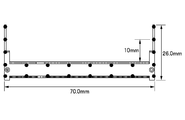
- the degree of warpage of the electronic component is determined as follows. That is, with the DDR-DIMM connector shown in FIG. 3, the height is measured at a plurality of positions indicated by black circles in FIG. 4, and the difference between the maximum height and the minimum height from the least squares plane is taken as a warp.
- changes in warpage are suppressed before and after performing IR reflow.
- blistering is suppressed in the electronic component of the present invention.
- the degree of blistering is determined by the blister temperature. That is, the presence or absence of blisters on the surface of a molded product sandwiched between hot presses at a predetermined temperature for 5 minutes is visually observed, and the highest temperature at which the number of blisters generated becomes zero is defined as the blister temperature. It is evaluated that the higher the blister temperature, the more blister generation is suppressed.
- the electronic component of the present invention is excellent in heat resistance, for example, heat resistance as evaluated by high temperature rigidity.
- the high temperature stiffness is evaluated by measuring the deflection temperature under load in accordance with ISO 75-1 and 2 standard.
- the L value of the polymer was measured using a spectral color difference meter (“SE6000” manufactured by Nippon Denshoku Industries Co., Ltd.).
- the ketone bond amount of the polymer was calculated by a pyrolysis gas chromatography method described in Polymer Degradation and Stability 76 (2002) 85-94. Specifically, the polymer is heated in the presence of tetramethylammonium hydroxide (TMAH) using a pyrolysis device ("PY2020iD” manufactured by Frontier Laboratories) to generate gas by pyrolysis / methylation. It was. This gas is analyzed using gas chromatography (“GC-6890N” manufactured by Agilent Technologies), and the amount of ketone bond is calculated from the ratio of the peak area derived from the ketone bond to the peak area derived from the ester bond. did.
- TMAH tetramethylammonium hydroxide
- liquid crystalline polymer 1 is the liquid crystalline polymer obtained in Synthesis Example 1.
- Liquid crystalline polymers 2 and 3 were produced as follows.
- the melting point and melt viscosity of the pellet were measured under the following conditions.
- Method for producing liquid crystalline polymer 2 A polymerization vessel equipped with a stirrer, a reflux column, a monomer inlet, a nitrogen inlet, and a pressure reduction / outflow line was charged with the following raw material monomers, a metal catalyst, and an acylating agent, and nitrogen substitution was started.
- the temperature of the reaction system was raised to 140 ° C. and reacted at 140 ° C. for 1 hour. Thereafter, the temperature is further raised to 340 ° C. over 4.5 hours, and then the pressure is reduced to 10 Torr (ie, 1330 Pa) over 15 minutes, while acetic acid, excess acetic anhydride, and other low-boiling components are distilled off. Melt polymerization was performed. After the stirring torque reached a predetermined value, nitrogen was introduced to change from a reduced pressure state to a normal pressure through a normal pressure, the polymer was discharged from the lower part of the polymerization vessel, and the strand was pelletized to pelletize. The obtained pellet had a melting point of 334 ° C. and a melt viscosity of 18 Pa ⁇ s.
- the temperature of the reaction system was raised to 140 ° C. and reacted at 140 ° C. for 1 hour. Thereafter, the temperature is further increased to 360 ° C. over 5.5 hours, and then the pressure is reduced to 10 Torr (ie, 1330 Pa) over 20 minutes, while acetic acid, excess acetic anhydride, and other low-boiling components are distilled off. Melt polymerization was performed. After the stirring torque reached a predetermined value, nitrogen was introduced to change from a reduced pressure state to a normal pressure through a normal pressure, the polymer was discharged from the lower part of the polymerization vessel, and the strand was pelletized to pelletize. The obtained pellet had a melting point of 358 ° C. and a melt viscosity of 9 Pa ⁇ s.
- Fibrous filler Glass fiber ECS03T-786H manufactured by Nippon Electric Glass Co., Ltd., fiber diameter 10 ⁇ m, length of 3 mm chopped strand Milled fiber: PF70E001 manufactured by Nittobo Co., Ltd., fiber diameter 10 ⁇ m, average fiber length 70 ⁇ m (Manufacturer nominal value)
- C Plate-shaped filler talc; Crown Talc PP manufactured by Matsumura Sangyo Co., Ltd., average particle size 10 ⁇ m
- the extrusion conditions for obtaining the composite resin composition are as follows.
- [Extrusion conditions] [Examples 1 to 5, Comparative Examples 1 to 6]
- the temperature of the cylinder provided at the main feed port was 250 ° C., and the temperatures of the other cylinders were all 360 ° C. All liquid crystalline polymers were supplied from the main feed port.
- the filler was supplied from the side feed port.
- [Comparative Example 7] The temperature of the cylinder provided at the main feed port was 250 ° C., and the temperatures of the other cylinders were all 380 ° C. All liquid crystalline polymers were supplied from the main feed port.
- the filler was supplied from the side feed port.
- Molding machine Sumitomo Heavy Industries, SE100DU Cylinder temperature: 360 ° C. (Examples 1 to 5, Comparative Examples 1 to 6) 380 ° C. (Comparative Example 7) Mold temperature: 80 °C Injection speed: 33mm / sec
- the composite resin composition was injection molded under the following molding conditions to obtain a 12.5 mm ⁇ 120 mm ⁇ 0.8 mm molded product having a weld portion. A fragment obtained by dividing the molded product into two parts at the weld part was used as one specimen, and was sandwiched in a hot press at a predetermined temperature for 5 minutes. Thereafter, it was visually examined whether blisters were generated on the surface of the specimen. The blister temperature was the maximum temperature at which the number of blisters generated was zero. The predetermined temperature was set in increments of 10 ° C. in the range of 250 to 300 ° C. [Molding condition] Molding machine: Sumitomo Heavy Industries, SE100DU Cylinder temperature: 360 ° C. (Examples 1 to 5, Comparative Examples 1 to 6) 380 ° C. (Comparative Example 7) Mold temperature: 90 °C Injection speed: 33mm / sec
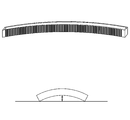
- FIG. 1A is a top view
- FIG. 1B is a side view
- FIG. 1C is a cross-sectional view along AA.
- Molded product (0.6mm pitch connector) size is 0.6mm in basic wall thickness, 57.2mm in total length, 0.3mm in pitch between terminals, 0.3mm in terminal pitch, 90 pins x 2 rows ( 180 pins in total).
- Molding machine Sumitomo Heavy Industries SE30DUZ Cylinder temperature: 360 ° C. (Examples 1 to 5, Comparative Examples 1 to 6) 380 ° C. (Comparative Example 7) Mold temperature: 80 °C Injection speed: 200mm / sec
- the composite resin composition was injection-molded under the following molding conditions (gate: tunnel gate, gate size: ⁇ 0.75 mm), and the overall size as shown in FIG. 3 was 70.0 mm ⁇ 26.0 mm ⁇ 4.0 mmt, A DDR-DIMM connector having a pitch distance of 0.6 mm and a pin hole number of 100 ⁇ 2 was obtained.
- Molding machine Sumitomo Heavy Industries SE30DUZ Cylinder temperature: 360 ° C. (Examples 1 to 5, Comparative Examples 1 to 6) 380 ° C. (Comparative Example 7) Mold temperature: 80 °C Injection speed: 200mm / sec
- the obtained connector was placed on a horizontal desk, and the height of the connector was measured with Mitutoyo Quick Vision 404 PROCNC image measuring machine. At that time, the height was measured at a plurality of positions indicated by black circles in FIG. 4, and the difference between the maximum height and the minimum height from the least squares plane was defined as the DDR connector warp.
- the warpage was measured before and after IR reflow performed under the following conditions, and evaluated according to the following criteria. Before IR reflow ⁇ (good): The warp was 0.06 mm or less. X (defect): The warp was more than 0.06 mm. -After IR reflow O (good): The warp was 0.12 mm or less.
- DDR connector deformation The difference in warpage before and after reflow measured by the above method was determined as the amount of deformation of the DDR connector and evaluated according to the following criteria. ⁇ (Good): The amount of deformation was 0.06 mm or less. X (defect): The amount of deformation was more than 0.06 mm.
- DDR connector minimum filling pressure When the DDR-DIMM connector of FIG. 3 was injection molded, the minimum injection filling pressure at which a good molded product was obtained was measured as the minimum filling pressure, and evaluated according to the following criteria. ⁇ (Good): The minimum filling pressure was 100 MPa or less. X (Bad): The minimum filling pressure was more than 100 MPa.
- the electronic parts molded from the composite resin composition according to the present invention were excellent in heat resistance and suppressed warpage and blistering.
Landscapes
- Chemical & Material Sciences (AREA)
- Health & Medical Sciences (AREA)
- Chemical Kinetics & Catalysis (AREA)
- Medicinal Chemistry (AREA)
- Polymers & Plastics (AREA)
- Organic Chemistry (AREA)
- Compositions Of Macromolecular Compounds (AREA)
Abstract
耐熱性に優れ、そり変形及びブリスター発生が抑制された電子部品が得られる複合樹脂組成物、及び当該複合樹脂組成物から成形された電子部品を提供する。本発明に係る複合樹脂組成物は、(A)液晶性ポリマーと、(B)繊維状充填剤と、(C)板状充填剤と、を含み、上記(A)液晶性ポリマーは、必須の構成成分として、所定量の下記構成単位(I)~(IV)からなり、分子内にエステル結合又はエステル結合とケトン結合との組み合わせを有し、前記エステル結合と前記ケトン結合との合計に対する前記ケトン結合の量が0~0.18モル%であり、前記(C)板状充填剤は、タルクである、溶融時に光学的異方性を示す全芳香族ポリエステルである。
Description
本発明は、複合樹脂組成物、及び当該複合樹脂組成物から成形された電子部品に関する。
液晶性ポリマーは、寸法精度、流動性等に優れる熱可塑性樹脂である。このような特徴を有するため、液晶性ポリマーは、従来より各種電子部品の材料として採用されてきた。
特に、近年のエレクトロニクス機器の高性能化に伴う、コネクターの高耐熱化(実装技術による生産性向上)、高密度化(多芯化)、及び小型化という時代の要請もあり、上記液晶性ポリマーの特徴を活かし、ガラス繊維で強化された液晶性ポリマー組成物がコネクター材料として採用されている。
しかし、近年、コネクターにおいて軽薄短小化が更に進み、成形品の肉厚不足による剛性不足や金属端子のインサートによる内部応力により、成形後及びリフロー加熱中にそり変形が発生し、基板とのハンダ付け不良となる問題が生じている。即ち、従来のガラス繊維のみによる強化では、剛性を上げるためにガラス繊維の添加量を増やすと薄肉部分に樹脂が充填せず、又は成形時の圧力によりインサート端子が変形する問題があった。
かかるそり変形の問題を解決するため、成形手法を工夫することが行われ、また材料面からは特定の板状充填剤の配合が提案されている。即ち、市場に多く存在する通常のコネクター(電子部品)の場合、成形に際し、対称性を保つようなゲート位置、設計をすることで、製品の寸法精度、そりをコントロールすることが可能であり、更に従来提案されている低そり材料を使用することで、そり変形の少ない製品が得られている。
しかしながら、近年における電子部品の形状の複雑化に伴い、成形品のXY軸面、YZ軸面、及びXZ軸面の何れの軸面に対しても対称性がない非対称電子部品の提供が求められている。かかる非対称電子部品としては、DDR-DIMMコネクター等のラッチ構造(両端に固定用の爪がある)を持つメモリーモジュール用コネクターが代表例として挙げられる。特にノートパソコン用メモリーモジュール用コネクターでは、取り付けのためのラッチ構造を有し、また位置合わせのための切り欠きがあるため、非常に複雑な形状となる。
このような非対称電子部品の場合、成形品のXY軸面、YZ軸面、及びXZ軸面の何れかの軸面に対して対称性を有する通常のコネクター(対称電子部品)と異なり、対称性を有しないことから、成形手法の面からのそり変形改善には限界がある。また、複雑な形状を有する非対称電子部品の場合、成形品内の樹脂及びフィラーの配向が複雑となり、より高い流動性も必要となり、そり変形の抑制がより困難である。
このような問題点を解決する技術として、例えば、特許文献1には、特定の繊維状充填剤と特定の板状充填剤とを特定量配合してなる液晶性ポリマー組成物から成形され、成形品のXY軸面、YZ軸面、及びXZ軸面の何れの軸面に対しても対称性がない非対称電子部品が開示されている。
しかしながら、最近の非対称電子部品における集積率の増加等に伴う形状変化、特にピッチ間距離や製品高さの減少、極数の増加等の要因により、上記特許文献1に開示された液晶性ポリマー組成物等の従来の液晶性ポリマー組成物では対処しきれない場合があることが判明した。即ち、従来の液晶性ポリマー組成物は耐熱性及び流動性が十分ではなく、このような液晶性ポリマー組成物から、そり変形が抑制された非対称電子部品を得ることは困難であった。
また、液晶性ポリマー組成物には、ブリスター発生の問題が生じ得る。即ち、液晶性ポリマーである液晶性ポリエステルは、高温熱安定性が良いため、高温での熱処理を要する材料に使用される場合が多い。しかし、成形品を高温の空気中及び液体中に長時間放置すると、表面にブリスターと呼ばれる細かい膨れが生じるという問題が起こる。この現象は、液晶性ポリエステルが溶融状態にある時に発生する分解ガス等が成形品内部に持ち込まれ、その後、高温の熱処理を行う際にそのガスが膨張し、加熱で軟化した成形品表面を押し上げ、押し上げられた部分がブリスターとして現れることによる。ブリスターの発生は、材料の溶融押出し時にベント孔から充分脱気することや成形する際に成形機内に長く滞留させないこと等によって、少なくすることもできる。しかし、非常に条件範囲が狭く、ブリスターの発生を抑えた成形品、即ち、耐ブリスター性を有する成形品を得るには充分ではない。ブリスター発生の根本的な解決には、液晶ポリエステルそのものの品質の向上を要し、公知の液晶ポリエステルやそれを用いた方法では、ブリスター発生の問題を解決するには不充分である。
本発明は、かかる事情に鑑みてなされたものであり、耐熱性に優れ、そり変形及びブリスター発生が抑制された電子部品が得られる複合樹脂組成物、及び当該複合樹脂組成物から成形された電子部品を提供することを目的とする。
本発明者らは、特定の構成単位を所定量含む液晶性ポリマーと、繊維状充填剤と、板状充填剤と、を組み合わせることで上記の課題を解決できることを見出した。具体的には、本発明は、以下のようなものを提供する。
(1) (A)液晶性ポリマーと、(B)繊維状充填剤と、(C)板状充填剤と、を含む複合樹脂組成物であって、
前記(A)液晶性ポリマーは、必須の構成成分として、下記構成単位(I)~(IV)からなり、
全構成単位に対して構成単位(I)の含有量は61~68モル%であり、
全構成単位に対して構成単位(II)の含有量は7~14モル%であり、
全構成単位に対して構成単位(III)の含有量は5.5~9モル%であり、
全構成単位に対して構成単位(IV)の含有量は16~19.5モル%であり、
構成単位(II)と構成単位(III)との合計に対する構成単位(III)の比が0.30~0.48であり、
全構成単位に対して構成単位(I)~(IV)の合計の含有量は100モル%であり、
分子内にエステル結合又はエステル結合とケトン結合との組み合わせを有し、前記エステル結合と前記ケトン結合との合計に対する前記ケトン結合の量が0~0.18モル%である、溶融時に光学的異方性を示す全芳香族ポリエステルであり、
前記(A)液晶性ポリマーは、複合樹脂組成物全体に対して50~70質量%であり、
前記(B)繊維状充填剤は、複合樹脂組成物全体に対して2.5~15質量%であり、
前記(C)板状充填剤は、複合樹脂組成物全体に対して25~40質量%であり、
前記(B)繊維状充填剤及び前記(C)板状充填剤の総量は、複合樹脂組成物全体に対して30~50質量%であり、
前記(C)板状充填剤は、タルクである複合樹脂組成物。
前記(A)液晶性ポリマーは、必須の構成成分として、下記構成単位(I)~(IV)からなり、
全構成単位に対して構成単位(I)の含有量は61~68モル%であり、
全構成単位に対して構成単位(II)の含有量は7~14モル%であり、
全構成単位に対して構成単位(III)の含有量は5.5~9モル%であり、
全構成単位に対して構成単位(IV)の含有量は16~19.5モル%であり、
構成単位(II)と構成単位(III)との合計に対する構成単位(III)の比が0.30~0.48であり、
全構成単位に対して構成単位(I)~(IV)の合計の含有量は100モル%であり、
分子内にエステル結合又はエステル結合とケトン結合との組み合わせを有し、前記エステル結合と前記ケトン結合との合計に対する前記ケトン結合の量が0~0.18モル%である、溶融時に光学的異方性を示す全芳香族ポリエステルであり、
前記(A)液晶性ポリマーは、複合樹脂組成物全体に対して50~70質量%であり、
前記(B)繊維状充填剤は、複合樹脂組成物全体に対して2.5~15質量%であり、
前記(C)板状充填剤は、複合樹脂組成物全体に対して25~40質量%であり、
前記(B)繊維状充填剤及び前記(C)板状充填剤の総量は、複合樹脂組成物全体に対して30~50質量%であり、
前記(C)板状充填剤は、タルクである複合樹脂組成物。
(2) 前記(B)繊維状充填剤は、ガラス繊維及びミルドファイバーからなる群より選ばれる1種以上である(1)に記載の複合樹脂組成物。
(3) (1)又は(2)に記載の複合樹脂組成物から成形され、製品全長が30mm以上であり、製品高さが5mm以上である電子部品。
(4) 成形品のXY軸面、YZ軸面、及びXZ軸面の何れの軸面に対しても対称性がない非対称電子部品である(3)に記載の電子部品。
(5) ピッチ間距離が0.6mm以下、製品全長が60.0mm以上、製品高さが10.0mm以下、極数が200極以上のメモリーモジュール用コネクターである(4)に記載の電子部品。
本発明によれば、耐熱性に優れ、そり変形及びブリスター発生が抑制された電子部品が得られる複合樹脂組成物、及び当該複合樹脂組成物から成形された電子部品が提供される。
以下、本発明の実施形態について具体的に説明する。
[複合樹脂組成物]
本発明における複合樹脂組成物は、特定の液晶性ポリマーと、繊維状充填剤と、板状充填剤とを所定量ずつ含む。以下、本発明における複合樹脂組成物を構成する成分について説明する。
本発明における複合樹脂組成物は、特定の液晶性ポリマーと、繊維状充填剤と、板状充填剤とを所定量ずつ含む。以下、本発明における複合樹脂組成物を構成する成分について説明する。
(液晶性ポリマー)
本発明における複合樹脂組成物には、上記全芳香族ポリエステルである液晶性ポリマーが含まれる。上記全芳香族ポリエステルは、融点が低いため、加工温度を低くすることができ、溶融時の分解ガスの発生が抑制される。その結果、上記全芳香族ポリエステルを含む複合樹脂組成物を成形して得られた成形品は、ブリスター発生が抑制されて、耐ブリスター性が向上する。液晶性ポリマーは、1種単独で又は2種以上組み合わせて使用することができる。
本発明における複合樹脂組成物には、上記全芳香族ポリエステルである液晶性ポリマーが含まれる。上記全芳香族ポリエステルは、融点が低いため、加工温度を低くすることができ、溶融時の分解ガスの発生が抑制される。その結果、上記全芳香族ポリエステルを含む複合樹脂組成物を成形して得られた成形品は、ブリスター発生が抑制されて、耐ブリスター性が向上する。液晶性ポリマーは、1種単独で又は2種以上組み合わせて使用することができる。
本発明における全芳香族ポリエステルは、下記構成単位(I)、下記構成単位(II)、下記構成単位(III)、及び下記構成単位(IV)からなる。
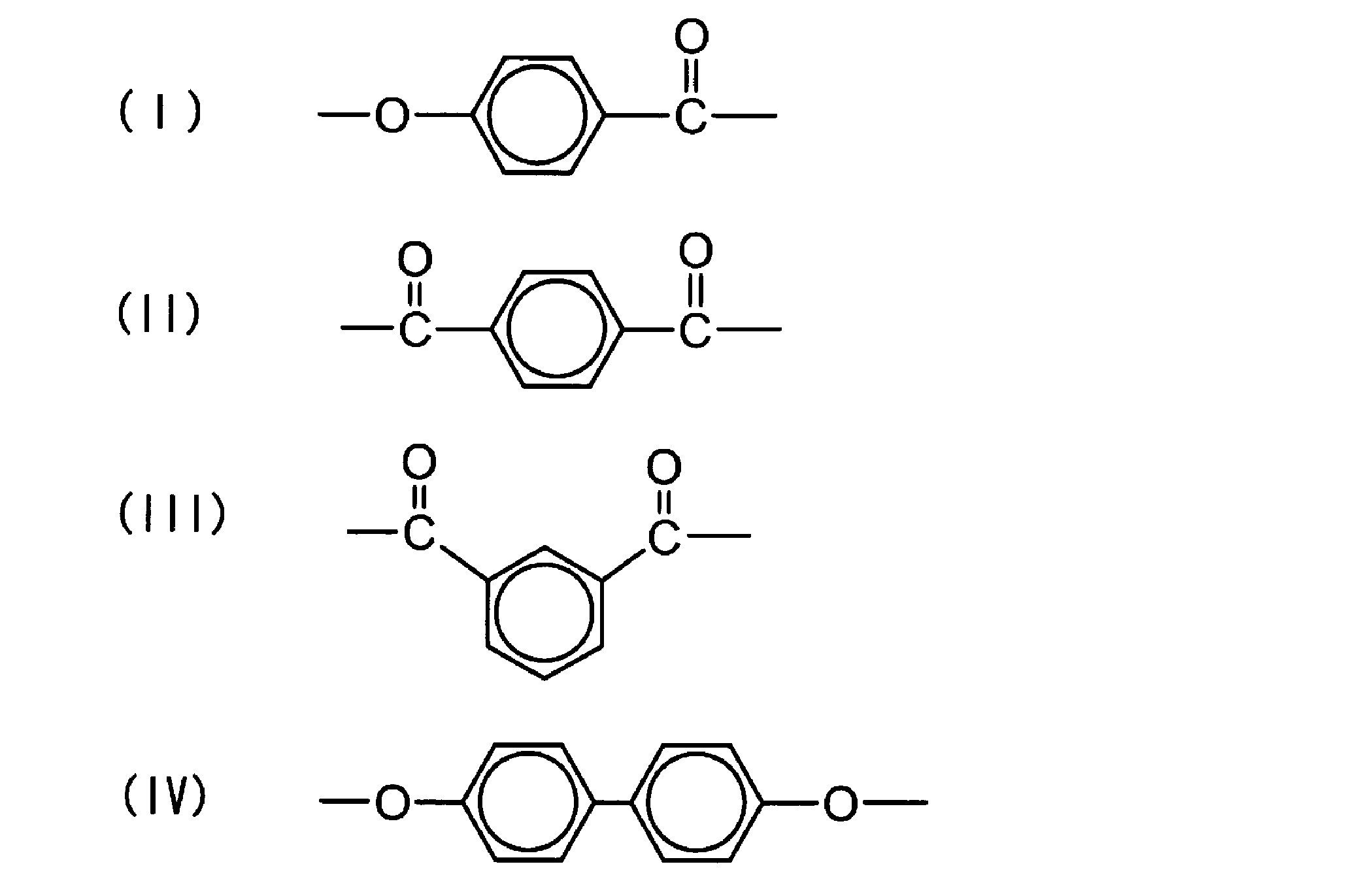
構成単位(I)は、4-ヒドロキシ安息香酸(以下、「HBA」ともいう。)から誘導される。本発明における全芳香族ポリエステルは、全構成単位に対して構成単位(I)を61~68モル%含む。構成単位(I)の含有量が61モル%未満、又は68モル%を超えると、低融点化及び耐熱性の少なくとも一方が不十分となりやすい。
構成単位(II)は、1,4-フェニレンジカルボン酸(以下、「TA」ともいう。)から誘導される。本発明における全芳香族ポリエステルは、全構成単位に対して構成単位(II)を7~14モル%含み、好ましくは9.5~11.5モル%含む。構成単位(II)の含有量が7モル%未満、又は14モル%を超えると、低融点化及び耐熱性の少なくとも一方が不十分となりやすい。
構成単位(III)は、1,3-フェニレンジカルボン酸(以下、「IA」ともいう。)から誘導される。本発明における全芳香族ポリエステルは、全構成単位に対して構成単位(III)を5.5~9モル%含み、好ましくは6.5~8モル%含む。構成単位(III)の含有量が5.5モル%未満、又は9モル%を超えると、低融点化及び耐熱性の少なくとも一方が不十分となりやすい。
構成単位(IV)は、4,4’-ジヒドロキシビフェニル(以下、「BP」ともいう。)から誘導される。本発明における全芳香族ポリエステルには、全構成単位に対して構成単位(IV)を16~19.5モル%含む。構成単位(IV)の含有量が16モル%未満、又は19.5モル%を超えると、低融点化及び耐熱性の少なくとも一方が不十分となりやすい。
本発明における全芳香族ポリエステルにおいては、構成単位(II)と構成単位(III)との合計に対する構成単位(III)の比が0.30~0.48モル%である。上記比が0.30モル%未満、又は0.48モル%を超えると、低融点化及び耐熱性の少なくとも一方が不十分となりやすい。
耐熱性化の観点から、構成単位(II)と構成単位(III)との合計のモル数は、構成単位(IV)のモル数の1~1.06倍であり、又は、構成単位(IV)のモル数は構成単位(II)と構成単位(III)との合計のモル数の1~1.06倍であることが好ましい。
全芳香族ポリエステルのあらゆる物性を左右する要素の一つとして、重合中の副反応により形成されるケトン結合がある。
本発明における全芳香族ポリエステルにおいては、エステル結合とケトン結合との合計に対するケトン結合の量が0~0.18モル%である。上記ケトン結合の量が0.18モル%を超えると、色相が低下しやすい。
本発明における全芳香族ポリエステルにおいては、エステル結合とケトン結合との合計に対するケトン結合の量が0~0.18モル%である。上記ケトン結合の量が0.18モル%を超えると、色相が低下しやすい。
以上の通り、本発明における全芳香族ポリエステルは、特定の構成単位(I)~(IV)のそれぞれを、全構成単位に対して特定の量含有し、また、構成単位(II)と構成単位(III)との合計に対する構成単位(III)の比が特定の範囲に調整されており、更に、ケトン結合の量が特定の範囲に調整されているため、低融点化と耐熱性との両立が十分であり、色相に優れる。なお、本発明の全芳香族ポリエステルは、全構成単位に対して構成単位(I)~(IV)を合計で100モル%含む。
上記の耐熱性を表す指標として、融点と荷重たわみ温度(以下、「DTUL」ともいう。)との差が挙げられる。この差が、85℃以下であると耐熱性が高くなる傾向にあり好ましい。DTULは、前記全芳香族ポリエステル60質量%と、平均繊維径11μm、平均繊維長75μmのミルドファイバー40質量%とを、前記全芳香族ポリエステルの融点+20℃にて溶融混練して得られるポリエステル樹脂組成物の状態で測定される値であり、ISO75-1,2に準拠して測定することができる。
次いで、本発明における全芳香族ポリエステルの製造方法について説明する。本発明における全芳香族ポリエステルは、直接重合法やエステル交換法等を用いて重合される。重合に際しては、溶融重合法、溶液重合法、スラリー重合法、固相重合法等が用いられる。
本発明では、重合に際し、重合モノマーに対するアシル化剤や、酸塩化物誘導体として末端を活性化したモノマーを使用できる。アシル化剤としては、無水酢酸等の脂肪酸無水物等が挙げられる。
これらの重合に際しては種々の触媒の使用が可能であり、代表的なものとしては、ジアルキル錫酸化物、ジアリール錫酸化物、二酸化チタン、アルコキシチタン珪酸塩類、チタンアルコラート類、脂肪酸金属塩、BF3の如きルイス酸塩等が挙げられ、脂肪酸金属塩が好ましい。触媒の使用量は一般にはモノマーの全質量に基づいて約0.001~1質量%、特に約0.003~0.2質量%が好ましい。
また、溶液重合又はスラリー重合を行う場合、溶媒としては流動パラフィン、高耐熱性合成油、不活性鉱物油等が用いられる。
反応条件としては、例えば、反応温度200~380℃、最終到達圧力0.1~760Torr(即ち、13~101,080Pa)である。特に溶融反応では、例えば、反応温度260~380℃、好ましくは300~360℃、最終到達圧力1~100Torr(即ち、133~13,300Pa)、好ましくは1~50Torr(即ち、133~6,670Pa)である。
反応は、全原料モノマー(HBA、TA、IA、及びBP)、アシル化剤、及び触媒を同一反応容器に仕込んで反応を開始させることもできるし(一段方式)、原料モノマーHBA及びBPの水酸基をアシル化剤によりアシル化させた後、TA及びIAのカルボキシル基と反応させることもできる(二段方式)。
溶融重合は、反応系内が所定温度に達した後、減圧を開始して所定の減圧度にして行う。撹拌機のトルクが所定値に達した後、不活性ガスを導入し、減圧状態から常圧を経て、所定の加圧状態にして反応系から全芳香族ポリエステルを排出する。
上記重合方法により製造された全芳香族ポリエステルは、更に常圧又は減圧、不活性ガス中で加熱する固相重合により分子量の増加を図ることができる。固相重合反応の好ましい条件は、反応温度230~330℃、好ましくは250~320℃、最終到達圧力10~760Torr(即ち、1,330~101,080Pa)である。
本発明における全芳香族ポリエステルの製造方法は、脂肪酸金属塩の存在下、4-ヒドロキシ安息香酸及び4,4’-ジヒドロキシビフェニルを脂肪酸無水物でアシル化して、1,4-フェニレンジカルボン酸及び1,3-フェニレンジカルボン酸とエステル交換する工程を含むことが好ましく、
4-ヒドロキシ安息香酸、1,4-フェニレンジカルボン酸、1,3-フェニレンジカルボン酸、及び4,4’-ジヒドロキシビフェニルからなる全モノマーに対し、
4-ヒドロキシ安息香酸の使用量が61~68モル%、
1,4-フェニレンジカルボン酸の使用量が7~14モル%、
1,3-フェニレンジカルボン酸の使用量が5.5~9モル%、
4,4’-ジヒドロキシビフェニルの使用量が16~19.5モル%
であることが好ましく、
1,4-フェニレンジカルボン酸と1,3-フェニレンジカルボン酸との合計の使用量に対する1,3-フェニレンジカルボン酸の使用量の比が0.30~0.48であることが好ましく、
前記脂肪酸無水物の使用量は、4-ヒドロキシ安息香酸と4,4’-ジヒドロキシビフェニルとの合計の水酸基当量の1.02~1.04倍であることが好ましい。上記脂肪酸金属塩が酢酸金属塩であり、上記脂肪酸無水物が無水酢酸であることがより好ましい。また、1,4-フェニレンジカルボン酸と1,3-フェニレンジカルボン酸との合計のモル数は、4,4’-ジヒドロキシビフェニルのモル数の1~1.06倍であり、又は、4,4’-ジヒドロキシビフェニルのモル数は、1,4-フェニレンジカルボン酸と1,3-フェニレンジカルボン酸との合計のモル数の1~1.06倍であることが好ましい。
4-ヒドロキシ安息香酸、1,4-フェニレンジカルボン酸、1,3-フェニレンジカルボン酸、及び4,4’-ジヒドロキシビフェニルからなる全モノマーに対し、
4-ヒドロキシ安息香酸の使用量が61~68モル%、
1,4-フェニレンジカルボン酸の使用量が7~14モル%、
1,3-フェニレンジカルボン酸の使用量が5.5~9モル%、
4,4’-ジヒドロキシビフェニルの使用量が16~19.5モル%
であることが好ましく、
1,4-フェニレンジカルボン酸と1,3-フェニレンジカルボン酸との合計の使用量に対する1,3-フェニレンジカルボン酸の使用量の比が0.30~0.48であることが好ましく、
前記脂肪酸無水物の使用量は、4-ヒドロキシ安息香酸と4,4’-ジヒドロキシビフェニルとの合計の水酸基当量の1.02~1.04倍であることが好ましい。上記脂肪酸金属塩が酢酸金属塩であり、上記脂肪酸無水物が無水酢酸であることがより好ましい。また、1,4-フェニレンジカルボン酸と1,3-フェニレンジカルボン酸との合計のモル数は、4,4’-ジヒドロキシビフェニルのモル数の1~1.06倍であり、又は、4,4’-ジヒドロキシビフェニルのモル数は、1,4-フェニレンジカルボン酸と1,3-フェニレンジカルボン酸との合計のモル数の1~1.06倍であることが好ましい。
次いで、全芳香族ポリエステルの性質について説明する。本発明における全芳香族ポリエステルは、溶融時に光学的異方性を示す。溶融時に光学的異方性を示すことは、本発明における全芳香族ポリエステルが液晶性ポリマーであることを意味する。
本発明において、全芳香族ポリエステルが液晶性ポリマーであることは、全芳香族ポリエステルが熱安定性と易加工性を併せ持つ上で不可欠な要素である。上記構成単位(I)~(IV)から構成される全芳香族ポリエステルは、構成成分及びポリマー中のシーケンス分布によっては、異方性溶融相を形成しないものも存在するが、本発明のポリマーは溶融時に光学的異方性を示す全芳香族ポリエステルに限られる。
溶融異方性の性質は直交偏光子を利用した慣用の偏光検査方法により確認することができる。より具体的には溶融異方性の確認は、オリンパス社製偏光顕微鏡を使用しリンカム社製ホットステージにのせた試料を溶融し、窒素雰囲気下で150倍の倍率で観察することにより実施できる。液晶性ポリマーは光学的に異方性であり、直交偏光子間に挿入したとき光を透過させる。試料が光学的に異方性であると、例えば溶融静止液状態であっても偏光は透過する。
ネマチックな液晶性ポリマーは融点以上で著しく粘性低下を生じるので、一般的に融点又はそれ以上の温度で液晶性を示すことが加工性の指標となる。融点は、でき得る限り高い方が耐熱性の観点からは好ましいが、ポリマーの溶融加工時の熱劣化や成形機の加熱能力等を考慮すると、320~340℃であることが好ましい目安となる。なお、より好ましくは、325~335℃である。
本発明における複合樹脂組成物は、上記の液晶性ポリマーを、複合樹脂組成物中に、複合樹脂組成物全体に対して50~70質量%含む。液晶性ポリマーの含有量が、複合樹脂組成物全体に対して50質量%未満であると、複合樹脂組成物の流動性が悪化しやすく、また、複合樹脂組成物から得られる電子部品等の成形品のそり変形が大きくなる恐れがあるため好ましくない。液晶性ポリマーの含有量が、複合樹脂組成物全体に対して70質量%超であると、複合樹脂組成物から得られる電子部品等の成形品の曲げ弾性率及び耐クラック性が低下するため好ましくない。本発明における複合樹脂組成物は、上記の液晶性ポリマーを、複合樹脂組成物中に、複合樹脂組成物全体に対して55~65質量%含むことが好ましい。
(繊維状充填剤)
本発明における複合樹脂組成物は、上記の液晶性ポリマーと、繊維状充填剤と、を含むため、当該複合樹脂組成物を成形して得られた成形品は高温剛性に優れる。繊維状充填剤は、1種単独で又は2種以上組み合わせて使用することができる。本発明における繊維状充填剤としては、特に限定されず、ガラス繊維、ミルドファイバー、カーボン繊維、アスベスト繊維、シリカ繊維、シリカ・アルミナ繊維、ジルコニア繊維、窒化硼素繊維、窒化硅素繊維、硼素繊維、チタン酸カリウム繊維等が挙げられる。複合樹脂組成物から得られる成形品の高温剛性が向上しやすいため、本発明における繊維状充填剤としては、ガラス繊維及びミルドファイバーからなる群より選ばれる1種以上が好ましい。
本発明における複合樹脂組成物は、上記の液晶性ポリマーと、繊維状充填剤と、を含むため、当該複合樹脂組成物を成形して得られた成形品は高温剛性に優れる。繊維状充填剤は、1種単独で又は2種以上組み合わせて使用することができる。本発明における繊維状充填剤としては、特に限定されず、ガラス繊維、ミルドファイバー、カーボン繊維、アスベスト繊維、シリカ繊維、シリカ・アルミナ繊維、ジルコニア繊維、窒化硼素繊維、窒化硅素繊維、硼素繊維、チタン酸カリウム繊維等が挙げられる。複合樹脂組成物から得られる成形品の高温剛性が向上しやすいため、本発明における繊維状充填剤としては、ガラス繊維及びミルドファイバーからなる群より選ばれる1種以上が好ましい。
本発明の複合樹脂組成物において、繊維状充填剤の重量平均繊維長は50~500μmであることが好ましい。上記重量平均繊維長が50μm以上であると、複合樹脂組成物から得られる成形品の高温剛性が十分であるため好ましい。上記重量平均繊維長が500μm以下であると、複合樹脂組成物の流動性が良好となり、成形品のそり変形が大きくなりにくいため好ましい。なお、本明細書において、繊維状充填剤の重量平均繊維長とは、それぞれ、複合樹脂組成物を600℃で2時間加熱し灰化して灰化残渣を得、この灰化残渣を5質量%ポリエチレングリコール水溶液に分散させて分散液を得、この分散液について画像測定器を用いて測定した重量平均繊維長をいう。
また、本発明における繊維状充填剤の繊維径は、特に制限されず、一般的に5~15μm程度のものが使用される。
本発明における複合樹脂組成物は、繊維状充填剤を、複合樹脂組成物中に、複合樹脂組成物全体に対して2.5~15質量%含む。繊維状充填剤の含有量が、複合樹脂組成物全体に対して2.5質量%未満であると、複合樹脂組成物から得られる電子部品等の成形品は、荷重たわみ温度が低く、高温剛性が十分ではないため好ましくない。繊維状充填剤の含有量が、複合樹脂組成物全体に対して15質量%超であると、複合樹脂組成物の流動性が悪化し、成形品のそり変形が大きくなる恐れがあるため好ましくない。本発明における繊維状充填剤は、複合樹脂組成物中に、複合樹脂組成物全体に対して5~15質量%含まれることが好ましい。
(板状充填剤)
本発明における複合樹脂組成物には、板状充填剤が更に含まれる。本発明における複合樹脂組成物に板状充填剤が含まれることにより、そり変形が抑制された成形品を得ることができる。板状充填剤は、1種単独で又は2種以上組み合わせて使用することができる。
本発明における複合樹脂組成物には、板状充填剤が更に含まれる。本発明における複合樹脂組成物に板状充填剤が含まれることにより、そり変形が抑制された成形品を得ることができる。板状充填剤は、1種単独で又は2種以上組み合わせて使用することができる。
板状充填剤は、複合樹脂組成物全体に対して25~40質量%含まれる。板状充填剤の含有量が、複合樹脂組成物全体に対して25質量%未満であると、複合樹脂組成物から得られる電子部品等の成形品のそり変形が大きくなる恐れがあるため好ましくない。板状充填剤の含有量が、複合樹脂組成物全体に対して40質量%超であると、複合樹脂組成物の流動性が悪化する恐れがあるため好ましくない。本発明における板状充填剤は、複合樹脂組成物中に、複合樹脂組成物全体に対して25~35質量%含まれることが好ましい。
本発明における板状充填剤としては、タルク、マイカ、ガラスフレーク、各種の金属箔等が挙げられ、複合樹脂組成物の流動性を悪化させることなく、複合樹脂組成物から得られる成形品のそり変形を抑制させるという点でタルクが好ましい。また、板状充填剤の平均粒径については特に限定されず、薄肉部における流動性を考慮すると小さい方が望ましい。一方、複合樹脂組成物から得られる電子部品等の成形品のそり変形を小さくするためには一定の大きさを維持している必要がある。具体的には、1~100μmが好ましく、5~50μmがより好ましい。
〔タルク〕
本発明において使用できるタルクとしては、当該タルクの全固形分量に対して、Fe2O3、Al2O3及びCaOの合計含有量が2.5質量%以下であり、Fe2O3及びAl2O3の合計含有量が1.0質量%超2.0質量%以下であり、かつCaOの含有量が0.5質量%未満であるものが好ましい。即ち、本発明において使用できるタルクは、その主成分たるSiO2及びMgOの他、Fe2O3、Al2O3及びCaOのうちの少なくとも1種を含有し、各成分を上記の含有量範囲で含有するものであってもよい。
本発明において使用できるタルクとしては、当該タルクの全固形分量に対して、Fe2O3、Al2O3及びCaOの合計含有量が2.5質量%以下であり、Fe2O3及びAl2O3の合計含有量が1.0質量%超2.0質量%以下であり、かつCaOの含有量が0.5質量%未満であるものが好ましい。即ち、本発明において使用できるタルクは、その主成分たるSiO2及びMgOの他、Fe2O3、Al2O3及びCaOのうちの少なくとも1種を含有し、各成分を上記の含有量範囲で含有するものであってもよい。
上記タルクにおいて、Fe2O3、Al2O3及びCaOの合計含有量が2.5質量%以下であると、複合樹脂組成物の成形加工性及び複合樹脂組成物から成形された電子部品等の成形品の耐熱性が悪化しにくい。Fe2O3、Al2O3及びCaOの合計含有量は、1.0質量%以上2.0質量%以下が好ましい。
また、上記タルクのうち、Fe2O3及びAl2O3の合計含有量が1.0質量%超のタルクは入手しやすい。また、上記タルクにおいて、Fe2O3及びAl2O3の合計含有量が2.0質量%以下であると、複合樹脂組成物の成形加工性及び複合樹脂組成物から成形された電子部品等の成形品の耐熱性が悪化しにくい。Fe2O3及びAl2O3の合計含有量は、1.0質量%超1.7質量%以下が好ましい。
更に、上記タルクにおいて、CaOの含有量が0.5質量%未満であると、複合樹脂組成物の成形加工性及び複合樹脂組成物から成形された電子部品等の成形品の耐熱性が悪化しにくい。CaOの含有量は、0.01質量%以上0.4質量%以下が好ましい。
本発明におけるタルクの、レーザー回折法で測定した質量基準又は体積基準の累積平均粒子径(D50)は、成形品のそり変形の防止及び複合樹脂組成物の流動性の維持という観点から、4.0~20.0μmであることが好ましく、10~18μmであることがより好ましい。
本発明における複合樹脂組成物において、繊維状充填剤及び板状充填剤の総量は、複合樹脂組成物全体に対して30~50質量%である。上記総量が、複合樹脂組成物全体に対して30質量%未満であると、複合樹脂組成物から得られる電子部品等の成形品は、荷重たわみ温度が低く、高温剛性が十分ではなく、また、そり変形が大きくなる恐れがあるため好ましくない。上記総量が、複合樹脂組成物全体に対して50質量%超であると、複合樹脂組成物の流動性が悪化し、成形品のそり変形が大きくなる恐れがあるため好ましくない。上記総量は、複合樹脂組成物全体に対して35~45質量%であることが好ましい。
(その他の成分)
本発明における複合樹脂組成物には、上記の成分の他に、核剤、カーボンブラック、無機焼成顔料等の顔料、酸化防止剤、安定剤、可塑剤、滑剤、離型剤、難燃剤、及び公知の無機充填剤のうちの1種以上を配合してもよい。
本発明における複合樹脂組成物には、上記の成分の他に、核剤、カーボンブラック、無機焼成顔料等の顔料、酸化防止剤、安定剤、可塑剤、滑剤、離型剤、難燃剤、及び公知の無機充填剤のうちの1種以上を配合してもよい。
本発明における複合樹脂組成物の製造方法は、複合樹脂組成物中の成分を均一に混合できれば特に限定されず、従来知られる樹脂組成物の製造方法から適宜選択することができる。例えば、1軸又は2軸押出機等の溶融混練装置を用いて、各成分を溶融混練して押出した後、得られた複合樹脂組成物を粉末、フレーク、ペレット等の所望の形態に加工する方法が挙げられる。
本発明における複合樹脂組成物は流動性に優れるため、成形時の最小充填圧力が過度になりにくく、電子部品、特に、ラッチ構造や切り欠き等を備える非対称電子部品のような複雑な形状を有する部品等を好ましく成形できる。流動性の程度は、コネクターの最小充填圧力により判断する。即ち、図3に示すDDR-DIMMコネクターを射出成形する際に良好な成形品を得られる最小の射出充填圧力を最小充填圧力として特定する。最小充填圧力が低いほど、流動性が優れていると評価される。
液晶性ポリマーの融点より10~30℃高い温度で、剪断速度1000/秒で、ISO11443に準拠して測定した複合樹脂組成物の溶融粘度が1×105Pa・s以下(より好ましくは、5Pa・s以上1×102Pa・s以下)であることが、電子部品における複雑な形状を有する部分の成形時において、特に、非対称電子部品におけるラッチ構造や切り欠き等の複雑な形状を有する部分の成形時において、複合樹脂組成物の流動性を確保し、充填圧力が過度にならない点で好ましい。
(電子部品)
本発明における複合樹脂組成物を成形することにより、本発明の電子部品を得ることができる。本発明の電子部品としては、特に限定されず、例えば、製品全長が30mm以上、製品高さが5mm以上である電子部品が挙げられる。本発明の電子部品のうち、非対称電子部品とは、成形品のXY軸面、YZ軸面、及びXZ軸面の何れの軸面に対しても対称性がないものをいう。
本発明における複合樹脂組成物を成形することにより、本発明の電子部品を得ることができる。本発明の電子部品としては、特に限定されず、例えば、製品全長が30mm以上、製品高さが5mm以上である電子部品が挙げられる。本発明の電子部品のうち、非対称電子部品とは、成形品のXY軸面、YZ軸面、及びXZ軸面の何れの軸面に対しても対称性がないものをいう。
市場に多く存在する通常のコネクター(電子部品)の場合、XY軸面、YZ軸面、及びXZ軸面の何れかの軸面において対称性を有するものであり、成形に際し、対称性を保つようなゲート位置及び設計とすることで、製品の寸法精度及びそりをコントロールすることが可能である。これに対し、非対称電子部品は、形状が複雑であり、成形手法ではそり変形を抑制することが困難なものである。本発明の電子部品、特に、非対称電子部品では、本発明の複合樹脂組成物を用いることで、そり変形が抑制されている。
このような電子部品の代表例としては、コネクター、ソケットが挙げられる。
コネクターとしては、例えば、メモリーモジュール用コネクター、インターフェースコネクターが挙げられる。メモリーモジュール用コネクターとしては、例えば、DIMMコネクター、DDR-DIMMコネクター、DDR2-DIMMコネクター、DDR-SO-DIMMコネクター、DDR2-SO-DIMMコネクター、DDR-Micro-DIMMコネクター、DDR2-Micro-DIMMコネクター等のDDRコネクター等が挙げられる。インターフェースコネクターとしては、例えば、SATAコネクター、SASコネクター、NGFFコネクター等が挙げられる。中でも、DDRコネクター、SATAコネクター、SASコネクター、及びNGFFコネクターが好適であり、特にノートパソコン用途の薄肉で形状の複雑なメモリーモジュール用コネクターであって、ピッチ間距離が0.6mm以下、製品全長が60.0mm以上、製品高さが10.0mm以下、極数が200極以上のものが特に好適である。このようなメモリーモジュール用コネクターは、ピーク温度230~280℃で表面実装のためのIRリフロー工程に供せられ、IRリフロー工程を経る前のそりが0.1mm以下であり、なおかつリフロー前後のそりの差が0.05mm以下であることが求められるが、本発明によればこのような要求を満足できる。
コネクターとしては、例えば、メモリーモジュール用コネクター、インターフェースコネクターが挙げられる。メモリーモジュール用コネクターとしては、例えば、DIMMコネクター、DDR-DIMMコネクター、DDR2-DIMMコネクター、DDR-SO-DIMMコネクター、DDR2-SO-DIMMコネクター、DDR-Micro-DIMMコネクター、DDR2-Micro-DIMMコネクター等のDDRコネクター等が挙げられる。インターフェースコネクターとしては、例えば、SATAコネクター、SASコネクター、NGFFコネクター等が挙げられる。中でも、DDRコネクター、SATAコネクター、SASコネクター、及びNGFFコネクターが好適であり、特にノートパソコン用途の薄肉で形状の複雑なメモリーモジュール用コネクターであって、ピッチ間距離が0.6mm以下、製品全長が60.0mm以上、製品高さが10.0mm以下、極数が200極以上のものが特に好適である。このようなメモリーモジュール用コネクターは、ピーク温度230~280℃で表面実装のためのIRリフロー工程に供せられ、IRリフロー工程を経る前のそりが0.1mm以下であり、なおかつリフロー前後のそりの差が0.05mm以下であることが求められるが、本発明によればこのような要求を満足できる。
また、ソケットとしては、カードバス、CFカード、メモリースティック、PCカード、SDカード、SDMo、スマートカード、スマートメディアカード等のメモリーカードソケットが挙げられる。
本発明の電子部品を得る成形方法としては特に限定されず、そり変形が抑制された電子部品を得るために、残留内部応力のない成形条件を選ぶことが好ましい。充填圧力を低くし、得られる電子部品の残留内部応力を低下させるために、成形機のシリンダー温度は、液晶性ポリマーの融点以上の温度が好ましい。
また、金型温度は70~100℃が好ましい。金型温度が低いと、金型に充填された複合樹脂組成物が流動不良を起こす可能性があるため好ましくない。金型温度が高いと、バリ発生等の問題が生じる可能性があるため好ましくない。射出速度については、150mm/秒以上で成形することが好ましい。射出速度が低いと、未充填成形品しか得られない可能性があり、完全に充填した成形品が得られたとしても、充填圧力が高く残留内部応力の大きい成形品となり、そり変形の大きい電子部品しか得られない可能性がある。
本発明の電子部品は、そり変形が抑制されている。電子部品のそりの程度は、以下の通りにして判断する。即ち、図3に示すDDR-DIMMコネクターにて、図4において黒丸で示す複数の位置で高さを測定し、最小二乗平面からの最大高さと最小高さとの差をそりとする。本発明の電子部品は、IRリフローを行う前後において、そりの変化が抑制されている。
また、本発明の電子部品は、ブリスター発生が抑制されている。ブリスター発生の程度は、ブリスター温度により判断する。即ち、所定温度のホットプレスに5分間挟んだ成形品の表面におけるブリスター発生の有無を目視にて観察し、ブリスターの発生個数がゼロとなる最高温度をブリスター温度とする。ブリスター温度が高いほど、ブリスター発生が抑制されていると評価される。
また、本発明の電子部品は、耐熱性、例えば、高温剛性により評価されるような耐熱性に優れる。高温剛性は、ISO75-1,2に準拠して荷重たわみ温度を測定することで評価する。
以下、実施例により本発明を具体的に説明するが、本発明はこれらに限定されるものではない。
<合成例1>
撹拌機、還流カラム、モノマー投入口、窒素導入口、減圧/流出ラインを備えた重合容器に、以下の原料モノマー、脂肪酸金属塩触媒、アシル化剤を仕込み、窒素置換を開始した。
(I)4-ヒドロキシ安息香酸10.9モル(66モル%)(HBA)
(II)テレフタル酸1.7モル(10.3モル%)(TA)
(III)イソフタル酸1.1モル(6.7モル%)(IA)
(IV)4,4’-ジヒドロキシビフェニル2.8モル(17モル%)(BP)
酢酸カリウム触媒110mg
無水酢酸1756g(HBAとBPとの合計の水酸基当量の1.04倍)
原料を仕込んだ後、反応系の温度を140℃に上げ、140℃で1時間反応させた。その後、更に360℃まで5.5時間かけて昇温し、そこから20分かけて10Torr(即ち1330Pa)まで減圧にして、酢酸、過剰の無水酢酸、その他の低沸分を留出させながら溶融重合を行った。撹拌トルクが所定の値に達した後、窒素を導入して減圧状態から常圧を経て加圧状態にして、重合容器の下部からポリマーを排出した。
撹拌機、還流カラム、モノマー投入口、窒素導入口、減圧/流出ラインを備えた重合容器に、以下の原料モノマー、脂肪酸金属塩触媒、アシル化剤を仕込み、窒素置換を開始した。
(I)4-ヒドロキシ安息香酸10.9モル(66モル%)(HBA)
(II)テレフタル酸1.7モル(10.3モル%)(TA)
(III)イソフタル酸1.1モル(6.7モル%)(IA)
(IV)4,4’-ジヒドロキシビフェニル2.8モル(17モル%)(BP)
酢酸カリウム触媒110mg
無水酢酸1756g(HBAとBPとの合計の水酸基当量の1.04倍)
原料を仕込んだ後、反応系の温度を140℃に上げ、140℃で1時間反応させた。その後、更に360℃まで5.5時間かけて昇温し、そこから20分かけて10Torr(即ち1330Pa)まで減圧にして、酢酸、過剰の無水酢酸、その他の低沸分を留出させながら溶融重合を行った。撹拌トルクが所定の値に達した後、窒素を導入して減圧状態から常圧を経て加圧状態にして、重合容器の下部からポリマーを排出した。
<評価>
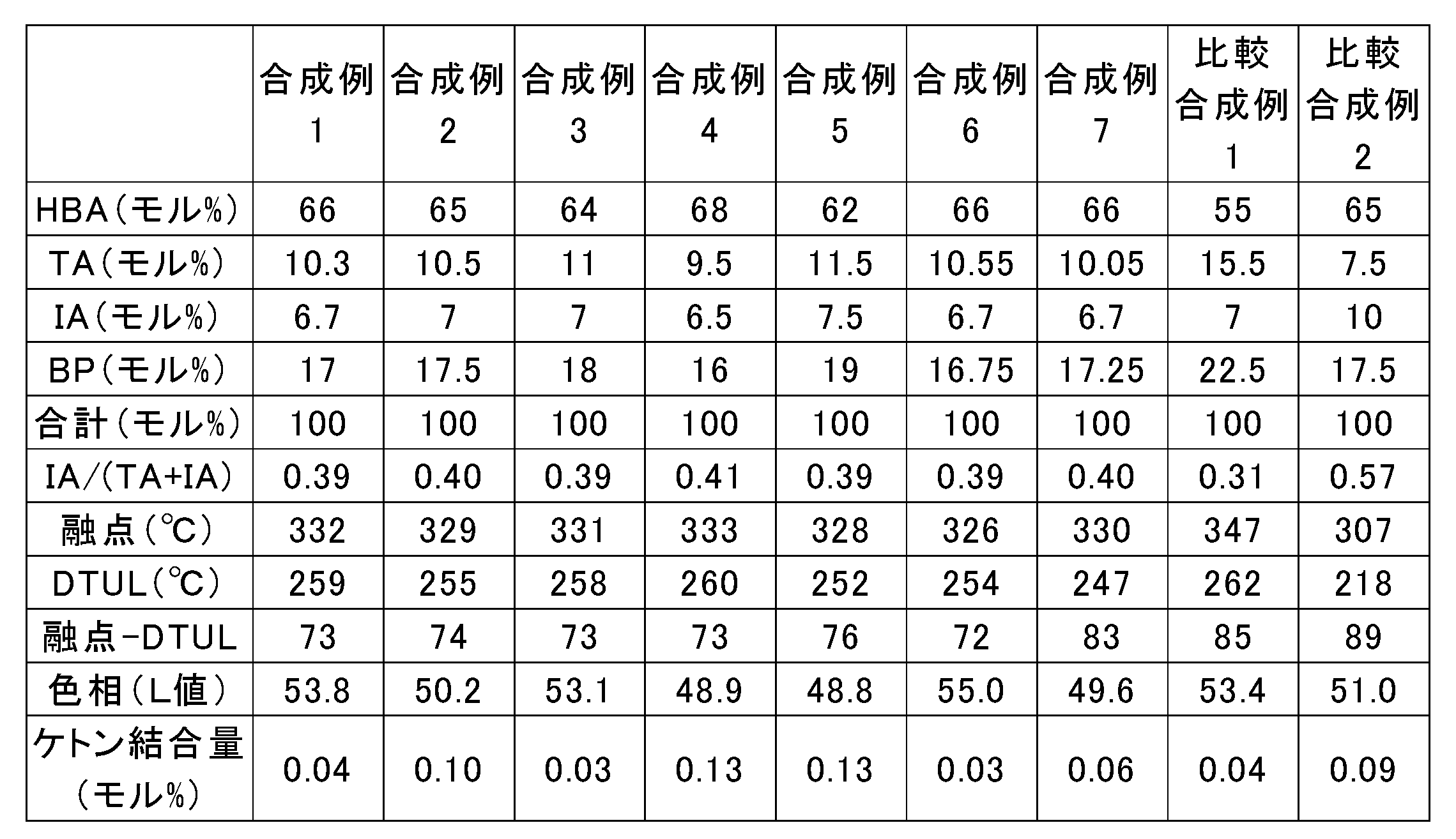
合成例1の全芳香族ポリエステルについて、融点、DTUL、色相(L値)、及びケトン結合量の評価を以下の方法で行った。評価結果を表1に示す。
合成例1の全芳香族ポリエステルについて、融点、DTUL、色相(L値)、及びケトン結合量の評価を以下の方法で行った。評価結果を表1に示す。
[融点]
DSC(TAインスツルメント社製)にて、ポリマーを室温から20℃/分の昇温条件で測定した際に観測される吸熱ピーク温度(Tm1)の観測後、(Tm1+40)℃の温度で2分間保持した後、20℃/分の降温条件で室温まで一旦冷却した後、再度、20℃/分の昇温条件で測定した際に観測される吸熱ピークの温度を測定した。
DSC(TAインスツルメント社製)にて、ポリマーを室温から20℃/分の昇温条件で測定した際に観測される吸熱ピーク温度(Tm1)の観測後、(Tm1+40)℃の温度で2分間保持した後、20℃/分の降温条件で室温まで一旦冷却した後、再度、20℃/分の昇温条件で測定した際に観測される吸熱ピークの温度を測定した。
[DTUL]
ポリマー60質量%とガラス繊維(セントラル硝子(株)製EFH75-01、ミルドファイバー、平均繊維径11μm、平均繊維長75μm)40質量%とを、二軸押出機((株)日本製鋼所製TEX30α型)を用いて、ポリマーの融点+20℃のシリンダー温度にて溶融混練し、ポリエステル樹脂組成物ペレットを得た。
上記ポリエステル樹脂組成物ペレットを、成形機(住友重機械工業(株)製「SE100DU」)を用いて、以下の成形条件で成形し、測定用試験片(4mm×10mm×80mm)を得た。この試験片を用いて、ISO75-1,2に準拠した方法で荷重たわみ温度を測定した。なお、曲げ応力としては、1.8MPaを用いた。結果を表1及び2に示す。
〔成形条件〕
シリンダー温度:ポリマーの融点+20℃
金型温度:80℃
射出速度:33mm/sec
ポリマー60質量%とガラス繊維(セントラル硝子(株)製EFH75-01、ミルドファイバー、平均繊維径11μm、平均繊維長75μm)40質量%とを、二軸押出機((株)日本製鋼所製TEX30α型)を用いて、ポリマーの融点+20℃のシリンダー温度にて溶融混練し、ポリエステル樹脂組成物ペレットを得た。
上記ポリエステル樹脂組成物ペレットを、成形機(住友重機械工業(株)製「SE100DU」)を用いて、以下の成形条件で成形し、測定用試験片(4mm×10mm×80mm)を得た。この試験片を用いて、ISO75-1,2に準拠した方法で荷重たわみ温度を測定した。なお、曲げ応力としては、1.8MPaを用いた。結果を表1及び2に示す。
〔成形条件〕
シリンダー温度:ポリマーの融点+20℃
金型温度:80℃
射出速度:33mm/sec
[色相(L値)]
分光色差計(日本電色工業株式会社製「SE6000」)を用いて、ポリマーのL値を測定した。
分光色差計(日本電色工業株式会社製「SE6000」)を用いて、ポリマーのL値を測定した。
[ケトン結合量]
ポリマーのケトン結合量は、Polymer Degradation and Stability 76(2002)85-94に記載される、熱分解ガスクロマトグラフィー法によって算出した。具体的には、熱分解装置(フロンティア・ラボ(株)製「PY2020iD」)を用いて、ポリマーを水酸化テトラメチルアンモニウム(TMAH)共存下で加熱し、熱分解/メチル化によりガスを発生させた。このガスをガスクロマトグラフィー(アジレント・テクノロジー(株)製「GC-6890N」)を用いて分析し、ケトン結合に由来するピーク面積とエステル結合に由来するピーク面積との比からケトン結合量を算出した。
ポリマーのケトン結合量は、Polymer Degradation and Stability 76(2002)85-94に記載される、熱分解ガスクロマトグラフィー法によって算出した。具体的には、熱分解装置(フロンティア・ラボ(株)製「PY2020iD」)を用いて、ポリマーを水酸化テトラメチルアンモニウム(TMAH)共存下で加熱し、熱分解/メチル化によりガスを発生させた。このガスをガスクロマトグラフィー(アジレント・テクノロジー(株)製「GC-6890N」)を用いて分析し、ケトン結合に由来するピーク面積とエステル結合に由来するピーク面積との比からケトン結合量を算出した。
<合成例2~7、比較合成例1~12>
原料モノマーの種類、仕込み比率(モル%)を表1又は2に示す通りとした以外は、合成例1と同様にしてポリマーを得た。また、合成例1と同様の評価を行った。ただし、比較合成例11のポリマーを得る際は、酢酸カリウム触媒を使用せず、無水酢酸の使用量を、HBAとBPとの合計の水酸基当量の1.10倍とした。評価結果を表1及び2に示す。
原料モノマーの種類、仕込み比率(モル%)を表1又は2に示す通りとした以外は、合成例1と同様にしてポリマーを得た。また、合成例1と同様の評価を行った。ただし、比較合成例11のポリマーを得る際は、酢酸カリウム触媒を使用せず、無水酢酸の使用量を、HBAとBPとの合計の水酸基当量の1.10倍とした。評価結果を表1及び2に示す。

<実施例1~5、比較例1~7>
下記の実施例及び比較例において、液晶性ポリマー1は、合成例1で得た液晶性ポリマーである。また、液晶性ポリマー2及び3は、以下の通りにして製造した。
下記の実施例及び比較例において、液晶性ポリマー1は、合成例1で得た液晶性ポリマーである。また、液晶性ポリマー2及び3は、以下の通りにして製造した。
なお、本実施例において、ペレットの融点及び溶融粘度の測定は、それぞれ下記の条件で行った。
[融点の測定]
TAインスツルメント社製DSCにて、液晶性ポリマーを室温から20℃/分の昇温条件で測定した際に観測される吸熱ピーク温度(Tm1)の観測後、(Tm1+40)℃の温度で2分間保持した後、20℃/分の降温条件で室温まで一旦冷却した後、再度、20℃/分の昇温条件で測定した際に観測される吸熱ピークの温度を測定した。
TAインスツルメント社製DSCにて、液晶性ポリマーを室温から20℃/分の昇温条件で測定した際に観測される吸熱ピーク温度(Tm1)の観測後、(Tm1+40)℃の温度で2分間保持した後、20℃/分の降温条件で室温まで一旦冷却した後、再度、20℃/分の昇温条件で測定した際に観測される吸熱ピークの温度を測定した。
[溶融粘度の測定]
(株)東洋精機製作所製キャピログラフ1B型を使用し、液晶性ポリマーの融点よりも10~30℃高い温度で、内径1mm、長さ20mmのオリフィスを用いて、剪断速度1000/秒で、ISO11443に準拠して、液晶性ポリマーの溶融粘度を測定した。なお、測定温度は、液晶性ポリマー1については360℃、液晶性ポリマー2については350℃、液晶性ポリマー3については380℃であった。
(株)東洋精機製作所製キャピログラフ1B型を使用し、液晶性ポリマーの融点よりも10~30℃高い温度で、内径1mm、長さ20mmのオリフィスを用いて、剪断速度1000/秒で、ISO11443に準拠して、液晶性ポリマーの溶融粘度を測定した。なお、測定温度は、液晶性ポリマー1については360℃、液晶性ポリマー2については350℃、液晶性ポリマー3については380℃であった。
(液晶性ポリマー2の製造方法)
撹拌機、還流カラム、モノマー投入口、窒素導入口、減圧/流出ラインを備えた重合容器に、以下の原料モノマー、金属触媒、アシル化剤を仕込み、窒素置換を開始した。
(I)4-ヒドロキシ安息香酸:188.4g(60モル%)(HBA)
(II)6-ヒドロキシ-2-ナフトエ酸:21.4g(5モル%)(HNA)
(III)テレフタル酸:66.8g(17.7モル%)(TA)
(IV)4,4’-ジヒドロキシビフェニル:52.2g(12.3モル%)(BP)
(V)4-アセトキシアミノフェノール:17.2g(5モル%)(APAP)
酢酸カリウム触媒:15mg
無水酢酸:226.2g
撹拌機、還流カラム、モノマー投入口、窒素導入口、減圧/流出ラインを備えた重合容器に、以下の原料モノマー、金属触媒、アシル化剤を仕込み、窒素置換を開始した。
(I)4-ヒドロキシ安息香酸:188.4g(60モル%)(HBA)
(II)6-ヒドロキシ-2-ナフトエ酸:21.4g(5モル%)(HNA)
(III)テレフタル酸:66.8g(17.7モル%)(TA)
(IV)4,4’-ジヒドロキシビフェニル:52.2g(12.3モル%)(BP)
(V)4-アセトキシアミノフェノール:17.2g(5モル%)(APAP)
酢酸カリウム触媒:15mg
無水酢酸:226.2g
重合容器に原料を仕込んだ後、反応系の温度を140℃に上げ、140℃で1時間反応させた。その後、更に340℃まで4.5時間かけて昇温し、そこから15分かけて10Torr(即ち、1330Pa)まで減圧して、酢酸、過剰の無水酢酸、その他の低沸分を留出させながら溶融重合を行った。撹拌トルクが所定の値に達した後、窒素を導入して減圧状態から常圧を経て加圧状態にして、重合容器の下部からポリマーを排出し、ストランドをペレタイズしてペレット化した。得られたペレットの融点は334℃、溶融粘度は18Pa・sであった。
(液晶性ポリマー3の製造方法)
撹拌機、還流カラム、モノマー投入口、窒素導入口、減圧/流出ラインを備えた重合容器に、以下の原料モノマー、金属触媒、アシル化剤を仕込み、窒素置換を開始した。
(I)4-ヒドロキシ安息香酸:1041g(48モル%)(HBA)
(II)6-ヒドロキシ-2-ナフトエ酸:89g(3モル%)(HNA)
(III)テレフタル酸:565g(21.7モル%)(TA)
(IV)イソフタル酸:78g(3モル%)(IA)
(V)4,4’-ジヒドロキシビフェニル:711g(24.3モル%)(BP)
酢酸カリウム触媒:110mg
無水酢酸:1645g
撹拌機、還流カラム、モノマー投入口、窒素導入口、減圧/流出ラインを備えた重合容器に、以下の原料モノマー、金属触媒、アシル化剤を仕込み、窒素置換を開始した。
(I)4-ヒドロキシ安息香酸:1041g(48モル%)(HBA)
(II)6-ヒドロキシ-2-ナフトエ酸:89g(3モル%)(HNA)
(III)テレフタル酸:565g(21.7モル%)(TA)
(IV)イソフタル酸:78g(3モル%)(IA)
(V)4,4’-ジヒドロキシビフェニル:711g(24.3モル%)(BP)
酢酸カリウム触媒:110mg
無水酢酸:1645g
重合容器に原料を仕込んだ後、反応系の温度を140℃に上げ、140℃で1時間反応させた。その後、更に360℃まで5.5時間かけて昇温し、そこから20分かけて10Torr(即ち、1330Pa)まで減圧して、酢酸、過剰の無水酢酸、その他の低沸分を留出させながら溶融重合を行った。撹拌トルクが所定の値に達した後、窒素を導入して減圧状態から常圧を経て加圧状態にして、重合容器の下部からポリマーを排出し、ストランドをペレタイズしてペレット化した。得られたペレットの融点は358℃、溶融粘度は9Pa・sであった。
(液晶性ポリマー以外の成分)
上記で得られた各液晶性ポリマーと、下記の成分とを二軸押出機を使用して混合し、複合樹脂組成物を得た。各成分の配合量は表3及び4に示した通りである。なお、以下、表中の「%」は質量%を示す。
(B)繊維状充填剤
ガラス繊維:日本電気硝子(株)製ECS03T-786H、繊維径10μm、長さ3mmのチョプドストランド
ミルドファイバー:日東紡(株)製PF70E001、繊維径10μm、平均繊維長70μm(メーカー公称値)
(C)板状充填剤
タルク;松村産業(株)製クラウンタルクPP、平均粒径10μm
上記で得られた各液晶性ポリマーと、下記の成分とを二軸押出機を使用して混合し、複合樹脂組成物を得た。各成分の配合量は表3及び4に示した通りである。なお、以下、表中の「%」は質量%を示す。
(B)繊維状充填剤
ガラス繊維:日本電気硝子(株)製ECS03T-786H、繊維径10μm、長さ3mmのチョプドストランド
ミルドファイバー:日東紡(株)製PF70E001、繊維径10μm、平均繊維長70μm(メーカー公称値)
(C)板状充填剤
タルク;松村産業(株)製クラウンタルクPP、平均粒径10μm
また、複合樹脂組成物を得る際の押出条件は下記の通りである。
[押出条件]
〔実施例1~5、比較例1~6〕
メインフィード口に設けられたシリンダーの温度を250℃とし、他のシリンダーの温度はすべて360℃とした。液晶性ポリマーはすべてをメインフィード口から供給した。また、充填剤はサイドフィード口から供給した。
〔比較例7〕
メインフィード口に設けられたシリンダーの温度を250℃とし、他のシリンダーの温度はすべて380℃とした。液晶性ポリマーはすべてをメインフィード口から供給した。また、充填剤はサイドフィード口から供給した。
[押出条件]
〔実施例1~5、比較例1~6〕
メインフィード口に設けられたシリンダーの温度を250℃とし、他のシリンダーの温度はすべて360℃とした。液晶性ポリマーはすべてをメインフィード口から供給した。また、充填剤はサイドフィード口から供給した。
〔比較例7〕
メインフィード口に設けられたシリンダーの温度を250℃とし、他のシリンダーの温度はすべて380℃とした。液晶性ポリマーはすべてをメインフィード口から供給した。また、充填剤はサイドフィード口から供給した。
(複合樹脂組成物の溶融粘度の測定)
(株)東洋精機製作所製キャピログラフ1B型を使用し、液晶性ポリマーの融点よりも10~30℃高い温度で、内径1mm、長さ20mmのオリフィスを用いて、剪断速度1000/秒で、ISO11443に準拠して、複合樹脂組成物の溶融粘度を測定した。なお、測定温度は、液晶性ポリマー1を使用した複合樹脂組成物については360℃、液晶性ポリマー2を使用した複合樹脂組成物については350℃、液晶性ポリマー3を使用した複合樹脂組成物については380℃であった。結果を表3及び4に示す。
(株)東洋精機製作所製キャピログラフ1B型を使用し、液晶性ポリマーの融点よりも10~30℃高い温度で、内径1mm、長さ20mmのオリフィスを用いて、剪断速度1000/秒で、ISO11443に準拠して、複合樹脂組成物の溶融粘度を測定した。なお、測定温度は、液晶性ポリマー1を使用した複合樹脂組成物については360℃、液晶性ポリマー2を使用した複合樹脂組成物については350℃、液晶性ポリマー3を使用した複合樹脂組成物については380℃であった。結果を表3及び4に示す。
下記の方法に基づき、複合樹脂組成物から成形したコネクターの物性を測定した。各評価結果を表3~6に示す。
(曲げ試験)
下記成形条件で、複合樹脂組成物を射出成形して成形品を得、ASTM D790に準拠し、曲げ強度、破断歪、及び曲げ弾性率を測定した。
[成形条件]
成形機:住友重機械工業、SE100DU
シリンダー温度:
360℃(実施例1~5、比較例1~6)
380℃(比較例7)
金型温度:80℃
射出速度:33mm/sec
下記成形条件で、複合樹脂組成物を射出成形して成形品を得、ASTM D790に準拠し、曲げ強度、破断歪、及び曲げ弾性率を測定した。
[成形条件]
成形機:住友重機械工業、SE100DU
シリンダー温度:
360℃(実施例1~5、比較例1~6)
380℃(比較例7)
金型温度:80℃
射出速度:33mm/sec
(荷重たわみ温度)
下記成形条件で、複合樹脂組成物を射出成形して成形品を得、ISO75-1,2に準拠して荷重たわみ温度を測定した。
[成形条件]
成形機:住友重機械工業、SE100DU
シリンダー温度:
360℃(実施例1~5、比較例1~6)
380℃(比較例7)
金型温度:80℃
射出速度:33mm/sec
下記成形条件で、複合樹脂組成物を射出成形して成形品を得、ISO75-1,2に準拠して荷重たわみ温度を測定した。
[成形条件]
成形機:住友重機械工業、SE100DU
シリンダー温度:
360℃(実施例1~5、比較例1~6)
380℃(比較例7)
金型温度:80℃
射出速度:33mm/sec
(ブリスター温度)
下記成形条件で、複合樹脂組成物を射出成形して、ウェルド部を有する12.5mm×120mm×0.8mmの成形品を得た。この成形品を上記ウェルド部で二分割して得た断片を1検体とし、所定温度のホットプレスに5分間挟んだ。その後、目視にて上記検体の表面にブリスターが発生しているかどうかを調べた。ブリスター温度は、ブリスターの発生個数がゼロとなる最高温度とした。なお、上記所定温度は250~300℃の範囲において10℃刻みで設定した。
[成形条件]
成形機:住友重機械工業、SE100DU
シリンダー温度:
360℃(実施例1~5、比較例1~6)
380℃(比較例7)
金型温度:90℃
射出速度:33mm/sec
下記成形条件で、複合樹脂組成物を射出成形して、ウェルド部を有する12.5mm×120mm×0.8mmの成形品を得た。この成形品を上記ウェルド部で二分割して得た断片を1検体とし、所定温度のホットプレスに5分間挟んだ。その後、目視にて上記検体の表面にブリスターが発生しているかどうかを調べた。ブリスター温度は、ブリスターの発生個数がゼロとなる最高温度とした。なお、上記所定温度は250~300℃の範囲において10℃刻みで設定した。
[成形条件]
成形機:住友重機械工業、SE100DU
シリンダー温度:
360℃(実施例1~5、比較例1~6)
380℃(比較例7)
金型温度:90℃
射出速度:33mm/sec
(コネクターそり)
下記成形条件で、複合樹脂組成物を射出成形し、図1に示すような、0.6mmピッチコネクターを得た。図1(a)は上面図、図1(b)は側面図、図1(c)はA-A断面図である。成形品(0.6mmピッチコネクター)サイズは、基本肉厚が0.6mm、全長が57.2mm、端子間ピッチが0.3mm、端子ピッチが0.3mm、極数が90ピン×2列(計180ピン)であった。
[成形条件]
成形機:住友重機械工業SE30DUZ
シリンダー温度:
360℃(実施例1~5、比較例1~6)
380℃(比較例7)
金型温度:80℃
射出速度:200mm/sec
下記成形条件で、複合樹脂組成物を射出成形し、図1に示すような、0.6mmピッチコネクターを得た。図1(a)は上面図、図1(b)は側面図、図1(c)はA-A断面図である。成形品(0.6mmピッチコネクター)サイズは、基本肉厚が0.6mm、全長が57.2mm、端子間ピッチが0.3mm、端子ピッチが0.3mm、極数が90ピン×2列(計180ピン)であった。
[成形条件]
成形機:住友重機械工業SE30DUZ
シリンダー温度:
360℃(実施例1~5、比較例1~6)
380℃(比較例7)
金型温度:80℃
射出速度:200mm/sec
図2に示す通り、図1に示す0.6mmピッチコネクターにて、コネクター固定面両端の点を結んだ直線と中央部分の点との距離を測定し、10個のコネクターについての測定値の平均をそりとした。なお、そりは、下記条件で行ったIRリフローの前後で測定した。
[IRリフロー条件]
測定機:日本パルス技術研究所製大型卓上リフローハンダ付け装置RF-300(遠赤外線ヒーター使用)
試料送り速度:140mm/sec
リフロー炉通過時間:5分
プレヒートゾーンの温度条件:150℃
リフローゾーンの温度条件:190℃
ピーク温度:251℃
[IRリフロー条件]
測定機:日本パルス技術研究所製大型卓上リフローハンダ付け装置RF-300(遠赤外線ヒーター使用)
試料送り速度:140mm/sec
リフロー炉通過時間:5分
プレヒートゾーンの温度条件:150℃
リフローゾーンの温度条件:190℃
ピーク温度:251℃
(コネクター変形量)
上述の方法で測定したリフロー前後のそりの差をコネクター変形量として求めた。
上述の方法で測定したリフロー前後のそりの差をコネクター変形量として求めた。
(コネクター最小充填圧力)
図1の0.6mmピッチコネクターを射出成形する際に良好な成形品を得られる最小の射出充填圧力を最小充填圧力として測定した。
図1の0.6mmピッチコネクターを射出成形する際に良好な成形品を得られる最小の射出充填圧力を最小充填圧力として測定した。
(DDRコネクターそり)
下記成形条件で、複合樹脂組成物を射出成形し(ゲート:トンネルゲート、ゲートサイズ:φ0.75mm)、図3に示すような、全体の大きさ70.0mm×26.0mm×4.0mmt、ピッチ間距離0.6mm、ピン孔数100×2のDDR-DIMMコネクターを得た。
[成形条件]
成形機:住友重機械工業SE30DUZ
シリンダー温度:
360℃(実施例1~5、比較例1~6)
380℃(比較例7)
金型温度:80℃
射出速度:200mm/sec
下記成形条件で、複合樹脂組成物を射出成形し(ゲート:トンネルゲート、ゲートサイズ:φ0.75mm)、図3に示すような、全体の大きさ70.0mm×26.0mm×4.0mmt、ピッチ間距離0.6mm、ピン孔数100×2のDDR-DIMMコネクターを得た。
[成形条件]
成形機:住友重機械工業SE30DUZ
シリンダー温度:
360℃(実施例1~5、比較例1~6)
380℃(比較例7)
金型温度:80℃
射出速度:200mm/sec
得られたコネクターを水平な机の上に静置し、コネクターの高さをミツトヨ製クイックビジョン404PROCNC画像測定機により測定した。その際、図4において黒丸で示す複数の位置で高さを測定し、最小二乗平面からの最大高さと最小高さとの差をDDRコネクターのそりとした。なお、そりは、下記条件で行ったIRリフローの前後で測定し、以下の基準に従って評価した。
・IRリフロー前
○(良好):上記そりが0.06mm以下であった。
×(不良):上記そりが0.06mm超であった。
・IRリフロー後
○(良好):上記そりが0.12mm以下であった。
×(不良):上記そりが0.12mm超であった。
[IRリフロー条件]
測定機:日本パルス技術研究所製大型卓上リフローハンダ付け装置RF-300(遠赤外線ヒーター使用)
試料送り速度:140mm/sec
リフロー炉通過時間:5分
プレヒートゾーンの温度条件:150℃
リフローゾーンの温度条件:190℃
ピーク温度:251℃
・IRリフロー前
○(良好):上記そりが0.06mm以下であった。
×(不良):上記そりが0.06mm超であった。
・IRリフロー後
○(良好):上記そりが0.12mm以下であった。
×(不良):上記そりが0.12mm超であった。
[IRリフロー条件]
測定機:日本パルス技術研究所製大型卓上リフローハンダ付け装置RF-300(遠赤外線ヒーター使用)
試料送り速度:140mm/sec
リフロー炉通過時間:5分
プレヒートゾーンの温度条件:150℃
リフローゾーンの温度条件:190℃
ピーク温度:251℃
(DDRコネクター変形量)
上述の方法で測定したリフロー前後のそりの差をDDRコネクター変形量として求め、以下の基準に従って評価した。
○(良好):上記変形量が0.06mm以下であった。
×(不良):上記変形量が0.06mm超であった。
上述の方法で測定したリフロー前後のそりの差をDDRコネクター変形量として求め、以下の基準に従って評価した。
○(良好):上記変形量が0.06mm以下であった。
×(不良):上記変形量が0.06mm超であった。
(DDRコネクター最小充填圧力)
図3のDDR-DIMMコネクターを射出成形する際に良好な成形品を得られる最小の射出充填圧力を最小充填圧力として測定し、以下の基準に従って評価した。
○(良好):上記最小充填圧力が100MPa以下であった。
×(不良):上記最小充填圧力が100MPa超であった。
図3のDDR-DIMMコネクターを射出成形する際に良好な成形品を得られる最小の射出充填圧力を最小充填圧力として測定し、以下の基準に従って評価した。
○(良好):上記最小充填圧力が100MPa以下であった。
×(不良):上記最小充填圧力が100MPa超であった。
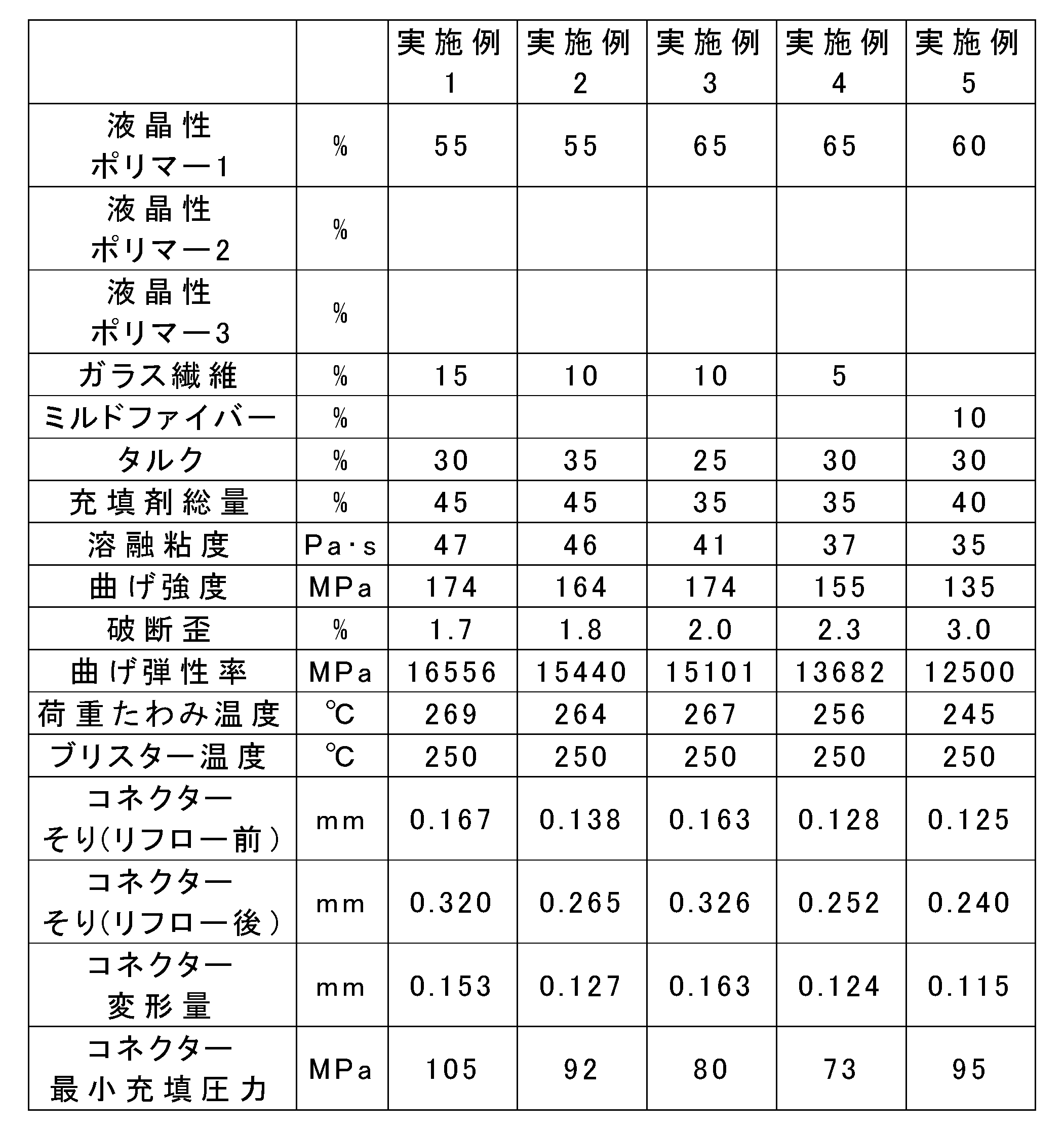
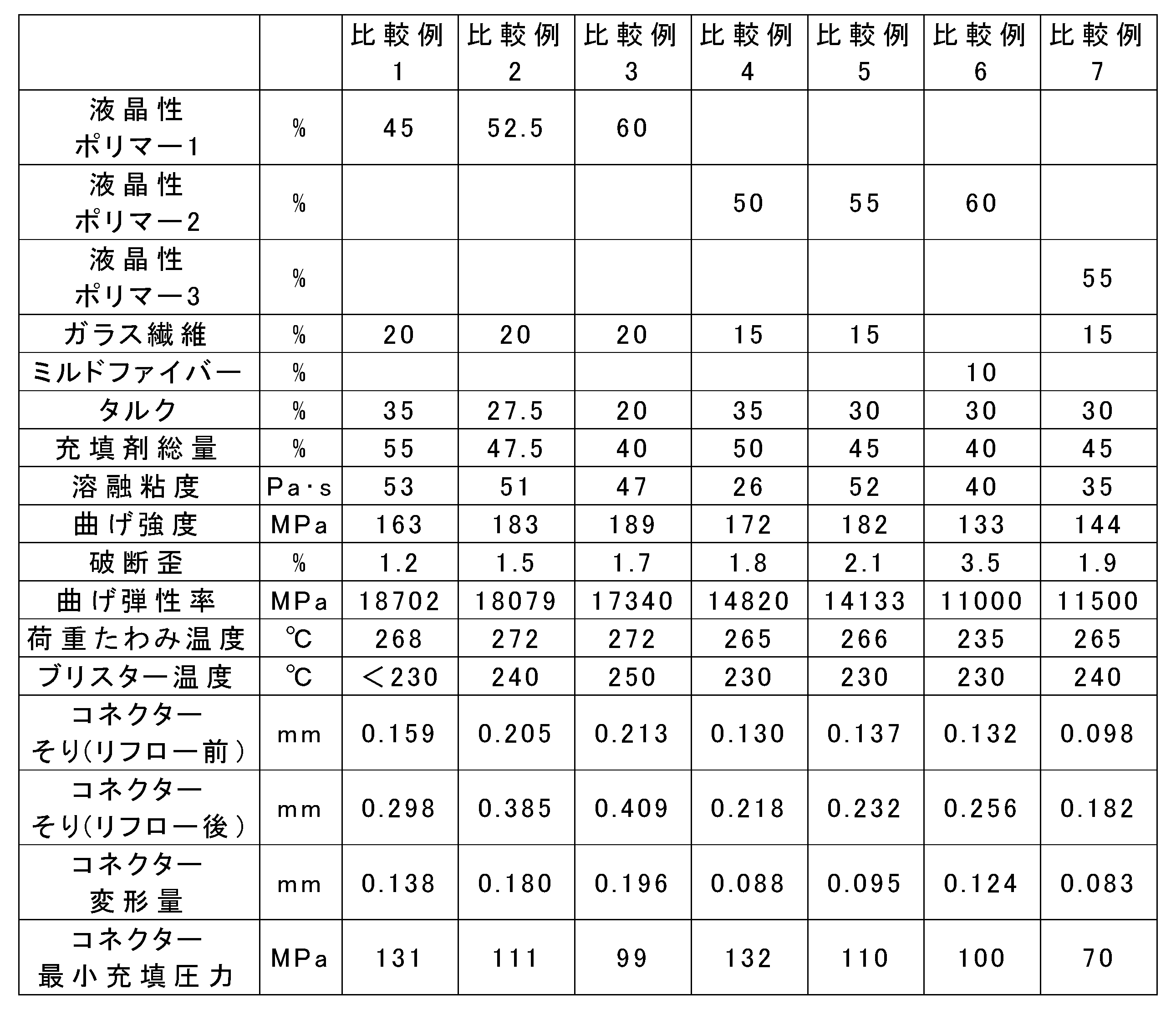
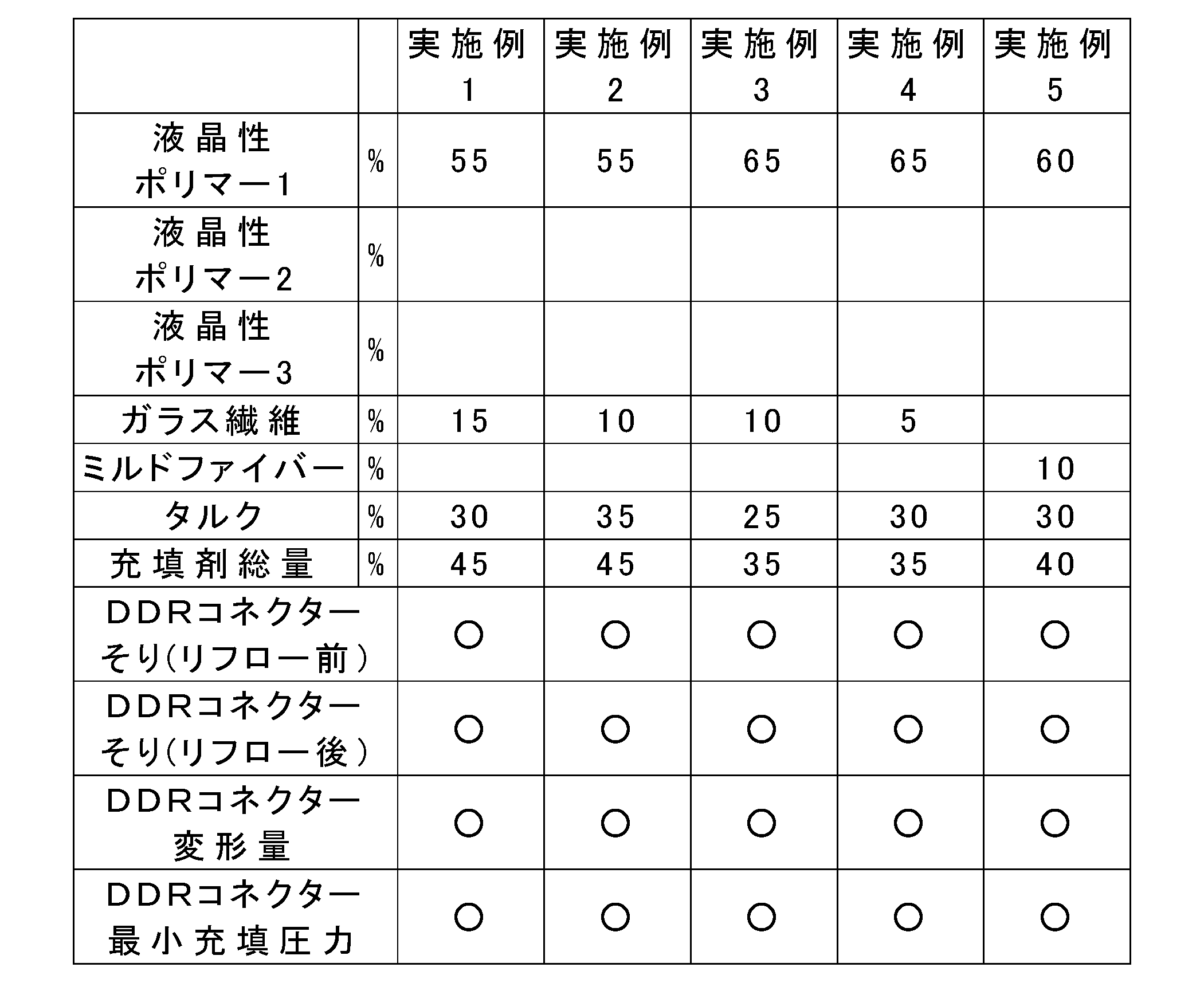
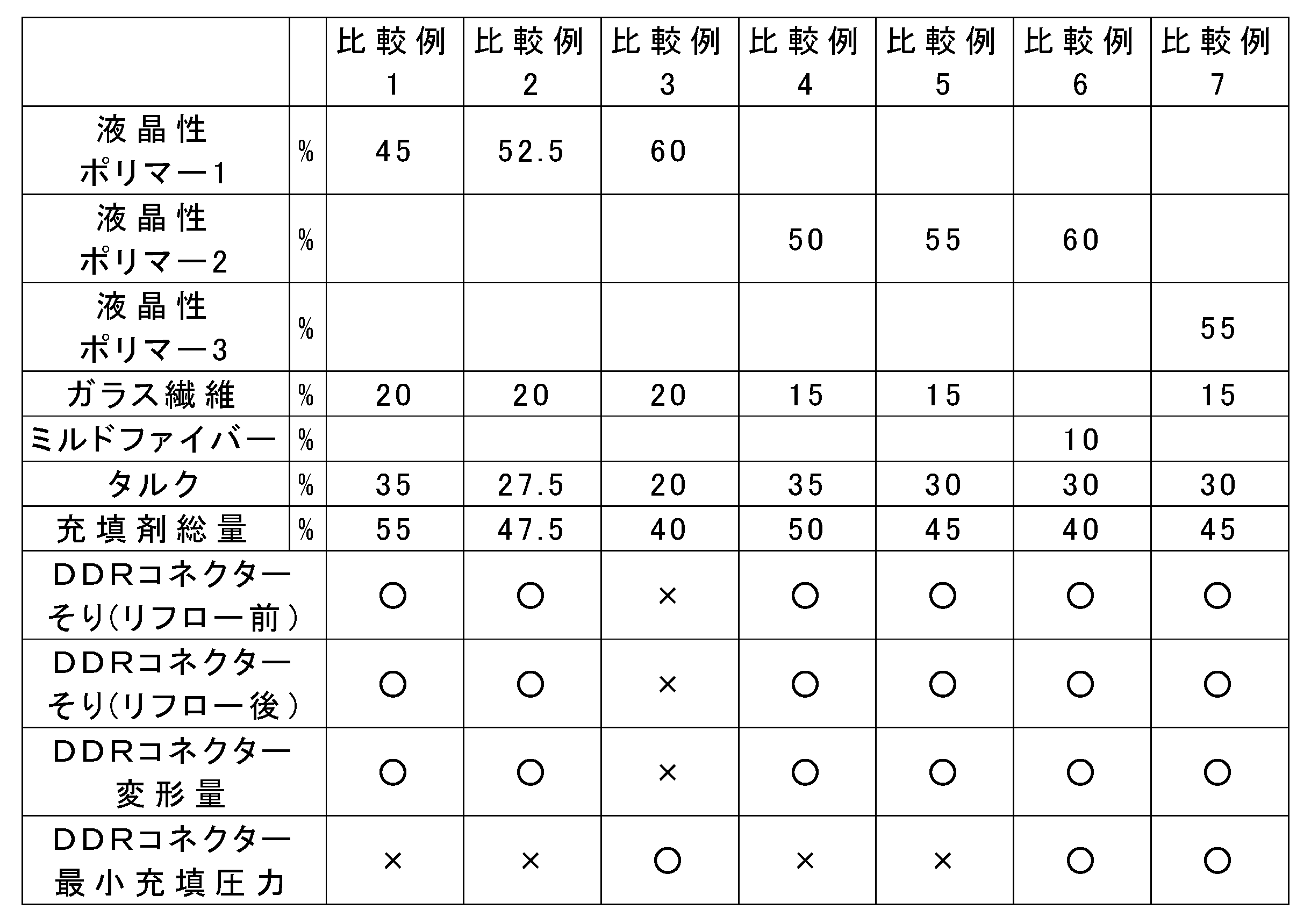
表3~6に示される通り、本発明における複合樹脂組成物から成形された電子部品は、耐熱性に優れ、そり変形及びブリスター発生が抑制されていた。
Claims (5)
- (A)液晶性ポリマーと、(B)繊維状充填剤と、(C)板状充填剤と、を含む複合樹脂組成物であって、
前記(A)液晶性ポリマーは、必須の構成成分として、下記構成単位(I)~(IV)からなり、
全構成単位に対して構成単位(I)の含有量は61~68モル%であり、
全構成単位に対して構成単位(II)の含有量は7~14モル%であり、
全構成単位に対して構成単位(III)の含有量は5.5~9モル%であり、
全構成単位に対して構成単位(IV)の含有量は16~19.5モル%であり、
構成単位(II)と構成単位(III)との合計に対する構成単位(III)の比が0.30~0.48であり、
全構成単位に対して構成単位(I)~(IV)の合計の含有量は100モル%であり、
分子内にエステル結合又はエステル結合とケトン結合との組み合わせを有し、前記エステル結合と前記ケトン結合との合計に対する前記ケトン結合の量が0~0.18モル%である、溶融時に光学的異方性を示す全芳香族ポリエステルであり、
前記(A)液晶性ポリマーは、複合樹脂組成物全体に対して50~70質量%であり、
前記(B)繊維状充填剤は、複合樹脂組成物全体に対して2.5~15質量%であり、
前記(C)板状充填剤は、複合樹脂組成物全体に対して25~40質量%であり、
前記(B)繊維状充填剤及び前記(C)板状充填剤の総量は、複合樹脂組成物全体に対して30~50質量%であり、
前記(C)板状充填剤は、タルクである複合樹脂組成物。

- 前記(B)繊維状充填剤は、ガラス繊維及びミルドファイバーからなる群より選ばれる1種以上である請求項1に記載の複合樹脂組成物。
- 請求項1又は2に記載の複合樹脂組成物から成形され、製品全長が30mm以上であり、製品高さが5mm以上である電子部品。
- 成形品のXY軸面、YZ軸面、及びXZ軸面の何れの軸面に対しても対称性がない非対称電子部品である請求項3に記載の電子部品。
- ピッチ間距離が0.6mm以下、製品全長が60.0mm以上、製品高さが10.0mm以下、極数が200極以上のメモリーモジュール用コネクターである請求項3又は4に記載の電子部品。
Applications Claiming Priority (2)
| Application Number | Priority Date | Filing Date | Title |
|---|---|---|---|
| JP2015255365 | 2015-12-25 | ||
| JP2015-255365 | 2015-12-25 |
Publications (1)
| Publication Number | Publication Date |
|---|---|
| WO2017110866A1 true WO2017110866A1 (ja) | 2017-06-29 |
Family
ID=59090714
Family Applications (1)
| Application Number | Title | Priority Date | Filing Date |
|---|---|---|---|
| PCT/JP2016/088080 Ceased WO2017110866A1 (ja) | 2015-12-25 | 2016-12-21 | 複合樹脂組成物、及び当該複合樹脂組成物から成形された電子部品 |
Country Status (2)
| Country | Link |
|---|---|
| TW (1) | TW201738315A (ja) |
| WO (1) | WO2017110866A1 (ja) |
Cited By (6)
| Publication number | Priority date | Publication date | Assignee | Title |
|---|---|---|---|---|
| US10829634B2 (en) | 2017-12-05 | 2020-11-10 | Ticona Llc | Aromatic polymer composition for use in a camera module |
| US11086200B2 (en) | 2019-03-20 | 2021-08-10 | Ticona Llc | Polymer composition for use in a camera module |
| WO2021156367A1 (en) * | 2020-02-05 | 2021-08-12 | Dsm Ip Assets B.V. | Connector housing, process for producing the same and a mold for using in the process |
| US11722759B2 (en) | 2019-03-20 | 2023-08-08 | Ticona Llc | Actuator assembly for a camera module |
| US12209163B2 (en) | 2021-05-06 | 2025-01-28 | Ticona Llc | Polymer composition for use in a camera module |
| US12282005B2 (en) | 2021-12-13 | 2025-04-22 | Tiocona LLC | Technique for testing the ball dent properties of a sample |
Citations (4)
| Publication number | Priority date | Publication date | Assignee | Title |
|---|---|---|---|---|
| JPH02240134A (ja) * | 1989-03-15 | 1990-09-25 | Tosoh Corp | サーモトロピック液晶性コポリエステル |
| JP2010138228A (ja) * | 2008-12-09 | 2010-06-24 | Nippon Oil Corp | 液晶ポリエステル樹脂組成物 |
| WO2014050371A1 (ja) * | 2012-09-26 | 2014-04-03 | ポリプラスチックス株式会社 | 電子部品用複合樹脂組成物、及び当該複合樹脂組成物から成形された電子部品 |
| CN103804666A (zh) * | 2013-12-19 | 2014-05-21 | 金发科技股份有限公司 | 一种液晶聚合物的制备方法 |
-
2016
- 2016-12-21 WO PCT/JP2016/088080 patent/WO2017110866A1/ja not_active Ceased
- 2016-12-23 TW TW105142905A patent/TW201738315A/zh unknown
Patent Citations (4)
| Publication number | Priority date | Publication date | Assignee | Title |
|---|---|---|---|---|
| JPH02240134A (ja) * | 1989-03-15 | 1990-09-25 | Tosoh Corp | サーモトロピック液晶性コポリエステル |
| JP2010138228A (ja) * | 2008-12-09 | 2010-06-24 | Nippon Oil Corp | 液晶ポリエステル樹脂組成物 |
| WO2014050371A1 (ja) * | 2012-09-26 | 2014-04-03 | ポリプラスチックス株式会社 | 電子部品用複合樹脂組成物、及び当該複合樹脂組成物から成形された電子部品 |
| CN103804666A (zh) * | 2013-12-19 | 2014-05-21 | 金发科技股份有限公司 | 一种液晶聚合物的制备方法 |
Cited By (8)
| Publication number | Priority date | Publication date | Assignee | Title |
|---|---|---|---|---|
| US10829634B2 (en) | 2017-12-05 | 2020-11-10 | Ticona Llc | Aromatic polymer composition for use in a camera module |
| US11725106B2 (en) | 2017-12-05 | 2023-08-15 | Ticona Llc | Aromatic polymer composition for use in a camera module |
| US11086200B2 (en) | 2019-03-20 | 2021-08-10 | Ticona Llc | Polymer composition for use in a camera module |
| US11722759B2 (en) | 2019-03-20 | 2023-08-08 | Ticona Llc | Actuator assembly for a camera module |
| US12032272B2 (en) | 2019-03-20 | 2024-07-09 | Ticona Llc | Polymer composition for use in a camera module |
| WO2021156367A1 (en) * | 2020-02-05 | 2021-08-12 | Dsm Ip Assets B.V. | Connector housing, process for producing the same and a mold for using in the process |
| US12209163B2 (en) | 2021-05-06 | 2025-01-28 | Ticona Llc | Polymer composition for use in a camera module |
| US12282005B2 (en) | 2021-12-13 | 2025-04-22 | Tiocona LLC | Technique for testing the ball dent properties of a sample |
Also Published As
| Publication number | Publication date |
|---|---|
| TW201738315A (zh) | 2017-11-01 |
Similar Documents
| Publication | Publication Date | Title |
|---|---|---|
| JP6345376B1 (ja) | 複合樹脂組成物、及び当該複合樹脂組成物から成形された電子部品 | |
| JP6356938B1 (ja) | 複合樹脂組成物、及び当該複合樹脂組成物から成形されたコネクター | |
| JP6321899B1 (ja) | 複合樹脂組成物、及び当該複合樹脂組成物から成形されたコネクター | |
| JP6321898B1 (ja) | 複合樹脂組成物、及び当該複合樹脂組成物から成形された電子部品 | |
| WO2017110866A1 (ja) | 複合樹脂組成物、及び当該複合樹脂組成物から成形された電子部品 | |
| JP5769888B2 (ja) | 電子部品用複合樹脂組成物、及び当該複合樹脂組成物から成形された電子部品 | |
| WO2017110867A1 (ja) | 複合樹脂組成物、及び当該複合樹脂組成物から成形されたコネクター | |
| WO2012137637A1 (ja) | 平面状コネクター | |
| JP5826404B2 (ja) | 複合樹脂組成物及び該複合樹脂組成物から成形される平面状コネクター | |
| JP2016124947A (ja) | 成形品の製造方法及び複合樹脂組成物 | |
| JP2018095683A (ja) | 複合樹脂組成物、及び当該複合樹脂組成物から成形された電子部品 | |
| JP6109651B2 (ja) | 複合樹脂組成物及び当該複合樹脂組成物から成形された平面状コネクター | |
| JP2018095684A (ja) | 複合樹脂組成物、及び当該複合樹脂組成物から成形されたコネクター | |
| JP7038260B2 (ja) | 液晶性樹脂組成物、及び当該液晶性樹脂組成物の成形品を含む電子部品 | |
| JP2018104506A (ja) | 表面実装リレー用液晶性樹脂組成物及びそれを用いた表面実装リレー | |
| JP6944615B1 (ja) | 樹脂組成物及びコネクター |
Legal Events
| Date | Code | Title | Description |
|---|---|---|---|
| 121 | Ep: the epo has been informed by wipo that ep was designated in this application |
Ref document number: 16878753 Country of ref document: EP Kind code of ref document: A1 |
|
| NENP | Non-entry into the national phase |
Ref country code: DE |
|
| 122 | Ep: pct application non-entry in european phase |
Ref document number: 16878753 Country of ref document: EP Kind code of ref document: A1 |
|
| NENP | Non-entry into the national phase |
Ref country code: JP |