WO2017101383A1 - 网络切换方法及终端 - Google Patents
网络切换方法及终端 Download PDFInfo
- Publication number
- WO2017101383A1 WO2017101383A1 PCT/CN2016/089009 CN2016089009W WO2017101383A1 WO 2017101383 A1 WO2017101383 A1 WO 2017101383A1 CN 2016089009 W CN2016089009 W CN 2016089009W WO 2017101383 A1 WO2017101383 A1 WO 2017101383A1
- Authority
- WO
- WIPO (PCT)
- Prior art keywords
- network
- sim card
- terminal
- standard
- frequency band
- Prior art date
- Legal status (The legal status is an assumption and is not a legal conclusion. Google has not performed a legal analysis and makes no representation as to the accuracy of the status listed.)
- Ceased
Links
Images

Classifications
-
- H—ELECTRICITY
- H04—ELECTRIC COMMUNICATION TECHNIQUE
- H04W—WIRELESS COMMUNICATION NETWORKS
- H04W36/00—Hand-off or reselection arrangements
- H04W36/0005—Control or signalling for completing the hand-off
- H04W36/0055—Transmission or use of information for re-establishing the radio link
- H04W36/0066—Transmission or use of information for re-establishing the radio link of control information between different types of networks in order to establish a new radio link in the target network
-
- H—ELECTRICITY
- H04—ELECTRIC COMMUNICATION TECHNIQUE
- H04W—WIRELESS COMMUNICATION NETWORKS
- H04W36/00—Hand-off or reselection arrangements
- H04W36/14—Reselecting a network or an air interface
- H04W36/144—Reselecting a network or an air interface over a different radio air interface technology
- H04W36/1443—Reselecting a network or an air interface over a different radio air interface technology between licensed networks
-
- H—ELECTRICITY
- H04—ELECTRIC COMMUNICATION TECHNIQUE
- H04W—WIRELESS COMMUNICATION NETWORKS
- H04W88/00—Devices specially adapted for wireless communication networks, e.g. terminals, base stations or access point devices
- H04W88/02—Terminal devices
- H04W88/06—Terminal devices adapted for operation in multiple networks or having at least two operational modes, e.g. multi-mode terminals
Definitions
- the present application relates to the field of electronic technologies, and in particular, to a network switching method and a terminal.
- the high-standard network includes the fourth generation (The fourth generation) (The fourth generation). Referred to as 5G) network.
- the smart terminal used by the user is a dual-card smart terminal, and both card slots support the high-standard network access technology, and the user uses the Subscriber Identity Module (SIM) corresponding to the card slot 1 in the high-standard network.
- SIM Subscriber Identity Module
- the registration is performed, and the SIM card 2 corresponding to the card is registered in the low-standard network, and the low-standard network includes the second generation (The Second Generation, 2G)/The Third Generation (3G) network.
- 2G The Second Generation
- 3G Third Generation
- the smart terminal When the network of the SIM card 1 falls back, the smart terminal will continuously try to switch the SIM card 1 to the high-standard network to improve the user's Internet speed and ensure that the user can smoothly play video. And only when the user does not support the high-standard network, Zhi After the terminal can search for the frequency band information of the high-standard network of the SIM card 1, the SIM card 1 can be switched back to the high-standard network, thereby providing the user with a higher network speed.
- the existing method of switching the SIM card 1 back to the high-standard network has a long time, which causes the user's traffic to be lost, so that the user cannot use the Internet service better, resulting in a poor user experience.
- the embodiment of the present application provides a network switching method and a terminal, which are used to solve the problem that the existing network back in the SIM card 1 is backward, and in order to provide a faster network speed to the user, it is time to try to switch the SIM card 1 back to the high-standard network. Longer problem.
- the embodiment of the present application provides a network switching method, including:
- the first network and the second network corresponding to the first SIM card are networks provided by the first operator; the first network and the second network corresponding to the second SIM card are networks provided by the second operator;
- the first network is a high-standard network, and the second network is a low-standard network.
- a terminal including:
- a determining module configured to determine whether the first customer identification module SIM card falls back from the corresponding first network to the second network corresponding to the first SIM card
- a search module configured to search for frequency band information of the first network corresponding to the second SIM card after the determining module determines that the first SIM card is backward;
- a switching module configured to switch the second SIM card from its corresponding second network to the first network corresponding to the second SIM card according to the searched frequency band information
- the first network and the second network corresponding to the first SIM card are networks provided by the first operator; the first network and the second network corresponding to the second SIM card are second operations. a network provided by the quotient; the first network is a high-standard network, and the second network is a low-standard network.
- an embodiment of the present application provides a terminal, including a memory, one or more processors, and one or more programs, where the one or more programs are executed by the one or more processors Performing the following operations: determining whether the first customer identification module SIM card falls back from the corresponding first network to the second network corresponding to the first SIM card; if the determination result is yes, searching for the first network corresponding to the second SIM card Frequency band information; switching the second SIM card from its corresponding second network to the first network corresponding to the second SIM card according to the searched frequency band information; wherein the first SIM The first network and the second network corresponding to the card are the network provided by the first operator; the first network and the second network corresponding to the second SIM card are networks provided by the second operator; the first network is high The standard network, the second network is a low-standard network.
- embodiments of the present application provide a computer readable storage medium having computer executable instructions stored thereon, the computer executable instructions causing a terminal to perform an operation in response to execution, the operations including Determining whether the first customer identification module SIM card falls back from the corresponding first network to the second network corresponding to the first SIM card; if the determination result is yes, searching for the frequency band information of the first network corresponding to the second SIM card; Switching the second SIM card from its corresponding second network to the first network corresponding to the second SIM card according to the searched frequency band information; wherein the first SIM card corresponds to the first a network provided by the network and the second network for the first operator; the first network and the second network corresponding to the second SIM card are networks provided by the second operator; the first network is a high-standard network, The second network is a low-standard network.
- the network switching method and the terminal in the embodiment of the present application determine whether the first SIM card falls back from the corresponding first network to the second network corresponding to the first SIM card, and the network is back in the first SIM card to search for the second SIM.
- the frequency band information of the first network corresponding to the card, the second SIM card is switched from the corresponding second network to the first network corresponding to the second SIM card according to the searched frequency band information, wherein the first SIM card and The network used by the second SIM card belongs to different operators, the first network is a high-standard network, and the second network is a low-standard network.
- the second SIM card is removed from the first SIM card.
- the corresponding low-standard network is switched to its corresponding high-standard network, and the terminal is placed under the high-standard network relatively quickly, thereby providing a higher network speed for the user, and the user feels better.
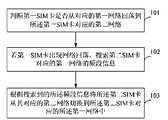
- FIG. 1 is a schematic flowchart of a network switching method according to Embodiment 1 of the present application.
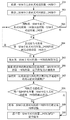
- FIG. 2 is a schematic flowchart of a network switching method according to Embodiment 2 of the present application.
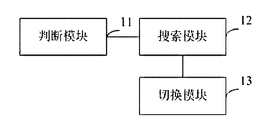
- FIG. 3 is a schematic structural diagram of a terminal according to Embodiment 3 of the present application.
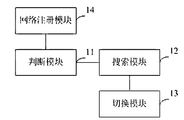
- FIG. 4 is a schematic structural diagram of a terminal according to Embodiment 4 of the present application.
- FIG. 5 is a schematic structural diagram of a terminal according to Embodiment 5 of the present application.
- FIG. 6 is a schematic structural diagram of a computer program product for network switching according to Embodiment 6 of the present application.
- FIG. 1 is a schematic flowchart diagram of a network switching method according to Embodiment 1 of the present application.
- the terminal that performs the network switching method is an intelligent terminal that supports dual cards, and the dual card slots all support the high-standard network access technology.
- the first network and the second network corresponding to the first SIM card are networks provided by the first operator.
- the first network and the second network corresponding to the second SIM card are networks provided by the second operator.
- the first network is a high-standard network, including a 4G/5G network
- the second network is a low-standard network, including a 2G/3G network.
- the network switching method includes:
- Step 101 Determine whether the first SIM card falls back from the corresponding first network to the second network corresponding to the first SIM card.
- the smart terminal can monitor the first SIM card in real time to determine whether the first SIM card is still in the first network corresponding to the first SIM card. If it is detected that the first SIM card has been dropped from its corresponding first network to its corresponding second network, it indicates that the first network corresponding to the first SIM card is unstable, and the Internet service cannot be continued to be provided to the user. Otherwise, it indicates that the first network corresponding to the first SIM card is relatively stable, and the Internet service can be continued to be provided to the user without performing Any network switching operation.
- Step 102 If the network of the first SIM card falls back, search for the frequency band information of the first network corresponding to the second SIM card.
- the first network corresponding to the first SIM card is unstable, or the current location does not support the first network.
- the smart terminal may The first network corresponding to the second SIM card is searched to obtain the frequency band information of the first network corresponding to the second SIM card.
- Step 103 Switch the second SIM card from its corresponding second network to the first network corresponding to the second SIM card according to the searched frequency band information.
- the second SIM card is currently in its corresponding second network.
- the smart terminal may send the second SIM card from its corresponding The second network switches to the first network corresponding to the second SIM card.
- the smart terminal is in a high-standard network. At this time, the smart terminal can obtain a higher network speed, and the user can better use the Internet service of the smart terminal.
- the network switching method provided in this embodiment determines whether the first SIM card falls back from the corresponding first network to the second network corresponding to the first SIM card, and the network is back in the first SIM card, and the second SIM card is searched for.
- the frequency band information of the first network, the second SIM card is switched from the corresponding second network to the first network corresponding to the second SIM card according to the searched frequency band information, wherein the first SIM card and the second SIM card
- the network used by the SIM card belongs to different operators.
- the first network is a high-standard 4G/5G network
- the second network is a low-standard 2G/3G network.
- the second SIM card is switched from its corresponding low-standard network to its corresponding high-standard network, and the terminal is placed under the high-standard network relatively quickly, thereby being able to
- the user provides a higher network speed, and the user can better use the terminal's Internet service, and the user feels better.
- the terminal that performs the network switching method is an intelligent terminal that supports dual cards, and the dual card slots all support the high-standard network access technology.
- the first network and the second network corresponding to the first SIM card are networks provided by the first operator.
- the first network and the second network corresponding to the second SIM card are networks provided by the second operator.
- the first network is a high-standard network, including a 4G/5G network
- the second network is a low-standard network, including a 2G/3G network.
- the network switching method includes:
- Step 201 Register the first SIM card into its corresponding first network.
- Step 202 Register the second SIM card into its corresponding second network.
- the smart terminal registers the first SIM card into its corresponding first network, and registers the second SIM card into its corresponding second network, that is, the first SIM card is in a high standard.
- the second SIM card is in a low-standard 2G/3G network.
- the first operator corresponding to the first SIM card is mobile
- the first SIM card is registered in the mobile high-standard 4G network.
- the second operator corresponding to the second SIM card is Unicom
- the second SIM card is registered in the low-standard 2G/3G network of China Unicom.
- Step 203 Determine whether the first SIM card falls back from the corresponding first network to the second network corresponding to the first SIM card.
- step 204 is performed; otherwise, the smart terminal continues to detect whether the first SIM card has fallen back.
- Step 204 Try to re-cut the first SIM card from its corresponding second network to its corresponding first network.
- the smart terminal When the network of the first SIM card is backward, the smart terminal cannot determine whether the first network corresponding to the first SIM card is temporary. In order to continue to use the first network corresponding to the first SIM card, the smart terminal may first An attempt is made to re-cut the first SIM card from its corresponding second network into its corresponding first network. If the first SIM card can be switched back to its corresponding first network, the corresponding first network can continue to provide a higher network speed for the user, so that the smart terminal returns to step 203 to continue to detect whether the first SIM card is detected. A network fall occurs if the smart terminal cannot take the first network from it The corresponding second network is switched back to its corresponding first network, indicating that the corresponding first network cannot continue to provide a higher network speed for the user, so that the smart terminal performs step 204.
- step 205 is performed; otherwise, step 203 is performed.
- Step 205 Search for frequency band information of the first network corresponding to the second SIM card.
- the smart terminal may The first network corresponding to the second SIM card is searched to obtain the frequency band information of the first network corresponding to the second SIM card.
- Step 206 Send a registration message to the second operator of the first network corresponding to the second SIM card according to the searched frequency band information.
- the smart terminal After searching for the frequency band information of the first network corresponding to the second SIM card, the smart terminal sends a registration request to the second operator to which the corresponding first operation belongs by using the second SIM card, so that the second operator The validity of the two SIM cards is determined to determine whether the second SIM card is allowed to be switched to the first network provided by the second operator.
- Step 207 Receive an allow registration message returned by the second operator and display the message to the corresponding user through the terminal.
- the smart terminal After determining that the second SIM card is legal, the smart terminal receives the permission registration message of the second network that allows the second SIM card to be registered to the corresponding first network, and the smart terminal may display the permission registration message through the display screen. To the user, so that the user can judge whether to access the first network according to his own needs.
- Step 208 Determine whether a confirmation message returned by the user that allows the second SIM card to access its corresponding first network is received.
- the smart terminal determines whether the user allows the second SIM card to access the corresponding first network by receiving an acknowledgement message returned by the user through the display screen.
- the smart terminal receives the confirmation message, indicating that the user allows the second SIM card to access the corresponding first network, otherwise, the user does not allow the second SIM card to access the corresponding second network, and then the second The SIM card is still under its corresponding second network.
- step 209 If the result of the determination is yes, go to step 209; otherwise, go to step 210.
- Step 209 Register the second SIM card in its corresponding first network to complete the network cut. change.
- the smart terminal After receiving the confirmation message sent by the user through the display frequency of the smart terminal, the smart terminal can start to register the second SIM card in its corresponding first network, thereby completing the second SIM card from its corresponding second network.
- the corresponding first network is switched, so that the smart terminal can be in a high-standard network, thereby providing a higher network speed for the user.
- Step 210 Provide a service for the user based on the second network corresponding to the first SIM card.
- the network switching method provided in this embodiment determines whether the first SIM card falls back from the corresponding first network to the second network corresponding to the first SIM card, and the network is back in the first SIM card, and the second SIM card is searched for.
- the frequency band information of the first network, the second SIM card is switched from the corresponding second network to the first network corresponding to the second SIM card according to the searched frequency band information, wherein the first SIM card and the second SIM card
- the network used by the SIM card belongs to different operators.
- the first network is a high-standard 4G/5G network
- the second network is a low-standard 2G/3G network.
- the terminal can be placed under a high-standard network relatively quickly, thereby providing a higher network speed for the user, and the user can better use the terminal's Internet service, and the user feels better.
- FIG. 3 it is a schematic structural diagram of a terminal according to Embodiment 3 of the present application.
- the terminal in this embodiment is a terminal supporting dual cards, and the dual card slots support the high-standard network access technology.
- the terminal includes a judging module 11, a search module 12, and a switching module 13.
- the determining module 11 is configured to determine whether the SIM card of the first customer identification module is dropped from the corresponding first network to the second network corresponding to the first SIM card.
- the determining module 11 can monitor the first SIM card in real time to determine whether the first SIM card is still in the first network corresponding to the first SIM card. If the first SIM card is detected to fall back from its corresponding first network to its corresponding second network, the first network corresponding to the first SIM card is unstable. Otherwise, the first network corresponding to the first SIM card is relatively stable, and Continue to provide Internet access to users without any network switching operations.
- the searching module 12 is configured to search for the frequency band information of the first network corresponding to the second SIM card after the determining module determines that the first SIM card is backward.
- the first network corresponding to the first SIM card is unstable, or the current location does not support the first network.
- the search module 12 at this time The first network corresponding to the second SIM card may be searched to obtain the frequency band information of the first network corresponding to the second SIM card.
- the switching module 13 is configured to switch the second SIM card from its corresponding second network to the first network corresponding to the second SIM card according to the searched frequency band information.
- the second SIM card is currently in its corresponding second network.
- the switching module 13 can take the second SIM card from its corresponding The second network is switched to the first network corresponding to the second SIM card.
- the terminal is in the high-standard network. At this time, the smart terminal can obtain a higher network speed, and the user can better use the Internet service of the smart terminal.
- the function modules of the terminal provided in this embodiment can be used to perform the process of the network switching method shown in FIG. 1.
- the specific working principle is not described here. For details, refer to the description of the method embodiment.
- the terminal provided in this embodiment determines whether the first SIM card falls back from the corresponding first network to the second network corresponding to the first SIM card, and the network is back in the first SIM card, and the second SIM card is searched for.
- the frequency band information of the network, the second SIM card is switched from the corresponding second network to the first network corresponding to the second SIM card according to the searched frequency band information, wherein the first SIM card and the second SIM card
- the network used belongs to different operators.
- the first network is a high-standard 4G/5G network
- the second network is a low-standard 2G/3G network.
- the second SIM card is switched from its corresponding low-standard network to its corresponding high-standard network, and the terminal is placed under the high-standard network relatively quickly, thereby being able to Users provide higher speeds, users can better use the end The Internet service of the end, the user feels better.
- FIG. 4 it is a schematic structural diagram of a terminal according to Embodiment 4 of the present application.
- the terminal in this embodiment is a terminal supporting dual cards, and the dual card slots support the high-standard network access technology.
- the terminal includes a network registration module 14 in addition to the determination module 11, the search module 12 and the switching module 13 in the third embodiment.
- the network registration module 14 is configured to register the first SIM card to its corresponding before the determining module 11 determines whether the first SIM card is switched from the corresponding first network to the second network corresponding to the first SIM card. In the first network, and registering the second SIM card into its corresponding second network.
- the first SIM card is in a high-standard 4G/5G network
- the second SIM card is in a low-standard 2G/3G network.
- the first SIM card is registered in the mobile high-standard 4G network.
- the second operator corresponding to the second SIM card is Unicom
- the second SIM card is registered in the low-standard 2G/3G network of China Unicom.
- the search module 12 is further configured to: before searching for the frequency band information of the first network corresponding to the second SIM card, attempt to re-switch the first SIM card from the corresponding second network to the first corresponding to the first SIM card. In the network.
- the search module 12 may First try to re-cut the first SIM card from its corresponding second network into its corresponding first network. If the first SIM card can be switched back to its corresponding first network, the corresponding first network can continue to provide a higher network speed for the user, and the determining module 11 continues to detect whether the first SIM card has a network fallback.
- the search module 12 will The frequency band of the first network corresponding to the two SIM cards is scanned.
- the switching module 13 is specifically configured to use the first network corresponding to the second SIM card.
- the second operator sends a registration message, receives the permission registration message returned by the second operator, and displays it to the corresponding user through the terminal, and receives the second SIM card that the user sends through the terminal to access the corresponding first network. After confirming the message, the second SIM card is registered in its corresponding first network to complete the network handover.
- the function modules of the terminal provided in this embodiment can be used to perform the process of the network switching method shown in FIG. 1 to FIG. 2, and the specific working principle is not described again. For details, refer to the description of the method embodiment.
- the terminal provided in this embodiment determines whether the first SIM card falls back from the corresponding first network to the second network corresponding to the first SIM card, and the network is back in the first SIM card, and the second SIM card is searched for.
- the frequency band information of the network, the second SIM card is switched from the corresponding second network to the first network corresponding to the second SIM card according to the searched frequency band information, wherein the first SIM card and the second SIM card
- the network used belongs to different operators.
- the first network is a high-standard 4G/5G network
- the second network is a low-standard 2G/3G network.
- the terminal can be placed under a high-standard network relatively quickly, thereby providing a higher network speed for the user, and the user can better use the terminal's Internet service, and the user feels better.
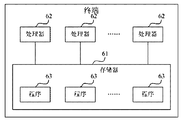
- FIG. 5 is a schematic structural diagram of a terminal according to Embodiment 5 of the present application.
- the terminal of the embodiment of the present application includes a memory 61, one or more processors 62, and one or more programs 63.
- the one or more programs 63 when executed by one or more processors 62, perform any of the above-described embodiments.
- the terminal of the embodiment of the present application determines whether the first SIM card falls back from the corresponding first network to the second network corresponding to the first SIM card, and the network is back in the first SIM card, and the second SIM card is searched for.
- the frequency band information of the network, the second SIM card is switched from the corresponding second network to the first network corresponding to the second SIM card according to the searched frequency band information, wherein the first SIM card and the second SIM card
- the network used belongs to different operators.
- the first network is a high-standard network
- the second network is a low-standard network.
- the second SIM card is switched from its corresponding low-standard network to its corresponding high-standard network, and the terminal is placed under the high-standard network relatively quickly, thereby providing the user with The higher the network speed, the user feels better.
- FIG. 6 is a schematic structural diagram of a computer program product for network switching according to Embodiment 6 of the present application.
- the computer program product 71 for network switching in the embodiment of the present application may include a signal bearing medium 72.
- Signal bearing medium 72 may include one or more instructions 73 that, when executed by, for example, a processor, may provide the functionality described above with respect to Figures 1-4.
- the instruction 73 may include: one or more instructions for determining whether the first customer identification module SIM card falls back from the corresponding first network to the second network corresponding to the first SIM card; Yes, searching for one or more instructions of the frequency band information of the first network corresponding to the second SIM card; and for switching the second SIM card from its corresponding second network to the location according to the searched frequency band information
- One or more instructions in the first network corresponding to the second SIM card wherein the first network and the second network corresponding to the first SIM card are networks provided by the first operator; The first network and the second network corresponding to the SIM card are networks provided by the second operator; the first network is a high-standard network, and the second network is a low-standard network.
- the terminal can perform one or more of the steps shown in FIG. 1 in response to instruction 73.
- signal bearing medium 72 can include computer readable media 74 such as, but not limited to, a hard disk drive, a compact disk (CD), a digital versatile disk (DVD), a digital tape, a memory, and the like.
- the signal bearing medium 72 can include a recordable medium 75 such as, but not limited to, a memory, a read/write (R/W) CD, an R/W DVD, and the like.
- the signal bearing medium 72 can include a communication medium 76 such as, but not limited to, a digital and/or analog communication medium (eg, fiber optic cable, waveguide, wired communication link, wireless communication link, etc.).
- computer program product 71 can be transmitted to one or more modules of a terminal via RF signal bearing medium 72, wherein signal bearing medium 72 is transmitted by a wireless communication medium (e.g., a wireless communication medium compliant with the IEEE 802.11 standard).
- a wireless communication medium e.g., a wireless communication medium compliant with the IEEE 802.11 standard.
- the computer program product of the embodiment of the present application determines whether the first SIM card falls back from the corresponding first network to the second network corresponding to the first SIM card, and the network is back in the first SIM card, and the second SIM card is searched for.
- the frequency band information of the first network, the second SIM card is switched from the corresponding second network to the first network corresponding to the second SIM card according to the searched frequency band information, wherein the first SIM card and the second SIM card
- the network used by the SIM card belongs to different operators.
- the first network is a high-standard network
- the second network is a low-standard network.
- the second SIM card is switched from its corresponding low-standard network to its corresponding high-standard network, and the terminal is placed under the high-standard network relatively quickly, thereby being able to To provide users with a higher network speed, users feel better.
Landscapes
- Engineering & Computer Science (AREA)
- Computer Networks & Wireless Communication (AREA)
- Signal Processing (AREA)
- Mobile Radio Communication Systems (AREA)
Abstract
本申请实施例提供了网络切换方法及终端,通过判断第一SIM卡是否从对应的第一网络回落到第一SIM卡对应的第二网络,在第一SIM卡发生网络回落后,搜索第二SIM卡对应的第一网络的频段信息,根据搜索到的所述频段信息将第二SIM卡从其对应的第二网络切换到第二SIM卡对应的第一网络中,其中,第一SIM卡和第二SIM卡使用的网络分属于不同的运营商,第一网络为高制式网络,第二网络为低制式网络。本申请实施例中在第一SIM卡出现回落后,将第二SIM卡从其对应的低制式网络切换到其对应的高制式网络中,较快地将终端置于高制式网络下,进而能够为用户提供较高的网速,用户感受较好。
Description
本专利申请要求申请日为2015年12月15日、申请号为2015109344201的中国专利申请的优先权,并将上述专利申请以引用的方式全文引入本文中。
本申请涉及电子技术领域,尤其涉及一种网络切换方法及终端。
随着通信技术的进步和通信资费的降低,用户对使用的智能终端的要求也越来越高。用户通过智能终端浏览网页时期望网页打开速度较快,而通过智能终端看视频时期望视频在播放过程比较流畅。为了满足用户的需求,智能终端往往需要接入高制式的网络以获取到较高的上网速度,现在高制式网络包括第四代(The fourth Generation,简称4G)/第五代(The fifth Generation,简称5G)网络。
现在大部分的智能终端都支持双卡,而且双卡槽都支持高制式网络接入技术。例如,用户使用的智能终端为双卡智能终端,而且两个卡槽都支持高制式网络接入技术,用户使用卡槽1对应的客户识别模块(Subscriber Identity Module,简称SIM)在高制式网络中进行了注册,而卡遭2对应的SIM卡2在低制式网络进行了注册,低制式网络包括第二代(The Second Generation,简称2G)/第三代(TheThirdGeneration,简称3G)网络。用户通过SIM卡1在智能终端上看视频时网络速度非常快而且视频画面非常流畅。当用户移动到不支持高制式网络的区域时,SIM卡1只能从高制式网络回落到低制式网络中,相应地网速就会变得非常缓慢,视频可能出现卡顿、画面出现马赛克等现象。
当SIM卡1出现网络回落后,智能终端会不断地尝试将SIM卡1重新切换到高制式网络中,以提高用户的上网速度,保证用户能够流畅的播放视频等。而只有当用户从当前不支持高制式网络的区域,智
能终端搜索到SIM卡1的高制式网络的频段信息后,才能够将SIM卡1重新切换到高制式网络中,进而为用户提供较高的网速。
现有通过将SIM卡1重新切换回高制式网络的方式,存在用时较长,造成用户的流量流失,使得用户不能更好地使用互联网服务,导致用户体验较差的问题。
发明内容
本申请实施例提供一种网络切换方法及终端,用于解决现有在SIM卡1出现网络回落后,为了向用户提供较快网速,尝试将SIM卡1重新切回高制式网络时存在用时较长的问题。
为了实现上述目的,本申请实施例提供了一种网络切换方法,包括:
判断第一客户识别模块SIM卡是否从对应的第一网络回落到所述第一SIM卡对应的第二网络;
如果判断结果为是,搜索第二SIM卡对应的第一网络的频段信息;
根据搜索到的所述频段信息将所述第二SIM卡从其对应的第二网络切换到所述第二SIM卡对应的所述第一网络中;
其中,所述第一SIM卡对应的第一网络和第二网络为第一运营商提供的网络;所述第二SIM卡对应的第一网络和第二网络为第二运营商提供的网络;所述第一网络为高制式网络,所述第二网络为低制式网络。
为了实现上述目的,本申请实施例提供了一种终端,包括:
判断模块,用于判断第一客户识别模块SIM卡是否从对应的第一网络回落到所述第一SIM卡对应的第二网络;
搜索模块,用于在所述判断模块判断出所述第一SIM卡出现回落后,搜索第二SIM卡对应的第一网络的频段信息;
切换模块,用于根据搜索到的所述频段信息将所述第二SIM卡从其对应的第二网络切换到所述第二SIM卡对应的所述第一网络中;
其中,所述第一SIM卡对应的第一网络和第二网络为第一运营商提供的网络;所述第二SIM卡对应的第一网络和第二网络为第二运营
商提供的网络;所述第一网络为高制式网络,所述第二网络为低制式网络。
另一方面,本申请实施例提供一种终端,包括存储器、一个或多个处理器以及一个或多个程序,其中,所述一个或多个程序在由所述一个或多个处理器执行时执行下述操作:判断第一客户识别模块SIM卡是否从对应的第一网络回落到所述第一SIM卡对应的第二网络;如果判断结果为是,搜索第二SIM卡对应的第一网络的频段信息;根据搜索到的所述频段信息将所述第二SIM卡从其对应的第二网络切换到所述第二SIM卡对应的所述第一网络中;其中,所述第一SIM卡对应的第一网络和第二网络为第一运营商提供的网络;所述第二SIM卡对应的第一网络和第二网络为第二运营商提供的网络;所述第一网络为高制式网络,所述第二网络为低制式网络。
另一方面,本申请实施例提供一种计算机可读存储介质,所述计算机可读存储介质上存储有计算机可执行指令,所述计算机可执行指令响应于执行使得终端执行操作,所述操作包括:判断第一客户识别模块SIM卡是否从对应的第一网络回落到所述第一SIM卡对应的第二网络;如果判断结果为是,搜索第二SIM卡对应的第一网络的频段信息;根据搜索到的所述频段信息将所述第二SIM卡从其对应的第二网络切换到所述第二SIM卡对应的所述第一网络中;其中,所述第一SIM卡对应的第一网络和第二网络为第一运营商提供的网络;所述第二SIM卡对应的第一网络和第二网络为第二运营商提供的网络;所述第一网络为高制式网络,所述第二网络为低制式网络。
本申请实施例的网络切换方法及终端,通过判断第一SIM卡是否从对应的第一网络回落到第一SIM卡对应的第二网络,在第一SIM卡发生网络回落后,搜索第二SIM卡对应的第一网络的频段信息,根据搜索到的所述频段信息将第二SIM卡从其对应的第二网络切换到第二SIM卡对应的第一网络中,其中,第一SIM卡和第二SIM卡使用的网络分属于不同的运营商,第一网络为高制式网络,第二网络为低制式网络。本申请实施例中在第一SIM卡出现回落后,将第二SIM卡从其
对应的低制式网络切换到其对应的高制式网络中,较快地将终端置于高制式网络下,进而能够为用户提供较高的网速,用户感受较好。
图1为本申请实施例一的网络切换方法的流程示意图;
图2为本申请实施例二的网络切换方法的流程示意图;
图3为本申请实施例三的终端的结构示意图;
图4为本申请实施例四的终端的结构示意图;
图5为本申请实施例五提供的终端的结构示意图;
图6为本申请实施例六提供的用于网络切换的计算机程序产品的结构示意图。
下面结合附图对本申请实施例提供的网络切换方法及终端进行详细描述。
实施例一
图1为本申请实施例一的网络切换方法的流程示意图。本实施例中,执行网络切换方法的终端为支持双卡的智能终端,而且双卡槽都支持高制式网络接入技术。其中,第一SIM卡对应的第一网络和第二网络为第一运营商提供的网络。第二SIM卡对应的第一网络和第二网络为第二运营商提供的网络。进一步地,第一网络为高制式网络,包括4G/5G网络,第二网络为低制式网络,包括2G/3G网络。
如图1所示,该网络切换方法包括:
步骤101、判断第一SIM卡是否从对应的第一网络回落到所述第一SIM卡对应的第二网络。
在用户基于第一SIM卡使用智能终端上网的过程中,智能终端可以实时地对第一SIM卡进行监控,以判断第一SIM卡是否仍处于第一SIM卡对应的第一网络中。如果监控到第一SIM卡发生了从其对应的第一网络回落到其对应的第二网络中,说明第一SIM卡对应的第一网络不稳定,无法继续对用户提供上网服务。否则,说明第一SIM卡对应的第一网络比较稳定,可以继续对用户提供上网服务,不需要进行
任何网络切换的操作。
步骤102、若第一SIM卡出现网络回落,搜索第二SIM卡对应的第一网络的频段信息。
为了保证用户能够具有较高的网速,当第一SIM卡发生网络回落后,说明第一SIM卡对应的第一网络不稳定,或者出现当前位置不支持第一网络的情况。
由于第一SIM卡和第二SIM卡分属于不同的运营商,当第一SIM卡发生网络回落时,而第二SIM卡对应的运营商提供的网络可能处于稳定状态,此时智能终端就可以开始对第二SIM卡对应的第一网络进行搜索,以获取第二SIM卡对应的第一网络的频段信息。
步骤103、根据搜索到的所述频段信息将所述第二SIM卡从其对应的第二网络切换到所述第二SIM卡对应的所述第一网络中。
本实施例中,第二SIM卡当前处于其对应的第二网络中,在搜索到第二SIM卡对应的第一网络的频段信息后,智能终端就可以将第二SIM卡从其对应的第二网络切换到第二SIM卡对应的第一网络中。当第二SIM卡完成切换后,智能终端就又处于高制式网络下,此时智能终端就可以获取到较高的网速,用户可以更好地使用智能终端的互联网服务。
本实施例提供的网络切换方法,通过判断第一SIM卡是否从对应的第一网络回落到第一SIM卡对应的第二网络,在第一SIM卡发生网络回落后,搜索第二SIM卡对应的第一网络的频段信息,根据搜索到的所述频段信息将第二SIM卡从其对应的第二网络切换到第二SIM卡对应的第一网络中,其中,第一SIM卡和第二SIM卡使用的网络分属于不同的运营商,第一网络为高制式的4G/5G网络,第二网络为低制式的2G/3G网络。本实施例中在第一SIM卡出现回落后,将第二SIM卡从其对应的低制式网络切换到其对应的高制式网络中,较快地将终端置于高制式网络下,进而能够为用户提供较高的网速,用户可以更好地使用终端的互联网服务,用户感受较好。
实施例二
如图2所示,其为本申请实施例二的网络切换方法的流程示意图。本实施例中,执行网络切换方法的终端为支持双卡的智能终端,而且双卡槽都支持高制式网络接入技术。其中,第一SIM卡对应的第一网络和第二网络为第一运营商提供的网络。第二SIM卡对应的第一网络和第二网络为第二运营商提供的网络。进一步地,第一网络为高制式网络,包括4G/5G网络,第二网络为低制式网络,包括2G/3G网络。
如图2所示,该网络切换方法包括:
步骤201、将第一SIM卡注册到其对应的第一网络中。
步骤202、将第二SIM卡注册到其对应的第二网络中。
本实施例中,智能终端将第一SIM卡注册到其对应的第一网络中,以及将第二SIM卡注册到其对应的第二网络中,也就是说,第一SIM卡处于高制式的4G/5G网络中,而第二SIM卡处于低制式的2G/3G网络中。例如,当第一SIM卡对应的第一运营商为移动时,第一SIM卡在移动的高制式的4G网络中进行注册。而第二SIM卡对应的第二运营商为联通时,第二SIM卡在联通的低制式的2G/3G网络中进行注册。
步骤203、判断第一SIM卡是否从对应的第一网络回落到第一SIM卡对应的第二网络。
如果判断结果为是,执行步骤204;否则智能终端继续检测第一SIM卡是否发生回落。
步骤204、尝试能否重新将第一SIM卡从其对应的第二网络回切到其对应的第一网络中。
当第一SIM卡出现网络回落后,智能终端由于无法确定第一SIM卡对应的第一网络出现问题的是否为暂时性的,为了继续使用第一SIM卡对应的第一网络,智能终端可以先尝试重新将第一SIM卡从其对应的第二网络回切到其对应的第一网络中。如果能够将第一SIM卡回切到其对应的第一网络,则说明其对应的第一网络能继续为用户提供较高的网速,这样智能终端返回步骤203,继续检测第一SIM卡是否出现网络回落,如果智能终端无法将第一网络从其
对应的第二网络回切到其对应的第一网络,说明其对应的第一网络不能继续为用户提供较高的网速,这样智能终端执行步骤204。
如果判断结果为否,执行步骤205;否则执行步骤203。
步骤205、搜索第二SIM卡对应的第一网络的频段信息。
由于第一SIM卡和第二SIM卡分属于不同的运营商,当第一SIM卡发生网络回落时,而第二SIM卡对应的运营商提供的网络可能处于稳定状态,此时智能终端就可以开始对第二SIM卡对应的第一网络进行搜索,以获取第二SIM卡对应的第一网络的频段信息。
步骤206、根据搜索到的所述频段信息向第二SIM卡对应的第一网络的第二运营商发送注册消息。
在搜索到第二SIM卡对应的第一网络的频段信息后,智能终端通过第二SIM卡向其对应的第一运营所属的第二运营商发送注册请求,以使第二运营商对该第二SIM卡的合法性进行判断,以确定是否允许该第二SIM卡切换到第二运营商所提供的第一网络中。
步骤207、接收第二运营商返回的允许注册消息并通过终端显示给对应的用户。
在判断出第二SIM卡合法后,智能终端将接收到第二运营商反馈的允许第二SIM卡注册到其对应的第一网络的允许注册消息,智能终端可以将允许注册消息通过显示屏显示给用户,以使用户根据自身的需求判断是否接入到第一网络中。
步骤208、判断是否接收到用户返回的允许第二SIM卡接入其对应的第一网络的确认消息。
智能终端通过是否接收到用户通过显示屏返回的确认消息,来判断用户是否允许第二SIM卡接入到其对应的第一网络中。智能终端接收到该确认消息,说明用户允许第二SIM卡接入到其对应的第一网络中,否则,说明用户不允许第二SIM卡接入到其对应的第二网络中,则第二SIM卡仍处于其对应的第二网络下。
如果判断结果为是,执行步骤209;否则,执行步骤210。
步骤209、将第二SIM卡在其对应的第一网络中注册完成网络切
换。
在接收到用户通过智能终端的显示频发送的确认消息后,智能终端就可以开始将第二SIM卡在其对应的第一网络中进行注册,进而完成第二SIM卡从其对应的第二网络切换的其对应的第一网络中,这样智能终端就可以处于高制式网络下,进而能够为用户提供较高的网速。
步骤210、基于第一SIM卡对应的第二网络为用户提供服务。
本实施例提供的网络切换方法,通过判断第一SIM卡是否从对应的第一网络回落到第一SIM卡对应的第二网络,在第一SIM卡发生网络回落后,搜索第二SIM卡对应的第一网络的频段信息,根据搜索到的所述频段信息将第二SIM卡从其对应的第二网络切换到第二SIM卡对应的第一网络中,其中,第一SIM卡和第二SIM卡使用的网络分属于不同的运营商,第一网络为高制式的4G/5G网络,第二网络为低制式的2G/3G网络。本实施例中在第一SIM卡出现回落后,不仅对第一SIM卡进行重新扫描以尝试回切到高制式网络下,并且在尝试失败后,将第二SIM卡从其对应的低制式网络切换到其对应的高制式网络中,能够较快地将终端置于高制式网络下,进而能够为用户提供较高的网速,用户可以更好地使用终端的互联网服务,用户感受较好。
实施例三
如图3所示,其为为本申请实施例三的终端的结构示意图。本实施例中的终端为支持双卡的终端,而且双卡槽都支持高制式网络接入技术。该终端包括:判断模块11、搜索模块12和切换模块13。
其中,判断模块11,用于判断第一客户识别模块SIM卡是否从对应的第一网络回落到所述第一SIM卡对应的第二网络。
在用户基于第一SIM卡使用智能终端上网的过程中,判断模块11可以实时地对第一SIM卡进行监控,以判断第一SIM卡是否仍处于第一SIM卡对应的第一网络中。如果监控到第一SIM卡发生了从其对应的第一网络回落到其对应的第二网络中,说明第一SIM卡对应的第一网络不稳定。否则,说明第一SIM卡对应的第一网络比较稳定,可以
继续对用户提供上网服务,不需要进行任何网络切换的操作。
搜索模块12,用于在所述判断模块判断出所述第一SIM卡出现回落后,搜索第二SIM卡对应的第一网络的频段信息。
为了保证用户能够具有较高的网速,当第一SIM卡发生网络回落后,说明第一SIM卡对应的第一网络不稳定,或者出现当前位置不支持第一网络的情况。
由于第一SIM卡和第二SIM卡分属于不同的运营商,当第一SIM卡发生网络回落时,而第二SIM卡对应的运营商提供的网络可能处于稳定状态,此时搜索模块12就可以开始对第二SIM卡对应的第一网络进行搜索,以获取第二SIM卡对应的第一网络的频段信息。
切换模块13,用于根据搜索到的所述频段信息将所述第二SIM卡从其对应的第二网络切换到所述第二SIM卡对应的所述第一网络中。
本实施例中,第二SIM卡当前处于其对应的第二网络中,在搜索到第二SIM卡对应的第一网络的频段信息后,切换模块13就可以将第二SIM卡从其对应的第二网络切换到第二SIM卡对应的第一网络中。当第二SIM卡完成切换后,终端就又处于高制式网络下,此时智能终端就可以获取到较高的网速,用户可以更好地使用智能终端的互联网服务。
本实施例提供的终端的各功能模块可用于执行图1所示的网络切换方法的流程,具体工作原理不再赘述,详见方法实施例的描述。
本实施例提供的终端,通过判断第一SIM卡是否从对应的第一网络回落到第一SIM卡对应的第二网络,在第一SIM卡发生网络回落后,搜索第二SIM卡对应的第一网络的频段信息,根据搜索到的所述频段信息将第二SIM卡从其对应的第二网络切换到第二SIM卡对应的第一网络中,其中,第一SIM卡和第二SIM卡使用的网络分属于不同的运营商,第一网络为高制式的4G/5G网络,第二网络为低制式的2G/3G网络。本实施例中在第一SIM卡出现回落后,将第二SIM卡从其对应的低制式网络切换到其对应的高制式网络中,较快地将终端置于高制式网络下,进而能够为用户提供较高的网速,用户可以更好地使用终
端的互联网服务,用户感受较好。
实施例四
如图4所示,其为为本申请实施例四的终端的结构示意图。本实施例中的终端为支持双卡的终端,而且双卡槽都支持高制式网络接入技术。该终端除了包括上述实施例三中的判断模块11、搜索模块12和切换模块13之外,还包括:网络注册模块14.。
其中,网络注册模块14,用于在判断模11判断第一SIM卡是否从对应的第一网络切换到所述第一SIM卡对应的第二网络之前,将第一SIM卡注册到其对应的所述第一网络中,以及将第二SIM卡注册到其对应的第二网络中。
也就是说,第一SIM卡处于高制式的4G/5G网络中,而第二SIM卡处于低制式的2G/3G网络中。例如,当第一SIM卡对应的第一运营商为移动时,第一SIM卡在移动的高制式的4G网络中进行注册。而第二SIM卡对应的第二运营商为联通时,第二SIM卡在联通的低制式的2G/3G网络中进行注册。
进一步地,搜索模块12,还用于在搜索第二SIM卡对应的第一网络的频段信息之前,尝试将第一SIM卡从其对应的第二网络重新切换到第一SIM卡对应的第一网络中。
当第一SIM卡出现网络回落后,智能终端由于无法确定第一SIM卡对应的第一网络出现问题的是否为暂时性的,为了继续使用第一SIM卡对应的第一网络,搜索模块12可以先尝试重新将第一SIM卡从其对应的第二网络回切到其对应的第一网络中。如果能够将第一SIM卡回切到其对应的第一网络,则说明其对应的第一网络能继续为用户提供较高的网速,判断模块11继续检测第一SIM卡是否出现网络回落。如果智能终端无法将第一网络从其对应的第二网络回切到其对应的第一网络,说明其对应的第一网络不能继续为用户提供较高的网速,搜索模块12就会对第二SIM卡对应的第一网络的频段进行扫描。
进一步地,切换模块13,具体用于向第二SIM卡对应的第一网络
的第二运营商发送注册消息,接收第二运营商返回的允许注册消息并通过终端显示给对应的用户,在接收到用户通过终端发送的允许第二SIM卡接入其对应的第一网络的确认消息后,将第二SIM卡在其对应的第一网络中注册完成网络切换。
本实施例提供的终端的各功能模块可用于执行图1~2所示的网络切换方法的流程,具体工作原理不再赘述,见方法实施例的描述。
本实施例提供的终端,通过判断第一SIM卡是否从对应的第一网络回落到第一SIM卡对应的第二网络,在第一SIM卡发生网络回落后,搜索第二SIM卡对应的第一网络的频段信息,根据搜索到的所述频段信息将第二SIM卡从其对应的第二网络切换到第二SIM卡对应的第一网络中,其中,第一SIM卡和第二SIM卡使用的网络分属于不同的运营商,第一网络为高制式的4G/5G网络,第二网络为低制式的2G/3G网络。本实施例中在第一SIM卡出现回落后,不仅对第一SIM卡进行重新扫描以尝试回切到高制式网络下,并且在尝试失败后,将第二SIM卡从其对应的低制式网络切换到其对应的高制式网络中,能够较快地将终端置于高制式网络下,进而能够为用户提供较高的网速,用户可以更好地使用终端的互联网服务,用户感受较好。
实施例五
图5为本申请实施例五提供的终端的结构示意图。如图5所示,本申请实施例的终端包括:存储器61、一个或多个处理器62以及一个或多个程序63。
其中,所述一个或多个程序63在由一个或多个处理器62执行时执行上述实施例中的任意一种方法。
本申请实施例的终端,通过判断第一SIM卡是否从对应的第一网络回落到第一SIM卡对应的第二网络,在第一SIM卡发生网络回落后,搜索第二SIM卡对应的第一网络的频段信息,根据搜索到的所述频段信息将第二SIM卡从其对应的第二网络切换到第二SIM卡对应的第一网络中,其中,第一SIM卡和第二SIM卡使用的网络分属于不同的运营商,第一网络为高制式网络,第二网络为低制式网络。本申请实施
例中在第一SIM卡出现回落后,将第二SIM卡从其对应的低制式网络切换到其对应的高制式网络中,较快地将终端置于高制式网络下,进而能够为用户提供较高的网速,用户感受较好。
实施例六
图6为本申请实施例六提供的用于网络切换的计算机程序产品的结构示意图。如图6所示,本申请实施例的用于网络切换的计算机程序产品71,可以包括信号承载介质72。信号承载介质72可以包括一个或更多个指令73,该指令73在由例如处理器执行时,处理器可以提供以上针对图1-4描述的功能。例如,指令73可以包括:用于判断第一客户识别模块SIM卡是否从对应的第一网络回落到所述第一SIM卡对应的第二网络的一个或多个指令;用于如果判断结果为是,搜索第二SIM卡对应的第一网络的频段信息的一个或多个指令;以及用于根据搜索到的所述频段信息将所述第二SIM卡从其对应的第二网络切换到所述第二SIM卡对应的所述第一网络中的一个或多个指令;其中,所述第一SIM卡对应的第一网络和第二网络为第一运营商提供的网络;所述第二SIM卡对应的第一网络和第二网络为第二运营商提供的网络;所述第一网络为高制式网络,所述第二网络为低制式网络。因此,例如,参照图3,终端可以响应于指令73来进行图1中所示的步骤中的一个或更多个。
在一些实现中,信号承载介质72可以包括计算机可读介质74,诸如但不限于硬盘驱动器、压缩盘(CD)、数字通用盘(DVD)、数字带、存储器等。在一些实现中,信号承载介质72可以包括可记录介质75,诸如但不限于存储器、读/写(R/W)CD、R/W DVD等。在一些实现中,信号承载介质72可以包括通信介质76,诸如但不限于数字和/或模拟通信介质(例如,光纤线缆、波导、有线通信链路、无线通信链路等)。因此,例如,计算机程序产品71可以通过RF信号承载介质72传送给终端的一个或多个模块,其中,信号承载介质72由无线通信介质(例如,符合IEEE 802.11标准的无线通信介质)传送。
本申请实施例的计算机程序产品,通过判断第一SIM卡是否从对应的第一网络回落到第一SIM卡对应的第二网络,在第一SIM卡发生网络回落后,搜索第二SIM卡对应的第一网络的频段信息,根据搜索到的所述频段信息将第二SIM卡从其对应的第二网络切换到第二SIM卡对应的第一网络中,其中,第一SIM卡和第二SIM卡使用的网络分属于不同的运营商,第一网络为高制式网络,第二网络为低制式网络。本申请实施例中在第一SIM卡出现回落后,将第二SIM卡从其对应的低制式网络切换到其对应的高制式网络中,较快地将终端置于高制式网络下,进而能够为用户提供较高的网速,用户感受较好。
通过以上的实施方式的描述,本领域的技术人员可以清楚地了解到各实施方式可借助软件加必需的通用硬件平台的方式来实现,当然也可以通过硬件。基于这样的理解,上述技术方案本质上或者说对现有技术做出贡献的部分可以以软件产品的形式体现出来,该计算机软件产品可以存储在计算机可读存储介质中,如ROM/RAM、磁碟、光盘等,包括若干指令用以使得一台计算机设备(可以是个人计算机,服务器,或者网络设备等)执行各个实施例或者实施例的某些部分所述的方法。
最后应说明的是:以上各实施例仅用以说明本申请的技术方案,而非对其限制;尽管参照前述各实施例对本申请进行了详细的说明,本领域的普通技术人员应当理解:其依然可以对前述各实施例所记载的技术方案进行修改,或者对其中部分或者全部技术特征进行等同替换;而这些修改或者替换,并不使相应技术方案的本质脱离本申请各实施例技术方案的范围。
Claims (8)
- 一种网络切换方法,其特征在于,包括:判断第一客户识别模块SIM卡是否从对应的第一网络回落到所述第一SIM卡对应的第二网络;如果判断结果为是,搜索第二SIM卡对应的第一网络的频段信息;根据搜索到的所述频段信息将所述第二SIM卡从其对应的第二网络切换到所述第二SIM卡对应的所述第一网络中;其中,所述第一SIM卡对应的第一网络和第二网络为第一运营商提供的网络;所述第二SIM卡对应的第一网络和第二网络为第二运营商提供的网络;所述第一网络为高制式网络,所述第二网络为低制式网络。
- 根据权利要求1所述的网络切换方法,其特征在于,所述搜索第二SIM卡对应的第一网络的频段信息之前,还包括:尝试将所述第一SIM卡从其对应的所述第二网络重新切换到所述第一SIM卡对应的所述第一网络中。
- 根据权利要求1或2所述的网络切换方法,其特征在于,所述判断第一客户识别模块SIM卡是否从对应的第一网络切换到所述第一SIM卡对应的第二网络之前,包括:将所述第一SIM卡注册到其对应的所述第一网络中;将所述第二SIM卡注册到其对应的所述第二网络中。
- 根据权利要求3所述的网络切换方法,其特征在于,所述根据所述频段信息将所述第二SIM卡从所述第二SIM卡对应的第二网络切换到所述第二SIM卡对应的所述第一网络中,包括:向所述第二SIM卡对应的所述第一网络的第二运营商发送注册消息;接收所述第二运营商返回的允许注册消息并通过终端显示给对应的用户;在接收到所述用户通过所述终端发送的允许所述第二SIM卡接入其对应的所述第一网络的确认消息后,将所述第二SIM卡在其对应的 所述第一网络中注册完成网络切换。
- 一种终端,其特征在于,包括:判断模块,用于判断第一客户识别模块SIM卡是否从对应的第一网络回落到所述第一SIM卡对应的第二网络;搜索模块,用于在所述判断模块判断出所述第一SIM卡出现回落后,搜索第二SIM卡对应的第一网络的频段信息;切换模块,用于根据搜索到的所述频段信息将所述第二SIM卡从其对应的第二网络切换到所述第二SIM卡对应的所述第一网络中;其中,所述第一SIM卡对应的第一网络和第二网络为第一运营商提供的网络;所述第二SIM卡对应的第一网络和第二网络为第二运营商提供的网络;所述第一网络为高制式网络,所述第二网络为低制式网络。
- 根据权利要求5所述的终端,其特征在于,所述搜索模块,还用于在搜索所述第二SIM卡对应的所述第一网络的所述频段信息之前,尝试将所述第一SIM卡从其对应的所述第二网络重新切换到所述第一SIM卡对应的所述第一网络中。
- 根据权利要求5或6所述的终端,其特征在于,还包括:网络注册模块,用于在所述判断模块判断第一客户识别模块SIM卡是否从对应的第一网络切换到所述第一SIM卡对应的第二网络之前,将所述第一SIM卡注册到其对应的所述第一网络中,以及将所述第二SIM卡注册到其对应的所述第二网络中。
- 根据权利要求7所述的终端,其特征在于,所述切换模块,具体用于向所述第二SIM卡对应的所述第一网络的第二运营商发送注册消息,接收所述第二运营商返回的允许注册消息并通过终端显示给对应的用户,在接收到所述用户通过所述终端发送的允许所述第二SIM卡接入其对应的所述第一网络的确认消息后,将所述第二SIM卡在其对应的所述第一网络中注册完成网络切换。
Applications Claiming Priority (2)
| Application Number | Priority Date | Filing Date | Title |
|---|---|---|---|
| CN201510934420.1A CN105898805A (zh) | 2015-12-15 | 2015-12-15 | 网络切换方法及终端 |
| CN201510934420.1 | 2015-12-15 |
Publications (1)
| Publication Number | Publication Date |
|---|---|
| WO2017101383A1 true WO2017101383A1 (zh) | 2017-06-22 |
Family
ID=57002432
Family Applications (1)
| Application Number | Title | Priority Date | Filing Date |
|---|---|---|---|
| PCT/CN2016/089009 Ceased WO2017101383A1 (zh) | 2015-12-15 | 2016-07-07 | 网络切换方法及终端 |
Country Status (2)
| Country | Link |
|---|---|
| CN (1) | CN105898805A (zh) |
| WO (1) | WO2017101383A1 (zh) |
Cited By (7)
| Publication number | Priority date | Publication date | Assignee | Title |
|---|---|---|---|---|
| CN107659909A (zh) * | 2017-09-05 | 2018-02-02 | 维沃移动通信有限公司 | 一种sim卡的切换方法和移动终端 |
| CN107708168A (zh) * | 2017-11-23 | 2018-02-16 | 广东欧珀移动通信有限公司 | Sim卡切换方法、移动终端以及计算机可读存储介质 |
| WO2021223220A1 (en) * | 2020-05-08 | 2021-11-11 | Qualcomm Incorporated | Recovery from ps call failure caused by network release of rrc connections on dual 5gnr subscription wireless devices |
| CN113891304A (zh) * | 2021-12-04 | 2022-01-04 | 荣耀终端有限公司 | 提醒方法、系统、终端及存储介质 |
| GB2604001A (en) * | 2020-12-04 | 2022-08-24 | Motorola Mobility Llc | Communication device having dynamic multiple carrier selection |
| US11589280B2 (en) | 2018-03-27 | 2023-02-21 | Huawei Technologies Co., Ltd. | Method for returning from low-standard network to high-standard network and communications apparatus |
| CN115767656A (zh) * | 2022-11-22 | 2023-03-07 | Oppo广东移动通信有限公司 | 一种网络恢复的方法、装置、设备和存储介质 |
Families Citing this family (9)
| Publication number | Priority date | Publication date | Assignee | Title |
|---|---|---|---|---|
| CN107819927A (zh) * | 2016-09-13 | 2018-03-20 | 中国移动通信有限公司研究院 | 一种信息处理方法及终端 |
| CN106413013A (zh) * | 2016-09-21 | 2017-02-15 | 努比亚技术有限公司 | 一种网络切换方法、装置和一种移动终端 |
| CN106535174A (zh) * | 2016-10-28 | 2017-03-22 | 北京奇虎科技有限公司 | 双卡模式下的号码识别控制方法、装置及移动终端 |
| WO2019075741A1 (zh) * | 2017-10-20 | 2019-04-25 | Oppo广东移动通信有限公司 | 一种切换业务承载网络的方法、设备及计算机存储介质 |
| CN111955028B (zh) * | 2018-04-10 | 2022-02-22 | 中兴通讯股份有限公司 | 用于5g无线网络的单射频语音呼叫连续性 |
| CN110300404B (zh) * | 2019-06-27 | 2022-02-25 | 维沃移动通信有限公司 | 一种网络控制方法及移动终端 |
| CN113596810B (zh) * | 2020-04-30 | 2022-10-11 | 荣耀终端有限公司 | 基于双卡的网络制式切换方法及终端设备 |
| CN111918288B (zh) * | 2020-08-11 | 2023-08-11 | 维沃移动通信有限公司 | 通信方法、通信装置和电子设备 |
| CN114125816B (zh) * | 2020-08-28 | 2023-01-31 | 荣耀终端有限公司 | 一种用户设备及其网络切换方法和装置 |
Citations (5)
| Publication number | Priority date | Publication date | Assignee | Title |
|---|---|---|---|---|
| WO2014012562A1 (en) * | 2012-07-19 | 2014-01-23 | Telefonaktiebolaget L M Ericsson (Publ) | Technique for managing subscriptions |
| CN103874156A (zh) * | 2014-03-10 | 2014-06-18 | 宇龙计算机通信科技(深圳)有限公司 | 一种终端及网络切换方法 |
| CN104320819A (zh) * | 2014-11-20 | 2015-01-28 | 广东欧珀移动通信有限公司 | 一种网络切换方法及装置 |
| CN104619047A (zh) * | 2015-01-16 | 2015-05-13 | 联想(北京)有限公司 | 一种通信方法及电子设备 |
| CN104902528A (zh) * | 2015-04-28 | 2015-09-09 | 宇龙计算机通信科技(深圳)有限公司 | 一种双卡终端及其数据业务自动切换的方法和装置 |
Family Cites Families (3)
| Publication number | Priority date | Publication date | Assignee | Title |
|---|---|---|---|---|
| CN104581846B (zh) * | 2014-12-16 | 2018-02-16 | 广东欧珀移动通信有限公司 | 一种双卡双待手机智能高速上网的方法及装置 |
| CN106162763B (zh) * | 2015-04-02 | 2021-01-29 | 小米科技有限责任公司 | Sim卡切换方法及装置 |
| CN105392166B (zh) * | 2015-11-06 | 2019-02-12 | Oppo广东移动通信有限公司 | 一种双卡电子终端数据网络切换的方法和装置 |
-
2015
- 2015-12-15 CN CN201510934420.1A patent/CN105898805A/zh active Pending
-
2016
- 2016-07-07 WO PCT/CN2016/089009 patent/WO2017101383A1/zh not_active Ceased
Patent Citations (5)
| Publication number | Priority date | Publication date | Assignee | Title |
|---|---|---|---|---|
| WO2014012562A1 (en) * | 2012-07-19 | 2014-01-23 | Telefonaktiebolaget L M Ericsson (Publ) | Technique for managing subscriptions |
| CN103874156A (zh) * | 2014-03-10 | 2014-06-18 | 宇龙计算机通信科技(深圳)有限公司 | 一种终端及网络切换方法 |
| CN104320819A (zh) * | 2014-11-20 | 2015-01-28 | 广东欧珀移动通信有限公司 | 一种网络切换方法及装置 |
| CN104619047A (zh) * | 2015-01-16 | 2015-05-13 | 联想(北京)有限公司 | 一种通信方法及电子设备 |
| CN104902528A (zh) * | 2015-04-28 | 2015-09-09 | 宇龙计算机通信科技(深圳)有限公司 | 一种双卡终端及其数据业务自动切换的方法和装置 |
Cited By (10)
| Publication number | Priority date | Publication date | Assignee | Title |
|---|---|---|---|---|
| CN107659909A (zh) * | 2017-09-05 | 2018-02-02 | 维沃移动通信有限公司 | 一种sim卡的切换方法和移动终端 |
| CN107708168A (zh) * | 2017-11-23 | 2018-02-16 | 广东欧珀移动通信有限公司 | Sim卡切换方法、移动终端以及计算机可读存储介质 |
| CN107708168B (zh) * | 2017-11-23 | 2020-04-21 | Oppo广东移动通信有限公司 | Sim卡切换方法、移动终端以及计算机可读存储介质 |
| US11589280B2 (en) | 2018-03-27 | 2023-02-21 | Huawei Technologies Co., Ltd. | Method for returning from low-standard network to high-standard network and communications apparatus |
| WO2021223220A1 (en) * | 2020-05-08 | 2021-11-11 | Qualcomm Incorporated | Recovery from ps call failure caused by network release of rrc connections on dual 5gnr subscription wireless devices |
| GB2604001A (en) * | 2020-12-04 | 2022-08-24 | Motorola Mobility Llc | Communication device having dynamic multiple carrier selection |
| GB2604001B (en) * | 2020-12-04 | 2023-05-24 | Motorola Mobility Llc | Communication device having dynamic multiple carrier selection |
| CN113891304A (zh) * | 2021-12-04 | 2022-01-04 | 荣耀终端有限公司 | 提醒方法、系统、终端及存储介质 |
| CN113891304B (zh) * | 2021-12-04 | 2022-02-08 | 荣耀终端有限公司 | 提醒方法、系统、终端及存储介质 |
| CN115767656A (zh) * | 2022-11-22 | 2023-03-07 | Oppo广东移动通信有限公司 | 一种网络恢复的方法、装置、设备和存储介质 |
Also Published As
| Publication number | Publication date |
|---|---|
| CN105898805A (zh) | 2016-08-24 |
Similar Documents
| Publication | Publication Date | Title |
|---|---|---|
| WO2017101383A1 (zh) | 网络切换方法及终端 | |
| KR101813020B1 (ko) | 무선 네트워크에서 접속을 구성하기 위한 장치 및 방법 | |
| EP2824590B1 (en) | Content sharing method, terminal, server, and system, and computer storage medium | |
| US20150380058A1 (en) | Method, device, terminal, and system for audio recording and playing | |
| TWI488537B (zh) | 連接無線網路基地台的設定方法與電子裝置 | |
| CN109151597B (zh) | 信息显示方法及装置 | |
| CN104618794B (zh) | 播放视频的方法和装置 | |
| US10165506B2 (en) | Method for searching for network and terminal | |
| WO2017076043A1 (zh) | 通知消息的显示方法、装置及终端设备 | |
| CN112533261A (zh) | 网络切换方法、装置和电子设备 | |
| EP3461136B1 (en) | Video playing method and device | |
| HK1203109A1 (zh) | 一种视频会话方法、终端和系统 | |
| WO2018149137A1 (zh) | 无线保真Wi-Fi连接方法及相关产品 | |
| WO2022262636A1 (zh) | 驻网方法和装置 | |
| US12573048B2 (en) | Disarranged-image processing method, device and storage medium | |
| US9392190B2 (en) | Method and device for acquiring image | |
| US10523718B2 (en) | Video playing method and device | |
| CN107635289B (zh) | 检测终端通话的方法及相关产品 | |
| CN114020196A (zh) | 视频互动方法、装置、存储介质及计算机程序产品 | |
| WO2014153912A1 (zh) | 一种移动终端的多模卡应用名称显示处理方法及装置 | |
| CN106658670B (zh) | 一种无线保真Wi-Fi扫描方法及移动终端 | |
| CN106792698A (zh) | 一种无线保真Wi‑Fi连接方法及移动终端 | |
| EP3706470B1 (en) | Cell access method and cell access apparatus | |
| CN114501566A (zh) | 网络切换方法及装置 | |
| KR101779973B1 (ko) | 영상 컨텐츠의 정지영상을 이용하여 커머스 광고 정보를 제공하는 방법 |
Legal Events
| Date | Code | Title | Description |
|---|---|---|---|
| 121 | Ep: the epo has been informed by wipo that ep was designated in this application |
Ref document number: 16874445 Country of ref document: EP Kind code of ref document: A1 |
|
| NENP | Non-entry into the national phase |
Ref country code: DE |
|
| 122 | Ep: pct application non-entry in european phase |
Ref document number: 16874445 Country of ref document: EP Kind code of ref document: A1 |