WO2017100757A1 - Methods for making catechin derivatives - Google Patents
Methods for making catechin derivatives Download PDFInfo
- Publication number
- WO2017100757A1 WO2017100757A1 PCT/US2016/066143 US2016066143W WO2017100757A1 WO 2017100757 A1 WO2017100757 A1 WO 2017100757A1 US 2016066143 W US2016066143 W US 2016066143W WO 2017100757 A1 WO2017100757 A1 WO 2017100757A1
- Authority
- WO
- WIPO (PCT)
- Prior art keywords
- make
- contacting
- alcohol protected
- group
- protected aromatic
- Prior art date
- Legal status (The legal status is an assumption and is not a legal conclusion. Google has not performed a legal analysis and makes no representation as to the accuracy of the status listed.)
- Ceased
Links
- 0 CC1(*)/C=C/C(/C(C(CC2)OC2=O)Br)=C/C(C)(*)/C=C1 Chemical compound CC1(*)/C=C/C(/C(C(CC2)OC2=O)Br)=C/C(C)(*)/C=C1 0.000 description 4
- OCEBOBGSOQRMQZ-UHFFFAOYSA-N FC(C1CCCC1)(F)F Chemical compound FC(C1CCCC1)(F)F OCEBOBGSOQRMQZ-UHFFFAOYSA-N 0.000 description 3
Classifications
-
- A—HUMAN NECESSITIES
- A61—MEDICAL OR VETERINARY SCIENCE; HYGIENE
- A61K—PREPARATIONS FOR MEDICAL, DENTAL OR TOILETRY PURPOSES
- A61K31/00—Medicinal preparations containing organic active ingredients
- A61K31/33—Heterocyclic compounds
- A61K31/335—Heterocyclic compounds having oxygen as the only ring hetero atom, e.g. fungichromin
- A61K31/35—Heterocyclic compounds having oxygen as the only ring hetero atom, e.g. fungichromin having six-membered rings with one oxygen as the only ring hetero atom
- A61K31/352—Heterocyclic compounds having oxygen as the only ring hetero atom, e.g. fungichromin having six-membered rings with one oxygen as the only ring hetero atom condensed with carbocyclic rings, e.g. methantheline
- A61K31/353—3,4-Dihydrobenzopyrans, e.g. chroman, catechin
-
- A—HUMAN NECESSITIES
- A61—MEDICAL OR VETERINARY SCIENCE; HYGIENE
- A61K—PREPARATIONS FOR MEDICAL, DENTAL OR TOILETRY PURPOSES
- A61K31/00—Medicinal preparations containing organic active ingredients
- A61K31/66—Phosphorus compounds
- A61K31/683—Diesters of a phosphorus acid with two hydroxy compounds, e.g. phosphatidylinositols
- A61K31/685—Diesters of a phosphorus acid with two hydroxy compounds, e.g. phosphatidylinositols one of the hydroxy compounds having nitrogen atoms, e.g. phosphatidylserine, lecithin
-
- C—CHEMISTRY; METALLURGY
- C07—ORGANIC CHEMISTRY
- C07D—HETEROCYCLIC COMPOUNDS
- C07D307/00—Heterocyclic compounds containing five-membered rings having one oxygen atom as the only ring hetero atom
- C07D307/02—Heterocyclic compounds containing five-membered rings having one oxygen atom as the only ring hetero atom not condensed with other rings
- C07D307/26—Heterocyclic compounds containing five-membered rings having one oxygen atom as the only ring hetero atom not condensed with other rings having one double bond between ring members or between a ring member and a non-ring member
- C07D307/30—Heterocyclic compounds containing five-membered rings having one oxygen atom as the only ring hetero atom not condensed with other rings having one double bond between ring members or between a ring member and a non-ring member with hetero atoms or with carbon atoms having three bonds to hetero atoms with at the most one bond to halogen, e.g. ester or nitrile radicals, directly attached to ring carbon atoms
- C07D307/32—Oxygen atoms
- C07D307/33—Oxygen atoms in position 2, the oxygen atom being in its keto or unsubstituted enol form
-
- C—CHEMISTRY; METALLURGY
- C07—ORGANIC CHEMISTRY
- C07D—HETEROCYCLIC COMPOUNDS
- C07D493/00—Heterocyclic compounds containing oxygen atoms as the only ring hetero atoms in the condensed system
- C07D493/02—Heterocyclic compounds containing oxygen atoms as the only ring hetero atoms in the condensed system in which the condensed system contains two hetero rings
- C07D493/04—Ortho-condensed systems
Definitions
- Catechin is a secondary metabolite that can be found in a wide variety of plants.
- the molecular structure of catechin is show below:
- Catechin belongs to the flavonoid class of antioxidant molecules, and has recently garnered interest in the treatment of diabetes and heart disease [1, 2]. For example, catechin can have cardioprotective properties through such pathways as vasodilation.
- Catechin is metabolized by the liver and intestines. Catechin can be metabolized through methylation, ring cleavage, dehydroxylation, sulfonation, and other transformations, some of which are unique to certain organisms. While some of these metabolites can be extracted in sufficient quantity and purity to be sold as nutritional supplements, many of the minor metabolites are only available in such small quantities that their full evaluation cannot be determined. Indeed, it may even be that some of the beneficial biological properties are only due to a limited number of the metabolites.
- the method can include: contacting an alcohol protected aromatic aldehyde and a triphenyl phosphonium ylide to make an alcohol protected aromatic olefin; hydrogenating the alcohol protected aromatic olefin to make an alcohol protected aromatic compound; and deprotecting the alcohol protected aromatic compound to make the catechin derivative.
- the method can include:
- R-2 are independently selected from the group consisting of -H, -OH, -OCH 3 , -OBn, - OS0 3 H, -H, -OH, -OCH 3 , -OS0 3 H, tert-butyldimethylsilyl ether, trimethylsilyl, tert- butyldiphenylsilyl, triisopropylsilyl and alcohol protecting groups, such as methoxymethyl ether, t-Butyl ether, allyl ether, -OAc tetrahydropyranyl ether.
- the method can further include: ntacting a catechin derivative, t0 ma k e
- FIG. 1 is an embodiment of a method for making catechin derivatives.
- FIG. 2 is an embodiment of a method for further making catechin derivatives.
- FIG. 3 shows an example of the new synthetic method for the synthesis of catechin derivatives.
- FIG. 4 shows generalized embodiments for methods further making catechin derivatives.
- FIG. 5 shows generalized embodiments for methods further making catechin derivatives.
- FIG. 6 shows the experimental reaction scheme for making compound M36 from a alcohol protected aromatic aldehyde, compound 1.
- FIG. 7 are graphs that the effectiveness of catechin metabolites in reducing T F-a in presence of LPS.
- the method for making the catechin derivatives, or salts thereof can include, but is not limited to: contacting an alcohol protected aromatic aldehyde and a triphenyl phosphonium ylide to make an alcohol protected aromatic olefin; hydrogenating the alcohol protected aromatic olefin to make an alcohol protected aromatic compound; and deprotecting the alcohol protected aromatic compound to make the catechin derivative.
- FIG. 1 is an embodiment of a method for making catechin derivatives.
- the contacting an alcohol protected aromatic aldehyde and a triphenyl phosphonium ylide to make an alcohol protected aromatic olefin can include:
- Ri and R 2 are independently selected from the group consisting of -H, -OH, -OCH 3 , -OBn, -OS0 3 H, and alcohol protecting groups, such as -OBn, methoxymethyl ether, t-Butyl ether, allyl ether, -OAc, and tetrahydropyranyl ether.
- the alcohol protected aromatic aldehyde can include, but is not limited to: compounds of a formula:
- the triphenyl phosphonium ylide can include, but is not limited to: compounds of structure:
- the alcohol protected aromatic olefin can include, but is not limited to: compounds of formula:
- the hydrogenating the alcohol protected aromatic olefin to make an alcohol protected aromatic compound can include, but is not limited to:
- the alcohol protected aromatic olefin can include, but is not limited to, compounds of formula:
- the alcohol protected aromatic compound can include, but is not limited to, compounds of formula:
- the deprotecting the alcohol protected alcohol compound to make the catechin derivative can include, but is not limited to:
- the catechin derivative can include but is not limited to, compounds with a formula: where Ri and R 2 are independently selected from the group consisting of -H, -OH, -OCH 3 , - OBn, -OS0 3 H, and alcohol protecting groups, such as -OBn, methoxymethyl ether, t-Butyl ether, allyl ether, -OAc, and tetrahydropyranyl ether.
- the first base can include, but is not limited to, sodium hydroxide, ammonium hydroxide, ammonium sulfate, lithium hydroxide, potassium hydroxide, triethylene tetraamme, di ethylene triamme, tri ethyl amine, urea, lithium diisopropylamide,
- the free radical initiator can include, but is not limited to, peroxides, hydroperoxides, peresters, and azo compounds, and mixtures thereof.
- suitable free radical initiators can include, but are not limited to: dicumyl peroxide, di-t-butyl peroxide, t- butylperoxybenzoate, 2,5-dimethyl-2,5-di(t-butylperoxy)hexane, t-butyl peroxyneodecanoate, 2,5-dimethyl-2,5-di(t-butylperoxy)hexyne, t-amyl peroxypivalate, l,3-bis(t- butylperoxyisopropyl)benzene, tert-amylperoxy 2-ethyl hexanoate, t-butylperoxy 2-ethyl hexanoate, t-butyl peroxy isobutyrate, t-buty
- Suitable azo compounds include 2,2'-azobisisopropionitrile, 2,2'-azobisisobutyronitrile (AIBN), dimethyl azoisobutyrate, ⁇ , -azobis (cyclohexanecarbonitrile), 2,2'-azobis(2-methylpropane), and mixtures thereof.
- the first hydrogenalion catalyst can include, but is not limited to, platinum, palladium, such as Pd/C, rhodium, ruthenium and nickel.
- the first hydrogen donating compound can include, but is not limited to, H 2 , formic acid, isopropanol, and dihydroanthracene.
- the contacting of and N-bromosuccinimide to make can further include contacting with PhC0 2 H, a second base, and a chiral catalyst.
- the second base can include, but is not limited to, sodium hydroxide, ammonium hydroxide, ammonium sulfate, lithium hydroxide, potassium hydroxide, triethylene tetraamine, di ethylene triamine, triethyl amine, urea, lithium diisopropylamide, , and mixtures thereof.
- the chiral catalyst can include, but is not limited to, (DHQ) 2 PHAL and (DHQD) 2 PHAL. Using a chiral catalyst in the method can make the resulting catechin derivative enantiomerically pure.
- FIG. 2 is an embodiment of a method for further making catechin derivatives.
- the method can include, but is not limited to:
- catechin derivative can include but is not limited to, compounds of formula:
- R 2 is selected from -H, -OH, -OCH 3 , -OBn, -OSO 3 H, and alcohol protecting groups, such as -OBn, methoxymethyl ether, t-Butyl ether, allyl ether, -OAc, and tetrahydropyranyl ether.
- the third base can include, but is not limited to, sodium hydroxide, ammonium hydroxide, ammonium sulfate, lithium hydroxide, potassium hydroxide, iri ethylene tetraamine, diethyl ene tri amine, tri ethyl amine, urea, lithium diisopropylamide, and mixtures thereof.
- the second hydrogenation catalyst can include, but is not. limited to, platinum, palladium, such as Pd/C, rhodium, ruthenium and nickel.
- the second hydrogen donating compound can include, but is not limited to, H 2 , formic acid, isopropanol, and dihydroanthracene.
- Any of the reactions described herein can include one or more solvents.
- the solvents can include, water, alcohol, glycol, acetonitrile, dimethyl sulfoxide, N,N-dimethylformamide, N-methylpyrrolidone, and mixtures thereof.
- FIG. 3 shows an example of the synthetic method for the synthesis of catechin derivatives.
- the compound of the structure is a major lactone metabolite present in rat urine analyses after consumption of catechin.
- This catechin metabolite can be further derivatized to a compound of the formula:
- FIGS. 4 and 5 show how the new synthetic methods can be further modified to form other catechin derivatives in a similar manner.
- Catechin derivatives such as M32 can be prepared according to the new synthetic method from commercially available 1. Lactones can be formed from the alcohol protected aromatic aldehyde using condensation reaction, e.g, reacting with lithium diisopropylamide [3].
- the oxygens can be selectively liberated as needed, it allows for the generation of M31, M33, M34 or M35.
- aldehyde intermediates also open the door for the preparation of many of the other metabolites as well.
- they can be oxidized to the corresponding carboxylic acids, which allows for the synthesis of M52, M53 and M54.
- An Arndt-Eistert homologation leads to M50 and M51.
- a Knoevenagel condensation of the initial aldehydes allows for the synthesis of M47, M48 and M49.
- carboxylic acids can be formed by oxidation of the aldehyde by treating the precursor with 4 mol equivalent of vanadyl acetylacetonate (VO(AcAc) 2 ) and hydrogen peroxide [4].
- the intermediate is treated with acetonitrile at room temperature to form the carboxylic acid.
- treating the intermediate with a primary alcohol forms an ester.
- Carboxylic acids can also be formed from aromatic aldehydes of the invention by treating the aromatic aldehyde with sodium perborate [5].
- FIG. 6 shows the experimental reaction scheme for making compound M36 from a protected aromatic aldehyde, compound 1.
- Compound M36 can be synthesized from commercially available compound 1, a benzyl-protected aromatic aldehyde.
- Compound 1 can then be subjected to a Wittig olefination to give the 1-protected, 3-allylated compound 2.
- Compound 2 was saponified to form 3.
- N-bromo succinimide was used with quinuclidine to cyclize the allyl moiety to form a lactone 4, followed by deprotection of the phenyl and formation of the 3-substituted phenol 6.
- Embodiments of the present disclosure further relate to any one or more of the following paragraphs:
- a method of for making a catechin derivative, or a salt thereof comprising: contacting an alcohol protected aromatic aldehyde and a triphenyl phosphonium ylide to make an alcohol protected aromatic olefin;hydrogenating the alcohol protected aromatic olefin to make alcohol protected aromatic compound; and deprotecting the alcohol protected aromatic compound to make the catechin derivative.
- Ri and R 2 are independently selected from the group consisting of -H, -OH, -OCH3, -OBn,-OS0 3 H, tert-butyldimethylsilyl ether, trimethylsilyl, tert-butyldiphenylsilyl, and triisopropylsilyl.
- deprotecting the alcohol protected alcohol protected aromatic compound to make the catechin derivative comprises:
- N-bromosuccinimide to make further comprises PhC0 2 H, a second base or a chiral catalyst.
- the free radical initiator is selected from a group consisting of: dicumyl peroxide, di-t-butyl peroxide, t- butylperoxybenzoate, 2,5-dimethyl-2,5-di(t-butylperoxy)hexane, t-butyl peroxyneodecanoate, 2,5-dimethyl-2,5-di(t-butylperoxy)hexyne, t-amyl peroxypivalate, l,3-bis(t- butylperoxyisopropyl)benzene, tert-amylperoxy 2-ethyl hexanoate, t-butylperoxy 2-ethyl hexanoate, t-butyl peroxy isobutyrate, t-butylperoxy isopropyl carbonate, t-butylperoxy 3,5,5- trimethyl
- Suitable azo compounds include 2,2'-azobisisopropionitrile, 2,2'-azobisisobutyronitrile (AIBN), dimethyl azoisobutyrate, ⁇ , -azobis (cyclohexanecarbonitrile), and 2,2'-azobis(2-methylpropane).
- the first hydrogenation catalyst is selected from the group consisting of: platinum, palladium, Pd/C, rhodium, ruthenium and nickel .
- the first hydrogen donating compound is selected from the group consisting of: H 2 , formic acid, isopropanol, and dihydroanthracene.
Landscapes
- Health & Medical Sciences (AREA)
- Chemical & Material Sciences (AREA)
- Organic Chemistry (AREA)
- Medicinal Chemistry (AREA)
- Pharmacology & Pharmacy (AREA)
- Epidemiology (AREA)
- Life Sciences & Earth Sciences (AREA)
- Animal Behavior & Ethology (AREA)
- General Health & Medical Sciences (AREA)
- Public Health (AREA)
- Veterinary Medicine (AREA)
- Organic Low-Molecular-Weight Compounds And Preparation Thereof (AREA)
Abstract
Disclosed herein are methods for making a catechin derivative, or a salt thereof. The methods can include: contacting an alcohol protected aromatic aldehyde and a triphenyl phosphonium ylide to make an alcohol protected aromatic olefin; hydrogenating the alcohol protected aromatic olefin to make alcohol protected aromatic compound; and deprotecting the alcohol protected aromatic compound to make the catechin derivative.
Description
DESCRIPTION
METHODS FOR MAKING CATECHIN DERIVATIVES
CROSS-REFERENCE TO RELATED APPLICATIONS
[0001] This application claims the benefit of U.S. Provisional Application Serial Nos. 62/265,707, filed December 10, 2015 and 62/374, 173, filed August 12, 2016, the disclosures of which are hereby incorporated by reference in their entirety, including all figures, tables and drawings.
BACKGROUND OF THE INVENTION
[0002] Catechin is a secondary metabolite that can be found in a wide variety of plants. The molecular structure of catechin is show below:

Catechin belongs to the flavonoid class of antioxidant molecules, and has recently garnered interest in the treatment of diabetes and heart disease [1, 2]. For example, catechin can have cardioprotective properties through such pathways as vasodilation.
[0003] Catechin is metabolized by the liver and intestines. Catechin can be metabolized through methylation, ring cleavage, dehydroxylation, sulfonation, and other transformations, some of which are unique to certain organisms. While some of these metabolites can be extracted in sufficient quantity and purity to be sold as nutritional supplements, many of the minor metabolites are only available in such small quantities that their full evaluation cannot be determined. Indeed, it may even be that some of the beneficial biological properties are only due to a limited number of the metabolites.
BRIEF SUMMARY OF THE INVENTION
[0004] Because of the lack of adequate isolated quantities of the metabolites and derivatives of catechin, there is a need to develop new synthetic methods for the synthesis of these
compounds. Provided herein are methods for making the catechin derivatives, or salts thereof. In one specific embodiment, the method can include: contacting an alcohol protected aromatic aldehyde and a triphenyl phosphonium ylide to make an alcohol protected aromatic olefin; hydrogenating the alcohol protected aromatic olefin to make an alcohol protected aromatic compound; and deprotecting the alcohol protected aromatic compound to make the catechin derivative.
[0005] In another specific embodiment, the method can include:
contacting a
 to make
contacting
 with a first base to make
contacting
 and N-bromosuccinimide to make
contacting a free radical initiator and a hydrogen donating
compound ; and
contacting
 and a first hydrogenation catalyst to make the catechin
derivative, where the catechin derivative has
 where Ri and
R-2 are independently selected from the group consisting of -H, -OH, -OCH3, -OBn, - OS03H, -H, -OH, -OCH3, -OS03H, tert-butyldimethylsilyl ether, trimethylsilyl, tert-
butyldiphenylsilyl, triisopropylsilyl and alcohol protecting groups, such as methoxymethyl ether, t-Butyl ether, allyl ether, -OAc tetrahydropyranyl ether.
[0006] In another specific embodiment, the method can further include: ntacting a catechin derivative,
 t0 make


BRIEF DESCRIPTION OF THE DRAWINGS
[0007] In the following detailed description, reference is made to the accompanying figures, depicting exemplary, non-limiting and non-exhaustive embodiments of the invention. So that the manner in which the above recited features of the present invention can be understood in detail, a more particular description of the invention, briefly summarized above, can be had by reference to the embodiments, some of which are illustrated in the appended figures. It should be noted, however, that the appended figures illustrate only typical embodiments of this invention and are therefore not to be considered limiting of its scope, for the invention can admit to other equally effective embodiments.
[0008] FIG. 1 is an embodiment of a method for making catechin derivatives.
[0009] FIG. 2 is an embodiment of a method for further making catechin derivatives.
[0010] FIG. 3 shows an example of the new synthetic method for the synthesis of catechin derivatives.
[0011] FIG. 4 shows generalized embodiments for methods further making catechin derivatives.
[0012] FIG. 5 shows generalized embodiments for methods further making catechin derivatives.
[0013] FIG. 6 shows the experimental reaction scheme for making compound M36 from a alcohol protected aromatic aldehyde, compound 1.
[0014] FIG. 7 are graphs that the effectiveness of catechin metabolites in reducing T F-a in presence of LPS.
DETAILED DISCLOSURE OF THE INVENTION
[0015] The method for making the catechin derivatives, or salts thereof, can include, but is not limited to: contacting an alcohol protected aromatic aldehyde and a triphenyl phosphonium ylide to make an alcohol protected aromatic olefin; hydrogenating the alcohol protected aromatic olefin to make an alcohol protected aromatic compound; and deprotecting the alcohol protected aromatic compound to make the catechin derivative.
[0016] FIG. 1 is an embodiment of a method for making catechin derivatives. The contacting an alcohol protected aromatic aldehyde and a triphenyl phosphonium ylide to make an alcohol protected aromatic olefin can include:
contacting a
 and to make , where
Ri and R2 are independently selected from the group consisting of -H, -OH, -OCH3, -OBn, -OS03H, and alcohol protecting groups, such as -OBn, methoxymethyl ether, t-Butyl ether, allyl ether, -OAc, and tetrahydropyranyl ether.
[0017] The alcohol protected aromatic aldehyde can include, but is not limited to: compounds of a formula:


[0019] The alcohol protected aromatic olefin can include, but is not limited to: compounds of formula:

[0020] In FIG. l, the hydrogenating the alcohol protected aromatic olefin to make an alcohol protected aromatic compound can include, but is not limited to:


contacting a free radical initiator and a hydrogen donating
compound to
 make .
[0021] The alcohol protected aromatic olefin can include, but is not limited to, compounds of formula:

[0022] The alcohol protected aromatic compound can include, but is not limited to, compounds of formula:

[0023] In FIG. 1, the deprotecting the alcohol protected alcohol compound to make the catechin derivative, can include, but is not limited to:
c
 and a first hydrogenation catalyst to make the catechin derivative.
[0024] The catechin derivative can include but is not limited to, compounds with a formula:
 where Ri and R2 are independently selected from the group consisting of -H, -OH, -OCH3, - OBn, -OS03H, and alcohol protecting groups, such as -OBn, methoxymethyl ether, t-Butyl ether, allyl ether, -OAc, and tetrahydropyranyl ether.
[0025] The first base can include, but is not limited to, sodium hydroxide, ammonium hydroxide, ammonium sulfate, lithium hydroxide, potassium hydroxide, triethylene
 tetraamme, di ethylene triamme, tri ethyl amine, urea, lithium diisopropylamide,
H
 ,and mixtures thereof.
[0026] The free radical initiator can include, but is not limited to, peroxides, hydroperoxides, peresters, and azo compounds, and mixtures thereof. Examples of suitable free radical
initiators can include, but are not limited to: dicumyl peroxide, di-t-butyl peroxide, t- butylperoxybenzoate, 2,5-dimethyl-2,5-di(t-butylperoxy)hexane, t-butyl peroxyneodecanoate, 2,5-dimethyl-2,5-di(t-butylperoxy)hexyne, t-amyl peroxypivalate, l,3-bis(t- butylperoxyisopropyl)benzene, tert-amylperoxy 2-ethyl hexanoate, t-butylperoxy 2-ethyl hexanoate, t-butyl peroxy isobutyrate, t-butylperoxy isopropyl carbonate, t-butylperoxy 3,5,5- trimethylhexanoate, 2,5-dimethyl-2,5-di(benzolyperoxy)hexane, n-butyl 4,4-di(t- butylperoxy)valcratic, t-butylcumyl peroxide, di(2-t-butylperoxy isopropyl)benzene, t-butyl hydroperoxide, cumyl hydroperoxide and mixtures thereof. Examples of suitable azo compounds include 2,2'-azobisisopropionitrile, 2,2'-azobisisobutyronitrile (AIBN), dimethyl azoisobutyrate, Ι, -azobis (cyclohexanecarbonitrile), 2,2'-azobis(2-methylpropane), and mixtures thereof.
[0027] The first hydrogenalion catalyst can include, but is not limited to, platinum, palladium, such as Pd/C, rhodium, ruthenium and nickel.
[0028] The first hydrogen donating compound can include, but is not limited to, H2, formic acid, isopropanol, and dihydroanthracene.
[0029] The contacting of
 and N-bromosuccinimide to make
 can further include contacting with PhC02H, a second base, and a chiral catalyst.
[0030] The second base can include, but is not limited to, sodium hydroxide, ammonium hydroxide, ammonium sulfate, lithium hydroxide, potassium hydroxide, triethylene
 tetraamine, di ethylene triamine, triethyl amine, urea, lithium diisopropylamide,
 , and mixtures thereof.
[0031] The chiral catalyst can include, but is not limited to, (DHQ)2PHAL and (DHQD)2PHAL. Using a chiral catalyst in the method can make the resulting catechin derivative enantiomerically pure.
, and mixtures thereof.
[0031] The chiral catalyst can include, but is not limited to, (DHQ)2PHAL and (DHQD)2PHAL. Using a chiral catalyst in the method can make the resulting catechin derivative enantiomerically pure.
[0032] FIG. 2 is an embodiment of a method for further making catechin derivatives. The method can include, but is not limited to:
contacting the catechin derivative,
 , and a third base to make
c
 ontacting , a second hydrogenation catalyst, and a second hydrogen donor compound to make a catechin derivative, where the catechin derivative can include but is not limited to, compounds of formula:

[0033] The third base can include, but is not limited to, sodium hydroxide, ammonium hydroxide, ammonium sulfate, lithium hydroxide, potassium hydroxide, iri ethylene
 tetraamine, diethyl ene tri amine, tri ethyl amine, urea, lithium diisopropylamide,
 and mixtures thereof.
[0034] The second hydrogenation catalyst can include, but is not. limited to, platinum, palladium, such as Pd/C, rhodium, ruthenium and nickel.
and mixtures thereof.
[0034] The second hydrogenation catalyst can include, but is not. limited to, platinum, palladium, such as Pd/C, rhodium, ruthenium and nickel.
[0035] The second hydrogen donating compound can include, but is not limited to, H2, formic acid, isopropanol, and dihydroanthracene.
[0036] Any of the reactions described herein can include one or more solvents. The solvents can include, water, alcohol, glycol, acetonitrile, dimethyl sulfoxide, N,N-dimethylformamide, N-methylpyrrolidone, and mixtures thereof.
[0037] FIG. 3 shows an example of the synthetic method for the synthesis of catechin derivatives. The compound of the structure:
 is a major lactone metabolite present in rat urine analyses after consumption of catechin. This catechin metabolite can be further derivatized to a compound of the formula:

using the method show in FIG. 2.
[0038] FIGS. 4 and 5 show how the new synthetic methods can be further modified to form other catechin derivatives in a similar manner. For example, in precursors possessing multiple alcohol moieties (-OH), and where the product requires modifying only one alcohol moiety to the corresponding sulfate, appropriate orthogonal protection scheme is used that allows one to be deprotected. Catechin derivatives, such as M32 can be prepared according to the new synthetic method from commercially available 1. Lactones can be formed from the alcohol protected aromatic aldehyde using condensation reaction, e.g, reacting with lithium diisopropylamide [3]. Moreover, since the oxygens can be selectively liberated as needed, it allows for the generation of M31, M33, M34 or M35. In fact, the availability of aldehyde intermediates also open the door for the preparation of many of the other metabolites as well. For example, they can be oxidized to the corresponding carboxylic acids, which allows for the synthesis of M52, M53 and M54. An Arndt-Eistert homologation leads to M50 and M51. Alternatively, a Knoevenagel condensation of the initial aldehydes allows for the synthesis of M47, M48 and M49.
[0039] With a starting alcohol protected aromatic aldehyde, carboxylic acids can be formed by oxidation of the aldehyde by treating the precursor with 4 mol equivalent of vanadyl acetylacetonate (VO(AcAc)2) and hydrogen peroxide [4]. The intermediate is treated with acetonitrile at room temperature to form the carboxylic acid. Alternatively, treating the intermediate with a primary alcohol forms an ester. Carboxylic acids can also be formed from aromatic aldehydes of the invention by treating the aromatic aldehyde with sodium perborate [5].
MATERIALS AND METHODS
[0040] The examples and embodiments described herein are for illustrative purposes only and various modifications or changes in light thereof will be suggested to persons skilled in the art and are included within the spirit and purview of this application. In addition, any elements or limitations of any invention or embodiment thereof disclosed herein can be combined with any and/or all other elements or limitations (individually or in any combination) or any other invention or embodiment thereof disclosed herein, and all such combinations are contemplated with the scope of the invention without limitation thereto.
[0041] The catechin derivative M36, 3-[(5-oxotetrahydrofuran-2-yl)methyl]phenyl hydrogen sulfate, is show below:

M36.
[0042] FIG. 6 shows the experimental reaction scheme for making compound M36 from a protected aromatic aldehyde, compound 1. Compound M36 can be synthesized from commercially available compound 1, a benzyl-protected aromatic aldehyde. Compound 1 can then be subjected to a Wittig olefination to give the 1-protected, 3-allylated compound 2. Compound 2 was saponified to form 3. N-bromo succinimide was used with quinuclidine to cyclize the allyl moiety to form a lactone 4, followed by deprotection of the phenyl and formation of the 3-substituted phenol 6. The phenol was sulfoxinated at the 1-hydroxy position via the trichloroethyl derivative to give 7, which allows for the chemical purification of the intermediate and facilitates its further manipulation to the final product, catechin metabolite M36.
Synthesis of Compound 1
[0043] In a 500 mL round-bottomed flask was added 3-hydroxybenzaldehyde (3.00 g, 24.57 mmol), potassium carbonate (6.80 g, 49.2 mmol), and benzyl bromide (2.92 mL, 24.57 mmol) in acetonitrile (150 mL) to give a brown suspension that was left stirring overnight at room temperature. The solvent was then evaporated, and the beige residue was diluted with water and extracted with ethyl acetate (3 x 75 mL). The organic layer was dried with magnesium sulfate and concentrated on a rotary evaporator. Purification by column chromatography (5% ethyl acetate in hexanes) gave compound 1 as a white crystalline solid (5.0215 g, 23.66 mmol, 96%). 1H NMR (400 MHz, CDC13) δ ppm 5.11 (s, 2 H) 7.32 - 7.52 (m, 9 H) 9.96 (s, 1 H). m/z 213 [M+H]+.
Synthesis of Compound 2
[0044] In a 500 mL round-bottomed flask was added methyl 4-bromobutanoate (14.70 g, 81 mmol) and triphenylphosphine (21.50 g, 82 mmol) in acetonitrile (130 mL), and the mixture was heated to 90 °C overnight to give a colorless suspension. The solution was removed from heat and the solvent was evaporated. The sludge was recrystallized from cold 1 : 1 acetonitrile and diethyl ether to give a total of 34.3 g (77 mmol, 95% yield) of (4-methoxy-4- oxobutyl)triphenylphosphonium bromide as white crystals. 1H NMR (500 MHz, DMSO-i¾) δ ppm 1.69 - 1.81 (m, 2 H) 2.54 (t, J=6.97 Hz, 2 H) 3.31 (s, 3 H) 3.51 - 3.59 (m, 2 H) 7.18 - 7.28 (m, 3 H) 7.48 - 7.66 (m, 3 H) 7.72 - 7.93 (m, 14 H). m/z 363 [M]+.
[0045] In a 250 mL round-bottomed flask in a dry ice bath sealed with a rubber septum and under argon was added (4-methoxy-4-oxobutyl)triphenylphosphonium bromide (10.66 g, 24.04 mmol) in THF (60 mL) to give a white suspension. It was held at -20 °C for a few minutes to equilibrate. NaHMDS (12.0 mL, 24.00 mmol) was added dropwise by syringe under argon and was stirred for 20 minutes after addition. The temperature was cooled to -65 °C. A solution of 1 (4.71 g, 22.20 mmol) in 15 mL of dry THF and was added dropwise. The flask was allowed to rise to room temperature and stirred overnight. Saturated ammonium chloride solution was added to quench until the reaction changed color. It was extracted with ethyl acetate and more ammonium chloride solution, dried with Na2SC>4, filtered, and evaporated. The crude material was purified by flash chromatography (5% ethyl aceate in hexanes) to give the product as an off-white solid (4.4 g, 61%). 1H NMR (400 MHz, CDC13) δ ppm 2.36 - 2.45 (m, 2 H) 2.61 (qd, J=7.42, 1.95 Hz, 2 H) 3.65 (s, 3 H) 5.11 (s, 3 H) 5.59
(dt, J=11.72, 7.22 Hz, 1 H) 6.41 (d, J=11.72 Hz, 1 H) 7.21 - 7.26 (m, 3 H) 7.33 - 7.50 (m, 14 H). m/z 297 [M+H]+.
Synthesis of Compound 3
[0046] In a 250 mL round-bottomed flask was added 2 (1.139 g, 3.84 mmol) and lithium hydroxide monohydrate (0.808 g, 19.25 mmol) in THF (20 mL) and water (20 mL) to give a white suspension. The reaction was stirred at room temperature for two days. The mixture was then treated with water (50 mL) and dichloromethane (100 mL) and the layers were allowed to stir overnight. The layers were separated, and the organic layer was extracted an additional time with water. The combined aqueous layers were acidified until it became milky white, then extracted with dichloromethane, dried with Na2S04, filtered, and evaporated to yield 0.7217 g of 3 (2.56 mmol, 66% yield). 1H NMR (500 MHz, CDC13) δ ppm 2.44 - 2.52 (m, 2 H) 2.61 - 2.71 (m, 2 H) 5.09 (s, 2 H) 5.58 - 5.70 (m, 1 H) 6.46 (d, J=11.74 Hz, 1 H) 6.85 - 6.91 (m, 2 H) 7.24 - 7.27 (m, 2 H) 7.30 - 7.48 (m, 5 H). m/z 283 [M+H]+.
Synthesis of Compound 4
[0047] In a 200 mL reaction vial was added quinuclidin-3-ol (0.047 g, 0.370 mmol), N- bromosuccinimide (0.641 g, 3.60 mmol), and 3,4,5-trimethoxybenzoic acid (0.759 g, 3.58 mmol) in toluene (120 mL) to give a colorless solution. The solution was cooled to -20 °C for a few minutes. A solution of 3 (0.999 g, 3.54 mmol) in 20 mL of toluene was added dropwise to the flask. It was allowed to warm to room temperature and stirred overnight sealed. Toluene (85 mL) and 175 mL of 1 M HC1 were added to quench reaction. The layers were separated and the organic layer was washed with 175 mL of a 1 M NaOH solution, then 175 mL of brine. The organic layer was dried with sodium sulfate, filtered, dried, and evaporated. Purification by flash chromatography using a gradient of ethyl acetate in hexanes gave 4 as a white solid (0.9525 g, 2.64 mmol, 74% yield). 1H NMR (400 MHz, CDC13) δ ppm 1.90 - 2.26 (m, 2 H) 2.29 - 2.51 (m, 2 H) 4.81 - 4.89 (m, 1 H) 4.91 - 4.96 (m, 1 H) 5.07 (s, 2 H) 6.91 - 7.09 (m, 3 H) 7.26 - 7.45 (m, 6 H). m/z 378 [M+H20]+.
Synthesis of Compound 5
[0048] In a 100 mL round-bottomed flask was added 4 (0.638 g, 1.766 mmol) and l, l,l,3,3,3-hexamethyl-2-(trimethylsilyl)trisilane (1.090 mL, 3.53 mmol) in toluene (35 mL) to give a colorless solution. The solution was heated to reflux, then AIBN (0.035 g, 0.212
mmol) was added and the reaction was maintained at reflux for 8 hours, then allowed to cool to room temperature overnight. The solvent was evaporated on a rotary evaporator and purified by flash chromatography using a gradient of ethyl acetate in hexanes gave 5 as a pale yellow solid (0.34 g, 1.2 mmol, 68% yield). 1H NMR (400 MHz, CDC13) δ ppm 1.85 - 1.98 (m, 1 H) 2.21 (dddd, J=12.84, 9.62, 6.83, 4.69 Hz, 1 H) 2.30 - 2.52 (m, 2 H) 2.87 (dd, J=14.06, 6.25 Hz, 1 H) 3.04 (dd, J=14.06, 5.86 Hz, 1 H) 4.71 (dt, J=13.67, 6.44 Hz, 1 H) 5.04 (s, 2 H) 6.78 - 6.91 (m, 3 H) 7.21 (d, J=7.81 Hz, 1 H) 7.26 - 7.46 (m, 5 H). m/z 283 [M+H]+.
Synthesis of Compound 6
[0049] In a 100 mL round-bottomed flask was added 5 (0.248 g, 0.878 mmol) in methanol (15 mL) to give a colorless solution. The air was purged by vacuum and filled with argon. A catalytic amount of 10% palladium on activated carbon was added. The argon was purged from the flask and refilled with hydrogen gas from a balloon. It was left stirring overnight. The solution was filtered on a bed of Celite and rinsed with methanol. The methanol was removed on a rotary evaporator and the residue was purified by flash chromatography (30% ethyl acetate in hexanes) to give 6 as a pale yellow solid (0.153 g, 0.8 mmol, 91% yield). 1H NMR (500 MHz, CDC13) δ ppm 1.91 - 2.02 (m, 1 H) 2.23 - 2.32 (m, 1 H) 2.34 - 2.55 (m, 2 H) 2.86 - 2.94 (m, 1 H) 3.02 (dd, J=13.94, 6.11 Hz, 1 H) 4.69 - 4.78 (m, 1 H) 6.71 - 6.77 (m, 2 H) 6.80 (d, J=7.83 Hz, 1 H) 7.16 - 7.23 (m, 1 H). m/z 193 [M+H]+.
Synthesis of Compound 7
[0050] In a 100 mL round-bottomed flask was added 6 (0.324 g, 1.684 mmol), triethylamine (0.282 mL, 2.020 mmol), and DMAP (0.207 g, 1.693 mmol) in dry THF (15 mL) to give a colorless solution. A solution of 2,2,2-trichloroethyl sulfochloridate (0.449 g, 1.812 mmol) in dry THF (10 mL) was then added dropwise. After addition, a white solid precipitated. The mixture was left to stir overnight. The solution was extracted with 100 mL of ethyl acetate and washed with 50 mL of water, then with 2 x 50 mL of 0.5 M HC1, then with water, and last washed with saturated ammonium chloride. The organic layer was dried with sodium sulfate and evaporated. Purification by flash chromatography using a gradient of ethyl acetate in hexanes gave 7 as a clear oil (0.3132 g, 0.776 mmol, 46% yield). 1H NMR (500 MHz, CDC13) δ ppm 1.89 - 2.01 (m, 1 H) 2.42 - 2.59 (m, 2 H) 2.97 - 3.04 (m, 1 H) 3.04 - 3.12 (m, 1
H) 4.68 - 4.77 (m, 1 H) 4.86 (s, 2 H) 7.24 - 7.31 (m, 3 H) 7.38 - 7.44 (m, 1 H). m/z 404 [M+H]+.
Synthesis of Compound M36
[0051] In a 50 mL round-bottomed flask was added 7 (0.313 g, 0.776 mmol) in methanol (6 mL) to give a colorless solution. Ammonium formate (0.306 g, 4.85 mmol) and 10% palladium on activated carbon (0.675 g, 0.634 mmol) were added to give a clear suspension that was stirred at room temperature overnight. The solution was filtered on a bed of Celite and rinsed with methanol, which was concentrated on a rotary evaporator to give a crude oil. Purification by flash chromatography using 10:2:0.5 dichloromethane:methanol:ammonium hydroxide. Fractions containing the product were concentrated and the remaining aqueous residue was frozen and dried on a lyophilizer to give M36 as a gummy solid (0.2025 g, 0.70 mmol, 90% yield). 1H MR (500 MHz, DMSO-i¾) δ ppm 1.95 - 2.12 (m, 1 H) 2.30 - 2.41 (m, 1 H) 2.53 - 2.64 (m, 2 H) 2.96 - 3.16 (m, 2 H) 4.74 - 4.92 (m, 1 H) 7.10 (br d, J=7.34 Hz, 1 H) 7.20 - 7.30 (m, 6 H) 7.33 - 7.40 (m, 1 H). m/z 273 [M+H]+.
[0052] Graphs showing the effectiveness of some catechin derivatives in reducing T F-α in presence of LPS are presented in FIG. 7.
[0053] Embodiments of the present disclosure further relate to any one or more of the following paragraphs:
[0054] A method of for making a catechin derivative, or a salt thereof, the method comprising: contacting an alcohol protected aromatic aldehyde and a triphenyl phosphonium ylide to make an alcohol protected aromatic olefin;hydrogenating the alcohol protected aromatic olefin to make alcohol protected aromatic compound; and deprotecting the alcohol protected aromatic compound to make the catechin derivative.
[0055] 2. The method according to paragraph 1, wherein the contacting an alcohol protected aromatic aldehyde and a triphenyl phosphonium ylide to make an alcohol protected aromatic olefin comprises:
contacting a
 to make
wherein wherein Ri and R2 are independently selected from the group consisting of -H, -OH,
-OCH3, -OBn,-OS03H, tert-butyldimethylsilyl ether, trimethylsilyl, tert-butyldiphenylsilyl, and triisopropylsilyl.
[0056] 3. The method according to paragraph 1 or 2, wherein the hydrogenating the alcohol protected aromatic olefin to make alcohol protected aromatic compound comprises:
contacting
 with a first base to make
[0057] 4. The method according to any one of paragraphs 1 to 3, wherein deprotecting the alcohol protected alcohol protected aromatic compound to make the catechin derivative comprises:
contacting
 and N-bromosuccinimide to make
contacting a free radical initiator and a hydrogen donating
compound ; and
contacting
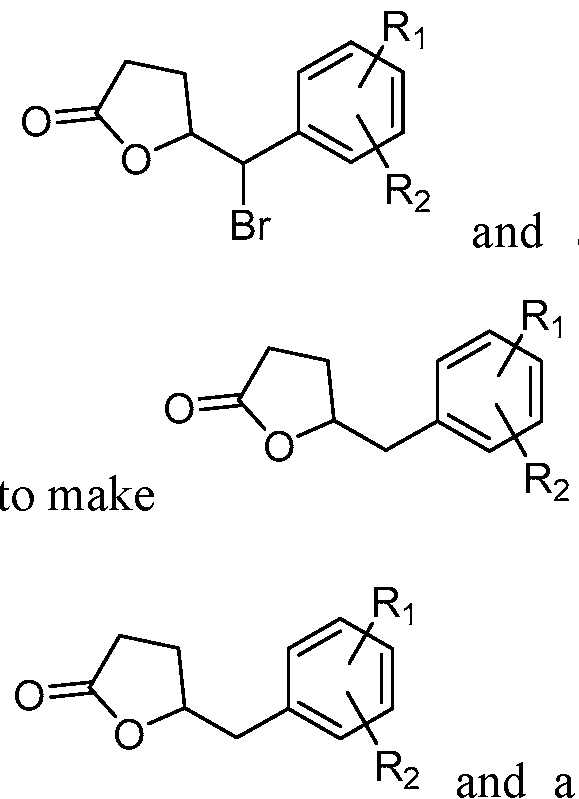 and a first hydrogenation catalyst to make the catechin
derivative, wherein the catechin derivative has a formula

[0058] 5. The method according to any one of paragraphs 1 to 4, wherein the base is selected from the group consisting of: sodium hydroxide, ammonium hydroxide, ammonium sulfate,
urn hydroxide, potassium hydroxide, triethyiene tetraamine, (Methylene triamine,
triethylamine, urea, lithium diisopropylamide,
 ? ? and mixtures thereof
[0059] 6. The method according to any one paragraphs 1 to 5, wherein the contacting

)] 7. The method according to any one of paragraphs 1 to 6, wherein the second base is present and is selected from the group consisting of: sodium hydroxide, ammonium hydroxide, ammonium sulfate, lithium hydroxide, potassium hydroxide, triethyiene
 tetraamine, diethyl ene triamine, triethylamine, urea, lithium diisopropylamide,
 , and mixtures thereof.
[0061] 8. The method according to any one of paragraphs 1 to 7, wherein the chiral catalyst is present and is selected from(DHQ)2PHAL and (DHQD)2PHAL.
[0062] 9. The method according to any one of paragraphs 1 to 8, wherein the free radical initiator is selected from a group consisting of: dicumyl peroxide, di-t-butyl peroxide, t- butylperoxybenzoate, 2,5-dimethyl-2,5-di(t-butylperoxy)hexane, t-butyl peroxyneodecanoate, 2,5-dimethyl-2,5-di(t-butylperoxy)hexyne, t-amyl peroxypivalate, l,3-bis(t- butylperoxyisopropyl)benzene, tert-amylperoxy 2-ethyl hexanoate, t-butylperoxy 2-ethyl hexanoate, t-butyl peroxy isobutyrate, t-butylperoxy isopropyl carbonate, t-butylperoxy 3,5,5- trimethylhexanoate, 2,5-dimethyl-2,5-di(benzolyperoxy)hexane, n-butyl 4,4-di(t- butylperoxy)valcratic, t-butylcumyl peroxide, di(2-t-butylperoxy isopropyl)benzene, t-butyl hydroperoxide, cumyl hydroperoxide and mixtures thereof. Examples of suitable azo compounds include 2,2'-azobisisopropionitrile, 2,2'-azobisisobutyronitrile (AIBN), dimethyl azoisobutyrate, Ι, -azobis (cyclohexanecarbonitrile), and 2,2'-azobis(2-methylpropane).
[0063] 10. The method according to any one of paragraphs 1 to 9, wherein the first hydrogenation catalyst is selected from the group consisting of: platinum, palladium, Pd/C, rhodium, ruthenium and nickel . i] 11. The method according to any one of paragraphs 1 to 10, wherein the first hydrogen donating compound is selected from the group consisting of: H2, formic acid, isopropanol, and dihydroanthracene.
>S| 12. The method according to any one of paragraphs 1 to 11, wherein the method further comprises:
contactin the catechin derivative,
 and a third base to make
c
 ontacting , a second hydrogenation catalyst, and second

hydrogen donating compound to make
[0066] 13. The method according to any one paragraphs 1 to 12, wherein the third base is selected from the group consisting of: is selected from the group consisting of: sodium hydroxide, ammonium hydroxide, ammonium sulfate, lithium hydroxide, potassium hydroxide, Methylene teiraarnme, diet ylene triamine, methylanime, urea, lithium
diisopropylamide,
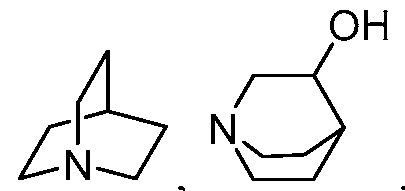 ? , and mixtures thereof.
[0067] 14. The method according to any of one paragraphs 1 to 13, wherein the second hydrogenation catalyst is selected from the group consisting of: platinum, palladium, Pd/C, rhodium, ruthenium and nickel .
? , and mixtures thereof.
[0067] 14. The method according to any of one paragraphs 1 to 13, wherein the second hydrogenation catalyst is selected from the group consisting of: platinum, palladium, Pd/C, rhodium, ruthenium and nickel .
[0068] 15. The method according to any one of paragraphs 1 to 14, wherein the second hydrogen donating compound is selected from the group consisting of: H2, formic acid, isopropanol, and dihydroanthracene.
[0069] The disclosures of all publications cited above are expressly incorporated herein by reference, each in its entirety, to the same extent as if each were incorporated by reference individually.
[0070] It is also to be understood that the following claims are intended to cover all of the generic and specific features of the invention herein described, and all statements of the scope of the invention which, as a matter of language, might be said to fall there between.
[0071] The advantages set forth above, and those made apparent from the foregoing description, are efficiently attained. Since certain changes may be made in the above construction without departing from the scope of the invention, it is intended that all matters contained in the foregoing description or shown in the accompanying drawings shall be interpreted as illustrative and not in a limiting sense.
REFERENCES
Liang, J.; Xu, F,; Zhang, Y.; Zang, X.; Wang, D.; Shang, M.; Wang, X.; Chui, D.; Cai, S. Biomedical Chromatography, 2013, DOI 10.1002/bmc.3034
Kurlbaum, M.; Mulek, M.; Hogger, P. Plos One, 2013, 8, 1-10 von Oettingen, W. F., Condensation Products of Aromatic Aldehydes with Δ2- Angelica Lactone. J Am Chem Soc., 1930, 52(5) pp. 2024-2025
McKillop, et al., Further Functional Group Oxidations Using Sodium Perborate, Tetrahedron, 1989, 45(11) pp. 3299-3306
Talukdar, et al., VO(AcAc)2: An Efficient Catalyst for the Oxidation of Aldehydes to the Corresponding Acids in the Presence of Aqueous H202. Synlett. 2013;
24(8):963-66).
Claims
1. A method for making a catechin derivative, or a salt thereof, the method comprising: contacting an alcohol protected aromatic aldehyde and a triphenyl phosphonium ylide to make an alcohol protected aromatic olefin; hydrogenating the alcohol protected aromatic olefin to make an alcohol protected aromatic compound; and deprotecting the alcohol protected aromatic compound to make the catechin derivative.
2. The method of claim 1, wherein the contacting an alcohol protected aromatic aldehyde and a triphenyl phosphonium ylide to make an alcohol protected aromatic olefin comprises:
contacting a
 to make , wherein wherein Ri and R2 are independently selected from the group consisting of -H, -OH, -OCH3, -OBn,-OS03H, tert-butyldimethylsilyl ether, trimethylsilyl, tert-butyldiphenylsilyl, and triisopropylsilyl.
3. The method of claim 2, wherein the hydrogenating the alcohol protected aromatic olefin to make alcohol protected aromatic compound comprises:
contacting
 with a first base to make
4. The method of claim 3, wherein deprotecting the alcohol protected alcohol protected aromatic compound to make the catechin derivative comprises:
contacting
 and N-bromosuccinimide to make
contacting a free radical initiator and a hydrogen donating
compound ; and
contacting
 and a first hydrogenation catalyst to make the catechin
derivative, wherein the catechin derivative has a formula

5. The method of claim 4, wherein the base is selected from the group consisting of: sodium hydroxide, ammonium hydroxide, ammonium sulfate, iithiuin hydroxide, potassium hydroxide, Methylene tetraarnine, diethylene triamine, triethylamme, urea, lithium
diisopropylamide,
 and mixtures thereof.
6. The method of claim 5 wherein the contacting
 and N-
bromosuccinimide to make
 further comprises PhC02H, a second base or a chiral catalyst.
7. The method of claim 6, wherein the second base is present and is selected from the group consisting of: sodium hydroxide, ammonium hydroxide, ammonium sulfate, lithium hydroxide, potassium hydroxide, triethylene tetraamine, diethylene triamine, triethylamine,
H urea, lithium diisopropylamide,
 y , and mixtures thereof.
8. The method of claim 6, wherein the chiral catalyst is present and is selected from(DHQ)2PHAL and (DHQD)2PHAL.
9. The method of claim 6, wherein the free radical initiator is selected from a group consisting of: dicumyl peroxide, di-t-butyl peroxide, t-butylperoxybenzoate, 2,5-dimethyl- 2,5-di(t-butylperoxy)hexane, t-butyl peroxyneodecanoate, 2,5-dimethyl-2,5-di(t- butylperoxy)hexyne, t-amyl peroxypivalate, l,3-bis(t-butylperoxyisopropyl)benzene, tert- amylperoxy 2-ethyl hexanoate, t-butylperoxy 2-ethyl hexanoate, t-butyl peroxy isobutyrate, t- butylperoxy isopropyl carbonate, t-butylperoxy 3,5,5-trimethylhexanoate, 2,5-dimethyl-2,5- di(benzolyperoxy)hexane, n-butyl 4,4-di(t-butylperoxy)valcratic, t-butylcumyl peroxide, di(2-t-butylperoxy isopropyl)benzene, t-butyl hydroperoxide, cumyl hydroperoxide and mixtures thereof. Examples of suitable azo compounds include 2,2'-azobisisopropionitrile, 2,2'-azobisisobutyronitrile (AIBN), dimethyl azoisobutyrate, l,l '-azobis (cyclohexanecarbonitrile), and 2,2'-azobis(2-methylpropane).
10. The method of claim 6, wherein the first hydrogenation catalyst is selected from the group consisting of: platinum, palladium, Pd/C, rhodium, ruthenium, and nickel.
11. The method of claim 6, wherein the first hydrogen donating compound is selected from the group consisting of: H2, formic acid, isopropanol, and dihydroaiithracene.
12. The method of claim 1, further compri
contacting the catechin derivative,
 , and a third base to make
c
 ontacting , a second hydrogenation catalyst, and second
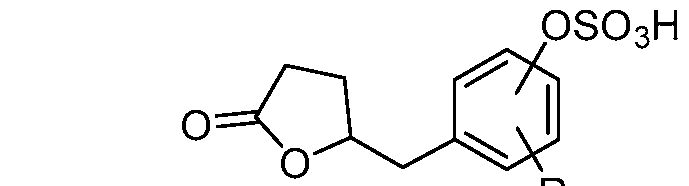
hydrogen donating compound to make R2
13. The method of claim 12, wherein the third base is selected from the group consisting of: is selected from the group consisting of: sodium hydroxide, ammonium hydroxide, ammonium sulfate, lithium hydroxide, potassium hydroxide, triethylene tetraamine,
diethylene iriaraine, triethyiamine, urea, lithium diisopropylamide,
 ? nd mixtures thereof.
14. The method of claim 13, wherein the second hydrogenation catalyst is selected from the group consisting of: platinum, palladium, Pd/C, rhodium, ruthenium, and nickel.
15. The method of claim 14, wherein the second hydrogen donating compound is selected from the group consisting of: H2, formic acid, isopropanol, and dihydroantliracene.
Priority Applications (1)
| Application Number | Priority Date | Filing Date | Title |
|---|---|---|---|
| US15/546,601 US20180000761A1 (en) | 2015-12-10 | 2016-12-12 | Methods for Making Catechin Derivatives |
Applications Claiming Priority (4)
| Application Number | Priority Date | Filing Date | Title |
|---|---|---|---|
| US201562265707P | 2015-12-10 | 2015-12-10 | |
| US62/265,707 | 2015-12-10 | ||
| US201662374173P | 2016-08-12 | 2016-08-12 | |
| US62/374,173 | 2016-08-12 |
Publications (1)
| Publication Number | Publication Date |
|---|---|
| WO2017100757A1 true WO2017100757A1 (en) | 2017-06-15 |
Family
ID=59014302
Family Applications (1)
| Application Number | Title | Priority Date | Filing Date |
|---|---|---|---|
| PCT/US2016/066143 Ceased WO2017100757A1 (en) | 2015-12-10 | 2016-12-12 | Methods for making catechin derivatives |
Country Status (2)
| Country | Link |
|---|---|
| US (1) | US20180000761A1 (en) |
| WO (1) | WO2017100757A1 (en) |
Citations (2)
| Publication number | Priority date | Publication date | Assignee | Title |
|---|---|---|---|---|
| US20100048920A1 (en) * | 2005-06-29 | 2010-02-25 | Mars, Incorporated | Preparation of (+)-Catechin, (-)-Epicatechin, (-)-Catechin, and (+)-Epicatechin and Their 5,7,3',4'-Tetra-O-Benzyl Analogues |
| US20140171631A1 (en) * | 2011-08-09 | 2014-06-19 | Nestec S.A. | Synthesis of catechin and epicatechin conjugates |
-
2016
- 2016-12-12 WO PCT/US2016/066143 patent/WO2017100757A1/en not_active Ceased
- 2016-12-12 US US15/546,601 patent/US20180000761A1/en not_active Abandoned
Patent Citations (2)
| Publication number | Priority date | Publication date | Assignee | Title |
|---|---|---|---|---|
| US20100048920A1 (en) * | 2005-06-29 | 2010-02-25 | Mars, Incorporated | Preparation of (+)-Catechin, (-)-Epicatechin, (-)-Catechin, and (+)-Epicatechin and Their 5,7,3',4'-Tetra-O-Benzyl Analogues |
| US20140171631A1 (en) * | 2011-08-09 | 2014-06-19 | Nestec S.A. | Synthesis of catechin and epicatechin conjugates |
Non-Patent Citations (2)
| Title |
|---|
| BILLERET ET AL.: "Synthesis of Chromenes and Azachromenes: 2H-1-Benzopyra, 2H-Pyrano[3,2 -b]pyridine, 2H-Pyrano[2,3-c]pyridine, and Derivatives", SYNTHESIS., vol. 9, 1993, pages 881 - 884 * |
| HAMADA ET AL.: "Synthesis of Optically Pure Lactone Metabolites of Tea Catechins", SYNTHESIS, 2010, pages 1512 - 1520, XP055390972 * |
Also Published As
| Publication number | Publication date |
|---|---|
| US20180000761A1 (en) | 2018-01-04 |
Similar Documents
| Publication | Publication Date | Title |
|---|---|---|
| JP7654642B2 (en) | Catalytic Cannabinoid Processes and Precursors | |
| ES2557465T3 (en) | Modulators of HEC 1 activity and procedures for it | |
| Chevrie et al. | A convenient one-step synthesis of fluoroethylidene derivatives | |
| Wang et al. | Rh (III)-catalyzed aldehyde C–H bond functionalization of salicylaldehydes with arylboronic acids | |
| Wolinsky et al. | Stereospecific synthesis of iridomyrmecin and related iridolactones | |
| JP5234901B2 (en) | Method for producing asymmetric catalyst Michael reaction product | |
| Wang et al. | Synthesis of difluoroalkyl-γ-butyrolactones from iododifluoromethyl ketones and 4-pentenoic acids | |
| Promontorio et al. | Domino Michael-aldol annulations for the stereocontrolled synthesis of bicyclo [3.3. 1] nonane and bicyclo [3.2. 1] octane derivatives | |
| CN102070586A (en) | Process method for synthesizing 4-site heteroatom-substituted cyclohexenyl halide | |
| KR101504189B1 (en) | METHOD OF PREPARING FURO[3.2-c]COUMARIN DERIVATIVES USING Cu CATALYST | |
| Page et al. | Asymmetric epoxidation of chromenes mediated by iminium salts: Synthesis of mollugin and (3S, 4R)-trans-3, 4-dihydroxy-3, 4-dihydromollugin | |
| WO2017100757A1 (en) | Methods for making catechin derivatives | |
| Nagamitsu et al. | The total synthesis and biological evaluation of nafuredin-γ and its analogues | |
| EP2684863B1 (en) | Iodoarene derivative, method for producing optically active spirolactone compound using same, and method for producing optically active cyclization adduct | |
| JPH10265441A5 (en) | ||
| Wang et al. | An unexpected tandem enantioselective Michael addition/oxa-nucleophilic rearrangement reaction of β, γ-unsaturated α-keto esters catalyzed by cinchona alkaloids | |
| ES3008632T3 (en) | Process for the production of 2-methyl-4-(2,6,6-trimethyl-1-cyclohexen-1-yl)-2-butenal | |
| CN110563670B (en) | Sulfur-containing piperazine derivative and application thereof | |
| JP2005281215A (en) | Optical resolution reagent comprising optically active spiro compound | |
| Wu et al. | Studies towards the synthesis of secoiridoids | |
| US3282984A (en) | Racemization of optically active transchrysanthemic acid | |
| Majumdar et al. | Palladium (0)-catalyzed intramolecular heck reaction: A resourceful route for the synthesis of naphthoxepine and naphthoxocine derivatives | |
| JP5448363B2 (en) | Method for producing compound | |
| KR100817517B1 (en) | Method for preparing 2-[(4-bromomethyl) phenyl] propionic acid | |
| JPH0525078A (en) | Method for producing substituted acetaldehyde |
Legal Events
| Date | Code | Title | Description |
|---|---|---|---|
| 121 | Ep: the epo has been informed by wipo that ep was designated in this application |
Ref document number: 16874042 Country of ref document: EP Kind code of ref document: A1 |
|
| NENP | Non-entry into the national phase |
Ref country code: DE |
|
| 122 | Ep: pct application non-entry in european phase |
Ref document number: 16874042 Country of ref document: EP Kind code of ref document: A1 |