WO2017096430A1 - Hydroxamic acid-based compounds - Google Patents
Hydroxamic acid-based compounds Download PDFInfo
- Publication number
- WO2017096430A1 WO2017096430A1 PCT/AU2016/051212 AU2016051212W WO2017096430A1 WO 2017096430 A1 WO2017096430 A1 WO 2017096430A1 AU 2016051212 W AU2016051212 W AU 2016051212W WO 2017096430 A1 WO2017096430 A1 WO 2017096430A1
- Authority
- WO
- WIPO (PCT)
- Prior art keywords
- bond
- compound
- formula
- radionuclide
- oxygen
- Prior art date
- Legal status (The legal status is an assumption and is not a legal conclusion. Google has not performed a legal analysis and makes no representation as to the accuracy of the status listed.)
- Ceased
Links
- UPVWNKKYJNARED-UHFFFAOYSA-N CC(N(CCOCCNC(CCC(N(CCOCCNC(CCC(N(CCOCCN)O)=O)=O)O)=O)=O)O)=O Chemical compound CC(N(CCOCCNC(CCC(N(CCOCCNC(CCC(N(CCOCCN)O)=O)=O)O)=O)=O)O)=O UPVWNKKYJNARED-UHFFFAOYSA-N 0.000 description 1
Classifications
-
- C—CHEMISTRY; METALLURGY
- C07—ORGANIC CHEMISTRY
- C07C—ACYCLIC OR CARBOCYCLIC COMPOUNDS
- C07C335/00—Thioureas, i.e. compounds containing any of the groups, the nitrogen atoms not being part of nitro or nitroso groups
- C07C335/04—Derivatives of thiourea
- C07C335/16—Derivatives of thiourea having nitrogen atoms of thiourea groups bound to carbon atoms of six-membered aromatic rings of a carbon skeleton
- C07C335/22—Derivatives of thiourea having nitrogen atoms of thiourea groups bound to carbon atoms of six-membered aromatic rings of a carbon skeleton being further substituted by carboxyl groups
-
- A—HUMAN NECESSITIES
- A61—MEDICAL OR VETERINARY SCIENCE; HYGIENE
- A61K—PREPARATIONS FOR MEDICAL, DENTAL OR TOILETRY PURPOSES
- A61K51/00—Preparations containing radioactive substances for use in therapy or testing in vivo
- A61K51/02—Preparations containing radioactive substances for use in therapy or testing in vivo characterised by the carrier, i.e. characterised by the agent or material covalently linked or complexing the radioactive nucleus
- A61K51/04—Organic compounds
- A61K51/0402—Organic compounds carboxylic acid carriers, fatty acids
-
- A—HUMAN NECESSITIES
- A61—MEDICAL OR VETERINARY SCIENCE; HYGIENE
- A61K—PREPARATIONS FOR MEDICAL, DENTAL OR TOILETRY PURPOSES
- A61K51/00—Preparations containing radioactive substances for use in therapy or testing in vivo
- A61K51/02—Preparations containing radioactive substances for use in therapy or testing in vivo characterised by the carrier, i.e. characterised by the agent or material covalently linked or complexing the radioactive nucleus
- A61K51/04—Organic compounds
- A61K51/0474—Organic compounds complexes or complex-forming compounds, i.e. wherein a radioactive metal (e.g. 111In3+) is complexed or chelated by, e.g. a N2S2, N3S, NS3, N4 chelating group
- A61K51/0478—Organic compounds complexes or complex-forming compounds, i.e. wherein a radioactive metal (e.g. 111In3+) is complexed or chelated by, e.g. a N2S2, N3S, NS3, N4 chelating group complexes from non-cyclic ligands, e.g. EDTA, MAG3
-
- C—CHEMISTRY; METALLURGY
- C01—INORGANIC CHEMISTRY
- C01G—COMPOUNDS CONTAINING METALS NOT COVERED BY SUBCLASSES C01D OR C01F
- C01G25/00—Compounds of zirconium
- C01G25/006—Compounds containing zirconium, with or without oxygen or hydrogen, and containing two or more other elements
-
- C—CHEMISTRY; METALLURGY
- C07—ORGANIC CHEMISTRY
- C07C—ACYCLIC OR CARBOCYCLIC COMPOUNDS
- C07C259/00—Compounds containing carboxyl groups, an oxygen atom of a carboxyl group being replaced by a nitrogen atom, this nitrogen atom being further bound to an oxygen atom and not being part of nitro or nitroso groups
- C07C259/04—Compounds containing carboxyl groups, an oxygen atom of a carboxyl group being replaced by a nitrogen atom, this nitrogen atom being further bound to an oxygen atom and not being part of nitro or nitroso groups without replacement of the other oxygen atom of the carboxyl group, e.g. hydroxamic acids
- C07C259/06—Compounds containing carboxyl groups, an oxygen atom of a carboxyl group being replaced by a nitrogen atom, this nitrogen atom being further bound to an oxygen atom and not being part of nitro or nitroso groups without replacement of the other oxygen atom of the carboxyl group, e.g. hydroxamic acids having carbon atoms of hydroxamic groups bound to hydrogen atoms or to acyclic carbon atoms
-
- C—CHEMISTRY; METALLURGY
- C07—ORGANIC CHEMISTRY
- C07C—ACYCLIC OR CARBOCYCLIC COMPOUNDS
- C07C275/00—Derivatives of urea, i.e. compounds containing any of the groups, the nitrogen atoms not being part of nitro or nitroso groups
- C07C275/04—Derivatives of urea, i.e. compounds containing any of the groups, the nitrogen atoms not being part of nitro or nitroso groups having nitrogen atoms of urea groups bound to acyclic carbon atoms
- C07C275/06—Derivatives of urea, i.e. compounds containing any of the groups, the nitrogen atoms not being part of nitro or nitroso groups having nitrogen atoms of urea groups bound to acyclic carbon atoms of an acyclic and saturated carbon skeleton
- C07C275/16—Derivatives of urea, i.e. compounds containing any of the groups, the nitrogen atoms not being part of nitro or nitroso groups having nitrogen atoms of urea groups bound to acyclic carbon atoms of an acyclic and saturated carbon skeleton being further substituted by carboxyl groups
Definitions
- the present invention relates to hydroxamic acid-based compounds, their intermediates, preparation and uses.
- the compounds are useful in imaging, particularly for the imaging of tumours and cancer, and especially for the imaging of prostate cancer.
- the present invention also relates to compositions including the compounds, and to methods of imaging cells, in vitro biopsy samples and/or patients using the compounds.
- PET positron emission tomography
- 89 Zr The expanded ionic radius of 89 Zr and its preference for oxygen- containing ligands requires complexation to acyclic ligands and cyclic macrocycles alternative to DTPA, DOTA and NOTA, which are commonly used for other radioisotopes.
- Optimal imaging using 89 Zr also requires a bifunctional agent, which enables 89 Zr coordination, and the attachment of peptides or proteins targeted towards the diseased tissue (Perk et al. Eur. J. Nucl. Med. Mol. Imaging 37, 250-259; Maresca et al J. Med. Chem. 52, 347-357).
- the ligand of choice used to date for the complexation of 89 Zr is the natural iron chelator desferrioxamine B (DFOB). Being a hard Lewis acid, Zr(IV) prefers hard Lewis bases as donor groups, such as oxygen atoms. It has been shown that Zr(IV) forms stable complexes with hydroxamic acids (R-C(O)-N(OH)-R'), as present in the natural tri- hydroxamic acid DFOB. DFOB-complexed 89 Zr has received attention in radiolabelling of peptides, proteins and antibodies.
- DFOB iron chelator desferrioxamine B
- DFOB is a natural compound evolved by bacteria for iron acquisition and its extraordinary affinity for Fe(lll) leads to the exchange of 89 Zr for Fe(lll) in vivo.
- the displaced radiotracer is deposited in bone, causing unwanted radiation and also results in a reduced image quality of the target organ.
- the larger ionic radius of Zr(IV) dictates a preferred coordination number of 8, which is not met by the ligand DFOB that contains three bidentate hydroxamic acid groups to give 6 oxygen donor atoms.
- DFOB is a natural ligand prepared by bacteria, it was previously not considered to be readily modified for this purpose.
- the inventors of this invention designed and achieved an approach whereby the DFOB structure could be modified and made to be more water soluble and extended to provide an octadentate tetrahydroxamic acid DFOB variant in a semi-synthetic process.
- the resulting DFOB variant is better suited for Zr(IV) complexation and has been designed to be more water soluble than existing compounds, allowing it to be utilised in in vivo imaging techniques.
- the inventors of this application have utilised the bacterium that produces DFOB as a native and essential metabolite - Streptomyces pilosus - in a precursor-directed biosynthesis approach to generate new DFOB analogues.
- the bacterium is cultured in medium supplemented with non-native substrates relevant to DFOB biosynthesis that are recognized as viable by the native biosynthetic bacterial machinery.
- the bacteria utilises these and produces new DFOB analogues based on these substrates.
- the new DFOB analogues have oxygen atoms introduced at the C3 position via incorporation of one, two or three 2,2'-oxybis(ethan-1 -amine)- based unit(s) within the DFOB structure, which increases the water solubility of each of DFOB-PEi, DFOB-PE2 and DFOB-PE 3 , compared to the parent DFOB.
- This invention therefore provides new DFOB analogues which are used as intermediates for the preparation of new ligands for PET imaging.
- the new ligands are expected to have greater selectivity for 89 Zr over Fe(lll) and solubility in water that will enable their use as imaging reagents.
- the new ligand conjugates could be used as imaging reagents for various imaging procedures.
- the inventors propose the use of these compounds in tumour and/or cancer imaging and in particular, prostate cancer imaging.
- the present invention provides a compound of formula (I), or a pharmaceutically acceptable salt thereof:
- any one of the alkyl carbon atoms between D and L may be replaced with an oxygen or sulphur atom (preferably oxygen);
- R-i, R 2 and R 3 are each independently O or CH 2 , provided that at least one of R-i, R 2 and R 3 is O; W is C, D is N, R 4 is 0, R 5 is OH, the bond between W and R 4 is a double bond and the bond between D and R 2 is a single bond, or
- W is N, D is C, R 4 is OH, R 5 is O, the bond between W and R 4 is a single bond and the bond between D and R 2 is a double bond;
- n and m are each independently 1 , 2, 3 or 4; and where n is 2 or greater, an internal carbon atom of the alkyl chain comprising n can be replaced by an oxygen or sulphur atom;
- L is a linking group for conjugating the compound of formula (I) to a target molecule.
- These compounds can be prepared from polyether derivatives of DFOB.
- the present invention provides a process for making a compound of formula (II):
- R-i , R 2 and R 3 are each independently O or CH 2 , provided that at least one of R-i , R 2 and R 3 is O; and wherein the process comprises:
- the present invention provides compounds of formula (II):
- R- ⁇ , R 2 and R 3 are each independently O or CH 2 , provided that at least one of R-i , R 2 and R 3 is O.
- the present invention provides a compound of structure:
- the present invention relates to a process for the preparation of a compound according to formula (I), wherein a compound of formula (II) is coupled to a compound of formula
- any one of the alkyl carbon atoms between D and L may be replaced with an oxygen or sulphur atom (preferably oxygen);
- R-i , R 2 and R 3 are each independently O or CH 2 , provided that at least one of R-i , R 2 and R 3 is O; W is C, D is N, R 4 is O, R 5 is OH, the bond between W and R 4 is a double bond and the bond between D and R 5 is a single bond, or
- W is N, D is C, R 4 is OH, R 5 is O, the bond between W and R 4 is a single bond and the bond between D and R 5 is a double bond;
- n and m are each independently 1 , 2, 3 or 4; and where n is 2 or greater, an internal carbon atom of the alkyl chain comprising n can be replaced by an oxygen or sulphur atom;
- L is a linking group for conjugating the compound of formula (I) to a target molecule
- R 6 is a leaving group
- the present invention relates to a radionuclide complex of a compound of formula (I), or a pharmaceutically acceptable salt thereof:
- R-i , R 2 and R 3 are each independently O or CH 2 , provided that at least one of R-i ,
- R 2 and R 3 is O;
- W is C
- D is N
- R 4 is O
- R5 is OH
- the bond between W and R 4 is a double bond and the bond between D and R 5 is a single bond
- W is N, D is C, R 4 is OH, R 5 is O, the bond between W and R 4 is a single bond and the bond between D and R 5 is a double bond;
- n and m are each independently 1 , 2, 3 or 4; and where n is 2 or greater, an internal carbon atom of the alkyl chain comprising n can be replaced by an oxygen or sulphur atom;
- L is a linking group for conjugating the compound of formula (I) to a target molecule.
- the present invention also relates to a conjugate comprising:
- ' ⁇ is a single or double bond; any one of the alkyl carbon atoms between D and L may be replaced with an oxygen or sulphur atom (preferably oxygen);
- R-i , R 2 and R 3 are each independently O or CH 2 , provided that at least one of R-i , R 2 and R 3 is O;
- W is C
- D is N
- R 4 is O
- R5 is OH
- the bond between W and R 4 is a double bond and the bond between D and R 5 is a single bond
- W is N, D is C, R 4 is OH, R 5 is O, the bond between W and R 4 is a single bond and the bond between D and R 5 is a double bond;
- n and m are each independently 1 , 2, 3 or 4; and where n is 2 or greater, an internal carbon atom of the alkyl chain comprising n can be replaced by an oxygen or sulphur atom;
- L is a linking group for conjugating the compound of formula (I) to a target molecule
- the present invention relates to a radionuclide-labelled conjugate comprising:
- ! is a single or double bond; any one of the alkyl carbon atoms between D and L may be replaced with an oxygen or sulphur atom (preferably oxygen);
- R-i , R 2 and R 3 are each independently O or CH 2 , provided that at least one of R-i , R 2 and R 3 is O;
- W is C
- D is N
- R 4 is O
- R 5 is OH
- the bond between W and R 4 is a double bond and the bond between D and R 5 is a single bond
- W is N, D is C, R 4 is OH, R 5 is O, the bond between W and R 4 is a single bond and the bond between D and R 5 is a double bond;
- n and m are each independently 1 , 2, 3 or 4; and where n is 2 or greater, an internal carbon atom of the alkyl chain comprising n can be replaced by an oxygen or sulphur atom;
- L is a linking group for conjugating the compound of formula (I) to a target molecule
- the radionuclide is an isotope of zirconium (e.g. 89 Zr).
- the present invention provides a composition comprising a radionuclide-labelled conjugate comprising:
- ! is a single or double bond; any one of the alkyl carbon atoms between D and L may be replaced with an oxygen or sulphur atom (preferably oxygen);
- R-i , R 2 and R 3 are each independently O or CH 2 , provided that at least one of R-i , R 2 and R 3 is O;
- W is C
- D is N
- R 4 is O
- R 5 is OH
- the bond between W and R 4 is a double bond and the bond between D and R 5 is a single bond
- W is N, D is C, R 4 is OH, R 5 is O, the bond between W and R 4 is a single bond and the bond between D and R 5 is a double bond;
- n and m are each independently 1 , 2, 3 or 4; and where n is 2 or greater, an internal carbon atom of the alkyl chain comprising n can be replaced by an oxygen or sulphur atom;
- L is a linking group for conjugating the compound of formula (I) to a target molecule
- radionuclide complexed thereto and one or more pharmaceutically acceptable carrier substances, excipients and/or adjuvants.
- the present invention relates to a method of imaging a patient, the method including: - administering to the patient a radionuclide-labelled conjugate, as defined herein; and
- the present invention also relates to a method of imaging a cell or in vitro biopsy sample, the method including:
- Figure 1 HPLC trace of Zr(IV)-DFOB-PE 3 -for-PBH E a) where DFOB-PE 3 -for-PBH E is added to Zr(acac) 4 at a ratio of 1 :7, measured at 254nm; b) where DFOB-PE 3 - or-PBH E is added to Zr(acac) 4 at a ratio of 1 :7, measured at 220nm; and c) where DFOB-PE 3 - or- PBHE is added to Zr(acac) 4 at a ratio of 1 :3, measured at 220nm.
- the present invention provides a compound of formula (I), or a pharmaceutically acceptable salt thereof:
- ⁇ is a single or double bond; any one of the alkyl carbon atoms between D and L may be replaced with an oxygen or sulphur atom (preferably oxygen); R-i , R 2 and R 3 are each independently O or CH 2 , provided that at least one of R-i ,
- R 2 and R 3 is O;
- W is C
- D is N
- R 4 is O
- R 5 is OH
- the bond between W and R 4 is a double bond and the bond between D and R 5 is a single bond
- W is N, D is C, R 4 is OH, R 5 is O, the bond between W and R 4 is a single bond and the bond between D and R 5 is a double bond;
- n and m are each independently 1 , 2, 3 or 4; and where n is 2 or greater, an internal carbon atom of the alkyl chain comprising n can be replaced by an oxygen or sulphur atom;
- L is a linking group for conjugating the compound of formula (I) to a target molecule.
- L is an amine
- n 1 and m is 3.
- the sum of n and m is 4. In yet another embodiment, the sum of n and m is 5.
- not one of the carbon atoms of the alkyl group comprising n is replaced with an oxygen or sulphur atom.
- the compound of formula (I) is selected from the group consisting of:
- the compound of formula (I) has the structure: or a pharmaceutically acceptable salt thereof.
- the new water soluble compounds described in this application can be prepared from polyether analogues of DFOB, having oxygen atoms introduced at the C3 position via incorporation of one, two or three 2,2'-oxybis(ethan-1 -amine)-based unit(s) within the DFOB structure.
- Polyether analogues of DFOB are therefore contemplated.
- the present invention provides compounds of formula (II):
- the present invention relates to a radionuclide complex of a compound of formula (I), or a pharmaceutically acceptable salt thereof:
- ' ⁇ is a single or double bond; any one of the alkyl carbon atoms between D and L may be replaced with an oxygen or sulphur atom (preferably oxygen);
- R-i , R 2 and R 3 are each independently O or CH 2 , provided that at least one of R-i , R 2 and R 3 is O;
- W is C, D is N, R 4 is O, R5 is OH, the bond between W and R 4 is a double bond and the bond between D and R 5 is a single bond, or W is N, D is C, R 4 is OH, R 5 is O, the bond between W and R 4 is a single bond and the bond between D and R 5 is a double bond; n and m are each independently 1 , 2, 3 or 4; and
- the radionuclide is zirconium (e.g. 89 Zr), gallium (e.g. 68 Ga) or lutetium (e.g. 177 Lu). More preferably, the radionuclide is 89 Zr.
- L is an amine. In another embodiment, n is 1 and m is 3.
- the sum of n and m is 4. In yet another embodiment, the sum of n and m is 5.
- not one of the carbon atoms of the alkyl group comprising n is replaced with an oxygen or sulphur atom.
- the compound of formula (I) is selected from the group consisting of:
- the compound of formula (I) has the structure:
- the structure is:
- the present invention also relates to a conjugate of:
- :l is a single or double bond; any one of the alkyl carbon atoms between D and L may be replaced with an oxygen or sulphur atom (preferably oxygen);
- R-i, R 2 and R 3 are each independently O or CH 2 , provided that at least one of R-i, R 2 and R 3 is O;
- W is C
- D is N
- Ri is O
- R 2 is OH
- the bond between W and Ri is a double bond and the bond between D and R 2 is a single bond
- W is N, D is C, Ri is OH, R 2 is O, the bond between W and R-i is a single bond and the bond between D and R 2 is a double bond; n and m are each independently 1 , 2, 3 or 4; and where n is 2 or greater, an internal carbon atom of the alkyl chain comprising n can be replaced by an oxygen or sulphur atom; and
- L is a linking group for conjugating the compound of formula (I) to a target molecule; and - a target molecule.
- the target molecule is a polypeptide. In another embodiment, the target molecule is a peptide. In another embodiment, the target molecule is a monoclonal antibody, mini-body or other antibody variant or fragment. In one preferred embodiment, the target molecule is a glutamate-urea-lysine based peptide.
- L is an amine
- L is conjugated to the target molecule through a spacer moiety.
- n is 1 and m is 3.
- the sum of n and m is 4. In yet another embodiment, the sum of n and m is 5.
- the compound of formula (I) is selected from the group consisting of:
- the compound of formula (I) has the structure:
- the present invention relates to a radionuclide-labelled conjugate of:
- !l is a single or double bond; any one of the alkyl carbon atoms between D and L may be replaced with an oxygen or sulphur atom (preferably oxygen); R-i , R 2 and R 3 are each independently O or CH 2 , provided that at least one of R-i ,
- R 2 and R 3 is O;
- W is C
- D is N
- R 4 is O
- R 5 is OH
- the bond between W and R 4 is a double bond and the bond between D and R 5 is a single bond
- W is N, D is C, R 4 is OH, R 5 is O, the bond between W and R 4 is a single bond and the bond between D and R 5 is a double bond;
- n and m are each independently 1 , 2, 3 or 4; and where n is 2 or greater, an internal carbon atom of the alkyl chain comprising n can be replaced by an oxygen or sulphur atom;
- L is a linking group for conjugating the compound of formula (I) to a target molecule
- the radionuclide is zirconium (e.g. 89 Zr), gallium (e.g. 68 Ga) or lutetium (e.g. 177 Lu). More preferably, the radionuclide is 89 Zr.
- the target molecule is a polypeptide. In another embodiment, the target molecule is a peptide. In another embodiment, the target molecule is a monoclonal antibody, mini-body or other antibody variant or fragment.
- L is an amine
- n is 1 and m is 3. In another embodiment, the sum of n and m is 4. In yet another embodiment, the sum of n and m is 5.
- the compound of formula (I) is selected from the group consisting of:
- the compound of formula (I) has the structure: or a pharmaceutically acceptable salt thereof.
- the target molecule is a glutamate-urea-lysine based peptide.
- the radionuclide-labelled conjugate has the structure:
- the present invention provides a composition comprising a radionuclide-labelled conjugate comprising:
- !l is a single or double bond; any one of the alkyl carbon atoms between D and L may be replaced with an oxygen or sulphur atom (preferably oxygen); R-i , R 2 and R 3 are each independently O or CH 2 , provided that at least one of R-i , R 2 and R 3 is O;
- W is C
- D is N
- R 4 is O
- R 5 is OH
- the bond between W and R 4 is a double bond and the bond between D and R 5 is a single bond
- W is N, D is C, R 4 is OH, R 5 is O, the bond between W and R 4 is a single bond and the bond between D and R 5 is a double bond;
- n and m are each independently 1 , 2, 3 or 4; and where n is 2 or greater, an internal carbon atom of the alkyl chain comprising n can be replaced by an oxygen or sulphur atom; and
- L is a linking group for conjugating the compound of formula (I) to a target molecule;
- radionuclide complexed thereto and one or more pharmaceutically acceptable carrier substances, excipients and/or adjuvants.
- L is an amine
- L is conjugated to the target molecule through a spacer moiety.
- n is 1 and m is 3.
- the sum of n and m is 4.
- the sum of n and m is 5.
- not one of the carbon atoms of the alkyl group comprising n is replaced with an oxygen or sulphur atom.
- the compound of formula (I) is selected from the group consisting of:
- the compound of formula (I) has the structure: or a pharmaceutically acceptable salt thereof.
- the radionuclide-labelled ligand conjugates described above have been designed for use as imaging agents for imaging in cells, in vitro biopsy samples and/or in patients. These conjugates are expected to be particularly useful in imaging for prostate cancer.
- the prostate-specific membrane antigen (PSMA) has been identified as a target for the non-invasive detection of prostate cancer and its metastases and is overexpressed in almost all prostate cancer cells. Moreover, the expression level has been shown to increase with stage and grade of progression.
- Various glutamate-urea-lysine based peptides have been developed showing specific binding to PSMA (Perk et al. Eur. J. Nucl. Med. Mol. Imaging 37, 250-259; Maresca et al J. Med. Chem. 52, 347-357).
- An example of a glutamate-urea-lysine based peptide is shown below:
- the present invention relates to a method of imaging a patient, the method including:
- the present invention provides a method of imaging a patient, the method including:
- the present invention relates to a method of imaging a cell or in vitro biopsy sample, the method including:
- the present invention relates to a method of imaging a cell or in vitro biopsy sample, the method including: - administering to the cell or in vitro biopsy sample a composition as defined herein; and
- the radionuclide is zirconium (e.g. 89 Zr), gallium (e.g. 68 Ga) or lutetium (e.g. 177 Lu). More preferably, the radionuclide is 89 Zr.
- the target molecule is a polypeptide. In another embodiment, the target molecule is a peptide. In another embodiment, the target molecule is a monoclonal antibody, mini-body or other antibody variant or fragment.
- the target molecule is a glutamate-urea-lysine based peptide.
- the present invention provides a method of imaging for prostate cancer, wherein the target molecule is a glutamate-urea-lysine based peptide, the nucleotide is 89 Zr and the ligand is a compound of formula (I).
- the present invention provides a process for making a compound of formula (II):
- R-i , R 2 and R 3 are each independently 0 or CH 2 , provided that at least one of R-i, R 2 and R 3 is 0, wherein the process comprises:
- the 2,2'-oxybis(ethan-1 -amine) is in solution at pH 7 prior to addition to the culture of S. pilosus.
- the culture of S. pilosus is inoculated with Chelex resin-treated YM media prior to the addition of 2,2'-oxybis(ethan-1 -amine).
- the preculture is added to a YM base medium pre-culture prior to the addition of 2,2'-oxybis(ethan-1 -amine).
- the invention provides a process for the preparation of a compound according to formula (I), wherein a compound of formula (II) is coupled to a compound of formula
- R-i , R 2 and R 3 are each independently O or CH 2 , provided that at least one of R-i ,
- R 2 and R 3 is 0;
- W is C
- D is N
- R 4 is 0,
- R5 is OH
- the bond between W and R 4 is a double bond and the bond between D and R 5 is a single bond, or
- W is N, D is C, R 4 is OH, R 5 is O, the bond between W and R 4 is a single bond and the bond between D and R 5 is a double bond;
- n and m are each independently 1 , 2, 3 or 4; and where n is 2 or greater, an internal carbon atom of the alkyl chain comprising n can be replaced by an oxygen or sulphur atom;
- L is a linking group for conjugating the compound of formula (I) to a target molecule
- R 6 is a leaving group. In one embodiment, R 6 is an -OH group. In another embodiment, R 6 is halogen. In some embodiments, the compound of formula (III) is: fOf-PBH 4-( ⁇ S-aminopenty!);hydroxy)amtno)-4-o.iiobutanoic acid ref-PBH 3-i6-aiiiir ; o-/V-hydroxyhexanamido ⁇ proparioic acid for-HBH 4-((e-aminohexyf) ⁇ ydroxy!3mho)-4-ox >butanc>ic acid rei-HBH 3-(7 !nc>-W-hydimy eptaiiamido)prapanoic acid
- hydroxamic acid-bearing fragments could be used in place of the ligands shown above.
- the fragment may be L-aspartic acid beta hydroxamate and L-glutamic acid gamma-hydroxamate.
- the process is:
- any one of the alkyl carbon atoms between D and L may be replaced with an oxygen or sulphur atom (preferably oxygen);
- W is C
- D is N
- R 4 is O
- R 5 is OH
- the bond between W and R 4 is a double bond and the bond between D and R 5 is a single bond
- W is N, D is C, R 4 is OH, R 5 is O, the bond between W and R 4 is a single bond and the bond between D and R 5 is a double bond;
- n and m are each independently 1 , 2, 3 or 4; and where n is 2 or greater, an internal carbon atom of the alkyl chain comprising n can be replaced by an oxygen or sulphur atom;
- L is a linking group for conjugating the compound of formula (I) to a target molecule
- R 6 is a leaving group
- the process is selected from any one of the following schemes A to J:
- the present invention provides compounds of formula (II) prepared by the process defined above.
- a "pharmaceutically acceptable salt” of a compound disclosed herein is an acid or base salt that is generally considered in the art to be suitable for use in contact with the tissues of human beings or animals without excessive toxicity or carcinogenicity, and preferably without irritation, allergic response, or other problem or complication.
- Such salts include mineral and organic acid salts of basic residues such as amines, as well as alkali or organic salts of acidic residues such as carboxylic acids.
- Suitable pharmaceutically acceptable salts include, but are not limited to, salts of acids such as hydrochloric, phosphoric, hydrobromic, malic, glycolic, fumaric, sulfuric, sulfamic, sulfanilic, formic, toluenesulfonic, methanesulfonic, benzenesulfonic, ethane disulfonic, 2-hydroxyethylsulfonic, nitric, benzoic, 2-acetoxybenzoic, citric, tartaric, lactic, stearic, salicylic, glutamic, ascorbic, pamoic, succinic, fumaric, maleic, propionic, hydroxymaieic, hydroiodic, phenylacetic, alkanoic (such as acetic, HOOC-(CH 2 ) n -COOH where n is any integer from 0 to 6, i.e.
- acids such as hydrochloric, phosphoric, hydrobromic, malic,
- a pharmaceutically acceptable acid or base salt can be synthesized from a parent compound that contains a basic or acidic moiety by any conventional chemical method. Briefly, such salts can be prepared by reacting the free acid or base forms of these compounds with a stoichiometric amount of the appropriate base or acid in water or in an organic solvent (such as ether, ethyl acetate, ethanol, isopropanol or acetonitrile), or in a mixture of the two.
- an organic solvent such as ether, ethyl acetate, ethanol, isopropanol or acetonitrile
- the compounds of formula (I) may, but need not, be present as a hydrate, solvate or non-covalent complex (to a metal other than the radionuclide).
- the various crystal forms and polymorphs are within the scope of the present invention, as are prodrugs of the compounds provided herein.
- a "prodrug” is a compound that may not fully satisfy the structural requirements of the compounds provided herein, but is modified in vivo, following administration to a subject or patient, to produce a radiolabeled conjugate as provided herein.
- a prodrug may be an acylated derivative of a radiolabeled conjugate.
- Prodrugs include compounds wherein hydroxyl or amine groups are bonded to any group that, when administered to a mammalian subject, cleaves to form a free hydroxyl or amine group, respectively.
- Examples of prodrugs include, but are not limited to, acetate, formate, phosphate and benzoate derivatives of amine functional groups within the radiolabeled conjugate.
- Prodrugs of the may be prepared by modifying functional groups present in the compounds in such a way that the modifications are cleaved in vivo to generate the parent compounds.
- a “substituent” as used herein, refers to a molecular moiety that is covalently bonded to an atom within a molecule of interest.
- substituted means that any one or more hydrogens on the designated atom is replaced with a selection from the indicated substituents, provided that the designated atom's normal valence is not exceeded, and that the substitution results in a stable compound, i.e., a compound that can be isolated, characterized and tested for biological activity.
- a pyridyl group substituted by oxo is a pyridone.
- halogen for example, fluorine, chlorine, bromine or iodine atoms
- a wording defining the limits of a range of length such as, for example, "from 1 to 5" means any integer from 1 to 5, i.e. 1 , 2, 3, 4 and 5.
- any range defined by two integers explicitly mentioned is meant to comprise and disclose any integer defining said limits and any integer comprised in said range.
- linking group refers to any moiety that is capable of being bound to the DFOB analogue then undergoing a reaction such that the linking group facilitates the direct or indirect binding of the DFOB analogue with a target molecule.
- the linking group may therefore become incorporated into the final conjugated compound (for example, an amine acting as a nucleophile), or it may be displaced during reaction with the target molecule (for example, a halogen being displaced by a nucleophile).
- the linking group (“L") is -NR'R".
- L is OR.
- R, R' and R" is selected from hydrogen, Ci to do alkyl, Ci to Cio heteroalkyl, C 2 to do alkene and C 2 to Ci o alkyne, and aryl, each of which is optionally substituted.
- R is Ci to Ci o alkyl (e.g. Ci to C 6 alkyl, such as methyl, ethyl, propyl or butyl).
- R is methyl or ethyl.
- L is halogen (e.g. fluorine, chlorine, bromine or iodine), or L is an azide group.
- the linking group forms indirect binding of the DFOB analogue with a target molecule
- the linking group can bind to a spacer moiety which can be used, for example, to keep the target molecule at a distance from the DFOB moiety.
- L reacts with the spacer moiety and the spacer moiety is bound to the target molecule either before or after binding to L.
- spacer moieties are known to a person skilled in the art.
- useful spacer moieties may include alkyl chains, ether chains (such as polyethyleneglycol derivatives) ether chains (such as polyesters) and amide chains. They may be based on polyvinyl chloride monomers, polypropylene, polyacrylonitrile and other such polymers known in the art.
- spacer groups may vary in length, may be substituted or unsubstituted, saturated or unsaturated, hydrophilic, neutral or hydrophobic and may be represented as single or repeated units in order to obtain the desired chain length useful for application.
- Specific properties may be introduced into the spacer moiety to achieve various functionalities, such as visualisation through the incorporation of aromatic/heteroaromatic rings, or biological compatibility relating to, for example, tissue, cellular, lipid or protein interactions in the body.
- the spacer moiety has the general structure:
- n 0, 1 , 2, 3, 4, 5 or 6; and the alkyl chains may be substituted or unsubstituted.
- the spacer moiety may include amino acid residues to separate the target molecule from the DFOB analogue.
- the spacer moiety has the general structure:
- n and m is independently 0, 1 , 2, 3, 4, 5 or 6; and the alkyl chains may be substituted or unsubstituted.
- the term "leaving group” where used refers to any group that can readily displaced by nucleophilic attack from an amine, as a person skilled in the art would be familiar.
- the leaving group is OR 10 .
- R, R' and R" is selected from hydrogen, Ci to do alkyl, Ci to do heteroalkyl, C 2 to do alkene and C 2 to do alkyne, and aryl, each of which is optionally substituted.
- R is Ci to do alkyl (e.g.
- Ci Ci to C 6 alkyl, such as methyl, ethyl, propyl or butyl).
- R is methyl or ethyl.
- L is halogen (e.g. fluorine, chlorine, bromine or iodine), or L is an azide group.
- alkyl refers to a saturated, straight-chain or branched hydrocarbon group that contains from 1 to 10 carbon atoms, for example a n-octyl group, especially from 1 to 6,
- alkyl groups are methyl, ethyl, propyl, /so-propyl, n-butyl, /so-butyl, sec-butyl, fe/f-butyl, n-pentyl, /so-pentyl, n-hexyl and 2,2-dimethylbutyl.
- heteroalkyl refers to an alkyl group as defined above that contains one or more heteroatoms selected from oxygen, nitrogen and sulphur.
- Specific examples of heteroalkyl groups are methoxy, trifluoromethoxy, ethoxy, n-propyloxy, /so-propyloxy, butoxy, fe/f-butyloxy, methoxymethyl, ethoxymethyl, -CH 2 CH 2 OI-l, -CH 2 OH, methoxyethyl, 1 -methoxyethyl, 1 -ethoxyethyl, 2-methoxyethyl or 2-ethoxyethyl, methylamino, ethylamino, propylamino, /so-propylamino, dimethylamino, diethylamino, /so-propyl-ethylamino, methylamino methyl, ethylamino methyl, di-/
- alkenyl refers to an at least partially unsaturated, straight-chain or branched hydrocarbon group that contains from 2 to 10 carbon atoms, especially from 2 to 6, i.e.
- alkenyl groups are ethenyl (vinyl), propenyl (allyl), /so-propenyl, butenyl, ethinyl, propinyl, butinyl, acetylenyl, propargyl, /so-prenyl and hex-2-enyl group.
- alkenyl groups Preferably, alkenyl groups have one or two double bond(s).
- alkynyl refers to a at least partially unsaturated, straight-chain or branched hydrocarbon group that contains from 2 to 10 carbon atoms, especially from 2 to 6, i.e. 2, 3, 4, 5 or 6, carbon atoms.
- alkynyl groups are ethynyl, propynyl, butynyl, acetylenyl and propargyl groups.
- alkynyl groups have one or two (especially preferably one) triple bond(s).
- aryl refers to an aromatic group that contains one or more rings containing from 6 to 14 ring carbon atoms, preferably from 6 to 10 (especially 6) ring carbon atoms. Examples are phenyl, naphthyl and biphenyl groups. Examples of substituted aryl groups suitable for use in the present invention include p-toluenesulfonyl (Ts), benzenesulfonyl (Bs) and m-nitrobenzenesulfonyl (Ns).
- Ts p-toluenesulfonyl
- Bs benzenesulfonyl
- Ns m-nitrobenzenesulfonyl
- the linking group is selected from -NH 2 , -NHR, -NR'R", -OCH2CH3, -O-p-toluenesulfonate (OTs), -O-methanesulfonate (OMs), -O-trifluoromethanesulfonate (OTf), -O-benzenesulfonate (OBs),
- -0-/7?-nitrobenzenesulfonate ONs
- cyanate CN
- azide N 3
- halogen e.g. fluorine, chlorine, bromine or iodine
- radionuclide complex refers to a compound of formula (I), as defined above, which has formed a co-ordination complex with a radionuclide. Generally, this occurs as a result of the formation of co-ordination bonds between the electron donating groups (such as the hydroxamate groups) of the compound of formula (I) and the radionuclide.
- radionuclide also commonly referred to as a radioisotope or radioactive isotope
- the radionuclide is an atom with an unstable nucleus. It radioactively decays resulting in the emission of nuclear radiation (such as gamma rays and/or subatomic particles such as alpha or beta particles).
- the radionuclide is one that is also useful in radioimmunotherapy applications (e.g. a beta particle emitter).
- the radionuclide has eight-coordinate geometry. Examples of radionuclides suitable for use in the present invention include radioisotopes of zirconium (e.g. 89 Zr), gallium (e.g.
- gadolinium e.g. 152 Gd
- lutetium e.g. 176 Lu and 177 Lu
- holmium e.g. 166 Ho
- scandium e.g. 44 Sc and 47 Sc
- titanium e.g. 45 Ti
- indium e.g. 111 In and 115 ln
- yttrium e.g. 86 Y and 90 Y
- terbium e.g. ( 149 Tb, 152 Tb, 155 Tb and 161 Tb
- technetium e.g. 99m Tc
- samarium e.g. 153 Sm
- niobium e.g.
- the radionuclide for use in the present invention is 89 Zr.
- the compounds of formula (I) and the radionuclide complexes can be synthesised by any suitable method known to a person skilled in the art.
- the present invention also relates to a conjugate of a compound of formula (I), or a pharmaceutically-acceptable salt thereof, and a target molecule.
- target molecule refers to a biological molecule, or a fragment of a biological molecule, that has the ability to target a particular tissue or tumour.
- the target molecule is a polypeptide, such as a protein an albumin, an antibody a mini-body or other antibody variations and fragments.
- the target molecule is a peptide (e.g.
- a targeting peptide that is used to target cells involved in tumour angiogenesis such as cyclic RGD sequences, or another targeting peptide, such as octreotate, bombesin, Neuropeptide-Y and glutamate-urea- lysine-based peptides such as glu-N(CO)N-lys PSMA).
- the target molecule is an amino acid.
- the target molecule will have a functional group that will react with the linking group to form a covalent link between the target molecule and the compound of formula (I).
- Compounds of formula (I) can be conjugated with the target molecules of interest by any suitable method known to a person skilled in the art.
- the target molecule may have a carboxylic acid functional group that could be reacted with the amine of the linking group under standard peptide coupling conditions to provide an amide.
- additional linkers may be used, such as succinic anhydride, which may, for example, enable two amines to be linked through a bridging region.
- the conjugate may also include a radionuclide complexed thereto.
- the radionuclide is a radioisotope of zirconium (e.g. 89 Zr).
- the radionuclide complexes can also be conjugated with the target molecules of interest (to produce a radiolabeled conjugate) in the same manner as described above for conjugating the target molecules to the compounds of formula (I), or any other suitable method known to a person skilled in the art. It will also be clear to a person skilled in the art that the conjugate can be prepared in the absence of the radionuclide. In this embodiment, the radionuclide is added to the conjugate once the conjugate has been prepared.
- the inventors of the present invention designed a system that utilises the bacterium that produces DFOB as a native and essential metabolite, Streptomyces pilosus, in a precursor- directed biosynthesis approach to generate new DFOB analogues.
- the bacterium is cultured in medium supplemented with non-native substrates relevant to DFOB biosynthesis that are recognized as viable by the native biosynthetic bacterial machinery. Incorporation of these non-native substrates results the production of new DFOB analogues.
- this invention relates to the precursor-directed biosynthesis of new DFOB analogues.
- the substrate 2,2'-oxybis(ethan-1 -amine) (NH2-CH2-CH2-O-CH2-CH2-NH2) is utilised in this manner to produce a polyether DFOB variant (DFOB-PE3) with oxygen atoms installed along the DFOB backbone.
- the terms “forward” (“for”) and “retro” (“ret”) refer to the orientation of the hydroxamic acid unit with respect to the flanking amino and carboxylic acid groups.
- the forward ligand, for-PBH is: NH2-(CH2)5-N(OH)-C(0)-(CH2)2-CO 2 H (4-[(5- aminopentyl)(hydroxy)amino]-4-oxobutanoic acid).
- the equivalent reverse or retro ligand, ref-PBH is NH2-(CH2)5-C(0)-N(OH)-(CH2)2-CO 2 H (3-(6-amino-/V- hydroxyhexanam ido)propanoic acid).
- R-i , R 2 and R 3 are each independently 0 or CH 2 , provided that at least one of R-i , R 2 and R 3 is 0;
- W is C
- D is N
- R 4 is 0,
- R 5 is OH
- the bond between W and R 4 is a double bond and the bond between D and R 2 is a single bond, or
- W is N, D is C, R 4 is OH, R 5 is O, the bond between W and R 4 is a single bond and the bond between D and R 2 is a double bond;
- n and m are each independently 1 , 2, 3 or 4; and where n is 2 or greater, an internal carbon atom of the alkyl chain comprising n can be replaced by an oxygen or sulphur atom;
- L is a linking group for conjugating the compound of formula (I) to a target molecule, - a target molecule, and
- radionuclide complexed thereto and one or more pharmaceutically acceptable carrier substances, excipients and/or adjuvants.
- compositions may include, for example, one or more of water, buffers (for example, neutral buffered saline, phosphate buffered saline, citrates and acetates), ethanol, oil, carbohydrates (for example, glucose, fructose, mannose, sucrose and mannitol), proteins, polypeptides or amino acids such as glycine, antioxidants (e.g. sodium bisulfite), tonicity adjusting agents (such as potassium and calcium chloride), chelating agents such as EDTA or glutathione, vitamins and/or preservatives.
- buffers for example, neutral buffered saline, phosphate buffered saline, citrates and acetates
- carbohydrates for example, glucose, fructose, mannose, sucrose and mannitol
- proteins polypeptides or amino acids
- polypeptides or amino acids such as glycine
- antioxidants e.g. sodium bisulfite
- tonicity adjusting agents such as
- parenteral as used herein includes subcutaneous, intradermal, intravascular (for example, intravenous), intramuscular, spinal, intracranial, intrathecal, intraocular, periocular, intraorbital, intrasynovial and intraperitoneal injection, as well as any similar injection or infusion technique. Intravenous administration is preferred. Suitable components of parenteral formulations, and methods of making such formulations, are detailed in various texts, including "Remington's Pharmaceutical Sciences".
- the composition of the present invention will be administered to a patient parenterally in the usual manner.
- the radionuclide-labelled conjugate complex may then take anywhere from 1 hour to 24 hours to distribute throughout the body to the target site. Once the desired distribution has been achieved, the patient will be imaged.
- the present invention also relates to a method of imaging a patient, the method including:
- the present invention also relates to a method of imaging a cell or in vitro biopsy sample, the method including:
- the target molecule serves to target the conjugate to a desired site in vivo, or to a desired site in the cell or in the biopsy sample.
- the desired site is a tumour.
- the desired site is prostate cancer.
- the specific dose level for any particular patient, and the length of time that the agent will take to arrive at the target site will depend upon a variety of factors including the activity of the specific compound employed, the age, body weight, general health, sex, diet, time of administration, route of administration, and rate of excretion, and the severity of the particular disorder undergoing therapy.
- the term "effective amount” refers to an amount of the compound that results in a detectable amount of radiation following administration of the radionuclide-labelled conjugate to a patient.
- a person skilled in the art will know how much of the radionuclide-labelled conjugate to administer to a patient to achieve the optimal imaging capability without causing problems from a toxicity perspective.
- the radionuclide-labelled conjugates of the present invention find particular use in assisting clinicians to determine where a cancer is (including whether a target, such a receptor, is homogeneously present on a tumour), what treatment a cancer will respond to (which facilitates treatment selection and determination of optimal dosages), and how much of the treatment will ultimately reach the target site.
- the radionuclide-labelled conjugates of the present invention can also be used to study the pharmacokinetics and biodistribution of particular target molecules (e.g. during drug development of new biological therapeutic agents, such as monoclonal antibodies).
- Patients may include but are not limited to primates, especially humans, domesticated companion animals such as dogs, cats, horses, and livestock such as cattle, pigs and sheep, with dosages as described herein.
- the radionuclide-labelled conjugates of the present invention are particularly useful for imaging tumours (which form as a result of uncontrolled or progressive proliferation of cells).
- Some such uncontrolled proliferating cells are benign, but others are termed “malignant” and may lead to death of the organism.
- Malignant neoplasms or “cancers” are distinguished from benign growths in that, in addition to exhibiting aggressive cellular proliferation, they may invade surrounding tissues and metastasize.
- Neoplasms are characterized in that they show a greater loss of differentiation (greater "dedifferentiation"), and greater loss of their organization relative to one another and their surrounding tissues. This property is also called “anaplasia”.
- Neoplasms that may be amenable to imaging by the present invention also include solid phase tumors/malignancies, i.e. carcinomas, locally advanced tumors and human soft tissue sarcomas.
- Carcinomas include those malignant neoplasms derived from epithelial cells that infiltrate (invade) the surrounding tissues and give rise to metastastic cancers, including lymphatic metastases.
- Adenocarcinomas are carcinomas derived from glandular tissue, or which form recognizable glandular structures.
- Another broad category of cancers includes sarcomas, which are tumors whose cells are embedded in a fibrillar or homogeneous substance like embryonic connective tissue.
- the type of cancer or tumor cells that may be amenable to imaging according to the invention include, for example, breast, colon, lung, and prostate cancers, gastrointestinal cancers including esophageal cancer, stomach cancer, colorectal cancer, polyps associated with colorectal neoplasms, pancreatic cancer and gallbladder cancer, cancer of the adrenal cortex, ACTH-producing tumor, bladder cancer, brain cancer including intrinsic brain tumors, neuroblastomas, astrocytic brain tumors, gliomas, and metastatic tumor cell invasion of the central nervous system, Ewing's sarcoma, head and neck cancer including mouth cancer and larynx cancer, kidney cancer including renal cell carcinoma, liver cancer, lung cancer including small and non- small cell lung cancers, malignant peritoneal effusion, malignant pleural effusion, skin cancers including malignant melanoma, tumor progression of human skin keratinocytes, squamous cell carcinoma, basal cell carcinoma, and hemangiopericytoma, mesotheli
- radionuclide-labelled conjugates of the present invention may also be advantageous to administer the radionuclide-labelled conjugates of the present invention with drugs that have anti-cancer activity.
- suitable drugs include fluorouracil, imiquimod, anastrozole, axitinib, belinostat, bexarotene, bicalutamide, bortezomib, busulfan, cabazitaxel, capecitabine, carmustine, cisplatin, dabrafenib, daunorubicin hydrochloride, docetaxel, doxorubicin, eloxati, erlotinib, etoposide, exemestane, fulvestrant, methotrexate, gefitinib, gemcitabine, ifosfamide, irinotecan, ixabepilone, lanalidomide, letrozole, lomustine, megestrol acetate, temozolomide, vin
- the modified hydroxamic acids described in this specification can be immobilised onto resins.
- Unmodified DFOB resin has been prepared previously and is effective at binding Fe(lll).
- the intended purpose of the Fe(lll)-loaded DFOB resin is for use as an affinity matrix for selecting proteins from the bacterial proteome involved in Fe(lll)-DFOB uptake, to better understand mechanisms of bacterial iron uptake.
- the modified hydroxamic acid ligands containing a terminal amine group can also be immobilised on a solid-phase resin using mild reaction conditions to produce a resin capable of binding metal ions. Tuning the ligand could be used to tune the metal ion selectivity. These resins could have multiple functions.
- Such immobilised DFOB analogues can be prepared using techniques established in the art for similar derivatives on various resins, such as J Pure Appl Microbiol (2012) 6: 1609- 13, Anal Biochem (1992) 203:317-25; J Chromatogr (1985) 321 : 105-13, J Chromatogr (1985) 321 :93-104 and J Chromatogr (1985) 321 :81 -91.
- the present invention provides the modified DFOB analogues described herein, immobilised to a resin.
- the immobilised DFOB analogue is prepared using epoxy-activated sepharose resin.
- R 2 and R 3 are all O (DFOB-PE 3 ), or wherein one of R-i , R 2 and R 3 is O (DFOB-PE-i ) and the other two of R-i , R 2 and R 3 are CH 2 , or wherein two of R-i , R 2 and R 3 are O (DFOB-PE 2 ) and one of R-i , R 2 and R 3 is
- YM media (2.1 % w/v) that had been treated with Chelex resin and sterilized was inoculated with S. pilosus frozen permanent. This pre-culture was shaken at 160 rpm at 27°C for 4 days.
- the cell suspension was added into YM base medium (2.1 % w/v) that included ⁇ 2 ⁇ 4 ⁇ 3 ⁇ 2 ⁇ (235 mM), Na 2 HPO 4 (1 1 .6 mM), MgSO 4 « 7H 2 O (2.43 mM), CaCI 2 (13.6 mM), ZnSO 4 « 7H 2 O (13.9 ⁇ ), trizma base (5.0 mM) and threonine (0.84 mM).
- the non-native diamine substrate 2,2'-oxybis(ethan-1 -amine) was added from a concentrated pH adjusted solution (pH 7) to give a final concentration of 10 mM prior to the addition of the cells from pre-culture.
- the culture was shaken at 160 rpm at 27°C for 8 days.
- the supernatant was harvested and purified using XAD-2 chromatography and Ni(ll)-based immobilized metal ion affinity chromatography (IMAC), according to published protocols (Soe CZ, Codd R ACS Chem Biol (2014) 9:945-56).
- the purified extract was analysed using liquid chromatography-mass spectrometry (LC- MS) and shown to contain six well-resolved peaks attributable to DFOB (tR 34.72 min), DFOB-PE 1 a (tR 33.70 min), DFOB-PE 1 b (tR 31.81 min), DFOB-PE 2a (tR 30.72 min), DFOB-PE 2b (tR 28.74 min) and DFOB-PE 3 (tR 27.41 min).
- the molecule DFOB-PE3 was produced in the highest yield and provided the lowest retention time on RP-HPLC.
- Example 4 Synthesis of or-HBH (4-[(6-aminohexyl)(hydroxy)amino]-4- oxobutanoic acid) Prepared using similar procedures as described above for for-PBH, with the substitution of 1 ,5-dibromopentane with 1 ,6-dibromohexane.
- Example 5 Synthesis of ref-HBH (3-(7-amino-yV-hydroxyheptanamido)propanoic acid)
- Example 8 Synthesis of or-PBH E (4-((2-(2-aminoethoxy)ethyl)-(hydroxy)amino)- 4-oxobutanoic acid) and yV i -(27-amino-11, 22-dihydroxy-7,10,18,21 -tetraoxo- 3,14,25-trioxa-6,11,17,22-tetraazaheptacosyl)-yV i -hydroxy-yV 4 -(2-(2-(yV- hydroxyacetamido)ethoxy)ethyl)succinamide: DFOB-PE 3 - or-PBH E
- Example 9 Synthesis of ref-PBH E (3-(3-(2-aminoethoxy)-/V-hydroxy- propanamido)propanoic acid). This compound will be prepared using similar procedures as described above for ret- PBH, with substitution of 6-aminohexanoic acid with 3-(2-aminoethoxy)propanoic acid, which itself would be synthesized from /V-Boc-ethanolamine and fe/f-butylacrylate, as described in PCT Int. Appl., 2013032829.
- Example 10 Synthesis of or-PPH E (5-((2-(2-aminoethoxy)ethyl)-(hydroxy)amino)- 5-oxopentanoic acid. o o
- This compound will be prepared using similar procedures as described above for ret- PPH, with substitution of 6-aminohexanoic acid with 3-(2-aminoethoxy)propanoic acid, which itself would be synthesized from /V-Boc-ethanolamine and fe/f-butylacrylate, as described in PCT Int. Appl., 2013032829.
- the forward encfo-hydroxamic acid monomer 4-((5-aminopentyl)(hydroxy)amino)-4- oxobutanoic acid ( or-PBH) (15 mg, 0.07 mmol) will be /V-Boc protected and reacted overnight with disuccinimidyl carbonate (DMF, DIPEA).
- DMF disuccinimidyl carbonate
- the DMF will be removed and the product then reacted with DFOB PE 3 (0.07 mmol) in THF in the presence of K 2 C0 3 , (overnight at room temperature).
- the solvent will be removed in vacuo using a rotary evaporator and the crude sample will be treated with 20% TFA in DCM for 2 h.
- the solvent will be removed to give DFOB-PE 3 - or-PBH as a white solid, which will be purified and analysed using methods known in the art.
- DFOB-PE 3 - or-PBH will be complexed to Zr(IV) in the following manner: Compound DFOB-PE 3 -for-PBH (0.013 mmol) and 91 Zr(acac) 4 (6.33 mg, 0.013 mmol) will be dissolved in 5 ml_ of methanol and the solution will be stirred for 8 h at room temperature. The solvent will be removed in vacuo using a rotary evaporator (external bath 60 °C). The crude sample will be purified using methods known in the art.
- the reverse encfo-hydroxamic acid monomer 3-(6-amino-N-hydroxyhexanamido) propanoic acid (rei-PBH) (15 mg, 0.07 mmol) will be /V-Boc protected and reacted overnight with disuccinimidyl carbonate (DMF, DIPEA).
- DMF disuccinimidyl carbonate
- the DMF will be removed and the product then reacted with DFOB PE 3 (0.07 mmol) in THF in the presence of K2CO3, (overnight at room temperature).
- the solvent will be removed in vacuo using a rotary evaporator and the crude sample will be treated with 20% TFA in DCM for 2 h.
- the solvent will be removed to give DFOB-PE 3 -ref-PBH as a white solid, which will be purified and analysed using methods known in the art.
- DFOB-PE 3 -ref-PBH will be complexed to Zr(IV) in the following manner: DFOB-PE 3 -ref-PBH (0.01 g, 0.013 mmol) and Zr(acac) 4 (6.33 mg, 0.013 mmol) will be dissolved in 5 ml_ of methanol and the solution will be stirred for 8 h at room temperature. The solvent will be removed in vacuo using a rotary evaporator (external bath 60 °C) and the crude sample will be purified using methods known in the art. This process establishes the formation of the complex between DFOB-PE 3 -ref-PBH and 91 Zr(IV). It will later be applied to 89 Zr(IV).
- Example 14 Treatment of DFOB-PE3-for-PBHE (Compound 7) with Zr(acac) 4
- DFOB-PE 3 -for-PBH and DFOB-PE 3 -ref-PBH include: DFOB-PE 3 -for- HBH, DFOB-PEs-ref-HBH, DFOB-PE 3 -for-PPH, DFOB-PE 3 -ref-PPH, DFOB-PE 3 -for- PBHE, DFOB-PE 3 -ref-PBH E , DFOB-PE 3 -for-PPH E and DFOB-PE 3 -ref-PPH E . Each of these compounds are shown below.
- a small PSMA targeting molecule prepared at RPAH will be used to radiolabel and study the radiolabelling of Zr-89 using the novel compounds of formula (I) prepared.
- the prototype peptide consists of a protected lysine and glutamic amino acid residue connected via a urea group (Glu-Urea-Lys).
- the peptide is available as the carbobenzyloxy (Cbz) lysine protected peptide. It is also available as the BOC protected analogue.
- the Cbz-protected peptide will be deprotected at the £-NH 2 -terminus by removing the Cbz group by hydrogenation.
- the resultant free amino group on the lysine group can then be conjugated with a compound of formula (I) that has been derivatized with a carboxylic acid group (for example, upon reaction with succinic anhydride, glutaric anhydride or a para-isothiocyanatobenzyl group, to form the conjugate suitable for Zr-chelation.
- a compound of formula (I) that has been derivatized with a carboxylic acid group (for example, upon reaction with succinic anhydride, glutaric anhydride or a para-isothiocyanatobenzyl group, to form the conjugate suitable for Zr-chelation.
- the protected carboxylic acids are removed with TFA prior to conjugation.
- the tracers will be compared in vivo using imaging and biodistribution studies. Biodistribution using PET/CT imaging of 89 Zr-DFOB-PSMA complex and 89 Zr-labelled conjugates of compounds of the formula (I) will be assessed in tumour bearing mice (at least 3-5 animals per tracer). The mice can be imaged over several days to compare the uptake, distribution, clearance and metabolic stability of the chelates. The mice are imaged in longitudinal studies. In particular, longer time points are examined when clearance is optimum. At the end of the study, we will sacrifice animals, count organs and freeze/slice tumour for autoradiographic studies if possible.
- DFOB immobilised to epoxy-activated sepharose has been produced upon shaking a suspension of DFOB and the resin for 24 h (125 rpm, pH 10, 30 deg C).
- the example shown in the Figure below details the process and immobilised product using for DFOB- PE3-ret-PBH.
- the resin-bound modified DFOB analogue can then be bound to various metals, such as Zr(IV) for the purpose of radiochemical purification.
- metals such as Zr(IV)
- Other metal ions could be isolated on the resin with applications in metal remediation and accessing trace metals from mine tailings.
Landscapes
- Chemical & Material Sciences (AREA)
- Organic Chemistry (AREA)
- Health & Medical Sciences (AREA)
- Life Sciences & Earth Sciences (AREA)
- Optics & Photonics (AREA)
- Veterinary Medicine (AREA)
- Proteomics, Peptides & Aminoacids (AREA)
- Medicinal Chemistry (AREA)
- Physics & Mathematics (AREA)
- Pharmacology & Pharmacy (AREA)
- Epidemiology (AREA)
- Animal Behavior & Ethology (AREA)
- General Health & Medical Sciences (AREA)
- Public Health (AREA)
- Inorganic Chemistry (AREA)
- Medicines Containing Antibodies Or Antigens For Use As Internal Diagnostic Agents (AREA)
- Pharmaceuticals Containing Other Organic And Inorganic Compounds (AREA)
- Organic Low-Molecular-Weight Compounds And Preparation Thereof (AREA)
Abstract
The present invention relates to hydroxamic acid-based compounds, their intermediates, preparation and uses. The compounds are useful in imaging, particularly for the imaging of tumours and cancer, and especially for the imaging of prostate cancer. The present invention also relates to compositions including the compounds, and to methods of imaging cells, in vitro biopsy samples and/or patients using the compounds.
Description
Hydroxamic acid-based compounds
Field of the invention
The present invention relates to hydroxamic acid-based compounds, their intermediates, preparation and uses. The compounds are useful in imaging, particularly for the imaging of tumours and cancer, and especially for the imaging of prostate cancer. The present invention also relates to compositions including the compounds, and to methods of imaging cells, in vitro biopsy samples and/or patients using the compounds.
Background of the invention Zirconium-89 (89Zr) is a long-lived positron-emitting radionuclide used in the detection and imaging of tumours and cancer. With a comparatively long half-life (t½ = 78.4 h), 89Zr is used in a ligand complex which is attached to disease-relevant monoclonal antibodies proteins, peptides or other macromolecules for imaging cancers using positron emission tomography (PET). 89Zr labelled peptides and proteins offer excellent sensitivity and accurate quantification in PET imaging. The expanded ionic radius of 89Zr and its preference for oxygen- containing ligands requires complexation to acyclic ligands and cyclic macrocycles alternative to DTPA, DOTA and NOTA, which are commonly used for other radioisotopes. Optimal imaging using 89Zr also requires a bifunctional agent, which enables 89Zr coordination, and the attachment of peptides or proteins targeted towards the diseased tissue (Perk et al. Eur. J. Nucl. Med. Mol. Imaging 37, 250-259; Maresca et al J. Med. Chem. 52, 347-357).
The slow washout and targeting kinetics of large proteins makes 89Zr ideal for imaging biological process with long biological half-lives, particularly in cancer. Monoclonal antibodies, mini-bodies and peptides have received attention for imaging prostate cancer, breast and other tumours.
The ligand of choice used to date for the complexation of 89Zr is the natural iron chelator desferrioxamine B (DFOB). Being a hard Lewis acid, Zr(IV) prefers hard Lewis bases as donor groups, such as oxygen atoms. It has been shown that Zr(IV) forms stable complexes with hydroxamic acids (R-C(O)-N(OH)-R'), as present in the natural tri-
hydroxamic acid DFOB. DFOB-complexed 89Zr has received attention in radiolabelling of peptides, proteins and antibodies.
The use of DFOB in this manner has limitations. DFOB is a natural compound evolved by bacteria for iron acquisition and its extraordinary affinity for Fe(lll) leads to the exchange of 89Zr for Fe(lll) in vivo. The displaced radiotracer is deposited in bone, causing unwanted radiation and also results in a reduced image quality of the target organ.
There is a need, therefore, of a suitable ligand with a greater selectively to bind 89Zr rather than Fe(lll) or other metals in vivo, that is also water soluble for suitable application in PET imaging.
Reference to any prior art in the specification is not an acknowledgment or suggestion that this prior art forms part of the common general knowledge in any jurisdiction or that this prior art could reasonably be expected to be understood, regarded as relevant, and/or combined with other pieces of prior art by a skilled person in the art. Summary of the invention
The larger ionic radius of Zr(IV) dictates a preferred coordination number of 8, which is not met by the ligand DFOB that contains three bidentate hydroxamic acid groups to give 6 oxygen donor atoms. As DFOB is a natural ligand prepared by bacteria, it was previously not considered to be readily modified for this purpose. Surprisingly, however, after much experimentation and overcoming many difficulties, the inventors of this invention designed and achieved an approach whereby the DFOB structure could be modified and made to be more water soluble and extended to provide an octadentate tetrahydroxamic acid DFOB variant in a semi-synthetic process. The resulting DFOB variant is better suited for Zr(IV) complexation and has been designed to be more water soluble than existing compounds, allowing it to be utilised in in vivo imaging techniques.
The inventors of this application have utilised the bacterium that produces DFOB as a native and essential metabolite - Streptomyces pilosus - in a precursor-directed biosynthesis approach to generate new DFOB analogues. In this approach, the bacterium is cultured in medium supplemented with non-native substrates relevant to DFOB biosynthesis that are recognized as viable by the native biosynthetic bacterial machinery. Surprisingly, by introducing these non-native substrates into the
bacteriological medium, the bacteria utilises these and produces new DFOB analogues based on these substrates. The new DFOB analogues have oxygen atoms introduced at the C3 position via incorporation of one, two or three 2,2'-oxybis(ethan-1 -amine)- based unit(s) within the DFOB structure, which increases the water solubility of each of DFOB-PEi, DFOB-PE2 and DFOB-PE3, compared to the parent DFOB.
This invention therefore provides new DFOB analogues which are used as intermediates for the preparation of new ligands for PET imaging. The new ligands are expected to have greater selectivity for 89Zr over Fe(lll) and solubility in water that will enable their use as imaging reagents. The new ligand conjugates could be used as imaging reagents for various imaging procedures. In particular, the inventors propose the use of these compounds in tumour and/or cancer imaging and in particular, prostate cancer imaging.
Although the inventors have utilised a bio-synthetic approach to synthesize the water- soluble DFOB analogues, a person skilled in the art will understand that these analogues synthesised by a fully synthetic approach, such as that described in Bergeron RJ, Pegram J J J Org Chem (1988) 53:3131 -4, will be equally useful for the purposes described herein.
In one aspect, the present invention provides a compound of formula (I), or a pharmaceutically acceptable salt thereof:

(I)
wherein
» is a single or double bond; any one of the alkyl carbon atoms between D and L may be replaced with an oxygen or sulphur atom (preferably oxygen);
R-i, R2 and R3 are each independently O or CH2, provided that at least one of R-i, R2 and R3 is O;
W is C, D is N, R4 is 0, R5 is OH, the bond between W and R4 is a double bond and the bond between D and R2 is a single bond, or
W is N, D is C, R4 is OH, R5 is O, the bond between W and R4 is a single bond and the bond between D and R2 is a double bond; n and m are each independently 1 , 2, 3 or 4; and where n is 2 or greater, an internal carbon atom of the alkyl chain comprising n can be replaced by an oxygen or sulphur atom; and
L is a linking group for conjugating the compound of formula (I) to a target molecule.
These compounds can be prepared from polyether derivatives of DFOB.
In one aspect, the present invention provides a process for making a compound of formula (II):

(II)
wherein R-i , R2 and R3 are each independently O or CH2, provided that at least one of R-i , R2 and R3 is O; and wherein the process comprises:
- adding 2,2'-oxybis(ethan-1 -amine) to a culture of S. pilosus;
- incubating the culture of S. pilosus with said 2,2'-oxybis(ethan-1 -amine) to provide a compound according to formula (II).
In one aspect, therefore, the present invention provides compounds of formula (II):

(II)
wherein R-ι , R2 and R3 are each independently O or CH2, provided that at least one of R-i , R2 and R3 is O.
In one embodiment, the present invention provides a compound of structure:


wherein is a single or double bond; any one of the alkyl carbon atoms between D and L may be replaced with an oxygen or sulphur atom (preferably oxygen);
R-i , R2 and R3 are each independently O or CH2, provided that at least one of R-i , R2 and R3 is O; W is C, D is N, R4 is O, R5 is OH, the bond between W and R4 is a double bond and the bond between D and R5 is a single bond, or
W is N, D is C, R4 is OH, R5 is O, the bond between W and R4 is a single bond and the bond between D and R5 is a double bond;
n and m are each independently 1 , 2, 3 or 4; and where n is 2 or greater, an internal carbon atom of the alkyl chain comprising n can be replaced by an oxygen or sulphur atom; and
L is a linking group for conjugating the compound of formula (I) to a target molecule; and
R6 is a leaving group.
In another aspect, the present invention relates to a radionuclide complex of a compound of formula (I), or a pharmaceutically acceptable salt thereof:

(I) wherein is a single or double bond; any one of the alkyl carbon atoms between D and L may be replaced with an oxygen or sulphur atom (preferably oxygen); R-i , R2 and R3 are each independently O or CH2, provided that at least one of R-i ,
R2 and R3 is O;
W is C, D is N, R4 is O, R5 is OH, the bond between W and R4 is a double bond and the bond between D and R5 is a single bond, or
W is N, D is C, R4 is OH, R5 is O, the bond between W and R4 is a single bond and the bond between D and R5 is a double bond; n and m are each independently 1 , 2, 3 or 4; and where n is 2 or greater, an internal carbon atom of the alkyl chain comprising n can be replaced by an oxygen or sulphur atom; and
L is a linking group for conjugating the compound of formula (I) to a target molecule.
In another aspect, the present invention also relates to a conjugate comprising:
- a compound of formula (I), or a pharmaceutically acceptable salt thereof;

(I)
wherein
'· is a single or double bond; any one of the alkyl carbon atoms between D and L may be replaced with an oxygen or sulphur atom (preferably oxygen);
R-i , R2 and R3 are each independently O or CH2, provided that at least one of R-i , R2 and R3 is O;
W is C, D is N, R4 is O, R5 is OH, the bond between W and R4 is a double bond and the bond between D and R5 is a single bond, or
W is N, D is C, R4 is OH, R5 is O, the bond between W and R4 is a single bond and the bond between D and R5 is a double bond; n and m are each independently 1 , 2, 3 or 4; and where n is 2 or greater, an internal carbon atom of the alkyl chain comprising n can be replaced by an oxygen or sulphur atom; and
L is a linking group for conjugating the compound of formula (I) to a target molecule; and
- a target molecule.
In another aspect, the present invention relates to a radionuclide-labelled conjugate comprising:
- a compound of formula (I), or a pharmaceutically acceptable salt thereof;

(I)
wherein
! is a single or double bond; any one of the alkyl carbon atoms between D and L may be replaced with an oxygen or sulphur atom (preferably oxygen);
R-i , R2 and R3 are each independently O or CH2, provided that at least one of R-i , R2 and R3 is O;
W is C, D is N, R4 is O, R5 is OH, the bond between W and R4 is a double bond and the bond between D and R5 is a single bond, or
W is N, D is C, R4 is OH, R5 is O, the bond between W and R4 is a single bond and the bond between D and R5 is a double bond; n and m are each independently 1 , 2, 3 or 4; and where n is 2 or greater, an internal carbon atom of the alkyl chain comprising n can be replaced by an oxygen or sulphur atom; and
L is a linking group for conjugating the compound of formula (I) to a target molecule; and
- a target molecule, and
- a radionuclide complexed thereto. In one embodiment, the radionuclide is an isotope of zirconium (e.g. 89Zr).
In another aspect, the present invention provides a composition comprising a radionuclide-labelled conjugate comprising:
- a compound of formula (I):

(I)
wherein
! is a single or double bond; any one of the alkyl carbon atoms between D and L may be replaced with an oxygen or sulphur atom (preferably oxygen);
R-i , R2 and R3 are each independently O or CH2, provided that at least one of R-i , R2 and R3 is O;
W is C, D is N, R4 is O, R5 is OH, the bond between W and R4 is a double bond and the bond between D and R5 is a single bond, or
W is N, D is C, R4 is OH, R5 is O, the bond between W and R4 is a single bond and the bond between D and R5 is a double bond; n and m are each independently 1 , 2, 3 or 4; and where n is 2 or greater, an internal carbon atom of the alkyl chain comprising n can be replaced by an oxygen or sulphur atom; and
L is a linking group for conjugating the compound of formula (I) to a target molecule; and
- a target molecule, and
- a radionuclide complexed thereto, and one or more pharmaceutically acceptable carrier substances, excipients and/or adjuvants.
In one aspect, the present invention relates to a method of imaging a patient, the method including:
- administering to the patient a radionuclide-labelled conjugate, as defined herein; and
- imaging said patient.
The present invention also relates to a method of imaging a cell or in vitro biopsy sample, the method including:
- administering to the cell or in vitro biopsy sample the radionuclide-labelled conjugate, as defined herein; and
- imaging the cell or in vitro biopsy sample.
As used herein, except where the context requires otherwise, the term "comprise" and variations of the term, such as "comprising", "comprises" and "comprised", are not intended to exclude further additives, components, integers or steps.
Further aspects of the present invention and further embodiments of the aspects described in the preceding paragraphs will become apparent from the following description, given by way of example and with reference to the accompanying drawings. Description of the drawings
Figure 1 - HPLC trace of Zr(IV)-DFOB-PE3-for-PBHE a) where DFOB-PE3-for-PBHE is added to Zr(acac)4 at a ratio of 1 :7, measured at 254nm; b) where DFOB-PE3- or-PBHE is added to Zr(acac)4 at a ratio of 1 :7, measured at 220nm; and c) where DFOB-PE3- or- PBHE is added to Zr(acac)4 at a ratio of 1 :3, measured at 220nm. Figure 2 - LC-MS of a) DFOB-PE3-for-PBHE that was already contaminated with Al3+ and b) DFOB-PE3- or-PBHE that was already contaminated with Al3+ following treatment with excess Zr(acac)4 in H20 to give Zr(IV)- DFOB-PE3-for-PBHE.
Detailed description of the embodiments
In one aspect, the present invention provides a compound of formula (I), or a pharmaceutically acceptable salt thereof:

(I) wherein
■ is a single or double bond; any one of the alkyl carbon atoms between D and L may be replaced with an oxygen or sulphur atom (preferably oxygen); R-i , R2 and R3 are each independently O or CH2, provided that at least one of R-i ,
R2 and R3 is O;
W is C, D is N, R4 is O, R5 is OH, the bond between W and R4 is a double bond and the bond between D and R5 is a single bond, or
W is N, D is C, R4 is OH, R5 is O, the bond between W and R4 is a single bond and the bond between D and R5 is a double bond; n and m are each independently 1 , 2, 3 or 4; and where n is 2 or greater, an internal carbon atom of the alkyl chain comprising n can be replaced by an oxygen or sulphur atom; and
L is a linking group for conjugating the compound of formula (I) to a target molecule.
In one embodiment, L is an amine.
In another embodiment, n is 1 and m is 3.
In another embodiment, the sum of n and m is 4.
In yet another embodiment, the sum of n and m is 5.
In another embodiment, not one of the carbon atoms of the alkyl group comprising n is replaced with an oxygen or sulphur atom.
In preferred embodiments, the compound of formula (I) is selected from the group consisting of:


The new water soluble compounds described in this application can be prepared from polyether analogues of DFOB, having oxygen atoms introduced at the C3 position via incorporation of one, two or three 2,2'-oxybis(ethan-1 -amine)-based unit(s) within the DFOB structure. Polyether analogues of DFOB are therefore contemplated. In one aspect, therefore, the present invention provides compounds of formula (II):

(II) wherein R-i , R2 and R3 are each independently O or CH2, provided that at least one of R-i , R2 and R3 is O. These compounds are more water soluble than the parent DFOB compound. DFOB- PE3 is produced in higher yields than DFOB-PE1 , DFOB-PE2 and DFOB and is the most water soluble of this group of compounds.
In one embodiment, therefore, the structure of formula (II) is:

In another aspect, the present invention relates to a radionuclide complex of a compound of formula (I), or a pharmaceutically acceptable salt thereof:

(I) wherein
'· is a single or double bond; any one of the alkyl carbon atoms between D and L may be replaced with an oxygen or sulphur atom (preferably oxygen);
R-i , R2 and R3 are each independently O or CH2, provided that at least one of R-i , R2 and R3 is O;
W is C, D is N, R4 is O, R5 is OH, the bond between W and R4 is a double bond and the bond between D and R5 is a single bond, or W is N, D is C, R4 is OH, R5 is O, the bond between W and R4 is a single bond and the bond between D and R5 is a double bond; n and m are each independently 1 , 2, 3 or 4; and
L is a linking group for conjugating the compound of formula (I) to a target molecule. Preferably, the radionuclide is zirconium (e.g. 89Zr), gallium (e.g. 68Ga) or lutetium (e.g. 177Lu). More preferably, the radionuclide is 89Zr.
In one embodiment, L is an amine.
In another embodiment, n is 1 and m is 3.
In another embodiment, the sum of n and m is 4. In yet another embodiment, the sum of n and m is 5.
In another embodiment, not one of the carbon atoms of the alkyl group comprising n is replaced with an oxygen or sulphur atom.
In preferred embodiments, the compound of formula (I) is selected from the group consisting of:


or a pharmaceutically acceptable salt thereof.
Preferably, the compound of formula (I) has the structure:

or a pharmaceutically acceptable salt thereof.
In preferred embodiments, the structure is:

Zr(VI)-loaded DFOB-PE3-for-PBH Qr Zr(IV)-loaded DFOB-PE3-rei-PBH or a pharmaceutically acceptable salt thereof.
In another aspect, the present invention also relates to a conjugate of:
- a compound of formula (I), or a pharmaceutically acceptable salt thereof;

(I) wherein
:l is a single or double bond; any one of the alkyl carbon atoms between D and L may be replaced with an oxygen or sulphur atom (preferably oxygen);
R-i, R2 and R3 are each independently O or CH2, provided that at least one of R-i, R2 and R3 is O;
W is C, D is N, Ri is O, R2 is OH, the bond between W and Ri is a double bond and the bond between D and R2 is a single bond, or
W is N, D is C, Ri is OH, R2 is O, the bond between W and R-i is a single bond and the bond between D and R2 is a double bond; n and m are each independently 1 , 2, 3 or 4; and where n is 2 or greater, an internal carbon atom of the alkyl chain comprising n can be replaced by an oxygen or sulphur atom; and
L is a linking group for conjugating the compound of formula (I) to a target molecule; and - a target molecule.
In one embodiment, the target molecule is a polypeptide. In another embodiment, the target molecule is a peptide. In another embodiment, the target molecule is a monoclonal antibody, mini-body or other antibody variant or fragment.
In one preferred embodiment, the target molecule is a glutamate-urea-lysine based peptide.
In one embodiment, L is an amine.
In another embodiment, L is conjugated to the target molecule through a spacer moiety. In another embodiment, n is 1 and m is 3.
In another embodiment, the sum of n and m is 4. In yet another embodiment, the sum of n and m is 5.
In another embodiment, not one of the carbon atoms of the alkyl group comprising n is replaced with an oxygen or sulphur atom. In preferred embodiments, the compound of formula (I) is selected from the group consisting of:

OH
I H II If I H I

or a pharmaceutically acceptable salt thereof.
Preferably, the compound of formula (I) has the structure:

or a pharmaceutically acceptable salt thereof.
In another aspect, the present invention relates to a radionuclide-labelled conjugate of:
- a compound of formula (I), or a pharmaceutically acceptable salt thereof;

(I)
wherein
!l is a single or double bond; any one of the alkyl carbon atoms between D and L may be replaced with an oxygen or sulphur atom (preferably oxygen); R-i , R2 and R3 are each independently O or CH2, provided that at least one of R-i ,
R2 and R3 is O;
W is C, D is N, R4 is O, R5 is OH, the bond between W and R4 is a double bond and the bond between D and R5 is a single bond, or
W is N, D is C, R4 is OH, R5 is O, the bond between W and R4 is a single bond and the bond between D and R5 is a double bond; n and m are each independently 1 , 2, 3 or 4; and where n is 2 or greater, an internal carbon atom of the alkyl chain comprising n can be replaced by an oxygen or sulphur atom; and
L is a linking group for conjugating the compound of formula (I) to a target molecule; and
- a target molecule, and
- a radionuclide complexed thereto.
Preferably, the radionuclide is zirconium (e.g. 89Zr), gallium (e.g. 68Ga) or lutetium (e.g. 177Lu). More preferably, the radionuclide is 89Zr. In one embodiment, the target molecule is a polypeptide. In another embodiment, the target molecule is a peptide. In another embodiment, the target molecule is a monoclonal antibody, mini-body or other antibody variant or fragment.
In one embodiment, L is an amine.
In another embodiment, n is 1 and m is 3. In another embodiment, the sum of n and m is 4.
In yet another embodiment, the sum of n and m is 5.
In another embodiment, not one of the carbon atoms of the alkyl group comprising n is replaced with an oxygen or sulphur atom. In preferred embodiments, the compound of formula (I) is selected from the group consisting of:


In one preferred embodiment, the target molecule is a glutamate-urea-lysine based peptide.
In one embodiment, the radionuclide-labelled conjugate has the structure:

Zr(VI)-loaded DFOB-PE3-for-PBH-L.YS-UREA-GL.ll or

Zr(IV)-loaded DFOB-PE3-ref-PBH-LYS-UREA-GLU or a pharmaceutically acceptable salt thereof.
In another aspect, the present invention provides a composition comprising a radionuclide-labelled conjugate comprising:
- a compound of formula (I):

(I) wherein
!l is a single or double bond; any one of the alkyl carbon atoms between D and L may be replaced with an oxygen or sulphur atom (preferably oxygen); R-i , R2 and R3 are each independently O or CH2, provided that at least one of R-i , R2 and R3 is O;
W is C, D is N, R4 is O, R5 is OH, the bond between W and R4 is a double bond and the bond between D and R5 is a single bond, or
W is N, D is C, R4 is OH, R5 is O, the bond between W and R4 is a single bond and the bond between D and R5 is a double bond; n and m are each independently 1 , 2, 3 or 4; and where n is 2 or greater, an internal carbon atom of the alkyl chain comprising n can be replaced by an oxygen or sulphur atom; and
L is a linking group for conjugating the compound of formula (I) to a target molecule; and
- a target molecule, and
- a radionuclide complexed thereto, and one or more pharmaceutically acceptable carrier substances, excipients and/or adjuvants.
In one embodiment, L is an amine.
In another embodiment, L is conjugated to the target molecule through a spacer moiety. In another embodiment, n is 1 and m is 3. In another embodiment, the sum of n and m is 4. In yet another embodiment, the sum of n and m is 5.
In another embodiment, not one of the carbon atoms of the alkyl group comprising n is replaced with an oxygen or sulphur atom.
In preferred embodiments, the compound of formula (I) is selected from the group consisting of:

 or a pharmaceutically acceptable salt thereof. Preferably, the compound of formula (I) has the structure:
 or a pharmaceutically acceptable salt thereof.
As discussed earlier, the radionuclide-labelled ligand conjugates described above have been designed for use as imaging agents for imaging in cells, in vitro biopsy samples and/or in patients. These conjugates are expected to be particularly useful in imaging for prostate cancer. The prostate-specific membrane antigen (PSMA) has been identified as a target for the non-invasive detection of prostate cancer and its metastases and is overexpressed in almost all prostate cancer cells. Moreover, the expression level has been shown to increase with stage and grade of progression. Various glutamate-urea-lysine based peptides have been developed showing specific binding to PSMA (Perk et al. Eur. J. Nucl. Med. Mol. Imaging 37, 250-259; Maresca et al J. Med. Chem. 52, 347-357). An example of a glutamate-urea-lysine based peptide is shown below:

Many of these types of ligands with different chelating agents, radiolabelled conjugates or prosthetic groups have been synthesised and radiolabelled with Fluorine-18, lodine- 123/125, Gallium-68, Lutetium-177; and more recently with Zirconium-89. These current PET methods for imaging prostate cancer, however, lack sensitivity and selectivity, particularly in cases where PSMA levels are low.
In one aspect, therefore, the present invention relates to a method of imaging a patient, the method including:
- administering to the patient a radionuclide-labelled conjugate, as defined herein, and
- imaging the patient.
In another aspect, the present invention provides a method of imaging a patient, the method including:
- administering to the patient a composition as defined herein; and - imaging said patient.
In another aspect, the present invention relates to a method of imaging a cell or in vitro biopsy sample, the method including:
- administering to the cell or in vitro biopsy sample a radionuclide-labelled conjugate, as defined herein, and - imaging the cell or in vitro biopsy sample.
In another aspect, the present invention relates to a method of imaging a cell or in vitro biopsy sample, the method including:
- administering to the cell or in vitro biopsy sample a composition as defined herein; and
- imaging the cell or in vitro biopsy sample.
Preferably, the radionuclide is zirconium (e.g. 89Zr), gallium (e.g. 68Ga) or lutetium (e.g. 177Lu). More preferably, the radionuclide is 89Zr.
In one embodiment, the target molecule is a polypeptide. In another embodiment, the target molecule is a peptide. In another embodiment, the target molecule is a monoclonal antibody, mini-body or other antibody variant or fragment.
In one preferred embodiment, the target molecule is a glutamate-urea-lysine based peptide.
In one aspect, the present invention provides a method of imaging for prostate cancer, wherein the target molecule is a glutamate-urea-lysine based peptide, the nucleotide is 89Zr and the ligand is a compound of formula (I).
In one aspect, the present invention provides a process for making a compound of formula (II):

(II) wherein R-i , R2 and R3 are each independently 0 or CH2, provided that at least one of R-i, R2 and R3 is 0, wherein the process comprises:
- adding 2,2'-oxybis(ethan-1 -amine) to a culture of S. pilosus;
- incubating S. pilosus with said 2,2'-oxybis(ethan-1 -amine) to provide a compound according to formula (II).
In one embodiment, the 2,2'-oxybis(ethan-1 -amine) is in solution at pH 7 prior to addition to the culture of S. pilosus.
In one embodiment, the culture of S. pilosus is inoculated with Chelex resin-treated YM media prior to the addition of 2,2'-oxybis(ethan-1 -amine).
In one embodiment, the preculture is added to a YM base medium pre-culture prior to the addition of 2,2'-oxybis(ethan-1 -amine).
In one embodiment, the compound according to formula (II) '

In another aspect, the invention provides a process for the preparation of a compound according to formula (I), wherein a compound of formula (II) is coupled to a compound of formula

R2 and R3 is 0;
W is C, D is N, R4 is 0, R5 is OH, the bond between W and R4 is a double bond and the bond between D and R5 is a single bond, or
W is N, D is C, R4 is OH, R5 is O, the bond between W and R4 is a single bond and the bond between D and R5 is a double bond;
n and m are each independently 1 , 2, 3 or 4; and where n is 2 or greater, an internal carbon atom of the alkyl chain comprising n can be replaced by an oxygen or sulphur atom; and
L is a linking group for conjugating the compound of formula (I) to a target molecule; and
R6 is a leaving group. In one embodiment, R6 is an -OH group. In another embodiment, R6 is halogen. In some embodiments, the compound of formula (III) is: fOf-PBH 4-({S-aminopenty!);hydroxy)amtno)-4-o.iiobutanoic acid ref-PBH 3-i6-aiiiir;o-/V-hydroxyhexanamido}proparioic acid for-HBH 4-((e-aminohexyf){ ydroxy!3mho)-4-ox >butanc>ic acid rei-HBH 3-(7 !nc>-W-hydimy eptaiiamido)prapanoic acid
for-PPH S-({S-3m!nopentyi); ydroxy)ar!iinoi-S-oxopentanoic add
ret-PPH 4-{6-amino-fv-hydraxy exanam!doiliutanoi<: acid
for-PBHp 4-{i2-{2-aminoetiioxy)etliyl)(hydroxy)arniiio)-4-oxobutaiTOic acid
ref-PBHg 3-{3-{2-amiiioet oxy}-/v'-hydroxypropanamido)propanoic acid
for-ΡΡΗκ 5-((2-(2-aminoeihoxy)ethyi)(hydroxy)amirio!-5-o¾opent acid

O OH
ΗΟ ^^Λν>^' N N |^\^a ¾/N fjHj θί-PPHg 4-(3-(2-aminoemoxyi-W-hydroxypropanamido)butano!c acid
°
- Ρ rei-PPHgE
for-PPHTE ref-PPHTE

Other hydroxamic acid-bearing fragments could be used in place of the ligands shown above. For example, in some embodiments, the fragment may be L-aspartic acid beta hydroxamate and L-glutamic acid gamma-hydroxamate. In one embodiment, the process is:

W is C, D is N, R4 is O, R5 is OH, the bond between W and R4 is a double bond and the bond between D and R5 is a single bond, or
W is N, D is C, R4 is OH, R5 is O, the bond between W and R4 is a single bond and the bond between D and R5 is a double bond;
n and m are each independently 1 , 2, 3 or 4; and where n is 2 or greater, an internal carbon atom of the alkyl chain comprising n can be replaced by an oxygen or sulphur atom; and
L is a linking group for conjugating the compound of formula (I) to a target molecule; and
R6 is a leaving group.
In some preferred embodiments, the process is selected from any one of the following schemes A to J:


In another aspect, the present invention provides compounds of formula (II) prepared by the process defined above.
DEFINITIONS A "pharmaceutically acceptable salt" of a compound disclosed herein is an acid or base salt that is generally considered in the art to be suitable for use in contact with the tissues of human beings or animals without excessive toxicity or carcinogenicity, and preferably without irritation, allergic response, or other problem or complication. Such salts include mineral and organic acid salts of basic residues such as amines, as well as alkali or organic salts of acidic residues such as carboxylic acids.
Suitable pharmaceutically acceptable salts include, but are not limited to, salts of acids such as hydrochloric, phosphoric, hydrobromic, malic, glycolic, fumaric, sulfuric, sulfamic, sulfanilic, formic, toluenesulfonic, methanesulfonic, benzenesulfonic, ethane disulfonic, 2-hydroxyethylsulfonic, nitric, benzoic, 2-acetoxybenzoic, citric, tartaric, lactic, stearic, salicylic, glutamic, ascorbic, pamoic, succinic, fumaric, maleic, propionic, hydroxymaieic, hydroiodic, phenylacetic, alkanoic (such as acetic, HOOC-(CH2)n-COOH where n is any integer from 0 to 6, i.e. 0, 1 , 2, 3, 4, 5 or 6), and the like. Similarly, pharmaceutically acceptable cations include, but are not limited to sodium, potassium, calcium, aluminum, lithium and ammonium. A person skilled in the art will recognize further pharmaceutically acceptable salts for the compounds provided herein. In general, a pharmaceutically acceptable acid or base salt can be synthesized from a parent compound that contains a basic or acidic moiety by any conventional chemical method. Briefly, such salts can be prepared by reacting the free acid or base forms of
these compounds with a stoichiometric amount of the appropriate base or acid in water or in an organic solvent (such as ether, ethyl acetate, ethanol, isopropanol or acetonitrile), or in a mixture of the two.
It will be apparent that the compounds of formula (I) may, but need not, be present as a hydrate, solvate or non-covalent complex (to a metal other than the radionuclide). In addition, the various crystal forms and polymorphs are within the scope of the present invention, as are prodrugs of the compounds provided herein.
A "prodrug" is a compound that may not fully satisfy the structural requirements of the compounds provided herein, but is modified in vivo, following administration to a subject or patient, to produce a radiolabeled conjugate as provided herein. For example, a prodrug may be an acylated derivative of a radiolabeled conjugate. Prodrugs include compounds wherein hydroxyl or amine groups are bonded to any group that, when administered to a mammalian subject, cleaves to form a free hydroxyl or amine group, respectively. Examples of prodrugs include, but are not limited to, acetate, formate, phosphate and benzoate derivatives of amine functional groups within the radiolabeled conjugate. Prodrugs of the may be prepared by modifying functional groups present in the compounds in such a way that the modifications are cleaved in vivo to generate the parent compounds.
A "substituent" as used herein, refers to a molecular moiety that is covalently bonded to an atom within a molecule of interest. The term "substituted," as used herein, means that any one or more hydrogens on the designated atom is replaced with a selection from the indicated substituents, provided that the designated atom's normal valence is not exceeded, and that the substitution results in a stable compound, i.e., a compound that can be isolated, characterized and tested for biological activity. When a substituent is oxo, i.e., =0, then two hydrogens on the atom are replaced. An oxo group that is a substituent of an aromatic carbon atom results in a conversion of -CH- to -C(=0)- and a loss of aromaticity. For example a pyridyl group substituted by oxo is a pyridone. Examples of suitable substituents are alkyl, heteroalkyl, halogen (for example, fluorine, chlorine, bromine or iodine atoms), OH, =O, SH, SO2, NH2, NHalkyl, =NH, N3 and NO2 groups.
The term "optionally substituted" refers to a group in which one, two, three or more hydrogen atoms have been replaced independently of each other by alkyl, halogen (for
example, fluorine, chlorine, bromine or iodine atoms), OH, =O, SH, =S, SO2, NH2, NHalkyl, =NH, N3 or NO2 groups.
As used herein a wording defining the limits of a range of length such as, for example, "from 1 to 5" means any integer from 1 to 5, i.e. 1 , 2, 3, 4 and 5. In other words, any range defined by two integers explicitly mentioned is meant to comprise and disclose any integer defining said limits and any integer comprised in said range.
The term "linking group" refers to any moiety that is capable of being bound to the DFOB analogue then undergoing a reaction such that the linking group facilitates the direct or indirect binding of the DFOB analogue with a target molecule. The linking group may therefore become incorporated into the final conjugated compound (for example, an amine acting as a nucleophile), or it may be displaced during reaction with the target molecule (for example, a halogen being displaced by a nucleophile).
In one embodiment, the linking group ("L") is -NR'R". In another embodiment, L is OR. In one embodiment, R, R' and R" is selected from hydrogen, Ci to do alkyl, Ci to Cio heteroalkyl, C2 to do alkene and C2 to Ci o alkyne, and aryl, each of which is optionally substituted. In one embodiment, R is Ci to Ci o alkyl (e.g. Ci to C6 alkyl, such as methyl, ethyl, propyl or butyl). In one embodiment, R is methyl or ethyl. In another embodiment, L is halogen (e.g. fluorine, chlorine, bromine or iodine), or L is an azide group.
Where the linking group forms indirect binding of the DFOB analogue with a target molecule, the linking group can bind to a spacer moiety which can be used, for example, to keep the target molecule at a distance from the DFOB moiety. In this situation, L reacts with the spacer moiety and the spacer moiety is bound to the target molecule either before or after binding to L.
Typical spacer moieties are known to a person skilled in the art. For example, useful spacer moieties may include alkyl chains, ether chains (such as polyethyleneglycol derivatives) ether chains (such as polyesters) and amide chains. They may be based on polyvinyl chloride monomers, polypropylene, polyacrylonitrile and other such polymers known in the art.
Such spacer groups may vary in length, may be substituted or unsubstituted, saturated or unsaturated, hydrophilic, neutral or hydrophobic and may be represented as single or repeated units in order to obtain the desired chain length useful for application. Specific
properties may be introduced into the spacer moiety to achieve various functionalities, such as visualisation through the incorporation of aromatic/heteroaromatic rings, or biological compatibility relating to, for example, tissue, cellular, lipid or protein interactions in the body. In one embodiment, the spacer moiety has the general structure:

The spacer moiety may include amino acid residues to separate the target molecule from the DFOB analogue. For example, and in another embodiment, the spacer moiety has the general structure:
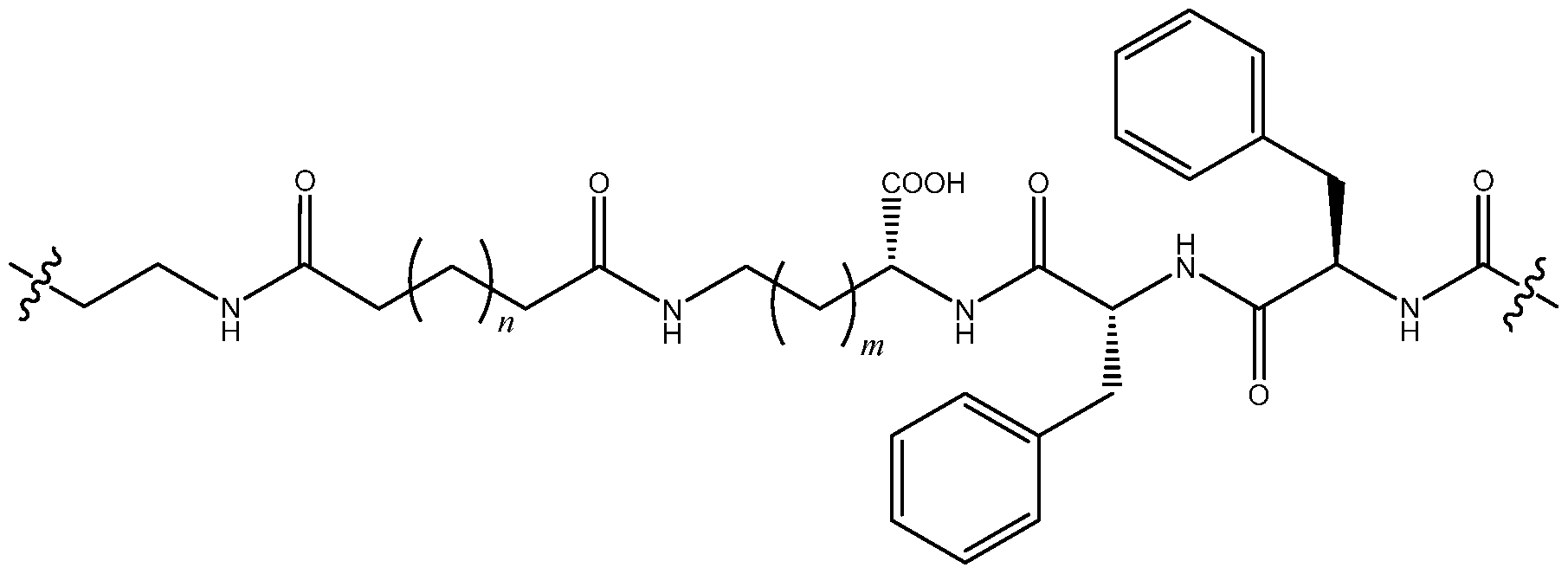
1. e. 1 , 2, 3, 4, 5, or 6, carbon atoms. Specific examples of alkyl groups are methyl, ethyl, propyl, /so-propyl, n-butyl, /so-butyl, sec-butyl, fe/f-butyl, n-pentyl, /so-pentyl, n-hexyl and 2,2-dimethylbutyl.
The term "heteroalkyl" refers to an alkyl group as defined above that contains one or more heteroatoms selected from oxygen, nitrogen and sulphur. Specific examples of heteroalkyl groups are methoxy, trifluoromethoxy, ethoxy, n-propyloxy, /so-propyloxy, butoxy, fe/f-butyloxy, methoxymethyl, ethoxymethyl, -CH2CH2OI-l, -CH2OH, methoxyethyl, 1 -methoxyethyl, 1 -ethoxyethyl, 2-methoxyethyl or 2-ethoxyethyl, methylamino, ethylamino, propylamino, /so-propylamino, dimethylamino, diethylamino, /so-propyl-ethylamino, methylamino methyl, ethylamino methyl, di-/so-propylamino ethyl, methylthio, ethylthio, /so-propylthio, methanesulfonyl, trifluoromethanesulfonyl, enol ether, dimethylamino methyl, dimethylamino ethyl, acetyl, propionyl, butyryloxy, acetyloxy, methoxycarbonyl, ethoxy-carbonyl, propionyloxy, acetylamino, propionylamino, carboxymethyl, carboxyethyl or carboxypropyl, /V-ethyl-/V- methylcarbamoyl and /V-methylcarbamoyl. Further examples of heteroalkyl groups are nitrile, /so-nitrile, cyanate, thiocyanate, /so-cyanate, /so-thiocyanate and alkylnitrile groups.
The term "alkenyl" refers to an at least partially unsaturated, straight-chain or branched hydrocarbon group that contains from 2 to 10 carbon atoms, especially from 2 to 6, i.e.
2, 3, 4, 5 or 6, carbon atoms. Specific examples of alkenyl groups are ethenyl (vinyl), propenyl (allyl), /so-propenyl, butenyl, ethinyl, propinyl, butinyl, acetylenyl, propargyl, /so-prenyl and hex-2-enyl group. Preferably, alkenyl groups have one or two double bond(s). The term "alkynyl" refers to a at least partially unsaturated, straight-chain or branched hydrocarbon group that contains from 2 to 10 carbon atoms, especially from 2 to 6, i.e. 2, 3, 4, 5 or 6, carbon atoms. Specific examples of alkynyl groups are ethynyl, propynyl,
butynyl, acetylenyl and propargyl groups. Preferably, alkynyl groups have one or two (especially preferably one) triple bond(s).
The term "aryl" refers to an aromatic group that contains one or more rings containing from 6 to 14 ring carbon atoms, preferably from 6 to 10 (especially 6) ring carbon atoms. Examples are phenyl, naphthyl and biphenyl groups. Examples of substituted aryl groups suitable for use in the present invention include p-toluenesulfonyl (Ts), benzenesulfonyl (Bs) and m-nitrobenzenesulfonyl (Ns).
In one embodiment, the linking group is selected from -NH2, -NHR, -NR'R", -OCH2CH3, -O-p-toluenesulfonate (OTs), -O-methanesulfonate (OMs), -O-trifluoromethanesulfonate (OTf), -O-benzenesulfonate (OBs),
-0-/7?-nitrobenzenesulfonate (ONs), cyanate (CN), azide (N3) and halogen (e.g. fluorine, chlorine, bromine or iodine).
As used herein, the term "radionuclide complex" refers to a compound of formula (I), as defined above, which has formed a co-ordination complex with a radionuclide. Generally, this occurs as a result of the formation of co-ordination bonds between the electron donating groups (such as the hydroxamate groups) of the compound of formula (I) and the radionuclide.
As used herein, the term "radionuclide" (also commonly referred to as a radioisotope or radioactive isotope), is an atom with an unstable nucleus. It radioactively decays resulting in the emission of nuclear radiation (such as gamma rays and/or subatomic particles such as alpha or beta particles). In one embodiment, the radionuclide is one that is also useful in radioimmunotherapy applications (e.g. a beta particle emitter). Preferably, the radionuclide has eight-coordinate geometry. Examples of radionuclides suitable for use in the present invention include radioisotopes of zirconium (e.g. 89Zr), gallium (e.g. 67Ga and 68Ga), gadolinium (e.g. 152Gd), lutetium (e.g. 176Lu and 177Lu), holmium (e.g. 166Ho), scandium (e.g. 44Sc and 47Sc), titanium (e.g. 45Ti), indium (e.g. 111 In and 115ln) yttrium (e.g. 86Y and 90Y), terbium e.g. (149Tb, 152Tb, 155Tb and 161Tb), technetium (e.g. 99mTc), samarium (e.g. 153Sm), niobium (e.g. 95Nb and 90Nb) and lanthanum (e.g. 135La). In one embodiment, the radionuclide for use in the present invention is 89Zr.
The compounds of formula (I) and the radionuclide complexes can be synthesised by any suitable method known to a person skilled in the art.
As mentioned above, the present invention also relates to a conjugate of a compound of formula (I), or a pharmaceutically-acceptable salt thereof, and a target molecule. As used herein, the term "target molecule" refers to a biological molecule, or a fragment of a biological molecule, that has the ability to target a particular tissue or tumour. In one embodiment, the target molecule is a polypeptide, such as a protein an albumin, an antibody a mini-body or other antibody variations and fragments. In another embodiment, the target molecule is a peptide (e.g. a targeting peptide that is used to target cells involved in tumour angiogenesis, such as cyclic RGD sequences, or another targeting peptide, such as octreotate, bombesin, Neuropeptide-Y and glutamate-urea- lysine-based peptides such as glu-N(CO)N-lys PSMA). In another embodiment, the target molecule is an amino acid. The target molecule will have a functional group that will react with the linking group to form a covalent link between the target molecule and the compound of formula (I). Compounds of formula (I) can be conjugated with the target molecules of interest by any suitable method known to a person skilled in the art. For example, if the linking group of formula (I) were a primary amine, the target molecule may have a carboxylic acid functional group that could be reacted with the amine of the linking group under standard peptide coupling conditions to provide an amide. Alternatively, additional linkers may be used, such as succinic anhydride, which may, for example, enable two amines to be linked through a bridging region.
This results in formation of the conjugate. The conjugate may also include a radionuclide complexed thereto. This produces a radionuclide-labelled conjugate of a compound of formula (I), or a pharmaceutically-acceptable salt thereof, a target molecule, and a radionuclide complexed thereto. In one embodiment, the radionuclide is a radioisotope of zirconium (e.g. 89Zr).
The radionuclide complexes can also be conjugated with the target molecules of interest (to produce a radiolabeled conjugate) in the same manner as described above for conjugating the target molecules to the compounds of formula (I), or any other suitable method known to a person skilled in the art.
It will also be clear to a person skilled in the art that the conjugate can be prepared in the absence of the radionuclide. In this embodiment, the radionuclide is added to the conjugate once the conjugate has been prepared.
In order to facilitate a useful, cost-effective synthesis of these compounds, the inventors of the present invention designed a system that utilises the bacterium that produces DFOB as a native and essential metabolite, Streptomyces pilosus, in a precursor- directed biosynthesis approach to generate new DFOB analogues. In this approach, the bacterium is cultured in medium supplemented with non-native substrates relevant to DFOB biosynthesis that are recognized as viable by the native biosynthetic bacterial machinery. Incorporation of these non-native substrates results the production of new DFOB analogues.
In one aspect, therefore, this invention relates to the precursor-directed biosynthesis of new DFOB analogues. In one embodiment, the substrate 2,2'-oxybis(ethan-1 -amine) (NH2-CH2-CH2-O-CH2-CH2-NH2) is utilised in this manner to produce a polyether DFOB variant (DFOB-PE3) with oxygen atoms installed along the DFOB backbone.
The terms "forward" ("for") and "retro" ("ret") refer to the orientation of the hydroxamic acid unit with respect to the flanking amino and carboxylic acid groups. The forward ligand, for-PBH is: NH2-(CH2)5-N(OH)-C(0)-(CH2)2-CO2H (4-[(5- aminopentyl)(hydroxy)amino]-4-oxobutanoic acid). The equivalent reverse or retro ligand, ref-PBH is NH2-(CH2)5-C(0)-N(OH)-(CH2)2-CO2H (3-(6-amino-/V- hydroxyhexanam ido)propanoic acid).
The present invention also relates to compositions comprising a radionuclide-labelled conjugate comprising:
- a compound of formula (I):

(I) wherein
•\ is a single or double bond; any one of the alkyl carbon atoms between D and L may be replaced with an oxygen or sulphur atom (preferably oxygen);
R-i , R2 and R3 are each independently 0 or CH2, provided that at least one of R-i , R2 and R3 is 0;
W is C, D is N, R4 is 0, R5 is OH, the bond between W and R4 is a double bond and the bond between D and R2 is a single bond, or
W is N, D is C, R4 is OH, R5 is O, the bond between W and R4 is a single bond and the bond between D and R2 is a double bond; n and m are each independently 1 , 2, 3 or 4; and where n is 2 or greater, an internal carbon atom of the alkyl chain comprising n can be replaced by an oxygen or sulphur atom; and
L is a linking group for conjugating the compound of formula (I) to a target molecule, - a target molecule, and
- a radionuclide complexed thereto, and one or more pharmaceutically acceptable carrier substances, excipients and/or adjuvants.
These compositions may include, for example, one or more of water, buffers (for example, neutral buffered saline, phosphate buffered saline, citrates and acetates), ethanol, oil, carbohydrates (for example, glucose, fructose, mannose, sucrose and mannitol), proteins, polypeptides or amino acids such as glycine, antioxidants (e.g. sodium bisulfite), tonicity adjusting agents (such as potassium and calcium chloride), chelating agents such as EDTA or glutathione, vitamins and/or preservatives. These compositions will preferably be formulated for parenteral administration. The term "parenteral" as used herein includes subcutaneous, intradermal, intravascular (for example, intravenous), intramuscular, spinal, intracranial, intrathecal, intraocular,
periocular, intraorbital, intrasynovial and intraperitoneal injection, as well as any similar injection or infusion technique. Intravenous administration is preferred. Suitable components of parenteral formulations, and methods of making such formulations, are detailed in various texts, including "Remington's Pharmaceutical Sciences". The composition of the present invention will be administered to a patient parenterally in the usual manner. The radionuclide-labelled conjugate complex may then take anywhere from 1 hour to 24 hours to distribute throughout the body to the target site. Once the desired distribution has been achieved, the patient will be imaged.
Accordingly, the present invention also relates to a method of imaging a patient, the method including:
- administering to the patient a radionuclide-labelled conjugate, as defined herein; and
- imaging said patient.
The present invention also relates to a method of imaging a cell or in vitro biopsy sample, the method including:
- administering to the cell or in vitro biopsy sample the radionuclide-labelled conjugate, as defined herein; and
- imaging the cell or in vitro biopsy sample.
Preferably, the target molecule serves to target the conjugate to a desired site in vivo, or to a desired site in the cell or in the biopsy sample. Preferably, the desired site is a tumour. Most preferably, the desired site is prostate cancer.
It will be understood, that the specific dose level for any particular patient, and the length of time that the agent will take to arrive at the target site, will depend upon a variety of factors including the activity of the specific compound employed, the age, body weight, general health, sex, diet, time of administration, route of administration, and rate of excretion, and the severity of the particular disorder undergoing therapy.
The term "effective amount" refers to an amount of the compound that results in a detectable amount of radiation following administration of the radionuclide-labelled
conjugate to a patient. A person skilled in the art will know how much of the radionuclide-labelled conjugate to administer to a patient to achieve the optimal imaging capability without causing problems from a toxicity perspective. The radionuclide- labelled conjugates of the present invention find particular use in assisting clinicians to determine where a cancer is (including whether a target, such a receptor, is homogeneously present on a tumour), what treatment a cancer will respond to (which facilitates treatment selection and determination of optimal dosages), and how much of the treatment will ultimately reach the target site. The radionuclide-labelled conjugates of the present invention can also be used to study the pharmacokinetics and biodistribution of particular target molecules (e.g. during drug development of new biological therapeutic agents, such as monoclonal antibodies).
Patients may include but are not limited to primates, especially humans, domesticated companion animals such as dogs, cats, horses, and livestock such as cattle, pigs and sheep, with dosages as described herein. As mentioned above, the radionuclide-labelled conjugates of the present invention are particularly useful for imaging tumours (which form as a result of uncontrolled or progressive proliferation of cells). Some such uncontrolled proliferating cells are benign, but others are termed "malignant" and may lead to death of the organism. Malignant neoplasms or "cancers" are distinguished from benign growths in that, in addition to exhibiting aggressive cellular proliferation, they may invade surrounding tissues and metastasize. Moreover, malignant neoplasms are characterized in that they show a greater loss of differentiation (greater "dedifferentiation"), and greater loss of their organization relative to one another and their surrounding tissues. This property is also called "anaplasia". Neoplasms that may be amenable to imaging by the present invention also include solid phase tumors/malignancies, i.e. carcinomas, locally advanced tumors and human soft tissue sarcomas. Carcinomas include those malignant neoplasms derived from epithelial cells that infiltrate (invade) the surrounding tissues and give rise to metastastic cancers, including lymphatic metastases.
Adenocarcinomas are carcinomas derived from glandular tissue, or which form recognizable glandular structures. Another broad category of cancers includes sarcomas, which are tumors whose cells are embedded in a fibrillar or homogeneous substance like embryonic connective tissue.
The type of cancer or tumor cells that may be amenable to imaging according to the invention include, for example, breast, colon, lung, and prostate cancers, gastrointestinal cancers including esophageal cancer, stomach cancer, colorectal cancer, polyps associated with colorectal neoplasms, pancreatic cancer and gallbladder cancer, cancer of the adrenal cortex, ACTH-producing tumor, bladder cancer, brain cancer including intrinsic brain tumors, neuroblastomas, astrocytic brain tumors, gliomas, and metastatic tumor cell invasion of the central nervous system, Ewing's sarcoma, head and neck cancer including mouth cancer and larynx cancer, kidney cancer including renal cell carcinoma, liver cancer, lung cancer including small and non- small cell lung cancers, malignant peritoneal effusion, malignant pleural effusion, skin cancers including malignant melanoma, tumor progression of human skin keratinocytes, squamous cell carcinoma, basal cell carcinoma, and hemangiopericytoma, mesothelioma, Kaposi's sarcoma, bone cancer including osteomas and sarcomas such as fibrosarcoma and osteosarcoma, cancers of the female reproductive tract including uterine cancer, endometrial cancer, ovarian cancer, ovarian (germ cell) cancer and solid tumors in the ovarian follicle, vaginal cancer, cancer of the vulva, and cervical cancer, breast cancer (small cell and ductal), penile cancer, retinoblastoma, testicular cancer, thyroid cancer, trophoblastic neoplasms, and Wilms' tumor.
It may also be advantageous to administer the radionuclide-labelled conjugates of the present invention with drugs that have anti-cancer activity. Examples of suitable drugs in this regard include fluorouracil, imiquimod, anastrozole, axitinib, belinostat, bexarotene, bicalutamide, bortezomib, busulfan, cabazitaxel, capecitabine, carmustine, cisplatin, dabrafenib, daunorubicin hydrochloride, docetaxel, doxorubicin, eloxati, erlotinib, etoposide, exemestane, fulvestrant, methotrexate, gefitinib, gemcitabine, ifosfamide, irinotecan, ixabepilone, lanalidomide, letrozole, lomustine, megestrol acetate, temozolomide, vinorelbine, nilotinib, tamoxifen, oxaliplatin, paclitaxel, raloxifene, pemetrexed, sorafenib, thalidomide, topotecan, vermurafenib and vincristine.
In another aspect of the present invention, the modified hydroxamic acids described in this specification can be immobilised onto resins. Unmodified DFOB resin has been prepared previously and is effective at binding Fe(lll). The intended purpose of the Fe(lll)-loaded DFOB resin is for use as an affinity matrix for selecting proteins from the bacterial proteome involved in Fe(lll)-DFOB uptake, to better understand mechanisms of bacterial iron uptake.
The modified hydroxamic acid ligands containing a terminal amine group can also be immobilised on a solid-phase resin using mild reaction conditions to produce a resin capable of binding metal ions. Tuning the ligand could be used to tune the metal ion selectivity. These resins could have multiple functions. For example, they could be useful for selecting Zr(IV) from a mixture; or for environmental applications in recovering trace metals present in mine tailings or in sites that have metal contamination. Such immobilised DFOB analogues can be prepared using techniques established in the art for similar derivatives on various resins, such as J Pure Appl Microbiol (2012) 6: 1609- 13, Anal Biochem (1992) 203:317-25; J Chromatogr (1985) 321 : 105-13, J Chromatogr (1985) 321 :93-104 and J Chromatogr (1985) 321 :81 -91.
In one embodiment, therefore, the present invention provides the modified DFOB analogues described herein, immobilised to a resin. Preferably, the immobilised DFOB analogue is prepared using epoxy-activated sepharose resin.
EXAMPLES
Example 1 - Biosynthesis of DFOB-PEi, DFOB-PE2 and DFOB-PE3

CH2.
A 50-mL volume of YM media (2.1 % w/v) that had been treated with Chelex resin and sterilized was inoculated with S. pilosus frozen permanent. This pre-culture was shaken at 160 rpm at 27°C for 4 days. The cell suspension was added into YM base medium (2.1 % w/v) that included ΚΗ2ΡΟ4·3Η2Ο (235 mM), Na2HPO4 (1 1 .6 mM), MgSO4 «7H2O (2.43 mM), CaCI2 (13.6 mM), ZnSO4 «7H2O (13.9 μΜ), trizma base (5.0 mM) and
threonine (0.84 mM). The non-native diamine substrate: 2,2'-oxybis(ethan-1 -amine) was added from a concentrated pH adjusted solution (pH 7) to give a final concentration of 10 mM prior to the addition of the cells from pre-culture. The culture was shaken at 160 rpm at 27°C for 8 days. The supernatant was harvested and purified using XAD-2 chromatography and Ni(ll)-based immobilized metal ion affinity chromatography (IMAC), according to published protocols (Soe CZ, Codd R ACS Chem Biol (2014) 9:945-56). The purified extract was analysed using liquid chromatography-mass spectrometry (LC- MS) and shown to contain six well-resolved peaks attributable to DFOB (tR 34.72 min), DFOB-PE1 a (tR 33.70 min), DFOB-PE1 b (tR 31.81 min), DFOB-PE2a (tR 30.72 min), DFOB-PE2b (tR 28.74 min) and DFOB-PE3 (tR 27.41 min). The molecule DFOB-PE3 was produced in the highest yield and provided the lowest retention time on RP-HPLC.
Example 2 - Synthesis of 4-[(5-aminopentyl)(hydroxy)amino]-4-oxobutanoic acid ( or-PBH).

Example 3 - Synthesis of 3-(6-amino-yV-hydroxy-hexanamido)propanoic acid (ref- PBH) The fragment ref-PBH has been prepared based on literature procedures (Lifa et. al. (2015) Inorg. Chem. 54, 3573-3583.
Example 4 - Synthesis of or-HBH (4-[(6-aminohexyl)(hydroxy)amino]-4- oxobutanoic acid)
 Prepared using similar procedures as described above for for-PBH, with the substitution of 1 ,5-dibromopentane with 1 ,6-dibromohexane.
Example 5 - Synthesis of ref-HBH (3-(7-amino-yV-hydroxyheptanamido)propanoic acid)
Prepared using similar procedures as described above for for-PBH, with the substitution of 1 ,5-dibromopentane with 1 ,6-dibromohexane.
Example 5 - Synthesis of ref-HBH (3-(7-amino-yV-hydroxyheptanamido)propanoic acid)
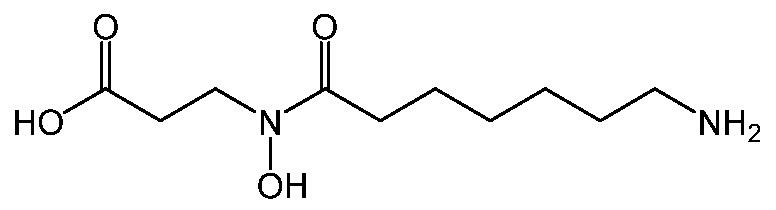
Prepared using similar procedures as described above for ref-PBH, with substitution of 6-aminohexanoic acid with 7-aminoheptanoic acid.
Example 6 - Synthesis of or-PPH (5-[(5-aminopentyl)(hydroxy)amino]-5- oxopentanoic acid)

Prepared using similar procedures as described above for for-PBH, with substitution of succinic anhydride with glutaric anhydride.
Example 7 - Synthesis of ref-PPH (4-(6-amino-N-hydroxyhexan-amido)butanoic acid.

Prepared using similar procedures as described above for ref-PBH, with substitution of ferf-butyl acrylate with ferf-butyl 4-bromobutyrate.
Example 8 - Synthesis of or-PBHE (4-((2-(2-aminoethoxy)ethyl)-(hydroxy)amino)- 4-oxobutanoic acid) and yVi-(27-amino-11, 22-dihydroxy-7,10,18,21 -tetraoxo- 3,14,25-trioxa-6,11,17,22-tetraazaheptacosyl)-yVi-hydroxy-yV4-(2-(2-(yV- hydroxyacetamido)ethoxy)ethyl)succinamide: DFOB-PE3- or-PBHE

Synthesis of 2-(2-(2-bromoethoxy)ethyl)isoindoline-1 ,3-dione (1 )
A suspension of phthalimide potassium salt (4.6 g, 19.9 mmol), 2,2 bromoethoxy ether (5.54 g, 3.00 mL, 29.9 mmol) and NaHC03 (1 .64 g, 19.9 mmol) in DMF (50 mL) was stirred for 6 h. The reaction mixture was diluted with ethyl acetate (150 mL) and washed with water (2 x 150 mL) and brine (150 mL). The organic layer was dried over Na2S04, concentrated in vacuo and purified by silica gel chromatography eluting with 1 :5 ethyl acetate/hexane to give an off white solid (Yield: 4.08 g, 69%)
1 H NMR (400 MHz, CDCI3): : δ 7.78 - 7.84 (m, 2H), 7.65 - 7.70 (m, 2H), 3.87 (t, J = 7.2 Hz, 2H), 3.71 - 3.77 (m, 4H), 3.63 (t, J = 7.5 Hz, 2H); 13C NMR (101 MHz, CDCL3): δ 168.3, 156.8, 135.7, 134.1 , 132.3, 129.6, 128.6, 128.5, 123.4, 81 .5, 77.1 , 67.7, 67.3, 49.8, 37.5, 28.4.
Synthesis of ferf-butyl benzyloxy(2-(2-(1,3-dioxoisoindolin-2-yl)ethoxy)ethyl) carbamate (2)
Sodium hydride 60% dispersion in mineral oil (0.55 g, 13.7 mmol) was added portion- wise to a stirring solution of fe/f-Butyl /V-(benzyloxy)carbamate (2.05 g, 9.18 mmol) in DMF (15 mL) under a nitrogen atmosphere at ambient temperature. The reaction mixture was stirred for 15 min. 1 (3.00 g, 10.1 mmol) in DMF (10 mL) was added dropwise and the reaction mixture was stirred under a nitrogen atmosphere at ambient temperature overnight. The reaction mixture was quenched with water (100 mL) and extracted with ethyl acetate (3 x 100 mL). The organic layers were pooled, washed with brine (100 mL), dried over Na2S04 and concentrated in vacuo. The residue was purified by silica gel chromatography eluting with 1 :4 ethyl acetate/hexane to give a yellow oil (Yield: 1 .94 g, 37%).
1 H NMR (400 MHz, CDCI3): : δ 7.78 - 7.82 (m, 2H), 7.65 - 7.70 (m, 2H), 7.29 - 7.37 (m, 5H), 4.77 (s, 2H), 3.87 (t, J = 7.2 Hz, 2H), 3.69 (t, J = 7.2 Hz, 2H), 3.60 - 3.62 (m, 2H), 3.54 - 3.57 (m, 2H), 1.45 (s, 9H); 13C NMR (101 MHz, CDCI3): δ 168.3, 156.8, 135.8, 134.1 , 132.3, 129.6, 128.6, 128.5, 123.4, 81 .5, 77.1 , 67.7, 67.3, 49.8, 37.5, 28.4.
Synthesis of ferf-butyl benzyloxy(2-(2-(((benzyloxy)carbonyl)amino)ethoxy)ethyl) carbamate (3)
2 (1 .5 g, 3.33 mmol), 50% aqueous hydrazine hydrate (0.53 g, 0.98 mL, 16.6 mmol) in ethanol (100 mL) was stirred under reflux for 3 h. The precipitate was filtered and washed with ethyl acetate (100 mL). The filtrate was concentrated in vacuo and dissolved in 1 :1 1 ,4-dioxane/H20 (50 mL). The mixture was cooled with an ice-water bath and NaHC03 (0.41 g, 5.00 mmol) and benzylchloroformate (0.85 g, 0.71 mL, 5.00 mmol) were added. The reaction mixture was allowed to warm to ambient temperature and stirred overnight. The reaction mixture was extracted with ethyl acetate (3 x 100 mL) and the organic layer was washed with water (100 mL) and brine (100 mL). The organic layer was dried over Na2S04, concentrated in vacuo and the residue was purified by silica gel chromatography eluting with 1 :4 ethyl acetate/hexane to give a clear gum (Yield: 458 mg, 31 %)
1 H NMR (400 MHz, CDCI3): δ 7.27 - 7.39 (m, 10H), 5.31 - 5.40 (m, 1 H), 5.09 (s, 2H), 4.82 (s, 2H), 3.56 - 3.61 (m, 4H), 3.51 (t, J = 6.9 Hz, 2H), 3.36 (dt, J = 6.9, 6.9 Hz, 2H),
1 .48 (s, 9H). 13C NMR (101 MHz, CDCI3): δ 157.3, 156.7, 136.9, 135.8, 129.6, 128.8, 128.7, 128.6, 128.6, 128.3, 128.2, 81 .8, 70.0, 67.3, 66.8, 49.4, 41.1 , 28.5.
Synthesis 10-(benzyloxy)-3,11 -dioxo-1 -phenyl-2,7-dioxa-4,10-diazatetradecan-14- oic acid (4) 3 (400 mg, 0.90 mmol) was dissolved in 10% TFA/dichloromethane (5 mL) and stirred for 2 h. The reaction mixture was concentrated in vacuo and dissolved in pyridine (5 mL). Succinic anhydride (109 mg, 1.08 mmol) was add and the reaction mixture was stirred at 90 °C for 2 h under a nitrogen atmosphere. The reaction mixture was cool to ambient temperature and stirred overnight under a nitrogen atmosphere. The reaction mixture was concentrated in vacuo and purified by silica gel chromatography eluting with 1 :4:95 AcOH/MeOH/DCM to give a yellow gum (Yield: 192 mg, 40%).
1 H NMR (400 MHz, CD3OD): δ 7.25 - 7.44 (m, 10H), 5.01 (s, 2H), 4.92 (s, 2H), 3.74 - 3.88 (m, 2H), 3.60 - 3.74 (m, 2H), 3.48 (t, J = 7.2 Hz, 2H), 3.26 (t, J = 7.2 Hz, 2H), 2.69 - 2.75 (m, 2H), 2.48 - 2.58 (m, 2H). 13C NMR (101 MHz, CD3OD): δ 176.1 , 158.8, 138.3, 136.2, 130.6, 129.9, 129.7, 129.4, 128.9, 128.8, 77.5, 70.6, 67.8, 67.4, 58.3, 47.1 , 41 .7, 28.6, 18.4.
Synthesis 4-((2-(2-aminoethoxy)ethyl)(hydroxy)amino)-4-oxobutanoic acid (5)
A solution of 4 (100 mg, 0.23 mmol) and 10% Pd/C (30 mg) in methanol (5 mL) was purged with N2 gas, evacuated under vacuum and purged with H2 gas. The reaction mixture was stirred under a H2 atmosphere overnight. Water (1 mL) was added to the reaction mixture and 10% Pd/C was carefully removed through a sintered funnel and washed with 1 : 1 methanol/water mixture (5 mL). The filtrate was concentrated in vacuo to give white solid (Yield 49 mg, 100%)
1 H NMR (400 MHz, CD3OD): δ 3.81 (t, J = 4.8 Hz, 2H), 3.71 (t, J = 4.8 Hz, 2H), 3.65 - 3.67 (m, 2H), 3.04 - 3.12 (m, 2H), 2.71 (t, J = 6.8 Hz, 2H), 2.55 (t, J = 6.8 Hz, 2H); 13C NMR (101 MHz, CD3OD): δ 179.96, 175.93, 67.88, 67.55, 48.41 , 40.63, 31 .13, 29.06.
Synthesis of 11 -hydroxy-2,2-dimethyl-4,12-dioxo-3,8-dioxa-5,11-diazapentadecan- 15-oic acid (6)
A solution of Boc20 (38 mg, 0.18 mmol), 5 (35 mg, 0.16 mmol) and NaHC03 (26 mg, 0.32 mmol) in 1 : 1 THF/H20 (1 mL) was stirred for 6 h. The reaction mixture diluted with ethyl acetate (25 mL) and washed with 0.5 M aqueous citric acid (25 mL). The organic layer was concentrated and purified by silica gel chromatography 1 :20 MeOH/DCM to give a clear gum (Yield: 21 mg, 41 %)
1 H NMR (400 MHz, CD3OD): δ 3.78 (t, J = 5.6 Hz, 2H), 3.65 (t, J = 5.6 Hz, 2H), 3.48 (t, J = 5.6 Hz, 2H), 3.20 (t, J = 5.2 Hz, 2H), 2.78 (t, J = 5.2 Hz, 2H), 2.57 (t, J = 5.6 Hz, 2H); Synthesis of Vi-(27-amino-11,22-dihydroxy-7,10,18,21 -tetraoxo-3,14,25-trioxa- 6,11,17,22-tetraazaheptacosyl)-yVi-hydroxy-yV4-(2-(2-(yV- hydroxyacetamido)ethoxy)ethyl)succinamide (7): DFOB-PE3- or-PBHE
A solution of 6 (21 mg, 0.06 mmol), Λ/,Λ/'-Disuccinimidyl carbonate (18 mg, 0.07 mmol) and Et3N (18 μί, 13 mg, 0.12 mmol) in anhydrous DMF (1 mL) was stirred under a nitrogen atmosphere for 4 h. The DFOBe3 (7 mg, 0.01 mmol) in DMF (1 mL) was added and the reaction mixture stirred overnight. The reaction mixture was concentrated in vacuo, re-dissolved in 1 :9 TFA/DCM (1 mL) and stirred for 2 h. The reaction mixture was concentrated in vacuo and re-dissolved in 1 : 1 DMSO/H20 and purified by semi- preparative HPLC to give a white powder (Yield: 2 mg, 21 % from DFOBe3). 1 H NMR (400 MHz, DMSO-d6): δ 8.39 (s, 2H), 7.80 - 7.90 (m, 3H), 3.64 (t, J = 5.2 Hz, 6H), 3.52 - 3.57 (m 8H), 3.47 (t, J = 5.2 Hz, 2H), 3.39 (t, J = 5.2 Hz, 8H), 3.16 (q, J = 5.2 Hz, 6H), 2.78 (t, J = 4.9Hz, 2H), 2.60 (t, J = 7.2 Hz, 6H), 2.98 (t, J = 7.2 Hz, 6H), 1 .98 (s 3H); HRMS (ESI-TOF) m/z: [M + H]+ Calcd for C30H57N8O15: 769.39382; Found: 769.39434. Example 9 - Synthesis of ref-PBHE (3-(3-(2-aminoethoxy)-/V-hydroxy- propanamido)propanoic acid).
 This compound will be prepared using similar procedures as described above for ret- PBH, with substitution of 6-aminohexanoic acid with 3-(2-aminoethoxy)propanoic acid, which itself would be synthesized from /V-Boc-ethanolamine and fe/f-butylacrylate, as described in PCT Int. Appl., 2013032829. Example 10 - Synthesis of or-PPHE (5-((2-(2-aminoethoxy)ethyl)-(hydroxy)amino)- 5-oxopentanoic acid. o o
HO^ " ^N ^^°^^^NH2
I
OH
This compound will be prepared using similar procedures as described above for for- PPH, with substitution of 1 ,5-dibromopentane with 1 -bromo-2-(2-bromoethoxy)ethane. Example 11 - Synthesis of ref-PPHE (4-(3-(2-aminoethoxy)-/V-hydroxy- propanamido)butanoic acid).
O OH
HO^^^^^^°^ NH2
O
This compound will be prepared using similar procedures as described above for ret- PPH, with substitution of 6-aminohexanoic acid with 3-(2-aminoethoxy)propanoic acid, which itself would be synthesized from /V-Boc-ethanolamine and fe/f-butylacrylate, as described in PCT Int. Appl., 2013032829.
Example 12 - Synthesis of DFOB-PE3- or-PBH and its complexation with Zr(IV)

Synthesis of DFOB-PE3-for-PBH DFOB-PE3- or-PBH will be synthesised in the following manner:
The forward encfo-hydroxamic acid monomer 4-((5-aminopentyl)(hydroxy)amino)-4- oxobutanoic acid ( or-PBH) (15 mg, 0.07 mmol) will be /V-Boc protected and reacted overnight with disuccinimidyl carbonate (DMF, DIPEA). The DMF will be removed and the product then reacted with DFOB PE3 (0.07 mmol) in THF in the presence of K2C03, (overnight at room temperature). The solvent will be removed in vacuo using a rotary evaporator and the crude sample will be treated with 20% TFA in DCM for 2 h. The solvent will be removed to give DFOB-PE3- or-PBH as a white solid, which will be purified and analysed using methods known in the art.
DFOB-PE3- or-PBH will be complexed to Zr(IV) in the following manner: Compound DFOB-PE3-for-PBH (0.013 mmol) and 91Zr(acac)4 (6.33 mg, 0.013 mmol) will be dissolved in 5 ml_ of methanol and the solution will be stirred for 8 h at room temperature. The solvent will be removed in vacuo using a rotary evaporator (external bath 60 °C). The crude sample will be purified using methods known in the art.
This process establishes the formation of the complex between DFOB-PE3- or-PBH and 91Zr(IV). It will later be applied to 89Zr(IV).
Example 13 - Synthesis of DFOB-PE3-ref-PBH and its complexation with Zr(IV)

Synthesis of DFOB-PE3-ref-PBH DFOB-PE3-ref-PBH will be synthesised in the following manner.
The reverse encfo-hydroxamic acid monomer 3-(6-amino-N-hydroxyhexanamido) propanoic acid (rei-PBH) (15 mg, 0.07 mmol) will be /V-Boc protected and reacted overnight with disuccinimidyl carbonate (DMF, DIPEA). The DMF will be removed and the product then reacted with DFOB PE3 (0.07 mmol) in THF in the presence of K2CO3, (overnight at room temperature). The solvent will be removed in vacuo using a rotary evaporator and the crude sample will be treated with 20% TFA in DCM for 2 h. The solvent will be removed to give DFOB-PE3-ref-PBH as a white solid, which will be purified and analysed using methods known in the art.
DFOB-PE3-ref-PBH will be complexed to Zr(IV) in the following manner: DFOB-PE3-ref-PBH (0.01 g, 0.013 mmol) and Zr(acac)4 (6.33 mg, 0.013 mmol) will be dissolved in 5 ml_ of methanol and the solution will be stirred for 8 h at room temperature. The solvent will be removed in vacuo using a rotary evaporator (external bath 60 °C) and the crude sample will be purified using methods known in the art. This process establishes the formation of the complex between DFOB-PE3-ref-PBH and 91Zr(IV). It will later be applied to 89Zr(IV).
Example 14 - Treatment of DFOB-PE3-for-PBHE (Compound 7) with Zr(acac)4

7 equivalents of Zr(acac)4 in 5: 1 (H20/MeOH) was added to free chelator (DFOB-PE3- or-PBHE) in 1 mL of water. The mixture was sonicated for 15 min and solvent was removed in vacuo. The residue was triturated with diethyl ether (1x) and toluene (1x) and the precipitate was dried and dissolved in milliq water.
HPLC used Solvent A (milliq water, 0.1 % formic acid) and Solvent B (MeCN, 0.1 % formic acid). Injected 10 uL of Zr(IV)-DFOB-PE3-for-PBHE. Column: XDB-eclipse C18 (5 pm particle size and 4.6 χ 150 mm internal diameter). Run involved gradient at 0 - 20 min (from 0% to 50% of solvent B). See Figure 1 .
A sample of unknown concentration of DFOB-PE3- or-PBHE that was already contaminated with Al3+ was treated with excess Zr(acac)4 in H20 and analysed by LC- MS. The LC-MS condition and method are the same as those described above for the HPLC. Extracted ion count analysis were performed on the chromatogram of the sample before and after treatment with Zr(acac)4 as shown in Figures 2a and 2b. A retention time shift from 17.0 min (DFOB-PE3-for-PBHE) to 16.5 min (Zr(IV)- DFOB-PE3- or-PBHE) was observed. The mass spectra at 16.5 min revealed isotopic pattern was indicative of the presence of Zr ion.
Example 15
Other compounds will be prepared using similar procedures as described above for DFOB-PE3-for-PBH and DFOB-PE3-ref-PBH. Such compounds include: DFOB-PE3-for- HBH, DFOB-PEs-ref-HBH, DFOB-PE3-for-PPH, DFOB-PE3-ref-PPH, DFOB-PE3-for- PBHE, DFOB-PE3-ref-PBHE, DFOB-PE3-for-PPHE and DFOB-PE3-ref-PPHE. Each of these compounds are shown below.

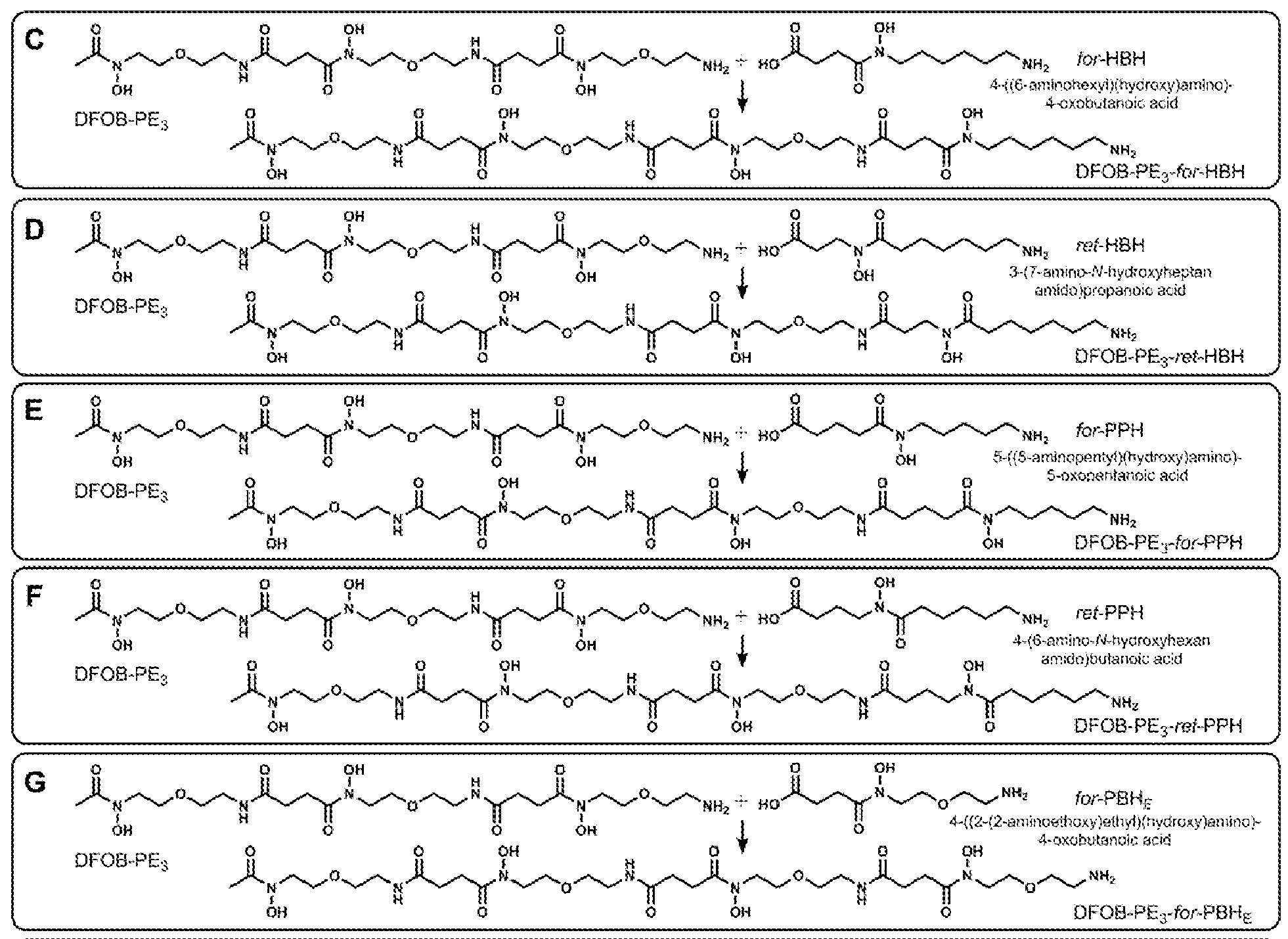

Example 16 - Conjugation of compounds of formula (I) with Glu-Urea-Lys
Two examples showing the proposed conjugation of DFOB-PE3- or-PBH with Boc- protected Glu-Urea-Lys is shown in the scheme below using succinic anhydride or glutaric anhydride.


An example showing the proposed conjugation of DFOB-PE3- or-PBH with Boc- protected Glu-Urea-Lys is shown in the scheme below.

A small PSMA targeting molecule prepared at RPAH will be used to radiolabel and study the radiolabelling of Zr-89 using the novel compounds of formula (I) prepared.
The prototype peptide consists of a protected lysine and glutamic amino acid residue connected via a urea group (Glu-Urea-Lys). The peptide is available as the carbobenzyloxy (Cbz) lysine protected peptide. It is also available as the BOC protected analogue. The Cbz-protected peptide will be deprotected at the £-NH2-terminus by removing the Cbz group by hydrogenation. The resultant free amino group on the lysine group can then be conjugated with a compound of formula (I) that has been derivatized with a carboxylic acid group (for example, upon reaction with succinic anhydride, glutaric anhydride or a para-isothiocyanatobenzyl group, to form the conjugate suitable for Zr-chelation. With other radiolabelling conjugates, the protected carboxylic acids are removed with TFA prior to conjugation.
Example 19 - Comparison of 89Zr-DFOB-PSMA complex with novel 89Zr-DFOB- or/rei-PBH-PSMA.
The tracers will be compared in vivo using imaging and biodistribution studies. Biodistribution using PET/CT imaging of 89Zr-DFOB-PSMA complex and 89Zr-labelled conjugates of compounds of the formula (I) will be assessed in tumour bearing mice (at least 3-5 animals per tracer). The mice can be imaged over several days to compare the uptake, distribution, clearance and metabolic stability of the chelates. The mice are imaged in longitudinal studies. In particular, longer time points are examined when clearance is optimum. At the end of the study, we will sacrifice animals, count organs and freeze/slice tumour for autoradiographic studies if possible.
In a second series of mice, we will either pre-inject cold PSMA molecule prior to the radiotracer (blocking study) or displace the radioactivity with cold PSMA at a time point of maximum uptake. A biodistribution study will be repeated using a series of tumoured mice at 3-4 time points to complement the imaging with quantitative measurements in tumour and other organs.
It will be understood that the invention disclosed and defined in this specification extends to all alternative combinations of two or more of the individual features mentioned or evident from the text or drawings. All of these different combinations constitute various alternative aspects of the invention. Example 20 - Preparation of covalently immobilised DFOB analogues to epoxy- activated sepharose (EAS)
The tetradentate chain-extended analogues of DFOB described throughout this application can be immobilized on a resin using similar chemistry as described for the immobilisation of DFOB onto an epoxy-activated sepharsoe 6B resin. DFOB immobilised to epoxy-activated sepharose has been produced upon shaking a suspension of DFOB and the resin for 24 h (125 rpm, pH 10, 30 deg C). The example shown in the Figure below details the process and immobilised product using for DFOB- PE3-ret-PBH.

The resin-bound modified DFOB analogue can then be bound to various metals, such as Zr(IV) for the purpose of radiochemical purification. Other metal ions could be isolated on the resin with applications in metal remediation and accessing trace metals from mine tailings.
Claims
1 . A compound of formula (I), or a pharmaceutically acceptable salt thereof:

(I) wherein
'· is a single or double bond; any one of the alkyl carbon atoms between D and L may be replaced with an oxygen or sulphur atom (preferably oxygen);
R-i , R2 and R3 are each independently O or CH2, provided that at least one of R-i , R2 and R3 is O;
W is C, D is N, R4 is O, R5 is OH, the bond between W and R4 is a double bond and the bond between D and R5 is a single bond, or
W is N, D is C, R4 is OH, R5 is O, the bond between W and R4 is a single bond and the bond between D and R5 is a double bond; n and m are each independently 1 , 2, 3 or 4; and where n is 2 or greater, an internal carbon atom of the alkyl chain comprising n can be replaced by an oxygen or sulphur atom; and
L is a linking group for conjugating the compound of formula (I) to a target molecule. 2. A compound according to claim 1 , wherein n is 1 and m is 3.
3. A compound according to claim 1 , wherein the sum of n and m is 4.
4. A compound according to claim 1 , wherein the sum of n and m is 5.
5. A compound according to any one of claims 1 to 4, wherein not one of the carbon atoms of the alkyl group comprising n is replaced with an oxygen or sulphur atom.


7. A compound according to claim 6, wherein the compound of formula (I) has the structure:
 or a pharmaceutically acceptable salt thereof.
8. A compound according to any one of claims 1 to 7, wherein L is an amine.
9. A radionuclide complex of a compound of formula (I), or a pharmaceutically acceptable salt thereof:

(I) wherein is a single or double bond; any one of the alkyl carbon atoms between D and L may be replaced with an oxygen or sulphur atom (preferably oxygen);
R-i , R2 and R3 are each independently 0 or CH2, provided that at least one of R-i , R2 and R3 is 0;
W is C, D is N, R4 is 0, R5 is OH, the bond between W and R4 is a double bond and the bond between D and R5 is a single bond, or W is N, D is C, R4 is OH, R5 is O, the bond between W and R4 is a single bond and the bond between D and R5 is a double bond; n and m are each independently 1 , 2, 3 or 4; and where n is 2 or greater, an internal carbon atom of the alkyl chain comprising n can be replaced by an oxygen or sulphur atom; and L is a linking group for conjugating the compound of formula (I) to a target molecule.
10. A radionuclide complex according to claim 9, wherein n is 1 and m is 3.
1 1 . A radionuclide complex according to claim 9, wherein the sum of n and m is 4.
12. A radionuclide complex according to claim 9, wherein the sum of n and m is 5. 13. A radionuclide complex according to according to any one of claims 9 to 12, wherein not one of the carbon atoms of the alkyl group comprising n is replaced with an oxygen or sulphur atom.
14. A radionuclide complex according to claim 9, wherein the compound of formula (I) is selected from the group consisting of:


15. A radionuclide complex according to claim 14, wherein the compound of formula (I) has the structure:
 or a pharmaceutically acceptable salt thereof.
16. A radionuclide complex according to any one of claims 9 to 15, wherein L is an amine.
17. A conjugate comprising:
- a compound of formula (I), or a pharmaceutically acceptable salt thereof;

(I) wherein is a single or double bond;
any one of the alkyl carbon atoms between D and L may be replaced with an oxygen or sulphur atom (preferably oxygen);
R-i , R2 and R3 are each independently 0 or CH2, provided that at least one of R-i , R2 and R3 is 0; W is C, D is N, R4 is 0, R5 is OH, the bond between W and R4 is a double bond and the bond between D and R5 is a single bond, or
W is N, D is C, R4 is OH, R5 is O, the bond between W and R4 is a single bond and the bond between D and R5 is a double bond; n and m are each independently 1 , 2, 3 or 4; and where n is 2 or greater, an internal carbon atom of the alkyl chain comprising n can be replaced by an oxygen or sulphur atom; and
L is a linking group for conjugating the compound of formula (I) to a target molecule; and
- a target molecule. 18. A conjugate according to claim 17, wherein n is 1 and m is 3.
19. A conjugate according to claim 17, wherein the sum of n and m is 4.
20. A conjugate according to claim 17, wherein the sum of n and m is 5.
21 . A conjugate according to any one of claims 17 to 20, wherein not one of the carbon atoms of the alkyl group comprising n is replaced with an oxygen or sulphur atom.
22. A conjugate according to claim 17, wherein the compound of formula (I) is selected from the group consisting of:

 or a pharmaceutically acceptable salt thereof.
23. A conjugate according to claim 22, wherein the compound of formula (I) has the structure:
 or a pharmaceutically acceptable salt thereof.
24. A conjugate according to any one of claims 17 to 23, wherein L is an amine.
25. A conjugate according to any one of claims 17 to 24, wherein L is conjugated to the target molecule through a spacer moiety.
26. A radionuclide-labelled conjugate comprising:
- a compound of formula (I), or a pharmaceutically acceptable salt thereof;

wherein
! is a single or double bond;
any one of the alkyl carbon atoms between D and L may be replaced with an oxygen or sulphur atom (preferably oxygen);
R-i , R2 and R3 are each independently 0 or CH2, provided that at least one of R-i , R2 and R3 is 0; W is C, D is N, R4 is 0, R5 is OH, the bond between W and R4 is a double bond and the bond between D and R5 is a single bond, or
W is N, D is C, R4 is OH, R5 is O, the bond between W and R4 is a single bond and the bond between D and R5 is a double bond; n and m are each independently 1 , 2, 3 or 4; and where n is 2 or greater, an internal carbon atom of the alkyl chain comprising n can be replaced by an oxygen or sulphur atom; and
L is a linking group for conjugating the compound of formula (I) to a target molecule; and
- a target molecule, and - a radionuclide complexed thereto.
27. A radionuclide-labelled conjugate according to claim 26, wherein n is 1 and m is 3.
28. A radionuclide-labelled conjugate according to claim 26, wherein the sum of n and m is 4.
29. A radionuclide-labelled conjugate according to claim 26, wherein the sum of n and m is 5.
30. A compound according to any one of claims 26 to 29, wherein not one of the carbon atoms of the alkyl group comprising n is replaced with an oxygen or sulphur atom.
31 . A radionuclide-labelled conjugate according to claim 26, wherein the compound of formula (I) is selected from the group consisting of:

 or a pharmaceutically acceptable salt thereof.
32. A radionuclide-labelled conjugate according to claim 31 , wherein the compound of formula (I) has the structure:
 or a pharmaceutically acceptable salt thereof.
33. A radionuclide-labelled conjugate according to any one of claims 26 to 32, wherein L is an amine.
34. A radionuclide-labelled conjugate according to any one of claims 26 to 33, wherein L is conjugated to the target molecule through a spacer moiety.
35. A radionuclide complex according to any one of claims 9 to 16, or a radionuclide- labelled conjugate according to any one of claims 26 to 34, wherein the radionuclide is 89Zr.
36. A radionuclide complex according to claim 9, wherein the structure is:

Zr(VI)-loacted DFOB-PE3-fer~PBH Zr(IV)-ioaded DFOB-PE:i-ref-PBH or a pharmaceutically acceptable salt thereof.
37. A conjugate according to any one of claims 17 to 25 or a radionuclide-labelled conjugate according to any one of claims 26 to 34, wherein the target molecule is selected from the group consisting of an amino acid, peptide, polypeptide, antibody, mini-body, or fragments, variants or analogues thereof.
38. A radionuclide-labelled conjugate according to claim 26, wherein the radionuclide-labelled conjugate has the structure:

Zr(VI)-loaded DFOB-PE3-for-PBH-LYS-UREA-GLU

Zr(IV)-loaded DFOB-PE3-ref-PBH-L.YS-UREA-GL.IJ
or a pharmaceutically acceptable salt thereof.
39. A composition comprising: a radionuclide-labelled conjugate comprising:
- a compound of formula (I):

(I) wherein
! is a single or double bond; any one of the alkyl carbon atoms between D and L may be replaced with an oxygen or sulphur atom (preferably oxygen);
R-i , R2 and R3 are each independently O or CH2, provided that at least one of R-i , R2 and R3 is O;
W is C, D is N, R4 is O, R5 is OH, the bond between W and R4 is a double bond and the bond between D and R5 is a single bond, or W is N, D is C, R4 is OH, R5 is O, the bond between W and R4 is a single bond and the bond between D and R5 is a double bond; n and m are each independently 1 , 2, 3 or 4; and where n is 2 or greater, an internal carbon atom of the alkyl chain comprising n can be replaced by an oxygen or sulphur atom; and L is a linking group for conjugating the compound of formula (I) to a target molecule
- a target molecule, and
- a radionuclide complexed thereto,
and one or more pharmaceutically acceptable carrier substances, excipients and/or adjuvants.
40. A composition according to claim 39, wherein n is 1 and m is 3.
41 . A composition according to claim 39, wherein the sum of n and m is 4. 42. A composition according to claim 39, wherein the sum of n and m is 5.
43. A composition according to any one of claims 39-42, wherein not one of the carbon atoms of the alkyl group comprising n is replaced with an oxygen or sulphur atom.
44. A composition according to claim 39, wherein the compound of formula (I) is selected from the group consisting of:


46. A composition according to any one of claims 39 to 45, wherein L is an amine. 47. A method of imaging a patient, the method including:
- administering to the patient a radionuclide-labelled conjugate according to any one of claims 26 to 35 and 37 to 38; and
- imaging said patient.
48. A method of imaging a patient, the method including:
- administering to the patient a composition according to any one of claims 39 to 46; and
- imaging said patient. 49. A method of imaging a cell or in vitro biopsy sample, the method including:
- administering to the cell or in vitro biopsy sample a radionuclide-labelled conjugate according to any one of claims 26 to 35 and 37 to 38; and
- imaging the cell or in vitro biopsy sample.
50. A method of imaging a cell or in vitro biopsy sample, the method including: - administering to the cell or in vitro biopsy sample a composition according to any one of claims 39 to 46; and
- imaging the cell or in vitro biopsy sample.
51 . A process for the preparation of a compound according to formula (I), wherein a compound of formula (II) is coupled to a compound of formula (III):

W is C, D is N, R4 is O, R4 is OH, the bond between W and R4 is a double bond and the bond between D and R4 is a single bond, or
W is N, D is C, R4 is OH, R5 is O, the bond between W and R4 is a single bond and the bond between D and R5 is a double bond; n and m are each independently 1 , 2, 3 or 4; and where n is 2 or greater, an internal carbon atom of the alkyl chain comprising n can be replaced by an oxygen or sulphur atom; and
L is a linking group for conjugating the compound of formula (I) to a target molecule; and
R6 is a leaving group.
A process according to claim 51 , wherein R6 is an -OH group.
53. A process according to claim 51 , wherein the compound of formula selected from the group consisting of:
ic acid

OH I
HO^^^°^^^^^^^^0^^^NH2 ret-PP \££ 2-((3-(2-aminoethoxy)-W-hydroxypropanamido)methoxy)acetic acid
O O
~ — s. J^. N^^^^^oU.V^^NH for-PPHTE 2-((2-((2-(2-aminoethoxy)ethyl)(hydroxy)amino)-2-oxoethyl)thio)acetic acid
OH
O OH
^^^^^°^^^NH2 ref-PPHTE 2-(((3-(2-aminoethoxy)-W-hydroxypropanamido)methyl)thio)acetic acid
54. A process according to claim 51 , wherein the process is selected from any one of the following schemes A to J:


55. A process according to claim 51 , wherein R6 is halogen.
56. A compound according to any one of claims 1 to 8, prepared by the process of claim 51 .
A compound according to formula (II):

(II) wherein Ri , R2 and R3 are each independently 0 or CH2, provided that at least R-i , R? and R3 is 0.
58. A compound according to claim 57, wherein the structure of formula (II) is:

59. A compound according to any one of claims 1 to 8, prepared from a compound according to claim 57 or 58.
60. A process for making a compound of formula (II):

(II) wherein R-i , R2 and R3 are each independently 0 or CH2, provided that at least one of R-i , R2 and R3 is 0, wherein the process comprises:
- adding 2,2'-oxybis(ethan-1 -amine) to a culture of S. pilosus;
- incubating the culture of S. piiosus with said 2,2'-oxybis(ethan-1 -amine) to provide a compound according to formula (II).
61 . A process according to claim 60, wherein the 2,2'-oxybis(ethan-1 -amine) is in solution at pH 7 prior to addition to the culture of S. piiosus.
62. A process according to claim 60 or claim 61 , wherein the culture of S. piiosus is inoculated with Chelex resin-treated YM media prior to the addition of 2,2'-oxybis(ethan- 1 -amine).
63. A process according to any one of claims 60 to 62, wherein the culture of S. piiosus is added to YM base medium prior to the addition of 2,2'-oxybis(ethan-1 -amine). 64. A compound according to formula (II) prepared by the process of any one of claims 60 to 63:

(II) wherein R-i , R2 and R3 are each independently O or CH2, provided that at least one of Ri , R2 and R3 is O.
65. A compound according to any one of claims 1 to 8, immobilised to a resin.
66. A compound according claim 65, wherein the immobilised compound is prepared using epoxy-activated sepharose resin.
Applications Claiming Priority (2)
| Application Number | Priority Date | Filing Date | Title |
|---|---|---|---|
| AU2015905102 | 2015-12-09 | ||
| AU2015905102A AU2015905102A0 (en) | 2015-12-09 | Hydroxamic acid-based compounds |
Publications (1)
| Publication Number | Publication Date |
|---|---|
| WO2017096430A1 true WO2017096430A1 (en) | 2017-06-15 |
Family
ID=59012422
Family Applications (1)
| Application Number | Title | Priority Date | Filing Date |
|---|---|---|---|
| PCT/AU2016/051212 Ceased WO2017096430A1 (en) | 2015-12-09 | 2016-12-09 | Hydroxamic acid-based compounds |
Country Status (1)
| Country | Link |
|---|---|
| WO (1) | WO2017096430A1 (en) |
Cited By (2)
| Publication number | Priority date | Publication date | Assignee | Title |
|---|---|---|---|---|
| WO2022133537A1 (en) * | 2020-12-22 | 2022-06-30 | The University Of Sydney | Ligands and their use |
| CN114874122A (en) * | 2022-05-31 | 2022-08-09 | 南京航空航天大学 | Novel small molecule inhibitor and preparation method and application thereof |
Citations (3)
| Publication number | Priority date | Publication date | Assignee | Title |
|---|---|---|---|---|
| WO2009055863A1 (en) * | 2007-11-01 | 2009-05-07 | The University Of Sydney | Desferrioxamine conjugates, derivatives and analogues |
| WO2015140212A1 (en) * | 2014-03-19 | 2015-09-24 | Universität Zürich | Multidentate bifunctional chelating agents for radionuclide complexation in diagnostics and therapy |
| WO2015183876A1 (en) * | 2014-05-28 | 2015-12-03 | Memorial Sloan Kettering Cancer Center | Bimodal fluorophore-labeled liposomes and associated methods and systems |
-
2016
- 2016-12-09 WO PCT/AU2016/051212 patent/WO2017096430A1/en not_active Ceased
Patent Citations (3)
| Publication number | Priority date | Publication date | Assignee | Title |
|---|---|---|---|---|
| WO2009055863A1 (en) * | 2007-11-01 | 2009-05-07 | The University Of Sydney | Desferrioxamine conjugates, derivatives and analogues |
| WO2015140212A1 (en) * | 2014-03-19 | 2015-09-24 | Universität Zürich | Multidentate bifunctional chelating agents for radionuclide complexation in diagnostics and therapy |
| WO2015183876A1 (en) * | 2014-05-28 | 2015-12-03 | Memorial Sloan Kettering Cancer Center | Bimodal fluorophore-labeled liposomes and associated methods and systems |
Cited By (2)
| Publication number | Priority date | Publication date | Assignee | Title |
|---|---|---|---|---|
| WO2022133537A1 (en) * | 2020-12-22 | 2022-06-30 | The University Of Sydney | Ligands and their use |
| CN114874122A (en) * | 2022-05-31 | 2022-08-09 | 南京航空航天大学 | Novel small molecule inhibitor and preparation method and application thereof |
Similar Documents
| Publication | Publication Date | Title |
|---|---|---|
| CN115260160B (en) | A compound targeting fibroblast activation protein FAP and its preparation method and application | |
| JP6905121B2 (en) | New Imaging Compositions and Their Use | |
| JP2659351B2 (en) | Polysubstituted diethylenetriamine for forming metal chelate-protein complex and method for producing the same | |
| JP6275484B2 (en) | PSMA targeted dendrimer | |
| EP4351663A1 (en) | Trislinker-conjugated dimeric labelling precursors and radiotracers derived therefrom | |
| JPH075527B2 (en) | Bifunctional DTPA type ligand | |
| JP7646637B2 (en) | Imaging and Therapeutic Compositions | |
| JP6164556B2 (en) | Drug for producing radiolabeled polypeptide with reduced nonspecific renal accumulation | |
| EP3131585A1 (en) | Multidentate bifunctional chelating agents for radionuclide complexation in diagnostics and therapy | |
| US20250025582A1 (en) | Ligands and their use | |
| CN109438517B (en) | Complex of bifunctional linking agent coordinated with carbonyl metal core and preparation method thereof | |
| WO2017096430A1 (en) | Hydroxamic acid-based compounds | |
| KR20260006628A (en) | Ligands targeting fibroblast-activating protein | |
| WO2021096968A1 (en) | Radiohalogen prosthetic moieties and radiolabeled biomolecules | |
| RU2823164C2 (en) | Peptide compound capable of binding with psma, method for production and use thereof | |
| WO2024264053A2 (en) | Trans-cyclooctene compounds and methods of use in the synthesis of pet probes and radioisotope based therapy | |
| TW202428306A (en) | Neuropeptide y1 receptor (npy1r) targeted therapeutics and uses thereof |
Legal Events
| Date | Code | Title | Description |
|---|---|---|---|
| 121 | Ep: the epo has been informed by wipo that ep was designated in this application |
Ref document number: 16871826 Country of ref document: EP Kind code of ref document: A1 |
|
| NENP | Non-entry into the national phase |
Ref country code: DE |
|
| 122 | Ep: pct application non-entry in european phase |
Ref document number: 16871826 Country of ref document: EP Kind code of ref document: A1 |