WO2017080488A1 - 一种数据传输方法及装置 - Google Patents
一种数据传输方法及装置 Download PDFInfo
- Publication number
- WO2017080488A1 WO2017080488A1 PCT/CN2016/105322 CN2016105322W WO2017080488A1 WO 2017080488 A1 WO2017080488 A1 WO 2017080488A1 CN 2016105322 W CN2016105322 W CN 2016105322W WO 2017080488 A1 WO2017080488 A1 WO 2017080488A1
- Authority
- WO
- WIPO (PCT)
- Prior art keywords
- fragment
- path
- receiving end
- data frame
- preset
- Prior art date
- Legal status (The legal status is an assumption and is not a legal conclusion. Google has not performed a legal analysis and makes no representation as to the accuracy of the status listed.)
- Ceased
Links
Images


Classifications
-
- H—ELECTRICITY
- H04—ELECTRIC COMMUNICATION TECHNIQUE
- H04B—TRANSMISSION
- H04B1/00—Details of transmission systems, not covered by a single one of groups H04B3/00 - H04B13/00; Details of transmission systems not characterised by the medium used for transmission
- H04B1/02—Transmitters
- H04B1/04—Circuits
- H04B1/0483—Transmitters with multiple parallel paths
-
- H—ELECTRICITY
- H04—ELECTRIC COMMUNICATION TECHNIQUE
- H04L—TRANSMISSION OF DIGITAL INFORMATION, e.g. TELEGRAPHIC COMMUNICATION
- H04L41/00—Arrangements for maintenance, administration or management of data switching networks, e.g. of packet switching networks
- H04L41/06—Management of faults, events, alarms or notifications
- H04L41/0654—Management of faults, events, alarms or notifications using network fault recovery
-
- H—ELECTRICITY
- H04—ELECTRIC COMMUNICATION TECHNIQUE
- H04L—TRANSMISSION OF DIGITAL INFORMATION, e.g. TELEGRAPHIC COMMUNICATION
- H04L9/00—Cryptographic mechanisms or cryptographic arrangements for secret or secure communications; Network security protocols
- H04L9/08—Key distribution or management, e.g. generation, sharing or updating, of cryptographic keys or passwords
-
- H—ELECTRICITY
- H04—ELECTRIC COMMUNICATION TECHNIQUE
- H04L—TRANSMISSION OF DIGITAL INFORMATION, e.g. TELEGRAPHIC COMMUNICATION
- H04L9/00—Cryptographic mechanisms or cryptographic arrangements for secret or secure communications; Network security protocols
- H04L9/08—Key distribution or management, e.g. generation, sharing or updating, of cryptographic keys or passwords
- H04L9/0816—Key establishment, i.e. cryptographic processes or cryptographic protocols whereby a shared secret becomes available to two or more parties, for subsequent use
- H04L9/0819—Key transport or distribution, i.e. key establishment techniques where one party creates or otherwise obtains a secret value, and securely transfers it to the other(s)
- H04L9/0827—Key transport or distribution, i.e. key establishment techniques where one party creates or otherwise obtains a secret value, and securely transfers it to the other(s) involving distinctive intermediate devices or communication paths
-
- H—ELECTRICITY
- H04—ELECTRIC COMMUNICATION TECHNIQUE
- H04L—TRANSMISSION OF DIGITAL INFORMATION, e.g. TELEGRAPHIC COMMUNICATION
- H04L9/00—Cryptographic mechanisms or cryptographic arrangements for secret or secure communications; Network security protocols
- H04L9/08—Key distribution or management, e.g. generation, sharing or updating, of cryptographic keys or passwords
- H04L9/0861—Generation of secret information including derivation or calculation of cryptographic keys or passwords
- H04L9/0869—Generation of secret information including derivation or calculation of cryptographic keys or passwords involving random numbers or seeds
-
- H—ELECTRICITY
- H04—ELECTRIC COMMUNICATION TECHNIQUE
- H04L—TRANSMISSION OF DIGITAL INFORMATION, e.g. TELEGRAPHIC COMMUNICATION
- H04L9/00—Cryptographic mechanisms or cryptographic arrangements for secret or secure communications; Network security protocols
- H04L9/14—Cryptographic mechanisms or cryptographic arrangements for secret or secure communications; Network security protocols using a plurality of keys or algorithms
-
- H—ELECTRICITY
- H04—ELECTRIC COMMUNICATION TECHNIQUE
- H04L—TRANSMISSION OF DIGITAL INFORMATION, e.g. TELEGRAPHIC COMMUNICATION
- H04L1/00—Arrangements for detecting or preventing errors in the information received
- H04L2001/0092—Error control systems characterised by the topology of the transmission link
- H04L2001/0096—Channel splitting in point-to-point links
Definitions
- the present application relates to the field of networks, and in particular, to a data transmission method and apparatus.
- the military communication network With the rapid arrival of the information age, the military communication network has gradually become an indispensable part of military activities. Among them, the secret communication and network self-healing capabilities are the two major elements for building a super-strong military communication network.
- the secret communication method adopted by the military communication network is the application layer secure communication technology, because the application layer secure communication technology is relatively mature, and it is difficult to crack without grasping the encryption, decrypting the key and adopting the algorithm.
- network self-healing capability means that when a network encounters a fault or an attack that causes one or more network links to break at the same time, the point-to-point communication can quickly recover from self-healing. Almost unaffected.
- the network self-healing capability is higher. The specific number of network failures that require self-healing is more and the scope is wider, such as three faults at the same time and regional faults.
- the embodiment of the present application provides a data transmission method and device, so as to achieve the purpose of making the military communication network take into consideration both the confidential communication and the network self-healing capability, and is beneficial to construct a super military communication network.
- the technical solution is as follows:
- a data transmission method includes:
- the sender establishes N different first paths between the sending end and the receiving end of the preset network, where N is an integer greater than one;
- the transmitting end splits the fixed length data frame into N first fragments, each of the first fragments respectively corresponding to one of the first paths, and the first paths corresponding to the first fragments are different, the i-th
- the length of a fragment is
- the L is the length of the data frame
- the P(i) is a random number generated by the preset key according to a preset algorithm, where the P(i) is greater than 0 and less than 1.
- the sending end splits the data frame into NM second fragments, where the M is not less than 1 and not greater than N-1. Integer, the length of the ith second fragment is The P'(i) is a random number generated by the preset key according to the preset algorithm, and the P′(i) is greater than 0 and less than 1.
- the transmitting end establishes a second path different from each other between the sending end and the receiving end, where each second fragment corresponds to one of the second paths, and the second path corresponding to each second fragment does not the same;
- the P(i) is a random number generated by the preset key according to different preset algorithms at different time points;
- the P′(i) is specifically a random number generated by the preset key according to different preset algorithms at different time points.
- the method further includes:
- the transmitting end splits the data frame into NJ third fragments, where the J is not less than 1 and not greater than N.
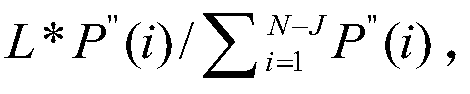
- An integer of -1, the length of the ith third fragment is
- the P"(i) is a random number generated by the preset key according to the preset algorithm, and the P"(i) is greater than 0 and less than 1, the
- the transmitting end sends a corresponding third fragment to the receiving end by using the first path of the N-J that is not in danger of failure.
- the sending end sends a corresponding number to the receiving end by using each of the second paths at the sending end.
- the two fragments it also includes:
- the transmitting end splits the data frame into NMH fourth fragments, where the H is not less than 1 and not greater than NM.
- the integer, the length of the ith fourth fragment is
- the P 1 "(i) is a random number generated by the preset key according to the preset algorithm, and the P" 1 (i) is greater than 0 and less than 1, the
- the transmitting end sends a corresponding fourth fragment to the receiving end by using a second path of the N-M-H that is not in danger of failure.
- a data transmission device comprising:
- a first establishing unit configured to establish N different first paths between the sending end and the receiving end of the preset network, where N is an integer greater than 1;
- the first splitting unit is configured to split the fixed length data frame into N first fragments, each of the first fragments respectively corresponding to one of the first paths, and the first paths corresponding to the first fragments are different.
- the length of the ith first fragment is
- the L is the length of the data frame
- the P(i) is a random number generated by the preset key according to a preset algorithm, where the P(i) is greater than 0 and less than 1.
- a first sending unit configured to send, by using the first path, a corresponding first fragment to the receiving end, so that the receiving end reassembles each first fragment according to the preset algorithm
- a second splitting unit configured to split the data frame into NM second fragments if the data frame fails in the first path of the data frame, wherein the M is not less than 1 and not greater than the integer of N-1, the length of the ith second fragment is
- the P'(i) is a random number generated by the preset key according to the preset algorithm, and the P′(i) is greater than 0 and less than 1.
- a second establishing unit configured to establish a second NM different path between the sending end and the receiving end, where each second fragment corresponds to one of the second paths, and each second fragment corresponds to a second The paths are different;
- a second sending unit configured to send a corresponding second fragment to the receiving end by using each of the second paths, so that the receiving end reassembles each second fragment according to the preset algorithm.
- the method further includes:
- a third splitting unit configured to: after the first sending unit sends the corresponding first fragment to the receiving end by using the first path, if the data frame is in the first path of the J path during the transmission If the risk of failure occurs, the transmitting end splits the data frame into NJ third fragments, where J is an integer not less than 1 and not greater than N-1, and the length of the ith third fragment is
- the P"(i) is a random number generated by the preset key according to the preset algorithm, and the P"(i) is greater than 0 and less than 1, the
- a third sending unit configured to send the corresponding third fragment to the receiving end by using the first path of the N-J that is not in danger of failure.
- the method further includes:
- a fourth splitting unit configured to: after the second sending unit sends the corresponding second fragment to the receiving end by using the second path, if the data frame is in the transmission path, the second path exists In the event of a failure, the transmitting end splits the data frame into NMH fourth fragments, where H is an integer not less than 1 and not greater than NM, and the length of the ith fourth fragment is
- H is an integer not less than 1 and not greater than NM
- the length of the ith fourth fragment is The P 1 "(i) is a random number generated by the preset key according to the preset algorithm, and the P" 1 (i) is greater than 0 and less than 1, the
- a fourth sending unit configured to send the corresponding fourth fragment to the receiving end by using the N-M-H second path that is not in danger of failure.
- the transmitting end splits the fixed length data frame into N first fragments for transmission, wherein the length of the ith fragment is P(i) is a random number generated by the preset key according to a preset algorithm, and the receiving end reassembles each fragment according to the same preset algorithm as the transmitting end, thereby realizing the secure transmission of data.
- the transmitting end re-separates the data frame into NM second fragments, and sends the second fragment to the receiving end through the established NM second path.
- the length of the i-th second fragment is The P'(i) is a random number generated by the preset key according to the preset algorithm, and the confidential transmission of the data is restored, thereby realizing the self-healing of the network.
- the application can make the military communication network take into consideration both the secret communication and the network self-healing capability, and is conducive to constructing a super-strong military communication network.
- FIG. 3 is still another flowchart of the data transmission method provided by the present application.
- FIG. 4 is a schematic diagram of a logical structure of a data transmission device provided by the present application.
- FIG. 1 is a flowchart of a data transmission method provided by the present application, which may include the following steps:
- Step S11 The sender establishes N different first paths between the sending end and the receiving end of the preset network.
- N is an integer greater than 1.
- Step S12 The transmitting end splits the fixed length data frame into N first fragments, each of which corresponds to one of the first paths, and the first paths corresponding to the first fragments are different.
- the length of the ith first fragment is The L is the length of the data frame, and the P(i) is a random number generated by the preset key according to a preset algorithm, where the P(i) is greater than 0 and less than 1.
- the preset key and the preset algorithm are not limited, as long as the application layer encryption is applicable.
- Step S13 The transmitting end sends the corresponding first fragment to the receiving end by using the first path, so that the receiving end reassembles each first fragment according to the preset algorithm.
- Steps S11 to S13 are performed by splitting N different first paths, splitting the data frame into N first fragments, and transmitting corresponding first fragments to the receiving end by using the first paths, thereby implementing multipath of the data frame. Confidential transmission.
- Step S14 If the M path first path fails during the transmission, the sending end splits the data frame into N-M second pieces.
- the M is an integer not less than 1 and not greater than N-1, and the length of the ith second fragment is
- the P'(i) is a random number generated by the preset key according to the preset algorithm, and the P′(i) is greater than 0 and less than 1.
- Step S15 The transmitting end establishes N-M different second paths between the transmitting end and the receiving end.
- Each of the second fragments corresponds to one of the second paths, and the second paths corresponding to the second fragments are different.
- Step S16 The transmitting end sends a corresponding second fragment to the receiving end by using each of the second paths, so that the receiving end reassembles each second fragment according to the preset algorithm.
- the transmitting end can continue to send data to the receiving end through the remaining one path, and has a strong network. Self-healing ability, even if the network is damaged in a large area, as long as the two points are the same, normal confidential communication can be guaranteed.
- the M value is N-1
- the data frame will be transmitted securely through a unique path, and the multi-path secure communication mode is lost. Compared with the multi-path secure communication transmission, the data will be easily stolen.
- the preset key if the preset key is invalidated during the data frame transmission process, the preset key cannot generate a random number according to the preset algorithm, but the same preamble is adopted by both the transmitting end and the receiving end.
- the algorithm is set, so the sender and receiver can still work according to the original preset algorithm, which has strong robustness and confidentiality.
- the transmitting end splits the fixed length data frame into N first fragments for transmission, wherein the length of the ith fragment is P(i) is a random number generated by the preset key according to a preset algorithm, and the receiving end reassembles each fragment according to the same preset algorithm as the transmitting end, thereby realizing the secure transmission of data.
- the transmitting end re-separates the data frame into NM second fragments, and sends the second fragment to the receiving end through the established NM second path.
- the length of the i-th second fragment is The P'(i) is a random number generated by the preset key according to the preset algorithm, and the confidential transmission of the data is restored, thereby realizing the self-healing of the network.
- the application can make the military communication network take into consideration both the secret communication and the network self-healing capability, and is conducive to constructing a super-strong military communication network.
- the eavesdropping of the cracked information requires that all the data be acquired simultaneously in different geographical locations, and multiple points are cut in, which makes the eavesdropping difficult and enhances the military communication network. Confidentiality.
- P(i) in step S12 is specifically a random number generated by the preset key according to different preset algorithms at different time points;
- P′(i) in step S14 is specifically a random number generated by the preset key according to different preset algorithms at different time points.
- the P(i) is specifically a random number generated by the preset key according to different preset algorithms at different time points, and the preset key may generate a random number by using different preset algorithms at different time points. The difference in the time point is determined by the preset key.
- the P'(i) is specifically that the random number generated by the preset key according to different preset algorithms at different time points refers to that the preset key can generate a random number by using different preset algorithms at different time points.
- the difference in the time point is determined by the preset key.
- P(i) is specifically a random number generated by the preset key according to different preset algorithms at different time points
- the same preset algorithm is not always used in the data transmission process, but is used over time. Changing the use of different preset algorithms further enhances the confidentiality of the network.
- FIG. 2 another data transmission method is extended on the basis of the data transmission method shown in FIG. 1. Referring to FIG. 2, the following steps may be included:
- Step S21 The transmitting end establishes N different first paths between the transmitting end and the receiving end of the preset network.
- N is an integer greater than 1.
- Step S22 The transmitting end splits the data frame of the fixed length into N first fragments, each of the first fragments respectively corresponding to one of the first paths, and the first paths corresponding to the first fragments are different.
- the length of the ith first fragment is The L is the length of the data frame, and the P(i) is a random number generated by the preset key according to a preset algorithm, where the P(i) is greater than 0 and less than 1.
- Step S23 The transmitting end sends a corresponding first fragment to the receiving end by using the first path, so that the receiving end reassembles each first fragment according to the preset algorithm.
- Step S24 If the data frame has a risk of failure in the first path of the J in the transmission process, the transmitting end splits the data frame into N-J third fragments.
- the J is an integer not less than 1 and not more than N-1, and the length of the ith third fragment is
- the P"(i) is a random number generated by the preset key according to the preset algorithm, and the P"(i) is greater than 0 and less than 1, the
- the sending end sends the corresponding first fragment to the receiving end by using the first path
- the first path has a fault in the transmission process.
- the transmitting end splits the data frame into NJ third fragments.
- the remaining first path is selected to retransmit data, avoiding high-risk areas, and enhancing the confidentiality of the network.
- Step S25 The transmitting end sends a corresponding third fragment to the receiving end by using the first path of the N-J that is not in danger of failure.
- Step S26 If the M path first path fails during the transmission, the transmitting end splits the data frame into N-M second pieces.
- the M is an integer not less than 1 and not greater than N-1, and the length of the ith second fragment is
- the P'(i) is a random number generated by the preset key according to the preset algorithm, and the P′(i) is greater than 0 and less than 1.
- Step S27 The transmitting end establishes N-M different second paths between the transmitting end and the receiving end.
- Each of the second fragments corresponds to one of the second paths, and the second paths corresponding to the second fragments are different.
- Step S28 The transmitting end sends a corresponding second fragment to the receiving end by using each of the second paths, so that the receiving end reassembles each second fragment according to the preset algorithm.
- FIG. 3 another data transmission method is extended on the basis of the data transmission method shown in FIG. 1. Referring to FIG. 3, the following steps may be included:
- Step S31 The transmitting end establishes N different first paths between the transmitting end and the receiving end of the preset network.
- N is an integer greater than 1.
- Step S32 The transmitting end splits the fixed length data frame into N first pieces, each of the first pieces respectively corresponding to one of the first paths, and the first paths corresponding to the first pieces are different.
- the length of the ith first fragment is The L is the length of the data frame, and the P(i) is a random number generated by the preset key according to a preset algorithm, where the P(i) is greater than 0 and less than 1.
- Step S33 The transmitting end sends a corresponding first fragment to the receiving end by using the first path, so that the receiving end reassembles each first fragment according to the preset algorithm.
- Step S34 If the M path first path fails during the transmission, the transmitting end splits the data frame into N-M second fragments.
- the M is an integer not less than 1 and not greater than N-1, and the length of the ith second fragment is
- the P'(i) is a random number generated by the preset key according to the preset algorithm, and the P′(i) is greater than 0 and less than 1.
- Step S35 The transmitting end establishes N-M different second paths between the transmitting end and the receiving end.
- Each of the second fragments corresponds to one of the second paths, and the second paths corresponding to the second fragments are different.
- Step S36 The transmitting end sends a corresponding second fragment to the receiving end by using each of the second paths, so that the receiving end reassembles each second fragment according to the preset algorithm.
- Step S37 If there is a risk that the H second path has a failure during the transmission, the transmitting end splits the data frame into N-M-H fourth fragments.
- the H is an integer not less than 1 and not more than NM, and the length of the ith fourth fragment is
- the P 1 "(i) is a random number generated by the preset key according to the preset algorithm, and the P" 1 (i) is greater than 0 and less than 1, the
- the sending end sends the corresponding second fragment to the receiving end by using the second path
- the H second path has a risk of failure.
- the transmitting end splits the data frame into NMH fourth fragments.
- the remaining second path is selected to retransmit the data, avoiding the high-risk area, and enhancing the confidentiality of the network.
- Step S38 The transmitting end sends a corresponding fourth fragment to the receiving end by using the second path of the N-M-H that is not in danger of failure.
- the data transmission device includes: a first establishing unit 41 , a first splitting unit 42 , The first transmitting unit 43, the second splitting unit 44, the second establishing unit 45, and the second transmitting unit 46.
- the first establishing unit 41 is configured to establish N different between the sending end and the receiving end of the preset network. The first path.
- the N is an integer greater than one.
- the first splitting unit 42 is configured to split the fixed length data frame into N first fragments, each of the first fragments respectively corresponding to one of the first paths, and the first paths corresponding to the first fragments are different.
- the length of the ith first fragment is
- the L is the length of the data frame
- the P(i) is a random number generated by the preset key according to a preset algorithm, where the P(i) is greater than 0 and less than 1.
- the first sending unit 43 is configured to send, by using the first path, a corresponding first fragment to the receiving end, so that the receiving end reassembles each first fragment according to the preset algorithm.
- the second splitting unit 44 is configured to split the data frame into NM second fragments if the data path fails in the first path of the M, and the M is not An integer less than 1 and not greater than N-1, and the length of the ith second fragment is
- the P'(i) is a random number generated by the preset key according to the preset algorithm, and the P′(i) is greater than 0 and less than 1.
- a second establishing unit 45 configured to establish a second NM different path between the sending end and the receiving end, where each second fragment corresponds to one of the second paths, and each second fragment corresponds to a second path The two paths are different.
- the second sending unit 46 is configured to send a corresponding second fragment to the receiving end by using each of the second paths, so that the receiving end reassembles each second fragment according to the preset algorithm.
- the data transmission apparatus shown in FIG. 4 may further include: a third splitting unit and a third sending unit.
- a third splitting unit configured to: after the first sending unit sends the corresponding first fragment to the receiving end by using the first path, if the data frame is in the first path of the J path during the transmission If the risk of failure occurs, the transmitting end splits the data frame into NJ third fragments, where J is an integer not less than 1 and not greater than N-1, and the length of the ith third fragment is
- the P"(i) is a random number generated by the preset key according to the preset algorithm, and the P"(i) is greater than 0 and less than 1, the
- a third sending unit configured to send the corresponding third fragment to the receiving end by using the first path of the N-J that is not in danger of failure.
- the data transmission apparatus shown in FIG. 4 may further include: a fourth splitting unit and a fourth sending unit.
- a fourth splitting unit configured to: after the second sending unit sends the corresponding second fragment to the receiving end by using the second path, if the data frame is in the transmission path, the second path exists In the event of a failure, the transmitting end splits the data frame into NMH fourth fragments, where H is an integer not less than 1 and not greater than NM, and the length of the ith fourth fragment is
- H is an integer not less than 1 and not greater than NM
- the length of the ith fourth fragment is The P 1 "(i) is a random number generated by the preset key according to the preset algorithm, and the P" 1 (i) is greater than 0 and less than 1, the
- a fourth sending unit configured to send the corresponding fourth fragment to the receiving end by using the N-M-H second path that is not in danger of failure.
Landscapes
- Engineering & Computer Science (AREA)
- Computer Networks & Wireless Communication (AREA)
- Signal Processing (AREA)
- Computer Security & Cryptography (AREA)
- Data Exchanges In Wide-Area Networks (AREA)
- Mobile Radio Communication Systems (AREA)
Abstract
本申请提供了一种数据传输方法及装置,数据传输方法包括:发送端在预设网络的发送端与接收端之间建立N条不同的第一路径;所述发送端将固定长度的数据帧拆分成N个第一碎片;所述发送端通过各个所述第一路径向所述接收端发送相应的第一碎片;若所述数据帧在传输过程中M条第一路径发生故障,则所述发送端将所述数据帧拆分成N-M个第二碎片;所述发送端在所述发送端与所述接收端之间建立N-M条不同的第二路径;所述发送端通过各个所述第二路径向所述接收端发送相应的第二碎片。本申请能够使军事通信网络同时兼顾保密通信和网络自愈能力,有利于构建超强军事通信网络。
Description
本申请要求于2015年11月12日提交中国专利局、申请号为201510770033.9、发明名称为“一种数据传输方法及装置”的中国专利申请的优先权,其全部内容引用在本申请中。
本申请涉及网络领域,特别涉及一种数据传输方法及装置。
随着信息时代的急速到来,军事通信网络也逐步成为了军事活动中不可或缺的内容,其中,保密通信和网络自愈能力是构建超强军事通信网络的两大要素。
目前,军事通信网络采用的保密通信方法为应用层保密通信技术,因为应用层保密通信技术相对较为成熟,在没有掌握加密、解密钥匙及采用算法的情况下难以破解。
另一方面,网络自愈能力指的是,在网路遇到故障或袭击而导致一条或多条网络链路同时断裂的情况下,点与点之间的通信能很快地恢复自愈,几乎不受影响。针对军事应用,网络自愈能力要求更高,具体体现为需要自愈的网络故障数更多,范围更广,如同时三故障、区域性故障等。
然而,在已有的关于保密通信和网络自愈的研究中,两者往往是被割裂,独立研究,导致军事通信网络不能兼顾保密通信和网络自愈能力,不利于构建超强军事通信网络。
发明内容
为解决上述技术问题,本申请实施例提供一种数据传输方法及装置,以达到使军事通信网络同时兼顾保密通信和网络自愈能力,有利于构建超强军事通信网络的目的,技术方案如下:
一种数据传输方法,包括:
发送端在预设网络的发送端与接收端之间建立N条不同的第一路径,所述N为大于1的整数;
所述发送端将固定长度的数据帧拆分成N个第一碎片,每个第一碎片各自对应一条所述第一路径,各个第一碎片对应的第一路径各不相同,第i个第一碎片的长度为 所述L为所述数据帧的长度,所述P(i)为预设密钥按照预设算法生成的随机数,所述P(i)大于0且小于1,所述
所述发送端通过各个所述第一路径向所述接收端发送相应的第一碎片,以使所述接收端按照所述预设算法将各个第一碎片重组;
若所述数据帧在传输过程中M条第一路径发生故障,则所述发送端将所述数据帧拆分成N-M个第二碎片,所述M为不小于1且不大于N-1的整数,第i个第二碎片的长度为 所述P'(i)为所述预设密钥按照所述预设算法生成的随机数,所述P'(i)大于0且小于1,所述
所述发送端在所述发送端与所述接收端之间建立N-M条不同的第二路径,每个第二碎片各自对应一条所述第二路径,各个第二碎片对应的第二路径各不相同;
所述发送端通过各个所述第二路径向所述接收端发送相应的第二碎片,以使所述接收端按照所述预设算法将各个第二碎片重组。
优选的,所述P(i)具体为所述预设密钥在不同时间点按照不同预设算法生成的随机数;
和/或,所述P'(i)具体为所述预设密钥在不同时间点按照不同预设算法生成的随机数。
优选的,在所述发送端通过各个所述第一路径向所述接收端发送相应的第一碎片之后,还包括:
若所述数据帧在传输过程中J条第一路径存在发生故障的危险,则所述发送端将所述数据帧拆分成N-J个第三碎片,所述J为不小于1且不大于N-1的整数,第i个第三碎片的长度为 所述P”(i)为所述预设密钥按照所述预设算法生成的随机数,所述P”(i)大于0且小于1,所述
所述发送端通过未发生故障危险的N-J条第一路径向所述接收端发送相应的第三碎片。
优选的,在所述发送端通过各个所述第二路径向所述接收端发送相应的第
二碎片之后,还包括:
若所述数据帧在传输过程中H条第二路径存在发生故障的危险,则所述发送端将所述数据帧拆分成N-M-H个第四碎片,所述H为不小于1且不大于N-M的整数,第i个第四碎片的长度为 所述P1”(i)为所述预设密钥按照所述预设算法生成的随机数,所述P”1(i)大于0且小于1,所述
所述发送端通过未发生故障危险的N-M-H条第二路径向所述接收端发送相应的第四碎片。
一种数据传输装置,包括:
第一建立单元,用于在预设网络的发送端与接收端之间建立N条不同的第一路径,所述N为大于1的整数;
第一拆分单元,用于将固定长度的数据帧拆分成N个第一碎片,每个第一碎片各自对应一条所述第一路径,各个第一碎片对应的第一路径各不相同,第i个第一碎片的长度为 所述L为所述数据帧的长度,所述P(i)为预设密钥按照预设算法生成的随机数,所述P(i)大于0且小于1,所述
第一发送单元,用于通过各个所述第一路径向所述接收端发送相应的第一碎片,以使所述接收端按照所述预设算法将各个第一碎片重组;
第二拆分单元,用于若所述数据帧在传输过程中M条第一路径发生故障,则所述发送端将所述数据帧拆分成N-M个第二碎片,所述M为不小于1且不大于N-1的整数,第i个第二碎片的长度为 所述P'(i)为所述预设密钥按照所述预设算法生成的随机数,所述P'(i)大于0且小于1,所述
第二建立单元,用于在所述发送端与所述接收端之间建立N-M条不同的第二路径,每个第二碎片各自对应一条所述第二路径,各个第二碎片对应的第二路径各不相同;
第二发送单元,用于通过各个所述第二路径向所述接收端发送相应的第二碎片,以使所述接收端按照所述预设算法将各个第二碎片重组。
优选的,还包括:
第三拆分单元,用于在所述第一发送单元通过各个所述第一路径向所述接
收端发送相应的第一碎片之后,若所述数据帧在传输过程中J条第一路径存在发生故障的危险,则所述发送端将所述数据帧拆分成N-J个第三碎片,所述J为不小于1且不大于N-1的整数,第i个第三碎片的长度为 所述P”(i)为所述预设密钥按照所述预设算法生成的随机数,所述P”(i)大于0且小于1,所述
第三发送单元,用于通过未发生故障危险的N-J条第一路径向所述接收端发送相应的第三碎片。
优选的,还包括:
第四拆分单元,用于在所述第二发送单元通过各个所述第二路径向所述接收端发送相应的第二碎片之后,若所述数据帧在传输过程中H条第二路径存在发生故障的危险,则所述发送端将所述数据帧拆分成N-M-H个第四碎片,所述H为不小于1且不大于N-M的整数,第i个第四碎片的长度为 所述P1”(i)为所述预设密钥按照所述预设算法生成的随机数,所述P”1(i)大于0且小于1,所述
第四发送单元,用于通过未发生故障危险的N-M-H条第二路径向所述接收端发送相应的第四碎片。
与现有技术相比,本申请的有益效果为:
在本申请中,发送端将固定长度的数据帧拆分成N个第一碎片进行传输,其中第i个碎片的长度为 P(i)为预设密钥按照预设算法生成的随机数,接收端按照与发送端相同的预设算法将各个碎片重组,实现了数据的保密传输。
若数据帧在保密传输过程中M条第一路径发生故障,则发送端重新将所述数据帧拆分成N-M个第二碎片,通过建立的N-M条第二路径向接收端发送各个第二碎片,其中第i个第二碎片的长度为 所述P'(i)为所述预设密钥按照所述预设算法生成的随机数,恢复数据的保密传输,实现了网络的自愈。
可见,本申请能够使军事通信网络同时兼顾保密通信和网络自愈能力,有利于构建超强军事通信网络。
为了更清楚地说明本申请实施例中的技术方案,下面将对实施例描述中所需要使用的附图作简单地介绍,显而易见地,下面描述中的附图仅仅是本申请的一些实施例,对于本领域普通技术人员来讲,在不付出创造性劳动性的前提下,还可以根据这些附图获得其他的附图。
图1是本申请提供的数据传输方法的一种流程图;
图2是本申请提供的数据传输方法的另一种流程图;
图3是本申请提供的数据传输方法的再一种流程图;
图4是本申请提供的数据传输装置的一种逻辑结构示意图。
下面将结合本申请实施例中的附图,对本申请实施例中的技术方案进行清楚、完整地描述,显然,所描述的实施例仅仅是本申请一部分实施例,而不是全部的实施例。基于本申请中的实施例,本领域普通技术人员在没有做出创造性劳动前提下所获得的所有其他实施例,都属于本申请保护的范围。
实施例一
请参见图1,其示出了本申请提供的数据传输方法的一种流程图,可以包括以下步骤:
步骤S11:发送端在预设网络的发送端与接收端之间建立N条不同的第一路径。
其中,所述N为大于1的整数。
步骤S12:所述发送端将固定长度的数据帧拆分成N个第一碎片,每个第一碎片各自对应一条所述第一路径,各个第一碎片对应的第一路径各不相同。
在本实施例中,第i个第一碎片的长度为 所述L为所述数据帧的长度,所述P(i)为预设密钥按照预设算法生成的随机数,所述P(i)大于0且小于1,所述
在本实施例中,并不对预设密钥和预设算法进行限定,只要适用应用层加密均可。
步骤S13:所述发送端通过各个所述第一路径向所述接收端发送相应的第一碎片,以使所述接收端按照所述预设算法将各个第一碎片重组。
步骤S11至步骤S13通过建立N条不同的第一路径,将数据帧拆分成N个第一碎片,并通过各个第一路径向接收端发送相应的第一碎片,实现了数据帧的多路径保密传输。
步骤S14:若所述数据帧在传输过程中M条第一路径发生故障,则所述发送端将所述数据帧拆分成N-M个第二碎片。
在本实施例中,所述M为不小于1且不大于N-1的整数,第i个第二碎片的长度为 所述P'(i)为所述预设密钥按照所述预设算法生成的随机数,所述P'(i)大于0且小于1,所述
步骤S15:所述发送端在所述发送端与所述接收端之间建立N-M条不同的第二路径。
其中,每个第二碎片各自对应一条所述第二路径,各个第二碎片对应的第二路径各不相同。
步骤S16:所述发送端通过各个所述第二路径向所述接收端发送相应的第二碎片,以使所述接收端按照所述预设算法将各个第二碎片重组。
在本实施例中,在M不大于N-2时,同样能够实现数据帧的多路径保密传输。
在本实施例中,由于M最大取值为N-1,因此在N-1条第一路径发生故障时,发送端仍能通过剩余的一条路径继续向接收端发送数据,具有很强的网络自愈能力,即使网络大面积受损,只要两点相同,就可以保证正常保密通信。但是在M取值为N-1时,数据帧将通过唯一的一条路径进行保密传输,失去了多路径保密通信方式,相比于多路径保密通信传输,数据将会很容易被全部窃取。
在本实施例中,若在数据帧传输过程中,预设密钥受击失效时,预设密钥虽然不能再按照预设算法产生随机数,但是由于发送端和接收端均采用相同的预设算法,因此发送端和接收端仍能按照原有预设算法继续工作,具有很强的鲁棒性和保密性。
在本申请中,发送端将固定长度的数据帧拆分成N个第一碎片进行传输,其中第i个碎片的长度为 P(i)为预设密钥按照预设算法生成的随机数,接收端按照与发送端相同的预设算法将各个碎片重组,实现了数据的保密传输。
若数据帧在保密传输过程中M条第一路径发生故障,则发送端重新将所述数据帧拆分成N-M个第二碎片,通过建立的N-M条第二路径向接收端发送各个第二碎片,其中第i个第二碎片的长度为 所述P'(i)为所述预设密钥按照所述预设算法生成的随机数,恢复数据的保密传输,实现了网络的自愈。
可见,本申请能够使军事通信网络同时兼顾保密通信和网络自愈能力,有利于构建超强军事通信网络。
进一步的,由于将数据帧拆分成多个碎片,在多个路径上传输,因此窃听破解信息需要在不同地理位置同时获取所有数据,多点切入,导致窃听破解困难,增强了军事通信网络的保密性。
在本实施例中,需要说明的是,步骤S12中的P(i)具体为所述预设密钥在不同时间点按照不同预设算法生成的随机数;
和/或,步骤S14中的P'(i)具体为所述预设密钥在不同时间点按照不同预设算法生成的随机数。
其中,P(i)具体为所述预设密钥在不同时间点按照不同预设算法生成的随机数指的是,预设密钥可以在不同时间点采用不同的预设算法生成随机数,时间点的不同由预设密钥确定。
其中,P'(i)具体为所述预设密钥在不同时间点按照不同预设算法生成的随机数指的是,预设密钥可以在不同时间点采用不同的预设算法生成随机数,时间点的不同由预设密钥确定。
在P(i)具体为所述预设密钥在不同时间点按照不同预设算法生成的随机数时,在数据传输过程中,不再一直采用同一种预设算法,而是随着时间的改变采用不同的预设算法,进一步增强了网络的保密性。
和在P'(i)具体为所述预设密钥在不同时间点按照不同预设算法生成的随
机数时,在数据传输过程中,不再一直采用同一种预设算法,而是随着时间的改变采用不同的预设算法,进一步增强了网络的保密性。
实施例二
在本实施例中,在图1示出的数据传输方法的基础上扩展出另外一种数据传输方法,请参见图2,可以包括以下步骤:
步骤S21:发送端在预设网络的发送端与接收端之间建立N条不同的第一路径。
其中,所述N为大于1的整数。
步骤S22:所述发送端将固定长度的数据帧拆分成N个第一碎片,每个第一碎片各自对应一条所述第一路径,各个第一碎片对应的第一路径各不相同。
在本实施例中,第i个第一碎片的长度为 所述L为所述数据帧的长度,所述P(i)为预设密钥按照预设算法生成的随机数,所述P(i)大于0且小于1,所述
步骤S23:所述发送端通过各个所述第一路径向所述接收端发送相应的第一碎片,以使所述接收端按照所述预设算法将各个第一碎片重组。
步骤S24:若所述数据帧在传输过程中J条第一路径存在发生故障的危险,则所述发送端将所述数据帧拆分成N-J个第三碎片。
所述J为不小于1且不大于N-1的整数,第i个第三碎片的长度为 所述P”(i)为所述预设密钥按照所述预设算法生成的随机数,所述P”(i)大于0且小于1,所述
在本实施例中,在所述发送端通过各个所述第一路径向所述接收端发送相应的第一碎片之后,若所述数据帧在传输过程中J条第一路径存在发生故障的危险,则所述发送端将所述数据帧拆分成N-J个第三碎片。
在J条第一路径存在发生故障的危险时,选择剩余的第一路径重新传输数据,避免高危区域,增强了网络的保密性。
步骤S25:所述发送端通过未发生故障危险的N-J条第一路径向所述接收端发送相应的第三碎片。
步骤S26:若所述数据帧在传输过程中M条第一路径发生故障,则所述发送端将所述数据帧拆分成N-M个第二碎片。
在本实施例中,所述M为不小于1且不大于N-1的整数,第i个第二碎片的长度为 所述P'(i)为所述预设密钥按照所述预设算法生成的随机数,所述P'(i)大于0且小于1,所述
步骤S27:所述发送端在所述发送端与所述接收端之间建立N-M条不同的第二路径。
其中,每个第二碎片各自对应一条所述第二路径,各个第二碎片对应的第二路径各不相同。
步骤S28:所述发送端通过各个所述第二路径向所述接收端发送相应的第二碎片,以使所述接收端按照所述预设算法将各个第二碎片重组。
实施例二
在本实施例中,在图1示出的数据传输方法的基础上扩展出另外一种数据传输方法,请参见图3,可以包括以下步骤:
步骤S31:发送端在预设网络的发送端与接收端之间建立N条不同的第一路径。
其中,所述N为大于1的整数。
步骤S32:所述发送端将固定长度的数据帧拆分成N个第一碎片,每个第一碎片各自对应一条所述第一路径,各个第一碎片对应的第一路径各不相同。
在本实施例中,第i个第一碎片的长度为 所述L为所述数据帧的长度,所述P(i)为预设密钥按照预设算法生成的随机数,所述P(i)大于0且小于1,所述
步骤S33:所述发送端通过各个所述第一路径向所述接收端发送相应的第一碎片,以使所述接收端按照所述预设算法将各个第一碎片重组。
步骤S34:若所述数据帧在传输过程中M条第一路径发生故障,则所述发送端将所述数据帧拆分成N-M个第二碎片。
在本实施例中,所述M为不小于1且不大于N-1的整数,第i个第二碎片的长度为 所述P'(i)为所述预设密钥按照所述预设算法生成的随机数,所述P'(i)大于0且小于1,所述
步骤S35:所述发送端在所述发送端与所述接收端之间建立N-M条不同的第二路径。
其中,每个第二碎片各自对应一条所述第二路径,各个第二碎片对应的第二路径各不相同。
步骤S36:所述发送端通过各个所述第二路径向所述接收端发送相应的第二碎片,以使所述接收端按照所述预设算法将各个第二碎片重组。
步骤S37:若所述数据帧在传输过程中H条第二路径存在发生故障的危险,则所述发送端将所述数据帧拆分成N-M-H个第四碎片。
所述H为不小于1且不大于N-M的整数,第i个第四碎片的长度为 所述P1”(i)为所述预设密钥按照所述预设算法生成的随机数,所述P”1(i)大于0且小于1,所述
在本实施例中,在所述发送端通过各个所述第二路径向所述接收端发送相应的第二碎片之后,若所述数据帧在传输过程中H条第二路径存在发生故障的危险,则所述发送端将所述数据帧拆分成N-M-H个第四碎片。
在H条第二路径存在发生故障的危险时,选择剩余的第二路径重新传输数据,避免高危区域,增强了网络的保密性。
步骤S38:所述发送端通过未发生故障危险的N-M-H条第二路径向所述接收端发送相应的第四碎片。
实施例四
与图1示出的数据传输方法相对应,本实施例提供了数据传输装置的一种逻辑结构示意图,请参见图4,数据传输装置包括:第一建立单元41、第一拆分单元42、第一发送单元43、第二拆分单元44、第二建立单元45和第二发送单元46。
第一建立单元41,用于在预设网络的发送端与接收端之间建立N条不同
的第一路径。
所述N为大于1的整数。
第一拆分单元42,用于将固定长度的数据帧拆分成N个第一碎片,每个第一碎片各自对应一条所述第一路径,各个第一碎片对应的第一路径各不相同,第i个第一碎片的长度为 所述L为所述数据帧的长度,所述P(i)为预设密钥按照预设算法生成的随机数,所述P(i)大于0且小于1,所述
第一发送单元43,用于通过各个所述第一路径向所述接收端发送相应的第一碎片,以使所述接收端按照所述预设算法将各个第一碎片重组。
第二拆分单元44,用于若所述数据帧在传输过程中M条第一路径发生故障,则所述发送端将所述数据帧拆分成N-M个第二碎片,所述M为不小于1且不大于N-1的整数,第i个第二碎片的长度为 所述P'(i)为所述预设密钥按照所述预设算法生成的随机数,所述P'(i)大于0且小于1,所述
第二建立单元45,用于在所述发送端与所述接收端之间建立N-M条不同的第二路径,每个第二碎片各自对应一条所述第二路径,各个第二碎片对应的第二路径各不相同。
第二发送单元46,用于通过各个所述第二路径向所述接收端发送相应的第二碎片,以使所述接收端按照所述预设算法将各个第二碎片重组。
在本实施例中,图4示出的数据传输装置还可以包括:第三拆分单元和第三发送单元。
第三拆分单元,用于在所述第一发送单元通过各个所述第一路径向所述接收端发送相应的第一碎片之后,若所述数据帧在传输过程中J条第一路径存在发生故障的危险,则所述发送端将所述数据帧拆分成N-J个第三碎片,所述J为不小于1且不大于N-1的整数,第i个第三碎片的长度为 所述P”(i)为所述预设密钥按照所述预设算法生成的随机数,所述P”(i)大于0且小于1,所述
第三发送单元,用于通过未发生故障危险的N-J条第一路径向所述接收端发送相应的第三碎片。
在本实施例中,图4示出的数据传输装置还可以包括:第四拆分单元和第四发送单元。
第四拆分单元,用于在所述第二发送单元通过各个所述第二路径向所述接收端发送相应的第二碎片之后,若所述数据帧在传输过程中H条第二路径存在发生故障的危险,则所述发送端将所述数据帧拆分成N-M-H个第四碎片,所述H为不小于1且不大于N-M的整数,第i个第四碎片的长度为 所述P1”(i)为所述预设密钥按照所述预设算法生成的随机数,所述P”1(i)大于0且小于1,所述
第四发送单元,用于通过未发生故障危险的N-M-H条第二路径向所述接收端发送相应的第四碎片。
需要说明的是,本说明书中的各个实施例均采用递进的方式描述,每个实施例重点说明的都是与其他实施例的不同之处,各个实施例之间相同相似的部分互相参见即可。对于装置类实施例而言,由于其与方法实施例基本相似,所以描述的比较简单,相关之处参见方法实施例的部分说明即可。
最后,还需要说明的是,在本文中,诸如第一和第二等之类的关系术语仅仅用来将一个实体或者操作与另一个实体或操作区分开来,而不一定要求或者暗示这些实体或操作之间存在任何这种实际的关系或者顺序。而且,术语“包括”、“包含”或者其任何其他变体意在涵盖非排他性的包含,从而使得包括一系列要素的过程、方法、物品或者设备不仅包括那些要素,而且还包括没有明确列出的其他要素,或者是还包括为这种过程、方法、物品或者设备所固有的要素。在没有更多限制的情况下,由语句“包括一个……”限定的要素,并不排除在包括所述要素的过程、方法、物品或者设备中还存在另外的相同要素。
以上对本申请所提供的一种数据传输方法及装置进行了详细介绍,本文中应用了具体个例对本申请的原理及实施方式进行了阐述,以上实施例的说明只是用于帮助理解本申请的方法及其核心思想;同时,对于本领域的一般技术人员,依据本申请的思想,在具体实施方式及应用范围上均会有改变之处,综上所述,本说明书内容不应理解为对本申请的限制。
Claims (7)
- 一种数据传输方法,其特征在于,包括:发送端在预设网络的发送端与接收端之间建立N条不同的第一路径,所述N为大于1的整数;所述发送端将固定长度的数据帧拆分成N个第一碎片,每个第一碎片各自对应一条所述第一路径,各个第一碎片对应的第一路径各不相同,第i个第一碎片的长度为所述L为所述数据帧的长度,所述P(i)为预设密钥按照预设算法生成的随机数,所述P(i)大于0且小于1,所述

 所述发送端通过各个所述第一路径向所述接收端发送相应的第一碎片,以使所述接收端按照所述预设算法将各个第一碎片重组;若所述数据帧在传输过程中M条第一路径发生故障,则所述发送端将所述数据帧拆分成N-M个第二碎片,所述M为不小于1且不大于N-1的整数,第i个第二碎片的长度为所述P'(i)为所述预设密钥按照所述预设算法生成的随机数,所述P'(i)大于0且小于1,所述
 所述发送端在所述发送端与所述接收端之间建立N-M条不同的第二路径,每个第二碎片各自对应一条所述第二路径,各个第二碎片对应的第二路径各不相同;所述发送端通过各个所述第二路径向所述接收端发送相应的第二碎片,以使所述接收端按照所述预设算法将各个第二碎片重组。
 - 根据权利要求1所述的方法,其特征在于,所述P(i)具体为所述预设密钥在不同时间点按照不同预设算法生成的随机数;和/或,所述P'(i)具体为所述预设密钥在不同时间点按照不同预设算法生成的随机数。
- 根据权利要求1所述的方法,其特征在于,在所述发送端通过各个所述第一路径向所述接收端发送相应的第一碎片之后,还包括:若所述数据帧在传输过程中J条第一路径存在发生故障的危险,则所述发送端将所述数据帧拆分成N-J个第三碎片,所述J为不小于1且不大于N-1的整数,第i个第三碎片的长度为所述P”(i)为所述预设密钥按照所述预设算法生成的随机数,所述P”(i)大于0且小于1,所述

 所述发送端通过未发生故障危险的N-J条第一路径向所述接收端发送相 应的第三碎片。
 - 根据权利要求1所述的方法,其特征在于,在所述发送端通过各个所述第二路径向所述接收端发送相应的第二碎片之后,还包括:若所述数据帧在传输过程中H条第二路径存在发生故障的危险,则所述发送端将所述数据帧拆分成N-M-H个第四碎片,所述H为不小于1且不大于N-M的整数,第i个第四碎片的长度为所述P1”(i)为所述预设密钥按照所述预设算法生成的随机数,所述P”1(i)大于0且小于1,所述

 所述发送端通过未发生故障危险的N-M-H条第二路径向所述接收端发送相应的第四碎片。
 - 一种数据传输装置,其特征在于,包括:第一建立单元,用于在预设网络的发送端与接收端之间建立N条不同的第一路径,所述N为大于1的整数;第一拆分单元,用于将固定长度的数据帧拆分成N个第一碎片,每个第一碎片各自对应一条所述第一路径,各个第一碎片对应的第一路径各不相同,第i个第一碎片的长度为所述L为所述数据帧的长度,所述P(i)为预设密钥按照预设算法生成的随机数,所述P(i)大于0且小于1,所述

 第一发送单元,用于通过各个所述第一路径向所述接收端发送相应的第一碎片,以使所述接收端按照所述预设算法将各个第一碎片重组;第二拆分单元,用于若所述数据帧在传输过程中M条第一路径发生故障,则所述发送端将所述数据帧拆分成N-M个第二碎片,所述M为不小于1且不大于N-1的整数,第i个第二碎片的长度为所述P'(i)为所述预设密钥按照所述预设算法生成的随机数,所述P'(i)大于0且小于1,所述
 第二建立单元,用于在所述发送端与所述接收端之间建立N-M条不同的第二路径,每个第二碎片各自对应一条所述第二路径,各个第二碎片对应的第二路径各不相同;第二发送单元,用于通过各个所述第二路径向所述接收端发送相应的第二碎片,以使所述接收端按照所述预设算法将各个第二碎片重组。
 - 根据权利要求5所述的装置,其特征在于,还包括:第三拆分单元,用于在所述第一发送单元通过各个所述第一路径向所述接收端发送相应的第一碎片之后,若所述数据帧在传输过程中J条第一路径存在发生故障的危险,则所述发送端将所述数据帧拆分成N-J个第三碎片,所述J为不小于1且不大于N-1的整数,第i个第三碎片的长度为所述P”(i)为所述预设密钥按照所述预设算法生成的随机数,所述P”(i)大于0且小于1,所述
 第三发送单元,用于通过未发生故障危险的N-J条第一路径向所述接收端发送相应的第三碎片。
 - 根据权利要求5所述的装置,其特征在于,还包括:第四拆分单元,用于在所述第二发送单元通过各个所述第二路径向所述接收端发送相应的第二碎片之后,若所述数据帧在传输过程中H条第二路径存在发生故障的危险,则所述发送端将所述数据帧拆分成N-M-H个第四碎片,所述H为不小于1且不大于N-M的整数,第i个第四碎片的长度为所述P1”(i)为所述预设密钥按照所述预设算法生成的随机数,所述P”1(i)大于0且小于1,所述

 第四发送单元,用于通过未发生故障危险的N-M-H条第二路径向所述接收端发送相应的第四碎片。
Priority Applications (1)
| Application Number | Priority Date | Filing Date | Title |
|---|---|---|---|
| US15/557,488 US10171116B2 (en) | 2015-11-12 | 2016-11-10 | Data transmission method and device |
Applications Claiming Priority (2)
| Application Number | Priority Date | Filing Date | Title |
|---|---|---|---|
| CN201510770033.9A CN105450390B (zh) | 2015-11-12 | 2015-11-12 | 一种数据传输方法及装置 |
| CN201510770033.9 | 2015-11-12 |
Publications (1)
| Publication Number | Publication Date |
|---|---|
| WO2017080488A1 true WO2017080488A1 (zh) | 2017-05-18 |
Family
ID=55560212
Family Applications (1)
| Application Number | Title | Priority Date | Filing Date |
|---|---|---|---|
| PCT/CN2016/105322 Ceased WO2017080488A1 (zh) | 2015-11-12 | 2016-11-10 | 一种数据传输方法及装置 |
Country Status (3)
| Country | Link |
|---|---|
| US (1) | US10171116B2 (zh) |
| CN (1) | CN105450390B (zh) |
| WO (1) | WO2017080488A1 (zh) |
Families Citing this family (4)
| Publication number | Priority date | Publication date | Assignee | Title |
|---|---|---|---|---|
| CN105450390B (zh) | 2015-11-12 | 2018-09-28 | 苏州大学张家港工业技术研究院 | 一种数据传输方法及装置 |
| CN107147727B (zh) * | 2017-05-26 | 2018-05-15 | 深圳市佰仟金融服务有限公司 | 信息分发方法和装置 |
| CN110098931B (zh) * | 2019-06-05 | 2020-04-24 | 浙江汇信科技有限公司 | 基于可信任“政企联连”平台的数据传输方法 |
| CN119052164A (zh) * | 2023-05-29 | 2024-11-29 | 中兴通讯股份有限公司 | 数据传输方法、电子设备及可读存储介质 |
Citations (6)
| Publication number | Priority date | Publication date | Assignee | Title |
|---|---|---|---|---|
| CN1551509A (zh) * | 2003-04-30 | 2004-12-01 | 索尼株式会社 | 无线电通信系统、发射装置、接收装置、处理方法和程序 |
| CN101138262A (zh) * | 2005-03-09 | 2008-03-05 | 富士通株式会社 | 通信系统、发送方法 |
| WO2010148866A1 (zh) * | 2009-11-11 | 2010-12-29 | 中兴通讯股份有限公司 | 一种多链路传输数据的方法及系统和移动终端 |
| CN102882960A (zh) * | 2012-09-21 | 2013-01-16 | 东软集团股份有限公司 | 一种资源文件的发送方法及装置 |
| CN102938730A (zh) * | 2012-10-26 | 2013-02-20 | 青岛海信网络科技股份有限公司 | 交通信号控制系统、交通信号传输装置及方法 |
| CN105450390A (zh) * | 2015-11-12 | 2016-03-30 | 苏州大学张家港工业技术研究院 | 一种数据传输方法及装置 |
Family Cites Families (10)
| Publication number | Priority date | Publication date | Assignee | Title |
|---|---|---|---|---|
| US20050129020A1 (en) * | 2003-12-11 | 2005-06-16 | Stephen Doyle | Method and system for providing data communications over a multi-link channel |
| WO2006054340A1 (ja) * | 2004-11-17 | 2006-05-26 | Fujitsu Limited | 携帯無線端末及びそのセキュリティシステム |
| US20060245384A1 (en) * | 2005-05-02 | 2006-11-02 | Talukdar Anup K | Method and apparatus for transmitting data |
| CN1984020A (zh) * | 2006-06-08 | 2007-06-20 | 华为技术有限公司 | 一种传输数据的方法及装置 |
| CN101394273A (zh) * | 2008-10-17 | 2009-03-25 | 电子科技大学 | 一种多通道加密信息传输方法 |
| CN103229450B (zh) * | 2010-08-11 | 2016-09-28 | 安全第一公司 | 用于安全多租户数据存储的系统和方法 |
| CN102447698B (zh) * | 2011-11-29 | 2014-11-12 | 数字金融服务(杭州)有限公司 | 一种网络通信信息加密传输方法 |
| US8745371B2 (en) * | 2011-12-29 | 2014-06-03 | Unisys Corporation | Unified network architecture having storage devices with secure boot devices |
| CN104579605B (zh) | 2013-10-23 | 2018-04-10 | 华为技术有限公司 | 一种数据传输方法及装置 |
| US20160166818A1 (en) | 2014-12-12 | 2016-06-16 | EP Technologies LLC | Methods of intercellular and intracellular delivery substances encapsulated in a delivery vehicle |
-
2015
- 2015-11-12 CN CN201510770033.9A patent/CN105450390B/zh active Active
-
2016
- 2016-11-10 US US15/557,488 patent/US10171116B2/en active Active
- 2016-11-10 WO PCT/CN2016/105322 patent/WO2017080488A1/zh not_active Ceased
Patent Citations (6)
| Publication number | Priority date | Publication date | Assignee | Title |
|---|---|---|---|---|
| CN1551509A (zh) * | 2003-04-30 | 2004-12-01 | 索尼株式会社 | 无线电通信系统、发射装置、接收装置、处理方法和程序 |
| CN101138262A (zh) * | 2005-03-09 | 2008-03-05 | 富士通株式会社 | 通信系统、发送方法 |
| WO2010148866A1 (zh) * | 2009-11-11 | 2010-12-29 | 中兴通讯股份有限公司 | 一种多链路传输数据的方法及系统和移动终端 |
| CN102882960A (zh) * | 2012-09-21 | 2013-01-16 | 东软集团股份有限公司 | 一种资源文件的发送方法及装置 |
| CN102938730A (zh) * | 2012-10-26 | 2013-02-20 | 青岛海信网络科技股份有限公司 | 交通信号控制系统、交通信号传输装置及方法 |
| CN105450390A (zh) * | 2015-11-12 | 2016-03-30 | 苏州大学张家港工业技术研究院 | 一种数据传输方法及装置 |
Also Published As
| Publication number | Publication date |
|---|---|
| US10171116B2 (en) | 2019-01-01 |
| US20180062676A1 (en) | 2018-03-01 |
| CN105450390A (zh) | 2016-03-30 |
| CN105450390B (zh) | 2018-09-28 |
Similar Documents
| Publication | Publication Date | Title |
|---|---|---|
| US11190491B1 (en) | Method and apparatus for maintaining a resilient VPN connection | |
| Haakegaard et al. | The elliptic curve diffie-hellman (ecdh) | |
| US9438566B2 (en) | Method and system for negotiation based on IKE messages | |
| KR101485279B1 (ko) | 링크 계층 보안 전송을 지원하는 스위칭 장치 및 그의 데이터 처리 방법 | |
| JP5607749B2 (ja) | ユーザ端末間の安全な接続の構築方法及びシステム | |
| TW201633742A (zh) | 基於可信中繼的量子密鑰分發系統、方法及裝置 | |
| US20220210130A1 (en) | Method and apparatus for maintaining a resilient vpn connection | |
| WO2005117330A2 (en) | Key bank systems and methods for qkd | |
| WO2017080488A1 (zh) | 一种数据传输方法及装置 | |
| WO2015119679A3 (en) | Method and system for securely establishing cryptographic keys for aircraft-to-aircraft communications | |
| CN102684875B (zh) | 组播安全代理组件及组播加密管理方法 | |
| Mink et al. | Quantum key distribution (QKD) and commodity security protocols: Introduction and integration | |
| CN101600198A (zh) | 基于身份的无线传感器网络安全信任方法 | |
| CN107666491B (zh) | 基于对称加密的空地一体化网络的数据传输方法 | |
| CN103795728A (zh) | 一种隐藏身份且适合资源受限终端的eap认证方法 | |
| KR101421259B1 (ko) | 스위치 장비들 사이에서 보안 연결을 확립하는 방법 및 시스템 | |
| US20170359178A1 (en) | Network communication method having function of recovering terminal session | |
| CN111181938A (zh) | 一种基于分片传输的边缘计算分布式数据加密传输方法 | |
| CN110708159B (zh) | 一种基于量子qkd技术的多数据中心安全数据传输方法 | |
| Rass et al. | Multipath Authentication without shared Secrets and with Applications in Quantum Networks. | |
| WO2016049870A1 (zh) | 动态登录凭据的生成方法及系统 | |
| WO2011134294A1 (zh) | 一种节点间安全连接建立方法及系统 | |
| CN103259769B (zh) | 一种通信安全防护实现方法及系统 | |
| Krishnaveni et al. | Quantum-Enhanced Wireless Security Framework using SARG04-based QKD and Q-MIC Integration for IEEE 802.11 Networks | |
| Umrao et al. | Detection and mitigation of node replication with pulse delay attacks in wireless sensor network |
Legal Events
| Date | Code | Title | Description |
|---|---|---|---|
| 121 | Ep: the epo has been informed by wipo that ep was designated in this application |
Ref document number: 16863664 Country of ref document: EP Kind code of ref document: A1 |
|
| WWE | Wipo information: entry into national phase |
Ref document number: 15557488 Country of ref document: US |
|
| NENP | Non-entry into the national phase |
Ref country code: DE |
|
| 122 | Ep: pct application non-entry in european phase |
Ref document number: 16863664 Country of ref document: EP Kind code of ref document: A1 |