WO2016199020A1 - Process for preparation of ceritinib - Google Patents
Process for preparation of ceritinib Download PDFInfo
- Publication number
- WO2016199020A1 WO2016199020A1 PCT/IB2016/053339 IB2016053339W WO2016199020A1 WO 2016199020 A1 WO2016199020 A1 WO 2016199020A1 IB 2016053339 W IB2016053339 W IB 2016053339W WO 2016199020 A1 WO2016199020 A1 WO 2016199020A1
- Authority
- WO
- WIPO (PCT)
- Prior art keywords
- compound
- formula
- ceritinib
- acid
- group
- Prior art date
- Legal status (The legal status is an assumption and is not a legal conclusion. Google has not performed a legal analysis and makes no representation as to the accuracy of the status listed.)
- Ceased
Links
- 0 CC(C)S(c1ccccc1Nc(nc(*)nc1)c1Cl)(=O)=O Chemical compound CC(C)S(c1ccccc1Nc(nc(*)nc1)c1Cl)(=O)=O 0.000 description 9
- SJZKULRDWHPHGG-UHFFFAOYSA-N O=C1CCN(Cc2ccccc2)CC1 Chemical compound O=C1CCN(Cc2ccccc2)CC1 SJZKULRDWHPHGG-UHFFFAOYSA-N 0.000 description 2
- WAVGEJVSFCTBHM-UHFFFAOYSA-N CC(C)Oc(cc(C1(CCN(Cc2ccccc2)CC1)O)c(C)c1)c1N(Cc1ccccc1)Cc1ccccc1 Chemical compound CC(C)Oc(cc(C1(CCN(Cc2ccccc2)CC1)O)c(C)c1)c1N(Cc1ccccc1)Cc1ccccc1 WAVGEJVSFCTBHM-UHFFFAOYSA-N 0.000 description 1
- DFOHHUBEBMDCJU-UHFFFAOYSA-N CC(C)Oc(cc(C1CCNCC1)c(C)c1)c1N=N Chemical compound CC(C)Oc(cc(C1CCNCC1)c(C)c1)c1N=N DFOHHUBEBMDCJU-UHFFFAOYSA-N 0.000 description 1
- KOZGISULZIWJGZ-UHFFFAOYSA-N CC(C)Oc(cc(c(C)c1)Br)c1NC(C)=O Chemical compound CC(C)Oc(cc(c(C)c1)Br)c1NC(C)=O KOZGISULZIWJGZ-UHFFFAOYSA-N 0.000 description 1
- KPIBPAPLJHUYIV-UHFFFAOYSA-N CC(C)Oc(cc(c(C)c1)C2=CCN(Cc3ccccc3)CC2)c1[N+]([O-])=O Chemical compound CC(C)Oc(cc(c(C)c1)C2=CCN(Cc3ccccc3)CC2)c1[N+]([O-])=O KPIBPAPLJHUYIV-UHFFFAOYSA-N 0.000 description 1
- DMDLBACJILIPLT-UHFFFAOYSA-N CC(C)Oc(cc(c(C)c1)[BrH]C)c1N Chemical compound CC(C)Oc(cc(c(C)c1)[BrH]C)c1N DMDLBACJILIPLT-UHFFFAOYSA-N 0.000 description 1
- OMAPGTYWIBHQRW-UHFFFAOYSA-N CC(C)Oc(ccc(C)c1)c1NC Chemical compound CC(C)Oc(ccc(C)c1)c1NC OMAPGTYWIBHQRW-UHFFFAOYSA-N 0.000 description 1
- SCNLFZKFJOCTCI-UHFFFAOYSA-N CC(C)S(c1ccccc1Nc1nc(SC)ncc1Cl)(=O)=O Chemical compound CC(C)S(c1ccccc1Nc1nc(SC)ncc1Cl)(=O)=O SCNLFZKFJOCTCI-UHFFFAOYSA-N 0.000 description 1
Classifications
-
- C—CHEMISTRY; METALLURGY
- C07—ORGANIC CHEMISTRY
- C07D—HETEROCYCLIC COMPOUNDS
- C07D239/00—Heterocyclic compounds containing 1,3-diazine or hydrogenated 1,3-diazine rings
- C07D239/02—Heterocyclic compounds containing 1,3-diazine or hydrogenated 1,3-diazine rings not condensed with other rings
- C07D239/24—Heterocyclic compounds containing 1,3-diazine or hydrogenated 1,3-diazine rings not condensed with other rings having three or more double bonds between ring members or between ring members and non-ring members
- C07D239/28—Heterocyclic compounds containing 1,3-diazine or hydrogenated 1,3-diazine rings not condensed with other rings having three or more double bonds between ring members or between ring members and non-ring members with hetero atoms or with carbon atoms having three bonds to hetero atoms with at the most one bond to halogen, directly attached to ring carbon atoms
- C07D239/32—One oxygen, sulfur or nitrogen atom
- C07D239/42—One nitrogen atom
Definitions
- One aspect of the present application relates to processes for preparation of ceritinib and intermediates thereof.
- Ceritinib is a kinase inhibitor indicated for the treatment of patients with anaplastic lymphoma kinase (ALK)-positive metastatic non-small cell lung cancer (NSCLC) who have progressed on or are intolerant to crizotinib.
- Ceritinib is chemically known as 5-chloro-N4-[2- [(lmethylethyl)sulfonyl]phenyl]-N2-[5-methyl-2-(l-methylethoxy)-4-(4-piperidinyl) phenyl]- 2,4-pyrimidinediamine
- US patent number, US8039479B2 discloses ceritinib and a process for preparation thereof.
- the process involves the use of platinum oxide as a reagent for reduction of 4-(5-isopropoxy-2-methyl-4-nitrophenyl)pyridine to afford corresponding piperidine derivative.
- the corresponding piperidine derivative requires column chromatography for purification. Hence, the process is not suitable for commercial production of ceritinib.
- CN104447515A discloses a process for the preparation of Ceritinib, which involves the reduction of 4-(5-isopropoxy-2-methyl-4- nitrophenyl)pyridine in four separate stages.
- the first stage involves the formation of 4-(5- isopropoxy-2-methyl-4-nitrophenyl)- 1 -benzyl-pyridinium bromide by treating 4-(5-isopropoxy- 2-methyl-4-nitrophenyl)pyridine with benzyl bromide;
- the second stage involves treating the product of first stage with sodium borohydride to provide 2-isopropoxy-5-methyl-4-(l-benzyl- l,2,3,6-tetrahydro-pyridin-4-yl)-benzyl amine;
- the third stage involves preparation of hydrochloride salt of second stage product; and the fourth stage involves hydrogenation of third stage product in presence of hydrogen.
- CN'515 application discloses preparation of ceritinib by reacting 2-isopropoxy-5-methyl-4-(piperidin-4-yl) aniline dihydrochloride with 2,5- dichloro-N-(2-(isopropylsulfonyl)-phenyl)pyrimidin-4-amine in isopropanol at refluxing temperature to afford ceritinib dihycrochloride, which is further treated with sodium hydroxide to produce ceritinib.
- the process of CN'515 application involves too many conversions which affect the overall yield of ceritinib and hence makes the process unsuitable for commercial production of ceritinib.
- One aspect of the present application relates to a process for preparation of ceritinib or acid- addition salt thereof comprising reacting a compound of formula (I) with a compound of formula (II) or an acid
- Ri is a leaving group selected from a group of halogen, -SO 2 R 2 ;
- R 2 may be a linear or branched alkyl having 1-6 carbon atoms and an aromatic group having 6-12 carbon atoms optionally having one or more substituents selected from a group of halogen and alkyl having 1 - 6 carbon atoms.
- Another aspect of the present application relates to a process for the preparation of ceritinib or acid-addition salt thereof comprising the steps of:
- Ri is a leaving group selected from a group of halogen, -SO 2 R 2 ;
- R 2 may be a linear or branched alkyl having 1-6 carbon atoms and an aromatic group having 6-12 carbon atoms optionally having one or more substituents selected from a group of halogen and alkyl having 1 - 6 carbon atoms.
- One aspect of the present application relates to a process for preparation of ceritinib or acid- addition salt thereof comprising reacting a compound of formula (I) with a compound of formula (II) or an acid-addition salt thereof
- Ri is a leaving group selected from a group of halogen, -SO 2 R 2 ;
- R 2 may be a linear or branched alkyl having 1-6 carbon atoms and an aromatic group having 6-12 carbon atoms optionally having one or more substituents selected from a group of halogen and alkyl having 1 - 6 carbon atoms.
- One specific aspect of the present application relates to a process for preparation of ceritinib or acid-addition salt thereof comprising reacting a compound of formula (IA) with a compound of formula ( ⁇ ) or an acid-addition salt thereof
- Another specific aspect of the present application relates to a process for preparation of ceritinib or acid-addition salt thereof comprising reacting a compound of formula (IB) with a compound of formula (II) or an acid-addition salt thereof
- the reaction of compound of formula (I) and compound of formula (II) or an acid-addition salt thereof may be carried out in an inert organic solvent including but not limited to polar aprotic solvent such as dimethylformamide (DMF), dimethylsulfoxide (DMSO) and the like; ether such as tetrahydrofuran and the like; aliphatic hydrocarbon solvent such as hexane, heptane and the like; aromatic hydrocarbon solvent such as toluene, xylene and the like; alcoholic solvent such as methanol, isopropanol and the like.
- the solvent may be aromatic hydrocarbon solvent such as toluene; alcoholic solvent such as isopropanol.
- the reaction may be carried out in isopropanol.
- the reaction may be carried out in presence of an acid.
- the acid may be an organic acid such as p-toulene sulfonic acid, propionic acid, trifluoroacetic acid and the like; or an inorganic acid such as hydrochloric acid, nitric acid and the like.
- the acid may be p-toulene sulfonic acid.
- the acid-addition salt of the compound of formula (II) includes but not limited to hydrochloric acid salt of compound of formula (II), sulfuric acid salt of compound of formula (II), malic acid salt of compound of formula (II), p-toluene sulfonic acid salt of compound of formula (II), trifluoroacetic acid salt of compound of formula (II) and the like.
- compound of formula (II) may be in the form of hydrochloric acid salt or trifluoroacetic acid salt.
- the reaction may be carried out at a temperature of about 20 °C to about boiling point of the solvent. Specifically, the reaction is carried out in an autoclave at about 100 °C to about 200 °C. Acid addition salt of ceritinib may result after reaction, which may optionally be converted to ceritinib by addition of suitable base.
- Another aspect of the present application relates to a process for the preparation of compound of formula (IA) comprising la (IX)
- the oxidizing agent may be meta- chloroperbenzoic acid.
- Another aspect of the present application relates to a process for the preparation of compound of formula (IX) comprising reacting a compound of formula (VII) with a compound of formula (VIII)
- the reaction between compound of formula (VII) and the compound of formula (VIII) may be carried out in an inert organic solvent including but not limited to polar aprotic solvent such as dimethylformamide (DMF), dimethylsulfoxide (DMSO) and the like; ether such as tetrahydrofuran and the like; aliphatic hydrocarbon solvent such as hexane, heptane and the like; aromatic hydrocarbon solvent such as toluene, xylene and the like; alcoholic solvent such as methanol, isopropanol and the like.
- the solvent may be selected from a group of DMF, DMSO and mixture thereof.
- reaction between compound of formula (VII) and the compound of formula (VIII) may be carried out in presence of a base including but not limited to an amide base such as lithium diisopropylamide and the like; organic base such as triethylamine and the like; hydride base such as sodium hydride and the like.
- a base including but not limited to an amide base such as lithium diisopropylamide and the like; organic base such as triethylamine and the like; hydride base such as sodium hydride and the like.
- Compound of formula (VII), compound of formula (VIII) and compound of formula (IB) may be prepared by following the processes known in the art.
- the present application relates to conversion of compound of formula (IX) to ceritinib by a process as described in the present application,
- the present application also relates to use of compound of formula (IX) as an intermediate for the preparation of ceritinib.
- the present application also relates to compound of formula (IA)
- the present application relates to conversion of compound of formula (IA) to ceritinib by a process as described in the present application.
- the present application also relates to use of compound of formula (IA) as an intermediate for the preparation of ceritinib.
- Another aspect of the present application relates to a process for the preparation of ceritinib or acid-addition salt thereof comprising the steps of:
- Pi and P 2 are independently -H or an amino protecting group or together with nitrogen atom forms nitro group and P3 is an amino protecting group and X is halogen;
- Ri is a leaving group selected from a group of halogen, -SO 2 R 2 ;
- R 2 may be a linear or branched alkyl having 1-6 carbon atoms and an aromatic group having 6-12 carbon atoms optionally having one or more substituents selected from a group of halogen and alkyl having 1 - 6 carbon atoms.
- the reaction of compound of formula (III) with a compound of formula (IV) to afford compound of formula (V) may be carried out in an inert organic solvent in presence of a palladium catalyst.
- the inert organic solvent for the reaction including but not limited to polar aprotic solvent such as dimethylformamide (DMF), dimethylsulfoxide (DMSO) and the like; ether such as tetrahydrofuran, 1,4-dioxane and the like; aliphatic hydrocarbon solvent such as hexane, heptane and the like; aromatic hydrocarbon solvent such as toluene, xylene and the like.
- the solvent may be aromatic hydrocarbon solvent such as toluene; ether such as tetrahydrofuran, 1,4-dioxane and the like. More specifically, reaction of compound of formula (III) and compound of formula (IV) may be carried out in an ether solvent such as 1,4-dioxane. Any known palladium catalyst may be used in the reaction; specifically Tris(dibenzylideneacetone)dipalladium(0) may be used in the reaction. Further, the reaction medium may comprise 2-dicyclohexylphosphino-2',4',6'-triisopropylbiphenyl (Xphos), tosyl- hydrazine and a base.
- Xphos 2-dicyclohexylphosphino-2',4',6'-triisopropylbiphenyl
- the base may include but not limited to organic base such as triethylamine, diisopropylethyl amine, pyridine and the like; alkoxide base such as sodium methoxide, sodium tert-butoxide, lithium tert-butoxide and the like; hydride base such as sodium hydride, potassium hydride and the like.
- organic base such as triethylamine, diisopropylethyl amine, pyridine and the like
- alkoxide base such as sodium methoxide, sodium tert-butoxide, lithium tert-butoxide and the like
- hydride base such as sodium hydride, potassium hydride and the like.
- an alkoxide base such as sodium methoxide, sodium tert-butoxide, lithium tert-butoxide may be used in the reaction. More specifically, lithium tert-butoxide may be used as a base.
- Compound of formula (V) may be hydrogenated by any known methods in the art to afford compound of formula (VI). Specifically, the compound of formula (V) may be hydrogenated in presence of a heterogenous catalyst like palladium/charcoal.
- the protecting groups of compound of formula (VI) may be removed by any known methods in the art to afford compound of formula (II) or an acid-addition salt thereof.
- the skilled person would understand that when Pi, P 2 and P 3 are all benzyl or hydrogen or Pi and P 2 together with nitrogen atom forms nitro group, the hydrogenation step (b) would result into compound of formula (II) or an acid-addition salt thereof.
- step (c) is performed to afford compound of formula (II) or an acid- addition salt thereof.
- acid-addition salt of ceritinib prepared by the process of the present application, may be purified by crystallization.
- the crystallized acid-addition salt of ceritinib may be further recrystallized to enhance the purity of acid-addition salt of ceritinib.
- the crystallization or recrystallization of acid-addition salt of ceritinib may be performed in suitable organic solvent, water and mixture thereof.
- acid-addition salt of ceritinib may be purified by crystallization in alcoholic solvent such as methanol, isopropanol and the like; water or mixture thereof.
- Acid-addition salt of ceritinib may be converted to ceritinib by treating acid-addition salt of ceritinib with a base selected from the group consisting of triethylamine, diisopropyl ethylamine, tromethamine, sodium carbonate, potassium carbonate and cesium carbonate.
- acid- addition salt of ceritinib may be converted to crystalline form A of ceritinib by treating acid- addition salt of ceritinib with a base selected from the group consisting of triethylamine, diisopropyl ethylamine, tromethamine, sodium carbonate, potassium carbonate and cesium carbonate.
- ceritinib dihydrochloride may be converted to crystalline form A of ceritinib by treating ceritinib dihydrochloride with a base selected from the group consisting of triethylamine, diisopropyl ethylamine, tromethamine, sodium carbonate, potassium carbonate and cesium carbonate.
- a base selected from the group consisting of triethylamine, diisopropyl ethylamine, tromethamine, sodium carbonate, potassium carbonate and cesium carbonate.
- the solvent used for converting acid-addition salt of ceritinib to ceritinib may include but not limited to alcoholic solvent such as methanol, isopropanol and the like; ketone solvent such as acetone, methyl ethyl ketone and the like; ether solvent such as tetrahydrofuran, 1,4-dioxane, diethyl ether and the like; ester solvent such as ethyl acetate, n-butyl acetate and the like; water; polar aprotic solvent such as dimethyl formamide and the like; nitrile solvent such as acetonitrile and the like; or mixture thereof. Ceritinib or crystalline form A of ceritinib may be isolated from the reaction mass by a process known in the art. Specifically, crystalline form A of ceritinib may be isolated from the reaction mass by filtration.
- the amino protecting group may be any group known in the art. Specifically, the amino protecting group may be selected from a group of benzyl and tert -butyl carbamate. Alternatively, the amino protecting group may be an acyl group. Specifically, the amino protecting group may be acetyl group.
- the present application relates to conversion of compound of formula (III) to ceritinib by a process as described in the present application.
- the present application also relates to use of compound of formula (III) as an intermediate for the preparation of ceritinib.
- the present application relates to conversion of compound of formula (IIIA) to ceritinib by a process as described in the present application.
- the present application also relates to use of compound of formula (IIIA) as an intermediate for the preparation of ceritinib.
- the present application relates to conversion of compound of formula (IIIB) to ceritinib by a process as described in the present application.
- the present application also relates to use of compound of formula (IIIB) as an intermediate for the preparation of ceritinib.
- the present application relates to conversion of compound of formula (IIIC) to ceritinib by a process as described in the present application.
- the present application also relates to use of compound of formula (IIIC) as an intermediate for the preparation of ceritinib.
- the present application relates to conversion of compound of formula (HID) to ceritinib by a process as described in the present application.
- the present application also relates to use of compound of formula (HID) as an intermediate for the preparation of ceritinib.
- the amino protecting group may be any group known in the art. Specifically, the amino protecting group may be selected from a group of benzyl and tert-butyl carbamate. Alternatively, the amino protecting group may be an acyl group. Specifically, the amino protecting group may be acetyl group.
- the present application relates to conversion of compound of formula (VA) to ceritinib by a process as described in the present application.
- the present application also relates to use of compound of formula (VA) as an intermediate for the preparation of ceritinib.
- the present application relates to conversion of compound of formula (VB) to ceritinib by a process as described in the present application.
- the present application also relates to use of compound of formula (VB) as an intermediate for the preparation of ceritinib.
- the present application relates to conversion of compound of formula (VC) to ceritinib by a process as described in the present application.
- the present application also relates to use of compound of formula (VC) as an intermediate for the preparation of ceritinib.
- Still another specific aspect of the present application relates to compound of formula (VI)
- Pi and P 2 are independently -H or an amino protecting group or together with nitrogen atom forms nitro group and P 3 is an amino protecting group.
- the present application relates to conversion of compound of formula (VI) to ceritinib by a process as described in the present application.
- the present application also relates to use of compound of formula (VI) as an intermediate for the preparation of ceritinib.
- Still another specific aspect of the present application relates to compound of formula (VIA)
- the present application relates to conversion of compound of formula (VIA) to ceritinib by a process as described in the present application.
- the present application also relates to use of compound of formula (VIA) as an intermediate for the preparation of ceritinib.
- step (c) is not needed to perform since the hydrogenation of corresponding compound of formula (VA) or compound of formula (VB) at step (b) would result into compound of formula (II).
- step (c) is needed to perform since the hydrogenation of corresponding compound of formula (VC) would result compound of formula (VIA) which would result into compound of formula (II) following deprotection of acetyl group.
- the present application also relates to a process for the preparation of compound of formula (IIIA)
- the present application further relates to a process for the preparation of compound of formula (IIIA) comprising reacting a compound of formula (XB)
- the solvent used for the reaction of compound of formula (XA) or (XB) with a suitable halogenating agent includes but not limited to polar aprotic solvent such as dimethylformamide (DMF), dimethylsulfoxide (DMSO) and the like; ether such as tetrahydrofuran, 1,4-dioxane and the like; aliphatic hydrocarbon solvent such as hexane, heptane and the like; aromatic hydrocarbon solvent such as toluene, xylene and the like; chlorinated solvent such as chloroform and the like.
- the halogenating agent used in the reaction may be any halogenating agent known in the art.
- the halogenating agent may be selected from N-bromosuccinamide, N- chlorosuccinamide.
- the present application also relates to a process for the preparation of compound of formula (IIIB) comprising reacting a compound of formula (XB) with N-bromosuccinamide
- the present application relates to a process for the preparation of compound of formula (IIIB) comprising
- the present application further relates to a process for the preparation of compound of formula (IIIC) comprising reacting a compound of formula (XC) with N-bromosuccinamid
- the present application also relates to a process for the preparation of compound of formula (HID) comprising reacting a compound of formula (XD) with N-bromosuccinamide
- the present application relates to a process for the preparation of compound of formula (HID) comprising
- the solvent used for the reaction of compound of formula (XA) or compound of formula (XB) or compound of formula (XC) or compound of formula (XD) with N-bromosuccinamide includes but not limited to polar aprotic solvent such as dimethylformamide (DMF), dimethylsulfoxide (DMSO) and the like; ether such as tetrahydrofuran, 1,4-dioxane and the like; aliphatic hydrocarbon solvent such as hexane, heptane and the like; aromatic hydrocarbon solvent such as toluene, xylene and the like; chlorinated solvent such as chloroform and the like.
- polar aprotic solvent such as dimethylformamide (DMF), dimethylsulfoxide (DMSO) and the like
- ether such as tetrahydrofuran, 1,4-dioxane and the like
- aliphatic hydrocarbon solvent such as hexane, heptane and the like
- the present application relates to a process for the preparation of compound of formula (V) comprising reacting compound of formula (III) with N-protected pyrrolidone of formula (IV)
- Pi and P 2 are independently -H or an amino protecting group or together with nitrogen atom forms nitro group and P3 is an amino protecting group and X is halogen.
- the present application relates to a process for the preparation of compound of formula (VA) comprising reacting compound of formula (IIIB) with N-protected pyrrolidone of formula (IVA)
- the present application further relates to a process for the preparation of compound of formula (VB) comprising reacting compound of formula (IIIC) with N-protected pyrrolidone of formula (IVA)
- the present application relates to a process for the preparation of compound of formula (VC) comprising reacting compound of formula (HID) with N-protected pyrrolidone of formula (IVA)
- Another aspect of the present application relates to a process for the preparation of compound of formula (VI) comprising the steps of:
- Pi and P 2 are independently -H or an amino protecting group or together with nitrogen atom forms nitro group and P 3 is an amino protecting group and X is halogen.
- One specific aspect of the present application relates to a process for preparation of ceritinib or acid-addition salt thereof comprising the steps of:
- Ri is a leaving group selected from a group of halogen, -SO 2 R 2 ;
- R 2 may be a linear or branched alkyl having 1-6 carbon atoms and an aromatic group having 6-12 carbon atoms optionally having one or more substituents selected from a group of halogen and alkyl having 1 - 6 carbon atoms.
- Another specific aspect of the present application relates to a process for preparation of ceritinib or acid-addition salt thereof comprising the steps of:
- Ri is a leaving group selected from a group of halogen, -SO 2 R 2 ;
- R 2 may be a linear or branched alkyl having 1-6 carbon atoms and an aromatic group having 6-12 carbon atoms optionally having one or more substituents selected from a group of halogen and alkyl having 1 - 6 carbon atoms.
- Another specific aspect of the present application relates to a process for preparation of ceritinib or acid-addition salt thereof comprising the steps of:
- Ri is a leaving group selected from a group of halogen, -SO 2 R 2 ;
- R 2 may be a linear or branched alkyl having 1-6 carbon atoms and an aromatic group having 6-12 carbon atoms optionally having one or more substituents selected from a group of halogen and alkyl having 1 - 6 carbon atoms.
- Another specific aspect of the present application relates to a process for preparation of ceritinib or acid-addition salt thereof comprising the steps of:
- Ri is a leaving group selected from a group of halogen, -SO 2 R 2 ;
- R 2 may be a linear or branched alkyl having 1-6 carbon atoms and an aromatic group having 6-12 carbon atoms optionally having one or more substituents selected from a group of halogen and alkyl having 1 - 6 carbon atoms.
- One aspect of the present application relates to a process for the preparation of compound of formula (II) or acid-addition salt thereof comprising the steps of
- Pi and P 2 are independently -H or an amino protecting group or together with nitrogen atom forms nitro group and P 3 is an amino protecting group and X is halogen;
- One specific aspect of the present application relates to a process for the preparation of compound of formula (II) or an acid-addition salt thereof comprising the steps of:
- Another specific aspect of the present application relates to a process for the preparation of compound of formula (II) or an acid-addition salt thereof comprising the steps of:
- Still another specific aspect of the present application relates to a process for preparation of ceritinib or acid-addition salt thereof comprising the steps of:
- compound of formula (VC) may be deprotected to provide a compound of formula (VI') or an acid-addition salt thereof
- compound of formula (VI') or an acid-addition salt thereof may be hydrogenated to provide compound of formula (II) or an acid addition salt thereof
- Another aspect of the present application relates to a process for the preparati compound of formula (II) or acid-addition salt thereof comprising the steps of:
- Pi and P 2 are independently -H or an amino protecting group or together with nitrogen atom forms nitro group and P3 is an amino protecting group and X is halogen;
- Another aspect of the present application relates to a process for the preparati compound of formula (II) or acid addition salt thereof comprising the steps of:
- Another aspect of the present application relates to a process for the preparati compound of formula (II) or acid addition salt thereof comprising the steps of:
- Still another specific aspect of the present application relates to a process for preparation of compound of formula (II) or acid-addition salt thereof comprising the steps of: (a) hydrogenation of compound of formula (VC) to provide compound of formula (VIA)
- Another specific aspect of the present application relates to a process for preparation of compound of formula (II) or acid-addition salt thereof comprising the steps of:
- Still another specific aspect of the present application relates to a process for preparation of compound of formula (II) or acid-addition salt thereof comprising deprotection of protecting group of c
- Another aspect of the present application relates to acid-addition salt of ceritinib, wherein the salt is not dihydrochloride salt.
- the present application relates to diacetate salt of ceritinib, dicitrate salt of ceritinib, dioxalate salt of ceritinib, diformate salt of ceritinib, dimesylate salt of ceritinib, dimaleate salt of ceritinib, ditosylate salt of ceritinib, dibenzoyl tartarate salt of ceritinib, diphosphate salt of ceritinib.
- Yet another aspect of the present application relates to a process for preparation of acid- addition salt of ceritinib comprising reacting acid-addition salt of compound of formula (II) with compound of formula (I)
- Ri is a leaving group selected from a group of halogen, -SO 2 R 2 ;
- R 2 may be a linear or branched alkyl having 1-6 carbon atoms and an aromatic group having 6-12 carbon atoms optionally having one or more substituents selected from a group of halogen and alkyl having 1 - 6 carbon atoms and wherein acid-addition salt is selected from a group of diacetate salt, dicitrate salt, dioxalate salt, diformate salt, dimesylate salt, dimaleate salt, ditosylate salt, dibenzoyl tartarate salt, diphosphate salt.
- Still another aspect of the present application relates to a process for preparation of ceritinib comprising the steps of:
- Ri is a leaving group selected from a group of halogen, -SO 2 R 2 ;
- R 2 may be a linear or branched alkyl having 1-6 carbon atoms and an aromatic group having 6-12 carbon atoms optionally having one or more substituents selected from a group of halogen and alkyl having 1 - 6 carbon atoms;
- the base is selected from a group of triethylamine, diisopropyl ethylamine, tromethamine, sodium carbonate, potassium carbonate and cesium carbonate and wherein acid-addition salt is selected from a group of diacetate salt, dicitrate salt, dioxalate salt, diformate salt, dimesylate salt, dimaleate salt, ditosylate salt, dibenzoyl tartarate salt, diphosphate salt.
- Another aspect of the present application relates to a process for preparation of acid-addition salt of ceritinib comprising reacting acid-addition salt of compound of formula (II) with compound of formula (IB)
- acid-addition salt is selected from a group of diacetate salt, dicitrate salt, dioxalate salt, diformate salt, dimesylate salt, dimaleate salt, ditosylate salt, dibenzoyl tartarate salt, diphosphate salt.
- Still another aspect of the present application relates to a process for preparation of ceritinib comprising the steps of:
- base is selected from a group of triethylamine, diisopropyl ethylamine, tromethamine, sodium carbonate, potassium carbonate and cesium carbonate and wherein acid- addition salt is selected from a group of diacetate salt, dicitrate salt, dioxalate salt, diformate salt, dimesylate salt, dimaleate salt, ditosylate salt, dibenzoyl tartarate salt, diphosphate salt.
- Another aspect of the present application relates to process for preparation of a salt of ceritinib comprising the steps of:
- the acid is selected from a group of acetic acid, citric acid, oxalic acid, formic acid, methane sulfonic acid, maleic acid, p-toluene sulfonic acid, dibenzoyl tartaric acid and o- phosphoric acid.
- the suitable solvent of step (a) includes but not limited to alcoholic solvent such as methanol, ethanol, isopropanol and the like; ketone solvent such as acetone, methyl ethyl ketone and the like; ester solvent such as ethyl acetate, n-butyl acetate and the like; nitrile solvent such as acetonitrile and the like and mixtures thereof.
- the solvent is an ester solvent. More specifically, the solvent is ethyl acetate.
- any physical form of ceritinib may be utilized, which may be crystalline or amorphous, for providing the mixture of ceritinib in a suitable solvent or mixtures thereof.
- any physical form of ceritinib may be utilized, which may be anhydrous or hydrate, for providing the mixture of ceritinib in suitable solvent or mixtures thereof.
- the acid selected from a group of acetic acid, citric acid, oxalic acid, formic acid, methane sulfonic acid, maleic acid, p-toluene sulfonic acid, dibenzoyl tartaric acid and o- phosphoric acid may be added to the mixture of step (a) or may be dissolved in a suitable solvent and the solution may be added to the mixture of step (a).
- the suitable solvent for dissolving the acid in step (b) includes but not limited to alcoholic solvent such as methanol, ethanol, isopropanol and the like; ketone solvent such as acetone, methyl ethyl ketone and the like; ester solvent such as ethyl acetate, n-butyl acetate and the like; nitrile solvent such as acetonitrile and the like and mixtures thereof.
- the solvent is an alcoholic solvent. More specifically, the solvent is methanol.
- the reaction mixture may be stirred for about 15 minutes to about 5 hours at a temperature of about 0 °C to about boiling point of the solvent.
- the reaction mixture may be stirred for about 30 minutes to about 3 hours at a temperature of about 0 °C to about 40 °C.
- the product may be precipitated by adding a suitable anti-solvent to the reaction mass.
- the suitable anti-solvent includes but not limited to aromatic hydrocarbons such as toluene, xylene and the like; aliphatic hydrocarbons such as heptane, n-hexane and the like.
- the anti-solvent is an aliphatic hydrocarbon. More specifically, the anti-solvent is n-hexane.
- the product may be isolated from the reaction mass by any technique known in the art. Specifically, the product, diphosphate salt of ceritinib, may be isolated from the reaction mass by filtration. Optionally, the resultant product may be dried at any suitable conditions.
- Another aspect of the present application relates to a process for the preparation of ceritinib or an acid-addition salt thereof comprising the steps of:
- Ri is as designated above.
- the reaction between compound of formula (III) and compound of formula (IV) in step (a) may be carried out in presence of a Grignard reagent including but not limited to isopropyl magnesium chloride.
- the reaction may be carried out in an inert organic solvent including but not limited to an ether such as tetrahydrofuran, 1,4-dioxane and the like; aromatic hydrocarbon such as toluene, xylene and the like.
- the reaction may be performed in tetrahydrofuran.
- Dehydration of compound of formula (XI) may be carried out in presence of a suitable dehydrating agent to afford compound of formula (V).
- the dehydrating agent include but not limited to aluminium phosphate, calcium oxide, ⁇ , ⁇ '-dicyclohexylcarbodiimide, orthoformic acid, phosphorus pentoxide, phosphoryl chloride, sulfuric acid, p-toluene sulfonic acid and the like.
- the dehydration of compound of formula (XI) may be carried out in presence of p-toluene sulfonic acid to afford compound of formula (V).
- the remaining reactions of the above aspect may be performed substantially similar to one or more reactions described in the previous embodiments.
- the present application relates to conversion of compound of formula (XI) to ceritinib by a process as described in the present application.
- the present application also relates to use of compound of formula (XI) as an intermediate for the preparation of ceritinib.
- the present application relates to conversion of compound of formula (XIA) to ceritinib by a process as described in the present application.
- the present application also relates to use of compound of formula (XIA) as an intermediate for the preparation of ceritinib.
- the present application also relates to a process for the preparation of compound of formula (XI) comprising reacting a compound of formula (III) with a compound of formula (IV) in presence of a Grignard reagent to afford compound of formula (XI)
- the present application also relates to a process for the preparation of compound of formula (XIA) comprising reacting a compound of formula (IIIB) with a compound of formula (IV A) in presence of a Grignard reagent
- the present application also relates to a process for the preparation of compound of formula (V) comprising dehydrating compound of formula (XI) with a suitable dehydrating agent
- the present application relates to a process for the preparation of compound of formula (VA) comprising dehydrating compound of formula (XIA) with a suitable dehydrating agent
- Halogen is defined as non-metallic elements found in group VII of the periodic table and is selected from fluorine, bromine, chlorine and iodine.
- a reaction vessel was charged with 4-methyl-2-nitrophenol (50 g) and dissolved in DMF (500 mL). To the reaction mass, 2-bromopropane (80.3 g) was added and the reaction mass was heated to 80 °C for 16 hours. After the completion of the reaction, the reaction mass was cooled to about 20-25 °C and methyl tert-butyl ether (500 mL) was added. The reaction mass was washed with water (3 x 500 mL) and then with brine (500 mL). The organic layer was dried over sodium sulfate and distilled completely to afford the desired product.
- Benzyl bromide (84.1 g) and potassium carbonate (101 g) was added to a solution of 4-bromo-2- isopropoxy-5-methylaniline (30 g) in acetonitrile (300 mL).
- the reaction mass was heated to 80 °C for 12 hours and cooled to 20-25 °C.
- the reaction mass was filtered through celite pad which was washed with ethyl acetate (50 mL).
- the solvent was distilled to afford to crude product.
- the crude product was diluted with ethyl acetate (300 mL) and washed with water (2 x 300 mL), followed by brine (300 mL).
- the organic layer was dried over sodium sulfate and distilled to afford the crude product.
- the crude product was purified by silica gel column chromatography (5% ethyl acetate in hexane) to obtain the title compound.
- N,N-dibenzyl-4-bromo-2-isopropoxy-5- methylaniline 13 g was added to the reaction mass and the reaction mass was heated to 110 °C for 16 hours.
- the reaction mass was cooled to 20-25 °C, diluted with dichloromethane (200 mL) and filtered through celite pad. The celite pad was washed with dichloromethane (50 mL). The organic layer was ditilled to afford the crude product. Water (200 mL) was added to the product and the compound was extracted from the aqueous layer with dichloromethane (2 x 150 mL). The organic layer was washed with brine (100 mL) and dried over sodium sulfate. The solvent was distilled to afford the crude product. The crude product was purified by silica gel column chromatography to provide the desired compound.
- the crude product was dissolved in dichloromethane (200 mL) and washed with saturated solution of sodium bicarbonate (2 x 50 mL), followed by brine (2 x 50 mL). The organic layer was dried over sodium sulfate and distilled to afford the crude product.
- the crude product was purified by silica gel column chromatography using methanol-dichloromethane (Methanol:Dichloromethane::2:98 to 10:90) as eluent to provide the desired compound.
- the combined organic layer was washed with brine (100 mL) and dried over sodium sulfate.
- the organic layer was distilled under reduced pressure to afford the crude compound.
- the crude product was dissolved in ethyl acetate (50 mL) and cooled to 10 °C. To this solution, hexane (300 mL) was added and stirred for 10 minutes. The precipitated solid was filtered. The mother liquor was again treated as above with ethyl acetate (20 mL) and hexane (100 mL) to afford the second crop.
- reaction mass was quenched with saturated solution of ammonium chloride (50 mL) and extracted with ethyl acetate (2 x 200 mL). The combined organic layer was dried over sodium sulfate and distilled under reduced pressure to provide the crude product. The crude product was purified by silica gel column chromatography to afford the title compound.
- the reaction mass was cooled to 20-25 °C and filtered through celite pad.
- the celite pad was washed with ethyl acetate (500 mL).
- the organic layer was ditilled under vacuum to afford the crude product.
- the crude product was dissolved in ethyl acetate (1 L) and washed with aqueous solution of sodium bicarbonate (7%, 1 L).
- the organic layer was separated and stirred with aqueous solution of hydrochloric acid (0.5 N, 1 L).
- Aqueous hydrochloric acid solution (10 N, 250 mL) was added to the isolated aqueous layer containing hydrochloride salt of N-(4-(l-benzyl-l,2,3,6-tetrahydropyridin-4-yl)-2-isopropoxy-5- methylphenyl)acetamide.
- the reaction mass was stirred for 60-70 °C for about 4 hours.
- Ethyl acetate (1 L) was added to the reaction mass.
- the pH of the reaction mass was adjusted to 7-8 by the addition of solid sodium bicarbonate under stirring.
- the ethyl acetate layer was separated and the aqueous layer was extracted with ethyl acetate (1 x 300 mL).
- the solvent was evaporated completely under vacuum.
- the residue was dissolved in methanol (50 mL) and palladium-charcoal (10 %, 5 g) was added to it.
- the reaction mass was stirred with 8-10 Kg pressure of hydrogen gas at 25-35 °C for about 16 hours. .
- the reaction mass was filtered over celite bed. The bed was washed with methanol (2 x 20 mL). The solvent was evaporated completely under vacuum to provide the title compound.
- the reaction mass was filtered through hyflow and washed with methanol (25 mL). The methanol layer was concentrated completely under vacuum.
- Heptane (50 mL) was added to the residue and stirred for 10-15 min at 20-30 °C.
- the solid was filtered and washed with heptane (30 mL).
- the solid was dried in vacuum tray drier for 5 hours at 45 °C to provide the title compound.
- Example 28B Purification of 2-isopropoxy-5-methyl-4-(piperidin-4-yl)aniline A mixture of 2-isopropoxy-5-methyl-4-(piperidin-4-yl)aniline (500 mg), as prepared in Example 27 and isopropanol (5 mL) was heated at 55-60 °C for 10 minutes. Another lot of isopropanol (5 mL) was added to the mixture at 55-60 °C. The reaction mass was further heated for 2 hours and filtered at hot condition. The solid was dried at 50 °C to provide pure title compound.
- Lithium tert-butoxide (100 g) was added slowly to a solution of 2-(isopropylsulfonyl)aniline (100 g) in dimethyl acetamide (800 mL) at about 19-26 °C.
- a solution of 2,4,5 - trichloropyrimidine (161 g) in dimethyl acetamide (100 mL) was added to the above solution slowly in a period of about 2 hours.
- the temperature of the reaction mass was observed to rise to 45 °C.
- the reaction mass was allowed to cool to 25-30 °C.
- the reaction mass was quenched by the addition of aqueous solution of ammonium chloride (10 %, 3 L). The reaction mass was stirred for 1 hour and the filtered to provide crude title compound.
- Ceritinib dihydrochloride (1 g), as prepared in Example 31 was mixed with isopropanol (20 mL) and methanol (2 mL). The mixture was heated for about 1 hour at about 55-60 °C. The solid was filtered at hot condition and washed with isopropanol (5 mL). The solid was dried at 45 °C in vacuum oven for 1-2 hours to provide pure ceritinib dihydrochloride.
- Ceritinib dihydrochloride 13 g, as prepared in Example 31 was mixed with isopropanol (50 mL) and methanol (5 mL). The mixture was heated for about 20 minutes at about 55-65 °C. The reaction mass was allowed to cool to 25-30 °C and stirred for 30 minutes. The solid was filtered and washed with isopropanol (10 mL). The solid was dried at 45 °C in vacuum oven for 1-2 hours to provide pure ceritinib dihydrochloride.
- Ceritinib dihydrochloride (17 g), as prepared in Example 31 was mixed with isopropanol (340 mL) and methanol (30 mL). The mixture was heated for about 35 minutes at about 55-65 °C. The reaction mass was allowed to cool to 25-30 °C and stirred for 30 minutes. The solid was filtered at hot condition and washed with isopropanol (30 mL). The solid was dried at 45 °C in vacuum oven for 1-2 hours to provide pure ceritinib dihydrochloride.
- Example 34A Purification of ceritinib dihydrochloride A mixture of ceritinib dihydrochloride (500 mg), as prepared in Example 33, dimethyl formamide (5 mL) and acetonitrile (10 mL) was heated for 30 minutes at 65-75 °C. The solid was filtered at the hot condition and washed with acetonitrile (5 mL). The compound was dried in vacuum oven at 45 °C for 1-2 hours to provide pure title compound.
- the reaction mass was cooled to 25- 30 °C and filtered through celite pad.
- the celite pad was washed with ethyl acetate (1.5 L).
- the organic layer was distilled under vacuum to afford the crude product.
- the crude product was dissolved in ethyl acetate (2.5 L) and washed with water (1 L) and saturated aqueous solution of sodium bicarbonate (2.5 L).
- the organic layer was separated and stirred with aqueous solution of hydrochloric acid (0.5 N, 2.5 L).
- the reaction mass was cooled to 25- 30 °C and filtered through celite pad.
- the celite pad was washed with ethyl acetate (1.5 L).
- the organic layer was distilled under vacuum to afford the crude product.
- the crude product was dissolved in ethyl acetate (2.5 L) and washed with water (1 L) and saturated aqueous solution of sodium bicarbonate (2.5 L).
- the organic layer was separated and stirred with aqueous solution of hydrochloric acid (0.5 N, 2.5 L).
- the crude compound was dissolved in acetone (1.5 L).
- a solution of oxalic acid (180 g) in acetone (1.5 L) was added to the above solution drop wise at about 25 °C in a period of about 2 hours.
- Another lot of acetone (1 L) was added to the reaction mass.
- the reaction mass was heated at 50-60 °C and stirred for about 1 hour.
- the solid was filtered under hot condition and washed with acetone (1 L). The solid was dried at 45 °C under vacuum to provide the title compound.
Landscapes
- Chemical & Material Sciences (AREA)
- Organic Chemistry (AREA)
- Pharmaceuticals Containing Other Organic And Inorganic Compounds (AREA)
- Plural Heterocyclic Compounds (AREA)
Abstract
The present application relates to a process for preparation of ceritinib and intermediates thereof. Specifically, the present application relates to a process for preparation of N-(4-(1-benzyl- 1,2,3,6-tetrahydropyridin-4-yl)-2-isopropoxy-5-methylphenyl)acetamide (VC) comprising treating N-(4-(bromomethyl)-2-isopropoxy-5-methylphenyl)acetamide (IIID) with 1- benzylpiperidin-4-one (IVA). The present application also relates to a process for conversion of N-(4-(1-benzyl-1,2,3,6-tetrahydropyridin-4-yl)-2-isopropoxy-5-methylphenyl)-acetamide (VC) to ceritinib or an acid-addition salt thereof.
Description
PROCESS FOR PREPARATION OF CERITINIB
INTRODUCTION
One aspect of the present application relates to processes for preparation of ceritinib and intermediates thereof.
Ceritinib is a kinase inhibitor indicated for the treatment of patients with anaplastic lymphoma kinase (ALK)-positive metastatic non-small cell lung cancer (NSCLC) who have progressed on or are intolerant to crizotinib. Ceritinib is chemically known as 5-chloro-N4-[2- [(lmethylethyl)sulfonyl]phenyl]-N2-[5-methyl-2-(l-methylethoxy)-4-(4-piperidinyl) phenyl]- 2,4-pyrimidinediamine

US patent number, US8039479B2 (hereinafter referred as US'479 patent) discloses ceritinib and a process for preparation thereof. The process involves the use of platinum oxide as a reagent for reduction of 4-(5-isopropoxy-2-methyl-4-nitrophenyl)pyridine to afford corresponding piperidine derivative. Also, the corresponding piperidine derivative requires column chromatography for purification. Hence, the process is not suitable for commercial production of ceritinib.
CN104447515A (hereinafter referred as CN'515 application) discloses a process for the preparation of Ceritinib, which involves the reduction of 4-(5-isopropoxy-2-methyl-4- nitrophenyl)pyridine in four separate stages. The first stage involves the formation of 4-(5- isopropoxy-2-methyl-4-nitrophenyl)- 1 -benzyl-pyridinium bromide by treating 4-(5-isopropoxy- 2-methyl-4-nitrophenyl)pyridine with benzyl bromide; the second stage involves treating the product of first stage with sodium borohydride to provide 2-isopropoxy-5-methyl-4-(l-benzyl- l,2,3,6-tetrahydro-pyridin-4-yl)-benzyl amine; the third stage involves preparation of hydrochloride salt of second stage product; and the fourth stage involves hydrogenation of third stage product in presence of hydrogen. Also, CN'515 application discloses preparation of ceritinib by reacting 2-isopropoxy-5-methyl-4-(piperidin-4-yl) aniline dihydrochloride with 2,5-
dichloro-N-(2-(isopropylsulfonyl)-phenyl)pyrimidin-4-amine in isopropanol at refluxing temperature to afford ceritinib dihycrochloride, which is further treated with sodium hydroxide to produce ceritinib. The process of CN'515 application involves too many conversions which affect the overall yield of ceritinib and hence makes the process unsuitable for commercial production of ceritinib.
Therefore, there remains a need for an improved process for the commercial production of ceritinib.
SUMMARY
One aspect of the present application relates to a process for preparation of ceritinib or acid- addition salt thereof comprising reacting a compound of formula (I) with a compound of formula (II) or an acid

(I) (Π)
wherein, Ri is a leaving group selected from a group of halogen, -SO2R2; R2 may be a linear or branched alkyl having 1-6 carbon atoms and an aromatic group having 6-12 carbon atoms optionally having one or more substituents selected from a group of halogen and alkyl having 1 - 6 carbon atoms.
Another aspect of the present application relates to a process for the preparation of ceritinib or acid-addition salt thereof comprising the steps of:
(a) reacting compound of formula (III) with N-protected pyrrolidone of formula (IV) to provide a compound of formula (V)

wherein, Pi and P2 are independently -H or an amino protecting group or together with nitrogen atom forms nitro group and P3 is an amino protecting group and X is halogen;
(b) hydrogenation of compound of formula (V) to provide compound of formula (VI)

(c) optional deprotection of protecting groups of compound of formula (VI) to afford compound of formula (Π) or an acid addition salt thereof

(d) reacting compound of formula (II) or an acid addition salt thereof with compound of formula (I)

(I)
wherein, Ri is a leaving group selected from a group of halogen, -SO2R2; R2 may be a linear or branched alkyl having 1-6 carbon atoms and an aromatic group having 6-12 carbon atoms optionally having one or more substituents selected from a group of halogen and alkyl having 1 - 6 carbon atoms.
DETAILED DESCRIPTION
One aspect of the present application relates to a process for preparation of ceritinib or acid- addition salt thereof comprising reacting a compound of formula (I) with a compound of formula (II) or an acid-addition salt thereof

One specific aspect of the present application relates to a process for preparation of ceritinib or acid-addition salt thereof comprising reacting a compound of formula (IA) with a compound of formula (Π) or an acid-addition salt thereof

(IA) (Π)
Another specific aspect of the present application relates to a process for preparation of ceritinib or acid-addition salt thereof comprising reacting a compound of formula (IB) with a compound of formula (II) or an acid-addition salt thereof

(IB) (II)
The reaction of compound of formula (I) and compound of formula (II) or an acid-addition salt thereof may be carried out in an inert organic solvent including but not limited to polar aprotic solvent such as dimethylformamide (DMF), dimethylsulfoxide (DMSO) and the like; ether such as tetrahydrofuran and the like; aliphatic hydrocarbon solvent such as hexane, heptane and the like; aromatic hydrocarbon solvent such as toluene, xylene and the like; alcoholic
solvent such as methanol, isopropanol and the like. Specifically, the solvent may be aromatic hydrocarbon solvent such as toluene; alcoholic solvent such as isopropanol. More specifically, the reaction may be carried out in isopropanol. Optionally, the reaction may be carried out in presence of an acid. The acid may be an organic acid such as p-toulene sulfonic acid, propionic acid, trifluoroacetic acid and the like; or an inorganic acid such as hydrochloric acid, nitric acid and the like. Specifically, the acid may be p-toulene sulfonic acid. The acid-addition salt of the compound of formula (II) includes but not limited to hydrochloric acid salt of compound of formula (II), sulfuric acid salt of compound of formula (II), malic acid salt of compound of formula (II), p-toluene sulfonic acid salt of compound of formula (II), trifluoroacetic acid salt of compound of formula (II) and the like. Specifically, compound of formula (II) may be in the form of hydrochloric acid salt or trifluoroacetic acid salt. The reaction may be carried out at a temperature of about 20 °C to about boiling point of the solvent. Specifically, the reaction is carried out in an autoclave at about 100 °C to about 200 °C. Acid addition salt of ceritinib may result after reaction, which may optionally be converted to ceritinib by addition of suitable base.
Another aspect of the present application relates to a process for the preparation of compound of formula (IA) comprising la (IX)

(IX)
with any suitable oxidizing agent. Specifically, the oxidizing agent may be meta- chloroperbenzoic acid.
Another aspect of the present application relates to a process for the preparation of compound of formula (IX) comprising reacting a compound of formula (VII) with a compound of formula (VIII)

(IX)
The reaction between compound of formula (VII) and the compound of formula (VIII) may be carried out in an inert organic solvent including but not limited to polar aprotic solvent such as dimethylformamide (DMF), dimethylsulfoxide (DMSO) and the like; ether such as tetrahydrofuran and the like; aliphatic hydrocarbon solvent such as hexane, heptane and the like; aromatic hydrocarbon solvent such as toluene, xylene and the like; alcoholic solvent such as methanol, isopropanol and the like. Specifically, the solvent may be selected from a group of DMF, DMSO and mixture thereof. The reaction between compound of formula (VII) and the compound of formula (VIII) may be carried out in presence of a base including but not limited to an amide base such as lithium diisopropylamide and the like; organic base such as triethylamine and the like; hydride base such as sodium hydride and the like.
Compound of formula (VII), compound of formula (VIII) and compound of formula (IB) may be prepared by following the processes known in the art.
The present application also relates to compound of formula (IX)

(IX)
The present application relates to conversion of compound of formula (IX) to ceritinib by a process as described in the present application, The present application also relates to use of compound of formula (IX) as an intermediate for the preparation of ceritinib.
The present application also relates to compound of formula (IA)

(IA)
The present application relates to conversion of compound of formula (IA) to ceritinib by a process as described in the present application. The present application also relates to use of compound of formula (IA) as an intermediate for the preparation of ceritinib.
Another aspect of the present application relates to a process for the preparation of ceritinib or acid-addition salt thereof comprising the steps of:
(a) reacting compound of formula (III) with N-protected pyrrolidone of formula (IV) to provide a compound of formula (V)

wherein, Pi and P2 are independently -H or an amino protecting group or together with nitrogen atom forms nitro group and P3 is an amino protecting group and X is halogen;
(b) hydrogenation of compound of formula (V) to provide compound of formula (VI)

(c) optional deprotection of protecting groups of compound of formula (VI) to afford compound of formula (Π) or an acid-addition salt thereof

(d) reacting compound of formula (II) or an acid-addition salt thereof with compound of formula (I)

(I)
wherein, Ri is a leaving group selected from a group of halogen, -SO2R2; R2 may be a linear or branched alkyl having 1-6 carbon atoms and an aromatic group having 6-12 carbon atoms optionally having one or more substituents selected from a group of halogen and alkyl having 1 - 6 carbon atoms.
The reaction of compound of formula (III) with a compound of formula (IV) to afford compound of formula (V) may be carried out in an inert organic solvent in presence of a palladium catalyst. The inert organic solvent for the reaction including but not limited to polar aprotic solvent such as dimethylformamide (DMF), dimethylsulfoxide (DMSO) and the like; ether such as tetrahydrofuran, 1,4-dioxane and the like; aliphatic hydrocarbon solvent such as hexane, heptane and the like; aromatic hydrocarbon solvent such as toluene, xylene and the like. Specifically, the solvent may be aromatic hydrocarbon solvent such as toluene; ether such as tetrahydrofuran, 1,4-dioxane and the like. More specifically, reaction of compound of formula (III) and compound of formula (IV) may be carried out in an ether solvent such as 1,4-dioxane. Any known palladium catalyst may be used in the reaction; specifically Tris(dibenzylideneacetone)dipalladium(0) may be used in the reaction. Further, the reaction medium may comprise 2-dicyclohexylphosphino-2',4',6'-triisopropylbiphenyl (Xphos), tosyl- hydrazine and a base. The base may include but not limited to organic base such as triethylamine, diisopropylethyl amine, pyridine and the like; alkoxide base such as sodium methoxide, sodium tert-butoxide, lithium tert-butoxide and the like; hydride base such as sodium hydride, potassium hydride and the like. Specifically, an alkoxide base such as sodium methoxide, sodium tert-butoxide, lithium tert-butoxide may be used in the reaction. More specifically, lithium tert-butoxide may be used as a base.
Compound of formula (V) may be hydrogenated by any known methods in the art to afford compound of formula (VI). Specifically, the compound of formula (V) may be hydrogenated in presence of a heterogenous catalyst like palladium/charcoal.
Optionally, the protecting groups of compound of formula (VI) may be removed by any known methods in the art to afford compound of formula (II) or an acid-addition salt thereof. The skilled person would understand that when Pi, P2 and P3 are all benzyl or hydrogen or Pi and P2 together with nitrogen atom forms nitro group, the hydrogenation step (b) would result into compound of formula (II) or an acid-addition salt thereof. When, any one or more of Pi, P2, P3 are protecting groups other than benzyl such as acyl
or tert-butyloxy carbonyl, step (c) is performed to afford compound of formula (II) or an acid- addition salt thereof.
A skilled person would understand that when any one or more of Pi, P2 are protecting groups other than benzyl such as acyl or tert-butyloxy carbonyl; and P3 is benzyl, deportection of compound of formula (V) would result in to compound of formula (VI') or an acid-addition salt

Alternatively, when any one or more of Pi, P2 are protecting groups other than benzyl such as acyl or tert-butyloxy carbonyl; and P3 is benzyl, compound of formula (V) may be hydrogenated to provide compound of formula (VI")


Compound of formula (II) or acid-addition salt thereof may be reacted with compound of formula (I) as described in the present application to afford ceritinib or acid-addition salt thereof. A skilled person would understand that an acid-addition salt of compound of formula (II) is reacted with compound of formula (I) to result the corresponding acid-addition salt of ceritinib. Specifically, dihydrochloride salt of compound of formula (II) thereof may be reacted with compound of formula (I) as described in the present application to afford ceritinib dihydrochloride. Alternatively, dioxalate salt of compound of formula (II) may be reacted with compound of formula (I) as described in the present application to afford ceritinib dioxalate.
Optionally acid-addition salt of ceritinib, prepared by the process of the present application, may be purified by crystallization. Optionally the crystallized acid-addition salt of ceritinib may be further recrystallized to enhance the purity of acid-addition salt of ceritinib. The crystallization or recrystallization of acid-addition salt of ceritinib may be performed in suitable organic solvent, water and mixture thereof. Specifically, acid-addition salt of ceritinib may be purified by crystallization in alcoholic solvent such as methanol, isopropanol and the like; water or mixture thereof.
Acid-addition salt of ceritinib may be converted to ceritinib by treating acid-addition salt of ceritinib with a base selected from the group consisting of triethylamine, diisopropyl ethylamine, tromethamine, sodium carbonate, potassium carbonate and cesium carbonate. Specifically, acid- addition salt of ceritinib may be converted to crystalline form A of ceritinib by treating acid- addition salt of ceritinib with a base selected from the group consisting of triethylamine, diisopropyl ethylamine, tromethamine, sodium carbonate, potassium carbonate and cesium carbonate. More specifically, ceritinib dihydrochloride may be converted to crystalline form A of ceritinib by treating ceritinib dihydrochloride with a base selected from the group consisting of triethylamine, diisopropyl ethylamine, tromethamine, sodium carbonate, potassium carbonate and cesium carbonate.
The solvent used for converting acid-addition salt of ceritinib to ceritinib may include but not limited to alcoholic solvent such as methanol, isopropanol and the like; ketone solvent such
as acetone, methyl ethyl ketone and the like; ether solvent such as tetrahydrofuran, 1,4-dioxane, diethyl ether and the like; ester solvent such as ethyl acetate, n-butyl acetate and the like; water; polar aprotic solvent such as dimethyl formamide and the like; nitrile solvent such as acetonitrile and the like; or mixture thereof. Ceritinib or crystalline form A of ceritinib may be isolated from the reaction mass by a process known in the art. Specifically, crystalline form A of ceritinib may be isolated from the reaction mass by filtration.
Another aspect of the present application relates to the compound of formula (III)

(III)
wherein, Pi and P2 are independently -H or an amino protecting group or together with nitrogen atom forms nitro group and P3 is an amino protecting group and X is halogen. In one specific aspect of the present application, the amino protecting group may be any group known in the art. Specifically, the amino protecting group may be selected from a group of benzyl and tert -butyl carbamate. Alternatively, the amino protecting group may be an acyl group. Specifically, the amino protecting group may be acetyl group.
The present application relates to conversion of compound of formula (III) to ceritinib by a process as described in the present application. The present application also relates to use of compound of formula (III) as an intermediate for the preparation of ceritinib.
One specific aspect of the present application relates to compound of formula (IIIA)

(IIIA)
wherein, X is halogen.
The present application relates to conversion of compound of formula (IIIA) to ceritinib by a process as described in the present application. The present application also relates to use of compound of formula (IIIA) as an intermediate for the preparation of ceritinib.
Another specific aspect of the present application relates to compound of formula (IIIB)

(Π1Β)
The present application relates to conversion of compound of formula (IIIB) to ceritinib by a process as described in the present application. The present application also relates to use of compound of formula (IIIB) as an intermediate for the preparation of ceritinib.
Yet another specific aspect of the present application relates to compound of formula (IIIC)

(IIIC)
The present application relates to conversion of compound of formula (IIIC) to ceritinib by a process as described in the present application. The present application also relates to use of compound of formula (IIIC) as an intermediate for the preparation of ceritinib.
Yet another specific aspect of the present application relates to compound of formula (HID)
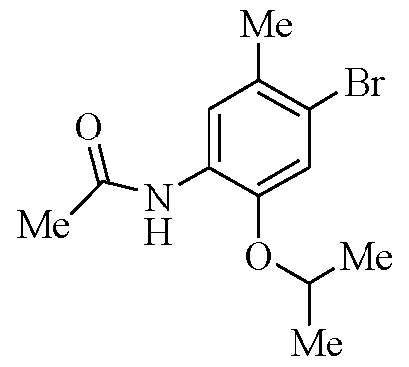
(HID)
The present application relates to conversion of compound of formula (HID) to ceritinib by a process as described in the present application. The present application also relates to use of compound of formula (HID) as an intermediate for the preparation of ceritinib.
Another specific aspect of the present application relates to use of compound of formula (IVA)

(IVA) as an intermediate for the preparation of ceritinib. The present application also relates to conversion of compound of formula (IVA) to ceritinib by a process as described in the present application.
Yet another aspect of the pres ound of formula (V)

(V)
wherein, Pi and P2 are independently -H or an amino protecting group or together with nitrogen atom forms nitro group and P3 is an amino protecting group. In one specific aspect of the present application, the amino protecting group may be any group known in the art. Specifically, the amino protecting group may be selected from a group of benzyl and tert-butyl carbamate. Alternatively, the amino protecting group may be an acyl group. Specifically, the amino protecting group may be acetyl group.
One specific aspect of the present application relates to compound of formula (VA)

(VA)
The present application relates to conversion of compound of formula (VA) to ceritinib by a process as described in the present application. The present application also relates to use of compound of formula (VA) as an intermediate for the preparation of ceritinib.
Another specific aspect of the pres compound of formula (VB)
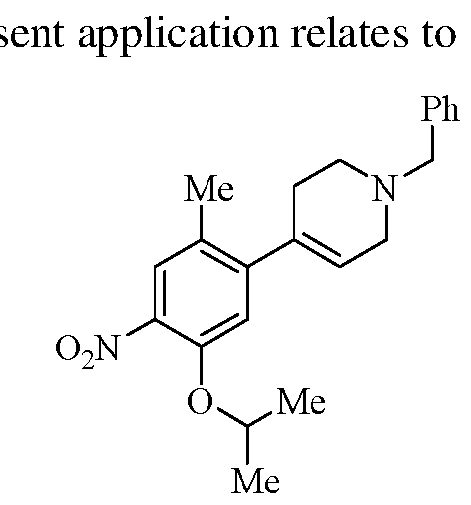
(VB)
The present application relates to conversion of compound of formula (VB) to ceritinib by a process as described in the present application. The present application also relates to use of compound of formula (VB) as an intermediate for the preparation of ceritinib.
Yet another specific aspect of the present application relates to compound of formula (VC)

(VC)
The present application relates to conversion of compound of formula (VC) to ceritinib by a process as described in the present application. The present application also relates to use of compound of formula (VC) as an intermediate for the preparation of ceritinib.
Still another specific aspect of the present application relates to compound of formula (VI)

wherein, Pi and P2 are independently -H or an amino protecting group or together with nitrogen atom forms nitro group and P3 is an amino protecting group.
The present application relates to conversion of compound of formula (VI) to ceritinib by a process as described in the present application. The present application also relates to use of compound of formula (VI) as an intermediate for the preparation of ceritinib.
Still another specific aspect of the present application relates to compound of formula (VIA)

(VIA)
The present application relates to conversion of compound of formula (VIA) to ceritinib by a process as described in the present application. The present application also relates to use of compound of formula (VIA) as an intermediate for the preparation of ceritinib.
A skilled person would understand that when compound of formula (ΙΠΑ) or compound of formula (IIIB) or compound of formula (IIIC) is used for the preparation of ceritinib, step (c) is not needed to perform since the hydrogenation of corresponding compound of formula (VA) or compound of formula (VB) at step (b) would result into compound of formula (II). A skilled person would also understand that when compound of formula (HID) is used for the preparation of ceritinib, step (c) is needed to perform since the hydrogenation of corresponding compound of formula (VC) would result compound of formula (VIA) which would result into compound of formula (II) following deprotection of acetyl group.
The present application also relates to a process for the preparation of compound of formula (IIIA)

(IIIA)
comprising
(a) reacting a compound of formula (XA) with a suitable halogenating agent

(XA)
(b) benzylating the resulting compound with benzyl halide.
The present application further relates to a process for the preparation of compound of formula (IIIA) comprising reacting a compound of formula (XB)

The solvent used for the reaction of compound of formula (XA) or (XB) with a suitable halogenating agent includes but not limited to polar aprotic solvent such as dimethylformamide (DMF), dimethylsulfoxide (DMSO) and the like; ether such as tetrahydrofuran, 1,4-dioxane and the like; aliphatic hydrocarbon solvent such as hexane, heptane and the like; aromatic hydrocarbon solvent such as toluene, xylene and the like; chlorinated solvent such as chloroform and the like. The halogenating agent used in the reaction may be any halogenating agent known in the art. Specifically, the halogenating agent may be selected from N-bromosuccinamide, N- chlorosuccinamide.
The present application also relates to a process for the preparation of compound of formula (IIIB) comprising reacting a compound of formula (XB) with N-bromosuccinamide

The present application relates to a process for the preparation of compound of formula (IIIB) comprising
(a) reacting a compound of formula (XA) with N-bromosuccinamide

(XA)
(b) benzylating the resulting compound with benzyl halide.
The present application further relates to a process for the preparation of compound of formula (IIIC) comprising reacting a compound of formula (XC) with N-bromosuccinamid

(XC)
The present application also relates to a process for the preparation of compound of formula (HID) comprising reacting a compound of formula (XD) with N-bromosuccinamide

The present application relates to a process for the preparation of compound of formula (HID) comprising
(a) reacting a compound of formula (XA) with N-bromosuccinamide

(XA)
(b) acetylating the resulting compound with an acetylating agent.
The solvent used for the reaction of compound of formula (XA) or compound of formula (XB) or compound of formula (XC) or compound of formula (XD) with N-bromosuccinamide includes but not limited to polar aprotic solvent such as dimethylformamide (DMF), dimethylsulfoxide (DMSO) and the like; ether such as tetrahydrofuran, 1,4-dioxane and the like; aliphatic hydrocarbon solvent such as hexane, heptane and the like; aromatic hydrocarbon solvent such as toluene, xylene and the like; chlorinated solvent such as chloroform and the like. The benzylation or acetylation reaction may be performed as reported in the art to afford the required intermediates in the present application.
Compounds of formulae (XA), (XB), (XC) and (XD) may be prepared by any known method in the art.
The present application relates to a process for the preparation of compound of formula (V) comprising reacting compound of formula (III) with N-protected pyrrolidone of formula (IV)

wherein, Pi and P2 are independently -H or an amino protecting group or together with nitrogen atom forms nitro group and P3 is an amino protecting group and X is halogen.
The present application relates to a process for the preparation of compound of formula (VA) comprising reacting compound of formula (IIIB) with N-protected pyrrolidone of formula (IVA)

The present application further relates to a process for the preparation of compound of formula (VB) comprising reacting compound of formula (IIIC) with N-protected pyrrolidone of formula (IVA)

The present application relates to a process for the preparation of compound of formula (VC) comprising reacting compound of formula (HID) with N-protected pyrrolidone of formula (IVA)

Another aspect of the present application relates to a process for the preparation of compound of formula (VI) comprising the steps of:
(a) reacting compound of formula (III) with N-protected pyrrolidone of formula (IV) to provide

Another specific aspect of the present application relates to a process for preparation of compound of formula (VIA) comprising the steps of:
(a) reacting compound of formula (HID) with N-protected pyrrolidone of formula (IV A) to provide a compound of formula (VC)


(VC)
One specific aspect of the present application relates to a process for preparation of ceritinib or acid-addition salt thereof comprising the steps of:
(a) reacting compound of formula (IIIB) with N-protected pyrrolidone of formula (IV A) to provide a compound of formula (VA)

(b) hydrogenation of compound of formula (VA) to provide compound of formula (II) or acid- addition salt thereof

(c) reacting compound of formula (II) or acid-addition salt thereof with compound of formula (I)

(I)
wherein, Ri is a leaving group selected from a group of halogen, -SO2R2; R2 may be a linear or branched alkyl having 1-6 carbon atoms and an aromatic group having 6-12 carbon atoms optionally having one or more substituents selected from a group of halogen and alkyl having 1 - 6 carbon atoms.
Another specific aspect of the present application relates to a process for preparation of ceritinib or acid-addition salt thereof comprising the steps of:
(a) reacting compound of formula (IIIC) with N-protected pyrrolidone of formula (IV A) to provide a compound of formula (VB)

(b) hydrogenation of compound of formula (VB) to provide compound of formula (II) addition salt thereof

(c) reacting compound of formula (II) or acid-addition salt thereof with compound of formula (I)

(I)
wherein, Ri is a leaving group selected from a group of halogen, -SO2R2; R2 may be a linear or branched alkyl having 1-6 carbon atoms and an aromatic group having 6-12 carbon atoms optionally having one or more substituents selected from a group of halogen and alkyl having 1 - 6 carbon atoms.
Another specific aspect of the present application relates to a process for preparation of ceritinib or acid-addition salt thereof comprising the steps of:
(a) reacting compound of formula (HID) with N-protected pyrrolidone of formula (IV A) to provide a compound of formula (VC)

(b) hydrogenation of compound of formula (VC) to provide compound of formula (VIA)

(VC)
(c) deprotection of protecting group of compound of formula (VIA) to afford compound of formula (II) or an acid addition salt thereof

(d) reacting compound of formula (II) or an acid addition salt thereof with compound of formula (I)

(I)
wherein, Ri is a leaving group selected from a group of halogen, -SO2R2; R2 may be a linear or branched alkyl having 1-6 carbon atoms and an aromatic group having 6-12 carbon atoms optionally having one or more substituents selected from a group of halogen and alkyl having 1 - 6 carbon atoms.
Another specific aspect of the present application relates to a process for preparation of ceritinib or acid-addition salt thereof comprising the steps of:
(a) deprotection of protecting group of compound of formula (VIA) to afford compound of formula (II)

(d) reacting compound of formula (II) or an acid addition salt thereof with compound of formula (I)

(I)
wherein, Ri is a leaving group selected from a group of halogen, -SO2R2; R2 may be a linear or branched alkyl having 1-6 carbon atoms and an aromatic group having 6-12 carbon atoms optionally having one or more substituents selected from a group of halogen and alkyl having 1 - 6 carbon atoms.
One aspect of the present application relates to a process for the preparation of compound of formula (II) or acid-addition salt thereof comprising the steps of
(a) reacting compound of formula (III) with N-protected pyrrolidone of formula (IV) to provide a compound of formula (V)

(III)
wherein, Pi and P2 are independently -H or an amino protecting group or together with nitrogen atom forms nitro group and P3 is an amino protecting group and X is halogen;
(b) hydrogenation la (VI)

(c) optional deprotection of protecting groups of compound of formula (VI)

One specific aspect of the present application relates to a process for the preparation of compound of formula (II) or an acid-addition salt thereof comprising the steps of:
(a) reacting compound of formula (IIIA) with N-protected pyrrolidone of formula (IV A) to

(VA)
Another specific aspect of the present application relates to a process for the preparation of compound of formula (II) or an acid-addition salt thereof comprising the steps of:
(a) reacting compound of formula (IIIB) with N-protected pyrrolidone of formula (IV A) to provide a co

(b) hydrogenation of compound of formula (VA)

Yet another specific aspect of the present application relates to a process for the preparation of compound of formula (II) or an acid-addition salt thereof comprising the steps of:
(a) reacting compound of formula (IIIC) with N-protected pyrrolidone of formula (IV A) to provide a compound of formula (VB)

(b) hydrogenation of compound of formula (VB)

Still another specific aspect of the present application relates to a process for preparation of ceritinib or acid-addition salt thereof comprising the steps of:
(a) reacting compound of formula (HID) with N-protected pyrrolidone of formula (IVA) to provide a compound of formula (VC)

(VC)
(HID)
(b) hydrogenation of compound of formula (VC) to provide compound of formula (VIA)

(VC)
(c) deprotection of protecting group of compound of formula (VIA) to provide compound of formula (II) or an acid addition salt thereof

Alternatively, compound of formula (VC) may be deprotected to provide a compound of formula (VI') or an acid-addition salt thereof

and compound of formula (VI') or an acid-addition salt thereof may be hydrogenated to provide compound of formula (II) or an acid addition salt thereof

(vr) (II)
Another aspect of the present application relates to a process for the preparati compound of formula (II) or acid-addition salt thereof comprising the steps of:
(a) hydrogenation of compound of formula (V) to provide compound of formula (VI)

(b) optional deprotection of protecting groups of compound of formula (VI)

Another aspect of the present application relates to a process for the preparati compound of formula (II) or acid addition salt thereof comprising the steps of:
(a) hydrogenation of compound of formula (VA) to provide compound of formula (II)

Another aspect of the present application relates to a process for the preparati compound of formula (II) or acid addition salt thereof comprising the steps of:
(a) hydrogenation of compound of formula (VB) to provide compound of formula (II)

Still another specific aspect of the present application relates to a process for preparation of compound of formula (II) or acid-addition salt thereof comprising the steps of:
(a) hydrogenation of compound of formula (VC) to provide compound of formula (VIA)

(VC)
(b) deprotection of protecting group of compound of formula (VIA)

Another specific aspect of the present application relates to a process for preparation of compound of formula (II) or acid-addition salt thereof comprising the steps of:
(a) deprotection of compound of formula (VC) to provide a compound of formula (VI') or an acid- addition salt thereof

(vr)
(VC)
(b) hydrogenation of compound of formula (VI') or an acid-addition salt thereof to provide compound of formula (II) or an acid addition salt thereof

(VI·) (Π)
Still another specific aspect of the present application relates to a process for preparation of compound of formula (II) or acid-addition salt thereof comprising deprotection of protecting group of c

Another aspect of the present application relates to acid-addition salt of ceritinib, wherein the salt is not dihydrochloride salt. Specifically, The present application relates to diacetate salt of ceritinib, dicitrate salt of ceritinib, dioxalate salt of ceritinib, diformate salt of ceritinib, dimesylate salt of ceritinib, dimaleate salt of ceritinib, ditosylate salt of ceritinib, dibenzoyl tartarate salt of ceritinib, diphosphate salt of ceritinib.
Yet another aspect of the present application relates to a process for preparation of acid- addition salt of ceritinib comprising reacting acid-addition salt of compound of formula (II) with compound of formula (I)

(D (ID
wherein, Ri is a leaving group selected from a group of halogen, -SO2R2; R2 may be a linear or branched alkyl having 1-6 carbon atoms and an aromatic group having 6-12 carbon atoms optionally having one or more substituents selected from a group of halogen and alkyl having 1 - 6 carbon atoms and wherein acid-addition salt is selected from a group of diacetate salt, dicitrate salt, dioxalate salt, diformate salt, dimesylate salt, dimaleate salt, ditosylate salt, dibenzoyl tartarate salt, diphosphate salt.
Still another aspect of the present application relates to a process for preparation of ceritinib comprising the steps of:
(a) reacting an acid-addition salt of compound of formula (II) with compound of formula (I) to provide acid-addition salt of ceritinib

(I) (II)
(b) treating acid-addition salt of ceritinib with a base,
wherein, Ri is a leaving group selected from a group of halogen, -SO2R2; R2 may be a linear or branched alkyl having 1-6 carbon atoms and an aromatic group having 6-12 carbon atoms optionally having one or more substituents selected from a group of halogen and alkyl having 1 - 6 carbon atoms; wherein the base is selected from a group of triethylamine, diisopropyl ethylamine, tromethamine, sodium carbonate, potassium carbonate and cesium carbonate and wherein acid-addition salt is selected from a group of diacetate salt, dicitrate salt, dioxalate salt, diformate salt, dimesylate salt, dimaleate salt, ditosylate salt, dibenzoyl tartarate salt, diphosphate salt.
Another aspect of the present application relates to a process for preparation of acid-addition salt of ceritinib comprising reacting acid-addition salt of compound of formula (II) with compound of formula (IB)

(IB) (ID
wherein acid-addition salt is selected from a group of diacetate salt, dicitrate salt, dioxalate salt, diformate salt, dimesylate salt, dimaleate salt, ditosylate salt, dibenzoyl tartarate salt, diphosphate salt.
Still another aspect of the present application relates to a process for preparation of ceritinib comprising the steps of:
(a) reacting acid-addition salt of compound of formula (II) with compound of formula (IB) to provide acid-addition salt of ceritinib

(IB) (II)
(b) treating acid-addition salt of ceritinib with a base,
wherein base is selected from a group of triethylamine, diisopropyl ethylamine, tromethamine, sodium carbonate, potassium carbonate and cesium carbonate and wherein acid- addition salt is selected from a group of diacetate salt, dicitrate salt, dioxalate salt, diformate salt, dimesylate salt, dimaleate salt, ditosylate salt, dibenzoyl tartarate salt, diphosphate salt.
Another aspect of the present application relates to process for preparation of a salt of ceritinib comprising the steps of:
(a) providing a mixture of ceritinib and a suitable solvent;
(b) adding an acid to the above mixture;
(c) isolating the salt of ceritinib
wherein the acid is selected from a group of acetic acid, citric acid, oxalic acid, formic acid, methane sulfonic acid, maleic acid, p-toluene sulfonic acid, dibenzoyl tartaric acid and o- phosphoric acid.
The suitable solvent of step (a) includes but not limited to alcoholic solvent such as methanol, ethanol, isopropanol and the like; ketone solvent such as acetone, methyl ethyl ketone and the like; ester solvent such as ethyl acetate, n-butyl acetate and the like; nitrile solvent such as acetonitrile and the like and mixtures thereof. Specifically, the solvent is an ester solvent. More specifically, the solvent is ethyl acetate. In one of the embodiments of step a), any physical form of ceritinib may be utilized, which may be crystalline or amorphous, for providing the mixture of ceritinib in a suitable solvent or mixtures thereof. In another embodiment of step (a), any physical form of ceritinib may be utilized, which may be anhydrous or hydrate, for providing the mixture of ceritinib in suitable solvent or mixtures thereof. In one embodiment of step (b), the acid selected from a group of acetic acid, citric acid, oxalic acid, formic acid, methane sulfonic acid, maleic acid, p-toluene sulfonic acid, dibenzoyl tartaric acid and o- phosphoric acid may be added to the mixture of step (a) or may be dissolved in a suitable solvent and the solution may be added to the mixture of step (a). The suitable solvent for dissolving the acid in step (b) includes but not limited to alcoholic solvent such as methanol,
ethanol, isopropanol and the like; ketone solvent such as acetone, methyl ethyl ketone and the like; ester solvent such as ethyl acetate, n-butyl acetate and the like; nitrile solvent such as acetonitrile and the like and mixtures thereof. Specifically, the solvent is an alcoholic solvent. More specifically, the solvent is methanol. The reaction mixture may be stirred for about 15 minutes to about 5 hours at a temperature of about 0 °C to about boiling point of the solvent. Specifically, the reaction mixture may be stirred for about 30 minutes to about 3 hours at a temperature of about 0 °C to about 40 °C. Optionally, the product may be precipitated by adding a suitable anti-solvent to the reaction mass. The suitable anti-solvent includes but not limited to aromatic hydrocarbons such as toluene, xylene and the like; aliphatic hydrocarbons such as heptane, n-hexane and the like. Specifically, the anti-solvent is an aliphatic hydrocarbon. More specifically, the anti-solvent is n-hexane. The product may be isolated from the reaction mass by any technique known in the art. Specifically, the product, diphosphate salt of ceritinib, may be isolated from the reaction mass by filtration. Optionally, the resultant product may be dried at any suitable conditions.
Another aspect of the present application relates to a process for the preparation of ceritinib or an acid-addition salt thereof comprising the steps of:
(a) reacting a compound of formula (III) with a compound of formula (IV) in presence of a Grignard

wherein Pi, P2, P3 and X are as designated in the previous embodiments;
(b) dehydration V);

(XI)
(b) hydrogenation of compound of formula (V) to provide compound of formula (VI)


(d) reacting compound of formula (II) or an acid-addition salt thereof with compound of formula (I)

(I)
wherein, Ri is as designated above.
The reaction between compound of formula (III) and compound of formula (IV) in step (a) may be carried out in presence of a Grignard reagent including but not limited to isopropyl magnesium chloride. The reaction may be carried out in an inert organic solvent including but not limited to an ether such as tetrahydrofuran, 1,4-dioxane and the like; aromatic hydrocarbon such as toluene, xylene and the like. Specifically, the reaction may be performed in tetrahydrofuran.
Dehydration of compound of formula (XI) may be carried out in presence of a suitable dehydrating agent to afford compound of formula (V). The dehydrating agent include but not limited to aluminium phosphate, calcium oxide, Ν,Ν'-dicyclohexylcarbodiimide, orthoformic acid, phosphorus pentoxide, phosphoryl chloride, sulfuric acid, p-toluene sulfonic acid and the
like. Specifically, the dehydration of compound of formula (XI) may be carried out in presence of p-toluene sulfonic acid to afford compound of formula (V).
The remaining reactions of the above aspect may be performed substantially similar to one or more reactions described in the previous embodiments.
One specific aspect of the present application relates to compound of formula (XI)

(XI)
The present application relates to conversion of compound of formula (XI) to ceritinib by a process as described in the present application. The present application also relates to use of compound of formula (XI) as an intermediate for the preparation of ceritinib.
Another specific aspect of the present application relates to compound of formula (XIA)

(XIA)
The present application relates to conversion of compound of formula (XIA) to ceritinib by a process as described in the present application. The present application also relates to use of compound of formula (XIA) as an intermediate for the preparation of ceritinib.
The present application also relates to a process for the preparation of compound of formula (XI) comprising reacting a compound of formula (III) with a compound of formula (IV) in presence of a Grignard reagent to afford compound of formula (XI)

The present application also relates to a process for the preparation of compound of formula (XIA) comprising reacting a compound of formula (IIIB) with a compound of formula (IV A) in presence of a Grignard reagent

The present application also relates to a process for the preparation of compound of formula (V) comprising dehydrating compound of formula (XI) with a suitable dehydrating agent

The present application relates to a process for the preparation of compound of formula (VA) comprising dehydrating compound of formula (XIA) with a suitable dehydrating agent

DEFINITIONS
The following definitions are used in connection with the present application unless the context indicates otherwise.
The terms "about," "general, 'generally," and the like are to be construed as modifying a term or value such that it is not an absolute. Such terms will be defined by the circumstances and the terms that they modify as those terms are understood by those of skill in the art. This includes, at very least, the degree of expected experimental error, technique error and instrument error for a given technique used to measure a value.
All percentages and ratios used herein are by weight of the total composition and all measurements made are at about 25°C and about atmospheric pressure, unless otherwise designated. All temperatures are in degrees Celsius unless specified otherwise. As used herein, the terms "comprising" and "comprises" mean the elements recited, or their equivalents in structure or function, plus any other element or elements which are not recited. The terms "having" and "including" are also to be construed as open ended. All ranges recited herein include the endpoints, including those that recite a range between two values. Whether so indicated or not, all values recited herein are approximate as defined by the circumstances, including the degree of expected experimental error, technique error, and instrument error for a given technique used to measure a value.
The term "optional" or "optionally" is taken to mean that the event or circumstance described in the specification may or may not occur, and that the description includes instances where the event occurs and instances where it does not.
"Halogen" is defined as non-metallic elements found in group VII of the periodic table and is selected from fluorine, bromine, chlorine and iodine.
Certain specific aspects and embodiments of the present application will be explained in greater detail with reference to the following examples, which are provided only for purposes of illustration and should not be construed as limiting the scope of the disclosure in any manner.
EXAMPLES
Example 1: Preparation of l-isopropoxy-4-methyl-2-nitrobenzene
A reaction vessel was charged with 4-methyl-2-nitrophenol (50 g) and dissolved in DMF (500 mL). To the reaction mass, 2-bromopropane (80.3 g) was added and the reaction mass was heated to 80 °C for 16 hours. After the completion of the reaction, the reaction mass was cooled to about 20-25 °C and methyl tert-butyl ether (500 mL) was added. The reaction mass was washed with water (3 x 500 mL) and then with brine (500 mL). The organic layer was dried over sodium sulfate and distilled completely to afford the desired product.
Yield: 60 g
Purity (by HPLC): 99.40%
Example 2: Preparation of 2-isopropoxy-5-methylaniline
A solution of l-isopropoxy-4-methyl-2-nitrobenzene (60 g) in ethyl acetate (600 mL) was charged in a Parr hydrogenator vessel. Palladium-charcoal (6 g) was added to the solution and the vessel was filled with hydrogen (80 psi). The vessel was shaken for 2 hours by maintaining the hydrogen pressure constant. The reaction mass was filtered through a Cilite pad which was washed with ethyl acetate (200 mL). The organic solvent was distilled completely to afford the desired product.
Yield: 43 g
Purity (by HPLC): 98.50%
Example 3: Preparation of 4-bromo-2-isopropoxy-5-methylaniline
A solution of 2-isopropoxy-5-methylaniline (40 g) in dimethyl formamide (200 mL) was cooled to 0 °C and a solution of N-bromosuccinimide (44.8 g) in dimethyl formamide (200 mL) was added to the solution drop wise. The reaction mass was slowly warmed to 20-25 °C and stirred for 12 hours. The reaction mixture was diluted with methyl tert-butyl ether (400 mL) and washed with water (2 x 400 mL), followed by brine (2 x 400 mL). The organic solvent was dried over sodium sulfate and distilled to afford the crude product. The crude product was purified by silica gel column chromatography (5% ethyl acetate in hexane) to obtain the title compound. Yield: 35.8 g
Purity (by HPLC): 94.9%
Example 4: Preparation of N,N-dibenzyl-4-bromo-2-isopropoxy-5-methyl aniline
Benzyl bromide (84.1 g) and potassium carbonate (101 g) was added to a solution of 4-bromo-2- isopropoxy-5-methylaniline (30 g) in acetonitrile (300 mL). The reaction mass was heated to 80 °C for 12 hours and cooled to 20-25 °C. The reaction mass was filtered through celite pad which was washed with ethyl acetate (50 mL). The solvent was distilled to afford to crude product. The crude product was diluted with ethyl acetate (300 mL) and washed with water (2 x 300 mL), followed by brine (300 mL). The organic layer was dried over sodium sulfate and distilled to afford the crude product. The crude product was purified by silica gel column chromatography (5% ethyl acetate in hexane) to obtain the title compound.
Yield: 41 g
Purity (by HPLC): 97.8%
Example 5: Preparation of N,N-dibenzyl-4-(l-benzyl-l,2,3,6-tetrahydro pyridin-4-yl)-2- isopropoxy-5-methylaniline
A solution of 1 -benzylpiperidin-4-one (13 g) in 1,4-dioxane (260 mL) was charged under nitrogen atmosphere in a reaction vessel. The catalyst, Pd2(dba)3 (424 mg), 2-
dicyclohexylphosphino-2',4',6'-triisopropylbiphenyl (Xphos) (883 mg), tosylhydrazine (6.89 g) and lithium t-butoxide (5.68 g) was added in portion wise under nitrogen atmosphere. After stirring the reaction mixture for 5 minutes, N,N-dibenzyl-4-bromo-2-isopropoxy-5- methylaniline (13 g) was added to the reaction mass and the reaction mass was heated to 110 °C for 16 hours. The reaction mass was cooled to 20-25 °C, diluted with dichloromethane (200 mL) and filtered through celite pad. The celite pad was washed with dichloromethane (50 mL). The organic layer was ditilled to afford the crude product. Water (200 mL) was added to the product and the compound was extracted from the aqueous layer with dichloromethane (2 x 150 mL). The organic layer was washed with brine (100 mL) and dried over sodium sulfate. The solvent was distilled to afford the crude product. The crude product was purified by silica gel column chromatography to provide the desired compound.
Yield: 14.3 g
Purity (by HPLC): 88.4%
Example 6: Preparation of 2-isopropoxy-5-methyl-4-(piperidin-4-yl)aniline dihydrochloride
A solution of N,N-dibenzyl-4-(l-benzyl-l,2,3,6-tetrahydropyridin-4-yl)-2-isopropoxy-5- methylaniline (15.5 g) in methanol (155 mL) was charged into a Parr hydrogenator vessel. Palladium-charcoal (15.5 g) was added to the reaction mass and the vessel was filled with hydrogen (80 psi). The vessel was shaken for 3 days maintaining the hydrogen pressure constant. The reaction mass was filtered through a Cilite pad which was washed with methanol (50 mL). The organic solvent was distilled completely to afford the crude product which was triturated in ethyl acetate-hexane to afford 2-isopropoxy-5-methyl-4-(piperidin-4-yl)aniline as off-white solid.
The above product was dissolved in methanolic hydrochloride (60 mL) at 0 °C and stirred for 10 minutes. Methanol was distilled off to afford the crude product. The crude product was co- distilled in toluene (3 x 50 mL). The precipitated solid was filtered and dried under vacuum to provide the title product.
Yield: 6 g
Purity (by HPLC): 88.4%
Example 7: Preparation of Ceritinib dihydrochloride
To a solution of 2,5-dichloro-N-(2-(isopropylsulfonyl)phenyl)pyrimidin-4-amine (6.0 g) in isopropanol (60 mL), 2-isopropoxy-5-methyl-4-(piperidin-4-yl)aniline dihydrochloride (5.53 g) was added. The reaction mass was stirred for 14 hours at 85 °C. The reaction mass was cooled to
22 °C and stirred for 3 hours. The precipitated solid was filtered and washed with isopropanol (3 x 10 mL). The solid was dried under vacuum to provide the desired compound.
Yield: 7.3 g
Purity (by HPLC): 96.02%
Example 8: Preparation of 2-isopropoxy-5-methyl-4-(piperidin-4-yl)aniline
A solution of N,N-dibenzyl-4-(l-benzyl-l,2,3,6-tetrahydropyridin-4-yl)-2-isopropoxy-5- methylaniline (14 g) in methanol (140mL) was charged into a Parr hydrogenator vessel. Palladium-charcoal (14 g) was added to the reaction mass and the vessel was filled with hydrogen (80 psi). The vessel was shaken for 3 days maintaining the hydrogen pressure constant. The reaction mass was filtered through a Cilite pad which was washed with methanol (50 mL). The organic solvent was distilled completely to afford the crude product. The crude product was washed with 20% methyl tert-butyl ether in hexane to afford the desired product as a sticky off-white solid.
Yield: 5.3 g
Purity (by HPLC): 79.9%
Example 9: Preparation of Ceritinib
To a solution of 2,5-dichloro-N-(2-(isopropylsulfonyl)phenyl)pyrimidin-4-amine (6.2 g, 0.017 mol) in isopropanol (124 mL), 2-isopropoxy-5-methyl-4-(piperidin-4-yl)aniline dihydrochloride (5.34 g) and p-toluenesulfonic acid monohydrate (6.83g) were added. The reaction mass was stirred for 24 hours at 140 °C in an autoclave. The reaction mass was cooled to 20-25 °C and the solvent was distilled to provide crude product. The crude product was dissolved in dichloromethane (200 mL) and washed with saturated solution of sodium bicarbonate (2 x 50 mL), followed by brine (2 x 50 mL). The organic layer was dried over sodium sulfate and distilled to afford the crude product. The crude product was purified by silica gel column chromatography using methanol-dichloromethane (Methanol:Dichloromethane::2:98 to 10:90) as eluent to provide the desired compound.
Yield: 5.0 g
Purity (by HPLC): 95.8%
Example 10: Preparation of isopropyl(2-nitrophenyl)sulfane
Potassium carbonate (122.4 g) and 2-propanethiol (26.9 g) was added to a solution of 1-fluoro- 2-nitrobenzene (50 g) in DMF (350 mL) at 20-25 °C. The reaction mass was then heated to 100 °C for 16 hours and cooled to 20-25 °C. The reaction mass was quenched with water (500 mL) and extracted with diethylether (3 x 300 mL). The combined organic layer was washed with
brine (200 mL), dried over sodium sulfate and distilled under vacuum to obtain the title compound.
Yield: 68.3 g
Purity (by HPLC): 98.17%
Example 11: Preparation of l-(isopropylsulfonyl)-2-nitrobenzene
To a solution of isopropyl(2-nitrophenyl)sulfane (68 g) in dichloromethane (680 mL), m- chloroperoxybenzoic acid (200 g) was added portion wise at 0 °C. The reaction mass was stirred at 20-25 °C for 24 hours. The reaction mass was quenched by the addition of saturated solution of sodium thiosulfate (200 mL). The oraganic layer was separated and washed with 5% sodium bicarbonate solution (2 x 300 mL) and brine (200 mL). The organic layer was dried over sodium sulfate and distilled under vacuum to afford the desired product.
Yield: 77.5 g
Purity (by HPLC): 98.33%
Example 12: Preparation of 2-(isopropylsulfonyl)aniline
A solution of l-(isopropylsulfonyl)-2-nitrobenzene (35 g) in methanol (350 mL) was charged into a Parr hydrogenator vessel. Palladium-charcoal (3.5 g, 10%) was added to the reaction mass and the vessel was filled with hydrogen (60 psi). The vessel was shaken for 6 hours maintaining the hydrogen pressure constant. The reaction mass was filtered through a Cilite pad which was washed with methanol (200 mL). The organic solvent was distilled completely to afford the title product.
Yield: 30.2 g
Purity (by HPLC): 98.3%
Example 13: Preparation of 2-chloro-N-(2-(isopropylsulfonyl)phenyl)-5-methyl-pyrimidin- 4-amine
A solution of 2-(isopropylsulfonyl)benzenamine (lOg) in dimethylacetamide (30 mL) was added slowly to a mixture of sodium hydride (7.43 g) in dimethyl acetamide (40 mL) at 0 °C and stirred for 1 hour. A solution of 2,4,5-trichloropyrimidine (17.26 mL) in dimethylacetamide (30 mL) was added to the above reaction mixture and warmed to 20-25 °C. The reaction mass was stirred for 2 hours and quenched by a saturated solution of ammonium chloride (300 mL). The reaction mass was extracted with ethyl acetate (3 x 200 mL). The combined organic layer was washed with water (3 x 150 mL) and dried over sodium sulfate. The organic layer was distilled under reduced pressure to afford the crude compound, which was purified by silica gel column chromatography using 5% ethyl acetate in hexane to obtain the desired product.
Yield: 9.1 g
Purity (by HPLC): 99.2%
Example 14: Preparation of 2-chloro-N-(2-(isopropylsulfonyl)phenyl)-5-methyl-pyrimidin- 4-amine
A solution of 2-(isopropylsulfonyl)benzenamine (5 g) in dimethyl acetamide (20 mL) was added to sodium hydride drop wise. The reaction mass was stirred for 10 minutes and cooled to 0 °C. A solution of 2,4,5 -trichloropyrimidine (13.8 g) in dimethyl acetamide (15 mL) was added slowly to the above reaction mass and stirred for 10 minutes. The reaction mass was stirred for 2 hours and quenched by a saturated solution of ammonium chloride (100 mL). The reaction mass was extracted with methyl tert-butyl ether (3 x 100 mL). The combined organic layer was washed with brine (100 mL) and dried over sodium sulfate. The organic layer was distilled under reduced pressure to afford the crude compound. The crude product was dissolved in ethyl acetate (50 mL) and cooled to 10 °C. To this solution, hexane (300 mL) was added and stirred for 10 minutes. The precipitated solid was filtered. The mother liquor was again treated as above with ethyl acetate (20 mL) and hexane (100 mL) to afford the second crop.
Yield: 3.5 g
Purity (by HPLC): 99.2%
Example 15: Preparation of l-benzyl-4-(4-(dibenzylamino)-5-isopropoxy-2- methylphenyl)piperidin-4-ol
To a solution of N,N-dibenzyl-4-bromo-2-isopropoxy-5-methylaniline (10 g) in dry tetrahydrofuran (100 mL), a solution of l-benzylpiperidin-4-one (13.4 g, 0.071 moles) in dry THF (50 mL) was added. The reaction mass was cooled to 0°C. Isopropyl magnesium chloride- lithium chloride (1.3M in THF, 54.8 mL) was added to the reaction mass at 0 °C under argon atmosphere. The reaction mass was stirred at 10 °C for 10 minutes and then it was refluxed for 6 hours. The reaction mass was quenched with saturated solution of ammonium chloride (50 mL) and extracted with ethyl acetate (2 x 200 mL). The combined organic layer was dried over sodium sulfate and distilled under reduced pressure to provide the crude product. The crude product was purified by silica gel column chromatography to afford the title compound.
Yield: 2.7 g
Purity (by HPLC): 80%
Example 16: Preparation of N,N-dibenzyl-4-(l-benzyl-l,2,3,6-tetrahydropyridin-4-yl)-2- isopropoxy-5-methylaniline
p-Toluene sulfonic acid (0.64 g) was added to a solution of l-benzyl-4-(4-(dibenzylamino)-5- isopropoxy-2-methylphenyl)piperidin-4-ol (2 g) in anhydrous toluene (40 mL). The reaction mass was heated to reflux. After the completion of the reaction, the organic layer was washed
with 5% sodium bicarbonate solution (2 x 50 mL) and brine (50 mL). The organic layer was dried over sodium sulfate and distilled under reduced pressure to afford the crude product, which was purified by silica gel column chromatography to obtain the desired product.
Yield: 1 g
Purity (by HPLC): 93.5%
Example 17: Preparation of l-bromo-5-fluoro-2-methyl-4-nitrobenzene
To a mixture of 2-bromo-4-fluoro-l-methylbenzene (15 g) and concentrated sulfuric acid (37.5 mL), potassium nitrite (3.25 g) was added portion wise over a period of 45 minutes at 0 °C. The reaction mass was slowly warmed to 20-25 °C and stirred for 15 hours. Crushed ice was added to the reaction mass and extracted with ethyl acetate (2 x 100 mL). The combined organic layer was washed with brine (50 mL) and dried over sodium sulfate. The organic layer was distilled under vacuum to afford the crude product. The crude product was purified by silica gel column chromatography using 5% ethyl acetate in hexane as eluant to afford the title compound.
Yield: 11 g
Purity (by HPLC): 84.5%
Example 18: Preparation of l-bromo-5-isopropoxy-2-methyl-4-nitrobenzene
To a solution of l-bromo-5-fluoro-2-methyl-4-nitrobenzene (10.0 g) in isopropanol (200 mL), cesium carbonate (69.6 g) was added. The reaction mass was heated to reflux for 15 hours and then the solvent was evaporated to afford the crude product. Water (200 mL) was added to the crude product and extracted with ethyl acetate (2 x 100 mL). The combined organic layer was washed with brine (100 mL) and dried over sodium sulfate. The organic layer was distilled under vacuum to afford the desired product.
Yield: 10.1 g
Purity (by HPLC): 95.37%
Example 19: Preparation of l-bromo-5-isopropoxy-2-methyl-4-nitrobenzene
A solution of 1 -benzylpiperidin-4-one (1.72 g) in 1,4-dioxane (25 mL) was charged under nitrogen atmosphere in a reaction vessel. The catalyst, Pd2(dba)3 (75 mg), 2- dicyclohexylphosphino-2',4',6'-triisopropylbiphenyl (Xphos) (150 mg), tosylhydrazine (1.69 g) and lithium t-butoxide (1.67 g) was added in portion wise under nitrogen atmosphere. After stirring the reaction mixture for 5 minutes, l-bromo-5-isopropoxy-2-methyl-4-nitrobenzene (2.5 g) was added to the reaction mass and the reaction mass was heated to 110 °C for 16 hours. The reaction mass was cooled to 20-25 °C, diluted with dichloromethane (50 mL) and filtered through celite pad. The celite pad was washed with dichloromethane (20 mL). The organic layer was distilled to afford the crude product. The crude product was dissolved in dichloromethane
(100 mL), washed with water (50 mL) and dried over sodium sulfate. The organic layer was distilled under reduced pressure to afford the crude product. The crude product was purified by silica gel column chromatography to provide the desired compound.
Yield: 1.35 g
Example 20: Preparation of 2-isopropoxy-5-methyl-4-(piperidin-4-yl)aniline
A solution of l-benzyl-4-(5-isopropoxy-2-methyl-4-nitrophenyl)-l,2,3,6-tetrahydropyridine (1.35 g) and methanol (27 mL) was charged in a Parr hydrogenation vessel and added palladium/characoal (675 mg, 50% w/w). The vessel was filled with hydrogen (80 psi) and the reaction mass was shaken for 3 days with constant hydrogen pressure. The reaction mass was filtered through celite bed and the solvent was distilled under reduced pressure to afford the crude product. The crude product was triturated with 20% methyl tert-butyl ether in hexane to give the desired product.
Yield: 600 mg
Purity (by LCMS): 67.4%
Example 21: Preparation of l-isopropoxy-4-methyl-2-nitrobenzene
To a solution of 4-methyl-2-nitrophenol (10 g) in dimethyl formamide (60 mL), potassium carbonate (45.1 g) and a solution of 2-bromopropane (16.06 g) in dimethyl formamide (20 mL) were added. The reaction mass was heated up to about 80 °C for about 3 hours. The reaction mass was allowed to cool to 25-30 °C and then filtered to remove the solids. The solids were washed with ethyl acetate (50 mL). Water (400 mL) was added to the filtrate and the organic layer was separated. The aqueous layer was extracted with ethyl acetate (1 X 50 mL). The combined organic layer was washed with brine solution (2 x 100 mL). The organic layer was distilled completely at 48.5 °C under vacuum to provide the required compound.
Yield: 13.1 g
Example 22: Preparation of 2-isopropoxy-5-methylaniline
To a solution of l-isopropoxy-4-methyl-2-nitrobenzene (150 g) and ethyl acetate (450 mL) in an autoclave, palladium charcoal (10%, 30 g) was added. The reaction mass was stirred at 40-50 °C with a hydrogen pressure of about 6.5 Kg for about 6.30 hours. The reaction mass was cooled to
25-30 °C and filtered through hyflow. The solid was washed with ethyl acetate (2 x 225 mL) to provide the desired compound in a solution with ethyl acetate.
Example 23: Preparation of N-(2-isopropoxy-5-methylphenyl)acetamide
To the solution of 2-isopropoxy-5-methylaniline (approximately 5 g) in ethyl acetate obtained in Example 22, pyridine (7.18 g) and acetic anhydride (6.18 g) were added and the reaction mass was stirred for 2-3 hours at 25-35 °C. The reaction mass was quenched by the addition of water
(50 mL). The organic layer was separated and washed with dilute hydrochloric acid (10 %, 50 mL) and brine solution (50 mL). The organic layer containing the desired product is carried forward to the next step.
Example 24: Preparation of N-(4-bromo-2-isopropoxy-5-methylphenyl)acetamide
The ethyl acetate solution of N-(2-isopropoxy-5-methylphenyl)acetamide, obtained in Example 23, was cooled to 0-5 °C. A solution of N-bromosuccinamide (5.59 g) in ethyl acetate (15.5 mL) and dimethyl formamide (15.5 mL) was added to the above solution. The reaction mass was stirred for about 7 hours and then quenched by the addition of water (62 mL). The organic layer was separated and washed with brine solution (2 x 62 mL). The resulting organic solution was evaporated under vacuum to provide a solid compound. Hexane (31 mL) was added to the solid and cooled to 0-5 °C. The mixture was stirred for 10-15 minutes and the solid was filtered, washed with chilled hexane (15 mL) to provide pure desired compound.
Yield: 7.8 g
Example 25: 4-(l-benzyl-l,2,3,6-tetrahydropyridin-4-yl)-2-isopropoxy-5-methylaniline dihydrochloride
To a solution of l-benzylpiperidin-4-one (80 g) in 1,4-dioxane (2 L), tosylhydrazine (79 g), 2- dicyclohexylphosphino-2',4',6'-triisopropylbiphenyl (Xphos) (9.99 g), lithium t-butoxide (64.3 g) and Pd2(dba)3 (4.80 g) were added. After stirring the reaction mixture for 5 minutes, N-(4- bromo-2-isopropoxy-5-methylphenyl)acetamide (100 g) was added to the reaction mass and the reaction mass was heated to 95-100 °C for about 7 hours. The reaction mass was cooled to 20-25 °C and filtered through celite pad. The celite pad was washed with ethyl acetate (500 mL). The organic layer was ditilled under vacuum to afford the crude product. The crude product was dissolved in ethyl acetate (1 L) and washed with aqueous solution of sodium bicarbonate (7%, 1 L). The organic layer was separated and stirred with aqueous solution of hydrochloric acid (0.5 N, 1 L).
Aqueous hydrochloric acid solution (10 N, 250 mL) was added to the isolated aqueous layer containing hydrochloride salt of N-(4-(l-benzyl-l,2,3,6-tetrahydropyridin-4-yl)-2-isopropoxy-5- methylphenyl)acetamide. The reaction mass was stirred for 60-70 °C for about 4 hours. Ethyl acetate (1 L) was added to the reaction mass. The pH of the reaction mass was adjusted to 7-8 by the addition of solid sodium bicarbonate under stirring. The ethyl acetate layer was separated and the aqueous layer was extracted with ethyl acetate (1 x 300 mL). The combined ethyl acetate layer was washed brine solution (1 L). The ethyl acetate layer was evaporated under vacuum to provide a thick residue. Methanolic HCl (200 mL) was added to the residue and stirred for 15-20 minutes at 25-35 °C. The reaction mass was concentrated completely under vacuum. The
reaction mass was stripped off with toluene (100 mL) at 45-50°C under vacuum to provide desired compound.
Yield: 130 g
Example 26: Preparation of 2-isopropoxy-5-methyl-4-(piperidin-4-yl)aniline dihydrochloride
Palladium-charcoal (10 %, 5 g) was added to a mixture of 4-(l -benzyl- 1,2,3, 6-tetrahydropyridin- 4-yl)-2-isopropoxy-5-methylaniline dihydrochloride (5 g) and methanol (50 mL) in an autoclave. The reaction mass was stirred with 8-10 Kg pressure of hydrogen gas at 25-35 °C for about 16 hours. The reaction mass was heated to 55-65 °C and was stirred for 10-12 hours with 8-9 Kg pressure of hydrogen gas for 6.30 hours keeping the temperature constant. The reaction mass was cooled to 25-35 °C and filtered over celite bed. The bed was washed with methanol (2 x 20 mL). The solvent was evaporated completely under vacuum. The residue was dissolved in methanol (50 mL) and palladium-charcoal (10 %, 5 g) was added to it. The reaction mass was stirred with 8-10 Kg pressure of hydrogen gas at 25-35 °C for about 16 hours. . The reaction mass was filtered over celite bed. The bed was washed with methanol (2 x 20 mL). The solvent was evaporated completely under vacuum to provide the title compound.
Yield: 4.8 g
Example 27: Preparation of 2-isopropoxy-5-methyl-4-(piperidin-4-yl)aniline
A reaction mass containing 4-(l-benzyl-l,2,3,6-tetrahydropyridin-4-yl)-2-isopropoxy-5- methylaniline dioxalate (5 g), methanol (50 mL), palladium-charcoal (10 %, 5 g) was stirred for about 19 hours at 25-35 °C. The reaction mass was filtered through hyflow and washed with methanol (25 mL). The methanol layer was concentrated completely under vacuum. Heptane (50 mL) was added to the residue and stirred for 10-15 min at 20-30 °C. The solid was filtered and washed with heptane (30 mL). The solid was dried in vacuum tray drier for 5 hours at 45 °C to provide the title compound.
Yield: 3.3 g
Purity (By HPLC): 90 %
Example 28A: Purification of 2-isopropoxy-5-methyl-4-(piperidin-4-yl)aniline
A mixture of 2-isopropoxy-5-methyl-4-(piperidin-4-yl)aniline (500 mg), as prepared in Example 27 and methanol (2.5 mL) was heated at 55 °C for 20 minutes. Another lot of methanol (2.5 mL) was added to the mixture at 55 °C to provide a clear solution. The solution was heated for 1 hour and then cooled to 26 °C. The precipitated solid was filtered and dried to provide pure title compound.
Example 28B: Purification of 2-isopropoxy-5-methyl-4-(piperidin-4-yl)aniline
A mixture of 2-isopropoxy-5-methyl-4-(piperidin-4-yl)aniline (500 mg), as prepared in Example 27 and isopropanol (5 mL) was heated at 55-60 °C for 10 minutes. Another lot of isopropanol (5 mL) was added to the mixture at 55-60 °C. The reaction mass was further heated for 2 hours and filtered at hot condition. The solid was dried at 50 °C to provide pure title compound.
Example 28C: Purification of 2-isopropoxy-5-methyl-4-(piperidin-4-yl)aniline
A mixture of 2-isopropoxy-5-methyl-4-(piperidin-4-yl)aniline (500 mg), as prepared in Example 27 and acetonitrile (5 mL) was heated at 60 °C for 90 minutes. The reaction mass was filtered at hot condition. The solid was dried at 50 °C to provide pure title compound.
Example 29: Preparation of 2-isopropoxy-5-methyl-4-(piperidin-4-yl)aniline
A mixture of formic acid (2.37 g) and triethylamine (2.09 g) was stirred at 0-5 °C for 2 hours under nitrogen atmosphere. The mixture was then added to a heterogeneous mass containing 4- (l-benzyl-l,2,3,6-tetrahydropyridin-4-yl)-2-isopropoxy-5-methylaniline dioxalate (3 g), palladium-charcoal (1.49 g) and methanol (30 mL) under nitrogen atmosphere. The reaction mass was stirred for about 4 hours and filtered through celite bed. Palladium-charcoal (3 g) was added to the filtrate and the reaction mass was stirred for 8 hours at 45-55 °C. The reaction mass was filtered through celite bed and the filtrated was evaporated under vacuum to provide the title compound.
Example 30: Preparation of 2,5-dichloro-N-(2-(isopropylsulfonyl)phenyl)pyrimidin-4- amine
Lithium tert-butoxide (100 g) was added slowly to a solution of 2-(isopropylsulfonyl)aniline (100 g) in dimethyl acetamide (800 mL) at about 19-26 °C. A solution of 2,4,5 - trichloropyrimidine (161 g) in dimethyl acetamide (100 mL) was added to the above solution slowly in a period of about 2 hours. The temperature of the reaction mass was observed to rise to 45 °C. The reaction mass was allowed to cool to 25-30 °C. The reaction mass was quenched by the addition of aqueous solution of ammonium chloride (10 %, 3 L). The reaction mass was stirred for 1 hour and the filtered to provide crude title compound.
A mixture of the crude compound (239 g) and methanol (250 mL) was stirred for 10 minutes at about 24 °C. Hexane (100 mL) was added to the mixture and further stirred for 2 hours. The solid was filtered and dried to provide the pure title compound.
Yield: 104 g
Example 31 : Preparation of ceritinib dihydrochloride
A mixture of 2,5-dichloro-N-(2-(isopropylsulfonyl)phenyl)pyrimidin-4-amine (25 g), 2- isopropoxy-5-methyl-4-(piperidin-4-yl)aniline dihydrochloride (24.36 g) and isopropanol (500 mL) was heated to about 79-80 °C for about 24 hours. The reaction mass was concentrated
completely under vacuum. The obtained solid was heated to 75-85 °C in presence of isopropanol (500 mL) for about 7 hours and the solid was filtered out. The solid was washed with isopropanol (200 mL) and dried to provide the title compound.
Yield: 19 g
Purity (By HPLC): 90.77%
Example 32A: Purification of ceritinib dihydrochloride
Ceritinib dihydrochloride (1 g), as prepared in Example 31 was mixed with isopropanol (20 mL) and methanol (2 mL). The mixture was heated for about 1 hour at about 55-60 °C. The solid was filtered at hot condition and washed with isopropanol (5 mL). The solid was dried at 45 °C in vacuum oven for 1-2 hours to provide pure ceritinib dihydrochloride.
Yield: 0.61 g
Purity (By HPLC): 95.17%
Example 32B: Purification of ceritinib dihydrochloride
Ceritinib dihydrochloride (13 g), as prepared in Example 31 was mixed with isopropanol (50 mL) and methanol (5 mL). The mixture was heated for about 20 minutes at about 55-65 °C. The reaction mass was allowed to cool to 25-30 °C and stirred for 30 minutes. The solid was filtered and washed with isopropanol (10 mL). The solid was dried at 45 °C in vacuum oven for 1-2 hours to provide pure ceritinib dihydrochloride.
Yield: 6.5 g
Example 32C: Purification of ceritinib dihydrochloride
Ceritinib dihydrochloride (17 g), as prepared in Example 31 was mixed with isopropanol (340 mL) and methanol (30 mL). The mixture was heated for about 35 minutes at about 55-65 °C. The reaction mass was allowed to cool to 25-30 °C and stirred for 30 minutes. The solid was filtered at hot condition and washed with isopropanol (30 mL). The solid was dried at 45 °C in vacuum oven for 1-2 hours to provide pure ceritinib dihydrochloride.
Yield: 10.5 g
Example 33 : Preparation of ceritinib dihydrochloride
A mixture of 2,5-dichloro-N-(2-(isopropylsulfonyl)phenyl)pyrimidin-4-amine (40 g), 2- isopropoxy-5-methyl-4-(piperidin-4-yl)aniline dihydrochloride (40.8 g) and isopropanol (800 mL) was heated to about 79-80 °C for about 26 hours. The precipitated solid was filtered at hot condition and dried under vacuum for 3-4 hours at 50 °C to provide crude title compound.
Yield: 36.7 g
Purity (By HPLC): 97.66%
Example 34A: Purification of ceritinib dihydrochloride
A mixture of ceritinib dihydrochloride (500 mg), as prepared in Example 33, dimethyl formamide (5 mL) and acetonitrile (10 mL) was heated for 30 minutes at 65-75 °C. The solid was filtered at the hot condition and washed with acetonitrile (5 mL). The compound was dried in vacuum oven at 45 °C for 1-2 hours to provide pure title compound.
Yield: 300 mg
Purity (By HPLC): 98.12%
Example 34B: Purification of ceritinib dihydrochloride
A mixture of ceritinib dihydrochloride (1 g), as prepared in Example 33, water (1 mL) and isopropanol (20 mL) was heated for 10 minutes at 65-75 °C to provide a clear solution. The solution was cooled to 25-35 °C and stirred for 10 minutes. The solid was filtered and washed with isopropanol (5 mL). The compound was dried in vacuum oven at 45 °C for 1-2 hours to provide pure title compound.
Yield: 730 mg
Purity (By HPLC): 98.88%
Example 34C: Purification of ceritinib dihydrochloride
A mixture of ceritinib dihydrochloride (700 mg), as prepared in Example 34B, water (0.7 mL) and isopropanol (14 mL) was heated for 10 minutes at 65-75 °C to provide a clear solution. The solution was cooled to 25-35 °C and stirred for about 2 hours. The solid was filtered and washed with isopropanol (5 mL). The compound was dried in vacuum oven at 45 °C for 1-2 hours to provide pure title compound.
Yield: 440 mg
Purity (By HPLC): 99.52%
Example 34D: Purification of ceritinib dihydrochloride
A mixture of ceritinib dihydrochloride (500 mg), as prepared in Example 33 and isopropanol (15 mL) was heated for 30 minutes at 65-75 °C. The solid was filtered at the hot condition and washed with isopropanol (5 mL). The compound was dried in vacuum oven at 45 °C for 1-2 hours to provide title compound.
Yield: 370 mg
Purity (By HPLC): 96.38%
Example 34E: Purification of ceritinib dihydrochloride
A mixture of ceritinib dihydrochloride (500 mg), as prepared in Example 33, water (0.5 mL), methanol (0.5 mL) and isopropanol (10 mL) was stirred for 15 minutes at about 25 °C. The solid was filtered and washed with isopropanol (5 mL). The compound was dried in vacuum oven at 45 °C for 1-2 hours to provide pure title compound.
Yield: 200 mg
Purity (By HPLC): 98.34%
Example 34F: Purification of ceritinib dihydrochloride
A mixture of ceritinib dihydrochloride (500 mg), as prepared in Example 33, water (1 mL) and isopropanol (20 mL) was stirred for 10 minutes at about 25 °C. The solid was filtered and washed with isopropanol (5 mL). The compound was dried in vacuum oven at 45 °C for 1-2 hours to provide pure title compound.
Yield: 200 mg
Purity (By HPLC): 99.07%
Example 35: Preparation of Ceritinib dioxalate
A mixture of 2,5-dichloro-N-(2-(isopropylsulfonyl)phenyl)pyrimidin-4-amine (1.5 g), 2- isopropoxy-5-methyl-4-(piperidin-4-yl)aniline dioxalate (2.04 g) and isopropanol (30 mL) was heated to about 78-85 °C for about 22 hours. The precipitated solid was filtered at hot condition, washed with isopropanol (10 mL) and dried under vacuum for 1-2 hours at 45-50 °C to provide title compound.
Yield: 1 g
Example 36: Preparation of Form A of ceritinib
A mixture of ceritinib dihydrochloride (1 g), water (1 mL) and acetone (3 mL) was heated to 50- 55 °C and stirred for 10-15 minutes to obtain a clear solution. The solution was filtered at hot condition and washed with acetone (1 mL). A solution of tromethamine (0.48 g) in water (10 mL) was added to the filtrate at 50-55 °C. The reaction mass was stirred for 30-40 minutes at 50- 55 °C and then at 20-25°C for 2-3 hours. Water (10 mL) was added to the reaction mass and further stirred for 1-2 hours at 20-25 °C. The precipitated solid was filtered and washed with water (10 mL). The wet compound was dried under vacuum for 4-5 hours at 50°C to provide desired compound.
Yield: 570 mg
Example 37: Preparation of Form A of ceritinib
A mixture of ceritinib dihydrochloride (1 g), water (1 mL) and acetone (3 mL) was heated to 50- 55 °C and stirred for 10-15 minutes to obtain a clear solution. The solution was filtered at hot condition and washed with acetone (1 mL). A solution of potassium carbonate (0.54 g) in water (5 mL) was added to the filtrate at 50-55 °C. The reaction mass was stirred for 1-2 hours at 50- 55 °C and then allowed to cooled to 20-25 °C. Water (10 mL) was added to the reaction mass and further stirred for 1 -2 hours at 20-25 °C. The precipitated solid was filtered and washed with
water (10 mL). The wet compound was dried under vacuum for 4-5 hours at 50°C to provide title compound.
Yield: 705 mg
Example 38: Preparation of Form A of ceritinib
A mixture of ceritinib dihydrochloride (1 g), water (1 mL) and acetone (3 mL) was heated to 50- 55 °C and stirred for 10-15 minutes to obtain a clear solution. The solution was filtered at hot condition and washed with acetone (1 mL). A solution of sodium carbonate (0.42 g) in water (10 mL) was added to the filtrate at 50-55 °C. The reaction mass was stirred for 1-2 hours at 50-55 °C and then allowed to cooled to 20-25°C. Water (10 mL) was added to the reaction mass and further stirred for 1-2 hours at 20-25 °C. The precipitated solid was filtered and washed with water (10 mL). The wet compound was dried under vacuum for 4-5 hours at 50°C to provide desired compound.
Yield: 750 mg
Example 39: Preparation of Form A of ceritinib
A mixture of ceritinib dihydrochloride (1 g), water (1 mL) and acetone (3 mL) was heated to 50- 55 °C and stirred for 10-15 minutes to obtain a clear solution. The solution was filtered at hot condition and washed with acetone (1 mL). A solution of cesium carbonate (1.29 g) in water (15 mL) was added to the filtrate at 50-55 °C. The reaction mass was stirred for 1-2 hours at 50-55 °C and then allowed to cooled to 20-25°C. Water (10 mL) was added to the reaction mass and further stirred for 1-2 hours at 20-25 °C. The precipitated solid was filtered and washed with water (10 mL). The wet compound was dried under vacuum for 4-5 hours at 50°C to provide title compound.
Yield: 735 mg
Example 40: Preparation of Form A of ceritinib
To a solution of ceritinib dihydrochloride (1 g) in methanol (10 mL) and water (30 mL) diisopropyl ethylamine was added drop wise until the pH was adjusted to 7-8. The reaction mass was stirred for about 1 hour at 20-30 °C. The solid was filtered and washed with water (10 mL). The wet compound was dried under vacuum for 2-3 hours at 50 °C to provide crystalline form A of ceritinib.
Yield: 660 mg
Example 41: Preparation of 4-(l-benzyl-l,2,3,6-tetrahydropyridin-4-yl)-2-isopropoxy-5- methylaniline
To a solution of l-benzylpiperidin-4-one (200 g) in 1,4-dioxane (2.5 L), tosylhydrazine (197 g), 2-dicyclohexylphosphino-2',4',6'-triisopropylbiphenyl (Xphos) (24.99 g), lithium t-butoxide
(161 g) and Pd2(dba)3 (12 g) were added. After stirring the reaction mixture for 5 minutes, N-(4- bromo-2-isopropoxy-5-methylphenyl)acetamide (250 g) was added to the reaction mass and the reaction mass was heated to 90-100 °C for about 17 hours. The reaction mass was cooled to 25- 30 °C and filtered through celite pad. The celite pad was washed with ethyl acetate (1.5 L). The organic layer was distilled under vacuum to afford the crude product. The crude product was dissolved in ethyl acetate (2.5 L) and washed with water (1 L) and saturated aqueous solution of sodium bicarbonate (2.5 L). The organic layer was separated and stirred with aqueous solution of hydrochloric acid (0.5 N, 2.5 L).
Concentrated hydrochloric acid solution (436 mL) was added to the isolated aqueous layer containing hydrochloride salt of N-(4-(l-benzyl-l,2,3,6-tetrahydropyridin-4-yl)-2-isopropoxy-5- methylphenyl)acetamide. The reaction mass was stirred for 60-70 °C for about 7 hours. The reaction mass was cooled to about 35-40 °C. Ethyl acetate (2.5 L) was added to the reaction mass. The pH of the reaction mass was adjusted to 7-8 by the addition of solid sodium bicarbonate under stirring. The organic layer was separated. The organic layer was washed with water (2 L) and aqueous sodium chloride solution (10 %, 1.5 L). The ethyl acetate layer was evaporated under vacuum to provide the desired compound.
Yield: 205 g
Example 42: Preparation of 4-(l-benzyl-l,2,3,6-tetrahydropyridin-4-yl)-2-isopropoxy-5- methylaniline dioxalate
To a solution of 4-(l-benzyl-l,2,3,6-tetrahydropyridin-4-yl)-2-isopropoxy-5-methylaniline (170 g), as obtained in Example 41, in acetonitrile (1 L), a solution of oxalic acid (127 g) in acetonitrile was added drop wise at about 25 °C in a period of about 2 hours. The reaction mass was heated at 50-60 °C and stirred for about 1 hour. The solid was filtered under hot condition and washed with acetonitrile (250 mL). The solid was dried for 1 hour at 45 °C under vacuum to provide the title compound.
Yield: 215.5 g
Example 43: Preparation of 4-(l-benzyl-l,2,3,6-tetrahydropyridin-4-yl)-2-isopropoxy-5- methylaniline dioxalate
To a solution of l-benzylpiperidin-4-one (200 g) in 1,4-dioxane (3.75 L), tosylhydrazine (197 g), 2-dicyclohexylphosphino-2',4',6'-triisopropylbiphenyl (Xphos) (24.99 g), lithium t-butoxide (161 g) and Pd2(dba)3 (12 g) were added. After stirring the reaction mixture for 5 minutes, N-(4- bromo-2-isopropoxy-5-methylphenyl)acetamide (250 g) was added to the reaction mass and the reaction mass was heated to 90-100 °C for about 12 hours. The reaction mass was cooled to 25- 30 °C and filtered through celite pad. The celite pad was washed with ethyl acetate (1.5 L). The
organic layer was distilled under vacuum to afford the crude product. The crude product was dissolved in ethyl acetate (2.5 L) and washed with water (1 L) and saturated aqueous solution of sodium bicarbonate (2.5 L). The organic layer was separated and stirred with aqueous solution of hydrochloric acid (0.5 N, 2.5 L).
Concentrated hydrochloric acid solution (436 mL) was added to the isolated aqueous layer containing hydrochloride salt of N-(4-(l-benzyl-l,2,3,6-tetrahydropyridin-4-yl)-2-isopropoxy-5- methylphenyl)acetamide. The reaction mass was stirred for 60-70 °C for about 4 hours and 30 minutes. The reaction mass was cooled to about 25-30 °C. Ethyl acetate (2.5 L) was added to the reaction mass. The pH of the reaction mass was adjusted to 7-8 by the addition of solid sodium bicarbonate under stirring. The organic layer was separated. The organic layer was washed with water (2 L) and aqueous sodium chloride solution (10 %, 2 L). The ethyl acetate layer was evaporated under vacuum to provide the crude compound.
The crude compound was dissolved in acetone (1.5 L). A solution of oxalic acid (180 g) in acetone (1.5 L) was added to the above solution drop wise at about 25 °C in a period of about 2 hours. Another lot of acetone (1 L) was added to the reaction mass. The reaction mass was heated at 50-60 °C and stirred for about 1 hour. The solid was filtered under hot condition and washed with acetone (1 L). The solid was dried at 45 °C under vacuum to provide the title compound.
Yield: 315 g
Example 44: Preparation of 2-isopropoxy-5-methyl-4-(piperidin-4-yl)aniline dioxalate
To a solution of 4-(l-benzyl-l,2,3,6-tetrahydropyridin-4-yl)-2-isopropoxy-5-methylaniline dioxalate (60 g) in methanol (600 mL), palladium-charcoal (10%, 12 g) was added. The reaction mass was stirred at about 25-35 °C at 9-10 Kg hydrogen pressure till the completion of the reaction. The reaction mass was filtered through hyflow and the hyflow bed was washed with methanol. The organic layer was completely evaporated and n-heptane was added to the resulting residue. After stirring for 1 hour, n-heptane was decanted and methanol (60 mL) was added. To the reaction mass toluene (720 mL) was also added and stirred for 1 hour. The solid was filtered and washed with toluene (120 mL) to provide the title compound.
Example 45: Preparation of diacetate salt of ceritinib
Ceritinib (1.5 g) was dissolved in ethyl acetate (15 mL). Acetic acid (0.323 g) was diluted with ethyl acetate (7.5 mL) and this solution was added drop wise to the above solution. The reaction mass was stirred for 30-40 minutes at about 30-40 °C. The solid was filtered, washes with ethyl acetate (4.5 mL) and suck dried for 30 minutes under vacuum to provide the title product.
Yield: 1.45 g
Example 46: Preparation of dicitrate salt of ceritinib
Ceritinib (1.5 g) was dissolved in ethyl acetate (15 mL). Citric acid (1.0 g) was dissolved in methanol (7.5 mL) and added slowly to the above solution at about 25-26 °C. The reaction mass was stirred for stirred for 15-20 minutes at stirred for 25-26 °C and then n-hexane (30 mL) was added to it. The resulting reaction mass was stirred at 20-30°C for 40-50 minutes and the solid was filtered. The solid was washed with n-hexane (15 mL) and suck-dried for 30 minutes under vacuum to provide the desired product.
Yield: 2.4 g
Example 47: Preparation of dioxalate salt of ceritinib
To a mixture of ceritinib (1.5 g) in ethyl acetate (15 mL), a mixture of oxalic acid (0.48 g) in ethyl acetate (15 mL) was added. The reaction mass was stirred for 40-50 minutes at 20-30 °C and filtered. The solid was washed with ethyl acetate (4.5 mL) and suck dried for 30 minutes under vacuum to afford the desired product.
Yield: 1.85 g
Example 48: Preparation of diformate salt of ceritinib
To a mixture of ceritinib (1.5 g) in ethyl acetate (15 mL), a solution of formic acid (0.24 g) in ethyl acetate (7.5 mL) was added. The reaction mass was stirred for 15-20 minutes at about 25 °C. To the reaction mass, n-hexane (30 mL) was added and the reaction mass was further stirred for 15-20 minutes at about 25 °C. The solid was filtered, washed with n-hexane (15 mL) and suck dried for 30 minutes under vacuum to afford the desired product.
Yield: 1.69 g
Example 49: Preparation of dimesylate salt of ceritinib
To a mixture of ceritinib (1.5 g) in ethyl acetate (15 mL), a solution of methane sulfonic acid (0.51 g) in ethyl acetate (7.5 mL) was added. The reaction mass was stirred for 10 minutes at about 25 °C. To the reaction mass, n-hexane (30 mL) was added and the reaction mass was further stirred for about 90 minutes at about 25 °C. The solid was filtered, washed with n-hexane (15 mL) and suck dried for 30 minutes under vacuum to provide the title compound.
Yield: 1.95 g
Example 50: Preparation of dimaleate salt of ceritinib
To a mixture of ceritinib (1.5 g) in ethyl acetate (15 mL), a solution of maleic acid (0.62 g) in ethyl acetate (7.5 mL) was added. The reaction mass was stirred for 5 minutes at about 25 °C. To the reaction mass, n-hexane (30 mL) was added and the reaction mass was further stirred for about 50-60 minutes at 20-30 °C. The solid was filtered, washed with n-hexane (15 mL) and suck dried for 30 minutes under vacuum to afford the desired compound.
Yield: 2.05 g
Example 51 : Preparation of ditosylate salt of ceritinib
To a mixture of ceritinib (1 g) in ethyl acetate (10 mL), a solution of p-toluene sulfonic acid (0.61 g) in ethyl acetate (5 mL) was added. The reaction mass was stirred for 50-60 minutes at 20-30 °C. The solid was filtered, washed with ethyl acetate (5 mL) and suck dried for 30 minutes under vacuum to provide the desired compound.
Yield: 1.54 g
Example 52: Preparation of dibenzoyl tartarate salt of ceritinib
To a mixture of ceritinib (1 g) in ethyl acetate (10 mL), a mixture of dibenzoyl tartaric acid (1.28 g) in ethyl acetate (5 mL) was added. The reaction mass was stirred for 1 -2 hours at 20-30 °C. The solid was filtered, washed with ethyl acetate (5 mL) and suck dried for 30 minutes under vacuum to provide the desired compound.
Yield: 2.15 g
Example 53: Preparation of diphosphate salt of ceritinib
To a mixture of ceritinib (1.5 g) in ethyl acetate (15 mL), a mixture of o-phosphoric acid (0.52 g) in ethyl acetate (7.5 mL) was added. The reaction mass was stirred for 50-60 minutes at 20-30 °C. The solid was filtered, washed with ethyl acetate (7.5 mL) and suck dried for 30 minutes under vacuum to provide the desired compound.
Yield: 1.91 g
Claims
WE CLAIM:
1. A process for the preparation of compound of formula (V) reacting compound of formula (III) wit -protected pyrrolidone of formula (IV)

wherein, Pi and P2 are independently -H or an amino protecting group or together with nitrogen atom forms nitro group and P3 is an amino protecting group and X is halogen.
2. The process of claim 1 , wherein the process further comprises hydrogenation of compound of formula (V)

3. The process of claim 2, wherein the process further comprises optional deprotection of protecting groups of compound of formula (VI) to provide compound of formula (Π) or an acid- addition sa

4. The process of claim 3, wherein the process further comprises reaction of a compound of formula (I) with a compound of formula (II) or an acid-addition salt thereof to provide ceritinib or an acid- addition salt thereof

(I)
wherein, Ri is a leaving group selected from a group of halogen, -SO2R2; R2 may be a linear or branched alkyl having 1-6 carbon atoms and an aromatic group having 6-12 carbon atoms optionally having one or more substituents selected from a group of halogen and alkyl having 1 - 6 carbon atoms.
5. The process of claim 1 , wherein compound of formula (HID) with N-protected pyrrolidone of formula (IVA) to provide a compound of formula (VC)

(VC)
(HID)
6. The process of claim 5 , further comprises hydrogenation of compound of formula (VC) to provide compound of formula (VIA)

(VC)
7. The process of claim 6, wherein the process further comprises deprotection of protecting group of compound of formula (VIA) to provide compound of formula (II) or an acid-addition salt thereof

8. The process of claim 7, wherein the process further comprises reaction of a compound of formula (I) with a compound of formula (II) or an acid-addition salt thereof to provide ceritinib or an acid- additio

(I) (II)
wherein, Ri is defined above.
9. A process for the preparation of ceritinib or an acid-addition salt thereof comprising reacting compound of formu thereof

(I) (II)
wherein, Ri is a leaving group selected from a group of halogen, -SO2R2; R2 may be a linear or branched alkyl having 1-6 carbon atoms and an aromatic group having 6-12 carbon atoms optionally having one or more substituents selected from a group of halogen and alkyl having 1 - 6 carbon atoms.
10. A compound of formula (VC)

O ^-Me
Me
(VIA)
12. A process for preparation of ceritinib comprising the steps of:
(a) reacting dioxalate salt of compound of formula (II) with compound of formula (I) to provide dioxalate salt of ceri

(b) treating dioxalate salt of ceritinib with a base,
wherein, Ri is a leaving group selected from a group of halogen, -SO2R2; R2 may be a linear or branched alkyl having 1-6 carbon atoms and an aromatic group having 6-12 carbon atoms optionally having one or more substituents selected from a group of halogen and alkyl having 1 - 6 carbon atoms.
13. The process of claim 11, wherein dioxalate salt of compound of formula (II) is reacted with compound of formula (IB) to provide dioxalate salt of ceritinib

(IB) (II)
14. A process for preparation of ceritinib comprising reacting acid-addition sat of ceritinib with a base selected from the group consisting of triethylamine, diisopropyl ethylamine, tromethamine, sodium carbonate, potassium carbonate and cesium carbonate.
15. The process of claim 13, wherein acid-addition sat of ceritinib is ceritinib dihydrochloride.
Applications Claiming Priority (4)
| Application Number | Priority Date | Filing Date | Title |
|---|---|---|---|
| IN2858CH2015 | 2015-06-08 | ||
| IN2858/CHE/2015 | 2015-06-08 | ||
| IN201641009375 | 2016-03-17 | ||
| IN201641009375 | 2016-03-17 |
Publications (1)
| Publication Number | Publication Date |
|---|---|
| WO2016199020A1 true WO2016199020A1 (en) | 2016-12-15 |
Family
ID=57503143
Family Applications (1)
| Application Number | Title | Priority Date | Filing Date |
|---|---|---|---|
| PCT/IB2016/053339 Ceased WO2016199020A1 (en) | 2015-06-08 | 2016-06-08 | Process for preparation of ceritinib |
Country Status (1)
| Country | Link |
|---|---|
| WO (1) | WO2016199020A1 (en) |
Cited By (5)
| Publication number | Priority date | Publication date | Assignee | Title |
|---|---|---|---|---|
| CN106854182A (en) * | 2016-12-19 | 2017-06-16 | 山东轩德医药科技有限公司 | The preparation method of one kind 2,5 dichloro N (2 (isopropelsulfonyl) phenyl) amine of pyrimidine 4 |
| CN110143947A (en) * | 2019-05-29 | 2019-08-20 | 华东师范大学 | A kind of preparation method of ceritinib analog |
| CN111410649A (en) * | 2019-01-04 | 2020-07-14 | 南京海润医药有限公司 | Preparation method of ceritinib |
| CN115215788A (en) * | 2022-08-24 | 2022-10-21 | 苏州凯瑞医药科技有限公司 | Preparation method of ceritinib key intermediate |
| CN116332919A (en) * | 2022-03-30 | 2023-06-27 | 苏州亚盛药业有限公司 | A kind of preparation method of ALK inhibitor compound and its intermediate |
Citations (5)
| Publication number | Priority date | Publication date | Assignee | Title |
|---|---|---|---|---|
| US8039479B2 (en) * | 2006-12-08 | 2011-10-18 | Irm Llc | Compounds and compositions as protein kinase inhibitors |
| CN103992262A (en) * | 2014-06-12 | 2014-08-20 | 苏州明锐医药科技有限公司 | Preparation method of ceritinib and intermediate |
| CN104356050A (en) * | 2014-09-30 | 2015-02-18 | 常州市勇毅生物药业有限公司 | Preparation method of ceritinib |
| CN104356112A (en) * | 2014-10-30 | 2015-02-18 | 南京奇可医药化工有限公司 | Method for preparing ceritinib |
| CN104447515A (en) * | 2014-11-07 | 2015-03-25 | 药源药物化学(上海)有限公司 | New intermediates for preparing ceritinib and preparation method of intermediate |
-
2016
- 2016-06-08 WO PCT/IB2016/053339 patent/WO2016199020A1/en not_active Ceased
Patent Citations (5)
| Publication number | Priority date | Publication date | Assignee | Title |
|---|---|---|---|---|
| US8039479B2 (en) * | 2006-12-08 | 2011-10-18 | Irm Llc | Compounds and compositions as protein kinase inhibitors |
| CN103992262A (en) * | 2014-06-12 | 2014-08-20 | 苏州明锐医药科技有限公司 | Preparation method of ceritinib and intermediate |
| CN104356050A (en) * | 2014-09-30 | 2015-02-18 | 常州市勇毅生物药业有限公司 | Preparation method of ceritinib |
| CN104356112A (en) * | 2014-10-30 | 2015-02-18 | 南京奇可医药化工有限公司 | Method for preparing ceritinib |
| CN104447515A (en) * | 2014-11-07 | 2015-03-25 | 药源药物化学(上海)有限公司 | New intermediates for preparing ceritinib and preparation method of intermediate |
Cited By (10)
| Publication number | Priority date | Publication date | Assignee | Title |
|---|---|---|---|---|
| CN106854182A (en) * | 2016-12-19 | 2017-06-16 | 山东轩德医药科技有限公司 | The preparation method of one kind 2,5 dichloro N (2 (isopropelsulfonyl) phenyl) amine of pyrimidine 4 |
| CN106854182B (en) * | 2016-12-19 | 2020-02-07 | 山东轩德医药科技有限公司 | Preparation method of 2, 5-dichloro-N- (2- (isopropylsulfonyl) phenyl) pyrimidine-4-amine |
| CN111410649A (en) * | 2019-01-04 | 2020-07-14 | 南京海润医药有限公司 | Preparation method of ceritinib |
| CN111410649B (en) * | 2019-01-04 | 2022-09-02 | 南京海润医药有限公司 | Preparation method of ceritinib |
| CN110143947A (en) * | 2019-05-29 | 2019-08-20 | 华东师范大学 | A kind of preparation method of ceritinib analog |
| CN110143947B (en) * | 2019-05-29 | 2021-10-15 | 华东师范大学 | A kind of preparation method of ceritinib analog |
| CN116332919A (en) * | 2022-03-30 | 2023-06-27 | 苏州亚盛药业有限公司 | A kind of preparation method of ALK inhibitor compound and its intermediate |
| CN116332919B (en) * | 2022-03-30 | 2025-08-26 | 苏州亚盛药业有限公司 | A preparation method of ALK inhibitor compound and intermediate thereof |
| CN115215788A (en) * | 2022-08-24 | 2022-10-21 | 苏州凯瑞医药科技有限公司 | Preparation method of ceritinib key intermediate |
| CN115215788B (en) * | 2022-08-24 | 2023-09-22 | 苏州凯瑞医药科技有限公司 | Preparation method of ceritinib key intermediate |
Similar Documents
| Publication | Publication Date | Title |
|---|---|---|
| CN101541818B (en) | Process for preparation of 4'-azido cytidine derivatives | |
| CN107207519B (en) | The preparation method of ibrutinib | |
| WO2014026657A2 (en) | A process for the preparation of a derivative of 2-methyl-2'-phenylpropionic acid using new intermediates | |
| EP3189053A2 (en) | An improved process for the preparation of apixaban and intermediates thereof | |
| US8716481B2 (en) | Process for the preparation of 6-substituted-1-(2H)-isoquinolinones | |
| WO2013051883A2 (en) | Method for preparing 1-(4-(4-(3,4-dichloro-2-fluorophenylamino)-7-methoxyquinazolin-6-yloxy)piperidin-1-yl)-prop-2-en-1-one hydrochloride and intermediates used therein | |
| EP2608791B1 (en) | A process for the preparation of imatinib base | |
| KR100694962B1 (en) | Improved Process for the Preparation of α-polymorphic Eletriptan Hydrobromide | |
| KR102682352B1 (en) | Method of preparing intermediate for synthesizing sphinosine-1-phosphate receptor agonist | |
| EP4486724A1 (en) | Methods and compounds useful in the sythesis of an aak1 inhibitor | |
| CN114790178A (en) | Preparation method of oxa-goril sodium | |
| WO2013084241A1 (en) | Compounds as inhibitors of renin | |
| TW201829409A (en) | Method for preparing tryptophan hydroxylase-1 inhibitor | |
| CN103649078B (en) | The phenyl compound replaced | |
| US20090018325A1 (en) | Process for preparing l-nucleic acid derivatives and intermediates thereof | |
| JP2009500306A (en) | Method for synthesizing quinazolinone derivatives | |
| EP1828141A1 (en) | A one-pot process for the preparation of antiemetic agent, 1,2,3,9-tetrahydro-9-methyl-3[(2-methyl)-1h-imidazole-1-yl)methyl]-4h-carbazol-4-o | |
| WO2011124638A1 (en) | Pimobendan manufacturing process | |
| CN122036594A (en) | Preparation method of paliperidone palmitate key intermediate | |
| HK1241368B (en) | Method for preparing ibrutinib | |
| JP2012126719A (en) | Improved method for manufacturing candesartan cilexetil | |
| HK1139678A (en) | 4-alkoxypyridazine derivatives as fast dissociating dopamine 2 receptor antagonists |
Legal Events
| Date | Code | Title | Description |
|---|---|---|---|
| 121 | Ep: the epo has been informed by wipo that ep was designated in this application |
Ref document number: 16806979 Country of ref document: EP Kind code of ref document: A1 |
|
| NENP | Non-entry into the national phase |
Ref country code: DE |
|
| 122 | Ep: pct application non-entry in european phase |
Ref document number: 16806979 Country of ref document: EP Kind code of ref document: A1 |