WO2016153776A1 - Methods and compositions for enhancing plant health and/or tolerance to stress - Google Patents
Methods and compositions for enhancing plant health and/or tolerance to stress Download PDFInfo
- Publication number
- WO2016153776A1 WO2016153776A1 PCT/US2016/021293 US2016021293W WO2016153776A1 WO 2016153776 A1 WO2016153776 A1 WO 2016153776A1 US 2016021293 W US2016021293 W US 2016021293W WO 2016153776 A1 WO2016153776 A1 WO 2016153776A1
- Authority
- WO
- WIPO (PCT)
- Prior art keywords
- substituted
- unsubstituted
- alkyl
- aryl
- alkenyl
- Prior art date
- Legal status (The legal status is an assumption and is not a legal conclusion. Google has not performed a legal analysis and makes no representation as to the accuracy of the status listed.)
- Ceased
Links
- 0 CCC(CCC(C)CCCC(CC1)=*C11C*CCC1)CC1CC1 Chemical compound CCC(CCC(C)CCCC(CC1)=*C11C*CCC1)CC1CC1 0.000 description 4
- RADMIUNUYMPCBF-UHFFFAOYSA-N CN(C(CCS(CCC(F)(F)F)(=O)=O)=O)c1c[n](-c2cccnc2)nc1Cl Chemical compound CN(C(CCS(CCC(F)(F)F)(=O)=O)=O)c1c[n](-c2cccnc2)nc1Cl RADMIUNUYMPCBF-UHFFFAOYSA-N 0.000 description 1
Classifications
-
- A—HUMAN NECESSITIES
- A01—AGRICULTURE; FORESTRY; ANIMAL HUSBANDRY; HUNTING; TRAPPING; FISHING
- A01N—PRESERVATION OF BODIES OF HUMANS OR ANIMALS OR PLANTS OR PARTS THEREOF; BIOCIDES, e.g. AS DISINFECTANTS, AS PESTICIDES OR AS HERBICIDES; PEST REPELLANTS OR ATTRACTANTS; PLANT GROWTH REGULATORS
- A01N43/00—Biocides, pest repellants or attractants, or plant growth regulators containing heterocyclic compounds
- A01N43/48—Biocides, pest repellants or attractants, or plant growth regulators containing heterocyclic compounds having rings with two nitrogen atoms as the only ring hetero atoms
- A01N43/56—1,2-Diazoles; Hydrogenated 1,2-diazoles
-
- C—CHEMISTRY; METALLURGY
- C07—ORGANIC CHEMISTRY
- C07D—HETEROCYCLIC COMPOUNDS
- C07D401/00—Heterocyclic compounds containing two or more hetero rings, having nitrogen atoms as the only ring hetero atoms, at least one ring being a six-membered ring with only one nitrogen atom
- C07D401/02—Heterocyclic compounds containing two or more hetero rings, having nitrogen atoms as the only ring hetero atoms, at least one ring being a six-membered ring with only one nitrogen atom containing two hetero rings
- C07D401/04—Heterocyclic compounds containing two or more hetero rings, having nitrogen atoms as the only ring hetero atoms, at least one ring being a six-membered ring with only one nitrogen atom containing two hetero rings directly linked by a ring-member-to-ring-member bond
Definitions
- Patent Publication 2006/0160704 discloses treating non-citrus plants with compositions that contain at least one cyclopropene and that contain at least one plant growth regulator that is not a cyclopropene. It may be desired to provide methods that involve treating certain specific crop plants at developmental stage or stages appropriate for those specific crop plants. Further, it may also be desired to provide methods of treating plants that result in an increase in the yield of the crop produced by those plants.
- Sources of stress may be from heat, cold, drought, or other chemicals.
- One particular stress occurs during transplant of vegetables from a green house/nursery into an open field. Therefore, there remains a need for compositions and/or methods for enhancing plant health and/or tolerance to stress, in particular for vegetable transplants.
- the stress is associated with vegetable transplants from a green house/nursery into an open field.
- the stress is associated with heat, cold, and/or drought.
- the stress comprises abiotic stress.
- Abiotic stress may include dehydration or other osmotic stress, salinity, high or low light intensity, high or low temperatures, submergence, exposure to heavy metals, and oxidative stress.
- the stress comprises an environmental stress.
- the environmental stress comprises drought and/or heat.
- the stress comprises mechanical stress.
- a method for enhancing plant health and/or tolerance to stress for plants comprises (i) applying an effective amount of Compound A according to Formula One, or an agriculturally acceptable salt, ester, or amide thereof, as described herein, to a plant or plant part.
- a composition comprising a mixture comprising (i) an effective amount of Compound A according to Formula One, or an agriculturally acceptable salt, ester, or amide thereof, as described herein, and (ii) a Compound B selected from the group consisting of spinosyn natural factor or its derivative, azoxystrobin, sulfoxaflor, and combinations thereof, or an agriculturally acceptable salt, ester, or amide thereof, as described herein.
- weight ratio of Compound A to Compound B can be between 1:10 and 1000:1; between 1:10 and 1: 1; between 1:1 and 1:100; or between 1:10 and 1:1000.
- the mixture comprises a synergistic combination of Compound A and Compound B for enhancing plant health and/or tolerance to stress.
- the Compound B is selected from the group consisting of spinosyn natural factor, semisynthetic derivative, butenyl-spinosyn natural factor, or semi- synthetic derivative.
- the Compound B comprises spinetoram.
- the Compound B is selected from the group consisting of azoxystrobin, sulfoxaflor, spinetoram, and combinations thereof.
- a method for enhancing plant health and/or tolerance to stress for plants comprises (i) first applying an effective amount of Compound A according to Formula One, or an agriculturally acceptable salt, ester, or amide thereof, as described herein, to a plant or plant part; and (ii) second applying a Compound B selected from the group consisting of spinosyn natural factor or its derivative, azoxystrobin, sulfoxaflor, and combinations thereof, or an agriculturally acceptable salt, ester, or amide thereof, as described herein, to the plant or plant part; wherein the first applying and the second applying steps can be performed in either order or simultaneously.
- weight ratio of Compound A to Compound B can be between 1 : 10 and 1000: 1 ; between 1 : 10 and 1 : 1 ; between 1 : 1 and 1 : 100; or between 1 : 10 and 1 : 1000.
- the combination of Compound A and Compound B is synergistic.
- the first applying step is performed in an enclosed space, for example a green house or nursery.
- the second applying step is performed in an enclosed space, for example a green house or nursery.
- the first applying step is performed in an open space, for example an open field.
- the second applying step is performed in an open space, for example an open field.
- the plant comprises a vegetable.
- the vegetable is selected from the group consisting of tomato, peppers, celery, lettuce, broccoli, cabbage, cauliflower, artichokes, leeks, and combinations thereof.
- the vegetable is selected from the group consisting of tomato, potato, sweet potato, cassava, pepper, bell pepper, carrot, celery, squash, eggplant, cabbage, cauliflower, broccoli, asparagus, mushroom, onion, garlic, leek, and snap bean.
- a method for enhancing plant health and/or tolerance to stress for plants comprises applying the composition as described herein, to a plant or plant part.
- FIG. 1 shows exemplary results of enhancing plant health (leaf length at day 12, plant height at day 12, and dry weight at day 14) during transplant of tomato seedlings after applications of: (1) Compound A at 25 ppm; (2) Compound A at 25 ppm and azoxystrobin at 25 ppm; (3) Compound A at 25 ppm and spinetoram at 25 ppm; (4) Compound A at 25 ppm, azoxystrobin at 25 ppm, and spinetoram at 25 ppm; and (5) untreated tomato seedlings.
- FIG. 2 shows exemplary results of % plant vigor at day 4, day 13, and day 28 during transplant of broccoli seedlings after application of: (1) untreated broccoli seedlings; (2) Compound A at 25 ppm; and (3) Compound A at 25 ppm, azoxystrobin at 25 ppm, and spinetoram at 25 ppm.
- FIG. 3 shows exemplary results of enhancing plant health (leaf area at day 13 and plant height at day 13) during transplant of broccoli seedlings after application of: (1) untreated broccoli seedlings; (2) Compound A at 25 ppm; and (3) Compound A at 25 ppm and azoxystrobin at 50 ppm.
- FIG. 4 shows exemplary results of plant biomass at day 14 and day 28 during transplant of broccoli seedlings after application of: (1) untreated broccoli seedlings; (2) Compound A at 25 ppm; and (3) Compound A at 25 ppm and azoxystrobin at 50 ppm.
- FIG. 5 shows exemplary results of enhancing plant health (leaf area at day 28 and plant height at day 29) during transplant of tomato seedling after applications of: (1) untreated tomato seedlings; (2) Compound A at 25 ppm; and (3) Compound A at 25 ppm and spinetoram at 25 ppm.
- FIG. 6 shows exemplary results of prolonged treatments for enhancing plant health (dry weight at day 14 and fresh weight at day 14) during transplant of tomato seedlings after applications of: (1) Compound A at 25 ppm and azoxystrobin at 25 ppm treatment for one day; (2) untreated tomato seedlings; and (3) Compound A at 25 ppm and azoxystrobin at 25 ppm treatment for six days.
- Alkenyl means an acyclic, unsaturated (at least one carbon-carbon double bond), branched or unbranched, substituent consisting of carbon and hydrogen, for example, vinyl, allyl, butenyl, pentenyl, and hexenyl.
- Alkenyloxy means an alkenyl further consisting of a carbon-oxygen single bond, for example, allyloxy, butenyloxy, pentenyloxy, hexenyloxy.
- Alkoxy means an alkyl further consisting of a carbon-oxygen single bond, for example, methoxy, ethoxy, propoxy, isopropoxy, butoxy, isobutoxy, and i ⁇ ?ri-butoxy.
- Alkyl means an acyclic, saturated, branched or unbranched, substituent consisting of carbon and hydrogen, for example, methyl, ethyl, (C3)alkyl which represents n-propyl and isopropyl), (C 4 )alkyl which represents n-butyl, sec-butyl, isobutyl, and icri-butyl.
- Alkynyl means an acyclic, unsaturated (at least one carbon-carbon triple bond), branched or unbranched, substituent consisting of carbon and hydrogen, for example, ethynyl, propargyl, butynyl, and pentynyl.
- Alkynyloxy means an alkynyl further consisting of a carbon-oxygen single bond, for example, pentynyloxy, hexynyloxy, heptynyloxy, and octynyloxy.
- Aryl means a cyclic, aromatic substituent consisting of hydrogen and carbon, for example, phenyl, naphthyl, and biphenyl.
- (Cx-Cy) where the subscripts "x” and “y” are integers such as 1, 2, or 3, means the range of carbon atoms for a substituent - for example, (Ci-C 4 )alkyl means methyl, ethyl, n- propyl, isopropyl, n-butyl, sec -butyl, isobutyl, and icri-butyl, each individually.
- Cycloalkenyl means a monocyclic or polycyclic, unsaturated (at least one carbon- carbon double bond) substituent consisting of carbon and hydrogen, for example, cyclobutenyl, cyclopentenyl, cyclohexenyl, norbornenyl, bicyclo[2.2.2]octenyl,
- Cycloalkenyloxy means a cycloalkenyl further consisting of a carbon-oxygen single bond, for example, cyclobutenyloxy, cyclopentenyloxy, norbornenyloxy, and bicyclo[2.2.2]octenyloxy.
- Cycloalkyl means a monocyclic or polycyclic, saturated substituent consisting of carbon and hydrogen, for example, cyclopropyl, cyclobutyl, cyclopentyl, norbornyl, bicyclo[2.2.2]octyl, and decahydronaphthyl.
- Cycloalkoxy means a cycloalkyl further consisting of a carbon-oxygen single bond, for example, cyclopropyloxy, cyclobutyloxy, cyclopentyloxy, norbornyloxy, and
- Halo means fluoro, chloro, bromo, and iodo.
- Haloalkoxy means an alkoxy further consisting of, from one to the maximum possible number of identical or different, halos, for example, fluoromethoxy,
- Haloalkyl means an alkyl further consisting of, from one to the maximum possible number of, identical or different, halos, for example, fluoromethyl, trifluoromethyl, 2,2- difluoropropyl, chloromethyl, trichloromethyl, and 1, 1 ,2,2-tetrafluoroethyl.
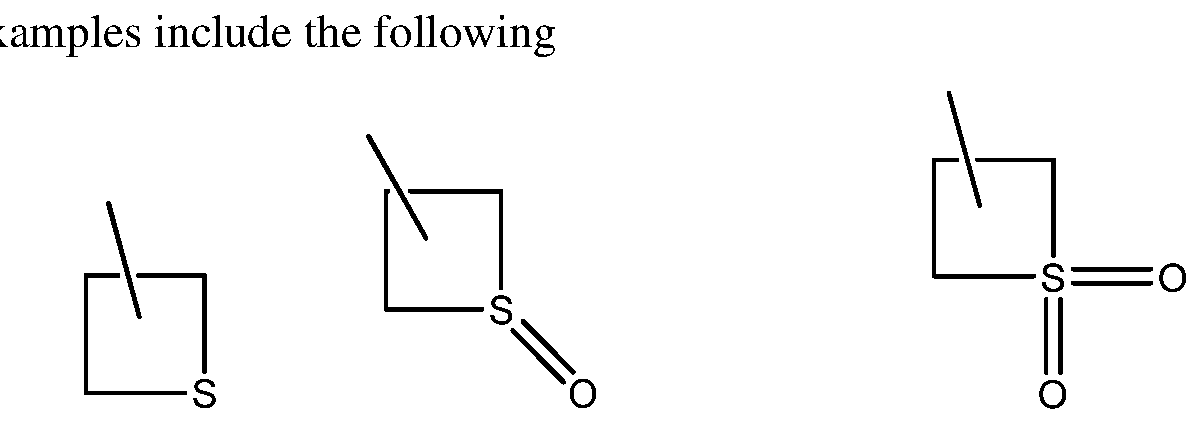
- Heterocyclyl means a cyclic substituent that may be fully saturated, partially unsaturated, or fully unsaturated, where the cyclic structure contains at least one carbon and at least one heteroatom, where said heteroatom is nitrogen, sulfur, or oxygen. In the case of sulfur, that atom can be in other oxidation states such as a sulfoxide and sulfone.
- aromatic heterocyclyls include, but are not limited to, benzofuranyl, benzoisothiazolyl, benzoisoxazolyl, benzoxazolyl, benzothienyl, benzothiazolyl, cinnolinyl, furanyl, imidazolyl, indazolyl, indolyl, isoindolyl, isoquinolinyl, isothiazolyl, isoxazolyl, oxadiazolyl, oxazolinyl, oxazolyl, phthalazinyl, pyrazinyl, pyrazolinyl, pyrazolyl, pyridazinyl, pyridyl, pyrimidinyl, pyrrolyl, quinazolinyl, quinolinyl, quinoxalinyl, tetrazolyl, thiazolinyl, thiazolyl, thienyl, triaziny
- Examples of fully saturated heterocyclyls include, but are not limited to, piperazinyl, piperidinyl, morpholinyl, pyrrolidinyl, oxetanyl, tetrahydrofuranyl, tetrahydrothienyl and tetrahydropyranyl.
- Examples of partially unsaturated heterocyclyls include, but are not limited to, 1,2,3,4-tetrahydroquinolinyl, 4,5-dihydro-oxazolyl, 4,5- dihydro-lH-pyrazolyl, 4,5-dihydro-isoxazolyl, and 2,3-dihydro-[l,3,4]-oxadiazolyl.
- plant health and/or “tolerance to stress” may be measured according to one or more of criteria including, but not limited to, biomass, plant height, leaf length, leaf area, root growth, root length, greenness or chlorophyll content, growth rate, harvest index, root dry weight, shoot dry weight, total dry weight, specific oil or protein content, nutrient content, total yield, number of leaves, days to maturity, vigor (1-9), canopy % coverage, plant survival rate, stem diameter, root/shoot ratio, and combinations thereof.
- enhancing "tolerance to stress” may include one or more of criteria including, but not limited to, enhanced water use efficiency, enhanced cold tolerance, enhanced heat tolerance, enhanced salt tolerance, increased yield, enhanced nitrogen use efficiency, enhanced seed protein, enhanced seed oil, and combinations thereof.
- plant includes dicotyledonous plants and
- monocotyledonous plants examples include tobacco, Arabidopsis, soybean, tomato, papaya, canola, sunflower, cotton, alfalfa, potato, grapevine, pigeon pea, pea, Brassica, chickpea, sugar beet, rapeseed, watermelon, melon, pepper, peanut, pumpkin, radish, spinach, squash, broccoli, cabbage, carrot, cauliflower, celery, Chinese cabbage, cucumber, eggplant, and lettuce.
- monocotyledonous plants include corn, rice, wheat, sugarcane, barley, rye, sorghum, orchids, bamboo, banana, cattails, lilies, oat, onion, millet, and triticale.
- Examples of fruit include banana, pineapple, oranges, grapes, grapefruit, watermelon, melon, apples, peaches, pears, kiwifruit, mango, nectarines, guava, persimmon, avocado, lemon, fig, and berries.
- Examples of flowers include baby's breath, carnation, dahlia, daffodil, geranium, gerbera, lily, orchid, peony, Queen Anne's lace, rose, snapdragon, or other cut-flowers or ornamental flowers, potted- flowers, and flower bulbs.
- plants include, but are not limited to, germinant seeds, emerging seedlings, plants emerging from vegetative propagules, immature vegetation, and established vegetation.
- the phrase "vegetable” include, but not limited to, tomato, peppers, celery, lettuce, broccoli, cabbage, cauliflower, artichokes, and leeks.
- agriculturally acceptable salts and esters refer to salts and esters that exhibit herbicidal activity, or that are or can be converted in plants, water, or soil to the referenced herbicide.
- exemplary agriculturally acceptable esters are those that are or can be hydrolyzed, oxidized, metabolized, or otherwise converted, e.g., in plants, water, or soil, to the corresponding carboxylic acid which, depending on the pH, may be in the dissociated or undissociated form.
- synergism may be defined as "an interaction of two or more factors such that the effect when combined is greater than the predicted effect based on the response of each factor applied separately.” Senseman, S., Ed. Herbicide Handbook. 9th ed.
- compositions exhibit synergy as determined by the Colby's equation (Colby, S. R. Calculation of the synergistic and antagonistic response of herbicide combinations. Weeds 1967, 15, 20-22.
- to "treat" a plant or plant part means to bring the plant or plant part into contact with a material.
- the plants that are treated may be any plants that produce a useful product.
- the plant parts that are treated may be any part of the plant that produces a useful product.
- useful plant parts are treated with a method involving use of a composition of the present invention.
- composition of the present invention is used in a way that brings Compound A and/or Compound B into contact with the plant or plant part.
- each said Rl, which is substituted, has one or more substituents selected from F, CI, Br, I, CN, N0 2 , Ci-Ce alkyl, C 2 -C 6 alkenyl, Ci-C 6 haloalkyl, C 2 -C 6 haloalkenyl, Ci-C 6 haloalkyloxy, C2-C6 haloalkenyloxy, C3-C10 cycloalkyl, C3-C10 cycloalkenyl, C3-C10 halocycloalkyl, C3-C10 halocycloalkenyl, OR9, S(0) n OR9, C6-C20 aryl, or C1-C20 heterocycly
- each said R2, which is substituted has one or more substituents selected from F, CI, Br, I, CN, NO2, Ci-Ce alkyl, C 2 -C 6 alkenyl, Ci-Ce haloalkyl, C 2 -C 6 haloalkenyl, Ci-C 6 haloalkyloxy, C2-C6 haloalkenyloxy, C3-C10 cycloalkyl, C3-C10 cycloalkenyl, C3-C10 halocycloalkyl, C3-C10 halocycloalkenyl, OR9, S(0) n OR9, C6-C20 aryl, or C1-C20 heterocyclyl, (each of which that can be substituted, may optionally be substituted with R9);
- each said R3, which is substituted has one or more substituents selected from F, CI, Br, I, CN, N0 2 , Ci-Ce alkyl, C 2 -C 6 alkenyl, Ci-C 6 haloalkyl, C 2 -C 6 haloalkenyl, Ci-C 6 haloalkyloxy, C2-C6 haloalkenyloxy, C3-C10 cycloalkyl, C3-C10 cycloalkenyl, C3-C10 halocycloalkyl, C3-C10 halocycloalkenyl, OR9, S(0) n OR9, C6-C20 aryl, or C1-C20 heterocyclyl, (each of which that can be substituted, may optionally be substituted with R9);
- Al is either
- each said R4, which is substituted has one or more substituents selected from F, CI, Br, I, CN, NO2, ⁇ -Ce alkyl, C2-C6 alkenyl, Ci-C 6 haloalkyl, C2-C6 haloalkenyl, Ci-C 6 haloalkyloxy, C2-C6 haloalkenyloxy, C3-C10 cycloalkyl, C3-C10 cycloalkenyl, C3-C10 halocycloalkyl, C3-C10 halocycloalkenyl, OR9, S(0) n OR9, C6-C20 aryl, or C1-C20 heterocyclyl, (each of which that can be substituted, may optionally be substituted with R9), or
- R4 is a Ci-C 6 alkyl
- each said R4, which is substituted has one or more substituents selected from F, CI, Br, I, CN, NO2, Ci-C 6 alkyl, C2-C6 alkenyl, Ci-C 6 haloalkyl, C2-C6 haloalkenyl, Ci-C 6 haloalkyloxy, C2-C6 haloalkenyloxy, C3-C10 cycloalkyl, C3-C10 cycloalkenyl, C3-C10 halocycloalkyl, C3-C10 halocycloalkenyl, OR9, S(0) n OR9, C6-C20 aryl, or C1-C20 heterocyclyl, (each of which that can be substituted, may optionally be substituted with R9);
- each said R5, which is substituted has one or more substituents selected from F, CI, Br, I, CN, N0 2 , Ci-Ce alkyl, C 2 -C 6 alkenyl, Ci-C 6 haloalkyl, C 2 -C 6 haloalkenyl, Ci-C 6 haloalkyloxy, C2-C6 haloalkenyloxy, C3-C10 cycloalkyl, C3-C10 cycloalkenyl, C3-C10 halocycloalkyl, C3-C10 halocycloalkenyl, OR9, S(0) n OR9, or C6-C20 aryl, (each of which that can be substituted, may optionally be substituted with R9);
- each said R6 (except Rl l), which is substituted, has one or more substituents selected from F, CI, Br, I, CN, NO2, Ci-C 6 alkyl, C2-C6 alkenyl, Ci-C 6 haloalkyl, C2-C6 haloalkenyl, Ci-C 6 haloalkyloxy, C2-C6 haloalkenyloxy, C3-C10 cycloalkyl, C3-C10 cycloalkenyl, C3-C10 halocycloalkyl, C3-C10 halocycloalkenyl, OR9, S(0) n OR9, Ce- C20 aryl, or Ci-C2o heterocyclyl, R9aryl, (each of which that can be substituted, may optionally be substituted with R9),
- R6 and R8 can be connected in a cyclic arrangement, where optionally such arrangement can have one or more heteroatoms selected from O, S, or, N, in the cyclic structure connecting R6 and R8, and
- R6 and R8 can be connected in a cyclic arrangement, where optionally such arrangement can have one or more heteroatoms selected from O, S, or N, in the cyclic structure connecting R6 and R8;
- R7 is O, S, NR9, or NOR9;
- each said R8, which is substituted has one or more substituents selected from F, CI, Br, I, CN, N0 2 , Ci-Ce alkyl, C 2 -C 6 alkenyl, Ci-C 6 haloalkyl, C 2 -C 6 haloalkenyl, Ci-C 6 haloalkyloxy, C2-C6 haloalkenyloxy, C3-C10 cycloalkyl, C3-C10 cycloalkenyl, C3-C10 halocycloalkyl, C3-C10 halocycloalkenyl, N(R9)S(0) n R9, oxo, OR9, S(0) n OR9, R9S(0) n R9, S(0) n R9, C 6 -C 20 aryl, or C1-C20 heterocyclyl, (each of which that can be substituted, may optionally be substituted with R9)
- R8 is R13-S(0) n -R13 wherein each R13 is independently selected from substituted or unsubstituted Ci-C 6 alkyl, substituted or unsubstituted C2-C6 alkenyl, substituted or unsubstituted Ci-C 6 alkoxy, substituted or unsubstituted C2-C6 alkenyloxy, substituted or unsubstituted C3-C10 cycloalkyl, substituted or unsubstituted C3- C10 cycloalkenyl, substituted or unsubstituted C6-C20 aryl, substituted or unsubstituted C1-C20 heterocyclyl, substituted or unsubstituted S(0) n Ci-C6 alkyl, substituted or unsubstituted N(Ci-C6alkyl)2, wherein each said substituted alkyl, substituted alkenyl, substituted alkoxy, substituted alkenyloxy, substituted cycloal
- R9 is (each independently) H, CN, substituted or unsubstituted Ci-C 6 alkyl, substituted or unsubstituted C2-C6 alkenyl, substituted or unsubstituted Ci-C 6 alkoxy, substituted or unsubstituted C2-C6 alkenyloxy, substituted or unsubstituted C3-C10 cycloalkyl, substituted or unsubstituted C3-C10 cycloalkenyl, substituted or unsubstituted C6-C20 aryl, substituted or unsubstituted C1-C20 heterocyclyl, substituted or unsubstituted S(0) n Ci-C6 alkyl, substituted or unsubstituted N(Ci-C6alkyl)2,
- each said R9 which is substituted, has one or more substituents selected from F, CI, Br, I, CN, N0 2 , Ci-Ce alkyl, C 2 -C 6 alkenyl, Ci-C 6 haloalkyl, C 2 -C 6 haloalkenyl, Ci-C 6 haloalkyloxy, C2-C6 haloalkenyloxy, C3-C10 cycloalkyl, C3-C10 cycloalkenyl, C3-C10 halocycloalkyl, C3-C10 halocycloalkenyl, OCi-C 6 alkyl, OCi-C 6 haloalkyl, S(0) n Ci-C 6 alkyl, S(0) n OCi-C 6 alkyl, C 6 -C 2 o aryl, or C1-C20 heterocyclyl;
- (k) n is 0, 1, or 2;
- X is N or CRni where R summoni is H, F, CI, Br, I, CN, N0 2 , substituted or unsubstituted Ci-C 6 alkyl, substituted or unsubstituted C2-C6 alkenyl, substituted or unsubstituted Ci-C 6 alkoxy, substituted or unsubstituted C2-C6 alkenyloxy, substituted or unsubstituted C3-C10 cycloalkyl, substituted or unsubstituted C3-C10 cycloalkenyl, substituted or unsubstituted C6-C20 aryl, substituted or unsubstituted C1-C20 heterocyclyl, OR9,
- each said R n i which is substituted has one or more substituents selected from F, CI, Br, I, CN, N0 2 , Ci-Ce alkyl, C 2 -C 6 alkenyl, Ci-C 6 haloalkyl, C 2 -C 6 haloalkenyl, Ci-C 6 haloalkyloxy, C2-C6 haloalkenyloxy, C3-C10 cycloalkyl, C3-C10 cycloalkenyl, C3-C10 halocycloalkyl, C3-C10 halocycloalkenyl, OR9, S(0) n OR9, C6-C20 aryl, or C1-C20 heterocyclyl, (each of which that can be substituted, may optionally be substituted with R9);
- each said Qi which is substituted, has one or more substituents selected from F, CI, Br, I, CN, N0 2 , Ci-Ce alkyl, C 2 -C 6 alkenyl, C 2 -C 6 alkynyl, Ci-C 6 haloalkyl, C2-C6 haloalkenyl, Ci-C 6 haloalkyloxy, C2-C6 haloalkenyloxy, C3-C10 cycloalkyl, C3-C10 cycloalkenyl, C3-C10 halocycloalkyl, C3-C10 halocycloalkenyl, OR9, SR9, S(0) n R9, S(0) n OR9, C6-C20 aryl, or C1-C20 heterocyclyl, R9aryl, Ci-C 6 alkylOR9, Ci-C 6 alkylS(0) n R9, (each of which that can be substituted, may optionally
- Qi and R8 can be connected in a cyclic arrangement, where optionally such arrangement can have one or more heteroatoms selected from O, S, or N, in the cyclic structure connecting Qi and R8;
- R12 is Qi (except where Qi is a bond), F, CI, Br, I, Si(R9) 3 (where each R9 is independently selected), or R9;
- R8 is not a -(Ci-Ce alkyl)-0- (substituted aryl)
- R6 is not -(Cialkyl)(substituted aryl).
- A is Al.
- A is A2.
- Rl is H.
- R2 is H.
- R3 is selected from H, or substituted or unsubstituted Ci-C 6 alkyl.
- R3 is selected from H or CH3.
- Al is All.
- R4 is selected from H, or substituted or unsubstituted Ci-C 6 alkyl, or substituted or unsubstituted C6-C20 aryl.
- R4 is selected from CH3, CH(CH3)2, or phenyl.
- R4 is selected from H, or substituted or unsubstituted Ci-C 6 alkyl, substituted or unsubstituted C2-C6 alkenyl, substituted or unsubstituted C3-C10 cycloalkyl, substituted or unsubstituted C6-C20 aryl, wherein each said R4, which is substituted, has one or more substituents selected from F, CI, Br, or I.
- R4 is H or Ci-C 6 alkyl.
- R4 is Br or CI.
- R5 is H, F, CI, Br, I, or substituted or unsubstituted Ci-C 6 alkyl, substituted or unsubstituted Ci-C 6 alkoxy .
- R5 is H, OCH2CH3, F, CI, Br, or CH3.
- R6 is substituted or unsubstituted Ci-C 6 alkyl.
- R6 and R8 are connected in a cyclic arrangement, where optionally such arrangement can have one or more heteroatoms selected from O, S, or, N, in the cyclic structure connecting R6 and R8.
- R6 is Ci-C 6 alkyl, or Ci-C 6 alkyl-phenyl.
- R6 is methyl or ethyl.
- R7 is O or S.
- R8 is preferably R13-S(0) n - R13 wherein each R13 is independently selected from substituted or unsubstituted Ci-C 6 alkyl, substituted or unsubstituted C2-C6 alkenyl, substituted or unsubstituted Ci-C 6 alkoxy, substituted or unsubstituted C2-C6 alkenyloxy, substituted or unsubstituted C3-C10 cycloalkyl, substituted or unsubstituted C3-C10 cycloalkenyl, substituted or unsubstituted C6-C20 aryl, substituted or unsubstituted C1-C20 heterocyclyl, substituted or unsubstituted S(0) n Ci-C6 alkyl, substituted or unsubstituted N(Ci-C6alkyl)2, wherein each said substituted alkyl, substituted alkenyl, substituted alkoxy, substituted alkenyl
- R8 is (substituted or unsubstituted Ci-C 6 alkyl)-S(0) n -(substituted or unsubstituted Ci-C 6 alkyl) wherein said substituents on said substituted alkyls are independently selected from F, CI, Br, I, CN, NO2, ⁇ -Ce alkyl, C2-C6 alkenyl, Ci-C 6 haloalkyl, C2-C6 haloalkenyl, Ci-C 6 haloalkyloxy, C2-C6 haloalkenyloxy, C3- Cio cycloalkyl, C3-C10 cycloalkenyl, C3-C10 halocycloalkyl, C3-C10 halocycloalkenyl, OCi-C 6 alkyl, OCi-Ce haloalkyl, S(0)nCi-C 6 a]kyl, S(0) nCi-C 6 a]ky
- R8 is selected from CH(CH3)SCH2CF3, CH2CH2SCH2CF3, CH2SCH2CF3, CH2SCHCICF3, CH(CH 2 CH3)SCH 2 CF3,
- R8 is (substituted or unsubstituted Ci-C 6 alkyl)-S(0) n -(substituted or unsubstituted Ci-C 6 alkyl)-(substituted or unsubstituted C3-C10 cycloalkyl) wherein said substituents on said substituted alkyls and said substituted cycloalkyls are independently selected from F, CI, Br, I, CN, NO2, Ci-C 6 alkyl, C2-C6 alkenyl, Ci-C 6 haloalkyl, C2-C6 haloalkenyl, Ci-C 6 haloalkyloxy, C2-C6 haloalkenyloxy, C3- C10 cycloalkyl, C3-C10 cycloalkenyl, C3-C10 halocycloalkyl, C3-C10 halocycloalkenyl, OCi-C 6 alkyl
- R8 is (substituted or unsubstituted Ci-C 6 alkyl)-S(0)n-(substituted or unsubstituted C2-C6 alkenyl) wherein said substituents on said substituted alkyls and substituted alkenyls are independently selected from F, CI, Br, I, CN, N0 2 , Ci-Ce alkyl, C 2 -C 6 alkenyl, Ci-C 6 haloalkyl, C 2 -C 6 haloalkenyl, Ci-C 6 haloalkyloxy, C 2 - C 6 haloalkenyloxy, C3-C10 cycloalkyl, C3-C10 cycloalkenyl, C3-C10 halocycloalkyl, C3-C10 halocycloalkenyl, OCi-Ce alkyl, OCi-Ce haloalkyl, S(0) n Ci-C
- X is CR n i where R n i is H or halo.
- X is CR n i where R n i is H or F.
- XI is O.
- X2 is O.
- Rl 1 is substituted or unsubstituted Ci-C 6 alkylC ⁇ CR12.
- the molecules of Formula One will generally have a molecular mass of about 100 Daltons to about 1200 Daltons. However, it is generally preferred if the molecular mass is from about 120 Daltons to about 900 Daltons, and it is even more generally preferred if the molecular mass is from about 140 Daltons to about 600 Daltons.
- Non-limiting examples of Compound A including the following:
- composition provided may optionally comprise a spinosyn natural factor or semi- synthetic derivative or butenyl-spinosyn natural factor or semi- synthetic derivative as Compound B.
- spinosyn natural factor or semi- synthetic derivative or butenyl-spinosyn natural factor or semi- synthetic derivative as Compound B.
- specific spinosyns include spinosad and spinetoram.
- Saccharapolyspora spinosa produces a mixture of nine closely related compounds collectively called "spinosyns.” Within the mixture, spinosyn A and D, known as spinosad, are the major components and have the highest activity against key insect targets. Spinosyn J and L, two of the minor components within the spinosyn mixture, are the precursors for spinetoram, the second generation spinosyn insecticide.
- Spinosad comprises approximately 85% spinosyn A and approximately 15% spinosyn D.
- Spinosyns A and D are natural products as disclosed in U.S. Pat. No. 5,362,634.
- the spinosyn compounds consist of a 5,6,5-tricylic ring system, fused to a 12-membered macrocyclic lactone, a neutral sugar (rhamnose), and an amino sugar (forosamine).
- Spinosyn compounds are also disclosed in U.S. Patent Nos. 5,496,931 ; 5,670,364; 5,591,606;
- spinosyn includes natural factors and semi-synthetic derivatives of the naturally produced factors. A large number of chemical modifications to these spinosyn compounds have been made, as disclosed in U.S. Patent No. 6,001,981.
- Spinetoram is a mixture of 5,6-dihydro-3'-ethoxy spinosyn J (major component) and 3'-ethoxy spinosyn L.
- the mixture can be prepared by ethoxylating a mixture of spinosyn J and spinosyn L, followed by hydrogenation.
- spinetoram is a semi-synthetic spinosyn mixture of 50-90% (2R,3aR,5aR,5b5,95,13S,14R,16aS,16bR)-2-(6-deoxy-3-0-ethyl- 2,4-di-0-methyl-a-L-mannopyranosyloxy)-13-[(2R,55,6R)-5-(dimethylamino)tetrahydro-6- methylpyran-2-yloxy]-9-ethyl-2,3,3a,4,5,5a,5b,6,9,10,l l,12,13,14,16a,16b-hexadecahydro- 14-methylH-as-indaceno[3,2-J]oxacyclododecine-7,15-dione, and 50-10%
- Compound B may comprise a macrolide insecticide, which are disclosed in U.S. Pat. No. 6,800,614. These compounds are characterized by the presence of reactive functional groups that make further modifications possible at locations where such modifications were not feasible in previously disclosed spinosyns. Natural and semi- synthetic derivatives of the butenyl spinosyns are disclosed in U.S. Pat. No. 6,919,464. The term "butenyl-spinosyn" as used herein is intended to include natural factors and semisynthetic derivatives of the naturally produced factors.
- the spinosyn compound may be a naturally produced or synthetic polyketide-derived tetracyclic macrolide.
- the spinosyn compound may be a fermentation product including at least one of the compounds produced by Saccharopolyspora spinosa and disclosed in U.S. Pat. No. 5,362,634. Other spinosyn compounds are also disclosed in U.S. Patent Nos.
- composition provided may optionally comprise sulfoxaflor as Compound B.
- Sulfoxaflor is the common name for [methyl(oxo) ⁇ l-[6-
- the composition provided may optionally comprise azoxystrobin as Compound B.
- Azoxystrobin is the common name for methyl (aE)-2-[[6-(2- cyanophenoxy)-4-pyrimidinyl]oxy]-a-(methoxymethylene)benzeneacetate. Its fungicidal activity is described in The Pesticide Manual, Fourteenth Edition, 2006, and its synthesis has been described in U.S. Patent Nos. 5,145,856, 5,264,440, and 5,395,837.
- Molecules of Formula One may exist as one or more stereoisomers. Thus, certain molecules can be produced as racemic mixtures. It will be appreciated by those skilled in the art that one stereoisomer may be more active than the other stereoisomers. Individual stereoisomers may be obtained by known selective synthetic procedures, by conventional synthetic procedures using resolved starting materials, or by conventional resolution procedures. Certain molecules disclosed in this document can exist as two or more isomers. The various isomers include geometric isomers, diastereomers, and enantiomers. Thus, the molecules disclosed in this document include geometric isomers, racemic mixtures, individual stereoisomers, and optically active mixtures. It will be appreciated by those skilled in the art that one isomer may be more active than the others. The structures disclosed in the present disclosure are drawn in only one geometric form for clarity, but are intended to represent all geometric forms of the molecule.
- pesticides are formulated into, for example, baits, concentrated emulsions, dusts, emulsifiable concentrates, fumigants, gels, granules, microencapsulations, seed treatments, suspension concentrates, suspoemulsions, tablets, water soluble liquids, water dispersible granules or dry flowables, wettable powders, and ultra low volume solutions.
- baits concentrated emulsions, dusts, emulsifiable concentrates, fumigants, gels, granules, microencapsulations, seed treatments, suspension concentrates, suspoemulsions, tablets, water soluble liquids, water dispersible granules or dry flowables, wettable powders, and ultra low volume solutions.
- Pesticides are applied most often as aqueous suspensions or emulsions prepared from concentrated formulations of such pesticides.
- Such water-soluble, water-suspendable, or emulsifiable formulations are either solids, usually known as wettable powders, or water dispersible granules, or liquids usually known as emulsifiable concentrates, or aqueous suspensions.
- Wettable powders which may be compacted to form water dispersible granules, comprise an intimate mixture of the pesticide, a carrier, and surfactants.
- the concentration of the pesticide is usually from about 10% to about 90% by weight.
- the carrier is usually selected from among the attapulgite clays, the montmorillonite clays, the diatomaceous earths, or the purified silicates.
- Effective surfactants comprising from about 0.5% to about 10% of the wettable powder, are found among sulfonated lignins, condensed
- naphthalenesulfonates naphthalenesulfonates, alkylbenzenesulfonates, alkyl sulfates, and non-ionic surfactants such as ethylene oxide adducts of alkyl phenols.
- Emulsifiable concentrates of pesticides comprise a convenient concentration of a pesticide, such as from about 50 to about 500 grams per liter of liquid dissolved in a carrier that is either a water miscible solvent or a mixture of water-immiscible organic solvent and emulsifiers.
- Useful organic solvents include aromatics, especially xylenes and petroleum fractions, especially the high-boiling naphthalenic and olefinic portions of petroleum such as heavy aromatic naphtha.
- Other organic solvents may also be used, such as the terpenic solvents including rosin derivatives, aliphatic ketones such as cyclohexanone, and complex alcohols such as 2-ethoxyethanol.
- Suitable emulsifiers for emulsifiable concentrates are selected from conventional anionic and non-ionic surfactants.
- Aqueous suspensions comprise suspensions of water- insoluble pesticides dispersed in an aqueous carrier at a concentration in the range from about 5% to about 50% by weight.
- Suspensions are prepared by finely grinding the pesticide and vigorously mixing it into a carrier comprised of water and surfactants.
- Ingredients, such as inorganic salts and synthetic or natural gums may also be added, to increase the density and viscosity of the aqueous carrier. It is often most effective to grind and mix the pesticide at the same time by preparing the aqueous mixture and homogenizing it in an implement such as a sand mill, ball mill, or piston-type homogenizer.
- Pesticides may also be applied as granular compositions that are particularly useful for applications to the soil.
- Granular compositions usually contain from about 0.5% to about 10% by weight of the pesticide, dispersed in a carrier that comprises clay or a similar substance. Such compositions are usually prepared by dissolving the pesticide in a suitable solvent and applying it to a granular carrier which has been pre-formed to the appropriate particle size, in the range of from about 0.5 to about 3 mm. Such compositions may also be formulated by making a dough or paste of the carrier and compound and crushing and drying to obtain the desired granular particle size.
- Dusts containing a pesticide are prepared by intimately mixing the pesticide in powdered form with a suitable dusty agricultural carrier, such as kaolin clay, ground volcanic rock, and the like. Dusts can suitably contain from about 1% to about 10% of the pesticide. They can be applied as a seed dressing or as a foliage application with a dust blower machine.
- a suitable dusty agricultural carrier such as kaolin clay, ground volcanic rock, and the like. Dusts can suitably contain from about 1% to about 10% of the pesticide. They can be applied as a seed dressing or as a foliage application with a dust blower machine.
- a pesticide in the form of a solution in an appropriate organic solvent, usually petroleum oil, such as the spray oils, which are widely used in agricultural chemistry.
- Pesticides can also be applied in the form of an aerosol composition.
- the pesticide is dissolved or dispersed in a carrier, which is a pressure- generating propellant mixture.
- the aerosol composition is packaged in a container from which the mixture is dispensed through an atomizing valve.
- Pesticide baits are formed when the pesticide is mixed with food or an attractant or both. When the pests eat the bait they also consume the pesticide. Baits may take the form of granules, gels, flowable powders, liquids, or solids. They can be used in pest harborages.
- Fumigants are pesticides that have a relatively high vapor pressure and hence can exist as a gas in sufficient concentrations to kill pests in soil or enclosed spaces.
- the toxicity of the fumigant is proportional to its concentration and the exposure time. They are characterized by a good capacity for diffusion and act by penetrating the pest' s respiratory system or being absorbed through the pest's cuticle. Fumigants are applied to control stored product pests under gas proof sheets, in gas sealed rooms or buildings or in special chambers.
- Pesticides can be microencapsulated by suspending the pesticide particles or droplets in plastic polymers of various types. By altering the chemistry of the polymer or by changing factors in the processing, microcapsules can be formed of various sizes, solubility, wall thicknesses, and degrees of penetrability. These factors govern the speed with which the active ingredient within is released, which in turn, affects the residual performance, speed of action, and odor of the product.
- Oil solution concentrates are made by dissolving pesticide in a solvent that will hold the pesticide in solution. Oil solutions of a pesticide usually provide faster knockdown and kill of pests than other formulations due to the solvents themselves having pesticidal action and the dissolution of the waxy covering of the integument increasing the speed of uptake of the pesticide. Other advantages of oil solutions include better storage stability, better penetration of crevices, and better adhesion to greasy surfaces.
- Another embodiment is an oil-in-water emulsion, wherein the emulsion comprises oily globules which are each provided with a lamellar liquid crystal coating and are dispersed in an aqueous phase, wherein each oily globule comprises at least one compound which is agriculturally active, and is individually coated with a monolamellar or oligolamellar layer comprising: (1) at least one non-ionic lipophilic surface-active agent, (2) at least one non- ionic hydrophilic surface-active agent and (3) at least one ionic surface-active agent, wherein the globules having a mean particle diameter of less than 800 nanometers.
- such formulation can also contain other components.
- these components include, but are not limited to, (this is a non-exhaustive and non-mutually exclusive list) wetters, spreaders, stickers, penetrants, buffers, sequestering agents, drift reduction agents, compatibility agents, anti-foam agents, cleaning agents, and emulsifiers. A few components are described forthwith.
- a wetting agent is a substance that when added to a liquid increases the spreading or penetration power of the liquid by reducing the interfacial tension between the liquid and the surface on which it is spreading.
- Wetting agents are used for two main functions in agrochemical formulations: during processing and manufacture to increase the rate of wetting of powders in water to make concentrates for soluble liquids or suspension concentrates; and during mixing of a product with water in a spray tank to reduce the wetting time of wettable powders and to improve the penetration of water into water-dispersible granules.
- wetting agents used in wettable powder, suspension concentrate, and water-dispersible granule formulations are: sodium lauryl sulfate; sodium dioctyl sulfosuccinate; alkyl phenol ethoxylates; and aliphatic alcohol ethoxylates.
- a dispersing agent is a substance which adsorbs onto the surface of particles and helps to preserve the state of dispersion of the particles and prevents them from
- Dispersing agents are added to agrochemical formulations to facilitate dispersion and suspension during manufacture, and to ensure the particles redisperse into water in a spray tank. They are widely used in wettable powders, suspension concentrates and water-dispersible granules. Surfactants that are used as dispersing agents have the ability to adsorb strongly onto a particle surface and provide a charged or steric barrier to reaggregation of particles. The most commonly used surfactants are anionic, non-ionic, or mixtures of the two types. For wettable powder formulations, the most common dispersing agents are sodium lignosulfonates.
- dispersing agents used in agrochemical formulations are: sodium lignosulfonates; sodium naphthalene sulfonate formaldehyde condensates; tristyrylphenol ethoxylate phosphate esters; aliphatic alcohol ethoxylates; alkyl ethoxylates; EO-PO block copolymers; and graft copolymers.
- An emulsifying agent is a substance which stabilizes a suspension of droplets of one liquid phase in another liquid phase. Without the emulsifying agent the two liquids would separate into two immiscible liquid phases.
- the most commonly used emulsifier blends contain alkylphenol or aliphatic alcohol with twelve or more ethylene oxide units and the oil- soluble calcium salt of dodecylbenzenesulfonic acid.
- a range of hydrophile-lipophile balance (“HLB”) values from 8 to 18 will normally provide good stable emulsions.
- Emulsion stability can sometimes be improved by the addition of a small amount of an EO-PO block copolymer surfactant.
- a solubilizing agent is a surfactant which will form micelles in water at
- the micelles are then able to dissolve or solubilize water-insoluble materials inside the hydrophobic part of the micelle.
- the types of surfactants usually used for solubilization are non- ionics, sorbitan monooleates, sorbitan monooleate ethoxylates, and methyl oleate esters.
- Surfactants are sometimes used, either alone or with other additives such as mineral or vegetable oils as adjuvants to spray-tank mixes to improve the biological performance of the pesticide on the target.
- the types of surfactants used for bioenhancement depend generally on the nature and mode of action of the pesticide. However, they are often non-ionics such as: alkyl ethoxylates; linear aliphatic alcohol ethoxylates; aliphatic amine ethoxylates.
- a carrier or diluent in an agricultural formulation is a material added to the pesticide to give a product of the required strength.
- Carriers are usually materials with high absorptive capacities, while diluents are usually materials with low absorptive capacities. Carriers and diluents are used in the formulation of dusts, wettable powders, granules and water- dispersible granules.
- Organic solvents are used mainly in the formulation of emulsifiable concentrates, oil- in-water emulsions, suspoemulsions, and ultra low volume formulations, and to a lesser extent, granular formulations. Sometimes mixtures of solvents are used.
- the first main groups of solvents are aliphatic paraffinic oils such as kerosene or refined paraffins.
- the second main group (and the most common) comprises the aromatic solvents such as xylene and higher molecular weight fractions of C9 and CIO aromatic solvents.
- Chlorinated hydrocarbons are useful as cosolvents to prevent crystallization of pesticides when the formulation is emulsified into water. Alcohols are sometimes used as cosolvents to increase solvent power.
- Other solvents may include vegetable oils, seed oils, and esters of vegetable and seed oils.
- Thickeners or gelling agents are used mainly in the formulation of suspension concentrates, emulsions and suspoemulsions to modify the rheology or flow properties of the liquid and to prevent separation and settling of the dispersed particles or droplets.
- Thickening, gelling, and anti-settling agents generally fall into two categories, namely water- insoluble particulates and water-soluble polymers. It is possible to produce suspension concentrate formulations using clays and silicas. Examples of these types of materials, include, but are not limited to, montmorillonite, bentonite, magnesium aluminum silicate, and attapulgite. Water-soluble polysaccharides have been used as thickening-gelling agents for many years. The types of polysaccharides most commonly used are natural extracts of seeds and seaweeds or are synthetic derivatives of cellulose.
- Examples of these types of materials include, but are not limited to, guar gum; locust bean gum; carrageenam; alginates; methyl cellulose; sodium carboxymethyl cellulose (SCMC); hydroxyethyl cellulose (HEC).
- Other types of anti-settling agents are based on modified starches, polyacrylates, polyvinyl alcohol and polyethylene oxide. Another good anti- settling agent is xanthan gum.
- Microorganisms can cause spoilage of formulated products. Therefore preservation agents are used to eliminate or reduce their effect. Examples of such agents include, but are not limited to: propionic acid and its sodium salt; sorbic acid and its sodium or potassium salts; benzoic acid and its sodium salt; p-hydroxybenzoic acid sodium salt; methyl p- hydroxybenzoate; and l,2-benzisothiazolin-3-one (BIT).
- anti-foam agents are often added either during the production stage or before filling into bottles.
- silicones are usually aqueous emulsions of dimethyl polysiloxane
- non-silicone anti-foam agents are water-insoluble oils, such as octanol and nonanol, or silica.
- the function of the anti-foam agent is to displace the surfactant from the air-water interface.
- Green agents can reduce the overall environmental footprint of crop protection formulations.
- Green agents are biodegradable and generally derived from natural and/or sustainable sources, e.g. plant and animal sources. Specific examples are: vegetable oils, seed oils, and esters thereof, also alkoxylated alkyl polyglucosides.
- the combination or composition provided may be used in an area where plants, such as crops, are growing (e.g. pre-planting, planting, pre -harvesting).
- Such benefits may include, but are not limited to, improving the health of a plant, improving the yield of a plant (e.g. increased biomass and/or increased content of valuable ingredients), improving the vigor of a plant (e.g. improved plant growth and/or greener leaves), improving the quality of a plant (e.g. improved content or composition of certain ingredients), and improving the tolerance to abiotic and/or biotic stress of the plant.
- the composition may be contacted with a plant in a variety of ways.
- the composition of the present invention may be a solid, a liquid, a gas, or a mixture thereof.
- FIG. 1 shows exemplary results of enhancing plant health (leaf length at day 12, plant height at day 12, and dry weight at day 14) after applications of: (1) Compound A at 25 ppm; (2) Compound A at 25 ppm and azoxystrobin at 25 ppm; (3) Compound A at 25 ppm and spinetoram at 25 ppm; (4) Compound A at 25 ppm, azoxystrobin at 25 ppm, and spinetoram at 25 ppm; and (5) untreated tomato seedlings.
- FIG. 2 shows exemplary results of % plant vigor at day 4, day 13, and day 28 during transplant of broccoli seedlings after application of: (1) untreated broccoli seedlings; (2) Compound A at 25 ppm; and (3) Compound A at 25 ppm, azoxystrobin at 25 ppm, and spinetoram at 25 ppm.
- the % plant vigor is measured based on visual inspection of the seedlings where untreated and un-transplanted seedlings are used as 100% during the same time periods.
- FIG. 3 shows exemplary results of enhancing plant health (leaf area at day 13 and plant height at day 13) during transplant of broccoli seedlings after application of: (1) untreated broccoli seedlings; (2) Compound A at 25 ppm; and (3) Compound A at 25 ppm and azoxystrobin at 50 ppm.
- FIG. 4 shows exemplary results of plant biomass at day 14 and day 28 during transplant of broccoli seedlings after application of: (1) untreated broccoli seedlings; (2) Compound A at 25 ppm; and (3) Compound A at 25 ppm and azoxystrobin at 50 ppm.
- FIG. 5 shows exemplary results of enhancing plant health (leaf area at day 28 and plant height at day 29) during transplant of tomato seedlings after applications of: (1) untreated tomato seedlings; (2) Compound A at 25 ppm; and (3) Compound A at 25 ppm and spinetoram at 25 ppm.
- FIG. 5 shows exemplary results of enhancing plant health (leaf area at day 28 and plant height at day 29) during transplant of tomato seedlings after applications of: (1) Compound A at 25 ppm and azoxystrobin at 25 ppm treatment for one day; (2) untreated tomato seedlings; and (3) Compound A at 25 ppm and azoxystrobin at 25 ppm treatment for six days.
Landscapes
- Life Sciences & Earth Sciences (AREA)
- Organic Chemistry (AREA)
- Chemical & Material Sciences (AREA)
- Dentistry (AREA)
- Health & Medical Sciences (AREA)
- Engineering & Computer Science (AREA)
- Plant Pathology (AREA)
- General Health & Medical Sciences (AREA)
- Wood Science & Technology (AREA)
- Zoology (AREA)
- Environmental Sciences (AREA)
- Pest Control & Pesticides (AREA)
- Agronomy & Crop Science (AREA)
- Agricultural Chemicals And Associated Chemicals (AREA)
- Plural Heterocyclic Compounds (AREA)
Abstract
This invention is based on the discovery of compositions and methods which can greatly enhance plant health and/or tolerance to stress. The methods provided herein can be performed in a compositional mixture, or a simultaneous or sequential application with one or more compounds of Compound A and Compound B as provided herein. In one embodiment, the stress is associated with vegetable transplants from a green house/nursery into an open field. In another embodiment, the stress is associated with heat, cold, and/or drought.
Description
METHODS AND COMPOSITIONS FOR ENHANCING PLANT HEALTH AND/OR TOLERANCE TO STRESS
BACKGROUND
Plants are often treated by contacting them with compositions. For example, US
Patent Publication 2006/0160704 discloses treating non-citrus plants with compositions that contain at least one cyclopropene and that contain at least one plant growth regulator that is not a cyclopropene. It may be desired to provide methods that involve treating certain specific crop plants at developmental stage or stages appropriate for those specific crop plants. Further, it may also be desired to provide methods of treating plants that result in an increase in the yield of the crop produced by those plants.
In addition to yield enhancement, reducing adverse effects from various stresses may be at least partially mitigated by application(s) of certain plant growth regulator(s). Sources of stress may be from heat, cold, drought, or other chemicals. One particular stress occurs during transplant of vegetables from a green house/nursery into an open field. Therefore, there remains a need for compositions and/or methods for enhancing plant health and/or tolerance to stress, in particular for vegetable transplants.
SUMMARY OF INVENTION
This invention is based on the discovery of compositions and methods which can greatly enhance plant health and/or tolerance to stress. The methods provided herein can be performed in a compositional mixture, or a simultaneous or sequential application with one or more compounds of Compound A and Compound B as provided herein. In one embodiment, the stress is associated with vegetable transplants from a green house/nursery into an open field. In another embodiment, the stress is associated with heat, cold, and/or drought. In one embodiment, the stress comprises abiotic stress. Abiotic stress may include dehydration or other osmotic stress, salinity, high or low light intensity, high or low temperatures, submergence, exposure to heavy metals, and oxidative stress. In another embodiment, the stress comprises an environmental stress. In a further embodiment, the environmental stress comprises drought and/or heat. In another embodiment, the stress comprises mechanical stress.
In one aspect, provided is a method for enhancing plant health and/or tolerance to stress for plants. The method comprises (i) applying an effective amount of Compound A according to Formula One, or an agriculturally acceptable salt, ester, or amide thereof, as described herein, to a plant or plant part.
In another aspect, provided is a composition comprising a mixture comprising (i) an effective amount of Compound A according to Formula One, or an agriculturally acceptable salt, ester, or amide thereof, as described herein, and (ii) a Compound B selected from the group consisting of spinosyn natural factor or its derivative, azoxystrobin, sulfoxaflor, and combinations thereof, or an agriculturally acceptable salt, ester, or amide thereof, as described herein.
In one embodiment, weight ratio of Compound A to Compound B can be between 1:10 and 1000:1; between 1:10 and 1: 1; between 1:1 and 1:100; or between 1:10 and 1:1000. In another embodiment, the mixture comprises a synergistic combination of Compound A and Compound B for enhancing plant health and/or tolerance to stress. In one embodiment, the Compound B is selected from the group consisting of spinosyn natural factor, semisynthetic derivative, butenyl-spinosyn natural factor, or semi- synthetic derivative. In another further embodiment, the Compound B comprises spinetoram. In another embodiment, the Compound B is selected from the group consisting of azoxystrobin, sulfoxaflor, spinetoram, and combinations thereof.
In another aspect, provided is a method for enhancing plant health and/or tolerance to stress for plants. The method comprises (i) first applying an effective amount of Compound A according to Formula One, or an agriculturally acceptable salt, ester, or amide thereof, as described herein, to a plant or plant part; and (ii) second applying a Compound B selected from the group consisting of spinosyn natural factor or its derivative, azoxystrobin, sulfoxaflor, and combinations thereof, or an agriculturally acceptable salt, ester, or amide thereof, as described herein, to the plant or plant part; wherein the first applying and the second applying steps can be performed in either order or simultaneously.
In one embodiment, weight ratio of Compound A to Compound B can be between 1 : 10 and 1000: 1 ; between 1 : 10 and 1 : 1 ; between 1 : 1 and 1 : 100; or between 1 : 10 and 1 : 1000. In another embodiment, the combination of Compound A and Compound B is synergistic. In another embodiment, the first applying step is performed in an enclosed space, for example a green house or nursery. In another embodiment, the second applying step is performed in an enclosed space, for example a green house or nursery. In another embodiment, the first applying step is performed in an open space, for example an open field. In another embodiment, the second applying step is performed in an open space, for example an open field.
In one embodiment, the plant comprises a vegetable. In a further embodiment, the vegetable is selected from the group consisting of tomato, peppers, celery, lettuce, broccoli,
cabbage, cauliflower, artichokes, leeks, and combinations thereof. In another further embodiment, the vegetable is selected from the group consisting of tomato, potato, sweet potato, cassava, pepper, bell pepper, carrot, celery, squash, eggplant, cabbage, cauliflower, broccoli, asparagus, mushroom, onion, garlic, leek, and snap bean.
In another aspect, provided is a method for enhancing plant health and/or tolerance to stress for plants. The method comprises applying the composition as described herein, to a plant or plant part.
BRIEF DESCRIPTION OF THE FIGURES
FIG. 1 shows exemplary results of enhancing plant health (leaf length at day 12, plant height at day 12, and dry weight at day 14) during transplant of tomato seedlings after applications of: (1) Compound A at 25 ppm; (2) Compound A at 25 ppm and azoxystrobin at 25 ppm; (3) Compound A at 25 ppm and spinetoram at 25 ppm; (4) Compound A at 25 ppm, azoxystrobin at 25 ppm, and spinetoram at 25 ppm; and (5) untreated tomato seedlings.
FIG. 2 shows exemplary results of % plant vigor at day 4, day 13, and day 28 during transplant of broccoli seedlings after application of: (1) untreated broccoli seedlings; (2) Compound A at 25 ppm; and (3) Compound A at 25 ppm, azoxystrobin at 25 ppm, and spinetoram at 25 ppm.
FIG. 3 shows exemplary results of enhancing plant health (leaf area at day 13 and plant height at day 13) during transplant of broccoli seedlings after application of: (1) untreated broccoli seedlings; (2) Compound A at 25 ppm; and (3) Compound A at 25 ppm and azoxystrobin at 50 ppm.
FIG. 4 shows exemplary results of plant biomass at day 14 and day 28 during transplant of broccoli seedlings after application of: (1) untreated broccoli seedlings; (2) Compound A at 25 ppm; and (3) Compound A at 25 ppm and azoxystrobin at 50 ppm.
FIG. 5 shows exemplary results of enhancing plant health (leaf area at day 28 and plant height at day 29) during transplant of tomato seedling after applications of: (1) untreated tomato seedlings; (2) Compound A at 25 ppm; and (3) Compound A at 25 ppm and spinetoram at 25 ppm.
FIG. 6 shows exemplary results of prolonged treatments for enhancing plant health (dry weight at day 14 and fresh weight at day 14) during transplant of tomato seedlings after applications of: (1) Compound A at 25 ppm and azoxystrobin at 25 ppm treatment for one day; (2) untreated tomato seedlings; and (3) Compound A at 25 ppm and azoxystrobin at 25 ppm treatment for six days.
DETAILED DESCRIPTION OF THE INVENTION
The examples given in the definitions are generally non-exhaustive and must not be construed as limiting the invention disclosed in this document. It is understood that a substituent should comply with chemical bonding rules and steric compatibility constraints in relation to the particular molecule to which it is attached.
"Alkenyl" means an acyclic, unsaturated (at least one carbon-carbon double bond), branched or unbranched, substituent consisting of carbon and hydrogen, for example, vinyl, allyl, butenyl, pentenyl, and hexenyl.
"Alkenyloxy" means an alkenyl further consisting of a carbon-oxygen single bond, for example, allyloxy, butenyloxy, pentenyloxy, hexenyloxy.
"Alkoxy" means an alkyl further consisting of a carbon-oxygen single bond, for example, methoxy, ethoxy, propoxy, isopropoxy, butoxy, isobutoxy, and i<?ri-butoxy.
"Alkyl" means an acyclic, saturated, branched or unbranched, substituent consisting of carbon and hydrogen, for example, methyl, ethyl, (C3)alkyl which represents n-propyl and isopropyl), (C4)alkyl which represents n-butyl, sec-butyl, isobutyl, and icri-butyl.
"Alkynyl" means an acyclic, unsaturated (at least one carbon-carbon triple bond), branched or unbranched, substituent consisting of carbon and hydrogen, for example, ethynyl, propargyl, butynyl, and pentynyl.
"Alkynyloxy" means an alkynyl further consisting of a carbon-oxygen single bond, for example, pentynyloxy, hexynyloxy, heptynyloxy, and octynyloxy.
"Aryl" means a cyclic, aromatic substituent consisting of hydrogen and carbon, for example, phenyl, naphthyl, and biphenyl.
"(Cx-Cy)" where the subscripts "x" and "y" are integers such as 1, 2, or 3, means the range of carbon atoms for a substituent - for example, (Ci-C4)alkyl means methyl, ethyl, n- propyl, isopropyl, n-butyl, sec -butyl, isobutyl, and icri-butyl, each individually.
"Cycloalkenyl" means a monocyclic or polycyclic, unsaturated (at least one carbon- carbon double bond) substituent consisting of carbon and hydrogen, for example, cyclobutenyl, cyclopentenyl, cyclohexenyl, norbornenyl, bicyclo[2.2.2]octenyl,
tetrahydronaphthyl, hexahydronaphthyl, and octahydronaphthyl.
"Cycloalkenyloxy" means a cycloalkenyl further consisting of a carbon-oxygen single bond, for example, cyclobutenyloxy, cyclopentenyloxy, norbornenyloxy, and bicyclo[2.2.2]octenyloxy.
"Cycloalkyl" means a monocyclic or polycyclic, saturated substituent consisting of carbon and hydrogen, for example, cyclopropyl, cyclobutyl, cyclopentyl, norbornyl, bicyclo[2.2.2]octyl, and decahydronaphthyl.
"Cycloalkoxy" means a cycloalkyl further consisting of a carbon-oxygen single bond, for example, cyclopropyloxy, cyclobutyloxy, cyclopentyloxy, norbornyloxy, and
bicyclo[2.2.2]octyloxy.
"Halo" means fluoro, chloro, bromo, and iodo.
"Haloalkoxy" means an alkoxy further consisting of, from one to the maximum possible number of identical or different, halos, for example, fluoromethoxy,
trifluoromethoxy, 2,2-difluoropropoxy, chloromethoxy, trichloromethoxy, 1, 1 ,2,2- tetrafluoroethoxy, and pentafluoroethoxy.
"Haloalkyl" means an alkyl further consisting of, from one to the maximum possible number of, identical or different, halos, for example, fluoromethyl, trifluoromethyl, 2,2- difluoropropyl, chloromethyl, trichloromethyl, and 1, 1 ,2,2-tetrafluoroethyl.
"Heterocyclyl" means a cyclic substituent that may be fully saturated, partially unsaturated, or fully unsaturated, where the cyclic structure contains at least one carbon and at least one heteroatom, where said heteroatom is nitrogen, sulfur, or oxygen. In the case of sulfur, that atom can be in other oxidation states such as a sulfoxide and sulfone. Examples of aromatic heterocyclyls include, but are not limited to, benzofuranyl, benzoisothiazolyl, benzoisoxazolyl, benzoxazolyl, benzothienyl, benzothiazolyl, cinnolinyl, furanyl, imidazolyl, indazolyl, indolyl, isoindolyl, isoquinolinyl, isothiazolyl, isoxazolyl, oxadiazolyl, oxazolinyl, oxazolyl, phthalazinyl, pyrazinyl, pyrazolinyl, pyrazolyl, pyridazinyl, pyridyl, pyrimidinyl, pyrrolyl, quinazolinyl, quinolinyl, quinoxalinyl, tetrazolyl, thiazolinyl, thiazolyl, thienyl, triazinyl, and triazolyl. Examples of fully saturated heterocyclyls include, but are not limited to, piperazinyl, piperidinyl, morpholinyl, pyrrolidinyl, oxetanyl, tetrahydrofuranyl, tetrahydrothienyl and tetrahydropyranyl. Examples of partially unsaturated heterocyclyls include, but are not limited to, 1,2,3,4-tetrahydroquinolinyl, 4,5-dihydro-oxazolyl, 4,5- dihydro-lH-pyrazolyl, 4,5-dihydro-isoxazolyl, and 2,3-dihydro-[l,3,4]-oxadiazolyl.
Additional ex
As used herein, the phrase "plant health" and/or "tolerance to stress" may be measured according to one or more of criteria including, but not limited to, biomass, plant height, leaf length, leaf area, root growth, root length, greenness or chlorophyll content, growth rate, harvest index, root dry weight, shoot dry weight, total dry weight, specific oil or protein content, nutrient content, total yield, number of leaves, days to maturity, vigor (1-9), canopy % coverage, plant survival rate, stem diameter, root/shoot ratio, and combinations thereof. In addition, enhancing "tolerance to stress" may include one or more of criteria including, but not limited to, enhanced water use efficiency, enhanced cold tolerance, enhanced heat tolerance, enhanced salt tolerance, increased yield, enhanced nitrogen use efficiency, enhanced seed protein, enhanced seed oil, and combinations thereof.
As used herein, the phrase "plant" includes dicotyledonous plants and
monocotyledonous plants. Examples of dicotyledonous plants include tobacco, Arabidopsis, soybean, tomato, papaya, canola, sunflower, cotton, alfalfa, potato, grapevine, pigeon pea, pea, Brassica, chickpea, sugar beet, rapeseed, watermelon, melon, pepper, peanut, pumpkin, radish, spinach, squash, broccoli, cabbage, carrot, cauliflower, celery, Chinese cabbage, cucumber, eggplant, and lettuce. Examples of monocotyledonous plants include corn, rice, wheat, sugarcane, barley, rye, sorghum, orchids, bamboo, banana, cattails, lilies, oat, onion, millet, and triticale. Examples of fruit include banana, pineapple, oranges, grapes, grapefruit, watermelon, melon, apples, peaches, pears, kiwifruit, mango, nectarines, guava, persimmon, avocado, lemon, fig, and berries. Examples of flowers include baby's breath, carnation, dahlia, daffodil, geranium, gerbera, lily, orchid, peony, Queen Anne's lace, rose, snapdragon, or other cut-flowers or ornamental flowers, potted- flowers, and flower bulbs.
As used herein, plants include, but are not limited to, germinant seeds, emerging seedlings, plants emerging from vegetative propagules, immature vegetation, and established vegetation.
As used herein, the phrase "vegetable" include, but not limited to, tomato, peppers, celery, lettuce, broccoli, cabbage, cauliflower, artichokes, and leeks.
As used herein, agriculturally acceptable salts and esters refer to salts and esters that exhibit herbicidal activity, or that are or can be converted in plants, water, or soil to the referenced herbicide. Exemplary agriculturally acceptable esters are those that are or can be hydrolyzed, oxidized, metabolized, or otherwise converted, e.g., in plants, water, or soil, to the corresponding carboxylic acid which, depending on the pH, may be in the dissociated or undissociated form.
In some embodiment, synergism may be defined as "an interaction of two or more factors such that the effect when combined is greater than the predicted effect based on the response of each factor applied separately." Senseman, S., Ed. Herbicide Handbook. 9th ed. Lawrence: Weed Science Society of America, 2007. In some embodiments, the compositions exhibit synergy as determined by the Colby's equation (Colby, S. R. Calculation of the synergistic and antagonistic response of herbicide combinations. Weeds 1967, 15, 20-22.
As used herein, to "treat" a plant or plant part means to bring the plant or plant part into contact with a material.
Among embodiments in which plants are treated using methods involving a composition of the present invention, the plants that are treated may be any plants that produce a useful product. Among embodiments in which plant parts are treated using methods involving a composition of the present invention, the plant parts that are treated may be any part of the plant that produces a useful product. In some embodiments, useful plant parts are treated with a method involving use of a composition of the present invention.
In embodiments of the present invention in which a plant or plant part is treated, a composition of the present invention is used in a way that brings Compound A and/or Compound B into contact with the plant or plant part.
All patents and patent applications cited in this document are hereby incorporated by reference by their entireties.
Compound A
This document discloses molecules of Compound A having the following formula ("Formula One ):

wherein
(a) A is either


(b) Rl is H, F, CI, Br, I, CN, NO2, substituted or unsubstituted Ci-Ce alkyl, substituted or unsubstituted C2-C6 alkenyl, substituted or unsubstituted Ci-C6 alkoxy, substituted or unsubstituted C2-C6 alkenyloxy, substituted or unsubstituted C3-C10 cycloalkyl, substituted or unsubstituted C3-C10 cycloalkenyl, substituted or unsubstituted C6-C20 aryl, substituted or unsubstituted C1-C20 heterocyclyl, OR9, C(=X1)R9, C(=Xl)OR9,
C(=X1)N(R9)2, N(R9)2, N(R9)C(=X1)R9, S(0)nR9, S(0)nOR9, S(0)nN(R9)2, or R9S(0)nR9, wherein each said Rl, which is substituted, has one or more substituents selected from F, CI, Br, I, CN, N02, Ci-Ce alkyl, C2-C6 alkenyl, Ci-C6 haloalkyl, C2-C6 haloalkenyl, Ci-C6 haloalkyloxy, C2-C6 haloalkenyloxy, C3-C10 cycloalkyl, C3-C10 cycloalkenyl, C3-C10 halocycloalkyl, C3-C10 halocycloalkenyl, OR9, S(0)nOR9, C6-C20 aryl, or C1-C20 heterocyclyl, (each of which that can be substituted, may optionally be substituted with R9);
(c) R2 is H, F, CI, Br, I, CN, N02, substituted or unsubstituted Ci-Ce alkyl, substituted or unsubstituted C2-C6 alkenyl, substituted or unsubstituted Ci-C6 alkoxy, substituted or unsubstituted C2-C6 alkenyloxy, substituted or unsubstituted C3-C10 cycloalkyl, substituted or unsubstituted C3-C10 cycloalkenyl, substituted or unsubstituted C6-C20 aryl, substituted or unsubstituted C1-C20 heterocyclyl, OR9, C(=X1)R9, C(=Xl)OR9,
C(=X1)N(R9)2, N(R9)2, N(R9)C(=X1)R9, SR9, S(0)nOR9, or R9S(0)nR9,
wherein each said R2, which is substituted, has one or more substituents selected from F, CI, Br, I, CN, NO2, Ci-Ce alkyl, C2-C6 alkenyl, Ci-Ce haloalkyl, C2-C6 haloalkenyl, Ci-C6 haloalkyloxy, C2-C6 haloalkenyloxy, C3-C10 cycloalkyl, C3-C10
cycloalkenyl, C3-C10 halocycloalkyl, C3-C10 halocycloalkenyl, OR9, S(0)nOR9, C6-C20 aryl, or C1-C20 heterocyclyl, (each of which that can be substituted, may optionally be substituted with R9);
(d) R3 is H, F, CI, Br, I, CN, NO2, substituted or unsubstituted Ci-Ce alkyl, substituted or unsubstituted C2-C6 alkenyl, substituted or unsubstituted Ci-C6 alkoxy, substituted or unsubstituted C2-C6 alkenyloxy, substituted or unsubstituted C3-C10 cycloalkyl, substituted or unsubstituted C3-C10 cycloalkenyl, substituted or unsubstituted C6-C20 aryl, substituted or unsubstituted C1-C20 heterocyclyl, OR9, C(=X1)R9, C(=Xl)OR9,
C(=X1)N(R9)2, N(R9)2, N(R9)C(=X1)R9, SR9, S(0)nOR9, or R9S(0)nR9,
wherein each said R3, which is substituted, has one or more substituents selected from F, CI, Br, I, CN, N02, Ci-Ce alkyl, C2-C6 alkenyl, Ci-C6 haloalkyl, C2-C6 haloalkenyl, Ci-C6 haloalkyloxy, C2-C6 haloalkenyloxy, C3-C10 cycloalkyl, C3-C10 cycloalkenyl, C3-C10 halocycloalkyl, C3-C10 halocycloalkenyl, OR9, S(0)nOR9, C6-C20 aryl, or C1-C20 heterocyclyl, (each of which that can be substituted, may optionally be substituted with R9);
(e) when A is
(1) Al then Al is either
(a) All

to carbon R5 to nitrogen
All
where R4 is H, NO2, substituted or unsubstituted Ci-C6 alkyl, substituted or unsubstituted C2-C6 alkenyl, substituted or unsubstituted Ci-C6 alkoxy, substituted or unsubstituted C3-C10 cycloalkyl, substituted or unsubstituted C3-C10 cycloalkenyl, substituted or unsubstituted C6-C20 aryl, substituted or unsubstituted C1-C20 heterocyclyl, C(=X1)R9, C(=Xl)OR9, C(=X1)N(R9)2, N(R9)2, N(R9)C(=X1)R9, S(0)nOR9, or R9S(0)nR9,
wherein each said R4, which is substituted, has one or more substituents selected from F, CI, Br, I, CN, NO2, Ο-Ce alkyl, C2-C6 alkenyl, Ci-C6 haloalkyl, C2-C6 haloalkenyl, Ci-C6 haloalkyloxy, C2-C6 haloalkenyloxy, C3-C10 cycloalkyl, C3-C10 cycloalkenyl, C3-C10 halocycloalkyl, C3-C10 halocycloalkenyl, OR9, S(0)nOR9, C6-C20 aryl,
or C1-C20 heterocyclyl, (each of which that can be substituted, may optionally be substituted with R9), or
(b) A12 achment bond attachment
nitrogen
to carbon

A12
where R4 is a Ci-C6 alkyl,
(2) A2 then R4 is H, F, CI, Br, I, CN, N02, substituted or unsubstituted Ci- C6 alkyl, substituted or unsubstituted C2-C6 alkenyl, substituted or unsubstituted Ci-C6 alkoxy, substituted or unsubstituted C2-C6 alkenyloxy, substituted or unsubstituted C3-C10 cycloalkyl, substituted or unsubstituted C3-C10 cycloalkenyl, substituted or unsubstituted C6- C20 aryl, substituted or unsubstituted C1-C20 heterocyclyl, OR9, C(=X1)R9, C(=Xl)OR9, C(=X1)N(R9)2, N(R9)2, N(R9)C(=X1)R9, SR9, S(0)nOR9, or R9S(0)nR9,
wherein each said R4, which is substituted, has one or more substituents selected from F, CI, Br, I, CN, NO2, Ci-C6 alkyl, C2-C6 alkenyl, Ci-C6 haloalkyl, C2-C6 haloalkenyl, Ci-C6 haloalkyloxy, C2-C6 haloalkenyloxy, C3-C10 cycloalkyl, C3-C10 cycloalkenyl, C3-C10 halocycloalkyl, C3-C10 halocycloalkenyl, OR9, S(0)nOR9, C6-C20 aryl, or C1-C20 heterocyclyl, (each of which that can be substituted, may optionally be substituted with R9);
(f) R5 is H, F, CI, Br, I, CN, N02, substituted or unsubstituted Ci-Ce alkyl, substituted or unsubstituted C2-C6 alkenyl, substituted or unsubstituted Ci-C6 alkoxy, substituted or unsubstituted C2-C6 alkenyloxy, substituted or unsubstituted C3-C10 cycloalkyl, substituted or unsubstituted C3-C10 cycloalkenyl, substituted or unsubstituted C6-C20 aryl, OR9, C(=X1)R9, C(=Xl)OR9, C(=X1)N(R9)2, N(R9)2, N(R9)C(=X1)R9, SR9, S(0)nOR9, or R9S(0)nR9,
wherein each said R5, which is substituted, has one or more substituents selected from F, CI, Br, I, CN, N02, Ci-Ce alkyl, C2-C6 alkenyl, Ci-C6 haloalkyl, C2-C6 haloalkenyl, Ci-C6 haloalkyloxy, C2-C6 haloalkenyloxy, C3-C10 cycloalkyl, C3-C10
cycloalkenyl, C3-C10 halocycloalkyl, C3-C10 halocycloalkenyl, OR9, S(0)nOR9, or C6-C20 aryl, (each of which that can be substituted, may optionally be substituted with R9);
(g)
(1) when A is Al then R6 is Rll, substituted or unsubstituted Ci-C6 alkyl, substituted or unsubstituted C2-C6 alkenyl, substituted or unsubstituted Ci-C6 alkoxy, substituted or unsubstituted C2-C6 alkenyloxy, substituted or unsubstituted C3-C10 cycloalkyl, substituted or unsubstituted C3-C10 cycloalkenyl, substituted or unsubstituted C6-C20 aryl, substituted or unsubstituted Ci-C2oheterocyclyl, OR9, C(=X1)R9, C(=Xl)OR9,
C(=X1)N(R9)2, N(R9)2, N(R9)C(=X1)R9, SR9, S(0)nOR9, R9S(0)nR9, Ci-C6 alkyl C6-C20 aryl (wherein the alkyl and aryl can independently be substituted or unsubstituted),
C(=X2)R9, C(=X1)X2R9, R9X2C(=X1)R9, R9X2R9, C(=0)(Ci-C6 alkyl)S(0)n(Ci-C6 alkyl), C(=0)(Ci-C6 alkyl)C(=0)0(Ci-C6 alkyl), (Ci-C6 alkyl)OC(=0)(C6-C2o aryl), (Ci-C6 alkyl)OC(=0)(Ci-C6 alkyl), Ci-C6 alkyl-(C3-Cio cyclohaloalkyl), or (Ci-C6
alkenyl)C(=0)0(Ci-C6 alkyl), or R9X2C(=X1)X2R9,
wherein each said R6 (except Rl l), which is substituted, has one or more substituents selected from F, CI, Br, I, CN, NO2, Ci-C6 alkyl, C2-C6 alkenyl, Ci-C6 haloalkyl, C2-C6 haloalkenyl, Ci-C6 haloalkyloxy, C2-C6 haloalkenyloxy, C3-C10 cycloalkyl, C3-C10 cycloalkenyl, C3-C10 halocycloalkyl, C3-C10 halocycloalkenyl, OR9, S(0)nOR9, Ce- C20 aryl, or Ci-C2o heterocyclyl, R9aryl, (each of which that can be substituted, may optionally be substituted with R9),
optionally R6 (except Rll) and R8 can be connected in a cyclic arrangement, where optionally such arrangement can have one or more heteroatoms selected from O, S, or, N, in the cyclic structure connecting R6 and R8, and
(2) when A is A2 then R6 is Rll, H, substituted or unsubstituted Ci-C6 alkyl, substituted or unsubstituted C2-C6 alkenyl, substituted or unsubstituted Ci-C6 alkoxy, substituted or unsubstituted C2-C6 alkenyloxy, substituted or unsubstituted C3-C10 cycloalkyl, substituted or unsubstituted C3-C10 cycloalkenyl, substituted or unsubstituted C6-C20 aryl, substituted or unsubstituted Ci-C2oheterocyclyl, OR9, C(=X1)R9, C(=Xl)OR9,
C(=X1)N(R9)2, N(R9)2, N(R9)C(=X1)R9, SR9, S(0)nOR9, R9S(0)nR9, Ci-Ce alkyl C6-C20 aryl (wherein the alkyl and aryl can independently be substituted or unsubstituted),
C(=X2)R9, C(=X1)X2R9, R9X2C(=X1)R9, R9X2R9, C(=0)(Ci-C6 alkyl)S(0)n(Ci-C6 alkyl), C(=0)(Ci-C6 alkyl)C(=0)0(Ci-C6 alkyl), (Ci-Ce alkyl)OC(=0)(C6-C2o aryl), (Ci-Ce alkyl)OC(=0)(Ci-C6 alkyl), Ci-C6 alkyl-(C3-Cio cyclohaloalkyl), or (Ci-C6
alkenyl)C(=0)0(Ci-C6 alkyl), or R9X2C(=X1)X2R9,
wherein each said R6 (except Rl l), which is substituted, has one or more substituents selected from F, CI, Br, I, CN, NO2, Ci-C6 alkyl, C2-C6 alkenyl, Ci-C6 haloalkyl, C2-C6 haloalkenyl, Ci-C6 haloalkyloxy, C2-C6 haloalkenyloxy, C3-C10 cycloalkyl, C3-C10 cycloalkenyl, C3-C10 halocycloalkyl, C3-C10 halocycloalkenyl, OR9, S(0)nOR9, Ce- C20 aryl, or C1-C20 heterocyclyl, R9aryl, (each of which that can be substituted, may optionally be substituted with R9),
optionally R6 (except Rll) and R8 can be connected in a cyclic arrangement, where optionally such arrangement can have one or more heteroatoms selected from O, S, or N, in the cyclic structure connecting R6 and R8;
(h) R7 is O, S, NR9, or NOR9;
(i) R8 is substituted or unsubstituted Ci-C6 alkyl, substituted or unsubstituted C2- C6 alkenyl, substituted or unsubstituted Ci-C6 alkoxy, substituted or unsubstituted C2-C6 alkenyloxy, substituted or unsubstituted C3-C10 cycloalkyl, substituted or unsubstituted C3- C10 cycloalkenyl, substituted or unsubstituted C6-C20 aryl, substituted or unsubstituted C1-C20 heterocyclyl, OR9, OR9S(0)nR9, C(=X1)R9, C(=Xl)OR9, R9C(=X1)0R9,
R9X2C(=X1)R9X2R9, C(=X1)N(R9)2, N(R9)2, N(R9)(R9S(0)nR9), N(R9)C(=X1)R9, SR9, S(0)nOR9, R9S(0)nR9, or R9S(0)n(NZ)R9,
wherein each said R8, which is substituted, has one or more substituents selected from F, CI, Br, I, CN, N02, Ci-Ce alkyl, C2-C6 alkenyl, Ci-C6 haloalkyl, C2-C6 haloalkenyl, Ci-C6 haloalkyloxy, C2-C6 haloalkenyloxy, C3-C10 cycloalkyl, C3-C10 cycloalkenyl, C3-C10 halocycloalkyl, C3-C10 halocycloalkenyl, N(R9)S(0)nR9, oxo, OR9, S(0)nOR9, R9S(0)nR9, S(0)nR9, C6-C20 aryl, or C1-C20 heterocyclyl, (each of which that can be substituted, may optionally be substituted with R9)
alternatively R8 is R13-S(0)n-R13 wherein each R13 is independently selected from substituted or unsubstituted Ci-C6 alkyl, substituted or unsubstituted C2-C6 alkenyl, substituted or unsubstituted Ci-C6 alkoxy, substituted or unsubstituted C2-C6 alkenyloxy, substituted or unsubstituted C3-C10 cycloalkyl, substituted or unsubstituted C3- C10 cycloalkenyl, substituted or unsubstituted C6-C20 aryl, substituted or unsubstituted C1-C20 heterocyclyl, substituted or unsubstituted S(0)nCi-C6 alkyl, substituted or unsubstituted N(Ci-C6alkyl)2, wherein each said substituted alkyl, substituted alkenyl, substituted alkoxy, substituted alkenyloxy, substituted cycloalkyl, substituted cycloalkenyl, substituted aryl, substituted heterocyclyl, has one or more substituents independently selected from F, CI, Br, I, CN, N02, Ci-C6 alkyl, C2-C6 alkenyl, Ci-C6 haloalkyl, C2-C6 haloalkenyl, Ci-C6 haloalkyloxy, C2-C6 haloalkenyloxy, C3-C10 cycloalkyl, C3-C10 cycloalkenyl, C3-C10
halocycloalkyl, C3-C10 halocycloalkenyl, OCi-C6 alkyl, OCi-C6 haloalkyl, S(0)nCi-C6a]kyl, S(0)nOCi-C6 alkyl, C6-C20 aryl, or C1-C20 heterocyclyl, C2-C6 alkynyl, C1-C5 alkoxy, N(R9)S(0)nR9, OR9, N(R9)2, R90R9, R9N(R9)2, R9C(=X1)R9, R9C(=X1)N(R9)2, N(R9)C(=X1)R9, R9N(R9)C(=X1)R9, S(0)nOR9, R9C(=X1)0R9, R90C(=X1)R9, R9S(0)nR9, S(0)nR9, oxo, (each of which that can be substituted, may optionally be substituted with R9);
(j) R9 is (each independently) H, CN, substituted or unsubstituted Ci-C6 alkyl, substituted or unsubstituted C2-C6 alkenyl, substituted or unsubstituted Ci-C6 alkoxy, substituted or unsubstituted C2-C6 alkenyloxy, substituted or unsubstituted C3-C10 cycloalkyl, substituted or unsubstituted C3-C10 cycloalkenyl, substituted or unsubstituted C6-C20 aryl, substituted or unsubstituted C1-C20 heterocyclyl, substituted or unsubstituted S(0)nCi-C6 alkyl, substituted or unsubstituted N(Ci-C6alkyl)2,
wherein each said R9, which is substituted, has one or more substituents selected from F, CI, Br, I, CN, N02, Ci-Ce alkyl, C2-C6 alkenyl, Ci-C6 haloalkyl, C2-C6 haloalkenyl, Ci-C6 haloalkyloxy, C2-C6 haloalkenyloxy, C3-C10 cycloalkyl, C3-C10 cycloalkenyl, C3-C10 halocycloalkyl, C3-C10 halocycloalkenyl, OCi-C6 alkyl, OCi-C6 haloalkyl, S(0)nCi-C6alkyl, S(0)nOCi-C6 alkyl, C6-C2o aryl, or C1-C20 heterocyclyl;
(k) n is 0, 1, or 2;
(1) X is N or CRni where R„i is H, F, CI, Br, I, CN, N02, substituted or unsubstituted Ci-C6 alkyl, substituted or unsubstituted C2-C6 alkenyl, substituted or unsubstituted Ci-C6 alkoxy, substituted or unsubstituted C2-C6 alkenyloxy, substituted or unsubstituted C3-C10 cycloalkyl, substituted or unsubstituted C3-C10 cycloalkenyl, substituted or unsubstituted C6-C20 aryl, substituted or unsubstituted C1-C20 heterocyclyl, OR9,
C(=X1)R9, C(=Xl)OR9, C(=X1)N(R9)2, N(R9)2, N(R9)C(=X1)R9, SR9, S(0)nR9,
S(0)nOR9, or R9S(0)nR9,
wherein each said Rni which is substituted, has one or more substituents selected from F, CI, Br, I, CN, N02, Ci-Ce alkyl, C2-C6 alkenyl, Ci-C6 haloalkyl, C2-C6 haloalkenyl, Ci-C6 haloalkyloxy, C2-C6 haloalkenyloxy, C3-C10 cycloalkyl, C3-C10 cycloalkenyl, C3-C10 halocycloalkyl, C3-C10 halocycloalkenyl, OR9, S(0)nOR9, C6-C20 aryl, or C1-C20 heterocyclyl, (each of which that can be substituted, may optionally be substituted with R9);
(m) XI is (each independently) O or S;
(n) X2 is (each independently) O, S, =NR9, or =NOR9;
(o) Z is CN, N02, Ci-C6 alkyl(R9), C(=X1)N(R9)2;
(p) Rl l is Qi(C=C)R12, wherein Qi is a bond, substituted or unsubstituted Ci - Ce alkyl, substituted or unsubstituted C2-C6 alkenyl, substituted or unsubstituted C2-C6 alkynyl, substituted or unsubstituted C3-C10 cycloalkyl, substituted or unsubstituted C2-C10 cycloalkoxy, substituted or unsubstituted Ci-C6 alkylOR9, substituted or unsubstituted Ci-C6 alkylS(0)nR9, substituted or unsubstituted Ci-Ce alkylS(0)n(=NR9), substituted or unsubstituted Ci-C6 alkylN(R9) (where (C=C) is attached directly to the N by a bond), substituted or unsubstituted Ci-C6 alkylN(R9)2, substituted or unsubstituted C2-C6 alkenyloxy, substituted or unsubstituted C3-C10 cycloalkenyl, substituted or unsubstituted Co- C6
 alkylR9, substituted or unsubstituted Co-C6 alkylC(=R7)OR9, substituted or unsubstituted Ci-C6 alkyl OC0-C6 alkylC(=R7)R9, substituted or unsubstituted Ci-C6 alkylN(R9)(C(=R7)R9), substituted or unsubstituted Ci-C6 alkylN(R9)(C(=R7)OR9), substituted or unsubstituted Co-C6 alkyl C(=R7)C0-C6 alkylN(R9) (where (C≡C) is attached directly to the N by a bond), substituted or unsubstituted Co-C6alkylC(=R7)Co-C6 alkylN(R9)2, OR9, S(0)nR9, N(R9)R9, substituted or unsubstituted C6-C20 aryl, substituted or unsubstituted Ci-C2o heterocyclyl,
wherein each said Qi, which is substituted, has one or more substituents selected from F, CI, Br, I, CN, N02, Ci-Ce alkyl, C2-C6 alkenyl, C2-C6 alkynyl, Ci-C6 haloalkyl, C2-C6 haloalkenyl, Ci-C6 haloalkyloxy, C2-C6 haloalkenyloxy, C3-C10 cycloalkyl, C3-C10 cycloalkenyl, C3-C10 halocycloalkyl, C3-C10 halocycloalkenyl, OR9, SR9, S(0)nR9, S(0)nOR9, C6-C20 aryl, or C1-C20 heterocyclyl, R9aryl, Ci-C6alkylOR9, Ci-C6alkylS(0)nR9, (each of which that can be substituted, may optionally be substituted with R9)
optionally Qi and R8 can be connected in a cyclic arrangement, where optionally such arrangement can have one or more heteroatoms selected from O, S, or N, in the cyclic structure connecting Qi and R8;
(q) R12 is Qi (except where Qi is a bond), F, CI, Br, I, Si(R9)3 (where each R9 is independently selected), or R9; and
(r) with the following provisos
(1) that R6 and R8 cannot both be C(=0)CH3,
(2) that when Al is Al 1 then R6 and R8 together do not form fused ring systems,
(3) that R6 and R8 are not linked in a cyclic arrangement with only -CH2-,
(4) that when A is A2 then R5 is not C(=0)OH,
(5) that when A is A2 and R6 is H then R8 is not a -(Ci-Ce alkyl)-0- (substituted aryl), and
(6) that when A is A2 then R6 is not -(Cialkyl)(substituted aryl).
In another embodiment of this invention A is Al.
In another embodiment of this invention A is A2.
In another embodiment of this invention Rl is H.
In another embodiment of this invention R2 is H.
In another embodiment of this invention R3 is selected from H, or substituted or unsubstituted Ci-C6 alkyl.
In another embodiment of this invention R3 is selected from H or CH3.
In another embodiment of the invention when A is Al then Al is All.
In another embodiment of the invention when A is Al, and Al is Al 1, then R4 is selected from H, or substituted or unsubstituted Ci-C6 alkyl, or substituted or unsubstituted C6-C20 aryl.
In another embodiment of the invention when A is Al, and Al is Al 1 then R4 is selected from CH3, CH(CH3)2, or phenyl.
In another embodiment of the invention when A is Al, and Al is A 12, then R4 is
CH3.
In another embodiment of this invention when A is A2 then R4 is selected from H, or substituted or unsubstituted Ci-C6 alkyl, substituted or unsubstituted C2-C6 alkenyl, substituted or unsubstituted C3-C10 cycloalkyl, substituted or unsubstituted C6-C20 aryl, wherein each said R4, which is substituted, has one or more substituents selected from F, CI, Br, or I.
In another embodiment of this invention when A is A2 then R4 is H or Ci-C6 alkyl.
In another embodiment of this invention when A is A2 then R4 is H, CH3, CH2CH3, CH=CH2, cyclopropyl, CH2C1, CF3, or phenyl.
In another embodiment of this invention when A is A2 then R4 is Br or CI.
In another embodiment of this invention R5 is H, F, CI, Br, I, or substituted or unsubstituted Ci-C6 alkyl, substituted or unsubstituted Ci-C6 alkoxy .
In another embodiment of this invention R5 is H, OCH2CH3, F, CI, Br, or CH3. In another embodiment of this invention, when A is Al then R6 is substituted or unsubstituted Ci-C6 alkyl.
In another embodiment of this invention when A is A2 then R6 is selected from substituted or unsubstituted Ci-C6 alkyl, substituted or unsubstituted C2-C6 alkenyl, substituted or unsubstituted C3-C10 cycloalkyl, C(=X1)R9, C(=X1)X2R9, R9X2R9,
C(=0)(Ci-C6 alkyl)S(0)n(Ci-C6 alkyl), (Ci-C6 alkyl)OC(=0)(C6-C2o aryl), (Ci-C6 alkyl)OC(=0)(Ci-C6 alkyl), or R9X2C(=X1)X2R9.
In another embodiment of this invention when A is A2 then R6 and R8 are connected in a cyclic arrangement, where optionally such arrangement can have one or more heteroatoms selected from O, S, or, N, in the cyclic structure connecting R6 and R8.
In another embodiment of this invention R6 is Ci-C6 alkyl, or Ci-C6 alkyl-phenyl.
In another embodiment of this invention R6 is H, CH3, CH2CH3, CH2CH2CH3, CH(CH3)2, CH2phenyl, CH2CH(CH3)2, CH2cyclopropyl, C(=0)CH2CH2SCH3,
C(=0)OC(CH3)3, CH2CH=CH2, C(=0)OCH2CH3, C(=0)CH(CH3)CH2SCH3, cyclopropyl, CD3, CH2OC(=0)phenyl, C(=0)CH3, C(=0)CH(CH3)2, CH2OC(=0)CH(CH3)2,
CH2OC(=0)CH3, C(=0)phenyl, CH2OCH3, CH2OC(=0)CH2OCH2CH3, CH2CH2OCH3, CH2OC(=0)OCH(CH3)2, CH2CH2OCH2OCH3, CH2CH2OCH3, CH2CH2OC(=0)CH3, CH2CN.
In another embodiment of this invention R6 is methyl or ethyl.
In another embodiment of this invention R7 is O or S.
In another embodiment of this invention R8 is selected from substituted or unsubstituted Ci-C6 alkyl, substituted or unsubstituted C2-C6 alkenyl, substituted or unsubstituted C3-C10 cycloalkyl, substituted or unsubstituted C6-C20 aryl, substituted or unsubstituted C1-C20 heterocyclyl, R9C(=X1)0R9, SR9, S(0)nOR9, R9S(0)nR9, or
R9S(0)n(NZ)R9.
In another embodiment of this invention R8 is CH(CH3)CH2SCH3, CH(CH3)2, C(CH3)2CH2SCH3, CH2CH2SCH3, CH2CF3, CH2CH2C(=0)OCH3, N(H)(CH2CH2SCH3), OCH2CH2SCH3, CH(CH2SCH3)(CH2phenyl), thiazolyl, oxazolyl, isothiazolyl, substituted- furanyl, CH3, C(CH3)3, phenyl, CH2CH2OCH3, pyridyl, CH2CH(CH3)SCH3, OC(CH3)3, C(CH3)2CH2SCH3, CH(CH3)CH(CH3)SCH3, CH(CH3)CF3, CH2CH2-thienyl,
CH(CH3)SCF3,CH2CH2C1, CH2CH2CH2CF3, CH2CH2S(=0)CH3, CH(CH3)CH2S(=0)CH3, CH2CH2S(=0)2CH3, CH(CH3)CH2S(=0)2CH3, NCH2CH3, N(H)(CH2CH2CH3),
C(CH3)=C(H)(CH3), N(H)(CH2CH=CH2), CH2CH(CF3)SCH3, CH(CF3)CH2SCH3, thietanyl, CH2CH(CF3)2, CH2CH2CF(OCF3)CF3, CH2CH2CF(CF3)CF3, CF(CH3)2, CH(CH3)phenyl-Cl, CH(CH3)phenyl-F, CH(CH3)phenyl-OCF3, CH2N(CH3)(S(=0)2N(CH3)2,
CH(CH3)OCH2CH2SCH3, CH(CH3)OCH2CH2OCH3, OCH3, CH(CH3)SCH3, CH2SCH3, N(H)CH3, CH(Br)CH2Br, or CH(CH3)CH2SCD3.
In another more preferred embodiment of this invention R8 is preferably R13-S(0)n- R13 wherein each R13 is independently selected from substituted or unsubstituted Ci-C6
alkyl, substituted or unsubstituted C2-C6 alkenyl, substituted or unsubstituted Ci-C6 alkoxy, substituted or unsubstituted C2-C6 alkenyloxy, substituted or unsubstituted C3-C10 cycloalkyl, substituted or unsubstituted C3-C10 cycloalkenyl, substituted or unsubstituted C6-C20 aryl, substituted or unsubstituted C1-C20 heterocyclyl, substituted or unsubstituted S(0)nCi-C6 alkyl, substituted or unsubstituted N(Ci-C6alkyl)2, wherein each said substituted alkyl, substituted alkenyl, substituted alkoxy, substituted alkenyloxy, substituted cycloalkyl, substituted cycloalkenyl, substituted aryl, substituted heterocyclyl, has one or more substituents independently selected from F, CI, Br, I, CN, NO2, Ci-C6 alkyl, C2-C6 alkenyl, Ci-C6 haloalkyl, C2-C6 haloalkenyl, Ci-C6 haloalkyloxy, C2-C6 haloalkenyloxy, C3-C10 cycloalkyl, C3-C10 cycloalkenyl, C3-C10 halocycloalkyl, C3-C10 halocycloalkenyl, OCi-C6 alkyl, OCi-Ce haloalkyl, S(0)nCi-C6alkyl, S(0)nOCi-C6 alkyl, C6-C20 aryl, or C1-C20 heterocyclyl, C2-C6 alkynyl, Ci-C6 alkoxy, N(R9)S(0)nR9, OR9, N(R9)2, R90R9, R9N(R9)2, R9C(=X1)R9, R9C(=X1)N(R9)2, N(R9)C(=X1)R9, R9N(R9)C(=X1)R9, S(0)nOR9, R9C(=X1)0R9, R90C(=X1)R9, R9S(0)nR9, S(0)nR9, oxo, (each of which that can be substituted, may optionally be substituted with R9).
In another embodiment of this invention R8 is (substituted or unsubstituted Ci-C6 alkyl)-S(0)n-(substituted or unsubstituted Ci-C6 alkyl) wherein said substituents on said substituted alkyls are independently selected from F, CI, Br, I, CN, NO2, Ο-Ce alkyl, C2-C6 alkenyl, Ci-C6 haloalkyl, C2-C6 haloalkenyl, Ci-C6 haloalkyloxy, C2-C6 haloalkenyloxy, C3- Cio cycloalkyl, C3-C10 cycloalkenyl, C3-C10 halocycloalkyl, C3-C10 halocycloalkenyl, OCi-C6 alkyl, OCi-Ce haloalkyl, S(0)nCi-C6a]kyl, S(0)nOCi-C6 alkyl, C6-C2o aryl, or C1-C20 heterocyclyl, C2-C6 alkynyl, Ci-C6 alkoxy, N(R9)S(0)nR9, OR9, N(R9)2, R90R9, R9N(R9)2, R9C(=X1)R9, R9C(=X1)N(R9)2, N(R9)C(=X1)R9, R9N(R9)C(=X1)R9, S(0)nOR9, R9C(=X1)0R9, R90C(=X1)R9, R9S(0)nR9, S(0)nR9, oxo, (each of which that can be substituted, may optionally be substituted with R9).
In another embodiment of this invention R8 is selected from CH(CH3)SCH2CF3, CH2CH2SCH2CF3, CH2SCH2CF3, CH2SCHCICF3, CH(CH2CH3)SCH2CF3,
CH(CH3)SCH2CHF2, CH(CH3)SCH2CH2F, CH2CH2SCH2CH2F, CH(CH3)S(=0)2CH2CF3, CH(CH3)S(=0)CH2CF3, CH(CH3)CH2SCF3, CH(CH3)CH2SCF3,CH(CH3)SCH2CH2CF3, and

In another embodiment of this invention R8 is (substituted or unsubstituted Ci-C6 alkyl)-S(0)n-(substituted or unsubstituted Ci-C6 alkyl)-(substituted or unsubstituted C3-C10 cycloalkyl) wherein said substituents on said substituted alkyls and said substituted cycloalkyls are independently selected from F, CI, Br, I, CN, NO2, Ci-C6 alkyl, C2-C6
alkenyl, Ci-C6 haloalkyl, C2-C6 haloalkenyl, Ci-C6 haloalkyloxy, C2-C6 haloalkenyloxy, C3- C10 cycloalkyl, C3-C10 cycloalkenyl, C3-C10 halocycloalkyl, C3-C10 halocycloalkenyl, OCi-C6 alkyl, OCi-Ce haloalkyl, S(0)nCi-C6a]kyl, S(0)nOCi-C6 alkyl, C6-C2o aryl, or C1-C20 heterocyclyl, C2-C6 alkynyl, Ci-Ce alkoxy, N(R9)S(0)nR9, OR9, N(R9)2, R90R9, R9N(R9)2, R9C(=X1)R9, R9C(=X1)N(R9)2, N(R9)C(=X1)R9, R9N(R9)C(=X1)R9, S(0)nOR9, R9C(=X1)0R9, R90C(=X1)R9, R9S(0)nR9, S(0)nR9, oxo, (each of which that can be substituted, may optionally be substituted with R9).
In another embodiment of this invention R8 is selected from CH(CH3)CH2SCH2(2,2 difluorocyclopropyl), CH2CH2SCH2(2,2 difluorocyclopropyl), CH2CH2S(=0)CH2(2,2 difluorocyclopropyl), CH2CH2S(=0)2 CH2CH2(2,2 difluorocyclopropyl), and
CH2CH(CF3)SCH2(2,2 difluorocyclopropyl).
In another embodiment of this invention R8 is (substituted or unsubstituted Ci-C6 alkyl)-S(0)n-(substituted or unsubstituted C2-C6 alkenyl) wherein said substituents on said substituted alkyls and substituted alkenyls are independently selected from F, CI, Br, I, CN, N02, Ci-Ce alkyl, C2-C6 alkenyl, Ci-C6 haloalkyl, C2-C6 haloalkenyl, Ci-C6 haloalkyloxy, C2- C6 haloalkenyloxy, C3-C10 cycloalkyl, C3-C10 cycloalkenyl, C3-C10 halocycloalkyl, C3-C10 halocycloalkenyl, OCi-Ce alkyl, OCi-Ce haloalkyl, S(0)nCi-C6alkyl, S(0)nOCi-C6 alkyl, Ce- C20 aryl, or C1-C20 heterocyclyl, C2-C6 alkynyl, Ci-Ce alkoxy, N(R9)S(0)nR9, OR9, N(R9)2, R90R9, R9N(R9)2, R9C(=X1)R9, R9C(=X1)N(R9)2, N(R9)C(=X1)R9, R9N(R9)C(=X1)R9, S(0)nOR9, R9C(=X1)0R9, R90C(=X1)R9, R9S(0)nR9, S(0)nR9, oxo, (each of which that can be substituted, may optionally be substituted with R9).
In another embodiment of this invention R8 is selected from CfhCfhSCfhCt^CCk, CH2SCH2CH=CC12, CH(CH3)SCH2CH=CC12, CH(CH3)SCH=CHF,
CH2CH2S(=0)CH2CH2CF3, and CH2CH2S(=0)2CH2CH2CF3.
In another embodiment of this invention X is CRni where Rni is H or halo.
In another embodiment of this invention X is CRni where Rni is H or F.
In another embodiment of this invention XI is O.
In another embodiment of this invention X2 is O.
In another embodiment of this invention Rl 1 is substituted or unsubstituted Ci-C6 alkylC≡CR12.
In another embodiment of this invention Rl 1 is CH2C=CH.
The molecules of Formula One will generally have a molecular mass of about 100 Daltons to about 1200 Daltons. However, it is generally preferred if the molecular mass is
from about 120 Daltons to about 900 Daltons, and it is even more generally preferred if the molecular mass is from about 140 Daltons to about 600 Daltons.
Non-limiting examples of Compound A including the following:


Examples of Compound A according to Formula One have been disclosed in U.S. Patent No. 8,901,153; U.S. Patent Publication Nos. 2014/0213448 and 2013/0291227; and International PCT Publication Nos. WO 2013/162716 and WO 2013/162715, the content of which are hereby incorporated by reference in their entireties.
Compound B
In one embodiment, the composition provided may optionally comprise a spinosyn natural factor or semi- synthetic derivative or butenyl-spinosyn natural factor or semi- synthetic derivative as Compound B. Examples of specific spinosyns that can be used include spinosad and spinetoram.
Saccharapolyspora spinosa produces a mixture of nine closely related compounds collectively called "spinosyns." Within the mixture, spinosyn A and D, known as spinosad, are the major components and have the highest activity against key insect targets. Spinosyn J and L, two of the minor components within the spinosyn mixture, are the precursors for spinetoram, the second generation spinosyn insecticide.
Spinosad comprises approximately 85% spinosyn A and approximately 15% spinosyn D. Spinosyns A and D are natural products as disclosed in U.S. Pat. No. 5,362,634. The spinosyn compounds consist of a 5,6,5-tricylic ring system, fused to a 12-membered macrocyclic lactone, a neutral sugar (rhamnose), and an amino sugar (forosamine). Spinosyn compounds are also disclosed in U.S. Patent Nos. 5,496,931 ; 5,670,364; 5,591,606;
5,571,901; 5,202,242; 5,767,253; 5,840,861 ; 5,670,486 and 5,631,155. As used herein, the term "spinosyn" includes natural factors and semi-synthetic derivatives of the naturally produced factors. A large number of chemical modifications to these spinosyn compounds have been made, as disclosed in U.S. Patent No. 6,001,981.
Spinetoram is a mixture of 5,6-dihydro-3'-ethoxy spinosyn J (major component) and 3'-ethoxy spinosyn L. The mixture can be prepared by ethoxylating a mixture of spinosyn J
and spinosyn L, followed by hydrogenation. Accordingly, spinetoram is a semi-synthetic spinosyn mixture of 50-90% (2R,3aR,5aR,5b5,95,13S,14R,16aS,16bR)-2-(6-deoxy-3-0-ethyl- 2,4-di-0-methyl-a-L-mannopyranosyloxy)-13-[(2R,55,6R)-5-(dimethylamino)tetrahydro-6- methylpyran-2-yloxy]-9-ethyl-2,3,3a,4,5,5a,5b,6,9,10,l l,12,13,14,16a,16b-hexadecahydro- 14-methylH-as-indaceno[3,2-J]oxacyclododecine-7,15-dione, and 50-10%
(2R,3aR,5aS,5bS,95,13S,14R,16aS,16bS)-2-(6-deoxy-3-0-ethyl-2,4-di-0-methyl-a-L- mannopyranosyloxy)-13-[(2R,55,6R)-5-(dimethylamino)tetrahydro-6-methylpyran-2-yloxy]- 9-ethyl-2,3,3a,5a,5b,6,9,10,l 1,12,13, 14,16a,16b-tetradecahydro-4,14-dimethyl-lH-as- indaceno[3,2-J]oxacyclododecine-7,15-dione. Synthesis of the components of spinetoram is described in U.S. Patent No. 6,001,981.
In another embodiment, Compound B may comprise a macrolide insecticide, which are disclosed in U.S. Pat. No. 6,800,614. These compounds are characterized by the presence of reactive functional groups that make further modifications possible at locations where such modifications were not feasible in previously disclosed spinosyns. Natural and semi- synthetic derivatives of the butenyl spinosyns are disclosed in U.S. Pat. No. 6,919,464. The term "butenyl-spinosyn" as used herein is intended to include natural factors and semisynthetic derivatives of the naturally produced factors.
The spinosyn compound may be a naturally produced or synthetic polyketide-derived tetracyclic macrolide. The spinosyn compound may be a fermentation product including at least one of the compounds produced by Saccharopolyspora spinosa and disclosed in U.S. Pat. No. 5,362,634. Other spinosyn compounds are also disclosed in U.S. Patent Nos.
5,496,931, 5,670,364, 5,591,606, 5,571,901, 5,202,242, 5,767,253, 5,840,861, 5,670,486, 5,631,155, and 6,001,981.
In another embodiment, the composition provided may optionally comprise sulfoxaflor as Compound B. Sulfoxaflor is the common name for [methyl(oxo) { l-[6-
(trifluoromethyl)-3-pyridyl]ethyl}- 6-sulfanylidene]cyanamide (IUPAC designation) which is also known as N-[methyloxido[l-[6-(trifluoromethyl)-3-pyridinyl]ethyl]- λ4- sulfanylidenejcyanamide (CAS Name, CAS registry number 946578-00-3). Sulfoxaflor is described in U.S. Patent No. 7,687,634 B2. Sulfoxaflor may be synthesized using methods such as those described in International Patent Publication No. WO2007/095229. Sulfoxaflor is a mixture of four possible stereoisomers, the chemical structures of which are as follows:

In one embodiment, the composition provided may optionally comprise azoxystrobin as Compound B. Azoxystrobin is the common name for methyl (aE)-2-[[6-(2- cyanophenoxy)-4-pyrimidinyl]oxy]-a-(methoxymethylene)benzeneacetate. Its fungicidal activity is described in The Pesticide Manual, Fourteenth Edition, 2006, and its synthesis has been described in U.S. Patent Nos. 5,145,856, 5,264,440, and 5,395,837.
Stereoisomers
Molecules of Formula One may exist as one or more stereoisomers. Thus, certain molecules can be produced as racemic mixtures. It will be appreciated by those skilled in the art that one stereoisomer may be more active than the other stereoisomers. Individual stereoisomers may be obtained by known selective synthetic procedures, by conventional synthetic procedures using resolved starting materials, or by conventional resolution procedures. Certain molecules disclosed in this document can exist as two or more isomers. The various isomers include geometric isomers, diastereomers, and enantiomers. Thus, the molecules disclosed in this document include geometric isomers, racemic mixtures, individual stereoisomers, and optically active mixtures. It will be appreciated by those skilled in the art that one isomer may be more active than the others. The structures disclosed in the present disclosure are drawn in only one geometric form for clarity, but are intended to represent all geometric forms of the molecule.
Formulations
A pesticide is rarely suitable for application in its pure form. It is usually necessary to add other substances so that the pesticide can be used at the required concentration and in an appropriate form, permitting ease of application, handling, transportation, storage, and maximum pesticide activity. Thus, pesticides are formulated into, for example, baits, concentrated emulsions, dusts, emulsifiable concentrates, fumigants, gels, granules,
microencapsulations, seed treatments, suspension concentrates, suspoemulsions, tablets, water soluble liquids, water dispersible granules or dry flowables, wettable powders, and ultra low volume solutions. For further information on formulation types see "Catalogue of Pesticide Formulation Types and International Coding System" Technical Monograph n°2, 5th Edition by CropLife International (2002).
Pesticides are applied most often as aqueous suspensions or emulsions prepared from concentrated formulations of such pesticides. Such water-soluble, water-suspendable, or emulsifiable formulations are either solids, usually known as wettable powders, or water dispersible granules, or liquids usually known as emulsifiable concentrates, or aqueous suspensions. Wettable powders, which may be compacted to form water dispersible granules, comprise an intimate mixture of the pesticide, a carrier, and surfactants. The concentration of the pesticide is usually from about 10% to about 90% by weight. The carrier is usually selected from among the attapulgite clays, the montmorillonite clays, the diatomaceous earths, or the purified silicates. Effective surfactants, comprising from about 0.5% to about 10% of the wettable powder, are found among sulfonated lignins, condensed
naphthalenesulfonates, naphthalenesulfonates, alkylbenzenesulfonates, alkyl sulfates, and non-ionic surfactants such as ethylene oxide adducts of alkyl phenols.
Emulsifiable concentrates of pesticides comprise a convenient concentration of a pesticide, such as from about 50 to about 500 grams per liter of liquid dissolved in a carrier that is either a water miscible solvent or a mixture of water-immiscible organic solvent and emulsifiers. Useful organic solvents include aromatics, especially xylenes and petroleum fractions, especially the high-boiling naphthalenic and olefinic portions of petroleum such as heavy aromatic naphtha. Other organic solvents may also be used, such as the terpenic solvents including rosin derivatives, aliphatic ketones such as cyclohexanone, and complex alcohols such as 2-ethoxyethanol. Suitable emulsifiers for emulsifiable concentrates are selected from conventional anionic and non-ionic surfactants.
Aqueous suspensions comprise suspensions of water- insoluble pesticides dispersed in an aqueous carrier at a concentration in the range from about 5% to about 50% by weight. Suspensions are prepared by finely grinding the pesticide and vigorously mixing it into a carrier comprised of water and surfactants. Ingredients, such as inorganic salts and synthetic or natural gums may also be added, to increase the density and viscosity of the aqueous carrier. It is often most effective to grind and mix the pesticide at the same time by preparing the aqueous mixture and homogenizing it in an implement such as a sand mill, ball mill, or piston-type homogenizer.
Pesticides may also be applied as granular compositions that are particularly useful for applications to the soil. Granular compositions usually contain from about 0.5% to about 10% by weight of the pesticide, dispersed in a carrier that comprises clay or a similar substance. Such compositions are usually prepared by dissolving the pesticide in a suitable solvent and applying it to a granular carrier which has been pre-formed to the appropriate particle size, in the range of from about 0.5 to about 3 mm. Such compositions may also be formulated by making a dough or paste of the carrier and compound and crushing and drying to obtain the desired granular particle size.
Dusts containing a pesticide are prepared by intimately mixing the pesticide in powdered form with a suitable dusty agricultural carrier, such as kaolin clay, ground volcanic rock, and the like. Dusts can suitably contain from about 1% to about 10% of the pesticide. They can be applied as a seed dressing or as a foliage application with a dust blower machine.
It is equally practical to apply a pesticide in the form of a solution in an appropriate organic solvent, usually petroleum oil, such as the spray oils, which are widely used in agricultural chemistry.
Pesticides can also be applied in the form of an aerosol composition. In such compositions the pesticide is dissolved or dispersed in a carrier, which is a pressure- generating propellant mixture. The aerosol composition is packaged in a container from which the mixture is dispensed through an atomizing valve.
Pesticide baits are formed when the pesticide is mixed with food or an attractant or both. When the pests eat the bait they also consume the pesticide. Baits may take the form of granules, gels, flowable powders, liquids, or solids. They can be used in pest harborages.
Fumigants are pesticides that have a relatively high vapor pressure and hence can exist as a gas in sufficient concentrations to kill pests in soil or enclosed spaces. The toxicity of the fumigant is proportional to its concentration and the exposure time. They are characterized by a good capacity for diffusion and act by penetrating the pest' s respiratory system or being absorbed through the pest's cuticle. Fumigants are applied to control stored product pests under gas proof sheets, in gas sealed rooms or buildings or in special chambers.
Pesticides can be microencapsulated by suspending the pesticide particles or droplets in plastic polymers of various types. By altering the chemistry of the polymer or by changing factors in the processing, microcapsules can be formed of various sizes, solubility, wall thicknesses, and degrees of penetrability. These factors govern the speed with which the active ingredient within is released, which in turn, affects the residual performance, speed of action, and odor of the product.
Oil solution concentrates are made by dissolving pesticide in a solvent that will hold the pesticide in solution. Oil solutions of a pesticide usually provide faster knockdown and kill of pests than other formulations due to the solvents themselves having pesticidal action and the dissolution of the waxy covering of the integument increasing the speed of uptake of the pesticide. Other advantages of oil solutions include better storage stability, better penetration of crevices, and better adhesion to greasy surfaces.
Another embodiment is an oil-in-water emulsion, wherein the emulsion comprises oily globules which are each provided with a lamellar liquid crystal coating and are dispersed in an aqueous phase, wherein each oily globule comprises at least one compound which is agriculturally active, and is individually coated with a monolamellar or oligolamellar layer comprising: (1) at least one non-ionic lipophilic surface-active agent, (2) at least one non- ionic hydrophilic surface-active agent and (3) at least one ionic surface-active agent, wherein the globules having a mean particle diameter of less than 800 nanometers. Further information on the embodiment is disclosed in U.S. patent publication 20070027034 published February 1, 2007, having Patent Application serial number 11/495,228. For ease of use, this embodiment will be referred to as "OrWE".
For further information consult "Insect Pest Management" 2nd Edition by D. Dent, copyright CAB International (2000). Additionally, for more detailed information consult "Handbook of Pest Control - The Behavior, Life History, and Control of Household Pests" by Arnold Mallis, 9th Edition, copyright 2004 by GIE Media Inc.
Other Formulation Components
Generally, when the molecules disclosed in Formula One are used in a formulation, such formulation can also contain other components. These components include, but are not limited to, (this is a non-exhaustive and non-mutually exclusive list) wetters, spreaders, stickers, penetrants, buffers, sequestering agents, drift reduction agents, compatibility agents, anti-foam agents, cleaning agents, and emulsifiers. A few components are described forthwith.
A wetting agent is a substance that when added to a liquid increases the spreading or penetration power of the liquid by reducing the interfacial tension between the liquid and the surface on which it is spreading. Wetting agents are used for two main functions in agrochemical formulations: during processing and manufacture to increase the rate of wetting of powders in water to make concentrates for soluble liquids or suspension concentrates; and during mixing of a product with water in a spray tank to reduce the wetting time of wettable powders and to improve the penetration of water into water-dispersible granules. Examples of
wetting agents used in wettable powder, suspension concentrate, and water-dispersible granule formulations are: sodium lauryl sulfate; sodium dioctyl sulfosuccinate; alkyl phenol ethoxylates; and aliphatic alcohol ethoxylates.
A dispersing agent is a substance which adsorbs onto the surface of particles and helps to preserve the state of dispersion of the particles and prevents them from
reaggregating. Dispersing agents are added to agrochemical formulations to facilitate dispersion and suspension during manufacture, and to ensure the particles redisperse into water in a spray tank. They are widely used in wettable powders, suspension concentrates and water-dispersible granules. Surfactants that are used as dispersing agents have the ability to adsorb strongly onto a particle surface and provide a charged or steric barrier to reaggregation of particles. The most commonly used surfactants are anionic, non-ionic, or mixtures of the two types. For wettable powder formulations, the most common dispersing agents are sodium lignosulfonates. For suspension concentrates, very good adsorption and stabilization are obtained using polyelectrolytes, such as sodium naphthalene sulfonate formaldehyde condensates. Tristyrylphenol ethoxylate phosphate esters are also used. Non-ionics such as alkylarylethylene oxide condensates and EO-PO block copolymers are sometimes combined with anionics as dispersing agents for suspension concentrates. In recent years, new types of very high molecular weight polymeric surfactants have been developed as dispersing agents. These have very long hydrophobic 'backbones' and a large number of ethylene oxide chains forming the 'teeth' of a 'comb' surfactant. These high molecular weight polymers can give very good long-term stability to suspension concentrates because the hydrophobic backbones have many anchoring points onto the particle surfaces. Examples of dispersing agents used in agrochemical formulations are: sodium lignosulfonates; sodium naphthalene sulfonate formaldehyde condensates; tristyrylphenol ethoxylate phosphate esters; aliphatic alcohol ethoxylates; alkyl ethoxylates; EO-PO block copolymers; and graft copolymers.
An emulsifying agent is a substance which stabilizes a suspension of droplets of one liquid phase in another liquid phase. Without the emulsifying agent the two liquids would separate into two immiscible liquid phases. The most commonly used emulsifier blends contain alkylphenol or aliphatic alcohol with twelve or more ethylene oxide units and the oil- soluble calcium salt of dodecylbenzenesulfonic acid. A range of hydrophile-lipophile balance ("HLB") values from 8 to 18 will normally provide good stable emulsions. Emulsion stability can sometimes be improved by the addition of a small amount of an EO-PO block copolymer surfactant.
A solubilizing agent is a surfactant which will form micelles in water at
concentrations above the critical micelle concentration. The micelles are then able to dissolve or solubilize water-insoluble materials inside the hydrophobic part of the micelle. The types of surfactants usually used for solubilization are non- ionics, sorbitan monooleates, sorbitan monooleate ethoxylates, and methyl oleate esters.
Surfactants are sometimes used, either alone or with other additives such as mineral or vegetable oils as adjuvants to spray-tank mixes to improve the biological performance of the pesticide on the target. The types of surfactants used for bioenhancement depend generally on the nature and mode of action of the pesticide. However, they are often non-ionics such as: alkyl ethoxylates; linear aliphatic alcohol ethoxylates; aliphatic amine ethoxylates.
A carrier or diluent in an agricultural formulation is a material added to the pesticide to give a product of the required strength. Carriers are usually materials with high absorptive capacities, while diluents are usually materials with low absorptive capacities. Carriers and diluents are used in the formulation of dusts, wettable powders, granules and water- dispersible granules.
Organic solvents are used mainly in the formulation of emulsifiable concentrates, oil- in-water emulsions, suspoemulsions, and ultra low volume formulations, and to a lesser extent, granular formulations. Sometimes mixtures of solvents are used. The first main groups of solvents are aliphatic paraffinic oils such as kerosene or refined paraffins. The second main group (and the most common) comprises the aromatic solvents such as xylene and higher molecular weight fractions of C9 and CIO aromatic solvents. Chlorinated hydrocarbons are useful as cosolvents to prevent crystallization of pesticides when the formulation is emulsified into water. Alcohols are sometimes used as cosolvents to increase solvent power. Other solvents may include vegetable oils, seed oils, and esters of vegetable and seed oils.
Thickeners or gelling agents are used mainly in the formulation of suspension concentrates, emulsions and suspoemulsions to modify the rheology or flow properties of the liquid and to prevent separation and settling of the dispersed particles or droplets.
Thickening, gelling, and anti-settling agents generally fall into two categories, namely water- insoluble particulates and water-soluble polymers. It is possible to produce suspension concentrate formulations using clays and silicas. Examples of these types of materials, include, but are not limited to, montmorillonite, bentonite, magnesium aluminum silicate, and attapulgite. Water-soluble polysaccharides have been used as thickening-gelling agents for many years. The types of polysaccharides most commonly used are natural extracts of seeds
and seaweeds or are synthetic derivatives of cellulose. Examples of these types of materials include, but are not limited to, guar gum; locust bean gum; carrageenam; alginates; methyl cellulose; sodium carboxymethyl cellulose (SCMC); hydroxyethyl cellulose (HEC). Other types of anti-settling agents are based on modified starches, polyacrylates, polyvinyl alcohol and polyethylene oxide. Another good anti- settling agent is xanthan gum.
Microorganisms can cause spoilage of formulated products. Therefore preservation agents are used to eliminate or reduce their effect. Examples of such agents include, but are not limited to: propionic acid and its sodium salt; sorbic acid and its sodium or potassium salts; benzoic acid and its sodium salt; p-hydroxybenzoic acid sodium salt; methyl p- hydroxybenzoate; and l,2-benzisothiazolin-3-one (BIT).
The presence of surfactants often causes water-based formulations to foam during mixing operations in production and in application through a spray tank. In order to reduce the tendency to foam, anti-foam agents are often added either during the production stage or before filling into bottles. Generally, there are two types of anti-foam agents, namely silicones and non- silicones. Silicones are usually aqueous emulsions of dimethyl polysiloxane, while the non-silicone anti-foam agents are water-insoluble oils, such as octanol and nonanol, or silica. In both cases, the function of the anti-foam agent is to displace the surfactant from the air-water interface.
"Green" agents (e.g., adjuvants, surfactants, solvents) can reduce the overall environmental footprint of crop protection formulations. Green agents are biodegradable and generally derived from natural and/or sustainable sources, e.g. plant and animal sources. Specific examples are: vegetable oils, seed oils, and esters thereof, also alkoxylated alkyl polyglucosides.
Applications
The combination or composition provided may be used in an area where plants, such as crops, are growing (e.g. pre-planting, planting, pre -harvesting). The use of the combination or composition provided to benefit the plants being grown in the area. Such benefits, may include, but are not limited to, improving the health of a plant, improving the yield of a plant (e.g. increased biomass and/or increased content of valuable ingredients), improving the vigor of a plant (e.g. improved plant growth and/or greener leaves), improving the quality of a plant (e.g. improved content or composition of certain ingredients), and improving the tolerance to abiotic and/or biotic stress of the plant.
In the practice of the present invention, the composition may be contacted with a plant in a variety of ways. For example, the composition of the present invention may be a solid, a liquid, a gas, or a mixture thereof.
EXAMPLES
Example 1
Tomato seedlings are treated with various compositions during transplant. The treatments are performed in a green house using chemigation (injection) right before transplant (day 1). FIG. 1 shows exemplary results of enhancing plant health (leaf length at day 12, plant height at day 12, and dry weight at day 14) after applications of: (1) Compound A at 25 ppm; (2) Compound A at 25 ppm and azoxystrobin at 25 ppm; (3) Compound A at 25 ppm and spinetoram at 25 ppm; (4) Compound A at 25 ppm, azoxystrobin at 25 ppm, and spinetoram at 25 ppm; and (5) untreated tomato seedlings.
Example 2
A similar study is performed as Example 1 where % plant vigor of broccoli seedlings is measured. FIG. 2 shows exemplary results of % plant vigor at day 4, day 13, and day 28 during transplant of broccoli seedlings after application of: (1) untreated broccoli seedlings; (2) Compound A at 25 ppm; and (3) Compound A at 25 ppm, azoxystrobin at 25 ppm, and spinetoram at 25 ppm. The % plant vigor is measured based on visual inspection of the seedlings where untreated and un-transplanted seedlings are used as 100% during the same time periods.
Example 3
Another similar study is perfomed as Example 2 where measurements of leaf area, plant height, and biomass are performed for broccoli seedlings. FIG. 3 shows exemplary results of enhancing plant health (leaf area at day 13 and plant height at day 13) during transplant of broccoli seedlings after application of: (1) untreated broccoli seedlings; (2) Compound A at 25 ppm; and (3) Compound A at 25 ppm and azoxystrobin at 50 ppm.
In addition, FIG. 4 shows exemplary results of plant biomass at day 14 and day 28 during transplant of broccoli seedlings after application of: (1) untreated broccoli seedlings; (2) Compound A at 25 ppm; and (3) Compound A at 25 ppm and azoxystrobin at 50 ppm.
Example 4
A similar study is performed as Example 1 where measurments of leaf area, plant height, and biomass are performed for tomato seedlings. FIG. 5 shows exemplary results of enhancing plant health (leaf area at day 28 and plant height at day 29) during transplant of
tomato seedlings after applications of: (1) untreated tomato seedlings; (2) Compound A at 25 ppm; and (3) Compound A at 25 ppm and spinetoram at 25 ppm.
Example 5
A similar study is performed as Example 1 where prolonged treatments up to six days are performed. FIG. 5 shows exemplary results of enhancing plant health (leaf area at day 28 and plant height at day 29) during transplant of tomato seedlings after applications of: (1) Compound A at 25 ppm and azoxystrobin at 25 ppm treatment for one day; (2) untreated tomato seedlings; and (3) Compound A at 25 ppm and azoxystrobin at 25 ppm treatment for six days.
Claims
WE CLAIM
1. A method for enhancing plant health and/or tolerance to stress for plants, comprising (i) applying an effective amount of Compound A according to Formula One, or an agriculturally acceptable salt, es lant part:

wherein
(a) A is either
attachment bond

Al or

A2
(b) Rl is H, F, CI, Br, I, CN, N02, substituted or unsubstituted Ci-Ce alkyl, substituted or unsubstituted C2-C6 alkenyl, substituted or unsubstituted Ci-C6 alkoxy, substituted or unsubstituted C2-C6 alkenyloxy, substituted or unsubstituted C3-C10 cycloalkyl, substituted or unsubstituted C3-C10 cycloalkenyl, substituted or unsubstituted C6-C20 aryl, substituted or unsubstituted C1-C20 heterocyclyl, OR9, C(=X1)R9, C(=Xl)OR9,
C(=X1)N(R9)2, N(R9)2, N(R9)C(=X1)R9, S(0)nR9, S(0)nOR9, S(0)nN(R9)2, or R9S(0)nR9, wherein each said Rl, which is substituted, has one or more substituents selected from F, CI, Br, I, CN, N02, Ci-Ce alkyl, C2-C6 alkenyl, Ci-C6 haloalkyl, C2-C6 haloalkenyl, Ci-C6 haloalkyloxy, C2-C6 haloalkenyloxy, C3-C10 cycloalkyl, C3-C10 cycloalkenyl, C3-C10 halocycloalkyl, C3-C10 halocycloalkenyl, OR9, S(0)nOR9, C6-C20 aryl,
or C1-C20 heterocyclyl, (each of which that can be substituted, may optionally be substituted with R9);
(c) R2 is H, F, CI, Br, I, CN, NO2, substituted or unsubstituted Ci-Ce alkyl, substituted or unsubstituted C2-C6 alkenyl, substituted or unsubstituted Ci-C6 alkoxy, substituted or unsubstituted C2-C6 alkenyloxy, substituted or unsubstituted C3-C10 cycloalkyl, substituted or unsubstituted C3-C10 cycloalkenyl, substituted or unsubstituted C6-C20 aryl, substituted or unsubstituted C1-C20 heterocyclyl, OR9, C(=X1)R9, C(=Xl)OR9,
C(=X1)N(R9)2, N(R9)2, N(R9)C(=X1)R9, SR9, S(0)nOR9, or R9S(0)nR9,
wherein each said R2, which is substituted, has one or more substituents selected from F, CI, Br, I, CN, N02, Ci-Ce alkyl, C2-C6 alkenyl, Ci-C6 haloalkyl, C2-C6 haloalkenyl, Ci-C6 haloalkyloxy, C2-C6 haloalkenyloxy, C3-C10 cycloalkyl, C3-C10 cycloalkenyl, C3-C10 halocycloalkyl, C3-C10 halocycloalkenyl, OR9, S(0)nOR9, C6-C20 aryl, or C1-C20 heterocyclyl, (each of which that can be substituted, may optionally be substituted with R9);
(d) R3 is H, F, CI, Br, I, CN, N02, substituted or unsubstituted Ci-Ce alkyl, substituted or unsubstituted C2-C6 alkenyl, substituted or unsubstituted Ci-C6 alkoxy, substituted or unsubstituted C2-C6 alkenyloxy, substituted or unsubstituted C3-C10 cycloalkyl, substituted or unsubstituted C3-C10 cycloalkenyl, substituted or unsubstituted C6-C20 aryl, substituted or unsubstituted C1-C20 heterocyclyl, OR9, C(=X1)R9, C(=Xl)OR9,
C(=X1)N(R9)2, N(R9)2, N(R9)C(=X1)R9, SR9, S(0)nOR9, or R9S(0)nR9,
wherein each said R3, which is substituted, has one or more substituents selected from F, CI, Br, I, CN, N02, Ci-Ce alkyl, C2-C6 alkenyl, Ci-C6 haloalkyl, C2-C6 haloalkenyl, Ci-C6 haloalkyloxy, C2-C6 haloalkenyloxy, C3-C10 cycloalkyl, C3-C10 cycloalkenyl, C3-C10 halocycloalkyl, C3-C10 halocycloalkenyl, OR9, S(0)nOR9, C6-C20 aryl, or C1-C20 heterocyclyl, (each of which that can be substituted, may optionally be substituted with R9);
(e) when A is
(1) Al then Al is either
(a) All
attachment
to carbon

Al l
where R4 is H, NO2, substituted or unsubstituted Ci-C6 alkyl, substituted or unsubstituted C2-C6 alkenyl, substituted or unsubstituted Ci-C6 alkoxy, substituted or unsubstituted C3-C10 cycloalkyl, substituted or unsubstituted C3-C10 cycloalkenyl, substituted or unsubstituted C6-C20 aryl, substituted or unsubstituted C1-C20 heterocyclyl, C(=X1)R9, C(=Xl)OR9, C(=X1)N(R9)2, N(R9)2, N(R9)C(=X1)R9, S(0)nOR9, or R9S(0)nR9,
wherein each said R4, which is substituted, has one or more substituents selected from F, CI, Br, I, CN, NO2, Ο-Ce alkyl, C2-C6 alkenyl, Ci-C6 haloalkyl, C2-C6 haloalkenyl, Ci-C6 haloalkyloxy, C2-C6 haloalkenyloxy, C3-C10 cycloalkyl, C3-C10 cycloalkenyl, C3-C10 halocycloalkyl, C3-C10 halocycloalkenyl, OR9, S(0)nOR9, C6-C20 aryl, or C1-C20 heterocyclyl, (each of which that can be substituted, may optionally be substituted with R9), or
(b) A12
attachment bond attachment
to mtroeen
to carbon

where R4 is a Ci-C6 alkyl,
(2) A2 then R4 is H, F, CI, Br, I, CN, N02, substituted or unsubstituted Ci- C6 alkyl, substituted or unsubstituted C2-C6 alkenyl, substituted or unsubstituted Ci-C6 alkoxy, substituted or unsubstituted C2-C6 alkenyloxy, substituted or unsubstituted C3-C10 cycloalkyl, substituted or unsubstituted C3-C10 cycloalkenyl, substituted or unsubstituted Ce- C20 aryl, substituted or unsubstituted C1-C20 heterocyclyl, OR9, C(=X1)R9, C(=Xl)OR9, C(=X1)N(R9)2, N(R9)2, N(R9)C(=X1)R9, SR9, S(0)nOR9, or R9S(0)nR9,
wherein each said R4, which is substituted, has one or more substituents selected from F, CI, Br, I, CN, NO2, Ο-Ce alkyl, C2-C6 alkenyl, Ci-C6 haloalkyl,
C2-C6 haloalkenyl, Ci-C6 haloalkyloxy, C2-C6 haloalkenyloxy, C3-C10 cycloalkyl, C3-C10 cycloalkenyl, C3-C10 halocycloalkyl, C3-C10 halocycloalkenyl, OR9, S(0)nOR9, C6-C20 aryl, or C1-C20 heterocyclyl, (each of which that can be substituted, may optionally be substituted with R9);
(f) R5 is H, F, CI, Br, I, CN, N02, substituted or unsubstituted Ci-Ce alkyl, substituted or unsubstituted C2-C6 alkenyl, substituted or unsubstituted Ci-C6 alkoxy, substituted or unsubstituted C2-C6 alkenyloxy, substituted or unsubstituted C3-C10 cycloalkyl, substituted or unsubstituted C3-C10 cycloalkenyl, substituted or unsubstituted C6-C20 aryl, OR9, C(=X1)R9, C(=Xl)OR9, C(=X1)N(R9)2, N(R9)2, N(R9)C(=X1)R9, SR9, S(0)nOR9, or R9S(0)nR9,
wherein each said R5, which is substituted, has one or more substituents selected from F, CI, Br, I, CN, N02, Ci-Ce alkyl, C2-C6 alkenyl, Ci-C6 haloalkyl, C2-C6 haloalkenyl, Ci-C6 haloalkyloxy, C2-C6 haloalkenyloxy, C3-C10 cycloalkyl, C3-C10 cycloalkenyl, C3-C10 halocycloalkyl, C3-C10 halocycloalkenyl, OR9, S(0)nOR9, or C6-C20 aryl, (each of which that can be substituted, may optionally be substituted with R9);
(g)
(1) when A is Al then R6 is Rll, substituted or unsubstituted Ci-C6 alkyl, substituted or unsubstituted C2-C6 alkenyl, substituted or unsubstituted Ci-C6 alkoxy, substituted or unsubstituted C2-C6 alkenyloxy, substituted or unsubstituted C3-C10 cycloalkyl, substituted or unsubstituted C3-C10 cycloalkenyl, substituted or unsubstituted C6-C20 aryl, substituted or unsubstituted C1-C20 heterocyclyl, OR9, C(=X1)R9, C(=Xl)OR9,
C(=X1)N(R9)2, N(R9)2, N(R9)C(=X1)R9, SR9, S(0)nOR9, R9S(0)nR9, Ci-C6 alkyl C6-C20 aryl (wherein the alkyl and aryl can independently be substituted or unsubstituted),
C(=X2)R9, C(=X1)X2R9, R9X2C(=X1)R9, R9X2R9, C(=0)(Ci-C6 alkyl)S(0)n(Ci-C6 alkyl), C(=0)(Ci-C6 alkyl)C(=0)0(Ci-C6 alkyl), (Ci-C6 alkyl)OC(=0)(C6-C2o aryl), (Ci-C6 alkyl)OC(=0)(Ci-C6 alkyl), Ci-C6 alkyl-(C3-Cio cyclohaloalkyl), or (Ci-C6
alkenyl)C(=0)0(Ci-C6 alkyl), or R9X2C(=X1)X2R9,
wherein each said R6 (except Rl l), which is substituted, has one or more substituents selected from F, CI, Br, I, CN, NO2, Ci-C6 alkyl, C2-C6 alkenyl, Ci-C6 haloalkyl, C2-C6 haloalkenyl, Ci-C6 haloalkyloxy, C2-C6 haloalkenyloxy, C3-C10 cycloalkyl, C3-C10 cycloalkenyl, C3-C10 halocycloalkyl, C3-C10 halocycloalkenyl, OR9, S(0)nOR9, Ce- C20 aryl, or C1-C20 heterocyclyl, R9aryl, (each of which that can be substituted, may optionally be substituted with R9),
optionally R6 (except Rll) and R8 can be connected in a cyclic
arrangement, where optionally such arrangement can have one or more heteroatoms selected from O, S, or, N, in the cyclic structure connecting R6 and R8, and
(2) when A is A2 then R6 is Rll, H, substituted or unsubstituted Ci-C6 alkyl, substituted or unsubstituted C2-C6 alkenyl, substituted or unsubstituted Ci-C6 alkoxy, substituted or unsubstituted C2-C6 alkenyloxy, substituted or unsubstituted C3-C10 cycloalkyl, substituted or unsubstituted C3-C10 cycloalkenyl, substituted or unsubstituted C6-C20 aryl, substituted or unsubstituted C1-C20 heterocyclyl, OR9, C(=X1)R9, C(=Xl)OR9,
C(=X1)N(R9)2, N(R9)2, N(R9)C(=X1)R9, SR9, S(0)nOR9, R9S(0)nR9, Ci-C6 alkyl C6-C20 aryl (wherein the alkyl and aryl can independently be substituted or unsubstituted),
C(=X2)R9, C(=X1)X2R9, R9X2C(=X1)R9, R9X2R9, C(=0)(Ci-C6 alkyl)S(0)n(Ci-C6 alkyl), C(=0)(Ci-C6 alkyl)C(=0)0(Ci-C6 alkyl), (Ci-C6 alkyl)OC(=0)(C6-C2o aryl), (Ci-C6 alkyl)OC(=0)(Ci-C6 alkyl), Ci-C6 alkyl-(C3-Cio cyclohaloalkyl), or (Ci-C6
alkenyl)C(=0)0(Ci-C6 alkyl), or R9X2C(=X1)X2R9,
wherein each said R6 (except Rl l), which is substituted, has one or more substituents selected from F, CI, Br, I, CN, NO2, Ci-C6 alkyl, C2-C6 alkenyl, Ci-C6 haloalkyl, C2-C6 haloalkenyl, Ci-C6 haloalkyloxy, C2-C6 haloalkenyloxy, C3-C10 cycloalkyl, C3-C10 cycloalkenyl, C3-C10 halocycloalkyl, C3-C10 halocycloalkenyl, OR9, S(0)nOR9, Ce- C20 aryl, or C1-C20 heterocyclyl, R9aryl, (each of which that can be substituted, may optionally be substituted with R9),
optionally R6 (except Rll) and R8 can be connected in a cyclic arrangement, where optionally such arrangement can have one or more heteroatoms selected from O, S, or N, in the cyclic structure connecting R6 and R8;
(h) R7 is O, S, NR9, or NOR9;
(i) R8 is R13-S(0)n-R13 wherein each R13 is independently selected from substituted or unsubstituted Ci-C6 alkyl, substituted or unsubstituted C2-C6 alkenyl, substituted or unsubstituted Ci-C6 alkoxy, substituted or unsubstituted C2-C6 alkenyloxy, substituted or unsubstituted C3-C10 cycloalkyl, substituted or unsubstituted C3-C10 cycloalkenyl, substituted or unsubstituted C6-C20 aryl, substituted or unsubstituted C1-C20 heterocyclyl, substituted or unsubstituted S(0)nCi-C6 alkyl, substituted or unsubstituted N(Ci-C6alkyl)2, wherein each said substituted alkyl, substituted alkenyl, substituted alkoxy, substituted alkenyloxy, substituted cycloalkyl, substituted cycloalkenyl, substituted aryl, substituted heterocyclyl, has one or more substituents independently selected from F, CI, Br, I, CN, N02, Ci-C6 alkyl, C2-C6 alkenyl, Ci-C6 haloalkyl, C2-C6 haloalkenyl, Ci-C6 haloalkyloxy, C2-C6 haloalkenyloxy, C3-C10 cycloalkyl, C3-C10 cycloalkenyl, C3-C10
halocycloalkyl, C3-C10 halocycloalkenyl, OCi-C6 alkyl, OCi-C6 haloalkyl, S(0)nCi-C6a]kyl, S(0)nOCi-C6 alkyl, C6-C20 aryl, or C1-C20 heterocyclyl, C2-C6 alkynyl, C1-C5 alkoxy, N(R9)S(0)nR9, OR9, N(R9)2, R90R9, R9N(R9)2, R9C(=X1)R9, R9C(=X1)N(R9)2, N(R9)C(=X1)R9, R9N(R9)C(=X1)R9, S(0)nOR9, R9C(=X1)0R9, R90C(=X1)R9, R9S(0)nR9, S(0)nR9, oxo, (each of which that can be substituted, may optionally be substituted with R9);
(j) R9 is (each independently) H, CN, substituted or unsubstituted Ci-C6 alkyl, substituted or unsubstituted C2-C6 alkenyl, substituted or unsubstituted Ci-C6 alkoxy, substituted or unsubstituted C2-C6 alkenyloxy, substituted or unsubstituted C3-C10 cycloalkyl, substituted or unsubstituted C3-C10 cycloalkenyl, substituted or unsubstituted C6-C20 aryl, substituted or unsubstituted C1-C20 heterocyclyl, substituted or unsubstituted S(0)nCi-C6 alkyl, substituted or unsubstituted N(Ci-C6alkyl)2,
wherein each said R9, which is substituted, has one or more substituents selected from F, CI, Br, I, CN, N02, Ci-Ce alkyl, C2-C6 alkenyl, Ci-C6 haloalkyl, C2-C6 haloalkenyl, Ci-C6 haloalkyloxy, C2-C6 haloalkenyloxy, C3-C10 cycloalkyl, C3-C10 cycloalkenyl, C3-C10 halocycloalkyl, C3-C10 halocycloalkenyl, OCi-C6 alkyl, OCi-C6 haloalkyl, S(0)nCi-C6alkyl, S(0)nOCi-C6 alkyl, C6-C2o aryl, or C1-C20 heterocyclyl;
(k) n is 0, 1, or 2;
(1) X is N or CRni where R„i is H, F, CI, Br, I, CN, N02, substituted or unsubstituted Ci-C6 alkyl, substituted or unsubstituted C2-C6 alkenyl, substituted or unsubstituted Ci-C6 alkoxy, substituted or unsubstituted C2-C6 alkenyloxy, substituted or unsubstituted C3-C10 cycloalkyl, substituted or unsubstituted C3-C10 cycloalkenyl, substituted or unsubstituted C6-C20 aryl, substituted or unsubstituted C1-C20 heterocyclyl, OR9,
C(=X1)R9, C(=Xl)OR9, C(=X1)N(R9)2, N(R9)2, N(R9)C(=X1)R9, SR9, S(0)nR9,
S(0)nOR9, or R9S(0)nR9,
wherein each said Rni which is substituted, has one or more substituents selected from F, CI, Br, I, CN, N02, Ci-Ce alkyl, C2-C6 alkenyl, Ci-C6 haloalkyl, C2-C6 haloalkenyl, Ci-C6 haloalkyloxy, C2-C6 haloalkenyloxy, C3-C10 cycloalkyl, C3-C10 cycloalkenyl, C3-C10 halocycloalkyl, C3-C10 halocycloalkenyl, OR9, S(0)nOR9, C6-C20 aryl, or C1-C20 heterocyclyl, (each of which that can be substituted, may optionally be substituted with R9);
(m) XI is (each independently) O or S;
(n) X2 is (each independently) O, S, =NR9, or =NOR9;
(o) Z is CN, N02, Ci-C6 alkyl(R9), C(=X1)N(R9)2;
(p) Rl l is Qi(C=C)R12, wherein Qi is a bond, substituted or unsubstituted Ci - Ce alkyl, substituted or unsubstituted C2-C6 alkenyl, substituted or unsubstituted C2-C6 alkynyl, substituted or unsubstituted C3-C10 cycloalkyl, substituted or unsubstituted C2-C10 cycloalkoxy, substituted or unsubstituted Ci-C6 alkylOR9, substituted or unsubstituted Ci-C6 alkylS(0)nR9, substituted or unsubstituted Ci-Ce alkylS(0)n(=NR9), substituted or unsubstituted Ci-C6 alkylN(R9) (where (C=C) is attached directly to the N by a bond), substituted or unsubstituted Ci-C6 alkylN(R9)2, substituted or unsubstituted C2-C6 alkenyloxy, substituted or unsubstituted C3-C10 cycloalkenyl, substituted or unsubstituted Co- C6
 alkylR9, substituted or unsubstituted Co-C6 alkylC(=R7)OR9, substituted or unsubstituted Ci-C6 alkyl OC0-C6 alkylC(=R7)R9, substituted or unsubstituted Ci-C6 alkylN(R9)(C(=R7)R9), substituted or unsubstituted Ci-C6 alkylN(R9)(C(=R7)OR9), substituted or unsubstituted Co-C6 alkyl C(=R7)C0-C6 alkylN(R9) (where (C≡C) is attached directly to the N by a bond), substituted or unsubstituted Co-C6alkylC(=R7)Co-C6 alkylN(R9)2, OR9, S(0)nR9, N(R9)R9, substituted or unsubstituted C6-C20 aryl, substituted or unsubstituted Ci-C2o heterocyclyl,
wherein each said Qi, which is substituted, has one or more substituents selected from F, CI, Br, I, CN, N02, Ci-Ce alkyl, C2-C6 alkenyl, C2-C6 alkynyl, Ci-C6 haloalkyl, C2-C6 haloalkenyl, Ci-C6 haloalkyloxy, C2-C6 haloalkenyloxy, C3-C10 cycloalkyl, C3-C10 cycloalkenyl, C3-C10 halocycloalkyl, C3-C10 halocycloalkenyl, OR9, SR9, S(0)nR9, S(0)nOR9, C6-C20 aryl, or C1-C20 heterocyclyl, R9aryl, Ci-C6alkylOR9, Ci-C6alkylS(0)nR9, (each of which that can be substituted, may optionally be substituted with R9)
optionally Qi and R8 can be connected in a cyclic arrangement, where optionally such arrangement can have one or more heteroatoms selected from O, S, or N, in the cyclic structure connecting Qi and R8;
(q) R12 is Qi (except where Qi is a bond), F, CI, Br, I, Si(R9)3 (where each R9 is independently selected), or R9.
2. The method of claim 1, wherein said A of Compound A is Al. 3. The method of claim 1, wherein said A of Compound A is A2. 4. The method of claim 1, wherein said Rl of of Compound A is H.
5. The method of claim 1, wherein said R2 of of Compound A is H.
6. The method of claim 1 , wherein said Compound A has one of the following structures


7. A composition comprising a mixture comprising (i) an effective amount of
Compound A according to Formula One, or an agriculturally acceptable salt, ester, or amide thereof:

"Formula One"
wherein
(a) A is either
attachment bond

Al or

A2
(b) Rl is H, F, CI, Br, I, CN, N02, substituted or unsubstituted Ci-Ce alkyl, substituted or unsubstituted C2-C6 alkenyl, substituted or unsubstituted Ci-C6 alkoxy, substituted or unsubstituted C2-C6 alkenyloxy, substituted or unsubstituted C3-C10 cycloalkyl, substituted or unsubstituted C3-C10 cycloalkenyl, substituted or unsubstituted C6-C20 aryl,
substituted or unsubstituted C1-C20 heterocyclyl, OR9, C(=X1)R9, C(=Xl)OR9,
C(=X1)N(R9)2, N(R9)2, N(R9)C(=X1)R9, S(0)nR9, S(0)nOR9, S(0)nN(R9)2, or R9S(0)nR9, wherein each said Rl, which is substituted, has one or more substituents selected from F, CI, Br, I, CN, N02, Ci-C6 alkyl, C2-C6 alkenyl, Ci-C6 haloalkyl, C2-C6 haloalkenyl, Ci-C6 haloalkyloxy, C2-C6 haloalkenyloxy, C3-C10 cycloalkyl, C3-C10 cycloalkenyl, C3-C10 halocycloalkyl, C3-C10 halocycloalkenyl, OR9, S(0)nOR9, C6-C2o aryl, or Ci-C2o heterocyclyl, (each of which that can be substituted, may optionally be substituted with R9);
(c) R2 is H, F, CI, Br, I, CN, N02, substituted or unsubstituted Ci-Ce alkyl, substituted or unsubstituted C2-C6 alkenyl, substituted or unsubstituted Ci-C6 alkoxy, substituted or unsubstituted C2-C6 alkenyloxy, substituted or unsubstituted C3-C10 cycloalkyl, substituted or unsubstituted C3-C10 cycloalkenyl, substituted or unsubstituted C6-C2o aryl, substituted or unsubstituted Ci-C20 heterocyclyl, OR9, C(=X1)R9, C(=Xl)OR9,
C(=X1)N(R9)2, N(R9)2, N(R9)C(=X1)R9, SR9, S(0)nOR9, or R9S(0)nR9,
wherein each said R2, which is substituted, has one or more substituents selected from F, CI, Br, I, CN, N02, Ci-Ce alkyl, C2-C6 alkenyl, Ci-C6 haloalkyl, C2-C6 haloalkenyl, Ci-C6 haloalkyloxy, C2-C6 haloalkenyloxy, C3-C10 cycloalkyl, C3-C10 cycloalkenyl, C3-C10 halocycloalkyl, C3-C10 halocycloalkenyl, OR9, S(0)nOR9, C6-C2o aryl, or Ci-C2o heterocyclyl, (each of which that can be substituted, may optionally be substituted with R9);
(d) R3 is H, F, CI, Br, I, CN, N02, substituted or unsubstituted Ci-Ce alkyl, substituted or unsubstituted C2-C6 alkenyl, substituted or unsubstituted Ci-C6 alkoxy, substituted or unsubstituted C2-C6 alkenyloxy, substituted or unsubstituted C3-C10 cycloalkyl, substituted or unsubstituted C3-C10 cycloalkenyl, substituted or unsubstituted C6-C2o aryl, substituted or unsubstituted Ci-C20 heterocyclyl, OR9, C(=X1)R9, C(=Xl)OR9,
C(=X1)N(R9)2, N(R9)2, N(R9)C(=X1)R9, SR9, S(0)nOR9, or R9S(0)nR9,
wherein each said R3, which is substituted, has one or more substituents selected from F, CI, Br, I, CN, N02, Ci-Ce alkyl, C2-C6 alkenyl, Ci-C6 haloalkyl, C2-C6 haloalkenyl, Ci-C6 haloalkyloxy, C2-C6 haloalkenyloxy, C3-C10 cycloalkyl, C3-C10 cycloalkenyl, C3-C10 halocycloalkyl, C3-C10 halocycloalkenyl, OR9, S(0)nOR9, C6-C2o aryl, or Ci-C2o heterocyclyl, (each of which that can be substituted, may optionally be substituted with R9);
(e) when A is
(1) Al then Al is either
(a) Al l
attachment bond
to carbon

Al l
where R4 is H, NO2, substituted or unsubstituted Ci-C6 alkyl, substituted or unsubstituted C2-C6 alkenyl, substituted or unsubstituted Ci-C6 alkoxy, substituted or unsubstituted C3-C10 cycloalkyl, substituted or unsubstituted C3-C10 cycloalkenyl, substituted or unsubstituted C6-C20 aryl, substituted or unsubstituted C1-C20 heterocyclyl, C(=X1)R9, C(=Xl)OR9, C(=X1)N(R9)2, N(R9)2, N(R9)C(=X1)R9, S(0)nOR9, or R9S(0)nR9,
wherein each said R4, which is substituted, has one or more substituents selected from F, CI, Br, I, CN, NO2, Ci-C6 alkyl, C2-C6 alkenyl, Ci-C6 haloalkyl, C2-C6 haloalkenyl, Ci-C6 haloalkyloxy, C2-C6 haloalkenyloxy, C3-C10 cycloalkyl, C3-C10 cycloalkenyl, C3-C10 halocycloalkyl, C3-C10 halocycloalkenyl, OR9, S(0)nOR9, C6-C20 aryl, or C1-C20 heterocyclyl, (each of which that can be substituted, may optionally be substituted with R9), or
(b) A12 achment bond attachment
nitrogen
to carbon

A12
where R4 is a Ci-C6 alkyl,
(2) A2 then R4 is H, F, CI, Br, I, CN, N02, substituted or unsubstituted Ci- C6 alkyl, substituted or unsubstituted C2-C6 alkenyl, substituted or unsubstituted Ci-C6 alkoxy, substituted or unsubstituted C2-C6 alkenyloxy, substituted or unsubstituted C3-C10 cycloalkyl, substituted or unsubstituted C3-C10 cycloalkenyl, substituted or unsubstituted Ce- C20 aryl, substituted or unsubstituted C1-C20 heterocyclyl, OR9, C(=X1)R9, C(=Xl)OR9, C(=X1)N(R9)2, N(R9)2, N(R9)C(=X1)R9, SR9, S(0)nOR9, or R9S(0)nR9,
wherein each said R4, which is substituted, has one or more
substituents selected from F, CI, Br, I, CN, NO2, Ci-C6 alkyl, C2-C6 alkenyl, Ci-C6 haloalkyl, C2-C6 haloalkenyl, Ci-C6 haloalkyloxy, C2-C6 haloalkenyloxy, C3-C10 cycloalkyl, C3-C10 cycloalkenyl, C3-C10 halocycloalkyl, C3-C10 halocycloalkenyl, OR9, S(0)nOR9, C6-C20 aryl, or C1-C20 heterocyclyl, (each of which that can be substituted, may optionally be substituted with R9);
(f) R5 is H, F, CI, Br, I, CN, N02, substituted or unsubstituted Ci-Ce alkyl, substituted or unsubstituted C2-C6 alkenyl, substituted or unsubstituted Ci-C6 alkoxy, substituted or unsubstituted C2-C6 alkenyloxy, substituted or unsubstituted C3-C10 cycloalkyl, substituted or unsubstituted C3-C10 cycloalkenyl, substituted or unsubstituted C6-C20 aryl, OR9, C(=X1)R9, C(=Xl)OR9, C(=X1)N(R9)2, N(R9)2, N(R9)C(=X1)R9, SR9, S(0)nOR9, or R9S(0)nR9,
wherein each said R5, which is substituted, has one or more substituents selected from F, CI, Br, I, CN, N02, Ci-Ce alkyl, C2-C6 alkenyl, Ci-C6 haloalkyl, C2-C6 haloalkenyl, Ci-C6 haloalkyloxy, C2-C6 haloalkenyloxy, C3-C10 cycloalkyl, C3-C10 cycloalkenyl, C3-C10 halocycloalkyl, C3-C10 halocycloalkenyl, OR9, S(0)nOR9, or C6-C20 aryl, (each of which that can be substituted, may optionally be substituted with R9);
(g)
(1) when A is Al then R6 is Rll, substituted or unsubstituted Ci-C6 alkyl, substituted or unsubstituted C2-C6 alkenyl, substituted or unsubstituted Ci-C6 alkoxy, substituted or unsubstituted C2-C6 alkenyloxy, substituted or unsubstituted C3-C10 cycloalkyl, substituted or unsubstituted C3-C10 cycloalkenyl, substituted or unsubstituted C6-C20 aryl, substituted or unsubstituted C1-C20 heterocyclyl, OR9, C(=X1)R9, C(=Xl)OR9,
C(=X1)N(R9)2, N(R9)2, N(R9)C(=X1)R9, SR9, S(0)nOR9, R9S(0)nR9, Ci-C6 alkyl C6-C20 aryl (wherein the alkyl and aryl can independently be substituted or unsubstituted),
C(=X2)R9, C(=X1)X2R9, R9X2C(=X1)R9, R9X2R9, C(=0)(Ci-C6 alkyl)S(0)n(Ci-C6 alkyl), C(=0)(Ci-C6 alkyl)C(=0)0(Ci-C6 alkyl), (Ci-C6 alkyl)OC(=0)(C6-C2o aryl), (Ci-C6 alkyl)OC(=0)(Ci-C6 alkyl), Ci-C6 alkyl-(C3-Cio cyclohaloalkyl), or (Ci-C6
alkenyl)C(=0)0(Ci-C6 alkyl), or R9X2C(=X1)X2R9,
wherein each said R6 (except Rl l), which is substituted, has one or more substituents selected from F, CI, Br, I, CN, NO2, Ci-C6 alkyl, C2-C6 alkenyl, Ci-C6 haloalkyl, C2-C6 haloalkenyl, Ci-C6 haloalkyloxy, C2-C6 haloalkenyloxy, C3-C10 cycloalkyl, C3-C10 cycloalkenyl, C3-C10 halocycloalkyl, C3-C10 halocycloalkenyl, OR9, S(0)nOR9, Ce- C20 aryl, or C1-C20 heterocyclyl, R9aryl, (each of which that can be substituted, may optionally be substituted with R9),
optionally R6 (except Rll) and R8 can be connected in a cyclic arrangement, where optionally such arrangement can have one or more heteroatoms selected from O, S, or, N, in the cyclic structure connecting R6 and R8, and
(2) when A is A2 then R6 is Rll, H, substituted or unsubstituted Ci-C6 alkyl, substituted or unsubstituted C2-C6 alkenyl, substituted or unsubstituted Ci-C6 alkoxy, substituted or unsubstituted C2-C6 alkenyloxy, substituted or unsubstituted C3-C10 cycloalkyl, substituted or unsubstituted C3-C10 cycloalkenyl, substituted or unsubstituted C6-C20 aryl, substituted or unsubstituted C1-C20 heterocyclyl, OR9, C(=X1)R9, C(=Xl)OR9,
C(=X1)N(R9)2, N(R9)2, N(R9)C(=X1)R9, SR9, S(0)nOR9, R9S(0)nR9, Ci-Ce alkyl C6-C20 aryl (wherein the alkyl and aryl can independently be substituted or unsubstituted),
C(=X2)R9, C(=X1)X2R9, R9X2C(=X1)R9, R9X2R9, C(=0)(Ci-C6 alkyl)S(0)n(Ci-C6 alkyl), C(=0)(Ci-C6 alkyl)C(=0)0(Ci-C6 alkyl), (Ci-C6 alkyl)OC(=0)(C6-C2o aryl), (Ci-C6 alkyl)OC(=0)(Ci-C6 alkyl), Ci-C6 alkyl-(C3-Cio cyclohaloalkyl), or (Ci-C6
alkenyl)C(=0)0(Ci-C6 alkyl), or R9X2C(=X1)X2R9,
wherein each said R6 (except Rl 1), which is substituted, has one or more substituents selected from F, CI, Br, I, CN, NO2, Ci-C6 alkyl, C2-C6 alkenyl, Ci-C6 haloalkyl, C2-C6 haloalkenyl, Ci-C6 haloalkyloxy, C2-C6 haloalkenyloxy, C3-C10 cycloalkyl, C3-C10 cycloalkenyl, C3-C10 halocycloalkyl, C3-C10 halocycloalkenyl, OR9, S(0)nOR9, Ce- C20 aryl, or C1-C20 heterocyclyl, R9aryl, (each of which that can be substituted, may optionally be substituted with R9),
optionally R6 (except Rll) and R8 can be connected in a cyclic arrangement, where optionally such arrangement can have one or more heteroatoms selected from O, S, or N, in the cyclic structure connecting R6 and R8;
(h) R7 is O, S, NR9, or NOR9;
(i) R8 is R13-S(0)n-R13 wherein each R13 is independently selected from substituted or unsubstituted Ci-C6 alkyl, substituted or unsubstituted C2-C6 alkenyl, substituted or unsubstituted Ci-C6 alkoxy, substituted or unsubstituted C2-C6 alkenyloxy, substituted or unsubstituted C3-C10 cycloalkyl, substituted or unsubstituted C3-C10 cycloalkenyl, substituted or unsubstituted C6-C20 aryl, substituted or unsubstituted C1-C20 heterocyclyl, substituted or unsubstituted S(0)nCi-C6 alkyl, substituted or unsubstituted
N(Ci-C6alkyl)2, wherein each said substituted alkyl, substituted alkenyl, substituted alkoxy, substituted alkenyloxy, substituted cycloalkyl, substituted cycloalkenyl, substituted aryl, substituted heterocyclyl, has one or more substituents independently selected from F, CI, Br, I, CN, N02, Ci-C6 alkyl, C2-C6 alkenyl, Ci-C6 haloalkyl, C2-C6 haloalkenyl, Ci-C6
haloalkyloxy, C2-C6 haloalkenyloxy, C3-C10 cycloalkyl, C3-C10 cycloalkenyl, C3-C10 halocycloalkyl, C3-C10 halocycloalkenyl, OCi-C6 alkyl, OCi-C6 haloalkyl, S(0)nCi-C6alkyl, S(0)nOCi-C6 alkyl, C6-C20 aryl, or C1-C20 heterocyclyl, C2-C6 alkynyl, Ci-C6 alkoxy, N(R9)S(0)nR9, OR9, N(R9)2, R90R9, R9N(R9)2, R9C(=X1)R9, R9C(=X1)N(R9)2, N(R9)C(=X1)R9, R9N(R9)C(=X1)R9, S(0)nOR9, R9C(=X1)0R9, R90C(=X1)R9, R9S(0)nR9, S(0)nR9, oxo, (each of which that can be substituted, may optionally be substituted with R9);
(j) R9 is (each independently) H, CN, substituted or unsubstituted Ci-C6 alkyl, substituted or unsubstituted C2-C6 alkenyl, substituted or unsubstituted Ci-C6 alkoxy, substituted or unsubstituted C2-C6 alkenyloxy, substituted or unsubstituted C3-C10 cycloalkyl, substituted or unsubstituted C3-C10 cycloalkenyl, substituted or unsubstituted C6-C20 aryl, substituted or unsubstituted C1-C20 heterocyclyl, substituted or unsubstituted S(0)nCi-C6 alkyl, substituted or unsubstituted N(Ci-C6alkyl)2,
wherein each said R9, which is substituted, has one or more substituents selected from F, CI, Br, I, CN, N02, Ci-Ce alkyl, C2-C6 alkenyl, Ci-C6 haloalkyl, C2-C6 haloalkenyl, Ci-C6 haloalkyloxy, C2-C6 haloalkenyloxy, C3-C10 cycloalkyl, C3-C10 cycloalkenyl, C3-C10 halocycloalkyl, C3-C10 halocycloalkenyl, OCi-C6 alkyl, OCi-C6 haloalkyl, S(0)nCi-C6alkyl, S(0)nOCi-C6 alkyl, C6-C2o aryl, or C1-C20 heterocyclyl;
(k) n is 0, 1, or 2;
(1) X is N or CRni where R„i is H, F, CI, Br, I, CN, N02, substituted or unsubstituted Ci-C6 alkyl, substituted or unsubstituted C2-C6 alkenyl, substituted or unsubstituted Ci-C6 alkoxy, substituted or unsubstituted C2-C6 alkenyloxy, substituted or unsubstituted C3-C10 cycloalkyl, substituted or unsubstituted C3-C10 cycloalkenyl, substituted or unsubstituted C6-C20 aryl, substituted or unsubstituted C1-C20 heterocyclyl, OR9,
C(=X1)R9, C(=Xl)OR9, C(=X1)N(R9)2, N(R9)2, N(R9)C(=X1)R9, SR9, S(0)nR9,
S(0)nOR9, or R9S(0)nR9,
wherein each said Rni which is substituted, has one or more substituents selected from F, CI, Br, I, CN, N02, Ci-Ce alkyl, C2-C6 alkenyl, Ci-C6 haloalkyl, C2-C6 haloalkenyl, Ci-C6 haloalkyloxy, C2-C6 haloalkenyloxy, C3-C10 cycloalkyl, C3-C10 cycloalkenyl, C3-C10 halocycloalkyl, C3-C10 halocycloalkenyl, OR9, S(0)nOR9, C6-C20 aryl, or C1-C20 heterocyclyl, (each of which that can be substituted, may optionally be substituted with R9);
(m) XI is (each independently) O or S;
(n) X2 is (each independently) O, S, =NR9, or =NOR9;
(o) Z is CN, NO2, Ci-C6 alkyl(R9), C(=X1)N(R9)2;
(p) Rl l is Qi(C=C)R12, wherein Qi is a bond, substituted or unsubstituted Ci - Ce alkyl, substituted or unsubstituted C2-C6 alkenyl, substituted or unsubstituted C2-C6 alkynyl, substituted or unsubstituted C3-C10 cycloalkyl, substituted or unsubstituted C2-C10 cycloalkoxy, substituted or unsubstituted Ci-C6 alkylOR9, substituted or unsubstituted Ci-C6 alkylS(0)nR9, substituted or unsubstituted Ci-Ce alkylS(0)n(=NR9), substituted or unsubstituted Ci-C6 alkylN(R9) (where (C=C) is attached directly to the N by a bond), substituted or unsubstituted Ci-C6 alkylN(R9)2, substituted or unsubstituted C2-C6 alkenyloxy, substituted or unsubstituted C3-C10 cycloalkenyl, substituted or unsubstituted Co- Ce alkylC(=R7)Co-C6 alkylR9, substituted or unsubstituted Co-C6 alkylC(=R7)OR9, substituted or unsubstituted Ci-C6 alkyl OC0-C6 alkylC(=R7)R9, substituted or unsubstituted Ci-C6 alkylN(R9)(C(=R7)R9), substituted or unsubstituted Ci-C6 alkylN(R9)(C(=R7)OR9), substituted or unsubstituted Co-C6 alkyl C(=R7)C0-C6 alkylN(R9) (where (C≡C) is attached directly to the N by a bond), substituted or unsubstituted Co-C6alkylC(=R7)Co-C6 alkylN(R9)2, OR9, S(0)nR9, N(R9)R9, substituted or unsubstituted C6-C20 aryl, substituted or unsubstituted C1-C20 heterocyclyl,
wherein each said Qi, which is substituted, has one or more substituents selected from F, CI, Br, I, CN, NO2, Ci-Ce alkyl, C2-C6 alkenyl, C2-C6 alkynyl, Ci-Ce haloalkyl, C2-C6 haloalkenyl, Ci-C6 haloalkyloxy, C2-C6 haloalkenyloxy, C3-C10 cycloalkyl, C3-C10 cycloalkenyl, C3-C10 halocycloalkyl, C3-C10 halocycloalkenyl, OR9, SR9, S(0)nR9, S(0)nOR9, C6-C20 aryl, or C1-C20 heterocyclyl, R9aryl, Ci-C6alkylOR9, Ci-C6alkylS(0)nR9, (each of which that can be substituted, may optionally be substituted with R9)
optionally Qi and R8 can be connected in a cyclic arrangement, where optionally such arrangement can have one or more heteroatoms selected from O, S, or N, in the cyclic structure connecting Qi and R8;
(q) R12 is Qi (except where Qi is a bond), F, CI, Br, I, Si(R9)3 (where each R9 is independently selected), or R9; and
(ii) a Compound B selected from the group consisting of spinosyn natural factor or its derivative, azoxystrobin, sulfoxaflor, and combinations thereof, or an agriculturally acceptable salt, ester, or amide thereof.
8. The composition of claim 7, wherein weight ratio of Compound A to Compound B is between 1: 10 and 1000: 1.
9. The composition of claim 7, wherein the Compound B is selected from the consisting of azoxystrobin, sulfoxaflor, spinetoram, and combinations thereof.
10. The composition of claim 7, wherein the mixture comprises a synergistic combination of Compound A and Compound B for enhancing plant health and/or tolerance to stress.
11. The composition of claim 7, wherein said Compound A has one of the following structures


49

12. A method for enhancing plant health and/or tolerance to stress, comprising:
(i) first applying an effective amount of Compound A according to Formula One, or an agriculturally acceptable salt, es lant part:

wherein
(a) A is either
attachment bond

Al or

A2
(b) Rl is H, F, CI, Br, I, CN, N02, substituted or unsubstituted Ci-Ce alkyl, substituted or unsubstituted C2-C6 alkenyl, substituted or unsubstituted Ci-C6 alkoxy, substituted or unsubstituted C2-C6 alkenyloxy, substituted or unsubstituted C3-C10 cycloalkyl, substituted or unsubstituted C3-C10 cycloalkenyl, substituted or unsubstituted C6-C20 aryl,
substituted or unsubstituted C1-C20 heterocyclyl, OR9, C(=X1)R9, C(=Xl)OR9,
C(=X1)N(R9)2, N(R9)2, N(R9)C(=X1)R9, S(0)nR9, S(0)nOR9, S(0)nN(R9)2, or R9S(0)nR9, wherein each said Rl, which is substituted, has one or more substituents selected from F, CI, Br, I, CN, N02, Ci-C6 alkyl, C2-C6 alkenyl, Ci-C6 haloalkyl, C2-C6 haloalkenyl, Ci-C6 haloalkyloxy, C2-C6 haloalkenyloxy, C3-C10 cycloalkyl, C3-C10 cycloalkenyl, C3-C10 halocycloalkyl, C3-C10 halocycloalkenyl, OR9, S(0)nOR9, C6-C2o aryl, or Ci-C2o heterocyclyl, (each of which that can be substituted, may optionally be substituted with R9);
(c) R2 is H, F, CI, Br, I, CN, N02, substituted or unsubstituted Ci-Ce alkyl, substituted or unsubstituted C2-C6 alkenyl, substituted or unsubstituted Ci-C6 alkoxy, substituted or unsubstituted C2-C6 alkenyloxy, substituted or unsubstituted C3-C10 cycloalkyl, substituted or unsubstituted C3-C10 cycloalkenyl, substituted or unsubstituted C6-C2o aryl, substituted or unsubstituted Ci-C20 heterocyclyl, OR9, C(=X1)R9, C(=Xl)OR9,
C(=X1)N(R9)2, N(R9)2, N(R9)C(=X1)R9, SR9, S(0)nOR9, or R9S(0)nR9,
wherein each said R2, which is substituted, has one or more substituents selected from F, CI, Br, I, CN, N02, Ci-Ce alkyl, C2-C6 alkenyl, Ci-C6 haloalkyl, C2-C6 haloalkenyl, Ci-C6 haloalkyloxy, C2-C6 haloalkenyloxy, C3-C10 cycloalkyl, C3-C10 cycloalkenyl, C3-C10 halocycloalkyl, C3-C10 halocycloalkenyl, OR9, S(0)nOR9, C6-C2o aryl, or Ci-C2o heterocyclyl, (each of which that can be substituted, may optionally be substituted with R9);
(d) R3 is H, F, CI, Br, I, CN, N02, substituted or unsubstituted Ci-Ce alkyl, substituted or unsubstituted C2-C6 alkenyl, substituted or unsubstituted Ci-C6 alkoxy, substituted or unsubstituted C2-C6 alkenyloxy, substituted or unsubstituted C3-C10 cycloalkyl, substituted or unsubstituted C3-C10 cycloalkenyl, substituted or unsubstituted C6-C2o aryl, substituted or unsubstituted Ci-C20 heterocyclyl, OR9, C(=X1)R9, C(=Xl)OR9,
C(=X1)N(R9)2, N(R9)2, N(R9)C(=X1)R9, SR9, S(0)nOR9, or R9S(0)nR9,
wherein each said R3, which is substituted, has one or more substituents selected from F, CI, Br, I, CN, N02, Ci-Ce alkyl, C2-C6 alkenyl, Ci-C6 haloalkyl, C2-C6 haloalkenyl, Ci-C6 haloalkyloxy, C2-C6 haloalkenyloxy, C3-C10 cycloalkyl, C3-C10 cycloalkenyl, C3-C10 halocycloalkyl, C3-C10 halocycloalkenyl, OR9, S(0)nOR9, C6-C2o aryl, or Ci-C2o heterocyclyl, (each of which that can be substituted, may optionally be substituted with R9);
(e) when A is
(1) Al then Al is either
(a) Al l
attachment bond
to carbon

Al l
where R4 is H, NO2, substituted or u8nsubstituted Ci-C6 alkyl, substituted or unsubstituted C2-C6 alkenyl, substituted or unsubstituted Ci-C6 alkoxy, substituted or unsubstituted C3-C10 cycloalkyl, substituted or unsubstituted C3-C10 cycloalkenyl, substituted or unsubstituted C6-C20 aryl, substituted or unsubstituted C1-C20 heterocyclyl, C(=X1)R9, C(=Xl)OR9, C(=X1)N(R9)2, N(R9)2, N(R9)C(=X1)R9, S(0)nOR9, or R9S(0)nR9,
wherein each said R4, which is substituted, has one or more substituents selected from F, CI, Br, I, CN, NO2, Ci-C6 alkyl, C2-C6 alkenyl, Ci-C6 haloalkyl, C2-C6 haloalkenyl, Ci-C6 haloalkyloxy, C2-C6 haloalkenyloxy, C3-C10 cycloalkyl, C3-C10 cycloalkenyl, C3-C10 halocycloalkyl, C3-C10 halocycloalkenyl, OR9, S(0)nOR9, C6-C20 aryl, or C1-C20 heterocyclyl, (each of which that can be substituted, may optionally be substituted with R9), or
(b) A12 achment bond attachment
nitrogen
to carbon

A12
where R4 is a Ci-C6 alkyl,
(2) A2 then R4 is H, F, CI, Br, I, CN, N02, substituted or unsubstituted Ci- C6 alkyl, substituted or unsubstituted C2-C6 alkenyl, substituted or unsubstituted Ci-C6 alkoxy, substituted or unsubstituted C2-C6 alkenyloxy, substituted or unsubstituted C3-C10 cycloalkyl, substituted or unsubstituted C3-C10 cycloalkenyl, substituted or unsubstituted Ce- C20 aryl, substituted or unsubstituted C1-C20 heterocyclyl, OR9, C(=X1)R9, C(=Xl)OR9, C(=X1)N(R9)2, N(R9)2, N(R9)C(=X1)R9, SR9, S(0)nOR9, or R9S(0)nR9,
wherein each said R4, which is substituted, has one or more
substituents selected from F, CI, Br, I, CN, NO2, Ci-C6 alkyl, C2-C6 alkenyl, Ci-C6 haloalkyl, C2-C6 haloalkenyl, Ci-C6 haloalkyloxy, C2-C6 haloalkenyloxy, C3-C10 cycloalkyl, C3-C10 cycloalkenyl, C3-C10 halocycloalkyl, C3-C10 halocycloalkenyl, OR9, S(0)nOR9, C6-C20 aryl, or C1-C20 heterocyclyl, (each of which that can be substituted, may optionally be substituted with R9);
(f) R5 is H, F, CI, Br, I, CN, N02, substituted or unsubstituted Ci-Ce alkyl, substituted or unsubstituted C2-C6 alkenyl, substituted or unsubstituted Ci-C6 alkoxy, substituted or unsubstituted C2-C6 alkenyloxy, substituted or unsubstituted C3-C10 cycloalkyl, substituted or unsubstituted C3-C10 cycloalkenyl, substituted or unsubstituted C6-C20 aryl, OR9, C(=X1)R9, C(=Xl)OR9, C(=X1)N(R9)2, N(R9)2, N(R9)C(=X1)R9, SR9, S(0)nOR9, or R9S(0)nR9,
wherein each said R5, which is substituted, has one or more substituents selected from F, CI, Br, I, CN, N02, Ci-Ce alkyl, C2-C6 alkenyl, Ci-C6 haloalkyl, C2-C6 haloalkenyl, Ci-C6 haloalkyloxy, C2-C6 haloalkenyloxy, C3-C10 cycloalkyl, C3-C10 cycloalkenyl, C3-C10 halocycloalkyl, C3-C10 halocycloalkenyl, OR9, S(0)nOR9, or C6-C20 aryl, (each of which that can be substituted, may optionally be substituted with R9);
(g)
(1) when A is Al then R6 is Rll, substituted or unsubstituted Ci-C6 alkyl, substituted or unsubstituted C2-C6 alkenyl, substituted or unsubstituted Ci-C6 alkoxy, substituted or unsubstituted C2-C6 alkenyloxy, substituted or unsubstituted C3-C10 cycloalkyl, substituted or unsubstituted C3-C10 cycloalkenyl, substituted or unsubstituted C6-C20 aryl, substituted or unsubstituted C1-C20 heterocyclyl, OR9, C(=X1)R9, C(=Xl)OR9,
C(=X1)N(R9)2, N(R9)2, N(R9)C(=X1)R9, SR9, S(0)nOR9, R9S(0)nR9, Ci-C6 alkyl C6-C20 aryl (wherein the alkyl and aryl can independently be substituted or unsubstituted),
C(=X2)R9, C(=X1)X2R9, R9X2C(=X1)R9, R9X2R9, C(=0)(Ci-C6 alkyl)S(0)n(Ci-C6 alkyl), C(=0)(Ci-C6 alkyl)C(=0)0(Ci-C6 alkyl), (Ci-C6 alkyl)OC(=0)(C6-C2o aryl), (Ci-C6 alkyl)OC(=0)(Ci-C6 alkyl), Ci-C6 alkyl-(C3-Cio cyclohaloalkyl), or (Ci-C6
alkenyl)C(=0)0(Ci-C6 alkyl), or R9X2C(=X1)X2R9,
wherein each said R6 (except Rl l), which is substituted, has one or more substituents selected from F, CI, Br, I, CN, NO2, Ci-C6 alkyl, C2-C6 alkenyl, Ci-C6 haloalkyl, C2-C6 haloalkenyl, Ci-C6 haloalkyloxy, C2-C6 haloalkenyloxy, C3-C10 cycloalkyl, C3-C10 cycloalkenyl, C3-C10 halocycloalkyl, C3-C10 halocycloalkenyl, OR9, S(0)nOR9, Ce- C20 aryl, or C1-C20 heterocyclyl, R9aryl, (each of which that can be substituted, may optionally be substituted with R9),
optionally R6 (except Rll) and R8 can be connected in a cyclic arrangement, where optionally such arrangement can have one or more heteroatoms selected from O, S, or, N, in the cyclic structure connecting R6 and R8, and
(2) when A is A2 then R6 is Rll, H, substituted or unsubstituted Ci-C6 alkyl, substituted or unsubstituted C2-C6 alkenyl, substituted or unsubstituted Ci-C6 alkoxy, substituted or unsubstituted C2-C6 alkenyloxy, substituted or unsubstituted C3-C10 cycloalkyl, substituted or unsubstituted C3-C10 cycloalkenyl, substituted or unsubstituted C6-C20 aryl, substituted or unsubstituted C1-C20 heterocyclyl, OR9, C(=X1)R9, C(=Xl)OR9,
C(=X1)N(R9)2, N(R9)2, N(R9)C(=X1)R9, SR9, S(0)nOR9, R9S(0)nR9, Ci-Ce alkyl C6-C20 aryl (wherein the alkyl and aryl can independently be substituted or unsubstituted),
C(=X2)R9, C(=X1)X2R9, R9X2C(=X1)R9, R9X2R9, C(=0)(Ci-C6 alkyl)S(0)n(Ci-C6 alkyl), C(=0)(Ci-C6 alkyl)C(=0)0(Ci-C6 alkyl), (Ci-C6 alkyl)OC(=0)(C6-C2o aryl), (Ci-C6 alkyl)OC(=0)(Ci-C6 alkyl), Ci-C6 alkyl-(C3-Cio cyclohaloalkyl), or (Ci-C6
alkenyl)C(=0)0(Ci-C6 alkyl), or R9X2C(=X1)X2R9,
wherein each said R6 (except Rl 1), which is substituted, has one or more substituents selected from F, CI, Br, I, CN, NO2, Ci-C6 alkyl, C2-C6 alkenyl, Ci-C6 haloalkyl, C2-C6 haloalkenyl, Ci-C6 haloalkyloxy, C2-C6 haloalkenyloxy, C3-C10 cycloalkyl, C3-C10 cycloalkenyl, C3-C10 halocycloalkyl, C3-C10 halocycloalkenyl, OR9, S(0)nOR9, Ce- C20 aryl, or C1-C20 heterocyclyl, R9aryl, (each of which that can be substituted, may optionally be substituted with R9),
optionally R6 (except Rll) and R8 can be connected in a cyclic arrangement, where optionally such arrangement can have one or more heteroatoms selected from O, S, or N, in the cyclic structure connecting R6 and R8;
(h) R7 is O, S, NR9, or NOR9;
(i) R8 is R13-S(0)n-R13 wherein each R13 is independently selected from substituted or unsubstituted Ci-C6 alkyl, substituted or unsubstituted C2-C6 alkenyl, substituted or unsubstituted Ci-C6 alkoxy, substituted or unsubstituted C2-C6 alkenyloxy, substituted or unsubstituted C3-C10 cycloalkyl, substituted or unsubstituted C3-C10 cycloalkenyl, substituted or unsubstituted C6-C20 aryl, substituted or unsubstituted C1-C20 heterocyclyl, substituted or unsubstituted S(0)nCi-C6 alkyl, substituted or unsubstituted
N(Ci-C6alkyl)2, wherein each said substituted alkyl, substituted alkenyl, substituted alkoxy, substituted alkenyloxy, substituted cycloalkyl, substituted cycloalkenyl, substituted aryl, substituted heterocyclyl, has one or more substituents independently selected from F, CI, Br, I, CN, N02, Ci-C6 alkyl, C2-C6 alkenyl, Ci-C6 haloalkyl, C2-C6 haloalkenyl, Ci-C6
haloalkyloxy, C2-C6 haloalkenyloxy, C3-C10 cycloalkyl, C3-C10 cycloalkenyl, C3-C10 halocycloalkyl, C3-C10 halocycloalkenyl, OCi-C6 alkyl, OCi-C6 haloalkyl, S(0)nCi-C6alkyl, S(0)nOCi-C6 alkyl, C6-C20 aryl, or C1-C20 heterocyclyl, C2-C6 alkynyl, Ci-C6 alkoxy, N(R9)S(0)nR9, OR9, N(R9)2, R90R9, R9N(R9)2, R9C(=X1)R9, R9C(=X1)N(R9)2, N(R9)C(=X1)R9, R9N(R9)C(=X1)R9, S(0)nOR9, R9C(=X1)0R9, R90C(=X1)R9, R9S(0)nR9, S(0)nR9, oxo, (each of which that can be substituted, may optionally be substituted with R9);
(j) R9 is (each independently) H, CN, substituted or unsubstituted Ci-C6 alkyl, substituted or unsubstituted C2-C6 alkenyl, substituted or unsubstituted Ci-C6 alkoxy, substituted or unsubstituted C2-C6 alkenyloxy, substituted or unsubstituted C3-C10 cycloalkyl, substituted or unsubstituted C3-C10 cycloalkenyl, substituted or unsubstituted C6-C20 aryl, substituted or unsubstituted C1-C20 heterocyclyl, substituted or unsubstituted S(0)nCi-C6 alkyl, substituted or unsubstituted N(Ci-C6alkyl)2,
wherein each said R9, which is substituted, has one or more substituents selected from F, CI, Br, I, CN, N02, Ci-Ce alkyl, C2-C6 alkenyl, Ci-C6 haloalkyl, C2-C6 haloalkenyl, Ci-C6 haloalkyloxy, C2-C6 haloalkenyloxy, C3-C10 cycloalkyl, C3-C10 cycloalkenyl, C3-C10 halocycloalkyl, C3-C10 halocycloalkenyl, OCi-C6 alkyl, OCi-C6 haloalkyl, S(0)nCi-C6alkyl, S(0)nOCi-C6 alkyl, C6-C2o aryl, or C1-C20 heterocyclyl;
(k) n is 0, 1, or 2;
(1) X is N or CRni where R„i is H, F, CI, Br, I, CN, N02, substituted or unsubstituted Ci-C6 alkyl, substituted or unsubstituted C2-C6 alkenyl, substituted or unsubstituted Ci-C6 alkoxy, substituted or unsubstituted C2-C6 alkenyloxy, substituted or unsubstituted C3-C10 cycloalkyl, substituted or unsubstituted C3-C10 cycloalkenyl, substituted or unsubstituted C6-C20 aryl, substituted or unsubstituted C1-C20 heterocyclyl, OR9,
C(=X1)R9, C(=Xl)OR9, C(=X1)N(R9)2, N(R9)2, N(R9)C(=X1)R9, SR9, S(0)nR9,
S(0)nOR9, or R9S(0)nR9,
wherein each said Rni which is substituted, has one or more substituents selected from F, CI, Br, I, CN, N02, Ci-Ce alkyl, C2-C6 alkenyl, Ci-C6 haloalkyl, C2-C6 haloalkenyl, Ci-C6 haloalkyloxy, C2-C6 haloalkenyloxy, C3-C10 cycloalkyl, C3-C10 cycloalkenyl, C3-C10 halocycloalkyl, C3-C10 halocycloalkenyl, OR9, S(0)nOR9, C6-C20 aryl, or C1-C20 heterocyclyl, (each of which that can be substituted, may optionally be substituted with R9);
(m) XI is (each independently) O or S;
(n) X2 is (each independently) O, S, =NR9, or =NOR9;
(o) Z is CN, NO2, Ci-C6 alkyl(R9), C(=X1)N(R9)2;
(p) Rl l is Qi(C=C)R12, wherein Qi is a bond, substituted or unsubstituted Ci - Ce alkyl, substituted or unsubstituted C2-C6 alkenyl, substituted or unsubstituted C2-C6 alkynyl, substituted or unsubstituted C3-C10 cycloalkyl, substituted or unsubstituted C2-C10 cycloalkoxy, substituted or unsubstituted Ci-C6 alkylOR9, substituted or unsubstituted Ci-C6 alkylS(0)nR9, substituted or unsubstituted Ci-Ce alkylS(0)n(=NR9), substituted or unsubstituted Ci-C6 alkylN(R9) (where (C=C) is attached directly to the N by a bond), substituted or unsubstituted Ci-C6 alkylN(R9)2, substituted or unsubstituted C2-C6 alkenyloxy, substituted or unsubstituted C3-C10 cycloalkenyl, substituted or unsubstituted Co- Ce alkylC(=R7)Co-C6 alkylR9, substituted or unsubstituted Co-C6 alkylC(=R7)OR9, substituted or unsubstituted Ci-C6 alkyl OC0-C6 alkylC(=R7)R9, substituted or unsubstituted Ci-C6 alkylN(R9)(C(=R7)R9), substituted or unsubstituted Ci-C6 alkylN(R9)(C(=R7)OR9), substituted or unsubstituted Co-C6 alkyl C(=R7)C0-C6 alkylN(R9) (where (C≡C) is attached directly to the N by a bond), substituted or unsubstituted Co-C6alkylC(=R7)Co-C6 alkylN(R9)2, OR9, S(0)nR9, N(R9)R9, substituted or unsubstituted C6-C20 aryl, substituted or unsubstituted C1-C20 heterocyclyl,
wherein each said Qi, which is substituted, has one or more substituents selected from F, CI, Br, I, CN, NO2, Ci-Ce alkyl, C2-C6 alkenyl, C2-C6 alkynyl, Ci-Ce haloalkyl, C2-C6 haloalkenyl, Ci-C6 haloalkyloxy, C2-C6 haloalkenyloxy, C3-C10 cycloalkyl, C3-C10 cycloalkenyl, C3-C10 halocycloalkyl, C3-C10 halocycloalkenyl, OR9, SR9, S(0)nR9, S(0)nOR9, C6-C20 aryl, or C1-C20 heterocyclyl, R9aryl, Ci-C6alkylOR9, Ci-C6alkylS(0)nR9, (each of which that can be substituted, may optionally be substituted with R9)
optionally Qi and R8 can be connected in a cyclic arrangement, where optionally such arrangement can have one or more heteroatoms selected from O, S, or N, in the cyclic structure connecting Qi and R8;
(q) R12 is Qi (except where Qi is a bond), F, CI, Br, I, Si(R9)3 (where each R9 is independently selected), or R9; and
(ii) second applying a Compound B selected from the group consisting of spinosyn natural factor or its derivative, azoxystrobin, sulfoxaflor, and combinations thereof, or an agriculturally acceptable salt, ester, or amide thereof, to the plant or plant part;
wherein the first applying and the second applying steps can be performed in either order or simultaneously.
The method of claim 12, wherein said Compound A has one of the following


58
14. The method of claim 12, wherein the Compound B is selected from the group consisting of azoxystrobin, sulfoxaflor, spinetoram, and combinations thereof.
15. The method of claim 12, wherein weight ratio of Compound A to Compound B is between 1: 10 and 1000:1.
16. The method of claim 12, wherein the combination of Compound A and Compound B is synergistic.
17. The method of claim 12, wherein the first applying step or the second applying step is performed in an enclosed space.
18. The method of claim 12, wherein the first applying step or the second applying step is performed in an open space.
19. The method of claim 12, wherein the plant comprises a vegetable.
20. The method of claim 19, wherein the vegetable is selected from the group consisting of tomato, peppers, celery, lettuce, broccoli, cabbage, cauliflower, artichokes, leeks, and combinations thereof.
21. A method for enhancing plant health and/or tolerance to stress for plants, comprising applying the composition of claim 7 to a plant or plant part.
Applications Claiming Priority (2)
| Application Number | Priority Date | Filing Date | Title |
|---|---|---|---|
| US201562136766P | 2015-03-23 | 2015-03-23 | |
| US62/136,766 | 2015-03-23 |
Publications (1)
| Publication Number | Publication Date |
|---|---|
| WO2016153776A1 true WO2016153776A1 (en) | 2016-09-29 |
Family
ID=56978585
Family Applications (1)
| Application Number | Title | Priority Date | Filing Date |
|---|---|---|---|
| PCT/US2016/021293 Ceased WO2016153776A1 (en) | 2015-03-23 | 2016-03-08 | Methods and compositions for enhancing plant health and/or tolerance to stress |
Country Status (1)
| Country | Link |
|---|---|
| WO (1) | WO2016153776A1 (en) |
Citations (3)
| Publication number | Priority date | Publication date | Assignee | Title |
|---|---|---|---|---|
| US20130109566A1 (en) * | 2011-10-26 | 2013-05-02 | Dow Agrosciences Llc | Pesticidal compositions and processes related thereto |
| US20130267476A1 (en) * | 2010-12-20 | 2013-10-10 | Basf Se | Pesticidal Active Mixtures Comprising Pyrazole Compounds |
| US20140162874A1 (en) * | 2010-11-03 | 2014-06-12 | Dow Agrosciences Llc | Pesticidal compositions and processes related thereto |
-
2016
- 2016-03-08 WO PCT/US2016/021293 patent/WO2016153776A1/en not_active Ceased
Patent Citations (3)
| Publication number | Priority date | Publication date | Assignee | Title |
|---|---|---|---|---|
| US20140162874A1 (en) * | 2010-11-03 | 2014-06-12 | Dow Agrosciences Llc | Pesticidal compositions and processes related thereto |
| US20130267476A1 (en) * | 2010-12-20 | 2013-10-10 | Basf Se | Pesticidal Active Mixtures Comprising Pyrazole Compounds |
| US20130109566A1 (en) * | 2011-10-26 | 2013-05-02 | Dow Agrosciences Llc | Pesticidal compositions and processes related thereto |
Similar Documents
| Publication | Publication Date | Title |
|---|---|---|
| CN109788756A (en) | herbicidal mixture | |
| CA3188231A1 (en) | Composition, agrochemical formulation, methods for increasing water and nutrient availability and for improving pest control in plants and seeds, uses of the composition and th agrochemical formulation | |
| TWI714542B (en) | A nematicidal composition and the use thereof | |
| CN102657211B (en) | Oil base preparation for preventing and treating diaspidiotus perniciosus comstock type pests | |
| JPH04235104A (en) | Insecticide/miticide composition | |
| WO2016153775A1 (en) | Compositions and methods for enhancing plant health and/or tolerance to stress | |
| WO2019164344A1 (en) | Temperature stable composition for controlling pests and method for controlling pests using same | |
| KR102478250B1 (en) | Herbicidal composition and method for controlling plant growth | |
| CN102007916A (en) | Agricultural and gardening antifungal composition | |
| JP2003095821A (en) | Plant vitalizer | |
| CN110250186A (en) | Synergetic pesticide composition containing pyridine quinazoline | |
| WO2005002340A1 (en) | Pesticide of environmental preservation type | |
| ES2228100T3 (en) | FUNGICIDE BLENDS THAT INCLUDE R-METALAXYL. | |
| WO2016153776A1 (en) | Methods and compositions for enhancing plant health and/or tolerance to stress | |
| UA80378C2 (en) | Fungicidal composition, containing pyridylethylbenzamide derivative and compound capable of ingibiting methionine biosynthesis and method for preventively or curatively combating phytopathogenic fungi of crops | |
| WO2018039028A1 (en) | Foliar applications for controlling lepidopteran pests for fruits and/or fruit trees | |
| CN106922695A (en) | A kind of bactericidal composition | |
| CN106922722A (en) | A kind of bactericidal composition | |
| BRPI0408039B1 (en) | Fungicidal composition and method for preventive or curative control of plant pathogenic fungi | |
| TWI723992B (en) | Pesticidal composition comprising methomyl and lufenuron | |
| CN103392739B (en) | Sterilizing composition containing mandipropamid and copper calcium sulphate | |
| CN103348990B (en) | Bactericidal composition containing mandipropamid and captan | |
| HU199060B (en) | Synergetic herbicide compositions containing n-/2,4-difluoro-phenyl/-z-/3-trifluoro-methyl-phenoxy/-nicotinic amide and 1,3,5-triazine derivative as active component andprocess for utilizing herbicide composition | |
| WO2017062303A1 (en) | Synergistic insecticidal compositions and methods | |
| CN106922700A (en) | A kind of bactericidal composition |
Legal Events
| Date | Code | Title | Description |
|---|---|---|---|
| 121 | Ep: the epo has been informed by wipo that ep was designated in this application |
Ref document number: 16769302 Country of ref document: EP Kind code of ref document: A1 |
|
| NENP | Non-entry into the national phase |
Ref country code: DE |
|
| 122 | Ep: pct application non-entry in european phase |
Ref document number: 16769302 Country of ref document: EP Kind code of ref document: A1 |