WO2016104211A1 - 育児支援のために用いられるプログラム、育児支援方法、育児支援システム、及び乳幼児用センサー装置 - Google Patents
育児支援のために用いられるプログラム、育児支援方法、育児支援システム、及び乳幼児用センサー装置 Download PDFInfo
- Publication number
- WO2016104211A1 WO2016104211A1 PCT/JP2015/084900 JP2015084900W WO2016104211A1 WO 2016104211 A1 WO2016104211 A1 WO 2016104211A1 JP 2015084900 W JP2015084900 W JP 2015084900W WO 2016104211 A1 WO2016104211 A1 WO 2016104211A1
- Authority
- WO
- WIPO (PCT)
- Prior art keywords
- infant
- icon
- screen
- indicator
- main
- Prior art date
- Legal status (The legal status is an assumption and is not a legal conclusion. Google has not performed a legal analysis and makes no representation as to the accuracy of the status listed.)
- Ceased
Links
Images



Classifications
-
- A—HUMAN NECESSITIES
- A61—MEDICAL OR VETERINARY SCIENCE; HYGIENE
- A61B—DIAGNOSIS; SURGERY; IDENTIFICATION
- A61B5/00—Measuring for diagnostic purposes; Identification of persons
-
- A—HUMAN NECESSITIES
- A61—MEDICAL OR VETERINARY SCIENCE; HYGIENE
- A61B—DIAGNOSIS; SURGERY; IDENTIFICATION
- A61B5/00—Measuring for diagnostic purposes; Identification of persons
- A61B5/0002—Remote monitoring of patients using telemetry, e.g. transmission of vital signals via a communication network
-
- A—HUMAN NECESSITIES
- A61—MEDICAL OR VETERINARY SCIENCE; HYGIENE
- A61B—DIAGNOSIS; SURGERY; IDENTIFICATION
- A61B5/00—Measuring for diagnostic purposes; Identification of persons
- A61B5/01—Measuring temperature of body parts ; Diagnostic temperature sensing, e.g. for malignant or inflamed tissue
-
- A—HUMAN NECESSITIES
- A61—MEDICAL OR VETERINARY SCIENCE; HYGIENE
- A61B—DIAGNOSIS; SURGERY; IDENTIFICATION
- A61B5/00—Measuring for diagnostic purposes; Identification of persons
- A61B5/74—Details of notification to user or communication with user or patient; User input means
- A61B5/742—Details of notification to user or communication with user or patient; User input means using visual displays
-
- G—PHYSICS
- G06—COMPUTING OR CALCULATING; COUNTING
- G06F—ELECTRIC DIGITAL DATA PROCESSING
- G06F3/00—Input arrangements for transferring data to be processed into a form capable of being handled by the computer; Output arrangements for transferring data from processing unit to output unit, e.g. interface arrangements
- G06F3/01—Input arrangements or combined input and output arrangements for interaction between user and computer
- G06F3/048—Interaction techniques based on graphical user interfaces [GUI]
- G06F3/0481—Interaction techniques based on graphical user interfaces [GUI] based on specific properties of the displayed interaction object or a metaphor-based environment, e.g. interaction with desktop elements like windows or icons, or assisted by a cursor's changing behaviour or appearance
-
- A—HUMAN NECESSITIES
- A61—MEDICAL OR VETERINARY SCIENCE; HYGIENE
- A61B—DIAGNOSIS; SURGERY; IDENTIFICATION
- A61B2503/00—Evaluating a particular growth phase or type of persons or animals
- A61B2503/04—Babies, e.g. for SIDS detection
Definitions
- the present invention relates to a program used for childcare support, a childcare support method, a childcare support system, and an infant sensor device.
- Patent Document 1 describes a method of monitoring by attaching a portable fitness monitoring system to the arm of the subject, and the technology used by communicating with a portable terminal such as a smartphone. Development has progressed in recent years.
- the present invention has been made in view of the above problems, and an object of the present invention is to provide a program capable of knowing the state of an infant for the purpose of supporting childcare. .
- the main invention for achieving the above object is: A computer capable of communicating with a sensor unit attached to an infant processes a signal output from the sensor unit to perform a first process for evaluating the body temperature of the infant, and processes a signal output from the sensor unit. At least two of a second process for evaluating the heart rate of the infant and a third process for evaluating the frequency of changing the diaper of the infant by processing a signal output from the sensor unit; A process of displaying a main icon with a main indicator indicating the degree of good health of the infant on the computer screen, and when the main icon is tapped, based on the at least two processes, A first icon having a first indicator indicating the body temperature of the infant on the computer screen; Of at least two icons corresponding to the at least two processes, a second icon having a second indicator indicating the heart rate of the child and a third icon having a third indicator indicating the frequency of changing the baby's diapers In the process of displaying the main icon, the degree indicated by the main indicator is based on the degree indicated by each indicator
- infants' body temperature and heart rate are direct indications of their health, and if the diaper worn by the infant is not frequently replaced, the skin will be irritated, causing rough skin. Therefore, body temperature, heart rate, and diaper change frequency are very important factors for knowing the infant's health. According to such a program, since the infant's health condition is indicated based on the values indicated by at least two indicators, a highly reliable evaluation can be performed.
- FIG. 1 It is a figure explaining the childcare support system 1 which concerns on this embodiment. It is a schematic perspective view of the mounting member 10 and the sensor unit 20 of the infant sensor device 2. 3 is a block diagram showing a functional configuration of a terminal 3.
- FIG. It is a flowchart figure showing the flow which shows the health condition of the infant. It is a figure explaining the login screen 500 of the terminal 3.
- FIG. It is a figure explaining the main screen.
- HAPPINES screen 520 It is a figure explaining the HAPPINES screen 520.
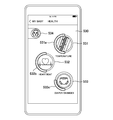
- FIG. It is a figure explaining the HEALTH screen 530.
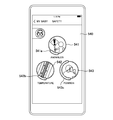
- FIG. It is a figure explaining the SAFETY screen 540.
- FIG. It is a figure explaining the HEALTH screen 530 concerning other embodiment.
- a computer capable of communicating with a sensor unit attached to an infant processes a signal output from the sensor unit to perform a first process for evaluating the body temperature of the infant, and processes a signal output from the sensor unit.
- infants' body temperature and heart rate are direct indications of their health, and if the diaper worn by the infant is not frequently replaced, the skin will be irritated, causing rough skin. Therefore, body temperature, heart rate, and diaper change frequency are very important factors for knowing the infant's health. According to such a program, since the infant's health condition is indicated based on the values indicated by at least two indicators, a highly reliable evaluation can be performed.
- the at least two processes are the first process, the second process, and the third process
- the at least two icons are the first icon, the second icon, and the In the process of displaying the main icon, which is a third icon
- the degree indicated by the main indicator is indicated by the degree indicated by the first indicator, the degree indicated by the second indicator, and the third indicator. It is desirable that the degree is determined based on the degree.
- the degree of good health of the infant is determined based not only on the infant's body temperature and heart rate, but also on the frequency of changing diapers, and the result is indicated on the screen by the main indicator. Therefore, a more reliable evaluation can be obtained.
- motivation is generated to allow the user to pay sufficient attention to changing the baby's diaper in order to improve the health of the baby indicated by the main indicator.
- the computer screen is provided with an indicator that indicates the degree of goodness of the infant and the main icon that includes the main indicator that indicates the degree of goodness of the infant. It is desirable to cause the computer to execute a process of displaying an icon having an indicator indicating the degree of safety of the infant.
- the user can visually know the good health of the infant, the good mood, and the good safety on a single screen.
- the third process is a process for evaluating the number of tap operations of the third icon as the number of times that the baby has changed diapers.
- the computer when it is determined that the baby's diaper replacement has not been performed for a predetermined time, the computer is caused to execute a process of changing the value of the third indicator displayed based on the third process. It is desirable.
- Such a program makes it possible to know that an infant's diaper has not been exchanged for a predetermined time or more, thereby reducing rash caused by the infant's diaper.
- the computer processes the signal output from the sensor unit to store the voice of the infant laughing in the computer, and the main icon is displayed on the computer screen.
- a process for displaying a login screen is executed.
- On the login screen an input unit for inputting information necessary for login and an icon representing a predetermined pattern are displayed.
- the main icon is displayed on the computer to reproduce the voice of the infant laughing It is desirable to execute.
- the laughing voice of the infant can be heard at the time of login, and the enjoyment of using this program can be increased.
- the design represents a character associated with an absorbent article used by the infant
- the computer displays an icon representing the character on the login screen, the input unit, It is desirable to execute a process for displaying a photograph of the infant.
- At least a screen for displaying the main icon or a screen for displaying at least two icons of the first icon, the second icon, and the third icon in the computer screen It is desirable to display a photograph of the infant on a single screen.
- the screen for displaying the main icon among the screens of the computer, the screen for displaying the main icon, and the screen for displaying at least two icons of the first icon, the second icon, and the third icon, It is desirable to display a photograph of an infant.
- the computer is caused to execute a process of changing an indicator value indicating a degree of goodness of the infant's mood state regardless of the frequency of changing the baby's diaper evaluated by the third process. It is desirable.
- the frequency of diaper exchange is not an indicator of mood, but a health indicator, in view of the very important problem that if the diaper is not exchanged for a predetermined time, the skin of the infant will be worn.
- the index indicating the state, it is possible to show diaper exchange as a more important health factor.
- the user can immediately know the emergency situation of the infant.
- the number of screen icons displayed after the login and the number of screen icons displayed after the tap operation of the main icon are the same, and the arrangement of the icons of the screen displayed after the login It is desirable that the arrangement of the icons on the screen is different when displayed after the tap operation of the main icon.
- FIG. 1 is a diagram illustrating a childcare support system 1 according to the present embodiment.
- the childcare support system 1 includes a sensor device 2 and a terminal (computer) 3. Communication between the sensor device 2 and the terminal 3 can be performed in real time by wireless or wired.
- the sensor device 2 is a device that is attached to the hand or foot of an infant and outputs various information acquired from the infant to the terminal 3.
- an infant means a child before attending elementary school, for example, a child under 6 years old.
- FIG. 1 shows an example in which the sensor device 2 is attached to an infant's hand.
- the sensor device 2 is an example of a “sensor device for infants”.
- the sensor device 2 includes a mounting member 10 and a sensor unit 20.
- the sensor unit 20 is detachable from the mounting member 10.
- FIG. 2 is a schematic perspective view of the mounting member 10 and the sensor unit 20 of the infant sensor device 2.
- the sensor unit 20 includes an acceleration sensor (not shown), a microphone (not shown), and a thermal sensor (not shown).
- FIG. 3 is a block diagram illustrating a functional configuration of the terminal 3.
- the terminal 3 of this embodiment includes a control unit 31, a storage unit 32, an input unit 33, a display unit 34, a communication unit 35, and a speaker 36.
- the control unit 31 transfers data between the units and controls the entire terminal.
- the control unit 31 is realized by a CPU (Central Processing Unit) executing a program stored in a predetermined memory.
- the control unit 31 includes a main screen processing unit 311, a HAPPINES screen processing unit 312, a HEALTH screen processing unit 313, a SAFETY screen processing unit 314, and a playback unit 315.
- the HAPPINES screen processing unit 312 is an eleventh processing unit 312a, a twelfth processing unit 312b, and a thirteenth processing unit 312c
- the HEALTH screen processing unit 313 is a first processing unit 313a, a second processing unit 313b, and a third processing unit 313c.
- the SAFETY screen processing unit 314 includes a twenty-first processing unit 314a, a twenty-second processing unit 314b, and a twenty-third processing unit 314c.
- the storage unit 32 includes a photograph DB 321 and a laughter DB 322.
- the photograph DB 321 stores infant photograph data.
- the laughter voice DB 322 stores voice data in which laughter voices of infants are stored.
- the input unit 33 is input by a user who operates the terminal 3 (hereinafter simply referred to as “user”), and is realized by a tap operation on the touch panel.
- the display unit 34 is a screen that displays various types of information based on commands from the control unit 31.
- the communication unit 35 has a function as a receiving unit that communicates with the sensor unit 20 and receives signals.
- the speaker 36 emits an infant laughter stored in the laughter DB 322 by the processing of the playback unit 315.
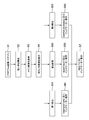
- FIG. 4 is a flowchart showing a flow showing the health condition of the infant.
- FIG. 5 is a diagram for explaining the login screen 500.
- a login screen 500 on which a photograph unit 501, a PW input unit 502, and a login icon 503 are displayed is displayed on the display unit 3a.
- the photograph unit 501 displays a photograph of the infant selected by the user from the photograph DB 321.
- the PW input unit 502 inputs information such as a password necessary for login.
- the control unit 31 performs a login process (S1).
- the design of the login icon 503 depict an image character of an absorbent article such as a diaper used by an infant, a photograph of the infant that the user feels loved and an image character together. Because it is displayed, it is also familiar to the image character, and it is easy to feel good.
- the playback unit 315 plays back the laughter of the infant stored in the laughter DB 322 with the speaker 36 (S2). Accordingly, the user can hear the laughing voice of the infant every time the user logs in, so that the enjoyment at the time of login can be increased.
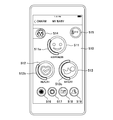
- FIG. 6 is a diagram for explaining the main screen 510.
- the main screen 510 has a HAPPINES icon 511, a HEALTH icon (main icon) 512, a SAFETY icon 513 in the center of the screen, a photo part 514 that displays a picture of the infant on the upper left of the screen, and a body temperature display part that displays the body temperature of the infant on the upper right of the screen.
- the main screen 510 is a screen that the user sees immediately after logging in. By viewing this one screen, an outline of the infant's condition can be visually recognized.
- the HAPPINES icon 511 is an icon indicating an infant's mood state, and displays a state in which the infant feels “fun and happy”.
- the HEALTH icon 512 is an icon indicating the health status of the infant and displays health.
- the SAFETY icon 513 is an icon indicating the infant's safety state, and calls attention when the infant is in danger.
- the shape of each icon is a shape without corners, and a circular shape is particularly preferable. This is because it has the effect of providing visual friendliness and security.
- the user can recognize the infant wearing the sensor device 2, and the user can be further provided with a pleasant feeling.
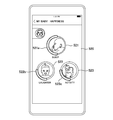
- FIG. 8 is a diagram for explaining the HEALTH screen 530.
- the icons are displayed in the same arrangement as the icons on the main screen 510, and the shape is preferably a circle having no corners. With this arrangement and shape, the user can visually feel the unity of the screen, and the circular icon can feel familiar and secure.
- the infant's HEALTH (health) is represented by TEMPERATURE (body temperature), HEARTBEAT (heart rate), and DIAPER CHANGES (diaper exchange).
- Body temperature body temperature
- HEARTBEAT heart rate
- DIAPER CHANGES diaper exchange
- the TEMPERATURE icon 531 is an icon that displays the infant's body temperature.
- the 1st process part 313a performs the 1st process which the communication part 35 receives the signal detected with the heat sensor of the sensor unit 20, and judges the body temperature of the infant (S51). At this time, the first processing unit 313a determines whether or not the infant's body temperature is within the range of normal heat. Since the infant's body temperature varies among individuals, it is preferable to set the normal temperature of the infant in advance and accurately determine the body temperature.
- the HEALTH screen processing unit 313 displays the body temperature of the infant obtained in the first process with a TEMPERATURE indicator (first indicator) 531a (S61).
- the TEMPERATURE indicator 531a increases clockwise when the body temperature is normal, and indicates a part or all of the outer periphery of the TEMPERATURE icon 531. If normal temperature has been maintained for the last 24 hours (for example, 36.5 ° C. ⁇ body temperature ⁇ 37.5 ° C.), the TEMPERATURE icon 531 is set so as to wrap around (100%). On the other hand, when the infant's body temperature is higher or lower than the normal temperature, the TEMPERATURE indicator 531a decreases counterclockwise. The user can visually know the temperature of the infant by looking at the TEMPERATURE indicator 531a.
- the HEARTBEAT icon 532 is an icon that displays the infant's heart rate.
- the second processing unit 313b receives a signal detected by the acceleration sensor of the sensor unit 20 by the communication unit 35 and performs a second process of determining the heart rate of the infant (S52). At this time, the second processing unit 313b determines whether the heart rate of the infant is within a normal value range. Since there are age differences and individual differences in the heart rate of infants, it is preferable to set the heart rate in a normal state in advance and accurately determine the heart rate.
- the HEALTH screen processing unit 313 displays the infant's heart rate obtained in the second process on the HEARTBEAT indicator (second indicator) 532b (S62).
- the HEARTBEAT indicator 532b indicates a part or all of the outer periphery of the HEARTBEAT icon 532, and increases in a clockwise direction when the heart rate is a normal value. If the heart rate is normal for the last 24 hours (for example, 100 ⁇ heart rate ⁇ 140 times per minute), the HEARTBEAT icon 532 is set to wrap around (100%). On the other hand, when the heart rate of the infant is higher or lower than the normal value, the HEARTBEAT indicator 532b decreases counterclockwise. The user can visually know the state of the heart rate of the infant by looking at the HEARTBEAT indicator 532b. In this embodiment, the heart rate is measured by the acceleration sensor, but the heart rate may be measured by providing a heart rate sensor.
- the main screen 510 and the HEALTH screen 530 are not displayed, and other screens such as the home screen (not shown) of the terminal 3 and the HAPPINES screen 520 are displayed. Even in such a case, a warning display is performed on the screen of the terminal 3 in view of urgency. As a result, the user can immediately know the abnormality of the infant.
- the DIAPER CHANGES icon 533 is an icon that displays the replacement frequency of the diaper worn by the infant. When the user changes the diaper once, the user taps the DIAPER CHANGES icon 533 once.
- the third processing unit 313c performs a third process of measuring the tapped number of times as the number of diaper replacements (S53). The user can input that the diaper has been changed with a simple operation, and can accurately measure the number of exchanges.
- the HEALTH screen processing unit 313 displays the number of times that the baby diaper obtained in the third process has been replaced by the DIAPER CHANGES indicator (third indicator) 533c (S63).
- the DIAPER CHANGES indicator 533c is assumed to increase clockwise as the number of diaper exchanges increases. Since the frequency of changing diapers of an infant has individual differences and age differences, the frequency of changing diapers can be displayed more accurately if the number of diaper exchanges in 24 hours is set in advance. For example, if an infant changes diapers on average 10 times during 24 hours, tapping the DIAPER CHANGES icon 533 once increases the DIAPER CHANGES indicator 533c by 10%.
- the value of the DIAPER CHANGES indicator 533c is decreased counterclockwise. For example, in the case of an infant who changes diapers every 3 hours, when the diaper has not been changed for 4 hours or more, the value of the DIAPER CHANGES indicator 533c is decreased.
- the user can become aware of "the frequency of changing diapers is low", etc., and can reduce baby's skin irritation and rough skin caused by not changing diapers for a long time. .
- the baby's diaper replacement has not been performed for a predetermined time (for example, 4 hours or more), and it is detected that the infant is crying from the signal detected by the microphone of the sensor unit 20. In some cases, the infant may be crying with discomfort due to not having a diaper change.
- the value of the SAFETY indicator 513c indicating part or all of the outer periphery of the SAFETY icon 513 is increased clockwise to warn the user that it is necessary to deal with the infant. The user who sees this can know that the infant should be dealt with immediately.
- the SAFETY indicator 513c is preferably displayed in a different color from the other indicators 521a, 522b, and 523c. For example, the indicators 521a, 522b, and 523c are green, and the SAFETY indicator 513c is red. Thereby, the user can recognize urgency by the difference in color.
- this DIAPER CHANGES indicator 533c does not affect the value of the HAPPINES indicator 511a indicating the degree of goodness of the infant's mood. That is, the value of the HAPPINES indicator 511a changes regardless of diaper replacement. Infants may feel refreshed when they change diapers, and may feel "good.” However, considering the importance of babies' skin being irritated if the diaper is not changed for a predetermined time or longer, the diaper replacement frequency is not an indicator of mood, but an indicator of health. It will be shown as an important factor.
- the main screen processing unit 311 displays the HEALTH indicator (main indicator) 512b on the outer periphery of the HEALTH icon 512 on the main screen 510, calculated from the values indicated by the indicators 531a, 532b, and 533c on the HEALTH screen 530 (S7).
- the TEMPERATURE indicator 531a indicates 50% of the outer periphery of the TEMPERATURE icon 531
- the HEARTBEAT indicator 532b indicates 50% of the outer periphery of the HEARTBEAT icon 532
- the DIAPER CHANGES indicator 533c indicates 25% of the outer periphery of the DIAPER CHANGES icon 533, (50% + 50% + 25%) ⁇ 1 / 3 ⁇ about 42%
- the HEALTH indicator 512b indicates a range of about 42% of the outer periphery of the HEALTH icon 512.
- the infant's health status can be visually expressed using the three indicators of the infant's body temperature, heart rate, and diaper exchange frequency, the user can know the health status of the infant by viewing the main screen 510. Can do.
- the HEALTH indicator 512b is a value indicated based on the values indicated by the indicators 521a, 522b, and 523c based on the three indicators, it is possible to obtain a highly reliable evaluation of the infant's health condition.
- FIG. 9 is a diagram for explaining the SAFETY screen 540. These icons are also displayed in the same arrangement as the icons on the main screen 510, and the shape is preferably a circle having no corners.
- the ANOMALIES icon 541 is an icon that displays an abnormality of the infant.
- the 1st process part 314a receives the signal detected with the microphone of the sensor unit 20, the acceleration sensor, or the heat sensor in the communication part 35, and performs the 21st process which judges the abnormality of the infants.
- the SAFETY screen processing unit 540 displays the abnormality of the infant obtained in the 21st process with the ANOMALIES indicator 541a.
- the value indicated by the ANOMALIES indicator 541a increases in an abnormal situation and decreases when the situation converges. For example, when it is detected from the microphone that the infant is crying, the value of the ANOMALIES indicator 541a increases, and when the crying stops, the value decreases counterclockwise. The user can quickly recognize the abnormality of the infant by looking at the ANOMALIES indicator 541a.
- the TEMPERATURE icon 542 is an icon indicating the body temperature of the infant.
- the second processing unit 314b performs a twenty-second process in which the communication unit 35 receives a signal detected by the thermal sensor of the sensor unit 20 and determines whether the infant's body temperature is outside a predetermined range.
- the SAFETY screen processing unit 540 displays the body temperature of the infant obtained in the 22nd process with the TEMPERATURE indicator 542b.
- the value of the TEMPERATURE indicator 542b increases if the infant's body temperature is outside a predetermined range (eg, 35.0 ° C. ⁇ body temperature ⁇ 38.0 ° C.), and decreases if the temperature is within the range. The user can visually know the temperature of the infant by looking at the TEMPERATURE indicator 542b.
- the POSITION icon 543 is an icon indicating the posture and position of the infant.
- the twenty-third processing unit 314c performs a twenty-third process in which the communication unit 35 receives a signal detected by the acceleration sensor of the sensor unit 20 and determines an abnormality in the posture or position of the infant.
- the SAFETY screen processing unit 540 displays the posture and position abnormality of the infant obtained in the 23rd process with the POSITION indicator 543c.
- the POSITION indicator 543c increases when there is an abnormality, and decreases when the abnormality is resolved. For example, in the situation where the infant is lying down and is difficult to breathe, if the signal detected by the acceleration sensor determines that the infant has not moved for a long time, the value of the POSITION indicator 543c is increased. The user can reduce the occurrence of sudden infant death syndrome and the like by watching the value of the POSITION indicator 543c and paying attention to the posture and position of the infant.
- an acceleration sensor is used, but a heart rate sensor or a thermal sensor may be used.
- the main screen processing unit 311 displays the largest value among the values indicated by the indicators 541a, 542b, and 543c displayed on the SAFETY screen 540 as the SAFETY indicator 513c on the outer periphery of the SAFETY icon 513 on the main screen 510. This is because the values of the indicators 541a, 542b, and 543c all indicate important indicators related to life. Thus, the infant's safety state can be visually represented using the infant's abnormality, body temperature, posture and position, and the user can know the infant's safety state by viewing the main screen 510.
- the values of the indicators 531a, 532b, and 533c on the HEALTH indicator 512b and the HEALTH screen 530 increase as the infant is in good condition, but the indicators 541a, 542b, and 543c on the SAFETY indicator 513c and the SAFETY screen 540 are bad.
- the indicator value increases as the state increases.
- the indicators 541a, 542b, and 543c on the SAFETY indicator 513c and the SAFETY screen 540 are preferably displayed in different colors from the indicators 512b, 531a, 532b, and 533c on the HEALTH screen. Thereby, a user can be strongly alerted.
- a predetermined value for example, 50%
- the main screen 510 or the SAFETY screen 540 is not displayed on the terminal 3.
- a warning message indicating danger is displayed on the display unit 3a of the terminal 3. As a result, the user can be notified that urgent action is necessary.
- FIG. 1 An eleventh process for evaluating the number of sleep states of the infant by processing the signal output from the sensor unit 20 to the terminal 3 that can communicate with the sensor unit 20 attached to the infant, and output from the sensor unit 20
- a thirteenth process for processing the signal to evaluate the number of laughing states of the infant and a thirteenth process for evaluating the number of the moving state of the infant by processing the signal output from the sensor unit 20.
- At least two of the processes, a process of displaying the HAPPINES icon 511 including the HAPPINES indicator 511a indicating the degree of goodness of the infant on the screen of the terminal 3, and the HAPPINES icon 511 are tapped.
- the sleep state of the infant is displayed on the screen of the terminal 3 based on at least two processes.
- the HAPPINES indicator The degree indicated by 511a is based on the degree indicated by each indicator 521a, 522b, 523c provided on at least two icons. A constant is the degree was.
- At least two processes are the eleventh process, the twelfth process, and the thirteenth process.
- At least two icons are the SLEEP icon 521, the LAUGHTER icon 522, and the ACTIVITY icon 523, and the HAPPINES icon 511 is displayed.
- the level indicated by the HAPPINES indicator 511a is preferably determined based on the level indicated by the SLEEP indicator 521a, the level indicated by the LAUGHTER indicator 522b, and the level indicated by the ACTIVITY indicator 523c.
- the twelfth process and the thirteenth process are executed at the same time, and the value of the ACTIVITY indicator 523c displayed based on the thirteenth process is changed according to the number of laughing states of the infant evaluated by the twelfth process. It is preferable.
- the sensor unit 20 includes a microphone, and when the signal output from the microphone satisfies a predetermined condition, the voice of the infant laughing state is re-saved.
- the graphic login icon 503 is tapped, it is preferable to cause the terminal 3 to execute a process of reproducing the re-saved voice of the infant laughing.
- the sensor unit 20 includes an acceleration sensor and a microphone, and processes the signal output from the acceleration sensor to evaluate the number of sleep states of the infant and the signal output from the acceleration sensor and the microphone. And a thirteenth process for evaluating the number of smiling states of the infant and a thirteenth process for evaluating the number of moving states of the infant by processing the signal output from the acceleration sensor.
- the terminal 3 is preferably executed.
- the eleventh process is a process for evaluating the amount of sleep state of the infant based on the time of the sleep state of the infant within a predetermined time, and the twelfth process is the amount of state that the infant is laughing. It is preferable that the evaluation is performed based on the time when the infant is laughing within the time obtained by excluding the sleep state time of the infant from the predetermined time.
- a sensor device 2 for outputting information acquired from an infant to a terminal 3 includes a mounting member 10 for mounting on an infant's hand or foot, and a sensor unit 20 including at least one sensor for acquiring information.
- the sensor unit 20 is detachable from the mounting member 10.
- the mounting member 10 preferably has a storage portion 11 for storing the sensor unit 20. Moreover, the accommodating part 11 has the opening part 12 for entering / exiting the sensor unit 20, and it is preferable that the opening part 12 can be opened and closed in the state which put the sensor unit 20 in the accommodating part 11.
- the mounting member 10 has a pair of belt members 14 and 15 that can be engaged, and the belt members 14 and 15 preferably have engagement positions that can be changed according to the hand or foot size of the infant. .
- the mounting member 10 is preferably washable and made of cloth.
- the hook-and-loop fasteners 13a and 13b are provided inside the opening 12 of the mounting member 10, and when the opening 12 is closed using the hook-and-loop fasteners 13a and 13b, the hook-and-loop fasteners 13a and 13b are not exposed to the outside. It is preferable.
- the sensor unit 20 includes an exterior case 21, and the sensor includes a microphone that collects the voices of infants. It is preferable that the hole 21a is formed.
- the sensor unit 20 includes a warning unit (not shown) that gives a predetermined warning to the outside, and the warning unit has a predetermined value based on a warning signal transmitted from the terminal 3 when there is no output from the sensor for a predetermined time. It is preferable to issue a warning.
- the health status of the infant is shown using three indicators of body temperature, heart rate, and diaper exchange frequency.
- the present invention is not limited to this. Any two of body temperature, heart rate, and diaper exchange frequency may be used to indicate the infant's health status. Thereby, highly reliable evaluation can be performed.
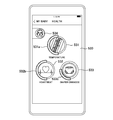
- FIG. 10 is a diagram illustrating a HEALTH screen 530 according to another embodiment.
- the HEALTH screen 530 may be arranged differently from the main screen 510 as shown in FIG. As a result, the user can easily recognize that the screen has changed, and erroneous operations can be reduced.
- communication between the sensor unit 20 and the terminal 3 can be used as appropriate. Communication may be performed directly with a local network such as a wireless personal area network (WPAN) or a wireless local area network (WLAN), or may be performed using a wireless wide area network (WWAN) such as the Internet.
- WLAN wireless personal area network
- WWAN wireless wide area network
- the server may perform each process and data management, and the terminal 3 may be used as a display screen. At this time, the server and the terminal 3 can be combined and handled as a computer. As a result, even if the amount of information increases, it is possible to perform rapid processing.
- said embodiment is realizable by making a computer or a microprocessor perform the various processes which the program mentioned above.
- all the processes may be prepared as a program, or a part of the processes may be processed by hardware and the remaining processes may be prepared as a program.
- the program can be supplied to the computer by using a non-transitory computer readable medium with an executable program stored therein. Examples of non-transitory computer-readable media include magnetic recording media (for example, flexible disks, magnetic tapes, hard disk drives), CD-ROMs (Read Only Memory), and the like.
Landscapes
- Health & Medical Sciences (AREA)
- Life Sciences & Earth Sciences (AREA)
- Engineering & Computer Science (AREA)
- Physics & Mathematics (AREA)
- Animal Behavior & Ethology (AREA)
- Molecular Biology (AREA)
- Veterinary Medicine (AREA)
- Public Health (AREA)
- Biophysics (AREA)
- Pathology (AREA)
- Biomedical Technology (AREA)
- Heart & Thoracic Surgery (AREA)
- Medical Informatics (AREA)
- General Health & Medical Sciences (AREA)
- Surgery (AREA)
- General Engineering & Computer Science (AREA)
- Theoretical Computer Science (AREA)
- Human Computer Interaction (AREA)
- General Physics & Mathematics (AREA)
- Computer Networks & Wireless Communication (AREA)
- Measuring And Recording Apparatus For Diagnosis (AREA)
- User Interface Of Digital Computer (AREA)
- Medical Treatment And Welfare Office Work (AREA)
Abstract
乳幼児に装着されたセンサーユニットと通信可能なコンピューターに、センサーユニットから出力された信号を処理して、乳幼児の体温を評価する第1処理、乳幼児の心拍数を評価する第2処理、及び乳幼児のおむつ交換の頻度を評価する第3処理のうちの、少なくとも二つの処理と、コンピューターの画面に、乳幼児の健康状態の良さの程度を示す主インジケーターを備えた主アイコンを表示させる処理と、主アイコンがタップ操作された場合に、少なくとも二つの処理に基づいて、乳幼児の体温を示す第1インジケーターを備えた第1アイコン等のうちの、少なくとも二つの処理に対応する少なくとも二つのアイコンを表示させる処理と、を実行させるプログラムであって、主アイコンを表示させる処理において、主インジケーターによって示される程度は、少なくとも二つのアイコンに備えられた各インジケーターによって示される程度に基づいて決定された程度である。
Description
本発明は、育児支援のために用いられるプログラム、育児支援方法、育児支援システム、及び乳幼児用センサー装置に関する。
乳幼児は、言葉によるコミュニケーションが不十分であるため、育児に不慣れな者にとっては、乳幼児の状態を知ることが難しい。体の状態をモニタリングする方法としては、対象者の腕等に携帯型フィットネスモニタリングシステムを装着してモニターする方法が特許文献1に記載されており、スマートフォン等の携帯端末と通信させて利用する技術開発が近年進められている。
しかし、このモニタリング方法は、アスリートなどの大人を対象としたものであり、乳幼児を対象として育児に役立てることは困難である。
本発明は、上記のような問題に鑑みてなされたものであって、その目的とするところは、育児を支援することを目的として、乳幼児の状態を知ることができるプログラムを提供することにある。
上記目的を達成するための主たる発明は、
乳幼児に装着されたセンサーユニットと通信可能なコンピューターに、前記センサーユニットから出力された信号を処理して、前記乳幼児の体温を評価する第1処理、前記センサーユニットから出力された信号を処理して、前記乳幼児の心拍数を評価する第2処理、及び前記センサーユニットから出力された信号を処理して、前記乳幼児のおむつ交換の頻度を評価する第3処理のうちの、少なくとも二つの処理と、前記コンピューターの画面に、前記乳幼児の健康状態の良さの程度を示す主インジケーターを備えた主アイコンを表示させる処理と、前記主アイコンがタップ操作された場合に、前記少なくとも二つの処理に基づいて、前記コンピューターの画面に、前記乳幼児の体温を示す第1インジケーターを備えた第1アイコン、前記乳幼児の心拍数を示す第2インジケーターを備えた第2アイコン、及び前記乳幼児のおむつ交換の頻度を示す第3インジケーターを備えた第3アイコンのうちの、前記少なくとも二つの処理に対応する少なくとも二つのアイコンを表示させる処理と、を実行させるプログラムであって、前記主アイコンを表示させる処理において、前記主インジケーターによって示される程度は、前記少なくとも二つのアイコンに備えられた各インジケーターによって示される程度に基づいて決定された程度であることを特徴とするプログラムである。
本発明の他の特徴については、本明細書及び添付図面の記載により明らかにする。
乳幼児の体温や心拍数の数値は直接的に健康状態を示す目安であり、また、乳幼児が着用しているおむつの交換頻度が少ないと肌がかぶれてしまい、肌荒れを引き起こす原因となってしまう。したがって、体温、心拍数、及びおむつの交換頻度は、幼児の健康状態を知るために、非常に重要な要因である。
このようなプログラムによれば、乳幼児の健康状態を少なくとも二つ以上のインジケーターで示された値に基づいて示すため、信頼性の高い評価を行うことができる。
このようなプログラムによれば、乳幼児の健康状態を少なくとも二つ以上のインジケーターで示された値に基づいて示すため、信頼性の高い評価を行うことができる。
本明細書及び添付図面の記載により、少なくとも以下の事項が明らかとなる。
乳幼児に装着されたセンサーユニットと通信可能なコンピューターに、前記センサーユニットから出力された信号を処理して、前記乳幼児の体温を評価する第1処理、前記センサーユニットから出力された信号を処理して、前記乳幼児の心拍数を評価する第2処理、及び前記センサーユニットから出力された信号を処理して、前記乳幼児のおむつ交換の頻度を評価する第3処理のうちの、少なくとも二つの処理と、前記コンピューターの画面に、前記乳幼児の健康状態の良さの程度を示す主インジケーターを備えた主アイコンを表示させる処理と、前記主アイコンがタップ操作された場合に、前記少なくとも二つの処理に基づいて、前記コンピューターの画面に、前記乳幼児の体温を示す第1インジケーターを備えた第1アイコン、前記乳幼児の心拍数を示す第2インジケーターを備えた第2アイコン、及び前記乳幼児のおむつ交換の頻度を示す第3インジケーターを備えた第3アイコンのうちの、前記少なくとも二つの処理に対応する少なくとも二つのアイコンを表示させる処理と、を実行させるプログラムであって、前記主アイコンを表示させる処理において、前記主インジケーターによって示される程度は、前記少なくとも二つのアイコンに備えられた各インジケーターによって示される程度に基づいて決定された程度であることを特徴とするプログラム。
乳幼児に装着されたセンサーユニットと通信可能なコンピューターに、前記センサーユニットから出力された信号を処理して、前記乳幼児の体温を評価する第1処理、前記センサーユニットから出力された信号を処理して、前記乳幼児の心拍数を評価する第2処理、及び前記センサーユニットから出力された信号を処理して、前記乳幼児のおむつ交換の頻度を評価する第3処理のうちの、少なくとも二つの処理と、前記コンピューターの画面に、前記乳幼児の健康状態の良さの程度を示す主インジケーターを備えた主アイコンを表示させる処理と、前記主アイコンがタップ操作された場合に、前記少なくとも二つの処理に基づいて、前記コンピューターの画面に、前記乳幼児の体温を示す第1インジケーターを備えた第1アイコン、前記乳幼児の心拍数を示す第2インジケーターを備えた第2アイコン、及び前記乳幼児のおむつ交換の頻度を示す第3インジケーターを備えた第3アイコンのうちの、前記少なくとも二つの処理に対応する少なくとも二つのアイコンを表示させる処理と、を実行させるプログラムであって、前記主アイコンを表示させる処理において、前記主インジケーターによって示される程度は、前記少なくとも二つのアイコンに備えられた各インジケーターによって示される程度に基づいて決定された程度であることを特徴とするプログラム。
乳幼児の体温や心拍数の数値は直接的に健康状態を示す目安であり、また、乳幼児が着用しているおむつの交換頻度が少ないと肌がかぶれてしまい、肌荒れを引き起こす原因となってしまう。したがって、体温、心拍数、及びおむつの交換頻度は、幼児の健康状態を知るために、非常に重要な要因である。
このようなプログラムによれば、乳幼児の健康状態を少なくとも二つ以上のインジケーターで示された値に基づいて示すため、信頼性の高い評価を行うことができる。
このようなプログラムによれば、乳幼児の健康状態を少なくとも二つ以上のインジケーターで示された値に基づいて示すため、信頼性の高い評価を行うことができる。
かかるプログラムであって、前記少なくとも二つの処理は、前記第1処理、前記第2処理、及び前記第3処理であり、前記少なくとも二つのアイコンは、前記第1アイコン、前記第2アイコン、及び前記第3アイコンであり、前記主アイコンを表示させる処理において、前記主インジケーターによって示される程度は、前記第1インジケーターによって示される程度、前記第2インジケーターによって示される程度、及び前記第3インジケーターによって示される程度に基づいて決定された程度である、ことが望ましい。
このようなプログラムによれば、乳幼児の健康状態の良さの程度は、乳幼児の体温と心拍数のみならず、おむつ交換の頻度にも基づいて決定され、その結果が画面上で主インジケーターによって示されるため、より信頼性の高い評価を得ることができる。
また、利用者に対して、主インジケーターによって示される乳幼児の健康状態をより良くすべく、乳幼児のおむつ交換に十分な注意を払わせるようにするための動機づけが発生する。
また、利用者に対して、主インジケーターによって示される乳幼児の健康状態をより良くすべく、乳幼児のおむつ交換に十分な注意を払わせるようにするための動機づけが発生する。
かかるプログラムであって、前記コンピューターの画面に、前記乳幼児の健康状態の良さの程度を示す前記主インジケーターを備えた前記主アイコンとともに、前記乳幼児の気分状態の良さの程度を示すインジケーターを備えたアイコンと、前記乳幼児の安全状態の良さの程度を示すインジケーターを備えたアイコンとを表示させる処理を前記コンピューターに実行させる、ことが望ましい。
このようなプログラムによれば、利用者は、乳幼児の健康状態の良さ、気分状態の良さ、安全状態の良さを、一つの画面で視覚的に知ることができる。
かかるプログラムであって、前記第3処理は、前記第3アイコンのタップ操作の回数を、前記乳幼児のおむつ交換を行った回数として評価する処理である、ことが望ましい。
このようなプログラムによれば、簡易な方法で乳幼児のおむつを交換した回数を計測することができる。
かかるプログラムであって、前記乳幼児のおむつ交換が所定時間行われなかったと判定した場合に、前記第3処理に基づいて表示した前記第3インジケーターの値を変化させる処理を、前記コンピューターに実行させる、ことが望ましい。
このようなプログラムによれば、乳幼児のおむつが所定時間以上交換されていないことを知ることができるため、乳幼児のおむつによるかぶれを軽減することができる。
かかるプログラムであって、前記乳幼児のおむつ交換が所定時間行われなかったと判定した場合であって、前記センサーユニットから出力された信号を処理して、前記乳幼児が泣いている状態であると判定した場合は、前記乳幼児の安全状態の良さを示すインジケーターを備えたアイコンを用いて警告表示させる処理を、前記コンピューターに実行させる、ことが望ましい。
このようなプログラムによれば、乳幼児のおむつ交換が所定時間行われていないために乳幼児が泣いていることを知ることができ、使用者は、おむつ交換を早急に行う必要があることを知ることができる。
かかるプログラムであって、前記コンピューターに、前記センサーユニットから出力された信号を処理して、前記乳幼児の笑っている状態の声を前記コンピューターに保存させる処理と、前記コンピューターの画面に前記主アイコンを表示させる前に、ログイン画面を表示させる処理を実行させ、前記ログイン画面には、ログインのために必要な情報を入力する入力部と、所定の図柄が表されたアイコンが表示され、前記ログイン画面の前記入力部に前記情報が入力され、前記図柄が表されたアイコンがタップ操作されると、前記コンピューターに、前記主アイコンを表示させて、前記乳幼児の笑っている状態の声を再生させる処理を実行させる、ことが望ましい。
このようなプログラムによれば、ログイン時に、乳幼児の笑っている声を聞くことができ、このプログラムを使用する楽しみを増やすことができる。
かかるプログラムであって、前記図柄は、前記乳幼児が使用する吸収性物品に関連付けられたキャラクターを表したものであり、前記コンピューターに、前記ログイン画面において、前記キャラクターを表したアイコン、前記入力部、及び前記乳幼児の写真を表示させる処理を実行させる、ことが望ましい。
このようなプログラムによれば、利用者が好む乳幼児の写真とキャラクターを同じ画面に表示させることで、キャラクターにも親しみを感じてもらえるようにすることができる。
かかるプログラムであって、前記コンピューターの画面のうち、前記主アイコンを表示させる画面、又は前記第1アイコンと前記第2アイコンと前記第3アイコンのうちの少なくとも二つのアイコンを表示させる画面の、少なくとも1つの画面に、前記乳幼児を写した写真を表示させる、ことが望ましい。
このようなプログラムによれば、利用者が好む写真を表示させることで、このプログラムを使用する楽しみを増やすことができる。
かかるプログラムであって、前記コンピューターの画面のうち、前記主アイコンを表示させる画面、及び前記第1アイコンと前記第2アイコンと前記第3アイコンのうちの少なくとも二つのアイコンを表示させる画面に、前記乳幼児を写した写真を表示させる、ことが望ましい。
このようなプログラムによれば、利用者が好む写真をより多く表示させることで、利用者が親近感を持ち、このプログラムを使用する楽しみをより増やすことができる。
かかるプログラムであって、前記第3処理によって評価された前記乳幼児のおむつ交換の頻度と無関係に、前記乳幼児の気分状態の良さの程度を示すインジケーターの値を変化させる処理を前記コンピューターに実行させる、ことが望ましい。
このようなプログラムによれば、所定時間おむつ交換が行われないと、乳幼児の肌がかぶれてしまうという非常に重要な問題に鑑みて、おむつ交換の頻度を、気分状態を示す指標ではなく、健康状態を示す指標とすることで、おむつ交換をより重要な健康のファクターとして示すことが可能となる。
かかるプログラムであって、前記コンピューターの画面に、前記主アイコン、前記第1アイコン、及び前記第2アイコンのいずれのアイコンも表示されていない場合であっても、前記第1処理において前記乳幼児の体温が所定の範囲外と評価された場合、又は、前記第2処理において前記乳幼児の心拍数が所定の範囲外と評価された場合には、前記コンピューターの画面に警告表示を行う処理を、前記コンピューターに実行させる、ことが望ましい。
このようなプログラムによれば、使用者は、乳幼児の緊急事態を早急に知ることができる。
かかるプログラムであって、前記ログイン後に表示された画面のアイコンの数と、前記主アイコンのタップ操作後に表示された画面のアイコンの数は同じであり、前記ログイン後に表示された画面のアイコンの配置と、前記主アイコンのタップ操作後に表示されたときに画面のアイコンの配置は異なる、ことが望ましい。
このようなプログラムによれば、利用者は、タップ操作の前後で同じ数のアイコンが表示されることとなるため、視覚的にまとまりが良く感じ、さらに、主アイコンのタップ操作前後でアイコンの配置が異なるため、画面が変わったことを認識しやすくなり、誤操作を減らすことができる。
===実施形態===
<育児支援システムの構成>
図1は、本実施形態にかかる育児支援システム1を説明する図である。育児支援システム1は、センサー装置2と端末(コンピューター)3とを含んで構成される。センサー装置2と端末3との通信は、無線または有線によりリアルタイムで行うことができる。
センサー装置2は、乳幼児の手または足に装着され、乳幼児から取得される各種情報を端末3に出力するための装置である。本実施形態において、乳幼児とは、小学校に就学する前の子供をいい、例えば、6歳未満の児をいう。図1では、センサー装置2が乳幼児の手に装着された例を示す。センサー装置2は、「乳幼児用センサー装置」の一例である。
<育児支援システムの構成>
図1は、本実施形態にかかる育児支援システム1を説明する図である。育児支援システム1は、センサー装置2と端末(コンピューター)3とを含んで構成される。センサー装置2と端末3との通信は、無線または有線によりリアルタイムで行うことができる。
センサー装置2は、乳幼児の手または足に装着され、乳幼児から取得される各種情報を端末3に出力するための装置である。本実施形態において、乳幼児とは、小学校に就学する前の子供をいい、例えば、6歳未満の児をいう。図1では、センサー装置2が乳幼児の手に装着された例を示す。センサー装置2は、「乳幼児用センサー装置」の一例である。
センサー装置2は、装着部材10及びセンサーユニット20を含んで構成されている。センサーユニット20は装着部材10に対して着脱可能である。図2は、乳幼児用センサー装置2の装着部材10とセンサーユニット20の概略斜視図である。
本実施形態において、センサーユニット20は、加速度センサー(図示せず)、マイク(図示せず)、及び熱センサー(図示せず)を含んでいる。
<端末3>
端末3は、センサー装置2から出力された情報を受信し、各種の処理を行い、その結果を表示部3aに表示させる。端末3は、たとえばスマートフォンやタブレット端末である。端末3は、ダウンロードしたプログラムを実行することで育児支援に関する各種の処理(後述)を実行する。
図3は、端末3の機能上の構成を示すブロック図である。本実施形態の端末3は、制御部31、記憶部32、入力部33、表示部34、通信部35、及びスピーカー36を有している。
端末3は、センサー装置2から出力された情報を受信し、各種の処理を行い、その結果を表示部3aに表示させる。端末3は、たとえばスマートフォンやタブレット端末である。端末3は、ダウンロードしたプログラムを実行することで育児支援に関する各種の処理(後述)を実行する。
図3は、端末3の機能上の構成を示すブロック図である。本実施形態の端末3は、制御部31、記憶部32、入力部33、表示部34、通信部35、及びスピーカー36を有している。
制御部31は、各部間のデータの受け渡しを行うとともに、端末全体の制御を行うものであり、CPU(Central Processing Unit)が所定のメモリに格納されたプログラムを実行することによって実現される。また、制御部31は、メイン画面処理部311、HAPPINESS画面処理部312、HEALTH画面処理部313、SAFETY画面処理部314、及び再生部315を有している。HAPPINESS画面処理部312は、第11処理部312a、第12処理部312b、第13処理部312cを、HEALTH画面処理部313は、第1処理部313a、第2処理部313b、第3処理部313cを、SAFETY画面処理部314は、第21処理部314a、第22処理部314b、第23処理部314cを有している。
記憶部32は、写真DB321、及び笑い声DB322を有している。
写真DB321には、乳幼児の写真データが格納されている。
笑い声DB322には、乳幼児の笑い声が保存された音声データが格納されている。
写真DB321には、乳幼児の写真データが格納されている。
笑い声DB322には、乳幼児の笑い声が保存された音声データが格納されている。
入力部33は、端末3を操作する使用者(以下、単に「使用者」という。)が入力するものであり、タッチパネルのタップ操作により実現される。
表示部34は、制御部31からの指令に基づいて各種の情報を表示する画面である。
通信部35は、センサーユニット20と通信を行い、信号を受信する受信部としての機能を有している。
スピーカー36は、再生部315の処理により、笑い声DB322に格納された乳幼児の笑い声を発するものである。
表示部34は、制御部31からの指令に基づいて各種の情報を表示する画面である。
通信部35は、センサーユニット20と通信を行い、信号を受信する受信部としての機能を有している。
スピーカー36は、再生部315の処理により、笑い声DB322に格納された乳幼児の笑い声を発するものである。
(乳幼児の健康状態)
図4は、乳幼児の健康状態を示す流れを表すフローチャート図である。図5は、ログイン画面500を説明する図である。まず、端末3のプログラムを起動させると、表示部3aに、写真部501、PW入力部502、及びログインアイコン503が示されたログイン画面500が表示される。写真部501には、写真DB321の中から使用者が選択した乳幼児の写真が表示される。PW入力部502は、ログインのために必要なパスワード等の情報を入力する。そして、使用者がログインアイコン503をタップすると、制御部31はログイン処理を行う(S1)。このとき、ログインアイコン503の図柄を、乳幼児が使用するおむつ等の吸収性物品のイメージキャラクターを描いたものにすることで、使用者が愛情を感じている乳幼児の写真とイメージキャラクターとが一緒に表示されるため、イメージキャラクターにも親しみを持ち、好意を感じやすくなる。
図4は、乳幼児の健康状態を示す流れを表すフローチャート図である。図5は、ログイン画面500を説明する図である。まず、端末3のプログラムを起動させると、表示部3aに、写真部501、PW入力部502、及びログインアイコン503が示されたログイン画面500が表示される。写真部501には、写真DB321の中から使用者が選択した乳幼児の写真が表示される。PW入力部502は、ログインのために必要なパスワード等の情報を入力する。そして、使用者がログインアイコン503をタップすると、制御部31はログイン処理を行う(S1)。このとき、ログインアイコン503の図柄を、乳幼児が使用するおむつ等の吸収性物品のイメージキャラクターを描いたものにすることで、使用者が愛情を感じている乳幼児の写真とイメージキャラクターとが一緒に表示されるため、イメージキャラクターにも親しみを持ち、好意を感じやすくなる。
ログイン処理がされると、再生部315は、笑い声DB322に格納された乳幼児の笑い声をスピーカー36で再生する(S2)。これにより、使用者は、ログインを行う度に乳幼児の笑っている声を聞くことができるため、ログイン時の楽しみを増やすことができる。
そして、メイン画面510が表示される(S3)。図6は、メイン画面510を説明する図である。メイン画面510には、画面中央にHAPPINESSアイコン511、HEALTHアイコン(主アイコン)512、SAFETYアイコン513、画面左上に乳幼児の写真を表示する写真部514、画面右上に乳幼児の体温を表示する体温表示部515、画面下部に通信設定を行う通信設定部516、乳幼児の誕生日や体重等を設定する個人情報設定部517、乳幼児の写真を選択する写真選択部518、SNS等のコミュニケーションツールへの接続設定を行うSNS設定部519のアイコンが表示される。メイン画面510は、使用者がログイン後にすぐに見る画面であり、この一つの画面を見れば乳幼児の状態の概略を視覚的に知ることができる。
HAPPINESSアイコン511は、乳幼児の気分状態を示すアイコンであり、乳幼児が「楽しい、幸せ」と感じている状態を表示するものである。HEALTHアイコン512は、乳幼児の健康状態を示すアイコンであり、健やかさを表示するものである。SAFETYアイコン513は、乳幼児の安全状態を示すアイコンであり、乳幼児に危険が迫っている場合に注意を促すものである。このとき、各アイコンの形状は、角のない形状で、特に円形が好ましい。視覚的に親しみや安心を与えるという効果があるためである。
また、写真部514に愛情を感じている乳幼児の写真を表示することで、使用者に、センサー装置2を装着している乳幼児を認識させ、使用者に楽しい気持ちをより一層与えることができる。
メイン画面510のHEALTHアイコン512をタップすると、TEMPERATUREアイコン(第1アイコン)531、HEARTBEATアイコン(第2アイコン)532、DIAPER CHANGESアイコン(第3アイコン)533、写真部534を有する、HEALTH画面530が表示される(S4)。図8は、HEALTH画面530を説明する図である。このとき、アイコンは、メイン画面510のアイコンの配置と同じ配置で表示されており、形についても角を有さない円形が好ましい。使用者は、この配置や形状によって、視覚的に画面のまとまりを感じさせることができ、また、円形のアイコンは親しみや安心を感じさせることができる。
本実施形態においては、乳幼児のHEALTH(健康)を、TEMPERATURE(体温)、HEARTBEAT(心拍数)、DIAPER CHANGES(おむつ交換)で表している。乳幼児の体温や心拍数は、直接的に健康状態を示す目安であり、乳幼児が着用しているおむつの交換は、交換頻度が少ないと衛生的に問題があるだけでなく、肌がかぶれて、肌荒れを引き起こす原因となる。したがって、乳幼児の健康には、体温、心拍数だけでなく、おむつ交換も非常に重要で、注意を払う必要がある。
また、メイン画面510と同様に、画面左上に乳幼児の写真を表示した写真部534表示することで、愛情を感じている乳幼児の写真が一緒に表示され、使用者に親近感を与えることができる。
TEMPERATUREアイコン531は、乳幼児の体温を表示するアイコンである。第1処理部313aは、センサーユニット20の熱センサーで検知した信号を、通信部35が受信して、乳幼児の体温を判断する第1処理を行う(S51)。このとき、第1処理部313aは、乳幼児の体温が平熱の範囲内か否かを判断する。乳幼児の体温は個人差があるため、予め乳幼児の平熱を設定しておき、的確に体温の判断を行うことが好ましい。
続いて、HEALTH画面処理部313は、第1処理で得た乳幼児の体温をTEMPERATUREインジケーター(第1インジケーター)531aで表示する(S61)。TEMPERATUREインジケーター531aは、体温が平熱であれば時計回りに増加するものとし、TEMPERATUREアイコン531の外周の一部分又は全部を示すものとする。直近24時間ずっと平熱(例えば、36.5℃<体温<37.5℃)であれば、TEMPERATUREアイコン531の周りを一周囲むこと(100%)となるように設定する。一方、乳幼児の体温が平熱より高い又は低い場合には、TEMPERATUREインジケーター531aは、反時計回りに減少することとなる。使用者は、TEMPERATUREインジケーター531aを見ることで、視覚的に乳幼児の体温の状態を知ることができる。
HEARTBEATアイコン532は、乳幼児の心拍数を表示するアイコンである。第2処理部313bは、センサーユニット20の加速度センサーで検知した信号を、通信部35で受信して、乳幼児の心拍数を判断する第2処理を行う(S52)。このとき、第2処理部313bは、乳幼児の心拍数が平常値の範囲内か否かを判断する。乳幼児の心拍数は、年齢差や個人差があるため、予め平常状態での心拍数を設定しておき、的確に心拍数の判断を行うことが好ましい。
続いて、HEALTH画面処理部313は、第2処理で得た乳幼児の心拍数をHEARTBEATインジケーター(第2インジケーター)532bで表示する(S62)。HEARTBEATインジケーター532bは、HEARTBEATアイコン532の外周の一部分又は全部を示し、心拍数が平常値であれば時計回りに増加するものとする。直近24時間ずっと平常の心拍数(例えば、1分間に100<心拍数<140回)であれば、HEARTBEATアイコン532の周りを一周囲むこと(100%)となるように設定する。一方、乳幼児の心拍数が平常値より多い場合又は少ない場合には、HEARTBEATインジケーター532bは、半時計回りに減少する。使用者は、HEARTBEATインジケーター532bを見ることで、視覚的に乳幼児の心拍数の状態を知ることができる。なお、本実施形態においては、加速度センサーで心拍を計測することとしたが、心拍センサーを備えて心拍数を測定してもよい。
また、第1処理において乳幼児の体温が所定の範囲(例えば、35.0℃<体温<38.0℃)にない場合、又は、第2処理において乳幼児の心拍数が所定の範囲(例えば、70回<心拍数<150回))にない場合には、メイン画面510やHEALTH画面530が表示されておらず、端末3のホーム画面(図示せず)やHAPPINESS画面520等の別画面が表示されている場合であっても、緊急性を鑑みて、端末3の画面に警告表示を行うこととする。これにより、使用者は乳幼児の異常を早急に知ることができる。
DIAPER CHANGESアイコン533は、乳幼児が着用しているおむつの交換頻度を表示するアイコンである。使用者は、1回おむつ交換を行うと、DIAPER CHANGESアイコン533を1回タップする。第3処理部313cは、このタップした回数をおむつ交換の回数として計測する第3処理を行う(S53)。使用者は、おむつ交換を行ったことを簡易な操作で入力することができ、正確な交換回数の計測が可能となる。
続いて、HEALTH画面処理部313は、第3処理で得た乳幼児おむつを交換した回数の多さをDIAPER CHANGESインジケーター(第3インジケーター)533cで表示する(S63)。DIAPER CHANGESインジケーター533cは、おむつ交換の回数が多いほど時計回りに増加するものとする。乳幼児のおむつ交換の頻度は、個人差・年齢差があるため、予め乳幼児の24時間におけるおむつの交換回数を設定しておくと、おむつ交換の頻度をより正確に表示することができる。例えば、通常24時間中に平均10回おむつを交換する乳幼児であれば、DIAPER CHANGESアイコン533を1回タップすると、DIAPER CHANGESインジケーター533cは10%増加する。
一定時間乳幼児のおむつが交換されていない場合は、DIAPER CHANGESインジケーター533cの値を反時計回りに減少させる。例えば、通常3時間毎におむつ交換を行う乳幼児の場合、4時間以上おむつ交換がなされていないときには、DIAPER CHANGESインジケーター533cの値を減少させる。
一定時間乳幼児のおむつが交換されていない場合は、DIAPER CHANGESインジケーター533cの値を反時計回りに減少させる。例えば、通常3時間毎におむつ交換を行う乳幼児の場合、4時間以上おむつ交換がなされていないときには、DIAPER CHANGESインジケーター533cの値を減少させる。
使用者は、DIAPER CHANGESインジケーター533cを見ることで、「おむつの交換頻度が少ない」等を知るきっかけになり、長時間おむつが交換されないことで生じる赤ちゃんの肌のかぶれや肌荒れを軽減させることができる。
さらに、第3処理により乳幼児のおむつ交換が所定時間(例えば4時間以上)行われていないと判断がされ、かつ、センサーユニット20のマイクで検知した信号により、乳幼児が泣いていることを検知した場合には、乳幼児は、おむつ交換がされていないことによる不快感で泣いていると考えられる。このとき、SAFETYアイコン513の外周の一部又は全部を示すSAFETYインジケーター513cの値を時計回りに増加させて、使用者に乳幼児への対処が必要であることを警告する。これを見た使用者は、乳幼児に対して早急に対応すべきことを知ることができる。このとき、SAFETYインジケーター513cは、他の各インジケーター521a、522b、523cとは異なる色で示すことが好ましい。例えば、各インジケーター521a、522b、523cは緑色で、SAFETYインジケーター513cは赤色とする。これにより、使用者は、色の違いで緊急性を認識することができる。
なお、このDIAPER CHANGESインジケーター533cの値は、乳幼児の気分状態の良さの程度を示すHAPPINESSインジケーター511aの値に作用しないこととする。つまり、HAPPINESSインジケーター511aの値は、おむつ交換とは無関係に変化する。乳幼児はおむつを交換されると、さっぱりした気分になり、「気分がよい」状態になるとも考えられる。しかし、所定時間以上おむつが交換されないと乳幼児の肌がかぶれてしまう等の重要性を鑑みて、おむつ交換頻度は、気分状態を示す指標ではなく、健康状態を示す指標として扱い、健康上の重要なファクターとして示すこととする。
メイン画面処理部311は、HEALTH画面530の各インジケーター531a、532b、533cが示す値から算出して、メイン画面510のHEALTHアイコン512の外周にHEALTHインジケーター(主インジケーター)512bを表示する(S7)。例えば、TEMPERATUREインジケーター531aがTEMPERATUREアイコン531の外周の50%、HEARTBEATインジケーター532bがHEARTBEATアイコン532の外周の50%、DIAPER CHANGESインジケーター533cがDIAPER CHANGESアイコン533の外周の25%を示している場合には、(50%+50%+25%)×1/3≒約42%となり、HEALTHインジケーター512bは、HEALTHアイコン512の外周の約42%の範囲を示す。
乳幼児の体温、心拍数、おむつ交換頻度の3つの指標を用いて乳幼児の健康状態を可視的に表すことができるため、使用者は、メイン画面510を見ることで、乳幼児の健康状態を知ることができる。また、HEALTHインジケーター512bは、3つの指標による各インジケーター521a、522b、523cが示す値に基づいて示された値であるため、乳幼児の健康状態について信頼性の高い評価を得ることができる。
(乳幼児の安全状態)
メイン画面510のSAFETYアイコン513をタップすると、ANOMALIESアイコン541、TEMPERATUREアイコン542、POSITIONアイコン543を有する、SAFETY画面540が表示される。図9は、SAFETY画面540を説明する図である。これらアイコンも、メイン画面510のアイコンの配置と同じ配置で表示され、形状も角を有さない円形が好ましい。
メイン画面510のSAFETYアイコン513をタップすると、ANOMALIESアイコン541、TEMPERATUREアイコン542、POSITIONアイコン543を有する、SAFETY画面540が表示される。図9は、SAFETY画面540を説明する図である。これらアイコンも、メイン画面510のアイコンの配置と同じ配置で表示され、形状も角を有さない円形が好ましい。
ANOMALIESアイコン541は、乳幼児の異常を表示するアイコンである。第1処理部314aは、センサーユニット20のマイク、加速度センサー、又は熱センサーで検知した信号を、通信部35で受信して、乳幼児の異常を判断する第21処理を行う。
続いて、SAFETY画面処理部540は、第21処理で得た乳幼児の異常をANOMALIESインジケーター541aで表示する。ANOMALIESインジケーター541aが示す値は、異常事態のときに増加し、事態が収束すると減少する。例えば、マイクから乳幼児が泣き続けていることを検知した場合には、ANOMALIESインジケーター541aの値は増加し、泣き止むと反時計回りに減少する。使用者は、ANOMALIESインジケーター541aを見ることで、乳幼児の異常を早急に認識することができる。
TEMPERATUREアイコン542は、乳幼児の体温を示すアイコンである。第2処理部314bは、センサーユニット20の熱センサーで検知した信号を、通信部35が受信して、乳幼児の体温が所定の範囲外であるか否かを判断する第22処理を行う。
続いて、SAFETY画面処理部540は、第22処理で得た乳幼児の体温をTEMPERATUREインジケーター542bで表示する。このTEMPERATUREインジケーター542bの値は、乳幼児の体温が所定の範囲(例えば、35.0℃<体温<38.0℃)外であれば増加し、範囲内であれば減少する。使用者は、TEMPERATUREインジケーター542bを見ることで、視覚的に乳幼児の体温の状態を知ることができる。
POSITIONアイコン543は、乳幼児の姿勢や位置を示すアイコンである。第23処理部314cは、センサーユニット20の加速度センサーで検知した信号を、通信部35が受信して、乳幼児の姿勢や位置の異常を判断する第23処理を行う。
続いて、SAFETY画面処理部540は、第23処理で得た乳幼児の姿勢や位置の異常をPOSITIONインジケーター543cで表示する。POSITIONインジケーター543cは、異常があれば増加し、異常が解消すれば減少する。例えば、乳幼児がうつ伏せ寝で呼吸がしづらい状況の場合に、加速度センサーで検知した信号により、乳幼児が長時間動いていないと判断すると、POSITIONインジケーター543cの値を増加させる。使用者は、POSITIONインジケーター543cの値を見て、乳幼児の姿勢や位置に注意することで、乳幼児突然死症候群等の発生を軽減させることができる。なお、本実施形態では、加速度センサーを用いたが、心拍センサーや熱センサーを用いてもよい。
メイン画面処理部311は、SAFETY画面540で表示した各インジケーター541a、542b、543cが示す値のうちの最も大きな値を、メイン画面510のSAFETYアイコン513の外周にSAFETYインジケーター513cとして表示する。各インジケーター541a、542b、543cの値は、いずれも生命に関わる重要な指標を示しているためである。これにより、乳幼児の異常、体温、姿勢や位置を用いて乳幼児の安全状態を可視的に表すことができ、使用者は、メイン画面510を見ることで、乳幼児の安全状態を知ることができる。
HEALTHインジケーター512b及びHEALTH画面530の各インジケーター531a、532b、533cは、乳幼児が良い状態であるほどインジケーターの値が増加するが、SAFETYインジケーター513c及びSAFETY画面540の各インジケーター541a、542b、543cは、悪い状態であるほどインジケーターの値が増加する。また、SAFETYインジケーター513c及びSAFETY画面540の各インジケーター541a、542b、543cは、HEALTH画面等の各インジケーター512b、531a、532b、533c等とは、異なる色で表示することが好ましい。これにより、使用者に対して強く注意を促すことができる。
また、ANOMALIESインジケーター541a、TEMPERATUREインジケーター542b、POSITIONインジケーター513cのいずれかが所定の値(例えば、50%)を超えたときは、メイン画面510又はSAFETY画面540が端末3に表示されていない場合であっても、端末3の表示部3aに危険である旨の警告表示を行うこととする。これにより、使用者に緊急の措置が必要であることを知らせることができる。
(乳幼児の気分状態)
次に、図6及び7を参照しつつ、乳幼児の気分状態を示す概略を説明する。
乳幼児に装着されたセンサーユニット20と通信可能な端末3に、センサーユニット20から出力された信号を処理して、乳幼児の睡眠状態の多さを評価する第11処理、センサーユニット20から出力された信号を処理して、乳幼児の笑っている状態の多さを評価する第12処理、及びセンサーユニット20から出力された信号を処理して、乳幼児の動いている状態の多さを評価する第13処理のうちの、少なくとも二つの処理と、端末3の画面に、乳幼児の気分状態の良さの程度を示すHAPPINESSインジケーター511aを備えたHAPPINESSアイコン511を表示させる処理と、HAPPINESSアイコン511がタップ操作された場合に、少なくとも二つの処理に基づいて、端末3の画面に、乳幼児の睡眠状態の多さの程度を示すSLEEPインジケーター521aを備えたSLEEPアイコン521、乳幼児の笑っている状態の多さの程度を示すLAUGHTERインジケーター522bを備えたLAUGHTERアイコン522、及び乳幼児の動いている状態の多さの程度を示すACTIVITYインジケーター523cを備えたACTIVITYアイコン523のうちの、少なくとも二つの処理に対応する少なくとも二つのアイコンを表示させる処理と、を実行させるプログラムであって、HAPPINESSアイコン511を表示させる処理において、HAPPINESSインジケーター511aによって示される程度は、少なくとも二つのアイコンに備えられた各インジケーター521a、522b、523cによって示される程度に基づいて決定された程度である。
少なくとも二つの処理は、第11処理、第12処理、及び第13処理であり、少なくとも二つのアイコンは、SLEEPアイコン521、LAUGHTERアイコン522、及びACTIVITYアイコン523であり、HAPPINESSアイコン511を表示させる処理において、HAPPINESSインジケーター511aによって示される程度は、SLEEPインジケーター521aによって示される程度、LAUGHTERインジケーター522bによって示される程度、及びACTIVITYインジケーター523cによって示される程度に基づいて決定された程度であることが好ましい。
第12処理と第13処理が同時に実行されており、第12処理によって評価された乳幼児が笑っている状態の多さに応じて、第13処理に基づいて表示したACTIVITYインジケーター523cの値を変化させることが好ましい。
センサーユニット20は、マイクを備えており、マイクから出力された信号が所定の条件を満たした場合に、乳幼児の笑っている状態の声を再保存することとし、再保存後に、ログイン画面500の図柄のログインアイコン503がタップ操作された場合には、端末3に、再保存した乳幼児の笑っている状態の声を再生させる処理を実行させることが好ましい。
センサーユニット20は、加速度センサー及びマイクを備えており、加速度センサーから出力された信号を処理して、乳幼児の睡眠状態の多さを評価する第11処理と、加速度センサー及びマイクから出力された信号を処理して、乳幼児の笑っている状態の多さを評価する第12処理と、加速度センサーから出力された信号を処理して、乳幼児の動いている状態の多さを評価する第13処理を、端末3に実行させることが好ましい。
第11処理は、乳幼児の睡眠状態の多さを、所定時間内における、乳幼児の睡眠状態の時間に基づいて評価する処理であり、第12処理は、乳幼児の笑っている状態の多さを、所定時間から乳幼児の睡眠状態の時間を除いた時間内における、乳幼児の笑っている時間に基づいて評価する処理であることが好ましい。
<センサー装置2>
図1及び2を参照しつつ、センサー装置2の概略構成を説明する。
乳幼児から取得される情報を端末3に出力するためのセンサー装置2は、乳幼児の手または足に装着するための装着部材10と、情報を取得する少なくとも一つのセンサーを含むセンサーユニット20とを有し、センサーユニット20は装着部材10に対して着脱可能である。
図1及び2を参照しつつ、センサー装置2の概略構成を説明する。
乳幼児から取得される情報を端末3に出力するためのセンサー装置2は、乳幼児の手または足に装着するための装着部材10と、情報を取得する少なくとも一つのセンサーを含むセンサーユニット20とを有し、センサーユニット20は装着部材10に対して着脱可能である。
装着部材10は、センサーユニット20を収容するための収容部11を有することが好ましい。
また、収容部11は、センサーユニット20を出入するための開口部12を有し、開口部12は、収容部11にセンサーユニット20を入れた状態で開閉可能となっていることが好ましい。
装着部材10は、係合可能な一対のベルト部材14、15を有し、ベルト部材14、15は、乳幼児の手または足のサイズに応じて係合位置が変更可能となっていることが好ましい。
また、装着部材10は、水洗い可能で、布製であることが好ましい。
また、収容部11は、センサーユニット20を出入するための開口部12を有し、開口部12は、収容部11にセンサーユニット20を入れた状態で開閉可能となっていることが好ましい。
装着部材10は、係合可能な一対のベルト部材14、15を有し、ベルト部材14、15は、乳幼児の手または足のサイズに応じて係合位置が変更可能となっていることが好ましい。
また、装着部材10は、水洗い可能で、布製であることが好ましい。
装着部材10の開口部12の内側には面ファスナー13a、13bが設けられており、開口部12が面ファスナー13a、13bを用いて閉じられた際に、面ファスナー13a、13bは外部に露出しないことが好ましい。
センサーユニット20は、外装ケース21を含み、センサーは、乳幼児の声を収集するマイクを含み、センサーユニット20の装着部材10に対する出入方向において、外装ケース21の、マイクが配置されている側に、穴21aが形成されていることが好ましい。
センサーユニット20は外部に対して所定の警告を行う警告部(図示せず)を含み、警告部は、センサーからの出力が所定時間無い場合に端末3から送信される警告信号に基づいて所定の警告を行うことが好ましい。
センサーユニット20は外部に対して所定の警告を行う警告部(図示せず)を含み、警告部は、センサーからの出力が所定時間無い場合に端末3から送信される警告信号に基づいて所定の警告を行うことが好ましい。
===その他の実施の形態===
以上、本発明の実施形態について説明したが、上記の実施形態は、本発明の理解を容易にするためのものであり、本発明を限定して解釈するためのものではない。また、本発明は、その趣旨を逸脱することなく、変更や改良され得るとともに、本発明にはその等価物が含まれるのは言うまでもない。例えば、以下に示すような変形が可能である。
以上、本発明の実施形態について説明したが、上記の実施形態は、本発明の理解を容易にするためのものであり、本発明を限定して解釈するためのものではない。また、本発明は、その趣旨を逸脱することなく、変更や改良され得るとともに、本発明にはその等価物が含まれるのは言うまでもない。例えば、以下に示すような変形が可能である。
上述の実施形態では、体温、心拍数、及びおむつ交換の頻度の3つの指標を用いて乳幼児の健康状態を示すこととしたが、これに限られない。体温、心拍数、おむつ交換の頻度のいずれか二つを用いて乳幼児の健康状態を示すこととしてもよい。これにより、信頼性の高い評価を行うことができる。
上述の実施形態では、図6及び図8に示すように、メイン画面510と、HEALTH画面530のアイコンが同じ配置で表示されている。これらのアイコンの配置は、この表示方法に限られない。例えば、図10は、その他の実施形態にかかるHEALTH画面530を説明する図である。HEALTH画面530は、図10のようにメイン画面510と異なる配置でもよい。これにより、画面が変わったことを使用者が認識しやすくなり、誤操作を減らすことができる。
また、センサーユニット20と端末3との通信は、適宜用いることができる。無線パーソナルエリアネットワーク(WPAN)や無線ローカルエリアネットワーク(WLAN)のようなローカルネットワークで直接通信したり、インターネットのような無線広域ネットワーク(WWAN)を用いて通信したりすることとしてもよい。センサーユニット20とサーバーとをネットワークを介して通信することとして、サーバーが各処理及びデータ管理を行い、端末3を表示画面として用いることとしてもよい。このとき、サーバーと端末3とを合わせてコンピューターとして扱うことができる。これにより、情報量が多くなっても、迅速な処理を可能とする。
また、上記の実施形態は、プログラムが前述した各種の処理をコンピューター又はマイクロプロセッサに実行させることにより実現可能である。この場合、全ての処理をプログラムとして準備していてもよいし、一部の処理をハードウェアに処理させ残りの処理をプログラムとして準備していてもよい。
また、実行可能なプログラムが記憶された非一時的なコンピューター可読媒体(non-transitory computer readable medium with an executable program thereon)を用いて、コンピューターにプログラムを供給することも可能である。なお、非一時的なコンピューターの可読媒体の例は、磁気記録媒体(例えばフレキシブルディスク、磁気テープ、ハードディスクドライブ)、CD-ROM(Read Only Memory)等がある。
また、実行可能なプログラムが記憶された非一時的なコンピューター可読媒体(non-transitory computer readable medium with an executable program thereon)を用いて、コンピューターにプログラムを供給することも可能である。なお、非一時的なコンピューターの可読媒体の例は、磁気記録媒体(例えばフレキシブルディスク、磁気テープ、ハードディスクドライブ)、CD-ROM(Read Only Memory)等がある。
1 育児支援システム
2 乳児用センサー装置(センサー装置)
3 端末(コンピューター)
10 装着部材
11 収容部、12 開口部
13a、13b 面ファスナー
14、15 ベルト部材
20 センサーユニット
21 外装ケース、21a 穴
31 制御部
311 メイン画面処理部
312 HAPPINESS画面処理部
312a 第11処理部、312b 第12処理部、312c 第13処理部
313 HEALTH画面処理部
313a 第1処理部、313b 第2処理部、313c 第3処理部
314 SAFETY画面処理部
314a 第21処理部、314b 第22処理部、314c 第23処理部
315 再生部
32 記憶部
321 写真DB、322 笑い声DB
33 入力部
34 表示部
35 通信部
36 スピーカー
500 ログイン画面
501 写真部
502 PW入力部
503 ログインアイコン
510 メイン画面
511 HAPPINESSアイコン
511a HAPPINESSインジケーター
512 HEALTHアイコン(主アイコン)
512b HEALTHインジケーター(主インジケーター)
513 SAFETYアイコン
513c SAFETYインジケーター
515 体温表示部
520 HAPPINESS画面
521 SLEEPアイコン
521a SLEEPインジケーター
522 LAUGHTERアイコン
522b LAUGHTERインジケーター
523 ACTIVITYアイコン
523c ACTIVITYインジケーター
530 HEALTH画面
531 TEMPERATUREアイコン(第1アイコン)
531a TEMPERATUREインジケーター(第1インジケーター)
532 HEARTBEATアイコン(第2アイコン)
532b HEARTBEATインジケーター(第2インジケーター)
533 DIAPER CHANGESアイコン(第3アイコン)
533c DIAPER CHANGESインジケーター(第3インジケーター)
534 写真部
540 SAFETY画面
541 ANOMALIESアイコン
541a ANOMALIESインジケーター
542 TEMPERATUREアイコン
542b TEMPERATUREインジケーター
543 POSITIONアイコン
543c POSITIONインジケーター
Claims (16)
- 乳幼児に装着されたセンサーユニットと通信可能なコンピューターに、
前記センサーユニットから出力された信号を処理して、前記乳幼児の体温を評価する第1処理、前記センサーユニットから出力された信号を処理して、前記乳幼児の心拍数を評価する第2処理、及び前記センサーユニットから出力された信号を処理して、前記乳幼児のおむつ交換の頻度を評価する第3処理のうちの、少なくとも二つの処理と、
前記コンピューターの画面に、前記乳幼児の健康状態の良さの程度を示す主インジケーターを備えた主アイコンを表示させる処理と、
前記主アイコンがタップ操作された場合に、前記少なくとも二つの処理に基づいて、前記コンピューターの画面に、前記乳幼児の体温を示す第1インジケーターを備えた第1アイコン、前記乳幼児の心拍数を示す第2インジケーターを備えた第2アイコン、及び前記乳幼児のおむつ交換の頻度を示す第3インジケーターを備えた第3アイコンのうちの、前記少なくとも二つの処理に対応する少なくとも二つのアイコンを表示させる処理と、
を実行させるプログラムであって、
前記主アイコンを表示させる処理において、前記主インジケーターによって示される程度は、前記少なくとも二つのアイコンに備えられた各インジケーターによって示される程度に基づいて決定された程度であることを特徴とするプログラム。 - 請求項1に記載のプログラムであって、
前記少なくとも二つの処理は、前記第1処理、前記第2処理、及び前記第3処理であり、
前記少なくとも二つのアイコンは、前記第1アイコン、前記第2アイコン、及び前記第3アイコンであり、
前記主アイコンを表示させる処理において、前記主インジケーターによって示される程度は、前記第1インジケーターによって示される程度、前記第2インジケーターによって示される程度、及び前記第3インジケーターによって示される程度に基づいて決定された程度であることを特徴とするプログラム。 - 請求項2に記載のプログラムであって、
前記コンピューターの画面に、
前記乳幼児の健康状態の良さの程度を示す前記主インジケーターを備えた前記主アイコンとともに、
前記乳幼児の気分状態の良さの程度を示すインジケーターを備えたアイコンと、
前記乳幼児の安全状態の良さの程度を示すインジケーターを備えたアイコンとを表示させる処理を前記コンピューターに実行させることを特徴とするプログラム。 - 請求項2又は3に記載のプログラムであって、
前記第3処理は、前記第3アイコンのタップ操作の回数を、前記乳幼児のおむつ交換を行った回数として評価する処理であることを特徴とするプログラム。 - 請求項2から4のいずれか1項に記載のプログラムであって、
前記乳幼児のおむつ交換が所定時間行われなかったと判定した場合に、前記第3処理に基づいて表示した前記第3インジケーターの値を変化させる処理を、
前記コンピューターに実行させることを特徴とするプログラム。 - 請求項2から5のいずれか1項に記載のプログラムであって、
前記乳幼児のおむつ交換が所定時間行われなかったと判定した場合であって、前記センサーユニットから出力された信号を処理して、前記乳幼児が泣いている状態であると判定した場合は、前記乳幼児の安全状態の良さを示すインジケーターを備えたアイコンを用いて警告表示させる処理を、
前記コンピューターに実行させることを特徴とするプログラム。 - 請求項2から6のいずれか1項に記載のプログラムであって、
前記コンピューターに、前記センサーユニットから出力された信号を処理して、前記乳幼児の笑っている状態の声を前記コンピューターに保存させる処理と、前記コンピューターの画面に前記主アイコンを表示させる前に、ログイン画面を表示させる処理を実行させ、
前記ログイン画面には、ログインのために必要な情報を入力する入力部と、所定の図柄が表されたアイコンが表示され、
前記ログイン画面の前記入力部に前記情報が入力され、前記図柄が表されたアイコンがタップ操作されると、
前記コンピューターに、前記主アイコンを表示させて、前記乳幼児の笑っている状態の声を再生させる処理を実行させることを特徴とするプログラム。 - 請求項7に記載のプログラムであって、
前記図柄は、前記乳幼児が使用する吸収性物品に関連付けられたキャラクターを表したものであり、
前記コンピューターに、前記ログイン画面において、前記キャラクターを表したアイコン、前記入力部、及び前記乳幼児の写真を表示させる処理を実行させることを特徴とするプログラム。 - 請求項2から8のいずれか1項に記載のプログラムであって、
前記コンピューターの画面のうち、前記主アイコンを表示させる画面、又は前記第1アイコンと前記第2アイコンと前記第3アイコンのうちの少なくとも二つのアイコンを表示させる画面の、少なくとも1つの画面に、前記乳幼児を写した写真を表示させることを特徴とするプログラム。 - 請求項2から8のいずれか1項に記載のプログラムであって、
前記コンピューターの画面のうち、前記主アイコンを表示させる画面、及び前記第1アイコンと前記第2アイコンと前記第3アイコンのうちの少なくとも二つのアイコンを表示させる画面に、前記乳幼児を写した写真を表示させることを特徴とするプログラム。 - 請求項3に記載のプログラムであって、
前記第3処理によって評価された前記乳幼児のおむつ交換の頻度と無関係に、前記乳幼児の気分状態の良さの程度を示すインジケーターの値を変化させる処理を
前記コンピューターに実行させることを特徴とするプログラム。 - 請求項2から11のいずれか1項に記載のプログラムであって、
前記コンピューターの画面に、前記主アイコン、前記第1アイコン、及び前記第2アイコンのいずれのアイコンも表示されていない場合であっても、
前記第1処理において前記乳幼児の体温が所定の範囲外と評価された場合、又は、前記第2処理において前記乳幼児の心拍数が所定の範囲外と評価された場合には、
前記コンピューターの画面に警告表示を行う処理を、前記コンピューターに実行させることを特徴とするプログラム。 - 請求項7又は8に記載のプログラムであって、
前記ログイン後に表示された画面のアイコンの数と、前記主アイコンのタップ操作後に表示された画面のアイコンの数は同じであり、
前記ログイン後に表示された画面のアイコンの配置と、前記主アイコンのタップ操作後に表示されたときに画面のアイコンの配置は異なることを特徴とするプログラム。 - 乳幼児に装着されたセンサーユニットの検知結果を用いて、前記乳幼児の体温を評価する第1ステップ、前記センサーユニットの検知結果を用いて、前記乳幼児の心拍数を評価する第2ステップ、及び前記センサーユニットの検知結果を用いて、前記乳幼児のおむつ交換の頻度を評価する第3ステップのうちの、少なくとも二つのステップと、
前記センサーユニットと通信可能なコンピューターの画面に、前記乳幼児の健康状態の良さの程度を示す主インジケーターを備えた主アイコンを表示させるステップと、
前記主アイコンがタップ操作された場合に、前記少なくとも二つのステップに基づいて、前記コンピューターの画面に、前記乳幼児の健康状態の良さの程度を示す第1インジケーターを備えた第1アイコン、前記乳幼児の心拍数を示す第2インジケーターを備えた第2アイコン、及び前記乳幼児のおむつ交換の頻度を示す第3インジケーターを備えた第3アイコンのうちの、前記少なくとも二つのステップに対応する少なくとも二つのアイコンを表示させるステップと、
を備えた育児支援方法であって、
前記主アイコンを表示させるステップにおいて、前記主インジケーターによって示される程度は、前記少なくとも二つのアイコンに備えられた各インジケーターによって示される程度に基づいて決定された程度であることを特徴とする育児支援方法。 - 乳幼児に装着されたセンサーユニットと通信可能な育児支援システムであって、
前記センサーユニットから出力された信号を処理して、前記乳幼児の体温を評価する第1処理部、前記センサーユニットから出力された信号を処理して、前記乳幼児の心拍数を評価する第2処理部、及び前記センサーユニットから出力された信号を処理して、前記乳幼児のおむつ交換の頻度を評価する第3処理部のうちの、少なくとも二つの処理部と、
前記コンピューターの画面に、前記乳幼児の健康状態の良さの程度を示す主インジケーターを備えた主アイコンを表示させる処理部と、
前記主アイコンがタップ操作された場合に、前記少なくとも二つの処理に基づいて、前記コンピューターの画面に、前記乳幼児の体温を示す第1インジケーターを備えた第1アイコン、前記乳幼児の心拍数を示す第2インジケーターを備えた第2アイコン、及び前記乳幼児のおむつ交換の頻度を示す第3インジケーターを備えた第3アイコンのうちの、前記少なくとも二つの処理に対応する少なくとも二つのアイコンを表示させる処理部と、
を備え、
前記主アイコンを表示させる処理部において、前記主インジケーターによって示される程度は、前記少なくとも二つのアイコンに備えられた各インジケーターによって示される程度に基づいて決定された程度であることを特徴とする育児支援システム。 - 乳幼児から取得される情報をコンピューターに出力するための乳幼児用センサー装置であって、
乳幼児の手又は足に装着するための装着部材と、
請求項15に記載のセンサーユニットと、
を有し、
前記センサーユニットは前記装着部材に対して着脱可能であることを特徴とする乳幼児用センサー装置。
Priority Applications (2)
| Application Number | Priority Date | Filing Date | Title |
|---|---|---|---|
| KR1020177020999A KR20170100023A (ko) | 2014-12-26 | 2015-12-14 | 육아 지원 시스템, 방법, 및 프로그램과 유아용 모니터링 장치 |
| CN201580071207.0A CN107106033B (zh) | 2014-12-26 | 2015-12-14 | 儿童保育支持用的程序、儿童保育支持方法、儿童保育支持系统和婴幼儿用监测装置 |
Applications Claiming Priority (2)
| Application Number | Priority Date | Filing Date | Title |
|---|---|---|---|
| JP2014-263875 | 2014-12-26 | ||
| JP2014263875A JP6475976B2 (ja) | 2014-12-26 | 2014-12-26 | 育児支援のために用いられるプログラム、育児支援方法、育児支援システム、及び乳幼児用センサー装置 |
Publications (1)
| Publication Number | Publication Date |
|---|---|
| WO2016104211A1 true WO2016104211A1 (ja) | 2016-06-30 |
Family
ID=56150240
Family Applications (1)
| Application Number | Title | Priority Date | Filing Date |
|---|---|---|---|
| PCT/JP2015/084900 Ceased WO2016104211A1 (ja) | 2014-12-26 | 2015-12-14 | 育児支援のために用いられるプログラム、育児支援方法、育児支援システム、及び乳幼児用センサー装置 |
Country Status (4)
| Country | Link |
|---|---|
| JP (1) | JP6475976B2 (ja) |
| KR (1) | KR20170100023A (ja) |
| CN (1) | CN107106033B (ja) |
| WO (1) | WO2016104211A1 (ja) |
Families Citing this family (9)
| Publication number | Priority date | Publication date | Assignee | Title |
|---|---|---|---|---|
| JP6980872B2 (ja) * | 2016-09-30 | 2021-12-15 | パラマウントベッド株式会社 | 活動状況管理装置 |
| JP6722097B2 (ja) * | 2016-12-09 | 2020-07-15 | エヌ・ティ・ティ・コムウェア株式会社 | 看視システム、看視方法、及びプログラム |
| JP7061861B2 (ja) * | 2017-10-12 | 2022-05-02 | ユニ・チャーム株式会社 | Sidsを防止するための監視システム |
| JP7246851B2 (ja) * | 2017-11-20 | 2023-03-28 | ユニ・チャーム株式会社 | プログラム、育児支援方法、及び、育児支援システム |
| JP7084724B2 (ja) * | 2017-12-27 | 2022-06-15 | ユニ・チャーム株式会社 | 保護者支援に用いられるプログラム、保護者支援方法、及び保護者支援システム |
| JP7125908B2 (ja) * | 2019-03-19 | 2022-08-25 | ユニ・チャーム株式会社 | プログラム、コンテンツ表示方法、及びコンピュータ |
| JP7398212B2 (ja) * | 2019-06-21 | 2023-12-14 | ユニ・チャーム株式会社 | 情報処理装置、情報処理方法、情報処理プログラムおよびシステム |
| JP6820571B1 (ja) * | 2019-12-19 | 2021-01-27 | 株式会社キムラタン | 見守りシステム、見守り装置、見守り方法、見守りプログラム |
| JP7786188B2 (ja) * | 2021-12-21 | 2025-12-16 | カシオ計算機株式会社 | 表示制御装置、表示制御システム、表示制御方法及びプログラム |
Citations (3)
| Publication number | Priority date | Publication date | Assignee | Title |
|---|---|---|---|---|
| JP2004049797A (ja) * | 2002-07-24 | 2004-02-19 | Anzai Medical Kk | 呼吸状態検出センサの固定用ベルト |
| JP2004181218A (ja) * | 2002-11-21 | 2004-07-02 | Seiko Instruments Inc | 乳幼児の状況監視システムおよび状況監視方法 |
| WO2006104480A1 (en) * | 2005-03-25 | 2006-10-05 | Jung Kook Lee | Baby health monitoring system |
Family Cites Families (7)
| Publication number | Priority date | Publication date | Assignee | Title |
|---|---|---|---|---|
| US6923798B2 (en) * | 2001-01-22 | 2005-08-02 | Sca Hygiene Products Ab | Mechanical tape fastening system for disposable absorbent articles |
| US8111165B2 (en) * | 2002-10-02 | 2012-02-07 | Orthocare Innovations Llc | Active on-patient sensor, method and system |
| US7482935B2 (en) * | 2003-10-28 | 2009-01-27 | Jung Kook Lee | Baby health monitoring system |
| CN1745697A (zh) * | 2005-07-21 | 2006-03-15 | 高春平 | 围产期个性化健康助理装置 |
| CN101069668B (zh) * | 2006-05-09 | 2010-07-28 | 赵子甫 | 多功能纸裤 |
| KR20090081886A (ko) * | 2008-01-25 | 2009-07-29 | 박희복 | 정전용량센서를 이용한 기저귀용 용변 검출 장치 |
| US20140121473A1 (en) * | 2012-10-31 | 2014-05-01 | Matt Banet | Vital sign monitoring system featuring electronic diaper |
-
2014
- 2014-12-26 JP JP2014263875A patent/JP6475976B2/ja not_active Expired - Fee Related
-
2015
- 2015-12-14 CN CN201580071207.0A patent/CN107106033B/zh not_active Expired - Fee Related
- 2015-12-14 KR KR1020177020999A patent/KR20170100023A/ko not_active Ceased
- 2015-12-14 WO PCT/JP2015/084900 patent/WO2016104211A1/ja not_active Ceased
Patent Citations (3)
| Publication number | Priority date | Publication date | Assignee | Title |
|---|---|---|---|---|
| JP2004049797A (ja) * | 2002-07-24 | 2004-02-19 | Anzai Medical Kk | 呼吸状態検出センサの固定用ベルト |
| JP2004181218A (ja) * | 2002-11-21 | 2004-07-02 | Seiko Instruments Inc | 乳幼児の状況監視システムおよび状況監視方法 |
| WO2006104480A1 (en) * | 2005-03-25 | 2006-10-05 | Jung Kook Lee | Baby health monitoring system |
Also Published As
| Publication number | Publication date |
|---|---|
| CN107106033B (zh) | 2021-02-26 |
| KR20170100023A (ko) | 2017-09-01 |
| JP6475976B2 (ja) | 2019-02-27 |
| JP2016123435A (ja) | 2016-07-11 |
| CN107106033A (zh) | 2017-08-29 |
Similar Documents
| Publication | Publication Date | Title |
|---|---|---|
| JP6475976B2 (ja) | 育児支援のために用いられるプログラム、育児支援方法、育児支援システム、及び乳幼児用センサー装置 | |
| JP6353783B2 (ja) | 育児支援のために用いられるプログラム、育児支援方法、及び育児支援システム | |
| CN104756166B (zh) | 无线的婴儿健康监控器 | |
| CN206946665U (zh) | 智能监护器及婴幼儿智能监护系统 | |
| JP7357707B2 (ja) | ベッドシステム | |
| JP2011147493A (ja) | 生体情報監視装置、警報値設定方法および警報値設定プログラム | |
| US20150099952A1 (en) | Apparatus, systems, and methods for cardiopulmonary monitoring | |
| US20180028111A1 (en) | Family sleep monitoring system | |
| WO2019097997A1 (ja) | プログラム、及び、育児支援方法 | |
| KR20180046354A (ko) | 저전력 모션 센서를 이용한 코골이 검출 방법 | |
| JP6475978B2 (ja) | 育児支援のために用いられるプログラム、育児支援方法、育児支援システム、及び乳幼児用センサー装置 | |
| WO2019003795A1 (ja) | プログラム、育児支援方法 | |
| JP2019079082A (ja) | 睡眠改善システム、端末装置及び睡眠改善方法 | |
| JP2019537491A (ja) | 下着に基づく身体データ監視方法及び装置 | |
| JP7789405B2 (ja) | 睡眠チェックシステム、睡眠チェックプログラム及び睡眠チェック方法 | |
| JP7329023B2 (ja) | 処理装置 | |
| JP6874048B2 (ja) | 状態判定装置 | |
| CN107106034B (zh) | 婴幼儿用监测装置和程序 | |
| JP7125908B2 (ja) | プログラム、コンテンツ表示方法、及びコンピュータ | |
| JP2020078528A (ja) | 状態検出装置、状態検出方法、及びプログラム | |
| JP6694542B1 (ja) | プログラム、情報処理方法、及び情報処理端末 | |
| JP2025036177A (ja) | コンピュータプログラム、情報処理方法及び情報処理装置 | |
| JP2025036178A (ja) | コンピュータプログラム、情報処理方法及び情報処理装置 | |
| KR20220128059A (ko) | 헬스 체크 웨어러블 디바이스 | |
| WO2023152859A1 (ja) | フィードバック装置、フィードバック方法、プログラム |
Legal Events
| Date | Code | Title | Description |
|---|---|---|---|
| 121 | Ep: the epo has been informed by wipo that ep was designated in this application |
Ref document number: 15872780 Country of ref document: EP Kind code of ref document: A1 |
|
| NENP | Non-entry into the national phase |
Ref country code: DE |
|
| ENP | Entry into the national phase |
Ref document number: 20177020999 Country of ref document: KR Kind code of ref document: A |
|
| 122 | Ep: pct application non-entry in european phase |
Ref document number: 15872780 Country of ref document: EP Kind code of ref document: A1 |