WO2016102129A1 - Process for producing functionalized polythiophenes - Google Patents
Process for producing functionalized polythiophenes Download PDFInfo
- Publication number
- WO2016102129A1 WO2016102129A1 PCT/EP2015/077219 EP2015077219W WO2016102129A1 WO 2016102129 A1 WO2016102129 A1 WO 2016102129A1 EP 2015077219 W EP2015077219 W EP 2015077219W WO 2016102129 A1 WO2016102129 A1 WO 2016102129A1
- Authority
- WO
- WIPO (PCT)
- Prior art keywords
- liquid composition
- functionalized
- general formula
- conjugated
- content
- Prior art date
- Legal status (The legal status is an assumption and is not a legal conclusion. Google has not performed a legal analysis and makes no representation as to the accuracy of the status listed.)
- Ceased
Links
- 0 C*CC1Oc2c[s]cc2OC1 Chemical compound C*CC1Oc2c[s]cc2OC1 0.000 description 3
Classifications
-
- C—CHEMISTRY; METALLURGY
- C08—ORGANIC MACROMOLECULAR COMPOUNDS; THEIR PREPARATION OR CHEMICAL WORKING-UP; COMPOSITIONS BASED THEREON
- C08G—MACROMOLECULAR COMPOUNDS OBTAINED OTHERWISE THAN BY REACTIONS ONLY INVOLVING UNSATURATED CARBON-TO-CARBON BONDS
- C08G61/00—Macromolecular compounds obtained by reactions forming a carbon-to-carbon link in the main chain of the macromolecule
- C08G61/12—Macromolecular compounds containing atoms other than carbon in the main chain of the macromolecule
- C08G61/122—Macromolecular compounds containing atoms other than carbon in the main chain of the macromolecule derived from five- or six-membered heterocyclic compounds, other than imides
- C08G61/123—Macromolecular compounds containing atoms other than carbon in the main chain of the macromolecule derived from five- or six-membered heterocyclic compounds, other than imides derived from five-membered heterocyclic compounds
- C08G61/126—Macromolecular compounds containing atoms other than carbon in the main chain of the macromolecule derived from five- or six-membered heterocyclic compounds, other than imides derived from five-membered heterocyclic compounds with a five-membered ring containing one sulfur atom in the ring
-
- C—CHEMISTRY; METALLURGY
- C08—ORGANIC MACROMOLECULAR COMPOUNDS; THEIR PREPARATION OR CHEMICAL WORKING-UP; COMPOSITIONS BASED THEREON
- C08L—COMPOSITIONS OF MACROMOLECULAR COMPOUNDS
- C08L65/00—Compositions of macromolecular compounds obtained by reactions forming a carbon-to-carbon link in the main chain; Compositions of derivatives of such polymers
-
- C—CHEMISTRY; METALLURGY
- C25—ELECTROLYTIC OR ELECTROPHORETIC PROCESSES; APPARATUS THEREFOR
- C25B—ELECTROLYTIC OR ELECTROPHORETIC PROCESSES FOR THE PRODUCTION OF COMPOUNDS OR NON-METALS; APPARATUS THEREFOR
- C25B3/00—Electrolytic production of organic compounds
- C25B3/01—Products
- C25B3/07—Oxygen containing compounds
-
- C—CHEMISTRY; METALLURGY
- C25—ELECTROLYTIC OR ELECTROPHORETIC PROCESSES; APPARATUS THEREFOR
- C25B—ELECTROLYTIC OR ELECTROPHORETIC PROCESSES FOR THE PRODUCTION OF COMPOUNDS OR NON-METALS; APPARATUS THEREFOR
- C25B3/00—Electrolytic production of organic compounds
- C25B3/20—Processes
- C25B3/23—Oxidation
-
- H—ELECTRICITY
- H01—ELECTRIC ELEMENTS
- H01B—CABLES; CONDUCTORS; INSULATORS; SELECTION OF MATERIALS FOR THEIR CONDUCTIVE, INSULATING OR DIELECTRIC PROPERTIES
- H01B1/00—Conductors or conductive bodies characterised by the conductive materials; Selection of materials as conductors
- H01B1/06—Conductors or conductive bodies characterised by the conductive materials; Selection of materials as conductors mainly consisting of other non-metallic substances
- H01B1/12—Conductors or conductive bodies characterised by the conductive materials; Selection of materials as conductors mainly consisting of other non-metallic substances organic substances
- H01B1/124—Intrinsically conductive polymers
- H01B1/127—Intrinsically conductive polymers comprising five-membered aromatic rings in the main chain, e.g. polypyrroles, polythiophenes
-
- H—ELECTRICITY
- H01—ELECTRIC ELEMENTS
- H01G—CAPACITORS; CAPACITORS, RECTIFIERS, DETECTORS, SWITCHING DEVICES, LIGHT-SENSITIVE OR TEMPERATURE-SENSITIVE DEVICES OF THE ELECTROLYTIC TYPE
- H01G11/00—Hybrid capacitors, i.e. capacitors having different positive and negative electrodes; Electric double-layer [EDL] capacitors; Processes for the manufacture thereof or of parts thereof
- H01G11/84—Processes for the manufacture of hybrid or EDL capacitors, or components thereof
-
- H—ELECTRICITY
- H01—ELECTRIC ELEMENTS
- H01G—CAPACITORS; CAPACITORS, RECTIFIERS, DETECTORS, SWITCHING DEVICES, LIGHT-SENSITIVE OR TEMPERATURE-SENSITIVE DEVICES OF THE ELECTROLYTIC TYPE
- H01G9/00—Electrolytic capacitors, rectifiers, detectors, switching devices, light-sensitive or temperature-sensitive devices; Processes of their manufacture
- H01G9/0029—Processes of manufacture
- H01G9/0036—Formation of the solid electrolyte layer
-
- H—ELECTRICITY
- H01—ELECTRIC ELEMENTS
- H01G—CAPACITORS; CAPACITORS, RECTIFIERS, DETECTORS, SWITCHING DEVICES, LIGHT-SENSITIVE OR TEMPERATURE-SENSITIVE DEVICES OF THE ELECTROLYTIC TYPE
- H01G9/00—Electrolytic capacitors, rectifiers, detectors, switching devices, light-sensitive or temperature-sensitive devices; Processes of their manufacture
- H01G9/004—Details
- H01G9/022—Electrolytes; Absorbents
- H01G9/025—Solid electrolytes
-
- H—ELECTRICITY
- H01—ELECTRIC ELEMENTS
- H01G—CAPACITORS; CAPACITORS, RECTIFIERS, DETECTORS, SWITCHING DEVICES, LIGHT-SENSITIVE OR TEMPERATURE-SENSITIVE DEVICES OF THE ELECTROLYTIC TYPE
- H01G9/00—Electrolytic capacitors, rectifiers, detectors, switching devices, light-sensitive or temperature-sensitive devices; Processes of their manufacture
- H01G9/004—Details
- H01G9/022—Electrolytes; Absorbents
- H01G9/025—Solid electrolytes
- H01G9/028—Organic semiconducting electrolytes, e.g. TCNQ
-
- H—ELECTRICITY
- H01—ELECTRIC ELEMENTS
- H01G—CAPACITORS; CAPACITORS, RECTIFIERS, DETECTORS, SWITCHING DEVICES, LIGHT-SENSITIVE OR TEMPERATURE-SENSITIVE DEVICES OF THE ELECTROLYTIC TYPE
- H01G9/00—Electrolytic capacitors, rectifiers, detectors, switching devices, light-sensitive or temperature-sensitive devices; Processes of their manufacture
- H01G9/15—Solid electrolytic capacitors
-
- C—CHEMISTRY; METALLURGY
- C08—ORGANIC MACROMOLECULAR COMPOUNDS; THEIR PREPARATION OR CHEMICAL WORKING-UP; COMPOSITIONS BASED THEREON
- C08G—MACROMOLECULAR COMPOUNDS OBTAINED OTHERWISE THAN BY REACTIONS ONLY INVOLVING UNSATURATED CARBON-TO-CARBON BONDS
- C08G2261/00—Macromolecular compounds obtained by reactions forming a carbon-to-carbon link in the main chain of the macromolecule
- C08G2261/10—Definition of the polymer structure
- C08G2261/14—Side-groups
- C08G2261/142—Side-chains containing oxygen
- C08G2261/1424—Side-chains containing oxygen containing ether groups, including alkoxy
-
- C—CHEMISTRY; METALLURGY
- C08—ORGANIC MACROMOLECULAR COMPOUNDS; THEIR PREPARATION OR CHEMICAL WORKING-UP; COMPOSITIONS BASED THEREON
- C08G—MACROMOLECULAR COMPOUNDS OBTAINED OTHERWISE THAN BY REACTIONS ONLY INVOLVING UNSATURATED CARBON-TO-CARBON BONDS
- C08G2261/00—Macromolecular compounds obtained by reactions forming a carbon-to-carbon link in the main chain of the macromolecule
- C08G2261/10—Definition of the polymer structure
- C08G2261/18—Definition of the polymer structure conjugated
-
- C—CHEMISTRY; METALLURGY
- C08—ORGANIC MACROMOLECULAR COMPOUNDS; THEIR PREPARATION OR CHEMICAL WORKING-UP; COMPOSITIONS BASED THEREON
- C08G—MACROMOLECULAR COMPOUNDS OBTAINED OTHERWISE THAN BY REACTIONS ONLY INVOLVING UNSATURATED CARBON-TO-CARBON BONDS
- C08G2261/00—Macromolecular compounds obtained by reactions forming a carbon-to-carbon link in the main chain of the macromolecule
- C08G2261/30—Monomer units or repeat units incorporating structural elements in the main chain
- C08G2261/32—Monomer units or repeat units incorporating structural elements in the main chain incorporating heteroaromatic structural elements in the main chain
- C08G2261/322—Monomer units or repeat units incorporating structural elements in the main chain incorporating heteroaromatic structural elements in the main chain non-condensed
- C08G2261/3223—Monomer units or repeat units incorporating structural elements in the main chain incorporating heteroaromatic structural elements in the main chain non-condensed containing one or more sulfur atoms as the only heteroatom, e.g. thiophene
-
- C—CHEMISTRY; METALLURGY
- C08—ORGANIC MACROMOLECULAR COMPOUNDS; THEIR PREPARATION OR CHEMICAL WORKING-UP; COMPOSITIONS BASED THEREON
- C08G—MACROMOLECULAR COMPOUNDS OBTAINED OTHERWISE THAN BY REACTIONS ONLY INVOLVING UNSATURATED CARBON-TO-CARBON BONDS
- C08G2261/00—Macromolecular compounds obtained by reactions forming a carbon-to-carbon link in the main chain of the macromolecule
- C08G2261/40—Polymerisation processes
- C08G2261/44—Electrochemical polymerisation, i.e. oxidative or reductive coupling
-
- C—CHEMISTRY; METALLURGY
- C08—ORGANIC MACROMOLECULAR COMPOUNDS; THEIR PREPARATION OR CHEMICAL WORKING-UP; COMPOSITIONS BASED THEREON
- C08G—MACROMOLECULAR COMPOUNDS OBTAINED OTHERWISE THAN BY REACTIONS ONLY INVOLVING UNSATURATED CARBON-TO-CARBON BONDS
- C08G2261/00—Macromolecular compounds obtained by reactions forming a carbon-to-carbon link in the main chain of the macromolecule
- C08G2261/50—Physical properties
- C08G2261/51—Charge transport
- C08G2261/512—Hole transport
-
- C—CHEMISTRY; METALLURGY
- C08—ORGANIC MACROMOLECULAR COMPOUNDS; THEIR PREPARATION OR CHEMICAL WORKING-UP; COMPOSITIONS BASED THEREON
- C08G—MACROMOLECULAR COMPOUNDS OBTAINED OTHERWISE THAN BY REACTIONS ONLY INVOLVING UNSATURATED CARBON-TO-CARBON BONDS
- C08G2261/00—Macromolecular compounds obtained by reactions forming a carbon-to-carbon link in the main chain of the macromolecule
- C08G2261/50—Physical properties
- C08G2261/51—Charge transport
- C08G2261/514—Electron transport
-
- C—CHEMISTRY; METALLURGY
- C08—ORGANIC MACROMOLECULAR COMPOUNDS; THEIR PREPARATION OR CHEMICAL WORKING-UP; COMPOSITIONS BASED THEREON
- C08G—MACROMOLECULAR COMPOUNDS OBTAINED OTHERWISE THAN BY REACTIONS ONLY INVOLVING UNSATURATED CARBON-TO-CARBON BONDS
- C08G2261/00—Macromolecular compounds obtained by reactions forming a carbon-to-carbon link in the main chain of the macromolecule
- C08G2261/70—Post-treatment
- C08G2261/79—Post-treatment doping
- C08G2261/794—Post-treatment doping with polymeric dopants
-
- C—CHEMISTRY; METALLURGY
- C08—ORGANIC MACROMOLECULAR COMPOUNDS; THEIR PREPARATION OR CHEMICAL WORKING-UP; COMPOSITIONS BASED THEREON
- C08G—MACROMOLECULAR COMPOUNDS OBTAINED OTHERWISE THAN BY REACTIONS ONLY INVOLVING UNSATURATED CARBON-TO-CARBON BONDS
- C08G2261/00—Macromolecular compounds obtained by reactions forming a carbon-to-carbon link in the main chain of the macromolecule
- C08G2261/90—Applications
-
- Y—GENERAL TAGGING OF NEW TECHNOLOGICAL DEVELOPMENTS; GENERAL TAGGING OF CROSS-SECTIONAL TECHNOLOGIES SPANNING OVER SEVERAL SECTIONS OF THE IPC; TECHNICAL SUBJECTS COVERED BY FORMER USPC CROSS-REFERENCE ART COLLECTIONS [XRACs] AND DIGESTS
- Y02—TECHNOLOGIES OR APPLICATIONS FOR MITIGATION OR ADAPTATION AGAINST CLIMATE CHANGE
- Y02E—REDUCTION OF GREENHOUSE GAS [GHG] EMISSIONS, RELATED TO ENERGY GENERATION, TRANSMISSION OR DISTRIBUTION
- Y02E60/00—Enabling technologies; Technologies with a potential or indirect contribution to GHG emissions mitigation
- Y02E60/13—Energy storage using capacitors
Definitions
- the present invention relates to a process for producing a liquid composition comprising functionalized ⁇ -conjugated polythiophenes, to a liquid composition obtainable by this process, to a liquid composition comprising a functionalized ⁇ - conjugated polythiophene, wherein the com- position is characterized by a certain ratio of mass average molecular weight M w and the molar average molecular weight M n of the functionalized ⁇ -conjugated polythiophene, to a liquid composition comprising a functionalized ⁇ -conjugated polythiophene, wherein the functionalized ⁇ -conjugated polythiophene comprises different repeating units in a defined amount, to a process for the preparation of such a liquid composition, to a process for the preparation of a capacitor in which these liquid compositions are used for the formation of the solid electrolyte, to a capacitor obtainable by this process and to the use of the liquid compositions for the preparation of a conductive layer.
- a commercially available electrolyte capacitor as a rule is made of a porous metal electrode, an oxide layer serving as a dielectric on the metal surface, an electrically conductive material, usually a solid, which is introduced into the porous structure, an outer electrode (contacting), such as e.g. a silver layer, and further electrical contacts and an encapsulation.
- An electrolyte capacitor which is frequently used is the tantalum electrolytic capacitor, the anode electrode of which is made of the valve metal tantalum, on which a uniform, dielectric layer of tantalum pentoxide has been generated by anodic oxidation (also called "formation").
- a liquid or solid electrolyte forms the cathode of the capacitor.
- Aluminium capacitors in which the anode electrode is made of the valve metal aluminium, on which a uniform, electrically insulating aluminium oxide layer is generated as the dielectric by anodic oxidation, are furthermore frequently employed.
- a liquid electrolyte or a solid electrolyte forms the cathode of the capacitor.
- the aluminium capacitors are usually constructed as wound- or stacked-type capacitors.
- ⁇ -conjugated polymers are particularly suitable as solid electrolytes in the capacitors described above because of their high electrical conductivity, ⁇ -conjugated polymers are also called conductive polymers or synthetic metals. They are increasingly gaining economic importance, since polymers have advantages over metals with respect to processability, weight and targeted adjustment of properties by chemical modification.
- Examples of known ⁇ -conjugated polymers are polypyrroles, polythiophenes, polyanilines, polyacetylenes, polyphenylenes and poly(p- phenylene-vinylenes), a particularly important polythiophene used industrially being poly(3,4- ethylenedioxythiophene) (PEDOT), since it has a very high conductivity in its oxidized form.
- PEDOT poly(3,4- ethylenedioxythiophene)
- EP-A-0 340 512 describes, for example, the production of a solid electrolyte from 3,4-ethylenedioxythiophene and the use thereof in electrolytic capacitors. According to the teaching of this publication, 3,4-ethylenedioxythiophene is polymerized on to the oxide layer in situ.
- PEDOT/PSS-dispersion are characterised by the disadvantage that they comprise a significant amount of PSS as a non-conducting inert material. Furthermore, due to the presence of PSS the size of the PEDOT/PSS-particles in the dispersions is sometimes too large to ensure that the particles also penetrate into the smaller pores of the porous metal electrode. Finally, the maximum solids content of PEDOT/PSS-dispersions is often limited to values of about 3 wt.-%. In order to overcome these disadvantages, liquid compositions comprising derivatives of PEDOT have been prepared which are not characterized by the disadvantages of the known PEDOT/PSS-dispersions. Polythiophenes functionalized with sulfonate groups were developed initially.
- EP 1 122 274 Al discloses the preparation of func- tionalized ⁇ -conjugated polymers such as poly(4-(2,3-dihydrothieno[3,4-b][l,4]dioxin-2- ylmethoxy)-l-butanesulfonic acid) (PEDOT-S) by oxidative polymerization of the corresponding monomer 4-(2,3-dihydrothieno[3,4-b][l,4]dioxin-2-ylmethoxy)-l-butanesulfonic acid (EDOT-S).
- PEDOT-S poly(4-(2,3-dihydrothieno[3,4-b][l,4]dioxin-2-ylmethoxy)-l-butanesulfonic acid)
- EDOT-S electrical conductivity of conductive layers prepared by the polymer solutions obtained in EP 1 122 274 Al are usually too low to use these polymer solutions for the preparation of, for example, a
- compositions comprising a water-soluble or water-dispersible ⁇ -conjugated polymer that, compared to the corresponding compositions known from the prior art, are characterized in that the electrical conductivity of a conductive layer that is prepared from these compositions is increased.
- compositions comprising a water- soluble or water-dispersible ⁇ -conjugated polymer that, when used for the formation of a solid electrolyte layer in a capacitor, leads to advantageous properties of the capacitor, in particular to an advantageous capacitance and/or an advantageous ESR (equivalent series resistance) compared to a capacitor the solid electrolyte layer of which has been prepared using the corresponding compositions known from the prior art.
- compositions comprising a water-soluble or water-dispersible ⁇ -conjugated polymer that, when used for the formation of a solid electrolyte layer in a capacitor, help to improve the stability of the capacitor when being stored at high temperatures and high relative humidity.
- the stability of the capacitor under such storage conditions is defined in terms of the extent to which the electrical properties of the capacitor, in particular the capacitance and the ESR, deteriorate during storage.
- X,Y are identical or different and are O, S, or NR 1 , wherein R 1 is hydrogen or an aliphatic or aromatic residue having 1 to 18 carbon atoms; A is an organic residue carrying an anionic functional group;
- the oxygen content of the liquid phase provided in process step i) is less than 1000 ppm, based on the total weight of the liquid phase.
- A is -(CH 2 ) m -CR 2 R 3 -(CH 2 ) n - wherein
- R 2 is hydrogen or -(CH 2 ) s -Z-(CH 2 ) p -S0 3 ⁇ M + ,
- R 3 is -(CH 2 ) s -Z-(CH 2 ) p -S0 3 M + ,
- Z is O, S or -CH 2 - M + is a cation
- n and n are identical or different and are an integer from 0 to 3,
- s is an integer from 0 to 10 and
- p is an integer from 1 to 18;
- A is -(CH 2 )-CR 2 R 3 -(CH 2 ) n - wherein
- R 2 is hydrogen
- R 3 is -(CH 2 ) s -0-(CH 2 ) p -S0 3 M + ,
- M + is Na + or K + .
- n 0 or 1
- s is 0 or 1
- p 4 or 5.
- A is -(CH 2 -CHR)-, wherein
- R is -(CH 2 ) t -0-Ar-[(W) u -S0 3 " M + ] v ,
- Ar represents an optionally substituted C 6 -C 2 o arylene group
- W represents an optionally substituted Ci-C 6 alkylene group
- M + represents H + , an alkali cation selected from the group consisting of Li + , Na + , and K + , NH(R 1 ) 3 or HNC 5 H 5 , wherein each R 1 group independently represent a hydrogen atom or an optionally substituted Ci-C 6 alkyl group;
- t represents an integer of 0 to 6;
- u represents an integer of 0 or 1 ;
- v represents an integer of 1 to 4.
- X The process according to anyone of the preceding embodiments, wherein the oxidative polymerization in process step ii) is performed under an inert gas atmosphere of nitrogen, argon, carbon dioxide or a mixture thereof.
- XI The process according to embodiment X, wherein the oxidative polymerization in process step ii) is performed under a pressure that is equal to or above the vapor pressure of the liquid phase during the polymerization reaction in process step ii).
- XII The process according to anyone of the preceding embodiments, wherein the oxidative polymerization in process step ii) is performed under a reduced pressure of not more than 0.8 bar.
- XIV The process according to embodiment XIII, wherein purification is accomplished by means of filtration and/or by means of a treatment with ion exchanger.
- XV The process according to anyone of the preceding embodiments, wherein the particle size distribution of the functionalized ⁇ -conjugated polythiophenes in the liquid composition obtained in process step ii) or in process step iii) is adjusted by a treatment of the liquid composition with ultrasound, by a treatment of the liquid composition with high pressure homogenization or by a treatment of the liquid composition with heat.
- a liquid composition comprising a functionalized ⁇ -conjugated polythiophene, wherein the polythiophene comprises repeating units of the general formula (I)
- ⁇ , ⁇ and A are as defined in embodiment I, III, IV and V and wherein the ratio of the mass average molecular weight M w to the molar average molecular weight M n (M w /M n ) of the functionalized ⁇ -conjugated polythiophene is at least 6, preferably at least 8, more preferably at least 10, more preferably at least 12, more preferably at least 14, more preferably at least 16, more preferably at least 18 and more preferably at least 20.
- XX The liquid composition according to anyone of embodiments XVII to XIX, wherein the mass average molecular weight M w of the functionalized ⁇ -conjugated polythiophene is in the range from 125000 g/mol to 240000 g/mol and preferably in the range from 125000 g/mol to 210000 g/mol.
- XXI The liquid composition according to anyone of embodiments XVII to XX, wherein the molar average molecular weight M n of the functionalized ⁇ -conjugated polythiophene is less than 25000 g/mol, preferably less than 20000 g/mol and more preferably less than 15000 g/mol.
- XXII The liquid composition according to anyone of embodiments XVII to XXI, wherein in the liquid composition the functionalized ⁇ -conjugated polythiophene is present in the form of particles, wherein the particle size distribution is characterized by
- a d 5 o-value weight average particle diameter in the range from 1 to 100 nm, preferably in the range from 1 to 80 nm, more preferably in the range from 1 to 60 nm and most preferable in the range from 5 to 40 nm, and
- the content of repeating units of the general formula (lb) is less than 20 wt.-%, preferably less than 18 wt.-%, more preferably less than 16 wt.-%, more preferably less than 14 wt.-%, more preferably less than 12 wt.-% and most preferably less than 10 wt.-% and the content of repeating units of the general formula (la) is more than 80 wt.-%, more preferably more than 82 wt.-%, more preferably more than 84 wt.-%, more preferably more than 86 wt.-%, more preferably more than 88 wt.-% and most preferably at least 90 wt.-%, in each case based on the total weight of the functionalized ⁇ -conjugated polythiophene, wherein the content of repeating units of the general formula (la) and the content of repeating units of the general formula (lb) preferably sum up to 100 wt.-%.
- XXIV The liquid composition according to embodiment XXIII, wherein the content of repeating units of the general formula (lb) is at least 0.2 wt.-%, preferably at least 1 wt- % and more preferably at least 2 wt.-%, in each case based on the total weight of the functionalized ⁇ -conjugated polythiophene.
- XXV A process for producing a liquid composition comprising functionalized ⁇ -conjugated polythiophenes, the process comprising the steps of
- the content thiophene monomers of the general formula (lb) is less than 20 wt.-%, preferably less than 18 wt.-%, more preferably less than 16 wt.-%, more preferably less than 14 wt.-%, more preferably less than 12 wt.-% and most preferably less than 10 wt.-% and the content of thiophene monomers of the general formula (la) is more than 80 wt.-%, more preferably more than 82 wt.-%, more preferably more than 84 wt.- %, more preferably more than 86 wt.-%, more preferably more than 88 wt.-% and most preferably more than 90 wt.-%, in each case based on the total weight of the thiophene monomers in the liquid phase, wherein the content of thiophene monomers of the general formula (la) and the content of thiophene monomers of the general formula (la) is less than 20
- XXVI. The process according to embodiment XXV, wherein the content of thiophene monomers of the general formula (lb) is at least 0.2 wt.-%, preferably at least 1 wt.-% and more preferably at least 2 wt.-%, in each case based on the total weight of the thiophene monomers in the liquid phase.
- a liquid composition comprising a functionalized ⁇ -conjugated polythiophene, wherein the polythiophene comprises repeating units of the general formula (I)
- X,Y and A are as defined in embodiment I, III, IV and V, wherein the functionalized ⁇ -conjugated polythiophene comprises repeating units of the general formula (la) and repeating units of the general formula (lb)
- the content of repeating units of the general formula (lb) is less than 20 wt.-%, preferably less than 18 wt.-%, more preferably less than 16 wt.-%, more preferably less than 14 wt.-%, more preferably less than 12 wt.-% and most preferably less than 10 wt.-% and the content of repeating units of the general formula (la) is more than 80 wt.-%, more preferably more than 82 wt.-%, more preferably more than 84 wt.-%, more preferably more than 86 wt.-%, more preferably more than 88 wt.-% and most preferably more 90 wt.-%, in each case based on the total weight of the functionalized ⁇ -conjugated polythiophene, wherein the content of repeating units of the general formula (la) and the content of repeating units of the general formula (lb) preferably sum up to 100 w
- XXIX The liquid composition according to embodiment XXVIII, wherein the content of repeating units of the general formula (lb) is at least 0.2 wt.-%, preferably at least 1 wt.-% and more preferably at least 2 wt.-%, in each case based on the total weight of the functionalized ⁇ -conjugated polythiophene.
- XXX The liquid composition according to anyone of embodiments XVI to XXIV and XXVII to XXIX, wherein a conductive layer made by the liquid composition has a conductivity of more than 12 S/cm.
- XXXII A capacitor obtainable by the process according to embodiment XXXI.
- XXXIV The use according to embodiment XXXIII, wherein the device is selected from pho- toconductive cells, photoresistors, photoswitches, phototransistors, phototubes, IR detectors, photovoltaic device, solar cells, coating materials for memory storage devices, field effect resistance devices, anti-static films, biosensors, electrochromic devices, solid electrolyte capacitors, energy storage devices, touch panels and electromagnetic shielding.
- a contribution towards solving these objects is made by a first process for producing a liquid composition comprising functionalized ⁇ -conjugated polythiophenes, the process comprising the steps of i) providing a liquid phase comprising a) thiophene monomers of the general formula (I)
- ⁇ , ⁇ are identical or different and are O, S, or NR , wherein R is hydrogen or an aliphatic or aromatic residue having 1 to 18 carbon atoms;
- A is an organic residue carrying an anionic functional group, preferably an anionic functional group selected from the group consisiting of -C0 2 " , and -OSO 3 " , wherein -SO 3 " is particularly preferred; b) an oxidizing agent; and c) a solvent; oxidatively polymerizing the thiophene monomers of the general formula (I) to obtain liquid composition comprising functionalized ⁇ -conjugated polythiophenes; wherein
- the pH of the liquid phase provided in process step i) is adjusted to a value below 7.0, preferably below 6.0, more preferably below 5.0, more preferably below 4.0, more preferably below 3.0, more preferably below 2.0 and most preferably below 1.0, wherein the pH is determined at a temperature of 20°C;
- liquid composition comprising functionalized ⁇ - conjugated polythiophenes (like PEDOT-S) that enable the formation of conductive layers with an increased conductivity
- functionalized ⁇ - conjugated polythiophenes like PEDOT-S
- liquid composition comprising functionalized ⁇ - conjugated polythiophenes (like PEDOT-S) that enable the formation of conductive layers with an increased conductivity
- the pH of the monomer solution prior to the polymerization reaction is adjusted to a value below 7.0 and that the chlorine content in this monomer solution is kept below 10000 ppm.
- a liquid phase is pro- vided that comprises the thiophene monomer a), an oxidizing agent b) and a solvent c).
- the thiophene monomers a) are those disclosed in EP 1 122 274 Al . According to a preferred embodiment of these thiophene monomers a) X and Y in the general formula (I) are both oxygen (O), wherein it is particularly preferred that
- A is-(CH 2 ) m -CR 2 R 3 -(CH 2 ) n - wherein
- R 2 is hydrogen or -(CH 2 ) s -0-(CH 2 ) p -S0 3 ⁇ M + ,
- R 3 is -(CH 2 ) s -0-(CH 2 ) p -S0 3 M + , M + is a cation, preferably H + , Li + , Na + , K + , Rb + , Cs + or NH 4 + , particularly preferred Na + or K + , m and n are identical or different and are an integer from 0 to 3, preferably 0 or 1, s is an integer from 0 to 10, preferably 0 or 1, and p is an integer from 1 to 18, preferably 4 or 5;
- A is -(CH 2 )-CR 2 R 3 -(CH 2 ) n - wherein
- R 2 is hydrogen
- R 3 is -(CH 2 ) s -0-(CH 2 ) p -S0 3 " M + ,
- M + is Na + or K + .
- n 0 or 1
- s is 0 or 1
- p 4 or 5.
- the most preferred functionalized ⁇ -conjugated polythiophene in connection with the first em- bodiment of the process according to the present invention is poly(4-(2,3-dihydrothieno[3,4- b][l , 4] dioxin-2-ylmethoxy)-l -butanesulfonic acid) (PEDOT-S) and the most preferred thiophene monomers a) is therefore 4-(2,3-dihydrothieno[3,4-b][l ,4]dioxin-2-ylmethoxy)-l- butanesulfonic acid (EDOT-S).
- the EDOT-S monomer that is used for the preparation of PEDOT-S may comprise a certain amount of PRODOT-S (4-(3, 4-dihydro-2H- thieno [3, 4-b][l , 4] dioxepin-3-yl)-l -butanesulfonic acid) as it is disclosed in EP 1 564 250 Al .
- the thiophene monomers a) are those disclosed in JP 2014-028760 A. In this context it is therefore preferred that in the general formula (I) X, Y are O,
- A is -(CH 2 -CHR)-, wherein
- R is -(CH 2 ) t -0-Ar-[(W) u -S0 3 M + ] v ,
- Ar represents an optionally substituted C 6 -C 2 o arylene group
- W represents an optionally substituted Ci-C 6 alkylene group
- M represents H , an alkali cation selected from the group consisting of Li , Na + , and K + , NH(R 1 ) 3 or HNC 5 H 5 , wherein each R 1 group independently represent a hydrogen atom or an optionally substituted Ci-C 6 alkyl group;
- t represents an integer of 0 to 6;
- u represents an integer of 0 or 1 ; and v represents an integer of 1 to 4.
- particularly preferred thiophene monomers are those that are explicitly men- tioned in paragraph [0049] of JP 2014-028760 A.
- the oxidation reaction that is performed in process step ii) can be catalyzed by a chemical oxidizing agent, by electrochemical oxidation or by a combination of both methods.
- a chemical oxidizing agent by electrochemical oxidation or by a combination of both methods.
- an electrode functions als the oxidizing agent b).
- Suitable oxidizing agents b) used as chemical oxidizing agents are salts of heavy metals, preferably iron salts, more preferably FeCl 3 and iron(III) salts of aromatic and aliphatic sulfonic acids, H 2 0 2 , K 2 Cr 2 07, salts of a salt of a peroxodisulfate, such as K2S2O8, Na 2 S20s, KMn0 4 , alkali metal perborates, and alkali metal or ammonium persulfates, or mixtures of these oxi- dants.
- Particularly preferred are salts of a heavy metal, salts of a peroxodisulfate or a mixture thereof.
- oxidizing agents b) are salts of a peroxodisulfate, in particular K 2 S 2 O8, Na 2 S 2 0s, iron salts, in particular iron(III) chloride, or mixtures of salts of a peroxodisulfate and at least one further compound that catalyzes the cleavage of the peroxodisulfate, like mixtures of salts of a peroxodisulfate and iron salts.
- oxidizing agents b) are preferred that either do not comprise any chloride or that comprise chloride in such a low content that requirement (a2) is still fulfilled.
- the oxidizing agent is a mixture of Fe 2 (S0 4 ) 3 and Na 2 S 2 0s.
- Suitable solvents c) that can be used in the first process according to the present invention are water, water-miscible solvents, in particular those selected from the group consisting aliphatic alcohols, such as methanol, ethanol, isopropanol and butanol, diacetone alcohols, ethylene gly- col and glycerol, aliphatic ketones, such as acetone and methyl ethyl ketone, aliphatic nitrites, such as acetonitrile or a mixture of at least two of these solvents, in particular a mixture of water and a water-miscible solvent.
- the most preferred solvent is water.
- the first process according to the present invention therefore enables the production of an aqueous PEDOT-S solution.
- the concentration of the thiophene monomer a) in the aqueous phase provided in process step i) is preferably in a range from 0.1 to 25 wt.-%, preferably in a range from 0.5 to 10 wt.-%.
- concentration of the thiophene monomer a) in the aqueous phase provided in process step i) is preferably in a range from 0.1 to 25 wt.-%, preferably in a range from 0.5 to 10 wt.-%.
- the thiophene monomer a) can be dissolved or dispersed in the solvent c), followed by the addition of the oxidizing agent(s) b) (which can also be dissolved or dispersed in a solvent separately), or the oxidizing agent(s) b) is/are first dissolved or dispersed in the solvent c), followed by the addition of the thiophene monomer a) (which can also be dissolved or dispersed in a solvent separately).
- oxidizing agent like a mixture of Fe 2 (S0 4 )3 and Na 2 S 2 0s, it is furthermore possible to first mix one of these components with the thiophene monomer a) and the solvent c) and to finally add the second oxidizing agent.
- the liquid phase is prepared in process step i) it is particularly preferred to reduce the oxygen content in the components that are used to prepare the liquid phase to such an extent that the oxygen content in the liquid phase is below 1000 ppm, more preferably less than 500 ppm, more preferably less than 100 ppm, more preferably less than 10 ppm, more preferably less than 1 ppm, more preferably less than 0.5 ppm and most preferably less than 0.25 ppm, in each case based on the total weight of the liquid phase.
- the com- ponents that are used to prepare the liquid phase are completely free of any oxygen (i. e. the oxygen content is 0 ppm).
- the reduction of the oxygen content can, for example, be accomplished by stirring the compo- nents used to prepare the liquid phase under a reduced pressure, by using ultra sound or by degasing these components using an inert gas such as N 2 , argon, C0 2 or a mixture thereof, or by a combination of the above mentioned approaches.
- an inert gas such as N 2 , argon, C0 2 or a mixture thereof, or by a combination of the above mentioned approaches.
- the polymerization reaction in process step ii) is preferably performed at a temperature in the range from -20°C to 200°C, preferably from 0°C to 100°C and for a duration of preferably 1 to 48 hours, more preferably for 5 to 20 hours.
- the liquid composition comprising the func- tionalized ⁇ -conjugated polymer preferably the aqueous solution of PEDOT-S
- the liquid composition comprising the func- tionalized ⁇ -conjugated polymer, preferably the aqueous solution of PEDOT-S
- the particle size distribution of the functionalized ⁇ -conjugated polythiophenes in the liquid composition obtained in process step ii) or that - after further purification - is obtained in process step iii) can be adjusted by a treatment of the liquid composition with ultrasound, wherein the energy input is preferably between 10 - 1000 Watts/liter (W/l), more preferably between 20 - 500 W/l and the ultrasound frequency is preferably between 20 - 200 kHz, by a treatment of the liquid composition with high pressure homogenization, wherein pressures higher than 100 bar, preferably higher than 500 bar, more preferably higher than 1500 bar, more preferably higher than 2500 bar, more preferably higher than 3500 bar and most preferably higher than 4500 bar are applied preferably multiple times, or by a treatment of the liquid composition with heat, wherein the heat treatment preferably comprises a treatment of the liquid composition
- the pH of the liquid phase provided in process step i) is adjusted to a value below 7.0, preferably below 6.0, more, more preferably below 5.0, more preferably below 4.0, more preferably below 3.0, more preferably below 2.0 and most preferably below 1.0, wherein the pH is determined at a temperature of 20°C;
- Adjusting the pH- value to a value below 7.0 as defined in requirement (a 1) is - in view of the requirement defined in (a2) - preferably accomplished using an inorganic or organic acid, preferably an organic or inorganic acid that is substantially free of chloride.
- Suitable organic acids include carboxylic acids such as formic acid, acetic acid, lactic acid, propionic acid, citric acid, malic acid, fumaric acid or mixtures thereof.
- Suitable inorganic acids are in particular sulfuric acid, sulfonic acid, nitric acid, phosphonic acid, phosphoric acid or mixtures thereof.
- chloride-containing co-acid such as hydrochloric acid
- hydrochloric acid in combination with one of these organic or inorganic chloride-free acids, as long as these co-acids are used in such a low amount that requirement (a2) is still fulfilled.
- sulfuric acid is used for the adjustment of the pH.
- Adjusting the chloride content of the liquid phase provided in process step i) to be less than 10000 ppm as defined in requirement (a2) is preferably accomplished by choosing components a), b) and c), in particular by choosing oxidizing agents b), which are substantially free of chloride. If necessary, the chloride content of the components used to prepare the liquid phase can be additionally reduced by the treatment of these components with anion exchangers. According to a particularly preferred embodiment of the first process according to the present invention it is also advantageous that
- the oxygen content of the liquid phase provided in process step i) is completely free of any oxygen (i. e. the oxygen content is 0 ppm).
- the liquid phase provided in process step i) (or the liquid components that are used to prepare the liquid phase) can be degassed, for example by introducing an inert gas such as N 2 , Argon, C0 2 or a mixture thereof into the liquid phase provided in process step i) to reduce the initial oxygen content in the liquid phase.
- the liquid phase provided in process step i) (or the liquid components that are used to prepare the liquid phase) can be subjected to a treatment with a reduced pressure in order to reduce the initial oxygen content, for example by stirring the liquid phase while applying a vacuum, or can be subjected to a treatment with ultra sound or can be subjected to a combination of a treatment with a reduced pressure and a treatment with ultra sound.
- the polymerization reaction may be advantageous to perform the polymerization reaction under an inert gas atmosphere, preferably under a N 2 -atmosphere, under a C0 2 -atmosphere, under an argon atmosphere or under an atmosphere of a mixture of at least two of these inert gases, wherein it may also be advantageous that the oxidative polymerization in process step ii) is performed under a pressure that is equal to or above the vapor pressure of the liquid phase during the polymerization reaction in process step ii).
- an inert gas atmosphere preferably under a N 2 -atmosphere, under a C0 2 -atmosphere, under an argon atmosphere or under an atmosphere of a mixture of at least two of these inert gases
- the oxidative polymerization in process step ii) is performed under a pressure that is at least 0.1 mbar, more preferably at least 0.5 mbar and most preferably at least 1 mbar above the vapor pressure of the liquid phase dur- ing the polymerization reaction in process step ii).
- a pressure that is at least 0.1 mbar, more preferably at least 0.5 mbar and most preferably at least 1 mbar above the vapor pressure of the liquid phase dur- ing the polymerization reaction in process step ii).
- a reduced pressure preferably under a pressure of not more than 0.8 bar and most preferably under a pressure of not more than 0.5 bar.
- a contribution towards achieving the abovementioned objects is also made by a liquid composition comprising functionalized ⁇ -conjugated polythiophenes, preferably by an aqueous PEDOT-S solution, that is obtainable by the first process according to the present invention, preferably by a liquid composition comprising functionalized ⁇ -conjugated polythiophenes, in particular an aqueous PEDOT-S solution, that has been obtained by the first process according to the present invention.
- a first liquid composition comprising a functionalized ⁇ -conjugated polythiophene, wherein the polythio- phene comprises repeating units of the general formula (I)
- ⁇ , ⁇ and A are as defined in connection with the first process according to the present invention and wherein the ratio of the mass average molecular weight M w to the molar average molecular weight M n (M w /M n ) of the functionalized ⁇ -conjugated polythiophene is at least 6, preferably at least 8, more preferably at least 10, more preferably at least 12, more preferably at least 14, more preferably at least 16, more preferably at least 18 and more preferably at least 20.
- the functionalized ⁇ -conjugated polythiophene has positive charges along the polymer chain (not shown in formula ( ⁇ )) and these positive charges are at least partly compensated by the anionic functional groups in organic residues A.
- an M w /M n -value of at least 6 significantly helps to improve the properties of the functionalized ⁇ -conjugated polythiophene, in particular if the functionalized ⁇ -conjugated polythiophene is used for the formation of a solid electrolyte in a solid electrolyte capacitor.
- the value of M w /M n is at most 100, preferably at most 75 and more preferably at most 50.
- the mass average molecular weight M w of the functionalized ⁇ - conjugated polythiophene is at least 50000 g/mol, preferably at least 75000 g/mol, more pref- erably at least 100000 g/mol and most preferably at least 125000 g/mol. It furthermore has been shown to be advantageous that the mass average molecular weight M w of the functionalized ⁇ -conjugated polythiophene is in the range from 125000 g/mol to 240000 g/mol and preferably in the range from 125000 g/mol to 210000 g/mol.
- the molar average molecular weight M n of the functionalized ⁇ -conjugated polythiophene is less than 25000 g/mol, preferably less than 20000 g/mol and more preferably less than 15000 g/mol.
- the functionalized ⁇ -conjugated polythiophene - in particular if it has been prepared by means of the first process according to the present invention - is usually present in the form of particles.
- the particle size distribution of these particles is characterized by i) a d 5 o-value (weight average particle diameter) in the range from 1 to 100 nm, preferably in the range from 1 to 80 nm, more preferably in the range from 1 to 60 nm and most preferable in the range from 5 to 40 nm, and ii) a dgo-value of less than 3.5 x d 5 o, preferably less than 3 x d 5 o and more preferably less than 2 x d 5 o.
- the functionalized ⁇ -conjugated polythiophene comprises repeating units of the general formula (la) and repeating units of the general formula (lb)
- the content of repeating units of the general formula (lb) is less than 20 wt.-%, preferably less than 18 wt.-%, more preferably less than 16 wt.-%, more preferably less than 14 wt.- %, more preferably less than 12 wt.-% and most preferably less than 10 wt.-% and the content of repeating units of the general formula (la) is more than 80 wt.-%, more preferably more than 82 wt.-%, more preferably more than 84 wt.-%, more preferably more than 86 wt.-%, more preferably more than 88 wt.-% and most preferably more than 90 wt.-%, in each case based on the total weight of the functionalized ⁇ -conjugated polythiophene, wherein it is preferred that the content of repeating units of the general formula (lb) and the content of repeating units of the general formula (la) sum up to 100 wt.-%
- the functionalized ⁇ - conjugated polythiophene consists of only these two repeating units).
- the content of repeating units of the general formula (lb) is at least 0.2 wt.-%, preferably at least 1 wt.-% and more preferably at least 2 wt.-%, in each case based on the total weight of the functionalized ⁇ -conjugated polythiophene.
- the content relative amounts of repeating units of the general formula (la) and (lb) in the functionalized ⁇ - conjugated polythiophene can be adjusted using a liquid phase that comprises the corresponding monomers in appropriate relative amounts and by oxidatively polymerizing these monomers pursuant to the process according to the present invention.
- a contribution towards achieving the abovementioned objects is also made by a second process for producing a liquid composition comprising functionalized ⁇ -conjugated polythio- phenes, the process comprising the steps of i) providing a liquid phase comprising a) thiophene monomers of the general formula (I)
- liquid phase comprises a mixture of thiophene monomers of the general formula (la) and thiophene monomers of the general formula (lb)
- the content thiophene monomers of the general formula (lb) is less than 20 wt.-%, preferably less than 18 wt.-%, more preferably less than 16 wt.-%, more preferably less than 14 wt.-%, more preferably less than 12 wt.-% and most preferably less than 10 wt.-% and the content of thiophene monomers of the general formula (la) is more than 80 wt.-%, more preferably more than 82 wt.-%, more preferably more than 84 wt.-%, more preferably more than 86 wt.-%, more preferably more than 88 wt.-% and most preferably more than 90 wt.-%, in each case based on the total weight of the thiophene monomers in the liquid phase, wherein the content of thiophene monomers of the general formula (la) and the content of thiophene monomers of the general formula (lb) is less than 20
- the EDOT-S monomer (repeating unit of the general formula (la)) that is used for the preparation of PEDOT-S may comprise a certain amount of PRODOT-S (repeating unit of the general formula (lb)) as it is disclosed in EP 1 564 250 Al .
- Adjusting the content of PRODOT-S to a value of less than 20 wt.-% and preferably to a value within the range from 0.1 to not more than 14 wt.-%, more preferably from 1 to not more than 12 wt.-% and even more preferably from 2 to not more than 10 wt.-% has shown to be particularly advantageous if such a functionalized ⁇ -conjugated polythiophene is used for the formation of a solid electrolyte layer in a solid electrolyte capacitor.
- the content of thiophene monomers of the general formula (lb) is at least 0.2 wt.-%, preferably at least 1 wt.-% and more preferably at least 2 wt.-%, in each case based on the total weight of the thiophene monomers in the liquid phase.
- Preferred solvents and oxidizing agents are those that have been mentioned in connection with the first process according to the present invention.
- a contribution towards achieving the abovementioned objects is also made by a liquid composition comprising functionalized ⁇ -conjugated polythiophenes, preferably by an aqueous PEDOT-S solution, that is obtainable by the second process according to the present invention, preferably by a liquid composition comprising functionalized ⁇ -conjugated polythiophenes, in particular an aqueous PEDOT-S solution, that has been obtained by the second process according to the present invention.
- a second liquid composition comprising a functionalized ⁇ -conjugated polythiophene, wherein the polythiophene comprises repeating units of the general formula (I)
- X,Y and A are as defined in connection with the first process according to the present invention, wherein the functionalized ⁇ -conjugated polythiophene comprises repeating units of the general formula (la) and repeating units of the general formula (lb)
- the content of repeating units of the general formula (lb) is less than 20 wt.-%, preferably less than 18 wt.-%, more preferably less than 16 wt.-%, more preferably less than 14 wt.-%, more preferably less than 12 wt.-% and most preferably less than 10 wt.-% and the content of repeating units of the general formula (la) is more than 80 wt.-%, more preferably more than 82 wt.-%, more preferably more than 84 wt.-%, more preferably more than 86 wt.- %, more preferably more than 88 wt.-% and most preferably more than 90 wt.-%, in each case based on the total weight of the functionalized ⁇ -conjugated polythiophene, wherein it is preferred that the content of repeating units of the general formula (lb) and the content of repeating units of the general formula (la) sum up to 100 wt.-
- the functionalized ⁇ - conjugated polythiophene consists of only these two repeating units.
- the content of repeating units of the general formula (lb) is at least 0.2 wt.-%, preferably at least 1 wt.-% and more preferably at least 2 wt.-%, in each case based on the total weight of the functionalized ⁇ -conjugated polythiophene.
- a conductive layer made by the liquid composition that is obtainable by the first or second process according to the present invention comprising a functionalized ⁇ - conjugated polythiophene with a well defined M w /M n - value
- the second liquid composition according to the present invention comprising a functionalized ⁇ -conjugated polythiophene comprising a well defined relative amount of repeating units of the general formula (la) and (lb) have a conductivity of more than 12 S/cm, preferably more than 14 S/cm, more preferably more than 16 S/cm, preferably more than 18 S/cm, more preferably more than 20 S/cm, more preferably more than 25 S/cm, more preferably more than 40 S/cm, more preferably more than 60 S/cm and most preferably more than 80 S/cm.
- an electrode body of an electrode material wherein a dielectric covers one surface of this electrode material at least partly to form an anode body, is first provided.
- the electrode body can be produced by pressing a valve metal powder of high surface area and sintering it to give a usually porous electrode body.
- An electrical contact wire preferably of a valve metal, such as e.g. tantalum, is conventionally also pressed into the elec- trade body here.
- the electrode body is then coated, for example by electrochemical oxidation, with a dielectric, i.e. an oxide layer.
- metal foils can also be etched, and coated with a dielectric by electrochemical oxidation in order to obtain an anode foil having a porous region.
- an anode foil having a porous region, which forms the electrode body, and a cathode foil are separated by separators and wound up.
- valve metal is to be understood as meaning those metals of which the oxide layers do not render possible current flow equally in both directions.
- the oxide layers of the valve metals block the current flow, while in the case of a cathodically applied voltage large currents occur, which may de- stray the oxide layer.
- the valve metals include Be, Mg, Al, Ge, Si, Sn, Sb, Bi, Ti, Zr, Hf, V, Nb, Ta and W and an alloy or compound of at least one of these metals with other elements.
- the best known representatives of the valve metals are Al, Ta and Nb.
- NbO has metallic conductivity, but in general is not regarded as a valve metal.
- Layers of oxidized NbO have, however, the typical properties of valve metal oxide layers, so that NbO or an alloy or compound of NbO with other elements are typical examples of such compounds which have electrical properties comparable to a valve metal.
- Electrode materials of tantalum, aluminium and those electrode materials based on niobium or niobium oxide are preferred. Tantalum and aluminium are very particularly preferred as the electrode material.
- the valve metals can be sintered, for example in powder form, to give a usually porous electrode body, or a porous structure is stamped on a metallic body. The latter can be carried out e.g. by etching a foil.
- bodies having a porous region are also called porous in the following.
- electrode bodies having a porous region are also called porous electrode bodies.
- the porous bodies can be permeated by a plurality of channels and therefore be sponge-like. This is often the case if tantalum is used for construction of the capacitor.
- the electrode body is porous.
- the often porous electrode bodies produced in this manner are then oxidized, for example, in a suitable electrolyte, such as e.g. phosphoric acid or an aqueous solution of ammonium adipate, by application of a voltage, in order to form the dielectric.
- a suitable electrolyte such as e.g. phosphoric acid or an aqueous solution of ammonium adipate
- the level of this formation voltage depends on the oxide layer thickness to be achieved or the later use voltage of the capacitor.
- Preferred formation voltages lie in a range of from 1 to 1000 V, particularly preferably in a range of from 2 to 500 V, very particularly preferably in a range of from 1 to 300 V.
- the for- mation voltage is in a range of from 1 to 20 V
- the formation voltage is in a range of from 30 to 100 V.
- the as a rule porous electrode bodies employed preferably have a porosity of from 10 to 90 %, preferably from 30 to 80 %, particularly preferably from 50 to 80 % and an average pore di- ameter of from 10 to 10000 nm, preferably from 20 to 5000 nm, particularly preferably from 50 to 3000 nm.
- the electrolyte capacitor to be produced is an aluminium wound capacitor.
- process step a) a porous aluminium foil is formed anodically as the electrode material, an aluminium oxide coating being formed as the dielectric.
- the aluminium foil (anode foil) obtained in this manner is then provided with a contact wire and wound up with a further optionally porous aluminium foil (cathode foil) likewise provided with a contact wire, these two foils being spaced from one another by one or more separators, which are based e.g. on cellulose or, preferably, on synthetic papers.
- separators can be carbonized by heating in an oven.
- the electrolyte capacitor to be produced is an aluminium stacked capacitor or a tantalum electrolytic capacitor ("tantalum elco"), in particular a tantalum electrolytic capacitor having a polymeric outer layer, such as is described in DE-A-10 2009 007 594.
- tantalum electrolytic capacitor having a polymeric outer layer
- the liquid composition that is obtainable by the first or second process according to the present invention, the first liquid composition according to the present invention comprising a functionalized ⁇ -conjugated polythio- phene with a well defined M w /M n - value or the second liquid composition according to the pre- sent invention comprising a functionalized ⁇ -conjugated polythiophene comprising a well defined relative amount of repeating units of the general formula (la) and (lb), preferably an aqueous solution of PEDOT-S, is introduced into at least a part of the anode body.
- the first liquid composition according to the present invention comprising a functionalized ⁇ -conjugated polythio- phene with a well defined M w /M n - value
- the second liquid composition according to the pre- sent invention comprising a functionalized ⁇ -conjugated polythiophene comprising a well defined relative amount of repeating units of the general formula (la) and (lb), preferably an a
- liquid composition obtainable by the first or second process according to the present invention or the first or the second liquid compositions according to the present invention into at least a part of the anode body other compositions may be introduced into the anode body for the formation of an electrically conductive layer, such as a PEDOT/PSS-dispersion. It is therefore not necessarily required to directly apply the liquid composition obtainable by the first or second process according to the present invention or the first or second liquid compositions according to the present invention onto at least a part of the dielectric layer of the anode body.
- the liquid composition is introduced into the porous region by known processes, e.g. impregnation, dipping, pouring, dripping on, spraying, misting on, knife coating, brushing or printing, for example ink-jet, screen or tampon printing.
- the introduction is carried out by dipping the anode body provided in process step a) into the liquid composition and thus im- pregnating it with this liquid composition.
- the dipping into or the impregnation with the liquid composition is preferably carried out for a period in a range of from 1 second to 120 minutes, particularly preferably in a range of from 5 seconds to 60 minutes and most preferably in a range of from 10 seconds to 15 minutes.
- the introduction of the liquid composition into the anode body can be facilitated, for example, by increased or reduced pressure, vibration, ultra- sound or heat.
- the liquid composition employed in process step II) can, besides the functionalized ⁇ - conjugated polymer a), the solvent c) and optionally a reminder of the oxidizing agent b) in its reduced form, moreover comprise further additives, such as surface-active substances, e.g. anionic surfactants, such as e.g. alkylbenzenesulphonic acids and salts, paraffin sulphonates, alcohol sulphonates, ether sulphonates, sulphosuccinates, phosphate esters, alkyl ether carbox- ylic acids or carboxylates, cationic surfactants, such as e.g.
- anionic surfactants such as e.g. alkylbenzenesulphonic acids and salts, paraffin sulphonates, alcohol sulphonates, ether sulphonates, sulphosuccinates, phosphate esters, alkyl ether carbox- ylic acids or carboxylates
- nonionic surfactants such as e.g. linear alcohol ethoxylates, oxo alcohol ethoxylates, al- kylphenol ethoxylates or alkyl polyglucosides, in particular surfactants that are commercially available under the trademarks Dynol ® and Zonyl ® , or adhesion promoters, such as e.g. orga- nofunctional silanes or hydrolysates thereof, e.g.
- liquid composition employed in process step II) comprise further additives which optionally increase the conductivity, such as e.g. compounds containing ether groups, such as e.g.
- tetrahydrofuran compounds containing lactone groups, such as ⁇ -butyro lactone, ⁇ - valero lactone, compounds containing amide or lactam groups, such as capro lactam, N- methylcapro lactam, ⁇ , ⁇ -dimethylacetamide, N-methylacetamide, N,N-dimethylformamide (DMF), N-methylformamide, N-methylformanilide, N-methylpyrrolidone (NMP), N- octylpyrrolidone, pyrrolidone, sulphones and sulphoxides, such as e.g.
- lactone groups such as ⁇ -butyro lactone, ⁇ - valero lactone
- compounds containing amide or lactam groups such as capro lactam, N- methylcapro lactam, ⁇ , ⁇ -dimethylacetamide, N-methylacetamide, N,N-dimethylformamide (DMF), N-methyl
- sulpholane tetrameth- ylene sulphone
- DMSO dimethylsulphoxide
- sugars or sugar derivatives such as e.g. su- erase, glucose, fructose, lactose, sugar alcohols, such as e.g. sorbitol, mannitol, furan derivatives, such as e.g. 2-furancarboxylic acid, 3-furancarboxylic acid, glycerol, diglycerol, triglyc- erol or tetraglycerol.
- the liquid composition employed in process step II) can moreover comprise as an additive one or more organic binders which are soluble in organic solvents, as described in WO 2009/141209 Al on page 12, lines 16-34.
- the liquid composition used for the production of the solid electrolyte layer can have a pH of from 1 to 14, and a pH of from 1 to 8 is preferred.
- liquid compositions having a pH of from 2.5 to 8 are preferred, in order not to damage the dielectric.
- bases or acids as described in WO 2010/003874 A2 on page 4, lines 13-32, can be added as additives to the liquid composition employed in process step II).
- the viscosity of the liquid composition employed in process step II) can be between 0.01 and 1000 mPa-s (measured with a rheometer at 20 °C and a shear rate of 100 s "1 ), depending on the method of application.
- the viscosity is 1 to 500 mPa-s, particularly preferably be- tween 1 to 250 mPa-s.
- the viscosity is very particularly preferably in a range of from 1 to 200 mPa-s, while in the production of tantalum electrolytic capacitors or aluminium stacked capacitors it is very particularly preferably in a range of from 1 to 50 mPa-s.
- the adjustment of the viscosity can, for example, be ac- complished by adding appropriate rheology modifiers as a further additive.
- the solids content of the liquid composition employed in process step II) is preferably in a range of from 0.01 to 20 wt.-%, particularly preferably in a range of from 0.1 to 15 wt.-% and most preferably in a range of from 0.25 to 10 wt.-%, in each case based on the total weight of the liquid composition.
- the solids content of liquid composition is determined via drying of the liquid composition at a temperature which is sufficiently high to remove the solvent c).
- the liquid composition that is introduced into the capacitor body not only comprises the functionalized ⁇ -conjugated polymer, but - in addition to this self-doped conductive polymer - a foreign doped conductive polymer, preferably PEDOT/PSS, as disclosed in WO 2014/048562 A2.
- a foreign doped conductive polymer preferably PEDOT/PSS
- the disclosure of WO 2014/048562 A2 regarding the combined use of self-doped polymers like PEDOT-S and foreign-doped polymers like PEDOT/PSS for the formation of a solid electrolyte is incorporated herein by refer- ence and forms a part of the disclosure of the present application.
- the anode bodies After the anode bodies have been impregnated with the liquid composition obtainable by the first or second process according to the present invention or with the first or second liquid composition according to the present invention as described above, it is advantageous to at least partially remove the solvent c) contained in the liquid composition in a subsequent process step III), so that a solid electrolyte which completely or partly covers the dielectric, and therefore a capacitor body is formed.
- the covering of the dielectric by the solid electrolyte is preferably at least 10 %, particularly preferably at least 25 % and most preferably at least 50 %, it being possible for the covering to be determined by measurement of the capacitance of the capacitor in the dry and in the damp state at 120 Hz, as is described in DE-A-10 2005 043 828.
- the removal or hardening is preferably carried out by removing the electrode body from the liquid composition and drying it, the drying preferably being carried out at a temperature in a range of from 20 °C to 260 °C, particularly preferably in a range of from 50 °C to 220 °C and most preferably in a range of from 80 °C to 200 °C.
- Process steps II) and III) can also be repeated once or several times, in order in this manner to adapt the thickness of the layer of the solid electrolyte deposited on the dielectric or the degree of filling of the electrolyte in the electrode body to the particular requirements.
- the capacitor bodies can be further modified by the method and manner known to the person skilled in the art.
- the capacitor bodies can be covered, for example, with a polymeric outer layer, as is described in DE-A-10 2004 022674 or DE-A-10 2009 007 594, and/or a graphite layer and a silver layer, as is known from DE-A-10 2005 043 828, while in the case of an aluminium wound capacitor, in accordance with the teaching of US 7,497,879 B2, the capacitor body is incorporated into an aluminium beaker, provided with a sealing glass and firmly closed mechanically by crimping. The capacitor can then be freed from defects in the dielectric in a known manner by ageing.
- this capacitor is a tantalum electrolytic capacitor or an aluminium capacitor, for example an aluminium stacked capacitor or an aluminium wound capacitor.
- a contribution towards achieving the abovementioned objects is also made the use of the liquid composition obtainable by the first or second process according to the present invention, preferably of the liquid composition that has been obtained by the first or second process according to the preset invention, or by the use the first liquid composition according to the pre- sent invention comprising a functionalized ⁇ -conjugated polythiophene with a well defined M w /M n - value or by the use of the second liquid composition according to the present invention comprising a functionalized ⁇ -conjugated polythiophene comprising a well defined relative amount of repeating units of the general formula (la) and (lb), for the preparation of a conductive layer in an electronic device, wherein the electronic device is preferably selected from the group consisting of photoconductive cells, photoresistors, photoswitches, phototransistors, phototubes, IR detectors, photovoltaic device, solar cells, coating materials for memory storage devices, field effect resistance devices, anti-static films, biosensors, electrochromic devices
- the liquid composition obtainable by the first or second process according to the present invention preferably the liquid composition that has been obtained by the first or second process according to the preset invention, the first liquid composition according to the present invention comprising a functionalized ⁇ -conjugated polythiophene with a well defined M w /M n - value or the second liquid composition according to the present invention comprising a functionalized ⁇ -conjugated polythiophene comprising a well defined relative amount of repeating units of the general formula (la) and (lb) is used for the preparation of a solid electrolyte layer of a solid electrolyte capacitor.
- the liquid composition obtainable by the first or second process according to the present invention preferably the liquid composition that has been obtained by the first or second process according to the preset invention, the first liquid composition according to the present invention comprising a functionalized ⁇ -conjugated polythiophene with a well defined M w /M n - value or the second liquid composition according to the present invention comprising a functionalized ⁇ -conjugated polythiophene comprising a well defined relative amount of repeating units of the general formula (la) and (lb), in a process as disclosed in WO 2014/048562 A2.
- the invention is now explained in more detail with the aid of non-limiting figures and examples.
- FIG. 1 is a diagram of a section through a part of a capacitor obtainable by the process according to the invention for the production of a capacitor.
- This has an electrode body 1 , usually made of a porous electrode material 2, such as aluminium.
- a dielectric 3 is formed as a thin layer, so that an anode body 5 which is still porous and comprises the electrode body 1 of the electrode material 2 and the dielectric 3 is formed.
- the dielectric 3 is followed, optionally after further layers, by a layer of a solid electrolyte 6 (e.g. a layer that has been prepared using the liquid composition prepared by the process according to the present invention), whereby a capacitor body 7 comprising the electrode body 1 of the electrode material 2, the dielectric 3 and the solid electrolyte 6 is formed.
- a solid electrolyte 6 e.g. a layer that has been prepared using the liquid composition prepared by the process according to the present invention
- a cleaned glass substrate was laid on a spin coater and 10 ml of the liquid composition according to the invention was distributed over the substrate. The remaining solution was then spun off by rotation of the plate. Thereafter, the substrate thus coated was dried for 15 minutes at 130°C on a hot plate.
- the layer thickness was then determined by means of a layer thickness measuring device. (Tencor, Alphastep 500). The conductivity was determined in that Ag electrodes of 2.5 cm length were vapour deposited at a distance of 10 mm via a shadow mask. The surface resistance determined with an electrometer (Keithly 614) was multiplied by the layer thickness in order to obtain the specific electrical resistivity. The conductivity is the inverse of the specific electrical resistivity.
- the oxygen content is measured with a Knick Portamess 911 Oxy (Knick Elektronische Messgerate GmbH & Co. KG, BeuckestraBe 22, Berlin, Germany). Prior to measurement the device is calibrated against ambient air. To determine the oxygen content at the beginning of the reaction the sensor is immersed under nitrogen flow into the reaction solution.
- Chloride content was determined by ion chromatography using the following equipment and measuring conditions: Equipment: Metrohm 882 Compact IC Plus (Metrohm AG, Ionenstrasse, CH-9100 Herisau, Switzerland) Software: Metrohm MagIC Net
- the capacitance (in ⁇ ) was determined at 20 °C at 120 Hz by means of an LCR meter (Agilent 4284A). In each capacitor experiment at least 5 capacitors have been prepared and the average capacitance- value was determined.
- the mass average molecular weight M w and the molar average molecular weight M n are de- termined by gel permeation chromatography (GPC) using polystyrene sulfonic acid as standard.
- GPC gel permeation chromatography
- a modular GPC system with a HP 1100 1312 pump and three subsequent columns (MCX 1.000, MCX 100.000 and MCX 10.000.000) was used in combination with a HP 1047a Ri detector.
- the eluent was water.
- the process temperature was set to 40°C and a flow rate of 0.5000 ml/min was applied.
- the calibration standard was polystyrene sulfonic acid. Before- hand of the measurement the PEDOT-S sample was filtered thru a 0.45 ⁇ Cellulose acetate syringe filter.
- composition of the functionalized ⁇ -conjugated polythiophene The relative amount of monomer units of the general formula (la) and (lb) in the thiophene monomer used to prepare the liquid composition comprising functionalized ⁇ -conjugated poly- thiophenes according to the present invention is determined by means of HPLC.
- the devalue of the diameter distribution states that 90 % of the total weight of all the particles of the functionalized ⁇ -conjugated polythiophene can be assigned to those particles which have a diameter of less than or equal to the dgo value. Accordingly, the dso-value of the diameter distribution states that 50 % of the total weight of all the particles of the functionalized ⁇ - conjugated polythiophene can be assigned to those particles which have a diameter of less than or equal to the d 5 o value (the dso-value thus represents the weight average particle diameter).
- the determination of d 5 o and dc>o was carried out via an ultracentrifuge measurement. Average If not otherwise mentioned, the average corresponds to the arithmetical average value. Examples
- EDOT-S 4-(2,3- dihydrothieno-[3,4-b][l,4]dioxin-2-ylmethoxy)-l-butanesulphonic acid
- a 3L jacketed beaker made of glass is equipped a mechanical stirrer, a thermometer and a nitrogen flow.
- the thus obtained dispersion was characterized by a conductivity of 0.05 S/cm and a solid content of 1.62 wt.-%.
- a 3L jacketed tank made of stainless steel is equipped a mechanical stirrer, a ventilation valve at the upper lid, a material inlet that can be closed and a thermometer.
- a 3L jacketed tank made of stainless steel is equipped a mechanical stirrer, a ventilation valve at the upper lid, a material inlet that can be closed and a thermometer.
- composition was characterized by a conductivity of 27 S/cm and a solid content of 1.22 wt.-%.
- the composition was further concentrated by means of ultra filtration until a solid content of 2.4 wt.-% was reached.
- a porous aluminium foil, formed at 36 V, having dimensions of 200 mm x 5 mm (anode foil) and a porous aluminium foil having dimensions of 210 mm x 3 mm (cathode foil) were each provided with a contact wire and were then wound up together with two cellulose separator papers and fixed with an adhesive tape. 20 of these oxidized electrode bodies were produced. The separator paper of the oxidized electrode bodies was then carbonized in an oven at 300 °C.
- the oxidized electrode bodies were impregnated in dispersion A for 15 minutes. Thereafter, drying was carried out at 120 °C for 20 min and then at 150 °C for 20 min. The impregnation and drying were carried out a further time. The mean electrical values have been determined.
- Capacitors were prepared pursuant to the procedure in Comparative Example 1. The mean electrical values have been determined and the results - normalized to the Comparative Exam- pie 1 - are shown in Table 1.
- CAP ESR CAP ESR
- Synthesis Example 6 (preparation of a PEDOT/PSS dispersion for a polymeric outer layer) 1736 g of deionized water and 660 g of an aqueous polystyrenesulphonic acid solution having an average molecular weight of 70000 g/mol and a solids content of 3.8 wt.-% were initially introduced into a 5 1 glass reactor with a stirrer and thermometer. The reaction temperature was kept between 20 and 25 °C. 10.2 g of 3,4-ethylenedioxythiophene were added, while stirring. The solution was stirred for 30 minutes. 0.06 g of iron(III) sulphate and 19 g of sodium persulphate were then added and the solution was stirred for a further 24 hours.
- Tantalum powder having a specific capacitance of 18000 CV/g was pressed to pellets with inclusion of a tantalum wire and sintered in order to form a porous anode body having dimen- sions of 1.5 mm x 2.9 mm x 4.0 mm. 5 of these porous anode bodies were anodized in a phosphoric acid electrolyte at 100 V to form a dielectric, in order to obtain the capacitor bodies.
- Synthesis Example 9 The composition from Synthesis Example 5 was diluted to a concentration of 2.0 % by addition of deionized water.
- Synthesis Example 10 The composition from Synthesis Example 3 was diluted to a concentration of 2.0 % by addition of deionized water.
- Comparative Example 2 The capacitor bodies from Synthesis Example 8 were impregnated in the composition from Synthesis Example 9 for 1 min. Thereafter, drying was carried out at 120 °C for 10 min. The impregnation and drying were carried out nine further times.
- the capacitor bodies were then impregnated in the solution from Synthesis Example 7. There- after, drying was carried out at 120 °C for 10 min.
- the capacitor body was then impregnated in the dispersion from Synthesis Example 6. Thereafter, drying was carried out at 120 °C for 10 min.
- the capacitor bodies were then impregnated in the solution from Synthesis Example 7. There- after, drying was carried out at 120 °C for 10 min.
- the capacitor body was then impregnated in the dispersion from Synthesis Example 6. Thereafter, drying was carried out at 120 °C for 10 min.
- the capacitor bodies were then impregnated in the solution from Synthesis Example 7. There- after, drying was carried out at 120 °C for 10 min.
- the capacitor body was then impregnated in the dispersion from Synthesis Example 6. Thereafter, drying was carried out at 120 °C for 10 min.
- the capacitor bodies were then covered with a graphite layer and thereafter with a silver layer in order to obtain the finished capacitors in this way.
- EDOT-S 0.496 g of EDOT-S (1.5 mmol) were dissolved in 18 ml of dist. water under argon. 0.97 g (6.0 mmol) of FeCl 3 was then added in one portion. Thereafter, the solution was stirred at room temperature for 8 h, and heated at 100 °C for 3 h, cooled and worked up. For working up, the solution was diluted to 1 wt.-% with dist. water, 9 g of Lewatit ® SI 00 and 9 g of Lewatit ® MP 62 were added and the mixture was stirred at room temperature for 4 h.
- a 3L jacketed tank made of stainless steel is equipped a mechanical stirrer, a ventilation valve at the upper lid, a material inlet that can be closed and a thermometer.
- the sample was concentrated by means of rotary evaporator until a solid content of > 2 wt.-% was reached.
- the thus obtained composition was characterized by a solid content of 2.14 wt.- %.
- a 3L jacketed tank made of stainless steel is equipped a mechanical stirrer, a ventilation valve at the upper lid, a material inlet that can be closed and a thermometer.
- composition was characterized by a solid content of 1.19 wt.-%.
- composition was further concentrated by means of rotary evaporator until a solid content of > 2 wt.-% was reached.
- the thus obtained composition was characterized by a solid content of 2.15% and a conductivity of 41 S/cm.
- An aluminium capacitor was prepared as in Comparative Example 1 with the sole difference that instead of the composition from Synthesis Example 5 the composition from Synthesis Example 11 has been used.
- Example 3 An aluminium capacitor was prepared as in Example 1 with the sole difference that instead of the composition from Synthesis Example 3 the composition from Synthesis Example 12 has been used.
- An aluminium capacitor was prepared as in Example 1 with the sole difference that instead of the composition from Synthesis Example 3 the composition from Synthesis Example 13 has been used.
- Tantalum powder having a specific capacitance of 30000 CV/g was pressed to pellets with inclusion of a tantalum wire and sintered in order to form a porous anode body having dimen- sions of 1.4 mm x 2.8 mm x 3.9 mm. 5 of these porous anode bodies were anodized in a phosphoric acid electrolyte at 60 V to form a dielectric, in order to obtain the capacitor bodies.
- Comparative Example 4 A tantalum electrolytic capacitor was prepared as in Comparative Example 2 with the differences that instead of the capacitor bodies from Synthesis Example 8 the capacitor bodies from Synthesis Example 14 has been used and that instead of the composition from Synthesis Example 9 the composition from Synthesis Example 11 has been used.
- Example 5 A tantalum electrolytic capacitor was prepared as in Comparative Example 2 with the differences that instead of the capacitor bodies from Synthesis Example 8 the capacitor bodies from Synthesis Example 14 has been used and that instead of the composition from Synthesis Example 9 the composition from Synthesis Example 11 has been used.
- a tantalum electrolytic capacitor was prepared as in Example 2 with the differences that instead of the capacitor bodies from Synthesis Example 8 the capacitor bodies from Synthesis Example 14 has been used and that instead of the composition from Synthesis Example 10 the composition from Synthesis Example 12 has been used.
- a tantalum electrolytic capacitor was prepared as in Example 2 with the differences that in- stead of the capacitor bodies from Synthesis Example 8 the capacitor bodies from Synthesis Example 14 has been used and that instead of the composition from Synthesis Example 10 the composition from Synthesis Example 13 has been used.
- a 3L jacketed tank made of stainless steel is equipped a mechanical stirrer, a ventilation valve at the upper lid, a material inlet that can be closed and a thermometer.
- Component B was then sucked into the tank.
- the material inlet was then closed and the inner pressure of the tank was adjusted to 25 hPa by means of a vacuum pump.
- the initial pH of the reaction solution was 1.9 and the reaction was continued for 19 hours under this reduced pressure.
- the reaction mixture was filled up to a volume of 10 L by adding deionized water and was subsequently treated by means of ultrafiltration (Pall Mi- croza SLP 1053 with a cut off of 10000 g/mol), whereby 8 L of water were removed. This pro- cedure was repeated 6 times in order to remove the inorganic salts.
- a PEDOT-S-composition has been prepared in the same way as in Synthesis Example 15, with the sole difference that an EDOT-S sodium salt which contains 10 wt.-% PRODOT-S sodium salt has been used.
- a tantalum electrolytic capacitor was prepared as in Comparative Example 4 with the sole difference that instead of the composition from Synthesis Example 11 the composition from Syn- thesis Example 15 has been used.
- a tantalum electrolytic capacitor was prepared as in Example 5 with the sole difference that instead of the composition from Synthesis Example 10 the composition from Synthesis Example 16 has been used.
Landscapes
- Chemical & Material Sciences (AREA)
- Engineering & Computer Science (AREA)
- Chemical Kinetics & Catalysis (AREA)
- Power Engineering (AREA)
- Electrochemistry (AREA)
- Organic Chemistry (AREA)
- Microelectronics & Electronic Packaging (AREA)
- Materials Engineering (AREA)
- Metallurgy (AREA)
- Health & Medical Sciences (AREA)
- Medicinal Chemistry (AREA)
- Polymers & Plastics (AREA)
- Manufacturing & Machinery (AREA)
- Spectroscopy & Molecular Physics (AREA)
- Physics & Mathematics (AREA)
- Polyoxymethylene Polymers And Polymers With Carbon-To-Carbon Bonds (AREA)
- Polymers With Sulfur, Phosphorus Or Metals In The Main Chain (AREA)
- Conductive Materials (AREA)
Abstract
Description


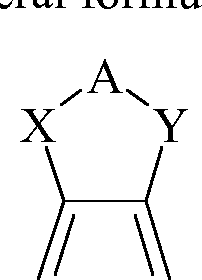


Claims


Priority Applications (5)
| Application Number | Priority Date | Filing Date | Title |
|---|---|---|---|
| KR1020177020624A KR102441435B1 (en) | 2014-12-23 | 2015-11-20 | Process for the preparation of functionalized polythiophenes |
| CN202010684127.5A CN111763305B (en) | 2014-12-23 | 2015-11-20 | Process for preparing functionalized polythiophenes |
| CN201580067823.9A CN107001598B (en) | 2014-12-23 | 2015-11-20 | Process for preparing functionalized polythiophenes |
| JP2017531809A JP7236805B2 (en) | 2014-12-23 | 2015-11-20 | Process to produce functionalized polythiophenes |
| US15/535,920 US10767003B2 (en) | 2014-12-23 | 2015-11-20 | Process for producing functionalized polythiophenes |
Applications Claiming Priority (2)
| Application Number | Priority Date | Filing Date | Title |
|---|---|---|---|
| EP14200233.6 | 2014-12-23 | ||
| EP14200233.6A EP3037497B1 (en) | 2014-12-23 | 2014-12-23 | Process for producing functionalized polythiophenes |
Publications (1)
| Publication Number | Publication Date |
|---|---|
| WO2016102129A1 true WO2016102129A1 (en) | 2016-06-30 |
Family
ID=52144588
Family Applications (1)
| Application Number | Title | Priority Date | Filing Date |
|---|---|---|---|
| PCT/EP2015/077219 Ceased WO2016102129A1 (en) | 2014-12-23 | 2015-11-20 | Process for producing functionalized polythiophenes |
Country Status (7)
| Country | Link |
|---|---|
| US (1) | US10767003B2 (en) |
| EP (1) | EP3037497B1 (en) |
| JP (3) | JP7236805B2 (en) |
| KR (1) | KR102441435B1 (en) |
| CN (2) | CN107001598B (en) |
| TW (2) | TWI686422B (en) |
| WO (1) | WO2016102129A1 (en) |
Cited By (16)
| Publication number | Priority date | Publication date | Assignee | Title |
|---|---|---|---|---|
| JP2017179324A (en) * | 2016-03-25 | 2017-10-05 | 東ソー株式会社 | Conductive polymer aqueous solution, conductive polymer film and coated article thereof |
| JP2018016581A (en) * | 2016-07-27 | 2018-02-01 | 東ソー株式会社 | Thiophene compound |
| WO2018053060A1 (en) * | 2016-09-15 | 2018-03-22 | Avx Corporation | Solid electrolytic capacitor with improved leakage current |
| WO2018075329A1 (en) * | 2016-10-18 | 2018-04-26 | Avx Corporation | Solid electrolytic capacitor with improved performance at high temperatures and voltages |
| JP2018123213A (en) * | 2017-01-31 | 2018-08-09 | 東ソー株式会社 | Polythiophene and composition thereof, and use thereof |
| US10186382B2 (en) | 2016-01-18 | 2019-01-22 | Avx Corporation | Solid electrolytic capacitor with improved leakage current |
| KR20190058539A (en) * | 2016-10-18 | 2019-05-29 | 에이브이엑스 코포레이션 | Solid electrolyte capacitor assembly |
| US10622160B2 (en) | 2017-03-06 | 2020-04-14 | Avx Corporation | Solid electrolytic capacitor assembly |
| US10741333B2 (en) | 2016-10-18 | 2020-08-11 | Avx Corporation | Solid electrolytic capacitor with improved leakage current |
| US10770238B2 (en) | 2017-07-03 | 2020-09-08 | Avx Corporation | Solid electrolytic capacitor assembly with hydrophobic coatings |
| US11257628B2 (en) | 2017-07-03 | 2022-02-22 | KYOCERA AVX Components Corporation | Solid electrolytic capacitor containing a nanocoating |
| EP4151640A1 (en) | 2021-09-20 | 2023-03-22 | Heraeus Deutschland GmbH & Co. KG | Process for producing functionalized polythiophenes |
| US11837415B2 (en) | 2021-01-15 | 2023-12-05 | KYOCERA AVX Components Corpration | Solid electrolytic capacitor |
| US12476052B2 (en) | 2018-06-21 | 2025-11-18 | KYOCERA AVX Components Corporation | Delamination-resistant solid electrolytic capacitor |
| US12548715B2 (en) | 2018-06-21 | 2026-02-10 | KYOCERA AVX Components Corporation | Solid electrolytic capacitor containing an interfacial coating |
| EP4717697A1 (en) * | 2024-09-27 | 2026-04-01 | Heraeus Epurio GmbH | Self-doped thiophenes for thermally stable capacitor applications |
Families Citing this family (24)
| Publication number | Priority date | Publication date | Assignee | Title |
|---|---|---|---|---|
| CN116246887A (en) * | 2017-06-22 | 2023-06-09 | 松下知识产权经营株式会社 | Electrolytic capacitor and manufacturing method thereof |
| KR102001773B1 (en) * | 2018-03-16 | 2019-07-18 | 연세대학교 산학협력단 | Conductive polymer solution controlled particle size and preparing method the same |
| JP7218423B2 (en) * | 2018-07-18 | 2023-02-06 | ケメット エレクトロニクス コーポレーション | Hybrid capacitor and method of manufacturing capacitor |
| CN117912850A (en) | 2018-08-10 | 2024-04-19 | 京瓷Avx元器件公司 | Solid electrolytic capacitors comprising intrinsically conductive polymers |
| US11114250B2 (en) | 2018-08-10 | 2021-09-07 | Avx Corporation | Solid electrolytic capacitor formed from conductive polymer particles |
| JP7426986B2 (en) | 2018-08-10 | 2024-02-02 | キョーセラ・エイブイエックス・コンポーネンツ・コーポレーション | Solid electrolytic capacitor containing polyaniline |
| CN111138639B (en) * | 2018-11-05 | 2022-04-29 | 天津理工大学 | pH response type conjugated polymer nano particle and preparation method and application thereof |
| CN113196429A (en) | 2018-12-11 | 2021-07-30 | 阿维科斯公司 | Solid electrolytic capacitor containing intrinsically conductive polymer |
| CN116072432B (en) | 2019-01-25 | 2024-11-29 | 松下知识产权经营株式会社 | Electrolytic capacitor and method for manufacturing the same |
| WO2020236573A1 (en) | 2019-05-17 | 2020-11-26 | Avx Corporation | Solid electrolytic capacitor |
| CN110189920B (en) * | 2019-06-11 | 2022-03-04 | 中国振华(集团)新云电子元器件有限责任公司(国营第四三二六厂) | Conductive polymer electrode material, preparation method thereof and aluminum electrolytic capacitor |
| DE112020004416T5 (en) | 2019-09-18 | 2022-06-15 | KYOCERA AVX Components Corporation | Solid electrolytic capacitor for use at high voltages |
| WO2021119065A1 (en) | 2019-12-10 | 2021-06-17 | Avx Corporation | Solid electrolytic capacitor containing a pre-coat and intrinsically conductive polymer |
| DE112020006024T5 (en) | 2019-12-10 | 2022-10-06 | KYOCERA AVX Components Corporation | Tantalum capacitor with increased stability |
| US11631548B2 (en) * | 2020-06-08 | 2023-04-18 | KYOCERA AVX Components Corporation | Solid electrolytic capacitor containing a moisture barrier |
| CN114496578A (en) * | 2020-10-26 | 2022-05-13 | 钰邦科技股份有限公司 | Method for producing electrolytic capacitor |
| JP7631810B2 (en) * | 2021-01-05 | 2025-02-19 | 東ソー株式会社 | Conductive polymer composition and its uses |
| WO2022258501A1 (en) | 2021-06-08 | 2022-12-15 | Agfa-Gevaert Nv | Novel polythiophene/polyanion compositions |
| CN115621048A (en) * | 2021-07-14 | 2023-01-17 | 株式会社东金 | Solid electrolytic capacitor and method for manufacturing solid electrolytic capacitor |
| JP7718150B2 (en) * | 2021-08-03 | 2025-08-05 | 東ソー株式会社 | Method for producing conductive polymer solution |
| JP7709702B2 (en) * | 2021-08-24 | 2025-07-17 | 国立大学法人山梨大学 | Method for producing conductive polymer solution |
| EP4160632A1 (en) * | 2021-09-29 | 2023-04-05 | Heraeus Deutschland GmbH & Co. KG | Process for producing polymer capacitors for high reliability applications |
| KR20240128837A (en) * | 2021-12-21 | 2024-08-27 | 가부시끼가이샤 레조낙 | Method for producing polymer dispersion for solid electrolytic capacitor and method for producing solid electrolytic capacitor |
| EP4386796A1 (en) * | 2022-12-16 | 2024-06-19 | Heraeus Epurio GmbH | Process for producing polymer capacitors for high reliability applications |
Citations (23)
| Publication number | Priority date | Publication date | Assignee | Title |
|---|---|---|---|---|
| EP0340512A2 (en) | 1988-04-30 | 1989-11-08 | Bayer Ag | Solid electrolyte and electrolytic capacitor using the same |
| EP1122274A1 (en) | 2000-02-03 | 2001-08-08 | Bayer Ag | Method for making pi-conjugated water soluble polymers |
| WO2003048227A1 (en) * | 2001-12-04 | 2003-06-12 | Agfa-Gevaert | Process for preparing an aqueous or non-aqueous solution or dispersion of a polythiophene or thiophene copolymer |
| EP1323763A1 (en) * | 2001-12-20 | 2003-07-02 | Agfa-Gevaert | 3,4-Alkylenedioxy-thiophene copolymers |
| EP1323764A1 (en) * | 2001-12-20 | 2003-07-02 | Agfa-Gevaert | Process for preparing an aqueous solution or dispersion of a polythiophene or thiophene copolymer |
| US20030149171A1 (en) * | 2001-12-20 | 2003-08-07 | Agfa-Gevaert | 3,4-alkylenedioxy-thiophene copolymers |
| WO2004018560A1 (en) * | 2002-08-23 | 2004-03-04 | Agfa-Gevaert | Layer configuration with improved stability to sunlight exposure |
| WO2004019346A1 (en) * | 2002-08-23 | 2004-03-04 | Agfa-Gevaert | Layer configuration comprising an electron-blocking element |
| US20050009986A1 (en) * | 2001-12-20 | 2005-01-13 | Agfa-Gevaert | New 3,4-alkylenedioxy-thiophene copolymers |
| EP1564250A1 (en) | 2004-02-10 | 2005-08-17 | H.C. Starck GmbH | Polythiophene compositions for improving organic light-emitting diodes |
| DE102004022674A1 (en) | 2004-05-07 | 2005-11-24 | H.C. Starck Gmbh | Electrolytic condenser for use in electronic circuits, e.g. for computers, comprises porous electrode, dielectric, solid electrolyte and a layer containing a polymeric anion, a polyaniline or polythiophene and a binder |
| US20060236531A1 (en) * | 2005-04-11 | 2006-10-26 | H. C. Starck Gmbh | Electrolyte capacitors having a polymeric outer layer and process for their production |
| EP1746613A1 (en) * | 2005-07-20 | 2007-01-24 | H.C. Starck GmbH & Co. KG | Electrolytic capacitors having polymeric outer layer and process of their production |
| DE102005043828A1 (en) | 2005-09-13 | 2007-03-22 | H.C. Starck Gmbh | Process for the preparation of electrolytic capacitors |
| WO2007031207A1 (en) * | 2005-09-13 | 2007-03-22 | H.C. Starck Gmbh | Method for producing electrolyte capacitors having high nominal voltage |
| US7497879B2 (en) | 2006-06-29 | 2009-03-03 | Sanyo Electric Co., Ltd. | Method of manufacturing electrolytic capacitor and electrolytic capacitor |
| WO2009141209A1 (en) | 2008-05-23 | 2009-11-26 | H.C. Starck Clevios Gmbh | Method for producing solid electrolyte capacitors |
| WO2010003874A2 (en) | 2008-07-11 | 2010-01-14 | H.C. Starck Clevios Gmbh | Method for production of electrolyte capacitors |
| DE102009007594A1 (en) | 2009-02-05 | 2010-08-12 | H.C. Starck Clevios Gmbh | Process for the preparation of electrolytic capacitors with a polymeric outer layer. |
| WO2012041506A2 (en) * | 2010-10-01 | 2012-04-05 | Heraeus Precious Metals Gmbh & Co. Kg | A method for improving electrical parameters in capacitors comprising pedot/pss as a solid electrolyte through a polyalkylene glycol |
| JP2014028760A (en) | 2012-07-03 | 2014-02-13 | Tosoh Corp | Thiophene compound, water-soluble conductive polymer, aqueous solution thereof, and method for producing the same |
| DE102012018976A1 (en) * | 2012-09-27 | 2014-03-27 | Heraeus Precious Metals Gmbh & Co. Kg | Use of mixtures of self-doped and externally doped conductive polymers in a capacitor |
| WO2014048561A2 (en) * | 2012-09-27 | 2014-04-03 | Heraeus Precious Metals Gmbh & Co. Kg | Use of pedot/pss dispersions of high pedot content for the production of capacitors and solar cells |
Family Cites Families (15)
| Publication number | Priority date | Publication date | Assignee | Title |
|---|---|---|---|---|
| EP0440957B1 (en) * | 1990-02-08 | 1996-03-27 | Bayer Ag | New polythiophene dispersions, their preparation and their use |
| US5111327A (en) * | 1991-03-04 | 1992-05-05 | General Electric Company | Substituted 3,4-polymethylenedioxythiophenes, and polymers and electro responsive devices made therefrom |
| DE4202337A1 (en) * | 1992-01-29 | 1993-08-05 | Bayer Ag | METHOD FOR CONTACTING TWO-LAYER CIRCUITS AND MULTILAYERS |
| DE4211461A1 (en) * | 1992-04-06 | 1993-10-07 | Agfa Gevaert Ag | Antistatic plastic parts |
| EP0686662B2 (en) * | 1994-05-06 | 2006-05-24 | Bayer Ag | Conductive coatings |
| DE19507413A1 (en) | 1994-05-06 | 1995-11-09 | Bayer Ag | Conductive coatings |
| US6977390B2 (en) * | 2002-08-23 | 2005-12-20 | Agfa Gevaert | Layer configuration comprising an electron-blocking element |
| TWI404090B (en) * | 2006-02-21 | 2013-08-01 | Shinetsu Polymer Co | Capacitor and capacitor manufacturing method |
| CN102510871B (en) | 2010-08-19 | 2013-04-24 | 帝化株式会社 | Oxidant and dopant solutions for the production of conductive polymers, conductive polymers, and solid electrolytic capacitors |
| JP2013116939A (en) | 2011-12-01 | 2013-06-13 | Tosoh Corp | Polythiophene derivative composite, method of manufacturing the same, and application of the same |
| JP6146096B2 (en) | 2012-07-03 | 2017-06-14 | 東ソー株式会社 | Thiophene compound, water-soluble conductive polymer and aqueous solution thereof, and production method thereof |
| JP6131780B2 (en) | 2012-09-06 | 2017-05-24 | 東ソー株式会社 | Polythiophene and its aqueous solution, and its thiophene monomer |
| DE102012022976A1 (en) * | 2012-11-26 | 2014-05-28 | Ewe-Forschungszentrum Für Energietechnologie E. V. | Use of conductive polymers in battery electrodes |
| JP6273917B2 (en) | 2014-03-10 | 2018-02-07 | 東ソー株式会社 | Thiophene copolymer and aqueous solution thereof, and thiophene monomer composition and production method thereof |
| JP7142466B2 (en) * | 2018-05-22 | 2022-09-27 | 東ソー株式会社 | Copolymer having 3,4-ethylenedioxythiophene structure |
-
2014
- 2014-12-23 EP EP14200233.6A patent/EP3037497B1/en active Active
-
2015
- 2015-11-20 CN CN201580067823.9A patent/CN107001598B/en active Active
- 2015-11-20 US US15/535,920 patent/US10767003B2/en active Active
- 2015-11-20 CN CN202010684127.5A patent/CN111763305B/en active Active
- 2015-11-20 JP JP2017531809A patent/JP7236805B2/en active Active
- 2015-11-20 WO PCT/EP2015/077219 patent/WO2016102129A1/en not_active Ceased
- 2015-11-20 TW TW104138690A patent/TWI686422B/en active
- 2015-11-20 TW TW109102203A patent/TWI785302B/en active
- 2015-11-20 KR KR1020177020624A patent/KR102441435B1/en active Active
-
2020
- 2020-12-16 JP JP2020208049A patent/JP7240371B2/en active Active
-
2023
- 2023-03-02 JP JP2023031653A patent/JP7798825B2/en active Active
Patent Citations (27)
| Publication number | Priority date | Publication date | Assignee | Title |
|---|---|---|---|---|
| EP0340512A2 (en) | 1988-04-30 | 1989-11-08 | Bayer Ag | Solid electrolyte and electrolytic capacitor using the same |
| EP1122274A1 (en) | 2000-02-03 | 2001-08-08 | Bayer Ag | Method for making pi-conjugated water soluble polymers |
| US6635729B1 (en) * | 2000-02-03 | 2003-10-21 | Bayer Aktinegesellschaft | Process for the preparation of water-soluble π-conjugated polymers |
| WO2003048227A1 (en) * | 2001-12-04 | 2003-06-12 | Agfa-Gevaert | Process for preparing an aqueous or non-aqueous solution or dispersion of a polythiophene or thiophene copolymer |
| EP1323763A1 (en) * | 2001-12-20 | 2003-07-02 | Agfa-Gevaert | 3,4-Alkylenedioxy-thiophene copolymers |
| EP1323764A1 (en) * | 2001-12-20 | 2003-07-02 | Agfa-Gevaert | Process for preparing an aqueous solution or dispersion of a polythiophene or thiophene copolymer |
| US20030149171A1 (en) * | 2001-12-20 | 2003-08-07 | Agfa-Gevaert | 3,4-alkylenedioxy-thiophene copolymers |
| US20050009986A1 (en) * | 2001-12-20 | 2005-01-13 | Agfa-Gevaert | New 3,4-alkylenedioxy-thiophene copolymers |
| WO2004018560A1 (en) * | 2002-08-23 | 2004-03-04 | Agfa-Gevaert | Layer configuration with improved stability to sunlight exposure |
| WO2004019346A1 (en) * | 2002-08-23 | 2004-03-04 | Agfa-Gevaert | Layer configuration comprising an electron-blocking element |
| EP1564250A1 (en) | 2004-02-10 | 2005-08-17 | H.C. Starck GmbH | Polythiophene compositions for improving organic light-emitting diodes |
| DE102004022674A1 (en) | 2004-05-07 | 2005-11-24 | H.C. Starck Gmbh | Electrolytic condenser for use in electronic circuits, e.g. for computers, comprises porous electrode, dielectric, solid electrolyte and a layer containing a polymeric anion, a polyaniline or polythiophene and a binder |
| US20060236531A1 (en) * | 2005-04-11 | 2006-10-26 | H. C. Starck Gmbh | Electrolyte capacitors having a polymeric outer layer and process for their production |
| EP1746613A1 (en) * | 2005-07-20 | 2007-01-24 | H.C. Starck GmbH & Co. KG | Electrolytic capacitors having polymeric outer layer and process of their production |
| DE102005043828A1 (en) | 2005-09-13 | 2007-03-22 | H.C. Starck Gmbh | Process for the preparation of electrolytic capacitors |
| WO2007031207A1 (en) * | 2005-09-13 | 2007-03-22 | H.C. Starck Gmbh | Method for producing electrolyte capacitors having high nominal voltage |
| US7497879B2 (en) | 2006-06-29 | 2009-03-03 | Sanyo Electric Co., Ltd. | Method of manufacturing electrolytic capacitor and electrolytic capacitor |
| US20110128675A1 (en) * | 2008-05-23 | 2011-06-02 | H.C. Starck Clevios Gmbh | Method for producing solid electrolyte capacitors |
| WO2009141209A1 (en) | 2008-05-23 | 2009-11-26 | H.C. Starck Clevios Gmbh | Method for producing solid electrolyte capacitors |
| WO2010003874A2 (en) | 2008-07-11 | 2010-01-14 | H.C. Starck Clevios Gmbh | Method for production of electrolyte capacitors |
| DE102009007594A1 (en) | 2009-02-05 | 2010-08-12 | H.C. Starck Clevios Gmbh | Process for the preparation of electrolytic capacitors with a polymeric outer layer. |
| WO2010089111A1 (en) * | 2009-02-05 | 2010-08-12 | H.C. Starck Clevios Gmbh | Process for producing electrolytic capacitors with a polymeric outer layer |
| WO2012041506A2 (en) * | 2010-10-01 | 2012-04-05 | Heraeus Precious Metals Gmbh & Co. Kg | A method for improving electrical parameters in capacitors comprising pedot/pss as a solid electrolyte through a polyalkylene glycol |
| JP2014028760A (en) | 2012-07-03 | 2014-02-13 | Tosoh Corp | Thiophene compound, water-soluble conductive polymer, aqueous solution thereof, and method for producing the same |
| DE102012018976A1 (en) * | 2012-09-27 | 2014-03-27 | Heraeus Precious Metals Gmbh & Co. Kg | Use of mixtures of self-doped and externally doped conductive polymers in a capacitor |
| WO2014048562A2 (en) | 2012-09-27 | 2014-04-03 | Heraeus Precious Metals Gmbh & Co. Kg | Use of mixtures of self-doped and foreign-doped conductive polymers in a capacitor |
| WO2014048561A2 (en) * | 2012-09-27 | 2014-04-03 | Heraeus Precious Metals Gmbh & Co. Kg | Use of pedot/pss dispersions of high pedot content for the production of capacitors and solar cells |
Non-Patent Citations (8)
| Title |
|---|
| CHARLOTTE A CUTLER ET AL: "Alkoxysulfonate-Functionalized PEDOT Polyelectrolyte Multilayer Films: Electrochromic and Hole Transport Materials", MACROMOLECULES, vol. 38, no. 8, 25 March 2005 (2005-03-25), pages 3068 - 3074, XP055195965, ISSN: 0024-9297, DOI: 10.1021/ma047396+ * |
| CHEVROT ET AL., J. ELECTROANAL. CHEM., vol. 443, 1998, pages 217 - 226 |
| CUTLER C A ET AL: "PEDOT POLYELECTROLYTE BASED ELECTROCHROMIC FILMS VIA ELECTROSTATIC ADSORPTION", ADVANCED MATERIALS, WILEY - V C H VERLAG GMBH & CO. KGAA, DE, vol. 14, no. 9, 3 May 2002 (2002-05-03), pages 684 - 688, XP001129775, ISSN: 0935-9648, DOI: 10.1002/1521-4095(20020503)14:9<684::AID-ADMA684>3.0.CO;2-7 * |
| F TRAN-VAN ET AL: "Sulfonated polythiophene and poly(3,4-ethylenedioxythiophene) derivatives with cations exchange properties", SYNTHETIC METALS, vol. 142, no. 1-3, 1 April 2004 (2004-04-01), pages 251 - 258, XP055195956, ISSN: 0379-6779, DOI: 10.1016/j.synthmet.2003.09.013 * |
| GROENENDAAL L ET AL: "POLY(3,4-ETHYLENEDIOXYTHIOPHENE) AND ITS DERIVATIVES: PAST, PRESENT, AND FUTURE", ADVANCED MATERIALS, WILEY - V C H VERLAG GMBH & CO. KGAA, DE, vol. 12, no. 7, 4 April 2000 (2000-04-04), pages 481 - 494, XP000949752, ISSN: 0935-9648, DOI: 10.1002/(SICI)1521-4095(200004)12:7<481::AID-ADMA481>3.3.CO;2-3 * |
| ROGER H. KARLSSON ET AL: "Iron-Catalyzed Polymerization of Alkoxysulfonate-Functionalized 3,4-Ethylenedioxythiophene Gives Water-Soluble Poly(3,4-ethylenedioxythiophene) of High Conductivity", CHEMISTRY OF MATERIALS, vol. 21, no. 9, 12 May 2009 (2009-05-12), pages 1815 - 1821, XP055195958, ISSN: 0897-4756, DOI: 10.1021/cm801512r * |
| SKOTHEIM, T. A.: "Handbook of Conducting Polymers", vol. 1, 1986, MARCEL DEKKER, pages: 46 - 57 |
| STEPHAN O ET AL: "ELECTROCHEMICAL BEHAVIOUR OF 3,4-ETHYLENEDIOXYTHIOPHENE FUNCTIONALIZED BY A SULPHONATE GROUP. APPLICATION TO THE PREPARATION OF POLY(3,4-ETHYLENEDIOXYTHIOPHENE) HAVING PERMANENT CATION-EXCHANGE PROPERTIES", JOURNAL OF THE ELECTROANALYTICAL CHEMISTRY, LSEVIER SCIENCE B.V, NL, vol. 443, no. 2, 1 January 1998 (1998-01-01), pages 217 - 226, XP000995724, ISSN: 0368-1874, DOI: 10.1016/S0022-0728(97)00548-2 * |
Cited By (27)
| Publication number | Priority date | Publication date | Assignee | Title |
|---|---|---|---|---|
| US10186382B2 (en) | 2016-01-18 | 2019-01-22 | Avx Corporation | Solid electrolytic capacitor with improved leakage current |
| JP2017179324A (en) * | 2016-03-25 | 2017-10-05 | 東ソー株式会社 | Conductive polymer aqueous solution, conductive polymer film and coated article thereof |
| JP2018016581A (en) * | 2016-07-27 | 2018-02-01 | 東ソー株式会社 | Thiophene compound |
| US10763046B2 (en) | 2016-09-15 | 2020-09-01 | Avx Corporation | Solid electrolytic capacitor with improved leakage current |
| WO2018053060A1 (en) * | 2016-09-15 | 2018-03-22 | Avx Corporation | Solid electrolytic capacitor with improved leakage current |
| KR102486981B1 (en) * | 2016-09-15 | 2023-01-10 | 교세라 에이브이엑스 컴포넌츠 코포레이션 | Solid Electrolytic Capacitors with Improved Leakage Current |
| KR20190042754A (en) * | 2016-09-15 | 2019-04-24 | 에이브이엑스 코포레이션 | Solid electrolyte capacitor with improved leakage current |
| US11056286B2 (en) | 2016-09-15 | 2021-07-06 | Avx Corporation | Solid electrolytic capacitor with improved leakage current |
| US11387047B2 (en) | 2016-10-18 | 2022-07-12 | KYOCERA AVX Components Corporation | Solid electrolytic capacitor with improved performance at high temperatures and voltages |
| KR102397418B1 (en) * | 2016-10-18 | 2022-05-12 | 교세라 에이브이엑스 컴포넌츠 코포레이션 | Solid Electrolytic Capacitor Assemblies |
| US10741333B2 (en) | 2016-10-18 | 2020-08-11 | Avx Corporation | Solid electrolytic capacitor with improved leakage current |
| CN109891536A (en) * | 2016-10-18 | 2019-06-14 | 阿维科斯公司 | Solid electrolytic capacitors with improved performance at high temperature and voltage |
| WO2018075329A1 (en) * | 2016-10-18 | 2018-04-26 | Avx Corporation | Solid electrolytic capacitor with improved performance at high temperatures and voltages |
| US10892095B2 (en) | 2016-10-18 | 2021-01-12 | Avx Corporation | Solid electrolytic capacitor assembly |
| KR20190058539A (en) * | 2016-10-18 | 2019-05-29 | 에이브이엑스 코포레이션 | Solid electrolyte capacitor assembly |
| US11170942B2 (en) | 2016-10-18 | 2021-11-09 | Avx Corporation | Solid electrolytic capacitor with improved leakage current |
| JP2018123213A (en) * | 2017-01-31 | 2018-08-09 | 東ソー株式会社 | Polythiophene and composition thereof, and use thereof |
| US10622160B2 (en) | 2017-03-06 | 2020-04-14 | Avx Corporation | Solid electrolytic capacitor assembly |
| US11257628B2 (en) | 2017-07-03 | 2022-02-22 | KYOCERA AVX Components Corporation | Solid electrolytic capacitor containing a nanocoating |
| US10770238B2 (en) | 2017-07-03 | 2020-09-08 | Avx Corporation | Solid electrolytic capacitor assembly with hydrophobic coatings |
| US12476052B2 (en) | 2018-06-21 | 2025-11-18 | KYOCERA AVX Components Corporation | Delamination-resistant solid electrolytic capacitor |
| US12548715B2 (en) | 2018-06-21 | 2026-02-10 | KYOCERA AVX Components Corporation | Solid electrolytic capacitor containing an interfacial coating |
| US11837415B2 (en) | 2021-01-15 | 2023-12-05 | KYOCERA AVX Components Corpration | Solid electrolytic capacitor |
| EP4151640A1 (en) | 2021-09-20 | 2023-03-22 | Heraeus Deutschland GmbH & Co. KG | Process for producing functionalized polythiophenes |
| WO2023041228A1 (en) | 2021-09-20 | 2023-03-23 | Heraeus Deutschland GmbH & Co. KG | Process for producing functionalized polythiophenes |
| EP4717697A1 (en) * | 2024-09-27 | 2026-04-01 | Heraeus Epurio GmbH | Self-doped thiophenes for thermally stable capacitor applications |
| WO2026068698A1 (en) * | 2024-09-27 | 2026-04-02 | Heraeus Epurio Gmbh | Self-doped thiophenes for thermally stable capacitor applications |
Also Published As
| Publication number | Publication date |
|---|---|
| JP7798825B2 (en) | 2026-01-14 |
| US10767003B2 (en) | 2020-09-08 |
| JP7236805B2 (en) | 2023-03-10 |
| TWI686422B (en) | 2020-03-01 |
| KR102441435B1 (en) | 2022-09-07 |
| JP2021059733A (en) | 2021-04-15 |
| US20180208713A1 (en) | 2018-07-26 |
| CN107001598A (en) | 2017-08-01 |
| JP2018507268A (en) | 2018-03-15 |
| TW202017965A (en) | 2020-05-16 |
| CN107001598B (en) | 2020-08-11 |
| CN111763305A (en) | 2020-10-13 |
| KR20170097772A (en) | 2017-08-28 |
| CN111763305B (en) | 2024-06-04 |
| EP3037497B1 (en) | 2025-02-26 |
| TW201623365A (en) | 2016-07-01 |
| JP7240371B2 (en) | 2023-03-15 |
| EP3037497A1 (en) | 2016-06-29 |
| TWI785302B (en) | 2022-12-01 |
| JP2023071860A (en) | 2023-05-23 |
Similar Documents
| Publication | Publication Date | Title |
|---|---|---|
| JP7798825B2 (en) | Process for producing functionalized polythiophenes | |
| JP7182588B2 (en) | Dispersion comprising a mixture of a conductive polymer having a chain-bound counterion and a conductive polymer having a non-chain-bound counterion for use in a capacitor anode | |
| KR20150063470A (en) | Use of PEDOT/PSS Dispersions of High PEDOT Content for the Production of Capacitors and Solar Cells | |
| JP7748481B2 (en) | Novel polythiophene/polyanion compositions | |
| US20260055228A1 (en) | High purity sulfonated thiophene monomers | |
| US20240376255A1 (en) | Process for producing functionalized polythiophenes | |
| EP4717697A1 (en) | Self-doped thiophenes for thermally stable capacitor applications | |
| TWI919098B (en) | High purity sulfonated thiophene monomers, process for preparation of polymer composition or layered body derived from the same, and use thereof | |
| TW202613136A (en) | Self-doped thiophenes for thermally stable capacitor applications |
Legal Events
| Date | Code | Title | Description |
|---|---|---|---|
| 121 | Ep: the epo has been informed by wipo that ep was designated in this application |
Ref document number: 15801722 Country of ref document: EP Kind code of ref document: A1 |
|
| ENP | Entry into the national phase |
Ref document number: 2017531809 Country of ref document: JP Kind code of ref document: A |
|
| WWE | Wipo information: entry into national phase |
Ref document number: 15535920 Country of ref document: US |
|
| NENP | Non-entry into the national phase |
Ref country code: DE |
|
| ENP | Entry into the national phase |
Ref document number: 20177020624 Country of ref document: KR Kind code of ref document: A |
|
| 122 | Ep: pct application non-entry in european phase |
Ref document number: 15801722 Country of ref document: EP Kind code of ref document: A1 |