WO2016080392A1 - ワクチン及びプライムブーストワクチン - Google Patents
ワクチン及びプライムブーストワクチン Download PDFInfo
- Publication number
- WO2016080392A1 WO2016080392A1 PCT/JP2015/082258 JP2015082258W WO2016080392A1 WO 2016080392 A1 WO2016080392 A1 WO 2016080392A1 JP 2015082258 W JP2015082258 W JP 2015082258W WO 2016080392 A1 WO2016080392 A1 WO 2016080392A1
- Authority
- WO
- WIPO (PCT)
- Prior art keywords
- vaccine
- cells
- positive
- protein
- bcg
- Prior art date
- Legal status (The legal status is an assumption and is not a legal conclusion. Google has not performed a legal analysis and makes no representation as to the accuracy of the status listed.)
- Ceased
Links
Images






Classifications
-
- A—HUMAN NECESSITIES
- A61—MEDICAL OR VETERINARY SCIENCE; HYGIENE
- A61K—PREPARATIONS FOR MEDICAL, DENTAL OR TOILETRY PURPOSES
- A61K39/00—Medicinal preparations containing antigens or antibodies
- A61K39/39—Medicinal preparations containing antigens or antibodies characterised by the immunostimulating additives, e.g. chemical adjuvants
-
- A—HUMAN NECESSITIES
- A61—MEDICAL OR VETERINARY SCIENCE; HYGIENE
- A61K—PREPARATIONS FOR MEDICAL, DENTAL OR TOILETRY PURPOSES
- A61K38/00—Medicinal preparations containing peptides
-
- A—HUMAN NECESSITIES
- A61—MEDICAL OR VETERINARY SCIENCE; HYGIENE
- A61K—PREPARATIONS FOR MEDICAL, DENTAL OR TOILETRY PURPOSES
- A61K38/00—Medicinal preparations containing peptides
- A61K38/16—Peptides having more than 20 amino acids; Gastrins; Somatostatins; Melanotropins; Derivatives thereof
- A61K38/17—Peptides having more than 20 amino acids; Gastrins; Somatostatins; Melanotropins; Derivatives thereof from animals; from humans
- A61K38/19—Cytokines; Lymphokines; Interferons
- A61K38/20—Interleukins [IL]
- A61K38/2013—IL-2
-
- A—HUMAN NECESSITIES
- A61—MEDICAL OR VETERINARY SCIENCE; HYGIENE
- A61K—PREPARATIONS FOR MEDICAL, DENTAL OR TOILETRY PURPOSES
- A61K38/00—Medicinal preparations containing peptides
- A61K38/16—Peptides having more than 20 amino acids; Gastrins; Somatostatins; Melanotropins; Derivatives thereof
- A61K38/17—Peptides having more than 20 amino acids; Gastrins; Somatostatins; Melanotropins; Derivatives thereof from animals; from humans
- A61K38/19—Cytokines; Lymphokines; Interferons
- A61K38/21—Interferons [IFN]
- A61K38/212—IFN-alpha
-
- A—HUMAN NECESSITIES
- A61—MEDICAL OR VETERINARY SCIENCE; HYGIENE
- A61K—PREPARATIONS FOR MEDICAL, DENTAL OR TOILETRY PURPOSES
- A61K39/00—Medicinal preparations containing antigens or antibodies
-
- A—HUMAN NECESSITIES
- A61—MEDICAL OR VETERINARY SCIENCE; HYGIENE
- A61K—PREPARATIONS FOR MEDICAL, DENTAL OR TOILETRY PURPOSES
- A61K39/00—Medicinal preparations containing antigens or antibodies
- A61K39/02—Bacterial antigens
- A61K39/04—Mycobacterium, e.g. Mycobacterium tuberculosis
-
- A—HUMAN NECESSITIES
- A61—MEDICAL OR VETERINARY SCIENCE; HYGIENE
- A61K—PREPARATIONS FOR MEDICAL, DENTAL OR TOILETRY PURPOSES
- A61K39/00—Medicinal preparations containing antigens or antibodies
- A61K39/12—Viral antigens
-
- A—HUMAN NECESSITIES
- A61—MEDICAL OR VETERINARY SCIENCE; HYGIENE
- A61P—SPECIFIC THERAPEUTIC ACTIVITY OF CHEMICAL COMPOUNDS OR MEDICINAL PREPARATIONS
- A61P31/00—Antiinfectives, i.e. antibiotics, antiseptics, chemotherapeutics
- A61P31/04—Antibacterial agents
- A61P31/06—Antibacterial agents for tuberculosis
-
- A—HUMAN NECESSITIES
- A61—MEDICAL OR VETERINARY SCIENCE; HYGIENE
- A61P—SPECIFIC THERAPEUTIC ACTIVITY OF CHEMICAL COMPOUNDS OR MEDICINAL PREPARATIONS
- A61P37/00—Drugs for immunological or allergic disorders
- A61P37/02—Immunomodulators
- A61P37/04—Immunostimulants
-
- C—CHEMISTRY; METALLURGY
- C07—ORGANIC CHEMISTRY
- C07K—PEPTIDES
- C07K14/00—Peptides having more than 20 amino acids; Gastrins; Somatostatins; Melanotropins; Derivatives thereof
- C07K14/195—Peptides having more than 20 amino acids; Gastrins; Somatostatins; Melanotropins; Derivatives thereof from bacteria
- C07K14/35—Peptides having more than 20 amino acids; Gastrins; Somatostatins; Melanotropins; Derivatives thereof from bacteria from Mycobacteriaceae (F)
-
- A—HUMAN NECESSITIES
- A61—MEDICAL OR VETERINARY SCIENCE; HYGIENE
- A61K—PREPARATIONS FOR MEDICAL, DENTAL OR TOILETRY PURPOSES
- A61K39/00—Medicinal preparations containing antigens or antibodies
- A61K2039/51—Medicinal preparations containing antigens or antibodies comprising whole cells, viruses or DNA/RNA
- A61K2039/53—DNA (RNA) vaccination
-
- A—HUMAN NECESSITIES
- A61—MEDICAL OR VETERINARY SCIENCE; HYGIENE
- A61K—PREPARATIONS FOR MEDICAL, DENTAL OR TOILETRY PURPOSES
- A61K39/00—Medicinal preparations containing antigens or antibodies
- A61K2039/545—Medicinal preparations containing antigens or antibodies characterised by the dose, timing or administration schedule
-
- A—HUMAN NECESSITIES
- A61—MEDICAL OR VETERINARY SCIENCE; HYGIENE
- A61K—PREPARATIONS FOR MEDICAL, DENTAL OR TOILETRY PURPOSES
- A61K39/00—Medicinal preparations containing antigens or antibodies
- A61K2039/555—Medicinal preparations containing antigens or antibodies characterised by a specific combination antigen/adjuvant
- A61K2039/55511—Organic adjuvants
Definitions
- the present invention relates to a vaccine and a prime boost vaccine.
- This application claims priority based on Japanese Patent Application No. 2014-232837 filed in Japan on November 17, 2014, the contents of which are incorporated herein by reference.
- BCG Calumet Guerin bacilli
- cellular immunity is important for protection against infection with intracellular parasites such as Mycobacterium tuberculosis.
- the inventors have antigen-specific T cells activated by immunization with a BCG vaccine mainly CD4 positive T cells (helper T cells), which are important for cellular immunity (CD8 positive T cells ( It was found that (cytotoxic T cells) are hardly activated.
- an object of the present invention is to provide a vaccine capable of activating pathogenic microorganism-derived antigen-specific CD8-positive T cells.
- the present invention is as follows.
- a vaccine for activating CD8 T cells comprising BCG bacteria expressing a protein derived from a pathogenic microorganism as an active ingredient.
- the vaccine according to any one of (1) to (4), wherein the protein is an Ag85B protein of Mycobacterium kansasii.
- a vaccine capable of activating pathogenic microorganism-derived antigen-specific CD8-positive T cells can be provided.
- 2 is a graph showing the proportion of interferon- ⁇ producing cells in all mononuclear cell groups.
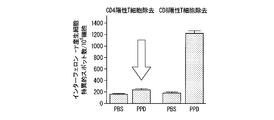
- 3 is a graph showing the presence ratio of interferon- ⁇ producing cells in a CD4 positive T cell removal group and a CD8 positive T cell removal group.
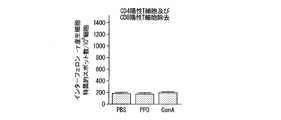
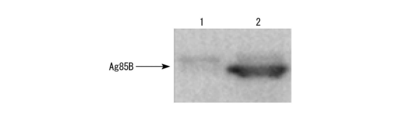
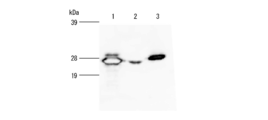
- 3 is a graph showing the proportion of interferon- ⁇ producing cells in the CD4 positive T cell and CD8 positive T cell removal group. It is a figure which shows the structure of p3HA85B vector. It is a figure which shows the structure of pDNA85B vector. It is a photograph which shows the result of the western blotting which examined the expression of Ag85B protein. It is a photograph which shows the result of the western blotting of BCG bacteria.
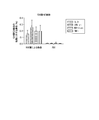
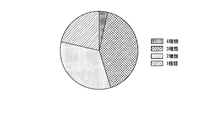
- FIG. 7A is made into a pie chart. It is a graph which shows the abundance ratio of the CD8 positive T cell which produces each cytokine. It is the graph which put together the result of intracellular cytokine analysis. It is the graph which put together the result of intracellular cytokine analysis. It is the graph which put together the result of intracellular cytokine analysis. It is the graph which put together the result of intracellular cytokine analysis.
- the present invention provides a CD8 T cell activation vaccine comprising BCG bacteria expressing a protein derived from a pathogenic microorganism as an active ingredient.
- pathogenic microorganism-derived antigen-specific CD8-positive T cells can be activated (induced).
- Activation of CD8-positive T cells means that a living body that has been administered (immunized) with a vaccine forms CD8-positive T cells that produce specific cytokines when exposed to the above-mentioned proteins derived from pathogenic microorganisms. Therefore, it can be said that the vaccine of this embodiment is a CD8 positive T cell activator.
- the cytokine include interferon- ⁇ , interleukin-2, TNF- ⁇ , MIP-1 ⁇ , and the like.
- the vaccine of this embodiment can activate pathogenic microorganism-derived antigen-specific CD8-positive T cells, it can also be applied to pathogenic microorganisms for which it is difficult to obtain an effective vaccine.
- the pathogenic microorganism may be a pathogenic microorganism for which it is difficult to obtain an effective vaccine, for example, Mycobacterium tuberculosis, Ebola hemorrhagic fever virus, which is a causative virus of Ebola, Crimea Congo virus that causes Crimea-Congo fever, South American hemorrhagic fever virus, Funin virus, Sabia virus, Ganarito virus, Machupo virus, etc.
- Examples include Marburg virus, malaria parasite that is a causative microorganism of malaria, and related microorganisms of the above-mentioned pathogenic microorganisms such as attenuated strains.
- proteins derived from pathogenic microorganisms to be expressed by BCG bacteria include proteins with high expression levels when the above-mentioned pathogenic microorganisms are infected. More specifically, Ag85B protein of Mycobacterium tuberculosis, Ag85B protein of Mycobacterium kansasii which is the same acid-fast bacterium as Mycobacterium tuberculosis, envelope glycoprotein of Ebola hemorrhagic fever virus, gp140 protein of HIV virus, malaria antigen protein of Plasmodium etc. Is mentioned.
- vaccines against a wide variety of pathogenic microorganisms can be easily provided by changing the protein derived from pathogenic microorganisms expressed in BCG bacteria.
- BCG bacteria expressing Mycobacterium kansasii Ag85B protein can be used as a tuberculosis vaccine capable of activating CD8 T cells.
- BCG bacteria are used as a host for expressing a protein derived from a pathogenic microorganism. Since BCG bacteria have been inoculated as a vaccine for many years in humans and safety has been established, a safe vaccine can be easily provided by the vaccine of this embodiment.
- a pathogenic microorganism-derived antigen-specific CD8-positive T cell can be activated by using a BCG bacterium expressing a protein derived from the pathogenic microorganism.
- a BCG bacterium expressing a protein derived from the pathogenic microorganism.
- the inventors of the present invention are able to activate CD8 positive T cells using BCG bacteria expressing proteins derived from pathogenic microorganisms. It is presumed that it is important that the protein is phagocytosed by phagocytic cells such as macrophages in the body, and the pathogenic microorganism-derived protein is subjected to appropriate processing in the cells and presented with the antigen.
- the vaccine of this embodiment can induce CD8-positive T cells having the ability of one cell to produce a plurality of types of cytokines, that is, multifunctional. Since multi-functional T cells are excellent in infection protective ability, the vaccine of this embodiment can impart high infection protective ability.
- Expression of a protein derived from a pathogenic microorganism using BCG bacteria as a host is preferably performed by introducing an expression vector of a gene encoding a protein derived from the pathogenic microorganism into BCG bacteria.
- expression of a protein derived from a pathogenic microorganism can be easily performed using BCG bacteria as a host.
- the expression level of the protein derived from a pathogenic microorganism can be increased by selecting an appropriate promoter or combining an enhancer.
- the expression vector is not introduced into the genome of BCG bacteria but is maintained in the form of a plasmid in BCG bacteria.
- the quality of the BCG bacterium expressing the protein derived from the pathogenic microorganism is stabilized, so that the quality control of the vaccine of this embodiment is facilitated.
- promoters for expressing proteins in BCG bacteria include pAL5000 derived from Mycobacterium fortuitum.
- the expression vector is more preferably an expression vector that can be expressed in both BCG bacteria and mammalian cells.
- BCG bacteria administered in vivo are engulfed and destroyed by phagocytic cells such as macrophages. Therefore, if the expression vector released by the destruction of BCG bacteria can be expressed in both BCG bacteria and mammalian cells, the expression of the protein derived from the pathogenic microorganism is continued in cells such as macrophages. . As a result, more pathogenic microorganism-derived proteins are supplied into the living body, and immunity can be established more effectively.
- the vaccine of this embodiment is preferably administered intradermally.
- the dose may be appropriately adjusted depending on the administration subject. For example, in the case of a mouse, it may be about 2 ⁇ 10 6 colony forming units (CFU) per head.
- CFU colony forming units
- the present invention comprises a combination of the above vaccine and a DNA vaccine comprising as an active ingredient a protein expression vector expressed in BCG bacteria that is the active ingredient of the vaccine, and the first immunization is performed with the vaccine.
- a prime boost vaccine characterized by being used for boosting with the above DNA vaccine is provided.
- Primed boost vaccine means a combination of vaccines in which one or more booster immunizations are performed with a vaccine different from the vaccine used for the first immunization, or such a vaccine administration method.
- a DNA vaccine is a vaccine that is translated into protein when administered in vivo, and that protein contributes to the establishment of immunity.
- the prime boost vaccine of this embodiment is a first immunization with a recombinant BCG bacterium expressing an Ag85B protein, and a booster immunization with a DNA vaccine containing an expression vector of the Ag85B protein as an active ingredient.
- Recombinant BCG bacteria are preferably administered intradermally.
- the dose may be appropriately adjusted depending on the administration subject. For example, in the case of a mouse, about 2 ⁇ 10 6 CFU per head can be mentioned.
- the DNA vaccine is injected intramuscularly.
- the dose may be appropriately adjusted depending on the administration subject. For example, in the case of a mouse, about 100 ⁇ g per head can be mentioned.
- the vaccine administration schedule may be appropriately adjusted.
- the first booster with the DNA vaccine is performed 3 weeks after the initial immunization with the recombinant BCG bacteria, and the second booster with the DNA vaccine is performed 3 weeks later.
- a schedule for performing the third booster with the DNA vaccine after 2 weeks, and the like can be mentioned.
- the present invention provides a BCG bacterium expressing a protein derived from a pathogenic microorganism for activation of antigen-specific CD8 T cells derived from the pathogenic microorganism.
- the present invention provides the use of a BCG bacterium expressing a protein derived from a pathogenic microorganism for producing a vaccine for activating an antigen-specific CD8 T cell derived from the pathogenic microorganism.
- the present invention relates to a method for activating pathogenic microorganism-derived antigen-specific CD8 T cells, comprising administering an effective amount of a BCG bacterium expressing a protein derived from a pathogenic microorganism to a patient in need thereof.
- a method for activating pathogenic microorganism-derived antigen-specific CD8 T cells comprising administering an effective amount of a BCG bacterium expressing a protein derived from a pathogenic microorganism to a patient in need thereof.
- the present invention comprises a step of administering a vaccine containing BCG bacteria expressing a protein derived from a pathogenic microorganism as an active ingredient for initial immunization, and a DNA vaccine containing an expression vector for the protein as an active ingredient. And a method for activating the antigen-specific CD8 T cells derived from pathogenic microorganisms.
- Example 1 Guinea pigs are immunized with BCG bacteria and examined whether purified tuberculosis (hereinafter sometimes referred to as “PPD”)-specific CD4-positive T cells and PPD-specific CD8-positive T cells are induced. did.
- PPD purified tuberculosis
- Guinea pigs Guinea pigs (Japan SLC Co., Ltd.) were intradermally administered 2 ⁇ 10 6 CFU / unit of BCG bacteria. Blood was collected and examined 12 weeks after immunization.
- ELISPOT Detection of interferon- ⁇ producing cells by ELISPOT method
- the collected blood was centrifuged by density gradient centrifugation using a blood cell separation solution (trade name “Rinhosepar”, Takara Bio Inc.), and peripheral blood mononuclear cells were collected. Subsequently, the ratio of interferon- ⁇ producing cells in the collected peripheral blood mononuclear cells was measured by a cell-based enzyme immunospot measurement method (ELISPOT).
- the collected peripheral blood mononuclear cells were divided into four groups.
- the first group total mononuclear cell group
- the second group CD4 positive T cell removal group
- CD4 positive T cells were removed and used for the next operation.
- CD8 positive T cell removal group CD8 positive T cells were removed and used for the next operation.
- CD4 positive T cells and CD8 positive T cell removal group CD4 positive T cells and CD8 positive T cells were removed and used for the next operation. Removal of CD4-positive T cells or removal of CD8-positive T cells was performed using a cell sorter.
- PPD phosphate buffer
- ConA concanavalin A
- the medium and the cells of each group were added to a 96-well microtiter plate on the bottom of the PVDF membrane bound with anti-interferon- ⁇ antibody, and incubated for 5 hours.
- the cell secretes interferon- ⁇
- the secreted interferon- ⁇ binds to the anti-interferon- ⁇ antibody present in the vicinity of the cell.
- the cells were washed away, and interferon- ⁇ bound on the membrane was detected by immunostaining.
- spots indicating the presence of interferon- ⁇ were formed in the portion on the membrane where the interferon- ⁇ producing cells were present.
- One spot corresponds to one interferon- ⁇ producing cell. Therefore, by measuring the number of spots, the abundance of interferon- ⁇ producing cells can be measured.
- FIG. 1A is a graph showing the proportion of interferon- ⁇ producing cells in all mononuclear cell groups.
- FIG. 1B is a graph showing the proportion of interferon- ⁇ producing cells in the CD4 positive T cell removal group and the CD8 positive T cell removal group.
- FIG. 1C is a graph showing the proportion of interferon- ⁇ producing cells in the CD4 positive T cell and CD8 positive T cell removal group.
- FIG. 1A it was shown that cells producing interferon- ⁇ were induced in all mononuclear cell groups when stimulated with PPD.
- FIG. 1B it was shown that when CD4 positive T cells were removed, the number of cells that produced interferon- ⁇ was greatly reduced by PPD stimulation.
- FIG. 1C it was shown that when CD4 positive T cells and CD8 positive T cells were removed, cells that produce interferon- ⁇ were significantly reduced by PPD stimulation.
- PPD-specific interferon- ⁇ -producing cells induced as a result of immunization with BCG bacteria are mainly CD4-positive T cells, and PPD-specific interferon- ⁇ -producing CD8-positive T cells are less induced. It became clear that there was no.
- P3HA85B vector an expression vector capable of expressing Ag85B protein in both BCG bacteria and mammalian cells.
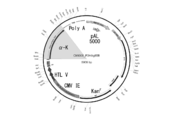
- p3HA85B has a pAL5000 promoter that is operable in BCG bacteria upstream of the gene encoding the Mycobacterium kansasii Ag85B protein (SEQ ID NO: 1), and operates in mammalian cells upstream of the pAL5000 promoter. It has the possible cytomegalovirus (CMV) promoter and HTLV-1 promoter. Furthermore, a polyA signal gene was incorporated downstream of the gene encoding the Ag85B protein.
- FIG. 2A shows the structure of the p3HA85B vector.
- PDNA85B vector an expression vector capable of expressing the Ag85B protein in mammalian cells.
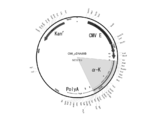
- pDNA85B has a cytomegalovirus (CMV) promoter operable in mammalian cells upstream of the gene encoding the Ag85B protein (SEQ ID NO: 1).
- FIG. 2B shows the structure of the pDNA85B vector.
- CMV cytomegalovirus
- the expression vector p3HA85B was introduced into BCG bacteria by electroporation. Subsequently, using the kanamycin resistance as an index, a BCG bacterium into which p3HA85B was introduced was selected and cloned to prepare a BCG bacterium in which the Ag85B protein was expressed.
- the electrophoresed protein was transferred to a PVDF membrane (life technologies) and immunostained with an anti-Ag85B antibody.
- Horseradish peroxidase (HRP) -labeled anti-rabbit IgG antibody (Cell Signaling Technology) was used as the secondary antibody.
- An Amersham ECL Western Blotting Analysis System (GE Healthcare) was used for signal detection.
- FIG. 3 is a photograph showing the results of Western blotting. Lane 1 shows the results of the control BCG bacteria, and Lane 2 shows the results of the BCG bacteria expressing the Ag85B protein.
- the anti-Ag85B antibody used here binds to both the Ag85B protein of BCG bacteria and the Ag85B protein of Mycobacterium kansasii.
- P3HA85B was introduced into 293T cells, which are human embryonic kidney epithelial cells, using a gene transfer reagent (trade name “Lipofectamine 2000”, Life Technologies) and expressed.
- FIG. 4A is a photograph showing the results of Western blotting of BCG bacteria as a positive control.
- Lane 1 is the result of BCG bacteria as a positive control.
- Lane 2 is the result of subjecting recombinant Ag85B protein to Western blotting.
- Lane 3 is the result of subjecting recombinant MPB59 protein, which is widely known to cross-react, to Western blotting.
- FIG. 4B is a photograph showing the results of Western blotting of 293T cells.
- Lane 3 shows the results of 293T cells introduced with the expression vector p3HA85B.
- Lane 4 is the result of 293T cells into which only the empty vector p3H8.3 was introduced as a negative control.
- Lane 5 is the result of subjecting only PBS to negative blotting as a negative control.
- Lanes 1 and 2 are the results of 293T cells into which pDNA85B prepared in Experimental Example 2 was introduced.
- the Ag85B protein can be expressed in both BCG bacteria and mammalian cells by introducing the p3HA85B vector. It was also confirmed that the Ag85B protein can be expressed in mammalian cells with the pDNA85B vector.
- mice (Oriental Yeast Co.) were intradermally administered 2 ⁇ 10 6 CFU / unit of BCG bacteria. Three weeks after immunization, dissection was performed for examination.
- Spleen cells were isolated from the above immunized mice and antigen-stimulated for 6 hours in RPMI-1640 medium supplemented with fetal bovine serum 10 v / v%, 2-mercaptoethanol, DNase 1 U / mL, penicillin and streptomycin.
- antigen 10 ⁇ g / mL PPD was used.
- the cells were collected, and the cell surface was stained with an APC-labeled anti-CD3 antibody (BD biosciences), a PE-cy7-labeled anti-CD4 antibody (BioLegend), and a PerCP cy5.5-labeled anti-CD8 antibody (BD biosciences).
- APC-labeled anti-CD3 antibody BD biosciences
- PE-cy7-labeled anti-CD4 antibody BioLegend
- a PerCP cy5.5-labeled anti-CD8 antibody BD biosciences.
- FIG. 5 is a graph showing the results of flow cytometry.
- FIG. 6 is a graph showing the proportion of CD4 positive T cells that produce each cytokine.
- Cells stimulated with phosphate buffer (PBS) instead of PPD were used as negative controls.
- PBS phosphate buffer
- FIG. 7A is a graph showing the results of further detailed analysis of CD4-positive T cells producing each cytokine.
- L represents interleukin-2
- G represents interferon- ⁇
- M represents MIP-1 ⁇
- T represents TNF- ⁇ .
- “+” represents positive and “ ⁇ ” represents negative.
- FIG. 7B is a pie chart of the result of FIG. 7A.
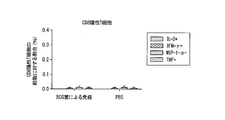
- FIG. 8 is a graph showing the abundance ratio of CD8 positive T cells producing each cytokine.
- Cells stimulated with phosphate buffer (PBS) instead of PPD were used as negative controls. As a result, it was shown that CD8 positive T cells were hardly induced by immunization with BCG bacteria.
- PBS phosphate buffer
- CD4-positive T cells are induced by immunization with BCG bacteria, but CD8-positive T cells are hardly induced. Moreover, it was confirmed that the induced CD4-positive T cells are multifunctional.
- mice were immunized with BCG bacteria or BCG bacteria into which the expression vector p3HA85B was introduced to examine whether multifunctional CD8-positive T cells were induced.
- BALB / c mice (Oriental Yeast Co., Ltd.) were intradermally administered with 2 ⁇ 10 6 CFU / unit of BCG or BCG introduced with the expression vector p3HA85B. Three weeks after immunization, dissection was performed for examination.
- Spleen cells were isolated from the above immunized mice and antigen-stimulated for 24 hours in RPMI-1640 medium supplemented with fetal bovine serum 10 v / v%, 2-mercaptoethanol, DNase 1 U / mL, penicillin and streptomycin.
- As the antigen 10 ⁇ g / mL PPD was used.
- As a negative control cells without antigen stimulation were used.
- FIG. 9 is a graph summarizing the analysis results.
- “recombinant BCG” means a group immunized with BCG bacteria introduced with the expression vector p3HA85B.
- antigen stimulation was not performed, the presence of multifunctional CD4-positive T cells and multifunctional CD8-positive T cells was not observed.
- the presence of multifunctional CD8-positive T cells was not observed in the group immunized with BCG bacteria, whereas from the group immunized with BCG bacteria into which the expression vector p3HA85B was introduced. The presence of multifunctional CD8 positive T cells was observed.
- mice were immunized with prime boost vaccine in which primary immunization was performed with BCG bacteria into which the expression vector p3HA85B was introduced, and booster immunization was performed with the pDNA85B vector (DNA vaccine), and induction of multifunctional CD8 positive T cells was examined.
- mice immunized with the pDNA85B vector alone were used.
- BALB / c mice (Oriental Yeast Co., Ltd.) and C57BL / 6J mice (Oriental Yeast Co., Ltd.) were intradermally administered with 2 ⁇ 10 6 CFU of BCG bacteria into which the expression vector p3HA85B was introduced.
- the first immunization was performed. Subsequently, after 3 weeks, 100 ⁇ g of pDNA85B vector was injected intramuscularly for 1st booster, and after 3 weeks, 100 ⁇ g of pDNA85B vector was injected intramuscularly for 2nd booster, Two weeks later, 100 ⁇ g of the pDNA85B vector was injected intramuscularly, and a third booster was performed. Three weeks after the third booster immunization, dissection was performed for examination.
- a mouse immunized only with the pDNA85B vector was used. Specifically, initial immunization was performed by intramuscular injection of 100 ⁇ g of pDNA85B vector per head. Subsequently, after 3 weeks, 100 ⁇ g of pDNA85B vector was injected intramuscularly for 1st booster, and after 3 weeks, 100 ⁇ g of pDNA85B vector was injected intramuscularly for 2nd booster, Two weeks later, 100 ⁇ g of the pDNA85B vector was injected intramuscularly, and a third booster was performed. Three weeks after the third booster immunization, dissection was performed for examination.
- FIG. 10A is a graph summarizing the analysis results of C57BL / 6J mice.
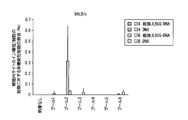
- FIG. 10B is a graph summarizing the analysis results of BALB / c mice.
- “recombinant BCG-DNA” means a group (prime boost immunized group) that was first immunized with BCG bacteria introduced with the expression vector p3HA85B and boosted with the pDNA85B vector.
- “DNA” means a group immunized only with the pDNA85B vector.
- mice when antigen stimulation was performed on spleen cells of C57BL / 6J mice, the number of multifunctional CD4-positive T cells was higher in mice boosted with prime boost than mice immunized with pDNA85B vector alone. (Pool 2, 5, 6 etc.).
- mice with prime boost immunization had a higher proportion of multifunctional CD8-positive T cells than mice immunized with the pDNA85B vector alone. (Pool 2 etc.).
- a vaccine capable of activating pathogenic microorganism-derived antigen-specific CD8-positive T cells can be provided.
Landscapes
- Health & Medical Sciences (AREA)
- Life Sciences & Earth Sciences (AREA)
- Chemical & Material Sciences (AREA)
- Medicinal Chemistry (AREA)
- General Health & Medical Sciences (AREA)
- Immunology (AREA)
- Pharmacology & Pharmacy (AREA)
- Animal Behavior & Ethology (AREA)
- Public Health (AREA)
- Veterinary Medicine (AREA)
- Epidemiology (AREA)
- Proteomics, Peptides & Aminoacids (AREA)
- Bioinformatics & Cheminformatics (AREA)
- Engineering & Computer Science (AREA)
- Microbiology (AREA)
- Mycology (AREA)
- Gastroenterology & Hepatology (AREA)
- Organic Chemistry (AREA)
- Zoology (AREA)
- Chemical Kinetics & Catalysis (AREA)
- General Chemical & Material Sciences (AREA)
- Communicable Diseases (AREA)
- Pulmonology (AREA)
- Biophysics (AREA)
- Nuclear Medicine, Radiotherapy & Molecular Imaging (AREA)
- Biochemistry (AREA)
- Genetics & Genomics (AREA)
- Molecular Biology (AREA)
- Virology (AREA)
- Oncology (AREA)
- Medicines Containing Antibodies Or Antigens For Use As Internal Diagnostic Agents (AREA)
- Peptides Or Proteins (AREA)
- Micro-Organisms Or Cultivation Processes Thereof (AREA)
- Medicines Containing Material From Animals Or Micro-Organisms (AREA)
Abstract
病原微生物由来のタンパク質を発現させたカルメット・ゲラン桿菌(BCG菌)を有効成分とするCD8T細胞活性化用ワクチンは、病原微生物由来抗原特異的CD8陽性T細胞を活性化することができるため有用である。
Description
本発明は、ワクチン及びプライムブーストワクチンに関する。本願は、2014年11月17日に、日本に出願された特願2014-232837号に基づき優先権を主張し、その内容をここに援用する。
結核をはじめとして、エボラ出血熱、クリミア・コンゴ熱、南米出血熱、マールブルグ病、ヒト免疫不全ウイルス(HIV)、マラリア等の様々な重症感染症が知られている。
これらの重症感染症には、有効なワクチンが存在しないものも多い。また、結核ワクチンとして広く用いられている、カルメット・ゲラン桿菌(BCG)ワクチンについても、乳幼児結核と結核性髄膜炎の予防効果は認められているものの、成人の肺結核予防に関しては否定的な見解が存在する(例えば、非特許文献1を参照)。
したがって、感染症に対するより効果的なワクチンが求められている。
Andersen P., Tuberculosis vaccines - an update., Nat. Rev. Microbiol., 5(7), 484-7, 2007.
例えば結核菌のような細胞内寄生菌に対する感染防御には、細胞性免疫が重要である。これに対し、発明者らは、BCGワクチンによる免疫によって活性化される抗原特異的T細胞は、主にCD4陽性T細胞(ヘルパーT細胞)であり、細胞性免疫に重要なCD8陽性T細胞(細胞傷害性T細胞)はほとんど活性化されないことを見出した。
そこで、本発明は、病原微生物由来抗原特異的CD8陽性T細胞を活性化することができるワクチンを提供することを目的とする。
本発明は以下の通りである。
(1)病原微生物由来のタンパク質を発現させたBCG菌を有効成分とするCD8T細胞活性化用ワクチン。
(2)前記BCG菌が、前記タンパク質をコードする遺伝子の発現ベクターを導入したBCG菌である、(1)に記載のワクチン。
(3)前記発現ベクターが、BCG菌及び哺乳動物細胞の双方で発現が可能な発現ベクターである、(2)に記載のワクチン。
(4)結核ワクチンである、(1)~(3)のいずれかに記載のワクチン。
(5)前記タンパク質が、マイコバクテリウム・カンサシイ(Mycobacterium kansasii)のAg85Bタンパク質である、(1)~(4)のいずれかに記載のワクチン。
(6)(1)~(5)のいずれかに記載のワクチンと、前記タンパク質の発現ベクターを有効成分とするDNAワクチンとの組み合わせからなり、(1)~(5)のいずれかに記載のワクチンで初回免疫を行い、前記DNAワクチンで追加免疫を行うように用いられることを特徴とする、プライムブーストワクチン。
(1)病原微生物由来のタンパク質を発現させたBCG菌を有効成分とするCD8T細胞活性化用ワクチン。
(2)前記BCG菌が、前記タンパク質をコードする遺伝子の発現ベクターを導入したBCG菌である、(1)に記載のワクチン。
(3)前記発現ベクターが、BCG菌及び哺乳動物細胞の双方で発現が可能な発現ベクターである、(2)に記載のワクチン。
(4)結核ワクチンである、(1)~(3)のいずれかに記載のワクチン。
(5)前記タンパク質が、マイコバクテリウム・カンサシイ(Mycobacterium kansasii)のAg85Bタンパク質である、(1)~(4)のいずれかに記載のワクチン。
(6)(1)~(5)のいずれかに記載のワクチンと、前記タンパク質の発現ベクターを有効成分とするDNAワクチンとの組み合わせからなり、(1)~(5)のいずれかに記載のワクチンで初回免疫を行い、前記DNAワクチンで追加免疫を行うように用いられることを特徴とする、プライムブーストワクチン。
本発明によれば、病原微生物由来抗原特異的CD8陽性T細胞を活性化することができるワクチンを提供することができる。
1実施形態において、本発明は、病原微生物由来のタンパク質を発現させたBCG菌を有効成分とするCD8T細胞活性化用ワクチンを提供する。
後述するように、本実施形態のワクチンによれば、病原微生物由来抗原特異的CD8陽性T細胞を活性化する(誘導する)ことができる。CD8陽性T細胞の活性化とは、ワクチンを投与した(免疫した)生体に、上記の病原微生物由来のタンパク質に暴露すると特定のサイトカインを産生するCD8陽性T細胞を形成させることを意味する。したがって、本実施形態のワクチンは、CD8陽性T細胞活性化剤であるともいえる。上記サイトカインとしては、例えば、インターフェロン-γ、インターロイキン-2、TNF-α、MIP-1α等が挙げられる。
(病原微生物)
本実施形態のワクチンが対象とする病原微生物には特に制限はない。本実施形態のワクチンは、病原微生物由来抗原特異的CD8陽性T細胞を活性化することができるため、効果的なワクチンを得ることが困難とされる病原微生物にも適用することができる。
本実施形態のワクチンが対象とする病原微生物には特に制限はない。本実施形態のワクチンは、病原微生物由来抗原特異的CD8陽性T細胞を活性化することができるため、効果的なワクチンを得ることが困難とされる病原微生物にも適用することができる。
したがって、病原微生物は、効果的なワクチンを得ることが困難とされる病原微生物であってもよく、例えば、結核の原因菌である結核菌(Mycobacterium tuberculosis)、エボラ出血熱の原因ウイルスであるエボラ出血熱ウイルス、クリミア・コンゴ熱の原因ウイルスであるクリミア・コンゴウイルス、南米出血熱の原因ウイルスであるフニンウイルス、サビアウイルス、ガナリトウイルス、マチュポウイルス等のアレナウイルス科のウイルス、マールブルグ病の原因ウイルスであるマールブルグウイルス、マラリアの原因微生物であるマラリア原虫、及び、例えば弱毒株等の、上記の病原微生物の類縁微生物等が挙げられる。
本実施形態のワクチンにおいて、BCG菌に発現させる病原微生物由来のタンパク質としては、例えば、上記の病原微生物が感染した場合に発現量の高いタンパク質が挙げられる。より具体的には、結核菌のAg85Bタンパク質、結核菌と同じ抗酸菌であるマイコバクテリウム・カンサシイのAg85Bタンパク質、エボラ出血熱ウイルスのエンベロープ糖タンパク質、HIVウイルスのgp140タンパク質、マラリア原虫のマラリア抗原タンパク質等が挙げられる。
本実施形態のワクチンによれば、BCG菌で発現させる病原微生物由来のタンパク質を変更することにより、多種多様な病原微生物に対するワクチンを容易に提供することができる。例えば、マイコバクテリウム・カンサシイのAg85Bタンパク質を発現させたBCG菌は、CD8T細胞の活性化が可能な結核ワクチンとして使用することができる。
本実施形態のワクチンでは、病原微生物由来のタンパク質を発現させる宿主としてBCG菌を使用する。BCG菌はワクチンとして長年ヒトに接種されてきた実績があり、安全性も確立されているため、本実施形態のワクチンにより、安全なワクチンを簡便に提供することができる。
また、本実施形態のワクチンでは、病原微生物由来のタンパク質を発現させたBCG菌を用いることにより、病原微生物由来抗原特異的CD8陽性T細胞を活性化することができる。これに対し、単に病原微生物由来のタンパク質をワクチンとして投与しても、抗原特異的CD8陽性T細胞を効果的に活性化することは困難である。
発明者らは、本実施形態のワクチンの投与によりCD8陽性T細胞を活性化することができる理由について、CD8陽性T細胞の活性化には、病原微生物由来のタンパク質を発現させたBCG菌が生体内でマクロファージ等の食細胞に貪食され、病原微生物由来タンパク質が細胞中で適切なプロセッシングを受けたうえで抗原提示されることが重要であるためではないかと推測している。
更に、後述するように、本実施形態のワクチンにより、1個の細胞が複数種類のサイトカインを産生する能力、すなわち多機能性を有する、CD8陽性T細胞を誘導することができる。多機能性を有するT細胞は感染防御能に優れているため、本実施形態のワクチンにより、高い感染防御能を付与することができる。
(発現ベクター)
BCG菌を宿主とした病原微生物由来のタンパク質の発現は、BCG菌に、病原微生物由来のタンパク質をコードする遺伝子の発現ベクターを導入することにより行うことが好ましい。これにより、BCG菌を宿主として病原微生物由来のタンパク質の発現を容易に行うことができる。また、適切なプロモーターを選択したり、エンハンサーを組み合わせたりすることにより、病原微生物由来のタンパク質の発現量を増加させることができる。
BCG菌を宿主とした病原微生物由来のタンパク質の発現は、BCG菌に、病原微生物由来のタンパク質をコードする遺伝子の発現ベクターを導入することにより行うことが好ましい。これにより、BCG菌を宿主として病原微生物由来のタンパク質の発現を容易に行うことができる。また、適切なプロモーターを選択したり、エンハンサーを組み合わせたりすることにより、病原微生物由来のタンパク質の発現量を増加させることができる。
また、発現ベクターは、BCG菌のゲノムに導入されるのではなく、BCG菌内でプラスミドの形態で維持されるものであることが好ましい。これにより、病原微生物由来のタンパク質を発現させたBCG菌の品質が安定するため、本実施形態のワクチンの品質管理が容易になる。
BCG菌でタンパク質を発現させるためのプロモーターとしては、例えばマイコバクテリウムフォーチュイタム(Mycobacterium fortuitum)由来のpAL5000等が挙げられる。
上記の発現ベクターは、BCG菌及び哺乳動物細胞の双方で発現が可能な発現ベクターであることが更に好ましい。生体内に投与されたBCG菌は、マクロファージ等の食細胞に貪食され破壊される。そこで、BCG菌の破壊により放出された発現ベクターが、BCG菌及び哺乳動物細胞の双方で発現が可能なものであると、マクロファージ等の細胞内においても病原微生物由来のタンパク質の発現が継続される。この結果、より多くの病原微生物由来のタンパク質が生体内に供給されることとなり、より効果的に免疫を確立することができる。
本実施形態のワクチンは皮内投与することが好ましい。また、投与量は、投与対象により適宜調整すればよいが、例えばマウスの場合には、1頭あたり2×10⁶コロニー形成単位(CFU)程度でよい。
(プライムブーストワクチン)
1実施形態において、本発明は、上記ワクチンと、上記ワクチンの有効成分であるBCG菌に発現させたタンパク質の発現ベクターを有効成分とするDNAワクチンとの組み合わせからなり、上記ワクチンで初回免疫を行い、上記DNAワクチンで追加免疫を行うように用いられることを特徴とする、プライムブーストワクチンを提供する。
1実施形態において、本発明は、上記ワクチンと、上記ワクチンの有効成分であるBCG菌に発現させたタンパク質の発現ベクターを有効成分とするDNAワクチンとの組み合わせからなり、上記ワクチンで初回免疫を行い、上記DNAワクチンで追加免疫を行うように用いられることを特徴とする、プライムブーストワクチンを提供する。
プライムブーストワクチンとは、初回免疫に用いたワクチンとは別のワクチンで1回以上の追加免疫を行うワクチンの組み合わせ、又はこのようなワクチン投与方法を意味する。
また、DNAワクチンとは、生体内に投与するとタンパク質に翻訳され、そのタンパク質が免疫の成立に寄与するワクチンである。
本実施形態のプライムブーストワクチンは、Ag85Bタンパク質を発現させた組換えBCG菌で初回免疫を行い、Ag85Bタンパク質の発現ベクターを有効成分とするDNAワクチンで追加免疫を行うものである。
組換えBCG菌は皮内投与することが好ましい。また、投与量は、投与対象により適宜調整すればよいが、例えばマウスの場合には、1頭あたり2×10⁶CFU程度が挙げられる。
また、DNAワクチンは筋肉注射することが好ましい。また、投与量は、投与対象により適宜調整すればよいが、例えばマウスの場合には、1頭あたり100μg程度が挙げられる。
ワクチン投与のスケジュールも適宜調整すればよいが、例えば、組換えBCG菌による初回免疫から3週間後にDNAワクチンによる1回目の追加免疫を行い、更に3週間後にDNAワクチンによる2回目の追加免疫を行い、更に2週間後にDNAワクチンによる3回目の追加免疫を行うスケジュール等が挙げられる。
(その他の実施形態)
1実施形態において、本発明は、病原微生物由来抗原特異的CD8T細胞の活性化のための、病原微生物由来のタンパク質を発現させたBCG菌を提供する。
1実施形態において、本発明は、病原微生物由来抗原特異的CD8T細胞の活性化のための、病原微生物由来のタンパク質を発現させたBCG菌を提供する。
1実施形態において、本発明は、病原微生物由来抗原特異的CD8T細胞活性化用ワクチンを製造するための、病原微生物由来のタンパク質を発現させたBCG菌の使用を提供する。
1実施形態において、本発明は、病原微生物由来のタンパク質を発現させたBCG菌の有効量を、それを必要とする患者に投与することを含む、病原微生物由来抗原特異的CD8T細胞の活性化方法を提供する。
1実施形態において、本発明は、病原微生物由来のタンパク質を発現させたBCG菌を有効成分とするワクチンを投与して初回免疫を行う工程と、上記タンパク質の発現ベクターを有効成分とするDNAワクチンを投与して追加免疫を行う工程と、を備える、病原微生物由来抗原特異的CD8T細胞の活性化方法を提供する。
次に実験例を示して本発明を更に詳細に説明するが、本発明は以下の実験例に限定されるものではない。
[実験例1]
モルモットをBCG菌で免疫し、精製ツベルクリン(Purified Protein Derivative、以下「PPD」という場合がある。)特異的なCD4陽性T細胞及びPPD特異的なCD8陽性T細胞が誘導されるか否かを検討した。
モルモットをBCG菌で免疫し、精製ツベルクリン(Purified Protein Derivative、以下「PPD」という場合がある。)特異的なCD4陽性T細胞及びPPD特異的なCD8陽性T細胞が誘導されるか否かを検討した。
(免疫)
モルモット(日本エスエルシー株式会社)に、2×10⁶CFU/匹のBCG菌を皮内投与した。免疫から12週間後に採血して検討を行った。
モルモット(日本エスエルシー株式会社)に、2×10⁶CFU/匹のBCG菌を皮内投与した。免疫から12週間後に採血して検討を行った。
(ELISPOT法によるインターフェロン-γ産生細胞の検出)
採血した血液を、血球分離溶液(商品名「リンホセパール」、タカラバイオ株式会社)を用いた密度勾配遠心により遠心し、末梢血単核細胞を回収した。続いて、細胞ベースの酵素免疫スポット測定法(ELISPOT)により、回収した末梢血単核細胞中のインターフェロン-γ産生細胞の割合を測定した。
採血した血液を、血球分離溶液(商品名「リンホセパール」、タカラバイオ株式会社)を用いた密度勾配遠心により遠心し、末梢血単核細胞を回収した。続いて、細胞ベースの酵素免疫スポット測定法(ELISPOT)により、回収した末梢血単核細胞中のインターフェロン-γ産生細胞の割合を測定した。
具体的には、まず、回収した末梢血単核細胞を4つの群に分けた。第1の群(全単核細胞群)はそのまま次の操作に用いた。第2の群(CD4陽性T細胞除去群)からは、CD4陽性T細胞を除去して次の操作に用いた。第3の群(CD8陽性T細胞除去群)からは、CD8陽性T細胞を除去して次の操作に用いた。第4の群(CD4陽性T細胞及びCD8陽性T細胞除去群)からは、CD4陽性T細胞及びCD8陽性T細胞を除去して次の操作に用いた。CD4陽性T細胞の除去又はCD8陽性T細胞の除去は、セルソーターを用いて行った。
続いて、各群の細胞の培地にPPD 1μg/mLを添加して刺激し、20時間後に次の操作に用いた。陰性対照として、PPDの代わりにリン酸緩衝液(PBS)を添加した群も準備した。また、陽性対照として、PPDの代わりにコンカナバリンA(ConA)1μg/mLを添加した群も準備した。
続いて、抗インターフェロン-γ抗体を結合させたPVDF膜底の96ウェルマイクロタイタープレートに培地及び上記の各群の細胞を添加し、5時間インキュベートした。この結果、細胞がインターフェロン-γを分泌すると、分泌されたインターフェロン-γが細胞近傍に存在する抗インターフェロン-γ抗体と結合する。その後、細胞を洗い流し、メンブレン上に結合したインターフェロン-γを免疫染色により検出した。その結果、インターフェロン-γ産生細胞が存在していたメンブレン上の部分には、インターフェロン-γの存在を示すスポットが形成された。1つのスポットが1個のインターフェロン-γ産生細胞に対応する。そこで、スポットの数を測定することにより、インターフェロン-γ産生細胞の存在割合を測定することができる。
図1Aは、全単核細胞群のインターフェロン-γ産生細胞の存在割合を示すグラフである。図1Bは、CD4陽性T細胞除去群及びCD8陽性T細胞除去群のインターフェロン-γ産生細胞の存在割合を示すグラフである。図1Cは、CD4陽性T細胞及びCD8陽性T細胞除去群のインターフェロン-γ産生細胞の存在割合を示すグラフである。
図1Aに示すように、全単核細胞群では、PPDで刺激するとインターフェロン-γを産生する細胞が誘導されたことが示された。また、図1Bに示すように、CD4陽性T細胞を除去すると、PPD刺激によりインターフェロン-γを産生する細胞が大幅に減少することが示された。また、CD8陽性T細胞を除去しても、PPD刺激によりインターフェロン-γを産生する細胞の数はほとんど変わらなかった。また、図1Cに示すように、CD4陽性T細胞及びCD8陽性T細胞を除去すると、PPD刺激によりインターフェロン-γを産生する細胞が大幅に減少することが示された。
以上の結果から、BCG菌による免疫の結果誘導されるPPD特異的なインターフェロン-γ産生細胞は主にCD4陽性T細胞であり、PPD特異的なインターフェロン-γ産生CD8陽性T細胞はあまり誘導されていないことが明らかとなった。
[実験例2]
マイコバクテリウム・カンサシイのAg85Bタンパク質の発現ベクターを作製した。
マイコバクテリウム・カンサシイのAg85Bタンパク質の発現ベクターを作製した。
(p3HA85Bベクター)
BCG菌及び哺乳動物細胞の双方でAg85Bタンパク質を発現することが可能な発現ベクターであるp3HA85Bを作製した。p3HA85Bは、マイコバクテリウム・カンサシイのAg85Bタンパク質をコードする遺伝子(配列番号1)の上流に、BCG菌で作動可能であるpAL5000プロモーターを有しており、pAL5000プロモーターの上流に、哺乳動物細胞で作動可能であるサイトメガロウイルス(CMV)プロモーターとHTLV-1プロモーターを有している。さらに、Ag85Bタンパク質をコードする遺伝子の下流にpolyAシグナル遺伝子を組み込んだ。図2Aにp3HA85Bベクターの構造を示す。
BCG菌及び哺乳動物細胞の双方でAg85Bタンパク質を発現することが可能な発現ベクターであるp3HA85Bを作製した。p3HA85Bは、マイコバクテリウム・カンサシイのAg85Bタンパク質をコードする遺伝子(配列番号1)の上流に、BCG菌で作動可能であるpAL5000プロモーターを有しており、pAL5000プロモーターの上流に、哺乳動物細胞で作動可能であるサイトメガロウイルス(CMV)プロモーターとHTLV-1プロモーターを有している。さらに、Ag85Bタンパク質をコードする遺伝子の下流にpolyAシグナル遺伝子を組み込んだ。図2Aにp3HA85Bベクターの構造を示す。
(pDNA85Bベクター)
哺乳動物細胞でAg85Bタンパク質を発現することが可能な発現ベクターである、pDNA85Bを作製した。pDNA85Bは、Ag85Bタンパク質をコードする遺伝子(配列番号1)の上流に、哺乳動物細胞で作動可能であるサイトメガロウイルス(CMV)プロモーターを有している。図2BにpDNA85Bベクターの構造を示す。
哺乳動物細胞でAg85Bタンパク質を発現することが可能な発現ベクターである、pDNA85Bを作製した。pDNA85Bは、Ag85Bタンパク質をコードする遺伝子(配列番号1)の上流に、哺乳動物細胞で作動可能であるサイトメガロウイルス(CMV)プロモーターを有している。図2BにpDNA85Bベクターの構造を示す。
[実験例3]
発現ベクターp3HA85BをBCG菌に導入し、マイコバクテリウム・カンサシイのAg85Bタンパク質を発現させたBCG菌を作製した。続いて、ウエスタンブロッティングによりAg85Bタンパク質の発現を確認した。
発現ベクターp3HA85BをBCG菌に導入し、マイコバクテリウム・カンサシイのAg85Bタンパク質を発現させたBCG菌を作製した。続いて、ウエスタンブロッティングによりAg85Bタンパク質の発現を確認した。
(p3HA85BのBCG菌への導入)
エレクトロポレーション法により、発現ベクターp3HA85BをBCG菌に導入した。続いて、カナマイシン耐性を指標として、p3HA85Bが導入されたBCG菌を選択し、クローニングして、Ag85Bタンパク質を発現させたBCG菌を作製した。
エレクトロポレーション法により、発現ベクターp3HA85BをBCG菌に導入した。続いて、カナマイシン耐性を指標として、p3HA85Bが導入されたBCG菌を選択し、クローニングして、Ag85Bタンパク質を発現させたBCG菌を作製した。
(ウエスタンブロッティング)
Ag85Bタンパク質を発現させたBCG菌及び対照である通常のBCG菌をそれぞれCell Lysis Buffer(Cell Signaling Technology社)を用いて溶解した。
Ag85Bタンパク質を発現させたBCG菌及び対照である通常のBCG菌をそれぞれCell Lysis Buffer(Cell Signaling Technology社)を用いて溶解した。
続いて、RC DCプロテインアッセイ(Bio-rad社)を用いてタンパク量を定量し、同量のタンパクを4-12%Bis-Tris gel(life technologies社)にて電気泳動した。
続いて、電気泳動したタンパク質をPVDFメンブレン(life technologies社)に転写し、抗Ag85B抗体で免疫染色した。二次抗体にはセイヨウワサビペルオキシダーゼ(HRP)標識抗ウサギIgG抗体(Cell Signaling Technology社)を用いた。シグナルの検出にはAmersham ECL Western Blotting Analysis System(GE Healthcare社)を用いた。
図3は、ウエスタンブロッティングの結果を示す写真である。レーン1は対照のBCG菌の結果であり、レーン2は、Ag85Bタンパク質を発現させたBCG菌の結果である。なお、ここで使用した抗Ag85B抗体は、BCG菌のAg85Bタンパク質及びマイコバクテリウム・カンサシイのAg85Bタンパク質の双方に結合するものである。
その結果、発現ベクターp3HA85Bの導入により、BCG菌によるAg85Bタンパク質の発現が50~100倍増強したことが確認された。
[実験例4]
発現ベクターp3HA85Bにより、哺乳動物細胞でAg85Bタンパク質の発現が可能か否かを検討した。
発現ベクターp3HA85Bにより、哺乳動物細胞でAg85Bタンパク質の発現が可能か否かを検討した。
ヒト胎児由来腎臓上皮細胞である293T細胞に、遺伝子導入試薬(商品名「Lipofectamin 2000」、Life Technologies社)を用いてp3HA85Bを導入して発現させた。
続いて、実験例3と同様にしてウエスタンブロッティングによりAg85Bタンパク質の発現を確認した。陽性対照として、実験例3でAg85Bタンパク質を発現させたBCG菌のウエスタンブロッティングも行った。
図4Aは、陽性対照であるBCG菌のウエスタンブロッティングの結果を示す写真である。レーン1は陽性対照であるBCG菌の結果である。また、レーン2は、リコンビナントAg85Bタンパク質をウエスタンブロッティングに供した結果である。また、レーン3は、広く交差反応することが知られているリコンビナントMPB59タンパク質をウエスタンブロッティングに供した結果である。
図4Bは、293T細胞のウエスタンブロッティングの結果を示す写真である。レーン3は、発現ベクターp3HA85Bを導入した293T細胞の結果である。レーン4は、陰性対照として空のベクターp3H8.3のみを導入した293T細胞の結果である。レーン5は、陰性対照としてPBSのみをウエスタンブロッティングに供した結果である。また、レーン1及びレーン2は、実験例2で作製したpDNA85Bを導入した293T細胞の結果である。
その結果、p3HA85Bベクターの導入により、BCG菌及び哺乳動物細胞の双方において、Ag85Bタンパク質を発現させることが可能であることが確認された。また、pDNA85Bベクターによって、哺乳動物細胞でAg85Bタンパク質を発現させることが可能であることが確認された。
[実験例5]
マウスをBCG菌で免疫し、抗原特異的なCD8陽性T細胞が誘導されるか否かを検討した。
マウスをBCG菌で免疫し、抗原特異的なCD8陽性T細胞が誘導されるか否かを検討した。
(免疫)
C57BL/6Jマウス(オリエンタル酵母社)に、2×106CFU/匹のBCG菌を皮内投与した。免疫から3週間後に解剖して検討を行った。
C57BL/6Jマウス(オリエンタル酵母社)に、2×106CFU/匹のBCG菌を皮内投与した。免疫から3週間後に解剖して検討を行った。
(細胞内サイトカイン解析)
上記の免疫マウスから脾臓細胞を分離し、ウシ胎児血清10v/v%、2-メルカプトエタノール、DNase 1U/mL、ペニシリン及びストレプトマイシンを添加したRPMI-1640培地中で6時間抗原刺激した。抗原としては、10μg/mLのPPDを使用した。
上記の免疫マウスから脾臓細胞を分離し、ウシ胎児血清10v/v%、2-メルカプトエタノール、DNase 1U/mL、ペニシリン及びストレプトマイシンを添加したRPMI-1640培地中で6時間抗原刺激した。抗原としては、10μg/mLのPPDを使用した。
続いて細胞を回収し、APC標識抗CD3抗体(BD biociences社)、PE-cy7標識抗CD4抗体(BioLegend社)、PerCP cy5.5標識抗CD8抗体(BD biociences社)で細胞表面を染色した。更に、BD Cytofix/Cytoperm Fixation/Permeabilization Solution Kit (BD biociences)を用いて細胞を処理し、Alexa Fluor 488標識抗TNF-α抗体(BD biociences社)、PE標識抗インターフェロン-γ抗体(BD biociences社)、APC-Cy7標識抗インターロイキン-2抗体(BD biociences社)、V500標識抗MIP-1α抗体(BD biociences社)で細胞内サイトカインを染色した。染色した細胞はFACSverseソフトウエア(BD biociences社)及びFlowJoソフトウエア(TreeStar社)を用いて解析した。図5は、フローサイトメトリーの結果を示すグラフである。
図6は、各サイトカインを産生するCD4陽性T細胞の存在割合を示すグラフである。PPDの代わりにリン酸緩衝液(PBS)で刺激した細胞を陰性対照として使用した。その結果、BCG菌による免疫によって、CD4陽性T細胞が誘導されたことが示された。
図7Aは、各サイトカインを産生するCD4陽性T細胞を更に詳細に解析した結果を示すグラフである。図中、Lはインターロイキン-2を表し、Gはインターフェロン-γを表し、MはMIP-1αを表し、TはTNF-αを表す。また、「+」は陽性であることを表し、「-」は陰性であることを表す。その結果、1個のCD4陽性T細胞が、1~4種類のサイトカインを産生していることが明らかとなった。すなわち、BCG菌による免疫によって多機能性のCD4陽性T細胞が誘導されたことが示された。また、図7Bは、図7Aの結果を円グラフにしたものである。
図8は、各サイトカインを産生するCD8陽性T細胞の存在割合を示すグラフである。PPDの代わりにリン酸緩衝液(PBS)で刺激した細胞を陰性対照として使用した。その結果、BCG菌による免疫によって、CD8陽性T細胞はほとんど誘導されないことが示された。
以上の結果から、BCG菌による免疫によって、CD4陽性T細胞が誘導されるものの、CD8陽性T細胞はほとんど誘導されないことが明らかとなった。また、誘導されたCD4陽性T細胞は多機能性であることが確認された。
[実験例6]
マウスをBCG菌、又は発現ベクターp3HA85Bを導入したBCG菌で免疫し、多機能性のCD8陽性T細胞が誘導されるか否かを検討した。
マウスをBCG菌、又は発現ベクターp3HA85Bを導入したBCG菌で免疫し、多機能性のCD8陽性T細胞が誘導されるか否かを検討した。
(免疫)
BALB/cマウス(オリエンタル酵母社)に、2×106CFU/匹のBCG菌、又は発現ベクターp3HA85Bを導入したBCG菌を皮内投与した。免疫から3週間後に解剖して検討を行った。
BALB/cマウス(オリエンタル酵母社)に、2×106CFU/匹のBCG菌、又は発現ベクターp3HA85Bを導入したBCG菌を皮内投与した。免疫から3週間後に解剖して検討を行った。
(細胞内サイトカイン解析)
上記の免疫マウスから脾臓細胞を分離し、ウシ胎児血清10v/v%、2-メルカプトエタノール、DNase 1U/mL、ペニシリン及びストレプトマイシンを添加したRPMI-1640培地中で24時間抗原刺激した。抗原としては、10μg/mLのPPDを使用した。陰性対照として、抗原刺激を行わない細胞を使用した。
上記の免疫マウスから脾臓細胞を分離し、ウシ胎児血清10v/v%、2-メルカプトエタノール、DNase 1U/mL、ペニシリン及びストレプトマイシンを添加したRPMI-1640培地中で24時間抗原刺激した。抗原としては、10μg/mLのPPDを使用した。陰性対照として、抗原刺激を行わない細胞を使用した。
続いて細胞を回収し、実験例5と同様にしてフローサイトメトリーにより細胞内サイトカイン解析を行った。
図9は、解析結果をまとめたグラフである。図中、「組換えBCG」は、発現ベクターp3HA85Bを導入したBCG菌で免疫した群を意味する。その結果、抗原刺激を行わない場合には、多機能性のCD4陽性T細胞及び多機能性のCD8陽性T細胞の存在は認められなかった。また、抗原刺激を行った結果、BCG菌で免疫した群からは多機能性のCD8陽性T細胞の存在が認められなかったのに対し、発現ベクターp3HA85Bを導入したBCG菌で免疫した群からは多機能性のCD8陽性T細胞の存在が認められた。
また、抗原刺激を行った結果、BCG菌で免疫した群、及び発現ベクターp3HA85Bを導入したBCG菌で免疫した群のいずれにおいても多機能性のCD4陽性T細胞の存在が認められた。
以上の結果から、発現ベクターp3HA85Bを導入したBCG菌を用いた免疫により、多機能性のCD8陽性T細胞を誘導することができることが明らかとなった。
[実験例7]
発現ベクターp3HA85Bを導入したBCG菌で初回免疫を行い、pDNA85Bベクター(DNAワクチン)で追加免疫を行うプライムブーストワクチンによりマウスを免疫し、多機能性のCD8陽性T細胞の誘導を検討した。対照としては、pDNA85Bベクターのみで免疫したマウスを用いた。
発現ベクターp3HA85Bを導入したBCG菌で初回免疫を行い、pDNA85Bベクター(DNAワクチン)で追加免疫を行うプライムブーストワクチンによりマウスを免疫し、多機能性のCD8陽性T細胞の誘導を検討した。対照としては、pDNA85Bベクターのみで免疫したマウスを用いた。
具体的には、BALB/cマウス(オリエンタル酵母社)及びC57BL/6Jマウス(オリエンタル酵母社)に、発現ベクターp3HA85Bを導入したBCG菌を、それぞれ1頭あたり2×106CFUずつ皮内投与して初回免疫を行った。続いて、3週間後にpDNA85Bベクターを1頭あたり100μgずつ筋肉注射して1回目の追加免疫を行い、更に3週間後にpDNA85Bベクターを1頭あたり100μgずつ筋肉注射して2回目の追加免疫を行い、更に2週間後にpDNA85Bベクターを1頭あたり100μgずつ筋肉注射して3回目の追加免疫を行った。3回目の追加免疫から3週間後に解剖して検討を行った。
対象として、pDNA85Bベクターのみで免疫したマウスを用いた。具体的には、pDNA85Bベクターを1頭あたり100μgずつ筋肉注射して初回免疫を行った。続いて、3週間後にpDNA85Bベクターを1頭あたり100μgずつ筋肉注射して1回目の追加免疫を行い、更に3週間後にpDNA85Bベクターを1頭あたり100μgずつ筋肉注射して2回目の追加免疫を行い、更に2週間後にpDNA85Bベクターを1頭あたり100μgずつ筋肉注射して3回目の追加免疫を行った。3回目の追加免疫から3週間後に解剖して検討を行った。
(細胞内サイトカイン解析)
上記の免疫マウスから脾臓細胞を分離し、ウシ胎児血清10v/v%、2-メルカプトエタノール、DNase 1U/mL、ペニシリン及びストレプトマイシンを添加したRPMI-1640培地中で24時間抗原刺激した。抗原としては、下記表1に示す、Ag85Bタンパク質のプールペプチド(プール1~プール6)をそれぞれ使用した。抗原刺激にあたり、プールペプチドは2.5μg/mLの濃度で使用した。また、陰性対照として、抗原刺激を行わない細胞を使用した。続いて細胞を回収し、実験例5と同様にしてフローサイトメトリーにより細胞内サイトカイン解析を行った。
上記の免疫マウスから脾臓細胞を分離し、ウシ胎児血清10v/v%、2-メルカプトエタノール、DNase 1U/mL、ペニシリン及びストレプトマイシンを添加したRPMI-1640培地中で24時間抗原刺激した。抗原としては、下記表1に示す、Ag85Bタンパク質のプールペプチド(プール1~プール6)をそれぞれ使用した。抗原刺激にあたり、プールペプチドは2.5μg/mLの濃度で使用した。また、陰性対照として、抗原刺激を行わない細胞を使用した。続いて細胞を回収し、実験例5と同様にしてフローサイトメトリーにより細胞内サイトカイン解析を行った。

図10Aは、C57BL/6Jマウスの解析結果をまとめたグラフである。図10Bは、BALB/cマウスの解析結果をまとめたグラフである。図中、「組換えBCG-DNA」は、発現ベクターp3HA85Bを導入したBCG菌で初回免疫し、pDNA85Bベクターで追加免疫した群(プライムブースト免疫した群)を意味する。また、「DNA」は、pDNA85Bベクターのみで免疫した群を意味する。
その結果、C57BL/6Jマウス、BALB/cマウスのいずれの脾臓細胞においても、抗原刺激を行わない場合には、多機能性のCD4陽性T細胞及び多機能性のCD8陽性T細胞の存在はほとんど認められなかった。
また、C57BL/6Jマウスの脾臓細胞において、抗原刺激を行った場合には、プライムブースト免疫したマウスのほうが、pDNA85Bベクターのみで免疫したマウスよりも多機能性のCD4陽性T細胞の存在割合が高かった(プール2、5、6等)。
また、BALB/cマウスの脾臓細胞において、抗原刺激を行った場合には、プライムブースト免疫したマウスのほうが、pDNA85Bベクターのみで免疫したマウスよりも多機能性のCD8陽性T細胞の存在割合が高かった(プール2等)。
本発明によれば、病原微生物由来抗原特異的CD8陽性T細胞を活性化することができるワクチンを提供することができる。
Claims (6)
- 病原微生物由来のタンパク質を発現させたカルメット・ゲラン桿菌(BCG菌)を有効成分とするCD8T細胞活性化用ワクチン。
- 前記BCG菌が、前記タンパク質をコードする遺伝子の発現ベクターを導入したBCG菌である、請求項1に記載のワクチン。
- 前記発現ベクターが、BCG菌及び哺乳動物細胞の双方で発現が可能な発現ベクターである、請求項2に記載のワクチン。
- 結核ワクチンである、請求項1~3のいずれか一項に記載のワクチン。
- 前記タンパク質が、マイコバクテリウム・カンサシイ(Mycobacterium kansasii)のAg85Bタンパク質である、請求項1~4のいずれか一項に記載のワクチン。
- 請求項1~5のいずれか一項に記載のワクチンと、
前記タンパク質の発現ベクターを有効成分とするDNAワクチンとの組み合わせからなり、
請求項1~5のいずれか一項に記載のワクチンで初回免疫を行い、前記DNAワクチンで追加免疫を行うように用いられることを特徴とする、プライムブーストワクチン。
Priority Applications (1)
| Application Number | Priority Date | Filing Date | Title |
|---|---|---|---|
| US15/526,809 US20170319686A1 (en) | 2014-11-17 | 2015-11-17 | Vaccine and prime-boost vaccine |
Applications Claiming Priority (2)
| Application Number | Priority Date | Filing Date | Title |
|---|---|---|---|
| JP2014232837A JP6451933B2 (ja) | 2014-11-17 | 2014-11-17 | ワクチン及びプライムブーストワクチン |
| JP2014-232837 | 2014-11-17 |
Publications (1)
| Publication Number | Publication Date |
|---|---|
| WO2016080392A1 true WO2016080392A1 (ja) | 2016-05-26 |
Family
ID=56013927
Family Applications (1)
| Application Number | Title | Priority Date | Filing Date |
|---|---|---|---|
| PCT/JP2015/082258 Ceased WO2016080392A1 (ja) | 2014-11-17 | 2015-11-17 | ワクチン及びプライムブーストワクチン |
Country Status (3)
| Country | Link |
|---|---|
| US (1) | US20170319686A1 (ja) |
| JP (1) | JP6451933B2 (ja) |
| WO (1) | WO2016080392A1 (ja) |
Cited By (1)
| Publication number | Priority date | Publication date | Assignee | Title |
|---|---|---|---|---|
| WO2024047875A1 (ja) * | 2022-09-02 | 2024-03-07 | 国立研究開発法人医薬基盤・健康・栄養研究所 | HIV感染患者におけるTh1型の免疫応答を誘導するための組成物 |
Families Citing this family (1)
| Publication number | Priority date | Publication date | Assignee | Title |
|---|---|---|---|---|
| CA3106735A1 (en) * | 2019-05-21 | 2020-11-26 | Universite Laval | Crimean-congo hemorrhagic fever virus immunogenic compositions |
Citations (2)
| Publication number | Priority date | Publication date | Assignee | Title |
|---|---|---|---|---|
| JP2010268694A (ja) * | 2009-05-19 | 2010-12-02 | Hamamatsu Univ School Of Medicine | 新規ペプチド及びこのペプチドから成る結核菌特異的t細胞検出用試薬 |
| WO2011052771A1 (ja) * | 2009-11-02 | 2011-05-05 | 国立大学法人三重大学 | パラミクソウイルスベクターを用いた経鼻噴霧型結核ワクチン |
-
2014
- 2014-11-17 JP JP2014232837A patent/JP6451933B2/ja active Active
-
2015
- 2015-11-17 WO PCT/JP2015/082258 patent/WO2016080392A1/ja not_active Ceased
- 2015-11-17 US US15/526,809 patent/US20170319686A1/en not_active Abandoned
Patent Citations (2)
| Publication number | Priority date | Publication date | Assignee | Title |
|---|---|---|---|---|
| JP2010268694A (ja) * | 2009-05-19 | 2010-12-02 | Hamamatsu Univ School Of Medicine | 新規ペプチド及びこのペプチドから成る結核菌特異的t細胞検出用試薬 |
| WO2011052771A1 (ja) * | 2009-11-02 | 2011-05-05 | 国立大学法人三重大学 | パラミクソウイルスベクターを用いた経鼻噴霧型結核ワクチン |
Non-Patent Citations (6)
Cited By (1)
| Publication number | Priority date | Publication date | Assignee | Title |
|---|---|---|---|---|
| WO2024047875A1 (ja) * | 2022-09-02 | 2024-03-07 | 国立研究開発法人医薬基盤・健康・栄養研究所 | HIV感染患者におけるTh1型の免疫応答を誘導するための組成物 |
Also Published As
| Publication number | Publication date |
|---|---|
| JP2016094379A (ja) | 2016-05-26 |
| US20170319686A1 (en) | 2017-11-09 |
| JP6451933B2 (ja) | 2019-01-16 |
Similar Documents
| Publication | Publication Date | Title |
|---|---|---|
| Liu et al. | IL-2 restores T-cell dysfunction induced by persistent mycobacterium tuberculosis antigen stimulation | |
| Andersen et al. | Tuberculosis vaccines–rethinking the current paradigm | |
| Tian et al. | Formulation in DDA-MPLA-TDB liposome enhances the immunogenicity and protective efficacy of a DNA vaccine against Mycobacterium tuberculosis infection | |
| Behar et al. | Next generation: tuberculosis vaccines that elicit protective CD8+ T cells | |
| Junqueira-Kipnis et al. | Prime–boost with Mycobacterium smegmatis recombinant vaccine improves protection in mice infected with Mycobacterium tuberculosis | |
| KR101814857B1 (ko) | 인간에서의 hiv 질환의 예방 및/또는 치료를 위한 제약 조성물 | |
| Lukeman et al. | An LNP-mRNA vaccine modulates innate cell trafficking and promotes polyfunctional Th1 CD4+ T cell responses to enhance BCG-induced protective immunity against Mycobacterium tuberculosis | |
| Lopez et al. | A lentiviral vector encoding fusion of light invariant chain and mycobacterial antigens induces protective CD4+ T cell immunity | |
| Hu et al. | Heterologous prime-boost vaccination against tuberculosis with recombinant Sendai virus and DNA vaccines | |
| Adam et al. | Innate molecular and cellular signature in the skin preceding long-lasting T cell responses after electroporated DNA vaccination | |
| Yu et al. | Protective immunity induced by a recombinant BCG vaccine encoding the cyclophilin gene of Toxoplasma gondii | |
| Fedatto et al. | Protection conferred by heterologous vaccination against tuberculosis is dependent on the ratio of CD 4+/CD 4+ F oxp3+ cells | |
| CA3141454A1 (en) | Dosage regimens for vaccines | |
| JP6451933B2 (ja) | ワクチン及びプライムブーストワクチン | |
| Lukeman et al. | A lipid nanoparticle-mRNA vaccine provides potent immunogenicity and protection against Mycobacterium tuberculosis | |
| Hart et al. | Stable expression of lentiviral antigens by quality-controlled recombinant Mycobacterium bovis BCG vectors | |
| WO2024037005A1 (zh) | 一种人巨细胞病毒抗原表位嵌合肽及其应用 | |
| Grover et al. | Heat killed Saccharomyces cerevisiae as an adjuvant for the induction of vaccine-mediated immunity against infection with Mycobacterium tuberculosis | |
| Yu et al. | A novel multi-component protein vaccine ECP001 containing a protein polypeptide antigen nPstS1 riching in T-cell epitopes showed good immunogenicity and protection in mice | |
| Shreewastav et al. | Cell-mediated immune response to epitopic MAP (multiple antigen peptide) construct of LcrV antigen of Yersinia pestis in murine model | |
| Kwon et al. | Adjunctive beneficial effect of c-di-GMP, a STING agonist, in enhancing protective efficacy of TLR4-adjuvanted tuberculosis subunit vaccine formulations | |
| Chapman et al. | The use of directed evolution to create a stable and immunogenic recombinant BCG expressing a modified HIV-1 Gag antigen | |
| Faludi et al. | Recombinant Mycobacterium smegmatis vaccine candidates | |
| Martin et al. | Comparative protective effects of recombinant DNA and Mycobacterium bovis bacille Calmette–Guérin vaccines against M. avium infection | |
| RU2839372C1 (ru) | Плазмидная ДНК-матрица и молекула мРНК, используемая для создания вакцины против коронавируса, полученная с использованием ДНК-матрицы и обеспечивающая экспрессию гена искусственного полиэпитопного белка-иммуногена, содержащего консервативные эпитопы антигенов вируса SARS-Cov-2 и индуцирующего SARS-Cov-2-специфический иммунитет |
Legal Events
| Date | Code | Title | Description |
|---|---|---|---|
| 121 | Ep: the epo has been informed by wipo that ep was designated in this application |
Ref document number: 15861746 Country of ref document: EP Kind code of ref document: A1 |
|
| WWE | Wipo information: entry into national phase |
Ref document number: 15526809 Country of ref document: US |
|
| NENP | Non-entry into the national phase |
Ref country code: DE |
|
| 122 | Ep: pct application non-entry in european phase |
Ref document number: 15861746 Country of ref document: EP Kind code of ref document: A1 |