WO2016059682A1 - 自然水処理制御装置、自然水処理システム、自然水処理制御方法およびプログラム - Google Patents
自然水処理制御装置、自然水処理システム、自然水処理制御方法およびプログラム Download PDFInfo
- Publication number
- WO2016059682A1 WO2016059682A1 PCT/JP2014/077416 JP2014077416W WO2016059682A1 WO 2016059682 A1 WO2016059682 A1 WO 2016059682A1 JP 2014077416 W JP2014077416 W JP 2014077416W WO 2016059682 A1 WO2016059682 A1 WO 2016059682A1
- Authority
- WO
- WIPO (PCT)
- Prior art keywords
- tide
- natural water
- treatment
- water
- information
- Prior art date
- Legal status (The legal status is an assumption and is not a legal conclusion. Google has not performed a legal analysis and makes no representation as to the accuracy of the status listed.)
- Ceased
Links
Images





Classifications
-
- C—CHEMISTRY; METALLURGY
- C02—TREATMENT OF WATER, WASTE WATER, SEWAGE, OR SLUDGE
- C02F—TREATMENT OF WATER, WASTE WATER, SEWAGE, OR SLUDGE
- C02F1/00—Treatment of water, waste water, or sewage
- C02F1/52—Treatment of water, waste water, or sewage by flocculation or precipitation of suspended impurities
-
- B—PERFORMING OPERATIONS; TRANSPORTING
- B01—PHYSICAL OR CHEMICAL PROCESSES OR APPARATUS IN GENERAL
- B01D—SEPARATION
- B01D65/00—Accessories or auxiliary operations, in general, for separation processes or apparatus using semi-permeable membranes
- B01D65/02—Membrane cleaning or sterilisation ; Membrane regeneration
-
- B—PERFORMING OPERATIONS; TRANSPORTING
- B01—PHYSICAL OR CHEMICAL PROCESSES OR APPARATUS IN GENERAL
- B01D—SEPARATION
- B01D61/00—Processes of separation using semi-permeable membranes, e.g. dialysis, osmosis or ultrafiltration; Apparatus, accessories or auxiliary operations specially adapted therefor
- B01D61/02—Reverse osmosis; Hyperfiltration ; Nanofiltration
- B01D61/04—Feed pretreatment
-
- B—PERFORMING OPERATIONS; TRANSPORTING
- B01—PHYSICAL OR CHEMICAL PROCESSES OR APPARATUS IN GENERAL
- B01D—SEPARATION
- B01D61/00—Processes of separation using semi-permeable membranes, e.g. dialysis, osmosis or ultrafiltration; Apparatus, accessories or auxiliary operations specially adapted therefor
- B01D61/02—Reverse osmosis; Hyperfiltration ; Nanofiltration
- B01D61/12—Controlling or regulating
-
- C—CHEMISTRY; METALLURGY
- C02—TREATMENT OF WATER, WASTE WATER, SEWAGE, OR SLUDGE
- C02F—TREATMENT OF WATER, WASTE WATER, SEWAGE, OR SLUDGE
- C02F1/00—Treatment of water, waste water, or sewage
-
- C—CHEMISTRY; METALLURGY
- C02—TREATMENT OF WATER, WASTE WATER, SEWAGE, OR SLUDGE
- C02F—TREATMENT OF WATER, WASTE WATER, SEWAGE, OR SLUDGE
- C02F1/00—Treatment of water, waste water, or sewage
- C02F1/008—Control or steering systems not provided for elsewhere in subclass C02F
-
- C—CHEMISTRY; METALLURGY
- C02—TREATMENT OF WATER, WASTE WATER, SEWAGE, OR SLUDGE
- C02F—TREATMENT OF WATER, WASTE WATER, SEWAGE, OR SLUDGE
- C02F1/00—Treatment of water, waste water, or sewage
- C02F1/26—Treatment of water, waste water, or sewage by extraction
- C02F1/265—Desalination
-
- H—ELECTRICITY
- H04—ELECTRIC COMMUNICATION TECHNIQUE
- H04L—TRANSMISSION OF DIGITAL INFORMATION, e.g. TELEGRAPHIC COMMUNICATION
- H04L69/00—Network arrangements, protocols or services independent of the application payload and not provided for in the other groups of this subclass
- H04L69/22—Parsing or analysis of headers
-
- B—PERFORMING OPERATIONS; TRANSPORTING
- B01—PHYSICAL OR CHEMICAL PROCESSES OR APPARATUS IN GENERAL
- B01D—SEPARATION
- B01D2311/00—Details relating to membrane separation process operations and control
- B01D2311/26—Further operations combined with membrane separation processes
- B01D2311/2642—Aggregation, sedimentation, flocculation, precipitation or coagulation
-
- B—PERFORMING OPERATIONS; TRANSPORTING
- B01—PHYSICAL OR CHEMICAL PROCESSES OR APPARATUS IN GENERAL
- B01D—SEPARATION
- B01D2311/00—Details relating to membrane separation process operations and control
- B01D2311/26—Further operations combined with membrane separation processes
- B01D2311/2649—Filtration
-
- B—PERFORMING OPERATIONS; TRANSPORTING
- B01—PHYSICAL OR CHEMICAL PROCESSES OR APPARATUS IN GENERAL
- B01D—SEPARATION
- B01D2313/00—Details relating to membrane modules or apparatus
- B01D2313/70—Control means using a programmable logic controller [PLC] or a computer
-
- B—PERFORMING OPERATIONS; TRANSPORTING
- B01—PHYSICAL OR CHEMICAL PROCESSES OR APPARATUS IN GENERAL
- B01D—SEPARATION
- B01D2321/00—Details relating to membrane cleaning, regeneration, sterilization or to the prevention of fouling
- B01D2321/04—Backflushing
-
- B—PERFORMING OPERATIONS; TRANSPORTING
- B01—PHYSICAL OR CHEMICAL PROCESSES OR APPARATUS IN GENERAL
- B01D—SEPARATION
- B01D2321/00—Details relating to membrane cleaning, regeneration, sterilization or to the prevention of fouling
- B01D2321/40—Automatic control of cleaning processes
-
- C—CHEMISTRY; METALLURGY
- C02—TREATMENT OF WATER, WASTE WATER, SEWAGE, OR SLUDGE
- C02F—TREATMENT OF WATER, WASTE WATER, SEWAGE, OR SLUDGE
- C02F1/00—Treatment of water, waste water, or sewage
- C02F1/001—Processes for the treatment of water whereby the filtration technique is of importance
-
- C—CHEMISTRY; METALLURGY
- C02—TREATMENT OF WATER, WASTE WATER, SEWAGE, OR SLUDGE
- C02F—TREATMENT OF WATER, WASTE WATER, SEWAGE, OR SLUDGE
- C02F1/00—Treatment of water, waste water, or sewage
- C02F1/44—Treatment of water, waste water, or sewage by dialysis, osmosis or reverse osmosis
- C02F1/441—Treatment of water, waste water, or sewage by dialysis, osmosis or reverse osmosis by reverse osmosis
-
- C—CHEMISTRY; METALLURGY
- C02—TREATMENT OF WATER, WASTE WATER, SEWAGE, OR SLUDGE
- C02F—TREATMENT OF WATER, WASTE WATER, SEWAGE, OR SLUDGE
- C02F1/00—Treatment of water, waste water, or sewage
- C02F1/52—Treatment of water, waste water, or sewage by flocculation or precipitation of suspended impurities
- C02F1/5236—Treatment of water, waste water, or sewage by flocculation or precipitation of suspended impurities using inorganic agents
- C02F1/5245—Treatment of water, waste water, or sewage by flocculation or precipitation of suspended impurities using inorganic agents using basic salts, e.g. of aluminium and iron
-
- C—CHEMISTRY; METALLURGY
- C02—TREATMENT OF WATER, WASTE WATER, SEWAGE, OR SLUDGE
- C02F—TREATMENT OF WATER, WASTE WATER, SEWAGE, OR SLUDGE
- C02F1/00—Treatment of water, waste water, or sewage
- C02F1/52—Treatment of water, waste water, or sewage by flocculation or precipitation of suspended impurities
- C02F1/54—Treatment of water, waste water, or sewage by flocculation or precipitation of suspended impurities using organic material
- C02F1/56—Macromolecular compounds
-
- C—CHEMISTRY; METALLURGY
- C02—TREATMENT OF WATER, WASTE WATER, SEWAGE, OR SLUDGE
- C02F—TREATMENT OF WATER, WASTE WATER, SEWAGE, OR SLUDGE
- C02F2103/00—Nature of the water, waste water, sewage or sludge to be treated
- C02F2103/08—Seawater, e.g. for desalination
-
- C—CHEMISTRY; METALLURGY
- C02—TREATMENT OF WATER, WASTE WATER, SEWAGE, OR SLUDGE
- C02F—TREATMENT OF WATER, WASTE WATER, SEWAGE, OR SLUDGE
- C02F2209/00—Controlling or monitoring parameters in water treatment
- C02F2209/005—Processes using a programmable logic controller [PLC]
-
- C—CHEMISTRY; METALLURGY
- C02—TREATMENT OF WATER, WASTE WATER, SEWAGE, OR SLUDGE
- C02F—TREATMENT OF WATER, WASTE WATER, SEWAGE, OR SLUDGE
- C02F2209/00—Controlling or monitoring parameters in water treatment
- C02F2209/005—Processes using a programmable logic controller [PLC]
- C02F2209/006—Processes using a programmable logic controller [PLC] comprising a software program or a logic diagram
-
- C—CHEMISTRY; METALLURGY
- C02—TREATMENT OF WATER, WASTE WATER, SEWAGE, OR SLUDGE
- C02F—TREATMENT OF WATER, WASTE WATER, SEWAGE, OR SLUDGE
- C02F2209/00—Controlling or monitoring parameters in water treatment
- C02F2209/03—Pressure
-
- Y—GENERAL TAGGING OF NEW TECHNOLOGICAL DEVELOPMENTS; GENERAL TAGGING OF CROSS-SECTIONAL TECHNOLOGIES SPANNING OVER SEVERAL SECTIONS OF THE IPC; TECHNICAL SUBJECTS COVERED BY FORMER USPC CROSS-REFERENCE ART COLLECTIONS [XRACs] AND DIGESTS
- Y02—TECHNOLOGIES OR APPLICATIONS FOR MITIGATION OR ADAPTATION AGAINST CLIMATE CHANGE
- Y02A—TECHNOLOGIES FOR ADAPTATION TO CLIMATE CHANGE
- Y02A20/00—Water conservation; Efficient water supply; Efficient water use
- Y02A20/124—Water desalination
- Y02A20/138—Water desalination using renewable energy
- Y02A20/144—Wave energy
Definitions
- the present invention relates to a natural water treatment control device, a natural water treatment system, a natural water treatment control method, and a program.
- a seawater desalination plant that produces fresh water from seawater uses a reverse osmosis membrane. Since the reverse osmosis membrane deteriorates in performance due to accumulation of contaminants in seawater, a pretreatment device such as a sand filtration device or a pressure levitation device is provided in front of the reverse osmosis membrane. In order to guarantee the filtration performance of the pretreatment device, it is necessary to perform control according to the amount of contaminants in the seawater. For example, a sand filtration device and a pressure flotation device need to control the amount of the flocculant according to the amount of the seawater pollutant in order to remove the polluted material aggregated by the addition of the flocculant. Moreover, since the filtration performance falls because a sand filter accumulates a contaminant on the filter layer surface, it is necessary to control the frequency of backwashing according to the quantity of the contaminant of seawater.
- the seawater desalination plant is provided with a processing device that performs processing that contributes to purification of seawater by a pretreatment device, such as a backwash device or a flocculant addition device.
- the backwashing device performs backwashing processing of the sand filtration device periodically and in an emergency such as when the differential pressure of the pretreatment device exceeds a threshold value.
- the flocculant addition device controls the amount of flocculant to be added according to the amount of contaminants in the seawater. Control of a processing apparatus is made
- Patent Documents 1 and 2 disclose techniques for eliminating the uneven oxygen concentration in seawater using fluctuations in tide levels in a purification device that purifies seawater using microorganisms present in seawater.
- Patent Document 3 discloses a technique for calculating tides.
- the treatment device When the treatment device performs a process that contributes to the purification of seawater based on the measurement result of the water quality, a time difference occurs until an actual change in the water quality appears in the measurement result. Therefore, when the water quality of seawater changes rapidly in a short time, there is a possibility that execution of processing that contributes to the purification of seawater is delayed. For example, since the frequency of backwashing control by the backwashing device is low, the pretreatment device may be fouled, and the frequency of urgent backwashing may increase. Note that when the frequency of urgent backwashing increases, the amount of filtered water becomes insufficient, and the operating rate of the entire seawater desalination plant decreases. Further, for example, since the amount of the flocculant added by the flocculant adding device is small, the filtration by the pretreatment device may be insufficient.
- the present invention provides a natural water treatment control device, a natural water treatment system, a natural water treatment system, and a natural water treatment control device that can appropriately perform treatment that contributes to the purification of seawater even when the quality of the taken natural water changes rapidly in a short time.
- a water treatment control method and program are provided.
- 1st aspect of this invention is a natural water treatment control apparatus which controls the processing apparatus which performs the process which contributes to purification
- the tide which is the information regarding the tide of the water area which takes in the said natural water
- It is a natural water treatment control device comprising a tide information acquisition unit that acquires information and a processing mode determination unit that determines a processing mode of the processing device based on the tide information.
- the 2nd aspect of this invention is a backwash apparatus of the filtration apparatus which filters the natural water taken in the 2nd aspect of the 1st aspect, Comprising:
- the said processing form determination part is the said tide information.
- a natural water treatment control device for determining at least one of the frequency of backwashing of the filtration device by the treatment device and the amount of water.
- a third aspect of the present invention is the flocculant addition apparatus for adding the flocculant to the natural water taken in the first or second aspect, wherein the processing form determining unit is A natural water treatment control device that determines at least one of the amount and type of flocculant added to the treatment device based on the tide information.
- the tide information includes a tide level of the natural water intake source, and the processing form determining unit
- the natural water treatment control device determines a treatment form of the treatment device based on a difference between an average value of a tide level at the time of low and high tide and a tide level indicated by the tide information.
- a fifth aspect of the present invention is the natural water treatment control apparatus according to any one of the first to fourth aspects, wherein the tide information includes information indicating a positional relationship between the sun and the moon.
- the 6th aspect of this invention is a natural water provided with the processing apparatus which performs the process which contributes to purification
- a seventh aspect of the present invention is a natural water treatment control method for controlling a treatment device that performs treatment that contributes to purification of the taken-in natural water, the information relating to the tide of the water area that takes in the natural water. It is a natural water treatment control method which has the step which acquires a certain tide information, and the step which determines the processing form of the said processing apparatus based on the said tide information.
- an eighth aspect of the present invention provides a tide information acquisition unit that acquires tide information, which is information related to tide in a water area in which natural water is taken, and purification of the natural water taken based on the tide information. It is a program for functioning as a processing form determination part which determines the processing form of the processing apparatus which performs the process which contributes to.
- the natural water treatment control device determines the treatment mode of the treatment device based on information relating to tides in the water area where natural water is taken. Thereby, the natural water treatment control device can operate the treatment device in a treatment mode according to the amount of contaminants in the natural water.
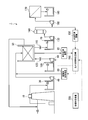
- FIG. 1 is a schematic diagram illustrating a configuration of a seawater treatment system 1 according to the first embodiment.
- the seawater treatment system 1 is a system for producing fresh water from seawater.
- the seawater treatment system 1 includes a water intake device 10, a tide gauge 20, a first water tank 30, a first pump 40, a sand filter device 50, a flocculant addition device 60, a second water tank 70, a differential pressure measuring device 80, a backwash.
- Pump 90 backwash water tank 100, first valve 110, second valve 120, second pump 130, filter device 140, water quality measuring device 150, third pump 160, reverse osmosis membrane 170, third water tank 180, seawater
- a processing control device 190 is provided.
- the water intake device 10 takes in seawater from the sea area to be taken.
- the water intake device 10 stores the intake seawater in the first water tank 30.
- the tide gauge 20 measures the tide level in the water area to be taken. As the tide gauge 20, for example, an ultrasonic type or a throwing type can be used.
- the first pump 40 sends the seawater stored in the first water tank 30 to the sand filtration device 50.
- the sand filtering device 50 filters the seawater by passing the seawater sent out by the first pump 40 through the sand spread inside. Seawater filtered by the sand filtering device 50 is stored in the second water tank 70.
- the flocculant adding device 60 adds the flocculant to the seawater sent out from the first pump 40.
- the flocculant adding device 60 is an example of a processing device that performs processing that contributes to purification of the taken-in natural water.
- the differential pressure measuring device 80 measures the differential pressure between the water inlet and the water outlet of the sand filtering device 50.
- the backwash pump 90 backwashes the sand filter device 50 by sending out the water stored in the backwash water tank 100 from the outlet of the sand filter device 50.
- the backwash water tank 100 stores seawater or concentrated water discharged from the reverse osmosis membrane 170.
- the water sent to the sand filtration device 50 by the backwash pump 90 is discharged to the sea or a wastewater treatment facility.
- the backwash pump 90 is an example of a processing device that performs a process that contributes to the purification of taken natural water.
- the first valve 110 is provided between the water outlet of the sand filtration device 50 and the water inlet of the second water storage tank 70.
- bulb 110 will be in an open state at the time of normal operation of the seawater processing system 1, and will be in a closed state at the time of a backwash process.
- the second valve 120 is provided between the water outlet of the sand filtration device 50 and the water outlet of the backwash pump 90. The second valve 120 is closed during normal operation of the seawater treatment system 1 and is open during backwashing.
- the second pump 130 sends the seawater stored in the second water storage tank 70 to the filter device 140.
- the filter device 140 is a filter coarser than the reverse osmosis membrane 170 (for example, about 10 micrometers), and filters the seawater sent out by the second pump 130.
- the water quality measuring device 150 measures the water quality of the seawater filtered by the filter device 140.
- the water quality management device acquires SDI (Silt Density Index) as an index of water quality. The SDI is determined based on the filtration time when a constant amount of water is filtered at a constant pressure using 0.45 micrometer nitrocellulose mixed filter paper.
- the third pump 160 sends the seawater filtered by the filter device 140 to the reverse osmosis membrane 170.
- the third pump 160 operates at a higher pressure than the first pump 40 and the second pump 130.
- the reverse osmosis membrane 170 permeates only water molecules in the seawater sent out by the third pump 160.
- Fresh water filtered by the reverse osmosis membrane 170 is stored in the third water tank 180.
- the seawater treatment control device 190 controls the flocculant addition device 60 and the backwashing device based on the tide level of the sea area to be taken in, the water quality of the seawater filtered by the filter device 140 and the differential pressure of the sand filtration device 50.
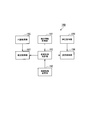
- FIG. 2 is a schematic block diagram illustrating a software configuration of the seawater treatment control device 190 according to the first embodiment.
- the seawater treatment control device 190 includes a tide information acquisition unit 191, a processing mode storage unit 192, a processing mode determination unit 193, a differential pressure acquisition unit 194, a water quality acquisition unit 195, a backwash control unit 196, and a chemical injection control unit 197.
- the tide information acquisition unit 191 acquires the tide level measured by the tide gauge 20 as tide information.
- the processing form storage unit 192 stores the tide level of the sea area to be taken in, and the processing forms of the flocculant addition device 60 and the backwash pump 90 in association with each other.
- the processing mode determination unit 193 determines the processing mode of the flocculant addition device 60 and the backwash pump 90 based on the tide information acquired by the tide information acquisition unit 191 and the information stored in the processing mode storage unit 192.
- the differential pressure acquisition unit 194 acquires the differential pressure of the sand filtration device 50 measured by the differential pressure measurement device 80.
- the water quality acquisition unit 195 acquires the SDI of seawater filtered by the filter device 140 measured by the water quality measurement device 150.
- the backwash control unit 196 controls the operation of the backwash pump 90 based on the processing mode determined by the processing mode determination unit 193 and the differential pressure acquired by the differential pressure acquisition unit 194.
- the medicinal injection control unit 197 controls the operation of the flocculant addition device 60 based on the processing mode determined by the processing mode determination unit 193 and the SDI acquired by the water quality acquisition unit 195.
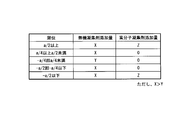
- FIG. 3 is a diagram illustrating an example of the relationship between the tide level in the sea area to be taken and the processing mode of the flocculant addition device 60.
- the processing form storage unit 192 stores the addition amount of the inorganic flocculant and the addition amount of the polymer flocculant in association with the tide level of the sea area to be taken.
- inorganic flocculants include ferric chloride.
- polymer flocculant include cationic polymer flocculants such as polyacrylate compounds.
- the processing form storage unit 192 sets the difference between the tide level at high tide and the tide level at low tide at the mid tide as the tide level of the water intake target area, and the deviation from the average value of the tide level at high and low tide at the mid tide I remember the amount. That is, that the tide level is a / 2 or higher indicates that the tide level is higher than the tide level at the time of high tide at the mid tide.
- the processing form storage unit 192 stores a processing form in which Y milligram / liter of the inorganic flocculant is added in association with the tide level exceeding -a / 4 and less than a / 4.
- the processing form storage unit 192 stores a processing form for adding X milligram / liter of inorganic flocculant in association with a tide level of a / 4 or more and less than a / 2 and a tide level of more than a / 2 and less than -a / 4. .
- X is a value larger than Y.
- the amount of the inorganic flocculant added increases as the difference between the average value of the tide level at high tide and the level of low tide at the mid tide and the measured tide level increases.
- the processing mode storage unit 192 adds an inorganic flocculant X milligram / liter and further adds a polymer flocculant Z milligram / liter in association with a tide level of a / 2 or higher and a tide level of ⁇ a / 2 or lower.
- the seawater treatment control device 190 adds the polymer flocculant in addition to the inorganic flocculant when the tide level is equal to or higher than the tide level at the time of high tide at the middle tide or equal to or lower than the tide level at the time of low tide.
- the polymer flocculant is used for further aggregating the contaminants aggregated by the inorganic flocculant.
- FIG. 4 is a diagram showing an example of the relationship between the tide level in the water intake target area and the processing mode of the backwash pump 90.
- the processing mode storage unit 192 stores a processing mode in which the backwashing interval is 24 hours, the backwashing flow rate is A, and the backwashing time is C in association with the tide level greater than -a / 4 and less than a / 4. To do.
- the processing mode storage unit 192 associates the tide level above a / 4 and below a / 2 and the tide level above a / 2 and below -a / 4 with a backwash interval of 24 hours and a backwash flow rate of B.
- the processing mode in which the backwash time is C is stored. Note that B is faster than A.
- the processing form storage unit 192 associates the tide level of a / 2 or higher and the tide level of ⁇ a / 2 or lower with a backwash interval of 12 hours, a backwash flow rate of B, and a backwash time of D.
- D is longer than C. That is, according to the present embodiment, the greater the difference between the average value of the tide level at high tide and the level of low tide at the mid tide and the measured tide level, the more backwash flow (product of backwash flow velocity and backwash time) Will increase.
- FIG. 5 is a flowchart showing the operation of the seawater treatment control device 190 according to the first embodiment.
- the tide information acquisition unit 191 of the seawater treatment control device 190 acquires tide information from the tide gauge 20 (step S1).
- the processing mode determination unit 193 specifies the processing mode of the coagulant adding device 60 associated with the tide level indicated by the tide information (step S2).
- the water quality acquisition unit 195 acquires the SDI of the seawater filtered by the filter device 140 from the water quality measurement device 150 (step S3).
- the chemical injection control unit 197 is added to the flocculant adding device 60 based on the addition amount of the inorganic flocculant and the polymer flocculant indicated by the processing mode determined by the processing mode determination unit 193 and the SDI of the filtered seawater.
- the amount of inorganic flocculant and polymer flocculant to be added is determined (step S4).
- the chemical injection control unit 197 calculates the additional addition amount of the flocculant based on the SDI acquired by the water quality measurement device 150. The additional amount of the flocculant increases as the SDI increases.
- the chemical injection control part 197 adds the additional addition amount computed based on SDI to the addition amount of the inorganic flocculant and polymer flocculant which the process form determination part 193 determined, and the flocculant addition apparatus 60 is added.
- the addition amount of the inorganic flocculant and polymer flocculant to be added to is determined.
- the chemical injection control unit 197 calculates an addition coefficient from SDI instead of the additional addition amount, and aggregates the addition amount determined by the processing mode determination unit 193 by the addition coefficient. You may determine the addition amount of the inorganic flocculant added to the agent addition apparatus 60, and a polymer flocculant.
- the chemical injection control unit 197 causes the flocculant adding device 60 to add the inorganic flocculant and the polymer flocculant in the determined addition amount (step S5).
- the processing form determination unit 193 determines whether or not the current time is a high tide or low tide time (step S6).
- the processing mode determination unit 193 determines whether the current time is a high tide or low tide time by determining whether the current time is included in a pre-specified high tide or low tide time zone. .
- the processing mode determination unit 193 specifies the processing mode of the backwash pump 90 associated with the tide level indicated by the tide information (step S7).
- the processing mode determination unit 193 records the specified processing mode in the auxiliary storage device 903 (see FIG. 9).
- step S6 If the current time is not a high tide or low tide time (step S6: NO), or if the processing mode determination unit 193 specifies the processing mode of the backwash pump 90 in step S7, the backwash control unit 196 It is determined whether the elapsed time from the processing execution time has reached the backwash interval recorded in the auxiliary storage device 903 (step S8). When the elapsed time from the time when the previous backwash process was executed has not reached the backwash interval (step S8: NO), the differential pressure acquisition unit 194 acquires the differential pressure of the sand filtration device 50 from the differential pressure measuring device 80. (Step S9).
- the backwash control unit 196 determines whether or not the differential pressure acquired by the differential pressure acquisition unit 194 is greater than or equal to a predetermined threshold (step S10).
- the threshold value is set for determining the functional deterioration of the sand filtering device 50 due to accumulation of contaminants.
- step S10 NO
- the seawater treatment control device 190 ends the process.
- step S8 When the elapsed time from the time when the previous backwash process was executed has reached the backwash interval (step S8: YES), or when the differential pressure acquired by the differential pressure acquisition unit 194 is greater than or equal to a predetermined threshold (step) S10: YES), the backwash control unit 196 closes the first valve 110 and opens the second valve 120, and then stores the backwash flow rate in the auxiliary storage device 903 at the backwash flow rate recorded in the auxiliary storage device 903.
- the backwash pump 90 is operated during the recorded backwash time (step S11).
- the backwash control unit 196 operates the backwash pump 90 during the backwash time, and then opens the first valve 110 and closes the second valve 120. And the seawater processing control apparatus 190 complete
- the seawater treatment control device 190 can appropriately execute a process that contributes to the purification of seawater based on the tide level of the sea area to be taken. Thereby, the seawater treatment control device 190 can suppress a delay in control when the quality of seawater taken by tide changes rapidly in a short time.
- the seawater treatment control device 190 according to the present embodiment appropriately executes a process that contributes to the purification of seawater based on the tide level measured by the tide gauge 20, in addition to periodic tide level changes, such as storm surges. Even when an unsteady change occurs, a delay in control can be suppressed.
- the seawater treatment control apparatus 190 which concerns on this embodiment performs the process which contributes to the purification
- the seawater treatment control device 190 may perform a process that is measured by a public institution or the like and that contributes to the purification of seawater by using publicly available measurement data in the vicinity.
- the seawater treatment control device 190 executes a process that contributes to the purification of seawater based on the tide level pattern shown in FIGS. 3 and 4, but is not limited thereto.
- the seawater treatment control device 190 according to another embodiment may execute a process that contributes to the purification of seawater based on different tide level patterns according to the water quality of the water area to be taken.
- the seawater treatment control device 190 according to the first embodiment executes processing that contributes to purification of seawater based on the tide level measured by the tide gauge 20.
- the seawater treatment control device 190 according to the second embodiment executes a process that contributes to the purification of seawater based on the tide species according to the longitude difference.
- the tide type is information indicating the state of the tide according to the positional relationship between the sun and the moon, which is expressed as “high tide”, “mid tide”, “low tide”, “long tide”, and “young tide”.
- the spring tide is a tide when the longitude difference is 0 degree or more and less than 36 degree, 168 degree or more and less than 216 degree, or 348 degree or more and less than 360 degree. . That is, the spring tide is a tide species when the age is 0 days or more and less than 3 days, 14 days or more and less than 19 days, or 29 days or more and less than 30 days.
- the middle tide is a tide type when the longitude difference is from 36 degrees to less than 72 degrees, from 132 degrees to less than 168 degrees, from 216 degrees to less than 252 degrees, or from 312 degrees to less than 348 degrees.
- the middle tide is a tide species when the age is 3 days or more and less than 7 days, 12 days or more and less than 14 days, 18 days or more and less than 22 days, or 27 days or more and less than 29 days.
- the low tide is a tide type when the longitude difference is 72 degrees or more and less than 108 degrees or 252 degrees or more and less than 288 degrees. That is, the low tide is a tide species when the age is 7 days or more and less than 10 days or 22 days or more and less than 24 days.
- the long tide is a tide type when the longitude difference is 108 degrees or more and less than 120 degrees or 288 degrees or more and less than 300 degrees.
- the long tide is a tide species when the age is 10 days or more and less than 11 days or 25 days or more and less than 26 days.
- the young tide is a tide type when the longitude difference is 120 degrees or more and less than 132 degrees or 300 degrees or more and less than 312 degrees. That is, the young tide is a tide species when the age is 11 days or more and less than 12 days or 26 days or more and less than 27 days.
- FIG. 6 is a schematic diagram illustrating a configuration of the seawater treatment system 1 according to the second embodiment.
- the seawater treatment system 1 according to the present embodiment includes a tide type specifying device 200 in place of the tide gauge 20 of the first embodiment.
- the tide type specifying device 200 specifies the tide type based on the date.
- the tide table showing the relationship between date and tide species is published by the hydrographic organizations of each country (in Japan, Japan Meteorological Agency and Japan Hydrographic Association). In the tide table, the tide species at a certain point calculated based on the daily meridian difference is described.
- the relationship between the longitude difference and the tide level varies depending on the latitude and topography of the water intake target area.
- the tide type specifying device 200 specifies the current tide type using the tide table corrected based on the information on the water area to be taken.
- a method of correcting the tide table for example, there is a method of adding or subtracting an offset to the date indicated by the tide table based on the difference between the longitude difference of the point indicated by the tide table and the longitude difference of the sea area to be taken. Can be mentioned.
- the daily change in the water quality of the water intake target area is measured, and an offset is added to the date shown in the tide table so that the change matches the tide type. The method of adding or subtracting is mentioned.
- the seawater treatment control device 190 uses the flocculant adding device 60 and the backwashing based on the tide type of the sea area to be taken, the water quality of the seawater filtered by the filter device 140 and the differential pressure of the sand filtration device 50. Control the device.
- the seawater treatment control device 190 according to the present embodiment differs from the first embodiment in the information stored in the treatment mode storage unit 192 and the operations of the treatment mode determination unit 193, the medicinal injection control unit 197, and the backwash control unit 196.
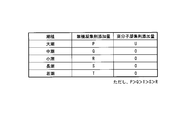
- FIG. 7 is a diagram illustrating an example of the relationship between the tide species in the water intake target area and the processing mode of the flocculant addition device 60.
- the processing form storage unit 192 stores the addition amount of the inorganic flocculant and the addition amount of the polymer flocculant in association with the tide species of the sea area to be taken.
- the processing form storage unit 192 stores a processing form in which P milligram / liter of inorganic flocculant is added and U milligram / liter of polymer flocculant is added in association with the spring tide.
- the processing form storage unit 192 stores a processing form in which the inorganic flocculant is added in an amount of Q milligram / liter in association with the middle tide.
- the processing form storage unit 192 stores a processing form in which R milligram / liter of the inorganic flocculant is added in association with the tide.
- the processing form storage unit 192 stores a processing form of adding S milligram / liter of the inorganic flocculant in association with the long tide.
- the processing form storage unit 192 stores a processing form for adding T milligram / liter of the inorganic flocculant in association with the young tide.
- the addition amount of the inorganic flocculant is the largest in P and decreases in the order of Q, T, S, and R. That is, the amount of flocculant added during the spring tide when the difference in tidal range is large and the amount of pollutants tends to increase is the largest.
- the amount of flocculant added during the long tide when there is little tide movement is less than the amount of flocculant added during the mid tide.
- the amount of flocculant added at the time of the young tide when the tide moves actively is larger than the amount of flocculant added at the time of the long tide immediately before.
- FIG. 8 is a diagram showing an example of the relationship between the tide species in the water intake target sea area and the processing mode of the backwash pump 90.
- the processing form storage unit 192 stores a processing form in which the backwash interval is 12 hours, the backwash flow rate is E, and the backwash time is H in association with the spring tide.
- the processing form storage unit 192 stores a processing form in which the backwash interval is 24 hours, the backwash flow rate is F, and the backwash time is I in association with the middle tide.
- the processing form storage unit 192 stores a processing form in which the backwash interval is 48 hours, the backwash flow rate is G, and the backwash time is J in association with the tide.
- the processing form storage unit 192 stores a processing form in which the backwash interval is 24 hours, the backwash flow rate is G, and the backwash time is J in association with the long tide.
- the processing form storage unit 192 stores a processing form in which the backwash interval is 24 hours, the backwash flow rate is F, and the backwash time is J in association with the young tide.
- E is the fastest, and slows in the order of F and G.
- the backwash time is longest for H and shorter in the order of I and J. That is, the flow of backwashing is the largest during the spring tide when the difference in tidal range is large and the amount of pollutants tends to increase. Also, the backwash flow rate during the long tide when the tide movement is low is less than the backwash flow rate during the mid tide. In addition, the flow of backwashing at the time of the young tide when tide movement is active is larger than the flow of backwashing at the time of the long tide just before that.
- the tide information acquisition unit 191 of the seawater treatment control device 190 acquires tide information indicating the tide type of the day from the tide type identification device 200 at a fixed time every day (for example, midnight). And the processing form determination part 193 determines a processing form based on the said tide information. The processing mode determination unit 193 records the determined processing mode in the auxiliary storage device 903 (see FIG. 9).
- the addition amount of the flocculant added to the flocculant addition apparatus 60 is determined.
- the backwash control unit 196 operates the backwash pump 90 according to the backwash flow rate and backwash time recorded in the auxiliary storage device 903 at every backwash interval recorded in the auxiliary storage device 903. Further, the backwash control unit 196 performs backwash pump 90 according to the backwash flow rate and backwash time recorded in the auxiliary storage device 903 when the differential pressure acquired by the differential pressure acquisition unit 194 exceeds a predetermined threshold. To operate.
- the seawater treatment control device 190 appropriately executes a process that contributes to the purification of seawater based on the tide level of the water area to be taken. Thereby, the seawater treatment control device 190 can suppress a delay in control when the quality of seawater taken by tide changes rapidly in a short time.
- seawater treatment control apparatus 190 which concerns on this embodiment performs the process which contributes to the purification
- the seawater treatment control device 190 may execute a process that contributes to the purification of seawater based on other information indicating the positional relationship between the sun and the moon, such as a difference in longitude or age.
- the seawater treatment control apparatus 190 which concerns on this embodiment performs the process which contributes to the purification
- the seawater treatment control device 190 is used for the purification of seawater in view of the treatment form specified based on the tide type and the treatment form specified based on the tide level of the water area to be taken. You may perform the process which contributes.
- the seawater treatment control device 190 controls the addition of the flocculant and the backwashing of the sand filtration device 50 has been described, but the present invention is not limited to this.
- the seawater treatment control device 190 according to another embodiment may control only the addition of the flocculant or may control only the backwashing of the sand filtration device 50.
- the backwash pump 90 which concerns on embodiment mentioned above makes the sand filtration apparatus 50 the object of backwashing, it is not restricted to this.
- the backwash pump 90 uses a filtration device using a material other than gravel such as a fibrous material or a sintered body as a filter material, or another filtration device such as a reverse osmosis membrane 170 as a target for backwashing. Also good.
- a material other than gravel such as a fibrous material or a sintered body as a filter material
- another filtration device such as a reverse osmosis membrane 170 as a target for backwashing. Also good.
- the flocculant adding device 60 and the backwash pump 90 have been described as examples of the processing device that performs processing that contributes to the purification of the natural water that has been taken in, but the present invention is not limited thereto.
- examples of the processing device that performs processing that contributes to the purification of collected natural water include a device that maintains the filter device 140 or the reverse osmosis membrane 170.
- an apparatus that maintains the pressure levitation device is also natural water. It is a processing apparatus which performs the process which contributes to purification
- the seawater treatment control device 190 has been described as an example of the natural water treatment control device, but is not limited thereto.
- the natural water treatment control device may be applied to a control device that controls a natural water treatment system that purifies natural water taken from a lake.
- FIG. 9 is a schematic block diagram illustrating a configuration of a computer 900 according to at least one embodiment.
- the computer 900 includes a CPU 901, a main storage device 902, an auxiliary storage device 903, and an interface 904.
- the seawater treatment control device 190 described above is mounted on the computer 900.
- the operation of each processing unit described above is stored in the auxiliary storage device 903 in the form of a program.
- the CPU 901 reads a program from the auxiliary storage device 903, develops it in the main storage device 902, and executes the above processing according to the program.
- the auxiliary storage device 903 is an example of a tangible medium that is not temporary.
- Other examples of the non-temporary tangible medium include a magnetic disk, a magneto-optical disk, a CD-ROM, a DVD-ROM, and a semiconductor memory connected via the interface 904.
- the program may be for realizing a part of the functions described above. Further, the program may be a so-called difference file (difference program) that realizes the above-described function in combination with another program already stored in the auxiliary storage device 903.
- difference file difference program
- the natural water treatment control device determines the treatment mode of the treatment device based on information relating to the tide of the water area in which natural water is taken. Thereby, the natural water treatment control device can operate the treatment device in a treatment mode according to the amount of contaminants in the natural water.
Landscapes
- Engineering & Computer Science (AREA)
- Chemical & Material Sciences (AREA)
- Water Supply & Treatment (AREA)
- Hydrology & Water Resources (AREA)
- Life Sciences & Earth Sciences (AREA)
- Environmental & Geological Engineering (AREA)
- Chemical Kinetics & Catalysis (AREA)
- Organic Chemistry (AREA)
- Nanotechnology (AREA)
- Computer Security & Cryptography (AREA)
- Computer Networks & Wireless Communication (AREA)
- Signal Processing (AREA)
- Separation Using Semi-Permeable Membranes (AREA)
- Separation Of Suspended Particles By Flocculating Agents (AREA)
Abstract
自然水処理制御装置(190)は、取水された自然水の浄化に寄与する処理を行う処理装置を制御する。自然水処理制御装置(190)は、自然水を取水する水域の潮汐に関する情報である潮汐情報を取得する潮汐情報取得部(191)と、潮汐情報に基づいて処理装置の処理形態を決定する処理形態決定部(193)とを備える。
Description
本発明は、自然水処理制御装置、自然水処理システム、自然水処理制御方法およびプログラムに関する。
海水から淡水を製造する海水淡水化プラントにおいて、逆浸透膜を用いるものが知られている。逆浸透膜は、海水中の汚濁物の蓄積によって性能が劣化するため、逆浸透膜の前段には、砂濾過装置や加圧浮上装置などの前処理装置が設けられる。前処理装置による濾過性能を担保するためには、海水中の汚濁物の量に応じた制御を行う必要がある。例えば砂濾過装置および加圧浮上装置は、凝集剤の添加により凝集した汚濁物を除去するため、海水の汚濁物の量に応じて凝集剤の量を制御する必要がある。また砂ろ過装置は、濾過層表面に汚濁物が蓄積することで濾過性能が低下するため、海水の汚濁物の量に応じて逆洗の頻度を制御する必要がある。
海水淡水化プラントには、逆洗装置や凝集剤添加装置など、前処理装置による海水の浄化に寄与する処理を行う処理装置が設けられている。逆洗装置は、砂濾過装置の逆洗処理を定期的に、および前処理装置の差圧が閾値を越えた場合などの緊急時に実施する。凝集剤添加装置は、海水中の汚濁物の量に応じて添加する凝集剤の量を制御する。処理装置の制御は、海水または前処理装置によって濾過された処理水の水質の計測結果に応じてなされている。
なお、特許文献1、2には、海水に存在する微生物を利用して海水を浄化させる浄化装置において、潮位の変動を利用して海水の酸素濃度の偏りを解消する技術が開示されている。
また、特許文献3には、潮汐を計算する技術が開示されている。
また、特許文献3には、潮汐を計算する技術が開示されている。
処理装置が水質の計測結果に基づいて海水の浄化に寄与する処理を実行する場合、水質の実際の変化が計測結果に表れるまでに時間差が生じる。そのため、海水の水質が短時間で急激に変化した場合、海水の浄化に寄与する処理の実行が遅れる可能性がある。例えば、逆洗装置による逆洗制御の頻度が少ないために前処理装置の汚損が進行し、緊急の逆洗を実行する頻度が増加する可能性がある。なお、緊急の逆洗の頻度が増加すると、濾過水量が不足するため、海水淡水化プラント全体の稼働率が低下する。また例えば、凝集剤添加装置による凝集剤の添加量が少ないために前処理装置による濾過が不十分になる可能性がある。
そこで本発明は、取水した自然水の水質が短時間で急激に変化する場合にも、海水の浄化に寄与する処理を適切に実行することができる自然水処理制御装置、自然水処理システム、自然水処理制御方法およびプログラムを提供する。
本発明の第1の態様は、取水された自然水の浄化に寄与する処理を行う処理装置を制御する自然水処理制御装置であって、前記自然水を取水する水域の潮汐に関する情報である潮汐情報を取得する潮汐情報取得部と、前記潮汐情報に基づいて前記処理装置の処理形態を決定する処理形態決定部とを備える自然水処理制御装置である。
また、本発明の第2の態様は、第1の態様において、前記処理装置は、取水された自然水を濾過する濾過装置の逆洗装置であって、前記処理形態決定部は、前記潮汐情報に基づいて前記処理装置による前記濾過装置の逆洗の頻度と水量の少なくとも一方を決定する自然水処理制御装置である。
また、本発明の第3の態様は、第1または第2の態様において、前記処理装置は、取水された自然水に凝集剤を添加する凝集剤添加装置であって、前記処理形態決定部は、前記潮汐情報に基づいて前記処理装置の凝集剤の添加量と種類の少なくとも一方を決定する自然水処理制御装置である。
また、本発明の第4の態様は、第1から第3の何れかの態様において、前記潮汐情報は、前記自然水の取水元の潮位を含み、前記処理形態決定部は、取水元の満潮時と干潮時の潮位の平均値と、前記潮汐情報が示す潮位との差に基づいて、前記処理装置の処理形態を決定する自然水処理制御装置である。
また、本発明の第5の態様は、第1から第4の何れかの態様において、前記潮汐情報は、太陽と月の位置関係を示す情報を含む自然水処理制御装置である。
また、本発明の第6の態様は、第1から第5の何れかの態様において、取水された自然水の浄化に寄与する処理を行う処理装置と、自然水処理制御装置とを備える自然水処理システムである。
また、本発明の第7の態様は、取水された自然水の浄化に寄与する処理を行う処理装置を制御する自然水処理制御方法であって、前記自然水を取水する水域の潮汐に関する情報である潮汐情報を取得するステップと、前記潮汐情報に基づいて前記処理装置の処理形態を決定するステップとを有する自然水処理制御方法である。
また、本発明の第8の態様は、コンピュータを、自然水を取水する水域の潮汐に関する情報である潮汐情報を取得する潮汐情報取得部、前記潮汐情報に基づいて前記取水された自然水の浄化に寄与する処理を行う処理装置の処理形態を決定する処理形態決定部として機能させるためのプログラムである。
発明者は、自然水中の汚濁物の量と水域の潮汐との間に相関性があるという知見を見出した。上記態様のうち少なくとも1つの態様によれば、自然水処理制御装置は、自然水を取水する水域の潮汐に関する情報に基づいて処理装置の処理形態を決定する。これにより、自然水処理制御装置は、自然水中の汚濁物の量に応じた処理形態で処理装置を動作させることができる。
以下、図面を参照しながら実施形態について詳しく説明する。
《第1の実施形態》
図1は、第1の実施形態に係る海水処理システム1の構成を示す概略図である。なお、図1において実線の矢印は配水管を示し、破線の矢印は通信線を示す。
海水処理システム1は、海水から淡水を製造するシステムである。海水処理システム1は、取水装置10、潮位計20、第1貯水槽30、第1ポンプ40、砂濾過装置50、凝集剤添加装置60、第2貯水槽70、差圧計測装置80、逆洗ポンプ90、逆洗用水槽100、第1バルブ110、第2バルブ120、第2ポンプ130、フィルタ装置140、水質計測装置150、第3ポンプ160、逆浸透膜170、第3貯水槽180、海水処理制御装置190を備える。
《第1の実施形態》
図1は、第1の実施形態に係る海水処理システム1の構成を示す概略図である。なお、図1において実線の矢印は配水管を示し、破線の矢印は通信線を示す。
海水処理システム1は、海水から淡水を製造するシステムである。海水処理システム1は、取水装置10、潮位計20、第1貯水槽30、第1ポンプ40、砂濾過装置50、凝集剤添加装置60、第2貯水槽70、差圧計測装置80、逆洗ポンプ90、逆洗用水槽100、第1バルブ110、第2バルブ120、第2ポンプ130、フィルタ装置140、水質計測装置150、第3ポンプ160、逆浸透膜170、第3貯水槽180、海水処理制御装置190を備える。
取水装置10は、取水対象の海域から海水を取水する。取水装置10は、取水した海水を第1貯水槽30に溜める。
潮位計20は、取水対象の海域の潮位を計測する。潮位計20としては、例えば超音波式のものや投げ込み式のものなどを用いることができる。
第1ポンプ40は、第1貯水槽30に溜められた海水を砂濾過装置50へ送り出す。
砂濾過装置50は、内部に敷き詰められた砂の中に、第1ポンプ40により送り出された海水を通すことで、海水を濾過する。砂濾過装置50により濾過された海水は第2貯水槽70に溜められる。
凝集剤添加装置60は、第1ポンプ40より送り出される海水に凝集剤を添加する。凝集剤添加装置60は、取水された自然水の浄化に寄与する処理を行う処理装置の一例である。
潮位計20は、取水対象の海域の潮位を計測する。潮位計20としては、例えば超音波式のものや投げ込み式のものなどを用いることができる。
第1ポンプ40は、第1貯水槽30に溜められた海水を砂濾過装置50へ送り出す。
砂濾過装置50は、内部に敷き詰められた砂の中に、第1ポンプ40により送り出された海水を通すことで、海水を濾過する。砂濾過装置50により濾過された海水は第2貯水槽70に溜められる。
凝集剤添加装置60は、第1ポンプ40より送り出される海水に凝集剤を添加する。凝集剤添加装置60は、取水された自然水の浄化に寄与する処理を行う処理装置の一例である。
差圧計測装置80は、砂濾過装置50の入水口と出水口の差圧を計測する。
逆洗ポンプ90は、逆洗用水槽100に溜められた水を砂濾過装置50の出水口から送り出すことで、砂濾過装置50を逆洗する。なお逆洗用水槽100には、海水もしくは逆浸透膜170から排出される濃縮水が溜められる。逆洗ポンプ90により砂濾過装置50に送り出された水は、海もしくは排水処理設備へ排出される。逆洗ポンプ90は、取水された自然水の浄化に寄与する処理を行う処理装置の一例である。
第1バルブ110は、砂濾過装置50の出水口と第2貯水槽70の入水口との間に設けられる。第1バルブ110は、海水処理システム1の平常運転時に開状態となり、逆洗処理時に閉状態となる。
第2バルブ120は、砂濾過装置50の出水口と逆洗ポンプ90の出水口との間に設けられる。第2バルブ120は、海水処理システム1の平常運転時に閉状態となり、逆洗処理時に開状態となる。
逆洗ポンプ90は、逆洗用水槽100に溜められた水を砂濾過装置50の出水口から送り出すことで、砂濾過装置50を逆洗する。なお逆洗用水槽100には、海水もしくは逆浸透膜170から排出される濃縮水が溜められる。逆洗ポンプ90により砂濾過装置50に送り出された水は、海もしくは排水処理設備へ排出される。逆洗ポンプ90は、取水された自然水の浄化に寄与する処理を行う処理装置の一例である。
第1バルブ110は、砂濾過装置50の出水口と第2貯水槽70の入水口との間に設けられる。第1バルブ110は、海水処理システム1の平常運転時に開状態となり、逆洗処理時に閉状態となる。
第2バルブ120は、砂濾過装置50の出水口と逆洗ポンプ90の出水口との間に設けられる。第2バルブ120は、海水処理システム1の平常運転時に閉状態となり、逆洗処理時に開状態となる。
第2ポンプ130は、第2貯水槽70に溜められた海水をフィルタ装置140へ送り出す。
フィルタ装置140は、逆浸透膜170より粗いフィルタ(例えば、10マイクロメートル程度)であって、第2ポンプ130により送り出された海水を濾過する。
水質計測装置150は、フィルタ装置140により濾過された海水の水質を計測する。本実施形態に係る水質管理装置は、水質の指標としてSDI(Silt Density Index)を取得する。SDIは、0.45マイクロメートルのニトロセルロース混紡濾紙を用いて一定圧力で一定量の水の濾過を行ったときの濾過時間に基づいて求められる。
フィルタ装置140は、逆浸透膜170より粗いフィルタ(例えば、10マイクロメートル程度)であって、第2ポンプ130により送り出された海水を濾過する。
水質計測装置150は、フィルタ装置140により濾過された海水の水質を計測する。本実施形態に係る水質管理装置は、水質の指標としてSDI(Silt Density Index)を取得する。SDIは、0.45マイクロメートルのニトロセルロース混紡濾紙を用いて一定圧力で一定量の水の濾過を行ったときの濾過時間に基づいて求められる。
第3ポンプ160は、フィルタ装置140により濾過された海水を逆浸透膜170へ送り出す。第3ポンプ160は、第1ポンプ40および第2ポンプ130より高圧で動作する。
逆浸透膜170は、第3ポンプ160により送り出された海水のうち、水分子のみを透過させる。逆浸透膜170によって濾過された淡水は、第3貯水槽180に溜められる。
逆浸透膜170は、第3ポンプ160により送り出された海水のうち、水分子のみを透過させる。逆浸透膜170によって濾過された淡水は、第3貯水槽180に溜められる。
海水処理制御装置190は、取水対象の海域の潮位、フィルタ装置140によって濾過された海水の水質および砂濾過装置50の差圧に基づいて、凝集剤添加装置60および逆洗装置を制御する。
図2は、第1の実施形態に係る海水処理制御装置190のソフトウェア構成を示す概略ブロック図である。
海水処理制御装置190は、潮汐情報取得部191、処理形態記憶部192、処理形態決定部193、差圧取得部194、水質取得部195、逆洗制御部196、薬注制御部197を備える。
図2は、第1の実施形態に係る海水処理制御装置190のソフトウェア構成を示す概略ブロック図である。
海水処理制御装置190は、潮汐情報取得部191、処理形態記憶部192、処理形態決定部193、差圧取得部194、水質取得部195、逆洗制御部196、薬注制御部197を備える。
潮汐情報取得部191は、潮位計20が計測した潮位を潮汐情報として取得する。
処理形態記憶部192は、取水対象の海域の潮位と凝集剤添加装置60および逆洗ポンプ90の処理形態とを関連付けて記憶する。
処理形態決定部193は、潮汐情報取得部191が取得した潮汐情報と処理形態記憶部192が記憶する情報とに基づいて凝集剤添加装置60および逆洗ポンプ90の処理形態を決定する。
差圧取得部194は、差圧計測装置80が計測した砂濾過装置50の差圧を取得する。
水質取得部195は、水質計測装置150が計測した、フィルタ装置140によって濾過された海水のSDIを取得する。
逆洗制御部196は、処理形態決定部193が決定した処理形態および差圧取得部194が取得した差圧に基づいて、逆洗ポンプ90の動作を制御する。
薬注制御部197は、処理形態決定部193が決定した処理形態および水質取得部195が取得したSDIに基づいて凝集剤添加装置60の動作を制御する。
処理形態記憶部192は、取水対象の海域の潮位と凝集剤添加装置60および逆洗ポンプ90の処理形態とを関連付けて記憶する。
処理形態決定部193は、潮汐情報取得部191が取得した潮汐情報と処理形態記憶部192が記憶する情報とに基づいて凝集剤添加装置60および逆洗ポンプ90の処理形態を決定する。
差圧取得部194は、差圧計測装置80が計測した砂濾過装置50の差圧を取得する。
水質取得部195は、水質計測装置150が計測した、フィルタ装置140によって濾過された海水のSDIを取得する。
逆洗制御部196は、処理形態決定部193が決定した処理形態および差圧取得部194が取得した差圧に基づいて、逆洗ポンプ90の動作を制御する。
薬注制御部197は、処理形態決定部193が決定した処理形態および水質取得部195が取得したSDIに基づいて凝集剤添加装置60の動作を制御する。
図3は、取水対象の海域の潮位と凝集剤添加装置60の処理形態との関係の一例を示す図である。
処理形態記憶部192は、取水対象の海域の潮位に関連付けて、無機凝集剤の添加量と高分子凝集剤の添加量を記憶する。無機凝集剤の例としては、塩化第二鉄等が挙げられる。また高分子凝集剤の例としては、ポリアクリル酸エステル化合物などのカチオン系高分子凝集剤等が挙げられる。
処理形態記憶部192は、取水対象の海域の潮位として、中潮における満潮時の潮位と干潮時の潮位との差をaとし、中潮における満潮時の潮位と干潮時の潮位の平均値からのずれ量を記憶している。つまり、潮位がa/2以上であるということは、潮位が中潮における満潮時の潮位以上であることを示す。
処理形態記憶部192は、取水対象の海域の潮位に関連付けて、無機凝集剤の添加量と高分子凝集剤の添加量を記憶する。無機凝集剤の例としては、塩化第二鉄等が挙げられる。また高分子凝集剤の例としては、ポリアクリル酸エステル化合物などのカチオン系高分子凝集剤等が挙げられる。
処理形態記憶部192は、取水対象の海域の潮位として、中潮における満潮時の潮位と干潮時の潮位との差をaとし、中潮における満潮時の潮位と干潮時の潮位の平均値からのずれ量を記憶している。つまり、潮位がa/2以上であるということは、潮位が中潮における満潮時の潮位以上であることを示す。
処理形態記憶部192は、-a/4超かつa/4未満の潮位に関連付けて、無機凝集剤をYミリグラム/リットル添加する処理形態を記憶する。
処理形態記憶部192は、a/4以上かつa/2未満の潮位およびa/2超かつ-a/4以下の潮位に関連付けて、無機凝集剤をXミリグラム/リットル添加する処理形態を記憶する。なお、Xは、Yより大きい値である。つまり、本実施形態によれば、中潮における満潮時の潮位と干潮時の潮位の平均値と測定された潮位とのずれが大きいほど無機凝集剤の添加量は増加する。
処理形態記憶部192は、a/2以上の潮位および-a/2以下の潮位に関連付けて、無機凝集剤をXミリグラム/リットル添加し、さらに高分子凝集剤をZミリグラム/リットル添加する処理形態を記憶する。つまり、海水処理制御装置190は、潮位が中潮における満潮時の潮位以上である場合、または干潮時の潮位以下である場合に、無機凝集剤に加え高分子凝集剤を添加させる。高分子凝集剤は、無機凝集剤によって凝集された汚濁物をさらに凝集するために用いられる。
処理形態記憶部192は、a/4以上かつa/2未満の潮位およびa/2超かつ-a/4以下の潮位に関連付けて、無機凝集剤をXミリグラム/リットル添加する処理形態を記憶する。なお、Xは、Yより大きい値である。つまり、本実施形態によれば、中潮における満潮時の潮位と干潮時の潮位の平均値と測定された潮位とのずれが大きいほど無機凝集剤の添加量は増加する。
処理形態記憶部192は、a/2以上の潮位および-a/2以下の潮位に関連付けて、無機凝集剤をXミリグラム/リットル添加し、さらに高分子凝集剤をZミリグラム/リットル添加する処理形態を記憶する。つまり、海水処理制御装置190は、潮位が中潮における満潮時の潮位以上である場合、または干潮時の潮位以下である場合に、無機凝集剤に加え高分子凝集剤を添加させる。高分子凝集剤は、無機凝集剤によって凝集された汚濁物をさらに凝集するために用いられる。
以下に、潮位に応じて凝集剤の種類および添加量を異ならせる理由を説明する。干満により海水が撹拌されることにより、温度躍層を挟んで温度および水質の異なる水塊が混交され、また海底の堆積物が巻き上げられる現象が生じる。これにより、海水の潮位に応じて水界の混交の程度および巻き上げられる堆積物の量が異なる。そのため、潮位に関連付けて凝集剤の適切な種類および添加量を予め特定しておくことで、日の潮汐周期による水質変化に対する制御の遅れを低減することができる。
図4は、取水対象の海域の潮位と逆洗ポンプ90の処理形態との関係の一例を示す図である。
処理形態記憶部192は、-a/4超かつa/4未満の潮位に関連付けて、逆洗間隔を24時間とし、逆洗の流速をAとし、逆洗時間をCとする処理形態を記憶する。
処理形態記憶部192は、a/4以上かつa/2未満の潮位およびa/2超かつ-a/4以下の潮位に関連付けて、逆洗間隔を24時間とし、逆洗の流速をBとし、逆洗時間をCとする処理形態を記憶する。なお、Bは、Aより速い速度である。
処理形態記憶部192は、a/2以上の潮位および-a/2以下の潮位に関連付けて、逆洗間隔を12時間とし、逆洗の流速をBとし、逆洗時間をDとする処理形態を記憶する。なお、Dは、Cより長い時間である。
つまり、本実施形態によれば、中潮における満潮時の潮位と干潮時の潮位の平均値と測定された潮位とのずれが大きいほど、逆洗の流量(逆洗流速と逆洗時間の積)は増加する。
処理形態記憶部192は、-a/4超かつa/4未満の潮位に関連付けて、逆洗間隔を24時間とし、逆洗の流速をAとし、逆洗時間をCとする処理形態を記憶する。
処理形態記憶部192は、a/4以上かつa/2未満の潮位およびa/2超かつ-a/4以下の潮位に関連付けて、逆洗間隔を24時間とし、逆洗の流速をBとし、逆洗時間をCとする処理形態を記憶する。なお、Bは、Aより速い速度である。
処理形態記憶部192は、a/2以上の潮位および-a/2以下の潮位に関連付けて、逆洗間隔を12時間とし、逆洗の流速をBとし、逆洗時間をDとする処理形態を記憶する。なお、Dは、Cより長い時間である。
つまり、本実施形態によれば、中潮における満潮時の潮位と干潮時の潮位の平均値と測定された潮位とのずれが大きいほど、逆洗の流量(逆洗流速と逆洗時間の積)は増加する。
以下に、潮位に応じて逆洗の頻度および流量を異ならせる理由を説明する。発明者は、大潮の時期の海水の濁度が小潮の時期の海水の濁度と比較して高いことを発見した。これは、干満により海水が撹拌されることにより、温度躍層を挟んで温度および水質の異なる水塊が混交され、また海底の堆積物が巻き上げられる現象が生じることや、大潮の時期に海洋生物の活動が活発になることが原因と考えられる。そのため、満潮時または干潮時の海水の潮位に基づいて逆洗の頻度および流量を決定することで、月の潮汐周期による水質変化に対する制御の遅れを低減することができる。
次に、本実施形態に係る海水処理制御装置190の動作について説明する。
図5は、第1の実施形態に係る海水処理制御装置190の動作を示すフローチャートである。
海水処理システム1が稼働を始めると、海水処理制御装置190の潮汐情報取得部191は、潮位計20から潮汐情報を取得する(ステップS1)。次に、処理形態決定部193は、当該潮汐情報が示す潮位に関連付けられた凝集剤添加装置60の処理形態を特定する(ステップS2)。次に、水質取得部195は、水質計測装置150からフィルタ装置140によって濾過された海水のSDIを取得する(ステップS3)。
図5は、第1の実施形態に係る海水処理制御装置190の動作を示すフローチャートである。
海水処理システム1が稼働を始めると、海水処理制御装置190の潮汐情報取得部191は、潮位計20から潮汐情報を取得する(ステップS1)。次に、処理形態決定部193は、当該潮汐情報が示す潮位に関連付けられた凝集剤添加装置60の処理形態を特定する(ステップS2)。次に、水質取得部195は、水質計測装置150からフィルタ装置140によって濾過された海水のSDIを取得する(ステップS3)。
薬注制御部197は、処理形態決定部193が決定した処理形態が示す無機凝集剤および高分子凝集剤の添加量と、濾過された海水のSDIとに基づいて、凝集剤添加装置60に添加させる無機凝集剤および高分子凝集剤の添加量を決定する(ステップS4)。具体的には、薬注制御部197は、水質計測装置150が取得したSDIに基づいて、凝集剤の追加添加量を算出する。凝集剤の追加添加量は、SDIが高いほど多い値となる。そして、薬注制御部197は、処理形態決定部193が決定した無機凝集剤および高分子凝集剤の添加量に、SDIに基づいて算出した追加添加量を加算することで、凝集剤添加装置60に添加させる無機凝集剤および高分子凝集剤の添加量を決定する。なお、他の実施形態に係る薬注制御部197は、追加添加量に代えて、SDIから添加係数を算出し、処理形態決定部193が決定した添加量に当該添加係数を乗算することで凝集剤添加装置60に添加させる無機凝集剤および高分子凝集剤の添加量を決定しても良い。
薬注制御部197は、凝集剤添加装置60に、決定した添加量で無機凝集剤および高分子凝集剤を添加させる(ステップS5)。
薬注制御部197は、凝集剤添加装置60に、決定した添加量で無機凝集剤および高分子凝集剤を添加させる(ステップS5)。
次に、処理形態決定部193は、現在時刻が満潮または干潮の時刻であるか否かを判定する(ステップS6)。なお、処理形態決定部193は、現在時刻が予め特定された満潮または干潮の時刻帯に含まれるか否かを判定することで、現在時刻が満潮または干潮の時刻であるか否かを判定する。現在時刻が満潮または干潮の時刻である場合(ステップS6:YES)、処理形態決定部193は、潮汐情報が示す潮位に関連付けられた逆洗ポンプ90の処理形態を特定する(ステップS7)。処理形態決定部193は、特定した処理形態を補助記憶装置903(図9を参照)に記録しておく。
現在時刻が満潮または干潮の時刻でない場合(ステップS6:NO)、または、処理形態決定部193がステップS7で逆洗ポンプ90の処理形態を特定した場合、逆洗制御部196は、前回逆洗処理を実行した時刻からの経過時間が、補助記憶装置903に記録された逆洗間隔に達したか否かを判定する(ステップS8)。前回逆洗処理を実行した時刻からの経過時間が逆洗間隔に達していない場合(ステップS8:NO)、差圧取得部194は、差圧計測装置80から砂濾過装置50の差圧を取得する(ステップS9)。逆洗制御部196は、差圧取得部194が取得した差圧が所定の閾値以上であるか否かを判定する(ステップS10)。当該閾値は、汚濁物の蓄積により砂濾過装置50の機能低下の判定のために設定されるものである。
差圧取得部194が取得した差圧が所定の閾値未満である場合(ステップS10:NO)、海水処理制御装置190は、処理を終了する。
差圧取得部194が取得した差圧が所定の閾値未満である場合(ステップS10:NO)、海水処理制御装置190は、処理を終了する。
前回逆洗処理を実行した時刻からの経過時間が逆洗間隔に達している場合(ステップS8:YES)、または、差圧取得部194が取得した差圧が所定の閾値以上である場合(ステップS10:YES)、逆洗制御部196は、第1バルブ110を閉状態にし、第2バルブ120を開状態にした後、補助記憶装置903に記録された逆洗流速で、補助記憶装置903に記録された逆洗時間の間、逆洗ポンプ90を稼働させる(ステップS11)。逆洗制御部196は、逆洗時間の間逆洗ポンプ90を稼働させた後、第1バルブ110を開状態にし、第2バルブ120を閉状態にする。そして、海水処理制御装置190は、処理を終了する。
上記処理を繰り返し実行することで、海水処理制御装置190は、取水対象の海域の潮位に基づいて、海水の浄化に寄与する処理を適切に実行することができる。これにより、海水処理制御装置190は、潮汐によって取水した海水の水質が短時間で急激に変化した場合に、制御の遅れを抑えることができる。また、本実施形態に係る海水処理制御装置190は、潮位計20によって計測された潮位に基づいて海水の浄化に寄与する処理を適切に実行するため、定期的な潮位変化に加え、高潮などの非定常の変化が生じた場合にも、制御の遅れを抑えることができる。
なお、本実施形態に係る海水処理制御装置190は、潮位計20によって計測された潮位を用いて海水の浄化に寄与する処理を実行するが、これに限られない。例えば他の実施形態に係る海水処理制御装置190は、公的機関等で測定し、公表されている近隣の測定データを用いて海水の浄化に寄与する処理を実行しても良い。
また、本実施形態に係る海水処理制御装置190は、図3および図4に示す潮位のパターンに基づいて海水の浄化に寄与する処理を実行するが、これに限られない。例えば他の実施形態に係る海水処理制御装置190は、取水対象の海域の水質に応じて、異なる潮位のパターンに基づいて海水の浄化に寄与する処理を実行しても良い。
《第2の実施形態》
第1の実施形態に係る海水処理制御装置190は、潮位計20が計測した潮位に基づいて海水の浄化に寄与する処理を実行するものである。これに対し、第2の実施形態に係る海水処理制御装置190は、黄経差に応じた潮種に基づいて海水の浄化に寄与する処理を実行するものである。潮種とは、「大潮」、「中潮」、「小潮」、「長潮」および「若潮」と表される、太陽と月の位置関係による潮汐の状態を示す情報である。
第1の実施形態に係る海水処理制御装置190は、潮位計20が計測した潮位に基づいて海水の浄化に寄与する処理を実行するものである。これに対し、第2の実施形態に係る海水処理制御装置190は、黄経差に応じた潮種に基づいて海水の浄化に寄与する処理を実行するものである。潮種とは、「大潮」、「中潮」、「小潮」、「長潮」および「若潮」と表される、太陽と月の位置関係による潮汐の状態を示す情報である。
なお、日本国気象庁の定める定義によれば、大潮とは、黄経差が、0度以上36度未満、168度以上216度未満、または348度以上360度未満となるときの潮種である。つまり、大潮とは、月齢が0日以上3日未満、14日以上19日未満、または29日以上30日未満の時の潮種である。
なお、中潮とは、黄経差が、36度以上72度未満、132度以上168度未満、216度以上252度未満、または312度以上348度未満となるときの潮種である。つまり、中潮とは、月齢が3日以上7日未満、12日以上14日未満、18日以上22日未満、または27日以上29日未満の時の潮種である。
なお、小潮とは、黄経差が、72度以上108度未満または252度以上288度未満となるときの潮種である。つまり、小潮とは、月齢が7日以上10日未満または22日以上24日未満の時の潮種である。
なお、長潮とは、黄経差が、108度以上120度未満または288度以上300度未満となるときの潮種である。つまり、長潮とは、月齢が10日以上11日未満または25日以上26日未満の時の潮種である。
なお、若潮とは、黄経差が、120度以上132度未満または300度以上312度未満となるときの潮種である。つまり、若潮とは、月齢が11日以上12日未満または26日以上27日未満の時の潮種である。
なお、中潮とは、黄経差が、36度以上72度未満、132度以上168度未満、216度以上252度未満、または312度以上348度未満となるときの潮種である。つまり、中潮とは、月齢が3日以上7日未満、12日以上14日未満、18日以上22日未満、または27日以上29日未満の時の潮種である。
なお、小潮とは、黄経差が、72度以上108度未満または252度以上288度未満となるときの潮種である。つまり、小潮とは、月齢が7日以上10日未満または22日以上24日未満の時の潮種である。
なお、長潮とは、黄経差が、108度以上120度未満または288度以上300度未満となるときの潮種である。つまり、長潮とは、月齢が10日以上11日未満または25日以上26日未満の時の潮種である。
なお、若潮とは、黄経差が、120度以上132度未満または300度以上312度未満となるときの潮種である。つまり、若潮とは、月齢が11日以上12日未満または26日以上27日未満の時の潮種である。
図6は、第2の実施形態に係る海水処理システム1の構成を示す概略図である。
本実施形態に係る海水処理システム1は、第1の実施形態の潮位計20に代えて、潮種特定装置200を備える。
潮種特定装置200は、日付に基づいて潮種を特定する。以下に、潮種特定装置200による潮種の特定方法を説明する。日付と潮種との関係を示す潮汐表は、各国の水路機関等(日本においては、気象庁および日本水路協会)によって発行されている。当該潮汐表には、日ごとの黄経差に基づいて計算されたある地点における潮種が記載されている。他方、黄経差と潮位の関係は、取水対象の海域の緯度および地形によって異なる。そのため本実施形態に係る潮種特定装置200は、取水対象の海域の情報に基づいて補正された潮汐表を用いて、現在の潮種を特定する。潮汐表の補正の方法としては、例えば、潮汐表が示す地点の黄経差と取水対象の海域の黄経差との差に基づいて、潮汐表が示す日付にオフセットを加算または減算する方法が挙げられる。また、潮汐表の補正の他の方法としては、例えば、取水対象の海域の水質の日ごとの変化を測定し、当該変化と潮種とが一致するように、潮汐表が示す日付にオフセットを加算または減算する方法が挙げられる。
本実施形態に係る海水処理システム1は、第1の実施形態の潮位計20に代えて、潮種特定装置200を備える。
潮種特定装置200は、日付に基づいて潮種を特定する。以下に、潮種特定装置200による潮種の特定方法を説明する。日付と潮種との関係を示す潮汐表は、各国の水路機関等(日本においては、気象庁および日本水路協会)によって発行されている。当該潮汐表には、日ごとの黄経差に基づいて計算されたある地点における潮種が記載されている。他方、黄経差と潮位の関係は、取水対象の海域の緯度および地形によって異なる。そのため本実施形態に係る潮種特定装置200は、取水対象の海域の情報に基づいて補正された潮汐表を用いて、現在の潮種を特定する。潮汐表の補正の方法としては、例えば、潮汐表が示す地点の黄経差と取水対象の海域の黄経差との差に基づいて、潮汐表が示す日付にオフセットを加算または減算する方法が挙げられる。また、潮汐表の補正の他の方法としては、例えば、取水対象の海域の水質の日ごとの変化を測定し、当該変化と潮種とが一致するように、潮汐表が示す日付にオフセットを加算または減算する方法が挙げられる。
本実施形態に係る海水処理制御装置190は、取水対象の海域の潮種、フィルタ装置140によって濾過された海水の水質および砂濾過装置50の差圧に基づいて、凝集剤添加装置60および逆洗装置を制御する。
本実施形態に係る海水処理制御装置190は、第1の実施形態と処理形態記憶部192が記憶する情報ならびに処理形態決定部193、薬注制御部197および逆洗制御部196の動作が異なる。
本実施形態に係る海水処理制御装置190は、第1の実施形態と処理形態記憶部192が記憶する情報ならびに処理形態決定部193、薬注制御部197および逆洗制御部196の動作が異なる。
図7は、取水対象の海域の潮種と凝集剤添加装置60の処理形態との関係の一例を示す図である。
処理形態記憶部192は、取水対象の海域の潮種に関連付けて、無機凝集剤の添加量と高分子凝集剤の添加量を記憶する。
処理形態記憶部192は、取水対象の海域の潮種に関連付けて、無機凝集剤の添加量と高分子凝集剤の添加量を記憶する。
処理形態記憶部192は、大潮に関連付けて、無機凝集剤をPミリグラム/リットル添加し、高分子凝集剤をUミリグラム/リットル添加する処理形態を記憶する。処理形態記憶部192は、中潮に関連付けて、無機凝集剤をQミリグラム/リットル添加する処理形態を記憶する。処理形態記憶部192は、小潮に関連付けて、無機凝集剤をRミリグラム/リットル添加する処理形態を記憶する。処理形態記憶部192は、長潮に関連付けて、無機凝集剤をSミリグラム/リットル添加する処理形態を記憶する。処理形態記憶部192は、若潮に関連付けて、無機凝集剤をTミリグラム/リットル添加する処理形態を記憶する。
なお、無機凝集剤の添加量は、Pが最も多く、Q、T、S、Rの順に少なくなる。つまり、干満の差が大きく汚濁物が多くなりやすい大潮の時期の凝集剤添加量が最も多く、干満の差が小さく汚濁物が生じにくい小潮の時期の凝集剤添加量が最も小さい。また、潮の動きが少ない長潮の時期の凝集剤添加量は、中潮の時期の凝集剤添加量より少ない。また、潮の動きが活発になる若潮の時期の凝集剤添加量は、その直前の長潮の時期の凝集剤添加量より多い。
図8は、取水対象の海域の潮種と逆洗ポンプ90の処理形態との関係の一例を示す図である。
処理形態記憶部192は、大潮に関連付けて、逆洗間隔を12時間とし、逆洗の流速をEとし、逆洗時間をHとする処理形態を記憶する。処理形態記憶部192は、中潮に関連付けて、逆洗間隔を24時間とし、逆洗の流速をFとし、逆洗時間をIとする処理形態を記憶する。処理形態記憶部192は、小潮に関連付けて、逆洗間隔を48時間とし、逆洗の流速をGとし、逆洗時間をJとする処理形態を記憶する。処理形態記憶部192は、長潮に関連付けて、逆洗間隔を24時間とし、逆洗の流速をGとし、逆洗時間をJとする処理形態を記憶する。処理形態記憶部192は、若潮に関連付けて、逆洗間隔を24時間とし、逆洗の流速をFとし、逆洗時間をJとする処理形態を記憶する。
処理形態記憶部192は、大潮に関連付けて、逆洗間隔を12時間とし、逆洗の流速をEとし、逆洗時間をHとする処理形態を記憶する。処理形態記憶部192は、中潮に関連付けて、逆洗間隔を24時間とし、逆洗の流速をFとし、逆洗時間をIとする処理形態を記憶する。処理形態記憶部192は、小潮に関連付けて、逆洗間隔を48時間とし、逆洗の流速をGとし、逆洗時間をJとする処理形態を記憶する。処理形態記憶部192は、長潮に関連付けて、逆洗間隔を24時間とし、逆洗の流速をGとし、逆洗時間をJとする処理形態を記憶する。処理形態記憶部192は、若潮に関連付けて、逆洗間隔を24時間とし、逆洗の流速をFとし、逆洗時間をJとする処理形態を記憶する。
なお、逆洗流速は、Eが最も速く、F、Gの順に遅くなる。また逆洗時間は、Hが最も長く、I、Jの順に短くなる。つまり、干満の差が大きく汚濁物が多くなりやすい大潮の時期の逆洗の流量が最も多く、干満の差が小さく汚濁物が生じにくい小潮の時期の逆洗の流量が最も少ない。また、潮の動きが少ない長潮の時期の逆洗の流量は、中潮の時期の逆洗の流量より少ない。また、潮の動きが活発になる若潮の時期の逆洗の流量は、その直前の長潮の時期の逆洗の流量より多い。
本実施形態に係る海水処理制御装置190の潮汐情報取得部191は、毎日の決まった時刻(例えば、午前0時)に、潮種特定装置200から当日の潮種を示す潮汐情報を取得する。そして、処理形態決定部193は、当該潮汐情報に基づいて処理形態を決定する。処理形態決定部193は、決定した処理形態を補助記憶装置903(図9を参照)に記録する。
薬注制御部197は、補助記憶装置903に記録された無機凝集剤添加量および高分子凝集剤添加量と水質取得部195が取得するSDIに基づいて特定される追加添加量とに基づいて、凝集剤添加装置60に添加させる凝集剤の添加量を決定する。
逆洗制御部196は、補助記憶装置903に記録された逆洗間隔ごとに、補助記憶装置903に記録された逆洗流速および逆洗時間に従って、逆洗ポンプ90を稼働させる。また逆洗制御部196は、差圧取得部194が取得した差圧が所定の閾値以上になったときに、補助記憶装置903に記録された逆洗流速および逆洗時間に従って、逆洗ポンプ90を稼働させる。
逆洗制御部196は、補助記憶装置903に記録された逆洗間隔ごとに、補助記憶装置903に記録された逆洗流速および逆洗時間に従って、逆洗ポンプ90を稼働させる。また逆洗制御部196は、差圧取得部194が取得した差圧が所定の閾値以上になったときに、補助記憶装置903に記録された逆洗流速および逆洗時間に従って、逆洗ポンプ90を稼働させる。
このように、海水処理制御装置190は、取水対象の海域の潮位に基づいて、海水の浄化に寄与する処理を適切に実行する。これにより、海水処理制御装置190は、潮汐によって取水した海水の水質が短時間で急激に変化した場合に、制御の遅れを抑えることができる。
なお、本実施形態に係る海水処理制御装置190は、潮種に基づいて海水の浄化に寄与する処理を実行するが、これに限られない。例えば、他の実施形態に係る海水処理制御装置190は、黄経差または月齢など、太陽と月の位置関係を示す他の情報に基づいて海水の浄化に寄与する処理を実行しても良い。
また、本実施形態に係る海水処理制御装置190は、潮種のみに基づいて海水の浄化に寄与する処理を実行するが、これに限られない。例えば、他の実施形態に係る海水処理制御装置190は、潮種に基づいて特定される処理形態と、取水対象の海域の潮位に基づいて特定される処理形態とに鑑みて、海水の浄化に寄与する処理を実行しても良い。
以上、図面を参照していくつかの実施形態について詳しく説明してきたが、具体的な構成は上述のものに限られることはなく、様々な設計変更等をすることが可能である。
例えば、上述した実施形態では、海水処理制御装置190が凝集剤の添加と砂濾過装置50の逆洗とを制御する場合について説明したが、これに限られない。例えば、他の実施形態に係る海水処理制御装置190は、凝集剤の添加のみを制御しても良いし、砂濾過装置50の逆洗のみを制御しても良い。また、上述した実施形態に係る逆洗ポンプ90は、砂濾過装置50を逆洗の対象とするが、これに限られない。例えば、他の実施形態に係る逆洗ポンプ90は、繊維状物質や焼結体などの砂礫以外の物質を濾材とする濾過装置または逆浸透膜170などの他の濾過装置を逆洗の対象としても良い。
例えば、上述した実施形態では、海水処理制御装置190が凝集剤の添加と砂濾過装置50の逆洗とを制御する場合について説明したが、これに限られない。例えば、他の実施形態に係る海水処理制御装置190は、凝集剤の添加のみを制御しても良いし、砂濾過装置50の逆洗のみを制御しても良い。また、上述した実施形態に係る逆洗ポンプ90は、砂濾過装置50を逆洗の対象とするが、これに限られない。例えば、他の実施形態に係る逆洗ポンプ90は、繊維状物質や焼結体などの砂礫以外の物質を濾材とする濾過装置または逆浸透膜170などの他の濾過装置を逆洗の対象としても良い。
また、上述した実施形態では、凝集剤添加装置60および逆洗ポンプ90を取水された自然水の浄化に寄与する処理を行う処理装置の例として説明したが、これに限られない。取水された自然水の浄化に寄与する処理を行う処理装置の例としては、ほかに、フィルタ装置140または逆浸透膜170をメンテナンスする装置などが挙げられる。また、海水処理システムが前処理装置として、水中に気泡を発生させて気泡の浮力により水中の汚濁物を浮上させる加圧浮上装置を備える場合、当該加圧浮上装置をメンテナンスする装置も、自然水の浄化に寄与する処理を行う処理装置である。
また、上述した実施形態では、自然水処理制御装置の例として海水処理制御装置190について説明したが、これに限られない。例えば、他の実施形態では、自然水処理制御装置を、湖沼から取水された自然水を精製する自然水処理システムを制御する制御装置に適用しても良い。
図9は、少なくとも1つの実施形態に係るコンピュータ900の構成を示す概略ブロック図である。
コンピュータ900は、CPU901、主記憶装置902、補助記憶装置903、インタフェース904を備える。
上述の海水処理制御装置190は、コンピュータ900に実装される。そして、上述した各処理部の動作は、プログラムの形式で補助記憶装置903に記憶されている。CPU901は、プログラムを補助記憶装置903から読み出して主記憶装置902に展開し、当該プログラムに従って上記処理を実行する。
コンピュータ900は、CPU901、主記憶装置902、補助記憶装置903、インタフェース904を備える。
上述の海水処理制御装置190は、コンピュータ900に実装される。そして、上述した各処理部の動作は、プログラムの形式で補助記憶装置903に記憶されている。CPU901は、プログラムを補助記憶装置903から読み出して主記憶装置902に展開し、当該プログラムに従って上記処理を実行する。
なお、少なくとも1つの実施形態において、補助記憶装置903は、一時的でない有形の媒体の一例である。一時的でない有形の媒体の他の例としては、インタフェース904を介して接続される磁気ディスク、光磁気ディスク、CD-ROM、DVD-ROM、半導体メモリ等が挙げられる。また、このプログラムが通信回線によってコンピュータ900に配信される場合、配信を受けたコンピュータ900が当該プログラムを主記憶装置902に展開し、上記処理を実行しても良い。
また、当該プログラムは、前述した機能の一部を実現するためのものであっても良い。さらに、当該プログラムは、前述した機能を補助記憶装置903に既に記憶されている他のプログラムとの組み合わせで実現するもの、いわゆる差分ファイル(差分プログラム)であっても良い。
本発明の少なくとも1つの態様によれば、自然水処理制御装置は、自然水を取水する水域の潮汐に関する情報に基づいて処理装置の処理形態を決定する。これにより、自然水処理制御装置は、自然水中の汚濁物の量に応じた処理形態で処理装置を動作させることができる。
1…海水処理システム 10…取水装置 20…潮位計 30…第1貯水槽 40…第1ポンプ 50…砂濾過装置 60…凝集剤添加装置 70…第2貯水槽 80…差圧計測装置 90…逆洗ポンプ 100…逆洗用水槽 110…第1バルブ 120…第2バルブ 130…第2ポンプ 140…フィルタ装置 150…水質計測装置 160…第3ポンプ 170…逆浸透膜 180…第3貯水槽 190…海水処理制御装置 191…潮汐情報取得部 192…処理形態記憶部 193…処理形態決定部 194…差圧取得部 195…水質取得部 196…逆洗制御部 197…薬注制御部 200…潮種特定装置 900…コンピュータ 901…CPU 902…主記憶装置 903…補助記憶装置 904…インタフェース
Claims (8)
- 取水された自然水の浄化に寄与する処理を行う処理装置を制御する自然水処理制御装置であって、
前記自然水を取水する水域の潮汐に関する情報である潮汐情報を取得する潮汐情報取得部と、
前記潮汐情報に基づいて前記処理装置の処理形態を決定する処理形態決定部と
を備える自然水処理制御装置。 - 前記処理装置は、取水された自然水を濾過する濾過装置の逆洗装置であって、
前記処理形態決定部は、前記潮汐情報に基づいて前記処理装置による前記濾過装置の逆洗の頻度と水量の少なくとも一方を決定する
請求項1に記載の自然水処理制御装置。 - 前記処理装置は、取水された自然水に凝集剤を添加する凝集剤添加装置であって、
前記処理形態決定部は、前記潮汐情報に基づいて前記処理装置の凝集剤の添加量と種類の少なくとも一方を決定する
請求項1または請求項2に記載の自然水処理制御装置。 - 前記潮汐情報は、前記自然水の取水元の潮位を含み、
前記処理形態決定部は、取水元の満潮時と干潮時の潮位の平均値と、前記潮汐情報が示す潮位との差に基づいて、前記処理装置の処理形態を決定する
請求項1から請求項3の何れか1項に記載の自然水処理制御装置。 - 前記潮汐情報は、太陽と月の位置関係を示す情報を含む
請求項1から請求項4の何れか1項に記載の自然水処理制御装置。 - 取水された自然水の浄化に寄与する処理を行う処理装置と、
請求項1から請求項5の何れか1項に記載の自然水処理制御装置と
を備える自然水処理システム。 - 取水された自然水の浄化に寄与する処理を行う処理装置を制御する自然水処理制御方法であって、
前記自然水を取水する水域の潮汐に関する情報である潮汐情報を取得するステップと、
前記潮汐情報に基づいて前記処理装置の処理形態を決定するステップと
を有する自然水処理制御方法。 - コンピュータを、
自然水を取水する水域の潮汐に関する情報である潮汐情報を取得する潮汐情報取得部、
前記潮汐情報に基づいて前記取水された自然水の浄化に寄与する処理を行う処理装置の処理形態を決定する処理形態決定部
として機能させるためのプログラム。
Priority Applications (2)
| Application Number | Priority Date | Filing Date | Title |
|---|---|---|---|
| US15/518,102 US20170283285A1 (en) | 2014-10-15 | 2014-10-15 | Natural water treatment control apparatus, natural water treatment system, natural water treatment control method, and program |
| PCT/JP2014/077416 WO2016059682A1 (ja) | 2014-10-15 | 2014-10-15 | 自然水処理制御装置、自然水処理システム、自然水処理制御方法およびプログラム |
Applications Claiming Priority (1)
| Application Number | Priority Date | Filing Date | Title |
|---|---|---|---|
| PCT/JP2014/077416 WO2016059682A1 (ja) | 2014-10-15 | 2014-10-15 | 自然水処理制御装置、自然水処理システム、自然水処理制御方法およびプログラム |
Publications (1)
| Publication Number | Publication Date |
|---|---|
| WO2016059682A1 true WO2016059682A1 (ja) | 2016-04-21 |
Family
ID=55746252
Family Applications (1)
| Application Number | Title | Priority Date | Filing Date |
|---|---|---|---|
| PCT/JP2014/077416 Ceased WO2016059682A1 (ja) | 2014-10-15 | 2014-10-15 | 自然水処理制御装置、自然水処理システム、自然水処理制御方法およびプログラム |
Country Status (2)
| Country | Link |
|---|---|
| US (1) | US20170283285A1 (ja) |
| WO (1) | WO2016059682A1 (ja) |
Families Citing this family (1)
| Publication number | Priority date | Publication date | Assignee | Title |
|---|---|---|---|---|
| CN115440396A (zh) * | 2021-06-03 | 2022-12-06 | 华龙国际核电技术有限公司 | 一种压水堆二次侧余热排出系统 |
Citations (3)
| Publication number | Priority date | Publication date | Assignee | Title |
|---|---|---|---|---|
| JPH05287718A (ja) * | 1992-04-07 | 1993-11-02 | Shimizu Corp | 海域の浄化システム |
| JPH06262199A (ja) * | 1993-03-10 | 1994-09-20 | Toshiba Corp | 感潮運河の浄化方法および浄化装置 |
| JP2011089318A (ja) * | 2009-10-22 | 2011-05-06 | Ohbayashi Corp | 石積み浄化堤の機能維持方法及びシステム |
-
2014
- 2014-10-15 US US15/518,102 patent/US20170283285A1/en not_active Abandoned
- 2014-10-15 WO PCT/JP2014/077416 patent/WO2016059682A1/ja not_active Ceased
Patent Citations (3)
| Publication number | Priority date | Publication date | Assignee | Title |
|---|---|---|---|---|
| JPH05287718A (ja) * | 1992-04-07 | 1993-11-02 | Shimizu Corp | 海域の浄化システム |
| JPH06262199A (ja) * | 1993-03-10 | 1994-09-20 | Toshiba Corp | 感潮運河の浄化方法および浄化装置 |
| JP2011089318A (ja) * | 2009-10-22 | 2011-05-06 | Ohbayashi Corp | 石積み浄化堤の機能維持方法及びシステム |
Also Published As
| Publication number | Publication date |
|---|---|
| US20170283285A1 (en) | 2017-10-05 |
Similar Documents
| Publication | Publication Date | Title |
|---|---|---|
| US11484843B2 (en) | Method of predicting membrane fouling in reverse osmosis process | |
| Boerlage | Scaling and particulate fouling in membrane filtration systems | |
| Koo et al. | Use and development of fouling index in predicting membrane fouling | |
| AU2021361509B2 (en) | Support device, support method, and support program | |
| Bleninger et al. | Environmental planning, prediction and management of brine discharges from desalination plants | |
| Zhou et al. | Effects of low-concentration Cr (VI) on the performance and the membrane fouling of a submerged membrane bioreactor in the treatment of municipal wastewater | |
| KR102013255B1 (ko) | 해수 담수화 플랜트 및 제어 방법 | |
| JPWO2008096585A1 (ja) | ろ過装置および水処理方法 | |
| Kweon et al. | Evaluation of coagulation and PAC adsorption pretreatments on membrane filtration for a surface water in Korea: A pilot study | |
| JP5163760B2 (ja) | 再生水の製造装置および方法 | |
| KR101277199B1 (ko) | 해수담수화 전처리 장치 및 방법 | |
| EP3192577A1 (en) | Water treatment apparatus and water treatment method | |
| US20170283285A1 (en) | Natural water treatment control apparatus, natural water treatment system, natural water treatment control method, and program | |
| CN118724324B (zh) | 一种有效清除膜有机污染的清洗方法 | |
| JP4945461B2 (ja) | 浄水処理時の凝集剤注入方法 | |
| JP2009165928A (ja) | 水処理装置および水処理方法 | |
| JP6441712B2 (ja) | 被処理水の膜閉塞度評価方法 | |
| Hou et al. | Effect of different water quality on the performance of pressure compensating emitter in drip irrigation systems | |
| Draper et al. | Comparative life cycle assessment (LCA) of pre-treatment technologies for desalination in South Africa | |
| Arevalo et al. | Membrane-based pretreatment to mitigate variations in desalination plants | |
| Quevedo et al. | Reverse osmosis pretreatment alternatives: Demonstration plant in the seawater desalination plant in Carboneras, Spain | |
| Lattemann et al. | Environmental and performance aspects of pretreatment and desalination technologies | |
| Abdulrahim et al. | Reverse osmosis desalination system and algal blooms Part III: SWRO pretreatment | |
| Kim et al. | Development of combined fouling model in a membrane bioreactor | |
| Shengji et al. | An empirical model for membrane flux prediction in ultrafiltration of surface water |
Legal Events
| Date | Code | Title | Description |
|---|---|---|---|
| 121 | Ep: the epo has been informed by wipo that ep was designated in this application |
Ref document number: 14904088 Country of ref document: EP Kind code of ref document: A1 |
|
| WWE | Wipo information: entry into national phase |
Ref document number: 15518102 Country of ref document: US |
|
| NENP | Non-entry into the national phase |
Ref country code: DE |
|
| 122 | Ep: pct application non-entry in european phase |
Ref document number: 14904088 Country of ref document: EP Kind code of ref document: A1 |
|
| NENP | Non-entry into the national phase |
Ref country code: JP |