WO2016024417A1 - 石油組成物の成分分析方法及び成分分析装置 - Google Patents
石油組成物の成分分析方法及び成分分析装置 Download PDFInfo
- Publication number
- WO2016024417A1 WO2016024417A1 PCT/JP2015/060922 JP2015060922W WO2016024417A1 WO 2016024417 A1 WO2016024417 A1 WO 2016024417A1 JP 2015060922 W JP2015060922 W JP 2015060922W WO 2016024417 A1 WO2016024417 A1 WO 2016024417A1
- Authority
- WO
- WIPO (PCT)
- Prior art keywords
- component
- region
- area
- present
- petroleum composition
- Prior art date
- Legal status (The legal status is an assumption and is not a legal conclusion. Google has not performed a legal analysis and makes no representation as to the accuracy of the status listed.)
- Ceased
Links
Images




Classifications
-
- C—CHEMISTRY; METALLURGY
- C10—PETROLEUM, GAS OR COKE INDUSTRIES; TECHNICAL GASES CONTAINING CARBON MONOXIDE; FUELS; LUBRICANTS; PEAT
- C10G—CRACKING HYDROCARBON OILS; PRODUCTION OF LIQUID HYDROCARBON MIXTURES, e.g. BY DESTRUCTIVE HYDROGENATION, OLIGOMERISATION, POLYMERISATION; RECOVERY OF HYDROCARBON OILS FROM OIL-SHALE, OIL-SAND, OR GASES; REFINING MIXTURES MAINLY CONSISTING OF HYDROCARBONS; REFORMING OF NAPHTHA; MINERAL WAXES
- C10G99/00—Subject matter not provided for in other groups of this subclass
-
- G—PHYSICS
- G01—MEASURING; TESTING
- G01N—INVESTIGATING OR ANALYSING MATERIALS BY DETERMINING THEIR CHEMICAL OR PHYSICAL PROPERTIES
- G01N30/00—Investigating or analysing materials by separation into components using adsorption, absorption or similar phenomena or using ion-exchange, e.g. chromatography or field flow fractionation
- G01N30/90—Plate chromatography, e.g. thin layer or paper chromatography
-
- G—PHYSICS
- G01—MEASURING; TESTING
- G01N—INVESTIGATING OR ANALYSING MATERIALS BY DETERMINING THEIR CHEMICAL OR PHYSICAL PROPERTIES
- G01N30/00—Investigating or analysing materials by separation into components using adsorption, absorption or similar phenomena or using ion-exchange, e.g. chromatography or field flow fractionation
- G01N30/90—Plate chromatography, e.g. thin layer or paper chromatography
- G01N30/95—Detectors specially adapted therefor; Signal analysis
Definitions
- the present invention relates to a component analysis method and component analysis apparatus for petroleum compositions.
- SARA Saturate (saturated component), Aromatics (aromatic component), Resin (resin component), and Asphaltene (asphaltene component).
- TLC-FID Thin Layer Chromatography-Flame Ionization Detector
- HPLC high performance liquid chromatography
- a composition analysis method using asphalt column chromatography is defined in JPI 5S-22-83.
- the asphalt composition analysis test method by the TLC-FID method is defined in JPI 5S-70-10.
- the high performance liquid chromatography method is described in Non-Patent Document 1 and Non-Patent Document 2.
- Patent Document 1 describes that asphaltenes in liquid hydrocarbons tend to produce organic matter-derived soils in normal purification operations. Further, Patent Document 1 discloses that a liquid hydrocarbon sample is deposited on the surface of a thin film made of a chromatographic separation material so that the sample becomes a dark portion made of a hydrocarbon-incompatible asphaltene component and a bright portion made of a hydrocarbon-compatible fraction. A method is described for determining the tendency of the liquid hydrocarbons to produce organic-derived fouling in the device by separating into parts and comparing both parts.
- Patent Document 2 includes a thin-layer chromatography membrane having the ability to separate asphaltene from a sample, a light source, a device for measuring light from the light source reflected from the membrane, and a device for converting the light into an electrical signal.
- An apparatus for measuring the tendency of adhesion of soils derived from organic substances in a hydrocarbon liquid is described.
- JP-A-1-35364 Japanese Patent Laid-Open No. 63-184055
- the blending ratio of the crude oil in the raw material may vary from 2 to 5 days. Therefore, there is a demand for a method for grasping the SARA component ratio of crude oil in a simple and short time at the time of switching of crude oil.
- the petroleum composition analysis method described above does not sufficiently meet these demands.
- an object of the present invention is to provide an analysis method and an analysis apparatus for analyzing a SARA component in a petroleum composition in a simple, short time and space-saving manner.
- the inventors of the present invention dropped a mixed solution of a petroleum composition and a specific solvent onto a thin layer chromatograph, and the difference in color for each region on the thin layer chromatograph.
- the mass ratio of a SARA component could be specified, and completed this invention.
- the present invention is as follows. [1] A first step in which a petroleum composition and a paraffinic solvent are mixed to obtain a solution. The solution is dropped on the surface of a thin-layer chromatograph and then allowed to elapse for a predetermined time, thereby allowing the solution to undergo the thin-layer chromatography.
- [2] The petroleum composition according to [1], wherein in the third step, the surface of the thin-layer chromatograph is imaged and image analysis is performed by an image analyzer, thereby calculating areas of the plurality of regions.
- the region A is a region where asphaltenes are present
- the region A and region B are regions where aromatics and resins are present
- the region C is a region where saturated components are present. Any one of the above-mentioned [1] to [5], wherein the area of the region where the asphaltene component is present, the area of the region where the aromatic component and the resin component exist, and the area of the region where the saturated component exists are calculated.
- the component analysis method of the petroleum composition as described in 2.
- a confirmation step for confirming whether or not there is an annular region D having a lightness lower than those two regions between the two regions of the region B and the region C the confirmation
- the region A is a region where asphaltenes are present
- the region A and the region B are regions where aromatics and resins are present
- the region C as a region where the saturated component exists, the area of the region where the asphaltene component exists, the area of the region where the aromatic component and the resin component exist, and the area of the region where the saturated component exists,
- the region A and the region D are defined as regions containing asphaltenes
- the region A, the region B, and the region D are defined as regions containing aromatics and resin
- the area C is a region where the saturated component is present, the area of the region where the asphaltene component is present, the area of the region where the aromatic component and the resin component are present, and the area of the region where the saturated component is present, [1]
- An apparatus used for the component analysis method for a petroleum composition according to any one of [1] to [7] above, wherein a solution obtained by mixing a petroleum composition and a paraffinic solvent is used.
- an image analysis device that calculates the area of the region where the asphaltene component exists, the area of the region where the aromatic component and the resin component exist, and the area of the region where the saturated component exists, And based on the area ratio calculated by the image analysis device, the mass ratio for the four components of the saturated component, aromatic component, resin component and asphaltene component present in the petroleum composition is calculated.
- the arithmetic device for a plurality of types of reference compositions having different compositions, includes a mass ratio regarding the four components and an area ratio of the three regions calculated through the first step, the second step, and the third step.
- FIG. 5 is a partial cross-sectional view of FIG. 4.
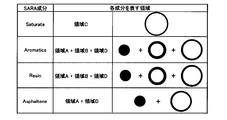
- FIG. 5 is a diagram illustrating a correspondence relationship between each region in FIG. 4 and a region where a SARA component exists. It is a schematic diagram of the component analysis apparatus of the petroleum composition which concerns on embodiment.
- the component analysis method for a petroleum composition is a first step in which a solution is obtained by mixing a petroleum composition and a paraffinic solvent.
- the second step of moving the solution in the plane direction of the thin-layer chromatograph by allowing it to pass for a predetermined time after dropping on the surface of the chromatograph, analyzing the color of the thin-layer chromatograph to which the solution has adhered.
- the third step of calculating the area of the region where the asphaltene component exists, the area of the region where the aromatic component and the resin component exist, and the area of the region where the saturated component exists, and 3 obtained in the third step
- a fourth step of calculating a mass ratio regarding four components of a saturated component, an aromatic component, a resin component, and an asphaltene component present in the petroleum composition based on the area ratio of the region.
- the “mass ratio for the four components” means the mass ratio for all of the four components, preferably the mass ratio “saturated component: (total amount of aromatic component and resin component): asphaltene component” or mass.
- the ratio “saturation: aromatic: resin: asphaltene” is meant.
- the SARA component in the petroleum composition can be analyzed easily, in a short time, and in a space-saving manner. The reason is considered as follows.
- the magnitude of the polarity of the SARA component in the petroleum composition is “Asphaltene> Resin> Aromatics> Saturate”.
- thin layer chromatographic constituent materials such as silica gel are polar substances. Therefore, when a solution obtained by mixing a petroleum composition and a paraffinic solvent is dropped on a thin-layer chromatograph, the SARA component moves to a position farther from the dropping point as the polarity is lower.
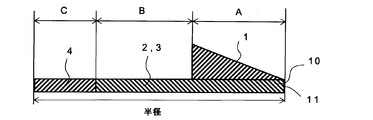
- the highly polar asphaltene component 1 remains in the region A in the vicinity of the dropping point 11.
- the asphaltene content 1 is considered to remain on the surface without moving into the inside of a thin-layer chromatograph made of silica gel or the like because aggregates are formed and the size is increased by the addition of a paraffinic solvent.
- the aromatic component 3 and the resin component 2 have a lower polarity than the asphaltene component 1, the aromatic component 3 and the resin component 2 move to the region B outside the region A in the vicinity of the dropping point.
- the aromatic component 3 and the resin component 2 are considered to exist in the same region because they have the same aromatic substance and close molecular weight.
- the asphaltene content 1 is considered to remain on the surface of the thin-layer chromatograph in the region A. Therefore, the aromatic content 3, the resin content 2, and the aromatic content 3 are the lower part of the asphaltene content 1, That is, it is considered that the region A also exists in the thin layer chromatograph. Further, since the saturation component 4 has the lowest polarity, it is considered that the saturation component 4 moves to the region C outside the region B where the aromatic component 3 and the resin component 2 exist and exists in the region C. Moreover, when the ratio of a specific component becomes high among the said SARA components in a petroleum composition, the area of the area
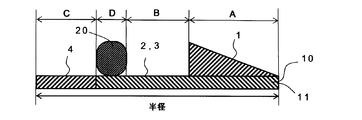
- the micelle structure 20 has a structure in which a highly polar asphaltene component 1 is surrounded by an aromatic component 3 and a resin component 2.
- the micelle structure 20 is darker than the region B including the aromatic component 3 and the resin component 2 and the region C including the saturated component 4. Accordingly, it is considered that the micelle structure 20 can be detected as the region D as shown in FIGS.
- the mass ratio of the SARA component can be calculated by regarding the region D where the micelle structure 20 exists as the region where the asphaltene content 1 exists. This point will be described later as a different embodiment.
- the component analysis may be performed again using a solution in which the mixing ratio of the paraffinic solvent is increased to completely collapse the micelle structure 20. Thereby, the mass ratio of the SARA component may be accurately calculated.
- the mixing ratio of the paraffinic solvent in the solution is too high, the petroleum composition may be excessively diluted and the areas A to C may not be clearly distinguished. In that case, it is preferable to calculate the mass ratio of the SARA component by regarding the micelle structure 20 as an asphaltene component as described above. Next, each step in the present embodiment will be described.
- the first step is a step of obtaining a solution by mixing a petroleum composition and a paraffinic solvent.
- a petroleum composition and a paraffinic solvent.
- the SARA component in the petroleum composition is well dispersed in the paraffinic solvent.
- Crude oil is more preferable.
- the petroleum composition preferably has at least one of a saturated component, an aromatic component, an aromatic component, a resin component, and an asphaltene component, and has at least two components. More preferably, it is more preferable to have at least 3 types, and it is even more preferable to include these 4 types.
- the paraffin solvent is not particularly limited, but is preferably paraffin having 5 to 10 carbon atoms. These paraffins can satisfactorily separate the saturated content, aromatic content, resin content and asphaltene content. From this point of view, this paraffinic solvent is more preferably a linear paraffin having 5 to 10 carbon atoms, more preferably a linear paraffin having 5 to 8 carbon atoms, still more preferably n-heptane, n-hexane, n- It is at least one of pentane and n-octane, and more preferably n-heptane.
- the content of the paraffinic solvent in the solution obtained by mixing the petroleum composition and the paraffinic solvent is dependent on the type of the petroleum composition, but the micelle structure is disrupted and the solution is dropped onto the thin-layer chromatograph. From the viewpoint of sometimes moving the SARA component to a different region, it is preferably 10 to 90% by mass, more preferably 30 to 70% by mass, and still more preferably 45 to 55% by mass.
- the second step is a step of moving the solution in the plane direction of the thin layer chromatograph by allowing the solution to drop for a predetermined time after being dropped onto the surface of the thin layer chromatograph.
- the thin-layer chromatograph is not particularly limited, but a thin-layer chromatograph in which a carrier for moving the petroleum composition is formed on a support such as a quartz glass plate by coating or the like is preferable.
- the type of the carrier is not particularly limited, but preferably includes silica gel, alumina gel, cellulose and diatomaceous earth, more preferably silica gel and alumina gel, and still more preferably silica gel.
- silica gel the same silica gel as that used in the asphalt composition analysis test method (JPI-5S-70-2010) by the TLC / FID method is preferably used.
- the thickness of the thin layer is not particularly limited, but in the case of silica gel, it is preferably 100 to 1000 ⁇ m, more preferably 125 to 500 ⁇ m, still more preferably 150 to 250 ⁇ m, and in the case of alumina, preferably 100 to 1500 ⁇ m, more preferably. Is 200 to 250 ⁇ m.
- the pore diameter of the constituent material of the thin film is preferably 4 to 6 nm in the case of silica gel, and 6 to 15 nm in the case of alumina.
- the pore volume of the constituent material of the thin film is preferably 0.7 to 0.8 mL / g in the case of silica gel, and preferably 0.2 to 0.3 mL / g in the case of alumina.
- the particle size distribution of the constituent material of the thin film is preferably 1 to 40 ⁇ m, more preferably 3 to 20 ⁇ m, and still more preferably 4 to 8 ⁇ m.
- the average particle size of the constituent material of the thin film is preferably 1 to 25 ⁇ m, more preferably 3 to 15 ⁇ m, and further preferably 5 to 7 ⁇ m.
- the dropping amount of the solution is preferably 1 to 20 ⁇ L, more preferably 2 to 15 ⁇ L, and still more preferably 3 to 10 ⁇ L.
- the holding time after dropping is not particularly limited, but is, for example, 10 to 60 minutes.
- component analysis can be performed in a very short time compared to the TLC / FID method (JPI-5S-70-2010).
- the third step it is preferable to calculate the area of the three regions by imaging the surface of the thin-layer chromatograph using an imaging device or the like and analyzing the image using an image analysis device, but the invention is not limited to this.
- the surface of the thin layer chromatograph or the captured image may be visually observed to identify a plurality of regions, and the area of these three regions may be calculated using a ruler or the like.
- a color has brightness, saturation, and hue.
- analysis may be performed based on all of these, but analysis based on lightness is simple and preferable.
- the highly polar asphaltene component 1 remains on the surface of the region A in the vicinity of the dropping point 11.
- the aromatic component 3 and the resin component 2 are present in the thin layer chromatograph 10 in the region A in the vicinity of the dropping point 11 and the region B outside thereof.
- the saturation component 4 is present in the thin layer chromatograph 10 in the region C outside the region B.
- the imaging device for imaging the surface of the said thin-layer chromatograph For example, a commercially available camera and a smart phone can be used.
- the image analysis apparatus for analyzing the captured image is not particularly limited, and for example, a commercially available personal computer or smartphone installed with a commercially available image analysis application can be used.
- the mass ratio regarding the four components of the saturated component, aromatic component, resin component and asphaltene component present in the petroleum composition is determined. It is a process of calculating.
- the mass ratio of a specific component among the four components increases, the area of the region where the component exists in the thin-layer chromatograph increases. Therefore, based on the area ratio of the three regions obtained in the third step, the mass ratio regarding these four components can be calculated.
- the fourth step is preferably a mass ratio regarding the four components and an area ratio of the three regions calculated through the first step, the second step, and the third step with respect to a plurality of types of reference compositions having different compositions.
- the petroleum composition by comparing the reference data indicating the correlation between the three areas of the petroleum composition obtained through the first step, the second step, and the third step. It is a step of calculating a mass ratio regarding the four components present.
- the reference data is preferably acquired in the following manner.
- crude oil which is a raw material, differs in SARA component depending on the place of origin, the time of acquisition, and the like. Therefore, the mass ratio of the SARA component is previously measured for the plurality of crude oils by the above-described column chromatography method, high performance liquid chromatography method, or the like.
- the area of the area where the asphaltenes are present, the area of the area where the aromatics and the resin are present, and the area where the saturated contents are present The area of is calculated.
- the mass ratio of asphaltenes can be calculated by performing the first to third steps for the crude oil to be measured and substituting the obtained area ratio of asphaltenes into the approximate expression for asphaltenes. .
- the total mass ratio of the aromatic component and the resin component can be calculated by substituting the total area ratio of the aromatic component and the resin component into the approximate expression related to the aromatic component and the resin component.
- the mass ratio of the saturated portion can be calculated by substituting the obtained area ratio of the saturated portion into the approximate expression related to the saturated portion.
- the total mass ratio of the aromatic component and the resin component is calculated. That is, in the above-mentioned procedure, “mass ratio of saturated component: (total mass ratio of aromatic component and resin component): mass ratio of asphaltene component” is calculated. However, assuming that the aromatic component and the resin component have a predetermined mass ratio, the mass ratio of each of the four components, that is, “mass ratio of saturated component: mass ratio of aromatic component: mass of resin component” Ratio: mass ratio of asphaltene ”may be calculated. In addition, in the process of collecting the reference data, when a relationship can be found between the mass ratio of the aromatic component and the resin component and the area ratio, the mass of each of the four components based on the relationship. The ratio may be calculated.
- a plurality of sets of the second step, the third step, and the fourth step are performed to calculate a plurality of sets of mass ratios related to the four components, and an arithmetic average of the calculated values related to the mass ratio for each component is 4 You may obtain
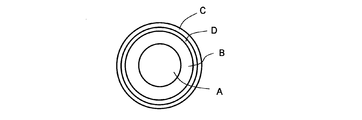
- the third step may include a confirmation step for confirming whether or not the micelle structure remains. That is, the third step includes a circular region A centered on the dropping point 11 of the solution, an annular region B existing outside the region A, and an annular region C existing outside the region B. In addition to the total of the three regions, a confirmation step for confirming whether or not an annular region D that is darker than these two regions exists between the two regions of the region B and the region C may be included. Thereby, since subsequent operation can be changed according to the presence or absence of the area
- the region D does not exist as a result of performing the above confirmation process, the same method as in the above-described embodiment can be performed. That is, in the third step, the region A is a region where the asphaltene content 1 exists, the region A and the region B are regions where the aromatic content 3 and the resin content 2 exist, and the region C is a saturation content 4 As the area present, the area of the area where the asphaltene content 1 exists, the area of the area where the aromatic content 3 and the resin content 2 exist, and the area of the area where the saturation content 4 exist are calculated, It is preferable to carry out the process.
- the region A and the region D are defined as regions in which asphaltene content is 1 in the third step, and the region A, the region B, and the region D is a region where the aromatic component 3 and the resin component 2 are present, and the region C is a region where the saturated component is present, the area of the region where the asphaltene component 1 is present, the aromatic component 3 and the resin component 2 are present It is preferable to calculate the area of the region and the area of the region where the saturation component 4 exists, and then perform the above-described fourth step. Thereby, the mass ratio regarding the four components of SARA can be calculated more accurately.
- the micelle structure exists, as shown in FIG.
- the left end of the micelle structure 20 (that is, the outer end of the annular region D) is outside the region where the aromatic component 3 and the resin component 2 exist. Matches the edge.
- the micelle structure has a structure in which a highly polar asphaltene component 1 is surrounded by an aromatic component 3 and a resin component 2. Therefore, it is estimated that the micelle structure 20 easily moves on a region having the same components as the aromatic component 3 and the resin component 2 which are the surface components. Further, since the micelle structure 20 has a large size and moves on the surface without penetrating into the thin layer chromatograph 10, the movement is easy. As a result, the region where the aromatic component 3 and the resin component 2 exist is present. It is estimated that it moves to the outer edge of the. Furthermore, while the region C outside thereof includes the saturation component 4, the micelle structure 20 does not include the saturation component 4, and therefore, it is estimated that it is difficult to move up to the region C.
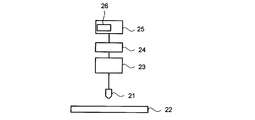
- FIG. 7 is a schematic diagram of a petroleum composition component analyzer according to the present embodiment.
- the component analysis apparatus for petroleum composition according to this embodiment includes a dropping device 21 for dropping a solution obtained by mixing a petroleum composition and a paraffinic solvent, and a thin-layer chromatograph 22 disposed below the dropping device 21.
- An image pickup device 23 for picking up an image of the surface of the thin layer chromatograph 22, and analyzing the color of the thin layer chromatograph to which the solution is attached based on an image picked up by the image pickup device 23, thereby obtaining an asphaltene component.
- This computing device 25 relates to a plurality of types of reference compositions having different compositions, and a correlation between the mass ratio of the four components and the area ratio of the three regions calculated through the first step, the second step, and the third step. It is preferable to have a storage unit 26 that stores reference data indicating.
- the details of the various devices 22 to 24 constituting the component analyzer are as described above.
- Non-Patent Document 2 SARA component analysis is performed by HPLC using 18 kinds of crude oils having different specific gravities from the North Sea oil field, West Africa and France.
- the specific gravity of the SARA component in crude oil is large in the order of asphaltene content> resin content> aromatic content> saturation content. Since the specific gravity differs for each component, the specific gravity of crude oil and the mass ratio of the SARA component are expected to correlate. Then, the correlation with each SARA component calculated
- SARA component analysis was performed by column chromatography using 17 types of crude oil mixed with Middle Eastern crude oil in accordance with JPI-5S-22-83.
- the unrecovered component evaporated during heating in the component analysis process by the column chromatography method is considered to be a light saturated component or an aromatic component. Therefore, it is assumed that the unrecovered portion consists only of the saturated portion and the aromatic portion, and the mass ratio (saturated portion: aromatic portion) of the saturated portion and the aromatic portion in the unrecovered portion is assumed to be 100: 0.
- FIG. 9 shows the results of correction for the saturated component and the aromatic component in the case of the above. Moreover, the approximate expression calculated from the said graph is shown in FIG.
- Region A is a region where asphaltene content 1 is present
- regions A and B are regions where aromatic content 3 and resin content 2 are present
- region C is a region where saturation content 4 is present.
- about 75% by mass was considered to be the aromatic content 3
- about 25% was considered to be the resin content 2.
- the above operations (3) to (5) were performed a total of 4 times, and the area (number of pixels) of these 4 components was determined by the arithmetic average of these operations. The results are shown in Table 2.
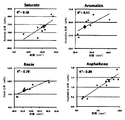
- FIG. 12 Based on the results of Table 2, for each component, the plotted graph is shown in FIG. 12, where the horizontal axis is calculated and the vertical axis is the mass ratio obtained by the column chromatography method.
- FIG. 12 in the obtained area (pixel number) obtained in (6), converting the 16.16pixel as 1 mm 2, and the unit of area as "mm 2".
- the equation in FIG. 12 is an approximate expression for converting the calculated area (x) into the mass ratio (y) of each SARA component.
- the area ratio of each SARA component is calculated by performing the same operations as in (1) to (5) above, and then the area ratio is substituted into the approximate expression shown in FIG.
- the SARA component ratio can be calculated simply, in a short time, and in a space-saving manner.
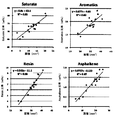
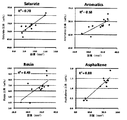
- Experimental examples 2-3 The same operation as in Experimental Example 1 was performed, except that the mixing ratio of the raw material and n-heptane was 6: 4 and 3: 7 (mass ratio), respectively. The results are shown in FIG. 13 (Experimental example 2) and FIG. 14 (Experimental example 3).
- the arithmetic average value of R 2 (determination coefficient) of the four components in experimental example 1 was close to 1, and the SARA component ratio could be calculated with high accuracy.
Landscapes
- Chemical & Material Sciences (AREA)
- Life Sciences & Earth Sciences (AREA)
- General Physics & Mathematics (AREA)
- Pathology (AREA)
- Oil, Petroleum & Natural Gas (AREA)
- Analytical Chemistry (AREA)
- Physics & Mathematics (AREA)
- Immunology (AREA)
- General Health & Medical Sciences (AREA)
- Health & Medical Sciences (AREA)
- Biochemistry (AREA)
- Organic Chemistry (AREA)
- Engineering & Computer Science (AREA)
- Chemical Kinetics & Catalysis (AREA)
- General Chemical & Material Sciences (AREA)
- Production Of Liquid Hydrocarbon Mixture For Refining Petroleum (AREA)
Abstract
簡易、短時間かつ省スペースにて、石油組成物中におけるSARA成分を分析する分析方法及び分析装置を提供する。 石油組成物とパラフィン系溶媒とを混合して溶液を得る第1工程、前記溶液を薄層クロマトグラフの表面に滴下した後、所定時間経過させることにより、前記溶液を前記薄層クロマトグラフの面方向に移動させる第2工程、前記溶液によって着色された前記薄層クロマトグラフの場所による色の相違を解析することにより、アスファルテン分の存在する領域の面積、芳香族分及びレジン分の存在する領域の面積、並びに飽和分の存在する領域の面積を算出する第3工程、及び前記第3工程で得られた3領域の面積の比率に基づいて、前記石油組成物中に存在する飽和分、芳香族分、レジン分及びアスファルテン分の4成分に関する質量比を算出する第4工程、を有する、石油組成物の成分分析方法。
Description
本発明は、石油組成物の成分分析方法及び成分分析装置に関する。
原油等の石油組成物は、SARA成分を含んでいる。ここで、「SARA」とは、Saturate(飽和分)、Aromatics(芳香族分)、Resin(レジン分)、及びAsphaltene(アスファルテン分)の4成分のことを意味する。
従来、原油等の石油組成物中におけるSARA成分の分析手法としては、主にカラムクロマトグラフィ法、TLC-FID(Thin Layer Chromatography - Flame Ionization Detector)法、及び高速液体クロマトグラフィ(HPLC)法がある。例えば、アスファルトのカラムクロマトグラフィによる組成分析法は、JPI 5S-22-83に規定されている。また、TLC-FID法によるアスファルト組成分析試験手法は、JPI 5S-70-10に規定されている。更に、高速液体クロマトグラフィ法は、非特許文献1及び非特許文献2に記載されている。
従来、原油等の石油組成物中におけるSARA成分の分析手法としては、主にカラムクロマトグラフィ法、TLC-FID(Thin Layer Chromatography - Flame Ionization Detector)法、及び高速液体クロマトグラフィ(HPLC)法がある。例えば、アスファルトのカラムクロマトグラフィによる組成分析法は、JPI 5S-22-83に規定されている。また、TLC-FID法によるアスファルト組成分析試験手法は、JPI 5S-70-10に規定されている。更に、高速液体クロマトグラフィ法は、非特許文献1及び非特許文献2に記載されている。
一方、特許文献1には、液体炭化水素中のアスファルテン分が通常の精製操作において有機物由来の汚れを生ずる傾向があると記載されている。また、特許文献1には、液体炭化水素の試料をクロマトグラフィ分離物質からなる薄膜の表面に沈積させることにより、当該試料を炭化水素非相溶性アスファルテン分からなる暗い部分と炭化水素相溶性留分からなる明るい部分とに分離し、両部分を比較することにより、当該液体炭化水素が装置に有機物由来の汚れを生じさせる傾向を決定する方法が記載されている。
また、特許文献2には、アスファルテン分を試料から分離する能力を有する薄層クロマトグラフィ膜、光源、膜から反射される光源の光を測定する装置、及び当該光を電気信号にする装置、で構成される、炭化水素液体の有機物由来の汚れ付着傾向の測定装置が記載されている。
Tianguang Fan and Jill S. Buckley, Energy Fuels, 2002, 16 (6), pp 1571-1575
Narve Aske, Harald Kallevik and Johan Sjoblom. Energy & Fuels 2001, 15, 1304-131
例えば、複数の原油を配合したものを原料とする石油精製プロセスにおいて、原料中における原油の配合比率は2~5日で変動することがある。そのため、原油の切り替え時に、現場で簡易かつ短時間で原油のSARA成分比率を把握する手法が求められている。しかしながら、前述した石油組成物の分析手法は、これらの要望に十分に応えていない。
すなわち、カラムクロマトグラフィ法は、分析過程で加熱するため飽和分や芳香族分の軽質分が蒸発しやすく、未回収成分が生じる。また測定時間に2日程度を要する上に、多量の溶媒を使用する。
TLC-FID法は、分析過程で加熱するため飽和分や芳香族分の軽質分が蒸発しやすく、分析結果に誤差が生じやすい。また、高価な装置が必要である。
高速液体クロマトグラフィ法は、複雑かつ高価な装置と装置スペースが必要となる。
特許文献1,2の方法及び装置では、石油組成物中におけるアスファルテン分の比率しか決定されない。
TLC-FID法は、分析過程で加熱するため飽和分や芳香族分の軽質分が蒸発しやすく、分析結果に誤差が生じやすい。また、高価な装置が必要である。
高速液体クロマトグラフィ法は、複雑かつ高価な装置と装置スペースが必要となる。
特許文献1,2の方法及び装置では、石油組成物中におけるアスファルテン分の比率しか決定されない。
本発明は、上記実情に鑑み、簡易、短時間かつ省スペースにて、石油組成物中におけるSARA成分を分析する分析方法及び分析装置を提供することを目的とする。
本発明者らは上記目的を達成するために鋭意検討した結果、薄層クロマトグラフに石油組成物と特定の溶媒との混合溶液を滴下し、薄層クロマトグラフ上の領域ごとの色の相違を詳細に解析することにより、SARA成分の質量比を特定できることを見出し、本発明を完成した。
すなわち、本発明は、以下のとおりである。
[1]石油組成物とパラフィン系溶媒とを混合して溶液を得る第1工程、前記溶液を薄層クロマトグラフの表面に滴下した後、所定時間経過させることにより、前記溶液を前記薄層クロマトグラフの面方向に移動させる第2工程、前記溶液が付着した前記薄層クロマトグラフの色を解析することにより、アスファルテン分の存在する領域の面積、芳香族分及びレジン分の存在する領域の面積、並びに飽和分の存在する領域の面積を算出する第3工程、及び前記第3工程で得られた3領域の面積の比率に基づいて、前記石油組成物中に存在する飽和分、芳香族分、レジン分及びアスファルテン分の4成分に関する質量比を算出する第4工程、を有する、石油組成物の成分分析方法。
[2]前記第3工程において、前記薄層クロマトグラフの表面を撮像し、画像解析装置によって画像解析することにより、前記複数の領域の面積を算出する、上記[1]に記載の石油組成物の成分分析方法。
[3]予め、組成の異なる複数種の参照組成物に関して、前記4成分に関する質量比と前記第1工程、第2工程及び第3工程を経て算出した前記3領域の面積比との相関関係を示す参照データを導出しておき、
前記第4工程において、前記参照データと、前記第1工程、第2工程及び第3工程を経て得られた前記石油組成物に関する3領域の面積の比率とを対比することにより、前記石油組成物中に存在する前記4成分に関する質量比を算出する、上記[1]又は[2]に記載の石油組成物の成分分析方法。
[4]前記参照データにおける前記4成分に関する質量比を、カラムクロマトグラフィ法又は高速液体クロマトグラフィ法により測定して求める、上記[3]に記載の石油組成物の成分分析方法。
[5]前記参照データを、組成の異なる複数種の参照組成物に関する、前記4成分に関する質量比と、前記3領域の面積比との間の近似式として算出しておき、前記第4工程において、前記石油組成物に関する前記3領域の面積の比率を前記近似式に代入することにより、前記石油組成物中に存在する前記4成分に関する質量比を算出する、上記[3]又は[4]に記載の石油組成物の成分分析方法。
[6]前記第3工程は、前記溶液を滴下ポイントを中心とする円状の領域A、前記領域Aの外側に存在する環状の領域B、及び前記領域Bの外側に存在する環状の領域Cの合計3領域に区画し、前記領域Aをアスファルテン分の存在する領域とし、前記領域A及び領域Bを芳香族分及びレジン分の存在する領域とし、前記領域Cを飽和分の存在する領域として、前記アスファルテン分の存在する領域の面積、芳香族分及びレジン分の存在する領域の面積、及び飽和分の存在する領域の面積を算出する、上記[1]~[5]のいずれか1項に記載の石油組成物の成分分析方法。
[7]前記第3工程は、前記溶液を滴下ポイントを中心とする円状の領域A、前記領域Aの外側に存在する環状の領域B、及び前記領域Bの外側に存在する環状の領域Cの合計3領域の他に、前記領域B及び領域Cの2領域の範囲間にこれら2領域よりも明度の低い環状の領域Dが存在するか否かを確認する確認工程を有し、前記確認工程において前記領域Dが存在しない場合には、前記第3工程において、前記領域Aをアスファルテン分の存在する領域とし、前記領域A及び領域Bを芳香族分及びレジン分の存在する領域とし、前記領域Cを飽和分の存在する領域として、前記アスファルテン分の存在する領域の面積、芳香族分及びレジン分の存在する領域の面積、及び飽和分の存在する領域の面積を算出し、前記確認工程において前記領域Dが存在する場合には、前記第3工程において、前記領域A及び領域Dをアスファルテン分の存在する領域とし、前記領域A、領域B及び領域Dを芳香族分及びレジン分の存在する領域とし、前記領域Cを飽和分の存在する領域として、前記アスファルテン分の存在する領域の面積、芳香族分及びレジン分の存在する領域の面積、及び飽和分の存在する領域の面積を算出する、上記[1]~[5]のいずれか1項に記載の石油組成物の成分分析方法。
[1]石油組成物とパラフィン系溶媒とを混合して溶液を得る第1工程、前記溶液を薄層クロマトグラフの表面に滴下した後、所定時間経過させることにより、前記溶液を前記薄層クロマトグラフの面方向に移動させる第2工程、前記溶液が付着した前記薄層クロマトグラフの色を解析することにより、アスファルテン分の存在する領域の面積、芳香族分及びレジン分の存在する領域の面積、並びに飽和分の存在する領域の面積を算出する第3工程、及び前記第3工程で得られた3領域の面積の比率に基づいて、前記石油組成物中に存在する飽和分、芳香族分、レジン分及びアスファルテン分の4成分に関する質量比を算出する第4工程、を有する、石油組成物の成分分析方法。
[2]前記第3工程において、前記薄層クロマトグラフの表面を撮像し、画像解析装置によって画像解析することにより、前記複数の領域の面積を算出する、上記[1]に記載の石油組成物の成分分析方法。
[3]予め、組成の異なる複数種の参照組成物に関して、前記4成分に関する質量比と前記第1工程、第2工程及び第3工程を経て算出した前記3領域の面積比との相関関係を示す参照データを導出しておき、
前記第4工程において、前記参照データと、前記第1工程、第2工程及び第3工程を経て得られた前記石油組成物に関する3領域の面積の比率とを対比することにより、前記石油組成物中に存在する前記4成分に関する質量比を算出する、上記[1]又は[2]に記載の石油組成物の成分分析方法。
[4]前記参照データにおける前記4成分に関する質量比を、カラムクロマトグラフィ法又は高速液体クロマトグラフィ法により測定して求める、上記[3]に記載の石油組成物の成分分析方法。
[5]前記参照データを、組成の異なる複数種の参照組成物に関する、前記4成分に関する質量比と、前記3領域の面積比との間の近似式として算出しておき、前記第4工程において、前記石油組成物に関する前記3領域の面積の比率を前記近似式に代入することにより、前記石油組成物中に存在する前記4成分に関する質量比を算出する、上記[3]又は[4]に記載の石油組成物の成分分析方法。
[6]前記第3工程は、前記溶液を滴下ポイントを中心とする円状の領域A、前記領域Aの外側に存在する環状の領域B、及び前記領域Bの外側に存在する環状の領域Cの合計3領域に区画し、前記領域Aをアスファルテン分の存在する領域とし、前記領域A及び領域Bを芳香族分及びレジン分の存在する領域とし、前記領域Cを飽和分の存在する領域として、前記アスファルテン分の存在する領域の面積、芳香族分及びレジン分の存在する領域の面積、及び飽和分の存在する領域の面積を算出する、上記[1]~[5]のいずれか1項に記載の石油組成物の成分分析方法。
[7]前記第3工程は、前記溶液を滴下ポイントを中心とする円状の領域A、前記領域Aの外側に存在する環状の領域B、及び前記領域Bの外側に存在する環状の領域Cの合計3領域の他に、前記領域B及び領域Cの2領域の範囲間にこれら2領域よりも明度の低い環状の領域Dが存在するか否かを確認する確認工程を有し、前記確認工程において前記領域Dが存在しない場合には、前記第3工程において、前記領域Aをアスファルテン分の存在する領域とし、前記領域A及び領域Bを芳香族分及びレジン分の存在する領域とし、前記領域Cを飽和分の存在する領域として、前記アスファルテン分の存在する領域の面積、芳香族分及びレジン分の存在する領域の面積、及び飽和分の存在する領域の面積を算出し、前記確認工程において前記領域Dが存在する場合には、前記第3工程において、前記領域A及び領域Dをアスファルテン分の存在する領域とし、前記領域A、領域B及び領域Dを芳香族分及びレジン分の存在する領域とし、前記領域Cを飽和分の存在する領域として、前記アスファルテン分の存在する領域の面積、芳香族分及びレジン分の存在する領域の面積、及び飽和分の存在する領域の面積を算出する、上記[1]~[5]のいずれか1項に記載の石油組成物の成分分析方法。
[8]上記[1]~[7]のいずれか1項に記載された石油組成物の成分分析方法に用いられる装置であって、石油組成物とパラフィン系溶媒とを混合してなる溶液を滴下する滴下装置、前記滴下装置の下方に配置された薄層クロマトグラフ、前記薄層クロマトグラフの表面を撮像する撮像装置、前記撮像装置で撮像された画像に基づいて、前記溶液が付着した前記薄層クロマトグラフの色を解析することにより、アスファルテン分の存在する領域の面積、芳香族分及びレジン分の存在する領域の面積、及び飽和分の存在する領域の面積を算出する画像解析装置、及び、前記画像解析装置で算出される面積の比率に基づいて、前記石油組成物中に存在する飽和分、芳香族分、レジン分及びアスファルテン分の4成分に関する質量比を算出する演算装置、を有する、石油組成物の成分分析装置。
[9]前記演算装置は、組成の異なる複数種の参照組成物に関して、前記4成分に関する質量比と前記第1工程、第2工程及び第3工程を経て算出した前記3領域の面積比との相関関係を示す参照データを記憶している記憶部を有する、上記[8]に記載の石油組成物の成分分析装置。
[9]前記演算装置は、組成の異なる複数種の参照組成物に関して、前記4成分に関する質量比と前記第1工程、第2工程及び第3工程を経て算出した前記3領域の面積比との相関関係を示す参照データを記憶している記憶部を有する、上記[8]に記載の石油組成物の成分分析装置。
本発明によれば、簡易、短時間かつ省スペースにて、石油組成物中におけるSARA成分を分析する分析方法及び分析装置を提供することができる。
[1]石油組成物の成分分析方法
本発明の実施形態に係る石油組成物の成分分析方法は、石油組成物とパラフィン系溶媒とを混合して溶液を得る第1工程、前記溶液を薄層クロマトグラフの表面に滴下した後、所定時間経過させることにより、前記溶液を前記薄層クロマトグラフの面方向に移動させる第2工程、前記溶液が付着した前記薄層クロマトグラフの色を解析することにより、アスファルテン分の存在する領域の面積、芳香族分及びレジン分の存在する領域の面積、並びに飽和分の存在する領域の面積を算出する第3工程、及び前記第3工程で得られた3領域の面積の比率に基づいて、前記石油組成物中に存在する飽和分、芳香族分、レジン分及びアスファルテン分の4成分に関する質量比を算出する第4工程、を有する。
ここで、「4成分に関する質量比」とは、4成分の総てに関する質量比を意味し、好ましくは質量比「飽和分:(芳香族分及びレジン分の合計量):アスファルテン分」又は質量比「飽和分:芳香族:レジン分:アスファルテン分」を意味する。
本発明の実施形態に係る石油組成物の成分分析方法は、石油組成物とパラフィン系溶媒とを混合して溶液を得る第1工程、前記溶液を薄層クロマトグラフの表面に滴下した後、所定時間経過させることにより、前記溶液を前記薄層クロマトグラフの面方向に移動させる第2工程、前記溶液が付着した前記薄層クロマトグラフの色を解析することにより、アスファルテン分の存在する領域の面積、芳香族分及びレジン分の存在する領域の面積、並びに飽和分の存在する領域の面積を算出する第3工程、及び前記第3工程で得られた3領域の面積の比率に基づいて、前記石油組成物中に存在する飽和分、芳香族分、レジン分及びアスファルテン分の4成分に関する質量比を算出する第4工程、を有する。
ここで、「4成分に関する質量比」とは、4成分の総てに関する質量比を意味し、好ましくは質量比「飽和分:(芳香族分及びレジン分の合計量):アスファルテン分」又は質量比「飽和分:芳香族:レジン分:アスファルテン分」を意味する。
本実施形態に係る石油組成物の成分分析方法によれば、簡易、短時間かつ省スペースにて、石油組成物中におけるSARA成分を分析することができる。その理由は次のとおりであると考えられる。
石油組成物中におけるSARA成分の極性の大きさは、「アスファルテン分(Asphaltene)>レジン分(Resin)>芳香族分(Aromatics)>飽和分(Saturate)」である。一方、シリカゲル等の薄層クロマトグラフ構成物質は、極性物質である。そのため石油組成物とパラフィン系溶媒を混合した溶液を薄層クロマトグラフ上に滴下する場合、SARA成分は、極性の低いものほど滴下ポイントから離れた位置まで移動する。
従って、図1~図3に示すとおり、極性の高いアスファルテン分1は、滴下ポイント11の近傍の領域Aに留まる。この際、アスファルテン分1は、パラフィン系溶媒の添加によって凝集体を形成しサイズが大きくなるため、シリカゲル等よりなる薄層クロマトグラフの内部には移動せず、表面に留まるものと考えられる。
また、芳香族分3及びレジン分2は、アスファルテン分1よりも極性が低いため、滴下ポイントの近傍の領域Aよりも外側の領域Bまで移動する。ここで、芳香族分3及びレジン分2は、同じ芳香族系物質かつ分子量が近いため、同じ領域に存在すると考えられる。なお、上記のとおりアスファルテン分1は、領域Aのうち薄層クロマトグラフの表面に留まるものと考えられるため、これら芳香族分3及びレジン分2及び芳香族分3は、アスファルテン分1の下部、すなわち領域Aのうち薄層クロマトグラフ内にも存在するものと考えられる。
更に飽和分4は、極性が最も低いため、芳香族分3及びレジン分2の存在する領域Bよりも外側の領域Cまで移動し、当該領域Cに存在するものと考えられる。
また、石油組成物中の上記SARA成分のうち、特定の成分の比率が高くなると、当該成分の存在する領域の面積が大きくなる。従って、上記領域A,B及びCの面積を求め、当該面積比に基づいて、4つのSARA成分に関する質量比を算出することができるものと考えられる。
また、芳香族分3及びレジン分2は、アスファルテン分1よりも極性が低いため、滴下ポイントの近傍の領域Aよりも外側の領域Bまで移動する。ここで、芳香族分3及びレジン分2は、同じ芳香族系物質かつ分子量が近いため、同じ領域に存在すると考えられる。なお、上記のとおりアスファルテン分1は、領域Aのうち薄層クロマトグラフの表面に留まるものと考えられるため、これら芳香族分3及びレジン分2及び芳香族分3は、アスファルテン分1の下部、すなわち領域Aのうち薄層クロマトグラフ内にも存在するものと考えられる。
更に飽和分4は、極性が最も低いため、芳香族分3及びレジン分2の存在する領域Bよりも外側の領域Cまで移動し、当該領域Cに存在するものと考えられる。
また、石油組成物中の上記SARA成分のうち、特定の成分の比率が高くなると、当該成分の存在する領域の面積が大きくなる。従って、上記領域A,B及びCの面積を求め、当該面積比に基づいて、4つのSARA成分に関する質量比を算出することができるものと考えられる。
なお、図4~図6は、石油組成物とパラフィン系溶媒を混合した溶液中にミセル構造20が残存している場合に、当該溶液を薄層クロマトグラフ10に滴下したときの様子を示している。
すなわち、レジン分2の比率が高い原油又は飽和分4の比率が低い原油は、パラフィン系溶媒と例えば1:1の質量比で混合しても、総てのミセル構造20を崩壊できない場合がある。このミセル構造20は、極性の高いアスファルテン分1が芳香族分3及びレジン分2に囲まれた構造を有している。このようにミセル構造20はアスファルテン分1を含んでいるため、芳香族分3及びレジン分2を含む領域Bや飽和分4を含む領域Cよりも暗い。従って、図4~図6に示すように、ミセル構造20は領域Dとして検出可能と考えられる。
すなわち、レジン分2の比率が高い原油又は飽和分4の比率が低い原油は、パラフィン系溶媒と例えば1:1の質量比で混合しても、総てのミセル構造20を崩壊できない場合がある。このミセル構造20は、極性の高いアスファルテン分1が芳香族分3及びレジン分2に囲まれた構造を有している。このようにミセル構造20はアスファルテン分1を含んでいるため、芳香族分3及びレジン分2を含む領域Bや飽和分4を含む領域Cよりも暗い。従って、図4~図6に示すように、ミセル構造20は領域Dとして検出可能と考えられる。
ここで、石油組成物に対するパラフィン系溶媒の混合比率を増やすと領域Dがなくなり、かつアスファルテン分1の凝集体が存在する領域Aの面積が増加する。このため、領域Dをミセル構造20と推定することができる。従って、ミセル構造20の存在する領域Dをアスファルテン分1が存在する領域とみなすことにより、SARA成分の質量比を算出することができる。この点については、異なる実施形態として後述する。
また、パラフィン系溶媒の混合比率を増やしてミセル構造20を総て崩壊させた溶液を用いて再度成分分析を行ってもよい。これにより、正確にSARA成分の質量比を算出することができる場合がある。ただし、溶液中におけるパラフィン系溶媒の混合比率が高すぎると、石油組成物が希釈され過ぎて、却って領域A~Cが明確に区別できなくなる場合がある。その場合には、上記のとおりミセル構造20をアスファルテン分1とみなし、SARA成分の質量比を算出することが好ましい。
次に、本実施形態における各工程について説明する。
また、パラフィン系溶媒の混合比率を増やしてミセル構造20を総て崩壊させた溶液を用いて再度成分分析を行ってもよい。これにより、正確にSARA成分の質量比を算出することができる場合がある。ただし、溶液中におけるパラフィン系溶媒の混合比率が高すぎると、石油組成物が希釈され過ぎて、却って領域A~Cが明確に区別できなくなる場合がある。その場合には、上記のとおりミセル構造20をアスファルテン分1とみなし、SARA成分の質量比を算出することが好ましい。
次に、本実施形態における各工程について説明する。
[第1工程]
第1工程は、石油組成物とパラフィン系溶媒とを混合して溶液を得る工程である。
このように石油組成物とパラフィン系溶媒とを混合することにより、石油組成物中のSARA成分がパラフィン系溶媒中に良好に分散する。
第1工程は、石油組成物とパラフィン系溶媒とを混合して溶液を得る工程である。
このように石油組成物とパラフィン系溶媒とを混合することにより、石油組成物中のSARA成分がパラフィン系溶媒中に良好に分散する。
石油組成物としては特に制限はないが、原油、原油から精製される各種石油製品、石油半製品、残差油等が挙げられ、原油がより好ましい。
石油組成物は、飽和分(Saturate)、芳香族分(Aromatics)、レジン分(Resin)及びアスファルテン分(Asphaltene)の少なくとも1種を有するものであることが好ましく、少なくとも2種を有するものであることがより好ましく、少なくとも3種を有するものであることが更に好ましく、これら4種を含むものがより更に好ましい。
石油組成物は、飽和分(Saturate)、芳香族分(Aromatics)、レジン分(Resin)及びアスファルテン分(Asphaltene)の少なくとも1種を有するものであることが好ましく、少なくとも2種を有するものであることがより好ましく、少なくとも3種を有するものであることが更に好ましく、これら4種を含むものがより更に好ましい。
パラフィン系溶媒としては特に制限はないが、好ましくは炭素数5~10のパラフィンである。これらパラフィンは、飽和分、芳香族分、レジン分及びアスファルテン分を良好に分離することができる。このパラフィン系溶媒は、当該観点から、より好ましくは炭素数5~10の直鎖パラフィン、更に好ましくは炭素数5~8の直鎖パラフィン、より更に好ましくはn-ヘプタン、n-ヘキサン、n-ペンタン及びn-オクタンの少なくとも1種であり、より更に好ましくはn-ヘプタンである。
石油組成物とパラフィン系溶媒とを混合してなる溶液中における、パラフィン系溶媒の含有量は、石油組成物の種類にもよるが、ミセル構造を崩壊させ、溶液を薄層クロマトグラフに滴下したときにSARA成分を異なる領域に移動させる観点から、好ましくは10~90質量%、より好ましくは30~70質量%、更に好ましくは45~55質量%である。
[第2工程]
第2工程は、前記溶液を薄層クロマトグラフの表面に滴下した後、所定時間経過させることにより、前記溶液を前記薄層クロマトグラフの面方向に移動させる工程である。
第2工程は、前記溶液を薄層クロマトグラフの表面に滴下した後、所定時間経過させることにより、前記溶液を前記薄層クロマトグラフの面方向に移動させる工程である。
薄層クロマトグラフには特に制限はないが、石英ガラス板等の支持体に、石油組成物を移動させるための担体が塗布等により形成されたものが好ましい。
担体の種類には特に制限はないが、好ましくはシリカゲル、アルミナゲル、セルロース及び珪藻土が挙げられ、より好ましくはシリカゲル及びアルミナゲル、更に好ましくはシリカゲルである。
シリカゲルとしては、TLC/FID法によるアスファルト組成分析試験方法(JPI-5S-70-2010)で用いられるものと同様のものが好適に用いられる。
薄層の厚みにも特に制限はないが、シリカゲルの場合、好ましくは100~1000μm、より好ましくは125~500μm、更に好ましくは150~250μmであり、アルミナの場合、好ましくは100~1500μm、より好ましくは200~250μmである。
薄膜の構成材料の細孔径は、シリカゲルの場合、好ましくは4~6nmであり、アルミナの場合、6~15nmである。
薄膜の構成材料の細孔容量は、シリカゲルの場合、好ましくは0.7~0.8mL/gであり、アルミナの場合、好ましくは0.2~0.3mL/gである。
薄膜の構成材料の粒度分布は、シリカゲルの場合、好ましくは1~40μm、より好ましくは3~20μm、更に好ましくは4~8μmである。
薄膜の構成材料の平均粒径は、シリカゲルの場合、好ましくは1~25μm、より好ましくは3~15μm、更に好ましくは5~7μmである。
担体の種類には特に制限はないが、好ましくはシリカゲル、アルミナゲル、セルロース及び珪藻土が挙げられ、より好ましくはシリカゲル及びアルミナゲル、更に好ましくはシリカゲルである。
シリカゲルとしては、TLC/FID法によるアスファルト組成分析試験方法(JPI-5S-70-2010)で用いられるものと同様のものが好適に用いられる。
薄層の厚みにも特に制限はないが、シリカゲルの場合、好ましくは100~1000μm、より好ましくは125~500μm、更に好ましくは150~250μmであり、アルミナの場合、好ましくは100~1500μm、より好ましくは200~250μmである。
薄膜の構成材料の細孔径は、シリカゲルの場合、好ましくは4~6nmであり、アルミナの場合、6~15nmである。
薄膜の構成材料の細孔容量は、シリカゲルの場合、好ましくは0.7~0.8mL/gであり、アルミナの場合、好ましくは0.2~0.3mL/gである。
薄膜の構成材料の粒度分布は、シリカゲルの場合、好ましくは1~40μm、より好ましくは3~20μm、更に好ましくは4~8μmである。
薄膜の構成材料の平均粒径は、シリカゲルの場合、好ましくは1~25μm、より好ましくは3~15μm、更に好ましくは5~7μmである。
溶液の滴下量は、好ましくは1~20μL、より好ましくは2~15μL、更に好ましくは3~10μLである。
滴下後の保持時間には特に制限はないが、例えば10~60分である。このように本実施形態に係る成分分析方法によるとTLC/FID法(JPI-5S-70-2010)と比べて極めて短時間で成分分析を行うことが可能である。
滴下後の保持時間には特に制限はないが、例えば10~60分である。このように本実施形態に係る成分分析方法によるとTLC/FID法(JPI-5S-70-2010)と比べて極めて短時間で成分分析を行うことが可能である。
[第3工程]
第3工程は、前記溶液が付着した前記薄層クロマトグラフの色を解析することにより、アスファルテン分の存在する領域の面積、芳香族分及びレジン分の存在する領域の面積、並びに飽和分の存在する領域の面積を算出する工程である。
第3工程は、前記溶液が付着した前記薄層クロマトグラフの色を解析することにより、アスファルテン分の存在する領域の面積、芳香族分及びレジン分の存在する領域の面積、並びに飽和分の存在する領域の面積を算出する工程である。
第3工程において、前記薄層クロマトグラフの表面を撮像装置等を用いて撮像し、画像解析装置によって画像解析することにより、前記3領域の面積を算出するのが好ましいが、これに限定されない。例えば、薄層クロマトグラフの表面又はその撮像された画像を目視して複数の領域を特定し、定規等を用いてこれら3領域の面積を算出してもよい。
色には、明度、彩度及び色相が存在する。第3工程での色の解析では、これら総てに基づいて解析してもよいが、明度に基づいて解析するのが簡易であり好ましい。
色には、明度、彩度及び色相が存在する。第3工程での色の解析では、これら総てに基づいて解析してもよいが、明度に基づいて解析するのが簡易であり好ましい。
この第3工程は、好ましくは図1~3に示すとおり、前記溶液を滴下ポイント11を中心とする円状の領域A、前記領域Aの外側に存在する環状の領域B、及び前記領域Bの外側に存在する環状の領域Cの合計3領域に区画し、前記領域Aをアスファルテン分1の存在する領域とし、前記領域A及び領域Bを芳香族分3及びレジン分2の存在する領域とし、前記領域Cを飽和分4の存在する領域として、前記アスファルテン分1の存在する領域の面積、芳香族分3及びレジン分2の存在する領域の面積、及び飽和分4の存在する領域の面積を算出する工程である。
すなわち、前述したとおり、図1~3において、極性の高いアスファルテン分1は、滴下ポイント11の近傍の領域Aの表面に留まる。また、芳香族分3及びレジン分2は、滴下ポイント11の近傍の領域A及びその外側の領域Bの薄層クロマトグラフ10内に存在する。更に、飽和分4は、領域Bよりも外側の領域Cの薄層クロマトグラフ10内に存在する。
そして、これら領域A、B及びCは、存在する成分が異なることに起因して色が相違するため、区別することができる。従って、これら領域A、B及びCの面積を測定することにより、アスファルテン分1の存在する領域の面積、芳香族分3及びレジン分2の存在する領域の面積、並びに飽和分4の存在する領域の面積を算出することができる。
そして、これら領域A、B及びCは、存在する成分が異なることに起因して色が相違するため、区別することができる。従って、これら領域A、B及びCの面積を測定することにより、アスファルテン分1の存在する領域の面積、芳香族分3及びレジン分2の存在する領域の面積、並びに飽和分4の存在する領域の面積を算出することができる。
前記薄層クロマトグラフの表面を撮像するための撮像装置には特に制限はなく、例えば市販のカメラやスマートフォンを用いることができる。
また、撮像された画像を解析するための画像解析装置にも特に制限はなく、例えば市販のパソコンやスマートフォンに、市販の画像解析アプリケーションをインストールしたものを用いることができる。
また、撮像された画像を解析するための画像解析装置にも特に制限はなく、例えば市販のパソコンやスマートフォンに、市販の画像解析アプリケーションをインストールしたものを用いることができる。
[第4工程]
第4工程は、前記第3工程で得られた3領域の面積の比率に基づいて、前記石油組成物中に存在する飽和分、芳香族分、レジン分及びアスファルテン分の4成分に関する質量比を算出する工程である。
当該4成分のうち特定の成分の質量比が高くなると、薄層クロマトグラフにおける当該成分が存在する領域の面積が大きくなる。従って、前記第3工程で得られた3領域の面積の比率に基づいて、これら4成分に関する質量比を算出することができる。
第4工程は、前記第3工程で得られた3領域の面積の比率に基づいて、前記石油組成物中に存在する飽和分、芳香族分、レジン分及びアスファルテン分の4成分に関する質量比を算出する工程である。
当該4成分のうち特定の成分の質量比が高くなると、薄層クロマトグラフにおける当該成分が存在する領域の面積が大きくなる。従って、前記第3工程で得られた3領域の面積の比率に基づいて、これら4成分に関する質量比を算出することができる。
この第4工程は、好ましくは、組成の異なる複数種の参照組成物に関して、前記4成分に関する質量比と前記第1工程、第2工程及び第3工程を経て算出した前記3領域の面積比との相関関係を示す参照データと、前記第1工程、第2工程及び第3工程を経て得られた前記石油組成物に関する3領域の面積の比率とを対比することにより、前記石油組成物中に存在する前記4成分に関する質量比を算出する工程である。
上記参照データは、次のような要領で取得するのが好ましい。
例えば、石油精製プラントにおいて、原料である原油は、原産地や入手時期等によってSARA成分が異なる。従って、予め当該複数の原油に関して、SARA成分の質量比を、前述のカラムクロマトグラフィ法、高速液体クロマトグラフィ法等により測定しておく。また、予め複数の原油に関して、前述の第1工程~第3工程を得経て、アスファルテン分の存在する領域の面積、芳香族分及びレジン分の存在する領域の面積、及び飽和分の存在する領域の面積を算出しておく。そして、これら質量比と3領域の面積比とから、両者の相関関係を示す参照データを導出する。例えば、アスファルテン分に関して、複数の原油に関する面積比と質量比に関するデータ(面積比、質量比)を収集し、これらデータに基づいて、アスファルテン分に関する面積比と質量比との間の近似式を算出する。同様に、芳香族分及びレジン分に関しても、これら2成分の合計に関する面積比と質量比との間の近似式を算出する。同様に、飽和分に関しても、面積比と質量比との間の近似式を算出する。
例えば、石油精製プラントにおいて、原料である原油は、原産地や入手時期等によってSARA成分が異なる。従って、予め当該複数の原油に関して、SARA成分の質量比を、前述のカラムクロマトグラフィ法、高速液体クロマトグラフィ法等により測定しておく。また、予め複数の原油に関して、前述の第1工程~第3工程を得経て、アスファルテン分の存在する領域の面積、芳香族分及びレジン分の存在する領域の面積、及び飽和分の存在する領域の面積を算出しておく。そして、これら質量比と3領域の面積比とから、両者の相関関係を示す参照データを導出する。例えば、アスファルテン分に関して、複数の原油に関する面積比と質量比に関するデータ(面積比、質量比)を収集し、これらデータに基づいて、アスファルテン分に関する面積比と質量比との間の近似式を算出する。同様に、芳香族分及びレジン分に関しても、これら2成分の合計に関する面積比と質量比との間の近似式を算出する。同様に、飽和分に関しても、面積比と質量比との間の近似式を算出する。
そして、測定対象である原油に関して第1工程~第3工程を実施し、得られたアスファルテン分の面積比をアスファルテン分に関する近似式に代入することにより、アスファルテン分の質量比を算出することができる。同様に、得られた芳香族分及びレジン分の面積比の合計を芳香族分及びレジン分に関する近似式に代入することにより、芳香族分及びレジン分の合計質量比を算出することができる。同様に、得られた飽和分の面積比を飽和分に関する近似式に代入することにより、飽和分の質量比を算出することができる。
上記の要領では、芳香族分及びレジン分の合計質量比を算出している。すなわち、上記の要領では、「飽和分の質量比:(芳香族分及びレジン分の合計質量比):アスファルテン分の質量比」を算出している。しかしながら、これら芳香族分とレジン分とが所定の質量比であると仮定して、4成分の各々の質量比、すなわち、「飽和分の質量比:芳香族分の質量比:レジン分の質量比:アスファルテン分の質量比」を算出してもよい。また、上記参照データの収集過程において、芳香族分及びレジン分の質量比と、上記面積比との間に関係性を見出すことができる場合、当該関係性に基づいて、4成分の各々の質量比を算出してもよい。
なお、前記第2工程、第3工程及び第4工程のセットを複数セット行って、4成分に関する質量比を複数セット算出し、成分ごとに質量比に関する算出値を相加平均することにより、4成分に関する質量比を求めてもよい。
なお、前記第2工程、第3工程及び第4工程のセットを複数セット行って、4成分に関する質量比を複数セット算出し、成分ごとに質量比に関する算出値を相加平均することにより、4成分に関する質量比を求めてもよい。
[異なる実施形態に係る石油組成物の成分分析方法]
前述したとおり、石油組成物の種類及びパラフィン系溶媒の混合割合によっては、これらを混合してなる溶液中に、ミセル構造の一部が崩壊せずに残存することがある。よって、前記第3工程は、ミセル構造の残存の有無を確認する確認工程を有していてもよい。
すなわち、前記第3工程は、前記溶液の滴下ポイント11を中心とする円状の領域A、前記領域Aの外側に存在する環状の領域B、及び前記領域Bの外側に存在する環状の領域Cの合計3領域の他に、前記領域B及び領域Cの2領域の範囲間にこれら2領域よりも暗い環状の領域Dが存在するか否かを確認する確認工程を有していてもよい。
これにより、領域Dの有無に応じて後の操作を変えることができるため、SARAの4成分に関する質量比をより正確に算出することができる。
前述したとおり、石油組成物の種類及びパラフィン系溶媒の混合割合によっては、これらを混合してなる溶液中に、ミセル構造の一部が崩壊せずに残存することがある。よって、前記第3工程は、ミセル構造の残存の有無を確認する確認工程を有していてもよい。
すなわち、前記第3工程は、前記溶液の滴下ポイント11を中心とする円状の領域A、前記領域Aの外側に存在する環状の領域B、及び前記領域Bの外側に存在する環状の領域Cの合計3領域の他に、前記領域B及び領域Cの2領域の範囲間にこれら2領域よりも暗い環状の領域Dが存在するか否かを確認する確認工程を有していてもよい。
これにより、領域Dの有無に応じて後の操作を変えることができるため、SARAの4成分に関する質量比をより正確に算出することができる。
上記確認工程を実施した結果、領域Dが存在しない場合には、前述の実施形態と同様の方法を実施することができる。すなわち、前記第3工程において、前記領域Aをアスファルテン分1の存在する領域とし、前記領域A及び領域Bを芳香族分3及びレジン分2の存在する領域とし、前記領域Cを飽和分4の存在する領域として、前記アスファルテン分1の存在する領域の面積、芳香族分3及びレジン分2の存在する領域の面積、及び飽和分4の存在する領域の面積を算出し、次いで前述の第4工程を実施するのが好ましい。
一方、上記確認工程を実施した結果、前記領域Dが存在する場合には、前記第3工程において、前記領域A及び領域Dをアスファルテン分1の存在する領域とし、前記領域A、領域B及び領域Dを芳香族分3及びレジン分2の存在する領域とし、前記領域Cを飽和分の存在する領域として、前記アスファルテン分1の存在する領域の面積、芳香族分3及びレジン分2の存在する領域の面積、及び飽和分4の存在する領域の面積を算出し、次いで前述の第4工程を実施するのが好ましい。これにより、SARAの4成分に関する質量比をより正確に算出することができる。
なお、ミセル構造が存在する場合、図5に示すとおり、ミセル構造20の左端(すなわち、環状の領域Dの外側の端部)は、芳香族分3及びレジン分2が存在する領域の外側の端部と一致する。そのメカニズムの詳細は不明であるが次のように推定される。ミセル構造は、極性の高いアスファルテン分1が芳香族分3及びレジン分2に囲まれた構造を有している。従って、ミセル構造20は、その表面成分である芳香族分3及びレジン分2と同様の成分を有する領域上を移動し易いものと推定される。また、ミセル構造20は寸法が大きいために薄層クロマトグラフ10の内部に浸透することなく表面を移動するため、移動が容易であり、その結果、芳香族分3及びレジン分2が存在する領域の外側の端部にまで移動するものと推定される。更に、それよりも外側の領域Cは飽和分4を含むのに対して、ミセル構造20は飽和分4を含まないため、領域C上までは移動し難いものと推定される。
なお、ミセル構造が存在する場合、図5に示すとおり、ミセル構造20の左端(すなわち、環状の領域Dの外側の端部)は、芳香族分3及びレジン分2が存在する領域の外側の端部と一致する。そのメカニズムの詳細は不明であるが次のように推定される。ミセル構造は、極性の高いアスファルテン分1が芳香族分3及びレジン分2に囲まれた構造を有している。従って、ミセル構造20は、その表面成分である芳香族分3及びレジン分2と同様の成分を有する領域上を移動し易いものと推定される。また、ミセル構造20は寸法が大きいために薄層クロマトグラフ10の内部に浸透することなく表面を移動するため、移動が容易であり、その結果、芳香族分3及びレジン分2が存在する領域の外側の端部にまで移動するものと推定される。更に、それよりも外側の領域Cは飽和分4を含むのに対して、ミセル構造20は飽和分4を含まないため、領域C上までは移動し難いものと推定される。
[2]石油組成物の成分分析装置
図7は、本実施形態に係る石油組成物の成分分析装置の模式図である。
本実施形態に係る石油組成物の成分分析装置は、石油組成物とパラフィン系溶媒とを混合してなる溶液を滴下する滴下装置21、前記滴下装置21の下方に配置された薄層クロマトグラフ22、前記薄層クロマトグラフ22の表面を撮像する撮像装置23、前記撮像装置23で撮像された画像に基づいて、前記溶液が付着した前記薄層クロマトグラフの色を解析することにより、アスファルテン分の存在する領域の面積、芳香族分及びレジン分の存在する領域の面積、及び飽和分の存在する領域の面積を算出する画像解析装置24、及び、前記画像解析装置24で算出される面積の比率に基づいて、前記石油組成物中に存在する飽和分、芳香族分、レジン分及びアスファルテン分の4成分に関する質量比を算出する演算装置25、を有する。
この演算装置25は、組成の異なる複数種の参照組成物に関して、前記4成分に関する質量比と前記第1工程、第2工程及び第3工程を経て算出した前記3領域の面積比との相関関係を示す参照データを記憶している記憶部26を有することが好ましい。
なお、上記成分分析装置を構成する各種装置22~24の詳細は、前述したとおりである。
図7は、本実施形態に係る石油組成物の成分分析装置の模式図である。
本実施形態に係る石油組成物の成分分析装置は、石油組成物とパラフィン系溶媒とを混合してなる溶液を滴下する滴下装置21、前記滴下装置21の下方に配置された薄層クロマトグラフ22、前記薄層クロマトグラフ22の表面を撮像する撮像装置23、前記撮像装置23で撮像された画像に基づいて、前記溶液が付着した前記薄層クロマトグラフの色を解析することにより、アスファルテン分の存在する領域の面積、芳香族分及びレジン分の存在する領域の面積、及び飽和分の存在する領域の面積を算出する画像解析装置24、及び、前記画像解析装置24で算出される面積の比率に基づいて、前記石油組成物中に存在する飽和分、芳香族分、レジン分及びアスファルテン分の4成分に関する質量比を算出する演算装置25、を有する。
この演算装置25は、組成の異なる複数種の参照組成物に関して、前記4成分に関する質量比と前記第1工程、第2工程及び第3工程を経て算出した前記3領域の面積比との相関関係を示す参照データを記憶している記憶部26を有することが好ましい。
なお、上記成分分析装置を構成する各種装置22~24の詳細は、前述したとおりである。
以下、本発明を実験例により、更に詳細に説明するが、本発明はこれらの例によってなんら限定されるものではない。
実験例1
[カラムクロマトグラフィ法による成分分析]
カラムクロマトグラフィ法で原油をサンプルとした場合、軽質分は試験過程で蒸発し未回収分がおよそ30wt%~40wt%生じる。そのため原油中のSARA成分の真の質量比はわからない。そこで収率の高い高速液体クロマトグラフィ(HPLC)法の結果からカラムクロマトグラフィ法で求められたSARA成分の質量比の未回収分を推測した。
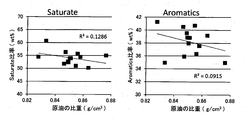
すなわち、HPLC法でSARA成分分析を行った場合、クロマトグラフィ法とは異なり、SARA成分の回収率は90~100wt%となる。非特許文献2では北海油田、西アフリカ、フランスの18種類の比重の異なる原油を用いてHPLC法でSARA成分分析を行っている。一般的に原油中のSARA成分の比重はアスファルテン分>レジン分>芳香族分>飽和分の序列で大きい。成分ごとに比重が異なるため、原油の比重とSARA成分の質量比は相関することが予想される。そこで非特許文献2のHPLC法によるSARA成分分析で求められた各SARA成分と原油の比重との相関を確認した。その結果を表1及び図8に示す。
飽和分、芳香族分、レジン分は原油の比重と相関することが分かる。アスファルテン分は原油全体に占める割合が少ないため、原油の比重とは相関しにくいことが推測される。
[カラムクロマトグラフィ法による成分分析]
カラムクロマトグラフィ法で原油をサンプルとした場合、軽質分は試験過程で蒸発し未回収分がおよそ30wt%~40wt%生じる。そのため原油中のSARA成分の真の質量比はわからない。そこで収率の高い高速液体クロマトグラフィ(HPLC)法の結果からカラムクロマトグラフィ法で求められたSARA成分の質量比の未回収分を推測した。
すなわち、HPLC法でSARA成分分析を行った場合、クロマトグラフィ法とは異なり、SARA成分の回収率は90~100wt%となる。非特許文献2では北海油田、西アフリカ、フランスの18種類の比重の異なる原油を用いてHPLC法でSARA成分分析を行っている。一般的に原油中のSARA成分の比重はアスファルテン分>レジン分>芳香族分>飽和分の序列で大きい。成分ごとに比重が異なるため、原油の比重とSARA成分の質量比は相関することが予想される。そこで非特許文献2のHPLC法によるSARA成分分析で求められた各SARA成分と原油の比重との相関を確認した。その結果を表1及び図8に示す。
飽和分、芳香族分、レジン分は原油の比重と相関することが分かる。アスファルテン分は原油全体に占める割合が少ないため、原油の比重とは相関しにくいことが推測される。

そこで、中東系の原油種が混合された原油17種類を用いて、JPI-5S-22-83に準拠し、カラムクロマトグラフィ法によってSARA成分分析を行った。
ここで、カラムクロマトグラフィ法による成分分析過程における加熱時に蒸発した未回収分は、軽質な飽和分または芳香族分であると考えられる。そこで、未回収分は飽和分及び芳香族分のみからなると想定し、かつ未回収分中における飽和分と芳香族分との質量比(飽和分:芳香族分)が100:0であると想定した場合における、飽和分及び芳香族分の補正結果を図9に示す。また、当該グラフから算出した近似式を図9中に示す。同様に、当該質量比(飽和分:芳香族分)が75:25及び50:50であると想定した場合の結果を、それぞれ図10及び図11に示す。その結果、当該質量比(飽和分:芳香族分)が100:0であると想定した場合における近似式のR2(決定係数)が最も1に近い。
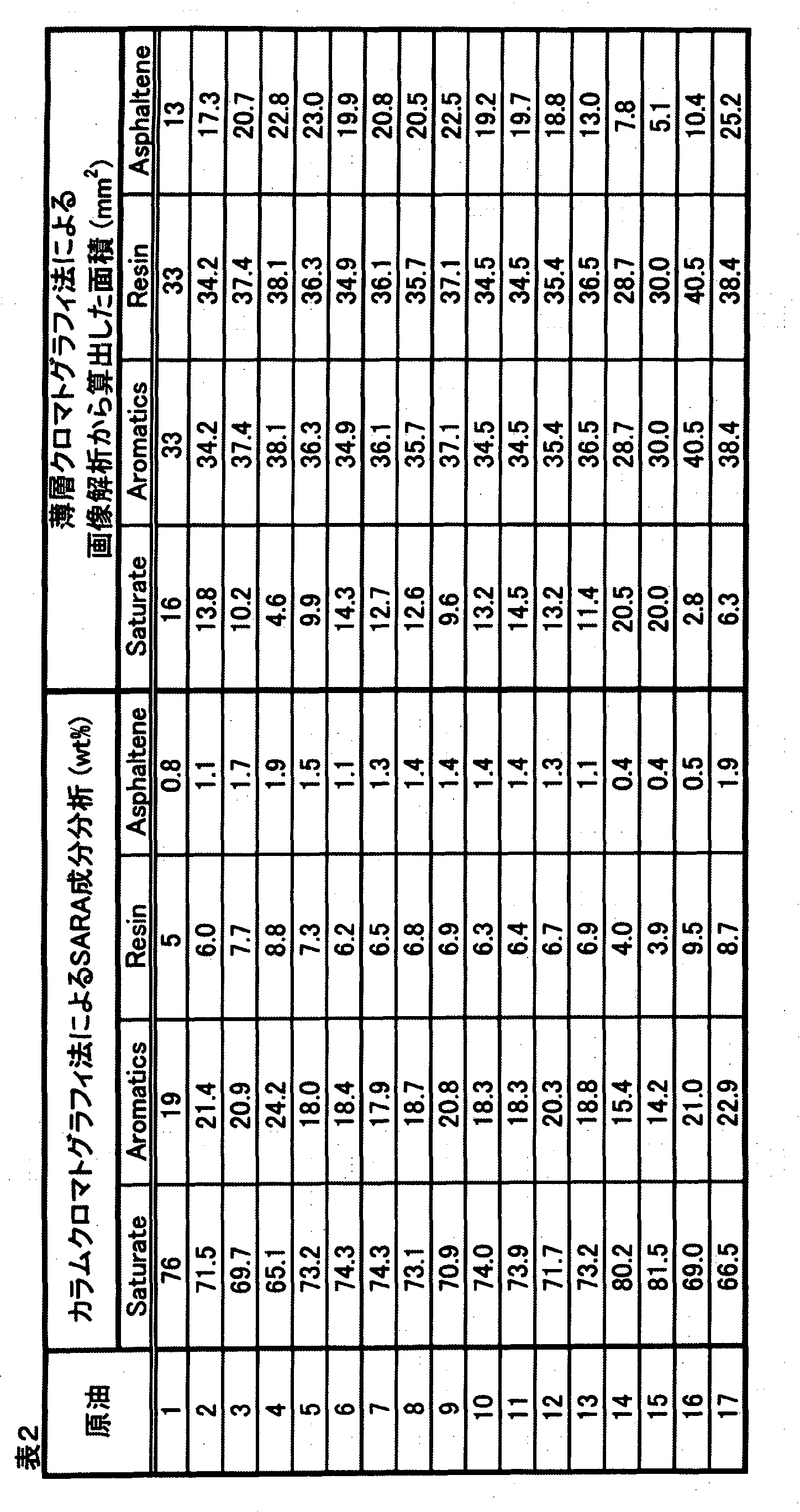
従って、分析過程で生じる未回収分は総て飽和分とみなしてカラムクロマトグラフィ法による成分分析結果を補正した。その結果を、表2中の「カラムクロマトグラフィ法によるSARA成分分析」の欄に示す。
ここで、カラムクロマトグラフィ法による成分分析過程における加熱時に蒸発した未回収分は、軽質な飽和分または芳香族分であると考えられる。そこで、未回収分は飽和分及び芳香族分のみからなると想定し、かつ未回収分中における飽和分と芳香族分との質量比(飽和分:芳香族分)が100:0であると想定した場合における、飽和分及び芳香族分の補正結果を図9に示す。また、当該グラフから算出した近似式を図9中に示す。同様に、当該質量比(飽和分:芳香族分)が75:25及び50:50であると想定した場合の結果を、それぞれ図10及び図11に示す。その結果、当該質量比(飽和分:芳香族分)が100:0であると想定した場合における近似式のR2(決定係数)が最も1に近い。
従って、分析過程で生じる未回収分は総て飽和分とみなしてカラムクロマトグラフィ法による成分分析結果を補正した。その結果を、表2中の「カラムクロマトグラフィ法によるSARA成分分析」の欄に示す。
[本発明による成分分析]
(1)石油組成物として、カラムクロマトグラフィ法で用いたものと同様の中東系の原油種が混合された原油17種類を用意した。また、薄層クロマトグラフィとして、Merck株式会社製のHigh Performance Thin Layer Chromatographyプレートを用意した。
(2)各原油に関して、原油5gとパラフィン系溶媒としてn-ヘプタン5gをサンプル瓶内で室温(25℃)にて混合した。
(3)次いで、サンプル瓶を室温(25℃)で100回振って撹拌した後、15分間静置して、溶液を得た。
(4)得られた溶液を室温(25℃)でガラスシリンジで5μL採取し、薄層クロマトグラフの高さ5mmの位置から薄層クロマトグラフ上に滴下し、3分間静置した。
(5)次いで、薄層クロマトグラフの表面をスマートフォン(画素数:800万pixel)で撮像し、スマートフォンの画像解析アプリケーション(栗田工業株式会社製、商品名「TLC Analyzer」)を用いて256階調にグレースケール化した。そして、70階調以下の領域を図1における領域A、71階調以上かつ170階調以下の領域を図1における領域B、170~230階調の領域を図1における領域Cとして、領域A~Cの面積を算出した。
領域Aをアスファルテン分1の存在する領域、領域A及びBを芳香族分3及びレジン分2の存在する領域、領域Cを飽和分4の存在する領域とした。また、芳香族分3及びレジン分2の存在する領域A及びBにおいて、およそ75質量%が芳香族分3であるとみなし、およそ25%がレジン分2であるとみなした。
このようにして、これら4成分の面積を算出した。
(6)上記(3)~(5)の操作を合計4回行い、これらの相加平均により、これら4成分の面積(pixel数)を決定した。その結果を表2に示す。
(7)表2の結果に基づいて、成分ごとに、横軸を算出した面積、縦軸をカラムクロマトグラフィ法により得られた質量比として、プロットしたグラフを図12に示す。なお、図12においては、上記(6)で得られた面積(pixel数)において、16.16pixelを1mm2として換算し、面積の単位を「mm2」とした。
また、図12中における等式は、算出した面積(x)を各SARA成分の質量比(y)に換算する近似式である。
(1)石油組成物として、カラムクロマトグラフィ法で用いたものと同様の中東系の原油種が混合された原油17種類を用意した。また、薄層クロマトグラフィとして、Merck株式会社製のHigh Performance Thin Layer Chromatographyプレートを用意した。
(2)各原油に関して、原油5gとパラフィン系溶媒としてn-ヘプタン5gをサンプル瓶内で室温(25℃)にて混合した。
(3)次いで、サンプル瓶を室温(25℃)で100回振って撹拌した後、15分間静置して、溶液を得た。
(4)得られた溶液を室温(25℃)でガラスシリンジで5μL採取し、薄層クロマトグラフの高さ5mmの位置から薄層クロマトグラフ上に滴下し、3分間静置した。
(5)次いで、薄層クロマトグラフの表面をスマートフォン(画素数:800万pixel)で撮像し、スマートフォンの画像解析アプリケーション(栗田工業株式会社製、商品名「TLC Analyzer」)を用いて256階調にグレースケール化した。そして、70階調以下の領域を図1における領域A、71階調以上かつ170階調以下の領域を図1における領域B、170~230階調の領域を図1における領域Cとして、領域A~Cの面積を算出した。
領域Aをアスファルテン分1の存在する領域、領域A及びBを芳香族分3及びレジン分2の存在する領域、領域Cを飽和分4の存在する領域とした。また、芳香族分3及びレジン分2の存在する領域A及びBにおいて、およそ75質量%が芳香族分3であるとみなし、およそ25%がレジン分2であるとみなした。
このようにして、これら4成分の面積を算出した。
(6)上記(3)~(5)の操作を合計4回行い、これらの相加平均により、これら4成分の面積(pixel数)を決定した。その結果を表2に示す。
(7)表2の結果に基づいて、成分ごとに、横軸を算出した面積、縦軸をカラムクロマトグラフィ法により得られた質量比として、プロットしたグラフを図12に示す。なお、図12においては、上記(6)で得られた面積(pixel数)において、16.16pixelを1mm2として換算し、面積の単位を「mm2」とした。
また、図12中における等式は、算出した面積(x)を各SARA成分の質量比(y)に換算する近似式である。
図12に示すように、各SARA成分比率に対して各領域面積をプロットすると、これらは比例相関することが分かる。従って、SARA成分比率が未知の原油に関して、前記(1)~(5)と同様の操作を行って各SARA成分の面積比を算出し、次いで当該面積比を、図12に示す近似式に代入するだけで、SARA成分比率を簡易、短時間かつ省スペースにて算出できる。
実験例2~3
原料とn-ヘプタンの混合割合を、それぞれ6:4及び3:7(質量比)としたこと以外は実験例1と同様の操作を行った。その結果を、図13(実験例2)、及び図14(実験例3)に示す。
実験例1~3のうち、実験例1が最も4成分のR2(決定係数)の相加平均値が1に近く、SARA成分比率を精度良く算出できた。
原料とn-ヘプタンの混合割合を、それぞれ6:4及び3:7(質量比)としたこと以外は実験例1と同様の操作を行った。その結果を、図13(実験例2)、及び図14(実験例3)に示す。
実験例1~3のうち、実験例1が最も4成分のR2(決定係数)の相加平均値が1に近く、SARA成分比率を精度良く算出できた。
[規則26に基づく補充 14.05.2015]
1 アスファルテン分
2 レジン分
3 芳香族分
4 飽和分
10 薄層クロマトグラフ
11 滴下ポイント
20 ミセル構造
21 滴下装置
22 薄層クロマトグラフ
23 撮像装置
24 画像解析装置
25 演算装置
26 記憶部
2 レジン分
3 芳香族分
4 飽和分
10 薄層クロマトグラフ
11 滴下ポイント
20 ミセル構造
21 滴下装置
22 薄層クロマトグラフ
23 撮像装置
24 画像解析装置
25 演算装置
26 記憶部
Claims (9)
- 石油組成物とパラフィン系溶媒とを混合して溶液を得る第1工程、
前記溶液を薄層クロマトグラフの表面に滴下した後、所定時間経過させることにより、前記溶液を前記薄層クロマトグラフの面方向に移動させる第2工程、
前記溶液が付着した前記薄層クロマトグラフの色を解析することにより、アスファルテン分の存在する領域の面積、芳香族分及びレジン分の存在する領域の面積、並びに飽和分の存在する領域の面積を算出する第3工程、及び
前記第3工程で得られた3領域の面積の比率に基づいて、前記石油組成物中に存在する飽和分、芳香族分、レジン分及びアスファルテン分の4成分に関する質量比を算出する第4工程、
を有する、石油組成物の成分分析方法。 - 前記第3工程において、前記薄層クロマトグラフの表面を撮像し、画像解析装置によって画像解析することにより、前記複数の領域の面積を算出する、請求項1に記載の石油組成物の成分分析方法。
- 予め、組成の異なる複数種の参照組成物に関するして、前記4成分に関する質量比と前記第1工程、第2工程及び第3工程を経て算出した前記3領域の面積比との相関関係を示す参照データを導出しておき、
前記第4工程において、前記参照データと、前記第1工程、第2工程及び第3工程を経て得られた前記石油組成物に関する3領域の面積の比率とを対比することにより、前記石油組成物中に存在する前記4成分に関する質量比を算出する、請求項1又は2に記載の石油組成物の成分分析方法。 - 前記参照データにおける前記4成分に関する質量比を、カラムクロマトグラフィ法又は高速液体クロマトグラフィ法により測定して求める、請求項3に記載の石油組成物の成分分析方法。
- 前記参照データを、組成の異なる複数種の参照組成物に関する、前記4成分に関する質量比と、前記3領域の面積比との間の近似式として算出しておき、
前記第4工程において、前記石油組成物に関する前記3領域の面積の比率を前記近似式に代入することにより、前記石油組成物中に存在する前記4成分に関する質量比を算出する、請求項3又は4に記載の石油組成物の成分分析方法。 - 前記第3工程は、前記溶液を滴下ポイントを中心とする円状の領域A、前記領域Aの外側に存在する環状の領域B、及び前記領域Bの外側に存在する環状の領域Cの合計3領域に区画し、
前記領域Aをアスファルテン分の存在する領域とし、前記領域A及び領域Bを芳香族分及びレジン分の存在する領域とし、前記領域Cを飽和分の存在する領域として、前記アスファルテン分の存在する領域の面積、芳香族分及びレジン分の存在する領域の面積、及び飽和分の存在する領域の面積を算出する、請求項1~5のいずれか1項に記載の石油組成物の成分分析方法。 - 前記第3工程は、前記溶液を滴下ポイントを中心とする円状の領域A、前記領域Aの外側に存在する環状の領域B、及び前記領域Bの外側に存在する環状の領域Cの合計3領域の他に、前記領域B及び領域Cの2領域の範囲間にこれら2領域よりも明度の低い環状の領域Dが存在するか否かを確認する確認工程を有し、
前記確認工程において前記領域Dが存在しない場合には、前記第3工程において、前記領域Aをアスファルテン分の存在する領域とし、前記領域A及び領域Bを芳香族分及びレジン分の存在する領域とし、前記領域Cを飽和分の存在する領域として、前記アスファルテン分の存在する領域の面積、芳香族分及びレジン分の存在する領域の面積、及び飽和分の存在する領域の面積を算出し、
前記確認工程において前記領域Dが存在する場合には、前記第3工程において、前記領域A及び領域Dをアスファルテン分の存在する領域とし、前記領域A、領域B及び領域Dを芳香族分及びレジン分の存在する領域とし、前記領域Cを飽和分の存在する領域として、前記アスファルテン分の存在する領域の面積、芳香族分及びレジン分の存在する領域の面積、及び飽和分の存在する領域の面積を算出する、請求項1~5のいずれか1項に記載の石油組成物の成分分析方法。 - 請求項1~7のいずれか1項に記載された石油組成物の成分分析方法に用いられる装置であって、
石油組成物とパラフィン系溶媒とを混合してなる溶液を滴下する滴下装置、
前記滴下装置の下方に配置された薄層クロマトグラフ、
前記薄層クロマトグラフの表面を撮像する撮像装置、
前記撮像装置で撮像された画像に基づいて、前記溶液が付着した前記薄層クロマトグラフの色を解析することにより、アスファルテン分の存在する領域の面積、芳香族分及びレジン分の存在する領域の面積、及び飽和分の存在する領域の面積を算出する画像解析装置、及び、
前記画像解析装置で算出される面積の比率に基づいて、前記石油組成物中に存在する飽和分、芳香族分、レジン分及びアスファルテン分の4成分に関する質量比を算出する演算装置、
を有する、石油組成物の成分分析装置。 - 前記演算装置は、組成の異なる複数種の参照組成物に関して、前記4成分に関する質量比と前記第1工程、第2工程及び第3工程を経て算出した前記3領域の面積比との相関関係を示す参照データを記憶している記憶部を有する、請求項8に記載の石油組成物の成分分析装置。
Applications Claiming Priority (2)
| Application Number | Priority Date | Filing Date | Title |
|---|---|---|---|
| JP2014165044A JP5790853B1 (ja) | 2014-08-13 | 2014-08-13 | 石油組成物の成分分析方法及び成分分析装置 |
| JP2014-165044 | 2014-08-13 |
Publications (1)
| Publication Number | Publication Date |
|---|---|
| WO2016024417A1 true WO2016024417A1 (ja) | 2016-02-18 |
Family
ID=54346125
Family Applications (1)
| Application Number | Title | Priority Date | Filing Date |
|---|---|---|---|
| PCT/JP2015/060922 Ceased WO2016024417A1 (ja) | 2014-08-13 | 2015-04-08 | 石油組成物の成分分析方法及び成分分析装置 |
Country Status (3)
| Country | Link |
|---|---|
| JP (1) | JP5790853B1 (ja) |
| TW (1) | TW201606302A (ja) |
| WO (1) | WO2016024417A1 (ja) |
Cited By (2)
| Publication number | Priority date | Publication date | Assignee | Title |
|---|---|---|---|---|
| CN109423331A (zh) * | 2017-09-01 | 2019-03-05 | 中国石油化工股份有限公司 | 一种石油族组分的分离系统及其分离方法 |
| CN109423332A (zh) * | 2017-09-01 | 2019-03-05 | 中国石油化工股份有限公司 | 一种连续分离石油族组分的分离系统及其分离方法 |
Citations (2)
| Publication number | Priority date | Publication date | Assignee | Title |
|---|---|---|---|---|
| JPS63184055A (ja) * | 1986-09-24 | 1988-07-29 | エクソン・ケミカル・バテンツ・インク | 液体炭化水素の着き垢傾向を決定するための装置と方法 |
| JPS6435364A (en) * | 1985-04-15 | 1989-02-06 | Exxon Chemical Patents Inc | Chromatography method for determining scale attaching tendency of liquid hydrocarbon |
-
2014
- 2014-08-13 JP JP2014165044A patent/JP5790853B1/ja not_active Expired - Fee Related
-
2015
- 2015-04-08 WO PCT/JP2015/060922 patent/WO2016024417A1/ja not_active Ceased
- 2015-04-13 TW TW104111720A patent/TW201606302A/zh unknown
Patent Citations (2)
| Publication number | Priority date | Publication date | Assignee | Title |
|---|---|---|---|---|
| JPS6435364A (en) * | 1985-04-15 | 1989-02-06 | Exxon Chemical Patents Inc | Chromatography method for determining scale attaching tendency of liquid hydrocarbon |
| JPS63184055A (ja) * | 1986-09-24 | 1988-07-29 | エクソン・ケミカル・バテンツ・インク | 液体炭化水素の着き垢傾向を決定するための装置と方法 |
Non-Patent Citations (1)
| Title |
|---|
| MIGUEL OREA ET AL.: "ALTERNATIVE CALIBRATION AND STANDARDIZATION PROCEDURE OF IATROSCAN TLC-FID FOR SARA HYDROCARBON CLASS QUANTIFICATION: APPLICATION TO TAR-MAT ZONE IDENTIFICATION.", FUEL CHEMISTRY DIVISION PREPRINTS 2002, vol. 47, no. 2, 2002, pages 652 - 655 * |
Cited By (4)
| Publication number | Priority date | Publication date | Assignee | Title |
|---|---|---|---|---|
| CN109423331A (zh) * | 2017-09-01 | 2019-03-05 | 中国石油化工股份有限公司 | 一种石油族组分的分离系统及其分离方法 |
| CN109423332A (zh) * | 2017-09-01 | 2019-03-05 | 中国石油化工股份有限公司 | 一种连续分离石油族组分的分离系统及其分离方法 |
| CN109423331B (zh) * | 2017-09-01 | 2020-08-04 | 中国石油化工股份有限公司 | 一种石油族组分的分离系统及其分离方法 |
| CN109423332B (zh) * | 2017-09-01 | 2020-08-04 | 中国石油化工股份有限公司 | 一种连续分离石油族组分的分离系统及其分离方法 |
Also Published As
| Publication number | Publication date |
|---|---|
| JP5790853B1 (ja) | 2015-10-07 |
| JP2016042028A (ja) | 2016-03-31 |
| TW201606302A (zh) | 2016-02-16 |
Similar Documents
| Publication | Publication Date | Title |
|---|---|---|
| Wang et al. | Fingerprint and weathering characteristics of crude oils after Dalian oil spill, China | |
| Bastow et al. | Rapid small-scale separation of saturate, aromatic and polar components in petroleum | |
| Causanilles et al. | Improving wastewater-based epidemiology to estimate cannabis use: focus on the initial aspects of the analytical procedure | |
| Rowland et al. | Solid-phase extraction fractionation to extend the characterization of naphthenic acids in crude oil by electrospray ionization Fourier transform ion cyclotron resonance mass spectrometry | |
| Holadová et al. | Headspace solid-phase microextraction of phthalic acid esters from vegetable oil employing solvent based matrix modification | |
| Tankiewicz et al. | Application and optimization of headspace solid-phase microextraction (HS-SPME) coupled with gas chromatography–flame-ionization detector (GC–FID) to determine products of the petroleum industry in aqueous samples | |
| Coutinho et al. | Rapid hydrocarbon group-type semi-quantification in crude oils by comprehensive two-dimensional gas chromatography | |
| Li et al. | Development of new method of δ13C measurement for trace hydrocarbons in natural gas using solid phase micro-extraction coupled to gas chromatography isotope ratio mass spectrometry | |
| Schabron et al. | Waxphaltene determinator method for automated precipitation and redissolution of wax and asphaltene components | |
| Vo Duy et al. | Analysis of the neurotoxin β-N-methylamino-L-alanine (BMAA) and isomers in surface water by FMOC derivatization liquid chromatography high resolution mass spectrometry | |
| Zink et al. | Total shale oil inventory from an extended Rock-Eval approach on non-extracted and extracted source rocks from Germany | |
| Keidel et al. | Depth-dependent response of soil aggregates and soil organic carbon content to long-term elevated CO2 in a temperate grassland soil | |
| Zhao et al. | Accurate analysis of polycyclic aromatic hydrocarbons (PAHs) and alkylated PAHs homologs in crude oil for improving the gas chromatography/mass spectrometry performance | |
| Putman et al. | Probing Aggregation Tendencies in Asphaltenes by Gel Permeation Chromatography. Part 1: Online Inductively Coupled Plasma Mass Spectrometry and Offline Fourier Transform Ion Cyclotron Resonance Mass Spectrometry | |
| Liu et al. | Distribution and characteristics of organic micropollutants in surface sediments from Bohai Sea | |
| Putman et al. | Dual-Column Aromatic Ring Class Separation with Improved Universal Detection across Mobile-Phase Gradients via Eluate Dilution | |
| Malmquist et al. | Assessment of oil weathering by gas chromatography–mass spectrometry, time warping and principal component analysis | |
| Wang et al. | Forensic fingerprinting and source identification of the 2009 Sarnia (Ontario) oil spill | |
| Hartonen et al. | Nordic laboratory intercomparison of supercritical fluid extraction for the determination of total petroleum hydrocarbon, polychlorinated biphenyls and polycyclic aromatic hydrocarbons in soil | |
| Keshmirizadeh et al. | Determination of saturates, aromatics, resins and asphaltenes (SARA) fractions in Iran crude oil sample with chromatography methods: study of the geochemical parameters | |
| JP5790853B1 (ja) | 石油組成物の成分分析方法及び成分分析装置 | |
| Wang et al. | The development of a method for the qualitative and quantitative determination of petroleum hydrocarbon components using thin-layer chromatography with flame ionization detection | |
| Madireddy et al. | Wipe sampling of amphetamine-type stimulants and recreational drugs on selected household surfaces with analysis by ultra-performance liquid chromatography quadrupole time-of-flight mass spectrometry | |
| Loegel et al. | Separation of asphaltenes by reversed-phase liquid chromatography with fraction characterization | |
| Yang et al. | Oil fingerprinting analysis using commercial solid phase extraction (SPE) cartridge and gas chromatography-mass spectrometry (GC-MS) |
Legal Events
| Date | Code | Title | Description |
|---|---|---|---|
| 121 | Ep: the epo has been informed by wipo that ep was designated in this application |
Ref document number: 15831916 Country of ref document: EP Kind code of ref document: A1 |
|
| NENP | Non-entry into the national phase |
Ref country code: DE |
|
| 122 | Ep: pct application non-entry in european phase |
Ref document number: 15831916 Country of ref document: EP Kind code of ref document: A1 |