WO2015174414A1 - 翻訳エンハンサー - Google Patents
翻訳エンハンサー Download PDFInfo
- Publication number
- WO2015174414A1 WO2015174414A1 PCT/JP2015/063648 JP2015063648W WO2015174414A1 WO 2015174414 A1 WO2015174414 A1 WO 2015174414A1 JP 2015063648 W JP2015063648 W JP 2015063648W WO 2015174414 A1 WO2015174414 A1 WO 2015174414A1
- Authority
- WO
- WIPO (PCT)
- Prior art keywords
- dna
- translation
- base sequence
- utr
- plant
- Prior art date
- Legal status (The legal status is an assumption and is not a legal conclusion. Google has not performed a legal analysis and makes no representation as to the accuracy of the status listed.)
- Ceased
Links
Images



Classifications
-
- C—CHEMISTRY; METALLURGY
- C12—BIOCHEMISTRY; BEER; SPIRITS; WINE; VINEGAR; MICROBIOLOGY; ENZYMOLOGY; MUTATION OR GENETIC ENGINEERING
- C12N—MICROORGANISMS OR ENZYMES; COMPOSITIONS THEREOF; PROPAGATING, PRESERVING, OR MAINTAINING MICROORGANISMS; MUTATION OR GENETIC ENGINEERING; CULTURE MEDIA
- C12N15/00—Mutation or genetic engineering; DNA or RNA concerning genetic engineering, vectors, e.g. plasmids, or their isolation, preparation or purification; Use of hosts therefor
- C12N15/09—Recombinant DNA-technology
-
- C—CHEMISTRY; METALLURGY
- C12—BIOCHEMISTRY; BEER; SPIRITS; WINE; VINEGAR; MICROBIOLOGY; ENZYMOLOGY; MUTATION OR GENETIC ENGINEERING
- C12N—MICROORGANISMS OR ENZYMES; COMPOSITIONS THEREOF; PROPAGATING, PRESERVING, OR MAINTAINING MICROORGANISMS; MUTATION OR GENETIC ENGINEERING; CULTURE MEDIA
- C12N5/00—Undifferentiated human, animal or plant cells, e.g. cell lines; Tissues; Cultivation or maintenance thereof; Culture media therefor
- C12N5/10—Cells modified by introduction of foreign genetic material
-
- C—CHEMISTRY; METALLURGY
- C12—BIOCHEMISTRY; BEER; SPIRITS; WINE; VINEGAR; MICROBIOLOGY; ENZYMOLOGY; MUTATION OR GENETIC ENGINEERING
- C12P—FERMENTATION OR ENZYME-USING PROCESSES TO SYNTHESISE A DESIRED CHEMICAL COMPOUND OR COMPOSITION OR TO SEPARATE OPTICAL ISOMERS FROM A RACEMIC MIXTURE
- C12P21/00—Preparation of peptides or proteins
- C12P21/02—Preparation of peptides or proteins having a known sequence of two or more amino acids, e.g. glutathione
Definitions
- This disclosure relates to translation enhancers.
- Control of gene expression is performed in four stages: transcription, post-transcription, translation, and post-translation.
- transcription control studies on control at the stage of translation (translation control) have progressed, and as a translation enhancer that enhances the translation efficiency of structural genes, base sequences derived from 5 ′ untranslated regions have been isolated from plants (for example, (See JP-A-8-256777, JP-A-2003-79372, and JP-A-2011-103833).
- translation enhancers are expected to have different translation efficiencies depending on biological species, cell types, and gene types, the current situation is that the demand for translation enhancers has not been fully met. Therefore, it is important to develop a large number of candidate base sequences that can be used as translation enhancers and DNA comprising the base sequences. Therefore, this indication makes it a subject to provide the novel translation enhancer excellent in translation efficiency.
- DNA of any one of the following (a) to (f) consisting of a base sequence having translation enhancer activity (A) DNA comprising the base sequence of SEQ ID NO: 1, (B) DNA consisting of the base sequence of SEQ ID NO: 2, (C) DNA consisting of the base sequence of SEQ ID NO: 3, (D) DNA in which one or several bases are deleted, substituted or added in any one of the DNAs of (a) to (c) above, (E) a DNA that hybridizes under stringent conditions with a DNA complementary to any one of the above (a) to (d), (F) A DNA comprising a base sequence having a homology of 80% or more with any one of the above DNAs (a) to (e).
- [2] A recombinant vector comprising the DNA according to [1].
- [3] The recombinant vector according to [2], wherein the DNA according to [1] is inserted between a promoter and a structural gene.
- [4] A transformant transformed with the recombinant vector according to [2] or [3].
- [5] The transformant according to [4], which is any one selected from the group consisting of plant cells, plant tissues, plant organs, plant bodies, and seeds.
- [6] A protein synthesis method for synthesizing the above protein using RNA for translation comprising RNA corresponding to the DNA according to [1] and RNA encoding the protein.
- Protein synthesis according to [6] comprising obtaining a transformant using a recombinant vector containing the DNA according to [1] and a structural gene, and culturing the transformant. Is the method.
- the protein synthesis method according to [6] which comprises contacting the translation RNA with a reaction solution for in vitro cell-free protein synthesis.
- the protein synthesis method according to [8], further comprising synthesizing the RNA for translation from a template DNA containing the DNA according to [1] and a structural gene.
- a novel translation enhancer with excellent translation efficiency can be provided.
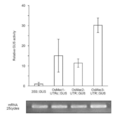
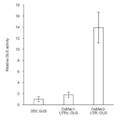
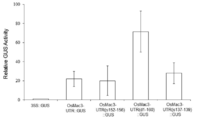
- FIG. 2 is a diagram showing the structure of a transformation plasmid used in Example 1 and Example 2. It is a figure which shows the evaluation result of the translation efficiency in a rice cultured cell. It is a figure which shows the evaluation result of the translation efficiency in the Arabidopsis culture cell. It is a figure which shows the evaluation result of the translation efficiency in a wheat germ cell-free protein synthesis system. It is a figure which shows the evaluation result of the translation efficiency in a rice cultured cell.
- the DNA of the present disclosure is any one of the following DNAs (a) to (f) consisting of a base sequence having translation enhancer activity.
- E a DNA that hybridizes under stringent conditions with a DNA complementary to any one of the above (a) to (d)
- the use of the present disclosure is also the use of the DNA of the present disclosure as a translation enhancer.
- the base sequences of SEQ ID NO: 1, SEQ ID NO: 2 and SEQ ID NO: 3 are shown in Table 1 below.
- the nucleotide sequence of SEQ ID NO: 1 was found from the 5′UTR (untranslated region) of the OsMac2 gene (accession no. AK073148) of rice (Oryza sativa). , which was found from the 5 ′ UTR of the rice OsMac3 gene (accession no. AK069607).
- the DNA consisting of the base sequence of SEQ ID NO: 3 (OsMac3-UTR (d1-160)) is a base sequence obtained by deleting the first to 160th bases from the 5 ′ end in the base sequence of SEQ ID NO: 2. It is what has.
- FIG. 1 shows the structures of the OsMac1 gene, the OsMac2 gene, and the OsMac3 gene.
- the part represented by the line on the 5 'end side in the figure represents the 5' UTR of each gene.
- the white box represents the uORF (upstream opening reading frame), and the black box represents the downstream ORF.
- the light-colored part in the DUF300 domain represents TMR (transmembrane region).
- the 5 'UTR base sequences of the OsMac2 gene and the OsMac3 gene correspond to the base sequence of SEQ ID NO: 1 and the base sequence of SEQ ID NO: 2, respectively. It is reported in Japanese Patent Application Laid-Open No.
- SEQ ID NO: 4 The base sequence of SEQ ID NO: 4 is one (UTRc) of a plurality of 5 'UTRs present due to the occurrence of alternative splicing.
- the OsMac2 gene and the OsMac3 gene have a structure in which the 5'UTR is relatively long like the OsMac1 gene.
- the present inventors speculate that this long 5 'UTR has translation enhancer activity for some reason (for example, forms a special three-dimensional structure), and improves the translation efficiency of downstream genetic information.
- translation enhancer activity possessed by a certain base sequence means that when a polynucleotide comprising the base sequence is present in a structural gene expression system, the protein is translated from the transcription product of the structural gene.
- the base sequence having translation enhancer activity is a base sequence that is present in the base sequence of the transcription product and is not translated into protein in the structural gene expression system. For example, it exists upstream of the translation initiation codon.
- the DNA of the present disclosure may be any of the above (a) to (f).
- the full length of the base sequence of the DNA of the present disclosure is not particularly limited as long as the base sequence has a translation enhancer activity.
- the number of bases to be added may be in the range where the base sequence has translation enhancer activity, for example, about 1 to 30 bases. From the viewpoint of allowing the transcript to form an appropriate three-dimensional structure and from the viewpoint of the strength of the translation enhancer activity, the number is preferably small, preferably about 1 to 20, and more preferably about 1 to 10.
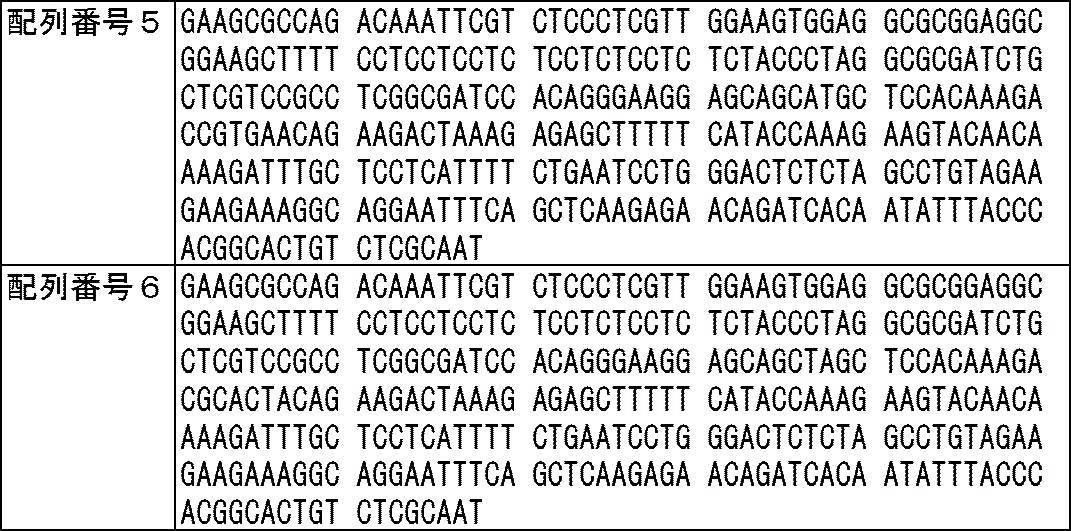
- DNAs having the base sequences of SEQ ID NO: 5 or SEQ ID NO: 6 shown in Table 3 below are DNAs having the base sequences of SEQ ID NO: 5 or SEQ ID NO: 6 shown in Table 3 below.
- the DNA consisting of the base sequence of SEQ ID NO: 5 (OsMac3-UTR (s152-156)) has 5 bases (GCACT) from the 5th end to the other 5 bases (GCACT) in the base sequence of SEQ ID NO: 2. It has a base sequence substituted with a base (CGTGA).
- DNA (OsMac3-UTR (s137-139)) consisting of the base sequence of SEQ ID NO: 5 has three bases (ATG) from the 137th to 139th from the 5 ′ end in the base sequence of SEQ ID NO: 2. It has a base sequence substituted with another base (TAG).
- “Homology” in the case where the DNA of the present disclosure is DNA comprising a base sequence having a homology of 80% or more with any one of (f): (a) to (e), the base sequence is translated If it is a range which has enhancer activity, it will not restrict
- BLAST Basic Alignment Search Tool
- the DNA of the present disclosure can be obtained by chemically synthesizing a DNA chain according to a normal DNA synthesis method.
- the DNA of the present disclosure can be obtained by isolating from a cDNA library of an organism having the DNA of the present disclosure.
- limit especially as said organism For example, a Gramineae plant is mentioned, Among these, rice is mentioned preferably.
- the method for confirming whether or not the base sequence has translation enhancer activity is not particularly limited, and the protein encoded by the structural gene in the case where the base sequence coexists in the expression system of the structural gene and in the case where the base sequence does not coexist. Any method can be used as long as the synthesis amount can be compared. For example, it can be confirmed by a transient assay in which a DNA comprising the base sequence is inserted between an arbitrary promoter and a reporter gene. Specific examples of the promoter and reporter gene include those similar to those used for the construction of the recombinant vector described later.
- the recombinant vector of the present disclosure includes the DNA of the present disclosure.
- the recombinant vector of the present disclosure can be obtained by ligating (inserting) the DNA of the present disclosure into an arbitrary vector.
- Plasmid DNA includes plasmids derived from E. coli (eg, pBR322, pBR325, pUC118, pUC119, pUC18, pUC19, etc.), plasmids derived from Bacillus subtilis (eg, pUB110, pTP5 etc.), yeast-derived plasmids (eg, YEp13, YEp24).
- phage DNA includes ⁇ phage DNA (for example, Charon4A, Charon21A, EMBL3, EMBL4, ⁇ gt10, ⁇ gt11, ⁇ ZAP, etc.).
- vectors derived from animal viruses such as retrovirus and vaccinia virus, and vectors derived from insect viruses such as baculovirus can also be used.
- plant transformation vectors include pCAMBIA vectors such as pCAMBIA1301 (Australian CAMBIA), pGWB vectors such as pGWB2 (Shimane University Research Support Center Nakagawa Laboratory), MAT vectors (Nippon Paper Industries Co., Ltd.), pBI121 and the like. Can be mentioned.
- the method for inserting the DNA of the present disclosure into the vector is not particularly limited.
- a method in which the purified DNA is cleaved with a suitable restriction enzyme, inserted into a restriction enzyme site or a multicloning site of a suitable vector DNA, and ligated to a vector is employed.
- the DNA needs to be incorporated into a vector so that the translation enhancer activity of the base sequence is exhibited. Therefore, in the recombinant vector of the present disclosure, it is preferable that the DNA is inserted between an arbitrary promoter and the translation initiation codon of the structural gene to be expressed.
- the structural gene for which the promoter and expression are intended is not particularly limited.
- an arbitrary structural gene such as a gene derived from various organisms or a gene obtained by chemically synthesizing part or all of the gene can be used.
- the structural gene can be prepared using a normal cloning technique (for example, J. Sambrook, et al., Molecular cloning, Cold spring Harbor Laboratory Press, 1989).
- An example of a structural gene that is the object of expression is a reporter gene that is used for the purpose of analyzing gene function and the like.
- a reporter gene such as GUS ( ⁇ -glucuronidase) gene, luciferase gene, GFP (green fluorescent protein) gene on the vector Can do.
- GUS ⁇ -glucuronidase
- luciferase gene GFP (green fluorescent protein) gene
- GFP green fluorescent protein
- examples of the constant expression include cauliflower mosaic virus 35S promoter, NOS promoter, ubiquitin promoter and the like.
- examples of green leaf-specific expression include promoters of RuBisCO Small Subunit gene, promoters of photosynthesis-related genes such as LHCP (light collecting protein), etc.
- promoters of genes involved in biosynthesis of storage starch and storage protein can be mentioned.
- a promoter derived from E. coli or phage such as trp promoter, lac promoter, PL promoter, PR promoter, or tac promoter, etc. Designed and modified promoters can be used.
- yeast for example, gal1 promoter, gal10 promoter, heat shock protein promoter, MF ⁇ 1 promoter, PHO5 promoter, PGK promoter, GAP promoter, ADH promoter, AOX1 promoter, etc. may be used. it can.
- the recombinant vector of the present disclosure links a cis element such as a transcription enhancer, a splicing signal, a poly A addition signal, a selection marker, a ribosome binding sequence (SD sequence), a terminator such as NOS, and the like as necessary.
- a cis element such as a transcription enhancer, a splicing signal, a poly A addition signal, a selection marker, a ribosome binding sequence (SD sequence), a terminator such as NOS, and the like as necessary.
- Selectable markers include, for example, antibiotic resistance genes (eg, resistance genes such as ampicillin, neomycin, kanamycin, hygromycin, etc.), herbicide resistance genes (eg, bialaphos resistance genes), mutant acetolactate synthase genes, etc. Is mentioned.
- the cauliflower mosaic virus 35S promoter When the recombinant vector of the present disclosure is used for transformation of a plant, the cauliflower mosaic virus 35S promoter, the DNA of the present disclosure, the structural gene to be expressed, and the NOS terminator are mounted in an appropriate orientation. preferable.
- the transformant of the present disclosure is one transformed with the recombinant vector of the present disclosure.
- the transformant of the present disclosure can be obtained by introducing the recombinant vector of the present disclosure into a host so that the target structural gene can be expressed.
- the host is not particularly limited as long as it can express the structural gene mounted on the recombinant vector of the present disclosure.
- Escherichia such as Escherichia ichicoli, Bacillus genus such as Bacillus subtilis, Pseudomonas putida such as Pseudomonas, Rhizobium bmeliloti and other genus Rhizobium meliloti Is mentioned.
- yeasts such as Saccharomyces cerevisiae and Schizosaccharomyces pombe are also included.
- plant cells of plants such as animal cells such as COS cells and CHO cells, insect cells such as Sf9, tobacco BY2 cells, and rice OC cells are also included.
- examples of the host include algae such as cyanobacteria, Chlamydomonas, Euglena, and mushrooms.
- the host When the host is a plant, the host is the whole plant, fruit, seed, plant organ (eg, leaf, petal, stem, root, rhizome, etc.), plant tissue (eg, epidermis, phloem, soft tissue, tree) Part, vascular bundle, etc.) and plant cells including cultured cells.
- plant organ eg, leaf, petal, stem, root, rhizome, etc.
- plant tissue eg, epidermis, phloem, soft tissue, tree Part, vascular bundle, etc.
- plant cells including cultured cells.
- the recombinant vector of the present disclosure is suitably used with a plant as a host.
- the plant used as a host is not particularly limited, and may be, for example, an angiosperm or a gymnosperm.
- angiosperm it may be a monocotyledonous plant or a dicotyledonous plant.
- gymnosperm include cycad cycad, ginkgo biloba, pine pine, black pine, fir, spruce, cedar cedar, yew, etc. It is not limited to.
- monocotyledonous plants include rice, wheat, barley, oats, rye, millet, millet, millet, corn, millet, sorghum, bamboo, reeds, Japanese pampas grass, amaranth, miscanthus, switchgrass, Examples include, but are not limited to, sorghum, taros from the taro family, palms from the palm family, date palms, bananas from the rosaceae family.
- dicotyledonous plants include cruciferous Arabidopsis and rape, solanaceous tobacco, tomatoes, potatoes, cucurbit melons, pumpkins, leguminous soybeans, mallows, chrysanthemum, etc.
- Examples include, but are not limited to, family chrysanthemum, camellia family tea, grape family grapes, etc.
- As the host monocotyledonous plants and dicotyledonous plants are more preferable, and rice or Arabidopsis is more preferable.
- the method for introducing the recombinant vector into the host is not particularly limited.
- a method for introducing a recombinant vector when a bacterium is used as a host for example, a method using calcium ions (Cohen, SNet al .: Proc. Natl. Acad. Sci., USA, 69: 2110 (1972))
- Examples include electroporation.
- electroporation method Becker, DM et al. Methods. Enzymol., 194: 182 (1990)
- spheroplast method Hinnen, A
- lithium acetate method Itoh, H. J.Bacteriol., 153: 163 (1983)
- Examples of methods for introducing a recombinant vector when using plant cells as a host include an electroporation method, an Agrobacterium binary vector method, and a particle gun method.
- an electroporation method When using a plant body, plant organ, or plant tissue as a host, introduce the recombinant vector into the collected plant section using the Agrobacterium binary vector method or particle bombardment method, or into the protoplast using the electroporation method. be able to.
- transformation is performed by introducing a recombinant vector and isolating callus, shoots, hairy roots, etc. obtained as a result of transformation. .
- the obtained callus, shoot, hairy root, etc. can be used as it is for cell culture, tissue culture, or organ culture, and using a conventionally known plant tissue culture method, an appropriate concentration of plant hormones can be used. It can be regenerated into a plant body by administration of For example, in rice, the method of Hiei et al. (Hiei, Y. et al., Plan J., 6, 271-282 (1994)), the method of Fujimura et al. (Fujimura, T.
- PCR Southern hybridization
- Northern hybridization or the like.
- DNA is prepared from the transformant, PCR is performed by designing a DNA-specific primer. PCR can be performed under the conditions normally used. Thereafter, the amplified product is subjected to agarose gel electrophoresis, polyacrylamide gel electrophoresis, capillary electrophoresis, etc., stained with ethidium bromide, SYBR Green solution, and the like, and the amplified product is detected as a single band, It can be confirmed that it has been transformed.
- PCR can be performed using a primer previously labeled with a fluorescent dye or the like to detect an amplification product.
- a method of binding an amplification product to a solid phase such as a microplate and confirming the amplification product by fluorescence, enzyme reaction, or the like can also be employed.
- the protein synthesis method of the present disclosure is a protein synthesis method of synthesizing the protein using RNA for translation including RNA corresponding to the DNA of the present disclosure and RNA encoding the target protein. According to the protein synthesis method of the present disclosure, translation from the translation RNA to the target protein is promoted, so that RNA corresponding to the DNA of the present disclosure does not coexist with RNA encoding the target protein. In comparison, the synthesis amount of the target protein can be increased.
- RNA corresponding to the DNA of the present disclosure refers to RNA having a base sequence in which T (thymine) is replaced with U (uracil) in the base sequence of the DNA of the present disclosure.
- Specific examples of RNA corresponding to the DNA of the present disclosure include mRNA based on the DNA of the present disclosure.
- the target protein is not particularly limited, and examples thereof include any protein such as a protein encoded by a structural gene derived from various organisms, or a protein encoded by a partially or fully chemically synthesized gene. A specific example is as described later.
- the protein synthesis method of the present disclosure is not particularly limited as long as it uses a system in which a protein translation reaction is performed from the translation RNA, and a conventionally known protein synthesis method can be employed. Specific examples include a protein synthesis method in a transformant and a protein synthesis method in an in vitro cell-free system.
- a protein synthesis method of the present disclosure includes obtaining a transformant using a recombinant vector comprising the DNA of the present disclosure and a structural gene to be expressed, and culturing the transformant. It can be a synthesis method.
- the specific method of “obtaining a transformant” is not particularly limited, and includes introducing the recombinant vector into a host so that the structural gene to be expressed can be expressed.
- the transformant can be obtained, for example, by the same method as the method for obtaining the transformant of the present disclosure described above, and preferred embodiments such as a host and a recombinant vector introduction method are also the same. .
- the recombinant vector can be obtained by linking the DNA of the present disclosure and the structural gene that is the object of expression.
- This ligation may be ligated so that the translation enhancer activity of the base sequence of the DNA of the present disclosure is exerted.
- the ligation is performed so that the DNA of the present disclosure is located 5 ′ upstream of the structural gene.
- the above ligation can be facilitated by, for example, selecting an appropriate vector and inserting the DNA of the present disclosure and the structural gene to be expressed in an appropriate orientation into a recombinant vector. Can be done.
- This recombinant vector preferably has a promoter sequence for promoting transcription on the 5 ′ upstream side of the DNA of the present disclosure, and preferably has a terminator for terminating transcription on the 3 ′ downstream side of the structural gene.
- the vector, promoter, and terminator that can be used for the above ligation, and the method for inserting DNA into the vector are the same as those of the recombinant vector of the present disclosure described above, and the preferred embodiments are also the same.
- the specific method of “culturing a transformant” is not particularly limited, and can be performed according to a usual method used for host culture.
- the term “culture” refers to growing the transformant as long as the transformant is maintained at least.
- the transformant is an entire plant, seed, plant organ, or plant tissue, It is a concept that includes cultivation.
- a structural gene to be expressed is expressed from the culture (when the transformant is an entire plant, seed, plant organ, or plant tissue, also referred to as “cultivation”). Proteins that are expression products can be obtained.
- “cultured product” or “cultivated product” means any of culture supernatant, cultured cells, cultured cells, whole plant, seeds, plant organs, plant tissues, and crushed materials thereof. It is.
- the protein when the protein is an enzyme, the product of the reaction catalyzed by the enzyme, or intermediates and / or final products on a series of biosynthetic reaction pathways following the reaction are also included in the transformant. It can be obtained from a culture or a culture. These products are hereinafter simply referred to as “metabolites”.
- the structural gene to be expressed include insulin, growth hormone, hematopoietic factor, and antibody genes used as biopharmaceuticals.
- the structural genes targeted for expression include herbicide resistance genes, genes involved in vitamin synthesis, genes involved in the synthesis of polyphenols (catechin etc.), flower pigment genes, antibacterial peptide Examples include genes involved in synthesis, genes involved in the reduction of antigenic peptides (allergens and toxins), and the like.
- the transformant when the transformant is an edible plant such as a gramineous plant (rice, wheat, barley, oats, rye, millet, millet, millet, corn, millet, sorghum, etc.) or a plant with a fruit, the transformant is By cultivating, it is possible to increase the content of the protein encoded by the structural gene to be expressed in seeds (cereal grains), fruits, and other edible parts.
- the protein is an enzyme
- the content of the metabolite related to the enzyme can also be increased in seeds (cereal grains), fruits, and other edible parts.
- the method for culturing the transformant is not particularly limited, and a usual method used for culturing a host can be employed.
- the medium for culturing the transformant obtained using a microorganism such as Escherichia coli or yeast as a host contains a carbon source, a nitrogen source, inorganic salts, etc. that can be assimilated by the microorganism, and the culture of the transformant is efficient. Any natural or synthetic medium may be used as long as it can be performed automatically.
- the microorganism is usually cultured at 37 ° C. under aerobic conditions such as shaking culture and aeration stirring culture.
- the pH of the medium is adjusted using an inorganic or organic acid, an alkaline solution, or the like.
- antibiotics such as ampicillin and tetracycline may be added to the medium as necessary.
- the culture is performed using a normal plant culture medium such as MS basic medium (Murashige, T. & Skoog, F. Physiol. Plant. 15: 473 (1962)). ), LS basic medium (Linsmaier, EM & Skoog, F. Physiol. Plant. 18: 100 (1965)), protoplast culture medium (modified LS medium), and the like.
- the culture method may be a normal solid culture method, but a liquid culture method is preferably employed.
- 10 g to 100 g of fresh weight / L of cells, tissues, or organs are inoculated in the above medium, and if necessary, NAA, 2,4-D, BA, kinetin and the like are appropriately added and cultured.
- the pH of the medium at the start of the culture is adjusted to 5 to 7, and the culture is usually 20 ° C. to 30 ° C., preferably around 25 ° C., and aeration is performed at 0.2 vvm to 1 vvm, stirring at 50 rpm to 200 rpm for 1 week to 6 weeks. It can be cultured.
- the transformant is a plant, it can be cultivated or hydroponically cultured in a field, a glass house or the like.
- collecting the target protein and / or metabolite from the culture or cultivation may be collecting the culture or cultivation itself from a medium, a field, or the like.
- the protein in the case of a transformant obtained using microorganisms or cultured cells such as E. coli and yeast as a host, if the protein is produced in microorganisms or cultured cells, the protein can be obtained by disrupting the microorganisms or cultured cells. Can be extracted. Thereafter, by using a general biochemical method used for protein isolation and purification, such as ammonium sulfate precipitation, gel chromatography, ion exchange chromatography, affinity chromatography, etc. alone or in appropriate combination, from the culture. Proteins can be isolated and purified.
- a general biochemical method used for protein isolation and purification such as ammonium sulfate precipitation, gel chromatography, ion exchange chromatography, affinity chromatography, etc. alone or in appropriate combination, from the culture. Proteins can be isolated and purified.
- the target protein and / or metabolite can be isolated and purified as follows after the completion of the culture. First, cells are disrupted by cell lysis using an enzyme such as cellulase or pectinase, ultrasonic disruption, freezing with liquid nitrogen, and grinding with liquid mortar or the like. Thereafter, an extraction solution is added as appropriate to extract a solution containing the target protein and / or metabolite, and then insoluble matter is removed using filtration, centrifugation, etc., and a solution containing the crude protein solution or metabolite is obtained. Get. In order to further purify the protein from the crude protein solution, an ordinary protein purification method can be used.
- an ammonium sulfate salting-out method ion exchange chromatography, hydrophobic chromatography, gel filtration chromatography, affinity chromatography, electrophoresis, and the like are performed alone or in appropriate combination.
- conventionally known purification techniques can be used to further purify the metabolite from the solution containing the metabolite. For example, solvent extraction, ion exchange chromatography, hydrophobic chromatography, gel filtration chromatography, high performance liquid chromatography and the like are performed alone or in combination.
- the protein synthesis method of the present disclosure includes a protein synthesis method including contacting the translation RNA with a reaction solution for in vitro cell-free protein synthesis (hereinafter also referred to as “in vitro cell-free protein synthesis method”). can do.
- the in vitro cell-free protein synthesis method involves in vitro contact with the above-mentioned translation RNA and a reaction solution for in vitro cell-free protein synthesis (hereinafter also simply referred to as “reaction solution”).
- reaction solution for in vitro cell-free protein synthesis
- the in vitro cell-free protein synthesis method is not particularly limited, and is described in, for example, JP 2009-165426 A, JP 2007-143435 A, JP 2004-344014 A, JP 2003-245094 A, and the like.
- the method can be applied. Specifically, for example, the following configuration can be adopted.
- the reaction solution for example, a reagent kit such as Wheat Germ Extract Plus (Promega Corporation), Premium PLUS Kit (Cell Free Science Co., Ltd.), RTS system (Funakoshi Corporation), or the like can be used.
- the translation RNA and the reaction solution may be brought into contact with each other by any method.
- the translation RNA may be added to the reaction solution, or the solution containing the translation RNA is mixed with the above solution. You may throw in a reaction liquid.
- the translation RNA may be continuously added to the reaction solution, or may be periodically added.
- the target protein may be purified by a conventional method. Specifically, by using general biochemical methods used for protein isolation and purification, such as ammonium sulfate precipitation, gel chromatography, ion exchange chromatography, affinity chromatography, etc. alone or in appropriate combination, Can be isolated and purified.
- the method for obtaining the RNA for translation is not particularly limited, but can be synthesized as a transcription product by performing a transcription reaction in vitro using a template DNA containing the DNA of the present disclosure and the structural gene to be expressed. .
- This transcription reaction can be easily performed using, for example, a commercially available reagent kit (Roche, Nippon Gene, etc.) using T7 RNA polymerase or SP6 RNA polymerase.
- the translation RNA synthesized by the transcription reaction may be purified by a conventional method and used for the translation reaction, or the solution used for the transcription reaction may be used for the translation reaction.
- the template DNA can be obtained by linking the DNA of the present disclosure and the structural gene that is the object of expression.
- This ligation may be ligated so that the translation enhancer activity of the base sequence of the DNA of the present disclosure is exerted.
- the ligation is performed so that the DNA of the present disclosure is located 5 ′ upstream of the structural gene.
- the above ligation can be facilitated by, for example, selecting an appropriate vector and inserting the DNA of the present disclosure and the structural gene to be expressed in an appropriate orientation into a recombinant vector. Can be done.
- This recombinant vector preferably has a promoter sequence for promoting transcription on the 5 ′ upstream side of the DNA of the present disclosure, and preferably has a terminator for terminating transcription on the 3 ′ downstream side of the structural gene.
- the vector, promoter, and terminator that can be used for the above ligation, and the method for inserting DNA into the vector are the same as those of the recombinant vector of the present disclosure described above, and the preferred embodiments are also the same.
- Example 1 Evaluation of translation efficiency in rice cultured cells> A plasmid for transformation in which the DNA of the present disclosure is inserted between the cauliflower mosaic virus 35S promoter and the GUS gene, and a transformation in which 5'UTR (UTRc) of the OsMac1 gene is inserted in place of the DNA of the present disclosure for reference
- the plasmid for use was prepared by the method described later.
- FIG. 2 shows the structure of the prepared plasmid for transformation, 35S is cauliflower mosaic virus 35S promoter, 5′UTR is OsMac1 gene, OsMac2 gene, or OsMac3 gene 5′UTR, GUS is GUS gene, Ter is NOS terminator. Represent each.
- OsMac1-UTRc :: GUS is a plasmid for transformation containing 5′UTR of OsMac1
- OsMac2-UTR :: GUS is a plasmid for transformation containing 5′UTR of OsMac2
- OsMac3-UTR: : GUS is a plasmid for transformation containing 5'UTR of OsMac3
- 35S :: GUS is a control plasmid for transformation without 5'UTR.
- UsMac1-UTRc :: GUS means one of the 5′UTRs of the OsMac1 gene present in a plurality of species due to the occurrence of alternative splicing.
- GUS activity was measured by a fluorometric assay according to a previous report (Pooggin et al. Journal of Biological Chemistry 275: 17288-17296 (2000)). Specifically, GUS extraction buffer (0.5 mM Tris-HCl (pH 7.5), 10 mM EDTA (pH 8.0), 1% Triton X-100, and 1% NoniDet P-40 (Sigma-Aldrich)) A fluorescent substrate solution (0.1% BSA, 1 mM DTT, 2 mM 4-methylumbelliferyl- ⁇ -D-glucuronide) was added and reacted at 37 ° C. Thereafter, the reaction was performed using 0.4 M Na 2 CO 3 . The amount of fluorescence signal derived from the GUS gene was measured under the conditions of excitation light of 355 nm and filter wavelength of 460 nm, and this was defined as GUS activity.
- GUS extraction buffer 0.5 mM Tris-HCl (pH 7.5), 10 mM
- 35S-GFP prepared according to the previous report (Teramura et al., Plant Biotechnology 29: 43-49 (2012)) was also introduced, and a fluorescent signal derived from the GFP gene was also introduced. The amount was measured under conditions of excitation light of 485 nm and filter wavelength of 520 nm, and this was defined as GFP activity.
- OsMac1-UTRc GUS (including 5′UTR of OsMac1), OsMac2-UTR :: GUS (including 5′UTR of OsMac2), OsMac3-UTR :: GUS (5 ′ of OsMac3)
- Transformants prepared by introducing had significantly higher translation efficiency than the transformants prepared by introducing the control 35S :: GUS.
- the transformant prepared by introducing OsMac3-UTR :: GUS had significantly higher translation efficiency than other transformants.
- the translation efficiency of the transformant prepared by introducing OsMac1-UTRc :: GUS was about twice that of the transformant prepared by introducing 35S :: GUS as a control.
- the transformant prepared by introducing OsMac3-UTR :: GUS showed a translation efficiency exceeding 10 times that of the control. This result indicates that the 5'UTR of the OsMac3 gene is particularly useful as a translation enhancer that is excellent in translation efficiency and versatility.
- the 5′UTR of the full-length cDNAs obtained from Rice Genome Resource Center (Tsukuba City, Ibaraki)
- each of the OsMac1, OsMac2, and OsMac3 genes is placed at the 5 ′ end with restriction enzymes BamHI (OsMac2 and OsMac3) or XbaI (OsMac1).
- BamHI OsMac2 and OsMac3
- XbaI OsMac1
- SEQ ID NOs: 9 and 10 for OsMac1
- SEQ ID NOs: 11 and 12 for OsMac2
- SEQ ID NOs: 13 and 14 for OsMac3
- the amplified fragment was cleaved with BamHI or XbaI and inserted into the BamHI or XbaI site located upstream of the GUS gene of pENTR-35S-GUS to obtain pENTR-35S-5′UTR-GUS. Subsequently, pENTR-35S-5′UTR-GUS was reacted with pGWB1 (Nakagawa et al., 2007) using LR clonase (Invitrogen) to prepare pGWB1-35S-5′UTR-GUS.
- 35S-5′UTR-GUS of the obtained plasmid was replaced with pDONR 221 (Invitrogen) using BP clonase (Invitrogen) to prepare a plasmid for transformation used in Examples 1 and 2. All the above steps were performed according to the instructions attached to the product.
- RNA was prepared from cultured cells according to a previous report (Imamura et al., Plant Cell Physiol. 48: 1108-1120 (2007)). Single-stranded cDNA was synthesized from 1 ⁇ g of total RNA using the reverseTra-Ace cDNA synthesis kit oligo-dT (20) primer (Toyobo Co., Ltd.). The obtained cDNA was used for detection of the transcription product of each gene in semi-quantitative RT-PCR according to a report (She et al., Plant Cell 22: 3280-3294 (2010)). Semi-quantitative RT-PCR was performed using primers (SEQ ID NOs: 15 and 16) prepared based on the base sequence of the GUS gene.
- a PCR primer (SEQ ID NO: 19) in which the DsRed2 gene region of the pDsRed2 vector (Takara Bio Inc.) was added with a cleavage site by the restriction enzyme BamHI at the 5 ′ end, a cleavage site by the restriction enzyme SalI, and a 3 ⁇ FLAG gene sequence Amplification was performed using a PCR primer (SEQ ID NO: 20) to which was added.
- the amplified fragment was cleaved with BamHI and SalI and inserted into the BamHI and SalI sites in the MCS region of pEU-MCS to obtain pEU-MCS-DsRed2-3FLAG.
- the 5′UTR of OsMac1 and OsMac3, and OsMac3-UTR (d1-160) were added to the 5 ′ end by a PCR primer (SEQ ID NO: 21) added with a cleavage site by restriction enzyme NotI (forward primer) or BamHI (reverse primer).
- SEQ ID NO: 21 a PCR primer added with a cleavage site by restriction enzyme NotI (forward primer) or BamHI (reverse primer).
- 22 for OsMac1
- SEQ ID NO: 23, 24 for OsMac3
- SEQ ID NO: 24, 25 for OsMac3-UTR (d1-160)
- the amplified fragment was cleaved with NotI and BamHI and inserted into NotI and BamHI sites located upstream of the DsRed2-3FLAG gene of pEU-MCS-DsRed2-3FLAG, and pEU-OsMac1-DsRed2-3FLAG, pEU-OsMac3-DsRed2 -3FLAG and pEU-OsMac3-UTR (d1-160) -DsRed2-3FLAG were obtained, respectively. All the above steps were performed according to the instructions attached to the product.
- FIG. 5 shows the relative values when the protein amount is 1 when pEU-OsMac1-DsRed2-3FLAG is used.
- the amount of protein when pEU-OsMac3-DsRed2-3FLAG was used was 2.4 times the amount of protein when pEU-OsMac1-DsRed2-3FLAG was used.
- the amount of protein when pEU-OsMac3-UTR (d1-160) -DsRed2-3FLAG was used was 7.0 times the amount of protein when pEU-OsMac1-DsRed2-3FLAG was used.
- OsMac3-UTR (s152-156) consisting of the base sequence of SEQ ID NO: 5, OsMac3-UTR (d1-160) consisting of the base sequence of SEQ ID NO: 3, and OsMac3-UTR (s137-139) consisting of the base sequence of SEQ ID NO: 6 ) was added by total synthesis to the 3 ′ and 5 ′ ends of the DNA fragment, which was cleaved with the restriction enzyme BamHI.
- 35S-OsMac3_5′UTR-GUS of the obtained plasmid was replaced with pDONR 221 (Invitrogen) using BP clonase (Invitrogen) to prepare a plasmid for transformation used in Example 4. All the above steps were performed according to the instructions attached to the product.
- OsMac3-UTR GUS was produced in the same manner as in Example 1.
- OsMac3-UTR GUS
- OsMac3-UTR : GUS
- OsMac3-UTR (s152-156) : GUS
- OsMac3-UTR (d1-160) :: GUS
- OsMac3-UTR s137-139)
- the translation efficiency of the transformant prepared by introducing OsMac3-UTR (s152-156) :: GUS or OsMac3-UTR (s137-139) :: GUS is OsMac3-UTR :: GUS. It was almost the same as the transformant prepared by introducing. This shows that the activity as a translation enhancer is maintained even if a part of the 5'UTR base sequence of OsMac3 is modified.
- a transformant prepared by introducing OsMac3-UTR (d1-160) :: GUS exhibits a translation efficiency three times or more that of a transformant prepared by introducing OsMac3-UTR :: GUS. It was.
Landscapes
- Life Sciences & Earth Sciences (AREA)
- Health & Medical Sciences (AREA)
- Engineering & Computer Science (AREA)
- Genetics & Genomics (AREA)
- Organic Chemistry (AREA)
- Chemical & Material Sciences (AREA)
- Zoology (AREA)
- Wood Science & Technology (AREA)
- Biotechnology (AREA)
- Bioinformatics & Cheminformatics (AREA)
- General Engineering & Computer Science (AREA)
- Biomedical Technology (AREA)
- General Health & Medical Sciences (AREA)
- Microbiology (AREA)
- Biochemistry (AREA)
- Molecular Biology (AREA)
- Physics & Mathematics (AREA)
- Biophysics (AREA)
- Plant Pathology (AREA)
- Proteomics, Peptides & Aminoacids (AREA)
- Chemical Kinetics & Catalysis (AREA)
- General Chemical & Material Sciences (AREA)
- Cell Biology (AREA)
- Micro-Organisms Or Cultivation Processes Thereof (AREA)
- Preparation Of Compounds By Using Micro-Organisms (AREA)
Abstract
翻訳エンハンサー活性を有する塩基配列からなる下記(a)から(f)のいずれか1つのDNA:(a)配列番号1の塩基配列からなるDNA、(b)配列番号2の塩基配列からなるDNA、(c)配列番号3の塩基配列からなるDNA、(d)上記(a)~(c)のいずれか1つのDNAにおいて1個又は数個の塩基が欠失、置換、又は付加されたDNA、(e)上記(a)~(d)のいずれか1つのDNAと相補的なDNAとストリンジェントな条件下でハイブリダイズするDNA、(f)上記(a)~(e)のいずれか1つのDNAと相同性が80%以上の塩基配列からなるDNA。
Description
本開示は、翻訳エンハンサーに関する。
遺伝子の発現の制御は、転写、転写後、翻訳、及び翻訳後の4つの段階において行われている。近年、翻訳の段階での制御(翻訳制御)についての研究が進み、構造遺伝子の翻訳効率を高める翻訳エンハンサーとして、5’非翻訳領域に由来する塩基配列が植物から単離されている(例えば、特開平8-256777号公報、特開2003-79372号公報、及び特開2011-103833号公報を参照)。
近年、遺伝子組換え技術を用いて細菌、培養細胞、植物等に有用物質を生産させる技術が注目を浴びており、有用物質の発現効率を向上させる技術の開発が待たれている。その中で、翻訳エンハンサー活性を有する塩基配列からなるDNAを搭載したベクターが植物形質転換用ベクターとして上市されている。
しかしながら、翻訳エンハンサーの単離例はまだわずかである。翻訳エンハンサーは、生物種、細胞種、及び遺伝子の種類によって翻訳効率が異なることが予想されるため、翻訳エンハンサーに対する需要に充分に応じきれていないのが現状である。したがって、翻訳エンハンサーとして使用可能な候補塩基配列、及び当該塩基配列からなるDNAを数多く開発することは重要である。よって、本開示は、翻訳効率に優れる新規な翻訳エンハンサーを提供することを課題とする。
上記課題を達成するための具体的手段には、以下の実施態様が含まれる。
[1]翻訳エンハンサー活性を有する塩基配列からなる下記(a)から(f)のいずれか1つのDNAである:
(a)配列番号1の塩基配列からなるDNA、
(b)配列番号2の塩基配列からなるDNA、
(c)配列番号3の塩基配列からなるDNA、
(d)上記(a)~(c)のいずれか1つのDNAにおいて1個又は数個の塩基が欠失、置換、又は付加されたDNA、
(e)上記(a)~(d)のいずれか1つのDNAと相補的なDNAとストリンジェントな条件下でハイブリダイズするDNA、
(f)上記(a)~(e)のいずれか1つのDNAと相同性が80%以上の塩基配列からなるDNA。
[2][1]に記載のDNAを含む組換えベクターである。
[3][1]に記載のDNAがプロモーターと構造遺伝子との間に挿入されている[2]に記載の組換えベクターである。
[4][2]又は[3]に記載の組換えベクターで形質転換された形質転換体である。
[5]植物細胞、植物組織、植物器官、植物体、及び種子からなる群より選択されるいずれか1つである[4]に記載の形質転換体である。
[6][1]に記載のDNAに対応するRNAとタンパク質をコードするRNAとを含む翻訳用RNAを用いて、上記タンパク質を合成するタンパク質合成方法である。
[7][1]に記載のDNAと構造遺伝子とを含む組換えベクターを用いて形質転換体を得ることと、上記形質転換体を培養することと、を含む[6]に記載のタンパク質合成方法である。
[8]上記翻訳用RNAとインビトロ無細胞系タンパク質合成用反応液とを接触させることを含む[6]に記載のタンパク質合成方法である。
[9]更に、[1]に記載のDNAと構造遺伝子とを含む鋳型DNAから上記翻訳用RNAを合成することを含む[8]に記載のタンパク質合成方法である。
[10][1]に記載のDNAの翻訳エンハンサーとしての使用である。
[1]翻訳エンハンサー活性を有する塩基配列からなる下記(a)から(f)のいずれか1つのDNAである:
(a)配列番号1の塩基配列からなるDNA、
(b)配列番号2の塩基配列からなるDNA、
(c)配列番号3の塩基配列からなるDNA、
(d)上記(a)~(c)のいずれか1つのDNAにおいて1個又は数個の塩基が欠失、置換、又は付加されたDNA、
(e)上記(a)~(d)のいずれか1つのDNAと相補的なDNAとストリンジェントな条件下でハイブリダイズするDNA、
(f)上記(a)~(e)のいずれか1つのDNAと相同性が80%以上の塩基配列からなるDNA。
[2][1]に記載のDNAを含む組換えベクターである。
[3][1]に記載のDNAがプロモーターと構造遺伝子との間に挿入されている[2]に記載の組換えベクターである。
[4][2]又は[3]に記載の組換えベクターで形質転換された形質転換体である。
[5]植物細胞、植物組織、植物器官、植物体、及び種子からなる群より選択されるいずれか1つである[4]に記載の形質転換体である。
[6][1]に記載のDNAに対応するRNAとタンパク質をコードするRNAとを含む翻訳用RNAを用いて、上記タンパク質を合成するタンパク質合成方法である。
[7][1]に記載のDNAと構造遺伝子とを含む組換えベクターを用いて形質転換体を得ることと、上記形質転換体を培養することと、を含む[6]に記載のタンパク質合成方法である。
[8]上記翻訳用RNAとインビトロ無細胞系タンパク質合成用反応液とを接触させることを含む[6]に記載のタンパク質合成方法である。
[9]更に、[1]に記載のDNAと構造遺伝子とを含む鋳型DNAから上記翻訳用RNAを合成することを含む[8]に記載のタンパク質合成方法である。
[10][1]に記載のDNAの翻訳エンハンサーとしての使用である。
本開示によれば、翻訳効率に優れる新規な翻訳エンハンサーを提供することができる。
≪DNA及びその使用≫
本開示のDNAは、翻訳エンハンサー活性を有する塩基配列からなる下記(a)~(f)のいずれか1つのDNAである。
(a)配列番号1の塩基配列からなるDNA、
(b)配列番号2の塩基配列からなるDNA、
(c)配列番号3の塩基配列からなるDNA、
(d)上記(a)~(c)のいずれか1つのDNAにおいて1個又は数個の塩基が欠失、置換、又は付加されたDNA、
(e)上記(a)~(d)のいずれか1つのDNAと相補的なDNAとストリンジェントな条件下でハイブリダイズするDNA、
(f)上記(a)~(e)のいずれか1つのDNAと相同性が80%以上の塩基配列からなるDNA。
また、本開示の使用は、本開示のDNAの翻訳エンハンサーとしての使用である。
本開示のDNAは、翻訳エンハンサー活性を有する塩基配列からなる下記(a)~(f)のいずれか1つのDNAである。
(a)配列番号1の塩基配列からなるDNA、
(b)配列番号2の塩基配列からなるDNA、
(c)配列番号3の塩基配列からなるDNA、
(d)上記(a)~(c)のいずれか1つのDNAにおいて1個又は数個の塩基が欠失、置換、又は付加されたDNA、
(e)上記(a)~(d)のいずれか1つのDNAと相補的なDNAとストリンジェントな条件下でハイブリダイズするDNA、
(f)上記(a)~(e)のいずれか1つのDNAと相同性が80%以上の塩基配列からなるDNA。
また、本開示の使用は、本開示のDNAの翻訳エンハンサーとしての使用である。
配列番号1、配列番号2、及び配列番号3の塩基配列を下記表1に示す。配列番号1の塩基配列は、イネ(Oryza sativa)のOsMac2遺伝子(accession no. AK073148)の5’UTR(untranslated region、非翻訳領域)から見出されたものであり、配列番号2の塩基配列は、イネのOsMac3遺伝子(accession no. AK069607)の5’UTRから見出されたものである。また、配列番号3の塩基配列からなるDNA(OsMac3-UTR(d1-160))は、配列番号2の塩基配列において、5’末端側から1番目~160番目の塩基を欠失させた塩基配列を有するものである。

図1にOsMac1遺伝子、OsMac2遺伝子、及びOsMac3遺伝子の構造を示す。図中の5’末端側の線で表される部分が各遺伝子の5’UTRを表す。白いボックスはuORF(upstream open reading frame)を、黒いボックスは下流ORFをそれぞれ表す。DUF300ドメイン中の淡色部はTMR(transmembrane region)を表す。OsMac2遺伝子及びOsMac3遺伝子の5’UTRの塩基配列は、それぞれ配列番号1の塩基配列及び配列番号2の塩基配列に対応する。参考として掲載するOsMac1遺伝子(accession no. AK111844)は、その5’UTR(配列番号4)が翻訳エンハンサー活性を有することが特開2011-103833号公報に報告されている。なお、配列番号4の塩基配列は選択的スプライシングが生じたことにより複数種存在する5’UTRのうちの1つ(UTRc)である。
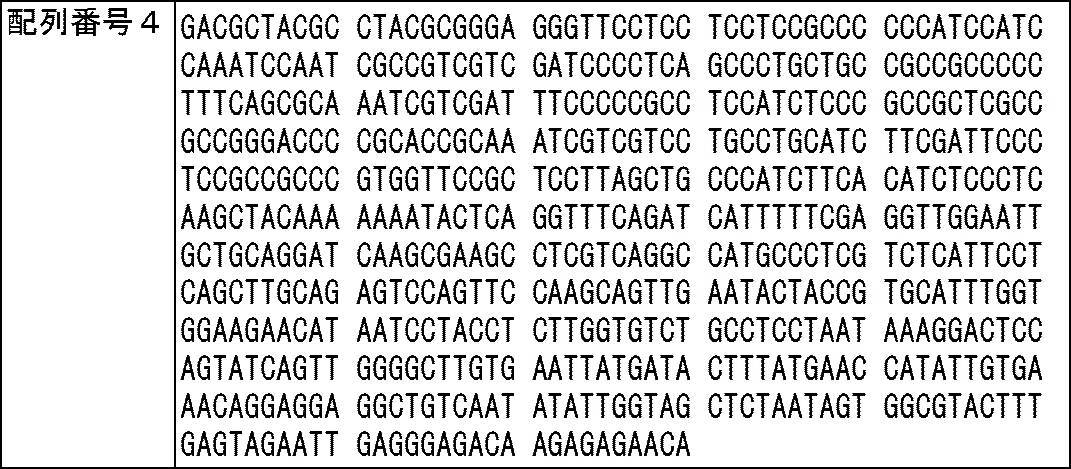
図1に示されるように、OsMac2遺伝子及びOsMac3遺伝子は、OsMac1遺伝子と同様に5’UTRが比較的長い構造を有している。本発明者らは、この長い5’UTRが何らかの理由(例えば、特殊な立体構造を形成する)により翻訳エンハンサー活性を有し、下流にある遺伝子情報の翻訳効率を高めると推測している。
本開示において、ある塩基配列が有する「翻訳エンハンサー活性」とは、当該塩基配列からなるポリヌクレオチドが構造遺伝子の発現系に存在した場合、この構造遺伝子の転写産物からタンパク質が翻訳される際に、翻訳により形成されるタンパク質の量を増大させる活性をいう。翻訳エンハンサー活性を有する塩基配列は、構造遺伝子の発現系において、転写産物の塩基配列の中に存在し、タンパク質には翻訳されない塩基配列であり、例えば翻訳開始コドンより上流に存在する。
本開示のDNAは、上記(a)~(f)のいずれでもよい。本開示のDNAの塩基配列の全長は、その塩基配列が翻訳エンハンサー活性を有する範囲であれば特に制限されない。
本開示のDNAが(d):(a)~(c)のいずれか1つのDNAにおいて1個又は数個の塩基が欠失、置換、又は付加されたDNAである場合の欠失、置換、又は付加される塩基の個数は、その塩基配列が翻訳エンハンサー活性を有する範囲であればよく、例えば、1個~30個程度である。転写産物が適切な立体構造を形成できる観点、及び翻訳エンハンサー活性の強さの観点からは少ない方がよく、好ましくは1個~20個程度、より好ましくは1個~10個程度である。
上記(d)のDNAの一例としては、下記表3に示す配列番号5又は配列番号6の塩基配列からなるDNAが挙げられる。配列番号5の塩基配列からなるDNA(OsMac3-UTR(s152-156))は、配列番号2の塩基配列において、5’末端側から152番目~156番目の5個の塩基(GCACT)を他の塩基(CGTGA)に置換した塩基配列を有するものである。また、配列番号5の塩基配列からなるDNA(OsMac3-UTR(s137-139))は、配列番号2の塩基配列において、5’末端側から137番目~139番目の3個の塩基(ATG)を他の塩基(TAG)に置換した塩基配列を有するものである。
本開示のDNAが(e):(a)~(d)のいずれか1つのDNAと相補的なDNAとストリンジェントな条件下でハイブリダイズするDNAである場合の「ストリンジェントな条件下」とは、ナトリウム濃度が150mM~900mM、好ましくは600mM~900mMであり、温度が60℃~65℃、好ましくは65℃の条件をいう。
本開示のDNAが(f):(a)~(e)のいずれか1つのDNAと相同性が80%以上の塩基配列からなるDNAである場合の「相同性」は、その塩基配列が翻訳エンハンサー活性を有する範囲であれば特に制限されない。転写産物が適切な立体構造を形成できる観点、及び翻訳エンハンサー活性の強さの観点からは相同性の数値は大きい方がよく、好ましくは85%以上、より好ましくは90%以上、更に好ましくは95%以上である。「相同性」を具体的な数値として示す場合、例えば、汎用されている相同性検索アルゴリズムであるBLAST(Basic Local Alignment Search Tool)(NCBI、又はAltschul, S. F. et al. J. Mol. Biol., 215:403-410(1990))を用いた配列比較で決定することができる。
本開示のDNAは、通常のDNA合成の方法に従ってDNA鎖を化学合成することで得ることができる。また、本開示のDNAは、本開示のDNAを有する生物のcDNAライブラリーから単離することで得ることができる。上記生物としては、特に制限されないが、例えば、イネ科植物が挙げられ、その中でもイネが好ましく挙げられる。
塩基配列が翻訳エンハンサー活性を有するか否かを確認する方法は、特に制限されず、当該塩基配列が構造遺伝子の発現系に共存する場合と共存しない場合とについて、当該構造遺伝子にコードされるタンパク質の合成量を比較できる方法であればよい。例えば、任意のプロモーターとレポーター遺伝子との間に当該塩基配列からなるDNAを挿入したトランジェントアッセイにより確認することができる。プロモーター及びレポーター遺伝子の具体例としては、後述する組換えベクターの構築に用いられるものと同様のものが挙げられる。
≪組換えベクター≫
本開示の組換えベクターは、本開示のDNAを含むものである。本開示の組換えベクターは、任意のベクターに本開示のDNAを連結(挿入)することにより得ることができる。
本開示の組換えベクターは、本開示のDNAを含むものである。本開示の組換えベクターは、任意のベクターに本開示のDNAを連結(挿入)することにより得ることができる。
本開示のDNAを挿入するためのベクターは、宿主中で複製可能なものであれば特に限定されず、例えば、プラスミドDNA、ファージDNA等が挙げられる。プラスミドDNAとしては、大腸菌由来のプラスミド(例えば、pBR322、pBR325、pUC118、pUC119、pUC18、pUC19等)、枯草菌由来のプラスミド(例えば、pUB110、pTP5等)、酵母由来のプラスミド(例えば、YEp13、YEp24、YCp50等)などが挙げられ、ファージDNAとしては、λファージDNA(例えば、Charon4A、Charon21A、EMBL3、EMBL4、λgt10、λgt11、λZAP等)が挙げられる。更に、レトロウイルス、ワクシニアウイルス等の動物ウイルス由来のベクター、バキュロウイルス等の昆虫ウイルス由来のベクターを用いることもできる。植物形質転換用ベクターとしては、例えば、pCAMBIA1301等のpCAMBIAベクター(オーストラリアCAMBIA)、pGWB2等のpGWBベクター(島根大学総合科学研究支援センター中川研究室)、MATベクター(日本製紙株式会社)、pBI121等が挙げられる。
ベクターに本開示のDNAを挿入する方法は特に制限されない。例えば、精製された上記DNAを適当な制限酵素で切断し、適当なベクターDNAの制限酵素部位又はマルチクローニングサイトに挿入してベクターに連結する方法等が採用される。本開示において上記DNAは、その塩基配列が有する翻訳エンハンサー活性が発揮されるようにベクターに組み込まれることが必要である。そこで、本開示の組換えベクターは、上記DNAが、任意のプロモーターと発現の目的となる構造遺伝子の翻訳開始コドンとの間に挿入されていることが好ましい。
プロモーター及び発現の目的となる構造遺伝子は、特に制限されない。例えば、各種生物に由来する遺伝子、あるいは一部又は全部を化学合成した遺伝子など、任意の構造遺伝子が挙げられる。なお、構造遺伝子は、通常のクローニング手法(例えば、J. Sambrook, et al., Molecular cloning, Cold spring Harbor Laboratory Press, 1989)を用いて調製することができる。
発現の目的となる構造遺伝子の例としては、遺伝子機能などの解析を目的として用いられるレポーター遺伝子が挙げられる。ベクターに、GUS(β-グルクロニダーゼ)遺伝子、ルシフェラーゼ遺伝子、GFP(緑色蛍光タンパク質)遺伝子等のレポーター遺伝子と共に本開示のDNAを搭載することで、遺伝子機能等の解析用の組換えベクターを構築することができる。当該組換えベクターは、従来の解析用組換えベクターに比し、レポーター遺伝子の発現量が増強される。
プロモーターとしては、本開示の組換えベクターを植物に適用する場合には、恒常的な発現をするものとして、例えばカリフラワーモザイクウイルス35Sプロモーター、NOSプロモーター、ユビキチンプロモーター等が挙げられる。また、緑葉特異的な発現をするものとして、例えばRuBisCOのSmall Subunit遺伝子のプロモーター、LHCP(集光タンパク質)等の光合成関連遺伝子のプロモーター等が挙げられ、貯蔵器官特異的な発現をするものとして、例えば貯蔵デンプンや貯蔵タンパク質の生合成に関わる遺伝子のプロモーター等が挙げられる。
本開示の組換えベクターを大腸菌に適用する場合には、例えば、trpプロモーター、lacプロモーター、PLプロモーター、PRプロモーター等の、大腸菌やファージに由来するプロモーター、又はtacプロモーター等のように、人為的に設計改変されたプロモーターを用いることができる。本開示の組換えベクターを酵母に適用する場合には、例えば、gal1プロモーター、gal10プロモーター、ヒートショックタンパク質プロモーター、MFα1プロモーター、PHO5プロモーター、PGKプロモーター、GAPプロモーター、ADHプロモーター、AOX1プロモーター等を用いることができる。
また、本開示の組換えベクターは、必要に応じて、転写のエンハンサー等のシスエレメント、スプライシングシグナル、ポリA付加シグナル、選択マーカー、リボソーム結合配列(SD配列)、NOS等のターミネーターなどを連結することができる。選択マーカーとしては、例えば、抗生物質耐性遺伝子(例えば、アンピシリン、ネオマイシン、カナマイシン、ハイグロマイシン等の各耐性遺伝子)、除草剤耐性遺伝子(例えば、ビアラホス耐性遺伝子)、突然変異型アセト乳酸合成酵素遺伝子などが挙げられる。
本開示の組換えベクターは、植物の形質転換に用いられる場合、カリフラワーモザイクウイルス35Sプロモーター、本開示のDNA、発現の目的となる構造遺伝子、及びNOSターミネーターを適切な配向で搭載しているものが好ましい。
≪形質転換体≫
本開示の形質転換体は、本開示の組換えベクターで形質転換されたものである。本開示の形質転換体は、本開示の組換えベクターを、目的の構造遺伝子が発現し得るように宿主中に導入することにより得ることができる。
本開示の形質転換体は、本開示の組換えベクターで形質転換されたものである。本開示の形質転換体は、本開示の組換えベクターを、目的の構造遺伝子が発現し得るように宿主中に導入することにより得ることができる。
宿主としては、本開示の組換えベクターに搭載された構造遺伝子を発現できるものであれば特に限定されるものではない。例えば、大腸菌(Escherichia coli)等のエッシェリヒア属、バチルス・ズブチリス(Bacillus subtilis)等のバチルス属、シュードモナス・プチダ(Pseudomonas putida)等のシュードモナス属、リゾビウム・メリロティ(Rhizobium meliloti)等のリゾビウム属に属する細菌が挙げられる。また、サッカロミセス・セレビシエ(Saccharomyces cerevisiae)、シゾサッカロミセス・ポンベ(Schizosaccharomyces pombe)等の酵母も挙げられる。また、COS細胞、CHO細胞等の動物細胞や、Sf9等の昆虫細胞、タバコのBY2細胞、イネのOC細胞などの植物の株化細胞も挙げられる。更に、宿主として、ラン藻類、クラミドモナス、ユーグレナ等の藻類、キノコ類も挙げられる。
宿主が植物である場合、宿主とは、植物体全体、果実、種子、植物器官(例えば、葉、花弁、茎、根、根茎等)、植物組織(例えば、表皮、師部、柔組織、木部、維管束等)、培養細胞を含む植物細胞のいずれをも意味するものである。本開示の組換えベクターは、植物を宿主として好適に用いられる。
宿主として用いられる植物としては、特に制限されず、例えば、被子植物及び裸子植物のいずれでもよく、被子植物の場合、単子葉植物及び双子葉植物のいずれでもよい。
裸子植物としては、具体的には、ソテツ科のソテツ等、イチョウ科のイチョウ、マツ科のアカマツ、クロマツ、モミ、トウヒ等、スギ科のスギ等、イチイ科のイチイ等が挙げられるが、これらに限定されるものではない。
単子葉植物としては、具体的には、イネ科のイネ、コムギ、オオムギ、カラスムギ、ライムギ、キビ、アワ、ヒエ、トウモロコシ、シコクビエ、モロコシ、タケ、ヨシ、ススキ、アマランサス、ミスカンサス、スイッチグラス、ソルガム等、サトイモ科のサトイモ等、ヤシ科のヤシ、ナツメヤシ等、バショウ科のバナナ等が挙げられるが、これらに限定されるものではない。
双子葉植物としては、具体的には、アブラナ科のシロイヌナズナ、ナタネ等、ナス科のタバコ、トマト、ジャガイモ等、ウリ科のメロン、カボチャ等、マメ科のダイズ等、アオイ科のワタ等、キク科のキク等、ツバキ科のチャ等、ブドウ科のブドウ等、トウダイグサ科のナンヨウアブラギリ、タイワンアブラギリ等が挙げられるが、これらに限定されるものではない。宿主としては、単子葉植物及び双子葉植物がより好適であり、イネ又はシロイヌナズナがより好適である。
裸子植物としては、具体的には、ソテツ科のソテツ等、イチョウ科のイチョウ、マツ科のアカマツ、クロマツ、モミ、トウヒ等、スギ科のスギ等、イチイ科のイチイ等が挙げられるが、これらに限定されるものではない。
単子葉植物としては、具体的には、イネ科のイネ、コムギ、オオムギ、カラスムギ、ライムギ、キビ、アワ、ヒエ、トウモロコシ、シコクビエ、モロコシ、タケ、ヨシ、ススキ、アマランサス、ミスカンサス、スイッチグラス、ソルガム等、サトイモ科のサトイモ等、ヤシ科のヤシ、ナツメヤシ等、バショウ科のバナナ等が挙げられるが、これらに限定されるものではない。
双子葉植物としては、具体的には、アブラナ科のシロイヌナズナ、ナタネ等、ナス科のタバコ、トマト、ジャガイモ等、ウリ科のメロン、カボチャ等、マメ科のダイズ等、アオイ科のワタ等、キク科のキク等、ツバキ科のチャ等、ブドウ科のブドウ等、トウダイグサ科のナンヨウアブラギリ、タイワンアブラギリ等が挙げられるが、これらに限定されるものではない。宿主としては、単子葉植物及び双子葉植物がより好適であり、イネ又はシロイヌナズナがより好適である。
宿主への組換えベクターの導入方法は、特に限定されるものではない。細菌を宿主として用いる場合の組換えベクターの導入方法としては、例えば、カルシウムイオンを用いる方法(Cohen, S.N.et al.:Proc. Natl. Acad. Sci., USA, 69:2110(1972))、エレクトロポレーション法等が挙げられる。酵母を宿主として用いる場合の組換えベクターの導入方法としては、例えば、エレクトロポレーション法(Becker, D.M. et al. Methods. Enzymol., 194:182(1990))、スフェロプラスト法(Hinnen, A. et al. Proc. Natl. Acad. Sci., USA, 75:1929(1978))、酢酸リチウム法(Itoh, H. J.Bacteriol., 153:163(1983))等が挙げられる。
植物細胞を宿主として用いる場合の組換えベクターの導入方法としては、例えば、エレクトロポレーション法、アグロバクテリウムのバイナリーベクター法、パーティクルガン法等が挙げられる。植物体、植物器官、又は植物組織を宿主とする場合は、採取した植物切片にアグロバクテリウムのバイナリーベクター法又はパーティクルボンバードメント法で、あるいはプロトプラストにエレクトロポレーション法で、組換えベクターを導入することができる。
植物細胞、植物体、植物器官、又はカルスを宿主として用いる場合、組換えベクターを導入し、形質転換の結果得られたカルス、シュート、毛状根等を分離することにより、形質転換を実施する。得られたカルス、シュート、毛状根等は、そのまま細胞培養、組織培養、又は器官培養に用いることが可能であり、また従来知られている植物組織培養法を用い、適当な濃度の植物ホルモンの投与等により植物体に再生させることができる。例えば、イネではHieiらの方法(Hiei, Y. et al., Plant J., 6, 271-282 (1994))、Fujimuraらの方法(Fujimura, T. et al., Plant Tissue Culture Letter, 2, 74-75 (1985))、及びShimamotoらの方法(Shimamoto, K. et al., Nature 338:274-276(1989))、トウモロコシではShillitoらの方法(Shillito, R. D. et al. Bio/Technology, 7:581(1989))、ジャガイモではVisserらの方法(Visser, et al. Theor. Appl. Genet., 78:589(1989))、シロイヌナズナではAkamaらの方法(Akama, K. et al. Plant Cell Rep., 12:7(1992))等が挙げられる。これらの方法により作出された形質転換体又はその繁殖媒体(例えば、種子、塊茎、切穂等)から得た形質転換体は、いずれも本開示の形質転換体に包含される。
目的DNAが宿主に組み込まれたか否かの確認は、PCR法、サザンハイブリダイゼーション法、ノーザンハイブリダイゼーション法等により行うことができる。例えば、形質転換体からDNAを調製し、DNA特異的プライマーを設計してPCRを行う。PCRは、通常用いられる条件で行うことができる。その後は、増幅産物についてアガロースゲル電気泳動、ポリアクリルアミドゲル電気泳動、キャピラリー電気泳動等を行い、臭化エチジウム、SYBR Green液等により染色し、そして増幅産物を1本のバンドとして検出することにより、形質転換されたことを確認することができる。また、予め蛍光色素等により標識したプライマーを用いてPCRを行い、増幅産物を検出することもできる。更に、マイクロプレート等の固相に増幅産物を結合させ、蛍光、酵素反応等により増幅産物を確認する方法も採用することができる。
≪タンパク質合成方法≫
本開示のタンパク質合成方法は、本開示のDNAに対応するRNAと目的とするタンパク質をコードするRNAとを含む翻訳用RNAを用いて、当該タンパク質を合成するタンパク質合成方法である。
本開示のタンパク質合成方法によれば、上記翻訳用RNAから目的とするタンパク質への翻訳が促進されるので、本開示のDNAに対応するRNAを目的とするタンパク質をコードするRNAと共存させない場合に比し、目的とするタンパク質の合成量を増加させることができる。
本開示のタンパク質合成方法は、本開示のDNAに対応するRNAと目的とするタンパク質をコードするRNAとを含む翻訳用RNAを用いて、当該タンパク質を合成するタンパク質合成方法である。
本開示のタンパク質合成方法によれば、上記翻訳用RNAから目的とするタンパク質への翻訳が促進されるので、本開示のDNAに対応するRNAを目的とするタンパク質をコードするRNAと共存させない場合に比し、目的とするタンパク質の合成量を増加させることができる。
本開示において、「本開示のDNAに対応するRNA」とは、本開示のDNAの塩基配列においてT(チミン)をU(ウラシル)に置き換えた塩基配列からなるRNAをいう。本開示のDNAに対応するRNAの具体例としては、例えば、本開示のDNAに基づくmRNAが挙げられる。
目的とするタンパク質は、特に限定されず、例えば、各種生物に由来する構造遺伝子にコードされるタンパク質、あるいは一部又は全部を化学合成した遺伝子にコードされるタンパク質など、任意のタンパク質が挙げられる。具体例は、後述する通りである。
本開示のタンパク質合成方法は、上記翻訳用RNAからタンパク質の翻訳反応が行われる系を用いるものであれば特に制限されず、従来公知のタンパク質の合成方法を採用することができる。具体的には例えば、形質転換体におけるタンパク質合成方法、及びインビトロ無細胞系におけるタンパク質合成方法が挙げられる。
<形質転換体におけるタンパク質合成方法>
本開示のタンパク質合成方法は、本開示のDNAと発現の目的となる構造遺伝子とを含む組換えベクターを用いて形質転換体を得ることと、上記形質転換体を培養することと、を含むタンパク質合成方法とすることができる。
本開示のタンパク質合成方法は、本開示のDNAと発現の目的となる構造遺伝子とを含む組換えベクターを用いて形質転換体を得ることと、上記形質転換体を培養することと、を含むタンパク質合成方法とすることができる。
上記「形質転換体を得ること」の具体的な手法は特に制限されず、上記組換えベクターを、発現の目的となる構造遺伝子が発現し得るように宿主に導入することからなる。上記形質転換体は、具体的には例えば、既述の本開示の形質転換体を得る方法と同様の方法により得ることができ、宿主、組換えベクターの導入方法等の好ましい態様も同様である。
上記組換えベクターは、本開示のDNAと発現の目的となる構造遺伝子とを連結することで得ることができる。この連結は、本開示のDNAの塩基配列が有する翻訳エンハンサー活性が発揮されるように連結されればよく、例えば、構造遺伝子の5’上流側に本開示のDNAが位置するように連結する。
上記の連結は、具体的には例えば、適当なベクターを選択し、そこに本開示のDNA及び発現の目的となる構造遺伝子を、適切な配向で挿入して組換えベクターを作製することにより容易に行うことができる。この組換えベクターは、本開示のDNAの5’上流側に転写を促進させるためのプロモーター配列を有することが好ましく、構造遺伝子の3’下流側に転写を終結させるためのターミネーターを有することが好ましい。上記の連結に用いることができるベクター、プロモーター、及びターミネーター、並びにベクターへのDNAの挿入の方法は、既述の本開示の組換えベクターと同様であり、好ましい態様も同様である。
上記の連結は、具体的には例えば、適当なベクターを選択し、そこに本開示のDNA及び発現の目的となる構造遺伝子を、適切な配向で挿入して組換えベクターを作製することにより容易に行うことができる。この組換えベクターは、本開示のDNAの5’上流側に転写を促進させるためのプロモーター配列を有することが好ましく、構造遺伝子の3’下流側に転写を終結させるためのターミネーターを有することが好ましい。上記の連結に用いることができるベクター、プロモーター、及びターミネーター、並びにベクターへのDNAの挿入の方法は、既述の本開示の組換えベクターと同様であり、好ましい態様も同様である。
上記「形質転換体を培養すること」の具体的な手法は特に制限されず、宿主の培養に用いられる通常の方法に従って行うことができる。本開示において「培養」とは、上記形質転換体を育てることをいい、上記形質転換体が少なくとも維持されればよく、上記形質転換体が植物体全体、種子、植物器官、植物組織の場合、栽培をも含む概念である。上記形質転換体を培養すれば、その培養物(上記形質転換体が植物体全体、種子、植物器官、植物組織の場合、「栽培物」ともいう。)から、発現の目的となる構造遺伝子の発現産物であるタンパク質を得ることができる。本開示において「培養物」又は「栽培物」とは、培養上清、培養細胞、培養菌体、植物体全体、種子、植物器官、植物組織、及びこれらの破砕物のいずれをも意味するものである。
更に、上記タンパク質が酵素の場合には、当該酵素によって触媒される反応の産物、又は当該反応に続く一連の生合成反応経路上の中間体及び/又は最終生産物についても、上記形質転換体の培養物又は栽培物から得ることができる。これらの産物を、以下単に「代謝産物」という。
上記形質転換体が例えば大腸菌や動物培養細胞の場合、発現の目的となる構造遺伝子としては、具体的には、バイオ医薬品として用いられるインスリン、成長ホルモン、造血因子、抗体の各遺伝子等が挙げられる。
上記形質転換体が植物の場合、発現の目的となる構造遺伝子としては、除草剤耐性遺伝子、ビタミン合成に関わる遺伝子、ポリフェノール(カテキン等)の合成に関わる遺伝子、花の色素の遺伝子、抗菌ペプチドの合成に関わる遺伝子、抗原ペプチド(アレルゲン、毒素)の低減に関わる遺伝子等が挙げられる。
上記形質転換体が例えばイネ科植物(イネ、コムギ、オオムギ、カラスムギ、ライムギ、キビ、アワ、ヒエ、トウモロコシ、シコクビエ、モロコシ等)や果実をつける植物等の食用植物の場合、上記形質転換体を栽培することで、種子(穀物)や果実、その他の可食部における、発現の目的となる構造遺伝子でコードされるタンパク質の含有量を増加させることができる。上記タンパク質が酵素の場合には、その酵素に関する代謝産物についても、種子(穀物)や果実、その他の可食部における含有量を増加させることができる。
上記形質転換体が植物の場合、発現の目的となる構造遺伝子としては、除草剤耐性遺伝子、ビタミン合成に関わる遺伝子、ポリフェノール(カテキン等)の合成に関わる遺伝子、花の色素の遺伝子、抗菌ペプチドの合成に関わる遺伝子、抗原ペプチド(アレルゲン、毒素)の低減に関わる遺伝子等が挙げられる。
上記形質転換体が例えばイネ科植物(イネ、コムギ、オオムギ、カラスムギ、ライムギ、キビ、アワ、ヒエ、トウモロコシ、シコクビエ、モロコシ等)や果実をつける植物等の食用植物の場合、上記形質転換体を栽培することで、種子(穀物)や果実、その他の可食部における、発現の目的となる構造遺伝子でコードされるタンパク質の含有量を増加させることができる。上記タンパク質が酵素の場合には、その酵素に関する代謝産物についても、種子(穀物)や果実、その他の可食部における含有量を増加させることができる。
上記形質転換体を培養する方法は、特に制限されず、宿主の培養に用いられる通常の方法を採用することができる。
大腸菌や酵母菌等の微生物を宿主として得られた前記形質転換体を培養する培地としては、微生物が資化し得る炭素源、窒素源、無機塩類等を含有し、上記形質転換体の培養を効率的に行うことができる培地であれば、天然培地、合成培地のいずれを用いてもよい。
上記微生物の培養は、通常、振盪培養、通気撹拌培養等の好気的条件下、37℃で行う。なお、培地のpHの調整は、無機又は有機酸、アルカリ溶液等を用いて行う。培養中は必要に応じてアンピシリン、テトラサイクリン等の抗生物質を培地に添加してもよい。
大腸菌や酵母菌等の微生物を宿主として得られた前記形質転換体を培養する培地としては、微生物が資化し得る炭素源、窒素源、無機塩類等を含有し、上記形質転換体の培養を効率的に行うことができる培地であれば、天然培地、合成培地のいずれを用いてもよい。
上記微生物の培養は、通常、振盪培養、通気撹拌培養等の好気的条件下、37℃で行う。なお、培地のpHの調整は、無機又は有機酸、アルカリ溶液等を用いて行う。培養中は必要に応じてアンピシリン、テトラサイクリン等の抗生物質を培地に添加してもよい。
上記形質転換体が植物細胞又は植物組織である場合は、培養は、通常の植物培養用培地、例えば、MS基本培地(Murashige, T. & Skoog, F. Physiol. Plant. 15:473(1962))、LS基本培地(Linsmaier, E. M. & Skoog, F. Physiol. Plant. 18:100(1965))、プロトプラスト培養培地(LS培地を改変したもの)等を用いることにより行うことができる。培養方法は、通常の固体培養法でもよいが、液体培養法を採用することが好ましい。より具体的には、例えば、上記培地に細胞、組織、又は器官を10g~100g新鮮重/L接種し、必要によりNAA、2,4-D、BA、カイネチン等を適宜添加して培養する。培養開始時の培地のpHは5~7に調節し、培養は通常20℃~30℃、好ましくは25℃前後で、また、0.2vvm~1vvm通気、50rpm~200rpm撹拌で1週間~6週間培養することができる。
上記形質転換体が植物体である場合は、圃場、ガラスハウス等で栽培又は水耕培養することができる。
上記形質転換体が植物体である場合は、圃場、ガラスハウス等で栽培又は水耕培養することができる。
上記形質転換体の培養の終了後、培養物又は栽培物から目的とするタンパク質及び/又は代謝産物を採取するには、各物質の通常の精製手段を適用することができる。なお、培養物又は栽培物から目的とするタンパク質及び/又は代謝産物を採取することは、培地、圃場等から培養物又は栽培物自体を採取することであってもよい。
大腸菌、酵母菌等の微生物又は培養細胞を宿主として得られた形質転換体の場合、タンパク質が微生物内又は培養細胞内に生産される場合には、微生物又は培養細胞を破砕することにより、タンパク質を抽出することができる。その後、タンパク質の単離精製に用いられる一般的な生化学的方法、例えば硫酸アンモニウム沈殿、ゲルクロマトグラフィー、イオン交換クロマトグラフィー、アフィニティークロマトグラフィー等を単独で又は適宜組み合わせて用いることにより、培養物中からタンパク質を単離精製することができる。
上記形質転換体が植物細胞又は植物組織の場合、培養の終了後、例えば、以下のようにして目的のタンパク質及び/又は代謝産物を単離精製することができる。
まず、セルラーゼ、ペクチナーゼ等の酵素を用いた細胞溶解処理、超音波破砕処理、液体窒素で凍結させた後、液体窒素中で乳鉢等を用いて磨り潰す処理などにより細胞を破壊する。その後、適宜、抽出用溶液を加えて目的のタンパク質及び/又は代謝産物を含む溶液を抽出し、次いで、濾過、遠心分離等を用いて不溶物を除去し、粗タンパク質溶液又は代謝産物を含む溶液を得る。上記粗タンパク質溶液からタンパク質をさらに精製するには、通常のタンパク質精製法を使用することができる。例えば、硫安塩析法、イオン交換クロマトグラフィー、疎水クロマトグラフィー、ゲルろ過クロマトグラフィー、アフィニティークロマトグラフィー、電気泳動法等を、単独又は適宜組み合わせることにより行う。また、代謝産物を含む溶液から代謝産物をさらに精製するには、従来から知られている精製手法を使用することができる。例えば、溶媒抽出、イオン交換クロマトグラフィー、疎水クロマトグラフィー、ゲルろ過クロマトグラフィー、高速液体クロマトグラフィー等を、単独又は適宜組み合わせることにより行う。
まず、セルラーゼ、ペクチナーゼ等の酵素を用いた細胞溶解処理、超音波破砕処理、液体窒素で凍結させた後、液体窒素中で乳鉢等を用いて磨り潰す処理などにより細胞を破壊する。その後、適宜、抽出用溶液を加えて目的のタンパク質及び/又は代謝産物を含む溶液を抽出し、次いで、濾過、遠心分離等を用いて不溶物を除去し、粗タンパク質溶液又は代謝産物を含む溶液を得る。上記粗タンパク質溶液からタンパク質をさらに精製するには、通常のタンパク質精製法を使用することができる。例えば、硫安塩析法、イオン交換クロマトグラフィー、疎水クロマトグラフィー、ゲルろ過クロマトグラフィー、アフィニティークロマトグラフィー、電気泳動法等を、単独又は適宜組み合わせることにより行う。また、代謝産物を含む溶液から代謝産物をさらに精製するには、従来から知られている精製手法を使用することができる。例えば、溶媒抽出、イオン交換クロマトグラフィー、疎水クロマトグラフィー、ゲルろ過クロマトグラフィー、高速液体クロマトグラフィー等を、単独又は適宜組み合わせることにより行う。
植物器官又は植物体からタンパク質及び/又は代謝産物を採取するには、超音波破砕処理、磨砕処理等を行って上記粗タンパク質溶液又は代謝産物を含む溶液の抽出液を調製し、その後は上記の精製手法と同様にして行うことができる。
<インビトロ無細胞系におけるタンパク質合成方法>
本開示のタンパク質合成方法は、上記翻訳用RNAとインビトロ無細胞系タンパク質合成用反応液とを接触させること、を含むタンパク質合成方法(以下、「インビトロ無細胞系タンパク質合成方法」ともいう。)とすることができる。
インビトロ無細胞系タンパク質合成方法は、インビトロで、上記翻訳用RNAとインビトロ無細胞系タンパク質合成用反応液(以下、単に「反応液」ともいう。)とを接触させることで、上記翻訳用RNAからタンパク質の翻訳反応を行い、目的とするタンパク質を合成することができる。
本開示のタンパク質合成方法は、上記翻訳用RNAとインビトロ無細胞系タンパク質合成用反応液とを接触させること、を含むタンパク質合成方法(以下、「インビトロ無細胞系タンパク質合成方法」ともいう。)とすることができる。
インビトロ無細胞系タンパク質合成方法は、インビトロで、上記翻訳用RNAとインビトロ無細胞系タンパク質合成用反応液(以下、単に「反応液」ともいう。)とを接触させることで、上記翻訳用RNAからタンパク質の翻訳反応を行い、目的とするタンパク質を合成することができる。
インビトロ無細胞系タンパク質合成方法は、特に制限されず、例えば、特開2009-165426号公報、特開2007-143435号公報、特開2004-344014号公報、特開2003-245094号公報等に記載の方法を適用することができる。具体的には、例えば、下記の構成とすることができる。
上記反応液としては、例えば、Wheat Germ Extract Plus(プロメガ株式会社)、Premium PLUS Kit(株式会社セルフリーサイエンス)、RTSシステム(フナコシ株式会社)等の試薬キットを利用することができる。
上記翻訳用RNAと上記反応液とを接触させる方法としては、任意の方法で行えばよく、例えば、上記反応液に上記翻訳用RNAを添加してもよく、上記翻訳用RNAを含む溶液に上記反応液を投入してもよい。また、上記反応液に上記翻訳用RNAを連続的に添加してもよく、定期的に添加してもよい。
翻訳反応の終了後は、目的とするタンパク質を、常法により精製すればよい。具体的には、タンパク質の単離精製に用いられる一般的な生化学的方法、例えば硫酸アンモニウム沈殿、ゲルクロマトグラフィー、イオン交換クロマトグラフィー、アフィニティークロマトグラフィー等を単独で又は適宜組み合わせて用いることにより、タンパク質を単離精製することができる。
上記翻訳用RNAと上記反応液とを接触させる方法としては、任意の方法で行えばよく、例えば、上記反応液に上記翻訳用RNAを添加してもよく、上記翻訳用RNAを含む溶液に上記反応液を投入してもよい。また、上記反応液に上記翻訳用RNAを連続的に添加してもよく、定期的に添加してもよい。
翻訳反応の終了後は、目的とするタンパク質を、常法により精製すればよい。具体的には、タンパク質の単離精製に用いられる一般的な生化学的方法、例えば硫酸アンモニウム沈殿、ゲルクロマトグラフィー、イオン交換クロマトグラフィー、アフィニティークロマトグラフィー等を単独で又は適宜組み合わせて用いることにより、タンパク質を単離精製することができる。
上記翻訳用RNAを得る方法は特に制限されないが、本開示のDNAと発現の目的となる構造遺伝子とを含む鋳型DNAを用いて、インビトロで転写反応を行うことで転写産物として合成することができる。この転写反応は、例えば、T7 RNAポリメラーゼやSP6 RNAポリメラーゼを利用する市販の試薬キット(ロシュ、ニッポンジーン等)等を利用して容易に行うことができる。転写反応により合成された上記翻訳用RNAは、常法により精製して上記の翻訳反応に用いてもよく、また、転写反応の処理に用いた溶液ごと上記の翻訳反応に用いてもよい。
上記鋳型DNAは、本開示のDNAと発現の目的となる構造遺伝子とを連結することで得ることができる。この連結は、本開示のDNAの塩基配列が有する翻訳エンハンサー活性が発揮されるように連結されればよく、例えば、構造遺伝子の5’上流側に本開示のDNAが位置するように連結する。
上記の連結は、具体的には例えば、適当なベクターを選択し、そこに本開示のDNA及び発現の目的となる構造遺伝子を、適切な配向で挿入して組換えベクターを作製することにより容易に行うことができる。この組換えベクターは、本開示のDNAの5’上流側に転写を促進させるためのプロモーター配列を有することが好ましく、構造遺伝子の3’下流側に転写を終結させるためのターミネーターを有することが好ましい。上記の連結に用いることができるベクター、プロモーター、及びターミネーター、並びにベクターへのDNAの挿入の方法は、既述の本開示の組換えベクターと同様であり、好ましい態様も同様である。
上記の連結は、具体的には例えば、適当なベクターを選択し、そこに本開示のDNA及び発現の目的となる構造遺伝子を、適切な配向で挿入して組換えベクターを作製することにより容易に行うことができる。この組換えベクターは、本開示のDNAの5’上流側に転写を促進させるためのプロモーター配列を有することが好ましく、構造遺伝子の3’下流側に転写を終結させるためのターミネーターを有することが好ましい。上記の連結に用いることができるベクター、プロモーター、及びターミネーター、並びにベクターへのDNAの挿入の方法は、既述の本開示の組換えベクターと同様であり、好ましい態様も同様である。
以下、本発明を実施例により更に具体的に説明するが、本発明はその主旨を越えない限り、以下の実施例に限定されるものではない。なお、特に断りのない限り、「%」は質量基準である。
<実施例1 イネ培養細胞における翻訳効率の評価>
カリフラワーモザイクウイルス35SプロモーターとGUS遺伝子との間に本開示のDNAが挿入された形質転換用プラスミドと、参考として本開示のDNAの代わりにOsMac1遺伝子の5’UTR(UTRc)が挿入された形質転換用プラスミドとを後述する方法により作製した。
カリフラワーモザイクウイルス35SプロモーターとGUS遺伝子との間に本開示のDNAが挿入された形質転換用プラスミドと、参考として本開示のDNAの代わりにOsMac1遺伝子の5’UTR(UTRc)が挿入された形質転換用プラスミドとを後述する方法により作製した。
図2は作製した形質転換用プラスミドの構造を示し、35Sはカリフラワーモザイクウイルス35Sプロモーター、5’UTRはOsMac1遺伝子、OsMac2遺伝子、又はOsMac3遺伝子の5’UTR、GUSはGUS遺伝子、TerはNOS terminatorをそれぞれ表す。図中の「OsMac1-UTRc::GUS」はOsMac1の5’UTRを含む形質転換用プラスミド、「OsMac2-UTR::GUS」はOsMac2の5’UTRを含む形質転換用プラスミド、「OsMac3-UTR::GUS」はOsMac3の5’UTRを含む形質転換用プラスミド、「35S::GUS」は5’UTRを含まない対照の形質転換用プラスミドである。OsMac1-UTRc::GUSにおける「UTRc」は、選択的スプライシングが生じたことにより複数種存在するOsMac1遺伝子の5’UTRのうちの1つを意味する。
温室栽培した野生型イネから既報(Fujimura et al., Plant Tissue Cult. Lett. 2: 74-75 (1985))に従い培養細胞を得た。懸濁培養細胞からプロトプラスト細胞を作製し、上記で作製した形質転換用プラスミドを既報(Yoo et al., Nature Protocols 2: 1565-1575 (2007))のPEG法により導入して形質転換した。形質転換したプロトプラスト細胞を26℃で16時間、WI緩衝液(4mM MES(pH5.7)、0.5M マンニトール、20mM KCl)中で培養し、遠心分離により回収した。
回収したプロトプラスト細胞を用いて、既報(Pooggin et al. Journal of Biological Chemistry 275: 17288-17296 (2000))に従いフルオロメトリックアッセイ法によりGUS活性を測定した。すなわち、GUS抽出バッファー(0.5 mM Tris-HCl(pH7.5)、10mM EDTA(pH8.0)、1% TritonX-100、及び1% NoniDet P-40(Sigma-Aldrich社)で抽出し、蛍光基質溶液(0.1% BSA、1mM DTT、2mM 4-メチルウンベリフェリル-β-D-グルクロニド)を加え、37℃で反応させた。その後、0.4M Na2CO3を用いて反応を停止させ、GUS遺伝子に由来する蛍光シグナル量を励起光355nm、フィルター波長460nmの条件で測定し、これをGUS活性とした。
形質転換プラスミドのプロトプラスト細胞への導入の際に、既報(Teramura et al., Plant Biotechnology 29:43-49 (2012))に従い作製した35S-GFPもあわせて導入し、GFP遺伝子に由来する蛍光シグナル量を励起光485nm、フィルター波長520nmの条件で測定し、これをGFP活性とした。
上記で得られたGUS活性の値のGFP活性に対する値(GUS活性/GFP活性)を算出し、更に対照の形質転換用プラスミドにより形質転換した細胞の数値を1とした場合の相対値を翻訳効率の指標とした。結果を図3に示す。図中のエラーバーは標準偏差(n=3)を示す。あわせて、半定量RT-PCRにより得られたプロトプラスト細胞中のmRNAの発現量を図3の下部に示す。
図3に示すように、OsMac1-UTRc::GUS(OsMac1の5’UTRを含む)、OsMac2-UTR::GUS(OsMac2の5’UTRを含む)、OsMac3-UTR::GUS(OsMac3の5’UTRを含む)を導入して作製した形質転換体は、対照の35S::GUSを導入して作製した形質転換体に比べて翻訳効率が著しく高かった。特に、OsMac3-UTR::GUSを導入して作製した形質転換体は他の形質転換体に比べて翻訳効率が著しく高かった。
<実施例2 シロイヌナズナ培養細胞における翻訳効率の評価>
実施例1で用いたものと同じ形質転換用プラスミドのうちOsMac1-UTRc::GUS及びOsMac3-UTR::GUSと、対照の35S::GUSとを、実施例1と同様の方法で作製したシロイヌナズナのプロトプラスト細胞に実施例1と同様の方法で導入し、形質転換体を作製した。次いで、実施例1と同様の方法で翻訳効率を評価した。結果を図4に示す。図中のエラーバーは標準偏差(n=3)を示す。
実施例1で用いたものと同じ形質転換用プラスミドのうちOsMac1-UTRc::GUS及びOsMac3-UTR::GUSと、対照の35S::GUSとを、実施例1と同様の方法で作製したシロイヌナズナのプロトプラスト細胞に実施例1と同様の方法で導入し、形質転換体を作製した。次いで、実施例1と同様の方法で翻訳効率を評価した。結果を図4に示す。図中のエラーバーは標準偏差(n=3)を示す。
図4に示すように、OsMac1-UTRc::GUSを導入して作製した形質転換体の翻訳効率は対照の35S::GUSを導入して作製した形質転換体に比べて2倍程度であったのに対し、OsMac3-UTR::GUSを導入して作製した形質転換体は対照の10倍を超える翻訳効率を示した。この結果は、OsMac3遺伝子の5’UTRが翻訳効率及び汎用性に優れる翻訳エンハンサーとして特に有用であることを示している。
[実施例1、2で使用する形質転換用プラスミドの作製]
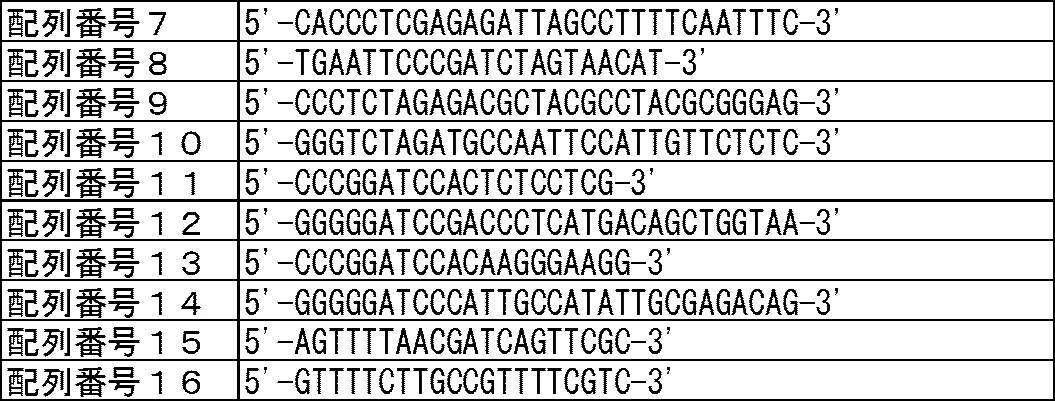
pBI221(Jefferson, R. A., EMBO J., 6, 3901-3907(1987))の35S promoter-GUS-Nos terminatorに相当するコーディング領域をPCRプライマー(配列番号7、8)を用いて増幅した。増幅した断片をpENTR/D-TOPO(Invitrogen社)に挿入してpENTR-35S-GUS-Terを得た。
次いで、OsMac1、OsMac2、及びOsMac3の各遺伝子の完全長cDNA(イネゲノムリソースセンター(茨城県つくば市)より入手)の5’UTRを、5’末端に制限酵素BamHI(OsMac2及びOsMac3)又はXbaI(OsMac1)による切断部位を付加したPCRプライマー(配列番号9、10(OsMac1用)、配列番号11、12(OsMac2用)、配列番号13、14(OsMac3用))を用いてそれぞれ増幅した。増幅した断片をBamHI又はXbaIで切断し、pENTR-35S-GUSのGUS遺伝子の上流に位置するBamHI又はXbaIサイトに挿入してpENTR-35S-5'UTR-GUSを得た。
次いで、pENTR-35S-5'UTR-GUSとpGWB1(Nakagawa et al., 2007)とをLRクロナーゼ(Invitrogen社)を用いて反応させ、pGWB1-35S-5'UTR-GUSを作製した。得られたプラスミドの35S-5'UTR-GUSをBPクロナーゼ(Invitrogen社)を用いてpDONR 221(Invitrogen社)に置換して、実施例1、2で使用する形質転換用プラスミドを作製した。
以上の工程は、いずれも製品に付属の説明書に従って行った。
pBI221(Jefferson, R. A., EMBO J., 6, 3901-3907(1987))の35S promoter-GUS-Nos terminatorに相当するコーディング領域をPCRプライマー(配列番号7、8)を用いて増幅した。増幅した断片をpENTR/D-TOPO(Invitrogen社)に挿入してpENTR-35S-GUS-Terを得た。
次いで、OsMac1、OsMac2、及びOsMac3の各遺伝子の完全長cDNA(イネゲノムリソースセンター(茨城県つくば市)より入手)の5’UTRを、5’末端に制限酵素BamHI(OsMac2及びOsMac3)又はXbaI(OsMac1)による切断部位を付加したPCRプライマー(配列番号9、10(OsMac1用)、配列番号11、12(OsMac2用)、配列番号13、14(OsMac3用))を用いてそれぞれ増幅した。増幅した断片をBamHI又はXbaIで切断し、pENTR-35S-GUSのGUS遺伝子の上流に位置するBamHI又はXbaIサイトに挿入してpENTR-35S-5'UTR-GUSを得た。
次いで、pENTR-35S-5'UTR-GUSとpGWB1(Nakagawa et al., 2007)とをLRクロナーゼ(Invitrogen社)を用いて反応させ、pGWB1-35S-5'UTR-GUSを作製した。得られたプラスミドの35S-5'UTR-GUSをBPクロナーゼ(Invitrogen社)を用いてpDONR 221(Invitrogen社)に置換して、実施例1、2で使用する形質転換用プラスミドを作製した。
以上の工程は、いずれも製品に付属の説明書に従って行った。
[実施例1における半定量RT-PCR]
全RNAは既報(Imamura et al., Plant Cell Physiol. 48: 1108-1120 (2007))に従い培養細胞から作製した。一本鎖cDNAは1μgの全RNAからReverTra-Ace cDNA合成キットのoligo-dT(20)プライマー(東洋紡株式会社)を用いて合成した。得られたcDNAは、既報(She et al., Plant Cell 22: 3280-3294 (2010))に従い、半定量RT-PCRにおける各遺伝子の転写産物の検出に用いた。半定量RT-PCRは、GUS遺伝子の塩基配列に基づいて作製したプライマー(配列番号15、16)を用いて行った。
全RNAは既報(Imamura et al., Plant Cell Physiol. 48: 1108-1120 (2007))に従い培養細胞から作製した。一本鎖cDNAは1μgの全RNAからReverTra-Ace cDNA合成キットのoligo-dT(20)プライマー(東洋紡株式会社)を用いて合成した。得られたcDNAは、既報(She et al., Plant Cell 22: 3280-3294 (2010))に従い、半定量RT-PCRにおける各遺伝子の転写産物の検出に用いた。半定量RT-PCRは、GUS遺伝子の塩基配列に基づいて作製したプライマー(配列番号15、16)を用いて行った。
[実施例1、2で使用したプライマー]
<実施例3 小麦胚芽無細胞タンパク質合成系における翻訳効率の評価>
OsMac1若しくはOsMac3の5’UTR、又はOsMac3-UTR(d1-160)と、DsRed2-3FLAGとを導入したプラスミドを用いて、小麦胚芽無細胞タンパク質合成系における翻訳効率を評価した。
OsMac1若しくはOsMac3の5’UTR、又はOsMac3-UTR(d1-160)と、DsRed2-3FLAGとを導入したプラスミドを用いて、小麦胚芽無細胞タンパク質合成系における翻訳効率を評価した。
[小麦胚芽無細胞タンパク質合成用プラスミドの作製]
pEU-E01-MCS(株式会社セルフリーサイエンス)のΩ配列(E01)以外の領域を、5’末端に制限酵素SpeIによる切断部位を付加したPCRプライマー(配列番号17、18)を用いて増幅した。増幅した断片をSpeIで切断し、Ligation high(東洋紡株式会社)を用いてライゲーションさせ、pEU-MCSを作製した。
次いで、pDsRed2ベクター(タカラバイオ株式会社)のDsRed2遺伝子領域を、5’末端に制限酵素BamHIによる切断部位を付加したPCRプライマー(配列番号19)と、制限酵素SalIによる切断部位及び3×FLAG遺伝子配列を付加したPCRプライマー(配列番号20)とを用いて増幅した。増幅した断片をBamHI及びSalIで切断し、pEU-MCSのMCS領域内のBamHI及びSalIサイトに挿入してpEU-MCS-DsRed2-3FLAGを得た。
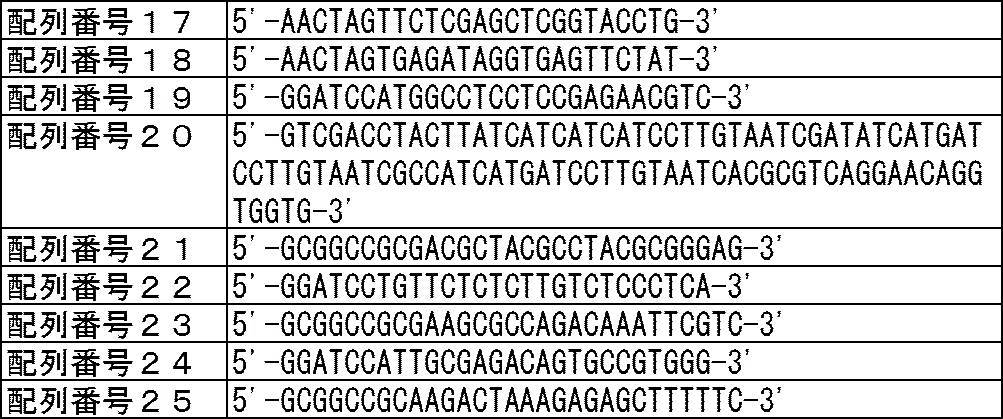
次いで、OsMac1及びOsMac3の5’UTR、並びにOsMac3-UTR(d1-160)を、5’末端に制限酵素NotI(フォワードプライマー)又はBamHI(リバースプライマー)による切断部位を付加したPCRプライマー(配列番号21、22(OsMac1用)、配列番号23、24(OsMac3用)、配列番号24、25(OsMac3-UTR(d1-160)用))を用いてそれぞれ増幅した。増幅した断片をNotI及びBamHIで切断し、pEU-MCS-DsRed2-3FLAGのDsRed2-3FLAG遺伝子の上流に位置するNotI及びBamHIサイトに挿入して、pEU-OsMac1-DsRed2-3FLAG、pEU-OsMac3-DsRed2-3FLAG、及びpEU-OsMac3-UTR(d1-160)-DsRed2-3FLAGをそれぞれ得た。
以上の工程は、いずれも製品に付属の説明書に従って行った。
pEU-E01-MCS(株式会社セルフリーサイエンス)のΩ配列(E01)以外の領域を、5’末端に制限酵素SpeIによる切断部位を付加したPCRプライマー(配列番号17、18)を用いて増幅した。増幅した断片をSpeIで切断し、Ligation high(東洋紡株式会社)を用いてライゲーションさせ、pEU-MCSを作製した。
次いで、pDsRed2ベクター(タカラバイオ株式会社)のDsRed2遺伝子領域を、5’末端に制限酵素BamHIによる切断部位を付加したPCRプライマー(配列番号19)と、制限酵素SalIによる切断部位及び3×FLAG遺伝子配列を付加したPCRプライマー(配列番号20)とを用いて増幅した。増幅した断片をBamHI及びSalIで切断し、pEU-MCSのMCS領域内のBamHI及びSalIサイトに挿入してpEU-MCS-DsRed2-3FLAGを得た。
次いで、OsMac1及びOsMac3の5’UTR、並びにOsMac3-UTR(d1-160)を、5’末端に制限酵素NotI(フォワードプライマー)又はBamHI(リバースプライマー)による切断部位を付加したPCRプライマー(配列番号21、22(OsMac1用)、配列番号23、24(OsMac3用)、配列番号24、25(OsMac3-UTR(d1-160)用))を用いてそれぞれ増幅した。増幅した断片をNotI及びBamHIで切断し、pEU-MCS-DsRed2-3FLAGのDsRed2-3FLAG遺伝子の上流に位置するNotI及びBamHIサイトに挿入して、pEU-OsMac1-DsRed2-3FLAG、pEU-OsMac3-DsRed2-3FLAG、及びpEU-OsMac3-UTR(d1-160)-DsRed2-3FLAGをそれぞれ得た。
以上の工程は、いずれも製品に付属の説明書に従って行った。
[小麦胚芽無細胞タンパク質合成系におけるタンパク質の合成]
pEU-OsMac1-DsRed2-3FLAG、pEU-OsMac3-DsRed2-3FLAG、及びpEU-OsMac3-UTR(d1-160)-DsRed2-3FLAGのそれぞれについて、JETSTAR2.0(株式会社ベリタス)を用いてプラスミドDNAを大量に精製し、濃度を1μg/μLに調整した。以降の小麦胚芽無細胞タンパク質合成は、Premium PLUS Kit(株式会社セルフリーサイエンス)を用いて、製品に付属の説明書に従って行った。
pEU-OsMac1-DsRed2-3FLAG、pEU-OsMac3-DsRed2-3FLAG、及びpEU-OsMac3-UTR(d1-160)-DsRed2-3FLAGのそれぞれについて、JETSTAR2.0(株式会社ベリタス)を用いてプラスミドDNAを大量に精製し、濃度を1μg/μLに調整した。以降の小麦胚芽無細胞タンパク質合成は、Premium PLUS Kit(株式会社セルフリーサイエンス)を用いて、製品に付属の説明書に従って行った。
DsRed2-3FLAGのタンパク質量の測定結果を図5に示す。図5は、pEU-OsMac1-DsRed2-3FLAGを用いた場合のタンパク質量を1とした場合の相対値で示したものである。
図5に示すように、pEU-OsMac3-DsRed2-3FLAGを用いた場合のタンパク質量は、pEU-OsMac1-DsRed2-3FLAGを用いた場合のタンパク質量に比べて2.4倍であった。また、pEU-OsMac3-UTR(d1-160)-DsRed2-3FLAGを用いた場合のタンパク質量は、pEU-OsMac1-DsRed2-3FLAGを用いた場合のタンパク質量に比べて7.0倍であった。この結果は、配列番号3の塩基配列からなるDNAが翻訳効率及び汎用性に優れる翻訳エンハンサーとして特に有用であることを示している。
図5に示すように、pEU-OsMac3-DsRed2-3FLAGを用いた場合のタンパク質量は、pEU-OsMac1-DsRed2-3FLAGを用いた場合のタンパク質量に比べて2.4倍であった。また、pEU-OsMac3-UTR(d1-160)-DsRed2-3FLAGを用いた場合のタンパク質量は、pEU-OsMac1-DsRed2-3FLAGを用いた場合のタンパク質量に比べて7.0倍であった。この結果は、配列番号3の塩基配列からなるDNAが翻訳効率及び汎用性に優れる翻訳エンハンサーとして特に有用であることを示している。
[実施例3で使用したプライマー]
<実施例4 イネ培養細胞における翻訳効率の評価>
カリフラワーモザイクウイルス35SプロモーターとGUS遺伝子との間に、OsMac3の5’UTR、OsMac3-UTR(s152-156)、OsMac3-UTR(d1-160)、又はOsMac3-UTR(s137-139)を挿入し、形質転換用プラスミドとして、OsMac3-UTR::GUS、OsMac3-UTR(s152-156)::GUS、OsMac3-UTR(d1-160)::GUS、及びOsMac3-UTR(s137-139)::GUSを作製した。そして、この形質転換用プラスミドを用いて、イネ培養細胞における翻訳効率を評価した。
カリフラワーモザイクウイルス35SプロモーターとGUS遺伝子との間に、OsMac3の5’UTR、OsMac3-UTR(s152-156)、OsMac3-UTR(d1-160)、又はOsMac3-UTR(s137-139)を挿入し、形質転換用プラスミドとして、OsMac3-UTR::GUS、OsMac3-UTR(s152-156)::GUS、OsMac3-UTR(d1-160)::GUS、及びOsMac3-UTR(s137-139)::GUSを作製した。そして、この形質転換用プラスミドを用いて、イネ培養細胞における翻訳効率を評価した。
[形質転換用プラスミドの作製]
配列番号5の塩基配列からなるOsMac3-UTR(s152-156)、配列番号3の塩基配列からなるOsMac3-UTR(d1-160)、及び配列番号6の塩基配列からなるOsMac3-UTR(s137-139)の3’末端及び5’末端に制限酵素BamHIによる切断部位を付加したDNAを全合成で作製した。
次いで、得られた3種類のDNAをBamHIで切断し、実施例1と同様にして作製したpENTR-35S-GUSのGUS遺伝子の上流に位置するBamHIサイトに挿入してpENTR-35S-OsMac3_5'UTR-GUSを得た。次いで、pENTR-35S-OsMac3_5'UTR-GUSとpGWB1(Nakagawa et al, 2007)とをLRクロナーゼ(Invitrogen社)を用いて反応させ、pGWB1-35S-OsMac3_5'UTR-GUSを作製した。得られたプラスミドの35S-OsMac3_5'UTR-GUSをBPクロナーゼ(Invitrogen社)を用いてpDONR 221(Invitrogen社)に置換して、実施例4で使用する形質転換用プラスミドを作製した。
以上の工程は、いずれも製品に付属の説明書に従って行った。
配列番号5の塩基配列からなるOsMac3-UTR(s152-156)、配列番号3の塩基配列からなるOsMac3-UTR(d1-160)、及び配列番号6の塩基配列からなるOsMac3-UTR(s137-139)の3’末端及び5’末端に制限酵素BamHIによる切断部位を付加したDNAを全合成で作製した。
次いで、得られた3種類のDNAをBamHIで切断し、実施例1と同様にして作製したpENTR-35S-GUSのGUS遺伝子の上流に位置するBamHIサイトに挿入してpENTR-35S-OsMac3_5'UTR-GUSを得た。次いで、pENTR-35S-OsMac3_5'UTR-GUSとpGWB1(Nakagawa et al, 2007)とをLRクロナーゼ(Invitrogen社)を用いて反応させ、pGWB1-35S-OsMac3_5'UTR-GUSを作製した。得られたプラスミドの35S-OsMac3_5'UTR-GUSをBPクロナーゼ(Invitrogen社)を用いてpDONR 221(Invitrogen社)に置換して、実施例4で使用する形質転換用プラスミドを作製した。
以上の工程は、いずれも製品に付属の説明書に従って行った。
また、実施例1と同様にしてOsMac3-UTR::GUSを作製した。対照としては、実施例1と同様の35S::GUSを準備した。
作製した形質転換用プラスミドであるOsMac3-UTR::GUS、OsMac3-UTR(s152-156)::GUS、OsMac3-UTR(d1-160)::GUS、及びOsMac3-UTR(s137-139)::GUSと、対照の35S::GUSとを、実施例1と同様の方法で作製したシロイヌナズナのプロトプラスト細胞に実施例1と同様の方法で導入し、形質転換体を作製した。次いで、実施例1と同様の方法で翻訳効率を評価した。結果を図6に示す。図中のエラーバーは標準偏差(n=3)を示す。
図6に示すように、OsMac3-UTR(s152-156)::GUS又はOsMac3-UTR(s137-139)::GUSを導入して作製した形質転換体の翻訳効率は、OsMac3-UTR::GUSを導入して作製した形質転換体と同程度であった。このことから、OsMac3の5’UTRの塩基配列の一部を改変しても、翻訳エンハンサーとしての活性が維持されることが分かる。また、OsMac3-UTR(d1-160)::GUSを導入して作製した形質転換体は、OsMac3-UTR::GUSを導入して作製した形質転換体に比べて3倍以上の翻訳効率を示した。
2014年5月16日に出願された日本出願2014-102528の開示はその全体が参照により本明細書に取り込まれる。
本明細書に記載された全ての文献、特許出願、及び技術規格は、個々の文献、特許出願、及び技術規格が参照により取り込まれることが具体的かつ個々に記された場合と同程度に、本明細書中に参照により取り込まれる。
本明細書に記載された全ての文献、特許出願、及び技術規格は、個々の文献、特許出願、及び技術規格が参照により取り込まれることが具体的かつ個々に記された場合と同程度に、本明細書中に参照により取り込まれる。
Claims (10)
- 翻訳エンハンサー活性を有する塩基配列からなる下記(a)から(f)のいずれか1つのDNA:
(a)配列番号1の塩基配列からなるDNA、
(b)配列番号2の塩基配列からなるDNA、
(c)配列番号3の塩基配列からなるDNA、
(d)前記(a)~(c)のいずれか1つのDNAにおいて1個又は数個の塩基が欠失、置換、又は付加されたDNA、
(e)前記(a)~(d)のいずれか1つのDNAと相補的なDNAとストリンジェントな条件下でハイブリダイズするDNA、
(f)前記(a)~(e)のいずれか1つのDNAと相同性が80%以上の塩基配列からなるDNA。 - 請求項1に記載のDNAを含む組換えベクター。
- 請求項1に記載のDNAがプロモーターと構造遺伝子との間に挿入されている請求項2に記載の組換えベクター。
- 請求項2又は請求項3に記載の組換えベクターで形質転換された形質転換体。
- 植物細胞、植物組織、植物器官、植物体、及び種子からなる群より選択されるいずれか1つである請求項4に記載の形質転換体。
- 請求項1に記載のDNAに対応するRNAとタンパク質をコードするRNAとを含む翻訳用RNAを用いて、前記タンパク質を合成するタンパク質合成方法。
- 請求項1に記載のDNAと構造遺伝子とを含む組換えベクターを用いて形質転換体を得ることと、前記形質転換体を培養することと、を含む請求項6に記載のタンパク質合成方法。
- 前記翻訳用RNAとインビトロ無細胞系タンパク質合成用反応液とを接触させることを含む請求項6に記載のタンパク質合成方法。
- 更に、請求項1に記載のDNAと構造遺伝子とを含む鋳型DNAから前記翻訳用RNAを合成することを含む請求項8に記載のタンパク質合成方法。
- 請求項1に記載のDNAの翻訳エンハンサーとしての使用。
Priority Applications (1)
| Application Number | Priority Date | Filing Date | Title |
|---|---|---|---|
| JP2016519265A JP6521532B2 (ja) | 2014-05-16 | 2015-05-12 | 翻訳エンハンサー |
Applications Claiming Priority (2)
| Application Number | Priority Date | Filing Date | Title |
|---|---|---|---|
| JP2014102528 | 2014-05-16 | ||
| JP2014-102528 | 2014-05-16 |
Publications (1)
| Publication Number | Publication Date |
|---|---|
| WO2015174414A1 true WO2015174414A1 (ja) | 2015-11-19 |
Family
ID=54479951
Family Applications (1)
| Application Number | Title | Priority Date | Filing Date |
|---|---|---|---|
| PCT/JP2015/063648 Ceased WO2015174414A1 (ja) | 2014-05-16 | 2015-05-12 | 翻訳エンハンサー |
Country Status (2)
| Country | Link |
|---|---|
| JP (1) | JP6521532B2 (ja) |
| WO (1) | WO2015174414A1 (ja) |
Citations (2)
| Publication number | Priority date | Publication date | Assignee | Title |
|---|---|---|---|---|
| JP2005185101A (ja) * | 2002-05-30 | 2005-07-14 | National Institute Of Agrobiological Sciences | 植物の全長cDNAおよびその利用 |
| JP2011103833A (ja) * | 2009-11-19 | 2011-06-02 | Tokyo Univ Of Science | 翻訳エンハンサー |
-
2015
- 2015-05-12 JP JP2016519265A patent/JP6521532B2/ja active Active
- 2015-05-12 WO PCT/JP2015/063648 patent/WO2015174414A1/ja not_active Ceased
Patent Citations (2)
| Publication number | Priority date | Publication date | Assignee | Title |
|---|---|---|---|---|
| JP2005185101A (ja) * | 2002-05-30 | 2005-07-14 | National Institute Of Agrobiological Sciences | 植物の全長cDNAおよびその利用 |
| JP2011103833A (ja) * | 2009-11-19 | 2011-06-02 | Tokyo Univ Of Science | 翻訳エンハンサー |
Non-Patent Citations (2)
| Title |
|---|
| AOKI H ET AL.: "Enhanced translation of the downstream ORF attributed to a long 5' untranslated region in the OsMac1 gene family members, OsMac2 and OsMac3", PLANT BIOTECHNOLOGY, vol. 31, 19 July 2014 (2014-07-19), pages 221 - 228, XP055236708, Retrieved from the Internet <URL:https://www.jstage.jst.go.jp/article/plantbiotechnology/31/3/31_14.0512a/_article> [retrieved on 20150730] * |
| TERAMURA H ET AL.: "A long 5' UTR of the rice OsMac1 mRNA enabling the sufficient translation of the downstream ORF", PLANT BIOTECHNOLOGY, vol. 29, 20 February 2012 (2012-02-20), pages 43 - 49, XP055236715, Retrieved from the Internet <URL:https://www.jstage.jst.go.jp/article/plantbiotechnology/29/1/29_11.1209a/_article> [retrieved on 20150730] * |
Also Published As
| Publication number | Publication date |
|---|---|
| JPWO2015174414A1 (ja) | 2017-04-20 |
| JP6521532B2 (ja) | 2019-05-29 |
Similar Documents
| Publication | Publication Date | Title |
|---|---|---|
| US9163251B2 (en) | Mature leaf-specific promoter | |
| AU2014312164A1 (en) | Constructs for expressing transgenes using regulatory elements from Setaria ubiquitin genes | |
| AU2017234672B2 (en) | Zea mays regulatory elements and uses thereof | |
| EP2925869B1 (en) | Trichome specific promoters | |
| AU2017235944B2 (en) | Zea mays regulatory elements and uses thereof | |
| US9777286B2 (en) | Zea mays metallothionein-like regulatory elements and uses thereof | |
| AU2014329590A1 (en) | Zea mays metallothionein-like regulatory elements and uses thereof | |
| JP6521532B2 (ja) | 翻訳エンハンサー | |
| JP5472089B2 (ja) | 光合成組織における遺伝子発現制御に関わるdna | |
| JP5598899B2 (ja) | 翻訳エンハンサー | |
| CN102558321B (zh) | 植物耐低磷胁迫相关的蛋白AtLPT4及其编码基因与应用 | |
| US20140196171A1 (en) | Plant promoters induced by hydrological shortage and use thereof | |
| JP6274161B2 (ja) | 薬剤誘導性プロモーター及びこれを用いた遺伝子発現誘導方法 |
Legal Events
| Date | Code | Title | Description |
|---|---|---|---|
| 121 | Ep: the epo has been informed by wipo that ep was designated in this application |
Ref document number: 15792479 Country of ref document: EP Kind code of ref document: A1 |
|
| DPE1 | Request for preliminary examination filed after expiration of 19th month from priority date (pct application filed from 20040101) | ||
| ENP | Entry into the national phase |
Ref document number: 2016519265 Country of ref document: JP Kind code of ref document: A |
|
| NENP | Non-entry into the national phase |
Ref country code: DE |
|
| 122 | Ep: pct application non-entry in european phase |
Ref document number: 15792479 Country of ref document: EP Kind code of ref document: A1 |