WO2015166289A1 - Pyrrolobenzodiazepine compounds - Google Patents
Pyrrolobenzodiazepine compounds Download PDFInfo
- Publication number
- WO2015166289A1 WO2015166289A1 PCT/GB2015/051307 GB2015051307W WO2015166289A1 WO 2015166289 A1 WO2015166289 A1 WO 2015166289A1 GB 2015051307 W GB2015051307 W GB 2015051307W WO 2015166289 A1 WO2015166289 A1 WO 2015166289A1
- Authority
- WO
- WIPO (PCT)
- Prior art keywords
- compound
- alkyl
- formula
- suitably
- monomer
- Prior art date
- Legal status (The legal status is an assumption and is not a legal conclusion. Google has not performed a legal analysis and makes no representation as to the accuracy of the status listed.)
- Ceased
Links
- 0 CC=CC=CCC(*)(*)*C(N)=O Chemical compound CC=CC=CCC(*)(*)*C(N)=O 0.000 description 15
- RHIPVPGNFBRSLF-UHFFFAOYSA-N CC(C)(C)OC(Nc1c[n](C)c(C(Nc(cc2)ccc2-c2c[n](C)c(C(OC)=O)c2)=O)n1)=O Chemical compound CC(C)(C)OC(Nc1c[n](C)c(C(Nc(cc2)ccc2-c2c[n](C)c(C(OC)=O)c2)=O)n1)=O RHIPVPGNFBRSLF-UHFFFAOYSA-N 0.000 description 2
- NPUTUVDECBQMOJ-UHFFFAOYSA-N C[n]1c(C(OC)=O)cc(-c(cc2)ccc2N)c1 Chemical compound C[n]1c(C(OC)=O)cc(-c(cc2)ccc2N)c1 NPUTUVDECBQMOJ-UHFFFAOYSA-N 0.000 description 1
Classifications
-
- A—HUMAN NECESSITIES
- A61—MEDICAL OR VETERINARY SCIENCE; HYGIENE
- A61K—PREPARATIONS FOR MEDICAL, DENTAL OR TOILETRY PURPOSES
- A61K31/00—Medicinal preparations containing organic active ingredients
- A61K31/33—Heterocyclic compounds
- A61K31/395—Heterocyclic compounds having nitrogen as a ring hetero atom, e.g. guanethidine or rifamycins
- A61K31/55—Heterocyclic compounds having nitrogen as a ring hetero atom, e.g. guanethidine or rifamycins having seven-membered rings, e.g. azelastine, pentylenetetrazole
- A61K31/551—Heterocyclic compounds having nitrogen as a ring hetero atom, e.g. guanethidine or rifamycins having seven-membered rings, e.g. azelastine, pentylenetetrazole having two nitrogen atoms, e.g. dilazep
- A61K31/5513—1,4-Benzodiazepines, e.g. diazepam or clozapine
- A61K31/5517—1,4-Benzodiazepines, e.g. diazepam or clozapine condensed with five-membered rings having nitrogen as a ring hetero atom, e.g. imidazobenzodiazepines, triazolam
-
- A—HUMAN NECESSITIES
- A61—MEDICAL OR VETERINARY SCIENCE; HYGIENE
- A61P—SPECIFIC THERAPEUTIC ACTIVITY OF CHEMICAL COMPOUNDS OR MEDICINAL PREPARATIONS
- A61P35/00—Antineoplastic agents
-
- C—CHEMISTRY; METALLURGY
- C07—ORGANIC CHEMISTRY
- C07D—HETEROCYCLIC COMPOUNDS
- C07D487/00—Heterocyclic compounds containing nitrogen atoms as the only ring hetero atoms in the condensed system, not provided for by groups C07D451/00 - C07D477/00
- C07D487/02—Heterocyclic compounds containing nitrogen atoms as the only ring hetero atoms in the condensed system, not provided for by groups C07D451/00 - C07D477/00 in which the condensed system contains two hetero rings
- C07D487/04—Ortho-condensed systems
Definitions
- the invention relates to pyrrolo[2,i-c][i,4]benzodiazepines (PBDs) and in particular to PBD dimers linked through the Ci position, and PBD monomers linked through the Ci position to aromatic groups, and pharmaceutically acceptable salts thereof, which are useful as medicaments, in particular as anti-proliferative agents.
- PBDs pyrrolo[2,i-c][i,4]benzodiazepines
- the pyrrolobenzodiazepines are a group of compounds some of which have been shown to be sequence-selective DNA minor-groove binding agents.
- the PBDs were originally discovered in Streptomyces species (1-5). They are tricyclic in nature, and are comprised of an anthranilate (A ring), a diazepine (B ring) and a pyrrolidine (C ring) (3).
- a carbinolamine [NH-CH(OH)]
- Carbinolamine Imine Carbinolamine alkyl ether
- the natural products interact in the minor groove of the DNA helix with excellent fit (i.e., good "isohelicity") due to a right-handed longitudinal twist induced by a chiral Cua-position which has the (S)-configuration (6).
- the DNA adduct has been reported to inhibit a number of biological processes including the binding of transcription factors (7-9) and the function of enzymes such as endonucleases (10, 11) and RNA polymerase (12).
- PBD monomers e.g., anthramycin
- NMR 13, 14
- molecular modeling 15
- X-ray crystallography 16
- PBDs are thought to interact with DNA by first locating at a low-energy binding sequence (i.e., a s'-Pu-G-Pu-3' triplet) through Van der Waals, hydrogen bonding and electrostatic interactions (7).
- PBD dimers In addition to monomeric PBD structures, a large range of synthetic PBD dimers (i.e. two PBD structures linked via a spacer) have been developed. Early C7- and C8-linked examples (28, 29) were designed to span greater lengths of DNA than the PBD monomers, to have enhanced sequence-selectivity, and to form DNA cross-links that might be more difficult for tumour cells to repair. The synthesis of various PBD dimers has been reviewed (1, 21). Various PBDs have been shown to act as cytotoxic agents in vitro, for example, WO
- PBDs dimers have generally been linked through the A ring, in particular, the C8 position of the A ring has been extensively utilized for the production of PBD dimers (29, 30). Some attempts have been made to link PBDs dimers via the C ring, with limited success.
- the C2 position has been investigated in dimer structures as a potential linking point. Examples of this include a C2 dimer produced by Lown et al. (33) which showed poor DNA binding relative to C8/C8'-linked dimers.
- C8/C2' dimers produced by Kamal et al. (34, 35) showed similarly poor binding with DNA calf thymus melting studies producing results on par with natural monomer structures.
- C3 substitution has been shown to affect binding of the drug in the minor groove, with methylation or butylation of neothramycin A known to prevent interaction of the PBD within the minor groove (2).
- Bulky moieties on the minor groove facing side of the PBD i.e., C9, N10-C11 have a profound effect on PBD binding.
- the present invention seeks to overcome problem(s) associated with the prior art.
- the present invention provides a compound of formula (I):
- R4, R 5 , R 6 and R 7 are independently selected from H, R, OH, OR, SH, SR, NH 2 , NHR, NRR', C0 2 H, CH 2 -C0 2 H, C0 2 R, CH 2 -C0 2 R, N0 2 , Me 3 Sn and halo;
- R and R' are independently selected from optionally substituted Ci-i 2 alkyl, C 2 - i2 alkenyl, C 3 - 20 heterocyclyl, C 4 - 20 heterocyclalkyl, C 5 - 20 heterocyclalkenyl, C 3 - 20 heteroaryl, C 4 - 32 heteroaralkyl, C 5 _ 32 heteroaralkenyl, C 5 - 20 aryl groups C 6 - 32 aralkyl and C 7 _ 32 aralkenyl; and either:
- R 8 is H and R 9 is 0R A and R A is d- 6 alkyl;
- the compound is a dimer with each monomer being the same or different and being of formula (I) where Ri of the first monomer and R ⁇ of the second monomer form together a bridge having the formula -X-L-X'- linking the monomers;
- L is selected from an amino acid, a peptide chain having from 2 to 6 amino acids, an alkylene chain containing from 2 to 12 carbon atoms which may contain one or more carbon-carbon double or triple bonds, a paraformaldehyde chain -(0CH 2 )i i2-, a polyethylene glycol chain -(OCH 2 CH 2 )i-6-, which chains maybe interrupted by one or more hetero-atoms and/or C 3 - 20 heteroaryl and/or C 5 - 20 aryl groups;
- R" and R'" are independently selected from H, optionally substituted Ci-i 2 alkyl;
- D has the formula (II) or (III):
- p is o or 1
- q 1, 2, 3, 4, 5 or 6;
- r is o or 1;
- t is o or 1
- Y 3 is N or CH;
- Y 4 is N or CH; wherein at least one of Y 3 and Y 4 is CH;
- Z is absent or is selected from C 3 - 20 heteroaryl, Ci -6 alkyl substituted C 3 - 20 heteroaryl, -(CH 2 ) n -C 3 - 20 heterocyclyl, and -0-(CH 2 ) n -C 3 - 20 heterocyclyl group; n is o, l, 2, 3 or 4;
- R11 is an optionally substituted C 3 - 20 heteroaryl
- Ri 2 is an optionally substituted C 3 - 20 heteroaryl.
- Ri 2 is an optionally substituted C 3 - 20 heteroaryl.
- a compound of the present invention for use in the treatment of a proliferative disease.
- a pharmaceutical composition comprising a compound of the present invention and a pharmaceutically acceptable carrier or diluent.
- the present invention provides the use of a compound of the present invention in the manufacture of a medicament for treating a proliferative disease.
- Substituted when used in connection with a chemical substituent or moiety (e.g., an alkyl group), means that one or more hydrogen atoms of the substituent or moiety have been replaced with one or more non-hydrogen atoms or groups, provided that valence requirements are met and that a chemically stable compound results from the substitution.
- a chemical substituent or moiety e.g., an alkyl group
- Ci-12 alkyl may be selected for the first instance of R in the compound and a C2-12 alkenyl may be selected for the next instance of R in the compound.
- optional substituents include Ci -7 alkyl, C 2 - 7 alkenyl, C 2 - 7 alkynyl, C 5 - 20 aryl, C3-10 cycloalkyl, C 3- i 0 cycloalkenyl, C 3- i 0 cycloalkynyl, C 3 - 20 heterocyclyl, C 3 - 20 heteroaryl, acetal, acyl, acylamido, acyloxy, amidino, amido, amino, aminocarbonyloxy, azido, carboxy, cyanato, cyano, disulphide, ether, formyl, guanidino, halo, hemiacetal, hemiketal, hydroxamic acid, hydroxyl, imidic acid, imino, isocyano, isocyanato, isothiocyano, ketal, nitro, nitroso, oxo, oxycarbonyl, oxycarboyloxy, phosphate,
- the optional substituents may be selected from Ci -7 alkyl, C 2-7 alkenyl, C 2 - 7 alkynyl, C 5 - 20 aryl, C 3- i 0 cycloalkyl, C 3- i 0 cycloalkenyl, C 3- i 0 cycloalkynyl, C 3 - 20 heterocyclyl, C 3 - 20 heteroaryl, acetal, acyl, acylamido, acyloxy, amidino, amido, amino, aminocarbonyloxy, azido, carboxy, cyano, ether, formyl, guanidino, halo, hemiacetal, hemiketal, hydroxamic acid, hydroxyl, imidic acid, imino, ketal, nitro, nitroso, oxo, oxycarbonyl, oxycarboyloxy, sulfamino, sulfamyl, sulfate, sul
- Ci-7 alkyl refers to straight chain and branched saturated hydrocarbon groups, generally having from l to 7 carbon atoms.
- alkyl groups include methyl, ethyl, n-propyl, i-propyl, n-butyl, s-butyl, i-butyl, t-butyl, pent-i-yl, pent-2-yl, pent-3- yl, 3-methylbut-i-yl, 3-methylbut-2-yl, 2-methylbut-2-yl, 2,2,2-trimethyleth-i-yl, n- hexyl, n-heptyl, and the like.
- Alkylene refers to a divalent radical derived from an alkane which may be a straight chain or branched, as exemplified by -CH2CH2CH2CH2-.
- C2-7 alkenyl refers to a hydrocarbon radical having from 2 to 7 carbon atoms and at least one double bond including, but not limited to, ethenyl, l-propenyl, 2-propenyl, isopropenyl, l-butenyl, 2-butenyl, 3-butenyl, pentenyl and hexenyl and the like.
- C2-7 alkynyl refers to a hydrocarbon radical having from to 2 to 7 carbon atoms and at least one triple bond including, but not limited to, ethynyl, 2-propynyl, l-butynyl, 2- butynyl and the like.
- C5-20 aryl refers to fully unsaturated monocyclic, bicyclic and polycyclic aromatic hydrocarbons having at least one aromatic ring and having a specified number of carbon atoms that comprise their ring members (e.g., C6- 1 4 aryl refers to an aryl group having 6 to 14 carbon atoms as ring members).
- the aryl group may be attached to a parent group or to a substrate at any ring atom and may include one or more non- hydrogen substituents unless such attachment or substitution would violate valence requirements.
- aryl groups include phenyl, biphenyl, cyclobutabenzenyl, naphthalenyl, benzocycloheptenyl, azulenyl, biphenylenyl, anthracenyl, phenanthrenyl, naphthacenyl, pyrenyl, groups derived from cycloheptatriene cation, and the like.
- aryl groups which comprise fused rings include, but are not limited to, groups derived from indanyl, indenyl, isoindenyl, tetralinyl, acenaphthenyl, fluorenyl, phenalenyl, acephenanthrenyl and aceanthrenyl.
- C3 cycloalkyl refers to saturated monocyclic and bi cyclic hydrocarbon groups, having from 3 to 10 carbon atoms that comprise the ring or rings.
- a cycloalkyl represents a cyclic version of an "alkyl".
- Bicyclic hydrocarbon groups may include isolated rings (two rings sharing no carbon atoms), spiro rings (two rings sharing one carbon atom), fused rings (two rings sharing two carbon atoms and the bond between the two common carbon atoms), and bridged rings (two rings sharing two carbon atoms, but not a common bond).
- the cycloalkyl group may be attached to a parent group or to a substrate at any ring atom unless such attachment would violate valence requirements.
- the C cycloalkyl is a monocyclic cycloalkyl group, more suitably a C 3 - 7 cycloalkyl is a monocyclic cycloalkyl group.
- Examples of monocyclic cycloalkyl groups include cyclopropyl, cyclobutyl, cyclopentyl, cyclohexyl, cycloheptyl, methylcyclopropyl, dimethylcyclopropyl, methyl cyclobutyl, dimethylcyclobutyl, methylcyclopentyl, dimethylcyclopentyl and methylcyclohexyl and the like.
- fused bicyclic cycloalkyl groups include bicyclo[2.i.o]pentanyl (i.e., bicyclo[2.i.o]pentan-i-yl, bicyclo[2.i.o]pentan-2-yl, and bicyclo[2.i.o]pentan-5- yl), bicyclo[3.i.o]hexanyl, bicyclo[3.2.o]heptanyl, bicyclo[4.i.o]heptanyl,
- bicyclo[4.4.o]decanyl and the like.
- bridged cycloalkyl groups include bicyclo[2.i.i]hexanyl, bicyclo[2.2.i]heptanyl, bicyclo[3.i.i]heptanyl,
- spiro cycloalkyl groups include spiro[3.3]heptanyl, spiro[2.4]heptanyl, spiro[3.4]octanyl, spiro[2.5]octanyl, spiro[3.5]nonanyl, and the like.
- isolated bicyclic cycloalkyl groups include those derived from bi(cyclobutane),
- C3 cycloalkenyl represents a cycloalkyl that contains at least one double bond, including unsaturated monocyclic hydrocarbon compounds such as cyclopropenyl, cyclobutenyl, cyclopentenyl, cyclohexenyl, methylcyclopropenyl, dimethylcyclopropenyl, methylcydobutenyl, dimethylcydobutenyl, methylcydopentenyl, dimethylcydopentenyl and methylcydohexenyl
- C3-1 0 cycloalkynyl represents a cylcoalkyl that contains at least one triple bond, including unsaturated monocyclic hydrocarbon compounds such as cyclopropynyl, cyclobutynyl, cyclopentynyl, cyclohexynyl and the like.
- C3-20 heterocyclyl refers to saturated or partially unsaturated monocyclic, bicyclic or polycyclic groups having ring atoms composed of 3 to 20 ring atoms, whether carbon atoms or heteroatoms, of which from 1 to 10 are ring heteroatoms.
- each ring has from 3 to 7 ring atoms and from 1 to 4 ring heteroatoms (e.g., suitably C 3 - 5 heterocyclyl refers to a heterocyclyl group having 3 to 5 ring atoms and 1 to 4
- heteroatoms as ring members).
- the ring heteroatoms are independently selected from nitrogen, oxygen, and sulphur.
- bicyclic heterocyclyl groups may include isolated rings, spiro rings, fused rings, and bridged rings.
- the heterocyclyl group may be attached to a parent group or to a substrate at any ring atom and may include one or more non-hydrogen substituents unless such attachment or substitution would violate valence requirements or result in a chemically unstable compound.
- monocyclic heterocyclyl groups include, but are not limited to, those derived from:
- Ni aziridine, azetidine, pyrrolidine, pyrroline, 2H-pyrrole or 3H-pyrrole, piperidine, dihydropyridine, tetrahydropyridine, azepine;
- Oi oxirane, oxetane, tetrahydrofuran, dihydrofuran, tetrahydropyran, dihydropyran, pyran, oxepin;
- Si thiirane, thietane, tetrahydrothiophene, tetrahydrothiopyran, thiepane;
- N 2 imidazoiidine, pyrazolidine, imidazoline, pyrazoline, piperazine:
- N1O1 tetrahydrooxazole, dihydrooxazole, tetrahydroisoxazole, dihydroisoxazole, morpholine, tetrahydrooxazine, dihydrooxazine, oxazine;
- N1S1 thiazoline, thiazolidine, thiomorpholine
- O1S1 oxathiole and oxathiane (thioxane);
- N1O1S1 oxathiazine.
- substituted monocyclic heterocyclyl groups include those derived from saccharides, in cyclic form, for example, furanoses, such as arabinofuranose, lyxofuranose, ribofuranose, and xylofuranse, and pyranoses, such as aliopyranose, altropyranose, glucopyranose, mannopyranose, gulopyranose, idopyranose, galactopyranose, and talopyranose.
- C3-20 Heteroaryl refers to unsaturated monocyclic, bicyclic or polycylic aromatic groups comprising from 3 to 20 ring atoms, whether carbon or heteroatoms, of which from 1 to 10 are ring heteroatoms.
- each ring has from 3 to 7 ring atoms and from 1 to 4 ring heteroatoms.
- each ring heteroatom is independently selected from nitrogen, oxygen, and sulfur.
- the bicyclic and polycyclic may include any bicyclic or polycyclic group in which any of the above-listed monocyclic heterocycles are fused to a benzene ring.
- the heteroaryl group may be attached to a parent group or to a substrate at any ring atom and may include one or more non-hydrogen substituents unless such attachment or substitution would violate valence requirements or result in a chemically unstable compound.
- monocyclic heteroaryl groups include, but are not limited to, those derived from:
- N1O1 oxazole, isoxazole, isoxazine
- N 2 0i oxadiazole (e.g. i-oxa-2,3-diazolyl, i-oxa-2,4-diazolyl, i-oxa-2,5-diazolyl, l-oxa-
- N1S1 thiazole, isothiazole
- N 2 imidazole, pyrazole, pyridazine, pyrimidine (e.g., cytosine, thymine, uracil), pyrazine;
- N 3 triazole, triazine
- heteroaryl which comprise fused rings include, but are not limited to, those derived from: Oi: benzofuran, isobenzofuran, chromene, isochromene, chroman, isochroman, dibenzofuran, xanthene;
- Ni indole, isoindole, indolizine, isoindoline, quinoline, isoquinoline, quinolizine, carbazole, acridine, phenanthridine;
- NiOi benzoxazole, benzisoxazole, benzoxazine, phenoxazine;
- NiSi benzothiazole, phenothiazine
- OiSi phenoxathiin
- N 2 benzimidazole, indazole, benzodiazine, pyridopyridine, quinoxaline, quinazoline, cinnoline, phthalazine, naphthyridine, benzodiazepine, carboline, perimidine, pyridoindole, phenazine, phenanthroline, phenazine;
- N 2 0i benzofurazan
- N 4 purine (e.g., adenine, guanine), pteridine;
- the optional substituents Ci -7 alkyl, C 2 - 7 alkenyl, C 2 - 7 alkynyl, C 5 - 20 aryl, C 3- i 0 cycloalkyl, C3 cycloalkenyl, C 3- i 0 cycloalkynyl, C 3 - 20 heterocyclyl, C 3 - 20 heteroaryl, whether alone or part of another substituent, may themselves optionally be substituted with one or more groups (suitably, optionally substituted with from one to three) selected from themselves and from acetal, acyl, acylamido, acyloxy, amidino, amido, amino, aminocarbonyloxy, azido, carboxy, cyanato, cyano, disulphide, ether, formyl, guanidino, halo, hemiacetal, hemiketal, hydroxamic acid, hydroxyl, imidic acid, imino, isocyano, isocyanato, isothio
- oxycarboyloxy phosphate, phosphino, phosphinyl, phosphite, phospho, phosphonate, phosphono, phosphonooxy, phosphorous acid, phosphoramidate, phosphoramidite, sulfamino, sulfamyl, sulfate, sulfhydryl, sulfinamino, sulfinate, sulfino, sulfinyl, sulfinyloxy, sulfo, sulfonamido, sulfonamino, sulfonate, sulfonyl, sulfonyloxy, thioamido, thiocarboxy, thiocyano, thioether, thiolocarboxy, thione, thionocarboxy, uredio, hydroxyl protecting groups and nitrogen protecting groups.
- an alkyl group when optionally substituted with one or more aryl groups it forms aralkyl group.
- a C 6 - 32 aralkyl where the alkyl group and aryl group(s) combined have from 6 to 32 carbon atoms.
- an alkyl group is optionally substituted with one or more heteroaryl groups it forms heteroaralkyl group.
- a C 4 - 32 heteroaralkyl group where number of ring atoms in the heteroaryl group plus the number of carbon atoms in the alkyl group is from 4 to 32.
- a Ci -7 alkyl C 2 - 7 alkenyl, C 2 -
- acetal groups include, but are not limited to, -CH(OCH 3 ) 2 , -CH(0CH 2 CH 3 ) 2 , and - CH(OCH 3 )(0 CH 2 CH 3 ).
- R 3 ⁇ 4 and R 3 ⁇ 4 are suitably independently selected from a hydrogen, a C 1-7 alkyl, C 2 - 7 alkenyl, C 2 - 7 alkynyl, C 5 - 20 aryl, C 3- i 0 cycloalkyl, C 3- i 0 cycloalkenyl, C 3- i 0 cycloalkynyl, C 3 - 20 heterocyclyl, C 3 - 20 heteroaryl, suitably a hydrogen or a Ci -7 alkyl, or, in the case of a "cyclic" acylamido group, R X4 and R 3 ⁇ 4 , taken together with the nitrogen atom to which they are attached, and the carbon atoms to which they are attached, form a heterocyclic ring having from 4 to 8 ring atoms.
- succinimidyl maleimidyl phthalimidyl Acyloxy (reverse ester): -OC( 0)R x s, wherein R3 ⁇ 4 is an acyloxy substituent and suitably has any of the options listed above with regard to acyl groups.
- R X4 and R Xs are suitably independently selected from the groups as listed above for acylamido.
- Amino -NR ⁇ R ⁇ , wherein R3 ⁇ 4 and R Xs are suitably independently selected from the groups as listed above for acylamido.
- Amino groups may be primary (both R X4 and R3 ⁇ 4 are H), secondary (only one of R X4 and R Xs is H), or tertiary (neither R X4 and R Xs is H), and in cationic form, may be quaternary (- + NR X4 R X5 R X6 wherein R x6 is suitably selected from the same groups as listed above for amidino).
- amino groups include, but are not limited to, -NH 2 , -NHCH 3 , -NHC(CH 3 ) 2 , -N(CH 3 ) 2 -N(CH 2 CH 3 ) 2 , and - NHPh.
- cyclic amino groups include, but are not limited to, aziridino, azetidino, pyrrolidino, piperidino, piperazino, morpholino, and thiomorpholino.
- Aminocarbonyloxy: -OC( 0)NR X4 R x s, wherein R3 ⁇ 4 and R Xs are suitably independently selected from the groups as listed above for acylamido.
- Disulfide -SS-R X3 , wherein R 3 ⁇ 4 is suitably selected from the groups as listed above for acyl.
- disulphide groups include Ci -7 alkyl disulfide groups which include, but are not limited to, -SSCH 3 and -SSCH 2 CH 3 .
- Ci -7 alkoxy groups include, but are not limited to, - OCH 3 (methoxy), -OCH 2 CH 3 (ethoxy), -0CH 2 CH 2 CH 3 (n-propoxy), -0CH 2 (CH 3 ) 2 (isopropoxy), -0CH 2 CH 2 CH 2 CH 3 (n-butoxy), -0(OCH(CH 3 )-CH 2 CH 3 (sec-butoxy), - 0CH 2 CH(CH 3 ) 2 (isobutoxy), and -OC(CH 3 ) 3 (tert-butoxy).
- Halo -F, -CI, -Br, and -I.
- Hemiacetal -CH(OH)(OR X3 ), wherein R 3 ⁇ 4 is suitably selected from the groups as listed above for acyl.
- R 3 ⁇ 4 is suitably selected from the groups as listed above for acyl.
- hemiacetal groups include, but are not limited to, - CH(OH)(OCH 3 ) and - CH(OH)(OCH 2 CH 3 ).
- hemiketal groups include, but are not limited to, -C(CH 3 )(OH)(OCH 3 ), -C(CH 2 CH 3 )(OH)(OCH 3 ), -C(CH 3 )(OH)(OCH 2 CH 3 ), and -C(CH 2 CH 3 )(OH)(OCH 2 CH 3 ).
- Imino: NR3 ⁇ 4, wherein R3 ⁇ 4 is suitably selected from the groups as listed above for acylamido.
- Ketal -CR ⁇ fOR ⁇ XOR ⁇ ), where R Xl and R X2 are suitably selected from the groups as listed above for acetals, and R ⁇ is suitably selected from the groups as listed above for acyl.
- Examples ketal groups include, but are not limited to, -C(CH 3 )(OCH 3 ) 2 , - C(CH 3 )(OCH 2 CH 3 ) 2 , -C(CH 3 )(OCH 3 )(OCH 2 CH 3 ), -C(CH 2 CH 3 )(OCH 3 ) 2 , -C(CH 2 CH 3 )(0 CH 2 CH 3 ) 2 , and -C(CH 2 CH 3 )(OCH 3 )(OCH 2 CH 3 ).
- Oxycarbonyl (ester): -C( 0)OR X3 , wherein R ⁇ is suitably selected from the groups as listed above for acyl.
- R x ? and R x8 are suitably independently selected from hydrogen, Ci -7 alkyl, C 2 - 7 alkenyl, C 2 - 7 alkynyl, C 5 - 20 aryl, C 3- i 0 cycloalkyl, C 3 -io cycloalkenyl, C 3- i 0 cycloalkynyl, C 3 - 20 heterocyclyl, C 3 - 20 heteroaryl, suitably hydrogen, Ci -7 alkyl, C 5 - 20 aryl or 3 - 2 o heteroaryl.
- phosphino groups include, but are not limited to, -PH 2 , -P(CH 3 ) 2 , -P(CH 2 CH 3 ) 2 , -P(C(CH 3 ) 3 ) 2 , and -P(Ph) 2 .
- R Xg and R Xl ° are suitably independently selected from Ci-7 alkyl, C 2 - 7 alkenyl, C 2 - 7 alkynyl, C 5 - 20 aryl, C 3- i 0 cycloalkyl, C 3 -i 0 cycloalkenyl, C 3 - 10 cycloalkynyl, C 3 - 20 heterocyclyl, C 3 - 20 heteroaryl, suitably Ci -7 alkyl, C 5 - 20 aryl or C 3 - 20 heteroaryl.
- Phosphite -OP(OR x 7)(OR x8 ), wherein R x ? and R x8 are suitably selected from the groups as listed above for phosphate.
- Phosphorous acid -0P(0H) 2 .
- phosphoramidate substituents for example, H, Ci -7 alkyl (optionally substituted), C 2-7 alkenyl (optionally substituted), C 2-7 alkynyl (optionally substituted), C 5 - 20 aryl, C 3- i 0 cycloalkyl, C 3- i 0 cycloalkenyl, C 3- i 0 cycloalkynyl, C 3 - 20 heterocyclyl, C 3 - 20 heteroaryl, suitably H, C 1-7 alkyl, a C 5 - 20 aryl or a 3 - 2 o heteroaryl.
- Phosphoramidite -0P(0R Xll )-NR Xl2 R Xl 3, where R Xl1 , R Xl2 and R Xl 3 are suitably selected from the groups as listed above for phosphoramidate.
- Examples of phosphoramidite groups include, but are not limited to, , -OP(OCH 2 CH 3 )-N(CH 3 ) 2 , -OP(OCH 2 CH 3 N[CH(CH 3 ) 2 ] 2 , and -0P(0CH2CH2CN)-N[CH(CH 3 ) 2 ] 2 .
- R X4 and R Xs are suitably independently selected from the groups as listed above for acylamido.
- sulfinate groups include, but are not limited to,
- Sulfo: -S( 0) 2 0H, -S0 3 H.
- R3 ⁇ 4 and R Xs are suitably independently selected from the groups as listed above for acylamido.
- R ⁇ is suitably selected from the groups as listed above for acyl groups
- R 3 ⁇ 4 is suitably selected from the groups as listed above for acylamido.
- R ⁇ is suitably selected from the groups as listed above for acyl groups. Examples of sulfonate groups include, but are not limited to,
- R ⁇ 3 is suitably selected from the groups as listed above for acyl groups. More suitably R X3 is a Ci -7 alkyl group, including, for example, a fluorinated or perfluorinated Ci -7 alkyl group.
- R X3 is suitably selected from the groups as listed above for acyl groups.
- Thioamido where R X4 and R 3 ⁇ 4 are suitably independently selected from the groups as listed above for acylamido.
- Thiocarboxy: -C( S)SH.
- Thiocyano -SCN.
- Thioether -SR* 3 , wherein R3 ⁇ 4 is suitably selected from the groups as listed above for acyl.
- Examples of thioether groups include, but are not limited to, -SCH 3 and - SCH 2 CH 3 .
- Ureido -N(R x6 )CONR x 4R x s, wherein R3 ⁇ 4 and R 3 ⁇ 4 are suitably independently selected from the groups as listed above for acylamido, and R x6 is suitably selected from the groups listed above for amidino.
- ureido groups include, but are not limited to, -NHC0NH 2 , -NHCONHCH 3 , -NHCONHCH 2 CH 3 , NHCON(CH 3 ) 2 ,
- Nitrogen protecting groups are well known in the art. Preferred nitrogen protecting groups are carbamate protecting groups that have the general formula:
- Particularly preferred protecting groups include Alloc (allyloxycarbonyl), Troc (2,2,2- Trichloroethyl carbonate), Teoc [2-(Trimethylsilyl)ethoxycarbony], BOC (tert- butyloxycarbonyl), Doc (2,4-dimethylpent-3-yloxycarbonyl), Hoc (cyclohexyloxy- carbonyl), TcBOC (2,2,2-trichloro-tert-butyloxycarbonyl), Fmoc (9- fluorenylmethyloxycarbonyl), l-Adoc (l-Adamantyloxycarbonyl) and 2-Adoc (2- adamantyloxycarbonyl).
- Hydroxyl protecting groups are well known in the art, a large number of suitable groups are described on pages 16 to 366 of Wuts, P.G.M. and Greene, T.W., Protective Groups in Organic Synthesis, 4 th Edition, Wiley-lnterscience, 2007, and in P. Kocienski, Protective Groups, 3rd Edition (2005) which are incorporated herein by reference.
- Classes of particular interest include silyl ethers, methyl ethers, alkyl ethers, benzyl ethers, esters, benzoates, carbonates, and sulfonates.
- Particularly preferred protecting groups include THP (tetrahydropyranyl ether).
- Drug drug
- drug substance drug substance
- active pharmaceutical ingredient refers to a compound (e.g., compounds of Formula 1 and compounds specifically named above) that may be used for treating a subject in need of treatment.
- Excipient refers to any substance that may influence the bioavailability of a drug, but is otherwise pharmacologically inactive.
- “Pharmaceutically acceptable” substances refers to those substances which are within the scope of sound medical judgment suitable for use in contact with the tissues of subjects without undue toxicity, irritation, allergic response, and the like,
- “Pharmaceutical composition” refers to the combination of one or more drug substances and one or more excipients.
- subject refers to a human or non-human mammal.
- non-human mammals examples include livestock animals such as sheep, horses, cows, pigs, goats, rabbits and deer; and companion animals such as cats, dogs, rodents, and horses.
- “Therapeutically effective amount" of a drug refers to the quantity of the drug or composition that is effective in treating a subject and thus producing the desired therapeutic, ameliorative, inhibitory or preventative effect. The therapeutically effective amount may depend on the weight and age of the subject and the route of administration, among other things.
- Treating refers to reversing, alleviating, inhibiting the progress of, or preventing a disorder, disease or condition to which such term applies, or to reversing, alleviating, inhibiting the progress of, or preventing one or more symptoms of such disorder, disease or condition.
- Treatment refers to the act of "treating", as defined immediately above.
- the present invention relates to a compound of formula (I):
- R 2 is selected from H, R, OH, NH 2 , NHR, NRR', C0 2 R, CH 2 -C0 2 R, C0 2 H, CH 2 - C0 2 H, CH 2 0H and CH 2 0R.
- R 2 is selected from H, NH 2 , NHR, C0 2 R, CH 2 -C0 2 R, C0 2 H, CH 2 -C0 2 H and an optionally substituted alkenyl, aryl, heteroaryl, aralkyl or heteroaralkyl group which contains at least one double bond which forms part of a conjugated system with a double bond of the c-ring. More suitably, R 2 is selected from H, NH 2 , NHR, C0 2 R, CH 2 -C0 2 R, C0 2 H, CH 2 -C0 2 H and an optionally substituted C 3 -8 heteroaryl and C 5- i 0 aryl group.
- R 2 is selected from H, NH 2 , NHR, C0 2 R, CH 2 -C0 2 R, C0 2 H, CH 2 -C0 2 H, and an optionally substituted furanyl, pyrrolyl, thiophenyl, phenyl or napthyl group.
- R 2 is selected from H, NH 2 , NH(d- 6 alkyl), C0 2 (d- 6 alkyl), CH 2 -C0 2 (d- 6 alkyl), C0 2 H and CH 2 -C0 2 H.
- R 3 are independently selected from H, d-i 2 alkyl, d-i 2 alkenyl, OH, 0-Ci-i 2 alkyl, NH 2 , NHR, NRR', CH 2 -C0 2 d- 12 alkyl, C0 2 H, CH 2 -C0 2 H, C0 2 C 1-12 alkyl, C0C 1-12 alkyl and CN.
- R 3 is selected from H, d-6 alkyl, C 2 - i2 alkenyl, OH, O-Ci-6 alkyl, NH 2 , NH(Ci- 6 alkyl), C0 2 d- 6 alkyl, CH 2 -C0 2 d- 6 alkyl, C0 2 H and CH 2 -C0 2 H.
- R 3 is selected from H, NH 2 , NH(d- 6 alkyl), C0 2 d- 6 alkyl, CH 2 -C0 2 d- 6 alkyl, C0 2 H and CH 2 -C0 2 H.
- R4 is selected from H, R, OH, OR, NH 2 , NHR, NRR', C0 2 H, CH 2 -C0 2 H, C0 2 R, CH 2 -C0 2 R and halo.
- R4 is selected from H, d-i 2 alkyl, C 3 - 20 heteroaryl, C 4 - 32 heteroaralkyl, C 5 - 20 aryl groups, d-32 aralkenyl, OH, 0-d- 12 alkyl, NH 2 , NHR, C0 2 H, CH 2 -C0 2 H, C0 2 R, CH 2 - C0 2 R and halo.
- R4 is selected from H, d-6 alkyl, C 3 -8 heteroaryl, C 6 -i 2 aryl groups, O-d-6 alkyl, NH 2 , NH(d- 6 alkyl), C0 2 H, CH 2 -C0 2 H, C0 2 (d- 6 alkyl) and CH 2 -C0 2 (d- 6 alkyl).
- R4 is selected from H, NH 2 , NH(d- 6 alkyl), C0 2 H, CH 2 -C0 2 H, C0 2 (d- 6 alkyl) and CH 2 -C0 2 (d- 6 alkyl).
- R 5 is selected from H, R, OH, OR, NH 2 , NHR, NRR', C0 2 H, CH 2 -C0 2 H, C0 2 R, CH 2 -C0 2 R and halo.
- R 5 is selected from H, d alkyl, OH, O-d alkyl, 0CH 2 Ph, NH 2 , NHR, NRR', C0 2 H, CH 2 -C0 2 H, C0 2 R, CH 2 -C0 2 R and halo.
- R 5 is selected from H, d- 6 alkyl, OH, 0-d- 6 alkyl, 0CH 2 Ph, NH 2 , NH(d- 6 alkyl), C0 2 H, CH 2 -C0 2 H, C0 2 (d- 6 alkyl) and CH 2 -C0 2 (d- 6 alkyl).
- R 5 is selected from H, O-d-6 alkyl, 0CH 2 Ph, NH 2 , NH(d- 6 alkyl), C0 2 H, CH 2 -C0 2 H, C0 2 (d_6 alkyl) and CH 2 -C0 2 (d_ 6 alkyl).
- R 6 is selected from H, R, OH, OR, NH 2 , NHR, NRR', C0 2 H, CH 2 -C0 2 H, C0 2 R, CH 2 -C0 2 R and halo.
- R 6 is selected from H, d- 12 alkyl, OH, O-d alkyl, 0CH 2 Ph, NH 2 , NHR, C0 2 H, CH 2 -C0 2 H, C0 2 R, CH 2 -C0 2 R and halo.
- R 6 is selected from H, d-6 alkyl, OH, O-d-6 alkyl, 0CH 2 Ph, NH 2 , NH(d- 6 alkyl), C0 2 H, CH 2 -C0 2 H, C0 2 (d- 6 alkyl) and CH 2 -C0 2 (d- 6 alkyl).
- R 6 is selected from H, O-d-6 alkyl, 0CH 2 Ph, NH 2 , NH(d- 6 alkyl), C0 2 H, CH 2 -C0 2 H, C0 2 (d- 6 alkyl) and CH 2 -C0 2 (d- 6 alkyl).
- R 7 is selected from H, R, OH, OR, NH 2 , NHR, NRR', C0 2 H, CH 2 -C0 2 H, C0 2 R, CH 2 -C0 2 R' and halo.
- R 7 is selected from H, d- 12 alkyl, OH, O-d alkyl, NH 2 , NHR, C0 2 H, CH 2 - C0 2 H, C0 2 R, CH 2 -C0 2 R and halo. More suitably R 7 is selected from H, Ci- 6 alkyl, O-Ci-6 alkyl, NH 2 , NH(Ci- 6 alkyl), C0 2 H, CH 2 -C0 2 H, C0 2 (C ! -6 alkyl) and CH 2 -C0 2 (C 1 - 6 alkyl).
- R 7 is selected from H, NH 2 , NH(d- 6 alkyl), C0 2 H, CH 2 -C0 2 H, C0 2 (C 1 _ 6 alkyl) and CH 2 -C0 2 (d-6 alkyl).
- At least 3 of R 2 to R 7 are H.
- at least 4 of R 2 to R 7 are H.
- one of R 2 to R 7 is selected from NH 2 , NH(Ci- 6 alkyl), C0 2 (Ci-6 alkyl), CH 2 - C0 2 (Ci-6 alkyl), C0 2 H and CH 2 -C0 2 H; and the remaining of R 2 to R 7 are independently selected from H, Ci -6 alkyl and O-Ci-6 alkyl.
- R and R' are independently selected from H, Ci -6 alkyl and O-Ci-6 alkyl.
- R and R' are independently selected from optionally substituted &-8 alkyl, C 2 -8 alkenyl, C 3- i 5 heterocyclyl, C4- 1 6 heterocyclalkyl, C 5- i 7 heterocyclalkenyl, C 3- i 0 heteroaryl, C 4 - 22 heteroaralkyl, C 5 - 23 heteroaralkenyl, C 5- i6 aryl groups C 6 - 22 aralkyl and C 7 - 22 aralkenyl.
- R and R' are independently selected from optionally substituted Ci-s alkyl, C 2 _s alkenyl, C 3- i 2 heterocyclyl, C 3- i 0 heteroaryl, C 4-22 heteroaralkyl, 0 6 - ⁇ 4 aryl groups and C 6 - 22 aralkyl.
- R and R' are independently selected from optionally substituted & -6 alkyl, C 2 - 6 alkenyl, C 3- u heterocyclyl, C 3 -8 heteroaryl, C -i heteroaralkyl, C 6 -i 2 aryl groups and C 6 -i8 aralkyl.
- Ri has the formula:
- any of the peptide chain, alkylene chain, paraformaldehyde chain or polyethylene glycol chain is interrupted by one or more hetero-atoms (e.g., N, O and S) and/or one or more C3 heteroaryl groups (e.g., pyrrolyl, pyrazolyl, pyrazolyl, 1,2,3- triazolyl, pyridinyl) and/or one or more C 5 - 20 aryl groups (e.g. phenyl).
- the chains may be interrupted by from one to three hetero-atoms and/ or from one to three C 3 - 20 heteroaryl groups and/or from one to three C 5 - 20 aryl groups.
- L is selected from a peptide chain having from 2 to 5 amino acids, from 2 to 4 amino acids, from 2 to 3 amino acids; an alkylene chain containing from 3 to 11 carbon atoms, from 3 to 10 carbon atoms, from 3 to 9 carbon atoms, from 3 to 8 carbon atoms, from 3 to 7 carbon atoms, from 3 to 6 carbon atoms, which may contain one or more carbon-carbon double or triple bonds; a paraformaldehyde chain -(0CH 2 )i i2-, - (OCHa , -(OCHa , -( ⁇ 0 ⁇ 2 ) 1-9 -, -(OCHs , -(OCH 2 ) 1-7 -, -(OCH.
- D has the formula (II) or (III) and Rn is selected from N-methylpyrrolylene, furanylene, thiophenylene, N-methylimidazolylene, oxazolylene, thiazolylene, indolylene, N-methylindolylene, benzofuranylene, benzothiophenylene,
- D has the formula (II) or (III) and Rn is selected from N-methylpyrrolylene, furanylene, thiophenylene, N-methylimidazolylene, oxazolylene and thiazolylene.
- D has the formula (II) or (III) and Rn is selected from indolylene, N- methylindolylene, benzofuranylene, benzothiophenylene, benzimidazolylene, N- methylbenzoimidazolylene, benzooxazolylene and benzothiazolylene.
- D has the formula (II) or (III) and R i2 is selected from N-methylpyrrolylene, furanylene, thiophenylene, N-methylimidazolylene, oxazolylene, thiazolylene, indolylene, N-methylindolylene, benzofuranylene, benzothiophenylene,
- D has the formula (II) or (III) and R i2 is selected from N-methylpyrrolylene, furanylene, thiophenylene, N-methylimidazolylene, oxazolylene and thiazolylene.
- D has the formula (II) or (III) and R i2 is selected from indolylene, N- methylindolylene, benzofuranylene, benzothiophenylene, benzimidazolylene, N- methylbenzoimidazolylene, benzooxazolylene and benzothiazolylene.
- D is selected from formula (IV):
- p is o or l
- q is l, 2, 3, 4, 5 or 6;
- r is o or l
- Y, Yi and Y 2 are selected from CH, CH and N-CH 3 ; CH, N-CH 3 and CH; N, CH and N-CH 3 ; N, N-CH 3 and CH; CH, S and CH; CH, CH and S; N, S and CH; N, CH and S; N, O and CH; N, CH and O; CH, CH and O; CH O and CH; COH, N- CH 3 and CH; and COH, CH and N-CH 3 ;
- Y 3 is N or CH
- Y 4 is N or CH; wherein at least one of Y 3 and Y 4 is CH;
- Y 5 , Y 6 and Y 7 are selected from CH, CH and N-CH 3 ; CH, N-CH 3 and CH; N, CH and N-CH 3 ; N, N-CH 3 and CH; CH, S and CH; CH, CH and S; N, S and CH; N, CH and S; N, O and CH; N, CH and O; CH, CH and O; CH O and CH; COH, N- CH 3 and CH; and COH, CH and N-CH 3 ;
- Y 8 and Y g are selected from NH and CH; NH and N; N-CH 3 and CH; N-CH 3 and N; O and CH; O and N; S and CH; and S and N;
- Yio and Yu are selected from NH and CH; NH and N; N-CH 3 and CH; N-CH 3 and N; O and CH; O and N; S and CH; and S and N;
- Z is absent or is selected from C 3 _ 20 heteroaryl, Ci -6 alkyl substituted C 3 _ 20 heteroaryl, -(CH 2 ) n -C 3 - 20 heterocyclyl, and -0-(CH 2 ) n -C 3 - 20 heterocyclyl group;
- n is o, l, 2, 3 or 4.
- heteroaryl rings containing Y, Yi and Y 2 and Y 5 , Y 6 and Y 7 are independently selected from one of the following groups:
- heteroaryl groups containing the Ys and Y 9 groups and those containing Y 10 and Yii groups are attached to the rest of the compound at the C-2 and C-5 positions as shown below:
- the aromatic ring containing Y 3 and Y 4 is a phenylene or pyridinylene group.
- D is of formula (IV) or (V) and p is o, such that D may be represented by formula (VIII) or (IX):
- Y, Yi and Y 2 are selected from CH, CH and N-CH 3 ; CH, N-CH 3 and CH; N, CH and N-CH 3 ; N, N-CH 3 and CH.
- Y, Yi and Y 2 is N, N-CH 3 and CH.
- r is ⁇ and Y 3 and Y 4 are CH.
- Y 5 , Y 6 and Y 7 are selected from CH, CH and N-CH 3 ; CH, N-CH 3 and CH; N, CH and N-CH 3 ; N, N-CH 3 and CH.
- Y 5 , Y 6 and Y 7 is CH, N-CH 3 and CH.
- Ri 0 is H, Z-R" and Z-C0 2 R".
- Ri 0 is H, Z-H, Z-d- 6 alkyl, Z-C0 2 H and Z-C0 2 C 1 - 6 alkyl.
- Z is selected from C 3 - 20 heteroaryl and Ci- 6 alkyl substituted C 3 - 20 heteroaryl; suitably, Z is selected from C 3 -i 0 heteroaryl and Ci- 6 alkyl substituted C 3 -i 0 heteroaryl; suitably, Z is selected from C 3 -8 heteroaryl and Ci- 6 alkyl substituted C 3 -8 heteroaryl. More suitably, Z is a Cs heteroaryl or a methyl substituted Cs heteroaryl selected from benzofuranyl, benzothiophenyl, indolyl and N-methyl indolyl.
- Z is absent and R i0 is C0 2 R' More suitably Z is absent and R i0 is C0 2 Ci
- D is formula (X):
- D is of formula (VI) or (VII) and p is o, such that D may be represented by formula (XI) or (XII):
- Yio and Yu are selected from NH and CH; NH and N; N-CH 3 and CH; N-CH 3 and N; O and CH; and O and N.
- ⁇ ⁇ and Y u are N-CH 3 and CH.
- r is 1 and Y 3 and Y 4 are CH.
- Ri 0 is H, Z-R" and Z-C0 2 R".
- Ri 0 is H, Z-H, Z-G-e alkyl, Z-C0 2 H and Z-COaG-e alkyl.
- Z is selected from C 3 - 20 heteroaryl and Ci -6 alkyl substituted C 3 - 20 heteroaryl; suitably, Z is selected from C 3- i 0 heteroaryl and Ci -6 alkyl substituted C 3- i 0 heteroaryl; suitably, Z is selected from C 3 -s heteroaryl and Ci -6 alkyl substituted C 3 -s heteroaryl.
- Z is a Cs heteroaryl or a methyl substituted Cs heteroaryl selected from benzofuranyl, benzothiophenyl, indolyl and N-methyl indolyl.
- Z is absent and R i0 is C0 2 R".
- Z is absent and R i0 is C0 2 G-6 alkyl.
- the compound of formula (I) has no double bonds in the C-ring and may be represented by the following structures (XIII):
- the compound of formula (XIII) may be prepared with controlled stereochemistry and may be selected from:
- the compound of formula (I) has a double bond between Ci and C2 and may be represented by the following structure (XIV):
- the compound of formula (XIV) may be prepared with controlled stereochemistry and may be selected from:
- the compound of formula (I) has a double bond between C2 and C3 and may be represented by the following structure (XV):
- the compound of formula (XV) may be prepared with controlled stereochemistry and may be selected from:
- the compound of formula (I) has R3
- f is selected from 1, 2, 3, 4, 5, 6, 7, 8, 9 and 10; and q is selected from
- f is selected from 1, 2, 3, 4, 5, 6, 7, 8, 9 and 10; and q is selected from 1, 2, 3, 4, 5 and 6.
- the compound is a dimer where Ri of the first monomer and R' 6 of the second monomer form together a bridge having the formula -X-L-X'- linking the monomers, the resulting dimer may be represented by the structure (XVII):
- the compound of formula (XVII) maybe prepared with no double bond between Ci and C2 and with controlled stereochemistry for the bridge and may be selected from:
- R' 6 of the second monomer is selected from H, R, OH, OR, SH, SR, NH 2 , NHR, NRR', C0 2 H, CH 2 -C0 2 H, C0 2 R, CH 2 -C0 2 R, N0 2 , Me 3 Sn and halo.
- R' 6 of the second monomer is selected from H, R, OH, OR, NH 2 , NHR, NRR', C0 2 H, CH 2 -C0 2 H, C0 2 R, CH 2 -C0 2 R and halo.
- the compound of formula (XVIII) may be prepared with no double bond between Ci and C2 and with controlled stereochemistry for the bridge and may be selected fro
- the compound is a dimer with each monomer being the same or different and being of formula (I) where Ri of the first monomer and R ⁇ of the second monomer form together a bridge having the formula -X-L-X'- linking the monomers, the resulting dimer may be represented by the following structure (XIX:
- the compound of formula (XIX) may be prepared with no double bond between Ci and C2 and with controlled stereochemistry for the bridge and may be selected from:
- the compound of formula (I) is a dimer with each monomer being the same and being of formula (I) where the Ri groups of the monomers form together a bridge having the formula -X-L-X'- linking the monomers.
- the dimer has the structure:
- the dimer has the structure:
- R 8 is H and R 9 is OR A and R A is d- 6 alkyl.
- the invention finds application in the treatment of proliferative diseases.
- proliferative disease refers to an unwanted or uncontrolled cellular proliferation of excessive or abnormal cells which is undesired, such as, neoplastic or hyperplastic growth, whether in vitro or in vivo.
- proliferative conditions include, but are not limited to, benign, pre-malignant, and malignant cellular proliferation, including but not limited to, neoplasms and tumours (e.g. histocytoma, glioma, astrocyoma, osteoma), cancers (e.g.
- lung cancer small cell lung cancer, hepatocellular cancer, gastric or stomach cancer including gastrointestinal cancer, bowel cancer, colon cancer, hepatoma, breast cancer, glioblastoma, cervical cancer, ovarian cancer, prostate cancer, testicular cancer, liver cancer, rectal cancer, colorectal cancer, endometrial or uterine carcinoma, salivary gland carcinoma, kidney or renal cancer, prostate cancer, vulval cancer, thyroid cancer, hepatic carcinoma, anal carcinoma, penile carcinoma, head and neck cancer, bladder cancer, pancreas cancer, brain cancer, sarcoma, osteosarcoma, Kaposi's sarcoma, melanoma), leukemias, psoriasis, bone diseases, fibroproliferative disorders (e.g.
- Cancers of particular interest include, but are not limited to, leukemias and ovarian cancers. Any type of cell may be treated, including but not limited to, lung, gastrointestinal (including, e.g. bowel, colon), breast (mammary), ovarian, prostate, liver (hepatic), kidney (renal), bladder, pancreas, brain, and skin. Cancers of particular interest include, but are not limited to, breast cancer (both ER positive and ER negative), pancreatic cancer, lung cancer and leukaemia.
- a skilled person is readily able to determine whether or not a candidate compound treats a proliferative condition for any particular cell type.
- subjects are human, livestock animals and companion animals.
- Compounds of formula I may be administered alone or in combination with one or another or with one or more pharmacologically active compounds which are different from the compounds of formula I.
- compositions of the invention may suitably be combined with various components to produce compositions of the invention.
- compositions are combined with a pharmaceutically acceptable carrier or diluent to produce a pharmaceutical
- composition (which maybe for human or animal use).
- Suitable carriers and diluents include isotonic saline solutions, for example phosphate-buffered saline.
- Useful pharmaceutical compositions and methods for their preparation may be found in standard pharmaceutical texts. See, for example, Handbook for Pharmaceutical
- the compounds of the invention may be administered by any suitable route.
- the compounds of the invention will normally be administered orally or by any parenteral route, in the form of pharmaceutical preparations comprising the active ingredient, optionally in the form of a non-toxic organic, or inorganic, acid, or base, addition salt, in a pharmaceutically acceptable dosage form.
- the compounds of the invention, their pharmaceutically acceptable salts, and pharmaceutically acceptable solvates of either entity can be administered alone but will generally be administered in admixture with a suitable pharmaceutical excipient diluent or carrier selected with regard to the intended route of administration and standard pharmaceutical practice.
- the compounds of the invention or salts or solvates thereof can be administered orally, buccally or sublingually in the form of tablets, capsules (including soft gel capsules), ovules, elixirs, solutions or suspensions, which may contain flavouring or colouring agents, for immediate-, delayed-, modified-, sustained-, controlled-release or pulsatile delivery applications.
- the compounds of the invention may also be administered via fast dispersing or fast dissolving dosages forms.
- Such tablets may contain excipients such as microcrystalline cellulose, lactose, sodium citrate, calcium carbonate, dibasic calcium phosphate and glycine, disintegrants such as starch (preferably corn, potato or tapioca starch), sodium starch glycollate,
- croscarmellose sodium and certain complex silicates such as polyvinylpyrrolidone, hydroxypropylmethyl cellulose (HPMC), hydroxypropylcellulose (HPC), sucrose, gelatin and acacia.
- lubricating agents such as magnesium stearate, stearic acid, glyceryl behenate and talc may be included.
- Solid compositions of a similar type may also be employed as fillers in gelatin capsules.
- Preferred excipients in this regard include lactose, starch, a cellulose, milk sugar or high molecular weight polyethylene glycols.
- the compounds of the invention may be combined with various sweetening or flavouring agents, colouring matter or dyes, with emulsifying and/or suspending agents and with diluents such as water, ethanol, propylene glycol and glycerin, and
- Modified release and pulsatile release dosage forms may contain excipients such as those detailed for immediate release dosage forms together with additional excipients that act as release rate modifiers, these being coated on and/or included in the body of the device.
- Release rate modifiers include, but are not exclusively limited to, hydroxypropylmethyl cellulose, methyl cellulose, sodium carboxymethylcellulose, ethyl cellulose, cellulose acetate, polyethylene oxide, Xanthan gum, Carbomer, ammonio methacrylate copolymer, hydrogenated castor oil, carnauba wax, paraffin wax, cellulose acetate phthalate, hydroxypropylmethyl cellulose phthalate, methacrylic acid copolymer and mixtures thereof.
- Modified release and pulsatile release dosage forms may contain one or a combination of release rate modifying excipients.
- Release rate modifying excipients maybe present both within the dosage form i.e. within the matrix, and/or on the dosage form i.e. upon the surface or coating.
- Fast dispersing or dissolving dosage formulations may contain the following ingredients: aspartame, acesulfame potassium, citric acid, croscarmellose sodium, crospovidone, diascorbic acid, ethyl acrylate, ethyl cellulose, gelatin,
- hydroxypropylmethyl cellulose magnesium stearate, mannitol, methyl methacrylate, mint flavouring, polyethylene glycol, fumed silica, silicon dioxide, sodium starch glycolate, sodium stearyl fumarate, sorbitol, xylitol.
- the compounds of the invention can also be administered parenterally, for example, intravenously, intra-arterially, or they may be administered by infusion techniques.
- parenteral administration they are best used in the form of a sterile aqueous solution which may contain other substances, for example, enough salts or glucose to make the solution isotonic with blood.
- the aqueous solutions should be suitably buffered (preferably to a pH of from 3 to 9), if necessary.
- suitable parenteral formulations under sterile conditions is readily accomplished by standard pharmaceutical techniques well-known to those skilled in the art.
- Suitably formulation of the invention is optimised for the route of administration e.g. oral, intravenously, etc.
- Administration may be in one dose, continuously or intermittently (e.g. in divided doses at appropriate intervals) during the course of treatment.
- Methods of determining the most effective means and dosage are well known to a skilled person and will vary with the formulation used for therapy, the purpose of the therapy, the target cell(s) being treated, and the subject being treated.
- Single or multiple administrations can be carried out with the dose level and the dose regimen being selected by the treating physician, veterinarian, or clinician.
- compositions may be administered at varying doses.
- a typical dosage for an adult human may be 100 ng to 25 mg (suitably about 1 micro g to about 10 mg) per kg body weight of the subject per day.
- guidance may be taken from studies in test animals when estimating an initial dose for human subjects.
- an initial test dose for humans may be approx. 0.5X to 2x the mg/Kg value given to mice.
- a reference to carboxylic acid (-COOH) also includes the anionic (carboxylate) form (-COO ), a salt or solvate thereof, as well as conventional protected forms.
- a reference to an amino group includes the protonated form (-N + HR i R 2 ), a salt or solvate of the amino group, for example, a hydrochloride salt, as well as conventional protected forms of an amino group.
- a reference to a hydroxyl group also includes the anionic form (-0 ), a salt or solvate thereof, as well as conventional protected forms.
- Certain compounds may exist in one or more particular geometric, optical,
- E- and Z-forms E- and Z-forms; c-, t-, and r- forms; endo- and exo-forms; R-, S-, and meso-forms; D- and L-forms; d- and 1- forms; (+) and (-) forms; keto-, enol-, and enolate-forms; syn- and anti-forms; synclinal- and anticlinal-forms; alpha- and beta-forms; axial and equatorial forms; boat-, chair-, twist-, envelope-, and half chair-forms; and
- a reference to a methoxy group, -OCH 3 is not to be construed as a reference to its structural isomer, a hydroxymethyl group, - CH 2 0H.
- a reference to a class of structures may well include structurally isomeric forms falling within that class (e.g. Ci -7 alkyl includes n-propyl and iso-propyl; butyl includes n-, iso-, sec-, and tert-butyl; methoxyphenyl includes ortho-, meta-, and para-methoxyphenyl).
- keto-, enol-, and enolate-forms as in, for example, the following tautomeric pairs: keto/enol, imine/enamine, amide/imino alcohol, amidine/amidine, nitroso/oxime,
- H may be in any isotopic form, including ⁇ , ⁇ (D), and 3H (T); C maybe in any isotopic form, including 12 C, ⁇ C, and ⁇ C; O may be in any isotopic form, including l6 0 and l8 0; and the like.
- a reference to a particular compound includes all such isomeric forms, including (wholly or partially) racemic and other mixtures thereof.
- a reference to a particular compound also includes ionic, salt, solvate, and protected forms of thereof, for example, as discussed below.
- Compounds of Formula 1, which include compounds specifically named above, may form pharmaceutically acceptable complexes, salts, solvates and hydrates. These salts include nontoxic acid addition salts (including di-acids) and base salts. If the compound is cationic, or has a functional group which may be cationic (e.g. -NH 2 may be -NH 3 + ), then an acid addition salt may be formed with a suitable anion.
- suitable inorganic anions include, but are not limited to, those derived from the following inorganic acids hydrochloric acid, nitric acid, nitrous acid, phosphoric acid, sulfuric acid, sulphurous acid, hydrobromic acid, hydroiodic acid, hydrofluoric acid, phosphoric acid and phosphorous acids.
- Suitable organic anions include, but are not limited to, those derived from the following organic acids: 2-acetyoxybenzoic, acetic, ascorbic, aspartic, benzoic, camphorsulfonic, cinnamic, citric, edetic, ethanedisulfonic, ethanesulfonic, fumaric, glucheptonic, gluconic, glutamic, glycolic, hydroxymaleic, hydroxynaphthalene carboxylic, isethionic, lactic, lactobionic, lauric, maleic, malic, methanesulfonic, mucic, oleic, oxalic, palmitic, pamoic, pantothenic, phenylacetic, phenylsulfonic, propionic, pyruvic, salicylic, stearic, succinic, sulfanilic, tartaric, toluenesulfonic, and valeric.
- Suitable polymeric organic anions include, but are not limited to, those derived from the following polymeric acids: tannic acid, carboxymethyl cellulose.
- Such salts include acetate, adipate, aspartate, benzoate, besylate, bicarbonate, carbonate, bisulfate, sulfate, borate, camsylate, citrate, cyclamate, edisylate, esylate, formate, fumarate, gluceptate, gluconate, glucuronate, hexafluorophosphate, hibenzate,
- a base salt may be formed with a suitable cation.
- suitable inorganic cations include, but are not limited to, metal cations, such as an alkali or alkaline earth metal cation, ammonium and substituted ammonium cations, as well as amines.
- suitable metal cations include sodium (Na + ) potassium (K + ), magnesium (Mg 2+ ), calcium (Ca 2+ ), zinc (Zn 2+ ), and aluminum (Al 3+ ).
- Suitable organic cations include, but are not limited to, ammonium ion (i.e. NH4 + ) and substituted ammonium ions (e.g. NH 3 R + , NH 2 R 2 + , NHR 3 + , NR 4 + ).
- suitable substituted ammonium ions are those derived from: ethylamine, diethylamine, dicyclohexylamine, triethylamine, butylamine, ethylenediamine, ethanolamine, diethanolamine, piperazine, benzylamine,
- phenylbenzylamine, choline, meglumine, and tromethamine as well as amino acids, such as lysine and arginine.
- amino acids such as lysine and arginine.
- An example of a common quaternary ammonium ion is N(CH 3 ) 4 + .
- suitable amines include arginine, ⁇ , ⁇ '- dibenzylethylenediamine, chloroprocaine, choline, diethylamine, diethanolamine, dicyclohexylamine, ethylenediamine, glycine, lysine, N-methylglucamine, olamine, 2- amino-2-hydroxymethyl-propane-i,3-diol, and procaine.
- salts may be prepared using various methods. For example, one may react a compound of Formula 1 with an appropriate acid or base to give the desired salt. One may also react a precursor of the compound of Formula 1 with an acid or base to remove an acid- or base-labile protecting group or to open a lactone or lactam group of the precursor. Additionally, one may convert a salt of the compound of Formula 1 to another salt through treatment with an appropriate acid or base or through contact with an ion exchange resin. Following reaction, one may then isolate the salt by filtration if it precipitates from solution, or by evaporation to recover the salt. The degree of ionization of the salt may vary from completely ionized to almost non-ionized.
- solvate describes a molecular complex comprising the compound and one or more pharmaceutically acceptable solvent molecules (e.g., EtOH).
- solvent molecules e.g., EtOH
- hydrate is a solvate in which the solvent is water.
- Pharmaceutically acceptable solvates include those in which the solvent may be isotopically substituted (e.g., D 2 0, acetone-d6, DMS0-d6).
- a currently accepted classification system for solvates and hydrates of organic compounds is one that distinguishes between isolated site, channel, and metal-ion coordinated solvates and hydrates. See, e.g., K. R. Morris (H. G. Brittain ed.)
- Isolated site solvates and hydrates are ones in which the solvent (e.g., water) molecules are isolated from direct contact with each other by intervening molecules of the organic compound.
- the solvent molecules lie in lattice channels where they are next to other solvent molecules.
- metal-ion coordinated solvates the solvent molecules are bonded to the metal ion.
- the complex When the solvent or water is tightly bound, the complex will have a well-defined stoichiometry independent of humidity. When, however, the solvent or water is weakly bound, as in channel solvates and in hygroscopic compounds, the water or solvent content will depend on humidity and drying conditions. In such cases, non- stoichiometry will typically be observed.
- Compounds of formula I include imine, carbinolamine and carbinolamine ether forms of the PBD.
- the carbinolamine or the carbinolamine ether is formed when a nucleophilic solvent (H 2 0, ROH) adds across the imine bond of the PBD moiety.
- a nucleophilic solvent H 2 0, ROH
- These compounds may be isolated in solid form, for example, by lyophilisation.
- the compounds of Formula 1 may be prepared using the techniques described below. Some of the schemes and examples may omit details of common reactions, including oxidations, reductions, and so on, separation techniques (extraction, evaporation, precipitation, chromatography, filtration, trituration, crystallization, and the like), and analytical procedures, which are known to persons of ordinary skill in the art of organic chemistry. The details of such reactions and techniques can be found in a number of treatises, including Richard Larock, Comprehensive Organic Transformations, A Guide to Functional Group Preparations, 2nd Ed (2010), and the multi-volume series edited by Michael B. Smith and others, Compendium of Organic Synthetic Methods (1974 et seq.). Starting materials and reagents may be obtained from commercial sources or may be prepared using literature methods.
- reaction schemes may omit minor products resulting from chemical transformations (e.g., an alcohol from the hydrolysis of an ester, C0 2 from the decarboxylation of a diacid, etc.).
- reaction intermediates may be used in subsequent steps without isolation or purification (i.e., in situ).
- certain compounds can be prepared using protecting groups, which prevent undesirable chemical reaction at otherwise reactive sites.
- Protecting groups may also be used to enhance solubility or otherwise modify physical properties of a compound.
- protecting group strategies a description of materials and methods for installing and removing protecting groups, and a compilation of useful protecting groups for common functional groups, including amines, carboxylic acids, alcohols, ketones, aldehydes, and so on, see T. W. Greene and P. G. Wuts, Protecting Groups in Organic Chemistry, 4th Edition, (2006) and P. Kocienski, Protective Groups, 3rd Edition (2005).
- the chemical transformations described throughout the specification may be carried out using substantially stoichiometric amounts of reactants, though certain reactions may benefit from using an excess of one or more of the reactants.
- the one or more solvents may be polar protic solvents (including water), polar aprotic solvents, non-polar solvents, or some combination.
- Representative solvents include saturated aliphatic hydrocarbons (e.g., n-pentane, n-hexane, n- heptane, n-octane); aromatic hydrocarbons (e.g., benzene, toluene, xylenes);
- halogenated hydrocarbons e.g., methylene chloride, chloroform, carbon tetrachloride
- aliphatic alcohols e.g., methanol, ethanol, propan-i-ol, propan-2-ol, butan-i-ol, 2- methyl-propan-i-ol, butan-2-ol, 2-methyl-propan-2-ol, pentan-i-ol, 3-methyl-butan-i- ol, hexan-i-ol, 2-methoxy-ethanol, 2-ethoxy-ethanol, 2-butoxy-ethanol, 2-(2-methoxy- ethoxy)-ethanol, 2-(2-ethoxy-ethoxy)-ethanol, 2-(2-butoxy-ethoxy)-ethanol); ethers (e.g., diethyl ether, di-isopropyl ether, dibutyl ether, 1,2-dimethoxy-ethane, 1,2- diethoxy-ethane, i-
- a 2-nitrobenzoic acid derivative [Ai] maybe condensed with a pyrrolidine 2-carboxylic ester [A2] building block to produce an amide compound [A3].
- the nitro group of [A3] may be reduced to a nucleophilic anilinic amine [A4] which may then react with an electrophilic substituent from the pyrolidine ring to produce the B-ring of the PBD dilactam [A5] by a 7-exotrig ring closure.
- Catalytic hydrogenation in the presence of palladium on charcoal may be used to carry out the reduction (WO 2004/ 043963) followed by acid catalysed cyclisation (39), with e.g. HC1, to produce the key PBD dilactam [A5].
- Other reagents and conditions may be used for carrying out the reduction (37-40).
- Ri-R 7 below represent the desired final substituents, or the precursors or protected forms thereof.
- the amide group of the PBD dilactam [A5] formed in the cyclisation step may be reduced to provide the desired PBD compound [A6] using covalent hydrides, such as LiAlH 4 or NaBH 4 (21, 41).
- the desired PBD compound [A6] is shown below as an imine but, as discussed above, the imine may also exist as a carbinolamine [NH-CH(OH)], or as a carbinolamine alkyl ether.
- the efficiency of the regioselective reduction of the carbonyl is affected by factors such as A-ring substitution pattern, nitrogen-protecting groups, the C-ring substitution pattern and the source of the hydride.
- a protecting group may be added by treating the dilactam [A5] with a kinetic base (e.g. NaH), followed by addition of an electrophile (e.g. CH 3 -0-CH 2 - Cl [MOM-C1] as shown below) which does not affect the S-stereochemistry of the pyrrolidine (41).
- a kinetic base e.g. NaH
- an electrophile e.g. CH 3 -0-CH 2 - Cl [MOM-C1] as shown below
- the PBD dilactam [A5] may also be produced by a reductive cyclization of N- (azidobenzoyl)pyrrolidine-2 carboxylate ester [A24].
- the azide compound [A24] may be prepared by reacting the corresponding nitro compound with sodium azide, NaN 3 (42). The azide reduction maybe carried out using silicon-based reagents, e.g.
- HMDST hexamethyldisilathiane
- ferrous sulphate 45
- ferric chloride with sodium iodide 46
- the azide reductive cyclization has the advantage that it occurs without the need for a second acid-catalysed step.
- the dilactam [A5] formed by the azide reductive cyclization can then be reduced to the desired PBD compound [A6] as discussed in relation to Route A above.
- An isatoic anhydride [A7] may be condensed with a proline derivative [A2], where R is H, to produce a PBD dilactam [A5] (41, 47, 48).
- Isatoic anhydrides are commercially available but may also be prepared from the corresponding anthranilic acid derivative and triphosgene as disclosed in U.S. Patent No. 6,660,856.
- the dilactam [An] may be prepared using a hypovalent iodine reagent phenyliodine (III) bis(trifluoroacetate) PIFA to cyclize the B-ring (50). Standard peptide coupling conditions maybe used to attach a proline derivative [A2], where R is methyl, to a benzoyl derivative [A7]. Saponification with LiOH and amide coupling with
- the nucleophilic character of the phenyl ring is critical to the cyclization and electron- donating groups, such as alkoxy groups e.g. CH 3 0-, at R 5 and R 6 are important to provide the required nucleophilic character.
- Intramolecular cyclization of an aryl triflate [A12] using an external NH 3 -based reagent, such as ammonium hydroxide and ammonium chloride, that displaces the aryl triflate may be used to form the dilactam [A5] (51).
- an external NH 3 -based reagent such as ammonium hydroxide and ammonium chloride
- some racemization can occur at the carbon that forms part of both the B- and C-rings.
- the dilactam [A5] may be reduced to the desired PBD compound [A6] as in Route A above.
- Route G involves reduction of a nitro group on the A-ring of the precursor [A13] to give the amine [A14] which then undergoes a cyclization with the aldehyde group to form the B-ring.
- the reductive cyclization maybe carried out using catalytic hydrogenation with palladium on charcoal (52, 53) or with Raney- nickel (54, 55), although other reductive cyclization conditions are known (56, WO2007/085930).
- the precursor [A13] maybe prepared by condensing a 2-nitrobenzoic acid derivative [Ai], see above, with a pyrrolidine derivative.
- the pyrrolidine derivative may contain an aldehyde precursor, such as alcohol -CHOH, at the pre-Cn position.
- the alcohol is oxidized to the aldehyde, e. g. by means of TPAP or DMSO (Swern oxidation), to form the precursor [A13].
- Route H an aldehyde precursor, such as alcohol -CHOH
- One of the most widely used strategies to form PBD compounds is to use a thioacetal as a protected aldehyde. Protection of the aldehyde can be carried out after A- to C- ring coupling, or alternatively a C-ring carrying a thioacetal may be coupled to the A-ring.
- the amine [A17] maybe prepared by reduction of the nitro group of [A16], subsequent removal of the thioacetal and cyclization provides the desired PBD compound [A6].
- Mercury (II) chloride may be used as the reagent for removing the thioacetal and effecting cyclization (57), although other reagents may also be used (58, 59).
- the thioacetal group -CH(SR) 2 has C1-C7 alkyl groups, such as methyl or ethyl, as the R groups and suitable thioacetal protected C-rings may be prepared via a literature method (60).
- the thioacetal protecting group is robust and a wide variety of reactions may be carried out on the nitro thioacetal scaffold [A16]. This strategy has been used to make both monomelic PBD conjugates, such as those involving polypyrrole moieties (61), and dimeric PBD species (33, 62, 63).
- Zinc chloride and chlorotrimethylsilane may provide a stereoselective cyclization (64, 65).
- the PBD [A6] may be prepared by consecutive Staudinger/intramolecular aza-Wittig reactions of N-(2-azidobenzoyl)-pyrrolidine-2-carboxaldehyde derivatives [A19] that proceed via an iminophosphorane intermediate [A20] (66, 67).
- the AH2-azidobenzoyl)-pyrrolidine-2-carboxaldehyde derivatives [A19] maybe prepared from 2-nitrobenzoic acid derivatives [Ai] and pyrrolidine 2-carboxylic ester [A2] or prolinol derivatives.
- the aldehyde functionality is produced by either reduction of the ester group or oxidation of the alcohol group introduced by [A2] or the prolinol derivative.
- Cyclization of the B-ring may be achieved using a precursor [A21] containing an amine group that has a protecting group at Rs (30, 68-72, WO 00/12508, WO2005/085260).
- the hydroxyl group in [A21] is oxidised to an aldehyde [A22] which maybe reacted with the protected amine to form the carbinolamine [A23].
- the protecting group Rs in the carbinolamine [A23] prevents imine formation through elimination, which allows a range of further modifications to be carried out on the compound without any complications from an imine.
- [A23] may undergo addition of side chain substituents before formation of the imine. Deprotection of the nitrogen can be carried out as the last step to give the imine [A6].
- Figure 1 Schematic showing interaction of a C2-linked PBD dimer with 5'-
- GCAGATACTGC-3' The A-ring points in 3' direction, as opposed to C8-linked dimers where it orients in 5' direction;
- Figure 2 Shows a snapshot of a C2/C2' dimer covalently bound to G4 and G14 (both magenta) of 5'-GCAGATACTGC-3'. Distortion of DNA is evident with base pair (yellow nucleotide objects) displacement occurring in the central ATA region (red box);
- Figure 3 Shows a snapshot of C2/C2' dimer non-covalently bound to 5'- GCAGATACTGC-3' showing a large distance between potential reacting guanines (magenta) and imine groups of PBD molecules (indicated with arrows).
- the structure has a distorted linker (green box), is not isohelical and is an inverted crescent shape and therefore does not interact with the minor groove floor;
- Figure 4 Shows a snapshot of molecular dynamics simulation of C1/C1' linked PBD structure (blue) covalently bound to G4 and G15 (both magenta) of 5'-GCAGATACTGC- 3'. There is a lack of DNA distortion compared to the C2-linked dimer ( Figure 2) with DNA bases (orange nucleotide objects) remaining ordered;
- Figure 5 Shows a snapshot of MD Simulation of PBD-Ci-Imidazole-MPB interacting with 5'-GGGGGGGGCC-3' with the formation of two sequence selective H bonds (yellow);
- Figure 6 Shows a snapshot of MD Simulation of the highly cytotoxic KMR-28-39
- PBD-C8-Imidazole-MPB interacting with 5'-GGGGGGGGCC-3' in an identical manner to PBD-Ci-Imidazole-MPB as shown in Figure 5;
- Figure 7 Shows a chromatogram from an HPLC assay that provides evidence of DNA adduct formation with a Ci-linked PBD core compound (42) ;
- Figure 8 Shows a chromatogram from an HPLC assay that provides evidence of DNA adduct formation with a Ci-linked PBD monomer (49) ;
- Figure 9 Shows a chromatogram from an HPLC assay that provides evidence of DNA adduct formation with a Ci-linked PBD dimer (51) ;
- Synthetic building blocks and reagents were purchased from Maybridge Chemicals (UK), Fluorochem (USA), ChemShuttle Inc (USA) and Sigma-Aldrich (UK). Solvents were purchased from Sigma-Aldrich (UK) and Fisher Scientific (UK). Anhydrous reactions were carried out in pre-oven-dried glassware under an inert atmosphere of nitrogen.
- TLC Thin Layer Chromatography
- LCMS Liquid Chromatography Mass Spectroscopy
- A water
- B acetonitrile
- Formic acid 0.1%) was added to the acetonitrile to ensure acidic conditions throughout the analysis.
- the gradient conditions were: 95% A/5% B for 2 mins. which was increased to 50% B over 3 mins.
- the gradient was then held at 50% B for 1 mins. and then increased to 95% B over 1.5 mins.
- the quantity of B was then returned to 5% over 1.5 mins. and held constant for 0.5 mins. (the total duration of each run being 10 mins.)
- the flow rate was 0.5 mL/ mins., 200 was split via a zero dead volume T piece which passed into the mass spectrometer.
- the wavelength range of the UV detector was 220-400 nm.
- Molecular dynamics simulations consist of the calculation of the time- dependent behaviour of molecular systems, and have provided valuable information on the changes in conformations of biomolecules (for example proteins or nucleic acids) as predicted over a certain time-course.
- Classical MD simulations can be performed in explicit or implicit solvent, with explicit containing solvent molecules (and thus dramatically increasing the necessary computational power), and implicit solvent containing a representation of solvent in the form of a continuous medium.
- Na + ions were placed along the DNA backbone using xleap to neutralize the DNA, and adducts were solvated using a truncated octahedron TIP3P water box of maximum dimension 10 A.
- Each adduct was minimized in a gradient manner by initially placing the DNA under a high force constraint to enable the ligand to find its local energy minimum, followed by a reduction in force in a periodic manner and a relaxation of restraints. Once the full system was minimized, it was heated slowly to 300 K over 20 ps using the SHAKE algorithm to restrict vibrations of C-H bonds (76), followed by an unrestrained equilibration step of 100 ps to relax the density of water.
- Binding free energy can be calculated as follows:
- AG bind G bind vacuum + AG complex " (AG ligand + AG receptor) where AG°und is determined by solving the linearized Poisson-Boltzmann equation (78)
- Solvation energies (both polar and non-polar) are considered, EMM corresponds to internal, electrostatic and vdW interactions and S is solute entropy.
- the final binding energy is represented as:
- Entropy contribution can be calculated using normal mode analysis. However, this is impractical as normal mode analysis calculations introduce significant error into final values and are computationally expensive. As states of similar entropy are being assessed and therefore comparable, these calculations were not undertaken.
- GPBSA solvation free energy (Poisson Boltzmann equation with estimate of non-polar free energy)
- PBDs locate the minor groove of DNA through a combination of hydrophobic and non- covalent interactions, before forming an essential hydrogen bond between Nio of the molecule and the exocyclic C2-amino of guanine. Once this hydrogen bond is formed, the PBD is pulled into the minor groove and undergoes nucleophilic attack to form the covalent attachment. As such, it is necessary to perform non-covalently bound simulations to assess the DNA-interactive potential of DNA-targeting molecules such as PBDs. Free energy of binding calculations performed on these simulations help in the assessment of DNA-binding potential.
- Free energy of binding (kcal/mol) calculations are used to ascertain the degree of affinity of a ligand for its receptor. Hydrogen bonding analysis and the examination of non-bonded interactions also support the evaluation of binding of ligands to sequences of DNA. As ligands recognize the minor groove through these interactions, quantitative and qualitative analysis of each provides a valuable insight into the strength of DNA: ligand interaction.
- the extended C2 side-chain of a PBD molecule is important for DNA interactivity, with the structure forming stabilizing van der Waals interactions and sequence-specific hydrogen bonds with the minor groove floor.
- anthramycin might not be so DNA-interactive (80, 81).
- the reversal of directionality may interfere with the ability of the PBD to undergo nucleophilic addition with the C2- amino group of guanine bases, which is reflected in non-covalently bound simulations where the PBD did not form a "pre-covalent" hydrogen bond between its N10 and guanine bases. This may have also occurred due to a lack of non-covalent interaction between the C2-dimer and DNA minor groove floor.
- the reversal in orientation of the PBD from A-ring pointing in 3' direction [in the case of the active C8-linked molecules (30, 82)] to A-ring pointing in 5' direction may introduce a stereochemical issue.
- A-ring 3' orientation i.e. C8 and C7-linked PBDs
- the CuaS configuration ensures the Cua hydrogen group points into the centre of the minor groove, away from the DNA wall, and does not interfere with PBD binding.
- the CuaS orientation of the PBD is reversed as the PBD itself is rotated 180 0 on a vertical axis. Simulations suggest that the change in orientation of the Cua hydrogen from pointing away from the minor groove wall, to pointing towards it may impact on the ability of the PBD to interact with DNA by introducing steric interference.
- Ci-linked PBD dimer suggested enhanced DNA binding ability over the C2-linked structure.
- the Ci-linked dimer maintained a position directly over the reacting guanine for the duration of the simulation (i.e. G4 of 5'-GCAGATACTGC-3'). It is important to note the linking group between each Ci of the PBD dimer is in the correct orientation to interact with the minor groove floor in non-covalent simulations, exemplified by favourable free energy of binding values (-7.6kcal/mol difference in favour of Ci-linked dimer structure). Structure Free Energy of Binding (kcal/m ol)
- Table 1 Structures and Free Energy of Binding Values of Ci-Linked and C2-Linked Dimers with 5'-GCGATACTCGC-3'
- the second free PBD is not in the correct orientation to interact with its binding guanine (G16) in simulations of single covalent attachment or non-covalently bound simulations, suggesting a single covalent attachment is favoured.
- a snapshot of the MD simulation for a Ci/ Ci' linked PBD structure (shown in Figure 4) lacks DNA distortion as compared to the C2/C2' linked dimer (shown in Figure 2).
- the C8-linked PBD monomeric conjugate KMR-28-39 has femtomolar activity against some cancer cell lines.
- the structure, when linked to an imidazole group, is known to be GC-selective when interacting with DNA, a feature thought to contribute to its enhanced DNA binding affinity and cytotoxicity.
- the MPB moiety provides the structure with its GC-selectivity (82).
- Ci-linked PBD conjugates are expected to produce similarly high cytotoxicity to C8-linked PBD structures.
- the C-ring precursor 6 may be prepared as shown in the reaction scheme above.
- trans-3-hydroxy-L-proline (Sigma-Aldrich) is N-protected (69, 84, 85) as the benzyl carbamate 2 and the carboxylic acid is then esterified and subsequently is reduced to the alcohol 4 (30).
- One of the alcohol groups may be protected with using TBDMS chloride and the N-protecting group may be removed to give the C-ring precursor 6 (84, 85).
- the following reagents and conditions may be used.
- a suitable PBD scaffold is prepared by reacting the C-ring precursor 6 from Example 4 in the following reaction scheme:
- 4,5-dimethoxy-2-nitrobenzoic acid 7 (Sigma-Aldrich) will be coupled with the C-ring precursor 6 to give 8 (30, 61).
- the nitro group of 8 is reduced (27) to provide an amine 9 which is then protected with a Troc protecting group (84, 85) to give 10 .
- Swern oxidation to the ketone 11 is followed by Wittig reaction to give the alkene 12, where X is CH 2 (30, 69, 70-72).
- Other alkenes may be formed by varying the R group in the reagent Ph 3 PRBr.
- the O-protecting group is removed (84, 85) to give the alcohol 13.
- a monomeric compound 21 as shown above, where Heti is a heteroarylene group (e.g. l-methyl— iH-imidazole) and Het 2 is a unit, which may be a repeating unit with n 1- 10, comprising a linking group and a heteroaryl group, e.g. -(C(O)-NH-phenylene-N- methylpyrrolylene)-, is prepared by the following reaction scheme using the C-ring precursor from Example 4.
- the acid is coupled (83, 86) with a suitable heterocyclic amine (22- 26, 83, 86) such as methyl 4-[(4-amino-i-methyl— iH-imidazole-2- carboxamino)phenyl]-i-methyl-iH-pyrrole-2-carboxylate [which is designated as Im- MPB and is prepared as described in Ex. 2 of (86)] to give the protected product 20 . Simultaneous removal of the nitrogen and the oxygen protecting groups will give the imine 21 (84, 85, 87). Reagents and Conditions :
- 4,5-dimethoxy-2-nitrobenzoic acid 7 (Sigma-Aldrich) will be coupled with the C-ring precursor 6 to give 8 (30, 61).
- the alcohol is coupled with methyl 4-bromobutyrate (Alfa Aesar) to give the product 22 (7, 83).
- the nitro group of 22 is reduced (27) to provide an amine 23 which is then protected with an alloc protecting group (84, 85) to give 24.
- the O-protecting group is removed (84, 85) to give the alcohol 25.
- An oxidative cyclisation is used to form the B-ring of compound 14 using TEMPO and BAIB as oxidising agents (49, 79).
- the alcohol is protected as the tetrahydropyranyl ether 27 (7, 84, 85). Hydrolysis of the ester is carried out under basic conditions to give the acid 28.
- the acid is coupled (83, 86) with a suitable heterocyclic amine (22-26, 83, 86) such as methyl 4-[(4-amino-i-methyl— 1H- imidazole-2-carboxamino)phenyl]-i-methyl-iH-pyrrole-2-carboxylate [which is designated as Im-MPB and is prepared as described in Ex. 2 of (86)] to give the protected product 29. Simultaneous removal of the nitrogen and the oxygen protecting groups will give the imine 30 (7, 83, 84, 85).
- a dimer compound 32 of the structure type shown above is prepared by reacting the C- ring precursor 6 from Example 4 in the following reaction scheme:
- Ligand-DNA complexes will be prepared by incubating the ligands with hairpin oligonucleotides of chosen sequence in a 4:1 molar ratio at room temperature. Samples will be withdrawn at various time intervals and subjected to Ion-Pair RPLC and mass spectrometry analysis as described below.
- Ion-Pair Reversed-Phase Liquid Chromatography Chromatography will be performed on a Thermo Electron HPLC system equipped with a 4.6 x 50 mm Xterra MS C18 column packed with 2.5 ⁇ particles (Waters Ltd, UK), an UV 1000 detector, an AS3000 autosampler, a SCM1000 vacuum degasser and Chromquest software (Version 4.1).
- a gradient system of 100 mM triethyl ammonium bicarbonate (TEAB) as buffer A, and 40% acetonitrile in water (HPLC grade, Fischer Scientific UK) as buffer B will be used.
- buffer A a 1 M pre-formulated buffer of TEAB (Sigma-Aldrich, U.K) will be diluted to 100 mM with HPLC grade water (Fischer Scientific, U.K). The gradient will be ramped from 90% A at o mins to 50% A at 20 mins, 65% A at 30 mins and finally to 10% A at 45 mins. UV absorbance will be monitored at 254 nm, and fractions containing separated components will be collected manually, combined when appropriate, lyophilized and analyzed using MALDI TOF mass spectrometry as described below.
- 3-5 ⁇ , of sample will be loaded into a metal- coated borosilicate electrospray needle with an internal diameter of 0.7 mm and a spray orifice of 1-10 ⁇ (NanoES spray capillaries, Proxeon Biosystems, UK) which will be positioned at ⁇ io mm from the sample cone to provide a flow rate of ⁇ 20 nl/min.
- Nitrogen will be used as the API gas, and the capillary, cone and RF Lens 1 voltages will be set to values such as 1.8-2.0 kV, ⁇ 35 V and 50 V, respectively, to ensure minimum fragmentation of the ligand/DNA adducts.
- the collision and MCP voltages will be set to values such as 5V and 2200 V, respectively.
- Mass Spectrometry Analysis (MALDI TOF): Samples will be diluted with matrix (37 mg THAP in 1 mL ACN, 45 mg ammonium citrate in 1 mL water - mixed 1:1 for matrix) either 2:1, 1:1 or 1:5 (sample:matrix) to determine the most effective ratio. 1 ⁇ of sample/matrix mixture will be spotted onto the MALDI target plate and allowed to dry. Analyses will be carried out on a Voyager DE-Pro with a nitrogen laser in positive linear mode using delayed extraction (500 nsec) and an accelerating voltage of 25,000 V. Acquisition will be between 4000 - 15000 Da with 100 shots/spectrum.
- FRET buffer 50 mM potassium cacodylate, pH 7.4
- FRET buffer 50 mM potassium cacodylate, pH 7.4
- Determination of melting temperatures will be based on obtaining values at the maxima of the first derivative of the smoothed melting curves using a script. The difference between the melting temperature of the sample and that of the blank (i.e., the ATm) will be used for comparative purposes.
- reaction mixture was then diluted with ethyl acetate (50 mL) and washed with a saturated aqueous solution of sodium hydrogen carbonate (20 mL) and brine (30 mL). The organic layer was dried over sodium sulfate, filtered and concentrated to give the title compound (1.0 g, 99%) as a yellow gum. The resulting material was carried through to the next step without any further purification.
- the reaction mixture was stirred at room temperature for 2 h.
- the reaction mixture was concentrated in vacuo and the residue was diluted with water (30 mL) and extracted with ethyl acetate (3 x 50 mL). The organic layer was then washed with brine (50 mL), dried over sodium sulfate, filtered and concentrated.
- the resulting residue was purified by column chromatography (silica), eluting with methanol/
- Example 28 Diallyl l.r-(propane-1.3-diylbis(oxy))(lS.rS)-bis(7.8- dimethoxy-5-oxo-ll-((tetrahvdro-2H-pyran-2-vnoxy)-2.3.11.11a-tetrahvdro- l -benzorgl yrrolori.2-airi.41diaze ine-10 (5H) -carboxylate) (50)
- Ci-linked PBD core compound (42) Ci-linked PBD core compound (42)
- Ci-linked PBD core compound (42) Ci-linked PBD dimer compound (51)
- the study used a STAT3 consensus sequence (5'- GACATTGC-3').
- an NF-KB consensus sequence 5'-GGGACAGCCC-3' was used in the study.
- the oligonucleotides were initially annealed by heating their imM solutions to 70°C for 10 mins followed by gradual cooling over 8 hours and storage overnight at - 20°C.
- Working solutions of oligonucleotides of 25 ⁇ were then prepared by diluting the annealed stock solutions with 100 mM ammonium acetate.
- the ligands were dissolved in DMSO to form a stock solution of 10 mM which was stored at -20°C for no longer than four months.
- Working solutions of the drug of 100 ⁇ were prepared by diluting the stock solution with 100 mM ammonium acetate.
- the working solutions of the ligands were added to the working solution the oligonucleotides at RT, and the mixture incubated for different time intervals at room temperature.
- MDA MB231 triple negative human breast cancer was obtained from the American Type Culture Collection.
- the cell-line was maintained in monolayer culture in 75 cm 2 flasks (TPP, Switzerland) under a humidified 5% C0 2 atmosphere at 37°C.
- the MDA MB231 cell line was maintained in high glucose (Dulbecco's Modified Eagle Medium) DMEM (4-5g ⁇ l; Invitrogen), foetal bovine serum (10%, Biosera UK), non-essential amino acids (lx; Invitrogen), L-glutamine (2mM; Invitrogen) and Penicillin- Streptomycin (1% v/v, Invitrogen).
- DMEM Dulbecco's Modified Eagle Medium
- MTT Assay The cells were grown in normal cell culture conditions at 37 °C under a 5% C0 2 humidified atmosphere using appropriate medium. The cell count was adjusted to ios cells/ml and 5,000-20,000 cells were added per well depending on the cell line. The cells were incubated for 24 hours and 1 ⁇ of the appropriate inhibitor concentrations were added to the wells in triplicates. After 72 h of continuous exposure to each compound, the cytotoxicity was determined using the 3-(4,5-Dimethylthiazol-2-yl)-2,5- diphenyltetrazolium bromide (MTT) (Lancaster Synthesis Ltd, UK) colorimetric assay.
- MTT 3-(4,5-Dimethylthiazol-2-yl)-2,5- diphenyltetrazolium bromide
Landscapes
- Chemical & Material Sciences (AREA)
- Health & Medical Sciences (AREA)
- Organic Chemistry (AREA)
- General Health & Medical Sciences (AREA)
- Pharmacology & Pharmacy (AREA)
- Life Sciences & Earth Sciences (AREA)
- Animal Behavior & Ethology (AREA)
- Medicinal Chemistry (AREA)
- Public Health (AREA)
- Veterinary Medicine (AREA)
- Epidemiology (AREA)
- Chemical Kinetics & Catalysis (AREA)
- General Chemical & Material Sciences (AREA)
- Nuclear Medicine, Radiotherapy & Molecular Imaging (AREA)
- Pharmaceuticals Containing Other Organic And Inorganic Compounds (AREA)
- Nitrogen Condensed Heterocyclic Rings (AREA)
Abstract
Description


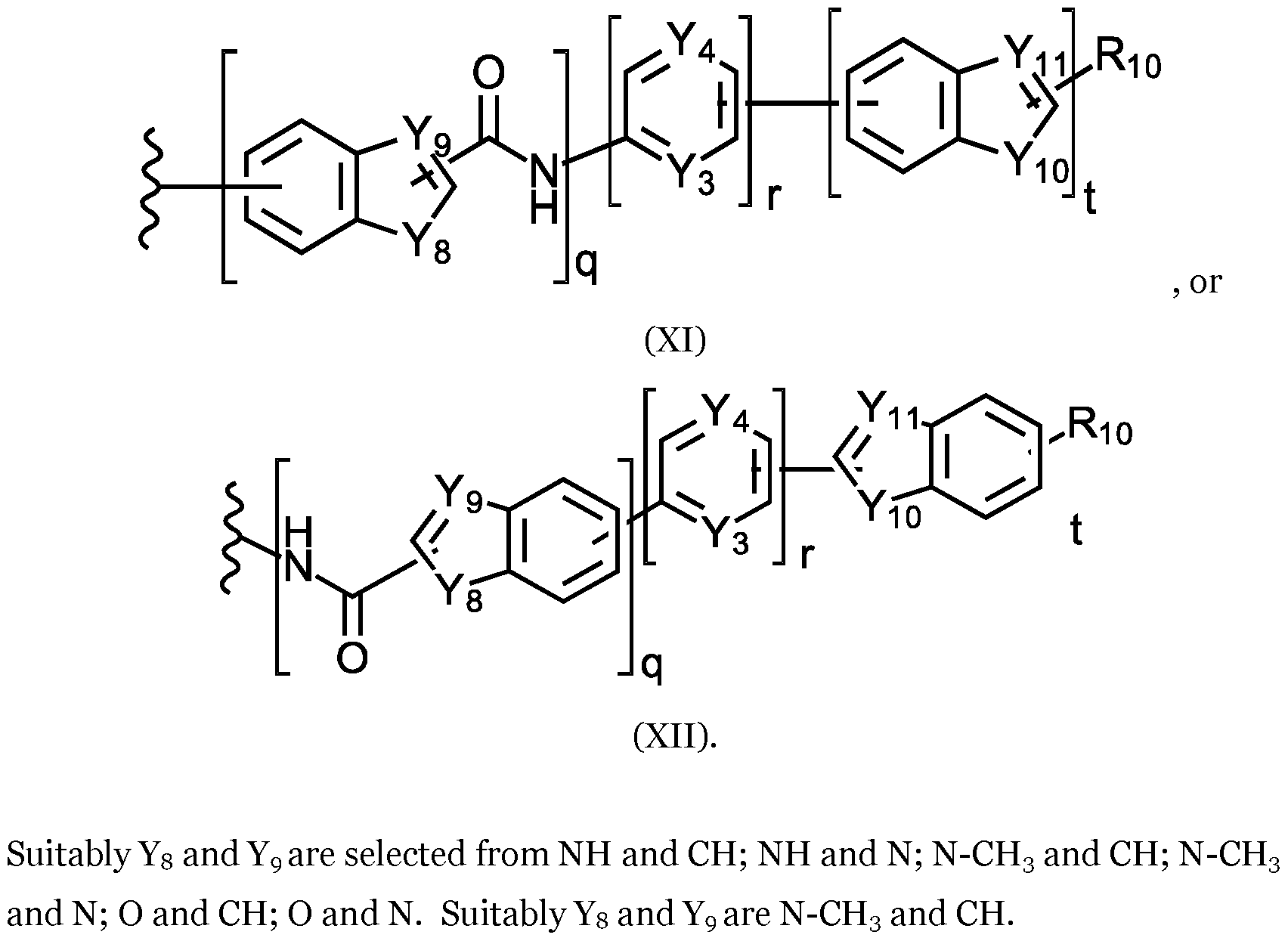


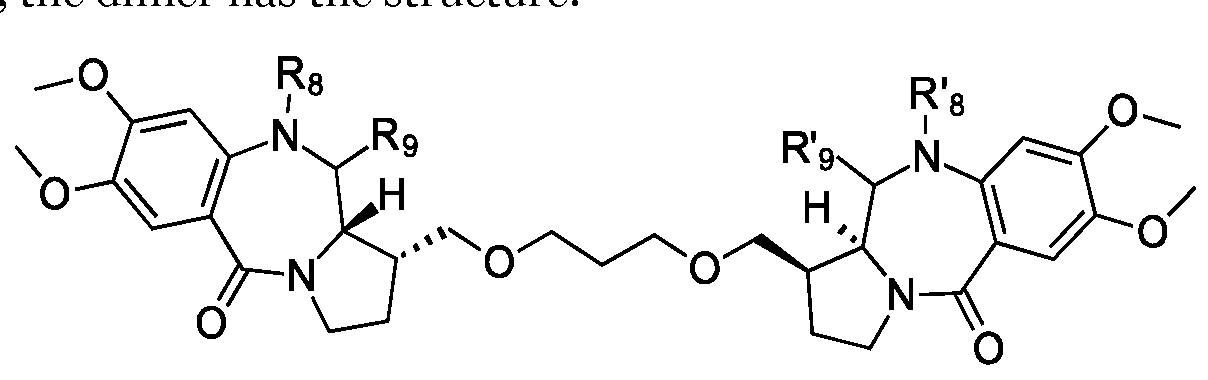

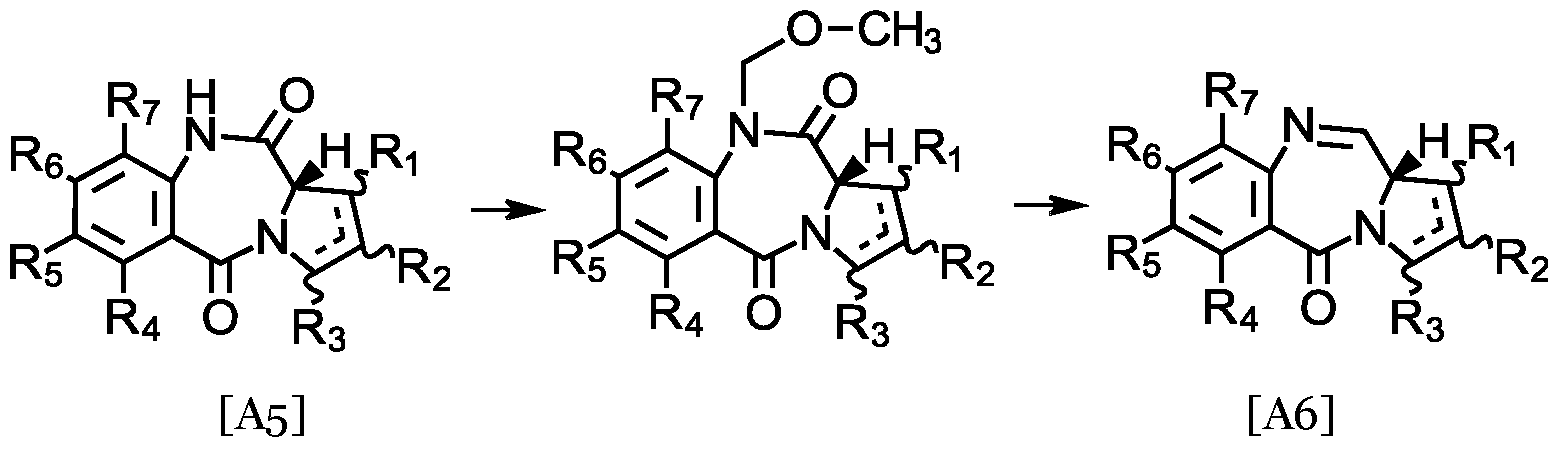
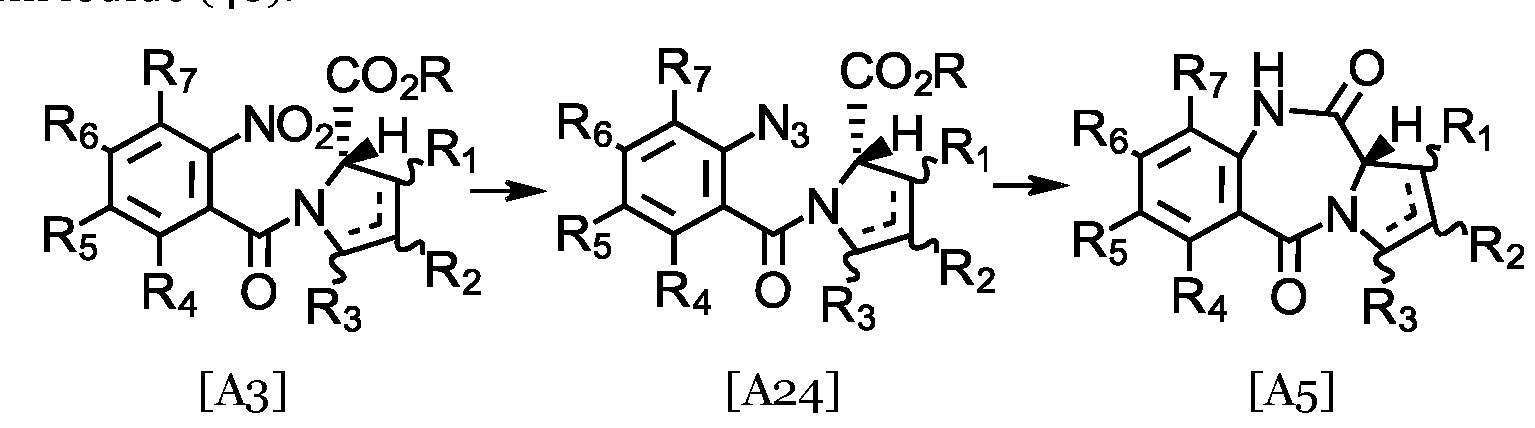
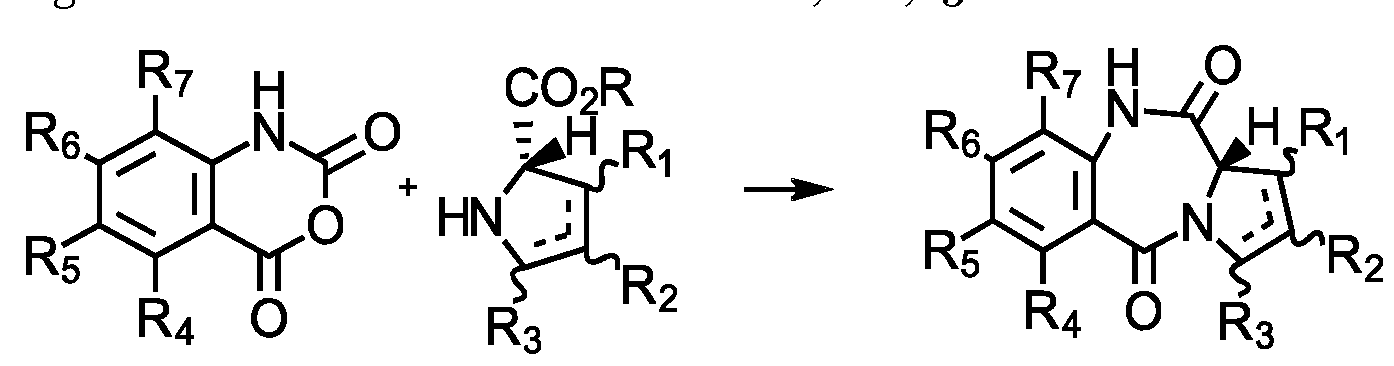


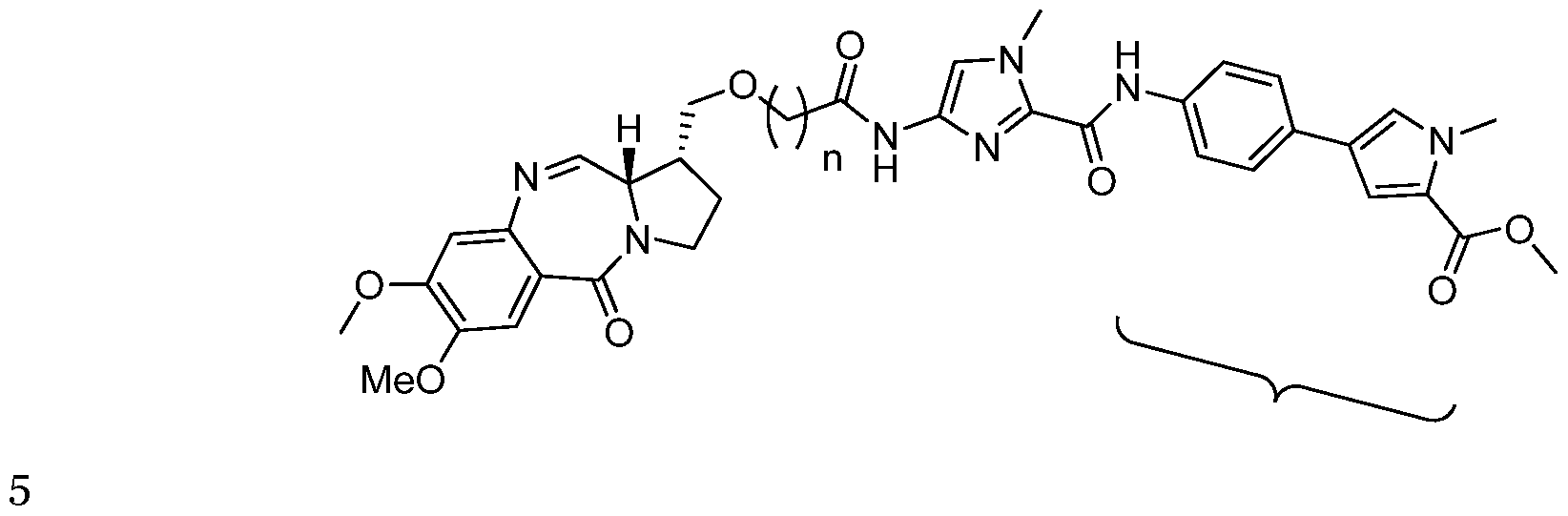


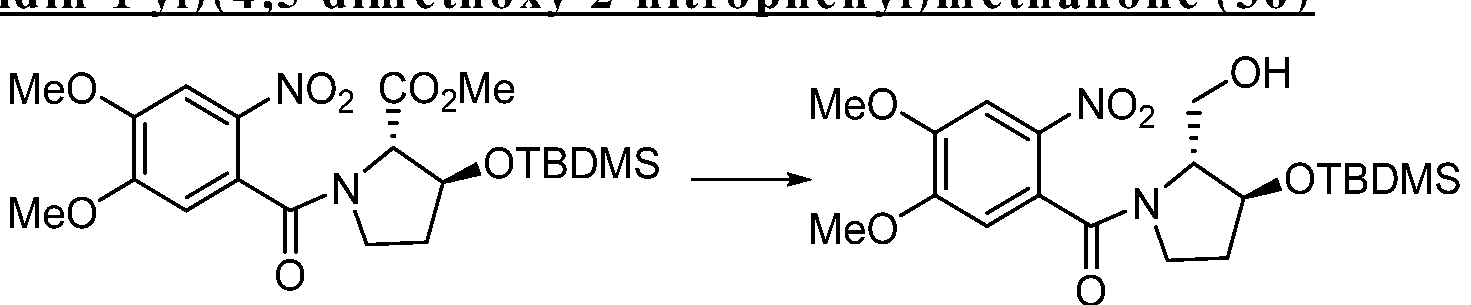


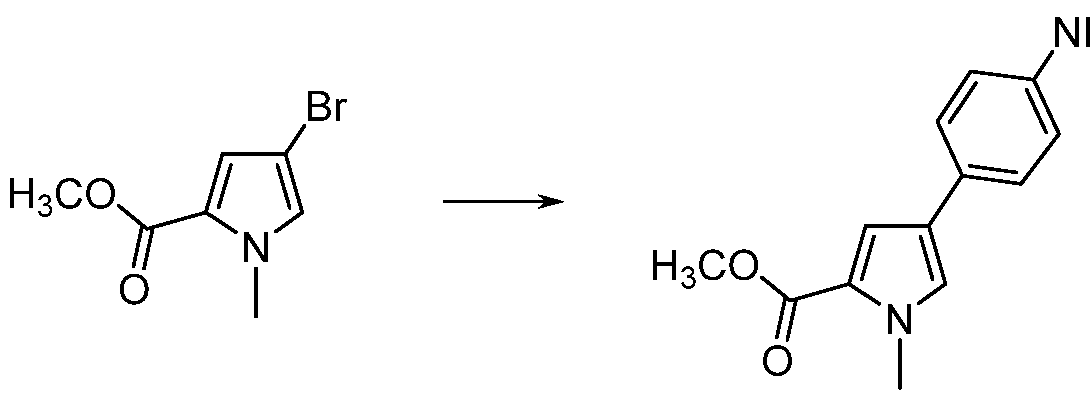


Claims


Priority Applications (2)
| Application Number | Priority Date | Filing Date | Title |
|---|---|---|---|
| US15/308,019 US9999625B2 (en) | 2014-05-02 | 2015-05-01 | Pyrrolobenzodiazepine compounds |
| GB1618238.8A GB2540892B (en) | 2014-05-02 | 2015-05-01 | Pyrrolobenzodiazepine compounds |
Applications Claiming Priority (2)
| Application Number | Priority Date | Filing Date | Title |
|---|---|---|---|
| GB1407816.6 | 2014-05-02 | ||
| GBGB1407816.6A GB201407816D0 (en) | 2014-05-02 | 2014-05-02 | Pyrrolobenzodiazepine Compounds |
Publications (1)
| Publication Number | Publication Date |
|---|---|
| WO2015166289A1 true WO2015166289A1 (en) | 2015-11-05 |
Family
ID=50980531
Family Applications (1)
| Application Number | Title | Priority Date | Filing Date |
|---|---|---|---|
| PCT/GB2015/051307 Ceased WO2015166289A1 (en) | 2014-05-02 | 2015-05-01 | Pyrrolobenzodiazepine compounds |
Country Status (3)
| Country | Link |
|---|---|
| US (1) | US9999625B2 (en) |
| GB (2) | GB201407816D0 (en) |
| WO (1) | WO2015166289A1 (en) |
Cited By (7)
| Publication number | Priority date | Publication date | Assignee | Title |
|---|---|---|---|---|
| WO2018130437A1 (en) | 2017-01-10 | 2018-07-19 | Bayer Aktiengesellschaft | Heterocyclene derivatives as pest control agents |
| WO2018130443A1 (en) | 2017-01-10 | 2018-07-19 | Bayer Aktiengesellschaft | Heterocyclene derivatives as pest control agents |
| JP2019522660A (en) * | 2016-06-24 | 2019-08-15 | メルサナ セラピューティクス インコーポレイテッド | Pyrrolobenzodiazepine and its conjugates |
| US10399970B2 (en) | 2015-06-09 | 2019-09-03 | Femtogenix Limited | Pyrridinobenzodiazepine and benzopyrridodiazecine compounds |
| US10975074B2 (en) | 2015-08-21 | 2021-04-13 | Femtogenix Limited | Anti-liferative agents comprising substituted benzo[e]pyrido[1,2-a][1,4]diazepines |
| US10975072B2 (en) | 2015-08-21 | 2021-04-13 | Femtogenix Limited | Substituted 6a,7,8,9,10,12-hexahydrobenzo[e]pyrido[1,2-a][1,4]diazepines as anti-proliferative agents |
| WO2024005123A1 (en) | 2022-06-30 | 2024-01-04 | 東レ株式会社 | Pharmaceutical composition for treating and/or preventing cancer |
Families Citing this family (3)
| Publication number | Priority date | Publication date | Assignee | Title |
|---|---|---|---|---|
| GB201521709D0 (en) * | 2015-12-09 | 2016-01-20 | Kings College London And Sec Dep For Health The | PBD Antibacterial agents |
| WO2017201132A2 (en) | 2016-05-18 | 2017-11-23 | Mersana Therapeutics, Inc. | Pyrrolobenzodiazepines and conjugates thereof |
| US11638760B2 (en) | 2017-11-27 | 2023-05-02 | Mersana Therapeutics, Inc. | Pyrrolobenzodiazepine antibody conjugates |
Citations (11)
| Publication number | Priority date | Publication date | Assignee | Title |
|---|---|---|---|---|
| WO2000012508A2 (en) | 1998-08-27 | 2000-03-09 | Spirogen Limited | Pyrrolbenzodiazepines |
| US6660856B2 (en) | 2002-03-08 | 2003-12-09 | Kaohsiung Medical University | Synthesis of pyrrolo[2,1-c][1,4]benzodiazepine analogues |
| WO2004043963A1 (en) | 2002-11-14 | 2004-05-27 | Spirogen Limited | Pyrrolobenzodiazepines |
| WO2004087711A1 (en) | 2003-03-31 | 2004-10-14 | Council Of Scentific And Industrial Research | Pyrene-linked pyrrolo (2,1-c) (1,4) benzodiazepine derivatives useful as anticancer agents |
| WO2005085250A1 (en) * | 2004-03-01 | 2005-09-15 | Spirogen Limited | C8, c8' linked 5-oxo-1,2,3,11a-tetrahydro-5h-pyrrolo[2,1-c][1,4]benzodiazepine dimers with 1h-pyrrole-dicarboxylic acid amide linkers and oligomeric analogs therof as well as related compounds for the treatment of proliferative diseases |
| WO2005085251A1 (en) | 2004-03-01 | 2005-09-15 | Spirogen Limited | 11-hydroxy-5h-pyrrolo[2,1-c][1,4]benzodiazepin-5-one derivatives as key intermediates for the preparation of c2 substituted pyrrolobenzodiazepines |
| WO2007039752A1 (en) | 2005-10-05 | 2007-04-12 | Spirogen Limited | Alkyl 4- [4- (5-oxo-2, 3, 5, 11a-tetrahyd0-5h-pyrr0l0 [2, 1-c] [1, 4] benzodiazepine-8-yloxy) -butyrylamino]-1h-pyrrole-2-carboxylate derivatives and related compounds for the treatment of a proliferative disease |
| WO2007085930A1 (en) | 2006-01-25 | 2007-08-02 | Sanofi-Aventis | Cytotoxic agents comprising new tomaymycin derivatives and their therapeutic use |
| WO2010043880A1 (en) * | 2008-10-17 | 2010-04-22 | Spirogen Limited | Unsymmetrical pyrrolobenzodiazepine-dimers for treatment of proliferative diseases |
| WO2011117882A1 (en) | 2010-03-22 | 2011-09-29 | Council Of Scientific & Industrial Research | Pyrrolo[2,l-c][l,4]benzodiazepine-benzothiazole or benzoxazole conjugates linked through piperazine moiety and process for the preparation thereof |
| WO2013164593A1 (en) | 2012-04-30 | 2013-11-07 | Spirogen Sàrl | Pyrrolobenzodiazepines |
Family Cites Families (1)
| Publication number | Priority date | Publication date | Assignee | Title |
|---|---|---|---|---|
| GB9205051D0 (en) * | 1992-03-09 | 1992-04-22 | Cancer Res Campaign Tech | Pyrrolobenzodiazepine derivatives,their preparation,and compositions containing them |
-
2014
- 2014-05-02 GB GBGB1407816.6A patent/GB201407816D0/en not_active Ceased
-
2015
- 2015-05-01 US US15/308,019 patent/US9999625B2/en not_active Expired - Fee Related
- 2015-05-01 WO PCT/GB2015/051307 patent/WO2015166289A1/en not_active Ceased
- 2015-05-01 GB GB1618238.8A patent/GB2540892B/en not_active Expired - Fee Related
Patent Citations (11)
| Publication number | Priority date | Publication date | Assignee | Title |
|---|---|---|---|---|
| WO2000012508A2 (en) | 1998-08-27 | 2000-03-09 | Spirogen Limited | Pyrrolbenzodiazepines |
| US6660856B2 (en) | 2002-03-08 | 2003-12-09 | Kaohsiung Medical University | Synthesis of pyrrolo[2,1-c][1,4]benzodiazepine analogues |
| WO2004043963A1 (en) | 2002-11-14 | 2004-05-27 | Spirogen Limited | Pyrrolobenzodiazepines |
| WO2004087711A1 (en) | 2003-03-31 | 2004-10-14 | Council Of Scentific And Industrial Research | Pyrene-linked pyrrolo (2,1-c) (1,4) benzodiazepine derivatives useful as anticancer agents |
| WO2005085250A1 (en) * | 2004-03-01 | 2005-09-15 | Spirogen Limited | C8, c8' linked 5-oxo-1,2,3,11a-tetrahydro-5h-pyrrolo[2,1-c][1,4]benzodiazepine dimers with 1h-pyrrole-dicarboxylic acid amide linkers and oligomeric analogs therof as well as related compounds for the treatment of proliferative diseases |
| WO2005085251A1 (en) | 2004-03-01 | 2005-09-15 | Spirogen Limited | 11-hydroxy-5h-pyrrolo[2,1-c][1,4]benzodiazepin-5-one derivatives as key intermediates for the preparation of c2 substituted pyrrolobenzodiazepines |
| WO2007039752A1 (en) | 2005-10-05 | 2007-04-12 | Spirogen Limited | Alkyl 4- [4- (5-oxo-2, 3, 5, 11a-tetrahyd0-5h-pyrr0l0 [2, 1-c] [1, 4] benzodiazepine-8-yloxy) -butyrylamino]-1h-pyrrole-2-carboxylate derivatives and related compounds for the treatment of a proliferative disease |
| WO2007085930A1 (en) | 2006-01-25 | 2007-08-02 | Sanofi-Aventis | Cytotoxic agents comprising new tomaymycin derivatives and their therapeutic use |
| WO2010043880A1 (en) * | 2008-10-17 | 2010-04-22 | Spirogen Limited | Unsymmetrical pyrrolobenzodiazepine-dimers for treatment of proliferative diseases |
| WO2011117882A1 (en) | 2010-03-22 | 2011-09-29 | Council Of Scientific & Industrial Research | Pyrrolo[2,l-c][l,4]benzodiazepine-benzothiazole or benzoxazole conjugates linked through piperazine moiety and process for the preparation thereof |
| WO2013164593A1 (en) | 2012-04-30 | 2013-11-07 | Spirogen Sàrl | Pyrrolobenzodiazepines |
Non-Patent Citations (96)
| Title |
|---|
| AL-SAID; N. H., J. HETEROCYCL. CHEM., vol. 43, 2006, pages 1091 |
| ANTONOW, D.; THURSTON, D. E., CHEM REV, vol. 111, 2011, pages 2815 - 2864 |
| ARIMA, K.; KOSAKA, M.; TAMURA, G.; IMANAKA, H.; SAKAI, H., JANTIBIOT (TOKYO), vol. 25, 1972, pages 437 - 444 |
| ARTICO, M.; DE MARTINO, G.; GIULIANO, R.; MASSA, S.; PORRETTA, G. C., J. CHEM. SOC., CHEM. COMMUN., 1969, pages 671 |
| BARALDI, P. G. ET AL., JOURNAL OF MEDICINAL CHEMISTRY, vol. 42, 1999, pages 131 - 5141 |
| BARKLEY, M. D.; CHEATHAM, S.; THURSTON, D. E.; HURLEY, L. H., BIOCHEMISTRY, vol. 25, 1986, pages 3021 - 3031 |
| BORKOVEC, A. B.; CHANG, S. C.; HORWITZ, S. B., J ECON ENTOMOL, vol. 64, 1971, pages 983 - 984 |
| BOSE, D. S.; THOMPSON, A. S.; CHING, J. S.; HARTLEY, J. A.; BERARDINI, M.D.; JENKINS, T. C.; NEIDELE, S.; HURLEY, L. H.; THURSTON,, J. AM. CHEM. SOC., vol. 114, 1992, pages 4939 |
| BRUCOLI, F.; HAWKINS, R. M.; JAMES, C. H.; JACKSON, P. J.; WELLS, G.; JENKINS, T. C.; ELLIS, T.; KOTECHA, M.; HOCHHAUSER, D.; HART, JMED CHEM, vol. 56, 2013, pages 6339 - 6351 |
| CASE, D. A.; DARDEN, T. A.; CHEATHAM III, T. E.; SIMMERLING, C. L.; WANG, J.; DUKE, R. E.; LUO, R.; WALKER, R. C.; ZHANG, W.; MERZ, AMBER 11, UNIVERSITY OF CALIFORNIA, SAN FRANCISCO, 2010 |
| CIPOLLA, L.; ARAUJO, A. C.; AIROLDI, C.; BINI, D., ANTICANCER AGENTS MED CHEM, vol. 9, 2009, pages 1 - 31 |
| CLARK, R. L.; CARTER, K. C.; MULLEN, A. B.; COXON, G. D.; OWUSU-DAPAAH, G.; MCFARLANE, E.; DUONG THI, M. D.; GRANT, M. H.; TETTEY,, BIOORG. MED. CHEM. LETT., vol. 17, 2007, pages 624 |
| CLINGEN, P. H.; DE SILVA, I. U.; MCHUGH, P. J.; GHADESSY, F. J.; TILBY, M. J.; THURSTON, D. E.; HARTLEY, J. A., NUCLEICACIDS RES, vol. 33, pages 3283 - 3291 |
| COOPER, N.; HAGAN, D. R.; TIBERGHIEN, A.; ADEMEFUN, T.; MATTHEWS, C. S.; HOWARD, P. W.; THURSTON, D. E., CHEM. COMMUN., vol. 16, 2002, pages 1764 |
| CORREA, A.; TELLITU, I.; DOMINGUEZ, E.; MORENO, I.; SANMARTIN, R., J. ORG. CHEM., vol. 70, 2005, pages 2256 |
| D. B. TROY: "Remington: The Science and Practice of Pharmacy, 21st Edition", 2006, LIPPINCOTT, WILLIAMS AND WILKINS |
| DAMAYANTHI, Y. ET AL., JOURNAL OF ORGANIC CHEMISTRY, vol. 64, 1999, pages 290 - 292 |
| DATABASE CA [online] CHEMICAL ABSTRACTS SERVICE, COLUMBUS, OHIO, US; 1996, ZIOGA, G. ET AL: "Interaction of the pyrrolobenzodiazepine antitumor agent anthramycin with glutathione: a possible role in metabolism", XP002742185, retrieved from STN Database accession no. 1996:495794 * |
| DAVID E. BERGBREITER; DAVID P. RAINVILLE, J. ORG. CHEM., vol. 41, 1976, pages 3031 - 3033 |
| DONG, Q.; ANDERSON, C. E.; CIUFOLINI, M. A., TETRAHEDRON LETT., vol. 36, 1995, pages 5681 |
| EGUCHI, S.; YAMASHITA, K.; MATSUSHITA, Y.; KAKEHI, A., J. ORG. CHEM., vol. 60, 1995, pages 4006 |
| FARMER, J. D.; RUDNICKI, S. M.; SUGGS, J. W., TETRAHEDRON LETT, vol. 29, 1988, pages 5105 - 5108 |
| FOGOLARI, F.; ZUCCATO, P.; ESPOSITO, G.; VIGLINO, P., BIOPHYS J, vol. 76, 1999, pages 1 - 16 |
| FUKUYAMA, T.; LIU, G.; LINTON, S. D.; LIN, S. C.; NISHINO, H., TETRAHEDRON LETT., vol. 34, 1993, pages 2577 |
| GERRATANA, B., MED RES REV, vol. 32, 2012, pages 254 - 293 |
| GREGSON, S. J.; HOWARD, P. W.; BARCELLA, S.; NAKAMYA, A.; JENKINS, T. C.; KELLAND, L. R.; THURSTON, D. E., BIOORG. MED. CHEM. LETT., vol. 10, 2000, pages 1849 |
| GREGSON, S. J.; HOWARD, P. W.; CORCORAN, K. E.; BARCELLA, S.; YASIN, M. M.; HURST, A. A.; JENKINS, T. C.; KELLAND, L. R.; THURSTON, BIOORG. MED. CHEM. LETT., vol. 10, 2000, pages 1845 |
| GREGSON, S. J.; HOWARD, P. W.; CORCORAN, K. E.; JENKINS, T. C.; KELLAND, L. R.; THURSTON, D. E., BIOORG. MED. CHEM. LETT., vol. 11, 2001, pages 2859 |
| GREGSON, S. J.; HOWARD, P. W.; HARTLEY, J. A.; BROOKS, N. A.; ADAMS, L. J.; JENKINS, T. C.; KELLAND, L. R.; THURSTON, D. E., J MED CHEM, vol. 44, 2001, pages 8 |
| GREGSON, S. J.; HOWARD, P. W.; THURSTON, D. E., BIOORG. MED. CHEM. LETT., vol. 13, 2003, pages 2277 |
| HARTLEY, J. A., EXPERT OPIN INVESTIG DRUGS, vol. 20, 2011, pages 733 - 744 |
| HORWITZ, S. B.; CHANG, S. C.; GROLLMAN, A. P.; BORKOVEC, A. B., SCIENCE, vol. 174, 1971, pages 159 - 161 |
| HU, W. P.; WANG, J. J.; LIN, F. L.; LIN, Y. C.; LIN, S. R.; HSU, M. H., J. ORG. CHEM., vol. 66, 2001, pages 2881 |
| HURLEY, L. H.; RECK, T.; THURSTON, D. E.; LANGLEY, D. R.; HOLDEN, K. G.; HERTZBERG, R. P.; HOOVER, J. R.; GALLAGHER, G., JR.; FAUC, CHEM RES TOXICOL, vol. 1, 1988, pages 258 - 268 |
| JENKINS, T. C.; HURLEY, L. H.; NEIDLE, S.; THURSTON, D. E., JMED CHEM, vol. 37, 1994, pages 4529 - 4537 |
| K. R. MORRIS: "Polymorphism in Pharmaceutical Solids", 1995 |
| KAMAL AHMED ET AL: "Design and synthesis of C-8 linked pyrrolobenzodiazepine-naphthalimide hybrids as anti-tumour agents", BIOORGANIC & MEDICINAL CHEMISTRY LETTERS, PERGAMON, AMSTERDAM, NL, vol. 12, no. 15, 5 August 2002 (2002-08-05), pages 1933 - 1935, XP002316525, ISSN: 0960-894X, DOI: 10.1016/S0960-894X(02)00326-8 * |
| KAMAL, A.; BABU, A. H.; RAMANA, A. V.; RAMANA, K. V.; BHARATHI, E. V.; KUMAR, M. S., BIOORG. MED. CHEM. LETT., vol. 15, 2005, pages 2621 |
| KAMAL, A.; KHAN, M. N.; SRIKANTH, Y. V.; REDDY, K. S.; JUVEKAR, A.; SEN, S.; KURIAN, N.; ZINGDE, S., BIOORG MED CHEM, vol. 16, 2008, pages 7804 - 7810 |
| KAMAL, A.; LAXMAN, E.; ARIFUDDIN, M., TETRAHEDRON LETT., vol. 41, 2000, pages 7743 |
| KAMAL, A.; LAXMAN, E.; LAXMAN, N.; RAO, N. V., BIOORG. MED. CHEM. LETT., vol. 10, 2000, pages 2311 |
| KAMAL, A.; LAXMAN, E.; REDDY, P. S. M. M., SYNLETT, vol. IO, 2000, pages 1476 |
| KAMAL, A.; RAO, N. V., CHEM. COMMUN., vol. 3, 1996, pages 385 |
| KAMAL, A.; REDDY, B. S. N.; REDDY, B. S. P., BIOORG. MED. CHEM. LETT., vol. 7, 1997, pages 1825 |
| KAMAL, A.; REDDY, B. S. P.; REDDY, B. S. N., TETRAHEDRON LETT., vol. 37, 1996, pages 6803 |
| KAMAL, A.; REDDY, K. L.; DEVAIAH, V.; SHANKARAIAH, N.; REDDY, D. R., MINI REV MED CHEM, vol. 6, 2006, pages 53 - 69 |
| KAMAL, A.; REDDY, K. L.; REDDY, G. S. K.; REDDY, B. S. N., TETRAHEDRON LETT., vol. 45, 2004, pages 3499 |
| KAMAL, A.; REDDY, P. S. M. M.; REDDY, D. R., TETRAHEDRON LETT., vol. 44, 2003, pages 2857 |
| KAMAL, A.; SRINIVAS, O.; RAMULU, P.; RAMESH, G.; KUMAR, P. P., BIOORG MED CHEM LETT, vol. 13, 2003, pages 3577 - 3581 |
| KANG, G. D.; HOWARD, P. W.; THURSTON, D. E., CHEM. COMMUN., vol. 14, 2003, pages 1688 |
| KATSIFIS, A. G.; MCPHEE, M. E.; RIDLEY, D. D., AUST. J. CHEM., vol. 51, 1998, pages 1121 |
| KITAMURA, T.; SATO, Y.; MORI, M., TETRAHEDRON, vol. 60, 2004, pages 9649 |
| KIZU, R.; DRAVES, P. H.; HURLEY, L. H., BIOCHEMISTRY, vol. 32, 1993, pages 8712 - 8722 |
| KOCIENSKI, P.: "Protective Groups, 3rd Edition,", 2005, THIEME |
| KOPKA, M. L.; GOODSELL, D. S.; BAIKALOV, I.; GRZESKOWIAK, K.; CASCIO, D.; DICKERSON, R. E., BIOCHEMISTRY, vol. 33, 1994, pages 13593 - 13610 |
| KOTECHA, M.; KLUZA, J.; WELLS, G.; O'HARE, C. C.; FORNI, C.; MANTOVANI, R.; HOWARD, P. W.; MORRIS, P.; THURSTON, D. E.; HARTLEY, J, MOL CANCER THER, vol. 7, 2008, pages 1319 - 1328 |
| KRAUS, G. A.; LIU, P., TETRAHEDRON LETT., vol. 36, 1995, pages 7595 |
| KREMER, K., MACROMOLECULAR CHEMISTRY AND PHYSICS, vol. 204, 2003, pages 257 - 264 |
| KUMAR ET AL., HETEROCYCLIC COMMUNICATIONS, vol. 8, 2002, pages 19 - 26 |
| KUMAR, R.; LOWN, J. W., MINI-REV. MED. CHEM., vol. 3, 2003, pages 323 |
| KUMAR, R; LOWN, J. W., ONCOLOGY RESEARCH, vol. 13, 2003, pages 221 - 233 |
| LANGLEY, D. R.; THURSTON, D. E., J. ORGANIC CHEMISTRY, vol. 52, 1987, pages 91 - 97 |
| LANGLOIS, N.; ROJAS-ROUSSEAU, A.; GASPARD, C.; WERNER, G. H.; DARRO, F.; KISS, R., J. MED. CHEM., vol. 44, 2001, pages 3754 |
| LEIMGRUBER, W.; STEFANOVIC, V.; SCHENKER, F.; KARR, A.; BERGER, J., J AM CHEM SOC, vol. 8, pages 5791 - 5793 |
| M. ASH AND I. ASH: "Handbook for Pharmaceutical Additives, 3rd Edition", 2007, SYNAPSE INFORMATION RESOURCES, INC. |
| MADANI, H.; THOMPSON, A. S.; THREADGILL, M. D., TETRAHEDRON, vol. 58, 2002, pages 8107 |
| MATSUMOTO, T.; AOYAMA, T.; SHIOIRI, T., TETRAHEDRON, vol. 52, 1996, pages 13521 |
| MATSUMOTO, T.; MATSUNAGA, N.; KANAI, A.; AOYAMA, T.; SHIOIRI, T.; OSAWA, E., TETRAHEDRON, vol. 50, 1994, pages 9781 |
| MICHAEL B. SMITH AND OTHERS,: "Compendium of Organic Synthetic Methods", 1974 |
| MOLINA, P.; DIAZ, I.; TARRAGA, A., TETRAHEDRON, vol. 51, 1995, pages 5617 |
| P. KOCIENSKI: "Protective Groups, 3rd Edition", 2005 |
| PEREZ, A.; MARCHAN, I.; SVOZIL, D.; SPONER, J.; CHEATHAM, T. E., 3RD; LAUGHTON, C. A.; OROZCO, M., BIOPHYS J, vol. 92, 2007, pages 3817 - 3829 |
| PUVVADA, M. S.; FORROW, S. A.; HARTLEY, J. A.; STEPHENSON, P.; GIBSON, I.; JENKINS, T. C.; THURSTON, D. E., BIOCHEMISTRY, vol. 36, 1997, pages 2478 - 2484 |
| PUVVADA, M. S.; HARTLEY, J. A.; JENKINS, T. C.; THURSTON, D. E., NUCLEIC ACIDS RES, vol. 21, 1993, pages 3671 - 3675 |
| RAHMAN, K. M.; JACKSON, P. J.; JAMES, C. H.; BASU, B. P.; HARTLEY, J. A.; DE LA FUENTE, M.; SCHATZLEIN, A.; ROBSON, M.; PEDLEY, R., J MED CHEM., vol. 6, 2013, pages 2911 - 35 |
| REDDY, B. S. P.; DAMAYANTHI, Y.; LOWN, J. W., SYNLETT, vol. 7, 1999, pages 1112 |
| REDDY, B. S.; DAMAYANTHI, Y.; LOWN, J. W., ANTICANCER DRUG DES, vol. 15, 2000, pages 225 - 238 |
| RICHARD LAROCK: "Comprehensive Organic Transformations, A Guide to Functional Group Preparations, 2nd Ed", 2010 |
| ROJAS-ROUSSEAU, A.; LANGLOIS, N., TETRAHEDRON, vol. 57, 2001, pages 3389 |
| RYCKAERT, J.-P.; CICCOTTI, G.; BERENDSEN, H. J. C., JOURNAL OF COMPUTATIONAL PHYSICS, vol. 23, 1977, pages 327 - 341 |
| S. M. BERGE ET AL., J. PHARM. SCI., vol. 66, 1977, pages 1 - 19 |
| SATO, S.; IWATA, F.; YAMADA, S.; KAWAHARA, H.; KATAYAMA, M., BIOORG MED CHEM LETT, vol. 21, 2011, pages 7099 - 7101 |
| SEIFERT, J.; PEZESHKI, S.; KAMAL, A.; WEISZ, K., ORGANIC & BIOMOLECULAR CHEMISTRY, vol. 10, 2012, pages 6850 - 6860 |
| SMELLIE, M.; BOSE, D. S.; THOMPSON, A. S.; JENKINS, T. C.; HARTLEY, J. A.; THURSTON, D. E., BIOCHEMISTRY, vol. 42, 2003, pages 8232 - 8239 |
| STAHL; WERMUTH: "Handbook of Pharmaceutical Salts: Properties, Selection, and Use", 2011 |
| T. W. GREENE; P. G. WUTS: "Protecting Groups in Organic Chemistry, 4th Edition,", 2006 |
| THURSTON D.E.; BOSE D.S., CHEM REV, vol. 94, 1994, pages 433 - 465 |
| THURSTON, D. E.; BOSE, D. S.; THOMPSON, A. S.; HOWARD, P. W.; LEONI, A.; CROKER, S. J.; JENKINS, T. C.; NEIDLE, S.; HARTLEY, J. A., J. ORG. CHEM., vol. 61, 1996, pages 8141 |
| THURSTON, D. E.; LANGLEY, D. R., J. ORG. CHEM., vol. 51, 1986, pages 705 |
| TIBERGHIEN, A. C.; HAGAN, D.; HOWARD, P. W.; THURSTON, D. E., BIOORG. MED. CHEM. LETT., vol. 14, 2004, pages 5041 |
| WANG, H.; LAUGHTON, C. A., PHYS CHEM CHEM PHYS, vol. 11, 2009, pages 10722 - 10728 |
| WELLS, G. ET AL., PROC. AM. ASSOC. CANC. RES., vol. 44, 2003, pages 4 2 |
| WELLS, G.; MARTIN, C. R.; HOWARD, P. W.; SANDS, Z. A.; LAUGHTON, C. A.; TIBERGHIEN, A.; WOO, C. K.; MASTERSON, L. A.; STEPHENSON,, JMED CHEM, vol. 49, 2006, pages 5442 - 5461 |
| WU, J.; CLINGEN, P. H.; SPANSWICK, V. J.; MELLINAS-GOMEZ, M.; MEYER, T.; PUZANOV, I.; JODRELL, D.; HOCHHAUSER, D.; HARTLEY, J. A., CLIN CANCER RES, vol. 19, 2013, pages 721 - 730 |
| WUTS, P.G.M.; GREENE, T.W.: "Protective Groups in Organic Synthesis, 4th Edition,", 2007, WILEY-LNTERSCIENCE |
| ZIOGA, G. ET AL: "Interaction of the pyrrolobenzodiazepine antitumor agent anthramycin with glutathione: a possible role in metabolism", PHARMACEUTICAL SCIENCES , 2(1), 39-42 CODEN: PHSCFB; ISSN: 1356-6881, 1996 * |
Cited By (10)
| Publication number | Priority date | Publication date | Assignee | Title |
|---|---|---|---|---|
| US10399970B2 (en) | 2015-06-09 | 2019-09-03 | Femtogenix Limited | Pyrridinobenzodiazepine and benzopyrridodiazecine compounds |
| US10975074B2 (en) | 2015-08-21 | 2021-04-13 | Femtogenix Limited | Anti-liferative agents comprising substituted benzo[e]pyrido[1,2-a][1,4]diazepines |
| US10975072B2 (en) | 2015-08-21 | 2021-04-13 | Femtogenix Limited | Substituted 6a,7,8,9,10,12-hexahydrobenzo[e]pyrido[1,2-a][1,4]diazepines as anti-proliferative agents |
| US11912700B2 (en) | 2015-08-21 | 2024-02-27 | Pheon Therapeutics Ltd | Anti-proliferative agents comprising substituted benzo[e]pyrido[1,2-a][1,4]diazepines |
| US12583857B2 (en) | 2015-08-21 | 2026-03-24 | Pheon Therapeutics Ltd | Anti-liferative agents comprising substituted benzo[e]pyrido[1,2-a][1,4]diazepines |
| JP2019522660A (en) * | 2016-06-24 | 2019-08-15 | メルサナ セラピューティクス インコーポレイテッド | Pyrrolobenzodiazepine and its conjugates |
| JP7049276B2 (en) | 2016-06-24 | 2022-04-06 | メルサナ セラピューティクス インコーポレイテッド | Pyrrolobenzodiazepines and their conjugates |
| WO2018130437A1 (en) | 2017-01-10 | 2018-07-19 | Bayer Aktiengesellschaft | Heterocyclene derivatives as pest control agents |
| WO2018130443A1 (en) | 2017-01-10 | 2018-07-19 | Bayer Aktiengesellschaft | Heterocyclene derivatives as pest control agents |
| WO2024005123A1 (en) | 2022-06-30 | 2024-01-04 | 東レ株式会社 | Pharmaceutical composition for treating and/or preventing cancer |
Also Published As
| Publication number | Publication date |
|---|---|
| US9999625B2 (en) | 2018-06-19 |
| US20170050971A1 (en) | 2017-02-23 |
| GB2540892B (en) | 2020-10-21 |
| GB201407816D0 (en) | 2014-06-18 |
| GB2540892A (en) | 2017-02-01 |
| GB201618238D0 (en) | 2016-12-14 |
Similar Documents
| Publication | Publication Date | Title |
|---|---|---|
| US9999625B2 (en) | Pyrrolobenzodiazepine compounds | |
| US10399970B2 (en) | Pyrridinobenzodiazepine and benzopyrridodiazecine compounds | |
| TWI808067B (en) | Amine-substituted heterocyclic compounds as ehmt2 inhibitors and methods of use thereof | |
| US12583857B2 (en) | Anti-liferative agents comprising substituted benzo[e]pyrido[1,2-a][1,4]diazepines | |
| KR102426043B1 (en) | Inhibitors of activin receptor-like kinases | |
| JP6903635B2 (en) | Piperidinobenzodiazepine compounds with antiproliferative activity | |
| US8940733B2 (en) | Unsymmetrical pyrrolobenzodiazepine-dimers for treatment of proliferative diseases | |
| WO2009060208A1 (en) | Pyrrolobenzodiazepines | |
| EP4055013B1 (en) | Wdr5 inhibitors and modulators | |
| TWI669300B (en) | Pyrimidine derivatives, its preparation method, its pharmaceutical composition and its use in medicine | |
| EP3578549A1 (en) | Heterocyclic compound | |
| US12577227B2 (en) | WDR5 inhibitors and modulators | |
| CN112533898A (en) | Heterocyclic compounds | |
| JP2023502279A (en) | Piperazine compounds for inhibiting CPS1 | |
| GB2567126A (en) | PBC compounds | |
| EA040562B1 (en) | PIPERIDINOBENZODIAZEPINE COMPOUNDS WITH ANTIPROLIFERATING ACTIVITY |
Legal Events
| Date | Code | Title | Description |
|---|---|---|---|
| 121 | Ep: the epo has been informed by wipo that ep was designated in this application |
Ref document number: 15726245 Country of ref document: EP Kind code of ref document: A1 |
|
| ENP | Entry into the national phase |
Ref document number: 201618238 Country of ref document: GB Kind code of ref document: A Free format text: PCT FILING DATE = 20150501 |
|
| WWE | Wipo information: entry into national phase |
Ref document number: 1618238.8 Country of ref document: GB |
|
| WWE | Wipo information: entry into national phase |
Ref document number: 15308019 Country of ref document: US |
|
| NENP | Non-entry into the national phase |
Ref country code: DE |
|
| 122 | Ep: pct application non-entry in european phase |
Ref document number: 15726245 Country of ref document: EP Kind code of ref document: A1 |