WO2015114697A1 - Display device, display method, and non-transitory computer-readable medium having display program stored therein - Google Patents
Display device, display method, and non-transitory computer-readable medium having display program stored therein Download PDFInfo
- Publication number
- WO2015114697A1 WO2015114697A1 PCT/JP2014/005127 JP2014005127W WO2015114697A1 WO 2015114697 A1 WO2015114697 A1 WO 2015114697A1 JP 2014005127 W JP2014005127 W JP 2014005127W WO 2015114697 A1 WO2015114697 A1 WO 2015114697A1
- Authority
- WO
- WIPO (PCT)
- Prior art keywords
- display
- notification
- unit
- volume
- information
- Prior art date
- Legal status (The legal status is an assumption and is not a legal conclusion. Google has not performed a legal analysis and makes no representation as to the accuracy of the status listed.)
- Ceased
Links
Images




Classifications
-
- G—PHYSICS
- G02—OPTICS
- G02B—OPTICAL ELEMENTS, SYSTEMS OR APPARATUS
- G02B27/00—Optical systems or apparatus not provided for by any of the groups G02B1/00 - G02B26/00, G02B30/00
- G02B27/01—Head-up displays
- G02B27/017—Head mounted
-
- B—PERFORMING OPERATIONS; TRANSPORTING
- B60—VEHICLES IN GENERAL
- B60K—ARRANGEMENT OR MOUNTING OF PROPULSION UNITS OR OF TRANSMISSIONS IN VEHICLES; ARRANGEMENT OR MOUNTING OF PLURAL DIVERSE PRIME-MOVERS IN VEHICLES; AUXILIARY DRIVES FOR VEHICLES; INSTRUMENTATION OR DASHBOARDS FOR VEHICLES; ARRANGEMENTS IN CONNECTION WITH COOLING, AIR INTAKE, GAS EXHAUST OR FUEL SUPPLY OF PROPULSION UNITS IN VEHICLES
- B60K35/00—Instruments specially adapted for vehicles; Arrangement of instruments in or on vehicles
- B60K35/10—Input arrangements, i.e. from user to vehicle, associated with vehicle functions or specially adapted therefor
-
- B—PERFORMING OPERATIONS; TRANSPORTING
- B60—VEHICLES IN GENERAL
- B60K—ARRANGEMENT OR MOUNTING OF PROPULSION UNITS OR OF TRANSMISSIONS IN VEHICLES; ARRANGEMENT OR MOUNTING OF PLURAL DIVERSE PRIME-MOVERS IN VEHICLES; AUXILIARY DRIVES FOR VEHICLES; INSTRUMENTATION OR DASHBOARDS FOR VEHICLES; ARRANGEMENTS IN CONNECTION WITH COOLING, AIR INTAKE, GAS EXHAUST OR FUEL SUPPLY OF PROPULSION UNITS IN VEHICLES
- B60K35/00—Instruments specially adapted for vehicles; Arrangement of instruments in or on vehicles
- B60K35/20—Output arrangements, i.e. from vehicle to user, associated with vehicle functions or specially adapted therefor
- B60K35/21—Output arrangements, i.e. from vehicle to user, associated with vehicle functions or specially adapted therefor using visual output, e.g. blinking lights or matrix displays
- B60K35/22—Display screens
-
- B—PERFORMING OPERATIONS; TRANSPORTING
- B60—VEHICLES IN GENERAL
- B60K—ARRANGEMENT OR MOUNTING OF PROPULSION UNITS OR OF TRANSMISSIONS IN VEHICLES; ARRANGEMENT OR MOUNTING OF PLURAL DIVERSE PRIME-MOVERS IN VEHICLES; AUXILIARY DRIVES FOR VEHICLES; INSTRUMENTATION OR DASHBOARDS FOR VEHICLES; ARRANGEMENTS IN CONNECTION WITH COOLING, AIR INTAKE, GAS EXHAUST OR FUEL SUPPLY OF PROPULSION UNITS IN VEHICLES
- B60K35/00—Instruments specially adapted for vehicles; Arrangement of instruments in or on vehicles
- B60K35/20—Output arrangements, i.e. from vehicle to user, associated with vehicle functions or specially adapted therefor
- B60K35/28—Output arrangements, i.e. from vehicle to user, associated with vehicle functions or specially adapted therefor characterised by the type of the output information, e.g. video entertainment or vehicle dynamics information; characterised by the purpose of the output information, e.g. for attracting the attention of the driver
-
- G—PHYSICS
- G01—MEASURING; TESTING
- G01C—MEASURING DISTANCES, LEVELS OR BEARINGS; SURVEYING; NAVIGATION; GYROSCOPIC INSTRUMENTS; PHOTOGRAMMETRY OR VIDEOGRAMMETRY
- G01C21/00—Navigation; Navigational instruments not provided for in groups G01C1/00 - G01C19/00
- G01C21/26—Navigation; Navigational instruments not provided for in groups G01C1/00 - G01C19/00 specially adapted for navigation in a road network
- G01C21/34—Route searching; Route guidance
- G01C21/36—Input/output arrangements for on-board computers
- G01C21/3697—Output of additional, non-guidance related information, e.g. low fuel level
-
- G—PHYSICS
- G02—OPTICS
- G02B—OPTICAL ELEMENTS, SYSTEMS OR APPARATUS
- G02B27/00—Optical systems or apparatus not provided for by any of the groups G02B1/00 - G02B26/00, G02B30/00
- G02B27/01—Head-up displays
-
- G—PHYSICS
- G02—OPTICS
- G02B—OPTICAL ELEMENTS, SYSTEMS OR APPARATUS
- G02B27/00—Optical systems or apparatus not provided for by any of the groups G02B1/00 - G02B26/00, G02B30/00
- G02B27/02—Viewing or reading apparatus
-
- G—PHYSICS
- G06—COMPUTING OR CALCULATING; COUNTING
- G06F—ELECTRIC DIGITAL DATA PROCESSING
- G06F3/00—Input arrangements for transferring data to be processed into a form capable of being handled by the computer; Output arrangements for transferring data from processing unit to output unit, e.g. interface arrangements
- G06F3/16—Sound input; Sound output
- G06F3/165—Management of the audio stream, e.g. setting of volume, audio stream path
-
- G—PHYSICS
- G08—SIGNALLING
- G08G—TRAFFIC CONTROL SYSTEMS
- G08G1/00—Traffic control systems for road vehicles
- G08G1/09—Arrangements for giving variable traffic instructions
- G08G1/0962—Arrangements for giving variable traffic instructions having an indicator mounted inside the vehicle, e.g. giving voice messages
-
- G—PHYSICS
- G09—EDUCATION; CRYPTOGRAPHY; DISPLAY; ADVERTISING; SEALS
- G09G—ARRANGEMENTS OR CIRCUITS FOR CONTROL OF INDICATING DEVICES USING STATIC MEANS TO PRESENT VARIABLE INFORMATION
- G09G5/00—Control arrangements or circuits for visual indicators common to cathode-ray tube indicators and other visual indicators
- G09G5/003—Details of a display terminal, the details relating to the control arrangement of the display terminal and to the interfaces thereto
- G09G5/005—Adapting incoming signals to the display format of the display terminal
-
- H—ELECTRICITY
- H03—ELECTRONIC CIRCUITRY
- H03G—CONTROL OF AMPLIFICATION
- H03G3/00—Gain control in amplifiers or frequency changers
- H03G3/02—Manually-operated control
- H03G3/04—Manually-operated control in untuned amplifiers
-
- H—ELECTRICITY
- H04—ELECTRIC COMMUNICATION TECHNIQUE
- H04R—LOUDSPEAKERS, MICROPHONES, GRAMOPHONE PICK-UPS OR LIKE ACOUSTIC ELECTROMECHANICAL TRANSDUCERS; ELECTRIC HEARING AIDS; PUBLIC ADDRESS SYSTEMS
- H04R29/00—Monitoring arrangements; Testing arrangements
- H04R29/008—Visual indication of individual signal levels
-
- G—PHYSICS
- G02—OPTICS
- G02B—OPTICAL ELEMENTS, SYSTEMS OR APPARATUS
- G02B27/00—Optical systems or apparatus not provided for by any of the groups G02B1/00 - G02B26/00, G02B30/00
- G02B27/01—Head-up displays
- G02B27/0101—Head-up displays characterised by optical features
- G02B2027/014—Head-up displays characterised by optical features comprising information/image processing systems
-
- G—PHYSICS
- G02—OPTICS
- G02B—OPTICAL ELEMENTS, SYSTEMS OR APPARATUS
- G02B27/00—Optical systems or apparatus not provided for by any of the groups G02B1/00 - G02B26/00, G02B30/00
- G02B27/01—Head-up displays
- G02B27/0101—Head-up displays characterised by optical features
- G02B2027/0141—Head-up displays characterised by optical features characterised by the informative content of the display
-
- G—PHYSICS
- G09—EDUCATION; CRYPTOGRAPHY; DISPLAY; ADVERTISING; SEALS
- G09G—ARRANGEMENTS OR CIRCUITS FOR CONTROL OF INDICATING DEVICES USING STATIC MEANS TO PRESENT VARIABLE INFORMATION
- G09G2320/00—Control of display operating conditions
- G09G2320/06—Adjustment of display parameters
- G09G2320/0613—The adjustment depending on the type of the information to be displayed
-
- G—PHYSICS
- G09—EDUCATION; CRYPTOGRAPHY; DISPLAY; ADVERTISING; SEALS
- G09G—ARRANGEMENTS OR CIRCUITS FOR CONTROL OF INDICATING DEVICES USING STATIC MEANS TO PRESENT VARIABLE INFORMATION
- G09G2380/00—Specific applications
- G09G2380/10—Automotive applications
-
- H—ELECTRICITY
- H04—ELECTRIC COMMUNICATION TECHNIQUE
- H04R—LOUDSPEAKERS, MICROPHONES, GRAMOPHONE PICK-UPS OR LIKE ACOUSTIC ELECTROMECHANICAL TRANSDUCERS; ELECTRIC HEARING AIDS; PUBLIC ADDRESS SYSTEMS
- H04R2499/00—Aspects covered by H04R or H04S not otherwise provided for in their subgroups
- H04R2499/10—General applications
- H04R2499/13—Acoustic transducers and sound field adaptation in vehicles
Definitions
- the present invention relates to a non-transitory computer-readable medium storing a display device, a display method, and a display program for displaying various information and presenting information to a user.
- a head-up display (hereinafter referred to as HUD) that displays information through a windshield and presents it to a driver of an automobile or the like has been put into practical use.
- a head-mounted display (hereinafter referred to as “HMD”) that uses a display screen that can be attached to the head and can be visually observed from the outside has been put into practical use, and the use during movement by walking etc. will increase. Is assumed.
- Patent Document 1 and Patent Document 2 disclose HUDs and HMDs that display a warning or the like according to a desired purpose.
- Such HUD and HMD may be used in combination with a display application such as a media playback device with audio output or a media playback device depending on the purpose of use.
- a HUD used in an automobile is used together with a navigation apparatus and an in-vehicle audio apparatus.
- the HMD is used by being connected to a media playback device that is integral with or connected to the media playback device.
- the present invention has been made in view of such problems, and an object of the present invention is to provide a display device, a display method, and a display program capable of appropriately displaying a notification to a user.
- a display device (100) includes a volume information acquisition unit (120) that acquires volume change information for audio output, and a notification information acquisition unit (130) that acquires notification information for a user.
- a notification form is displayed to the user based on the notification information acquired by the notification information acquisition unit (130), and the notification display is conspicuous based on the volume change information acquired by the volume information acquisition unit (120).
- the display method according to the present invention provides a user with a volume information acquisition step for acquiring volume change information for audio output, a notification information acquisition step for acquiring notification information for the user, and a notification information acquired in the notification information acquisition step. And a display change step of changing a display form for a predetermined time so that the notification display is conspicuous based on the volume change information acquired in the volume information acquisition step.
- the display program acquires a volume information acquisition step for acquiring volume change information for audio output in a computer that operates a display device (100) that displays information in the user's field of view, and acquires notification information for the user.
- a display change step for changing for a predetermined time is executed.
- FIG. 1 is a block diagram conceptually showing a display device according to the present invention. It is the figure which showed typically the inside of the motor vehicle in which the display apparatus which concerns on 1st Embodiment was installed.
- 1 is a configuration block diagram of a HUD device constituting a display device according to a first embodiment.
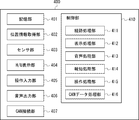
- 1 is a configuration block diagram of a media playback device that constitutes a display device according to a first embodiment.
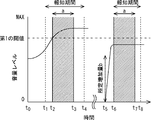
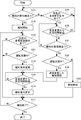
- FIG. 3 is a flowchart illustrating an operation example of the display device according to the first embodiment. It is an example of a display screen of the display apparatus which concerns on 1st Embodiment. It is the figure which showed the example of timing of volume change information and alerting
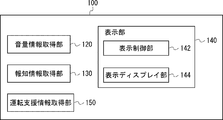
- FIG. 1 is a configuration block diagram conceptually showing a display device 100 according to the present invention, which is a configuration common to each embodiment described below.
- the display device 100 includes a volume information acquisition unit 120, a notification information acquisition unit 130, and a display unit 140.
- the display unit 140 includes a display display unit 144 that presents video to the user and a display control unit 142 that controls the video displayed on the display display unit 144. Specific examples of each component will be described in each embodiment.
- the display device 100 according to the first embodiment is configured using a HUD device 200 that projects and displays various types of information as virtual images in a vehicle, and a media playback device 400.
- the media playback device 400 according to the first embodiment targets various devices such as an in-vehicle navigation device, an in-vehicle audio device, various portable terminals such as a portable navigation device and an audio device.
- the display unit 140 is not limited to the HUD device 200 but may be a display unit included in a navigation device or the like.
- the HUD device 200 is installed on a dashboard 530 or the like of an automobile as shown in FIG. 2, and projects various kinds of information mainly on a position where the driver of the automobile can see as a virtual image 220.
- the virtual image 220 is projected on a windshield 510 or a combiner of an automobile.
- the HUD device 200 may be installed on the dashboard 530 or may be built in the dashboard 530. Further, the HUD device 200 may be installed on the ceiling or rear view mirror of an automobile.
- the media playback device 400 is installed on an automobile dashboard 530 as an example, and includes an operation input unit 405 that adjusts the playback volume when playing back content including audio.
- the operation input unit 405 is an interface that allows the user to arbitrarily control the playback volume, and is realized by various switches, a touch panel, a voice operation, and the like. Moreover, the operation input part 405 may be provided in the steering wheel 520 of the motor vehicle.
- the audio signal from the media playback device 400 is output by the speaker 550 after the playback volume is adjusted by the operation of the operation input unit 405.
- the left speaker 550L and the right speaker 550R are shown as examples of the speaker 550, but the configuration is arbitrary.
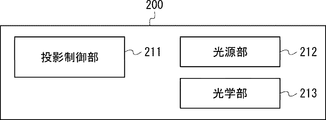
- the HUD device 200 includes a projection control unit 211, a light source unit 212, and an optical unit 213, as shown in FIG.
- the projection control unit 211 is configured by a CPU (Central Processing Unit) or the like, and controls input / output of the HUD device 200 and operation of components. Specifically, the light amount, color tone, display mode, and the like of the light source unit 212 are controlled based on the projection target video data input to the HUD device 200.
- the optical unit 213 includes a configuration in which a projection image is generated by scanning light with a MEMS (Micro Electro Mechanical Systems) mirror, the projection control unit 211 controls the swing of the MEMS mirror.
- MEMS Micro Electro Mechanical Systems
- the light source unit 212 optically forms an image projected by the HUD device 200.
- a laser diode as a light source and a MEMS mirror that scans light from the laser diode are included.
- the light source unit 212 uses a liquid crystal display device, an LED (Light Emitting Diode) as a light source, a reflective or transmissive liquid crystal panel, a polarizing plate, and the like are included.
- the optical unit 213 includes an optical element for projecting the projected image generated by the light source unit 212 as a virtual image 220, and includes various lenses such as a projection lens, an intermediate image filter, a reflecting mirror, and the like.
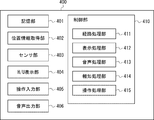
- the media playback device 400 includes a storage unit 401, a position information acquisition unit 402, a sensor unit 403, an H / U display unit 404, an operation input unit 405, an audio output unit 406, and a control unit 410. Is done.
- the storage unit 401 stores various types of information used for route guidance such as audio content, video content, map information, and display information, and the control unit 410 controls reading and writing of various types of information from the storage unit 401.
- the storage unit 401 may be various storage media provided in the media playback device 400, an external storage medium that can be used using various connections or communication, and an external storage device.
- the location information acquisition unit 402 is a GPS (Global Positioning System) receiver that acquires media location information in order for the media playback device 400 as a navigation device to grasp the route guidance purpose and the location relative to the peripheral equipment of the vehicle.
- the control unit 410 to be described later calculates the current position as latitude / longitude information based on GPS data from the position information acquisition unit 402 and uses it for route processing and the like.
- the sensor unit 403 includes various sensors such as an acceleration sensor and an inclination sensor for improving the accuracy of the current position information acquired from the position information acquisition unit 402.
- the value output by the sensor unit 403 is acquired by the control unit 410 and used for various processes.
- the sensor unit 403 includes a sensor that acquires surrounding information of the vehicle in which the media playback device 400 as a navigation device is provided. Specific examples include a camera that captures the surroundings of the vehicle, and a sensor such as millimeter wave and infrared that detects obstacles around the vehicle.
- An H / U (Head Unit) display unit 404 is a display device such as a liquid crystal display device provided in a navigation device used as a head unit. Information on route guidance and its surroundings is controlled by a display processing unit 412 described later. Displays facility information, various setting screens, audio content and video content playback screens, and the like.
- the operation input unit 405 is a user interface for the user to operate the media playback device 400, and can be input by various switches, a touch panel provided in the H / U display unit 404, and voice.
- the operation signal input from the operation input unit 405 is executed by the operation processing unit 415 described later in association with the input operation and processing.
- the operation input unit 405 accepts an operation of the playback volume of audio content or video content.
- the audio output unit 406 outputs audio of various contents played back by the media playback device 400.
- the audio output unit 406 transmits an audio signal that has been subjected to processing such as decoding by the processing of the audio processing unit 413 described later to the speaker 550 illustrated in FIG. Output.
- the audio output unit 406 may include an audio signal output amplification function and a D / A (Digital-to-Analog) conversion function.
- Examples of content played by the media playback device 400 include audio content and video content stored in the storage unit 401 and a disk drive (not shown), radio broadcast audio and television broadcast video received by a broadcast receiver (not shown), and the like. Voice, various contents via a network received by a communication unit (not shown), and the like.
- the control unit 410 includes a CPU, a DSP (Digital Signal Processor), a RAM, a ROM, and the like used for their operation.
- Various programs for operating the media playback device 400 are stored in the ROM and the storage unit 401 of the control unit 410.
- the control unit 410 realizes a route processing unit 411, a display processing unit 412, a voice processing unit 413, a notification processing unit 414, and an operation processing unit 415 as functions operated by these programs.
- the route processing unit 411 determines the current position based on the map information stored in the storage unit 401, the destination information specified by the operation input unit 405, the current position information based on the signal received by the position information acquisition unit 402, and the like. A process for generating a route to the destination is executed. The route generated by the route processing unit 411 is output to the H / U display unit 404 and the HUD device 200 and displayed. In addition, the route processing unit 411 generates instruction information such as a traveling direction such as the nearest intersection in the route, and is output and displayed on the H / U display unit 404 and the HUD device 200.
- the display processing unit 412 controls display of information to be output to the H / U display unit 404 and the HUD device 200.
- the configuration of information to be displayed on the H / U display unit 404 and the HUD device 200, display contents, display color and display brightness, display timing, and the like are controlled.
- the display processing unit 412 displays various GUIs (Graphical User Interface) that are linked to the touch operation.
- the audio processing unit 413 processes audio to be output by the media playback device 400. Specific examples include decoding processing of audio data included in various contents reproduced by the media playback device 400, sound quality changing processing, volume changing processing, and the like.
- the notification processing unit 414 performs a process of notifying information to be notified to the user.
- the output of a camera that captures the surroundings of the vehicle provided as the sensor unit 403 or a sensor such as a millimeter wave or infrared ray that detects obstacles around the vehicle is analyzed and is present around the vehicle.
- a notification display instruction is issued to 412.
- a notification display instruction is given to the display processing unit 412 so that the notification display by the H / U display unit 404 or the HUD device 200 is performed.
- the notification processing unit 414 may acquire information to be notified from a roadside device for ITS (Intelligent Transport System) using a communication unit (not shown).
- ITS Intelligent Transport System
- the notification processing unit 414 may notify the above-described notification instruction by sound output from the speaker 550. Or, in addition to the notification display, voice notification may be used in combination. In these cases, the sound processing unit 413 is instructed to output a notification sound so that a sound notification is performed.
- the operation processing unit 415 performs a process of accepting an operation of the operation input unit 405.
- the operation processing unit 415 receives signals based on the operation results and passes them to the corresponding operation processing.
- the operation input unit 405 is a voice input
- a voice signal from a microphone included in the operation input unit 405 is D / A converted, phoneme analysis is performed, and the result is transferred to a corresponding operation process.
- the operation playback unit 405 performs an operation for changing the playback volume while the media playback device 400 plays back audio content or video content including audio
- the volume operation by the operation processing unit 415 is performed. Based on the determination that the processing has been performed and the operation amount, the audio processing unit 413 changes the reproduction volume according to the operation.
- the operation input unit 405 and the operation processing unit 415 function as the volume information acquisition unit 120.
- the sensor unit 403 and the notification processing unit 414 function as the notification information acquisition unit 130.
- the display control unit 142 constituting the display unit 140 corresponds to the display processing unit 412, and the display display unit 144 corresponds to the H / U display unit 404 and the HUD device 200.
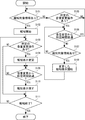
- the operation example shown in FIG. 5 is based on the assumption that the vehicle equipped with the display device 100 is operating and that the media playback device 400 constituting the display device 100 is playing back content including audio information. To do.
- the notification processing unit 414 sequentially detects conditions to be notified.
- the audio processing unit 413 sequentially receives volume operations by the operation input unit 405.
- the notification processing unit 414 determines that there is notification target information (step S101: Yes)
- the notification processing unit 414 starts the notification process (step S102).
- the notification process executed here is a notification of a surrounding situation or a vehicle situation that is dangerous to the driver who is a user by video or audio.
- the H / U display unit 404 or the HUD device 200 is displayed indicating that it is dangerous.
- the traveling vehicle suddenly approaches the center line or exceeds the center line
- the H / U display unit 404 or the HUD device 200 is displayed indicating that it is dangerous, and by voice Notify that it is dangerous.
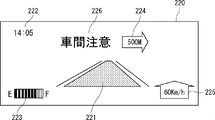
- FIG. 6 is an example of notification executed in step S102, and is an example of notification display on the virtual image 220 projected by the HUD device 200.
- the display content of the virtual image 220 is different from the display content of the H / U display unit 404, and the user can visually recognize the virtual image 220 by moving the line of sight with respect to forward viewing. Some information is displayed.
- the travel path display unit 221 indicates the form of the road on which the vehicle is actually traveling, and presents the road width, the form of the curve, and the like to the user.
- the display of the travel path display unit 221 is displayed using the current position information acquired from the position information acquisition unit 402 and the map information stored in the storage unit 401.
- the time display unit 222 displays the current time.
- the fuel display unit 223 displays the remaining amount of fuel and the charged amount.
- the planned traveling direction display unit 224 displays the distance to the intersection and the traveling direction that are appropriate to bend.
- the speed display unit 225 displays the current traveling speed.
- the notification display unit 226 is displayed on the virtual image 220.
- the notification display unit 226 indicates that there is a danger that the distance between other vehicles ahead and behind other vehicles becomes narrow.
- the voice processing unit 413 determines whether or not a predetermined volume change operation has been received by the operation input unit 405 (step S102). S103).
- the predetermined volume changing operation here is a case where an operation for raising the volume from a volume lower than a predetermined first threshold to a volume higher than the first threshold is performed.
- the predetermined volume changing operation when the first volume difference from the volume before the volume changing operation to the volume after the volume changing operation is a volume increase equal to or higher than the predetermined volume difference It is.
- volume changes that cause the user to focus on the sound whose volume has been changed and distract attention to the notification display are not limited to increasing the volume, but when the volume is decreased. Is the same.
- the predetermined volume change operation in this case is a case where an operation for lowering the volume from a volume equal to or higher than a predetermined second threshold to a volume lower than the second threshold is performed.
- the predetermined volume change operation when the second volume difference from the volume before the volume change operation to the volume after the volume change operation is performed is a volume decrease that is equal to or greater than the predetermined volume difference. It is.
- the volume set as the first threshold is set to be larger than the volume set as the second threshold.
- the first volume difference and the second volume difference may be the same volume difference or different volume differences.
- step S103 When it is determined in step S103 that a predetermined volume change operation has been accepted (step S103: Yes), the display processing unit 412 displays the display of the notification display unit 226 displayed in the notification process of step S102 to the user's eyes. The display is changed to a conspicuous display so as to be easy (step S104).
- various display forms such as displaying the display size of the notification display unit 226 large, displaying it in a conspicuous color tone, and blinking are applicable.
- step S103 when it is determined that a predetermined volume change operation has not been received (step S103: No), the notification processing unit 414 determines whether or not to end the notification processing (step S111).
- a specific example of the notification end timing determined in step S111 is a timing at which the notification is no longer a dangerous state.
- step S111 when it is determined that the notification is finished (step S111: Yes), this process is terminated. When it is determined not to end the notification (step S111: No), the process returns to step S103.
- step S101 to step S104 is processing when a volume change operation is accepted during execution of the notification processing.
- Another execution timing is when the notification process is started during a predetermined time during the volume change operation or after the volume change operation.
- the voice processing unit 413 determines whether or not a predetermined volume changing operation has been accepted by the operation input unit 405. (Step S105).
- step S105 If it is determined in step S105 that a predetermined volume change operation has been accepted (step S105: Yes), the audio processing unit 413 determines whether a predetermined time has elapsed since the volume change operation in step S105 (step S105). S106).
- the predetermined time here is appropriately about 5 to 10 seconds as a specific example, and preferably includes a length of time during which the user is conscious of the sound whose volume has been changed.
- step S105 If it is determined in step S105 that a predetermined volume change operation has not been accepted (step S105: No), the process returns to step S101.
- step S106 when it is determined that the predetermined time has not elapsed since the volume change operation (step S106: No), the notification processing unit 414 determines whether there is notification target information (step S107). In other words, in the state where the presence / absence determination of the notification target information is sequentially performed, a case is detected in which the notification target information is generated within a predetermined time from a predetermined volume change operation. If it is determined in step S106 that a predetermined time has elapsed since the sound volume change operation (step S106: Yes), the process returns to step S101.
- step S107 when it is determined that there is notification target information (step S107: Yes), the notification processing unit 414 starts notification processing (step S108). At this time, the display processing unit 412 displays the display of the notification display unit 226 as a conspicuous display so as to be easily noticed by the user. If it is determined in step S107 that there is no notification target information (step S107: No), the process returns to step S106.
- step S109 determines whether or not a predetermined time has elapsed since the volume change operation of step S103 or step S105 (step S109).
- the predetermined time determined here is the same as the predetermined time determined in step S106. If it is determined in step S109 that a predetermined time has elapsed since the volume change (step S109: Yes), the notification display changed in the notification process started in step S104 or step S108 is returned to the normal display (step S110). . If it is determined in step S109 that the predetermined time has not elapsed since the volume change (step S109: No), the process returns to step S109.
- the horizontal axis is the time axis.
- the notification processing unit 414 determines that there is notification target information (step S101: Yes), starts broadcast display from time t 1 (step S102). If the volume at time t 2 while the notification display is continued exceeds a first threshold value (step S103: Yes), during the period a of the display processing unit 412 from the time t 2 to time t 3, the user The notice display is changed to a conspicuous display so as to be easily noticeable (steps S104, S109, and S110).
- the display processing unit 412 returns the display on the notification display unit 226 to the normal display (step S110). Even if the volume level at this time is equal to or higher than the first threshold value, the purpose of drawing the user's attention to the notification display unit 226 is achieved when the user is distracted by the change in volume. .
- step S 111 exit the notification display at time t 4 after the notification display is returned (step S 111: Yes) If the notification display before the end of the period a is ended, the broadcast display is changed Even in the state, the notification display ends at the end timing of the notification display.
- the user operates the operation input section 405 as another example, when increasing the volume at a predetermined or higher volume increment from time t 5 (step S105: Yes), if the volume change within the predetermined time period (step S106: No), S107 if (step it is determined that the notification target information at time t 6: Yes), the display processing unit 412 time t 6 with the notification processing unit 414 starts notification processing until time t 7 During the period a, the notice display is changed to a conspicuous display so as to be easily noticeable by the user (step S108, step S109, step S110).
- the predetermined volume increase amount in this case is a predetermined volume increase performed within a predetermined time. For example, if the volume MAX is set to 100% from 0 in one second as a unit time, the volume increase is 50% or more. For example.
- the notification display is changed even if the increased volume is less than the first threshold as shown in FIG. Or it is good also as a condition which changes alerting
- step S103 and step S105 correspond to a volume information acquisition step.
- Steps S101 and S107 correspond to a notification information acquisition step.
- Steps S104 to S110 and steps S108 to S110 correspond to the display change step.
- the display device 100 changes the display form so that the user can easily notice the display based on the volume change information. For this reason, the user can notice the notification display even when the user's consciousness is concentrated on the sound output whose volume has been changed.
- the display device 100 according to the second embodiment is configured using the HUD device 200 that projects and displays various types of information as virtual images in the automobile, and the media playback device 400.
- the display device 100 is provided with a driving support information acquisition unit 150.
- the driving support information acquisition unit 150 acquires information as to whether or not driving support is being executed when the vehicle provided with the display device 100 has a driving support function.
- the driving assistance here refers to both assistance that is limited to the user's driving operation and assistance that is performed entirely.
- An example of the driving assistance that is partially performed is an auto-cruise function or the like, and an example of driving assistance that is entirely performed is automatic driving or the like.
- the driving support information acquisition unit 150 acquires information related to driving support from, for example, a CAN (Controller Area Network) that is an in-vehicle network. Therefore, the configuration of the media playback device 400 corresponds to a CAN data processing unit 416 as a function of the CAN connection unit 407 and the control unit 410, as shown in FIG.
- CAN Controller Area Network
- the CAN connection unit 407 is an interface for connecting to the CAN.
- the CAN data processing unit 416 performs processing for acquiring and using CAN information according to the purpose through the CAN connection unit 407. Further, the CAN data processing unit 416 determines whether or not driving assistance is being executed based on the acquired CAN data.
- step S103 when it is determined in step S103 that a predetermined volume change operation has been accepted (step S103: Yes), the CAN data processing unit 416 determines whether or not driving assistance is being executed. (Step S201).
- step S201 when it is determined that driving assistance is being executed (step S201: Yes), the display processing unit 412 easily recognizes the display of the notification display unit 226 displayed in the notification process of step S102. Thus, the display is changed to a conspicuous display (step S104).
- step S101 when it is determined that driving assistance is not being executed (step S201: No), the process of step S111 is executed.
- step S107 determines whether or not driving assistance is being executed (step S202).
- step S202 determines whether or not driving assistance is being executed (step S202: Yes).
- the notification processing unit 414 starts notification processing (step S108).
- the display processing unit 412 displays the display of the notification display unit 226 as a conspicuous display so as to be easily noticed by the user.
- step S203 the notification processing unit 414 starts notification processing (step S203). At this time, the display processing unit 412 displays the display of the notification display unit 226 as a normal display form.
- the display device 100 changes the display form so that the user can easily notice the notification display based on the volume change information during driving support. For this reason, the user notices the notification display even when the user's consciousness concentrates more on the sound output due to the change of the volume at the time of driving support in which the consciousness is more concentrated on the sound output of the content than during normal driving. be able to.
- the display device 100 of the present invention has been described as a device used in an automobile. However, the present invention is not limited to a display device used in an automobile but is useful.
- a third embodiment of the display device 100 according to the present invention will be described with reference to FIGS. In the description of the display device 100 according to the third embodiment, the description of the parts common to the description of the display device 100 according to the first embodiment is omitted.
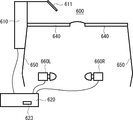
- FIG. 11 is a diagram schematically showing the HMD device 600 and the media playback device 620 constituting the display device 100 of the present invention.
- the HMD device 600 is a glasses-type device or a goggle-type device worn on the user's head
- the media playback device 620 is a portable or HMD device as long as it can output various types of information to the HMD device 600. Any form such as an integral type with 600 may be used.
- the HMD device 600 includes an HMD projection unit 610, a half mirror 611, a spectacle lens unit 640, a spectacle temple unit 650, and the like.
- the media playback device 620 includes an operation input unit 624, and is connected to an earphone 660 (left earphone 660L, right earphone 660R) for outputting an audio signal to the user.
- Earphone 660 may be any headphone connected to media playback device 620 or a small speaker.
- the HMD device 600 may be integrated.
- the media playback device 620 outputs an audio signal to the earphone 660 if the content to be played back includes an audio signal, and outputs a video to the HMD projection unit 610 if the content to be played back includes a video signal. Output a signal.
- the HMD projection unit 610 projects video light based on the input video signal onto the half mirror 611, and the user wearing the HMD device 600 views the video reflected by the half mirror 611 via the spectacle lens unit 640. be able to.
- FIG. 12 is a configuration block diagram of the HMD projection unit 610.
- the HMD projection unit 610 includes a light source unit 612, an optical unit 613, and a sensor unit 614.
- the light source unit 612 generates image light to be presented to the user.
- it is comprised by the liquid crystal panel which comprises the image
- the optical unit 613 is an optical component that generates an optical path for guiding the image light generated by the light source unit 612 to the half mirror 611, and includes a lens that enlarges or reduces the image light, a reflecting mirror, and the like.
- the sensor unit 614 includes one or a plurality of sensors. Specifically, a GPS receiving unit that acquires current position information, an acceleration sensor that detects the direction and moving direction of the HMD device 600, and a direction sensor are provided.
- the sensor unit 614 may be a camera that captures the front of the user wearing the HMD device 600 and the like.
- the media playback device is of a portable type or an integrated type with the HMD device 600, and includes a storage unit 621, an operation input unit 623, an audio output unit 624, and a control unit 630 as shown in FIG. Consists of.
- the storage unit 621 has the same configuration as the storage unit 401 and stores audio content and video content.
- the operation input unit 623 has the same configuration as the operation input unit 405, and accepts an operation for adjusting the playback volume of the content played back by the media playback device 620.
- the audio output unit 624 has the same configuration as the audio output unit 406, and outputs audio of various contents reproduced by the media playback device 620.
- the audio output unit 624 outputs an audio signal that has been subjected to processing such as decoding by the processing of the audio processing unit 632 described later to the earphone 660 shown in FIG.
- the control unit 630 has the same configuration as that of the control unit 410, and realizes a display processing unit 631, a voice processing unit 632, a notification processing unit 633, and an operation processing unit 634 as functions operated by a program stored in a RAM or the like. To do.
- the display processing unit 631 has the same function as the display processing unit 412 and controls display of information to be output to the HMD projection unit 610.
- the voice processing unit 632 has the same functions as the voice processing unit 413.
- the notification processing unit 633 has the same function as the notification processing unit 414.
- a notification display instruction is given to the display processing unit 631.
- the presence of a notification target is detected by analyzing an image captured by a camera as the sensor unit 614, and a notification display instruction is issued to the display processing unit 631.
- the notification target include a staircase in a traveling direction, a construction section, a vehicle approaching the user, and the like.
- the operation processing unit 634 has a function similar to that of the operation processing unit 415, and performs a process of accepting an operation of the operation input unit 624.
- the operation input unit 624 is operated to change the playback volume
- volume operation by the operation processing unit 634 is performed.
- the audio processing unit 632 changes the playback volume according to the operation.
- the operation input unit 623 and the operation processing unit 634 function as the volume information acquisition unit 120.
- the sensor unit 614 and the notification processing unit 633 function as the notification information acquisition unit 130.
- the display control unit 142 constituting the display unit 140 corresponds to the display processing unit 631, and the display display unit 144 corresponds to the HMD device 600.
- the operation example of the display device 100 according to the third embodiment is the same as the operation example of the display device 100 according to the first embodiment shown in FIG.
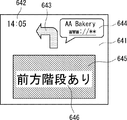
- FIG. 14 is an example of notification executed in step S102, and is an example of notification display on a virtual image 641 projected by the HMD device 600.
- a time display unit 642, a destination display unit 643, a facility information display unit 644, and a content display unit 645 are displayed in the virtual image 641.
- a notification display unit 646 is displayed.
- the time display unit 642 displays the current time and the like.
- the destination display unit 643 is based on the map information stored in the storage unit 621 and can be visually recognized through the spectacle lens unit 640.
- An arrow indicating the destination is displayed above or on the intersection.
- the destination display unit 643 displays the actual scenery on the road viewed through the spectacle lens unit 640 based on the map information when the destination is not set or when the destination setting function is not provided. And an arrow indicating the direction of travel on the intersection.
- the facility information display unit 644 displays information related to the facility with respect to the facility of the real scenery visually recognized through the spectacle lens unit 640. Specifically, a store name, a store URL, word-of-mouth information, and the like.
- the content display unit 645 displays a playback screen for content played by the media playback device 620.
- the content display unit 645 may be a Web screen based on the URL or the like of the facility information display unit 644.
- the notification display unit 646 is displayed according to an instruction from the notification processing unit 633.
- the display processing unit 631 When the notification display unit 646 is displayed, when the notification display is changed based on the volume change as in step S104 or step S108, the display processing unit 631 easily displays the notification display unit 646 on the user's eyes. Change to a conspicuous display.
- the display position of the notification display unit 646 may be displayed at a position superimposed on the content display unit 645 as shown in FIG.
- the notification display unit 646 is displayed at a position not superimposed on the content display unit 645 during normal notification, and the notification display unit 646 is displayed at a position superimposed on the content display unit 645 when the notification display based on the volume change is changed. May be.
- the display device 100 changes the display form so that the user can easily notice the display based on the volume change information. For this reason, the user can notice the notification display even when consciousness is concentrated on the sound output due to the volume change when the HMD device 600 is worn.
- Display device 120 Volume information acquisition unit 130 Notification information acquisition unit 140 Display unit 142 Display control unit 144 Display display unit 150 Driving support information acquisition unit 200 HUD device 211 Projection control unit 212 Light source unit 213 Optical unit 214 Optical unit 220 Virtual image 221 Traveling Road display unit 222 Time display unit 223 Fuel display unit 224 Scheduled traveling direction display unit 225 Speed display unit 226 Notification display unit 400 Media playback device 401 Storage unit 402 Position information acquisition unit 403 Sensor unit 404 H / U display unit 405 Operation input unit 406 Audio output unit 407 CAN connection unit 410 Control unit 411 Path processing unit 412 Display processing unit 413 Audio processing unit 414 Notification processing unit 415 Operation processing unit 416 CAN data processing unit 510 Windshield 520 Steering wheel 530 Dashboard 550L Left speaker 550R Right speaker 600 HMD device 610 HMD projection unit 611 Half mirror 612 Light source unit 613 Optical unit 614 Sensor unit 620 Media playback device 621 Storage unit 623 Operation input unit 624 Audio
Landscapes
- Engineering & Computer Science (AREA)
- Physics & Mathematics (AREA)
- General Physics & Mathematics (AREA)
- Optics & Photonics (AREA)
- Chemical & Material Sciences (AREA)
- Mechanical Engineering (AREA)
- Transportation (AREA)
- Combustion & Propulsion (AREA)
- Radar, Positioning & Navigation (AREA)
- Remote Sensing (AREA)
- Theoretical Computer Science (AREA)
- Health & Medical Sciences (AREA)
- General Health & Medical Sciences (AREA)
- Automation & Control Theory (AREA)
- Multimedia (AREA)
- Audiology, Speech & Language Pathology (AREA)
- Human Computer Interaction (AREA)
- General Engineering & Computer Science (AREA)
- Signal Processing (AREA)
- Acoustics & Sound (AREA)
- Otolaryngology (AREA)
- Computer Hardware Design (AREA)
- Instrument Panels (AREA)
- Traffic Control Systems (AREA)
- Controls And Circuits For Display Device (AREA)
- Navigation (AREA)
Abstract
Description
本発明は、各種情報を表示し、ユーザに情報を提示するための、表示装置、表示方法および表示プログラムを格納した非一時的なコンピュータ可読媒体に関する。 The present invention relates to a non-transitory computer-readable medium storing a display device, a display method, and a display program for displaying various information and presenting information to a user.
自動車等の運転者に、ウィンドシールド越しに情報を表示して情報を提示するヘッドアップディスプレイ(Head Up Display:以下、HUD)が実用化されている。また、頭部に装着し外部を透過的に目視可能である表示画面を用いたヘッドマウントディスプレイ(Head Mount Display:以下、HMD)も実用化しており、徒歩などによる移動中の利用も増加することが想定される。 A head-up display (hereinafter referred to as HUD) that displays information through a windshield and presents it to a driver of an automobile or the like has been put into practical use. In addition, a head-mounted display (hereinafter referred to as “HMD”) that uses a display screen that can be attached to the head and can be visually observed from the outside has been put into practical use, and the use during movement by walking etc. will increase. Is assumed.
特許文献1および特許文献2には、所望の目的に応じた警報等の報知表示が行われるHUDおよびHMDが開示されている。 Patent Document 1 and Patent Document 2 disclose HUDs and HMDs that display a warning or the like according to a desired purpose.
このようなHUDやHMDは、利用目的によっては音声出力を伴うメディア再生装置等の表示用途またはメディア再生装置と組み合わせて利用されることがある。例えば、自動車で用いられるHUDは、ナビゲーション装置や車載オーディオ装置と共に利用される。また、HMDはメディア再生装置と一体または可搬型のメディア再生装置に接続されて利用される。 Such HUD and HMD may be used in combination with a display application such as a media playback device with audio output or a media playback device depending on the purpose of use. For example, a HUD used in an automobile is used together with a navigation apparatus and an in-vehicle audio apparatus. The HMD is used by being connected to a media playback device that is integral with or connected to the media playback device.
これらのような利用形態の場合、メディア再生装置における音声出力の音量を変更した場合、ユーザは音量が変更された音声出力に意識が集中してしまい、HUDやHMDによる警報等の報知表示が行われることがあっても、報知表示に対する注意が散漫になってしまうことがある。 In the case of such usage forms, when the volume of the audio output in the media playback device is changed, the user concentrates on the audio output whose volume has been changed, and a notification display such as an alarm by HUD or HMD is performed. Even if it happens, attention to the notification display may be distracted.
本発明はこのような問題点に鑑みなされたものであり、ユーザに適切に報知表示を行うことを可能とする、表示装置、表示方法および表示プログラムを提供することを目的とする。 The present invention has been made in view of such problems, and an object of the present invention is to provide a display device, a display method, and a display program capable of appropriately displaying a notification to a user.
上記目的を達成するために、本発明に係る表示装置(100)は、音声出力に対する音量変更情報を取得する音量情報取得部(120)、ユーザに対する報知情報を取得する報知情報取得部(130)、前記報知情報取得部(130)が取得した報知情報に基づきユーザに報知表示を行うとともに、前記音量情報取得部(120)が取得した音量変更情報に基づき、前記報知表示が目立つように表示形態を所定時間変更する表示部(140)、を備えることを特徴とする。 In order to achieve the above object, a display device (100) according to the present invention includes a volume information acquisition unit (120) that acquires volume change information for audio output, and a notification information acquisition unit (130) that acquires notification information for a user. In addition, a notification form is displayed to the user based on the notification information acquired by the notification information acquisition unit (130), and the notification display is conspicuous based on the volume change information acquired by the volume information acquisition unit (120). Is provided with a display unit (140) that changes the predetermined time.
また、本発明に係る表示方法は、音声出力に対する音量変更情報を取得する音量情報取得ステップ、ユーザに対する報知情報を取得する報知情報取得ステップ、前記報知情報取得ステップにおいて取得した報知情報に基づきユーザに報知表示を行うとともに、前記音量情報取得ステップにおいて取得した音量変更情報に基づき、前記報知表示が目立つように表示形態を所定時間変更する表示変更ステップ、を備えることを特徴とする。 Moreover, the display method according to the present invention provides a user with a volume information acquisition step for acquiring volume change information for audio output, a notification information acquisition step for acquiring notification information for the user, and a notification information acquired in the notification information acquisition step. And a display change step of changing a display form for a predetermined time so that the notification display is conspicuous based on the volume change information acquired in the volume information acquisition step.
また、本発明に係る表示プログラムは、ユーザの視界中に情報を表示させる表示装置(100)を動作させるコンピュータに、音声出力に対する音量変更情報を取得する音量情報取得ステップ、ユーザに対する報知情報を取得する報知情報取得ステップ、前記報知情報取得ステップにおいて取得した報知情報に基づきユーザに報知表示を行うとともに、前記音量情報取得ステップにおいて取得した音量変更情報に基づき、前記報知表示が目立つように表示形態を所定時間変更する表示変更ステップ、を実行させることを特徴とする。 Further, the display program according to the present invention acquires a volume information acquisition step for acquiring volume change information for audio output in a computer that operates a display device (100) that displays information in the user's field of view, and acquires notification information for the user. The notification information acquisition step, the notification display to the user based on the notification information acquired in the notification information acquisition step, and the display form so that the notification display stands out based on the volume change information acquired in the volume information acquisition step A display change step for changing for a predetermined time is executed.
本発明によれば、ユーザに適切に報知表示を行うことを可能とする。 According to the present invention, it is possible to display information appropriately for the user.
図1は、本発明に係る表示装置100を概念的に示した構成ブロック図であり、以下に説明する各実施形態において共通する構成である。表示装置100は、音量情報取得部120、報知情報取得部130、表示部140を含んで構成される。表示部140は、ユーザに映像を提示する表示ディスプレイ部144と表示ディスプレイ部144に表示される映像を制御する表示制御部142を含んで構成される。各構成要素の具体例は、各々の実施形態において説明する。
FIG. 1 is a configuration block diagram conceptually showing a
本発明に係る表示装置100の第1の実施形態について、図2から図6を参照して説明する。第1の実施形態に係る表示装置100は、図2に示すように、自動車内で各種情報を虚像として投影表示するHUD装置200、およびメディア再生装置400を用いて構成される。第1の実施形態におけるメディア再生装置400は、車載ナビゲーション装置、車載オーディオ装置、可搬型のナビゲーション装置やオーディオ装置等の各種携帯端末など様々な装置を対象とする。また、表示部140はHUD装置200に限らず、ナビゲーション装置等が備える表示部であってもよい。
A first embodiment of the
HUD装置200は、図2に示すように自動車のダッシュボード530等に設置され、各種情報を主に自動車の運転者が虚像220として目視可能な位置に投影する。虚像220は、自動車のウィンドシールド510やコンバイナなどに投影される。HUD装置200は、ダッシュボード530上に設置されていてもよく、ダッシュボード530内に内蔵されていてもよい。また、HUD装置200は、自動車の天井やリアビューミラー等に設置されていてもよい。
2, the
メディア再生装置400は、一例として自動車のダッシュボード530等に設置され、音声を含むコンテンツを再生する場合に再生音量を調整する操作入力部405を備える。操作入力部405は、ユーザが任意に再生音量を操作可能なインターフェースであり、各種スイッチやタッチパネル、音声操作などにより実現される。また、操作入力部405は、自動車のステアリングホイール520に備えられていてもよい。また、メディア再生装置400からの音声信号は、操作入力部405の操作により再生音量が調整され、スピーカ550によって出力される。図2においては、スピーカ550の例として左スピーカ550Lおよび右スピーカ550Rとしたが、構成は任意である。
The
HUD装置200は、図3に示すように、投影制御部211、光源部212および光学部213を含んで構成される。投影制御部211は、CPU(Central Processing Unit)等により構成され、HUD装置200の入出力や構成要素の動作を制御する。具体的には、HUD装置200に入力される投影対象映像データに基づき光源部212の光量や色調、表示形態等を制御する。また、光学部213がMEMS(Micro Electro Mechanical Systems)ミラーによる光の走査によって投影映像を生成する構成を含む場合、投影制御部211はMEMSミラーの揺動を制御する。
The
光源部212は、HUD装置200が投影する映像を光学的に形成する。具体例としては、光源部212がMEMSミラーを用いている場合、光源としてのレーザダイオードおよびレーザダイオードからの光を走査するMEMSミラーが含まれる。また、光源部212が液晶表示装置を用いる場合、光源としてのLED(Light Emitting Diode)、反射型または透過型の液晶パネル、偏光板等が含まれる。
The
光学部213は、光源部212が生成した投影する映像を虚像220として投影するための光学素子からなり、投射レンズ等の各種レンズ、中間像フィルタや反射鏡等が含まれる。
The
メディア再生装置400の例として、自動車で用いられるナビゲーション装置の例を説明する。メディア再生装置400は図4に示すように、記憶部401、位置情報取得部402、センサ部403、H/U表示部404、操作入力部405、音声出力部406、制御部410を含んで構成される。
As an example of the
記憶部401は、音声コンテンツや映像コンテンツ、地図情報や表示情報等の経路案内などに用いる各種情報を記憶し、制御部410により、記憶部401からの各種情報の読み出しや書き込みが制御される。記憶部401は、メディア再生装置400に備えられる各種記憶媒体や、各種接続または通信を用いて利用可能となる外部の記憶媒体や外部の記憶装置であってもよい。
The
位置情報取得部402は、ナビゲーション装置としてのメディア再生装置400が経路案内目的や自動車の周辺設備に対する位置を把握するために位置情報を取得するGPS(Global Positioning System)受信機である。後述する制御部410は、位置情報取得部402からのGPSデータに基づき、現在位置を緯度経度情報として算出し、経路処理等に用いる。
The location information acquisition unit 402 is a GPS (Global Positioning System) receiver that acquires media location information in order for the
センサ部403は、位置情報取得部402から取得した現在位置情報の精度を向上させるための加速度センサや傾きセンサ等の各種センサにより構成される。センサ部403が出力する値は、制御部410が取得し、各種処理に用いられる。また、センサ部403は、ナビゲーション装置としてのメディア再生装置400が備えられる車両の周辺情報を取得するセンサを備える。具体例としては、車両の周囲を撮影するカメラ、車両の周囲の障害物等を検出するミリ波や赤外線等のセンサなどである。
The
H/U(Head Unit)表示部404は、ヘッドユニットとして用いられるナビゲーション装置に備えられている液晶表示装置等の表示装置であり、後述する表示処理部412の制御により、経路案内に関する情報や周辺施設情報、各種設定画面、音声コンテンツや映像コンテンツの再生画面等を表示する。
An H / U (Head Unit)
操作入力部405は、メディア再生装置400をユーザが操作するためのユーザインターフェースであり、各種スイッチやH/U表示部404に備えられたタッチパネル、音声による入力が可能である。操作入力部405から入力された操作信号は、後述する操作処理部415により、入力された操作と処理が対応付けられ、実行される。操作入力部405は、音声コンテンツや映像コンテンツの再生音量の操作を受け付ける。
The
音声出力部406は、メディア再生装置400が再生する各種コンテンツの音声を出力する。音声出力部406は、記憶部401等に記憶された各種コンテンツの再生処理に伴い、後述する音声処理部413の処理によってデコード等の処理が行われた音声信号を、図2に示すスピーカ550に出力する。音声出力部406は、音声信号出力の増幅機能やD/A(Digital to Analog)変換機能を含んでもよい。メディア再生装置400が再生するコンテンツの例としては、記憶部401や図示しないディスクドライブ等に記憶された音声コンテンツや映像コンテンツ、図示しない放送受信部が受信するラジオ放送の音声やテレビ放送の映像および音声、図示しない通信部が受信するネットワークを介した各種コンテンツ等である。
The
制御部410は、CPUやDSP(Digital Signal Processor)およびそれらの動作に用いられるRAMやROM等により構成される。制御部410のROMや記憶部401には、メディア再生装置400を動作させるための各種プログラムが記憶されている。制御部410は、これらのプログラムによって動作する機能として、経路処理部411、表示処理部412、音声処理部413、報知処理部414、操作処理部415を実現する。
The
経路処理部411は、記憶部401に記憶された地図情報、操作入力部405により指定された目的地情報、および位置情報取得部402が受信した信号に基づく現在位置情報等に基づき、現在位置から目的地までの経路を生成する処理を実行する。経路処理部411により生成された経路は、H/U表示部404やHUD装置200に出力され、表示される。また、経路処理部411は、経路内の直近の交差点等の進行方向等の指示情報を生成し、H/U表示部404やHUD装置200に出力され、表示される。
The
表示処理部412は、H/U表示部404およびHUD装置200へ出力する情報の表示を制御する。具体例としては、H/U表示部404およびHUD装置200における表示する情報の構成、表示内容、表示色や表示輝度、表示タイミング等を制御する。また、表示処理部412は、H/U表示部404がタッチパネルとして動作する場合、タッチ操作に連動した各種GUI(Graphical User Interface)などを表示させる。
The
音声処理部413は、メディア再生装置400が出力するための音声を処理する。具体例としては、メディア再生装置400が再生する各種コンテンツに含まれる音声データのデコード処理、音質変更処理、音量変更処理等である。
The
報知処理部414は、ユーザに対して報知すべき情報を報知する処理を行う。具体例としては、センサ部403として備えられている車両の周囲を撮影するカメラまたは車両の周囲の障害物等を検出するミリ波や赤外線等のセンサ等の出力を解析し、車両の周辺に存在する他の車両との距離や、歩行者、自転車または他の物体との距離が所定未満となった場合に、H/U表示部404またはHUD装置200による報知表示が行われるよう、表示処理部412に報知表示指示を行う。他の例としては、センサ部403として備えられている車両の周囲を撮影するカメラの出力を解析し、走行中の車両と画像処理によって抽出したセンターラインとの距離が急速に近づいた場合や、センターラインを超えて走行している場合、H/U表示部404またはHUD装置200による報知表示が行われるよう、表示処理部412に報知表示指示を行う。
The
報知処理部414は、報知対象となる情報を、図示しない通信部を用いてITS(Intelligent Transport System)用の路側装置より取得してもよい。
The
報知処理部414は、上述した報知指示をスピーカ550から出力される音声による報知としてもよい。または報知表示に加えて音声による報知を併用してもよい。これらの場合は、音声による報知が行われるよう、音声処理部413に報知音出力指示を行う。
The
操作処理部415は、操作入力部405の操作を受け付ける処理を行う。操作処理部415は、操作入力部405がスイッチやタッチパネルである場合は、それらの操作結果に基づく信号を受信し、対応する操作処理へ受け渡す。操作入力部405が音声入力である場合は、操作入力部405が備えるマイクロフォンからの音声信号をD/A変換し、音素解析等の処理を行い、その結果に基づき対応操作処理へ受け渡す。具体例としては、メディア再生装置400が音声コンテンツまたは音声を含む映像コンテンツを再生しているときに、操作入力部405に再生音量変更の操作が行われたときは、操作処理部415による音量操作処理が行われたことの判断および操作量に基づき、音声処理部413は再生音量を操作に応じて変更する。
The
第1の実施形態としての表示装置100は、操作入力部405および操作処理部415が、音量情報取得部120として機能する。また、センサ部403および報知処理部414が、報知情報取得部130として機能する。また、表示部140を構成する表示制御部142は表示処理部412が対応し、表示ディスプレイ部144は、H/U表示部404およびHUD装置200が対応する。
In the
次に、第1の実施形態に係る表示装置100の動作例を説明する。図5に示す動作例は、表示装置100が備えられている車両が動作しているとともに、表示装置100を構成するメディア再生装置400が音声情報を含むコンテンツの再生を行っていることを前提とする。
Next, an operation example of the
車両が動作している場合、センサ部403に含まれる車外情報を取得するカメラやセンサ等のデバイスは逐次動作し、報知処理部414は報知対象となる条件の検出を逐次行う。また、音声情報を含むコンテンツの再生が行われているときは、音声処理部413は操作入力部405による音量操作を逐次受け付けている。
When the vehicle is operating, devices such as cameras and sensors that acquire information outside the vehicle included in the
このような状態において、報知処理部414が報知対象情報があると判断した場合(ステップS101:Yes)、報知処理部414は報知処理を開始する(ステップS102)。ここで実行される報知処理とは、ユーザである運転者に危険な周辺状況や車両の状況を、映像または音声により報知するものである。具体例としては、前後の他の車両との車間距離が危険と判断される程度近い距離となった場合、H/U表示部404またはHUD装置200に対して危険であることを示す表示を行う。または、走行中の車両がセンターラインに急激に近づいた場合やセンターラインを超えて場合に、H/U表示部404またはHUD装置200に対して危険であることを示す表示を行うとともに、音声により危険であることを報知する。
In such a state, when the
図6は、ステップS102において実行される報知の例であり、HUD装置200が投影する虚像220に報知表示されている例である。
FIG. 6 is an example of notification executed in step S102, and is an example of notification display on the
虚像220の表示内容は、H/U表示部404の表示内容とは異なり、ユーザが前方視認に対して少ない視線移動により虚像220を視認可能なため、主に走行中に頻繁に確認する必要のある情報が表示される。
The display content of the
走行路表示部221は、実際に車両が走行している道路の形態を示し、道路幅やカーブの形態等をユーザに提示する。走行路表示部221の表示は、位置情報取得部402から取得した現在位置情報および記憶部401に記憶されている地図情報を用いて表示される。時刻表示部222は、現在時刻を表示する。燃料表示部223は、燃料の残量や蓄電量を表示する。予定進行方向表示部224は、経路処理部411が生成した経路に基づき、曲がることが適切である交差点までの距離および進行方向を表示する。速度表示部225は、現在の走行速度を表示する。
The travel
ステップS102において報知処理が実行された場合、虚像220に報知表示部226が表示される。図6の表示例の場合、報知表示部226は前方または後方の他の車両との車間が狭くなり危険であることを示している。
When the notification process is executed in step S102, the
図5に戻り、ステップS102で報知処理が開始され、報知処理が実行されている間に、音声処理部413は操作入力部405により所定の音量変更操作が受け付けられたか否かを判断する(ステップS103)。ここでいう所定の音量変更操作とは、予め設定された所定の第1の閾値未満の音量から第1の閾値以上の音量へ上昇させる操作が行われた場合である。また、所定の音量変更操作の他の例としては、音量変更操作前の音量から音量変更操作が行われた後の音量までの第1の音量差が所定の音量差以上の音量上昇である場合である。
Returning to FIG. 5, while the notification process is started in step S102 and the notification process is being executed, the
ユーザが音量が変更された音声に意識が集中してしまい、報知表示への注意が散漫になってしまうような音量変更は、音量を上昇させた場合に限らず、音量を下降させた場合においても同様である。この場合の所定の音量変更操作とは、予め設定された所定の第2の閾値以上の音量から第2の閾値未満への音量へ下降させる操作が行われた場合である。また、所定の音量変更操作の他の例としては、音量変更操作前の音量から音量変更操作が行われた後の音量までの第2の音量差が所定の音量差以上の音量下降である場合である。 Volume changes that cause the user to focus on the sound whose volume has been changed and distract attention to the notification display are not limited to increasing the volume, but when the volume is decreased. Is the same. The predetermined volume change operation in this case is a case where an operation for lowering the volume from a volume equal to or higher than a predetermined second threshold to a volume lower than the second threshold is performed. In addition, as another example of the predetermined volume change operation, when the second volume difference from the volume before the volume change operation to the volume after the volume change operation is performed is a volume decrease that is equal to or greater than the predetermined volume difference. It is.
音量を上昇させる音量変更と、音量を下降させる音量変更の条件として、第1の閾値として設定される音量は、第2の閾値として設定される音量より大きい音量が設定される。また、第1の音量差と第2の音量差は、同一の音量差であってもよく異なる音量差であってもよい。 As a condition for changing the volume for increasing the volume and changing the volume for decreasing the volume, the volume set as the first threshold is set to be larger than the volume set as the second threshold. Further, the first volume difference and the second volume difference may be the same volume difference or different volume differences.
ステップS103において、所定の音量変更操作が受け付けられたと判断された場合(ステップS103:Yes)、表示処理部412は、ステップS102の報知処理で表示した報知表示部226の表示を、ユーザの目につきやすいように目立つ表示に変更する(ステップS104)。
When it is determined in step S103 that a predetermined volume change operation has been accepted (step S103: Yes), the
ステップS104で実行される報知表示部226の変更の具体例としては、報知表示部226の表示サイズを大きく表示する、目立つ色調で表示する、点滅させるなど様々な表示形態が適用可能である。
As specific examples of the change of the
ステップS103において、所定の音量変更操作が受け付けられていないと判断された場合(ステップS103:No)、報知処理部414は報知処理を終了するか否かを判断する(ステップS111)。ステップS111で判断される報知終了のタイミングの具体例としては、報知対象となる危険な状態ではなくなったタイミングである。
In step S103, when it is determined that a predetermined volume change operation has not been received (step S103: No), the
ステップS111において、報知終了と判断された場合(ステップS111:Yes)、本処理を終了する。報知終了しないと判断された場合(ステップS111:No)、ステップS103の処理に戻る。 In step S111, when it is determined that the notification is finished (step S111: Yes), this process is terminated. When it is determined not to end the notification (step S111: No), the process returns to step S103.
ステップS101からステップS104の処理は、報知処理の実行中に音量変更操作が受付けられた場合の処理である。他の実行タイミングとしては音量変更操作中または音量変更操作から所定時間内に報知処理が開始された場合である。この場合、ステップS101において報知対象情報が無いと判断した場合(ステップS101:No)であっても、音声処理部413は操作入力部405により所定の音量変更操作が受け付けられたか否かを判断する(ステップS105)。
The processing from step S101 to step S104 is processing when a volume change operation is accepted during execution of the notification processing. Another execution timing is when the notification process is started during a predetermined time during the volume change operation or after the volume change operation. In this case, even when it is determined in step S101 that there is no notification target information (step S101: No), the
ステップS105において、所定の音量変更操作が受け付けられたと判断された場合(ステップS105:Yes)、音声処理部413は、ステップS105の音量変更操作から所定時間が経過したか否かを判断する(ステップS106)。ここでいう所定時間とは、具体例としては約5秒から10秒程度が適切であり、音量変更された音声にユーザが意識を向けてしまう時間長を含むことが好ましい。
If it is determined in step S105 that a predetermined volume change operation has been accepted (step S105: Yes), the
ステップS105において、所定の音量変更操作が受け付けられていないと判断された場合(ステップS105:No)、ステップS101の処理に戻る。 If it is determined in step S105 that a predetermined volume change operation has not been accepted (step S105: No), the process returns to step S101.
ステップS106において、音量変更操作から所定時間が経過していないと判断された場合(ステップS106:No)、報知処理部414は報知対象情報があるか否かを判断する(ステップS107)。つまり、報知対象情報の有無判断が逐次実行されている状態において、所定の音量変更操作から所定時間内に報知対象情報が生じた場合を検出する。ステップS106において、音量変更操作から所定時間が経過したと判断された場合(ステップS106:Yes)、ステップS101の処理に戻る。
In step S106, when it is determined that the predetermined time has not elapsed since the volume change operation (step S106: No), the
ステップS107において、報知対象情報があると判断された場合(ステップS107:Yes)、報知処理部414は報知処理を開始する(ステップS108)。このとき、表示処理部412は、報知表示部226の表示を、ユーザの目につきやすいように目立つ表示として表示する。ステップS107において、報知対象情報が無いと判断された場合(ステップS107:No)、ステップS106の処理に戻る。
In step S107, when it is determined that there is notification target information (step S107: Yes), the
ステップS104の処理またはステップS108の処理後、音声処理部413は、ステップS103またはステップS105の音量変更操作から所定時間が経過したか否かを判断する(ステップS109)。ここで判断される所定時間とは、ステップS106で判断される所定時間と同一である。ステップS109において、音量変更から所定時間経過したと判断された場合(ステップS109:Yes)、ステップS104またはステップS108で開始された報知処理の変更された報知表示を通常の表示に戻す(ステップS110)。ステップS109において、音量変更から所定時間経過していないと判断された場合(ステップS109:No)、ステップS109の処理に戻る。
After the process of step S104 or the process of step S108, the
上記のような処理の流れによる、具体的な音量変更タイミングと報知表示変更のタイミング例を図7により説明する。図7により説明する例は、音量を上昇させる場合の例であるが、音量を下降させる場合であっても同様である。 A specific example of the sound volume change timing and the notification display change timing according to the above processing flow will be described with reference to FIG. The example described with reference to FIG. 7 is an example of increasing the volume, but the same applies to the case of decreasing the volume.
図7の縦軸は音量レベルであり、ユーザが操作入力部405を操作することにより、レベル0からレベルMAXまで任意に変更できる。横軸は時間軸である。
7 is the volume level, and can be arbitrarily changed from
ユーザが操作入力部405を操作し、時刻t0から音量を上昇させる操作を行い、音量が実線で示されるように上昇しているとき、報知処理部414が報知対象情報があると判断し(ステップS101:Yes)、時刻t1より報知表示を開始する(ステップS102)。報知表示が継続している間の時刻t2に音量が第1の閾値を越えた場合(ステップS103:Yes)、表示処理部412は時刻t2から時刻t3までの期間aの間、ユーザの目につきやすいように報知表示を目立つ表示に変更する(ステップS104、ステップS109、ステップS110)。
When the user operates the
時間t3で、表示処理部412は、報知表示部226の表示を通常の表示に戻す(ステップS110)。このときの音量レベルは第1の閾値以上であっても、ユーザが音量の変更により報知への注意が散漫になってしまう場合に、報知表示部226にユーザの注意を引く目的は達成される。
At time t 3 , the
この例においては、報知表示が戻った後の時刻t4で報知表示を終了している(ステップS111:Yes)が、期間aの終了前に報知表示が終了した場合、報知表示が変更された状態であっても報知表示の終了タイミングで報知表示を終了する。 In this example, exit the notification display at time t 4 after the notification display is returned (step S 111: Yes) If the notification display before the end of the period a is ended, the broadcast display is changed Even in the state, the notification display ends at the end timing of the notification display.
さらに、他の例としてユーザが操作入力部405を操作し、時刻t5から所定以上の音量増加量で音量を増加させた場合(ステップS105:Yes)、音量変更から所定時間内であれば(ステップS106:No)、時刻t6で報知対象情報があると判断した場合(ステップS107:Yes)、報知処理部414は報知処理を開始するとともに表示処理部412は時刻t6から時刻t7までの期間aの間、ユーザの目につきやすいように報知表示を目立つ表示に変更する(ステップS108、ステップS109、ステップS110)。
Further, the user operates the
この場合の所定の音量増加量とは、所定時間内に行われる所定の音量増加であり、例えば単位時間として1秒内に、音量0から音量MAXを100%とすると、50%以上の音量増加が行われた場合などである。 The predetermined volume increase amount in this case is a predetermined volume increase performed within a predetermined time. For example, if the volume MAX is set to 100% from 0 in one second as a unit time, the volume increase is 50% or more. For example.
このような所定以上の音量増加が行われた場合は、図7に示すように上昇させた音量が第1の閾値未満であっても、報知表示を変更する。または、所定以上の音量増加に加えて上昇させた音量が第1の閾値を超えることを、報知表示を変更する条件としてもよい。 When such an increase in volume over a predetermined level is performed, the notification display is changed even if the increased volume is less than the first threshold as shown in FIG. Or it is good also as a condition which changes alerting | reporting that the sound volume raised in addition to the sound volume increase more than predetermined exceeds a 1st threshold value.
第1の実施形態に係る表示装置100による表示方法および表示装置100が実行する表示プログラムにおいては、ステップS103およびステップS105が、音量情報取得ステップに対応する。また、ステップS101およびステップS107が、報知情報取得ステップに対応する。また、ステップS104からステップS110、およびステップS108からステップS110が、表示変更ステップに対応する。
In the display method by the
このような処理を行うことにより、本発明に係る表示装置100は、音量変更情報に基づいて報知表示をユーザの目につきやすいように表示形態を変更する。このため、ユーザは、音量が変更された音声出力に意識が集中してしまった場合であっても、報知表示に気付くことができる。
By performing such processing, the
次に、本発明に係る表示装置100の第2の実施形態について、図8から図10を用いて説明する。第2の実施形態に係る表示装置100の説明は、第1の実施形態に係る表示装置100の説明と共通する部分についての説明は省略する。
Next, a second embodiment of the
第2の実施形態に係る表示装置100も、第1の実施形態に係る表示装置100同様に、自動車内で各種情報を虚像として投影表示するHUD装置200、およびメディア再生装置400を用いて構成される。異なる点としては、図8に示すように、表示装置100に、運転支援情報取得部150が備えられている点である。
Similarly to the
運転支援情報取得部150は、表示装置100が備えられている自動車に運転支援機能が備えられている場合に、運転支援が実行されているか否かの情報を取得する。ここでいう運転支援とは、ユーザの運転操作に対して限定的に行う支援や、全面的に行う支援のいずれも対象とする。部分的に行う運転支援の例としては、オートクルーズ機能等であり、全面的に行う運転支援の例としては、自動走行等である。
The driving support information acquisition unit 150 acquires information as to whether or not driving support is being executed when the vehicle provided with the
運転支援情報取得部150は、これらの運転支援に関する情報を、例えば車載ネットワークであるCAN(Controller Area Network)などから取得する。したがって、メディア再生装置400の構成において、図9に示すように、CAN接続部407および制御部410の機能としてのCANデータ処理部416に相当する。
The driving support information acquisition unit 150 acquires information related to driving support from, for example, a CAN (Controller Area Network) that is an in-vehicle network. Therefore, the configuration of the
CAN接続部407は、CANに接続するためのインターフェースである。CANデータ処理部416は、CAN接続部407を介してCAN情報を目的に応じて取得し、用いるための処理を行う。また、CANデータ処理部416は、取得したCANデータに基づき、運転支援が実行されているか否かを判断する。
The
図10に示す動作例は、ステップS103において、所定の音量変更操作が受け付けられたと判断された場合(ステップS103:Yes)、CANデータ処理部416は、運転支援が実行されているか否かを判断する(ステップS201)。ステップS201において、運転支援が実行されていると判断された場合(ステップS201:Yes)、表示処理部412は、ステップS102の報知処理で表示した報知表示部226の表示を、ユーザの目につきやすいように目立つ表示に変更する(ステップS104)。運転支援が実行されていないと判断された場合(ステップS201:No)、ステップS111の処理を実行する。
In the operation example shown in FIG. 10, when it is determined in step S103 that a predetermined volume change operation has been accepted (step S103: Yes), the CAN data processing unit 416 determines whether or not driving assistance is being executed. (Step S201). In step S201, when it is determined that driving assistance is being executed (step S201: Yes), the
同様に、ステップS107において、報知対象情報があると判断された場合(ステップS107:Yes)、CANデータ処理部416は、運転支援が実行されているか否かを判断する(ステップS202)。ステップS202において、運転支援が実行されていると判断された場合(ステップS202:Yes)、報知処理部414は報知処理を開始する(ステップS108)。このとき、表示処理部412は、報知表示部226の表示を、ユーザの目につきやすいように目立つ表示として表示する。ステップS202において、運転支援が実行されていないと判断された場合(ステップS202:No)、報知処理部414は報知処理を開始する(ステップS203)。このとき、表示処理部412は、報知表示部226の表示を、通常の表示形態として表示する。
Similarly, when it is determined in step S107 that there is notification target information (step S107: Yes), the CAN data processing unit 416 determines whether or not driving assistance is being executed (step S202). When it is determined in step S202 that driving assistance is being executed (step S202: Yes), the
このような処理を行うことにより、本発明に係る表示装置100は、運転支援時に音量変更情報に基づいて報知表示をユーザの目につきやすいように表示形態を変更する。このため、ユーザは、通常の運転時よりコンテンツの音声出力に意識が集中しやすい運転支援時に、音量の変更によりさらに音声出力に意識が集中してしまった場合であっても、報知表示に気付くことができる。
By performing such processing, the
以上、本発明の表示装置100を、自動車内で用いる装置として説明したが、本発明は自動車内で用いる表示装置に限らず有用である。次に、本発明に係る表示装置100の第3の実施形態について、図11から図14を用いて説明する。第3の実施形態に係る表示装置100の説明は、第1の実施形態に係る表示装置100の説明と共通する部分についての説明は省略する。
As described above, the
図11は、本発明の表示装置100を構成するHMD装置600およびメディア再生装置620を模式的に示した図である。HMD装置600は、ユーザの頭部に装着される眼鏡型のものやゴーグル型の装置であり、メディア再生装置620は、HMD装置600に各種情報を出力できるものであれば、携帯型やHMD装置600と一体型など、どのような形態であってもよい。
FIG. 11 is a diagram schematically showing the
HMD装置600は、HMD投射部610、ハーフミラー611、眼鏡レンズ部640、眼鏡テンプル部650等を含んで構成される。メディア再生装置620は、操作入力部624を備え、ユーザに音声信号を出力するためのイヤホン660(左イヤホン660L、右イヤホン660R)が接続される。イヤホン660は、メディア再生装置620に接続される任意のヘッドホンや小型のスピーカであってもよい。また、HMD装置600と一体型であってもよい。
The
メディア再生装置620は、再生するコンテンツに音声信号が含まれている場合は、イヤホン660に音声信号を出力するとともに、再生するコンテンツに映像信号が含まれている場合は、HMD投射部610に映像信号を出力する。
The
HMD投射部610は、入力された映像信号に基づいた映像光をハーフミラー611に投影し、HMD装置600を装着したユーザは、眼鏡レンズ部640を介してハーフミラー611で反射された映像を見ることができる。
The
図12は、HMD投射部610の構成ブロック図である。HMD投射部610は、光源部612、光学部613、センサ部614を備える。
FIG. 12 is a configuration block diagram of the
光源部612は、ユーザに提示するための映像光を生成する。具体例としては、提示するための映像を構成する液晶パネル、および液晶パネルに構成された映像を投射するための光源であるLED素子等により構成される。光学部613は、光源部612が生成した映像光をハーフミラー611へ導くための光路を生成する光学部品であり、映像光を拡大または縮小するレンズや、反射鏡等により構成される。
The
センサ部614は、一または複数のセンサによって構成される。具体的には、現在位置情報を取得するGPS受信部、HMD装置600の向きや移動方向を検出する加速度センサや方位センサを備える。また、センサ部614は、HMD装置600を装着したユーザの前方等を撮影するカメラであってもよい。
The
メディア再生装置は、上述したように携帯型やHMD装置600と一体型などの形態であり、図13に示すように、記憶部621、操作入力部623、音声出力部624、制御部630を含んで構成される。
As described above, the media playback device is of a portable type or an integrated type with the
記憶部621は、記憶部401と同様の構成であり、音声コンテンツや映像コンテンツを記憶する。操作入力部623は、操作入力部405と同様の構成であり、メディア再生装置620が再生するコンテンツの再生音量の調整操作を受け付ける。
The
音声出力部624は、音声出力部406と同様の構成であり、メディア再生装置620が再生する各種コンテンツの音声を出力する。音声出力部624は、後述する音声処理部632の処理によってデコード等の処理が行われた音声信号を、図11に示すイヤホン660に出力する。
The
制御部630は、制御部410と同様の構成であり、RAM等に記憶されているプログラムによって動作する機能として、表示処理部631、音声処理部632、報知処理部633、操作処理部634を実現する。表示処理部631は、表示処理部412と同様の機能を備え、HMD投射部610へ出力する情報の表示を制御する。音声処理部632は、音声処理部413と同様の機能を備える。
The
報知処理部633は、報知処理部414と同様の機能を備える。具体例としては、センサ部614としてのGPS受信部により取得した現在位置情報に基づき、ユーザの周辺に報知対象が存在する場合、表示処理部631に報知表示指示を行う。また、センサ部614としてのカメラが撮影した画像を解析することにより報知対象の存在を検出し、表示処理部631に報知表示指示を行う。報知対象の例としては、進行方向の階段や工事区画、ユーザに接近する車両等である。
The
操作処理部634は、操作処理部415と同様の機能を備え、操作入力部624の操作を受け付ける処理を行う。具体例としては、メディア再生装置620が音声コンテンツまたは音声を含む映像コンテンツを再生しているときに、操作入力部624に再生音量変更の操作が行われたときは、操作処理部634による音量操作処理が行われたことの判断および操作量に基づき、音声処理部632は再生音量を操作に応じて変更する。
The
第3の実施形態としての表示装置100は、操作入力部623および操作処理部634が、音量情報取得部120として機能する。また、センサ部614および報知処理部633が、報知情報取得部130として機能する。また、表示部140を構成する表示制御部142は表示処理部631が対応し、表示ディスプレイ部144は、HMD装置600が対応する。
In the
第3の実施形態に係る表示装置100の動作例は、図5に示す第1の実施形態に係る表示装置100の動作例と同様である。
The operation example of the
図14は、ステップS102において実行される報知の例であり、HMD装置600が投影する虚像641に報知表示されている例である。虚像641には、一例として時刻表示部642、行先表示部643、施設情報表示部644、コンテンツ表示部645が表示される。また、ステップS102およびステップS108においては、報知表示部646が表示される。
FIG. 14 is an example of notification executed in step S102, and is an example of notification display on a
時刻表示部642は、現在時刻等を表示する。行先表示部643は、行先が予め設定され、行先案内処理が動作している場合は、記憶部621に記憶されている地図情報に基づいて、眼鏡レンズ部640を介して視認する実風景の道路上や交差点上に行先を示す矢印を表示する。また、行先表示部643は、行先の設定が行われていない場合や行先設定の機能を有していない場合は、地図情報に基づいて、眼鏡レンズ部640を介して視認する実風景の道路上や交差点上の進行方向の選択肢等を示す矢印を表示する。
The
施設情報表示部644は、眼鏡レンズ部640を介して視認する実風景の施設に対して、その施設に関連する情報を表示する。具体的には、店舗名や店舗のURL、口コミ情報等である。コンテンツ表示部645は、メディア再生装置620が再生したコンテンツの再生画面を表示する。コンテンツ表示部645は、施設情報表示部644のURL等に基づくWeb画面であってもよい。
The facility information display unit 644 displays information related to the facility with respect to the facility of the real scenery visually recognized through the
報知表示部646は、報知処理部633の指示によって表示される。図14の例においては、HMD装置600の現在位置情報とHMD装置600を装着したユーザの移動方向および記憶部621に記憶されている地図情報に基づき、進行方向に報知対象としての階段が存在することを示している。
The
報知表示部646が表示されるときに、ステップS104またはステップS108のように音量変更に基づく報知表示の変更を行う場合、表示処理部631は、報知表示部646の表示を、ユーザの目につきやすいように目立つ表示に変更する。
When the
報知表示部646の表示位置は、図14に示すように、コンテンツ表示部645に重畳する位置に表示してもよい。また、通常の報知時には報知表示部646をコンテンツ表示部645に重畳しない位置に表示させ、音量変更に基づく報知表示を変更した場合に、報知表示部646をコンテンツ表示部645に重畳する位置に表示してもよい。
The display position of the
このような処理を行うことにより、本発明に係る表示装置100は、音量変更情報に基づいて報知表示をユーザの目につきやすいように表示形態を変更する。このため、ユーザは、HMD装置600を装着している場合における音量変更により、音声出力に意識が集中してしまった場合であっても、報知表示に気付くことができる。
By performing such processing, the
以上、実施の形態を参照して本願発明を説明したが、本願発明は上記によって限定されるものではない。本願発明の構成や詳細には、発明のスコープ内で当業者が理解し得る様々な変更をすることができる。 The present invention has been described above with reference to the embodiment, but the present invention is not limited to the above. Various changes that can be understood by those skilled in the art can be made to the configuration and details of the present invention within the scope of the invention.
この出願は、2014年1月28日に出願された日本出願特願2014-013099を基礎とする優先権を主張し、その開示の全てをここに取り込む。 This application claims priority based on Japanese Patent Application No. 2014-013099 filed on January 28, 2014, the entire disclosure of which is incorporated herein.
100 表示装置
120 音量情報取得部
130 報知情報取得部
140 表示部
142 表示制御部
144 表示ディスプレイ部
150 運転支援情報取得部
200 HUD装置
211 投影制御部
212 光源部
213 光学部
214 光学部
220 虚像
221 走行路表示部
222 時刻表示部
223 燃料表示部
224 予定進行方向表示部
225 速度表示部
226 報知表示部
400 メディア再生装置
401 記憶部
402 位置情報取得部
403 センサ部
404 H/U表示部
405 操作入力部
406 音声出力部
407 CAN接続部
410 制御部
411 経路処理部
412 表示処理部
413 音声処理部
414 報知処理部
415 操作処理部
416 CANデータ処理部
510 ウィンドシールド
520 ステアリングホイール
530 ダッシュボード
550L 左スピーカ
550R 右スピーカ
600 HMD装置
610 HMD投射部
611 ハーフミラー
612 光源部
613 光学部
614 センサ部
620 メディア再生装置
621 記憶部
623 操作入力部
624 音声出力部
630 制御部
631 表示処理部
632 音声処理部
633 報知処理部
634 操作処理部
640 眼鏡レンズ部
641 虚像
642 時刻表示部
643 行先表示部
644 施設情報表示部
645 コンテンツ表示部
646 報知表示部
650 眼鏡テンプル部
660L 左イヤホン
660R 右イヤホン
100
Claims (8)
ユーザに対する報知情報を取得する報知情報取得部、
前記報知情報取得部が取得した報知情報に基づきユーザに報知表示を行うとともに、前記音量情報取得部が取得した音量変更情報に基づき、前記報知表示が目立つように表示形態を所定時間変更する表示部、
を備えることを特徴とする表示装置。 Volume information acquisition unit for acquiring volume change information for audio output,
A notification information acquisition unit for acquiring notification information for a user;
A display unit that performs notification display to the user based on the notification information acquired by the notification information acquisition unit and changes the display form for a predetermined time so that the notification display is conspicuous based on the volume change information acquired by the volume information acquisition unit ,
A display device comprising:
請求項1に記載の表示装置。 The display unit changes the display form so that the notification display is conspicuous when the volume change information acquired by the volume information acquisition unit is a volume change to a predetermined volume or higher or a volume change to a level lower than a predetermined volume. ,
The display device according to claim 1.
請求項1または請求項2に記載の表示装置。 The display unit has a display form so that the notification display is conspicuous when the volume change information acquired by the volume information acquisition unit is a volume change for increasing or decreasing a volume by a predetermined amount or more. change,
The display device according to claim 1.
前記報知情報取得部は、ユーザに対して車両外の情報に基づく報知情報を取得する、
請求項1から請求項3のいずれか1項に記載の表示装置。 The display device is used in a vehicle,
The notification information acquisition unit acquires notification information based on information outside the vehicle for the user.
The display device according to any one of claims 1 to 3.
前記表示部は、前記運転支援情報取得部が取得した運転支援情報が運転支援状態である場合に、前記音量情報取得部が取得した音量変更情報に基づき、前記報知表示が目立つように表示形態を変更する、
請求項4に記載の表示装置。 A driving support information acquisition unit for acquiring information on whether or not the vehicle is in a driving support state;
When the driving support information acquired by the driving support information acquisition unit is in a driving support state, the display unit has a display form so that the notification display is conspicuous based on the volume change information acquired by the volume information acquisition unit. change,
The display device according to claim 4.
前記報知情報取得部は、ユーザの周囲の状況に基づく報知情報を取得する、
請求項1から請求項3のいずれか1項に記載の表示装置。 The display device is worn by a user and used.
The notification information acquisition unit acquires notification information based on a situation around the user.
The display device according to any one of claims 1 to 3.
ユーザに対する報知情報を取得する報知情報取得ステップ、
前記報知情報取得ステップにおいて取得した報知情報に基づきユーザに報知表示を行うとともに、前記音量情報取得ステップにおいて取得した音量変更情報に基づき、前記報知表示が目立つように表示形態を所定時間変更する表示変更ステップ、
を備えることを特徴とする表示方法。 Volume information acquisition step for acquiring volume change information for audio output,
Notification information acquisition step for acquiring notification information for the user,
A display change that performs notification display to the user based on the notification information acquired in the notification information acquisition step and changes the display form for a predetermined time so that the notification display is conspicuous based on the volume change information acquired in the volume information acquisition step Step,
A display method comprising:
音声出力に対する音量変更情報を取得する音量情報取得ステップ、
ユーザに対する報知情報を取得する報知情報取得ステップ、
前記報知情報取得ステップにおいて取得した報知情報に基づきユーザに報知表示を行うとともに、前記音量情報取得ステップにおいて取得した音量変更情報に基づき、前記報知表示が目立つように表示形態を所定時間変更する表示変更ステップ、
を実行させることを特徴とする表示プログラムを格納した非一時的なコンピュータ可読媒体。 In a computer that operates a display device that displays information in the user's field of view,
Volume information acquisition step for acquiring volume change information for audio output,
Notification information acquisition step for acquiring notification information for the user,
A display change that performs notification display to the user based on the notification information acquired in the notification information acquisition step and changes the display form for a predetermined time so that the notification display is conspicuous based on the volume change information acquired in the volume information acquisition step Step,
A non-transitory computer-readable medium storing a display program characterized in that
Priority Applications (1)
| Application Number | Priority Date | Filing Date | Title |
|---|---|---|---|
| US15/221,484 US20160334623A1 (en) | 2014-01-28 | 2016-07-27 | Display device, display method, and non-transitory computer readable medium storing display program |
Applications Claiming Priority (2)
| Application Number | Priority Date | Filing Date | Title |
|---|---|---|---|
| JP2014-013099 | 2014-01-28 | ||
| JP2014013099A JP6349744B2 (en) | 2014-01-28 | 2014-01-28 | Display device, display method, and display program |
Related Child Applications (1)
| Application Number | Title | Priority Date | Filing Date |
|---|---|---|---|
| US15/221,484 Continuation US20160334623A1 (en) | 2014-01-28 | 2016-07-27 | Display device, display method, and non-transitory computer readable medium storing display program |
Publications (1)
| Publication Number | Publication Date |
|---|---|
| WO2015114697A1 true WO2015114697A1 (en) | 2015-08-06 |
Family
ID=53756323
Family Applications (1)
| Application Number | Title | Priority Date | Filing Date |
|---|---|---|---|
| PCT/JP2014/005127 Ceased WO2015114697A1 (en) | 2014-01-28 | 2014-10-08 | Display device, display method, and non-transitory computer-readable medium having display program stored therein |
Country Status (3)
| Country | Link |
|---|---|
| US (1) | US20160334623A1 (en) |
| JP (1) | JP6349744B2 (en) |
| WO (1) | WO2015114697A1 (en) |
Cited By (1)
| Publication number | Priority date | Publication date | Assignee | Title |
|---|---|---|---|---|
| EP3231668A1 (en) * | 2016-04-14 | 2017-10-18 | MAN Truck & Bus AG | Vehicle, in particular commercial vehicle, with a mirror replacement system |
Families Citing this family (15)
| Publication number | Priority date | Publication date | Assignee | Title |
|---|---|---|---|---|
| EP3693203B1 (en) | 2014-12-10 | 2022-05-18 | Ricoh Company, Ltd. | Controller, display, method and carrier means for information provision |
| US9702121B2 (en) * | 2014-12-26 | 2017-07-11 | Komatsu Ltd. | State information display for work machine, caution-sign displaying method for work machine, and caution-sign displaying program for work machine |
| CN111752046B (en) * | 2015-10-15 | 2023-06-02 | 麦克赛尔株式会社 | HUD |
| US10118337B2 (en) * | 2016-06-06 | 2018-11-06 | Xerox Corporation | Electrostatic 3-D printer controlling layer topography using aerosol applicator |
| KR102463699B1 (en) * | 2016-12-14 | 2022-11-07 | 현대자동차주식회사 | Managing apparatus for display of vehicle |
| CN108109210B (en) * | 2017-12-15 | 2019-04-16 | 广州德科投资咨询有限公司 | A kind of scene generating method and intelligent glasses for automatic driving vehicle |
| JP6968689B2 (en) * | 2017-12-27 | 2021-11-17 | Dynabook株式会社 | Electronic devices, wearable devices and display control methods |
| JP6876277B2 (en) * | 2019-03-29 | 2021-05-26 | 株式会社リコー | Control device, display device, display method and program |
| WO2021056556A1 (en) * | 2019-09-29 | 2021-04-01 | 驭势科技(北京)有限公司 | Vehicle-mounted autonomous driving test system and test method |
| JP7355052B2 (en) * | 2021-03-15 | 2023-10-03 | 株式会社デンソー | Vehicle control device |
| US12272366B2 (en) | 2021-04-29 | 2025-04-08 | Adeia Guides Inc. | Systems and methods to alter voice interactions |
| US11984112B2 (en) * | 2021-04-29 | 2024-05-14 | Rovi Guides, Inc. | Systems and methods to alter voice interactions |
| JP7767738B2 (en) * | 2021-06-01 | 2025-11-12 | マツダ株式会社 | Head-up display device |
| US11702096B1 (en) * | 2022-03-25 | 2023-07-18 | GM Global Technology Operations LLC | Systems and methods for providing a graphical representation of following distances to an augmented reality vehicle heads-up display system |
| US12630018B2 (en) * | 2024-06-18 | 2026-05-19 | Qualcomm Incorporated | Guidance data for vehicles driving relative to a curve using augmented reality (AR) |
Citations (6)
| Publication number | Priority date | Publication date | Assignee | Title |
|---|---|---|---|---|
| JP2003323700A (en) * | 2002-03-08 | 2003-11-14 | Robert Bosch Gmbh | Method and apparatus for driver warning |
| JP2007140978A (en) * | 2005-11-18 | 2007-06-07 | Toyota Motor Corp | Driving support device |
| JP2009043003A (en) * | 2007-08-08 | 2009-02-26 | Denso Corp | Driving assistance device |
| JP2010026619A (en) * | 2008-07-16 | 2010-02-04 | Hitachi Automotive Systems Ltd | Vehicle driving support device |
| JP2010211623A (en) * | 2009-03-11 | 2010-09-24 | Brother Ind Ltd | Work support system |
| JP2013203103A (en) * | 2012-03-27 | 2013-10-07 | Denso It Laboratory Inc | Display device for vehicle, control method therefor, and program |
Family Cites Families (6)
| Publication number | Priority date | Publication date | Assignee | Title |
|---|---|---|---|---|
| JPH05297846A (en) * | 1992-04-15 | 1993-11-12 | Nec Corp | Autonomous optimal display terminal |
| JP2008228005A (en) * | 2007-03-14 | 2008-09-25 | Seiko Epson Corp | VIDEO / AUDIO PROCESSING DEVICE, VIDEO / AUDIO PLAYBACK SYSTEM, VIDEO / AUDIO PROCESSING METHOD, AND VIDEO / AUDIO PROCESSING PROGRAM |
| JP5522466B2 (en) * | 2010-07-30 | 2014-06-18 | 日本精機株式会社 | Vehicle display device |
| JP2012116439A (en) * | 2010-12-03 | 2012-06-21 | Toyota Motor Corp | Display device for drive support |
| US9412273B2 (en) * | 2012-03-14 | 2016-08-09 | Autoconnect Holdings Llc | Radar sensing and emergency response vehicle detection |
| US20140005886A1 (en) * | 2012-06-29 | 2014-01-02 | Microsoft Corporation | Controlling automotive functionality using internal- and external-facing sensors |
-
2014
- 2014-01-28 JP JP2014013099A patent/JP6349744B2/en active Active
- 2014-10-08 WO PCT/JP2014/005127 patent/WO2015114697A1/en not_active Ceased
-
2016
- 2016-07-27 US US15/221,484 patent/US20160334623A1/en not_active Abandoned
Patent Citations (6)
| Publication number | Priority date | Publication date | Assignee | Title |
|---|---|---|---|---|
| JP2003323700A (en) * | 2002-03-08 | 2003-11-14 | Robert Bosch Gmbh | Method and apparatus for driver warning |
| JP2007140978A (en) * | 2005-11-18 | 2007-06-07 | Toyota Motor Corp | Driving support device |
| JP2009043003A (en) * | 2007-08-08 | 2009-02-26 | Denso Corp | Driving assistance device |
| JP2010026619A (en) * | 2008-07-16 | 2010-02-04 | Hitachi Automotive Systems Ltd | Vehicle driving support device |
| JP2010211623A (en) * | 2009-03-11 | 2010-09-24 | Brother Ind Ltd | Work support system |
| JP2013203103A (en) * | 2012-03-27 | 2013-10-07 | Denso It Laboratory Inc | Display device for vehicle, control method therefor, and program |
Cited By (1)
| Publication number | Priority date | Publication date | Assignee | Title |
|---|---|---|---|---|
| EP3231668A1 (en) * | 2016-04-14 | 2017-10-18 | MAN Truck & Bus AG | Vehicle, in particular commercial vehicle, with a mirror replacement system |
Also Published As
| Publication number | Publication date |
|---|---|
| JP2015140061A (en) | 2015-08-03 |
| JP6349744B2 (en) | 2018-07-04 |
| US20160334623A1 (en) | 2016-11-17 |
Similar Documents
| Publication | Publication Date | Title |
|---|---|---|
| JP6349744B2 (en) | Display device, display method, and display program | |
| US20250095326A1 (en) | Display system and display method | |
| US9819920B2 (en) | Head-up display device | |
| US9946078B2 (en) | Head-up display device | |
| US10250860B2 (en) | Electronic apparatus and image display method | |
| WO2018070193A1 (en) | Head-up display device | |
| JP2019113809A (en) | Head-up display device | |
| JP6825433B2 (en) | Virtual image display device and computer program | |
| JP7147370B2 (en) | Display device | |
| JP2017094882A (en) | Virtual image generation system, virtual image generation method and computer program | |
| JP2019132968A (en) | Display unit | |
| JP2015179152A (en) | Head-up display device | |
| WO2019130860A1 (en) | Head-up display device and control program | |
| JP6300949B2 (en) | Display control device | |
| JP6196840B2 (en) | Head-up display device | |
| JP2015161565A (en) | Navigation device, navigation method and program | |
| WO2021131529A1 (en) | Head-up display device | |
| JP7397918B2 (en) | Video equipment | |
| JP2019056884A (en) | Superimposed image display device | |
| JP2025013437A (en) | Control device, control method, program and recording medium | |
| JP2014223824A (en) | Display device, display method and display program | |
| JP6102628B2 (en) | Head-up display device | |
| JP2015136953A (en) | Two-wheeled vehicle information provision device | |
| JP2020045019A (en) | Display device for vehicle | |
| JPH04267288A (en) | Audio-visual information device for vehicle |
Legal Events
| Date | Code | Title | Description |
|---|---|---|---|
| 121 | Ep: the epo has been informed by wipo that ep was designated in this application |
Ref document number: 14880398 Country of ref document: EP Kind code of ref document: A1 |
|
| NENP | Non-entry into the national phase |
Ref country code: DE |
|
| 122 | Ep: pct application non-entry in european phase |
Ref document number: 14880398 Country of ref document: EP Kind code of ref document: A1 |